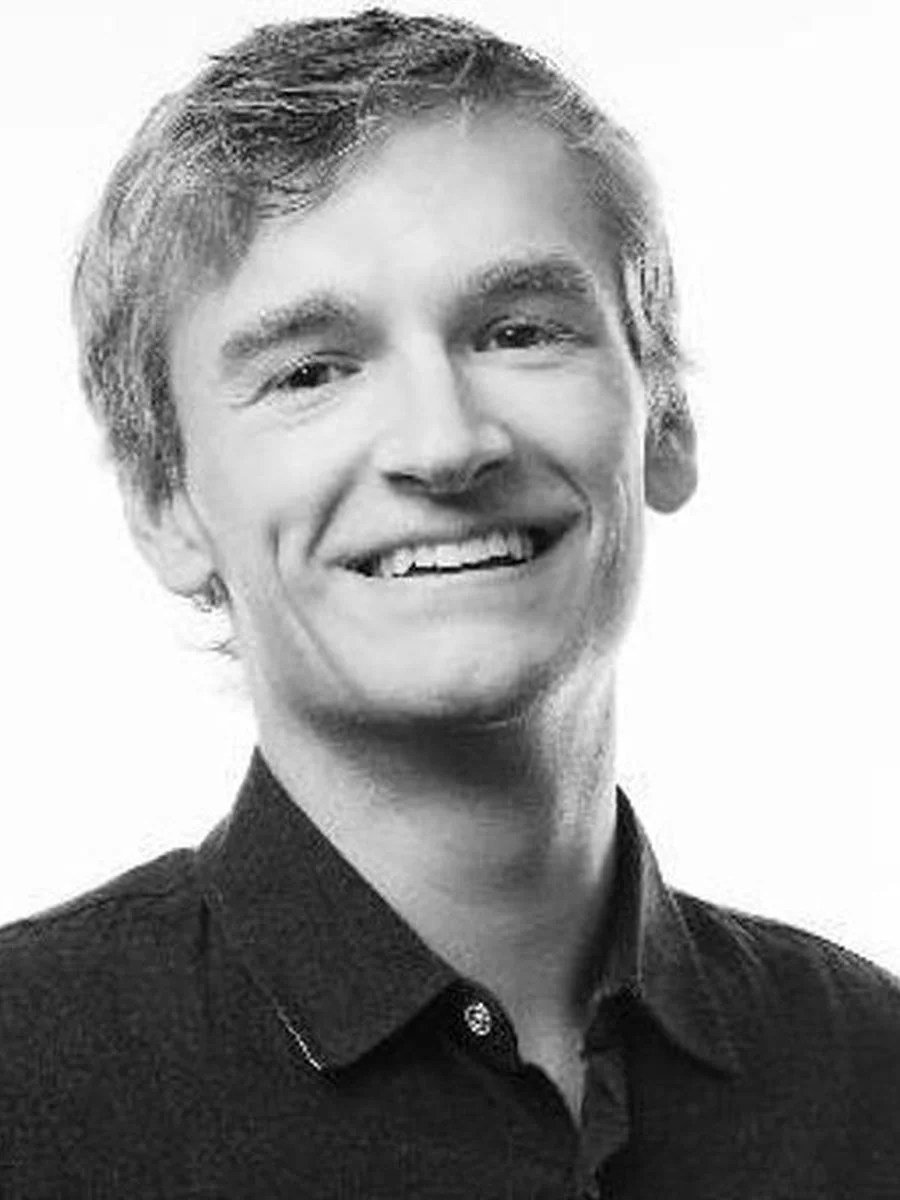
Bob Kagle
Benchmark co-founder; service-first partner whose strongest attributable case is eBay.
Flint, cooperative engineering, and the choice of a long feedback loop
Kagle's investment biography begins in Flint, Michigan. He describes growing up in a single-parent household, entering General Motors Institute's cooperative program and completing an electromechanical-engineering degree before Stanford's M.B.A. program. The facts are corroborated institutionally; his later claim that this taught him to choose opportunity over obligation is retrospective autobiography, not a contemporaneous causal record. [investor-stated · moderate] Kettering speech, “Fish Decoys” through “Obligation versus opportunity” · Human Capital interview, PDF pp. 32–33
After Stanford and Boston Consulting Group, Kagle chose venture because a board relationship would expose whether his advice worked over years rather than ending with a consulting engagement. That preference for consequential feedback later became his “earn the stock” service doctrine. [investor-stated · strong] The chronology is documented; the claim that consulting caused the full philosophy is his own explanation. Human Capital interview, PDF pp. 32–33
TVI apprenticeship: mentorship, consumer instinct, and early losses
Burt McMurtry helped Kagle enter Technology Venture Investors in January 1984. SEC biography and McMurtry's oral history support Technology Venture Investors, not TA Associates. Kagle later became a general partner and remained through TVI's generational split. [contemporaneous record · strong] eBay annual report, PDF pp. 43–44 · McMurtry oral history, p. 47
The apprenticeship did not begin with uninterrupted wins. Kagle later said four of his first seven or eight investments were “stumbling”; the companies, checks and cash outcomes remain unknown. David Marquardt remembered Kagle as inclined toward consumer and retail opportunities and uncomfortable with technology. [retrospective witness · moderate] That is a peer's interpretation, not an objective measure, but it checks a hindsight technology-visionary narrative. Kettering speech, “Big heart and big ears” · Marquardt oral history, printed pp. 56–58/PDF pp. 60–62
[researcher inference · moderate] The defensible formation chain is narrow: cooperative engineering and consulting supplied an appetite for operational feedback; TVI supplied a decade of board exposure and losses; the record does not show which failure created which later rule. Chronology creates a learning opportunity, not proof of causation.
From TVI's split to Benchmark's institutional wager
In 1994–95 TVI divided into August Capital and Benchmark. Kagle formed Benchmark with Andy Rachleff, Bruce Dunlevie, Kevin Harvey and Val Vaden. McMurtry and Marquardt independently describe the split, while Kagle's edited chapter explains the new firm's design. [retrospective witness · strong] McMurtry oral history, p. 47 · Done Deals, printed pp. 15–22
Benchmark's wager was organizational as much as financial: equal salary, carry, administrative vote and deal authority; no junior associates; experienced partners at important meetings; and a small early-stage vehicle whose product was senior attention. Kagle said these choices reduced scorekeeping and let partners “gang tackle” company problems. [investor-stated · strong] No partnership agreement, tie-break rule, labor ledger or matched-firm outcome study survives publicly, so efficacy remains unproved. Done Deals, printed pp. 18–22 · Human Capital interview, PDF p. 33
The vehicle created a tension. Kagle described an approximately $100 million first fund, roughly 22 companies, 30% carry and 3.5% GP commitment; Forbes later used an $85 million first-fund definition. By 1999 Benchmark was reportedly seeking $1 billion. [researcher inference · moderate] Capital availability can protect reserves or create deployment pressure; it also tests whether partner attention required a deliberately small fund. Done Deals, printed pp. 18–22 · Forbes, 2001 · TheStreet, 1999
People and influence map
| person or institution | evidenced role | attribution boundary |
|---|---|---|
| Kagle's mother, GMI/Kettering, Stanford, BCG | Formation and consulting-to-venture transition. [investor-stated · moderate] Kettering speech | Later causal meaning is retrospective. |
| Burt McMurtry / TVI | Mentor and institutional entry route from 1984. [retrospective witness · strong] McMurtry, p. 47 | Mentorship is not deal or return attribution. |
| David Marquardt / TVI | Peer witness on Kagle, Dunlevie recruitment and consumer/retail orientation. [retrospective witness · moderate] Marquardt, printed pp. 56–58 | Characterization is not a skill score. |
| Rachleff, Dunlevie, Harvey, Vaden / Benchmark | Co-founders, equal partners and shared company work. [investor-stated · strong] Human Capital, PDF p. 33 | Firm architecture and returns are not Kagle-only. |
| Omidyar, Skoll, Dunlevie, Beirne and eBay executives | Founder execution, referral, recruiting and operating work. [investor-stated · strong] Done Deals, eBay section | Referral, diligence, board work, execution and economics are distinct. |
| Keith Krach, John Mumford/Crosspoint and Benchmark | Ariba EIR/company creation, financing and governance. [contemporaneous record · strong] Ariba S-1 | Kagle's board role is not sole creation or return credit. |
| Friendster, Prosper, Mint and Zipcar founders/boards | Later governance and outcome controls. [documented behavior · moderate] deal role map | Board exposure is neither automatic value-add nor automatic fault. |
eBay: behavior before polish, contracts, recruiting, and market amplification
In Kagle's remembered 1997 diligence, eBay's site was slow or failing. The positive evidence was behavioral: collectors still used it, the office accumulated mail, and Pierre Omidyar described a community trust mechanism. [investor-stated · strong] The later filing records 1996 users, merchandise volume and revenue, but it does not prove the partnership held that finalized table at the decision. Kettering speech, eBay narrative · eBay annual report, PDF pp. 18–19, 25
The transaction was not a single folklore check. Primary records show $3 million for Series B and $2 million to exercise warrants. Two separate $750,000 founder loans were collateralized by shares; the Washington Post used a different $5 million definition. Later $6.7 million retellings are not reconciled to those primary security and loan records. [contemporaneous record · strong] eBay annual report, PDF pp. 51–54 · Washington Post
Benchmark's role included Kagle's board service and reported executive recruitment, but the route came through Dunlevie's E-Shop relationship, all partners shared the investment and founders/operators built the company. Kagle credited the team and luck. [investor-stated · strong] Done Deals, printed pp. 22–25 · eBay annual report, PDF pp. 43–44, 51–54
Contemporary reporting put Benchmark's April 1999 paper mark near $4 billion; later accounts used other dates and values. None is a Kagle-personal realized return. Security cash, founder loans, dated ownership, paper value, fund distributions, carry and personal wealth are separate evidence units. [researcher inference · strong] eBay number reconciliation
Beyond the outlier: partial breadth and missing economics
Ariba is the best second institutional case. Keith Krach began as a Benchmark EIR; Benchmark bought Series A and B shares; Kagle served from inception. The record supports company creation and staged financing, but Krach, Crosspoint/Mumford, founders, partners and public markets retain separate credit. [contemporaneous record · strong] Ariba S-1
E-Loan, eBags, Mint and Zipcar offer partial breadth, but missing cost, dilution, exit ownership and distributions prevent fund or personal return calculations. [documented behavior · moderate] E-Loan 8-K · Mint filing · Zipcar 8-K
The public denominator is bounded: 27 candidate lineages were searched, nine were partially reconstructed and 18 remain unresolved. It is not a complete career portfolio, and no hit rate, ex-eBay fund result or personal alpha can be inferred. [researcher inference · strong] searched denominator
The downturn and governance record narrow the doctrine
Kagle praised Webvan's enabling proposition; Forbes later listed it and other companies among Benchmark failures. Customer convenience and category mindshare are insufficient without viable economics, financing and execution. [researcher inference · strong] Done Deals, printed pp. 26–28 · Forbes, 2001
Friendster tests technical and board judgment. Kagle served on its board; Jonathan Abrams later blamed investors and directors for neglecting scale and contributing to management churn; recapitalization followed. [retrospective witness · moderate] Architecture, founder conduct, board decisions, competition and capital remain plausible causes; no court or private minutes allocate responsibility. Fast Company · TechCrunch
Prosper tests regulation. The SEC ordered Prosper—not Kagle personally—to cease an unregistered-note offering. A later appellate decision revived director-control allegations at pleading stage; a company-funded $10 million settlement carried denial of liability. [contemporaneous record · strong] These dispositions establish oversight exposure, not a personal enforcement finding. SEC order · Hellum · Prosper report, pp. 21–22, 38–39
The eBay derivative case similarly survived a pleading-stage decision without a merits finding against Kagle; settlement reporting says he paid zero because he made no profit, while defendants denied wrongdoing. [contemporaneous record · strong] In re eBay, pp. 3–5 · SFGate
Step-back, teaching, and what endured
Kagle stepped away from active new-fund investing around 2011. His 2012 address distilled the system: entrepreneurs as stars, investors as stagehands, “big ears” for adaptation, “big tent” for recruiting and shared credit, a power-law prior, early-failure candor and luck. [investor-stated · strong] Kettering speech · TechCrunch
Kettering later attached his name to leadership programs. That extends the service and education thread but does not validate venture performance. [documented behavior · strong] Kagle Leadership Initiatives
A falsifiable thesis of the edge
[researcher inference · moderate] Kagle's defensible edge was a linked institutional and behavioral method: recognize customer trust before polish; choose founders who listen and adapt; organize equal senior partners so help follows need; and preserve exposure for rare outcomes. eBay is strongest; Ariba, E-Loan, eBags, Mint and Zipcar supply incomplete breadth; Friendster, Webvan, Prosper, Starbucks and Pink Dot keep it falsifiable. writings · talks · labs
| test | prediction | current result or falsifier |
|---|---|---|
| Behavioral proof | Accepted cases show dated trust or workarounds. [researcher inference · moderate] eBay lab | Selected support only; no matched cohort. |
| Founder adaptability | Dated assessments predict response to shocks. [researcher inference · moderate] talk evidence | Friendster is adverse. |
| Equal service | Senior help moves across originators without overload. [researcher inference · moderate] Human Capital, p. 33 | Bandwidth, homogeneity and no labor ledger weaken it. |
| Power-law retention | Compatible cash flows show a few retained winners dominate. [researcher inference · strong] Pareto audit | Incompatible marks block a literal share. |
| Personal alpha | Kagle-led cases outperform after team, vehicle, access and era controls. [researcher inference · strong] denominator | Not testable; a complete matched record showing no advantage would overturn it. |
Skill, access, team, vehicle, era, luck and outlier separation
| explanation | supported contribution | prohibited attribution |
|---|---|---|
| Skill | Kagle observed eBay behavior, held boards and articulated a service/listening doctrine. [documented behavior · moderate] Kettering | Narrative and tenure cannot prove causal return. |
| Access | Stanford, TVI, Benchmark and prior relationships created access. [researcher inference · strong] Dunlevie route | Referral is not underwriting skill. |
| Team | Equal economics, shared work, Dunlevie, Krach and executives distribute credit. [investor-stated · strong] Human Capital, p. 33 · Ariba S-1 | Firm returns are not Kagle-only. |
| Vehicle | TVI, numbered funds, family holdings and boards are distinct. [contemporaneous record · strong] vehicle map | Company value, fund mark, LP distribution, carry and wealth are not additive. |
| Era | Late-1990s markets amplified marks; 2001 exposed failures. [researcher inference · strong] historical context | Regime support is not selection alpha. |
| Luck/outlier | Kagle called eBay fortunate and a team success. [investor-stated · strong] Done Deals | No literal eBay share or ex-eBay performance is computable. |
The strongest case against greatness
[researcher inference · strong] A skeptic can explain the visible record through elite access, shared economics, talented founders/operators, strong contractual rights, a favorable public-market regime and one eBay outlier. The 27-name union is incomplete, nine cases are partial, the doctrine is largely retrospective and no compatible personal cash-flow series exists. denominator · eBay reconciliation
The adverse record includes Marquardt's account, early stumbles, Starbucks and Pink Dot passes, Webvan, Friendster, Prosper, eBay's collateral and pleading-stage allegations. None proves personal wrongdoing or incompetence; together they make personal alpha stronger than the evidence allows. adverse evidence
The narrower favorable case survives: Kagle helped create an equal-partner institution, identified behavioral proof and preserved team, failure and luck boundaries. That supports selected judgment and institution building—not lone genius or audited universal outperformance. Original IC/pass files, partner labor/dissent logs, vehicle cash flows and founder assessments would discriminate the theses.
Sourced chronology and learning path
| period | sourced event | boundary |
|---|---|---|
| 1950s–1978 | Flint, GMI and Stanford transition. Kettering | Formation meaning is retrospective. |
| 1978–1984 | BCG, then TVI in January 1984. eBay report, pp. 43–44 | TVI—not TA. |
| 1984–1994 | TVI partnership, stumbles and consumer orientation. Marquardt, pp. 56–58 | Cash flows incomplete. |
| 1994–1997 | TVI split; Benchmark design; Ariba incubation. Done Deals | Design and outcomes collective. |
| 1997–1999 | eBay securities, loans, board work and public mark. eBay report, pp. 25–27, 43–44, 51–54 | Mark is dated and vehicle-owned. |
| 1999–2001 | Fundraising boom, failures and bandwidth criticism. Forbes, 2001 | Fund definitions incompatible. |
| 2003–2008 | Friendster and Prosper test governance/regulation. Friendster Form D · SEC order | Causation/personal liability not established. |
| 2008–2013 | Mint/Zipcar exposure, step-back, Kettering distillation. Mint filing | Company values are not personal proceeds. |
| 2013–2026 | Leadership teaching and philanthropy. Kettering | Legacy does not prove efficacy. |
Recommended order: writings, talks, four no-hindsight investment labs, 17-part philosophy, and four-model field guide. The source map exposes every access boundary.
1. Snapshot and testable edge thesis
[researcher inference · moderate] Kagle's edge was a service-centered partnership that looked through primitive products to observable customer trust, selected for founders able to listen and adapt, and preserved exposure to rare outcomes. It predicts decision-date behavioral evidence, senior partner help across originators, and concentrated economics after compatible cash-flow reconstruction. Only the first two have selected public support; personal alpha remains unproved. profile thesis · investments
2. Core philosophy
- Entrepreneurs are the stars. [investor-stated · strong] The investor's job is useful backstage service, not personal prominence. Human Capital interview, PDF p. 33
- Listen for learning. [investor-stated · strong] “Big ears” means updating under evidence while retaining focus. Kettering transcript, concluding lessons
- Observe behavior before polish. [investor-stated · strong] eBay's user/collector trust mattered despite a failing site. Kettering transcript, eBay narrative
- Make partnership incentives collective. [investor-stated · strong] Equal economics and authority aim to route help rather than credit-seeking. Done Deals, pp. 18–22
- Let magnitude dominate frequency. [investor-stated · moderate] Kagle's 10/90 heuristic is a prior, not an audited statistic. Kettering transcript
3. Sourcing
[documented behavior · moderate] Relationship paths mattered: eBay arrived through Bruce Dunlevie's prior E-Shop relationship, while Benchmark's partner, executive and LP networks substituted for a junior sourcing hierarchy. A warm-referral rule is only provisional because its original source chain is weak. Done Deals, eBay section · meeting excerpt note
Modern control: record the referrer and conflict, then score customer evidence and company quality independently. Compare referred and direct-access funnels to detect network homophily; contemporary critics described Benchmark's partnership as homogeneous. Forbes, “Boys' Club”
4. Picking
Kagle's public screen combines people and behavior:
| question | direct evidence | falsifier |
|---|---|---|
| Do customers work around product defects to obtain the value? | [investor-stated · strong] eBay site failure plus collector/mail evidence. Kettering transcript, eBay narrative | [researcher inference · strong] Usage disappears after novelty; trust or reliability cannot scale. |
| Does the founder listen without losing conviction? | [investor-stated · strong] “Big ears,” resilience and flexibility. Done Deals, printed pp. 22–24 | [researcher inference · moderate] Dated updates do not improve decisions or founder rejects material evidence. |
| Does the internet remove a real friction? | [investor-stated · moderate] eBay connection, E-Loan convenience and eBags inventory. Done Deals, printed pp. 24–28 | [researcher inference · strong] Customer acquisition, capital intensity or regulation absorbs the benefit. |
| Can the company become a category reference? | [investor-stated · moderate] Kagle emphasized category leadership/mindshare. Done Deals, printed pp. 26–28 | [researcher inference · strong] Category visibility lacks durable economics; Webvan is the adverse control. Forbes, 2001 |
[researcher inference · strong] Product primitiveness is not automatically bullish. Behavioral pull must be paired with trust, repair, unit economics, financing and regulatory gates. writings playbook
5. Deal and portfolio mechanics
The public record shows staged preferred/warrant investing at eBay and A/B rounds at Ariba, but no general check/reserve rule. Kagle reported a first fund near $100m, about 22 companies, 30% carry and a 3.5% GP contribution; Forbes later used an $85m definition. [investor-stated · moderate] No number is treated as audited. vehicle analysis
[researcher inference · strong] Portfolio logic is asymmetric: accept frequent losses, preserve option value, and avoid selling too early when the upside distribution is extremely skewed. The E-Loan choice is a dated application; eBay is the outlier; Webvan and Friendster show that retaining upside also retains financing and governance risk. E-Loan lab
6. Vehicle and incentive fit
Equal economics can reduce partner rivalry, but vehicle scale, fees, carry, reserves and active board capacity determine whether the promise survives. The reported $1b Fund IV effort and “raise when available” remark sit against the small-fund attention thesis. [researcher inference · moderate] TheStreet
Required IC controls: fund and security identity; expected hold; reserve budget; partner hours; decision rights; founder/LP conflict; liquidity plan; and gross-to-net bridge. ten-dimension analysis
7. Team attribution and work with founders
[investor-stated · strong] The “stagehand” posture asks the investor to earn stock through useful work. At eBay, reported work included management recruitment and board support; at Ariba, Krach began as an EIR; at E-Loan, Kagle argued privately for retaining upside. Yet referral, sponsorship, diligence, approval, negotiation, board work, recruiting, follow-on, exit and narration were often performed by different people. people/capital/influence map
Founder service does not imply founder control or soft terms. eBay's collateral terms were criticized as unusually strong; Friendster's founder blamed the board; Prosper's regulated offering created board-oversight exposure. The usable rule is explicit decision rights plus useful work, not founder-friendly branding. Washington Post · adverse evidence
8. Views on the craft
Kagle preferred venture's long accountability to consulting's short intervention. [investor-stated · strong] The claim makes venture a feedback profession: advice matters only if the investor remains present for consequences. Human Capital interview, PDF pp. 32–33
His public humility is analytically important. Early stumbles, high loss priors, partner credit and luck reduce hero-investor mythology. The gap is measurement: candid maxims still need opportunity, cash-flow and intervention ledgers. talk evolution
9. Signature bets and decision process
- eBay — [researcher inference · strong]: observe user trust through a broken product; use staged securities and separate founder-liquidity terms; assign recruiting and board roles; preserve partnership exposure. The case remains contract-, team-, vehicle-, era- and luck-dependent. eBay filing, PDF pp. 51–54 · eBay lab
- Ariba — [documented behavior · strong]: use an EIR/company-creation path, staged financing and board involvement to attack enterprise procurement; Krach and other investors/operators retain creation credit. Ariba S-1 · Ariba lab
- E-Loan — [contemporaneous record · moderate]: choose independence over a sure outcome only when the modeled tail can justify dilution and time risk; fund proceeds remain unknown. Forbes, 1999 · E-Loan lab
- Friendster — [researcher inference · moderate]: visible demand cannot compensate for unresolved technical and governance risk; causal responsibility remains contested. Fast Company · Friendster failure lab
Each lab freezes available evidence before revealing outcome; none reconstructs a private IC vote.
10. Mental models and maxims
Four promoted models meet the repository's evidence threshold:
- Observe behavior before polish, then prove trust and economics.
- Earn the stock: service with explicit decision rights and capacity.
- Align equal partners, but audit collective decision quality.
- Preserve power-law upside without confusing paper marks for returns.
Each contains twelve labeled components, three bounded cases including a failure/exception, multiple citation placements and an exception ledger in mental models.
11. Evolution and contradictions
The doctrine is stable from 2000/03 to 2012: service, listening, partnership and asymmetry. The later speech adds more failure/luck candor. The important contradictions are operational:
- small fund/attention versus the reported $1b Fund IV effort;
- founder service versus strong eBay collateral and contested governance;
- listening/adaptation versus Friendster board/founder conflict;
- internet convenience/category leadership versus Webvan failure; and
- personal legend versus explicit team/vehicle attribution.
These tensions narrow the philosophy rather than nullify it. talk contradictions · writing chronology
12. Failures and limits
The adverse record mixes different evidence classes: Kagle's own early-loss and Starbucks recollections are [investor-stated · moderate]; Webvan's failure and Prosper's company-level SEC order are [contemporaneous record · strong]; Friendster causation is [retrospective witness · moderate]; and eBay/Zipcar shareholder claims are allegations, not findings. misses/adverse section
| case | original thesis/evidence | warnings, capital and governance | stop/outcome | claimed lesson or process change | attribution and counterfactual |
|---|---|---|---|---|---|
| Webvan | Kagle praised internet-enabled convenience and category potential. [investor-stated · moderate] Done Deals, printed pp. 26–28 | Unit economics, capital burden, financing response, Kagle-specific check and board role are unknown. | Forbes later included Webvan in a firm-level failure roster. [contemporaneous record · strong] Forbes, 2001 | No Kagle-specific written process change was found; the researcher lesson is to gate behavioral pull on economics. [researcher inference · strong] | Firm exposure is not Kagle-only loss; better financing or operations might still have failed. |
| Prosper | The original Kagle/Benchmark investment thesis and security are unavailable; Kagle was a director. [contemporaneous record · strong] Prosper S-1/A | Registration was the binding warning; capital response and board votes are unknown. | SEC order against Prosper; appellate claims revived only at pleading; $10m company-funded settlement with denial. SEC order · Prosper report, pp. 21–22, 38–39 | No public Kagle process change was found; modern rule is independent regulatory authority before scale. [researcher inference · strong] | No personal SEC charge; board oversight exposure is not personal merits liability. |
| Starbucks pass | Kagle later called Starbucks his biggest mistake; decision-date thesis, terms and reason are unavailable. [investor-stated · moderate] Forbes profile | Warnings, proposed capital, governance and stop criteria are unknown. | Pass; later company success does not establish a foregone allocation or multiple. | Claimed mistake, but no documented checklist or subsequent process change. | Counterfactual return is not computable without allocation, ownership, dilution and sale timing. |
| Pink Dot pass | A contemporary review says Kagle could not get comfortable with the founder; the heuristic was not explained. [retrospective witness · provisional] Wired review | References, financing, governance and kill condition are unknown. | Pass; later Kagle-specific economics and alternative outcome are not reconstructed. | No investor-stated lesson or process change found. | An opaque pass is a process gap, not proof the decision was wrong. |
The method fails when enthusiasm masks capital intensity; service lacks technical competence or alignment; partner equality creates groupthink/free riding; fund scale breaks attention; or regulation is treated as scenery. [researcher inference · strong]
13. Historical operating environment
Kagle entered TVI after an early-1980s funding cycle, founded Benchmark before the commercial web's public-market boom, and experienced the 2001 collapse. eBay/Ariba were decided before their public outcomes; by 1999 paper marks and fundraising conditions were unusually favorable; by 2003–08 platform companies faced scaling and securities-law complexity. [researcher inference · strong] dated market context
The correct historical comparison asks what was observable at each decision date. It does not use eBay's later value to retroactively make a broken site safe, or Friendster's failure to make the original demand unreal.
14. Modern VC translation (as of 2026-08-22)
| historical rule and evidence status | what transfers | what fails or changed assumptions | applicability signal | likely misuse | grounded current example or explicit hypothetical |
|---|---|---|---|---|---|
| Observe behavior before polish. [investor-stated · strong] Kettering | [researcher inference · strong] Audit raw retention, repeated workflows, trust/fraud and customer-side evidence. | AI/software telemetry can be fabricated; delivery cost, privacy and safety can dominate usage. | Users tolerate friction because value is unique, repeatable and independently verifiable. | Calling demo excitement or subsidized use “eBay-like.” | Analyst-created hypothetical: a rough AI agent qualifies only after customer-side logs show repeated task completion, acceptable errors and improving cost. |
| Earn the stock. [investor-stated · strong] Human Capital, PDF p. 33 | [researcher inference · strong] Pre-commit partner deliverables, cadence, founder consent, rights and stop date. | Larger platforms and specialist teams diffuse ownership; regulation constrains informal help. | Founder asks for, uses and can evaluate named help. | Investor theater, overload or shadow management. | Benchmark's reported 2026 growth-fund expansion is a grounded changed-vehicle test, not proof Kagle's small-team service scales. TechCrunch, 2026 |
| Equal partner economics. [investor-stated · strong] Done Deals, pp. 18–22 | [researcher inference · strong] Share economics while recording roles, dissent and board load. | Equal carry cannot prove equal labor or judgment; remote/multi-stage teams increase coordination cost. | Help moves across originators and dissent survives. | Treating equality as evidence against groupthink or free riding. | Analyst-created hypothetical: a three-partner AI seed fund publishes source, red-team and follow-up ownership for every decision. |
| Preserve power-law upside. [investor-stated · moderate] Kettering, loss-prior section | [researcher inference · strong] Stage capital to proof, budget reserves and separate realized from unrealized value. | Longer exit windows and mark volatility can consume fund duration and reserves. | Large credible company capture plus a financeable path and downside. | Calling a financing mark a return or using power law to excuse price. | Analyst-created hypothetical: an AI company marked up after one round remains unrealized; the IC shows the fund case excluding it and stresses a closed exit window. |
15. Comparison with completed peers
These three are the closest defensible completed controls: Rachleff shares Benchmark's original vehicle and partnership; Breyer is a same-era institutional-network investor with a dominant outlier and regulatory governance control; Wilson is a later consumer-network, service and small-fund comparator with unusually rich direct writing.
| dimension | Bob Kagle | Andy Rachleff (T031) | Jim Breyer (T030) | Fred Wilson (T032) |
|---|---|---|---|---|
| Sourcing | [researcher inference · moderate] Relationship access plus behavioral proof; no funnel. Done Deals | [researcher inference · moderate] Same equal Benchmark network, with non-consensus insight and desperate-customer doctrine. Rachleff edge and sourcing | [investor-stated · strong] Themes plus founders, universities and institutional networks. Breyer sourcing | [investor-stated · strong] Public writing, connectors and product behavior. Wilson sourcing |
| Picking | [researcher inference · moderate] Customer trust, adaptability and internet friction; Webvan/Friendster adverse. picking | [investor-stated · strong] External change, proprietary insight, narrow desperate market and pull. Rachleff picking | [investor-stated · strong] Differential insight, simple wedge, engagement and adaptive team. Breyer picking | [investor-stated · strong] Remaining formation, participant behavior and network effects. Wilson picking |
| Ownership/portfolio | [researcher inference · strong] eBay visibly dominates; no literal share or reserve rule. Pareto | [investor-stated · strong] Magnitude over frequency, staged capital; personal cash flows absent. Rachleff philosophy | [researcher inference · strong] Accel fund-size discipline tested by Accel VIII; ownership rule thin. Breyer philosophy | [investor-stated · strong] Small funds, ownership and reserves are explicit. Wilson philosophy |
| Governance/service | [investor-stated · strong] Stagehand service plus equal partners; Friendster/Prosper bound it. Human Capital, p. 33 | [researcher inference · strong] Same-firm shared service, but candid governance and product/market tests are more explicit. Rachleff dossier | [retrospective witness · moderate] Senior sponsorship, recruiting and boards; Prosper is a shared adverse control. Breyer philosophy | [investor-stated · strong] Entrepreneur as customer, bounded by company duty and StarMedia. Wilson philosophy |
| Vehicle/incentives | [investor-stated · moderate] Equal Benchmark economics/no associates; TVI and numbered funds distinct. vehicle analysis | [contemporaneous record · strong] Closest same-firm control; later personal/teaching/Wealthfront roles are separate. Rachleff snapshot | [contemporaneous record · strong] Accel, trust, Breyer Capital and IDG-Accel must remain separate. Breyer philosophy | [investor-stated · strong] USV deliberately linked team, fund size, ownership and reserves. Wilson mechanics |
| Failure control | [researcher inference · strong] Webvan, Friendster, Prosper and passes; no personal alpha. failure matrix | [researcher inference · strong] Access/team/outlier explanation and no complete personal denominator. Rachleff edge test | [researcher inference · strong] Accel VIII, Prosper and Google miss; Facebook outlier. Breyer failures | [documented behavior · strong] Kozmo, Airbnb, Turntable, StarMedia and style drift remain in teaching set. Wilson failures |
[researcher inference · strong] The comparison supports institutional mechanisms, not a synthetic return ranking: eras, vehicles, source depth and denominators differ. Rachleff is the required same-firm control; Breyer tests network/sponsor concentration; Wilson tests whether direct writing and explicit reserves make similar service/power-law claims more falsifiable.
16. The strongest case against greatness
[researcher inference · strong] A skeptical allocator could explain the record through Stanford/TVI access, shared Benchmark economics, talented founders/operators, strong contract rights, an extraordinary internet/public-market regime and one dominant eBay outlier. The public sample is selected, the complete fund and opportunity denominators are absent, and Kagle's principles are recorded mainly after success. Marquardt's retrospective view—that Kagle favored consumer/retail and was uncomfortable with technology—further resists a hindsight technology-visionary label. Marquardt oral history, printed pp. 56–58/PDF pp. 60–62
The favorable response is narrower: Kagle helped design an institution that shared senior work, identified eBay's behavioral proof before polish, and stated failure/team/luck boundaries more candidly than the legend. That supports consequential institution building and selected judgment—not verified personal alpha.
17. Analyst study guide, glossary, and go deeper
Study guide
- Run the eBay decision exercise without outcome knowledge; distinguish defects from pull.
- Use the same eBay exercise and reconciliation to separate $3m preferred, $2m warrant exercise, founder loans, ownership, marks and distributions.
- Use the people/capital/influence map and Ariba exercise to assign ten roles.
- Compare the sure outcome with the tail in the E-Loan exercise.
- Red-team service in the required failure/miss Friendster exercise, then compare Prosper and eBay collateral dispositions.
Glossary
- Paper mark: value at a stated security price/date, not cash distributed.
- DPI/TVPI/IRR: cash returned, total value and time-weighted performance metrics; none is available here in a compatible Kagle series.
- Stagehand: Kagle's metaphor for founder-centered investor service.
- Behavioral proof: observable customer action that may precede product polish; it still needs economics and risk controls.
- Attribution: explicit separation of source, sponsor, diligence, approval, negotiation, board, recruiting, follow-on, exit and narration.
Go deeper
- Annotated source map
- Written corpus
- Talk/interview corpus
- Investments and decision labs
- Mental models
The highest-value missing records are complete TVI/Benchmark cash flows and opportunity ledgers, partnership agreements, original IC/board materials for signature and failure cases, partner labor attribution, founder-loan approvals, full VCJ text, original 1999 article and Kagle's personal capital/distribution records.
Pareto 80/20 — what drove the record
Economic contribution — ranked by defensible public evidence
| rank | lineage | bounded contribution claim | confidence and attribution |
|---|---|---|---|
| 1 | eBay | Contemporary reporting put Benchmark's reported paper mark near $4 billion in April 1999 after $5 million of disclosed equity/warrant cash and disputed treatment of founder loans. | [contemporaneous record · strong] Clear dominant public magnitude, but not a realized fund or Kagle-personal return. Bruce Dunlevie's E-Shop relationship, all Benchmark partners, recruited executives, founders, public-market conditions and unusual collateral rights share causal/economic credit. SEC mechanics, PDF pp. 51–54 · Washington Post, dated mark and loans |
| 2 | Ariba | Benchmark disclosed $4.5 million of Series A/B cash for 6.48 million pre-IPO shares; contemporary Kagle/Forbes commentary called Ariba the larger returner “to date,” while the filing supports position mechanics rather than realization. | [contemporaneous record · moderate] Kagle was a director from inception, Keith Krach was the EIR/founder, John Mumford/Crosspoint had separate incubation credit, and fund ownership was shared. No distribution ledger. Ariba S-1, “Certain Transactions” and “Principal Stockholders” · Forbes profile, Kagle and Mumford entries |
| 3 | not rankable | E-Loan, eBags and Zipcar had documented company outcomes, but incompatible or missing cost, ownership, dilution and distribution data prevent a third fund-contribution rank. | [researcher inference · strong] Company consideration is not investor proceeds. E-Loan 8-K · eBags acquirer release, p. 1 · Zipcar merger record |
Historical importance — ranked
- eBay — strongest Kagle-associated selection/governance story and canonical proof of a trusted consumer marketplace; its fame must not erase contract, team and era contributions. [researcher inference · strong]
- Ariba — best evidence that Benchmark's EIR/incubation and enterprise service system traveled beyond eBay. [researcher inference · moderate]
- Synopsys — Kettering calls Kagle an early investor, making it important to the pre-Benchmark chronology; public security, vehicle and proceeds remain insufficient. [documented behavior · provisional] Kettering announcement
Learning value — ranked
- Friendster — rapid consumer adoption, reported acquisition optionality, scale failure, management churn and contested board responsibility directly test “big ears,” service and category leadership. Fast Company · TechCrunch
- Prosper — service-friendly governance does not remove securities-law and board-oversight duties; the SEC order was against Prosper, not Kagle, and litigation resolved without admission. SEC Order 33-8984 · Prosper 2013 report
- Starbucks pass / Webvan thesis — the named miss and favorable ex-ante Webvan view expose false negatives and thesis-without-economics risk; neither has enough Kagle-specific records for a financial loss. Forbes profile · Done Deals, pp. 26–28
Dominant-outlier test
[researcher inference · strong] eBay is directionally dominant in the public Kagle narrative and the strongest reported magnitude. A literal contribution share is not computable. The April 1999 ~$4 billion eBay paper mark, Kagle's approximately $100 million/near-100x Fund I recollection, and Forbes's later $85 million/$7.8 billion reported return use different dates, definitions and realization states. They are shown side by side and never divided into a synthetic multiple. Removing eBay leaves Ariba and several company outcomes, but no compatible ex-eBay fund cash flow or Kagle-personal record. Washington Post · Done Deals, pp. 18–25 · Forbes 2001
Evidence boundary and searched denominator
The discovery denominator is a 27-lineage union, not a complete career portfolio: Kando's 23 named associations plus Sparks.com, Visionary Design Systems, Xantel and EthnicGrocer from dated interview/press rosters. Every name was searched. Nine of 27 (33.3%) meet this review's minimum reconstruction threshold: a Kagle/direct source or filing-visible role plus a dated decision/security/governance fact and a company outcome or material adverse control. The remaining 18 are searched but unresolved. This percentage measures research reconstruction coverage, not investment coverage, success rate or hit rate.
| reconciliation | count | definition |
|---|---|---|
| Publicly known candidate lineages after deduplication | 27 | Kando's 23 associations plus four dated-roster additions; incomplete by design. |
| Searched | 27 | Exact company/Kagle/entity, filing, outcome, failure and acquisition queries. |
| Researched | 27 | Every searched lineage received a field-level role, vehicle/security, chronology and outcome audit in the supplement below. |
| Sufficiently reconstructed | 9 | eBay, Ariba, E-Loan, eBags, Jamba Juice, Friendster, Mint, Prosper and Zipcar. |
| Unresolved below threshold | 18 | At least one of role, vehicle/security, chronology or outcome is missing. |
| Excluded from the 27-lineage denominator | 0 | No deduplicated candidate was silently removed; duplicate/follow-on names were collapsed before the denominator and passes are analyzed separately. |
| Complete career investments/passes/write-offs | unknown | No public TVI/Benchmark ledger; the 27 cannot become a career denominator. |
Kagle's later statement that more than half of venture investments lose all money and 10% produce 90% is a self-reported heuristic, not a denominator. No Kagle-specific gross/net IRR, DPI, TVPI, loss ratio or hit rate is computable. Kettering transcript, early-failure section
Vehicle, economics, and decision-rights map
| vehicle/context | public evidence | what cannot be inferred |
|---|---|---|
| TVI, 1984–94 | Kagle was GP; Jamba board began before Benchmark; Kettering calls him an early Synopsys investor. | Exact TVI fund, cost, ownership, realization and Kagle economics for those cases. |
| Benchmark early funds | Equal partner economics/authority, no associates, 30% carry and roughly 3.5% GP commitment are Kagle-stated. eBay and Ariba filings identify specific Benchmark funds/positions. | Partnership agreement, LP net return, partner labor allocation, carry realization and personal share. |
| Benchmark IV | Friendster filing and ZipRealty ownership routes associate the vehicle; Kagle was a manager/board participant. | Complete vehicle portfolio, cost, dilution, distributions or Kagle lead status. |
| Benchmark V | Zipcar filings identify fund ownership and shared manager authority. | Company consideration as fund proceeds; personal economics or sole governance causality. |
| Personal/family | ZipRealty filings identify a family trust; Prosper filing reports personal platform loans. | Personal positions cannot be pooled with fund holdings or board exposure. |
| Company boards | eBay, Ariba, E-Loan, Jamba, Friendster, Prosper, Zipcar and others show governance exposure. | Board seat is not automatic proof of sourcing, investment approval, beneficial ownership, successful intervention or fault. |
Vehicle economics and incentives across ten dimensions
| dimension | observed Kagle/Benchmark record | inference boundary |
|---|---|---|
| Duration | Early-stage company building required long holding periods; Kagle contrasted it with short consulting assignments. | [investor-stated · moderate] No fund term, extension vote or company holding-period series is public. Human Capital interview, PDF pp. 32–33 |
| Fundraising pressure | The first vehicle was intentionally near $100m by Kagle's definition; by 1999 Benchmark sought a reported $1b fund and Kagle said to raise when capital was available. | [researcher inference · moderate] Availability can protect reserves or create deployment pressure; company-level pacing records are missing. TheStreet |
| Carry and fees | Kagle described 30% carry and equal economics; contemporary reporting described an approximately 2% fee for the later fund. | [investor-stated · moderate] Gross marks, fee income, carry accrual, crystallization and net LP distributions are not reconciled. Done Deals, pp. 18–22 · TheStreet |
| Governance/decision rights | Equal salary, carry, administrative vote and deal authority; all partners attended key meetings; no associates. | [investor-stated · strong] No partnership agreement, tie-break rule, removal clause or dissent log was recovered. Human Capital interview, PDF pp. 32–33 |
| Geography | The visible practice was predominantly U.S. technology/consumer, while Benchmark Europe was a distinct reported vehicle. | [contemporaneous record · moderate] European fund results or Kagle decision roles cannot be pooled with U.S. deals. TheStreet Europe report |
| Liquidity | IPO markets made eBay/Ariba paper marks visible; acquisitions resolved E-Loan, Mint, eBags and Zipcar company value. | [researcher inference · strong] Mark, sale consideration and cash distributed are distinct; lockups and post-IPO sales are missing. |
| Regulation | Securities law, marketplace trust, credit/lending and public-company fiduciary duties changed across eBay, E-Loan, Prosper and Zipcar. | [contemporaneous record · strong] Service rhetoric never supersedes registration or fiduciary duties. Prosper SEC order |
| Reserves/follow-ons | eBay warrants and Ariba's A/B rounds prove follow-on/security staging in named cases. | [contemporaneous record · moderate] No reserve policy, pro-rata budget or loss triage schedule survives publicly. |
| Stakeholder incentives | Equal partners, unusually strong eBay loan collateral, founders choosing E-Loan independence, and LP distributions create different incentives. | [researcher inference · strong] Founder friendliness, LP upside and investor protection can conflict; none is a sufficient moral label. |
| Succession/key person | Kagle stepped back from active new-fund management around 2011 while legacy legal/member roles could persist. | [documented behavior · moderate] Public reports do not expose succession economics, key-person clauses or transition of specific boards. Fortune |
People, capital, and influence map
Unknown means the public record did not support the role; it does not mean nobody performed it.
| case | source | sponsor | diligence | approve | negotiate | board | recruit | follow-on | exit | narrate |
|---|---|---|---|---|---|---|---|---|---|---|
| eBay | Bruce Dunlevie/E-Shop referral | Bob Kagle and Benchmark team | Kagle's site/office work; other partner work unknown | Benchmark partnership, individual votes unknown | Kagle/Benchmark on financing; loan negotiator unknown | Kagle | Ramsey Beirne/Benchmark; Whitman, Swette, Schultz reported | Benchmark funds; decision makers unknown | LP distributions by Benchmark; seller decisions unknown | Kagle, filings, press, company history |
| Ariba | Keith Krach as Benchmark EIR | Benchmark; Kagle director from inception | Krach/Benchmark/Crosspoint roles not fully separable | Benchmark partnership, votes unknown | unknown | Kagle; John Mumford separate role | Krach/company and firm network | Benchmark Series A/B; approvers unknown | IPO/acquisition sellers unknown | Kagle, S-1, Forbes |
| E-Loan | founders/Benchmark route unknown | Kagle publicly argued for tail retention | unknown | founders chose independence; Benchmark vote unknown | Yahoo financing and Intuit offer parties; Kagle influence reported | Kagle board exposure in dated roster | unknown | Yahoo and others; Benchmark follow-on unknown | Popular acquisition; fund sale timing unknown | Kagle/Forbes, SEC filing |
| Friendster | unknown | Kagle/Benchmark IV association | technical diligence unknown | board/partnership votes unknown | Google offer decision contested | Kagle and other directors | management changes by board, allocation unknown | Benchmark IV/Kleiner reports; exact approvals unknown | recapitalization/sale path, Kagle role unknown | Abrams and press; causal dispute |
| Mint | route not public | Benchmark led second round; Kagle joined board | Kagle cited product ease-of-use; full diligence unknown | partnership vote unknown | round negotiators unknown | Kagle | unknown | Benchmark/other rounds, reserves unknown | Intuit acquired; fund sale/proceeds unknown | Kagle/VentureBeat, Intuit filing |
| Zipcar | sourcing unknown | Benchmark V position; Kagle board | unknown | partnership/board votes unknown | sale committee/negotiation allocation unknown | Kagle, compensation committee | unknown | fund ownership documented; reserve decisions unknown | Avis acquisition; Kagle resigned | filings and shareholder complaint |
| Prosper | sourcing/sponsor unknown | board exposure; personal loans | regulatory diligence unknown | board/company decisions unknown | registration/settlement negotiators unknown | Kagle | unknown | financing parties unknown | no comparable venture exit used | SEC, court, company report |
This map prevents four recurrent attribution errors: a referral is not sponsorship; a board seat is not sole approval; a fund filing is not personal beneficial ownership; and a narrator is not necessarily the person who sourced, negotiated or realized the investment.
eBay number and attribution reconciliation
- Primary securities cash: June 1997 $3 million Series B plus May 1998 $2 million warrant exercise = $5 million disclosed equity/warrant cash. eBay annual report, PDF pp. 51–54
- Founder loans: two June 1997 $750,000 full-recourse loans were collateralized by founder shares; Benchmark exercised the collateral right in January 1999. The Washington Post says its $5 million figure included loans, creating a definition tension with the filing's separate $5 million securities cash. Washington Post
- Ownership snapshots: the Post reported a 22.1% IPO stake and an April 1999 ~$4 billion paper mark; the later annual report reported 17,375,508 Benchmark-fund shares as of March 1, 1999 under a split-adjusted table. Date, share scale and scope must remain explicit. Washington Post · annual report, PDF pp. 51–54
- Person/team: Dunlevie's E-Shop relationship supplied the route; Kagle narrated diligence and served on the board; Ramsey Beirne recruited; Whitman, Swette and Schultz joined; all Benchmark partners and founders contributed. Formal sponsorship and approval roles remain unknown. Kagle disclaimed beneficial ownership except proportional pecuniary interest. Done Deals, eBay section · annual report, PDF pp. 43–44, 51–54
- Prohibited synthesis: no $6.7 million “true cost,” 600x/800x multiple, realized $4–5 billion, or $170 million personal share is supported. The false Pez origin is rejected by eBay's official history. eBay history, 1995/Pez sections
Public candidate-lineage ledger
| candidate | vehicle/person evidence | outcome/control | reconstruction status |
|---|---|---|---|
| AllPosters.com | Kando discovery only | no primary economics | unresolved |
| Ariba | Benchmark funds; Kagle director from inception | IPO and later SAP acquisition; no hold-through proof | reconstructed |
| Art.com | 2003 Kagle board roster | promotional operating outcome only | unresolved |
| Arteis | Kando discovery only | no reliable outcome | unresolved |
| Axiom Global | Kando discovery only | no reliable outcome | unresolved |
| eBags | Kagle direct thesis | Samsonite $105m company acquisition | reconstructed |
| eBay | Benchmark funds; Kagle board; security/loan records | IPO/dated paper mark; litigation control | reconstructed |
| E-Loan | Kagle direct thesis/decision report | Popular ~$300m acquisition; no fund proceeds | reconstructed |
| EthnicGrocer | contemporary Kagle roster | no adequate mechanics/outcome | unresolved |
| Friendster | Benchmark IV; Kagle board | recapitalization and contested failure | reconstructed |
| Gaia Interactive | Kando discovery only | no adequate mechanics/outcome | unresolved |
| Get2Chip | Kando discovery only | Cadence acquisition; attribution too weak | unresolved |
| Jamba Juice | Kagle board before Benchmark; mixed TVI/Benchmark report | public merger route; vehicle unresolved | reconstructed |
| Logoworks | Kando discovery only | reported HP acquisition not enough here | unresolved |
| Mint | Benchmark-led $12.1m round; Kagle board | Intuit acquired all equity for approximately $170m; fund proceeds unknown | reconstructed |
| PeopleSupport | roster/discovery association | reported $250m acquisition; ownership missing | unresolved |
| Potbelly | Kando discovery only | no Kagle mechanics | unresolved |
| Prosper | Kagle board/personal platform loans | SEC order and litigation/settlement | reconstructed |
| Sparks.com | 2003 Kagle board roster | dot-com failure context; vehicle/cash flow missing | unresolved |
| Stitcher | Kando discovery only | no Kagle mechanics | unresolved |
| Synopsys | official Kettering “early investor” attribution | security/vehicle/proceeds missing | unresolved |
| uShip | Kando discovery only | no Kagle mechanics | unresolved |
| Visionary Design Systems | 2003 Kagle board roster | acquisition/outcome not sufficiently tied | unresolved |
| WorldWinner.com | Kando discovery only | no Kagle mechanics | unresolved |
| Xantel | 2003 Kagle board roster | Forbes firm-failure context; no cash flow | unresolved |
| Zipcar | Benchmark V; Kagle board/share-control filing | Avis $12.25/share acquisition | reconstructed |
| ZipRealty | Benchmark IV and Kagle family trust filing | outcome/economics incomplete | unresolved |
Field-complete searched-ledger supplement
Every candidate below is audited against the required fields. Unknown is an explicit failed public retrieval, not an implied zero.
| candidate | date/stage/security | historical thesis | team/board/follow-on | outcome | explicit missing fields |
|---|---|---|---|---|---|
| AllPosters.com | unknown | online poster retail, database only | unknown | unknown | date, stage, security, vehicle, team, board, reserves, outcome |
| Ariba | 1996 inception; Series A/B | enterprise procurement workflow | Krach EIR; Kagle board; Benchmark follow-on | IPO; SAP acquisition | IC vote, realization, distributions |
| Art.com | by 2003; security unknown | online art retail | Kagle board; follow-on unknown | promotional profitability only | stage, vehicle, ownership, proceeds |
| Arteis | unknown | unknown | unknown | unknown | all investment fields beyond discovery association |
| Axiom Global | unknown | unknown | unknown | unknown | all investment fields beyond discovery association |
| eBags | by 2000; security unknown | web inventory-turn advantage | Kagle thesis; board/follow-on unknown | Samsonite $105m company sale | date, vehicle, ownership, proceeds |
| eBay | June 1997 preferred/warrants plus founder loans | trust-based person-to-person market | Dunlevie referral; Kagle board; team recruiting; warrant exercise | IPO/dated paper mark | full loan-cost reconciliation, distributions, personal economics |
| E-Loan | by 1999; financing terms partly reported | convenient online lending; retain home-run tail | Kagle board/influence; Yahoo financing | Popular ~$300m company acquisition | initial date/security, ownership, distributions |
| EthnicGrocer | by 2000; security unknown | online ethnic grocery, not reconstructed | Kagle roster; board/follow-on unknown | unknown | vehicle, cost, governance, outcome |
| Friendster | 2003; Form D/Benchmark IV | social-network category leadership | Kagle board; follow-on/recap parties reported | recapitalization/failure | security, ownership, votes, realized loss |
| Gaia Interactive | unknown | unknown | unknown | unknown | all fields beyond association |
| Get2Chip | before 2003 acquisition; security unknown | chip-design tools, inferred only | Kagle role from discovery list only | Cadence company acquisition | primary Kagle role, vehicle, cost, proceeds |
| Jamba Juice | board by 1994; TVI-era entry/security unknown | consumer brand/store demand | Kagle board; mixed TVI/Benchmark follow-on report | public-company merger path | exact vehicle, security, ownership, proceeds |
| Logoworks | unknown | unknown | unknown | reported HP acquisition not used without full chain | date, stage, vehicle, team, ownership |
| Mint | 2008 second round; Benchmark led $12.1m | ease-of-use in crowded personal finance | Kagle board; partner/reserve roles unknown | Intuit ~$170m all-equity acquisition consideration | security, fund ownership, distributions |
| PeopleSupport | by 2003; security unknown | outsourced support, thesis unknown | Kagle association; board/follow-on unresolved | reported Aegis acquisition | primary role, vehicle, cost, ownership, proceeds |
| Potbelly | unknown | consumer brand, inferred only | unknown | unknown | all fields beyond association |
| Prosper | board since 2005; personal platform loans, fund security unknown | peer-to-peer lending | Kagle board; company financing | regulatory/litigation adverse record | venture vehicle, cost, outcome, personal responsibility finding |
| Sparks.com | board by 2003; security unknown | online retail, thesis unknown | Kagle board | dot-com failure context | vehicle, cost, follow-on, realized loss |
| Stitcher | unknown | audio platform, inferred only | unknown | unknown | all fields beyond association |
| Synopsys | early/TVI-era; security unknown | electronic design automation, inferred only | official early-investor attribution; board/follow-on unknown | public-company longevity, no transaction used | exact date, vehicle, ownership, proceeds |
| uShip | unknown | marketplace, inferred only | unknown | unknown | all fields beyond association |
| Visionary Design Systems | board by 2003; security unknown | design software, inferred only | Kagle board | outcome not sufficiently tied | vehicle, cost, ownership, proceeds |
| WorldWinner.com | unknown | online gaming, inferred only | unknown | unknown | all fields beyond association |
| Xantel | board by 2003; security unknown | communications, thesis unknown | Kagle board | firm-failure roster only | vehicle, cost, follow-on, realized loss |
| Zipcar | board July 2005; Benchmark V shares | car-sharing convenience, public thesis absent | Kagle board/comp committee; shared fund control | Avis $12.25/share acquisition | entry security/cost, reserves, distributions |
| ZipRealty | by 2004; Benchmark IV/family-trust holdings | online real estate, public thesis thin | shared fund reporting; Kagle family trust | company outcome not reconstructed | initial stage/cost, follow-on, proceeds |
Portfolio-level forensics
| dimension | observed candidate record | honest inference |
|---|---|---|
| Stage | Ariba began at inception/EIR; eBay was early preferred; Mint was a second round; several board entries lack stage. | Early-stage emphasis is supported for selected Benchmark cases, not every lineage. |
| Sector | Consumer internet/brands/marketplaces dominate the public Kagle list, with enterprise software and EDA exceptions. | Marquardt's consumer/retail characterization is directionally consistent, but selected public bios may create the pattern. Marquardt oral history, printed pp. 56–58 |
| Geography | Reconstructed companies are U.S.-centered; Benchmark Europe is a separate vehicle. | No global personal mandate or geography allocation is computable. |
| Check size | eBay disclosed $5m securities cash; Ariba $4.5m across A/B; Mint round $12.1m; most checks unknown. | The public sample cannot establish a stable check policy. |
| Ownership | eBay, Ariba, Zipcar and ZipRealty disclose fund positions at snapshots. | Snapshot ownership is not initial target, peak ownership or exit ownership. |
| Concentration | eBay is the visible economic outlier; Ariba is the next named returner. | Directional concentration, not a literal Pareto share, because the denominator and realization dates differ. |
| Reserves/follow-ons | eBay warrant exercise and Ariba A/B participation prove selected follow-on behavior. | No reserve ratio or winner-support discipline is recoverable. |
| Governance | Board exposure is extensive and service is central to Kagle's doctrine. | Friendster, Prosper and contract criticism show that governance can create downside and conflicts. |
| Exit path | IPOs and acquisitions both appear; founder independence was explicitly valued at eBay/E-Loan. | Exit value cannot be translated into vehicle or personal proceeds without holdings at exit. |
| Hit/miss pattern | Nine partial reconstructions, selected misses/failures and 18 unresolved candidates. | No career hit rate; publicity and filing survival strongly select the sample. |
Historical market, regulatory, and base-rate context
- 1984 TVI entry: Kagle entered after an early-1980s venture overfunding cycle, according to his direct account. What was knowable was a small, relationship-driven U.S. technology market; later internet returns cannot validate those early choices. Done Deals, TVI formation section
- 1996–97 eBay/Ariba decisions: Public-company outcomes did not exist. The knowable evidence was company formation, early securities, primitive product/customer signals and a fast-growing but uncertain commercial web. eBay's filing later reconstructs 1996 data; the lab does not assume the IC possessed the finalized table. eBay annual report, PDF pp. 18–19, 25–27 · Ariba S-1
- 1999 liquidity boom: Public markets made extraordinary paper marks visible and supported a reported $1b fund raise. Contemporary criticism already questioned partnership bandwidth and whether early outcomes were luck. Those concerns were knowable before the 2001 reversal. Forbes, “Boys' Club” · TheStreet
- 2001 correction: Forbes identified firm-level failures and distressed holdings. This is the proper dated counterweight to success-era paper marks, although it does not assign each failure or loss to Kagle. Forbes, 2001
- 2003–08 social/financial platforms: Friendster combined demand with scaling/governance risk; Prosper entered a regulated securities/credit boundary. The later SEC order shows that product novelty did not remove registration obligations. Friendster Form D · Prosper SEC order
- Base-rate discipline: Kagle's “over half lose all/10% make 90%” statements describe beliefs. No methodology, cohort or cash-flow schedule validates them. Vintage-era public marks are especially sensitive to exit windows; all return comparisons require a common date, realization state, fees/carry and complete denominator.
The no-hindsight rule is strict: later outcomes appear only after each lab's decision exercise. Company survival, IPO price, acquisition consideration and litigation are outcome controls—not information silently imported into the original decision.
Ex-ante decision labs
Lab 1 — eBay, June 1997: signature win
Freeze the information set
The accessible later filing records 1996 scale of about 41,000 registered users, $7.3 million gross merchandise sales and $372,000 revenue; it does not prove the IC had the finalized table. Kagle remembered a primitive, failing site, a collectible search, mail bags and Pierre Omidyar's trust/community explanation. The first item sold was a broken laser pointer, not a Pez dispenser. [contemporaneous record · strong] [investor-stated · moderate] annual report, PDF pp. 18–19, 25 · Kettering transcript · official history
Decision, risks, and counterfactuals
The favorable case: unmistakable user pull, cheap user-to-user inventory, community trust and high operating leverage. The adverse case: unreliable technology, fraud/trust breakdown, payments/logistics exposure, uncertain monetization, auction incumbents, scaling and key-person risk. Alternatives were to pass, stage a smaller test, invest with fraud/scaling milestones, or support a sale. Benchmark instead bought preferred/warrants and separately made founder loans with unusually strong collateral. annual report, PDF pp. 51–54 · Washington Post
Decision exercise: Before reading the reveal, choose invest/pass, security and founder-liquidity terms; write the three milestones that would earn follow-on capital and the two trust failures that would stop it.
Reveal
By 1998 eBay reported 2.181 million users, $745.4 million GMS and $47.4 million revenue. The IPO/public market produced a reported April 1999 ~$4 billion Benchmark paper mark; the position was partnership-owned and partly distributed, with no complete realization record. The collateral terms drew criticism, and later IPO-allocation allegations survived a pleading-stage motion but produced no merits finding; Kagle paid zero in the reported settlement because he made no profit. annual report, PDF pp. 18–19, 25–27 · court opinion, pp. 3–5 · settlement report
Lab 2 — Ariba, 1996: company creation inside the firm
Freeze the information set
Keith Krach was an entrepreneur in residence and the company began in Benchmark's office. The proposition was software-mediated corporate procurement; the public record does not expose the initial memo, customer cohort, market estimate or alternatives. Benchmark bought 6 million Series A shares at $0.50 and 480,000 Series B at $3.125. [contemporaneous record · strong] Ariba S-1 · Done Deals, Ariba section
Decision, risks, and counterfactuals
The favorable case was a credible enterprise leader, an enormous manual workflow and a firm-incubation channel. Risks included slow integration, incumbent software, unproved customer savings, services burden, long sales cycles and public-market dependency. Alternatives were to keep Krach in residence longer, syndicate after pilots, or abandon procurement for a narrower wedge.
Decision exercise: Define the first three design partners, paid-use milestone, gross-margin threshold, integration budget and the evidence that would justify the $3.125 step-up.
Reveal
Ariba priced its IPO at $23 and closed the first day at $90; SAP later acquired the company for $45/share in 2012. Those facts do not prove Benchmark held through the acquisition. Kagle served from inception and disclaimed personal ownership except his partnership interest; Krach and other investors/operators retain creation and execution credit. Forbes IPO report · SAP completion release
Lab 3 — E-Loan, 1999: take the sure outcome or retain the tail
Freeze the information set
E-Loan faced an Intuit acquisition reported near $130 million. Yahoo offered $25 million for 23%, implying a lower financing valuation while preserving the brand and founders' control. Kagle privately preferred rejection because the sale would more than double the fund's investment but eliminate home-run potential. [contemporaneous record · moderate] Forbes, offer comparison
Decision, risks, and counterfactuals
Independence preserved upside and the consumer-convenience thesis, but added funding, credit-cycle, customer-acquisition, execution and exit risk. A sale created a near-term firm outcome and transferred risk. A structured alternative could preserve participation through earnouts or rollover equity, but no such executable option is documented.
Decision exercise: Ignore the later outcome. Choose sale or independence; quantify the probability and terminal value needed for independence to beat the sure outcome after dilution and time, then state the covenant that protects the downside.
Reveal
The founders chose independence; Popular acquired E-Loan in 2005 for $4.25/share, approximately $300 million company consideration. Public records do not provide Benchmark's cost basis at decision, dilution, ownership at sale, distributions or Kagle economics, so the fund multiple is not computable. Popular 8-K
Lab 4 — Friendster, 2003: failure case
Freeze the information set
Friendster had rapid network adoption and a reported Google offer around $30 million, alongside a prototype whose scaling limits were becoming material. Benchmark IV appeared in the financing record and Kagle joined the board. The contemporaneous public record does not expose ownership, board votes, technical diligence or the acquisition terms. Friendster Form D · syndicated cautionary account
Decision, risks, and counterfactuals
The favorable case was explosive social utility and a chance to own a category. Risks were architecture, latency, retention, governance, founder/board alignment, moderation, leadership churn and fast followers. Choices were sell, rebuild before growth, replace leadership, or finance both rebuild and expansion; the board's actual deliberation is unavailable.
Decision exercise: Freeze the outcome. Allocate one engineering year and one financing round among reliability, features, international growth and management change; specify the metrics and founder/board decision rights.
Reveal
Friendster recapitalized in 2006. Abrams later alleged the board did not prioritize the required rebuild and that management churn harmed the company; reports describe three CEOs in twelve months. Architecture, founder conduct, board choices, competition and capital all remain plausible contributors. The case is a governance/process failure control, not an adjudicated Kagle-caused loss or a computable fund return. TechCrunch recapitalization · Fast Company
Misses, failures, and adverse governance evidence
- Early unnamed losses: Kagle says four of his first seven or eight deals stumbled. Company, vehicle, cost and outcome are unavailable; preserve the admission without inventing cases. Kettering transcript
- Starbucks pass: Kagle named Starbucks as his biggest mistake. No memo, proposed terms or reason was found, so only the false negative—not a lost multiple—is supportable. Forbes profile
- Pink Dot pass: Kagle reportedly could not get comfortable with the founder; a reviewer criticized the account for failing to explain the heuristic. This is a decision-process gap, not proof the pass was wrong. Wired review
- Webvan and dot-com losses: Kagle praised Webvan's enabling proposition before its failure. Forbes named Webvan, Living.com, NorthPoint, Send.com and Xantel among firm losses; do not assign every firm loss to Kagle. Done Deals · Forbes 2001
- eBay IPO allocations: Plaintiffs alleged Kagle received allocations in at least 25 IPOs; the Delaware opinion addressed pleading and demand futility, not merits. A settlement report says Kagle paid zero because he had no profit, with all defendants denying wrongdoing. court opinion · settlement
- Prosper offering/oversight: The SEC found Prosper's 2006–08 note offering unregistered and ordered the company to cease and desist. Kagle was a director but not personally charged. An appellate court later revived director-control allegations at pleading stage; Prosper's report records a $10 million company-funded settlement and denial of wrongdoing. SEC order · Hellum · Prosper report
- Zipcar sale complaint: A shareholder pleading attacked the $12.25 sale; no merits disposition was located. Pleading allegations are not findings against Kagle. complaint, pp. 3–7, 17–20
The bounded adverse search found no personal SEC enforcement or sanction against Kagle in these routes. That is not legal clearance and does not cover sealed, private or non-U.S. matters.
Portfolio and base-rate interpretation
[researcher inference · strong] The public record is winner- and board-selected. Nine reconstructions out of a 27-name discovery union cannot estimate performance. Kagle's more-than-half-loss and 10/90 heuristics are compatible with venture power laws but lack cohort definitions; Forbes's first-fund report and contemporary paper marks use public-market values during an exceptional cycle. A proper comparison requires vintage-matched gross and net cash flows, complete write-offs, follow-ons, ownership, time and Cambridge-style vintage benchmarks—none is public here.
The strongest skeptical reading is that Kagle had exceptional institutional access, a favorable 1990s regime, shared Benchmark economics, strong founders and one dominant outlier. The strongest favorable reading is that he helped institutionalize a founder-service model and recognized consumer behavioral proof before product polish across more than one case. Both survive because the missing denominator prevents an alpha test.
Uncertainty and exhaustive retrieval ledger
| missing record | searches completed | why it matters | current conclusion |
|---|---|---|---|
| Complete TVI/Benchmark deal, pass and write-off ledger | firm archive, exact-name portfolios, press rosters, SEC company filings, database list | hit rate, false-negative rate and ordinary outcome distribution | unavailable; no personal hit rate |
| Fund cash flows/LP statements | fund names, SEC, press, book/interview, library/archive | DPI/TVPI/IRR, fees/carry, eBay contribution, ex-outlier result | unavailable; reported figures remain incompatible |
| Partner labor and IC votes | oral histories, firm archive, filings, books | source/approve/board/assist/realize attribution | only selected witness and filing roles |
| eBay loan/equity reconciliation | S-1/annual report, Washington Post, direct chapter, contemporary profiles | whether $5m includes loans and what was realized | primary securities cash is $5m; loan treatment conflicts |
| Friendster memo/board minutes | SEC Form D, NYT/syndication, Fast Company, TechCrunch, archive | acquisition decision, technical prioritization and causal responsibility | contested, not adjudicated |
| Kagle personal economics | beneficial-ownership filings, proxies, interviews, rankings | personal return and carried-interest claim | not computable |
| Private complaints/regulatory coverage | exact-name SEC, court, fraud, lawsuit, complaint searches | adverse completeness | eBay/Prosper/Zipcar routes found; bounded negative only |
Reader conclusion
[researcher inference · strong] eBay drove the public record but does not support the folklore arithmetic often attached to Kagle personally. The defensible accomplishment is narrower and more useful: Kagle helped build an equal-partner service institution, recognized trust and user behavior in a primitive marketplace, recruited alongside a team, and preserved upside. Ariba, E-Loan, eBags and Zipcar offer partial breadth; Friendster, Webvan, Prosper, misses and governance disputes impose real limits. Personal alpha, a career return and a literal Pareto share remain not computable.
Coverage and evidence base
The bounded public corpus contains two attributed written works: one complete edited first-person chapter and one partial excerpt with an unresolved source chain. Both have dedicated notes and are analyzed below. No authored book, blog, recurring article series, annual letter, shareholder letter, public LP letter or public investment memo was located as of 2026-08-22. full source map
| inventory | found | full body | partial | deeply analyzed |
|---|---|---|---|---|
| ★★★/★★ edited direct-voice chapter | 1 | 1 | 0 | 1 |
| ★★ attributed article/excerpt | 1 | 0 | 1 | 1 |
| other authored corpus | 0 | 0 | 0 | 0 |
The search covered Benchmark's live and archived domains, Kagle name variants, Medium, LinkedIn, Forbes, Google Books/Scholar, library catalogs, shareholder/LP communications, SEC testimony, YouTube/transcript indexes and web archives. Interviews, speeches and reporter profiles are routed to talks or sources, not inflated into writings. The two-work denominator reconciles 2 found = 2 notes = 2 source-specific analyses.
Source-by-source analysis
2000 — Done Deals: “Benchmark Capital: Bob Kagle”
Authorship, context and access. This is an edited first-person interview chapter, available as a full excerpt with printed pp. 15–28 but not in original publisher custody. It records Kagle's near-contemporaneous explanation at the height of Benchmark's first-fund reputation. It is direct voice for beliefs and recollections, not independent verification of fund economics. exact-schema note · chapter excerpt
Central argument and reasoning. [investor-stated · strong] A small early-stage fund should sell experienced partner service, not money or surveillance. Equal economics and authority reduce internal scorekeeping; no associates keep senior people close to companies; resilient, listening founders use that service to navigate transformations; and internet-enabled consumer businesses can remove search, transaction and inventory friction. chapter, printed pp. 18–28
The mechanism is institutional rather than heroic: shared economics → collective attention; senior-only staffing → direct pattern access; founder listening → adaptation; small checks/fund → capacity; retained ownership → rare winners dominate. [researcher inference · strong] Kagle's own eBay attribution is the essential control: Dunlevie's E-Shop relationship supplied the route, all partners helped, founders executed, and luck mattered. chapter, eBay and partnership sections
Evidence and assumptions. Ariba, eBay, E-Loan and eBags are named applications. The chapter also praises Webvan, which later failed, exposing an omitted assumption: convenience and category mindshare must translate into sustainable unit economics and financing capacity. [researcher inference · strong] The self-reported fund figures—about $100 million, roughly 22 companies, 30% carry, 3.5% GP contribution and near-100x paper value—lack an LP statement and cannot be mixed with Forbes's differently defined $85 million/$7.8 billion account. chapter, pp. 18–28 · Forbes, 2001
Decision rules. [researcher inference · strong] (1) require an explicit customer friction removed; (2) assess whether founders listen and alter course without losing focus; (3) specify the partner service each risk requires; (4) cap active load so senior service remains credible; (5) write down cost, ownership and realization separately from company value; and (6) stress-test whether a Webvan-like capital burden breaks the otherwise attractive proposition. These rules translate the chapter; only the underlying concepts are Kagle-stated.
Contradictions and evolution. Fund IV's reported $1 billion target and Kagle's “raise capital when available” remark sit uneasily beside the small-fund/attention rationale and prediction that Benchmark would not raise billions. [contemporaneous record · moderate] The tension may reflect changed opportunity, cumulative rather than single-fund wording, or incentive drift; private workload records are required to decide. TheStreet, 1999
1999 — “The Venture Capital Meeting”
Access boundary. The only recovered body is a brief excerpt in a later academic thesis that attributes it to Kagle. No original publication, complete article or custody chain was located. Every substantive claim is therefore [investor-stated · provisional]. exact-schema note · derivative excerpt, thesis PDF p. 62
The attributed rules are practical: use a trusted referral, state the idea concisely, explain customer value and market/growth/profit mechanics, distinguish the company, show commitment and do not fabricate unknown answers. The strongest modern addition is an anti-homophily control: score referral provenance separately from the substantive case and reserve direct-access channels for founders outside incumbent networks. [researcher inference · moderate] Forbes, homogeneous-partnership criticism
Cross-source synthesis
| recurring idea | complete chapter | partial excerpt | boundary |
|---|---|---|---|
| Listening under uncertainty | Resilience plus flexibility and listening. pp. 22–24 | Admit what is unknown. thesis p. 62 | [researcher inference · moderate] Recurrence is real but one source chain is weak. |
| Customer-value mechanics | eBay/E-Loan/eBags remove transaction or inventory friction. pp. 24–27 | Explain customer value, market and profit model. thesis p. 62 | [investor-stated · moderate] Application proof is selected and Webvan is adverse. |
| Trust and access | Partner service earns founder trust. pp. 20–23 | Warm referral helps obtain a meeting. thesis p. 62 | [researcher inference · moderate] Founder trust and network gatekeeping are different mechanisms. |
Intellectual chronology, evolution and contradictions
- 1984–95: TVI apprenticeship and early failures precede the public doctrine; there is no contemporaneous writing to show which rules existed then.
- 1999: the attributed meeting excerpt emphasizes pitch clarity, value mechanics and honesty, but its provenance is weak.
- 2000: the edited chapter links service, equal economics, founder adaptability, consumer internet friction and power-law economics into one institutional account.
- 2012 control: Kagle's speech preserves stagehand/service, listening and power-law themes but adds a more explicit luck and failure narrative. Kettering transcript
- Contradiction: capacity discipline sits against the billion-dollar fund effort; founder-friendly service sits against the unusually strong eBay founder-loan collateral; listening/flexibility did not prevent Friendster governance conflict. These are tests, not automatic refutations.
Decision playbook and modern translation as of 2026-08-22
The supported historical lessons become usable only after their modern assumptions, signals and misuses are explicit. Every row below is an analyst translation, not a claim that Kagle used a 2026 checklist.
| historical lesson and evidence status | what transfers | what fails or changed assumptions | observable applicability signal | likely misuse | grounded current example or explicit hypothetical |
|---|---|---|---|---|---|
| Observe customer behavior before polish. [investor-stated · strong] Kettering | [researcher inference · strong] Audit repeat use, trust and costly workarounds before presentation quality. | AI/software usage can be subsidized, fabricated or cheap to try; reliability, privacy and fully loaded delivery cost can dominate. | Independent customer logs show repeated completed work despite removable friction. | Calling demos, waitlists or free usage “eBay-like.” | Analyst-created hypothetical: a rough AI agent advances only after customer-side logs show repeat completion, acceptable errors and improving cost. |
| Separate network access from underwriting. [investor-stated · provisional] meeting note | [researcher inference · strong] Record the introducer, conflict and evidence learned, then score the company independently. | Larger remote networks and platform brands amplify correlated access and prestige bias. | Referred and direct-access companies face the same evidence gates and their progression can be compared. | Treating a warm introduction as a quality or integrity score. | Analyst-created hypothetical: reserve a cold-channel IC slot and compare its customer evidence with the partner-referred slate. |
| Define service before investing. [investor-stated · strong] Done Deals, pp. 20–23 | [researcher inference · strong] Name the partner, risk, deliverable, founder consent, hours, right, milestone and stop date. | Multi-stage platforms and specialist teams diffuse ownership; regulation can turn informal help into a governance risk. | A founder requests the work, an accountable partner has capacity, and a decision-changing milestone is measurable. | Platform-service theater, shadow management or unlimited board load. | Benchmark's reported 2026 growth-fund expansion is a grounded changed-vehicle test, not evidence that Kagle-era senior attention scales. TechCrunch, 2026 |
| Test capital intensity before category enthusiasm. [researcher inference · strong] Webvan control | Model cash to the next durable proof, downside financing and stop conditions. | Longer exit windows, hardware/AI infrastructure cost and weaker public-market rescue can consume fund reserves. | Each check retires a named risk while the company and vehicle survive a miss. | Using power-law language to excuse unbounded follow-ons or weak unit economics. | Analyst-created hypothetical: an AI infrastructure company must prove paid utilization and contribution margin before geographic expansion. |
| Keep economics attributable. [researcher inference · strong] eBay reconciliation | Record security, vehicle, ownership, dilution, mark, distribution, fees/carry and person-level proceeds separately. | Private marks and secondary vehicles make reported value more layered, not more realized. | Every number has a unit, owner, date, realization state and denominator. | Turning company consideration, a financing mark or deemed beneficial ownership into personal return. | Analyst-created hypothetical: an IC report shows the fund case both with and without its largest private mark and labels DPI separately from TVPI. |
The best transfer is therefore a deliberately capacity-bounded seed/Series A process with auditable roles and economics; the least defensible transfer is the folklore conclusion that rough product plus a famous referral predicts an eBay-scale outcome.
Best writings and unresolved record
Only two qualifying pieces survived the bounded search, so the evidence-based ranking is exhausted at two rather than padded to five.
- The Done Deals chapter (2000) is the priority work because it is the only full long-form first-person account of firm design, selection logic, examples and economics, while preserving luck and team credit.
- “The Venture Capital Meeting” (attributed 1999) is useful only as a provisional pitch checklist until its original source is found.
The decisive missing materials are an original copy of the 1999 article, publisher/audio records for Done Deals, contemporaneous TVI/Benchmark memos, shareholder/LP letters, rejection notes and a complete list of Kagle-authored public work. Without them, the writing record is coherent but too thin to prove that the doctrine preceded outcomes or generated personal alpha.
Corpus reconciliation and access
The public search found four distinct direct-voice appearance/interview families. Three have talk notes: the full reproduced 2012 Kettering commencement speech, the full 2003 academic-study interview, and the partial 2020 VCJ retrospective. The fourth is the interview underlying the 2000 Done Deals chapter, processed once in writings rather than duplicated. Therefore 4 found = 3 talk notes + 1 writing note, with 2 full talk bodies and 1 partial talk route. source-map reconciliation
Exact-name/title searches across Kettering, Stanford, Benchmark archives, YouTube, podcast indexes, transcript sites, oral-history catalogs, news databases and web archives found no official Kettering video/captions, no public podcast series, and no additional full speech transcript as of 2026-08-22. Absence is route-bounded, not proof that no private recording exists.
| appearance | date | access | note |
|---|---|---|---|
| Human Capital interview | 2003 | full PDF, pp. 32–33 | note |
| Kettering commencement | 2012-06-16 | full reproduced transcript; no timestamps | note |
| VCJ retrospective | 2020 | partial/restricted | note |
| Done Deals interview | 2000 | full edited excerpt | writing note |
Source-by-source synthesis
2003 — service as accountable work
[investor-stated · strong] The Human Capital interview defines venture as longitudinal accountability rather than consulting's short intervention. Kagle's operating unit is the interaction: does the investor earn the stock by helping? Equal partner economics and shared attendance are intended to direct the right senior skill to the company. interview, PDF pp. 32–33 · deep note
The strongest counterargument comes from capacity and diversity. A senior-only team can improve experienced contact while limiting coverage; a homogeneous network can collaborate efficiently while filtering out unfamiliar founders and dissent. Forbes documented both contemporary criticisms. [contemporaneous record · moderate] Forbes, “Boys' Club”
2012 — behavioral evidence, failure and attribution
[investor-stated · strong] The commencement address turns eBay into a behavioral-diligence story: Kagle tolerated an unreliable interface because collectors, mail volume and a trust mechanism indicated real community activity. He then generalizes founder quality as passion, listening, adaptation, recruiting and shared credit. Kettering transcript, eBay through concluding lessons · deep note
[investor-stated · moderate] Kagle's loss-rate and 10/90 ratios are honest power-law priors but not measurements. No deal denominator, cohort definition or cash-flow series accompanies them. The better decision use is qualitative: preserve upside, expect failure, and demand a financing plan that lets evidence mature. Kettering transcript, early-failure section
2020 — a deliberately bounded route
The VCJ page proves an interview existed but does not expose enough body to support new substantive claims. It is kept as [insufficient public record], not paraphrased from snippets. VCJ route · partial note
Recurring frameworks and strongest counterarguments
| framework | direct evidence and status | application evidence and status | strongest counterargument |
|---|---|---|---|
| Earn the stock through service | [investor-stated · strong] Human Capital 2003 and Kettering 2012. Human Capital, PDF p. 33 | [documented behavior · moderate] eBay recruiting/board and Ariba incubation. eBay report, pp. 43–44 · Ariba S-1 | [researcher inference · strong] Collateral, Friendster conflict and Prosper oversight show service does not remove power or legal risk. |
| Big ears and adaptability | [investor-stated · strong] Kettering 2012 and Done Deals 2000. Kettering | [researcher inference · moderate] Selected eBay/E-Loan narratives; no matched founder cohort. | [researcher inference · strong] Friendster is adverse and public stories are outcome-selected. Fast Company |
| Equal partners, collective work | [investor-stated · strong] Human Capital 2003 and Done Deals 2000. Done Deals, pp. 18–22 | [documented behavior · moderate] eBay team attribution and Ariba EIR/financing. | [researcher inference · strong] Shared carry obscures personal performance; bandwidth/homogeneity test efficacy. Forbes |
| Rare winners dominate | [investor-stated · moderate] Kettering 2012 unaudited heuristic. Kettering, early-failure section | [contemporaneous record · strong] eBay/Fund I marks point directionally to concentration. Forbes, 2001 | [researcher inference · strong] Incompatible values and no cash-flow denominator block a literal share or personal return. |
Evolution and contradictions
The core is stable from 2000 through 2012: founders are protagonists, investors serve, listening enables adaptation, partners share work, and few outcomes dominate. What changes is candor about formation. The 2012 speech foregrounds early failure, luck and family/educational opportunity more than the 2000 success-era chapter. [researcher inference · strong] writing synthesis · Kettering note
Three contradictions remain unresolved:
- Service versus investor power: eBay's unusually strong loan collateral may have preserved founder independence, as Kagle argued, while still transferring substantial value under terms an outside expert criticized. Washington Post
- Small-team attention versus scale: the early capacity thesis meets a reported $1 billion fund and contemporary “out of bandwidth” criticism. TheStreet · Forbes
- Listening versus contested governance: Friendster's founder blamed the board for technical and management choices; later press and recapitalization confirm failure but not single-cause responsibility. Fast Company · TechCrunch
Forecast scorecard
| proposition and date | ex-ante falsifier | later evidence | verdict |
|---|---|---|---|
| 2000: web-mediated consumer services can remove transaction/search/inventory friction. | Named propositions repeatedly fail to produce valued companies or viable exits. | eBay, E-Loan and eBags produced company outcomes; Webvan failed. | Partly supported; economics conditional. |
| 2000/03: equal senior partners and service improve venture work. | Matched companies show no help, or capacity/governance failures overwhelm benefits. | eBay/Ariba offer selected positives; Friendster/Prosper and bandwidth criticism are adverse. | Unresolved/mixed. |
| 2012: a small minority dominates venture outcomes. | Compatible complete fund cash flows show broad contribution. | Reported eBay/Fund I values point to concentration but are incompatible. | Directionally supported, unquantified. |
Modern decision translation as of 2026-08-22
- Observe behavior before polish — [researcher inference · strong]. Record activity, repeat use, trust and workarounds; product breakage is tolerable only with a credible repair/economics path. Kettering
- Write the service contract — [researcher inference · strong]. Name partner, risk, cadence, founder consent, right and stop evidence. Human Capital, p. 33
- Capacity-test partnership design — [researcher inference · strong]. Publish board load and senior hours; equal economics without time is symbolism. Forbes bandwidth control
- Audit access bias — [researcher inference · moderate]. Run open channels and compare referred versus non-referred progression; the current public funnel is absent. Done Deals, eBay referral
- Separate every economic noun — [researcher inference · strong]. Company value, security cost, mark, distribution, carry and wealth require different records. eBay reconciliation
Priority listening and reading order
Only four direct-voice families were found, and just two have complete talk bodies, so the ranked route is exhausted at four rather than padded to five.
- Kettering commencement (2012) — richest complete speech for biography, failures, eBay behavioral diligence, founder traits, service, team credit and luck. note
- Human Capital interview (2003) — most operational complete interview for long accountability, equal economics, no associates, partner use and “earn the stock.” note
- Done Deals interview/chapter (2000) — read in WRITINGS because it is the fullest period account of firm design, fund constraints and selected decisions. writing note
- VCJ retrospective (2020) — retrieval route only; the accessible preview cannot support substantive teaching. partial note
Highest-value unresolved retrievals
- Official Kettering recording/prepared text with timestamps and transcript custody.
- Full licensed VCJ interview and any accompanying audio.
- Original audio/notes for the Human Capital and Done Deals interviews.
- Public recordings, transcripts or agendas for other Kagle talks, panels and board teaching.
- Contemporaneous meeting/IC records that test whether the public frameworks preceded outcomes.
Model 1 — observe behavior before polish, then prove trust and economics
- Rule — Treat repeated customer behavior through a primitive product as evidence of value, then require a credible path through trust, reliability, unit economics, financing and regulation before investing. [researcher inference · strong] Kettering note
- Evidence status — Kagle directly stated the eBay observation and later generalized customer-value and founder-listening heuristics, so the selection signal is [investor-stated · strong]; its repeatability beyond selected public examples is [researcher inference · moderate] because there is no matched accepted/pass cohort.
- Provenance and origin — The earliest public articulation recovered is Kagle's 2000 account of eBay, E-Loan, eBags and Webvan; his 2012 speech makes the behavioral sequence explicit: broken site, collector search, mail volume and community trust. Both accounts are retrospective to the 1997 eBay decision. Done Deals, printed pp. 22–28 · Kettering transcript, eBay narrative
- Mechanism and reasoning — Costly workarounds, repeat use and trust behavior can reveal a scarce utility before interface quality catches up; reliability, fraud, acquisition cost, capital intensity and regulation determine whether that utility becomes durable company value. [researcher inference · strong]
- Historical and vehicle context — Benchmark evaluated eBay during the uncertain commercial-web buildout, before the later public-company data existed. The filing later records 1996 users, merchandise volume and revenue, but it does not prove the 1997 partnership saw the finalized table or possessed modern event-level telemetry. [contemporaneous record · strong] eBay annual report, PDF pp. 18–19, 25–27
- When to use — Use for early marketplaces, networks and workflow products where users can demonstrate pull before polish. Do not use when behavior is novelty-driven, unverifiable, subsidized beyond a financing path, unsafe, unlawful or disconnected from a monetizable customer problem. [researcher inference · strong]
- How to apply it — Inspect raw cohorts and customer-side evidence; identify the workaround and value received; test repeat use, trust/fraud, reliability and willingness to pay; model capital and regulatory gates; define the next proof and kill conditions; then compare the behavioral case with a non-network-sourced control. [researcher inference · strong]
- Examples — Three distinct grounded cases, including a failure control. [researcher inference · strong]
- Documented application — eBay: Kagle connected the investment judgment to collectors using an unreliable site and to visible community trust; later filings show rapid growth but remain outcome evidence, not ex-ante proof. Kettering transcript, eBay narrative · eBay lab
- Contemporaneous application — Mint: Kagle publicly emphasized ease of use in a crowded personal-finance category when Benchmark led a $12.1 million round; Intuit later recorded approximately $170 million of company consideration, with fund proceeds unknown. VentureBeat, financing interview · Intuit filing, acquisition note
- Failure/boundary — Webvan: Kagle praised the internet-enabled proposition, but Webvan entered Forbes's 2001 Benchmark failure inventory. The case shows that convenience and category visibility cannot substitute for viable economics and financing. Done Deals, printed pp. 26–28 · Forbes, 2001 failure inventory
- Evidence — The direct 2000 chapter and 2012 speech independently preserve the rule; an SEC-filed issuer record, a contemporaneous Mint interview and adverse reporting bound the applications. None supplies a complete decision cohort, private IC memo or causal performance study. [researcher inference · strong] writing synthesis · talk scorecard
- Limits, failure modes, and exception ledger — Visible activity can be manufactured, subsidized or unprofitable; a small enthusiastic cohort can hide a narrow market; trust can fail at scale; product breakage can destroy the behavior it revealed; regulation can prohibit the implementation. Webvan is the capital-intensity exception, Friendster the scale/governance exception and Prosper the regulatory exception; none can be erased by redefining behavioral pull after the outcome. [researcher inference · strong] adverse cases
- Evolution and contradictions — The 2000 account stresses web-enabled friction removal; the 2012 speech sharpens observation and founder adaptability while adding failure and luck. The model narrows over time from an internet-category thesis to a conditional evidence rule. [researcher inference · strong] writing chronology
- Modern VC translation (as of 2026-08-22) — For AI, software and marketplaces, verify raw retention, repeated workflows, customer-side outcomes, fraud/abuse and fully loaded delivery cost; tolerate rough interfaces only when the value and repair path are observable. The likely misuse is calling demo excitement or subsidized usage “eBay-like.” Analyst-created current hypothetical: an AI agent with a rough interface qualifies only if independent customer logs show repeated task completion, acceptable error rates and improving fully loaded cost. [researcher inference · strong]
Model 2 — earn the stock through service with explicit rights and capacity
- Rule — Define the specific work an investor will perform, the founder's consent, the decision rights involved, the time budget and the stopping condition; influence must be earned through useful, accountable service rather than status or monitoring theater. [researcher inference · strong] Human Capital note
- Evidence status — The stagehand posture and “earn our stock” test are [investor-stated · strong] across two direct-voice sources; net company impact is [researcher inference · moderate] because intervention records, founder assessments and matched outcomes are unavailable.
- Provenance and origin — Kagle's 2000 chapter calls the entrepreneur the star and the investor a stagehand; the 2003 interview ties service to long accountability and each interaction. Done Deals, printed pp. 20–23 · Human Capital interview, PDF pp. 32–33
- Mechanism and reasoning — Senior help can accelerate recruiting, customer access, financing and hard board decisions when it closes a named founder gap. Consent, scope and review prevent assistance from becoming shadow management; capacity limits stop a service promise from becoming branding. [researcher inference · strong]
- Historical and vehicle context — Benchmark paired no associates with equal senior economics, a reportedly small first fund and extensive board work. A later reported $1 billion fund effort and contemporaneous bandwidth criticism test whether the design scaled. [researcher inference · moderate] TheStreet, 1999 fund report · Forbes, “Boys' Club”
- When to use — Use when a company has a specific gap a partner can credibly close and the fund can sustain the required hours. Do not use when the founder declines the help, the investor lacks domain competence, fiduciary or regulatory duties conflict, or board load prevents accountable follow-through. [researcher inference · strong]
- How to apply it — Before investment, write the service contract: named partner, risk, deliverable, cadence, founder owner, reserved hours, information and veto rights, success metric and stop date. Review founder usefulness and unintended control quarterly; disclose conflicts; reassign or stop work that does not earn its cost. [researcher inference · strong]
- Examples — Three distinct cases, including a governance failure control. [documented behavior · moderate]
- Documented application — eBay: Kagle served on the board and Benchmark reportedly helped recruit senior management; the referral, financing, partner help, founder execution and later distributions remain shared roles. eBay annual report, PDF pp. 43–44 · Washington Post, recruiting and loan sections
- Team-attributed application — Ariba: Keith Krach began as a Benchmark EIR and Kagle served as a director from inception, but company creation and execution credit also belongs to Krach, the partnership and separate Crosspoint/Mumford activity. Ariba S-1, “Certain Transactions” and “Management” · Ariba lab
- Failure/boundary — Friendster: Kagle's board tenure coexisted with recapitalization, management churn and the founder's contested allegation that the board neglected scaling. This is a process warning, not an adjudicated Kagle-caused failure. Fast Company, founder/board account · TechCrunch, recapitalization
- Evidence — Direct accounts establish the intended posture; issuer filings and contemporary reporting establish selected board/recruiting roles; Friendster and Prosper supply independent adverse controls. Private board minutes, partner time sheets and founder surveys were not recovered. [documented behavior · strong] people/capital/influence map
- Limits, failure modes, and exception ledger — Help can become interference, reputation work or coercion; strong contract rights can contradict founder-friendly rhetoric; no-associate staffing can overload partners; useful commercial advice cannot replace technical or regulatory competence. eBay's collateral criticism, Friendster's contested governance and Prosper's company-level SEC action are explicit exceptions; the latter did not personally charge Kagle. [researcher inference · strong] Prosper SEC order
- Evolution and contradictions — The service doctrine is stable from 2000 through 2012, but later evidence broadens “service” from help to accountable governance under power, capacity and legal constraints. No public process change after Friendster or Prosper was found. [researcher inference · strong] talk evolution
- Modern VC translation (as of 2026-08-22) — Publish partner deliverables and board load, obtain founder consent, distinguish advice from approval authority, and measure whether the intervention changes a milestone. The likely misuse is a platform-service menu with no accountable owner or capacity. Benchmark's reported 2026 growth-fund expansion changes the vehicle test rather than validating Kagle-era scalability. [researcher inference · strong] TechCrunch, 2026 capital raise
Model 3 — align equal partners, then audit collective decision quality
- Rule — Share senior economics and authority to reduce deal ownership, but record opportunity routing, roles, dissent, capacity and outcomes so collective help does not become groupthink, free riding or diffuse accountability. [researcher inference · strong] Human Capital note
- Evidence status — Benchmark's equal salary, carry, vote and deal authority are [investor-stated · strong]; the claim that they improved decisions is [researcher inference · moderate] because the partnership agreement, IC record, labor ledger and matched firm comparison are not public.
- Provenance and origin — The 2000 chapter explains equal economics and no-associate senior work; the 2003 interview independently describes complementary partners attending meetings and “gang tackle” problem-solving. Done Deals, printed pp. 18–22 · Human Capital interview, PDF p. 33
- Mechanism and reasoning — Shared economics can reduce incentives to hoard attribution and route the best available senior skill to a problem. Explicit role, dissent and load records preserve accountability and expose whether apparent consensus is informed or merely socially easy. [researcher inference · strong]
- Historical and vehicle context — The structure belonged to Benchmark's partnership and numbered funds, not Kagle personally. Contemporary reporting praised equal sharing while criticizing homogeneity and bandwidth; later fund expansion changed the capital and attention constraints. [contemporaneous record · moderate] Forbes, structure and criticism
- When to use — Use in a small senior partnership whose members have complementary skills and genuinely shared authority. Do not use equal economics as a substitute for contribution review, conflict rules, specialist challenge, succession planning or a hard portfolio-capacity ceiling. [researcher inference · strong]
- How to apply it — Log every opportunity and referrer; name source, sponsor, diligence, approval, negotiation, board, recruiting, follow-on and exit roles; require a red-team view and signed dissent; publish partner load; audit passes and outcomes by channel; separate shared carry from individual causal credit. [researcher inference · strong]
- Examples — Three distinct cases, including an adverse collective-governance control. [documented behavior · moderate]
- Documented application — eBay: Bruce Dunlevie's E-Shop relationship supplied the route, Kagle narrated his diligence and served on the board, other partners helped, founders operated and numbered funds held the securities. Kagle explicitly rejected sole credit. Done Deals, printed pp. 22–25 · eBay ownership, PDF pp. 43–44, 51–54
- Team-attributed application — Ariba: Krach's EIR route, Kagle's board role, Benchmark's staged A/B financing and Crosspoint's separate participation show institution-building across roles rather than a lone-picker case. Ariba S-1
- Failure/boundary — Friendster: Benchmark IV and Kagle had documented exposure, but technical diligence, IC votes, board allocations and management decisions are unknown; later founder criticism and recapitalization show that shared senior authority did not guarantee high-quality collective governance. Friendster Form D · Friendster lab
- Evidence — Two independent direct-voice records establish the intended design; SEC filings establish shared vehicle/board facts; contemporaneous reporting supplies the bandwidth and homogeneity countercase. No public source measures partner effort, dissent or causal performance. [documented behavior · strong] ten-role map
- Limits, failure modes, and exception ledger — Equal economics can produce free riding, implicit hierarchy, slow decisions or unmeasured work; collective review can amplify shared priors; homogeneous networks can exclude unfamiliar founders; larger funds can exceed the senior-only capacity. Friendster is the governance exception, the 2001 failure roster is the portfolio counterweight and the reported $1 billion fund effort is the scale contradiction. [researcher inference · strong] Forbes, 2001 failure inventory · TheStreet, 1999 fund report
- Evolution and contradictions — Kagle's account remains stable from 2000 to 2003, while the 2012 speech adds explicit luck and team humility. The unresolved contradiction is whether equal partnership improved dissent or merely made shared success easier to narrate. [researcher inference · strong] Kettering transcript, team and luck sections
- Modern VC translation (as of 2026-08-22) — In an equal partnership, maintain a signed opportunity and role ledger, automatic review for high-upside passes, specialist red teams, active-board limits and attribution audits. In a multi-stage or growth vehicle, re-test whether shared economics still produces senior attention rather than fee-supported diffusion. Analyst-created current hypothetical: a three-partner AI seed fund should publish which partner sourced, red-teamed and owns each follow-up rather than treating equal carry as evidence of collective review. [researcher inference · strong]
Model 4 — preserve power-law upside without confusing paper marks for returns
- Rule — Preserve exposure to rare large outcomes when the downside is financeable, but report security cost, ownership, dilution, paper value, realized distribution, fund return, carry and personal wealth as separate quantities. [researcher inference · strong] eBay reconciliation
- Evidence status — Kagle's loss-rate and 10/90 prior is [investor-stated · moderate] because no cohort or method accompanies it; directionally concentrated outcomes are [contemporaneous record · strong], while any literal Pareto share or Kagle-personal alpha is [insufficient public record].
- Provenance and origin — Kagle's 2000 chapter described about 22 companies and a near-100x first-fund paper value; his 2012 speech said more than half lose everything and roughly 10% generate 90% of returns. These are dated beliefs and recalled marks, not audited cash-flow statistics. Done Deals, printed pp. 18–25 · Kettering transcript, early-failure section
- Mechanism and reasoning — Venture payoff distributions can make one retained winner dominate many losses; staging and reserves buy information while protecting the right tail. Return language must remain cash-flow- and date-specific because a volatile public mark can disappear before distribution. [researcher inference · strong]
- Historical and vehicle context — eBay and Ariba reached public markets during the late-1990s liquidity boom; by 2001 the same firm record included prominent failures. Benchmark funds—not Kagle personally—held disclosed securities, and reported first-fund figures use incompatible $85 million and approximately $100 million bases. [contemporaneous record · strong] Forbes, 2001 fund account · vehicle analysis
- When to use — Use when company capture could be very large, financing can reach the next proof, the vehicle can retain ownership and downside loss fits portfolio reserves. Do not use to rationalize unlimited follow-ons, weak economics, a closed exit window, unaudited marks or concentration that threatens the vehicle. [researcher inference · strong]
- How to apply it — Model outcome probabilities and ownership after dilution; state follow-on milestones and stop conditions; reserve for proof rather than prestige; report cost, realized value and unrealized value separately; run the portfolio excluding the largest mark; forbid company consideration from becoming fund or personal proceeds. [researcher inference · strong]
- Examples — Three distinct cases, including a failure control. [researcher inference · strong]
- Documented dominant outlier — eBay: the filing supports $3 million Series B plus $2 million warrant-exercise cash; separate founder loans and later retellings remain unreconciled. Contemporary reporting put the partnership's dated paper mark near $4 billion, not realized or personal proceeds. eBay annual report, PDF pp. 51–54 · Washington Post, loans and dated mark
- Contemporaneous application — E-Loan: Kagle argued against a reported approximately $130 million sale because a sure multiple would eliminate home-run potential; the later approximately $300 million company acquisition cannot establish Benchmark's realized multiple. Forbes, 1999 offer comparison · Popular 8-K
- Failure/boundary — Webvan and the 2001 reversal: preserving upside in a compelling internet proposition also preserved capital and execution risk; Forbes's firm-level failure inventory prevents success-era marks from becoming a complete return story. Done Deals, printed pp. 26–28 · Forbes, 2001
- Evidence — Direct accounts establish the prior and E-Loan decision; SEC records establish security mechanics; independent contemporary reporting establishes dated marks and adverse firm outcomes. No LP statement, distribution schedule, fee/carry bridge or Kagle personal capital account was found. [contemporaneous record · strong] Pareto audit
- Limits, failure modes, and exception ledger — Power-law language can excuse undisciplined prices, reserves or governance; a winner can remain illiquid; losses can cluster by vintage; a sure exit may dominate after dilution and time; one outlier can mask weak selection. eBay is both supporting case and attribution/liquidity exception, E-Loan is the counterfactual timing case, and Webvan is the capital/economics failure. [researcher inference · strong]
- Evolution and contradictions — The 2000 account celebrated paper magnitude; the 2012 speech added early losses and luck. The evolution increases epistemic caution but does not reconcile the incompatible Fund I definitions or prove a process change after the dot-com collapse. [researcher inference · strong] talk evolution
- Modern VC translation (as of 2026-08-22) — Stage capital against proof, stress longer exit windows and down rounds, preserve ownership only while expected value and reserves justify it, and report DPI, TVPI and unrealized marks separately. The likely misuse is calling a private or public mark a return before cash reaches the vehicle or LP. Analyst-created current hypothetical: an AI company marked up after one financing remains unrealized; the IC should stress a closed exit window and show the fund case excluding that mark. [researcher inference · strong]
Evidence gaps and candidate models
| candidate | routes checked | disposition and exact missing proof | evidence that would change status |
|---|---|---|---|
| “Big heart, big ears, big tent” as a standalone founder model | Kettering transcript/recording searches; Done Deals; eBay, E-Loan, Friendster, Starbucks and Pink Dot routes | The direct rule is real, but named applications do not establish all three traits at decision time or provide a matched accepted/rejected cohort. Listening/adaptation is retained inside Models 1–2 rather than inflated into a fifth model. | Dated founder assessments, reference notes, accepted/pass cohort and later outcomes tied to each trait. |
| Warm referral as a trust filter | Derivative 1999 meeting excerpt; Done Deals Dunlevie/E-Shop route; Benchmark archive; opportunity-ledger searches | Only one clearly named referral and one source-chain-provisional rule were found; no channel denominator, conversion or false-negative evidence exists. | Complete opportunity ledger with source channel, independent underwriting score, decision and outcome. |
| Internet removes friction/category leadership | Done Deals eBay/E-Loan/eBags/Webvan discussion; filings and outcome searches | This is merged into Model 1 because the public evidence supports the same behavior-to-economics mechanism, while Webvan disproves category visibility as a sufficient independent rule. | A distinct repeated decision procedure with contemporaneous memos and non-overlapping cases. |
| Small funds guarantee attention | Done Deals first-fund account; Human Capital interview; TheStreet fund reporting; Forbes bandwidth criticism | Attention is a necessary condition inside Models 2–3, but fund size alone lacks partner-load, reserve, fee, board-capacity and outcome records; the reported $1 billion effort is contradictory. | LPAs, board-hour ledger, reserve/pacing records and matched outcomes across fund sizes. |
| Opportunity over obligation | Kettering speech and institutional biography routes | The phrase explains Kagle's retrospective life choices, not a repeated investment decision rule connected to portfolio cases. | Multiple dated investment decisions explicitly governed by the rule, including a counterexample. |
[researcher inference · strong] The four promoted models reconcile every distinct supportable rule across the notes, writings, talks, investments and philosophy. Each has twelve labeled components, three bounded cases including an exception or failure, at least four useful citation placements and at least two independent underlying evidence routes. The excluded candidates are retrieval hypotheses or merged synonyms, not hidden Kagle doctrines.
What the evidence supports
The evidence supports a narrower conclusion than the lone-picker legend. Kagle repeatedly described venture capital as senior-partner service, attentive listening, customer-behavior observation, shared partnership economics, and acceptance of skewed payoffs. His public actions are directionally consistent at eBay and Ariba: issuer filings establish his board roles and the Benchmark vehicles' securities, while direct accounts describe customer evidence and company-building work. They do not prove Kagle-specific alpha, audited fund returns, or sole causation. eBay annual report, PDF pp. 43–44, 51–54 · Ariba S-1, Management and Certain Transactions
The strongest edge thesis is process-level: a service-centered senior partnership looked through primitive products to observable customer trust, selected for founders able to listen and adapt, and preserved exposure to rare outcomes. It predicts dated customer evidence, useful partner intervention across the originating partner, and better outcomes after controlling for vehicle, era, access, terms, and luck. The first two predictions have selected support; the last is untested because the public record has no complete opportunity, pass, write-off, ownership, distribution, or partner-labor ledger. falsifiable thesis · searched denominator
Four teachable models clear the evidence threshold—behavior before polish, earn the stock, equal-partner alignment with accountability, and power-law exposure with cash-flow discipline—but only with their exceptions. Webvan tests economics, Friendster tests technical and collective-governance competence, Prosper tests regulatory oversight, and the Starbucks/Pink Dot passes expose a missing anti-portfolio record. four-model inventory · failure matrix
Central-claim citation audit
Every central or high-risk claim was reopened. “Pass” means the linked body supports the adjacent bounded claim and locator; it does not turn a public fragment into a complete return record.
| # | claim reopened | package location and underlying source | result |
|---|---|---|---|
| 1 | Edge thesis: service, behavioral evidence, adaptability, collective help, retained upside—not proved alpha. | _profile thesis; Human Capital, PDF pp. 32–33; Kettering | Pass; inference and denominator boundaries explicit. |
| 2 | Flint/Kettering preceded BCG and venture's longer feedback loop. | _profile formation; Kettering opening | Pass; no invented causal scene. |
| 3 | Kagle joined Technology Venture Investors in 1984. | _profile TVI; McMurtry, PDF p. 47 | Corrected before acceptance from TA Associates to TVI. |
| 4 | Benchmark was formed with four other partners and reported equal senior economics/authority. | _profile Benchmark; Done Deals, printed pp. 18–22; Human Capital, PDF p. 33 | Pass; institutional attribution. |
| 5 | eBay users showed value despite a failing product before investment. | picking; Kettering, eBay narrative | Pass as investor recollection, not contemporaneous telemetry. |
| 6 | Benchmark paid $3m for eBay Series B and $2m to exercise warrants. | eBay reconciliation; annual report, PDF pp. 51–54 | Pass; founder loans and later retellings remain separate. |
| 7 | Disclosed eBay shares belonged to Benchmark funds; Kagle disclaimed beneficial ownership beyond pecuniary interest. | eBay reconciliation; annual report, PDF pp. 43–44 | Pass; no personal-wealth conversion. |
| 8 | Approximately $4b was a dated partnership paper mark, not realized proceeds. | dominant-outlier test; Washington Post, April 9 1999 | Pass after mark/realized/person/vehicle separation. |
| 9 | Fund I has incompatible approximately $100m and $85m descriptions. | vehicle analysis; Done Deals, pp. 18–25; Forbes 2001 | Pass; no false reconciliation or computed return. |
| 10 | Ariba's Krach EIR route, Kagle board role, and Benchmark A/B securities are filing-supported team facts. | Ariba lab; Ariba S-1 | Pass; Krach, partners, founders, and other investors retain credit. |
| 11 | E-Loan declined a reported approximately $130m offer and later sold for approximately $300m company value. | E-Loan lab; Forbes 1999; Popular 8-K | Pass; no fund multiple inferred. |
| 12 | Friendster had demand, Benchmark IV exposure, Kagle board involvement, and contested board/founder causation. | Friendster lab; Form D; Fast Company | Pass with retrospective-witness and contested-causation labels. |
| 13 | Prosper's order was against the company; the later $10m company settlement admitted no wrongdoing. | failure matrix; SEC order; Prosper report, pp. 21–22, 38–39 | Pass; no personal SEC charge or Kagle merits finding implied. |
| 14 | Zipcar shareholder claims are allegations; transaction price was $12.25 per share. | adverse evidence; complaint; 8-K | Pass; pleading and transaction fact separated. |
| 15 | Mint sold to Intuit for approximately $170m in all equity. | candidate ledger; Intuit filing | Pass as company consideration, not fund proceeds. |
| 16 | Denominator is 27 searched candidates, nine partial reconstructions, and no computable hit rate. | denominator; Kando roster | Pass: 27 = 9 partial + 18 unresolved + 0 excluded. |
| 17 | Exactly four mental models clear the threshold. | models and candidate dispositions | Pass; 12 labeled components/model, three cases/model, failure/boundary and multi-route evidence. |
| 18 | Best skeptical explanation is team, vehicle, access, era, outlier luck, and survivor selection. | skeptical case; Forbes failure inventory | Pass as labeled inference; discriminating evidence named. |
| 19 | Rachleff, Breyer, and Wilson are live completed peers across eight matched dimensions. | peer comparison; Rachleff; Breyer; Wilson | Corrected to completed local-package evidence. |
Ordinary-claim reproducible spread
The sample was fixed before reopening: the first non-central factual/corpus claim in each of the seven pre-review core documents, then the next claim from sources, writings, talks, investments, philosophy, and models. This yields 13 claims spanning every pre-review document rather than a favorable cluster.
| # | document and claim | source and locator | result |
|---|---|---|---|
| 1 | _profile: Marquardt recalled Kagle's consumer orientation. | Marquardt, PDF pp. 56–58 | Pass; recollection label retained. |
| 2 | sources: 56 routes split 52 checked/four unresolved. | source reconciliation | Pass; rows/statuses recomputed. |
| 3 | writings: exactly two qualifying attributed works. | corpus table | Pass; missing original 1999 body prevents inflation. |
| 4 | talks: four families map to three talk notes plus Done Deals without duplication. | corpus reconciliation | Pass; access labels reconciled. |
| 5 | investments: Ariba matters historically but economics are unreconstructed. | Ariba S-1 | Pass; no realized-return inference. |
| 6 | philosophy: Kagle contrasted venture's long accountability with consulting. | Human Capital, PDF pp. 32–33 | Pass. |
| 7 | models: primitive product is not itself bullish. | Kettering; Webvan control | Pass as inference with adverse control. |
| 8 | sources: the 2020 VCJ route is partial. | VCJ route | Pass; full-body gap explicit. |
| 9 | writings: modern pull requires trust/economics/regulation tests. | Done Deals analysis; Webvan | Corrected to the dated six-field transfer schema. |
| 10 | talks: “more than half” and 10/90 are priors, not audited cohort statistics. | Kettering | Pass; no unsupported base rate promoted. |
| 11 | investments: 30% carry and 3.5% GP contribution are reported figures. | Done Deals, printed pp. 18–22 | Pass as investor-stated and unaudited. |
| 12 | philosophy: a reported 2026 growth fund changes scalability assumptions. | TechCrunch, June 3 2026 | Pass as dated premise and labeled inference. |
| 13 | models: “big heart, big ears, big tent” is not a fifth model. | Kettering | Pass; missing decision cohort/applications specified. |
What could falsify the thesis
The thesis weakens if a complete opportunity ledger shows no relationship between decision-date customer trust or founder updating and later risk-adjusted outcomes; if partner time/founder surveys show “service” was ceremonial, unwanted, or selected only after success; if equal economics failed to route help or suppress hoarding; or if comparable firms performed similarly after vintage, stage, sector, ownership, and access controls. It cannot become a personal-alpha claim without cash flows and role records that distinguish Kagle from partners, founders, vehicles, markets, and luck. predictions and falsifiers
The public denominator already prevents the strong version. Nine partial reconstructions among 27 searched candidates cannot estimate hit rate, and removing eBay leaves no compatible cash-flow series. Webvan, Friendster, Prosper, Starbucks, and Pink Dot show that enthusiasm, service intent, shared governance, and hindsight are insufficient proof of technical, regulatory, economic, or selection skill. portfolio interpretation
Attribution and denominator audit
Independent cross-checks covered seven material cases. eBay's annual report establishes board, security, and ownership facts; Ariba's S-1 establishes Krach's EIR route, Kagle's board tenure, and Benchmark securities; Popular's 8-K establishes E-Loan consideration; Intuit's filing establishes Mint consideration; Friendster's Form D and independent reporting bound vehicle exposure and contested causation; Prosper's order/report separate company sanctions and settlement from Kagle; and Zipcar's complaint/8-K separate allegation from transaction. None supports sole Kagle credit or a personal realized multiple. people/capital/influence map
Mechanical reconciliation: 56 source routes (52 checked, four unresolved); 27 candidates (nine partial, 18 unresolved, zero excluded); two written works/two notes; four spoken families (three talk notes plus one non-duplicated writing note); four labs; four models; 17 philosophy sections. Known population, hit rate, career return, DPI, TVPI, IRR, alpha, and personal wealth remain not computable. source reconciliation · field-complete ledger
Quote review found nine short direct-note quotations, each below 25 words and paired with a locator where available. Number review preserved unlike bases: eBay $3m/$2m cash and 17,375,508 fund shares; incompatible $85m/approximately $100m Fund I; reported 30% carry/3.5% GP contribution; company-level E-Loan/Mint consideration and Prosper settlement; Zipcar per-share price. source notes · eBay reconciliation
Transfer limits for modern VCs
Behavioral pull transfers only with independently verifiable customer-side evidence plus trust, fraud, delivery-cost, safety, regulation, and financing tests. Service needs a named owner, founder consent, bounded rights, capacity, measurable deliverable, and stop date. Equal economics needs role/dissent ledgers. Power-law logic needs ownership/dilution, reserves, duration, and realized-versus-unrealized reporting. dated transfer table
Do not use the package to imitate strong terms, excuse weak unit economics, treat referral as underwriting, infer founder quality from a winner story, or call a mark a return. The exercises/checklists are analyst-created controls, not recovered Benchmark procedure. study guide
Unresolved evidence
No public route yielded complete TVI/Benchmark opportunity, pass, write-off, ownership, dilution, follow-on, or cash-flow ledgers; IC votes; board minutes; partner labor/dissent; reserves; fees/carry/DPI/TVPI/IRR; Kagle's capital account; the original 1999 article; the full 2020 VCJ body; or reliable Friendster causation. eBay founder-loan cost and later security retellings remain incompatible. These are material limits, not unfinished public work after the logged archive, filing, direct-voice, company, and adverse routes. retrieval ledger · unresolved source routes
Twenty-point acceptance evidence
| # | required improvement | pass/fail | document/section inspected | correction or continuation required |
|---|---|---|---|---|
| 1 | Deep chronological investment biography | Pass | _profile chronology | None; turning points, setbacks, roles, causal labels substantive. |
| 2 | Falsifiable thesis of edge | Pass | _profile thesis; philosophy §1 | None; predictions, falsifiers, denominator, alternative explicit. |
| 3 | Ex-ante deal reconstruction | Pass | four labs | None; known/unknown precedes outcome, including failure. |
| 4 | Pareto economic/historical/learning analysis | Pass | first H2 | None; three ranks and outlier limit separate. |
| 5 | No premature completion/placeholders | Pass | All eight core documents and five notes | None; bookkeeping follows acceptance. |
| 6 | Searched denominator/coverage | Pass | denominator | None; 27 = 9 + 18 + 0; hit rate not computable. |
| 7 | Comprehensive writings | Pass | writings | Corrected transfer schema; exhausted two-work corpus not padded. |
| 8 | Detailed cited models | Pass | four models | None; 12 fields, three cases, failures, route-led gaps. |
| 9 | Dated modern translation | Pass | writings playbook; philosophy §14 | Corrected to full transfer/failure/signal/misuse/example schema. |
| 10 | Full failure postmortems | Pass | failure matrix | None; unavailable capital/governance/process facts stay unknown. |
| 11 | Team/decision attribution | Pass | _profile map; ten-role map | None; unknown roles remain unknown. |
| 12 | Vehicle economics/incentives | Pass | ten dimensions | None; entity, rights, capacity, liquidity, succession explicit. |
| 13 | Historical/regulatory/base-rate context | Pass | dated context | None; ex-ante evidence precedes outcomes; no invented rates. |
| 14 | Direct voice/archive exhaustion | Pass | sources; writings; talks | Added ranked order; original article/full VCJ remain exact gaps. |
| 15 | Pinpoint citations | Pass | Central/ordinary audits above; five notes | Corrected broken profile anchor and alternate oral-history route. |
| 16 | Attribution/evidence labels | Pass | philosophy; models; investments | None; statement, record, witness, allegation, inference distinct. |
| 17 | Strongest skeptical case | Pass | skeptical case | None; access, team, vehicle, era, luck, survivorship covered. |
| 18 | Completed-peer comparison | Pass | eight dimensions | Corrected peer claims to completed local packages. |
| 19 | IC decision exercises | Pass | four labs | None; invest/kill/terms/next-check precede outcome. |
| 20 | Reader learning architecture | Pass | _profile path; study guide/glossary | None; local links, maps, checklists, ranked source order work in Markdown. |
Reader conclusion
The package is accepted as a bounded curriculum, not a verified performance record. Read the profile, decision labs, two-work synthesis, ranked direct voice, operating system, then four models. The durable lesson is disciplined service and evidence-seeking under asymmetric outcomes; the warning is that neither doctrine nor one outlier proves individual alpha.
Direct voice and written corpus
- ★★★ | Done Deals, “Benchmark Capital: Bob Kagle” | https://andersonuniversity.ecampus.com/done-deals-gupta-udayan/bk/9780875849386 | 2000, pp. 15–28 | edited first-person chapter; reliability A/B; access full | TVI-to-Benchmark formation, equal economics, no associates, GP commitment, early fund, eBay, Ariba, founder screen, service posture, luck and team credit. Fund and paper-return figures are self-reported.
- ★★ | Done Deals searchable reproduction | https://pdfcoffee.com/done-deals-venture-capitalists-tell-their-stories-pdf-free.html | 2000 text, accessed 2026-08-22 | third-party book mirror; reliability C for custody; access full | Navigation/cross-check route for the same chapter, not an independent source.
- ★★ | “The Venture Capital Meeting” attributed excerpt | https://liu.diva-portal.org/smash/get/diva2%3A22360/FULLTEXT01.pdf | attributed 1999; thesis reproduction 2004 | derivative excerpt; reliability C; access partial | Warm referral, concise pitch, customer value, market/growth/profit models, honesty and commitment. Original publication and complete text were not found; attribution remains provisional.
- ★★★ | Kettering commencement speech transcript, “Fish Decoys” | https://aletteraday.substack.com/p/letter-119-bob-kagle-2012 | delivered 2012-06-16; republished 2023 | direct speech in newsletter reproduction; reliability A for words/C for custody; access full | Flint/GMI formation, early failures, power-law heuristics, eBay discovery, stagehand/service metaphor, listening and team. Editorial introduction's eBay figures are excluded from Kagle's voice.
- ★ | Authored book, blog, annual letter, LP letter, memo or public article archive | no qualifying corpus found | through 2026-08-22 | negative archive result | Searches of Benchmark, Medium, LinkedIn, Google Books/Scholar, library catalogs and web archives found no additional qualifying body. Private letters and memos may exist.
Interviews, speeches and institutional records
- ★★★ | Kagle interview in The Human Capital Factor in Venture Capitalism | https://language.com.pl/images/pdf/The-human-capital-factor-in---venture_capitalism.pdf | interviews conducted 2003, PDF pp. 32–33 | direct interview in academic study; reliability A/B; access full | Career chronology, service over monitoring, “earn the stock,” teamwork, equal authority/economics, no associates and group diligence. Study sampling and transcription are editorial controls.
- ★★★ | Burt McMurtry oral history | https://digicoll.lib.berkeley.edu/record/103606/files/mcmurtry_burt.pdf | oral history 2008; p. 47 | first-person peer witness; reliability A/B; access full | Kagle joined TVI in 1984 and 1994/95 TVI split into August and Benchmark. Retrospective witness, not partnership records.
- ★★★ | David Marquardt oral history | https://archive.computerhistory.org/resources/access/text/2021/05/102792229-05-01-acc.pdf | oral history; printed pp. 56–58/PDF pp. 60–62 | first-person peer witness; reliability A/B; access full | TVI team, Kagle's role in bringing Dunlevie, and Marquardt's consumer/retail-versus-technology characterization. The characterization is opinion, not objective measurement.
- ★★ | VCJ, “Where are they now: Bob Kagle” | https://www.venturecapitaljournal.com/where-are-they-now-bob-kagle/ | 2020 | interview/profile; reliability A/B; access restricted/partial | Retirement and retrospective lead; not quoted beyond accessible preview.
- ★★ | Forbes 2000 individual profile | https://www.forbes.com/asap/2000/0529/098_print.html | 2000-05-29 | contemporaneous profile/direct quotations; reliability B; access full | eBay, Starbucks miss, Ariba, boards and period reputation. Rankings and marks are methodology-bound, not personal audited returns.
- ★★ | Bloomberg, “Robert C. Kagle” | https://www.bloomberg.com/news/articles/1999-09-27/robert-c-dot-kagle | 1999-09-27 | contemporary profile; reliability B; access partial/paywalled | Flint background, eBay/E-Loan and “spiritual leader” characterization; no inaccessible body was treated as processed evidence.
- ★★★ | Kettering Kagle Leadership Initiatives | https://www.kettering.edu/life-at-kettering/clubs-organizations/community-involvement/kagle-leadership-initiatives | current; accessed 2026-08-22 | official institutional page; reliability A for program | Philanthropic/current legacy control, not investing-performance evidence.
- ★★★ | Kettering Synopsys gift announcement | https://www.kettering.edu/who-we-are/news-events/kettering-news/kettering-university-receives-landmark-software-donation-global-tech-leader-synopsys | 2024-12-16 | official university/company announcement; reliability B | Calls Kagle an early Synopsys investor and records direct remarks; does not identify security, vehicle, cost, or proceeds.
Benchmark, firm and market context
- ★★★ | eBay 1998 annual report | https://www.annualreports.com/HostedData/AnnualReportArchive/e/NASDAQ_EBAY_1998.pdf | filed 1999; PDF pp. 18–19, 25–27, 43–44, 51–54 | SEC-filed issuer record mirror; reliability A/C custody; access full | User/GMS/revenue trajectory, financing, Kagle board biography, $3m Series B, $2m warrant exercise, Benchmark share holdings and Kagle disclaimer.
- ★★★ | eBay filing index | https://www.sec.gov/Archives/edgar/data/1065088/000101287098002449/0001012870-98-002449-index.html | 1998 filing | SEC primary index; reliability A; access full | Primary custody route for prospectus filing family; use readable annual-report mirror for pinpoint PDF pages.
- ★★★ | Forbes, “Boys' Club” | https://www.forbes.com/asap/2000/0529/121_print.html | 2000-05-29 | contemporaneous firm profile; reliability B; access full | Equal economics, service doctrine, eBay dated mark, homogeneous partnership and bandwidth criticism, and method-bound firm statistics.
- ★★★ | Forbes, “Failing Companies Tarnish Benchmark” | https://www.forbes.com/2001/02/06/0207VC.html | 2001-02-06 | contemporaneous skeptical report; reliability B; access full | Reported $85m/$7.8b Fund I figures, dot-com failures and criticism of luck dependence. Conflicts with Kagle's $100m/near-100x recollection.
- ★★ | TheStreet, Benchmark's 1999 fund | https://www.thestreet.com/opinion/piles-and-piles-of-vc-cash-782185 | 1999 | contemporaneous capital-markets report; reliability B | Reports $1b fundraising and faster fund cadence; Kagle quote is period evidence, not validation of later returns.
- ★★ | TheStreet, Benchmark Europe fund | https://www.thestreet.com/investing/daily03-06-00-895935 | 2000-03-06 | contemporaneous capital-markets report; reliability B | Reports $500m Europe fund and partner commitment; separate vehicle and team.
- ★★ | TechCrunch, Benchmark 2026 capital raise | https://techcrunch.com/2026/06/03/benchmark-raises-its-first-ever-growth-fund-as-part-of-2b-capital-raise/ | 2026-06-03 | current reported firm context; reliability B | Modern translation control for Benchmark's changed vehicle design; not Kagle-period behavior.
- ★★ | TechCrunch, Gurley transition | https://techcrunch.com/2020/04/22/report-bill-gurley-is-stepping-away/ | 2020-04-22 | reported firm history; reliability B | Places Kagle's step-back around 2011; not a primary employment record.
- ★★ | Fortune, Benchmark Fund VII | https://fortune.com/2011/01/13/benchmark-capital-raising-new-fund/ | 2011-01-13 | reported fund filing; reliability B; access partial | Active-partner transition lead; inaccessible body not used for granular claims.
eBay selection, ownership and outcome controls
- ★★★ | Washington Post, founder loans and Benchmark payoff | https://www.washingtonpost.com/archive/business/1999/04/09/loans-to-ebay-provide-a-big-payoff-for-venture-capital-firm/6ce256dc-06c9-4f48-bb4b-8110c20ef913/ | 1999-04-09 | contemporaneous reporting; reliability B; access full | Two founder loans/collateral, 22.1% IPO stake, roughly $4b dated mark, recruiting support and criticism of strong terms. Article repeats the false Pez myth and should not control origin history.
- ★★★ | eBay official company history | https://www.ebayinc.com/company/our-history/ | current; accessed 2026-08-22 | official company retrospective; reliability A/B | Corrects Pez-dispenser myth and records the laser-pointer first sale; not independent return evidence.
- ★★★ | In re eBay Shareholders Litigation | https://courts.delaware.gov/OPINIONS/download.ASPx?ID=44200 | 2004; pp. 3–5 | official court opinion; reliability A; access full | IPO-allocation allegations and demand-futility/pleading disposition only; no merits finding or personal liability.
- ★★ | SFGate, eBay settlement report | https://www.sfgate.com/business/article/EBay-leaders-to-settle-lawsuit-over-IPO-shares-2637155.php | 2005-01-13 | contemporary settlement report; reliability B; access full | Reports Kagle paid zero because he made no profit; defendants denied wrongdoing.
- ★★★ | SEC Goldman IPO-allocation settlement | https://www.sec.gov/enforcement-litigation/litigation-releases/lr-19051 | 2005 | regulator release; reliability A | Industry/legal context; not a Kagle-specific charge and not proof of the eBay allegations.
Other deal and governance controls
- ★★★ | Ariba S-1 | https://edgar.secdatabase.com/2926/104746999016152/filing-main.htm | 1999 | SEC filing mirror; reliability A/C; access full | Kagle directorship, Krach's EIR route, Benchmark Series A/B cost, shares and ownership disclaimer.
- ★★ | Forbes, Ariba IPO | https://www.forbes.com/1999/06/23/mu6.html | 1999-06-23 | contemporaneous market report; reliability B | $23 offering and $90 first-day close; paper-market context, not fund realization.
- ★★★ | SAP completes Ariba acquisition | https://www.sec.gov/Archives/edgar/data/1084755/000119312512410942/d416524dex991.htm | 2012-10-01 | SEC-filed acquirer release; reliability A | $45-per-share company outcome; does not prove Benchmark held through 2012.
- ★★ | Forbes, E-Loan rejects Intuit | https://www.forbes.com/forbes/1999/0419/6308222a.html | 1999-04-19 | contemporaneous transaction report; reliability B | Kagle's home-run reasoning and $25m financing context; not audited fund economics.
- ★★★ | Popular completes E-Loan acquisition | https://www.sec.gov/Archives/edgar/data/763901/000076390105000043/pop8k_11-02.htm | 2005-11-01 | SEC filing; reliability A | $4.25/share, roughly $300m company consideration; fund ownership/proceeds unavailable.
- ★★ | VentureBeat, Mint financing interview | https://venturebeat.com/business/investor-talks-making-money-from-mint/ | 2008 | contemporaneous Kagle interview/report; reliability A/B | Benchmark-led $12.1m round, board role, usability thesis in crowded category; unaudited economics.
- ★★★ | Intuit completes Mint acquisition | https://investors.intuit.com/sec-filings/all-sec-filings/content/0000950123-10-054230/f55269e10vq.htm | 2010 quarterly filing, acquisition completed 2009-11-02 | issuer SEC filing; reliability A; access full | Records acquisition of all Mint equity for approximately $170m total consideration; no Benchmark basis, ownership at exit or distributions.
- ★★★ | Zipcar 2012 proxy | https://www.sec.gov/Archives/edgar/data/1131457/000119312512159883/d305691ddef14a.htm | 2012 | SEC proxy; reliability A | Board and committee service; exposure is not sole deal credit.
- ★★★ | Zipcar 2013 merger proxy | https://www.sec.gov/Archives/edgar/data/1131457/000119312513036861/d470097ddefm14a.htm | 2013 | SEC merger proxy; reliability A | Benchmark V beneficial ownership and transaction boundary; company value is not Kagle proceeds.
- ★★★ | Zipcar merger completion 8-K | https://www.sec.gov/Archives/edgar/data/1131457/000119312513110037/d501600d8k.htm | 2013-03-14 | SEC current report; reliability A | Records Avis completion at $12.25/share and Kagle's board resignation; no fund distribution data.
- ★★★ | Samsonite acquires eBags | https://corporate.samsonite.com/on/demandware.static/-/Sites-InvestorRelations-Library/default/dw2a0a3fc1/PDF/press-release/2017/20170407013031_EN_Press%20Release_Samsonite%20Stengthens%20Digitial%20Capabilities%20with%20Acquisition%20of%20eBags_Final.pdf | 2017-04-07; p. 1 | official acquirer release; reliability A; access full | $105m cash company consideration and FY2016 sales; no Benchmark/Kagle cost, ownership or proceeds.
- ★★★ | Jamba Juice merger proxy | https://www.sec.gov/Archives/edgar/data/1316898/000110465906020256/a06-7663_1prem14a.htm | 2006 | SEC filing; reliability A | Kagle director since 1994 and career biography; vehicle and economics remain incomplete.
- ★★★ | Friendster Form D | https://www.sec.gov/Archives/edgar/vprr/0602/06025922.pdf | 2003 | SEC exempt-offering filing; reliability A | Benchmark IV and Kagle board identity; no complete ownership or outcome.
- ★★ | TechCrunch, Friendster recapitalized | https://techcrunch.com/2006/02/02/friendster-recapitalized/ | 2006-02-02 | contemporaneous report; reliability B | Recapitalization and board context; rumored capital figures remain reported, not audited loss.
- ★★ | Fast Company, Friendster cautionary tale | https://www.fastcompany.com/59447/cautionary-tale | 2006 | retrospective founder/report account; reliability B | Abrams's board/scaling criticism and CEO churn; allegation and causal interpretation are contested.
- ★★ | Taipei Times/NYT syndicated Friendster account | https://www.taipeitimes.com/News/biz/archives/2006/10/15/2003331893 | 2006-10-15 | syndicated retrospective report; reliability B | Google-offer and board criticism context; not a decision memo or adjudication.
- ★★★ | Prosper S-1/A | https://www.sec.gov/Archives/edgar/data/1416265/000110465908074769/a08-29602_1s1a.htm | 2008 | SEC filing; reliability A | Kagle directorship since 2005 and offering/business disclosures.
- ★★★ | SEC Order 33-8984, Prosper | https://www.sec.gov/files/litigation/admin/2008/33-8984.pdf | 2008-11-24 | regulator order; reliability A | Unregistered-note offering and cease-and-desist against Prosper; Kagle was not personally charged.
- ★★★ | Hellum v. Breyer | https://law.justia.com/cases/california/court-of-appeal/2011/a127660/ | 2011 | appellate opinion mirror; reliability A/C; access full | Reversed dismissal of statutory/director-control claims at pleading stage; no merits determination.
- ★★★ | Prosper Q2 2013 report | https://www.prosper.com/Downloads/Legal/Q2%202013%2010-Q%206.30.2013.pdf | 2013; pp. 21–22, 38–39 | company financial/legal report; reliability A/B | $10m company-paid settlement, denial of liability/wrongdoing and release of defendants.
- ★★ | Kando public portfolio association list | https://kando.tech/person/bob-kagle | current; accessed 2026-08-22 | commercial database/discovery aid; reliability C | Candidate lineage inventory only; not ownership, lead attribution, cost, outcome or completeness proof.
Criticism, misses and peer controls
- ★★ | Wired, “VCs Unveiled” | https://www.wired.com/2000/05/vcs-unveiled/ | 2000-05 | contemporary book review; reliability B | Pink Dot pass, opaque founder heuristic, competitive culture critique; reviewer inference separated from Kagle's decision.
- ★★ | Salon, venture-capital culture critique | https://www.salon.com/2000/05/24/venture/ | 2000-05-24 | contemporary review/commentary; reliability B | Homogeneous/fraternity culture criticism and working-class background; interpretation, not operating audit.
- ★★ | Forbes 2002 Midas ranking | https://www.forbes.com/forbes/2002/0218/082.html | 2002-02-18 | methodology-based ranking; reliability B | Kagle ranked first largely on eBay under dated market-value/profit rules; not a personal cash return.
- ★★ | Andy Rachleff completed package | ../031-andy-rachleff/sources.md | repository snapshot, accessed 2026-08-22 | completed peer corpus; reliability varies | Same-firm control for equal partnership, shared attribution and eBay non-credit.
- ★★ | Jim Breyer completed package | ../030-jim-breyer/sources.md | repository snapshot, accessed 2026-08-22 | completed peer corpus; reliability varies | Contemporary early-stage comparator for partner/vehicle attribution and governance.
- ★★ | Fred Wilson completed package | ../032-fred-wilson/sources.md | repository snapshot, accessed 2026-08-22 | completed peer corpus; reliability varies | Consumer-network and written-transparency comparator; different era and vehicle.
- ★★ | Peter Brooke completed package | ../005-peter-brooke/sources.md | repository snapshot, accessed 2026-08-22 | completed peer corpus; reliability varies | TA Associates comparator only. No evidence says Kagle worked at TA or copied its design.
- ★★★ | Zipcar stockholder complaint | https://wohlfruchter.com/wp-content/uploads/zipcar-complaint-filed.pdf | 2013; pp. 3–7, 17–20 | shareholder pleading; reliability A for filed allegations/C for truth; access full | Records unfair-sale/fiduciary-breach allegations only; no merits disposition was located.
Coverage reconciliation and retrieval ledger
- Inventory: 56 annotated routes: 5 writing/archive routes, 8 interviews/institutional records, 9 firm/market records, 5 eBay routes, 21 other deal/governance routes, and 8 criticism/peer controls. Priority split: 30 ★★★ / 25 ★★ / 1 ★.
- Access: 52 routes were processed within their stated access boundary; 4 are partial, restricted, or negative-corpus entries. A route marked found was never treated as processed beyond its access boundary.
- Authored corpus: 2 attributed works were found: the complete edited Done Deals chapter and a partial, source-chain-unclear 1999 meeting excerpt. Exactly 2 corresponding writing notes are required. No public book/blog/letter archive was found.
- Spoken corpus: 4 distinct appearance/interview families were mapped: Kettering 2012, Human Capital 2003, VCJ 2020, and the interview underlying Done Deals. Kettering and Human Capital require talk notes; VCJ requires a partial-access note; Done Deals is counted in WRITINGS to avoid duplicate processing. Exactly 3 talk notes are required.
- Candidate deal denominator: The union of Kando's 23 named associations with Sparks.com, Visionary Design Systems, Xantel and EthnicGrocer produces 27 deduplicated public candidate lineages. All 27 are searched in DEALS; only records meeting the minimum attribution/chronology/outcome threshold count as reconstructed. This is a research-coverage denominator, not a career investment denominator or success rate.
- Highest-value gaps: numbered TVI/Benchmark fund cash flows; partnership agreements; capital accounts and carry; full opportunity/pass/write-off/follow-on ledgers; original eBay/Ariba/E-Loan/Friendster memos and board minutes; founder-loan approvals; deal-level distributions; private complaints; full VCJ text/audio; original 1999 meeting article; and lawful archived audio/video for the Kettering speech.
- Negative-search boundary: Exact-name, entity, SEC, court, litigation, criticism, failure, interview, podcast, YouTube, transcript, writing and portfolio searches were run as of 2026-08-22. They found no primary source charging Kagle personally in the reviewed eBay or Prosper matters. That absence is not legal clearance and cannot cover private, sealed or non-U.S. records.
Source notes
[t] The Human Capital Factor in Venture Capitalism — Bob Kagle interview
- URL: https://language.com.pl/images/pdf/The-human-capital-factor-in---venture_capitalism.pdf | Conducted: 2003 | Format: interview in academic study, PDF pp. 32–33 | Reliability: A/B for attributable direct voice within edited study | Access: full PDF | Accessed: 2026-08-22 | Locator scheme: PDF/printed pp. 32–33
Takeaways
- [investor-stated · strong] Kagle chose venture over consulting because long-term board accountability exposed whether his advice worked; he says he accepted lower initial pay for that feedback loop. Study interview, PDF pp. 32–33
- [investor-stated · strong] He contrasts service/helpfulness with monitoring and management punishment, describing each interaction as a chance to earn the investor's stock. Study interview, PDF pp. 32–33
- [investor-stated · strong] Equal economics and authority reduce partner competition; complementary partners attend key meetings and “gang tackle” problems. Study interview, PDF pp. 32–33
- [investor-stated · moderate] Benchmark used no associates and drew on executives and LP networks. The interview does not measure whether the structure improved decisions, diversity or capacity. Study interview, PDF pp. 32–33
Quotes
- “earn our stock” (service discussion, PDF p. 33). Interview
- “stagehand rather than star” (board posture, PDF p. 33). Interview
- “gang tackle” (collective company work, PDF p. 33). Interview
Biography and decision evidence
The study records BCG before TVI, twelve years as a TVI general partner, 1984 venture entry, then-current boards including Ariba, Art.com, eBay, E-Loan, Sparks.com, Visionary Design Systems and Xantel, plus Kettering/Stanford education and industry service. [contemporaneous record · strong] It is one of the best dated roster controls, while board exposure still does not prove sourcing, ownership or outcome. Interview biography, PDF p. 32
Philosophy signals
- [boards] [people] [investor-stated · strong] Measure investor usefulness through founder-facing work, not oversight theater.
- [firm design] [portfolio] [investor-stated · strong] Equal senior authority should mobilize specialized partners across the portfolio.
- [sourcing] [people] [investor-stated · moderate] Partner, executive and LP networks substitute for junior sourcing leverage.
- [risk] [researcher inference · moderate] No-associate service has a capacity ceiling; portfolio load must be an explicit constraint.
Forecasts and later tests
The interview makes no numeric public forecast. Its causal prediction is that equal economics and service produce better collaboration. Later contemporary criticism that Benchmark was homogeneous and out of bandwidth is the required counter-test, but public partner workload and matched company outcomes are absent. Forbes, “Boys' Club”
Contradictions, counterevidence, and access limits
- The study interviewed 157 venture investors but Kagle's two-page excerpt is selected and edited; no audio or full interview schedule is public.
- Service can coexist with hard contractual rights. Benchmark's eBay founder-loan collateral drew contemporary criticism, so “founder friendly” should not imply weak investor protection. Washington Post
- Equal economics can reduce rivalry while a homogeneous referral network narrows viewpoint diversity; no internal hiring or dissent record resolves the tradeoff.
Open questions
- What service activities were promised, measured and stopped when unhelpful?
- How many companies could six senior partners serve without associates?
- Did equal authority improve dissent quality or encourage consensus around partner-originated deals?
[t] Kettering University commencement address
- URL: https://aletteraday.substack.com/p/letter-119-bob-kagle-2012 | Delivered: 2012-06-16 | Format: full speech transcript republished by a newsletter | Reliability: A for attributable direct speech, C for transcript custody | Access: full text, no recording/timestamps found | Accessed: 2026-08-22 | Locator scheme: section heading and web lines/paragraphs 51–100
Takeaways
- [investor-stated · moderate] Kagle connects Flint, his mother's work, GMI's cooperative program and a Stanford transition to a preference for opportunity over social obligation. This is remembered causal biography, not contemporaneous evidence. Transcript, “Fish Decoys” through “Obligation versus opportunity”
- [investor-stated · moderate] He says four of his first seven or eight investments stumbled, then offers unaudited heuristics that more than half of venture investments lose everything and roughly 10% generate 90% of returns. The ratios describe his mental model, not a verified Benchmark denominator. Transcript, “Big heart and big ears”
- [investor-stated · strong] The eBay story begins with adverse product evidence—a slow or broken site—but behavioral evidence changed the judgment: collectible search, accumulating mail and community trust. Transcript, eBay narrative
- [investor-stated · strong] His founder model combines “big heart,” “big ears” and “big tent”: passion, listening/adaptation and the ability to recruit, share credit, delegate and create culture. Transcript, concluding entrepreneur lessons
- [investor-stated · strong] Benchmark's service metaphor remains stagehand versus star; Kagle says attitude and luck mattered substantially. Transcript, Benchmark section
Quotes
- “Lemons ripen early and pearls take time.” Transcript, early-failure section
- “big heart, big ears and a big tent.” Transcript, concluding section
- “the entrepreneurs are the stars.” Transcript, Benchmark service section
Biography and decision evidence
- Kagle identifies Burt McMurtry as the mentor who helped him enter venture; SEC and oral-history sources control the 1984 TVI date. Transcript, mentorship section · McMurtry oral history, p. 47
- The eBay account documents remembered diligence behavior but does not disclose security terms, competing alternatives or an IC record. SEC filings control the $5 million equity/warrant cash and partnership ownership. eBay annual report, PDF pp. 51–54
Philosophy signals
- [people] [picking] [investor-stated · strong] Listen for the capacity to update while preserving focus.
- [markets] [picking] [investor-stated · strong] Treat real user behavior and trust as evidence even when the product is primitive.
- [portfolio] [risk] [investor-stated · moderate] Expect a few wins to dominate, but do not convert an unaudited heuristic into a portfolio statistic.
- [boards] [people] [investor-stated · strong] Build founder capacity and culture; remain backstage.
Forecasts and later tests
| dated proposition | falsifier | observed control | result |
|---|---|---|---|
| A listening, adapting founder is more investable. | Complete accepted/rejected cohort shows no relation to adaptation or magnitude. | Only selected eBay/E-Loan/Friendster narratives are public. | Unresolved: no matched denominator. |
| Rare investments dominate venture returns. | Compatible cash flows show broad rather than concentrated contribution. | Reported first-fund values and eBay marks are incompatible and unaudited. | Directionally supported, not quantified. |
| Service-first boards help companies. | Board intervention records show no useful contribution or net harm. | Recruiting at eBay is reported; Friendster and Prosper provide adverse board controls. | Mixed. |
Contradictions, counterevidence, and access limits
- The newsletter introduction's $6.7 million/21.5%/$5 billion retelling is editorial and conflicts with filing/1999 figures; it is excluded from Kagle's speech.
- No official Kettering recording, YouTube upload, captions or timestamps were found after exact-title/name/date searches. Transcript punctuation and completeness cannot be independently checked.
- The speech is outcome-aware and inspirational; it is weak evidence for 1997 probability estimates, alternatives or contemporaneous process.
Open questions
- Does Kettering retain a recording or prepared manuscript?
- Which early four failures did Kagle mean, and what changed in his process?
- What did the 1997 Benchmark diligence and partnership vote record before eBay's growth?
[t] Where are they now: Bob Kagle
- URL: https://www.venturecapitaljournal.com/where-are-they-now-bob-kagle/ | Published: 2020 | Format: interview/profile | Reliability: A/B for attributed preview and metadata | Access: partial/restricted; full text and audio unavailable | Accessed: 2026-08-22 | Locator scheme: title, date and accessible preview only
Takeaways
- [retrospective witness · provisional] The route confirms a later-life interview focused on Kagle's post-Benchmark activity. No granular claim is imported from inaccessible text.
- [contemporaneous record · insufficient public record] The accessible material does not support deal, return, philosophy or chronology conclusions beyond publication metadata.
Quotes
None. No quotation was verifiable against a complete accessible body or recording.
Biography and decision evidence
The route is retained as an appearance-family and retrieval record. Separate contemporaneous reporting places Kagle's active new-fund step-back around 2011; this restricted page is not needed to prove it. Fortune, Fund VII report
Philosophy signals
- [insufficient public record] No new model is extracted.
Forecasts and later tests
No accessible forecast was found.
Contradictions, counterevidence, and access limits
- Publisher access is restricted; search snippets and metadata are not a transcript.
- No mirror, lawful archive body, audio, captions or syndication was found after exact-title and phrase searches.
- This note prevents inventory inflation: found does not mean processed in full.
Open questions
- Does the publisher provide licensed full text or audio?
- Which views changed after Kagle stepped away, and what evidence did he cite?
- Did he discuss failures, governance disputes or economics rather than only legacy?
[w] Benchmark Capital: Bob Kagle
- URL: https://andersonuniversity.ecampus.com/done-deals-gupta-udayan/bk/9780875849386 | Published: 2000 | Format: edited first-person book chapter, printed pp. 15–28 | Reliability: A for attributed direct voice, B for edited/transcribed form and C for reproduction custody | Access: full excerpt body, not an original publisher scan | Accessed: 2026-08-22 | Locator scheme: printed pages 15–28 and web sections/lines 614–709
Takeaways
- [investor-stated · strong] Kagle frames early-stage venture as labor-intensive service: the entrepreneur is the star and the investor is a stagehand, earning the stock in each interaction rather than monitoring from above. Done Deals, pp. 20–28
- [investor-stated · strong] Benchmark's equal salary, carry, administrative vote and deal authority were intended to eliminate internal scorekeeping and make every partner available to every company; no-associate staffing made senior attention the product. Done Deals, pp. 18–21
- [investor-stated · moderate] The first fund stayed near $100 million because small early-stage checks required attention. Kagle described about 22 companies, 30% carry, and a 3.5% GP commitment; no partnership agreement or LP cash-flow schedule was recovered. Done Deals, pp. 18–22
- [investor-stated · strong] Kagle sought resilient founders able to listen and change rather than defend a fixed plan. He connected eBay, E-Loan and eBags to web-enabled consumer convenience, one-to-one connection and inventory efficiency. Done Deals, pp. 22–27
- [investor-stated · strong] He explicitly refused lone-investor credit: eBay came through Bruce Dunlevie's prior E-Shop relationship, every Benchmark partner contributed, founders executed, and luck mattered. Done Deals, pp. 22–25
- [researcher inference · strong] The chapter's strongest falsifier is its positive Webvan thesis. Kagle praised the enabling proposition before the company became a prominent failure, showing that consumer convenience and category leadership were insufficient without capital, unit-economics and execution controls. Done Deals, pp. 26–28 · Forbes, 2001 failure inventory
Quotes
- “the stagehands and the entrepreneurs are the stars” (service section, printed pp. 20–21). Done Deals
- “not only Bob Kagle's success” (eBay/team attribution, printed pp. 23–25). Done Deals
- “a combination of resilience and flexibility” (founder screen, printed pp. 22–23). Done Deals
Biography and decision evidence
- [investor-stated · moderate] Kagle dates his TVI start to 1983, while SEC filings and McMurtry place it in January 1984. This is treated as recruiting/rounding tension, with the contemporaneous filing controlling. Done Deals, pp. 15–18 · eBay annual report, PDF pp. 43–44
- [investor-stated · strong] Ariba began inside Benchmark through entrepreneur-in-residence Keith Krach, and eBay arrived through Dunlevie's E-Shop relationship. These examples support an institutional sourcing/service system, not sole Kagle origination. Done Deals, pp. 22–25
- [investor-stated · moderate] Kagle recalled $5 million becoming more than $4 billion on paper and the first fund approaching 100x on paper. Those dated, unaudited marks cannot become realized proceeds or a personal return. Done Deals, pp. 21–25
Philosophy signals
- [boards] [people] [investor-stated · strong] Earn influence by delivering useful service; do not confuse governance with command. Done Deals, pp. 20–23
- [firm design] [portfolio] [investor-stated · strong] Equal economics and senior-only staffing should direct scarce partner time to the best portfolio problem, not the partner's own attribution. Done Deals, pp. 18–22
- [people] [picking] [investor-stated · strong] Prefer founders who listen, adapt and remain resilient as the company changes. Done Deals, pp. 22–24
- [markets] [picking] [investor-stated · moderate] Internet consumerization could lower search, transaction and inventory frictions, but the Webvan counterexample shows that value proposition alone does not prove viable economics. Done Deals, pp. 24–28
Contradictions, counterevidence, and access limits
- The claimed roughly $100 million first-fund size conflicts with Forbes's $85 million figure; the likely definitions differ, but no LP schedules resolve them. Forbes, 2001
- The chapter says Benchmark would likely remain small and not raise billions; a contemporaneous $1 billion Fund IV effort tested that capacity discipline. This may be evolution rather than hypocrisy, but it raises an incentive and bandwidth question. TheStreet, 1999
- The excerpt is a reproduction of an edited interview chapter. It exposes the body and printed pagination, but not publisher custody, audio, interviewer notes, or fact-check files. All claims remain attributed to Kagle.
Open questions
- Which partner originated each Benchmark operating principle, and did partnership documents match the public description?
- What were compatible Fund I contributions, distributions, fees, carry and net returns at a single date?
- Which service interventions changed an outcome rather than merely accompanying a successful company?
- How did Webvan, Friendster and other failures change the consumer thesis before their outcomes were known?
[w] The Venture Capital Meeting
- URL: https://liu.diva-portal.org/smash/get/diva2%3A22360/FULLTEXT01.pdf | Published: attributed to 1999; derivative thesis published 2004 | Format: reproduced excerpt attributed to Bob Kagle | Reliability: C because original publication, complete text and custody were not recovered | Access: partial excerpt only | Accessed: 2026-08-22 | Locator scheme: thesis PDF p. 62 and attributed excerpt
Takeaways
- [investor-stated · provisional] A warm referral and a concise explanation of the idea improve the chance of obtaining a venture meeting. Attributed excerpt, thesis PDF p. 62
- [investor-stated · provisional] The pitch should explain customer value, market size, growth, business model and profit model rather than relying on product enthusiasm. Attributed excerpt, thesis PDF p. 62
- [investor-stated · provisional] A founder should distinguish the company, demonstrate commitment and admit uncertainty instead of fabricating an answer. Attributed excerpt, thesis PDF p. 62
- [researcher inference · moderate] The excerpt is consistent with Kagle's later “big ears” rule: learn under questioning rather than protect a brittle story. Consistency cannot repair the missing source chain. Kettering transcript, entrepreneur lessons
Quotes
No quotation is elevated from this source. The derivative excerpt does not expose enough provenance to verify punctuation, completeness or exact Kagle wording against an original.
Biography and decision evidence
The item supplies no dated deal, employer, vehicle, board or return evidence. Its only admissible use is a provisional pitch-screen attributed to Kagle.
Philosophy signals
- [sourcing] [investor-stated · provisional] Warm introductions act as an initial trust filter, not proof of company quality.
- [picking] [investor-stated · provisional] Translate product claims into customer value, market, growth and profit mechanics.
- [people] [investor-stated · provisional] Honest uncertainty and commitment are more informative than confident improvisation.
Contradictions, counterevidence, and access limits
- The original article, venue, author byline, surrounding text and publication metadata were not recovered after exact-title, phrase, library and archive searches.
- The thesis may have abridged or combined sources; therefore this item cannot independently validate a model, quote or chronology.
- “Warm referral” creates an access-bias risk: high-quality founders outside the network may be filtered before substantive evaluation.
Open questions
- Where was the original 1999 item published, and was Kagle the sole author or quoted source?
- Did Benchmark record referral source separately from substantive diligence quality?
- How did the firm test for network homophily in a partnership criticized for demographic homogeneity?