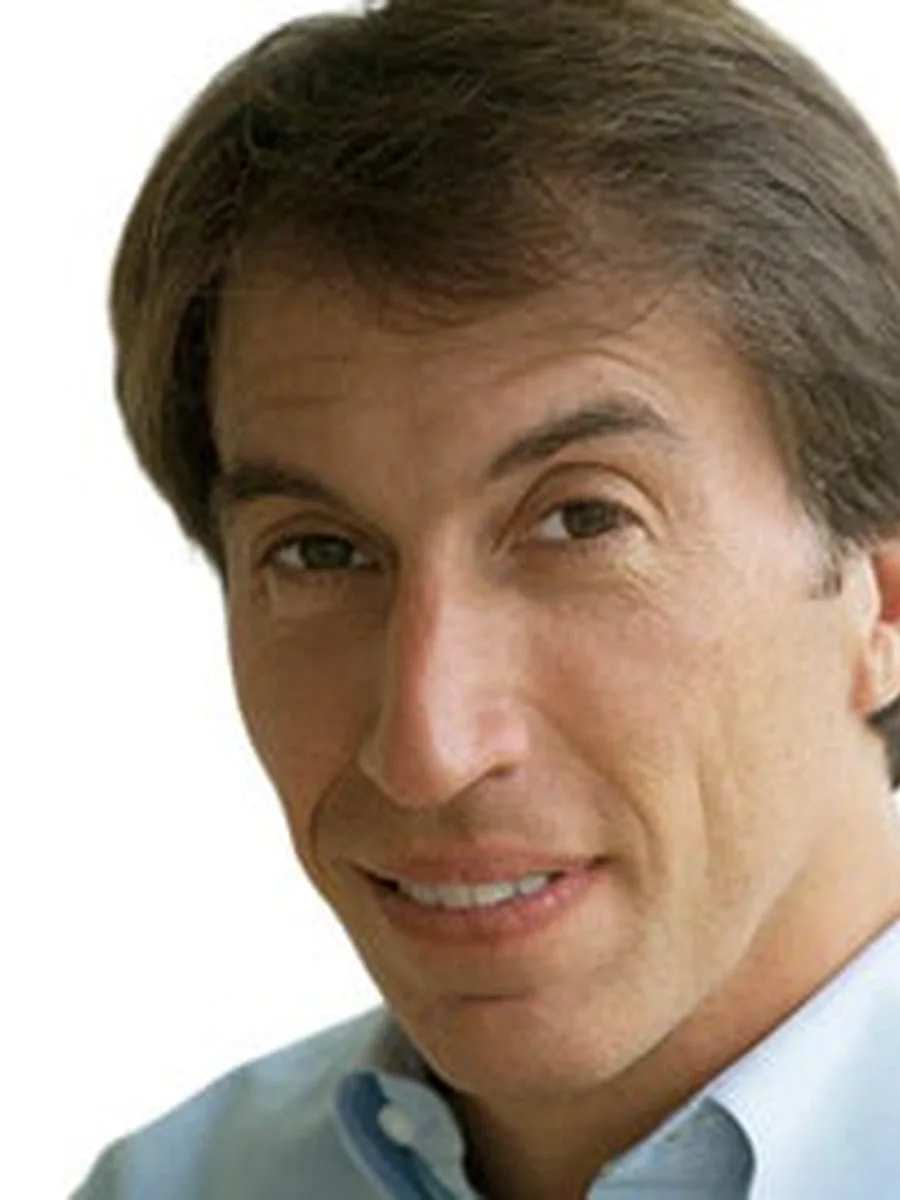
Andy Rachleff
Benchmark co-founder who codified product-market fit and taught venture math at Stanford.
Formative years — finance, computing, and a deliberate move west
[investor-stated · moderate] Rachleff's later origin story begins with a father who ran a small business and three interests at Penn: public technology investing, computer science, and entrepreneurship. After graduating from Wharton in 1980, he worked as a financial analyst at Blyth Eastman Paine Webber and says a Stanford alumnus in the mergers-and-acquisitions department encouraged his plan to enter venture capital. The sources establish his remembered motive, not a contemporaneous process or the unnamed sponsor's causal importance. Startup Field Guide transcript, lines 69–73 · Invest Like the Best, 00:44:23–end · Stanford faculty record, education and professional experience
[contemporaneous record · strong] Stanford then placed him near the venture ecosystem he sought: an M.B.A. in 1984, portfolio-management work at Lamoreaux, Glynn & Associates, an associate role at Harvest Ventures, and a 1986 move to MPAE. The public record is unusually silent about the decisions, mentors, ordinary deals, and losses in those apprenticeship years. That silence is consequential: a later coherent doctrine cannot substitute for the missing formation record. Stanford faculty record, education and professional experience
Edge thesis and falsifiers
[researcher inference · strong] Rachleff's distinctive edge was not a single deal-picking aphorism. It was a linked operating system: look for an external change, seek a non-consensus product insight, demand observable market pull before scaling, concentrate attention where magnitude can dominate frequency, and build institutions that preserve partner equality and founder candor. The doctrine is strongly documented across writing and speech; selected application evidence exists in Ipsilon, CacheFlow, Equinix, Opsware, the Wealthfront pivot, and later Nicira board work. Application evidence is not a compatible return series. talk synthesis · writing synthesis · deal labs
[researcher inference · strong] The favorable reading is that he repeatedly translated market-pull reasoning across venture, operating, teaching, public investing, and philanthropy while preserving some failure evidence. The skeptical reading is that later teaching rationalizes an opaque partnership record: MPAE's full denominator is missing, Benchmark economics were shared, eBay belongs operationally to Bob Kagle, contemporary evidence credits Juniper to Khosla, and no compatible Rachleff-specific return series exists. denominator · skeptical case
Testable form of the edge
| component | bounded claim | observable test |
|---|---|---|
| Mechanism | [researcher inference · strong] External change expands a market; a non-consensus product wedge earns initial pull; staged capital and board context preserve time to learn; concentrated ownership lets a few magnitudes dominate. | In unseen contemporaneous records, expect an identified inflection, customer evidence before growth spending, milestone-linked follow-ons, explicit financing/kill risks, and material fund ownership—not merely a later product/market-fit label. philosophy synthesis |
| Domain and period | [researcher inference · strong] The strongest testable domain is early-stage U.S. enterprise, networking, and infrastructure technology during Rachleff's documented MPAE/Benchmark practice, especially 1994–2004. | Later Wealthfront, teaching, public-equity, career, and philanthropy applications are transfer tests; they cannot validate venture selection alpha because the vehicles, duties, liquidity, and outcomes differ. vehicle boundary |
| Predictions | [researcher inference · moderate] The method should produce repeated first-round or early positions around technical/market inflections, disciplined rejection of growth without pull, active governance through financing stress, and a return pattern dominated by a few attributable cases. | A complete deal/pass ledger should show the screen operating before outcomes, better magnitude or downside-adjusted results than plausible alternatives, and the same criteria applied to failures rather than only winners. retrieval ledger |
| Current support | [contemporaneous record · moderate] Ipsilon supplies a first-round lead; CacheFlow, Equinix, and Opsware supply fund/board evidence; PointCast and NetApp supply adverse/pass evidence; Wealthfront supplies a documented operating pivot. Filing-visible PeopleSupport, JAMDAT, ZipRealty, and other ordinary records add holdings but little decision logic. | Sourcing, IC, board causality, realized returns, and the complete opportunity denominator remain incomplete, so repeatable personal alpha is not proved. attribution map · public exposure ledger · portfolio forensics |
Skill, access, team, vehicle, era, luck, and outlier separation
| explanation | what the record supports | what must not be credited to personal skill |
|---|---|---|
| Skill | [contemporaneous record · moderate] Ipsilon lead attribution, selected board tenures, Wealthfront's documented pivot, and a coherent later doctrine. | The doctrine's consistency does not prove it governed private 1990s decisions or generated excess cash returns. decision labs · spoken frameworks |
| Access | [researcher inference · strong] Stanford, MPAE, Benchmark, Penn, and founder networks supplied privileged deal, talent, and institutional access. | Access may be part of an investable edge, but it is not selection skill and cannot be separated numerically with the public record. chronology · Penn boundary |
| Team | [contemporaneous record · strong] Benchmark used shared managing-member power and equal partnership; Kagle/eBay, Khosla/Juniper, Gurley/OpenTable, founders, and co-investors retain their own credit. | Shared economics, a reporting-person filing, or later firm biography cannot become sole sourcing, diligence, governance, or outcome attribution. decision-rights map |
| Vehicle | [researcher inference · strong] MPAE and Benchmark funds, personal/family holdings, Penn governance, and Wealthfront founder equity created different duration, duty, liquidity, and payoff structures. | Whole-fund LP results, trust holdings, founder paper marks, customer assets, and company consideration are not additive personal performance. vehicle matrix |
| Era and luck | [researcher inference · moderate] The 1990s technology/public-market cycle amplified both rapid marks and financing dependence; later recapitalizations show that demand alone did not determine outcomes. | Surviving public filings are outcome-selected, and macro/public-market availability cannot be assigned to investor causality. historical context |
| Outlier | [researcher inference · strong] Famous Benchmark results are power-law evidence, but eBay is a non-attribution control and the four comparable IPO paper marks lack distributions. | No literal Pareto share or ex-outlier personal result is computable. economic ranking |
The edge thesis would be falsified or materially weakened if:
- complete MPAE/Benchmark deal cash flows showed no repeatable outperformance after removing partner-led outliers;
- contemporaneous IC and board records showed that the public doctrines were absent from his actual decisions or supplied by others;
- a complete opportunity set showed market-pull screens missing winners and admitting failures at no better rate or magnitude than alternatives; or
- operator/founder transfer tests repeatedly failed their own dated product, compliance, fee, benchmark, and customer-retention objectives despite the doctrine being applied as stated.
Verified chronology
- Circa 1958–1959 — upbringing and early interests. Rachleff was 66 in Wealthfront's September 2025 registration statement and Forbes described him as 41 in May 2000, but the public sources inspected do not supply an exact birth date. He later recalled that his father ran a small business and that, while at college, he combined interests in public technology investing, computer science, and entrepreneurship. [investor-stated · moderate] Those recollections establish his later causal account, not contemporaneous proof of formative effect. Wealthfront S-1, “Management,” age table · Forbes profile, Rachleff entry · Startup Field Guide transcript, lines 69–73
- 1980 — University of Pennsylvania. Penn's 2025 resolution identifies him as Wharton class of 1980; an Equinix prospectus reports a B.S. in economics from the University of Pennsylvania. Penn trustee resolution, pp. 3–4 · Equinix prospectus, printed p. 38
- 1980–1982 — Wall Street analyst. Stanford's faculty record places him at Blyth Eastman Paine Webber as a financial analyst. He later said an M&A department leader who had attended Stanford encouraged his venture-capital plan and Stanford application. Stanford GSB faculty record, “Professional Experience” · Invest Like the Best transcript route, 00:44:23–end
- 1982–1984 — Stanford Graduate School of Business. Rachleff moved to Silicon Valley for Stanford GSB and received his M.B.A. in 1984. His retrospective account says proximity to the venture community was an explicit reason for enrolling; that is [investor-stated · moderate], not an independently documented admission motive. Stanford GSB interview, opening biography · Startup Field Guide transcript, lines 69–73
- 1983–1986 — first venture roles. Stanford lists him as portfolio manager at Lamoreaux, Glynn & Associates in 1983–1984 and associate at Harvest Ventures in 1984–1986. The public-record search did not recover fund records, portfolio lists, or a contemporaneous description of either role. Stanford GSB faculty record, “Professional Experience”
- 1986–1995 — Merrill, Pickard, Anderson & Eyre (MPAE). Stanford dates his general-partner tenure to 1986–1995. Contemporaneous Forbes profiles attribute Legato, S3, CATS Software, PointCast, and Ipsilon Networks to him, while Rachleff later described MPAE's generational transition as the immediate institutional backdrop to Benchmark. These routes establish leads, not a complete MPAE denominator or sole-person credit. Stanford GSB faculty record, “Professional Experience” · Forbes, “Buried Treasures,” Rachleff paragraph · Forbes, 2000 venture-capitalist profile, Rachleff entry · Entrepreneurs on Fire transcript, 02:03–04:20
- 1995 — Benchmark Capital formation. Rachleff co-founded Benchmark with Bruce Dunlevie, Bob Kagle, Kevin Harvey, and Val Vaden; David Beirne joined later rather than belonging to the founding five. Contemporary and first-person routes describe an intentionally equal partnership created to counter hierarchical economics at incumbent firms; later filings show shared managing-member power. Which founder originated each design element remains unresolved. Colossus show notes, 00:02:36–07:57 · Val Vaden institutional biography · Forbes, “Boys' Club,” paragraphs 1–3 · Genesys Schedule 13G, filing index and Exhibit 99.B
- 1995–2000 — early Benchmark investment era. Rachleff's biographies name Equinix, Juniper Networks, and Opsware in his firm record; filings independently establish his Equinix and Opsware board roles. Juniper requires narrower attribution: founder Pradeep Sindhu places Vinod Khosla/Kleiner Perkins at origin, the filing shows Benchmark's 625,000 Series C shares at $8.93, and the final prospectus lists no Rachleff board seat. Contemporary Forbes credits Juniper to Khosla, CacheFlow to Rachleff, and eBay to Bob Kagle. The evidence is strong for specified fund positions and board responsibility but does not support converting shared Benchmark economics into sole deal credit. Juniper S-1/A · Juniper final prospectus · Forbes profile · Equinix final prospectus · Opsware proxy
- 1990s–2001 — passes and adverse board exposure. Dave Hitz retrospectively recalls that Rachleff passed on NetApp and described that judgment as having “screwed up”; Hitz says “I think” and labels the firm Benchmark, but the 1992–1994 fundraising chronology predates Benchmark. MPAE is therefore only a likely vehicle by researcher inference, not a recovered rejection memo. A 2000 Penn roster places Rachleff on NorthPoint Communications and CharitableWay boards; NorthPoint entered Chapter 11 and CharitableWay ceased operations. Board presence is exposure—not proof of investment lead, fault, loss, or personal economics. Dave Hitz oral history, p. 3 · Penn roster · NorthPoint 8-K · CharitableWay report
- 2000–2004 — dot-com bust, board work, and retirement. Forbes's 2001 critique reported heavy losses and failures across Benchmark's portfolio, challenging the durability of the firm's first-fund record without allocating each loss to Rachleff. He remained on the boards of Equinix and Opsware through restructuring periods, then completed his Benchmark general-partner tenure in December 2004. Later accounts frame that departure within the firm's planned generational model; the filing controls the employment date, not the motive. Forbes, “Failing Companies Tarnish Benchmark,” paragraphs 6–18 · Equinix 2003 financing release, board paragraph · Wealthfront S-1, “Management,” Rachleff biography · Invest Like the Best, 00:02:36–07:57
- January 2005 onward — Stanford teaching. Rachleff joined Stanford GSB as a lecturer and developed courses on entrepreneurship and product/market fit. The 2025–2026 catalog lists him as instructor of STRAMGT 514; Stanford also catalogs cases he authored or co-authored on Indigo, Serious Materials, OpenTable, Airbnb, and Wealthfront. Stanford GSB faculty record, “Academic Appointments,” “Degree Courses,” and “Cases” · Stanford ExploreCourses, STRAMGT 514
- 2005–2025 — University of Pennsylvania governance. Penn's official resolution says he joined the Board of Trustees in 2005, chaired the Investment Board, served on the Executive Committee and other committees, and became Trustee Emeritus effective June 13, 2025. Committee minutes and manager-selection records remain a high-value but largely nonpublic route; Penn-wide or endowment performance cannot be attributed to him from title alone. Penn trustees minutes, June 13, 2025, “Resolution of Appreciation … and Designation as Trustee Emeritus,” pp. 3–4
- 2007–2011 — MAJ I to kaChing to Wealthfront. The company was incorporated in January 2007 as MAJ I, Inc.; Rachleff's board service and first CEO term began in February. It became Kaching Group Inc. in January 2008 and Wealthfront Inc. in October 2010. Ka-Ching Group registered as an adviser in 2008; the consumer-facing automated-adviser launch followed in December 2011 after several pivots. These legal, operating, registration, and product milestones should not be averaged into one “founding” date. Wealthfront S-1, “Our Corporate Information” and “Management” · SEC Order IA-5086, pp. 1–2 and footnote 2 · Stanford Wealthfront case, case synopsis · Wealthfront launch post, opening sections
- 2013–2016 — first succession and return. Rachleff handed the CEO role to Adam Nash at the start of 2014 and served as executive chairman, then returned as CEO in November 2016. His announcement supplies the founder's rationale; it is not independent evidence that the transition was inevitable or unanimously supported. Wealthfront, “Passing the Baton, Again,” opening through succession section · Wealthfront 2026 proxy, Rachleff biography
- 2018 — entity-level regulatory setback. While Rachleff was CEO, the SEC found that Wealthfront Advisers made false tax-loss-harvesting disclosures, improperly republished testimonials, paid bloggers for referrals without required disclosures and documentation, and lacked adequate compliance procedures. During the measured period, wash sales occurred in at least 31% of enrolled accounts but represented about 2.3% of harvested tax losses. Wealthfront settled without admitting or denying the findings, accepted a censure and cease-and-desist order, and paid a $250,000 penalty. This is [contemporaneous record · strong] evidence about the regulated entity; the order did not charge Rachleff personally. SEC Order IA-5086, pp. 1–7
- 2018–2025 — registered Risk Parity fund controversy and closure. The Wealthfront Risk Parity Fund was a registered mutual-fund product advised within the Wealthfront regulated-entity structure—not Rachleff's personal hedge fund, a Benchmark vehicle, or the subject of SEC Order IA-5086. Wealthfront halved its expense ratio after client backlash and outside critics questioned costs and early performance. On November 4, 2024, the fund filed a supplement stating that its board approved liquidation on Wealthfront Strategies' recommendation, targeting January 15, 2025; Wealthfront later described the liquidation as completed. Those comparisons remain benchmark-, fee-, tax-, and period-dependent. Liquidation documents a product decision, not proof that the ex-ante allocation thesis was false, client-level harm occurred, or Rachleff personally controlled the fund. Fund statutory prospectus · WealthManagement/Bloomberg fee-cut report · Morningstar critique · SEC Form 497 liquidation supplement, November 4, 2024 · Wealthfront completion update
- March 2021 onward — chair rather than operating CEO. David Fortunato succeeded Rachleff as CEO in March 2021; Rachleff remained co-founder, chairman, and director. Wealthfront 2026 proxy, director biographies
- 2022 — proposed UBS acquisition terminated. Wealthfront and UBS agreed in January to a proposed $1.4 billion acquisition, but terminated it in September; UBS instead purchased a $69.7 million convertible note. Wealthfront therefore remained independent rather than becoming a UBS subsidiary. The record supports a proposed transaction, termination, and financing—not a sale, personal exit, or realized return for Rachleff. UBS acquisition announcement, January 26, 2022 · Wealthfront S-1, transaction and debt history
- December 2025–2026 — public-company era. Wealthfront's final prospectus priced its IPO at $14 per share and identifies its Nasdaq symbol as
WLTH; its April 2026 Form 10-K and May 2026 proxy preserve Rachleff's continuing chair/director role. The prospectus and subsequent filings now provide the best public controls for company economics, ownership, legal risks, and related-party boundaries. Wealthfront 424B4, cover and “Management” · Wealthfront 2026 Form 10-K, filing index · Wealthfront 2026 proxy, director biographies
Formation to doctrine — causal audit
The record permits a bounded life → belief → process → action → outcome narrative, but not a seamless hero story. Each link below distinguishes Rachleff's later account, observed conduct, and researcher reconstruction.
| life or institutional input | claimed belief and process | observed action and outcome | causal boundary |
|---|---|---|---|
| A family-business upbringing, public-technology interest at Penn, and a Wall Street analyst role | [investor-stated · moderate] Rachleff says finance, computing, entrepreneurship, and a Stanford-connected sponsor led him toward venture capital. | Stanford supplied geographic and professional access; the recovered record then places him in two junior venture roles before MPAE. | This is retrospective formation evidence. No contemporaneous diary, application, or investing rule was recovered. Startup Field Guide, lines 69–73 · Stanford faculty record |
| MPAE apprenticeship and a later generational transition | [investor-stated · moderate] He says incumbent hierarchy and succession friction motivated a small, equal Benchmark partnership with planned renewal. | [contemporaneous record · strong] Benchmark's founders used shared managing-member power; later interviews and biographies document the equal-partnership design. | The sources support institutional design and later motive testimony, not that Rachleff alone invented it or that it improved returns. Benchmark formation sources · vehicle and decision-rights evidence |
| Ipsilon, PointCast, and the NetApp pass | [investor-stated · moderate] Later accounts distinguish consequential technology from the right product, attention from durable economics, and a focused appliance from an unfocused platform. | The public record preserves one Ipsilon lead, a PointCast position/board exposure, and a hedged oral-history NetApp rejection; it does not preserve the original decision memos. | These cases fit later product/market-fit doctrine, but post-outcome fit is not proof the doctrine governed later winners. failure postmortems |
| Dot-com financing stress at Equinix and Loudcloud/Opsware | [researcher inference · moderate] Product demand is insufficient when capital structure or delivery model threatens survival; stage financing and preserve the product asset when the evidence warrants it. | Rachleff remained a director through restructuring/pivot periods; Equinix survived a severe recapitalization and Opsware sold the hosting business before HP acquired the software company. | Filings document roles, financings, and outcomes. They do not isolate his vote, counterfactual influence, or realized economics. Equinix lab · Opsware lab |
| Stanford teaching after the venture career | [documented behavior · strong] Rachleff codified external change, market pull, value before growth, magnitude over frequency, and context-first governance into courses, cases, essays, and talks. | The doctrine became public, teachable, and falsifiable across founders, careers, portfolios, and boards. | Publication proves codification, not prior use or venture alpha. writing evolution · talk evolution |
| kaChing/Wealthfront customer discovery and operating leadership | [documented behavior · strong] Evidence should invalidate a value hypothesis; organizational context and learning velocity can matter more than a static executive résumé. | Manager/customer evidence preceded an automated-adviser pivot; Rachleff later returned as CEO and publicly described changing his people model. | The pivot and CEO chronology are documented. The quality of every decision, counterfactual alternative, and causal share among co-founder, staff, board, and regulation are not. Wealthfront lab · people-model change |
MPAE to Benchmark — institution before legend
[contemporaneous record · strong] Rachleff's first public investment record is not Benchmark. At MPAE, a contemporary report says he led Ipsilon's $3.5 million first round in November 1994; public records later distinguish MPAE V and personal holdings at CATS and show large MPAE/Benchmark positions at PointCast. An independent UC disclosure reports 5.51x and 46.1% net IRR for its MPAE V LP position through 2003-03-31, but that is one LP's whole-fund result—not Rachleff's personal performance or a deal attribution. Ipsilon evidence · MPAE V control
[investor-stated · moderate] Benchmark's founders describe a small, intentionally equal partnership with shared economics, low title hierarchy, candid debate, board engagement, and planned generational renewal. [researcher inference · moderate] That structure plausibly improved trust and shared access; it also makes individual return attribution unusually difficult. Prospectuses show shared voting power, while contemporaneous company evidence gives active roles to Kagle at eBay, Khosla at Juniper, and Gurley at OpenTable. Forbes firm profile · deal attribution map
Decisions under stress — product, financing, and governance
[contemporaneous record · strong] CacheFlow is the best partial economic record: a substantial Benchmark position, rapid public mark, Rachleff board service, and later position reductions, but no realized distribution ledger. Equinix is the financing counterexample to a clean winner story: demand and network effects survived only through debt restructuring, convertibles, a 32:1 reverse split, dilution, and new governance. Loudcloud/Opsware tests whether a failed delivery model leaves a valuable product asset; the company sold hosting, pivoted to software, and later sold to HP. CacheFlow lab · Equinix lab · Opsware lab
[researcher inference · strong] The adverse record sharpens the doctrine. PointCast had distribution and attention without durable economics; Ipsilon created consequential technology without delivering the right product; NorthPoint and CharitableWay expose board-era bankruptcy/shutdown. NetApp is a person-linked but chronologically hedged pass; Google is a strong firm-level pass without a supported Rachleff rejection. These cases support error categories, not a personal loss rate, because the complete opportunity, capital, and cash-flow denominator is absent. failure matrix
Failures and documented belief changes
| event | lesson or changed belief | evidence boundary |
|---|---|---|
| Ipsilon | [investor-stated · strong] Rachleff later treated Ipsilon as a valuable technology packaged as the wrong product. | The first-round lead and outcome are supported; no dated memo shows when the lesson entered his process. Ipsilon lab |
| PointCast | [investor-stated · moderate] He classified PointCast as a mistake, consistent with attention and distribution failing to become durable economics. | Exposure and adverse outcome are documented; no specific changed rule or later application is documented. PointCast lab |
| NetApp pass | [retrospective witness · moderate] Dave Hitz recalls Rachleff saying the focused appliance should have beaten the broader platform thesis. | Vehicle and exact decision date are unresolved; no lost-return calculation or institutional process change is justified. NetApp lab |
| kaChing manager marketplace | [documented behavior · strong] Weak manager supply and customer value evidence invalidated the marketplace hypothesis and preceded the automated-adviser pivot. | The case supports the pivot sequence, not sole-person causality or the superiority of every subsequent product choice. Wealthfront lab |
| Experienced external executives | [investor-stated · strong] After operating Wealthfront, Rachleff said he changed from preferring experienced outsiders to favoring high-trajectory internal talent in the right context. | This is an explicit later belief change; a comparable outcome series testing the new rule is absent. talk synthesis |
| IA-5086 and Risk Parity | [contemporaneous record · strong] The SEC order and later fund liquidation are adverse entity/product outcomes that constrain a frictionless automation narrative. | Neither record charges Rachleff personally or documents a Rachleff-specific belief/process change; attributing one would be speculation. chronology |
Teacher and operator — doctrine becomes testable
[documented behavior · strong] After leaving Benchmark, Rachleff made the venture doctrine explicit through Stanford teaching, essays, and talks: external change, non-consensus insight, narrow desperate customer, value before growth, and observable product/market fit. [researcher inference · strong] The chronology matters: later precision may be genuine learning and pedagogy, but it cannot be silently projected into private 1990s IC decisions. The origin record supports Don Valentine as conceptual precursor, Rachleff as later namer/developer, and Andreessen as public popularizer—not a sole-inventor story. writing chronology · talk evolution
[documented behavior · strong] Wealthfront turned the framework onto Rachleff himself. Customer/manager evidence invalidated the marketplace value hypothesis and drove an automated-adviser pivot; operating later reversed his stated preference for experienced external executives toward high-trajectory internal talent. [researcher inference · strong] Entity-level SEC findings and the Risk Parity product record show that product pull, founder purpose, and automation do not erase compliance, benchmark, fee, or governance risk. Wealthfront lab · hiring evolution
Strongest case against greatness
[researcher inference · strong] The skeptical thesis is not that Rachleff lacked influence. It is that public doctrine and shared institutional success may be mistaken for individual selection alpha. Stanford, MPAE, Benchmark, Penn, and founder networks supplied access that public evidence cannot separate from selection skill. MPAE's opportunity set is missing; Benchmark's most famous outcome belongs operationally to another partner; contemporary evidence contradicts Andy-only Juniper credit; board service does not establish sourcing or causal intervention; founder stock and company outcomes are not fund returns; and no compatible personal cash-flow series exists. economic boundary · uncertainty ledger
[researcher inference · strong] Surviving filings select for public and acquired companies, famous narratives select outliers, and the 1990s public-financing regime supplied an era effect that cannot be assigned to Rachleff. Equal partnership may itself explain some institutional durability while diffusing personal credit. The favorable and skeptical stories diverge on whether access plus team structure merely created opportunity or Rachleff repeatedly added selection and governance skill after controlling for them; the presently missing IC, board, and cash-flow records are the discriminator. historical and base-rate context · attribution pattern
[researcher inference · strong] The favorable thesis would strengthen with contemporaneous deal/pass memos, partner and board records, complete fund/company schedules, ownership and dilution, distributions, ex-outlier results, and outcome datasets for the career, equity-plan, risk, and product frameworks. Until then, the package treats Rachleff as a highly influential codifier and bounded institutional contributor whose repeatable personal alpha remains unproved.
Identity and scope
- Name variants searched: Andrew S. Rachleff; Andrew Rachleff; Andy Rachleff;
Rachleff Andrew S; occasional misspellingsRackleffandRachcleffwere used only to recover mislabeled interviews. - Era: 1983–2004 venture practice; 2005–present teaching and institutional governance; 2007–present Wealthfront company-building and board governance.
- Geography: New York finance; Silicon Valley/San Francisco Bay Area venture and technology; University of Pennsylvania governance in Philadelphia.
- Vehicle boundary: Lamoreaux Glynn, Harvest Ventures, MPAE funds, each Benchmark fund/management company, Penn endowment governance, Wealthfront corporate equity, and any personal/family-trust holdings are separate evidence universes.
People and institutions
| Person or institution | Relationship to the record | Unresolved attribution or evidence |
|---|---|---|
| Rachleff's father and early Wall Street/Stanford sponsors | [investor-stated · moderate] Family-business influence and a Stanford-connected Wall Street sponsor appear only in later first-person recollection. Startup Field Guide, lines 69–73 · Invest Like the Best, 00:44:23–end | Names, dates, material assistance, and whether the recollection changed across interviews. |
| Bruce Dunlevie | [retrospective witness · moderate] Rachleff describes his Stanford classmate, MPAE colleague, and later Benchmark co-founder as a source of a trust-screening negotiation method. Learning Leader mirror, 00:13:35–00:18:52 | Origin of the equal-economics design; shared versus individual MPAE/Benchmark decisions; outcome evidence for the trust screen. |
| Bob Kagle, Kevin Harvey, Val Vaden, David Beirne | [contemporaneous record · strong] Kagle, Harvey, and Vaden were among the founding five; Beirne joined later. Kagle retains eBay operating/board credit. Forbes, “Boys' Club” · Val Vaden biography · eBay proxy, Kagle biography | Deal sourcing, approval, services, board work, economics, and narration by company. |
| Don Valentine and Sequoia practitioners | [investor-stated · strong] Rachleff credits Valentine with the market-pull concept he later named product/market fit; other practitioners supplied later diagnostics. Floodgate transcript, origin and value-hypothesis turns | Earliest contemporaneous wording, direct observation, and how much is later intellectual reconstruction. |
| Marc Andreessen, Steve Blank, Eric Ries, Greg Cook, and other PMF contributors | [contemporaneous record · strong] Andreessen's 2007 essay credits Rachleff with crystallizing the term; Rachleff later credits Blank/Ries vocabulary and several operators' diagnostics. Andreessen essay, Law/Corollary · Floodgate transcript, origin and heuristic turns | The earliest dated Rachleff use and contribution boundaries among naming, definition, test, and popularization. |
| Ben Horowitz, Marc Andreessen, and the Loudcloud/Opsware team | [contemporaneous record · strong] Benchmark invested and Rachleff served as a director from November 1999; the recovered record does not establish that he sourced or solely sponsored the deal. Loudcloud prospectus, “Management” and “Certain Transactions” | Ex-ante thesis, source, terms, pivot/recapitalization alternatives, individual board votes, and outcome attribution. |
| Jay Adelson, Al Avery, Peter Van Camp, Scott Kriens, and Mike Volpi | [contemporaneous record · strong] Adelson and Avery founded Equinix; the others appear in the operating, financing, or board record alongside Rachleff. Equinix prospectus, “Our Founders” and “Management” · 2003 proxy, management and financing proposals | Who sourced the deal, technical versus market-risk view, rescue financing, dilution, and individual board interventions. |
| Dan Carroll | [contemporaneous record · strong] Wealthfront's filings identify Carroll and Rachleff as co-founders; the kaChing case connects Carroll to the original virtual-investing product. Wealthfront 424B4, “Management” · kaChing pivot case | Respective founder roles, pivot votes, ownership, and Carroll's later separation from operating leadership. |
| Adam Nash and David Fortunato | [contemporaneous record · strong] Nash succeeded Rachleff in 2014; Rachleff returned in 2016; Fortunato became CEO in 2021 while Rachleff remained chair. “Passing the Baton, Again” · Wealthfront 2026 proxy, biographies | Decision rights and board alternatives during each transition; whether founder narration omits contested or performance-driven causes. |
| Burton Malkiel and Penn investment participants | [contemporaneous record · moderate] Wealthfront writing attributes a controllables framework to Malkiel, while Rachleff's Penn service supplied an institutional-access narrative. Wealthfront, “Returns Are Almost Impossible to Predict” · Penn trustee resolution, pp. 3–4 | Which ideas came from Malkiel, Penn, Rachleff, staff, or product teams; Penn governance and performance must not transfer to Wealthfront. |
| SEC and Wealthfront's regulated entities | [contemporaneous record · strong] The SEC order is the external control on Wealthfront Advisers' 2012–2018 compliance record; the fund supplement controls the later Risk Parity liquidation chronology. SEC Order IA-5086, pp. 1–7 · SEC Form 497 supplement | Individual responsibility, remediation, later examinations, and any additional material public-company disclosure. |
| Damon Runyon Cancer Research Foundation and Debra Rachleff | [contemporaneous record · moderate] An official publisher identifies Rachleff as foundation chair and describes a seed-capital program; Penn's resolution records shared family philanthropy with Debra. Timmerman Report, program summary · Penn trustee resolution, pp. 3–4 | Instruments, selection, deployment, failures, follow-ons, recycled proceeds, and whether the investing analogy is Rachleff-stated or researcher-imposed. |
Unresolved biographical and attribution evidence
These questions remain because public evidence is exhausted or the underlying records are private/restricted; they are not unfinished workflow placeholders.
- Which Penn and Stanford courses, professors, or student activities actually shaped his process? The institutions and degree years are documented; the formative-coursework story is not.
- What did Rachleff actually do at Lamoreaux Glynn and Harvest Ventures; which investments, losses, or mentors predate MPAE?
- Can MPAE partnership records reconstruct the complete opportunity and portfolio denominator and distinguish Rachleff from Dunlevie, Harvey, and senior partners?
- Which founder designed each Benchmark institution—equal economics, unanimous/consensus decision rights, no hierarchy, small funds, board service, retirement—and how did practice differ from retrospective story?
- What was Rachleff's own fund-by-fund performance after removing firm-level deals led by other partners, especially eBay?
- For Equinix, Juniper, Blue Coat/CacheFlow, Opsware/Loudcloud, Legato, S3, and CATS, what was known at the decision date, who sourced and approved, what was owned, and who performed board work?
- What happened in Ipsilon, PointCast, and other losses; did any claimed process lesson precede later wins or appear only retrospectively?
- When did Rachleff first use the phrase “product/market fit”? The present map supports Valentine as conceptual precursor, Rachleff as namer/developer, and Marc Andreessen's 2007 essay as popularizer, but not a dated coinage document.
- Who held each decision right during MAJ I/kaChing's 2007–2011 pivots, and how should legal formation, adviser registration, product launch, and later public-story dates be reconciled without compressing them?
- What governance and compliance decisions led to the 2018 SEC order, and what specific remediation followed? The entity order does not allocate personal fault.
- Was Risk Parity's launch, fee design, inclusion in client allocations, and liquidation a failure under the ex-ante objective, and who held each decision right?
- What did the terminated UBS transaction change economically for Rachleff, employees, clients, and the company, and how did it shape the 2025 IPO?
- What Penn endowment decisions can be attributed to Rachleff rather than staff, other committee members, managers, or market regime—and which records are public?
- Which elements of Rachleff's public teaching evolved after his venture career and therefore cannot be treated as rules he demonstrably used while investing?
Sourced chronology and learning path
This final chronology is a navigation aid, not a claim that every later rule governed every earlier decision. [researcher inference · strong] Dates are drawn from the cited records above; causal interpretations remain bounded by the edge thesis and the private-record gaps.
| era | institution and turning point | what the analyst should test next |
|---|---|---|
| 1980–1984 | Wall Street analyst, then Stanford GSB | Whether finance, computing, and entrepreneurship were contemporaneous inputs to a venture method or a later coherent story. Stanford faculty record |
| 1983–1986 | Lamoreaux, Glynn and Harvest Ventures | The missing apprenticeship record: deals, mentors, losses, and role. Stanford faculty record, “Professional Experience” |
| 1986–1995 | MPAE general partner; Ipsilon, CATS, Legato, S3, PointCast | Separate Rachleff-led evidence from whole-fund and board evidence; reconstruct the MPAE denominator. Forbes, Rachleff paragraph |
| 1995–2000 | Benchmark formation and early scale | Test whether equal economics improved decisions, or mainly makes personal attribution harder. Forbes, “Boys' Club” |
| 2000–2004 | Dot-com adversity, recapitalizations, pivots, planned retirement | Reopen CacheFlow, Equinix, Opsware, PointCast, and NorthPoint without hindsight through the decision labs. |
| 2005 onward | Stanford teaching and Penn investment governance | Distinguish doctrine learned in practice from doctrine formalized after the fact. Stanford faculty record |
| 2007–2011 | MAJ I / kaChing pivots into Wealthfront's automated adviser | Test whether manager-marketplace evidence genuinely falsified the value hypothesis. Wealthfront case |
| 2014–2021 | CEO succession, return, compliance setback, later chair transition | Compare stated context-first governance with public entity outcomes and missing board records. SEC Order IA-5086, pp. 1–7 |
| 2022–2026 | UBS proposal terminated; convertible note; public-company era | Keep proposed sale, financing, IPO paper mark, ownership, and realized proceeds separate. Wealthfront 424B4 |
Recommended order through the curriculum:
- Begin with the written record and spoken record to see what Rachleff actually stated and how it evolved.
- Use the searched denominator, three Pareto views, and no-hindsight labs to test doctrine against decisions and outcomes.
- Read the operating system for synthesis, vehicle constraints, comparisons, checklists, and the skeptical case.
- Apply the mental-model field guide only after preserving its provenance, counterexamples, and modern transfer conditions.
- Finish with the strongest skeptical case, then use the unresolved-evidence ledgers to decide which conclusions remain provisional.
1. Snapshot and testable edge thesis
| dimension | evidence-bounded answer |
|---|---|
| Person, firms, and roles | Andrew S. Rachleff; Lamoreaux Glynn and Harvest apprenticeship; MPAE general partner; Benchmark co-founder and founding partner; later Stanford lecturer, Penn trustee/investment-committee chair, Wealthfront co-founder/CEO/chair, and personal/family investor. These are distinct roles and evidence units. Stanford faculty record, Professional Experience and Academic Appointments · Wealthfront 2026 proxy, director biography |
| Era and domain | Venture practice from 1983–2004, concentrated in U.S. enterprise software, networking, and infrastructure; teaching, institutional governance, fintech operation, and selected personal investing thereafter. The public company record overrepresents filing-visible successes. searched denominator |
| Proposed edge | Identify a dated change, form a proprietary non-consensus product insight, find a narrow desperate customer, prove value before growth, and concentrate behind magnitude while using staged capital and candid governance. [researcher inference · strong] |
| What is personal | The doctrine, selected sourcing/board evidence, the Ipsilon lead, CacheFlow attribution, Equinix and Opsware board service, the Wealthfront pivot, and later Nicira participation. deal attribution pattern |
| What is not personal | Partner-led sourcing, shared Benchmark economics, founder execution, MPAE/LP capital, company transaction values, Penn assets, Wealthfront customer/fund assets, and favorable era or public-market timing. [researcher inference · strong] |
| Performance status | Process evidence is substantial; repeatable Rachleff-specific alpha is unproved because complete opportunities, ownership, distributions, fees, carry, and compatible benchmarks are unavailable. portfolio forensics |
[researcher inference · strong] Rachleff's most defensible edge is a linked decision system: detect external change, form a proprietary non-consensus product insight, locate a narrow desperate market, demand observable pull before scaling, and concentrate time/capital where magnitude can dominate frequency. Equal partnership, founder candor, written context, and staged capital are institutional supports—not substitutes for the product/market test. This is strongly supported as doctrine and selectively supported in behavior; repeatable personal alpha remains unproved. profile thesis · talk synthesis · deal labs
| test | falsifiable statement |
|---|---|
| domain | Best suited to early technology markets created by an inflection, where product truth can appear before complete financial history. |
| mechanism | Non-consensus insight creates potential asymmetry; narrow customer pull tests correctness; staged financing protects against scaling the wrong value hypothesis. |
| predictions | Supported cases should show a dated change, differentiated insight, pull evidence, milestone capital, material ownership/governance, and explicit response to disconfirming evidence. |
| strongest alternative | Access, partner judgment, founder execution, public-market timing, team economics, and outlier luck may explain outcomes as well or better than Rachleff-specific selection. |
| overturning evidence | Complete opportunity/cash-flow records showing no ex-outlier edge, or contemporaneous memos showing the public doctrine was absent, supplied by others, or ineffective in ordinary cases. |
2. Core philosophy
[investor-stated · strong] The core sequence is change → proprietary insight → narrow market → value hypothesis → growth hypothesis. Rachleff attributes the conceptual precursor to Don Valentine's market-first practice, later developed and named product/market fit, while Marc Andreessen's 2007 essay popularized the term. The surviving record does not establish a dated coinage document or sole intellectual authorship. Pattern Breakers transcript, origin and value/growth passages · Andreessen essay note
- Markets pull products. [investor-stated · strong] Prefer important technical risk inside a market made possible by change; do not ask sales to manufacture demand. Pattern Breakers
- Non-consensus is necessary but insufficient. [investor-stated · strong] Disagreement is knowable before the decision; correctness is not, so the claim needs a falsifier and market test. Pattern Breakers, Howard Marks matrix
- Magnitude can dominate frequency. [investor-stated · strong] Venture outcomes and experiments can tolerate many bounded failures when a few successes dominate; solvency and customer-harm constraints are analyst additions. TechCrunch 2020, product-memo discussion
- Evidence must control story. [researcher inference · strong] A famous company, board seat, shared fund position, IPO mark, or retrospective lesson is not proof of personal decision quality or return. deal denominator
3. Sourcing
[researcher inference · moderate] The public record supports relationship- and institution-mediated access—Stanford, MPAE, Benchmark partners, founders, boards, Penn, teaching, and later personal investing—but no complete source funnel. Benchmark's equal partnership widened shared networks while obscuring individual origin. profile people map · Forbes firm profile
- Start with an inflection map. [investor-stated · moderate] Search where technology, regulation, distribution, or behavior changes what is newly possible. Investor + Operator, 20:52–22:50
- Use trusted networks without confusing referral and judgment. [researcher inference · strong] Record referrer, source, sponsor, diligence, approval, board, ownership, and narration separately. eBay/Kagle, Juniper/Khosla, and OpenTable/Gurley are controls. decision-rights map
- Teach and advise as learning routes. [documented behavior · moderate] Stanford cases and founder conversations create access to operating patterns, but they do not prove an investment or proprietary insight. Stanford faculty record
Funnel audit. [researcher inference · strong] A repeatable sourcing system would record introducer, originating partner, relationship basis, proprietary information, conflicts, sponsor, rejection reason, and later false-negative review. No surviving Rachleff funnel publishes inbound volume, cold-versus-warm mix, conversion rate, or partner-level source attribution; network access is therefore an advantage hypothesis, not measured selection skill. searched denominator and route boundary
4. Picking
[researcher inference · strong] Picking is a sequence of gates, not a charisma score. The public doctrine puts market/product evidence before growth while preserving founder quality, candor, learning speed, and recruiting as necessary company-building conditions. decision playbook · career and PMF synthesis
| gate | analyst test |
|---|---|
| founder insight | What does the founder know that capable consensus misses, and what observation would disconfirm it? |
| change | Which dated external shift makes the product possible or necessary now? |
| market pull | Which narrow users adopt organically, yield productive enterprise sales, or would be deeply disappointed by withdrawal? |
| product/company bridge | Can a technical breakthrough become a standardized, buyable product with repeatable distribution and viable unit economics? Ipsilon is the adverse case. |
| risk split | Separate technical, product, market, financing, regulatory, governance, and security risk; a good market does not erase capital intensity. |
Decision rights and red flags. [researcher inference · strong] A gate can recommend but not reveal who decides. The available filings often show shared managing-member power; they rarely identify source, sponsor, dissent, negotiator, or vote. Kill or stage a case when customer pull is paid or episodic rather than organic, the technical advance cannot become a standardized product, capital intensity outruns the next financing, unit economics worsen with scale, governance hides disconfirming evidence, or the thesis cannot name a falsifier. PointCast, Ipsilon, Equinix, Loudcloud/Opsware, NetApp, and Google keep those red flags from becoming winner-only rules. decision-rights map · failure and anti-portfolio postmortems
5. Deal and portfolio mechanics
The recoverable mechanics are case-specific. They support a disciplined reconstruction, not a universal Benchmark term sheet or a personal return series.
| mechanic | what the record supports | decision use and hard boundary |
|---|---|---|
| Ownership | Filing-visible pre-offering positions were material: CacheFlow 16.6%, Equinix 16.5%, Opsware 19.5%, and CATS 9.9% at the relevant snapshots. The holder was normally an MPAE or Benchmark entity, with shared managing-member power and beneficial-ownership disclaimers. CacheFlow final prospectus, Principal Stockholders · Equinix final prospectus, Principal Stockholders · Opsware final prospectus, Principal Stockholders | [researcher inference · strong] Material ownership can make board work and follow-ons worth the fixed attention cost, but four public cases cannot establish a target range. Record issuer, fund, manager, partner, trust, and personal ownership separately. |
| Price discipline | Round prices permit analyst arithmetic for CacheFlow, Equinix, Opsware, and Juniper; no source publishes a general valuation ceiling, return target, or ownership-versus-price curve. economic ranking and methodology | [researcher inference · strong] Write the return case at the security level, then sensitivity-test dilution, timing, follow-ons, and exit. Do not infer discipline merely because a later mark was large. |
| Security and terms | Preferred rounds, registration rights, shared voting power, direct trust holdings, and public-company options appear. Liquidation preferences, anti-dilution, pro rata, board vetoes, protective provisions, and option-pool negotiations are mostly absent from the public record. Juniper S-1/A, Series C and registration-rights tables · CATS proxy, Security Ownership | [researcher inference · insufficient public record] Use company-specific documents. No “Rachleff standard terms” can be reconstructed. |
| Staging and reserves | Multiple rounds are visible at CacheFlow, Equinix, and Opsware; Equinix also required rescue financing after the bubble, and Loudcloud sold its hosting business before becoming Opsware. Equinix 2003 proxy, Proposal No. 2 · Loudcloud 2002 Form 8-K, Item 5 | [researcher inference · strong] Stage the next check against customer, product, margin, and financing evidence. Reserve ratios, refusal decisions, opportunity cost, and partner votes remain unknown. |
| Concentration | Rachleff repeatedly describes venture outcomes as magnitude-driven; the filing set shows several large positions, while Forbes reported a dominant eBay mark credited to Bob Kagle. Complete MPAE/Benchmark cash flows do not exist publicly. VC Economics Part 1 · Forbes profile, eBay/Kagle and Rachleff entries | [investor-stated · strong] for doctrine; [researcher inference · insufficient public record] for actual portfolio construction. Concentrate only when loss remains survivable and ownership, reserves, and governance can be serviced. |
| Follow-ons and stop decisions | Follow-ons and recapitalizations are visible, but the record rarely discloses why a partnership doubled down, stopped, distributed, or sold. PointCast, NorthPoint, CharitableWay, and Ipsilon expose adverse outcomes without complete capital-response records. failure postmortems | [researcher inference · strong] Pre-register the next-check milestone and a stop rule. Absence of another public filing is not evidence of disciplined abandonment. |
| Exits and liquidity | IPO prices, tender offers, acquisitions, trust positions, and a terminated UBS proposal are public. Sale dates, distributions in kind, lockups, taxes, and personal proceeds usually are not. CacheFlow 2000 and 2001 13Gs · UBS termination announcement | [researcher inference · strong] A company event is not an investor return. Freeze security, owner, shares, basis, dilution, cash-flow date, fee/carry treatment, and benchmark before using an exit in performance analysis. |
Economics and the denominator. [contemporaneous record · strong] The best independent fund-level control is UC Regents’ MPAE V row as of March 31, 2003: $10 million commitment, $9.658 million cash in, $52.892 million cash out, $345,000 NAV, 5.51x, and 46.1% net IRR, with valuation/comparability caveats. It is one LP’s whole-fund result, not a deal return or Rachleff personal performance. UC Regents report, MPAE V row and footnotes 1–3
Portfolio conclusion. [researcher inference · strong] The observed mechanics fit a high-ownership, board-engaged, follow-on-capable venture style, but selection and filing bias are severe. The 27 public exposure families include ten unresolved records and exclude unknown opportunities, write-offs, and passes. No literal Pareto split, hit rate, DPI, TVPI, MOIC, IRR, or personal alpha is computable. denominator reconciliation · portfolio forensics
6. Vehicle and incentive fit
Vehicle boundaries are causal. The same person can behave differently as an LP-funded partner, equal-economics co-founder, trustee, direct investor, corporate founder, regulated-company officer, or public-company chair.
| required dimension | MPAE, 1986–1995 | Benchmark, 1995–2004 active tenure | personal/family and Wealthfront | synthesis |
|---|---|---|---|---|
| Capital source and legal form | External-LP venture partnerships and an institutional portfolio are documented; exact fund capitalization is incomplete. NewSchools MPAE history | Multiple limited partnerships and founders’ funds were controlled through management entities. CacheFlow prospectus, ownership footnotes | Trusts can hold direct purchases, distributions, gifts, or founder equity. Wealthfront corporate equity is separate from adviser, brokerage, mutual-fund, and client assets. Wealthfront 424B4, Corporate Structure | [researcher inference · strong] Never pool these capital sources or call a trust filing a venture check without acquisition evidence. |
| Duration and fundraising pressure | Fund life, extensions, recycling, and fundraising cadence are unknown. | Fund duration and pressure on specific follow-on/exit decisions are unknown. | No closed-end clock is established for trusts. Wealthfront founder exposure ran from 2007 formation through a 2025 IPO, but founder liquidity needs are unknown. | [researcher inference · moderate] Long duration can enable iteration only when reserves and stakeholders tolerate it; duration does not excuse unbounded support. |
| Compensation and carry | Fees, carry, vesting, and Rachleff allocation are unknown. | Contemporary reporting describes equal sharing of profits; fee/carry rates, vesting, realization, and deal credit remain unavailable. Forbes, Benchmark partnership structure | Trust economics and beneficiaries are private. Wealthfront salary/equity compensation is issuer-specific. | [researcher inference · strong] Equal economics may reduce internal scorekeeping, but they make firm outcomes especially unsafe to attribute personally. |
| Governance and decision rights | GP roles appear in filings; check authority, quorum, veto, and vote records do not. | Shared voting/dispositive power and a non-hierarchical self-account are public. Source, sponsor, diligence, negotiation, dissent, and vote remain case-specific. OpenTable prospectus, Benchmark control footnote | A trustee can vote without having selected the original investment. Wealthfront officers, board, and regulated subsidiaries have corporate/statutory duties rather than Benchmark IC authority. | [researcher inference · strong] Build a responsibility ledger before assigning skill or blame. |
| Geographic and stage authority | Formal mandate is unknown; observed cases skew U.S. technology. | Formal geography/stage mandate is unknown; filings show early and follow-on technology rounds. | Personal cases are opportunity-selected. Wealthfront permissions arise from corporate and regulatory scope. | [researcher inference · insufficient public record] Observed concentration is not a contractual mandate. |
| Liquidity, reserves, and follow-ons | Reserve policy, distribution in kind, and LP liquidity are unknown. | Repeated rounds are visible; reserve ratios, rejected follow-ons, recycling, and distribution policy are not. | Position-specific sales, gifts, trust distributions, and lockups are normally unknown; no Rachleff Wealthfront sale was established. | [researcher inference · strong] Model both company runway and vehicle runway; a good company can still exceed fund capacity. |
| Regulation and stakeholder incentives | Partnership constraints are unavailable; LP and portfolio-company duties remain distinct. | Issuer-board duties differ from fund duties; no public partnership agreement fixes conflicts. | Adviser, brokerage, registered fund, corporation, customers, employees, and public shareholders are separate stakeholders. SEC Order IA-5086 concerned Wealthfront Advisers, not Rachleff personally or Risk Parity. SEC Order IA-5086, Sections II–IV | [contemporaneous record · strong] Product quality includes compliance, disclosure, and customer outcome, not merely adoption. |
| Succession and key-person continuity | MPAE succession terms and key-person clauses are unknown; Rachleff left for Benchmark in 1995. | Rachleff left active venture practice in 2004 under a stated generational model; formal clauses and post-departure economics are unknown. Wealthfront 424B4, Rachleff biography | Wealthfront CEO transitions in 2014, 2016, and 2021 are public; decision process and economic effects are incomplete. | [researcher inference · moderate] An institution should survive a star partner or founder, but the public record does not prove that every transition was planned or costless. |
Why the design may have helped. [researcher inference · moderate] A small equal Benchmark partnership plausibly widened shared access, reduced title conflict, and allowed the partner nearest a company to work without a deal-specific compensation penalty. The same design obscures individual causality and can socialize both outlier luck and mistakes. The partnership agreement, capital accounts, votes, reserve policy, and attribution ledger needed to test the mechanism remain private. The Scoop, Benchmark partnership exchange · Forbes partnership profile
Modern-vehicle boundary. [researcher inference · strong] The supported contrast with a current multi-stage platform is organizational only: Benchmark’s public story emphasizes a small equal partnership, while a platform may separate fund sleeves and operating functions. No current platform’s fee, carry, reserve, decision, or liquidity terms are in this research record, so no economic superiority claim is made.
7. Team attribution and work with founders
Responsibility map
| actor | supported contribution | credit boundary |
|---|---|---|
| Rachleff | MPAE partner; Benchmark co-founder/managing member; Ipsilon first-round lead; CacheFlow contemporary attribution; Equinix/Opsware and later Nicira directorships; Wealthfront founder/CEO/chair; later teacher and narrator. Red Herring Ipsilon account · Nicira Form D, Item 3 | Source, sponsor, vote, negotiation, recruiting, follow-on, exit, carry, and proceeds remain unknown unless a case says otherwise. |
| Benchmark partners | Bruce Dunlevie, Bob Kagle, Kevin Harvey, Val Vaden, and later David Beirne shared institutional governance. Contemporary evidence assigns eBay active work to Kagle; Juniper’s origin to Khosla/Kleiner; OpenTable’s active work is not Rachleff’s. Forbes deal attributions | Equal economics do not mean equal labor, source, or board credit. Firm “we” is not an individual action. |
| Founders and executives | Founders supplied the proprietary insight, product, customers, hiring, and operating execution; management carried the craft authority Rachleff later said investors lack. Lean Startup interview | Investor questions, capital, and board work do not create the company or justify sole outcome credit. |
| Co-investors and later owners | Kleiner funded Juniper before Benchmark; a16z joined Nicira; public buyers and rescue financiers changed outcomes. | Later company value cannot be allocated backward without security-level cash flows. |
| Wealthfront team and regulators | Dan Carroll, Adam Nash, David Fortunato, Burton Malkiel, research/product/compliance teams, the board, and regulated entities share the company record. Wealthfront S-1, Management and Corporate Information | Rachleff’s founder narrative cannot absorb team authorship, subsidiary duties, or entity findings. |
How to work with founders
- Create context, then ask rather than command. [investor-stated · strong] Rachleff’s board account favors strategic questions, intellectual honesty, and humility. 20VC-derived board summary
- Write context and delegate craft decisions. [investor-stated · moderate] Learning Leader supports written context, trust, and delegation; the operating record taught him that investing and company building are different crafts. Learning Leader official notes · Investor + Operator, 18:18–22:50
- Expose wishful thinking early. [researcher inference · strong] A board should force the value hypothesis, disconfirming evidence, financing runway, and alternatives into the room before a growth plan. PointCast, Equinix, and Loudcloud show why demand, finance, and delivery economics need different questions. decision labs
- Match people judgment to role and stage. [investor-stated · moderate] Rachleff later reversed his venture-era preference for experienced external executives, favoring high-trajectory internal promotion after operating Wealthfront. That is a dated change, not a universal anti-experience rule. TechCrunch 2020, external-hiring discussion
- Define escalation separately. [researcher inference · strong] Question-led governance does not specify what happens at insolvency, compliance failure, customer harm, succession conflict, or a reserved decision. Before investing, write board intervention triggers, information rights, recusal/conflict rules, and who can stop funding.
Attribution discipline. [researcher inference · strong] For every case, record eight verbs independently: introduced, sourced, sponsored, diligenced, approved, negotiated, governed, and exited. Then record security owner and economic beneficiary. This prevents board tenure, shared GP control, a publisher biography, or later narration from becoming sole credit. deal-specific decision-rights map
8. Views on the craft
- Power law. [investor-stated · strong] Venture success depends more on magnitude than frequency; a few exceptional companies can dominate. Boundary: Rachleff’s old estimates and Benchmark figures cannot be reproduced from a complete opportunity/cash-flow set, and operating experiments require loss, solvency, and customer-harm limits. NGPF interview · TechCrunch 2018 exceptional-company estimate
- Fund size and attention. [researcher inference · moderate] The doctrine implies capital should not outrun access to exceptional opportunities or partner capacity, but no Rachleff source supplies a universal fund-size formula. The small equal partnership is organizational evidence, not proof of optimal size. Forbes Benchmark profile
- Access versus selection. [investor-stated · strong] Premier venture and alternative-asset outcomes are access-constrained, so category-average exposure can be unattractive. Countercase: angel and active-management claims remain sample-, factor-, benchmark-, and investability-sensitive; access can explain the opportunity set without proving better choice within it. Angel essay · 2026 alternatives essay · Wiltbank rebuttal
- Governance. [investor-stated · strong] Great boards supply strategic context, candid questions, humility, and relevant pattern recognition without usurping operators. Boundary: contribution requires a named intervention and counterfactual, not a title; the record is thin on escalation and adverse board decisions. TechCrunch board summary
- Exits. [researcher inference · insufficient public record] No universal sell, distribute, hold, acquisition, or IPO doctrine survives. CacheFlow’s shrinking 13G position does not distinguish sale from LP distribution, Opsware lacks exit-date ownership, and the UBS agreement was terminated. CacheFlow 13G/A, Items 4–5 · UBS termination
- Great investor. [researcher inference · strong] The best supported definition is: reach differentiated opportunities, form a falsifiable non-consensus insight, distinguish technical possibility from a buyable product, test market pull before scaling, earn material ownership, preserve reserves and candid governance, update after disconfirmation, and attribute work honestly. The last condition is an analyst safeguard forced by the partnership record, not a Rachleff maxim.
- Humility about adjacent craft. [investor-stated · strong] Investing, operating, teaching, endowment governance, and philanthropy can share decision logic but require different expertise, stakeholders, and metrics. Rachleff’s admission that operating changed his people model is evidence that pattern recognition can be incomplete. TechCrunch 2020 · The Long Run, science-funding program
9. Signature bets and decision process
Use the frozen-date labs rather than the outcome. Each lab forces invest/pass, kill criteria, ownership/terms, and next-check milestones before revealing what happened.
| lab | decision to replay | why it belongs in the operating system | evidence boundary |
|---|---|---|---|
| CacheFlow | Does web-traffic growth create a durable caching-appliance control point, and what repeat-order/margin evidence unlocks each check? | Tests inflection, material ownership, staged capital, platform risk, and follow-on discipline. | [contemporaneous record · moderate] for entry record; actual Benchmark vote, protections, and distributions are unknown. |
| Equinix | Can an interconnection/data-center thesis survive the capital required before network effects and utilization mature? | Forces the analyst to underwrite the next financing, dilution, debt, and rescue path rather than terminal demand alone. | [contemporaneous record · strong] for financing/board record; [researcher inference · moderate] for Rachleff’s causal contribution. |
| Loudcloud/Opsware | If hosting economics fail, are software assets and customer learning valuable enough to fund a pivot? | Separates customer need from delivery-model economics and makes salvageable assets explicit. | [contemporaneous record · strong] for pivot/outcome; board alternatives, dissent, and exit-date ownership are unknown. |
| PointCast failure | Is a large audience evidence of durable engagement, monetization, and financing optionality? | Required failure lab for distinguishing attention from product pull and for testing strategic-offer claims. | [researcher inference · strong] for lesson; executable offer, cap table, board vote, and loss allocation are missing. |
| Ipsilon failure | Does an important switching innovation become a standardized product customers can buy, deploy, and expand? | Tests the technical-market/product-company bridge and follow-on response. | [investor-stated · strong] for the later lesson; MPAE ownership, board work, and capital response are incomplete. |
| Wealthfront pivot | When customer discovery rejects the manager marketplace, should the team pivot to automated passive advice? | Best documented application of value-hypothesis failure before growth scaling. | [documented behavior · strong] for pivot; internal memos, alternatives, cohort economics, and complete decision rights are missing. |
| Nicira | Does network virtualization need more time to prove a new market, or is “patience” masking weak demand? | Tests inflection, non-consensus insight, enterprise proof, board patience, and personal-versus-fund boundaries. | [retrospective witness · moderate] for doctrine; check, security, ownership, and return are unknown. |
| NetApp anti-portfolio, with Google as a thin firm-level control | Is a narrow appliance or strange wedge structurally small, or the entry point to a large market? | The NetApp lab preserves a witness-reported rejection and specific category-prior lesson without calculating fictional foregone returns; Google remains a separate pass with undisclosed reasons and no person-level decision evidence. | [retrospective witness · moderate] for NetApp; [investor-stated · strong] for Benchmark’s Google pass; both vehicle/decision records remain incomplete. |
Lab protocol. [researcher inference · strong] Hide company name and outcome; freeze date, available product/market/financing facts, source/decision owner, and unknowns; write the non-consensus claim, disconfirmation, alternatives, security/ownership, loss budget, and next milestone; vote; then reveal the sourced outcome and score the process rather than the company’s later fame. all labs
10. Mental models and maxims
The mental-model field guide reconciles the corpus into exactly nine reusable models. Each model below links to the matching field-guide heading; supporting heuristics are folded into their parent procedure rather than counted as separate maxims.
- Start with an inflection and a falsifiable non-consensus wedge. [investor-stated · strong] Date the external change, state what the market gets wrong, identify the narrow desperate customer, and define what would falsify the wedge. This merges change detection, non-consensus logic, narrow-market entry, technical-to-buyable-product discipline, and corporate/incumbent complementarity as a boundary test rather than a standalone model. Investor + Operator, 18:18–22:50 · Pattern Breakers, non-consensus and target-market passages · Ipsilon adverse control · VC Economics Part 5, corporate-partnership boundary
- Prove value before growth and stage capital against product-market fit. [investor-stated · strong] Test whether a defined customer urgently wants the value before scaling acquisition; use business-model-specific pull evidence and fund only the next proof point. This folds market pull, the value/growth sequence, consumer/enterprise/withdrawal diagnostics, adoption slope as supporting evidence for inflection and fit, and stage-gated financing into one operating rule. Fast Company PMF essay · Pattern Breakers, diagnostic passages · VC Economics Part 4, adoption and niche-market sections · TechCrunch 2018, funding exchange
- Optimize magnitude, not hit rate—but budget loss and report ex-outlier results. [investor-stated · strong] Seek outcomes large enough to matter rather than a cosmetically high batting average. Loss budgets, solvency/customer-harm limits, ownership/service capacity, reserve pacing, and ex-outlier reporting are necessary analyst controls because public doctrine does not supply a complete portfolio denominator. TechCrunch 2020, failure-and-magnitude discussion · UC Regents MPAE V report · searched denominator [researcher inference · strong] for the controls.
- Pass the access–transparency–incentive gate or use the passive default. [investor-stated · strong] Active exposure is defensible only when exceptional access, inspectable evidence, aligned incentives, fees, taxes, liquidity, benchmark, and horizon survive scrutiny; otherwise prefer diversified passive exposure. This reconciles rather than erases Rachleff's elite-active and retail-passive positions. Angel-access essay · 2026 alternatives restatement · fees essay
- Define the unit, denominator, and benchmark before judging the result. [investor-stated · strong] Specify whether the claim concerns company consideration, security value, trust holdings, deal cash flow, fund cash flow, or personal proceeds; then define time, fully diluted ownership, fees/carry, taxes, liquidity, and the comparison benchmark. Ownership, dilution, financing-path, and return-metric heuristics live here as measurement fields, not standalone models. What's Your Investment Return · stock-option questions · vehicle reconciliation
- Optimize for behaviorally survivable risk, not theoretical maximum return. [investor-stated · strong] Combine willingness, financial capacity, and observed behavior; precommit allocation, horizon, and change rules before stress. Career-downside and sinking-ship tests belong here only when they specify survivability and an action threshold. Why Risk Tolerance Matters · Following the Rules · Sinking ship
- Encode recurring judgment into inspectable rules, incentives, and feedback loops. [researcher inference · strong] Rachleff directly describes rules-based investing, recurring equity grants, research/engineering integration, software innovation rate, data feedback, and automation. [investor-stated · moderate] Wealthfront Equity Plan · Following the Rules · innovation-rate essay · data-feedback essay Treating those component practices as one inspectable system of inputs, owners, incentives, update cadence, feedback, exceptions, and rollback is the merged researcher model, not a verbatim Rachleff formulation. [researcher inference · strong]
- Govern through decisive questions and context, with explicit escalation triggers. [investor-stated · strong] A board should supply strategic questions and context while leaving craft to the founder; insolvency, compliance, customer harm, security, succession, and conflict require explicit escalation. Equal-partnership economics and succession, bounded trust screens, attribution, and decision rights are governance conditions within this model. TechCrunch board summary · Learning Leader notes · Benchmark structure and succession account · SEC Order IA-5086 [researcher inference · strong] for the escalation completion.
- Allocate human capital to trajectory, not title, prestige, or a static résumé. [investor-stated · strong] Evaluate market, unfair advantage, role fit, learning rate, internal evidence, and fully diluted equity; distinguish a reusable selection process from annual company lists. Rachleff's 2020 preference for high-trajectory internal promotion over externally prestigious experience is the clearest dated belief change. How Do I Choose Where To Work · TechCrunch 2020 · stock-option questions
Merge and exclusion ledger. [researcher inference · strong] Models 1–2 absorb opportunity formation and PMF: corporate/incumbent complementarity is a boundary test under model 1, while adoption slope supplies evidence for models 1–2 rather than a separate law. Models 3–5 absorb portfolio, access, financing, ownership, and measurement controls. Models 6–9 absorb behavioral, institutional, governance, incentive, and career rules: software rate-of-innovation and data feedback sit under model 7, while equal partnership, succession, bounded trust, attribution, and decision rights sit under model 8. Generic curiosity, storytelling, diversification, “AI,” universal fund-size or exit laws, a universal founder-personality profile, and a Penn-endowment model are excluded because the corpus supplies no distinct falsifiable procedure owned and repeatedly applied by Rachleff. Anti-portfolio review, price, terms, reserves, dilution, and benchmark choice remain required fields or boundary tests inside the nine models, not extra models.
11. Evolution and contradictions
| period | dated position or behavior | durable element, shift, or unresolved tension |
|---|---|---|
| 1986–2004 venture practice | Filing and board evidence shows enterprise/network investment, material positions, follow-ons, pivots, and failures; most named doctrine was recorded later. deal chronology | [researcher inference · strong] Do not back-project the polished PMF system into every MPAE/Benchmark decision without contemporaneous memos. |
| 2007 public PMF lineage | Andreessen publicly credits Rachleff with the term and says the idea was based on Valentine’s market-first approach. Product/market fit section | [contemporaneous record · strong] Valentine precursor, Rachleff naming/development, and Andreessen popularization are separate attribution layers; first Rachleff usage remains unknown. |
| 2007–2010 manager marketplace | kaChing sought to identify skilled active managers; 2010 writing still allowed proven tactical ETF managers. kaChing pivot case · ETF essay | [documented behavior · strong] Customer discovery and manager-evaluation evidence later rejected the original value hypothesis. |
| 2011 active/endowment claim to automated passive launch | Rachleff argued elite active/endowment access could beat simple indexing, then launched an automated diversified adviser. Bogle response · Wealthfront launch | [researcher inference · strong] This is a genuine change at the retail-product level, not proof that all active investing is impossible. |
| 2012–2014 explicit decision systems | Risk scoring, career screens, fully diluted equity, return metrics, venture-economics essays, and annual company lists turn heuristics into named procedures. writings chronology | [researcher inference · strong] Measurement specificity improves; published validation denominators remain weak. |
| 2015–2018 rules, data, and proprietary products | No asset-class timing, behavior-adjusted plans, research teams, data feedback, and automation coexist with Risk Parity and adviser compliance failures. Following the Rules · SEC Order IA-5086 | [researcher inference · strong] Rule-based intent does not guarantee compliant execution; Risk Parity is a separate product record from IA-5086. |
| 2020 operating-driven people reversal | Rachleff says operating experience changed his preference from experienced external executives toward high-trajectory internal promotion. TechCrunch 2020 | [investor-stated · strong] Clearest belief change; no matched hiring-outcome dataset validates it. |
| 2021–2025 succession, independence, and new domains | Fortunato became CEO; the UBS agreement was terminated; Wealthfront later went public; venture-style seed logic was applied to science philanthropy. Wealthfront 2026 proxy · Long Run program | [researcher inference · moderate] Institutional transfer is visible, but venture-return language does not transfer to nonprofit outcomes. |
| 2026 alternatives restatement | The best alternatives remain access-constrained; a liquid automated portfolio is presented as the ordinary-investor default. Alternatives essay | [investor-stated · strong] Reconciles the active/passive tension conditionally: active selection may work with exceptional access, not as category-average retail exposure. The comparison is issuer-authored and commercially conflicted. |
Durable beliefs and unresolved tensions
- Durable: market pull, power-law magnitude, differentiated access, candid learning, and institutional trust recur across decades of later narration. [investor-stated · strong]
- Elaborated: a 2016 organic-growth shorthand becomes a value/growth sequence with consumer, enterprise, and withdrawal diagnostics by 2019–2023. Pattern Breakers
- Changed: active-manager discovery moved to passive automation; external executive pedigree moved toward internal trajectory. [documented behavior · strong]
- Unresolved: Wealthfront’s “artificial intelligence techniques” versus later “no machine learning/no algorithms” may describe different functions; the public record cannot resolve scope. talk evolution
- Unproved process change: NetApp supplies a reported focused-appliance lesson and Ipsilon a technology-versus-product lesson. PointCast, NorthPoint, CharitableWay, S3, Blue Lane, IA-5086, and Risk Parity do not expose a claim-local Rachleff process change. documented and undocumented changes
12. Failures and limits
| case | what failed or remains adverse | supported lesson | limit on the lesson |
|---|---|---|---|
| PointCast | A large audience, push novelty, and an attempted IPO did not produce durable monetization or financing; Wired later reported a roughly $7 million sale. IPO withdrawal · sale | [researcher inference · strong] Attention and distribution are not durable pull; preserve financing optionality. | Executable bid, board vote, capital response, stake, and loss are missing; later market value cannot become “foregone proceeds.” |
| Ipsilon | Important switching technology failed to become the product that captured the market in Rachleff’s account. Forbes postmortem | [investor-stated · strong] Technical market creation and company PMF are separate. | Retrospective memory, incomplete MPAE economics, and absent board/follow-on record prevent causal precision. |
| NorthPoint, CharitableWay, S3, and Blue Lane | Bankruptcy, shutdown, restructuring, or a reportedly weak sale occurred around named firm/board exposures. NorthPoint 8-K · S3 bankruptcy 8-K · Blue Lane report | [researcher inference · strong] Market, governance, financing, and outcome risk survive a strong network or technology thesis. | Board exposure is not proof of sourcing, fault, or personal loss. No supported process change was found. |
| NetApp and Google passes | Later witness accounts say MPAE/Benchmark passed, but decision records and terms are missing. Hitz oral history, p. 3 · The Scoop, Google passage | [retrospective witness · moderate] Keep the original rejection thesis and ask whether a narrow wedge is an advantage. | Do not calculate fictional opportunity cost; availability, allocation, follow-ons, dilution, and sole-person responsibility are unknown. |
| kaChing marketplace | Customer discovery and manager evaluation rejected the original value hypothesis. contemporaneous pivot case | [documented behavior · strong] Failed value evidence should trigger a model change before growth scaling. | The public case was voluntarily shared by the company; complete alternatives, votes, and cohort economics are absent. |
| Wealthfront Advisers IA-5086 | The SEC found false/misleading tax-loss-harvesting disclosures, testimonial/paid-blogger issues, and compliance failures; the adviser settled and paid $250,000. Order, pp. 1–7 | [contemporaneous record · strong] Compliance evidence is product evidence in regulated finance. | Entity-level order, not a personal charge and not a Risk Parity proceeding. No public Rachleff process change was located. |
| Risk Parity | Fees drew backlash; critics questioned complexity and early performance; Wealthfront later removed the registered fund from recommended portfolios and liquidated it in January 2025. fund prospectus · liquidation update | [researcher inference · moderate] A proprietary allocation requires matched net-of-fee, tax, liquidity, benchmark, and horizon evidence plus an exit rule. | Liquidation alone does not prove the ex-ante idea false, client harm, personal control, or a venture loss. |
General limits
- Missing denominator. [researcher inference · strong] The 27 public exposure families are fame-, board-, filing-, and outcome-selected; ten remain unresolved and unknown deals/passes are absent. denominator
- Team and vehicle attribution. [researcher inference · strong] Shared economics, voting power, or a board seat are not source, sponsorship, decision, intervention, or personal return.
- Survivorship and hindsight. [researcher inference · strong] Public teaching can convert selected outcomes into clean doctrine. The labs preserve what was known and unknown before the reveal.
- Era dependence. [researcher inference · strong] Rapid late-1990s public financing, the dot-com bust, 2010s cloud/software maturity, and regulated fintech each change what “patient,” “capital efficient,” and “market pull” mean.
- Diagnostic error. [researcher inference · strong] No complete cohort publishes PMF-test sensitivity/specificity, annual-list prediction performance, hiring-rule results, or risk-model validation. A strong direct statement can still have weak application evidence.
13. Historical operating environment
| decision environment | what a contemporary could observe | interpretive consequence |
|---|---|---|
| 1980s–mid-1990s specialist venture | MPAE operated before the public web and before universal digital filing. Its surviving record is institutional history, later oral memory, scattered company records, and contemporary Forbes profiles. MPAE history | [researcher inference · moderate] Archival silence and pre-EDGAR loss visibility weaken denominator claims; later PMF language must not be back-projected. |
| Late-1990s network and Internet buildout | CacheFlow and Equinix raised preferred rounds and reached public markets rapidly; Equinix disclosed about $397 million raised by March 2000 and expected roughly $750 million more. Equinix S-1, Liquidity and Capital Resources | [researcher inference · strong] Public-equity access and follow-on finance were underwriting inputs; technical demand did not neutralize capital intensity. |
| Dot-com collapse | NorthPoint entered Chapter 11; Equinix underwent a 32:1 reverse split and rescue financing; Loudcloud sold hosting and pivoted to Opsware. NorthPoint 8-K · Loudcloud 8-K | [researcher inference · strong] Financing survival, preference stacks, dilution, debt, and salvageable assets became as important as terminal market size. |
| 2010s cloud, security, and developer infrastructure | Nicira, Stormpath, Silver Peak, and Blue Lane occupy network/security infrastructure; Form D and acquirer filings expose directors and company transactions more readily than entry economics. Nicira Form D · HPE 2020 10-K, Silver Peak acquisition | [researcher inference · moderate] Strategic buyer interest validates an acquisition market, not the initial thesis, ownership, or return. Personal investing also sits outside Benchmark’s vehicle. |
| Automated advice and regulated finance | Wealthfront moved from marketplace to registered automated advice, operated through distinct adviser/brokerage/fund/corporate entities, encountered entity-level SEC findings, and launched/liquidated a registered product. Wealthfront S-1, Business and Corporate Structure · SEC Order IA-5086 | [researcher inference · strong] Product-market evidence includes disclosure, suitability/risk process, regulation, customer outcomes, and entity boundaries—not usage alone. |
| Long private-company path to public ownership | Wealthfront’s 2007 corporation, 2011 automated launch, terminated 2022 UBS proposal, 2025 IPO, and 2026 filings are distinct milestones. Wealthfront 424B4, cover and Corporate Information | [researcher inference · strong] Founder equity duration, venture-fund duration, customer assets, and public liquidity are not interchangeable. A proposed acquisition is not an exit. |
Base-rate boundary. [researcher inference · strong] No decision-date, company-matched distribution survives for the complete MPAE, Benchmark, or personal opportunity sets. Rachleff’s later venture-power-law estimates describe his framework but cannot serve as a numerical benchmark for this selected record. Current analysts should reconstruct the base rate available at the freeze date and label later datasets as retrospective.
14. Modern VC translation — as of 2026-08-21
The research record supports current factual anchors for Wealthfront’s 2025–2026 public-company state, Arcade’s 2025 financing, regulated-adviser/fund history, and Rachleff’s 2026 alternatives argument. It does not contain a general 2026 venture-market database, so the table does not invent current valuation, exit, fund-size, or AI base rates.
| major lesson | what transfers now | what does not transfer unchanged | observable applicability signals | most likely misuse | current example or bounded illustration |
|---|---|---|---|---|---|
| Start with change | [researcher inference · strong] Date the technical, regulatory, distribution, or behavior change and explain the newly possible customer action. | A fashionable category or new capability is not itself a market, wedge, or return case. | New workflow, cost, latency, permission, or buyer behavior; credible counterfactual showing the product was previously impossible or uneconomic. | Calling every new tool an inflection and treating financing attention as demand. | Researcher-applied illustration: [researcher inference · moderate] Arcade’s 2025 issuer post frames AI-agent access to critical systems as a new security problem and names Rachleff among investors; the promotional announcement does not prove PMF or his rationale. Arcade financing post, 2025-03-18 |
| Prove value before growth | [researcher inference · strong] Separate customer-value proof from acquisition scaling; instrument consumer, enterprise, and withdrawal evidence differently. | Historic organic-growth or disappointment thresholds should not be universalized without cohort error rates and business-model context. | Retention/expansion in a narrow segment, repeatable sales yield, willingness to pay, adoption without subsidy, credible withdrawal pain, and improving unit economics. | Declaring PMF from a survey, a few design partners, paid growth, backlog, or founder conviction. | [documented behavior · strong] Wealthfront’s marketplace-to-automation pivot remains the best current-package example of value-hypothesis failure preceding a new model. 2010 pivot case |
| Stage capital to evidence | [researcher inference · strong] Tie each check to a named risk retired, required ownership, runway, reserve impact, and next decision. | Late-1990s rapid-IPO financing assumptions and public-market rescue capacity do not transfer as defaults. | Milestone is causally linked to value, repeatable distribution, margin, regulation, or technical feasibility; company and vehicle both survive a miss. | Milestone theater, automatic pro rata, or “supporting winners” after the thesis changed. | Researcher-applied illustration: [researcher inference · strong] Equinix shows why the next-financing path must be in the initial memo even when terminal infrastructure demand looks large. 2003 proxy, recapitalization proposal |
| Magnitude over frequency | [researcher inference · strong] Use asymmetric experiments and reserve partner time for opportunities capable of moving the fund. | Venture loss tolerance cannot transfer to customer funds, compliance, security, safety, or irreversible company bets. | Bounded downside, reversible test, explicit loss budget, fast learning, independent harm control, and a credible magnitude path. | Celebrating low hit rate, ignoring base rates, underfunding ordinary obligations, or using power law to excuse weak diligence. | Researcher-applied illustration: [researcher inference · moderate] Product experiments can use the logic only after rollback and customer-harm controls; no public Wealthfront experiment registry validates the claimed system. TechCrunch 2020 |
| Differentiate access from selection | [researcher inference · strong] Record how an opportunity arrived, who else could invest, allocation, information edge, and choice among similarly accessed deals. | Stanford, Benchmark, Penn, or founder networks are not reproducible by a new fund and do not prove selection skill. | Scarce allocation, repeated trusted referrals, proprietary evidence, and outperformance within the same accessible set after fees/carry and vintage controls. | Rebranding warm introductions as alpha or buying category-average alternatives because top-decile funds exist. | [investor-stated · strong] Rachleff’s 2026 alternatives essay explicitly conditions active-alternative attraction on exceptional access; it is issuer-authored and commercially conflicted. Essay |
| Material ownership with service capacity | [researcher inference · moderate] Connect target ownership to fund size, reserve plan, decision rights, expected partner hours, dilution, and realistic exit size. | Four filing-visible positions do not establish a universal 10%–20% target or prove that ownership caused outcomes. | Ownership can move fund results; follow-on capacity exists; board/data rights match risk; partner portfolio load allows work. | Maximizing percentage while ignoring price, founder incentives, concentration, reserves, or time. | Researcher-applied illustration: [researcher inference · strong] Wealthfront’s 2026 13G supports a $14-IPO-price founder-equity paper mark, not liquidity or a venture return; current ownership analysis must retain the same boundary. 13G, Item 4 |
| Context-led governance plus escalation | [researcher inference · strong] Boards should ask falsifying questions, write context, delegate operating craft, and separately predefine intervention triggers. | Founder-friendly or question-led rhetoric does not resolve insolvency, compliance, customer harm, conflicts, or CEO succession. | Timely board information, explicit reserved matters, conflict/recusal policy, trigger metrics, documented alternatives, and named decision owner. | Passive boards claiming humility after warning signs, or investors running the company through anecdote. | Researcher-applied illustration: [researcher inference · strong] Wealthfront’s distinct 2021 CEO/chair roles and public-company governance are current structure, not proof of effective intervention. 2026 proxy, director/officer biographies |
| People judgment should update with operating evidence | [researcher inference · moderate] Compare internal trajectory, learning speed, context, and role-relevant output with external experience. | Rachleff’s reversal is one founder’s retrospective learning, not a universal internal-promotion base rate. | Successive scope expansion, strong work samples, trusted references, team followership, rapid error correction, and a role-specific gap plan. | Treating tenure as trajectory, promoting without support, or rejecting external expertise categorically. | Analyst-created hypothetical: [researcher inference · provisional] An IC should demand matched internal/external scorecards and a 90/180-day evidence plan; no Rachleff dataset provides the result. TechCrunch 2020, hiring discussion |
| Systems need outcome and compliance validation | [researcher inference · strong] Encode incentives, research, data, and rules, then test customer outcome, model error, disclosure, and exception handling prospectively. | Automation, data volume, software velocity, or a research team does not prove better outcomes. | Versioned policy, independent validation, audit trail, error budget, customer-outcome measure, regulator-ready disclosure, and human escalation. | Using “algorithmic” or “data-driven” as authority and separating compliance from product quality. | [contemporaneous record · strong] IA-5086 is the adverse control: rule-based product claims coexisted with disclosure and compliance failures at the adviser. SEC order, ¶¶2–5 and 11–19 |
| Measure before narrative | [researcher inference · strong] Freeze owner, security, fully diluted denominator, cash flows, date, benchmark, risk, fees, taxes, liquidity, attribution, and counterfactual. | IPO price, acquisition consideration, AUM, fund NAV, customer assets, and trust holdings cannot be pooled. | Reproducible calculation, independent source, consistent gross/net method, dated cash flows, and explicit missing fields. | Turning the $1.4 billion abandoned UBS proposal into an exit, a $14 paper mark into proceeds, or company consideration into investor return. | [contemporaneous record · strong] The UBS termination and 2025–2026 filings make this a live application, not an archival nicety. UBS termination · Wealthfront 424B4 |
Modern analyst decision rule
[researcher inference · strong] Use the Rachleff system only when five conditions are observable: a dated change; a falsifiable differentiated insight; narrow pull evidence appropriate to the business model; a company-and-vehicle financing path; and attribution-quality governance. If one is missing, reduce size, stage the check, demand the next observation, or pass. The likely misuse is to invoke “PMF,” “power law,” or “patient capital” after the outcome without preserving the pre-decision record.
15. Comparison with completed peers
The valid comparison set is limited to three completed U.S. venture packages with overlapping dimensions: technical-market formation, relationship sourcing, active governance, opaque partnership economics, long careers, and strong attribution problems. They are not return peers, and their different capital sources are part of the comparison rather than noise.
- Reid Dennis is the closest technical-to-customer and multi-vehicle board-work comparator; his own record stresses that entrepreneurs create companies and capital is only one input. Dennis oral history, printed pp. 13–28 and 50–60
- Arthur Rock is the closest concentrated-outcome, network-access, people/governance, and sole-credit control; his cases require separating formation, capital, board work, and founder execution. Rock oral history · HBR, full body
- Peter Crisp is the closest patient institutional-capital and partner-specialization comparator; his record tests platform access versus personal selection. Crisp CHM oral history, pp. 12–17
| dimension | Rachleff | Reid Dennis | Arthur Rock | Peter Crisp |
|---|---|---|---|---|
| Sourcing — [researcher inference · moderate] | [researcher inference · moderate] Stanford/MPAE/Benchmark/founder/board network plus teaching; no complete funnel. | Technical and financial translation through referrals and syndicates; inherited/family access is an explicit confounder. | Trusted founder, executive, and financier networks repeatedly routed opportunities; access and selection remain separable. | Rockefeller/Venrock brand, direct initiative, referrals, and syndication supplied an institutionally advantaged funnel. |
| Picking — [researcher inference · moderate] | Market/inflection, non-consensus insight, narrow pull, value before growth, then people and company bridge. | Technical feasibility must reach a current paid customer at investable price; role-relevant people evidence is central. | People, demonstrated execution, market opportunity, price/timing, and governance; no formal PMF doctrine. | Late-stated people/integrity/persistence plus large market and specialist judgment; contemporaneous implementation is thin. |
| Ownership and portfolio — [researcher inference · moderate] | Several filing-visible material positions and a power-law doctrine; complete target, concentration, and returns absent. | Ownership, price, follow-ons, and concentration vary by vehicle; no personal return series. | Concentrated famous cases and mixed personal/partnership capital; one-outlier and missing-denominator risk are acute. | Apple is the best-bounded entry; a broader ownership/reserve/return system is unavailable. |
| Governance — [researcher inference · moderate] | Strategic questions, written context, humility, and founder craft authority; escalation record thin. | Active boards, plan revision, management support/replacement, and proximity, while entrepreneurs retain creation credit. | Recruiting, board leadership, audit independence, and adaptation are more visible, with attention failures preserved. | Long-board stewardship and specialist assignment are visible; title is not treated as intervention. |
| Vehicle and incentives — [researcher inference · moderate] | MPAE external LPs; small equal-economics Benchmark; trusts/personal roles; Wealthfront founder/public equity. | Family/trust, informal Group syndication, corporate VC, IVP partnerships, and successor vehicles expose capacity changes. | Personal/family and partnership capital across formative eras; exact fees/carry and cash flows remain incomplete. | Rockefeller-derived family/institutional capital and later Venrock partnership emphasize duration and platform access. |
| Failures and misses — [researcher inference · strong] | PointCast, Ipsilon, NorthPoint/CharitableWay/S3, NetApp/Google, Wealthfront marketplace and entity/product controls. | Reference, Apple pass, Collagen’s first use, public securities held to zero, people errors, and transferability critique. | Diasonics attention failure, ROLM miss, Ridge governance conflict, and incomplete ordinary-case denominator. | Advent bankruptcy, European experiment, Apple governance limits, and sparse return evidence. |
| Incentive lesson — [researcher inference · moderate] | Equal economics may improve trust but blur individual contribution. | Syndication spreads capital/work and requires sponsor/recusal attribution. | High-touch attention is scarce; more boards/capital can reduce service quality. | Patient capital can help only when legal duration, reserves, and stakeholder incentives actually support patience. |
Comparison result. [researcher inference · strong] Rachleff is more explicit than the three peers about market pull, value/growth sequencing, and magnitude. Dennis and Rock provide stronger historical controls for entrepreneur-versus-investor work; Crisp provides the cleaner institutional-access comparison. Across all four, public evidence proves access, selected boards, and institution building more readily than repeated personal alpha. The dimension-matched lesson is to evaluate source, screen, owner, vehicle, board mechanism, and cash flow separately—not to choose a single heroic archetype.
16. The strongest case against greatness
| skeptical claim | evidence supporting the challenge | what the favorable thesis can answer | evidence that would decide |
|---|---|---|---|
| One or a few outliers dominate | eBay’s huge reported mark belongs operationally to Bob Kagle; filing-visible CacheFlow/Equinix/Opsware/Juniper paper marks are not realized and are shared-fund. Forbes profile | Rachleff-specific evidence exists beyond eBay in Ipsilon, CacheFlow, boards, Wealthfront, and Nicira. | Compatible fund/deal cash flows and a dominant-outlier test with every investment and write-off. |
| Privileged access, not selection | Stanford, MPAE, Benchmark, Penn, founders, and boards generated a scarce opportunity set. No funnel shows choices among equally accessed cases. | The doctrine predicts differentiated insight and pull testing within the funnel. | Source/rejection ledger, same-access comparison set, and ex-ante memos showing repeatable discrimination. |
| Team misattribution | Benchmark equal economics and shared control socialize outcomes; eBay/Kagle, Juniper/Khosla, OpenTable/other partner, founders, co-investors, and buyers supplied key work. | Selected Rachleff leads and board roles are documented. | Deal-level source, sponsor, diligence, vote, negotiation, recruiting, follow-on, and exit records. |
| Missing denominator and survivorship | Only 27 public exposure families are identified; ten are unresolved; public filings favor successes, boards, and company events. | The package keeps failures, passes, and weak records visible rather than claiming a hit rate. | Complete MPAE/Benchmark opportunity, portfolio, write-off, and pass lists with alias/follow-on reconciliation. |
| Economics are weakly evidenced | No Rachleff personal return series, no Benchmark cash-flow ledger, and no compatible deal distributions. Company acquisitions and IPO marks are not proceeds. | UC Regents provides one strong MPAE V whole-fund control, and filings bound ownership. | LP statements, audited cash flows, capital accounts, fees/carry, distributions, tax/liquidity dates, and matched PME. |
| Doctrine is retrospective rationalization | The polished PMF and decision-system record was largely published after venture practice; no complete IC corpus shows contemporaneous use. | Wealthfront’s 2010 pivot and later operating behavior provide documented applications and genuine belief change. | Dated MPAE/Benchmark memos and board books showing the same sequence before outcomes, including ordinary cases and failures. |
| Era and financing explain outcomes | Late-1990s public markets, network buildout, recapitalization, and strategic buyers materially shaped CacheFlow, Equinix, Opsware, and Nicira. | The edge thesis includes financing path and external change rather than treating outcome as pure selection. | Same-vintage/stage/sector comparisons controlling access, ownership, partner, capital intensity, and financing regime. |
| Governance and product contradictions weaken the system | PointCast/NorthPoint/CharitableWay adversity, IA-5086, Risk Parity criticism/liquidation, active-to-passive change, and unvalidated hiring/risk models challenge clean execution. | Entity boundaries matter; changing a belief after evidence can be strength rather than inconsistency. | Board/compliance remediation, customer outcomes, risk-model validation, hiring results, and dated process-change records. |
Skeptical verdict. [researcher inference · strong] The strongest defensible claim is that Rachleff articulated and repeatedly taught a useful venture/operating system and participated materially in several consequential companies. The public record does not prove that he personally generated persistent risk-adjusted venture alpha. Greatness as a thinker, institution builder, board participant, and operator is better evidenced than greatness as an independently measurable picker.
What would overturn the skeptical thesis. [researcher inference · strong] A complete, independently controlled record would need to show that Rachleff repeatedly sourced or sponsored non-consensus opportunities, applied the public decision sequence before outcomes, won approval on investable terms, added named governance value, and generated superior ex-outlier cash flows after partner, access, vehicle, vintage, stage, sector, ownership, and public-market conditions are controlled.
17. Analyst study guide, glossary, and go deeper
Recommended path through the package
- Start with the causal spine: profile edge thesis and chronology, then the people and institutions map. Write down what is personal, institutional, shared, and unknown.
- Learn the direct doctrine: read the written cross-source synthesis and spoken recurring frameworks. Mark every genuine change rather than forcing consistency.
- Freeze the economics boundary: read Pareto rankings, searched denominator, and vehicle dimensions before discussing returns.
- Replay three core labs: CacheFlow, Equinix, and Wealthfront.
- Replay failures and misses: PointCast, Ipsilon, and the NetApp lab; treat Google only as the separate thin firm-level control because its reasons and person-level decision record are undisclosed. Do not name the company or outcome until after voting.
- Use the operating system: return to §§5–16 here, then test each of the nine mental models against its provenance, adverse cases, limits, and exceptions.
- End adversarially: reread failure postmortems, §16 above, and the source-map access/attribution boundaries before forming a greatness view.
Concise glossary
| term | meaning in this package |
|---|---|
| MPAE | Merrill, Pickard, Anderson & Eyre; Rachleff’s 1986–1995 partnership. Firm and fund outcomes are not personal outcomes. |
| Benchmark | Equal-partnership venture firm co-founded in 1995; shared economics/control do not establish equal work or sole-person credit. |
| Product-market fit | Observable market pull for a value proposition; lineage here separates Valentine precursor, Rachleff naming/development, and Andreessen popularization. |
| Value hypothesis | Whether a target customer desperately wants the proposed value. It precedes growth scaling. |
| Growth hypothesis | Whether acquisition/distribution can scale repeatably after value is demonstrated. |
| Inflection | A dated external change that makes a new product, behavior, or market possible. |
| Non-consensus and right | A differentiated claim can be known as non-consensus before investing; correctness still requires evidence and a falsifier. |
| Market pull | Adoption, retention, sales yield, expansion, or withdrawal evidence generated by customer need rather than investor/company push. |
| Paper mark | Shares multiplied by a dated public price; not proceeds, MOIC, IRR, DPI, or tax-adjusted wealth. |
| Shared GP power | Multiple managing members possess voting/dispositive authority over fund securities; not proof each sourced or led the deal. |
| Family trust | A legal holder that may contain direct purchase, founder equity, gift, or fund distribution; decision maker and beneficiary economics may be unknown. |
| Anti-portfolio | Passed opportunities retained as process evidence; later market capitalization is not a foregone-return calculation. |
| IA-5086 | 2018 SEC order against Wealthfront Advisers LLC; entity-level adviser disclosure/compliance record, not a personal Rachleff charge or Risk Parity order. |
| Risk Parity Fund | Registered Wealthfront mutual-fund product; not Rachleff’s personal hedge fund or Benchmark vehicle. |
Reusable sourcing checklist
[researcher inference · strong] This checklist operationalizes the funnel and attribution limits in §§3 and 7.
- State the dated change and exact market/problem being searched.
- Record cold/warm source, introducer, relationship, and conflict.
- Name originating partner, sponsor, and information advantage.
- Compare the opportunity with same-access alternatives, not only public category winners.
- Record allocation scarcity and why access might recur.
- Preserve every pass and rejection reason for later calibration.
- Separate a teaching, advising, board, and capital relationship.
- Audit funnel breadth for network exclusion and false negatives.
Reusable diligence checklist
[researcher inference · strong] This checklist converts the supported picking and PMF rules into falsifiable analyst work.
- Write the founder’s proprietary insight and a disconfirming observation.
- Identify the narrow desperate customer and alternative solution.
- Separate technical, product, market, distribution, financing, regulatory, security, and governance risk.
- Use business-model-specific pull evidence: consumer cohorts, enterprise yield/unit economics, or withdrawal behavior.
- Test whether important technology becomes a standardized, buyable product.
- Freeze pricing, fully diluted ownership, option pool, preferences, pro rata, and dilution cases.
- Model the next financing, reserve use, runway, and down-round/recap path.
- Check compliance, disclosure, safety, and customer outcome as product quality.
- Define kill criteria and the exact evidence that unlocks the next check.
- Preserve current unknowns; do not fill them with industry convention.
Reusable IC and terms checklist
[researcher inference · strong] This checklist adds the decision-right and security fields absent from most public cases.
- Name source, sponsor, diligence owner, voter, dissenter, and conflict/recusal.
- State invest/pass/option-check alternatives before choosing.
- Connect target ownership to fund size, outcome magnitude, price, and partner capacity.
- Specify security, liquidation preference, anti-dilution, board/data rights, protective provisions, and option pool.
- Allocate reserves across base, upside, rescue, and stop scenarios.
- State loss budget, solvency constraint, and customer-harm boundary.
- Define the value milestone separately from the growth milestone.
- Record what new fact would reverse the vote.
- Keep personal, trust, fund, founder, and co-investor allocations separate.
- Date the memo and lock the evidence set before the reveal.
Reusable governance, follow-on, and exit checklist
[researcher inference · strong] This checklist combines the board doctrine with adverse-case escalation and return-measurement boundaries.
- Write board information cadence and the strategic questions that test the thesis.
- Preserve founder craft authority while naming reserved matters and escalation triggers.
- Define insolvency, compliance, customer-harm, security, succession, and conflict responses.
- Attribute recruiting, replacement, financing, pivot, and sale work to named actors.
- At every follow-on, rewrite the thesis from current evidence rather than defend sunk cost.
- Compare follow-on with portfolio opportunity cost and reserve runway.
- Record stop, bridge, recap, pivot, sale, IPO, and shutdown alternatives.
- At exit, identify holder, shares/security, basis, dilution, consideration, date, lockup, fees/carry, taxes, and distribution.
- Distinguish company consideration, fund cash flow, trust value, and personal proceeds.
- Score decision quality against the frozen memo, not the eventual headline.
Best sources, ranked
- Pattern Breakers transcript — best primary direct voice for PMF lineage, value/growth sequencing, diagnostics, non-consensus logic, and the Wealthfront adverse case.
- Wealthfront 2025 S-1 — controlling legal chronology, company structure, management, ownership, risks, and proposed-transaction history.
- CacheFlow final prospectus — strongest complete case route for rounds, ownership, board, risk, and IPO mechanics.
- Equinix final prospectus and 2003 proxy — best capital-intensity and recapitalization study; pair with the proxy.
- UC Regents MPAE V report — strongest independent whole-fund economic control, with explicit valuation caveats.
- The Scoop — best direct voice on Benchmark structure, public-versus-venture logic, Wealthfront, and the Google pass.
- Why Angel Investors Don’t Make Money — compact access/power-law doctrine; must be read with the Wiltbank rebuttal.
- Forbes 1998 and 2000 profiles — contemporaneous pre/post-boom attribution and failure controls; pair with the 2000 directory rather than treating either as audited economics.
- SEC Order IA-5086 — decisive adverse entity-level control for disclosure/compliance boundaries.
- kaChing pivot case — best contemporaneous operating account of a failed value hypothesis and model change, explicitly bounded as voluntarily shared company information.
Go deeper
Pareto 80/20 — what drove the record
[researcher inference · strong] No literal 80/20 split, personal hit rate, DPI, TVPI, MOIC, IRR, or Rachleff-generated dollar return is computable from the public record. The searchable evidence mixes MPAE and Benchmark fund positions, shared general-partner voting power, board seats, family-trust holdings, personal angel claims, founder equity, company financing amounts, IPO ownership tables, and company-level exits. Those measures are not additive. The rankings below therefore answer three different questions and never substitute company value for investor proceeds. searched denominator · vehicle boundary
Economic contribution — ranked comparable paper marks, not realized returns
Ranking rule. [researcher inference · strong] The only deal-level measures comparable enough to rank are Benchmark fund shares valued at each issuer's IPO price. This is a ranking of dated paper-mark magnitude among four filing-visible Benchmark cases, not realized contribution, MOIC, IRR, or Rachleff's personal economics. Entry-capital evidence is shown beside the marks but is not methodologically uniform: CacheFlow uses lifecycle-reported checks, while the other three use filing-disclosed share/price arithmetic. The ranking can invert once distributions, dilution, fees, carry, taxes, and dated cash flows are known. Company acquisition consideration, conditional tender arithmetic, and founder equity are shown separately rather than forced into it.
| rank | comparable Benchmark case | entry-capital evidence | IPO-price paper mark | attribution and mechanism | hard boundary / case |
|---|---|---|---|---|---|
| 1 | CacheFlow / Blue Coat | About $8.0M in lifecycle-reported Benchmark financing = $2.8M first round + $1.8M second round + $3.4M third round. This is not derivable by assigning the prospectus's issuer-wide round share totals to Benchmark. Lifecycle account, October 1996, December 1997, and March 1999 paragraphs | $114,177,312 = 4,757,388 pre-offer fund shares × $24. Final prospectus, cover and “Principal Stockholders” | [contemporaneous record · strong] Rachleff was a director from October 1997; all Benchmark members shared fund control. Forbes identified CacheFlow as his best-known deal, but that does not create sole ownership or sole credit. The supported company-level mechanism is repeated financing into a focused appliance company before its rapid IPO; Rachleff-specific selection or value-add remains unrecovered. Forbes profile, Rachleff entry | Holdings were 2,378,694 at 1999 year-end and 1,057,388 at 2000 year-end; the 13Gs do not identify sale versus LP distribution or proceeds. 2000 13G, Items 4–5 · 2001 amendment, Items 4–5 · lab 1 |
| 2 | Equinix | $12,436,685 analyst-calculated from 7,522,500 Series A at $0.67, 1,012,500 B at $5.33, and 132,625 C at $15.08. | $104,011,500 = 8,667,625 pre-offer fund shares × $12. Final prospectus, cover, “Certain Transactions,” and “Principal Stockholders” | [contemporaneous record · strong] Rachleff was a director from September 1998; securities belonged to Benchmark vehicles and he disclaimed beyond direct/pecuniary interests. Forbes recorded Equinix as the deal of which he was proudest. The supported company mechanism is carrier-neutral interconnection backed through repeated financing and board continuity; personal causation remains unrecovered. Forbes profile, Rachleff entry | A 32:1 reverse split and rescue recap make later marks non-comparable; no fund cash-flow series is public. 2003 proxy, “Proposal No. 2” and “Security Ownership” · lab 2 |
| 3 | Loudcloud / Opsware | $19,999,999 analyst-calculated from 8,922,623 Series B at $1.68112 and 293,089 C at $17.05966. | $55,294,272 = 9,215,712 pre-offer fund shares × $6. Final prospectus, cover, “Certain Transactions,” and “Principal Stockholders” | [contemporaneous record · strong] Rachleff joined the board in November 1999; the filing proves fund exposure and governance, not sole sourcing. The supported company mechanism is financing and board exposure across the hosting-to-software pivot; Rachleff-specific intervention is unrecovered. | HP later offered $14.25, but no primary record proves 2004 fund/trust positions survived unchanged to 2007. 2004 proxy, “Security Ownership” · HP 8-K, merger consideration · lab 3 |
| 4 | Juniper Networks | $5,581,250 = 625,000 Series C preferred × $8.93. | $47,812,500 = 1,406,250 post-conversion common × $34. S-1/A, Series C investor and capitalization tables · final prospectus, cover and “Management” | [contemporaneous record · strong] Benchmark participated; no Rachleff board seat or lead evidence was found, and contemporaneous Forbes credited Vinod Khosla. No Rachleff-specific investment or value-creation mechanism is recoverable. Forbes profile, Khosla entry | The mark is Benchmark-level and unrealized; sale/distribution dates and Rachleff-specific work remain unknown. ledger |
Non-comparable economic evidence. [researcher inference · strong] CATS supports only a conditional tender ceiling: 669,015 MPAE V shares × $7.50 = $5,017,612.50, 10,000 personal shares × $7.50 = $75,000, and combined beneficial-group arithmetic = $5,092,612.50, assuming every disclosed share tendered; original cost and tender participation are unknown. CATS proxy, “Security Ownership,” footnotes 5–6 · 14D-1, Items 1 and 11 Ipsilon exposes a 570M FIM company purchase cost but no MPAE stake or proceeds. Nokia 1997 annual report, Note 6, p. 43 Wealthfront's 17,230,654 beneficial shares × its $14 IPO price equals a $241,229,156 founder-equity paper mark; founder equity is not a Benchmark/MPAE investment and cannot enter the fund ranking. Wealthfront 424B4, cover · 2026 13G, Item 4
Dominant-outlier test. [researcher inference · strong] It cannot be performed numerically. CacheFlow and Equinix expose round-level fund shares but not distributions; Opsware exposes a dated family-trust holding but not exit-date ownership; CATS exposes a bid price but not tender participation or basis; Wealthfront exposes a post-IPO beneficial position but not realization; and Ipsilon exposes a round and company price but not MPAE stake. Forbes separately reported a $4B eBay mark credited to Bob Kagle and an $85M Benchmark first fund that “returned $7.8B,” but the dates and methods are incompatible. Removing any one case still leaves incompatible measures; a literal share of economic contribution would be false precision. Forbes profile · Forbes 2001 fund report
Fund-level control. [contemporaneous record · strong] The best independent economic evidence is UC Regents' MPAE V LP row as of March 31, 2003: $10M commitment, $9.658M cash in, $345K NAV, $52.892M cash out, $53.236M reported total value, 5.51x, and 46.1% net IRR. The displayed rounded components sum to $53.237M, $0.001M above the reported total; the row-level discrepancy is retained rather than “corrected.” Footnote 3 says net IRR includes fees, expenses, and carried interest plus GP-determined NAV and warns that valuation policies and investment pace impair comparison. It is whole-fund/one-LP evidence—not a deal ranking or Rachleff personal return. UC Regents report, MPAE V row and footnotes 1–3
Historical importance — separate from economics
| rank / case | why it matters to the craft record | attribution and mechanism | boundary |
|---|---|---|---|
| 1. Equinix | Clearest surviving record of an early infrastructure bet requiring repeated financing, board continuity, and a rescue-era recapitalization. Final prospectus, “Liquidity and Capital Resources” and “Management” | [contemporaneous record · strong] for board/fund exposure; [researcher inference · moderate] for the capital-resilience lesson. | No public IC memo, sole sponsor, fund return, or causal proof that Rachleff produced the recovery. lab 2 |
| 2. CacheFlow | Best filing-level window into Benchmark's early-stage ownership, multi-round capital, governance, and rapid IPO mechanics. Final prospectus, “Certain Transactions,” “Management,” and “Principal Stockholders” | [contemporaneous record · strong] for the record; [researcher inference · moderate] for historical rank. | Forbes's best-known-deal framing does not create sole credit. Forbes profile, Rachleff entry · lab 1 |
| 3. Loudcloud / Opsware | Makes the Benchmark board role observable across a business-model collapse, hosting-business sale, enterprise-software pivot, and later acquisition. 2002 8-K, Item 5 | [contemporaneous record · strong] for board/outcome; [researcher inference · moderate] for governance relevance. | Board deliberations, dissent, follow-on votes, and Rachleff-specific intervention are not public. lab 3 |
| 4. Ipsilon | A contemporary account says Rachleff led MPAE's $3.5M first institutional round in November 1994; he later called it his biggest mistake because important technology did not become the product customers wanted. 1996 Red Herring scan/transcript · Forbes profile | [contemporaneous record · strong] for lead/round; [investor-stated · strong] for retrospective lesson. | MPAE ownership, later capital response, governance record, and sale allocation remain missing. |
| 5. Wealthfront | Founder/operator application of the market/product doctrine, with a public record from formation through a 2025 IPO. 2025 prospectus, “Business” and “Management” | [documented behavior · strong] for the founder record; [researcher inference · moderate] for the doctrinal link. | It is a founder outcome and regulated financial-services company, not evidence of Benchmark fund selection skill. lab 6 |
| 6. Nicira | Connects later personal investing and board work to a patient product-market-fit interpretation in network virtualization. Form D, related persons · a16z retrospective | [retrospective witness · moderate] for the decision narrative; [researcher inference · moderate] for historical rank. | Individual economics and exact ex-ante rationale are incomplete. lab 7 |
Decision-learning value — ranked for replayability
| rank / case | ex-ante tension and later reveal | supported lesson | boundary / lab |
|---|---|---|---|
| 1. PointCast | Large MPAE/Benchmark exposure, proposed IPO, then withdrawal and a reported $7M sale to idealab. Wired IPO withdrawal · Wired sale report | [researcher inference · strong] Treat attention, distribution, and headline demand as distinct from durable product pull and financing optionality. | failure lab |
| 2. Ipsilon | Important technical breakthrough did not become the right commercial product in Rachleff's retrospective account. Forbes profile, Rachleff entry | [investor-stated · strong] Technology value and company product-market fit are separate claims. | failure lab |
| 3. Equinix | A strong infrastructure thesis met extreme capital needs and post-bubble refinancing risk before survival. 2003 proxy, “Proposal No. 2” | [researcher inference · strong] Underwrite the next financing and dilution path, not just terminal demand. | lab 2 |
| 4. Loudcloud / Opsware | Hosting demand and elite founders were insufficient when the capital model broke; retained software assets enabled a pivot. 2002 8-K, Item 5 | [researcher inference · strong] Separate customer need from delivery-model economics and predefine pivot assets. | lab 3 |
| 5. NetApp pass | Dave Hitz recalls, with an explicit “I think,” that Rachleff passed and later drew a focused-appliance lesson. CHM oral history, p. 3 | [retrospective witness · moderate] Keep an anti-portfolio and preserve the original reasons; the vehicle remains inferred. | miss lab |
| 6. Wealthfront | Customer discovery undermined the manager-marketplace value hypothesis and preceded the automated-adviser pivot. contemporaneous pivot case | [documented behavior · strong] A failed value hypothesis should trigger a new model, not cosmetic feature work. | lab 6 |
Evidence boundary and searched denominator
Unit of analysis. [researcher inference · strong] The unit is a named company family tied publicly to one of four scopes: (1) Rachleff's reported MPAE work, (2) a Benchmark position, board role, or shared-control filing, (3) later personal/family/angel investing or board work, or (4) Wealthfront founder equity. A pass is retained as anti-portfolio evidence but excluded from the investment denominator. Follow-on rounds, name changes, and acquisitions within one company lineage are not new deals.
Routes searched. The sweep covered 1986–2026; Andrew/Andy Rachleff and entity variants; MPAE, Benchmark funds and affiliates, Rachleff family trusts, Wealthfront; Forbes's 1998–2001 directories, public author/talk archives, Computer History Museum oral histories, Stanford/Penn records, SEC issuer filings, Rachleff's SEC reporting-person CIK, named-company Form D/registration routes, acquirer filings, and adverse/pass queries. Rachleff CIK 1190190 produced 43 ownership filings across eight issuer families—PeopleSupport, Equinix, JAMDAT Mobile, OpenTable, Blue Coat, Opsware, ZipRealty, and Wealthfront—but that filing set is not a career portfolio. SEC reporting-person browse
| reconciliation state | companies | rule and result |
|---|---|---|
| publicly claimed/known exposure families | 27 | At least one report, filing, institutional record, issuer statement, or direct account links Rachleff, an identified Rachleff vehicle, shared Benchmark control, or a board role to the company. This intentionally includes weak board/control-only records so they cannot disappear from the denominator. |
| passes / anti-portfolio | 2 | NetApp and Google are retained separately because the record says no investment was made; neither is counted as a portfolio company. |
| firm-only context candidates | 4 | Aspect Telecommunications, Cypress Semiconductor, Documentum, and Palm appear in an institutional description of the broader MPAE portfolio, but no Rachleff-specific link was established; excluded from the individual exposure ledger. NewSchools historical portfolio discussion |
| named candidate families enumerated | 33 | 27 exposure families + 2 passes + 4 firm-only context names, deduplicated by company lineage; follow-ons, renames, and acquisitions do not create new families. |
| searched | 33 / 33 | Every named candidate received at least one exact-name/entity route plus the most applicable issuer, filing, archive, institutional, press, or direct-voice route. This is route-attempt coverage of the named candidate set, not career coverage. |
| researched | 33 / 33 | Every named candidate was inspected deeply enough to classify as exposure, pass, or firm-only context and to state the available vehicle/role/outcome boundary. Research depth varies and is separately captured by reconstructed versus unresolved. |
| sufficiently reconstructed records | 17 / 27 | Fifteen candidate exposures—CATS, PointCast, Ipsilon, CacheFlow, Equinix, Juniper, Opsware, PeopleSupport, JAMDAT, ZipRealty, Nicira, Stormpath, DoorDash, Arcade, and Wealthfront—plus two explicit non-attribution controls, OpenTable and eBay, meet the minimum of a public person/vehicle link, at least one dated entry/governance/security fact, and a bounded outcome/current-status fact. The two controls are not Rachleff-attributed deals, so this is a record-reconstruction rate, not an investment or success rate. |
| included but unresolved | 10 / 27 | AOL, Legato, S3, Genesys, NorthPoint, CharitableWay, Doostang, Databricks, Silver Peak, and Blue Lane retain a public link but lack enough entry, capital, role, or outcome evidence for a complete deal reconstruction. |
| excluded from the investment ledger | 6 | Two passes plus four MPAE firm-only names. They remain visible in the anti-portfolio/context record. |
| named-candidate route-attempt fraction | 33 / 33 | This is not portfolio coverage. Career-wide coverage fraction: not computable because the complete MPAE, Benchmark, personal-opportunity, write-off, and pass denominator is not public. |
Known versus complete. [researcher inference · strong] “27” is the discovered public exposure set, not Rachleff's total investments. It is biased toward IPO filings, exits, board seats, public-company ownership, later recollections, and famous mistakes. Quiet wins, write-offs, small checks, rejected deals, partner allocations, follow-ons, and fund cash flows are systematically less visible.
Attribution rule. [researcher inference · strong] Shared voting/investment power in a prospectus is legal control, not proof that Rachleff sourced, sponsored, diligenced, negotiated, or led the deal. Board service proves governance exposure, not capital. A family-trust holding proves a disclosed position at a date, not an allocation, fund distribution, initial source, or investment-decision owner. A company outcome proves what happened to the issuer, not the proceeds or return of any investor.
Historical market, regulatory, and base-rate context
| regime | decision-date evidence | implication |
|---|---|---|
| MPAE: specialist venture before the web boom | An institutional history describes MPAE as a roughly $285 million portfolio managed for about 50 limited partners; Rachleff's contemporary profile names enterprise/software positions rather than a complete fund ledger. NewSchools historical account · Forbes directory | [researcher inference · moderate] The observable record favors companies that reached public filings. Private losses and opportunity cost are underrepresented. |
| Benchmark I and the late-1990s network buildout | CacheFlow and Equinix prospectuses show preferred rounds, shared Benchmark governance, and rapid public-market financing. Equinix also disclosed that it had raised about $397 million by March 2000 and expected to need roughly $750 million more. CacheFlow prospectus · Equinix prospectus, liquidity/capital requirements | [researcher inference · strong] Access to public equity and follow-on financing was part of the underwriting. Product demand alone could not protect capital-intensive infrastructure from a closed financing window. |
| Dot-com collapse and recapitalization | NorthPoint filed for Chapter 11 in January 2001; Equinix later announced a $40 million 2003 financing; Loudcloud sold its hosting business and became Opsware. NorthPoint 8-K · Equinix financing · Opsware sale-process filing | [researcher inference · strong] Financing survival, liquidation preference, recap dilution, debt capacity, and salvageable technology became decisive. Later winners must be read through this near-death interval. |
| 2010s cloud and software platform maturation | Nicira, Stormpath, Silver Peak, and Blue Lane sit in network/security or developer infrastructure. Nicira's Form D names Rachleff as a director; Silver Peak's Form D does the same; later issuer/acquirer records establish company transactions more strongly than they establish his entry economics. Nicira Form D, Item 3 · Silver Peak Form D, Item 3 · HPE 2020 10-K, acquisition note | [researcher inference · moderate] Strategic acquisition validates buyer interest, not venture return or initial thesis. Personal checks also sit outside Benchmark's equal-partnership machinery. |
| Wealthfront's regulated-finance path | Wealthfront moved from a 2007–2010 manager marketplace to a 2011 automated adviser, later operated through regulated adviser/brokerage/fund entities, terminated a proposed UBS acquisition, and completed a 2025 IPO. pivot case · 2011 launch · 2025 prospectus | [researcher inference · strong] Founder equity, customer outcomes, adviser compliance, product performance, and public-share liquidity require different denominators. |
Base-rate boundary. [researcher inference · strong] No contemporaneous, company-matched loss-rate or return distribution survives for the complete MPAE, Benchmark, or personal opportunity sets. Later venture-power-law claims in Rachleff's writings help explain his framework but cannot be used as a numerical benchmark for this selectively disclosed portfolio.
Vehicle economics and incentives
| vehicle / period | capital, governance, and incentives supported by the record | likely behavioral effect and hard boundary |
|---|---|---|
| MPAE partnerships, 1986–1995 | External LP capital and a partnership portfolio are documented at a high level; fund numbers, check authority, carry, reserves, ownership targets, succession, and cash flows are not public. NewSchools historical account, MPAE discussion | [researcher inference · provisional] A conventional closed-end structure likely imposed finite reserves and exit pressure, but exact effects cannot be reconstructed. Firm outcomes must not be assigned personally. |
| Benchmark funds, 1995–2004 active tenure | Forbes documented Benchmark's equal-partnership culture; prospectuses show multiple Benchmark entities and shared managing-member voting/investment power. Equal economics and equal voice do not identify the source or board worker for each deal. Forbes Benchmark profile, “Money Magnets” · OpenTable prospectus, Benchmark control footnote | [researcher inference · strong] Equal partnership can reduce internal title hierarchy and individual-scorekeeping, while making public person-level attribution harder. Fund life, reserve policy, approval threshold, carry realization, and LP distributions remain unavailable. |
| Family trusts / personal investing | SEC records identify trust holdings at Opsware, PeopleSupport, JAMDAT, DoorDash, and Wealthfront; company records name Rachleff individually at some later financings. Opsware 2004 proxy, Security Ownership · DoorDash investor-rights agreement, Schedule A | [researcher inference · strong] A trust may hold founder shares, a fund distribution, or a direct investment. It does not by itself prove who chose the investment, the initial check, or whether economics are personal versus family-beneficial. |
| Board/adviser roles without proven capital | NorthPoint, CharitableWay, Silver Peak, and Blue Lane supply board/director evidence of varying quality. Penn roster · Silver Peak Form D, Item 3 · Blue Lane secondary profile, former positions | [researcher inference · strong] Governance exposure belongs in the record, but a board seat alone cannot enter a cash-return numerator or prove a venture check. |
| Wealthfront founder equity, 2007–present | Corporate/founder equity and later beneficial ownership are visible; adviser, brokerage, mutual fund, and corporation are legally distinct. 2025 prospectus, Corporate Structure and Principal Stockholders | [researcher inference · strong] Founder control and long duration supported repeated pivots and a long path to IPO, but customer assets, fund assets, company valuation, and founder proceeds cannot be pooled. |
Current LP-backed-fund comparison as of 2026-08-21. [researcher inference · moderate] The public Benchmark record supports comparison only on one organizational dimension: a small equal partnership with shared economics versus the analytically defined large multi-stage platform benchmark. It does not establish Benchmark-relative check sizes, ownership targets, reserve ratios, management fees, carry, decision thresholds, operating-team model, or LP liquidity; those fields must not be filled with industry convention.
Vehicle-dimension reconciliation
Unknown below means the named public routes were exhausted without a reliable term; it does not license an industry-default assumption.
| required dimension | MPAE partnerships | Benchmark funds | personal / family trusts | Wealthfront founder/corporate equity |
|---|---|---|---|---|
| capital source and legal form | External-LP venture partnerships; exact fund-by-fund capitalization is incomplete. NewSchools historical account, “Merrill Pickard Anderson & Eyre” | Multiple limited partnerships and founders' funds controlled through Benchmark management entities. CacheFlow prospectus, “Principal Stockholders” footnotes | Trust or individual holder where a filing says so; holding source can be founder equity, direct purchase, gift, or distribution and is normally unknown. | Corporate founder equity; regulated adviser, brokerage, mutual-fund, and parent-company entities remain legally distinct. 2025 prospectus, “Our Corporate Structure” |
| duration / fundraising pressure | Fund duration, recycling, extension rights, and fundraising cadence: unknown. | Fund life, recycling, fundraising timetable, and pressure on a specific follow-on or exit: unknown. | No closed-end fund clock established; trust duration and liquidity needs: unknown. | Long-duration founder exposure is documented; corporate financing and public-company liquidity replaced a venture-fund clock. Exact founder liquidity pressure: unknown. |
| compensation / carry | Management fees, carry, vesting, and Rachleff's allocation: unknown. | Forbes described equal sharing of profits among partners; management fees, carry rate, vesting, and deal attribution: unknown. Forbes “Money Magnets,” Benchmark profile | Trust economics, beneficiaries, tax, and whether a holding reflects carried-interest distribution: unknown. | Salary/equity compensation is issuer-specific; it cannot be pooled with customer assets or venture carry. |
| governance / decision rights | GP roles appear in ownership footnotes; check authority, voting threshold, and partner vetoes: unknown. | Shared voting/dispositive power and equal partnership are public; source, sponsor, diligence, negotiation, and approval votes remain deal-specific or unknown. Juniper S-1/A, Benchmark registration-rights holders | A reporting trustee can possess voting power without proving who made the original investment decision. | Board, officers, and regulated subsidiaries have corporate/statutory duties; founder power is not Benchmark IC authority. |
| geographic / stage authority | Mandate boundaries and geographic authority: unknown; observed cases skew U.S. technology. | Formal geography and stage mandate: unknown; observed filings show early and follow-on technology rounds. | No public mandate; cases are opportunity-selected. | Corporate business scope and regulatory permissions govern operations, not a venture geography mandate. |
| liquidity / reserves / follow-ons | Reserve policy, follow-on ratio, distribution-in-kind policy, and LP liquidity: unknown. | Repeated rounds are visible, but reserve ratios, refusal decisions, distribution policy, and LP liquidity are unknown. | Sale, gift, trust-distribution, and lockup constraints are position-specific and generally unknown. | IPO lockups, Forms 4/144, and issuer liquidity govern realizations; no sale by Rachleff was established in the reviewed record. |
| regulation / stakeholders | Partnership documents and regulatory constraints: unknown; LPs and portfolio companies are separate stakeholders. | Same boundary; issuer board duties differ from fund duties. | Trust, tax, and beneficiary constraints: unknown. | Adviser/brokerage/fund regulation and client duties are material; customer AUM is not company or founder wealth. SEC Order IA-5086, Sections II–IV |
| succession / key-person continuity | MPAE succession terms and key-person clauses: unknown; Rachleff moved to Benchmark in 1995. | Rachleff's active tenure ended in 2004; formal succession, key-person clauses, and economics after departure: unknown. Wealthfront prospectus, Rachleff biography | Trustee succession and beneficiary continuity: unknown. | CEO transitions and continuing chair service are public; their economic effect on founder holdings is not. |
People, capital, and influence map
| actor / entity | supported role | what remains unknown |
|---|---|---|
| Andy Rachleff | MPAE partner, Benchmark co-founder/managing member, board member in named companies, later personal/family investor, Wealthfront co-founder/CEO/chair, and later narrator/teacher. Wealthfront prospectus, Management biography | Deal-by-deal sourcing, IC vote, negotiation, allocation, follow-on authority, recruiting, exit vote, carry, and proceeds unless explicitly documented. |
| Bruce Dunlevie, Bob Kagle, Kevin Harvey, David Beirne | Benchmark founding partners sharing fund governance; contemporary accounts assign eBay active work to Kagle. Forbes “Money Magnets,” Benchmark discussion | Equal economics do not justify equal work credit. Each case requires its own source, sponsor, and board attribution. |
| MPAE partners and funds | Institutional capital and reported positions in early enterprise/software companies. NewSchools historical account, MPAE portfolio discussion | Complete roster, opportunity set, write-offs, partner attribution, cost, ownership, and fund results. |
| Benchmark entities / funds I–IV | Security holders in filings; managing members often share voting and investment power. CacheFlow prospectus, Principal Stockholders footnotes | Which partner originated or led a position; individual carry and fund distributions. |
| Rachleff family and child trusts | Dated holder or reporting vehicle in several SEC documents. PeopleSupport Form 3, ownership footnotes · Wealthfront 13G, Item 4 | Acquisition source, decision maker, beneficiary economics, tax, gifts, sales, and distribution timing. |
| Founders and executives | Jay Adelson/Al Avery at Equinix; Marc Andreessen/Ben Horowitz at Loudcloud; Sherman Tuan at PointCast; founders at later angel companies. Equinix prospectus, “Our Founders”/Management · Loudcloud prospectus, Management · PointCast filed prospectus copy, Management, PDF pp. 58–60 | Public evidence rarely reconstructs complete board-room alternatives, dissent, recruiting, or stop decisions. |
| Co-investors / later owners | Kleiner Perkins in Juniper; a16z in Nicira; HP, VMware, HPE, EA, Priceline, Realogy, Nokia, and others as later capital or buyers. Juniper S-1/A, Series C table · Nicira financing report | Company transaction value cannot be allocated to Rachleff without cap tables, preferences, dilution, and cash-flow records. |
Deal-specific decision-rights map
| case | source | sponsor / diligence | approval / negotiation | board / intervention | follow-on / exit | later narration |
|---|---|---|---|---|---|---|
| CacheFlow | Rachleff is widely reported; exact source unknown | Rachleff-specific diligence unknown | Shared Benchmark power; terms in filing, negotiator unknown | Rachleff director since 1997 | Fund follow-ons visible; distribution/exit role unknown | Forbes journalist called it a signature deal. prospectus, Certain Transactions/Management/ownership footnotes · Forbes, Rachleff entry |
| Equinix | Unknown | Unknown | Shared Benchmark power | Rachleff director from 1998 through the documented 2003 recap period | Three rounds and 2003 financing visible; vote/role unknown | Forbes called it his proudest result. prospectus, Certain Transactions/Management · 2003 proxy, Security Ownership · Forbes, Rachleff entry |
| Juniper | Founder history and contemporary reporting place Khosla/Kleiner at origin and Benchmark later | Rachleff-specific work unknown | Benchmark Series C visible; no Rachleff approval evidence | No Rachleff board role established | Follow-on/exit influence unknown | Contemporary Forbes credits Khosla; later bios include Juniper in Rachleff's firm record. S-1/A, Series C table · Forbes, Khosla entry |
| Loudcloud/Opsware | Founder/Benchmark route; exact source unknown | Unknown | Unknown | Rachleff director since 1999 | Pivot and HP sale public; individual votes unknown | Books/interviews narrate the pivot. prospectus, Management · 2002 8-K, Item 5 · HP merger filing |
| eBay | Contemporary account credits Bob Kagle | Kagle-led | Shared Benchmark control only | eBay's proxy documents Kagle's board service; no Rachleff board role established | Unknown for Rachleff | Firm story, not an individual Rachleff win. 2012 proxy, “Board of Directors” biography |
| Wealthfront | Rachleff co-founded with Dan Carroll | Founder/customer discovery documented | Corporate board/management decisions, not Benchmark IC | CEO/chair roles public | UBS termination and IPO public | Extensive first-person narration, requiring issuer/regulator controls. pivot case · 2025 prospectus, Business/Management |
Comprehensive public exposure ledger
The ledger is deliberately inclusive of weak claims. R marks a deep decision lab, C a reconstructed record (including two explicit non-attribution controls), and U an unresolved exposure. Every row states the mandatory fields even when the answer is unknown.
| # | company / class | chronology, stage, vehicle, thesis, and team attribution | check, security, ownership, governance, follow-ons, and dilution | exit/failure, reported economics, retrospective, and uncertainty |
|---|---|---|---|---|
| 1 | AOL — U | MPAE-era; stage, exact fund, contemporaneous thesis, source/sponsor, diligence, and approval are not publicly established. Forbes retrospectively summarized Rachleff's track “from AOL,” a single-source person link. | Check, security, ownership, board role, follow-ons, dilution, and exit influence are unknown. | Company outcome cannot be allocated to MPAE or Rachleff; cost, proceeds, MOIC/IRR, and retrospective decision account are unknown. [retrospective witness · provisional] Forbes profile, Rachleff entry |
| 2 | Legato Systems — U | Pre-1998 MPAE; Forbes's contemporary directory names Legato among his investments, but date/stage, thesis, vehicle number, and team roles are unknown. | Check, security, stake, governance, follow-ons, dilution, and exit role are not publicly established. | EMC acquired Legato; a later SEC case concerned issuer executives, not Rachleff. Company consideration, MPAE proceeds/return, and Rachleff retrospective are unknown. [contemporaneous record · moderate] Forbes directory, Rachleff row · SEC proceeding, respondents · EMC acquisition exhibit |
| 3 | S3 / SONICblue — U | Pre-1998 MPAE; Forbes names S3 among his investments, but date/stage, thesis, fund number, and team roles are unknown. | Check, security, ownership, board role, follow-ons, distributions, and post-rename dilution are not publicly established. | S3 exited/shut graphics operations, renamed SONICblue, and filed Chapter 11 in 2003; no Rachleff loss, proceeds, or process change is proven. [contemporaneous record · moderate] Forbes directory, Rachleff row · 2002 10-K, business restructuring · bankruptcy 8-K |
| 4 | CATS Software — C | By 1998, MPAE V plus a direct personal holding; entry date/stage, original thesis, source, diligence, and negotiator are unknown. Rachleff served on the compensation committee and did not stand for re-election. | MPAE V held 669,015 shares and Rachleff 10,000 personally; the beneficial group totaled 679,015/9.9%. Security basis, original check, follow-ons, dilution path, vote, and tender participation are unknown. | Misys/Moxie offered $7.50 cash. Conditional arithmetic is $5,017,612.50 fund + $75,000 personal = $5,092,612.50 combined if every share tendered; it is not realized proceeds. No retrospective account found. [contemporaneous record · strong] 1998 proxy, “Security Ownership,” notes 5–6 and board committees · 14D-1, Items 1 and 11 |
| 5 | PointCast — R | 1994-era MPAE V and later Benchmark exposure; filed ownership and Penn records establish Rachleff governance, while press also names Kevin Harvey. Contemporary thesis, sourcing, approval, and stage terms are unknown. | Filed beneficial-ownership table reports 2,813,874 MPAE V + 70,617 affiliates, and 1,499,137 Benchmark + 176,390 founders, plus 208,334 warrant shares exercisable within 60 days, for 4,768,352 beneficial shares. Cost, dilution, follow-ons, votes, and sale allocation are unknown. | IPO withdrawn; Wired reported a $7M cash-and-stock idealab sale. A rumored earlier offer was denied, so no rejected-bid counterfactual or fund loss is established. Rachleff later called it a mistake; process change unknown. [contemporaneous record · strong] filed prospectus copy, PDF pp. 69–70 / prospectus pp. 64–65 · Penn minutes, p. 14 · Wired sale · lab 4 |
| 6 | Ipsilon — R | November 1994 first institutional round; a contemporary report says Rachleff led MPAE's $3.5M round. The documented thesis was IP switching as networks scaled; other sponsors, approval, and negotiated terms are unknown. | MPAE security, ownership, board role, subsequent checks, dilution, and sale allocation are not publicly established; the company had raised about $32M by 1996. | Nokia recorded 570M FIM company purchase cost, not MPAE proceeds. Rachleff later said the technology created a market but the company failed to make the right product; return and process change remain unknown. [contemporaneous record · strong] Red Herring scan/transcript, financing passages · Nokia annual report, Note 6 p. 43 · lab 5 |
| 7 | Genesys — U | Pre-1998 Benchmark position; exact entry/stage, thesis, and team attribution are unknown. An SEC 13G establishes shared managing-member control only; earlier MPAE/Dunlevie history must remain separate. | Check, security basis, Rachleff ownership, board work, follow-ons, dilution, and exit influence are not publicly established. | Outcome, proceeds/return, and retrospective account are unknown; shared filing control is not sponsorship. [contemporaneous record · strong] for control only. Schedule 13G, Items 4–5 and signature |
| 8 | CacheFlow / Blue Coat — R | October 1996–1999 early rounds; lifecycle reporting says Benchmark led a $2.8M first round and added $1.8M and $3.4M. Rachleff was a director from October 1997; specific sourcing, diligence, approval, and negotiation are unknown. | Lifecycle-reported Benchmark capital totals about $8.0M; the prospectus reports 4,757,388 pre-offer Benchmark fund shares. It does not allocate the issuer's round totals to Benchmark. Follow-on checks are visible; preferences, reserve rule, board votes, dilution, and distribution decisions are unknown. | $24 IPO created a $114.177M paper mark. Later 13Gs show declining holdings but not sales versus LP distributions or proceeds. Forbes called it his best-known deal; sole credit and realized return are unproven. [contemporaneous record · strong] lifecycle account, dated financing paragraphs · prospectus, cover/Management/Principal Stockholders · lab 1 |
| 9 | Equinix — R | 1998–2000 Benchmark A/B/C; the company pursued carrier-neutral data centers, and Rachleff joined the board in September 1998. Source, diligence, approval, and term negotiation are unknown. | Benchmark bought 7,522,500 A, 1,012,500 B, and 132,625 C shares for $12.437M by disclosed-price arithmetic and held 8,667,625 pre-offer shares. The 2003 32:1 reverse split and rescue financing changed the dilution path; board votes/reserve rationale are unknown. | $12 IPO paper mark was $104.012M; near-distress, recapitalization, and survival followed. Realized cash flow is unknown. Forbes recorded it as his proudest deal, not sole causation. [contemporaneous record · strong] final prospectus, cover/Certain Transactions/Management/Principal Stockholders · 2003 proxy, proposals/ownership · lab 2 |
| 10 | Juniper Networks — C | 1998/1999 Series C; Benchmark was a later syndicate investor, while founder history and contemporary Forbes point to Vinod Khosla/Kleiner at origin. Rachleff-specific thesis, sourcing, diligence, and approval are not established. | Benchmark bought 625,000 Series C at $8.93 ($5,581,250); 2.25:1 conversion produced 1,406,250 common. No Rachleff board seat, follow-on, dilution role, or distribution record was found. | $34 IPO paper mark was $47,812,500. Company growth is not realized Benchmark/Rachleff economics; no Rachleff retrospective located. [contemporaneous record · strong] S-1/A, Series C/capitalization tables · final prospectus, cover/Management · Forbes, Khosla entry |
| 11 | Loudcloud / Opsware — R | 1999–2001 Benchmark Series B/C; hosting thesis later pivoted to software. Rachleff joined the board in November 1999; source, diligence, approval, and negotiation are unknown. | Benchmark paid $19,999,999 by disclosed-price arithmetic and held 9,215,712 pre-offer shares. A 2004 proxy reports 4,615,121 through Benchmark, 779,634 held through a family trust, and 18,750 options; acquisition-date positions, votes, follow-ons, and dilution are unknown. | $6 IPO paper mark was $55.294M; the company sold hosting assets, pivoted, and HP later offered $14.25. No record proves 2004 holdings survived to closing; realized return and Rachleff-specific intervention are unknown. [contemporaneous record · strong] final prospectus, cover/Certain Transactions/Principal Stockholders · 2004 proxy, Security Ownership · lab 3 |
| 12 | PeopleSupport — C | By 2004, Benchmark IV Series C/D and Rachleff family-trust holdings; entry dates/stage, thesis, source, diligence, and negotiation are unknown. | Form 3 reports 929,144 C + 220,736 D fund shares and reported trust holdings of 32,601 C + 7,745 D. It proves holdings/shared control, not original cash source; check, board role, follow-ons, dilution, and seller allocation are unknown. | A 2009 SEC complaint records that PeopleSupport merged with Aegis BPO Services on October 30, 2008; the company transaction does not establish Rachleff proceeds or return, and no retrospective account was found. [contemporaneous record · strong] Form 3, Table II and ownership footnotes · SEC complaint, ¶ 22 |
| 13 | JAMDAT Mobile — C | By 2004, Benchmark IV Series D and a family-trust holding; entry/stage, contemporaneous thesis, source, diligence, and negotiator are unknown. | Form 3 reports 2,160,386 fund Series D and 81,069 trust-held Series D. It does not prove original trust purchase; check, board work, follow-ons, dilution, and exit allocation are unknown. | EA announced $27/share and about $680M company consideration; this is not Rachleff proceeds or return. Retrospective account unknown. [contemporaneous record · strong] Form 3, Table II and footnotes · EA exhibit |
| 14 | OpenTable — C, non-attribution control | Benchmark IV invested before the 2009 IPO; contemporaneous thesis and Rachleff source/diligence are not established. The prospectus identifies Bill Gurley as a director and Benchmark managing member, not Rachleff as the active governor. | Benchmark vehicles held shares under shared managing-member control; exact Rachleff check/ownership, negotiated terms, follow-ons, dilution decisions, and exit influence are unknown. | Priceline completed the acquisition on July 24, 2014; that is a company/firm outcome, and no Rachleff proceeds, return, or retrospective decision account is proven. [contemporaneous record · strong] prospectus, “Management” and Benchmark ownership footnote · Priceline 8-K, Item 2.01 |
| 15 | eBay — C, non-attribution control | Benchmark's early investment is a firm position; Forbes credits Bob Kagle, and eBay's proxy documents Kagle's board service. No Rachleff-specific thesis, sourcing, diligence, or approval record was found. | Benchmark ownership/shared control does not prove Rachleff capital or work. His check, security, board role, follow-ons, dilution, and exit influence are not established. | Forbes reported a large dated Benchmark mark, not realized proceeds or a Rachleff return. No Rachleff retrospective account found; exclude from Rachleff-led rankings. [contemporaneous record · strong] eBay 2012 proxy, director biography · Forbes Benchmark profile |
| 16 | ZipRealty — C | By 2004, Benchmark IV and a family-trust holding; date/stage, thesis, source, sponsor, diligence, and negotiator are unknown. No sourced Kagle or Rachleff lead attribution is asserted. | Form 3 proves reported legal holdings/shared control, not how the trust acquired shares. Check, security basis, board role, follow-ons, dilution, and sale influence are unknown. | Realogy acquisition terms are company-level; Rachleff proceeds/return and retrospective account are unknown. [contemporaneous record · strong] Form 3, tables and footnotes · transaction filing |
| 17 | NorthPoint Communications — U | By 2000, Rachleff was listed as a director; investment date/stage, vehicle/capital, thesis, source, diligence, approval, and sponsor are not publicly established. | Check, security, ownership, board votes, follow-ons, dilution, and stop/exit role are unknown. Board service alone does not prove an investment. | NorthPoint filed Chapter 11 in January 2001. No Rachleff fault, personal loss/proceeds, retrospective lesson, or process change is established. [contemporaneous record · strong] Penn roster · bankruptcy 8-K |
| 18 | CharitableWay — U | By 2000, Penn listed Rachleff as a director; he publicly discussed a workplace-giving pivot. Investment date/stage, vehicle, original thesis, source, diligence, and approval are not established. Penn roster | Check, security, ownership, board votes, follow-ons, dilution, capital-refusal role, and shutdown decision are unknown. | The company ceased operations after reported execution/funding problems; neither Rachleff economics nor causality is known. No documented process change found. [retrospective witness · moderate] contemporary launch · shutdown report |
| 19 | Nicira — R | By 2011, Form D names Rachleff as director; AllThingsD identifies his capital as a personal investment. A later a16z account describes product-market-fit counsel, but the ex-ante thesis and sourcing remain partly retrospective. | Personal check, security, ownership, follow-ons, dilution, board vote, and acquisition allocation are unknown. Form D establishes governance, not amount. | VMware closed at about $1.095B cash plus about $168M unvested awards, with $100M escrow; those are company components, not personal proceeds. [contemporaneous record · strong] for role/capital class; [retrospective witness · moderate] for rationale. Form D, Item 3 · AllThingsD personal investment · lab 7 |
| 20 | Doostang — U | By 2010, INSEAD named Rachleff among backers; exact date/stage, vehicle, thesis, and team roles are unknown. | Check, security, ownership, governance, follow-ons, dilution, and exit role are not publicly established. | Later company outcome, proceeds/return, and retrospective account remain unknown; the person link is single-source. [contemporaneous record · moderate] INSEAD partnership announcement |
| 21 | Stormpath — C | An issuer-linked financing report says Rachleff led an earlier angel round; exact date, stage, thesis, co-investor roles, diligence, and terms are unknown. | Personal/vehicle amount, security, ownership, governance, follow-ons, and dilution are not publicly established. | Okta announced on March 6, 2017 that the Stormpath team would join it; terms and legal structure were not disclosed, and no Rachleff proceeds/return or retrospective account is available. [contemporaneous record · moderate] financing release, prior-round paragraph · Okta press archive, “Okta Welcomes Stormpath” |
| 22 | DoorDash — C | A filed investor-rights schedule names a Rachleff family trust; an Arcade founder interview retrospectively calls Rachleff an early investor. Exact date/stage, thesis, sourcing, and diligence are unknown. | Trust-held security rights are documented, but check, ownership percentage, governance, follow-ons, dilution, and liquidity are not publicly established. | IPO/market value are company outcomes; Rachleff proceeds/return and investment-specific retrospective are unknown. [contemporaneous record · moderate] for holder; [retrospective witness · moderate] for “early investor.” filed investor-rights agreement, Schedule A · Arcade founder interview |
| 23 | Databricks — U | An Arcade founder retrospectively calls Rachleff an early investor; no Databricks primary investor announcement establishes date/stage, vehicle, thesis, sourcing, diligence, or terms. | Check, security, ownership, governance, follow-ons, dilution, and liquidity are unknown. | Current private-company value is not proceeds; no exit, return, or deal-specific retrospective beyond the single witness was found. [retrospective witness · provisional] Arcade founder interview |
| 24 | Arcade — C | Arcade's 2025 $12M seed announcement names Rachleff as a participant; the founder separately describes mentoring. Exact personal/trust vehicle, thesis, source, diligence, approval, and negotiated terms are unknown. | Individual check, security, ownership, governance rights, follow-ons, and dilution are not publicly established; the round size is not his check. | Private/current; no exit or reported economics. Founder testimony supplies retrospective relationship evidence, not return evidence. [contemporaneous record · strong] company seed announcement · [retrospective witness · moderate] founder interview |
| 25 | Silver Peak — U | By 2010, Silver Peak's Form D listed Rachleff as a director. Investment date/stage, vehicle/capital, thesis, source, diligence, approval, and term negotiation are unknown. | Check, security, ownership, board tenure/actions, follow-ons, dilution, and exit vote are not publicly established; Form D proves director status only. | HPE reported $879M consideration/$853M cash for the 2020 acquisition; company consideration is not his proceeds. Return and retrospective account unknown. [contemporaneous record · strong] Silver Peak Form D, Item 3 · HPE 2020 10-K, acquisition note |
| 26 | Blue Lane — U | A secondary Rachleff profile lists former Blue Lane directorship; exact date/stage, vehicle/capital, thesis, source, diligence, and approval are not established. | Check, security, ownership, governance dates/actions, follow-ons, dilution, and exit role are unknown. | VMware's 2008 10-K says it acquired six companies for aggregate $80.3M; it does not isolate Blue Lane consideration or Rachleff proceeds. A reported ~$15M price remains provisional and is not an investor return. [retrospective witness · provisional] for person link; [contemporaneous record · strong] for aggregate acquirer disclosure. secondary profile, “Former positions” · VMware 2008 10-K, acquisitions note |
| 27 | Wealthfront — R | 2007–present founder/operator record; Rachleff co-founded the company with Dan Carroll and served as CEO/chair through distinct regulated entities. This is founder equity/corporate governance, not an MPAE/Benchmark deal. | Founder basis, dilution, option/grant history, votes, and liquidity are incomplete. A 2026 13G reports 17,230,654 beneficial trust-held shares after IPO; it does not report basis or sales. | Proposed $1.4B UBS sale terminated; Wealthfront completed a 2025 IPO at $14, yielding a $241.229M paper mark on the reported year-end position, not proceeds or return. Rachleff narrates the pivot; issuer/regulator records bound that account. [contemporaneous record · strong] 2025 prospectus, Business/Management · 2026 13G, Item 4 · lab 6 |
Passes and excluded firm-only context — outside the 27 exposure records
| company / class | chronology and attribution boundary | outcome / uncertainty / evidence |
|---|---|---|
| NetApp — P, person-linked recollection | Dave Hitz says, with “I think,” that Rachleff passed and later called it a mistake. The 1992–1994 chronology predates Benchmark; MPAE is only researcher inference, and no memo, terms, allocation, or sole-decision evidence is public. | Anti-portfolio, not a loss/investee; later company value is not foregone proceeds. [retrospective witness · moderate] CHM oral history, p. 3 · lab 8 |
| Google — P, firm-level strong control | Rachleff says “we” at Benchmark turned Google down; he withholds the three reasons. No sole decision, terms, allocation, or counterfactual ownership is public. | Benchmark anti-portfolio, not a Rachleff personal miss or return. [investor-stated · strong] for the firm-level pass; [researcher inference · strong] for the attribution boundary. The Scoop transcript, Google passage |
| Aspect Telecommunications; Cypress Semiconductor; Documentum; Palm — X | An institutional history lists them in the broader MPAE portfolio, but name/entity/filing searches found no Rachleff-specific link. | Excluded from the individual exposure ledger; retained only for denominator context. [researcher inference · moderate] NewSchools historical account, MPAE portfolio discussion |
Ex-ante decision labs
Each lab freezes public evidence before the reveal. Alternatives, kill criteria, terms, milestones, and counterfactuals are researcher inference unless a source says otherwise; none is represented as a recovered IC memo. Public silence on dissent, board votes, or process change means unknown, not agreement.
Decision lab 1: CacheFlow — a fast public mark and an incomplete return
Freeze 1: October 1996; freeze 2: December 1997. [contemporaneous record · moderate] A contemporary lifecycle account says Benchmark led a first $2.8M round for roughly 25% and followed with $1.8M and $3.4M as the company built web-caching appliances. By the IPO filing, Rachleff had been a director since October 1997. Known: rapid web-traffic growth, a hardware/software appliance, early ownership, and follow-on demand. Unknown: recurring demand, gross margin, channel dependence, standards risk, competitive response, sales efficiency, board dissent, and fund reserve plan. contemporary lifecycle account, dated paragraphs · prospectus, Management
Four-state freeze. Known [contemporaneous record · moderate]: the reported financing sequence, appliance strategy, and Rachleff directorship. Unknown [contemporaneous record · insufficient public record]: cohorts, margins, channel inventory, board vote/dissent, terms, and reserve policy. Believed [researcher inference · moderate]: traffic growth could create a caching control point. Disputed [researcher inference · moderate]: the first-round “roughly 25%” lifecycle account does not prove Benchmark's fully diluted stake or support assigning the prospectus's issuer-wide round shares to Benchmark. lifecycle account, October 1996–March 1999 paragraphs · prospectus, Certain Transactions/Principal Stockholders
Underwriting reconstruction. [researcher inference · strong] The plausible bet was that traffic growth would make caching a control-point appliance and that enough ownership could compensate for product/market risk. Kill if repeat orders failed, bandwidth economics improved faster than the appliance, a platform vendor bundled the function, gross margin or working capital deteriorated, or the company needed public markets merely to survive. Next-check evidence: reference customers, reorder cohorts, gross margin, channel inventory, standards compatibility, and cash runway.
Alternatives and governance. [researcher inference · insufficient public record] Plausible branches were a smaller option check, syndicating more heavily, waiting for repeat deployments, funding a software-only architecture, or passing. The actual alternatives, Benchmark vote, dissent, negotiated protections, Rachleff interventions, and distribution decision are not public.
- Would you invest then? Decide using only the 1996–1997 demand and financing record.
- What would kill the deal? Set a repeat-order, gross-margin, platform, and cash threshold.
- What ownership/terms fit the risk? Choose a staged ownership target and downside protection without importing the IPO.
- What evidence unlocks the next check? Require customer cohorts, unit economics, product roadmap, and financing runway.
Actual decision and reveal. [contemporaneous record · strong] Lifecycle reporting records about $8.0M of Benchmark financing across three checks; Rachleff served on the board. At $24, the 4,757,388 pre-offer fund shares had a $114.177M IPO-price paper mark. The prospectus's issuer-wide round share totals do not independently derive the $8.0M Benchmark amount. Contemporary reporting put the February 2000 mark at $536.9M, but subsequent 13Gs show the reported fund position shrinking. Whether that reflected sales or in-kind distributions and at what prices is unknown. lifecycle account, dated financing paragraphs · prospectus · 2000 13G · 2001 amendment
Interpretation. [researcher inference · strong] This is the strongest partial economic case because entry shares, round prices, governance, IPO price, and later position reductions are visible. It still does not disclose realized proceeds, LP distributions, carry, taxes, or a dated cash-flow series.
Lesson and counterfactual. [researcher inference · moderate] High early ownership plus rapid financing optionality created a powerful paper outcome. Holding longer might have captured or destroyed value; the public record cannot resolve the distribution counterfactual. Do not turn the February 2000 mark into MOIC.
Decision lab 2: Equinix — capital intensity through a near-death recapitalization
Freeze 1: September 1998; freeze 2: March 2000. [contemporaneous record · strong] Equinix proposed neutral data centers where networks and customers could interconnect. Benchmark entered at Series A, added B and C capital, and Rachleff joined the board. The prospectus exposed severe losses, dependence on financing, construction/execution risk, and an estimate that roughly $750M more capital would be required after about $397M had already been raised. Known: customer/network demand, planned facilities, financing history, and board. Unknown: utilization ramp by site, unit economics, customer concentration, debt capacity, recession resilience, and financing availability after a market break. final prospectus, Business, Risk Factors, Certain Transactions, Management
Four-state freeze. Known [contemporaneous record · strong]: carrier-neutral strategy, planned buildout, disclosed capital already raised/needed, Benchmark rounds, and Rachleff's board seat. Unknown [contemporaneous record · insufficient public record]: site cohorts, site-level returns, debt headroom, next-financing availability, terms, and board dissent. Believed [researcher inference · strong]: network density could compound interconnection value if financing survived the buildout. Disputed [researcher inference · moderate]: demand durability did not settle whether the capital structure could survive a shut public market. final prospectus, Business/Risk Factors/Liquidity
Underwriting reconstruction. [researcher inference · strong] The bet required a network-effect facility to reach density before capital markets closed. Kill or resize if signed demand failed to convert to installed cabinets, site contribution margin lagged, churn weakened interconnection density, construction slipped, or twelve-month liquidity could not be secured. Next checks should be milestone-financed by site utilization, cash burn, committed recurring revenue, and fully diluted ownership after the next recap.
Alternatives and governance. [researcher inference · insufficient public record] Alternatives were fewer sites, more project/debt finance, strategic capital, waiting for proof in one metro, or passing. Public filings explain board-recommended rescue dilution but not Benchmark dissent, Rachleff's vote, original downside terms, or why each follow-on was approved.
- Would you invest then? Separate secular interconnection demand from the cost of surviving to density.
- What would kill the deal? Specify utilization, liquidity, concentration, and construction thresholds.
- What ownership/terms fit the risk? Model dilution under a closed public market and a rescue convertible.
- What evidence unlocks the next check? Require signed demand conversion, site economics, and financing runway.
Actual decision and reveal. [contemporaneous record · strong] Benchmark's disclosed A/B/C shares and prices imply about $12.437M of round purchases. The post-bubble recap extinguished debt, added STT/Crosslink convertibles, used a 32:1 reverse split, and materially diluted holders. The 2003 proxy reported 271,429 beneficial shares/3.19% linked to Rachleff: 266,718 through Benchmark II, 3,578 through Benchmark IV, 195 held personally, and 938 options. Equinix survived as a public company, but no clean fund exit or cash-flow series is public. 2003 proxy, “Security Ownership” and Proposal No. 2 · financing completion
Interpretation. [researcher inference · strong] The case supports a resilience and financing-path lesson, not a claim that today's company value accrued to the original stake. Survival required accepting dilution and new governance rights.
Lesson and counterfactual. [researcher inference · moderate] A capital-intensive winner can be a poor or extraordinary venture investment depending on financing sequence. Slower expansion could have preserved ownership or lost network density; no counterfactual cash-flow model is public.
Decision lab 3: Loudcloud/Opsware — finance the pivot or stop
Freeze 1: November 1999; freeze 2: August 2002. [contemporaneous record · strong] Benchmark IV bought Series B and C; Rachleff joined the board. The IPO filing shows approximately $20M of disclosed round purchases and a capital-intensive managed-hosting model. By August 2002 the company sold that business to EDS for $63.5M plus assumed liabilities and retained its software assets as Opsware. Known at the pivot: public-company governance, customer/operating history, sale cash, and an automation product. Unknown: board alternatives, liquidation value, software demand, retention, burn, remaining ownership, and Rachleff's position. Loudcloud prospectus · 2002 8-K, Item 5
Four-state freeze. Known [contemporaneous record · strong]: managed-hosting economics, Benchmark's disclosed preferred purchases, Rachleff's board role, EDS consideration, and the retained software asset. Unknown [contemporaneous record · insufficient public record]: liquidation alternative, pivot vote/dissent, software retention, cash burn, terms, and surviving ownership. Believed [researcher inference · moderate]: automation software might preserve value after the hosting model failed. Disputed [researcher inference · moderate]: the hosting sale supplied cash but did not itself validate the retained-product thesis. prospectus, Business/Risk Factors/Certain Transactions · 2002 8-K, Item 5
Underwriting reconstruction. [researcher inference · strong] The initial bet combined elite founders and fast infrastructure demand but carried labor, hardware, utilization, and financing risk. At the pivot, the real decision was whether software/IP and enterprise references justified continued capital. Kill if the automation product lacked independent buyers, gross margin, a credible sales motion, or enough runway after the hosting sale.
Alternatives and governance. [researcher inference · insufficient public record] Alternatives were liquidation, sale of the whole company, a larger strategic combination, a smaller software option, or the completed hosting sale/pivot. The filing does not reveal Benchmark's vote, dissent, follow-on choice, recruiting, or Rachleff-specific intervention.
- Would you fund Loudcloud initially and re-underwrite Opsware in 2002? Treat them as two decisions.
- What would kill the deal? Define hosting-unit and standalone-software thresholds.
- What ownership/terms fit the risk? Reprice the pivot without assuming the later HP sale.
- What evidence unlocks the next check? Require software customers, renewal, gross margin, burn, and remaining IP value.
Actual decision and reveal. [contemporaneous record · strong] The company pivoted; the 2004 proxy split Rachleff's 5,413,505 beneficial shares into 4,615,121 through Benchmark, 779,634 through the family trust, and 18,750 options. HP later offered $14.25 per share and completed the acquisition in 2007. No primary record proves that the 2004 positions survived unchanged to closing. 2004 proxy, Security Ownership · HP agreement filing · completion
Interpretation. [researcher inference · strong] The observed mechanism is asset salvage plus business-model change, not proof that the original hosting thesis was correct. A later sale cannot erase dilution, prior losses, or unknown distributions.
Lesson and counterfactual. [researcher inference · moderate] Underwrite whether a failed delivery model leaves a valuable product primitive. Selling everything in 2002 might have reduced risk; continued independence might also have failed. The public record does not resolve board causality.
Decision lab 4: PointCast — distribution hype without a durable exit
Freeze 1: 1994; freeze 2: July 1998. [contemporaneous record · moderate] A filed prospectus copy identifies large MPAE V and Benchmark positions and Rachleff's director tenure; Penn records place him on the board in 1999, while contemporary press also identifies Benchmark's Kevin Harvey in governance. By 1998 PointCast had built a push-media audience but was unprofitable and withdrew its IPO. Known: high visibility, distribution, fund ownership, an attempted public financing, and losses. Unknown: active-user retention, ad yield, customer concentration, infrastructure cost, declined-bid authority, board dissent, and financing runway. Penn minutes, p. 14 · Wired IPO withdrawal · SFGate governance report
Four-state freeze. Known [contemporaneous record · strong]: MPAE/Benchmark beneficial holdings, board exposure, audience visibility, operating losses, and IPO withdrawal. Unknown [contemporaneous record · insufficient public record]: retained usage, ad yield, serving cost, runway, board votes, follow-ons, and offer terms. Believed [researcher inference · moderate]: desktop distribution might create scarce recurring consumer attention. Disputed [contemporaneous record · moderate]: press reported a $350M–$450M proposal, but the CEO denied the rumor, so no executable rejected bid is established. filed prospectus copy, PDF pp. 69–70 / prospectus pp. 64–65 · CNN rumor/denial · Wired IPO withdrawal
Underwriting reconstruction. [researcher inference · moderate] The likely thesis was that a new distribution channel and habitual desktop presence could create scarce consumer attention. Kill if usage did not persist, advertisers would not pay enough, bandwidth/client friction impaired engagement, or the business needed a public offering before unit economics worked. Next-check evidence: retained active users, revenue per active user, churn, serving cost, advertiser renewals, and cash runway.
Alternatives and governance. [researcher inference · insufficient public record] Plausible branches were accept a strategic offer, cut burn, change monetization, raise private capital, proceed with the IPO, or stop. Press reported a $350M–$450M News Corp proposal, but the CEO denied the rumors; it cannot be treated as a firm executable offer or a board-rejected price. CNN contemporary rumor/denial
- Would you invest then? Distinguish product novelty and audience scale from durable economics.
- What would kill the deal? Set retention, advertiser-renewal, serving-cost, and runway thresholds.
- What ownership/terms fit the risk? Include financing and strategic-sale protections without assuming a rumored bid.
- What evidence unlocks the next check? Require cohorts, monetization, cost-to-serve, and verified acquisition alternatives.
Actual decision and reveal. [contemporaneous record · strong] MPAE and Benchmark held large fund positions, the IPO was withdrawn, and Wired later reported a $7M cash-and-stock sale to idealab. Adobe separately recorded a loss on its own PointCast investment; that is corroborating company-outcome evidence, not Benchmark's loss amount. Wired fire-sale report · Adobe 10-Q
Interpretation. [researcher inference · strong] This is a verified adverse company outcome and a Rachleff-governance exposure, but personal sourcing, rejected-offer responsibility, fund cost, proceeds, and write-off are incomplete. It is not valid to subtract $7M from a rumored $450M and call that investor loss.
Lesson and counterfactual. [researcher inference · strong] Measure durable pull and monetization before mistaking distribution novelty for product-market fit. A verified earlier sale might have been superior, but the reported proposal is too uncertain to support that counterfactual.
Decision lab 5: Ipsilon — valuable technology, wrong product
Freeze 1: November 1994; freeze 2: 1996. [contemporaneous record · strong] Red Herring reported that Rachleff led MPAE's $3.5M first institutional round and that the company had raised about $32M by 1996. The team was pursuing IP switching as networks scaled. Known: technical founders, an emerging bottleneck, first-round leadership, and later financing. Unknown: exact security/ownership, customer production use, sales cycle, interoperability, margins, capital plan, board composition, and competing architectural paths. 1996 Red Herring scan/transcript, financing passages
Four-state freeze. Known [contemporaneous record · strong]: Rachleff-led $3.5M first institutional financing, later capital, technical team, and IP-switching goal. Unknown [contemporaneous record · insufficient public record]: security/stake, deployment cohorts, interoperability, sales cycle, margins, governance, and follow-on votes. Believed [researcher inference · strong]: an important switching breakthrough could become an incumbent-scale product. Disputed [investor-stated · moderate]: Rachleff's later account distinguishes market-making technology from the product customers actually bought; that retrospective does not recover the 1994 memo. Red Herring scan/transcript, financing passages · Forbes postmortem, Rachleff entry
Underwriting reconstruction. [researcher inference · strong] The core risk was not whether the technology mattered, but whether the company packaged it into a reliable, buyable product before incumbents adopted the idea. Kill if customer trials failed to convert, integration remained bespoke, standards fragmented, an incumbent bundled the function, or financing outran production revenue.
Alternatives and governance. [researcher inference · insufficient public record] Plausible branches were license the technology, partner with an incumbent, narrow the use case, replace the product plan, sell earlier, continue standalone, or stop. No public memo identifies actual dissent, milestones, board interventions, capital refusal, or Rachleff's role in the Nokia sale.
- Would you invest then? Price technical novelty separately from product evidence.
- What would kill the deal? Require production conversion, deployment time, interoperability, and willingness to pay.
- What ownership/terms fit the risk? Stage capital around product milestones rather than patent or prototype milestones alone.
- What evidence unlocks the next check? Demand repeatable deployments, a standard product, margins, and renewal/expansion.
Actual decision and reveal. [contemporaneous record · strong] MPAE invested; Nokia acquired Ipsilon in 1997. Nokia's annual report records 570M FIM purchase cost—485M cash, 85M shares, 80M fair net assets, and 490M goodwill. Rachleff later said Ipsilon created the level-III-switching market but failed to deliver the product that used it. The company consideration does not establish MPAE ownership or proceeds. Nokia acquisition list · Nokia 1997 annual report, Note 6 p. 43 · Forbes postmortem
Interpretation. [investor-stated · strong] The supported lesson is unusually specific: creating a market category is not enough when the company fails to deliver the product. The public record does not show a write-off or prove the acquisition produced a negative MPAE return.
Lesson and counterfactual. [researcher inference · moderate] Diligence must cross the bridge from technical architecture to standardized customer purchase. Earlier licensing or sale might have produced a different outcome; without the cap table and alternatives, that remains unknowable.
Decision lab 6: Wealthfront — from marketplace to automated adviser
Freeze 1: 2007–2010; freeze 2: December 2011. [documented behavior · strong] kaChing/Wealthfront began as an investing/manager marketplace. The contemporaneous pivot case says customer discovery and manager evaluation undermined the value hypothesis: too few managers could demonstrate persistent market-beating skill. The company shifted toward an automated, diversified passive adviser. Known: founder capital/governance, failed marketplace evidence, customer interviews, and a new automated value proposition. Unknown: complete manager-performance denominator, customer acquisition economics, board alternatives/votes, founder dilution, regulatory cost, and early cohort retention. contemporaneous pivot case · 2011 launch
Four-state freeze. Known [documented behavior · strong]: the manager marketplace, customer discovery, abandoned value hypothesis, and automated-advice launch. Unknown [contemporaneous record · insufficient public record]: complete manager denominator, CAC/payback, early funded-account cohorts, founder basis/dilution, compliance cost, board vote, and terms. Believed [documented behavior · moderate]: software could deliver diversified advice more consistently and cheaply than the manager marketplace. Disputed [researcher inference · moderate]: failure to identify persistent active skill in the sampled managers did not prove every active manager lacked skill. pivot case · 2011 launch
Underwriting reconstruction. [researcher inference · strong] The founder re-underwrite was whether software could deliver low-cost portfolio construction, rebalancing, and tax features to a scalable customer segment. Kill if trust/acquisition costs overwhelmed fee revenue, regulation or custody created unacceptable risk, customers did not fund/retain accounts, automation underperformed its disclosed benchmark, or product complexity contradicted the simple-passive promise.
Alternatives and governance. [researcher inference · insufficient public record] Alternatives were continue the manager marketplace, provide tools to advisers, become a brokerage/community, sell, return capital, or build automated advice. Public sources document the chosen pivot but not full board dissent, capital terms, customer-level experiments, or a formal stop rule.
- Would you fund the automated-adviser pivot in 2011? Ignore the later UBS proposal and IPO.
- What would kill the deal? Set funded-account retention, CAC/payback, net fee, compliance, and benchmark thresholds.
- What ownership/terms fit the risk? Separate founder equity, new capital, governance, and regulated-entity liabilities.
- What evidence unlocks the next check? Require retained funded cohorts, contribution margin, compliant disclosures, and product-level benchmark evidence.
Actual decision and reveal. [contemporaneous record · strong] Wealthfront launched automated advice in 2011, operated through distinct regulated entities, and later agreed to a proposed $1.4B UBS acquisition. The parties mutually terminated it in 2022; UBS instead acquired a $69.7M convertible note. Wealthfront completed a 2025 IPO at $14. The 2026 13G discloses 17,230,654 trust-held beneficial shares as of 2025 year-end, but no Rachleff sale, basis, or proceeds. UBS proposal · UBS termination · 424B4 cover · 13G
Interpretation. [researcher inference · strong] The durable evidence is a validated pivot and long founder-equity exposure, not a $1.4B sale. At $14 the year-end beneficial position had a $241.229M IPO-price paper mark by arithmetic, but that is neither proceeds nor return.
Lesson and counterfactual. [researcher inference · moderate] A failed value hypothesis can justify changing the business rather than optimizing the original product. Remaining a marketplace, completing the UBS sale, or staying private could each have changed outcomes; the record does not support ranking those branches with hindsight.
Decision lab 7: Nicira — patient product-market fit with unknown personal economics
Freeze: 2011–early 2012. [contemporaneous record · strong] A Form D identifies Rachleff as a director; AllThingsD calls his capital a personal investment, and TechCrunch names him among individual investors in a financing history totaling about $50M. The company was commercializing network virtualization before VMware's acquisition. Known: technical team, large infrastructure problem, institutional co-investors, Rachleff capital/board link, and enterprise market. Unknown: his check, security, ownership, customer concentration, production retention, sales cycle, gross margin, competitive response, and board alternatives. Form D, related person · AllThingsD personal-investment report · TechCrunch financing
Four-state freeze. Known [contemporaneous record · strong]: personal-capital attribution, directorship, technical team, institutional co-investors, and network-virtualization market. Unknown [contemporaneous record · insufficient public record]: check/security/stake, production cohorts, gross margin, board debate, terms, follow-ons, and dilution. Believed [researcher inference · moderate]: network control would migrate from hardware boxes into software. Disputed [retrospective witness · moderate]: the later patient-product-market-fit narrative may describe real counsel but cannot establish the ex-ante underwriting or board vote. Form D, Item 3 · AllThingsD personal-investment report · a16z retrospective
Underwriting reconstruction. [researcher inference · moderate] The plausible thesis was that control would move from physical network boxes into software, but market timing and enterprise adoption could lag the technical breakthrough. Kill if production deployments did not expand, incumbent integration erased the advantage, security/reliability failed, or the company could not convert design partners into repeatable revenue.
Alternatives and governance. [researcher inference · insufficient public record] Alternatives were invest later after production proof, back incumbent-transition tooling, license/sell the technology, or pass. A later a16z account says Rachleff and Ben Horowitz helped the team reason about product-market fit; it does not disclose the actual board debate, Rachleff's vote, terms, follow-ons, or acquisition alternatives. a16z retrospective
- Would you invest then? Decide whether technical inevitability and company timing are aligned.
- What would kill the deal? Define production deployment, expansion, performance, and incumbent-response thresholds.
- What ownership/terms fit the risk? Stage the personal position without assuming a strategic sale.
- What evidence unlocks the next check? Require repeat deployments, paid expansion, deployment time, and referenceable buyers.
Actual decision and reveal. [contemporaneous record · strong] Rachleff invested personally and served as a director. VMware closed the acquisition in August 2012 for about $1.095B cash plus about $168M in unvested awards, with $100M in escrow. These are company transaction components, not Rachleff proceeds. VMware 8-K
Interpretation. [researcher inference · moderate] Nicira supports the transfer of Rachleff's product-market-fit teaching into later board work, but the rationale evidence is retrospective and person-level economics are absent.
Lesson and counterfactual. [researcher inference · moderate] Patient technical companies need milestone evidence that market pull is arriving before capital expires. An earlier sale, later investment, or independent path might have changed value; no cap table or board record permits comparison.
Decision lab 8: NetApp — a thin anti-portfolio record with a specific lesson
Freeze: 1992–1994 NetApp fundraising. [retrospective witness · moderate] Dave Hitz says, with “I think,” that Rachleff rejected NetApp and later said the experience taught him not to dismiss a focused hardware appliance. Hitz labels the firm Benchmark, but the chronology predates Benchmark's 1995 formation; MPAE is only researcher inference. Hitz CHM oral history, p. 3
Four-state freeze. Known [retrospective witness · moderate]: Hitz recalls a Rachleff pass and a later focused-appliance lesson. Unknown [contemporaneous record · insufficient public record]: actual vehicle, memo, date, terms, allocation, diligence, alternatives, dissent, vote, and opportunity cost. Believed [researcher inference · provisional]: the focused appliance may have looked too narrow beside general-purpose systems. Disputed [researcher inference · strong]: Hitz's Benchmark label is chronologically inconsistent; neither sole authority nor investable terms are established. Hitz CHM oral history, p. 3
Decision reconstruction. [researcher inference · provisional] The recalled case likely tested whether a focused appliance was too narrow relative to a general-purpose system. Because the decision memo and contemporaneous evidence are absent, only generic questions are defensible: Was the apparent limitation actually the wedge? What usage evidence contradicted the category model? Which risk was priced versus fatal?
Alternatives and governance. [researcher inference · insufficient public record] Invest, syndicate, take an option-sized position, request milestones, or pass were possible. The actual alternatives, price, allocation, dissent, vote, reserves, and opportunity cost are not public; vehicle and sole-decision authority remain uncertain.
- Would you invest then? Write the case without naming either later winner.
- What would kill the deal? Distinguish a narrow beachhead from a structurally small market.
- What ownership/terms fit the risk? Decide whether an option-sized check preserves learning.
- What evidence unlocks the next check? Require usage growth, retention, expansion, architecture advantage, and customer pull.
Actual decision and reveal. [retrospective witness · moderate] Hitz's account says Rachleff passed; NetApp later became a major public business. The evidence does not establish that Rachleff alone rejected it, that investment was available on investable terms, or the foregone ownership.
Interpretation. [researcher inference · strong] An anti-portfolio is a process dataset, not a hypothetical return portfolio. Marking later market capitalization as “lost value” would ignore allocation, dilution, follow-ons, liquidity, and every alternative use of capital.
Lesson and documented-process boundary. [researcher inference · moderate] The witness reports a later single-purpose-appliance lesson; no documented MPAE process change is public. The reusable rule is to preserve original reasons and revisit them when observable pull contradicts the category prior. Google's separate firm-level pass remains in the anti-portfolio table because the public account lacks reasons and person-specific decision evidence.
Portfolio-level forensics
Observed scope. [researcher inference · strong] The analyzable denominator is the 27 public exposure families, not the actual MPAE, Benchmark, personal, or founder portfolios. Each percentage or count below names that denominator; unknown is not coded as zero.
| dimension | observed evidence | conclusion and bias |
|---|---|---|
| stage | Ipsilon has a first institutional round; CacheFlow, Equinix, Juniper, Opsware, PeopleSupport, JAMDAT, and Arcade expose preferred/seed rounds; many others do not. | No defensible career stage mix; filing-visible companies overrepresent later and successful rounds. |
| sector | The named set is concentrated in enterprise software, networking, infrastructure, and later financial technology. | [researcher inference · moderate] Consistent with technical-market specialization, but consumer eBay/PointCast and career/network companies prevent a pure-sector claim. |
| geography | Public companies and board records are overwhelmingly U.S.-based; no complete geographic mandate is disclosed. | No geography percentage or authority map is defensible. |
| check size | CacheFlow has about $8.0M of lifecycle-reported Benchmark checks; Equinix, Opsware, and Juniper support filing-price purchase arithmetic; Ipsilon reports a $3.5M MPAE-led round. CATS supports only disclosed-holding × tender-price conditional arithmetic, not entry cost. | Financing amount is not an individual check; each calculation is method-labeled and never treated as audited cost or realized return. |
| ownership | Strongest disclosed pre-offer/pre-exit snapshots: CacheFlow fund 16.6%, Equinix fund 16.5%, Opsware fund 19.5%, and CATS beneficial group 9.9%—the last split between 669,015 MPAE V and 10,000 personal shares; each has entity and disclaimer boundaries. | [researcher inference · strong] Benchmark/MPAE often sought material positions in observed cases, but selection bias prevents a portfolio target claim. |
| follow-ons / reserves | CacheFlow A/B/C, Equinix A/B/C and rescue, Opsware B/C/pivot, and other issuer histories show repeat capital. | Reserve ratios, refusal decisions, and opportunity cost remain unknown. |
| governance | Directorship is documented in several material cases; shared GP control appears in many filings. | Board exposure is more observable than sourcing, IC approval, or intervention; it cannot be used as an investment numerator by itself. |
| outcomes | The set includes IPOs/acquisitions, continuing public/private companies, bankruptcies/shutdowns, a withdrawn IPO/fire sale, and two passes. | No hit or loss rate: disclosure is fame-, filing-, board-, and outcome-selected. |
| economics | One independent MPAE V LP row and reported Benchmark firm/fund figures exist; no complete deal or personal cash-flow set does. | Fund-level evidence cannot be allocated to Rachleff or individual companies. |
What the supported arithmetic does—and does not—show
MPAE V independent LP control. [contemporaneous record · strong] A University of California report lists its $10M MPAE V commitment, $9.658M cash in, $52.892M cash out, $345K NAV, $53.236M reported total value, 5.51x, and 46.1% net IRR as of March 31, 2003. The displayed rounded components sum to $53.237M, $0.001M above the reported total. Footnote 3 says net IRR includes fees, expenses, and carried interest plus GP-determined NAV and warns that valuation policies and investment pace impair comparison. This is UC's LP position in the whole fund—not Rachleff personally, every LP, or any deal. UC Regents report, MPAE V row and footnotes 1–3
- Benchmark Fund I. [contemporaneous record · moderate] Forbes reported that an $85M first fund “returned $7.8B.” Definitions, valuation date, gross/net treatment, cash versus stock distribution, timing, IRR, DPI, and audit status are absent. Forbes 2001, Benchmark passage
- Calendar-1999 survey. [contemporaneous record · moderate] A separate Forbes survey said Benchmark raised $1B in 1999, invested $373.3M in 32 companies, had 14 IPOs, and held shares then worth $2.0331B, reporting a 223% “IPO return.” It is a dated survey mark, not first-fund performance, IRR, or realized MOIC. Forbes “Money Magnets,” Benchmark table
- Concentration control. [contemporaneous record · provisional] Forbes valued Benchmark's reported $6.5M eBay stake at $4B and credited Bob Kagle. That mark is directionally large relative to the separately reported $7.8B Fund I result, but dates and definitions differ. It supports qualitative power-law concentration, not an exact 51% contribution calculation. Forbes profile, Kagle/eBay entry
Concentration and the record excluding famous outcomes
[researcher inference · strong] Remove eBay, CacheFlow, Equinix, Juniper, and Opsware and the named record still contains Ipsilon, CATS, PeopleSupport, JAMDAT, NorthPoint, CharitableWay, PointCast, later angel cases, Wealthfront, and two passes. Public evidence becomes dramatically thinner and more adverse/mixed. That supports a power-law and disclosure-bias interpretation; it does not identify the economic 80/20 split.
Attribution pattern
[researcher inference · strong] The strongest Rachleff-specific investment-work evidence is Ipsilon first-round lead, CacheFlow contemporary attribution/board service, Equinix and Opsware board service, CATS personal-versus-MPAE ownership, Nicira personal investment/directorship, Stormpath angel-round lead, Arcade participation, and Wealthfront founder behavior. Juniper, eBay, OpenTable, PeopleSupport, JAMDAT, ZipRealty, and Genesys demonstrate why shared GP control must not be converted into lead credit.
Outcome classification boundary
[researcher inference · strong] The public ledger can classify company events, not investor returns. PointCast, NorthPoint, CharitableWay, and S3/SONICblue have adverse company outcomes; Ipsilon, CATS, Opsware, JAMDAT, Nicira, Silver Peak, and others have acquisitions of varying disclosure quality; Wealthfront, CacheFlow, Equinix, Juniper and several controls reached public markets. Without cost, stake, dilution, preferences, sale/distribution dates, and cash flows, none of those labels becomes a personal win/loss multiple. Doostang's outcome remains unresolved.
Failure, miss, and anti-portfolio postmortems
The table separates verified company adversity from investor loss. “No documented change” means no public process change was found after reasonable direct-voice, filing, archive, and adverse-route searches; it is not proof that no private lesson or action occurred.
| case | original thesis/evidence | warning, capital, governance, and stop | outcome / claimed lesson / process-change boundary |
|---|---|---|---|
| PointCast | Push distribution and a large audience; MPAE/Benchmark ownership and board exposure. | Unprofitability, IPO withdrawal, leadership/governance changes, and uncertain strategic-offer reports. Capital escalation, board dissent, and a verified rejected bid remain unknown. | $7M reported sale. [researcher inference · strong] Durable engagement/monetization mattered more than novelty. Rachleff later called it a mistake; no specific process change documented. failure lab |
| Ipsilon | Rachleff-led MPAE first round into important switching technology. | About $32M raised by 1996; product failed to capture the technical opportunity in Rachleff's account. Follow-on votes, product interventions, and stop decision unknown. | Nokia acquisition, economics unknown. [investor-stated · strong] Market-making technology without the right product was the failure. No documented MPAE process change. failure lab |
| NorthPoint | Rachleff directorship is supported; Benchmark capital, original thesis, and personal capital are not. | Revised revenue/subscriber allegations, failed Verizon merger, and bankruptcy. The cited initial court order concerns pleading sufficiency and named executives—not Rachleff; no settlement proposition is asserted without a primary record. | Chapter 11. [researcher inference · strong] Board exposure is not proof of fraud, fault, or personal loss; no Rachleff-specific response or process change found. NorthPoint 8-K · court order, parties and pleading analysis |
| CharitableWay | Rachleff publicly advocated a workplace-giving pivot; Benchmark firm involvement and board affiliation are reported. | Company raised about $43M, overestimated workplace giving, built staff rapidly, and faced slow revenue/alliances plus charity-payment complexity. Exact board votes and capital refusal are unknown. | Shutdown. [retrospective witness · moderate] One observer argued the large initial investment pushed a rapid-growth model; causality and Rachleff-specific responsibility are unresolved. contemporary launch · shutdown report |
| S3 / SONICblue | Forbes says Rachleff backed S3 at MPAE; no digitized stake or board record was found. | Company exited/shut graphics activities, transferred assets, renamed, and pursued consumer media devices. Rachleff had no established later governance or ownership. | 2003 Chapter 11. [researcher inference · strong] Later corporate adversity cannot be called his investment loss. No supported lesson or process change. 2002 10-K, business restructuring · bankruptcy 8-K |
| Blue Lane | A secondary Rachleff profile lists former directorship; primary capital evidence remains missing. | A contemporary industry report put the VMware price at about $15M versus roughly $18.4M raised, while VMware's 10-K reports only $80.3M aggregate consideration for six 2008 acquisitions. | Potentially weak company-level sale, not a verified Rachleff loss. [researcher inference · provisional] No process change found. secondary profile, former positions · 451 Research archive, 2008 entry · VMware 2008 10-K, acquisitions note |
| Wealthfront entity/product controls | Automated advice promised transparent, low-cost, evidence-based execution. | SEC Order IA-5086 found Wealthfront Advisers disclosure/monitoring, testimonial, blogger-payment, and compliance failures and imposed censure/cease-and-desist plus a $250K penalty. The sole respondent was the adviser, not Rachleff. On November 4, 2024, the Risk Parity fund filed a supplement stating that its board approved liquidation on the adviser's recommendation, targeting January 15, 2025; that is a separate product record. | [contemporaneous record · strong] Entity compliance and product governance are material founder-era controls, not personal enforcement findings or venture-return losses. SEC order · SEC Form 497 supplement, November 4, 2024 |
| Legato company control | Forbes links Rachleff to an early MPAE investment; later ownership/governance are not visible. | The SEC later found false reporting/restatement involving company executives; Rachleff is not the respondent and no then-current MPAE stake is established. | EMC acquired Legato; neither the acquisition nor enforcement can be allocated personally. [researcher inference · strong] SEC administrative proceeding, respondents/findings · EMC acquisition exhibit |
Documented and undocumented process changes
- NetApp: the witness says Rachleff later learned not to reject a focused single-purpose appliance merely because it looked narrow. [retrospective witness · moderate] Computer History Museum oral history, p. 3
- Ipsilon: Rachleff articulated the distinction between creating a technical market and delivering the product; no institutional checklist or later deal application is directly documented. [investor-stated · moderate] Forbes profile, Rachleff entry
- PointCast, NorthPoint, CharitableWay, S3, Blue Lane, and Wealthfront controls: no claim-local Rachleff process change was located in the routes recorded below. Inferring one from a later success would be hindsight. [researcher inference · strong]
Strongest skeptical reading of the record
[researcher inference · strong] The favorable story may over-credit Rachleff for Benchmark's equal-economics portfolio, select public winners, and read founder/teacher narratives backward into opaque IC decisions. eBay belongs operationally to Kagle; Juniper's contemporary credit points to Khosla; several SEC appearances establish shared control only; MPAE and personal denominators are incomplete; and the public company marks are not realized investor cash. The countercase would weaken if fund-level deal cash flows, source/IC/board records, distribution ledgers, and a complete opportunity/loss roster independently showed repeated Rachleff-specific selection and intervention.
Uncertainty and retrieval ledger
The following are exhausted public-record boundaries for this sweep, not permission to replace missing evidence with estimates.
| unresolved field | routes attempted | evidence needed to change the assessment |
|---|---|---|
| career denominator | MPAE institutional histories, Forbes directories, Benchmark profiles, public company filings, SEC reporting-person CIK, personal/board queries, Stanford/Penn records. | MPAE and Benchmark portfolio/opportunity/write-off schedules; personal investment and pass ledger; aliases and follow-on reconciliation. |
| fund/deal cash flows | Prospectuses, 13Gs, Forms 3/4, merger/tender filings, reported fund results, UC LP report. | LP capital calls/distributions, quarterly reports, deal cost/distribution schedules, fees/carry, write-offs, and dated cash flows. |
| personal economics | Family-trust and individual SEC filings; company cap-table exhibits; outcome filings. | Initial basis, security, ownership, dilution, gifts, sales, taxes, carry, trust distributions, and realized proceeds for each case. |
| source/sponsor/IC roles | Contemporary profiles, oral histories, talks, board biographies, prospectuses. | Deal memos, partner attribution records, IC minutes/votes, diligence work, negotiation records, and dissent. |
| governance interventions | Board rosters, proxies, sale-process filings, bankruptcy/litigation records, founder retrospectives. | Board minutes, recruiting/removal record, follow-on and stop votes, covenant waivers, sale alternatives, and Rachleff-specific actions. |
| early MPAE positions | Digitized SEC records, Forbes 1998–2000, institutional portfolio history, company/acquirer records. | Pre-EDGAR paper S-1s, microfiche, partnership books, and distribution notices for AOL, Legato, S3, CATS, PointCast, and Ipsilon. |
| PointCast alternatives | Wired, SFGate, CNN, Penn minutes, filed prospectus copy, Adobe filings. | Executable News Corp proposal, cap table, board minutes, financing offers, and cash-and-stock allocation in the idealab sale. |
| later angel cases | Form D, company funding posts, SEC investor-rights exhibits, acquirer filings, founder accounts. | Primary investor schedules and cap tables for Databricks, DoorDash, Doostang, Stormpath, Silver Peak, Blue Lane, and Arcade. |
| adverse/legal attribution | SEC orders and company filings; NorthPoint complaint/order routes; patent and enforcement searches. | Rachleff-specific findings or board records. Current searches found entity/company matters but no primary enforcement record charging Rachleff personally. |
| current status and realization | Wealthfront 424B4, 10-K, proxy, Forms 3/13G; acquirer completion filings. | Post-IPO Forms 4/144 and trust records; lockup expiration and distributions; later private-company liquidity records. |
Search saturation. Final passes combined exact person/entity names with S-1, 424B, 13G, Form 3, Form 4, Form D, board, acquired, bankruptcy, write-off, lawsuit, restatement, distribution, IRR, return, and each named company; they also checked issuer submissions, acquirer filings, institutional PDFs, contemporary press, oral histories, and direct voice. The remaining gaps are concentrated in private partnership, pre-EDGAR, cap-table, board, and personal tax/distribution records.
What would change the rank. [researcher inference · strong] CacheFlow would cease to lead the directional economic ranking if compatible realized cash flows showed a larger contribution from Equinix, Opsware, CATS, Ipsilon, or an omitted deal. A defensible literal Pareto split requires the complete deal denominator plus cost, dilution, dated distributions, fees/carry, and a consistent gross/net method. A stronger Rachleff-specific greatness thesis requires independent evidence of repeated sourcing, selection, governance, and exit contribution—not just shared partnership economics or later narration.
Coverage and evidence base
Reconciled written-work denominator
The priority written-source map resolves to 65 distinct underlying works plus one discovery index, the Wealthfront Andy Rachleff author archive. The index is not counted as a work. Its public WordPress API was enumerated completely on 2026-08-21: author ID 4 returned 137 posts, nine coauthor profiles added 16, and deduplication produced 153 unique post IDs and URLs with zero overlap. Applying the relevance rule below selected 49 Wealthfront posts and excluded 104. The other 16 works are external essays/guides, books, and Stanford cases. No podcast transcript, SEC filing, institutional biography, press profile, oral-history transcript, or mirror has been inflated into the WRITINGS denominator.
| Access state | Works | Treatment |
|---|---|---|
| Full body accessible | 49 | Deeply analyzed with a source note and a subsection below |
| Full prose with mixed media gaps | 7 | Annual lists and two API-recovered pages are analyzed within explicit table/image/live-page limits |
| Restricted teaching-case body | 5 | Public catalog framing only; no licensed exhibits or teaching notes inferred |
| Metadata/description only | 4 | eBoys, The Power Law, The Hard Thing About Hard Things, and Done Deals have source notes but no invented content analysis |
| Distinct works reconciled | 65 | 65 notes; 65 source-specific subsections |
| Deeply analyzed | 56 | Every selected accessible essay, guide, list methodology, or API-recovered body |
| Access-bounded, not content-analyzed | 9 | Four books plus five restricted teaching-case bodies |
Inclusion rule — researcher inference | strong: select a post whose central argument materially states Rachleff’s venture economics, startup/company selection, operating/product strategy, career decision framework, or reusable risk/return/measurement doctrine. Select the earliest substantively distinct version of a recurring thesis and later items only when they change the rule or supply a material contradiction. Exclusion rule — researcher inference | strong: exclude mechanics-only personal finance, tax, retirement, account-service, and employee-liquidity pieces; feature announcements and promotional posts without a distinct decision rule; transient market commentary; and near-duplicates. Startup-employee subject matter alone is not sufficient.
The 104 excluded Wealthfront rows fall into three mutually exclusive buckets after selected items are removed: 57 mechanics-only or superseded consumer/equity items, 28 episodic/narrow/near-duplicate items, and 19 service/product/corporate items. Exclusion is a relevance decision, not a truth judgment. All five parts of Demystifying Venture Capital Economics were found in full; their canonical dates are 2014-06-19, 2014-09-24, 2014-12-02, 2016-04-27, and 2016-05-25. Annual career-list prose/PDFs were processed from 2012, 2014, and 2016–2021, but image-rendered rosters and graphics remain partial where noted. The five Stanford cases expose catalog framing while bodies/exhibits/teaching notes remain licensed. The four books expose catalog descriptions or controlled-access routes only.
Reliability and attribution boundary
Rachleff’s essays are strong direct evidence of what he said at publication, not automatic proof that a rule worked, that he used it contemporaneously at MPAE or Benchmark, or that firm-wide examples and economics belong to him. Benchmark, each fund and partner, MPAE, Wealthfront Corporation, Wealthfront Advisers, Penn’s endowment, and Rachleff’s personal holdings remain separate evidence universes. Marc Andreessen’s 2007 essay credits Rachleff with naming product/market fit while grounding the idea in Don Valentine’s market-first approach; this retrospective attribution does not date first usage. Co-authored Wealthfront posts establish the published institutional position unless individual contribution is explicit. Sarah Milstein authored the kaChing case with Rachleff collaboration; Elizabeth MacBride co-authored the career guide; Stanford cases name co-authors; and the four books are secondary works.
Source-by-source analysis
1. Why Angel Investors Don’t Make Money … And Advice For People Who Are Going To Become Angels Anyway (2012)
- Context, authorship, access — investor-stated | strong: Rachleff wrote this TechCrunch essay while Wealthfront CEO, Stanford teacher, and former Benchmark partner; the full body is available. He starts from 25 years in venture and explicitly says his personal one or two angel investments per year were undertaken to help students and stay involved, not to reproduce Benchmark returns. Opening and closing paragraphs
- Argument and reasoning — investor-stated | moderate: Most angels lack both proprietary access to exceptional founders and the institutional pattern recognition of enduring firms. He infers weak angel economics from concentrated VC-industry results, seed follow-on rates, and the power-law structure of startup outcomes; he simultaneously admits that a good direct angel-return denominator is unavailable. Paragraphs beginning “To understand why,” “How low are returns,” and “According to an annual seed financing survey”
- Evidence, examples, assumptions — investor-stated | provisional: The essay reports a 20-firm/3%/95% concentration claim, a 45% seed-to-venture follow-on rate, and a reported break-even Ron Conway fund despite Google. None is accompanied by a fund cash-flow table, ownership schedule, or reproducible industry denominator; the essay’s inference is stronger than its disclosed data.
- Decision rules and implications — investor-stated | moderate: If investing anyway, assume total loss, build at least 15 positions, cap angel exposure at 10% of investible assets, and do not confuse executive skill with company-picking skill. Those numerical safeguards are rules of thumb, not back-tested sufficiency. Numbered advice 1–4
- Biography, evolution, contradiction — investor-stated | moderate: Mark Leslie argues that CEO experience would have improved Rachleff’s venture judgment; Rachleff rejects the claim after running Wealthfront. The disagreement is preserved rather than resolved. His insistence that he would need former Benchmark partners’ counsel is unusually clear evidence that team process was not individually portable.
2. Demystifying Venture Capital Economics, Part 1 (2014)
- Context and access — investor-stated | strong: Dan Carroll’s questions about contemporary valuations prompted this fully accessible post. It is a post-Benchmark explanation, not a Benchmark investment memorandum. Opening and publication metadata
- Argument and causal chain — investor-stated | moderate: Institutional LPs accept illiquidity and risk only for a premium; a ten-year fund that largely stops new investment after year three faces successor-fund pressure; concentrated outcomes therefore force each new deal to offer outlier scale. “Who Funds VCs?” through “How Does a VC Generate These Returns?”
- Evidence and assumptions — investor-stated | provisional: Rachleff gives a stylized 20%-at-10x/80%-at-zero fund, a 10x-in-five-years hurdle, and reports that roughly 20 firms capture 95% of industry returns. The illustration omits unequal checks, reserves, fees, carry, timing, recycling, and partial exits; it is not a Benchmark model.
- Rule and implications — investor-stated | strong: To earn outlier returns, be right and non-consensus and back a plausible category leader; a right but consensus view is priced away. “You Need To Be Non-Consensus”
- Biography and attribution — researcher inference | strong: The eBay example says “we” at Benchmark, but contemporaneous firm evidence attributes the deal to Bob Kagle. It supports a partnership-level narrative, not Rachleff-only credit or economics.
- Contradiction and evolution — researcher inference | moderate: The essay combines price sensitivity—a 10x hurdle—with leader exceptionalism. Part 3 later makes the trade-off explicit: paying up can be rational, but this series never defines the price at which even the leader ceases to be a venture return.
3. Demystifying Venture Capital Economics, Part 2 (2014)
- Context, access, argument — investor-stated | strong: Published 2014-09-24 and available in full, Part 2 explains why a technology company can rationally run at a loss after it proves customer value. The thesis is not “losses are good”; it is that profitable unit economics and large future margins can make accelerated acquisition and product investment worth current loss. Opening through “Cheap Financing Drives Accelerated Growth”
- Reasoning chain — investor-stated | moderate: Pre-Internet venture favored high technical risk/low market risk; software lowered technical risk but raised demand risk. Angels funded early exploration, while premier VCs paid more after the value hypothesis was proven and before the growth hypothesis was solved. “Software Changed The Funding Formula” and “Invest After The Value Hypothesis Has Been Proven”
- Evidence/examples — investor-stated | provisional: Order-of-magnitude examples move from $5 million entry/$500 million outcome to $50 million/$5 billion, and a stylized SaaS customer costs $150 to acquire against $300 lifetime value. These explain mechanics but do not establish actual Rachleff fund or portfolio returns.
- Decision rules — investor-stated | moderate: Require organic value evidence, invest in the interval before efficient growth is obvious, and accelerate only when incremental company value plausibly exceeds financing dilution and customer lifetime value exceeds acquisition cost. Value-hypothesis and financing sections
- Assumptions and limits — researcher inference | moderate: Retention, gross margin, payback period, cohort stability, follow-on availability, and the exit multiple must survive; “all that matters is growth” is unsafe when those inputs are weak.
- Evolution/contradiction — researcher inference | strong: The article’s late emphasis on growth is conditional on proven value, despite its rhetoric. Read literally without Part 2’s sequencing, it would contradict the 2013 warning that growth without value is a vanity metric.
4. Demystifying Venture Capital Economics, Part 3 (2014)
- Context and access — investor-stated | strong: The full body was recovered at the corrected live slug and dated 2014-12-02. It borrows Geoffrey Moore’s Gorilla/Chimp/Monkey taxonomy; the underlying framework is Moore’s, not Rachleff’s. Corrected canonical page
- Argument and reasoning — investor-stated | moderate: Apparent category overfunding can coexist with a rational investment in one dominant winner. First-to-market is weak; first-to-fit is the claimed durable leader because customer pull, capital, and recruiting begin to compound. “It’s Not First to Market That Wins” and “VCs Succeed By Backing the Gorilla”
- Evidence/examples — investor-stated | provisional: LinkedIn is labeled Gorilla, Xing Chimp, and later networks Monkeys using dated value and capital snapshots. The source does not provide a searched category denominator or failures in categories where no leader generated venture returns.
- Rule and implications — investor-stated | moderate: Prefer a defensibly priced leader with proven fit to a nominally cheap follower; assess whether a challenger changes the market definition rather than merely copies the leader.
- Assumption and failure mode — researcher inference | strong: The taxonomy can become circular—winners are labeled Gorillas after the fact. Entry valuation, ownership, dilution, and reversal risk can still make a correct company call a poor fund investment.
- Biography/attribution — researcher inference | strong: LinkedIn, Sequoia, and Greylock are examples, not Rachleff or Benchmark deals. The writing supplies worldview, not personal transaction credit.
5. Demystifying Venture Capital Economics, Part 4: What Analysts Get Wrong About Innovation (2016)
- Context and forecast — investor-stated | provisional: As Wealthfront chair, Rachleff endorses CEO Adam Nash’s forecast of universal automated-advice use within ten years and predicts more than $2 trillion of category assets. These are commercially interested, dated predictions. Opening paragraphs
- Argument and reasoning — investor-stated | strong: Compare adoption velocity, not only current market magnitude; a small entrant with a steeper adoption curve can overtake an incumbent. Software’s iterative expansion means the first product does not fix the eventual market. Opening and “Innovations Evolve Faster Than You Think”
- Evidence/examples — investor-stated | provisional: Amazon, Facebook, Airbnb, a Mary Meeker chart, and asserted index-fund/ETF/automated-advice curves illustrate the thesis. The accessible body does not expose the plotted series or a false-positive sample.
- Rule — investor-stated | strong: Start with desperate early adopters, accumulate references, build the “whole product,” then enter adjacent segments; do not interpret a deliberately narrow initial niche as final market size. “The Technology Adoption Life Cycle” and “A Niche Market is the Key to the Mass Market”
- Assumptions/limits — researcher inference | strong: Early velocity must persist, cohorts must retain, adjacent features must not dilute fit, and the niche must connect to a large market. Fast adoption that plateaus is missing from the essay.
- Evolution/contradiction — researcher inference | moderate: “No way to shortcut” reference formation coexists with faster diffusion. The plausible reconciliation is a compressed but still sequential adoption cycle; the essay does not quantify it.
6. Demystifying Venture Capital Economics, Part 5: When Should New Entrants Partner with Incumbents (2016)
- Context and intellectual debt — investor-stated | strong: Written while Rachleff taught product/market fit, Part 5 explicitly adopts Henry Chesbrough’s motivation/organizational-fit matrix and Clayton Christensen’s disruption concepts. “Partner Motivation” and “The Innovator’s Dilemma”
- Argument and reasoning — investor-stated | strong: Only a “driving” corporate investment—strategic motive plus tight organizational fit—normally creates operating-cash-flow urgency strong enough to sustain help. Enabling, emergent, and passive capital lack the same incentive. “Look for a Driving Investment”
- Evidence/examples — investor-stated | moderate: Microsoft/Facebook, Intel/Cloudera, Cisco, Amazon, and Hulu illustrate quadrants and channel dynamics. They are selected cases, not a comparative outcome study.
- Rule and implications — investor-stated | strong: Ask who the startup disrupts, whether the investor’s core revenue rises, whether the partner will overspecify the product, and whether the relationship supplies inputs or constraining distribution.
- Biography and documented exception — investor-stated | moderate: Rachleff says Trulia founders Pete Flint and Sami Inkinen ignored his advice to compete with agents and succeeded. The self-reported miss narrows the framework.
- Evolution/contradiction — researcher inference | moderate: Amazon partnered after gaining bargaining power, and real estate is an admitted exception. The robust rule is conditional on incentives, disruption, channel, timing, and power—not “never partner.”
7. Why You Should Find Product-Market Fit Before Sniffing Around for Venture Money (2013)
- Context and argument — investor-stated | strong: Rachleff’s 2013 essay translates Steve Blank and Eric Ries into a sequence: test the value hypothesis before the growth hypothesis. Traffic and trials without conversion, retention, willingness to pay, or customer delight do not establish fit. “Determine Your Value Hypothesis Then Your Growth Hypothesis”
- Reasoning/evidence — investor-stated | moderate: Viddy and Groupon are negative examples; Facebook and other franchises are positive retrospectives. Enterprise trials should convert within roughly 30 days, while consumer fit should produce organic growth, word of mouth, and strong NPS. The source gives no test denominator.
- Rule and investment implication — investor-stated | strong: Validate customer value before purchasing growth; a VC can invest after value evidence but before distribution certainty because waiting for both raises price. “Typical VCs Are Part of the Problem” and “Customer Delight Makes Your Product Viral”
- Biography/behavior link — investor-stated | moderate: Rachleff says Wealthfront delayed hiring growth specialists until it believed fit existed, then recruited LinkedIn executives. The post does not disclose the threshold or independent causal result.
- Attribution boundary — researcher inference | strong: eBay, Equinix, oDesk, OpenTable, Snapchat, and Uber are Benchmark associations used as examples; the list is not Rachleff’s personal deal record.
- Evolution/contradiction — researcher inference | moderate: The essay operationalizes 2007 market primacy as customer value before growth. NPS, organic growth, and conversion are useful signals but can be late, gamed, or stage-specific.
8. Case Study: kaChing, Anatomy of a Pivot (2010)
- Context/authorship/access — contemporaneous record | strong: Sarah Milstein wrote the full case in collaboration with Rachleff using information the company voluntarily shared; Eric Ries disclosed that he advised kaChing but did not conduct the interviews. Disclosure and opening
- Argument and reasoning — investor-stated | moderate: A pivot should follow observed behavior plus repeated customer and churn interviews. Failed hypotheses are cut; promising ones receive concentration despite incomplete data.
- Evidence and people attribution — contemporaneous record | strong: More than 450,000 game portfolios yielded seven amateur managers and five paying conversions; 30 professionals approached after launch. John Powers surfaced the professional use case, Andy Mathieson validated transparency, Pascal-Louis Perez described operating burden, and the staff chose to focus. Company chronology, paragraphs 44–63
- Rule — investor-stated | moderate: Define the target, interview users and leavers, compare behavior to the hypothesis, shut noncontributing activity, and reallocate to the segment with demonstrated pain.
- Assumptions/limits — researcher inference | strong: Inbound interest and committed assets were early fit evidence, not proof of retention, unit economics, regulatory viability, or the later automated-adviser thesis.
- Evolution — contemporaneous record | strong: This is an intermediate pivot, not the triumphant endpoint: the company later moved from professional-manager marketplace to automated portfolios. It is more valuable as a record of revision than as a proof that the 2010 model won.
9. Introducing Wealthfront, the Online Financial Advisor (2011)
- Context and proposition — investor-stated | strong: The launch post offers software-delivered MPT portfolios, a $5,000 minimum, no fee on the first $25,000, 0.25% above it, low-cost ETFs, automation, and no third-party compensation. “Implements best practices” through “Provides transparency”
- Reasoning — investor-stated | moderate: Rachleff says Silicon Valley customers distrusted high-fee advisers and asked for whole-portfolio management; software would reduce cost, simplify decisions, and show the recommendation before email collection.
- Evidence/assumptions — researcher inference | moderate: Product terms are documented, but superiority, risk-model quality, customer suitability, and compliance effectiveness are not established by a launch announcement.
- Rule and implication — investor-stated | strong: Compete on aligned fees, transparent rationale, convenience, and systematic portfolio construction rather than security selection or adviser charisma.
- Biography/evolution — contemporaneous record | strong: The December 2011 launch is a product milestone after legal formation, 2008 adviser registration, and the October 2010 name change; it should not erase those dates.
- Contradiction/control — contemporaneous record | strong: SEC Order IA-5086 later found false disclosures, testimonial/referral problems, and inadequate compliance at Wealthfront Advisers. That entity-level record complicates the launch’s transparency claim but did not charge Rachleff personally. SEC Order, pp. 1–7
10. Passing the Baton, Again (2016)
- Context and argument — investor-stated | strong: Rachleff announces Adam Nash’s operating exit and his own return as CEO, explaining that he no longer sees himself merely as investor/adviser but as founder. Paragraphs 37–46
- Reasoning/evidence — investor-stated | provisional: He reports 60× client and 45× asset growth under Nash and attributes category creation to him, but gives no dates, base values, board record, or independent calculations.
- Decision implication — researcher inference | moderate: Founder mission and desired involvement can overturn a role-specialization plan; the source does not prove that returning was optimal or identify an ex-ante operating test.
- Biography — investor-stated | strong: The essay records recruitment of early client Nash in 2013, CEO succession in early 2014, and reversal in late 2016. Corporate filings are the stronger official-date control.
- Evolution/contradiction — researcher inference | strong: The narrative compresses kaChing’s 2007–2011 evolution into an end-2011 launch and praises Nash while leaving the board process and alternative account unexplained.
11. Wealthfront’s New Mission (2020)
- Context/argument — investor-stated | strong: Wealthfront’s mission broadens from automated advice to a software-based financial system that favors people over institutions, with “Self-Driving Money” as the product vision. Mission and “The future of financial services”
- Reasoning — investor-stated | moderate: Software can reduce delivery costs and replace hidden fees with new features, aligning revenue with client utility. The memo invokes Jim Collins’s measurable, time-bounded BHAG framing.
- Evidence/assumptions — investor-stated | provisional: Product features and industry imitation are asserted without customer-outcome comparisons. Software may reduce conflicts; it cannot by itself remove tensions among clients, shareholders, regulated entities, and partners.
- Biography and people attribution — investor-stated | strong: Rachleff credits former portfolio-company recruits for exposing the advice gap and Dan Carroll’s parents for a separate motivation. Co-founder causation remains shared.
- Evolution/contradiction — researcher inference | moderate: The anti-incumbent, people-first rhetoric is constrained by the earlier 2018 entity order and later UBS proposal. Neither proves personal misconduct or insincerity; both show mission statements need governance controls.
12. How To Dig Out From a Career Failure (2013)
- Argument — investor-stated | strong: Prefer a mid-sized company with momentum to an unproven startup early in a career; after failure, restore the success record even by taking a lower title. “First step,” “Swallow your pride,” and “Lessons of success”
- Reasoning/evidence — investor-stated | provisional: A successful-company halo, internal growth, and category exposure supposedly create opportunity and insight; former-student anecdotes and Rachleff’s hiring preference are the evidence, not a comparative cohort.
- Rule — investor-stated | strong: Evaluate company momentum and leadership before title; tolerate a backward step to re-enter a strong learning environment.
- Biography — investor-stated | moderate: He dates venture entry to 1982 and describes advising Stanford alumni; his stated Wealthfront hiring preference favors lessons of success.
- Contradiction — researcher inference | strong: He celebrates Silicon Valley’s tolerance for failure but discounts failed-company experience in selection. He recognizes halo misattribution yet recommends using it, which may perpetuate access and survivorship bias.
13. 2013 Silicon Valley Career Guide
- Context/authorship/access — contemporaneous record | strong: The full 46-page ebook is by Rachleff with Elizabeth MacBride; it is not Rachleff-only prose. Cover and contents, pp. 0–2
- Argument and reasoning — investor-stated | moderate: Company quality and momentum dominate title and pay; a $20–300 million revenue company can supply halo, advancement, insight, and mentoring with better risk-adjusted odds than a raw startup. Chapter I, pp. 8–13
- Evidence/examples — investor-stated | provisional: Facebook alumni and a rough $375,000–$750,000 typical-employee IPO value illustrate the claim, but the latter rests on assumed revenue per employee, valuation multiples, and employee ownership—not realized cohort data. pp. 6–11
- Rules/implications — investor-stated | strong: Seek vision, large market, unfair advantage, modest capital needs, momentum, and a mentor; negotiate fair ownership/vesting rather than maximize salary; stay roughly three or four years unless an explicit exception applies.
- Boundary/evolution — investor-stated | strong: Deep passion is an admitted exception. The guide turns a venture selection lens into a career lens but cannot prove company selection causes employee judgment.
14. The 2021 Career-Launching Companies List
- Access/context — contemporaneous record | strong: The methodology is readable, but much list membership is image-rendered; Wealthfront is the institutional author and Rachleff is quoted/commenting, so sole authorship and selection credit are unproven. Opening and “Methodology”
- Argument/screen — contemporaneous record | strong: Candidates should prefer U.S. private firms with $20–300 million revenue run rate, expected growth above 50% for three or four years, compelling unit economics, product-market fit, and momentum.
- Evidence/process — contemporaneous record | moderate: Nominations came from partners at 19 named premier venture firms; breadth improves recall but builds elite-network and conflict bias into the sample.
- Decision implication — researcher inference | moderate: Preserve each annual list as a dated forecast and score later outcomes without removing failures or backfilling information.
- Evolution/limit — researcher inference | strong: Unit economics and explicit fit sharpen the 2013 “momentum” rule. Forecast accuracy remains unknown because the image list and prior-year corpus were not mechanically reconciled.
15. What Long-Term Return Should I Expect? (2015)
- Argument — investor-stated | strong: Because returns cannot be predicted reliably, focus on diversification, fees, and taxes; 4%–6% was the essay’s 2015 market-implied long-term pre-tax range, not a timeless or realized result. Opening and “Returns Are Almost Impossible to Predict”
- Reasoning — investor-stated | moderate: CAPM-implied returns, option-implied volatility, and observed covariance feed mean-variance optimization; municipal bonds and retirement-account REIT placement illustrate after-tax implementation.
- Decision rule — investor-stated | strong: Evaluate an index adviser on diversification, fee/tax reduction, execution, and net-of-fee after-tax risk-adjusted outcomes over a long horizon—not short-term ranking.
- Attribution/biography — contemporaneous record | strong: The controllables framework is explicitly attributed to CIO Burton Malkiel. Penn access informs alternative-manager discussion elsewhere but does not transfer Penn outcomes to Rachleff.
- Contradiction — researcher inference | moderate: The claim that only premier alternatives can raise expected return and the later Risk Parity product complicate a simple low-cost-index narrative; product results and decision rights require separate evidence.
16. Choosing Asset Classes Is Another Form of Market Timing (2015)
- Argument/rule — investor-stated | strong: Do not override a strategic MPT allocation because an asset class looks cheap, expensive, or uncomfortable; update inputs on schedule and rebalance at predetermined thresholds. “Avoid the Tactical” through “Stay the Course”
- Reasoning — investor-stated | moderate: Market- and option-implied inputs aim to reduce discretion; correlation estimates and the asset universe still require judgment.
- Evidence — investor-stated | provisional: Rachleff says only ten managers worldwide consistently outperform tactically based on Penn exposure but provides no names, period, benchmark, or denominator.
- Attribution — contemporaneous record | strong: Malkiel, Markowitz, and Sharpe supply the intellectual foundations; Rachleff translates them into product policy. Penn committee access is not Penn performance attribution.
- Contradiction — researcher inference | strong: The statement that tax-loss harvesting eliminates many MPT drawdown criticisms is unsupported here, and later Risk Parity launch/liquidation requires testing the strategic/no-timing boundary.
17. The Only Thing That Matters / Rachleff’s Law of Startup Success (2007)
- Authorship/lineage — contemporaneous record | strong: Marc Andreessen authored the essay and says Rachleff “crystallized” the market-first formulation. It does not date Rachleff’s first usage; Don Valentine remains the conceptual precursor in Rachleff’s later account, Andreessen the 2007 public popularizer. Attribution and Law/Corollary
- Argument — retrospective witness | moderate: A large urgent market pulls an adequate product from a baseline-competent team; a nonexistent market defeats excellence. Product-market fit is a good market plus a product able to satisfy it.
- Evidence/assumptions — contemporaneous record | provisional: Search ads, auctions, routers, VMWare, and a claimed cross-section of 30–40+ startups support the essay, but the sample and coding are undisclosed and unit economics are assumed.
- Rule — retrospective witness | moderate: Before fit, change people, product, or market—even accept dilution; observable pull includes rapid buying/usage, word of mouth, compressed sales, and operating overload.
- Contradiction/evolution — researcher inference | strong: Great products can create markets and great markets can be mishandled, weakening “only thing” rhetoric. Rachleff’s 2013 value-before-growth version is narrower and more testable.
18. eBoys (2000)
- Access boundary — researcher inference | strong: Randall Stross’s catalog/controlled-borrow route was identified, but no licensed body or page-level excerpt was processed. The book cannot yet support claims about Benchmark partnership, decisions, economics, or Rachleff’s role.
- Potential relevance — researcher inference | provisional: A near-contemporary inside account could control later mythology, but that is a retrieval rationale, not analysis. Authorship belongs to Stross.
- Required retrieval: Borrow a licensed edition; index Rachleff, MPAE, Benchmark, ordinary deals, failures, and disagreements with page locators. Catalog route
19. The Power Law (2022)
- Accessible material — contemporaneous record | strong: Google Books exposes Mallaby’s description of venture as an extreme-outcome discovery process and flags governance/bias costs. Catalog description
- Access boundary — researcher inference | strong: No Rachleff/Benchmark chapter or endnotes were available; no specific claim about him is content-analyzed.
- Required retrieval: Obtain relevant pages/endnotes and separate interview memory, primary documents, and reported economics.
20. The Hard Thing About Hard Things (2014)
- Access boundary — researcher inference | strong: The Google Books route did not expose a licensed Rachleff/Loudcloud/Opsware chapter; no memoir passage is treated as read. Catalog route
- Potential relevance — researcher inference | provisional: Ben Horowitz may provide founder-witness evidence on selecting Benchmark, financing, board work, and pivot; a memoir still cannot alone establish ex-ante thesis, ownership, or individual causation.
- Required retrieval: Process a licensed edition with pages and compare each statement with Opsware filings.
21. Done Deals (2000)
- Accessible material — contemporaneous record | strong: The catalog describes Gupta’s five-part first-person venture history comparing East and West Coast practice. It does not establish a Rachleff chapter. Description and bibliography
- Access boundary — researcher inference | strong: No ebook, index, or table of contents was available; no Rachleff philosophy is inferred.
- Required retrieval: Check a licensed copy for Rachleff, MPAE, Benchmark, and partner passages and preserve interview/page dates.
22. Wealthfront — Stanford GSB Case E477 (2014)
- Accessible material — contemporaneous record | strong: The catalog names Rachleff, Peter Reiss, and Sara Rosenthal and frames Wealthfront’s development/pivots; the licensed body, exhibits, and teaching note are restricted. Case catalog
- Boundary — researcher inference | strong: No central argument, actor-level pivot decision, metric, or pedagogical conclusion is inferred. Founder authorship invites selection bias; later filings and IA-5086 remain controls.
- Required retrieval: Map each pivot, abandoned asset, actor, metric, board decision, and teaching conclusion from a licensed copy.
23. Indigo — Stanford GSB Case E319 (2009)
- Accessible material — contemporaneous record | strong: The synopsis frames a pseudonymous CEO-replacement/governance decision; the body and teaching note are restricted. Case catalog
- Boundary — researcher inference | strong: The company, alternatives, board process, decision, and outcome cannot be inferred. A decision setup is not Rachleff’s recommendation.
- Required retrieval: Acquire the licensed case; preserve pseudonymity and decision-date knowledge.
24. Serious Materials Corporation — Stanford GSB Case E276 (2007)
- Accessible material — contemporaneous record | strong: The synopsis presents a financing/pass question around Serious Materials and market risk; the co-authored body is restricted. Case catalog
- Boundary — researcher inference | strong: Terms, forecasts, diligence, alternatives, decision, outcome, and co-author contributions are unknown.
- Required retrieval: Freeze the decision date and reconstruct the licensed case/exhibits without importing later outcomes.
25. OpenTable — Stanford GSB Case E418 (2011)
- Accessible material — contemporaneous record | strong: The catalog establishes a co-authored teaching case about a Benchmark company; the body is restricted. Case catalog
- Attribution boundary — researcher inference | strong: Later case authorship is not deal sourcing or board credit. Preserve Bob Kagle/Benchmark attribution unless primary evidence says otherwise.
- Required retrieval: Map authors, actors, decision date, exhibits, and cited evidence against OpenTable filings.
26. Airbnb — Stanford GSB Case E470 (2013)
- Accessible material — contemporaneous record | strong: The catalog identifies a co-authored market/pivot teaching case; the licensed body is restricted. Case catalog
- Attribution boundary — researcher inference | strong: Post-venture case authorship is not evidence Rachleff invested in, advised, or applied his framework to Airbnb contemporaneously.
- Required retrieval: Preserve the case’s decision date and do not backfill later Airbnb outcomes.
27. ETFs Don’t Always Imply Passive Investing (2010)
- Context/argument — investor-stated | strong: In the kaChing manager-marketplace era, Rachleff argued that ETFs were instruments rather than proof of passive strategy and recommended managers with demonstrated tactical records. Full essay
- Reasoning/evidence — investor-stated | provisional: Flexible intraday trading and lower costs made ETFs useful to active managers, but no manager denominator, persistence test, fee schedule, or after-tax outcome table supports the recommendation.
- Evolution/rule — contemporaneous record | strong: This is the clearest early contradiction to his later “asset-class choice is timing” and passive-index doctrine: treat it as a superseded position, not timeless current advice.
28. Don’t Choose Service Over Performance (2011)
- Context/argument — investor-stated | strong: Before automated advice launched, Rachleff said adviser service was secondary to disclosed risk-adjusted performance. Survey and surgeon analogy
- Evidence/assumption — contemporaneous record | moderate: A Wealthfront-commissioned Harris survey is summarized, but the instrument and full tables are missing; the essay assumes persistent adviser outperformance was feasible.
- Evolution/rule — researcher inference | strong: Later passive writings materially reject that active-manager premise. The durable remainder is measurement transparency, not “pick yesterday’s winner.”
29. How the 80/20 Rule Applies to Clients and Operations (2011)
- Context/access — investor-stated | strong: This full Forbes/RIA essay is dated 2011-03-18 while noting an original 2010-10-29 publication, so chronology remains dual-dated. Full essay
- Argument/reasoning — investor-stated | moderate: Client value and operating load are concentrated; segment deliberately, automate repeatable work, and do not distribute scarce human attention uniformly.
- Assumption/implication — researcher inference | moderate: The rule is a prioritization heuristic, not a measured law in the disclosed business. Modern use requires an explicit service floor so concentration does not become neglect.
30. Are You Being Honest About Your Risk Tolerance? (2011)
- Context/argument — investor-stated | moderate: Rachleff says manager-marketplace clients professed moderate risk but sorted by recent return, showing stated preference diverging from observed choice. Client-choice and compounding example
- Evidence/assumption — contemporaneous record | provisional: “Almost every” client and an 80%-risk/two-point-alpha manager example have no disclosed denominator, benchmark, fees, or out-of-sample persistence.
- Evolution/rule — contemporaneous record | strong: The post documents the pre-automation model later replaced by passive allocation; its durable signal is to test answers against behavior and compounding, not to assume alpha persists.
31. John Bogle Didn’t Have All the Data (2011)
- Context/argument — investor-stated | moderate: Rachleff defended access to elite active/endowment managers and argued Bogle’s public-market evidence did not cover those opportunity sets. Forbes essay and table
- Counterevidence — contemporaneous record | moderate: Larry Swedroe argued that Rachleff mixed benchmarks, exposures, and inaccessible institutions, making the conclusion unusable for ordinary investors. Contemporaneous critique
- Evolution/rule — researcher inference | strong: The essay anticipates the 2026 alternatives-access thesis but conflicts with later passive guidance. Freeze access, investability, fees, risk factors, and benchmark before comparing.
32. Real Data-Based Guidance on Selling Stock Post-IPO (2012)
- Context/argument — contemporaneous record | moderate: This co-authored empirical essay uses a historical IPO cohort to design staged employee-stock sales rather than one all-or-nothing forecast. Methods and strategy discussion
- Evidence/assumptions — contemporaneous record | moderate: The authors disclose historical paths and tax/diversification logic, but one selected period cannot establish future efficacy and the promoted calculator creates a commercial conflict.
- Rule/implication — contemporaneous record | strong: Match sale cadence to concentration, liquidity need, taxes, and downside tolerance; company loyalty is not a reason to leave personal wealth undiversified.
33. The 12 Crucial Questions About Stock Options (2012)
- Context/argument — investor-stated | strong: Evaluate a startup offer through fully diluted ownership and contractual terms, not raw option count. Questions 1–2
- Reasoning/evidence — investor-stated | moderate: Vesting, repurchase, early exercise, acceleration, 409A timing, preferred/common valuation, and runway jointly determine contingent value. Questions 3–12
- Rule/limit — researcher inference | strong: Normalize the denominator and downside terms; 2012 tax thresholds and market norms require current professional advice, and no employee-outcome cohort validates checklist completeness.
34. Winning VC Strategies To Help You Sell Tech IPO Stock (2012)
- Context/argument — contemporaneous record | moderate: A co-authored 115-company 2002–2008 IPO analysis carries power-law reasoning into employee-stock decisions. Opening and first chart
- Evidence/reasoning — contemporaneous record | moderate: Twenty-four companies with fast revenue growth and margin expansion reportedly had stronger median three-year returns; large market and customers scaling faster than headcount proxy for durability.
- Rule/limit — contemporaneous record | strong: Retain some exposure only under a defensible growth/scalability thesis and still sell incrementally; bucket membership cannot be known ex ante and the cohort needs replication.
35. Why Risk Tolerance Matters (2012)
- Context/method — documented behavior | strong: Wealthfront’s post-automation questionnaire combined capacity, willingness, answer consistency, 100 score buckets, annual refresh, and a utility-function intersection with the efficient frontier. Questionnaire and math sections
- Reasoning/evidence — contemporaneous record | moderate: Psychology and adviser-estimation research motivate algorithmic debiasing, but “better than 99%” and product-efficacy claims lack prospective validation.
- Rule/limit — contemporaneous record | strong: Use the more conservative of ability and willingness, then monitor changes; the authors themselves concede false precision and no perfect risk map.
36. How Do I Choose Where To Work? (2012)
- Context/argument — investor-stated | strong: Rachleff translates venture selection into four career questions: large market, unfair advantage, coherent vision, and capital efficiency. Question sections
- Reasoning/evidence — investor-stated | moderate: Company trajectory is expected to dominate title, initial pay, and responsibility because product-market fit creates learning and advancement; supporting rates are practitioner generalizations, not a cohort study.
- Rule/implication — investor-stated | strong: Choose the company before the role, then test the thesis with observable market and operating evidence rather than brand or financing alone.
37. 48 Hot Tech Companies To Build A Career (2012)
- Context/process — investor-stated | moderate: The inaugural list grew from Stanford teaching and roughly 10–15 premier-firm VC consultations; it targeted U.S. private firms with about $20–300 million revenue and momentum. “Why Mid-Size Private Companies?”
- Argument/reasoning — investor-stated | moderate: Success halo, advancement, and domain insight allegedly make a midsize winner a better first job than immediate founding.
- Evidence/access limit — contemporaneous record | strong: The full 48-name roster is not text-rendered and the student comparison is uncontrolled; recover the original list before scoring outcomes.
38. Should You Get An MBA? (2013)
- Context/argument — contemporaneous record | moderate: The co-authored essay supports an MBA when it enables a pivot, unusually valuable network, or intrinsically valuable education. “Is it worth it?”
- Reasoning/rule — contemporaneous record | strong: Add tuition, forgone earnings and advancement, debt, expected career change, network, and learning value; prestige alone is insufficient.
- Limits — contemporaneous record | strong: Costs, salaries, and loan terms are 2011–2013 inputs; elite-school premiums may reflect prior selection, and “we” does not prove sole Rachleff authorship.
39. How Long Should You Stay At Your Job? (2013)
- Context/argument — investor-stated | strong: Tenure should follow happiness, company prospects, and career development—not vesting alone—with four years a reference rather than a mandate. Opening
- Reasoning/rule — investor-stated | moderate: Avoid serial one-to-two-year moves, leave when material unhappiness is unlikely to change, and compare refresh equity plus known fit with a new grant’s uncertainty.
- Biography/limit — investor-stated | moderate: Rachleff says he urged portfolio CEOs to refresh grants around years 2.5–3, but supplies neither board records nor retention outcomes.
40. Invest Despite Volatility (2013)
- Context/argument — contemporaneous record | strong: With behavioral-economist Meir Statman as an explicit influence, the essay tells investors with at least five years to follow a contribution schedule rather than interpret volatility as a forecast. Opening and “Deconstruct your fears”
- Evidence/reasoning — contemporaneous record | moderate: Equal annual purchases in two hypothetical price paths show a lower average cost in the volatile path ending at the same price. Tables 1–4
- Rule/limit — contemporaneous record | strong: Preset cadence replaces prediction, but the disclosure concedes hypothetical outcomes may not generalize; fixed near-term liabilities require safer assets.
41. What’s your Investment Return? 4 Answers to a Simple Question (2013)
- Context/argument — investor-stated | strong: Return calculation must match cash-flow control and the decision being scored. Method headings
- Reasoning/rule — investor-stated | strong: Use TWR when the client controls flows, IRR when the manager controls them, and MWR for progress toward goals; avoid simple return. “Use the Right Return for the Right Job”
- Implication/limit — researcher inference | strong: Every performance claim needs metric, period, fees, taxes, risk, flows, and benchmark; no one return metric supplies all of them.
42. The Wealthfront Equity Plan (2013)
- Context/argument — investor-stated | strong: Rachleff proposes annual pools for new hires, promotions, exceptional performers, and evergreen retention rather than one joining grant. “How It Works”
- Mechanism/trade-off — investor-stated | moderate: Evergreen grants begin around year 2.5; top-performer and current-market grants are rules-based. He estimates 3.5–5% annual dilution and accepts extra dilution for retention. “What About Dilution?”
- Biography/evidence limit — investor-stated | moderate: Claimed adoption by hundreds of companies including Equinix, Juniper, and Opsware lacks board-plan records or matched retention outcomes; named companies do not prove sole design credit.
43. Be Exceptional at One Thing, Outsource the Others (2014)
- Context/argument — investor-stated | strong: Career advantage comes from exceptional comparative strength plus people or systems that cover weaknesses. Named sections
- Reasoning/implication — investor-stated | moderate: Specialization compounds reputation and opportunity, while delegation prevents breadth from diluting the scarce edge.
- Limit/modern rule — researcher inference | moderate: The post generalizes from selected technology leaders; identify one scarce strength, but retain enough literacy to supervise delegated work and avoid single-point fragility.
44. The Two Types of Job Offers (2014)
- Context/argument — contemporaneous record | strong: The co-authored framework distinguishes market-rate salary/equity offers from explicit risk-sharing offers with lower cash and more equity. Offer-type sections
- Reasoning/rule — contemporaneous record | moderate: Compare expected ownership, dilution, runway, personal liquidity, and downside capacity rather than equating more options with better compensation.
- Limit — researcher inference | strong: Private equity is contingent and hard to value; no offer-outcome denominator establishes that either structure dominates for a particular employee.
45. The Impact of Dilution (2014)
- Context/argument — investor-stated | strong: Rachleff models how financing rounds and option-pool expansions reduce percentage ownership while potentially increasing enterprise value. Round and dilution sections
- Reasoning/evidence — investor-stated | moderate: Illustrative ownership ranges make the denominator visible, but the embedded table is not text-accessible and deal terms vary widely.
- Rule/implication — researcher inference | strong: Evaluate expected value after financing, not percentage ownership alone; freeze pre/post shares, security rights, valuation, and proceeds before claiming loss or gain.
46. Passive Investors Need Less Hand Holding (2014)
- Context/argument — contemporaneous record | moderate: ICI redemption data and Wealthfront client records are used to argue that self-selected passive investors react less to market declines. Three-data-set introduction
- Evidence — contemporaneous record | moderate: The post publishes regression statistics for 128 withdrawal weeks and 120 service weeks; it found no significant internal relation with S&P 500 returns.
- Counterevidence/limit — contemporaneous record | strong: The sample had no sustained >10% decline, clients were young and selected, raw data were withheld, and Wealthfront benefited commercially from the software-substitution conclusion.
47. 106 Career-Launching Technology Companies (2014)
- Context/process — investor-stated | moderate: The first formal update applies a $20–300 million revenue and high-growth screen, consults venture partners, and reports additions/removals. Methodology and change discussion
- Argument/rule — investor-stated | moderate: Product-market fit plus sustained momentum should dominate title or compensation in career choice.
- Evidence/access limit — contemporaneous record | strong: Prose is available but the complete roster is not reliably text-rendered; selection, conflicts, and ex-post company outcomes remain incomplete.
48. The Right and Wrong Reasons to Change Your Risk Tolerance (2014)
- Context/argument — investor-stated | strong: Update risk for durable changes in life, liquid net worth, income, or horizon—not recent market moves. Good/bad reason sections
- Mechanism/evidence — contemporaneous record | moderate: Cutting risk after declines sells volatile assets after loss; internal charts reportedly show procyclical score changes, but raw observations and effect sizes are absent.
- Rule/implication — documented behavior | strong: Precommit, rebalance, and constrain impulsive changes; Wealthfront operationalized this with a one-change-per-month rule.
49. Fees Can Destroy Your Return (2015)
- Context/argument — contemporaneous record | strong: Total recurring cost—not one headline fee—compounds against return. Opening and “Fee Menagerie”
- Evidence/framework — contemporaneous record | moderate: An SEC example illustrates a one-point annual expense gap; the checklist covers advice, funds, trading, custody, distribution, markups, and cash spreads.
- Limit/rule — contemporaneous record | strong: Competitor prices are dated and Wealthfront is commercially interested. Rebuild current all-in cost and service comparison before applying the conclusion.
50. Attempting to Maximize Your Return Isn’t Always a Good Thing (2015)
- Context/argument — investor-stated | strong: The theoretical maximum-return portfolio fails when volatility causes abandonment. Opening and “Portfolio Risk”
- Evidence/reasoning — contemporaneous record | provisional: Flow charts, internal risk-score changes, and a DALBAR behavior-gap estimate support the thesis, but causal client data are absent.
- Rule/implication — investor-stated | strong: Choose the highest risk one can sustain, then contribute consistently; behavior-adjusted adherence is the optimization target.
51. How Do You Recognize a Sinking Ship? (2015)
- Context/argument — investor-stated | strong: Employees should distinguish a difficult period from absent or lost product-market fit using observable customer-pull and operating signals. Consumer and enterprise indicator sections
- Reasoning/rule — investor-stated | moderate: Organic demand, retention/referral, sales productivity, renewals, and repeatable unit economics matter more than financing publicity or management reassurance.
- Limit/implication — researcher inference | strong: Thresholds are heuristics without a validated company cohort; use a trend dashboard and precommit review date rather than one noisy signal.
52. Software-Based Companies Should Be Judged on Their Rate of Innovation (2015)
- Context/argument — investor-stated | strong: For software-led entrants, feature and learning velocity are proposed as a more revealing competitive indicator than current scale alone. Opening and examples
- Reasoning/evidence — investor-stated | moderate: Selected Wealthfront and competitor releases illustrate compounding improvement, but there is no complete release, quality, adoption, or outcome denominator.
- Rule/limit — researcher inference | strong: Measure validated customer learning and impact, not raw release count; company-authored superiority claims remain promotional.
53. Why Did Wealthfront Hire A Deeply Experienced Research Team? (2015)
- Context/access — contemporaneous record | strong: The co-authored body is recoverable from Wealthfront’s official API and author profile 89 although the live permalink redirects. Canonical route/API-preserved body
- Argument/reasoning — contemporaneous record | moderate: Wealthfront presents experienced research, academic input, software infrastructure, and empirical testing as complements rather than substitutes.
- Evidence/limit — contemporaneous record | moderate: Team identities and stated process are useful operating evidence; uniqueness and product-efficacy claims are promotional and lack a matched competitor/output denominator.
54. The 2016 Wealthfront Career-Launching Companies List (2015)
- Context/process — investor-stated | moderate: The annual list reports 136 companies, 59 additions, 29 removals, and consultation with 16 venture firms under a $20–300 million/high-growth screen. Method and change sections
- Argument/rule — investor-stated | moderate: Prefer established fit and momentum while the company is still small enough to teach transferable building lessons.
- Evidence/limit — contemporaneous record | strong: Full prose/PDF are available, but some removal graphics are partial and no complete prospective outcome score is supplied.
55. The Right Way and the Wrong Way to Benchmark a Diversified Portfolio (2016)
- Context/argument — investor-stated | strong: A diversified portfolio should not be compared mechanically with the S&P 500 or one 60/40 mix; match risk, taxes, fees, and exposure. Opening and traditional approach
- Evidence/reasoning — contemporaneous record | provisional: A hypothetical six-asset portfolio’s 15-year Sharpe ratio is compared with the S&P 500, but portfolio construction and backtest assumptions require replication.
- Contradiction/rule — contemporaneous record | strong: Rachleff asks how Wealthfront can benchmark itself when its portfolio resembles the proposed benchmark, exposing self-benchmarking risk. Use an external investable composite and disclose after-tax adjustments.
56. The 2017 Wealthfront Career-Launching Companies List (2016)
- Context/process — investor-stated | moderate: This edition adds “compelling unit economics,” lists 132 companies, and reports 28 additions and 32 removals, including 24 for slower growth. Method/change sections
- Evolution/rule — contemporaneous record | strong: The added economics criterion tightens the earlier growth-only screen and shows the method was not static.
- Evidence/limit — researcher inference | strong: Named removal reasons improve falsifiability, but nomination conflicts, exact scores, and long-run outcomes still prevent a real hit rate.
57. Risk Is Not as Simple as It Appears (2017)
- Context/argument — investor-stated | strong: Efficient-frontier points are distributions, not guaranteed returns; higher expected return is usable only when the investor can remain invested. Frontier and Howard Marks sections
- Reasoning/biography — investor-stated | moderate: Rachleff combines seminar experience at more than 100 companies with Howard Marks’s downside-distribution framing.
- Evidence/limit — contemporaneous record | provisional: A claim that the questionnaire could add more than three points annually is not supported by causal client data; standard deviation also misses skew, liquidity, and tail risk.
58. The 2018 Wealthfront Career Launching Companies List (2017)
- Context/process — investor-stated | moderate: The edition reports 147 firms, 35 additions, and 20 removals under the established fit, growth, size, and unit-economics screen. Method/change sections
- Argument/rule — investor-stated | moderate: Repeated annual removal is part of the decision process; momentum must be re-underwritten rather than treated as permanent.
- Evidence/limit — contemporaneous record | strong: PDF/prose are accessible but some change/location graphics are image-only, and results are not independently scored.
59. How to Think About Long-Term Investing (2017)
- Context/argument — investor-stated | strong: For this strategy, long term means at least five years; capital tied to near-term essential purchases belongs in low-risk assets. Opening and safe-money section
- Evidence/assumptions — contemporaneous record | moderate: A hypothetical 5.8%-return/14%-volatility portfolio produces reported loss probabilities near 37%, 22%, and 14% at one, five, and ten years. Table and footnote
- Rule/limit — investor-stated | strong: Match risk to liability date; probabilities depend on the disclosed model and do not guarantee safety after five years.
60. Following the Rules (2018)
- Context/access — contemporaneous record | strong: The official API preserves the full body although the permalink now routes to the blog home. Canonical route/API record
- Argument/rule — investor-stated | strong: Use low-cost indexing, target allocation, rebalancing, and tax rules rather than forecasts or discretionary emotion.
- Contradiction/limit — contemporaneous record | strong: Company claims of uniquely complete rules-based execution are promotional. SEC Order IA-5086 later found separate tax-loss-harvesting disclosure and compliance failures at Wealthfront Advisers; it did not address Risk Parity or charge Rachleff personally. Order ¶¶2–5, 11–19
61. Data is the New Frontier (2018)
- Context/argument — investor-stated | strong: Rachleff extends “software eats industries” into data feedback loops: digitally delivered services can learn from interaction and improve faster. Opening and data sections
- Reasoning/implication — investor-stated | moderate: Proprietary usage data may compound product advantage when it changes models or decisions rather than merely being collected.
- Evidence/limit — researcher inference | strong: Examples are selected Wealthfront/company claims with no causal test; modern use requires outcome lift, privacy, bias, and governance controls.
62. The 2019 Wealthfront Career-Launching Companies List (2018)
- Context/process — investor-stated | moderate: The edition reports 156 companies, 48 additions, and 38 removals and retains the fit, revenue, growth, and unit-economics screen. Method/change sections
- Argument/evolution — investor-stated | moderate: The list is a changing forecast set, not a static endorsement; removals are as informative as additions.
- Evidence/limit — contemporaneous record | strong: Cumulative success claims and location figures are image-rendered or sponsor-defined; reconstruct annual rosters and outcomes before computing accuracy.
63. The 2020 Wealthfront Career-Launching Companies List (2019)
- Context/process — investor-stated | moderate: The eighth annual edition reports 71 new firms and claims more than 100 prior members had gone public or been acquired. Opening and methodology
- Argument/rule — investor-stated | moderate: Careers benefit from companies with demonstrated demand, sustained growth, and sound economics before scale removes transferable learning.
- Evidence/limit — contemporaneous record | strong: IPO/acquisition is not necessarily employee success, prediction quality, or value creation; complete entry/exit rosters and counterfactuals are missing.
64. Don’t Be Fooled by Absolute Returns (2020)
- Context/argument — investor-stated | strong: A positive nominal return can reflect poor skill if an appropriate passive benchmark did better. Absolute-versus-relative section
- Evidence/reasoning — contemporaneous record | moderate: SPIVA is cited for a 16.7% five-year outperformer share; sustained information advantage is framed as rare and expensive.
- Rule/limit — investor-stated | strong: Use passive diversified core exposure and cap stock-picking entertainment below 10% of liquid net worth; benchmark choice still must match factors, concentration, and period.
65. You Can’t Get Access to the Best Alternative Assets (2026)
- Context/argument — investor-stated | moderate: Rachleff’s current essay argues that extreme manager dispersion, persistence, capacity limits, and relationship-based allocation make the best alternatives inaccessible to individuals. Access and persistence sections
- Evidence/comparison — contemporaneous record | provisional: The page cites 15-year Cambridge Associates/eVestment dispersion data and compares a Wealthfront risk-8 portfolio with an HFR weighted composite through 2026-04-30; issuer-selected benchmark, risk, fees, taxes, and start-date choices remain material.
- Biography/contradiction/rule — investor-stated | moderate: Benchmark LP selectivity and Penn/endowment observation inform the access thesis, but governance is not personal management. The durable rule is “do not buy category-average alternatives”; the Wealthfront comparison is a conflicted claim requiring independent replication.
Cross-source synthesis
Market pull before optimization
- Synthesis — researcher inference | strong: The most stable idea across Rachleff’s venture, career, and operating writing is that market pull dominates local optimization. The Fast Company essay separates value from growth hypotheses and makes desperate demand the precondition for venture money; the career screen asks for a large market and unfair advantage; the “sinking ship” essay turns the same logic into employee exit signals. PMF essay · Career screen · Sinking-ship indicators
- Boundary — contemporaneous record | strong: Marc Andreessen’s 2007 formulation credits Rachleff with the term while explicitly grounding the idea in Don Valentine’s market-first approach. The writings support lineage and later development, not a dated document proving sole origination. Andreessen, product/market-fit section
Power laws, access, and selectivity
- Synthesis — researcher inference | strong: Venture outcomes, career-company selection, client prioritization, and alternatives access all assume concentrated value. The response is not indiscriminate risk taking: secure differentiated access, reserve attention for exceptional opportunities, and avoid category-average exposure. Angel essay · VC Economics Part 1 · 2026 alternatives essay
- Counterweight — contemporaneous record | moderate: The angel-return rebuttal and Swedroe’s Bogle critique show why access stories need cash-flow, benchmark, factor, and investability controls. Concentration can describe outcomes without proving a repeatable selection edge. Angel rebuttal · Swedroe critique
Behavior-adjusted decision making
- Synthesis — researcher inference | strong: Rachleff repeatedly substitutes the best plan an actual person can follow for a theoretical maximum: conservative risk scoring, stable contributions, constrained risk changes, horizon matching, and rules-based rebalancing. Risk questionnaire · Max-return essay · Long-term horizon · Following the Rules
- Limit — researcher inference | strong: Company-authored behavioral charts and product controls do not establish causal client benefit. Prospective validation, severe-drawdown behavior, goal completion, fees, and taxes remain missing.
Systems, incentives, and feedback loops
- Synthesis — researcher inference | moderate: Equity refresh rules, research teams, software release velocity, and data feedback loops express one operating thesis: encode repeatable incentives and learning into systems instead of relying on heroic discretion. Equity Plan · Research team · Innovation rate · Data frontier
- Control — contemporaneous record | strong: Rules do not guarantee compliant execution. SEC Order IA-5086 found entity-level disclosure and compliance failures at Wealthfront Advisers; it did not charge Rachleff personally or address the Risk Parity fund. Order ¶¶2–5, 11–19
Measurement before narrative
- Synthesis — researcher inference | strong: Fully diluted ownership, cash-flow-controlled return metrics, risk-adjusted benchmarks, after-tax cost, and dated comparison windows form a consistent denominator discipline. Option questions · Return methods · Benchmark essay · Absolute returns
- Implication — researcher inference | strong: The same discipline must be applied to Rachleff’s own public claims; a memorable number without the underlying opportunities, cash flows, ownership, benchmark, and attribution is a lead, not a verified result.
Chronology, evolution, and contradictions
| Period | Published position | What changed or remains unresolved |
|---|---|---|
| 2007–2010 | Market-first PMF lineage; tactical ETF managers can add value | Andreessen is the public narrator of the lineage; the 2010 active-manager recommendation is later abandoned. PMF · ETF essay |
| 2011 | Adviser performance over service; elite active/endowment access; then automated-adviser launch | The manager-selection model conflicts with later passive allocation. The corporate/product pivot, not a timeless doctrine, explains the transition. Service/performance · Bogle response · Launch |
| 2012–2014 | Automated risk scoring; company-first career advice; venture power laws; annual prediction lists | Frameworks become more explicit and measurable, but manager/client/list outcome denominators remain incomplete. Risk tolerance · Career screen · VC series |
| 2015–2018 | No asset-class timing; behavior-adjusted risk; rules, data, and software systems | Product marketing grows alongside the doctrine. Risk Parity adds a proprietary product tension; IA-5086 later documents separate adviser compliance failures, not a Risk Parity case. Asset classes · Rules · SEC order |
| 2019–2021 | Mature annual career screen; passive benchmark discipline; “self-driving money” mission | Annual rosters remain only partly recoverable and the company mission is intent, not proof of outcome. 2020 list · Absolute returns · Mission |
| 2026 | Best alternatives remain inaccessible; Wealthfront portfolio presented as a better individual default | This partially revives the 2011 elite-access premise while retaining passive advice for ordinary investors. The issuer comparison is current but commercially conflicted and benchmark-dependent. Alternatives essay |
- Career-list evolution — contemporaneous record | strong: The screen progresses from momentum/size to explicit multi-year growth and then compelling unit economics; yearly additions and removals show revision. Yet without original rosters, entry dates, removal causes, and a success definition, it is not a scored prediction record.
- Active/passive contradiction — researcher inference | strong: This is a real change, not wordplay. The 2010–2011 product sought skilled active managers; the later product automates passive allocation; the 2026 essay reserves active alternatives for investors with exceptional access. A modern synthesis is conditional access, not categorical “active always works” or “never works.”
- Company claim versus independent record — researcher inference | strong: Wealthfront essays can establish what the company intended and disclosed. They cannot independently validate superiority, client benefit, or Rachleff’s sole decision right.
Decision playbook
- Define the unit and objective — researcher inference | strong. Is the decision about a fund, company, product, employee offer, personal portfolio, or career? State the goal, horizon, and decision owner before collecting stories.
- Build the denominator — researcher inference | strong. List all opportunities, fully diluted shares, cash flows, candidates, or posts—not only winners. The 153-post audit and option-denominator rule show the same discipline. Option denominator · Return methods
- Test market pull — investor-stated | strong. Seek urgent, organic demand and a large market before optimizing team polish, fundraising, or features. Separate value hypothesis from growth hypothesis. PMF before venture
- Locate the non-consensus advantage — investor-stated | moderate. Ask what privileged access, insight, data, or operating system is both real and durable; reject category-average exposure where dispersion is extreme. Angel access · Alternatives access
- Precommit risk and kill criteria — researcher inference | strong. Size the decision so downside is survivable; define company-sinking, portfolio, or career review triggers before stress. Sinking ship · Risk changes
- Encode incentives and feedback — researcher inference | moderate. Use explicit refresh grants, research responsibilities, product metrics, and data governance so learning repeats without depending on one person. Equity Plan · Data frontier
- Measure like for like — researcher inference | strong. Freeze cash-flow control, benchmark, risk, fees, tax, date, and attribution. Never present an abandoned acquisition as an exit or a company product outcome as a personal return.
- Update without hindsight laundering — researcher inference | strong. Preserve the original thesis and date, record removals/failures, and explain rule changes. The annual lists and active-to-passive pivot are useful only when revision is visible.
Dated modern translations — 2026-08-21
- Venture diligence: Replace “large market” with an auditable demand table: organic acquisition, retention by cohort, sales productivity, gross-margin path, capital required to reach repeatability, and evidence unavailable to consensus. Preserve source/approval/board/economics as separate attribution fields.
- Career choice: Score company fit, growth quality, unit economics, learning portability, manager quality, runway, fully diluted ownership, and personal downside. Do not use financing or an annual list as a substitute for current diligence.
- Portfolio construction: Separate liquid passive core from any access-constrained alternative. Require an investable benchmark, net-of-all-fee/after-tax return, drawdown/liquidity analysis, and explicit capacity/allocation proof; otherwise use the category-average default.
- Product operation: Track validated learning and customer outcome, not feature count. Make algorithms inspectable, validate risk models prospectively, and treat compliance evidence as part of product quality.
- Governance: Distinguish issuer, adviser, registered fund, board, employee, and founder decisions. The Risk Parity fund, IA-5086 adviser order, Wealthfront corporation, Penn committee work, and Rachleff personally are not interchangeable.
Best five writings to start with
- Why Angel Investors Don’t Make Money (2012): strongest compact statement of access, selection, and power-law economics, with an unusually explicit admission that the direct denominator is weak. Essay
- Demystifying Venture Capital Economics, Part 1 (2014): best entry to fund return requirements, ownership, and outcome concentration; read all five parts but test every illustration. Part 1
- Why You Should Find Product-Market Fit Before Sniffing Around for Venture Money (2013): clearest first-person separation of value and growth hypotheses and observable consumer/enterprise pull. Essay
- How Do I Choose Where To Work? (2012): most reusable translation of venture judgment into a four-question decision screen. Essay
- What’s your Investment Return? (2013): most important measurement control; it prevents cash-flow timing and metric choice from silently distorting performance. Essay
Unresolved evidence and retrieval priorities
- Complete annual-list ledger: recover every image/PDF roster, first-entry date, removal date/reason, IPO/acquisition/shutdown outcome, and counterfactual company set; do not score only survivors.
- Active-to-passive pivot: retrieve kaChing manager marketplace data, committee/product memos, manager results, client behavior, and the decision record that caused the 2011 model change.
- Bogle/endowment claims: reconstruct the Forbes table with investable benchmarks, factor exposures, cash flows, fees, liquidity, selection, and access; Penn governance is not proof Rachleff managed the endowment.
- Venture denominator: obtain MPAE and Benchmark fund cash flows, opportunity/portfolio/write-off lists, ownership and partner attribution before computing a personal hit rate or return.
- PMF origin: locate the earliest contemporaneous Rachleff use; current evidence supports Valentine as conceptual precursor, Rachleff as later namer/developer, and Andreessen as the 2007 public narrator.
- Equity-plan validation: retrieve board-approved plans at named companies and compare retention, performance, and dilution with matched firms.
- Risk-model validation: obtain questionnaire versions, weights, predicted risk, realized behavior, withdrawals, and goal outcomes across severe drawdowns.
- Restricted sources: lawfully retrieve and page-locate eBoys, relevant book chapters/endnotes, and the five Stanford case bodies; catalog metadata must not carry content claims.
- Risk Parity/product boundary: freeze registered-fund terms, adviser decisions, client allocation, fee/tax benchmark, and liquidation horizon. Do not imply IA-5086 concerned Risk Parity or that liquidation alone disproved the thesis.
- Negative-search boundary: criticism/lawsuit/SEC searches found the entity-level IA-5086 order, product criticism, and company failures but no primary record charging Rachleff personally. Public-search absence is not proof no private complaint or nonpublic examination exists.
Coverage and evidence base
The processed TALKS denominator is 17 distinct appearances spanning 2016–2025, each with a dedicated note and a source-specific section below. The broader source map contains 27 retrieval routes resolving to 23 underlying appearances after four duplicate-route pairs are collapsed. The Tim Ferriss and Floodgate pages are one Pattern Breakers appearance; the Colossus audio and Podscripts page are one appearance; the 20VC original and TechCrunch summary are one appearance; and Learning Leader's official audio/show notes and transcript mirror are one appearance. [documented behavior | strong]
| Processed access state | Appearances | Evidence treatment |
|---|---|---|
| Full official transcript or attributable edited text | 6 | Direct claims can be localized by speaker turn, question, heading, or distinctive paragraph |
| Full creator audio/video with chapters, captions, or a timestamped navigation aid | 3 | Themes and timestamps are processed; machine text is not quoted as publication-grade verbatim evidence |
| Full audio plus official notes, summary, or third-party navigation transcript | 5 | Only publisher-selected text and independently bounded passages are promoted |
| Audio/metadata only | 3 | Scope, date, duration, and role metadata only; no inferred guest position |
| Distinct processed appearances | 17 | 17 notes; 17 sections below |
Thirteen appearances support material claim extraction. Disruptors.fm, Wharton FinTech 2017, Wharton FinTech 2021, and Wharton Launch Pad remain scope/date records because their processed interfaces do not expose a stable transcript or sufficiently detailed, timestamped text. Six additional distinct appearances are mapped but not processed: Unusual (2022), Colossus (2017), EOFire (recorded 2021 and archived in 2024), Mixergy (circa 2017), an a16z leadership event (circa 2017–2018), and All the Hacks (2021). Found audio or a transcript label is not counted as processed text. [researcher inference | strong]
Dates are source-specific. Learning Leader's official RSS says 2018-12-31 while its webpage displays 2018-12-29; the filename's 2019 suffix is not evidence. Investor + Operator was published on 2023-03-22 and uploaded by the creator on 2023-06-22, two distributions of one conversation. Wharton Launch Pad's 2024-01-07 feed date is a republication date; its recording and original SiriusXM air dates remain unknown. The All Things Negotiation Apple and creator-video releases on 2024-09-25 are one appearance. [contemporaneous record | strong]
Source-by-source guide
1. 20VC — CEO and board quality (2016-06-19)
The official show notes frame five subjects: Rachleff's venture entry and Benchmark's formation, investor-to-operator transition, endowment practice, board and CEO quality, and changes in venture and his own pattern recognition. The accessible TechCrunch summary preserves only the board discussion. It attributes to him a director rule built around strategic altitude, intellectual honesty, humility, and questions that make management confront whether product-market fit is real. [investor-stated | moderate] 20VC official questions · TechCrunch, “Macro View” through final paragraph · note
The source favors directors with operating success and says management knows the company more deeply. That is a preference vulnerable to outcome bias, and “ask, do not tell” has no stated exception for fraud, fiduciary emergencies, succession, or regulatory breaches. The full original audio remains available, but without an official transcript or published timestamps; no verbatim audio quotation is retained here. [researcher inference | moderate]
2. Wharton FinTech — fintech, product, and growth (2017-04-18)
The official publisher summary authenticates a 35:02 appearance about fintech, investing, technology-company growth, and Wealthfront's product and marketing strategy. It identifies Rachleff as Wealthfront co-founder, president, and CEO; Penn trustee and endowment-committee vice chair; Stanford faculty; and a former Benchmark general partner. Those are publisher role claims, not evidence that he personally sourced or owned the Equinix, Juniper, or Opsware investments listed in the biography. [contemporaneous record | moderate] Wharton FinTech summary · note
The Medium route is intermittently inaccessible and the SoundCloud route supplies audio but no transcript or detailed chapter map. “Disruption” and “sustainable growth” are publisher topics, not recoverable Rachleff propositions or proof of product advantage. [researcher inference | strong] Official SoundCloud audio
3. NGPF — investing, venture magnitude, and Wealthfront (2017-05-15)
NGPF's official 58:54 guide maps Benchmark formation, growth-investment criteria, Wealthfront's origin, investment strategy, automation, customer process, competition, mistakes, and teaching. Its two selected quotations state that venture capitalists need payoff magnitude rather than a batting average of singles and that investing often requires resisting natural impulses. [investor-stated | strong] NGPF timestamp guide and “Notable Quotes” · note
The full recording was not transcribed end to end. The power-law reading is a reasonable interpretation of the baseball analogy, but the selected quotations do not disclose a portfolio, return calculation, or concrete definition of “counter-intuitive.” [researcher inference | moderate]
4. TechCrunch — startup funding and the stale exceptional-company estimate (2018-08-15)
Rachleff's funding sequence is stage-gated: founders should know what the next round must prove, use seed capital to test demand, and pursue product-market fit before serial financing. He also says pitch narrative can compel more effectively than data alone, without saying evidence is dispensable. [investor-stated | strong] Paragraphs beginning “We asked him, for example” and “We asked him about some of the biggest mistakes” · note
The interview preserves unusually clear staleness: Rachleff says circa-2006 research found roughly 15 US startups per year eventually reaching $100 million of revenue, admits it had not been updated, and guesses the number might be 15 or 20 in 2018. The study, cohort, outcome window, and claimed influence on a16z are not reproducible here. His definition of a modest break-even venture-backed company as a failure is fund-economic, not necessarily a founder, employee, or social-welfare judgment. [retrospective witness | provisional] Paragraph beginning “We also asked Rachleff” through the final paragraph
5. Learning Leader #291 — leadership, trust, and operating apprenticeship (official RSS 2018-12-31; webpage 2018-12-29)
Official show notes and original audio support a leadership system: model intellectual curiosity, create context, use teaching to compress complexity, and push decisions downward with explicit delegation. The third-party timestamped mirror adds Rachleff's account of replacing ineffective all-hands communication with collaboratively edited memos and small-group discussion at roughly 150-person Wealthfront. [investor-stated | strong] Official show notes · Mirror, 00:03:37–00:09:44 and 00:33:39–00:36:57 · note
He credits Bruce Dunlevie with a trust-screening negotiation in which the counterparty is invited to propose fairness, traces Wealthfront's idea to Penn endowment exposure, and says he initially felt he was “pretending” to be a CEO because venture work had not required organizational leadership. These are participant accounts, not legal partnership terms, Penn investment attribution, or measured leadership outcomes. Mirror wording is used for timestamped paraphrase; exact retained quotations come only from official show notes. [retrospective witness | moderate]
6. Lean Startup — 35 years in Silicon Valley (2019-06-19)
Rachleff argues that venture shifted from hardware's high technical and lower market risk toward software's lower technical and higher market risk, changing which stage captures value. His numerical examples are stylized, not a disclosed cohort. He also says Benchmark's equal-partnership succession required partners to step aside when no longer working at full intensity and identifies himself as the second to do so. [investor-stated | moderate] Questions “How has it changed?” through “Was this happening while you were still at Benchmark?” · note
The strongest self-correction is that investing and operating are different crafts: pattern analysis, board exposure, and tolerance for low hit rates did not prepare him to interrogate product and lead an organization. The page is a full edited pre-conference interview, not the later conference fireside-chat transcript; absolute claims that no startup succeeds on its initial strategy remain rhetoric rather than a demonstrated base rate. [investor-stated | moderate]
7. Disruptors.fm — Benchmark, Wealthfront, and finance with data (2019-10-22)
The 58:27 host page authenticates a distinct interview focused on Benchmark, Wealthfront, manager selection, data, and the financial-advice industry. It identifies Rachleff as Benchmark co-founder/former partner and Wealthfront co-founder/executive chair. [contemporaneous record | moderate] Spreaker metadata and description · note
The live interface advertises a transcript but did not expose a stable body in the processed record. No guest argument or quotation is promoted from episode metadata; the host transcript or manually verified audio remains required. [researcher inference | strong]
8. The Scoop — Wealthfront, venture concentration, and the Google pass (2019-12-03)
This full publisher transcript separates early venture from public investing. Rachleff says Benchmark sought companies that had proved a value hypothesis but not a growth hypothesis, disliked late-stage momentum because it compounds consensus, and tolerated concentrated venture selection because he believed industry returns were power-law distributed. His roughly 3%-of-firms/95%-of-returns claim has no dataset, dates, or fee treatment in the episode. [investor-stated | strong] Stage, momentum, and venture-return exchanges · note
Rachleff also says “we” at Benchmark turned down Google and calls the decision stupid while withholding the three concerns. That is valuable firm-level anti-portfolio evidence, but it does not establish who sourced, sponsored, voted, or controlled the decision. His account of Benchmark's equal partnership and generational succession is similarly participant testimony rather than the partnership agreement. [retrospective witness | strong] Google and Benchmark-structure exchanges
The Wealthfront discussion describes a millennial focus, an automation/advice engine, a self-driving-money roadmap, passive public investing, and cash-flow-based separation of investment from speculation. AUM, growth, and tax-benefit numbers are issuer claims; the transcript warns of errors and has no timestamps. [investor-stated | moderate]
9. Pattern Breakers — how to know whether product-market fit exists (2019-12-07)
This official Floodgate transcript is the richest direct source on product-market fit. Rachleff credits Don Valentine with the market-pull concept, himself with naming it, Blank and Ries with value/growth-hypothesis vocabulary, and Leslie, Holloway, Leone, and Cook with specific diagnostics. The value hypothesis asks what to build, for whom, and under what business model; the growth hypothesis follows only after value is proven. [investor-stated | strong] Origin and value-hypothesis turns · note
His proposed evidence is exponential organic consumer growth, sales yield above one for enterprise, and a 30-day proof-of-concept withdrawal test; he acknowledges that NPS can fail as a diagnostic. The rules have no reported precision/recall denominator. His pivot rule preserves proprietary product insight while changing market or business model, but selected cases and the “restart” label do not establish that changing product generally fails. [investor-stated | moderate]
The Wealthfront failure account is the corpus's best adverse operating evidence: the team validated supply but assumed demand, Rachleff projected his preferences, delayed customer calls, and acted with roughly 10–11 months of cash left. He says abandoned prospects wanted adequate, inexpensive management of all assets; the company retained most software, became the sole manager, and found a narrow technology-worker beachhead. It is detailed retrospective testimony still needing interviews, board records, and cohort data. [retrospective witness | moderate]
The Tim Ferriss transcript republishes this same premiere Starting Greatness appearance and is not independent corroboration. [documented behavior | strong] Ferriss introduction and transcript warning
10. Fintech One-on-One — automation, expansion, and company economics (2020-08-14)
The official full transcript distinguishes a pre-fit pivot from post-fit expansion: before fit, keep the proprietary product insight and search for a receptive market; after fit, Wealthfront's banking services expanded an existing relationship. Rachleff says services the company cannot automate are excluded and support patterns should be converted into product changes. [investor-stated | strong] Product-market-fit, banking-expansion, and automation exchanges · note
The appearance records management choices and forecasts without validating them. Rachleff describes advisory fees, lending, deposit economics, and interchange; corrects roughly $19 billion to the last-published roughly $15 billion of managed assets excluding cash; and says the company chose growth over near-term profitability while expecting profitability the next year. Only the corrected figure and its scope should be retained, and later financial records must test the forecast. [investor-stated | strong]
His Penn-to-Wealthfront origin story is founder recollection, not proof he managed Penn's endowment or exclusively invented the product. The transcript is full but edited for readability and offers question-level rather than timestamp or paragraph locators. [researcher inference | strong]
11. TechCrunch — self-driving money and changed operating beliefs (2020-08-14)
In this distinct same-day Extra Crunch interview, Rachleff describes self-driving money as automated cash routing and says direct deposit, bill pay, and surplus allocation were still expected the following month. He rejects the robo-adviser and stock-picking frame, saying software implements peer-reviewed portfolio methods. Product timing, staffing, customer-acquisition cost, day-trading penalties, and incentive alignment remain management assertions rather than independently tested results. [investor-stated | moderate] “Self-driving money” and “Day trading” sections · note
The most valuable evolution is explicit: venture experience taught him to optimize magnitude over frequency, but operating led him to reverse his preference for proven external executives in favor of high-trajectory internal promotions. He reports that 70% of Wealthfront management had been promoted internally but supplies no outcome comparison. A living product memo supposedly permits many failed experiments; no registry, loss budget, or kill rule is shown. [investor-stated | strong] “Transitioning from venture capital to startup founder”
The 2019 claim that Wealthfront used “artificial intelligence techniques” and the 2020 denial of machine learning or algorithms may concern different advice and investing functions. Neither interview resolves the scope, so the tension should remain open rather than converted into a contradiction of fact. [researcher inference | moderate] 2019 Scoop
12. Wharton FinTech — lifelong learning and 2021 market topics (2021-03-12)
The official feed establishes a distinct 32-minute return appearance and lists Robinhood, day trading, payment for order flow, cryptocurrency's bull run, bubbles, investor conditions, and self-driving money. It identifies Rachleff as Wealthfront co-founder and CEO. [contemporaneous record | strong] Apple episode description · note
No transcript, chapter map, or publisher-selected passage exposes what he argued about those topics. The title's “lifelong learning” and issuer-adjacent product language are publisher framing, not recoverable guest doctrine or comparative product evidence. [researcher inference | strong]
13. This Week in Startups E1699 — SVB, venture outliers, and market pull (2023-03-15)
Recorded immediately after Silicon Valley Bank's failure, this appearance contains a time-bound judgment that management's asset-duration error, not technology-company asset quality, caused the collapse. It is not a completed bank postmortem. [investor-stated | provisional] Video, 00:04:17–00:11:52 · note
Rachleff repeats the roughly 15-exceptional-companies thesis, links its provenance to a 1984 conversation with Greylock's Bill Helman, and claims extraordinary net IRRs without releasing a roster, cash flows, fees, ownership, or workbook. He also restates consumer exponential organic growth and enterprise sales yield above one as fit tests, rejecting paid acquisition as proof. [investor-stated | provisional] Timestamped navigation transcript, 00:29:06–00:31:17 and 01:02:41–01:12:15
Machine captions and the third-party mirror support navigation, not exact quotation. Wealthfront client-expansion, balance-growth, margin, and market claims are issuer statements with no disclosed cohort. [researcher inference | strong]
14. Investor + Operator — from VC to entrepreneur (published 2023-03-22; creator upload 2023-06-22)
Rachleff again separates investment and operating crafts, uses Howard Marks's matrix to say outsized opportunity requires a view that is both right and non-consensus, and admits only disagreement can be known ex ante. He credits Don Valentine with underlying market pull, claims the naming contribution, and places an external technological or market inflection before the search for a receptive market. [investor-stated | strong] Creator video, 01:40–03:31, 10:34–11:40, and 18:18–22:50 · note
The official article now returns 404 and its indexed host summary contains garbled names; the full 37:10 creator video and chapter map preserve the appearance. Automatic captions localize topics but are not quoted. The two publication/upload dates are distributions of one conversation, while the Benchmark equality and non-unanimous-decision account remains founder testimony rather than legal documentation. [contemporaneous record | strong]
15. Wharton Launch Pad — Wealthfront (feed publication 2024-01-07; recording and original air dates unknown)
Apple's feed exposes a 50-minute episode described only as a deep discussion of Wealthfront, Benchmark Capital, and other subjects. It says the episode originally aired on Wharton Launch Pad on SiriusXM Business Radio, so 2024-01-07 is a feed republication date, not evidence of the recording or first broadcast. [contemporaneous record | strong] Apple episode metadata · note
The audio is available, but no transcript, timestamps, chapters, or substantive notes were processed. Topic labels cannot support a Benchmark deal, Wealthfront performance, or product-market-fit claim. [researcher inference | strong]
16. All Things Negotiation — trust, partnership, and career risk (2024-09-25)
The creator's 1:14:17 video and official chapters support a broad late-career account. Rachleff describes Benchmark's equal economics and non-unanimous decisions, connects non-consensus investing with risk, credits a broader Andreessen/Horowitz/Valentine lineage around product-market fit, and warns employees that joining before fit exposes equity to a high failure base rate while allowing mission and learning exceptions. [investor-stated | moderate] Creator video, 04:08–39:18 · note
The title's “gun” metaphor compresses a trust-screening tactic: make oneself vulnerable enough that the counterparty can exploit the situation, then treat restraint or exploitation as relationship information. The method accepts loss but supplies no denominator of successful or failed negotiations and can misclassify legitimate aggressive opening positions. He also describes himself as a reluctant operator, reinforcing that Wealthfront leadership was not a planned transfer of venture expertise. [investor-stated | moderate] Creator video, 39:19–1:00:12
Apple and YouTube are two routes to one release. Automatic captions were used only for navigation, so no caption-derived verbatim quotation is retained. [documented behavior | strong]
17. The Long Run — science philanthropy and seed capital (2025-07-23)
This joint appearance identifies Rachleff as Damon Runyon Cancer Research Foundation board chair and Yung Lie as president and CEO. The host reports that Rachleff championed a $1 million program making $50,000 seed investments in alumni fellows' entrepreneurial ideas, intending to attract private follow-on capital and recycle proceeds into research grants. [contemporaneous record | moderate] Timmerman Report, introduction and seed-program paragraphs · note
This is institutional philanthropy, not Benchmark, Wealthfront, or a personal venture vehicle. The official article does not disclose instruments, selection criteria, deployment, failures, exits, or recycled proceeds, and the host discloses its own fundraising affinity with Damon Runyon. Without a transcript or timestamps, only expressly attributed Rachleff statements can be separated from Lie's. [researcher inference | strong]
Recurring frameworks and strongest counterarguments
External change, non-consensus insight, then market proof
The coherent sequence across Pattern Breakers, Lean Startup, Investor + Operator, and TechCrunch is: identify an external technological or market change, form a proprietary non-consensus product insight, locate a narrow receptive market, prove the value hypothesis, and only then scale the growth hypothesis. [investor-stated | strong] Pattern Breakers origin/value turns · Investor + Operator, 18:18–22:50
Non-consensus is necessary only inside Rachleff's return framework, not sufficient: he explicitly says disagreement can be known ex ante but correctness cannot. Inflection points, fit tests, and narrow segments still need falsification, competing explanations, unit economics, and a loss budget. [researcher inference | strong] Pattern Breakers, Howard Marks and fit discussions
Product-market fit is a staged evidence claim, not a slogan
The 2016 board summary uses exponential organic growth as shorthand. By 2019–2023, Rachleff separates value from growth and distinguishes consumer organic growth, enterprise sales yield, and a withdrawal test, while assigning those diagnostics to other practitioners. [investor-stated | strong] 20VC-derived summary · Pattern Breakers heuristics
The framework improved in specificity, but no source publishes sensitivity, specificity, failure modes, or a complete startup cohort. Market pull can coexist with fraud, poor governance, adverse regulation, or ruinous economics. [researcher inference | strong] Pattern Breakers, consumer and enterprise heuristic discussion
Magnitude matters more than frequency—subject to denominators and ruin controls
NGPF, TechCrunch 2018/2020, The Scoop, and TWiST repeat a power-law doctrine: a few large outcomes dominate and experimental hit rate can be low. [investor-stated | strong] NGPF notable quotations · TechCrunch 2020, “Transitioning”
The numerical supports—roughly 15 exceptional companies, 3% of firms producing 95% of returns, and extraordinary implied net IRRs—remain unreproduced, historically dated, and variously firm-, industry-, or product-level. A usable rule must cap experiment cost, preserve solvency, measure learning, and distinguish venture-scale failure from a viable small business. [researcher inference | strong] TechCrunch 2018, exceptional-company estimate · The Scoop, venture-return discussion
Boards create strategic context; operators retain craft authority
The 20VC summary favors strategic questions, intellectual honesty, and humility. Learning Leader adds written context and delegation; Lean Startup and Investor + Operator say investing and operating are different crafts. [investor-stated | strong] 20VC/TechCrunch board summary · Learning Leader official notes · Lean Startup interview
The missing rule is escalation: questions and founder humility do not specify how a board should act during compliance failure, insolvency, succession conflict, customer harm, or reserved decisions. Successful-board anecdotes also confound selection with contribution. [researcher inference | strong] 20VC-derived board summary
Operating experience changed the people model
Rachleff's 2020 TechCrunch interview explicitly reverses his venture-era preference for experienced external executives, favoring high-trajectory internal promotions after operating Wealthfront. Learning Leader simultaneously prefers demonstrated success for experienced hires while allowing objective tests for junior roles. [investor-stated | strong] TechCrunch 2020 external-hiring discussion · Learning Leader, 00:37:43–00:40:44
The modern translation is role- and stage-specific: test trajectory, relevant success, learning speed, and internal context rather than résumé prestige alone. No comparative employee or executive outcome dataset validates the reversal. [researcher inference | moderate] TechCrunch 2020, external-hiring discussion
Equal partnership and trust are institutional claims, not deal attribution
The Scoop, Lean Startup, Investor + Operator, and All Things Negotiation consistently describe Benchmark as equal in economics, low in hierarchy, non-unanimous in decisions, and designed for generational renewal. Learning Leader and All Things Negotiation extend trust into a counterparty-screening tactic. [investor-stated | moderate] The Scoop Benchmark exchange · All Things Negotiation, 13:15–21:19 and 39:19–48:11
Consistency makes this a stable self-account, not a partnership agreement. Equality does not transfer every firm investment or return to Rachleff, and the Google miss remains a firm-level “we” until sourcing, sponsorship, votes, and economics are recovered. Trust screening also needs bounded downside and counterparty evidence. [researcher inference | strong] The Scoop, Benchmark and Google exchanges · All Things Negotiation creator video
Evolution, contradictions, and biography
| Period | Spoken-record evolution | Evidence boundary |
|---|---|---|
| 2016–2017 | Board humility, product-market-fit shorthand, venture magnitude, and Wealthfront/investing topics form the earliest processed baseline | Two appearances lack full transcripts; selected summaries can omit qualifications |
| 2018 | Stage-gated fundraising, stale exceptional-company research, curiosity, teaching, trust, memo context, and operating insecurity become explicit | Learning Leader has conflicting official dates and uses a mirror only for navigation |
| 2019 | Technical-versus-market risk, Benchmark retirement, Wealthfront's failed marketplace, value-before-growth, Google pass, venture/public-market split, and self-driving-money roadmap | Rich but mostly retrospective; named deal and company claims still need contemporaneous records |
| 2020 | Automation becomes an exclusion rule; company monetization and forecasts appear; external-hiring doctrine reverses; magnitude becomes an operating experiment rule | Issuer claims are unaudited and the AI/algorithm scope remains unresolved |
| 2021 | Wharton returns to retail-trading, crypto, bubbles, and product vision | Metadata lists topics but exposes no guest positions |
| 2023 | PMF diagnostics persist; inflection and non-consensus sequencing sharpen; SVB commentary and Wealthfront growth claims are time-bound | Caption/mirror text is navigational; outlier and client metrics remain unreproduced |
| 2024 | Trust negotiation, equal partnership, career risk, and reluctant operating are restated; Launch Pad reappears in a feed | Wharton recording/air dates remain unknown; creator captions are not quoted |
| 2025 | Venture-style seed logic is applied to nonprofit science funding | Joint institutional program, not a venture-return or personal-investment record |
The clearest genuine belief change is hiring: Rachleff says operating experience reversed his venture-era preference for external proven executives. The clearest elaboration is product-market fit: a 2016 organic-growth shorthand becomes a value/growth sequence with consumer and enterprise tests. The clearest unresolved wording tension is Wealthfront's 2019 “artificial intelligence techniques” versus 2020 “no machine learning”/“no algorithms”; different product functions may reconcile it. [researcher inference | strong] TechCrunch 2020 · Pattern Breakers · The Scoop
Biography claims remain layered. The appearances strongly evidence Rachleff's self-understanding as a Benchmark co-founder, retired venture investor, Stanford teacher, Penn trustee/committee participant, reluctant Wealthfront operator, and later Damon Runyon chair. They do not make him Benchmark's sole founder, Penn's CIO, the personal owner of partnership returns, or the sole designer of Wealthfront and Damon Runyon programs. Corporate and institutional records control legal dates and roles. [researcher inference | strong] The Scoop role context · Fintech One-on-One origin account · Long Run institutional roles
Decision playbook
- Start with change. State the technological, regulatory, distribution, or behavioral inflection that makes a new market possible; absent change, demand for a new technology product is less plausible. [investor-stated | moderate] Investor + Operator, 20:52–22:50
- Write the non-consensus claim and its disconfirmation. Disagreement creates potential asymmetry, but correctness is unknown; specify what would make the thesis wrong before investing or building. [researcher inference | strong] Pattern Breakers, Howard Marks matrix
- Choose a narrow desperate market. Keep the proprietary product insight while testing target customer and business model; do not mistake broad politeness, paid traffic, or supply validation for demand. [investor-stated | strong] Pattern Breakers, Wealthfront failure/recovery turns
- Instrument fit by business model. Track organic consumer growth, enterprise sales yield and unit economics, and withdrawal behavior; treat every diagnostic as fallible until cohort evidence establishes error rates. [researcher inference | strong] TWiST, 01:02:41–01:12:15
- Stage capital against proof. Define what the next financing round requires, spend seed capital to test value, and delay growth scaling until demand is demonstrated. [investor-stated | strong] TechCrunch 2018, funding exchange
- Optimize magnitude with survival constraints. Permit many cheap, reversible experiments, but set loss budgets, customer-harm controls, rollback rules, and a learning record before importing venture-style low hit rates into operations. [researcher inference | strong] TechCrunch 2020, product-memo discussion
- Govern through context and escalation. Ask questions, expose wishful thinking, document context, delegate decisions, and separately define the board's mandatory intervention triggers. [researcher inference | strong] 20VC/TechCrunch board summary · Learning Leader official notes
- Preserve attribution and vehicle boundaries. Record who originated, sourced, sponsored, voted, governed, owned, and exited; never turn “we,” a publisher biography, or a program chair role into sole-person performance. [researcher inference | strong] The Scoop Google exchange · Long Run institutional roles
Five appearances to study first
- Pattern Breakers (2019) — strongest official transcript for PMF lineage, diagnostics, non-consensus logic, and the adverse Wealthfront marketplace case. [researcher inference | strong] Read
- The Scoop (2019) — best venture/public-market contrast, Benchmark institutional account, self-driving-money roadmap, and candid Google miss. [researcher inference | strong] Read/listen
- TechCrunch Extra Crunch Live (2020) — clearest belief evolution on hiring and translation of power-law thinking into product experimentation. [researcher inference | strong] Read
- Fintech One-on-One (2020) — strongest official operator transcript on automation, pivot versus expansion, monetization, corrected AUM, and profitability choice. [researcher inference | strong] Read
- Learning Leader #291 (2018) — richest people/leadership account: curiosity, teaching, trust, Penn influence, written context, delegation, and operating insecurity; use official quotations and mirror timestamps under their stated boundaries. [researcher inference | strong] Listen/read notes
Evidence still missing
Highest-value audio retrievals are the six mapped but unprocessed appearances: the Unusual official transcript; Colossus's original audio and gated transcript; EOFire's recording-versus-archive chronology and full timestamped text; Mixergy's transcript checked against audio; the original a16z event audio behind its mirror; and All the Hacks audio/chapter record. They may add material, but none is counted as processed merely because a route exists. [researcher inference | strong] Unusual official transcript route · Colossus original route
For the processed corpus, obtain or produce human-reviewed, timestamped transcripts for 20VC, NGPF, Learning Leader, Disruptors.fm, both Wharton FinTech appearances, Wharton Launch Pad, Investor + Operator, All Things Negotiation, TWiST, and The Long Run. Recover Wharton Launch Pad's recording and first-air dates and resolve Learning Leader's webpage/RSS date conflict without overwriting either source. [researcher inference | strong] 20VC original route · Wharton Launch Pad feed
Decision evidence still missing includes the original circa-2006 exceptional-company analysis and reported IRR workbook; Benchmark's Google pass memorandum, dissent, and vote; partnership agreements covering economics, decisions, and retirement; contemporaneous Wealthfront customer interviews, product memos, experiment registry, cohort economics, and self-driving-money launch outcomes; the earliest dated Rachleff use of “product-market fit”; comparative internal-promotion versus external-hire outcomes; and Damon Runyon's seed instruments, recipients, failures, follow-on funding, and recycled proceeds. [researcher inference | insufficient public record] TechCrunch 2018 estimate · The Scoop Google exchange · Long Run program summary
1. Start with an inflection and a falsifiable non-consensus wedge
- Rule — [investor-stated · strong]. Begin with a dated external change and identify the non-consensus insight it makes possible; change creates an opening and non-consensus creates the possibility of asymmetric return, but neither establishes that the thesis is correct. Pattern Breakers, turns beginning “It’s actually the subject of the first class” and “The only way to make outsized returns” Lean Startup, enabling-change discussion Analyst completion — [researcher inference · strong]. Steelman the capable consensus and record a falsifier before commitment; those written controls are not presented as a recovered Rachleff rule.
- Evidence status — [investor-stated · strong]. Rachleff repeatedly states the change/non-consensus rule. Named applications are [researcher inference · moderate] because the public record rarely preserves a contemporaneous MPAE or Benchmark memo tying the rule to a named investment; Wealthfront supplies the clearest company-level case, while Ipsilon and Nicira are partly reconstructed from later accounts and filings.
- Provenance and origin — [investor-stated · strong]. The earliest complete public articulation recovered is Rachleff's 2014 adoption of Howard Marks's right/wrong and consensus/non-consensus matrix: superior returns require being right and non-consensus, while only disagreement is knowable before the outcome. Venture Capital Economics, “You Need To Be Non-Consensus” Later appearances add the upstream rule that opportunity normally begins with change; the short formulation “Without change, there’s seldom opportunity” appears in his 2019 Lean Startup interview. Lean Startup, questions on Wealthfront's origin and enabling change
- Mechanism and reasoning — [researcher inference · strong]. A technology, regulation, distribution channel, cost curve, or behavior shift can invalidate incumbent assumptions; Rachleff's public sequence links change and non-consensus to an observable market-pull test. Pattern Breakers, change/non-consensus and market-pull turns A differentiated product insight can then create potential mispricing, while the analyst-added falsifier prevents novelty from becoming automatic conviction. The causal chain is
external change → newly possible behavior → non-consensus product insight → observable market test, notcontrarian opinion → investment. In incumbent partnerships, Rachleff's “driving” complementarity screen is a bounded application of the same causal question: what changed for the partner beyond access to a large logo? Venture Capital Economics, Part 5, “Partner Motivation” through “Look for a Driving Investment” - Historical and vehicle context — [researcher inference · moderate]. Rachleff describes the post-1995 software era as lower technical risk but higher demand uncertainty, which shifted some early market testing to founders and angels before institutional rounds. Venture Capital Economics, Part 2, “Software Changed the Funding Formula” Benchmark's equal partnership and shared networks could widen idea flow, but public filings usually reveal fund ownership and shared control rather than who formed the original thesis. The model therefore belongs to early technology search; it is not a demonstrated person-level return engine.
- When to use — [researcher inference · strong]. Use it before sourcing in markets where a dated change makes a previously uneconomic or impossible product plausible, and before corporate-partner selection where a genuine complementarity must outlast business-development enthusiasm. Do not use it when the claimed change is merely a fashionable label, when the founder cannot explain the causal link to customer behavior, when investable terms erase the asymmetry, or when the thesis has no observable disconfirmation path.
- How to apply it — [researcher inference · strong]. (1) Date the change and identify the primary evidence for it. (2) Write the consensus view without caricature. (3) State the differentiated product insight and who benefits. (4) List two observations that would prove the change irrelevant or the insight wrong. (5) Separate technical, market, financing, regulatory, security, and governance risks. (6) Set an option-sized first commitment or pass. IC questions: What became possible now? Why has a capable incumbent not acted? What evidence would change our mind? Kill criteria: the change does not alter customer economics, the insight is already priced, or no narrow market exhibits pull. Next check: a customer, deployment, or regulatory milestone that tests the causal link rather than the narrative.
- Examples.
- Wealthfront — retrospective founder application: [retrospective witness · moderate]. Rachleff links the idea to Penn endowment practices plus brokerage APIs and ETF adoption, then describes translating manual institutional processes into consumer software. This connects enabling changes to product formation, but it is a founder's later account rather than a contemporaneous founding memo. Lean Startup, “How did it happen?” through the enabling-change discussion Learning Leader, 00:18:52–00:21:09
- Nicira — researcher-applied illustration: [researcher inference · moderate]. The defensible reconstruction is a shift from physical-network control toward software-defined networking. A Form D establishes Rachleff as a director and contemporaneous reporting identifies his capital as personal; neither source preserves his ex-ante thesis or economics. Nicira Form D, related-person table AllThingsD, personal-investment report
- Ipsilon — adverse researcher-applied illustration: [researcher inference · strong]. Rachleff led MPAE's first institutional round into an important switching technology, yet later said the company created the technical market without delivering the product. The change thesis could be right while the company thesis failed. Red Herring 1996 scan, financing passages Forbes, Ipsilon postmortem
- Google — firm-level counterexample: [retrospective witness · strong]. Rachleff says “we” at Benchmark passed and calls the decision stupid, but withholds the three reasons. The admission is useful anti-portfolio evidence; it cannot establish his personal vote, the available terms, or which change the firm misread. The Scoop, Google exchange
- Evidence — [researcher inference · moderate]. Independent underlying works provide the rule, the change precursor, a company-origin account, SEC person/board evidence, and adverse cases: the 2014 venture-economics essay, the 2019 Lean Startup interview, the 2019 Pattern Breakers transcript, the Nicira Form D, the 1996 Ipsilon report, and The Scoop's Google admission. Pattern Breakers makes the epistemic boundary explicit: non-consensus can be identified ex ante, correctness cannot. Pattern Breakers, turns beginning “It’s actually the subject of the first class” and “The only way to make outsized returns”
- Limits, failure modes, and exception ledger — [researcher inference · strong]. Contrarianism without causal evidence is theater; inflections can arrive too early, benefit incumbents, or be real but unmonetizable. Ipsilon separates technical change from product capture, while Google lacks enough ex-ante detail to teach a specific correction. Retrieval ledger: the research checked Rachleff's writings and 17 mapped appearances, Benchmark/MPAE profiles, Stanford/Penn routes, named-company filings, adverse/pass queries, and deal labs; no public IC memo, complete opportunity funnel, or partner vote record tied this sequence to a representative set of MPAE/Benchmark decisions.
- Evolution and contradictions — [researcher inference · strong]. The 2012–2014 writings emphasize the shift from high-technical/low-market risk to software-era market uncertainty. Venture Capital Economics, Part 2, “Software Changed the Funding Formula” By 2019–2023 Rachleff expresses a fuller change → non-consensus → market-pull sequence. Pattern Breakers, change/non-consensus and product-market-fit turns Investor+Operator, 18:18–22:50 The rule coexists uneasily with his categorical claim that market is “the only thing” that matters: an inflection can make a market possible without making a specific product, team, price, or financing plan investable.
- Modern VC translation (as of 2026-08-21) — [researcher inference · moderate]. What transfers is the dated causal map, a steelmanned consensus view, and a preregistered falsifier. What fails is treating “AI,” “climate,” “fintech,” or a regulatory headline as self-proving change. Observable signals are lower cost, a new legal permission, a new distribution surface, or customer behavior unavailable before the change. Analyst-created current hypothetical: for an AI workflow company, invest only if model-cost decline changes the buyer's unit economics and a narrow cohort adopts without subsidized services; kill if the product remains labor disguised as software. The likely misuse is paying a consensus price for a consensus theme while calling it non-consensus.
2. Prove value before growth and stage capital against product-market fit
- Rule — [investor-stated · strong]. Prove the value hypothesis—what to build, for whom, and under what business model—before scaling the growth hypothesis. Use business-model-specific evidence of pull, pair it with runway and unit economics, and release the next capital only when the next uncertainty has materially narrowed. Fast Company, “Determine Your Value Hypothesis Then Your Growth Hypothesis” “How Do You Recognize a Sinking Ship?”, consumer, enterprise, and runway sections
- Evidence status — [investor-stated · strong]. The doctrine is unusually well attested across a 2007 attributed essay, Rachleff's 2013 writing, later interviews, and Wealthfront's pivot record. Wealthfront behavior is [documented behavior · strong]; named venture applications are [researcher inference · moderate] because deal memos and board decisions are not public.
- Provenance and origin — [retrospective witness · moderate]. Rachleff credits Don Valentine with the market-pull concept, says he named and defined product-market fit, and uses Steve Blank and Eric Ries's “value hypothesis” vocabulary; Scott Cook, Mark Leslie, Chuck Holloway, and Doug Leone receive credit for particular diagnostics. Pattern Breakers, origin and consumer/enterprise heuristic turns Marc Andreessen's 2007 essay is the earliest mapped public popularization and attributes the market-first formulation to Rachleff, but does not establish the coinage date. Stanford-preserved essay, lines 71–80 and 111–123
- Mechanism and reasoning — [investor-stated · strong]. Paid acquisition can manufacture traffic while hiding weak customer value. A delighted or desperate customer produces retention, willingness to pay, referral, or unusually productive sales; that evidence reduces value risk while leaving the investor paid to solve distribution. Fast Company, value/growth and customer-delight sections Pattern Breakers, consumer and enterprise diagnostic turns The model separates market pull from product quality, growth spending, and company outcome.
- Historical and vehicle context — [researcher inference · strong]. Internet software reduced product-build cost and let seed capital test demand before a first institutional round. Rachleff says strong VCs sought the interval after value proof but before growth proof because waiting for both raised price. Venture Capital Economics, Part 2, “Invest After the Value Hypothesis Has Been Proven” That financing ecology is incidental to the core evidence sequence; deep-tech, regulated, marketplace, and infrastructure companies may require more capital before their pull signals mature.
- When to use — [researcher inference · strong]. Use at initial market selection, seed-to-institutional financing, follow-ons, product pivots, and employee decisions about whether a company has a credible path. Do not apply consumer organic-growth thresholds to enterprise, assume an enterprise proof of concept equals production adoption, or use NPS as a substitute for retention and cash economics.
- How to apply it — [researcher inference · strong]. (1) Freeze the value hypothesis and target cohort. (2) Choose the metric appropriate to the business model: organic cohort growth and retention for consumer; conversion, sales yield, deployment, expansion, and willingness to pay for enterprise. (3) Separate purchased activity from pull. (4) Model runway and time to the next proof. (5) Record the proprietary product insight that should survive a market pivot. (6) Stage the next check against a named metric. IC questions: Who is desperate? What behavior proves it? Which signal can marketing buy? Kill criteria: no conversion/retention, weak gross economics, or insufficient runway for another valid test. Next check: a cohort, paid deployment, renewal, or expansion milestone.
- Examples.
- kaChing/Wealthfront — documented operating application: [documented behavior · strong]. More than 450,000 game portfolios produced only seven qualifying amateur managers, while professional interest and customer interviews redirected the company. Management shut the games despite visible activity; later evidence caused another move from manager marketplace to automated adviser. The 2010 pivot was a learning milestone, not proof of final fit. Contemporaneous pivot case, paragraphs 44–63 Pattern Breakers, turns beginning “We were failing” through the abandoned-sign-up interviews
- Nicira — retrospective application: [retrospective witness · moderate]. A later a16z account says Rachleff and Ben Horowitz helped the team reason about whether a market needed more time or lacked fit. The Form D independently verifies Rachleff's director role, but no board minutes disclose the threshold, vote, or next-check terms. a16z, “Need More Time or Lack of Product-Market Fit?” Nicira Form D
- PointCast — adverse researcher-applied illustration: [researcher inference · strong]. Large audience and novel push distribution did not establish durable monetization; the IPO was withdrawn and Wired later reported a $7 million cash-and-stock sale. The case shows why traffic and attention cannot substitute for retention, advertiser renewals, and cost-to-serve. Wired, IPO withdrawal Wired, fire-sale report
- Ipsilon — adverse retrospective application: [retrospective witness · strong]. Rachleff's postmortem distinguishes creating an important switching market from delivering the buyable product. Nokia's 570 million FIM company purchase cost does not reveal MPAE's return. Forbes, Ipsilon postmortem Nokia 1997 annual report, Note 6, p. 43
- Evidence — [researcher inference · strong]. The model exceeds the breadth threshold through independent Andreessen, Fast Company, Wealthfront, Floodgate, a16z, filing, and contemporaneous press sources. Rachleff's 2013 essay supplies the value-before-growth sequence, consumer/enterprise distinction, and premature-growth mechanism. Fast Company, “Determine Your Value Hypothesis Then Your Growth Hypothesis” and “Customer Delight Makes Your Product Viral” His 2015 employee-facing version joins consumer organic growth, enterprise conversion/sales yield, and runway into an explicit persist-or-leave screen. “How Do You Recognize a Sinking Ship?”, consumer, enterprise, and runway sections
- Limits, failure modes, and exception ledger — [researcher inference · strong]. NPS above 40, conversion within 30 days, sales yield above one, and six months of runway are dated, stage-dependent heuristics without a disclosed false-positive/false-negative denominator. Network bootstrapping, long procurement, biotech, infrastructure, and regulated markets can delay the signal. Fit cannot excuse fraud, safety, regulation, financing, or governance. Retrieval ledger: every mapped PMF writing and full/partial appearance, the Stanford attribution page, named deal filings, company outcomes, and adverse queries were reviewed; no contemporaneous Benchmark checklist, threshold history, or representative deal denominator survives publicly.
- Evolution and contradictions — [researcher inference · strong]. Andreessen's 2007 public attribution presents broad market primacy; Rachleff's 2013 essay narrows it to value before growth; the 2015 writing adds consumer/enterprise/runway tests; the 2019 transcript adds the withdrawal test and explicit intellectual genealogy. Stanford-preserved 2007 essay, lines 71–80 and 111–123 Fast Company, value/growth sections “How Do You Recognize a Sinking Ship?”, consumer, enterprise, and runway sections Pattern Breakers, origin and withdrawal-test turns This is refinement, not proof that one metric is universal. The later rule that a pivot should preserve proprietary product insight also conflicts with Wealthfront's multiple business-model changes unless “product insight” is defined at a sufficiently abstract level.
- Modern VC translation (as of 2026-08-21) — [researcher inference · strong]. Preserve the staged evidence claim and recalibrate the metric by business model. Observable applicability requires repeatable user behavior, production rather than demo use, net retention or referral, and a financing plan long enough to learn. Analyst-created current hypothetical: for an enterprise AI product, require paid production expansion and gross margin after inference and human-review cost; a successful pilot alone is not fit. The likely misuse is relabeling a growth spike, design-partner list, or subsidized proof of concept as value proof.
3. Optimize magnitude, not hit rate—but budget loss and report ex-outlier results
- Rule — [investor-stated · strong]. In power-law domains, optimize the payoff-weighted magnitude of correct decisions rather than the fraction of decisions that are correct. TechCrunch 2020, “Transitioning from venture capital to startup founder” NGPF, “Notable Quotes” Analyst completion — [researcher inference · strong]. Predefine maximum loss, reserves, rollback, and survival constraints, then evaluate the record both with and without its dominant outliers. portfolio forensics
- Evidence status — [investor-stated · strong]. Rachleff states the magnitude rule in venture and product experimentation. Portfolio application is [researcher inference · provisional]: independent MPAE V and reported Benchmark data support concentration directionally, but no complete Rachleff-specific opportunity, cost, distribution, or loss ledger exists.
- Provenance and origin — [investor-stated · moderate]. The 2014 venture-economics essay supplies stylized portfolio math: if a small share of deals must carry the fund, every candidate needs a path to a very large outcome. Venture Capital Economics, “How Does a VC Generate These Returns?” A 2017 interview preserves the shorter baseball analogy that investors with high batting averages but only singles do not make good venture capitalists. NGPF, “Notable Quotes”
- Mechanism and reasoning — [researcher inference · strong]. When outcomes are highly skewed, avoiding every failure can eliminate exposure to the rare result that pays for the portfolio. Bounded experimentation purchases information; ownership, entry price, and reserves preserve participation in the right tail. Ex-outlier reporting separates a valid portfolio design from a story built entirely on one famous mark.
- Historical and vehicle context — [researcher inference · strong]. Ten-year venture partnerships, concentrated private ownership, illiquidity, follow-ons, and a small number of category leaders create different economics from diversified public portfolios. Rachleff explicitly treats venture concentration and Wealthfront's passive public-market rule as domain-specific rather than contradictory. The Scoop, venture-return and passive-investing discussion Equal partnership economics also mean a firm-level outlier cannot automatically be assigned to the partner narrating it.
- When to use — [researcher inference · strong]. Use for venture portfolios and cheap, reversible product experiments where upside can be orders of magnitude larger than the bounded loss. Do not use for safety-critical experiments, correlated portfolio bets, uncapped liabilities, expensive irreversibility, or opportunities whose price and dilution eliminate the right tail.
- How to apply it — [researcher inference · strong]. (1) Define the candidate and portfolio payoff distribution. (2) State ownership, price, follow-on requirement, and maximum loss. (3) Identify what the first check learns. (4) Reserve capital against milestones rather than reputation. (5) Set rollback and customer-harm controls. (6) Report realized and marked economics, loss rate, and with/without-top-one views. IC questions: Can this outcome matter to the fund? What is the cheapest valid experiment? What can ruin the vehicle? Kill criteria: no venture-scale path at the available ownership/price, correlated downside exceeds capacity, or the next dollar protects sunk cost rather than new evidence. Next check: a milestone that changes expected magnitude or probability.
- Examples.
- MPAE V — researcher-applied fund illustration: [researcher inference · strong]. A University of California report shows its whole-fund position at $9.658 million cash in, $52.892 million cash out, $345,000 NAV, 5.51x total value, and 46.1% net IRR as of the report date. It is independent fund evidence, not Rachleff's personal return or a deal attribution. UC Regents private-equity report, MPAE V row
- Benchmark I/eBay — firm-level illustration and attribution control: [researcher inference · moderate]. Forbes reported that an $85 million first fund “returned $7.8 billion” and separately credited Bob Kagle with eBay; definitions and dates are incomplete. The apparent outlier supports concentration, while the partner credit blocks a Rachleff-only story. Forbes 2001, first-fund report Forbes Benchmark profile, eBay attribution
- CacheFlow — researcher-applied deal illustration: [researcher inference · strong]. Benchmark's 4,757,388 pre-offer shares had a $114.177 million IPO-price paper mark at $24; later position reductions are visible, but realized proceeds and LP distributions are not. This is large potential magnitude, not a computable MOIC. CacheFlow prospectus, ownership and offering price 2001 Schedule 13G amendment
- Wealthfront product memo — documented operating application: [documented behavior · moderate]. Rachleff says the company translated venture's magnitude logic into a living product memo and expected many experiments to be wrong. No experiment registry, cost ledger, or winner denominator is public. TechCrunch 2020, “Transitioning from venture capital to startup founder”
- PointCast and Google — mixed adverse controls: [researcher inference · strong] for PointCast; [retrospective witness · strong] for Google. PointCast verifies that a visible loss can accompany the search for outliers; Google verifies a firm pass. Neither miss proves the process is good, and Google's undisclosed reasons prevent a specific learning claim. Wired, PointCast fire sale The Scoop, Google exchange
- Evidence — [researcher inference · moderate]. The doctrine has more than four placements across Rachleff's essay, NGPF, TechCrunch, and The Scoop; independent UC and SEC evidence supplies portfolio and deal controls. The 20%/80%/10x example, 3%/95% claim, roughly fifteen exceptional companies per year, and reported Benchmark figures use incompatible or unreproduced denominators and therefore cannot be combined into a literal Pareto share.
- Limits, failure modes, and exception ledger — [researcher inference · strong]. “Power law” can rationalize overpayment, unlimited follow-ons, insufficient diversification, customer harm, and hindsight concentration. Famous outliers are more visible than ordinary losses. Retrieval ledger: UC LP records, Forbes fund/firm reports, issuer prospectuses and ownership amendments, Rachleff's essays/interviews, personal SEC filings, adverse cases, and the 27-family public ledger were checked. Missing are the full MPAE/Benchmark deal denominator, check/reserve schedule, dated distributions, fees/carry, personal economics, and ex-ante opportunity set.
- Evolution and contradictions — [researcher inference · strong]. The 2014 essay frames magnitude as fund underwriting; NGPF compresses it into batting average; TechCrunch 2020 applies it to product experiments. The domain shift is plausible only when product losses are cheap and reversible. Rachleff's angel advice to diversify across at least fifteen companies and cap exposure shows that concentration and ruin control are complements, not opposites. Angel essay, advice items 1, 3, and 4
- Modern VC translation (as of 2026-08-21) — [researcher inference · strong]. Preserve payoff-weighted evaluation, ownership math, reserves, and ex-outlier reporting. Observable applicability requires bounded downside and a credible path to fund-level impact. Grounded current control: Wealthfront's 2025 $14 IPO price and Rachleff's 2026 beneficial ownership imply a founder-equity paper mark, not realized cash; even a current public event must retain the mark/distribution boundary. Wealthfront 424B4, cover 2026 Schedule 13G, Item 4 The likely misuse is calling any expensive, fashionable bet power-law-compatible without modeling ownership, dilution, correlation, and fund survival.
4. Pass the access–transparency–incentive gate or use the passive default
- Rule — [investor-stated · strong]. Pay for active or illiquid selection only when the investor has differentiated access, position-level transparency, genuine selection capacity, and aligned incentives; when any gate fails, prefer a low-cost diversified default and bound any entertainment or learning allocation.
- Evidence status — [investor-stated · strong]. The conditional rule is stable by 2012 and explicit again in 2026. Empirical efficacy is [researcher inference · provisional] because claims about elite-manager persistence, endowment selection, angel returns, and private-wealth adverse selection lack a reproducible denominator; Wealthfront's own pivot supplies the strongest behavioral control.
- Provenance and origin — [investor-stated · moderate]. In 2011 Rachleff argued that large endowments could use holdings transparency unavailable in public mutual funds to distinguish skill from luck. Forbes, paragraphs beginning “He based his conclusion” and “The premier university endowments” The 2026 version explicitly attributes the conditional alternatives rule—use premier managers if accessible, otherwise avoid the category—to David Swensen. “You Can't Get Access to the Best Alternative Assets,” opening and “Not All Investors Are Equally Attractive”
- Mechanism and reasoning — [researcher inference · strong]. Capacity-constrained skilled managers can choose stable, informed capital and maximize performance fees by limiting assets; weaker managers have a stronger incentive to gather fee-paying assets. Without transparency, an allocator cannot separate process from luck. The same scarcity applies to startup founders: broad “venture access” can be an adverse-selection channel rather than the elite opportunity set.
- Historical and vehicle context — [researcher inference · strong]. Penn endowment allocations, Benchmark LP selection, an individual angel account, kaChing's manager marketplace, Wealthfront's passive portfolios, and private-wealth alternative products are different vehicles. Their capital duration, information rights, liquidity, tax, fee, and objectives must not be merged. The rule emerged from institutional access but is mainly a warning about transferring it to retail wealth.
- When to use — [researcher inference · strong]. Use when selecting active managers, venture funds, angel syndicates, or alternative products. Do not use it as a blanket claim that all alternatives or active managers fail, or when a low-cost passive implementation does not exist for the exposure. A prestigious intermediary, one elite name, or accreditation alone does not pass the gate.
- How to apply it — [researcher inference · strong]. (1) Identify the actual manager and strategy, not the category label. (2) Verify allocation access, capacity, holdings/process transparency, and decision rights. (3) Calculate net fees, taxes, liquidity, and risk against an investable benchmark. (4) Inspect who benefits from asset gathering and timing. (5) Model a passive or no-investment alternative. (6) Cap any nonfinancial learning allocation separately. IC questions: Why are we being offered capacity? What can we see that ordinary capital cannot? Kill criteria: feeder opacity, unstable access, layered fees, mismatched liquidity, or no repeatable selection process. Next check: independently reconciled holdings, cash flows, and net benchmark results.
- Examples.
- Penn/endowment active-manager selection — investor-stated illustration: [investor-stated · provisional]. Rachleff presents ten-year public-equity sleeve results and transparency as evidence that premier endowments can select active managers. Larry Swedroe's contemporaneous response disputes the characterization and inference; the original table is not reproducible from the surviving page. Forbes, endowment table and conclusion CBS/Swedroe, “Did John Bogle Get It Wrong?”
- kaChing manager marketplace — documented adverse application: [documented behavior · strong]. Customer behavior and manager evaluation undermined the premise that a transparent marketplace of skilled active managers would generate sufficient demand. The later automated-adviser launch marks a genuine product-policy reversal, not proof that every active manager is unskilled. kaChing pivot case, paragraphs 44–63 2011 automated-adviser launch
- Rachleff's angel activity — investor-stated application: [investor-stated · moderate]. He says his one or two annual investments served student support and continued involvement rather than Benchmark-like returns; for readers investing anyway, he recommends assuming total loss, at least fifteen companies, and no more than 10% of investible assets. The company and return denominator is absent. Angel essay, advice items 1, 3, 4 and closing paragraphs
- Benchmark LP selection and 2026 private-wealth alternatives — investor-stated application: [investor-stated · moderate]. Rachleff says Benchmark preferred sophisticated, long-duration endowments and warns that managers accepting aggregated private-wealth capital often represent inferior access. This is participant testimony and a commercially interested Wealthfront comparison, not a partnership or subscription ledger. 2026 alternatives essay, “Not All Investors Are Equally Attractive” and final screen
- Evidence — [researcher inference · provisional]. Independent Forbes, CBS, TechCrunch, Startup Lessons Learned, Wealthfront launch, and 2026 essay sources provide more than four useful placements. A separate empirical rebuttal to Rachleff's angel pessimism reports positive sampled angel returns, reinforcing that his industry inference is disputed rather than settled. TechCrunch, “Angel Investors Do Make Money”
- Limits, failure modes, and exception ledger — [researcher inference · strong]. The model can become circular: define winners as inaccessible, then treat accessibility as proof of low quality. Institutional size can also create bureaucracy, crowding, or adverse timing. Passive vehicles still embed benchmark, implementation, tax, and governance choices. Retrieval ledger: Penn materials, endowment writings, manager-marketplace history, venture/angel essays and rebuttals, Benchmark profiles, current alternative-product pages, fee criticism, and SEC entity records were checked. Missing are manager-level holdings/cash flows, Penn decision minutes, Benchmark LP accept/reject records, and Rachleff's angel ledger.
- Evolution and contradictions — [researcher inference · strong]. The 2010–2011 writings defend selective active management and performance disclosure; customer evidence then supports a passive automated default. The 2026 essay partially revives the 2011 premise—elite alternatives can add value—while denying that most individuals can access them. The stable principle is conditional access, not a timeless active/passive ideology.
- Modern VC translation (as of 2026-08-21) — [researcher inference · strong]. What transfers is verification of allocation, capacity, transparency, duration, and net economics. What fails is using endowment prestige or a wealth-platform label as a substitute for rights and cash flows. Grounded current example: Rachleff's July 2026 alternatives essay is itself a current application, but its Wealthfront comparison is issuer-reported, pre-tax, benchmark-dependent, and commercially conflicted. 2026 alternatives essay, performance table and disclosures The likely misuse is buying an expensive feeder because it advertises one elite underlying manager while most capital and fees sit elsewhere.
5. Define the unit, denominator, and benchmark before judging the result
- Rule — [investor-stated · strong]. Before calculating return, ownership, or credit, define the decision unit, who controlled cash flows, the fully diluted denominator, time horizon, fees, taxes, risk, and investable alternative. Keep person, firm, fund, board, trust, company outcome, paper mark, and investor cash distribution separate.
- Evidence status — [investor-stated · strong]. Rachleff's measurement writings are direct and consistent. Applying them to his venture record is [researcher inference · strong], strongly supported by SEC filings and by the contradictions that appear when incompatible figures are combined.
- Provenance and origin — [investor-stated · strong]. A 2012 stock-option essay insists that percentage ownership, not raw option count, is the relevant denominator. “The 12 Crucial Questions About Stock Options,” questions 1–2 A 2013 return essay then separates time-weighted, internal-rate, and money-weighted calculations by who controls cash flows and what decision is being evaluated. “What's Your Investment Return?”, opening and “Use the Right Return for the Right Job”
- Mechanism and reasoning — [investor-stated · strong]. A metric assigns causality. Time-weighted return can isolate a manager from client flows; money-weighted return captures the investor's lived timing; IRR fits manager-controlled private cash flows but can mislead with irregular signs. Fully diluted ownership exposes the changing claim on enterprise value. A matched benchmark turns a positive nominal outcome into an opportunity-cost decision.
- Historical and vehicle context — [researcher inference · strong]. Employee options, public portfolios, ten-year partnerships, family trusts, founder common stock, registered funds, and company acquisitions have incompatible denominators. Pre-IPO filings reveal ownership snapshots but usually not distributions; equal-partnership control footnotes reveal shared authority, not sourcing or personal economics. This is why the public T031 deal ledger can classify company events but not compute a career MOIC.
- When to use — [researcher inference · strong]. Use before every performance claim, offer comparison, follow-on, fund attribution, IPO/acquisition interpretation, and manager evaluation. Do not force one metric across different cash-flow controllers, compare a paper mark with realized DPI, or use company purchase price as investor proceeds.
- How to apply it — [researcher inference · strong]. (1) Freeze the candidate universe and deduplication rule. (2) Name the legal person/entity/vehicle and decision role. (3) Reconstruct basis, security, ownership, dilution, flows, fees, carry, and dates. (4) Choose TWR, IRR, MOIC, DPI/TVPI, PME, or goal progress for the decision. (5) Match period, risk, tax, and liquidity to an investable benchmark. (6) show results with and without dominant positions. IC questions: What does the numerator omit? Who controlled each flow? Kill criteria: unresolved entity, basis, dates, benchmark, or a metric that cannot answer the stated question. Next check: a distribution notice, cap table, transaction waterfall, or matched benchmark record.
- Examples.
- Return-method choice — documented product application: [documented behavior · strong]. The same late deposit can make time-weighted and money-weighted results point in opposite directions. Wealthfront used the distinction in client reporting; the article's commercial context does not weaken the measurement logic. Return Methods, “When Return Calculations Get Confusing”
- Employee options and dilution — investor-stated application: [investor-stated · strong]. Percentage ownership, vesting, exercise terms, preferred/common value, and future financing matter more than headline option count. The later dilution essay adds that capital is accretive only if per-share value grows more than the ownership surrendered. Stock Options, questions 2 and 5–12 Impact of Dilution, “Why is Dilution Worthwhile?”
- CacheFlow — documented deal audit: [documented behavior · strong]. The IPO filing supports a $114.177 million paper mark for Benchmark's pre-offer shares at $24, while later 13Gs show position reductions. Without sale/distribution dates, the mark cannot become realized MOIC or Rachleff personal return. CacheFlow prospectus 2001 Schedule 13G amendment
- Equinix — adverse denominator control: [researcher inference · strong]. Disclosed early round purchases and later recapitalization establish a financing sequence and dilution; the company's long-run survival does not reveal the original fund's cash return. Equinix prospectus, Certain Transactions and ownership 2003 recapitalization completion
- Wealthfront IPO — current audit application: [researcher inference · strong]. The $14 offering price and 17,230,654-share beneficial position imply a founder-equity paper mark, not a Benchmark/MPAE investment or realized proceeds. Wealthfront 424B4, cover 2026 Schedule 13G, Item 4
- Evidence — [researcher inference · strong]. The rule has independent support from five writings plus primary SEC filings. The diversified-benchmark essay adds risk, fees, taxes, and investor exposure to the comparison. “The Right Way and the Wrong Way to Benchmark a Diversified Portfolio,” opening, “Evaluating Risk,” and “Benchmarks Don't Include Taxes” The 2020 absolute-return essay adds the passive opportunity-cost control. “Don't Be Fooled by Absolute Returns,” “Absolute returns vs. relative returns”
- Limits, failure modes, and exception ledger — [researcher inference · strong]. A precise metric can still use a bad benchmark, stale valuation, hidden preference, or survivor-selected sample. IRR can misbehave with nonconventional cash flows; Sharpe ratio can hide skew, tail risk, and illiquidity. Rachleff's own public 3%/95%, fifteen-company, active-manager, and product-performance claims often lack the denominator demanded here. Retrieval ledger: issuer S-1/424B/proxy/13G/Forms 3–4, acquirer filings, UC LP reporting, personal reporting-person filings, manager writings, and company outcome sources were reconciled. Missing are partnership ledgers, complete cap tables, distributions, fees/carry, tax records, and matched opportunity sets.
- Evolution and contradictions — [researcher inference · strong]. The rule expands from equity-compensation denominators (2012) to cash-flow attribution (2013), dilution (2014), risk/tax benchmarking (2016), and relative return (2020). The contradiction is productive: the public deal and product narratives repeatedly fail the measurement standard the writings prescribe, so those claims must remain reported, partial, or non-computable.
- Modern VC translation (as of 2026-08-21) — [researcher inference · strong]. Current analysts should report legal entity, source/sponsor/board roles, basis, ownership, reserves, DPI/TVPI/IRR/PME, and ex-outlier results. Observable applicability is any claim using “return,” “ownership,” “track record,” “sale,” or “IPO.” The grounded current Wealthfront example above shows the rule surviving a 2025 IPO and 2026 ownership filing. The likely misuse is presenting a company valuation, conditional tender ceiling, or founder paper mark as realized fund or personal performance.
6. Optimize for behaviorally survivable risk, not theoretical maximum return
- Rule — [investor-stated · strong]. Select the highest-risk plan the decision-maker can sustain through a severe decline, match risky assets to horizon and liabilities, and change risk only when durable capacity or objectives change—not because recent returns create fear or greed.
- Evidence status — [investor-stated · strong]. Wealthfront publicly described questionnaire, scoring, and risk-change controls. Product implementation is [documented behavior · strong]; outcome efficacy is [researcher inference · provisional] because the record does not prospectively validate predicted versus realized behavior or isolate the controls' net client benefit.
- Provenance and origin — [investor-stated · moderate]. A 2011 essay diagnoses the gap between stated risk tolerance and return-chasing behavior. “Are You Being Honest About Your Risk Tolerance?”, opening and client-choice discussion The 2012 questionnaire operationalizes willingness and ability, weighted toward the more conservative score, while crediting Paul Pfleiderer and behavioral research. “Why Risk Tolerance Matters,” questionnaire and “The Math Behind”
- Mechanism and reasoning — [investor-stated · strong]. A theoretically superior allocation is inferior if its drawdown causes abandonment, procyclical de-risking, or failure to meet a fixed obligation. Precommitment converts a fragile preference into a rule: stable contributions and threshold rebalancing buy relative losers, while market-reactive risk changes do the opposite.
- Historical and vehicle context — [researcher inference · strong]. The model developed as kaChing/Wealthfront moved from manager selection to automated asset allocation. Software could enforce cadence and scoring at retail scale, but its outputs remained adviser/product decisions subject to disclosure, suitability, model, and compliance duties. It is a personal-portfolio rule, not a direct template for concentrated venture funds.
- When to use — [researcher inference · strong]. Use for household portfolio risk, contribution schedules, rebalancing, and any commitment vulnerable to emotion under stress. Do not use one questionnaire score for near-term liabilities, illiquid venture reserves, tail exposures, or a client whose circumstances changed materially.
- How to apply it — [researcher inference · strong]. (1) Separate willingness from financial ability. (2) Map cash needs and deadlines. (3) Stress-test a severe decline and lost income. (4) Choose the lower supported risk capacity. (5) Precommit contributions, thresholds, and valid change reasons. (6) Review on schedule and log exceptions. IC/client questions: Which obligation cannot tolerate drawdown? What action would this person take at −40%? Kill criteria: inability to fund the liability, unreliable inputs, or a plan likely to be abandoned. Next check: a dated life/capacity review, not a market forecast.
- Examples.
- Wealthfront questionnaire — documented product application: [documented behavior · strong]. The 2012 design used capacity and willingness questions, inconsistency checks, 100 buckets, annual refresh, and a utility-function/efficient-frontier intersection. The design is visible; prospective calibration and error rates are not. Risk Tolerance, questionnaire and “The Math Behind”
- Risk-score change control — documented product application: [documented behavior · strong]. Wealthfront limited risk-score changes to once per month and said frequent changers could be asked to use another manager. This is actual precommitment architecture, although the underlying client observations remain unpublished. “The Right and Wrong Reasons to Change Your Risk Tolerance,” “Lessons from Wealthfront Data”
- Fixed purchase horizon — investor-stated application: [investor-stated · strong]. Rachleff defines at least five years as long term for the discussed strategy and directs near-term essential-purchase capital toward safer vehicles. That boundary prevents expected return from outranking obligation survival. “How to Think About Long-Term Investing,” opening and “Invest In Something Safe If You Really Need It”
- Risk Parity and adviser compliance — adverse product controls: [documented behavior · strong]. Wealthfront later removed Risk Parity from recommended allocations and completed liquidation, while a separate 2018 SEC order found tax-loss-harvesting disclosure/monitoring and compliance failures at Wealthfront Advisers. Neither record charges Rachleff personally, and the order did not concern Risk Parity. Wealthfront, “Important Updates Regarding the Risk Parity Fund” SEC Order IA-5086, ¶¶2–5 and 11–19
- Evidence — [researcher inference · provisional]. Independent underlying writings cover diagnosis, questionnaire implementation, change control, maximum-return tradeoffs, horizon, and outcome distributions. “Attempting to Maximize Your Return Isn't Always a Good Thing,” opening and conclusion “Risk Is Not as Simple as It Appears,” Howard Marks and conclusion sections SEC and product records provide external/adverse controls rather than validation.
- Limits, failure modes, and exception ledger — [researcher inference · strong]. Self-reported willingness changes under stress; a single score omits liabilities, human capital, liquidity, skew, sequence risk, and model uncertainty. Rebalancing is not guaranteed to improve every path. Commercial product data create selection and reporting conflicts. Retrieval ledger: all risk/behavior writings, cited product methods, interviews, SEC adviser records, Risk Parity terms/criticism/liquidation routes, and public disclosures were checked. Missing are questionnaire version histories, weights, predicted behavior, withdrawals, goal outcomes, and crisis-period matched controls.
- Evolution and contradictions — [researcher inference · strong]. The 2011 manager-choice context assumes persistent active skill; the 2012 product turns risk into automated allocation; 2014 adds hard change controls; 2015–2017 emphasizes adherence, distributional outcomes, and horizon; 2018 integrates rules-based execution. The superseded active-manager premise remains part of the record rather than being erased by the later passive framework.
- Modern VC translation (as of 2026-08-21) — [researcher inference · moderate]. Transfer the survival-first principle to fund reserves and founder financing: choose a plan that survives a closed market, not the maximum-growth plan under median conditions. Observable signals are fixed obligations, fragile refinancing, and stakeholders likely to change course under stress. Analyst-created current hypothetical: size a follow-on only after modeling an 18-month financing closure and shutdown obligations; kill if survival depends on a perfect next round. The likely misuse is treating a questionnaire, volatility estimate, or automated allocation as complete risk governance.
7. Encode recurring judgment into inspectable rules, incentives, and feedback loops
- Rule — [researcher inference · strong]. Scale repeated decisions by making inputs, owners, incentives, update cadence, monitoring, exceptions, and rollback explicit. Automation and data should accelerate verified learning; they do not eliminate judgment, model risk, or accountability.
- Evidence status — [investor-stated · strong]. The component practices—equity refresh, research/engineering integration, investing rules, data feedback, memo-based delegation, and equal-partnership incentives—are documented or directly described. Those practices are [documented behavior · moderate]; their causal effect on performance is [researcher inference · provisional], and several claims are issuer-promotional.
- Provenance and origin — [investor-stated · moderate]. Rachleff says the Wealthfront Equity Plan originated in his venture work and converts retention and contribution into recurring grants rather than one-time ownership. “The Wealthfront Equity Plan,” “How It Works” The broader software formulation appears by 2018: “good investing is incredibly routine,” with indexing, allocation, rebalancing, tax, and factor choices encoded as product rules. “Following the Rules,” opening and strategy sections
- Mechanism and reasoning — [researcher inference · strong]. Explicit rules reduce arbitrary variation; incentives make desired long-horizon behavior economically meaningful; integrated research and engineering shorten the evidence-to-product loop; feedback reveals when assumptions fail. The system works only if the rules are auditable, owners can intervene, and outcome data rather than feature count determine whether to continue.
- Historical and vehicle context — [researcher inference · strong]. Wealthfront combined a regulated adviser, consumer software, research models, brokerage/banking partners, and employee equity. Benchmark's participant-described equal economics and succession rules addressed partnership status and continuity, while public prospectuses show shared managing-member control without person-level deal authorship. These are different organizational layers; entity, fund, registered product, board, and founder duties remain separate.
- When to use — [researcher inference · strong]. Use for recurring portfolio operations, model approvals, product experiments, compensation, delegation, and partnership governance. Do not automate low-frequency high-ambiguity decisions without an exception owner, use credentials or compute as proof of correctness, or let feedback optimize a proxy that harms customers or violates regulation.
- How to apply it — [researcher inference · strong]. (1) Name the recurring decision and objective. (2) Record data lineage and assumptions. (3) Assign maker, reviewer, approver, monitor, and exception owner. (4) Align incentives with the full horizon. (5) Define validation, release, drift, and customer-harm thresholds. (6) Log overrides and run postmortems. IC questions: Which judgment is being encoded? Who can stop it? What metric can be gamed? Kill criteria: opaque data, no accountable owner, unbounded model drift, misaligned incentives, or no rollback. Next check: a versioned validation and outcome review.
- Examples.
- Wealthfront Equity Plan — investor-stated application: [investor-stated · moderate]. Evergreen, promotion, and top-performer grants make ownership a continuing incentive; Rachleff accepts estimated dilution when retention and contribution are expected to grow per-share value. Named-company adoption is self-reported rather than independently verified. Equity Plan, “How It Works,” “What About Dilution?” and “The Key”
- Research/engineering integration — documented company application: [documented behavior · moderate]. A coauthored 2015 post names a six-PhD team, coding capability, simulation infrastructure, and a unified data environment. Compute hours and credentials establish inputs, not correctness or client outcomes. Research Team, “Meet Our Research Team” through “Why Does That Matter?”
- Path data loop — investor-stated application: [investor-stated · provisional]. Rachleff describes linked-account and third-party data updating financial projections as behavior changes. The source provides no prospective accuracy, privacy, bias, or outcome denominator. “Data Is the New Frontier,” “In Good Company” and “More Data, Less Work”
- Benchmark equal partnership — retrospective institutional application: [retrospective witness · moderate]. Rachleff says equal economics, low hierarchy, non-mandatory unanimity, and older-partner opt-out supported trust and succession. The legal economics and consistency across funds remain unavailable. All Things Negotiation, 13:15–21:19 The Scoop, Benchmark structure discussion
- Wealthfront Advisers order and Risk Parity — adverse controls: [documented behavior · strong]. SEC Order IA-5086 shows that automated implementation still requires accurate disclosure, monitoring, referral/testimonial controls, and procedures; Risk Parity's later removal/liquidation separately tests product governance. Neither is a personal enforcement finding. SEC Order IA-5086, ¶¶2–5 and 11–19 Risk Parity product notice
- Evidence — [researcher inference · provisional]. More than four placements across independent Wealthfront writings, a coauthored official record, direct interviews, SEC enforcement, and a current product notice support the system and its limits. Learning Leader supplies a separate operating example: when all-hands communication failed, management used collaboratively edited context memos, small-group discussion, and explicit delegation levels. Learning Leader, 00:33:39–00:36:57
- Limits, failure modes, and exception ledger — [researcher inference · strong]. Rules embed choices about objectives, data, thresholds, factors, taxes, and exceptions. Feedback loops can amplify bias or optimize the wrong metric; incentives can create contests or short-term gaming; equal economics can obscure individual work. Retrieval ledger: official APIs, product writings, research-team biographies, interviews/audio/caption routes, SEC adviser/fund records, partnership profiles, career/compensation writings, and adverse product reporting were reviewed. Missing are code/model versions, validation results, outcome distributions, override logs, partnership agreements, carry/vote records, and board-approved compensation plans.
- Evolution and contradictions — [researcher inference · strong]. The system grows from 2011 Pareto/outsource guidance to 2013 equity incentives, 2015 research/engineering, 2018 rules and data, 2019 written context, and 2020 automation. The 2019 claim that Wealthfront used “artificial intelligence techniques” and the 2020 statement that it used “no machine learning” or “algorithms” may describe different functions, but the sources do not reconcile scope. The Scoop, self-driving-money discussion TechCrunch 2020, passive-investing discussion
- Modern VC translation (as of 2026-08-21) — [researcher inference · strong]. A current venture firm should require a model/decision registry, data lineage, named approval and exception rights, drift/customer-harm monitoring, and rollback. Observable applicability is any repeated judgment being delegated to software, AI, a platform team, or compensation formula. Grounded current example: the 2025 Wealthfront IPO record makes corporation, adviser, brokerage, registered fund, board, and founder boundaries more—not less—important. Wealthfront 424B4, “Our Corporate Information” and “Management” The likely misuse is equating more data, faster releases, prestigious researchers, or an AI label with validated learning.
8. Govern through decisive questions and context, with explicit escalation triggers
- Rule — [investor-stated · strong]. A director should remain at strategic altitude, ask the few questions that expose wishful thinking, and give operators context rather than craft directives. TechCrunch 2016, “Macro View” through the final paragraph Forbes, “80/20 Rule Applies to Management” Analyst completion — [researcher inference · strong]. Predefine fraud, safety, regulatory, financing, and succession triggers that require direct board action; these triggers are governance controls, not a recovered Rachleff checklist. failure and adverse-control matrix
- Evidence status — [investor-stated · strong]. The doctrine recurs across three independent appearances/writings. Named-board application is [researcher inference · provisional] because public filings establish several board seats and adverse outcomes, but rarely reveal Rachleff's questions, votes, dissent, or interventions; those cases are stress tests, not documented applications.
- Provenance and origin — [investor-stated · moderate]. A 2011 management essay applies Pareto thinking to boards: prefer the CEO who answers the consequential questions rather than every question. Forbes, “80/20 Rule Applies to Management” and board paragraph The 2016 framework adds macro view, intellectual honesty, humility, and “ask, don't tell.” TechCrunch, “Macro View,” “Intellectual honesty,” “Lessons of Success,” and final paragraph
- Mechanism and reasoning — [researcher inference · strong]. Management has deeper craft and company context; the board can compare stages, challenge assumptions, anticipate transitions, and preserve a financing/governance perspective. Questions allow operator-owned correction. An escalation clause prevents humility from becoming passivity when fiduciary or stakeholder harm requires a vote, removal, disclosure, or shutdown.
- Historical and vehicle context — [researcher inference · strong]. Venture directors often combine fund ownership, recruiting, financing, and governance, while an operating CEO has different information and duties. Rachleff later said venture required little organizational leadership and that few investor skills transferred to operating; this limits claims that board pattern recognition equals operating competence. Lean Startup, questions on investor-to-operator transfer
- When to use — [researcher inference · strong]. Use at board reviews of product-market fit, financing, strategic transitions, hiring, and succession. Do not use “ask, don't tell” during fraud, insolvency, safety, cyber, regulatory breach, conflicted transactions, or a reserved board matter. Do not infer good governance merely from a board seat.
- How to apply it — [researcher inference · strong]. (1) Identify the three to five questions that can change the decision. (2) Assign evidence and a management owner. (3) Distinguish advice, delegated authority, and reserved board rights. (4) Record yellow/red escalation triggers and dissent. (5) Revisit at a dated milestone. (6) Intervene or stop when a trigger crosses. IC/board questions: Which unknown can kill the company? Is management confronting or narrating the evidence? Kill/escalation criteria: insolvency, misstatement, customer harm, regulatory breach, failed PMF plus inadequate runway, or no credible leader for the next stage. Next check: board minutes tied to evidence, owner, and deadline.
- Examples.
- Wealthfront context memos — documented operating application: [documented behavior · moderate]. Rachleff says all-hands communication failed at roughly 150 people, so the company used collaboratively edited memos, groups near ten, and explicit delegation levels. This is a direct context application, though decision-quality outcomes are unpublished. Learning Leader, 00:33:39–00:36:57
- Equinix recapitalization — researcher-applied board stress test: [researcher inference · strong]. Rachleff's director role and the financing sequence are public; the recap extinguished debt, added convertibles, reversed shares, and diluted holders. The record does not reveal his vote or questions, so the case tests escalation around financing survival rather than proving model application. Equinix prospectus, Management and financing risks 2003 financing completion
- Ipsilon — adverse researcher-applied stress test: [researcher inference · moderate]. The later wrong-product lesson identifies the strategic question the board should have pressed—can important technology become a standardized customer product—but no board record shows when or how Rachleff asked it. Forbes, Ipsilon postmortem
- NorthPoint and Wealthfront Advisers — adverse boundary cases: [researcher inference · strong]. NorthPoint's bankruptcy and litigation occurred during documented board exposure; the SEC's Wealthfront order concerns the adviser entity. Neither public record establishes a Rachleff-specific act, omission, or personal enforcement finding, which is precisely why board exposure cannot be converted into causal blame or credit. NorthPoint Chapter 11 8-K SEC Order IA-5086
- Evidence — [researcher inference · moderate]. The rule has at least four useful placements from independent Forbes, TechCrunch/20VC, Learning Leader, Lean Startup, SEC, and issuer sources. The original 20VC page verifies episode custody and its board/CEO question set but supplies no full transcript; the interviewer-authored TechCrunch summary supports only the selected framework. 20VC official show notes, questions 1–5
- Limits, failure modes, and exception ledger — [researcher inference · strong]. Questioning can become noncommittal theater, and “strategic altitude” can hide ignorance of operations. Success-selected directors may confuse luck with transferable judgment. Retrieval ledger: official audio/show notes, transcript mirrors, board-focused writings, issuer board/proxy filings, sale/recap/bankruptcy records, lawsuit and enforcement searches, and founder retrospectives were checked. Missing are board minutes, questions, votes, dissent, recruiting/removal decisions, escalation policies, and outcome comparisons.
- Evolution and contradictions — [researcher inference · strong]. The 2011 source emphasizes question triage; 2016 adds strategic altitude, humility, and PMF mirroring; 2018 adds written context and delegation. The tension is that Rachleff also preferred leaders with prior success, while his own operator experience exposed the limited transfer from investing to company management. The model is therefore a governance discipline, not a claim of director omniscience.
- Modern VC translation (as of 2026-08-21) — [researcher inference · strong]. Transfer the decisive-question list, decision-right map, evidence owner, and escalation ledger. Observable applicability is a board facing a PMF claim, financing cliff, model risk, regulatory duty, or CEO transition. Analyst-created current hypothetical: an AI-health board may coach product decisions through questions, but must directly stop deployment when clinical-safety or disclosure thresholds fail. The likely misuse is invoking founder autonomy to avoid a documented fiduciary decision.
9. Allocate human capital to trajectory, not title, prestige, or a static résumé
- Rule — [investor-stated · strong]. Choose an early-career company for product-market fit, momentum, defensibility, unit economics, learning, and a strong manager rather than title or initial pay; inside the company, prefer observed learning trajectory and internal promotion over defaulting to external star résumés. “How Do I Choose Where to Work?”, four questions and manager paragraph TechCrunch 2020, internal-promotion and external-hiring discussion Analyst completion — [researcher inference · strong]. Make an exception only when a role-critical capability cannot be developed in time, using the same scorecard and a dated skill-gap plan rather than prestige as the deciding evidence. modern transfer controls
- Evidence status — [investor-stated · strong]. The company-selection rule is repeated across a decade of writings, and Rachleff explicitly reports reversing his external-executive preference after operating. Career-list and hiring efficacy are [researcher inference · provisional] because career-list forecasts, employee outcomes, and internal-versus-external manager performance remain unreconciled.
- Provenance and origin — [investor-stated · strong]. The 2012 career essay says company quality should precede title and compensation, and imports market size, unfair advantage, vision, capital needs, and mentor quality into employee diligence. “How Do I Choose Where to Work?”, opening, four questions, and manager paragraph The 2013 guide systematizes the screen around a $20–300 million revenue company, momentum, differentiation, large market, modest capital needs, and three-to-four-year learning horizon. 2013 Silicon Valley Career Guide, pp. 8–16 and 25–34
- Mechanism and reasoning — [investor-stated · moderate]. A growing company creates responsibility, mentors, pattern exposure, references, and reputation; an internally observed employee supplies more evidence of learning speed and cultural fit than an external résumé. Equity refresh aligns continuing contribution with ownership. The mechanism can also reproduce halo and access bias, so company outcome cannot substitute for individual work evidence.
- Historical and vehicle context — [researcher inference · strong]. The early advice targeted Stanford/Silicon Valley candidates and venture-backed technology firms in a particular financing era. The later hiring reversal comes from Wealthfront operating experience: after spending much of his venture career recruiting experienced executives, Rachleff said 70% of Wealthfront's management had been promoted internally. TechCrunch 2020, external-hiring discussion
- When to use — [researcher inference · strong]. Use for early-career company choice, manager evaluation, promotion, succession, and senior hiring. Do not use company fame as proof of individual quality, apply Silicon Valley revenue thresholds across sectors/geographies, or promote internally when a regulated, technical, or turnaround role requires unavailable expertise.
- How to apply it — [researcher inference · strong]. (1) Score company PMF, growth quality, unit economics, capital need, and ethics using information available at the decision date. (2) Score role learning, manager sponsorship, and portable skills. (3) For a person, record scope growth, feedback response, and repeated outcomes. (4) Define the capability and time-to-learn. (5) Compare an internal candidate with an external candidate on the same evidence. (6) tie promotion/refresh to continuing contribution. IC/people questions: Is the trajectory caused by the person or merely the logo? What must be true in twelve months? Kill criteria: weak company economics, no mentor, stagnant scope, repeated integrity failure, or a capability gap that cannot close before the business needs it. Next check: dated role/outcome and company-momentum review.
- Examples.
- Annual career-launching screens — documented selection process: [documented behavior · moderate]. The 2012 list sought U.S. private companies with roughly $20–300 million revenue and momentum; by 2021 the screen explicitly required product-market fit, expected growth above 50% for three or four years, and compelling unit economics. The nomination network and partly image-rendered rosters prevent a full outcome denominator. 2012 list, “Why Mid-Size Private Companies?” 2021 list, opening and “Methodology”
- Career recovery — investor-stated application: [investor-stated · moderate]. Rachleff advises a candidate leaving failure to accept a lower title at a momentum company to rebuild learning and an evidence trail of success. The anecdotal record does not prove company causality and may reward halo. “How To Dig Out From a Career Failure,” “First step on the ladder” and “Swallow your pride”
- Wealthfront internal promotion — investor-stated operating application: [investor-stated · moderate]. Rachleff reports that about 70% of management had been promoted internally and says high-trajectory up-and-comers often outperform repeated external operators. No matched tenure, team-health, or product-outcome comparison is public. TechCrunch 2020, paragraphs beginning “One other major transition” and “I've changed my outlook completely”
- Equity refresh — investor-stated operating application: [investor-stated · moderate]. New-hire, promotion, exceptional-performance, and evergreen grants turn continuing trajectory into a rules-based ownership mechanism; named company adoption and outcomes are self-reported. Wealthfront Equity Plan, “How It Works”
- External star hiring — explicit counterexample/evolution: [investor-stated · strong]. Rachleff says he “changed [his] outlook completely” from the venture-era preference for proven world-class executives. This is a genuine reversal, not a wording discrepancy; it lacks an outcome denominator on either side. TechCrunch 2020, external-hiring quotation and discussion
- Evidence — [researcher inference · provisional]. More than four placements across the career guide, annual methods, career-failure essay, equity plan, and an independent TechCrunch interview support the rule and reversal. The 2021 methodology is a dated prediction record, not evidence that every named company succeeded or that employees learned more.
- Limits, failure modes, and exception ledger — [researcher inference · strong]. Successful-company affiliation creates halo, survivorship, prestige, and network bias; internal promotion can reproduce homogeneity or outrun competence. High growth can coexist with poor ethics, burnout, fragile financing, or bad unit economics. Retrieval ledger: every mapped career writing and annual list, PDFs/API bodies, relevant talks, compensation/equity writings, company/CEO transition records, and hiring passages were checked. Missing are complete text rosters for several image-rendered lists, nomination/rejection scores, employee cohorts, role-level outcomes, and internal/external hiring comparisons.
- Evolution and contradictions — [researcher inference · strong]. The 2012–2013 screen emphasizes mid-size momentum and mentor quality; later lists add explicit PMF and unit economics; the 2020 operator account reverses the venture-era external-executive preference. Rachleff's earlier claim that people learn more professionally from success remains in tension with the internal-trajectory rule because famous-company experience can be an outcome rather than a capability.
- Modern VC translation (as of 2026-08-21) — [researcher inference · strong]. Preserve the dated company/role/manager scorecard, trajectory evidence, and explicit external-hire exception. Observable applicability is a candidate choosing between logo/title and a role with stronger learning, or a company deciding whether a capability can be grown before a milestone. Analyst-created current hypothetical: promote an internal product leader only if expanding scope and outcomes demonstrate the required next-stage skill; hire externally if a regulated-market launch requires experience before that learning curve can complete. The likely misuse is treating a high-growth logo or internal tenure as proof of individual excellence.
Provenance and evolution table
| model | earliest supportable public articulation or precursor | principal later refinement | strongest contradiction or control |
|---|---|---|---|
| Inflection + non-consensus | 2012–2014 technical/market-risk and right/non-consensus essays | 2019–2023 explicit change → insight → market-test sequence | Ipsilon's right change/wrong product; undisclosed Google pass |
| Value before growth | Andreessen's 2007 public attribution; Rachleff's claimed Valentine lineage | 2013 value/growth split; 2015–2019 business-model tests | PointCast traffic/novelty; threshold base rates missing |
| Magnitude over frequency | 2014 stylized venture-economics model | 2017 batting average; 2020 product experiments | full deal/distribution denominator missing; team attribution |
| Access gate | 2011 endowment-transparency claim | 2012 angel safety rules; 2026 conditional alternatives | kaChing marketplace pivot; Swedroe and angel-return rebuttals |
| Measurement denominator | 2012 fully diluted option percentage | 2013 cash-flow metric; 2016/2020 matched benchmark | Rachleff's own unreproduced industry/product figures |
| Behaviorally survivable risk | 2011 behavior diagnosis | 2012–2018 questionnaire, controls, horizon, rules | unvalidated client outcomes; separate entity/product failures |
| Rules/incentives/feedback | 2011 Pareto/outsource precursor; 2013 equity plan | 2015 research/engineering; 2018 data/rules; 2019 context | SEC IA-5086; Risk Parity lifecycle; AI/no-ML wording tension |
| Context-first boards | 2011 decisive-question heuristic | 2016 ask-don't-tell; 2018 context/delegation | board-action record absent in Equinix, Ipsilon, NorthPoint |
| Human-capital trajectory | 2012 company-first career screen | 2020 internal-promotion reversal | halo/survivorship and missing hiring outcome denominator |
Evidence gaps and candidate models
The nine-model inventory reconciles all 65 written-source notes, 17 talk notes, the source-by-source syntheses, profile, and current deal ledger. [researcher inference · strong] It merges synonyms where the decision mechanism is shared and excludes slogans or isolated outcomes that cannot satisfy the example/source bar.
- Trust-first negotiation — excluded. The Bruce Dunlevie “put the gun in the other person's hand” account appears in Learning Leader and the 2024 negotiation appearance, but no contract set, counterparty account, outcome denominator, or bounded-loss history survives. Learning Leader, 00:13:35–00:18:52 All Things Negotiation, 39:19–48:11
- Corporate “driving quadrant” partnership — folded into model 1. The incentive-compatibility test is decision-ready, but one 2016 essay supplies illustrative Microsoft/Facebook, Intel/Cloudera, and Cisco classifications plus the Trulia exception; no Rachleff deal application or outcome denominator supports a standalone model. Venture Capital Economics, Part 5, “Partner Motivation” through “Look for a Driving Investment”
- Adoption slope and rate of innovation — folded into models 1 and 2. The 2015–2016 writings use survivor-selected companies and Wealthfront-promotional forecasts without a false-positive cohort; adoption velocity is evidence for an inflection/PMF test, not a separate causal law. Venture Capital Economics, Part 4, opening and “A Niche Market Is the Key” “Software-Based Companies Should Be Judged on Their Rate of Innovation”
- Literal 80/20 and “be exceptional at one thing” — folded into models 3, 8, and 9. The former is an illustrative focus heuristic with no measured portfolio denominator; the latter has one essay and no named executive outcome set. 80/20 essay Specialization essay
- Equal partnership and succession — folded into model 7. Repeated participant testimony supports equal economics, low hierarchy, succession, and non-mandatory unanimity, but the partnership agreement, carry, votes, legacy economics, and partner-level applications are unavailable. The Scoop, Benchmark structure Lean Startup, retirement question
- Accretive dilution/per-share value — folded into models 5 and 7. The arithmetic rule is strong, but no named contemporaneous Rachleff follow-on decision exposes the forecast, terms, vote, and resulting per-share value. Impact of Dilution, “Why is Dilution Worthwhile?”
- Cash-flow-only investment/speculation definition and play-money cap — excluded as standalone. One Scoop appearance states the taxonomy and threshold without research, a decision denominator, or treatment of assets whose cash-flow status changes. The Scoop, cryptocurrency and precious-metals exchange
- Operating-versus-investing skill non-transfer — retained as a boundary, not a model. Rachleff says few skills transfer, while his later operating experience changed his people model. No matched operator/investor comparison supports a reusable selection rule. Lean Startup, investor-to-operator questions TechCrunch 2020, transition section
- IPO timing/exit doctrine — insufficient public record. Rachleff gives reasons to become public but no price, timing, ownership, distribution, or realization rule; the deal record lacks exit-date positions and cash flows. The Scoop, IPO discussion
- Mission/BHAG and Self-Driving Money — excluded as standalone; automation folded into model 7. Mission posts and interviews record intent and a product roadmap, not three distinct applications or outcome validation. Wealthfront's New Mission Fintech One-on-One, product-vision exchange
- Science-philanthropy seed model — excluded. The 2025 Long Run appearance is a joint philanthropy/science discussion, not venture-performance evidence, and supplies no three-case Rachleff investing application. The Long Run, host article and program summary
- Loss-aversion persuasion — excluded. The 2024 negotiation appearance gives a behavioral heuristic but no measured recruiting, persuasion, or negotiation cases. All Things Negotiation, 48:12–57:43
- Active adjacency sourcing, fixed founder scorecard, standard reserve/security design, and macro forecasting — insufficient public record. No complete funnel, repeatable thresholds, term pattern, reserve ledger, or ex-ante forecast/outcome series survives. Named referrals and partner networks establish access, not a model's repeatability.
- Restricted books and cases — evidence boundary. The bodies of eBoys, The Power Law, The Hard Thing About Hard Things, and Done Deals were unavailable or partial in this run, and the Stanford case set generally records company situations rather than a Rachleff-authored rule or documented application. Catalog metadata and reputation did not carry content claims.
- Routes attempted and decisive missing proof. The sweep covered every mapped writing and appearance; official audio, transcript, caption, RSS, API, web-archive, book/catalog, Stanford/Penn, Benchmark/MPAE, SEC/FINRA, issuer/acquirer, litigation, criticism, failure, pass, and return route recorded in sources.md. Several annual career rosters remain partly image-rendered; some audio lacks an official transcript; public searches found no primary record charging Rachleff personally. The decisive missing evidence is the complete MPAE/Benchmark opportunity and cash-flow ledgers, IC and board minutes, partnership agreement/economics, personal/trust basis and distributions, model validation/override logs, employee cohorts, and named process changes after most failures. Those gaps limit application and performance claims; they do not justify adding weaker models through citation volume.
What the evidence supports
[researcher inference · strong] The defensible thesis is narrower than “great picker.” From MPAE through Benchmark and then Wealthfront, Rachleff publicly developed a linked decision system: begin with a dated external change, make a falsifiable non-consensus claim, demand customer pull before growth, stage capital to evidence, optimize magnitude rather than hit rate, and use institutional rules and board context to preserve learning. The direct written and spoken record strongly establishes the doctrine; selected company records establish participation and governance; the public record does not establish repeatable personal alpha. profile, testable edge · written synthesis · spoken synthesis · deal labs
[researcher inference · strong] The record is institution-first, not lone-genius history. Ipsilon supplies the strongest contemporary MPAE lead attribution. CacheFlow, Equinix, and Loudcloud/Opsware supply strong Benchmark fund and board evidence. Juniper is a Benchmark investment whose contemporary active credit points to Vinod Khosla; eBay belongs operationally to Bob Kagle; OpenTable governance points to Bill Gurley. Wealthfront is founder equity and company governance, not an MPAE/Benchmark deal. Nicira is a documented later personal-investment/director case with missing check and proceeds. decision-rights map · comprehensive ledger
[researcher inference · strong] The package is most useful as a decision curriculum. The eight labs freeze what was known, unknown, believed, and disputed before revealing the outcome; the philosophy separates sourcing, picking, ownership, vehicles, governance, failures, and modern transfer; the nine models convert the surviving evidence into testable procedures without pretending that later teaching is a recovered 1990s IC manual. decision labs · operating system · mental-model field guide
Central-claim audit trail
The audit re-opened the highest-risk claims against the underlying record. Pass means the bounded claim is supported; it never upgrades a company outcome, paper mark, board seat, or shared GP interest into personal realized return or sole decision credit.
| ID | central claim tested | source and exact locator re-opened | result and boundary |
|---|---|---|---|
| C1 | The proposed edge is an inflection → non-consensus wedge → pull → staged-capital system, strongest in 1994–2004 enterprise/networking practice. | VC Economics, “You Need To Be Non-Consensus” · Pattern Breakers, PMF lineage and diagnostic turns · profile testable form | Pass — [researcher inference · moderate]. The rule and selected applications are real; matched opportunity and return evidence is absent. |
| C2 | Finance, computing, entrepreneurship, and a deliberate move to Stanford form the remembered origin story. | Startup Field Guide, lines 69–73 · Stanford faculty record, education/professional experience | Pass — [investor-stated · moderate]. Education and roles are sourced; formative causation is retrospective and remains labeled. |
| C3 | Rachleff led Ipsilon's $3.5M first institutional round at MPAE in November 1994, then described the wrong-product lesson. | 1996 Red Herring scan, financing passage · Forbes profile, Ipsilon entry | Pass — [contemporaneous record · strong] for lead/round; [investor-stated · strong] for later lesson. MPAE stake and proceeds remain unknown. |
| C4 | Benchmark used equal economics/shared control, but deal work and credit were not equal or interchangeable. | Forbes, “Boys' Club,” opening partnership discussion · Equinix 424B4, Principal Stockholders footnotes | Pass — [contemporaneous record · strong]. Shared voting/pecuniary interests do not prove source, vote, board work, or proceeds for each partner. |
| C5 | The economic panel ranks four comparable Benchmark IPO paper marks and keeps other measures separate. | CacheFlow 424B4, cover/Principal Stockholders · Equinix 424B4, cover/Certain Transactions/Principal Stockholders · Loudcloud/Opsware 424B4, cover/Certain Transactions/Principal Stockholders · Juniper S-1/A, Series C/capitalization tables | Pass — [researcher inference · strong]. CacheFlow $114.177M, Equinix $104.012M, Opsware $55.294M, and Juniper $47.813M are dated marks, not proceeds or MOIC. |
| C6 | UC's MPAE V row is a whole-fund, one-LP control: 5.51x and 46.1% net IRR as of 2003-03-31. | UC Regents report, MPAE V row and footnotes 1–3 | Pass — [contemporaneous record · strong]. $10M commitment, $9.658M cash in, $345K NAV, $52.892M cash out, and $53.236M reported total are retained with the rounded-row discrepancy and methodology warning. |
| C7 | The searched denominator is 33 named candidates, including 27 public-link records, two passes, and four firm-only controls. | denominator reconciliation · source-map deal routes | Pass — [researcher inference · strong]. Seventeen reconstructed records are 15 candidate exposures plus OpenTable/eBay controls; ten of 27 remain unresolved. Career-wide coverage is not computable. |
| C8 | CacheFlow's approximately $8M entry evidence comes from reported checks, not a false per-round prospectus allocation. | lifecycle account, October 1996, December 1997, March 1999 · CacheFlow 13Gs, Items 4–5 | Pass — [contemporaneous record · strong]. Declining holdings do not identify sales versus in-kind distribution or realized proceeds. |
| C9 | Equinix exposes round arithmetic, board service, and severe financing risk, not a clean personal return. | Equinix 424B4, cover, Management, Certain Transactions, Principal Stockholders · 2003 proxy, Proposal No. 2/Security Ownership | Pass — [contemporaneous record · strong]. $12.436685M calculated capital and $104.0115M IPO mark reconcile; recapitalization and dilution prevent a later-price shortcut. |
| C10 | The 2004 Opsware proxy shows a family-trust holding, not a proved fund distribution. | Opsware proxy, Security Ownership · HP 8-K, $14.25 merger consideration | Pass — [contemporaneous record · strong]. 4,615,121 Benchmark, 779,634 trust-held, and 18,750 options are dated holdings; acquisition source and exit-date positions are unknown. |
| C11 | Benchmark's Juniper Series C is not an Andy-led deal on the current record. | Juniper S-1/A, 625,000 Series C at $8.93 · final prospectus, Management · Forbes, Khosla entry | Pass — [contemporaneous record · strong]. No Rachleff board seat or lead evidence; partnership economics remain separate. |
| C12 | CATS separates 669,015 MPAE V shares from 10,000 personal shares. | CATS proxy, Security Ownership footnotes 5–6 · 14D-1, Items 1 and 11 | Pass — [contemporaneous record · strong]. $5.018M fund, $75K personal, and $5.093M combined are conditional tender arithmetic, not known cost or proceeds. |
| C13 | Wealthfront was not sold to UBS; its later founder-equity figure is a paper mark. | UBS termination, 2022-09-02 · Wealthfront 424B4, cover · 2026 13G, Item 4 | Pass — [contemporaneous record · strong]. The $1.4B proposal terminated; UBS instead held a $69.7M note. 17,230,654 shares × $14 = $241,229,156 paper value, not proceeds. |
| C14 | Nicira is a strong director/personal-investment case with unknown individual economics. | Nicira Form D, Item 3 related-person table · AllThingsD, personal-investment paragraph | Pass — [contemporaneous record · strong]. Check, security, ownership, dilution, and proceeds remain unknown. |
| C15 | IA-5086 and Risk Parity are adverse entity/product controls, not personal charges or one proceeding. | SEC Order IA-5086, pp. 1–7 · Risk Parity liquidation supplement, 2024-11-04 | Pass — [contemporaneous record · strong]. The adviser order names the entity; the separate fund liquidation does not by itself prove customer harm or personal decision control. |
| C16 | Nine models, not 25 slogans, survive the reconciliation bar. | philosophy model index · model provenance table · candidate ledger | Pass — [researcher inference · strong]. Each retained model has all 12 components, four or more claim placements, multiple underlying sources, and grounded adverse evidence; weaker candidates are folded or excluded explicitly. |
What could falsify the thesis
[researcher inference · strong] The favorable thesis is useful only because private or future evidence could overturn it.
- Selection test. A complete sourced/pass/loss ledger would weaken the thesis if the inflection/pull screen did not predict selection or ordinary outcomes better than stage-, sector-, vintage-, and access-matched alternatives. denominator and retrieval ledger
- Behavior test. Original MPAE/Benchmark memos, dissent, votes, and follow-on records would weaken it if the public rules were absent before outcomes, if milestones did not change decisions, or if negative evidence was ignored. profile falsifiers
- Attribution test. Signed role records would weaken a personal-edge claim if sourcing, diligence, approval, board work, and exit influence principally belonged to partners, founders, or other directors. people/capital map
- Economics test. Security-level cash flows would weaken the thesis if ownership-adjusted, net, and ex-partner-outlier performance were no better than matched vehicles despite strong company outcomes. portfolio forensics
- Failure test. Board and reserve records would weaken the doctrine if PointCast-, NorthPoint-, or Ipsilon-like warnings recurred without a precommitted stop, revised case, governance response, or documented process change. failure postmortems
- Transfer test. Prospective Wealthfront product, risk, career-list, equity-plan, and hiring cohorts would weaken the broader operating-system claim if the stated rules failed matched outcomes, compliance, fees, taxes, liquidity, or customer-harm controls. philosophy limits
[researcher inference · strong] The strongest skeptical explanation survives: Rachleff may be an influential teacher, institution builder, operator, and board participant with privileged access to capable partners and founders during favorable technology regimes, while public narrative over-attributes shared outcomes and hides the ordinary denominator. The package cannot distinguish that explanation from persistent personal selection alpha. profile skeptical case · philosophy skeptical case
Attribution and denominator audit
[researcher inference · strong] The mechanical ledger reconciles, but its units remain deliberately heterogeneous. Thirty-three named candidates equal 27 public-link records plus two passes plus four MPAE firm-only controls. The 27 comprise 17 sufficiently reconstructed records and ten unresolved records; the 17 comprise 15 candidate exposures and two non-attribution controls. OpenTable and eBay remain visible because shared Benchmark economics can otherwise smuggle them into Rachleff's personal story. They are not counted as Rachleff-led investments. denominator table
[researcher inference · strong] The economic vocabulary also reconciles. A company financing, acquisition consideration, IPO price, fund holding, beneficial trust holding, conditional tender value, investor proceeds, and LP distribution answer different questions. The public record cannot supply a career hit rate, loss rate, personal return, DPI, TVPI, MOIC, IRR, or literal Pareto contribution. An unknown is not zero. economic panel · supported arithmetic
Material deal and team cross-checks
| case | public attribution re-opened | independent company/outcome record | audit result |
|---|---|---|---|
| Ipsilon | Red Herring names Rachleff and MPAE in the November 1994 first round. scan | Nokia annual report records 570M FIM purchase cost. Note 6, p. 43 | Pass. Strong lead/round and company-price evidence; no stake or proceeds. |
| CacheFlow | Prospectus documents Rachleff's board service and Benchmark position. Management/Principal Stockholders | 13Gs document shrinking holdings. Items 4–5 | Pass. Board/fund exposure, not sole credit or realization. |
| Equinix | Prospectus documents the board role and A/B/C purchases. Management/Certain Transactions | 2003 proxy records recapitalization and exact dated ownership split. Proposal No. 2/Security Ownership | Pass. Financing and governance exposure; intervention and proceeds unknown. |
| Opsware | Prospectus documents Rachleff's board role and Benchmark shares. Management/Principal Stockholders | HP 8-K records $14.25 consideration. merger exhibit | Pass. The company outcome cannot be multiplied by stale 2004 holdings. |
| Juniper | Benchmark Series C is in the filing; Rachleff is absent from the board. S-1/A and final prospectus | Contemporary Forbes credits Khosla. Khosla entry | Pass. Firm capital, no Andy-only lead. |
| Nicira | Form D names Rachleff as director; contemporaneous press calls his capital personal. Form D · AllThingsD | VMware 8-K records company consideration. closing filing | Pass. Personal role/capital class, no check or proceeds. |
Transfer limits for modern VCs
Information cutoff: 2026-08-21. [researcher inference · strong] The transferable object is the question set and audit discipline, not Benchmark's reputation, Stanford/Penn access, 1990s public-market financing, Wealthfront's regulated platform, or any paper mark.
| lesson | what transfers | what does not transfer / likely misuse | observable present-day test |
|---|---|---|---|
| Inflection plus non-consensus | Date the causal change, steelman consensus, write the wedge and falsifier. | Calling a popular category non-consensus or treating technical novelty as demand. | New customer behavior or economics unavailable before the change; explicit disconfirmation. Model 1 |
| Value before growth | Match pull evidence to consumer, enterprise, infrastructure, or regulated models; stage the next check. | Universal NPS, growth, trial, sales-yield, or runway thresholds. | Retention, paid production, expansion, withdrawal pain, unit economics, and enough runway to learn. Model 2 |
| Magnitude with loss budgets | Underwrite payoff magnitude, ownership, reserves, rollback, and ex-top-outlier results. | Power law as an excuse for price blindness, customer harm, unsafe experiments, or no portfolio services. | Maximum loss, milestone, reserve, ownership, harm control, and ex-top-one view fixed before the vote. Model 3 |
| Access gate | Pay for active/illiquid selection only with differentiated access, transparency, aligned incentives, and net advantage. | Inferring access to elite managers from category access or reputation. | Capacity, allocation, position transparency, fees/taxes/liquidity, conflicts, and matched passive alternative. Model 4 |
| Measurement discipline | Freeze owner, security, fully diluted denominator, cash flows, date, benchmark, fees/carry, taxes, and liquidity. | Using valuation, AUM, fund NAV, acquisition consideration, or trust holdings as personal return. | Reproducible calculation and explicit unknown fields. Model 5 |
| Survivable risk | Match risky capital to behavior, capacity, horizon, liabilities, and a precommitted change rule. | Treating a questionnaire score as suitability, liquidity, consent, or model validation. | Drawdown plan, liability map, rule-change trigger, validation, and human escalation. Model 6 |
| Inspectable systems | Version recurring decisions, incentives, owners, validation, exception, rollback, and outcomes. | “Algorithmic,” “AI,” or “data-driven” as proof of quality or compliance. | Decision registry, independent validation, error budget, customer outcome, audit trail, and override review. Model 7 |
| Context plus escalation | Ask decisive strategic questions and preserve founder craft authority while defining reserved matters. | Founder-friendly rhetoric used to avoid insolvency, compliance, security, safety, conflict, or succession decisions. | Named decision right, evidence owner, trigger, alternatives, dissent, and minutes. Model 8 |
| Human-capital trajectory | Compare company quality, role learning, manager, observed scope growth, and role-specific capability. | Prestige or internal tenure as proof of individual excellence. | Same-scorecard internal/external evidence and a dated skill-gap plan. Model 9 |
Unresolved evidence
[researcher inference · strong] Acceptance can only be for a bounded public-record curriculum. The decisive missing evidence is a complete MPAE/Benchmark opportunity, pass, portfolio, write-off, and cash-flow ledger; original deal and follow-on memos; partner votes and dissent; board minutes and interventions; partnership agreements and carry; source/sponsor/diligence/negotiation roles; security-level cost, ownership, dilution, sales, gifts, trusts, and distributions; and dated LP calls and proceeds. source-map coverage · deal retrieval ledger
[researcher inference · strong] Direct-voice gaps also remain bounded rather than reconstructed. Four licensed books and five Stanford cases were not available as full bodies; several annual career-list rosters are partly image-rendered; some official audio routes lack creator transcripts; six worthwhile talk appearances remain unprocessed but are named with their exact access boundary. Those limitations constrain authorship, application, and denominator claims; they do not justify invented content. writings unresolved record · talks coverage · model candidate ledger
Ordinary-claim reopenings
Selection rule: two ordinary claims were chosen from each of the seven pre-REVIEW core documents, alternating mechanical coverage with factual or interpretive claims. This yields 14 reopenings across every root rather than a convenient cluster.
| ID | root and ordinary claim | source / locator re-opened | result |
|---|---|---|---|
| O1 | Profile: Penn class of 1980 and Stanford M.B.A. 1984. | Penn resolution, pp. 3–4 · Stanford faculty record | Pass — [contemporaneous record · strong]. |
| O2 | Profile: the UBS agreement terminated and did not become a sale. | UBS termination · Wealthfront S-1, transaction/debt history | Pass — [contemporaneous record · strong]. |
| O3 | Sources: 201 canonical rows and unique URLs. | source map plus mechanical recount | Pass — [researcher inference · strong]. |
| O4 | Sources: public Wealthfront archive denominator is 153 unique posts, with 49 selected for deep work. | writings coverage · source-map writing routes | Pass — [researcher inference · strong]. 137 author-profile posts plus 16 coauthor-profile posts, no overlap; 104 excluded under the stated screen. |
| O5 | Writings: 65 source notes and 65 source-specific sections. | coverage table and mechanical note/heading recount | Pass — [researcher inference · strong]. |
| O6 | Writings: PMF lineage separates Valentine precursor, Rachleff naming/development, and Andreessen popularization. | Andreessen 2007, PMF section · Pattern Breakers, origin turns | Pass — [retrospective witness · moderate]. First coinage document remains unknown. |
| O7 | Talks: 27 routes represent 23 appearances; 17 were processed and six remain named. | talks coverage and 17 talk notes | Pass — [researcher inference · strong]. Duplicate routes are not double-counted. |
| O8 | Talks: Learning Leader's official date boundary is 2018-12-31 feed / 2018-12-29 website despite the note filename. | Learning Leader official page · talk source guide | Pass — [contemporaneous record · strong]. Filename convenience does not override source dates. |
| O9 | Investments: 27 records reconcile as seven R, ten C, and ten U. | comprehensive ledger and mechanical row recount | Pass — [researcher inference · strong]. |
| O10 | Investments: NetApp is the full miss lab; Google is only a separate thin firm-level control. | NetApp lab · passes table | Pass. Google reasons, terms, and person-level decision ownership are undisclosed. |
| O11 | Philosophy: all 17 required sections exist in literal order. | snapshot through study guide, mechanical H2 recount | Pass — [researcher inference · strong]. |
| O12 | Philosophy: Reid Dennis, Arthur Rock, and Peter Crisp are completed, dimension-matched peers rather than return peers. | peer comparison and linked completed canon pages | Pass — [researcher inference · strong]. |
| O13 | Mental models: nine models contain 108 required labeled components and 40 grounded examples. | field guide and mechanical schema/example recount | Pass — [researcher inference · strong]. |
| O14 | Mental models: Rachleff reports roughly 70% internal management promotion but no matched outcome study. | TechCrunch 2020, hiring discussion · Model 9 | Pass — [investor-stated · moderate]. The limitation is retained. |
Twenty-point acceptance matrix
| # | requirement | pass / fail | documents and sections inspected | correction or continuation required |
|---|---|---|---|---|
| 1 | Deep chronological investment biography | Pass | formation narrative · causal audit · final chronology | Continue only if apprenticeship or private formation records surface. |
| 2 | Falsifiable thesis of the edge | Pass | profile thesis · philosophy snapshot · skeptical cases | Complete matched role/economic record would decide skill versus access/team/era/luck. |
| 3 | Ex-ante deal reconstruction | Pass | eight labs | Preserve freeze/reveal order; private terms, dissent, votes, and interventions remain named unknowns. |
| 4 | Pareto economic, historical, and learning analysis | Pass | three panels | Never add incompatible measures or a literal percentage. |
| 5 | No premature completion or placeholders | Pass | All eight core documents and 82 notes; substantive first H2s | No status-only root or empty future phase remains. |
| 6 | Searched portfolio denominator and coverage | Pass | denominator · 27-row ledger | Career-wide coverage remains not computable; preserve 15 exposures versus two controls. |
| 7 | Comprehensive source-by-source writings | Pass | 65-section corpus · 65 writing notes | Licensed books/case bodies and image rosters remain bounded retrieval gaps. |
| 8 | Detailed, cited mental models | Pass | nine models · candidate ledger | Do not promote folds/exclusions without new decision applications. |
| 9 | Dated modern-VC translation | Pass | philosophy 2026-08-21 table · every model's modern bullet | Refresh current factual premises after cutoff. |
| 10 | Full failure postmortems | Pass | failure matrix/labs · philosophy limits | Acquire board/capital response and process-change records if available. |
| 11 | Partner, team, and decision-rights attribution | Pass | people map · profile people map | Keep silent roles unknown; shared economics is not shared work. |
| 12 | Vehicle economics and incentive analysis | Pass | vehicle matrix · philosophy vehicle fit | Partnership agreements, carry, reserves, distributions, and detailed votes remain absent. |
| 13 | Historical market, regulatory, and base-rate context | Pass | deal context · philosophy environment | No unmatched later base rate may leak into a decision freeze. |
| 14 | Direct voice and primary-archive exhaustion | Pass | sources coverage · writings coverage · talks coverage | Continue only through the exact named licensed, image, or transcript routes. |
| 15 | Pinpoint citations | Pass | Central audit, ordinary sample, all root files and notes | Maintain headings, pages, timestamps, filing items, and access boundaries. |
| 16 | Explicit attribution and evidence labels | Pass | Package-wide canonical-label scan and claim-local review | Five canonical attribution axes remain distinct from four support grades. |
| 17 | Strongest case against greatness | Pass | profile skeptical case · philosophy skeptical case · falsifiers above | Personal alpha remains unproved; complete cash flows and roles would decide. |
| 18 | Comparison with completed peers | Pass | Dennis/Rock/Crisp matrix | Preserve vehicle/era comparability boundaries; this is not a return ranking. |
| 19 | Investment-committee decision exercises | Pass | eight labs · study-guide sequence | NetApp remains the miss lab; Google remains a thin control. |
| 20 | Reader learning architecture | Pass | final chronology/path · study guide/glossary/checklists · people maps | Relative-link path is Markdown-native; no bespoke component is required. |
Acceptance judgment — [researcher inference · strong]. All twenty requirements pass as a bounded public-record learning package. The curriculum supports a falsifiable account of Rachleff's doctrine, selected applications, institutional contributions, and limitations. It does not support a personal return, alpha, sole-credit, clean-denominator, or universal-transfer claim.
Writings and authored teaching material
★★★ | Wealthfront author archive and WordPress REST author corpus — Andy Rachleff | https://www.wealthfront.com/blog/author/andy/ | current; enumerated 2026-08-21 | official index/API metadata; reliability A for post custody and primary-author IDs; access full via
/wp-json/wp/v2/posts| Exact audited union is 153 unique posts: 137 rows for author ID 4 plus 16 nonoverlapping coauthor-profile rows across IDs 98, 89, 138, 92, 87, 96, 57, 33, and 123; 49 priority posts were selected and 104 explicitly excluded under the WRITINGS rule.★★★ | Why Angel Investors Don’t Make Money … And Advice For People Who Are Going To Become Angels Anyway | https://m.techcrunch.com/2012/09/30/why-angel-investors-dont-make-money-and-advice-for-people-who-are-going-to-become-angels-anyway/ | 2012-09-30 | first-person essay; reliability A for his view, B for cited return claims; access full | Central statement on access, selection, power-law returns, and angel-versus-premier-VC economics; verify every number against the linked Kauffman/Fenwick records.
★★★ | Demystifying Venture Capital Economics, Part 1 | https://www.wealthfront.com/blog/venture-capital-economics/ | 2014-06-19 | first-person essay; reliability A for framework; access full | Opens Rachleff’s five-part explanation of fund return requirements, power laws, and why venture outcomes are concentrated; process with its linked data.
★★★ | Demystifying Venture Capital Economics, Part 2 | https://www.wealthfront.com/blog/venture-capital-economics-part-2/ | 2014 | first-person essay; reliability A for framework; access route requires exact-date verification | Priority continuation of the venture-economics series; establish canonical publication date and test its company-value assumptions.
★★★ | Demystifying Venture Capital Economics, Part 3 | https://www.wealthfront.com/blog/demystifying-venture-capital-economics-part-3/ | 2014-12-02 | first-person essay; reliability A for framework; access full | Develops the winner-take-most “gorilla/chimp/monkey” framework and separates first to product-market fit from first to market; test it against the full deal denominator.
★★★ | Demystifying Venture Capital Economics, Part 4 | https://www.wealthfront.com/blog/venture-capital-economics-part-4/ | 2016-04-27 | first-person essay; reliability A for framework; access full | Applies Rachleff’s venture lens to innovation forecasts; preserve scenario assumptions rather than treating illustrations as audited returns.
★★★ | Demystifying Venture Capital Economics, Part 5: When Should New Entrants Partner with Incumbents | https://www.wealthfront.com/blog/venture-capital-economics-part-5/ | 2016-05-25 | first-person essay; reliability A for framework; access full | Applies the Chesbrough framework to corporate partnerships and captures a later operating version of Rachleff’s risk and incentive analysis.
★★★ | Why You Should Find Product-Market Fit Before Sniffing Around for Venture Money | https://www.fastcompany.com/3014841/why-you-should-find-product-market-fit-before-sniffing-around-for-venture-money | 2013-07-25 | first-person essay; reliability A for stated view; access full | Early public articulation of value versus growth hypotheses and consumer/enterprise fit indicators; distinguish Benchmark-era observation from post-retirement teaching.
★★★ | Case Study: kaChing, Anatomy of a Pivot | https://www.startuplessonslearned.com/2010/07/case-study-kaching-anatomy-of-pivot.html | 2010-07-28 | guest case written with Sarah Milstein in collaboration with Rachleff; reliability A/B; access full | Contemporaneous company pivot narrative explicitly bounded as voluntarily shared information; essential control against later polished Wealthfront histories.
★★★ | Introducing Wealthfront, the Online Financial Advisor | https://www.wealthfront.com/blog/introducing-online-financial-advisor-built-silicon-valley-silicon-valley/ | 2011-12-01 | founder launch post; reliability A for company claim; access full | Dates the automated-adviser launch and original value proposition, transparency claims, and target customer; compare later SEC findings rather than reading it as independent validation.
★★★ | Passing the Baton, Again | https://www.wealthfront.com/blog/passing-baton-again/ | 2016-10-31 | founder succession post; reliability A for Rachleff’s rationale; access full | First-person account of the Adam Nash succession and Rachleff’s return as CEO, with dated self-conception as founder rather than investor.
★★ | Wealthfront’s New Mission | https://www.wealthfront.com/blog/wealthfronts-new-mission/ | 2020-06-24 | founder mission memo; reliability A for company thesis; access full | Later statement of “self-driving money” and democratization mission; compare with 2007–2011 pivots and actual product set.
★★ | How To Dig Out From a Career Failure | https://www.wealthfront.com/blog/silicon-valley-career-path-success-failure/ | 2013-01-09 | first-person career essay; reliability A for stated advice; access full | Shows the success-over-failure thesis and Silicon Valley/Boston comparison; requires historical and selection-bias controls.
★★ | 2013 Silicon Valley Career Guide | https://cdn.wealthfront.com/public.email.images/2013_Silicon_Valley_Career_Guide.pdf | 2013 | authored guide PDF; reliability A for advice/self-biography; access full | Long-form career-selection framework plus period biography; use PDF-page locators and separate company-list predictions from observed outcomes.
★★ | The 2021 Wealthfront Career-Launching Companies List | https://www.wealthfront.com/blog/announcing-2021-career-launching-companies/ | 2021-01-06 | recurring company-selection list; reliability A for methodology; access full prose, partial image-rendered roster | Final annual list in the public author corpus; process as a prediction/method record rather than evidence that every named company later succeeded.
★★ | What Long-Term Return Should I Expect? | https://www.wealthfront.com/blog/expected-long-term-return/ | 2015-02-24 | first-person investing essay; reliability A for Wealthfront view, B for estimates; access full | Records expected-return assumptions and uncertainty; any forecast-versus-outcome comparison requires the contemporaneous inputs and a like-for-like horizon.
★★ | Choosing Asset Classes Is Another Form of Market Timing | https://www.wealthfront.com/blog/choosing-asset-classes-another-form-market-timing/ | 2015-01-06 | first-person investing essay; reliability A for stated view; access full | Useful tension with Wealthfront’s later proprietary Risk Parity product; distinguish strategic allocation from tactical timing.
★★★ | The only thing that matters / Rachleff’s Law of Startup Success | https://web.stanford.edu/class/ee204/ProductMarketFit.html | 2007-era Marc Andreessen essay preserved by Stanford | third-party direct attribution; reliability A for Andreessen’s wording, B for lineage; access full | Best early public popularization found: credits Rachleff with the formulation but does not itself prove when Rachleff first coined the phrase.
★★★ | ETFs Don’t Always Imply Passive Investing | https://www.wealthfront.com/blog/etfs-dont-always-imply-passive-investing/ | 2010-12-30 | first-person investing essay; reliability A for stated position; access full | Early endorsement of proven tactical ETF managers; required contradiction control for Rachleff’s later passive/no-timing position.
★★★ | Don’t Choose Service Over Performance | https://www.wealthfront.com/blog/dont-choose-service-over-performance/ | 2011-01-18 | first-person investment-industry essay; reliability A for stated position, B for survey inference; access full | Pre-automation argument for selecting advisers on risk-adjusted performance; later passive writings materially revise its active-manager premise.
★★★ | Are You Being Honest About Your Risk Tolerance? | https://www.wealthfront.com/blog/are-you-being-honest-about-your-risk-tolerance/ | 2011-03-28 | first-person behavioral-investing essay; reliability A for stated view; access full | Records the manager-marketplace stage and an unverified claim about lower-risk managers outperforming; essential evolution evidence.
★★ | How the 80/20 Rule Applies to Clients and Operations | https://www.forbes.com/sites/riabiz/2011/03/18/you-already-know-the-8020-rule-heres-how-you-can-apply-it-to-clients-and-operations/ | 2011-03-18; original noted 2010-10-29 | first-person industry essay; reliability A for stated view, B for examples; access full | Applies concentration to client service and operating design; preserve republished-date ambiguity.
★★★ | John Bogle Didn’t Have All the Data | https://www.forbes.com/sites/investor/2011/07/21/john-bogle-didnt-have-all-the-data/ | 2011-07-21 | first-person Forbes essay; reliability A for stated view, B for assembled return comparison; access full | Early defense of elite active/endowment access that conflicts with later passive guidance; pair with Swedroe’s contemporaneous methodological critique.
★★ | Real Data-Based Guidance on Selling Stock Post-IPO | https://www.wealthfront.com/blog/selling-stock-post-ipo/ | 2012-04-02 | co-authored empirical essay; reliability A for disclosed cohort, B for inference; access full | Data-based employee-stock sale framework; keep its narrow historic cohort and commercial calculator context visible.
★★ | The 12 Crucial Questions About Stock Options | https://www.wealthfront.com/blog/stock-options-package-valuation/ | 2012-04-25 | first-person career/equity essay; reliability A for checklist; access full | Fully diluted denominator, vesting, repurchase, 409A, acceleration, and runway checklist; dated tax conventions need current advice.
★★ | Winning VC Strategies To Help You Sell Tech IPO Stock | https://www.wealthfront.com/blog/should-i-sell-my-stock/ | 2012-07-24 | co-authored empirical essay; reliability A for disclosed cohort, B for predictive inference; access full | Translates power-law reasoning to employee stock using 115 technology IPOs; reproduce the cohort before relying on bucket results.
★★★ | Why Risk Tolerance Matters | https://www.wealthfront.com/blog/what-is-risk-tolerance/ | 2012-08-15 | co-authored product-method essay; reliability A for described design, B for efficacy claims; access full | Defines willingness-versus-capacity scoring, inconsistency checks, and utility-function allocation; no prospective validation is published.
★★★ | How Do I Choose Where To Work? | https://www.wealthfront.com/blog/choose-right-job-company/ | 2012-09-27 | first-person career/venture-selection essay; reliability A for framework; access full | Four-question company screen on market, unfair advantage, vision, and capital intensity; primary career translation of his venture method.
★★ | 48 Hot Tech Companies To Build A Career | https://www.wealthfront.com/blog/hot-mid-size-silicon-valley-companies/ | 2012-10-25 | first-person annual career-list essay; reliability A for process, B for forecasts; access full prose, roster partial | Inaugural annual list and midpoint-company thesis; public HTML does not expose the complete 48-name denominator.
★★ | Should You Get An MBA? | https://www.wealthfront.com/blog/how-to-pay-graduate-school/ | 2013-02-08 | co-authored career/education essay; reliability A for published framework; access full | Opportunity-cost test for an MBA; numeric cost, salary, and loan inputs are historic.
★★ | How Long Should You Stay At Your Job? | https://www.wealthfront.com/blog/how-long-should-you-stay-at-your-job/ | 2013-06-12 | first-person career essay; reliability A for stated framework; access full | Balances fit, development, company prospects, refresh equity, and job-hopping signals rather than vesting alone.
★★ | Invest Despite Volatility | https://www.wealthfront.com/blog/invest-despite-volatility/ | 2013-06-20 | co-authored behavioral-investing essay; reliability A for published view; access full | Earliest of three near-duplicate volatility posts; selected for the decision framework while later variants are excluded as repetition.
★★★ | What’s your Investment Return? 4 Answers to a Simple Question | https://www.wealthfront.com/blog/whats-your-rate-of-return-on-investment/ | 2013-09-19 | first-person measurement essay; reliability A for method; access full | Defines TWR, simple return, IRR, and MWR and ties each to cash-flow control; central control for all performance claims.
★★★ | The Wealthfront Equity Plan | https://www.wealthfront.com/blog/the-right-way-to-grant-equity-to-your-employees/ | 2013-11-19 | first-person operating/equity essay; reliability A for design, B for adoption claims; access full prose, table partial | Rules-based new-hire, promotion, performance, and evergreen grants; claimed company adoption lacks board-record verification.
★★ | Be Exceptional at One Thing, Outsource the Others | https://www.wealthfront.com/blog/exceptional-one-thing-outsource-others/ | 2014-06-11 | first-person career essay; reliability A for stated view; access full | Comparative-advantage career rule with selection-bias and delegation controls.
★★ | The Two Types of Job Offers | https://www.wealthfront.com/blog/two-types-job-offers/ | 2014-08-19 | co-authored career/compensation essay; reliability A for framework; access full | Distinguishes market-rate offers from deliberately higher-equity risk sharing; not a valuation guarantee.
★★★ | The Impact of Dilution | https://www.wealthfront.com/blog/impact-of-dilution/ | 2014-08-26 | first-person venture-financing/equity essay; reliability A for model, B for generalized ranges; access full prose, table partial | Explicit financing-round and ownership-dilution model; inputs are illustrative, not universal deal terms.
★★★ | Passive Investors Need Less Hand Holding | https://www.wealthfront.com/blog/passive-investors-need-less-hand-holding/ | 2014-09-18 | co-authored empirical essay; reliability A for disclosed analysis, B for causal inference; access full | ICI and internal-client behavior study; sample lacks a sustained severe drawdown and is commercially conflicted.
★★ | 106 Career-Launching Technology Companies | https://www.wealthfront.com/blog/107-career-launching-tech-companies/ | 2014-10-07 | first-person annual career-list essay; reliability A for process, B for predictions; access full prose, roster partial | First formal annual-list update; defines size/growth screen and disclosed change counts.
★★ | The Right and Wrong Reasons to Change Your Risk Tolerance | https://www.wealthfront.com/blog/right-and-wrong-reasons-to-change-risk-tolerance/ | 2014-12-05 | first-person behavioral-investing essay; reliability A for stated rule; access full | Change risk for durable capacity shifts, not market moves; internal behavior charts lack raw data.
★★ | Fees Can Destroy Your Return | https://www.wealthfront.com/blog/fees-can-destroy-return/ | 2015-02-10 | co-authored cost/compounding essay; reliability A for published audit framework; access full | All-in explicit and hidden fee checklist; competitor prices are dated and comparisons commercially interested.
★★★ | Attempting to Maximize Your Return Isn’t Always a Good Thing | https://www.wealthfront.com/blog/attempting-max-return-not-always-good/ | 2015-03-05 | first-person behavioral-investing essay; reliability A for stated view; access full | Behavior-adjusted optimization: highest expected return fails when volatility triggers abandonment.
★★★ | How Do You Recognize a Sinking Ship? | https://www.wealthfront.com/blog/recognize-when-your-company-is-sinking/ | 2015-04-08 | first-person product-market-fit/career essay; reliability A for heuristics; access full | Consumer and enterprise operating signals for deciding whether a company lacks or lost fit; thresholds remain unvalidated.
★★★ | Software-Based Companies Should Be Judged on Their Rate of Innovation | https://www.wealthfront.com/blog/software-based-companies-judged-rate-innovation/ | 2015-05-05 | first-person company-strategy essay; reliability A for stated thesis; access full | Feature velocity as a competitive diagnostic; examples are selected and promotional.
★★ | Why Did Wealthfront Hire A Deeply Experienced Research Team? | https://www.wealthfront.com/blog/wealthfront-hire-research-team/ | 2015-05-21 | co-authored company-research essay; reliability A for team/process, B for efficacy; access full via official API, permalink redirects | Documents research organization and product-development claims; source custody is recoverable even though live presentation is gone.
★★ | The 2016 Wealthfront Career-Launching Companies List | https://www.wealthfront.com/blog/2016-career-launching-companies-list/ | 2015-10-06 | first-person annual list plus PDF; reliability A for process, B for forecasts; access full prose/PDF, some graphics partial | Annual prediction record with explicit additions/removals and screen.
★★★ | The Right Way and the Wrong Way to Benchmark a Diversified Portfolio | https://www.wealthfront.com/blog/benchmark-diversified-portfolio/ | 2016-07-29 | first-person benchmarking essay; reliability A for method, B for backtest; access full | Requires risk-, fee-, and tax-aware comparison; self-benchmarking and tax-loss-harvesting conflicts are explicit controls.
★★ | The 2017 Wealthfront Career-Launching Companies List | https://www.wealthfront.com/blog/2017-career-launching-companies-list/ | 2016-10-19 | first-person annual list plus PDF; reliability A for process, B for forecasts; access full prose/PDF, graphics partial | Adds compelling unit economics to the screen and reports additions/removals.
★★★ | Risk Is Not as Simple as It Appears | https://www.wealthfront.com/blog/risk-return/ | 2017-03-15 | first-person risk essay; reliability A for stated framework; access full | Recasts efficient-frontier points as distributions and makes staying power the practical constraint.
★★ | The 2018 Wealthfront Career Launching Companies List | https://www.wealthfront.com/blog/2018-wealthfront-career-launching-companies-list/ | 2017-10-18 | first-person annual list plus PDF; reliability A for process, B for forecasts; access full prose/PDF, graphics partial | Longitudinal prediction record; preserve named removals rather than celebrating only survivors.
★★★ | How to Think About Long-Term Investing | https://www.wealthfront.com/blog/think-long-term-investing/ | 2017-10-25 | first-person horizon/risk essay; reliability A for method; access full | Defines five years as the service’s long-term threshold and discloses hypothetical return/volatility assumptions.
★★★ | Following the Rules | https://www.wealthfront.com/blog/following-rules/ | 2018-01-18 | first-person investing-method/product essay; reliability A for stated method, B for efficacy; access full via official API, permalink redirects | Rules-versus-forecasting doctrine; later SEC compliance order is a necessary, separate entity-level control.
★★★ | Data is the New Frontier | https://www.wealthfront.com/blog/data-new-frontier/ | 2018-02-15 | first-person company-strategy essay; reliability A for stated thesis; access full | Data-feedback-loop extension of the software/new-entrant framework; competitive claims are promotional.
★★ | The 2019 Wealthfront Career-Launching Companies List | https://www.wealthfront.com/blog/announcing-2019-career-launching-companies/ | 2018-12-13 | first-person annual list plus PDF; reliability A for process, B for forecasts; access full prose/PDF, graphics partial | Reports 48 additions and 38 removals; evaluate as a dated forecast rather than a curated winner list.
★★ | The 2020 Wealthfront Career-Launching Companies List | https://www.wealthfront.com/blog/announcing-2020-career-launching-companies/ | 2019-12-12 | first-person annual list plus PDF; reliability A for process, B for forecasts; access full prose/PDF, graphics partial | Reports 71 new candidates and cumulative IPO/acquisition claims; underlying outcome denominator remains incomplete.
★★★ | Don’t Be Fooled by Absolute Returns | https://www.wealthfront.com/blog/dont-be-fooled-by-absolute-returns/ | 2020-10-12 | first-person benchmarking essay; reliability A for stated rule; access full | Relative-return and appropriate-benchmark discipline during a day-trading boom; Wealthfront is the promoted alternative.
★★★ | You Can’t Get Access to the Best Alternative Assets | https://www.wealthfront.com/blog/access-to-the-best-alternative-assets/ | 2026-07-22 | first-person alternative-assets essay; reliability A for disclosures, B for comparative claims; access full | Current synthesis of manager dispersion, capacity, access, and Wealthfront performance; freeze dates, benchmark, fees, taxes, and issuer conflict.
Talks, interviews, podcasts, and video
★★★ | Andy Rachleff on coining the term product-market fit | https://www.unusual.vc/andy-rachleff-on-coining-the-term-product-market-fit/ | 2022-10-10 | official episode transcript; reliability A for direct voice; access full | Richest late-career account of biography, Don Valentine lineage, fit heuristics, venture sourcing archetypes, Benchmark design, and claimed evolution; locator scheme is transcript line/heading.
★★★ | Building Something People Want to Buy — Invest Like the Best | https://colossus.com/episode/rachleff-building-something-people-want-to-buy/ | 2017-06-20 | official audio/show notes with timestamp index; reliability A; access partial (transcript gated) | High-priority direct voice on Benchmark’s equal partnership, competitive inversion, board policy, product-market fit, growth hypothesis, and Rachleff’s access path.
★★★ | Mike Maples and Andy Rachleff — Two Questions Every Entrepreneur Should Answer (#397) | https://tim.blog/2019/12/07/mike-maples-andy-rachleff-transcript/ | 2019-12-07 | official transcript; reliability A; access full | Pinpointable product-market-fit interview republished on Tim Ferriss’s site with an explicit transcript and quotation-rights boundary.
★★★ | Andy Rachleff on How to Know If You’ve Got Product-Market Fit — Pattern Breakers | https://greatness.floodgate.com/episodes/andy-rachleff-on-how-to-know-if-youve-got-product-market-fit-XxGvX8DH/transcript | 2019 | official transcript; reliability A; access full | Original-custody route underlying the Tim Ferriss mirror; supports PMF lineage, “desperate” demand, non-consensus reasoning, and warnings about rewritten startup histories.
★★★ | Andy Rachleff, Co-Founder & CEO, Wealthfront — The Scoop | https://www.theblock.co/podcasts/the-scoop/2019-12-03-andy-rachleff-co-founder-ceo-wealthfront-72744 | 2019-12-03 | official transcript; reliability A; access full | Direct admission that Benchmark turned down Google, plus venture-asset-class criticism and Benchmark/Wealthfront strategy; the miss is firm-level, not proven sole-person responsibility.
★★★ | From Legendary Investor to Entrepreneur with Andy Rachleff | https://www.eofire.com/podcast/andyrachleff/ | recorded 2021; archive published 2024-05-10 | official episode page and timestamped transcript; reliability A; access full | Direct account of MPAE transition, Benchmark formation, VC-versus-operator skills, board value, product-market fit, and mission-driven companies.
★★★ | Andy Rachleff — Building Something People Want to Buy, transcript mirror | https://podscripts.co/podcasts/invest-like-the-best-with-patrick-oshaughnessy/andy-rachleff-building-something-people-want-to-buy-invest-like-the-best-ep42 | 2017 | timestamped transcript mirror; reliability A for audio transcription, C for custody; access full | Retrieval aid for the Colossus audio; same underlying interview and therefore not independent evidence.
★★★ | Catching up with startup adviser and Wealthfront CEO Andy Rachleff | https://techcrunch.com/2018/08/15/catching-up-with-startup-advisor-and-wealthfront-ceo-andy-rachcleff/ | 2018-08-15 | reported interview; reliability A/B; access full | Rachleff dates the “15 companies reach $100 million” work to about 2006 and says it had not been updated; preserve that staleness and treat the related “top firms generate ~95%” figure as self-reported until independently replicated.
★★★ | Andy Rachleff on founding Benchmark & Wealthfront | https://mixergy.com/interviews/wealthfront-with-andy-rachleff/ | circa 2017 | full interview transcript; reliability A for direct voice; access full | Detailed Benchmark transition, bubble comparison, equal economics, succession, and kaChing customer-interview pivot; check transcript against audio before quoting.
★★★ | Thoughts on self-driving money, day trading and product development | https://techcrunch.com/2020/08/14/andy-rachleff-interview/ | 2020-08-14 | reported interview plus video route; reliability A/B; access full | Captures changed view on external executive hiring, product experimentation, magnitude-over-frequency, and refusal of the robo-adviser label.
★★ | What separates a good board from a great board | https://techcrunch.com/2016/06/20/benchmarks-andy-rachleff-on-what-separates-a-good-board-from-a-great-board/ | 2016-06-20 | 20VC-derived interview summary; reliability B; access full | Board-role framework—vision, intellectual honesty, humility—and an underlying audio lead; do not treat the summary as a verbatim transcript.
★★★ | 20VC: Andy Rachleff on the CEO, board, Benchmark, and investor-to-operator transition | https://www.thetwentyminutevc.com/andyrachleff | 2016-06-19 | official show notes and original audio; reliability A for custody, B for selected summary text; access partial (no official transcript or published timestamps) | Original appearance underlying the TechCrunch summary; preserves the five-question scope and prevents the secondary article from standing in for omitted answers.
★★ | What Do You Uniquely Offer That People Desperately Want? — Learning Leader 291 | https://podscripts.co/podcasts/the-learning-leader-show-with-ryan-hawk/291-andy-rachleff-what-do-you-uniquely-offer-that-people-desperately-want | 2019 | timestamped transcript mirror; reliability A/C; access full | Long direct-voice route on career, product-market fit, values, succession, and venture retirement; verify quotes against the original audio.
★★ | Learning Leader #291: What Do You Uniquely Offer That People Desperately Want? | https://learningleader.com/andyrachleffryanhawk/ | official RSS 2018-12-31; webpage 2018-12-29 | official show notes and original audio; reliability A for custody and selected quotations; access partial (no official transcript) | Original-custody route for the timestamped mirror; preserves the 2018 date conflict, leadership claims, and quote boundaries.
★★ | From Teaching Leadership to Being a Leader — a16z Podcast | https://podscripts.co/podcasts/a16z-podcast/a16z-podcast-from-teaching-leadership-to-being-a-leader | circa 2017–2018 | event transcript mirror; reliability A/C; access full | Rachleff and Bethany Coates on leadership and the investor-to-operator transition; locate original a16z audio for custody.
★★ | Andy Rachleff on founding Benchmark, Wealthfront and fixing finance | https://www.spreaker.com/episode/andy-rachleff-on-founding-benchmark-wealthfront-and-fixing-f-ed-up-finance-industry-with-big-data--56019303 | 2019 | Disruptors.fm episode with transcript; reliability A; access full | Direct account of Benchmark/Wealthfront formation and finance-industry critique; timestamped audio should control quotations.
★★ | Andy Rachleff on SVB, evaluating VCs, and market-pull indicators — TWiST E1699 | https://www.youtube.com/watch?v=hsPHIQjY0J0 | 2023-03-15 | YouTube video/captions; reliability A; access captions to acquire | Current direct voice on VC evaluation and product-market-fit indicators plus time-bound SVB commentary; preserve the date-specific macro context.
★★ | Becoming a Better Investor with Andy Rachleff — All the Hacks #19 | https://podcasts.apple.com/us/podcast/becoming-a-better-investor-with-andy-rachleff/id1560751222?i=1000534674444 | 2021 | podcast metadata/audio; reliability A; access audio | Personal-investing and career-biography route with chapter markers; transcript acquisition remains for TALKS.
★★ | Andy Rachleff: Negotiate By Putting the Gun in the Other Person’s Hand | https://podcasts.apple.com/us/podcast/andy-rachleff-negotiate-by-putting-the-gun-in-the/id1769229339?i=1000670675086 | 2024-09-25 | podcast metadata/audio; reliability A; access audio | Recent long-form account of early influences, equal partnership, decision-making, trust, recruiting, and Wealthfront; chapter timestamps provide locators.
★ | Conference speaker Andy Rachleff on 35 years in Silicon Valley | https://leanstartup.co/resources/articles/conference-speaker-andy-rachleff-on-his-35-years-in-silicon-valley-wealthfront-and-telling-stories/ | 2019 | conference interview/appearance lead; reliability A/B; access full | Lean Startup conference route on storytelling, company mission, and magnitude-over-frequency; locate event video/captions before quoting.
★★ | NGPF Podcast — Tim Talks with Wealthfront co-founder and CEO Andy Rachleff | https://www.ngpf.org/blog/investing/ngpf-podcast-tim-talks-wealthfront-co-founder-ceo-andy-rachleff/ | 2017-05-15 | official episode page with timestamped index/audio; reliability A; access full audio/index | Distinct education-focused interview on investing, career choice, and Wealthfront; process under TALKS, not WRITINGS.
★★★ | Andy Rachleff, Co-Founder & CEO of Wealthfront — Fintech One-on-One | https://fintechoneonone.com/andy-rachleff-co-founder-ceo-of-wealthfront/ | 2020-08-14 | official full transcript and audio; reliability A; access full | High-value direct voice on pivot history, automation, product development, and market positioning; distinct from same-date TechCrunch interview.
★★★ | Andy Rachleff: From VC to Entrepreneur — Investor + Operator | https://www.investoroperator.io/andy-rachleff-from-vc-to-entrepreneur/ | published 2023-03-22; creator upload 2023-06-22 | official episode route plus creator video; reliability A for direct audio, C for captions/host summary; access full video, official article now 404 | Direct route on investor-to-operator transition, PMF lineage, inflection points, and company building; the two dates are distributions of one appearance.
★★ | Wharton FinTech: Andy Rachleff, Wealthfront Co-Founder and CEO | https://medium.com/wharton-fintech/our-in-depth-interview-with-andy-rachleff-wealthfront-co-founder-ceo-and-silicon-valley-legend-4b57d1077ae8 | 2017-04-18 | official publisher summary and 35:02 audio route; reliability A for audio, B for summary/biography; access partial (no transcript or detailed timestamps) | Distinct 2017 Wharton appearance on fintech, investing, product, marketing, and growth; company associations in its biography do not establish deal attribution.
★★ | Wealthfront’s Andy Rachleff on Lifelong Learning and Innovation — Wharton FinTech | https://podcasts.apple.com/us/podcast/wealthfronts-andy-rachleff-on-lifelong-learning-and/id1042827113?i=1000512648134 | 2021-03-12 | publisher audio/metadata; reliability A for direct voice; access audio | Distinct Wharton interview on learning, innovation, and Wealthfront; transcript remains to acquire.
★★ | Andy Rachleff, Wealthfront — Wharton Launch Pad | https://podcasts.apple.com/us/podcast/andy-rachleff-wealthfront/id1724679285?i=1000640850217 | 2024-01-07 | publisher audio/metadata; reliability A for direct voice; access audio | Recent entrepreneurship route from Wharton; transcript/captions remain to acquire.
★★ | Creative Ways to Back Young Scientists — Andy Rachleff and Yung Lie on The Long Run | https://timmermanreport.com/2025/07/creative-ways-to-back-young-scientists-andy-rachleff-and-yung-lie-on-the-long-run/ | 2025-07-23 | official show notes/audio; reliability A for direct voice; access full audio/show notes | Current philanthropy/investing boundary route on Damon Runyon and early-career science; keep institutional giving separate from venture returns.
Books, cases, oral histories, and archival routes
- ★★★ | eBoys: The First Inside Account of Venture Capitalists at Work | https://archive.org/search?query=title%3A%28eBoys%29+AND+creator%3A%28Randall+Stross%29 | 2000 | book catalog/controlled-access route; reliability B; access metadata/borrow subject to availability | Closest inside account of Benchmark’s early partnership and deals; process the licensed body, page by page, while testing its access-driven favorable framing.
- ★★★ | The Power Law | https://books.google.com/books/about/The_Power_Law.html?id=FqVPEAAAQBAJ | 2022 | researched narrative history; reliability B; access partial preview | Modern Benchmark and venture-industry synthesis with source trail; retrieve relevant chapters/endnotes and do not use reported fund multiples as audited data.
- ★★★ | The Hard Thing About Hard Things | https://books.google.com/books/about/The_Hard_Thing_About_Hard_Things.html?id=O82rAgAAQBAJ | 2014 | founder memoir; reliability B for retrospective witness; access partial preview | Ben Horowitz’s account of choosing Rachleff/Benchmark, Loudcloud financing, board work, and pivots; requires edition/page locators and contemporaneous filing controls.
- ★★ | Done Deals | https://books.google.com/books/about/Done_Deals.html?id=ZdG3wAEACAAJ | 2000 | edited venture-capital oral-history anthology; reliability B; access metadata/licensed body required | Check table of contents/index for Rachleff, MPAE, Benchmark, and peers; metadata cannot support content claims.
- ★★★ | Wealthfront — Stanford GSB Case E477 | https://www.gsb.stanford.edu/faculty-research/case-studies/wealthfront | 2014 | teaching-case catalog and synopsis; reliability A/B; access partial (body restricted to licensed course use) | Authored by Rachleff, Peter Reiss, and Sara Rosenthal; key source on 2007–2011 pivots, but the public synopsis is the current access boundary.
- ★★ | Indigo — Stanford GSB Case E319 | https://www.gsb.stanford.edu/faculty-research/case-studies/indigo | 2009 | Rachleff-authored teaching-case synopsis; reliability A/B; access partial (body restricted) | CEO-replacement/governance case that may encode board lessons; do not infer the pseudonymous company or case conclusion without licensed access.
- ★★ | Serious Materials Corporation — Stanford GSB Case E276 | https://www.gsb.stanford.edu/index.php/faculty-research/case-studies/serious-materials-corporation | 2007 | co-authored teaching-case synopsis; reliability A/B; access partial (body restricted) | Financing-pass case useful for ex-ante diligence and market-risk teaching; public synopsis gives only the decision setup.
- ★★ | OpenTable — Stanford GSB Case E418 | https://www.gsb.stanford.edu/faculty-research/case-studies/opentable | 2011 | co-authored teaching-case catalog; reliability A/B; access restricted | Rachleff teaching artifact on a Benchmark company; analysis must separate Bob Kagle/Benchmark deal attribution from Rachleff’s later pedagogy.
- ★★ | Airbnb — Stanford GSB Case E470 | https://www.gsb.stanford.edu/faculty-research/case-studies/airbnb | 2013 | co-authored teaching-case catalog; reliability A/B; access restricted | Market/pivot teaching route created after Rachleff’s venture career; it is not evidence that he used the framework on Airbnb as an investor.
- ★★★ | Oral History of Steve Blank, part 2 of 3 | https://archive.computerhistory.org/resources/access/text/2020/03/102740526-05-01-acc.pdf | interview preserved 2020 | CHM transcript; reliability A for custody, B for retrospective memory; access full | Witness route to MPAE, Rachleff, Dunlevie, Kathryn Gould, and entrepreneurial-in-residence networks; use printed-page locators.
- ★★ | Oral History with T. Bondurant French | https://archive.computerhistory.org/resources/access/text/2021/09/102792280-05-01-acc.pdf | preserved 2021 | CHM/NVCA transcript; reliability A for custody, B for memory; access full | Independent institutional witness mentions Benchmark’s formation and industry context; locate exact pages before any comparison.
- ★★★ | Oral History of Pradeep Sindhu | https://archive.computerhistory.org/resources/access/text/2019/08/102738121-05-01-acc.pdf | CHM ref. X7781.2016 | oral-history transcript; reliability A for custody, B for retrospective memory; access full | Founder account controls Juniper sequencing: Kleiner Perkins/Khosla at origin and Benchmark/Rachleff among later investors; exact check, ownership, and Rachleff board role remain unestablished.
Official biography, institutional records, and contemporary press
- ★★★ | Oral History of Dave Hitz | https://archive.computerhistory.org/resources/access/text/2020/06/102740003-05-01-acc.pdf | preserved 2020 | CHM transcript; reliability A for custody, B for retrospective memory; access full | At p. 3, Hitz says “I think” Rachleff passed on NetApp and recalls Rachleff later calling that judgment a mistake; retain both the hedge and retrospective boundary.
- ★★★ | Andrew S. Rachleff — Stanford Graduate School of Business faculty record | https://www.gsb.stanford.edu/faculty-research/faculty/andrew-s-rachleff | current; accessed 2026-08-21 | official faculty biography and appointment record; reliability A for institutional facts; access full | Best consolidated control for education, early employment, teaching appointments, cases, and stated portfolio; individual deal claims still require filings.
- ★★★ | Andrew Rachleff — Wealthfront board biography | https://ir.wealthfront.com/board-member/andrew-rachleff | current; accessed 2026-08-21 | public-company investor-relations biography; reliability A for current role, B for promotional history; access full | Confirms co-founder/chair status, Benchmark retirement timing, degrees, and Penn roles; compare all performance language with filings and independent records.
- ★★★ | Andy Rachleff: Democratizing the Investment Business | https://www.gsb.stanford.edu/insights/andy-rachleff-democratizing-investment-business | 2013-04-09 | Stanford interview/profile; reliability A for direct voice, B for framing; access full | Dated biography and Wealthfront mission account from the first CEO period; useful control against later succession narratives.
- ★★★ | University of Pennsylvania Trustees minutes — June 13, 2025 | https://archives.upenn.edu/wp-content/uploads/2025/11/20250613tr.pdf | 2025-06-13 | official trustee minutes PDF; reliability A; access full | Institutional record of Rachleff’s emeritus transition after twenty years as trustee; also a route to committee titles and exact resolution language.
- ★★ | Stanford ExploreCourses — STRAMGT 514 Product/Market Fit | https://explorecourses.stanford.edu/m_search%3Bjsessionid%3Duoe17mticihi1blbwxr6pm9si?filter-catalognumber-STRAMGT=on&filter-coursestatus-Active=on&filter-term-Winter=on&page=1&q=STRAMGT | 2025–2026 catalog | official course record; reliability A; access full | Current teaching control for the PMF course; a catalog record does not establish when any framework was first used in venture practice.
- ★★★ | Wealthfront announces pricing of initial public offering | https://ir.wealthfront.com/news-releases/news-release-details/wealthfront-announces-pricing-initial-public-offering | 2025-12-11 | issuer release; reliability A/B; access full | Confirms $14 offer price and Nasdaq trading milestone; pair with the 424B4 for final terms and do not convert issuer equity value into realized founder proceeds.
- ★★★ | Buried Treasures | https://www.forbes.com/asap/1998/1005/067.html | 1998-10-05 | contemporaneous reported profile; reliability B; access full | Early, pre-crash account of Rachleff’s MPAE record and Benchmark deal search; valuable because it predates later retrospective PMF storytelling.
- ★★ | University of Pennsylvania Almanac — Trustee and board roster | https://almanac.upenn.edu/archive/v47/n11/110700.html | 2000-11-07 | official university record; reliability A for listed affiliations; access full | Contemporaneous control listing Rachleff on NorthPoint Communications and CharitableWay boards; board exposure does not establish fault, deal lead, or personal economics.
- ★★★ | The 1999 Forbes ASAP Venture Capitalist Directory — Andy Rachleff | https://www.forbes.com/asap/2000/0529/098_print.html | 2000-05-29 | contemporaneous reported profile; reliability B; access full | Names claimed wins and misses including PointCast and Ipsilon; source the deal denominator and do not treat journalist attribution as sole-credit proof.
- ★★ | Boys’ Club | https://www.forbes.com/asap/2000/0529/121_print.html | 2000-05-29 | contemporaneous reported firm profile; reliability B; access full | Period account of Benchmark’s founding partners, equal structure, eBay windfall, and partnership culture; preserves Bob Kagle’s eBay attribution.
- ★★★ | Failing Companies Tarnish Benchmark | https://www.forbes.com/2001/02/06/0207VC.html | 2001-02-07 | contemporaneous critical reporting; reliability B; access full | Adverse control on portfolio failures and paper-return reversals during the dot-com collapse; company-level losses still need partner and vehicle allocation.
- ★★ | You’re Young, You’re Rich. Now What? 10 Questions With Wealthfront CEO Andy Rachleff | https://www.wired.com/2012/10/youre-young-youre-rich-now-what-10-questions-with-wealthfront-ceo-andy-rachleff/ | 2012-10-19 | reported interview; reliability A/B; access full | Early consumer-Wealthfront direct voice on target market, diversification, fees, and advice; dated before later product expansion.
Deal, vehicle, ownership, and company-record routes
- ★★★ | Genesys Telecommunications Laboratories — Schedule 13G | https://www.sec.gov/Archives/edgar/data/1031285/000092962498000350/0000929624-98-000350-index.html | 1998-02-13 | SEC beneficial-ownership filing and agreement exhibits; reliability A; access full | Contemporaneous ownership/control route naming Benchmark entities and all five managing members; separates shared firm control from individual deal narration.
- ★★★ | Equinix — Form S-1 | https://www.sec.gov/Archives/edgar/data/1101239/000101287000003459/0001012870-00-003459-index.html | 2000-03-03 | SEC registration statement; reliability A; access full | Primary record for Rachleff’s board role, principal shareholders, financing history, related parties, and company risk factors; use amendment-specific page locators.
- ★★★ | Equinix — prospectus PDF, amendment-specific | https://investor.equinix.com/sec-filings/all-sec-filings/content/0001012870-00-003394/0001012870-00-003394.pdf | 2000 | SEC-filed prospectus PDF; reliability A; access full | Printed p. 38 establishes Rachleff’s B.S. in economics and supplies a stable printed-page locator; it is the same issuer-record family as the EDGAR registration route, not independent corroboration.
- ★★★ | Equinix completes $40 million financing | https://www.sec.gov/Archives/edgar/data/1101239/000101287003003002/dex991.htm | 2003-04-15 | company exhibit filed with SEC; reliability A/B; access full | Documents rescue-era financing and Rachleff’s continuing board role after the crash; terms and dilution require the related filing.
- ★★★ | Equinix — 2004 Form 10-K | https://www.sec.gov/Archives/edgar/data/1101239/000119312505046552/d10k.htm | 2005-03-11 | SEC annual report; reliability A; access full | Post-restructuring control for business survival, ownership, board chronology, risks, and capital structure near Rachleff’s Benchmark retirement.
- ★★★ | Opsware — 2004 proxy statement | https://www.sec.gov/Archives/edgar/data/1100813/000119312504092229/ddef14a.htm | 2004-05-20 | SEC proxy; reliability A; access full | Primary record for director biography, governance, ownership, compensation, and Loudcloud/Opsware-era board accountability.
- ★★★ | Opsware — Rachleff Form 4 | https://www.sec.gov/Archives/edgar/data/1100813/000118143104001457/xslF345X02/rrd28134.xml | 2004-01-06 | SEC insider-transaction filing; reliability A; access full | Pinpoint route to a disclosed Rachleff transaction/holding; establish whether ownership was personal, fund, distributed, or derivative before valuation.
- ★★ | Blue Coat Systems / CacheFlow — EDGAR company file | https://www.sec.gov/edgar/browse/?CIK=1095600&owner=exclude | 1999–2012 | SEC filing index; reliability A; access full | Filing denominator for the company frequently called Rachleff’s signature Benchmark deal; retrieve S-1, proxies, ownership, board, and exit documents.
- ★★ | Juniper Networks — EDGAR company file | https://www.sec.gov/edgar/browse/?CIK=1043604&owner=exclude | 1998–present | SEC filing index; reliability A; access full | Primary company route for ownership and governance; test what role belonged to Rachleff versus Kevin Harvey, other Benchmark partners, and management.
- ★★★ | Juniper Networks — 1999 Form S-1/A submission | https://www.sec.gov/Archives/edgar/data/1043604/000089161899001770/0000891618-99-001770.txt | 1999-04-23 | SEC registration statement; reliability A; access full | Establishes Benchmark’s 625,000 Series C shares at $8.93 and the 2.25-for-1 conversion ratio; it does not establish Rachleff’s sourcing, board role, personal ownership, or realized proceeds.
- ★★ | OpenTable — EDGAR company file | https://www.sec.gov/edgar/browse/?CIK=1125914&owner=exclude | 2009–2014 | SEC filing index; reliability A; access full | Company-record route for Benchmark ownership and board attribution; guards against conflating Rachleff’s later teaching case with Bob Kagle’s investment work.
- ★★★ | OpenTable — 2009 Form 424B1 prospectus | https://www.sec.gov/Archives/edgar/data/1125914/000104746909005875/a2193211z424b1.htm | 2009-05-21 | SEC final prospectus; reliability A; access full | Shows shared Benchmark IV managing-member voting and investment power while disclaiming beneficial ownership; legal-control evidence is not proof that Rachleff sourced, led, or personally profited from the deal.
- ★★★ | Priceline completes OpenTable acquisition — Form 8-K | https://www.sec.gov/Archives/edgar/data/1075531/000110465914053138/a14-17598_18k.htm | 2014-07-24 | SEC current report; reliability A; access full | Item 2.01 confirms merger completion; a company outcome does not establish Rachleff ownership, proceeds, or deal leadership.
- ★★★ | eBay — 1998 annual report and ownership control | https://www.annualreports.com/HostedData/AnnualReportArchive/e/NASDAQ_EBAY_1998.pdf | 1998 | SEC-filed annual report mirror; reliability A; access full | Establishes Benchmark entities and managing-member beneficial-power language; contemporary narrative assigns active eBay board/deal work to Bob Kagle, not Rachleff.
- ★★ | Merrill Pickard Anderson & Eyre V archive record | https://archives-manuscripts.dartmouth.edu/repositories/2/archival_objects/391308 | archival catalog record | finding aid; reliability A for custody, access metadata only | Legitimate route to an MPAE fund record; document identifiers and restrictions before requesting lawful access, and do not infer portfolio content from metadata.
- ★★ | Nicira Networks — EDGAR full-text search | https://www.sec.gov/edgar/search/#/q=%2522Nicira%2520Networks%2522 | 2007–2012 | SEC issuer/financing search route; reliability A where filings retrieved; access partial | Form D and related entity trail for a claimed later personal investment; establish exact investor, vehicle, date, amount, and outcome before inclusion.
- ★★★ | Wealthfront — Form S-1 | https://www.sec.gov/Archives/edgar/data/1524566/000162828025043113/wealthfront-sx1.htm | 2025-09-29 | SEC registration statement; reliability A; access full | Core public-company record for legal history, capitalization, beneficial ownership, board chronology, economics, risks, and related-party boundaries.
- ★★★ | Wealthfront — final prospectus, Form 424B4 | https://www.sec.gov/Archives/edgar/data/1524566/000162828025056780/wealthfront-424b4.htm | 2025-12-12 | SEC final prospectus; reliability A; access full | Final IPO terms and current board/ownership control; supersedes preliminary deal terms and confirms the 2025 public-market chronology.
- ★★★ | Wealthfront — 2026 Form 10-K | https://www.sec.gov/Archives/edgar/data/1524566/000162828026027232/0001628280-26-027232-index.htm | 2026-04-24 | SEC annual-report filing index; reliability A; access full | Canonical first post-IPO Form 10-K route for operating results, assets, legal proceedings, product risks, and public-company status.
- ★★★ | Wealthfront — 2026 proxy statement | https://www.sec.gov/Archives/edgar/data/1524566/000162828026033531/wlth-20260511.htm | 2026-05-11 | SEC proxy; reliability A; access full | Definitive current route for Rachleff’s chair/director role, age, biography, governance, ownership, and related compensation.
- ★★★ | Wealthfront — Rachleff Schedule 13G | https://www.sec.gov/Archives/edgar/data/1524566/000119019026000002/0001190190-26-000002-index.htm | 2026-02-06 | SEC beneficial-ownership filing; reliability A; access full | Establishes disclosed post-IPO beneficial ownership and reporting entities; do not infer pre-IPO cost basis or personal proceeds without underlying records.
- ★★ | Need More Time or Lack of Product-Market Fit? | https://a16z.com/need-more-time-or-lack-of-product-market-fit-guideposts-for-tech-founders-going-to-market-when-no-market-exists/ | 2018-01-24 | investor-firm retrospective; reliability B; access full | Says Rachleff and Ben Horowitz helped Nicira reason about product-market fit; useful decision-process evidence, but not a contemporaneous board record or proof of Rachleff’s vote, terms, or return.
- ★★ | Cisco Fellow Bruce Davie Joins Stealth Startup Nicira | https://allthingsd.com/20120127/cisco-fellow-bruce-davie-joines-steath-startup-nicira/ | 2012-01-27 | contemporaneous reported financing profile; reliability B; access full | Identifies Rachleff’s Nicira capital as a personal investment; it does not disclose his check, security, ownership, or proceeds.
- ★★★ | University of Pennsylvania Trustees Executive Committee minutes | https://archives.upenn.edu/media/2017/10/19990513ex.pdf | 1999-05-13 | official university minutes PDF; reliability A; access full | Contemporaneously lists Rachleff’s PointCast directorship; institutional-affiliation evidence does not allocate the board’s transaction decisions or investment economics.
- ★★★ | UC Regents private-equity performance report — MPAE V | https://regents.universityofcalifornia.edu/regmeet/nov03/603spreadsheetnov.pdf | 2003-11 | institutional LP report PDF; reliability A; access full | Reports UC’s $10M commitment, cash flows, NAV, 5.51x multiple, and 46.1% net IRR for its MPAE V position as of the report date; whole-fund evidence is not a deal or personal return.
- ★★ | Ipsilon — 1996 Red Herring article scan | https://speakerdeck.com/pugs/1996-ipsilon-red-herring-article | 1996 | contemporaneous trade-press scan and transcription; reliability B/C; access full scan | Reports Rachleff led MPAE’s $3.5M November 1994 first institutional round; mirror custody and incomplete fund cash flows prevent a personal-return claim.
- ★★ | Nicira pulls back the curtain on network virtualization | https://techcrunch.com/2012/02/05/andreessen-horowitz-backed-nicira-pulls-the-curtains-back-on-disruptive-network-virtualization-platform/ | 2012-02-05 | contemporaneous reported company profile; reliability B; access full | Names Rachleff among individual investors and reports aggregate financing; the round total is not his check or ownership.
- ★★★ | Nokia 1997 annual report | https://web.lib.aalto.fi/fi/old/yrityspalvelin/pdf/1997/enokia.pdf | 1997 | issuer annual-report mirror; reliability A for filed company accounts, C for custody; access full PDF | Note 6 records 570M FIM purchase cost for Ipsilon, including cash, shares, net assets, and goodwill; company consideration is not MPAE or Rachleff proceeds.
- ★★ | CacheFlow and the venture-capital life cycle | https://webpage.pace.edu/pviswanath/articles/aeg4e43/riskreturn/venturecap_life.html | undated teaching mirror; accessed 2026-08-21 | secondary teaching article; reliability B/C; access full | Supplies period narrative on CacheFlow financing and Rachleff’s deal association; SEC prospectuses control round shares, prices, ownership, and governance.
- ★★ | Arcade.dev raises $12M | https://www.arcade.dev/blog/arcade-dev-raises-12m-to-solve-the-biggest-security-challenge-in-ai-agents/ | 2025-03-18 | issuer financing announcement; reliability A/B; access full | Names Rachleff among participating investors in Arcade’s $12M financing; participation does not reveal his check, security, ownership, or governance role.
- ★★ | Arcade’s $12M milestone — founder conversation | https://www.arcade.dev/blog/arcades-12m-milestone-a-conversation-with-alex/ | 2025-03-28 | issuer founder interview; reliability A/B; access full | Adds founder context on Arcade’s early investors and product thesis; promotional retrospective evidence is not an independent capital or return record.
- ★★ | Stormpath closes $8.2M Series A | https://www.darkreading.com/cybersecurity-analytics/stormpath-closes-8-2-million-series-a-financing-to-deliver-easy-user-management-for-developers | 2013-02-22; release dated 2013-02-19 | syndicated company release; reliability B; access partial, anti-bot challenge | Documents the financing amount and syndicate around a later Rachleff angel exposure; it does not establish his check, lead status, or outcome.
- ★★★ | Okta welcomes Stormpath | https://www.okta.com/press-room/2017/03 | 2017-03-06 | acquirer press archive; reliability A/B; access full | Officially records that Stormpath's team joined Okta; transaction terms, legal structure, seller allocations, and Rachleff proceeds remain undisclosed.
- ★★ | Doostang seals partnership with INSEAD | https://www.insead.edu/news/doostang-seals-partnership-insead-business-school-world | 2009-06-29 | official school-hosted company release; reliability A/B; access partial, anti-bot challenge | Names Rachleff among Doostang’s individual backers; it does not disclose investment date, amount, ownership, or acquisition proceeds.
- ★★ | Practices from the Portfolio, Volume 1 | https://www.newschools.org/wp-content/uploads/2016/01/PracticesFromThePortfolio-Volume1.pdf | archived 2016; historical account | institutional portfolio-history PDF; reliability B; access full | Describes the broader MPAE portfolio and fund scale; firm-only company names are not Rachleff-specific deal attribution or a complete investment denominator.
- ★★ | Nokia acquisitions and divestments | https://www.nokia.com/about-us/investors/acquisitions-divestments/ | current; accessed 2026-08-21 | official transaction index; reliability A for listed company events; access partial, anti-bot challenge | Official index corroborating Nokia’s Ipsilon acquisition chronology; the annual report controls recorded purchase cost and neither route supplies MPAE proceeds.
- ★★★ | Juniper Networks — final prospectus | https://www.sec.gov/Archives/edgar/data/1043604/000089161899002862/0000891618-99-002862.txt | 1999-06-25 | SEC final prospectus; reliability A; access full | Confirms Benchmark’s pre-offering Series C position, conversion, principal-shareholder total, and $34 offer price; any paper mark remains unrealized and shared-fund, not personal economics.
- ★★★ | CacheFlow — 2000 Schedule 13G | https://www.sec.gov/Archives/edgar/data/1095600/000095000500000228/0000950005-00-000228.txt | 2000-02-14 | SEC beneficial-ownership filing; reliability A; access full | Dated control for Benchmark’s post-IPO holding and shared managing-member power; it does not disclose sale proceeds or LP distributions.
- ★★★ | CacheFlow — 2001 Schedule 13G/A | https://www.sec.gov/Archives/edgar/data/1095600/000095000501000284/0000950005-01-000284.txt | 2001-02-14 | SEC beneficial-ownership amendment; reliability A; access full | Shows a lower reported Benchmark position than the prior year; the filing does not distinguish sales from in-kind distributions or identify personal cash flows.
- ★★★ | CacheFlow — final prospectus | https://www.sec.gov/Archives/edgar/data/1095600/000101287099004344/0001012870-99-004344.txt | 1999-11-19 | SEC final prospectus; reliability A; access full | Primary round-share, round-price, principal-shareholder, board, and $24 offer-price record; cost and paper-mark arithmetic must remain analyst calculations rather than audited or realized returns.
- ★★★ | Loudcloud — 2002 Form 8-K pivot filing | https://www.sec.gov/Archives/edgar/data/1100813/000095010302000872/0000950103-02-000872.txt | 2002-08-29 | SEC current report; reliability A; access full | Primary record for the hosting-business sale and transition to Opsware; it does not reveal Benchmark’s decision process or investor-level salvage value.
- ★★★ | Loudcloud — final prospectus | https://www.sec.gov/Archives/edgar/data/1100813/000101287001001110/0001012870-01-001110.txt | 2001-03-09 | SEC final prospectus; reliability A; access full | Establishes Benchmark IV’s Series B and C purchases, round prices, governance, and pre-IPO ownership; later proceeds require exit-date holdings and distributions.
- ★★★ | HP–Opsware merger agreement filing | https://www.sec.gov/Archives/edgar/data/1100813/000104746907005789/0001047469-07-005789.txt | 2007-07-23 | SEC transaction filing; reliability A; access full | Establishes the $14.25-per-share proposed transaction terms; it does not prove Rachleff or Benchmark retained any earlier disclosed position to closing.
- ★★★ | Opsware — Schedule 14D-9 | https://www.sec.gov/Archives/edgar/data/1100813/000104746907006048/a2179079zsc14d9.htm | 2007-08-06 | SEC tender recommendation filing; reliability A; access full | Primary sale-process and board-recommendation record; use it for transaction mechanics, not to infer Rachleff’s exit-date ownership or personal proceeds.
- ★★★ | Opsware — acquisition completion Form 8-K | https://www.sec.gov/Archives/edgar/data/1100813/000110465907070415/a07-24293_18k.htm | 2007-09-21 | SEC current report; reliability A; access full | Confirms HP completed the acquisition; completion and company price do not reconstruct Benchmark distributions or family-trust realization.
- ★★★ | Equinix — final prospectus | https://www.sec.gov/Archives/edgar/data/1101239/000101287000004294/0001012870-00-004294.txt | 2000-08-11 | SEC final prospectus; reliability A; access full | Primary pre-offering round shares, prices, ownership, governance, and offer-price record; analyst cost arithmetic and paper value are not audited fund returns.
- ★★★ | Equinix — 2003 proxy statement | https://www.sec.gov/Archives/edgar/data/1101239/000102140803006761/0001021408-03-006761.txt | 2003-04-30 | SEC proxy; reliability A; access full | Documents post-recapitalization ownership and Rachleff-linked voting power near the rescue financing; it does not resolve prior dilution or later realization.
- ★★★ | VMware — Nicira acquisition completion Form 8-K | https://www.sec.gov/Archives/edgar/data/1124610/000112461012000026/form8-k.htm | 2012-08-27 | SEC current report; reliability A; access full | Records acquisition components of about $1.095B cash, unvested awards, and escrow; company consideration is not Rachleff’s proceeds.
- ★★★ | Electronic Arts–JAMDAT acquisition announcement exhibit | https://www.sec.gov/Archives/edgar/data/1135271/000110465905059845/a05-21525_1ex99d1.htm | 2005-12-09 | acquirer release filed with SEC; reliability A/B; access full | Establishes announced $27-per-share and aggregate transaction terms; seller allocation requires exit-date ownership and conversion records.
- ★★★ | Realogy–ZipRealty transaction announcement exhibit | https://www.sec.gov/Archives/edgar/data/1142512/000119312514269343/d757771dex993.htm | 2014-07-16 | issuer exhibit filed with SEC; reliability A/B; access full | Establishes the announced ZipRealty transaction terms; it does not show whether earlier Benchmark or trust shares remained at closing.
- ★★★ | ZipRealty — Rachleff Form 3 | https://www.sec.gov/Archives/edgar/data/1142512/000120919104052026/xslF345X02/bsf02788_bsf3bcm2.xml | 2004-11-09 | SEC initial ownership filing; reliability A; access full | Separates reported fund and trust exposure at one date; it is not a complete purchase, distribution, or realized-return ledger.
- ★★★ | PeopleSupport — Rachleff Form 3 | https://www.sec.gov/Archives/edgar/data/1190190/000101968704002048/xslF345X02/edgar.xml | 2004-09-13 | SEC initial ownership filing; reliability A; access full | Separates Benchmark IV Series C/D shares from family-trust allocations; financing prices, distribution path, and exit proceeds remain incomplete.
- ★★★ | SEC v. Galleon et al. — PeopleSupport/Aegis chronology | https://www.sec.gov/litigation/complaints/2009/comp21255.pdf | 2009-10-30 | SEC civil complaint; reliability A for pleaded transaction chronology; access full PDF | Paragraph 22 records the October 30, 2008 PeopleSupport–Aegis BPO merger; the insider-trading matter is unrelated to Rachleff and supplies no Rachleff proceeds or conduct evidence.
- ★★★ | JAMDAT Mobile — Rachleff Form 3 | https://www.sec.gov/Archives/edgar/data/1190190/000110465904028828/xslF345X02/a3.xml | 2004-09-28 | SEC initial ownership filing; reliability A; access full | Separates Benchmark IV Series D shares from family-trust holdings at IPO; it does not establish exit-date ownership or proceeds.
- ★★★ | Nicira Networks — Form D | https://www.sec.gov/Archives/edgar/data/1439476/000143947611000001/xslFormDX01/primary_doc.xml | filed 2011-01-27; first sale 2011-01-21 | SEC exempt-offering notice; reliability A; access full | Names Rachleff as a related person/director and bounds a financing event; Form D does not disclose his check, security, ownership, or return.
- ★★★ | Hewlett Packard Enterprise — 2020 Form 10-K | https://www.sec.gov/Archives/edgar/data/1645590/000164559020000056/hpe-20201031.htm | 2020-12-10 | SEC annual report; reliability A; access full | Records HPE’s Silver Peak acquisition and consideration at the acquirer level; it cannot be allocated to Rachleff without stake and sale records.
- ★★★ | DoorDash — investors’ rights agreement exhibit | https://www.sec.gov/Archives/edgar/data/1792789/000119312520292381/d752207dex42.htm | agreement dated 2020-06-17; filed 2020-11 | SEC-filed capitalization agreement; reliability A; access full | Names the Rachleff family trust in the investor schedule; agreement inclusion does not establish original check, current ownership, or realized value.
- ★★★ | EMC–Legato acquisition announcement exhibit | https://www.sec.gov/Archives/edgar/data/859360/000119312503017367/dex991.htm | 2003-07-08 | acquirer release filed with SEC; reliability A/B; access full | Establishes company transaction terms; no visible Rachleff/MPAE exit-date stake or cash-flow chain permits personal allocation.
- ★★★ | CATS Software — tender-offer filing | https://www.sec.gov/Archives/edgar/data/937266/000095012398010743/0000950123-98-010743.txt | 1998-12-18 | SEC tender filing; reliability A; access full | Establishes the $7.50 cash offer; applying it to earlier disclosed holdings yields only a conditional gross ceiling absent tender participation and basis.
- ★★★ | CATS Software — 1998 proxy statement | https://www.sec.gov/Archives/edgar/data/937266/000104746998015264/0001047469-98-015264.txt | 1998-04-16 | SEC proxy; reliability A; access full | Separates 669,015 MPAE V shares from 10,000 personal shares and records governance exposure; original cost and realized proceeds remain unknown.
- ★★★ | Andrew S. Rachleff — SEC reporting-person file | https://www.sec.gov/cgi-bin/browse-edgar?action=getcompany&CIK=0001190190&type=&dateb=&owner=include&count=100 | 2004–2026; accessed 2026-08-21 | SEC reporting-person index; reliability A; access full | Indexes 43 ownership filings across eight issuer families in the inspected result; the filing-visible set is not a complete career portfolio or performance denominator.
Adverse evidence, independent controls, historical context, and completed peers
★★★ | In the Matter of Wealthfront Advisers LLC — Order IA-5086 | https://www.sec.gov/litigation/admin/2018/ia-5086.pdf | 2018-12-21 | SEC administrative order; reliability A; access full | Entity-level adverse evidence on tax-loss-harvesting claims, testimonials, paid referrals, and compliance; the order did not charge Rachleff personally.
★★★ | SEC Charges Two Robo-Advisers With False Disclosures | https://www.sec.gov/newsroom/press-releases/2018-300 | 2018-12-21 | SEC enforcement release; reliability A; access full | Plain-language index to IA-5086 and the parallel Hedgeable matter; use the order rather than the release for elements and remedies.
★★★ | NorthPoint Communications — Chapter 11 Form 8-K | https://www.sec.gov/Archives/edgar/data/1080558/000092962401000039/0000929624-01-000039-index.htm | filed 2001-01-17; period of report 2001-01-16 | SEC current report; reliability A; access full | Primary adverse control for bankruptcy during Rachleff’s documented board exposure; the filing does not allocate investment decision, fault, loss, or personal economics.
★★ | CharitableWay to cease operations | https://www.philanthropy.com/article/online-giving-company-to-cease-operations/ | 2001-03-08 | contemporaneous reported shutdown notice; reliability B; access partial | Adverse route for another documented board exposure; recover corporate records before assigning governance responsibility or financial outcome.
★★ | How Smart Should Robo-Advisors Be? | https://www.morningstar.com/columns/rekenthaler-report/how-smart-should-robo-advisors-be | 2018 | independent investment commentary; reliability B; access full | External critique of Wealthfront Risk Parity’s complexity, cost, and initial record; test all return comparisons on matched dates and benchmarks.
★★ | Wealthfront Cuts Fees on Risk Parity Fund After User Backlash | https://www.wealthmanagement.com/mutual-funds/wealthfront-cuts-fees-on-risk-parity-fund-after-user-backlash | 2018-03-21 | Bloomberg-derived reporting; reliability B; access full | Contemporaneous adverse route on fee design, allocation mechanics, and customer response; identify decision rights rather than personalizing an entity product.
★★★ | Important Updates Regarding the Risk Parity Fund | https://support.wealthfront.com/hc/en-us/articles/29855382055060-Important-Updates-Regarding-the-Risk-Parity-Fund | updated 2025-01 | official product notice; reliability A for company action; access full | Confirms removal from recommended allocations and completed liquidation; does not independently judge performance or customer impact.
★★★ | Our Plans to Remain an Independent Company | https://www.wealthfront.com/blog/our-plans-to-remain-an-independent-company | 2022-09-02 | official transaction-termination announcement; reliability A for company action; access full | Prevents an erroneous completed-sale narrative: the parties terminated the acquisition and UBS instead provided financing.
★★★ | UBS to acquire Wealthfront | https://www.ubs.com/content/news/en/2022/01/26/ubs-acquires-wealthfront/_jcr_content/mainpar/toplevelgrid/col2/actionbutton.0638248988.file/PS9jb250ZW50L2RhbS9hc3NldHMvbmV3cy8yMDIyLzAxLzI2L3Vicy1hY3F1aXJlcy13ZWFsdGhmcm9udC5wZGY%3D/ubs-acquires-wealthfront.pdf | 2022-01-26 | acquirer announcement PDF; reliability A for proposed terms; access full | Establishes the original transaction’s announced structure and price; must always be paired with the September termination.
★★ | U.S. Venture Capital benchmark book | https://www.cambridgeassociates.com/wp-content/uploads/2020/06/WEB-2019-Q4-USVC-Benchmark-Book.pdf | data through 2019-12-31 | institutional benchmark PDF; reliability A/B; access full | Vintage-year denominator for testing broad claims about 1990s and 2000s venture returns; not evidence of any individual Benchmark fund return.
★★ | Reid Dennis — completed source package | https://github.com/abhishekgarg8/venture-midas-cannon/blob/main/investors/004-reid-dennis/sources.md | repository snapshot; accessed 2026-08-21 | completed peer research corpus; reliability varies by row; access full | Comparator for archivally documented West Coast venture formation, firm-versus-person boundaries, and explicit access gaps.
★★ | Arthur Rock — completed source package | https://github.com/abhishekgarg8/venture-midas-cannon/blob/main/investors/006-arthur-rock/sources.md | repository snapshot; accessed 2026-08-21 | completed peer research corpus; reliability varies by row; access full | Comparator for early venture attribution, concentrated wins, primary records, and retrospective narrative control.
★★ | Peter Crisp — completed source package | https://github.com/abhishekgarg8/venture-midas-cannon/blob/main/investors/008-peter-crisp/sources.md | repository snapshot; accessed 2026-08-21 | completed peer research corpus; reliability varies by row; access full | Comparator for institutional-career chronology, board evidence, denominator limits, and honest archival uncertainty.
★★ | 451 Research archive — Blue Lane acquisition report | https://blogs.451research.com/tag/security/page/5/index.html | 2008-09-30 | contemporaneous industry M&A report; reliability B; access full | Reports an estimated roughly $15M VMware price against about $18.4M raised; the estimate and Rachleff attribution are incomplete, so it is a company-outcome lead rather than a personal loss.
★★ | VMware retrospective — virtual patching history | https://blogs.vmware.com/security/2020/10/virtual-patching-past-present-future.html | 2020-10; checked 2026-08-21 | corporate retrospective route; reliability B; access unavailable, HTTP 404 | Former company-history route mentioning Blue Lane; preserve as a dead retrieval lead and do not treat the unavailable page as processed corroboration.
★★★ | In re NorthPoint Communications securities litigation — dismissal order | https://law.justia.com/cases/federal/district-courts/FSupp2/184/991/2470596/ | 2002 | federal district-court order mirror; reliability A for court text, C for custody; access partial, anti-bot challenge | Controls the allegations and pleading disposition around NorthPoint; defendants and findings must not be transferred to Rachleff merely from board exposure.
★★ | News Corp.–PointCast offer rumor and denial | https://money.cnn.com/1997/03/18/deals/newscorp_point/ | 1997-03-18 | contemporaneous reported rumor and executive denial; reliability B; access partial, HTTP 503 | Reports a proposed price range while recording management’s denial; it cannot be treated as a firm executable offer, board rejection, or lost Rachleff proceeds.
★★ | CharitableWay.com creates workplace-giving service | https://www.internetnews.com/it-management/charitableway-com-creates-safe-easy-way-to-give/ | 2000-01-28 | contemporaneous launch report; reliability B; access full | Records the growth thesis before shutdown and helps avoid outcome-only hindsight; it does not expose board votes, fund ownership, or causal responsibility.
★★★ | Adobe — PointCast investment loss disclosure | https://www.sec.gov/Archives/edgar/data/796343/000109238800500084/adobe_10qv3a.htm | 2000 | SEC quarterly report; reliability A; access full | Adobe’s own impairment/loss is independent company-outcome evidence; it is not Benchmark’s or Rachleff’s loss amount.
★★★ | S3 / SONICblue — 2002 Form 10-K | https://www.sec.gov/Archives/edgar/data/850519/000089161802001608/f80482e10-k.txt | 2002-04-01 | SEC annual report; reliability A; access full | Documents the company’s restructuring, divestitures, risks, and continuing losses; no contemporaneous Rachleff stake or governance role is established.
★★★ | S3 / SONICblue — Chapter 11 Form 8-K | https://www.sec.gov/Archives/edgar/data/850519/000089161803001364/f88714e8vk.txt | 2003-03-24 | SEC current report; reliability A; access full | Primary bankruptcy control for a named MPAE-era company; corporate failure cannot be labeled Rachleff’s realized loss without ownership and cash-flow records.
★★★ | In the Matter of Legato Systems — SEC administrative proceeding | https://www.sec.gov/enforcement-litigation/administrative-proceedings/34-45962 | 2002-05-20 | SEC administrative order and case page; reliability A; access full | Entity/executive reporting misconduct control; Rachleff is not the respondent and no then-current MPAE ownership is established.
★★ | Former Pacific Bell CEO to run PointCast | https://www.sfgate.com/business/article/former-pacific-bell-ceo-to-run-pointcast-2824632.php | 1997-10-24 | contemporaneous reported governance profile; reliability B; access full | Names Kevin Harvey as the Benchmark board member during PointCast’s management change; prevents assigning firm governance or the reported bid decision solely to Rachleff.
★★★ | UBS and Wealthfront mutually terminate acquisition agreement | https://www.ubs.com/global/en/media/display-page-ndp/en-20220902-wealthfront.html | 2022-09-02 | acquirer announcement; reliability A for transaction status; access full | Controlling counterparty route that prevents a completed-sale or UBS-exit claim; records termination and a $69.7M convertible-note investment instead.
★★ | PointCast withdraws IPO | https://www.wired.com/1998/07/pointcast-nixes-ipo/ | 1998-07 | contemporaneous reported company event; reliability B; access full | Records the abandoned public offering amid weak results; it does not establish board votes, fund loss, or rejected alternative value.
★★ | PointCast fire sale | https://www.wired.com/1999/05/pointcast-fire-sale/ | 1999-05 | contemporaneous reported acquisition account; reliability B; access full | Reports a roughly $7M cash-and-stock sale to idealab; company consideration cannot be converted into MPAE, Benchmark, or Rachleff proceeds.
★★★ | Did John Bogle Get It Wrong? | https://www.cbsnews.com/news/did-john-bogle-get-it-wrong/ | 2011-07-26 | contemporaneous critique by Larry Swedroe; reliability B; access full | Challenges Rachleff’s Forbes active/endowment argument on benchmark, factor, and access assumptions; independent methodological control, not proof of the opposite conclusion.
★★★ | Wealthfront Advisers — SEC Investment Adviser Public Disclosure | https://adviserinfo.sec.gov/firm/summary/148456 | current; accessed 2026-08-21 | regulator registration and disclosure portal; reliability A; access full/linked filings | Entity and Form ADV route for registration, disciplinary history, affiliates, and current brochures; keep adviser findings separate from the corporation and Rachleff personally.
★★ | Wealthfront Brokerage — FINRA BrokerCheck firm report | https://files.brokercheck.finra.org/firm/firm_153407.pdf | current; accessed 2026-08-21 | regulator-generated report; reliability A; access full | Brokerage-entity control reporting no disclosed events in the inspected report; it does not erase the separate adviser’s 2018 SEC order.
★★★ | Wealthfront Risk Parity Fund — statutory prospectus | https://www.sec.gov/Archives/edgar/data/1552947/000158064224001455/wealthfront_497.htm | 2024 | SEC-filed registered mutual-fund prospectus; reliability A; access full | Primary terms, fees, adviser, strategy, and risk source. The product was not Rachleff’s personal hedge fund or a Benchmark vehicle; IA-5086 concerned separate adviser disclosure/compliance conduct, not Risk Parity.
★★ | Angel Investors Do Make Money | https://techcrunch.com/2012/10/13/angel-investors-make-2-5x-returns-overall/ | 2012-10-13 | empirical rebuttal by Robert Wiltbank; reliability B; access full | Required counterevidence to Rachleff’s angel-return deduction; audit sample construction, cash flows, and comparability before choosing between the claims.
Coverage assessment
Inventory and source quality
- Inventory: 201 annotated rows and 201 unique routes: 57 writings/authored-text routes (including the audited author-corpus index), 27 talk/interview routes, 12 books/cases/oral histories, 13 official or contemporary biographical records, 61 deal/ownership/company records, 27 adverse/context/peer controls, and 4 regulator/product-coverage controls. Priority split is 120 ★★★ / 80 ★★ / 1 ★.
- Independent families: The map combines first-person material, Stanford and Penn institutional records, SEC issuer and enforcement records, contemporary reporting, independent commentary, books/oral histories, and completed in-repository peer packages. Multiple pages from Wealthfront, Stanford, Forbes, or the SEC are separate retrieval routes but not automatically independent corroboration.
- Quality labels: Each row identifies reliability and access in the format field. Reliability A is reserved for primary custody or direct voice within its competence; B for reported, retrospective, or analytical evidence; C flags mirrors/discovery aids. Promotional biographies remain weaker for performance even when official.
- Access accounting: Access is preserved row by row. Under a conservative text-route check, 163 routes are fully accessible without a partial qualifier; 38 are mixed, partial, restricted, catalog-only, unavailable, or media-only and still require some combination of licensed text, original audio/captions, graphics recovery, or transcription. “Found” is never treated as “processed.”
Talk-corpus reconciliation
- Route and appearance denominator — documented behavior | strong: The 27 talk rows resolve to 23 distinct underlying appearances after four duplicate-route pairs are collapsed: Pattern Breakers/Floodgate with the Tim Ferriss republication; Colossus audio with the Podscripts mirror; 20VC with TechCrunch’s interview summary; and Learning Leader’s official audio/show notes with the Podscripts mirror.
- Processing parity — documented behavior | strong: Exactly 17 distinct appearances have dedicated
notes/t-*.mdfiles and source-specific sections intalks.md. Every note’s canonical URL is present in this map. Six distinct mapped appearances remain unprocessed: Unusual (2022), Colossus (2017), EOFire (recorded 2021; archive published 2024), Mixergy (circa 2017), a16z’s leadership event (circa 2017–2018), and All the Hacks (2021). - Access boundary — researcher inference | strong: The processed set contains six full official transcript or attributable-text records, three full creator audio/video records navigated with captions or chapter maps but not quoted verbatim from machine text, five full-audio records bounded by official notes, summaries, or a third-party navigation transcript, and three audio/metadata-only records. Publication, recording, original-air, and republication dates remain separate wherever the source exposes only some of them.
Search scope, names, and chronology
- Names and entities searched: Andrew S. Rachleff, Andrew Rachleff, Andy Rachleff,
Rachleff Andrew S, limited misspellings, Lamoreaux Glynn, Harvest Ventures, Merrill Pickard Anderson & Eyre/MPAE, Benchmark Capital, kaChing/Ka-Ching Group, Wealthfront/Wealthfront Advisers, Penn, Stanford, and named portfolio companies and collaborators. - Time and source scope: The map runs from Rachleff’s early-1980s finance and venture entry through Wealthfront’s May 2026 proxy, with SEC company filings, enforcement records, institutional archives, contemporary 1998–2001 press, interview/podcast indexes, book catalogs, case catalogs, and adverse/criticism searches. It is a bounded public-web search as of 2026-08-21, not an archival-exhaustion claim.
- Direct voice and archives: The highest-value direct routes are the 2017 Colossus audio/index, 2019 Tim Ferriss transcript, 2022 Unusual transcript, EOFire transcript, Mixergy transcript, TechCrunch interviews, and Wealthfront’s author archive. The highest-value archival routes are SEC filings, Steve Blank and Bondurant French CHM transcripts, Stanford cases, Penn minutes, eBoys, and contemporaneous Forbes profiles.
Wealthfront written-corpus classification
- Enumeration — contemporaneous record | strong: Public WordPress REST queries returned 137 posts for primary author ID 4 across two pages. Queries for the nine coauthor profiles (98, 89, 138, 92, 87, 96, 57, 33, 123) added 16 posts; ID and canonical-URL deduplication found zero overlaps, producing exactly 153 unique posts as of 2026-08-21.
- Inclusion rule — researcher inference | strong: Select a post when its central argument materially states Rachleff’s venture economics, startup/company selection, product/operating strategy, career decision framework, or reusable risk/return/measurement doctrine. Include the earliest substantively distinct version of a recurring thesis and any later item that materially changes the rule or supplies a contradiction.
- Exclusion rule — researcher inference | strong: Exclude mechanics-only personal finance, tax, retirement, account-service, or employee-liquidity articles; feature announcements and company-advertising posts without a distinct decision rule; transient market commentary; and near-duplicates whose incremental content does not change the framework. Startup-employee subject matter alone does not qualify a post.
- Classification result — documented behavior | strong: 49 selected / 104 excluded. The excluded set comprises 57 mechanics-only or superseded consumer/equity items, 28 episodic/narrow/near-duplicate items, and 19 service/product/corporate items. These buckets are mutually exclusive because the mechanical pass applies selected status first, then mechanics, then product/corporate, with the remainder assigned episodic/overlap.
- Processing parity — documented behavior | strong: All 49 selected Wealthfront posts have a source row, a dedicated
notes/w-*.mdfile, and a source-specific subsection inwritings.md. The other 16 writing notes cover selected external essays, books, and teaching cases, for 65 total writing notes. - Honesty boundary — researcher inference | strong: Classification is relevance-based, not a quality judgment. Exclusion does not mean a claim is false; selection does not convert a company-authored or co-authored post into independent evidence or sole Rachleff authorship.
Attribution and denominator boundaries
- MPAE denominator: Legato, S3, CATS Software, PointCast, and Ipsilon are named leads, not a complete list of opportunities, investments, follow-ons, write-offs, or fund outcomes. Partnership records are needed before any hit rate or personal track record.
- Benchmark denominator: Each numbered fund, affiliated management entity, and partner attribution must remain separate. Firm-wide outcomes cannot be assigned to Rachleff; in particular, the contemporary record attributes eBay to Bob Kagle. Board service, sourcing, investment approval, ownership, and fund economics are distinct claims.
- Wealthfront denominator: The regulated adviser, corporate founder equity, board/CEO decisions, product performance, customer outcomes, and public-company ownership are separate units. The 2025–2026 filings can bound corporate economics, but they do not disclose a venture-style personal investment record or customer-level counterfactual.
- Personal and institutional denominator: Personal/angel holdings, family or trust vehicles, Stanford teaching, Penn endowment governance, and Damon Runyon philanthropy cannot be pooled with MPAE, Benchmark, or Wealthfront. Nicira is only a personal-investment lead until the exact Form D/vehicle/ownership chain is retrieved.
Conflicts, adverse evidence, and claim controls
- Product/market-fit lineage: The defensible working chronology is Don Valentine as market-first conceptual precursor, Rachleff as later namer/developer, and Marc Andreessen’s 2007 essay as public popularizer. No contemporaneous document yet fixes the first Rachleff usage, so “coined” remains an attributed claim.
- Wealthfront dates: February 2007 board/CEO service, 2008 adviser registration and common co-founding narrative, October 2010 name change, and December 2011 automated-adviser launch describe different legal and product milestones. The completed package preserves all four rather than forcing one founding date.
- Current status and transaction history: David Fortunato became CEO in March 2021; Rachleff remains chair/director. UBS announced an acquisition in January 2022, but the parties terminated it in September. The 2025 final prospectus and 2026 filings—not the abandoned announcement—control the current corporate chronology.
- Adverse map: Named venture misses include PointCast and Ipsilon; Forbes documented wider Benchmark losses during the 2001 collapse. SEC Order IA-5086 is strong entity-level evidence concerning Wealthfront Advisers in 2018 but did not charge Rachleff personally. Risk Parity fee backlash, external criticism, removal, and 2025 liquidation form a product postmortem, not by themselves proof of personal misconduct or client-level loss.
- Negative-search boundary: The bounded adverse search covered SEC enforcement, public-company legal/risk disclosures, litigation/criticism terms, product controversy, and reported venture failures. It found no primary record charging Rachleff personally; absence from this public map is not proof that no complaint, private dispute, or nonpublic examination exists.
Historical and peer controls
- Cambridge Associates vintage-year data supplies a market denominator for broad 1990s/2000s venture-return claims, but cannot validate a particular Benchmark fund. Company filings and contemporaneous press should control later memory when they conflict.
- The completed packages for Reid Dennis (004), Arthur Rock (006), and Peter Crisp (008) are the eligible peer comparators. They model archival attribution, concentrated-outcome skepticism, institutional chronology, and explicit missing-record disclosure. Bruce Dunlevie and Bob Kagle were not used as completed comparators because their packages were unfinished in the inspected queue state.
Highest-value unresolved retrievals
- MPAE partnership/fund documents, LP reports, company board books, and a complete opportunity/portfolio/write-off list.
- Benchmark fund-by-fund LP statements, capital-account/distribution records, partnership agreements, investment memoranda, and partner-attribution evidence.
- Licensed full text with page locators for eBoys, the Stanford Wealthfront/Indigo/OpenTable cases, and relevant chapters/endnotes in The Power Law and The Hard Thing About Hard Things.
- Original audio/captions for every transcript mirror; text recovery for restricted books/cases and the image-rendered annual career-list rosters; and exact source preservation for API-only posts whose live permalinks redirect.
- Company-specific S-1/proxy/Form 4/Form D records for Equinix, Opsware, Blue Coat, Juniper, OpenTable, Nicira, and named MPAE companies, tied to sourcing, ownership, dilution, board work, and exit.
- Penn investment-committee minutes and manager-selection records; Wealthfront IA-5086 remediation/examination records; and pre-IPO capitalization or founder-liquidity documents not disclosed in the public filings.
Source notes
[t] All Things Negotiation: Andy Rachleff — Negotiate by Putting the Gun in the Other Person's Hand
- URL: https://podcasts.apple.com/us/podcast/andy-rachleff-negotiate-by-putting-the-gun-in-the/id1769229339?i=1000670675086 | Published: 2024-09-25 | Format: video podcast; creator upload at https://www.youtube.com/watch?v=xuIYmimvNc8 | Reliability: A for direct guest audio; B for official chapters; C for automatic captions | Access: full 1:14:17 creator video and official chapter map; automatic captions used for navigation but not exact quotation | Accessed: 2026-08-21 | Locator scheme: official chapter timestamps and creator-video time links
Takeaways
- Rachleff's career advice warns against joining a startup before product-market fit because employee equity is exposed to a very high base rate of failure; he leaves room for mission or learning considerations rather than presenting the rule as universal. [investor-stated · moderate] Creator video, 04:08–08:18 and 1:00:13–1:05:22
- He describes Benchmark's equal partnership as including equal economics and a decision process that avoided both hierarchy and mandatory unanimity. This is participant testimony; legal terms and their consistency over time are not shown. [investor-stated · moderate] Creator video, 13:15–21:19
- The episode links non-consensus investing to negotiation and risk: a differentiated view can create opportunity, while operating experience is not treated as a guarantee of venture judgment. [investor-stated · moderate] Creator video, 21:20–30:01
- In the product-market-fit discussion, Rachleff emphasizes market pull and the need to pivot when the initial market does not respond; the Andreessen and Horowitz discussion belongs to the idea's broader lineage, not sole authorship. [investor-stated · moderate] Creator video, 30:02–39:18
- His negotiation framework proposes making oneself vulnerable—giving the counterparty the ability to exploit trust—as a way to screen for long-term relationship quality. The episode treats exploitation as a possible cost, not proof the tactic always works. [investor-stated · moderate] Creator video, 39:19–48:11
- He characterizes fear of loss as more motivating than the joy of gain and applies that asymmetry to recruiting and persuasion. This is a behavioral heuristic, not a quantified finding in the episode. [investor-stated · moderate] Creator video, 48:12–57:43
- Rachleff presents himself as a reluctant operator at Wealthfront, reinforcing that the transition from investor to company leader was not his original career plan. [investor-stated · moderate] Creator video, 57:44–1:00:12
Quotes
- No verbatim quotation is retained: the available caption text is automatically generated and was used only to locate themes within the creator video. [researcher inference · strong] Creator video
Biography and decision evidence
- The interview supplies participant testimony on Benchmark governance, career choices, and the Wealthfront operating transition; none alone proves personal authorship of partnership investments or company outcomes. [researcher inference · strong] Creator video, 10:27–21:19 and 57:44–1:00:12
- The creator's YouTube upload and Apple episode, both dated 2024-09-25 with the same title and duration, are distribution routes for one underlying appearance. [researcher inference · strong] Apple Podcasts Creator video
- His reported resistance to operating is retrospective self-characterization; contemporaneous founding and board records would be needed to reconstruct who made which Wealthfront decisions. [investor-stated · provisional] Creator video, 57:44–1:00:12
Philosophy signals
- The pre-product-market-fit employment warning applies a venture base-rate lens to personal career allocation: prefer a proven market unless nonfinancial reasons justify the risk. [researcher inference · moderate] Creator video, 1:00:13–1:05:22
- Equal economics, willingness to disagree, and non-unanimous decisions form a stated institutional design for reducing status incentives while preserving decisive action. [researcher inference · moderate] Creator video, 13:15–21:19
- The trust-screening tactic explicitly accepts bounded downside to learn about a counterparty's type, an asymmetric information-gathering logic rather than ordinary positional bargaining. [researcher inference · moderate] Creator video, 39:19–48:11
Contradictions, counterevidence, and access limits
- The episode title compresses a nuanced trust-screening argument into a provocative metaphor; it should not be read as advocating coercion or literal violence. [researcher inference · strong] Apple Podcasts, title and 39:19 chapter
- Automatic captions may corrupt proper names and exact phrasing. They support timestamp discovery but no verbatim quote here. [researcher inference · strong] Creator video
- The partnership description is a founder's retrospective account, not proof that every Benchmark fund or partner experienced identical economics or voting practice. [researcher inference · strong] Creator video, 13:15–21:19
- Career advice against pre-product-market-fit companies is a general base-rate prescription; individual role, compensation, learning, and mission can change the decision. [researcher inference · moderate] Creator video, 04:08–08:18 and 1:00:13–1:05:22
Open questions
- Can the creator provide a human-reviewed transcript for exact language and proper-name verification?
- What documents corroborate the claimed Benchmark economic and voting structure during Rachleff's tenure?
- How often did the trust-screening tactic fail, and what bounded the cost of those failures?
[t] 20VC: What Makes the Best CEO and Board Member
- URL: https://www.thetwentyminutevc.com/andyrachleff | Published: 2016-06-19 | Format: podcast with official show notes and original Libsyn audio; TechCrunch interview summary published 2016-06-20 | Reliability: A for episode custody and metadata; B for the TechCrunch summary's selected quotations and paraphrases | Access: partial (full original audio and official show notes; no official transcript) | Accessed: 2026-08-21 | Locator scheme: official numbered show-note question or TechCrunch section heading and distinctive paragraph; audio has no published timestamps
Takeaways (evidence-complete bullets in your words; no arbitrary count)
[contemporaneous record | strong]The official episode frames five topics: Rachleff's route into venture and Benchmark's formation, moving from investor to operator, endowment practice, board and CEO quality, and changes in venture and his pattern recognition. The show notes do not provide his full answers. Official show notes, numbered questions 1–5[investor-stated | moderate]In interviewer Harry Stebbings's TechCrunch summary, Rachleff's good director combines a high-level view, intellectual honesty, and humility; the board should help management anticipate the next transition rather than manage current detail. This is a selected summary of the audio, not a complete transcript. “Macro View” and opening paragraphs[investor-stated | moderate]He defines product-market fit here as exponential organic growth and assigns the board a diagnostic role: hold up a mirror so management confronts whether fit is real rather than hoped for. The article supplies no company case, metric threshold, or false-positive example. “Intellectual honesty”[investor-stated | moderate]Rachleff says operational success improves board judgment because directors learn more professionally from success than failure. He pairs that preference with humility: the entrepreneur knows more about the company, so his own board behavior is to speak less. “Lessons of Success”[investor-stated | strong]His governance rule favors questions that test management's intellectual honesty over directives that tell management what to do. The mechanism is guided self-correction while preserving founder knowledge and agency. Final paragraph beginning “Ultimately”[investor-stated | moderate]A later Learning Leader appearance sharpens the success/failure aphorism: the timestamped mirror renders his view as learning more from success professionally and more from failure personally, attributed to Brian NeSmith. That later nuance should accompany, not silently replace, the shorter 2016 summary. Learning Leader mirror, 00:37:43
Quotes (each ≤25 words, verbatim, with timestamp or paragraph anchor)
[researcher inference | strong]No verbatim audio quotation is reproduced because the original audio resolves but has no official transcript or published timestamps; the TechCrunch article remains a selected text summary. Official episode and audio route TechCrunch summary
Biography and decision evidence (dated facts, ex-ante information, people/vehicle attribution)
[contemporaneous record | strong]The official 2016 page dates Rachleff's Benchmark co-founder/general-partner tenure to 1995–2004, followed by Stanford GSB teaching, and says he co-founded Wealthfront in 2008 and was then executive chairman. Official biography[contemporaneous record | provisional]The same biography says Wealthfront had more than $2 billion under management within three years. The page does not define the three-year window, valuation date, account scope, or independent verification. Official biography[contemporaneous record | strong]TechCrunch's headline calls him “Benchmark's” Rachleff, but the official episode says he had retired from the firm twelve years earlier. The interview can evidence his learned framework; it should not imply a 2016 operating role at Benchmark. Official biography TechCrunch headline and opening[researcher inference | insufficient public record]The episode asks about Benchmark's origin and changes in Rachleff's pattern recognition, but the accessible text contains no named investment, ex-ante thesis, partner vote, ownership, board action, or outcome. Official numbered questions 1 and 5
Philosophy signals (tags: sourcing / picking / portfolio / boards / risk / exits / people / macro)
[investor-stated | strong]boards / people: remain at a strategic altitude, ask rather than command, and use questions to expose wishful thinking about product-market fit. “Macro View,” “Intellectual honesty,” and final paragraph[investor-stated | moderate]boards / risk: a director's value includes recognizing when the business must reinvent itself for the next stage. The source gives no trigger, cadence, or decision-rights boundary for intervention. “Macro View”[investor-stated | moderate]people: prefer directors who have experienced operational success, but require humility because management knows the company more deeply. “Lessons of Success”[researcher inference | insufficient public record]sourcing / picking / portfolio / exits / macro: the official show notes signal these topics, but the available written summary is board-focused and does not preserve the underlying answers. Official numbered questions
Contradictions, counterevidence, and access limits
[researcher inference | moderate]Selecting directors who already succeeded risks survivorship and outcome bias; the source does not separate skill from market, team, access, or luck. Rachleff's later success-professionally/failure-personally distinction adds nuance but no denominator. “Lessons of Success” Learning Leader mirror, 00:37:43[researcher inference | moderate]The 2016 summary equates product-market fit with exponential organic growth; in 2019 Rachleff defines fit more broadly as a proven value hypothesis and offers separate consumer and enterprise diagnostics. The later formulation is an evolution or elaboration, not support for treating the 2016 shorthand as universal. 2016 “Intellectual honesty” Floodgate origin and heuristics discussion[researcher inference | moderate]“Ask, do not tell” protects management agency but cannot by itself resolve fraud, fiduciary emergencies, CEO succession, regulatory breaches, or decisions reserved to the board. No exception protocol appears in the summary. Final paragraph beginning “Ultimately”[contemporaneous record | strong]The original 20VC audio remains accessible from the official “Click To Play” link, but no official transcript or timestamps are published. TechCrunch was written by the interviewer and is useful secondary custody, yet it omits most official show-note topics. Official page TechCrunch summary
Open questions
[researcher inference | insufficient public record]Which named board episodes support the mirror-versus-directive rule, and when did Rachleff ask questions, vote, replace management, or intervene directly? Board discussion[researcher inference | insufficient public record]What objective evidence should a board demand before accepting or rejecting management's product-market-fit claim? “Intellectual honesty”[researcher inference | insufficient public record]What did Rachleff say in the audio about Benchmark's formation, endowment investing, venture-industry evolution, and his changing pattern recognition that the article omitted? Official numbered questions 1, 3, and 5[researcher inference | insufficient public record]How should boards handle cases where humility toward founder knowledge conflicts with fiduciary duty or stakeholder harm? “Lessons of Success” and final paragraph
[t] Disruptors.fm — founding Benchmark, Wealthfront, and finance with data
- URL: https://www.spreaker.com/episode/andy-rachleff-on-founding-benchmark-wealthfront-and-fixing-f-ed-up-finance-industry-with-big-data--56019303 | Published: 2019-10-22 | Format: podcast with host transcript route | Reliability: A for audio; B for automated transcript | Access: audio and transcript interface; transcript body not stably extractable | Accessed: 2026-08-21 | Locator scheme: duration and host description; no stable sentence locator available
Takeaways
- The 58:27 host page authenticates a distinct appearance focused on Benchmark, Wealthfront, manager selection, data, and the financial-advice industry. Because the transcript body was not stably retrievable in this pass, no thematic claim is treated as deeply processed beyond that published scope. [contemporaneous record · strong] Spreaker episode metadata and description
Quotes
- No quotation retained; the accessible interface did not provide a stable text locator and the audio was not manually transcribed.
Biography and decision evidence
- The host identifies Rachleff as Benchmark co-founder and former partner and as Wealthfront co-founder/executive chair. These are appearance metadata, not deal, ownership, or operating evidence. [contemporaneous record · moderate] Spreaker episode description
Philosophy signals
- Tags: data / finance / manager selection / Benchmark / Wealthfront. Exact arguments remain unprocessed because the stable transcript route failed. [researcher inference · strong] Spreaker episode page
Contradictions, counterevidence, and access limits
- Search indexing advertises a transcript, but the live interface did not expose a stable body to the retrieval tool. Metadata cannot substitute for content analysis; this note must remain partial unless the host transcript or audio is processed. [researcher inference · strong] Spreaker episode page
Open questions
- Acquire a stable host transcript or manually verify the audio, then map exact Benchmark, Wealthfront, data, and criticism claims with timestamps.
[t] Fintech One-on-One: Andy Rachleff, Co-Founder & CEO of Wealthfront
- URL: https://fintechoneonone.com/andy-rachleff-co-founder-ceo-of-wealthfront/ | Published: 2020-08-14 | Format: video/podcast with official full transcript | Reliability: A for the direct interview; B for transcript accuracy and company claims | Access: full official transcript processed; no stable paragraph numbers or timestamps | Accessed: 2026-08-21 | Locator scheme: interviewer question and speaker exchange topic
Takeaways
- Rachleff says Wealthfront grew from a practice he encountered through Penn's endowment—using software and spreadsheets to systematize investment work—and that the company took time to find product-market fit. This is a founder's origin account, not independent product-history evidence. [investor-stated · strong] Fintech One-on-One, career and Wealthfront-origin exchange
- He distinguishes a pivot from an expansion: before product-market fit, a startup should iterate on the target market, whereas Wealthfront's banking services were an expansion of an established customer relationship. [investor-stated · strong] Fintech One-on-One, product-market-fit and banking-expansion exchange
- His 2020 product thesis was “next generation banking” and “Self-Driving Money,” aimed at younger adults who save. These were strategy statements and product aspirations at the time, not evidence that the proposed automation achieved adoption or superior outcomes. [investor-stated · strong] Fintech One-on-One, vision and Self-Driving Money exchange
- He says Wealthfront would not offer a service it could not automate and describes its service organization as trying to eliminate repeat support work through product changes. This connects an operating constraint to product design. [investor-stated · strong] Fintech One-on-One, automation and customer-service exchange
- He describes revenue sources as advisory fees, portfolio-line lending, deposit economics, and debit-card interchange, while explaining that Green Dot enabled banking functionality and deposits were brokered among banks. These are issuer disclosures in an interview, not audited segment results. [investor-stated · moderate] Fintech One-on-One, monetization and banking-partner exchange
- When asked about scale, he first says about $19 billion and then corrects the last published figure to about $15 billion in managed assets, excluding cash deposits. The correction is material and the interview should not be cited for $19 billion. [investor-stated · strong] Fintech One-on-One, assets-under-management exchange
- He says management chose growth over near-term profitability in 2020 and expected profitability the following year. That is a contemporaneous decision and forecast; this source does not verify the forecast's later outcome. [investor-stated · strong] Fintech One-on-One, profitability exchange
Quotes
- “If we can’t automate a service, we don’t offer it.” [investor-stated · strong] Fintech One-on-One, automation exchange
- “You don’t iterate on the product, you iterate on the market.” [investor-stated · strong] Fintech One-on-One, product-market-fit exchange
- “That’s why I refer to most fintech companies as ‘big fin, little tech.’” [investor-stated · strong] Fintech One-on-One, technology-workforce exchange
Biography and decision evidence
- Rachleff recounts roughly 25 years in venture capital, including his final decade at Benchmark, followed by retirement from venture work, Stanford teaching, Penn service, and later Wealthfront. These are self-reported chronology anchors rather than employment records. [investor-stated · moderate] Fintech One-on-One, career-opening exchange
- He attributes the founding idea to observing endowment investment processes at Penn, then translating manual practices into consumer-facing software. That supports a cross-domain product-origin story but not exclusive individual invention. [investor-stated · moderate] Fintech One-on-One, Wealthfront-origin exchange
- Choosing growth instead of immediate profitability is the clearest operating allocation decision in the interview; the transcript supplies management's rationale but no board minutes or financial statements. [investor-stated · moderate] Fintech One-on-One, profitability exchange
Philosophy signals
- His product-market-fit framework says the product is initially fixed while the company searches for a receptive “beachhead” market; this gives market selection priority over feature iteration in the earliest search. [investor-stated · strong] Fintech One-on-One, product-market-fit exchange
- He says growth-company valuation work begins with growth rate and changes in growth before considering margin expansion. The underlying analysis is not disclosed, so this is a stated heuristic rather than a reproducible model. [investor-stated · moderate] Fintech One-on-One, valuation and public-markets exchange
- The automation rule functions as both strategy and exclusion filter: services that require ongoing bespoke labor do not fit the product architecture he describes. [researcher inference · strong] Fintech One-on-One, automation and service-team exchange
Contradictions, counterevidence, and access limits
- The transcript records Rachleff correcting approximately $19 billion to approximately $15 billion of last-published managed assets; only the corrected figure, with its date and cash-exclusion caveat, should be retained. [investor-stated · strong] Fintech One-on-One, assets-under-management exchange
- His claim that most fintech firms are “big fin, little tech” and his workforce comparison are sweeping competitive assertions without a disclosed denominator or comparable employment data. [researcher inference · strong] Fintech One-on-One, technology-workforce exchange
- Customer count, staffing efficiency, product advantages, and revenue descriptions come from the company leader or the host's setup; none is independently audited in this appearance. [researcher inference · strong] Fintech One-on-One, customer-service and monetization exchanges
- The profitability statement is forward-looking. The interview cannot establish that Wealthfront became profitable on the stated timetable. [researcher inference · strong] Fintech One-on-One, profitability exchange
- The official transcript appears edited for readability and supplies no timestamps or paragraph anchors; the topic-level locators are reproducible but less precise than timecodes. [researcher inference · moderate] Fintech One-on-One, full transcript
Open questions
- What dated financial statements verify the corrected managed-assets figure and later profitability outcome?
- Which Penn endowment processes were transferred, and what evidence separates Rachleff's contribution from those of other founders and employees?
- How did Wealthfront measure whether Self-Driving Money achieved product-market fit after this interview?
[t] Investor + Operator: Andy Rachleff — From VC to Entrepreneur
- URL: https://www.investoroperator.io/andy-rachleff-from-vc-to-entrepreneur/ | Published: 2023-03-22 | Format: video interview; creator upload at https://www.youtube.com/watch?v=DI0oP42F7Ks | Reliability: A for direct guest audio; C for automatic captions and the error-prone host summary | Access: full 37:10 creator video with automatic captions; official article route now returns 404, but its indexed chapter map was preserved | Accessed: 2026-08-21 | Locator scheme: creator-video timestamps cross-checked against the official chapter map
Takeaways
- Rachleff says investing experience and operating experience are different crafts and that success in one does not automatically transfer to the other. [investor-stated · moderate] Creator video, 01:40–03:31
- He credits Howard Marks's consensus/non-consensus matrix: being right with a consensus view is usually arbitraged, while outsized opportunity requires being right and non-consensus. He adds that one can identify disagreement but cannot know in advance that the view is right. [investor-stated · strong] Creator video, 10:34–11:40
- In the product-market-fit discussion, he credits Don Valentine with seeking market pull strong enough to overcome startup mistakes and says he later gave that phenomenon a name. This limits any claim that Rachleff invented the underlying idea. [investor-stated · strong] Creator video, 18:18–20:21
- He argues that a technological or market inflection creates the opening for a new product, after which the company must locate the receptive market; absent change, he sees little opportunity for a technology startup. [investor-stated · moderate] Creator video, 20:52–22:50
- His discussion of layering businesses and asymmetric company bets uses operating examples to extend the non-consensus framework from investment selection to corporate resource allocation. [investor-stated · moderate] Creator video, 28:41–34:10
Quotes
- No verbatim quotation is retained: the available text layer is automatically generated, and the wording was not independently checked against the audio to publication standard. [researcher inference · strong] Creator video, automatic captions
Biography and decision evidence
- The appearance is a 37:10 interview released on the publisher's site on 2023-03-22 and uploaded by the creator channel on 2023-06-22; these are two distribution dates for the same underlying conversation, not two appearances. [researcher inference · strong] Creator video Official episode route
- Rachleff describes Benchmark's equal-partnership structure and non-unanimous decision practice as organizational choices intended to reduce hierarchy and decision paralysis. This is participant testimony, not the partnership agreement or a complete governance history. [investor-stated · moderate] Creator video, 12:37–18:17
- The interview connects his Benchmark experience to his later operator role at Wealthfront, but it does not establish personal attribution for any specific Benchmark investment or Wealthfront product. [researcher inference · strong] Creator video, 01:40–09:40
Philosophy signals
- “Non-consensus” is necessary but insufficient in his framework: disagreement creates the possibility of excess return, while correctness remains unknowable ex ante. [researcher inference · strong] Creator video, 10:34–11:40
- Product-market fit is presented as observable market pull—customers are sufficiently desperate to tolerate defects—rather than satisfaction with product craftsmanship alone. [investor-stated · moderate] Creator video, 18:18–22:50
- His inflection-point rule and product-market-fit rule form a sequence: external change creates a possible opening, then market search tests whether urgent demand exists. [researcher inference · moderate] Creator video, 18:18–22:50
Contradictions, counterevidence, and access limits
- Rachleff explicitly assigns the underlying product-market-fit concept to Don Valentine while claiming the naming contribution. Profiles should preserve that lineage rather than crediting Rachleff with inventing both concept and term. [researcher inference · strong] Creator video, 18:18–20:21
- The now-unavailable official page's indexed summary contains garbled names and other apparent machine-generated errors; it is useful for navigation, not exact attribution or quotation. [researcher inference · strong] Official episode route
- Automatic captions support topic localization but not publication-grade verbatim text. No exact quote or disputed proper name is taken from them. [researcher inference · strong] Creator video
- Statements such as “without change, seldom opportunity” and the dismissal of mere product improvement are heuristics; the interview offers examples, not a systematic base-rate test. [researcher inference · moderate] Creator video, 20:52–22:50
Open questions
- Can a creator transcript or archived official page recover exact wording and correct the garbled host summary?
- Which Benchmark governance documents corroborate the equal-economics and decision-voting account over time?
- What is the earliest primary source in which Rachleff used the name “product-market fit”?
[t] Lean Startup Conference interview — 35 years in Silicon Valley
- URL: https://leanstartup.co/resources/articles/conference-speaker-andy-rachleff-on-his-35-years-in-silicon-valley-wealthfront-and-telling-stories/ | Published: 2019-06-19 | Format: official edited interview | Reliability: A for attributed direct voice; B for edited framing | Access: full | Accessed: 2026-08-21 | Locator scheme: question headings and paragraph openings
Takeaways
- Rachleff frames the historical shift from hardware’s high technical/low market risk toward software’s low technical/high market risk as the reason later-stage firms paid more after seed investors absorbed demand uncertainty. His $5 million/$500 million and $50 million/$5 billion examples are stylized and unsupported by a disclosed cohort. [investor-stated · provisional] Interview, questions “How has it changed” and “how has that affected venture capital?”
- He says Benchmark’s equal partnership required older partners to opt out once they would not work at full intensity, and identifies himself as the second partner to do so. The interview supports his stated retirement rationale, not the partnership’s legal mechanics or other partners’ views. [investor-stated · moderate] Interview, question “Was this happening while you were still at Benchmark?”
- Rachleff contrasts investor pattern analysis with operator product interrogation and says almost no skills transfer between the two, apart from exposure to good CEOs and tolerance for slugging-percentage outcomes. This later operator experience qualifies any claim that venture board advice alone equals operating expertise. [investor-stated · moderate] Interview, questions beginning “You had all this time” and “Which of those”
Quotes
- “Without change, there’s seldom opportunity.” Interview, question “Why do you think it hadn’t been done yet?”
Biography and decision evidence
- Rachleff links Wealthfront’s idea to Penn endowment exposure plus brokerage APIs and ETF adoption, then describes the original plan as a hobby followed by hiring a CEO. This is founder recollection; corporate filings control the legal chronology and later leadership sequence. [investor-stated · moderate] Interview, questions “How did it happen?” through “Why do you think it hadn’t been done yet?” · Wealthfront S-1, “Our Corporate Information” and “Management”
Philosophy signals
- Tags: technical risk / market risk / inflection points / people / portfolio / pivots / governance. The operating rule is to identify the enabling change, test who is desperate, and abandon a nonworking market hypothesis rather than protect the original story. [researcher inference · moderate] Interview, inflection-point and revisionist-history sections
Contradictions, counterevidence, and access limits
- Claims that no company succeeds in its initial strategy and that famous Apple products were not Jobs’s inventions are rhetorically absolute and unsupported in the interview. The page is an edited pre-conference interview, not the October fireside-chat transcript. [researcher inference · strong] Interview, final third · 2019 conference schedule
Open questions
- Can the Benchmark retirement agreement, partner testimony, and the October 2019 fireside-chat recording corroborate or qualify this account?
[t] Learning Leader #291: What Do You Uniquely Offer That People Desperately Want?
- URL: https://learningleader.com/andyrachleffryanhawk/ | Published: 2018-12-31 (official Libsyn RSS; the website page displays 2018-12-29) | Format: podcast with official show notes and original Libsyn audio; third-party timestamped transcript mirror | Reliability: A for official custody, metadata, and show-note quotations; C for mirror wording | Access: partial (full original audio and official show notes; no official transcript) | Accessed: 2026-08-21 | Locator scheme: official show-note bullet or third-party timestamp; mirror-derived claims are paraphrased
Takeaways (evidence-complete bullets in your words; no arbitrary count)
[investor-stated | strong]Rachleff names intellectual curiosity as the trait he values most for sustained excellence and describes cultivating it by modeling questions. The official show notes preserve this theme; the mirror places the family discussion at 00:03:37–00:05:21. Official “Commonalities of sustaining excellence” notes Transcript mirror, 00:03:37–00:05:21[investor-stated | strong]He says culture follows the leader's modeled behavior more than a written value statement, attributing the lesson to Stanford teaching partner Mark Leslie. The claim is a leadership mechanism, not measured causal evidence. Official show notes, “The leader creates the culture” Transcript mirror, 00:06:21–00:07:10[investor-stated | strong]Rachleff says teaching forces complex issues into short, memorable statements and that this practice became useful when he moved from a venture career that demanded little organizational leadership into a CEO role that did. Official show notes, teaching-synthesis bullet Transcript mirror, 00:08:02–00:09:44[investor-stated | moderate]He defines technology-startup success as depending on product-market fit rather than managerial polish and reduces the diagnostic to what the company uniquely offers that people desperately want. He explicitly limits his claimed experience to technology, but “solely” still overstates what this source demonstrates. Transcript mirror, 00:11:15–00:12:51[retrospective witness | moderate]Rachleff credits long-time partner Bruce Dunlevie with a negotiation style that lets the counterparty propose what is fair, thereby using restraint or exploitation as a trust signal. He says he recruited Dunlevie as a partner in 1989; no deal outcome or counterparty testimony is supplied. Transcript mirror, 00:13:35–00:18:52[retrospective witness | moderate]He traces Wealthfront's concept to his University of Pennsylvania endowment-board exposure after retiring from venture in 2004: software could automate techniques used by premier endowments and broaden access to sophisticated advice. This is a founder's later origin account, not evidence of performance parity with endowments. Transcript mirror, 00:18:52–00:21:09[documented behavior | moderate]At Wealthfront's roughly 150-person scale, he says all-hands communication was not sticking, so management codified context in collaboratively edited memos, discussed them in groups near ten, and pushed decisions downward with explicit levels of delegation. The episode provides no employee survey or decision-quality measurement. Transcript mirror, 00:33:39–00:36:57[investor-stated | moderate]For experienced hiring, he prioritizes demonstrated success and later attributes the distinction to Brian NeSmith: professional learning comes more from success, personal learning more from failure. The mirror also records more objective tests for junior engineers, revealing role-dependent rather than fully universal hiring criteria. Transcript mirror, 00:37:43–00:40:44
Quotes (each ≤25 words, verbatim, with timestamp or paragraph anchor)
[investor-stated | strong]“What do you uniquely offer that people desperately want?” Official title quotation[investor-stated | strong]“To be a great teacher, you have to synthesize something into small statements.” Official show notes, teaching bullet[investor-stated | strong]“The #1 job of CEO’s is create context for people who report to them” Official show notes, CEO-context bullet[investor-stated | strong]“You must put the needs of others in front of yourself” Official show notes, leadership bullet
Biography and decision evidence (dated facts, ex-ante information, people/vehicle attribution)
[contemporaneous record | strong]The official page describes Rachleff as Wealthfront co-founder and executive chairman, notes that he returned to the CEO role on October 31, 2016, and dates his Benchmark general-partner tenure to 1995–2004. Official biography[retrospective witness | moderate]Rachleff says he recruited business-school classmate Bruce Dunlevie as his partner in 1989 and learned a trust-based influence technique from him. This supports partner influence, not attribution of a specific investment or negotiation. Transcript mirror, 00:13:35–00:16:24[retrospective witness | moderate]After retiring from venture at the end of 2004, he says he taught at his graduate alma mater, became a Penn trustee and investment-board member, and pursued cancer-research philanthropy before the endowment insight that led toward Wealthfront. The sequence is his memory, not contemporaneous documentation in this episode. Transcript mirror, 00:20:20–00:21:09[investor-stated | strong]Rachleff says he never needed to be an organizational leader during his primary venture career and initially felt he was “pretending” to be a CEO. This directly limits claims that venture success automatically transferred into operating competence. Transcript mirror, 00:08:38 and 00:29:23[researcher inference | insufficient public record]No named Benchmark investment, vehicle, ownership, sponsor, board decision, or realized return is reconstructed in this appearance; the useful evidence is about influences, leadership, and Wealthfront's origin. Official show notes
Philosophy signals (tags: sourcing / picking / portfolio / boards / risk / exits / people / macro)
[investor-stated | strong]people / boards: model curiosity, create context, ask questions, and push decisions downward with explicit delegation rather than relying on slogans or a single all-hands broadcast. Official show notes Transcript mirror, 00:33:39–00:36:57[investor-stated | moderate]picking / risk: product-market fit means a unique offer for desperate users; apparent execution quality cannot rescue absent demand. Transcript mirror, 00:11:15–00:12:51[retrospective witness | moderate]people / sourcing: Dunlevie's trust-first negotiation is both an influence method and a counterparty screen; an extreme request reveals someone Rachleff says he will not keep working with. Transcript mirror, 00:14:41–00:18:52[investor-stated | moderate]people: seek sustained success for experienced hires, use more objective skill tests where possible, and distinguish professional learning from personal learning. Transcript mirror, 00:37:43–00:40:44
Contradictions, counterevidence, and access limits
[contemporaneous record | strong]Role labels on the official page are internally historical: it opens with “co-founder and Executive Chairman” but also says he returned as CEO in 2016; the episode introduction likewise calls him CEO. The dated return should govern, while the stale chairman phrase is preserved as a metadata inconsistency. Official biography Transcript mirror, 00:02:13–00:02:51[researcher inference | moderate]Saying startup success depends “solely” on fit is a sharp diagnostic, not a causal result established here; regulation, financing, fraud, governance, and operational failure can still destroy a company with demand. Rachleff does at least bound his experience to technology. Transcript mirror, 00:11:15–00:12:14[researcher inference | moderate]Hiring for past success risks halo and selection bias, while the episode's own career story says venture and operating leadership require different skills. The source offers no comparison of successful versus failed hires. Transcript mirror, 00:08:38 and 00:37:43–00:40:44[researcher inference | moderate]Trust-first negotiation may surface exploitative counterparties, but it can also penalize assertive asks or unequal information and lets one side privately define “outrageous.” No contract sample, dispute rate, or counterparty view is provided. Transcript mirror, 00:14:41–00:18:52[contemporaneous record | strong]The original 76.7 MB Libsyn audio still resolves through the official RSS enclosure. Podscripts is a third-party automated-looking mirror with obvious name errors, so mirror wording was used only for timestamped paraphrase; exact quotations above come from official show notes. Official RSS, episode item and enclosure Transcript mirror[contemporaneous record | strong]The official RSS publishes the episode on December 31, 2018, while the website page displays December 29, 2018; the assigned filename's 2019 suffix should not override either source date. Official RSS, episode item Official page metadata
Open questions
[researcher inference | insufficient public record]Which Wealthfront decisions improved after memo-based context replaced all-hands communication, and how were comprehension and decision quality measured? Transcript mirror, 00:33:39–00:36:57[researcher inference | insufficient public record]What independent records connect Penn endowment practice to the original Wealthfront product architecture, and which techniques could or could not be democratized in liquid portfolios? Transcript mirror, 00:20:20–00:21:09[researcher inference | insufficient public record]How often did Dunlevie's trust-first negotiation improve terms or relationships, and how often did it misclassify legitimate, high-opening requests? Transcript mirror, 00:14:41–00:18:52[researcher inference | insufficient public record]Which named successes and failures caused Rachleff to distinguish professional learning from personal learning, and what changed in his later hiring or board practice? Transcript mirror, 00:37:43
[t] The Long Run: Creative Ways to Back Young Scientists — Andy Rachleff and Yung Lie
- URL: https://timmermanreport.com/2025/07/creative-ways-to-back-young-scientists-andy-rachleff-and-yung-lie-on-the-long-run/ | Published: 2025-07-23 | Format: joint podcast interview with official host article; audio mirror at https://podbay.fm/p/the-long-run-with-luke-timmerman/e/1753275521 | Reliability: A for direct guest audio; B for host summary | Access: partial — official detailed summary and 1:01:18 audio metadata processed, but no transcript or timestamps | Accessed: 2026-08-21 | Locator scheme: host-article paragraphs by topic
Takeaways
- This is a joint appearance by Rachleff, identified as Damon Runyon Cancer Research Foundation board chair, and Yung Lie, identified as its president and CEO. The discussion is about science funding and philanthropy, not Benchmark or Wealthfront investment performance. [contemporaneous record · strong] Timmerman Report, guest-introduction paragraphs
- The host describes a difficult public-funding environment for young scientists and reports the guests' view that philanthropy cannot replace the federal government. This is policy and funding context, not an investable-return claim. [contemporaneous record · moderate] Timmerman Report, public-funding discussion
- The article says Rachleff championed a Damon Runyon initiative that set aside $1 million to make $50,000 seed investments in entrepreneurial ideas from alumni fellows. This attributes advocacy to him while keeping the program institutionally owned by Damon Runyon. [contemporaneous record · moderate] Timmerman Report, seed-investment program paragraphs
- The stated model is to leverage private follow-on capital and recycle any proceeds into research grants. The article describes intended mechanics; it does not report realized exits, returns, or grant recycling. [contemporaneous record · moderate] Timmerman Report, seed-investment program paragraphs
- The program shows a transfer of seed-financing logic into nonprofit science funding, but its objective and beneficiary set differ from a venture fund's conventional limited-partner return mandate. [researcher inference · moderate] Timmerman Report, seed-investment program paragraphs
Quotes
- No exact quotation is retained because the processed source is the host's article summary, not a transcript. [researcher inference · strong] Timmerman Report, official article
Biography and decision evidence
- The host identifies Rachleff as Damon Runyon's board chair, a Benchmark co-founder, and Wealthfront chairman; those labels provide 2025 role context but not investment-level attribution. [contemporaneous record · moderate] Timmerman Report, guest-introduction paragraphs
- Rachleff's clearest attributed decision role is championing the experimental seed-capital program; Yung Lie appears jointly as the foundation's operating leader, so program design and execution should not be assigned exclusively to Rachleff. [researcher inference · strong] Timmerman Report, guest-introduction and seed-program paragraphs
- The host discloses that Timmerman Traverse had raised $2 million for Damon Runyon since 2023, an affinity that readers should retain when evaluating the favorable institutional framing. [contemporaneous record · strong] Timmerman Report, closing disclosure
Philosophy signals
- The initiative favors small initial commitments designed to unlock much larger pools of follow-on capital, an asymmetric-capital-allocation pattern analogous to seed investing. [researcher inference · moderate] Timmerman Report, seed-investment program paragraphs
- Recycling proceeds into grants combines potential financial upside with philanthropic mission, but the article does not specify underwriting criteria, ownership terms, loss tolerance, or return targets. [researcher inference · provisional] Timmerman Report, seed-investment program paragraphs
Contradictions, counterevidence, and access limits
- This source must not be used as evidence of Benchmark fund returns, Rachleff's venture track record, or Wealthfront performance; it covers a charitable science-financing experiment. [researcher inference · strong] Timmerman Report, full article
- The $1 million allocation and $50,000 check size are program-design figures in a host summary, not audited deployment or outcome data. [researcher inference · strong] Timmerman Report, seed-investment program paragraphs
- The hoped-for follow-on leverage and recycling of proceeds are prospective. No cohort, denominator, realized return, or failed-investment count is reported. [researcher inference · strong] Timmerman Report, seed-investment program paragraphs
- Without a transcript or timecodes, the official article cannot resolve which statements came from Rachleff versus Lie except where the host expressly attributes them. [researcher inference · strong] Timmerman Report, official article
Open questions
- Which alumni fellows received investments, under what instruments and selection criteria, and with what follow-on or failure outcomes?
- What governance documents specify whether and how realized proceeds return to research grants?
- Which program-design choices came from Rachleff, Lie, Damon Runyon staff, or the board collectively?
[t] NGPF Podcast: Wealthfront Co-Founder and CEO Andy Rachleff
- URL: https://www.ngpf.org/blog/investing/ngpf-podcast-tim-talks-wealthfront-co-founder-ceo-andy-rachleff/ | Published: 2017-05-15 | Format: podcast with official timestamp guide and selected quotations | Reliability: A for the embedded guest audio; B for the publisher's guide | Access: partial — the official guide and two publisher-selected quotations were processed, but the 58:54 recording was not independently transcribed end to end | Accessed: 2026-08-21 | Locator scheme: official time ranges and “Notable Quotes”
Takeaways
- The official program map makes this a broad interview rather than a single-theme clip: it covers Benchmark's formation and differentiation (03:55–07:13), growth-investment criteria (07:13–11:16), Wealthfront's origin (14:41–18:44), investment strategies and automation (18:44–32:04), millennial customers and competitors (37:19–53:14), and mistakes and teaching (53:29–58:19). [contemporaneous record · strong] NGPF, official timestamp guide
- Rachleff's published baseball analogy separates venture selection frequency from payoff magnitude: a high batting average of only small wins is insufficient. This supports an asymmetric-payoff interpretation, but the guide does not expose the qualifications surrounding the statement. [investor-stated · strong] NGPF, “Notable Quotes”
- His second selected statement characterizes sound investing as counter-intuitive and requiring resistance to natural impulses. It is a compact behavioral principle, not by itself a complete investment process. [investor-stated · strong] NGPF, “Notable Quotes”
- The sequence from investment strategies to automated investing and then the customer process shows that the episode joined investment doctrine to Wealthfront's product implementation; the processed guide does not establish the performance of either. [contemporaneous record · moderate] NGPF, 18:44–37:01
Quotes
- “People who have high batting averages but only hit singles don’t make good venture capitalists.” [investor-stated · strong] NGPF, “Notable Quotes”
- “Investing is counter-intuitive. Everything you want to do in investing, you shouldn’t do.” [investor-stated · strong] NGPF, “Notable Quotes”; excerpted to 14 words
Biography and decision evidence
- The publisher presents Rachleff as a Benchmark co-founder, former venture capitalist, Stanford instructor, and then Wealthfront co-founder and CEO; this identifies the guest but is publisher metadata, not independent verification of individual deal ownership. [contemporaneous record · moderate] NGPF, introduction
- The official map allocates 03:55–14:41 to Benchmark's formation, partnership differentiation, growth investments, and his post-VC transition. Those are potentially useful career-decision passages, but their specific assertions remain outside this note's processed evidence. [contemporaneous record · moderate] NGPF, 03:55–14:41
Philosophy signals
- The batting-average analogy is consistent with venture capital as a power-law activity in which magnitude matters more than hit rate. That is an interpretation of his analogy, not a return series or audited portfolio result. [researcher inference · moderate] NGPF, “Notable Quotes”
- The counter-intuition statement signals a discipline of acting against emotionally comfortable investing behavior; the published excerpt does not identify which concrete actions he means. [researcher inference · moderate] NGPF, “Notable Quotes”
Contradictions, counterevidence, and access limits
- The full audio is embedded, but no official transcript is supplied. Beyond the timestamp map and exact publisher-selected quotations, this note does not treat detailed claims as verified. [researcher inference · strong] NGPF, embedded audio and guide
- The host biography cannot establish that Rachleff personally originated, led, or realized any particular Benchmark investment; partnership and deal attribution require investment-level evidence. [researcher inference · strong] NGPF, introduction and 03:55–11:16
- The two selected quotations may overrepresent memorable maxims relative to the surrounding qualifications. No numeric return, AUM, or company-performance claim is extracted from this source. [researcher inference · strong] NGPF, “Notable Quotes”
Open questions
- What examples and exceptions did Rachleff give around hit rate versus payoff size at 07:13–11:16?
- Which specific behaviors did he call counter-intuitive, and how did he distinguish them from generic contrarianism?
[t] Andy Rachleff on How to Know If You’ve Got Product-Market Fit
- URL: https://greatness.floodgate.com/episodes/andy-rachleff-on-how-to-know-if-youve-got-product-market-fit-XxGvX8DH/transcript | Published: 2019-12-07 | Format: podcast interview with official Floodgate transcript | Reliability: A for source custody and Rachleff's direct voice; B for transcript wording because the same-appearance Tim Ferriss transcript warns of possible typos | Access: full | Accessed: 2026-08-21 | Locator scheme: speaker turn plus distinctive opening phrase; no timestamps or stable paragraph IDs are supplied
Takeaways (evidence-complete bullets in your words; no arbitrary count)
[investor-stated | strong]Rachleff separates the lineage of product-market fit: he says Don Valentine originated the underlying market-pull concept; Rachleff named it and defined it as proof of the value hypothesis using Steve Blank and Eric Ries's vocabulary. This is a retrospective intellectual genealogy, not a contemporaneous invention record. Rachleff turns beginning “I can tell you the origin story” and “I actually defined it”[investor-stated | strong]His value hypothesis asks what to build, for whom, and under what business model; only after proving it should a company test the growth hypothesis. The sequence makes market pull a prerequisite to scaling rather than a synonym for growth. Rachleff turn beginning “I actually defined it”[investor-stated | moderate]For consumer products, he proposes exponential organic growth and, less reliably, net promoter score; for enterprise products, he proposes sales yield above one and a 30-day proof-of-concept withdrawal test. These are attributed respectively to Scott Cook, Mark Leslie and Chuck Holloway, and Doug Leone—not presented as solely Rachleff's discoveries. Rachleff turns beginning “So the two best consumer ones,” “On the enterprise side,” and “So what Doug suggests”[investor-stated | moderate]He argues that a startup should preserve its proprietary product insight and change the market or business model; if it abandons the underlying product insight, he calls the move a restart rather than a pivot. The transcript offers Netflix and Instagram as retrospective illustrations, not a tested denominator of pivots. Rachleff turns beginning “You have to be willing to fail” and “Now there are outliers”[investor-stated | strong]Rachleff imports Howard Marks's right/wrong and consensus/non-consensus matrix into venture and entrepreneurship: only right-and-non-consensus positions can produce outsized returns, while non-consensus can be known ex ante and correctness cannot. Rachleff turns beginning “It's actually the subject of the first class” and “The only way to make outsized returns”[investor-stated | strong]Wealthfront's original investment-manager marketplace failed because the team validated the supply side but assumed demand would follow. Rachleff says the company had roughly 10–11 months of cash, he called abandoned sign-ups himself, and consistent feedback favored adequate, inexpensive management of all assets over superior management of one portion. Rachleff turns beginning “So I did that,” “We were failing,” and “This is the key to the success of Wealthfront”[documented behavior | moderate]The recovery sequence he describes was: retain about 90% of the software, become the sole manager, focus first on young technology workers after Doug Mackenzie's suggestion, replace a mixed education/sales seminar after Adam D'Angelo's feedback, then expand through referrals into adjacent occupations. The evidence is Rachleff's later account, not contemporaneous product records. Rachleff turns beginning “Actually, it was a Crossing the Chasm suggestion,” “So we did this beta test,” and “Then we moved into adjacent markets”[investor-stated | moderate]By the interview, Wealthfront had expanded from investment management toward “self-driving money,” a vision he says emerged from prior investment in automation and advice engines and was named by an engineer. This is evidence of strategy evolution and distributed idea attribution, not proof that the promised cash-routing system worked. Rachleff turns beginning “We didn't have all that in the beginning” and “Now in order to do that”
Quotes (each ≤25 words, verbatim, with timestamp or paragraph anchor)
[investor-stated | strong]“All my best ideas have come from other people. I just put a name on it.” Rachleff turn after the sales-yield discussion[investor-stated | strong]“If the customer doesn't scream, you don't have product-market fit.” Opening and Rachleff turn beginning “So what Doug suggests”[investor-stated | strong]“We were failing. That gets your attention.” Rachleff turn following the buy-side marketplace admission[investor-stated | strong]“the definition of a good experiment is one from which you learned, not one that succeeded.” Rachleff turn after “savor surprises”
Biography and decision evidence (dated facts, ex-ante information, people/vehicle attribution)
[retrospective witness | moderate]Rachleff says he learned the market-pull concept from Sequoia, sat on a board with Doug Leone, learned sales-yield work from Stanford teaching partner Mark Leslie, and learned word-of-mouth discipline from Scott Cook. The account supports an influence map; it does not establish ownership of the underlying ideas. Origin and four-heuristic discussion[retrospective witness | moderate]He says he was on Reed Hastings's Pure Software board and uses that access to dispute a popular Netflix origin myth. Because this is later memory about another company's history, it should not substitute for Netflix's contemporaneous records. Rachleff turns beginning “Well, one of my favorite revised stories” through “That's not what he says”[retrospective witness | provisional]In recounting Benchmark's marketplace experience, he says “we had” OpenTable and eBay and that he “effectively cofounded” Equinix. The interview does not identify sourcing, investment sponsor, partner vote, ownership, board service, or vehicle, so those statements cannot be converted into sole-person deal credit. Rachleff turns beginning “Part of the problem” and “eBay, we had a ton of them”[retrospective witness | moderate]The Wealthfront rescue story includes adverse evidence against his own process: he projected his tastes, validated only one side of a marketplace, deferred direct customer calls for six months, and acted only with financing risk near. That is unusually specific failure evidence but remains retrospective and uncorroborated here. Rachleff turns beginning “So number one,” “So we spent all our efforts,” and “We were failing”
Philosophy signals (tags: sourcing / picking / portfolio / boards / risk / exits / people / macro)
[investor-stated | strong]picking / risk: seek market pull before growth, distinguish paid growth from organic demand, and demand behavior strong enough to survive imperfect execution. Value-hypothesis and consumer-heuristic turns[investor-stated | strong]picking / sourcing: pursue a narrow desperate segment and a non-consensus insight; do not turn every “no” into a consensus-designed product. Rachleff turns beginning “Some of the most successful enterprise software companies” and “The only way to make outsized returns”[investor-stated | moderate]boards / people: attribution matters in his own framework: Valentine supplied the concept, Blank and Ries supplied vocabulary, Leslie/Holloway and Leone supplied enterprise tests, Cook supplied word-of-mouth and surprise disciplines, and Wealthfront colleagues supplied operating insights. Origin, heuristic, and Wealthfront experiment turns[documented behavior | moderate]risk / people: when behavioral data concealed why prospects abandoned sign-up, Rachleff overrode his reluctance as a first-time CEO and contacted users directly. The lesson is bounded: intervention followed six months of delay and a cash constraint. Rachleff turns beginning “We were failing” and “This is the key to the success of Wealthfront”
Contradictions, counterevidence, and access limits
[researcher inference | strong]Popular shorthand that Rachleff “invented product-market fit” is too broad. In his own account, Valentine originated the concept, Rachleff named and reframed it, and several other practitioners supplied diagnostics. Origin and heuristic discussion[researcher inference | moderate]His rule not to change the product conflicts with common usage of “pivot” and rests on selected success stories; he acknowledges exceptions and reclassifies a radical product change as a restart. The transcript supplies no comparative success rates. Pivot discussion beginning “You have to be willing to fail”[researcher inference | moderate]Rachleff warns that successful companies rewrite history, yet most company examples and Wealthfront's recovery are themselves retrospective narratives. Their specificity is useful, but contemporaneous customer interviews, board materials, and experiment data are absent. Revisionist-history discussion and Wealthfront failure discussion[contemporaneous record | strong]The Tim Ferriss transcript identifies its audio as the premiere Starting Greatness episode and warns that transcripts may contain typos; Floodgate now hosts the official transcript of the same underlying appearance. These are duplicate access routes, not independent corroboration. Ferriss introduction and transcript warning[researcher inference | moderate]The four diagnostics are useful screens, not universal proof: Rachleff himself notes negative NPS at fast-growing Facebook, and no false-positive/false-negative denominator is supplied for the other tests. Consumer and enterprise heuristic discussion
Open questions
[researcher inference | insufficient public record]Which contemporaneous Sequoia, Benchmark, or Stanford records establish when Valentine articulated the concept and when Rachleff first named it? Origin story[researcher inference | insufficient public record]Across a defined startup cohort, what are the precision and recall of exponential organic growth, NPS, sales yield above one, and the withdrawal test? Four-heuristic discussion[researcher inference | insufficient public record]Which Benchmark partners sourced, sponsored, diligenced, governed, and exited Equinix, OpenTable, eBay, and the unnamed operating-systems companies invoked here? Marketplace-experience discussion[researcher inference | insufficient public record]Do Wealthfront board minutes, abandoned-sign-up interviews, and cohort data corroborate the sequence and causal importance Rachleff assigns to the marketplace failure and later niche? Wealthfront failure and recovery discussion
[t] Catching Up With Startup Advisor and Wealthfront CEO Andy Rachleff
- URL: https://techcrunch.com/2018/08/15/catching-up-with-startup-advisor-and-wealthfront-ceo-andy-rachcleff/ | Published: 2018-08-15 | Format: reported interview | Reliability: A for attributed direct quotations; B for reporter paraphrase and unsupported numerical claims | Access: full | Accessed: 2026-08-21 | Locator scheme: article paragraph by distinctive opening phrase; no stable paragraph IDs are supplied
Takeaways (evidence-complete bullets in your words; no arbitrary count)
[investor-stated | strong]Rachleff says fundraising labels and participants had changed, but the sequence had not: a founder should understand the next round's proof requirement and reach product-market fit as quickly as possible before approaching it. Paragraph beginning “We asked him, for example”[investor-stated | moderate]He treats seed capital as money to test whether customers want the product and says serial seed rounds become less compelling if that proof remains absent. The interview does not define the product-market-fit threshold or distinguish capital-intensive models. Paragraph beginning “We asked him, for example”[investor-stated | moderate]He identifies investor targeting, outreach pacing, and pitch construction as recurring founder mistakes, then argues narrative creates persuasion more effectively than data alone. The article gives no before/after pitch example or fundraising outcome. Paragraph beginning “We asked him about some of the biggest mistakes”[retrospective witness | provisional]Rachleff says research he prepared around 2006 found about 15 U.S. startups per year eventually reached $100 million in annual revenue; in 2018 he had not updated it and guessed the count might still be 15 or perhaps 20. This is an explicitly stale estimate, not a current base rate. Paragraph beginning “We also asked Rachleff” and following paragraph beginning “We wondered”[contemporaneous record | moderate]Reporter Connie Loizos says Marc Andreessen had told her the “15 companies” premise substantially informed Andreessen Horowitz's launch. That is Loizos's account of Andreessen's prior statement, not proof that Rachleff designed a16z or that Benchmark adopted the research. Parenthetical paragraph after the 2006 research description[investor-stated | provisional]Rachleff asks why seed-funded shutdowns receive little coverage and claims the largest share of a much larger seed cohort keeps raising to preserve hope, while smaller shares succeed or are acqui-hired. No cohort, count, period, or source is disclosed. Paragraph beginning “Before we jumped off the phone” and quotation beginning “Thousands of companies”[investor-stated | moderate]He defines a venture-backed company that reaches only $1–2 million of revenue and break-even without room to grow as a failure because outside capital was raised to create a scalable business. This is a venture-return definition, not necessarily a founder, employee, or social-welfare definition. Final paragraph beginning “Some of them”
Quotes (each ≤25 words, verbatim, with timestamp or paragraph anchor)
[investor-stated | strong]“The whole point is to understand what an investor at the next round expects.” Paragraph beginning “We asked him, for example”[investor-stated | strong]“People think data is a way to compel people, but it’s the story that compels people” Paragraph beginning “We asked him about some of the biggest mistakes”[investor-stated | strong]“there’s no money to grow into a business, that’s a failure.” Final paragraph beginning “Some of them”
Biography and decision evidence (dated facts, ex-ante information, people/vehicle attribution)
[contemporaneous record | strong]The 2018 introduction identifies Rachleff as a 1995 Benchmark co-founder then leading Wealthfront and teaching one Stanford course during one quarter because of operating demands. It describes roles, not deal-level investment authorship. Opening paragraph[contemporaneous record | strong]The immediate context was a call about an accelerator being launched by AppDynamics co-founder Jyoti Bansal and venture capitalist John Vrionis, whom Rachleff was helping. The source does not specify his title, economics, decision rights, or duration. Paragraph beginning “That doesn’t mean”[retrospective witness | provisional]The 2006 study is potentially important decision evidence because it frames venture as a hunt for a very small annual set of scale outcomes. The original analysis, methodology, data, and evidence that Rachleff used it in named Benchmark decisions are not linked. Paragraph beginning “We also asked Rachleff”[contemporaneous record | strong]The article explicitly places the a16z connection in Andreessen's earlier comments to the reporter. It should not be collapsed into Rachleff's own claim, a Benchmark firm claim, or a sole-person causal attribution. Parenthetical paragraph after the 2006 research description
Philosophy signals (tags: sourcing / picking / portfolio / boards / risk / exits / people / macro)
[investor-stated | strong]picking / risk: stage-gate fundraising around evidence the next investor requires; seed capital should prove demand rather than merely extend runway. Paragraph beginning “We asked him, for example”[investor-stated | moderate]sourcing / people: sequence investor outreach and tailor the pitch; persuasion requires a coherent story, though the underlying evidence still needs to survive diligence. Paragraph beginning “We asked him about some of the biggest mistakes”[investor-stated | provisional]portfolio / exits: venture success depends on exposure to the small number of companies that reach large revenue scale. Because the 15-per-year estimate was not refreshed, the exact concentration premise remains unvalidated here. 2006-research paragraphs[investor-stated | moderate]risk / exits: after external capital, survival at modest break-even is not sufficient if the company cannot grow into a venture-scale outcome. Final paragraph beginning “Some of them”
Contradictions, counterevidence, and access limits
[researcher inference | strong]Rachleff says fundraising structure and actors changed while the proof sequence did not. That invariance is asserted, not demonstrated across eras, sectors, capital requirements, or financing instruments. Paragraph beginning “We asked him, for example”[researcher inference | moderate]Story and data are presented as alternatives in the memorable line, but a compelling unsupported story can increase adverse selection. The article does not say that evidence is dispensable; it says data alone does not compel. Paragraph beginning “We asked him about some of the biggest mistakes”[investor-stated | strong]Rachleff himself discloses that the roughly 15-company research had not been updated. Any later use should preserve the circa-2006 vintage and his 2018 guess rather than present 15 as a current constant. Paragraph beginning “We wondered”[researcher inference | moderate]The failure definition privileges fund economics and underweights profitable small businesses, employee livelihoods, strategic value, and founder control. It is useful only when the unit of analysis is an externally financed venture portfolio. Final paragraph beginning “Some of them”[contemporaneous record | strong]Full text is accessible, but the article is a short reported phone interview with no audio, transcript, stable paragraph IDs, linked original study, or supporting dataset. Article metadata and body
Open questions
[researcher inference | insufficient public record]Where is the original circa-2006 study, what cohort and outcome window did it use, and how sensitive was the 15-company result to revenue definition and geography? 2006-research paragraphs[researcher inference | insufficient public record]Did Benchmark alter portfolio construction, ownership targets, reserves, or follow-on policy in response to that research? 2006-research paragraphs[researcher inference | insufficient public record]What happened to a complete, dated cohort of seed-financed companies, including shutdown, acqui-hire, modest break-even, follow-on, and venture-scale outcomes? Seed-company mortality discussion[researcher inference | insufficient public record]Which named fundraising cases demonstrate that story quality changed the decision after controlling for evidence, founder reputation, and investor access? Pitch-mistakes paragraph
[t] Thoughts on Self-Driving Money, Day Trading, and Product Development
- URL: https://techcrunch.com/2020/08/14/andy-rachleff-interview/ | Published: 2020-08-14 | Format: reported Extra Crunch Live interview with selected direct quotations | Reliability: A for attributed direct quotations; B for reporter paraphrase and unsupported numerical claims | Access: full article; underlying full event video is not exposed in the article text | Accessed: 2026-08-21 | Locator scheme: article section heading plus distinctive paragraph opening; no stable paragraph IDs are supplied
Takeaways (evidence-complete bullets in your words; no arbitrary count)
[investor-stated | strong]Rachleff defines “self-driving money” as automating a user's finances and says Wealthfront declines services it cannot automate because software lowers delivery cost. In August 2020, direct deposit, bill pay, and surplus routing were still described as an expected September rollout. “Self-driving money,” paragraphs beginning “Rachleff began” and “One of the most interesting philosophies”[investor-stated | moderate]He calls Wealthfront a software company doing banking and investing, says more than half its staff are engineers, and contrasts making money with clients against making money from them. The staffing share and claimed incentive alignment are management assertions without cost or revenue detail here. “Self-driving money,” block quotation beginning “The funny thing about fintech”[investor-stated | moderate]He says Wealthfront avoids advertising unless acquisition cost can be roughly $50 rather than the segment's claimed $500-plus and relies on word of mouth. Neither calculation, cohort retention, nor lifetime value is supplied. “Self-driving money,” paragraph beginning “Despite focusing”[investor-stated | strong]He rejects the “robo-advisor” and algorithmic stock-picking frame: Wealthfront implements peer-reviewed portfolio practices in software and does not try to identify over- or undervalued markets. This is a stated product boundary, not independent validation of every portfolio method. “Day trading versus the slow and steady passive investor,” paragraphs beginning “Has Wealthfront changed?”[investor-stated | provisional]Rachleff argues day trading is entertaining but harmful and cites a 1.5%–3.5% long-term penalty to average individuals, depending on the study. The interview names no paper, period, population, taxes, or fee assumptions. “Day trading versus the slow and steady passive investor,” block quotation beginning “There's a lot of research”[investor-stated | strong]He says venture capital and entrepreneurship train different skills; the transferable principle was to optimize for the magnitude of correct decisions, not the frequency of being correct. At Wealthfront, he translated that into a living product memo and an expectation that experiments will often be wrong. “Transitioning from venture capital to startup founder,” opening paragraphs[investor-stated | strong]Rachleff explicitly reverses his venture-era preference for recruiting experienced “world-class executives.” As an operator, he prefers up-and-comers and says 70% of Wealthfront's management team had been promoted internally. This is direct belief-evolution evidence, though the performance comparison is absent. “Transitioning from venture capital to startup founder,” paragraphs beginning “One other major transition” and “I've changed my outlook completely”[investor-stated | strong]His product-market-fit rule is deliberately polarizing: universal approval suggests an existing supplier has conditioned demand, while a defining company creates a market by delighting a specific customer rather than outperforming an incumbent. The article offers no counterexample set. “Some final product thoughts,” paragraphs beginning “Should everyone like your idea?” and “I'm from the Ricky Bobby School”
Quotes (each ≤25 words, verbatim, with timestamp or paragraph anchor)
[investor-stated | strong]“If we can’t automate a service, we don’t offer it.” “Self-driving money,” paragraph beginning “One of the most interesting philosophies”[investor-stated | strong]“It’s not the frequency with which you’re correct. It’s the magnitude when you are.” “Transitioning from venture capital to startup founder,” opening quotation[investor-stated | strong]“I’ve changed my outlook completely from the time I was a venture capitalist” “Transitioning from venture capital to startup founder,” external-hiring quotation[investor-stated | strong]“if everyone likes your idea, they only like it because they’ve been conditioned to like it” “Some final product thoughts,” opening quotation
Biography and decision evidence (dated facts, ex-ante information, people/vehicle attribution)
[contemporaneous record | strong]TechCrunch describes Rachleff as a decade-long Wealthfront founder and former eight-year Benchmark general partner, interviewed while CEO and a long-time Stanford GSB teacher. The article does not tie him to a named Benchmark investment. Opening and “Transitioning from venture capital to startup founder”[documented behavior | moderate]Wealthfront's claimed living product memo institutionalizes large-upside experimentation and is updated over time. The source does not provide a version history, experiment registry, loss budget, kill criteria, or examples of failed features. “Transitioning from venture capital to startup founder,” paragraph beginning “For Rachleff, that pushed him”[investor-stated | strong]The external-to-internal hiring reversal is linked to his own operating experience: after spending more than half his venture time recruiting experienced executives, he says repeated operators often have weaker growth trajectories than promoted up-and-comers. That causal claim is not tested against role complexity or survivorship. “Transitioning from venture capital to startup founder,” block quotation beginning “So when I was a venture capitalist”[contemporaneous record | moderate]Rachleff invokes his University of Pennsylvania investment-board service as evidence that endowments have long used modern portfolio theory. The article does not identify decisions, dates, performance, or his individual authority on the board. “Day trading versus the slow and steady passive investor,” paragraph beginning “Rachleff noted”
Philosophy signals (tags: sourcing / picking / portfolio / boards / risk / exits / people / macro)
[investor-stated | strong]picking / portfolio: optimize expected magnitude rather than hit rate; tolerate many failed experiments when the winners can matter disproportionately. “Transitioning from venture capital to startup founder,” opening paragraphs[investor-stated | strong]people: operating experience moved him from external résumé prestige toward internally developed, high-trajectory managers. “Transitioning from venture capital to startup founder,” external-hiring discussion[investor-stated | strong]picking / sourcing: ignore competitors as a source of innovation, define a market, and target a customer whose delight produces word of mouth. “Day trading versus the slow and steady passive investor” and “Some final product thoughts”[investor-stated | moderate]risk / portfolio: automate broad, research-led financial advice and avoid tactical market valuation calls or high-frequency trading. “Day trading versus the slow and steady passive investor”
Contradictions, counterevidence, and access limits
[investor-stated | strong]The hiring discussion is an explicit contradiction over time, not an error to smooth away: he says his operator experience “completely” changed his venture-era preference. The source gives the new policy and 70% figure but no comparative outcomes. “Transitioning from venture capital to startup founder,” external-hiring discussion[researcher inference | moderate]His 2020 denial of machine learning and algorithms appears in tension with his 2019 statement that Wealthfront applied “artificial intelligence techniques” to linked data. They may describe investing versus advice functions, but neither source resolves the boundary. 2020 “Day trading versus the slow and steady passive investor” 2019 self-driving-money discussion[researcher inference | moderate]A culture that expects to be wrong most of the time needs capital limits, rollback criteria, customer-harm controls, and learning measurement. None is supplied, so “magnitude over frequency” is incomplete as an operating rule. “Transitioning from venture capital to startup founder,” product-memo discussion[researcher inference | moderate]“Never” looking at competitors protects originality but can obscure substitutes, pricing, regulation, and distribution threats. The interview supplies no evidence that customer-only learning is sufficient. “Day trading versus the slow and steady passive investor,” paragraph beginning “For his part”[contemporaneous record | moderate]The article contains selected quotations from an Extra Crunch Live conversation, not a full transcript. The available page does not expose stable timestamps or the complete video, so omissions and editorial selection cannot be assessed. Opening and article body
Open questions
[researcher inference | insufficient public record]Which features in the product-memo portfolio failed, what did they cost, what was learned, and which few wins generated the claimed magnitude? Product-memo discussion[researcher inference | insufficient public record]How did internally promoted and externally hired Wealthfront executives compare on tenure, product outcomes, team health, and succession after controlling for role? External-hiring discussion[researcher inference | insufficient public record]Which peer-reviewed papers governed each Wealthfront allocation decision, and how were model changes, tax assumptions, and client heterogeneity handled? “Day trading versus the slow and steady passive investor”[researcher inference | insufficient public record]Which self-driving-money functions actually launched after the forecast September 2020 date, and did automation improve cost, retention, and customer outcomes? “Self-driving money”
[t] The Scoop: Andy Rachleff, Co-Founder and CEO, Wealthfront
- URL: https://www.theblock.co/podcasts/the-scoop/2019-12-03-andy-rachleff-co-founder-ceo-wealthfront-72744 | Published: 2019-12-03 | Format: podcast interview with publisher-hosted transcript and embedded audio | Reliability: A for source custody and direct voice; B for exact transcript wording because The Block warns of transcription errors | Access: full | Accessed: 2026-08-21 | Locator scheme: named speaker turn plus distinctive opening phrase; no timestamps or stable paragraph IDs are supplied
Takeaways (evidence-complete bullets in your words; no arbitrary count)
[investor-stated | strong]Rachleff says Wealthfront's product expansion revealed two differentiators—its automation and advice engines—which led from an automated adviser toward a “self-driving money” hub intended to receive paychecks, pay bills, and route surplus cash by goals. This was a forward-looking 2019 product claim, not evidence that the roadmap shipped as described. Rachleff turns beginning “Well, we thought that by automating everything” and “And by that we mean”[investor-stated | strong]He describes Wealthfront as totally focused on millennials and argues that a narrow target accelerates customer learning and product relevance. He later narrows the commercial target further to millennials accumulating wealth rather than all people in the age cohort. Rachleff turns beginning “Sure. Look, we're totally” and “You know, but we're serving a market”[investor-stated | moderate]He excludes cryptocurrency from Wealthfront's recommended portfolio because his definition of an investment requires cash flow; he classifies cash-flow-free assets as speculation and suggests keeping such “play money” below 10% of net worth. The transcript supplies no cited research for the definition or threshold. Rachleff turns beginning “People like Robinhood” and “If it doesn't have a cash flow”[investor-stated | strong]Rachleff distinguishes stages: Benchmark seeks first-institutional-round companies that have proved a value hypothesis but not a growth hypothesis, whereas he associates late-stage momentum investing with paying up for already-rising valuations. The Benchmark description is a firm-level generalization, not a deal-by-deal rule. Rachleff turns beginning “Well remember, there are different stages” and “If you focus on early-stage companies”[investor-stated | moderate]His objection to momentum is that it doubles down on consensus and depends on exiting before a break; he prefers a reasoned leap of faith into an out-of-favor opportunity. No contemporaneous Benchmark memorandum or comparative return sample is provided. Rachleff turns beginning “I think, you know, most momentum investing” and “It makes more sense to me”[investor-stated | provisional]He claims roughly 3% of venture firms generate about 95% of realized industry returns and concludes that average venture performance is poor, especially risk-adjusted. The interview provides neither dataset, dates, fee treatment, nor independent corroboration, so the figures remain single-source historical claims. Rachleff turn beginning “But that's because, that's because that's best practice”[investor-stated | moderate]He attributes Benchmark's durability to an always-equal partnership and a succession rule under which older partners make economic room when they no longer commit fully. This is a founder's retrospective explanation of firm design; the partnership agreement and economics are not public in the source. Rachleff turns beginning “You see Benchmark has a unique structure” and “We decided to build an always equal partnership”[retrospective witness | strong]Asked for a deal that got away, Rachleff says Benchmark turned down Google and calls the decision stupid, but withholds the three issues that drove the pass. This documents a firm-level anti-portfolio admission while leaving individual votes and ex-ante reasoning unresolved. Rachleff turns beginning “Sure. We turned down Google” through “there were a number of issues”
Quotes (each ≤25 words, verbatim, with timestamp or paragraph anchor)
[investor-stated | strong]“Sure. We turned down Google.” Rachleff answer to the “deal that got away” question[investor-stated | strong]“I don't get wanting to only invest in the companies that everybody else wants to invest in.” Rachleff momentum-investing answer[investor-stated | strong]“we don't want to deliver anything unless it can be automated.” Rachleff turn beginning “what we have come to learn”[investor-stated | strong]“without risk, there's seldom return.” Rachleff answer on out-of-favor companies
Biography and decision evidence (dated facts, ex-ante information, people/vehicle attribution)
[contemporaneous record | strong]The Block identifies the December 2019 guest as Wealthfront co-founder and CEO and frames the interview around his earlier Benchmark experience. That establishes role and interview date, not personal credit for Benchmark's portfolio. Episode heading and introduction[retrospective witness | moderate]Rachleff says Benchmark's founders chose equality after observing that younger partners often generated returns while senior partners retained economics, and that the firm had reached a third generation. The source does not name the observations, funds, partner-level returns, legal rights, or exceptions. Rachleff turns beginning “most of the returns” and “And the nice thing is”[retrospective witness | strong]The Google pass belongs to “we” and “the firm.” Rachleff does not claim he sourced Google, led diligence, controlled the vote, or bore sole responsibility; the three decisive issues remain undisclosed. Google exchange[investor-stated | provisional]He reports Wealthfront at just under $22 billion in assets and about 120% growth from the year's start, and later cites approximate eight-year account compounding and tax-loss-harvesting benefits. These are contemporaneous management claims without audited statements or denominator definitions in the episode. Rachleff turns beginning “Well, I think we're up almost 120” and “We're boring!”
Philosophy signals (tags: sourcing / picking / portfolio / boards / risk / exits / people / macro)
[investor-stated | strong]picking / risk: at first institutional round, seek proof of value before proof of growth and accept a bounded leap where the opportunity remains non-consensus. Stage and momentum discussion[investor-stated | strong]portfolio / risk: concentrated active selection may be appropriate in venture because he views the asset class as power-law distributed, while broad, research-led passive exposure is his rule for public-market clients. Venture-return and passive-investing discussion[investor-stated | moderate]people / portfolio: an equal partnership is intended to attract strong younger partners and preserve succession by aligning economics across generations. This is the claimed mechanism, not independent proof of causation. Benchmark structure discussion[investor-stated | moderate]macro / exits: he views credibility, acquisition currency, and long-term management as reasons to become public, rejecting a blanket anti-IPO narrative. The answer offers no timing threshold beyond management judgment. Rachleff turn beginning “having been in venture capital”
Contradictions, counterevidence, and access limits
[researcher inference | strong]Rachleff's concentrated, non-consensus venture philosophy and Wealthfront's passive public-market philosophy are not necessarily inconsistent: he argues that venture's return distribution differs. The cited 3%/95% premise, however, is unsupported within the episode. Venture-return and passive-investing exchange[researcher inference | moderate]The 2019 transcript says Wealthfront applies “artificial intelligence techniques” to linked financial data; in 2020 he said there was “no machine learning” and “no algorithms.” The terms may refer to different functions, but the scope is not reconciled in either interview. 2019 self-driving-money turn 2020 “Day trading versus the slow and steady passive investor”[researcher inference | moderate]The Google admission is candid but analytically incomplete: the withheld issues prevent reconstruction of the thesis, dissent, decision rights, or whether the pass was irrational on information available then. Google exchange[researcher inference | moderate]Cash flow is one defensible distinction between investment and speculation, not a settled taxonomy; the transcript does not address non-yielding growth assets, monetary commodities, convenience yield, or changing cash-flow status. Cryptocurrency and precious-metals exchange[contemporaneous record | strong]The Block explicitly warns of transcript errors and supplies no paragraph IDs or timestamps. Quotes above are short, distinctive speaker turns, but exact audio-time verification remains unavailable from the page. Transcript notice
Open questions
[researcher inference | insufficient public record]Who at Benchmark sourced, sponsored, diligenced, voted on, and communicated the Google pass, and what were the three undisclosed concerns? Google exchange[researcher inference | insufficient public record]Which dataset supports the 3%/95% venture-return claim, for what vintages, net or gross of fees, and with what treatment of inactive firms? Venture-return discussion[researcher inference | insufficient public record]What do Benchmark's partnership documents say about equality, carry, decision rights, retirement, reserves, and legacy economics across generations? Benchmark structure discussion[researcher inference | insufficient public record]Which promised self-driving-money functions shipped, on what dates, and what user behavior or retention data distinguished roadmap success from marketing language? Self-driving-money discussion
[t] This Week in Startups E1699 — SVB, VC evaluation, market pull, and Wealthfront
- URL: https://www.youtube.com/watch?v=hsPHIQjY0J0 | Published: 2023-03-15 | Format: video interview with machine captions and timestamped mirror | Reliability: A for direct voice; C for transcript custody | Access: full video; full mirror | Accessed: 2026-08-21 | Locator scheme: video timestamps
Takeaways
- In a discussion recorded immediately after Silicon Valley Bank’s failure, Rachleff attributes the bank’s collapse to management’s asset-duration mistake rather than to technology-company asset quality. This is a time-bound macro judgment, not a verified bank postmortem. [investor-stated · provisional] Video, 00:04:17–00:11:52; timestamped retrieval aid
- He restates a rare-outlier venture thesis: roughly fifteen exceptional companies start annually, so firm returns depend more on access to several outliers than on a high batting average. He says a calculation implied extraordinary net IRRs, but no company roster, cash flows, fees, or workbook is public; the figures are self-reported and not reproduced. [investor-stated · provisional] Video, 00:29:06–00:31:17; timestamped retrieval aid
- Rachleff’s 2023 PMF test remains two-part: exponential organic growth for consumer products and sales yield above one for enterprise sales teams. He rejects paid acquisition as proof and treats positive unit economics as necessary to the value hypothesis. [investor-stated · moderate] Video, 01:02:41–01:12:15; timestamped retrieval aid
Quotes
- No exact quotation retained: the processed text is a third-party transcript mirror and the original machine-caption audio was not manually verified word-for-word.
Biography and decision evidence
- Rachleff says his 1984 conversation with Greylock’s Bill Helman prompted the exceptional-company-count research and that Andreessen Horowitz later used it in an offering memorandum. This is retrospective provenance and does not disclose either analysis. [retrospective witness · provisional] Video, 00:29:06–00:31:17; timestamped retrieval aid
- He reports that Wealthfront’s client net expansion exceeded 140%, typical first-year balances doubled from a $10,000 starting deposit, and later balances grew about 30% annually. These are issuer statements with no cohort definition or audited dataset in the episode. [investor-stated · provisional] Video, 00:46:59–00:50:30; timestamped retrieval aid
Philosophy signals
- Tags: market pull / access / power law / PMF / enterprise sales / profitability / macro. The decision rule is to verify non-paid demand and viable economics before scaling; rare-outlier arithmetic remains a hypothesis until the denominator is exposed. [researcher inference · moderate] Video, 00:29:06–00:31:17 and 01:02:41–01:12:15; timestamped retrieval aid
Contradictions, counterevidence, and access limits
- The interview combines current bank/macro opinion, venture recollection, and issuer promotion. Its captions and mirror can establish themes and approximate locators, not exact wording; its market, IRR, client-growth, margin, and inflation claims require independent records. [researcher inference · strong] Original video
Open questions
- What company set, date window, ownership assumptions, dilution, fees, and exits generated the reported fifteen-company and IRR calculations?
[t] Wharton FinTech: Andy Rachleff, Wealthfront Co-Founder and CEO
- URL: https://medium.com/wharton-fintech/our-in-depth-interview-with-andy-rachleff-wealthfront-co-founder-ceo-and-silicon-valley-legend-4b57d1077ae8 | Published: 2017-04-18 | Format: podcast with official publisher summary; audio route at https://soundcloud.com/wft/andy-rachleff-co-founder-and-ceo-wealthfront | Reliability: A for the direct audio; B for official summary and biography | Access: partial — indexed official summary and 35:02 audio metadata processed; no transcript or detailed timestamps | Accessed: 2026-08-21 | Locator scheme: official summary topic and biography paragraphs
Takeaways
- Wharton FinTech frames the conversation around fintech, investing, and growing technology companies, with particular attention to Wealthfront's claimed automated-investing advantages. This records the agenda, not independent confirmation of product advantage. [contemporaneous record · moderate] Wharton FinTech, opening summary
- The publisher says the episode covers product and marketing strategy for sustainable growth. Without a transcript or chapter marks, no more specific strategy claim is extracted. [contemporaneous record · moderate] Wharton FinTech, episode-description paragraph
- It also frames Wealthfront as disruptive relative to financial incumbents. That is publisher positioning and should not be converted into evidence of market share, returns, or durable competitive advantage. [contemporaneous record · moderate] Wharton FinTech, episode-description paragraph
Quotes
- No exact quotation is retained because the processed official page supplies a summary rather than a transcript. [researcher inference · strong] Wharton FinTech, official episode page
Biography and decision evidence
- At publication, Wharton FinTech identifies Rachleff as Wealthfront co-founder, president, and CEO; a Penn trustee and endowment-committee vice chair; Stanford faculty; and a Benchmark co-founder and former general partner. [contemporaneous record · moderate] Wharton FinTech, biography paragraph
- The publisher associates him with Equinix, Juniper Networks, and Opsware, but the biography does not define whether each relationship was sourcing, board service, investment leadership, or broader partnership participation. [contemporaneous record · provisional] Wharton FinTech, biography paragraph
Philosophy signals
- The episode's joint focus on product strategy, marketing, and sustainable growth suggests an operating lens alongside venture selection, but the summary is too thin to recover his decision rules. [researcher inference · provisional] Wharton FinTech, opening and description paragraphs
- The incumbent-disruption framing may indicate a technology-versus-distribution thesis; without the audio argument, that interpretation remains provisional. [researcher inference · provisional] Wharton FinTech, episode-description paragraph
Contradictions, counterevidence, and access limits
- The official Medium route is intermittently inaccessible to automated retrieval, although its indexed content and official SoundCloud route remain identifiable. [researcher inference · strong] Wharton FinTech, official episode page
- No transcript, chapter map, or manually verified audio passages were available in the processed record; summary themes cannot support verbatim quotations or detailed claims. [researcher inference · strong] Official SoundCloud episode
- Company associations in a promotional biography do not establish individual deal attribution or performance. [researcher inference · strong] Wharton FinTech, biography paragraph
Open questions
- Can the 35:02 recording be transcribed with stable timestamps and speaker review?
- What exact evidence did Rachleff offer for automated-investing advantage and sustainable growth?
[t] Wharton FinTech: Wealthfront's Andy Rachleff on Lifelong Learning and Industry Trends
- URL: https://podcasts.apple.com/us/podcast/wealthfronts-andy-rachleff-on-lifelong-learning-and/id1042827113?i=1000512648134 | Published: 2021-03-12 | Format: podcast with official feed description | Reliability: A for the direct guest audio; B for publisher description and promotional claims | Access: partial — 32-minute audio available, but no transcript, timestamps, or chapter marks were supplied and the recording was not manually transcribed | Accessed: 2026-08-21 | Locator scheme: Apple episode-description topic clauses
Takeaways
- The publisher identifies this as Rachleff's return to the Wharton FinTech podcast and frames it around his investor and entrepreneur career, including leaving retirement to found Wealthfront. This establishes a distinct 2021 appearance, not a replay of the 2017 episode. [contemporaneous record · strong] Apple Podcasts, episode description
- The description says the discussion covers Robinhood and day trading, payment for order flow, cryptocurrency's bull run, bubbles, and the condition of investors in 2021. It does not report Rachleff's precise position on each topic. [contemporaneous record · moderate] Apple Podcasts, episode description
- The episode also covers Wealthfront's Self-Driving Money vision. The feed's promotional product language is not evidence of realized automation, customer outcomes, or investment performance. [contemporaneous record · moderate] Apple Podcasts, episode description
Quotes
- No exact quotation is retained because the official feed supplies no transcript or timecoded excerpt. [researcher inference · strong] Apple Podcasts, episode page
Biography and decision evidence
- The publisher identifies Rachleff as Wealthfront co-founder and CEO and describes a transition from venture investor to entrepreneur. This is useful contemporaneous role metadata, not a complete or independently verified chronology. [contemporaneous record · moderate] Apple Podcasts, episode description
- The “coming out of retirement” origin framing is repeated by the publisher, but the description provides no date, legal-entity milestone, or allocation of founding work among Wealthfront's co-founders. [contemporaneous record · provisional] Apple Podcasts, episode description
Philosophy signals
- Pairing the 2021 retail-trading and crypto boom with bubbles suggests the episode could illuminate Rachleff's views on speculation versus long-term investing; the topic list alone cannot establish his conclusion. [researcher inference · provisional] Apple Podcasts, episode description
- The title's “lifelong learning” framing is publisher language and should not be elevated into an attributed maxim without the underlying passage. [researcher inference · strong] Apple Podcasts, episode title
Contradictions, counterevidence, and access limits
- Full audio is playable, but the feed provides no transcript, chapter markers, or stable claim locators; this note therefore records topics, not the guest's detailed positions. [researcher inference · strong] Apple Podcasts, episode page
- Promotional assertions about Wealthfront being the only company or offering superior banking features are issuer-adjacent marketing claims, not comparative research. [researcher inference · strong] Apple Podcasts, episode description
- The 32-minute 2021 return episode is distinct from Wharton FinTech's 35:02 2017 interview despite sharing the guest and publisher. [researcher inference · strong] Apple Podcasts, episode description 2017 official episode
Open questions
- What positions and evidence did Rachleff give on payment for order flow, crypto, and bubbles?
- Did he distinguish speculative behavior from the product risks or incentives of retail-trading platforms?
[t] Wharton Launch Pad: Andy Rachleff — Wealthfront
- URL: https://podcasts.apple.com/us/podcast/andy-rachleff-wealthfront/id1724679285?i=1000640850217 | Published: 2024-01-07 (feed publication; recording and original SiriusXM air dates not supplied) | Format: 50-minute radio/podcast interview | Reliability: A for direct audio; B for feed metadata | Access: partial — full audio feed available, but no transcript, timestamps, or substantive show notes beyond one sentence | Accessed: 2026-08-21 | Locator scheme: Apple episode description and feed metadata
Takeaways
- The official feed describes the conversation only as going deep on Wealthfront, Benchmark Capital, and other subjects. It authenticates the broad scope but supplies no extractable investment proposition or decision evidence. [contemporaneous record · strong] Apple Podcasts, episode description
- The episode is labeled as originally aired on Wharton Launch Pad on SiriusXM Business Radio Channel 132. The 2024-01-07 podcast-feed date is therefore a republication date, not established proof of when the conversation was recorded or first broadcast. [researcher inference · strong] Apple Podcasts, episode description and date
- At 50 minutes, this is a distinct underlying appearance rather than a known duplicate distribution route for the 2017 or 2021 Wharton FinTech interviews. [researcher inference · moderate] Apple Podcasts, duration and episode description
Quotes
- No exact quotation is retained because the official feed provides neither a transcript nor a publisher-selected excerpt. [researcher inference · strong] Apple Podcasts, episode page
Biography and decision evidence
- The title identifies Rachleff through Wealthfront and the description names Benchmark Capital, but the sparse metadata does not establish role dates, specific investments, or decision ownership. [contemporaneous record · provisional] Apple Podcasts, title and episode description
- Wharton Launch Pad is a Penn Wharton Entrepreneurship program hosted by Karl Ulrich and Rob Coneybeer; this identifies the program context, not the original recording date of this episode. [contemporaneous record · moderate] Acast, show about page
Philosophy signals
- No philosophy claim clears the evidence bar from the one-sentence episode description. Benchmark and Wealthfront are topics, not positions. [researcher inference · strong] Apple Podcasts, episode description
Contradictions, counterevidence, and access limits
- Treating 2024-01-07 as the interview date would conflate feed publication with recording or original radio broadcast. Both earlier dates remain unknown. [researcher inference · strong] Apple Podcasts, episode description and date
- The absence of chapters, timestamps, and transcript prevents claim-local verification of the discussion despite the availability of full audio. [researcher inference · strong] Apple Podcasts, episode page
- The feed's topic sentence cannot support Benchmark deal attribution, Wealthfront performance claims, or product-market-fit lineage. [researcher inference · strong] Apple Podcasts, episode description
Open questions
- When was the episode recorded and when did it first air on SiriusXM?
- Can the 50-minute audio be transcribed and speaker-reviewed with stable timestamps?
[w] How the 80/20 Rule Applies to Clients and Operations
- URL: https://www.forbes.com/sites/riabiz/2011/03/18/you-already-know-the-8020-rule-heres-how-you-can-apply-it-to-clients-and-operations/ | Published: 2011-03-18; original noted as 2010-10-29 | Format: first-person industry essay | Reliability: A | Access: full | Accessed: 2026-08-21 | Locator scheme: named headings and paragraph openings
Takeaways
- Rachleff’s management version of Pareto is a judgment test, not a literal portfolio return calculation: leaders should identify the few questions and activities that determine most value and ignore low-value completeness. [investor-stated | strong] Forbes, “80/20 Rule Applies To Management”
- He describes a board heuristic: ask many questions and prefer the CEO who answers the important ones over the CEO who tries to answer all of them. The post documents his rule but supplies no blinded outcome set showing that the heuristic predicted performance. [investor-stated | moderate] Forbes, paragraph beginning “As a board member”
- The operating extension is to focus on the organization’s differentiated capability, outsource non-advantage operations, and demand open interfaces so vendors remain replaceable. [investor-stated | strong] Forbes, “Lesson For RIAs From Hedge Funds”
Quotes
- “Finding the 80/20 is really a proxy for judgment.” Forbes, “80/20 Rule Applies To Management”
Biography and decision evidence
- Rachleff grounds the rule in observing wins and failures across former-firm companies, but names firm-wide eBay, Equinix, Juniper, and Red Hat examples without partner-level attribution. The essay therefore supports the framework, not personal credit for those outcomes. [investor-stated | moderate] Forbes, paragraph beginning “Over my 25 years”
Philosophy signals
- Tags: boards / focus / judgment / specialization / operations. IC diagnostic: which unanswered question can change the decision, and which work is merely completeness theater? [researcher inference | moderate] Forbes, management section
Contradictions, counterevidence, and access limits
- The universal “80/20” language is illustrative; the post provides no measured denominator for its startup, sales, position-return, CEO, or Net Promoter examples. Applying a literal percentage to Rachleff’s portfolio would be unsupported. [researcher inference | strong] Forbes, management and RIA sections
Open questions
- Which contemporaneous board records show Rachleff using this question triage, and did it work on ordinary or failed companies?
[w] Don’t Be Fooled by Absolute Returns
- URL: https://www.wealthfront.com/blog/dont-be-fooled-by-absolute-returns/ | Published: 2020-10-12 | Format: first-person benchmarking essay | Reliability: A | Access: full | Accessed: 2026-08-21 | Locator scheme: named heading and cited statistic
Takeaways
- Central argument — investor-stated | strong: A positive nominal return can still reflect poor skill when an appropriate passive benchmark performed better; absolute return without opportunity cost is an incomplete score. “Absolute returns vs. relative returns”
- Evidence — contemporaneous record | moderate: The post cites SPIVA for a 16.7% five-year outperformer share versus the S&P Composite 1500, then argues that sustained information advantage is rare and resource intensive. “High relative returns are highly unlikely”
- Decision rule — investor-stated | strong: Use a low-cost diversified index portfolio for core wealth; if individual-stock investing is entertainment, cap it below 10% of liquid net worth. Conclusion
Quotes
- “absolute returns don’t matter nearly as much as relative returns.” Opening
Biography and decision evidence
- Evolution — investor-stated | moderate: Rachleff allows that a small number of professionals may earn analytical information advantages but denies that this is a plausible default for amateurs. “High relative returns”
Philosophy signals
- Benchmark discipline — investor-stated | strong: Performance must be compared with the investable alternative matched to exposure and period.
- Barbell attention — investor-stated | moderate: Protect goal capital with passive exposure while explicitly bounding experimentation.
Contradictions, counterevidence, and access limits
- Benchmark-choice limit — researcher inference | strong: The essay insists on relative return but does not solve which benchmark fits a concentrated, factor-tilted, or alternative strategy; a broad index can itself be mismatched.
- Time-window limit — contemporaneous record | moderate: The 2020 market surge motivates the essay, so the behavioral diagnosis is time-bound even if the measurement rule is durable.
- Commercial conflict — contemporaneous record | strong: The recommended alternative is a Wealthfront-style portfolio, making independent replication of cost and performance claims necessary.
Open questions
- What benchmark did Rachleff apply to each venture, endowment, Risk Parity, and 2026 alternative-asset claim?
- Does the cited SPIVA result persist after matching category, taxes, and survivorship treatment?
[w] You Can't Get Access to the Best Alternative Assets
- URL: https://www.wealthfront.com/blog/access-to-the-best-alternative-assets/ | Published: 2026-07-22 | Format: alternative-assets and company-comparison essay | Reliability: A | Access: full | Accessed: 2026-08-21 | Locator scheme: section heading, table row, and disclosure paragraph; the page supplies no stable paragraph IDs
Takeaways
- investor-stated | moderate: Rachleff's central claim is that most wealthy individuals cannot access the scarce alternative managers whose net results justify their fees, so private-wealth access pitches generally deliver adverse selection rather than an endowment-like portfolio. Opening and “Not All Investors Are Equally Attractive”
- investor-stated | moderate: He attributes the conditional rule—use premier alternatives if accessible, otherwise avoid them—to David Swensen's Pioneering Portfolio Management. The article paraphrases the introduction without an edition or page locator. Opening paragraph beginning “That's why David Swensen”
- investor-stated | provisional: A Cambridge Associates/eVestments chart is said to show wider manager-return dispersion and stronger persistence in riskier asset classes over the 15 years ended September 30, 2025. The accessible chart does not expose manager counts, quartile breakpoints, survivorship treatment, or full methodology. “Understanding Risk and Reward,” chart note
- investor-stated | moderate: The incentive mechanism is that a genuinely capacity-constrained manager can maximize performance compensation by limiting assets, while a weaker manager may maximize management fees by gathering capital. Plausible incentives do not establish the quality of any specific manager. “Understanding Risk and Reward,” paragraphs beginning “Persistence” and “If you are confident”
- investor-stated | moderate: Rachleff says Benchmark preferred sophisticated, long-duration university endowments and viewed individual capital aggregated by wealth managers least favorably because of shorter horizons and timing behavior. This is retrospective first-person evidence of LP selection, not a Benchmark partnership document. “Not All Investors Are Equally Attractive”
- investor-stated | provisional: The essay generalizes that alternative managers accepting private-wealth channels are usually poor or desperate. It gives no accepted/rejected LP ledger, manager-return denominator, exceptions, or independent test. “Not All Investors Are Equally Attractive,” final paragraph
- investor-stated | provisional: Wealthfront reports that a risk-score-8 Classic portfolio exceeded the HFRI Fund-Weighted Composite by 2.43–8.85 percentage points across selected one-, five-, ten-year, and since-inception windows ending April 30, 2026. These are issuer-reported, pre-tax composite results with materially different portfolios and risks. “Wealthfront Has Annualized Returns that Compare Very Favorably to Hedge Funds,” table and source
- investor-stated | moderate: The tax argument is that low-turnover index funds, dividend-directed rebalancing, tax-loss harvesting, and direct indexing can improve after-tax comparison with high-turnover hedge funds. The disclosures state that benefits depend on each client's full tax and investment profile. “Taxes Make the Wealthfront Advantage Even Greater” and disclosure paragraphs on tax-loss harvesting
- investor-stated | moderate: Fund-of-funds are criticized for marketing access to one or two elite managers while placing 90–95% in weaker funds and layering fees. The percentage is an unsupported generalization, not a searched product sample. “The Perils of Fund-of Funds”
- investor-stated | provisional: The final screen says an investor likely needs at least $50 million and strong connections for premier hedge-fund access, then recommends avoiding private-wealth alternatives. The threshold is not linked to subscription records or adjusted across fund types. “You Are Not An Endowment. Avoid the Fees on Mediocre Alternatives”
- researcher inference | moderate: The durable venture lesson is to underwrite manager access, capacity, incentives, liquidity, fee layers, taxes, and client duration separately rather than copying an endowment asset allocation without its relationships and governance. “Understanding Risk and Reward” through conclusion
Quotes
- “access is of critical importance.” — manager-capacity conclusion. Wealthfront, “Understanding Risk and Reward”
- “You Are Not An Endowment.” — concluding section heading. Wealthfront, concluding heading
Biography and decision evidence
- The article supplies a rare first-person statement about Benchmark's LP selection: Rachleff says the firm preferred university endowments and disfavored aggregated individual capital. It does not identify funds, LPs, votes, exceptions, or which partner designed the policy. “Not All Investors Are Equally Attractive” [researcher inference | moderate]
- His Penn endowment access and Benchmark experience are relevant potential sources of pattern knowledge, but the article does not disclose Penn manager records or permit Penn performance to be attributed to him. Opening Swensen discussion and “Not All Investors Are Equally Attractive” [researcher inference | moderate]
- Rachleff writes as Wealthfront co-founder and executive chair while comparing a Wealthfront portfolio favorably with hedge funds. The direct commercial interest requires the performance claim to remain issuer-reported. Comparison table, disclosure, and author biography [researcher inference | moderate]
Philosophy signals
- sourcing — investor-stated | moderate: Access quality is treated as a prerequisite in scarce, capacity-constrained strategies; nominal asset-class exposure is not a substitute. Opening and “Understanding Risk and Reward”
- people / incentives — investor-stated | moderate: Manager capacity and fee mix can reveal whether economics reward performance or asset gathering, though neither signal is conclusive alone. “Understanding Risk and Reward”
- portfolio / risk — investor-stated | moderate: Match illiquidity and manager dispersion to investor horizon, governance, taxes, and access rather than importing an endowment allocation by label. “Not All Investors Are Equally Attractive” through conclusion
- picking — investor-stated | provisional: Avoid accepting “top quartile” marketing without verifying the actual underlying manager allocation and fee stack. “The Perils of Fund-of Funds” and conclusion
Contradictions, counterevidence, and access limits
- The Wealthfront/HFR comparison is not like-for-like: a risk-score-8 Wealthfront client composite and an equal-weighted global hedge-fund index can differ in equity beta, volatility, liquidity, leverage, objectives, survivorship, and inception. The disclosure supplies account rules but no risk-adjusted attribution. Comparison table and performance disclosure [researcher inference | moderate]
- The article moves from “few” wealth managers have premier access to categorical language that managers accepting their money are poor or desperate. The evidence shown does not support that universal claim. Opening and “Not All Investors Are Equally Attractive” [researcher inference | moderate]
- Manager dispersion does not by itself prove persistence or investor ability to select future winners; both require vintage-aware, net, investable, pre-commitment evidence. “Understanding Risk and Reward,” chart interpretation [researcher inference | moderate]
- Tax-loss-harvesting benefits are conditional and can create trading costs, tracking error, wash sales, or unused losses, as the article's own disclosures acknowledge. Disclosure paragraphs on tax-loss harvesting [researcher inference | moderate]
- Full prose, table values, source names, and disclosures were accessible. The underlying Cambridge/eVestments chart data, HFR constituent history, Swensen book page, and individual Wealthfront account series were not independently retrieved. Chart note, comparison table, and disclosures [researcher inference | moderate]
Open questions
- Which Benchmark LP commitments were accepted or rejected, by whom, under what policy, and did LP duration affect investment decisions or fund outcomes? Benchmark LP recollection
- Does top-manager persistence survive net fees, vintage matching, investability, capacity closures, and look-ahead-free selection? “Understanding Risk and Reward”
- How does the Wealthfront composite compare with HFRI after matching volatility, beta, liquidity, drawdown, tax status, and inception cohort? Comparison table and performance disclosure
[w] The Only Thing That Matters / Rachleff’s Law of Startup Success
- URL: https://web.stanford.edu/class/ee204/ProductMarketFit.html | Published: 2007-06-25 | Format: Marc Andreessen essay preserved by Stanford | Reliability: A | Access: full | Accessed: 2026-08-21 | Locator scheme: Stanford-preserved lines/paragraphs 18–138
Takeaways
- Authorship boundary — contemporaneous record | strong: Marc Andreessen wrote the essay. He says Rachleff “crystallized” the market-first formulation and labels the maxims Rachleff’s Law/Corollary; the page does not prove when Rachleff first used the words. Lines 71–80, 111–114
- Central argument — retrospective witness | moderate: Market is more important than team or product because a large, urgent market pulls an adequate product from a baseline-competent startup, while a nonexistent market defeats even excellent execution.
- Reasoning — contemporaneous record | moderate: Andreessen contrasts search ads, auctions, and routers with videoconferencing, workflow, and micropayments; he assumes monetization at scale and separates product quality from market size. Lines 34–82
- Definition — contemporaneous record | strong: Product-market fit is “being in a good market with a product that can satisfy that market”; observable fit includes rapid buying/usage, word of mouth, compressed sales, and operating demand. Lines 111–123
- Decision rule — retrospective witness | moderate: Before fit, change people, product, or market and accept dilution if required; after fit, operational defects become more survivable. The absolutist formulation is Andreessen’s exposition, not necessarily Rachleff’s complete rule.
- Evidence limit — researcher inference | strong: Andreessen invokes a broad cross-section of 30–40+ startups but supplies no list or outcome coding, so the causal hierarchy cannot be audited from the essay.
Quotes
- “The #1 company-killer is lack of market.” — line 73, attributed as Rachleff’s Law.
Biography and decision evidence
- This is the earliest mapped public written attribution linking Rachleff to the market-first formulation after his 2004 Benchmark retirement. [researcher inference | moderate]
- It supplies no specific Rachleff-led deal, contemporaneous memo, or Benchmark decision record. [researcher inference | moderate]
Philosophy signals
- Tags: picking / people / risk / sourcing / portfolio. [researcher inference | moderate]
- The framework prioritizes observable market pull while treating team quality as relative fitness to an opportunity. [researcher inference | moderate]
Contradictions, counterevidence, and access limits
- The essay admits great products can create markets and great markets can still be mishandled, weakening “only thing” rhetoric. [researcher inference | moderate]
- Its closing says founders misread causation, but the essay’s own causal claim is observational and denominator-free. [researcher inference | moderate]
- Later Rachleff writing operationalizes fit as value hypothesis before growth, a narrower and more testable formulation than this market primacy. [researcher inference | moderate]
Open questions
- Find the earliest dated Rachleff memo, class material, board record, or interview using “product/market fit.”
- Which Don Valentine source supports the conceptual precursor, and how did Rachleff alter it?
[w] Why Angel Investors Don’t Make Money … And Advice For People Who Are Going To Become Angels Anyway
- URL: https://m.techcrunch.com/2012/09/30/why-angel-investors-dont-make-money-and-advice-for-people-who-are-going-to-become-angels-anyway/ | Published: 2012-09-30 | Format: essay | Reliability: A | Access: full | Accessed: 2026-08-21 | Locator scheme: numbered advice item or opening words of paragraph; the page supplies no stable paragraph IDs
Takeaways
- investor-stated | strong: Rachleff's central claim is not that every angel loses money, but that most prospective angels lack both access to exceptional founders and the institutional pattern-recognition of enduring venture firms. He grounds the claim in his experience in venture capital and Stanford teaching, not in a disclosed personal-angel return series. Opening paragraphs beginning “My skeptical perspective” and “To understand why”
- investor-stated | provisional: He reports that roughly 20 firms, or about 3% of venture firms, generate 95% of industry returns and says institutional memory lets those firms recognize winners. The article attributes the concentration claim to Cambridge Associates but does not expose a table, measurement period, gross/net convention, or underlying firm denominator on the page. Paragraphs beginning “Cambridge Associates” and “Those premier venture firms”
- investor-stated | moderate: His preferred venture risk shape is high technical risk and low market risk: delivery is uncertain, but customer value should be comparatively clear if delivery succeeds. He contrasts this with consumer-internet startups, which he characterizes as easier to build but harder to validate in the market. Paragraphs beginning “The premier venture capital firms” and “The big issue”
- investor-stated | provisional: He argues that premier firms “outsourced” early consumer-market risk to angels, then infers poor typical angel returns from VC-industry results and seed follow-on rates. This is an industry interpretation, not a demonstrated coordinated strategy or a measured angel-return denominator. Paragraphs beginning “Most people see angels,” “How low are returns,” and “According to an annual seed financing survey”
- investor-stated | moderate: He rejects the idea that startup operating success automatically confers selection skill. Mark Leslie's opposing view—that prior CEO experience would have improved Rachleff's investing—is preserved in the essay, making the passage a genuine disagreement rather than a settled causal finding. Paragraphs beginning “Maybe, but if so” and “Running a company”
- investor-stated | moderate: For readers who invest anyway, he recommends assuming a total loss, building at least a 15-company portfolio, and limiting aggregate angel exposure to 10% of investible assets. These are stated risk controls; the article does not back-test them or show that 15 investments sufficiently diversify a power-law portfolio. Advice items 1, 3, and 4
- investor-stated | strong: He distinguishes financial return from utility: his one or two annual angel investments were intended to help strong students and maintain startup involvement, not to reproduce Benchmark economics. Closing paragraphs beginning “In case you're interested” and “I make those few”
Quotes
- “Running a company has not improved my investing skills” — paragraph beginning “Running a company.” TechCrunch
- “Take a portfolio approach.” — advice item 3. TechCrunch
- “True fishermen cast their lines not because they want the fish, but because they like fishing.” — final paragraph. TechCrunch
Biography and decision evidence
- The 2012 editor's note identifies Rachleff as Wealthfront president and CEO, a Penn trustee/endowment-committee vice chair, Stanford GSB faculty member, and former Benchmark co-founder/general partner. It is contemporaneous role evidence supplied by the publication, not proof of performance in any role. Editor's note [researcher inference | moderate]
- Rachleff describes 25 years in venture capital and says he made one or two angel investments per year in 2012. No company list, cost basis, outcome, or personal return denominator is disclosed, so the essay cannot support a claim about his angel-investment performance. Opening paragraph beginning “My skeptical perspective” and closing paragraph beginning “In case you're interested” [researcher inference | moderate]
- The counsel he says he would seek from former Benchmark partners makes the team boundary explicit: he does not claim that Benchmark's institutional selection process was individually portable. Paragraph beginning “In case you're interested” [researcher inference | moderate]
- The asset-allocation advice concerns an individual's angel portfolio. It must not be merged with Benchmark fund construction, Penn endowment policy, Wealthfront client portfolios, or any Rachleff family vehicle. Advice items 3–4 [researcher inference | moderate]
Philosophy signals
- sourcing / picking — investor-stated | moderate: Exceptional access and institutional knowledge are prerequisites in his account; executive competence alone is not a selection edge. Paragraphs beginning “Those premier venture firms” and “I know some of you”
- risk — investor-stated | strong: Prefer technical uncertainty with visible customer value over easy-to-build products carrying unresolved market demand. Paragraph beginning “The premier venture capital firms”
- portfolio — investor-stated | moderate: Assume losses, diversify across at least 15 companies, and cap exposure; the numerical sufficiency of those thresholds is not demonstrated. Advice items 1, 3, and 4
- people — investor-stated | moderate: He treats helping students and remaining involved with startups as legitimate nonfinancial objectives, separating mentorship utility from investment return. Closing paragraphs
Contradictions, counterevidence, and access limits
- Rachleff says he knows of no good technology-angel return statistics, then draws a strong conclusion about typical angel returns from VC-industry and seed-financing proxies. The conclusion is therefore more certain than the direct denominator he says is available. Paragraphs beginning “How low are returns” through “If the average VC fund” [researcher inference | moderate]
- The reported Google investment and break-even outcome for Ron Conway's second fund are not accompanied by a fund statement, cash-flow schedule, ownership history, or source link. Treat both as claims within the essay, not verified economics. Paragraph beginning “If the average VC fund” [researcher inference | moderate]
- His categorical separation of operating and investing skill is directly opposed inside the essay by Mark Leslie's view. Neither side supplies comparative evidence, so the causal question remains unresolved. Paragraphs beginning “Maybe, but if so” and “Running a company” [researcher inference | moderate]
- The income and net-worth thresholds are presented as the SEC rule in 2012. They are historical context, not a current eligibility rule or evidence that an eligible investor can bear startup-portfolio risk. Advice item 2 [researcher inference | moderate]
- The full TechCrunch text was accessible, but the page offers no stable paragraph IDs; locators therefore use distinctive opening words and numbered advice items. [researcher inference | moderate]
Open questions
- Which exact Cambridge Associates dataset supports the 20-firm/3%/95% claim, and was it measured gross or net, by vintage, and with what firm denominator?
- Can a cash-flow record verify the claimed break-even result for Ron Conway's second fund and separate the Google position from the rest of that vehicle?
- What were Rachleff's one or two annual angel investments, which were student-support decisions, and what denominator would permit an outcome analysis without turning mentorship into a financial claim?
- Did Rachleff's view that operating and selection skills are unrelated change after more years running Wealthfront?
[w] Choosing Asset Classes Is Another Form of Market Timing
- URL: https://www.wealthfront.com/blog/choosing-asset-classes-another-form-market-timing/ | Published: 2015-01-06 | Format: investing essay | Reliability: A | Access: full | Accessed: 2026-08-21 | Locator scheme: page headings and paragraphs
Takeaways
- Central argument — investor-stated | strong: Deviating from a strategic MPT allocation because an asset class looks attractive or uncomfortable is tactical market timing and is unlikely to add value consistently. Opening and “Avoid the Tactical in Favor of the Strategic”
- Reasoning — investor-stated | moderate: Mean-variance optimization uses market-implied returns, option-implied volatility, and historical correlations; annual input updates plus thresholds are intended to reduce discretionary reaction.
- Decision rule — investor-stated | strong: Set a strategic allocation for risk and horizon, update model estimates on schedule, rebalance only at predetermined thresholds, and ignore temporary valuation discomfort.
- Evidence/examples — investor-stated | provisional: Rachleff says only ten managers worldwide consistently outperform through tactical allocation, based on Penn involvement. No names, period, benchmark, or denominator are disclosed.
- Boundary — investor-stated | moderate: Correlation estimates are admitted to be the most debatable input; the model is intended for long horizons.
- Assumption — researcher inference | moderate: Calling market-price-derived parameters nondiscretionary obscures choices about model, lookback, asset set, constraints, taxes, and update frequency.
Quotes
- “Avoid the Tactical in Favor of the Strategic.” — section heading.
Biography and decision evidence
- Rachleff identifies himself as vice-chairman of Penn’s endowment investment committee and uses that access to support the manager claim. This does not attribute Penn’s strategy or returns to him. [researcher inference | moderate]
- CIO Burton Malkiel and Markowitz/Sharpe supply the central intellectual foundations; Rachleff is translator and product advocate here. [researcher inference | moderate]
Philosophy signals
- Tags: portfolio / risk / macro / governance. [researcher inference | moderate]
- Precommitment and deterministic rules are preferred to discretionary forecasting. [researcher inference | moderate]
Contradictions, counterevidence, and access limits
- The claim that tax-loss harvesting eliminates many MPT drawdown criticisms is much stronger than the mechanism established in the essay. [researcher inference | moderate]
- Wealthfront’s later Risk Parity product and product liquidation require testing whether the firm remained within the strategic/no-timing boundary. [researcher inference | moderate]
- No peer-reviewed sources or client performance tables are reproduced; links route to secondary definitions and Wealthfront methodology. [researcher inference | moderate]
Open questions
- Which ten managers, over what horizon and net-of-fee standard, informed the claim?
- How did annual parameter updates and new asset classes affect actual client allocations?
[w] The Right Way and the Wrong Way to Benchmark a Diversified Portfolio
- URL: https://www.wealthfront.com/blog/benchmark-diversified-portfolio/ | Published: 2016-07-29 | Format: first-person benchmarking essay | Reliability: A | Access: full | Accessed: 2026-08-21 | Locator scheme: named heading, worked example, and disclosure
Takeaways
- Central argument — investor-stated | strong: A diversified portfolio should not be compared mechanically with the S&P 500 or one generic 60/40 portfolio; benchmark risk, taxes, fees, and investor-specific exposure. Opening and “The Traditional Approach”
- Evidence — contemporaneous record | provisional: A hypothetical six-asset portfolio is reported with a 15-year Sharpe ratio of 0.34 versus 0.23 for the S&P 500, but the post’s assumptions and backtest require replication. “Evaluating Risk”
- Decision rule — investor-stated | moderate: Evaluate net-of-fee, after-tax, risk-adjusted return and focus on controllable diversification, costs, and taxes. “Benchmarks Don’t Include Taxes” and “Focus On What’s Under Your Control”
Quotes
- “take into account risk and taxes.” Opening
Biography and decision evidence
- Endowment analogy — investor-stated | provisional: Rachleff says premier university endowments use efficient-frontier-equivalent portfolios as benchmarks; the institutions and policies are not cited.
Philosophy signals
- Like-for-like comparison — investor-stated | strong: Benchmark selection is itself a substantive research decision.
- Control focus — investor-stated | strong: Diversification, fees, and taxes are favored over outcome chasing.
Contradictions, counterevidence, and access limits
- Self-benchmarking risk — contemporaneous record | strong: Rachleff asks how Wealthfront can benchmark itself when its portfolio resembles the proposed benchmark, exposing the danger of a non-independent yardstick.
- Tax-loss-harvesting conflict — contemporaneous record | strong: The worked after-tax adjustment promotes Wealthfront services, and later SEC Order IA-5086 found separate disclosure failures regarding tax-loss-harvesting claims.
- Metric limit — researcher inference | moderate: Sharpe ratio can conceal skew, tail risk, liquidity, and path dependence.
Open questions
- Can the hypothetical portfolio, tax adjustment, and matched-period returns be reproduced?
- Which investable external composite is the best independent control?
[w] John Bogle Didn’t Have All the Data
- URL: https://www.forbes.com/sites/investor/2011/07/21/john-bogle-didnt-have-all-the-data/ | Published: 2011-07-21 | Format: first-person Forbes essay | Reliability: A | Access: full | Accessed: 2026-08-21 | Locator scheme: Forbes article paragraphs and table heading
Takeaways
- Rachleff argues that Bogle’s mutual-fund evidence cannot establish that every active manager is unselectable because large endowments obtain portfolio transparency unavailable in public mutual funds. [investor-stated | strong] Forbes, paragraphs beginning “He based his conclusion” and “Mutual funds do not provide”
- The post assembles ten-year public-equity results through June 2010 for eight large university endowments and says every disclosed sleeve except University of Texas foreign equities beat its benchmark. The page exposes the claim and source list but not a machine-readable table, manager cash flows, survivorship controls, or a matched test of selection persistence. [investor-stated | provisional] Forbes, “Annualized Public Equity Returns for the 10 Years Ending June 30, 2010” and source list
- The proposed mechanism is privileged information access: allocations often above $100 million buy transparency into holdings and return generation, allowing endowments to distinguish stated-process alpha from luck. This is a selection thesis, not public proof that any named manager remained superior after fees. [investor-stated | moderate] Forbes, paragraphs beginning “The premier university endowments” and “Access to all trading information”
Quotes
- “With transparency it is possible to evaluate and identify active managers who can consistently outperform the market and justify their fees.” Forbes, concluding argument
Biography and decision evidence
- Rachleff identifies Penn endowment-committee service, a Stanford GSB Trust role, and relationships with endowment LPs in Benchmark as the access path behind his belief. This is evidence of institutional exposure, not disclosure of Penn manager decisions. [investor-stated | moderate] Forbes, paragraph beginning “I learned of this belief”
Philosophy signals
- Tags: picking / information advantage / transparency / access / manager selection. A usable IC version would demand full holdings and process attribution before treating a track record as skill. [researcher inference | moderate] Forbes, paragraphs 38–43
Contradictions, counterevidence, and access limits
- Larry Swedroe’s contemporaneous response disputes both the characterization of Bogle and the inference from endowment sleeves; the surviving Forbes page also lacks enough data to reproduce the analysis. The conclusion therefore remains contested, not a settled demonstration. [contemporaneous record | moderate] CBS/Swedroe, “Did John Bogle Get It Wrong?” · Forbes source list
Open questions
- Can the original eight-endowment table be reproduced from contemporaneous annual reports on matched gross/net and asset-class definitions, including institutions that did not disclose?
[w] How To Dig Out From a Career Failure
- URL: https://www.wealthfront.com/blog/silicon-valley-career-path-success-failure/ | Published: 2013-01-09 | Format: essay | Reliability: A | Access: full | Accessed: 2026-08-21 | Locator scheme: page headings and paragraphs
Takeaways
- Central argument — investor-stated | strong: Early-career workers should prefer a mid-sized company with momentum to an unproven startup; after failure, the proposed repair is to join such a company even at lower title. “First step on the ladder” and “Swallow your pride”
- Reasoning — investor-stated | moderate: Successful-company affiliation creates a halo, internal growth creates promotion opportunities, and exposure to a category leader can generate differentiated insight.
- Evidence/examples — investor-stated | provisional: The evidence is former-student anecdotes and the author’s hiring practice; no cohort, control group, or base rate tests whether the company caused later success.
- Decision rule — investor-stated | strong: Evaluate employer momentum and market leadership before title; tolerate a backward step to restore an evidence trail of success.
- Assumption — researcher inference | moderate: Employers and VCs use prior company outcomes as a noisy proxy for individual judgment; the rule may reinforce access and survivorship bias.
Quotes
- “I respect risk-takers. I respect successful people more.” — “Lessons of success.”
Biography and decision evidence
- Rachleff dates entry into venture capital to 1982 and describes advising Stanford students from a home office. [researcher inference | moderate]
- He says Wealthfront hiring prioritizes lessons from success and that he has little patience for repeated rejection of his advice; this is direct evidence of stated selection preference, not a complete hiring audit. [researcher inference | moderate]
Philosophy signals
- Tags: people / picking / risk / sourcing. [researcher inference | moderate]
- The rule emphasizes favorable context and learned pattern recognition over heroic recovery narratives. [researcher inference | moderate]
Contradictions, counterevidence, and access limits
- Praising Silicon Valley’s tolerance for failure while heavily discounting failed-company experience creates a real tension: social permission to try is not equivalent to positive selection credit. [researcher inference | moderate]
- Company success can obscure individual contribution; Rachleff acknowledges halo misattribution but still recommends using it. [researcher inference | moderate]
- The Boston-versus-Valley causal claim is unsupported by comparative data in the essay. [researcher inference | moderate]
Open questions
- How did this hiring rule perform at Benchmark and Wealthfront, including false positives from famous firms?
- Did repeat founders or executives from failed companies create exceptions to the rule?
[w] 2013 Silicon Valley Career Guide
- URL: https://cdn.wealthfront.com/public.email.images/2013_Silicon_Valley_Career_Guide.pdf | Published: 2013 | Format: 46-page ebook by Andy Rachleff with Elizabeth MacBride | Reliability: A | Access: full | Accessed: 2026-08-21 | Locator scheme: printed/PDF page
Takeaways
- Central argument — investor-stated | strong: Early career is an investment problem: company quality and momentum matter more than title, pay, or immediate responsibility; a mid-sized private company offers a better risk-adjusted learning and reputation bet than an unproven startup. Table of contents, pp. 1–2; Chapter I, pp. 8–13
- Reasoning — investor-stated | moderate: Successful-company affiliation creates a halo, internal growth expands responsibility, and category leadership can generate the insight needed for a later startup. Facebook is the main retrospective example. pp. 9–11
- Selection rule — investor-stated | strong: Seek $20–300 million revenue companies with sustained momentum, a compelling differentiated vision, large market, unfair advantage, modest capital needs, and a mentor; target roughly three to four years unless circumstances or passion justify departure. pp. 11–13, 15–16, 25–34
- Compensation rule — investor-stated | moderate: Negotiate for a fair package, understand ownership percentage and vesting, and prefer equity over squeezing salary; options’ percentage, dilution, strike price, and post-termination exercise rules matter more than option count.
- Evidence/examples — investor-stated | provisional: The guide gives a rough typical-IPO employee value of $375,000–$750,000 using assumed revenue/employee, valuation multiples, and a 15% employee pool. It labels the calculation rough; it is not a realized-outcome denominator. pp. 6–7
- Boundary — investor-stated | strong: Passion is an explicit exception; people who cannot wait should choose the startup, accepting the lower risk-adjusted odds. Parting Words, pp. 33–34
Quotes
- “Insight, not energy, is the key to success in technology.” — p. 10.
Biography and decision evidence
- Rachleff says he compiled the company list by consulting 10–15 premier VCs annually and used successful-company affiliation as a hiring proxy for portfolio companies. pp. 11, 15–16 [researcher inference | moderate]
- Co-author MacBride’s contribution is named on the cover; the guide should not be treated as Rachleff-only prose. [researcher inference | moderate]
Philosophy signals
- Tags: people / picking / sourcing / risk / portfolio. [researcher inference | moderate]
- The same selection lens—market, differentiation, capital efficiency, momentum—is transferred from companies to careers. [researcher inference | moderate]
Contradictions, counterevidence, and access limits
- The guide recognizes halo misattribution but recommends exploiting it; that is pragmatic selection, not proof successful-company alumni are better. [researcher inference | moderate]
- Its “premier VC” survey creates access and selection bias, and the published list is not reconciled to later outcomes. [researcher inference | moderate]
- Advice tailored to Stanford/Silicon Valley candidates and venture-backed firms may not transfer to other labor markets or capital regimes. [researcher inference | moderate]
Open questions
- What share of each annual company list reached the growth outcomes expected at publication?
- Which recommendations failed, and did the criteria change after those failures?
[w] 48 Hot Tech Companies To Build A Career
- URL: https://www.wealthfront.com/blog/hot-mid-size-silicon-valley-companies/ | Published: 2012-10-25 | Format: first-person career-list essay | Reliability: A | Access: full prose; live list body is not text-rendered | Accessed: 2026-08-21 | Locator scheme: named heading and distinctive paragraph opening
Takeaways
- Central argument — investor-stated | strong: New graduates should generally learn at a fast-growing midsize company before founding a startup because success, advancement, and market insight can improve later entrepreneurial odds. Opening and “Facebook’s Lesson”
- Screen — investor-stated | moderate: The inaugural list targets U.S.-based private firms with roughly $20–300 million revenue and enough momentum to grow through a three-to-four-year tenure. “Why Mid-Size Private Companies?”
- Process — investor-stated | moderate: Rachleff says he compiled 45–50 companies annually after consulting roughly 10–15 premier-firm venture capitalists; nominations, conflicts, and individual scores are undisclosed. “Why Mid-Size Private Companies?”
Quotes
- “your choice of company trumps everything else.” “Why Mid-Size Private Companies?”
Biography and decision evidence
- Teaching origin — investor-stated | strong: The list grew from repeated advice to Stanford GSB students, documenting how Rachleff translated venture selection into career coaching.
Philosophy signals
- Success halo — investor-stated | moderate: Employers and funders may overcredit people from winners, making company selection a leveraged career decision.
- Insight before energy — investor-stated | moderate: Domain insight and pattern exposure, not founder youth, are framed as the scarcer startup inputs.
Contradictions, counterevidence, and access limits
- Causal/selection limit — researcher inference | strong: Students who choose winning firms may differ ex ante, and the post supplies no matched outcome study.
- List access limit — contemporaneous record | strong: The live page exposes the methodology but not a complete text-rendered 48-company roster, preventing exact ex-post scoring here.
Open questions
- Can the original 48-company list be recovered from the page archive or email/PDF asset?
- What fraction reached the claimed momentum milestones versus stalled or failed?
[w] 106 Career-Launching Technology Companies
- URL: https://www.wealthfront.com/blog/107-career-launching-tech-companies/ | Published: 2014-10-07 | Format: first-person annual company-list essay | Reliability: A | Access: full prose, partial list body—the live HTML does not expose the individual-company list | Accessed: 2026-08-21 | Locator scheme: article section heading and paragraph; the page supplies no stable paragraph IDs
Takeaways
- investor-stated | strong: Rachleff's career rule is to join a rapidly growing, mid-sized private technology company because early association with company success is supposed to compound later career opportunity. This is advice about selecting an employer, not an investment recommendation or a guarantee of employee wealth. Opening paragraph
- investor-stated | strong: The disclosed screen required revenue between $20 million and $300 million and an expected growth rate above 50% for at least the next three years. Eleven named venture firms supplied nominations. The article does not disclose nomination forms, revenue evidence, forecast dates, conflicts, or how disagreements were resolved. Qualification and survey paragraph
- investor-stated | moderate: The corrected list contained 106 companies, up from 100: 33 additions less 27 removals—nine IPOs, five acquisitions, one company above the revenue cap, and 12 companies whose growth slowed. Those categories reconcile arithmetically, but neither IPO nor acquisition by itself proves a good employee outcome. “Changes Since Last Year”
- investor-stated | provisional: Rachleff says Wealthfront was “pretty good” at identifying likely successes. The page supplies change categories rather than a fixed-horizon scorecard, valuation or employee-career denominator, so the self-assessment is not independently reproducible. “Changes Since Last Year”
- investor-stated | provisional: The article reports that 66% of companies were in the Bay Area, 70% of that group in San Francisco, 59% were enterprise companies, and only three offered hardware. These are descriptive snapshots of the selected set, not estimates for all eligible U.S. technology companies. “Basic Observations” and “Some Surprising Facts”
- researcher inference | moderate: A decision user should treat the 106 as a dated candidate set, verify the original criteria with current information, and assess role, manager, learning, downside, and compensation separately. The list is not a substitute for employer diligence. Qualification and changes sections
Quotes
- “Nothing early in your career is more important than achieving success.” — opening paragraph. Wealthfront
- “We may have missed a few companies that qualify.” — qualification and survey paragraph. Wealthfront
Biography and decision evidence
- The byline identifies Rachleff as sole author and then Wealthfront executive chairman; this is first-person evidence of his 2014 career-selection framework, not proof that he personally originated every nomination. Byline and author biography [researcher inference | moderate]
- Snapchat was admitted despite not meeting the revenue floor because Rachleff expected advertising to move it above the threshold. That exception is direct evidence that judgment could override the stated numerical rule. “Changes Since Last Year” [researcher inference | moderate]
- An October 8 correction removed Adconian because its June acquisition had been overlooked, reducing the list from 107 to 106. The correction usefully documents fallibility in the screening process. Editor's note [researcher inference | moderate]
Philosophy signals
- picking / people — investor-stated | strong: Prefer a company with demonstrated scale and momentum over a raw startup whose market is unresolved. Opening and qualification paragraphs
- sourcing — investor-stated | moderate: Use informed venture networks to surface candidates, then recognize that the network may miss qualifying companies. Survey paragraph
- risk — researcher inference | moderate: Revenue scale and forecast growth are proxies for lower career-market risk, but the screen does not measure role-specific layoff, dilution, culture, manager, or compensation risk. Qualification paragraph
Contradictions, counterevidence, and access limits
- The revenue exception for Snapchat conflicts with the apparently categorical qualification rule and makes the screen partly discretionary. Qualification paragraph and “Changes Since Last Year” [researcher inference | moderate]
- The Adconian correction shows that even acquisition status was not fully current at publication. A retrospective outcome audit must freeze the corrected October 8 version rather than reconstructing a cleaner list. Editor's note [researcher inference | moderate]
- The page calls IPOs, acquisitions, excess growth, and slowing growth “deletions,” but these are not a common outcome class. Acquisitions can destroy or create employee value; slowing growth can still accompany a durable company. “Changes Since Last Year” [researcher inference | moderate]
- The survey is selection-biased toward companies visible to 11 premier venture firms, including Rachleff's former firm Benchmark. No nomination denominator, portfolio-company conflict disclosure, or rejected-company list is supplied. Survey paragraph [researcher inference | moderate]
- The live article exposes the method and aggregate count but not the 106-company body in machine-readable text. This note does not invent or backfill individual membership from later annual lists. Live article [researcher inference | moderate]
Open questions
- Recover a frozen, contemporaneous copy of all 106 corrected entries and distinguish the October 7 and October 8 versions.
- Which nominated companies were rejected, who nominated each company, and what revenue or growth evidence was available on the selection date?
- On a fixed horizon, how did selected companies compare with eligible but unselected companies on survival, growth, exits, employee tenure, and employee wealth?
[w] The 2016 Wealthfront Career-Launching Companies List
- URL: https://www.wealthfront.com/blog/2016-career-launching-companies-list/ | Published: 2015-10-06 | Format: first-person annual company-list essay plus PDF | Reliability: A | Access: full prose and canonical eight-page list PDF; removed-company table/list graphics are not fully exposed in HTML | Accessed: 2026-08-21 | Locator scheme: article section/paragraph and PDF page
Takeaways
- investor-stated | strong: The 2016 edition repeats the thesis that early-career success at a successful company matters more than title or investing decisions because it can shape professional and financial outcomes. Opening through “Your Career Matters to Your Financial Future”
- investor-stated | strong: Qualifiers had current revenue of $20 million–$300 million and expected growth above 50% for at least four years. Sixteen named venture firms supplied the candidate network, up from 11 in the 2014 article. The longer forecast horizon raises the evidentiary burden, but no forecast model or underlying company financials are disclosed. Qualification and survey paragraph
- investor-stated | moderate: The edition contains 136 companies, 30 more than the prior corrected 106: 59 additions less 29 removals—eight IPO/filed IPO, four acquisitions, 10 above the revenue cap, and seven below the growth hurdle. The bridge reconciles numerically. “Changes Since Last Year”
- investor-stated | provisional: The article reports 57% of selections in the Bay Area, 60% of the Bay Area group in San Francisco, 60% enterprise, and only three hardware companies. These percentages describe the nominated-and-selected list, not the full private-company population. “Other Fun Facts”
- investor-stated | provisional: Rachleff interprets 11 companies growing beyond $300 million and the large addition count as evidence against a technology bubble. A selected-company list cannot by itself establish market-wide valuation discipline or future returns. “Changes Since Last Year”
- researcher inference | moderate: For decision use, preserve the 136-company PDF as the ex ante candidate set, then test career and company outcomes on a predefined horizon rather than counting only visible IPOs and acquisitions. Canonical 2016 list, pp. 1–8
Quotes
- “Your career decisions will likely have a much bigger impact on your ultimate net worth.” — “Your Career Matters to Your Financial Future.” Wealthfront
- “We may have missed a few companies.” — conclusion. Wealthfront
Biography and decision evidence
- The article is bylined to Rachleff while he was Wealthfront executive chairman. It is direct evidence of his published screen; the surveyed partners and Wealthfront production team remain part of the selection process. Byline, survey paragraph, and author biography [researcher inference | moderate]
- He explicitly worried that some private companies were waiting too long to go public because their growth could decline before offering. That is a dated market-timing concern, not proof that a particular company should have listed. “Changes Since Last Year” [researcher inference | moderate]
- The label is “2016” although publication occurred in October 2015; analyses must use the 2015-10-06 information date, not treat the list as a year-end-2016 forecast. Byline and title [researcher inference | moderate]
Philosophy signals
- picking / people — investor-stated | strong: Screen for already visible momentum rather than maximum early-stage option value. Qualification paragraph
- sourcing — investor-stated | moderate: Expand the expert network across early- and later-stage venture firms, but acknowledge possible misses. Survey and conclusion
- risk — researcher inference | moderate: The revenue band limits raw-startup and mature-company exposure, but the article does not estimate employee downside or compare opportunity cost across roles. Qualification paragraph
Contradictions, counterevidence, and access limits
- The 2014 screen required three years of >50% growth; this edition requires four. The article does not explain whether this is a real methodology change or imprecise wording. 2016 qualification paragraph · 2014 qualification paragraph [researcher inference | moderate]
- The claim that unusually many compelling companies refute a bubble conflates company operating momentum with security valuation. Strong businesses can still be overpriced. “Changes Since Last Year” [researcher inference | moderate]
- The canonical PDF exposes company names and descriptions, but the HTML's removed-company material and visual groupings are not fully rendered as text. This note records the page-stated denominator of 136 without presenting a hand-copied membership audit. Canonical PDF, pp. 1–8 [researcher inference | moderate]
- The venture survey can favor sponsors' portfolio companies and Bay Area networks. No respondent-level nominations, conflicts, or negative set is disclosed. Survey paragraph [researcher inference | moderate]
- IPOs, acquisitions, and exceeding the cap are treated as favorable-looking graduations, while only slow growth is clearly adverse. That classification can create survivorship and success-label bias. “Changes Since Last Year” [researcher inference | moderate]
Open questions
- Can the 136-company PDF be reconciled exactly to the 59 additions, 29 removals, and corrected prior-year list?
- What forecasts supported the four-year >50% hurdle, and how many subsequently met it?
- How do employee outcomes compare across IPO, acquisition, continued private status, and slow-growth removal?
[w] The 2017 Wealthfront Career-Launching Companies List
- URL: https://www.wealthfront.com/blog/2017-career-launching-companies-list/ | Published: 2016-10-19 | Format: first-person annual company-list essay plus PDF | Reliability: A | Access: full prose and canonical fourteen-page list PDF; change tables/graphics are only partly text-rendered | Accessed: 2026-08-21 | Locator scheme: article section/paragraph and PDF page
Takeaways
- investor-stated | strong: The fifth annual edition argues that company selection can add more to long-run net worth than planning or investment decisions because a successful employer supplies career “halo,” learning, and later opportunity. Opening paragraphs
- investor-stated | strong: The screen requires a private company, a $20 million–$300 million current revenue run rate, expected growth above 50% for three or four years, and—for the first time—compelling unit economics. Fourteen named venture firms supplied nominations. “Compelling” is not quantified and company inputs are not disclosed. Qualification and survey paragraphs
- investor-stated | moderate: The list falls from 136 to 132 after 28 additions and 32 removals: two IPO/filed IPO, three acquisitions, three beyond the cap, and 24 below the growth hurdle. The bridge reconciles, and the 24 slow-growth removals are the largest such count the article reports in the series. “Changes Since Last Year”
- investor-stated | provisional: The article reports 61% Bay Area representation, 58% of the Bay Area group in San Francisco, 64% enterprise, and only three hardware companies. It recommends moving to the Bay Area, then moving home after gaining experience. The selected sample cannot establish the causal return to geography. “Other Fun Facts”
- researcher inference | moderate: The spike in slow-growth removals is informative counterevidence to the forecast screen, not merely list maintenance. A longitudinal test should treat every removal and continued inclusion as an outcome observation. Changes paragraph
- researcher inference | moderate: A job seeker can use the 132 as a sourcing list, but should independently verify the unit economics, role quality, manager, learning, dilution, compensation, and current growth before acting. Canonical 2017 list, pp. 1–14
Quotes
- “The companies must have compelling unit economics.” — qualification paragraph. Wealthfront
- “Choosing the right job can add far more to your ultimate net worth.” — opening. Wealthfront
Biography and decision evidence
- Rachleff is the named author and then Wealthfront executive chairman. The 2017 edition shows him tightening the public screen after years of emphasizing growth, but does not establish who proposed or adjudicated each company. Byline, methodology, and author biography [researcher inference | moderate]
- Adding unit economics indicates a documented change in his selection language: growth purchased through very low margins no longer suffices. Qualification paragraph [researcher inference | moderate]
- The “2017” edition was published in October 2016, so the forecast and company status must be evaluated from 2016-10-19. Byline and title [researcher inference | moderate]
Philosophy signals
- picking — investor-stated | strong: Combine market momentum with attractive unit economics; rapid top-line growth alone is insufficient. Qualification paragraph
- people — investor-stated | moderate: Treat successful-company affiliation as a career asset that can precede later entrepreneurship. Opening and geography paragraphs
- sourcing — investor-stated | moderate: Use a concentrated venture network as an expert filter while admitting possible omissions. Survey and conclusion
Contradictions, counterevidence, and access limits
- “Compelling unit economics” adds discretion but no gross-margin, retention, payback, or cohort threshold. The rule is not reproducible from the public source. Qualification paragraph [researcher inference | moderate]
- Twenty-four slow-growth removals challenge the claim that selected companies were all “highly likely” to become large; the article notes many were still growing rapidly, underscoring that failing a lofty screen is not business failure. Opening and changes paragraphs [researcher inference | moderate]
- The Bay Area recommendation is drawn from a list sourced largely through Bay Area venture firms and restricted to companies those partners surfaced. This is geographic and network selection bias, not a controlled comparison. Survey and geography paragraphs [researcher inference | moderate]
- The PDF supplies the company body, locations, and descriptions, but the article's change graphic is not fully available as structured text. This note preserves the stated 132-company denominator and does not invent a removed-company table. Canonical PDF, pp. 1–14 [researcher inference | moderate]
- Public offering and acquisition are not automatically good employee outcomes, while continued private status is not automatically neutral; the article does not measure employee-level returns. “Changes Since Last Year” [researcher inference | moderate]
Open questions
- What exact unit-economics thresholds were applied, and which companies failed only the new test?
- Did the 24 slow-growth removals miss the forecast because of market change, source error, or inconsistent application?
- What were the outcomes for the full frozen 132-company set at three-, five-, and eight-year horizons?
[w] The 2018 Wealthfront Career Launching Companies List
- URL: https://www.wealthfront.com/blog/2018-wealthfront-career-launching-companies-list/ | Published: 2017-10-18 | Format: first-person annual company-list essay plus PDF | Reliability: A | Access: full prose and canonical sixteen-page list PDF; image-rendered change/location charts are partial | Accessed: 2026-08-21 | Locator scheme: article subsection/paragraph and PDF page
Takeaways
- investor-stated | strong: The sixth annual edition continues the career thesis: join a private information-technology company with visible momentum because employer success can influence learning, reputation, and future net worth more than marginal investment optimization. Opening paragraphs
- investor-stated | strong: The screen explicitly requires a U.S.-based private company, year-end revenue run rate of $20 million–$300 million, expected growth above 50% for three or four years, and compelling unit economics. Thirteen named venture firms supplied nominations. No company-level financial inputs or voting process are disclosed. Methodology paragraphs before “Changes Since Last Year”
- investor-stated | moderate: The article reports 147 companies, 15 more than 132, after 35 additions and 20 removals—five IPO/filed IPO, four acquisitions, three above the cap, and eight below the growth test. This arithmetic reconciles to 147. “Changes Since Last Year”
- investor-stated | provisional: The selected set was reported as 61% Bay Area, 67% of the Bay Area group in San Francisco, 65% enterprise, and only two hardware companies. The page infers career geography from the selected set without an eligible-company comparison group. “Other Fun Facts”
- investor-stated | moderate: Wealthfront appears on the list for the first time, with Rachleff stating it finally met the same objective criteria. Self-inclusion is transparent but creates an obvious commercial and judgment conflict requiring independent verification. Final paragraph of “Other Fun Facts”
- researcher inference | moderate: Use the list as a frozen sourcing universe, not validation of Wealthfront or any other member. Company and employee outcomes should be scored uniformly, including later slowdowns and failures. Canonical 2018 list, pp. 1–16
Quotes
- “We have to live by the same objective criteria as everyone else.” — Wealthfront self-inclusion paragraph. Wealthfront
- “Choosing the right job can add far more to your ultimate net worth.” — opening. Wealthfront
Biography and decision evidence
- Rachleff is sole bylined author and then Wealthfront executive chairman. This edition supplies direct evidence that he publicly applied the screen to his own company, but no independent reviewer or recusal process is identified. Byline, Wealthfront paragraph, and author biography [researcher inference | moderate]
- The article describes the list as U.S.-based and information-technology focused, a narrower stated universe than a generic high-growth private-company list. Opening and methodology [researcher inference | moderate]
- The “2018” edition was published in October 2017; freeze the evidence date at 2017-10-18. Byline and title [researcher inference | moderate]
Philosophy signals
- picking — investor-stated | strong: Require both momentum and unit economics inside a defined scale band. Methodology
- people — investor-stated | moderate: Favor career environments with proven market traction, then use the accumulated “halo” and experience for future choices. Opening and geography sections
- risk / governance — researcher inference | moderate: Applying a rule to one's own company is informative only if the same inputs and adjudication are independently checkable; this source does not provide them. Methodology and Wealthfront self-inclusion paragraph
Contradictions, counterevidence, and access limits
- This article says 147 companies. The 2019 article says its prior-year base was 146 and then reconciles 146 + 48 − 38 = 156. The one-company discrepancy is unresolved and must not be silently normalized. 2018 “Changes Since Last Year” · 2019 “Changes since last year” [researcher inference | moderate]
- Wealthfront's self-inclusion creates sponsor bias: the author was company co-founder/executive chairman, the publisher was Wealthfront, and the article ends with a Wealthfront solicitation. Wealthfront paragraph, conclusion, and author biography [researcher inference | moderate]
- The PDF exposes the listed-company body, while change and geography graphics are not fully machine-readable. This note preserves the page-stated denominator rather than claiming a verified 147-row reconciliation. Canonical PDF, pp. 1–16 [researcher inference | moderate]
- Venture-partner sourcing can overrepresent funded, connected, Bay Area companies and omit bootstrapped or sponsor-disfavored firms. No rejected set or conflicts ledger is available. Methodology [researcher inference | moderate]
- The list measures anticipated company momentum, not role quality, employee equity terms, realized employee wealth, or personal fit. Opening and methodology [researcher inference | moderate]
Open questions
- Is the correct frozen denominator 146 or 147, and which company explains the discrepancy?
- Who verified Wealthfront's revenue, growth trajectory, and unit economics before self-inclusion?
- How many of the selected companies met the stated three- or four-year forecast using only information available at publication?
[w] The 2019 Wealthfront Career-Launching Companies List
- URL: https://www.wealthfront.com/blog/announcing-2019-career-launching-companies/ | Published: 2018-12-13 | Format: first-person annual company-list essay plus PDF | Reliability: A | Access: full prose and canonical fourteen-page list PDF; outcome/location figures are image-rendered and partial | Accessed: 2026-08-21 | Locator scheme: article section/paragraph and PDF page
Takeaways
- investor-stated | strong: The seventh annual edition frames successful-company affiliation as a career “halo” that can accelerate advancement and financial rewards. It is a career-selection hypothesis, not direct evidence of causal employee outcomes. Opening paragraphs
- investor-stated | strong: The screen remains private status, $20 million–$300 million year-end revenue run rate, expected growth above 50% for three or four years, and compelling unit economics. Fourteen named premier venture firms supplied nominations; no firm-level nomination or company-input record is published. “Methodology”
- investor-stated | moderate: The article reports 156 companies, 11 above a stated prior base of 146, after 48 additions and 38 removals—12 IPOs, 10 acquisitions, four above the cap, and 12 below the growth hurdle. The bridge reconciles to 156, but its 146 starting point conflicts with the 2018 article's 147. “Changes since last year”
- investor-stated | provisional: Rachleff says approximately 80 companies from seven annual lists had gone public or been acquired for “sizable sums.” No unique-company denominator, acquisition values, employee outcomes, or handling of repeat appearances is provided. Opening paragraph
- investor-stated | provisional: The selected set was 61% Bay Area, 55% of the Bay Area group in San Francisco, 66% enterprise, and two hardware companies. These shares describe a venture-network-selected cohort, not all U.S. qualifying companies. “Other fun facts”
- researcher inference | moderate: The 156-company PDF should be frozen and deduplicated against prior editions before computing any success rate; repeated annual appearances are observations over time, not new independent companies. Canonical 2019 list, pp. 1–14
Quotes
- “By being part of a very successful company early in your career, you build a halo.” — opening. Wealthfront
- “We may have missed a few companies.” — “Methodology.” Wealthfront
Biography and decision evidence
- Rachleff is sole bylined author and then Wealthfront executive chairman. The article is direct evidence of his continued public endorsement of the annual screen, while the surveyed firms share sourcing responsibility. Byline, methodology, and author biography [researcher inference | moderate]
- The article separates current-list removals from six previously listed companies that also went public during the year, showing why cumulative outcomes require a company-year panel rather than a single list. “Changes since last year” [researcher inference | moderate]
- The “2019” edition was published in December 2018; evaluations must use 2018-12-13 as the information date. Byline and title [researcher inference | moderate]
Philosophy signals
- picking — investor-stated | strong: Select firms with observable scale, unusually high expected growth, and viable unit economics. “Methodology”
- people — investor-stated | moderate: Treat employer reputation and learning as compounding career capital. Opening paragraphs
- sourcing — researcher inference | moderate: Repeated expert nomination can improve coverage but also embeds sponsor, network, and portfolio-company incentives. “Methodology”
Contradictions, counterevidence, and access limits
- The 146-versus-147 prior-year denominator conflict prevents exact longitudinal reconciliation until the frozen 2018 body is audited. 2019 changes · 2018 changes [researcher inference | moderate]
- The article first classifies 12 current-list IPO removals and 10 acquisitions, then discusses 10 IPOs, 12 company sales, and six IPOs from earlier lists. These may be distinct sets, but the rendered prose does not provide a row-level bridge. “Changes since last year” [researcher inference | moderate]
- Counting IPOs and acquisitions foregrounds visible favorable events and can omit failures, down rounds, poor acquisitions, employee dilution, or post-list underperformance. “Sizable” is undefined. Opening and “Changes since last year” [researcher inference | moderate]
- The PDF exposes the current company body, but outcome and geography figures are images. This note uses the stated count of 156 and does not invent chart values or a removed-company table. Canonical PDF, pp. 1–14 [researcher inference | moderate]
- A company can satisfy the operating screen yet provide a poor role or equity package; employee decision quality is not measured. Opening and “Methodology” [researcher inference | moderate]
Open questions
- Which exact companies comprise the claimed approximately 80 exits, and how many were repeat annual selections?
- What acquisition values and employee-level outcomes justify “sizable sums”?
- Which row explains the 2018 denominator discrepancy, and do the 2019 PDF and change categories reconcile after deduplication?
[w] The 2020 Wealthfront Career-Launching Companies List
- URL: https://www.wealthfront.com/blog/announcing-2020-career-launching-companies/ | Published: 2019-12-12 | Format: first-person annual company-list essay plus PDF | Reliability: A | Access: full prose and canonical fifteen-page list PDF; embedded outcome/location graphics are partial | Accessed: 2026-08-21 | Locator scheme: article section/paragraph and PDF page
Takeaways
- investor-stated | strong: The eighth edition positions career advice as part of Wealthfront's client-finance mission and repeats that early success creates reputation, advancement, and financial opportunity. The commercial framing should remain separate from empirical validation. Opening paragraphs
- investor-stated | strong: The screen requires a U.S.-based private company, $20 million–$300 million year-end revenue run rate, expected growth above 50% for three or four years, and compelling unit economics. Sixteen named early- and late-stage venture firms supplied nominations. Inputs and adjudication remain undisclosed. “Methodology”
- investor-stated | moderate: The list rises from 156 to 178 after 71 additions and 49 removals: eight IPOs, 12 acquisitions, eight above the cap, 14 below the growth hurdle, and seven reclassified as inappropriate media or healthcare businesses. The bridge reconciles, but the new taxonomy exclusion changes the eligible universe. “Changes since last year”
- investor-stated | provisional: Rachleff says more than 100 companies from eight annual lists had gone public or been acquired for sizable sums. The source supplies no deduplicated denominator, transaction table, employee outcome data, or matched comparison cohort. Opening paragraphs
- investor-stated | provisional: The article reports 61% Bay Area representation, 61% of the Bay Area group in San Francisco, 65% enterprise, and three hardware companies. It says the data “proves” other regions are not catching up; the selected sample cannot support that causal or population-wide conclusion. “This year's biggest observation” and “Other fun facts”
- researcher inference | moderate: A decision user should use the 178-company PDF as a dated lead list, then verify present eligibility and job-specific facts. A longitudinal researcher must preserve the seven taxonomy removals rather than erase them from the denominator. Canonical 2020 list, pp. 1–15
Quotes
- “All that matters is being part of one of the companies that qualifies for this list.” — “Other fun facts.” Wealthfront
- “Our data proves otherwise.” — “This year's biggest observation.” Wealthfront
Biography and decision evidence
- Rachleff is sole bylined author and then Wealthfront executive chairman. He says he had given the underlying successful-company advice to Stanford MBA students for 15 years; this is self-reported teaching chronology, not a recovered syllabus or contemporaneous 2004 record. Opening paragraphs [researcher inference | moderate]
- The post explicitly broadens Wealthfront's rationale from investment adviser to “next generation banking service,” showing a commercial-context change around the same career framework. Opening and conclusion [researcher inference | moderate]
- The “2020” edition was published on 2019-12-12, which is the correct ex ante information date. Byline and title [researcher inference | moderate]
Philosophy signals
- picking — investor-stated | strong: Demand scale, rapid expected growth, and unit economics before treating a company as career-launching. “Methodology”
- people — investor-stated | moderate: Optimize for the career compounding associated with company success rather than title alone. Opening paragraphs
- sourcing / risk — researcher inference | moderate: An expanded elite-firm network may surface more candidates, but the large 71-company addition count could reflect coverage changes as well as underlying formation. “Methodology” and “Changes since last year”
Contradictions, counterevidence, and access limits
- Excluding seven media or healthcare companies as “no longer appropriate” changes the taxonomy after prior inclusion. Those rows must remain in historical outcome tests; otherwise the series acquires look-ahead bias. “Changes since last year” [researcher inference | moderate]
- The assertion that Bay Area shares “prove” regional startup claims wrong is stronger than the evidence. Nominations came from venture firms with substantial Bay Area networks, and the source supplies no full eligible-company denominator. “Methodology” and “This year’s biggest observation” [researcher inference | moderate]
- “More than 100” IPOs/acquisitions is a selected positive-outcome count, not a hit rate. Repeat appearances, failed companies, poor exits, time at risk, and employee outcomes are not tabulated. Opening paragraphs [researcher inference | moderate]
- The PDF body is text-extractable enough to identify entries, but some characters and URLs render imperfectly and the article's figures are images. This note preserves the page-stated 178-company denominator without claiming a row-level QA. Canonical PDF, pp. 1–15 [researcher inference | moderate]
- The article's absolute “all that matters” phrasing conflicts with the real importance of role, manager, culture, equity terms, personal fit, and downside capacity. “Other fun facts” [researcher inference | moderate]
Open questions
- What is the deduplicated eight-edition company denominator behind the “more than 100” exit claim?
- How many of the 71 additions reflect newly qualifying companies versus new venture-firm coverage?
- What happened to the seven taxonomy removals, and would the original information-technology definition have excluded them at first appearance?
[w] The 2021 Wealthfront Career-Launching Companies List
- URL: https://www.wealthfront.com/blog/announcing-2021-career-launching-companies/ | Published: 2021-01-06 | Format: institutional list and methodology page with Andy Rachleff commentary | Reliability: A | Access: full methodology; company names partly image-rendered | Accessed: 2026-08-21 | Locator scheme: page sections and linked annual lists
Takeaways
- Central argument — contemporaneous record | strong: Career candidates should choose a company with demonstrated product-market fit and momentum rather than optimize title, pay, responsibility, or unicorn publicity. Opening through “Methodology”
- Screen — contemporaneous record | strong: Qualifiers are U.S.-based, private, $20–300 million year-end revenue run rate, expected growth above 50% for three or four years, and compelling unit economics. “Methodology”
- Reasoning — investor-stated | moderate: A growing company increases learning, advancement, insight, and later opportunity; high growth without unit economics is rejected as an unstable signal.
- Evidence process — contemporaneous record | moderate: Wealthfront surveyed partners at 19 named premier early- and late-stage firms. That widens coverage but concentrates the sample in elite venture networks and does not disclose nominations, exclusions, or conflicts.
- Decision rule — researcher inference | moderate: Treat the list as a dated forecast: record every named company, then score later revenue trajectory, failure/exit, employee learning, and survivorship without rewriting the original screen.
Quotes
- “Your choice of company is more important than your job title, your pay or your responsibilities.” — attributed to Rachleff, opening.
Biography and decision evidence
- The page describes an annual series extending back to at least 2015 and says Rachleff selected/reflected on the companies; institutional authorship means exact individual selection credit is not established. [researcher inference | moderate]
- The criteria show his 2013 career framework persisting into his second Wealthfront CEO tenure. [researcher inference | moderate]
Philosophy signals
- Tags: picking / people / risk / sourcing. [researcher inference | moderate]
- Product-market fit plus unit economics is a later, more explicit filter than momentum alone. [researcher inference | moderate]
Contradictions, counterevidence, and access limits
- The current rendering places much of the company list in images; names were not machine-reconciled in this note, so forecast accuracy is unresolved. [researcher inference | moderate]
- “All-encompassing” is the page’s confidence claim despite acknowledged misses and a network-bounded nomination process. [researcher inference | moderate]
- This is a career list, not evidence that Wealthfront or Rachleff invested in the named companies. [researcher inference | moderate]
Open questions
- Enumerate 2015–2021 list membership and measure outcomes on a fixed horizon.
- How many companies met the numerical criteria using information actually available at publication?
[w] Airbnb — Stanford GSB Case E470
- URL: https://www.gsb.stanford.edu/faculty-research/case-studies/airbnb | Published: 2013 | Format: co-authored teaching case | Reliability: A | Access: partial—catalog route; licensed body restricted | Accessed: 2026-08-21 | Locator scheme: catalog metadata; no case-page locator
Takeaways
- Available scope — contemporaneous record | strong: The catalog identifies a case using Airbnb to teach company development and market/pivot questions.
- Access boundary — researcher inference | strong: The restricted body prevents analysis of its central argument, evidence, assumptions, decision rules, or teaching conclusion.
- Attribution boundary — researcher inference | strong: Case authorship after Rachleff’s venture career is not evidence that he invested in, advised, or used his framework on Airbnb contemporaneously.
Quotes
- No verified quotation retained.
Biography and decision evidence
- The 2013 artifact shows his teaching program applying venture concepts to a then-current company; exact co-author contributions remain unresolved in the accessible record. [researcher inference | moderate]
Philosophy signals
- Tags: picking / sourcing / people / risk — candidate only. [researcher inference | moderate]
Contradictions, counterevidence, and access limits
- Outcome fame creates hindsight risk; only the original decision setup can show what the case asked students to decide. [researcher inference | moderate]
- Public metadata cannot support a Rachleff-specific lesson. [researcher inference | moderate]
Open questions
- Acquire the licensed case/exhibits/teaching note and preserve its decision date; do not import later Airbnb outcomes into the original setup.
[w] Indigo — Stanford GSB Case E319
- URL: https://www.gsb.stanford.edu/faculty-research/case-studies/indigo | Published: 2009 | Format: Rachleff-authored teaching case | Reliability: A | Access: partial—public synopsis only; licensed body restricted | Accessed: 2026-08-21 | Locator scheme: catalog synopsis; no case-page locator
Takeaways
- Available scope — contemporaneous record | strong: The catalog frames a CEO-replacement/governance decision under the pseudonym Indigo.
- Access boundary — researcher inference | strong: The company identity, facts, alternatives, board process, outcome, and teaching conclusion cannot be inferred from the synopsis.
- Potential implication — researcher inference | provisional: The case may encode Rachleff’s board and executive-replacement lessons, but does not prove he applied a particular rule in an identifiable deal.
Quotes
- No verified quotation retained.
Biography and decision evidence
- The case documents his transition from practitioner to Stanford case author by 2009. [researcher inference | moderate]
Philosophy signals
- Tags: boards / people / risk — candidate only. [researcher inference | moderate]
Contradictions, counterevidence, and access limits
- Pseudonymity blocks company/vehicle/team attribution and outcome control. [researcher inference | moderate]
- A teaching setup is not the author’s recommendation. [researcher inference | moderate]
Open questions
- Acquire licensed case and teaching note; establish identity only if authorized evidence permits; capture decision alternatives and contemporaneous information.
[w] OpenTable — Stanford GSB Case E418
- URL: https://www.gsb.stanford.edu/faculty-research/case-studies/opentable | Published: 2011 | Format: co-authored teaching case | Reliability: A | Access: partial—catalog route; licensed body restricted | Accessed: 2026-08-21 | Locator scheme: catalog metadata; no case-page locator
Takeaways
- Available scope — contemporaneous record | strong: The catalog establishes a teaching case about OpenTable, a Benchmark portfolio company.
- Attribution boundary — researcher inference | strong: Rachleff’s later case authorship is not evidence that he sourced, led, or governed the investment; the mapped record requires preserving Bob Kagle/Benchmark attribution.
- Access boundary — researcher inference | strong: No case argument, evidence, exhibits, decision rules, or outcome analysis is available from the restricted body.
Quotes
- No verified quotation retained.
Biography and decision evidence
- The case shows Rachleff using a firm-associated company in his Stanford teaching after leaving Benchmark. [researcher inference | moderate]
Philosophy signals
- Tags: picking / people / boards / portfolio — candidate only. [researcher inference | moderate]
Contradictions, counterevidence, and access limits
- Teaching familiarity can be mistaken for deal credit; no such transfer is warranted. [researcher inference | moderate]
- The catalog cannot establish whether the case is descriptive, prescriptive, or critical. [researcher inference | moderate]
Open questions
- Acquire the licensed case and authorship record; map every named actor, decision date, and cited source against OpenTable filings.
[w] Serious Materials Corporation — Stanford GSB Case E276
- URL: https://www.gsb.stanford.edu/index.php/faculty-research/case-studies/serious-materials-corporation | Published: 2007 | Format: co-authored teaching case | Reliability: A | Access: partial—public synopsis only; licensed body restricted | Accessed: 2026-08-21 | Locator scheme: catalog synopsis; no case-page locator
Takeaways
- Available scope — contemporaneous record | strong: The public synopsis presents a financing/pass decision around Serious Materials and market risk.
- Access boundary — researcher inference | strong: Terms, forecasts, diligence, alternatives, decision, outcome, and teaching note were not accessible and are not reconstructed.
- Authorship boundary — contemporaneous record | strong: The work is co-authored; no insight can be credited solely to Rachleff from the catalog.
Quotes
- No verified quotation retained.
Biography and decision evidence
- The 2007 case is an early teaching artifact near the start of his Stanford period. [researcher inference | moderate]
Philosophy signals
- Tags: picking / risk / macro — candidate only. [researcher inference | moderate]
Contradictions, counterevidence, and access limits
- A decision setup does not reveal which option the authors endorse. [researcher inference | moderate]
- Later company outcomes cannot be backfilled as ex-ante case evidence. [researcher inference | moderate]
Open questions
- Obtain licensed case/exhibits and teaching note; freeze the decision date and reconstruct market, financing, and pass criteria.
[w] Wealthfront — Stanford GSB Case E477
- URL: https://www.gsb.stanford.edu/faculty-research/case-studies/wealthfront | Published: 2014 | Format: teaching case by Andy Rachleff, Peter Reiss, and Sara Rosenthal | Reliability: A | Access: partial—public catalog synopsis only; licensed teaching body restricted | Accessed: 2026-08-21 | Locator scheme: catalog synopsis; no case-page locator
Takeaways
- Available scope — contemporaneous record | strong: The public synopsis identifies a case about Wealthfront’s development and pivots from 2007 through the automated-adviser model.
- Access boundary — researcher inference | strong: The case body, exhibits, teaching note, evidence tables, and decision question were not legitimately available, so no central argument or result is inferred.
- Authorship boundary — contemporaneous record | strong: Rachleff is one of three named authors; analysis must preserve Reiss and Rosenthal’s contribution.
Quotes
- No quotation retained; the public synopsis is too limited for a content quote.
Biography and decision evidence
- The case’s 2014 date places it after the consumer launch and around the first CEO succession, making its chronology potentially valuable once licensed. [researcher inference | moderate]
Philosophy signals
- Tags: picking / people / risk / portfolio — candidate signals only. [researcher inference | moderate]
Contradictions, counterevidence, and access limits
- A founder-authored teaching case can select evidence to make a pedagogical arc; later filings and the 2018 SEC order remain independent controls. [researcher inference | moderate]
Open questions
- Acquire licensed case/exhibits; map each pivot, actor, metric, abandoned asset, board decision, and teaching-note conclusion.
[w] How Do I Choose Where To Work?
- URL: https://www.wealthfront.com/blog/choose-right-job-company/ | Published: 2012-09-27 | Format: career and venture-selection essay | Reliability: A | Access: full | Accessed: 2026-08-21 | Locator scheme: section heading plus distinctive paragraph opening; the page supplies no stable paragraph IDs
Takeaways
- investor-stated | strong: Rachleff's central rule is to prioritize company quality over title and compensation because success creates reputational and learning spillovers for employees. The post presents that as experience-based advice, not a demonstrated employee-outcome study. Opening through “The Patina of Success,” paragraphs beginning “When it comes” and “My answer”
- investor-stated | moderate: He calls a mid-sized company with momentum the best risk-adjusted career bet, while acknowledging that an early startup can offer much greater upside at much greater failure risk. The trade-off is directional; neither “mid-sized” nor “momentum” is operationally defined here. “The Patina of Success,” paragraphs beginning “The question” and “Some of my students”
- investor-stated | moderate: For a startup, he imports four venture questions into employee diligence: potential market, unfair advantage, vision, and capital required. The reasoning chain is that scale creates value, defensibility supports margins, vision recruits stakeholders, and capital intensity raises financing and dilution risk. “The Patina of Success,” numbered questions 1–4
- investor-stated | provisional: The essay supplies numerical screens of at least a $500 million potential market and concern above $30 million of required capital, but gives no period dataset, industry adjustment, or false-positive/false-negative sample. These are historical rules of thumb, not timeless thresholds. “The Patina of Success,” questions 1 and 4
- investor-stated | moderate: Rachleff argues that early title matters less than company growth because a competent employee at a successful firm can gain responsibility quickly; a slower firm can strand the employee. The post does not separate employer growth from employee performance, network, role, or manager effects. “What's A Title Worth? Not Much,” paragraph beginning “Most of my students”
- investor-stated | strong: Manager quality is a separate screen: a mentor with a record of developing people can teach, sponsor, and create later mobility. This prevents the framework from reducing company choice to market and financing alone. “What's A Title Worth? Not Much,” paragraph beginning “You should also consider”
- investor-stated | provisional: Rachleff says only three of ten investments by great venture capitalists become large successes, using that claim to warn employees not to treat elite backing as sufficient evidence. No fund set, period, success definition, or source is disclosed. “What's A Title Worth? Not Much,” paragraph beginning “A few final notes”
- researcher inference | moderate: The essay translates a venture-picking lens into career selection, but employee utility depends on learning, ethics, fit, downside tolerance, and option terms as well as company outcome. Those dimensions are underdeveloped rather than disproved. “The Patina of Success” through “What's A Title Worth? Not Much”
Quotes
- “the quality of the company trumps everything else.” — opening sentence. Wealthfront, opening
- “Great backers are not that great an indicator of success.” — final-notes paragraph. Wealthfront, “What's A Title Worth? Not Much”
Biography and decision evidence
- The post places Rachleff at the intersection of Wealthfront's compensation tooling and Stanford GSB student advising in September 2012; that explains the audience for the framework but does not establish that the four questions were used in any named Benchmark investment. Opening paragraph beginning “After Wealthfront developed” [researcher inference | moderate]
- He describes the four questions as those “typically asked” by strong venture capitalists, not as a proprietary Benchmark checklist or a verbatim investment-committee process. Individual, partner, and firm attribution therefore remain unresolved. “The Patina of Success,” paragraph introducing the four questions [researcher inference | moderate]
- The essay exposes a selection philosophy—scale, defensibility, mission, capital efficiency, momentum, and mentorship—but supplies no named employer recommendation, portfolio attribution, ownership record, or realized return. Numbered questions and “What's A Title Worth? Not Much” [researcher inference | moderate]
Philosophy signals
- picking / risk — investor-stated | moderate: Prefer evidence of company quality and momentum to nominal seniority or cash compensation, while treating a raw startup as a deliberately higher-variance choice. “The Patina of Success” and “What's A Title Worth? Not Much”
- picking / portfolio — investor-stated | moderate: Screen potential scale, defensibility, vision, and financing needs together; no single criterion is presented as sufficient. “The Patina of Success,” questions 1–4
- people — investor-stated | strong: Evaluate the direct manager's mentoring record because sponsorship and learned judgment can compound beyond the current role. “What's A Title Worth? Not Much,” paragraph beginning “You should also consider”
- sourcing — investor-stated | provisional: Elite investors can be a lead but not a decision rule, because even strong firms generate many misses. “What's A Title Worth? Not Much,” paragraph beginning “A few final notes”
Contradictions, counterevidence, and access limits
- The “patina of success” thesis recognizes halo misattribution yet recommends exploiting that same halo. It may improve career outcomes while reproducing privilege and under-crediting work at failed companies. “The Patina of Success,” paragraph beginning “My answer” [researcher inference | moderate]
- The claim that late entrants rarely succeed sits uneasily with the essay's focus on potential rather than existing markets and does not address market redefinition, fast followers, regulation, or distribution advantages. “The Patina of Success,” question 1 [researcher inference | moderate]
- The $500 million market, $30 million capital, two-year promotion, and three-in-ten success figures are unsupported within the article and should not be treated as current base rates. “The Patina of Success,” questions 1 and 4; “What's A Title Worth? Not Much” [researcher inference | moderate]
- Full text and publication date were accessible. The linked compensation tool and follow-on essay were not independently tested in this note, and the page offers no stable paragraph IDs. Article metadata and embedded links [researcher inference | moderate]
Open questions
- Across dated employee cohorts, did company momentum at joining predict learning, compensation, and later founder outcomes after controlling for role and manager quality? Framework requiring a denominator, “The Patina of Success”
- Which MPAE or Benchmark investment records show Rachleff using these four questions before the outcome, and what exceptions did he approve? Four-question framing
- How should the 2012 market-size and capital thresholds be normalized for inflation, sector, business model, and current financing conditions? Questions 1 and 4
[w] Data is the New Frontier
- URL: https://www.wealthfront.com/blog/data-new-frontier/ | Published: 2018-02-15 | Format: company strategy and technology essay | Reliability: A | Access: full | Accessed: 2026-08-21 | Locator scheme: section heading plus distinctive paragraph opening; the page supplies no stable paragraph IDs
Takeaways
- investor-stated | moderate: Rachleff extends Marc Andreessen's software thesis into a data thesis: APIs plus advances in AI and machine learning can let products improve decisions and service quality. The article says studies favor data over experts but cites none. Opening paragraphs
- investor-stated | moderate: Chamath Palihapitiya is credited with reframing Amazon, Facebook, and Google as data companies whose user behavior and third-party data create feedback loops that improve experience and collect more data. The mechanism is attributed, not Rachleff-only. “Titans of Data,” opening paragraph
- investor-stated | provisional: Amazon's evolution from books to recommendations, marketplace breadth, Prime, and greater share of wallet illustrates the loop, but the essay supplies no causal estimates separating data from logistics, capital, brand, distribution, or network effects. “Titans of Data,” Amazon example
- investor-stated | moderate: Rachleff argues that a data-centric service must be architected around data rather than attached later to legacy software. No counterexample or migration case establishes that redesign is always required. “Titans of Data,” final paragraph
- investor-stated | moderate: Wealthfront's Path is presented as a financial-planning application that combines linked-account behavior with third-party data, updates as behavior changes, and reduces manual assumptions. This is a product description, not independent evidence of advice quality. “In Good Company”
- investor-stated | provisional: The essay says linked-account data eliminates incorrect projection inputs and that more accounts improve accuracy. Account data can still be incomplete, stale, misclassified, or paired with uncertain forecasts; the article does not publish error rates. “In Good Company,” paragraphs beginning “In contrast” and “The more accounts”
- investor-stated | moderate: College-cost and home-price APIs illustrate how a system can update linked goals and assumptions faster than manual spreadsheets or a planner's isolated estimates. The examples demonstrate information flow, not superior realized client outcomes. “More Data, Less Work”
- investor-stated | provisional: The conclusion predicts that data-centric applications will automate nearly every non-physical task and reduce judgment. This is an expansive 2018 forecast without a domain denominator, safety boundary, or failure analysis. “The Data Revolution”
- researcher inference | moderate: For venture diligence, the reusable test is whether proprietary, permissioned data improves a measurable decision and compounds through use—not whether a company merely invokes AI or possesses a large dataset. Opening and “Titans of Data”
Quotes
- “data is eating the world.” — proposed update to Andreessen's phrase. Wealthfront, opening
- “Each improvement came from more data.” — Amazon example. Wealthfront, “Titans of Data”
Biography and decision evidence
- Rachleff identifies Social Capital's Chamath Palihapitiya as a Wealthfront investor and source of the “data companies” framing; the source does not establish investment terms or Palihapitiya's role in Path. “Titans of Data,” opening [researcher inference | moderate]
- The article records Rachleff publicly framing Path's strategy in February 2018 around linked financial data, third-party APIs, and automation. It does not name the research, engineering, compliance, or product leaders who designed the system. “In Good Company” and “More Data, Less Work” [researcher inference | moderate]
- The disclosure calls Path a projection model using client accounts, risk tolerance, investments, and Wealthfront Research assumptions; it does not claim guaranteed outcomes. Disclosure [researcher inference | moderate]
Philosophy signals
- picking — investor-stated | moderate: Test whether data improves a service through a compounding feedback loop rather than treating software delivery alone as defensibility. Opening and “Titans of Data”
- risk — researcher inference | moderate: Data advantage depends on access, permission, quality, feedback speed, and the causal relevance of the target metric; the essay explicitly covers access and iteration but not privacy or bias. “Titans of Data” and “In Good Company”
- people / operations — investor-stated | moderate: Automating assumptions is intended to reduce manual expert judgment and maintenance work, changing the role of professionals from data entry toward model design and exceptions. “In Good Company” through “The Data Revolution”
- sourcing / macro — investor-stated | provisional: API availability and machine-learning progress are treated as enabling inflections for new services, but the essay does not identify which data rights are durable. Opening paragraphs
Contradictions, counterevidence, and access limits
- “More data” can improve precision while worsening bias, privacy exposure, spurious correlation, or model confidence. None of those failure modes is examined. “In Good Company” and “The Data Revolution” [researcher inference | moderate]
- The claim that linked accounts prevent incorrect inputs confuses direct ingestion with correctness; source data, identity matching, categorization, and future assumptions can still fail. “In Good Company” [researcher inference | moderate]
- Amazon, Facebook, and Google are survivor-selected examples; the article provides no data-centric failure set or test of whether the feedback loop caused superior returns. “Titans of Data” [researcher inference | moderate]
- Full text and disclosure were accessible. The unspecified decision studies, Path accuracy data, API terms, privacy controls, and client outcome denominator were not available in the article. Opening, “In Good Company,” and disclosure [researcher inference | moderate]
Open questions
- Which exact studies support the claim that data outperforms expert opinion, and do they apply to individualized financial planning? Opening paragraphs
- What prospective accuracy and client-outcome tests did Path pass, and how were missing, stale, or conflicting accounts handled? “In Good Company” and disclosure
- Which Rachleff investments demonstrate an ex-ante data-feedback-loop thesis rather than a retrospective description of winners? “Titans of Data”
[w] Done Deals
- URL: https://books.google.com/books/about/Done_Deals.html?id=ZdG3wAEACAAJ | Published: 2000 | Format: edited venture-capital oral-history anthology by Udayan Gupta | Reliability: B | Access: partial—bibliographic description, no ebook or table-of-contents/index body | Accessed: 2026-08-21 | Locator scheme: Google Books lines 39–59; no Rachleff locator
Takeaways
- Available argument — contemporaneous record | strong: The catalog describes a five-part, first-person history of venture capital comparing East and West Coast practice and industry evolution. Google Books description, lines 39–59
- Access boundary — researcher inference | strong: The public record inspected does not establish that Rachleff has a chapter or named passage; no philosophy or biography claim is extracted.
- Use condition — researcher inference | moderate: If present, a 2000 account would be valuable because it predates later Benchmark mythology and the full dot-com aftermath.
Quotes
- No Rachleff quotation available.
Biography and decision evidence
- None extracted; Gupta is editor and the body is inaccessible. [researcher inference | moderate]
Philosophy signals
- Tags: people / sourcing / portfolio / macro — candidate context only. [researcher inference | moderate]
Contradictions, counterevidence, and access limits
- Catalog marketing is not a table of contents or content source. [researcher inference | moderate]
- First-person anthology accounts still require contemporaneous controls. [researcher inference | moderate]
Open questions
- Obtain a licensed copy; check index/table of contents for Rachleff, MPAE, Benchmark, and partners; record pages and interview dates.
[w] eBoys: The First Inside Account of Venture Capitalists at Work
- URL: https://archive.org/search?query=title%3A%28eBoys%29+AND+creator%3A%28Randall+Stross%29 | Published: 2000 | Format: book by Randall E. Stross | Reliability: B | Access: partial—catalog/controlled-borrow route identified; licensed body not acquired | Accessed: 2026-08-21 | Locator scheme: catalog metadata; no page locator available
Takeaways
- Access finding — contemporaneous record | strong: The mapped route identifies the book and a legitimate controlled-access path, but no licensed full text or page-level excerpt was available in this run.
- Analytical boundary — researcher inference | strong: Because the body was not processed, the book cannot support a claim about Benchmark’s decision process, partner credit, Rachleff’s deals, or economics in writings.md.
- Expected relevance — researcher inference | provisional: The catalog and contemporary reputation make it a priority route for early Benchmark partnership and deal observation; that is a retrieval rationale, not content analysis.
Quotes
- No verified quotation retained; the body was not accessible.
Biography and decision evidence
- None extracted. Authorship belongs to Stross, not Rachleff. [researcher inference | moderate]
Philosophy signals
- Tags: sourcing / picking / boards / people / portfolio — candidate only; the licensed text was unavailable through legitimate public routes. [researcher inference | moderate]
Contradictions, counterevidence, and access limits
- Secondary access and author proximity do not guarantee completeness or neutrality. [researcher inference | moderate]
- Page-level analysis, edition, endnotes, and observation dates remain unavailable. [researcher inference | moderate]
Open questions
- Borrow a licensed copy; index Rachleff/Benchmark/MPAE; capture page locators, narrator basis, ordinary deals, failures, and partner disagreements.
[w] ETFs Don’t Always Imply Passive Investing
- URL: https://www.wealthfront.com/blog/etfs-dont-always-imply-passive-investing/ | Published: 2010-12-30 | Format: first-person essay | Reliability: A | Access: full | Accessed: 2026-08-21 | Locator scheme: heading and distinctive paragraph opening
Takeaways
- Rachleff separates the ETF wrapper from the investment process: long-horizon index holding is passive, while tactical allocation through ETFs is active and requires a manager-selection judgment. [investor-stated | strong] Essay, paragraphs beginning “But let’s keep in mind” and “We believe a majority”
- His 2010 recommendation was conditional but explicit: investors seeking alpha through ETF trading should hire professionals with demonstrated allocation records. This is an important evolution control against later Wealthfront rhetoric centered on passive strategic allocation and automation. [investor-stated | strong] Essay, paragraph beginning “Our advice?”
- The mechanism is specialization: tactical allocators overweight and underweight asset classes against a blended benchmark, while strategic allocators set a long-term mix and rebalance. The post asserts that manager skill can be identified but supplies no selection study, fee-adjusted persistence test, or out-of-sample result. [researcher inference | moderate] Essay, “One increasingly popular allocation strategy” through “strategic asset allocation”
Quotes
- “ETFs are only passive when held for the long term, with the goal of matching the market.” Essay, paragraph beginning “It should be no surprise”
Biography and decision evidence
- The post predates Wealthfront’s December 2011 automated-adviser launch and shows Rachleff publicly defending selective active management during the company’s earlier manager-marketplace era. That chronology is documented; whether the view caused the later pivot is not. [researcher inference | moderate] Essay, date and body · Wealthfront S-1, “Our Corporate Information”
Philosophy signals
- Tags: picking / allocation / specialization / fees / evidence. The operational rule is to decide whether the objective is market matching or alpha before choosing a vehicle or manager; never infer passivity from the ETF label alone. [researcher inference | moderate] Essay, paragraphs beginning “But let’s keep in mind” and “Our advice?”
Contradictions, counterevidence, and access limits
- The full post is accessible, but its numerical market-size statements point to a now-fragile WSJ link and are not used here. Its active-manager recommendation needs to be read against Rachleff’s later passive-investing arguments and the missing manager-level denominator. [researcher inference | strong] Essay, opening and recommendation sections
Open questions
- Which managers did the pre-pivot platform select, under what ex-ante rules, and how did their net results compare with strategic index allocation?
[w] Be Exceptional at One Thing, Outsource the Others
- URL: https://www.wealthfront.com/blog/exceptional-one-thing-outsource-others/ | Published: 2014-06-11 | Format: first-person career essay | Reliability: A | Access: full | Accessed: 2026-08-21 | Locator scheme: named headings and paragraph openings
Takeaways
- Rachleff says high-performing executives are usually exceptional functional specialists who hire around weaknesses; he attributes premier venture firms’ recruiting advantage partly to recognizing this pattern. The essay offers experience-based selection logic, not a documented executive-outcome study. [investor-stated | moderate] Essay, opening and “The Specialization Advantage”
- The career mechanism is comparative advantage: devote scarce time to the activity with the highest personal leverage, outsource competent but non-differentiating work, and treat investment management as one such outsourceable task. [investor-stated | strong] Essay, “The Specialization Advantage”
- The post’s financial advice extends the same logic to a “play money” boundary, but its ten-percent allocation and less-than-two-percent manager-outperformance claims need their own evidence and cannot be imported as venture-portfolio rules. [researcher inference | moderate] Essay, paragraphs beginning “Burt’s advice” and “One of the common behaviors”
Quotes
- “Just about every successful executive I recruited over my career was outstanding at one function rather than a general manager.” Essay, opening
Biography and decision evidence
- Rachleff frames recruiting as a major part of his venture experience and says he outsourced most personal savings management despite being a professional investor. Both are retrospective self-reports without a named executive or account denominator. [investor-stated | moderate] Essay, opening and specialization section
Philosophy signals
- Tags: people / recruiting / specialization / comparative advantage / focus. IC use: identify the role’s one required exceptional function, then test whether complementary hires can cover the candidate’s weaknesses. [researcher inference | moderate] Essay, opening through “The Specialization Advantage”
Contradictions, counterevidence, and access limits
- Specialist excellence can become a boundary failure when a CEO role requires integration across functions. The essay does not compare specialists with generalists on matched stages, roles, or outcomes and is also promotional for automated investing. [researcher inference | strong] Essay, full body and author/product context
Open questions
- Which Benchmark recruiting decisions exemplified the rule, and which specialist hires failed when scope widened?
[w] What Long-Term Return Should I Expect?
- URL: https://www.wealthfront.com/blog/expected-long-term-return/ | Published: 2015-02-24 | Format: investing essay | Reliability: A | Access: full | Accessed: 2026-08-21 | Locator scheme: page headings and paragraphs
Takeaways
- Central argument — investor-stated | strong: Investors cannot predict returns reliably and should focus on diversification, fees, and taxes; the essay’s 2015 market-implied estimate for a diversified portfolio was 4%–6% annual long-term pre-tax return depending on risk. Opening and “Returns Are Almost Impossible to Predict”
- Reasoning — investor-stated | moderate: Wealthfront inputs CAPM-implied expected returns, option-implied volatility, and observed covariance into mean-variance optimization rather than making valuation calls. “A Passive Portfolio Generates a Market Return”
- Evaluation rule — investor-stated | strong: Assess an index-oriented adviser on diversification, fee minimization, tax minimization, and execution rather than short-term performance; compare net-of-fee, after-tax, risk-adjusted outcomes on horizons longer than ten years.
- Evidence/examples — investor-stated | moderate: Municipal bonds and retirement-account REIT placement illustrate after-tax asset location; the examples demonstrate mechanism, not realized client-wide benefit.
- Access thesis — investor-stated | provisional: Premier alternative managers might raise expected returns, but only large endowments and wealthy families can access them; ordinary alternatives sold by wealth managers are claimed likely to underperform without a cited denominator.
- Assumptions — researcher inference | moderate: CAPM, covariance stability, risk-score validity, tax rates, ETF tracking, and investor horizon drive results; market-derived inputs are still model choices.
Quotes
- “the only thing we can be sure of is that we can’t predict it.” — “Returns Are Almost Impossible to Predict.”
Biography and decision evidence
- The essay attributes the controllables framework to CIO Burton Malkiel. It should not be credited solely to Rachleff. [researcher inference | moderate]
- Penn endowment access appears as background to the alternatives claim elsewhere, but the essay does not disclose Penn manager decisions or performance. [researcher inference | moderate]
Philosophy signals
- Tags: portfolio / risk / macro / picking. [researcher inference | moderate]
- Process control replaces point forecasting; measurement should match client taxes and horizon. [researcher inference | moderate]
Contradictions, counterevidence, and access limits
- The 4%–6% figure is a dated forecast, not a timeless expected return and not a reported realized result. [researcher inference | moderate]
- “Will never outperform and never underperform” describes a weighted index relationship abstractly but ignores fees, taxes, tracking, rebalancing, and benchmark-definition choices. [researcher inference | moderate]
- Later proprietary products such as Risk Parity create tension with the simple low-cost index/control narrative and require a separate product record. [researcher inference | moderate]
Open questions
- Recover the exact 2015 methodology inputs and compare ex ante expected with realized after-tax, risk-adjusted cohorts.
- Did later Wealthfront methodology revisions preserve the no-view claim?
[w] Fees Can Destroy Your Return
- URL: https://www.wealthfront.com/blog/fees-can-destroy-return/ | Published: 2015-02-10 | Format: co-authored cost and compounding essay | Reliability: A | Access: full | Accessed: 2026-08-21 | Locator scheme: named fee category, worked example, and reference number
Takeaways
- Central argument — contemporaneous record | strong: Recurring explicit and hidden costs compound against wealth and should be evaluated as a total annual burden, not one headline advisory fee. Opening and “The Fee Menagerie”
- Evidence — contemporaneous record | moderate: The post uses an SEC example in which a one-point annual expense difference produces an $11,133 gap after twenty years on a hypothetical $10,000 earning 10% before fees. Opening example
- Audit framework — contemporaneous record | moderate: Inspect advisory/management fees, commissions, account/custody charges, distribution payments, ETF distribution economics, bond markups, and cash spreads. Fee-category sections
Quotes
- “fees have a huge impact on your investment outcome.” Conclusion
Biography and decision evidence
- Product economics — contemporaneous record | strong: The essay positions software automation and a 0.25% advisory fee as Wealthfront’s cost advantage, documenting its go-to-market argument in 2015.
Philosophy signals
- Compounding cuts both ways — contemporaneous record | strong: Small recurring frictions receive the same long-horizon attention as incremental returns.
- Look-through economics — contemporaneous record | moderate: “Free” distribution is treated as a prompt to trace who pays and where the cost reappears.
Contradictions, counterevidence, and access limits
- Data-age limit — contemporaneous record | strong: Competitor prices, commissions, interest rates, and service offerings are 2013–2015 snapshots and must not be presented as current.
- Commercial conflict — contemporaneous record | strong: Wealthfront compares its own disclosed price with selected competitor charges; total service quality, implementation, tax outcomes, and all-in costs are not independently matched.
Open questions
- What were realized all-in Wealthfront client costs versus matched alternatives after trading, fund, and tax effects?
- Which cited pricing facts remain recoverable from dated filings or schedules?
[w] Following the Rules
- URL: https://www.wealthfront.com/blog/following-rules/ | Published: 2018-01-18 | Format: investing-method and product essay | Reliability: A | Access: full via official Wealthfront WordPress API; the live permalink currently routes to the blog home | Accessed: 2026-08-21 | Locator scheme: official API record plus article section heading and distinctive paragraph opening; no stable paragraph IDs
Takeaways
- investor-stated | moderate: Rachleff argues that investing is predominantly rules-based and that software's main advantage is consistent, low-cost execution of routine strategies rather than market prediction. The article asserts broad academic superiority without identifying the studies in its opening. Official Wealthfront record, opening paragraphs
- investor-stated | strong: He builds a product hierarchy from indexing, mean-variance optimization, and rebalancing through asset location, tax-loss harvesting, direct indexing, and factor weighting. This is a 2018 Wealthfront product taxonomy, not a neutral industry standard. Official Wealthfront record, opening through “Software Rules”
- investor-stated | moderate: Indexing and diversification are attributed to Burt Malkiel and John Bogle; the causal case is that market timing is unreliable, so diversified index exposure should replace discretionary security and market selection. Official Wealthfront record, “The Power of Indexing”
- investor-stated | moderate: Mean-variance optimization and Black-Litterman translate expected return, variance, and covariance into portfolio weights. The essay calls implementation simple but does not discuss estimation error, constraints, unstable correlations, or model governance. Official Wealthfront record, “Mean Variance Optimization”
- investor-stated | provisional: The article reports Vanguard research favoring threshold rebalancing near 5% and argues that dividend-directed rebalancing can reduce taxable sales. The linked Vanguard record is not reproduced or independently evaluated here. Official Wealthfront record, “(Re)balancing Act”
- investor-stated | moderate: Asset location is framed as placing less tax-efficient assets in tax-advantaged accounts and more tax-efficient assets in taxable accounts. The essay does not address household constraints, account size, state taxes, or withdrawal sequencing. Official Wealthfront record, “Asset Location”
- investor-stated | provisional: Rachleff reports that Wealthfront's automated tax-loss harvesting produced value equal to three to ten times its fee over five years. This is an issuer performance claim routed to another company study, not an independently replicated client denominator. Official Wealthfront record, “Tax-Loss Harvesting”
- investor-stated | moderate: Stock-level harvesting is described as rules-driven substitution within the S&P 500, while “Smart Beta” changes capitalization weights using factors. Both approaches add model, tracking, tax, trading, and implementation choices beyond passive market exposure. Official Wealthfront record, “Stock-level Tax-Loss Harvesting” and “Smart Beta”
- investor-stated | provisional: The conclusion claims software can increase net-of-fee, after-tax, risk-adjusted returns and promises additional academic strategies. It provides neither a preregistered product pipeline nor an all-client outcome comparison. Official Wealthfront record, “Software Rules”
Quotes
- “good investing is incredibly routine.” — opening thesis. Official Wealthfront record, opening
- “The choice of trades is simply based” — stock-level harvesting rule. Official Wealthfront record, “Stock-level Tax-Loss Harvesting”
Biography and decision evidence
- The article credits Wealthfront CIO Burt Malkiel for indexing principles and for suggesting stock-level harvesting, preserving intellectual attribution rather than assigning every method to Rachleff. Official Wealthfront record, “The Power of Indexing” and “Stock-level Tax-Loss Harvesting” [researcher inference | moderate]
- It documents Rachleff publicly advocating Wealthfront's PassivePlus suite immediately before the later 2018 SEC order concerning tax-loss-harvesting disclosures and compliance. The article itself is evidence of stated product philosophy, not personal misconduct or verified efficacy. Official Wealthfront record, opening and “Software Rules” [researcher inference | moderate]
- The post contains product and research-team claims but no named individual decision maker for implementation, model approval, compliance review, or later remediation. Official Wealthfront record, opening through “Software Rules” [researcher inference | moderate]
Philosophy signals
- picking / risk — investor-stated | moderate: Prefer repeatable rules with explicit inputs to discretionary forecasts, while recognizing that choosing models, thresholds, and factors still embeds judgment. Official Wealthfront record, opening through “Mean Variance Optimization”
- portfolio — investor-stated | strong: Diversification, systematic weighting, threshold rebalancing, asset location, and tax-aware execution are treated as an integrated operating system. Official Wealthfront record, strategy sections
- people / operations — investor-stated | moderate: Research and engineering capability are framed as the scarce inputs needed to turn financial rules into reliable, scalable software. Official Wealthfront record, second opening paragraph
- governance — researcher inference | moderate: Automation shifts the diligence question from individual discretion to data, rule design, validation, monitoring, and exception handling; those governance components are not described. Official Wealthfront record, opening and strategy sections
Contradictions, counterevidence, and access limits
- “Rules-based” does not mean judgment-free: asset classes, expected returns, constraints, rebalancing thresholds, replacement securities, factors, and tax logic all require choices. The article understates model and governance risk. Official Wealthfront record, “Mean Variance Optimization” through “Smart Beta” [researcher inference | moderate]
- The essay calls Smart Beta a route to higher long-term returns, but supplies no factor definition, period, benchmark, turnover, tax, or live result. Official Wealthfront record, “Smart Beta” [researcher inference | moderate]
- The later SEC order found false tax-loss-harvesting disclosures, testimonial/referral problems, and inadequate procedures at Wealthfront Advisers; it did not charge Rachleff personally. That record shows automated logic still requires disclosure and compliance controls. SEC Order IA-5086, pp. 1–7 [researcher inference | moderate]
- The live canonical permalink currently resolves to the blog homepage. Full text remains available through Wealthfront's official WordPress API; citations therefore use that official record and heading locators. Official Wealthfront API record [researcher inference | moderate]
Open questions
- Which cited studies support the opening claim that rules-based investing outperforms judgment after fees, and under which markets, horizons, and tax assumptions? Official Wealthfront record, opening
- What were the ex-ante acceptance, monitoring, exception, and disclosure tests for each Wealthfront strategy? Official Wealthfront record, strategy inventory
- How did reported client outcomes vary after fees, taxes, wash sales, tracking error, account size, and outside-account activity? Official Wealthfront record, “Tax-Loss Harvesting” and “Stock-level Tax-Loss Harvesting”
[w] The Hard Thing About Hard Things
- URL: https://books.google.com/books/about/The_Hard_Thing_About_Hard_Things.html?id=O82rAgAAQBAJ | Published: 2014 | Format: founder memoir by Ben Horowitz | Reliability: B | Access: partial—catalog route, no licensed relevant chapter body | Accessed: 2026-08-21 | Locator scheme: catalog metadata; no verified page locator
Takeaways
- Access finding — contemporaneous record | strong: The mapped Google Books route did not expose a stable, licensed Rachleff/Loudcloud chapter in this phase.
- Analytical boundary — researcher inference | strong: The source may offer founder-witness evidence on choosing Benchmark, financing, board work, and the Loudcloud/Opsware pivot, but none is treated as processed content without pages.
- Use condition — researcher inference | moderate: A memoir can establish Horowitz’s recollection, not automatically the ex-ante thesis, ownership, decision rights, or Rachleff-only causation.
Quotes
- No verified Rachleff-specific quotation retained.
Biography and decision evidence
- None extracted from accessible text; SEC Opsware filings remain the primary board/ownership control. [researcher inference | moderate]
Philosophy signals
- Tags: boards / people / risk / exits — candidate only. [researcher inference | moderate]
Contradictions, counterevidence, and access limits
- Founder gratitude and hindsight may overassign board credit; partner and company records are required. [researcher inference | moderate]
- Edition/page and underlying contemporaneous evidence remain unresolved. [researcher inference | moderate]
Open questions
- Acquire a licensed edition and process every Rachleff/Benchmark/Loudcloud/Opsware passage with pages and chronology.
[w] Why Did Wealthfront Hire A Deeply Experienced Research Team?
- URL: https://www.wealthfront.com/blog/wealthfront-hire-research-team/ | Published: 2015-05-21 | Format: coauthored company research/product essay | Reliability: A | Access: full rendered body through Wealthfront's official WordPress API; canonical public page now redirects to the blog home, so original page presentation and media context are unavailable | Accessed: 2026-08-21 | Locator scheme: official API
content.renderedheading and paragraph; author custody from API user 89
Takeaways
- contemporaneous record | strong: The essay reconciles passive investing with a large research staff: rather than forecast securities, the team is supposed to improve diversification, minimize cost, and minimize taxes. Opening through the paragraph before “Meet Our Research Team,” official API
- contemporaneous record | strong: Wealthfront describes a six-PhD research team led by CIO Burt Malkiel and names Qian Liu, Celine Sun, Duncan Gilchrist, Simon Wicks, Vivien Ye, and Lingren Zhang, plus a four-person advisory board. This establishes the company's stated 2015 roster; it does not prove continued service or individual responsibility for every product. “Meet Our Research Team,” official API
- contemporaneous record | moderate: The stated hiring logic was complementary finance, economics, statistics, machine-learning, physics, trading, and coding skills. The essay provides biographies but no candidate pool, hiring rubric, interview evidence, rejected set, or independent assessment of complementarity. “Meet Our Research Team” and “What Happens When Financial Research and Coding Meet?”, official API
- contemporaneous record | provisional: The post says research and engineering built an elastic map-reduce simulation platform and unified R data warehouse; a tax-loss-harvesting Monte Carlo run allegedly required 50,000 compute hours and produced about 50GB of summary data. No code, parameters, reproducible run, or independent infrastructure audit is linked. “Why Does That Matter?”, official API
- contemporaneous record | provisional: Wealthfront says its direct-indexing work reduced the practical account minimum from a previously high-end $5 million to $100,000 while using 100 stocks to track an index of nearly 4,000 constituents. These are company product and engineering claims, not realized client-return evidence. Direct-indexing paragraph under “Why Does That Matter?”, official API
- researcher inference | moderate: For decision use, the essay supports asking whether an investment product's research team can encode, test, ship, and monitor its stated strategy. Credentials and simulation scale should be treated as inputs, not substitutes for disclosure quality and realized outcomes. “Meet Our Research Team” through “Why Does That Matter?”, official API
Quotes
- “They all know how to code.” — “What Happens When Financial Research and Coding Meet?” Official Wealthfront API
- “They just want our users to think it’s easy.” — final paragraph. Official Wealthfront API
Biography and decision evidence
- Wealthfront's official author record assigns the post to “Andy Rachleff and Avery Moon.” It describes Rachleff as executive chairman and Moon as VP of Research and Engineering. Attribution must remain coauthored rather than converting every operational detail into a Rachleff-only decision. Official author record, user 89 [researcher inference | moderate]
- The post shows Rachleff publicly endorsing research-engineering integration during his executive-chairman period. It does not identify which coauthor wrote each passage or who approved individual models and releases. Post and author records [researcher inference | moderate]
- Named researchers' degrees and interests are contemporaneous company biographies. They are not proof of product performance or present-day roles. “Meet Our Research Team,” official API [researcher inference | moderate]
Philosophy signals
- portfolio — contemporaneous record | strong: Passive implementation still requires design choices around diversification, fees, and taxes. Opening, official API
- people / operations — contemporaneous record | moderate: Hire cross-disciplinary researchers who can code and collaborate directly with engineering. “Meet Our Research Team” through “Why Does That Matter?”, official API
- risk — researcher inference | moderate: Large simulation capacity can test implementation risk, but only disclosed assumptions, reproducibility, monitoring, and outcome measurement make the evidence auditable. “Why Does That Matter?”, official API
Contradictions, counterevidence, and access limits
- The post calls Wealthfront's simulation infrastructure more advanced than anything at a university or traditional adviser and claims no peer software adviser matched the team's academic caliber. No peer set or independent comparison supports either superlative. “What Happens When Financial Research and Coding Meet?” and “Why Does That Matter?”, official API [researcher inference | moderate]
- Compute hours and data volume demonstrate scale, not correctness. The source does not expose the simulation design, tax assumptions, wash-sale handling, benchmark, or error analysis. Monte Carlo paragraph under “Why Does That Matter?”, official API [researcher inference | moderate]
- The SEC's later entity-level order found false tax-loss-harvesting disclosures and inadequate compliance at Wealthfront Advisers during a period overlapping this essay. That does not establish personal misconduct by either author, but it directly limits any inference from research sophistication to disclosure reliability. SEC Order IA-5086, ¶¶2–5 and 11–19 [researcher inference | moderate]
- The post says stock-level tax-loss harvesting is now called US Direct Indexing; that is a later editorial note on an older body. Preserve 2015 product terminology when reconstructing chronology. Opening note, official API [researcher inference | moderate]
- The canonical public URL redirects to the blog home. The full body and metadata survive in Wealthfront's official WordPress API, but the original page layout, images, update history, and linked research-team page are not fully preserved in the live route. Canonical URL · Official API record [researcher inference | moderate]
Open questions
- Which author wrote and approved the quantitative infrastructure and product-efficacy claims?
- Can the cited tax-loss-harvesting simulations be reproduced from frozen code, data, assumptions, and outputs?
- What was the complete hiring denominator and rubric for the six researchers, and how did responsibilities map to model approval, compliance, and monitoring?
- How did research-team structure and model governance change after the 2018 SEC order and before the Risk Parity fund's 2025 liquidation?
[w] Are You Being Honest About Your Risk Tolerance?
- URL: https://www.wealthfront.com/blog/are-you-being-honest-about-your-risk-tolerance/ | Published: 2011-03-28 | Format: first-person behavioral-investing essay | Reliability: A | Access: full | Accessed: 2026-08-21 | Locator scheme: distinctive paragraph opening and worked compounding example
Takeaways
- Central argument — investor-stated | moderate: Investors often state moderate risk tolerance but then chase recent high returns because volatility is less salient than performance. Opening and client-choice discussion
- Evidence — contemporaneous record | provisional: Rachleff says “almost every” client rejected managers described as 80% as risky as the S&P 500 and two points higher-return; neither manager denominator nor measurement method is disclosed. Client example
- Reasoning — investor-stated | moderate: A worked savings example makes compounding visible, but assumes a persistent two-point premium and stable contribution path. Compounding example
Quotes
- “investors really don’t know how to evaluate risk.” Diagnosis
Biography and decision evidence
- Model-stage evidence — contemporaneous record | strong: The reference to clients choosing among “managers” documents the pre-automation kaChing/early-Wealthfront marketplace model.
Philosophy signals
- Behavioral realism — investor-stated | strong: Stated preference is treated as weaker evidence than observed choice under an emotionally salient return ranking.
- Compounding — investor-stated | moderate: Small persistent differences matter more than excitement around short-term rankings.
Contradictions, counterevidence, and access limits
- Performance assumption — researcher inference | strong: The essay treats a low-risk manager’s two-point alpha as “likely” persistent without presenting out-of-sample evidence, fees, benchmark, or capacity.
- Evolution — contemporaneous record | strong: Later writings reject active-manager chasing and rely on a rules-based passive portfolio, making this an important superseded position rather than current doctrine.
Open questions
- Which managers generated the claimed risk/return profile and what happened out of sample?
- What product data caused the pivot from manager choice to automated asset allocation?
[w] How Long Should You Stay At Your Job?
- URL: https://www.wealthfront.com/blog/how-long-should-you-stay-at-your-job/ | Published: 2013-06-12 | Format: first-person career essay | Reliability: A | Access: full | Accessed: 2026-08-21 | Locator scheme: named heading and distinctive paragraph opening
Takeaways
- Central argument — investor-stated | strong: Tenure should be chosen from happiness, company prospects, and career trajectory—not mechanically from vesting—with roughly four years offered as a common, not universal, reference point. Opening
- Decision rule — investor-stated | strong: Leave when an important source of unhappiness is unlikely to change, but avoid serial one-to-two-year moves that can signal weak commitment to selective startups. “Don’t job hop, but don’t be miserable, either”
- Trade-off — investor-stated | moderate: Compare refresh grants and current-company knowledge with a new grant’s uncertainty, while treating environment and learning as distinct from economics. “Your initial grant shouldn’t be your final one” and “Economics shouldn’t be your only consideration”
Quotes
- “your decision to stay at a job should not be driven by your vesting schedule.” Opening
Biography and decision evidence
- Board-practice claim — investor-stated | moderate: Rachleff says he advised CEOs on his boards to refresh employee equity around years 2.5–3; no board minutes or adoption denominator is supplied. “Your initial grant shouldn’t be your final one”
Philosophy signals
- Fit over optimization — investor-stated | strong: The essay treats a durable employee-company match as a fit problem with economic, emotional, and developmental variables rather than a single maximization target.
- Specialization — investor-stated | moderate: Rachleff argues that advancement more often follows excellence at one thing plus complementary hiring than broad adequacy. “Economics shouldn’t be your only consideration”
Contradictions, counterevidence, and access limits
- Selection boundary — researcher inference | moderate: The advice derives from elite venture-backed technology firms and may not transfer to labor markets where short tenures, contracting, or internal mobility carry different signals.
- Outcome limit — researcher inference | strong: The page supplies anecdotes and asserted norms but no cohort comparing tenure, happiness, or later career outcomes.
Open questions
- How often did the recommended refresh-grant policy retain high performers versus increase dilution?
- Which role, geography, or labor-market conditions reverse the anti-job-hopping inference?
[w] The Impact of Dilution
- URL: https://www.wealthfront.com/blog/impact-of-dilution/ | Published: 2014-08-26 | Format: venture-financing and employee-equity essay | Reliability: A | Access: full prose; embedded table is not exposed as accessible text | Accessed: 2026-08-21 | Locator scheme: section heading plus distinctive paragraph opening; the embedded table has no stable cell locator in the accessible rendering
Takeaways
- investor-stated | strong: Rachleff explains that initial employee ownership is not terminal ownership because later financing and option-pool expansion dilute existing holders; maturity at joining and subsequent growth therefore shape the final stake. Opening paragraphs
- investor-stated | provisional: His stylized financing path uses four or five rounds with period-specific check sizes and ownership percentages, culminating in growth equity after at least $20 million of annual revenue. These are 2014 experience-based ranges, not a disclosed market dataset. “Dilution from Financing”
- investor-stated | moderate: Option pools create a second dilution channel because grants recruit and retain employees; the annual addition is said to decline with maturity and settle near 5%. The article does not distinguish pre-money from post-money pool treatment. “Dilution from Increases to the Option Pool”
- investor-stated | provisional: The model uses financing midpoints and Rachleff's observation of hundreds of private companies. The underlying companies, vintages, distributions, failures, down rounds, and model table are not auditable from the accessible prose. “The Total Impact of Dilution”
- investor-stated | moderate: A worked example takes a 1% post-seed employee grant to 0.6% after modeled 25% financing dilution and a 15% pool increase; both allocations reduce the original holder's stake in that round. “The Impact of Dilution at the Employee Level”
- investor-stated | provisional: He says founders retain 32.5% in the modeled successful path and that missed projections can increase expected dilution by at least 50%. Both are outputs of assumptions, not empirical medians. “The Impact of Dilution at the Employee Level,” paragraphs beginning “You might be shocked” and “If your company”
- investor-stated | moderate: Early-stage offers are larger partly because risk is higher: the essay reports 0.27%, 0.084%, and 0.071% illustrative engineer grants across company stages and compares those declines with modeled dilution. The compensation tool's sample and current applicability are not shown. “Joining The Right Company Earlier is Better”
- investor-stated | strong: The decision rule is to accept dilution when the capital or talent increases per-share value by more than the ownership surrendered; absolute percentage ownership is subordinate to enterprise-value growth. “Why is Dilution Worthwhile?” and “Final Thoughts”
- researcher inference | moderate: For venture underwriting, dilution must be modeled with ownership, reserves, pool refreshes, terms, and exit value; the essay teaches the direction but omits liquidation preferences and security-level economics. “Dilution from Financing” through “Final Thoughts”
Quotes
- “Dilution is not necessarily a bad thing.” — concluding qualification. Wealthfront, “Final Thoughts”
- “the size of the pie is far more important than your particular slice.” — final sentence. Wealthfront, “Final Thoughts”
Biography and decision evidence
- Rachleff says the option-pool assumptions come from observing hundreds of private companies, supplying retrospective pattern evidence but no named Benchmark, MPAE, or Wealthfront financing decision. “The Total Impact of Dilution” [researcher inference | moderate]
- The essay links venture financing mechanics to Wealthfront's employee compensation tool and equity-plan work, showing how Rachleff translated venture experience into employee education after retiring from Benchmark. “Dilution from Increases to the Option Pool” and “Joining The Right Company Earlier is Better” [researcher inference | moderate]
- Google and Facebook are presented as rare high-founder-ownership outcomes; they are not Rachleff deal attributions or evidence for the model's denominator. “The Impact of Dilution at the Employee Level” [researcher inference | moderate]
Philosophy signals
- portfolio / ownership — investor-stated | strong: Model terminal ownership rather than anchor on the initial grant or check. Opening and “The Total Impact of Dilution”
- risk / follow-ons — investor-stated | moderate: Capital can be accretive despite dilution when it finances growth that increases value per share; missed plans and weaker valuations reverse that trade. “The Impact of Dilution at the Employee Level” and “Final Thoughts”
- people / incentives — investor-stated | moderate: Option-pool expansion is treated as necessary financing for talent, not merely founder-to-employee redistribution. “Dilution from Increases to the Option Pool” and “Why is Dilution Worthwhile?”
- picking — investor-stated | strong: Company success dominates percentage ownership, so company quality should precede optimizing the apparent size of an offer. “Joining The Right Company Earlier is Better” and “Final Thoughts”
Contradictions, counterevidence, and access limits
- “Almost always worth” overstates the evidence: capital can destroy per-share value through overvaluation, poor deployment, preferences, excess burn, or unnecessary dilution. The article's model assumes a tremendous outcome with no missteps. “The Impact of Dilution at the Employee Level” and “Final Thoughts” [researcher inference | moderate]
- The model omits liquidation preferences, participating securities, anti-dilution rights, secondary sales, refresh grants, tender offers, taxes, exercise costs, and fund-reserve constraints. It is an ownership primer, not full waterfall analysis. Model scope from “Dilution from Financing” through “The Total Impact of Dilution” [researcher inference | moderate]
- Financing and grant ranges are dated 2014 observations and are not normalized by sector, geography, vintage, interest-rate regime, or company quality. “Dilution from Financing” and “Joining The Right Company Earlier is Better” [researcher inference | moderate]
- The prose was accessible, but the embedded dilution table was not exposed as structured text, so no row-by-row calculation was independently reproduced. “The Total Impact of Dilution” [researcher inference | moderate]
Open questions
- What company-level observations generated each financing and option-pool distribution, and how did failed companies differ? Model basis in “The Total Impact of Dilution”
- How would the worked ownership path change after liquidation preferences, down rounds, pro rata participation, refresh grants, and employee exercise/tax costs? Model boundary across the financing sections
- Which Rachleff-led deals demonstrate a contemporaneous decision to accept more dilution because expected per-share value increased? Decision rule in “Why is Dilution Worthwhile?”
[w] Introducing Wealthfront, the Online Financial Advisor
- URL: https://www.wealthfront.com/blog/introducing-online-financial-advisor-built-silicon-valley-silicon-valley/ | Published: 2011-12-01 | Format: founder launch post | Reliability: A | Access: full | Accessed: 2026-08-21 | Locator scheme: page headings and paragraphs
Takeaways
- Central proposition — investor-stated | strong: Software could deliver diversified, MPT-based advice at a $5,000 minimum, waive fees on the first $25,000, charge 0.25% above it, and avoid third-party compensation. “Implements best practices” and “Costs less”
- Problem discovery — investor-stated | moderate: Rachleff says newly wealthy Silicon Valley customers complained about high-fee, conflicted advisers and asked kaChing to manage whole portfolios. This is founder testimony, not a disclosed interview denominator.
- Reasoning — investor-stated | moderate: Automation reduces delivery cost; index ETFs and diversification supply portfolio construction; algorithms reduce client burden; showing a recommendation before email capture demonstrates transparency.
- Operating implications — investor-stated | strong: Compete on low cost, convenience, transparent rationale, and absence of kickbacks rather than security selection or advisor charisma.
- Assumptions — researcher inference | moderate: MPT inputs, risk questionnaires, rebalancing algorithms, and implementation quality must be reliable; low fees do not by themselves prove appropriate advice or regulatory compliance.
Quotes
- “We do not accept compensation from anyone other than you.” — “Costs less.”
Biography and decision evidence
- The post dates the consumer automated-adviser launch and identifies CTO David Fortunato’s interface objective. It does not date legal formation or adviser registration. [researcher inference | moderate]
- It documents a second major pivot after the 2010 professional-manager marketplace account. [researcher inference | moderate]
Philosophy signals
- Tags: picking / portfolio / risk / people / governance. [researcher inference | moderate]
- Product value is framed as democratizing a previously expensive service through software and aligned fees. [researcher inference | moderate]
Contradictions, counterevidence, and access limits
- The launch’s transparency and trust claims must be read beside SEC Order IA-5086, which later found false disclosures and testimonial/referral compliance failures at Wealthfront Advisers; the order is entity-level and did not charge Rachleff personally. [researcher inference | moderate]
- Current-page legal footers postdate the 2011 body; they should not be mistaken for launch-date disclosure language. [researcher inference | moderate]
- “Best practices” and “never before” are promotional claims without comparative evidence in the post. [researcher inference | moderate]
Open questions
- What customer research, investment-committee documentation, and compliance review preceded launch?
- Which terms and product elements changed between 2011 launch and the 2018 SEC order?
[w] Invest Despite Volatility
- URL: https://www.wealthfront.com/blog/invest-despite-volatility/ | Published: 2013-06-20 | Format: co-authored behavioral-investing essay | Reliability: A | Access: full | Accessed: 2026-08-21 | Locator scheme: named heading, table, and disclosure
Takeaways
- Central argument — contemporaneous record | strong: Investors with at least a five-year horizon should follow a regular contribution schedule rather than treat volatility headlines as forecasts. Opening and “Deconstruct your fears”
- Mechanism — contemporaneous record | moderate: Equal annual purchases acquire more shares after declines; a hypothetical path ending at the same price produces a lower average cost in the volatile scenario. Tables 1–4
- Behavioral explanation — contemporaneous record | moderate: Meir Statman attributes paralysis after small declines to vivid extrapolation from 2008 losses. “People are driven by fear of loss”
Quotes
- “making a schedule of regular investments and sticking to it.” Final section
Biography and decision evidence
- Adviser influence — contemporaneous record | strong: The essay identifies Statman, Malkiel, and Charley Ellis as inputs to Wealthfront’s behavioral and dollar-cost-averaging explanation.
Philosophy signals
- Process over forecast — contemporaneous record | strong: A preset cadence replaces the impossible task of identifying the next large decline.
- Counterintuitive benefit — contemporaneous record | moderate: Volatility can help an accumulating investor when later value recovers, but only under the illustrated path.
Contradictions, counterevidence, and access limits
- Hypothetical-path limit — contemporaneous record | strong: The disclosure says projected/hypothetical outcomes may not reflect actual performance; both examples finish at the same price and omit fees and taxes.
- Goal-horizon limit — researcher inference | strong: Regular risky investing is unsuitable for fixed near-term liabilities, later acknowledged explicitly in the 2017 horizon essay.
Open questions
- How do results change under falling terminal prices, irregular flows, or shorter horizons?
- Which version of this post is original versus the 2014 and 2022 near-duplicates?
[w] What’s your Investment Return? 4 Answers to a Simple Question
- URL: https://www.wealthfront.com/blog/whats-your-rate-of-return-on-investment/ | Published: 2013-09-19 | Format: first-person measurement essay | Reliability: A | Access: full | Accessed: 2026-08-21 | Locator scheme: named return-method heading and worked example
Takeaways
- Central argument — investor-stated | strong: “Return” is not a single neutral number; the calculation must match who controls cash flows and what decision is being evaluated. Opening
- Decision rule — investor-stated | strong: Use time-weighted return for a manager when the client controls flows, IRR when the manager controls flows, and money-weighted return for progress toward personal goals; avoid simple return. “Use the Right Return for the Right Job”
- Mechanism — investor-stated | strong: A large late deposit can make time-weighted and money-weighted results point in opposite directions because one isolates management while the other captures investor timing. “When Return Calculations Get Confusing”
Quotes
- “Use the Right Return for the Right Job.” Decision summary
Biography and decision evidence
- Measurement discipline — researcher inference | strong: The essay offers a useful control for later Rachleff return claims: metric, cash-flow control, horizon, fees, and benchmark must be stated before comparison.
Philosophy signals
- Question construction — investor-stated | strong: Choosing a metric is part of defining the decision, not a cosmetic reporting choice.
- Attribution boundary — investor-stated | strong: Investor timing should not be silently assigned to a manager who lacked control over deposits and withdrawals. “Time-Weighted Return”
Contradictions, counterevidence, and access limits
- Simplification boundary — researcher inference | moderate: IRR can have multiple or misleading solutions with nonconventional cash flows, and neither IRR nor TWR alone captures risk, fees, taxes, or benchmark appropriateness.
- Commercial context — contemporaneous record | strong: The article explains the metric displayed in Wealthfront accounts; educational claims are therefore also product-positioning claims.
Open questions
- Which convention and net-of-fee treatment did Rachleff use for every public Benchmark or alternative-asset comparison?
- Can the article’s worked example be reproduced under standard industry calculation conventions?
[w] Case Study: kaChing, Anatomy of a Pivot
- URL: https://www.startuplessonslearned.com/2010/07/case-study-kaching-anatomy-of-pivot.html | Published: 2010-07-28 | Format: guest case study by Sarah Milstein in collaboration with Andy Rachleff | Reliability: A | Access: full | Accessed: 2026-08-21 | Locator scheme: article paragraphs 40–64 in current rendering
Takeaways
- Context — contemporaneous record | strong: The post explicitly says it relies on information voluntarily supplied by kaChing and reflects the company’s then-current recollections; Eric Ries was an adviser but did not conduct the interviews. Disclosure, paragraphs 40–41
- Central argument — investor-stated | moderate: A pivot should follow observed behavior plus repeated customer interviews, with failed hypotheses cut and promising ones pursued despite limited data.
- Reasoning — contemporaneous record | strong: Of more than 450,000 game portfolios, only seven amateurs qualified as managers and five poor performers became paying customers, while 30 professionals approached kaChing after launch. Paragraphs 44–53
- Decision sequence — contemporaneous record | strong: John Powers identified professional-manager utility; Rachleff called industry contacts; an all-hands chose professionals; the company removed the web game in December and later shut the Facebook game despite 60,000 active users.
- Operational rule — investor-stated | moderate: Define the target customer, interview users and churned customers, compare behavior with the hypothesis, terminate noncontributing activity, and concentrate resources on the strongest validated problem. Paragraphs 58–63
- Assumption — researcher inference | moderate: The narrative treats inbound professional interest and committed assets as early evidence of fit; it does not yet establish retention, unit economics, regulatory burden, or the later automated-adviser thesis.
Quotes
- “If something fails, we cut it off.” — Rachleff, paragraph 63.
Biography and decision evidence
- This is the strongest near-contemporaneous written record of Rachleff operating as kaChing CEO and applying hypothesis testing before the December 2011 Wealthfront product launch. [researcher inference | moderate]
- People attribution is unusually clear: Powers surfaced the professional use case; Mathieson validated transparency; Perez described operating burden; the staff made the focus decision. [researcher inference | moderate]
Philosophy signals
- Tags: picking / people / risk / portfolio / exits. [researcher inference | moderate]
- Behavioral evidence beats stated interest; resource allocation should follow the customer segment with demonstrated pull. [researcher inference | moderate]
Contradictions, counterevidence, and access limits
- The case ends while kaChing is still “closing-in” on fit, so it cannot prove the pivot succeeded. [researcher inference | moderate]
- Angry game users were excluded as non-targets; that may be disciplined segmentation, but it also makes the success criterion management-defined. [researcher inference | moderate]
- The later shift from professional-manager marketplace to automated portfolios means this pivot was intermediate, not the final product-market fit. [researcher inference | moderate]
Open questions
- What happened to the 700 paying customers, $190 million in committed assets, and professional managers through the next pivot?
- Which board members approved each shutdown, and what capital had already been spent on the abandoned game?
[w] How to Think About Long-Term Investing
- URL: https://www.wealthfront.com/blog/think-long-term-investing/ | Published: 2017-10-25 | Format: first-person horizon and risk essay | Reliability: A | Access: full | Accessed: 2026-08-21 | Locator scheme: named heading and table assumption
Takeaways
- Central argument — investor-stated | strong: “Long term” means at least five years for this strategy; funds tied to near-term essential purchases should be held in low-risk vehicles. Opening and “Invest In Something Safe If You Really Need It”
- Evidence — contemporaneous record | moderate: A hypothetical portfolio with 5.8% expected return and 14% volatility is reported to have roughly 37%, 22%, and 14% loss probabilities after one, five, and ten years. First table and footnote
- Decision rule — investor-stated | strong: Match asset risk to the expenditure deadline; only diversified long-horizon capital should absorb equity-like volatility, with regular additions and tax awareness. “Consider Other Options” and final section
Quotes
- “Nothing should get in the way of making that down payment.” Short-term purchases
Biography and decision evidence
- Product-positioning evidence — contemporaneous record | strong: The post expressly limits Wealthfront’s diversified investment approach to long-horizon funds, defining a suitability boundary rather than claiming universal use.
Philosophy signals
- Horizon matching — investor-stated | strong: Risk is unacceptable when it can defeat a fixed near-term obligation even if expected return is positive.
- Compounding with survival — investor-stated | moderate: Time makes positive expected return more influential, but the post retains a nonzero modeled loss probability even after ten years.
Contradictions, counterevidence, and access limits
- Model dependence — contemporaneous record | strong: The probabilities are outputs of a hypothetical portfolio using stated return and volatility assumptions, not observed guarantees. Footnote
- Product conflict — contemporaneous record | strong: The article recommends Wealthfront’s services and tax strategies; those benefits need separate evidence and client-specific tax analysis.
Open questions
- What distributional assumption produced the loss table, and how sensitive is it to fat tails and lower forward returns?
- How should the five-year threshold change with withdrawal flexibility, liabilities, or sequence risk?
[w] Attempting to Maximize Your Return Isn’t Always a Good Thing
- URL: https://www.wealthfront.com/blog/attempting-max-return-not-always-good/ | Published: 2015-03-05 | Format: first-person behavioral-investing essay | Reliability: A | Access: full | Accessed: 2026-08-21 | Locator scheme: named heading and chart discussion
Takeaways
- Central argument — investor-stated | strong: The maximum expected-return portfolio is inferior when its volatility causes the investor to abandon the plan at the wrong time. Opening and “Portfolio Risk Can Be Counterintuitive”
- Decision rule — investor-stated | strong: Choose the highest risk level one can sustain through a severe decline, then contribute consistently instead of raising risk after gains or cutting it after losses. “Chasing Returns Will Hurt You” and conclusion
- Evidence — contemporaneous record | provisional: Mutual-fund flow and Wealthfront risk-score charts plus a DALBAR behavior-gap estimate support the thesis, but raw data and causal identification are absent. First two chart discussions
Quotes
- “Choosing an appropriate risk level … will protect you from yourself.” Conclusion
Biography and decision evidence
- Operator translation — documented behavior | moderate: Rachleff uses the risk questionnaire and risk-score controls as product mechanisms for a precommitment thesis rather than relying on user education alone.
Philosophy signals
- Behavior-adjusted optimization — investor-stated | strong: Realized adherence, not the efficient frontier’s theoretical endpoint, is the relevant objective.
- Process over prediction — investor-stated | strong: Constant contributions and stable risk replace attempts to forecast reversals.
Contradictions, counterevidence, and access limits
- Vendor-study limit — researcher inference | strong: The cited DALBAR gap is a vendor estimate and may mix behavior, methodology, and flow timing; it is not independently replicated in the post.
- Risk-definition limit — researcher inference | moderate: A single questionnaire score cannot capture all liquidity, liability, human-capital, preference, and tail-risk changes.
- Commercial context — contemporaneous record | strong: The argument directly supports Wealthfront’s allocation and behavioral-control design.
Open questions
- What realized benefit did the risk controls produce net of fees, taxes, and investor self-selection?
- How stable were questionnaire scores and abandonment rates across crisis periods?
[w] Wealthfront’s New Mission
- URL: https://www.wealthfront.com/blog/wealthfronts-new-mission/ | Published: 2020-06-24 | Format: founder mission memo | Reliability: A | Access: full | Accessed: 2026-08-21 | Locator scheme: page headings and paragraphs
Takeaways
- Central argument — investor-stated | strong: Wealthfront expanded its mission from democratizing sophisticated advice to building a software-based financial system that favors people over institutions, with “Self-Driving Money” as the product vision. “Our mission” and “The future of financial services”
- Reasoning — investor-stated | moderate: Software lowers service cost enough to align revenue with client value; delightful new features should replace hidden fees as the route to financial stability.
- Evidence/examples — investor-stated | provisional: The memo lists automated portfolios, tax-loss harvesting, smart beta, and transition services and claims industry imitation; it supplies no customer-outcome comparison.
- Decision rule — investor-stated | moderate: A mission should be measurable, ambitious, related to current work, and plausibly realizable within roughly ten years, drawing on Jim Collins’s BHAG framing.
- Assumption — researcher inference | moderate: Software and product incentives can reduce, but do not automatically remove, conflicts among clients, shareholders, regulated entities, and counterparties.
Quotes
- “build a financial system that favors people, not institutions.” — mission statement.
Biography and decision evidence
- Rachleff attributes the original problem to advice requests from former portfolio-company recruits; he credits co-founder Dan Carroll’s parents’ poor-advice experience as a separate formative input. [researcher inference | moderate]
- The post shows the operating thesis broadening from investment management into banking and automated cash allocation before Rachleff left the CEO role in 2021. [researcher inference | moderate]
Philosophy signals
- Tags: people / risk / governance / portfolio. [researcher inference | moderate]
- Access democratization and incentive alignment recur, but the unit of analysis has shifted from startup selection to consumer-finance product design. [researcher inference | moderate]
Contradictions, counterevidence, and access limits
- The claim that client interests come before shareholders is a mission statement, not a proven governance outcome. [researcher inference | moderate]
- The 2018 SEC order predates the memo and complicates claims of superior alignment; the order concerns the entity, not personal misconduct. [researcher inference | moderate]
- The 2022 UBS proposal and its termination show that institutional partnership remained strategically relevant despite anti-incumbent rhetoric. [researcher inference | moderate]
Open questions
- What measurable ten-year target did the board adopt, and which product outcomes were tracked?
- How did regulatory, banking-partner, and shareholder constraints alter the “people first” design?
[w] Passing the Baton, Again
- URL: https://www.wealthfront.com/blog/passing-baton-again/ | Published: 2016-10-31 | Format: founder succession post | Reliability: A | Access: full | Accessed: 2026-08-21 | Locator scheme: article paragraphs 37–46
Takeaways
- Central argument — investor-stated | strong: Rachleff’s identity had shifted from investor/adviser to founder; because he wanted to lead the broader product mission, Adam Nash would leave the operating role and Rachleff would return as CEO. Paragraphs 37–46
- Reasoning — investor-stated | moderate: The first succession reflected Rachleff’s belief that he was “an investor … not a CEO”; watching company growth changed his preference for involvement.
- Evidence/examples — investor-stated | provisional: The post reports 60× client growth and 45× asset growth under Nash and says Nash established the category. No period, numerator, denominator, or independent calculation is supplied.
- Decision implication — researcher inference | moderate: Founder identity and mission commitment can outweigh an earlier role-specialization plan, but the post supplies no board deliberation, dissent, or operating-performance trigger.
Quotes
- “I am a founder.” — paragraph 40.
Biography and decision evidence
- Rachleff says Dan Carroll and he launched Wealthfront at the end of 2011, recruited early client Adam Nash in early 2013, transferred the CEO role in early 2014, and reversed that decision in late 2016. [researcher inference | moderate]
- This is the key first-person source for the 2016 CEO transition, but company filings are the stronger control for official dates. [researcher inference | moderate]
Philosophy signals
- Tags: people / boards / governance / risk. [researcher inference | moderate]
- The essay exposes a change in self-conception rather than a general investment rule. [researcher inference | moderate]
Contradictions, counterevidence, and access limits
- The 2016 narrative compresses the 2007–2011 kaChing/Wealthfront history into an end-2011 launch; legal formation, registration, naming, and product launch are distinct milestones. [researcher inference | moderate]
- It praises Nash while announcing his operating exit, but does not explain the board process or any alternative account. [researcher inference | moderate]
- A founder’s desire for involvement is not evidence that returning as CEO improved outcomes. [researcher inference | moderate]
Open questions
- What did Nash, the board, employees, and investors say contemporaneously about the transition?
- Which product, growth, or governance milestones were the board’s ex-ante tests for Rachleff’s return?
[w] Passive Investors Need Less Hand Holding
- URL: https://www.wealthfront.com/blog/passive-investors-need-less-hand-holding/ | Published: 2014-09-18 | Format: co-authored empirical investing essay | Reliability: A | Access: full | Accessed: 2026-08-21 | Locator scheme: named heading, regression statistic, and disclosure
Takeaways
- Central argument — contemporaneous record | moderate: Investors who self-select into passive strategies may be less likely to redeem in declining markets and therefore less dependent on an adviser’s behavioral reassurance. Opening
- External evidence — contemporaneous record | moderate: Investment Company Institute aggregate data are presented as showing fund redemptions more sensitive to S&P 500 moves than index-fund redemptions, with reported regression statistics. “Passive Investors Are Less Likely to Withdraw in Bad Markets”
- Internal evidence — contemporaneous record | moderate: Wealthfront reports no significant relation between market performance and withdrawals over 128 weeks or service requests over 120 weeks. “Wealthfront Client Withdrawals Are Uncorrelated to the Market” and “Bad Markets Don’t Drive More Need”
Quotes
- “they fundamentally believe it’s not worth trying to time the market.” Index-fund analysis
Biography and decision evidence
- Operating hypothesis — contemporaneous record | moderate: The analysis explains why Wealthfront expected a software-led service for younger passive investors to require less crisis hand-holding than traditional advice.
Philosophy signals
- Behavioral selection — contemporaneous record | moderate: Product design begins with who voluntarily adopts the strategy, not only the portfolio’s expected return.
- Evidence-forward positioning — documented behavior | strong: Wealthfront published its sample periods, R-squared values, p-values, client age, and churn claims, making major assumptions inspectable even though raw data were withheld.
Contradictions, counterevidence, and access limits
- Stress-period limit — contemporaneous record | strong: The authors acknowledge the Wealthfront sample contained no sustained drawdown above 10% and no 2008-like decline; statistical power across ordinary weeks does not validate crisis behavior. “The Critics’ Likely Response”
- Selection/conflict — researcher inference | strong: Clients chose passive investing before enrollment, the internal cohort was young, and Wealthfront had a commercial interest in arguing that software could substitute for human advice.
- Entity-history control — contemporaneous record | strong: Later SEC Order IA-5086 found separate disclosure and compliance failures at Wealthfront Advisers; it does not invalidate these regressions but prevents treating a company-authored empirical post as independent verification.
Open questions
- How did the same cohorts behave in the 2020 and later drawdowns?
- Are the underlying weekly observations and exclusion rules available for replication?
[w] The Power Law
- URL: https://books.google.com/books/about/The_Power_Law.html?id=FqVPEAAAQBAJ | Published: 2022 | Format: book by Sebastian Mallaby | Reliability: B | Access: partial—Google Books metadata/description, no relevant chapter preview | Accessed: 2026-08-21 | Locator scheme: catalog description lines 13–27; no Rachleff page locator
Takeaways
- Available argument — contemporaneous record | strong: The public description frames venture as an extreme-outcome business in which a few discoveries offset many failures and notes the governance and bias risks of power-law behavior. Google Books description
- Access boundary — researcher inference | strong: No Rachleff/Benchmark chapter text, endnotes, or page locators were available; no specific claim about him is content-analyzed.
- Use condition — researcher inference | moderate: The book can become an independent retrospective control only after its interview basis and cited primary records are traced.
Quotes
- No Rachleff-specific verified quotation retained.
Biography and decision evidence
- None extracted from accessible material; Mallaby, not Rachleff, is the author. [researcher inference | moderate]
Philosophy signals
- Tags: portfolio / risk / people / governance — book-level context only. [researcher inference | moderate]
Contradictions, counterevidence, and access limits
- The catalog’s power-law summary is not evidence of Benchmark’s fund returns or Rachleff’s personal record. [researcher inference | moderate]
- Retrospective access may reproduce elite-partner narratives and survivorship bias. [researcher inference | moderate]
Open questions
- Retrieve the relevant Benchmark pages and endnotes; separate interview claims from documents and reported fund economics.
[w] Why You Should Find Product-Market Fit Before Sniffing Around for Venture Money
- URL: https://www.fastcompany.com/3014841/why-you-should-find-product-market-fit-before-sniffing-around-for-venture-money | Published: 2013-07-25 | Format: essay | Reliability: A | Access: full | Accessed: 2026-08-21 | Locator scheme: article headings and paragraphs
Takeaways
- Central argument — investor-stated | strong: Founders should validate a value hypothesis before a growth hypothesis; traffic, trials, and user counts are weak without conversion, retention, or willingness to pay. “Determine Your Value Hypothesis Then Your Growth Hypothesis”
- Reasoning — investor-stated | strong: Premature growth spending can disguise weak customer value; after fit, customer delight produces word of mouth, which lowers acquisition friction and attracts talent. “Customer Delight Makes Your Product Viral”
- Evidence/examples — investor-stated | moderate: Viddy and Groupon are negative illustrations; Facebook and several franchise companies are positive retrospectives. Enterprise trials should convert within roughly 30 days; this diagnostic is asserted from experience, not supported by a disclosed sample.
- VC implication — investor-stated | moderate: Premier VCs accept unresolved distribution when product value is strong because waiting for both value and growth raises price; the return claim assumes fit usually makes growth solvable. “Typical VCs Are Part of the Problem”
- Operational rule — investor-stated | strong: For consumer companies, inspect organic exponential growth, word of mouth, delight, and NPS; for enterprise, inspect trial-to-paid conversion and willingness to pay despite objections.
- Assumption — researcher inference | moderate: The framework requires a measurable cohort and reasonably short feedback cycle; infrastructure, biotech, regulated markets, and network bootstrapping can make these signals delayed or endogenous.
Quotes
- “Growth without value to the customer is likely to lead nowhere.” — opening, paragraph 4.
Biography and decision evidence
- Rachleff says Wealthfront delayed hiring growth specialists until it believed fit existed, then recruited three LinkedIn executives. investor-stated | moderate; the essay does not disclose the threshold, date, or counterfactual.
- The article names eBay, Equinix, oDesk, OpenTable, Snapchat, and Uber as Benchmark associations. That is firm/network experience, not evidence Rachleff personally led each deal. [researcher inference | moderate]
Philosophy signals
- Tags: picking / sourcing / people / risk / portfolio. [researcher inference | moderate]
- Fit is framed as validated customer value, not merely a large abstract market or rapid top-line growth. [researcher inference | moderate]
Contradictions, counterevidence, and access limits
- Marc Andreessen’s 2007 market-first formulation treats market pull as primary; this 2013 version operationalizes fit through value hypothesis and customer behavior. The relationship is evolution, not equivalence. [researcher inference | moderate]
- NPS and organic growth can be lagging or gamed; the article offers no false-positive/false-negative denominator. [researcher inference | moderate]
- Groupon founder liquidity versus VC loss is a reported caution, not a complete return reconstruction. [researcher inference | moderate]
Open questions
- What exact thresholds did Rachleff use at Benchmark and Wealthfront, and were they written before outcomes?
- Which deals reached fit without early organic growth, and which showed attractive early signals but later failed?
[w] Risk Is Not as Simple as It Appears
- URL: https://www.wealthfront.com/blog/risk-return/ | Published: 2017-03-15 | Format: first-person investing essay | Reliability: A | Access: full | Accessed: 2026-08-21 | Locator scheme: named concept and distinctive paragraph opening
Takeaways
- Central argument — investor-stated | strong: Efficient-frontier expected returns are distributions, not certainties; a higher-risk portfolio can realize materially worse outcomes and is useful only if the investor can remain invested. Opening and Howard Marks discussion
- Decision rule — investor-stated | strong: Select a portfolio by downside tolerance and behavioral staying power, not by the highest point on the expected-return line. Seminar question and conclusion
- Reasoning — investor-stated | moderate: Rachleff combines Modern Portfolio Theory with a behavioral claim that investors understate aversion, then uses Howard Marks’s distribution framing to explain outcome dispersion. Efficient-frontier and Marks sections
Quotes
- “risk tolerance is somewhat intangible; it’s as much psychology as statistics.” Opening
Biography and decision evidence
- Teaching evidence — investor-stated | moderate: Rachleff says he gave an “Investing Well” seminar to more than 100 companies over five years; the audience denominator and materials are not public. Seminar discussion
- Influence — investor-stated | moderate: He credits Howard Marks’s Stanford class explanation for the distribution-based presentation. Marks discussion
Philosophy signals
- Distributional thinking — investor-stated | strong: Expected value must be paired with range, downside, and the decision-maker’s capacity to endure variance.
- Adherence as edge — investor-stated | moderate: A technically lower-return plan can dominate if it prevents costly abandonment.
Contradictions, counterevidence, and access limits
- Marketing claim — contemporaneous record | provisional: The post says Wealthfront’s questionnaire “could add more than 3%” annually by preventing bad behavior; no client-level causal study is disclosed. Conclusion
- Model limit — researcher inference | moderate: Standard deviation and an efficient frontier can understate skew, drawdown, liquidity, and regime risk.
Open questions
- What assumptions and historical window produced the displayed frontier and distributions?
- Did the Wealthfront questionnaire predict actual behavior out of sample?
[w] The Right and Wrong Reasons to Change Your Risk Tolerance
- URL: https://www.wealthfront.com/blog/right-and-wrong-reasons-to-change-risk-tolerance/ | Published: 2014-12-05 | Format: first-person investing decision essay | Reliability: A | Access: full | Accessed: 2026-08-21 | Locator scheme: named heading and chart description
Takeaways
- Central argument — investor-stated | strong: Risk tolerance should change for durable shifts in life, liquid net worth, income, or time horizon—not in reaction to recent market returns. “Good Reasons” and “Bad Reasons”
- Mechanism — investor-stated | strong: Lowering risk after a decline sells the most volatile assets after losses, while systematic rebalancing does the opposite by restoring target weights. “Bad Reasons: Market Timing”
- Behavioral evidence — contemporaneous record | moderate: Wealthfront charts are described as showing significant procyclical risk-score changes among a small client subset; raw observations and model output are not published. “Lessons from Wealthfront Data”
Quotes
- “changing your risk tolerance in reaction to market performance is an unconscious form of market timing.” “Bad Reasons”
Biography and decision evidence
- Product rule — documented behavior | strong: Wealthfront limited risk-score changes to once per month and said frequent changers could be asked to use another manager. “Lessons from Wealthfront Data”
Philosophy signals
- Precommitment — investor-stated | strong: Encode the risk decision before stress and update it only when the investor’s capacity changes.
- Contrarian mechanism — investor-stated | moderate: Rebalancing operationalizes buying relative losers and selling relative winners without relying on discretionary market calls.
Contradictions, counterevidence, and access limits
- Claim boundary — researcher inference | moderate: Mean reversion is asserted broadly; rebalancing does not guarantee higher returns for every asset, regime, tax position, or horizon.
- Commercial conflict — contemporaneous record | strong: The article uses behavioral evidence to market Wealthfront’s automation, and the company controls the unpublished client dataset.
Open questions
- What exact model, sample, and effect sizes underlie the “statistically significant” risk-score relationships?
- How did the one-change-per-month rule perform during severe or prolonged declines?
[w] Real Data-Based Guidance on Selling Stock Post-IPO
- URL: https://www.wealthfront.com/blog/selling-stock-post-ipo/ | Published: 2012-04-02 | Format: co-authored empirical essay | Reliability: A | Access: full | Accessed: 2026-08-21 | Locator scheme: named headings and paragraph openings
Takeaways
- MacBride, Rachleff, and Liu analyze 104 technology IPOs from 2005–2011 and propose two decision variables for employee diversification: whether the company met its first two earnings estimates and the market regime at IPO. [contemporaneous record | moderate] Essay, opening analysis and concluding questions
- Among 23 companies that missed one or both first estimates, 16 continued falling and seven rebounded within six months after lockup; among 78 that met both, 32 rebounded to the pre-lockup level. These are reported sample counts, not a causal test or forecast for a specific company. [contemporaneous record | moderate] Essay, “After the lockup-period decline”
- The market-regime comparison reports 83 IPOs in 2000/2008 falling an average 50% before and a further 20% after lockup, versus 152 other-period IPOs falling 10% and 6%. The page states public-data review but does not expose the company roster, calculation workbook, delisting treatment, or confidence intervals. [contemporaneous record | provisional] Essay, “Market Conditions” and methodology note
Quotes
- “Nothing can predict the future, but the compilation of this data…suggests one rational way to consider that third factor.” Essay, conclusion
Biography and decision evidence
- The article shows Rachleff participating in a data-based employee-liquidity framework during Wealthfront’s first automated-adviser year. Co-authorship prevents assigning the dataset, model, or prose solely to him. [contemporaneous record | moderate] Essay, byline, date, and opening
Philosophy signals
- Tags: exits / concentration / base rates / market regime / risk. Decision use is conditional rather than predictive: combine company-specific earnings information, lockup timing, market context, personal concentration, and risk tolerance. [researcher inference | moderate] Essay, conclusion and two questions
Contradictions, counterevidence, and access limits
- The analysis is retrospective, limited to tech IPOs and a volatile 2000–2011 window, and vulnerable to delisting, selection, and endpoint choices. It cannot establish the best staged-sale policy or substitute for taxes and personal constraints. [researcher inference | strong] Essay, sample and methodology disclosure
Open questions
- Can the 104- and 235-company samples be reproduced with delistings, splits, acquisitions, benchmark-relative returns, and post-2011 IPO cohorts?
[w] Don’t Choose Service Over Performance
- URL: https://www.wealthfront.com/blog/dont-choose-service-over-performance/ | Published: 2011-01-18 | Format: first-person investment-industry essay | Reliability: A | Access: full | Accessed: 2026-08-21 | Locator scheme: distinctive paragraph opening and survey statistic
Takeaways
- Central argument — investor-stated | strong: Adviser service matters, but risk-adjusted, client-relevant performance should remain the primary selection criterion. Opening through surgeon analogy
- Evidence — contemporaneous record | moderate: A Wealthfront-commissioned 2010 Harris survey reportedly found service rated essential far more often than consistent market outperformance; questionnaire wording and full tables are not reproduced. Survey bullets
- Decision rule — investor-stated | moderate: Demand voluntary performance disclosure and judge it alongside fiduciary care rather than accepting relationship quality as a substitute. Final paragraphs
Quotes
- “Service matters, but it shouldn’t be the number one basis.” Surgeon analogy
Biography and decision evidence
- Early Wealthfront position — contemporaneous record | strong: This predates the automated-adviser launch and reflects the kaChing manager-marketplace period, when Rachleff still emphasized selecting outperforming managers.
Philosophy signals
- Outcome orientation — investor-stated | strong: Warmth is treated as a secondary attribute when it cannot compensate for weak investment outcomes.
- Measurement requirement — investor-stated | moderate: Providers should make performance inspectable rather than shift the sale to less measurable service claims.
Contradictions, counterevidence, and access limits
- Major evolution — contemporaneous record | strong: The post assumes advisers should pursue superior risk-adjusted performance, while later Rachleff essays argue most active outperformance is inaccessible or unsustainable and recommend passive portfolios.
- Survey/conflict limit — contemporaneous record | strong: Wealthfront commissioned the survey and used it to position its product; no independent performance comparison is supplied.
- Suitability caveat — researcher inference | moderate: Planning, behavior, taxes, and liability matching can create client value not captured by a simple relative-return score.
Open questions
- When and why did Rachleff abandon the manager-selection model for passive automation?
- Where are the Harris instrument, sample weights, and complete response tables?
[w] Should You Get An MBA?
- URL: https://www.wealthfront.com/blog/how-to-pay-graduate-school/ | Published: 2013-02-08 | Format: co-authored career and education-finance essay | Reliability: A | Access: full | Accessed: 2026-08-21 | Locator scheme: named heading and bullet item
Takeaways
- Central argument — investor-stated | moderate: An MBA is most defensible when it enables a career pivot, supplies an unusually valuable network, or creates meaningful educational satisfaction; prestige alone is not sufficient. “Is it worth it?”
- Decision framework — investor-stated | strong: Add tuition, forgone compensation and advancement, expected career change, network value, and subjective learning value; then test the result against the school tier and debt burden. “The financial calculation” and “The value of education”
- Financing rule — contemporaneous record | moderate: The post ranks savings, grants, university aid, federal loans, and private loans while protecting emergency and retirement funds; 2011-era costs, limits, and rates are historical, not current advice. “How do you pay for graduate school?” through “Private loans”
Quotes
- “An MBA isn’t an automatic ticket to success.” Opening
Biography and decision evidence
- Career lens — researcher inference | moderate: The essay extends Rachleff’s opportunity-cost discipline from startup selection to education: an attractive credential must beat the next-best use of two years and substantial capital.
Philosophy signals
- Threshold decision — investor-stated | moderate: Rachleff favors an explicit “why now” and a demanding quality threshold over default participation. “The bottom line”
- Nonfinancial utility — investor-stated | strong: The calculation deliberately leaves room for happiness and learning, preventing financial return from becoming the sole objective. “The financial calculation” and “The value of education”
Contradictions, counterevidence, and access limits
- Data-age limit — contemporaneous record | strong: Cost, salary, loan-rate, and earnings figures reflect sources available around 2011–2013 and cannot be carried into 2026 without refreshing the inputs.
- Attribution limit — contemporaneous record | moderate: The article uses institutional “we” and does not identify each coauthor’s contribution; conclusions are evidence of the published Wealthfront view, not necessarily Rachleff alone.
- Selection bias — researcher inference | moderate: The premium assigned to top-tier networks may partly reflect prior selection and employer signaling rather than education’s causal effect.
Open questions
- What do current debt-adjusted outcomes show by program, pre-MBA occupation, and intended pivot?
- How would Rachleff treat part-time, employer-funded, or non-degree alternatives?
[w] How Do You Recognize a Sinking Ship?
- URL: https://www.wealthfront.com/blog/recognize-when-your-company-is-sinking/ | Published: 2015-04-08 | Format: product-market-fit and career-decision essay | Reliability: A | Access: full | Accessed: 2026-08-21 | Locator scheme: section heading plus distinctive paragraph opening; the page supplies no stable paragraph IDs
Takeaways
- investor-stated | moderate: Rachleff frames staying at a company without a plausible route to product-market fit as a career opportunity cost, while warning that he is not advocating reflexive early departure. Opening and “Keep the Blinders Off,” final paragraph
- investor-stated | strong: Product-market fit is defined as the strength of market demand, and paid traffic or trials are rejected as sufficient evidence when they do not convert into durable customer behavior. “Assessing Product/Market Fit Is Key”
- investor-stated | provisional: For consumer products, he proposes exponential organic growth and NPS above 40 as indicators, while conceding that purchases are stronger than NPS. The article supplies no cohort, segment calibration, or predictive-error rate. “Two Metrics to Evaluate Product/Market Fit for Consumer Companies”
- investor-stated | provisional: For enterprise companies, a proof of concept that converts within 30 days is treated as a demand test; Rachleff says trials that fail that deadline never convert in his experience. Contract cycles, regulated procurement, deal size, and implementation complexity are not controlled. “Two Metrics to Evaluate Product/Market Fit for Enterprise Companies,” opening paragraphs
- investor-stated | moderate: The second enterprise signal is sales yield: gross margin produced by a sales team should cover its fully loaded cost. The essay attributes the learning-curve mechanism to Mark Leslie and Chuck Holloway rather than to Rachleff. “Two Metrics to Evaluate Product/Market Fit for Enterprise Companies,” paragraphs beginning “Another valuable clue” and “It takes a while”
- investor-stated | provisional: A worked example assumes $500,000 of annual team cost and 50% gross margin, producing a $1 million revenue threshold and 1x sales yield. These are illustrative inputs, not universal enterprise benchmarks. “Two Metrics to Evaluate Product/Market Fit for Enterprise Companies,” paragraph beginning “Teams composed”
- investor-stated | moderate: The terminal decision combines fit evidence with runway: cash divided by monthly burn estimates remaining months, and Rachleff argues that fit is unusually hard to find with less than six months left because financing itself takes at least three months. “Keep the Blinders Off,” final three paragraphs
- researcher inference | moderate: The method turns product evidence, sales economics, and runway into a kill-or-persist screen, but employee career action and investor follow-on action have different information, control, and downside. Opening through “Keep the Blinders Off”
Quotes
- “the strength of the market’s demand for your product.” — definition of product-market fit. Wealthfront, “Assessing Product/Market Fit Is Key”
- “Paying for prospects can often mask poor word of mouth.” — consumer warning. Wealthfront, “Two Metrics to Evaluate Product/Market Fit for Consumer Companies”
Biography and decision evidence
- Rachleff says his belief in product-market fit led him to create a Stanford GSB course; the article does not date the course's origin or identify which schools copied it. “Assessing Product/Market Fit Is Key” [researcher inference | moderate]
- Mark Leslie is explicitly credited for the sales-learning-curve framework and identified as Rachleff's Stanford teaching partner; that intellectual attribution must remain separate from Rachleff's 30-day and runway heuristics. “Two Metrics to Evaluate Product/Market Fit for Enterprise Companies” [researcher inference | moderate]
- The article provides no named Benchmark investment, portfolio-company trial, employee departure, follow-on decision, or failure outcome. Its thresholds are retrospective instruction rather than deal evidence. All heuristic sections [researcher inference | moderate]
Philosophy signals
- picking — investor-stated | strong: Separate purchased activity from customer pull; conversion and paid behavior outrank traffic, trials, and vanity metrics. “Assessing Product/Market Fit Is Key”
- risk / exits — investor-stated | moderate: Join persistence evidence to runway and fundraising time; a promising hypothesis without enough time to test it is not the same as investable fit. “Keep the Blinders Off”
- portfolio / follow-ons — researcher inference | moderate: Consumer organic growth, enterprise conversion, sales yield, and runway form a stage-gate for additional commitment, although Rachleff writes for employees rather than an investment committee. Consumer, enterprise, and runway sections
- people — investor-stated | moderate: Career judgment includes knowing when evidence no longer supports staying, balanced against the cost of leaving before iteration has had a fair test. Opening and “Keep the Blinders Off,” final paragraph
Contradictions, counterevidence, and access limits
- The essay says strong fit can survive almost every other mistake, which underweights fraud, regulation, unit economics, safety, financing structure, and execution failures that can destroy even demanded products. “Assessing Product/Market Fit Is Key” and repeated claim before the runway test [researcher inference | moderate]
- NPS above 40, 30-day trial conversion, 1x sales yield, six months of runway, and three months to finance are stage- and market-dependent thresholds without a disclosed denominator. Consumer, enterprise, and runway sections [researcher inference | moderate]
- The advice may create hindsight leakage: a company can miss an early heuristic and later find fit, while apparently strong organic growth or sales yield can decay. The article acknowledges iteration but does not enumerate reversals. “Keep the Blinders Off” [researcher inference | moderate]
- Full text and headings were accessible. The linked Ries definition, Leslie-Holloway paper, and job-search essay were not independently analyzed in this note. Embedded citations and final paragraph [researcher inference | moderate]
Open questions
- Across a dated startup denominator, what are the sensitivity and false-positive rates of each consumer and enterprise test? Proposed tests in the consumer and enterprise sections
- Which Rachleff-backed companies missed these thresholds yet later succeeded, and which appeared to pass but failed? Heuristic framework
- How did Rachleff distinguish a pivot with adequate remaining option value from a company whose runway no longer justified follow-on capital? “Keep the Blinders Off”
[w] Software-Based Companies Should Be Judged on Their Rate of Innovation
- URL: https://www.wealthfront.com/blog/software-based-companies-judged-rate-innovation/ | Published: 2015-05-05 | Format: first-person essay | Reliability: A | Access: full | Accessed: 2026-08-21 | Locator scheme: named headings and paragraph openings
Takeaways
- Rachleff proposes rate of innovation—not a static feature comparison—as the primary decision variable for software vendors because cumulative product improvement compounds customer value and market leadership. [investor-stated | strong] Essay, opening and “Rate Of Innovation Should Drive Your Decision”
- He supports the claim with Wealthfront’s stated 2011–2015 launch chronology for fees, tax-loss harvesting, asset location, stock-level harvesting, and tax-minimized transfers. These are issuer claims; the post does not independently verify priority, customer benefit, or competitor equivalence. [investor-stated | moderate] Essay, “The Value of Innovation Adds Up”
- The mechanism is a feedback loop: leadership attracts customers, talent, and capital, which finance faster improvement and reinforce leadership. Amazon is an analogy, not evidence that every software category becomes winner-take-most. [investor-stated | moderate] Essay, “Software Based Market Leaders Are The Innovators”
Quotes
- “Choosing the innovator means you are likely to continue to be rewarded with incremental benefit for many years to come.” Essay, concluding section
Biography and decision evidence
- The post records Rachleff translating a venture-style market-leadership claim into Wealthfront product positioning during Adam Nash’s CEO tenure. It does not establish that this framework drove Rachleff’s earlier Benchmark selections. [researcher inference | moderate] Essay, date and body · Wealthfront S-1, management chronology
Philosophy signals
- Tags: picking / product / compounding / market leadership / competitive advantage. IC use: compare the slope and customer consequence of releases, not the feature snapshot; kill the thesis if improvement depends only on promotional chronology. [researcher inference | moderate] Essay, “The Value of Innovation Adds Up” and conclusion
Contradictions, counterevidence, and access limits
- The first-person chronology has selection and marketing bias. The later SEC order on Wealthfront Advisers’ tax-loss-harvesting disclosures is a necessary control against treating faster feature shipment as compliant or reliably delivered customer value. [contemporaneous record | strong] SEC Order IA-5086, pp. 2–6
Open questions
- What release-quality, retention, compliance, and customer-outcome data would distinguish durable innovation from feature velocity?
[w] The 12 Crucial Questions About Stock Options
- URL: https://www.wealthfront.com/blog/stock-options-package-valuation/ | Published: 2012-04-25 | Format: first-person career and equity-compensation essay | Reliability: A | Access: full | Accessed: 2026-08-21 | Locator scheme: numbered question and named paragraph opening
Takeaways
- Central argument — investor-stated | strong: A startup offer should be evaluated by fully diluted percentage ownership and contractual terms, not the attention-grabbing raw option count. Opening and questions 1–2
- Decision framework — investor-stated | strong: Ask about market positioning, vesting and repurchase rights, early exercise, acquisition acceleration, 409A timing, preferred-versus-common valuation, and funding runway before comparing offers. Questions 3–12
- Reasoning — investor-stated | moderate: The post treats option value as a claim on a changing denominator, conditioned by dilution, tax, vesting, company survival, and liquidity rather than a guaranteed dollar amount. Questions 2 and 9–12
- Modern translation — researcher inference | moderate: The durable rule is to normalize every offer to fully diluted ownership and downside-adjusted terms; the specific tax thresholds and market norms require current legal and compensation advice.
Quotes
- “percentage ownership is what really matters.” Opening
Biography and decision evidence
- Experience claim — investor-stated | moderate: Rachleff grounds the checklist in a claimed thirty years watching Silicon Valley employees evaluate options; this supports practitioner context, not an audited outcome denominator. Opening
Philosophy signals
- Denominator discipline — investor-stated | strong: The insistence on fully diluted shares anticipates his broader habit of asking what the visible numerator omits. Question 2
- Incentive alignment — investor-stated | moderate: Vesting, refresh, repurchase, and acquisition clauses are treated as mechanisms shaping retention and bargaining power rather than boilerplate. Questions 5–8
Contradictions, counterevidence, and access limits
- Commercial and legal boundary — contemporaneous record | strong: The current page promotes Wealthfront’s equity guide/tool, and several numeric tax and grant conventions are dated; the framework is not individualized legal, tax, or valuation advice. Questions 4, 9, and 10
- Evidence limit — researcher inference | moderate: No distribution of employee outcomes or comparison of offers is disclosed, so the checklist’s completeness and predictive value remain untested.
Open questions
- Which grant norms, exercise windows, and 409A practices changed after 2012?
- Did companies on whose boards Rachleff served consistently implement the protections he recommends?
[w] The Two Types of Job Offers
- URL: https://www.wealthfront.com/blog/two-types-job-offers/ | Published: 2014-08-19 | Format: co-authored career and compensation essay | Reliability: A | Access: full | Accessed: 2026-08-21 | Locator scheme: section heading plus distinctive paragraph opening; the page supplies no stable paragraph IDs
Takeaways
- contemporaneous record | strong: Andy Rachleff and Avery Moon divide offers into a negotiable low opening and a transparent best-and-final offer, then ask candidates to identify which system and culture they prefer. The binary is the co-authors' framework, not a measured taxonomy of employers. Opening paragraphs
- contemporaneous record | moderate: In the low-offer model, opacity about fully diluted ownership and option-pool scope preserves bargaining leverage; the candidate's result depends on scarcity and willingness to counter. The authors infer culture from compensation behavior rather than document a company sample. “The Low-Ball Approach”
- contemporaneous record | moderate: In the fair-offer model, a company benchmarks the role, discloses the inputs, and usually refuses to negotiate because it believes the offer is already fair. A lower grant at a stronger company can still offer better risk-adjusted value. “The Fair-Offer Approach”
- contemporaneous record | provisional: The authors claim transparent best-and-final companies are more likely to make later grants and produce greater long-term reward, but supply no compensation cohort, retention sample, or realized employee proceeds. “The Fair-Offer Approach,” paragraphs beginning “You can tell” and “That means”
- contemporaneous record | moderate: Their process rule is to define the ideal company and evaluate one employer at a time rather than manufacture an auction, because company quality should dominate title and the initial package. The opportunity cost of sequential search is not analyzed. “Evaluate One Company at a Time”
- contemporaneous record | provisional: The essay treats offer transparency as a signal of future organizational transparency. That may be diagnostic, but the source provides no evidence that compensation policy reliably predicts information sharing, governance, or managerial trust. “Company Matters”
- contemporaneous record | moderate: Wealthfront is offered as the fair-offer example: the authors say employees received financials and board presentations so they could make independent decisions. This is an issuer's description of its own culture, not independent evidence of universal access or outcomes. “The Wealthfront Approach”
- researcher inference | moderate: For investment diligence, the durable insight is to study how an organization shares value and information, while avoiding the unsupported leap that one negotiation style proves company quality. “The Low-Ball Approach” through “The Wealthfront Approach”
Quotes
- “There isn’t a correct answer” — opening discussion of the two systems. Wealthfront, opening
- “Company behavior is usually pretty consistent.” — transparency inference. Wealthfront, “Company Matters”
Biography and decision evidence
- The article is jointly attributed to Rachleff and Wealthfront engineering executive Avery Moon; no sentence-level authorship division is disclosed, so its rules must not be presented as Rachleff-only language. Author line and biographies [researcher inference | moderate]
- The post records Wealthfront's 2014 self-described compensation and information-sharing policy, including fair offers, market surveys, financial disclosure, and board-presentation access. It does not disclose grant data, exceptions, or employee testimony. “The Wealthfront Approach” [researcher inference | moderate]
- Dropbox and Airbnb appear as examples of companies that could offer smaller grants because perceived success odds were stronger; the article does not establish due diligence, employment outcomes, or any Rachleff investment role in either company. “The Fair-Offer Approach” [researcher inference | moderate]
Philosophy signals
- people / incentives — contemporaneous record | moderate: Treat compensation architecture as evidence about bargaining norms, information symmetry, and how the organization shares future value. “The Low-Ball Approach” and “The Fair-Offer Approach”
- picking / risk — contemporaneous record | moderate: Compare expected company value and failure risk, not grant size alone; a smaller fraction of a stronger company can be superior. “The Fair-Offer Approach”
- people / governance — contemporaneous record | provisional: Information sharing is framed as an input to decentralized decisions and scaling, but the causal relationship is asserted rather than measured. “The Wealthfront Approach”
- sourcing — contemporaneous record | moderate: Focused, sequential evaluation is preferred to offer collection, reflecting a quality-over-auction philosophy. “Evaluate One Company at a Time”
Contradictions, counterevidence, and access limits
- The two-type taxonomy excludes structured pay bands with negotiable components, competing-offer adjustments, geographic differences, regulated pay systems, and inconsistent managers within one company. Opening taxonomy [researcher inference | moderate]
- A best-and-final policy can be transparent yet under-market, while a negotiable process can coexist with strong disclosure. The article uses cues, not a validated classification test. “The Fair-Offer Approach” and “Company Matters” [researcher inference | moderate]
- Wealthfront's culture claims are commercially and reputationally interested. No employee-level grant ledger or independent culture evidence is supplied. “The Wealthfront Approach” [researcher inference | moderate]
- Full text, author line, date, and headings were accessible. The linked equity-plan, stock-option, and LinkedIn offer-collector pieces were not independently processed here. Article metadata and embedded links [researcher inference | moderate]
Open questions
- Did Wealthfront's actual initial and follow-on grants follow the stated fair-offer policy across roles, tenure, demographics, and market cycles? “The Wealthfront Approach”
- Which compensation-policy features predict retention, performance, and trust after controlling for company growth? Causal claim in “Company Matters”
- Did Rachleff use comparable transparency and incentive screens when assessing portfolio-company leadership or governance? Framework in “Company Matters” and “The Wealthfront Approach”
[w] Demystifying Venture Capital Economics, Part 1
- URL: https://www.wealthfront.com/blog/venture-capital-economics/ | Published: 2014-06-19 | Format: essay | Reliability: A | Access: full | Accessed: 2026-08-21 | Locator scheme: section heading and paragraph within heading; the page supplies no stable paragraph IDs
Takeaways
- investor-stated | strong: Rachleff frames venture economics from the limited partner backward: institutions allocate to risky, illiquid venture funds only if expected returns compensate them relative to public equities. “Who Funds VCs?” through “What Returns Are Expected of VCs?”
- investor-stated | moderate: The standard vehicle in his account is a ten-year limited partnership that largely stops initiating investments after year three, creating pressure to raise a successor fund on roughly a three-year cycle so deal flow does not lapse. This describes a conventional venture-fund model, not every Benchmark vehicle or Rachleff's personal capital. “Who Funds VCs?”
- investor-stated | provisional: He reports that the top 20 of roughly 1,000 VC firms generate about 95% of industry returns and remain unusually stable, with Benchmark and Andreessen Horowitz as rare new entrants. The post gives no table, vintage range, firm-definition rule, or link to the underlying dataset. “Why Do Institutions Fund VCs?”
- investor-stated | moderate: He presents two institutional venture-return hurdles—S&P 500 return plus five percentage points or 1.5 times the S&P return—then acknowledges that lower contemporary public-market expectations complicate the hurdle and suggests “at least” a mid-teens target. These are reported LP expectations, not a disclosed Benchmark mandate. “What Returns Are Expected of VCs?”
- investor-stated | moderate: Power-law math drives the underwriting rule: if 20% of investments must carry a portfolio in which the rest may return nothing, each candidate needs a path to an unusually large outcome. His illustration uses a traditional 10x-in-five-years hurdle, a reported 58% deal IRR, and a stylized fund with 20% at 10x and 80% at zero. “How Does a VC Generate These Returns?”
- investor-stated | strong: Rachleff's decision principle is to be right and non-consensus; a right but consensus view is priced away, while a non-consensus view remains uncertain at the time of investment. “You Need To Be Non-Consensus”
- investor-stated | provisional: He connects outsized venture returns to backing the eventual technology-market leader and estimates that only about 15, plus or minus three, U.S. technology startups per year reach $100 million in independent-company revenue. The estimate comes from research he says he performed in the late 1990s, but no company list or methodology is supplied. “You Need To Be Non-Consensus” and “Needle In a Haystack?”
- investor-stated | moderate: Access is part of the LP return mechanism: because the best-performing firms are oversubscribed, an intermediary offering general “venture access” is unlikely, in his view, to provide the same opportunity set. “Never Join a Club That Would Have You As a Member”
Quotes
- “The only way to generate superior returns in venture capital is to take risk.” — “You Need To Be Non-Consensus.” Wealthfront
- “You don’t know if you’re right.” — “You Need To Be Non-Consensus.” Wealthfront
- “Almost every single one of them would have sounded stupid to you when they started.” — “Needle In a Haystack?” Wealthfront
Biography and decision evidence
- Rachleff says a question from Wealthfront co-founder Dan Carroll prompted the series, showing the 2014 essay as an explanatory product of his post-Benchmark operating and teaching period rather than a contemporaneous Benchmark investment memo. Opening paragraphs [researcher inference | moderate]
- The author biography attributes Equinix, Juniper Networks, and Opsware investments to Rachleff and identifies his earlier MPAE tenure. It provides named leads but no check sizes, ownership, proceeds, fund mapping, or sole-person decision evidence. “About the author(s)” [researcher inference | moderate]
- His eBay example says “we” at Benchmark were regarded as crazy. It establishes a firm-level retrospective narrative, not individual deal leadership; no personal Rachleff credit or economics should be inferred from it. “You Need To Be Non-Consensus” [researcher inference | moderate]
- Airbnb, Dropbox, eBay, Google, Facebook, Twitter, and Uber appear as market illustrations. The claim that such companies could return more than 1,000 times invested capital is not a claim that Rachleff, Benchmark, or any named vehicle earned that multiple after ownership, dilution, follow-ons, fees, and carry. “Needle In a Haystack?” [researcher inference | moderate]
Philosophy signals
- macro / portfolio — investor-stated | moderate: Start with the LP's risk premium and work backward to the outlier outcomes a portfolio must produce. “What Returns Are Expected of VCs?” and “How Does a VC Generate These Returns?”
- picking — investor-stated | strong: Require a plausible 10x-scale outcome and a right/non-consensus thesis rather than a merely sensible company. “How Does a VC Generate These Returns?” and “You Need To Be Non-Consensus”
- sourcing — investor-stated | moderate: Access to rare top-tier firms and rare potential category leaders is scarce and persistent; broad labels such as “venture capital” conceal this opportunity-set difference. “Why Do Institutions Fund VCs?” and “Never Join a Club”
- risk — investor-stated | strong: Avoid the false combination of high target returns and low perceived risk; differentiated returns require underwriting something the consensus rejects. “You Need To Be Non-Consensus”
Contradictions, counterevidence, and access limits
- The essay calls the top 20 firms stable but also names Benchmark and Andreessen Horowitz as exceptions that entered the tier; it does not define how much entry, exit, or partner turnover the “doesn't change much” claim permits. “Why Do Institutions Fund VCs?” [researcher inference | moderate]
- The 20%/80%/10x example is a stylized portfolio calculation. It omits investment timing, reserves, recycling, fees, carry, interim cash flows, partial exits, and uneven check sizes, so it cannot be read as a Benchmark fund model. “How Does a VC Generate These Returns?” [researcher inference | moderate]
- The claim that the technology-market leader is worth more than all competitors combined is stated without a defined market or counterexample set. It may be a useful hypothesis, but this source alone does not establish it as a universal law. “You Need To Be Non-Consensus” [researcher inference | moderate]
- The approximately 15-company annual count and the more-than-40x/100%-annual-return implications are not reproducible from the post because the late-1990s sample, ownership, dilution, timing, and fund denominator are absent. “Needle In a Haystack?” [researcher inference | moderate]
- The essay was published by Wealthfront while Rachleff was its co-founder and executive chairman. The article is direct evidence of his stated view, but its comparisons do not independently validate Wealthfront or his investing record. Publication metadata and “About the author(s)” [researcher inference | moderate]
- Full article text was accessible; embedded chart values and some linked third-party research were not independently reconstructed in this note. [researcher inference | moderate]
Open questions
- What underlying dataset defines the top 20 firms, 1,000-firm universe, and 95% return share, and is performance measured gross or net by vintage?
- Can Rachleff's late-1990s 15±3 company study be recovered with company names, cohort rules, revenue evidence, failures, and follow-on treatment?
- Which Benchmark partner sourced, sponsored, governed, and exited eBay, and what exact vehicle economics support any use of the deal in a Rachleff-specific record?
- Did any Benchmark investment memo state the right/non-consensus framework before the outcomes cited here, or is the 2014 formulation retrospective teaching language?
[w] Demystifying Venture Capital Economics, Part 2
- URL: https://www.wealthfront.com/blog/venture-capital-economics-part-2/ | Published: 2014-09-24 | Format: essay | Reliability: A | Access: full | Accessed: 2026-08-21 | Locator scheme: section heading and paragraph within heading; the page supplies no stable paragraph IDs
Takeaways
- investor-stated | moderate: Rachleff attributes the pre-Internet venture playbook to Tom Perkins: seek high technical risk and low market risk, using expert networks to assess whether an ambitious technical product could be built while preferring an evident customer benefit if it worked. Opening paragraphs before “Software Changed The Funding Formula”
- investor-stated | moderate: He argues that software reversed that risk shape after 1995: products became easier to build, but demand became harder to predict. In his account, leading VCs responded by letting angels finance the earliest consumer-market experiments and paying higher prices only after product/market fit appeared. “Software Changed The Funding Formula”
- investor-stated | provisional: To show why higher entry prices could still support historical return multiples, he compares a stylized $5 million entry/$500 million outcome twenty years earlier with a $50 million entry/$5 billion outcome in 2014. He explicitly calls these order-of-magnitude illustrations, not a deal sample. “Software Changed The Funding Formula”
- investor-stated | strong: The core decision rule is to invest after the value hypothesis has been proven but before the growth hypothesis works. Rachleff defines the value hypothesis as the customer, value proposition, and business model; for consumer companies, rapid organic growth without marketing is his stated fit signal. “Invest After The Value Hypothesis Has Been Proven”
- investor-stated | moderate: He argues that proving value can make a company three to five times more valuable, while proving both value and growth makes the company still more expensive. The venture leap is to accept growth-model risk after demand evidence, not to underwrite unresolved value and growth simultaneously. “Invest After The Value Hypothesis Has Been Proven”
- investor-stated | provisional: He claims imitators seldom overtake the leader after product/market fit, even with a better product, unless they redefine the market. The source offers Nintendo's Wii as an example but provides no denominator of leaders, reversals, or redefined markets. Final paragraph of “Invest After The Value Hypothesis Has Been Proven”
- investor-stated | moderate: Market leadership can attract capital on favorable terms, and management should accept even “unneeded” financing when expected incremental growth exceeds dilution. His example trades 7.7% dilution for an increase in four-year expected revenue from $160 million to $200 million. “Market Leaders Attract Cheap Capital”
- investor-stated | moderate: Short-term losses may be rational when acquiring customers creates positive lifetime economics. The post's SaaS illustration uses $100 annual customer profit, 33% annual churn, and $150 acquisition cost to derive $300 lifetime value despite a $50 first-year loss per added customer. “Cheap Financing Drives Accelerated Growth (And Increased Losses)”
Quotes
- “The challenge for the VC is finding a company that exhibits product/market fit” — “Invest After The Value Hypothesis Has Been Proven.” Wealthfront
- “Companies that nail their value hypothesis are highly likely to figure out their growth hypothesis, but the inverse is not true” — same section. Wealthfront
- “the really good VCs try to invest after the value hypothesis has been proved, but before the growth hypothesis works.” — same section. Wealthfront
Biography and decision evidence
- This is a September 2014 retrospective framework. The article invokes Rachleff's venture experience but does not identify a particular Benchmark or MPAE investment in which the value-before-growth rule was documented at decision time. Publication metadata and opening sections [researcher inference | moderate]
- The high-technical/low-market-risk playbook is explicitly credited to Tom Perkins. It should not be presented as a Rachleff invention, even though Rachleff adopts it as the historical baseline for his software-era argument. Opening paragraphs before “Software Changed The Funding Formula” [researcher inference | moderate]
- The essay's references to “intelligent” or “really good” VCs are industry categories, not evidence that Rachleff personally led every relevant Benchmark decision. Individual, partner-team, and fund attribution remain unallocated. “Software Changed The Funding Formula” and “Invest After The Value Hypothesis Has Been Proven” [researcher inference | moderate]
- Its financing and unit-economics illustrations concern hypothetical company capitalization and operations. They do not disclose Benchmark check sizes, reserves, ownership, dilution, fund returns, or Wealthfront customer economics. “Market Leaders Attract Cheap Capital” and “Cheap Financing Drives Accelerated Growth” [researcher inference | moderate]
Philosophy signals
- risk / picking — investor-stated | strong: Isolate value risk from growth risk; fund after demand evidence and before scalable acquisition is solved. “Invest After The Value Hypothesis Has Been Proven”
- sourcing — investor-stated | moderate: Use organic consumer growth as a product/market-fit signal and expert networks to assess high technical risk. The essay does not specify enterprise fit thresholds. Opening paragraphs and “Invest After The Value Hypothesis Has Been Proven”
- portfolio / picking — investor-stated | provisional: Pay a higher entry valuation for substantially lower market risk when the addressable Internet market can still support venture-scale outcomes. “Software Changed The Funding Formula”
- macro — investor-stated | moderate: Cheap capital should accelerate product or customer acquisition only when incremental growth is expected to exceed dilution and unit economics remain positive. “Market Leaders Attract Cheap Capital” and “Cheap Financing Drives Accelerated Growth”
Contradictions, counterevidence, and access limits
- The post says market risk is “still” the primary cause of failure and generally not worth taking, yet its software-era rule deliberately accepts remaining growth risk. The reconciliation is staged risk reduction—value first, growth second—but no quantified failure rates establish the boundary. Opening paragraphs and “Invest After The Value Hypothesis Has Been Proven” [researcher inference | moderate]
- The claim that premier VCs outsourced early consumer risk to angels is a broad industry narrative with no deal-level denominator, counterexamples, or decision-rights evidence. “Software Changed The Funding Formula” [researcher inference | moderate]
- The $5 million/$500 million and $50 million/$5 billion examples preserve the same gross valuation ratio, but actual investor return also depends on ownership, dilution, follow-ons, time, fees, carry, and exit proceeds. Rachleff labels the numbers as order-of-magnitude examples. “Software Changed The Funding Formula” [researcher inference | moderate]
- The simple lifetime-value model assumes a stable $100 annual profit, stable 33% churn, and no discounting, acquisition lag, cohort degradation, overhead, or capital constraints. It explains why accounting losses can coexist with positive unit economics but is not a complete underwriting model. “Cheap Financing Drives Accelerated Growth (And Increased Losses)” [researcher inference | moderate]
- The assertion that a post-fit leader is seldom displaced risks defining leadership after the outcome. This article does not provide contemporaneous criteria for distinguishing a durable leader from temporary early traction. Final paragraph of “Invest After The Value Hypothesis Has Been Proven” [researcher inference | moderate]
- Full text, canonical publication date, and headings were accessible. Several embedded illustrations and linked background pages were not independently audited in this source note. [researcher inference | moderate]
Open questions
- Which Rachleff-led investments were made after value proof but before growth proof, and do contemporaneous memos show that exact reasoning rather than a later reconstruction?
- What enterprise-company evidence did he use for product/market fit when organic consumer growth was inapplicable?
- What market, ownership, and dilution data support the claim that higher 2014 entry valuations preserved earlier venture-return multiples?
- Which apparent product/market-fit leaders were later displaced without redefining the market, and how would the framework classify those counterexamples ex ante?
[w] Demystifying Venture Capital Economics, Part 3
- URL: https://www.wealthfront.com/blog/demystifying-venture-capital-economics-part-3/ | Published: 2014-12-02 | Format: essay | Reliability: A | Access: full | Accessed: 2026-08-21 | Locator scheme: section heading and paragraph within heading; the page supplies no stable paragraph IDs
Takeaways
- investor-stated | moderate: Rachleff argues that a surge of venture money into a new technology market can look irrational in aggregate while still producing justified investment in one dominant winner, modest returns in a few companies, and losses in most entrants. Opening paragraphs
- investor-stated | strong: He distinguishes first-to-market timing from first-to-product/market-fit status. In his model, early launch is not the defensible signal; the company that first proves strong fit is much more likely to become the durable category leader. “It's Not First to Market That Wins. It's First to Product / Market Fit.”
- investor-stated | moderate: The gorilla/chimp/monkey taxonomy is borrowed from Geoffrey Moore's The Gorilla Game: the Gorilla is the dominant market leader, Chimps pursue different weaker approaches from roughly the same period, and Monkeys later imitate the leader. The taxonomy's origin is Moore, not Rachleff. Same section
- investor-stated | provisional: He claims it is extremely unusual for a Gorilla to lose to a similar competitor, including an incumbent, unless the challenger changes the market's definition. The essay offers no searched denominator of leaders or reversals. “VCs Succeed By Backing the Gorilla”
- investor-stated | moderate: Premier firms therefore compete to finance the leader even at a high valuation, while lower-tier firms buy cheaper competitors. His rule is that paying up for the company growing into the Gorilla is better venture strategy than taking an apparent valuation discount on a Monkey. “VCs Succeed By Backing the Gorilla”
- investor-stated | provisional: Rachleff treats broad overfunding as a recurring feature of technology markets over his prior 30 years and argues that the Gorilla's eventual value usually exceeds all capital invested in the category. The historical examples span hardware, software, and Internet services, but the post does not enumerate outcomes or failed categories. “Backing Monkeys Rarely Pays Off”
- investor-stated | provisional: Professional networking is the worked example: LinkedIn receives the Gorilla label; Xing is the Chimp; other named networks are Monkeys. Rachleff cites differences in capital raised, investor quality, geographic focus, and December 2014 value, but does not link primary financing or valuation records. “Historical Example: Professional Networking” and “The LinkedIn Gorilla is Worth 50x The Chimp”
- investor-stated | moderate: He also proposes later-round investor quality as a signal to potential recruits. This is a claimed feedback loop—capital-provider reputation helps talent selection, which may reinforce leadership—not evidence that reputation alone causes the outcome. “Historical Example: Professional Networking”
Quotes
- “first to market seldom matters. Rather, first to product/market fit is almost always the long-term winner.” — first section. Wealthfront
- “History has proven that buying on the cheap is a poor venture capital strategy.” — “VCs Succeed By Backing the Gorilla.” Wealthfront
- “The value of LinkedIn swamps the value of all the other players in its space combined” — “The LinkedIn Gorilla is Worth 50x The Chimp.” Wealthfront
Biography and decision evidence
- Rachleff presents the overfunding pattern as an observation from 30 years of technology markets as of 2014. That is retrospective first-person evidence of his worldview, not a contemporaneous log of which markets or deals he evaluated. “Backing Monkeys Rarely Pays Off” [researcher inference | moderate]
- The essay contains no named Benchmark or MPAE investment, board decision, ownership position, cash flow, or exit. Its professional-networking examples must not be converted into Rachleff-specific deal attribution or fund economics. “Historical Example: Professional Networking” [researcher inference | moderate]
- Sequoia and Greylock are credited as LinkedIn's premier investors; the source does not assign Rachleff or Benchmark a role in that company. “Historical Example: Professional Networking” [researcher inference | moderate]
- The category labels describe company positions, while “premier” and “second-tier” describe firms in Rachleff's hierarchy. Neither label establishes the decision maker inside a partnership or allocates returns among partners, funds, and limited partners. Opening paragraphs through “VCs Succeed By Backing the Gorilla” [researcher inference | moderate]
Philosophy signals
- picking — investor-stated | strong: Prefer first-to-fit evidence over first-to-market chronology; avoid confusing novelty or early launch with demonstrated customer pull. “It's Not First to Market That Wins”
- picking / portfolio — investor-stated | moderate: Pay a defensible premium for the likely category leader rather than seek nominally cheap exposure through a follower. “VCs Succeed By Backing the Gorilla”
- people / sourcing — investor-stated | moderate: Top-tier later investors can function as a recruiting signal, potentially compounding the leader's talent advantage. “Historical Example: Professional Networking”
- macro / risk — investor-stated | provisional: Diagnose apparent bubbles at the company level: distinguish capital supporting an accelerating leader from capital chasing imitators. “Don't Make the Mistake of Funding Chimps & Monkeys”
Contradictions, counterevidence, and access limits
- The Gorilla label risks hindsight circularity: the company that wins is called the Gorilla, then the taxonomy is used to explain why backing the Gorilla wins. The note supplies traction and investor-quality signals but no ex-ante threshold that reliably distinguishes a durable leader from temporary momentum. “VCs Succeed By Backing the Gorilla” and professional-networking example [researcher inference | moderate]
- “Buying on the cheap” is criticized without separating low price from weak fit, inferior product strategy, capitalization constraints, or ownership. A high-priced leader can still generate a poor return if entry valuation and dilution outrun exit value. “VCs Succeed By Backing the Gorilla” [researcher inference | moderate]
- The claim that corporate investors are the least desirable funding source rests on asserted ego and overestimated help, not a comparative company or return denominator. “Backing Monkeys Rarely Pays Off” [researcher inference | moderate]
- LinkedIn's reported $27 billion value, Xing's $500 million value, and approximately $400 million of aggregate professional-network capital are dated snapshots embedded in the essay. They were not independently reconstructed here and should not be treated as audited or current. “The LinkedIn Gorilla is Worth 50x The Chimp” [researcher inference | moderate]
- The sample describes a successful category. Markets in which no entrant became a high-value Gorilla are absent, creating survivorship and category-selection risk. Opening paragraphs and “Backing Monkeys Rarely Pays Off” [researcher inference | moderate]
- Full text and the canonical date were accessible. The article's linked books, financing records, valuation records, and the First Round cross-post were not independently audited in this note. [researcher inference | moderate]
Open questions
- What measurable ex-ante thresholds did Rachleff use for product/market fit and category leadership, and did those thresholds predict reversals as well as winners?
- Which Benchmark or MPAE decisions fit the Gorilla/chimp/monkey framework contemporaneously, and which were classified only after the outcome?
- Across a searched category denominator, how often did the apparent leader lose without an obvious market redefinition?
- After entry price, ownership, dilution, reserves, time, fees, and carry, when does paying up for the leader cease to be economically rational?
[w] Demystifying Venture Capital Economics, Part 4: What Analysts Get Wrong About Innovation
- URL: https://www.wealthfront.com/blog/venture-capital-economics-part-4/ | Published: 2016-04-27 | Format: essay | Reliability: A | Access: full | Accessed: 2026-08-21 | Locator scheme: section heading and paragraph within heading; the page supplies no stable paragraph IDs
Takeaways
- investor-stated | provisional: Rachleff endorses then-CEO Adam Nash's forecast that everyone would use some form of automated investment service within ten years and adds his own forecast that the category would attract more than $2 trillion. These are dated predictions from a Wealthfront chair, not neutral market estimates. Opening paragraphs
- investor-stated | strong: His analytical rule is to compare rate of adoption, not only current magnitude. A small but rapidly compounding entrant can be more consequential than a large incumbent if the entrant's adoption curve is steep enough to cross the incumbent's. Opening paragraphs
- investor-stated | moderate: Amazon, Facebook, and Airbnb serve as illustrations of observers focusing on incumbent scale rather than entrants' relative adoption rates. The essay does not supply the contemporaneous adoption series or cited early analyst sample behind these examples. Opening paragraphs before “Innovations Spread Faster Today”
- investor-stated | provisional: Citing Mary Meeker's technology-adoption chart, he argues that successful innovations diffuse faster over time and that automated investment services were then being adopted faster than ETFs, which were adopted faster than index funds. The accessible prose does not state the plotted values or methodology. “Innovations Spread Faster Today”
- investor-stated | moderate: Rachleff rejects static-product analysis: software innovators can expand functionality faster than earlier hardware or people-intensive businesses, so an initial narrow product does not define the eventual market. “Innovations Evolve Faster Than You Think”
- investor-stated | moderate: He adopts Geoffrey Moore's technology-adoption lifecycle—innovators, visionaries, pragmatists, late majority, and laggards—to explain why a strong new product can remain small while it accumulates references and the “whole product” needed for the early majority. The framework's origin is Moore, not Rachleff. “The Technology Adoption Life Cycle”
- investor-stated | strong: The operating corollary is to start with early adopters who are desperate for the product, build references, and add features before entering adjacent segments. Facebook, eBay, LinkedIn, Google, and Amazon are offered as retrospective examples of narrow initial markets. “A Niche Market is the Key to the Mass Market”
- investor-stated | provisional: The conclusion says automated investment services were being adopted at twice the comparable rate of ETFs. Because the post does not disclose the series, category definitions, cohort alignment, or updated result, this note treats the figure as a 2016 promotional-market claim requiring independent verification. “Innovation Will Accelerate”
Quotes
- “They evaluate innovations based on their magnitude of adoption, rather than their rate of adoption.” — opening argument. Wealthfront
- “innovators not only move beyond their initial products, they move beyond them rapidly.” — “Innovations Evolve Faster Than You Think.” Wealthfront
- “there is no way to shortcut this process.” — “The Technology Adoption Life Cycle.” Wealthfront
Biography and decision evidence
- The April 2016 essay identifies Adam Nash as Wealthfront CEO and Rachleff as chairman. Rachleff's later return as CEO is outside this source and should not be folded into its contemporaneous role description. Opening paragraphs and author biography [researcher inference | moderate]
- Nash receives explicit credit for the 2014 universal-adoption forecast; Rachleff endorses it and supplies the more-than-$2-trillion forecast. Attribution should remain split. Opening paragraph [researcher inference | moderate]
- Rachleff says he observed rate-versus-magnitude analytical failures repeatedly during 25 years in venture capital and again as Wealthfront chairman. That is retrospective testimony about a perceived pattern, not a deal-by-deal decision record. Opening paragraphs [researcher inference | moderate]
- Wealthfront's announced artificial-intelligence plan and mission are company/product statements. They do not establish Rachleff's personal investment return, Benchmark performance, Penn endowment policy, or the independent success of the forecast. “Innovations Evolve Faster Than You Think” [researcher inference | moderate]
Philosophy signals
- picking / macro — investor-stated | strong: Measure relative adoption velocity and the slope of change, not only absolute market share at the observation date. Opening argument and “Innovations Spread Faster Today”
- sourcing / picking — investor-stated | moderate: Look for an urgent niche whose early adopters can generate references and pull the product into adjacent segments. “A Niche Market is the Key to the Mass Market”
- risk — investor-stated | moderate: Do not assume an innovator's first product is static; test whether software iteration and feature expansion can create the whole product required by mainstream buyers. “Innovations Evolve Faster Than You Think” and “The Technology Adoption Life Cycle”
- people / macro — investor-stated | moderate: References from early adopters are treated as the bridge to pragmatists, making customer advocacy a market-development input rather than a lagging vanity signal. “The Technology Adoption Life Cycle”
Contradictions, counterevidence, and access limits
- Rachleff was Wealthfront's chairman while forecasting rapid adoption and a more-than-$2-trillion category. The source is high-quality evidence of his stated thesis but has a direct commercial conflict and is not independent validation. Opening paragraphs and author biography [researcher inference | moderate]
- The argument selects successful innovations whose adoption accelerated; it does not examine fast early adoption that plateaued, niche enthusiasm that failed to cross into pragmatists, or products whose expansion damaged fit. Examples in the opening and “A Niche Market is the Key to the Mass Market” [researcher inference | moderate]
- The statement that faster adoption “invariably” produces a larger total market is not established by the article's plotted examples and could confound diffusion speed with addressable-market size, price, and category definition. “Innovations Spread Faster Today” [researcher inference | moderate]
- “There is no way to shortcut” reference formation sits in tension with the claim that software evolves and innovations diffuse increasingly fast. The likely reconciliation is a compressed but still sequential adoption cycle; the essay does not quantify its minimum duration. “The Technology Adoption Life Cycle” and “Innovations Spread Faster Today” [researcher inference | moderate]
- The 2016 figures—$13 billion for automated investment services, more than $16 trillion for the comparison market, and twice-ETF adoption—lack a visible underlying table or stable embedded-data locator in the accessible text. “The Technology Adoption Life Cycle” and “Innovation Will Accelerate” [researcher inference | moderate]
- Full text, canonical date, and headings were accessible. Embedded chart values, Mary Meeker's underlying chart, and later forecast outcomes were not independently reconstructed in this note. [researcher inference | moderate]
Open questions
- By the end of Nash's ten-year forecast window, what proportion of the relevant population actually used an automated investment service under the article's definition?
- Did the category reach Rachleff's more-than-$2-trillion forecast, and what definition of “assets” and service category makes the comparison valid?
- What adoption-rate threshold, cohort normalization, or competitive benchmark did Rachleff use at Benchmark when choosing between a small fast grower and a large incumbent?
- Which rapidly adopted technologies failed to cross into the early majority, and what early evidence would have distinguished them from the successful examples selected here?
[w] Demystifying Venture Capital Economics, Part 5
- URL: https://www.wealthfront.com/blog/venture-capital-economics-part-5/ | Published: 2016-05-25 | Format: essay | Reliability: A | Access: full | Accessed: 2026-08-21 | Locator scheme: page headings and paragraphs
Takeaways
- Central argument — investor-stated | strong: A startup should accept a corporate investment only when the incumbent has a strategic motive and tight organizational fit—the Chesbrough “driving” quadrant—because the partner’s own operating cash flow supplies a durable reason to help. “Partner Motivation”–“Look for a Driving Investment”
- Reasoning — investor-stated | strong: Financial gains are usually immaterial to a large public company’s valuation; enabling and emergent investments therefore offer option value without operating urgency, while passive capital is better sourced from a VC. “Look for a Driving Investment,” paragraphs 1–3
- Evidence/examples — investor-stated | moderate: Microsoft/Facebook is offered as driving, Intel/Cloudera as enabling, and Cisco’s minority positions as emergent. These are illustrative classifications, not a measured outcome sample.
- Second mechanism — investor-stated | moderate: Even aligned incumbents can slow a startup by overspecifying the product; a potentially disrupted incumbent is still more conflicted because adoption may damage its margin, channel, or positioning. “Corporate Partners: Who is Driving?” and “The Innovator’s Dilemma”
- Decision rule — investor-stated | strong: Ask whether the investor’s core revenue rises materially if the startup succeeds, whether the startup disrupts the investor, and whether distribution creates channel dependence; distinguish supply access from distribution.
- Boundary — investor-stated | moderate: Amazon partnered only after it controlled the power dynamic; Zillow/Trulia is an acknowledged exception, and Rachleff says Trulia’s founders succeeded after ignoring his advice. “Disrupters Look for New Channels,” exception paragraph
Quotes
- “I want to be my partner’s passion, not option.” — “Look for a Driving Investment.”
Biography and decision evidence
- Rachleff says Stanford student/advisees Pete Flint and Sami Inkinen rejected his recommendation that Trulia compete with agents; this is a valuable self-reported miss, not a documented investment decision. [researcher inference | moderate]
- He says Wealthfront would not accept investment from an advisory firm because it would weaken its market message and create conflicts. investor-stated | moderate; financing records are needed to test practice.
Philosophy signals
- Tags: sourcing / picking / risk / people / governance / incentives. [researcher inference | moderate]
- Incentive compatibility dominates brand value; partner usefulness must be grounded in the partner’s operating economics. [researcher inference | moderate]
Contradictions, counterevidence, and access limits
- The essay is labeled Part 5 of a venture-economics series but addresses strategic partnerships more than fund economics. [researcher inference | moderate]
- Its “only” language overstates the evidence: the author supplies examples and one explicit counterexample, not a denominator of corporate partnerships. [researcher inference | moderate]
- The real-estate exception and Amazon’s late-stage partnership narrow the rule to bargaining power, disruption, and timing rather than a universal ban. [researcher inference | moderate]
Open questions
- Which Benchmark or MPAE deals informed the framework, and were those experiences documented contemporaneously?
- Did Wealthfront ever accept capital, distribution, data, or banking relationships that functioned like the partnerships the essay warns against?
[w] The Wealthfront Equity Plan
- URL: https://www.wealthfront.com/blog/the-right-way-to-grant-equity-to-your-employees/ | Published: 2013-11-19 | Format: first-person operating and equity-design essay | Reliability: A | Access: full prose; embedded allocation table is partial | Accessed: 2026-08-21 | Locator scheme: named heading, grant category, and distinctive paragraph opening
Takeaways
- Central argument — investor-stated | strong: Startup equity should be a continuing, rules-based ownership program for new hires, promotions, exceptional performers, and retained employees—not a one-time joining grant. “How It Works”
- Mechanism — investor-stated | strong: Annual evergreen grants begin around year 2.5 and equal one quarter of a current-market new-hire grant; annual top-performer grants target 10–20% of employees at half a current grant. “How It Works”
- Trade-off — investor-stated | moderate: Rachleff estimates 3.5–5% annual dilution and accepts an extra 0.5–1 point when retention and contribution expand enterprise value. “What About Dilution?”
Quotes
- “tie both long-term tenure and contribution to their ownership stake.” “The Key”
Biography and decision evidence
- Claimed adoption — investor-stated | moderate: Rachleff says he created the plan as a VC, encouraged portfolio adoption, and that hundreds of firms including Equinix, Juniper, and Opsware used it; independent board or plan records are not cited.
- Documented use — investor-stated | moderate: He says Wealthfront implemented the same plan, linking venture board practice to his operating company.
Philosophy signals
- Alignment over ownership preservation — investor-stated | strong: Rachleff prefers a smaller percentage of a more valuable, better-retained organization to avoiding dilution.
- Rules over discretion — investor-stated | strong: Transparent annual categories replace late, ad hoc retention awards.
Contradictions, counterevidence, and access limits
- Attribution/evidence limit — researcher inference | strong: Adoption counts, retention outcomes, and causal efficacy are unverified; naming a portfolio company does not prove uniform terms or Rachleff’s sole design credit.
- Distributional trade-off — researcher inference | moderate: Performance pools can create contest effects or managerial bias, while dilution is borne by existing holders and option value depends on future financing/liquidity.
Open questions
- Can board-approved plans at the named companies verify terms, timing, and attribution?
- What retention, performance, and dilution outcomes followed versus matched firms?
[w] Why Risk Tolerance Matters
- URL: https://www.wealthfront.com/blog/what-is-risk-tolerance/ | Published: 2012-08-15 | Format: co-authored risk-assessment and product-method essay | Reliability: A | Access: full | Accessed: 2026-08-21 | Locator scheme: named heading, numbered product feature, and footnote
Takeaways
- Central argument — contemporaneous record | strong: Because investors misstate risk tolerance and sell after losses, allocation should reflect both willingness and financial ability to bear risk, weighted toward the more conservative score. Opening and “Wealthfront’s Risk Tolerance Questionnaire”
- Product method — documented behavior | strong: The questionnaire used age/income capacity questions, six willingness questions, inconsistency checks, 100 score buckets, annual refresh, and a utility-function intersection with an efficient frontier. Questionnaire and “The Math Behind”
- Evidence — contemporaneous record | provisional: The post cites DALBAR, psychology papers, and adviser-estimation research, but the claim that software beats 99% of human advisers is unsupported. “Why Don’t We Know Ourselves?” through conclusion
Quotes
- “look both at your ability to take risk and your willingness.” Questionnaire
Biography and decision evidence
- Operating record — documented behavior | strong: The page captures Wealthfront’s 2012 transition from human manager choice to automated portfolio assignment and names Paul Pfleiderer as a method adviser.
Philosophy signals
- Observed inconsistency over self-image — contemporaneous record | strong: Conflicting answers are used to discount professed risk appetite.
- Automation as debiasing — contemporaneous record | moderate: Software is positioned as a precommitment mechanism, though algorithms inherit design assumptions.
Contradictions, counterevidence, and access limits
- Precision limit — contemporaneous record | strong: The authors acknowledge that 100 buckets may imply false precision and that no perfect risk map exists. Questionnaire and conclusion
- Commercial/validation gap — researcher inference | strong: Wealthfront designed and marketed the algorithm; no prospective validation of predicted versus realized behavior is shown.
Open questions
- How were question weights calibrated and changed after 2012?
- Did scores predict withdrawals, risk changes, and goal completion in severe drawdowns?
[w] Winning VC Strategies To Help You Sell Tech IPO Stock
- URL: https://www.wealthfront.com/blog/should-i-sell-my-stock/ | Published: 2012-07-24 | Format: co-authored empirical investing essay | Reliability: A | Access: full | Accessed: 2026-08-21 | Locator scheme: chart discussion, named heading, and definitions
Takeaways
- Central argument — contemporaneous record | moderate: Post-IPO technology returns were highly concentrated in the examined 2002–2008 cohort; employees should evaluate revenue growth, margin expansion, and diversification rather than treat employer loyalty as an investment thesis. Opening and first chart
- Evidence — contemporaneous record | moderate: The post says 24 of 115 IPOs combined rapid growth and expanding margins and reports their three-year median annual return as 5.7%, eight points above matched S&P 500 periods; 56% of the cohort lost money. First chart discussion
- Decision rule — contemporaneous record | moderate: For a company plausibly sustaining rapid growth and scalable margins, retain some exposure while selling incrementally; otherwise diversify faster and avoid selling immediately after lockup expiration. “Rapidly Growing Revenues,” “Scalable Model,” and strategy discussion
- Business diagnostic — contemporaneous record | moderate: A large unsaturated market and customers growing faster than headcount are used as observable proxies for durable growth and operating leverage. “Rapidly Growing Revenues” and “Scalable Model”
Quotes
- “it pays to apply some ruthless analysis” to company-stock decisions. Strategy discussion
Biography and decision evidence
- VC-to-public-market translation — researcher inference | moderate: The essay carries Rachleff’s power-law venture lens into employee stock decisions, then tempers it with personal concentration risk.
Philosophy signals
- Magnitude over frequency — contemporaneous record | moderate: A small minority of companies generated nearly all cohort gains, reinforcing his focus on exceptional outcomes rather than average hit rate.
- Operational evidence over attachment — contemporaneous record | strong: Revenue trajectory and margin structure are privileged over employee confidence, inertia, or symbolic loyalty.
Contradictions, counterevidence, and access limits
- Model limit — contemporaneous record | strong: The post concedes that future revenue and margin expansion cannot be known in advance; the screen is a conditional guide, not a forecast. First chart discussion
- Cohort limit — researcher inference | strong: One 115-company, 2002–2008 IPO cohort and median bucket returns do not establish out-of-sample efficacy; survivorship, delistings, transaction costs, taxes, and alternative benchmarks need reconstruction.
- Conflict — contemporaneous record | strong: The essay promotes Wealthfront’s calculator and advice to a target client segment, so its product recommendations are not independent analysis.
Open questions
- Can the 115-company dataset and bucket assignments be reproduced from contemporaneous Bloomberg data?
- How did each suggested selling strategy perform after publication and across later IPO cohorts?