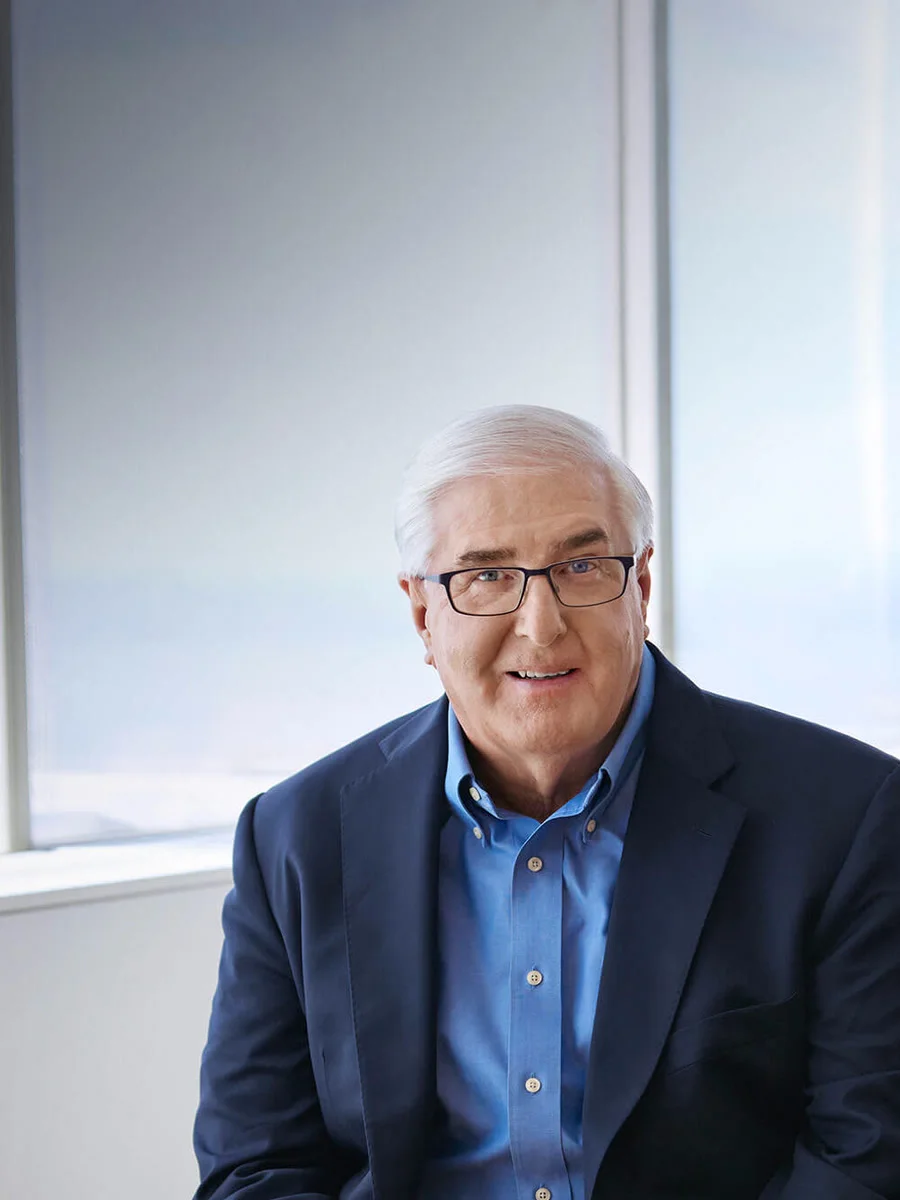
Ron Conway
Relationship routing and broad seed exposure; personal picking alpha and elder-Ron attribution remain unproven.
From operator to high-volume angel
Ron Conway's investing system grew out of three operating settings: semiconductor marketing at National Semiconductor, sales and executive work at Altos Computer Systems, and leadership of Personal Training Systems. SV Angel places his National Semiconductor start in 1973 and calls him an Altos co-founder, president and CEO; Fortune reports that he joined Altos's founding team in 1979, later returned as CEO, then took a majority stake in Personal Training Systems and sold it a few years later. Both are retrospective accounts, and neither establishes exact Personal Training Systems start and sale years; the Altos accounts also compress different roles. The conflict prevents a clean story in which one title or exit mechanically produced the method. Fortune, operator chronology SV Angel, Ron biography Retrospective witness · moderate support for the broad sequence; insufficient public record for exact Altos and Personal Training Systems chronology.
Fortune dates his sustained internet-only angel practice to 1994 and names Ben Rosen as an early syndication partner. Direct appearances give other markers—a claimed Natural Language check in 1984, board observation around 1990, and a later approximation implying roughly 1992. Those can describe a first check, apprenticeship and sustained practice without being forced into one date. Fortune, 1994 transition Talks chronology Retrospective witness · insufficient public record for a single angel-start date.
The formative causal claim is narrower: operating sales and founder experience plausibly made Conway comfortable judging people and routing help, while his Bay Area career accumulated a dense referral graph. The record repeatedly shows those practices later, but does not isolate their effect from geography, wealth, timing or selection into already-promising networks. ZURB, What’s your evaluation process? Uncapped, The Human Router Researcher inference · moderate support.
Angel Investors and the dot-com test
Conway converted personal syndication into Angel Investors I in 1998 and Angel Investors II in 1999. The Los Angeles Times later reported approximately $30 million and $150 million; a 2010 Stanford recollection instead gives roughly $25 million and $175 million. Neither is a legal close record or audited LP account. Los Angeles Times, fund history Stanford GSB, 02:48–06:10 Contemporaneous record and retrospective witness · provisional support.
Google is both the signature example and the strongest warning against lone-genius history. Conway's later narrative separates David Cheriton's referral, Bob Bozeman's technical validation and Ram Shriram's role; the SEC prospectus identifies four Angel Investors entities holding 830,736 shares before the IPO and shared voting/investment power among Ronald C. Conway, Casey McGlynn and Robert Bozeman. The filing and contemporaneous reporting support partial IPO liquidity, but not cost, entity-level proceeds, fees, carry, LP distributions, retained-share disposition, MOIC or IRR. Social Radars Part 3, PDF pp. 4–18 Google prospectus, table and fns.10/17 SFGate, overallotment report Retrospective witness · moderate support for the decision chain; contemporaneous record · strong support for holder/control and partial-sale facts.
The bust supplied the first public stress test. A 2010 account reports Angel Investors I at about 3x and II around break-even; Andy Rachleff later describes II as near-zero. Both lack measurement date, gross/net basis, DPI/TVPI, complete cash flows and audit. Los Angeles Times, reported fund results Rachleff, Fund II Investments, economic ranking Contemporaneous record · provisional support.
Conway's 2000 portfolio emails, republished during the 2008 crisis, turn loss experience into instructions: extend runway before distress, cut burn without destroying the next milestone, accept valuation reality, widen financing choices and examine M&A while options remain. That establishes a repeated rule, not survival efficacy. Downturn emails, 2000/2008 Investor-stated · strong support for the rule; insufficient public record for results.
The relationship-and-service operating system
Across talks, Conway describes themes as a way to decide where to look and people as the final screen. The taxonomy changes—three buckets in 2010, seven at ZURB in 2012, roughly six with AI subthemes in 2026—so it is a search map rather than a timeless sector doctrine. 2010 fund-close interview ZURB, theme/statistics answers Uncapped, Thematic Investing Investor-stated · moderate support for a search mechanism; insufficient public record for theme-level returns.
The founder screen becomes useful when translated from adjectives into behavior: problem origin, product engagement, recruiting, communication, decision speed, reference evidence and conduct during failure. Fast Company adds an orderly-failure test—recognize trouble, pivot or close, pay employees and help place them. These observations are more auditable than charisma but not a validated predictive model. YC Lecture 9, 04:37–05:52 Fast Company, 10:18–13:11 Investor-stated · strong support for the screen; insufficient public record for predictive accuracy.
Service follows the investment rather than substituting for it. ZURB describes a process in which Conway focused on referrals while six other team members performed diligence; South Park Commons describes intervention at financing, recruiting and founder-defined bottlenecks. ZURB, evaluation process South Park Commons, 08:26–15:20 Investor-stated · moderate support for the operating method; insufficient public record for counterfactual value added.
Etacts and Airbnb show how to test rather than celebrate the method. Etacts records an initial rejection after an installation/spam problem, David Lee's product use and feedback, a same-day repair and a reported $100,000 investment; it later shut down and was acquired on undisclosed terms. Airbnb is a retrospective reversal in which usage and Brian Chesky's intensity reportedly overcame skepticism, while a later issuer schedule proves only that SV Angel II-Q, III and Conway Family Partnership appeared among holders. Los Angeles Times, Etacts decision TechCrunch, Etacts acquisition Airbnb agreement, recitals and Schedule A Contemporaneous record · moderate support for Etacts and holder facts; retrospective witness · moderate support for Airbnb rationale.
Institutionalizing without preserving sole credit
The managed-fund era cannot be treated as elder Ron's personal portfolio. SV Angel II names David Lee as manager; Start Fund names SV Angel Management and Battery Park Capital and was reported as a Yuri Milner/David Lee initiative; later filings name Christopher Conway, Robert Pollak and Ashvin Bachireddy. Pinterest places Ronald Conway's RC Chirp signature beside Pollak's separate signatures for SV Angel II-Q, III and IV. SV Angel II Form D/A, Items 3/13 and signature Start Fund Form D, Items 1/3/7/13 Pinterest agreement, signature pages Contemporaneous record · strong support.
Start Fund is a genuine process innovation and an attribution trap. It offered every company in a YC batch the same uncapped, undiscounted note, moving the selection unit from company to cohort and outsourcing the initial filter to YC. Without a complete cohort, conversion, follow-on and cash-flow ledger, access cannot be declared an economic edge. TechCrunch, launch Start Fund lab Contemporaneous record · strong support for mechanics; insufficient public record for economics and elder-Ron selection.
AngelGate exposed a value and governance boundary. Conway condemned secret investor gatherings he believed subordinated founders, while stating he had not shown the message to Lee and regretted Lee's attendance; a clarification narrowed overbroad implications. The record supports founder-alignment rhetoric, internal disagreement and a public correction—not adjudicated collusion. AngelGate email Clarification Investor-stated · strong support for position and correction; insufficient public record for disputed conduct.
The 2015 Lee departure and later fee/expense litigation show that founder-first branding did not eliminate partner-governance conflict. The public record establishes the transition, allegations and responses, but not an adjudicated economic account. 2015 transition 2017 dispute Contemporaneous record · strong support for positions; insufficient public record for disposition.
Failure, loyalty and unresolved learning
Napster is the best recovered failure laboratory. Conway says the firm backed immediately, tried to mediate with labels, made no profit and continued backing Shawn Fanning; court records establish injunction and shutdown, not his causal claim that industry egos caused failure. Security, vehicle, governance, follow-ons, loss and process change remain unknown. Social Radars Part 4, PDF pp. 10–50 Ninth Circuit opinion Napster lab Retrospective witness · moderate support for investor actions; contemporaneous record · strong support for legal history.
Salesforce and Pandora are anti-portfolio controls, not calculable losses. Conway has regretted passing, but no original memo, terms, allocation, authority or foregone ownership survives. OZY is the opposite problem: a 2013 filed release names Ron among launch backers, Axios later reports SV Angel shares and surrender, and criminal records concern conduct years after the 2012 investment. Hindsight cannot become a 2012 diligence finding. ABC News, Salesforce Startup School 2012, 09:56–12:29 SEC-filed OZY launch release DOJ, OZY chronology Investor-stated · strong support for passes; contemporaneous record · moderate support for OZY chronology; insufficient public record for original decisions.
Civic deployment and policy boundaries
Conway increasingly used similar routing behavior in technology policy, immigration, gun safety and the COVID-19 Technology Task Force. The 2022 emergency playbook describes a flat coalition anchored on one urgent mission, trusted nodes, open work and reuse. Those sources support network-deployment beliefs; they do not establish picking, pricing, ownership, portfolio returns, board work or exit skill. Emergency Task Force playbook Writings, policy boundary Investor-stated · strong support for coalition practice; insufficient public record for investment efficacy.
Policy can create conflicts. Conway's CFTC comment requested approval of congressional-control prediction-market contracts, while Kalshi's Series A named SV Angel among investors. The record does not reveal vehicle, holding status or decision lead; the rule is to disclose those fields rather than presume corruption or irrelevance. CFTC comment Kalshi Series A Researcher inference · strong support for a conflict-control requirement; insufficient public record for a financial-conflict conclusion.
Strategic reversals and succession
In 2018 Ron and Topher said SV Angel would stop raising outside seed funds and use personal capital, citing larger rounds, valuations and LP duties. In 2022 SV Angel raised a $269.4 million Growth I vehicle; later filings show Growth II, Seed X, AI Growth and Ascent. This is a real reversal, partially reconciled by stage and LP-mix differences but not erased. 2018 reset Growth I Form D Vehicle table Investor-stated · strong support for the reset; documented behavior · strong support for reversal.
Succession changes what “Ron Conway's record” means. Filings and reporting place Topher, Ronny, Pollak, Turner and Bachireddy in different roles, so identity must be controlled on three separate axes. A filer-reported CONWAY, RONALD CRAWFORD SR is contemporaneous evidence for elder Ron; the Ronald John Conway/CRD 4567194 records map to Ronny only by a cross-filing identity inference; and the bare Ronald Conway signatures on AI Growth and MNTN remain unresolved and are never assigned to elder Ron here. OpenFEC, Ronald Crawford Conway SV Angel ADV A.Capital ADV AI Growth Form D MNTN agreement Contemporaneous record · strong support for the Crawford and filing-name evidence; researcher inference · strong support for Ronald John/CRD 4567194 mapping to Ronny; insufficient public record for the bare-name signatures or complete IC/economic allocation.
Falsifiable thesis of the edge
Proposed edge. In Silicon Valley consumer-internet and software seed investing, Conway's best-supported repeatable advantage was converting a dense relationship graph into fast founder-directed routing, repeated access and broad early-stage exposure. The observable evidence is strongest for the 1994–2009 personal/Angel Investors practice; it extends only weakly and with explicit team/vehicle qualification through the 2018 seed reset, after which named partners and legal vehicles cannot be collapsed into elder-Ron credit. Themes narrowed the search; referrals supplied access; people evidence and team diligence gated decisions; many small positions preserved power-law exposure; and introductions to capital, recruits, customers and policy actors targeted the next bottleneck. This is better supported as an operating/access edge than as personal picking alpha. Angel Investors and personal-capital chronology 2018 reset Talks, recurring frameworks Portfolio forensics Researcher inference · moderate support for 1994–2009; provisional support for the team/vehicle-qualified extension through 2018.
Predictions. Unseen records should show repeat referrals; separate sourcing, validation and approval; fast decisions with observable founder/product evidence; broad company counts and small initial checks; help concentrated near financing, recruiting, distribution or crisis; and value that remains after separating elder Ron from partners and vehicles. Researcher inference · strong support as testable predictions.
Supporting cases. Google preserves a referral/validator chain; Etacts a defect-fix-recheck sequence; Airbnb a reported update from taste to adoption; ZURB separates Conway's role from team diligence. Google case Etacts case Airbnb case ZURB Documented behavior and retrospective witness · moderate support.
Falsifiers. The thesis weakens if ordinary/loss records lack the same process; vehicle-coded outcomes concentrate in partner-led deals Conway neither sourced nor influenced; referrals do no better than comparable cold sourcing; independent founders cannot corroborate help; broad portfolios underperform after fees/dilution; or Google alone explains returns. It would be overturned by ex-Google audited cash flows showing no repeatable result together with decision records showing the mechanism absent. Researcher inference · strong support as falsification criteria.
Denominator. The deal search contains 194 named records: 192 company candidates plus two passes. Of the candidates, 190 are confirmed or firm-claimed, only five company cases and one vehicle case are sufficiently reconstructed, and 187 lack even bounded reconstruction; complete economics are absent throughout. Denominator ledger Researcher inference · strong support; coverage fraction not computable.
Skill, access, team, vehicle, era and luck
| Driver | Evidence | Boundary |
|---|---|---|
| Skill | Repeated founder questions, re-evaluation, crisis communication and routing. YC Lecture 9 Downturn emails | Incremental returns are unmeasured. Researcher inference · moderate support. |
| Access | Operator/founder referrals and YC blanket access feed the pipeline. Start Fund launch | Proprietary durability and efficacy unproved. Documented behavior · strong support. |
| Team | Bozeman, McGlynn, Lee, Topher, Pollak, Turner and Bachireddy hold material roles. People map | Complete deal-level allocation absent. Contemporaneous record · strong support. |
| Vehicle | Personal capital, Angel Investors, Start Fund, numbered seed and growth funds change incentives. Vehicle economics | Fees, carry, reserves and final economics absent. Documented behavior · strong support. |
| Era | Early internet adoption, small checks and Silicon Valley density made information/introductions scarce. Historical context | Modern replication is not dimension-matched. Researcher inference · strong support. |
| Luck/outlier | Google is described as disproportionately important; ex-Google contribution is unrankable. Google-less test | Precise outlier share and residual alpha unknown. Contemporaneous record · provisional support. |
People and influence map
| Node | Supported role | Boundary |
|---|---|---|
| Ben Rosen | Early syndication partner. Fortune | Deal-by-deal selection unknown. |
| Cheriton / Bozeman / McGlynn / Shriram | Distinct Google referral, validation, control and financing roles. Part 3 Prospectus | No sole-credit inference. |
| David Lee | Managed institutional vehicles and was reported Start Fund point person. People map | His work is not elder-Ron credit. |
| Topher / Pollak | Formal later-vehicle management/signatures. SV Angel VI Dave agreement | Company sourcing/economics unknown. |
| Turner / Bachireddy | Reported seed/growth leadership. Axios | Later handoffs/IC unknown. |
| Ronny Conway | A.Capital founder and later SV Angel operating leader. Axios | A.Capital is not elder Ron's portfolio. |
| YC / Paul Graham / Yuri Milner | Selection platform and capital/network roles behind Start Fund. Launch | Not an elder-Ron-only outcome. |
operator network -> referrals -> theme map -> founder evidence -> team validation
       |                                                    |
       v                                                    v
personal checks -> Angel Investors -> managed SV Angel -> seed/growth platform
                         |                    |               |
                    bust/outlier       partner handoffs   role separation
                         \________________ service network __/
Arrows show chronology and claimed flow, not ownership or causal return. Researcher inference · strong support.
Chronology of turning points
| Date | Turning point | Evidence and meaning |
|---|---|---|
| 1973 | National Semiconductor start | Firm biography supplies the start year; the later causal effect remains unproved. SV Angel |
| 1979–before sustained practice in 1994 | Altos and Personal Training Systems operator sequence | Altos roles conflict and exact Personal Training Systems years are not established. Fortune SV Angel |
| 1994 | Sustained internet angel practice | Best-supported full-time start; earlier checks separate. Fortune |
| 1998–1999 | Angel Investors I/II and Google | Pooled capital, distributed credit, outlier exposure. Prospectus |
| 2000–2005 | Bust, runway letters, portfolio wind-down | Loss response and CSFB sale agreement without economics. Emails VCJ, p.26 |
| 2004–2009 | Personal-capital interval | Complete vehicle ledger absent. Los Angeles Times |
| 2009–2012 | Managed SV Angel / Start Fund | Team attribution and cohort access. SV Angel II Start Fund |
| 2010 | AngelGate | Founder doctrine, escalation and correction. Email |
| 2015–2017 | Lee departure/dispute | Succession and unresolved governance economics. Transition Dispute |
| 2018 | Outside-seed-fund pause | Personal-capital alignment response. TechCrunch |
| 2021 | OZY surrender | Visible stop, missing original file. Axios |
| 2022–2026 | Growth and succession | Capital-model reversal and role specialization. Growth I Team |
How to use this package
Read writings.md for the written record and authorship boundaries; talks.md for 70 spoken appearances, chronology conflicts and repeated frameworks; and investments.md for the 194-record universe, vehicle attribution and no-hindsight cases. Then use investmentphilosophy.md as the operating system and mental-models.md as the field guide. The seven decision exercises are Google, Etacts, Airbnb, Napster, Salesforce, OZY and Start Fund.
Snapshot and testable edge thesis
Ron Conway is a Silicon Valley operator-turned-angel whose practice spans personal checks, Angel Investors I/II, a personal-capital interval, managed SV Angel funds, Start Fund, and later seed/growth vehicles. The narrow thesis is that his best-supported edge was converting a dense relationship graph into fast founder-directed routing, repeated access and broad early-stage exposure, especially in Silicon Valley consumer-internet/software seed when information, recruiting, introductions and follow-on capital were scarce. It is better supported as an operating/access edge than as personal picking alpha. Profile, falsifiable thesis Researcher inference · moderate support.
The thesis predicts referral-heavy sourcing, role-separated validation, observable founder evidence, small checks across many companies, and help clustered near a founder-defined bottleneck. It weakens if ordinary/loss records lack those processes, partner-coded results explain the visible wins, independent founders cannot corroborate service, or ex-Google cash flows fail to show repeatable value. Profile, predictions and falsifiers Researcher inference · strong support as a test.
The denominator is deliberately adverse: 194 named records were researched, including 192 company candidates and two passes; 190 are confirmed or firm-claimed, only five company cases plus one vehicle are bounded reconstructions, and 187 company rows remain unresolved. Investments, denominator Researcher inference · strong support; coverage fraction not computable.
Core philosophy
Conway's direct voice is most consistent on four propositions: look where structural change creates companies; decide on people rather than theme alone; help founders at the moment they ask; and construct for many failures. 2010 fund-close interview YC Lecture 9, 04:37–05:52 ZURB, evaluation process CrunchUp, 13:12–15:27 Investor-stated · strong support for recurring doctrine; insufficient public record for efficacy.
The synthesis is an operating loop: a theme map narrows search; trusted referrals improve access; founder behavior and team diligence update the decision; a small check buys participation; network service targets the next constraint; breadth accepts a power-law outcome; postmortems should preserve attribution and failed assumptions. The final step is partly normative because public postmortems are sparse. Researcher inference · moderate support.
Sourcing
Sourcing is relationship-led and thematic. The taxonomy evolved from real-time data/social web/flash marketing in 2010 to seven ZURB buckets in 2012 and a later AI-era map. The stable mechanism is not sector foresight; it is searching a prepared category and then using trusted people to reach founders. Talks, taxonomy evolution Investor-stated · moderate support.
Google shows the source chain's complexity: Cheriton, Bozeman, Shriram and others have distinct roles. Start Fund shows the extreme access strategy: YC supplied the initial cohort filter. Social Radars Part 3, PDF pp. 4–18 Start Fund launch Retrospective witness · moderate support for Google; contemporaneous record · strong support for Start Fund mechanics. Repeatability depends on the network continuing to generate trusted, differentiated access; digital forwarding alone is not the same asset.
Picking
The public screen weights founder behavior more than forecast precision. Operational fields include problem origin, product fluency, recruiting, communication, speed, reference evidence and failure conduct. YC Lecture 9, 04:37–05:52 Fast Company, 10:18–13:11 Investor-stated · strong support for the screen; insufficient public record for predictive validity.
Two cases make it falsifiable. Etacts turned an install/spam defect into a repair/recheck gate; Airbnb reportedly let user behavior overturn investor taste. Etacts lab Airbnb lab Documented behavior and retrospective witness · moderate support. Red flags are dependence that can kill the company, refusal to learn, weak references, disordered failure conduct and a founder story unsupported by use. The public record does not expose a complete scoring rubric, veto structure or pass ledger.
Deal and portfolio mechanics
The visible mechanics are small-check breadth and limited formal control, not ownership maximization. Current firm marketing says $150,000–$200,000 Seed checks and $5m–$20m Growth checks, but historical checks, ownership targets, pricing discipline, reserves and pro-rata rules are largely missing. SV Angel portfolio Investments, portfolio dimensions Documented behavior · strong support for current policy; insufficient public record for historical comparability.
Power-law exposure is directionally plausible; a cash-flow-based concentration curve is not. Google is the dominant reported contributor, Fund I is reported at roughly 3x and Fund II around break-even, and the residual record excluding Google cannot be ranked. Investments, Pareto ranking Contemporaneous record · provisional support. Valuations, acquisition prices, firm logos and shares offered are never converted into returns without cost, dilution, ownership, proceeds and timing.
Vehicle and incentive fit
Capital form changed the practice. Personal checks permitted speed and flexible ownership; Angel Investors pooled outside capital; Start Fund bought cohort access; numbered SV Angel funds added LP duties; the 2018 personal reset sought to reduce founder/LP conflict; later growth funds reintroduced larger pools and stage specialization. Investments, vehicle table Documented behavior · strong support for forms and named managers; insufficient public record for fees/carry/reserves.
Duration and liquidity matter. Conway later stated that SV Angel had not used secondary markets and waited for founder/team liquidity, while an earlier AllThingsD appearance opposed investor-side founder secondary at seed/A. AllThingsD, 02:26–04:45 Keith Newman, 23:56–25:19 Investor-stated · provisional support for a team-level policy; insufficient public record for every vehicle. Modern tenders, employee liquidity, legal consent, tax and LP duties make a blanket ban too simple.
Governance, succession and key-person continuity are material. Lee, Topher, Pollak, Turner, Bachireddy and Ronny occupy different roles; the 2015–17 transition also shows disputed economics. Profile, institutional era Contemporaneous record · strong support for named roles; insufficient public record for complete authority/economic splits.
Geographic authority is also unresolved. No recovered governing document assigns territories or geography-specific approval rights among elder Ron, Topher, Ronny, Seed and Growth vehicles; company location and sourcing geography are therefore metadata, not proof of vehicle authority. Investments, geographic-authority boundary Researcher inference · strong support for the bounded corpus finding; insufficient public record for actual geographic allocation.
Team attribution and work with founders
The decision ledger must carry separate fields for introducer, technical validator, sponsor, approver, negotiator, board actor, recruiter, follow-on owner and later narrator. Google makes that rule visible; Pinterest, Dave and Figma filings show that a signer or holder is not necessarily the famous partner. Google prospectus Pinterest agreement Figma agreement Contemporaneous record · strong support for entity/role separation.
Founder work is described as help with financing, recruiting, customers, policy or an exit conversation at an explicit inflection point. South Park Commons, 08:26–15:20 Investor-stated · moderate support. The limit is counterfactual: an introduction followed by success does not prove it caused the outcome, and founder gratitude after success is not contemporaneous evidence.
Views on the craft
- Power law: construct for high failure, but do not import incompatible claimed percentages into a career hit rate. Investments, denominator frames Investor-stated · provisional support.
- Fund size: small checks and useful participation can align with founders; outside capital still creates fiduciary and reserve obligations. Fresh Perspective Investor-stated · strong support for the 2018 rule; documented behavior · strong support for later reversal.
- Access versus selection: Start Fund demonstrates access as a strategy but has no public cohort economics. Start Fund lab Researcher inference · strong support for distinct evaluation.
- Governance: Conway often favors founder agency and avoids boards; legal rights, LP duties and stakeholder conflicts still govern. CrunchUp, 03:18–10:35 Investor-stated · moderate support.
- Great investors: access, judgment, service and honest failure accounting all matter; the last is least visible in this corpus. Researcher inference · moderate support.
Signature bets and decision process
Use the no-hindsight labs rather than outcome summaries: Google for distributed sourcing/validation and outlier economics; Etacts for a reversible pass; Airbnb for behavior overturning taste; Napster for legal dependency; Salesforce for an anti-portfolio gap; OZY for missing governance/postmortem evidence; and Start Fund for cohort access. Each lab freezes pre-outcome information and asks invest/pass, kill criteria, ownership/terms and next-check evidence.
Mental models and maxims
The reconciled field guide contains twelve models:
- Themes locate; observable founder conduct decides
- Pre-register decision-changing evidence
- Route relationships with role-coded credit
- Build breadth for structural failure, then audit the denominator
- Evaluate cohort access as a separate vehicle strategy
- Buy runway and options before distress
- Treat external dependencies as kill criteria
- Prefer useful participation to ownership theater
- Align founder, team and investor liquidity with legal rights
- Treat policy as infrastructure, not picking proof
- Move fast with repair, attribution and conflict controls
- Use bounded crisis coordination, not alpha claims
Parameters such as check size, theme count and company cadence are not models; “nice people” and “network effects” are merged into observable founder conduct and role-coded routing rather than duplicated.
Evolution and contradictions
The stable core is people, service, breadth and relationship duration. The search taxonomy changes; the angel-start date conflicts; the 2018 personal-capital reset reverses into later growth funds; founder-alignment rhetoric coexists with AngelGate escalation and partner conflict; public no-secondary doctrine lacks a vehicle-complete audit. Talks, evolution Writings, evolution Vehicle table Documented behavior · strong support for dated changes; insufficient public record for complete reconciliation.
The most important narrative correction is attribution. Early stories often say “Ron” where filings show funds and multiple controllers; later platform stories often say “SV Angel” where specific partners or personal entities may differ. This tension cannot be resolved with brand history. Researcher inference · strong support.
Failures and limits
Napster, OZY, Boosted, Fund II, Salesforce and Pandora expose different gaps: legal dependence, adverse exit without original diligence, later operational failure without investor governance evidence, unaudited portfolio economics, and misses without ex-ante memos. Investments, failure table Contemporaneous record and retrospective witness · moderate support; insufficient public record for full postmortems.
Selection/survivorship bias is severe. The 157-name firm page is a selected marketing list; the 35 historical rows are research additions, not an exhaustive career portfolio. Company counts drift across self-reported frames, and outcomes cannot be weighted without cost and ownership. Investments, coverage boundary Researcher inference · strong support.
Era dependence matters: early Silicon Valley density, small checks and scarce introductions may have made routing more valuable than in a digitally distributed market. Conversely, modern technical complexity may increase the value of explicit validators while reducing the value of generic access. Researcher inference · provisional support.
Historical operating environment
The practice spans dot-com abundance and collapse, a personal-capital post-bust interval, the 2008 crisis, accelerator/seed-syndicate expansion, the 2018 valuation/LP-duty reset and a later seed-plus-growth platform. Legal and platform dependencies also change: Napster faced copyright injunction; later companies face app stores, APIs, privacy, AI/crypto and sector regulation. Investments, historical context Contemporaneous record · strong support for dated regimes; researcher inference · moderate support for cross-era comparison.
The closest group-angel base-rate study covers 539 angels and 1,137 exits, mostly after 2004, and is not a benchmark for the 1998 funds because the voluntary sample, vehicles, selection and reporting differ. Wiltbank and Boeker, SSRN abstract Contemporaneous record · moderate support for sample; researcher inference · strong support for non-comparability.
Modern VC translation (as of 2026-08-22)
| Lesson | Transfers | Changed assumption / failure | Signal | Likely misuse | Adaptation |
|---|---|---|---|---|---|
| Theme map | Prewritten search hypotheses | Faster/noisier category formation — analyst assumption to test | Falling constraints + founder formation | Theme as diligence | Date the memo and kill criteria. Researcher inference · provisional support. |
| Founder behavior | Referenceable actions | AI/distributed work changes product/recruiting signals — analyst assumption to test | Decision logs, learning, employee conduct | Charisma score | Two reviewers score evidence independently. Researcher inference · provisional support. |
| Reversible pass | Specific defect/reopen gate | Cheap demos make surface repair weak — analyst assumption to test | Retention or workflow correction | Reward persistence alone | Pre-register unlock metric. Etacts Researcher inference · strong support; hypothetical process. |
| Role-coded routing | Trusted specialist help | Larger syndicates obscure credit — analyst assumption to test | Named source/validator/helper | Heroic attribution | Require role fields in IC. Researcher inference · strong support. |
| Breadth | Size for many losses | Round sizes/ownership/reserves differ — analyst assumption to test | Vehicle-specific loss/dilution | Spray without cash-flow model | Stress every unresolved company at zero. Researcher inference · strong support. |
| Cohort access | Evaluate platform filter | SAFE/pro-rata/platform terms differ — analyst assumption to test | Cohort ownership and reserves | Calling all access alpha | Separate cohort P&L from selected deals. Researcher inference · provisional support. |
| Runway | Preserve financing options | Cloud/AI costs and venture debt differ — analyst assumption to test | Months to milestone, covenant headroom | Uniform cuts | Protect the next value-creating capability. Emails Researcher inference · strong support. |
| Dependency | Predefine legal/platform kill | Remedies and jurisdictions differ — analyst assumption to test | Revenue/API/right concentration | Every risk called fatal | Scenario-test revocation/injunction. Researcher inference · strong support. |
| Useful participation | Small check can preserve alignment | Ownership/reserve duties vary by fund — analyst assumption to test | Help capacity per company | Logo collecting | Set service and monitoring budget. Researcher inference · provisional support. |
| Liquidity/agency | Avoid investor-first exits | Formal tenders and employee needs — analyst assumption to test | Equal-treatment/consent map | Illiquidity as virtue | Written stakeholder-order policy. Researcher inference · provisional support. |
| Policy/conflict | Map ecosystem dependencies | Regulation and portfolio overlap expand — analyst assumption to test | Entity/holding/decision disclosure | Reputation as disclosure | Publish conflict fields beside advocacy. Kalshi controls Researcher inference · provisional support. |
| Crisis coordination | Mission, trusted nodes, dissolution | Software-first responses can miss frontline demand — analyst assumption to test | Named need/owner/reusable output/end condition | Temporary coalition as permanent firm | Write dissolution and handoff criteria. Researcher inference · provisional support. |
Comparison with completed peers
Only two completed peers are dimensionally useful. Jim Breyer overlaps the Facebook era and makes personal-versus-firm deal credit auditable, but Accel's concentrated lead-investor/board model differs from Conway's small-check, non-board breadth. Facebook's filing separates Breyer's trust from Accel vehicles and documents his board role; it does not convert aggregated beneficial ownership into personal return. Breyer profile Breyer Facebook lab, with S-1/A director biography and stockholder fns.6–7 Researcher inference · moderate support for comparison; contemporaneous record · strong support for the underlying role/entity boundary. Doug Leone overlaps Google and represents Sequoia's institutional lead/board countermodel. ServiceNow's filing documents a Sequoia growth-vehicle cost, ownership and Leone board role while leaving partner-level economics unresolved. Leone profile Leone ServiceNow lab, with S-1 Series D and principal-stockholder notes Researcher inference · moderate support for comparison; contemporaneous record · strong support for the underlying vehicle/board facts.
| Dimension | Conway | Breyer | Leone |
|---|---|---|---|
| Sourcing | Relationship/theme funnel. ZURB process | Prepared-theme work plus a team discovery/sponsorship chain. Breyer Facebook lab and primary filing | Partnership/platform sourcing with role-separated partners. Leone ServiceNow lab and primary filing |
| Picking | Founder behavior and rapid team screen. YC Lecture 9, 04:37–05:52 | Prepared category work plus lead-investor underwriting; the filing proves role, not the full memo. Breyer Facebook lab | Customer/GTM evidence and complementary partner judgment. Leone ServiceNow lab |
| Ownership | Small-check breadth; targets largely absent. Portfolio forensics | Concentrated fund plus separately disclosed trust interests. Breyer Facebook filing controls | Lead/board ownership through shared Sequoia vehicles. Leone ServiceNow filing controls |
| Portfolio construction | Broad seed exposure, overlapping follow-ons and later growth lane; no cost-weighted curve. Investments denominator | Closed-end institutional funds, reserves and a dominant Facebook outcome; complete portfolio weights unavailable. Breyer Pareto and denominator evidence | Concentrated stage funds and long board relationships; ServiceNow supplies one strong cost/ownership anchor, not a career curve. Leone Pareto and ServiceNow filing evidence |
| Governance | Founder agency, often without a board; contractual limits remain. CrunchUp, 03:18–10:35 | Board-active sponsor model. Breyer Facebook director evidence | Board/partnership governance with shared credit. Leone ServiceNow board evidence |
| Vehicle | Personal, pooled angel, cohort, seed and growth vehicles. Vehicle table | Accel partnership plus separate personal trust and later family-office routes. Breyer vehicle and filing evidence | Institutional Sequoia partnership and stage vehicles. Leone vehicle evidence |
| Incentives | LP duties, personal-capital flexibility and later seed/growth conflicts; fees/carry unknown. Vehicle table | A 2011 report describes one vintage's fee/carry, while filings separate personal/fund interests; no universal personal economics. Breyer vehicle economics and underlying Forbes/filing evidence | Shared vehicle economics and succession are central; Leone later described retaining existing-fund interests but not new-fund carry/management-company ownership. Leone incentive model and underlying Colossus evidence Investor-stated · provisional support without governing documents. |
| Failure evidence | High claimed loss, sparse postmortems. Failure table | Filing-controlled conflicts and selected adverse cases, not a complete loss ledger. Breyer failure and Walmart proxy controls | Color/FTX and ordinary-board gaps remain institution-level controls, not Leone-only outcomes. Leone failures |
These are qualitative, evidence-bounded comparisons; no peer return ranking is attempted.
The strongest case against greatness
The skeptical thesis is that the visible record is an access-and-brand story amplified by Google, Silicon Valley density and partner work: broad exposure made a huge hit likely, the public denominator is selected, fund economics are unaudited, service is mostly retrospective, and later SV Angel outcomes are frequently attributed to elder Ron despite named managers and signers. Fund II's reported break-even, Napster/OZY/Boosted gaps, Salesforce/Pandora misses, AngelGate escalation and vehicle reversals fit that case. Investments, Google-less test People map Researcher inference · strong support as the skeptical alternative.
Evidence that would discriminate the theses: audited ex-Google vehicle cash flows; an ordinary/loss sample with ex-ante memos; matched referred-versus-cold sourcing; independent founder accounts of requested help and its next-state effect; company-level partner/vehicle roles; and documented process changes after failures. Without these, greatness can be supported as relationship operations and ecosystem access, not measured personal alpha. Researcher inference · strong support.
Analyst study guide, glossary, and go deeper
Reading path: (1) profile; (2) writings; (3) talks; (4) Pareto and denominator; (5) all seven decision labs; (6) mental models; then revisit this philosophy and the skeptical case.
Glossary: Angel Investors I/II = late-1990s pooled funds, not all personal Conway checks; RC Chirp = elder-Ron personal entity in a filed issuer agreement; Start Fund = separate YC cohort vehicle; SV Angel II–X = numbered institutional vehicles with changing named managers/signers; Growth I/II = later-stage vehicles; Ronny = Ronald John Conway, distinct from elder Ron; selected-page portfolio = marketing list, not current holdings or career denominator; human router = relationship-routing description, not a return claim.
Sourcing checklist: What theme existed before the lead? Who introduced it? Is the referral independent? Which vehicle may invest? Who owns the relationship? Diligence checklist: What observable founder behavior matters? Who validates technical/product claims? What would change the decision? What external dependency can kill it? IC checklist: Write prior, dissent, role map, terms/ownership, reserve plan, kill criteria and next-check evidence. Governance checklist: Founder request, board/consent rights, LP conflict, service owner, warning/escalation, liquidity order and postmortem owner.
Best sources: ZURB for process/team separation; Social Radars Part 3 for Google-role detail; Google prospectus for holder/control boundaries; Los Angeles Times for ordinary-deal observation and reported fund economics; downturn emails for direct operating rules; and investments.md for unresolved cash flows, attribution and retrieval work.
Pareto 80/20 — what drove the record
The public record supports three different rankings, not one false precision table. Company importance, learning value, and realized economic contribution are different questions. In particular, the public record lacks deal-level cost, dilution, distributions, residual value, ownership and timing for almost every company; therefore a cash-flow-based economic ranking is not computable. Researcher inference · strong support, based on the issuer, fund and portfolio controls below.
Economic contribution — directional, not a return ranking
| Rank | Company / cluster | Basis / measure | Attribution | Confidence / support | Mechanism | Denominator caveat / case |
|---|---|---|---|---|---|---|
| 1 | LA Times reports a fund rescue; Ron later says Google paid for the funds; 830,736 pre-offering shares sat across four affiliated entities, with partial IPO liquidity documented. | Conway, McGlynn and Bozeman shared voting/investment power; Cheriton and Bozeman have distinct decision roles. | Contemporaneous record · strong support for holdings/partial IPO sales; retrospective witness · provisional support for relative contribution. | One concentrated winner offset a high-loss portfolio. | 83,073 base shares were offered and 127,804 over-allotment shares were reported sold, but entity allocation, cost, fees/tax/carry, LP distributions and retained-share disposition remain absent; no MOIC/IRR. Google case Stanford GSB, 04:05–06:10 | |
| 2= | Ask Jeeves / PayPal | Two of three companies reported to have pulled the funds from the red. | Angel Investors I/II; Bozeman GP; deal leads unknown. | Contemporaneous record · moderate support. | Multiple early consumer-internet outcomes supplemented Google. | Ordering, cash flows and ownership absent. Historical ledger |
| Unrankable | Zappos, Mint.com, AdMob and later winners | Company transaction/public outcomes and current firm inclusion. | Ron, personal entity, SV Angel vehicle and partner roles vary or are unknown. | Contemporaneous record · strong support for company outcomes; insufficient public record for return. | Potential value exists, but contribution cannot be measured. | Valuation is not return; cost/security/dilution/realization absent. Portfolio forensics |
The reported fund-level evidence is only a pair: Angel Investors I at roughly 3x and Angel Investors II around break-even, reported in 2010 and partly corroborated for Fund II in 2012. It lacks measurement date, gross/net basis, DPI/TVPI, cash flows and audit. Los Angeles Times, 2010 Andy Rachleff, 2012 Contemporaneous record · provisional support. The later 7x/1.5x pair is rejected as researcher inference · insufficient public record: no LP report, audited schedule, valuation date or traceable primary source was found. Excluding Google, the public record cannot rank residual economic contribution or determine whether the remaining portfolio exceeded the cost of capital.
Historical importance — company and ecosystem significance
| Rank | Company / mechanism | Basis / measure | Attribution | Confidence / support | Why it mattered | Denominator caveat / case |
|---|---|---|---|---|---|---|
| 1 | Recoverable sourcing chain, filed holder table, public outcome and fund-rescue narrative. | Cheriton sourced; Bozeman validated; four Angel Investors entities; Conway/McGlynn/Bozeman shared power. | Retrospective witness · moderate support for decision narrative; contemporaneous record · strong support for holding. | Demonstrates referral-plus-specialist-validation and extreme concentration. | Not a personal-Ron or cash-return record. Google case | |
| 2 | PayPal / early consumer-internet cluster | Named among three bets that restored early portfolios. | Angel Investors I/II; Bozeman GP; individual deal lead unknown. | Contemporaneous record · moderate support. | Helped validate broad consumer-internet portfolio construction. | Contribution cannot be isolated. Historical ledger |
| 3 | Facebook and Twitter | Company/category significance plus current-page seed tags. | Facebook trust and Twitter vehicle records separate family, SV Angel and Topher/Daniel routes; elder-Ron decision record incomplete. | Contemporaneous record · strong support for named holders; insufficient public record for deal authorship/economics. | Social platforms became core to the public investment narrative. | Importance is not return rank. Facebook prospectus table and fn.97 Twitter agreement, Exhibit A |
| 4 | Airbnb | Public outcome and repeated decision-story use. | SV Angel II-Q/III and Conway Family Partnership; selector unresolved. | Contemporaneous record · strong support for entity participation; retrospective witness · moderate support for rationale. | Best example of adoption overriding product intuition. | Round allocation and economics unknown. Airbnb case |
| 5 | Start Fund | Blanket YC offer changed the unit of selection from company to cohort. | Start Fund LLC; managing entities; reported David Lee/Yuri Milner roles. | Contemporaneous record · strong support for mechanics; moderate support for person roles. | Access became an explicit portfolio-construction mechanism. | Cohort membership/economics and elder-Ron role unknown. Start Fund case |
Learning value — errors, reversals and process evidence
| Rank | Case | Basis / measure | Attribution | Confidence / support | Mechanism learned | Denominator caveat / case |
|---|---|---|---|---|---|---|
| 1 | Napster | Visible thesis, legal escalation, failure and no-profit account. | Ron's retrospective account; court controls litigation. | Retrospective witness · moderate support; contemporaneous record · strong support for litigation. | Demand can coexist with fatal legal dependency; founder relationship can outlive a company. | Security, vehicle, loss and process change unknown. Napster lab |
| 2 | Salesforce miss | Repeatedly admitted pass followed by major company outcome. | Ron's direct regret; original decision-maker/vehicle unknown. | Investor-stated · strong support for regret; insufficient public record for ex-ante decision. | An anti-portfolio case must preserve missing memo fields. | Foregone return is not computable. Salesforce lab |
| 3 | Etacts | Observed pass, repair, feedback and reported $100k check. | SV Angel and David Lee; elder Ron not established. | Contemporaneous record · moderate support. | Make a pass reversible with a falsifiable product unlock. | Shutdown and Salesforce acquisition are reported; terms, proceeds and return remain unknown. Etacts lab |
| 4 | OZY | Reported 2012 shares and 2021 surrender after controversy. | SV Angel vehicle; sponsor and elder-Ron role unknown. | Contemporaneous record · strong support for surrender; insufficient public record for original diligence/economics. | Adverse exits are hard to learn from without a contemporaneous decision log. | No cost, board role or loss. OZY lab |
| 5 | Airbnb | Initial skepticism reportedly reversed by use/growth and founder intensity. | Retrospective Ron account plus entity schedule. | Retrospective witness · moderate support; contemporaneous record · strong support for entity participation. | Define behavior that can falsify investor taste. | Memo, vote, entry cost and return unknown. Airbnb lab |
Denominator and reconciliation ledger
Inclusion, deduplication and follow-on rules
- Company is the counting unit. Name variants and renamed issuers count once when identity is clear; distinct companies founded by the same person count separately.
- Vehicle and round are subrecords, not new companies. Multiple SV Angel vehicles, personal entities and follow-ons remain visible under one company. Seed/Growth overlap on the official page therefore counts once.
- Current-page inclusion is firm-level marketing evidence only. It does not establish elder Ron's participation, a specific vehicle, current ownership or economics.
- Historical additions require a named company plus a direct witness, contemporaneous report, issuer filing or filed manager biography. Generic “hundreds of startups” claims are not expanded into fictional rows.
- Returns require actual cash-flow evidence. Entry/exit valuation, acquisition price, public market capitalization, listed shares and “best investment” language never become MOIC or IRR without cost, dilution, ownership, distributions and timing.
- Exclusions: non-investment clients, employers, civic organizations, portfolio-adjacent companies merely discussed, wrong-person records, and duplicate acquisition routes.
Searched boundary. Years: first reported 1984 check through 2026-08-22, with sustained practice separately dated around 1994. Names/entities: Ron/Ronald C./Ronald Crawford Conway; Conway Family Partnership/Trust; RC Chirp; Adam Ventures; Angel Investors LP/I/II and Q variants; SV Angel LLC/Management/II through X, Growth I/II, AI Growth and Ascent; Start Fund LLC/2; David Lee, Bob Bozeman, Casey McGlynn, Fred Grauer, Topher/Christopher, Ronny/Ronald John, Robert Pollak, Ashvin Bachireddy and Beth Turner. Databases/routes: official SV Angel current/Medium portfolio records; SEC EDGAR issuer exhibits, prospectuses and Forms D; IAPD/Form ADV; Stanford/YC/TechCrunch/direct interview archives; contemporaneous press; court/government adverse records; and the CHM catalog lead. Candidate inclusion window is any named company with firm-page inclusion, filed holder/entity evidence, contemporaneous investment reporting or a direct investment claim; relationship-only, slide-sample and pass records are enumerated but excluded from the 190 confirmed/firm-claimed numerator. Researcher inference · strong support.
| Reconciliation class | Count | Reproducible definition | Result / boundary |
|---|---|---|---|
| Publicly claimed / known | Not computable | Incompatible claims include 225 companies in a 2010 recollection; a Stanford institutional biography's distinct 240-plus late-1990s and 100-plus recent claims; a 500-plus-company audit over 12 years; a 750-plus-company 2014 claim; one-company-per-week cadence; and current SVA AI marketing counters of 1,572-plus investments, 513 exits and 11-plus funds. Definitions differ by entrepreneur/company/check, date, vintage, vehicle, follow-on, exit and write-off. Stanford GSB, 04:05–06:10 Stanford STVP biography paragraph Conway numbers Startup School SV 2014, 07:04–07:35 SV Angel firm account SVA AI about page | No defensible career denominator. Contemporaneous record · provisional support for dated institutional/firm claims; retrospective witness · provisional support for spoken totals. |
| Searched | 194 named records | 157 unique current-page titles plus 35 non-current historical-material/candidate names and two anti-portfolio passes; company-level dedupe applied. | Search set, not proof of investment. |
| Researched | 194 | Every name was checked against the current page, a historical route, or a direct pass account; 192 company candidates receive ledger rows and Salesforce/Pandora receive anti-portfolio rows. | Sparse logo/candidate rows remain researched for inclusion, not economically reconstructed. |
| Confirmed or firm-claimed investment candidates | 190 | 157 official selected-page claims plus 33 of 35 historical rows; Plaxo and Bitly remain relationship/sample-company leads rather than confirmed investments. | “Confirmed” means entity/firm/company inclusion evidence, not current ownership or elder-Ron credit. |
| Sufficiently reconstructed | 5 companies + 1 vehicle | Google, Etacts, Airbnb, Napster and OZY have bounded company cases; Start Fund has a bounded vehicle case. Salesforce is an anti-portfolio control, not an investment. | “Sufficient” is case-specific; none has complete cash flows. |
| Unresolved | 187 company rows | All 192 remain incomplete economically; 187 lack enough evidence for even a bounded decision/failure reconstruction. | Unknowns are explicit rather than inferred. |
| Excluded from confirmed-investment union | 4 | Plaxo (relationship only), Bitly (slide sample only), plus Salesforce and Pandora (passes). | They remain in the search/learning record but never inflate the 190 investment-candidate count. |
Coverage fraction: not computable. The reproducible numerator is 190 confirmed or firm-claimed company candidates inside 192 company rows; the career denominator is unobservable and public claims are definitionally incompatible. Researcher inference · strong support. The 77% 1997–2001 failure rate and roughly 40% post-2002 rate are Conway's cohort claims without cohort counts; the Los Angeles Times thirds; ZURB's one-third fail / one-third 1–3x base hits / one-third 4–5x-or-Google account plus roughly 80% bubble failure; and Fortune's roughly 60% fail / 30% money-back / 10–20% profitable use different, sometimes arithmetically overlapping frames. They must not be harmonized into a career hit rate. TechCrunch, 2010 Los Angeles Times, 2010 ZURB, Give us the stats Fortune Brainstorm Tech account, 2020 Investor-stated · provisional support.
Historical market, regulatory, and base-rate context
The closest public angel-group study found is Wiltbank and Boeker's 2007 analysis of 539 angels and 1,137 exits, largely after 2004. It is useful for showing how skewed angel outcomes can be, but its voluntary, group-angel sample, selection and self-reported data are not comparable enough to benchmark Angel Investors I/II or reconstruct Conway's funds. Returns to Angel Investors in Groups, 2007 Contemporaneous record · moderate support for its sample; researcher inference · strong support for non-comparability. Institutional-VC vintage tables likewise use different fund structures and commercial datasets; they are context, not a substitute for missing Conway cash flows.
The operating regime changed across the record. The first pooled funds were formed during dot-com capital abundance and then suffered the bust; the 2004–2009 personal-capital interval included the 2008 crisis; Start Fund used 2011 uncapped/undiscounted notes; current SV Angel marketing describes typical Seed checks of $150,000–$200,000 and Growth checks of $5m–$20m at Series B+. SV Angel portfolio Documented behavior · strong support for current check policy; insufficient public record for historical comparability. A 2001 Napster injunction, contemporary platform rules and today's AI/crypto/regulatory environment do not share the same legal dependency structure. Ninth Circuit Napster opinion Contemporaneous record · strong support for the preliminary-injunction history.
The return figures also sit in different comparison sets. The Los Angeles Times paired the reported Conway fund multiples with contemporaneous venture-sector figures, while Rachleff later used Fund II as a cautionary angel example. Neither comparison supplies comparable vintage, gross/net, residual-value or cash-flow definitions. Researcher inference · strong support. No benchmark is used to manufacture alpha.
| Decision era | Financing alternatives and technology maturity | Regulation / platform dependency | Conventional underwriting signal visible in the record | Time-local base-rate boundary |
|---|---|---|---|---|
| 1998–2001 pooled funds | Internet adoption was early; Google lacked a revenue model in the retrospective account and Napster showed massive use before a lawful model. Google case Napster case | Copyright owners/injunction risk were existential for Napster; Google had no comparable recovered rights-holder dependency. | Contemporary NIST workshop material distinguishes casual angels from full-time GPs processing high volume. NIST report | Later 2010 audit reports 77% failure but no cohort count; 2007 group-angel study is not an ex-ante 1998 benchmark. Researcher inference · moderate support. |
| 2004–2009 personal capital | Post-bust capital was scarcer; the 2008 crisis made runway and financing optionality central. Downturn emails | Apple/platform distribution, privacy and M&A routes became material in direct interviews. EconSM/Vator | Smaller checks, referral funnels, product use and founder references recur. | Conway's later post-2002 ~40% figure lacks company/vehicle definitions and comparable cash flows. Conway numbers Researcher inference · moderate support. |
| 2009–2015 managed SV Angel / Start Fund | Seed syndicates, accelerators and uncapped notes expanded; outside LP funds and blanket YC access coexisted. Start Fund launch | AngelGate supplies a coordination/conflict record; platform risks remain company-specific. AngelGate email | ZURB describes team vote/diligence; Etacts shows defect/fix/recheck; Start Fund bypasses company selection. ZURB evaluation Etacts case | No complete fund-vintage loss or return ledger. Researcher inference · moderate support. |
| 2018–2026 personal reset to seed/growth platform | The 2018 personal reset reversed into a 2022 growth fund and later larger vehicles; current Growth checks are far larger than historical angel checks. 2018 implementation report Growth I Form D | AI/crypto/prediction-market regulation changes risk; Kalshi illustrates portfolio/advocacy conflict. Kalshi Series A CFTC comment | Team specialization and filings are visible, but IC, ownership targets and reserves are not. | No realized Growth I/II/Ascent performance; selected current logos create survivorship/recency bias. Researcher inference · moderate support. |
Every row is a researcher inference · moderate support synthesis of the cited dated corpus; it is not a universal history of venture markets.
Vehicle economics, incentives and decision rights
| Era / vehicle | Public capital facts | Supported decision-rights evidence | Incentive implication | Unknown / prohibited inference |
|---|---|---|---|---|
| Personal syndicates / Adam Ventures, c.1994–1997 | Retrospective accounts say personal checks and deal-by-deal syndicates. | Ron and Ben Rosen are named in early syndication accounts. Fortune, “By 1994” and Rosen paragraphs Retrospective witness · moderate support for reported history. | Personal capital can tolerate different pacing and liquidity than an LP fund. Researcher inference · moderate support. | Legal vehicle, member economics, carry, check ledger and voting. |
| Angel Investors I and II, 1998–2005 | LA Times reports $30m and $150m; Stanford 2010 recalls $25m and $175m. Neither pair is a legal/audited close. Reported returns remain ~3x and break-even. A 2005 VCJ scan says the second/final portfolio was winding down through an agreement to sell remaining stakes to CSFB. | Bozeman was a general partner; Google filing names Conway, McGlynn and Bozeman with shared voting/investment power over affiliated holdings. LA Times, fund-formation paragraphs Stanford GSB, 02:48–06:10 VCJ, visual PDF p.1 / printed p.26 | Large portfolio breadth spreads binary startup risk but makes attribution and reserves opaque. Portfolio-level secondary sale can shorten duration, but price/completion/proceeds/distributions are unknown. Researcher inference · strong support. | Gross/net basis, fees, carry, cash flows, IC votes, individual beneficial economics; fund-size conflict and secondary-sale economics unresolved. |
| Personal-capital interval, 2004–2009 | Reporting says pooled funds closed and Conway invested his own money. | Ron is the narrated investor; co-investors remain deal-specific. Los Angeles Times, post-fund personal-capital paragraphs Contemporaneous record · moderate support. | No outside-LP clock is visible, but legal entities and syndicates remain unresolved. Researcher inference · moderate support. | “Own money” does not prove sole capital, sole decision or personal title to every security. |
| SV Angel II–V, 2009–2015 | Form D offerings; II amended at $30m/$22.805m sold, III $40m/$11.675m sold, IV $40m proposed/$0 sold at filing, and V $70m proposed. | David Lee signed/managed each filed vehicle; Ron called the platform “David's fund.” SV Angel II Form D/A, Items 3/13 and signature SV Angel III Form D, Items 3/13 and signature SV Angel IV Form D, Items 3/13 and signature SV Angel V Form D, Items 3/13 and signature | Outside capital creates LP duties and reserve/allocation trade-offs distinct from personal angeling. Researcher inference · strong support. | Elder-Ron selection, veto, carry, deal lead and actual final fund sizes. |
| 2015–2017 partner transition and dispute | Contemporary reporting records David Lee's 2015 departure and Topher's succession; later reports describe disputed fee/expense/separation economics. | Public reports, not a recovered complaint/docket/disposition, define the governance boundary. 2015 departure report 2016 investigation 2017 litigation report | Succession demonstrates that firm attribution changes over time; allegations and anonymous LP accounts do not adjudicate carry, fees or expenses. Contemporaneous record · moderate support for transition; provisional support for disputed accounts. | Underlying agreements, complaint, pleadings, settlement and disposition remain insufficient public record. |
| Start Fund LLC, 2011 | $6.45m sold to two investors; uncapped/undiscounted notes reportedly offered to every company in a YC batch. | Form D names two managing entities; press names David Lee and Yuri Milner. Start Fund Form D, Items 1, 3, 7 and 13 Launch report Contemporaneous record · strong support for vehicle/mechanics; moderate support for reported roles. | Cohort access sacrifices company-by-company price/selection in exchange for breadth and speed. Researcher inference · strong support. | Company allocations, ownership, follow-ons, later results and elder-Ron role. |
| SV Angel VI–IX, 2016–2022 | VI proposed $46m; no VII Form D was recovered, but Twilio's 2016 issuer filing identifies 885 VII shares in escrow; VIII proposed $30m/$0 sold at filing; IX proposed $40m/$0 sold at filing. | Christopher Conway signed VI, VIII and IX, held voting/disposition power over the disclosed VII Twilio shares, and Dave later shows Robert Pollak for VI. VI, Items 1, 3 and signature Twilio beneficial-ownership table and fn.17 VIII, Items 13 and signature IX, Items 13 and signature | Governance migrated across partners; firm result is not timeless Ron-only performance. Contemporaneous record · strong support for named filings/holder facts; insufficient public record for VII fund close/economics. | Final closes, IC votes, partner economics and reserves. |
| Personal-capital reset, 2018–2021 | Ron and Topher announced an end to outside seed fundraising; TechCrunch reports $25k–$100k personal initial checks, no new investments from existing outside-backed funds and continued follow-ons. | Public announcement names the two as individual angels; implementation report separates new checks from legacy follow-ons. TechCrunch, 2018-06-01 | Removes the stated founder-versus-LP conflict for new checks, but legacy vehicles/follow-ons persist. Investor-stated · strong support for announcement; contemporaneous record · moderate support for reported implementation. | Exact personal entities, allocation and realized economics. |
| Growth I/II and Seed X, 2022–2025 | Growth I first sale 2022-02-25, $269.4m sold/127 investors; Growth II $330m sold/94; X $40m sold/29. | Christopher Conway signed each cited filing. Growth I Form D Growth II Form D SV Angel X Form D | Growth checks add later-stage selection, larger concentration and follow-on conflicts to a seed platform. Researcher inference · strong support. | Portfolio allocation, ownership targets, fees/carry, performance and elder-Ron role. |
| AI Growth / Ascent, 2025–2026 | AI Growth reports $215.3m offered/sold to two investors; Ascent amendment reports $575m offered/$450m sold to 28 investors. | AI Growth is signed “Ronald Conway,” whose identity is unresolved; Ascent is explicitly signed Ronny Conway. AI Growth Form D Ascent amendment | Current legal names require identity controls; surname matching is not attribution. Researcher inference · strong support. | Do not assign AI Growth's signer to elder Ron without middle-name/CRD evidence. |
Geographic-authority boundary. No governing record recovered in this corpus allocates investment authority by geography among elder Ron, Topher, Ronny, the Seed vehicles or the Growth vehicles. The filings identify issuers, offerings, managers/signers and control relationships; they do not establish territorial mandates, partner-level geographic votes or geography-specific economics. Geography in this package is therefore company/sourcing metadata, not recovered vehicle authority. SV Angel ADV, Schedules A/B and Schedule D Growth I Form D, Items 1/3/13 Researcher inference · strong support for the bounded corpus finding; insufficient public record for actual geographic allocation.
People and decision-rights map
| Person / institution | Sourcing | Diligence / selection | Negotiation / approval | Board / support | Follow-on / exit | Attribution boundary |
|---|---|---|---|---|---|---|
| Ron Conway | Repeatedly describes relationship-led sourcing; Google account begins with his solicitation of Cheriton. | Founder/product judgment is extensively investor-stated; formal votes usually unknown. | Personal-era authority plausible but legal entity often unknown. | Network introductions and crisis calls are repeatedly witnessed. | Keith interview states a team-level no-secondary-before-founders rule. | Social Radars Part 3, pp. 4–18 Keith, 23:56–25:19 Investor-stated · moderate support; insufficient public record for legal authority/economics. |
| David Cheriton | Sourced the Google introduction after vetting Ron. | Described BackRub and vouched for the opportunity. | Unknown. | Unknown. | Unknown. | Referral, not sole investment decision. Social Radars Part 3, pp. 5–8 Retrospective witness · moderate support. |
| Bob Bozeman | Google introduction alongside Ron; filed bio identifies GP role. | Retrospective account calls him the technical validator. | Shared voting/investment power over Google entities in prospectus. | Unknown. | Shared holder control at IPO; realization unknown. | Must receive Google/Ask Jeeves/PayPal fund credit alongside Conway. Google prospectus, holder table and fn.10 Bozeman filing, management biography Contemporaneous record · strong support. |
| Casey McGlynn | Not publicly documented for sourcing. | Unknown. | Shared voting/investment power over Google-affiliated entities. | Unknown. | Shared holder control at IPO; realization unknown. | Legal control evidence, not proof of deal authorship. Google prospectus, fn.10 Contemporaneous record · strong support for shared control; insufficient public record for sourcing. |
| Fred Grauer | Retrospective early-team lead; no company-specific source recovered here. | Unknown. | Unknown. | Unknown. | Unknown. | Profile influence map Researcher inference · insufficient public record. |
| Ben Rosen | Early syndication partner in Fortune's account. | Deal-level diligence unknown. | Syndication authority/legal form unknown. | Unknown. | Unknown. | Fortune, paragraphs beginning “By 1994” and “Conway and Rosen” Retrospective witness · moderate support. |
| David Lee | Institutional SV Angel operating manager and partner. | Etacts report shows product feedback; many deal roles remain unknown. | Named manager/signer for II–V and reported Start Fund point person. | Unknown by company unless separately sourced. | Unknown. | Institutional-era results cannot be collapsed into elder Ron. Vehicle table, SV Angel II–V Etacts observed-pitch section Contemporaneous record · strong support for formal role; moderate support for product feedback. |
| Topher / Christopher Conway | Joined 2009; later co-managed. | Reportedly retained current investment decisions in 2024. | Signed VI, VIII, IX, Growth I/II and X. | Unknown by company. | Unknown. | Strong formal vehicle evidence; do not assign his acts to elder Ron. Vehicle table, SV Angel VI–IX and Growth I/II/X Ronny role report Contemporaneous record · strong support for signer; moderate support for reported decision rights. |
| Robert Pollak | Unknown by company. | Unknown. | Signs for SV Angel II-Q/III/IV in Pinterest and VI in Dave. | Unknown. | Entity representative in issuer records. | Signature rebuts Ron-only treatment; it does not prove sole selection. Pinterest agreement, signature pages Dave agreement, Exhibit A/signature Contemporaneous record · strong support. |
| Ashvin Bachireddy | Current growth lead. | Growth mandate supported by firm/Axios. | Signs Figma exhibit for SV Angel Growth I GP. | Unknown. | Unknown. | Figma is firm/growth-team evidence, not elder-Ron credit. Figma agreement, signature Axios growth-fund report Contemporaneous record · strong support for signature; moderate support for reported role. |
| Beth Turner | Reported 2022 seed lead; no current team-page listing. | Seed mandate at announcement only. | Formal vehicle authority unknown. | Unknown. | Unknown. | Axios growth-fund report Contemporaneous record · moderate support for dated role. |
| Ronny Conway | Current operations role; separate A.Capital identity. | Axios says Topher retained investment decisions at Ronny's arrival. | Explicit Ascent signer; AI Growth “Ronald” remains unresolved. | Unknown. | Unknown. | Ronald John/A.Capital and Ronny are a researcher inference · strong support mapping; never merge with elder Ron. Axios role report Ascent amendment, signature |
| Founders | Primary source of product/market evidence. | Their response to feedback can change the decision, as Etacts shows. | Negotiate financing; specific terms usually absent. | Receive network/service support. | Team-liquidity timing is part of stated policy. | Founder outcome is not investor return. Etacts observed-pitch section Keith, 23:56–25:19 Researcher inference · moderate support. |
| Ram Shriram; Page/Brin; Sequoia/Kleiner Perkins | Shriram is separately introduced by Jeff Ullman; Cheriton introduces Page/Brin; later venture firms enter the financing story. | Their own diligence/terms are not reconstructed here. | 1999 round roles require issuer/firm records. | Venture-board roles not allocated in this corpus. | IPO holder table controls later entities. | Social Radars Part 3, pp. 5–15 Retrospective witness · provisional support. |
| Brian Chesky / Airbnb investors | Chesky is the founder in the retrospective adoption story. | User growth/intensity are the reported unlocks. | Andreessen and other later-round roles are not part of the initial-decision record. | Support is described institutionally. | Holder schedule shows entities, not realized exits. | Airbnb rights agreement, recitals and Schedule A Contemporaneous record · strong support for schedule; insufficient public record for original allocation. |
| Shawn Fanning, Sean Parker and Napster counterparties | Fanning/Parker founder relationship is central to the account. | Product demand and legal exposure are discussed retrospectively. | Label/Hummer Winblad/Bertelsmann roles require separate records. | Conway describes informal intervention; formal authority unknown. | Company ceased operations; later founder companies are separate. | Social Radars Part 4, pp. 12–50 Ninth Circuit opinion Retrospective witness · moderate support; contemporaneous record · strong support for legal sequence. |
| Yuri Milner / David Lee / Paul Graham / YC | YC provides the cohort; press names Milner's capital and Lee as SV Angel point person. | Company-level selection is intentionally bypassed in the blanket offer. | Start Fund LLC's managers are filed; elder-Ron role unknown. | YC support separate from investor support. | Cohort follow-on/exit economics unavailable. | Start Fund Form D, Items 1, 3, 7, 13 Launch report Contemporaneous record · strong support for vehicle and moderate support for roles. |
| OZY sponsor / board | A 2013 public-company release reports Ron among launch backers. | Sponsor/legal holder and diligence remain unknown. | Authority unknown. | Board role unknown. | Share surrender reported later at firm level. | SEC-filed GSV Capital 2013 exhibit Axios Contemporaneous record · moderate support for reported name and strong support for firm surrender; researcher inference · insufficient public record for person-level legal ownership/decision rights. |
Complete official selected-page portfolio ledger — 2026-08-22 snapshot
The following 157 unique titles are the full investmentsListCollection exposed by the official page on 2026-08-22. Counts reproduce as 144 Seed tags, 44 Growth tags and 31 names with both; order follows the page's data. Every row inherits the same field boundary: chronology is only inclusion in this dated page snapshot; unless a separate case says otherwise, vehicle, check, security, ownership, team/decision role, board/governance, follow-on/dilution, current holding/status, outcome, realized economics and retrospective rationale are unknown. SV Angel portfolio Documented behavior · strong support for selected-page company/stage/sector inclusion; researcher inference · insufficient public record for all other fields.
| # | Company | Official stage tag(s) | Official sector tag(s) | Attribution/economics boundary |
|---|---|---|---|---|
| 1 | Abridge | Growth | AI, Healthcare + Bio | Current SV Angel selected-page inclusion only; elder-Ron role, vehicle, check, security, ownership, follow-on, board role and return unknown. |
| 2 | Affirm | Seed | Fintech, Consumer | Current SV Angel selected-page inclusion only; elder-Ron role, vehicle, check, security, ownership, follow-on, board role and return unknown. |
| 3 | Airbnb | Seed | Marketplaces, Consumer | Current-page inclusion plus a filed investor schedule names Conway Family Partnership and SV Angel II-Q/III; original allocation, selector, board role and return remain unknown. Issuer agreement Contemporaneous record · strong support for entity participation. |
| 4 | Airbyte | Growth, Seed | Enterprise | Current SV Angel selected-page inclusion only; elder-Ron role, vehicle, check, security, ownership, follow-on, board role and return unknown. |
| 5 | Amplitude | Seed | Enterprise | Current SV Angel selected-page inclusion only; elder-Ron role, vehicle, check, security, ownership, follow-on, board role and return unknown. |
| 6 | Anchorage Digital | Seed | Crypto | Current SV Angel selected-page inclusion only; elder-Ron role, vehicle, check, security, ownership, follow-on, board role and return unknown. |
| 7 | Anduril | Seed, Growth | AI, Enterprise | Current SV Angel selected-page inclusion only; elder-Ron role, vehicle, check, security, ownership, follow-on, board role and return unknown. |
| 8 | Anthropic | Seed, Growth | AI, Enterprise | Current SV Angel selected-page inclusion only; elder-Ron role, vehicle, check, security, ownership, follow-on, board role and return unknown. |
| 9 | Apollo.io | Seed | Enterprise | Current SV Angel selected-page inclusion only; elder-Ron role, vehicle, check, security, ownership, follow-on, board role and return unknown. |
| 10 | Applied Compute | Seed | AI | Current SV Angel selected-page inclusion only; elder-Ron role, vehicle, check, security, ownership, follow-on, board role and return unknown. |
| 11 | Applied Intuition | Seed | AI | Current SV Angel selected-page inclusion only; elder-Ron role, vehicle, check, security, ownership, follow-on, board role and return unknown. |
| 12 | Armada | Seed | AI | Current SV Angel selected-page inclusion only; elder-Ron role, vehicle, check, security, ownership, follow-on, board role and return unknown. |
| 13 | Asana | Seed | Enterprise | Current SV Angel selected-page inclusion only; elder-Ron role, vehicle, check, security, ownership, follow-on, board role and return unknown. |
| 14 | Astranis | Growth | Enterprise | Current SV Angel selected-page inclusion only; elder-Ron role, vehicle, check, security, ownership, follow-on, board role and return unknown. |
| 15 | Atoms | Growth | Robotics | Current SV Angel selected-page inclusion only; elder-Ron role, vehicle, check, security, ownership, follow-on, board role and return unknown. |
| 16 | Augment Code | Seed | AI | Current SV Angel selected-page inclusion only; elder-Ron role, vehicle, check, security, ownership, follow-on, board role and return unknown. |
| 17 | Aztec | Seed, Growth | Crypto | Current SV Angel selected-page inclusion only; elder-Ron role, vehicle, check, security, ownership, follow-on, board role and return unknown. |
| 18 | Base Power Company | Seed | Energy | Current SV Angel selected-page inclusion only; elder-Ron role, vehicle, check, security, ownership, follow-on, board role and return unknown. |
| 19 | Benchling | Seed | Healthcare + Bio | Current SV Angel selected-page inclusion only; elder-Ron role, vehicle, check, security, ownership, follow-on, board role and return unknown. |
| 20 | BetterUp | Growth | Enterprise | Current SV Angel selected-page inclusion only; elder-Ron role, vehicle, check, security, ownership, follow-on, board role and return unknown. |
| 21 | Black Forest Labs | Seed, Growth | AI | Current SV Angel selected-page inclusion only; elder-Ron role, vehicle, check, security, ownership, follow-on, board role and return unknown. |
| 22 | Boom | Seed | Enterprise | Current SV Angel selected-page inclusion only; elder-Ron role, vehicle, check, security, ownership, follow-on, board role and return unknown. |
| 23 | Brex | Seed, Growth | Fintech | Current SV Angel selected-page inclusion only; elder-Ron role, vehicle, check, security, ownership, follow-on, board role and return unknown. |
| 24 | Browser Use | Seed | AI | Current SV Angel selected-page inclusion only; elder-Ron role, vehicle, check, security, ownership, follow-on, board role and return unknown. |
| 25 | Captions | Seed | AI, Consumer, Enterprise | Current SV Angel selected-page inclusion only; elder-Ron role, vehicle, check, security, ownership, follow-on, board role and return unknown. |
| 26 | Carta | Seed | Fintech | Current SV Angel selected-page inclusion only; elder-Ron role, vehicle, check, security, ownership, follow-on, board role and return unknown. |
| 27 | Cedar | Seed | Healthcare + Bio | Current SV Angel selected-page inclusion only; elder-Ron role, vehicle, check, security, ownership, follow-on, board role and return unknown. |
| 28 | Cellanome | Seed, Growth | Healthcare + Bio | Current SV Angel selected-page inclusion only; elder-Ron role, vehicle, check, security, ownership, follow-on, board role and return unknown. |
| 29 | Cerebras | Seed | AI, Enterprise | Current SV Angel selected-page inclusion only; elder-Ron role, vehicle, check, security, ownership, follow-on, board role and return unknown. |
| 30 | Chai Discovery | Seed | Healthcare + Bio, AI | Current SV Angel selected-page inclusion only; elder-Ron role, vehicle, check, security, ownership, follow-on, board role and return unknown. |
| 31 | Chainalysis | Seed | Crypto | Current SV Angel selected-page inclusion only; elder-Ron role, vehicle, check, security, ownership, follow-on, board role and return unknown. |
| 32 | Character.ai | Seed, Growth | AI, Consumer | Current SV Angel selected-page inclusion only; elder-Ron role, vehicle, check, security, ownership, follow-on, board role and return unknown. |
| 33 | Checkr | Seed | Fintech | Current SV Angel selected-page inclusion only; elder-Ron role, vehicle, check, security, ownership, follow-on, board role and return unknown. |
| 34 | Coactive | Seed | AI | Current SV Angel selected-page inclusion only; elder-Ron role, vehicle, check, security, ownership, follow-on, board role and return unknown. |
| 35 | Cockroach Labs | Seed | Enterprise | Current SV Angel selected-page inclusion only; elder-Ron role, vehicle, check, security, ownership, follow-on, board role and return unknown. |
| 36 | Coinbase | Seed | Crypto, Consumer | Current-page inclusion plus filed schedules name SV Angel III/V/VI, Conway Family Partnership and A Capital Partners II; round allocation, cost, selector, dilution, proceeds and elder-Ron credit remain unknown. Issuer agreement Contemporaneous record · strong support for multi-vehicle participation. |
| 37 | Color | Seed | Healthcare + Bio | Current SV Angel selected-page inclusion only; elder-Ron role, vehicle, check, security, ownership, follow-on, board role and return unknown. |
| 38 | Course Hero | Seed | Marketplaces, Consumer | Current SV Angel selected-page inclusion only; elder-Ron role, vehicle, check, security, ownership, follow-on, board role and return unknown. |
| 39 | Covariant | Seed | AI, Enterprise | Current SV Angel selected-page inclusion only; elder-Ron role, vehicle, check, security, ownership, follow-on, board role and return unknown. |
| 40 | Credit Karma | Seed | Fintech, Consumer | Current SV Angel selected-page inclusion only; elder-Ron role, vehicle, check, security, ownership, follow-on, board role and return unknown. |
| 41 | Cruise | Seed | AI | Current SV Angel selected-page inclusion only; elder-Ron role, vehicle, check, security, ownership, follow-on, board role and return unknown. |
| 42 | Dapper Labs | Seed | Crypto, Consumer | Current SV Angel selected-page inclusion only; elder-Ron role, vehicle, check, security, ownership, follow-on, board role and return unknown. |
| 43 | Databricks | Seed, Growth | Enterprise, AI | Current SV Angel selected-page inclusion only; elder-Ron role, vehicle, check, security, ownership, follow-on, board role and return unknown. |
| 44 | Decagon | Seed | AI | Current SV Angel selected-page inclusion only; elder-Ron role, vehicle, check, security, ownership, follow-on, board role and return unknown. |
| 45 | Deel | Seed | Fintech | Current SV Angel selected-page inclusion only; elder-Ron role, vehicle, check, security, ownership, follow-on, board role and return unknown. |
| 46 | DoorDash | Seed | Marketplaces, Consumer | Current-page inclusion plus a filed schedule names Start Fund 2 LLC and SV Angel IV; sourcing, security acquisition, ownership, governance and return remain unknown. Issuer agreement Contemporaneous record · strong support for entity participation. |
| 47 | Drata | Seed | Enterprise | Current SV Angel selected-page inclusion only; elder-Ron role, vehicle, check, security, ownership, follow-on, board role and return unknown. |
| 48 | Dropbox | Seed | Enterprise | Current-page inclusion plus a filed investor agreement establishes SV Angel entity participation; partner sourcing, personal beneficial ownership, dilution, disposition and return remain unknown. Issuer agreement Contemporaneous record · strong support for entity participation. |
| 49 | Elastic | Seed | Enterprise | Current SV Angel selected-page inclusion only; elder-Ron role, vehicle, check, security, ownership, follow-on, board role and return unknown. |
| 50 | ElevenLabs | Seed, Growth | AI, Enterprise, Consumer | Current SV Angel selected-page inclusion only; elder-Ron role, vehicle, check, security, ownership, follow-on, board role and return unknown. |
| 51 | Ethos | Seed | Fintech | Current SV Angel selected-page inclusion only; elder-Ron role, vehicle, check, security, ownership, follow-on, board role and return unknown. |
| 52 | Eventbrite | Seed | Consumer | Current SV Angel selected-page inclusion only; elder-Ron role, vehicle, check, security, ownership, follow-on, board role and return unknown. |
| 53 | Factory | Seed | Infrastructure | Current SV Angel selected-page inclusion only; elder-Ron role, vehicle, check, security, ownership, follow-on, board role and return unknown. |
| 54 | Faire | Seed | Enterprise, Marketplaces | Current SV Angel selected-page inclusion only; elder-Ron role, vehicle, check, security, ownership, follow-on, board role and return unknown. |
| 55 | Figma | Growth | AI, Enterprise | Current-page inclusion plus a filed agreement names SV Angel Growth I and Ashvin Bachireddy; it does not establish elder-Ron selection, cost, ownership, dilution, proceeds or return. Issuer agreement Contemporaneous record · strong support for vehicle/team attribution. |
| 56 | Flatiron Health | Seed | Healthcare + Bio | Current SV Angel selected-page inclusion only; elder-Ron role, vehicle, check, security, ownership, follow-on, board role and return unknown. |
| 57 | Flexport | Seed | Enterprise | Current SV Angel selected-page inclusion only; elder-Ron role, vehicle, check, security, ownership, follow-on, board role and return unknown. |
| 58 | Flock Safety | Seed, Growth | Enterprise | Current SV Angel selected-page inclusion only; elder-Ron role, vehicle, check, security, ownership, follow-on, board role and return unknown. |
| 59 | Formation Bio | Growth | AI, Healthcare + Bio | Current SV Angel selected-page inclusion only; elder-Ron role, vehicle, check, security, ownership, follow-on, board role and return unknown. |
| 60 | Function Health | Growth | Healthcare + Bio | Current SV Angel selected-page inclusion only; elder-Ron role, vehicle, check, security, ownership, follow-on, board role and return unknown. |
| 61 | Garner Health | Seed | Healthcare + Bio | Current SV Angel selected-page inclusion only; elder-Ron role, vehicle, check, security, ownership, follow-on, board role and return unknown. |
| 62 | General Matter | Seed, Growth | Energy | Current SV Angel selected-page inclusion only; elder-Ron role, vehicle, check, security, ownership, follow-on, board role and return unknown. |
| 63 | GitHub | Seed | Enterprise, AI | Current SV Angel selected-page inclusion only; elder-Ron role, vehicle, check, security, ownership, follow-on, board role and return unknown. |
| 64 | GOAT | Seed | Marketplaces, Consumer | Current SV Angel selected-page inclusion only; elder-Ron role, vehicle, check, security, ownership, follow-on, board role and return unknown. |
| 65 | Seed | Consumer | Current-page inclusion plus the final prospectus identifies 830,736 pre-offering shares across four Angel Investors entities and shared power by Conway, McGlynn and Bozeman; cost, entity-level sales, LP distributions and MOIC/IRR remain unknown. Final prospectus Contemporaneous record · strong support for holding and shared control. | |
| 66 | Grail | Seed | Healthcare + Bio | Current SV Angel selected-page inclusion only; elder-Ron role, vehicle, check, security, ownership, follow-on, board role and return unknown. |
| 67 | Guideline | Seed | Enterprise, Fintech | Current SV Angel selected-page inclusion only; elder-Ron role, vehicle, check, security, ownership, follow-on, board role and return unknown. |
| 68 | Gusto | Seed | Enterprise | Current SV Angel selected-page inclusion only; elder-Ron role, vehicle, check, security, ownership, follow-on, board role and return unknown. |
| 69 | Harvey | Seed, Growth | AI, Enterprise | Current SV Angel selected-page inclusion only; elder-Ron role, vehicle, check, security, ownership, follow-on, board role and return unknown. |
| 70 | HeyGen | Seed | AI | Current SV Angel selected-page inclusion only; elder-Ron role, vehicle, check, security, ownership, follow-on, board role and return unknown. |
| 71 | Hims | Seed | Consumer, Healthcare + Bio | Current SV Angel selected-page inclusion only; elder-Ron role, vehicle, check, security, ownership, follow-on, board role and return unknown. |
| 72 | Hippocratic AI | Seed, Growth | AI, Healthcare + Bio | Current SV Angel selected-page inclusion only; elder-Ron role, vehicle, check, security, ownership, follow-on, board role and return unknown. |
| 73 | Hugging Face | Seed, Growth | AI | Current SV Angel selected-page inclusion only; elder-Ron role, vehicle, check, security, ownership, follow-on, board role and return unknown. |
| 74 | Human Interest | Seed | Enterprise, Fintech | Current SV Angel selected-page inclusion only; elder-Ron role, vehicle, check, security, ownership, follow-on, board role and return unknown. |
| 75 | humans& | Seed, Growth | AI | Current SV Angel selected-page inclusion only; elder-Ron role, vehicle, check, security, ownership, follow-on, board role and return unknown. |
| 76 | Instacart | Seed | Marketplaces, Consumer | Current SV Angel selected-page inclusion only; elder-Ron role, vehicle, check, security, ownership, follow-on, board role and return unknown. |
| 77 | IO | Growth, Seed | AI | Current SV Angel selected-page inclusion only; elder-Ron role, vehicle, check, security, ownership, follow-on, board role and return unknown. |
| 78 | Ironclad | Seed | Enterprise, AI | Current SV Angel selected-page inclusion only; elder-Ron role, vehicle, check, security, ownership, follow-on, board role and return unknown. |
| 79 | Iru | Seed | AI | Current SV Angel selected-page inclusion only; elder-Ron role, vehicle, check, security, ownership, follow-on, board role and return unknown. |
| 80 | Kalshi | Seed | Consumer, Fintech | Current-page inclusion plus Kalshi's 2021 Series A announcement names SV Angel; Ron's 2022 CFTC comment advocated Kalshi's requested rule change, creating a material conflict boundary. Vehicle, check, ownership, current holding, governance, elder-Ron investment role and economics remain unknown. Series A announcement CFTC comment Contemporaneous record · strong support for firm participation and advocacy; insufficient public record for economics and causal influence. |
| 81 | Kumo | Seed | Enterprise, AI | Current SV Angel selected-page inclusion only; elder-Ron role, vehicle, check, security, ownership, follow-on, board role and return unknown. |
| 82 | Lattice | Seed | Enterprise | Current SV Angel selected-page inclusion only; elder-Ron role, vehicle, check, security, ownership, follow-on, board role and return unknown. |
| 83 | Legora | Seed | AI | Current SV Angel selected-page inclusion only; elder-Ron role, vehicle, check, security, ownership, follow-on, board role and return unknown. |
| 84 | Lightning AI | Seed | AI, Enterprise | Current SV Angel selected-page inclusion only; elder-Ron role, vehicle, check, security, ownership, follow-on, board role and return unknown. |
| 85 | Mach Industries | Seed | Hardware | Current SV Angel selected-page inclusion only; elder-Ron role, vehicle, check, security, ownership, follow-on, board role and return unknown. |
| 86 | Magical | Seed | AI, Enterprise | Current SV Angel selected-page inclusion only; elder-Ron role, vehicle, check, security, ownership, follow-on, board role and return unknown. |
| 87 | Mammoth Biosciences | Seed | Healthcare + Bio | Current SV Angel selected-page inclusion only; elder-Ron role, vehicle, check, security, ownership, follow-on, board role and return unknown. |
| 88 | Mandolin | Seed | AI | Current SV Angel selected-page inclusion only; elder-Ron role, vehicle, check, security, ownership, follow-on, board role and return unknown. |
| 89 | MatX | Seed | AI | Current SV Angel selected-page inclusion only; elder-Ron role, vehicle, check, security, ownership, follow-on, board role and return unknown. |
| 90 | Mercor | Seed | AI | Current SV Angel selected-page inclusion only; elder-Ron role, vehicle, check, security, ownership, follow-on, board role and return unknown. |
| 91 | Mercury | Seed | Fintech | Current SV Angel selected-page inclusion only; elder-Ron role, vehicle, check, security, ownership, follow-on, board role and return unknown. |
| 92 | Meta | Seed | Consumer | Current-page Meta inclusion is deduped with Facebook. A filed secondary table names Ronald and Gayle Conway as Conway Family Trust trustees, with 69,106 shares before, 4,756 offered and 64,350 after under assumed sale; offering is not proof of sale, cost, proceeds or return. Prospectus supplement Contemporaneous record · strong support for named trust holding. |
| 93 | Method | Seed | Fintech | Current SV Angel selected-page inclusion only; elder-Ron role, vehicle, check, security, ownership, follow-on, board role and return unknown. |
| 94 | Mind Robotics | Growth | AI | Current SV Angel selected-page inclusion only; elder-Ron role, vehicle, check, security, ownership, follow-on, board role and return unknown. |
| 95 | Mistral AI | Growth, Seed | AI, Enterprise | Current SV Angel selected-page inclusion only; elder-Ron role, vehicle, check, security, ownership, follow-on, board role and return unknown. |
| 96 | Modular | Seed, Growth | AI, Enterprise | Current SV Angel selected-page inclusion only; elder-Ron role, vehicle, check, security, ownership, follow-on, board role and return unknown. |
| 97 | Mux | Seed | Enterprise | Current SV Angel selected-page inclusion only; elder-Ron role, vehicle, check, security, ownership, follow-on, board role and return unknown. |
| 98 | NEAR Protocol | Seed | Crypto | Current SV Angel selected-page inclusion only; elder-Ron role, vehicle, check, security, ownership, follow-on, board role and return unknown. |
| 99 | Netic | Seed | AI | Current SV Angel selected-page inclusion only; elder-Ron role, vehicle, check, security, ownership, follow-on, board role and return unknown. |
| 100 | Newfront Insurance | Seed | Fintech | Current SV Angel selected-page inclusion only; elder-Ron role, vehicle, check, security, ownership, follow-on, board role and return unknown. |
| 101 | Notion | Seed, Growth | Enterprise, AI | Current SV Angel selected-page inclusion only; elder-Ron role, vehicle, check, security, ownership, follow-on, board role and return unknown. |
| 102 | Okta | Seed | Enterprise | Current SV Angel selected-page inclusion only; elder-Ron role, vehicle, check, security, ownership, follow-on, board role and return unknown. |
| 103 | OpenAI | Growth | AI, Enterprise, Consumer | Current SV Angel selected-page inclusion only; elder-Ron role, vehicle, check, security, ownership, follow-on, board role and return unknown. |
| 104 | OpenSea | Seed | Crypto, Consumer, Marketplaces | Current SV Angel selected-page inclusion only; elder-Ron role, vehicle, check, security, ownership, follow-on, board role and return unknown. |
| 105 | Oscar | Seed | Healthcare + Bio | Current SV Angel selected-page inclusion only; elder-Ron role, vehicle, check, security, ownership, follow-on, board role and return unknown. |
| 106 | PagerDuty | Seed | Enterprise | Current SV Angel selected-page inclusion only; elder-Ron role, vehicle, check, security, ownership, follow-on, board role and return unknown. |
| 107 | Parallel | Seed | AI | Current SV Angel selected-page inclusion only; elder-Ron role, vehicle, check, security, ownership, follow-on, board role and return unknown. |
| 108 | Patreon | Seed | Consumer | Current SV Angel selected-page inclusion only; elder-Ron role, vehicle, check, security, ownership, follow-on, board role and return unknown. |
| 109 | Pearl Health | Growth | Healthcare + Bio | Current SV Angel selected-page inclusion only; elder-Ron role, vehicle, check, security, ownership, follow-on, board role and return unknown. |
| 110 | Periodic Labs | Growth, Seed | AI | Current SV Angel selected-page inclusion only; elder-Ron role, vehicle, check, security, ownership, follow-on, board role and return unknown. |
| 111 | Pilot | Seed | Fintech | Current SV Angel selected-page inclusion only; elder-Ron role, vehicle, check, security, ownership, follow-on, board role and return unknown. |
| 112 | Seed | Consumer | Current-page inclusion plus a filed agreement separates Ronald Conway's RC Chirp Management signature from Robert Pollak's SV Angel II-Q/III/IV signatures; selection, allocations, economics and realized return remain unknown. Issuer agreement Contemporaneous record · strong support for person-versus-vehicle attribution. | |
| 113 | Polymarket | Seed, Growth | Consumer, Crypto, Fintech | Current SV Angel selected-page inclusion only; elder-Ron role, vehicle, check, security, ownership, follow-on, board role and return unknown. |
| 114 | Seed | Consumer | Current SV Angel selected-page inclusion only; elder-Ron role, vehicle, check, security, ownership, follow-on, board role and return unknown. | |
| 115 | Reflection | Seed, Growth | AI | Current SV Angel selected-page inclusion only; elder-Ron role, vehicle, check, security, ownership, follow-on, board role and return unknown. |
| 116 | Replit | Seed, Growth | AI | Current SV Angel selected-page inclusion only; elder-Ron role, vehicle, check, security, ownership, follow-on, board role and return unknown. |
| 117 | Retool | Seed | Enterprise | Current SV Angel selected-page inclusion only; elder-Ron role, vehicle, check, security, ownership, follow-on, board role and return unknown. |
| 118 | Revolut | Growth | Fintech | Current SV Angel selected-page inclusion only; elder-Ron role, vehicle, check, security, ownership, follow-on, board role and return unknown. |
| 119 | Ribbon Health | Seed | Healthcare + Bio | Current SV Angel selected-page inclusion only; elder-Ron role, vehicle, check, security, ownership, follow-on, board role and return unknown. |
| 120 | Rippling | Seed, Growth | Enterprise | Current SV Angel selected-page inclusion only; elder-Ron role, vehicle, check, security, ownership, follow-on, board role and return unknown. |
| 121 | Roofstock | Seed | Fintech | Current SV Angel selected-page inclusion only; elder-Ron role, vehicle, check, security, ownership, follow-on, board role and return unknown. |
| 122 | Segment | Seed | Enterprise | Current SV Angel selected-page inclusion only; elder-Ron role, vehicle, check, security, ownership, follow-on, board role and return unknown. |
| 123 | Sesame | Seed, Growth | AI | Current SV Angel selected-page inclusion only; elder-Ron role, vehicle, check, security, ownership, follow-on, board role and return unknown. |
| 124 | ShipBob | Seed | Enterprise | Current SV Angel selected-page inclusion only; elder-Ron role, vehicle, check, security, ownership, follow-on, board role and return unknown. |
| 125 | Sierra | Seed | AI, Enterprise | Current SV Angel selected-page inclusion only; elder-Ron role, vehicle, check, security, ownership, follow-on, board role and return unknown. |
| 126 | Skild AI | Growth, Seed | AI, Enterprise | Current SV Angel selected-page inclusion only; elder-Ron role, vehicle, check, security, ownership, follow-on, board role and return unknown. |
| 127 | Slack | Seed | Enterprise | Current SV Angel selected-page inclusion only; elder-Ron role, vehicle, check, security, ownership, follow-on, board role and return unknown. |
| 128 | Snapchat | Seed | Consumer | Current SV Angel selected-page inclusion only; elder-Ron role, vehicle, check, security, ownership, follow-on, board role and return unknown. |
| 129 | Snapdocs | Seed | Fintech | Current SV Angel selected-page inclusion only; elder-Ron role, vehicle, check, security, ownership, follow-on, board role and return unknown. |
| 130 | Snorkel | Seed | AI | Current SV Angel selected-page inclusion only; elder-Ron role, vehicle, check, security, ownership, follow-on, board role and return unknown. |
| 131 | Square | Seed | Fintech, Crypto | Current SV Angel selected-page inclusion only; elder-Ron role, vehicle, check, security, ownership, follow-on, board role and return unknown. |
| 132 | SSI | Seed, Growth | AI | Current SV Angel selected-page inclusion only; elder-Ron role, vehicle, check, security, ownership, follow-on, board role and return unknown. |
| 133 | Standard AI | Seed | AI, Enterprise | Current SV Angel selected-page inclusion only; elder-Ron role, vehicle, check, security, ownership, follow-on, board role and return unknown. |
| 134 | StockX | Seed | Marketplaces, Consumer | Current SV Angel selected-page inclusion only; elder-Ron role, vehicle, check, security, ownership, follow-on, board role and return unknown. |
| 135 | Stripe | Seed | Fintech | Current SV Angel selected-page inclusion only; elder-Ron role, vehicle, check, security, ownership, follow-on, board role and return unknown. |
| 136 | Tabular | Seed | AI, Enterprise | Current SV Angel selected-page inclusion only; elder-Ron role, vehicle, check, security, ownership, follow-on, board role and return unknown. |
| 137 | Tecton | Seed | AI | Current SV Angel selected-page inclusion only; elder-Ron role, vehicle, check, security, ownership, follow-on, board role and return unknown. |
| 138 | Tempo | Growth, Seed | Fintech | Current SV Angel selected-page inclusion only; elder-Ron role, vehicle, check, security, ownership, follow-on, board role and return unknown. |
| 139 | The Bot Company | Seed | AI | Current SV Angel selected-page inclusion only; elder-Ron role, vehicle, check, security, ownership, follow-on, board role and return unknown. |
| 140 | The Trade Desk | Seed | Enterprise | Current SV Angel selected-page inclusion only; elder-Ron role, vehicle, check, security, ownership, follow-on, board role and return unknown. |
| 141 | Together AI | Seed | AI, Enterprise | Current SV Angel selected-page inclusion only; elder-Ron role, vehicle, check, security, ownership, follow-on, board role and return unknown. |
| 142 | Traversal | Seed | AI | Current SV Angel selected-page inclusion only; elder-Ron role, vehicle, check, security, ownership, follow-on, board role and return unknown. |
| 143 | Twilio | Seed | Enterprise | Current-page inclusion plus a filed ownership table reports SV Angel II-Q shares and 885 SV Angel VII escrow shares controlled by Christopher Conway; elder-Ron selection, cost, disposition and return remain unknown. Registration statement Contemporaneous record · strong support for vehicle/control attribution. |
| 144 | Twitch | Seed | Consumer | Current SV Angel selected-page inclusion only; elder-Ron role, vehicle, check, security, ownership, follow-on, board role and return unknown. |
| 145 | Seed | Consumer | Current-page inclusion plus a filed agreement names SV Angel II-Q and Christopher/Daniel Conway routes; it does not establish an elder-Ron holding, round allocation, check, dilution, proceeds or return. Issuer agreement Contemporaneous record · strong support for entity/person separation. | |
| 146 | Uniswap | Seed, Growth | Crypto | Current SV Angel selected-page inclusion only; elder-Ron role, vehicle, check, security, ownership, follow-on, board role and return unknown. |
| 147 | Vercel | Growth | Enterprise | Current SV Angel selected-page inclusion only; elder-Ron role, vehicle, check, security, ownership, follow-on, board role and return unknown. |
| 148 | Veriff | Seed | Enterprise | Current SV Angel selected-page inclusion only; elder-Ron role, vehicle, check, security, ownership, follow-on, board role and return unknown. |
| 149 | Vetcove | Seed | Marketplaces | Current SV Angel selected-page inclusion only; elder-Ron role, vehicle, check, security, ownership, follow-on, board role and return unknown. |
| 150 | Warby Parker | Seed | Consumer | Current SV Angel selected-page inclusion only; elder-Ron role, vehicle, check, security, ownership, follow-on, board role and return unknown. |
| 151 | Watershed | Seed | Enterprise | Current SV Angel selected-page inclusion only; elder-Ron role, vehicle, check, security, ownership, follow-on, board role and return unknown. |
| 152 | Waymo | Growth | AI | Current SV Angel selected-page inclusion only; elder-Ron role, vehicle, check, security, ownership, follow-on, board role and return unknown. |
| 153 | Wise | Seed | Fintech | Current SV Angel selected-page inclusion only; elder-Ron role, vehicle, check, security, ownership, follow-on, board role and return unknown. |
| 154 | World Labs | Seed | AI | Current SV Angel selected-page inclusion only; elder-Ron role, vehicle, check, security, ownership, follow-on, board role and return unknown. |
| 155 | Yuga Labs | Seed | Crypto, Consumer | Current SV Angel selected-page inclusion only; elder-Ron role, vehicle, check, security, ownership, follow-on, board role and return unknown. |
| 156 | Zapier | Seed | Enterprise, AI | Current SV Angel selected-page inclusion only; elder-Ron role, vehicle, check, security, ownership, follow-on, board role and return unknown. |
| 157 | Zip | Seed, Growth | Enterprise | Current SV Angel selected-page inclusion only; elder-Ron role, vehicle, check, security, ownership, follow-on, board role and return unknown. |
Historical-material and non-current company ledger
These 35 names are outside the 157-title current snapshot and entered the historical-material candidate set through a filed biography, contemporary observation, direct retrospective account, adverse record or a dated strategy document. Thirty-three have investment/vehicle or firm-portfolio support; Plaxo is relationship-only and Bitly is a slide sample only. They are retained as explicit exclusions rather than silently converted into investments. The list is not a complete historical portfolio. A company appearing in multiple vehicles or rounds remains one row; later companies founded by the same person remain separate when named. For each row, any unrecorded contemporaneous thesis, check, security, ownership, decision/team role, board/governance, follow-on/dilution, current status, realized economics, or retrospective rationale is researcher inference · insufficient public record, not an omission to be filled by analogy.
| # | Company | Earliest supported chronology / stage | Supported vehicle and people | Decision / governance / follow-on | Status and economics | Source and boundary |
|---|---|---|---|---|---|---|
| 1 | Natural Language Inc. | First angel investment reported as 1984; stage/security unknown. | Ron personally in retrospective account. | Roles, board and follow-on unknown. | Outcome/economics unknown. | Social Radars Part 2 Retrospective witness · provisional support; chronology conflicts with later 1992/1994 start claims. |
| 2 | Ask Jeeves | Angel Investors I/II era; round/security unknown. | Filed Bozeman biography assigns company to the two funds; deal lead unknown. | Board/follow-on unknown. | One of three reported fund-saving winners; cash flows unknown. | Bozeman filing Fortune Contemporaneous record · moderate support. |
| 3 | PayPal | Angel Investors I/II era; exact round/security unknown. | Two funds; Bozeman GP; sponsor unknown. | Board/follow-on unknown. | Reported fund-saving winner; cash flows unknown. | Bozeman filed biography, management section Fortune, dot-com-bubble section Contemporaneous record · moderate support. |
| 4 | AvantGo | Angel Investors I/II era. | Two funds in Bozeman filing. | All decision/governance fields unknown. | Outcome and fund contribution unresolved. | Bozeman filing Contemporaneous record · strong support for membership only. |
| 5 | Brightmail | Angel Investors I/II era. | Two funds in Bozeman filing. | All decision/governance fields unknown. | Outcome and fund contribution unresolved. | Bozeman filed biography, management section Contemporaneous record · strong support for membership only. |
| 6 | RedEnvelope | Angel Investors I/II era. | Two funds in Bozeman filing. | All decision/governance fields unknown. | Outcome and fund contribution unresolved. | Bozeman filed biography, management section Contemporaneous record · strong support for membership only. |
| 7 | Napster | Backed immediately after product exposure; date/security/check unresolved. | Conway's exact entity and co-investors unknown. | Conway reports advocacy with labels; board/consent rights unknown. | Failed; Conway says no investor profit. | Social Radars Part 4, pp. 10–50 Ninth Circuit preliminary-injunction opinion Copyright Office case summary Retrospective witness · moderate support; contemporaneous record · strong support for litigation. |
| 8 | Snocap | ZURB's transcript spells it Snowcap; Conway says he and Shawn Fanning co-founded it and it failed. Round/security/check unknown. |
Investor/cofounder role is investor-stated; legal entity and ownership unresolved. | Follow-on in founder relationship; governance unknown. | Company failure is stated; security disposition/economics unknown. | ZURB, Give us the stats Social Radars Part 4, pp. 45–60 Investor-stated · moderate support for cofounding/failure; insufficient public record for legal entity/economics. |
| 9 | Rupture | Conway says Fanning next founded Rupture, later sold to EA, as their first hit; exact round/security unresolved. | Investor/entity and check unknown. | Follow-on in founder relationship; governance unknown. | Sale to EA is investor-stated company outcome; price, investor proceeds and return unknown. | ZURB, Give us the stats Social Radars Part 4, pp. 45–60 Investor-stated · moderate support for identity/sequence/sale; insufficient public record for economics. |
| 10 | Plaxo | Relationship-linked candidate in the Napster/Sean Parker chain; investment itself not established. | Vehicle and investor role unresolved. | Founder relationship discussed; board/follow-on unknown. | Excluded from confirmed-investment claims; economics unknown. | South Park Commons, 02:58–06:30 Retrospective witness · provisional support for relationship only; insufficient public record for investment. |
| 11 | Tellme | Early fund/personal-era participation; exact entity unknown. | Conway provided emergency recruiting/network help; investment vehicle unresolved. | Ben Horowitz directly witnesses support; board/exit role unknown. | Microsoft acquisition reported at $800m; Conway return unknown. | Ben Horowitz Los Angeles Times Retrospective witness · strong support for assistance; insufficient public record for economics. |
| 12 | Zappos | Personal-capital / early portfolio reporting; round unknown. | Ron/entity and deal lead unresolved. | Governance/follow-on unknown. | Company transaction contributes to a reported combined value, not investor return. | Los Angeles Times Contemporaneous record · strong support for company outcome; insufficient public record for return. |
| 13 | Mint.com | Personal-capital / early portfolio reporting; round unknown. | Ron/entity and deal lead unresolved. | Governance/follow-on unknown. | Company transaction value, not investor return. | Los Angeles Times, Zappos/Mint outcome paragraph Contemporaneous record · strong support for outcome; insufficient public record for return. |
| 14 | AdMob | Personal-capital / early portfolio reporting; round unknown. | Ron/entity and deal lead unresolved. | Governance/follow-on unknown. | Reported $750m company sale; investor economics unknown. | Los Angeles Times, AdMob outcome paragraph Contemporaneous record · strong support for outcome; insufficient public record for return. |
| 15 | Etacts | 2010 seed pitch; reported $100,000 investment after initial rejection and product repair. | SV Angel; David Lee product-feedback role; elder Ron decision role unresolved. | No board/follow-on record recovered. | Shut down, then acquired by Salesforce; terms and investor return unknown. | Los Angeles Times, observed pitch TechCrunch acquisition report Contemporaneous record · moderate support. |
| 16 | Nowmov | 2010 seed; reported $200,000 from Conway and $200,000 from Ashton Kutcher. | “Conway” in report; legal entity/security unknown. | Governance/follow-on unknown. | Outcome/return unknown. | Los Angeles Times, Nowmov observed-pitch section Contemporaneous record · moderate support. |
| 17 | Topsy | Named in SV Angel's contemporaneously reported $10m/50-company book; stage/entity unresolved. | SV Angel; sponsor and legal vehicle unknown. | Decision roles and follow-on unknown. | Outcome/return unknown. | Los Angeles Times, portfolio-company paragraphs Contemporaneous record · moderate support for firm investment. |
| 18 | Bump | Named as a company Conway was betting on in 2010; stage/entity unresolved. | Conway/SV Angel framing; legal vehicle and sponsor unknown. | Decision roles and follow-on unknown. | Outcome/return unknown. | Los Angeles Times, observed portfolio section Contemporaneous record · moderate support. |
| 19 | DailyBooth | Named as a company Conway was betting on in 2010; stage/entity unresolved. | Conway/SV Angel framing; legal vehicle and sponsor unknown. | Decision roles and follow-on unknown. | Outcome/return unknown. | Los Angeles Times, observed portfolio section Contemporaneous record · moderate support. |
| 20 | Scoopler | Named in SV Angel's contemporaneously reported $10m/50-company book; stage/entity unresolved. | SV Angel; sponsor and legal vehicle unknown. | Decision roles and follow-on unknown. | Outcome/return unknown. | Los Angeles Times, portfolio-company paragraphs Contemporaneous record · moderate support. |
| 21 | Blippy | Named in SV Angel's contemporaneously reported $10m/50-company book; stage/entity unresolved. | SV Angel; sponsor and legal vehicle unknown. | Decision roles and follow-on unknown. | Outcome/return unknown. | Los Angeles Times, portfolio-company paragraphs Contemporaneous record · moderate support. |
| 22 | Hot Potato | Named in SV Angel's contemporaneously reported $10m/50-company book; stage/entity unresolved. | SV Angel; sponsor and legal vehicle unknown. | Decision roles and follow-on unknown. | Outcome/return unknown. | Los Angeles Times, portfolio-company paragraphs Contemporaneous record · moderate support. |
| 23 | OZY Media | A 2013 public-company release names Ron Conway among OZY's launch backers; Axios later reports SV Angel acquired shares in 2012. | Personal-name attribution and later firm vehicle framing conflict; legal holder/sponsor unknown. | Diligence, board, warnings and approval unknown; shares reportedly surrendered 2021. | Cost and loss unknown. | SEC-filed GSV Capital 2013 exhibit Axios Contemporaneous record · moderate support for named backing and strong support for reported surrender; insufficient public record for legal holder/economics. |
| 24 | Odeo | Backed before the Twitter spinout; exact round/security unresolved. | Ron's retrospective account; entity and co-investors unknown. | Evan Williams's treatment of investors after Odeo is cited as the reason to back the next company. | Odeo outcome/return and Twitter transfer treatment unknown. | Startup School 2013, 00:24–03:00 Retrospective witness · moderate support. |
| 25 | Digg | Named in personal/SV Angel-era direct interviews; exact entity/round unresolved. | Ron/team narrative; sponsor unknown. | Product support discussed; board/follow-on unknown. | Outcome/return unknown. | EconSM/Vator interview Investor-stated · provisional support. |
| 26 | Foursquare | Named as an early Conway investment in a contemporaneous 2011 FutureSound program; the 2010 slide also uses it as an “Urban Entrepreneur” sample. | Vehicle, round, check and sponsor unknown. | Decision roles and follow-on unknown. | Investment claim supported; outcome/return unknown. | Billboard FutureSound program, printed event page TechCrunch, “Urban Entrepreneur” paragraph Contemporaneous record · moderate support for investment; insufficient public record for vehicle/economics. |
| 27 | Bitly | Named as a sample company in 2010 real-time-data thesis materials; investment not established. | Vehicle and sponsor unknown. | Decision roles and follow-on unknown. | Excluded from confirmed-investment claims; outcome/return unknown. | TechCrunch, slide-description paragraphs Contemporaneous record · provisional support for sample-company status only. |
| 28 | PBWiki | Stanford's institutional profile names it among more recent investments; date/stage unknown. | Ron/SV Angel vehicle and sponsor unresolved. | Check, security, board, follow-on and dilution unknown. | Outcome/economics unknown. | Stanford STVP person page, biography paragraph Contemporaneous record · provisional support for investment claim. |
| 29 | Wikia | Stanford's institutional profile names it among more recent investments; date/stage unknown. | Ron/SV Angel vehicle and sponsor unresolved. | Check, security, board, follow-on and dilution unknown. | Outcome/economics unknown. | Stanford STVP person page, biography paragraph Contemporaneous record · provisional support for investment claim. |
| 30 | MNTN | A 2025 pre-IPO investor-rights agreement lists SV Angel LLC; acquisition round/check/security mapping unknown. | SV Angel LLC; signature page says Ronald Conway, but which Ronald is unresolved in a 2025 record. | Board, sponsor, follow-on and dilution unknown. | Pre-IPO holder status supported; cost, shares, proceeds and return unknown. | MNTN agreement, Schedule A and signature page Contemporaneous record · strong support for entity-holder status; researcher inference · insufficient public record for elder-Ron identity/economics. |
| 31 | Merlin | A 2026 registration statement identifies SV Angel VII LLC as a selling holder; original round/check/security unknown. | SV Angel VII LLC; Christopher Conway has voting/disposition authority. | Original decision, board and follow-on unknown. | Filed holder status supported; cost, sales completion, proceeds and return unknown. | Merlin registration statement, selling-holder table and fn.23 Contemporaneous record · strong support for entity/control; insufficient public record for elder-Ron credit/economics. |
| 32 | Modern Fertility | Named among recent investments made from existing outside-backed funds during the 2018 reset; date/round unknown. | Existing SV Angel fund; specific vehicle, selector and team role unknown. | Board, follow-on and dilution unknown. | Acquired by Ro in 2021; transaction value and SV Angel proceeds/return unknown. | TechCrunch 2018 implementation report, recent-investments paragraph Ro acquisition announcement Contemporaneous record · moderate support for firm investment and strong support for company outcome; insufficient public record for vehicle/economics. |
| 33 | Boosted Boards | Named among recent investments made from existing outside-backed funds during the 2018 reset; date/round unknown. | Existing SV Angel fund; specific vehicle, selector and team role unknown. | Board/follow-on unknown; later reporting attributes growth pressure to Khosla and management, not SV Angel. | Distress/wind-down followed by debt/bridge/foreclosure sequence; SV Angel loss/economics unknown. | TechCrunch 2018 implementation report, recent-investments paragraph The Verge, 2020 distress report The Verge, 2021 failure reconstruction Contemporaneous record · moderate support for firm investment/distress/failure; insufficient public record for SV Angel governance/economics. |
| 34 | Bang Networks | A 2014 WEF report's Bubbly case-study biography names the company as backed by Ron Conway and three other investors; date/round unknown. | Ron is named; legal entity, vehicle, check, selector and ownership unknown. | Board, follow-on and dilution unknown. | Outcome/economics unknown. | World Economic Forum report, PDF p.113 Contemporaneous record · moderate support for reported backing; insufficient public record for vehicle/economics. |
| 35 | Dave | A 2022 filed investor-rights/election exhibit names SV Angel VI; original investment date, round, check and security acquisition remain unknown. | SV Angel VI; Robert Pollak signs as general partner, so the filing does not establish elder-Ron or Topher selection. | Board, follow-on and dilution unknown. | Filed entity participation is supported; cost, disposition, proceeds and return unknown. | Issuer exhibit Contemporaneous record · strong support for entity and signer attribution; insufficient public record for investment economics. |
Detailed cases and no-hindsight decision labs
Google — concentrated winner, distributed credit
Information available before outcome. The most conservative reconstruction is that Cheriton described BackRub, evaluated Ron, and introduced Ron and Bob Bozeman to Larry Page and Sergey Brin; Bozeman acted as technical validator. The exact dates and some later retellings conflict. The official 2017 CHM release identifies a May-1998 receipt, but said the collection was not then public, and no public catalog/access route was recovered in this pass. Social Radars Part 3, PDF pp. 4–18 CHM collection release Retrospective witness · moderate support for the introduction narrative; contemporaneous archive release · strong support for the artifact description and access boundary.
Worksheet — stop before reading the outcome.
- Would you invest then?
- What would kill the deal?
- What ownership/terms fit the risk?
- What evidence unlocks the next check?
Actual decision and outcome. Four affiliated Angel Investors entities held 830,736 shares before the IPO; Conway, McGlynn and Bozeman shared voting/investment power. The prospectus table offered 83,073 base shares and footnote 17 identified 127,804 more if the overallotment were exercised; contemporaneous SFGate reporting says the banks bought that additional block after the affiliates also sold in the base IPO. This supports 210,877 aggregate shares of partial IPO liquidity if the base offering closed as tabulated, but not entity allocation, cost, fees/tax/carry, LP distributions, retained-share disposition, MOIC or IRR. Contemporary reporting later called Google the fund-rescuing or best investment. Google final prospectus, selling-holder table and fns.10/17 SFGate, paragraphs 2–7 and 13 Los Angeles Times Contemporaneous record · strong support for holdings and partial IPO sales; provisional support for relative contribution. The case teaches referral-plus-specialist validation, not a quantifiable personal return.
Etacts — a reversible pass and an observable unlock
Information available before outcome. The Los Angeles Times observed an SV Angel pitch and reported that the team initially passed because the product did not work as needed. The founders repaired the defect; David Lee emailed product feedback and the company later received a reported $100,000 investment. Los Angeles Times Contemporaneous record · moderate support.
Worksheet — stop before reading the outcome.
- Would you invest then?
- What would kill the deal?
- What ownership/terms fit the risk?
- What evidence unlocks the next check?
Actual decision and outcome. The unlock was observable product repair, not a new narrative. The report identifies SV Angel and David Lee, not elder Ron as decision-maker. Etacts later shut down and was acquired by Salesforce; terms were undisclosed, so security, ownership, proceeds and return remain unknown. Los Angeles Times, observed pitch and follow-up TechCrunch, 2010-12-21 Contemporaneous record · moderate support for the decision sequence and acquisition. The process lesson—falsifiable feedback plus a route back to yes—is researcher inference · strong support; the outcome is not evidence that every persistent founder deserves funding.
Airbnb — adoption overrides intuition
Information available before outcome. Retrospective accounts say Conway doubted that people would stay in strangers' homes, then treated usage growth and Brian Chesky's intensity as disconfirming evidence. Keith Newman interview, 07:38–09:36 Retrospective witness · moderate support. The issuer agreement later lists SV Angel II-Q, SV Angel III and Conway Family Partnership, but it does not allocate the initial decision among them. Airbnb rights agreement Contemporaneous record · strong support for named-entity participation.
Worksheet — stop before reading the outcome.
- Would you invest then?
- What would kill the deal?
- What ownership/terms fit the risk?
- What evidence unlocks the next check?
Actual decision and outcome. SV Angel II-Q, SV Angel III and Conway Family Partnership appear on the later 2020 investor schedule; the schedule does not map any holder to the 2009 seed decision, check or security. Airbnb later went public and the firm celebrated institutional support. Airbnb rights agreement, recitals and Schedule A SV Angel institutional IPO post Contemporaneous record · strong support for later holder schedule and public outcome; insufficient public record for entry allocation and return. The transferable rule—to define what user behavior would falsify personal taste—is researcher inference · strong support and does not waive safety, unit economics or regulation.
Napster — legal fragility versus demonstrated demand
Information available before outcome. Conway says he invested immediately after seeing product demand, treated music sharing as an internet-scale behavior, and tried to broker a settlement with labels. The original security, vehicle, price, dissent, board rights, reserve plan and legal kill criteria are absent. Social Radars Part 4, PDF pp. 10–50 Retrospective witness · moderate support.
Worksheet — stop before reading the outcome.
- Would you invest then?
- What would kill the deal?
- What ownership/terms fit the risk?
- What evidence unlocks the next check?
Actual decision and outcome. Napster failed; Conway says investors made no profit. The Ninth Circuit substantially upheld preliminary-injunction findings; that legal record does not prove Conway's later causal claim that industry egos prevented a deal. He continued backing Shawn Fanning across later attempts, but Snocap and Rupture are separate companies and not Napster recovery. Ninth Circuit preliminary-injunction opinion Los Angeles Times Social Radars Part 4, pp. 10–60 Contemporaneous record · strong support for litigation/failure; retrospective witness · moderate support for advocacy/no-profit account and provisional support for causality. Original thesis: demand would force industry adaptation. Warning: copyright/legal dependence. Escalation: attempted label brokerage. Governance: unknown. Stop/exit: shutdown/failure; security disposition unknown. Claimed lesson: founders may remain investable after company failure. Process change: no documented legal-risk checklist, so any claimed change is researcher inference · insufficient public record.
Salesforce — anti-portfolio without a recoverable decision file
Information available before outcome. No contemporaneous offer, pitch memo, product state, market evidence, price, security, vehicle, dissent or decision-maker was recovered. Conway later called passing a painful mistake. ABC News, 2015 Investor-stated · strong support for regret; insufficient public record for ex-ante conditions.
Worksheet — stop before reading the outcome.
- Would you invest then?
- What would kill the deal?
- What ownership/terms fit the risk?
- What evidence unlocks the next check?
Actual decision and outcome. Conway reports that the decision was a pass and describes it as his worst missed opportunity; Salesforce later became a major public company. That establishes a miss, not foregone return: allocation, ownership, dilution and exit behavior are unknowable. ABC News/Real Biz direct interview page Investor-stated · strong support for the pass/regret; insufficient public record for ex-ante terms and avoided economics. Original thesis/reason for pass: unknown. Warning signal: unknown. Escalation/refusal: pass, mechanism unknown. Governance: not applicable/unknown. Stop/exit: no investment. Claimed lesson: product/category judgment can be wrong. Process change: no documented change. This lab is deliberately incomplete so outcome knowledge cannot fabricate the missing memo.
OZY — adverse exit with most decision fields missing
Information available before outcome. A 2013 public-company release reported Ron among OZY's launch backers, while Axios later reported that SV Angel acquired shares in 2012. The legal holder, sponsor authority, relationship between those reported claims, diligence, security, price, ownership, board role, warning log and approval record remain unresolved. SEC-filed GSV Capital launch exhibit, 2013 Axios, 2021 Contemporaneous record · moderate support for the named-backer report and strong support for later firm framing; insufficient public record for the original decision and legal holder.
Worksheet — stop before reading the outcome.
- Would you invest then?
- What would kill the deal?
- What ownership/terms fit the risk?
- What evidence unlocks the next check?
Actual decision and outcome. Axios reported that SV Angel surrendered its shares after misconduct reporting; Ron declined comment. DOJ later records Watson/OZY convictions after a July 2024 trial for 2018–2021 conduct and December 2024 sentencing; March 2025 clemency records commutations, not pardons. This later record cannot prove what 2012 diligence should have found. The SEC's civil case was dismissed with prejudice in agency discretion in 2025 without a position on other cases. Axios, 2021 DOJ sentencing release, 2024 DOJ clemency table, 2025-03-28 SEC dismissal release, 2025 Contemporaneous record · strong support for the reported surrender and later legal chronology; insufficient public record for 2012 causality, legal holder, cost or loss. Original thesis, internal warning/escalation, governance and process change remain unknown.
Start Fund — process innovation, not a Ron-only trade
Information available before outcome. Start Fund LLC offered every company in a YC batch an uncapped, undiscounted note, shifting the decision from company selection toward cohort access. The filing reports $6.45m sold to two investors; press names Yuri Milner and David Lee. Start Fund Form D TechCrunch Contemporaneous record · strong support for mechanics and moderate support for person roles.
Worksheet — stop before reading the outcome.
- Would you invest then?
- What would kill the deal?
- What ownership/terms fit the risk?
- What evidence unlocks the next check?
Actual decision and outcome. The public record supports Start Fund LLC's filed offering and the reported blanket offer, not a complete company list, allocations, conversion, ownership, follow-ons or return. Elder Ron's selection role is unknown. Start Fund Form D, Items 1, 3, 7 and 13 TechCrunch launch report Contemporaneous record · strong support for the vehicle/mechanics; insufficient public record for cohort economics or elder-Ron selection. The lesson—that access itself can be a strategy—is researcher inference · strong support; without cohort economics the strategy cannot be called successful.
Portfolio forensics and counterfactual tests
Portfolio-level characteristics, with missingness exposed
| Dimension | Observable record | What can be inferred | What remains unknown / bias |
|---|---|---|---|
| Stage | 157 current titles: 144 Seed tags, 44 Growth tags, 31 both. | Current platform markets a broad seed book plus a smaller growth lane. Documented behavior · strong support. | Tag definitions, first-check stage, follow-on count, round chronology and historical comparability. |
| Sector | Tag occurrences: Enterprise 56, AI 61, Consumer 29, Fintech 22, Healthcare + Bio 17, Crypto 11, Marketplaces 9, Energy 2, and one each Robotics, Infrastructure and Hardware. Multi-tag names make occurrences exceed companies. | Current selected page is concentrated in AI/enterprise labels by count, not dollars. Documented behavior · strong support. | Historical sector mix, cost-weighted exposure, fair value, losses and whether tags are exhaustive or marketing-selected. |
| Geography | No company geography field appears in the exposed current collection. Talks repeatedly privilege Silicon Valley/New York networks but are not a company ledger. | No reproducible geographic concentration can be calculated. | Headquarters at entry, operating geography, incorporation, sourcing office and currency exposure. |
| Check size | Current page says Seed typically $150k–$200k and Growth $5m–$20m, Series B+. Historical reports identify only scattered checks such as Etacts $100k and Nowmov $200k attributed to Conway. | Mandate size changed materially across eras. Documented behavior · strong support for current policy; contemporaneous record · moderate support for examples. | Actual checks, exceptions, reserves, syndication, recycling and capital called. |
| Ownership / concentration | A few issuer exhibits identify entities or shares; Google is the only clearly concentrated early winner in narrative. | Concentration was economically important in the early funds, but current logo counts are not exposure weights. Researcher inference · strong support. | Cost-weighted positions, fully diluted ownership, NAV, top-ten exposure and loss reserves. |
| Follow-ons / dilution | 31 current names carry both Seed and Growth tags; Coinbase and several issuer schedules name multiple vehicles. | Some companies span stages/vehicles. Documented behavior · strong support. | Whether tags represent actual follow-on by the same vehicle, pro-rata policy, dilution, transfers or secondary purchases. |
| Governance | Ron says he generally avoids boards; filings reveal holders/signers, not board rights. | Service/network support can operate without formal board seats. Investor-stated · provisional support. | Board observer rights, protective provisions, voting blocs, information rights exercised and escalation history. |
| Reserves | No fund-level reserve policy or company allocation schedule was recovered. | No reserve ratio or follow-on discipline can be reconstructed. | Initial/follow-on split, opportunity-fund transfers, recycling and write-off policy. |
| Exit pattern | Public narratives highlight IPOs/acquisitions and a few failures; a 2005 report says Angel Investors agreed to sell remaining second/final-portfolio stakes to CSFB, but gives no price/completion/distributions. VCJ, visual p.1 / printed p.26 | The visible portfolio is survivorship- and marketing-biased; a portfolio-level secondary route existed. Researcher inference · strong support. | Complete exit dates, cash versus stock, lockups, secondary-sale allocation/completion, write-offs, DPI and remaining value. |
What a Google-less record would look like
The evidence says Google was disproportionately important, but not how much. Remove Google and the only surviving narrative says Ask Jeeves and PayPal also helped pull the early portfolios out of the red. The public record cannot determine whether Angel Investors I would still have produced a positive multiple, whether Fund II would have lost money, or which residual company drove value. Researcher inference · strong support for non-computability. Any precise “Google-less MOIC” would be invented.
Breadth, follow-ons and denominator drift
The current page lists 157 unique companies, 144 tagged Seed and 44 Growth, with 31 tagged both. That overlap is not 188 investments; it is evidence that stage labels and follow-ons require subrecords. The historical claims—225, 500-plus, 750-plus, one per week—mix companies, checks, entrepreneurs, vehicles and dates. The portfolio method is visibly broad, but a public hit rate or concentration curve is not. SV Angel portfolio, accessed 2026-08-22 Documented behavior · strong support for the current snapshot; insufficient public record for career-wide concentration.
Issuer filings as attribution tests
- Google: four Angel Investors entities; shared power among Conway, McGlynn and Bozeman; 83,073 base shares offered and 127,804 over-allotment shares later reported sold, without entity allocation or cost/distribution data. Prospectus, table/fns.10/17 SFGate
- Airbnb: SV Angel II-Q, III and Conway Family Partnership appear in the investor schedule. Rights agreement
- Dropbox: SV Angel III held 55,254 Series B shares in the filed table; cost and disposition are absent. Rights agreement
- Pinterest: RC Chirp is signed by Ronald Conway; II-Q/III/IV by Robert Pollak. Rights agreement
- Facebook: the secondary-offering table and footnote 97 name Ronald and Gayle as Conway Family Trust trustees, 69,106 shares before, 4,756 offered and 64,350 after under assumed sale;
offeredis not proof all shares sold or cash realized. Prospectus supplement - Twitter: Exhibit A names SV Angel II-Q plus Christopher and Daniel Conway routes, not an elder-Ron holder-to-round mapping. Rights agreement
- Twilio: the beneficial-ownership table reports SV Angel II-Q and footnote 17 identifies 885 SV Angel VII shares in escrow with Christopher Conway holding voting/disposition power. Registration statement
- MNTN: Schedule A lists SV Angel LLC and the signature page says Ronald Conway; the 2025 identity is unresolved. Rights agreement
- Merlin: the selling-holder table/footnote 23 identify SV Angel VII LLC and Christopher Conway's authority. Registration statement
- DoorDash: Schedule A names Start Fund 2 LLC and SV Angel IV. Rights agreement
- Coinbase: schedules name SV Angel III, V and VI, Conway Family Partnership and A Capital Partners II; A.Capital is a Ronny control, not elder-Ron credit. Rights agreement
- Figma: SV Angel Growth I is signed by Ashvin Bachireddy. Rights agreement
Each cited filing is a contemporaneous record · strong support for named-entity participation or control only. None supplies cost, complete dilution, distributions, realized return or deal-lead authorship.
Failures, misses and anti-portfolio postmortems
| Case | Original thesis | Warning / escalation | Governance / stop | Outcome | Claimed lesson / process change |
|---|---|---|---|---|---|
| Napster | Demand and internet distribution would force music-industry adaptation. Social Radars Part 4, pp. 10–20 Retrospective witness · moderate support. | Copyright dependence; Conway says he tried to broker a label settlement. Ninth Circuit opinion Contemporaneous record · strong support for legal risk; retrospective witness · moderate support for brokerage. | Board rights/dissent unknown; company failed. Researcher inference · insufficient public record for governance. | No investor profit in Conway's account; loss size/security unknown. Social Radars Part 4, pp. 44–45 Retrospective witness · moderate support. | Founder relationship survived company failure; no documented legal-risk process change. Researcher inference · moderate support for relationship; insufficient public record for process change. |
| OZY | A 2013 release reports Ron among launch backers, but no 2012 memo or legal-holder record was recovered. SEC-filed GSV Capital launch exhibit Axios Contemporaneous record · moderate support for the name report; insufficient public record for thesis/legal ownership. | Public misconduct reports preceded reported share surrender; internal warning path remains unknown. Axios Contemporaneous record · strong support for reporting/surrender chronology; insufficient public record for internal escalation. | Board/consent rights are unknown; Axios reports SV Angel surrendered shares. Axios Contemporaneous record · strong support for reported stop; insufficient public record for governance. | Cost, tax treatment and realized loss unknown; later 2018–2021 fraud convictions do not prove 2012 knowledge. DOJ Contemporaneous record · strong support for later conviction chronology. | No public investor postmortem or process change was recovered. Axios Researcher inference · insufficient public record. |
| Salesforce miss | Unknown. ABC News Researcher inference · insufficient public record. | No original memo or refusal mechanism. Researcher inference · insufficient public record. | No investment; decision-maker/vehicle unknown. Investor-stated · strong support for pass only. | Major public-company outcome; foregone return cannot be computed. Researcher inference · strong support. | Conway says the pass was a major mistake; no documented rule change. ABC News Investor-stated · strong support for regret; insufficient public record for process change. |
| Pandora miss | No original thesis survives. Startup School 2012 part 1, 09:56–12:29 Retrospective witness · provisional support for pass. | Warning/refusal mechanism unknown. Researcher inference · insufficient public record. | No investment; decision-maker and vehicle unknown. Researcher inference · insufficient public record. | Company outcome does not make foregone return computable. Researcher inference · strong support. | Anti-portfolio control only; process change unknown. Researcher inference · insufficient public record. |
| Fund II / dot-com cohort | Broad internet exposure; company-level theses heterogeneous. Los Angeles Times, fund history Contemporaneous record · moderate support. | Dot-com bust/high failure rate; company-level warnings unknown. Conway numbers Investor-stated · provisional support. | Portfolio governance/write-offs unknown; a 2005 report says remaining stakes were subject to a CSFB sale agreement, with price/completion/distributions absent. VCJ, visual p.1 / printed p.26 Contemporaneous record · moderate support. | Reported break-even/near-zero result, unaudited. Los Angeles Times Rachleff Contemporaneous record · provisional support. | Downturn letters emphasize runway/financing flexibility; efficacy not measured. Researcher inference · insufficient public record. |
| Boosted Boards | Initial thesis, vehicle and selector unknown. TechCrunch 2018 implementation report Contemporaneous record · moderate support for firm investment only. | 2020 reporting described cash strain, tariffs, Rev/international costs, supplier arrears and senior departures; later reporting adds debt and a refused bridge. These cannot backfill 2018 diligence. The Verge, 2020 The Verge, 2021 Contemporaneous record · moderate support for warnings. | SV Angel board/follow-on/escalation is unknown; wind-down and later foreclosure/asset auction were reported. The Verge, 2020 The Verge, 2021 Contemporaneous record · moderate support for company stop; insufficient public record for SV Angel governance. | Company failure supported; SV Angel security/loss unknown. The Verge, 2020 The Verge, 2021 Contemporaneous record · moderate support. | No SV Angel postmortem or process change recovered. Researcher inference · insufficient public record. |
The point of this table is not that every failure was avoidable. It is that the public narrative is much richer on founder loyalty and eventual winners than on dissent, reserves, shutdown, impairment and write-off mechanics. Researcher inference · strong support.
Decision playbook reconstructed from deals
- Use people as the final screen, but define observable evidence. Etacts' product repair and Airbnb's usage growth are stronger than generic charisma. Etacts case Airbnb case Researcher inference · strong support.
- Separate referral, technical validation and approval. Google is a Cheriton/Bozeman/Conway/team case, not a lone-genius check. Google case Researcher inference · strong support.
- Make a pass reversible. State the defect and the evidence that would reopen the decision; Etacts is the clearest public example. Los Angeles Times, observed pitch/follow-up Contemporaneous record · moderate support.
- Price legal/platform dependency as a kill criterion. Napster demonstrates that demand can be real while the company fails and the investor reports no profit; the security, recovery and loss remain unknown. Ninth Circuit opinion Social Radars Part 4, pp. 44–45 Researcher inference · strong support.
- Treat cohort access as a distinct strategy. Start Fund's blanket offer cannot be evaluated with single-company selection language. Start Fund case Researcher inference · strong support.
- Preserve entity and person attribution at every step. A firm logo is not a partner, a signer is not necessarily a selector, and a company outcome is not a return. Issuer attribution tests Documented behavior · strong support.
- Define liquidity policy before the winner emerges. Conway's 2022 account says SV Angel had not used secondary markets and waited for CEO/team liquidity; it remains team-stated, unaudited policy. Keith Newman interview, 23:56–25:19 Investor-stated · provisional support.
- Run an explicit postmortem. Record original thesis, warning, escalation, governance, stop/exit, outcome and process change. OZY shows how little can be learned when those fields are missing. OZY case Researcher inference · strong support.
Modern transfer tests as of 2026-08-22
| Historical lesson | What transfers | Changed assumption / what may fail | Observable signal | Likely misuse | Current application |
|---|---|---|---|---|---|
| Google: network plus specialist validation | Referral quality and domain validation remain useful. | Today's capital markets and technical stacks differ; a famous referrer cannot substitute for reproducible diligence. | Independent technical/user evidence and explicit role log. | Assigning the outcome to the best-known participant. | For an AI infrastructure seed, log who sourced, who validated model/system claims and who approved. Google case Researcher inference · provisional support; hypothetical. |
| Etacts: reversible pass | A specific defect and resubmission gate transfer cleanly. | Faster demos and AI-generated prototypes can make surface repair less informative; this is an analyst assumption to test. | Fixed workflow plus retained-user evidence. | Rewarding persistence without evidence. | Require a prewritten unlock metric and compare the new build to it. Etacts case Researcher inference · provisional support; hypothetical. |
| Airbnb: behavior over taste | User behavior can falsify investor intuition. | Growth can be subsidy-, fraud- or regulatory-driven. | Cohort retention, repeat use, contribution margin and incident rates. | “Traction” as permission to ignore unit economics or safety. | Treat adoption as one likelihood update, not the whole underwriting case. Airbnb case Researcher inference · provisional support; hypothetical. |
| Napster: demand does not cure legal fragility | Legal/platform dependency belongs in the investment case. | Modern intermediaries, licensing and jurisdiction may alter remedies, not eliminate them. | Counsel-defined kill triggers and dependency concentration. | Calling every legal risk existential after seeing one failure. | Predefine which injunction/API revocation would destroy the case. Napster case Researcher inference · provisional support; hypothetical. |
| Start Fund: access can be strategy | Cohort exposure may be rational when selection cost exceeds check size. | Current batch sizes, SAFE terms, pro-rata competition and platform concentration differ; these are analyst premises requiring current verification. | Cohort-level ownership, reserve and loss data. | Calling undisciplined spray-and-pray “access.” | Evaluate the portfolio as a cohort with a separate reserve model. Start Fund case Researcher inference · provisional support; hypothetical. |
| No early investor liquidity | Alignment sequencing still matters. | Tender programs and employee liquidity are now more formal; a blanket ban can harm employees or portfolio construction. | Founder/employee liquidity policy, board approval and equal-treatment rules. | Treating illiquidity itself as virtue. | Permit secondary only under a written stakeholder-order rule. Keith Newman interview, 23:56–25:19 Researcher inference · provisional support; hypothetical. |
Uncertainty and retrieval ledger
- Economics and ownership: no audited Angel Investors or SV Angel cash-flow schedule exposes capital called, entry cost, security, dilution, reserves, fees, carry, distributions, DPI, TVPI, MOIC or IRR. Square and Stripe remain firm-level selected-page claims without a recovered entry date, round, legal entity, check, selector, ownership, dilution, disposition or elder-Ron economics. Coinbase's filed schedule names SV Angel III/V/VI, Conway Family Partnership and A Capital Partners II, but entry-round/entity allocation, security acquisition, ownership, dilution, disposition, proceeds and elder-Ron economics remain unknown. Google has unusually strong holding and partial-IPO-liquidity evidence, but entity-level sale allocation, cost, fees/tax/carry, LP distributions, retained-share disposition and personal-Ron economics remain absent.
- Vehicle and person attribution: a firm logo is not a partner. Current filings often identify Christopher Conway, Ronny Conway, Robert Pollak, David Lee, Ashvin Bachireddy or an entity without revealing who sourced, approved or supported the company. The 2025 SVA AI Growth filing's
Ronald Conwaysigner cannot be assigned to elder Ron without an independent identity control. MNTN has the same unresolved Ronald-name problem. - Chronology and corpus: the 157-title page is a selected current marketing snapshot, not a holdings list or career denominator. The 35-row historical ledger is a material-evidence union, not an exhaustive portfolio; undisclosed checks, passed deals, write-offs, pre-web investments and renamed/acquired companies prevent a computable coverage fraction. The 2005 CSFB portfolio-sale report lacks price, completion, company allocation, proceeds and LP-distribution records. Start Fund lacks a complete cohort/company ledger, check-by-check economics, follow-ons, distributions and a primary record of elder Ron's decision authority.
- Decision process and failures: public records do not expose complete IC minutes, approval votes, reserves, board rights, follow-on policy, impairment/write-off rules, dissent or a complete failure/pass ledger. The David Lee Marin complaint, responsive pleadings, docket and disposition remain unretrieved; Rivlin's book body remains limited-access; the Computer History Museum Google collection has no recovered public catalog; no archive, person, company or court was contacted.
- Final DEALS saturation: after incorporating the later issuer, transaction, failure and historical-company additions, three distinct searches were run consecutively on 2026-08-22:
"Ron Conway" "Angel Investors II" audited return DPI TVPI LP CSFB;site:sec.gov/Archives/edgar/data "SV Angel VIII" OR "SV Angel IX" OR "SV Angel X" Conway holder; and"Ron Conway" "Boosted Boards" OZY Napster postmortem investment loss. They returned already mapped primary records, weaker derivative/book-copy routes, or irrelevant results and no accepted new material fact. Researcher inference · strong support for discovery saturation, not evidence completeness.
Coverage and evidence base
The strict denominator is 17 Ron-authored, Ron-coauthored, or contemporaneously Ron-attributed routes: 17 found, 15 full, 2 partial, 0 inaccessible, and 17 deeply processed. The 2008 downturn route contains three underlying Ron emails dated 2000-04-17, 2000-05-10, and 2008-10-07, but it counts once because one public route reproduces the family. The two partial routes are the 2009 email report attributed to Ron and the 2010 SV Angel megatrends slide; their exposed material supports provisional, bounded analysis, not Ron-only authorship or reconstruction of the missing documents. researcher inference · strong support. Downturn note · Real-time note · Megatrends note
The wider route inventory contains nine excluded written context controls: current Founders Story, home/principles, and approach pages; Build AI; the 2017 immigration and undated Little Tech coalition endorsements; and institutional Medium posts from 2019, 2020, and 2022. Those controls are 9 found, 7 full, 2 partial, 0 inaccessible, and 7 deeply processed. They provide institutional chronology, endorsement, or comparison—not Ron authorship. Combining the strict and contextual sets gives 26 written-artifact routes: 26 found, 22 full, 4 partial, 0 inaccessible, and 24 deeply processed. The official Ron/Topher Q&A is a TALKS lead and has no w-* note. researcher inference · strong support. Official YC Q&A
Attribution is local. The Giving Pledge is Ron's first-person letter on a Ron-and-Gayle page, not a separately verified joint signature. Pledge note Fresh Perspective has five signers. Fresh Perspective note The patent and IAB pieces are coauthored, and the emergency playbook has five named authors. Patent note · IAB note · Emergency note Axios reports Ron among the immigration letter's signers but exposes no primary signature block; the Little Tech PDF visibly lists him on p. 2. Both are endorsement-only controls. Immigration note · Little Tech note Build AI and the current firm pages have no individual Ron byline. Build AI note · Founders Story note · Current-principles note · Approach note The CFTC letter is Ron's direct advocacy, but Kalshi's issuer release establishes a prior SV Angel investment and therefore a material conflict boundary. CFTC note · Kalshi Series A
Literal routing of all 262 SCOUT priorities
Rows reproduce sources.md in exact row order. The stable canonical-URL key disambiguates repeated titles, the destination column preserves the phase/route note, and status mirrors the source checkbox protocol.
| # | Source-map title | Stable source key | Primary destination / route note | Status |
|---|---|---|---|---|
| 1 | Our Founders' Story | source 001 | WRITINGS [excluded context] / SYNTH | [x] processed |
| 2 | SV Angel home and principles | source 002 | WRITINGS [excluded context] / SYNTH | [x] processed |
| 3 | SV Angel approach | source 003 | WRITINGS [excluded context] / SYNTH | [x] processed |
| 4 | SV Angel team | source 004 | SYNTH | [x] processed |
| 5 | SV Angel portfolio | source 005 | DEALS | [x] processed |
| 6 | Build AI for a Better Future | source 006 | WRITINGS [excluded context] / SYNTH | [x] processed |
| 7 | Ron and Gayle Conway pledge | source 007 | WRITINGS | [x] processed |
| 8 | A Fresh Perspective on Seed Investing | source 008 | WRITINGS / SYNTH | [x] processed |
| 9 | SV Angel Continues to Invest in One New Company Per Week | source 009 | WRITINGS [excluded context] / DEALS | [ ] unavailable body |
| 10 | Airbnb & DoorDash: Honored to Be Part of Their Journey | source 010 | WRITINGS [excluded context] / DEALS | [x] processed |
| 11 | A Letter to Founders | source 011 | WRITINGS [excluded context] / SYNTH | [ ] unavailable body |
| 12 | AngelGate: Ron Conway's email to fellow angels | source 012 | WRITINGS / DEALS | [x] processed |
| 13 | Ron Conway clarifies his AngelGate email | source 013 | WRITINGS / DEALS | [x] processed |
| 14 | Financial-meltdown letters to portfolio companies | source 014 | WRITINGS / SYNTH | [x] processed |
| 15 | Q&A with Ron and Topher Conway | source 015 | TALKS | [x] processed |
| 16 | Why the technology industry must get involved in government | source 016 | WRITINGS | [x] processed |
| 17 | On why I care about technology policy | source 017 | WRITINGS | [x] processed |
| 18 | Ellis Act reform letter to tech CEOs | source 018 | WRITINGS | [x] processed |
| 19 | Presidio commissary proposal comments | source 019 | WRITINGS | [x] processed |
| 20 | SF election recommendations to portfolio CEOs | source 020 | WRITINGS / DEALS | [x] processed |
| 21 | Patent Reform is Good for Startups and Investors | source 021 | WRITINGS | [x] processed |
| 22 | Madison Avenue Meets Silicon Valley and Silicon Alley | source 022 | WRITINGS | [x] processed |
| 23 | Election-related public-record email packet | source 023 | WRITINGS | [x] processed |
| 24 | Tech investors' immigration letter | source 024 | WRITINGS [excluded context] / SYNTH | [x] processed |
| 25 | How to build and grow an effective Emergency Task Force | source 025 | WRITINGS / SYNTH | [x] processed |
| 26 | CFTC comment on Kalshi congressional-control contracts | source 026 | WRITINGS / DEALS | [x] processed |
| 27 | Kalshi Series A announcement | source 027 | DEALS | [x] processed |
| 28 | Kratsios Little Tech nomination letter | source 028 | WRITINGS [excluded context] / SYNTH | [x] processed |
| 29 | Real-time-data investment focus | source 029 | WRITINGS / SYNTH | [x] processed |
| 30 | Confidential investment guide: tech megatrends | source 030 | WRITINGS / SYNTH | [x] processed |
| 31 | Start Fund launch and blanket YC offer | source 031 | DEALS | [x] processed |
| 32 | The Social Radars S3: Ron Conway, Part 1 — Silicon Valley Origins | source 032 | TALKS | [x] processed |
| 33 | The Social Radars S4: Ron Conway, Part 2 — Betting on the Internet | source 033 | TALKS | [x] processed |
| 34 | The Social Radars S4: Ron Conway, Part 3 — Inside Early Google | source 034 | TALKS | [x] processed |
| 35 | The Social Radars S4: Ron Conway, Part 4 — The Napster Story | source 035 | TALKS | [x] processed |
| 36 | The Social Radars S5: Ron Conway, Part 5 — The Silicon Valley Bank Crisis | source 036 | TALKS | [x] processed |
| 37 | Angel Investing Revealed transcript | source 037 | TALKS | [ ] unavailable body |
| 38 | Angel Investing Revealed | source 038 | TALKS | [x] processed |
| 39 | Startup School 2012: Ron Conway | source 039 | TALKS | [x] processed |
| 40 | Startup Investor School: Ron Conway | source 040 | TALKS | [x] processed |
| 41 | Investing with the Godfather of Silicon Valley | source 041 | TALKS | [x] processed |
| 42 | What it takes to be a good VC | source 042 | TALKS | [x] processed |
| 43 | SV Angel's Ron Conway: Silicon Valley's Relationship Broker | source 043 | TALKS | [x] processed |
| 44 | Ron Conway's SVAngel Closes $20 Million Venture Fund. He Tells Us How He'll Invest It | source 044 | TALKS | [x] processed |
| 45 | Lecture 9 — How to Raise Money | source 045 | TALKS | [x] processed |
| 46 | Angel Investing with Ron Conway | source 046 | TALKS | [x] processed |
| 47 | Learnings of Being an OG Angel Investor | source 047 | TALKS | [x] processed |
| 48 | The Founder-First Approach: A Conversation with the Father of Angel Investing | source 048 | TALKS | [x] processed |
| 49 | Why billionaire tech investor Ron Conway believes nice people win | source 049 | TALKS | [x] processed |
| 50 | There's plenty of money out there for native AI companies | source 050 | TALKS | [x] processed |
| 51 | Investor Ron Conway on how ad business models are evolving | source 051 | TALKS | [x] processed |
| 52 | Airbnb, DoorDash Have Big Shoes to Fill, Says SV Angel's Conway | source 052 | TALKS | [x] processed |
| 53 | Startup School 2010 transcript — Ron Conway | source 053 | TALKS | [x] processed |
| 54 | Ron Conway - Partner of SV Angel @ Startup School 2010 (1 of 2) | source 054 | TALKS [acquisition/context] | [x] processed |
| 55 | Ron Conway - Partner of SV Angel @ Startup School 2010 (2 of 2) | source 055 | TALKS [acquisition/context] | [x] processed |
| 56 | Startup School 2010 transcript project | source 056 | TALKS [acquisition/context] | [x] processed |
| 57 | Ron Conway: "Any Time is a Good Time to Start a Company" | source 057 | TALKS | [x] processed |
| 58 | Ron Conway on The Next Investment Opportunities | source 058 | TALKS [acquisition/context] | [x] processed |
| 59 | Ron Conway on Being an Entrepreneur | source 059 | TALKS [acquisition/context] | [x] processed |
| 60 | Ron Conway on Genetic Entrepreneurship | source 060 | TALKS [acquisition/context] | [x] processed |
| 61 | Ron Conway on What Makes a Good Investor | source 061 | TALKS [acquisition/context] | [x] processed |
| 62 | Keen On with Ron Conway | source 062 | TALKS [acquisition/context] | [x] processed |
| 63 | Ron Conway and David Lee on What Makes Entrepreneurs Great | source 063 | TALKS | [x] processed |
| 64 | Fireside Chat With Michael Arrington, Ron Conway, and David Lee (Full Session) | source 064 | TALKS | [x] processed |
| 65 | Fireside Chat With SV Angels' Ron Conway and San Francisco Mayor Ed Lee | source 065 | TALKS | [x] processed |
| 66 | Downloaded With Ron Conway and Alex Winter (Filmmaker) | source 066 | TALKS | [x] processed |
| 67 | Real Talk With the Minds of SV Angel at TechCrunch Disrupt SF 2013 | source 067 | TALKS | [x] processed |
| 68 | The Good of the Many: SV Angel's Ron Conway & Fred Wilson of Union Square Ventures | source 068 | TALKS | [x] processed |
| 69 | The Growth of Angel Investment and Venture Capital | source 069 | TALKS | [x] processed |
| 70 | The Super Angels, Super VCs and AngelGate Debate | source 070 | TALKS | [x] processed |
| 71 | Ron Conway (SV Angel; FWD.US) at Startup Grind Global 2016 | source 071 | TALKS | [x] processed |
| 72 | What's the Next Facebook? Just Ask Facebook Angel Investor Ron Conway | source 072 | TALKS | [x] processed |
| 73 | SVAngel's Ron Conway on Airbnb, diversity and the next company to watch | source 073 | TALKS | [x] processed |
| 74 | Silicon Valley investing legend Ron Conway on the lessons learned from Napster | source 074 | TALKS | [x] processed |
| 75 | Interview with Ron Conway | source 075 | TALKS | [x] processed |
| 76 | Bloomberg Cornell Tech Series: A Conversation with Ron Conway and Fred Wilson | source 076 | TALKS | [x] processed |
| 77 | My best investment: Ron Conway at TEDxSoMa | source 077 | TALKS | [x] processed |
| 78 | Web 2.0 Summit 2010: Ron Conway, “The Crystal Ball” | source 078 | TALKS | [x] processed |
| 79 | Startupatwork Interview Ron Conway: What Ron Looks For In A Deal | source 079 | TALKS | [x] processed |
| 80 | Startupatwork Interview Ron Conway: How Ron Got Into Angel Investing | source 080 | TALKS [acquisition/context] | [x] processed |
| 81 | Startupatwork Interview Ron Conway: NYC versus Silicon Valley | source 081 | TALKS [acquisition/context] | [x] processed |
| 82 | Bitcoin energy concerns are being addressed: Early Coinbase investor | source 082 | TALKS | [x] processed |
| 83 | Ron Conway says don't panic about a recession | source 083 | TALKS | [x] processed |
| 84 | "Real Time" Ron Conway talks about investing in the new Twitter ecosystem | source 084 | TALKS | [x] processed |
| 85 | Ron Conway on Cloud Computing: Extended Interview | source 085 | TALKS | [x] processed |
| 86 | Buddy Arnheim interviews Ron Conway - StartupPercolator @ TechCrunch Disrupt SF | source 086 | TALKS | [x] processed |
| 87 | Newtown and Silicon Valley - The Search for Solutions | source 087 | TALKS | [x] processed |
| 88 | CfA Summit 2012 | MC Hammer & Ron Conway | Day 2 | source 088 | TALKS | [x] processed |
| 89 | SOPA/PIPA protest, with angel investor Ron Conway | source 089 | TALKS | [x] processed |
| 90 | Valley Girl: The Jesse Draper Show Ep. 9: RON CONWAY | source 090 | TALKS | [x] processed |
| 91 | Early Coinbase investor Ron Conway says the crypto economy is the next multitrillion-dollar opportunity | source 091 | TALKS | [x] processed |
| 92 | OpenAI Had to Raise Funding Because Musk ‘Reneged,’ Khosla Says | source 092 | TALKS | [x] processed |
| 93 | Why ‘Godfather of Silicon Valley' Investor Feels Bad About Salesforce.com | source 093 | TALKS | [x] processed |
| 94 | SV Angel's Ron and Topher Conway Want VCs to Shut Up and Get Out of the Way | source 094 | TALKS [acquisition/context] | [x] processed |
| 95 | Paul Graham and Ron Conway on Merger and Acquisitions of Startups | source 095 | TALKS | [x] processed |
| 96 | SV Angel's Ron Conway and David Lee on Youth and Experience | source 096 | TALKS | [x] processed |
| 97 | Ron Conway, the “Godfather of Silicon Valley” at The Family | source 097 | TALKS | [x] processed |
| 98 | Ron Conway at Startup School 2013 | source 098 | TALKS | [x] processed |
| 99 | Ron Conway at Startup School SV 2014 | source 099 | TALKS | [x] processed |
| 100 | Chris Dixon, Ron Conway and Eric Hippeau on the New York Startup Scene | source 100 | TALKS | [x] processed |
| 101 | Laurene Powell Jobs and Ron Conway: Help Our Fellow Americans | source 101 | TALKS | [x] processed |
| 102 | Social Currency CrunchUp and Summer Party at August Capital | source 102 | TALKS [acquisition/context] | [x] processed |
| 103 | Ron Conway and Paul Graham on acquisitions and social currency | source 103 | TALKS [acquisition/context] | [x] processed |
| 104 | Disrupt NY 2011 agenda | source 104 | TALKS [acquisition/context] | [x] processed |
| 105 | Ron Conway: New York tech is here to stay | source 105 | TALKS [acquisition/context] | [x] processed |
| 106 | Ron Conway and David Lee hint at a new fund | source 106 | TALKS [acquisition/context] | [x] processed |
| 107 | SALT New York 2022 agenda | source 107 | TALKS [acquisition/context] | [x] processed |
| 108 | The panel that's definitely maybe not about AngelGate | source 108 | TALKS [acquisition/context] | [x] processed |
| 109 | TechCrunch Disrupt live, Day 1 | source 109 | TALKS [acquisition/context] | [x] processed |
| 110 | TechCrunch's Michael Arrington, Mayor Lee and sf.citi Chairman Ron Conway talk policy | source 110 | TALKS [acquisition/context] | [x] processed |
| 111 | Mayor Ed Lee and Ron Conway at the Chrunchies | source 111 | TALKS [acquisition/context] | [x] processed |
| 112 | Backstage With Mayor Ed Lee and Ron Conway | source 112 | TALKS [acquisition/context] | [x] processed |
| 113 | Ron Conway Backstage Interview — TC Disrupt NY 2015 | source 113 | TALKS [acquisition/context] | [x] processed |
| 114 | Ron Conway and Eric Hippeau on Their Partnership | source 114 | TALKS [acquisition/context] | [x] processed |
| 115 | Ron Conway and David Binetti on Votizen | source 115 | TALKS [acquisition/context] | [x] processed |
| 116 | Ron Conway and Michael Arrington Discuss the NSA | source 116 | TALKS [acquisition/context] | [x] processed |
| 117 | Disrupt SF 2011 agenda | source 117 | TALKS [acquisition/context] | [x] processed |
| 118 | Disrupt SF 2013 agenda | source 118 | TALKS [acquisition/context] | [x] processed |
| 119 | Ron Conway on Silicon Valley debate about NSA | source 119 | TALKS [acquisition/context] | [x] processed |
| 120 | Backstage With SV Angel | source 120 | TALKS [acquisition/context] | [x] processed |
| 121 | Startup Grind Global Conference livestream agenda | source 121 | TALKS [acquisition/context] | [x] processed |
| 122 | Lessons about investing from Ron Conway | source 122 | TALKS [acquisition/context] | [x] processed |
| 123 | Brainstorm Tech 2020 speakers | source 123 | TALKS [acquisition/context] | [x] processed |
| 124 | EconSM: Angel Investor Conway on his investments from Digg to Twitter | source 124 | TALKS | [x] processed |
| 125 | Ron Conway: Twitter may outmonetize Facebook | source 125 | TALKS [acquisition/context] | [x] processed |
| 126 | Ron Conway: I'm not on Twitter or Facebook | source 126 | TALKS [acquisition/context] | [x] processed |
| 127 | TC50 backstage: Ron Conway defends his “spray and pray” honor | source 127 | TALKS | [x] processed |
| 128 | Investing with the Godfather of Silicon Valley — official MP3 | source 128 | TALKS [acquisition/context] | [x] processed |
| 129 | Syndicated text: Early Coinbase investor Ron Conway says the crypto economy is the next multitrillion-dollar opportunity | source 129 | TALKS [acquisition/context] | [x] processed |
| 130 | Ron Conway Stanford Startup School 2012 Part 1 of 3 | source 130 | TALKS [acquisition/context] | [x] processed |
| 131 | Ron Conway Stanford Startup School 2012 Part 2 of 3 | source 131 | TALKS [acquisition/context] | [x] processed |
| 132 | Ron Conway Stanford Startup School 2012 Part 3 of 3 | source 132 | TALKS [acquisition/context] | [x] processed |
| 133 | Ron Conway on SV Angel | source 133 | TALKS [acquisition/context] | [x] processed |
| 134 | Startupatwork Interview Ron Conway: Surviving The Dot Com Crash | source 134 | TALKS [acquisition/context] | [x] processed |
| 135 | Startupatwork Interview Ron Conway: Taking The Leap of Faith | source 135 | TALKS [acquisition/context] | [x] processed |
| 136 | Startupatwork Interview Ron Conway: Growing By A 1000% Per Year | source 136 | TALKS [acquisition/context] | [x] processed |
| 137 | Startupatwork Interview Ron Conway: M&A Is A Great Outcome | source 137 | TALKS [acquisition/context] | [x] processed |
| 138 | Startupatwork Interview Ron Conway: Philantrophy Matters Leading By Example | source 138 | TALKS [acquisition/context] | [x] processed |
| 139 | Silicon Valley Angel Investors Panel | source 139 | TALKS | [x] processed |
| 140 | Conway Says TechCrunch a `Safer Bet' With Arrington | source 140 | TALKS | [x] processed |
| 141 | Supernova 2007 — State of Investing panel notes | source 141 | TALKS | [x] processed |
| 142 | Supernova legacy conference page | source 142 | TALKS [acquisition/context] | [x] processed |
| 143 | The Future Of Work In The Sharing Economy With Esther Dyson, Ron Conway And John Hennessy | source 143 | TALKS | [x] processed |
| 144 | Ron Conway defends his town: "I live in SF, you live in Palo Alto!" | source 144 | TALKS [acquisition/context] | [x] processed |
| 145 | Ron Conway And Chamath Palihapitiya Debate SF Housing And Google At Next Big Thing Conference | source 145 | TALKS [acquisition/context] | [x] processed |
| 146 | Startup Battlefield: the final seven make their last stand | source 146 | TALKS [acquisition/context] | [x] processed |
| 147 | Disrupt SF Battlefield semifinals: the judges react | source 147 | TALKS [acquisition/context] | [x] processed |
| 148 | Angel Investing Revealed — official full MP3 | source 148 | TALKS [acquisition/context] | [x] processed |
| 149 | Attrition Rates for Potential Investors | source 149 | TALKS [acquisition/context] | [x] processed |
| 150 | Balancing Team, Idea, and Market | source 150 | TALKS [acquisition/context] | [x] processed |
| 151 | Becoming an Angel Investor | source 151 | TALKS [acquisition/context] | [x] processed |
| 152 | What Does an Angel Investor Do? | source 152 | TALKS [acquisition/context] | [x] processed |
| 153 | TMG Partners 30th Anniversary Symposium, May 14, 2014 | source 153 | TALKS [acquisition/context] | [x] processed |
| 154 | Bill Gates in Conversation with Ron Conway - October 14, 2020 | source 154 | TALKS [acquisition/context] | [x] processed |
| 155 | SVA Speaker Series: Bill Gates in Conversation with Ron Conway | source 155 | TALKS [acquisition/context] | [x] processed |
| 156 | Ron Conway Says Startup Valuations Are `Creeping Up': Video | source 156 | TALKS [acquisition/context] | [x] processed |
| 157 | Kyte investor Ron Conway | source 157 | TALKS [acquisition/context] | [x] processed |
| 158 | Advice from a Silicon Valley investor | source 158 | TALKS [acquisition/context] | [x] processed |
| 159 | Ron Conway: Silicon Valley: Ground Zero for The Deal | source 159 | TALKS [acquisition/context] | [x] processed |
| 160 | Ron Conway's speech at The Crunchies on philanthropy... | source 160 | TALKS [acquisition/context] | [x] processed |
| 161 | Ron Conway's opening speech at 2013 Crunchies | source 161 | TALKS [acquisition/context] | [x] processed |
| 162 | Tech Industry, Activists Talk Past Each Other At The Crunchies | source 162 | TALKS [acquisition/context] | [x] processed |
| 163 | Ron Conway on Tech Crunch | source 163 | TALKS | [x] processed |
| 164 | TC50 with Ron Conway | source 164 | TALKS [acquisition/context] | [x] processed |
| 165 | Ron Conway Gets Pitched by Max Swisher | source 165 | TALKS [acquisition/context] | [x] processed |
| 166 | Fireside chat with Ron Conway. | source 166 | TALKS [acquisition/context] | [x] processed |
| 167 | Ron Conway | source 167 | TALKS | [x] processed |
| 168 | SV Angel | Disrupt NY 2013 Fireside Chat | source 168 | TALKS | [x] processed |
| 169 | The Godfather of Silicon Valley | source 169 | SYNTH | [x] processed |
| 170 | Ron Conway Induction into Bay Area Council's Bay Area Business Hall of Fame | source 170 | TALKS [acquisition/context] | [x] processed |
| 171 | Mayor Ed Lee & Ron Conway from SV Angel | TechCrunch 2012 Crunchies Highlights | source 171 | TALKS [acquisition/context] | [x] processed |
| 172 | TC50 2009 Round 3 Judging Session | source 172 | TALKS | [x] processed |
| 173 | TC50 2009 Round 3 Judging Session — official video | source 173 | TALKS [acquisition/context] | [x] processed |
| 174 | Pinger Startup Battlefield Finalist Presentation | source 174 | TALKS [acquisition/context] | [x] processed |
| 175 | Badgeville Startup Battlefield Finalist Presentation | source 175 | TALKS [acquisition/context] | [x] processed |
| 176 | Ron Conway and Julius Genachowski: Desperately Seeking Spect | source 176 | TALKS [acquisition/context] | [x] processed |
| 177 | Ron Conway | source 177 | TALKS | [x] processed |
| 178 | Ron Conway — Liftoff with Keith direct MP3 | source 178 | TALKS [acquisition/context] | [x] processed |
| 179 | Welcome by Ron Conway and Look at Omasake with Theresa Preston-Werner | Crunchies 2013 | source 179 | TALKS [acquisition/context] | [x] processed |
| 180 | SV Angel’s Ron Conway: Silicon Valley’s Relationship Broker | Ep. 45 | source 180 | TALKS [acquisition/context] | [x] processed |
| 181 | How to Raise Money with Marc Andreessen, Ron Conway, and Parker Conrad (HtSaS 2014: 9) | source 181 | TALKS [acquisition/context] | [x] processed |
| 182 | Special Episode: TechCheck – TechCheck Day 3 | source 182 | TALKS [acquisition/context] | [x] processed |
| 183 | Special Episode: TechCheck – TechCheck Day 3 direct MP3 | source 183 | TALKS [acquisition/context] | [x] processed |
| 184 | Disrupt NY 2011 event page | source 184 | TALKS [acquisition/context] | [x] processed |
| 185 | Bay Area Business Hall of Fame | source 185 | TALKS [acquisition/context] | [x] processed |
| 186 | Bay Area Council honors business leaders | source 186 | TALKS [acquisition/context] | [x] processed |
| 187 | 2013 Breaking Through - Ron Conway | source 187 | TALKS [acquisition/context] | [x] processed |
| 188 | Innovation in Tough Times | source 188 | TALKS [acquisition/context] | [x] processed |
| 189 | The Godfather of Silicon Valley | source 189 | SYNTH | [ ] unavailable body |
| 190 | Google Founders' Collection comes to the Computer History Museum | source 190 | SYNTH | [x] processed |
| 191 | Oral history of Floyd Kvamme | source 191 | SYNTH | [x] processed |
| 192 | Oral history of Dan'l Lewin | source 192 | SYNTH | [x] processed |
| 193 | Oral history of Steve Chen, part 2 | source 193 | SYNTH | [x] processed |
| 194 | Ron Conway — Stanford Technology Ventures Program person page | source 194 | DEALS / REVIEW | [x] processed |
| 195 | Returns to Angel Investors in Groups | source 195 | DEALS | [x] processed |
| 196 | A&M Records, Inc. v. Napster, Inc. — Ninth Circuit opinion | source 196 | DEALS | [x] processed |
| 197 | A&M Records, Inc. v. Napster, Inc. — fair-use summary | source 197 | DEALS | [x] processed |
| 198 | Between Invention and Innovation — angel-finance workshop record | source 198 | DEALS / REVIEW | [x] processed |
| 199 | Billboard FutureSound 2011 program | source 199 | DEALS / REVIEW | [x] processed |
| 200 | Entrepreneurial Ecosystems Around the Globe and Early-Stage Company Growth Dynamics | source 200 | DEALS / SYNTH | [x] processed |
| 201 | Ronald Crawford Conway individual-contribution query | source 201 | DEALS / SYNTH | [x] processed |
| 202 | SV Angel Management LLC Form ADV | source 202 | DEALS / SYNTH | [x] processed |
| 203 | A.Capital Management LLC Form ADV | source 203 | DEALS / SYNTH | [x] processed |
| 204 | Start Fund LLC Form D | source 204 | DEALS / SYNTH | [x] processed |
| 205 | Start Fund LLC accession index | source 205 | DEALS / SYNTH | [x] processed |
| 206 | SV Angel II, L.P. amended Form D | source 206 | DEALS / SYNTH | [x] processed |
| 207 | SV Angel III, L.P. Form D | source 207 | DEALS / SYNTH | [x] processed |
| 208 | SV Angel IV, L.P. Form D | source 208 | DEALS | [x] processed |
| 209 | SV Angel V, L.P. Form D | source 209 | DEALS / SYNTH | [x] processed |
| 210 | SV Angel VI, L.P. Form D | source 210 | DEALS / SYNTH | [x] processed |
| 211 | SV Angel VIII, L.P. Form D | source 211 | DEALS | [x] processed |
| 212 | SV Angel IX, L.P. Form D | source 212 | DEALS | [x] processed |
| 213 | SV Angel Growth I, L.P. Form D | source 213 | DEALS | [x] processed |
| 214 | SV Angel Growth II, L.P. Form D | source 214 | DEALS | [x] processed |
| 215 | SV Angel X, L.P. Form D | source 215 | DEALS | [x] processed |
| 216 | SVA AI Growth, L.P. Form D | source 216 | DEALS | [x] processed |
| 217 | SV Angel Ascent I, L.P. amended Form D | source 217 | DEALS | [x] processed |
| 218 | Airbnb amended and restated investors' rights agreement | source 218 | DEALS / SYNTH | [x] processed |
| 219 | DoorDash amended and restated investors' rights agreement | source 219 | DEALS | [x] processed |
| 220 | Coinbase amended and restated investors' rights agreement | source 220 | DEALS | [x] processed |
| 221 | Dropbox investors' rights agreement | source 221 | DEALS / SYNTH | [x] processed |
| 222 | Pinterest amended and restated investors' rights agreement | source 222 | DEALS / SYNTH | [x] processed |
| 223 | Figma amended and restated investors' rights agreement | source 223 | DEALS / SYNTH | [x] processed |
| 224 | Twitter amended and restated investors' rights agreement | source 224 | DEALS | [x] processed |
| 225 | Twilio amended registration statement — SV Angel VII holder control | source 225 | DEALS | [x] processed |
| 226 | MNTN amended and restated investors' rights agreement | source 226 | DEALS | [x] processed |
| 227 | Merlin registration statement — SV Angel VII holder control | source 227 | DEALS | [x] processed |
| 228 | Facebook secondary-offering prospectus supplement | source 228 | DEALS | [x] processed |
| 229 | Dave investor-rights and election exhibit | source 229 | DEALS / SYNTH | [x] processed |
| 230 | Google final prospectus | source 230 | DEALS / SYNTH | [x] processed |
| 231 | SVA AI about page — aggregate firm marketing counters | source 231 | DEALS / REVIEW | [x] processed |
| 232 | GSV Capital OZY launch release | source 232 | DEALS / REVIEW | [x] processed |
| 233 | SEC litigation release: Bruce Cameron Conway | source 233 | DEALS / SYNTH | [x] processed |
| 234 | SEC opinion: Robert Conway and Kakit Ng | source 234 | DEALS / SYNTH | [x] processed |
| 235 | SEC litigation release: Mark R. Conway and Groundswell Partners | source 235 | DEALS / SYNTH | [x] processed |
| 236 | Special-purpose issuer filing: Robert M. Bozeman biography | source 236 | DEALS / SYNTH | [x] processed |
| 237 | A startup's best friend | source 237 | REVIEW / DEALS | [x] processed |
| 238 | Why angel investors don't make money | source 238 | REVIEW / DEALS | [x] processed |
| 239 | During the bubble, 77% failed; since 2002, around 40% | source 239 | REVIEW / DEALS | [x] processed |
| 240 | Joint Statement by the Department of the Treasury, Federal Reserve, and FDIC | source 240 | REVIEW / DEALS | [x] processed |
| 241 | Ron Conway is a Silicon Valley startup's best friend | source 241 | REVIEW / DEALS | [x] processed |
| 242 | Ron Conway Explained | source 242 | REVIEW / DEALS | [x] processed |
| 243 | AngelGate: Chris Sacca responds to Ron Conway | source 243 | REVIEW / DEALS | [x] processed |
| 244 | Ron Conway says SV Angel is David Lee's fund | source 244 | REVIEW / DEALS | [x] processed |
| 245 | David Lee leaves and Topher Conway takes over SV Angel | source 245 | REVIEW / DEALS | [x] processed |
| 246 | David Lee sues former partner Ron Conway | source 246 | REVIEW / DEALS | [x] processed |
| 247 | Behind the SV Angel breakup | source 247 | REVIEW / DEALS | [x] processed |
| 248 | SV Angel won't raise any more funds | source 248 | REVIEW / DEALS | [x] processed |
| 249 | SV Angel says it won't be raising another fund from outside investors | source 249 | DEALS / REVIEW | [x] processed |
| 250 | SV Angel raises its first growth fund | source 250 | REVIEW / DEALS | [x] processed |
| 251 | Ronny Conway joins the family business | source 251 | REVIEW / DEALS | [x] processed |
| 252 | OZY Media loses early investor SV Angel | source 252 | REVIEW / DEALS | [x] processed |
| 253 | Portfolio For Sale | source 253 | DEALS / REVIEW | [x] processed |
| 254 | More Google stock bought by banks / Extra allotment raises size of IPO by $250 million | source 254 | DEALS / REVIEW | [x] processed |
| 255 | How Boosted went bust | source 255 | DEALS / REVIEW | [x] processed |
| 256 | Boosted lays off most of its staff and looks for a buyer | source 256 | DEALS / REVIEW | [x] processed |
| 257 | Ro acquires Modern Fertility | source 257 | DEALS / REVIEW | [x] processed |
| 258 | Salesforce buys email contact manager Etacts | source 258 | DEALS | [x] processed |
| 259 | OZY Media founder Carlos Watson sentenced after fraud conviction | source 259 | DEALS / REVIEW | [x] processed |
| 260 | DOJ clemency grants: Carlos Watson and OZY Media commutations | source 260 | DEALS / REVIEW | [x] processed |
| 261 | SEC charges OZY Media and executives with fraud | source 261 | DEALS / REVIEW | [x] processed |
| 262 | SEC litigation release: OZY Media civil dismissal | source 262 | DEALS / REVIEW | [x] processed |
Source-by-source analysis — strict 17-route corpus
1. Financial-meltdown letters to portfolio companies (2000 and 2008)
The published email family converts a macro shock into an ordered survival process: raise earlier, expand financing sources, cut burn, extend runway, lower valuation expectations, and examine M&A before cash becomes desperate. The 2000 letters provide precedent; the 2008 message explicitly reuses it. investor-stated · strong support for the rules, but no recipient denominator or outcome comparison is available. Deep note
The reasoning assumes capital windows can close faster than plans adapt, so optionality must be purchased before apparent need. Its evidence is experience rather than a published loss model. The modern implication is not indiscriminate austerity: protect the milestone that unlocks another financing or strategic path while removing spend that does not extend survival. researcher inference · strong support. Reproduced emails, exact headers and numbered recommendations
Decision and evolution: April 2000 escalates financing and M&A options, May 2000 treats cost cuts as an internal round, and October 2008 deliberately reuses both. The progression documents historical pattern recognition but also exposes an assumption that different crises share financing-window mechanics. investor-stated · strong support. Reproduced emails and exact headers
2. Real-time-data investment focus (2009; partial)
The contemporaneous report says Ron would resume direct deal management, concentrate on real-time data, and target 40–50 investments in 18 months. Team changes and thesis formation therefore occurred together. contemporaneous record · moderate support because the underlying email is not reproduced. Route note
The implied portfolio rule is to define a large platform shift, then buy breadth across applications and infrastructure. The forecast count, “billion dollar” framing, and named examples require a later deal ledger before judging execution or efficacy. researcher inference · provisional support. TechCrunch, paragraphs reporting the email's focus and plan
Biographical decision evidence: the reported memo coincides with Ron taking deal management back from Baseline while David Lee and Brian Pokorny began working with him directly. That makes the artifact an organization-design event as well as a theme call; the missing email prevents precise voice and rationale analysis. contemporaneous record · moderate support. TechCrunch, organization and team paragraphs
3. Confidential investment guide: tech megatrends (2010; partial)
The exposed SV Angel slide broadens real-time into seven themes: Social, Real Time, Location Based Services, The Urban Entrepreneur, Mobile, Flash Sales, and Behavior & Transactions. The report says team and trend both mattered at the earliest stage. contemporaneous record · moderate support; one slide cannot stand in for the missing deck. Route note
The category “The Urban Entrepreneur” is unusual because it locates edge in behavior visible to city-based founders, not technical novelty alone. No theme weights, valuation constraints, or postmortem survive, so the rule remains a sourcing map rather than a complete selection system. researcher inference · moderate support. TechCrunch, seven-theme list and slide excerpts
Evolution: the seven-theme map broadens 2009's real-time focus into device, location, commerce, and behavior shifts while retaining team selection. It therefore supports thematic expansion, not proof that Ron personally authored the slide or that any category produced returns. contemporaneous record · provisional support. TechCrunch, seven themes and slide attribution
4. AngelGate email (2010)
In the published email, Ron objects to discussions of terms and valuations among angels, centers founder treatment, and announces disengagement from participants he believes harmed the ecosystem. He says he wrote without consulting David Lee or other partners. investor-stated · strong support for Ron's position, not for the truth of the collusion allegation. Deep note
The rule is reputational: preserve free choice and long-run founder trust even when withdrawal costs relationships. Publication, emotion, and incomplete counterparty evidence also make it a case in escalation risk. Sacca's response belongs beside it; neither statement adjudicates motive or conduct. researcher inference · strong support. Counterclaim
Biography and governance: Ron says he acted without consulting David Lee or the other partners, while the email criticizes Lee's attendance. The artifact therefore reveals a public-voice-versus-fund-management tension but not the vehicle's formal authority structure. investor-stated · strong support. Embedded AngelGate email
5. AngelGate clarification (2010)
Three days later, Ron's clarification says he and David Lee agreed Lee should attend and reaffirms Lee as partner and friend. investor-stated · strong support for the correction; it narrows the earlier implication without reconciling every accusation. Deep note
This paired record supports a communication rule: separate verified acts from inferred motives before broadcasting a network-wide judgment, and issue a specific correction quickly. It does not show whether private repair occurred. researcher inference · strong support. Clarification, reproduced first-person statement
Contradiction: the correction confirms that Ron and Lee jointly decided Lee should attend, weakening the original implication of disloyal attendance while leaving the broader founder-alignment complaint in place. This is a genuine narrowing, not a second independent account of the dinners. investor-stated · strong support. Published clarification
6. Why the Technology Industry Must Get Involved in Government (2012)
The contributed essay argues that education, public safety, transportation, job creation, and policy directly shape startup success. Ron presents sf.citi as a coordination layer across six pillars. investor-stated · strong support for the reciprocal-duty thesis; program effectiveness is untested. Deep note
The reasoning generalizes the connector model: fragmented companies can pool expertise and relationships to address a shared institutional bottleneck. The unanswered boundary is when collective advocacy becomes distraction, capture, or pressure on companies and employees. researcher inference · moderate support. Government essay, named policy headings
Biography and evidence: Ron identifies himself as sf.citi's founder and describes programs across the five article headings plus a six-pillar organization. Those are self-reported inputs, not measured public outcomes; later election emails expose the power-asymmetry side of the same routing method. investor-stated · moderate support. Government essay, headings and program examples
7. On Why I Care About Technology Policy (2013)
The full Forbes guest essay makes people and capital the two central startup inputs, then argues immigration barriers destroy the scarcer input. It also describes sf.citi, Sandy Hook Promise, and Engine Advocacy as bridges between operators and policymakers. investor-stated · strong support. The canonical page was retrieved via the same official route with a benign ?sh=123 parameter; citations retain the canonical URL. Deep note
Relative to 2012, the argument moves from city services to national talent and policy access. The assumption that policy engagement produces better law is plausible but not tested against counterfactual outcomes. researcher inference · moderate support. Forbes, paragraphs on Engine, people, capital, and immigration
Operational implication: expose policymakers to founder-level constraints through specialized intermediaries rather than rely on occasional executive access. The essay's strongest decision link is talent-risk mitigation; it supplies no investment screen or evidence that advocacy changed a portfolio outcome. researcher inference · moderate support. Forbes, Engine and immigration paragraphs
8. Presidio commissary proposal comment (2014)
Ron's public-comment email argues that a Lucas museum would combine innovation, art, education, and Presidio revenue. His prose begins on PDF p. 21; names continuing on pp. 22–23 are supporters, not coauthors. investor-stated · strong support for the advocacy and its directional reasoning. Deep note
“Work out details” after choosing direction resembles fast commitment under manageable execution uncertainty. That analogy is useful but cannot become an investment rule without deal evidence, and the claimed revenue benefit lacks an independent model. researcher inference · moderate support. Presidio PDF p. 21
Attribution and evidence: Ron's authored prose is confined to PDF p. 21; the long supporter list on pp. 21–23 amplifies the request but does not share authorship. The artifact documents coalition assembly, not the Trust's comparative decision process or the project's realized benefit. contemporaneous record · strong support. Presidio PDF pp. 21–23
9. Ellis Act reform letter (2014)
The reproduced letter asks sf.citi leaders to submit signed support for SB 1439 into legislative hearings. It is a procedural mobilization artifact: named action, deadline, delivery channels, and target institution. investor-stated · strong support for the request; recipient compliance and policy causation are unknown. Deep note
The operational lesson is to turn a broad network into attributable, time-bounded action rather than diffuse agreement. The same mechanism creates an ethical boundary because capital and membership relationships can amplify implied pressure. researcher inference · moderate support. Reproduced Ellis request and submission instructions
Decision evidence: the request names SB 1439, the legislative hearing, authorized company signers, and delivery channels. Its concreteness distinguishes mobilization from general values, but the route lacks recipient replies and final-policy attribution. contemporaneous record · strong support. Reproduced Ellis request
10. Patent Reform is Good for Startups and Investors (2015)
Ron Conway and Julie Samuels's coauthored essay supports fee shifting, ownership and claim transparency, heightened pleading, and staged discovery. It argues these provisions change incentives that let patent-assertion entities impose asymmetric defense costs on startups. investor-stated · strong support for the joint argument; Julie Samuels's coauthorship is indivisible. Deep note
The evidence includes a 200-participant survey, a 140-investor letter, and an estimated $8 billion investment effect. Those inputs support the mechanism but not an independently replicated magnitude in this corpus. researcher inference · moderate support. Engine essay, evidence and reform-provision paragraphs
Assumption and rule: litigation cost asymmetry, not every adverse patent claim, is the target; courts retain discretion and legitimate investors are carved out. The essay's policy specificity advances beyond Ron's broader civic writings, while the absence of later outcome evidence prevents a success claim. investor-stated · strong support. Engine essay, fee-shifting and investor carve-out paragraphs
11. Madison Avenue Meets Silicon Valley and Silicon Alley — foreword (2015)
In the IAB white paper, only the foreword on PDF pp. 2–3 is coauthored by Ron and Michael Lebowitz. It calls for shared language and direct exchange between technology, agencies, and advertisers, framed by a reported digital-attention spending gap. investor-stated · strong support for the foreword, not the rest of the multi-contributor report. Deep note
The rule is translation before transaction: map each industry's culture, incentives, and financial model before attempting collaboration. Consumer benefit and the durability of ad dependence remain assumptions. researcher inference · moderate support. IAB foreword, PDF pp. 2–3
Historical context: the foreword says one 2012 and two 2014 summits preceded the paper, making repeated dialogue the evidence offered for the framework. The broader paper's interviews and data remain IAB/multi-contributor evidence and cannot be assigned to Ron or Lebowitz. investor-stated · strong support. IAB foreword, PDF pp. 2–3
12. SF election recommendations to portfolio CEOs (2015)
The reproduced email asks San Francisco portfolio CEOs to share a detailed voting slate with their teams. contemporaneous record · strong support establishes the content and distribution request; recipient forwarding and employee response remain undocumented. Deep note
This is the clearest written example of the founder-support network becoming a political-distribution network. The article says the conduct was not illegal, but legality does not answer autonomy, consent, or power-asymmetry concerns. researcher inference · strong support. SFist, reproduced headers, body addressee, and full slate
Decision evidence: the exact headers send the message from Ron to himself while the body addresses San Francisco-based portfolio CEOs and requests forwarding to teams. That routing choice, not merely the slate, is the biographically material behavior. contemporaneous record · strong support. SFist, reproduced email
13. Election-related public-record email packet (2016)
The CPRA-released packet, hosted by MuckRock, preserves Ron's 2016 recommendations at PDF pp. 1–3. It cites sf.citi, SFYIMBY, RFK Democratic Club, and the Chronicle as additional decision aids. contemporaneous record · strong support for sender, date, and content. Deep note
Compared with 2015, the method is stable: curate a complex slate, route it through a trusted network, and supplement it with other guides. The record reveals conclusions but not the criteria or conflict process behind them. researcher inference · moderate support. CPRA scan, PDF pp. 1–3
Provenance and implication: the third-party-hosted government scan preserves Ron's SV Angel address, exact send time, self-addressing, and subject. It improves transmission evidence over a press transcription but still does not establish recipients, forwarding, or political effect. contemporaneous record · strong support. CPRA scan, PDF pp. 1–3
14. A Fresh Perspective on Seed Investing (2018)
The five-signer essay says abundant seed capital, larger rounds, rising valuations, and ownership focus created diverging founder and fund interests. Topher, Ron, Brian Pokorny, Kevin Carter, and Robert Pollak propose “invest as individual angels,” use $25,000–$100,000 checks, scale back the team, and continue managing existing funds. investor-stated · strong support for the collective decision; it does not specify legal capital ownership. Deep note
The rule favors participation and service over allocation size when fund ownership requirements distort founder alignment. Axios later called the 2022 $269 million growth fund a reversal. The tension should remain dated, not explained away. researcher inference · strong support.
Governance evidence: Pokorny, Carter, and Pollak were to become advisers while Ron and Topher continued existing-fund management and follow-on evaluation. The decision therefore changes team, new-check posture, and incentive structure at once; it does not reveal LP economics or legal ownership of “individual” checks. contemporaneous record · strong support. Fresh Perspective, transition and signatures
15. Ron and Gayle Conway pledge letter (2020)
On the Giving Pledge page, Ron says half of Google's liquid proceeds went directly to charitable commitments, describes an “index approach” across more than 100 charities, and pledges nearly all future gains. The page is couple-titled, but the letter uses singular investment claims and ends as “my” pledge; no separate joint signature was verified. investor-stated · strong support for Ron's account, not the undisclosed amounts. Deep note
The writing transfers a portfolio heuristic into philanthropy: diversify by issue, deploy after liquidity, and encourage founders to pledge before wealth becomes liquid. No audited giving ledger or outcome comparison tests the approach. researcher inference · moderate support. Giving Pledge, Pledge letter paragraphs
Biography and assumption: Ron links organized giving to the 1982 Altos listing, names Chuck Feeney as a model, and connects the Google outcome to a claimed allocation decision. The retrospective account offers no dates, values, or causal evidence for founder pledges. investor-stated · moderate support. Giving Pledge, first-person letter
16. How to build and grow an effective Emergency Task Force (2022)
John Borthwick, Ron Conway, Kameka Dempsey, Andrew McLaughlin, and Andy Moss's coauthored playbook draws from their own COVID-19 Technology Task Force plus interviews with five other Autonomous Emergency Response Organizations: USDR, C19 Coalition, Last Mile, The Commons Project, and Covid Act Now. Its seven headings are Anchor on the why, Connect, Build Trust, People before products, Build in the open, Flat and flexible, and Say thank you. investor-stated · strong support for the collective framework; effectiveness evidence is participant-selected. Deep note
The mechanism is a rapid organization stack: narrow mission, one communication surface, pre-existing trust edges, off-the-shelf tools, open documentation, emergent leaders, and deliberate gratitude. Temporary form is a feature when a permanent institution would add delay. researcher inference · strong support. Emergency playbook, seven numbered headings
Evidence and boundary: the authors compare their CTTF experience with five interviewed AEROs and cite outputs such as PPE, dashboards, and public-service tools. Participant selection and aggregate output claims leave failed groups, costs, and causal allocation unobserved. researcher inference · moderate support. Emergency playbook, introduction and seven headings
17. CFTC comment on Kalshi congressional-control contracts (2022)
Ron's Comment 69714, letter dated 2022-09-16 and posted 2022-09-19 for Industry Filing 22-002, requests approval by October 28. Its three headings are Hedging and price basing (economic) utility, Public interest, and Innovation. investor-stated · strong support for the advocacy record; it does not prove actual hedging or public benefit. Deep note
The letter argues that plausible risk isolation, price formation, and accessibility justify experimentation without impossible pre-listing demand proof. SV Angel had participated in Kalshi's 2021 Series A; that conflict materially lowers the neutrality of Ron's recommendation even though the size and status of the interest are undisclosed. researcher inference · moderate support.
Decision and assumption: Ron requests a deadline-specific approval and analogizes novel election contracts to once-contested futures products. The argument assumes retail accessibility is not itself a reason for rejection and leaves manipulation, election integrity, and realized hedging evidence underdeveloped. investor-stated · strong support. CFTC Comment 69714, three headings
Excluded written context controls
1. Our Founders' Story (current)
The current institutional history places Ron's National Semiconductor work, early-1990s internet focus, proximity to Don Valentine and Netscape, and help arranging Google's Series A alongside Ram Shriram into one origin narrative. Its argument is biographical rather than prescriptive: repeated exposure to hardware, internet formation, and experienced investors shaped his role. It offers no vehicle, security, economics, or failed-event denominator. contemporaneous record · moderate support for current self-description; researcher inference · insufficient public record for Ron-only authorship or causal deal credit. Deep context note
2. SV Angel home and principles (current)
The current home page organizes firm doctrine into five principles: details, founder advocacy, network nourishment, integrity, and showing up when it matters. Its reasoning is operational: a “routing layer” and fast follow-through remove roadblocks at financing, hiring, communications, M&A, and business-development inflection points. Selected founder testimonials are examples, not an outcome comparison, and the page has no Ron byline. contemporaneous record · strong support for current team doctrine; researcher inference · insufficient public record for historical Ron authorship. Deep context note
3. SV Angel approach (current)
The approach page says connected ideas have greater impact, describes moments when one connection can alter a company, and claims pattern recognition plus outside experts can help founders avoid mishaps. This combines a sourcing/selection claim with a support mechanism, but it supplies selected testimonials and no falsification rule or career-wide denominator. contemporaneous record · moderate support for current positioning; researcher inference · provisional support for the mechanism's efficacy. Deep context note
4. Build AI for a Better Future (2024; live page)
The institutional coalition page aggregates organization-specific statements; SV Angel says it supports AI founders moving humanity forward, while other signers supply their own access, responsibility, and printing-press analogies. The page has no individual Ron byline, and other organizations' prose cannot be assigned to SV Angel. contemporaneous record · strong support for the institutional entry; researcher inference · insufficient public record for Ron authorship, governance rules, or portfolio exclusions. Deep context note
5. SV Angel Continues to Invest in One New Company Per Week (2019; partial)
The official Medium route is now inaccessible; indexed text reports an SV Angel VII update, $25,000–$100,000 checks, more than 50 early-stage companies, and roughly one new company each week. The argument appears to be continuity of high-volume small-check practice after 2018, but the missing body prevents analysis of rationale, caveats, or legal capital source. contemporaneous record · provisional support for metadata and opening only. This route is not counted as deeply processed. Route note
6. Airbnb & DoorDash: Honored to Be Part of Their Journey (2020)
The institutional Medium post celebrates early support, public-listing milestones, and the companies' social programs, then repeats a one-company-per-week cadence. Its evidence is selected company chronology; it publishes no legal vehicle, partner attribution, cost, ownership, or realized return. contemporaneous record · moderate support for firm-level participation and current narrative; researcher inference · insufficient public record for Ron-only deal credit. Deep context note
7. A Letter to Founders (2022; partial)
The deleted Medium route exposes only metadata and an indexed opening about a growth fund, Ashvin Bachireddy, Beth Turner, team evolution, and continued early-stage strategy. The full rationale, role allocation, and fund mechanics cannot be inspected, so the route establishes a dated transition rather than doctrine. contemporaneous record · provisional support. This route is not counted as deeply processed; Axios independently calls the $269 million growth fund a reversal of 2018. Route note
8. Tech investors' immigration letter (2017)
The Axios article and letter reproduction oppose travel and visa restrictions through a talent-loss mechanism: excluded workers and founders weaken startup formation and national competitiveness. Axios reports Ron among the signers, but the inspected route has no primary signature block and supplies no Ron-specific edits. contemporaneous record · moderate support for reported endorsement; researcher inference · insufficient public record for unique authorship. Deep context note
9. Kratsios Little Tech nomination letter (undated)
The coalition PDF argues that Michael Kratsios's AI, quantum, entrepreneurship, competitiveness, and national-security work qualifies him to lead OSTP. Ron appears as a signatory on PDF p. 2; the authored argument is on p. 1, and the 2025/01 path is not a publication date. contemporaneous record · strong support for endorsement; researcher inference · insufficient public record for drafting or independent decision reasoning. Deep context note
Cross-source synthesis
Founder service is a network operating system
Across AngelGate, the downturn letters, the 2018 seed essay, and the emergency playbook, relationship capital becomes useful only when converted into action: financing options, introductions, quick decisions, trusted channels, or crisis coordination. researcher inference · strong support. The repeated mechanism is not popularity; it is low-friction routing under time pressure. Downturn letters · Fresh Perspective · Emergency playbook
Breadth creates option value, but attribution and denominator risk rise with it
The 2009 focus planned 40–50 investments, the 2010 slide spread attention across seven themes, and the 2018 essay accepted small allocations to remain useful. researcher inference · strong support: breadth is a deliberate search and access strategy. It also produces the central audit problem: personal checks, partnerships, funds, partners, and follow-ons blur into one brand unless every deal is vehicle- and person-coded. Real-time report · Megatrends report · Fresh Perspective
Policy is treated as portfolio infrastructure
The 2012 and 2013 essays identify public safety, education, transport, immigration, and regulatory access as causal inputs to startup formation. The Ellis, Presidio, election, patent, IAB, and CFTC records then operationalize that view through letters, coalitions, procedural interventions, and agency comments. This civic/policy corpus supports coalition and network deployment plus beliefs about ecosystem risk; it does not establish picking, pricing, ownership, portfolio returns, board or governance doctrine, or exit doctrine. researcher inference · strong support for continuity of method; researcher inference · insufficient public record for causal policy outcomes or those investment-process domains. Government essay · Forbes essay · CFTC comment
Speed is valuable only with repair and conflict controls
The downturn letters and emergency playbook reward early action; AngelGate shows how fast judgment can overstate motive; its clarification shows repair; the CFTC letter shows why a relevant investment must be disclosed beside advocacy. researcher inference · strong support: a usable Conway-derived system needs both decisive routing and an explicit correction/conflict layer. AngelGate email · clarification · Kalshi financing
Intellectual chronology, evolution, and contradictions
- 2000–2008 — preserve optionality before the financing window closes. The downturn letters turn lived cycle experience into runway, financing, valuation, and M&A rules. investor-stated · strong support. Downturn note
- 2009–2010 — map a platform transition and diversify within it. Real-time focus expands into seven behavioral and distribution themes; the full memos are unavailable. contemporaneous record · moderate support. Real-time · megatrends
- 2010 — founder-alignment doctrine collides with public escalation. AngelGate articulates an ethical boundary and simultaneously exposes the risk of accusing before separating attendance, coordination, and motive. researcher inference · strong support. Email · clarification
- 2012–2016 — the network expands from company help into civic and industry advocacy. City infrastructure, immigration, housing, patents, advertising, and elections become parts of the operating environment. researcher inference · strong support. Government · Forbes · patent
- 2018–2022 — small-check individual angel posture reverses into institutional growth capital. The 2018 five-signer essay stops new fund formation; the 2022 report calls a $269 million growth fund a reversal. contemporaneous record · strong support for the dated positions; the missing full 2022 letter leaves internal reasoning partial. 2018 essay · Axios 2022
- 2020–2022 — the same portfolio logic is applied to giving and emergency institutions. Philanthropic “indexing” values breadth; AEROs value mission, trust, modular execution, and temporary form. researcher inference · moderate support for cross-domain transfer, not investing efficacy. Giving Pledge · Emergency
- 2022 — innovation advocacy exposes a conflict boundary. Ron's Kalshi comment argues for experimentation and access while an issuer release establishes SV Angel's prior investment. researcher inference · strong support that financial context must accompany policy doctrine. CFTC note
Decision playbook
- Buy runway before distress removes choices. Historical rule: raise early, cut burn, revise valuation, widen financing, and test M&A while alternatives remain. Diagnostic: months of cash at current and reduced burn; next milestone; financing lead time; credible acquirers. Boundary: protect the capability that creates the next milestone. Failure mode: uniform cuts destroy the reason to survive. investor-stated · strong support. Downturn letters
- Prefer useful participation over ownership theater. Historical rule: if allocation demands conflict with founder alignment, use a smaller check and remain helpful. Diagnostic: does check size change access, governance burden, or ability to support? Boundary: fiduciary obligations and reserve strategy still apply. Failure mode: small positions become unmonitored logo collecting. investor-stated · strong support for the 2018 collective rule. Fresh Perspective
- Turn a network into a routing layer, not a pressure machine. Historical rule: identify the need, route to trusted expertise, follow through quickly, and preserve recipient autonomy. Diagnostic: who requested help, who consents, what conflict exists, and what outcome closes the loop? Failure mode: political or commercial preference is mistaken for founder service. researcher inference · strong support. Ellis letter · 2015 election email
- Use one urgent mission and lightweight coordination in a crisis. Historical rule: anchor on why, connect, build trust, put people before products, work openly, stay flat/flexible, and thank contributors. Diagnostic: unmet need, existing channel, trusted first nodes, reusable output, and dissolution condition. Failure mode: build software before understanding frontline demand or make a temporary group permanent by inertia. investor-stated · strong support for the five-author playbook. Emergency task force
- Correct publicly when a public judgment overreaches. Historical rule: distinguish observed conduct from inferred motive and issue a specific correction without erasing the underlying principle. Diagnostic: what exact proposition is wrong, who was affected, and what evidence changes it? Failure mode: vague retreat preserves confusion or performative certainty. researcher inference · strong support. AngelGate email · clarification
- Disclose financial context beside policy advocacy. Historical rule: a plausible policy case does not neutralize an investment conflict. Diagnostic: issuer, vehicle, holding status, decision role, and benefit if the policy changes. Failure mode: reputation substitutes for transparent interest disclosure. researcher inference · strong support. CFTC comment · Kalshi Series A
Modern VC translation as of 2026-08-22
The “changed assumptions” below are explicit analyst conditions to test, not claims that those conditions are prevalent, unless a current source is linked. The first six translations map one-for-one to the six WRITINGS-derived playbook rules; the seventh adds the thematic-breadth lesson in the two partial written routes. Each identifies its non-transfer boundary, observable signals, misuse test, and a current example or labeled hypothetical.
- 1. Runway defense. What transfers: scenario budgets, early financing, valuation realism, and strategic alternatives. What does not: a universal cost-cut percentage or financing path; the letters do not evaluate later instruments or cost structures. Assumptions to test: how the company's financing instruments, variable infrastructure spend, and team distribution change reduction mechanics. Observable signals: net burn, runway under three scenarios, milestone lead time, retention, insider support, and covenants. Misuse/falsifier: the “bridge” reaches no financeable milestone or cuts the capability required to reach it. Analyst-created hypothetical: a Series A company cancels two non-core launches but preserves the integration needed for renewal proof. researcher inference · strong support. Downturn letters
- 2. Useful participation over ownership theater. What transfers: match check size and governance burden to the investor's real edge, and measure whether access or help changes. What does not: the 2018 individual-angel posture is not a timeless ban on institutional or growth funds; the 2022 fund announcement records the later reversal. Assumptions to test: the fund's ownership target, reserve need, and platform cost rather than importing the 2018 posture. Observable signals: founder-requested help, pro-rata use, follow-on decision quality, and support outcomes per unit of ownership. Misuse/falsifier: small checks become unmonitored logo collection. Analyst-created hypothetical: a specialist syndicate takes a small position only after naming the regulatory introductions it can deliver. researcher inference · strong support. Fresh Perspective · 2022 reversal control
- 3. Network routing with consent. What transfers: fast access to recruiting, customers, follow-on capital, crisis expertise, and policy context. What does not: investor status does not confer permission to route political views or share sensitive company information. Assumptions to test: whether portfolio overlap creates a conflict and whether the proposed message can be forwarded without breaching trust. Observable signals: response latency, completed introductions, conversion, founder opt-in, and conflict recusals. Misuse/falsifier: high activity produces no completed outcome or repeated consent complaints. Analyst-created hypothetical: a seed investor routes a regulated-AI founder to two customers and independent counsel, records consent and conflicts, then exits the thread. researcher inference · strong support. Current principles · 2015 election email
- 4. Lightweight crisis organization. What transfers: narrow mission, one communication surface, trusted first nodes, people before products, open artifacts, flexible leaders, and a dissolution condition. What does not: the authors' AERO cases do not establish that flat governance works for regulated long-lived companies. Assumptions to test: whether the available incident tools improve coordination without creating unacceptable security or privacy exposure. Observable signals: time to first useful output, frontline adoption, duplicate-work rate, handoff quality, and volunteer attrition. Misuse/falsifier: custom software precedes problem validation or temporary leadership becomes unaccountable permanence. Analyst-created hypothetical: a bank-failure task force publishes one verified founder FAQ, assigns rotating owners, and sunsets after agency guidance stabilizes. researcher inference · strong support. Emergency playbook
- 5. Public correction after overreach. What transfers: identify the exact claim that changed, distinguish observation from motive, name affected parties, and correct on the same distribution channel. What does not: a clarification does not erase harm, adjudicate the original dispute, or replace private repair. Assumptions to test: the original claim's propagation, preserved versions, and the correction channel's comparative reach. Observable signals: correction latency, proposition-level specificity, reach relative to the original, and counterparty acknowledgment. Misuse/falsifier: a vague “sorry for confusion” preserves the false inference. Analyst-created hypothetical: an investor retracts an unsupported collusion claim, publishes the verified attendance fact, and commissions an independent conflict review. researcher inference · strong support. AngelGate email · clarification
- 6. Conflict-aware policy advocacy. What transfers: make the ask concrete, cite evidence, identify the regulator, and disclose issuer, vehicle, holding status, and expected benefit. What does not: reputation or a plausible innovation case cannot establish neutrality or public benefit. Assumptions to test: who could access the proposed market, which protections apply, and whether public records expose every relevant interest. Observable signals: complete interest disclosure, plural stakeholder evidence, hedging usage, complaints, and manipulation controls. Misuse/falsifier: the advocate foregrounds public benefit while omitting a relevant holding. Current grounded case: Ron's CFTC comment must be displayed beside Kalshi's prior financing release; the undisclosed interest size remains a gap. researcher inference · strong support. CFTC comment · Kalshi Series A
- 7. Thematic breadth as a secondary portfolio tool. What transfers: map a structural transition, define subthemes, and use bounded initial exposure where uncertainty is irreducible. What does not: a theme label is not a causal thesis or permission to ignore price and team. Assumption to test: whether a proposed AI, crypto, or defense theme has shared causal drivers and unusually concentrated capital or regulatory feedback. Observable signals: developer adoption, distribution change, customer urgency, cost curves, and theme failure rates. Misuse/falsifier: examples share branding but no common driver. Analyst-created hypothetical: a fund defines three AI-infrastructure bottlenecks, caps initial exposure, and demands a postmortem before expanding. researcher inference · moderate support. Real-time · Megatrends
Five best writings to read first
- Financial-meltdown letters — the clearest operating rules, with a 2000 precedent reused in 2008; best for seeing how Ron turns a macro shock into company actions. Read
- A Fresh Perspective on Seed Investing — the most explicit vehicle, check-size, team, and incentive-alignment decision, plus a later documented reversal. Read
- AngelGate email plus clarification — read as one paired record to see founder-alignment doctrine, escalation failure, and rapid correction. Email · clarification
- Emergency Task Force playbook — the most structured cross-domain operating framework; preserve all five authors and all seven headings. Read
- CFTC Kalshi comment — the strongest example of a specific innovation-policy argument that must be read with an adjacent investment-conflict control. Comment · financing control
Unresolved record and retrieval queue
- Recover the complete underlying 2009 real-time email and 2010 investor deck; do not infer missing selection, valuation, or portfolio-construction rules from press summaries.
- Recover full lawful copies of the 2019 and 2022 institutional Medium posts to complete the strategy chronology; keep them outside Ron authorship absent a byline or signature.
- Obtain a contemporaneous recipient/outcome ledger for the 2000/2008 company letters and the 2014–2016 civic emails.
- Trace the patent essay's survey and $8 billion estimate, the IAB's $30 billion attention-spend gap, and the policy essays' program claims to their underlying studies and later outcomes.
- Establish Kalshi investment vehicle, holding status, decision attribution, and economics at the 2022 comment date.
- Pair each named-company institutional writing with issuer filings, vehicle evidence, partner attribution, cost, follow-ons, and realized economics before using it in DEALS.
- Archive fragile direct writings with permission and verify whether edits, author lines, or signer lists changed over time.
Coverage and evidence base
The strict denominator is 70 distinct priority appearance families: 70 found, 64 full, 6 partial, 0 inaccessible, and 70 deeply analyzed. The 70 ★★★ rows in the SCOUT talk section collapse the legacy/current Stanford routes into 69 distinct families; the separately mapped ★★★ YC Ron/Topher Q&A is routed from direct voice into TALKS, producing 70. Every strict family has one t-* note and its own source subsection. researcher inference · strong support. Source map Notes inventory
The six partial families are the published edited or selective records for Bloomberg's 2024 AI Q&A, Bloomberg Next Big Thing 2014, Forbes CMS 2012, Fortune Brainstorm Tech 2020, Newtown 2013, and Supernova 2007. All six are deeply analyzed to the complete accessible record, while their missing full media, transcript, or speaker-mapped doctrine remains explicit. researcher inference · strong support. Bloomberg AI note Next Big Thing note Forbes note Fortune note Newtown note Supernova note
The 64 full families use official or direct media, human transcripts, creator/broadcast captions, or automatic captions only as navigation. Stanford 2008 is full through the live official 1:00:13 MP3 and stable segment pages; Startup School 2012 is full through three contemporaneous attendee parts; the 2010 fund-close and 2015 Ron/Topher families are full through recovered official TechCrunch videos; CNBC's Coinbase-listing interview is full through its speaker-localized 04:44–15:38 program interval. Local ASR on ABC, Keith Newman, and CNBC media was used only to locate turns, never as quotation authority. researcher inference · strong support. Stanford note Startup School 2012 note Fund-close note Ron/Topher note ABC note Keith Newman note CNBC listing note
The talk section also contains 41 ★★ acquisition or context routes and 46 ★ metadata, agenda, same-event, excerpt, counterevidence, or low-yield context routes. Three ★★ context families and eight ★ context families have notes; the other ★★ rows are same-family media/text controls and do not inflate the strict denominator. Two ★★★ press rows outside the talk section—“Why angel investors don't make money” and “During the bubble, 77% failed”—remain DEALS/return controls because neither supplies a complete direct appearance. researcher inference · strong support. Source map
Speaker and entity boundaries are hard constraints. Ron, Topher, David Lee, Paul Graham, Michael Arrington, Sarah Lacy, Jessica Livingston, Geoff Ralston, Marc Andreessen, Parker Conrad, Jack Altman, Laurene Powell Jobs, Chris Dixon, Eric Hippeau, Shana Fisher, John Borthwick, Mark Suster, AJ Scaramucci, Mathias Pastor, reporters, and unnamed audience members remain separate. Firm-level “we” claims do not become Ron-only investment decisions, and autobiographical deal stories do not establish legal vehicle, ownership, proceeds, or causal primacy. researcher inference · strong support. Source map
Source-by-source analysis
1. The Social Radars Part 1 — Silicon Valley origins (2024)
Ron reconstructs National Semiconductor, Altos, financing, disruption by networked PCs, and his first Band of Angels visit. The reasoning is apprenticeship-based: operating exposure creates empathy, repeated disruption makes self-disruption a survival rule, and observing an angel meeting opens a new career path. Don Valentine and board observation belong to later accounts, not this Part 1 record. retrospective witness · moderate support. Transcript PDF pp. 13–40 Deep note
The biography is unusually detailed but internally unstable: Ron says Altos began in 1979 and went public three years later, while Uncapped 2026 answers “mid-eighties” and its own bio says 1982. The conflict remains unresolved rather than averaged. retrospective witness · provisional support. Part 1, p. 20 Uncapped, “From Semiconductors to Angel Investing”
2. The Social Radars Part 2 — Betting on the Internet (2025)
The episode connects the claimed first Natural Language check, a proposed Microsoft sale/acquisition sequence in which an LOI was signed and engineers moved to Microsoft payroll, Ben Rosen, Angel Investors, and a narrowed internet-software thesis. The exact legal disposition remains unresolved. Theme selection reduces an otherwise unbounded opportunity set; unfamiliar founders then enter through referrals and domain learning. retrospective witness · moderate support. Transcript PDF pp. 5–20 Deep note
This is the strongest long-form source for the claimed 1984 first investment, but it conflicts with the 2016 YC statement that Ron had invested for 22 years and wished he had begun four years earlier, implying a sustained practice around 1994. First check, apprenticeship, and full-time practice may differ; no source explicitly resolves them. retrospective witness · insufficient public record. Part 2, pp. 5–7 YC Q&A
3. The Social Radars Part 3 — Inside Early Google (2025)
Ron says he encountered and solicited David Cheriton at Vivek Ranadivé's 1998 party; Cheriton later introduced Ron and Bob Bozeman to Larry Page and Sergey Brin. Ron delegated technical validation to Bozeman, while Jeff Ullman separately introduced Ram Shriram. This preserves introducer, technical-vetter, prior-investor, and fundraising roles. retrospective witness · provisional support. Transcript PDF pp. 5–14 Deep note
Ron calls Bob Bozeman “a general partner in Angel Investors One” and claims full-time work on Google's financing. Those statements support his memory of role, not the exact legal check, ownership, or sole causality. The decision lesson is to combine trusted technical verification, founder observation, and rapid fundraising assistance—while issuer records arbitrate economics. retrospective witness · provisional support. Transcript PDF pp. 10–17
4. The Social Radars Part 4 — The Napster Story (2025)
Ron describes immediate backing, legal escalation, attempts to broker with labels, and four later founder attempts. It is the clearest direct case of relationship conviction persisting after a legally catastrophic outcome. retrospective witness · moderate support. The source does not establish vehicle economics. researcher inference · insufficient public record. Transcript PDF pp. 10–50 Deep note
The talk also supplies counterevidence: network intervention did not prevent Napster's destruction, Ron says there was no profit, and later founder loyalty cannot erase prior losses. The transferable rule is to distinguish founder relationship value from company-level risk and realized return. retrospective witness · moderate support. Transcript PDF pp. 44–50, 01:45:32–02:01:55
5. The Social Radars Part 5 — Silicon Valley Bank (2026)
Ron provides a participant chronology of the SVB weekend, reduces the objective to guaranteed deposits, and describes mobilizing long-standing political relationships. This supports what he says he advocated; it does not establish that his pressure caused the decision. retrospective witness · moderate support. Transcript PDF pp. 6–27 Deep note
The official joint statement supplies the causal boundary: FDIC and Federal Reserve boards recommended action, and Treasury Secretary Yellen approved after consulting the President; Conway is not credited. The useful decision principle is network readiness plus a specific objective, not heroic causal attribution. contemporaneous record · strong support. Joint agency statement
6. Angel Investing Revealed — Stanford (2008)
Stanford's current page identifies Ron Conway and Mike Maples and exposes segmented material on screening, assistance, funding, exits, and cash management. Ron reports a high-volume referral funnel, reference checks, prototypes/metrics, and follow-on introductions; Maples's memorable language remains Maples-attributed. contemporaneous record · moderate support. Official event Route note
The full official MP3 and stable segment pages supersede the old one-page legacy-shell access problem. The source documents an intermediate model—Angel Investors LP scale with angel-stage service—but reported one-in-150 and 125-investment counts still lack a period-consistent ledger. contemporaneous record · provisional support. Full family note
7. Startup School 2012
The official YC route fixes the 38:20 2012-10-20 appearance; three contemporaneous attendee videos recover its full sequence with visible Ron/interviewer turns. Ron separates David Lee's managing-partner role from his own adviser role, dates sustained internet investing to 1994, and surfaces Salesforce, Pandora, and Napster misses beside later winner stories. retrospective witness · moderate support. Full family note
Automatic captions are navigation only, and the account preserves Cheriton, technical-reviewer, Sean Parker, founder, and venture-firm contributions. Valuations, multiples, ownership, and return claims remain unaudited. researcher inference · insufficient public record. Part 2, 04:15–14:17 Part 3, 01:24–03:58
8. ZURB Soapbox — Investing with the Godfather (2012)
The full named transcript and MP3 expose a staged firm process: referral screen, team phone vote, meeting vote, and check; Ron says six other team members do diligence while he focuses on inflection-point help. The stated process is investor-stated · strong support; efficacy is researcher inference · provisional support. ZURB transcript Deep note
The source also gives check, ownership, funnel, fund, and portfolio-thirds claims without a ledger. Its most important attribution lesson is that Ron's personal no-diligence statement is not institutional no-diligence; team labor and Ron's service role are explicitly differentiated. researcher inference · strong support. ZURB evaluation and stats answers
9. Startup School 2013
With Jessica Livingston interviewing, Ron uses Odeo/Twitter to argue that founder stewardship after a weak outcome can earn another check, then uses Facebook/Twitter growth to show why user adoption can override his product intuition. investor-stated · moderate support. Official video, 00:24–07:10 Deep note
The logic is conditional trust: prior conduct opens the door; market behavior updates the thesis. All examples are mature winners, so the talk provides no rejected-founder or non-growth control. researcher inference · moderate support. Official video, 00:24–08:44
10. Startup School SV 2014
Paul Graham and Ron discuss leadership, product obsession, communication, cofounder dynamics, founder-originated needs, and later product-market fit. The stated process is investor-stated · moderate support. Ron's reported 750-company scale and 30-to-one funnel are operating claims, not audited outcomes. investor-stated · provisional support. Official video, 01:13–13:30 Deep note
Ron calls 2014 his twentieth angel-investing year, reinforcing a sustained 1994 start while leaving the 1984 first check unresolved. The source also separates Graham's formulations from Ron's, a necessary guard against panel-to-person attribution drift. contemporaneous record · moderate support. Official video, 07:04–07:35
11. YC Lecture 9 — How to Raise Money (2014)
Sam Altman moderates Marc Andreessen, Ron, and Parker Conrad. Human captions explicitly mark Ron's turn: he screens for leadership, product obsession, personal problem origin, communication, one-sentence product clarity, and decision speed. investor-stated · strong support. Official video, 00:36–05:52 Deep note
Andreessen's strength-over-completeness framework and Conrad's founder experience are panel context, not Ron doctrine. The screen is operationally specific but lacks predictive validation against passes and failures. researcher inference · moderate support. Official video
12. What it takes to be a good VC (2015)
TechCrunch's selective report preserves distinct Ron, Topher, and Michael Arrington statements. Ron prioritizes founder stress over investor stress; Topher explains fund sizing and seed roots; Topher is the immediate “no bubble” respondent. contemporaneous record · moderate support. Article Route note
The legacy AOL embed is dead, but a full migrated TechCrunch video survives and preserves Arrington, Ron, and Topher turns. Firm-level unicorn and weekly-investment claims still lack a denominator, and Topher—not Ron—is the immediate “no bubble” respondent. contemporaneous record · moderate support. Full family note
13. Q&A with Ron and Topher Conway (2016)
The official speaker-labeled record separates Ron's founder-characteristics, decisiveness, product-use weakness, and 22-year chronology from Topher's grit and reputation answers. It is spoken Q&A, not a writing. investor-stated · strong support. Official YC Q&A Deep note
Ron admits insufficient product use because he prioritizes founder time—direct counterevidence to an omniscient product-picker narrative. The compact edited format has no timestamps, but its named boundaries are stronger than unlabeled auto captions. investor-stated · moderate support. Official YC Q&A
14. Laurene Powell Jobs and Ron Conway — immigration (2017)
Ron interviews Powell Jobs, redirects the stage toward Dreamers, and lets her supply much of the policy history; together they convert advocacy into an audience action funnel for congressional contact and renewal fees. documented behavior · moderate support. Official video, 00:47–21:55 Deep note
This is evidence of coalition/network deployment and civic beliefs, not of picking, pricing, ownership, board governance, portfolio return, exit doctrine, or Ron-only policy causality. researcher inference · strong support. Official video
15. Startup Investor School Day 4 (2018)
Geoff Ralston interviews Ron. Ron repeats the Altos/Valentine apprenticeship, widens founder assessment to company culture and staff, and prioritizes recruiting/distribution help. investor-stated · moderate support. He treats roughly 40%–60% failure as intrinsic to an angel portfolio, an unaudited rate. investor-stated · provisional support. Official video, 02:13–13:30 Deep note
The failure range differs from era-specific 2010 figures and 2012 thirds. Without constant definitions and vehicles, the numbers are not trend data. researcher inference · insufficient public record. 2018 video ZURB 2012
16. South Park Commons — Angel Investing with Ron Conway (2019)
Ron uses Napster/Plaxo/Facebook and Stripe/Square anecdotes to illustrate founder-introduced access, financing help, banking/distribution introductions, and sale assistance. He again rejects board seats in favor of short, founder-directed interventions. retrospective witness · moderate support. Official video, 02:58–15:20 Deep note
The stories are winner-selected and occasionally involve disputed credit; printed email files are claimed but not inspected. Network service therefore supports a process thesis, not portfolio-wide causal efficacy. researcher inference · moderate support. Official video, 08:26–15:20
17. The Family (2019)
Mathias Pastor interviews Ron on founder traits, decision speed, product/user focus, failure, diversification, and board avoidance. Ron places board observation around 1990, adding another chronology marker between 1984 and 1994. retrospective witness · provisional support. Startupfood video, 02:30–18:35 Deep note
Ron attributes failure improvement from roughly 60% to 40% to better network-driven deal flow. Vintage, survivorship, definition, and selection changes are uncontrolled, so causality remains unproven. researcher inference · insufficient public record. Episode, linked video 28:50–30:35
18. TechCrunch M&A with Paul Graham (2010)
At the 2010-07-30 Social Currency CrunchUp, with Michael Arrington moderating, Ron argues that founders should control exit timing and reports >5x portfolio outcomes rising from roughly 10% toward 15%; later he gives 77% bubble-vintage and roughly 40% post-2002 failure. investor-stated · provisional support. Event agenda, 09:00 session Official video, 03:18–04:08 and 13:12–15:27 Deep note
Paul Graham separately supplies social-currency and fund-economics arguments. The source exposes the founder/LP exit tension but not actual contract rights or audited portfolio cash flows. researcher inference · moderate support. Official video
19. TechCrunch Ron Conway and David Lee (2011)
Sarah Lacy's 2011-05-23 interview opens by comparing young and experienced founders, not by assigning complementary investment roles to Ron and David. David's 06:02 “Ron has always said” account remains David-attributed; Ron's verified 07:39–08:28 turn stresses patience and five-to-ten-year company building. contemporaneous record · moderate support. Same-day report Official video, 00:44–09:20 Deep note
The session is a crucial attribution control because it records shared firm representation before the later breakup. researcher inference · strong support. It does not disclose voting, carry, legal ownership, or lead attribution. researcher inference · insufficient public record. Official video
20. TechCrunch New York ecosystem panel (2011)
Ron reports New York growing from roughly 5% to 20% of “our” portfolio over five years—about 50 companies—with repeat entrepreneurs driving a flywheel. Shana Fisher—not Ron—then says she lacks data but observes more female founders in New York. investor-stated · provisional support for Ron's portfolio account; contemporaneous record · provisional support for Fisher's explicitly caveated observation. Official video, 01:03–02:45 Deep note
Chris Dixon and Eric Hippeau separately discuss local capital, media, advertising, and high-paying-job competition. The panel supports a geographic sourcing thesis but supplies no regional cash-flow comparison. contemporaneous record · moderate support. Official video, 03:15–11:20
21. Ron Conway's SVAngel fund close (2010)
The recovered official 13:49 Arrington/Ron video reports a $20 million outside-capital fund, names David Lee general partner and fiduciary and Ron special partner, and preserves three themes, five qualified referrals per day, two to three monthly investments, and a one-in-30 cut. The roles are material attribution controls; the funnel remains unaudited. investor-stated · moderate support. Official video, 00:06–13:11 Full family note
Arrington's article framing that Ron had invested only his own money for the prior decade conflicts with primary Angel Investors I/II records and may mean no then-current outside fund. Full media resolves speaker access, not the reporter shorthand or legal economics. contemporaneous record · insufficient public record. Article opening
22. Upfront Summit — Ron and Topher (2022)
Ron explains Altos/Valentine, founder-trait recognition, whole-founder support, and board avoidance. Topher separately describes token/equity treatment, seed/follow-on/SPV strategy, and announces the first growth fund. contemporaneous record · strong support. Official video, 01:13–18:35 Deep note
The source documents institutional evolution without making Ron the author of Topher's mechanics. It also preserves the dated move from the firm's 2018 no-future-fund posture to a 2022 growth fund for later explanation, not retroactive harmonization. researcher inference · strong support. Official video
23. SALT — Founder-First Approach (2022)
In the 2022-09-13 session moderated by AJ Scaramucci, Ron describes trial-and-error movement from internet-software themes toward people-first selection, the team's intervention that moved him toward Web3, and support for Slauson & Co. as a diversity intervention. retrospective witness · moderate support. SALT agenda, 17:10–17:30 Official video, 03:38–12:24 Deep note
The strongest lesson is updateability: an older relationship investor can accept a younger team's sector challenge. Neither the Web3 timing nor the diversity intervention is tied to realized outcomes here. researcher inference · moderate support. Official video
24. CNBC — native AI financing (2023)
In 3:33, Ron distinguishes established companies extending runway from native-AI startups with financing access, reports roughly 50 native-AI investments over five years, and describes a growth fund for a subset. investor-stated · provisional support. Official broadcast, 00:28–02:00 Deep note
The short segment documents a dated market posture, not a complete underwriting system. Human captions even misidentify him as “Roger” in the introduction, so the on-screen identity controls the caption error. contemporaneous record · strong support. Official broadcast
25. Uncapped — Silicon Valley's Relationship Broker (2026)
The current interview unifies relationship compounding, thematic screens, inflection-point service, policy access, Airbnb, SVB, OpenAI, and AI. Ron says the firm screens through roughly six themes and treats relationship brokerage as its most valuable asset. investor-stated · strong support. Claimed results remain investor-stated · provisional support. Episode transcript Deep note
The transcript is full and speaker-labeled but AI-assisted, lightly edited, and untimecoded; no exact line is quoted here. Its access boundary is contemporaneous record · strong support. Retrospective intervention stories remain participant testimony, and causal efficacy is researcher inference · insufficient public record. Transcript disclaimer Joint agency statement
26. Fast Company — Why nice people win (2022)
Prerna Gupta's human-captioned interview gives the clearest direct treatment of orderly failure: repeat backing depends on early recognition, willingness to pivot or shut down, employee pay, and placement. Ron also converts “people first” into practical problem, determination, communication, recruiting ability, and ethical conduct. investor-stated · strong support. Official video, 06:18–15:37 Deep note
The source adds a 2022 crypto thesis, misinformation/Section 230 position, Pledge 1%, DACA/voting-rights advocacy, and Slauson & Co. support. Gupta is an investee and admirer, so her praise is not independent performance evidence; reported funnel, failure, cadence, and “first wins” claims lack a vehicle ledger. contemporaneous record · moderate support for the dated positions; economics are researcher inference · insufficient public record. Official video, 00:10–05:48 and 16:45–30:25
27. CNBC — ad business models (2021)
Ron describes a distribution sequence in which creator businesses initially rely on Google, Facebook, Amazon, or social networks, while strong brands such as Airbnb and Pinterest can later acquire audiences more independently. investor-stated · provisional support. No channel, acquisition-cost, or cohort data test the examples. Official broadcast, 00:17–01:57 Deep note
The short segment treats platform compensation as an evolving negotiation based on content quality and economics. This adds platform dependence and bargaining power to the theme map but does not supply a durable take-rate or underwriting rule. investor-stated · moderate support. Official broadcast, 02:29–04:10
28. Bloomberg — Airbnb and DoorDash public debuts (2020)
Immediately after the two IPOs, Ron calls Airbnb and DoorDash mission-driven, emphasizes their large markets, and says both have big expectations to meet. He reports one investment per week, 50–70 reviewed companies, high-but-flat valuations, and steady pandemic deal flow. investor-stated · provisional support. Official broadcast, 01:52–04:34 Deep note
The appearance is valuable precisely because it is time-local rather than a mature winner story. It still does not disclose entry price, ownership, legal vehicle, market-size source, or actual cash flows; “mission driven” does not answer stakeholder or valuation counterarguments. researcher inference · moderate support. Official broadcast, 00:00–05:34
29. Startup School 2010 — You Can Do It Too
The complete contemporaneous human transcript records Ron's founder-first disagreement with Don Valentine's market-first view, explicit 1994 internet-only angel commitment, avoidance of boards, founder agency on exits, Salesforce miss, Silicon Valley/New York scope, and seven-of-35 YC batch figure. investor-stated · moderate support. The transcript is third-party and contains marked inaudible gaps; two attendee-upload video parts visually corroborate 29:05 of the event but not every line. contemporaneous record · moderate support. Full transcript Video part 1 Video part 2 Deep note
The source creates a material Google-credit conflict: in 2010 Ron says he pursued David Cheriton for months before the introduction; in 2025 he describes Cheriton vetting him and introducing him and Bob Bozeman that afternoon, with Bozeman as technical validator. Google return and valuation figures are self-reported, unaudited, and vehicle-undefined. retrospective witness · insufficient public record. 2010 transcript Social Radars Part 3, pp. 5–14
30. Ron Conway: “Any Time is a Good Time to Start a Company” (2010)
Across five surviving Andrew Keen clips, Ron gives a compact 2010 system: themes narrow opportunity, founder character and team formation drive selection, failure can create repeat-founder evidence, and investors should intervene at founder request. investor-stated · moderate support. Five-part index Deep note
The same interview reports 500 historical companies, 150 active companies, one-in-40 selection, 5,000 interviews, and 77% bubble failure without reconciling populations or vehicles. It also supplies a rounded ~1995 angel-start marker and an overconfident opt-in privacy view. retrospective witness · insufficient public record. Part II Part IV Part V
31. Ron Conway and David Lee on What Makes Entrepreneurs Great (2011)
David Lee leads an internal analysis of about 500 founders and two exit thresholds; Ron contributes examples about cofounder complementarity, ego conflict, experience, and repeat attempts. The study is David-led firm evidence, not a Ron-authored audited result. contemporaneous record · moderate support. Official video, 03:10–20:20 Deep note
Unknown sample construction, survivor selection, contested cofounder labels, vehicles, and cash-flow definitions prevent causal use. researcher inference · insufficient public record. Official video
32. Fireside Chat with Arrington, Ron Conway, and David Lee (2012)
Ron calls SV Angel David's fund, identifies David as managing partner, calls himself the largest investor, and says he avoids running a fiduciary fund so he can focus on founder help. This is the strongest spoken role-attribution control in the corpus, though not the legal agreement. investor-stated · strong support. Official video, 03:15–04:10 Deep note
Start Fund discussion preserves David's warning against treating early paper marks as realized outcomes, while later payments, commerce, mobile, and sharing themes remain time-local. contemporaneous record · moderate support. Official video, 13:55–16:10 and 19:35–22:25
33. Fireside Chat with Mayor Ed Lee (2012)
Mayor Lee supplies city/job claims; Ron advocates Proposition E and describes sf.citi's civic coordination across jobs, education, transportation, safety, philanthropy, and technology. Their authority and claims remain separate. contemporaneous record · moderate support. Official video, 01:40–23:25 Deep note
The source supports network deployment and ecosystem-risk beliefs, but not policy causality, investment selection, pricing, ownership, governance, exits, or returns. researcher inference · insufficient public record. Official video
34. Downloaded with Ron Conway and Alex Winter (2013)
Ron and filmmaker Alex Winter treat Napster as a product that revealed digital-distribution demand but failed legally, economically, and institutionally. Ron places himself in the early financing/help network; the exact check, vehicle, ownership, and governance remain unresolved. retrospective witness · provisional support. Official video, 04:10–24:30 Deep note
Later streaming success does not turn Napster's loss into a return or prove that its legal strategy could have worked. The case is counterevidence to network omnipotence. researcher inference · strong support. Official video
35. Real Talk with the Minds of SV Angel (2013)
Arrington asks Ron, David Lee, and Brian Pokorny about founder-team chemistry, repeat founders, failure, party rounds, and partnership decisions. A useful mechanism emerges: diffuse party rounds can create a bystander problem when no investor owns a founder request. contemporaneous record · moderate support. Official video, 00:00–11:50 Deep note
The approximate 30% failure figure uses no stable cohort or vehicle, and the later guns/privacy/immigration discussion is advocacy rather than investment doctrine. researcher inference · insufficient public record. Official video, 00:40–03:55 and 12:30–21:04
36. The Good of the Many (2015)
Ron and Fred Wilson argue that investors and founders should engage local government and philanthropy; Ron describes encouraging portfolio companies to participate in civic projects. contemporaneous record · moderate support. Official video, 00:00–20:57 Deep note
Housing, inequality, open-data, and volunteer claims are not independently evaluated, and Wilson's New York experience is not Ron evidence. researcher inference · insufficient public record. Official video
37. The Growth of Angel Investment and Venture Capital (2011)
Arrington's seven-person panel records real disagreement over seed/VC roles, valuations, uncapped notes, founder leverage, diligence, follow-ons, and investor selection. Ron's early turn argues that internet company creation remains early and benefits from more angel capital. contemporaneous record · moderate support. Official video, 00:00–22:30 Deep note
The first-party agenda fixes the session to 2011-09-14, while the panel's diversity of vehicles is itself counterevidence to a unitary super angel model. contemporaneous record · strong support. Agenda Official video, 23:00–45:54
38. The Super Angels, Super VCs and AngelGate Debate (2010)
Days after Ron's published AngelGate email, Arrington convenes Ron, Botha, Dixon, McClure, Sacca, and Suster to dispute founder treatment, valuation, liquidity, coordination, and category boundaries. It is an adversarial countertext, not proof of collusion or illegality. contemporaneous record · moderate support. Panel preview Official video Deep note
First-party live-day records fix the panel to 2010-09-27 and override migrated 2011 metadata. contemporaneous record · strong support. Live Day 1
39. Advocacy and Entrepreneurship — Startup Grind Global (2016)
Derek Andersen interviews Ron on founder advocacy, emergency calls, immigration, policy, portfolio construction, and service. The full video extends the service model into explicit rapid-response availability and keeps civic work adjacent to investing rather than treating it as return evidence. investor-stated · moderate support. Official video Deep note
The event agenda fixes 2016-02-24 and speaker roles; automatic captions were used as navigation rather than quoted authority. contemporaneous record · strong support. Startup Grind agenda
40. Forbes CMS conversation with John Battelle (2012; partial)
Robert Hof's contemporaneous edited Q&A preserves Ron's views on Facebook/Open Graph, platform dependence, founder chemistry, a sub-15-minute decision claim, collaborative consumption, valuation, growth hackers, and not deeply using portfolio products. contemporaneous record · moderate support. Forbes Q&A Route note
The article is full, but the underlying Battelle conversation, duration, livestream, and complete transcript are not; the source is partial appearance coverage and cannot establish every omitted question or exact spoken wording. contemporaneous record · moderate support. Forbes Q&A
41. Fortune Brainstorm Tech — Napster lessons (2020; partial)
Fortune reports Ron's explicit 60% loss / 30% capital-back / 10%–20% gain denominator, Napster lesson, reputation/network thesis, diversity position, Faire view, and pandemic deal-flow surprise. contemporaneous record · provisional support. Fortune report Route note
The denominator is self-reported and vehicle-undefined, and only a 1:45 clip survives; reporter-selected excerpts do not constitute the full panel. researcher inference · insufficient public record. Surviving clip
42. STATION F — Airbnb, diversity, and Coinbase (2021)
The full printed Q&A attributes to Ron concrete Airbnb help in government relations, recruiting, fundraising, and advice; founder persistence, growth, forecasts, and trust/safety learning enter his investment explanation. investor-stated · moderate support. STATION F Q&A Deep note
The page has no named interviewer, audio/video, or editing provenance; assistance claims remain participant testimony, while Slauson mentorship, Silicon Valley geography, and Coinbase forecasts are time-local positions rather than return evidence. contemporaneous record · moderate support. STATION F Q&A
43. Supernova — State of Investing (2007; partial)
Contemporaneous attendee notes attribute to Ron a capital-efficiency screen, frugality and milestone discipline, founder chemistry, three-to-five-year exit expectations, and different capital thresholds for angels and venture firms. The route predates most retrospective interviews and is therefore useful early doctrine, but it has no media or complete transcript. contemporaneous record · provisional support. Panel notes Deep note
The page identifies Ron, Flip Gianos, Jeff Clavier, and Alex Gove; it does not include the different speaker list sometimes assigned to this event. Paraphrase is retained, quotation is not, and the note-taker's Band of Angels affiliation remains their label rather than a legal-role finding. researcher inference · strong support. Panel notes, speaker list
44. AllThingsD — Ron Conway (interview says 2007)
Ron identifies video, behavioral targeting, and social networking as time-local opportunities, then opposes founder personal secondary cash at seed or Series A because early capital should remain in the company. The mechanism is incentive and runway alignment, not a general ban proved by transaction records. investor-stated · strong support. Official video, 00:06–04:45 Deep note
The rule has a real countercase: reducing concentrated founder financial risk can sometimes support long-run commitment. No ledger shows whether Ron or related vehicles consistently applied the stated prohibition. researcher inference · moderate support. Official video, 02:26–04:45
45. Valley Girl — Jesse Draper interview (2008)
This lightweight direct interview preserves an early public self-description, founder-service emphasis, and career narrative. Its value is chronology and public positioning rather than a complete screen, vehicle model, or return record. investor-stated · provisional support. Direct video Deep note
The host format and selected anecdotes make it weaker than Stanford's long 2008 appearance; biography, portfolio size, and successful examples remain self-report. researcher inference · moderate support. Direct video
46. Silicon Valley Angel Investors Panel (2008)
Guy Kawasaki moderates Andy Bechtolsheim, Ron, and Ian Sobieski in a 1:06:34 panel. Ron's turns address founder assessment, angel value, funding stages, and portfolio risk, while co-panelist rules remain separate rather than blended into one “angel consensus.” investor-stated · moderate support. Full panel Deep note
The multi-speaker record is especially useful as contemporaneous disagreement evidence, but caption navigation does not validate hit rates, ownership, or comparative performance. researcher inference · moderate support. Full panel
47. Vator — recession interview (2008)
Ron argues against panic during the recession and emphasizes preserving cash, adapting financing expectations, and continuing to support viable founders. The cycle view is time-local and should be compared with the 2000/2008 written downturn letters rather than treated as a timeless macro forecast. investor-stated · moderate support. Direct interview Deep note
Spoken portfolio scale and survival language lack legal-vehicle, vintage, and realized-cash denominators. The source establishes contemporaneous posture, not that the recommended response maximized returns. researcher inference · insufficient public record. Direct interview
48. EconSM/Vator — Digg to Twitter (2009)
Two surviving direct parts recover Ron's view that Twitter should build critical mass before monetization, his preference for capital-efficient carrier-independent mobile software, a founder-before-idea screen, and a dated M&A/IPO reopening forecast. He explicitly disclaims inside knowledge of Twitter's plans. investor-stated · moderate support. Part 1 Part 2 Deep note
The approximately 130-company and eleven-mobile-company figures are vehicle-undefined, while the Napster account allocates causality retrospectively to timing, industry resistance, and lawyers. Both forecasts and causal claims remain scoreable but unresolved. researcher inference · provisional support. Part 2, 03:06–10:44
49. IdeasProject — cloud computing (2009)
Ron treats cheap hardware, browser-delivered software, and cloud infrastructure as startup-enabling shifts. The appearance is valuable as an ex-ante technology thesis, not evidence that every named mechanism produced a funded or profitable company. investor-stated · provisional support. Extended interview Deep note
Short companion clips are acquisition fragments of the same family. Their later technical familiarity should not be back-projected into proof of superior selection without funded, passed, and outcome cohorts. researcher inference · moderate support. Extended interview
50. TC50 backstage — “spray and pray” (2009)
Ron answers a hostile breadth label with a concrete screen: roughly one investment from about forty reviewed, a trusted funnel, and a willingness to acknowledge Salesforce as a miss. This is concise contemporaneous decision evidence rather than a full portfolio audit. investor-stated · moderate support. TechCrunch report Official video Deep note
The one-in-forty statement defines neither review unit nor vehicle and cannot establish selection quality. The miss is useful only if reconstructed from the actual opportunity and decision record. researcher inference · insufficient public record. Official video
51. TC50 Round 3 judging (2009)
Ron and Yossi Vardi react to live company presentations. Ron questions social-proof signaling around Benchmark and Redpoint and distinguishes iTwin's promise from Clicker's relevance; other judges' comments remain theirs. documented behavior · moderate support. Official session Deep note
This ex-ante record is more diagnostic than mature-winner anecdotes, but it covers a tiny staged sample and does not disclose later investments or outcomes. researcher inference · moderate support. Official video, 00:00–01:12
52. Stanford GSB — Interview with Ron Conway (2010)
Charles Holloway's long interview elicits sourcing, founder evaluation, portfolio breadth, service, and career history with creator subtitles. Ron's claims can therefore be tied to named questions without borrowing the interviewer's premises. investor-stated · moderate support. Official interview Deep note
The source is rich in process but still retrospective and denominator-light: company counts, outcomes, and named wins do not reveal ownership, dollars, fees, or passed opportunities. researcher inference · insufficient public record. Official interview
53. StartupAtWork segmented interview (2010)
Eight surviving segments recover approximately 26 minutes on deal screening, entry into angel investing, geography, the dot-com crash, career risk, growth, M&A, and philanthropy. The screen and career history are Ron-stated; completeness of the original interview is uncertain. investor-stated · moderate support. Main segment Deep note
Segmented publication creates selection risk and repeated titles are acquisition controls, not eight appearances. The source cannot establish what omitted questions or answers would change the interpretation. researcher inference · moderate support. Main segment and route inventory
54. TechCrunch — 2010 megatrends interview
Ron names real-time, social, and location as high-opportunity areas and discusses Facebook monetization. These are dated thematic forecasts, distinct from the similarly timed institutional slide taxonomy. investor-stated · provisional support. Direct video Deep note
The 3:10 record is deep enough for its bounded claims but contains no company screen, price, ownership, or scored forecast set. researcher inference · moderate support. Direct video
55. Web 2.0 Summit — The Crystal Ball (2010)
John Battelle introduces Ron, who frames ten founder pitches as a view of future opportunity. The event is useful for what was presented publicly at the time, while each founder's company claims remain founder-stated rather than Ron-endorsed facts. documented behavior · moderate support. Official video Deep note
The selection mechanism, rejected companies, investments, and outcomes are absent, so inclusion on stage cannot become portfolio conviction or return evidence. researcher inference · insufficient public record. Official video
56. Scoble — real-time Twitter ecosystem (2010)
In a short direct interview, Ron describes investing around Twitter's real-time ecosystem. It corroborates thematic attention contemporaneously but does not identify a complete company set or realized economics. investor-stated · provisional support. Direct interview Deep note
The route is distinct from written/slide reports but brevity and automatic captions limit precision; no verbatim wording is retained. contemporaneous record · moderate support. Direct interview
57. Bloomberg West — TechCrunch and angel strategy (2011)
Emily Chang and Cory Johnson question Ron about themes, bootstrapping, capital needs, YC, product visionaries, AngelGate, and RC Chirp. Ron distinguishes early founder service from the stage at which an angel should step back, a useful boundary on intervention scope. investor-stated · moderate support. Official Bloomberg interview Deep note
Media commentary and conflict discussion are time-local; investment themes and entity references remain unaudited, and host premises are not assigned to Ron. researcher inference · moderate support. Official interview
58. TEDxSoMa — My best investment (2012)
Ron uses a personal narrative to argue that relationships and people can be more durable than a single financial outcome. The stage title should not be converted into a quantitatively “best” trade without capital and cash-flow records. investor-stated · moderate support. Official TEDx video Deep note
TEDx framing encourages narrative compression and hindsight; decision logic, role attribution, and economics require independent transaction evidence. researcher inference · insufficient public record. Official TEDx video
59. SOPA/PIPA protest (2012)
Ron argues that internet legislation should not impose blunt technical and innovation costs, using a public protest to coordinate technology-sector opposition. The full event route preserves advocacy, not neutral legal analysis or investment returns. documented behavior · moderate support. Direct event video Deep note
Policy participation may protect an ecosystem in which he invests, creating both a coherent risk view and a conflict. Legislative effects and causal influence remain unresolved. researcher inference · moderate support. Direct event video
60. Code for America Summit (2012)
An unnamed moderator separates Ron and MC Hammer. Ron's turns advocate civic technology and participation; Hammer's civic and cultural claims remain his own. investor-stated · moderate support. Direct video, Ron intervals 00:47–04:13 and 07:34–11:10 Deep note
The appearance establishes civic beliefs and network deployment, not a technology-company selection rule, government outcome, or financial performance. researcher inference · strong support. Direct video
61. SV Angel — Disrupt NY 2013 fireside
Michael Arrington moderates Ron, David Lee, and Brian Pokorny on partner roles, health and connected-device themes, people-versus-theme tension, policy, forecasts, and missed opportunities. Each partner's answer remains separate. contemporaneous record · strong support. Official video Deep note
The panel is strong governance-attribution evidence but weak on legal authority and economics; backstage footage is a same-family control, not corroboration. researcher inference · moderate support. Official video
62. Newtown and Silicon Valley (2013; partial)
The mapped direct event identifies a gun-safety/civic-policy appearance involving Ron, but no complete speaker-mapped transcript was recovered. It is therefore represented for chronology and policy context, not mined for unverified Ron doctrine. contemporaneous record · provisional support. Direct video Route note
This family is deeply analyzed to the accessible record even though it remains partial; civic participation cannot establish investment skill, policy causality, or the views of every participant. researcher inference · strong support. Route note
63. Bloomberg Next Big Thing — future of work (2014; partial)
Contemporaneous reporting preserves a sharing-economy panel with Esther Dyson, Ron, and John Hennessy plus a separate same-event housing exchange in which Chamath Palihapitiya speaks and Ron intervenes from the audience. The two sessions and speakers are not merged. contemporaneous record · moderate support. Future-of-work report Deep note
The available 2:15 direct clip and reports preserve time-local regulation, geography, and future-of-work claims but not a complete transcript. Predictions and civic conflict remain partial evidence. researcher inference · provisional support. Direct exchange clip
64. ABC Real Biz — Salesforce miss and Pinterest thesis (2015)
Rebecca Jarvis's full interview captures Ron naming Salesforce as a painful pass, describing a founder/referral screen, and offering time-local Pinterest, Airbnb, Uber, robotics, machine-intelligence, health, and Bitcoin views. The HLS was locally transcribed only for navigation and speaker turns. retrospective witness · moderate support. ABC interview Deep note
The miss lacks opportunity terms and decision attribution; Pinterest advocacy occurs with portfolio exposure, and thematic forecasts lack complete funded/passed cohorts. researcher inference · moderate support. ABC interview
65. StartupPercolator — founder and deal screen (2015)
Buddy Arnheim interviews Ron about founder evaluation, deal flow, and early-stage help. The short direct format makes the screen observable but does not validate whether the traits predict outcomes. investor-stated · moderate support. Direct interview Deep note
Automatic captions navigate only; company counts, team labor, and legal vehicle attribution remain outside the source. researcher inference · moderate support. Direct interview
66. Bloomberg Cornell Tech — Ron Conway and Fred Wilson (2016)
Karin Klein moderates Ron and Fred Wilson on New York sourcing, network maintenance, geography, regulation, machine-learning infrastructure, on-demand businesses, and diversity. Ron's portfolio-share estimates and Fred's views remain separate. investor-stated · moderate support. Official panel Deep note
The approximately fifty-company New York figure lacks a dated company/vehicle ledger, and policy forecasts are not outcome evidence. researcher inference · insufficient public record. Official panel
67. CNBC — Coinbase direct-listing day (2021)
CNBC's recovered full-program audio localizes the host introduction and Ron's answers at 04:44–15:38. Ron advances a multitrillion-dollar crypto forecast, Coinbase-as-focused-brand analogy, public-private competition with China, and a comparatively permissive view of criminal-use risk while hosts press on competition, wealth, fees, CBDCs, crime, and systemic risk. investor-stated · provisional support. Official program, 04:44–15:38 Canonical report Deep note
Near the close, Ron says SV Angel invested during Y Combinator and joined every later financing round; this firm-level retrospective claim supplies neither investor entity, security, ownership, disposition, nor return. The acquired program is 44:06 and publishes no human transcript, so local ASR remains navigation only despite full family access. researcher inference · insufficient public record. Official program, 14:18–15:26 Direct MP3
68. CNBC — Bitcoin energy and regulation (2021)
In a separate May appearance, Ron distinguishes proof-of-work from proof-of-stake, cites renewable-energy figures, describes a Washington visit with Brian Armstrong, and addresses ransomware and regulatory clarity. The unnamed CNBC anchor's challenges remain separate. investor-stated · provisional support. Official broadcast Deep note
The energy percentages have different denominators and no on-air methodology; Ron's early Coinbase exposure limits the neutrality of regulatory, jobs, energy, and crime claims. researcher inference · moderate support. Official broadcast, 00:18–04:10
69. Liftoff with Keith Newman (2022)
Ron repeats a people/recruiting screen, Airbnb support story, angel-domain-expertise boundary, and several unaudited portfolio denominators. Most importantly, he states that SV Angel has not used secondary markets and waits for CEO/team liquidity rather than seeking investor liquidity ahead of employees. investor-stated · strong support. Direct audio, 10:08–10:53 and 23:56–25:19 Deep note
The firm-level no-secondary statement does not define covered vehicles, transfers, tenders, or exceptions. The episode also adds an approximately 1992 career-start marker, leaving the 1984/1990/1992/1994 chronology unresolved. researcher inference · provisional support. Direct audio, 05:36–06:23 and 23:56–25:19
70. Bloomberg Q&AI — AI pledge (2024; partial)
Shirin Ghaffary's edited text Q&A records Ron framing the institutional AI letter as benefits-oriented, accepting both open and closed models, anticipating public/private guardrails, defending Sam Altman, and naming drug discovery as a priority. investor-stated · provisional support. Bloomberg Q&A, A new AI pledge Deep note
The recording and edits are unavailable; the letter has no individual Ron byline, and his OpenAI exposure limits independence on governance, valuations, and social benefit. researcher inference · moderate support. Bloomberg Q&A Institutional letter
Context appearances and acquisition-boundary notes
The eleven noted non-strict families are explicitly excluded from the 70-family denominator. Ron's Crunchies philanthropy speech, FCC spectrum conversation, and Genesys Works keynote are ★★ context; the Bay Area Business Hall induction, Bill Gates interview, Bloomberg valuation clip, CNN advice clip, Hooman interview, Kyte clip, TechCrunch Crunchies opening, and TMG symposium are ★ context. Each has a note because it preserves a distinct biography, civic, policy, or dated-market boundary; none is used to inflate strict investment-doctrine coverage. researcher inference · strong support. Context-note inventory Source map
The strongest context additions are the 2014 Crunchies numerical civic commitments, the FCC spectrum/public-private exchange, the 2013 Genesys career advice, and the solved 2010 Hall-of-Fame ceremony chronology. Bill Gates 2020 is principally Ron interviewing Gates; the TMG panel remains text-poor; the remaining short clips are bounded to what Ron visibly says. researcher inference · moderate support. Crunchies note FCC note Genesys note Hall note
Context A. Crunchies philanthropy speech (2014)
Ron uses an industry-awards stage to call for one million regional service hours, 1,000 companies adopting Marc Benioff's 1-1-1 model, school support driven by educator requests, and office-space matching for nonprofits. These are public commitments, not evidence that the goals were achieved or that Ron originated the 1-1-1 framework. investor-stated · provisional support. Official full segment Contemporaneous report, The Tech Side Deep note
The same report records protesters' displacement, eviction, and tax-policy critique, preserving a rival theory of technology-sector responsibility. The recovered official segment resolves Ron versus Theresa Preston-Werner, but no human transcript or completion record exists. contemporaneous record · moderate support. Contemporaneous report, The Activists' Side Deep note
Context B. FCC spectrum conversation (2012)
Ron frames spectrum as an anticipatory ecosystem bottleneck and calls for technology-community support before a forecast crisis; FCC chair Julius Genachowski—not Ron—supplies the demand forecast, auction mechanics, and government-spectrum argument. This supports network mobilization, not investment economics or policy causality. investor-stated · moderate support. Official video, Ron turns 00:27–00:53 and 04:08–04:40 Deep note
Automatic captions only navigate the visibly bounded Tsotsis/Ron/Genachowski turns, and the recording does not establish whether the predicted crunch occurred or Ron's coalition caused later capacity changes. researcher inference · insufficient public record. Official video, Genachowski turns 00:53–04:08 and 04:40–08:32
Context C. Genesys Works keynote (2013)
Ron links early work exposure and demonstrated effort to technology-career opportunity, says non-engineers can enter the sector, and uses his political-science background plus selected founders as examples. This is direct motivational and biographical evidence, not a prospective founder screen or causal labor-market study. investor-stated · provisional support. Direct video, Ron turn 00:13–07:15 Deep note
The video preserves a visible presenter-to-Ron boundary, but its automatic captions do not authorize exact wording and the winner examples provide no comparison set. researcher inference · moderate support. Direct video
Recurring frameworks across the spoken record
Themes define where to look; people decide whether to proceed
Ron repeatedly describes a two-stage screen. A changing set of themes narrows the search space—first internet software, later categories such as mobile, AI, and other firm-defined domains—while leadership, product obsession, problem origin, communication, and decision speed determine founder fit. In 2012 ZURB enumerates social, real time, big data, mobile, social commerce, online-to-offline, and collaborative consumption, with a stated target of roughly 20 companies per bucket; overlaps and the funded denominator are unresolved. investor-stated · provisional support. Social Radars Part 2, pp. 11–20 ZURB theme/statistics answers YC Lecture 9, 00:36–05:52 Uncapped, “Thematic Investing”
The talks do not show that people “replace” markets. The 2022 SALT account says experience moved him from an initial theme emphasis toward people-first selection, while the 2026 Uncapped account still uses approximately six themes. The best reconstruction is theme-constrained people selection, not a timeless slogan. researcher inference · moderate support. SALT, 03:38–06:16 Uncapped, “Thematic Investing”
Founder quality becomes observable behavior
The most operational version of “people first” asks whether founders can lead, recruit, explain the product in one sentence, identify a personally experienced problem, make decisions, and stay close to users. investor-stated · strong support. YC Lecture 9, 04:37–05:52 The Family video, 09:45–18:35
Fast Company adds a conduct test after failure: recognize trouble early, attempt a credible pivot or shut down orderly, pay employees, and help them find work. This makes repeat-founder loyalty conditional rather than automatic. investor-stated · moderate support. Fast Company, 10:18–13:11
This is a screening checklist, not validated prediction. The public talks rarely reveal rejected founders, false positives, base rates by score, or who on the team performed each assessment. researcher inference · insufficient public record. YC Lecture 9 ZURB evaluation answer
User adoption can override product intuition
Ron says Facebook and Twitter growth changed his view even when he was not the target user, and the YC Q&A admits that founder time sometimes displaced deep product use. The resulting rule is to let behavior in the market update personal taste. investor-stated · moderate support. Startup School 2013, 04:53–08:44 YC Q&A, “What’s one skill or expertise that you’d like to acquire?”
Growth is not self-interpreting evidence: cohorts, retention, acquisition cost, fraud, and network-quality measures are absent from these examples. The talks support an update rule, not “growth at any price.” researcher inference · moderate support. Startup School 2013, 04:53–08:44
Borrowed distribution can become strategic dependence
The 2021 CNBC segment frames platforms as early distribution infrastructure and brand independence as a later bargaining advantage. investor-stated · moderate support. It does not establish which channel thresholds predict independence, so platform exposure is a diligence question rather than a proven selection rule. researcher inference · provisional support. CNBC, 00:17–04:10
Service is concentrated at founder-defined inflection points
ZURB separates six other team members' diligence from Ron's intervention role; South Park Commons and Uncapped describe financing, recruiting, distribution, banking, policy, and crisis introductions when requested. investor-stated · strong support. ZURB, “What’s your evaluation process?” South Park Commons, 08:26–15:20 Uncapped, “The Human Router”
The intervention stories are selected and retrospective. They establish reported activity, not that the help caused a financing, sale, policy result, or return. researcher inference · moderate support. South Park Commons, 08:26–15:20 Joint agency SVB statement
Breadth is a response to failure, but public denominators drift
Across 2010, 2012, 2018, 2019, and 2020 appearances, Ron treats high failure as structural and breadth as necessary. Yet he alternately reports 77% bubble-era failure, about 40% after 2002, portfolio thirds, a 40%–60% range, and 50–70 companies reviewed per weekly investment. investor-stated · provisional support. CrunchUp video, 13:12–15:27 ZURB stats answer Investor School, 08:13–10:30 Bloomberg, 03:20–04:34
These rates cannot be compared as a time series without constant company, vehicle, vintage, write-off, and realized-return definitions. researcher inference · insufficient public record. The Family video, 28:50–30:35 CrunchUp video, 13:12–15:27
Relationships compound, but role credit must remain disaggregated
The Google, Odeo/Twitter, Napster, Stripe/Square, and SVB stories portray durable relationships as an access and assistance network. retrospective witness · moderate support. Social Radars Part 3, pp. 5–17 Startup School 2013, 00:24–07:10 Social Radars Part 4, pp. 10–50
The same stories expose team dependence: Cheriton introduced, Bozeman validated technically, Ullman introduced Shriram, David Lee represented the firm, other ZURB team members diligenced, and public officials—not Ron—made the SVB decision. Relationship brokerage is therefore a network mechanism, not individual causal ownership. researcher inference · strong support. Social Radars Part 3, pp. 5–17 Ron/David video Joint agency statement
Founder agency is favored, but formal rights remain outside the talks
Ron repeatedly favors founder-directed service, founder choice on exits, and avoidance of board seats. investor-stated · moderate support. CrunchUp, 03:18–03:48 Investor School, 12:40–13:30 The Family video, 31:00–31:35
No spoken source resolves information rights, protective provisions, reserves, fiduciary duties, or conflicts between founder wishes and LP economics. Founder-friendly rhetoric cannot substitute for contract review. researcher inference · insufficient public record. CrunchUp video Ron/David video
Investor liquidity should not precede team liquidity
The 2007 AllThingsD interview rejects founder personal secondary cash in seed/Series A, while the 2022 Keith Newman interview says SV Angel waits for the CEO/team's liquidity event and does not seek liquidity before employees. Together they express a stable alignment principle from opposite sides of the cap table. investor-stated · strong support. AllThingsD, 02:26–04:45 Keith Newman audio, 23:56–25:19
Neither source identifies covered vehicles, tender offers, transfers, exceptions, or actual transaction compliance. The principle is direct; career-wide execution is researcher inference · insufficient public record. Keith Newman note
Civic-network deployment is adjacent context, not investment proof
The immigration and SVB appearances show Ron using relationships to define a narrow objective, recruit allies, and ask an audience or public officials to act. documented behavior · moderate support. Immigration video, 16:15–21:55 Social Radars Part 5, pp. 6–27
This supports coalition/network deployment and civic beliefs. It does not establish picking, pricing, ownership, portfolio returns, board/governance, exits, or Ron-only policy causality. researcher inference · strong support. Immigration video Joint agency statement
Intellectual chronology, evolution, and unresolved contradictions
- 1979–1980s operating apprenticeship: Social Radars Part 1 dates Altos from 1979 and says it went public three years later; Uncapped has Ron answer mid-1980s while the page's biography says 1982. This retrospective chronology conflict is unresolved. retrospective witness · insufficient public record. Part 1, p. 20 Uncapped, “From Semiconductors to Angel Investing”
- 1984, about 1990, about 1992, and 1994 as different angel-start markers: Part 2 names a Natural Language check in 1984; The Family places board observation around 1990; Fast Company 2022 says roughly 30 years, implying about 1992; the contemporaneous 2010 transcript explicitly says the internet-only angel commitment followed a 1994 sale; and YC 2014/2016 also imply sustained practice around 1994. First check, apprenticeship, approximation, and full-time practice may differ, but no source fully reconciles them. retrospective witness · insufficient public record. Part 2, pp. 5–7 The Family, 04:00–05:05 Fast Company, 00:37–02:47 Startup School 2010, paragraph beginning “By the way, I usually say this” YC 2014, 07:04–07:35 YC Q&A
- Theme taxonomy expands without disappearing: the 2010 fund-close record names real-time data, the social web, and flash marketing; ZURB 2012 expands this to social, real time, big data, mobile, social commerce, online-to-offline, and collaborative consumption; Uncapped 2026 describes roughly six themes with AI subthemes. These are evolving sourcing taxonomies, not audited performance buckets. researcher inference · moderate support. 2010 fund-close record ZURB theme/statistics answers Uncapped, “Thematic Investing”
- Late-1990s scale and Google chronology remain conflicted: Part 3 attributes distinct roles to Cheriton, Bozeman, Ullman, Shriram, Page, Brin, and Ron, while the 2010 transcript gives a materially different months-long Cheriton sequence and omits Bozeman. Both support a collaborative financing story, not a single-person discovery myth; neither settles exact check, vehicle, ownership, or credit. retrospective witness · insufficient public record. 2010 transcript Part 3, pp. 5–17
- 2000s–2010s people and service: Stanford, ZURB, YC, and TechCrunch make the screen and service model more explicit; repeated board avoidance stays stable. investor-stated · moderate support. Stanford event ZURB transcript YC Lecture 9
- 2018–2022 institutional transition: a 2018 source describes no further outside fund, while Topher announces a growth fund in 2022 and separately explains newer vehicle mechanics. The change is real; the talks do not disclose the full governance or incentive bridge. contemporaneous record · moderate support. Investor School, 26:40–29:35 Upfront, 12:30–18:35
- 2022 Web3 and 2023 AI: Ron presents team challenge as the reason he adopted Web3, then distinguishes native-AI financing one year later. These are dated market positions, not realized-return evidence. investor-stated · provisional support. SALT, 06:35–09:24 CNBC, 00:28–02:00
- 2007–2022 liquidity alignment remains stated consistently: Ron first rejects founder cash-out at seed/Series A and later says SV Angel waits for employee/team liquidity. The rhetoric is stable, but no transaction ledger proves firm-wide adherence or resolves reasonable founder-risk exceptions. investor-stated · strong support for the stated rule; implementation is researcher inference · insufficient public record. AllThingsD, 02:26–04:45 Keith Newman audio, 23:56–25:19
- 2026 relationship synthesis: Uncapped retrospectively unifies theme selection and relationship brokerage, but its AI-assisted editing and mature-winner selection limit causal use. retrospective witness · moderate support. Uncapped transcript and disclaimer
Biographical turning points and deal rationales
- National Semiconductor and Altos: operating through a technology transition appears to supply empathy for founders and an aversion to passive incumbency. The causal link is Ron's retrospective interpretation, not contemporaneous documentation. retrospective witness · provisional support. Social Radars Part 1, pp. 13–40
- Band of Angels and Don Valentine: Part 1 ends with the Band of Angels meeting; later accounts place Valentine and board observation in the transition. These experiences should not be collapsed into one dated event. retrospective witness · provisional support. Part 1, pp. 36–40 The Family, 02:30–05:05
- Natural Language: Ron's stated rationale is relationship access plus willingness to learn an unfamiliar domain; the Microsoft sequence proves an LOI and engineers moving to payroll in his account, not final legal terms or return. retrospective witness · provisional support. Part 2, pp. 5–11
- Google: trusted introduction, delegated technical validation, founder interaction, and financing work form the reported decision chain. Exact check, vehicle, ownership, and relative contributor credit remain unresolved. retrospective witness · provisional support. Part 3, pp. 5–17
- Napster: immediate founder conviction persisted through legal failure and four later attempts, but Ron says the original produced no profit. This is counterevidence to both network omnipotence and winner-only founder loyalty. retrospective witness · moderate support. Part 4, pp. 10–50, 00:30:58–02:01:55
- Odeo/Twitter and Facebook: prior founder conduct and subsequent user growth explain renewed or strengthened conviction. The public examples are winner-selected and lack passes. retrospective witness · moderate support. Startup School 2013, 00:24–08:44
- Stripe and Square: the South Park Commons stories emphasize introductions and banking/distribution help, but neither proves sole causality or investment economics. retrospective witness · provisional support. South Park Commons, 08:26–15:20
- Airbnb: Keith Newman records initial product skepticism, demand-driven updating, and financing help from a New York hotel; issuer records are needed to identify the financing, legal vehicle, and resulting economics. retrospective witness · provisional support. Direct audio, 07:38–09:36
- SVB: Ron's own account supports a clear advocacy objective and network mobilization; the government control assigns the decision to the FDIC/Fed/Treasury path. retrospective witness · moderate support for his actions; causal credit is researcher inference · insufficient public record. Part 5, pp. 6–27 Joint agency statement
Decision playbook reconstructed from the talks
- Define a small number of themes before evaluating companies. Ask: Which technological or behavioral shift is early enough to create new companies, and what evidence would kill the theme? Boundary: themes organize sourcing; they do not validate a founder or price. Failure mode: fashionable labels can manufacture false coherence. investor-stated · moderate support. Part 2, pp. 11–20 Uncapped, “Thematic Investing”
- Translate “people first” into observable behavior before and during failure. Test leadership, recruiting, problem origin, product obsession, communication, decision speed, early recognition of trouble, pivot discipline, employee pay, and orderly shutdown. Boundary: score evidence from references and behavior, not charisma or survival alone. Failure mode: a retrospective winner story can make every trait look predictive. investor-stated · strong support. YC Lecture 9, 04:37–05:52 The Family, 09:45–18:35 Fast Company, 10:18–13:11
- Let user behavior update product intuition. Ask whether adoption, retention, and founder learning falsify the investor's initial taste. Boundary: raw growth without quality or economics is incomplete. Failure mode: using winner anecdotes to excuse weak measurement. researcher inference · moderate support. Startup School 2013, 04:53–08:44 YC Q&A
- Construct for high failure and audit the denominator. Model losses before deciding check size, breadth, reserves, and follow-ons. Boundary: compare only like vehicles and vintages. Failure mode: calling an undefined company count a return distribution. researcher inference · strong support. CrunchUp, 13:12–15:27 Investor School, 08:13–10:30
- Concentrate service at a founder-defined inflection point. Ask what introduction, financing, recruit, customer, policy contact, or exit discussion changes the bottleneck now. Boundary: record who did the work and whether formal authority exists. Failure mode: confusing access with causality or board responsibility. investor-stated · moderate support. ZURB evaluation answer South Park Commons, 08:26–15:20
- Build relationships before a transaction and preserve role attribution. Ask what help would be useful even if no investment follows, then log introducer, validator, sponsor, approver, and helper separately. Boundary: the relationship graph is not an ownership table. Failure mode: converting a multi-person chain into a heroic origin story. researcher inference · strong support. Part 3, pp. 5–17 Uncapped, “The Human Router”
- Preserve founder exit agency while resolving investor rights contractually. Ask who controls timing, what information and consent rights exist, and when LP duties could conflict. Boundary: founder-friendly behavior cannot waive legal obligations. Failure mode: promising discretion the documents do not permit. researcher inference · moderate support. CrunchUp, 03:18–10:35
- Align liquidity across investor, founder, and team. Ask who becomes liquid, why, under what consent rights, and whether employees can participate. Boundary: a stated no-secondary norm does not override tender, transfer, fiduciary, or human-capital considerations. Failure mode: investor-first liquidity or a blanket ban that ignores founder concentration. investor-stated · strong support. AllThingsD, 02:26–04:45 Keith Newman audio, 23:56–25:19
- Update when the team supplies disconfirming evidence. Ask who has standing to challenge the theme and what observation changes the decision. Boundary: updateability is not trend chasing. Failure mode: rewriting a late adoption as early conviction. investor-stated · moderate support. SALT, 06:35–09:24 CNBC, 00:28–02:00
- Map borrowed distribution before underwriting brand independence. Ask which platform supplies users, what switching or take-rate power it holds, and what evidence shows direct demand. Boundary: platform access can accelerate discovery without becoming durable company power. Failure mode: treating audience reach as owned distribution. researcher inference · moderate support. CNBC, 00:17–04:10
Modern VC translation as of 2026-08-22
- Theme map: The transferable core is a falsifiable search map; treating a label as diligence does not transfer. Changed assumption to test: present-day category formation may be faster and noisier than the historical internet/mobile cycles—an analyst premise, not a finding here. Signals are falling constraints, founder formation, and a prewritten kill criterion; misuse is adding a theme after a famous deal. Labeled hypothetical: require the theme memo before opening the pipeline, then review sourced and passed companies quarterly. researcher inference · provisional support. Historical premise: Part 2, pp. 11–20
- Behavioral founder and failure-conduct screen: Observable reference and operating evidence transfers; fluency, charisma, or a graceful story does not. Changed assumption to test: distributed teams and AI-assisted product creation may change what recruiting and product fluency look like—an analyst premise. Signals are decision logs, customer learning, early disclosure, employee treatment, and orderly shutdown; misuse is automatic repeat backing. Labeled hypothetical: two investors independently score the same evidence and retain scores on passes. researcher inference · provisional support. YC Lecture 9, 04:37–05:52 Fast Company, 10:18–13:11
- Product-intuition update: Letting user behavior overturn taste transfers; top-line growth alone does not. Changed assumption to test: cheaper experimentation may produce more noisy growth signals—an analyst premise. Signals are retained cohorts, repeat use, organic pull, and learning in weak segments; misuse is laundering paid acquisition into product-market fit. Labeled hypothetical: pre-register the metric and threshold that changes the partner view. researcher inference · provisional support. Historical premise: Startup School 2013, 04:53–08:44
- Portfolio construction: Sizing for many losses transfers; importing Ron's unaudited percentages does not. Changed assumption to test: current round sizes, ownership targets, and follow-on capital needs may differ materially by category—an analyst premise. Signals are vehicle-specific loss rates, reserves, and dilution; misuse is breadth without a cash-flow model. Labeled hypothetical: value every unresolved company at zero and disclose which assumptions dominate. researcher inference · strong support. Historical premise: CrunchUp, 13:12–15:27
- Inflection-point service: A founder-defined bottleneck and accountable helper transfer; assuming more introductions are always useful does not. Changed assumption to test: remote work and denser specialist networks may alter which intervention is scarce—an analyst premise. Signals are a named ask, owner, deadline, and measurable next state; misuse is performative networking or shadow management. Labeled hypothetical: log request, intervention, counterfactual, and result without claiming causality. researcher inference · moderate support. Historical premise: ZURB evaluation answer
- Relationship graph with credit controls: Long-horizon help transfers; treating access as personal or proprietary when a team supplied it does not. Changed assumption to test: larger syndicates and digital forwarding may make role attribution harder—an analyst premise. Signals are repeat contact and role-tagged introductions; misuse is retroactive sole credit. Labeled hypothetical: require introducer, validator, sponsor, approver, and helper fields on every deal. researcher inference · strong support. Historical premise: Part 3, pp. 5–17
- Founder agency with explicit documents: Resisting an exit that serves only fund optics transfers; ignoring consent, fiduciary, or information rights does not. Changed assumption to test: SAFEs, tender programs, and layered investor rights may make the control map more complex—an analyst premise. Signals are a founder-led decision record and written conflict analysis; misuse is using “founder friendly” to avoid governance. Labeled hypothetical: write founder, employee, and investor consequences, then have counsel confirm authority. researcher inference · moderate support. Historical premise: CrunchUp, 03:18–10:35
- Liquidity alignment: Avoiding investor-first liquidity transfers; an absolute ban without regard to founder concentration or tender design does not. Changed assumption to test: current secondary markets may offer more structured issuer-approved liquidity than the 2007 market—an analyst premise. Signals are who may sell, employee inclusion, tender price, consent, information, and tax effects; misuse is special investor access or moralizing every founder sale. Labeled hypothetical: apply one written liquidity policy to investors, founders, and employees, documenting exceptions. researcher inference · moderate support. AllThingsD, 02:26–04:45 Keith Newman audio, 23:56–25:19
- Team-driven updating: Giving informed dissent a formal path transfers; adopting a fashionable category does not. Changed assumption to test: faster information cycles may reward speed while increasing narrative error—an analyst premise. Signals are a named dissenting thesis, changed probability, and post-decision review; misuse is retroactive narrative repair. Labeled hypothetical: record prior, challenger, evidence, and action before investing. researcher inference · provisional support. Historical premise: SALT, 06:35–09:24
- Distribution-dependence map: Treating third-party reach as borrowed until direct demand appears transfers; assuming every marketplace or creator becomes an independent brand does not. Changed assumption to test: platform rules and discovery channels may change more quickly than in 2021—an analyst premise. Signals are concentration, repeat direct visits, acquisition-cost movement, take-rate exposure, and portability; misuse is calling impressions customer ownership. Labeled hypothetical: require a channel cohort and bargaining-risk table before claiming independence. researcher inference · provisional support. Historical premise: CNBC, 00:17–04:10
Listen to these five first
- The Social Radars Part 2: best account of the claimed first check, formation of Angel Investors, referral logic, and early theme discipline; read with the chronology and vehicle caveats. researcher inference · strong support. Transcript PDF
- YC Lecture 9: clearest compact, speaker-verified founder screen; it is the most operational picking source, though not predictive validation. researcher inference · strong support. Official video, Ron turn 04:37–05:52
- ZURB Soapbox: strongest direct process decomposition because it separates Ron's role from six other team members' diligence. researcher inference · strong support. Full transcript and MP3
- The Social Radars Part 4: most useful failure/counterexample narrative; Napster tests relationship loyalty against legal and economic loss. researcher inference · strong support. Transcript PDF
- Uncapped: best current synthesis of themes and relationship brokerage, used with its AI-assisted/editing and hindsight boundaries. researcher inference · strong support. Full named transcript
Best source routes and unresolved record
The strongest direct routes are the five Social Radars transcripts, YC Lecture 9's human captions, ZURB's named transcript plus MP3, the current Uncapped transcript/video pair, Stanford's full audio/segment family, and the recovered official TechCrunch corpus. Startup School 2012, the fund-close interview, and the 2015 Ron/Topher appearance are now full through recovered media; automatic captions remain navigation only. researcher inference · strong support. Source map Stanford note Startup School 2012 note Fund-close note Ron/Topher note
The highest-value access gaps are the six partial families: Bloomberg AI, Bloomberg Next Big Thing, Forbes CMS, Fortune Brainstorm Tech, Newtown, and Supernova. The acquired 44:06 TechCheck program and its 04:44–15:38 speaker-localized Ron interval make CNBC full at the family level while exact wording remains unquoted. contemporaneous record · strong support. CNBC listing note Partial-family notes
Still unresolved are: the 1984/about-1990/about-1992/1994 angel-start chronology; Altos's IPO-year recollection; the 2010-versus-2025 Google introduction chain; vehicle-coded portfolio and failure denominators; check, ownership, reserves, governance, and proceeds for named deals; partner and team decision rights; board-versus-service boundaries; the counterfactual effect of network interventions; and exact causal influence in policy outcomes. researcher inference · insufficient public record. Chronology controls Startup School 2010 note Vehicle and identity controls
Themes locate; observable founder conduct decides
- Rule — Use a dated theme to define where to search, but invest only after observable founder conduct and independent diligence support the company.
- Evidence status — Investor-stated · moderate support for the two-stage rule; insufficient public record for theme-bucket returns or predictive accuracy.
- Provenance and origin — The earliest recovered articulation is the 2009–10 real-time/social search focus; the founder-first decision screen is explicit in later YC appearances. 2010 fund-close interview YC Lecture 9, 04:37–05:52
- Mechanism and reasoning — A theme reduces search cost and creates preparedness; behavior about problem origin, product, recruiting, references and learning supplies company-specific evidence. The theme is a prior, not a verdict. Researcher inference · strong support.
- Historical and vehicle context — The taxonomy expanded from three 2010 themes to seven ZURB buckets and roughly six later themes with AI subthemes. It operated inside broad seed vehicles where missing one winner could dominate results. ZURB, theme/statistics answers Uncapped,
Thematic Investing - When to use — Use in category formation when a structural change can be stated before reviewing companies and when founder evidence is independently testable. Do not use a theme to excuse weak diligence, late narrative repair or price indifference.
- How to apply it — Date the theme memo; name the constraint that changed; list disconfirming observations; score founder/product evidence; identify the validator and approval owner; set a kill criterion; and audit theme hits, passes and losses by vehicle.
- Examples
- Google — researcher-applied illustration: early-internet preparedness plus Cheriton referral and Bozeman validation fit the two-stage mechanism; the later account does not prove a contemporaneous theme memo. Social Radars Part 3, PDF pp. 4–18 Researcher inference · moderate support.
- Airbnb — retrospective application: user behavior and Chesky reportedly overcame product skepticism, showing people/evidence can beat taste. Airbnb lab Retrospective witness · moderate support.
- Salesforce — exception: Conway's regret proves a miss, but the absent memo prevents claiming a theme or founder-screen failure. ABC News Investor-stated · strong support for pass; insufficient public record for mechanism.
- Evidence — The rule is supported by the 2010 theme account, ZURB taxonomy/process, YC founder screen, and Airbnb decision account, four placements across direct talks, transcript and deal evidence.
- Limits, failure modes, and exception ledger — Theme counts drift; portfolio tags are marketing labels; no cost-weighted theme performance exists; winning-company stories can retroactively beautify a taxonomy. Salesforce and Pandora prevent defining every pass as founder weakness. Talks, contradiction ledger
- Evolution and contradictions — Themes expanded without disappearing, while later AI commentary shows the team updating Ron's prior. The tension is stable search structure versus shifting labels, not a clean sector forecast. SALT, 06:35–09:24 Investor-stated · moderate support.
- Modern VC translation (as of 2026-08-22) — What transfers is a falsifiable search prior plus independent company evidence. The premise that AI-driven category formation is faster and makes labels noisier is an analyst assumption to test. Observable signals are falling constraints, founder formation, customer pull and an unchanged prewritten kill criterion. Likely misuse is adding a theme after a famous deal. Require the memo before pipeline review. Researcher inference · provisional support; analyst-created process.
Pre-register decision-changing evidence
- Rule — Before deciding, write the defect or doubt and the specific evidence that would reverse it; make a pass reopenable without making persistence itself a positive signal.
- Evidence status — Researcher inference · strong support from Etacts and repeated update accounts; no portfolio-wide comparison of reopened versus final passes exists.
- Provenance and origin — The clearest observed use is the 2010 Etacts sequence: install/spam problem, team rejection, product feedback, same-day repair and reported investment. Los Angeles Times, observed Etacts section
- Mechanism and reasoning — Pre-registration prevents status defense and hindsight rewriting. A narrow test lets the founder demonstrate learning while preserving the investor's ability to stop if the evidence is cosmetic.
- Historical and vehicle context — Small seed checks and rapid product iteration made a fast recheck feasible; cheap modern prototypes make surface repair easier to fake, increasing the need for retained-user or workflow evidence. Researcher inference · moderate support.
- When to use — Use when one or two observable defects dominate an otherwise live case. Do not use when the kill condition is legal, ethical or structural, or when the founder cannot safely remedy it inside the decision window.
- How to apply it — Write prior probability; name the defect; specify threshold, time window and data owner; define what still kills the deal; review without changing the threshold; record decision and later outcome separately.
- Examples
- Etacts — documented application: the product defect was repaired and rechecked before the reported $100,000 investment. Etacts lab Contemporaneous record · moderate support.
- Airbnb — retrospective application: usage and founder intensity reportedly changed Conway's product view. Keith Newman, 07:38–09:36 Retrospective witness · moderate support.
- Salesforce — counterexample: only the regret survives; without the original defect or reopen gate the miss cannot teach a repeatable correction. Salesforce lab Investor-stated · strong support for regret; insufficient public record for ex-ante process.
- Evidence — Four placements are the Etacts contemporaneous observation, Airbnb account, Startup School 2013 usage discussion, 04:53–08:44, and Salesforce direct regret.
- Limits, failure modes, and exception ledger — Persistence can become theater; repaired demos may not change retention or economics; thresholds can be moved after the fact. No accepted/pass comparison, original Airbnb memo or Salesforce memo was recovered. Investments, uncertainty ledger Researcher inference · insufficient public record for outcome lift.
- Evolution and contradictions — The corpus moves from fast intuition toward explicit team-driven updating, but later retellings risk presenting eventual adoption as early openness. Talks, team-driven update Researcher inference · moderate support.
- Modern VC translation (as of 2026-08-22) — Transfer the prewritten threshold, not the same-day speed. The premise that AI-generated demos lower the cost of cosmetic repair is an analyst assumption to test. Signals should include retained cohorts, workflow completion or independent user evidence. Likely misuse is rewarding persistence alone. Require a second reviewer to confirm the threshold was not moved. Researcher inference · provisional support; analyst-created process.
Route relationships with role-coded credit
- Rule — Build relationships before a transaction, route the founder's named need to a trusted helper, and record introducer, validator, sponsor, approver and helper separately.
- Evidence status — Researcher inference · strong support for the operating/attribution rule; insufficient public record for causal return contribution.
- Provenance and origin — The Google account is the clearest early role chain; ZURB later explicitly separates Conway's referrals from six other team members' diligence. Social Radars Part 3, PDF pp. 5–17 ZURB, evaluation process
- Mechanism and reasoning — Trust lowers search and coordination cost; a specialist can validate what a generalist cannot; explicit credit prevents the network's visible node from absorbing team work.
- Historical and vehicle context — Dense Silicon Valley networks made introductions scarce and valuable. Managed vehicles added team diligence and legal entities, so person/vehicle credit became more important as the brand grew. Pinterest agreement, signatures
- When to use — Use for sourcing, technical validation, recruiting, financing, customers, policy access and exits when the founder requests help. Do not use access as coercion, shadow management or evidence of ownership.
- How to apply it — Capture the founder ask; obtain consent; name the helper and conflict; specify expected next state; log the result without causal overclaim; preserve the roles in the IC, board and exit record.
- Examples
- Google — retrospective application: Cheriton, Bozeman, Shriram and Conway occupy different roles. Part 3 Retrospective witness · moderate support.
- Etacts — documented application: David Lee's product use and feedback are visible; elder Ron's role is not. Los Angeles Times Contemporaneous record · moderate support.
- Pinterest — attribution control: RC Chirp and SV Angel vehicles have different signers, preventing brand-level collapse. Pinterest agreement Contemporaneous record · strong support for entities/signers.
- Evidence — Four placements are Part 3, ZURB, South Park Commons, 08:26–15:20, and the Google prospectus, combining direct voice, witness memory and primary filings.
- Limits, failure modes, and exception ledger — Introductions may be redundant, unwanted or post-hoc; gratitude is not counterfactual proof; public filings show control, not sourcing. Unrecovered IC minutes and founder service logs prevent value-added measurement. Researcher inference · insufficient public record for economic causality.
- Evolution and contradictions — The human-router identity remains stable, while institutionalization distributes more work across partners. The contradiction is brand centrality versus legal/operating plurality. Uncapped,
The Human RouterPeople map - Modern VC translation (as of 2026-08-22) — Trusted specialization transfers; generic forwarding does not. The premise that larger syndicates and digital networks make attribution harder is an analyst assumption to test. Signals are repeat relationships, named requests and role-tagged outcomes; misuse is retroactive sole credit. Require the five role fields and a founder-confirmed ask. Researcher inference · provisional support; analyst-created control.
Build breadth for structural failure, then audit the denominator
- Rule — Size checks and reserves for many losses, but evaluate breadth only against a company-deduplicated, vehicle- and vintage-specific denominator with actual cash flows.
- Evidence status — Researcher inference · strong support for construction/audit discipline; Conway's failure percentages are investor-stated · provisional support and incompatible.
- Provenance and origin — Public frames range from 77% bubble failures to roughly 40% after 2002, Los Angeles Times thirds, ZURB thirds and Fortune's 60/30/10–20 split. Conway numbers ZURB,
Give us the stats - Mechanism and reasoning — If loss is structural and payoff skewed, one company should not threaten the vehicle while enough exposure remains to capture outliers. Without denominator and cash flows, breadth becomes a slogan.
- Historical and vehicle context — Angel Investors, personal capital, Start Fund and numbered SV Angel vehicles have different fund sizes, checks, reserves and definitions. Current page tags are not historical exposure weights. Investments, denominator rules
- When to use — Use in genuinely skewed seed portfolios with enough independent opportunities and capital for reserves. Do not use when outcomes are highly correlated, checks are too large, governance capacity is scarce or ownership is required for the strategy.
- How to apply it — Define company unit; retain round/vehicle subrecords; model zero values; specify reserve policy; calculate concentration from cost/fair value; separate realized/unrealized; compare like vintages; disclose missing companies.
- Examples
- Angel Investors I/II — documented portfolio outcome: Fund I is reported around 3x and II around break-even, with incomplete economics and Google dominance. Los Angeles Times Contemporaneous record · provisional support.
- Current selected page — documented breadth, not holdings: 157 unique titles include 144 Seed and 44 Growth tags with 31 overlap. Portfolio forensics Documented behavior · strong support.
- Google-less record — counterfactual boundary: residual contribution cannot be ranked, preventing an invented diversified-alpha claim. Google-less test Researcher inference · strong support for non-computability.
- Evidence — Four placements are Conway numbers, Los Angeles Times, ZURB, and the 194-record denominator.
- Limits, failure modes, and exception ledger — Company/check/entrepreneur definitions drift; follow-ons can be double-counted; selected logos hide losses; broad portfolios can exceed support capacity. No audited cash-flow, ownership, reserve or write-off ledger was recovered. Investments, uncertainty ledger
- Evolution and contradictions — Breadth stays stable while check size and vehicle form change dramatically. The 2018 small-check alignment rule and later growth funds show that breadth is not one invariant portfolio formula. Fresh Perspective Growth I Form D
- Modern VC translation (as of 2026-08-22) — Construction for losses transfers; Conway's percentages do not. The premise that current round sizes, dilution and follow-on needs differ materially by category is an analyst assumption to test. Signals are vehicle-specific loss rates, ownership and reserve sufficiency; misuse is spray-and-pray without a cash-flow model. Stress unresolved companies at zero and publish the sensitivity. Researcher inference · provisional support; analyst-created control.
Evaluate cohort access as a separate vehicle strategy
- Rule — When an external institution supplies the selection filter, underwrite the cohort, vehicle terms, follow-on rights and platform dependency separately from company-by-company picking.
- Evidence status — Researcher inference · provisional support from one documented cohort vehicle; insufficient public record for repeated application, Start Fund performance or elder-Ron selection.
- Provenance and origin — Start Fund's 2011 blanket YC offer is the observed origin: every company in the batch received the same uncapped, undiscounted note. TechCrunch, launch mechanics
- Mechanism and reasoning — Access can lower selection cost and ensure exposure to a scarce pipeline; value depends on the external filter, uniform terms, cohort size, dilution, reserves and the investor's ability to follow winners.
- Historical and vehicle context — Start Fund LLC was legally separate, reported $6.45m sold to two investors, and involved SV Angel Management/Battery Park Capital; press names Yuri Milner and David Lee. Start Fund Form D, Items 1/3/7/13
- When to use — Use when a platform's screening is credible, checks are small relative to the vehicle, rights are standardized and follow-on policy is explicit. Do not use when cohort correlation, platform terms or reserve needs can overwhelm the vehicle.
- How to apply it — Define cohort; document external filter; calculate total initial exposure; model dilution and reserves; separate platform selection from investor selection; track cohort DPI/TVPI; compare to individually selected deals.
- Examples
- Start Fund — documented application: blanket access replaced company-level initial selection. Start Fund lab Contemporaneous record · strong support for mechanics.
- YC Lecture 9 — researcher-applied boundary case, not an application: founder screens describe what individual selection would examine, highlighting what cohort access bypasses. YC Lecture 9, 04:37–05:52 Researcher inference · moderate support for the comparison.
- Current Seed/Growth overlap — researcher-applied boundary case, not an application: 31 page titles carry both tags, showing why follow-on subrecords matter even outside a blanket cohort. Portfolio forensics Researcher inference · moderate support.
- Evidence — Four placements are the launch report, Form D, Start Fund lab, and DoorDash holder schedule, which later names Start Fund 2 but not cohort economics.
- Limits, failure modes, and exception ledger — Model-specific attempted routes: Start Fund's Form D established the vehicle/offering but no cohort or returns; the launch report established blanket terms and reported roles but no outcomes; the DoorDash schedule named Start Fund 2 without proving continuity/economics; YC Lecture 9 supplied an individual founder screen, not a second cohort application; the selected portfolio page exposed no Start Fund cohort field. No complete batch list, conversion, ownership, follow-on, write-off, distribution or return schedule was recovered. Treating YC brand as permanent alpha is the main failure mode. Researcher inference · insufficient public record.
- Evolution and contradictions — Cohort access coexists with people-first rhetoric. A possible resolution is unit-of-selection—YC selected the cohort while later follow-ons may have restored company selection—but the follow-on process is missing. Researcher inference · provisional support.
- Modern VC translation (as of 2026-08-22) — Platform access can transfer. The claim that current batch sizes, SAFE terms, pro-rata competition and platform concentration differ materially is an analyst assumption to test. Signals are standardized rights, total cohort exposure, reserve capacity and cohort-level cash flows; misuse is naming undisciplined breadth “access.” Run a separate cohort P&L. Researcher inference · provisional support; analyst-created control.
Buy runway and options before distress
- Rule — Extend runway, lower burn and widen financing or M&A alternatives before cash pressure removes choices; protect the capability required for the next milestone.
- Evidence status — Investor-stated · strong support for the repeated 2000/2008 rule; insufficient public record for survival efficacy.
- Provenance and origin — Conway's April/May 2000 emails were republished with his October 2008 crisis message, preserving exact downturn headers and a reused playbook. Downturn emails
- Mechanism and reasoning — Cash buys decision time. Acting early preserves bargaining power across equity, debt, revenue, cost reduction and acquisition; indiscriminate cuts can destroy the milestone needed to refinance.
- Historical and vehicle context — The rule spans the dot-com bust and financial crisis, but company cost structures, cloud/AI compute, venture debt and fund reserves differ today. Angel support also lacks the same control as a lead board investor. Writings, downturn analysis
- When to use — Use when financing lead time approaches runway and the next milestone is still reachable. Do not use as automatic austerity when growth is efficient or cuts remove the only credible path to proof.
- How to apply it — Calculate base/reduced burn; name milestone and date; model financing lead time; list credible capital/revenue/M&A routes; identify protected capability; set monthly trigger and board/consent authority.
- Examples
- 2000 portfolio — documented communication: the first emails respond to market closure with financing and cost actions. Emails Investor-stated · strong support.
- 2008 portfolio — documented reuse: Conway explicitly reapplied the earlier rules during the financial crisis. Emails Investor-stated · strong support.
- Boosted — researcher-applied counterexample: later reporting describes cash strain, tariffs, supplier arrears, venture debt and refused bridge, but does not show that SV Angel used this rule. The Verge, 2020 The Verge, 2021 Researcher inference · moderate support for applicability; insufficient public record for investor action.
- Evidence — Four placements are the 2000/2008 emails, writings playbook, Boosted 2020 report, and Fund II/VCJ wind-down evidence.
- Limits, failure modes, and exception ledger — No matched survival analysis, company action log or capital-efficiency outcome was recovered. Uniform cuts, premature M&A and valuation anchoring can harm otherwise viable companies. Researcher inference · insufficient public record for efficacy.
- Evolution and contradictions — The communication rule persists, while the firm's vehicles move from small personal checks to large growth funds, changing reserve capacity and fiduciary duties. Growth I Form D Documented behavior · strong support for changed vehicle.
- Modern VC translation (as of 2026-08-22) — Preserve optionality, not the historical burn targets. The premise that current cloud/AI costs and venture-debt structures require new operating thresholds is an analyst assumption to test. Signals are runway-to-milestone, covenant headroom, financing lead time and credible acquirers; misuse is company-wide cuts that kill the proof point. Run scenario budgets and name the protected capability. Researcher inference · provisional support; analyst-created control.
Treat external dependencies as kill criteria
- Rule — Identify any legal, platform, supplier or distribution dependency capable of destroying the company, assign a measurable kill trigger, and do not let demand evidence erase it.
- Evidence status — Researcher inference · provisional support from one documented legal failure and a later platform statement; repeated application is not established.
- Provenance and origin — Napster is the earliest recoverable case: enormous demand coexisted with copyright litigation, injunction and shutdown. Ninth Circuit opinion
- Mechanism and reasoning — A company can have product pull while a rights holder, platform, lender or supplier controls its ability to operate. Underwriting must model revocation/remedy, substitution time and concentration.
- Historical and vehicle context — Napster's copyright regime differs from app-store, API, advertising, crypto, AI and supplier dependencies. Modern remedies vary, but control concentration remains the necessary condition. CNBC ad-model interview, 00:17–04:10
- When to use — Use where one counterparty, license, API, policy or financing covenant controls access to users, data, supply or legality. Do not call ordinary regulation or diversified channel exposure existential.
- How to apply it — Map dependency; identify controller and right; quantify revenue/user/supply concentration; ask counsel/technical owner about remedy; model revocation; define mitigation and kill threshold; review before each follow-on.
- Examples
- Napster — documented failure: legal action and injunction were existential despite demand. Napster lab Contemporaneous record · strong support for legal outcome.
- CNBC platform brands — investor-stated boundary, not a documented investment application: Conway distinguishes platform distribution from eventual brand independence. CNBC, 00:17–04:10 Investor-stated · moderate support.
- Boosted — researcher-applied boundary case, not an application: tariffs, supplier arrears and secured debt show multiple external constraints, but no original SV Angel dependency analysis survives. The Verge, 2020 Researcher inference · moderate support; insufficient public record for original use.
- Evidence — Four placements are the Ninth Circuit opinion, Social Radars Part 4, CNBC platform interview, and Boosted report.
- Limits, failure modes, and exception ledger — Model-specific attempted routes: the Ninth Circuit and GovInfo records established injunction/shutdown but not the investment memo; Social Radars supplied retrospective intervention/no-profit testimony but no terms/governance; CNBC supplied a platform-distribution statement without a named underwriting application; both Boosted reports supplied later company constraints but no SV Angel memo or response; the deal ledger yielded no second documented dependency-kill application. One failure can produce excessive caution, and dependencies can be mitigated rather than killed. Researcher inference · insufficient public record for repeated use or process change.
- Evolution and contradictions — Napster is narrated as an industry conflict, while later talks frame platforms as distribution that can mature into brands. The compatible reading is stage-dependent dependency, not “avoid platforms.” Researcher inference · moderate support.
- Modern VC translation (as of 2026-08-22) — Transfer dependency mapping, not Napster's exact remedy. The premise that modern platform/regulatory remedies differ enough to require new thresholds is an analyst assumption to test. Signals are concentration, portability, contract rights, take-rate power and substitution time; misuse is labeling every regulated market uninvestable. Require counsel/technical stress tests before the check. Researcher inference · provisional support; analyst-created control.
Prefer useful participation to ownership theater
- Rule — Match check and ownership ambition to the vehicle's real ability to help, monitor and reserve; do not demand allocation merely to display a logo or simulate influence.
- Evidence status — Investor-stated · strong support for the 2018 small-check rule; documented behavior · strong support for later vehicle reversal; economics remain unknown.
- Provenance and origin — The clearest written articulation is the 2018 five-signer seed essay favoring useful participation over ownership pressure. Fresh Perspective
- Mechanism and reasoning — Small positions can align a service-heavy angel with founders and diversify loss, but only if support capacity, monitoring and LP duties remain coherent. Ownership is not inherently theater; it can be necessary for governance and returns.
- Historical and vehicle context — The rule accompanied a pause in outside seed fundraising; Growth I and later vehicles reintroduced larger checks and different stage economics. 2018 reset Growth I Form D
- When to use — Use for service-led seed participation where small ownership can still justify effort. Do not use to excuse under-reserving, poor monitoring, fee drag or insufficient ownership for a lead/governance strategy.
- How to apply it — Name vehicle objective; calculate ownership and return requirement; budget support hours and reserves; define information rights; test founder/LP conflict; record why the check is economically and operationally coherent.
- Examples
- 2018 reset — documented policy: Ron and Topher chose personal capital and smaller checks. TechCrunch Investor-stated · strong support.
- Current seed lane — documented behavior: firm marketing states $150,000–$200,000 typical checks. SV Angel portfolio Documented behavior · strong support for current policy.
- Growth I — counterexample/evolution: a $269.4m growth vehicle and $5m–$20m marketed checks require different ownership/support economics. Growth I Form D Contemporaneous record · strong support for offering; insufficient public record for performance.
- Evidence — Four placements are Fresh Perspective, 2018 implementation report, current check policy, and Growth I filing.
- Limits, failure modes, and exception ledger — Small checks can become unmonitored logo collection; support may be uneven; fund economics may require ownership. No allocation, reserve, service-cost or return ledger tests the rule. Researcher inference · insufficient public record for economic superiority.
- Evolution and contradictions — The 2018 rule is not permanent doctrine: later growth fundraising reverses the capital model while plausibly preserving a separate seed lane. Vehicle table Documented behavior · strong support.
- Modern VC translation (as of 2026-08-22) — Alignment transfers only when matched to vehicle economics. The premise that today's ownership, reserve and service constraints differ enough to change the optimal check is an analyst assumption to test. Signals are help capacity per company, information rights, reserve sufficiency and ownership needed for target returns; misuse is celebrating small checks without service or monitoring. Require a written service/ownership budget. Researcher inference · provisional support; analyst-created control.
Align founder, team and investor liquidity with legal rights
- Rule — Do not force an exit or investor liquidity primarily for fund optics; map founder, employee, investor and LP interests, then honor the actual consent, information and fiduciary rights.
- Evidence status — Investor-stated · provisional support for an evolving set of liquidity/agency statements; insufficient public record for repeated documented application, vehicle-wide compliance or outcome effects.
- Provenance and origin — In a 2007-recorded AllThingsD interview Conway opposed founder secondary cash at seed/A; later M&A discussion favored founder exit agency, and a 2022 account said SV Angel had not used secondaries before CEO/team liquidity. AllThingsD, 02:26–04:45 Keith Newman, 23:56–25:19
- Mechanism and reasoning — Delaying investor liquidity can reduce pressure for premature exits; founder agency preserves mission; employee inclusion limits unfair concentration. Legal rights and LP duties bound discretion.
- Historical and vehicle context — Early secondary markets were less formal; modern tenders, layered rights, tax and transfer restrictions change implementation. Personal capital and outside funds also face different liquidity pressures. CrunchUp, 03:18–10:35
- When to use — Use in secondary, tender, M&A and continuation decisions. Do not promise founder control that contracts or fiduciary duties do not permit, or prohibit reasonable employee liquidity as moral theater.
- How to apply it — Map holders/rights; name proposed sellers; compare founder/employee/investor treatment; disclose LP conflicts; document board/holder approvals; model retained exposure; record who controls timing.
- Examples
- AllThingsD — investor-stated policy, not a documented application: seed/A capital should remain in the company rather than pay off founders. Video, 02:26–04:45 Investor-stated · strong support for the statement.
- M&A discussion — investor-stated boundary, not a documented application: Conway resists investor-only pressure, with rights unresolved. CrunchUp, 03:18–10:35 Investor-stated · moderate support.
- Google IPO — researcher-applied boundary case: affiliated entities sold partial blocks, but allocation, LP distributions and personal economics remain unknown; the filing does not show that the policy governed the sale. Google case Contemporaneous record · strong support for partial sale; insufficient public record for policy application.
- Evidence — Four placements are AllThingsD, CrunchUp, Keith Newman, and the Google prospectus.
- Limits, failure modes, and exception ledger — Model-specific attempted routes: AllThingsD supplied a pre-liquidity statement but no named deal; the M&A panel supplied founder-agency rhetoric without governing documents; Keith Newman supplied a 2022 team-policy recollection without a vehicle audit; Google and Facebook prospectuses exposed offered/sold blocks but no policy, employee comparison or LP consent; issuer-rights exhibits exposed holders/rights but no tender history. Public sources do not expose a complete secondary ledger, employee inclusion, tax or side letters. Researcher inference · insufficient public record for repeated application or consistency.
- Evolution and contradictions — The principle moves from opposing founder payoff, to founder exit agency, to investor-later liquidity. It is coherent as stakeholder ordering but not an audited legal policy. Researcher inference · moderate support.
- Modern VC translation (as of 2026-08-22) — Avoid investor-first liquidity, not liquidity itself. The premise that formal tenders and employee-liquidity needs are more developed now is an analyst assumption to test. Signals are equal-treatment, employee inclusion, issuer consent, tax/price transparency and retained alignment; misuse is moralizing founder sales while funds seek special access. Use one written policy with documented exceptions. Researcher inference · provisional support; analyst-created control.
Treat policy as infrastructure, not picking proof
- Rule — Treat regulation, civic capacity and ecosystem trust as operating dependencies worth mapping and supporting, but never use policy access as proof of company selection skill; disclose portfolio conflicts beside advocacy.
- Evidence status — Researcher inference · strong support for the boundary; investor-stated · strong support for policy participation; investment efficacy remains unproved.
- Provenance and origin — Conway's 2012–13 writings call for technology involvement in government and connect policy to innovation capacity. Writings, 2012 government essay 2013 policy essay
- Mechanism and reasoning — Rules, talent mobility, city capacity and public trust can affect every portfolio company; coordinated expertise may lower ecosystem risk. The same proximity can create financial, reputational and coercion conflicts.
- Historical and vehicle context — The civic corpus expands from city elections and housing to immigration, patents, gun safety, emergency response and prediction markets. These are coalition/network records, not deal memos. Writings, cross-source policy synthesis
- When to use — Use when a rule or public capacity affects a broad ecosystem and the intervention has a transparent public objective. Do not use company-specific advocacy without disclosing issuer, vehicle, holding status and decision role.
- How to apply it — Identify public problem; map beneficiaries and holdings; disclose entity/role; separate evidence from preference; use lawful channels; record counterarguments; define end condition and governance owner.
- Examples
- Immigration — documented coalition: Conway participates in a multi-signatory policy route; it supports advocacy, not portfolio return. Writings, context control Contemporaneous record · moderate support.
- COVID task force — coauthored network deployment: the authors synthesize their own CTTF experience plus five other AEROs. Emergency playbook Investor-stated · strong support for coalition method.
- Kalshi — conflict control: Conway's CFTC comment and an issuer announcement naming SV Angel require disclosure, not a causal accusation. CFTC comment Kalshi Series A Contemporaneous record · strong support for documents; insufficient public record for holding/decision conflict.
- Evidence — Four placements are the 2012 essay, Emergency playbook, CFTC comment, and Kalshi financing.
- Limits, failure modes, and exception ledger — Policy outcomes and causality are rarely measured; election communications can become pressure; public access may privilege portfolio interests. The corpus does not establish picking, price, ownership, board/governance or exit doctrine. Writings, policy boundary Researcher inference · strong support.
- Evolution and contradictions — Advocacy broadens from general participation to specific coalitions/comments. The stable belief is ecosystem interdependence; the growing risk is overlapping financial interest. Researcher inference · moderate support.
- Modern VC translation (as of 2026-08-22) — Ecosystem mapping transfers; private access as alpha proof does not. The premise that current portfolio/regulatory overlap expands conflict risk is an analyst assumption to test. Signals are a public problem, multi-stakeholder benefit, transparent holdings and measurable capacity; misuse is reputation substituting for disclosure. Publish issuer/vehicle/holding/role fields with advocacy. Researcher inference · provisional support; analyst-created control.
Move fast with repair, attribution and conflict controls
- Rule — Act quickly when evidence is time-sensitive, then preserve an explicit correction path, role attribution and conflict record; speed does not excuse overclaim or pressure.
- Evidence status — Researcher inference · provisional support for this synthetic three-control model; Etacts, AngelGate and Kalshi evidence distinct components but do not establish repeated integrated application.
- Provenance and origin — Etacts shows rapid repair before investment; AngelGate shows rapid public escalation followed by a clarification. Los Angeles Times, Etacts AngelGate email Clarification
- Mechanism and reasoning — Speed can win access and reduce coordination loss; repair limits error persistence; attribution prevents brand capture; conflict disclosure prevents trust from becoming coercion.
- Historical and vehicle context — Email, seed syndicates and dense networks rewarded fast judgment. Managed funds, civic influence and portfolio overlaps make undocumented speed more dangerous. Writings, speed synthesis
- When to use — Use when delay destroys a financing, recruiting, customer or crisis option and the decision is reversible or bounded. Do not use for irreversible legal, governance or public accusations without verification.
- How to apply it — Name clock and authority; record evidence; separate observed fact from inferred motive; disclose conflicts; define correction owner; notify affected parties; log final decision and result.
- Examples
- Etacts — one documented speed/repair component: product feedback and same-day fix preceded investment; attribution remains team-level. Etacts lab Contemporaneous record · moderate support.
- AngelGate — one documented public-repair component: strong claims were narrowed through clarification; this is not an investment-speed application. Email Clarification Investor-stated · strong support for correction.
- Kalshi — researcher-applied conflict boundary, not an integrated application: advocacy beside a named portfolio-investor route warrants context disclosure, while actual holding/decision conflict is unresolved. CFTC Financing Researcher inference · strong support for the control; insufficient public record for actual conflict.
- Evidence — Four placements are Etacts, AngelGate, clarification, and the CFTC/Kalshi control.
- Limits, failure modes, and exception ledger — Model-specific attempted routes: the Los Angeles Times supplied one observed rapid deal; AngelGate's authenticated email/clarification supplied one public correction; the CFTC comment and Kalshi announcement supplied adjacent advocacy/investor records but no holding/decision proof; the 70-talk corpus and 17-writing corpus yielded no second case combining speed, correction, attribution and conflict control; SEC issuer/vehicle filings exposed roles but no decision clock or correction log. Public correction may not repair private harm and disclosure does not neutralize conflict. Researcher inference · insufficient public record for repeated integrated use or error rate.
- Evolution and contradictions — The record moves from fast investment decisions to public correction and later explicit crisis-process writing. Speed remains valued; controls grow after visible conflict. Researcher inference · moderate support.
- Modern VC translation (as of 2026-08-22) — Fast evidence loops transfer. The premise that social-media certainty and undocumented AI-assisted analysis increase correction risk is an analyst assumption to test. Signals are a real clock, reversible decision, named approver and correction channel; misuse is performative velocity. Require a short decision log before action and a correction SLA. Researcher inference · provisional support; analyst-created control.
Use bounded crisis coordination, not alpha claims
- Rule — For an urgent cross-organization problem, anchor on one mission, connect trusted existing nodes, keep coordination flat and open, put people before products, reuse outputs and define handoff/dissolution; do not call civic success investment alpha.
- Evidence status — Investor-stated · strong support for the five-author 2022 playbook; insufficient public record for comparative effectiveness or investment performance.
- Provenance and origin — The framework synthesizes the authors' COVID-19 Technology Task Force experience and interviews with five other AEROs: USDR, C19 Coalition, Last Mile, The Commons Project and Covid Act Now. Emergency Task Force playbook
- Mechanism and reasoning — Shared urgency lowers coordination cost; trusted nodes accelerate routing; flat structures preserve adaptability; reuse avoids duplicative software; an end condition prevents mission creep.
- Historical and vehicle context — The model arose in a public-health emergency and is coauthored, not Ron-only. Civic coalitions lack the ownership, IC, board and exit mechanisms of venture vehicles. Writings, source analysis
- When to use — Use for time-bounded, cross-sector operational gaps with a named beneficiary and existing frontline institutions. Do not use where durable authority, procurement, privacy/security or democratic accountability requires formal governance.
- How to apply it — State mission; identify frontline need; map trusted nodes; assign one owner per workstream; reuse before building; publish decisions where lawful; set security/privacy rules; define handoff and dissolution.
- Examples
- CTTF — documented origin: authors describe their own coalition experience. Playbook Investor-stated · strong support.
- Five comparison AEROs — documented comparison: their interviews inform the shared framework but do not become Conway's personal experience. Playbook Retrospective witness · moderate support.
- SVB account — boundary/counterexample: Conway's participant testimony describes network mobilization, while the official joint statement assigns the decision path to FDIC/Fed recommendations and Treasury approval, not his causality. Social Radars Part 5 Fed/Treasury/FDIC statement Retrospective witness · provisional support for participation; contemporaneous record · strong support for formal decision path.
- Evidence — Four placements are the playbook, writings analysis, Social Radars Part 5, and official bank-response statement.
- Limits, failure modes, and exception ledger — Interview selection, outcome measurement, security/privacy, procurement and democratic legitimacy are underdeveloped. One emergency does not establish durable-organization design or venture efficacy. Researcher inference · insufficient public record for comparative performance.
- Evolution and contradictions — The framework formalizes earlier human-router behavior but adds openness, gratitude, people-first and flat/flexible principles. It extends service logic into civic operations without proving investment transfer. Researcher inference · moderate support.
- Modern VC translation (as of 2026-08-22) — Mission clarity and reuse transfer. The premise that current informal networks cannot replace accountable institutions and need explicit security/governance controls is an analyst assumption to test. Signals are urgent unmet need, trusted frontline owner, reusable output and explicit end condition; misuse is building software first or making a temporary coalition permanent. Require governance, security and dissolution criteria. Researcher inference · provisional support; analyst-created control.
Evidence gaps and candidate models
- Orderly failure as a repeat-founder gate is absorbed into observable founder conduct because the record supports a screening parameter, not a distinct allocation rule. Portfolio-wide repeat-founder outcomes and contemporaneous failure reviews are missing. Fast Company, 10:18–13:11
- One company per week is a cadence parameter, not a model. It lacks a stable company/check/follow-on denominator and vehicle-coded results. Investments, denominator
- No boards is not retained as a standalone model because public talks express a preference while issuer/vehicle records do not expose complete governance rights or exceptions. It is a boundary inside founder alignment and useful participation. Portfolio forensics, governance
- AI, crypto, real-time and mobile theses remain theme instances, not separate mental models; no theme-level cost/return ledger supports multiplying them into rules. Talks, theme evolution
- Investor postmortem discipline is recommended in investments.md, but the public record does not show it as Conway's observed repeatable behavior. It is therefore not promoted into a model.
What the evidence supports
Researcher inference · moderate support. The narrow, defensible thesis is that Conway's best-supported edge in Silicon Valley consumer-internet and software seed investing was an operating system for relationship access: use dated themes to focus search, obtain trusted referrals, separate generalist sponsorship from specialist validation and team diligence, take many small positions, and route founder-defined help at financing, recruiting, distribution or crisis inflection points. The mechanism is clearest in the 1994–2009 personal/Angel Investors record and becomes progressively less attributable to elder Ron as managed SV Angel vehicles and named partners take over. It is evidence for access and service process, not proof of personal selection alpha, ownership-adjusted returns or counterfactual company causality. Profile, falsifiable thesis ZURB, What's your evaluation process? Talks, relationship framework
The strongest causal chain is procedural rather than heroic. Contemporaneous record and retrospective witness · moderate support establish an operator-to-angel chronology, the Angel Investors funds, repeated founder/relationship doctrine, and several observable decision episodes. Researcher inference · insufficient public record prevents the chronology from proving that sales experience, Bay Area density, personal wealth, brand, referrals or service caused investment performance. Profile, operator formation Profile, skill/access controls
The learning package is strongest when it converts incomplete history into auditable controls: pre-register decision-changing evidence; record introducer, validator, sponsor, approver and helper separately; keep firm, vehicle, partner, company value, investor proceeds and LP distributions distinct; and define dependency, reserve and stop questions before revealing an outcome. Its seven labs are exactly five reconstructed invested-company cases (Google, Etacts, Airbnb, Napster and OZY), one anti-portfolio pass (Salesforce), and one vehicle case (Start Fund). None supplies end-to-end cash flows. Investments, cases Mental-model field guide
Central-claim audit trail
The audit re-opened every high-risk claim class required by the REVIEW gate. Pass means the bounded claim is supported by the cited record; it never promotes a company outcome, retrospective account or signer name into personal economics or sole decision credit.
| ID | Central claim tested | Document and source/locator re-opened | Result and warranted boundary |
|---|---|---|---|
| C1 | The proposed edge is relationship access, role-separated diligence and founder-directed service, bounded mainly to 1994–2009 and weakly through the 2018 seed reset. | Profile, proposed edge and predictions; ZURB, evaluation-process answer; 2018 reset, opening and rationale | Pass — researcher inference · moderate support. The mechanism, period, predictions, denominator, alternatives and falsifiers are explicit; the package makes no alpha claim. |
| C2 | Operator experience plausibly informed people judgment and routing but did not prove later returns. | Fortune, Altos/Personal Training Systems sequence; SV Angel, 1973 National Semiconductor start and Altos biography; profile, formative causal boundary | Pass after REVIEW correction — retrospective witness · moderate support. Unsupported 1991–1995 Personal Training Systems dates were removed. Broad chronology is supported; exact Altos/Personal Training Systems timing, geography, wealth, network selection and outcome causality remain controls. |
| C3 | ZURB separates Ron's referrals/service from diligence by six other team members. | ZURB, What's your evaluation process?; talk analysis; source note |
Pass after REVIEW correction — investor-stated · strong support. Every stale six-person/five-colleague reference was corrected to six other team members. The exact source language remains short and linked. |
| C4 | Reported Angel Investors I/II economics are approximately 3x and break-even/near-zero, not audited personal or LP-return facts. | Los Angeles Times, fund-results paragraphs; Rachleff, Fund II discussion; economic ranking | Pass — contemporaneous record · provisional support. Measurement date, gross/net basis, DPI, TVPI, costs, residuals, fees/carry, distributions and audit remain absent; the 7x/1.5x folklore is rejected. |
| C5 | Economic contribution, historical importance and decision-learning value are three different Pareto views. | Investments, three ranked views | Pass — researcher inference · strong support. Each view states basis, attribution, support and denominator caveat; no unsupported 80/20 percentage or realized-return ordering appears. |
| C6 | Google is directionally dominant, but the decision and economics are distributed rather than Ron-only. | Social Radars Part 3, PDF pp. 4–18; Google prospectus, beneficial-owner table and fns. 10/17; SFGate, over-allotment report | Pass — retrospective witness · moderate support for referral/validation; contemporaneous record · strong support for 830,736 pre-offering shares and partial-sale evidence. Cost, allocation, fees/carry, distributions, retained disposition, MOIC, IRR and personal proceeds remain unknown. |
| C7 | The early pooled vehicles and reported results cannot be collapsed into personal checks. | SV Angel II Form D/A, Items 3/13 and signature; vehicle analysis | Pass — contemporaneous record · strong support for named entities/managers; insufficient public record for elder-Ron veto, carry, allocation or full fund economics. |
| C8 | Later SV Angel, Growth, AI Growth and Ascent records require signer and identity controls. | SV Angel ADV, Schedules A/B; AI Growth Form D, signature; Ascent amendment, signature | Pass — contemporaneous record · strong support. Ronald John/CRD 4567194 is kept separate from elder Ron, and bare Ronald Conway signatures remain unresolved rather than surname-matched. |
| C9 | Partner/team attribution is material to Google, Etacts, Start Fund and current firm claims. | People and decision-rights map; Google prospectus, fns. 10/17; Start Fund Form D, Items 1/3/7/13 | Pass — contemporaneous record and retrospective witness · strong support for role separation. Unknown sourcing, approval, board, reserve and exit roles remain unknown. |
| C10 | Failure lessons are bounded by what the record actually exposes. | Napster opinion, procedural/history discussion; OZY DOJ release, conviction chronology; failure table | Pass — mixed support. Napster's legal dependency and OZY's later misconduct are real; original security, governance, loss, warning path and documented process changes remain absent and are not invented. |
| C11 | The biography preserves conflicting angel-start and Altos dates instead of averaging them. | Talks, dated chronology conflicts; profile chronology | Pass — retrospective witness · insufficient public record for one exact start date or Altos title chronology. First check, board apprenticeship and sustained practice remain distinct possible markers. |
| C12 | The peer comparison is limited to completed, dimensionally relevant Jim Breyer and Doug Leone packages. | Philosophy, peer comparison; Breyer review; Leone review | Pass — researcher inference · moderate support. Sourcing, picking, ownership, construction, governance, vehicle, incentives and failures are compared; no performance ranking is attempted. |
| C13 | Modern translations distinguish supported historical rules from present-day assumptions and hypothetical applications. | Philosophy, dated transfer table; all twelve model transfer tests | Pass — researcher inference · provisional or stronger support as labeled. Each model names what transfers, changed assumptions, observable signals, likely misuse and an adaptation; current premises without evidence are called assumptions to test. |
| C14 | Policy, civic work and adjacent portfolio interests are not treated as investment efficacy or proven corruption. | CFTC comment; Kalshi Series A; profile, policy boundary | Pass — contemporaneous record · strong support for the documents; insufficient public record for holding status, decision lead, causal policy effect or a financial-conflict conclusion. |
| C15 | The searched denominator is 194 named records, not a career hit-rate denominator. | Investments, reconciliation table; sources, DEALS reconciliation | Pass — researcher inference · strong support. Mechanical recount gives 157 current-page rows + 35 historical rows + two passes = 194; 190 are confirmed/firm-claimed, five companies plus one vehicle are bounded cases, and 187 company rows remain unresolved. Coverage fraction and career hit rate are not computable. |
| C16 | The source, writing and talk corpora reconcile and document exhausted public routes. | Sources, coverage assessment; writings, strict denominator and literal routing; talks, denominator | Pass after REVIEW routing/checkbox reconciliation — researcher inference · strong support. The map has 262 schema-valid unique row URLs: 258 opened/processed routes and four unavailable underlying bodies. WRITINGS routes all 262 in exact source order with stable canonical-URL keys and status parity and deeply processes the 17 strict routes; TALKS deeply analyzes 70 strict families, including six explicitly partial families. Final three-search saturation ledgers remain discovery boundaries, not completeness claims. |
What could falsify the thesis
Researcher inference · strong support. The favorable thesis survives only because it makes observable predictions. The following evidence would weaken or overturn it:
- Selection test: a complete, time-frozen sourced/pass/loss ledger would weaken the thesis if referred companies or founder-behavior scores did not predict decisions or ordinary outcomes better than matched opportunities. Profile, falsifiers
- Role test: IC minutes, founder records and service logs would weaken elder-Ron credit if introductions, diligence, approval and help were principally supplied by partners, specialists or the brand without his repeat contribution. People map
- Economics test: security-level cash flows would weaken the claim if ownership-adjusted, net and ex-Google results were ordinary or negative despite visible company success. Google-less test
- Ordinary-case test: a random ordinary/loss sample would weaken the mechanism if decisions lacked explicit theme, founder evidence, role separation or founder-defined help, or if these practices appeared only in mature-winner recollections. Portfolio boundary
- Failure-update test: original Napster, OZY, Boosted, Fund II, Salesforce and Pandora records would weaken the model if external-dependency or reversible-pass failures recurred without revised rules, reserve decisions or stop criteria. Failure postmortems
- Vehicle/succession test: partner- and vehicle-coded outcomes would weaken continuation of a Ron-specific edge after 2009 if later decisions and returns concentrate in deals he neither sourced, approved nor supported. Profile, succession
The strongest skeptical explanation remains live: Silicon Valley density, accumulated wealth and brand produced privileged access; broad exposure made at least one extreme winner more likely; founders, referrers, validators, partners and vehicles supplied much of the work; and a selected marketing denominator hides losses and passes. Fund II, Napster, OZY, Boosted, Salesforce, Pandora, AngelGate and the 2018-to-growth-fund reversal fit that account. Without matched decisions and cash flows, the evidence distinguishes a teachable relationship operating system from a verified personal alpha record, not one greatness story from all alternatives. Philosophy, strongest skeptical case
Attribution and denominator audit
The mechanical denominator reconciles. The official-page table has 157 company rows; the historical table has 35; Salesforce and Pandora are two separate passes. Thus the search has 194 named records, of which 192 are company candidates and 190 are confirmed or firm-claimed investments. Five company cases plus one vehicle case are sufficiently reconstructed for bounded learning; 187 company rows lack even that bounded decision/failure reconstruction, and every company lacks complete economics. The 190/192 candidate ratio is not career coverage because undisclosed, passed, written-off, pre-web and renamed companies are not enumerable. Denominator table Researcher inference · strong support; career coverage fraction not computable.
The economic vocabulary also reconciles: shares listed or offered, company transaction value, fund holding, partial sale, investor proceeds, LP distribution and personal return are different fields. Google provides the best public ownership control, yet still lacks entity-level cost and sale allocation, fees/carry, LP distributions, retained disposition and elder-Ron proceeds. Google prospectus, beneficial-owner table and fns. 10/17 Investments, issuer controls Contemporaneous record · strong support for the named holders and partial-sale boundary.
Geographic authority is not recoverable from company or sourcing geography. No governing record in the mapped ADV/Form D/issuer corpus allocates territories or geography-specific approval rights among elder Ron, Topher, Ronny, Seed and Growth vehicles. Investments, geographic-authority boundary Researcher inference · strong support for the bounded corpus finding; insufficient public record for actual geographic allocation.
Material deal and team cross-checks
| Case | Public decision/attribution record | Independent holder/outcome control | Audit result |
|---|---|---|---|
| Social Radars Part 3, PDF pp. 4–18 separates Cheriton's referral, Bozeman's validation, Shriram and Conway. | Prospectus, beneficial owners and fns. 10/17 names four entities and shared voting/investment power; SFGate reports over-allotment sales. | Pass. Decision chain, holder/control and partial liquidity are separated from cost, distributions and personal return. | |
| Etacts | Los Angeles Times, observed pitch/recheck sequence records David Lee's product use/feedback and the reported $100,000 investment. | TechCrunch, acquisition report records shutdown/acquisition on undisclosed terms. | Pass. Elder Ron, legal vehicle, terms, proceeds and return remain unknown. |
| Airbnb | Keith Newman, 07:38–09:36 supplies the retrospective update account. | Issuer agreement, recitals and Schedule A names SV Angel II-Q, III and Conway Family Partnership. | Pass. Rationale and later holder evidence are not treated as a contemporaneous memo, round allocation or return. |
| Napster | Social Radars Part 4, PDF pp. 10–50 supplies Conway's rationale, attempted brokerage and no-profit account. | Ninth Circuit opinion controls the injunction/shutdown history. | Pass. Court history does not prove Conway's industry-ego explanation; vehicle, security, governance, loss and process change remain unknown. |
| OZY | SEC-filed GSV launch release reports Ron among launch backers; Axios reports SV Angel's later share surrender. | DOJ, conviction/sentencing chronology covers later conduct. | Pass. Later fraud cannot be backfilled into a 2012 information set; original thesis, legal holder, cost, rights, warning path and loss remain unknown. |
| Start Fund | TechCrunch, blanket-offer mechanics names the reported Milner/Lee initiative. | Start Fund Form D, Items 1/3/7/13 controls the legal vehicle, managers and offering. | Pass. It is a cohort/vehicle strategy, not a Ron-only company pick; cohort membership, conversion, follow-ons, distributions and elder-Ron authority remain unknown. |
Transfer limits for modern VCs
Researcher inference · strong support for the controls; provisional support for present-day applications. The transferable core is procedural: date the theme before seeing the winner; translate founder quality into observable conduct; pre-register the evidence that changes a decision; use specialist validators; record roles and legal entities; size for losses against a vehicle-specific denominator; make legal/platform dependency a kill condition; concentrate help on a named founder request; and align liquidity through written rights rather than slogans. Philosophy, dated transfer table Mental models
What does not transfer mechanically is equally important: Conway's incompatible failure percentages; 1990s check sizes, network scarcity or capital conditions; Start Fund's 2011 uncapped-note mechanics; an unaudited no-secondary norm; a blanket no-board preference; or the assumption that broad access creates returns without ownership, reserve and support-capacity accounting. Changes in AI-enabled prototyping, round size, SAFEs, formal tenders, platform dependence, privacy and sector regulation are explicitly framed as analyst assumptions to verify, not current facts proved by the Conway archive. Investments, modern transfer tests
The likely misuse is heroic imitation: calling a large network an edge, spraying across logos, providing generic introductions, ignoring rights in the name of founder friendliness, or using civic access as picking proof. A modern IC should instead require a role log, vehicle/ownership map, service budget, dependency scenario, dissent record, reserve plan and postmortem owner. The package's twelve models preserve those boundaries and disclose the exact attempted routes whenever repeated application evidence is below target. Mental models, evidence gaps
Unresolved evidence
- Economics: no audited Angel Investors/SV Angel schedule exposes entry cost, security, dilution, reserves, fees/carry, realized proceeds, residual value, LP distributions, DPI, TVPI, MOIC or IRR. Google is only a partial-liquidity control, not an exception to this boundary. Investments, uncertainty ledger
- Attribution: original IC minutes, votes, deal leads, founder service requests, board rights, follow-on approvals and exit decisions are absent for most companies. Current firm logos and bare
Ronald Conwaysignatures cannot be assigned to elder Ron. People map - Denominator: incompatible public totals cannot enumerate the career; the 157-title page is a dated selected marketing snapshot, not current holdings; 187 of 192 candidate rows lack bounded reconstruction. Sources, DEALS boundary
- Failures and passes: no complete write-off/pass ledger or original Salesforce, Pandora, OZY, Boosted and many Napster decision records were recovered, so process-change claims remain unproved. Failure table
- Chronology and archives: the angel-start dates and Altos details conflict; Rivlin's book body, the CHM Google catalog, the David Lee Marin complaint/docket/disposition and Angel Investors I/II legal/cash-flow records remain inaccessible or unretrieved through legitimate public routes. No archive, court, company, author or person was contacted. Sources, retrieval priorities
- Efficacy: matched referred/cold opportunities, contemporaneous founder screens, service counterfactuals, vehicle-specific outcomes and independent founder testimony are needed to distinguish operating skill from access, brand, team, era and luck. Profile, edge falsifiers
Ordinary-claim audit trail
Before re-opening supporting sources, this REVIEW pass fixed a deterministic stratified roster of twelve ordinary claim IDs: O1 biography formation, O2 source-map opening attribution, O3 writings denominator, O4 talks denominator, O5 portfolio snapshot, O6 vehicle mechanics, O7 model procedure, O8 review correction, O9 written artifact, O10 timed talk claim, O11 issuer holding and O12 source-map mechanics. That fixed-section roster supplies at least one claim from each of the eight core documents and adds four evidence-heavy controls; it is not random or positional sampling. Central thesis and Pareto claims were reserved for the central audit above.
| # | Ordinary claim | Document | Source and locator | Result |
|---|---|---|---|---|
| 1 | Conway worked at National Semiconductor, Altos and Personal Training Systems. | Profile, opening | Fortune, Altos/Personal Training Systems sequence and SV Angel, 1973 National Semiconductor start/Altos biography | Pass after correction. Broad sequence supported; exact Altos and Personal Training Systems chronology remains unresolved. |
| 2 | The source map's first route is the current Our Founders' Story page and is treated as firm-controlled history, not independent evidence. | Sources, direct voice | SV Angel, Our Founders' Story | Pass. Current-firm authorship, historical value and independent-control limits are explicit. |
| 3 | WRITINGS' strict corpus contains 17 routes, of which 15 are full and two partial. | Writings, coverage | Sources, coverage assessment and strict-route definition; literal routing table | Pass after routing regeneration. All 262 source rows route exactly once in source order with canonical-URL and status parity; 26 w-* notes include the strict corpus and context controls. |
| 4 | TALKS contains 70 strict appearance families, 64 full and six partial. | Talks, coverage | Sources, TALKS reconciliation | Pass. Seventy numbered analyses and 81 t-* notes reconcile strict families plus context/control routes without inflating the denominator. |
| 5 | The official selected-page ledger contains 157 companies: 144 Seed, 44 Growth and 31 overlap. | Investments, official ledger | SV Angel portfolio, accessed 2026-08-22 | Pass. Mechanical table recount gives 157 rows; overlap is not double-counted and current ownership is not claimed. |
| 6 | Start Fund offered every YC batch company the same uncapped, undiscounted note. | Philosophy, vehicle and incentive fit | TechCrunch, launch mechanics | Pass. Cohort mechanics are supported; performance and elder-Ron selection are not inferred. |
| 7 | The role-coded-credit model separates introducer, validator, sponsor, approver and helper. | Mental models, role-coded credit | Social Radars Part 3, PDF pp. 5–17 and ZURB, evaluation process | Pass. It is inference-labeled and not presented as private IC policy. |
| 8 | This review states that six other SV Angel team members, not five, handled diligence in the ZURB account. | Review, C3 | ZURB, What's your evaluation process? |
Pass after correction. Direct page re-opened; every Ron-folder occurrence was reconciled. |
| 9 | The Giving Pledge account says half of Google's liquid proceeds went to charitable commitments and describes an index approach across more than 100 charities. | Writings, Giving Pledge | Giving Pledge, Ron-and-Gayle page and Ron's letter | Pass. Claims remain Ron's account; amounts and a separate Gayle signature are not inferred. |
| 10 | YC Lecture 9 supplies a compact founder screen during Ron's 04:37–05:52 turn. | Talks, YC Lecture 9 | Official video, 04:37–05:52 | Pass. Speaker attribution and timestamp are local; no predictive efficacy is claimed. |
| 11 | Angel Investors entities held 830,736 Google shares before the offering. | Investments, Google case | Prospectus, beneficial-owner table and fns. 10/17 | Pass. Holder fact is primary; personal ownership and realized return remain unknown. |
| 12 | The source map has 262 six-field rows and 262 unique row URLs. | Sources, coverage | Literal 262-row routing | Pass after checkbox reconciliation. Mechanical schema and duplicate-URL recount returned 262/262 with zero malformed rows; 258 routes are checked and the four unavailable bodies remain open. |
Twenty-point acceptance matrix
| # | Required improvement | Pass/fail | Document and section inspected | Correction or continuation required |
|---|---|---|---|---|
| 1 | Deep chronological investment biography | Pass | Profile, full narrative and chronology | None after removing unsupported Personal Training Systems dates. Formation, belief, process, action, outcome and causal limits are connected without invented scenes. |
| 2 | Falsifiable thesis of the edge | Pass | Profile, edge; philosophy, snapshot | None. Mechanism, period/domain, evidence, counterevidence, denominator, predictions, alternatives and falsifiers are explicit. |
| 3 | Ex-ante deal reconstruction | Pass | Seven labs | None. The set is five reconstructed invested-company cases, the Salesforce anti-portfolio pass and the Start Fund vehicle; known, unknown, belief, dispute, alternatives, risks, terms/rights, milestones, governance and outcomes are separated where evidence permits. |
| 4 | Pareto economic, historical and learning analysis | Pass | Three ranked views | None. Rankings state basis, attribution, support and denominator limits; the Google-less test refuses invented economics. |
| 5 | No premature completion or placeholders | Pass | All eight core documents and root openings | None. Every root file is substantive and opens with an H2; no status-only phase stub remains. |
| 6 | Searched portfolio denominator and coverage | Pass | Denominator; two ledgers | None. 194/192/190/5+1/187 counts, aliases, entities, follow-on rules, exclusions, bias and non-computable career coverage reconcile. |
| 7 | Comprehensive source-by-source writings | Pass | Seventeen strict analyses; coverage and 262-row routing | None after routing regeneration. Every source row has exact-order canonical-URL/status parity, and every strict accessible/partial route has a note, substantive analysis, attribution, boundary and claim-local citation. |
| 8 | Detailed, cited mental models | Pass | Twelve-model field guide | None. Each model has all twelve labeled bullets, three distinct examples including a boundary/counterexample, four citation placements, multiple underlying sources and honest model-specific exceptions where evidence falls short. |
| 9 | Dated modern-VC translation | Pass | Writings; philosophy; all models | None. Transfer, changed assumptions, signals, misuse and adaptation/hypothetical are dated and labeled. |
| 10 | Full failure postmortems | Pass | Napster, OZY, Salesforce, Pandora, Fund II and Boosted table | None. Missing thesis, governance, loss and process-change evidence is disclosed; at least Napster is a full no-hindsight lab. |
| 11 | Partner, team and decision-rights attribution | Pass | Profile influence map; deal rights map | None after ZURB team-count correction. Referrer, validator, sponsor, manager, signer, founder and agency decision paths remain separate. |
| 12 | Vehicle economics and incentive analysis | Pass | Investments, vehicle table and geographic-authority boundary; philosophy, vehicle fit | None. Capital source/form, duration, LP pressure, governance, liquidity, regulation, succession and unknown economics are dimension-matched; company/sourcing geography is not promoted into unrecovered vehicle authority. |
| 13 | Historical market, regulatory and base-rate context | Pass | Investments, time-local context; philosophy, environment | None. Later samples and retrospective statistics are labeled and rejected as direct historical benchmarks. |
| 14 | Direct voice and primary-archive exhaustion | Pass | Sources, saturation ledgers; talk access gaps | None. Writings, talks, media, captions, filings, archives/catalogs and adverse routes are processed or have precise legitimate barriers; no archive was contacted. |
| 15 | Pinpoint citations | Pass | Central/ordinary audits and all core documents | None after stale profile-anchor repair. Links resolve locally; material citations use page, printed page, timestamp, heading, filing item/table, signature, schedule or disclosed no-locator boundary. |
| 16 | Explicit attribution and evidence labels | Pass | Profile opening; writings; talks; investments; philosophy; models | None after downgrading the operator chronology. Investor statements, contemporaneous records, documented behavior, retrospective witnesses and researcher inferences retain separate support grades. |
| 17 | Strongest case against greatness | Pass | Philosophy, skeptical case; review, falsifiers | None. Access, outlier luck, partners, vehicles, denominator, survivorship, economics, era and contradictions remain live alternatives. |
| 18 | Comparison with completed peers | Pass | Breyer/Leone comparison | None. Two valid completed peers cover every required dimension; the package states why their vehicles differ and makes no return ranking. |
| 19 | Investment-committee decision exercises | Pass | Seven no-hindsight labs; study path | None. The five invested-company, one anti-portfolio-pass and one vehicle worksheet each asks invest/pass, kill criteria, ownership/terms and next-check evidence before sourced decision/outcome. |
| 20 | Reader learning architecture | Pass | Profile path; study guide/glossary/checklists; people maps | None. Chronology, relative cross-links, labs, glossary, checklists and Markdown-native maps form a complete path without bespoke site components. |
Direct voice, current firm doctrine, and priority writings
Checkbox protocol: [x] means the route was opened, inspected and processed to its available body or documented same-family control; [ ] means the underlying body remained unavailable and could not be processed. Stars rank research priority, not completion.
- ★★★ | Our Founders' Story | https://svangel.com/about/our-founders-story | current; accessed 2026-08-22 | official SV Angel history and media index | Current firm account of Ron and Topher Conway, David Lee, vehicle transitions, and direct routes to all five Social Radars installments; self-authored history still needs independent controls.
- ★★★ | SV Angel home and principles | https://svangel.com/ | current; accessed 2026-08-22 | official firm website | Current service-first doctrine, stage language, and selected-company framing; marketing claims do not establish Ron-only attribution or returns.
- ★★★ | SV Angel approach | https://svangel.com/about/approach | current; accessed 2026-08-22 | official firm doctrine | Current description of network, founder support, and investing approach, bounded as team-level rather than solely Ron's philosophy.
- ★★★ | SV Angel team | https://svangel.com/about/team | current; accessed 2026-08-22 | official team page | Primary current-role control separating Ron Conway, Topher Conway, Ronny Conway, Ashvin Bachireddy, and other currently listed team members.
- ★★ | SV Angel portfolio | https://svangel.com/portfolio | current; accessed 2026-08-22 | official portfolio index with
#seedand#growthfilters | Reproducible candidate denominator for current public seed and growth claims; the two headings share one canonical page and remain subject to entity, partner, follow-on, and survivorship controls. - ★★ | Build AI for a Better Future | https://openletter.svangel.com/ | released 2024-03-04; live versionless page accessed 2026-08-22 | institutional open letter and coalition-signatory page | Current SV Angel policy artifact on AI access, accountability, and participation; the page has no individual Ron byline, so it supports institution-level doctrine only.
- ★★★ | Ron and Gayle Conway pledge | https://www.givingpledge.org/pledger/ron-and-gayle-conway/ | 2020 | signed first-person pledge letter | Direct account of family, career, civic giving, and values; philanthropic narrative is not an investment-performance source.
- ★★★ | A Fresh Perspective on Seed Investing | https://svangel.medium.com/a-fresh-perspective-on-seed-investing-f7ded55a9a2b | 2018-05-31 | official SV Angel essay | Primary statement that the institutional seed-fund model would end and Ron and Topher would invest as individual angels; it does not identify the legal source of capital and must be dated against the 2022 growth-fund reversal.
- ★★ | SV Angel Continues to Invest in One New Company Per Week | https://medium.com/@svangel/sv-angel-continues-to-invest-in-one-new-company-per-week-cf1a0118d758 | 2019-05-28 | deleted/inaccessible official Medium post; partial indexed text | Institutional update reporting SV Angel VII check sizes and cadence; no individual Ron byline, and only metadata plus the indexed opening were retrievable in this pass.
- ★★★ | Airbnb & DoorDash: Honored to Be Part of Their Journey | https://svangel.medium.com/airbnb-doordash-honored-to-be-part-of-their-journey-f09f3c4e7a9a | 2020-12-07 | official SV Angel Medium post | Institutional account of early Airbnb and DoorDash support and a one-company-per-week cadence; team voice is not Ron-only deal credit.
- ★★ | A Letter to Founders | https://svangel.medium.com/a-letter-to-founders-2978c2ae57d0 | 2022-03-02 | deleted official Medium post; partial indexed text | Institutional growth-fund and team-transition letter; current route is 410 and only metadata plus the indexed opening were retrievable, so its full argument remains inaccessible.
- ★★★ | AngelGate: Ron Conway's email to fellow angels | https://techcrunch.com/2010/09/23/ron-conway-angel-email/ | 2010-09-23 | published first-person email with report framing | Contemporaneous direct voice on founder treatment and alleged collusion; authenticity and selective-publication limits remain explicit.
- ★★★ | Ron Conway clarifies his AngelGate email | https://techcrunch.com/2010/09/26/ron-conway-would-like-to-clarify-his-nuclear-attack-on-fellow-angels/ | 2010-09-26 | published first-person clarification | Direct narrowing of the earlier allegations and a necessary same-event correction rather than a reconciled account.
- ★★★ | Financial-meltdown letters to portfolio companies | https://techcrunch.com/2008/10/08/angel-investor-ron-conway-adresses-his-portfolio-companies-over-financial-meltdown/ | 2008-10-08; letters dated 2000 and 2008 | published first-person emails | Primary operating guidance across two downturns, including runway and spending advice; publication context and recipient coverage are incomplete.
- ★★★ | Q&A with Ron and Topher Conway | https://www.ycombinator.com/blog/ron-and-topher-conway | 2016-07-20 | official YC interview | Direct discussion of founder evaluation, network support, and family succession, with speaker-level attribution between Ron and Topher.
- ★★★ | Why the technology industry must get involved in government | https://techcrunch.com/2012/10/29/why-the-tech-industry-depends-on-government-partnerships/ | 2012-10-29 | first-person contributed essay | Ron's direct argument that startup outcomes depend on public policy and tech-government partnership; advocacy claims require independent policy/outcome controls.
- ★★★ | On why I care about technology policy | https://www.forbes.com/sites/groupthink/2013/04/02/ron-conway-on-why-i-care-about-technology-policy/ | 2013-04-02 | first-person guest essay | Direct full statement linking talent, capital, immigration, and civic engagement; the canonical article was retrieved through the same official route with a benign
?sh=123query and is cited without that access parameter. - ★★★ | Ellis Act reform letter to tech CEOs | https://techcrunch.com/2014/04/02/conway-ellis/ | 2014-04-02 | published first-person letter with report framing | Direct request that tech CEOs support tenant protections, preserving investment-network use in civic advocacy without implying illegality.
- ★★★ | Presidio commissary proposal comments | https://wp.presidio.gov/wp-content/uploads/2023/07/PLN-305-Commissary-Proposal-Comments_Dec-2-2013-January-23-2014.pdf | 2014-01-23 comment window | official Presidio public-comment PDF | Ron Conway's authored prose begins at PDF p. 21; the supporter list continues on pp. 22–23 and is not evidence of coauthorship. Public-comment advocacy is separate from investment doctrine.
- ★★★ | SF election recommendations to portfolio CEOs | https://sfist.com/2015/10/26/ron_conway_instructed_the_ceos_of_e/ | email 2015-10-24; published 2015-10-26 | published first-person email with adversarial framing | Direct election recommendations and request to share them with teams; the email shows network use but the article expressly does not establish illegality.
- ★★★ | Patent Reform is Good for Startups and Investors | https://www.engine.is/news/issues/ip/patent-reform-is-good-for-startups-and-investors-2/5428 | 2015-05-20 | Conway and Julie Samuels coauthored essay | Direct policy thesis on patent trolls, fee shifting, pleading, and discovery; retain Samuels coauthorship and cited-study dependence.
- ★★★ | Madison Avenue Meets Silicon Valley and Silicon Alley | https://www.iab.com/wp-content/uploads/2015/06/IAB_Silicon_Valley-Alley_Whitepaper_FINAL2.pdf | 2015-06 | IAB white paper with Conway and Michael Lebowitz foreword | Direct coauthored foreword on advertising-technology collaboration; broader paper's findings are multi-contributor and not Ron-only doctrine.
- ★★★ | Election-related public-record email packet | https://cdn.muckrock.com/foia_files/2017/02/06/12.15.2016_Peter_Arcuni_-_documents.pdf | records through 2016-12-15 | CPRA-released government email PDF | Primary record at PDF pp. 1–3 for civic/political communications; release context does not establish investment conduct or wrongdoing.
- ★★ | Tech investors' immigration letter | https://www.axios.com/2017/12/15/tech-investors-hit-trump-on-immigration-1513300337 | 2017-02-07 | Axios reproduction/report of a multi-signatory letter | Axios reports Conway among signers opposing travel and visa restrictions; the inspected route exposes no primary signature block, and coalition authorship precludes treating every sentence as uniquely his.
- ★★★ | How to build and grow an effective Emergency Task Force | https://techcrunch.com/2022/03/24/how-to-build-and-grow-an-effective-emergency-task-force/ | 2022-03-24 | contributed playbook by John Borthwick, Ron Conway, Kameka Dempsey, Andrew McLaughlin, and Andy Moss | Direct operational framework for coalition building and crisis response; preserve all five authors and public-interest context rather than assigning the framework solely to Conway.
- ★★★ | CFTC comment on Kalshi congressional-control contracts | https://comments.cftc.gov/PublicComments/ViewComment.aspx?SearchText=Conway&id=69714 | letter 2022-09-16; posted 2022-09-19 | official CFTC public comment | Ron directly advocates approval while describing SV Angel's experience; read with the issuer financing disclosure because SV Angel was a Kalshi investor.
- ★★★ | Kalshi Series A announcement | https://news.kalshi.com/p/kalshi-raises-30-million-in-series-a-funding-led-by-sequoia | 2021-02-17 | issuer financing release | Conflict/context control naming SV Angel as a Series A participant before Ron's 2022 CFTC comment; participation does not reveal Ron's personal economics.
- ★★ | Kratsios Little Tech nomination letter | https://traveltech.org/wp-content/uploads/2025/01/Kratsios-Little-Tech-Letter.pdf | undated; hosted under 2025/01; accessed 2026-08-22 | multi-signatory policy letter PDF | Current policy-position lead with Conway's signature at PDF p. 2; coalition endorsement is not an investment-process statement.
- ★★★ | Real-time-data investment focus | https://techcrunch.com/2009/06/03/ron-conway-to-focus-angel-investments-on-real-time-data/ | 2009-06-03 | reported leaked memo and direct strategy | Near-contemporary thematic and planned-volume evidence; partial leaked material and forecast investment count require later outcome controls.
- ★★★ | Confidential investment guide: tech megatrends | https://techcrunch.com/2010/09/13/ron-conways-confidential-investment-guide-the-tech-megatrends/ | 2010-09-13 | reported confidential investor slide | Contemporary team, trend, and market-size doctrine; an extracted slide is partial and should not be treated as a complete memo.
- ★★★ | Start Fund launch and blanket YC offer | https://techcrunch.com/2011/01/28/yuri-milner-sv-angel-offer-every-new-y-combinator-startup-150k/ | 2011-01-28 | contemporary deal report | Establishes proposed $150,000 uncapped/no-discount offers and names David Lee as manager; reconcile with Start Fund LLC's filing dates and legal entity.
Priority talks, interviews, and transcript routes
- ★★★ | The Social Radars S3: Ron Conway, Part 1 — Silicon Valley Origins | https://www.thesocialradars.com/transcripts/TSR-S3-Ron-Conway.pdf | 2024-05-22 | official full transcript PDF | Direct long-form account of early life, Altos, National Semiconductor, Ben Rosen, and entry into angel investing; retrospective memory requires chronology controls.
- ★★★ | The Social Radars S4: Ron Conway, Part 2 — Betting on the Internet | https://www.thesocialradars.com/transcripts/TSR-S4-Ron-Conway-Part-2.pdf | 2025-01-02 | official full transcript PDF | Direct account of Angel Investors, referrals, volume strategy, and dot-com-era decisions; distinguish personal, partnership, and fund claims.
- ★★★ | The Social Radars S4: Ron Conway, Part 3 — Inside Early Google | https://www.thesocialradars.com/transcripts/TSR-S4-Ron-Conway-Part-3.pdf | 2025-04-09 | official full transcript PDF | Direct Google narrative and founder-support doctrine; mature hindsight must be checked against issuer chronology and contemporary sources.
- ★★★ | The Social Radars S4: Ron Conway, Part 4 — The Napster Story | https://www.thesocialradars.com/transcripts/TSR-S4-Ron-Conway-Part-4.pdf | 2025-05-30 | official full transcript PDF | Direct account of Napster, legal crisis, and network intervention; later recollection does not itself prove investment economics.
- ★★★ | The Social Radars S5: Ron Conway, Part 5 — The Silicon Valley Bank Crisis | https://www.thesocialradars.com/transcripts/TSR-S5-Ron-Conway.pdf | 2026-04-28 | official full transcript PDF | Direct current account of the SVB weekend and political/network coordination; participant testimony needs external timeline and conflict controls.
- ★★★ | Angel Investing Revealed transcript | https://ecorner.stanford.edu/wp-content/uploads/sites/2/2008/01/1902.pdf | event 2008-01-23; accessed 2026-08-22 | official legacy one-page metadata-shell PDF route, now 403 | Same-event legacy route for the Stanford appearance, not a combined transcript; the current official page, complete MP3, and segmented transcripts recover substantive access and the shell is not counted as independent corroboration.
- ★★★ | Angel Investing Revealed | https://stvp.stanford.edu/av/angel-investing-revealed | 2008-01-23 | current official 1:00:13 audio page with segmented transcript routes | Live acquisition route for Ron Conway and Mike Maples; preserve speaker boundaries because several memorable formulations belong to Maples or the moderator.
- ★★★ | Startup School 2012: Ron Conway | https://www.youtube.com/watch?v=1z87RGFGuxQ | event 2012-10-20; uploaded 2013-10-25 | official Y Combinator 38:20 video with no captions plus three mapped contemporaneous attendee-video acquisition routes | The official route fixes identity/runtime; three attendee parts recover the full sequence with automatic captions used only for navigation and checked speaker turns, upgrading the family to full without creating extra appearances.
- ★★★ | Startup Investor School: Ron Conway | https://www.youtube.com/watch?v=bgwqM6J3WeM | uploaded 2018-03-09 | official Y Combinator 30:39 video with automatic English captions | Ron Conway and Geoff Ralston discuss angel process, founder support, and portfolio logic; captions lack speaker labels and are used only for navigation, while every cited Ron interval was checked against the audio/visual speaker turn.
- ★★★ | Investing with the Godfather of Silicon Valley | https://zurb.com/soapbox/ron-conway-zurbsoapbox-investing-with-the-godfather-of-silicon-valley | 2012-08-10 | event page with full speaker-labeled transcript and MP3 audio | Direct process and founder-support discussion; transcript has no timestamps, the official audio is https://podcast.zurb.com/24_ZURBSoapbox_with_Ron_Conway.mp3, and host framing is promotional.
- ★★★ | What it takes to be a good VC | https://techcrunch.com/2015/09/21/ron-conway-and-topher-conway-from-sv-angel-on-what-it-takes-to-be-a-good-vc/ | 2015-09-21 | TechCrunch article framing plus separately mapped surviving official 22:30 video | Transition-era Ron/Topher appearance on founder service, fund size, YC, housing, and ballot measures; the old AOL shortcode is dead but the full migrated video survives, so preserve Ron, Topher, and Arrington boundaries.
- ★★★ | SV Angel's Ron Conway: Silicon Valley's Relationship Broker | https://uncappedpod.com/p/sv-angels-ron-conway-silicon-valleys | Apple release 2026-03-25; Substack publication 2026-03-28 | Jack Altman/Ron Conway podcast with full AI-assisted, lightly edited speaker transcript and no inline timestamps | Current direct account of relationship brokerage; preserve the date discrepancy and use transcript sections as locators unless exact wording is audio-verified against the approximately 41-minute episode.
- ★★★ | Ron Conway's SVAngel Closes $20 Million Venture Fund. He Tells Us How He'll Invest It | https://techcrunch.com/2010/04/22/ron-conways-svangel-closes-20-million-venture-fund-he-tells-us-how-hell-invest-it-video/ | interview/article 2010-04-22 | TechCrunch article plus separately mapped official 13:49 Arrington/Ron full-video acquisition route | Contemporaneous role, fund-close, themes, founder-exit, referral-funnel, and selection evidence; the live YouTube route supersedes the former dead-media boundary while filings still control legal vehicle and economics.
- ★★★ | Lecture 9 — How to Raise Money | https://www.youtube.com/watch?v=uFX95HahaUs | 2014-10-21 | official Y Combinator course video with human English captions | Sam Altman moderates Marc Andreessen, Ron Conway, and Parker Conrad on fundraising; preserve all four speaker boundaries and use the human-caption timestamps.
- ★★★ | Angel Investing with Ron Conway | https://www.youtube.com/watch?v=yXI9fTBPT5g | uploaded 2019-09-14 | official South Park Commons 1:03:57 video with automatic English captions | Long direct session on sourcing, selection, portfolio construction, founder help, failure, and civic work; the moderator self-identifies as Brian, but surname remains unverified, and caption-derived quotes require audio/visual checking.
- ★★★ | Learnings of Being an OG Angel Investor | https://www.youtube.com/watch?v=DEB9C3TAKhA | recorded 2022-03-01; uploaded 2022-03-16 | official Upfront Ventures 32:53 video with automatic English captions | Ron and Topher discuss strategy and announce the first growth fund with Mark Suster; preserve speaker-level attribution and use auto captions only as a locator aid until audio-checked.
- ★★★ | The Founder-First Approach: A Conversation with the Father of Angel Investing | https://www.youtube.com/watch?v=Q5Y6l8HiB9g | event 2022-09-13, 17:10–17:30; uploaded 2022-10-01 | official SALT 20:13 video with AJ Scaramucci moderating and automatic English captions | Direct later statement on founder selection, Web3, diversity, reputation, and policy engagement; first-party agenda fixes event timing and moderator identity.
- ★★★ | Why billionaire tech investor Ron Conway believes nice people win | https://www.youtube.com/watch?v=k-2HoDbyWz4 | 2022-01-12 | official Fast Company 30:31 interview with Prerna Gupta and human English captions | Direct dated account of theme selection, founder screening, repeat-founder/failure handling, ethics, civic work, and Slauson & Co.; preserve Gupta/Ron boundaries and promotional-investee context.
- ★★★ | There's plenty of money out there for native AI companies | https://www.youtube.com/watch?v=xjTyoDJcGOc | 2023-05-22 | official CNBC 3:33 interview with human broadcast captions | Dated market-cycle and native-AI funding view; keep anchor/guest boundaries and distinguish a short market comment from a durable investment rule.
- ★★★ | Investor Ron Conway on how ad business models are evolving | https://www.youtube.com/watch?v=Syvt3Vrw9ng | 2021-07-07 | official CNBC 4:24 interview with human broadcast captions | Dated direct thesis on creator-economy distribution, incumbent platform dependence, brand independence, and platform compensation; short market view, not a complete underwriting system.
- ★★★ | Airbnb, DoorDash Have Big Shoes to Fill, Says SV Angel's Conway | https://www.youtube.com/watch?v=iL7AmSR2zZ0 | 2020-12-14 | official Bloomberg Technology 8:46 interview with automatic English captions | Contemporaneous post-IPO view on mission, market size, valuation, weekly investment cadence, pandemic deal flow, and civic technology; reported statistics need issuer and vehicle controls.
- ★★★ | Startup School 2010 transcript — Ron Conway | https://jacquesmattheij.com/startup-school-2010/ron-conway/ | event 2010-10-16; transcript published 2010-11-13 | complete third-party human transcript linked to the original now-dead Justin.tv recording | Substantive talk and Q&A on Altos, Google, Facebook, Twitter, founder control, board avoidance, people-first selection, geography, and misses; marked inaudible gaps and third-party transcription require surviving-video and contemporaneous controls.
- ★★ | Ron Conway - Partner of SV Angel @ Startup School 2010 (1 of 2) | https://www.youtube.com/watch?v=MvmYGK2Jhck | uploaded 2010-10-22 | surviving direct attendee video, 14:46, with automatic English captions | First direct-video route for the 2010 appearance; visual frames confirm Ron as speaker, captions are navigation only, and this route is not a separate appearance family.
- ★★ | Ron Conway - Partner of SV Angel @ Startup School 2010 (2 of 2) | https://www.youtube.com/watch?v=FjaI43_u3dk | uploaded 2010-10-23 | surviving direct attendee video, 14:19, with automatic English captions | Second direct-video route for the same 2010 appearance; combined attendee videos cover 29:05 of the approximately 39-minute event slot and do not independently authenticate every transcript passage.
- ★ | Startup School 2010 transcript project | https://jacquesmattheij.com/startup-school-2010/ | published 2011-02-01; accessed 2026-08-22 | contemporaneous third-party transcript-project index | Provenance control stating the transcriber asked Paul Graham, no transcript existed, and permission was granted; it does not make the resulting transcript official or independently authenticate every passage.
- ★★★ | Ron Conway: "Any Time is a Good Time to Start a Company" | https://techcrunch.com/2010/08/05/ron-conway-keen-on-watching/ | interview 2010-07-30; article 2010-08-05 | TechCrunch composite article for five-part Andrew Keen/Ron Conway interview | Primary routing page for a distinct 24:50 one-on-one on themes, failure, founder and investor screens, service, privacy, and macro optimism; all five migrated clips survive, while their 2011 recording metadata conflicts with the first-party 2010 event/article chronology.
- ★★ | Ron Conway on The Next Investment Opportunities | https://techcrunch.com/video/ron-conway-on-the-next-investment-opportunities/ | interview 2010-07-30; migrated page/upload 2023-03-28 | official TechCrunch 4:54 video with automatic English captions | Part I direct-video route on social, real-time data, social currency, search, and market maturity; captions navigate only and this is one segment of the five-part family.
- ★★ | Ron Conway on Being an Entrepreneur | https://techcrunch.com/video/ron-conway-on-being-an-entrepreneur/ | interview 2010-07-30; migrated page/upload 2023-03-28 | official TechCrunch 4:49 video with automatic English captions | Part II direct-video route on the 500-company audit, failure cycles, repeat founders, humility, and pattern recognition; migrated page's
recorded 2011-09-14conflicts with the 2010 composite article and event chronology. - ★★ | Ron Conway on Genetic Entrepreneurship | https://techcrunch.com/video/ron-conway-on-genetic-entrepreneurship/ | interview 2010-07-30; migrated page/upload 2023-03-28 | official TechCrunch 4:40 video with automatic English captions | Part III direct-video route on founder character, team formation, chemistry, growth sectors, practical problems, network effects, execution, and claimed entrepreneurial essentialism.
- ★★ | Ron Conway on What Makes a Good Investor | https://techcrunch.com/video/ron-conway-on-what-makes-a-good-investor/ | interview 2010-07-30; migrated page/upload 2023-03-28 | official TechCrunch 5:37 video with automatic English captions | Part IV direct-video route on founder service, introductions, ad-hoc advice, operating history, pattern recognition, 150 active companies, and intervention only on request.
- ★★ | Keen On with Ron Conway | https://techcrunch.com/video/keen-on-with-ron-conway/ | interview 2010-07-30; migrated page/upload 2023-03-28 | official TechCrunch 4:50 video with automatic English captions | Part V direct-video route on social, flash marketing, cloud, CRM, search, opt-in, privacy, and technology optimism; segment views are time-local and not outcome evidence.
- ★★★ | Ron Conway and David Lee on What Makes Entrepreneurs Great | https://techcrunch.com/video/ron-conway-and-david-lee-on-what-makes-entrepreneurs-great/ | recorded 2011-05-23; migrated upload 2023-03-28 | official TechCrunch 22:23 Disrupt NY video with automatic English captions | Michael Arrington moderates Ron Conway and David Lee while David presents an internal founder-outcome analysis and Ron supplies examples; the first-party agenda controls the date, and the dataset, speaker roles, and firm-versus-person attribution must remain separate.
- ★★★ | Fireside Chat With Michael Arrington, Ron Conway, and David Lee (Full Session) | https://techcrunch.com/video/fireside-chat-with-michael-arrington-ron-conway-and-david-lee-full-session/ | recorded 2012-05-22; migrated upload 2023-06-05 | official TechCrunch 23:10 Disrupt NY video with automatic English captions | Direct attribution control on Ron's civic work, David's fund-management role, Start Fund, portfolio geography, and themes; preserve Arrington, Ron, and David turns and do not upgrade fund rumors into completed vehicles.
- ★★★ | Fireside Chat With SV Angels' Ron Conway and San Francisco Mayor Ed Lee | https://techcrunch.com/video/fireside-chat-with-sv-angels-ron-conway-and-san-francisco-mayor-ed-lee/ | recorded 2012-09-11; migrated upload 2023-06-05 | official TechCrunch 26:49 Disrupt SF video with automatic English captions | Direct civic-network appearance with Michael Arrington, Ron Conway, and Mayor Ed Lee; useful for separating Ron's advocacy/network role from the mayor's city claims and from investment performance.
- ★★★ | Downloaded With Ron Conway and Alex Winter (Filmmaker) | https://techcrunch.com/video/downloaded-with-ron-conway-and-alex-winter-filmmaker/ | recorded 2013-04-30; migrated upload 2023-06-04 | official TechCrunch 26:36 Disrupt NY video with automatic English captions | Alex Winter and Ron discuss Napster's founding, financing, legal failure, music-industry resistance, and later streaming; direct retrospective evidence needs speaker, legal-record, and return controls.
- ★★★ | Real Talk With the Minds of SV Angel at TechCrunch Disrupt SF 2013 | https://techcrunch.com/video/real-talk-with-the-minds-of-sv-angel-at-techcrunch-disrupt-sf-2013/ | recorded 2013-09-09; migrated upload 2023-06-04 | official TechCrunch 21:04 video with automatic English captions | Michael Arrington interviews Ron Conway, David Lee, and Brian Pokorny on founder dynamics, failure, team decision-making, party rounds, privacy, guns, and immigration; preserve all four speakers and firm-level attribution.
- ★★★ | The Good of the Many: SV Angel's Ron Conway & Fred Wilson of Union Square Ventures | https://techcrunch.com/video/the-good-of-the-many-sv-angels-ron-conway-fred-wilson-of-union-square-ventures/ | recorded 2015-05-04; migrated upload 2023-06-05 | official TechCrunch 20:57 Disrupt NY video with automatic English captions | Ron and Fred Wilson compare civic engagement, government data, housing, and volunteer infrastructure; advocacy positions are direct but do not establish investment causality or returns.
- ★★★ | The Growth of Angel Investment and Venture Capital | https://techcrunch.com/video/the-growth-of-angel-investment-and-venture-capital/ | event 2011-09-14, 11:45–12:30; migrated upload 2023-06-05 | official TechCrunch 45:54 multi-investor panel with automatic English captions | Michael Arrington moderates Ron Conway, Jeff Clavier, Josh Felser, Dave McClure, Shervin Pishevar, and Aydin Senkut on seed/VC roles, valuation, terms, diligence, and founder behavior; first-party agenda controls the date, and no statement transfers across speakers.
- ★★★ | The Super Angels, Super VCs and AngelGate Debate | https://techcrunch.com/video/the-super-angels-super-vcs-and-angelgate-debate/ | event 2010-09-27; migrated upload 2023-06-05 | official TechCrunch 27:30 Disrupt SF video with automatic English captions | Michael Arrington moderates Ron Conway, Roelof Botha, Chris Dixon, Dave McClure, Chris Sacca, and Mark Suster on AngelGate, valuation, founder liquidity, and investor categories; first-party live-day controls override the migrated page's false 2011 date.
- ★★★ | Ron Conway (SV Angel; FWD.US) at Startup Grind Global 2016 | https://www.youtube.com/watch?v=e88Q1ckzCjM | event 2016-02-24; uploaded 2016-03-01 | official Startup Grind 31:10 full video with automatic English captions | Derek Andersen interviews Ron on founder advocacy, emergency support, immigration, policy, portfolio construction, and service; preserve interview roles and treat captions as navigation only.
- ★★★ | What's the Next Facebook? Just Ask Facebook Angel Investor Ron Conway | https://www.forbes.com/sites/roberthof/2012/05/15/whos-the-next-facebook-just-ask-super-angel-investor-ron-conway/ | published 2012-05-15; updated 2012-05-17 | contemporaneous Forbes edited Q&A reconstruction of a John Battelle/Ron Conway summit conversation | Full article text preserves direct answers on platform dependence, founder chemistry, themes, valuation, and growth; the underlying livestream, duration, and complete transcript are unavailable, so the appearance remains partial.
- ★★★ | SVAngel's Ron Conway on Airbnb, diversity and the next company to watch | https://stationf.co/news/svangels-ron-conway-on-airbnb-diversity-and-the-next-company-to-watch | 2021-03-05 | official STATION F full text Q&A with no named interviewer or media provenance | Direct answers on Airbnb support, founder persistence, trust and safety, racial-equity mentorship, geography, and Coinbase; full printed text is accessible, but editing and spoken-source boundaries are undisclosed.
- ★★★ | Silicon Valley investing legend Ron Conway on the lessons learned from Napster | https://fortune.com/2020/12/02/ron-conway-sv-angel-napster-google-facebook/ | 2020-12-02, 18:27 ET | official Fortune report of a virtual Brainstorm Tech panel | Partial direct-appearance record preserving Ron's 60/30/10–20 outcome denominator, Napster lesson, network doctrine, diversity position, and Faire view; the full panel was not recovered.
- ★★★ | Interview with Ron Conway | https://www.youtube.com/watch?v=LNJCFvyoyjc | uploaded 2010-11-04 | official Stanford Graduate School of Business 55:28 interview with creator English subtitles and automatic captions | Long direct investment interview on founder selection, service, portfolio breadth, failures, markets, and career history; creator subtitles strengthen text access but speaker boundaries and claims still require local controls.
- ★★★ | Bloomberg Cornell Tech Series: A Conversation with Ron Conway and Fred Wilson | https://www.youtube.com/watch?v=y2QNWIVNsgA | uploaded 2016-06-17 | official Inside Bloomberg 38:01 event video with automatic English captions | Ron and Fred Wilson discuss geography, New York portfolio share, network, regulation, machine-learning infrastructure, on-demand services, diversity, and policy; preserve both investors plus Julie Samuels and Michael Bloomberg.
- ★★★ | My best investment: Ron Conway at TEDxSoMa | https://www.youtube.com/watch?v=jHIZ5SDIAQQ | uploaded 2012-11-13 | official TEDx Talks 13:00 video with automatic captions | Direct retrospective account of Ron's claimed best investment and decision rationale; TEDx framing and mature hindsight require vehicle, valuation, ownership, and return controls.
- ★★★ | Web 2.0 Summit 2010: Ron Conway, “The Crystal Ball” | https://www.youtube.com/watch?v=Eoy9Z1XgxPc | uploaded 2010-11-17 | official O'Reilly 9:31 Web 2.0 Summit video with automatic captions | Time-local forecast and investment-theme route; useful precisely because later outcomes can test the predictions.
- ★★★ | Startupatwork Interview Ron Conway: What Ron Looks For In A Deal | https://www.youtube.com/watch?v=hksBO57gfaw | uploaded 2010-02-21 | main route for eight direct StartupAtWork interview segments totaling 26:02, with automatic captions | One appearance family covering deal screen, biography, geography, dot-com survival, commitment, growth, M&A, and philanthropy; all eight mapped segments count once.
- ★★ | Startupatwork Interview Ron Conway: How Ron Got Into Angel Investing | https://www.youtube.com/watch?v=cbgnVfhhv9g | uploaded 2010-02-21 | direct StartupAtWork interview segment, 6:45, with automatic captions | Biography and career-origin acquisition route for the StartupAtWork family; not a separate appearance.
- ★★ | Startupatwork Interview Ron Conway: NYC versus Silicon Valley | https://www.youtube.com/watch?v=qTU5cNL6nsk | uploaded 2010-02-21 | direct StartupAtWork interview segment, 4:17, with automatic captions | Geographic sourcing acquisition route for the StartupAtWork family; not a separate appearance.
- ★★★ | Bitcoin energy concerns are being addressed: Early Coinbase investor | https://www.youtube.com/watch?v=qrTnE1Yx-W8 | 2021-05-17 | official CNBC 5:27 interview with broadcast captions | Dated direct view on Bitcoin energy, Coinbase, regulation, and cryptocurrency adoption; short market comment, not a complete underwriting or realized-return record.
- ★★★ | Ron Conway says don't panic about a recession | https://www.youtube.com/watch?v=WaaQZj6x02I | 2008-10-06 | direct Vator 8:27 interview with automatic captions | Contemporaneous recession, portfolio-scale, founder-funding, and survival advice; cycle claims require vehicle and outcome controls.
- ★★★ | "Real Time" Ron Conway talks about investing in the new Twitter ecosystem | https://www.youtube.com/watch?v=vW-bhzX6sxk | 2010-04-15 | direct Robert Scoble 4:31 interview with automatic captions | Time-local real-time-data and Twitter-ecosystem thesis; direct but short, with no complete portfolio or outcome denominator.
- ★★★ | Ron Conway on Cloud Computing: Extended Interview | https://www.youtube.com/watch?v=iTySVds3MbA | 2009-01-09 | direct IdeasProject 5:05 interview with automatic captions | Early cloud-computing forecast and investment-thesis route; use as dated prediction, not proof of portfolio realization.
- ★★★ | Buddy Arnheim interviews Ron Conway - StartupPercolator @ TechCrunch Disrupt SF | https://www.youtube.com/watch?v=aGOZuTh1J5I | 2015-09-21 | direct Perkins Coie startupPercolator 7:48 interview with automatic captions | Direct founder/deal-screen and investor-service discussion; interviewer framing and short duration bound completeness.
- ★★★ | Newtown and Silicon Valley - The Search for Solutions | https://www.youtube.com/watch?v=XQ1kjh_BY8c | 2013-12-10 | official Fast Company 38:18 civic-policy panel video with no caption track | Direct gun-safety and technology-policy appearance involving Ron; preserve all panelists and keep coalition advocacy separate from investment doctrine.
- ★★★ | CfA Summit 2012 | MC Hammer & Ron Conway | Day 2 | https://www.youtube.com/watch?v=TGl3GUFpqBE | 2012-10-04 | official Code for America 11:51 summit video with automatic captions | Direct civic-technology appearance on entrepreneurship and public problems; MC Hammer and Ron must remain separate, and policy participation is not return evidence.
- ★★★ | SOPA/PIPA protest, with angel investor Ron Conway | https://www.youtube.com/watch?v=0AAjp_wpqgQ | 2012-01-18 | direct SF Business Times 13:00 protest interview video with automatic captions | Time-local policy appearance on SOPA/PIPA and internet regulation; distinguish Ron from other protesters and coalition positions from investment results.
- ★★★ | Valley Girl: The Jesse Draper Show Ep. 9: RON CONWAY | https://www.youtube.com/watch?v=aloxCoWzMjw | 2008-09-22 | direct 7:12 Jesse Draper interview with automatic captions | Early lightweight but distinct direct interview; useful for contemporaneous career and investing self-description, with entertainment framing and limited depth.
- ★★★ | Early Coinbase investor Ron Conway says the crypto economy is the next multitrillion-dollar opportunity | https://www.cnbc.com/2021/04/14/coinbase-investor-conway-crypto-economy-is-the-next-multi-trillion-dollar-opportunity.html | 2021-04-14 | canonical CNBC direct-interview report plus recovered full 44:06 TechCheck program audio | Dated Coinbase direct-listing, crypto-market, brand, regulation, crime, and US-versus-China jobs view; the canonical shell is blocked, but the mapped program audio localizes the host introduction and Ron's answers at 04:44–15:38, upgrading the appearance family to full without proving holding or return.
- ★★★ | OpenAI Had to Raise Funding Because Musk ‘Reneged,’ Khosla Says | https://www.bloomberg.com/news/newsletters/2024-03-07/openai-had-to-raise-funding-because-musk-reneged-khosla-says | 2024-03-07 | Bloomberg edited direct Q&A/newsletter including Ron Conway | Direct current answers on the AI pledge, open/closed models, Musk/OpenAI, and the AI market; edited text is partial appearance coverage and needs speaker-by-speaker attribution.
- ★★★ | Why ‘Godfather of Silicon Valley' Investor Feels Bad About Salesforce.com | https://abcnews.com/Business/godfather-silicon-valley-investor-feels-bad-salesforce/story?id=30823973 | 2015-05-04–05 | ABC News/Real Biz direct Rebecca Jarvis interview page with 10:23 video | Direct career-success, Salesforce-pass, Pinterest/search, and selection discussion; full-versus-partial status depends on caption and media acquisition.
- ★★ | SV Angel's Ron and Topher Conway Want VCs to Shut Up and Get Out of the Way | https://techcrunch.com/video/sv-angels-ron-and-topher-conway-want-vcs-to-shut-up-and-get-out-of-the-way/ | recorded 2015-09-21; migrated upload 2023-06-05 | official TechCrunch 22:30 video with automatic English captions | Full direct-video acquisition route for the same appearance as the mapped
What it takes to be a good VCarticle; upgrades that family from partial to full after visual speaker checks without counting a second appearance. - ★★★ | Paul Graham and Ron Conway on Merger and Acquisitions of Startups | https://techcrunch.com/video/paul-graham-and-ron-conway-on-merger-and-acquisitions-of-startups/ | recorded 2010-07-30 at 09:00; migrated video page accessed 2026-08-22 | official TechCrunch 33-minute Social Currency CrunchUp video with Michael Arrington moderating and automatic English captions | Long stage discussion of the social-currency thesis, founder control, acquisition pressure, and investor behavior; first-party agenda and same-day report control the date and speaker context.
- ★★★ | SV Angel's Ron Conway and David Lee on Youth and Experience | https://techcrunch.com/video/sv-angels-ron-conway-and-david-lee-on-youth-and-experience/ | recorded 2011-05-23; migrated video page accessed 2026-08-22 | official TechCrunch 13-minute Sarah Lacy interview with automatic English captions | Direct attribution control on Ron-versus-David roles and founder-age views; the first-party same-day report controls the event date, and David's account of Ron must not become Ron speech.
- ★★★ | Ron Conway, the “Godfather of Silicon Valley” at The Family | https://www.youtube.com/watch?v=LUUTIh7OP08 | video uploaded 2019-01-23; podcast published 2019-06-12 | direct 47:41 Startupfood video with automatic captions; later 49:49 Apple audio edition | Mathias Pastor interviews Ron on founder traits, selection, support, and portfolio outcomes; timestamps in the note refer to this video, not the Apple audio edition.
- ★★★ | Ron Conway at Startup School 2013 | https://www.youtube.com/watch?v=7bm-Xj2jMCk | uploaded 2013-10-26 | official Y Combinator 27:02 video with automatic English captions | Dated direct account of founder evaluation, fundraising preparation, user traction, and investor service; transcript is auto-generated and speaker changes require verification.
- ★★★ | Ron Conway at Startup School SV 2014 | https://www.youtube.com/watch?v=qvHhhIfu7Lo | uploaded 2014-10-14 | official Y Combinator 33:39 video with automatic English captions | Paul Graham moderates Ron on founder selection, cofounder dynamics, growth, and investor reputation; preserve the two speakers and use captions only as navigation until checked.
- ★★★ | Chris Dixon, Ron Conway and Eric Hippeau on the New York Startup Scene | https://techcrunch.com/video/chris-dixon-ron-conway-and-eric-hippeau-on-the-new-york-startup-scene/ | recorded 2011-05-24; migrated video page accessed 2026-08-22 | official TechCrunch 25-minute Disrupt NY panel with automatic English captions | Keep Chris Dixon, Ron Conway, Eric Hippeau, Shana Fisher, and John Borthwick separate; Fisher, not Ron, makes the caveated female-founder observation.
- ★★★ | Laurene Powell Jobs and Ron Conway: Help Our Fellow Americans | https://techcrunch.com/video/laurene-powell-jobs-and-ron-conway-help-our-fellow-americans/ | recorded 2017-09-20; published 2017-09-23 | official TechCrunch 22-minute stage interview with automatic English captions | Ron interviews Powell Jobs; preserve their two speaker roles and do not treat coalition advocacy as investment performance evidence.
- ★ | Social Currency CrunchUp and Summer Party at August Capital | https://techcrunch.com/social-currency-crunchup-and-summer-party-at-august-capital/ | 2010-07-30 | first-party event agenda | Date/time and venue control for the Ron Conway–Paul Graham M&A/social-currency appearance; not a separate appearance family.
- ★ | Ron Conway and Paul Graham on acquisitions and social currency | https://techcrunch.com/2010/07/30/ron-conway-paul-graham/ | 2010-07-30 | same-day TechCrunch report | Contemporaneous content and date control for the migrated 33-minute video; selective reporting is not a transcript.
- ★ | Disrupt NY 2011 agenda | https://techcrunch.com/events/disrupt-ny-2011/agenda/ | 2011-05-23–24 | first-party event agenda | Date/session control for both the May 23
What Makes Great Entrepreneurs Great?session and the May 24 five-panelist New York ecosystem appearance; not a separate appearance family, and it overrides migrated September metadata. - ★ | Ron Conway: New York tech is here to stay | https://techcrunch.com/2011/05/25/ron-conway-new-york-tech-is-here-to-stay/ | 2011-05-25 | next-day TechCrunch report | Same-event control for Ron's New York portfolio account; does not transfer Shana Fisher's observation to Ron.
- ★ | Ron Conway and David Lee hint at a new fund | https://techcrunch.com/2011/05/23/ron-conway-and-david-lee-hint-at-new-fund-by-hint-i-mean-mike-breaks-their-news-for-them/ | 2011-05-23 | same-day TechCrunch report | Date and joint-firm-appearance control; reporter framing is not direct evidence of legal decision rights.
- ★ | SALT New York 2022 agenda | https://archive2.salt.org/events/2022/new-york/agenda | 2022-09-13, 17:10–17:30 | first-party conference agenda | Fixes AJ Scaramucci as moderator and exact session timing; not a separate appearance family.
- ★ | The panel that's definitely maybe not about AngelGate | https://techcrunch.com/2010/09/27/the-panel-thats-definitely-maybe-not-about-angelgate/ | 2010-09-27 | first-party same-day panel preview | Date, topic, and participant control for the Super Angels/Super VCs debate; selective preview language is not a transcript.
- ★ | TechCrunch Disrupt live, Day 1 | https://techcrunch.com/2010/09/27/techcrunch-disrupt-live-day-1/ | 2010-09-27 | first-party live-day event record | Independent same-site chronology control fixing the AngelGate panel to 2010 rather than the migrated video's 2011 metadata.
- ★ | TechCrunch's Michael Arrington, Mayor Lee and sf.citi Chairman Ron Conway talk policy | https://sfciti.org/news/videos/techcrunchs-michael-arrington-mayor-lee-and-sf-citi-chairman-ron-conway-talk-policy/ | 2012-09-13 | sf.citi same-event video index | Institutional same-event control for the Mayor Ed Lee fireside; sf.citi's framing is interested and does not establish policy outcomes.
- ★ | Mayor Ed Lee and Ron Conway at the Chrunchies | https://techcrunch.com/video/mayor-ed-lee-and-ron-conway-at-the-chrunchies/ | event 2012-01; migrated upload 2023-06-05 | official TechCrunch 10:05 event-opening video with automatic English captions | Short civic-role control, not a distinct priority doctrine family; the title preserves TechCrunch's
Chrunchiesspelling. - ★ | Backstage With Mayor Ed Lee and Ron Conway | https://techcrunch.com/video/backstage-with-mayor-ed-lee-and-ron-conway/ | recorded 2012-09-11; migrated upload 2023-06-05 | official TechCrunch 7:32 backstage interview with automatic English captions | Same-event civic context for the full mayor fireside, excluded from the strict denominator to prevent duplicate-family inflation.
- ★ | Ron Conway Backstage Interview — TC Disrupt NY 2015 | https://techcrunch.com/video/ron-conway-backstage-interview-tc-disrupt-ny-2015/ | recorded 2015-05-04; migrated upload 2023-06-05 | official TechCrunch 4:48 backstage interview with automatic English captions | Same-event control for the Ron Conway/Fred Wilson panel, excluded from the strict denominator because it is a short adjacent interview.
- ★ | Ron Conway and Eric Hippeau on Their Partnership | https://techcrunch.com/video/ron-conway-and-eric-hippeau-on-their-partnership/ | migrated page says recorded 2011-09-12; upload 2023-03-28 | official TechCrunch 9:10 interview with automatic English captions | Short direct role-attribution lead on an investor partnership; enumerated as context, but excluded because it supplies no complete governance, economics, or unique process record.
- ★ | Ron Conway and David Binetti on Votizen | https://techcrunch.com/video/ron-conway-and-david-binetti-on-votizen/ | migrated page says recorded 2011-10-06; upload 2023-06-05 | official TechCrunch 9:23 interview with automatic English captions | Short deal-and-civic context route on Votizen; founder and investor turns must remain separate, and the route is excluded because no unique process claim presently warrants priority treatment.
- ★ | Ron Conway and Michael Arrington Discuss the NSA | https://techcrunch.com/video/ron-conway-and-michael-arrington-discuss-the-nsa/ | excerpt from 2013-09-09; migrated upload 2023-06-04 | official TechCrunch 6:27 excerpt with automatic English captions | Same-family excerpt from
Real Talk With the Minds of SV Angel, not a distinct appearance; the official agenda and same-day report override the migrated 2013-09-11 date. - ★ | Disrupt SF 2011 agenda | https://techcrunch.com/2011/09/07/disrupt-sf-2011-agenda/ | agenda published 2011-09-07; panel 2011-09-14, 11:45–12:30 | first-party event agenda | Date, time, and participant control for the
@Angels/ Growth of Angel Investment and Venture Capital panel; not a separate appearance family. - ★ | Disrupt SF 2013 agenda | https://techcrunch.com/events/disrupt-sf-2013/agenda/ | 2013-09-09, 09:10 | first-party event agenda | Date/time and participant control for the Ron Conway/David Lee/Brian Pokorny
Real Talkfireside; not a separate appearance family. - ★ | Ron Conway on Silicon Valley debate about NSA | https://techcrunch.com/2013/09/09/ron-conway-there-needs-to-be-more-silicon-valley-debate-about-nsa-but-im-not-the-guy-who-will-do-it/ | 2013-09-09 | same-day TechCrunch report | Contemporaneous text control for the NSA exchange inside the Real Talk family; selective reporting is not a full transcript.
- ★ | Backstage With SV Angel | https://techcrunch.com/video/backstage-with-sv-angel/ | recorded 2013-05-01; migrated upload 2023-06-04 | official TechCrunch 7:57 Ron Conway, David Lee, and Brian Pokorny interview with automatic English captions | Short firm-role and process context; excluded from the strict denominator and never treated as Ron-only doctrine.
- ★ | Startup Grind Global Conference livestream agenda | https://www.startupgrind.com/j/nxcxv9vufckb3/ | 2016-02-24 | first-party conference agenda | Exact event-date and Derek Andersen/Ron Conway speaker control for the Startup Grind appearance; not a separate appearance family.
- ★★ | Lessons about investing from Ron Conway | https://fortune.com/videos/watch/Lessons-about-investing-from-Ron-Conway/d2534de0-238a-4980-854f-3eca99c92f19 | 2020-12-02 | indexed official Fortune 1:45 panel clip | Surviving acquisition fragment for the Brainstorm Tech family; too short to upgrade the reporter account to a complete appearance and not counted separately.
- ★ | Brainstorm Tech 2020 speakers | https://fortune.com/conferences/brainstorm-tech-2020/speakers | 2020 | official conference speaker index | Event-participant control for the virtual Fortune panel; not a transcript or independent appearance family.
- ★★★ | EconSM: Angel Investor Conway on his investments from Digg to Twitter | https://www.cbsnews.com/news/econsm-angel-investor-conway-on-his-investments-from-digg-to-twitter/ | interview 2009-05-14; report 2009-05-15 | contemporary CBS report plus two separately mapped surviving direct Vator video parts | Full 16:16 appearance family on Twitter, Facebook, mobile, Apple, Digg, AdMob, Napster, Salesforce, and exit markets; the CBS route is selective framing, while the two direct clips control Ron's spoken account.
- ★★ | Ron Conway: Twitter may outmonetize Facebook | https://www.youtube.com/watch?v=PRH0urjLn4A | interview 2009-05-14; uploaded 2009-06-25 | direct Vator 5:32 EconSM interview part with automatic captions | Part 1 acquisition route for the EconSM family; direct forecast on Twitter/Facebook monetization and time-local platform use, not a separate appearance.
- ★★ | Ron Conway: I'm not on Twitter or Facebook | https://www.youtube.com/watch?v=7CnVXtlSC9Q | interview 2009-05-14; uploaded 2009-06-25 | direct Vator 10:44 EconSM interview part with automatic captions | Part 2 acquisition route for the EconSM family on mobile, Apple, Digg, AdMob, IPO/M&A markets, and portfolio context; not a separate appearance.
- ★★★ | TC50 backstage: Ron Conway defends his “spray and pray” honor | https://techcrunch.com/2009/09/14/tc50-backstage-ron-conway-defends-his-spray-and-pray-honor/ | 2009-09-14 | direct 3:10 TechCrunch video with automatic captions and article framing | Full time-local portfolio rebuttal and selection evidence; the separately mapped official video supplies direct access, and brevity is not used as a proxy for evidentiary value.
- ★★ | Investing with the Godfather of Silicon Valley — official MP3 | https://podcast.zurb.com/24_ZURBSoapbox_with_Ron_Conway.mp3 | 2012-08-10 | official ZURB Soapbox MP3 audio | Audio acquisition route for the mapped full named transcript; same appearance family, no independent corroboration.
- ★ | Syndicated text: Early Coinbase investor Ron Conway says the crypto economy is the next multitrillion-dollar opportunity | https://www.markettradingessentials.com/2021/04/early-coinbase-investor-ron-conway-says-the-crypto-economy-is-the-next-multitrillion-dollar-opportunity/ | 2021-04-14 | contemporaneous syndicated copy of CNBC's report | Preserves the blocked CNBC article's selected text on Coinbase, market size, crime, China, and jobs; not a full transcript or independent account.
- ★★ | Ron Conway Stanford Startup School 2012 Part 1 of 3 | https://www.youtube.com/watch?v=FD71IdkIZDg | event 2012-10-20; uploaded 2012-10-22 | contemporaneous attendee video, 14:01, with automatic captions | Acquisition route for the official 2012 Startup School family; visibly preserves the interview and is not a separate appearance.
- ★★ | Ron Conway Stanford Startup School 2012 Part 2 of 3 | https://www.youtube.com/watch?v=j6o5hM7XkNA | event 2012-10-20; uploaded 2012-10-22 | contemporaneous attendee video, 14:17, with automatic captions | Second acquisition route for the same family, covering Odeo/Twitter, Google, Facebook, and funding accounts; captions are navigation only.
- ★★ | Ron Conway Stanford Startup School 2012 Part 3 of 3 | https://www.youtube.com/watch?v=6lez2-ilPoE | event 2012-10-20; uploaded 2012-10-22 | contemporaneous attendee video, 10:34, with automatic captions | Third acquisition route for the same family; the three parts recover the full sequence and upgrade the family from partial to full after speaker checks.
- ★★ | Ron Conway on SV Angel | https://www.youtube.com/watch?v=I_Hy2s7P1Yc | interview 2010-04-22; uploaded 2012-02-17 | official TechCrunch 13:49 Michael Arrington/Ron Conway video with automatic captions | Full acquisition route for the mapped 2010 fund-close article; covers David Lee's fiduciary role, Ron's special-partner role, themes, exits, and referral funnel without adding a family.
- ★★ | Startupatwork Interview Ron Conway: Surviving The Dot Com Crash | https://www.youtube.com/watch?v=ykVH5zpIztI | 2010-02-21 | direct StartupAtWork 2:42 segment with automatic captions | Same-family acquisition route adding failure-cycle and survival evidence; not a separate appearance.
- ★★ | Startupatwork Interview Ron Conway: Taking The Leap of Faith | https://www.youtube.com/watch?v=bjz-Gjuk-QI | 2010-02-21 | direct StartupAtWork 1:06 segment with automatic captions | Same-family short biography route on committing to angel investing; excluded from independent-family counts.
- ★★ | Startupatwork Interview Ron Conway: Growing By A 1000% Per Year | https://www.youtube.com/watch?v=e91OpAB6XTs | 2010-02-21 | direct StartupAtWork 0:25 segment with automatic captions | Same-family micro-clip on growth framing; too short for stand-alone doctrine.
- ★★ | Startupatwork Interview Ron Conway: M&A Is A Great Outcome | https://www.youtube.com/watch?v=qV3cFAO8Cl0 | 2010-02-21 | direct StartupAtWork 0:28 segment with automatic captions | Same-family micro-clip on M&A as an outcome; legal and return evidence remain absent.
- ★★ | Startupatwork Interview Ron Conway: Philantrophy Matters Leading By Example | https://www.youtube.com/watch?v=p1EdvaOCXz0 | 2010-02-21 | direct StartupAtWork 3:17 segment with automatic captions | Same-family civic/philanthropy segment; source typo
Philantrophypreserved and advocacy is not investment performance. - ★★★ | Silicon Valley Angel Investors Panel | https://www.youtube.com/watch?v=W9egvKUr2Nw | event 2008-02-01; uploaded 2012-08-11 | direct 1:06:34 Global Technology Symposium panel uploaded by moderator Guy Kawasaki with automatic captions | Guy moderates Andy Bechtolsheim, Ron Conway, and Ian Sobieski on sourcing, portfolios, Google, screening, failure, cash, and exits; preserve all four speakers.
- ★★★ | Conway Says TechCrunch a `Safer Bet' With Arrington | https://www.youtube.com/watch?v=kCksorR5_TU | interview 2011-09-12; uploaded 2011-09-13 | official Bloomberg West 13:14 Emily Chang/Cory Johnson interview with automatic captions | Direct time-local record on themes, founder-service stages, capital needs, YC, product visionaries, AngelGate, and RC Chirp; Arrington discussion is only one segment.
- ★★★ | Supernova 2007 — State of Investing panel notes | https://sanford.blogspot.com/2007/06/supernova-2007-state-of-investing.html | event and notes published 2007-06-20 | contemporaneous attendee live notes; no surviving full media or duration | Partial early panel record preserving Ron-attributed capital-efficiency, founder, valuation, exit, angel/VC, and partnership comments; page names Ron Conway, Flip Gianos, Jeff Clavier, and Alex Gove, and no verbatim quote or complete-turn inference is permitted.
- ★ | Supernova legacy conference page | https://supernova2006.com/ | accessed 2026-08-22 | legacy organizer conference page | General control confirming the Supernova conference series and 2007 event, but not the State of Investing session or any Ron wording.
- ★★★ | The Future Of Work In The Sharing Economy With Esther Dyson, Ron Conway And John Hennessy | https://techcrunch.com/2014/06/09/the-future-of-work-in-the-sharing-economy-with-esther-dyson-ron-conway-and-john-hennessy/ | 2014-06-09 | contemporaneous TechCrunch report of Bloomberg Next Big Thing panel | Partial direct-appearance family on Uber, Airbnb, China, work, automation, regulation, and a self-driving forecast; preserve Dyson/Hennessy/Ron boundaries.
- ★★ | Ron Conway defends his town: "I live in SF, you live in Palo Alto!" | https://www.youtube.com/watch?v=TxfZONn6z5M | 2014-06-09 | same-event direct 2:15 audience exchange clip with no subtitle track | Acquisition/control route for the Bloomberg Next Big Thing family; Ron/Chamath claims are adversarial policy evidence, not a second appearance.
- ★ | Ron Conway And Chamath Palihapitiya Debate SF Housing And Google At Next Big Thing Conference | https://techcrunch.com/2014/06/09/eruption-over-sf-housing-and-google-breaks-out-at-next-big-thing-conference/ | 2014-06-09 | contemporaneous same-event TechCrunch report | Adverse speaker/date control for the housing exchange; report includes a later Ron statement but is not the panel transcript.
- ★ | Startup Battlefield: the final seven make their last stand | https://techcrunch.com/2010/09/29/startup-battlefield-the-final-7-make-their-last-stand/ | 2010-09-29 | contemporaneous TechCrunch live-final report | Ex-ante company-question and judging-behavior control; selective live reporting is not a complete Ron appearance.
- ★ | Disrupt SF Battlefield semifinals: the judges react | https://techcrunch.com/2011/09/14/techcrunch-disrupt-sf-battlefield-semifinals-the-judges-react/ | 2011-09-14 | contemporaneous TechCrunch semifinal report | Ex-ante company-specific feedback control; judge comments must remain locally attributed and are not a full transcript.
- ★★ | Angel Investing Revealed — official full MP3 | https://content.production.cdn.art19.com/segment_lists/dfd3337e-5670-49b8-b18a-d2c0a9f4f7b8/a.mp3 | event 2008-01-23; accessed 2026-08-22 | official Stanford Art19 1:00:13 MP3 | Full audio acquisition route for the Stanford family; together with official segment transcripts it supersedes the false audio-inaccessibility boundary.
- ★★ | Attrition Rates for Potential Investors | https://stvp.stanford.edu/av/attrition-rates-potential-investors | event 2008-01-23; accessed 2026-08-22 | live official Stanford segment page with transcript text and same-family audio | Same-family text acquisition route for Conway's funnel and rough outcome claims; speaker labels and the complete audio govern attribution.
- ★★ | Balancing Team, Idea, and Market | https://stvp.stanford.edu/av/balancing-team-idea-and-market | event 2008-01-23; accessed 2026-08-22 | live official Stanford segment page with transcript text and same-family audio | Same-family text acquisition route preserving Conway's founder-heavy screen and Maples's market-first counterposition.
- ★★ | Becoming an Angel Investor | https://stvp.stanford.edu/av/becoming-angel-investor | event 2008-01-23; accessed 2026-08-22 | live official Stanford segment page with transcript text and same-family audio | Same-family text acquisition route for market-segment specialization, network resources, and pattern recognition; do not assign adjacent Maples anecdotes to Conway.
- ★★ | What Does an Angel Investor Do? | https://stvp.stanford.edu/videos/what-does-an-angel-investor-do/ | event 2008-01-23; accessed 2026-08-22 | live official Stanford segment page with transcript text and same-family audio | Same-family text acquisition route for staffing, prototype, metrics, and venture-introduction help; unlabeled turns remain bounded by the full audio.
- ★ | TMG Partners 30th Anniversary Symposium, May 14, 2014 | https://vimeo.com/97195528 | event 2014-05-14; uploaded 2014-06-03 | official TMG Partners 1:17:48 multi-speaker panel video | Long panel context with Paul Saffo, Ron, Monika Fahlbusch, and Regis Kelly; not strict Ron doctrine until his intervals are speaker-mapped.
- ★ | Bill Gates in Conversation with Ron Conway - October 14, 2020 | https://vimeo.com/479146109 | event 2020-10-14; uploaded 2020-11-13 | direct 40:51 SV Angel speaker-series video | Ron acts principally as interviewer; useful context but excluded from Ron's investment-doctrine denominator unless a substantive Ron turn is isolated.
- ★ | SVA Speaker Series: Bill Gates in Conversation with Ron Conway | https://svangel.medium.com/sva-speaker-series-bill-gates-in-conversation-with-ron-conway-c30ad142963b | 2020-11-19 | institutional SV Angel event summary | Same-family institutional control for the Gates conversation; no Ron-authored doctrine or independent corroboration.
- ★ | Ron Conway Says Startup Valuations Are `Creeping Up': Video | https://www.youtube.com/watch?v=L38AXVEy3Ps | event 2011-05-25; uploaded 2012-03-23 | official Bloomberg 3:40 direct interview with automatic captions | Short valuation, M&A, and privacy context; TechCrunch's official May 23–25, 2011 event page plus Bloomberg's May 25 description resolve the event date, while the route remains excluded from the strict denominator as a brief context clip.
- ★ | Kyte investor Ron Conway | https://www.youtube.com/watch?v=IGFiaOwi97Q | 2007-05-17 | direct Beet.TV 3:53 interview with Daniel Graf and automatic captions | Short early online-video thesis and founder/investor-role control; not a complete process appearance.
- ★ | Advice from a Silicon Valley investor | https://www.youtube.com/watch?v=Js_gRSGkE4I | 2011-11-10 | direct CNN 1:40 Ron clip with no subtitle or caption track | Brief founder-selection advice, enumerated as a low-depth context route rather than inflated into a strict family; no substantive wording is retained without a human transcript.
- ★★ | Ron Conway: Silicon Valley: Ground Zero for The Deal | https://www.youtube.com/watch?v=zQBkpm_x0KU | event 2008-01-23; uploaded 2008-05-29 | official Stanford 6:45 segment video | Same-family acquisition route for Angel Investing Revealed, not a separate appearance.
- ★★ | Ron Conway's speech at The Crunchies on philanthropy... | https://www.youtube.com/watch?v=yua0GxGZhM8 | event/upload 2014-02-11 | direct attendee 9:22 Ron speech with no subtitle track | Distinct Crunchies philanthropy/civic family; use the mapped contemporary report for text and do not infer wording from unavailable captions.
- ★ | Ron Conway's opening speech at 2013 Crunchies | https://www.youtube.com/watch?v=oqwppb2JOpk | event/upload 2014-02-11 | direct attendee 4:33 same-event opening | Same-family acquisition/control route for the philanthropy speech; not a second appearance.
- ★ | Tech Industry, Activists Talk Past Each Other At The Crunchies | https://techcrunch.com/2014/02/10/tech-industry-activists-talk-past-each-other-at-the-crunchies/ | 2014-02-10 | contemporaneous same-event TechCrunch report | Text control for the Crunchies philanthropy family and activist countercontext; selective reporting does not substitute for a transcript or prove service-hour claims independently.
- ★★★ | Ron Conway on Tech Crunch | https://www.youtube.com/watch?v=aADtvtrWWZA | 2010-04-23 | direct 3:10 interview with automatic captions | Distinct concise record of real-time, social, location, and Facebook-monetization theses; brevity does not erase its time-local forecast value.
- ★★ | TC50 with Ron Conway | https://www.youtube.com/watch?v=-FOIi9usPlg | 2009-09-14 | official TechCrunch 3:10 Paul Carr/Sarah Lacy/Ron interview with automatic captions | Full direct-video acquisition route for the mapped TC50 article; upgrades access without creating a second family.
- ★ | Ron Conway Gets Pitched by Max Swisher | https://www.youtube.com/watch?v=P9ILZuVM92o | 2010-10-16 | direct 0:26 Startup School attendee clip | Trivial live-pitch context, enumerated but excluded from any strict or deeply analyzed denominator.
- ★ | Fireside chat with Ron Conway. | https://www.youtube.com/watch?v=8tIi0CI5r0E | uploaded 2013-09-12 | 21:19 attendee acquisition route with automatic captions | Bootleg acquisition route for the same 2013 Real Talk family, not a distinct appearance or independent corroboration.
- ★★★ | Ron Conway | https://www.youtube.com/watch?v=oSxXNOpZSXk | interview says 2007; uploaded 2008-06-11 | official AllThingsD 4:58 direct interview with automatic captions | Early time-local view on video, targeting, founder funding choice, and opposition to founder secondary liquidity at seed/Series A; interview date remains bounded to 2007 by the recording itself.
- ★★★ | SV Angel | Disrupt NY 2013 Fireside Chat | https://www.youtube.com/watch?v=XOdjYPcUfIE | event/upload 2013-05-01 | official TechCrunch 26:27 Arrington/Ron Conway/David Lee/Brian Pokorny video with automatic captions | Distinct full main-stage family on partner roles, themes, people-versus-theme, policy, forecasts, and passes; preserve all four speakers and keep the mapped backstage clip as a control.
- ★ | The Godfather of Silicon Valley | https://www.youtube.com/watch?v=RGdmW0fgs_U | 2007-11-16 | direct Hooman 4:21 Ron interview with automatic captions | Short biography/philanthropy context; enumerated but excluded from the strict doctrine denominator.
- ★ | Ron Conway Induction into Bay Area Council's Bay Area Business Hall of Fame | https://www.youtube.com/watch?v=RJDJKsV3yCA | event 2010-10-06; uploaded 2011-01-24 | official Bay Area Council 13:34 induction video with automatic captions | Biographical and acceptance-speech context; the official honoree index fixes the 2010 class and the contemporary SFGate report fixes the Wednesday-night ceremony date, while third-party praise is not performance evidence.
- ★ | Mayor Ed Lee & Ron Conway from SV Angel | TechCrunch 2012 Crunchies Highlights | https://www.youtube.com/watch?v=WO48o3G0hsI | event 2013-01-31; uploaded 2013-02-01 | official TechCrunch 4:33 direct event-opening video with automatic captions | Short civic-policy opening distinct from the earlier mayor appearances; enumerated as context rather than strict doctrine.
- ★★★ | TC50 2009 Round 3 Judging Session | https://techcrunch.com/video/tc50-2009-round-3-judging-session/ | event 2009-09-14; migrated route accessed 2026-08-22 | official TechCrunch 7:55 live judging session; migrated record-date metadata is false | Distinct ex-ante company-by-company decision evidence from Ron Conway and other judges; the separately mapped official video governs direct access and speaker turns must remain separated.
- ★★ | TC50 2009 Round 3 Judging Session — official video | https://www.youtube.com/watch?v=wHGNMooxRAQ | event 2009-09-14; uploaded 2023-06-05 | official TechCrunch 7:55 video with automatic English captions | Full acquisition route for the Round 3 judging family; captions navigate the recording but do not provide verbatim authority.
- ★ | Pinger Startup Battlefield Finalist Presentation | https://www.youtube.com/watch?v=QID_8IduiyE | event 2010-09-29; uploaded 2023-06-05 | official TechCrunch 16:35 Disrupt SF 2010 finalist presentation and judging video with automatic captions | Company-presentation control for the separately mapped 2010 Battlefield judging record; founder claims and judges' reactions remain speaker-local and it is not a second Ron appearance.
- ★ | Badgeville Startup Battlefield Finalist Presentation | https://www.youtube.com/watch?v=VO1vFYxEUdg | event 2010-09-29; uploaded 2023-06-05 | official TechCrunch 19:17 Disrupt SF 2010 finalist presentation and judging video with automatic captions | Company-presentation control for the separately mapped 2010 Battlefield judging record; selective company judgments are ex-ante evidence, not an audited selection or outcome ledger.
- ★★ | Ron Conway and Julius Genachowski: Desperately Seeking Spect | https://www.youtube.com/watch?v=f3rgBMAfwJo | uploaded 2012-02-17 | official TechCrunch 8:40 Alexia Tsotsis interview with FCC chair Julius Genachowski and Ron Conway; automatic English captions | Distinct spectrum-policy and public-private-coordination context; Ron's advocacy turns remain separate from Genachowski's regulatory claims and the family is excluded from investment-doctrine economics.
- ★★★ | Ron Conway | https://podcasts.apple.com/us/podcast/ron-conway/id1560219589?i=1000552276007 | released 2022-02-26 | Apple episode page for Keith Newman's 30:35 direct interview with Ron Conway | Strict direct appearance on founder selection, Airbnb, diversity, geography, angel value, secondary liquidity, accredited-investor risk, and on-the-job learning; the MP3's later
2023ID3 tag conflicts with the platform release date. - ★★ | Ron Conway — Liftoff with Keith direct MP3 | https://traffic.megaphone.fm/APO9419282352.mp3 | Apple/Amazon release 2022-02-26; MP3 ID3 retagged 2023 | live 30:35 Keith Newman/Ron Conway audio | Full acquisition route for the Liftoff family; local tiny-model ASR is a navigation aid only and no ASR wording may be quoted.
- ★★ | Welcome by Ron Conway and Look at Omasake with Theresa Preston-Werner | Crunchies 2013 | https://www.youtube.com/watch?v=NN51CBiA4U4 | event 2014-02-10; uploaded 2023-06-04 | official TechCrunch 13:10 full event segment with automatic English captions | Full same-family acquisition route for Ron's Crunchies philanthropy speech plus Theresa Preston-Werner's separate Omasake presentation; upgrades media access without merging their claims.
- ★★ | SV Angel’s Ron Conway: Silicon Valley’s Relationship Broker | Ep. 45 | https://www.youtube.com/watch?v=vp8SjCviiyQ | released/uploaded 2026-03-25 | official Uncapped 41:00 Jack Altman/Ron Conway video with automatic English captions | Full timestamped acquisition route for the mapped Uncapped family; the published page transcript remains AI-assisted/lightly edited and quotes still require audio verification.
- ★★ | How to Raise Money with Marc Andreessen, Ron Conway, and Parker Conrad (HtSaS 2014: 9) | https://www.youtube.com/watch?v=0JBOSmRo8js | event 2014; uploaded 2017-03-28 | official Y Combinator 50:22 acquisition route with no caption track | Same-family original-route control for Lecture 9; the mapped current official copy with human captions remains the stronger text locator and all four speakers stay separate.
- ★★ | Special Episode: TechCheck – TechCheck Day 3 | https://podcasts.apple.com/us/podcast/special-episode-techcheck-techcheck-day-3/id1480890290?i=1000517136149 | 2021-04-14 | official CNBC/Squawk Pod 44:06 full-program audio; Carl Quintanilla, Jon Fortt, and Deirdre Bosa host | Full-program acquisition route containing the mapped Coinbase-listing-day Ron interview at 04:44–15:38 plus other guests and topics; hosts' prompts and Ron's answers were speaker-localized, but individual host voices remain unnamed.
- ★★ | Special Episode: TechCheck – TechCheck Day 3 direct MP3 | https://dts.podtrac.com/redirect.mp3/cnbc.simplecastaudio.com/2abef7ca-625f-4c74-9157-968d7da67c81/episodes/692709f4-9b02-4da4-859a-3666424c9e77/audio/128/default.mp3?aid=rss_feed&awCollectionId=2abef7ca-625f-4c74-9157-968d7da67c81&awEpisodeId=692709f4-9b02-4da4-859a-3666424c9e77&feed=VHAcgaw_ | 2021-04-14 | acquired official CNBC/Simplecast 44:06 MP3 | Same-family audio acquisition route for the Coinbase interview; the full show contains Slack and political-reporting segments, so it is not independent corroboration or a Ron-only recording.
- ★ | Disrupt NY 2011 event page | https://techcrunch.com/events/disrupt-ny-2011/ | event 2011-05-23–25 | official TechCrunch event page | First-party year control for Bloomberg's May 25 startup-valuations interview; it does not independently support the interview's valuation, M&A, or privacy claims.
- ★ | Bay Area Business Hall of Fame | https://www.bayareacouncil.org/about-us/bay-area-business-hall-of-fame/ | accessed 2026-08-22 | official Bay Area Council honoree index | First-party control placing Ron Conway in the Hall of Fame's 2010 class; it does not establish the exact dinner date or speech claims.
- ★ | Bay Area Council honors business leaders | https://www.sfgate.com/business/bottomline/article/Giants-tickets-are-top-draw-for-online-brokers-3171748.php | 2010-10-08 | contemporaneous San Francisco Chronicle/SFGate report | Reports that the induction dinner occurred Wednesday night, fixing the ceremony to 2010-10-06; event reporting is not independent proof of honor-speech performance claims.
- ★★ | 2013 Breaking Through - Ron Conway | https://www.youtube.com/watch?v=qovsu4uUoGw | 2013-10-21 | direct Genesys Works–Bay Area 8:11 keynote video with automatic English captions | Distinct civic/career appearance on work ethic, internships, technology employment, and selected founder examples; context rather than investment economics, with Ron's stage turn separated from the introduction.
- ★ | Innovation in Tough Times | https://www.youtube.com/watch?v=1-0ZTdCQ6qg | 2009-01-27 | direct 3:47 multi-speaker downturn montage with automatic English captions | Enumerates Ron alongside eleven other technology participants; short speaker-fragment context is excluded from the strict denominator and cannot be converted into a Ron-authored downturn framework.
Books, historical records, and archival routes
- ★★★ | The Godfather of Silicon Valley | https://books.google.com/books/about/The_Godfather_of_Silicon_Valley.html?id=OrpPEAAAQBAJ | 2001; reissued 2021 | Google Books catalog and limited preview | Canonical Gary Rivlin book route for a near-contemporary narrative; full text was not available in this pass, so preview snippets cannot anchor substantive claims.
- ★★★ | Google Founders' Collection comes to the Computer History Museum | https://computerhistory.org/press-releases/google-founders-collection-comes-to-computer-history-museum/ | 2017-06-07 | official archive release | Identifies a May 1998 Empire Tap Room receipt on which Conway wrote “this is going to be huge”; the 2017 release said the collection was not then public, and this 2026 pass found no public catalog/access route.
- ★★★ | Oral history of Floyd Kvamme | https://archive.computerhistory.org/resources/access/text/2012/06/102746025-05-01-acc.pdf | 2012 | Computer History Museum full oral-history PDF | Independent participant recollection that Kvamme hired Conway into his first Silicon Valley job; use PDF p. 35 of 51 and preserve oral-history hindsight limits.
- ★★★ | Oral history of Dan'l Lewin | https://archive.computerhistory.org/resources/access/text/2016/04/102740097-05-01-acc.pdf | interview 2015; archived 2016 | Computer History Museum full oral-history PDF | Independent contemporary-operator witness places Conway as Altos Computing's head of sales; use printed p. 12 of 40 and preserve recollection limits.
- ★★★ | Oral history of Steve Chen, part 2 | https://archive.computerhistory.org/resources/access/text/2019/11/102781305-05-01-acc.pdf | 2019 | Computer History Museum full oral-history PDF | YouTube cofounder's first-person example of Conway connecting him to UCSF neurology; use printed p. 27 of 34 and do not generalize one private assistance case into frequency or return.
- ★★★ | Ron Conway — Stanford Technology Ventures Program person page | https://stvp.stanford.edu/people/ron-conway | current profile; accessed 2026-08-22 | official Stanford speaker/profile page | Dated institutional biography claims 240-plus late-1990s investments, names PBWiki and Wikia among later investments, and lists board/advisory roles; profile claims do not provide vehicle, check, economics, or distinguish investment from service roles.
- ★★★ | Returns to Angel Investors in Groups | https://papers.ssrn.com/sol3/papers.cfm?abstract_id=1028592 | 2007-11-01 | official SSRN abstract page; full PDF route returned 403 in this pass | Wiltbank and Boeker analyze 539 angels and 1,137 exits, mostly after 2004; the voluntary, selected, self-reported group-angel sample is context rather than a Conway-fund benchmark.
- ★★★ | A&M Records, Inc. v. Napster, Inc. — Ninth Circuit opinion | https://cdn.ca9.uscourts.gov/datastore/opinions/2004/03/17/0016401.pdf | 2001-02-12; archived opinion PDF | official Ninth Circuit preliminary-injunction opinion | Primary legal control for the copyright and injunction sequence; it does not identify Conway's security, investment loss, governance, or later causal interpretation.
- ★★ | A&M Records, Inc. v. Napster, Inc. — fair-use summary | https://www.copyright.gov/fair-use/summaries/a%26mrecords-napster-9thcir2001.pdf | current government summary; accessed 2026-08-22 | U.S. Copyright Office case summary PDF | Accessible government summary of the Ninth Circuit decision; useful navigation/control but not independent investment evidence.
- ★★★ | Between Invention and Innovation — angel-finance workshop record | https://www.nist.gov/system/files/documents/2017/05/09/gcr02-841.pdf | 2002 | NIST-hosted research report PDF | Contemporary workshop record quotes Ron Conway on the spectrum from casual angels to full-time general partners processing high deal volume; historical process context, not a performance audit.
- ★★ | Billboard FutureSound 2011 program | https://www.worldradiohistory.com/Archive-All-Music/Billboard/00s/2011/BB-2011-12-03.pdf | 2011-12 | contemporaneous Billboard issue/program PDF | Printed event material identifies Conway as an early Foursquare investor; it supports a dated reported investment, not vehicle, round, check, selector, ownership, or economics.
- ★★★ | Entrepreneurial Ecosystems Around the Globe and Early-Stage Company Growth Dynamics | https://www3.weforum.org/docs/WEF_II_EntrepreneurialEcosystemsEarlyStageCompany_Report_2014.pdf | 2014-01-09 | official World Economic Forum report PDF | Bubbly case-study biography on PDF p.113 names Bang Networks as backed by Sequoia, Goldman Sachs, Marc Andreessen and Ron Conway; a reported investment control without vehicle, round, check, selector, ownership or economics.
Identity, vehicle, regulatory, and issuer controls
- ★★★ | Ronald Crawford Conway individual-contribution query | https://api.open.fec.gov/v1/schedules/schedule_a/?api_key=DEMO_KEY&contributor_name=Ronald%20Crawford%20Conway&per_page=20&sort=-contribution_receipt_date | current API query; accessed 2026-08-22 | official OpenFEC Schedule A endpoint | Filer-reported result Image# 202505209761470876 identifies
CONWAY, RONALD CRAWFORD SRwith SV Angel LLC/investor context; strong identity evidence, but not a birth certificate or investment ledger. - ★★★ | SV Angel Management LLC Form ADV | https://reports.adviserinfo.sec.gov/reports/ADV/162285/PDF/162285.pdf | current filing; accessed 2026-08-22 | official IAPD regulatory filing PDF | PDF p. 77, Schedule A is the current adviser/entity/ownership control; researcher inference · strong support: shared CRD 4567194 plus the official team page and Axios identify Ronald John Conway as Ronny, not elder Ron.
- ★★★ | A.Capital Management LLC Form ADV | https://reports.adviserinfo.sec.gov/reports/ADV/171174/PDF/171174.pdf | current filing; accessed 2026-08-22 | official IAPD regulatory filing PDF | PDF p. 56, Schedule A independently cross-checks the adviser record; researcher inference · strong support: shared CRD 4567194 plus official team/Axios evidence maps Ronald John Conway to Ronny, not elder Ron.
- ★★★ | Start Fund LLC Form D | https://www.sec.gov/Archives/edgar/data/1512699/000151269911000003/xslFormDX01/primary_doc.xml | first sale 2011-01-27; signed 2011-02-09; filed 2011-02-11 | SEC Form D primary document | Exact legal-name and timing control: signature date is not filing date; filing establishes Start Fund LLC's offering, not elder Ron's personal deal credit.
- ★★★ | Start Fund LLC accession index | https://www.sec.gov/Archives/edgar/data/1512699/000151269911000003/0001512699-11-000003-index.html | accepted 2011-02-10 18:54:02; filed/effective 2011-02-11 | SEC EDGAR filing index | Machine-stamped submission chronology control: acceptance, filing/effectiveness, signature, and first-sale dates are four different facts and must not be collapsed.
- ★★★ | SV Angel II, L.P. amended Form D | https://www.sec.gov/Archives/edgar/data/1489146/000148914610000002/xslFormDX01/primary_doc.xml | signed 2010-10-15 | SEC Form D/A primary document | Vehicle/offering control showing a $30 million total offering, $22.805 million sold, and David Lee as manager; not an audited performance statement.
- ★★★ | SV Angel III, L.P. Form D | https://www.sec.gov/Archives/edgar/data/1519978/000151997811000001/xslFormDX01/primary_doc.xml | first sale 2011-04-26; signed 2011-05-04 | SEC Form D primary document | Legal-vehicle control showing a $40 million offering, $11.675 million sold, and David Lee as manager; not proof of Ron's authorship or economics.
- ★★★ | SV Angel IV, L.P. Form D | https://www.sec.gov/Archives/edgar/data/1557213/000155721312000001/primary_doc.xml | signed 2012-08-30 | SEC Form D primary document | $40 million proposed/$0 sold at filing and David Lee as manager; legal offering facts do not prove elder-Ron decisions, final close, or performance.
- ★★★ | SV Angel V, L.P. Form D | https://www.sec.gov/Archives/edgar/data/1612807/000161280714000001/xslFormDX01/primary_doc.xml | signed 2014-07-11 | SEC Form D primary document | Legal-vehicle control naming David Lee as manager; does not prove Ron sourced, selected, or owned any issuer position.
- ★★★ | SV Angel VI, L.P. Form D | https://www.sec.gov/Archives/edgar/data/1666147/000166614716000001/xslFormDX01/primary_doc.xml | signed 2016-03-17; first sale yet to occur | SEC Form D primary document | $46 million proposed vehicle naming Christopher Conway as managing member, reinforcing the post-David Lee decision-rights transition.
- ★★★ | SV Angel VIII, L.P. Form D | https://www.sec.gov/Archives/edgar/data/1817566/000181756620000001/primary_doc.xml | signed 2020-07-16 | SEC Form D primary document | $30 million proposed/$0 sold at filing and Christopher Conway as related person; not elder-Ron deal or performance evidence.
- ★★★ | SV Angel IX, L.P. Form D | https://www.sec.gov/Archives/edgar/data/1945560/000194556022000001/primary_doc.xml | signed 2022-09-20 | SEC Form D primary document | $40 million proposed/$0 sold at filing and Christopher Conway as related person; not elder-Ron deal or performance evidence.
- ★★★ | SV Angel Growth I, L.P. Form D | https://www.sec.gov/Archives/edgar/data/1913730/000191373022000001/primary_doc.xml | first sale 2022-02-25; signed 2022-03-03 | SEC Form D primary document | $269.4 million sold to 127 investors and Christopher Conway as signer; offering facts do not establish company allocations, economics, or elder-Ron authority.
- ★★★ | SV Angel Growth II, L.P. Form D | https://www.sec.gov/Archives/edgar/data/2039339/000203933925000001/primary_doc.xml | first sale 2025-01-09; signed 2025-01-22 | SEC Form D primary document | $330 million sold to 94 investors and Christopher Conway as signer; no deal-level holdings or performance are disclosed.
- ★★★ | SV Angel X, L.P. Form D | https://www.sec.gov/Archives/edgar/data/2039333/000203933325000001/primary_doc.xml | first sale 2025-01-09; signed 2025-01-22 | SEC Form D primary document | $40 million sold to 29 investors and Christopher Conway as signer; not elder-Ron decision or economics evidence.
- ★★★ | SVA AI Growth, L.P. Form D | https://www.sec.gov/Archives/edgar/data/2075290/000207529025000001/primary_doc.xml | first sale 2025-06-16; signed 2025-07-01 | SEC Form D primary document | $215.3 million offered/sold to two investors and signed
Ronald Conway; signer identity is unresolved and must not be assigned to elder Ron from name alone. - ★★★ | SV Angel Ascent I, L.P. amended Form D | https://www.sec.gov/Archives/edgar/data/2101539/000210153926000001/primary_doc.xml | first sale 2025-12-19; amended 2026-06-11 | SEC Form D/A primary document | Controlling amendment reports $575 million offered/$450 million sold to 28 investors and explicitly names Ronny Conway; current-vehicle evidence, not elder-Ron credit.
- ★★★ | Airbnb amended and restated investors' rights agreement | https://www.sec.gov/Archives/edgar/data/1559720/000119312520294801/d81668dex43.htm | 2020 filing; agreement history begins 2009 | SEC issuer exhibit | Primary transaction-history and investor-schedule control for legal-entity participation; company consideration and entity holdings are not Ron's realized proceeds.
- ★★★ | DoorDash amended and restated investors' rights agreement | https://www.sec.gov/Archives/edgar/data/1792789/000119312520292381/d752207dex42.htm | filed 2020 | SEC issuer exhibit | Schedule A names Start Fund 2 LLC and SV Angel IV; this supports entity participation, not elder-Ron sourcing, security acquisition, or economics.
- ★★★ | Coinbase amended and restated investors' rights agreement | https://www.sec.gov/Archives/edgar/data/1679788/000162828021004939/exhibit42-sx1a1.htm | filed 2021 | SEC issuer exhibit | Schedules name SV Angel III, V, VI, Conway Family Partnership and A Capital Partners II; multi-vehicle holder evidence does not establish each round, cost, proceeds, or elder-Ron sole credit.
- ★★★ | Dropbox investors' rights agreement | https://www.sec.gov/Archives/edgar/data/1467623/000119312518055809/d451946dex42.htm | filed 2018 | SEC issuer exhibit | Primary financing and investor-entity control; does not establish partner sourcing, personal beneficial ownership, or fund return.
- ★★★ | Pinterest amended and restated investors' rights agreement | https://www.sec.gov/Archives/edgar/data/1506293/000119312519083544/d674330dex42.htm | filed 2019-03-22 | SEC issuer exhibit | Separates Ronald Conway's signature for RC Chirp Management LLC from Robert Pollak's signatures for SV Angel II-Q, III, and IV, a strong person-versus-vehicle attribution control.
- ★★★ | Figma amended and restated investors' rights agreement | https://www.sec.gov/Archives/edgar/data/1579878/000162828025033742/exhibit42-sx1.htm | filed 2025 | SEC issuer exhibit | Names SV Angel Growth I and Ashvin Bachireddy, a control against retroactively assigning all firm investments to Ron.
- ★★★ | Twitter amended and restated investors' rights agreement | https://www.sec.gov/Archives/edgar/data/1418091/000119312513390321/d564001dex42.htm | agreement 2011-11-14; filed 2013 | SEC issuer exhibit | Exhibit A names SV Angel II-Q plus Christopher and Daniel Conway routes; no elder-Ron holder, round allocation, check, or economics is established.
- ★★★ | Twilio amended registration statement — SV Angel VII holder control | https://www.sec.gov/Archives/edgar/data/1447669/000119312516740265/d237988ds1a.htm | filed 2016 | SEC issuer registration statement | Beneficial-ownership table reports SV Angel II-Q shares and identifies 885 SV Angel VII shares in escrow with Christopher Conway holding voting/disposition power; issuer control for VII existence, not elder-Ron deal credit or return.
- ★★★ | MNTN amended and restated investors' rights agreement | https://www.sec.gov/Archives/edgar/data/1891027/000189102725000012/exhibit41investorrightsagr.htm | agreement 2025-05-23; filed 2025 | SEC issuer exhibit | Schedule A names SV Angel LLC and the signature page names Ronald Conway as general partner; this proves pre-IPO entity-holder status, not acquisition round, check, elder-Ron identity, economics, or realized proceeds.
- ★★★ | Merlin registration statement — SV Angel VII holder control | https://www.sec.gov/Archives/edgar/data/2028707/000121390026044057/ea0284531-02.htm | filed 2026-04-15 | SEC issuer registration statement | Selling-holder table and footnote 23 identify SV Angel VII LLC and Christopher Conway's voting/disposition authority; this is entity/control evidence, not a Form D, elder-Ron deal credit, or return.
- ★★★ | Facebook secondary-offering prospectus supplement | https://www.sec.gov/Archives/edgar/data/1326801/000119312514407415/d818758d424b7.htm | filed 2014 | SEC prospectus supplement | Lists Ronald and Gayle Conway as Conway Family Trust trustees with 69,106 shares before, 4,756 offered and 64,350 after under assumed sale;
offeredis not proof of sale, proceeds, cost basis, or return. - ★★★ | Dave investor-rights and election exhibit | https://www.sec.gov/Archives/edgar/data/1841408/000119312522006854/d253532dex102.htm | filed 2022-01-10 | SEC issuer exhibit | SV Angel VI signatures name Robert Pollak as general partner, a direct control against assigning every VI decision to Ron or Topher.
- ★★★ | Google final prospectus | https://www.sec.gov/Archives/edgar/data/1288776/000119312504143377/d424b4.htm | 2004-08-18 | SEC final prospectus | Selling-stockholder table and footnote 10 identify 830,736 pre-offering shares across four affiliated entities and shared voting/investment power by Ron Conway, Casey McGlynn and Bob Bozeman; the table offers 83,073 base shares and footnote 17 identifies 127,804 additional shares if overallotment was exercised, but entity allocation, cost, fees/tax/carry, distributions and return remain absent.
- ★★ | SVA AI about page — aggregate firm marketing counters | https://svaai.vc/about | current; accessed 2026-08-22 | current firm marketing/about page | Claims 1,572-plus total investments, 513 exits and 11-plus funds without defining company/check/entity/follow-on/time denominators; current marketing counters must not be merged with the 157-title page snapshot or elder-Ron career record.
- ★★★ | GSV Capital OZY launch release | https://www.sec.gov/Archives/edgar/data/1509470/000114420413053750/v356588_ex99-1.htm | filed 2013-10-03 | official SEC-filed issuer exhibit | The
Ozy Media, Inc.paragraph names Ron Conway among launch financial backers; personal-name attribution does not identify the legal holder, check, diligence, governance, or economics and must be reconciled with later SV Angel share-surrender reporting. - ★★★ | SEC litigation release: Bruce Cameron Conway | https://www.sec.gov/enforcement-litigation/litigation-releases/lr-26568 | 2026-06-16 | official SEC enforcement release | Explicit wrong-person control: the Texas insider-trading defendant Bruce Cameron Conway is not the Silicon Valley investor Ron Conway.
- ★★★ | SEC opinion: Robert Conway and Kakit Ng | https://www.sec.gov/litigation/opinions/2013/34-70833.pdf | 2013-11-07 | official SEC Commission opinion, Exchange Act Release No. 70833 | Explicit wrong-person control: the East Islip registered representative in the FINRA market-timing matter is Robert Conway, not Silicon Valley investor Ron Conway.
- ★★★ | SEC litigation release: Mark R. Conway and Groundswell Partners | https://www.sec.gov/litigation/litreleases/lr19460.htm | 2005-11-09 | official SEC enforcement release | Explicit wrong-person control: Mark R. Conway in the Groundswell matter is not Ron Conway and must be excluded from the adverse record.
- ★★★ | Special-purpose issuer filing: Robert M. Bozeman biography | https://www.sec.gov/Archives/edgar/data/1331430/000104746906010586/a2161575zs-1a.htm | 2006-08-14 | SEC registration statement | Primary filed history naming Bozeman as Angel Investors general partner and the two funds' Google, PayPal, Ask Jeeves, AvantGo, Brightmail, and RedEnvelope investments; supports shared team/vehicle attribution, not Ron-only credit.
Independent reporting, adverse evidence, and counterclaims
- ★★★ | A startup's best friend | https://www.latimes.com/archives/la-xpm-2010-apr-29-la-me-angel-investor-20100429-story.html | 2010-04-29 | contemporary reported profile | Critical career and performance control reporting Angel Investors I at roughly 3x and Fund II around break-even; figures are reported, unaudited, and conflict with later derivative 7x/1.5x folklore.
- ★★★ | Why angel investors don't make money | https://m.techcrunch.com/2012/09/30/why-angel-investors-dont-make-money-and-advice-for-people-who-are-going-to-become-angels-anyway/ | 2012-09-30 | practitioner analysis by Andy Rachleff | Skeptical angel-return base rate and a second reported Fund II break-even account, supporting caution rather than a precise Conway IRR.
- ★★★ | During the bubble, 77% failed; since 2002, around 40% | https://techcrunch.com/2010/07/30/conway-numbers/ | 2010-07-30 | contemporary report of Conway's direct remarks and portfolio audit | Self-reported audit of 500-plus companies gives a rare loss-rate denominator and era split; definitions, holdings, and cash flows were not published or independently audited.
- ★★★ | Joint Statement by the Department of the Treasury, Federal Reserve, and FDIC | https://www.federalreserve.gov/newsevents/pressreleases/monetary20230312b.htm | 2023-03-12, 6:15 p.m. EDT | official joint-agency decision statement | Primary control for the SVB systemic-risk exception: the FDIC and Federal Reserve boards recommended action and Treasury Secretary Yellen approved after consulting the President; the statement does not attribute causality to Conway.
- ★★★ | Ron Conway is a Silicon Valley startup's best friend | https://fortune.com/2012/02/10/ron-conway-is-a-silicon-valley-startups-best-friend/ | 2012-02-10 | long-form reported profile | Independent network, reputation, and portfolio narrative near the institutional transition; reported deal credit still needs vehicle and partner controls.
- ★★★ | Ron Conway Explained | https://a16z.com/ron-conway-explained/ | 2010-04-06 | first-person operator witness by Ben Horowitz | Direct Tellme assistance account and counterweight to generic connector folklore; a beneficiary's testimonial does not establish frequency or investment return.
- ★★★ | AngelGate: Chris Sacca responds to Ron Conway | https://techcrunch.com/2010/09/26/angelgate-chris-sacca-responds-to-ron-conway/ | 2010-09-26 | published counterparty response | Required counterclaim to Conway's accusations; neither party's public statement adjudicates collusion or motive.
- ★★★ | Ron Conway says SV Angel is David Lee's fund | https://techcrunch.com/2012/05/22/ron-conway-makes-it-clear-that-sv-angel-is-david-lees-fund-and-it-might-be-raising-another-400m/ | 2012-05-22 | reported direct remarks | Primary-attribution boundary: Ron called institutional SV Angel “David's fund”; rumored fundraising figures remain unconfirmed reporting.
- ★★★ | David Lee leaves and Topher Conway takes over SV Angel | https://techcrunch.com/2015/05/19/david-lee-topher-conway-sv-angel/ | 2015-05-19 | contemporary governance report | Documents David Lee's departure and Topher Conway's succession, preventing a timeless Ron-only treatment of institutional decisions.
- ★★★ | David Lee sues former partner Ron Conway | https://techcrunch.com/2017/11/05/venture-capitalist-david-lee-sues-former-partner-ron-conway-for-millions/ | 2017-11-05 | litigation report | Adverse lead on settlement, fees, and partner economics; allegations and responses require the underlying Marin complaint and disposition before legal conclusions.
- ★★★ | Behind the SV Angel breakup | https://finance.yahoo.com/news/behind-sv-angel-breakup-141539008.html | 2016-05-11 | Fortune investigation syndicated by Yahoo Finance | Pre-litigation reporting on LP accounts, fee waivers, expense disputes, and a confidential separation settlement; anonymous sourcing and missing documents prevent adjudicated conclusions.
- ★★★ | SV Angel won't raise any more funds | https://www.axios.com/2018/05/31/ron-conways-sv-angel-w-1527795633 | 2018-05-31 | contemporary strategy report | Independent control for the shift to personal money and partner departures; date it against the 2022 growth-fund reversal.
- ★★★ | SV Angel says it won't be raising another fund from outside investors | https://techcrunch.com/2018/06/01/sv-angel-says-it-wont-be-raising-another-fund-from-outside-investors/ | 2018-06-01 | contemporary strategy and implementation report | Reports $25k–$100k personal initial checks, no new investments from existing outside-backed funds, continued follow-ons, and partner-to-adviser changes; strategy claims do not prove full implementation or returns.
- ★★★ | SV Angel raises its first growth fund | https://www.axios.com/2022/03/02/ron-conways-sv-angel-raises-its-first-growth-fund | 2022-03-01 | contemporary fundraising report | Reports $269 million and explicitly calls the fund a reversal of 2018; vehicle filings and LP composition remain necessary controls.
- ★★★ | Ronny Conway joins the family business | https://www.axios.com/2024/12/12/ronny-conway-sv-angel | 2024-12-12 | contemporary personnel report | Identity and decision-rights control: Ronny oversees operations while Topher reportedly continues all investment decisions; do not assign Ronny's records to elder Ron.
- ★★★ | OZY Media loses early investor SV Angel | https://www.axios.com/2021/09/29/ozy-loses-early-investors-sv-angel | 2021-09-29 | adverse portfolio report | Documents SV Angel's unusual reported surrender of its OZY shares amid controversy; no personal Ron holding, cost, or realized loss is disclosed.
- ★★★ | Portfolio For Sale | https://www.wcapgroup.com/wp-content/uploads/2013/07/Portfolio-for-Sale-VC-Journal-June-2005.pdf | 2005-06 | contemporary VCJ article scan, visual PDF p. 1 / printed p. 26 | Reports Angel Investors winding down its second/final portfolio and an agreement to sell remaining startup stakes to Credit Suisse First Boston; no price, company allocation, completion evidence, proceeds, or fund return is disclosed.
- ★★★ | More Google stock bought by banks / Extra allotment raises size of IPO by $250 million | https://www.sfgate.com/business/article/more-google-stock-bought-by-banks-extra-2731413.php | 2004-08-21 | contemporary San Francisco Chronicle/SFGate report | Reports that affiliated Angel Investors entities sold the prospectus footnote-17 127,804-share over-allotment after also selling in the base IPO; supports partial IPO liquidity, not entity allocation, cost, fees, tax, carry, LP distributions, retained-share disposition, MOIC, or IRR.
- ★★★ | How Boosted went bust | https://www.theverge.com/2021/7/19/22575594/boosted-electric-skateboard-khosla-lime-lawsuit | 2021-07-19 | reported company-failure reconstruction | Reports overexpansion, tariffs, scooter delay, roughly $80m raised by end-2018, $18.5m asset-secured venture debt, a refused bridge and March 2020 foreclosure/asset auction; it attributes pressure to Khosla/management, not SV Angel, and does not disclose SV Angel governance, follow-on, loss or process change.
- ★★★ | Boosted lays off most of its staff and looks for a buyer | https://www.theverge.com/2020/3/4/21165336/boosted-layoffs-money-funding-problems | 2020-03-04 | contemporary company-distress report | Reports major layoffs/wind-down, cash constraints after a near-$80m 2018 raise, Rev/international costs, tariffs, supplier arrears and senior departures; later warnings cannot backfill SV Angel's original thesis, vehicle, governance, capital response, process change or loss.
- ★★★ | Ro acquires Modern Fertility | https://ro.co/press/ro-acquires-modern-fertility/ | 2021-05-19 | issuer/acquirer announcement | Establishes that Ro acquired Modern Fertility; transaction value, SV Angel security, ownership, dilution, proceeds, timing and return are absent, so the company outcome cannot become investor economics.
- ★★★ | Salesforce buys email contact manager Etacts | https://techcrunch.com/2010/12/21/salesforce-buys-email-contact-manager-etacts/ | 2010-12-21 | contemporary transaction report | Reports that Etacts shut down and was acquired by Salesforce; terms, SV Angel vehicle proceeds and investor return were undisclosed.
- ★★★ | OZY Media founder Carlos Watson sentenced after fraud conviction | https://www.justice.gov/usao-edny/pr/carlos-watson-founder-and-former-ceo-ozy-media-inc-sentenced-116-months-prison-leading | 2024-12-16 | official DOJ sentencing release | Establishes July 2024 trial convictions and conduct described for 2018–2021; it does not prove what a 2012 investor could know or SV Angel's diligence, cost, or loss.
- ★★★ | DOJ clemency grants: Carlos Watson and OZY Media commutations | https://www.justice.gov/pardon/clemency-grants-president-donald-j-trump-2025-present | 2025-03-28 | official DOJ clemency table | Records commutations for Carlos Watson and OZY Media, not pardons; current-disposition control that does not erase convictions or establish 2012 investor knowledge.
- ★★★ | SEC charges OZY Media and executives with fraud | https://www.sec.gov/newsroom/press-releases/2023-37 | 2023-02-23 | official SEC press release and complaint route | Government allegation control for 2019–2021 conduct; allegations are not an adjudicated investment postmortem and do not establish 2012 diligence.
- ★★★ | SEC litigation release: OZY Media civil dismissal | https://www.sec.gov/enforcement-litigation/litigation-releases/lr-26403 | 2025-09-18 | official SEC litigation release | Records dismissal with prejudice in agency discretion while taking no position on other cases; it does not erase the separate criminal conviction or establish SV Angel economics.
Coverage assessment
This source map contains 262 rows and 262 unique row URLs across direct voice/current firm doctrine/priority writings (31), talks/interviews/transcript/acquisition/control routes (157), books and archives (12), identity/filing/issuer controls (36), and independent/adverse/counterevidence (26). 258 routes are checked and four underlying bodies remain open: the deleted 2019 and 2022 Medium posts, Stanford's legacy 403 PDF shell, and Rivlin's full book body. All rows use the governed six-field schema and every row URL is unique. The talk section contains 70 ★★★, 41 ★★, and 46 ★ rows; multiple acquisition, transcript, agenda, and same-event routes to one appearance never become independent corroboration or extra appearance families. researcher inference · strong support.
TALKS resolves to 70 distinct strict appearance families: 70 found, 64 full, 6 partial, 0 inaccessible, and 70 deeply analyzed. The 70 ★★★ talk-section rows collapse Stanford's legacy/current routes into 69 distinct families; the separately mapped ★★★ YC Ron/Topher Q&A is routed from direct voice into TALKS. The six partial families are Bloomberg AI 2024, Bloomberg Next Big Thing 2014, Forbes CMS 2012, Fortune Brainstorm Tech 2020, Newtown 2013, and Supernova 2007; each is deeply analyzed to the complete accessible record while its missing media/transcript boundary remains explicit. CNBC's Coinbase-listing appearance is full at the family level through the recovered 44:06 TechCheck program and speaker-localized 04:44–15:38 interval. All other strict families are full through official/direct media, transcripts, caption controls, or recovered same-family parts. researcher inference · strong support. TALKS synthesis Notes inventory
The name and entity sweep covered Ron Conway, Ronald C Conway, Ronald Crawford Conway, Angel Investors LP/I/II, Adam Ventures, Baseline Ventures, SV Angel LLC/Management/II-Q/III/IV/V/VI/VII/VIII, Start Fund LLC, Topher/Christopher Conway, Ronny/Ronald John Conway, David Lee, Robert M. Bozeman, Casey McGlynn, Robert Pollak, Ashvin Bachireddy, and Beth Turner. Filer-reported OpenFEC Schedule A results include CONWAY, RONALD CRAWFORD SR with SV Angel LLC/investor context; this is strong identity evidence, not a birth record. researcher inference · strong support: the current Form ADVs' shared Ronald John Conway, CRD 4567194 plus the official team page and Axios evidence map that record to son Ronny, so it is excluded from elder Ron's identity record. Mapped SEC results for Bruce Cameron Conway, Mark R. Conway of Groundswell Partners, and the Robert Conway in a FINRA market-timing opinion are explicit wrong-person exclusions; no adverse filing about any of those unrelated people is evidence about this subject.
Direct-voice routes attempted include SV Angel's current site and Medium archive, the Giving Pledge, published contemporaneous emails, all five Social Radars transcripts, Stanford STVP/eCorner and GSB, official Y Combinator videos and Q&A, ZURB, TechCrunch's migrated video archive, South Park Commons, Upfront, SALT, CNBC, Bloomberg, Apple Podcasts, Vator, Startup Grind, and Uncapped. The strict WRITINGS denominator is 17 Ron-authored, Ron-coauthored, or contemporaneously Ron-attributed routes: the 2000/2008 downturn-letter route (three underlying emails); 2009 real-time email report and 2010 SV Angel megatrends slide, both partial and provisionally attributed; AngelGate email and clarification; 2012 government and 2013 technology-policy essays; 2014 Presidio and Ellis Act letters; 2015 patent, IAB-foreword, and election writings; the 2016 CPRA email; the 2018 five-signer seed-strategy essay; the 2020 Giving Pledge; and the 2022 five-author emergency playbook and CFTC comment. The current Founders Story, home/principles, approach page, Build AI page, 2017 immigration endorsement, undated Little Tech endorsement, and 2019/2020/2022 institutional Medium posts are nine excluded context controls, not Ron writings. The Ron/Topher Q&A is routed to TALKS because it records spoken answers. Coauthorship, institutional voice, coalition endorsement, spoken Q&A, and multi-speaker video captions never become Ron-only sentence attribution; automatic-caption quotes require audio verification.
Regulatory discovery covered FEC, IAPD/Form ADV, EDGAR Form D and accession indexes, ownership filings, and issuer transaction exhibits. Start Fund LLC first sold securities on 2011-01-27, signed its notice on 2011-02-09, was accepted on 2011-02-10 at 18:54:02, and was filed/effective on 2011-02-11; those four events must never be collapsed into one “filing date.” Form D proves an offering by the named legal vehicle, not Ron's personal deal selection or return. The same boundary applies to the mapped Airbnb, Dropbox, Pinterest, Figma, Dave, and Google controls: issuer value, security ownership, distribution, company exit value, fund economics, partner attribution, and Ron's personal proceeds are different claims.
The return sweep found a contemporaneous Los Angeles Times account of Angel Investors Fund I at roughly 3x and Fund II around break-even, with Rachleff's 2012 analysis also describing Fund II as break-even/near-zero IRR: contemporaneous record · provisional support for those reported fund figures. A 2010 report of Conway's own 500-plus-company audit gives 77% failures for 1997–2001 and about 40% since 2002, but publishes no company ledger, definitions, or cash flows. Later 7x/1.5x numbers surfaced as derivative folklore without an audited cash-flow schedule and conflict with the stronger contemporaneous evidence: researcher inference · insufficient public record, so they are not accepted as facts. No audited Ron-career or Angel Investors/SV Angel DPI, TVPI, MOIC, IRR, loss ledger, carry allocation, or personal cash-flow schedule was found.
The current official portfolio page exposes seed and growth filters, but is not a career-wide Ron-only denominator. The DEALS snapshot captured 157 unique selected-page titles: 144 Seed tags, 44 Growth tags and 31 overlapping names. It is a firm-level marketing list, not proof of current holdings. Public claims mix personal angel checks, Angel Investors funds, Start Fund, differently numbered SV Angel vehicles, special-purpose vehicles, current seed/growth funds, follow-ons, and work led by David Lee, Topher Conway, Ronny Conway, Beth Turner, Ashvin Bachireddy, and others. The scoped DEALS union is 192 company candidates (157 current-page titles plus 35 historical-material/candidate rows) plus two anti-portfolio passes, for 194 searched/researched named records. Of those candidates, 190 are confirmed or firm-claimed, five company cases and one vehicle case are sufficiently reconstructed, and 187 company rows lack even a bounded reconstruction; every company still lacks complete economics. Because undisclosed, passed, written-off and pre-web investments are not enumerable, researcher inference · strong support: coverage fraction is not computable. DEALS synthesis
Historical context includes the contemporaneous 2008 Stanford transcript, 2008–12 press, Rivlin's near-contemporary book route, the CHM Google artifact release, and public CHM oral histories from Floyd Kvamme, Dan'l Lewin, and Steve Chen. The 2017 Google Founders' Collection release said the archive was not then publicly accessible, and this 2026 pass found no public catalog or access route; that is an access barrier, not an absence finding. Rivlin's book was available only through metadata/limited preview in this pass, so no body claim is derived from it. No archive, author, company, court, or person was contacted.
Adverse searches combined lawsuit, complaint, dispute, AngelGate, collusion, conflict, failure, write-off, loss, returns, underperformance, OZY, politics, criticism, and each vehicle name. The David Lee reports establish allegations, denials, and disputed economics, not a judgment; the Marin complaint, docket, settlement, and disposition remain unresolved. OZY documents the firm's reported share surrender, not a disclosed cost or personal loss. AngelGate retains Conway's email, clarification, and Sacca's response without choosing a winner. The 2018 no-outside-fund position and 2022 $269 million growth fund are preserved as a dated reversal rather than prematurely harmonized. contemporaneous record · moderate support for the reported allegations and responses; researcher inference · insufficient public record for the litigation disposition.
The two selected close controls already completed in the canon are Jim Breyer (filing-controlled attribution and returns) and Doug Leone (partnership governance, succession, and firm-versus-person attribution). Broader completed candidates include Georges Doriot (long-duration governance), Yigal Erlich (policy/vehicle boundaries), Trae Stephens (sponsor-led process), and Martin Casado (technical-specialist process). Comparisons must preserve era, stage, vehicle, coauthorship, and public-source-denominator differences rather than rank incomparable reported outcomes.
Highest-value next retrievals are: (1) lawfully obtain and process Rivlin's book body; (2) request CHM catalog/special access only with explicit authorization; (3) retrieve the Marin County David Lee complaint, responsive pleadings, docket, and disposition; (4) capture filing-index acceptance dates and all numbered SV Angel Form Ds/ADVs; (5) archive fragile direct writings and verify video captions against audio; (6) reconstruct Angel Investors I/II cash flows and legal documents; and (7) build a vehicle-coded, partner-attributed portfolio union with failures and follow-ons. After every later date, identity, and return correction was incorporated, three materially distinct final searches were run: "Ron Conway" portfolio returns loss 77% 40% "Fund II" surfaced no new return fact beyond mapped or weaker derivative claims; "David Lee" Conway Marin case disposition settlement 2018 2019 SV Angel surfaced only the mapped allegations and no primary disposition; and site:computerhistory.org "Ron Conway" "Google Founders' Collection" catalog oral history returned the mapped 2017 release and no public catalog/access route or new material archive fact. Those three consecutive no-new-material-fact searches satisfy SCOUT discovery saturation while the listed access and evidence gaps remain explicit.
WRITINGS discovery was reset after adding the three institutional Medium routes. A final three-query sequence on 2026-08-22 produced no new material written artifact or doctrine: (site:svangel.medium.com OR site:medium.com/@svangel) "Ron Conway" ("By Ron Conway" OR "Ron Conway and") investment policy returned third-party or already routed material; site:techcrunch.com "Ron Conway" ("guest post" OR "contributor") startup policy 2018..2026 returned third-party summaries and previously routed talks rather than a new Ron writing; and (site:comments.cftc.gov OR site:regulations.gov) "Ron Conway" "SV Angel" comment returned the mapped CFTC comment. Earlier broad variants surfaced a low-yield Economic Innovation Group testimonial and a signature-only net-neutrality coalition record; neither adds a distinct Ron-authored argument, decision rule, chronology change, or material fact to the priority denominator. The three later searches were consecutive no-new-material-fact searches, so WRITINGS discovery is saturated subject to the explicit inaccessible-body and archive gaps above.
TALKS discovery was reset after the final TechCrunch, YouTube, and Apple acquisitions, including TC50 judging, Keith Newman, the FCC spectrum exchange, Genesys Works, and same-family CNBC/Uncapped/Crunchies/YC media upgrades. Three materially distinct final sweeps were then run on 2026-08-22: (1) TechCrunch's exact tc_video REST query, https://techcrunch.com/wp-json/wp/v2/tc_video?search=Ron%20Conway&per_page=100&_fields=link,title,date,slug, returned 42 results and no unmapped worthwhile family; (2) ytsearch100:Ron Conway investor, ytsearch100:Ron Conway interview, and ytsearch100:Ron Conway panel returned 300 raw results/207 deduplicated video IDs, with remaining hits being mapped families/acquisition fragments, other people, derivatives, or low-yield snippets without unique decision, biography, or counterevidence; and (3) Apple's podcast-episode API, https://itunes.apple.com/search?term=Ron%20Conway&entity=podcastEpisode&limit=200, returned 86 results, followed by official Bloomberg/CNBC/Decoder-domain controls, with no new materially distinct direct appearance. False positives included the Financial Times finance panel and Terminal/Kartik Talwar; neither features this Ron Conway. These three consecutive no-new-worthwhile-family sweeps satisfy TALKS discovery saturation while the six partial-family and transaction-record gaps remain explicit. researcher inference · strong support.
Source notes
[t] Why ‘Godfather of Silicon Valley' Investor Feels Bad About Salesforce.com
- URL: https://abcnews.com/Business/godfather-silicon-valley-investor-feels-bad-salesforce/story?id=30823973 | Published: interview 2015-05-04; article 2015-05-05, 20:55 | Format: ABC News/Real Biz 10:23 Rebecca Jarvis/Ron Conway video plus article text; live HLS acquired and locally ASR-transcribed | Reliability: A | Access: full | Accessed: 2026-08-22 | Locator scheme: HLS video timestamp + Jarvis prompt/Ron answer; local ASR used for navigation, speaker turns checked, no ASR wording quoted
Takeaways
- retrospective witness · moderate support: Ron identifies passing on Salesforce as his most painful miss and says Marc Benioff reminds him of it; the article does not reconstruct opportunity date, proposed terms, decision maker, or alternative capital use. ABC article,
one that got awayparagraphs - investor-stated · moderate support: his founder screen prioritizes product focus, leadership, recruiting capacity, trusted referrals, and investor reputation; he also says a thirteen-person SV Angel team reviewed roughly ten opportunities daily. The funnel is unaudited. ABC full video, 01:49–03:41
- investor-stated · provisional support: he recommends personal product affinity for online startup investing and describes SV Angel's own approach as growth plus intuition. This is a consumer heuristic, not validation of crowdfunding outcomes. ABC full video, 03:58–05:03
- investor-stated · provisional support: Ron declines to call a bubble, predicts Airbnb and Uber will become enduring brands, and simultaneously discloses that he is not an Uber investor. These are time-local forecasts. ABC full video, 05:03–07:01
- investor-stated · provisional support: he names Pinterest as a powerful brand and a discovery-oriented alternative to conventional search; the view is given while Pinterest is a portfolio company and before its public-market outcome. ABC article, Pinterest paragraphs
- investor-stated · provisional support: the discovery thesis rests on a visual interface, serendipity, and user creativity rather than disclosed unit economics, retention, market share, or entry valuation. ABC article, closing paragraphs
- investor-stated · provisional support: he names robotics, machine intelligence, health informatics, and Bitcoin as green-field opportunities, then links U.S. technology leadership to startup-funding access and immigration reform. ABC full video, 08:20–09:58
Quotes
- contemporaneous record · insufficient public record: no quotation retained; the live HLS was locally ASR-transcribed for navigation, but ABC exposes no caption service and ASR is not verbatim authority. ABC article and embedded video
Biography and decision evidence
- contemporaneous record · strong support: ABC identifies Rebecca Jarvis as interviewer, Ron as guest, and the interview date/location as May 4, 2015 in New York. ABC article, image caption and byline
- retrospective witness · provisional support: the Salesforce miss is self-reported hindsight and does not identify whether the decision belonged to Ron personally, Angel Investors, SV Angel, or another vehicle. ABC article
- contemporaneous record · moderate support: ABC describes Ron as a Salesforce Foundation board member and as connected to SV Angel; that nonprofit role does not imply a Salesforce investment or corporate board seat. ABC article, opening paragraphs
- retrospective witness · moderate support: Ron dates his internet-software-only commitment with Ben Rosen to 1994, a chronology marker consistent with several contemporary talks but distinct from a first angel check. ABC full video, 07:18–07:57
Philosophy signals
- risk — retrospective witness · moderate support: maintain a miss ledger and reconstruct the actual decision rather than treating later winner status as proof that a pass was irrational ex ante. ABC article, Salesforce discussion
- picking — investor-stated · provisional support: brand, interface, and a new discovery behavior can form a consumer-company thesis, but they require independent product and economic validation. ABC article, Pinterest discussion
- sourcing — investor-stated · moderate support: use trusted-referral access and service reputation while acknowledging that a large market makes complete opportunity coverage impossible. ABC full video, 02:13–03:41
- macro — investor-stated · provisional support: connect technology leadership to funding access and immigration, but test each policy-to-innovation link independently. ABC full video, 08:20–09:58
- risk — researcher inference · moderate support: public praise of a portfolio company near a market narrative should be separated from entry-price and realized-return evidence. ABC article
Contradictions, counterevidence, and access limits
- researcher inference · insufficient public record: the article names successful portfolio companies but provides no complete investment population, failures, legal vehicles, ownership, or realized cash flows. ABC article
- researcher inference · moderate support: Google's continued strength and Pinterest's discovery model are not mutually exclusive; the analogy is a time-local product thesis, not a search-displacement result. ABC article, Pinterest discussion
- contemporaneous record · strong support: ABC's full 10:23 HLS video was acquired and locally ASR-transcribed; Jarvis's questions and Ron's answers are separable, but no ASR-derived wording is quoted. ABC article and embedded video
Open questions
- Reconstruct the Salesforce opportunity, terms, pass rationale, legal decision maker, and counterfactual return.
- Identify Pinterest investor entity, check date, ownership, disposition, and realized proceeds.
- Validate the 2015 brand, sector, funding-access, and immigration forecasts against later evidence.
[t] Ron Conway
- URL: https://www.youtube.com/watch?v=oSxXNOpZSXk | Published: interview states 2007; uploaded 2008-06-11 | Format: official AllThingsD 4:58 direct interview with automatic English captions | Reliability: A | Access: full | Accessed: 2026-08-22 | Locator scheme: video timestamp; automatic captions used only for navigation and visible interviewer/Ron turns checked
Takeaways
- investor-stated · provisional support: Ron says internet innovation is faster than in 1998 and treats internet video, behavioral targeting, and social networking as major opportunities. Official video, 00:06–02:20
- investor-stated · provisional support: Facebook's then-stated 22 million users and Ron's early-adviser role anchor the social-networking example; neither claim establishes investment ownership or outcome. Official video, 01:55–02:20
- investor-stated · strong support: he opposes venture firms offering founders personal secondary cash in seed or Series A rounds, arguing raised capital should remain in the company until investors and founders share a later liquidity event. Official video, 02:26–04:45
- investor-stated · moderate support: the stated mechanism is incentive alignment: early founder cash-out can weaken the capital available to hire and build while separating founder payoff from investor liquidity. Official video, 03:16–04:45
Quotes
- contemporaneous record · insufficient public record: no quotation retained; automatic captions are not verbatim authority. Official video
Biography and decision evidence
- contemporaneous record · strong support: the interviewer explicitly places the exchange in 2007, while AllThingsD uploaded it in 2008; the event date remains bounded to the speaker's time reference rather than inferred from upload date. Official video, 00:06–00:20
- investor-stated · provisional support: Ron calls himself an early Facebook adviser; adviser status is not a legal holder, security, check date, ownership, or return record. Official video, 01:55–02:20
Philosophy signals
- macro — investor-stated · provisional support: use accelerating product formation and user behavior to identify video, targeting, and social-network themes. Official video, 00:06–02:20
- exits — investor-stated · strong support: defer founder secondary liquidity until a shared company-level event at the earliest stages. Official video, 02:26–04:45
- risk — investor-stated · moderate support: preserve company runway and founder/investor alignment ahead of personal consumption. Official video, 03:16–04:45
Contradictions, counterevidence, and access limits
- researcher inference · moderate support: a blanket early-secondary prohibition can conflict with founder financial-risk reduction; the source offers no exceptions for tenure, concentrated human capital, or family circumstances. Official video, 02:26–04:45
- researcher inference · insufficient public record: no later transaction ledger tests whether Ron or associated vehicles consistently applied the stated secondary-liquidity rule. Official video
- researcher inference · provisional support: time-local theme forecasts are not portfolio results and require a complete funded/passed cohort. Official video, 00:06–02:20
- contemporaneous record · strong support: full video is available; captions were navigation only and no ASR wording is quoted. Official video
Open questions
- Find a contemporaneous event/date control beyond the interview's own 2007 reference.
- Test the early-secondary rule against later SV Angel transactions and founder-support cases.
- Score the 2007 video, targeting, and social-network forecasts against funded and passed companies.
[t] Ron Conway Induction into Bay Area Council's Bay Area Business Hall of Fame
- URL: https://www.youtube.com/watch?v=RJDJKsV3yCA | Published: ceremony 2010-10-06; uploaded 2011-01-24 | Format: official Bay Area Council 13:34 induction video; an announcer introduces MC Hammer, Warren Hellman follows, and Ron Conway gives the acceptance remarks; automatic English captions are navigation aids only | Reliability: A | Access: full | Accessed: 2026-08-22 | Locator scheme: video timestamp + visually identified speaker; official honoree-index and contemporary date controls; third-party tributes remain witness claims, while Ron's acceptance remarks are self-report; no automatic-caption wording is retained as a quotation
Takeaways
- retrospective witness · provisional support: MC Hammer and Warren Hellman praise Ron's investing, fundraising, and civic work, but induction tributes are interested testimony and do not establish performance, amounts, or causality. Bay Area Council video, Hammer and Hellman tributes, 00:27–04:28
- investor-stated · moderate support: Ron organizes his acceptance remarks around five topics—family and friends, founders, San Francisco, philanthropy, and fun—providing an unusually clear picture of his self-conceived priorities rather than an investment process. Bay Area Council video, Ron framework, 07:00–08:02
- investor-stated · provisional support: Ron says founders reveal what the future may look like five to ten years ahead and uses Google and Facebook founders as retrospective examples; this is founder-centric pattern narration, not a documented ex-ante selection test. Bay Area Council video, Ron founders section, 08:02–09:22
- investor-stated · provisional support: Ron reports that the San Francisco share of his companies rose from about 30% three years earlier to about 50%; the speech does not define the company denominator or separate personal holdings from a vehicle. Bay Area Council video, Ron San Francisco section, 09:22–10:32
- researcher inference · strong support: the appearance is biographical and civic context and is excluded from the strict investment-doctrine denominator. Bay Area Council video, full acceptance format
Quotes
- contemporaneous record · insufficient public record: no quotation retained. The caption track is automatic, and tribute language is especially susceptible to being mistaken for independent factual proof. Bay Area Council video
Biography and decision evidence
- contemporaneous record · strong support: the official recording separates the announcer, Hammer, Hellman, and Ron; Ron's acceptance begins at approximately 04:56. Bay Area Council video, speaker sequence, 00:00–04:56
- contemporaneous record · strong support: the official Hall of Fame index places Ron in the 2010 class, and a contemporary October 8 report says the induction dinner occurred Wednesday night, fixing the ceremony to 2010-10-06; the video was uploaded later. Official Bay Area Business Hall of Fame index SFGate, October 8, 2010, Bottom Line
- investor-stated · provisional support: Ron says he was born in San Francisco, later moved to the peninsula for high school, and had returned to the city about six years earlier; the speech supplies chronology without exact dates. Bay Area Council video, Ron biography, 05:16–07:00
- investor-stated · provisional support: Ron names UCSF, Homeless Connect, College Track, Peapod, and the Tiger Woods Foundation in his philanthropy section; the appearance alone does not prove titles, amounts, duration, or outcomes. Bay Area Council video, Ron philanthropy section, 11:36–13:34
- retrospective witness · insufficient public record: Hellman's fundraising figure and causal praise remain Hellman's ceremonial claims until reconciled with organizational records. Bay Area Council video, Hellman tribute, 02:18–04:28
Philosophy signals
- people — investor-stated · provisional support: frame founders as forward-looking sources of technological change, but test that retrospective rule against the full invested and rejected set. Bay Area Council video, 08:02–09:22
- sourcing — researcher inference · moderate support: Ron's own grouping of founders, civic work, philanthropy, and relationships shows overlapping networks; it does not establish that those networks caused investment outcomes. Bay Area Council video, Ron five-topic framework, 07:00–13:34
- researcher inference · strong support: the speech contains no systematic rule for pricing, ownership, reserves, portfolio sizing, or exits. Bay Area Council video, Ron remarks, 04:56–13:34
Contradictions, counterevidence, and access limits
- researcher inference · provisional support: Google and Facebook are selected winning examples in an honor speech; they cannot reveal false positives, missed founders, base rates, or the contemporaneous reasoning behind an investment. Bay Area Council video, 08:02–09:22
- researcher inference · insufficient public record: the 30%-to-50% geographic shift lacks an exact date, company list, inclusion policy, and person-versus-vehicle boundary. Bay Area Council video, 09:22–10:32
- contemporaneous record · strong support: the ceremony and upload dates differ; automatic captions still limit exact wording. Bay Area Council video, metadata and caption controls Official honoree index Contemporary date control
Open questions
- Verify third-party fundraising and civic-impact claims from the relevant institutions' dated records.
- Reconstruct the geographic company denominator and legal-vehicle attribution behind the 30%-to-50% statement.
- Test the founder-foresight narrative against losing investments, rejected founders, and ex-ante records.
[t] Bill Gates in Conversation with Ron Conway - October 14, 2020
- URL: https://vimeo.com/479146109 | Published: event 2020-10-14; uploaded 2020-11-13; institutional recap published 2020-11-19 | Format: direct SV Angel 40:51 speaker-series video with Ron Conway interviewing Bill Gates; same-family edited institutional recap, https://svangel.medium.com/sva-speaker-series-bill-gates-in-conversation-with-ron-conway-c30ad142963b; no complete human transcript recovered | Reliability: A | Access: full video; partial edited text | Accessed: 2026-08-22 | Locator scheme: Vimeo title, description, and runtime; Medium heading or paragraph beginning; Gates answers remain Gates's, while Ron is principally the interviewer
Takeaways
- contemporaneous record · strong support: SV Angel's official video identifies this as an October 14, 2020 conversation in which Ron interviews Bill Gates about COVID-19, business leadership, and philanthropy. SV Angel video, title and uploader description
- contemporaneous record · strong support: the institutional recap presents Gates's responses, not Ron-authored doctrine, and warns that the answers are loosely quoted or paraphrased and edited for clarity. SV Angel recap, introductory editorial note
- researcher inference · strong support: this family is contextual and excluded from the strict Ron-doctrine denominator because Ron's role is interviewer and the recovered text does not establish a distinct Ron investment rule. SV Angel video, format and description SV Angel recap, opening and question-answer structure
Quotes
- contemporaneous record · insufficient public record: no Ron quotation retained. The recap says Gates's answers are loosely quoted or paraphrased, and it is not a verbatim transcript of either speaker. SV Angel recap, introductory editorial note
Biography and decision evidence
- contemporaneous record · strong support: Vimeo identifies SV Angel as uploader, records a 40:51 runtime and November 13 upload, and includes October 14, 2020 in the primary title; the later Medium recap was published November 19. SV Angel video, title, uploader, and runtime SV Angel recap, publication header
- retrospective witness · provisional support: the recap says Gates and Ron had known each other for roughly forty years and first met when Ron's Altos Computer Systems bought Microsoft software; this institutional recollection is useful chronology, not investment-performance evidence. SV Angel recap, paragraph beginning
Bill and Ron have known each other - contemporaneous record · strong support: COVID forecasts, vaccine and testing views, Microsoft operating lessons, and philanthropy answers belong to Gates; Ron's prompts do not transfer authorship. SV Angel recap, sections
How do you spend your time?through the COVID and philanthropy questions
Philosophy signals
- researcher inference · strong support: the conversation shows Ron using his network to convene a founder-philanthropist for portfolio-community education, but it does not reveal company-selection, price, ownership, follow-on, or exit rules. SV Angel video, speaker-series framing
- researcher inference · moderate support: asking about leadership and philanthropy is evidence of topic selection, not proof that Ron endorses every answer or applied it in an investment decision. SV Angel recap, question-answer structure
Contradictions, counterevidence, and access limits
- contemporaneous record · strong support: the source-map date of November 17 is not supported by the live primary metadata: the video title says October 14, the upload is November 13, and the recap is dated November 19. SV Angel video, title and upload metadata SV Angel recap, publication header
- contemporaneous record · strong support: the recap's explicit paraphrase/editing warning prevents treating its prose as a precise transcript. SV Angel recap, introductory editorial note
- researcher inference · strong support: Bill Gates's reasoning cannot be imported into Ron Conway's canon merely because Ron asked the questions or SV Angel hosted the event. SV Angel video
Open questions
- Acquire or produce a speaker-diarized transcript of the full 40:51 video and identify any substantive Ron answer beyond interviewer prompts.
- Verify the Altos–Microsoft first-meeting chronology against dated company records or contemporaneous witnesses.
- Keep any Gates-derived leadership or philanthropy framework in Gates's voice unless Ron separately states and applies it.
[t] OpenAI Had to Raise Funding Because Musk ‘Reneged,’ Khosla Says
- URL: https://www.bloomberg.com/news/newsletters/2024-03-07/openai-had-to-raise-funding-because-musk-reneged-khosla-says | Published: 2024-03-07, 23:00 UTC | Format: Bloomberg Q&AI newsletter with a full edited Shirin Ghaffary/Ron Conway text Q&A segment | Reliability: A | Access: partial | Accessed: 2026-08-22 | Locator scheme: article heading
A new AI pledge+ printed Bloomberg question/Ron answer; underlying recording and omitted edits unavailable
Takeaways
- investor-stated · moderate support: Ron says the AI letter is a benefits-oriented ecosystem reminder rather than a safety pledge, emphasizing medicine, education, and drug discovery. Bloomberg,
A new AI pledge - investor-stated · provisional support: he argues both open and closed AI models have a place, using Google's Gemma release as a category example rather than a complete governance test. Bloomberg, open-versus-closed question
- investor-stated · provisional support: he expects congressional working groups and industry self-governance to converge on guardrails; no specific rule, enforcement body, or adoption test is supplied. Bloomberg, self-governance question
- investor-stated · provisional support: Ron defends Sam Altman against the former OpenAI board's allegations and characterizes the ouster as an illegitimate coup; the Q&A predates the cited WilmerHale result and supplies no underlying evidence. Bloomberg, OpenAI-board questions
- investor-stated · provisional support: he treats AI as an infancy-stage general-purpose technology and identifies drug discovery as the most exciting use; these are investor forecasts, not portfolio outcomes. Bloomberg, market and use-case questions
Quotes
- contemporaneous record · insufficient public record: no quotation retained; Bloomberg says the interview was edited for length and clarity, and the underlying recording is unavailable. Bloomberg, Q&A introduction
Biography and decision evidence
- contemporaneous record · strong support: Shirin Ghaffary identifies Ron and SV Angel as leading the
Build AI for a Better Futureletter; the letter is institutional and has no individual Ron byline. Bloomberg,A new AI pledgeInstitutional letter - contemporaneous record · moderate support: Bloomberg frames Ron as an early OpenAI investor, creating a direct conflict around his defenses of OpenAI, Altman, and the market. Bloomberg, OpenAI-board questions
Philosophy signals
- macro — investor-stated · moderate support: keep a general-purpose technology's claimed social benefits visible while political and safety debates dominate attention. Bloomberg, pledge questions
- risk — investor-stated · provisional support: combine industry guardrails with eventual legislation rather than treating self-regulation or government action as sufficient alone. Bloomberg, self-governance question
- picking — investor-stated · provisional support: prioritize applications with large human-benefit claims, especially drug discovery, but retain technical, clinical, economic, and governance validation. Bloomberg, use-case question
Contradictions, counterevidence, and access limits
- researcher inference · strong support: the institutional AI letter's lack of Ron byline prevents treating it as his authored writing even though Bloomberg records him explaining it. Institutional letter Bloomberg Q&A
- researcher inference · moderate support: Ron's financial and relationship exposure to OpenAI limits the independence of claims about the board, Altman, AI valuations, and social benefit. Bloomberg, board and market questions
- researcher inference · insufficient public record: the Q&A does not establish model safety, letter implementation, legislative convergence, investment economics, clinical results, or the former board dispute. Bloomberg Q&A
- contemporaneous record · strong support: printed questions and answers are complete as published, but Bloomberg's explicit editing notice and absent recording make the underlying appearance partial. Bloomberg, Q&A introduction
Open questions
- Separate Ron-personal and legal-vehicle exposure to OpenAI and related AI companies.
- Test the letter's signatories against measurable actions, governance changes, or published implementation.
- Score the market, regulatory-convergence, open/closed-model, and drug-discovery predictions against later evidence.
[t] Airbnb, DoorDash Have Big Shoes to Fill, Says SV Angel's Conway
- URL: https://www.youtube.com/watch?v=iL7AmSR2zZ0 | Published: 2020-12-14 | Format: official Bloomberg Technology 8:46 remote interview with automatic English captions | Reliability: A | Access: full | Accessed: 2026-08-22 | Locator scheme: broadcast timestamp + anchor question/Ron answer; captions navigate and official storyboard frames verify Ron intervals
Takeaways
- investor-stated · provisional support: Ron calls Airbnb and DoorDash mission-driven and cites host income, restaurant support, and driver work; these are investor claims, not stakeholder-impact measurement. Official broadcast, 01:52–02:43
- investor-stated · provisional support: he says both public companies have “big shoes to fill” while emphasizing large travel and food-delivery markets; automatic-caption market-size numbers are not accepted without external control. Official broadcast, 02:43–03:16
- investor-stated · provisional support: Ron reports one new company per week, high-but-flat pandemic valuations, steady deal flow, and 50–70 companies reviewed per weekly investment. Official broadcast, 03:20–04:34
- investor-stated · provisional support: his funding optimism is explicitly conditional on efficient vaccine distribution; this is a dated macro forecast, not a durable rule. Official broadcast, 04:38–05:34
- investor-stated · provisional support: Ron praises California's exposure-notification deployment as a tech/civic response; product use and effects require official public-health controls. Official broadcast, 06:00–08:44
Quotes
- contemporaneous record · insufficient public record: no quotation retained; the automatic caption track contains recognition errors and is used only to locate conservative Ron answer turns. Official broadcast
Biography and decision evidence
- contemporaneous record · strong support: the appearance was recorded immediately after Airbnb and DoorDash's December 2020 public debuts, giving a time-local investor reaction rather than a mature retrospective. Official broadcast, 00:00–00:18
- investor-stated · provisional support: firm-level cadence and funnel claims are not Ron-personal deals and lack company/vehicle attribution. Official broadcast, 03:20–04:34
Philosophy signals
- picking — investor-stated · provisional support: mission and very large markets are used to answer valuation skepticism, but no entry-price or ownership analysis is supplied. Official broadcast, 01:52–03:16
- portfolio — investor-stated · provisional support: a weekly check follows review of 50–70 companies in this account; no pass or outcome ledger validates the funnel. Official broadcast, 03:20–04:34
- macro — investor-stated · provisional support: funding optimism is conditioned on vaccine distribution and economic reopening. Official broadcast, 04:38–05:34
Contradictions, counterevidence, and access limits
- researcher inference · moderate support: “mission driven” does not answer labor, host, restaurant, regulatory, or valuation counterarguments raised by the interviewer. Official broadcast, 01:34–03:16
- researcher inference · insufficient public record: reported valuation, funnel, cadence, and market-size claims lack primary financial or vehicle controls in this note. Official broadcast, 02:43–04:34
- contemporaneous record · strong support: this pass preserves anchor prompts and Ron answers conservatively and retains no ASR quotation. Official broadcast
- contemporaneous record · strong support: official storyboard frames were inspected across 01:52–05:34 and 06:00–08:44; Ron remains visibly on screen through the sampled answer turns, with anchor/guest split-screen transitions preserved. Official broadcast
Open questions
- Compare the public-debut thesis with issuer filings, subsequent economics, and stakeholder outcomes.
- Reconstruct the 50–70-company weekly funnel by vehicle and decision-maker.
- Test the December 2020 funding forecast against subsequent financing conditions without hindsight leakage.
[t] Bloomberg Cornell Tech Series: A Conversation with Ron Conway and Fred Wilson
- URL: https://www.youtube.com/watch?v=y2QNWIVNsgA | Published: uploaded 2016-06-17 | Format: official Inside Bloomberg 38:01 panel; Bloomberg Beta founding partner Karin Klein moderates Ron Conway and Fred Wilson; automatic English captions | Reliability: A | Access: full | Accessed: 2026-08-22 | Locator scheme: video timestamp + Klein prompt + named respondent; automatic captions are navigation aids only
Takeaways
- investor-stated · provisional support: Ron says SV Angel invested only in the United States and that New York grew from roughly 5% to 15–20% of its portfolio over six or seven years, reaching about fifty companies; these are spoken portfolio estimates without a dated denominator. Official video, Klein New York prompt and Ron answer, 00:43–02:29
- investor-stated · moderate support: he describes repeated visits and relationships with New York venture firms, corporate partners, and portfolio companies as a substitute for maintaining a local office. Official video, Ron answer, 01:55–02:29
- investor-stated · moderate support: Ron ties durable civic work to founder-like commitment, using gun safety after Sandy Hook and immigration reform as examples of causes requiring long time horizons. Official video, Klein long-term-issues prompt and Ron answer, 12:34–14:23
- investor-stated · provisional support: he says accelerator infrastructure made company formation more turnkey and that founders increasingly arrived with technical breadth and civic ambitions; this is a qualitative market observation, not a measured cohort result. Official video, next-generation-entrepreneurs prompt and Ron answer, 20:06–21:30
- contemporaneous record · strong support: substantive claims about New York's self-sustaining ecosystem, software engineering as a core skill, makers, B corporations, and diversity are Fred Wilson's turns, not Ron's. Official video, Wilson answers, 02:30–04:38, 11:47–12:30, 18:36–20:06, 25:35–28:28
Quotes
- contemporaneous record · insufficient public record: no quotation retained. The available English caption track is automatic, and a multi-speaker panel makes verbatim and speaker attribution especially fragile. Official video
Biography and decision evidence
- contemporaneous record · strong support: Karin Klein identifies herself as a Bloomberg Beta founding partner and frames Tech:NYC as a policy voice for startups before directing the first question to Ron. Official video, opening, 00:05–00:48
- contemporaneous record · strong support: the appearance places Ron beside Union Square Ventures cofounder Fred Wilson in a June 2016 New York ecosystem and policy discussion; each answer must therefore retain its named speaker. Official video, 00:43–03:00
- investor-stated · provisional support: Ron's stated New York company count and portfolio share describe SV Angel rather than his entire personal investment history, and the appearance does not identify the relevant legal fund vintages. Official video, 00:43–02:29
Philosophy signals
- sourcing — investor-stated · moderate support: enter a rising geography through trusted local venture and corporate relationships, repeated visits, and portfolio referrals before adding an office. Official video, 00:43–02:29
- people — investor-stated · provisional support: favor founders who can use increasingly accessible startup infrastructure while combining technical depth with concern for wider social problems. Official video, 20:06–21:30
- macro — investor-stated · moderate support: civic campaigns should be treated as long-duration institution-building rather than short projects. Official video, 12:34–14:23
- macro — researcher inference · strong support: the panel's advocacy and ecosystem claims can explain Ron's network and priorities, but they do not establish security selection, entry price, ownership, reserve policy, or returns. Official video, chaptered agenda and discussion, 00:05–38:01
Contradictions, counterevidence, and access limits
- researcher inference · insufficient public record: Ron's “about fifty” and “15–20%” New York figures are not reconciled to an underlying portfolio list, date, vehicle, write-off rule, or company denominator. Official video, 00:43–02:29
- researcher inference · strong support: Fred Wilson explains several ideas that could easily be misattributed to Ron in a topic-level summary, including software-engineering education, makers, B corporations, and diversity; this note excludes those from Ron's doctrine. Official video, Wilson answers, 11:47–12:30, 18:36–20:06, 25:35–28:28
- researcher inference · moderate support: Fred's explanation of Tech:NYC's “offensive” and “defensive” functions is evidence about the institution's framing, not proof that Ron originated each component. Official video, Wilson answer, 24:38–25:16
- contemporaneous record · strong support: full video and topic chapters are available, but captions are automatic and lack reliable speaker labels; retained claims are conservative paraphrases bounded by Klein's prompts and visible turns. Official video
Open questions
- Reconstruct the approximately fifty New York investments by legal vehicle, date, ownership, and outcome.
- Compare Ron's stated geographic expansion logic with deals SV Angel declined in New York and other U.S. hubs.
- Trace which Tech:NYC policy positions Ron personally authored, endorsed, funded, or merely discussed onstage.
- Test whether repeated relationship visits without a local office changed sourcing quality or follow-on access.
[t] The Future Of Work In The Sharing Economy With Esther Dyson, Ron Conway And John Hennessy
- URL: https://techcrunch.com/2014/06/09/the-future-of-work-in-the-sharing-economy-with-esther-dyson-ron-conway-and-john-hennessy/ | Published: 2014-06-09 | Format: partial Bloomberg Next Big Thing conference family: TechCrunch report on a sharing-economy panel with Esther Dyson, Ron Conway, and John Hennessy; separate same-event 2:15 audience exchange, https://www.youtube.com/watch?v=TxfZONn6z5M; TechCrunch exchange report, https://techcrunch.com/2014/06/09/eruption-over-sf-housing-and-google-breaks-out-at-next-big-thing-conference/; no full panel video, transcript, or duration recovered, and the clip has no subtitle track | Reliability: B | Access: partial | Accessed: 2026-08-22 | Locator scheme: report paragraph beginning + named speaker; separate clip timestamp and written-statement boundary
Takeaways
- contemporaneous record · provisional support: TechCrunch reports Ron arguing that Uber and Airbnb could reach markets, including China, in ways different from incumbent information-technology companies; the article provides no market-entry evidence or full response. Sharing-economy report, paragraph beginning
Conway launched into Uber - investor-stated · provisional support: Ron reportedly treats the sharing economy as a multi-billion-dollar industry and calls for changes to older laws that obstruct it; this is an investee-aligned policy thesis, not market-size or return proof. Sharing-economy report, paragraph beginning
Conway also reiterated - contemporaneous record · provisional support: the report attributes to Ron and Esther Dyson the view that services such as Uber create jobs, while all three panelists reportedly expected human drivers to persist despite Travis Kalanick's contrary automation view. Sharing-economy report, paragraphs beginning
Conway and DysonandSo what does this mean - documented behavior · strong support: in a different same-event session, Ron intervenes from the audience during Chamath Palihapitiya's discussion of San Francisco inequality, defending Mayor Ed Lee, Marc Benioff, and Google's local contributions. Direct exchange clip, full 00:00–02:15 Exchange report, opening through paragraph beginning
Conway finally erupted - retrospective witness · moderate support: in a post-event written statement, Ron concedes that his audience intervention was not his normal approach, maintains that Palihapitiya spread misinformation, agrees technology should do more, and says he invited Palihapitiya to discuss participation. Exchange report,
Update: Conway has given a statement
Quotes
- contemporaneous record · insufficient public record: no quotation retained. The full sharing-economy session is unavailable; the short exchange clip has no caption or transcript track; and the articles supply selective excerpts rather than complete speaker turns. Sharing-economy report Direct exchange clip Exchange report
Biography and decision evidence
- contemporaneous record · moderate support: TechCrunch identifies the first session as a Bloomberg Next Big Thing discussion with Ron Conway, Esther Dyson, and John Hennessy on June 9, 2014. Sharing-economy report, opening two paragraphs
- contemporaneous record · strong support: the housing exchange belongs to a separate inequality session at the same conference: Palihapitiya is the speaker and Ron intervenes from the audience, so their proposals and assertions must remain separate. Exchange report, opening through paragraph beginning
Palihapitiya divulgedDirect exchange clip, 00:00–02:15 - contemporaneous record · moderate support: the exchange report's post-event Conway statement is a written follow-up, not a transcript of his onstage words; Palihapitiya's later Equality Fund proposal and carry pledge belong to Palihapitiya. Exchange report, both
Updatesections
Philosophy signals
- sourcing — investor-stated · provisional support: consumer marketplaces can create new supply and cross-border reach, but market-size and job claims require evidence beyond portfolio advocacy. Sharing-economy report, paragraphs beginning
Conway launchedthroughConway also reiterated - macro — documented behavior · moderate support: defend portfolio-adjacent business models and local technology institutions through public advocacy as well as private investing. Sharing-economy report Direct exchange clip, 00:00–02:15
- people — documented behavior · moderate support: after public conflict, invite the opposing participant into a further conversation rather than treating the confrontation as final. Exchange report, Conway statement and Palihapitiya response in the two
Updatesections - macro — researcher inference · strong support: the family documents advocacy, employment beliefs, and civic conflict, not company selection, entry price, ownership, reserves, or investment returns. Sharing-economy report Exchange report
Contradictions, counterevidence, and access limits
- researcher inference · provisional support: the panel's view that human drivers would persist is explicitly contrasted with Uber CEO Travis Kalanick's automation view, making it a contemporaneous disagreement rather than settled foresight. Sharing-economy report, paragraph beginning
Conway and Dyson - researcher inference · insufficient public record: claims about Airbnb protecting housing, sharing-economy job creation, global reach, and market size are not supported by datasets in the recovered material. Sharing-economy report, paragraphs beginning
Conway launchedthroughConway also reiterated - researcher inference · moderate support: the heated defense of Ed Lee, Benioff, and Google reveals strong institutional alignment but does not adjudicate Palihapitiya's housing and inequality critiques; Ron's later statement acknowledges his unusual delivery and partial agreement that more action was needed. Exchange report, main report and Conway
Update - contemporaneous record · insufficient public record: no full panel media or duration was recovered, and the 2:15 exchange clip has no captions; both reports are selective, so this family is partial despite direct visual access to the confrontation. Sharing-economy report Direct exchange clip
Open questions
- Recover the full Bloomberg sessions, moderators, running order, durations, and complete speaker turns.
- Test the sharing-economy job, housing, international-reach, and market-size claims against contemporaneous data.
- Separate Ron's personal advocacy from SV Angel, sf.citi, investee-company, and mayoral interests.
- Compare the human-driver forecast with later automation strategy and labor-market outcomes.
[t] Ron Conway Says Startup Valuations Are `Creeping Up': Video
- URL: https://www.youtube.com/watch?v=L38AXVEy3Ps | Published: event 2011-05-25; uploaded 2012-03-23 | Format: official Bloomberg Originals 3:40 interview; Cris Valerio and Betty Liu question Ron Conway; automatic English captions are navigation aids only | Reliability: A | Access: full | Accessed: 2026-08-22 | Locator scheme: video timestamp + named host prompt + Ron answer; TechCrunch event-page date control; no automatic-caption wording is retained as a quotation
Takeaways
- investor-stated · provisional support: in response to Valerio's valuation prompt, Ron describes a typical startup range of roughly $3–5 million moving toward $5–6 million and says the broader market is not out of control; these are time-local estimates with no disclosed sample or pricing dataset. Bloomberg video, Valerio prompt and Ron answer, 00:21–00:59
- investor-stated · provisional support: Ron says acquisitions are a favorable outcome and expects roughly 10–15% of an approximately 140-company portfolio to be acquired over the next year or two; the clip does not identify the portfolio, capital weights, entry dates, or realized proceeds. Bloomberg video, Ron M&A answers, 01:17–01:55
- investor-stated · provisional support: answering Liu's privacy questions, Ron argues that consumers are becoming more open, companies are sensitive to privacy, and privacy expectations keep changing; this is advocacy and prediction, not measured consumer-behavior evidence. Bloomberg video, Liu prompts and Ron privacy answers, 01:55–03:40
- researcher inference · strong support: the 3:40 route remains context and is excluded from the strict doctrine denominator because it supplies snapshots rather than a complete decision process. Bloomberg video, description and full runtime
Quotes
- contemporaneous record · insufficient public record: no quotation retained. The available English track is automatic, and the hosts' numerical premises must not be recast as Ron's words. Bloomberg video
Biography and decision evidence
- contemporaneous record · strong support: Bloomberg's description identifies Valerio and Liu as the interviewers and places the conversation at TechCrunch Disrupt in New York on May 25; TechCrunch's official event page dates Disrupt NY to May 23–25, 2011, while YouTube records a March 23, 2012 upload. Bloomberg video, uploader description and upload metadata Official Disrupt NY 2011 event page
- contemporaneous record · strong support: Valerio, not Ron, supplies the premise about Google's purported valuation and a percentage of portfolio M&A; only Ron's subsequent answer is attributed to him. Bloomberg video, Valerio setup and Ron answer, 00:21–01:40
- investor-stated · provisional support: Ron's portfolio count and acquisition forecast are an unattributed spoken denominator; the clip does not connect them to personal holdings, Angel Investors, SV Angel, or a legal fund. Bloomberg video, 01:40–01:55
Philosophy signals
- picking — investor-stated · provisional support: interpret movement in ordinary seed valuations separately from isolated high-price exceptions. Bloomberg video, 00:21–00:59
- exits — investor-stated · provisional support: treat strategic M&A as a normal positive outcome, while keeping forecasts distinct from realized distributions. Bloomberg video, 01:17–01:55
- macro — researcher inference · strong support: the privacy exchange is a portfolio-adjacent technology-policy view, not evidence about selection, ownership, reserves, or returns. Bloomberg video, 01:55–03:40
Contradictions, counterevidence, and access limits
- researcher inference · insufficient public record: the stated valuation ranges lack stage definitions, geography, security type, sample size, and source transactions. Bloomberg video, 00:21–00:59
- researcher inference · provisional support: the acquisition forecast cannot be scored without a frozen company denominator, forecast window, acquisition definition, and outcome ledger. Bloomberg video, 01:40–01:55
- researcher inference · provisional support: the privacy optimism is in tension with the absence of evidence about consumer consent, regulation, or harms; sensitivity claims do not establish adequate safeguards. Bloomberg video, 01:55–03:40
- contemporaneous record · strong support: the event/interview date is 2011-05-25, while the YouTube upload is 2012-03-23; neither should be substituted for the other. Bloomberg video, uploader description and upload date Official Disrupt NY 2011 event page
Open questions
- Identify the legal or personal portfolio behind the approximately 140-company denominator and score the acquisition forecast.
- Reconstruct comparable seed financings to test the reported valuation movement.
- Compare the privacy position with later Ron statements and documented portfolio-company practices.
[t] Conway Says TechCrunch a `Safer Bet' With Arrington
- URL: https://www.youtube.com/watch?v=kCksorR5_TU | Published: interview 2011-09-12; uploaded 2011-09-13 | Format: official Bloomberg Originals 13:14 Bloomberg West interview; Emily Chang and Cory Johnson interview Ron Conway; automatic English captions | Reliability: A | Access: full | Accessed: 2026-08-22 | Locator scheme: video timestamp + Chang/Johnson prompt + Ron answer; automatic captions are navigation aids only
Takeaways
- investor-stated · provisional support: Ron argues TechCrunch is safer with Michael Arrington and that retaining its writers is the central risk after Arrington's departure; this is a close associate and investor's opinion, not an independent newsroom assessment. Bloomberg interview, Chang TechCrunch prompts and Ron answers, 00:23–02:13
- investor-stated · provisional support: asked about his CrunchFund investment and coverage conflicts, Ron says Arrington and TechCrunch disclosed conflicts and were willing to criticize companies tied to them; the interview does not test the disclosures or editorial process. Bloomberg interview, Chang conflict prompt and Ron answer, 02:13–03:06
- investor-stated · moderate support: Ron describes “real-time data” broadly as consumer-contributed content and markets, using social media and collaborative consumption through Airbnb as examples. Bloomberg interview, new-fund theme answer, 03:06–04:36
- investor-stated · strong support: he defines SV Angel's service model as help at syndication, key hiring, product distribution, and user-acquisition inflection points. Bloomberg interview, Chang value-add prompt and Ron answer, 05:06–05:59
- investor-stated · moderate support: Ron says the angel's intensive role recedes once a company has roughly 100 employees, a built-out management team, and a venture firm, while founders may still seek occasional advice. Bloomberg interview, Johnson long-term-involvement prompts and Ron answers, 08:11–10:16
- investor-stated · moderate support: he recommends bootstrapping as long as possible to reduce dilution and says outsourced infrastructure let a roughly $1 million seed test an idea that might have required about $10 million in 1998–1999. Bloomberg interview, Johnson capital-efficiency prompt and Ron answer, 10:16–11:32
- investor-stated · moderate support: Ron favors small technical teams solving a problem they personally experienced, led by an engineer who is also a product visionary. Bloomberg interview, Y Combinator and founder prompts, 11:32–13:10
Quotes
- contemporaneous record · insufficient public record: no quotation retained. The public English caption track is automatic, and several questions embed third-party language that must not be reattributed to Ron. Bloomberg interview
Biography and decision evidence
- contemporaneous record · strong support: Bloomberg's description dates the interview to September 12, 2011 and names Emily Chang and Cory Johnson as the Bloomberg West hosts interviewing Ron after TechCrunch Disrupt. Bloomberg interview, uploader description and opening, 00:00–00:23
- contemporaneous record · strong support: Chang, not Ron, states the premise that he invested in CrunchFund; his answer addresses perceived editorial advantage but does not independently document fund terms. Bloomberg interview, Chang prompt and Ron answer, 02:13–03:06
- investor-stated · provisional support: Ron says a Twitter share-purchase fund he started had completed its mission about six months earlier; the hosts supply the vehicle name and structural description, which are not repeated as Ron-verified facts here. Bloomberg interview, hosts' RC Chirp setup and Ron answer, 07:12–08:10
- investor-stated · moderate support: the description of stepping back after a company matures separates early-stage operating help from continuing founder relationships. Bloomberg interview, 08:11–10:16
Philosophy signals
- sourcing — investor-stated · provisional support: seek markets built from consumer-contributed data or supply, while treating “multi-billion” opportunity language as thesis rather than outcome evidence. Bloomberg interview, 03:06–04:36
- people — investor-stated · strong support: use network access to assemble investors, recruit a management team, and distribute the product, then step back as institutional capacity forms. Bloomberg interview, 05:06–05:59 and 08:11–09:28
- risk — investor-stated · moderate support: preserve founder ownership through bootstrapping and use outsourced infrastructure to reach evidence with less seed capital. Bloomberg interview, 10:16–11:32
- people — investor-stated · moderate support: prefer compact engineering teams whose product insight comes from a personally experienced problem. Bloomberg interview, 11:32–13:10
Contradictions, counterevidence, and access limits
- researcher inference · provisional support: Ron's defense of Arrington and TechCrunch is structurally conflicted by the close relationship and investment premise raised in the interview; disclosure alone does not resolve editorial influence. Bloomberg interview, 00:23–03:06
- researcher inference · moderate support: the 2011 claim that the angel is no longer needed after a VC and management team arrive sits beside Ron's claim that famous founders still return for advice; the better boundary is reduced formal intensity, not a severed relationship. Bloomberg interview, 08:11–10:16
- researcher inference · provisional support: Airbnb growth and “multi-billion” collaborative-consumption language are promotional contemporaneous judgments with no valuation, market-size method, or vehicle return evidence in the segment. Bloomberg interview, 03:06–04:36
- contemporaneous record · strong support: full official video is accessible, but captions are automatic; host-supplied claims about CrunchFund and RC Chirp are preserved as prompts rather than converted into Ron testimony. Bloomberg interview
Open questions
- Verify CrunchFund's terms, disclosures, and TechCrunch editorial controls from contemporaneous documents and newsroom testimony.
- Identify the Twitter share-purchase vehicle's legal issuer, participants, date, purpose, and completion evidence.
- Test the $1 million versus $10 million startup-cost comparison against dated company budgets.
- Compare the stated step-back threshold with board, advisory, and intervention behavior in actual portfolio companies.
[t] CfA Summit 2012 \| MC Hammer & Ron Conway \| Day 2
- URL: https://www.youtube.com/watch?v=TGl3GUFpqBE | Published: uploaded 2012-10-04 | Format: official Code for America 11:51 summit video; an unnamed moderator interviews Ron Conway and MC Hammer; automatic English captions | Reliability: A | Access: full | Accessed: 2026-08-22 | Locator scheme: video timestamp + moderator prompt + Ron/MC Hammer answer; captions are navigation aids and speaker turns are bounded visually
Takeaways
- retrospective witness · provisional support: Ron presents technology-community engagement with San Francisco government as action-oriented coalition work, using the Twitter payroll-tax exclusion and Ed Lee campaign as examples; the sequence is his account, not a complete policy history. Official video, moderator election prompt and Ron answer, 00:47–04:13
- contemporaneous record · moderate support: MC Hammer separately connects local technology participation to jobs, youth, education, and a Philadelphia anti-violence effort; his examples are not Ron's evidence. Official video, 04:20–07:30
- documented behavior · moderate support: Ron describes sf.citi as a coalition intended to coordinate technology-company engagement with transportation, police, jobs, and ballot issues. This supports an organizing role, not policy causality. Official video, 07:34–09:50
- investor-stated · provisional support: Ron proposes job creation as a broadly useful local organizing issue; MC Hammer separately proposes using social media to surface community ideas and connect them to government. Official video, moderator replication prompt, Ron answer 10:41–11:10, Hammer answer 11:12–11:38
Quotes
- contemporaneous record · insufficient public record: no exact quotation retained; the available text track is automatic captioning. Official video
Biography and decision evidence
- contemporaneous record · strong support: the official title identifies MC Hammer and Ron, while the video visibly separates the moderator, Ron, and Hammer; civic claims remain speaker-local. Official video, moderator opening and first handoff, 00:02–01:10
- documented behavior · moderate support: Ron's public role includes recruiting companies into a civic coordination body, a network-deployment behavior adjacent to but distinct from investing. Official video, 07:34–09:50
- retrospective witness · provisional support: Ron identifies himself as a Twitter angel investor while explaining the company's contemplated departure; that financial interest is relevant context for his tax-policy advocacy. Official video, Ron answer, 02:11–02:29
Philosophy signals
- people — documented behavior · moderate support: use an existing relationship network to create a standing channel between companies and local government. Official video, 07:34–09:50
- macro — investor-stated · provisional support: Ron links startup retention and job creation to local tax and regulatory choices, but offers no causal comparison. Official video, 00:35–04:15
- risk — researcher inference · moderate support: ecosystem advocacy can reduce local operating friction while creating political and conflict exposure. Official video, 00:35–09:50
Contradictions, counterevidence, and access limits
- researcher inference · strong support: civic coalition activity does not establish picking, pricing, ownership, boards, portfolio returns, or exits. Official video
- researcher inference · insufficient public record: the video supplies no counterfactual for Twitter retention, job creation, public-service efficiency, or election influence. Official video, 00:35–09:50
- researcher inference · insufficient public record: Ron's 350-member, 90%-of-tech-jobs, and 40%-police-time figures are unsourced inside the appearance and should not be treated as measured outcomes. Official video, sf.citi examples, 08:10–09:07
- researcher inference · moderate support: Ron's portfolio interest in Twitter and political support for Ed Lee create an advocacy context that the appearance discloses but does not independently evaluate. Official video, 01:51–04:13
- contemporaneous record · strong support: full video is accessible, but automatic captions are navigation only and no caption text is quoted. Official video
Open questions
- Test the Twitter tax-exclusion, job, and service claims against city records and comparison firms.
- Separate sf.citi coalition activity from Ron-personal, SV Angel, and portfolio-company interests.
- Compare civic-network deployment across San Francisco, New York, and later federal advocacy.
- Identify the moderator and verify the event date from Code for America's contemporaneous program.
- Validate the sf.citi membership, employment-share, police-time, and policy-outcome claims against organizational and city records.
[t] Investor Ron Conway on how ad business models are evolving
- URL: https://www.youtube.com/watch?v=Syvt3Vrw9ng | Published: 2021-07-07 | Format: official CNBC 4:24 remote interview with human broadcast captions | Reliability: A | Access: full | Accessed: 2026-08-22 | Locator scheme: broadcast timestamp + anchor question/Ron answer; captioned speaker turn
Takeaways
- investor-stated · moderate support: Ron treats the creator economy as a growing segment that still depends initially on social platforms to assemble an audience; TikTok and Substack are examples rather than portfolio evidence. Official broadcast, 00:17–01:07
- investor-stated · provisional support: Airbnb and Pinterest are said to have graduated from Google/Facebook/Amazon dependence into brand-led acquisition; the segment provides no channel or cohort data. Official broadcast, 01:07–01:34
- investor-stated · moderate support: he frames large internet platforms as distribution infrastructure analogous to earlier newspapers, malls, television, and radio. Official broadcast, 01:34–01:57
- investor-stated · provisional support: compensation between platforms and creators is expected to evolve through content quality and economics; no specific take rate or durable equilibrium is supplied. Official broadcast, 02:29–04:10
Quotes
- contemporaneous record · insufficient public record: no exact quotation retained; the human broadcast captions support navigation, while the analysis paraphrases the short Ron answer turns. Official broadcast
Biography and decision evidence
- contemporaneous record · strong support: CNBC identifies Ron as SV Angel founder and early Facebook/Google investor; that anchor introduction is broadcaster framing, not issuer proof. Official broadcast, 00:00–00:17
- investor-stated · provisional support: the Airbnb/Pinterest examples reveal a distribution-stage lens but do not establish Ron's check, role, ownership, or return. Official broadcast, 01:07–01:34
Philosophy signals
- picking — investor-stated · moderate support: examine whether a company can borrow platform distribution before building independent brand demand. Official broadcast, 00:17–01:34
- risk — researcher inference · moderate support: platform dependence creates distribution and bargaining exposure until a brand can attract users directly. Official broadcast, 01:07–01:57
- macro — investor-stated · provisional support: creator/platform economics are presented as evolving, not settled. Official broadcast, 02:29–04:10
Contradictions, counterevidence, and access limits
- researcher inference · insufficient public record: no acquisition-cost, retention, take-rate, revenue-share, or counterexample data test the brand-independence thesis. Official broadcast
- contemporaneous record · strong support: anchors and Ron remain separate; anchor propositions are not converted into Ron doctrine. Official broadcast
- researcher inference · strong support: a 4:24 market segment can supply a dated distribution thesis, not a complete selection or portfolio framework. Official broadcast
Open questions
- Test the platform-to-brand transition against dated Airbnb and Pinterest channel data.
- Determine whether distribution dependence affected entry, follow-on, or exit decisions.
- Compare the 2021 platform-compensation view with later creator-economy outcomes.
[t] Bitcoin energy concerns are being addressed: Early Coinbase investor
- URL: https://www.youtube.com/watch?v=qrTnE1Yx-W8 | Published: 2021-05-17 | Format: official CNBC Television 5:27
TechCheckinterview with Ron Conway; human English broadcast-caption tracks and automatic English captions | Reliability: A | Access: full | Accessed: 2026-08-22 | Locator scheme: broadcast timestamp + CNBC anchor prompt/Ron answer; CNBC metadata does not name the anchor or anchors
Takeaways
- investor-stated · provisional support: Ron treats Elon Musk's concern as specifically about proof-of-work mining energy and distinguishes Bitcoin from proof-of-stake networks; his broader claim that most tokens use no energy is an imprecise advocacy formulation, not a lifecycle assessment. Official broadcast, 00:18–01:12
- investor-stated · provisional support: he reports that 76% of Bitcoin miners include renewable energy in their mix and that renewables supply 39% of total mining energy, but supplies no study, geography, sampling date, or uncertainty on air. Official broadcast, 01:12–02:01
- retrospective witness · provisional support: Ron says he and Coinbase CEO Brian Armstrong met lawmakers, policymakers, and regulators in Washington the prior week to ask for a clearer crypto regulatory framework. Official broadcast, 02:12–03:24
- investor-stated · provisional support: he argues that regulatory clarity would attract crypto founders and jobs to the United States; the appearance offers no comparative migration or employment data. Official broadcast, 02:33–03:24
- retrospective witness · provisional support: asked about ransomware, Ron says the delegation was questioned about it, points to work by Michael Morell, accepts it as a problem, and promises industry cooperation rather than claiming the risk is solved. Official broadcast, 03:27–04:10
- investor-stated · provisional support: on the Discovery–Warner transaction, he calls content foundational to technology platforms and predicts David Zaslav would deepen technology-media partnership. Official broadcast, 04:12–05:27
Quotes
- contemporaneous record · insufficient public record: no quotation retained; human broadcast captions provide conservative locators, but their turns are marked only with chevrons, not anchor names, and the audio was not independently transcribed. Official broadcast
Biography and decision evidence
- contemporaneous record · strong support: CNBC's official description identifies Ron as an SV Angel founder and co-managing partner and as an early Coinbase investor; that holding creates an advocacy conflict and is not a legal-vehicle or return record. Official video, uploader description
- retrospective witness · provisional support: the Washington visit with Brian Armstrong is Ron's direct, time-local account, but no meeting list or official minutes are supplied in the broadcast. Official broadcast, 02:12–03:24
- contemporaneous record · strong support: the CNBC anchor challenges Ron's energy framing on scale and separately asks about ransomware; those adverse prompts belong to CNBC, not Ron. Official broadcast, 02:01–02:12 and 03:27–03:47
Philosophy signals
- macro — investor-stated · provisional support: defend an exposed category by separating consensus mechanisms and arguing that technical externalities are being reduced. Official broadcast, 00:18–02:01
- macro — investor-stated · provisional support: seek a legible regulatory framework through direct engagement rather than treating absence of rules as a durable advantage. Official broadcast, 02:12–03:24
- risk — investor-stated · moderate support: concede ransomware as a problem and offer cooperation instead of denying the adverse use case. Official broadcast, 03:27–04:10
- macro — investor-stated · provisional support: regard media content and technology distribution as complements even when ownership structures change. Official broadcast, 04:12–05:27
Contradictions, counterevidence, and access limits
- researcher inference · moderate support: saying proof-of-stake tokens use “no energy” is literally overbroad; all live networks consume resources, while proof of stake generally avoids Bitcoin-style mining. Official broadcast, 00:44–01:12
- researcher inference · insufficient public record: the 76% and 39% figures use different denominators—miners using some renewables versus total energy from renewables—and the interview supplies no methodology or independent climate control. Official broadcast, 01:12–02:01
- researcher inference · moderate support: Ron is advocating for an industry in which CNBC identifies him as an early investor; regulatory, energy, ransomware, and job claims therefore require independent controls. Official video, uploader description and 00:18–04:10
- researcher inference · insufficient public record: the source provides no Coinbase check date, investor, vehicle, ownership, disposition, or realized return and no evidence that the Washington effort changed policy. Official broadcast, 02:12–03:24
- contemporaneous record · strong support: full video and two human English broadcast-caption services remain available, but the uploader does not name the interviewing anchor or anchors; Ron/anchor boundaries are retained at the question-answer level only. Official broadcast
Open questions
- Trace the 76% and 39% figures to the exact study, sampling window, and methodology available on May 17, 2021.
- Identify the Washington participants, requested framework, subsequent actions, and Coinbase/SV Angel conflicts.
- Separate Ron-personal, Angel Investors, and SV Angel exposure to Coinbase and test realized economics.
- Score the energy, founder-location, regulatory-clarity, and technology-media forecasts against later evidence.
[t] Early Coinbase investor Ron Conway says the crypto economy is the next multitrillion-dollar opportunity
- URL: https://www.cnbc.com/2021/04/14/coinbase-investor-conway-crypto-economy-is-the-next-multi-trillion-dollar-opportunity.html | Published: 2021-04-14 | Format: canonical CNBC TechCheck report plus recovered full 44:06 Apple/Simplecast program audio | Reliability: A | Access: full | Accessed: 2026-08-22 | Locator scheme: program elapsed time + host prompt/Ron answer boundary; Ron segment speaker-localized at 04:44–15:38; local tiny-model ASR navigates only and supplies no quotation authority
Takeaways
- investor-stated · provisional support: on Coinbase's direct-listing day, Ron frames the crypto economy as early and potentially multitrillion-dollar; the market-size claim is advocacy from an early Coinbase investor, not an independent forecast. Full TechCheck program, host introduction and Ron answer, 04:44–06:20 CNBC canonical report
- investor-stated · provisional support: after hosts press him on competition, wealth concentration, and fees, he argues Coinbase's crypto focus, ease of use, and expanding services can support a durable brand; the analogy supplies no valuation, retention, security, or competitive evidence. Full TechCheck program, host prompts and Ron answers, 06:20–09:53 Syndicated text, paragraphs 2–5
- investor-stated · provisional support: Ron favors public-private competition with China, argues criminal-use concerns are overemphasized, and anticipates both winners and failures across crypto. No crime, enforcement, employment, or failure denominator is supplied. Full TechCheck program, host prompts and Ron answers, 10:09–14:13 Syndicated text, closing paragraphs
Quotes
- contemporaneous record · insufficient public record: no quotation retained. The full program audio was recovered and speaker-localized, but it has no human transcript; local tiny-model ASR is a navigation aid, not verbatim authority. Official program page Direct MP3
Biography and decision evidence
- contemporaneous record · moderate support: CNBC and the syndicated article identify Ron as an early Coinbase investor, establishing an advocacy conflict but not investor entity, check date, ownership, disposition, or return. CNBC canonical report Syndicated text
- investor-stated · provisional support: near the close, Ron attributes the initial Coinbase/Y Combinator check and every later financing round to
SV Angelandour fund; this firm-level retrospective testimony is not a security, ownership, or cash-flow record and must not become Ron-personal credit. Full TechCheck program, Ron answer, 14:18–15:26 - contemporaneous record · strong support: the interview is distinct from the May 17, 2021 CNBC energy/regulation appearance; the April route is tied to the Coinbase direct listing and a different argument set. April report May broadcast
Philosophy signals
- macro — investor-stated · provisional support: use category scale, early adoption, and national job competition to justify continued investment during a public-market milestone. Syndicated text
- picking — investor-stated · provisional support: prefer category-focused product brands that simplify access and expand adjacent services. Syndicated text, Coinbase discussion
- risk — researcher inference · moderate support: holder advocacy at a liquidity milestone requires especially strong independent valuation, regulation, crime, and competition controls. CNBC canonical report
Contradictions, counterevidence, and access limits
- researcher inference · insufficient public record: the recovered audio preserves the interview and host counterquestions but supplies no market-size methodology, Coinbase security record, legal holding, or realized cash flow. Full TechCheck program, 04:44–15:38
- researcher inference · moderate support: calling criminal-use concern overblown does not answer incidence, severity, enforcement cost, consumer loss, or ransomware counterevidence. Syndicated text, closing paragraphs
- contemporaneous record · strong support: the primary CNBC URL is canonical but shell-blocked; the mapped 44:06 Apple/Simplecast program recovers the full interview family but publishes no human transcript. CNBC canonical report Official program page Direct MP3
Open questions
- Recover a human transcript and identify each host voice; the full program and Ron interval are already acquired.
- Identify the Coinbase security, date, investor entity, ownership, disposition, and realized proceeds.
- Score the market-size, jobs, China, crime, and Coinbase-brand forecasts against dated evidence.
[t] There's plenty of money out there for native AI companies
- URL: https://www.youtube.com/watch?v=xjTyoDJcGOc | Published: 2023-05-22 | Format: official CNBC 3:33 broadcast interview with human broadcast captions | Reliability: A | Access: full | Accessed: 2026-08-22 | Locator scheme: broadcast timestamp + anchor/guest turn
Takeaways
- investor-stated · strong support: Ron distinguishes existing companies conserving runway from “native AI” startups that still had funding access in May 2023. Official broadcast, 00:28–01:09
- investor-stated · provisional support: he reports roughly 50 native-AI investments accumulated over five years and a growth fund for a subset; no company list or vehicle-coded performance is supplied. Official broadcast, 01:35–02:00
- investor-stated · moderate support: AI is framed as an enabling layer across industries rather than a single application category. Official broadcast, 02:30–03:10
- researcher inference · moderate support: the short interview documents market posture, not a durable underwriting framework or evidence that available funding produced good investments. Official broadcast
Quotes
- contemporaneous record · insufficient public record: no quote retained; the broadcast captions misidentify Ron as “Roger” in the introduction, illustrating why even human broadcast captions need visual/name control. Official broadcast, 00:07–00:18
Biography and decision evidence
- contemporaneous record · strong support: CNBC's on-screen guest is Ron Conway despite the caption-name error; anchor and guest turns are visually distinct. Official broadcast
- investor-stated · provisional support: the 50-company AI count is a firm-level statement, not proof of Ron's personal selection, ownership, or return. Official broadcast, 01:46–02:00
Philosophy signals
- macro — investor-stated · moderate support: separate a broad financing slowdown from category-specific capital availability. Official broadcast, 00:28–01:09
- picking — investor-stated · provisional support: prefer native-AI companies as new-category candidates, but no selection criteria beyond category exposure are given. Official broadcast, 00:43–01:09
- portfolio — investor-stated · provisional support: seed exposure plus a selective growth vehicle is described without allocation or outcome data. Official broadcast, 01:35–02:00
Contradictions, counterevidence, and access limits
- contemporaneous record · strong support: the caption track's “Roger Conway” error is contradicted by the video title and on-screen identification. Official broadcast
- researcher inference · strong support: a 3:33 television segment is too short to establish a complete AI thesis. Official broadcast
- researcher inference · insufficient public record: no named cohort, entry price, ownership, reserves, losses, or realized returns test the AI claims. Official broadcast
Open questions
- Enumerate the claimed 50 native-AI investments by date, vehicle, and decision-maker.
- Compare the 2023 funding forecast with subsequent financing and realized outcomes.
- Distinguish existing-company AI beneficiaries from genuinely native-AI startups.
[t] Advice from a Silicon Valley investor
- URL: https://www.youtube.com/watch?v=Js_gRSGkE4I | Published: 2011-11-10 | Format: official CNN 1:40 Ron Conway clip; uploader description says he discusses what he looks for; no subtitle or caption track is exposed | Reliability: A | Access: full video; text unavailable | Accessed: 2026-08-22 | Locator scheme: uploader title, description, runtime, and visible speaker only; no substantive claim is retained without a human transcript or audio verification
Takeaways
- contemporaneous record · strong support: CNN frames the clip as brief advice from Ron about what he looks for, but its one-sentence description does not enumerate the criteria. CNN video, uploader title and description
- researcher inference · strong support: this 1:40 route is contextual and excluded from the strict doctrine denominator because no primary text track was recovered and a title-level theme is not a usable framework. CNN video, runtime and absent subtitle track
Quotes
- contemporaneous record · insufficient public record: no quotation retained. The source exposes neither subtitles nor a transcript, and title/description copy cannot substitute for Ron's exact words. CNN video
Biography and decision evidence
- contemporaneous record · strong support: CNN is the uploader, the page identifies Ron as the interview subject, records a 1:40 runtime, and dates the upload to November 10, 2011. CNN video, uploader metadata
- contemporaneous record · insufficient public record: the description's label “top angel investor” is editorial promotion, not evidence of a ranking, performance denominator, vehicle, or realized return. CNN video, uploader description
Philosophy signals
- researcher inference · insufficient public record: no founder-selection rule is extracted from the generic title and description alone. CNN video, uploader title and description
- researcher inference · strong support: the source is an acquisition target for a later human transcription pass, not support for an independently stated Ron framework in the current record. CNN video
Contradictions, counterevidence, and access limits
- contemporaneous record · strong support: contrary to the source-map annotation, the live YouTube route exposes no automatic English captions or subtitle track. CNN video, caption controls
- researcher inference · strong support: treating this clip as evidence of “brief founder-selection advice” would overstate the recovered record; that categorization remains only an uploader-level promise until the audio is transcribed and checked. CNN video, title and description
- contemporaneous record · insufficient public record: the page does not identify the interviewer, recording date, show segment, or complete context. CNN video, available metadata
Open questions
- Human-transcribe the 1:40 clip, identify the interviewer, and timestamp each Ron statement.
- Determine the original CNN program and recording date.
- Compare any recovered selection criteria with longer, higher-depth appearances before promoting them into synthesis.
[t] Ron Conway's speech at The Crunchies on philanthropy...
- URL: https://www.youtube.com/watch?v=yua0GxGZhM8 | Published: event 2014-02-10 local time; attendee upload 2014-02-11 | Format: direct attendee 9:22 speech; official TechCrunch 13:10 full segment with automatic English captions, https://www.youtube.com/watch?v=NN51CBiA4U4; 4:33 same-event isolated opening, https://www.youtube.com/watch?v=oqwppb2JOpk; contemporary report, https://techcrunch.com/2014/02/10/tech-industry-activists-talk-past-each-other-at-the-crunchies/ | Reliability: B | Access: full | Accessed: 2026-08-22 | Locator scheme: official-video timestamp + speaker boundary + report paragraph beginning; captions navigate but do not provide quotation authority
Takeaways
- investor-stated · moderate support: Ron calls on the technology community to address housing, transportation, education, and access to the new economy, framing local inequality as a collective responsibility. TechCrunch report, paragraphs 128–134,
The Tech SideIsolated opening control, full 00:00–04:33 - investor-stated · provisional support: he sets an annual goal of one million regional community-service hours by technology companies; the report records the target but no measurement plan or achieved result. TechCrunch report, paragraph beginning
First, he wants - investor-stated · moderate support: Ron asks 1,000 companies to adopt Marc Benioff's 1-1-1 model—company equity, employee time, and product committed to philanthropy—preserving Benioff as the model's originator rather than assigning it to Ron. TechCrunch report, paragraph beginning
He also wanted 1,000 companies - investor-stated · moderate support: he proposes school adoption guided by educator requests and a matching program for companies to donate unused office space to nonprofits. TechCrunch report, paragraphs beginning
He also mentioned two new effortsandAnother effort from Sf.Citi - contemporaneous record · strong support: protesters outside the ceremony emphasized displacement, Ellis Act evictions, taxation, and the limits of voluntary giving; their critique is counterevidence to any one-sided account of consensus around Ron's program. TechCrunch report,
The Activists' Side, paragraphs 144–165
Quotes
- contemporaneous record · insufficient public record: no quotation retained. The recovered official segment has automatic captions but no human transcript, while the contemporary report prints only selected excerpts; captions therefore navigate rather than authorize verbatim wording. Official full segment Main attendee video TechCrunch report
Biography and decision evidence
- contemporaneous record · strong support: the TechCrunch report places the ceremony at Davies Symphony Hall on February 10, 2014; the attendee uploads are dated February 11 and label it the
2013 Crunchies, reflecting the award-year/event-year distinction. TechCrunch report, dateline and opening paragraph Isolated opening control, uploader title - contemporaneous record · strong support: the recovered official 13:10 segment preserves Ron's welcome separately from Theresa Preston-Werner's Omasake presentation; the isolated 4:33 opening and contemporary report cross-check the Ron boundary, but do not independently prove program outcomes. Official full segment Isolated opening control Main attendee video
- documented behavior · moderate support: the appearance shows Ron using a technology-industry awards stage to convert civic concern into numerical participation goals and named institutional programs. TechCrunch report, paragraphs 128–141
Philosophy signals
- people — investor-stated · moderate support: translate civic concern into explicit commitments of employee time, company equity, products, school support, and office capacity. TechCrunch report, paragraphs 134–141
- sourcing — documented behavior · moderate support: use a high-status industry gathering to recruit many companies into standardized giving programs. TechCrunch report, paragraphs 128–139
- people — investor-stated · moderate support: let educators specify school needs rather than assuming technology companies know the intervention required. TechCrunch report, paragraph beginning
He also mentioned two new efforts - macro — researcher inference · strong support: voluntary philanthropy and service commitments are distinct from company selection, pricing, ownership, governance, and fund returns—and from tax or housing policy demanded by protesters. TechCrunch report,
The Tech SideandThe Activists' Side
Contradictions, counterevidence, and access limits
- researcher inference · insufficient public record: the one-million-hour and 1,000-company goals are commitments without progress or completion evidence in the recovered family. TechCrunch report, paragraphs 134–139
- contemporaneous record · moderate support: protesters argued that community service and donations did not substitute for addressing displacement, evictions, or tax policy; this is a substantive rival theory of what technology-sector responsibility required. TechCrunch report, paragraphs 144–165
- researcher inference · moderate support: the 1-1-1 model is Marc Benioff's framework promoted by Ron, while school-adoption and office-space matching are reported as separate initiatives; collapsing them into a Ron-authored single playbook would misstate provenance. TechCrunch report, paragraphs 134–141
- contemporaneous record · moderate support: the official full segment and its caption track resolve the main speaker sequence, but automatic captions and selective reporting still do not authorize exact wording or prove the numerical initiatives were completed. Official full segment TechCrunch report
Open questions
- Recover a human transcript and complete event program; use the official full segment for the known Ron/Preston-Werner boundary.
- Measure fulfillment of the one-million-hour, 1,000-company, school-adoption, and office-space commitments.
- Separate sf.citi, Salesforce/Benioff, Omakase, company, and Ron-personal authorship and execution.
- Compare voluntary philanthropy outcomes with the tax, housing, and displacement remedies advanced by protesters.
[t] EconSM: Angel Investor Conway on his investments from Digg to Twitter
- URL: https://www.cbsnews.com/news/econsm-angel-investor-conway-on-his-investments-from-digg-to-twitter/ | Published: interview 2009-05-14; CBS report 2009-05-15; both Vator uploads 2009-06-25 | Format: Bambi Francisco interviews Ron Conway at EconSM; two surviving direct Vator parts total 16:16 (5:32 + 10:44), https://www.youtube.com/watch?v=PRH0urjLn4A and https://www.youtube.com/watch?v=7CnVXtlSC9Q, with automatic English captions; contemporary CBS report provides event and speaker metadata | Reliability: A | Access: full mapped two-part appearance family | Accessed: 2026-08-22 | Locator scheme: direct-video part + timestamp + Francisco prompt/Ron answer; CBS paragraph beginning; automatic captions are navigation aids only
Takeaways
- investor-stated · provisional support: Ron argues Twitter should prioritize user critical mass before monetization and speculates about paid recommendations, search, and premium services; he explicitly says he is not privy to inside information or the company's plan. Direct part 1, Francisco monetization prompts and Ron answers, 00:00–04:50
- investor-stated · provisional support: he predicts Twitter could remain independent and approach Facebook or Google in market potential, making this a dated forecast rather than transaction knowledge. Direct part 1, acquisition and valuation prompts, 04:50–05:32
- investor-stated · moderate support: for mobile, Ron favors software that is not carrier-dependent, can reach a prototype with roughly $1 million, and can show rapid adoption; he rejects mobile hardware for his own strategy. Direct part 2, mobile-investment discussion, 03:40–06:55
- investor-stated · moderate support: he says he evaluates the entrepreneur before the idea because the business can change radically, emphasizing character, chemistry, adaptability, and growth. Direct part 2, Francisco funding prompt and Ron answer, 05:59–06:55
- retrospective witness · provisional support: Ron calls Napster his most disappointing investment and attributes the outcome principally to industry timing, lack of cooperation, and lawyers rather than directly to the team. Direct part 2, Napster exchange, 07:01–07:55
- investor-stated · provisional support: he forecasts M&A returning in roughly six months and IPOs in roughly one year, with more conservative valuations; this is a testable 2009 cycle call, not a timeless rule. Direct part 2, exit-market discussion, 09:18–10:44
Quotes
- contemporaneous record · insufficient public record: no quotation retained. The direct video captions are automatic, and the CBS page selectively reports rather than transcribes the full appearance. Direct part 1 Direct part 2 CBS report, paragraph beginning
Conway touched on a number
Biography and decision evidence
- contemporaneous record · strong support: CBS identifies the event as EconSM on May 14, 2009, names interviewer Bambi Francisco, and describes Ron as a special partner at Baseline Ventures. CBS report, opening paragraph and paragraph beginning
In a Q&A session - investor-stated · provisional support: Ron says he does not personally use Twitter or Facebook, separating product usage from investing and network support. Direct part 2, Francisco platform-use prompt and Ron answer, 00:35–00:51
- investor-stated · provisional support: he says approximately 130 investments over five years included about eleven mobile companies; the appearance supplies no vehicle, date, status, or ownership ledger for the denominator. Direct part 2, portfolio-count exchange, 03:06–03:40
- retrospective witness · provisional support: CBS reports Ron naming Salesforce as the biggest missed investment, Napster as the most disappointing, and Digg as the biggest surprise; only the Napster and Digg discussions survive in the mapped direct parts. CBS report, paragraph beginning
Among the companiesDirect part 2, 07:01–09:18
Philosophy signals
- risk — investor-stated · provisional support: let a communications network accumulate attention before forcing monetization, then look for revenue native to the product rather than default display advertising. Direct part 1, 00:00–04:50
- people — investor-stated · moderate support: underwrite founder character and ability to adapt before anchoring on the first version of the idea. Direct part 2, 05:59–06:55
- risk — investor-stated · moderate support: in mobile, prefer software models capable of proving the product with limited seed capital and little carrier dependence. Direct part 2, 03:40–06:04
- exits — investor-stated · provisional support: use M&A reopening as a possible precursor to a later IPO-market recovery, while expecting lower valuations after a downturn. Direct part 2, 09:18–10:44
Contradictions, counterevidence, and access limits
- researcher inference · moderate support: the Twitter predictions mix plausible product mechanisms with explicitly disclaimed access to management plans; they should be scored as forecasts, not privileged diligence. Direct part 1, 03:53–05:32
- researcher inference · insufficient public record: the approximately 130-company and eleven-mobile-company figures lack vehicle and outcome denominators and cannot establish portfolio performance. Direct part 2, 03:06–03:40
- researcher inference · provisional support: blaming Napster's failure on industry timing and lawyers is Ron's retrospective allocation of causality; it does not test team decisions, governance, unit economics, or counterfactual licensing paths. Direct part 2, 07:01–07:55
- contemporaneous record · strong support: the two direct parts are accessible and CBS supplies contemporary framing, but direct captions are automatic and the CBS page is selective rather than a transcript; this note retains no verbatim quote. CBS report, full page Direct part 1 Direct part 2
Open questions
- Score the Twitter monetization, independence, M&A, and IPO forecasts against dated subsequent outcomes.
- Recover the complete original EconSM recording or transcript to verify the Salesforce passage and any material omitted turns.
- Reconstruct the 130-company and mobile-company denominators by legal vehicle and outcome.
- Compare the team-first rule with documented cases where idea, market structure, or capital intensity overrode founder chemistry.
[t] Why billionaire tech investor Ron Conway believes nice people win
- URL: https://www.youtube.com/watch?v=k-2HoDbyWz4 | Published: 2022-01-12 | Format: official Fast Company 30:31 Prerna Gupta interview with human English captions | Reliability: A | Access: full | Accessed: 2026-08-22 | Locator scheme: human-caption timestamp + explicit Prerna/Ron speaker label
Takeaways
- retrospective witness · provisional support: Ron dates his angel career to about 30 years earlier, linking the move to Altos's sale, dislike of managing, Don Valentine's board apprenticeship, and a preference for advising rather than managing founders. Official video, 00:37–02:47
- investor-stated · moderate support: he describes internet software as the core theme, crypto as a then-new extension, and one-company-per-week pace; the 2022 sector view is not outcome evidence. Official video, 02:55–04:13
- retrospective witness · provisional support: he calls Ask Jeeves and Google the first two large search wins and says Ask Jeeves taught the firm about search; legal vehicle, check, ownership, and returns are not disclosed. Official video, 04:17–05:48
- investor-stated · strong support: the founder screen prioritizes the person, practical problem, determination, communication, evangelism, recruiting capacity, and ethical conduct; Ron says the team considers roughly 10–20 other founders per investment. Official video, 06:18–09:41
- investor-stated · moderate support: repeat-founder support depends on conduct during failure—early recognition, openness to a pivot, orderly shutdown, employee pay, and placement—rather than survival alone. Official video, 10:18–13:11
- investor-stated · moderate support: Ron separates aggressive competition from unethical conduct and links ethical leadership to employee respect; named winners are examples, not a comparative test. Official video, 14:05–15:37
- investor-stated · provisional support: he identifies misinformation as the core source of tech backlash and favors government/industry cooperation and Section 230 change; this is a dated policy view, not a measured causal result. Official video, 16:45–22:54
- documented behavior · moderate support: Ron describes Pledge 1%, voting-rights and DACA advocacy, and mentoring/investing in Slauson & Co. as civic and racial-equity interventions; downstream policy and portfolio effects are unresolved. Official video, 23:51–30:00
Quotes
- “we invest in the people first, the idea is second” — investor-stated · strong support. Official video, 06:32–06:45
- “failed founders are founders in transition” — investor-stated · strong support. Official video, 13:03–13:06
Biography and decision evidence
- retrospective witness · provisional support: the about-30-year statement implies approximately 1992, closer to the 1994 sustained-practice accounts than the 1984 first-check account but not an exact reconciliation. Official video, 00:37–02:47 Social Radars Part 2, pp. 5–7
- contemporaneous record · strong support: Prerna Gupta identifies herself as a founder and Ron closes by naming SV Angel as an investor in Hooked; her praise is investee/interviewer context, not independent performance corroboration. Official video, 00:10–00:35 and 30:17–30:25
- retrospective witness · provisional support: Ask Jeeves is framed as category learning before Google, supporting an experience-transfer narrative without proving that lesson caused the later check. Official video, 04:17–05:48
Philosophy signals
- picking — investor-stated · strong support: test person, problem, passion, communication, and recruiting ability before elevating the idea. Official video, 06:18–08:53
- people — investor-stated · moderate support: evaluate failure by founder conduct toward the team, then consider backing the person again. Official video, 10:18–13:11
- portfolio — investor-stated · provisional support: one-company-per-week pace, 10–20 considered founders per investment, and 60% failure are unaudited firm-level claims. Official video, 03:59–04:13, 09:09–09:41, and 10:36–10:50
- risk — investor-stated · moderate support: an orderly shutdown protects employee pay and placement and becomes evidence for future founder trust. Official video, 11:29–12:46
- macro — investor-stated · provisional support: misinformation, voting rights, DACA, and racial equity are treated as problems requiring technology, policy, and founder participation. Official video, 16:45–30:00
Contradictions, counterevidence, and access limits
- retrospective witness · insufficient public record: the 2022 “30 years” approximation does not settle the 1984/1990/1994 chronology. Official video, 00:37–02:47 Chronology controls
- investor-stated · insufficient public record: “first two” search winners, 60% failure, one investment per week, and funnel figures lack a vehicle-coded company ledger. Official video, 03:59–05:48 and 09:09–10:50
- researcher inference · moderate support: orderly failure is a more discriminating repeat-founder rule than generic loyalty, but the source gives no rejected repeat-founder or outcome denominator. Official video, 10:18–13:11
- contemporaneous record · strong support: official human captions explicitly label Prerna and Ron, but interviewer praise and political agreement remain hers. Official video
- researcher inference · insufficient public record: ethical conduct, misinformation reform, civic engagement, and Slauson support are not tied here to measured investment or policy outcomes. Official video, 14:05–30:00
Open questions
- Reconcile the approximately 1992 statement with first-check, board-apprenticeship, and sustained-investing records.
- Build a vehicle-coded funnel, failure, repeat-founder, and realized-return denominator.
- Test orderly-shutdown conduct against repeat checks and outcomes, including founders the firm declined to back again.
- Compare the 2022 crypto, misinformation, and civic theses with later decisions and counterevidence.
[t] What's the Next Facebook? Just Ask Facebook Angel Investor Ron Conway
- URL: https://www.forbes.com/sites/roberthof/2012/05/15/whos-the-next-facebook-just-ask-super-angel-investor-ron-conway/ | Published: 2012-05-15; updated 2012-05-17 | Format: Robert Hof's contemporaneous Forbes Q&A reconstruction of John Battelle's live conversation with Ron Conway at Federated Media's Conversational Marketing Summit in New York | Reliability: B | Access: partial | Accessed: 2026-08-22 | Locator scheme: printed question beginning + Conway answer; the underlying livestream, duration, and complete transcript were not recovered
Takeaways
- contemporaneous record · provisional support: Conway is strongly optimistic about Facebook and argues that Open Graph would let small companies commercialize through an existing audience; this is a pre-IPO forecast, not outcome evidence. Forbes Q&A, question beginning
Is there anything that can derail - investor-stated · provisional support: asked for prominent investments, he names Pinterest, Warby Parker, Cloudera, Square, and Stripe and admits he advises consumer companies more than he uses their products. Forbes Q&A, question beginning
What are the top five - investor-stated · moderate support: he says selection turns on chemistry with the entrepreneur and the quality of the first six or seven hires more than the initial idea or market, and reports deciding in less than 15 minutes. Forbes Q&A, question beginning
How do you choose - investor-stated · provisional support: he rejects the 2012 bubble analogy by contrasting revenue-less public companies in 1999–2000 with later-stage companies that he says had revenue, growth, and paths to profitability. Forbes Q&A, question beginning
Given huge valuations - investor-stated · provisional support: he presents Airbnb as the sharing-economy exemplar and treats social trust and asset access as a behavior shift, without addressing safety, regulation, unit economics, or entry price. Forbes Q&A, question beginning
Talk about your investment theses - investor-stated · moderate support: he defines a competition for scarce user attention among Google, Twitter, Facebook, Amazon, and Pinterest and says product experience creates marketing opportunity. Forbes Q&A, question beginning
You also talk about the war for engagement - investor-stated · provisional support: he favors user growth before monetization and connects Facebook's engineering culture to growth hacking; examples do not demonstrate that the sequence transfers to other companies. Forbes Q&A, questions beginning
A lot of these tech companiesandWhat is a growth hacker
Quotes
- contemporaneous record · insufficient public record: no quotation retained; Forbes prints edited Q&A answers, but the original livestream and audio needed to test wording and omissions are unavailable. Forbes article, opening paragraph beginning
In a conversation
Biography and decision evidence
- contemporaneous record · strong support: Hof identifies John Battelle as Conway's interlocutor at Federated Media's Conversational Marketing Summit in New York and published the account the day of the conversation. Forbes article, opening paragraph beginning
In a conversation - investor-stated · provisional support: the less-than-15-minute decision claim is unusually specific but does not say when the clock starts, what pre-screening occurred, who else participated, or which investment vehicle made the check. Forbes Q&A, question beginning
How do you choose - researcher inference · moderate support: saying he spends more time advising than using portfolio products fits a service-oriented self-conception while also exposing a product-diligence tension. Forbes Q&A, question beginning
What are the top five
Philosophy signals
- picking — investor-stated · moderate support: prioritize interpersonal chemistry, presentation, and the first hires ahead of the initial market story. Forbes Q&A, question beginning
How do you choose - macro — investor-stated · provisional support: look for behavioral platforms that redirect attention, sharing, payments, and commerce. Forbes Q&A, questions beginning
Talk about your investment thesesandwar for engagement - risk — investor-stated · provisional support: distinguish high private valuations from the dot-com bubble by revenue and growth, while supplying no price, ownership, or return threshold. Forbes Q&A, question beginning
Given huge valuations - picking — investor-stated · provisional support: win users first and delay monetization where product scale creates later commercial options. Forbes Q&A, question beginning
A lot of these tech companies
Contradictions, counterevidence, and access limits
- contemporaneous record · insufficient public record: Forbes preserves selected questions and answers but not the full recording, duration, audience questions, edits, or pauses; it is a partial talk source even though the article text is fully retrievable. Forbes article, opening paragraph beginning
In a conversation - researcher inference · moderate support: a less-than-15-minute decision rule conflicts with any implication of deep pre-check diligence unless referrals and prior filtering carry most of the screening burden. Forbes Q&A, question beginning
How do you choose - researcher inference · insufficient public record: the named-company list, Facebook optimism, bubble rejection, and easy-monetization claims are investor advocacy around holdings and are not controlled by contemporaneous valuation or outcome data here. Forbes Q&A, questions beginning
top five,downside,bubble, andPinterest - researcher inference · moderate support: advising products one does not regularly use may expand strategic distance but weakens firsthand evidence about user experience. Forbes Q&A, question beginning
What are the top five
Open questions
- Recover the original CMS recording or event transcript and test Forbes's selection and wording.
- Determine the referral and team-screening work that preceded the reported 15-minute decision.
- Compare the 2012 bubble, Facebook, Pinterest, Airbnb, and engagement forecasts with dated operating and valuation evidence.
- Separate personal, Angel Investors, and SV Angel exposure for every named company.
[t] Silicon Valley investing legend Ron Conway on the lessons learned from Napster
- URL: https://fortune.com/2020/12/02/ron-conway-sv-angel-napster-google-facebook/ | Published: 2020-12-02 18:27 ET | Format: Aric Jenkins's official Fortune report of Ron Conway's virtual Brainstorm Tech panel remarks; an indexed 1:45 official clip is separately titled
Lessons about investing from Ron Conway| Reliability: B | Access: partial | Accessed: 2026-08-22 | Locator scheme: article paragraph beginning + reported Ron statement; full recording/transcript not recovered; official clip page
Takeaways
- investor-stated · provisional support: Ron calls angel investing hits-driven and reports roughly 60% of investments failing with no proceeds, another 30% perhaps returning capital, and 10%–20% returning more than cost; entity, period, realized status, gross/net basis, and capital-weighting are undisclosed. Fortune report, paragraph beginning
It's definitely a hits-driven business - retrospective witness · provisional support: he says failed companies produce important lessons and uses Napster to argue that investor and record-label conflict destroyed one company while streaming and Sean Parker's later Spotify involvement carried the category forward. Fortune report, paragraphs beginning
Despite the frequent lossesandIn the day - retrospective witness · insufficient public record: Fortune reports that Ron regarded Google as his most successful investment to date; no check, vehicle, ownership, distribution, or return multiple is supplied. Fortune report, paragraph beginning
Conway considers Google - investor-stated · moderate support: he describes reputation earned by standing behind founders as the input to founder referrals and calls advocacy for founders SV Angel's operating identity. Fortune report, paragraphs beginning
How you build the networkandThe founder network - investor-stated · provisional support: Ron identifies COVID response and racial inequity as current priorities and argues for conditions in which founders of color can build large companies. Fortune report, paragraph beginning
Conway is also a noted philanthropist - investor-stated · provisional support: asked for the most exciting current trend, he names wholesale marketplace Faire, likens its potential to Amazon, and says pandemic deal flow and company formation had not slowed. Fortune report, paragraphs beginning
Asked about the most exciting trendandThey could be a contender
Quotes
- contemporaneous record · insufficient public record: no quotation retained; Fortune prints selected direct statements, but the full panel recording needed to verify wording, speaker boundaries, and omissions was not recovered, and the indexed companion clip is only 1:45. Fortune report Official clip metadata page
Biography and decision evidence
- contemporaneous record · strong support: Fortune dates the remarks to Wednesday, December 2, 2020 at its virtual Brainstorm Tech conference; the conference page dates the virtual event to December 1–2 and lists Ron as an SV Angel founder and co-managing partner. Fortune report, paragraph beginning
It's definitelyOfficial conference page,Speakers→Ron Conway - retrospective witness · provisional support: the Napster, Google, and first-founder stories are mature recollections compressed into selected paragraphs, not contemporaneous deal records. Fortune report, paragraphs beginning
Despite the frequent lossesthroughThe founder network - researcher inference · insufficient public record: the failure distribution appears firm- or strategy-level because Ron uses plural institutional language, but the report does not identify SV Angel, an Angel Investors fund, a cohort, or Ron personally as the denominator. Fortune report, paragraph beginning
It's definitely a hits-driven business
Philosophy signals
- portfolio — investor-stated · provisional support: expect a majority of company-level losses and rely on a small minority of winners, while refusing to infer portfolio returns from company counts. Fortune report, paragraph beginning
It's definitely a hits-driven business - risk — retrospective witness · provisional support: treat failed companies as category-learning assets, but separate lessons that later proved useful from claims that the original loss was economically redeemed. Fortune report, paragraphs beginning
Despite the frequent lossesandIn the day - people — investor-stated · moderate support: earn referrals through reputation and visible founder support rather than treating network size as a standalone advantage. Fortune report, paragraphs beginning
How you build the networkandThe founder network - picking — investor-stated · provisional support: continue funding during a shock when founder formation and deal flow remain resilient, and seek large digital markets such as wholesale commerce. Fortune report, paragraphs beginning
Asked about the most exciting trendandThey could be a contender
Contradictions, counterevidence, and access limits
- researcher inference · moderate support: the 60% + 30% + 10%–20% company-count ranges total 100%–110%; rounding or overlap is likely, so the figures cannot be converted into a clean portfolio denominator. Fortune report, paragraph beginning
It's definitely a hits-driven business - researcher inference · insufficient public record: company-count outcomes do not reveal capital-weighted returns, ownership, reserves, fees, carry, write-offs, distributions, vintage, or survivorship, and the report does not say whether “money back” is realized. Fortune report, paragraph beginning
It's definitely a hits-driven business - researcher inference · moderate support: the Napster-to-streaming narrative is category hindsight; it does not make the Napster investment successful or prove its failure caused Spotify. Fortune report, paragraphs beginning
Despite the frequent lossesandIn the day - contemporaneous record · insufficient public record: Jenkins selects and orders remarks from a panel whose interviewer, co-panelists, complete duration, and full questions are absent; the 1:45 clip does not close that gap. Fortune report Official clip metadata page
- researcher inference · insufficient public record: Google, Faire, founder-of-color, and pandemic deal-flow claims are investments, advocacy, or forecasts without outcome controls in this source. Fortune report, paragraphs beginning
Conway considers GooglethroughThey could be a contender
Open questions
- Identify the exact fund, cohort, vintage, and accounting basis behind the 60%/30%/10%–20% distribution.
- Recover the complete Brainstorm Tech recording and identify interviewer, co-panelists, questions, and exact speaker turns.
- Reconstruct Napster and Google economics by legal vehicle without treating later category success as original-investment return.
- Test the Faire, founder-formation, and pandemic deal-flow forecasts against later dated evidence.
[t] 2013 Breaking Through - Ron Conway
- URL: https://www.youtube.com/watch?v=qovsu4uUoGw | Published: 2013-10-21 | Format: direct Genesys Works–Bay Area 8:11 keynote; brief stage introduction followed by Ron Conway; automatic English captions are navigation aids only | Reliability: B | Access: full | Accessed: 2026-08-22 | Locator scheme: video timestamp + stage-turn boundary; opening presenter/Ron transition visually checked; no automatic-caption wording retained as quotation
Takeaways
- investor-stated · provisional support: Ron tells graduating interns that early work experience and a demonstrated work ethic improve career prospects; this is motivational advice, not causal labor-market evidence. Direct video, Ron keynote, 00:13–03:37
- investor-stated · moderate support: he recommends continuing to intern at Bay Area technology companies and argues that non-engineers can build technology careers, using his political-science education as a retrospective example. Direct video, Ron keynote, 04:33–05:49
- investor-stated · provisional support: Ron invokes Zuckerberg, Chesky, and Dorsey as examples of founders from comparatively ordinary backgrounds; selected winners do not establish that similar backgrounds predict outcomes. Direct video, Ron keynote, 05:56–07:15
- researcher inference · strong support: this is career and civic context, excluded from the strict investment-doctrine denominator because it contains no pricing, ownership, portfolio construction, governance, or realized-return framework. Direct video, complete keynote
Quotes
- contemporaneous record · insufficient public record: no quotation retained. The available caption track is automatic and was used only to locate the visually bounded Ron keynote. Direct video
Biography and decision evidence
- investor-stated · provisional support: Ron says he was born at St. Mary's Hospital, grew up in San Francisco's Sunset District, and moved to the suburbs before attending Lincoln High School; exact dates and school records are not supplied. Direct video, Ron biography, 00:52–01:17
- retrospective witness · provisional support: he describes washing dishes at sixteen to earn money for a car and treats that experience as the origin of his work ethic; the causal interpretation is his own. Direct video, Ron account, 01:42–03:37
- contemporaneous record · strong support: the uploader identifies the appearance as a Genesys Works–Bay Area
Breaking Through 2013keynote and shows the presenter introducing Ron before his continuous stage turn. Direct video, metadata and 00:00–00:18
Philosophy signals
- people — investor-stated · provisional support: sustained effort and work exposure are treated as more important than elite credentials for technology-career entry. Direct video, 01:42–05:49
- people — researcher inference · moderate support: the founder examples reinforce Ron's broader people-centric narrative but provide no prospective screen or losing comparison set. Direct video, 05:56–07:15
- macro — investor-stated · provisional support: the 2013 Bay Area technology job market is described as unusually opportunity-rich; the statement is time-local and not current labor-market evidence. Direct video, 04:33–05:49
Contradictions, counterevidence, and access limits
- researcher inference · insufficient public record: motivational claims about effort assuring success ignore selection, unequal access, labor-market cycles, survivorship, and nonwork constraints. Direct video, 02:40–03:37
- researcher inference · provisional support: Zuckerberg, Chesky, and Dorsey are retrospective winners; their examples cannot establish the base rate for interns, founders, or nontechnical entrants. Direct video, 05:56–07:15
- contemporaneous record · moderate support: the recording is full and the Ron stage boundary is visible, but automatic captions limit exact wording and the program supplies no independent outcome evidence. Direct video
Open questions
- Verify the biographical details through contemporaneous school and employment records.
- Compare Genesys Works participants' later outcomes with appropriate baselines rather than relying on motivational prediction.
- Test the 2013 Bay Area opportunity claim against dated job, wage, housing-cost, and access data.
- Determine whether Ron later revised the degree, internship, and geographic advice as remote work and hiring markets changed.
[t] The Godfather of Silicon Valley
- URL: https://www.youtube.com/watch?v=RGdmW0fgs_U | Published: 2007-11-16 | Format: direct Hooman.TV 4:21 Ron Conway interview; Hooman interviews Ron; automatic English captions are navigation aids only | Reliability: B | Access: full | Accessed: 2026-08-22 | Locator scheme: timestamp + visually identified Hooman prompt + Ron answer; no automatic-caption wording is retained as a quotation
Takeaways
- investor-stated · provisional support: when asked about the “Godfather” label, Ron redirects attention toward helping entrepreneurs, promoting innovation, and pride in the companies; this is self-positioning, not performance proof. Hooman interview, title prompt and Ron answer, 01:10–01:42
- investor-stated · provisional support: Ron describes spending about one-third of his time on philanthropy and roughly 10–20 hours weekly on fundraising, then names SF Connect and UCSF roles; the figures are contemporaneous self-report without a time-use record. Hooman interview, Hooman philanthropy prompt and Ron answer, 02:16–03:08
- researcher inference · strong support: the clip is chiefly light biography and philanthropy context and is excluded from the strict investment-doctrine denominator. Hooman interview, full 4:21 format
Quotes
- contemporaneous record · insufficient public record: no quotation retained. The English captions are automatic and the quick conversational exchange has not been human-transcribed. Hooman interview
Biography and decision evidence
- contemporaneous record · strong support: the uploader description identifies Hooman as interviewer and Ron as the venture-capital subject; the page dates the upload to November 16, 2007. Hooman interview, uploader description and date
- investor-stated · provisional support: Ron describes walking Crissy Field, travel, family, fundraising, SF Connect, and UCSF; these details are biographical self-report and do not establish investment responsibility. Hooman interview, personal and philanthropy answers, 02:16–03:08
- contemporaneous record · insufficient public record: the clip does not identify a fund, portfolio denominator, decision, price, or return. Hooman interview, full 4:21
Philosophy signals
- people — investor-stated · provisional support: Ron's preferred public identity emphasizes helping entrepreneurs over status labels, but the clip gives no concrete service mechanism or decision example. Hooman interview, 01:10–01:42
- researcher inference · strong support: philanthropic time allocation and civic roles should remain biography, not be translated into a company-selection or portfolio-construction rule. Hooman interview, 02:16–03:08
Contradictions, counterevidence, and access limits
- researcher inference · provisional support: rejecting attention to a status label while appearing in a segment titled around that label is a framing tension, not evidence of hypocrisy or a decision-making contradiction. Hooman interview, title and 01:10–01:42
- researcher inference · insufficient public record: the one-third and 10–20-hour figures cannot be reconciled without a time period, schedule, or definition of philanthropic work. Hooman interview, 02:16–03:08
- contemporaneous record · strong support: automatic captions, a short entertainment format, and absent supporting records limit the evidentiary weight of the biographical claims. Hooman interview
Open questions
- Human-transcribe the clip and verify the named civic and nonprofit roles against contemporaneous organizational records.
- Reconcile the stated philanthropy time allocation with dated responsibilities.
- Keep status-label discussion out of investment synthesis unless linked to documented founder-service behavior.
[t] Ron Conway on Cloud Computing: Extended Interview
- URL: https://www.youtube.com/watch?v=iTySVds3MbA | Published: 2009-01-09 | Format: direct IdeasProject 5:05 interview with automatic English captions | Reliability: B | Access: full | Accessed: 2026-08-22 | Locator scheme: video timestamp; automatic captions used only for navigation and visible interviewer/Ron turns checked
Takeaways
- investor-stated · provisional support: Ron calls cloud computing highly disruptive because applications and data can move from a heavy local machine to network-accessed services. Direct video, 00:04–01:45
- investor-stated · moderate support: the user-level mechanism is convenience: lighter devices, less local storage, less boot friction, and access to the same applications from multiple endpoints. Direct video, 01:48–02:33
- investor-stated · provisional support: he predicts open web standards and cloud infrastructure will produce hundreds of software companies and that adoption can accelerate faster than prior technology cycles. Direct video, 02:36–04:30
- investor-stated · provisional support: phone-shaped devices are treated as one interface into the cloud, a time-local hardware/software forecast rather than a disclosed investment result. Direct video, 04:34–04:58
Quotes
- contemporaneous record · insufficient public record: no exact quotation retained; the available text track is automatic captioning. Direct video
Biography and decision evidence
- contemporaneous record · strong support: IdeasProject's description identifies Ron as the interview subject and cloud computing as the topic; no portfolio company or legal investor entity is named. Uploader description
- researcher inference · moderate support: this is useful pre-outcome evidence because the prediction is dated January 2009, before later cloud success could dominate the narrative. Direct video
Philosophy signals
- macro — investor-stated · moderate support: identify a platform shift by the user friction it removes, not only by technical architecture. Direct video, 00:04–02:33
- sourcing — investor-stated · provisional support: broad infrastructure shifts can generate many application-layer opportunities rather than a single winner. Direct video, 02:36–04:30
- risk — researcher inference · moderate support: a correct category forecast does not establish correct company selection, price, ownership, or timing. Direct video
Contradictions, counterevidence, and access limits
- researcher inference · provisional support: the interview does not address cloud concentration, switching costs, data governance, security, or incumbent-platform capture. Direct video, 00:04–04:58
- researcher inference · insufficient public record: no investable universe, funded list, comparison set, or cash-flow record connects the thesis to returns. Direct video
- contemporaneous record · strong support: full video and automatic captions are accessible; captions are navigation only and no exact caption text is retained. Direct video
Open questions
- Score the 2009 device, open-standard, and software-company forecasts against dated outcomes.
- Reconstruct which cloud companies Ron or his vehicles actually evaluated and financed.
- Test whether application-layer gains accrued to startups or concentrated infrastructure providers.
[t] Ron Conway
- URL: https://podcasts.apple.com/us/podcast/ron-conway/id1560219589?i=1000552276007 | Published: 2022-02-26 (Apple/Amazon platform release); MP3 ID3 carries a conflicting later
2023tag | Format: 30:35 Liftoff interview; Keith Newman questions Ron Conway; direct MP3, https://traffic.megaphone.fm/APO9419282352.mp3; local tiny-model ASR used only for navigation and speaker intervals | Reliability: A | Access: full | Accessed: 2026-08-22 | Locator scheme: elapsed audio time + named host question/Ron answer; paraphrase only because the noisy local ASR is not quotation authority
Takeaways
- investor-stated · provisional support: Ron says SV Angel had invested at roughly one company per week for about 30 years and that only about 30% of companies survive; neither statement supplies a frozen company list, vehicle boundary, capital weighting, or survival definition. Direct audio, Ron answer, 06:16–07:02
- investor-stated · moderate support: the founder screen prioritizes character, determination, recruiting ability, leadership, and community conduct; it is a stated evaluation rule rather than validated predictive evidence. Direct audio, Ron answer, 10:08–10:53
- retrospective witness · provisional support: Ron says he initially doubted consumer willingness to stay in strangers' homes, then credited demand data and Brian Chesky's intensity while describing help on an Airbnb financing from a New York hotel; the account lacks issuer records and may compress distinct financings. Direct audio, Ron Airbnb answer, 07:38–09:36
- investor-stated · strong support: Ron gives a clear firm-level exit rule: SV Angel does not use secondary markets for early liquidity and waits until the CEO and team choose a liquidity event, because the investor should not become liquid before employees. This is the strongest recovered direct statement of the firm's secondary-sale policy, not proof that every vehicle and transaction followed it. Direct audio, Ron secondary-liquidity answer, 23:56–25:19
- investor-stated · provisional support: Ron defends accredited-investor restrictions as safeguards against very high startup risk; the appearance does not examine wealth thresholds, disclosure alternatives, access inequality, or later regulatory changes. Direct audio, Ron accredited-investor answer, 25:49–26:22
Quotes
- contemporaneous record · insufficient public record: no quotation retained. The live audio was acquired and a local tiny-model transcript located the relevant turns, but the ASR is noisy and was not treated as verbatim authority. Apple episode Direct MP3
Biography and decision evidence
- retrospective witness · provisional support: Ron describes asking Don Valentine what to do after Personal Training Systems because he did not want to manage many employees; Valentine suggested angel investing and invited him onto boards. His “30 years ago” approximation points to about 1992, adding another unresolved marker alongside the 1984 first check and 1994 sustained-start accounts. Direct audio, Ron transition account, 05:36–06:23
- documented behavior · moderate support: Ron identifies mentoring the general partners of Slauson & Co. while arguing that specialized capital can improve access for founders of color; mentoring and a time-local growth forecast do not prove subsequent allocations or outcomes. Direct audio, Ron diversity answer, 11:39–13:49
- investor-stated · provisional support: Ron expects crypto/Web3 company formation to be geographically distributed and the Bay Area to remain important but less dominant; this is a dated forecast, not a current verified distribution. Direct audio, Ron geography answer, 18:59–20:42
- investor-stated · moderate support: Ron distinguishes useful angels with genuine domain expertise from money-only investors and warns that false expertise can produce bad advice. Direct audio, Ron angel-value answer, 21:41–23:01
- investor-stated · provisional support: Ron credits National Semiconductor and on-the-job learning for work ethic and judgment; his Charlie Sporck story is retrospective workplace testimony, not an independently verified management record. Direct audio, Ron career answer, 27:27–29:06
Philosophy signals
- people — investor-stated · moderate support: test founders for character, determination, recruiting, leadership, and community behavior rather than treating market familiarity alone as sufficient. Direct audio, 10:08–10:53
- exits — investor-stated · strong support: align investor liquidity with the CEO and operating team; reject special investor liquidity ahead of employees. Direct audio, 23:56–25:19
- risk — investor-stated · provisional support: high startup failure risk can justify investor-eligibility safeguards, but this answer does not establish that the prevailing threshold is optimal. Direct audio, 25:49–26:22
- sourcing — investor-stated · moderate support: domain-specific angel expertise is useful only when real; transparent money-only participation can be less harmful than confident bad advice. Direct audio, 21:41–23:01
- macro — investor-stated · provisional support: wider geographic distribution and more angels are framed as job-creation positives, but no causal or comparative dataset is supplied. Direct audio, 18:59–20:42 and 21:41–22:10
Contradictions, counterevidence, and access limits
- contemporaneous record · strong support: Apple and Amazon date the episode to 2022-02-26, while the downloaded MP3's ID3 metadata says
2023; the platform release date governs and the later tag is disclosed rather than harmonized. Apple episode Direct MP3 - researcher inference · provisional support: the no-secondary rule is unusually precise but attributed to “SV Angel” without identifying covered legal entities, dates, exceptions, transfers, or tender offers; career-wide compliance remains unproven. Direct audio, 23:56–25:19
- researcher inference · insufficient public record: the one-company-per-week and 30%-survival claims cannot become portfolio statistics without a deduplicated company ledger, entity scope, observation window, and outcome definitions. Direct audio, 06:16–07:02
- retrospective witness · insufficient public record: the Airbnb financing and origin chronology are memory-based accounts; company and contemporaneous transaction records are needed before assigning unique credit or economics. Direct audio, 05:36–06:23 and 07:38–09:36
- researcher inference · moderate support: the civic and voting-technology discussion exposes a portfolio-policy overlap; advocacy should not be treated as investment performance or neutral policy analysis. Direct audio, Ron civic answers, 14:38–18:11
Open questions
- Reconcile the approximately 1992 “30 years ago” marker with the 1984 first-check, approximately 1990 board-observation, and 1994 sustained-start accounts.
- Test the no-secondary rule against fund agreements, transfers, tender offers, distributions, and issuer cap-table records for every relevant SV Angel vehicle.
- Identify the Airbnb financing and independently verify Ron/SV Angel's role, legal vehicle, and resulting economics.
- Reconstruct the company-per-week and survival denominators with legal-entity and observation-window controls.
- Score the 2022 geography, diversity-funding, and accredited-investor claims against later public records and regulatory changes.
[t] Kyte investor Ron Conway
- URL: https://www.youtube.com/watch?v=IGFiaOwi97Q | Published: 2007-05-17; description says recorded in Hollywood the prior week | Format: direct Beet.TV 3:53 interview: Ron Conway speaks first and returns at the end; Kyte founder Daniel Graf gives the central product demonstration; automatic English captions are navigation aids only | Reliability: B | Access: full | Accessed: 2026-08-22 | Locator scheme: timestamp + interviewer prompt + visually identified Ron or Graf answer; no automatic-caption wording is retained as a quotation
Takeaways
- investor-stated · provisional support: Ron presents online-video monetization as a large opportunity and says the pace of innovation exceeded the late-1990s period; this is a contemporaneous investor thesis without a market-size method. Beet.TV video, interviewer setup and Ron answer, 00:00–00:29
- investor-stated · moderate support: Ron explains Kyte's product as live mobile broadcasting that could be distributed to a computer, MySpace, or other destinations. Beet.TV video, Ron product description, 00:29–01:04
- investor-stated · provisional support: in the closing investor turn, Ron identifies context-sensitive in-stream advertising as another online-video opportunity and names ScanScout as an investment; neither company outcome nor vehicle attribution is established. Beet.TV video, interviewer prompt and Ron answer, 02:55–03:53
- researcher inference · strong support: this short, product-promotional appearance is contextual and excluded from the strict doctrine denominator. Beet.TV video, full 3:53 format
Quotes
- contemporaneous record · insufficient public record: no quotation retained. The captions are automatic and the middle of the clip belongs to Daniel Graf, not Ron. Beet.TV video
Biography and decision evidence
- contemporaneous record · strong support: Beet.TV's uploader description identifies Ron as a Kyte investor, Daniel Graf as Kyte's founder, and the recording as an interview made in Hollywood during the preceding week. Beet.TV video, uploader description
- contemporaneous record · strong support: Ron speaks from 00:00–01:04 and 02:55–03:53; Graf explains embedding, live audiences, bandwidth, and carriers in the middle, so those operating claims remain Graf's. Beet.TV video, visual speaker handoff and turns, 00:00–03:53
- investor-stated · provisional support: Ron's statement that ScanScout was an investment does not identify whether the holding was personal, Angel Investors, or another vehicle. Beet.TV video, 02:55–03:53
Philosophy signals
- sourcing — investor-stated · provisional support: seek enabling layers around a new medium—distribution and context-sensitive advertising—rather than treating a single consumer product as the whole opportunity. Beet.TV video, Ron turns, 00:29–01:04 and 02:55–03:53
- researcher inference · strong support: the appearance supplies a theme and two company examples, not selection criteria, entry valuation, ownership, follow-on policy, or exit discipline. Beet.TV video, full 3:53
Contradictions, counterevidence, and access limits
- researcher inference · provisional support: the large-opportunity and faster-innovation judgments are promotional theses with no denominator, forecast horizon, or counterexample in the clip. Beet.TV video, 00:00–00:29
- researcher inference · moderate support: an investee-focused interview creates alignment bias; product capability and company outcome require independent evidence. Beet.TV video, uploader framing and Ron product description
- contemporaneous record · strong support: automatic captions and rapid speaker handoffs limit quotation fidelity, while the uploader's relative recording date does not give an exact event date. Beet.TV video
Open questions
- Recover the exact recording date, event, interviewer identity, and a human transcript.
- Attribute the Kyte and ScanScout investments to the correct person or legal vehicle and reconstruct entry and outcome.
- Test the distribution and video-advertising thesis against subsequent company and market outcomes.
[t] Newtown and Silicon Valley - The Search for Solutions
- URL: https://www.youtube.com/watch?v=XQ1kjh_BY8c | Published: 2013-12-10 | Format: official Fast Company 38:18 civic-policy panel video with no caption track | Reliability: A | Access: partial | Accessed: 2026-08-22 | Locator scheme: uploader title/description and full-video duration; no claim-level transcript locator recovered
Takeaways
- contemporaneous record · strong support: Fast Company's official metadata frames the appearance as Newtown parents meeting entrepreneurs, technology executives, and venture capitalists to address gun violence. Official video and description
- researcher inference · insufficient public record: no substantive Ron-attributed argument is retained because the official video exposes no subtitles or automatic captions and local media acquisition failed before a usable audio payload. Official video
Quotes
- contemporaneous record · insufficient public record: no quotation retained; no transcript or caption track was recovered and no ASR wording was fabricated. Official video
Biography and decision evidence
- contemporaneous record · moderate support: the official route records Ron's participation in a long civic-policy appearance in 2013; it does not by itself establish his exact speaker role, proposals, or causal influence. Official video
Philosophy signals
- macro — researcher inference · provisional support: the route is evidence that gun violence entered Ron's public ecosystem agenda, but not evidence of a specific investment or policy doctrine. Official video
- people — documented behavior · provisional support: participation is consistent with coalition-network deployment; exact conduct remains untranscribed. Official video
Contradictions, counterevidence, and access limits
- contemporaneous record · strong support: the full 38:18 video route is live, but YouTube reports no caption track; three local media-fetch attempts returned HTTP 403 before a non-empty audio file, so a speaker-preserving transcript could not be produced in this pass. Official video
- researcher inference · strong support: title and description metadata cannot establish Ron's wording, agreement with other panelists, policy efficacy, or investment implications. Official video
- researcher inference · insufficient public record: the source cannot support causal claims about policy, public safety, company selection, ownership, returns, or exits. Official video
Open questions
- Acquire the audio through a lawful alternate route and produce a speaker-labeled transcript.
- Identify every panelist, moderator, and Ron interval before accepting substantive claims.
- Compare any recovered proposals with contemporaneous policy documents and outcomes.
[t] The Founder-First Approach: A Conversation with the Father of Angel Investing
- URL: https://www.youtube.com/watch?v=Q5Y6l8HiB9g | Published: event 2022-09-13, 17:10–17:30; uploaded 2022-10-01 | Format: official SALT 20:13 stage interview with AJ Scaramucci moderating and automatic English captions | Reliability: A | Access: full | Accessed: 2026-08-22 | Locator scheme: video timestamp + visually checked speaker turn; captions are navigation only
Takeaways
- retrospective witness · provisional support: Ron uses Altos's disruption and Don Valentine's mentoring invitation to frame his transition from operating to angel investing. Official video, 01:20–03:32
- investor-stated · moderate support: after an initial internet-software focus, he says SV Angel learned through trial and error to prioritize founder qualities and provide holistic, non-board service. Official video, 03:38–06:16
- retrospective witness · provisional support: Ron says the team pushed him to learn Web3 and he adopted it as a software wave; the 2022 thesis is not evidence of later investment returns. Official video, 06:35–09:24
- documented behavior · moderate support: Ron describes selecting and helping Slauson & Co. raise a fund as a diversity intervention; the talk supports the action claim, not its portfolio outcomes. Official video, 10:17–12:24
Quotes
- contemporaneous record · insufficient public record: no exact quote retained; cited Ron intervals were visually checked, but the text track is automatic. Official video
Biography and decision evidence
- retrospective witness · provisional support: Ron says Topher ran the fund day-to-day in 2022; exact investment authority remains a filing/governance question. Official video, 03:20–03:32
- contemporaneous record · strong support: the session documents Ron's live 2022 sector and diversity positions, distinct from later retrospective accounts. Official video
Philosophy signals
- people — investor-stated · moderate support: trial-and-error learning centers founder character and whole-person support. Official video, 04:42–06:16
- picking — investor-stated · provisional support: sector conviction can be updated after younger/team members challenge an older investor's blind spot. Official video, 06:35–09:24
- sourcing — documented behavior · moderate support: strengthening an emerging manager is presented as a way to broaden founder access. Official video, 10:17–12:24
Contradictions, counterevidence, and access limits
- contemporaneous record · strong support: SALT's first-party agenda fixes AJ Scaramucci as moderator and the session at 2022-09-13, 17:10–17:30; the video upload is 2022-10-01. SALT agenda Official video
- contemporaneous record · strong support: attributed intervals were checked conservatively against the official video's question/answer sequence; automatic-caption wording is not quoted. Official video
- researcher inference · moderate support: the Web3 account demonstrates thesis adaptation, not successful timing; no realized cohort data is presented. Official video, 06:35–09:24
- researcher inference · insufficient public record: diversity mentorship does not establish downstream capital or return effects without fund/company evidence. Official video, 10:17–12:24
Open questions
- Reconstruct the team's Web3 decision record and realized cohort.
- Verify Slauson assistance and downstream outcomes from issuer/fund sources.
- Establish Topher's exact day-to-day and investment authority in 2022.
[t] "Real Time" Ron Conway talks about investing in the new Twitter ecosystem
- URL: https://www.youtube.com/watch?v=vW-bhzX6sxk | Published: 2010-04-15 | Format: direct Robert Scoble 4:31 Twitter Chirp interview with automatic English captions | Reliability: B | Access: full | Accessed: 2026-08-22 | Locator scheme: video timestamp; automatic captions used only for navigation and Ron/Scoble turns checked against the visible interview
Takeaways
- investor-stated · provisional support: Ron treats Twitter's still-small user base and rapid growth as evidence that the surrounding developer market is early, not mature. The claim is a dated forecast and supplies no subsequent portfolio denominator. Direct video, 00:21–01:08
- investor-stated · moderate support: after Twitter bought Tweetie and signaled its own product direction, he advises application founders to speak directly with Twitter and move toward uses that do not conflict with the platform owner. Direct video, 01:14–02:10
- investor-stated · provisional support: annotations are presented as an enabling primitive from which new application companies could emerge; the appearance predates evidence about adoption or defensibility. Direct video, 02:16–03:01
- investor-stated · moderate support: he treats Twitter and Facebook as complementary networks with distinct audiences and functions rather than assuming one winner. Direct video, 03:06–03:43
Quotes
- contemporaneous record · insufficient public record: no exact quotation retained; the only text track is automatic captioning. Direct video
Biography and decision evidence
- contemporaneous record · strong support: Scoble's uploader description identifies the setting as Twitter Chirp and the subject as Ron's real-time-technology investment view; it does not establish which person or vehicle held any named application. Uploader description
- retrospective witness · provisional support: the brief opening references having observed Twitter when it was very small, but gives no check date, security, investor entity, ownership, or realized return. Direct video, 00:04–00:21
Philosophy signals
- macro — investor-stated · provisional support: treat a platform's rapid user growth and new primitives as a search space for adjacent companies. Direct video, 00:21–01:08 and 02:16–03:01
- risk — investor-stated · moderate support: map platform-owner intent before financing a complement whose core feature can be absorbed. Direct video, 01:14–02:10
- portfolio — investor-stated · provisional support: avoid forcing a Twitter-versus-Facebook binary when different functions may sustain both ecosystems. Direct video, 03:06–03:43
Contradictions, counterevidence, and access limits
- researcher inference · moderate support: a large addressable developer ecosystem does not imply that application-layer firms retain bargaining power against the platform. Direct video, 01:14–03:01
- researcher inference · insufficient public record: no company list, pass list, entry price, ownership, vehicle, or outcome tests the forecast. Direct video
- contemporaneous record · strong support: the full video is available, but automatic captions are navigation only and no caption-derived wording is quoted. Direct video
Open questions
- Reconstruct the Twitter-ecosystem companies considered, funded, passed, and absorbed by the platform after Chirp.
- Test which 2010 annotation-enabled opportunities became durable independent businesses.
- Separate Ron-personal, Angel Investors, and SV Angel exposure to the named ecosystem.
[t] Silicon Valley Angel Investors Panel
- URL: https://www.youtube.com/watch?v=W9egvKUr2Nw | Published: event 2008-02-01; uploaded 2012-08-11 | Format: 1:06:34 Global Technology Symposium panel at Stanford; uploader and moderator Guy Kawasaki with Andy Bechtolsheim, Ron Conway, and Ian Sobieski; automatic English captions | Reliability: A | Access: full | Accessed: 2026-08-22 | Locator scheme: video timestamp + Kawasaki prompt + named panelist turn; automatic captions are navigation aids only
Takeaways
- retrospective witness · provisional support: Ron traces a path from National Semiconductor through Altos Computer Systems and Personal Training Systems to full-time angel investing with Ben Rosen, followed by Angel Investors I and II in 1998 and 1999. Panel video, Ron introduction, 06:34–08:02
- retrospective witness · provisional support: he says PayPal, Ask Jeeves, and Google offset many weaker investments in the Angel Investors funds; the panel provides no audited return, ownership, cash-flow, or loss denominator. Panel video, Ron fund-history turn, 07:59–08:25
- investor-stated · moderate support: Ron describes investing across roughly ten leading companies in each selected high-growth Internet sector, without board or committee seats, while helping at syndication, venture financing, distribution, and M&A inflection points. Panel video, Ron current-practice turn, 08:25–09:36
- retrospective witness · provisional support: his Google account separates Andy Bechtolsheim's earlier angel check, David Cheriton's referral, a technical partner's product test, Ron's recruiting help, the founders' distribution goals, and Sequoia/Kleiner Perkins financing. Panel video, Kawasaki Google prompt and Ron turn, 17:56–21:05
- investor-stated · moderate support: Ron says recurring founders and referrals from the roughly 500 company teams drive most of his deal flow, while unsolicited opportunities are a long shot. Panel video, Kawasaki access prompt and Ron answer, 33:08–34:13
- investor-stated · moderate support: his first screen favors a one-page executive summary, then a phone call and later a meeting; he reports about five network-sourced opportunities per day and rejects most before a call. Panel video, Kawasaki pitch-process prompt and Ron answer, 34:37–36:36
- investor-stated · provisional support: Ron says about one-third of his investments fail and describes weak metrics, denial, cash balance, and burn rate as shutdown signals; the percentage is a spoken company count, not a capital-loss rate. Panel video, failure discussion and Ron answer, 53:54–56:00
Quotes
- contemporaneous record · insufficient public record: no quotation retained. The only English captions are automatic and the recording alternates rapidly among four panelists and audience questions. Panel video
Biography and decision evidence
- contemporaneous record · strong support: Guy Kawasaki's upload description dates the session to February 1, 2008, identifies the Global Technology Symposium at Stanford, and names Kawasaki, Andy Bechtolsheim, Ron Conway, and Ian Sobieski with their then-current roles. Panel video, uploader description and introductions, 00:00–06:34
- retrospective witness · provisional support: Ron says he resumed individual angel investing after distributing Google shares and selling the remaining funds to CSFB, then invested in about 120 companies from 2005 to the panel date. Panel video, 07:59–08:35
- retrospective witness · provisional support: the Google history is jointly narrated: Bechtolsheim explains his original decision first, then Ron recounts a later path to allocation. Their checks, roles, and evidence are not interchangeable. Panel video, Google sequence, 12:49–21:05
- documented behavior · moderate support: Ron describes a small diligence team processing referrals before he joins a call or meeting, countering any literal reading of angel investing as a solitary act. Panel video, 34:37–36:36
Philosophy signals
- portfolio — investor-stated · provisional support: diversify within selected high-growth sectors so an outlier can compensate for frequent company failures. Panel video, 08:25–09:36 and 53:54–54:55
- people — investor-stated · moderate support: avoid routine governance seats and concentrate support at financing, distribution, recruiting, and exit inflection points. Panel video, 08:54–09:36
- sourcing — investor-stated · moderate support: build a repeat-founder and trusted-referral funnel, then require concise written information before spending synchronous time. Panel video, 33:08–36:36
- risk — investor-stated · moderate support: when metrics stall, use cash and burn rate to force an early turnaround-or-shutdown decision rather than extending denial. Panel video, 53:54–56:00
- risk — investor-stated · provisional support: Ron treats Twitter's attention and team as reasons to defer monetization judgment, but says runway ultimately constrains how long revenue can wait. Panel video, Twitter question and Ron answer, 54:55–56:20
Contradictions, counterevidence, and access limits
- researcher inference · insufficient public record: “paid for” fund language and the one-third failure estimate use incompatible and undisclosed denominators; neither establishes net fund performance. Panel video, 07:59–08:25 and 53:54–54:55
- researcher inference · strong support: the Google sequence demonstrates distributed sourcing, technical evaluation, recruiting, financing, and founder agency, so attributing the investment solely to Ron would erase Bechtolsheim, Cheriton, the unnamed technical partner, the founders, and venture firms. Panel video, 12:49–21:05
- researcher inference · moderate support: a referral-only funnel and rapid document screen may improve throughput but also privilege existing networks; the panel supplies no demographic or false-negative audit. Panel video, 33:08–36:36
- contemporaneous record · strong support: the full moderator-uploaded recording is accessible, but automatic captions often obscure names and speaker handoffs; claims are conservative paraphrases bounded by visible turns. Panel video
Open questions
- Reconcile the Angel Investors outcomes and one-third company-failure estimate to legal vehicles, invested capital, distributions, and write-offs.
- Identify the technical partner in Ron's Google account and verify that person's work from contemporaneous evidence.
- Test the one-page/phone/meeting funnel against deal logs, especially false negatives and out-of-network founders.
- Compare shutdown recommendations with actual portfolio cash, burn, rescue financing, and later outcomes.
[t] The Social Radars S3: Ron Conway, Part 1 — Silicon Valley Origins
- URL: https://www.thesocialradars.com/transcripts/TSR-S3-Ron-Conway.pdf | Published: 2024-05-22 | Format: podcast transcript PDF (Ron Conway with Jessica Livingston and Carolynn Levy) | Reliability: A | Access: full | Accessed: 2026-08-22 | Locator scheme: PDF page + named speaker; no timestamps in transcript
Takeaways
- retrospective witness · moderate support: Ron reconstructs a pre-investing apprenticeship: political-science study, an economic-research role, National Semiconductor sales/marketing, Altos operating leadership, a software-company acquisition, and the Band of Angels. These are retrospective first-person dates, not independent employment records. PDF pp. 7–8, 16–21, 31, 38–42
- investor-stated · moderate support: Altos supplied three later rules: equity can recruit ambitious people; tightly aligned teams execute faster; and an incumbent must disrupt itself before a new architecture does. The transcript establishes that Ron now teaches these rules, but not that they caused later investment outcomes. PDF pp. 13, 21–22, 27–28
- investor-stated · moderate support: Ron treats operational networks as compounding infrastructure. He describes building domestic distribution at Altos and later sourcing early checks through Band of Angels members, where monthly presentations usually produced about $100,000 in aggregate and roughly $10,000 per participant. The figures are recollection, not an audited investment ledger. PDF pp. 20, 38–41
- researcher inference · provisional support: his policy engagement appears continuous with operating experience rather than a late philanthropic add-on: he links a National Semiconductor Washington assignment to learning that government can affect industry. Sequence supports an origin hypothesis; it does not prove the later civic strategy was caused by that episode. PDF pp. 34–38
Quotes
- investor-stated · strong support: “You have to keep disrupting yourself.” — Ron Conway, PDF p. 31.
- investor-stated · strong support: “There is no easy way out.” — Ron Conway, on replacing hardware cost with software marketing cost, PDF p. 31.
- investor-stated · strong support: “Typically like $10,000 each.” — Ron Conway, on Band of Angels participant checks, PDF p. 40.
Biography and decision evidence
- retrospective witness · moderate support: Ron says he attended San Jose State, majored in political science, and wrote a paper that prompted an investigation of a congressional candidate. PDF p. 7
- retrospective witness · moderate support: he describes asking National Semiconductor to match compensation to contribution, then joining Altos as approximately employee five with 2% equity and responsibility for U.S. sales and marketing. PDF pp. 15–21
- retrospective witness · insufficient public record: he dates joining Altos to 1979 and says it went public after three years; that chronology conflicts with his 2026 Uncapped answer placing the IPO in the mid-1980s. Preserve both recollections pending the prospectus. Social Radars PDF pp. 20, 24–26 Uncapped, “From Semiconductors to Angel Investing”
- retrospective witness · provisional support: he says Altos sold to Acer around 1990 for about $90 million after failing to move quickly enough from microcomputers to PCs. The price and causal interpretation remain participant testimony. PDF pp. 27–28
Philosophy signals
- people — investor-stated · moderate support: high standards and shared goals are presented as team-selection signals; the episode also normalizes harsh 1970s management behavior that should not be imported as a modern rule. PDF pp. 9–11, 21–22
- risk — investor-stated · moderate support: disruption risk is managed through intentional self-cannibalization, with Altos as the negative case and Google as the later positive illustration. The Google comparison is hindsight, not ex-ante proof. PDF pp. 27–28
- sourcing — investor-stated · moderate support: become useful inside technical and operator communities before expecting referrals; Band of Angels is the first concrete investing network in his account. PDF pp. 38–41
Contradictions, counterevidence, and access limits
- contemporaneous record · strong support: the official transcript is complete and speaker-labeled but supplies no timestamps; quotations use PDF page and speaker only. PDF pp. 1–42
- researcher inference · strong support: the episode is a 2024 family/firm-affiliated retrospective. Hosts often affirm or elaborate Ron's claims; their prompts are not independent corroboration. PDF pp. 1–2, 42
- researcher inference · insufficient public record: Altos dates, ownership, revenue, sale value, and causality need the prospectus, issuer records, and contemporaneous press. The transcript itself gives internally unstable public-company chronology when compared with Uncapped 2026. Social Radars PDF pp. 20, 24–28 Uncapped, “From Semiconductors to Angel Investing”
- researcher inference · insufficient public record: the episode does not establish that the described formative experiences produced superior picking, ownership, or returns. PDF pp. 1–42
Open questions
- Obtain Altos's prospectus and Acer transaction record to settle employment, IPO, ownership, and sale chronology.
- Identify Personal Training Systems acquisition documents and outcome.
- Reconstruct Band of Angels investments attributed to Ron rather than the group.
[t] The Social Radars S4: Ron Conway, Part 2 — Betting on the Internet
- URL: https://www.thesocialradars.com/transcripts/TSR-S4-Ron-Conway-Part-2.pdf | Published: 2025-01-02 | Format: podcast transcript PDF (Ron Conway with Jessica Livingston and Carolynn Levy) | Reliability: A | Access: full | Accessed: 2026-08-22 | Locator scheme: PDF page + named speaker; no timestamps in transcript
Takeaways
- retrospective witness · provisional support: Ron calls Natural Language Incorporated, a 1984 Berkeley AI company, his first angel investment and describes a company-sale LOI followed by engineers moving to Microsoft payroll after the company neared insolvency. The legal transaction, security terms, and proceeds remain unresolved. PDF pp. 5–7
- investor-stated · moderate support: Don Valentine modeled a job design Ron preferred—mentor founders without managing a large organization. Ron says he observed Valentine at board meetings before choosing full-time angel investing; the chronology supports an apprenticeship account, while the causal weight is retrospective. PDF pp. 8–10
- investor-stated · strong support: Ron and Ben Rosen narrowed their search to internet software, using Altos engineers' earlier TCP/IP enthusiasm and Rosen's technical understanding. The episode distinguishes theme selection from company selection. PDF pp. 12–14
- investor-stated · moderate support: the sourcing system was built through analysts, conference organizers, operators, and technical friends. Ron says 50 companies were reviewed over two years and only a few funded; no deal list permits verification of the funnel. PDF pp. 14–18
- investor-stated · moderate support: lower software and infrastructure costs expand the investable founder population. Ron contrasts roughly $150,000 of 1994 hardware/operating-system/database needs with later PC and open-source availability; amounts are illustrative recollection. PDF pp. 22–23
Quotes
- investor-stated · strong support: “My very first angel investment was an AI company.” — Ron Conway, PDF p. 7.
- investor-stated · strong support: “We would only look at internet software companies.” — Ron Conway, PDF p. 13.
- investor-stated · strong support: “These were total strangers.” — Ron Conway, on early internet founders entering the network, PDF p. 16.
Biography and decision evidence
- retrospective witness · provisional support: Ron says he temporarily left Altos around 1984 to spend more time with his children, invested in Natural Language through former colleague Bob Bozeman, and later returned to run Altos. PDF pp. 5–8
- retrospective witness · provisional support: he says the post-Altos collaboration with Ben Rosen reviewed about 50 companies and concentrated on internet software; Ask Jeeves was the standout named investment. PDF pp. 11–14, 25–27
- retrospective witness · moderate support: Mike Homer is presented as the bridge into Netscape and its engineer network. Ron describes spending time inside that ecosystem to learn, source, and anticipate adjacent needs such as search. PDF pp. 18–25
Philosophy signals
- sourcing — investor-stated · moderate support: cultivate people who see technical inflections early; become present in the relevant operator ecosystem; turn assistance and curiosity into referrals. PDF pp. 13, 16–21
- picking — investor-stated · moderate support: select a large enabling transition first, then prefer products that remove a concrete adoption obstacle; Netscape improved access and Ask Jeeves simplified search. These are retrospective winners and do not disclose rejected comparables. PDF pp. 22–27
- people — investor-stated · strong support: domain expertise matters for investors and founders, but Ron also emphasizes learning from unfamiliar young founders rather than requiring an existing personal tie. PDF pp. 14–16
- portfolio — investor-stated · provisional support: the episode describes narrow thematic concentration and sparse selection from a small early funnel, not the later high-volume portfolio model. PDF pp. 11–16
Contradictions, counterevidence, and access limits
- retrospective witness · insufficient public record: in this 2025 account Ron dates his first angel investment to 1984. In the official 2016 YC Q&A he said he had angel-invested for 22 years and wished he had begun four years earlier, implying about 1994; the conflict is unresolved and must not be harmonized. Social Radars PDF pp. 5–7 YC Q&A, “What would you tell yourself 20 years ago?”
- researcher inference · strong support: host praise and winner-centric prompts create survivorship pressure. Ask Jeeves and Netscape do not reveal how many comparable themes or products failed. PDF pp. 11–27
- contemporaneous record · strong support: the full transcript has named speakers but no timestamps. researcher inference · insufficient public record: company terms, ownership, proceeds, and exact outcomes are absent. PDF pp. 1–28
Open questions
- Locate Natural Language corporate, Microsoft sale/acquisition, and Ron/Bozeman investment records.
- Identify the full 50-company Rosen-Conway review set and rejected investments.
- Resolve whether 1984 was a one-off check and 1994 the start of a sustained practice.
[t] The Social Radars S4: Ron Conway, Part 3 — Inside Early Google
- URL: https://www.thesocialradars.com/transcripts/TSR-S4-Ron-Conway-Part-3.pdf | Published: 2025-04-09 | Format: podcast transcript PDF (Ron Conway with Jessica Livingston and Carolynn Levy) | Reliability: A | Access: full | Accessed: 2026-08-22 | Locator scheme: PDF page + named speaker; no timestamps in transcript
Takeaways
- retrospective witness · provisional support: Ron says he encountered David Cheriton independently at Vivek Ranadivé's December 1998 party, solicited a student-company referral, and heard about BackRub. Months later Cheriton vetted Ron at lunch and introduced him and Bob Bozeman to Larry Page and Sergey Brin that afternoon. Jeff Ullman separately introduced existing seed investor Ram Shriram to Google. PDF pp. 4–8, 10–11
- investor-stated · moderate support: he describes a two-layer Google evaluation: market knowledge from Ask Jeeves and a technical test delegated to Bob Bozeman. Bozeman reportedly probed the product with an engineer while Ron evaluated Larry Page and Sergey Brin and the financing. PDF pp. 10–14
- investor-stated · provisional support: “all the chips” describes conviction, not a disclosed position size. The episode supplies no check amount, ownership, vehicle, follow-on, or realized return, so it cannot support personal economics. PDF pp. 11–14
- investor-stated · moderate support: post-check work included financing coordination, executive introductions, and founder/community events. The examples show claimed service actions; they do not establish that those actions caused Google's outcome. PDF pp. 14–18, 20–23
- researcher inference · moderate support: the decision story combines warm-reference trust, prior category learning, delegated technical diligence, founder assessment, and immediate syndication. It is more specific than a generic “people first” slogan, but remains a mature retrospective around the dominant winner. PDF pp. 4–15
Quotes
- investor-stated · strong support: “We wanted to just be in the next round.” — Ron Conway, PDF p. 9.
- investor-stated · strong support: “We just wanted some technical assurances.” — Ron Conway, PDF p. 14.
- investor-stated · strong support: “I worked full time on the Google financing until it happened.” — Ron Conway, PDF p. 14.
Biography and decision evidence
- retrospective witness · provisional support: Ron says he met Cheriton at Vivek Ranadivé's party, Cheriton later made the founder introduction, and Ron preserved the Empire Tap Room receipt on which he wrote that the opportunity was big. Jeff Ullman separately introduced Ram Shriram. PDF pp. 4–9
- retrospective witness · moderate support: Ron labels Bob Bozeman “a general partner in Angel Investors One” and assigns him the technical-validation role. Any Google deal reconstruction must credit the partnership while keeping the legal entity, check, ownership, and cash flow unresolved. PDF pp. 10–14
- retrospective witness · moderate support: Ron recalls later trying to syndicate another round before AdWords revenue made it unnecessary. This is evidence of attempted follow-on assistance, not an executed financing. PDF pp. 16–18
Philosophy signals
- sourcing — investor-stated · moderate support: high-trust introducers can compress initial uncertainty, but the subsequent product and team work still matters. PDF pp. 5–10
- picking — investor-stated · moderate support: first establish that a market is large and existing products fail, then test whether a specific technical mechanism produces a materially better user result. PDF pp. 10–14
- people — investor-stated · provisional support: determination and founder clarity matter, but the episode's strongest decision evidence is not personality alone; it includes algorithm validation and market structure. PDF pp. 12–15
- portfolio — researcher inference · insufficient public record: the narrative supports conviction in one company, not a reserve or concentration rule. PDF pp. 9–18
Contradictions, counterevidence, and access limits
- researcher inference · strong support: the episode is 26 years after the financing and largely winner-centered. Contemporary issuer, archive, and partner evidence must control dates and credit. PDF pp. 1–27
- researcher inference · insufficient public record: “all the chips” is rhetorical. Without capitalization records and cash flows, it cannot be translated into ownership or return. PDF pp. 11–14
- contemporaneous record · strong support: the full speaker-labeled PDF has no timestamps; citations use page and speaker. PDF pp. 1–27
- retrospective witness · moderate support: the narrative recognizes that Google had already decided to pursue venture funding; Ron's role was participating and facilitating, not originating the company or its algorithm. PDF pp. 8–15
Open questions
- Identify the exact Angel Investors entity, check, security, and dilution path.
- Compare Ron's account with Cheriton, Shriram, Bechtolsheim, Bozeman, Page/Brin, and issuer records.
- Reconstruct the unexecuted later financing and separate proposed from completed commitments.
[t] The Social Radars S4: Ron Conway, Part 4 — The Napster Story
- URL: https://www.thesocialradars.com/transcripts/TSR-S4-Ron-Conway-Part-4.pdf | Published: 2025-05-30 | Format: podcast transcript PDF (Ron Conway with Jessica Livingston and Carolynn Levy) | Reliability: A | Access: full | Accessed: 2026-08-22 | Locator scheme: PDF page + printed transcript timestamp + named speaker
Takeaways
- investor-stated · moderate support: Ron says Napster fit a pre-existing media thesis and followed earlier audio investments, rejecting the idea that the company was a random high-volume bet. The portfolio denominator needed to test that defense is absent. PDF pp. 7–11, around 00:16:00–00:25:00
- retrospective witness · moderate support: the claimed initial work was ecosystem mapping: relationships with labels, talent agencies, and media executives were intended to help portfolio companies obtain distribution and licensing. PDF pp. 8–10, around 00:19:00–00:24:45
- investor-stated · moderate support: Ron describes investing immediately after meeting Shawn Fanning because of prior category work, then shifting quickly into legal and licensing triage. This is participant testimony, not a contemporaneous investment memo. PDF pp. 12–16, around 00:29:00–00:39:00
- investor-stated · provisional support: “founders for life” is illustrated through repeated backing and assistance to Shawn Fanning and Sean Parker after Napster, including Snocap, Rupture, Plaxo/Facebook-related relationships, and later introductions. The episode also acknowledges several failures, which limits winner-only interpretation but still lacks a complete capital/outcome ledger. PDF pp. 10, 45–60, around 00:24:45 and 01:50:00–02:25:00
- researcher inference · moderate support: the case shows a service-heavy model's failure mode: network access cannot overcome a business whose legal rights and stakeholder incentives remain unresolved. The source supports intense intervention, not that intervention improved investor returns. PDF pp. 12–45, 00:30:58–01:46:30
Quotes
- investor-stated · strong support: “We invested immediately.” — Ron Conway, on Napster, PDF p. 12, 00:30:58.
- investor-stated · strong support: “We take a holistic approach to these investments.” — Ron Conway, PDF p. 10, around 00:24:45.
- investor-stated · strong support: “We have failed four times together.” — Ron Conway recalling a later exchange with Shawn Fanning, PDF p. 50, around 02:01:55.
Biography and decision evidence
- retrospective witness · moderate support: Ron attributes the Napster deal to SV Angel's media focus and names team/network relationships that preceded the company. This is institutional credit, not Ron-only sourcing. PDF pp. 7–11
- retrospective witness · provisional support: he describes governance and financing interventions around management changes, board resignation, Hummer Winblad, and Bertelsmann. Each needs company/legal records before assigning decision rights or causal credit. PDF pp. 21–34, around 00:51:00–01:20:00
- retrospective witness · provisional support: he says Napster went out of business and “no one made a nickel”; later successes by the same founders are not retroactive Napster returns. PDF pp. 44–45, 01:45:32–01:46:30
Philosophy signals
- picking — investor-stated · moderate support: begin with a defined market thesis and prior company learning, then use a differentiated product as the company-level trigger. PDF pp. 7–14
- risk — researcher inference · moderate support: stakeholder legality is not a problem that referral density or founder persistence can solve alone; rights-holder alignment must be tested before scale compounds exposure. PDF pp. 12–45, 00:30:58–01:46:30
- people — investor-stated · provisional support: back founders across multiple attempts when ability and trust persist, but maintain an attempt-level outcome ledger so later wins do not erase earlier losses. PDF pp. 10, 45–60
- boards — investor-stated · provisional support: informal intervention can affect governance without a formal board seat, but the account does not specify legal authority, fiduciary role, or ownership. PDF pp. 21–34, around 00:51:00–01:20:00
Contradictions, counterevidence, and access limits
- researcher inference · strong support: this is an unusually long, detailed first-person account but remains a 2025 reconstruction of 1999–2001 events. The hosts' family/firm relationship and celebratory frame limit independence. PDF pp. 1–61
- contemporaneous record · strong support: the transcript's printed timestamps permit navigation; they are not an audio verification of every transcribed word. PDF pp. 1–61
- investor-stated · insufficient public record: the episode foregrounds heroic intervention but also concedes Napster's shutdown, extensive legal expense, and no investor/founder profit; no cash-flow ledger supports loss magnitude. PDF pp. 33–45, around 01:20:00–01:46:30
- researcher inference · insufficient public record: numerous third parties are characterized; their motives and actions require their own testimony and records. PDF pp. 1–61
Open questions
- Obtain Napster financing, cap table, board, court, licensing, shutdown, and creditor records.
- Separate Ron, other SV Angel participants, Hummer Winblad, Bertelsmann, and management roles in each intervention.
- Build a company-by-company ledger for repeated Fanning/Parker backing, including failures and realized outcomes.
[t] The Social Radars S5: Ron Conway, Part 5 — The Silicon Valley Bank Crisis
- URL: https://www.thesocialradars.com/transcripts/TSR-S5-Ron-Conway.pdf | Published: 2026-04-28 | Format: podcast transcript PDF (Ron Conway with Jessica Livingston and Carolynn Levy) | Reliability: A | Access: full | Accessed: 2026-08-22 | Locator scheme: PDF page + printed transcript timestamp + named speaker
Takeaways
- retrospective witness · moderate support: Ron reconstructs the March 9–12, 2023 SVB weekend from the perspective of an investor whose founder summit coincided with the run. He says Topher focused on distressed founders while Ron continued the event, then joined a political-response effort. PDF pp. 4–6, 00:08:00–00:16:00
- retrospective witness · moderate support: he describes collapsing a complex crisis into a two-word objective—guarantee deposits—and mobilizing long-standing relationships with Nancy Pelosi, Obama-administration figures, senators, and executive-branch officials. The transcript supports what he says he advocated; it does not prove who caused the government decision. PDF pp. 6–23, 00:17:00–01:10:00
- contemporaneous record · strong support: the later joint agency statement says the FDIC and Federal Reserve boards recommended action and Treasury Secretary Janet Yellen approved it after consulting the President; it does not attribute causality to Ron. Federal Reserve joint statement, 2023-03-12
- researcher inference · moderate support: the episode is a case study in network deployment under deadline—define one operational outcome, map decision makers, distribute contacts, update arguments, and escalate as time compresses. Whether that mechanism transfers to investing depends on legitimacy, public-interest constraints, and access that most investors do not possess. PDF pp. 6–27, 00:17:00–01:21:58
- retrospective witness · insufficient public record: statements about who resisted, which calls changed urgency, and what would have happened absent intervention remain uncorroborated causal claims. PDF pp. 10–25, 00:29:30–01:15:30
Quotes
- investor-stated · strong support: “Deposits. Exactly. It's the deposit stupid.” — Ron Conway, PDF p. 27, 01:21:14.
- investor-stated · strong support: “SV Angel's biggest asset is its relationship network.” — Ron Conway, PDF p. 26, around 01:19:30.
- investor-stated · strong support: “You have a transaction with the lawmaker.” — Ron Conway distinguishing access from a relationship, PDF p. 26, around 01:18:30.
Biography and decision evidence
- retrospective witness · moderate support: Ron says the SV Angel founder summit on March 9 exposed the portfolio's immediate payroll/liquidity risk because many attendees banked at SVB. PDF pp. 4–6, 00:08:00–00:16:00
- retrospective witness · moderate support: he describes a working group at Balboa Cafe and subsequent calls through a policy network. This is evidence of claimed crisis activity, not investment selection or return. PDF pp. 6–23, 00:17:00–01:10:00
- investor-stated · strong support: he explicitly frames political relationships as years-long, reciprocal human connections rather than one-off lobbying transactions. PDF pp. 25–27, 01:16:00–01:21:00
Philosophy signals
- risk — researcher inference · moderate support: when many portfolio companies share one infrastructure provider, treat the exposure as correlated operational risk rather than separate founder problems. PDF pp. 2–6, 00:01:30–00:16:00
- people — investor-stated · strong support: build relationships before a crisis, and make requests specific enough that a contact can act. PDF pp. 6–7, 25–27
- portfolio — researcher inference · provisional support: portfolio support can require system-level intervention, but the episode supplies no denominator for companies, deposits, payroll rescued, or losses avoided. PDF pp. 4–27, 00:08:00–01:21:58
- macro — retrospective witness · moderate support: Ron understood the incident as possible banking contagion, while the official statement supplies the authoritative decision mechanics rather than his account. PDF pp. 10–23
Contradictions, counterevidence, and access limits
- contemporaneous record · strong support: the transcript is full, named, and timestamped, but it was published three years after the crisis by a friendly venue. researcher inference · insufficient public record: repetition and detail do not independently verify causal impact. PDF pp. 1–28
- retrospective witness · insufficient public record: Ron's claim that the ultimate decision was “definitely” the President's does not match the joint statement's more specific statutory process: board recommendations, Yellen approval, and consultation with the President. PDF p. 16, around 00:51:00 Federal Reserve statement
- researcher inference · insufficient public record: the official control confirms the action and decision path but cannot confirm private calls or disprove influence. Federal Reserve joint statement, 2023-03-12 Social Radars PDF pp. 6–25
- researcher inference · insufficient public record: the episode does not quantify SV Angel's exposure or separate firm, founder, depositor, and public-interest incentives. PDF pp. 1–28
Open questions
- Retrieve contemporaneous emails/call logs, agency records, and accounts from other participants.
- Quantify portfolio-company deposit concentration and operational outcomes without exposing private company data.
- Test whether SV Angel changed bank-concentration or treasury-management guidance after the crisis.
[t] SOPA/PIPA protest, with angel investor Ron Conway
- URL: https://www.youtube.com/watch?v=0AAjp_wpqgQ | Published: 2012-01-18 | Format: direct SF Business Times 13:00 protest video with automatic English captions | Reliability: B | Access: full | Accessed: 2026-08-22 | Locator scheme: video timestamp; Ron's visually introduced 04:40–07:28 turn separated from city officials and Brewster Kahle
Takeaways
- contemporaneous record · moderate support: city speakers frame piracy as a legitimate problem but call the pending bills overbroad; these opening positions are not Ron's testimony. Direct video, 00:21–04:28
- investor-stated · moderate support: Ron argues that SOPA/PIPA would harm expression, innovation, and technology-sector job formation, while asking Congress to pursue a narrower anti-piracy response. Direct video, 04:40–07:28
- contemporaneous record · moderate support: Brewster Kahle separately discusses service blocking, due process, lobbying, and sustained pressure; his legal and operational claims remain Kahle-attributed. Direct video, 07:38–12:52
- researcher inference · moderate support: the appearance demonstrates coalition advocacy that combines investors, public officials, and internet institutions; it does not establish that Ron caused legislative outcomes. Direct video
Quotes
- contemporaneous record · insufficient public record: no exact quotation retained; the available text track is automatic captioning. Direct video
Biography and decision evidence
- contemporaneous record · strong support: Ron is visibly introduced before the 04:40–07:28 segment; other speakers' statements are not assigned to him. Direct video
- documented behavior · strong support: the dated public appearance records Ron participating in coordinated opposition on the blackout/protest day. Direct video
Philosophy signals
- macro — investor-stated · moderate support: oppose policy whose enforcement mechanism is believed to suppress innovation while acknowledging the underlying infringement problem. Direct video, 04:40–07:28
- risk — investor-stated · provisional support: treat internet-regulation design as ecosystem risk to startup formation and jobs. Direct video, 04:40–07:28
- people — documented behavior · moderate support: assemble company, civic, and institutional voices around a narrow legislative objective. Direct video
Contradictions, counterevidence, and access limits
- researcher inference · insufficient public record: innovation and job effects are asserted without a policy counterfactual, while the copyright harms motivating the bills are not quantified. Direct video, 04:40–07:28
- researcher inference · strong support: successful coalition participation would not prove investment judgment, ownership, governance, returns, or exits. Direct video
- contemporaneous record · strong support: full video is accessible; automatic captions are used only to navigate visually separated turns. Direct video
Open questions
- Identify Ron's specific organizational role, resources committed, and conflicts in the SOPA/PIPA coalition.
- Compare public claims with the bill text and contemporaneous independent impact analysis.
- Trace which legislative changes, if any, can be attributed to the broader coalition rather than any individual.
[t] Angel Investing with Ron Conway
- URL: https://www.youtube.com/watch?v=yXI9fTBPT5g | Published: 2019-09-14 | Format: official South Park Commons 1:03:57 video; automatic English captions; moderator self-identifies as Brian, surname unverified | Reliability: A | Access: full | Accessed: 2026-08-22 | Locator scheme: video timestamp + visually checked speaker turn; captions are navigation only
Takeaways
- retrospective witness · provisional support: Ron uses Napster → Plaxo → Facebook to explain relationship continuity and founder-introduced access; the chain is a participant account, not proof of investment ownership or causal primacy. Official video, 02:58–06:30
- investor-stated · moderate support: SV Angel avoids board seats and instead offers short, founder-directed help at financing, recruiting, distribution, and sale inflection points. Official video, 10:56–14:45
- investor-stated · provisional support: Ron describes million-dollar seed syndicates with five to ten investors and help during the first two years; the talk gives no complete check, ownership, or reserve ledger. Official video, 14:27–15:20
- researcher inference · moderate support: the service model uses network position as operating leverage, but anecdotes selected from Facebook, Stripe, Square, and other winners cannot establish portfolio-wide effectiveness. Official video, 02:52–15:20
Quotes
- contemporaneous record · insufficient public record: no exact quote retained; the available track is automatic, though the cited Ron intervals were visually spot-checked against the official video. Official video
Biography and decision evidence
- retrospective witness · provisional support: Ron describes printed email archives as evidence in a Facebook financing-credit dispute; the physical archive was not inspected. Official video, 08:26–09:05
- contemporaneous record · strong support: SPC records the full 2019 session and multi-speaker setting; audience and moderator language are excluded from Ron-only synthesis. Official video
Philosophy signals
- sourcing — investor-stated · moderate support: founder referrals and repeated service compound access. Official video, 02:58–06:30
- boards — investor-stated · moderate support: avoid formal seats; respond quickly to founder-chosen inflection points. Official video, 10:56–14:45
- portfolio — investor-stated · provisional support: use broad seed syndicates, but no portfolio-wide performance denominator is exposed. Official video, 14:27–15:20
Contradictions, counterevidence, and access limits
- contemporaneous record · strong support: claimed intervals were visually spot-checked for Ron's turn; automatic captions remain too error-prone for exact quotation. Official video
- researcher inference · strong support: the moderator identifies himself only as Brian in the accessible record; a surname is not inferred. Official video, opening
- researcher inference · insufficient public record: company-service stories lack counterfactuals, founder testimony for each intervention, and failed-service cases. Official video
Open questions
- Identify the moderator from a first-party event program.
- Reconcile claimed company roles with issuer, founder, and co-investor records.
- Test the no-board inflection model against failures and contested governance cases.
[t] Angel Investing Revealed
- URL: https://stvp.stanford.edu/av/angel-investing-revealed | Published: event 2008-01-23 | Format: official Stanford 1:00:13 Art19 audio with Ron Conway and Mike Maples, current segmented-transcript routes, and an official segment video; moderator name is not established on the current page | Reliability: A | Access: full | Accessed: 2026-08-22 | Locator scheme: official segment title/transcript page plus full-audio runtime; unattributed transcript turns are not assigned to Ron without a named speaker or corroborating audio boundary
Takeaways
- sourcing — investor-stated · moderate support: Conway describes a high-volume screen: roughly five opportunities per day and one investment for about every 150 reviewed, while the team specializes by market segment and uses referrals to manage the funnel. These are operating claims, not an independently audited deal log. Official “Attrition Rates for Potential Investors” segment page
- people — investor-stated · moderate support: he weights a seed decision about 80% toward the founders and 20% toward the idea; Maples supplies the explicit counterview that market selection matters more, so the disagreement is preserved rather than blended into a panel consensus. Official “Balancing Team, Idea, and Market” segment page
- picking — investor-stated · moderate support: Conway says specialization by category lets an angel use pattern recognition, contacts, and relevant resources to judge and help a company. Official “Becoming an Angel Investor” segment page
- people — investor-stated · moderate support: his service model centers on helping recruit a team, reach a prototype, establish early metrics, and prepare a venture introduction; the source does not establish that this sequence occurred in every portfolio company. Official “What Does an Angel Investor Do?” segment page
Quotes
- contemporaneous record · insufficient public record: no quotation retained. The official segment transcripts are useful text records, but several turns are unlabeled and this pass did not complete a word-for-word speaker audit against the full MP3. Official full audio
Biography and decision evidence
- documented behavior · moderate support: the appearance places Conway and Mike Maples together at Stanford on 2008-01-23 and exposes a genuine disagreement between a founder-weighted screen and a market-first screen. The record supports their stated processes, not comparative realized performance. Official current appearance page and team-versus-market segment
- retrospective witness · provisional support: Conway reports that the team reviewed about 125 companies in the preceding two years and divides outcomes into rough thirds; no company list, vehicle boundary, valuation date, or cash-return denominator accompanies the claim. Official “Attrition Rates for Potential Investors” segment page
- documented behavior · strong support: the official Stanford acquisition routes now include the complete 1:00:13 audio and a surviving Ground Zero segment video, so the inaccessible legacy
1902.pdfis only a metadata-shell/archive issue, not evidence that the appearance itself is unavailable. Official full MP3, official current page, and official Ground Zero segment
Philosophy signals
- people — investor-stated · moderate support: prioritize founders, then use customer-development evidence to test whether the initial idea deserves continued commitment. Official “Balancing Team, Idea, and Market” segment page
- sourcing — investor-stated · moderate support: combine narrow category specialization with a broad referral network so the investor can recognize patterns without pretending to possess universal technical expertise. Official “Becoming an Angel Investor” segment page
- portfolio — researcher inference · provisional support: the stated review-to-check funnel and rough outcome thirds imply a breadth strategy, but the appearance does not disclose ownership, follow-on reserves, loss ratios by dollars, or vehicle-level returns. Official “Attrition Rates for Potential Investors” segment page
Contradictions, counterevidence, and access limits
- contemporaneous record · strong support: access is full at the family level through the live official MP3 and current Stanford page; the old one-page
1902.pdfroute returning 403 and some migrated segment PDFs intermittently returning 404 are archive-routing defects, not missing underlying audio. Official full MP3 and legacy metadata-shell route - researcher inference · moderate support: the Conway/Maples disagreement is decision-useful counterevidence: a founder-heavy screen and a market-first screen cannot both be treated as the single doctrine of this panel. Official “Balancing Team, Idea, and Market” segment page
- retrospective witness · insufficient public record: funnel and outcome ratios remain unaudited, vehicle-undefined statements. They should not be converted into hit rate, loss rate, or return claims without a deal-level denominator. Official “Attrition Rates for Potential Investors” segment page
- researcher inference · provisional support: an unlabeled transition in a segmented transcript is not sufficient to assign a story to Conway; the note therefore omits memorable panel anecdotes whose speaker identity was not independently established. Official full audio
Open questions
- Can Stanford publish a stable index of every segment transcript and restore the migrated PDF routes?
- Which disclosed company set and legal vehicle underlie the 125-company and rough-thirds figures?
- How often did the founder-heavy screen reject a strong market, and how did Maples's market-first screen perform against it?
- Can a complete speaker-labeled transcript be produced from the live MP3 without inferring speakers from paragraph order?
[t] Interview with Ron Conway
- URL: https://www.youtube.com/watch?v=LNJCFvyoyjc | Published: uploaded 2010-11-04 | Format: official Stanford Graduate School of Business 55:28 interview; Professor Charles Holloway interviews Ron Conway; creator English subtitles plus automatic captions | Reliability: A | Access: full | Accessed: 2026-08-22 | Locator scheme: video timestamp + Holloway prompt/Ron answer; creator subtitles mark audience turns and informal-talk gaps
Takeaways
- retrospective witness · provisional support: Ron dates his Internet-only focus and work with Ben Rosen to 1994, then describes Angel Investors, LP as a $25 million 1998 fund followed by a $175 million 1999 fund. These are spoken recollections, not audited fund records. Official video, Holloway strategy prompt and Ron answer, 00:17–04:05
- retrospective witness · provisional support: he says the 1998/1999 funds invested in 225 companies, 78% failed, and Google ultimately paid for the funds; the appearance supplies neither the calculation date nor invested-capital, distributed-value, or ownership denominators. Official video, 04:05–06:10
- investor-stated · moderate support: he contrasts a diversified seed portfolio—trying to back the leading companies in a sector—with a venture fund's more concentrated one-company-per-sector approach. Official video, 00:47–02:20
- investor-stated · moderate support: Ron attributes deal flow to prior founder service and referrals, then says a five-person SV Angel team saw roughly five new opportunities per day and invested in about one of every thirty. Official video, 06:10–08:05
- retrospective witness · provisional support: his Google origin story begins with David Cheriton's referral at Vivek Ranadivé's holiday party, then a three-month wait, a technical partner's evaluation, and an allocation conditioned on helping close Sequoia. Official video, Holloway Google prompt and Ron answer, 08:26–12:37
- investor-stated · strong support: he defines the investor's operating role as episodic help at financing, distribution, recruiting, and management inflection points—not product strategy, engineering, or a board seat. Official video, 16:45–18:26
Quotes
- contemporaneous record · insufficient public record: no quotation retained. The creator subtitle track improves text access, but this note did not independently audio-verify wording and speaker boundaries for quotation use. Official video
Biography and decision evidence
- contemporaneous record · strong support: Stanford's official upload identifies the host as Professor Charles Holloway and the setting as a Stanford GSB Entrepreneur Club interview. Official video, description and opening prompt, 00:17–00:47
- retrospective witness · provisional support: Ron describes a 2000 pause, a 2003 restart, help from Baseline Ventures, and the later formation of SV Angel around interest in real-time data; the sequence is useful chronology but does not by itself establish each vehicle's legal dates or authority. Official video, 04:29–07:21
- retrospective witness · provisional support: the Google account separates David Cheriton's referral, a technical partner's product evaluation, Ron's investor advocacy, and the founders' leverage over the VC syndicate; it does not justify sole-person deal credit. Official video, 08:26–14:56
Philosophy signals
- portfolio — investor-stated · moderate support: build sector coverage wide enough that one exceptional outcome can offset a high company-failure rate, while keeping the analysis distinct from fund-level return evidence. Official video, 00:47–06:10
- people — investor-stated · moderate support: use technical partners to evaluate product and code where the investor lacks engineering depth. Official video, Holloway technical-background prompt and Ron answer, 14:58–16:13
- people — investor-stated · strong support: help founders assemble angel and venture syndicates, recruit, and obtain distribution, but preserve founder control over product and engineering. Official video, 16:45–18:26
- sourcing — documented behavior · moderate support: the Cheriton referral illustrates relationship-based sourcing followed by domain-pattern recognition from Ask Jeeves and a separate technical check. Official video, 08:26–12:04
Contradictions, counterevidence, and access limits
- researcher inference · insufficient public record: the $25 million, $175 million, 225-company, 78%-failure, and “paid for” claims are not a comparable return series; the recording discloses no NAV, cash-flow, ownership, fee, vintage, or realization denominator sufficient to calculate performance. Official video, 02:48–06:10
- researcher inference · moderate support: the portfolio story credits multiple people and institutions—Ben Rosen, the Angel Investors team and LPs, David Cheriton, a technical partner, Larry Page, Sergey Brin, Sequoia, and Kleiner Perkins—so later shorthand assigning Google solely to Ron would be misleading. Official video, 08:26–14:56
- retrospective witness · provisional support: the recollection that Ron predicted Google's scale to his wife and LPs is hindsight testimony inside a 2010 interview, not contemporaneous decision documentation. Official video, 13:41–14:56
- contemporaneous record · strong support: access is full and the creator subtitle track is unusually strong for this corpus, but subtitle labels such as
[Informal Talk]obscure some short turns and are not treated as verbatim evidence. Official video
Open questions
- Reconcile the stated Angel Investors fund sizes, company count, failure rate, and Google outcome against legal filings, LP records, and cash-flow denominators.
- Identify the technical partner named by the creator captions and verify that person's Google evaluation role from contemporaneous evidence.
- Test the one-in-thirty screen and five-deals-per-day workload against a dated deal log rather than retrospective recall.
- Compare the no-board-seat and inflection-point service model with governance behavior in troubled portfolio companies.
[t] Ron Conway (SV Angel; FWD.US) at Startup Grind Global 2016
- URL: https://www.youtube.com/watch?v=e88Q1ckzCjM | Published: event 2016-02-24; uploaded 2016-03-01 | Format: official Startup Grind 31:10 fireside chat; Derek Andersen interviews Ron Conway; automatic English captions | Reliability: A | Access: full | Accessed: 2026-08-22 | Locator scheme: video timestamp + Andersen prompt/Ron answer; captions are navigation aids and carry no speaker labels
Takeaways
- retrospective witness · provisional support: Ron says a Sunday call from Mark Zuckerberg and a visit with students at Facebook's Menlo Park campus catalyzed his work on immigration through FWD.us; this is Ron's retrospective witness, not a complete organizational history. Official video, 02:08–05:14
- investor-stated · strong support: he asks for startup visas, green cards for immigrant graduates of U.S. colleges, a higher H-1B cap, and a citizenship path for undocumented immigrants then in the country. Official video, 07:07–08:18
- investor-stated · provisional support: he links immigration to startup formation, engineering supply, and job creation, but the numerical premises are spoken estimates and are not validated in this note. Official video, 08:20–11:00
- investor-stated · moderate support: Ron welcomes more angels because more founders can be funded, while warning founders to choose investors for relevant expertise, follow-on introductions, and willingness to use their networks. Official video, 17:22–19:17
- retrospective witness · provisional support: he uses introductions of Square to Visa and Stripe to banking executives as examples of investor value-add; the account does not establish transaction terms, causation, or vehicle credit. Official video, 20:33–21:44 and 23:50–24:20
- investor-stated · moderate support: he treats the founder-CEO as the builder of company culture and says responsibility ultimately rests with that CEO, in response to Andersen's Zenefits question. Official video, 24:43–27:12
- retrospective witness · moderate support: Ron says he deliberately built relationships across the venture market so portfolio founders rejected by prominent firms could still find follow-on capital. Official video, 27:17–30:51
Quotes
- contemporaneous record · insufficient public record: no quotation retained; the only public caption track is automatic and does not label Derek Andersen and Ron Conway. Official video
Biography and decision evidence
- contemporaneous record · strong support: Startup Grind's event agenda names the session as a fireside chat between Startup Grind founder Derek Andersen and Ron Conway and dates the two-day conference to February 23–24, 2016; the recording itself identifies this as the closing talk. Official event agenda,
Fireside Chat: Ron Conway ... & Derek AndersenOfficial video, 00:10–01:44 - retrospective witness · provisional support: Ron says he had been angel investing for 22 years, implying roughly 1994 and supporting the sustained-practice chronology rather than proving the date of his first-ever check. Official video, 22:01–22:06 and 28:23–28:38
- investor-stated · provisional support: the Square, Stripe, Google, Facebook, Pinterest, and Twitter references are examples inside an interview, not a vehicle-coded portfolio or return ledger. Official video, 20:33–21:44 and 25:49–26:24
Philosophy signals
- people — investor-stated · moderate support: back founders with the courage to start, but ask whether an investor has domain knowledge and will commit relationship capital. Official video, 17:48–19:17
- people — investor-stated · moderate support: make senior introductions that can help the product, financing, or company, while leaving founder vision intact. Official video, 19:26–21:44
- portfolio — investor-stated · provisional support: more angel supply can fund more experiments; Ron supplies no check-size, ownership, follow-on, failure, or return denominator here. Official video, 17:22–18:36
- people — investor-stated · strong support: systematically build relationships beyond the highest-status venture firms because a rejected portfolio company may still deserve a next round. Official video, 27:17–30:51
- boards — investor-stated · moderate support: the founder-CEO creates culture and therefore bears ultimate responsibility, but the interview does not define investor or board accountability. Official video, 24:43–27:12
Contradictions, counterevidence, and access limits
- researcher inference · insufficient public record: the immigration, engineering-shortage, startup-formation, and job-multiplier figures are advocacy claims without cited datasets in the appearance. Official video, 08:20–11:00
- researcher inference · moderate support: the founder-CEO accountability answer follows a question about Zenefits but does not adjudicate the facts, board conduct, or allocation of responsibility in that company. Official video, 24:43–27:12
- researcher inference · insufficient public record: the claim that introductions created value for Square or Stripe lacks contemporaneous company evidence and a counterfactual; it supports Ron's service model, not causal deal credit. Official video, 20:33–21:44 and 23:50–24:20
- contemporaneous record · strong support: automatic captions contain recognition errors and no speaker labels; all retained propositions are conservative paraphrases bounded by Andersen's visible question structure and Ron's answer turns. Official video
Open questions
- Validate the immigration and labor-market statistics against the contemporaneous datasets Ron was invoking.
- Test the 2016 investor-selection rules against financing outcomes and founders who did not receive an introduction.
- Reconstruct Square and Stripe support by legal vehicle, date, participant, and contemporaneous company evidence.
- Compare the founder-CEO accountability rule with Ron's account of investor and board duties in failures.
[t] Startup Investor School: Ron Conway
- URL: https://www.youtube.com/watch?v=bgwqM6J3WeM | Published: 2018-03-09 | Format: official YC 30:39 video with Ron Conway and Geoff Ralston; automatic English captions without speaker labels | Reliability: A | Access: full | Accessed: 2026-08-22 | Locator scheme: video timestamp; captions used for navigation only
Takeaways
- retrospective witness · moderate support: Ron traces National Semiconductor, Altos, Don Valentine, and observing board meetings into a full-time angel role. This repeats the apprenticeship chain later expanded in Social Radars. Official video, 02:13–04:00
- investor-stated · provisional support: he places startup failure around 40%–60% and treats failure as intrinsic to angel portfolio construction. The range is live self-report, not a cash-flow-based loss ledger. Official video, 08:19–09:10
- investor-stated · moderate support: company culture is assessed beyond founders by meeting employees and assistants; after investment, the first support layer is team-building, then partnerships and traffic. Official video, 12:31–13:30
- researcher inference · moderate support: by 2018 the public model is explicitly portfolio-and-service based: accept many failures, inspect culture, and reserve network effort for hiring and distribution. Official video, 08:19–13:30
Quotes
- contemporaneous record · insufficient public record: no exact quote retained because the only English track is automatic. The cited Ron intervals were visually spot-checked against official storyboard frames showing Geoff/Ron turns. Official video
Biography and decision evidence
- retrospective witness · provisional support: Ron says Don Valentine invited him to observe board meetings after Altos sold to Acer; the causal significance remains hindsight. Official video, 02:47–04:00
- contemporaneous record · strong support: Geoff Ralston is interviewer/co-speaker; not every captioned sentence belongs to Ron. Official video
Philosophy signals
- portfolio — investor-stated · provisional support: construct for high failure rates rather than treating every loss as process failure. Official video, 08:19–09:10
- people — investor-stated · moderate support: culture evidence includes the wider team, not only the CEO pitch. Official video, 12:31–13:30
- sourcing — investor-stated · moderate support: post-check network work prioritizes recruiting and distribution. Official video, 12:31–13:30
Contradictions, counterevidence, and access limits
- contemporaneous record · strong support: automatic captions are full enough to navigate but lack speaker names and contain recognition errors; official storyboard frames were used to verify the cited Ron intervals. Official video
- researcher inference · insufficient public record: the 40%–60% range differs from other era-specific self-reports; definitions and vehicles are not held constant. 2018 official video, 08:19–09:10 2012 ZURB account
- researcher inference · strong support: a talk for aspiring investors is prescriptive and may simplify the actual partnership process. Official video
Open questions
- Audio-check any future quotation; visual Ron/Geoff checks for cited intervals are complete.
- Reconcile the stated failure range to the 2010 company audit and 2012 ZURB thirds.
[t] Startup School 2010 transcript — Ron Conway
- URL: https://jacquesmattheij.com/startup-school-2010/ron-conway/ | Published: event 2010-10-16; transcript published 2010-11-13 | Format: complete third-party human transcript linked to a dead Justin.tv recording, checked against two surviving attendee video parts (29:05 combined) with automatic captions | Reliability: B | Access: full | Accessed: 2026-08-22 | Locator scheme: transcript paragraph by opening words; surviving video part + timestamp where available
Takeaways
- investor-stated · moderate support: Ron places founder quality and character before idea and market size and explicitly contrasts this ordering with Don Valentine's market-first view. The disagreement is a stated screen, not a validation study. Transcript, paragraphs beginning “What we look for” and “Funny enough, Don Valentine” Video part 2, 12:52–13:15
- investor-stated · moderate support: he describes avoiding board seats and intervening only at founder-requested inflection points, an early articulation of the later service-without-control model. Transcript, paragraph beginning “No, I think one of” Video part 2, 11:23–12:00
- investor-stated · provisional support: he treats strong user service, brand formation, and later monetization as a sequence, using Google as the positive example; the talk supplies no failed-company control. Transcript, paragraph beginning “Because they were inquisitive”
- investor-stated · provisional support: his 2010 scope was internet-only, concentrated in Silicon Valley and a newer New York practice because of limited team bandwidth. This is a dated capacity rule, not a timeless geography doctrine. Transcript, paragraphs beginning “Do we make international investments?” and “By the way, I usually say”
Quotes
- contemporaneous record · insufficient public record: no quotation is retained. The transcript is human-produced but third-party, contains marked inaudible gaps, and only part of the event survives in the two visual routes. Transcript provenance and marked gaps
Biography and decision evidence
- investor-stated · provisional support: Ron says Altos was co-founded in 1979, describes sales leadership and $100 million annual sales, and ties operating culture to his founder empathy. Company dates and amounts require issuer controls. Transcript, paragraphs beginning “So, I want to get the point” through “So, we all have different definitions”
- retrospective witness · provisional support: his Google story says he met David Cheriton at Vivek Ranadivé's party, pursued him for months, and then received an introduction to Larry Page and Sergey Brin. This conflicts with later Social Radars timing and omits Bob Bozeman's validation role. Transcript, paragraphs beginning “Now, let's talk about the start of Google” Social Radars Part 3, pp. 5–14
- investor-stated · provisional support: Ron reports turning down Salesforce.com and identifies it as his most regretted pass; no counterfactual check size or vehicle is supplied. Transcript, paragraph beginning “The deal I regret the most”
- investor-stated · moderate support: Ron explicitly says that after selling his last company in 1994 he decided to become an angel investor focused only on the internet. This is strong evidence for a sustained-practice start, not proof that no earlier check occurred. Transcript, paragraph beginning “By the way, I usually say this”
- investor-stated · provisional support: he reports investing in seven of the prior YC class's 35 companies. The statement gives a batch denominator but no legal vehicle, check, pass rationale, or outcomes. Transcript, paragraph beginning “We invested in seven”
Philosophy signals
- picking — investor-stated · moderate support: people and character rank before idea and market, while prototypes remain preferred because they are easier to judge. Transcript, paragraphs beginning “What we look for” and “We would prefer entrepreneurs”
- boards — investor-stated · moderate support: boards should listen to founders on acquisitions, but Ron also says formal control disputes tend to emerge when companies go badly; this is an investor position, not governing law. Transcript, paragraphs beginning “Well, a board of directors better listen”
- people — investor-stated · provisional support: prior founder brand and perseverance are treated as reusable assets after Napster, but the public example is retrospectively selected. Transcript, paragraphs beginning “Shawn Fanning built a brand name”
- portfolio — investor-stated · provisional support: bandwidth, geography, and a seven-of-35 YC batch figure reveal capacity choices without exposing the full funnel or return distribution. Transcript, paragraphs beginning “Do we make international investments?” and “We invested in seven”
Contradictions, counterevidence, and access limits
- retrospective witness · insufficient public record: the 2010 Cheriton sequence says months elapsed before the founder introduction; the 2025 Part 3 account describes Cheriton vetting Ron and making the introduction that afternoon, with Bozeman as delegated technical validator. The accounts cannot be harmonized without contemporaneous records. 2010 transcript 2025 transcript, pp. 5–14
- contemporaneous record · moderate support: the project page says the transcriber asked Paul Graham, no transcript existed, and permission was granted, but the result remains third-party and includes inaudible audience turns. Transcript-project provenance
- contemporaneous record · strong support: surviving direct attendee uploads establish Ron on stage for 29:05, and visual storyboard frames confirm him throughout the sampled presentation and Q&A intervals; automatic captions were used only for navigation. Video part 1 Video part 2
- researcher inference · insufficient public record: Google valuation/return, Altos sales, Facebook valuation, user, and investment counts remain self-reported and are not treated as audited economics. Transcript
Open questions
- Find a surviving copy of the complete original Justin.tv event recording or an official YC archive.
- Reconcile the 2010 and 2025 Cheriton/Bozeman introduction timelines against contemporaneous documents.
- Identify the legal vehicle and outcomes for the reported seven-of-35 YC batch.
[t] Startup School 2012: Ron Conway
- URL: https://www.youtube.com/watch?v=1z87RGFGuxQ | Published: event 2012-10-20; official upload 2013-10-25; attendee parts uploaded 2012-10-22 | Format: official YC 38:20 identity/runtime route with no captions plus three contemporaneous attendee videos totaling 38:52 with automatic English captions | Reliability: A | Access: full | Accessed: 2026-08-22 | Locator scheme: attendee part number + local timestamp; captions used only for navigation and visible interviewer/Ron turns checked against each video
Takeaways
- investor-stated · strong support: Ron says David Lee is SV Angel's managing partner while Ron operates as an adviser, a direct role boundary consistent with the 2010 fund-close interview. Attendee part 1, 00:05–01:07 Fund-close video, 01:16–01:46
- retrospective witness · moderate support: he dates his sustained internet-focused investing to 1994 and links it to earlier operating and Ben Rosen experience; this does not erase the separate 1984 first-check claim. Attendee part 1, 01:49–08:18
- retrospective witness · provisional support: Ron discusses missed or difficult decisions around Salesforce, Pandora, and Napster, showing that theme conviction and founder relationships did not prevent large passes or legal loss. Attendee part 1, 09:56–12:29
- retrospective witness · provisional support: the Odeo/Twitter account emphasizes returning investor capital, rapid user/tweet growth, and continuing with a new product; the appearance supplies no legal transaction or investor-level return ledger. Attendee part 2, 00:00–03:54
- retrospective witness · provisional support: the Google account separates David Cheriton's introduction, technical review, Ron's fundraising help, and the founders' leverage with Sequoia/Kleiner; memory and exact credit remain disputed by other tellings. Attendee part 2, 04:15–10:33
- retrospective witness · provisional support: the Facebook account assigns Sean Parker a major role in investor coordination and founder leverage rather than treating Ron as sole causal agent. Attendee part 2, 11:16–14:17 Attendee part 3, 00:00–02:28
- investor-stated · moderate support: the closing founder screen stresses determination, recruiting, product focus, and user-interface quality, while admitting that many judgments begin with interpersonal pattern recognition. Attendee part 3, 06:48–10:34
Quotes
- contemporaneous record · insufficient public record: no exact quotation retained; all three usable text tracks are automatic captions from attendee uploads. Part 1 Part 2 Part 3
Biography and decision evidence
- contemporaneous record · strong support: the official YC route fixes the 38:20 event identity, while three attendee uploads dated two days after the event cover the full sequence and visibly preserve the interviewer/Ron boundary. Official video Part 1 Part 2 Part 3
- retrospective witness · moderate support: role attribution to David Lee and decision credit to Cheriton, technical reviewers, Parker, founders, and venture firms constrain Ron-only deal narratives. Part 1, 00:05–01:07 Part 2, 04:15–14:17
- retrospective witness · provisional support: reported Google/Facebook valuation and multiple figures lack securities, vehicle, ownership, cash-flow, fee, and realization denominators. Part 3, 01:24–03:58
Philosophy signals
- people — investor-stated · moderate support: use persistence, recruiting, product focus, and communication as founder signals, while recognizing the risk of post-outcome pattern fitting. Part 3, 06:48–10:34
- exits — investor-stated · moderate support: ethical handling of an unsuccessful prior company can preserve trust for a subsequent company. Part 2, 00:00–03:54
- sourcing — retrospective witness · provisional support: combine trusted referral, separate technical evaluation, and founder-led syndicate leverage. Part 2, 04:15–10:33
- risk — retrospective witness · moderate support: keep misses and losses beside winners; Salesforce, Pandora, and Napster prevent a winner-only decision story. Part 1, 09:56–12:29
Contradictions, counterevidence, and access limits
- contemporaneous record · strong support: the official upload itself still has no subtitles or automatic captions, but the three contemporaneous attendee uploads recover the complete appearance family; the former partial classification is superseded. Official video Part 1 Part 2 Part 3
- retrospective witness · insufficient public record: Google introduction timing, technical validation, and causal credit differ across Ron's later accounts and remain unresolved rather than harmonized. 2012 part 2 Social Radars Part 3
- researcher inference · insufficient public record: valuation multiples and successful-outcome examples do not establish portfolio returns without legal-vehicle and cash-flow evidence. Part 3, 01:24–03:58
- contemporaneous record · strong support: caption text was used as navigation only; every retained interval was checked against the visible interview sequence and no ASR wording is quoted. Part 1 Part 2 Part 3
Open questions
- Reconstruct Google, Facebook, Odeo/Twitter, Pandora, Napster, and Salesforce claims from contemporaneous legal and decision records.
- Identify the interviewer from first-party event materials rather than visual inference.
- Test the founder screen against a complete passed, failed, and successful cohort.
[t] Ron Conway at Startup School 2013
- URL: https://www.youtube.com/watch?v=7bm-Xj2jMCk | Published: 2013-10-26 | Format: official YC 27:02 video; Jessica Livingston interviews Ron Conway; automatic English captions | Reliability: A | Access: full | Accessed: 2026-08-22 | Locator scheme: video timestamp; auto captions used only for navigation, not verbatim quotation
Takeaways
- investor-stated · moderate support: Ron uses Twitter/Odeo to illustrate repeat-founder backing: Evan Williams's concern for investors after Odeo increased Ron's willingness to back the next company before fully understanding its product. Official video, 00:24–03:00
- investor-stated · moderate support: Facebook and Twitter are framed as combinations of trusted introducer/founder reputation and accelerating user growth; Ron says investors should not argue with observed user adoption. Official video, 05:30–07:10
- investor-stated · provisional support: persistence after non-explosive early growth is praised, but the talk does not identify the many companies that iterated without finding traction. Official video, 08:16–08:44
- researcher inference · moderate support: the decision rule is conditional trust, not blind people-first investing: prior behavior opens the door, while user growth becomes the strongest updating signal. Official video, 00:24–07:10
Quotes
- contemporaneous record · insufficient public record: no exact quote retained because the available English track is automatic. Claimed Ron intervals were visually spot-checked against the official video's storyboard and Jessica/Ron question-response sequence. Official video
Biography and decision evidence
- retrospective witness · provisional support: Ron dates the Google relationship to 1998, says Google acquired Evan Williams's Blogger, and describes later Odeo/Twitter backing; each deal needs issuer and vehicle controls. Official video, 00:24–03:00
- retrospective witness · provisional support: Ron attributes Facebook access partly to Sean Parker's reputation and Twitter access to Evan Williams, preserving introducer/founder credit. Official video, 06:27–07:10
Philosophy signals
- people — investor-stated · moderate support: reward prior founder behavior, including stewardship after a weak outcome. Official video, 00:24–03:00
- picking — investor-stated · moderate support: rapid user growth can override the investor's initial product intuition. Official video, 05:30–07:10
- risk — researcher inference · provisional support: backing before understanding the product increases reliance on relationship quality and portfolio breadth. Official video, 00:24–03:00
Contradictions, counterevidence, and access limits
- contemporaneous record · strong support: the full video and auto-caption navigation are available; the cited Ron intervals were visually spot-checked against official storyboard frames, while exact caption text is not treated as audio-verified. Official video
- researcher inference · strong support: the examples are celebrated winners narrated after their success and do not establish base-rate performance. Official video
- researcher inference · insufficient public record: no check sizes, legal vehicles, ownership, reserves, or cash flows appear. Official video
Open questions
- Audio-verify exact wording before retaining any quote; visual speaker checks for the cited intervals are complete.
- Reconstruct Odeo loss/return treatment and Twitter/Facebook vehicle attribution.
[t] Ron Conway at Startup School SV 2014
- URL: https://www.youtube.com/watch?v=qvHhhIfu7Lo | Published: 2014-10-14 | Format: official YC 33:39 video with Paul Graham and Ron Conway; automatic English captions | Reliability: A | Access: full | Accessed: 2026-08-22 | Locator scheme: video timestamp; auto captions used only for navigation and speaker changes preserved conservatively
Takeaways
- investor-stated · moderate support: Ron and Paul discuss whether founder traits are fixed or learnable; the session centers leadership, product obsession, communication, and cofounder dynamics rather than credentials. Official video, 01:13–07:00
- investor-stated · provisional support: Ron reports more than 750 investments across 20 years and a 30-to-1 review funnel. These live figures are not reconciled to entities, duplicates, or a company ledger. Official video, 07:04–07:35
- investor-stated · moderate support: founder-originated products are favored because the founder begins with a real need, then discovers whether others share it; product-market-fit work starts after that initial serendipity. Official video, 12:49–13:30
- researcher inference · moderate support: the process combines character screening with market evidence: personal need may explain product intensity, but users must validate a broader market. Official video, 01:13–13:30
Quotes
- contemporaneous record · insufficient public record: no exact quotation retained because the track is automatic. Claimed Ron intervals were visually spot-checked against official storyboard frames and Paul/Ron turn changes. Official video
Biography and decision evidence
- contemporaneous record · moderate support: Ron calls 2014 his twentieth year of angel investing, again supporting a sustained 1994 start while leaving the 1984 first-check claim unresolved. Official video, 07:04–07:17
- investor-stated · provisional support: the reported 750-company count and 30-to-1 funnel document scale claims, not audited performance. Official video, 07:04–07:35
Philosophy signals
- people — investor-stated · moderate support: assess leadership, obsession, communication, and cofounder interaction rather than a single charisma proxy. Official video, 01:13–07:00
- picking — investor-stated · moderate support: founder need is an origin signal; actual user demand is the market test. Official video, 12:49–13:30
- portfolio — investor-stated · provisional support: broad volume is explicit, but allocation and reserve policy are absent. Official video, 07:04–07:35
Contradictions, counterevidence, and access limits
- contemporaneous record · strong support: full video and automatic captions are accessible; cited intervals were visually checked against official storyboard frames, while the caption file itself has no dependable named-speaker markup. Official video
- researcher inference · insufficient public record: the implied 1994 start conflicts with the 2025 first-1984-investment claim and remains unresolved. Social Radars Part 2, PDF pp. 5–7
- researcher inference · strong support: Paul Graham's formulations and calculations must not be recast as Ron-only doctrine. Official video naming both speakers
Open questions
- Audio-verify exact wording before retaining any quote; visual speaker checks for cited intervals are complete.
- Reconcile the 750-company total by legal vehicle and investment date.
[t] Startupatwork Interview Ron Conway: What Ron Looks For In A Deal
- URL: https://www.youtube.com/watch?v=hksBO57gfaw | Published: all eight uploaded 2010-02-21 | Format: eight-part StartupAtWork interview family totaling 26:02 by current YouTube durations (7:02 + 6:45 + 4:17 + 2:42 + 1:06 + 0:25 + 0:28 + 3:17); companion routes: https://www.youtube.com/watch?v=cbgnVfhhv9g ; https://www.youtube.com/watch?v=qTU5cNL6nsk ; https://www.youtube.com/watch?v=ykVH5zpIztI ; https://www.youtube.com/watch?v=bjz-Gjuk-QI ; https://www.youtube.com/watch?v=e91OpAB6XTs ; https://www.youtube.com/watch?v=qV3cFAO8Cl0 ; https://www.youtube.com/watch?v=p1EdvaOCXz0 ; off-camera interviewer is not named in uploader metadata; automatic English captions | Reliability: B | Access: full surviving eight-part family; completeness of the original interview is uncertain | Accessed: 2026-08-22 | Locator scheme: segment title + video timestamp + interviewer prompt/Ron answer; automatic captions are navigation aids only
Takeaways
- investor-stated · moderate support: Ron says he begins with personal chemistry, emotional connection, and a practical problem, while treating a strong underlying idea as the prerequisite for getting a meeting. Part 1, interviewer deal-screen prompt and Ron answer, 00:19–02:09
- investor-stated · moderate support: he looks for unusually fast-growing sectors, a very short elevator pitch, founder passion visible in person, decisiveness, prompt follow-through, and full-time engagement. Part 1, Ron deal-screen walkthrough, 02:09–06:09
- investor-stated · provisional support: Ron distinguishes execution-led companies from businesses with unique intellectual property, using YouTube and Google as retrospective examples; the categories are illustrative rather than a scored decision rule. Part 1, intellectual-property discussion, 03:01–04:11
- retrospective witness · provisional support: he traces his transition from hardware to a higher-margin software business, then to angel investing, work with Ben Rosen, and the Angel Investors LP funds. Part 2, career-origin answer, 00:00–03:58
- investor-stated · moderate support: he says a founder-CEO should lead the team and that an angel should stay at a high level rather than operating the company day to day. Part 1, Twitter and founder-CEO discussion, 06:25–06:59
- retrospective witness · provisional support: after a replayed older Stanford clip criticizing New York, Ron says the clip reflected a bad week and that the portfolio had grown to roughly twenty New York companies; he then identifies media, technology, and social media as New York's distinctive combination. Part 3, replay/context and Ron update, 00:03–03:04
- retrospective witness · provisional support: Ron recalls warning portfolio CEOs in April 1999 to conserve cash and pursue M&A if runway was nearly exhausted, and says he resent the same email after the 2008 crisis; the remembered 1999 dates are internally inconsistent and the original email is not shown. Surviving the Dot Com Crash, 00:00–02:42
- investor-stated · provisional support: he calls M&A a successful outcome and estimates that at most roughly 3% of technology companies went public in the preceding decade; the percentage lacks a defined company universe. M&A Is A Great Outcome, full segment, 00:00–00:28
- investor-stated · moderate support: Ron urges entrepreneurs who attain liquidity to choose a cause and become personally active, describing philanthropy as both service and a source of relationships beyond technology. Philantrophy Matters Leading By Example, 00:37–02:33
Quotes
- contemporaneous record · insufficient public record: no quotation retained. All eight public caption tracks are automatic, and the New York segment embeds an older Stanford recording inside the interview, adding another speaker-and-date boundary. Main segment New York segment Crash segment Philanthropy segment
Biography and decision evidence
- retrospective witness · provisional support: Ron says an Acer-related public-company event produced a lucrative result, after which he acquired Personal Training Systems to pursue software economics; he calls that later exit lucrative but operationally difficult. Part 2, opening career history, 00:00–01:47
- retrospective witness · provisional support: he recalls making about two angel investments per year, later holding about ten, then co-investing in roughly thirty companies with Ben Rosen before the Angel Investors LP funds. Part 2, angel-investing origin, 01:47–03:58
- retrospective witness · provisional support: Ron dates the Rosen partnership and Internet-only thesis to 1993 here, whereas other appearances date the decision to 1994; the discrepancy remains unresolved. Part 2, Ron Rosen/Internet chronology, 02:43–03:58
- contemporaneous record · strong support: in Part 3 the first roughly ninety seconds are an older Stanford clip shown to Ron; only his response beginning around 01:29 is a new StartupAtWork statement. Part 3, embedded-clip boundary, 00:03–01:29
- retrospective witness · provisional support: Ron describes leaving National Semiconductor to join Altos Computer as roughly employee four despite a new child and house, framing it as his first startup experience; the segment does not independently verify the employee number. Taking The Leap of Faith, full segment, 00:00–01:06
- retrospective witness · provisional support: he says about 25% of his time went to philanthropy and names UCSF Medical Center, the Tiger Woods Foundation, and the Black Eyed Peas' Peapod Academy; these are self-reported role and time-allocation claims. Philantrophy Matters Leading By Example, 00:37–01:35
- retrospective witness · provisional support: Ron says friends of Mike Homer raised $7 million within sixty days for Creutzfeldt-Jakob disease research at UCSF; the segment supplies no donor ledger or program record. Philantrophy Matters Leading By Example, 02:33–03:17
Philosophy signals
- people — investor-stated · moderate support: privilege chemistry, commitment, decisiveness, responsiveness, and demonstrated passion in an in-person founder interaction. Part 1, 00:19–01:28 and 04:12–06:09
- picking — investor-stated · moderate support: require a practical problem and a concise explanation before debating market scale or technology depth. Part 1, 01:28–03:01
- picking — investor-stated · provisional support: seek sectors and companies with exceptional growth, but the interview supplies no normalized measurement window or cohort base. Part 1, 02:09–03:01
- picking — investor-stated · provisional support: a separate 25-second segment restates the preference for sectors growing by hundreds or thousands of percent per year, but supplies neither calculation periods nor survivorship controls. Growing By A 1000% Per Year, full segment, 00:00–00:25
- boards — investor-stated · moderate support: keep the founder-CEO as team leader and bound the angel's role above day-to-day operations. Part 1, 06:25–06:59
- macro — investor-stated · provisional support: update an earlier negative geographic view when company formation changes, while looking for the local industry combination that can support differentiated startups. Part 3, 01:29–04:17
- risk — retrospective witness · provisional support: in a severe financing contraction, extend runway immediately and treat a sale as a valid survival or liquidity outcome rather than automatic failure. Surviving the Dot Com Crash, 01:18–02:42
- people — investor-stated · moderate support: after personal liquidity, commit time as well as money to a cause, while recognizing that philanthropy is not an investment-selection or return rule. Philantrophy Matters Leading By Example, 00:37–02:33
Contradictions, counterevidence, and access limits
- researcher inference · moderate support: “chemistry” and body-language judgments may move quickly but are subjective and vulnerable to affinity bias; this appearance supplies no falsification process or rejected-founder comparison. Part 1, 00:19–01:28 and 04:12–05:01
- researcher inference · insufficient public record: the interviewer states fund-size figures while Ron supplies the company-count and portfolio rationale; the interviewer's numbers are not treated as Ron-confirmed fund evidence. Part 2, Angel Investors discussion, 03:58–04:30
- retrospective witness · provisional support: the 1993 origin date conflicts with Ron's 1994 date in other recorded accounts; neither recollection alone resolves first-check, partnership, or thesis-adoption timing. Part 2, 02:43–03:58
- researcher inference · strong support: the older Stanford remarks in Part 3 cannot be dated as 2010 statements merely because the response video was uploaded in 2010. Part 3, 00:03–01:29
- retrospective witness · provisional support: in the crash segment Ron first invokes March/April 1999 and then says the wider market recognized the problem in 2000; the exact date of his CEO email is unstable within the answer and requires the underlying message. Surviving the Dot Com Crash, 00:27–02:09
- researcher inference · insufficient public record: the M&A segment's approximate 3% IPO rate lacks a defined technology-company denominator, listing geography, or treatment of failed and still-private companies. M&A Is A Great Outcome, full segment, 00:00–00:28
- researcher inference · insufficient public record: the claimed 25% philanthropy time allocation and $7 million fundraising total are not independently substantiated within the appearance. Philantrophy Matters Leading By Example, 00:37–03:17
- contemporaneous record · moderate support: all eight surviving uploads are available, but automatic captions, an unnamed interviewer, and uncertain completeness of the original interview limit verbatim use and denominator claims. Main segment Career segment New York segment Crash segment Leap segment Growth segment M&A segment Philanthropy segment
Open questions
- Identify the interviewer, event date, original edit order, and whether any further StartupAtWork segments existed.
- Reconcile the 1993 and 1994 start dates against checks, partnership records, and formation documents.
- Test chemistry, decisiveness, responsiveness, and in-person requirements against both successful and rejected founder cohorts.
- Reconstruct the New York portfolio at the older Stanford clip date and at the StartupAtWork update date.
- Recover the original 1999 CEO email and reconcile its date, recipients, wording, and later 2008 resend.
- Verify the named philanthropic roles, time allocation, fundraising total, and UCSF research program from contemporaneous records.
[t] Buddy Arnheim interviews Ron Conway - StartupPercolator @ TechCrunch Disrupt SF
- URL: https://www.youtube.com/watch?v=aGOZuTh1J5I | Published: 2015-09-21 | Format: direct Perkins Coie startupPercolator 7:48 Buddy Arnheim/Ron Conway interview with automatic English captions | Reliability: B | Access: full | Accessed: 2026-08-22 | Locator scheme: video timestamp; automatic captions used only for navigation and visible question/answer turns checked
Takeaways
- investor-stated · moderate support: Ron argues that open-source software and lower infrastructure cost reduce startup entry barriers while expanding the number of companies and sectors available to early investors. Direct video, 00:16–01:37
- investor-stated · moderate support: his stated stage gate is a working prototype; accelerators can help founders reach it and Y Combinator functions as a recognizable screening signal. Direct video, 01:49–03:29
- investor-stated · moderate support: the founder screen includes complementary technical and business skills, prior collaboration, prior accomplishment, and recruiting ability. Direct video, 03:39–04:30
- investor-stated · provisional support: he identifies on-demand services, marketplaces, and software around virtual reality as active themes, without supplying a dated universe or realized outcomes. Direct video, 04:40–06:34
- investor-stated · moderate support: a new angel is advised to learn alongside an experienced investor rather than infer expertise from capital alone. Direct video, 06:45–07:30
Quotes
- contemporaneous record · insufficient public record: no exact quotation retained; the only text track is automatic captioning. Direct video
Biography and decision evidence
- contemporaneous record · strong support: Perkins Coie's description names Buddy Arnheim as interviewer and Ron as SV Angel founder/co-managing partner; host promotion is not independent evidence of performance. Uploader description
- investor-stated · moderate support: the prototype gate and team screen are stated in a 2015 direct interview and therefore provide time-local process evidence, not a reconstructed mature-winner story. Direct video, 01:49–04:30
Philosophy signals
- picking — investor-stated · moderate support: require a prototype and a complementary, previously tested team before relying on narrative alone. Direct video, 01:49–04:30
- sourcing — investor-stated · provisional support: treat respected accelerators as one referral/filter channel, not proof of outcome. Direct video, 02:23–03:29
- macro — investor-stated · provisional support: track sector proliferation as software costs fall, but keep theme claims dated. Direct video, 00:16–01:37 and 04:40–06:34
Contradictions, counterevidence, and access limits
- researcher inference · moderate support: an accelerator pedigree can improve access while also creating crowding and selection-price effects not discussed here. Direct video, 02:23–03:29
- researcher inference · insufficient public record: no rejected-founder control or outcome comparison validates the prototype and team criteria. Direct video
- contemporaneous record · strong support: full video is accessible; automatic captions are navigation only, question/answer turns were visually checked, and no caption wording is quoted. Direct video
Open questions
- Measure whether prototype-stage checks outperform pre-prototype or post-traction checks on a risk-adjusted basis.
- Test accelerator pedigree after controlling for sector, founder experience, entry price, and access.
- Reconstruct the actual 2015 on-demand, marketplace, and VR opportunity sets and decisions.
[t] SVAngel's Ron Conway on Airbnb, diversity and the next company to watch
- URL: https://stationf.co/news/svangels-ron-conway-on-airbnb-diversity-and-the-next-company-to-watch | Published: 2021-03-05 | Format: official STATION F team text Q&A with Ron Conway after a virtual interview; individual interviewer, recording, duration, and edit history are not supplied | Reliability: A | Access: full | Accessed: 2026-08-22 | Locator scheme: printed question heading + Ron answer paragraph; no audio/video
Takeaways
- retrospective witness · provisional support: Ron describes his Airbnb support as repeated business advice, help with city government relations, strategic introductions, management recruiting—especially Belinda Johnson—and fundraising. STATION F Q&A, question beginning
What did you do - retrospective witness · provisional support: he identifies financing rounds, trust-and-safety learning, and executive hiring as defining moments, then attributes the original investment to Brian Chesky's persistence, early growth, and meeting forecasts. STATION F Q&A, question beginning
Looking back on Airbnb - investor-stated · provisional support: Ron frames Airbnb's platform as a source of income and social connection for ordinary people, but the interview supplies no distributional, labor, safety, or regulatory outcome data. STATION F Q&A, questions beginning
Looking backandHow did the idea - documented behavior · moderate support: he says the Airbnb Economic Empowerment Award would provide mentorship and financial assistance annually to a company creating economic opportunity through its business model. STATION F Q&A, question beginning
How did the idea for the Economic Empowerment Award - investor-stated · provisional support: to improve racial representation in venture funding, he asks every U.S. VC to mentor a firm led by people of color and identifies Slauson & Co. as the firm he had adopted and mentored. STATION F Q&A, question beginning
You're strongly supporting Racial Equity - investor-stated · provisional support: Ron calls migration from San Francisco to Miami a passing trend because he views Silicon Valley's founder infrastructure as unmatched. STATION F Q&A, question beginning
moving from SF to Miami - investor-stated · provisional support: asked for the next company to watch, he names Coinbase and compares its retail presence with Airbnb while preserving Airbnb as unique and mission-driven. STATION F Q&A, question beginning
If you had to name a company
Quotes
- contemporaneous record · insufficient public record: no quotation retained; STATION F prints first-person answers but supplies neither a recording nor an account of transcription or editing. STATION F article, introduction beginning
STATION F's team
Biography and decision evidence
- contemporaneous record · strong support: STATION F identifies its own team as the interviewer and dates the published virtual exchange to March 5, 2021; no individual interviewer is credited. STATION F article, introduction and published-date line
- retrospective witness · provisional support: Ron says he drew on 30 years of advising founders in his Airbnb work; this approximates sustained practice but does not establish a first-check date or a particular legal vehicle. STATION F Q&A, question beginning
What did you do - retrospective witness · provisional support: the Airbnb support and Coinbase selection are Ron's own account of portfolio involvement and conviction, not company-confirmed attribution or return evidence. STATION F Q&A, questions beginning
What did you doandIf you had to name
Philosophy signals
- picking — investor-stated · moderate support: persistence plus early growth against forecasts can outweigh uncertainty in a new marketplace. STATION F Q&A, question beginning
Looking back on Airbnb - people — retrospective witness · provisional support: use pattern recognition, executive recruiting, strategic introductions, fundraising help, and government relations after investing. STATION F Q&A, question beginning
What did you do - macro — investor-stated · provisional support: prefer platforms that expand income opportunity and pair the thesis with mentorship and financial support for a successor company. STATION F Q&A, question beginning
How did the idea - people — investor-stated · provisional support: use incumbent VC relationships to build firms led by people of color rather than relying only on founder-level outreach. STATION F Q&A, question beginning
You're strongly supporting Racial Equity - sourcing — investor-stated · provisional support: treat the accumulated Silicon Valley founder infrastructure as more durable than a short-term relocation wave. STATION F Q&A, question beginning
moving from SF to Miami
Contradictions, counterevidence, and access limits
- contemporaneous record · insufficient public record: the page may be a lightly or heavily edited Q&A; without the recording, wording, omitted questions, and speaker order cannot be independently checked. STATION F article, introduction beginning
STATION F's team - researcher inference · insufficient public record: Airbnb help is self-attributed and the interview provides no contemporaneous emails, company testimony, recruiting records, investment vehicle, ownership, or causal counterfactual. STATION F Q&A, question beginning
What did you do - researcher inference · moderate support: persistence and meeting forecasts are decision evidence, but they do not explain price, market sizing, adverse diligence, ownership, or why comparable founders were rejected. STATION F Q&A, question beginning
Looking back on Airbnb - researcher inference · insufficient public record: claims about economic empowerment, racial-equity mentoring, Silicon Valley durability, and Coinbase's promise are positions or forecasts without outcome controls in this source. STATION F Q&A, final four questions
Open questions
- Compare Ron's Airbnb service claims with Brian Chesky, Belinda Johnson, board, financing, and city records.
- Track the Economic Empowerment Award's recipients, funding, mentorship, and measured outcomes.
- Define the Slauson & Co. mentoring relationship, decision rights, capital, and results without collapsing it into Ron-personal investing.
- Score the Miami/Silicon Valley and Coinbase forecasts against later dated evidence.
[t] Supernova 2007 — State of Investing panel notes
- URL: https://sanford.blogspot.com/2007/06/supernova-2007-state-of-investing.html | Published: 2007-06-20 | Format: contemporaneous attendee live notes from a Supernova 2007 investing panel; Ron Conway, Flip Gianos, Jeff Clavier, and Alex Gove are separately attributed; no session recording, transcript, or duration recovered; legacy conference control: https://supernova2006.com/ | Reliability: B | Access: partial | Accessed: 2026-08-22 | Locator scheme: blog line + question heading + named panelist attribution; spelling and compressed grammar are preserved as access limitations, not silently repaired evidence
Takeaways
- retrospective witness · provisional support: the notes attribute to Ron a view that Internet startup conditions were stronger than in 1998–1999 because company costs had fallen and monetization paths had multiplied. Live notes, lines 12–15, question
where do you see the world of investing - investor-stated · moderate support: Ron's reported mistake rule is to avoid spending too much too soon, tie each financing round to tangible progress, and return unused capital when the promised milestone cannot be delivered. Live notes, lines 21–23, question
what mistakes are you seeing - investor-stated · provisional support: the note-taker records a hypothetical 100-company distribution: about one-third fail, one-third return one-to-two times, smaller bands return five-to-ten and fifteen-to-thirty times, and a remainder returns fifty times; it is a heuristic, not a measured portfolio return table. Live notes, lines 41–43, question
ballpark figure of multiple - investor-stated · provisional support: Ron reportedly emphasizes pro-rata rights, reasonable entry valuation, and chemistry with the entrepreneur, while preferring priced investments to bridge loans. Live notes, lines 44–47 and 70–76, investment-decision and valuation questions
- investor-stated · provisional support: he treats M&A as the likely exit for most companies, reports actively presenting acquisition-ready companies to larger firms, and places a normal liquidity horizon around three to five years. Live notes, lines 48–61, liquidity and exit questions
- investor-stated · provisional support: for outsourcing, Ron reportedly requires the CTO and vice president of engineering to be employed by the company and warns against outsourcing the entire technical function. Live notes, lines 38–40, outsourcing question
Quotes
- contemporaneous record · insufficient public record: no quotation retained. The only session-specific source is compressed attendee note-taking with misspellings, no audio, no transcript, and uncertain verbatim fidelity. Live notes, full post
Biography and decision evidence
- contemporaneous record · moderate support: the June 20 live-notes page names the panel as Ron Conway, Flip Gianos, Jeff Clavier, and Alex Gove and labels each turn; the page's
Band of Angelsaffiliation beside Ron is the note-taker's displayed label and is not independently adopted here. Live notes, lines 6–13, heading and panel list - contemporaneous record · moderate support: the legacy conference page confirms Supernova 2007 as the preceding conference and describes its network-economy focus, but does not independently list this investing session. Legacy Supernova page,
Supernova 2007section - investor-stated · provisional support: the notes attribute to Ron a threshold that entrepreneurs needing at least about $1.5 million should approach venture firms, while acknowledging that raising that amount from angels is possible but difficult. Live notes, lines 63–68, angel-versus-VC question
- investor-stated · provisional support: reported market ranges of $2–5 million at the earlier stage and $5–10 million for Series A are time-local 2007 valuation shorthand, not universal price targets. Live notes, lines 70–72, valuation question
Philosophy signals
- risk — investor-stated · moderate support: finance a specific, tangible experiment and make the next round conditional on delivering it. Live notes, lines 21–23
- portfolio — investor-stated · provisional support: accept many failures only if a small number of large outcomes can carry the distribution; the reported bands remain hypothetical until matched to a portfolio ledger. Live notes, lines 41–43
- portfolio — investor-stated · provisional support: preserve pro-rata rights and avoid entry valuations so aggressive that a merely acceptable exit damages investor-founder relationships. Live notes, lines 44–47 and 53–56
- exits — documented behavior · provisional support: prepare portfolio companies for strategic acquisition rather than assuming IPOs are the normal liquidity path. Live notes, lines 48–61
- people — investor-stated · provisional support: retain core technical leadership inside the company and make founder-investor chemistry decisive within a prevailing valuation range. Live notes, lines 38–40 and 70–72
Contradictions, counterevidence, and access limits
- researcher inference · insufficient public record: the hypothetical return bands are neither linked to a named vehicle nor accompanied by invested-capital weights, fees, dates, ownership, write-offs, or distributions; they cannot be converted into a fund return. Live notes, lines 41–43
- researcher inference · provisional support: the claim that angels are long-term partners and rarely cash out early coexists with an M&A-heavy exit model; the notes do not show holding periods or secondary-sale behavior needed to reconcile them. Live notes, lines 33–36 and 48–61
- researcher inference · moderate support: the reported fixed-price preference and 2007 valuation ranges are historically situated; applying them to later SAFE, note, or higher-price markets would require a changed-assumption analysis. Live notes, lines 70–76
- contemporaneous record · insufficient public record: the note-taker explicitly says the metrics answer needs details from the missing video, confirming that the page is incomplete; participant spellings and several figures are also ambiguous. Live notes, line 58 and full post
Open questions
- Recover the original session video, audio, program, moderator, duration, and complete panel affiliations.
- Verify the 100-company return heuristic against the exact personal or vehicle portfolio and capital-weighted outcomes.
- Reconcile the 2007 price ranges, pro-rata practice, and priced-round preference with signed financing documents.
- Test the return-capital, shutdown, outsourcing, and M&A rules against named companies and counterexamples.
[t] SV Angel \| Disrupt NY 2013 Fireside Chat
- URL: https://www.youtube.com/watch?v=XOdjYPcUfIE | Published: event/upload 2013-05-01 | Format: official TechCrunch 26:27 Disrupt NY fireside; Michael Arrington moderates Ron Conway, David Lee, and Brian Pokorny; automatic English captions; same-event backstage control: https://techcrunch.com/video/backstage-with-sv-angel/ | Reliability: A | Access: full | Accessed: 2026-08-22 | Locator scheme: video timestamp + Arrington prompt + named or visually bounded panelist; automatic captions are navigation aids only
Takeaways
- contemporaneous record · strong support: the opening establishes a five-partner firm and Brian Pokorny's return as a general partner; exact responsibilities are team claims, not evidence that every subsequent practice belongs personally to Ron. Main-stage video, Arrington partner-structure prompts and panel answers, 00:01–01:47
- investor-stated · moderate support: Ron says SV Angel had recently added education and the Internet of Things as target sectors and asks David Lee to explain health informatics; this preserves Ron's firm-level framing and David's subject-matter turn. Main-stage video, innovation discussion and Ron-to-David handoff, 02:58–04:38
- investor-stated · provisional support: David Lee describes health informatics as a software opportunity created by digitized genomic and medical data; his cancer-survivor context is introduced by Ron, but the thesis and analogy belong to David's answer. Main-stage video, David health-informatics answer, 03:42–04:38
- investor-stated · moderate support: Brian Pokorny separately argues for continuing consumer innovation and discusses Snapchat as a mobile-first messaging product; these observations are Brian's, not Ron's. Main-stage video, Arrington
fun guyprompt and Brian answer, 04:42–05:55 - contemporaneous record · strong support: after Arrington challenges the breadth of eight “focuses,” the panel converges on a people-first umbrella: themes are named bottom-up when clusters of founders appear, while great founders building software remain primary. Main-stage video, focus challenge and panel exchange, 05:55–09:08
- investor-stated · strong support: Ron credits Paul Graham and Fred Wilson with drawing him into startup-visa advocacy, describes FWD.us as a recently formed coalition, and calls for technology-community participation in comprehensive immigration reform. Main-stage video, Arrington immigration prompt and Ron answer, 09:11–16:11
- investor-stated · moderate support: Ron limits his gun-policy objective to universal background checks and describes continuing advocacy after a Senate defeat, separating that position from Arrington's broader “get all guns” prompt. Main-stage video, gun-policy exchange, 16:11–18:13
Quotes
- contemporaneous record · insufficient public record: no quotation retained. The only public text track is automatic and the four-speaker conversation contains jokes, interruptions, nested premises, and rapid handoffs. Main-stage video
Biography and decision evidence
- contemporaneous record · strong support: TechCrunch's official upload and visible stage identify Michael Arrington, Ron Conway, David Lee, and Brian Pokorny; the description dates the Disrupt NY event to April 29–May 1, with this upload on May 1. Main-stage video, metadata and opening, 00:01–01:47
- contemporaneous record · strong support: the same-event backstage piece contains Ron, David, and Brian in a separate shorter interview and is retained as a control rather than counted as another appearance. Official TechCrunch backstage control, metadata
- investor-stated · provisional support: Ron says Graham and Wilson led the startup-visa issue before his involvement and names Zuckerberg and other technology leaders in forming FWD.us; this is a coalition account, not sole-person authorship. Main-stage video, 09:55–14:38
- contemporaneous record · moderate support: the closing “misses” exchange mentions Facebook, Airbnb, Kickstarter, Dropbox, and Salesforce across multiple speakers; automatic captions do not reliably label each admission, so none is assigned to Ron without a clearer turn. Main-stage video, closing anti-portfolio exchange, 25:12–26:27
Philosophy signals
- sourcing — documented behavior · moderate support: let observed founder clusters inform sector labels rather than treating the label as a rigid top-down mandate. Main-stage video, 07:13–09:08
- people — investor-stated · strong support: preserve founder quality as the firm-wide screen even when partners specialize in different sectors. Main-stage video, 05:55–09:08
- people — documented behavior · strong support: different partners supply different domain views—Ron frames firm targets, David develops health informatics, and Brian discusses consumer behavior—so thesis credit is distributed. Main-stage video, 02:58–05:55
- macro — investor-stated · moderate support: use founder and investor networks, public advocacy, and social-media mobilization to pursue policy change relevant to talent and public safety. Main-stage video, 09:11–18:13
- macro — researcher inference · strong support: immigration and gun-policy advocacy explains Ron's public priorities and network use, but does not establish picking, pricing, ownership, or returns. Main-stage video, 09:11–18:13
Contradictions, counterevidence, and access limits
- researcher inference · moderate support: calling eight sectors a focus invites Arrington's criticism that the firm will fund any attractive startup; the panel's answer reframes the apparent contradiction as founder-first selection followed by bottom-up thematic classification. Main-stage video, 05:55–09:08
- researcher inference · provisional support: health informatics is a 2013 team thesis with no portfolio, ownership, clinical-validation, or return denominator in the appearance; Ron introduces the subject, but David supplies its reasoning. Main-stage video, 02:58–04:38
- researcher inference · strong support: the closing missed-deal stories cannot be safely credited to Ron because four speakers overlap and captions lack names; they remain firm/panel context pending a human transcript or visual-audio verification. Main-stage video, 25:12–26:27
- researcher inference · provisional support: Ron's 2013 expectation that comprehensive immigration reform might pass within the congressional session is a time-local forecast, not proof of advocacy effectiveness. Main-stage video, 12:46–16:11
- contemporaneous record · strong support: the official full recording is accessible, but automatic captions are error-prone; retained claims use visible prompt/answer boundaries and no verbatim wording. Main-stage video
Open questions
- Produce a human speaker-labeled transcript for the partner, platform, and missed-deal exchanges.
- Reconstruct health-informatics, education, and Internet-of-Things investments by legal vehicle, partner lead, ownership, and outcome.
- Verify FWD.us formation roles and distinguish Ron, Graham, Wilson, Zuckerberg, staff, and allied-group contributions.
- Attribute each closing missed deal to the correct partner and recover the contemporaneous rejection rationale and valuation.
[t] TC50 2009 Round 3 Judging Session
- URL: https://techcrunch.com/video/tc50-2009-round-3-judging-session/ | Published: event 2009-09-14; migrated route accessed 2026-08-22 | Format: official TechCrunch 7:55 live judging session with Ron Conway, Yossi Vardi, other judges, and a moderator; full official acquisition video https://www.youtube.com/watch?v=wHGNMooxRAQ; automatic English captions | Reliability: A | Access: full | Accessed: 2026-08-22 | Locator scheme: official video timestamp + moderator's named handoff + bounded respondent; captions are navigation aids only and unlabeled panelist turns are not assigned to Ron
Takeaways
- picking — documented behavior · moderate support: asked for his leading companies from the session, Ron names iTwin and Clicker. This is unusually useful ex-ante attention evidence, but not proof that he invested or that either company later returned capital. Official video, moderator prompt and Ron answer, 00:00–00:36
- picking — documented behavior · moderate support: when the moderator argues the judges became more positive only after hearing Benchmark and Redpoint had funded Clicker, Ron says he liked the idea before that disclosure. The exchange preserves a live social-proof challenge instead of converting the final enthusiasm into independent judgment. Official video, moderator challenge and Ron response, 00:36–00:51
- sourcing — investor-stated · provisional support: Ron says he had not invested in Clicker and that larger firms had reached it before his group. The comment records a possible access/miss boundary, not the terms, timing, or reason for a formal pass. Official video, disclosure questions and Ron answer, 00:51–01:12
- risk — contemporaneous record · moderate support: other judges explicitly discuss hardware unfamiliarity, valuation sensitivity, and lottery-like outcome dispersion. Those statements are panel counterevidence and are not assigned to Ron. Official video, other judges' turns, 01:12–03:35
Quotes
- contemporaneous record · insufficient public record: no quotation retained. The only text track is automatic captioning and the panel changes speakers rapidly. Official video
Biography and decision evidence
- contemporaneous record · strong support: the migrated TechCrunch route labels the recording date incorrectly; the contemporaneous TC50 page and same-day backstage route place Round 3 at TC50 on 2009-09-14. Canonical migrated route and same-day TC50 control
- documented behavior · moderate support: unlike later winner recollections, this recording captures preferences and objections before subsequent company outcomes were known. It still samples only one session and does not preserve a full portfolio decision ledger. Official video
- contemporaneous record · strong support: the Pinger and Badgeville finalist videos belong to Disrupt SF 2010, not TC50 2009; they are mapped as separate company-presentation controls and are not merged into this appearance. Pinger control and Badgeville control
Philosophy signals
- picking — documented behavior · moderate support: preserve live candidate rankings before outcomes, then score them later against whether the investor funded, ownership obtained, and realized value. Official video, 00:00–01:12
- risk — researcher inference · moderate support: explicitly test whether named co-investors altered conviction; a prominent syndicate can be information, access evidence, or social proof, and the recording does not distinguish the mechanism. Official video, 00:36–00:51
- sourcing — documented behavior · provisional support: the disclosure that other firms reached Clicker first shows that sourcing and allocation can constrain a thesis even when the product is liked. Official video, 00:51–01:12
Contradictions, counterevidence, and access limits
- researcher inference · strong support: enthusiasm after Benchmark and Redpoint are named is an explicit contemporaneous challenge to an independent-picking narrative; Ron disputes the timing, but no pre-panel scorecard resolves it. Official video, 00:36–00:51
- researcher inference · insufficient public record: naming iTwin and Clicker does not establish check, vehicle, allocation, ownership, follow-on behavior, exit, or return. Official video, 00:00–01:12
- contemporaneous record · moderate support: automatic captions and unlabeled transitions limit the usable Ron corpus to turns with a named handoff or bounded response; later rankings from unnamed judges are excluded. Official video
- researcher inference · provisional support: a seven-minute judging extract may omit prior diligence and subsequent deliberation, so it cannot prove that stage remarks were the complete investment process. Canonical route
Open questions
- Did Ron or any identified Conway-associated vehicle later invest in iTwin or Clicker, and on what terms?
- Recover each judge's pre-session scorecard, if one exists, to test the social-proof challenge.
- Reconcile live rankings with later company outcomes without survivorship selection.
- Determine whether the migrated page can restore original 2009 event metadata and speaker labels.
[t] Mayor Ed Lee & Ron Conway from SV Angel \| TechCrunch 2012 Crunchies Highlights
- URL: https://www.youtube.com/watch?v=WO48o3G0hsI | Published: event 2013-01-31; uploaded 2013-02-01 | Format: official TechCrunch 4:33 Crunchies opening highlight; an announcer introduces the segment and Ron Conway gives the substantive recorded remarks; Mayor Ed Lee is named in the title but has no substantive captured turn in this clip; automatic English captions are navigation aids only | Reliability: A | Access: full | Accessed: 2026-08-22 | Locator scheme: video timestamp + visually identified speaker; no automatic-caption wording is retained as a quotation
Takeaways
- investor-stated · provisional support: Ron uses the opening to celebrate technology's social impact and sf.citi's first year, then points to a local tax measure and opposition to SOPA/PIPA as examples of organized advocacy; outcome and causality are not independently established by the speech. TechCrunch highlight, Ron civic retrospective, 00:18–02:02
- investor-stated · provisional support: Ron frames transportation, public safety, training, jobs, immigration, and gun violence as priorities for the technology community; these are civic-policy positions, not investment doctrine. TechCrunch highlight, Ron agenda, 02:02–04:27
- investor-stated · provisional support: he reports sf.citi having roughly 400 members; the clip gives no membership definition, list, or independent count. TechCrunch highlight, Ron closing membership statement, 04:16–04:33
- researcher inference · strong support: the family is contextual and excluded from the strict investment-doctrine denominator because its substance is public advocacy and organizational mobilization. TechCrunch highlight, full 4:33
Quotes
- contemporaneous record · insufficient public record: no quotation retained. The available captions are automatic, and the event title's named speakers do not substitute for turn-level attribution. TechCrunch highlight
Biography and decision evidence
- contemporaneous record · strong support: TechCrunch's title names Mayor Ed Lee and Ron Conway, while the recorded sequence contains an announcer followed by Ron's substantive remarks; no independent Ed Lee answer is captured in the 4:33 clip. TechCrunch highlight, opening and full speaker sequence, 00:00–04:33
- contemporaneous record · strong support: the source is labeled a “2012 Crunchies” highlight, but its event date is January 31, 2013 and upload date February 1; award-cycle branding should not be mistaken for the occurrence year. TechCrunch highlight, title and publication metadata
- investor-stated · provisional support: Ron's sf.citi anniversary and membership statements document his public account of organizational scale, not a verified roster or an SV Angel investment activity. TechCrunch highlight, 00:18–00:55 and 04:16–04:33
Philosophy signals
- sourcing — documented behavior · moderate support: use a technology-industry membership organization to coordinate public-policy advocacy across local and federal issues. TechCrunch highlight, 00:18–04:33
- macro — investor-stated · provisional support: connect technology-company participation to civic infrastructure, workforce development, immigration reform, and public-safety campaigns. TechCrunch highlight, 02:02–04:27
- macro — researcher inference · strong support: public coalition-building says little about company selection, price, ownership, reserves, exit timing, or returns. TechCrunch highlight, full 4:33
Contradictions, counterevidence, and access limits
- researcher inference · provisional support: a speaker's claim that organized advocacy produced policy wins is interested causal attribution; the clip does not isolate sf.citi's contribution from voters, legislators, other groups, or broader events. TechCrunch highlight, 00:18–02:02
- researcher inference · insufficient public record: the membership total, policy outcomes, job claims, and program effects lack source documents in the clip. TechCrunch highlight, 00:18–04:33
- contemporaneous record · strong support: the title can imply a two-speaker exchange, but the recovered clip provides no substantive Ed Lee turn; his views must not be inferred from Ron's remarks. TechCrunch highlight, 00:00–04:33
Open questions
- Recover the event program or a longer official recording to establish whether Mayor Lee spoke outside this highlight.
- Verify sf.citi membership, the named ballot and federal-policy outcomes, and each asserted causal contribution from dated records.
- Separate Ron's personal advocacy, sf.citi office, SV Angel affiliation, and portfolio-company interests in any later synthesis.
[t] Downloaded With Ron Conway and Alex Winter (Filmmaker)
- URL: https://techcrunch.com/video/downloaded-with-ron-conway-and-alex-winter-filmmaker/ | Published: recorded 2013-04-30; migrated upload 2023-06-04 | Format: official TechCrunch 26:36 Disrupt NY video with automatic English captions | Reliability: A | Access: full | Accessed: 2026-08-22 | Locator scheme: video timestamp; captions used for navigation and sampled intervals checked against storyboards
Takeaways
- retrospective witness · provisional support: Ron recounts becoming an early Napster investor after meeting the founders and describes providing money and help; the amount, vehicle, ownership, and exact legal chronology remain unresolved in the talk. Official video, 07:45–10:05
- retrospective witness · moderate support: Alex Winter and Ron treat Napster as a product that revealed consumer demand before the record industry accepted digital distribution, while separating that innovation claim from the company's legal and economic failure. Official video, 04:10–11:35
- retrospective witness · provisional support: the pair attributes failure to conflict among labels, management, and investors and connects Napster to later paid streaming. This is participant interpretation, not a court record or causal study. Official video, 12:25–24:30
- researcher inference · moderate support: the appearance is strongest as failure-learning evidence: a market insight can survive even when the invested company, governance, and legal strategy do not. Official video, 19:00–24:30
Quotes
- contemporaneous record · insufficient public record: no exact quotation retained; the only complete text track is automatic captions. Official video
Biography and decision evidence
- contemporaneous record · strong support: Ron and filmmaker Alex Winter are visually distinguishable across the interview; storyboards preserve their separate retrospective accounts. Official video
- retrospective witness · provisional support: Ron places himself inside the financing and attempted-resolution network, but the appearance does not settle the exact contribution of Fanning, Parker, other investors, management, labels, or counsel. Official video, 07:45–24:30
Philosophy signals
- people — retrospective witness · moderate support: support can continue through a company's failure and into later founder attempts, but the case also shows that relationship loyalty does not resolve governance conflict. Official video, 12:25–24:30
- risk — researcher inference · strong support: legal rights, stakeholder incentives, licensing pathways, and governance are underwriting variables that product demand alone cannot overcome. Official video
- exits — retrospective witness · insufficient public record: the talk describes failure and later industry change but supplies no invested-capital, proceeds, write-off, or vehicle ledger. Official video
Contradictions, counterevidence, and access limits
- retrospective witness · moderate support: Napster is explicit counterevidence to a network-always-wins thesis and to treating cultural impact as investor return. Official video
- researcher inference · moderate support: later streaming adoption does not prove that Napster's original legal strategy, ownership structure, or investor intervention would have produced a viable company. Official video, 19:00–24:30
- retrospective witness · insufficient public record: participant memory does not replace court filings, settlement records, board minutes, financing documents, or cash flows. Official video
- contemporaneous record · strong support: captions are automatic, used only for navigation, and not quoted; sampled cited turns were storyboard-checked. Official video
Open questions
- Reconstruct Napster's exact investment, vehicle, ownership, governance, litigation, and cash-flow record.
- Compare Ron's and Winter's retrospective account with contemporary board, label, and court documents.
- Identify which later streaming investments, if any, reflected a documented Napster-derived decision rule.
[t] Fireside Chat With Michael Arrington, Ron Conway, and David Lee (Full Session)
- URL: https://techcrunch.com/video/fireside-chat-with-michael-arrington-ron-conway-and-david-lee-full-session/ | Published: recorded 2012-05-22; migrated upload 2023-06-05 | Format: official TechCrunch 23:10 Disrupt NY video with automatic English captions | Reliability: A | Access: full | Accessed: 2026-08-22 | Locator scheme: video timestamp; captions used for navigation and sampled intervals checked against storyboards
Takeaways
- investor-stated · strong support: Ron calls SV Angel
David's fund, identifies David as managing partner, describes himself as the largest investor, and says he avoids running a fiduciary fund so he can focus on helping founders. This is direct role evidence, not the legal agreement. Official video, 03:15–04:10 - contemporaneous record · provisional support: discussion of a possible larger fund remains exploratory and rumor-framed; it cannot be converted into a completed vehicle or fundraising result. Official video, 04:10–06:05
- contemporaneous record · moderate support: Ron and David separately discuss Start Fund and the blanket YC strategy, including David's warning that early paper marks were not realized outcomes. Official video, 13:55–16:10
- contemporaneous record · provisional support: later theme discussion covers payments, commerce, mobile, sharing, and social/open-graph distribution, but Ron and David alternate and the categories are time-local sourcing views. Official video, 19:35–22:25
Quotes
- contemporaneous record · insufficient public record: no exact quotation retained; automatic captions navigate the video but are not treated as a verified transcript. Official video
Biography and decision evidence
- contemporaneous record · strong support: Michael Arrington, Ron, and David are visually distinguishable throughout; storyboards were checked across every cited interval and statements remain speaker-specific. Official video
- investor-stated · moderate support: Ron says about one-fifth of his time goes to government/civic work, separating that activity from David's investment-management role. Official video, 02:20–03:15
- retrospective witness · provisional support: Ron recounts introducing Michael Moritz to Google; the appearance does not settle Cheriton, Bozeman, Shriram, check, vehicle, or relative-credit questions. Official video, 09:00–12:35
Philosophy signals
- boards — investor-stated · moderate support: Ron frames value as founder help without fund-management responsibility, while David is identified with the formal fund role. Official video, 03:15–04:10
- portfolio — contemporaneous record · provisional support: Start Fund broadens access across a YC batch, but David explicitly limits paper-mark interpretation; no realized batch return is supplied. Official video, 13:55–16:10
- sourcing — contemporaneous record · provisional support: payments, commerce, mobile, and sharing organize search rather than establish company-level selection or valuation. Official video, 19:35–22:25
Contradictions, counterevidence, and access limits
- documented behavior · strong support: the Start Fund filing names
Start Fund LLC, a 2011-01-27 first sale, a 2011-02-09 signature, 2011-02-10 acceptance, and 2011-02-11 filing/effectiveness; the talk's shorthand does not replace the legal record. Form D Accession index - researcher inference · moderate support:
largest investoris a relative statement without amount, ownership, capital-source, carry, voting, or fiduciary terms. Official video, 03:15–04:10 - retrospective witness · insufficient public record: the Google story is later participant testimony and conflicts with other public sequences; it cannot establish sole discovery or return credit. Official video, 09:00–12:35
- contemporaneous record · strong support: automatic captions contain errors and were used only as locators; no ASR wording is quoted. Official video
Open questions
- Obtain SV Angel management, voting, carry, and capital-contribution documents for the 2012 role split.
- Reconcile Start Fund and later YC-batch economics using realized cash flows rather than paper marks.
- Test the 2012 themes and geographic claims against dated, vehicle-coded investments and outcomes.
[t] Ron Conway and David Lee on What Makes Entrepreneurs Great
- URL: https://techcrunch.com/video/ron-conway-and-david-lee-on-what-makes-entrepreneurs-great/ | Published: event 2011-05-23; migrated upload 2023-03-28 | Format: official TechCrunch 22:23 Disrupt NY video with automatic English captions | Reliability: A | Access: full | Accessed: 2026-08-22 | Locator scheme: video timestamp; automatic captions used for navigation and sampled intervals checked against storyboards
Takeaways
- contemporaneous record · moderate support: David Lee—not Ron—presents an SV Angel analysis of roughly 500 founders and two exit thresholds, testing cofounder count, age, and repeat-founder status. The source does not expose the company list, vehicle set, exclusions, or realized-cash definition. Official video, 03:10–05:20
- contemporaneous record · provisional support: the presentation reports stronger representation of multiple-cofounder companies among larger exits, while Ron supplies Napster and other anecdotes about complementary skill sets and ego conflict. Correlation, survivor selection, and category definitions remain unresolved. Official video, 05:20–09:20
- contemporaneous record · provisional support: the panel treats founder age as less important than accumulated experience and product judgment, then argues that repeat founders can improve through prior attempts. The disclosed analysis does not establish causality. Official video, 12:20–20:20
- researcher inference · strong support: this is primarily a David-led internal-data presentation with Ron commentary, not a Ron-authored audited study. Official video, 03:10–20:20
Quotes
- contemporaneous record · insufficient public record: no exact quotation retained; the available transcript is automatic captions and the analysis does not require ASR wording. Official video
Biography and decision evidence
- contemporaneous record · strong support: Michael Arrington moderates Ron and David at Disrupt NY; storyboard checks across the cited intervals keep David's slides and explanations separate from Ron's examples. Official video
- contemporaneous record · strong support: the first-party agenda places
What Makes Great Entrepreneurs Great? Ron Conwayon 2011-05-23, overriding the migrated page's false September date. Disrupt NY agenda - contemporaneous record · provisional support: the presentation is evidence that firm personnel were conducting a structured internal review by 2011; it does not reveal who designed the sample, made individual investments, or owned the outcomes. Official video, 03:10–05:20
Philosophy signals
- picking — contemporaneous record · moderate support: test founder-team complementarity, experience, and learning rather than defaulting to a single age or repeat-founder rule. Official video, 04:20–20:20
- people — contemporaneous record · provisional support: Ron's Napster example treats complementary product/business ability as valuable and ego conflict as destructive, but it is one selected failure case. Official video, 08:10–09:20
- portfolio — contemporaneous record · insufficient public record: the 500-founder dataset and exit buckets are not linked to exact vehicles, ownership, write-offs, or cash flows. Official video, 03:10–05:20
Contradictions, counterevidence, and access limits
- researcher inference · moderate support: exit-threshold sampling excludes ongoing, failed, and modest-return companies unless the undisclosed design included them; the talk cannot validate a general founder-success model. Official video, 03:10–05:20
- researcher inference · moderate support: Facebook's cofounder discussion exposes how informal early roles make the independent variable itself contestable. Official video, 09:20–12:10
- contemporaneous record · strong support: captions are automatic and contain errors; they were used only for navigation, no ASR wording is quoted, and sampled speaker turns were storyboard-checked. Official video
- researcher inference · insufficient public record: no passes, false positives, team-scoring disagreements, legal-entity attribution, or audited outcomes are public in this route. Official video
Open questions
- Recover the underlying company list, definitions, cohort date, vehicle scope, and cash-flow treatment.
- Separate David's analytic work, Ron's examples, and other SV Angel personnel's investment decisions.
- Test whether cofounder complementarity predicts outcomes after controlling for sector, capital, vintage, and survivorship.
[t] Ron Conway's SVAngel Closes $20 Million Venture Fund. He Tells Us How He'll Invest It
- URL: https://techcrunch.com/2010/04/22/ron-conways-svangel-closes-20-million-venture-fund-he-tells-us-how-hell-invest-it-video/ | Published: article/interview 2010-04-22; surviving official video uploaded 2012-02-17 | Format: TechCrunch article plus official 13:49 Michael Arrington/Ron Conway full-video acquisition route with automatic English captions | Reliability: A | Access: full | Accessed: 2026-08-22 | Locator scheme: article paragraph + video timestamp; captions used only for navigation and visible Arrington/Ron turns checked
Takeaways
- investor-stated · strong support: Ron says David Lee is the new fund's general partner and fiduciary, while Ron is a special partner who contributes portfolio holdings and service. The spoken role split does not replace the legal agreement. Official video, 00:06–01:46
- investor-stated · provisional support: the 2010 theme map names real-time data, the social web, and flash marketing, with Twitter, Facebook, Groupon, and related applications as examples. Official video, 02:04–04:27 and 09:31–10:19
- investor-stated · provisional support: Ron treats engagement and rapid growth as reasons to expect future monetization at Facebook/Twitter while admitting timing uncertainty. Official video, 04:36–06:42
- investor-stated · moderate support: he favors founder autonomy on acquisition offers and says his advice becomes more patient with age; the entrepreneur retains the decision. Official video, 06:50–08:47
- investor-stated · provisional support: he reports roughly 70% thematic allocation, a one-in-30 screen, two to three investments per month, five qualified referrals per day, and referral-source validation. No deal ledger or return series is published. Official video, 10:29–13:11
Quotes
- contemporaneous record · insufficient public record: no exact quotation retained; automatic captions are navigation only. Official video
Biography and decision evidence
- contemporaneous record · strong support: Michael Arrington identifies himself and interviews Ron directly; the live official video resolves the former dead-embed access gap. Official video, 00:06–00:23
- contemporaneous record · moderate support: the $20 million close and approximately fifteen prior investments are dated operating evidence, while filings remain necessary for legal size, first sale, managers, and economics. Article opening Official video, 00:42–02:04
- investor-stated · strong support: David's fiduciary role and Ron's special-partner role directly constrain later Ron-only fund attribution. Official video, 01:16–01:46
Philosophy signals
- sourcing — investor-stated · moderate support: use known referrers to pre-screen a high-volume funnel and validate cold introductions through trusted nodes. Official video, 11:16–13:11
- picking — investor-stated · provisional support: allocate most activity within explicit technology themes, then select within each theme rather than treat the thesis as a single-company bet. Official video, 02:04–04:27 and 10:29–11:07
- exits — investor-stated · moderate support: advise but do not commandeer a founder's sale decision; patience depends on company-specific financing and growth conditions. Official video, 06:50–08:47
- portfolio — researcher inference · provisional support: two to three checks monthly imply breadth, but allocation, reserves, write-offs, and realized returns remain undisclosed. Official video, 10:29–11:45
Contradictions, counterevidence, and access limits
- contemporaneous record · strong support: the official video survives on YouTube despite the dead legacy page embed; earlier
no surviving medialanguage was incorrect and is superseded. Official video - contemporaneous record · insufficient public record: Arrington's framing that Ron had invested only his own money for a decade conflicts with mapped Angel Investors I/II records; it may refer to no then-current outside fund, but the source does not settle that interpretation. Article opening
- researcher inference · moderate support: Ron's later ZURB statement that he personally did no diligence can coexist with team-level screening only if personal and institutional labor are separated. 2010 video, 11:16–13:11 2012 ZURB transcript
- researcher inference · insufficient public record: no public funded-and-passed cohort tests the themes, selection funnel, or return claims. Official video
Open questions
- Reconcile the $20 million announcement, contributed holdings, and prior investments to the legal vehicle and company ledger.
- Test the three 2010 themes against all funded and passed opportunities.
- Identify David Lee's fiduciary powers, Ron's special-partner economics, and actual decision rules in the partnership agreement.
[t] The Good of the Many: SV Angel's Ron Conway & Fred Wilson of Union Square Ventures
- URL: https://techcrunch.com/video/the-good-of-the-many-sv-angels-ron-conway-fred-wilson-of-union-square-ventures/ | Published: recorded 2015-05-04; migrated upload 2023-06-05 | Format: official TechCrunch 20:57 Disrupt NY video with automatic English captions | Reliability: A | Access: full | Accessed: 2026-08-22 | Locator scheme: video timestamp; captions used for navigation and sampled intervals checked against storyboards
Takeaways
- contemporaneous record · moderate support: Ron and Fred Wilson argue that technology investors and founders should engage local government and philanthropy rather than treat company-building as socially isolated. Official video, 00:00–06:10
- contemporaneous record · provisional support: discussion of housing, inequality, government data, and startup externalities captures dated positions but supplies no independent outcome evaluation. Official video, 06:10–16:20
- investor-stated · moderate support: Ron describes encouraging portfolio companies to participate in civic projects; the source does not establish compulsion, take-up, legality, or investment impact. Official video, 16:20–20:57
- researcher inference · strong support: this is civic-network doctrine, not evidence for security selection, pricing, ownership, governance, exits, or returns. Official video
Quotes
- contemporaneous record · insufficient public record: no exact quotation retained; the available full text track is automatic captions. Official video
Biography and decision evidence
- contemporaneous record · strong support: Ron and Fred are visibly distinct and alternate; storyboards across the cited intervals prevent transferring Wilson's New York account to Conway. Official video
- documented behavior · moderate support: the panel records Ron publicly linking SV Angel's founder network with sf.citi-style civic participation in 2015. Official video, 03:20–05:55 and 16:20–20:57
Philosophy signals
- macro — investor-stated · moderate support: housing, open data, jobs, and civic capacity are treated as ecosystem infrastructure. Official video, 03:20–16:20
- people — investor-stated · provisional support: network access is extended toward volunteer matching and public problems, but participation and effectiveness are not measured. Official video, 16:20–20:57
- risk — researcher inference · moderate support: civic engagement introduces representation, conflict, transparency, and measurement questions beyond normal portfolio service. Official video
Contradictions, counterevidence, and access limits
- researcher inference · insufficient public record: the panel does not show that investor advocacy caused policy, housing, inequality, open-data, or company outcomes. Official video
- researcher inference · strong support: Fred Wilson's New York activities and arguments are not Ron evidence. Official video
- researcher inference · moderate support: portfolio-company encouragement is not proof of endorsement by each founder or employee. Official video, 16:20–20:57
- contemporaneous record · strong support: captions are automatic, used only for navigation, and not quoted; cited intervals were storyboard-checked. Official video
Open questions
- Measure participation, governance, funding, and policy outcomes from the described civic programs.
- Separate investor-network influence from founder choice, public authority, and coalition work.
- Identify whether any investment decision, valuation, governance right, or return changed because of this civic doctrine.
[t] What it takes to be a good VC
- URL: https://techcrunch.com/2015/09/21/ron-conway-and-topher-conway-from-sv-angel-on-what-it-takes-to-be-a-good-vc/ | Published: 2015-09-21 | Format: TechCrunch article framing plus separately mapped official 22:30 migrated video with automatic English captions | Reliability: A | Access: full | Accessed: 2026-08-22 | Locator scheme: article paragraph or video timestamp; captions used for navigation and sampled turns checked against storyboards
Takeaways
- contemporaneous record · strong support: the surviving article separates Ron, Topher, and Arrington, including Topher's immediate “no” on a bubble and fund-size explanations; those statements are not Ron doctrine. Article, panel and fund paragraphs
- contemporaneous record · moderate support: Ron says founder stress should take priority over investor stress, consistent with a founder-service role but not proof of service quality. Article, stress paragraph
- contemporaneous record · moderate support: Topher describes returning toward smaller seed-fund sizing and the importance of YC; Ron separately calls YC the “Stanford of accelerators.” This is a shared-stage discussion with distinct attributions. Article, fund and YC paragraphs
- contemporaneous record · provisional support: Ron connects San Francisco's technology-job growth to housing pressure and political participation. The article does not establish the numerical or causal claim independently. Article, housing paragraph
- contemporaneous record · moderate support: the full video shows Topher—not Ron—explaining the move back toward a smaller fund as a response to nimbleness and decision speed; it also preserves Ron's separate founder-service and civic turns. Official video, 07:00–13:55 and 18:45–22:30
Quotes
- contemporaneous record · insufficient public record: no quote retained; the video is full but its complete text track is automatic captions, not a creator-authored transcript. Official video
Biography and decision evidence
- contemporaneous record · strong support: the 2015 stage identifies Ron and Topher as separate SV Angel investors and captures a transition-era shared public role. Article opening
- contemporaneous record · strong support: storyboards across the full video preserve Arrington, Ron, and Topher turns; captions were navigation only and no ASR wording is quoted. Official video
- contemporaneous record · insufficient public record: the article's 26-unicorn and weekly-investment figures are firm-level claims without a portfolio denominator, vehicle attribution, or outcome audit. Article
Philosophy signals
- people — contemporaneous record · moderate support: put founder burden ahead of investor self-focus. Article, stress paragraph
- sourcing — contemporaneous record · provisional support: YC is treated as a meaningful funnel, but Topher and Ron's statements must remain separate. Article, YC paragraph
- macro — contemporaneous record · provisional support: technology employment is treated as a civic input with housing externalities. Article, housing paragraph
Contradictions, counterevidence, and access limits
- contemporaneous record · strong support: the article's AOL shortcode is dead, but a full migrated TechCrunch/YouTube video survives at a separate canonical TechCrunch route; the article remains useful for exact named-speaker excerpts. Article Official video
- researcher inference · strong support: the article's headline later became “There's No Bubble,” while Topher—not Ron—is the specifically identified immediate respondent. Article, bubble paragraph
- researcher inference · insufficient public record: no outcome evidence tests the reported seed-root return, bubble view, or firm service claims. Article
Open questions
- Recover a human-authored transcript or event agenda for the surviving full video.
- Test the 26-unicorn and weekly-investment claims against a dated firm portfolio and vehicle ledger.
- Reconstruct Ron-versus-Topher investment and governance rights in 2015.
[t] The Growth of Angel Investment and Venture Capital
- URL: https://techcrunch.com/video/the-growth-of-angel-investment-and-venture-capital/ | Published: event 2011-09-14, 11:45–12:30; migrated upload 2023-06-05 | Format: official TechCrunch 45:54 multi-investor panel with automatic English captions | Reliability: A | Access: full | Accessed: 2026-08-22 | Locator scheme: video timestamp; captions used for navigation and sampled speaker intervals checked against storyboards
Takeaways
- contemporaneous record · moderate support: Michael Arrington convenes Ron Conway, Jeff Clavier, Josh Felser, Dave McClure, Shervin Pishevar, and Aydin Senkut to debate why seed capital expanded and how angels and VCs differ. No panelist speaks for the others. Official video, 00:00–10:30
- contemporaneous record · moderate support: Ron's visible early turn frames internet company creation as still early and more angel capital as useful; other investors supply separate cycle, fund, and market explanations. Official video, 03:30–05:20
- contemporaneous record · provisional support: valuation, notes, pro rata, investor selection, and founder leverage generate actual disagreement rather than a single doctrine. Official video, 10:30–22:30 and 37:30–44:30
- contemporaneous record · moderate support: the diligence segment exposes different operating models, including team, referral, and pattern-recognition approaches; it does not reveal deal files or predictive results. Official video, 28:30–35:20
Quotes
- contemporaneous record · insufficient public record: no exact quotation retained; automatic captions and multi-speaker overlap make paraphrase safer than ASR quotation. Official video
Biography and decision evidence
- contemporaneous record · strong support: storyboards identify Ron and the other six stage participants across the cited intervals; claims are attributed only where Ron's visible turn is clear or explicitly treated as panel disagreement. Official video
- contemporaneous record · provisional support: the panel records Ron as one participant in a larger seed-investor ecosystem, countering later narratives that collapse market structure into his activity alone. Official video
Philosophy signals
- sourcing — investor-stated · provisional support: Ron's early-stage optimism expands the opportunity set, but the panel supplies no realized cohort test. Official video, 03:30–05:20
- picking — contemporaneous record · moderate support: investor selection and diligence are heterogeneous; founders should evaluate the specific partner and service model, not the category label alone. Official video, 23:00–35:20
- risk — contemporaneous record · moderate support: high valuation, uncapped notes, follow-on needs, and investor incentives can redistribute risk across founder and investor stakeholders. Official video, 10:30–22:30 and 37:30–44:30
Contradictions, counterevidence, and access limits
- researcher inference · strong support: panel disagreement is counterevidence to a unitary
super angelmodel; terms, reserves, diligence, and founder service vary by vehicle and partner. Official video - researcher inference · insufficient public record: no audited returns, complete pass set, ownership table, follow-on record, or service-outcome ledger validates any participant's model. Official video
- contemporaneous record · strong support: the first-party agenda fixes the
@Angelspanel to 2011-09-14, 11:45–12:30; the migrated page's2011-10-06date is false. Disrupt SF 2011 agenda - contemporaneous record · strong support: captions are automatic and not quoted; sampled intervals were storyboard-checked, but cross-talk still limits clause-level attribution. Official video
Open questions
- Recover any original session transcript and the panel's contemporaneous slide or deal examples.
- Compare each panelist's stated seed model with contemporaneous vehicle documents and realized cash flows.
- Test whether valuation, diligence, or founder-choice claims predict outcomes after controlling for vintage and sector.
[t] Laurene Powell Jobs and Ron Conway: Help Our Fellow Americans
- URL: https://techcrunch.com/video/laurene-powell-jobs-and-ron-conway-help-our-fellow-americans/ | Published: recorded 2017-09-20; published 2017-09-23 | Format: official TechCrunch 22-minute stage interview in which Ron Conway interviews Laurene Powell Jobs; automatic English captions | Reliability: A | Access: full | Accessed: 2026-08-22 | Locator scheme: video timestamp + visually checked interviewer/guest turn; captions are navigation only
Takeaways
- investor-stated · strong support: Ron redirects attention from tax reform to Dreamers and immigration reform, introducing Powell Jobs as the substantive policy voice. Official video, 00:47–01:53
- contemporaneous record · moderate support: Powell Jobs explains DACA and historical policy context; those legal and historical statements remain hers and require official policy controls if reused. Official video, 04:39–09:15
- documented behavior · moderate support: Ron and Powell Jobs turn the stage into an action funnel—contact Congress and support DACA-renewal fees—showing coalition deployment rather than an investment process. Official video, 16:15–21:55
- researcher inference · strong support: the appearance evidences civic-network mobilization, not picking, pricing, ownership, board governance, portfolio return, or exit doctrine. Official video
Quotes
- contemporaneous record · insufficient public record: no quote is retained. Automatic captions include recognition errors; official storyboard frames were checked around the cited Ron and Powell Jobs intervals. Official video
Biography and decision evidence
- contemporaneous record · strong support: the 2017 appearance documents a long-standing Ron/Powell Jobs civic relationship and a shared campaign, without proving joint authorship or identical views. Official video, 01:18–01:53
- documented behavior · moderate support: audience mobilization is visible and dated; downstream calls, donations, or policy effects are not measured. Official video, 16:15–21:55
Philosophy signals
- macro — investor-stated · strong support: Dreamer protection and immigration reform are framed as urgent civic priorities. Official video, 00:47–01:21
- sourcing — researcher inference · moderate support: relationships are deployed to aggregate attention and action, but this is civic coalition work rather than deal sourcing. Official video, 16:15–21:55
- risk — contemporaneous record · moderate support: the talk treats imminent DACA expirations as a time-bounded operational risk. Official video, 20:13–21:55
Contradictions, counterevidence, and access limits
- contemporaneous record · strong support: Ron's interviewer prompts and Powell Jobs's answers must remain distinct; there is no third moderator. Official video
- researcher inference · strong support: coalition advocacy cannot be credited to Ron alone or treated as proof of policy causation. Official video
- researcher inference · insufficient public record: the source provides no measured downstream action, legislative result, or investment performance. Official video
- contemporaneous record · strong support: official storyboard frames were visually checked around 00:47–01:53, 04:39–09:15, and 16:15–21:55; this verifies visible speaker boundaries but not exact ASR wording. Official video
Open questions
- Compare the stage claims with contemporaneous USCIS/DHS and congressional records.
- Measure whether the call/donation funnel produced the intended actions.
- Audio-check exact wording before retaining any quotation.
[t] Ron Conway: "Any Time is a Good Time to Start a Company"
- URL: https://techcrunch.com/2010/08/05/ron-conway-keen-on-watching/ | Published: interview 2010-07-30; article 2010-08-05 | Format: TechCrunch composite article plus five surviving official video segments (24:50 total) with automatic English captions | Reliability: A | Access: full | Accessed: 2026-08-22 | Locator scheme: part title + official clip timestamp; caption navigation and storyboard speaker verification
Takeaways
- investor-stated · moderate support: Part I separates social and real-time data, then concedes real-time data may be a social subset; Ron treats social currency, search, and internet commerce as early rather than mature opportunities. Part I, 00:00–04:54
- investor-stated · provisional support: Part II reports a 500-company, 12-year internal dataset, 77% dot-com-bubble failure, stable success outside that episode, one investment per 40 reviewed, and roughly 5,000 founder interviews. No company, vehicle, vintage, or cash-flow ledger is supplied. Part II, 00:00–04:49
- investor-stated · moderate support: repeat-founder backing is conditioned on a soft landing, a diagnosis of failure, humility, flexibility, and self-examination; this is narrower than unconditional founder loyalty. Part II, 01:48–04:08
- investor-stated · moderate support: Part III operationalizes founder selection as character, team-building, investor chemistry, high-growth sector, practical problem, network effects, early traction, communication, interface/experience, and execution. Part III, 00:43–03:20
- investor-stated · moderate support: Part IV describes a good investor as serving founders through introductions, ad-hoc pattern recognition, and requested interventions rather than day-to-day control. Part IV, 00:21–05:37
- investor-stated · provisional support: Part V expects multi-year growth in social, flash marketing, cloud, CRM, and search while minimizing privacy risk because consumers opt in. This is a 2010 forecast and normative position, not a measured outcome. Part V, 00:00–04:50
Quotes
- contemporaneous record · insufficient public record: no exact quotation retained. All five clips are full and visually checked, but the available text track is automatic captions rather than a creator-authored transcript. Composite article and five-part index
Biography and decision evidence
- contemporaneous record · strong support: Andrew Keen and Ron are visible together across all five official clips; storyboard frames verify Ron during every cited answer interval and keep Keen's prompts separate. Part I Part II Part III Part IV Part V
- investor-stated · provisional support: Ron says he had co-founded about four companies, disliked operating logistics, and had angel-invested for 15 years, implying roughly 1995. The rounded statement is close to, but not identical with, the 1994 sustained-practice marker. Part IV, 01:52–02:45 Startup School 2010 transcript
- investor-stated · provisional support: he reports 150 active companies and likens monitoring them to a multi-screen display, intervening only at entrepreneur request. This is firm-level scale and service description, not Ron-personal legal ownership. Part IV, 04:37–05:37
Philosophy signals
- picking — investor-stated · moderate support: use repeated exposure to judge character, team formation, practical problem, growth sector, network effects, traction, interface, and execution; “five minutes” remains an unvalidated speed claim. Part II, 04:07–04:49 Part III, 00:43–03:20
- portfolio — investor-stated · provisional support: the source offers 500 historical companies, 150 active companies, one-in-40 selection, and 77% bubble failure, but the populations and vehicles are not reconciled. Part II Part IV, 04:37–05:37
- people — investor-stated · moderate support: failure can become repeat-founder evidence only when the founder creates a soft landing and learns openly; Fanning is a selected example, not a cohort. Part II, 01:48–04:08
- boards — investor-stated · moderate support: the investor role is mentor and door opener, and operating intervention should follow a founder request. Formal governance rights are not discussed. Part IV, 00:21–05:37
- macro — investor-stated · provisional support: sector optimism and privacy confidence are time-local views that require later adoption, regulatory, security, and outcome controls. Part V
Contradictions, counterevidence, and access limits
- contemporaneous record · strong support: the 2010 composite article says the interview occurred the prior week at the 2010-07-30 Social Currency CrunchUp; migrated pages say
recorded 2011-09-14. The first-party contemporaneous article/event chronology governs, and the migrated date is recorded as a metadata error. Composite article CrunchUp agenda - researcher inference · insufficient public record: the 500-company, 150-active, 5,000-interview, one-in-40, 77%, and repeat-founder claims use different denominators and disclose no audited cash flows. Part II Part IV
- researcher inference · moderate support: “born” or genetic entrepreneurship is an essentialist retrospective belief that can encode age, background, and similarity bias; the clip supplies no rejected-founder or predictive control. Part III, 00:00–04:40
- researcher inference · moderate support: consumer opt-in does not resolve defaults, comprehension, market power, data externalities, or later privacy regulation; the source gives no independent evidence for the privacy claim. Part V, 02:16–04:50
- contemporaneous record · strong support: migrated YouTube captions are automatic and contain recognition errors; they were used only to navigate, and no ASR wording is quoted. Composite article
Open questions
- Reconstruct the internal 500-company audit with stable vehicle, vintage, failure, and return definitions.
- Test the five-minute/pattern-recognition screen against passes, false positives, and partner decisions.
- Compare the 2010 sector and privacy forecasts with later adoption, regulation, and realized portfolio outcomes.
[t] Paul Graham and Ron Conway on Merger and Acquisitions of Startups
- URL: https://techcrunch.com/video/paul-graham-and-ron-conway-on-merger-and-acquisitions-of-startups/ | Published: recorded 2010-07-30 at 09:00; migrated video page accessed 2026-08-22 | Format: official TechCrunch 33-minute Social Currency CrunchUp video with Paul Graham, Ron Conway, and Michael Arrington moderating; automatic English captions | Reliability: A | Access: full | Accessed: 2026-08-22 | Locator scheme: video timestamp + visually checked question/answer turn; captions are navigation only
Takeaways
- investor-stated · moderate support: Ron argues that founders who do the work should control whether to sell, rejecting the claim that early acquisitions necessarily weaken the ecosystem. Official video, 03:18–03:48
- investor-stated · provisional support: he reports the share of his portfolio producing more than 5x rising from about 10% toward 15%; no company ledger, cash-flow schedule, or vintage control is supplied. Official video, 03:54–04:08
- contemporaneous record · moderate support: Graham separately argues that investors should not block small founder exits to optimize fund economics. That is panel context, not Ron-only doctrine. Official video, 10:20–10:35
- investor-stated · provisional support: Ron gives era-specific 77% failure for 1997–2001 and roughly 40% after 2002, while acknowledging his group is selected. Official video, 13:12–15:27
Quotes
- contemporaneous record · insufficient public record: no exact quotation is retained. The automatic-caption intervals were checked against official storyboard frames, which show Ron during 03:18–04:08 and 13:12–15:27, but the audio wording was not independently transcribed. Official video
Biography and decision evidence
- contemporaneous record · strong support: the 2010 CrunchUp panel directly records Ron and Paul Graham discussing founder exits and portfolio base rates; Arrington's moderation and their statements remain separate. Event agenda, 09:00 session Official video
- investor-stated · provisional support: portfolio figures concern an incompletely defined “our” portfolio and cannot be assigned to personal capital or one vehicle. Official video, 03:54–04:08 and 13:12–15:27
Philosophy signals
- exits — investor-stated · moderate support: founder choice governs exit timing; investor economics should not automatically dominate. Official video, 03:18–03:48
- portfolio — investor-stated · provisional support: model high failure and power-law gains, while keeping the claimed rates explicitly unaudited. Official video, 03:54–04:08 and 13:12–15:27
- risk — researcher inference · moderate support: preserving founder exit discretion creates possible LP/founder tension that the panel surfaces but does not contractually resolve. Official video
Contradictions, counterevidence, and access limits
- contemporaneous record · strong support: the first-party agenda and same-day report establish 2010-07-30; the migrated video's later URL metadata does not re-date the appearance. Event agenda Same-day report
- researcher inference · strong support: Graham's “social currency” and fund-economics formulations are not silently assigned to Ron. Official video naming both speakers
- researcher inference · insufficient public record: reported >5x and failure rates lack company lists, valuation dates, exits, and cash flows. Official video
- contemporaneous record · strong support: official storyboard frames were visually checked around each Ron-attributed interval; this supports speaker identity, not exact ASR wording. Official video, 03:18–04:08 and 13:12–15:27
Open questions
- Reconstruct the defined portfolio and verify every failure/return classification.
- Obtain creator captions or audio-check exact wording before retaining a quotation.
- Compare founder-exit discretion with actual investment documents and disputed cases.
[t] Fireside Chat With SV Angels' Ron Conway and San Francisco Mayor Ed Lee
- URL: https://techcrunch.com/video/fireside-chat-with-sv-angels-ron-conway-and-san-francisco-mayor-ed-lee/ | Published: recorded 2012-09-11; migrated upload 2023-06-05 | Format: official TechCrunch 26:49 Disrupt SF video with automatic English captions | Reliability: A | Access: full | Accessed: 2026-08-22 | Locator scheme: video timestamp; captions used for navigation and sampled intervals checked against storyboards
Takeaways
- contemporaneous record · provisional support: Mayor Ed Lee attributes job creation and a city-engagement program to San Francisco's technology sector and administration. Those are mayoral claims, not Ron's investment evidence. Official video, 01:40–10:55
- investor-stated · provisional support: Ron advocates Proposition E's payroll-to-gross-receipts tax change as job-supportive; the session supplies no independent causal or distributional evaluation. Official video, 11:20–14:15
- investor-stated · moderate support: Ron describes sf.citi as infrastructure for entry-level jobs, education, transportation, public safety, philanthropy, and civic coordination. The organization is advocacy context, not a portfolio-performance system. Official video, 14:20–23:25
- researcher inference · moderate support: the appearance shows how Ron deployed investor-network access into local policy work while formal public authority remained with the mayor and city. Official video, 11:20–23:25
Quotes
- contemporaneous record · insufficient public record: no exact quotation retained; automatic captions are used only for navigation. Official video
Biography and decision evidence
- contemporaneous record · strong support: Michael Arrington moderates Mayor Ed Lee and Ron; storyboards across the cited intervals preserve the mayor's administrative claims and Ron's advocacy turns. Official video
- documented behavior · strong support: sf.citi's dated same-event page identifies Ron as chairman and records the policy appearance, but its institutional framing is interested. sf.citi same-event route
- contemporaneous record · moderate support: the session places civic advocacy alongside, but analytically separate from, the fund and investment roles documented in other 2012 appearances. Official video
Philosophy signals
- macro — investor-stated · provisional support: tax, jobs, housing, transit, safety, and education are treated as startup-ecosystem inputs. Official video, 11:20–23:25
- people — investor-stated · moderate support: the proposed civic model uses company and investor networks to match skills, opportunities, and public problems. Official video, 16:30–22:45
- risk — researcher inference · moderate support: policy engagement can address ecosystem constraints but also creates attribution, conflict, representation, and outcome-measurement risks. Official video
Contradictions, counterevidence, and access limits
- researcher inference · insufficient public record: the talk does not establish that Proposition E or sf.citi caused job creation, affordability, better services, or portfolio returns. Official video, 11:20–23:25
- researcher inference · strong support: coalition/network deployment is supported; picking, pricing, ownership, governance, exit, and realized-return doctrine are not. Official video
- contemporaneous record · provisional support: job and sector figures are participant claims without a linked methodology in the video. Official video, 02:50–10:55
- contemporaneous record · strong support: captions are automatic, contain recognition errors, and were not quoted; cited speaker intervals were storyboard-checked. Official video
Open questions
- Measure the independent employment, tax-incidence, housing, and service outcomes of the advocated policies.
- Reconstruct sf.citi governance, funding, portfolio-company participation, and conflict controls in 2012.
- Separate Ron's network contribution from mayoral authority, civil-service implementation, and other coalition members.
[t] Ron Conway on Tech Crunch
- URL: https://www.youtube.com/watch?v=aADtvtrWWZA | Published: 2010-04-23 | Format: direct 3:10 interview with automatic English captions | Reliability: B | Access: full | Accessed: 2026-08-22 | Locator scheme: video timestamp; automatic captions used only for navigation and visible interviewer/Ron turns checked
Takeaways
- investor-stated · provisional support: Ron identifies real-time data and the social web as two potential billion-dollar opportunity families, naming crowdsourcing and collective wisdom as mechanisms. Direct video, 00:00–01:24
- investor-stated · provisional support: he links consumer self-disclosure, location, and shared activity to commerce opportunities; the interview gives no privacy, conversion, or retention evidence. Direct video, 01:24–01:56
- investor-stated · provisional support: Facebook's existing revenue and social graph are used as evidence that social services can monetize, while Twitter's route remains uncertain. Direct video, 02:04–03:10
Quotes
- contemporaneous record · insufficient public record: no quotation retained; automatic captions are not verbatim authority. Direct video
Biography and decision evidence
- contemporaneous record · moderate support: the upload is a direct, dated appearance immediately after the mapped fund-close interview, providing a compact second route to the same 2010 theme vocabulary without proving a separate portfolio. Direct video Fund-close family
- investor-stated · provisional support: company examples are used to explain a category view; the source does not disclose whether Ron personally, Angel Investors, or SV Angel held each one. Direct video
Philosophy signals
- macro — investor-stated · provisional support: translate new user behavior—real-time participation, social sharing, and location disclosure—into a dated search taxonomy. Direct video, 00:00–01:56
- picking — investor-stated · provisional support: use an already-monetizing platform as evidence for adjacent business models, but do not assume every complement captures value. Direct video, 02:04–03:10
- risk — researcher inference · moderate support: self-disclosure may create commercial data while also creating privacy, platform-dependence, and regulatory exposure not addressed here. Direct video, 01:24–01:56
Contradictions, counterevidence, and access limits
- researcher inference · insufficient public record: no investable universe, passed set, funded list, legal vehicle, entry price, ownership, or outcome tests the themes. Direct video
- researcher inference · moderate support: the 2010 optimism about consumer disclosure requires later privacy and platform-policy controls; user growth alone does not establish durable margins. Direct video, 01:24–03:10
- contemporaneous record · strong support: full video is available; captions were used only for navigation and no ASR wording is quoted. Direct video
Open questions
- Reconstruct the funded and passed companies within each 2010 theme.
- Score the real-time, location, and social-monetization forecasts against dated outcomes.
- Separate value captured by platforms from value captured by third-party applications.
[t] Chris Dixon, Ron Conway and Eric Hippeau on the New York Startup Scene
- URL: https://techcrunch.com/video/chris-dixon-ron-conway-and-eric-hippeau-on-the-new-york-startup-scene/ | Published: recorded 2011-05-24; migrated video page accessed 2026-08-22 | Format: official TechCrunch 25-minute Disrupt NY panel with Chris Dixon, Ron Conway, Eric Hippeau, Shana Fisher, and John Borthwick; automatic English captions | Reliability: A | Access: full | Accessed: 2026-08-22 | Locator scheme: video timestamp + visually checked named-panel turn; captions are navigation only
Takeaways
- investor-stated · provisional support: Ron reports New York rising from roughly 5% to 20% of “our” portfolio over five years, approximately 50 companies, with about 30% repeat entrepreneurs. Definitions and company list are absent. Official video, 01:03–01:55
- contemporaneous record · provisional support: Shana Fisher—not Ron—says she lacks data but observes more female founders in New York; the caveat and speaker boundary remain attached. Official video, 02:10–02:45
- contemporaneous record · moderate support: panelists attribute New York momentum to repeated founder generations, local capital, media/advertising capability, and cross-coast networks; each speaker's contribution remains separate. Official video, 03:15–11:20
- researcher inference · moderate support: Ron's geographic allocation appears ecosystem-driven rather than office-proximity-only, but the talk cannot test whether New York exposure improved returns. Official video
Quotes
- contemporaneous record · insufficient public record: no quote is retained. Official storyboard frames and the moderator's transition to Shana Fisher were checked around 01:03–02:45; automatic captions remain navigation rather than verbatim authority. Official video
Biography and decision evidence
- contemporaneous record · strong support: Ron appears with Dixon, Hippeau, Fisher, and Borthwick in a 2011 ecosystem panel; panel claims are not Ron-only evidence. Event agenda Official video
- investor-stated · provisional support: the portfolio share/count is firm-level and lacks legal-vehicle or partner attribution. Official video, 01:03–01:55
Philosophy signals
- macro — investor-stated · moderate support: repeated founder generations are treated as an ecosystem flywheel. Official video, 01:03–01:55
- sourcing — contemporaneous record · moderate support: cross-coast media, advertising, capital, and company relationships expand deal access. Official video, 10:14–11:20
- portfolio — investor-stated · provisional support: geography is measured as a portfolio share, but performance by region is absent. Official video, 01:03–01:55
Contradictions, counterevidence, and access limits
- contemporaneous record · strong support: the first-party agenda fixes the event at 2011-05-24; the next-day report and migrated video are the same appearance record. Event agenda Next-day report
- contemporaneous record · provisional support: Shana Fisher explicitly says she lacks data for the female-founder observation; it is not Ron evidence. Official video, 02:10–02:45
- contemporaneous record · strong support: official storyboard frames were visually checked around the retained Ron and Shana intervals; this supports speaker identity, not exact ASR wording. Official video, 01:03–02:45
- researcher inference · insufficient public record: no regional cash flows, losses, or company denominator test the thesis. Official video
Open questions
- Reconstruct the 50-company New York set by vehicle, founder generation, and outcome.
- Verify repeat-founder and gender shares from a dated ledger.
- Audio-check exact wording before retaining a quotation; keep Fisher, Dixon, Hippeau, moderator, and Ron turns separate.
[t] Real Talk With the Minds of SV Angel at TechCrunch Disrupt SF 2013
- URL: https://techcrunch.com/video/real-talk-with-the-minds-of-sv-angel-at-techcrunch-disrupt-sf-2013/ | Published: recorded 2013-09-09; migrated upload 2023-06-04 | Format: official TechCrunch 21:04 video with automatic English captions | Reliability: A | Access: full | Accessed: 2026-08-22 | Locator scheme: video timestamp; captions used for navigation and sampled intervals checked against storyboards
Takeaways
- contemporaneous record · moderate support: Michael Arrington asks Ron Conway, David Lee, and Brian Pokorny to analyze failure, founder-team chemistry, and decision process; answers are partnership-level evidence unless the speaker is visually isolated. Official video, 00:00–11:50
- contemporaneous record · provisional support: the panel describes failure rates near 30% and repeat-founder learning, but supplies no stable vehicle, cohort, failure definition, or cash-flow denominator. Official video, 00:40–03:55
- contemporaneous record · moderate support: discussion of party rounds identifies a bystander risk when many investors assume someone else will answer a founder's request. This is a governance/service mechanism, not measured outcome evidence. Official video, 04:05–05:20
- contemporaneous record · provisional support: the latter half moves from investing into guns, privacy, and immigration; Ron's advocacy role must remain separate from David and Brian's investment roles. Official video, 12:30–21:04
Quotes
- contemporaneous record · insufficient public record: no exact quotation retained; automatic captions do not provide a speaker-authored transcript. Official video
Biography and decision evidence
- contemporaneous record · strong support: Ron, David, Brian, and Arrington are visually distinguishable; cited intervals were storyboard-checked and group answers are not collapsed into Ron-only speech. Official video
- contemporaneous record · moderate support: the panel documents three SV Angel principals publicly representing a partnership in 2013, after the 2012 appearance that called the fund David's. It does not disclose internal voting or carry. Official video, 00:00–11:50
Philosophy signals
- people — contemporaneous record · moderate support: founder chemistry includes complementary skills and the capacity to learn after failure rather than a simple repeat-founder premium. Official video, 00:40–03:55
- boards — contemporaneous record · moderate support: party-round bystander risk implies that service responsibility must be assigned rather than presumed. Official video, 04:05–05:20
- risk — researcher inference · moderate support: mixing firm process and personal advocacy on one stage makes local attribution and conflict boundaries essential. Official video
Contradictions, counterevidence, and access limits
- researcher inference · insufficient public record: the roughly 30% failure statement differs from Ron's other public ranges and cannot be trended without stable cohort, vehicle, and definition. Official video, 00:40–03:55
- researcher inference · strong support:
wein a partnership panel cannot establish Ron-personal sourcing, decision, check, ownership, or outcome credit. Official video, 00:00–11:50 - researcher inference · moderate support: civic positions do not establish picking, pricing, portfolio, board, or exit doctrine. Official video, 12:30–21:04
- contemporaneous record · strong support: captions are automatic, used only for navigation, and not quoted; sampled turns were storyboard-checked. Official video
Open questions
- Obtain the internal portfolio cohort behind the 30% figure.
- Reconstruct Ron, David, and Brian's decision, diligence, service, and governance responsibilities in 2013.
- Test whether named ownership of party-round service requests changes founder outcomes.
[t] SV Angel's Ron Conway and David Lee on Youth and Experience
- URL: https://techcrunch.com/video/sv-angels-ron-conway-and-david-lee-on-youth-and-experience/ | Published: recorded 2011-05-23; migrated video page accessed 2026-08-22 | Format: official TechCrunch 13-minute Sarah Lacy interview with Ron Conway and David Lee; automatic English captions | Reliability: A | Access: full | Accessed: 2026-08-22 | Locator scheme: video timestamp + visually checked moderator/guest turn; captions are navigation only
Takeaways
- contemporaneous record · moderate support: the opening compares young and experienced founders, not Ron's and David's investor roles; it cannot support a multigenerational-partnership inference. Official video, 00:44–04:05
- investor-stated · moderate support: Ron says company building cannot be rushed; persistence and vision may require five to ten years. The preceding 06:00–07:38 answer belongs to David and is not assigned to Ron. Official video, 07:39–08:28
- contemporaneous record · strong support: David's formulations about role models and operating experience remain David-attributed, even when he says he agrees with Ron. Official video, 08:28–09:20
- researcher inference · strong support: this direct joint appearance is a key attribution control against treating the 2011 firm as Ron alone. Official video
Quotes
- contemporaneous record · insufficient public record: no quote is retained. Official storyboard frames were checked at 07:39–08:28 and 08:28–09:20 to separate Ron from David; automatic captions remain navigation rather than verbatim authority. Official video
Biography and decision evidence
- contemporaneous record · strong support: Sarah Lacy interviews Ron and David together on 2011-05-23, documenting visible shared firm representation. Same-day TechCrunch report Official video
- contemporaneous record · moderate support: the discussion presents differentiated experience rather than identical responsibilities; legal decision rights remain unresolved. Official video
Philosophy signals
- people — contemporaneous record · moderate support: founder age is treated as a tradeoff rather than a proxy for investor-partner responsibilities. Official video, 00:44–04:05
- boards — investor-stated · moderate support: Ron frames company building as patient founder support, not proof of formal authority. Official video, 07:39–08:28
- sourcing — researcher inference · insufficient public record: the joint appearance provides no comparative funnel data or basis to infer complementary investor sourcing roles. Official video
Contradictions, counterevidence, and access limits
- contemporaneous record · strong support: recording and migration dates differ. Official page
- researcher inference · strong support: David's words and actions cannot be assigned to Ron; later partnership conflict further raises the attribution stakes. Official video
- researcher inference · insufficient public record: the talk does not disclose investment-committee rules, carry, ownership, or deal-level lead attribution. Official video
- contemporaneous record · strong support: official storyboard frames were visually checked around all retained Ron/David intervals; this verifies the visible speaker boundary but not exact ASR wording. Official video, 00:44–09:20
Open questions
- Recover the actual partnership decision matrix and investment-committee process.
- Audio-check exact wording before retaining a quotation.
- Compare the public complementarity story with later legal allegations without treating allegations as findings.
[t] Ron Conway and Julius Genachowski: Desperately Seeking Spect
- URL: https://www.youtube.com/watch?v=f3rgBMAfwJo | Published: uploaded 2012-02-17 | Format: official TechCrunch 8:40 interview; Alexia Tsotsis moderates FCC chair Julius Genachowski and Ron Conway; automatic English captions | Reliability: A | Access: full | Accessed: 2026-08-22 | Locator scheme: official video timestamp + Tsotsis prompt + Ron/Genachowski named or visibly bounded turn; captions are navigation aids only
Takeaways
- macro — investor-stated · moderate support: Ron says the technology community convened around spectrum to create awareness before constrained wireless capacity became a crisis, framing policy engagement as anticipatory infrastructure work. Official video, Tsotsis opening prompt and Ron answer, 00:00–00:53
- macro — contemporaneous record · strong support: Genachowski, not Ron, explains the supply-demand forecast, consumer and job risks, voluntary incentive auctions, and government-spectrum reallocation. His regulatory account remains speaker-local. Official video, Genachowski answers, 00:53–04:08 and 04:40–08:32
- sourcing — documented behavior · moderate support: Ron's second turn asks the technology community to support the FCC and seek congressional approval before the forecast crunch. This documents coalition deployment, not proof that the coalition caused legislation or spectrum supply. Official video, Ron answer, 04:08–04:40
Quotes
- contemporaneous record · insufficient public record: no quotation retained. The public text track is automatic and repeatedly misrecognizes names and institutions. Official video
Biography and decision evidence
- contemporaneous record · strong support: TechCrunch's official upload identifies Tsotsis, Genachowski, and Ron and records Ron acting as an industry advocate alongside a federal regulator. Official video, introduction, 00:00–00:16
- documented behavior · moderate support: Ron's role is mobilization and agenda-setting; the technical forecast and proposed auction mechanics come from the FCC chair. Official video, 00:27–04:40
Philosophy signals
- macro — investor-stated · moderate support: identify shared infrastructure that could bottleneck a portfolio ecosystem and engage before failure becomes visible. Official video, Ron turns, 00:27–00:53 and 04:08–04:40
- sourcing — documented behavior · moderate support: use relationships across founders, industry, regulators, and legislators to coordinate attention around a concrete bottleneck. Official video, 00:27–04:40
Contradictions, counterevidence, and access limits
- researcher inference · strong support: this context family supports Ron's policy/network practice but does not establish company selection, entry price, ownership, reserves, governance, exits, or returns. Official video
- researcher inference · insufficient public record: the appearance does not show whether the forecast spectrum crunch occurred on the stated timetable or whether the proposed intervention caused any later capacity change. Official video, 00:53–04:40
- contemporaneous record · strong support: most technical and legal claims belong to Genachowski; treating the full interview as Conway doctrine would materially overattribute it. Official video, 00:53–04:08 and 04:40–08:32
- contemporaneous record · moderate support: automatic captions help locate turns but are not verbatim authority. Official video
Open questions
- Which specific spectrum legislation or auction authority followed, and on what timetable?
- Did any identified Ron-associated portfolio face documented spectrum constraints before or after the event?
- What role, if any, did Ron or the convened technology coalition play beyond public advocacy?
- Can a creator-authored transcript or original event date be recovered from TechCrunch's archive?
[t] The Super Angels, Super VCs and AngelGate Debate
- URL: https://techcrunch.com/video/the-super-angels-super-vcs-and-angelgate-debate/ | Published: event 2010-09-27; migrated upload 2023-06-05 | Format: official TechCrunch 27:30 Disrupt SF panel with automatic English captions | Reliability: A | Access: full | Accessed: 2026-08-22 | Locator scheme: video timestamp; captions used for navigation and sampled speaker intervals checked against storyboards
Takeaways
- contemporaneous record · strong support: Michael Arrington moderates Ron Conway, Roelof Botha, Chris Dixon, Dave McClure, Chris Sacca, and Mark Suster days after Ron's published AngelGate email; the source preserves adversarial disagreement rather than resolving the allegations. Same-day preview Official video, 00:00–08:10
- contemporaneous record · moderate support: discussion distinguishes angel, super-angel, seed-fund, and VC models by fund size, stage, reserves, and behavior, while repeatedly exposing blurred boundaries. Official video, 07:20–13:10 and 23:20–27:30
- contemporaneous record · moderate support: founder liquidity and valuation create conflicts among founders, employees, seed investors, and later investors; the panel does not converge on one rule. Official video, 13:10–22:45
- researcher inference · strong support: this panel is a countertext to Ron's unilateral email framing because named market participants contest category, valuation, and conduct claims in public. Official video
Quotes
- contemporaneous record · insufficient public record: no exact quotation retained; overlapping speakers and automatic captions make clause-level quotation unsafe. Official video
Biography and decision evidence
- contemporaneous record · strong support: storyboard checks distinguish Ron from Botha, Dixon, McClure, Sacca, Suster, and Arrington; no panel statement is transferred across speakers. Official video
- documented behavior · strong support: Ron had already published the AngelGate email and later clarification; this stage appearance belongs to the same contested sequence, not an independent allegation source. Original email Clarification
Philosophy signals
- people — contemporaneous record · moderate support: founder treatment and investor reputation are argued to matter, but the panel shows disagreement over what fair conduct requires. Official video, 02:30–08:10
- portfolio — contemporaneous record · moderate support: vehicle size, stage, and follow-on capacity shape incentives;
angelis not a sufficient unit of analysis. Official video, 07:20–13:10 and 23:20–27:30 - exits — contemporaneous record · moderate support: founder liquidity is a negotiated stakeholder question rather than a universal moral rule. Official video, 13:10–17:10
- risk — contemporaneous record · strong support: investor coordination, information sharing, valuation pressure, and category ambiguity create conduct and conflict risk even without a proven legal violation. Official video
Contradictions, counterevidence, and access limits
- contemporaneous record · moderate support: the source supports reported allegations, responses, and disagreements; it does not establish collusion, illegality, or a final adjudicated disposition. Official video
- researcher inference · strong support: public disagreement prevents treating Ron's email or clarification as a neutral market description. Original email Clarification
- contemporaneous record · strong support: first-party pages fix the event to 2010-09-27; the migrated video's
2011-10-09metadata is false. Panel preview Live Day 1 - contemporaneous record · strong support: captions are automatic and not quoted; sampled speaker turns were storyboard-checked, while overlap is paraphrased conservatively. Official video
Open questions
- Locate any contemporaneous legal, documentary, or participant record that resolves the alleged coordination.
- Reconstruct each vehicle's terms, reserves, follow-on behavior, and founder-liquidity practice.
- Compare the panel's valuation and category claims with actual 2010–2012 financings and outcomes.
[t] TC50 backstage: Ron Conway defends his “spray and pray” honor
- URL: https://techcrunch.com/2009/09/14/tc50-backstage-ron-conway-defends-his-spray-and-pray-honor/ | Published: 2009-09-14 | Format: TechCrunch article plus official 3:10 Paul Carr/Sarah Lacy/Ron Conway video with automatic English captions | Reliability: A | Access: full | Accessed: 2026-08-22 | Locator scheme: article paragraph + video timestamp; captions used only for navigation and visible three-person turns checked
Takeaways
- investor-stated · provisional support: Ron rejects a no-diligence interpretation by saying a five-person team evaluates each opportunity and invests in roughly one of forty; no screen or decision ledger is published. Official video, 00:07–01:05
- retrospective witness · moderate support: he names Salesforce as a company he wishes he had financed, a contemporary miss admission that lacks the original opportunity and pass rationale. Official video, 01:05–01:31
- investor-stated · provisional support: asked about the TC50 field, Ron singles out Tune/story-related candidates, preserving ex-ante attention but not a final investment or later outcome. Official video, 01:31–01:50 and 02:42–03:10
- investor-stated · moderate support: he welcomes more angel capital from successful technology alumni because it increases early innovation funding; the appearance does not assess crowding or price. Official video, 01:50–02:35
Quotes
- contemporaneous record · insufficient public record: no quotation retained; the text track is automatic captioning and the backstage exchange has overlapping turns. Official video
Biography and decision evidence
- contemporaneous record · strong support: TechCrunch's official video visibly separates Paul Carr, Sarah Lacy, and Ron; reporter prompts and recalled companies are not collapsed into Ron-only claims. Official video
- contemporaneous record · moderate support: the named TC50 candidates are unusually useful live-selection evidence, but the clip does not establish whether Ron invested, passed, or changed his assessment. Article/video
Philosophy signals
- picking — investor-stated · provisional support: high breadth can coexist with a stated one-in-40 team screen; the denominator remains unaudited. Official video, 00:07–01:05
- risk — retrospective witness · moderate support: maintain explicit passes such as Salesforce beside successes to resist winner-only narratives. Official video, 01:05–01:31
- macro — investor-stated · provisional support: more experienced-operator angel capital can expand startup funding while possibly increasing competition and valuations. Official video, 01:50–02:35
Contradictions, counterevidence, and access limits
- researcher inference · moderate support: the one-in-40 figure does not settle whether diligence was predictive, duplicated across investors, or performed by Ron versus the team. Official video, 00:07–01:05
- researcher inference · insufficient public record: no complete TC50 scorecard, investment record, entry valuation, vehicle, or return connects the live shortlist to results. Official video
- contemporaneous record · strong support: the full official video survives and supersedes the former partial/article-only boundary; automatic captions are navigation only. Official video
Open questions
- Reconstruct every TC50 company Ron evaluated, invested in, and passed.
- Identify the five-person team's roles and the exact one-in-40 denominator period.
- Rebuild the Salesforce pass from contemporaneous decision records.
[t] My best investment: Ron Conway at TEDxSoMa
- URL: https://www.youtube.com/watch?v=jHIZ5SDIAQQ | Published: uploaded 2012-11-13 | Format: official TEDx Talks 13:00 solo stage talk by Ron Conway; automatic English captions | Reliability: A | Access: full | Accessed: 2026-08-22 | Locator scheme: video timestamp + topic transition; automatic captions are navigation aids only
Takeaways
- investor-stated · moderate support: Ron presents civic engagement in San Francisco—rather than a security—as one of his best investments, placing it rhetorically beside Google, Facebook, Twitter, and PayPal. Official video, closing comparison, 11:31–12:00
- retrospective witness · provisional support: he says Twitter's threatened departure over payroll taxes catalyzed work with Mayor Ed Lee on a Mid-Market tax zone and repeal of the stock-option payroll tax. The account establishes Ron's version of the sequence, not sole causation or policy authorship. Official video, 01:19–03:19
- investor-stated · provisional support: he describes sf.citi as a technology-industry civic organization and reports approximately 350 companies and 4,000 members; the appearance does not provide a membership roster or counting method. Official video, 03:19–04:23
- investor-stated · provisional support: he promotes mobile police reporting, transit information, hiring and training programs, internships, and philanthropy as ways technology companies can contribute locally; the quantified effects are advocacy claims rather than validated outcomes. Official video, 04:26–09:04
- investor-stated · strong support: the close is a direct call to register, vote, join civic groups, and work with local institutions, making political participation the talk's operative rule. Official video, 12:01–12:51
Quotes
- contemporaneous record · insufficient public record: no quotation retained. The only available English captions are automatic, and no wording was independently audio-verified for verbatim use. Official video
Biography and decision evidence
- retrospective witness · provisional support: Ron says he was born in San Francisco, moved to the peninsula in high school, returned to the city roughly nine years before the talk, and became involved through homelessness work and Project Homeless Connect. Official video, opening autobiography, 00:04–01:15
- retrospective witness · provisional support: he describes the formation of sf.citi as emerging from work with Mayor Ed Lee around Twitter and city tax policy, but supplies no governing documents or independent chronology. Official video, 01:19–03:44
- contemporaneous record · strong support: the talk is a civic and electoral appeal, not a portfolio review; its Google, Facebook, Twitter, and PayPal mentions are comparisons rather than vehicle-coded investment evidence. Official video, 09:06–12:51
Philosophy signals
- people — investor-stated · moderate support: deploy technology-company talent and networks against concrete city service problems rather than limiting community engagement to donations. Official video, 04:26–09:04
- sourcing — investor-stated · moderate support: organize companies collectively when city policy and public-service work require a durable institutional counterparty. Official video, 03:19–04:23
- macro — investor-stated · moderate support: treat civic participation as an enduring commitment expressed through registration, voting, membership, internships, and local partnerships. Official video, 07:53–09:04 and 12:01–12:51
- macro — researcher inference · strong support: “investment” here is a civic metaphor; the talk provides no entry price, ownership, cash flow, valuation, or financial return evidence. Official video, 11:31–12:00
Contradictions, counterevidence, and access limits
- researcher inference · insufficient public record: the reported 40% police-productivity effect, membership counts, internship contribution, and policy revenue effects are not sourced to data in the talk. Official video, 03:19–10:34
- researcher inference · moderate support: Ron's account can establish his advocacy and recollection, but it cannot assign sole credit for policies involving Mayor Ed Lee, city agencies, voters, companies, or sf.citi staff. Official video, 01:19–10:34
- researcher inference · strong support: placing civic participation alongside famous startups is rhetorical comparison, not evidence that civic work produced comparable financial returns. Official video, 11:31–12:00
- contemporaneous record · strong support: the official recording is full, but captions are automatic; claims are therefore paraphrased and timestamp-bounded rather than quoted. Official video
Open questions
- Verify sf.citi's formation, membership, governance, and Ron's exact role from contemporaneous organizational records.
- Validate the police-productivity, internship, job-training, and tax-policy outcome claims against city data.
- Separate Ron's advocacy from policy design, legislative action, administrative execution, and voter decisions.
- Compare the civic “best investment” metaphor with his financial definitions of risk, ownership, and return elsewhere.
[t] Ron Conway, the “Godfather of Silicon Valley” at The Family
- URL: https://www.youtube.com/watch?v=LUUTIh7OP08 | Published: video uploaded 2019-01-23; Apple audio edition published 2019-06-12 | Format: direct 47:41 Startupfood video with automatic captions; Mathias Pastor interviews Ron; later 49:49 Apple audio edition | Reliability: A | Access: full | Accessed: 2026-08-22 | Locator scheme: YouTube video timestamp + visually checked interviewer/guest turn; captions are navigation only
Takeaways
- retrospective witness · provisional support: Ron retells National Semiconductor, Altos, Don Valentine, and the move into angel investing, this time placing board observation around 1990. Linked episode/video, 02:30–05:05
- investor-stated · moderate support: people-first is operationalized as leadership, communication, team recruiting, fast decisions, and product/user focus, not merely a founder “gene.” Linked episode/video, 09:45–18:35
- investor-stated · provisional support: Ron reports failure falling from about 60% to 40% as network quality improved, while still favoring broad consumer exposure. No dated company ledger validates the causal explanation. Linked episode/video, 28:50–30:35
- investor-stated · moderate support: avoiding board seats is again tied to founder advocacy and separation from management oversight. Linked episode/video, 31:00–31:35
Quotes
- contemporaneous record · insufficient public record: no exact quote is retained. The automatic captions were used for navigation and official storyboard frames were checked around every cited Mathias/Ron interval. Apple episode
Biography and decision evidence
- retrospective witness · provisional support: “from 1990” board observation complicates other 1984/1994 start accounts and should not be harmonized without defining first check, apprenticeship, and full-time practice. Linked episode/video, 04:00–05:05
- contemporaneous record · strong support: Apple and the linked video have different publication dates and runtimes; both represent one appearance family. Apple episode
Philosophy signals
- people — investor-stated · moderate support: translate founder quality into observable recruiting, communication, decision, and product behavior. Linked episode/video, 09:45–18:35
- portfolio — investor-stated · provisional support: diversify broadly because failures remain high; claimed improvement lacks audit. Linked episode/video, 28:50–30:35
- boards — investor-stated · moderate support: preserve founder advocacy by avoiding board authority. Linked episode/video, 31:00–31:35
Contradictions, counterevidence, and access limits
- retrospective witness · insufficient public record: 1990 board observation, 1984 first check, and 1994 sustained investing are distinguishable hypotheses, not a resolved chronology. Apple episode Social Radars Part 2
- researcher inference · insufficient public record: claimed failure improvement may reflect vintage, selection, survivorship, definition, or actual process; the talk cannot distinguish them. Apple episode
- researcher inference · strong support: Mathias's celebratory portfolio framing is interviewer context, not independent performance evidence. Apple episode
- contemporaneous record · strong support: official storyboard frames were visually checked around all retained Ron-attributed intervals; this supports speaker identity, not exact ASR wording. Apple episode
Open questions
- Resolve the 1984/1990/1994 start chronology with contemporaneous records.
- Reconstruct a vehicle-coded failure ledger and test the network-quality explanation.
- Retrieve creator transcripts or audio-check exact wording before retaining a quotation.
[t] TMG Partners 30th Anniversary Symposium, May 14, 2014
- URL: https://vimeo.com/97195528 | Published: event 2014-05-14; uploaded 2014-06-03 | Format: official TMG Partners 1:17:48 symposium video; Paul Saffo moderates a multi-speaker panel with Ron Conway, Monika Fahlbusch, and Regis Kelly; no transcript or caption track recovered | Reliability: A | Access: full video; text unavailable | Accessed: 2026-08-22 | Locator scheme: uploader title, description, runtime, and named-participant metadata only; no substantive turn is retained without a speaker-mapped transcript or human audio verification
Takeaways
- contemporaneous record · strong support: TMG's official upload documents a long, multi-speaker anniversary symposium rather than a standalone Ron Conway interview. TMG video, title, description, and 1:17:48 runtime
- researcher inference · strong support: this route is contextual and excluded from the strict Ron-doctrine denominator because Ron's intervals have not been speaker-mapped; panel subject matter must not be converted into his personal claims. TMG video, named panel and full runtime
Quotes
- contemporaneous record · insufficient public record: no quotation retained. The full video is accessible, but no human transcript or caption track was recovered and no turn was audio-verified for quotation. TMG video
Biography and decision evidence
- contemporaneous record · strong support: the official metadata identifies Paul Saffo, Ron Conway, Monika Fahlbusch, and Regis Kelly as participants and dates the symposium in the title to May 14, 2014; Vimeo records the upload on June 3. TMG video, title and description
- contemporaneous record · insufficient public record: the upload establishes participation, not the panelists' investment results, vehicle roles, or responsibility for any company discussed. TMG video, participant metadata
Philosophy signals
- researcher inference · insufficient public record: no Ron-specific selection, pricing, ownership, reserves, exit, or portfolio-construction rule is extracted until the recording is speaker-mapped. TMG video
- researcher inference · strong support: the appearance is retained as network and institutional context, not as evidence of a distinct investment framework. TMG video, event framing and named panel
Contradictions, counterevidence, and access limits
- contemporaneous record · strong support: direct video access does not by itself supply textual attribution; a moderator prompt or another panelist's answer could otherwise be mistaken for Ron's. TMG video, multi-speaker format
- researcher inference · moderate support: TMG's anniversary framing and participant biographies are interested event promotion, so they cannot corroborate performance or causal impact. TMG video, uploader and description
Open questions
- Produce a speaker-diarized transcript with timestamped Ron intervals and human-check every retained claim.
- Determine whether Ron states a genuinely distinct investment rule rather than civic, technology-trend, or event-context commentary.
- Verify any company, fund, return, or chronology claim against independent primary records before upgrading this family.
[t] SV Angel's Ron Conway: Silicon Valley's Relationship Broker
- URL: https://uncappedpod.com/p/sv-angels-ron-conway-silicon-valleys | Published: Apple/video release 2026-03-25; Substack publication 2026-03-28 | Format: 41:00 Jack Altman/Ron Conway podcast; official full video with automatic English captions, https://www.youtube.com/watch?v=vp8SjCviiyQ; full AI-assisted, lightly edited, speaker-labeled page transcript without inline timestamps | Reliability: A | Access: full | Accessed: 2026-08-22 | Locator scheme: exact published transcript heading + named speaker; official-video timestamp/caption navigation; exact wording still requires audio verification
Takeaways
- investor-stated · strong support: Ron defines the firm's edge as a relationship network accumulated across technology cycles and used for recruiting, distribution, medical, regulatory, and crisis help. “From Semiconductors to Angel Investing” and “The Human Router”
- investor-stated · moderate support: service is reserved for inflection points rather than continuous oversight; Airbnb's COVID financing is used as a retrospective example, but the financing outcome needs issuer controls. “Inflection Points and Fighting for Founders”
- investor-stated · strong support: the 2026 portfolio screen is explicitly thematic—roughly six themes, now subthemes within AI—rather than an unrestricted people-only funnel. “Thematic Investing”
- retrospective witness · provisional support: Ron attributes consequential roles to himself in the SVB weekend and OpenAI governance fight. The official SVB decision statement identifies agency recommendation and approval channels but does not credit Conway causally. “Inflection Points and Fighting for Founders” Federal Reserve/Treasury/FDIC joint statement
Quotes
- contemporaneous record · insufficient public record: no quote retained. The page transcript is AI-assisted and lightly edited, while the recovered video captions are automatic; neither authorizes exact wording without audio verification. Transcript disclaimer Official full video
Biography and decision evidence
- retrospective witness · provisional support: Ron says Altos went public in the mid-1980s, contradicting the page biography's 1982 Nasdaq date and his 2024 Social Radars “three years after 1979” account. “From Semiconductors to Angel Investing” Social Radars Part 1, PDF p. 20
- retrospective witness · provisional support: the interview repeats Natural Language as the first angel investment, Ben Rosen as Ask Jeeves source, and Don Valentine as the board-meeting bridge; legal dates and economics remain externally unresolved. “From Semiconductors to Angel Investing”
Philosophy signals
- sourcing — investor-stated · moderate support: build relationships non-transactionally, connect people habitually, and let repeated usefulness compound. “The Human Router”
- picking — investor-stated · moderate support: define themes before reviewing companies; people-first language does not eliminate a market filter. “Thematic Investing”
- boards — investor-stated · moderate support: avoid routine oversight and concentrate effort at life-or-death inflection points. “Inflection Points and Fighting for Founders”
- macro — investor-stated · strong support: policy relationships are described as ecosystem infrastructure; no causal evidence establishes that advocacy produced the claimed institutional decisions. “The Human Router” and civic-engagement section
Contradictions, counterevidence, and access limits
- contemporaneous record · strong support: Substack dates publication 2026-03-28 while Apple lists 2026-03-25; both dates are retained. Episode page
- contemporaneous record · strong support: the page transcript is complete and speaker-labeled but explicitly AI-assisted/lightly edited and not timecoded; the official video supplies timestamp navigation but only automatic captions. Transcript disclaimer Official full video
- retrospective witness · insufficient public record: the Altos IPO date conflict is unresolved; the interview cannot override the contemporaneous issuer record merely because it is newer. Episode biography and Ron answer
- researcher inference · insufficient public record: relationship density, service anecdotes, and named wins do not establish picking alpha, ownership, fund returns, or Ron-only credit. Episode transcript
Open questions
- Audio-verify any exact language; the official video now supplies timestamp navigation for the published headings.
- Resolve Altos's IPO chronology from issuer/SEC records.
- Independently verify Airbnb, SVB, OpenAI, Cloudflare, and other claimed interventions with company and official records.
[t] Learnings of Being an OG Angel Investor
- URL: https://www.youtube.com/watch?v=DEB9C3TAKhA | Published: recorded 2022-03-01; uploaded 2022-03-16 | Format: official Upfront Ventures 32:53 video; Mark Suster interviews Ron and Topher Conway; automatic English captions | Reliability: A | Access: full | Accessed: 2026-08-22 | Locator scheme: video timestamp + visually checked speaker turn; captions are navigation only
Takeaways
- retrospective witness · provisional support: Ron traces founder experience at Altos and Don Valentine's board apprenticeship into his founder-service identity. Official video, 01:13–05:45
- investor-stated · moderate support: Ron describes founder selection through accumulated trait recognition and support for the “whole founder,” including personal crises; this is process testimony, not validated predictive power. Official video, 06:14–08:18
- investor-stated · moderate support: Ron distinguishes founder advocacy from boards' hire/fire role, explaining why SV Angel avoided board seats. Official video, 09:06–09:35
- contemporaneous record · strong support: Topher—not Ron—explains token/equity treatment, consistent seed strategy, follow-ons/SPVs, and announces the first growth fund. Official video, 14:22–18:35
Quotes
- contemporaneous record · insufficient public record: no exact quote retained; cited intervals were visually checked for speaker, but the text track is automatic. Official video
Biography and decision evidence
- contemporaneous record · strong support: the panel separates Ron and Topher, making the 2022 growth-fund announcement a Topher-attributed institutional statement. Official video, 17:23–18:35
- retrospective witness · provisional support: Ron dates the angel transition to observing Don Valentine and describes Topher's later firm role; exact governance rights require filings. Official video, 01:13–05:00
Philosophy signals
- people — investor-stated · moderate support: founder traits and personal resilience are inputs; holistic support extends beyond company tasks. Official video, 06:14–08:18
- boards — investor-stated · moderate support: separate advocate/service role from board authority. Official video, 09:06–09:35
- portfolio — contemporaneous record · provisional support: Topher describes seed, follow-on, SPV, and growth vehicles, but no audited combined returns. Official video, 17:23–18:35
Contradictions, counterevidence, and access limits
- contemporaneous record · strong support: event date and upload date differ; both are retained. Official video metadata
- contemporaneous record · strong support: Ron/Topher/Mark intervals used here were visually checked; automatic captions are not quotation authority. Official video
- researcher inference · strong support: Topher's fund mechanics and growth-fund announcement cannot be recast as Ron-only decisions. Official video, 17:23–18:35
- researcher inference · insufficient public record: founder-trait recognition and service claims lack rejected-founder and failed-company controls. Official video
Open questions
- Map seed, SPV, follow-on, and growth claims to legal vehicles and decision rights.
- Test trait-screening claims against funded failures and passed winners.
- Verify company-service anecdotes with founders and contemporaneous records.
[t] Valley Girl: The Jesse Draper Show Ep. 9: RON CONWAY
- URL: https://www.youtube.com/watch?v=aloxCoWzMjw | Published: 2008-09-22 | Format: direct 7:12 Jesse Draper entertainment interview with automatic English captions | Reliability: B | Access: full | Accessed: 2026-08-22 | Locator scheme: video timestamp; Jesse Draper/Ron Conway turns checked visually and captions used only for navigation
Takeaways
- investor-stated · moderate support: Ron defines angel investing as very early capital to a raw startup, contrasting it with later-stage venture funding. Direct video, 01:01–01:38
- retrospective witness · provisional support: he gives a compressed operator biography—finance work, chief-executive experience, taking a company public, and a software acquisition—without the names, dates, or transaction terms needed to verify each step. Direct video, 01:49–02:24
- investor-stated · provisional support: in a rapid-fire answer he associates entrepreneurship with innovation; the entertainment format does not produce an underwriting framework. Direct video, 02:35–03:00
- contemporaneous record · moderate support: Salesforce appears as a visible career-miss topic, but the segment is too compressed to establish why the investment was passed. Direct video, 03:10–03:29
Quotes
- contemporaneous record · insufficient public record: no exact quotation retained; the only text track is automatic captioning and several entertainment edits interrupt the answers. Direct video
Biography and decision evidence
- contemporaneous record · strong support: the on-screen interview identifies Jesse Draper and Ron, but the uploader is PinklishPurple rather than an investor or institution. Direct video
- researcher inference · moderate support: as a 2008 record, the stage definition and compressed biography are useful chronology controls even though they are shallow. Direct video, 01:01–02:24
Philosophy signals
- picking — investor-stated · provisional support: the only durable process signal is stage preference—fund raw startups early. Direct video, 01:01–01:38
- people — investor-stated · provisional support: innovation is named as an entrepreneurial marker without operational criteria. Direct video, 02:35–03:00
- risk — researcher inference · moderate support: a stated miss matters only when reconstructed with the contemporaneous opportunity, decision maker, price, and alternative use of capital. Direct video, 03:10–03:29
Contradictions, counterevidence, and access limits
- researcher inference · strong support: the show's comedy, music, rapid edits, and novelty questions limit doctrinal depth; it is not evidence of a complete process. Direct video
- researcher inference · insufficient public record: the career summary and Salesforce reference omit legal entities, dates, decision rights, securities, and outcomes. Direct video, 01:49–03:29
- contemporaneous record · strong support: full video is accessible; captions are navigation only and no exact wording is retained. Direct video
Open questions
- Verify each operator-biography step against company and filing records.
- Reconstruct the Salesforce pass from contemporaneous opportunity and decision records.
- Determine whether the 2008 stage definition changed with later institutional funds and growth vehicles.
[t] Ron Conway says don't panic about a recession
- URL: https://www.youtube.com/watch?v=WaaQZj6x02I | Published: source description points to an original Vator article dated 2007-12-20; YouTube upload 2008-10-06 | Format: direct Vator 8:27 interview; off-camera interviewer is not named in YouTube metadata; automatic English captions | Reliability: A | Access: full | Accessed: 2026-08-22 | Locator scheme: video timestamp + interviewer prompt/Ron answer; automatic captions are navigation aids only
Takeaways
- investor-stated · moderate support: Ron advises founders to prepare a concise executive summary and target angels with relevant sector experience so those investors can understand and decide more quickly. Direct Vator interview, opening funding discussion, 00:00–01:53
- investor-stated · provisional support: he calls Facebook's then-$15 billion valuation high but connects it to Microsoft's financing and international advertising relationship; the account is a contemporaneous interpretation, not a valuation model. Direct Vator interview, Facebook valuation discussion, 01:56–03:04
- retrospective witness · provisional support: Ron says he made at least forty investments that year and about 140 over the prior two years, with Baseline Ventures associates helping vet deal flow and co-investing; no vehicle or status denominator is supplied. Direct Vator interview, portfolio and Baseline answer, 04:22–05:00
- investor-stated · provisional support: he identifies consumer Internet, video, search, social networking, gaming, and behavioral targeting as high-growth areas, illustrating a broad thematic portfolio rather than one concentrated sector bet. Direct Vator interview, sector outlook, 04:58–05:57
- investor-stated · provisional support: Ron argues that advertising dollars would continue shifting from television and radio to the web for three to five years and that M&A would provide liquidity while the IPO market remained weak. Direct Vator interview, recession and exit-market answer, 06:01–08:01
Quotes
- contemporaneous record · insufficient public record: no quotation retained. The English caption track is automatic, the interviewer is not named in the primary metadata, and the recording predates its YouTube migration date. Direct Vator interview
Biography and decision evidence
- contemporaneous record · moderate support: the YouTube upload is dated October 6, 2008, but its description points to a Vator article path dated December 20, 2007; the discussion itself refers to 2007 in the present tense and asks about 2008 ahead. Direct Vator interview, description and closing, 08:01–08:27
- retrospective witness · provisional support: the Baseline answer separates associates' vetting and co-investment from Ron's personal activity, but does not name the associates or allocate individual deal credit. Direct Vator interview, 04:22–05:00
- contemporaneous record · provisional support: the interview captures Ron's cycle outlook before the 2008 upload, making the original 2007 context essential to any forecast scoring. Direct Vator interview, 06:01–08:27
Philosophy signals
- sourcing — investor-stated · moderate support: choose investors whose prior sector work makes them more likely to understand the company and act quickly. Direct Vator interview, 00:57–01:53
- people — investor-stated · moderate support: reduce the initial company case to an executive summary suited to rapid screening. Direct Vator interview, 00:57–01:13
- portfolio — documented behavior · provisional support: use associates to process a high-volume, multi-sector opportunity set and co-invest with an institutional partner. Direct Vator interview, 04:22–05:57
- macro — investor-stated · provisional support: distinguish contraction in IPO liquidity from continued startup formation and possible M&A liquidity. Direct Vator interview, 06:01–08:27
Contradictions, counterevidence, and access limits
- researcher inference · insufficient public record: the investment counts do not distinguish personal checks, Baseline co-investments, active companies, write-offs, or repeated financings. Direct Vator interview, 04:22–05:00
- researcher inference · provisional support: the advertising-shift and M&A predictions are directional forecasts without base rates, scenario ranges, or a defined recession trigger. Direct Vator interview, 06:01–08:01
- researcher inference · moderate support: the title and migration date can mislead a reader into treating the interview as an October 2008 reaction; internal references and the description instead place the discussion in late 2007. Direct Vator interview, description and 08:01–08:27
- contemporaneous record · strong support: the full direct recording is accessible, but automatic captions contain recognition errors; all claims are conservative paraphrases and no verbatim language is retained. Direct Vator interview
Open questions
- Recover the original Vator article and event metadata to fix the exact interview date and interviewer identity.
- Reconstruct the stated forty- and 140-investment denominators by person, Baseline, vehicle, date, and outcome.
- Score the advertising, M&A, and IPO predictions against 2008–2012 industry data.
- Compare the rapid executive-summary screen with later diligence and false-positive records.
[t] Web 2.0 Summit 2010: Ron Conway, “The Crystal Ball”
- URL: https://www.youtube.com/watch?v=Eoy9Z1XgxPc | Published: uploaded 2010-11-17 | Format: official O'Reilly 9:31 Web 2.0 Summit segment; John Battelle introduces Ron Conway, followed by ten portfolio-company founder pitches; automatic English captions | Reliability: A | Access: full | Accessed: 2026-08-22 | Locator scheme: video timestamp + Battelle/Ron/founder segment; automatic captions are navigation aids only
Takeaways
- investor-stated · provisional support: Ron says a seed company with roughly three entrepreneurs could become the next Twitter, Facebook, or Google within four years; this is promotional stage framing rather than a probability-calibrated forecast. Official video, Ron opening, 00:31–01:15
- investor-stated · provisional support: he says SV Angel invests in about three companies per month and needs no more than ten minutes to decide whether an opportunity is a winner; the appearance provides no decision log, rejection denominator, or outcome test. Official video, Ron setup, 01:34–02:02
- contemporaneous record · strong support: from roughly 02:02 through 08:56, ten founders pitch their own companies; product, market, and traction assertions in those pitches belong to the founders, not Ron. Official video, portfolio-company pitch sequence, 02:02–08:56
- investor-stated · provisional support: Ron closes by saying the sample spans Silicon Valley and New York and that the next great company may be among them; no later-outcome reconciliation is supplied. Official video, Ron close, 09:02–09:23
Quotes
- contemporaneous record · insufficient public record: no quotation retained. The available English captions are automatic, and the rapid handoff across twelve visible speakers makes verbatim attribution especially fragile. Official video
Biography and decision evidence
- contemporaneous record · strong support: John Battelle introduces Ron and frames the segment as a “crystal ball” before Ron explains the rapid-pitch format. Official video, Battelle introduction and Ron setup, 00:02–02:02
- documented behavior · moderate support: Ron uses a conference showcase to give ten early portfolio founders approximately thirty seconds each, providing evidence of a high-throughput promotion practice rather than diligence depth. Official video, 01:34–08:56
- contemporaneous record · strong support: the segment does not identify check dates, legal vehicles, allocations, ownership, reserves, follow-ons, exits, or returns for any showcased company. Official video, full segment, 00:02–09:23
Philosophy signals
- picking — investor-stated · provisional support: Ron publicly presents seed decisions as capable of being made within ten minutes, but gives no rule for when deeper technical, legal, market, or reference work overrides speed. Official video, 01:34–02:02
- portfolio — documented behavior · moderate support: expose a broad set of small companies to a shared audience rather than narrating a single concentrated conviction. Official video, 02:02–08:56
- sourcing — documented behavior · strong support: founder-led pitches preserve each entrepreneur's voice while Ron supplies endorsement and distribution. Official video, 01:34–09:23
- macro — researcher inference · strong support: a “next great company” prediction identifies aspiration, not odds, valuation discipline, ownership, or fund-return contribution. Official video, 09:02–09:23
Contradictions, counterevidence, and access limits
- researcher inference · insufficient public record: the ten-minute selection claim is neither operationally defined nor compared with actual decision timestamps, declined deals, reversals, or losses. Official video, 01:34–02:02
- researcher inference · strong support: the founders' product and traction claims cannot be treated as Ron's factual representations or investment thesis without separate evidence. Official video, 02:02–08:56
- researcher inference · provisional support: the title promises prediction, but the session is primarily a portfolio promotion; without an outcome ledger, it cannot test whether the showcased cohort produced the implied winners. Official video, 00:31–09:23
- contemporaneous record · strong support: the full official video is accessible, but captions are automatic and do not reliably label each founder; this note retains no company-specific claim from the pitch block. Official video
Open questions
- Reconstruct the ten showcased companies, Ron's legal vehicle and investment date for each, and their subsequent outcomes.
- Test the stated three-investments-per-month pace and ten-minute decision claim against dated internal records.
- Determine which preliminary screens occurred before the onstage decision shorthand.
- Compare the showcased cohort's ownership and return contributions with unpromoted investments from the same vintage.
[t] Lecture 9 — How to Raise Money
- URL: https://www.youtube.com/watch?v=uFX95HahaUs | Published: current copy 2014-10-21; original course upload 2017-03-28 | Format: official YC 50:10 current course video with human English captions; official 50:22 original acquisition route, https://www.youtube.com/watch?v=0JBOSmRo8js, has no caption track; Sam Altman moderates Marc Andreessen, Ron Conway, and Parker Conrad | Reliability: A | Access: full | Accessed: 2026-08-22 | Locator scheme: current-video timestamp + speaker; caption track is human but four-speaker boundaries require visual context; original route controls family identity rather than wording
Takeaways
- investor-stated · moderate support: in Ron's opening answer, the first-minute founder screen asks whether the person can lead, is intensely product-focused, and is solving a personally experienced problem; communication matters because the founder must recruit. Official video, 00:36–02:10
- investor-stated · strong support: a pitch should explain the product in one practiced sentence that lets the investor picture it. Ron then links startup progress to timely hiring/firing and other decisions. Official video, 04:40–05:52
- contemporaneous record · moderate support: Andreessen and Conrad offer distinct fundraising views, including strength-over-completeness and traction making financing easier. Those are panel context, not Ron doctrine. Official video, 03:40–04:39 and 07:54–08:37
- researcher inference · moderate support: Ron's contribution turns founder evaluation into observable prompts—origin problem, leadership, communication, concise product explanation, and decision tempo—rather than relying only on reputation. Official video, 00:36–05:52
Quotes
- contemporaneous record · insufficient public record: no exact quote is retained. The official human captions explicitly mark the Ron transition at 04:37, and Ron's cited turns were visually spot-checked against official storyboard frames; complete audio verification was not performed. Official video
Biography and decision evidence
- contemporaneous record · strong support: YC places Ron alongside Andreessen and founder Parker Conrad in a fundraising lecture moderated by Altman, confirming the pedagogical context and multi-speaker boundary. Official video
- investor-stated · provisional support: Ron reports investing since 1994 and more than 700 company investments; legal/entity reconciliation remains absent. Official video, 00:42–01:08
Philosophy signals
- people — investor-stated · moderate support: test leadership, obsession, communication, and authentic problem origin. Official video, 00:36–02:10
- picking — investor-stated · moderate support: require a one-sentence product model clear enough to reason about, then test the team behind it. Official video, 04:40–05:52
- risk — investor-stated · moderate support: slow decisions stall the company; the source does not supply safeguards against reckless speed. Official video, 04:40–05:52
Contradictions, counterevidence, and access limits
- contemporaneous record · strong support: human captions plus official storyboard frames support the cited Ron turns; four-speaker attribution remains conservative and no caption-derived wording is quoted. Official video
- contemporaneous record · strong support: YC's uncaptained original upload is a same-family acquisition route, not a second appearance or independent corroboration; the current human-caption copy remains the text locator. Original official upload Current official copy
- researcher inference · strong support: Andreessen's “invest in strengths” framework and Conrad's fundraising experience are excluded from Ron-only synthesis. Official video naming all speakers
- researcher inference · insufficient public record: the screen describes traits, not validated predictive accuracy or rejected-company outcomes. Official video
Open questions
- Audio-check any future quote; the cited Ron intervals have completed visual/caption speaker checks.
- Test each founder trait against misses and failures rather than only funded companies.
[t] Q&A with Ron and Topher Conway
- URL: https://www.ycombinator.com/blog/ron-and-topher-conway | Published: 2016-07-20 | Format: official YC written record of spoken Q&A with speaker labels | Reliability: A | Access: full | Accessed: 2026-08-22 | Locator scheme: question heading + named speaker; no timestamps
Takeaways
- investor-stated · strong support: Ron says founder characteristics are a company's most important trait; Topher separately specifies grit and determination. The two answers are aligned but not interchangeable. Question “What do you believe that few people agree with you on?”
- investor-stated · strong support: Ron's operating rule is to decide and move the company forward; Topher's adjacent reputation rule is explicitly attributed by him to Ron but remains Topher's answer in this record. Question “What's the most useful piece of advice?”
- investor-stated · moderate support: Ron identifies a weakness in his own process—insufficient time using products, especially social products, because he prioritizes founder time. This is direct counterevidence to an all-knowing product-picker narrative. Question “What’s one skill or expertise that you’d like to acquire?”
- retrospective witness · provisional support: Ron says in 2016 that he had angel-invested for 22 years and wished he had started four years earlier, implying a sustained start around 1994. That conflicts with his 2025 account of a first 1984 check. Question “What would you tell your younger self?” Social Radars Part 2, PDF pp. 5–7
Quotes
- investor-stated · strong support: “Procrastination is the devil.” — Ron Conway, most-useful-advice question.
- investor-stated · strong support: “I wish I spent more time using products.” — Ron Conway, skill/expertise question.
Biography and decision evidence
- contemporaneous record · strong support: YC identifies both Ron and Topher as SV Angel managing partners in July 2016, a dated shared-role control rather than evidence of identical decision rights. Introduction
- investor-stated · moderate support: Ron says philanthropy already consumed 30% of his time, which qualifies the time available for investment and product work. Question “If you weren't working on SV Angel?”
Philosophy signals
- people — investor-stated · strong support: founder characteristics, decisiveness, and reputation are central; no outcome denominator tests predictive power. Official Q&A
- picking — investor-stated · moderate support: product use is acknowledged as underweighted, creating a potential blind spot in a people-first model. Official Q&A, skill/expertise question
- risk — investor-stated · moderate support: delayed decisions are framed as organizational risk, but speed without decision-quality checks is not addressed. Official Q&A, useful-advice question
Contradictions, counterevidence, and access limits
- contemporaneous record · strong support: the official page is complete and speaker-labeled but is a compact edited Q&A, not a verbatim timecoded transcript. Official Q&A
- retrospective witness · insufficient public record: the 1994 implied start and 1984 first-check recollection may distinguish sporadic from full-time investing, but no source explicitly resolves that interpretation. Official YC Q&A Social Radars Part 2, PDF pp. 5–7
- researcher inference · strong support: Topher's grit and reputation formulations cannot be rewritten as Ron quotations merely because Topher credits Ron as an influence. Official Q&A, named answers
Open questions
- Obtain event audio/video, if preserved, to test whether the edited text omits qualification.
- Identify contemporaneous records separating a 1984 first check from a 1994 sustained practice.
[t] Investing with the Godfather of Silicon Valley
- URL: https://zurb.com/soapbox/ron-conway-zurbsoapbox-investing-with-the-godfather-of-silicon-valley | Published: 2012-08-10 | Format: event page with full speaker-labeled transcript and MP3 audio | Reliability: A | Access: full | Accessed: 2026-08-22 | Locator scheme: transcript question heading + named speaker; no timestamps
Takeaways
- investor-stated · strong support: founders should bootstrap until a prototype and users improve leverage and reduce dilution; funding is a tool, not the default first action. “When should entrepreneurs seek angel funding?”
- investor-stated · provisional support: SV Angel then reported five referred deals per day, one investment per 30 reviewed, Ron plus six other team members, and a roughly $30 million third fund. These are useful operating denominators but not independently audited. “Give us the stats” and “What’s your evaluation process?”
- investor-stated · moderate support: diligence was delegated across the team while Ron focused on inflection-point help. The process escalated paper screen → phone vote → meeting vote → investment over roughly three to five weeks. “What’s your evaluation process?”
- investor-stated · provisional support: the 2012 theme map enumerates seven buckets—social, real time, big data, mobile, social commerce, online-to-offline, and collaborative consumption—and says the team sought roughly 20 companies per bucket. Buckets can overlap, “sought” is not “funded,” and no audited company denominator is supplied. Transcript, theme/statistics answers
- investor-stated · moderate support: people-first means leadership, team-building, cofounder dynamics, and flexibility when traction disproves the current idea—not personality alone. “What do you look for in a pitch?”
- investor-stated · provisional support: Ron reports an approximate portfolio thirds distribution and Google offsetting dot-com failures. No ledger, vintage definition, cash-flow schedule, or audited return supports the proportions. Transcript, failure-rate answer
Quotes
- investor-stated · strong support: “We invest in people first, the idea second, and the market size third.” — Ron Conway, pitch question.
- investor-stated · strong support: “I actually don't do any due diligence.” — Ron Conway, “What’s your evaluation process?”.
- investor-stated · strong support: “You get what you give.” — Ron Conway, AngelGate/value answer.
Biography and decision evidence
- contemporaneous record · strong support: the transcript separates Ron from interviewer Ryan and audience questions and explicitly says that six other SV Angel team members handled diligence, preventing Ron-only attribution. Transcript introduction and stats answer Official MP3
- investor-stated · provisional support: average initial checks are reported as $50,000–$200,000 for 1%–2%, diluted below 0.5% by liquidity, with rare follow-ons. These are general claims, not deal terms. Transcript, audience ownership question
Philosophy signals
- sourcing — investor-stated · moderate support: accept trusted referrals and use a staged team process before meetings. “What’s your evaluation process?”
- picking — investor-stated · moderate support: prioritize leadership, team dynamics, and evidence that founders can change course when traction fails. Transcript, pitch question
- portfolio — investor-stated · provisional support: many small initial positions and rare follow-ons imply breadth, but reported return thirds remain unaudited. Transcript, ownership and failure-rate answers
- boards — investor-stated · moderate support: avoid board seats; behave like an on-call law firm at recruiting, distribution, financing, management, and M&A inflection points. Transcript, portfolio-company help answer
- exits — investor-stated · provisional support: Ron claims SV Angel often introduces acquirers and sometimes avoids bankers under $100 million; transaction evidence is absent. Transcript, exits answer
Contradictions, counterevidence, and access limits
- contemporaneous record · strong support: the transcript is full and named but untimecoded; host summary language is distinct from transcript wording. Event page
- investor-stated · insufficient public record: fund size, funnel, check, ownership, failure, and return claims lack vehicle filings and cash flows. Transcript, stats/ownership/failure answers
- researcher inference · strong support: no-diligence is Ron-role-specific, not an institutional absence of diligence; six other team members are said to perform it. “What’s your evaluation process?”
- researcher inference · moderate support: Napster → Snocap → Rupture illustrates repeated-founder patience but later success does not erase earlier losses. Transcript, “most passionate entrepreneur” answer
Open questions
- Reconcile SV3 legal identity, actual team, check distribution, ownership, and reserves.
- Audit the claimed thirds and Google offset from fund-level cash flows.
- Test the inflection-point service claims against company and co-investor evidence.
[w] Airbnb & DoorDash: Honored to Be Part of Their Journey
- URL: https://svangel.medium.com/airbnb-doordash-honored-to-be-part-of-their-journey-f09f3c4e7a9a | Published: 2020-12-07 | Format: official institutional Medium post | Reliability: A | Access: full | Accessed: 2026-08-22 | Locator scheme: canonical article retrieved through a public text renderer; paragraph sequence because Medium supplies no stable paragraph IDs
Takeaways
- The institutional “we” recounts early support for Airbnb and DoorDash, presents their public listings as milestones, and repeats a one-new-company-per-week cadence.
- It highlights Airbnb's emergency-housing work and DoorDash's food-access programs, then celebrates current and former team members.
- Attribution boundary: the post has no individual Ron byline; firm participation is not proof that Ron sourced or selected either investment.
Quotes
- “we’re still investing in one new company every week.” — closing paragraph.
Biography and decision evidence
- The post places Airbnb and DoorDash within a longer institutional lineage including Google, Facebook, Twitter, Slack, Pinterest, and Snap.
- It provides selected dates and support claims but no security, cost, ownership, or realized-return schedule.
Philosophy signals
- Tags: people / portfolio / exits.
- researcher inference · moderate support: public liquidity is framed as a relationship milestone, not the end of founder support.
Contradictions, counterevidence, and access limits
- It is celebratory marketing with strong survivorship selection.
- “Early” and “journey” do not identify legal vehicle, partner, round, or economic outcome.
Open questions
- Which vehicles made the initial and follow-on investments?
- What specific assistance can be independently tied to the firm rather than other investors?
[w] AngelGate clarification
- URL: https://techcrunch.com/2010/09/26/ron-conway-would-like-to-clarify-his-nuclear-attack-on-fellow-angels/ | Published: 2010-09-26 | Format: first-person clarification published by TechCrunch | Reliability: B | Access: full | Accessed: 2026-08-22 | Locator scheme: embedded clarification, page lines 108–122 in current text view
Takeaways
- Three days after the leaked email, Ron says David Lee initially did not want to attend the Bin 38 dinner but that the two discussed it and jointly agreed he should go.
- investor-stated · strong support: Ron restores partner alignment by saying Lee shares his satisfaction in helping entrepreneurs and redirects attention to company building.
- The clarification changes the relevant governance fact: Lee's attendance was not a unilateral act regretted only afterward, according to Ron's later statement.
- The short document contains no evidence about dinner content, valuation coordination, or the motives Ron assigned to other investors.
Quotes
- “We talked and then agreed that he should go.” — embedded clarification, paragraph 3.
- “we must focus our attention back where it belongs” — embedded clarification, final paragraph.
Biography and decision evidence
- The statement is contemporaneous evidence that Ron and Lee discussed the dinner and shared the attendance decision, while Ron remained the public narrator of the firm's values.
- It documents a rapid public correction under reputational pressure, useful for evaluating how Ron managed conflict and partner attribution.
Philosophy signals
- Tags: people / risk / portfolio.
- Founder help remains the stated priority, but the text is more a reputational and partnership correction than a new investment framework.
- researcher inference · moderate support: public narrative repair appears to protect firm cohesion and founder trust; no internal record establishes motive.
Contradictions, counterevidence, and access limits
- The first email said Ron regretted Lee's involvement; this clarification says attendance was jointly agreed. Both dated statements must remain visible.
- TechCrunch chose and framed the publication; the underlying message headers are not displayed.
- The clarification does not withdraw Ron's accusations about the other attendees.
Open questions
- Was the clarification sent directly to the original recipients or written only for publication?
- What did Lee say contemporaneously, if anything, about the joint decision?
- Did the episode change SV Angel's partnership process or only its public messaging?
[w] AngelGate email to fellow angels
- URL: https://techcrunch.com/2010/09/23/ron-conway-angel-email/ | Published: 2010-09-23 | Format: leaked first-person email with editorial framing | Reliability: B | Access: full | Accessed: 2026-08-22 | Locator scheme: embedded email, subject
Super Angels Gathering, paragraphs; page lines 105–160 in current text view
Takeaways
- Ron says he wrote without consulting David Lee or other SV Angel partners and condemns the reported investor gatherings as contrary to founder interests.
- investor-stated · strong support: his normative rule is that investors should spend less effort on terms, valuation, status, and investor politics and more on helping entrepreneurs build companies.
- His reasoning combines a moral claim—founders take unusual risk and deserve reciprocal help—with a market claim that free enterprise should determine structures and valuations.
- The email moves from criticism to a governance action: disengagement from the recipients. It also criticizes David Lee's attendance, an attribution that Ron narrowed three days later.
Quotes
- “At SV Angel we try to reciprocate by adding value any way we can.” — embedded email, paragraph 7.
- “These startups are binary … they succeed or fail” — embedded email, paragraph 9.
Biography and decision evidence
- Only
Subject: Super Angels Gatheringsurvives as a displayed email header; the reproduced artifact shows noFrom,To, orDatefields. TechCrunch says an anonymous tipster supplied the copy and one recipient authenticated it. - The email shows Ron publicly asserting a founder-advocacy identity during the 2010 “super angel” expansion and doing so independently of the partner who managed the fund.
- It provides contemporaneous evidence of tension between Ron's public moral authority and David Lee's attendance at the meetings, but it does not establish what was discussed at either dinner.
- The anonymous leak and one-recipient authentication establish a material provenance boundary; the missing displayed routing headers prevent reconstructing the exact distribution list.
Philosophy signals
- Tags: sourcing / picking / portfolio / risk / people.
- investor-stated · strong support: service to founders is presented as the investor's primary duty and reputational basis.
- researcher inference · provisional support: dismissing terms as secondary may fit a broad, access-led portfolio model, but the email is polemical and cannot establish actual pricing discipline.
Contradictions, counterevidence, and access limits
- Chris Sacca's published response disputes Ron's characterization and must be read alongside the email; neither statement adjudicates collusion.
- Ron's clarification says he and Lee jointly decided Lee should attend, softening the implication that Lee acted against Ron's wishes.
- The “binary” description flattens partial exits, acqui-hires, recapitalizations, and time-to-liquidity; it is rhetoric, not a return taxonomy.
Open questions
- What contemporaneous attendee records establish the dinner agendas and statements?
- Did SV Angel's term sheets and ownership targets match the email's dismissal of terms and allocation concerns?
- What formal decision rights allowed Ron to speak independently while Lee managed the vehicle?
[w] Build AI for a Better Future
- URL: https://openletter.svangel.com/ | Published: released 2024-03-04; live versionless page accessed 2026-08-22 | Format: institutional open letter and coalition-signatory page | Reliability: A | Access: full | Accessed: 2026-08-22 | Locator scheme: opening statement and live signatory list
Takeaways
- The page aggregates short organization-specific statements supporting AI development and deployment; SV Angel's own statement emphasizes founders moving humanity forward.
- Other signers supply printing-press, access, responsibility, and human-flourishing analogies, which cannot be reassigned to SV Angel or Ron.
- Attribution boundary: the page is an SV Angel institutional artifact with no Ron Conway byline; the live signatory count and roster can change.
Quotes
- “We invest in and support founders in AI” — SV Angel entry.
Biography and decision evidence
- The route shows the current firm's public-policy coalition practice; it does not establish Ron's personal view or an investment decision.
- researcher inference · moderate support: the page extends SV Angel's public-facing institutional activity from earlier city-policy work into technology governance; no drafting or approval record links the two.
Philosophy signals
- Tags: macro / people / risk.
- researcher inference · moderate support: current team doctrine favors participation and accountable deployment over categorical technological abstention.
Contradictions, counterevidence, and access limits
- The letter states aspirations but offers no governance standard, portfolio-screening rule, or method to adjudicate harms.
- SV Angel's organizational entry demonstrates institutional participation only, not Ron's endorsement or authorship of other organizations' statements.
Open questions
- Who drafted and approved the text?
- How does the principle alter diligence, exclusions, or follow-on decisions for AI companies?
[w] CFTC comment on Kalshi congressional-control contracts
- URL: https://comments.cftc.gov/PublicComments/ViewComment.aspx?SearchText=Conway&id=69714 | Published: letter 2022-09-16; portal 2022-09-19 | Format: official CFTC public comment, Industry Filing 22-002, Comment 69714 | Reliability: A | Access: full | Accessed: 2026-08-22 | Locator scheme: portal metadata and three letter headings
Takeaways
- From Ron Conway, organizations listed as SV Angel and UCSF Medical Foundation, the letter asks the CFTC to approve Kalshi's congressional-control contracts by October 28, 2022.
- Under
Hedging and price basing (economic) utility, Ron argues households and businesses can isolate election risk and that market prices complement polling. - Under
Public interest, he argues a public forecast can inform citizens and policy discussion; underInnovation, he rejects demanding pre-listing proof of hedger demand or penalizing retail accessibility. - investor-stated · strong support: the three-section letter and its approval request are direct, but they do not establish the product's utility in practice.
- researcher inference · moderate support: SV Angel's prior Kalshi investment creates a material advocacy conflict; Kalshi's 2021 Series A announcement establishes participation but not the size or current status of the interest.
Quotes
- “The evidence is extensive and hard to ignore.” — hedging section.
- “The Commission should not punish the contract for being more accessible” — innovation section.
Biography and decision evidence
- Ron describes experience with hundreds of companies and public-service roles to establish standing.
- He uses analogy to once-novel agricultural futures and index-settled products to argue against categorical rejection.
Philosophy signals
- Tags: macro / risk / sourcing.
- researcher inference · moderate support: permit bounded experimentation when a product offers plausible utility; evaluate outcomes after access rather than demand impossible ex ante proof, subject to consumer-protection controls the letter does not develop.
Contradictions, counterevidence, and access limits
- Kalshi's 2021 financing release names SV Angel as a Series A participant; the CFTC letter does not foreground that financial relationship.
- The comment gives advocacy, not an empirical demonstration of realized hedging, consumer protection, or public benefit.
Open questions
- What economic interest did SV Angel or Ron retain when the comment was filed?
- How should speculation, manipulation, and election-integrity risks change the proposed approval test?
[w] SV Angel approach
- URL: https://svangel.com/about/approach | Published: current; accessed 2026-08-22 | Format: official institutional approach page | Reliability: A | Access: full | Accessed: 2026-08-22 | Locator scheme: page headings and testimonial blocks
Takeaways
- The page says SV Angel rapidly links founders, industry leaders, regulators, and others, and calls moments when one decision or connection can change a company
Inflection points. - It says the firm uses pattern recognition and outside experts to help founders avoid mishaps and accelerate out of crises; this is an institutional claim, not outcome evidence.
- contemporaneous record · moderate support: this establishes current positioning, not the historical performance of the claimed mechanism.
Quotes
- “Connected, great ideas make a greater impact.” — opening body; client-rendered text has no stable paragraph ID.
Biography and decision evidence
- The page's founder examples describe company-building assistance but do not allocate contributions among Ron and other team members.
- It ties the present institution to a long record of early-stage investing without supplying a career-wide ledger.
Philosophy signals
- Tags: people / sourcing / portfolio / risk.
- researcher inference · moderate support: pattern recognition and network service operate as complementary selection and support loops.
Contradictions, counterevidence, and access limits
- Selected testimonials create survivorship and beneficiary bias.
- No falsification rule explains when experience misleads or a dense network produces correlated judgment.
Open questions
- What observations qualify as an “inflection point” before it is obvious?
- How is pattern recognition tested against base rates and disconfirming evidence?
[w] SV Angel home and principles
- URL: https://svangel.com/ | Published: current; accessed 2026-08-22 | Format: official institutional doctrine page | Reliability: A | Access: full | Accessed: 2026-08-22 | Locator scheme: five numbered principles and company-testimonial blocks
Takeaways
- The five page headings are
Sweat the details,Advocate for founders,Nourish the network,Do the right thing. Always, andShow up when it matters. - The body describes founder-first support, a network “routing layer,” fast follow-through, integrity, and help with business development, M&A, hiring, communications, and financing.
- contemporaneous record · strong support: the page establishes current firm doctrine; its lack of an individual byline prevents Ron-only authorship.
Quotes
- “Sweat the details.” — principle 1 heading.
- “Show up when it matters.” — principle 5 heading.
Biography and decision evidence
- Current testimonials illustrate recruiting, customer, financing, and crisis-support claims but remain selected beneficiary statements.
- The page reflects the organization as it exists in 2026, not necessarily the rules used by every historical vehicle.
Philosophy signals
- Tags: people / sourcing / portfolio / risk.
- researcher inference · strong support: reputation is treated as operating infrastructure; value is delivered through fast, situation-specific routing.
Contradictions, counterevidence, and access limits
- The page supplies no portfolio denominator, response-time measure, or counterexample.
- It cannot resolve the 2018 individual-angel position against the 2022 growth-fund reversal without dated sources.
Open questions
- Which principles are admission criteria, and which are post-investment service norms?
- How are network conflicts and requests from competing portfolio companies handled?
[w] Financial-meltdown letters to portfolio companies
- URL: https://techcrunch.com/2008/10/08/angel-investor-ron-conway-adresses-his-portfolio-companies-over-financial-meltdown/ | Published: 2008-10-08; underlying emails dated 2000-04-17, 2000-05-10, and 2008-10-07 | Format: three first-person portfolio emails reproduced with reporting | Reliability: B | Access: full | Accessed: 2026-08-22 | Locator scheme: email date/subject plus numbered recommendations; current text-view lines 128–173
Takeaways
- The April 2000 email reads a public-market drawdown as an immediate private-financing signal: raise sooner, widen the VC set beyond “top tier,” accept lower valuations, seek corporate capital, and explore M&A unless cash exceeds twelve months.
- The May 2000 follow-up declares the IPO and VC windows shut, sets a $10 million cash threshold for mandatory cost and M&A review, and reframes cost reduction as an “internal round.”
- The October 2008 email explicitly reuses the 2000 playbook: extend runway by three to six months, cut costs if financing fails, reset milestones, and prioritize survival until capital conditions improve.
- investor-stated · strong support: financing availability, not a changed view of technology, drives the emergency response. TechCrunch separately reports Ron said he would continue investing.
Quotes
- “The message is simple. Raising capital will be much more difficult now.” — 2008-10-07 email.
- “This is the equivalent to ‘raising an internal round’” — 2000-05-10 email, point 1.
Biography and decision evidence
- Exact reproduced headers: 2008 —
From: Ron Conway;Date: Tue, Oct 7, 2008 at 12:12 PM;Subject: IMPORTANT PLEASE READ ASAP …..REGARDING CURRENT MARKET CONDITIONS…Confidential. Both 2000 messages showTo: Angel Investors, L.P. Portfolio CEOs,From: Ron Conway, andRE: Market Conditions Effect on Angel Investors, L.P. Portfolio Companies, dated04/17/2000 05:24 PMand05/10/2000 05:23 PM. - The letters show Ron translating the 2000 crash into a reusable 2008 operating intervention and explicitly naming “historical pattern recognition” as the basis.
- The April 2000 note says Angel Investors was opening alternative VC bandwidth and organizing an M&A day, evidence of network use beyond introductions at initial financing.
- Ron acknowledges small ownership in the 2008 recipients, separating influence from control.
Philosophy signals
- Tags: risk / exits / portfolio / people / macro.
- Historical rule: when the financing window closes, optimize for time and option preservation before valuation; fundraise immediately, cut burn, widen capital sources, and begin M&A early.
- researcher inference · strong support: the mechanism is path-dependence—extra runway preserves the chance to reach a reopened market—supported by three contemporaneous emails, not by a disclosed outcome study.
Contradictions, counterevidence, and access limits
- The advice is broad and urgent; it does not segment companies by gross margin, revenue quality, stage, or probability of financing.
- “Every word applies” overstates equivalence between the dot-com crash and the 2008 credit crisis; the email itself notes their different origins.
- No recipient ledger or survival comparison is published, so efficacy and selection effects are unknown.
Open questions
- Which recipients followed the advice, and what happened relative to companies that did not?
- How did follow-on reserves, bridge terms, and board rights affect the feasible choices?
- Did the 2020 pandemic or 2022 reset produce a documented revision to this playbook?
[w] Election-related public-record email packet
- URL: https://cdn.muckrock.com/foia_files/2017/02/06/12.15.2016_Peter_Arcuni_-_documents.pdf | Published: Ron email 2016-10-17; records through 2016-12-15 | Format: third-party-hosted scan of a CPRA-released government email packet | Reliability: B | Access: full | Accessed: 2026-08-22 | Locator scheme: image-record PDF pp. 1–3 for Ron's direct election-recommendation email
Takeaways
- Ron circulates a 2016 national, state, and local election slate, pointing readers to sf.citi, SFYIMBY, RFK Democratic Club, and San Francisco Chronicle resources.
- The document supplies an official public-record copy of direct political communication, independent of a press site's transcription.
- contemporaneous record · strong support: the scanned headers and body establish sender, date, and content.
- researcher inference · insufficient public record: public release does not establish recipient action, investment conduct, or wrongdoing.
Quotes
- “This year's election is more important than ever” — PDF p. 1.
- “Many of you have asked for my recommendations” — PDF p. 1.
Biography and decision evidence
- Exact scanned headers are
From: Ron Conway <ron@svangel.com>;Sent: Monday, October 17, 2016 12:48 PM;To: Ron Conway;Subject: 2016 Election Recommendations. - It shows recurring use of curated lists and trusted external guides to compress complex civic choices.
Philosophy signals
- Tags: people / macro / risk.
- researcher inference · moderate support: Ron uses reputation and curation as a decision shortcut for a broad network.
Contradictions, counterevidence, and access limits
- The first three pages are the Ron-authored item; later packet pages are separate records and should not be merged into his voice.
- Endorsement lists disclose conclusions but little underlying analysis.
Open questions
- Who received the original email and whether forwarding was requested or voluntary?
- What criteria produced the slate and how were conflicts disclosed?
[w] Ellis Act reform letter to tech CEOs
- URL: https://techcrunch.com/2014/04/02/conway-ellis/ | Published: 2014-04-02 | Format: published first-person request within reported article | Reliability: A | Access: full | Accessed: 2026-08-22 | Locator scheme: block quote beginning
Stand In Supportand closingRon Conway / Chair, sf.citi
Takeaways
- Ron asks sf.citi member-company leaders to support California SB 1439, prepare signed letters, and place those letters into the legislative record.
- The mechanism is procedural and network-based: convert a membership network into time-bounded, attributable evidence for a committee hearing.
- investor-stated · strong support: this records the request; it does not establish recipients' agreement or the reform's causal effect.
Quotes
- “Stand In Support of Ellis Act Reform to STOP EVICTIONS OF RENTERS IN SF” — letter heading.
- “have your CEO, founder or a senior level representative” sign — instruction paragraph.
Biography and decision evidence
- Ron signs as chair of sf.citi, not merely as an investor.
- The article supplies housing-market context and competing reform proposals outside the reproduced letter.
Philosophy signals
- Tags: people / macro / risk.
- researcher inference · moderate support: the request treats network reach as a tool for creating formal political leverage.
Contradictions, counterevidence, and access limits
- The published route has adversarial report framing and only the outbound request, not recipient replies.
- Advocacy through portfolio and membership relationships raises consent and pressure questions not addressed in the letter.
Open questions
- How many companies signed, declined, or objected?
- Did the request affect the legislative record or final policy?
[w] How to build and grow an effective Emergency Task Force
- URL: https://techcrunch.com/2022/03/24/how-to-build-and-grow-an-effective-emergency-task-force/ | Published: 2022-03-24 | Format: coauthored contributed playbook | Reliability: A | Access: full | Accessed: 2026-08-22 | Locator scheme: introduction and seven numbered headings
Takeaways
- John Borthwick, Ron Conway, Kameka Dempsey, Andrew McLaughlin, and Andy Moss synthesize their COVID-19 Technology Task Force experience plus interviews with five other AEROs—USDR, C19 Coalition, Last Mile, The Commons Project, and Covid Act Now—into seven rules:
Anchor on the why,Connect,Build Trust,People before products,Build in the open,Flat and flexible, andSay thank you. - The reasoning starts with a narrow unmet need, recruits through trusted networks, uses one communication channel, tests off-the-shelf solutions, documents reusable processes, and lets project-specific leaders emerge.
- Autonomous Emergency Response Organizations (AEROs) are deliberately temporary, transparent, bottom-up organizations optimized for resilience and adaptation rather than permanent scale.
- investor-stated · strong support: the seven-part framework is direct coauthored text; all five authors must be preserved.
- researcher inference · moderate support: the authors' own CTTF plus five participant-selected comparison AEROs support the mechanism but do not establish comparative effectiveness.
Quotes
- “Go to where the fire is” —
Anchor on the why, quoting Joe Wilson. - “demos not memos” —
Flat and flexible, quoting Jessica Cole.
Biography and decision evidence
- The authors say they launched the COVID-19 Technology Task Force in March 2020 and compared it with USDR, C19 Coalition, Last Mile, The Commons Project, and Covid Act Now.
- The playbook translates technology-network experience into crisis-response organization.
Philosophy signals
- Tags: people / risk / sourcing.
- researcher inference · strong support: speed comes from a clear mission, pre-existing trust edges, modular execution, and lightweight decision rights—not from custom software first.
Contradictions, counterevidence, and access limits
- The article is participant-authored and emphasizes successes; it has no systematic comparison with failed volunteer groups.
- Outputs such as PPE distribution and dashboards are aggregated without a source ledger or causal attribution among organizations.
Open questions
- Which of the seven rules were learned from failure rather than success?
- When should an AERO dissolve, formalize, or hand work to public institutions?
[w] Our Founders' Story
- URL: https://svangel.com/about/our-founders-story | Published: current; accessed 2026-08-22 | Format: official institutional history and media index | Reliability: A | Access: full | Accessed: 2026-08-22 | Locator scheme: page headings and paragraph sequence
Takeaways
- The firm narrates Ron's path from National Semiconductor hardware work in the 1970s to an early-1990s focus on internet companies.
- It says he observed Don Valentine, experienced Netscape's rise, and helped arrange Google's Series A alongside Ram Shriram, then routes readers to a Social Radars series for Ron's longer account.
- contemporaneous record · moderate support: this current institutional page is useful for self-definition and route discovery, not independent proof of deal credit, economics, or causation.
Quotes
- “He made a groundbreaking move in the early 1990s” — opening paragraph; institutional narrator.
Biography and decision evidence
- The page says Ron focused on internet companies and helped arrange Google's Series A alongside Ram Shriram; it does not call the action his personal investment.
- It does not disclose vehicle, security, partner decision rights, or economics for the named events.
Philosophy signals
- Tags: people / sourcing / portfolio.
- researcher inference · moderate support: the page presents early thematic focus and access to experienced investors as parts of Ron's development; it does not establish a repeatable selection rule.
Contradictions, counterevidence, and access limits
- It is a retrospective firm narrative with selected successes and no failed-company denominator.
- Vehicle filings and issuer exhibits are required before assigning a named company to Ron personally.
Open questions
- Which events were contemporaneously documented, and which details entered the story through later recollection?
- How did investment authority change across Ron, David Lee, Topher, and later partners?
[w] A Fresh Perspective on Seed Investing
- URL: https://svangel.medium.com/a-fresh-perspective-on-seed-investing-f7ded55a9a2b | Published: 2018-05-31 | Format: signed SV Angel strategy essay | Reliability: A | Access: full | Accessed: 2026-08-22 | Locator scheme: paragraph sequence plus closing signature line; Medium supplies no stable paragraph IDs
Takeaways
- The five signers—Topher Conway, Ron Conway, Brian Pokorny, Kevin Carter, and Robert Pollak—argue that seed capital had become abundant, rounds and valuations larger, and investors more ownership- and traction-focused than when SV Angel began.
- investor-stated · strong support: the team's proposed response is to stop raising a new fund, have Ron and Topher “invest as individual angels” at $25,000–$100,000 per company, and value participation over allocation size. The essay does not specify the legal source or ownership of the capital.
- The causal claim is incentive alignment: a fund's need for meaningful ownership can diverge from what is best for a founder, whereas smaller checks allow collaboration and flexibility. The piece asserts the mechanism but supplies no comparative outcome data.
- The operational transition also reduces the team: Pokorny, Carter, and Pollak become advisers, while Ron and Topher continue co-managing existing funds and evaluating follow-ons.
Quotes
- “being involved at any level in a company we like is more important to us than getting the right allocation for the fund.” — paragraph 4.
- “Writing smaller checks allows us to stay true to our DNA” — penultimate paragraph.
Biography and decision evidence
- The essay identifies Twitter, Pinterest, Airbnb, and Square as early firm investments made in a more collaborative seed environment; this is team-level retrospective attribution, not proof of Ron-only sourcing or economics.
- It records a dated governance and capital-source change: outside LP fund formation was to stop, existing funds would remain jointly managed, and Ron/Topher would continue under the brand.
- The named five-person signature is essential: the policy cannot be reduced to a solo Ron essay.
Philosophy signals
- Tags: sourcing / portfolio / risk / people / exits.
- The piece prioritizes founder alignment, network usefulness, small initial checks, and option value from participating without demanding ownership.
- researcher inference · moderate support: the essay suggests that the firm's claimed edge was service and access rather than price or board control; actual deal attribution and results remain for DEALS.
Contradictions, counterevidence, and access limits
- Axios's 2022 growth-fund report calls the new $269 million vehicle a reversal of the no-new-fund posture; the contradiction should remain dated rather than explained away as a seamless continuation.
- “Thousands” of seed investors, doubled round sizes, and increased valuations are uncited market claims in the essay.
- The post is a public rationale for a restructuring and may omit LP economics, internal disagreements, or separation costs.
Open questions
- Which specific vehicle held the 2018–2022 personal-capital investments, and who made final decisions?
- Did smaller checks change access, follow-on behavior, or outcomes?
- What changed between this five-signer decision and the 2022 growth-fund launch?
[w] Ron and Gayle Conway pledge letter
- URL: https://www.givingpledge.org/pledger/ron-and-gayle-conway/ | Published: 2020-12-21 (pledge cohort announcement; page now carries later CMS metadata) | Format: first-person pledge letter on a couple-titled page | Reliability: A | Access: full | Accessed: 2026-08-22 | Locator scheme:
Pledge letter, paragraph sequence; page supplies no stable paragraph IDs
Takeaways
- investor-stated · strong support: Ron frames wealth as a flow-through resource: he says half of the liquid proceeds from the Google investment went directly to charitable commitments and promises to direct nearly all future gains to philanthropy. The letter does not publish amounts, tax records, or a complete giving ledger.
- He applies a portfolio metaphor to philanthropy, describing a chart of more than 100 charities organized by sector and calling this the same “index approach” used in investing. This is direct evidence of a cross-domain organizing heuristic, not evidence that either portfolio generated superior results.
- His stated mechanism for founder influence is example plus early commitment: encourage founders to donate stock before liquidity, put donor-advised-fund capital to work quickly, and create visible role models.
- Attribution boundary: the page is titled for Ron and Gayle and begins “Gayle and I,” but the letter then uses first-person singular investment claims and ends “This is my Giving Pledge.” Treat the investment reasoning as Ron's first-person account; do not claim a separately verified joint signature.
Quotes
- “Success is not just what you build, it’s how you give back.” —
Pledge letter, paragraph 3. - “I am a proud ‘never-billionaire.’” —
Pledge letter, final paragraph.
Biography and decision evidence
- Ron dates the family's organized giving to Altos Computer Systems' 1982 public listing and names domestic-violence shelters, schools, and children's hospitals as early recipients.
- He identifies Chuck Feeney as his personal philanthropic model and says he encouraged Mark Zuckerberg and Priscilla Chan to pledge stock before Facebook was public. Both are retrospective first-person claims requiring independent evidence before being used as causal or credit claims.
- The Google-liquidity statement links a major investment outcome to a stated capital-allocation decision, but supplies neither the disposition date nor the value of the charitable commitment.
Philosophy signals
- Tags: portfolio / exits / people / risk.
- The “index approach” favors breadth and categorization; the “never-billionaire” rule favors immediate deployment of gains over indefinite accumulation.
- researcher inference · moderate support: Ron treats post-liquidity allocation as part of the founder/investor operating system, not a separate after-career activity. The conclusion is supported by this letter's explicit link but not yet tested across deal records.
Contradictions, counterevidence, and access limits
- The letter is advocacy and self-report. It provides no audited giving denominator, no documentation of the Google proceeds, and no test of whether breadth improved philanthropic outcomes.
- The page's current CMS metadata is 2025, while the pledge cohort and letter are dated 2020; downstream citations should use the 2020 pledge date and note the live-page boundary.
- “Index approach” in philanthropy should not be used to infer fund construction, ownership, or returns without separate investment evidence.
Open questions
- What contemporaneous records establish the Google distribution and the claimed half-to-charity allocation?
- Does the charity chart survive in a public archive, and did its sector weights or decision criteria change?
- Which founder pledges can be independently traced to Ron's intervention rather than broader peer influence?
[w] Why the Technology Industry Must Get Involved in Government
- URL: https://techcrunch.com/2012/10/29/why-the-tech-industry-depends-on-government-partnerships/ | Published: 2012-10-29 | Format: first-person contributed essay | Reliability: A | Access: full | Accessed: 2026-08-22 | Locator scheme: topical headings (
Education,Public Safety,Transportation,Job Creation,Policy) and paragraph sequence; current text-view lines 100 onward
Takeaways
- Ron argues that startups can no longer treat government as external: regulation, taxation, education, infrastructure, and public safety shape company outcomes and the talent base.
- He presents sf.citi as a collective-action vehicle for more than 350 technology companies, organized around six policy pillars and intended to turn company resources and expertise toward city problems.
- The reasoning chain is reciprocal: technology companies benefit from the city and policy environment; their capabilities create a duty and an advantage in civic problem-solving; organized engagement can coordinate that contribution.
- investor-stated · moderate support: civic engagement is framed as both responsibility and startup infrastructure. The essay supports Ron's belief but not the effectiveness of the listed programs.
Quotes
- “Gone are the days when the tech community can innovate and run their businesses in spite of government.” — opening section.
- “government has a major role in the success or failure of a startup.” — opening section.
Biography and decision evidence
- The editor identifies Ron as sf.citi chairman, and Ron says he established the organization earlier in 2012.
- The essay lists internship, voter-registration, education, public-safety, transportation, jobs, policy, and philanthropy projects as early evidence of the organization’s operating scope.
- It marks a public shift from investor-network activity toward explicit political and civic coalition building.
Philosophy signals
- Tags: macro / people / sourcing / risk.
- The essay treats policy awareness as part of startup risk management and the investor's network as a public-coordination resource.
- researcher inference · moderate support: Ron appears to generalize his connector model from companies to institutions; the causal link is supported by repeated mechanism language, not comparative outcomes.
Contradictions, counterevidence, and access limits
- Several program and membership figures are self-reported and not independently evaluated in the essay.
- Using portfolio and company networks for political goals creates stakeholder-consent and power-asymmetry risks explored more sharply in the 2015 and 2016 email records.
- The essay does not define when government engagement becomes distraction, capture, or inappropriate investor pressure.
Open questions
- Which sf.citi initiatives produced measurable outcomes, and which failed or were abandoned?
- How were member positions chosen, and what decision rights did founders or employees retain?
- Did policy engagement affect sourcing, diligence, or portfolio-company risk assessments?
[w] Madison Avenue Meets Silicon Valley and Silicon Alley — foreword
- URL: https://www.iab.com/wp-content/uploads/2015/06/IAB_Silicon_Valley-Alley_Whitepaper_FINAL2.pdf | Published: 2015-06 | Format: coauthored foreword by Ron Conway and Michael Lebowitz in IAB white paper | Reliability: A | Access: full | Accessed: 2026-08-22 | Locator scheme: PDF pp. 2–3,
Foreword: An Industry Call to Action
Takeaways
- Conway and Lebowitz call for a deeper exchange among technology companies, agencies, and advertisers to create useful, sustainable consumer experiences.
- They use a reported $30 billion gap between digital attention and advertising spend to frame the opportunity, then identify organizational language, structure, goals, and financial models as collaboration barriers.
- investor-stated · strong support: PDF pp. 2–3 contain the direct coauthored foreword; only those pages are attributable to Conway and Lebowitz.
- researcher inference · moderate support: the wider paper's multi-contributor evidence may inform the foreword but cannot be assigned to Ron.
Quotes
- “Our industries are dependent on each other” — PDF p. 2.
- “Let’s create a richer, more useful exchange.” — PDF p. 3.
Biography and decision evidence
- The foreword says the work followed three immersive summits, one in 2012 and two in 2014.
- Ron is described as helping startups with development, financing, M&A, and strategic advice.
Philosophy signals
- Tags: sourcing / macro / people.
- researcher inference · moderate support: cross-domain translation is treated as an investable coordination problem, not merely a sales problem.
Contradictions, counterevidence, and access limits
- The foreword inherits the IAB report's evidence and commercial perspective; it does not test whether advertising improved consumer welfare.
- Later report findings cannot be assigned to the two foreword authors.
Open questions
- Which practices from the summits changed company or agency behavior?
- How did Ron evaluate advertising dependence against platform or user-alignment risk?
[w] Tech investors' immigration letter
- URL: https://www.axios.com/2017/12/15/tech-investors-hit-trump-on-immigration-1513300337 | Published: article and reproduced letter dated 2017-02-07 | Format: Axios reproduction of a multi-signatory coalition letter | Reliability: B | Access: full | Accessed: 2026-08-22 | Locator scheme: reproduced letter plus
Who signedparagraph reporting Ron among the investors; no primary signature block exposed
Takeaways
- The coalition argues that travel restrictions and proposed visa limits are morally wrong and economically damaging to American startups.
- Its mechanism is talent loss: nationality-based exclusion and bureaucratic barriers deter workers and founders, weakening innovation and competitiveness.
- Attribution boundary: Axios reports Ron among the signers; that secondary identification supports endorsement, not unique authorship, and no primary signature block was inspected.
Quotes
- “immigrants ... are essential to America's economic growth, progress, and innovation.” — reproduced letter opening.
Biography and decision evidence
- The letter extends Ron's 2013 talent-and-immigration argument through a collective response to specific executive actions.
- It treats H-1B use as evidence of scarce qualified talent, not a preferred administrative burden.
Philosophy signals
- Tags: people / macro / risk.
- contemporaneous record · moderate support: the coalition text presents talent openness as startup infrastructure and Axios reports Ron as a signer; Ron-only drafting and reasoning remain unobservable.
Contradictions, counterevidence, and access limits
- The letter cites ecosystem statistics but does not engage labor-market distribution or program-design counterarguments in depth.
- The 2017 Axios publication route carries a current path date that should not replace the letter's 2017-02-07 date.
Open questions
- Who drafted the text and what edits did Ron request?
- Did the coalition's position change policy or company hiring behavior?
[w] A Letter to Founders
- URL: https://svangel.medium.com/a-letter-to-founders-2978c2ae57d0 | Published: 2022-03-02 | Format: deleted official institutional Medium post; metadata and indexed opening only | Reliability: B | Access: partial | Accessed: 2026-08-22 | Locator scheme: title/date/byline and indexed opening; canonical route returned 410
Takeaways
- The indexed opening announces a growth fund, the addition of Ashvin Bachireddy, Beth Turner's promotion, and a continued earliest-stage strategy within a roughly 30-year firm history.
- contemporaneous record · provisional support: the partial route establishes a dated team and strategy announcement, not Ron-only authorship or a complete rationale.
Quotes
- No exact body quote retained because the canonical article body was unavailable.
Biography and decision evidence
- The post marks a governance and capital-base transition after the 2018 five-signer decision to stop raising a new fund.
- The adjacent Axios report describes the $269 million growth vehicle and explicitly calls it a reversal; that characterization is reporting, not language recoverable from this partial letter.
Philosophy signals
- Tags: portfolio / people.
- researcher inference · moderate support: the growth fund formalizes later-stage support around an early-stage relationship network.
Contradictions, counterevidence, and access limits
- The 410 route prevents evaluation of the full reasoning, caveats, and exact allocation of roles.
- Any 2018-to-2022 “reversal” claim must cite the independent Axios control beside the 2018 essay and this partial announcement.
Open questions
- What complete explanation did the authors give for changing the 2018 model?
- Who authored and approved the letter, and what investment authority accompanied each promotion?
[w] Kratsios Little Tech nomination letter
- URL: https://traveltech.org/wp-content/uploads/2025/01/Kratsios-Little-Tech-Letter.pdf | Published: undated; hosted under 2025/01; accessed 2026-08-22 | Format: multi-signatory nomination endorsement PDF | Reliability: A | Access: full | Accessed: 2026-08-22 | Locator scheme: argument on PDF p. 1; Ron Conway signature on PDF p. 2
Takeaways
- The coalition endorses Michael Kratsios for OSTP director, citing prior AI, quantum, emerging-technology, entrepreneurship, competitiveness, and national-security work.
- It argues that “little tech” needs policy leadership able to connect technology, economic strategy, and national priorities.
- Attribution boundary: Ron appears only as a signatory on PDF p. 2; this is endorsement, not proof he drafted the p. 1 argument.
Quotes
- “The little tech ecosystem depends on leaders who understand the intersection of technology, policy, and economic strategy.” — PDF p. 1.
Biography and decision evidence
- The signature line identifies Ron as founder and managing partner of SV Angel.
- The route documents a current policy endorsement but no investment recommendation.
Philosophy signals
- Tags: macro / people / risk.
- contemporaneous record · moderate support: national competitiveness and entrepreneurial ecosystems are coalition positions Ron endorsed; his independent reasoning is unavailable.
Contradictions, counterevidence, and access limits
- The PDF is undated; the
2025/01host path is not a publication date. - The letter presents only the affirmative nomination case and no policy counterevidence.
Open questions
- Who drafted the letter and when was it sent?
- Which specific Kratsios policies did Ron review before signing?
[w] Confidential investment guide: tech megatrends
- URL: https://techcrunch.com/2010/09/13/ron-conways-confidential-investment-guide-the-tech-megatrends/ | Published: 2010-09-13 | Format: report reproducing one leaked SV Angel investor slide | Reliability: B | Access: partial | Accessed: 2026-08-22 | Locator scheme: full article lines 100–119 and embedded trend slide; underlying deck unavailable
Takeaways
- The exposed slide lists seven themes: Social, Real Time, Location Based Services, The Urban Entrepreneur, Mobile, Flash Sales, and Behavior & Transactions.
- The report says SV Angel considered a startup's relationship to these trends alongside its early emphasis on the team.
- The slide's “The Urban Entrepreneur” thesis locates innovation in behavior observed by founders in large cities rather than solely in new technical primitives.
- contemporaneous record · moderate support: this is one extracted slide, not a complete confidential report or Ron-only authored memo.
Quotes
- “key insights are coming from founders in large cities” — leaked slide excerpt.
Biography and decision evidence
- The guide follows the 2009 real-time focus and shows thematic broadening within roughly fifteen months.
- Example companies on the slide are category illustrations, not necessarily complete holdings or recommendations.
Philosophy signals
- Tags: macro / sourcing / people / portfolio.
- researcher inference · moderate support: combine founder judgment with a diversified map of behavior, distribution, and device shifts.
Contradictions, counterevidence, and access limits
- The partial artifact omits market sizes, weights, negative screens, valuation rules, and postmortems.
- The article describes SV Angel as led by Ron but cannot allocate slide authorship or team input.
Open questions
- What were the rest of the deck's assumptions, evidence, and portfolio construction rules?
- Which themes persisted, merged, or failed in later internal reviews?
[w] SV Angel Continues to Invest in One New Company Per Week
- URL: https://medium.com/@svangel/sv-angel-continues-to-invest-in-one-new-company-per-week-cf1a0118d758 | Published: 2019-05-28 | Format: official institutional Medium post; metadata and indexed opening only | Reliability: B | Access: partial | Accessed: 2026-08-22 | Locator scheme: title/date/byline and indexed opening; current Medium route returned 403
Takeaways
- The indexed opening reports that SV Angel VII had invested $25,000–$100,000 in over 50 early-stage companies using internal capital and continued roughly one new company per week.
- contemporaneous record · provisional support: the partial text documents a cadence and vehicle update, not Ron-only authorship, actual deployment, or outcomes.
Quotes
- No exact body quote retained because the official body was inaccessible; metadata and opening are paraphrased.
Biography and decision evidence
- The update follows the 2018 move toward individual angel checks and indicates continuing high-volume practice.
- It supplies no deal list, allocation ledger, or partner-level selection record.
Philosophy signals
- Tags: portfolio / sourcing / risk.
- researcher inference · moderate support: small checks and high cadence preserve optionality and network breadth after the 2018 no-new-fund decision.
Contradictions, counterevidence, and access limits
- The current route is inaccessible and no complete lawful copy was found; conclusions are limited to indexed text.
- “One per week” is a stated cadence, not an audited annual denominator.
Open questions
- What was the complete rationale for SV Angel VII, and who supplied its capital?
- How many planned investments were actually made?
[w] Patent Reform is Good for Startups and Investors
- URL: https://www.engine.is/news/issues/ip/patent-reform-is-good-for-startups-and-investors-2/5428 | Published: 2015-05-20 | Format: coauthored policy essay by Ron Conway and Julie Samuels | Reliability: A | Access: full | Accessed: 2026-08-22 | Locator scheme: paragraph sequence and named reform provisions
Takeaways
- Conway and Samuels argue that patent-assertion entities disproportionately burden startups and that investors should support the PATENT and Innovation Acts.
- They defend discretionary fee shifting, ownership and claim transparency, heightened pleading, and staged discovery as incentive repairs that deter unreasonable cases without blocking legitimate patents.
- Evidence includes a 200-VC/company survey, a 140-investor letter, and an estimated $8 billion in forgone investment; those cited estimates are not independently reproduced in the essay.
- investor-stated · strong support: the reform argument is direct coauthored text; retain Julie Samuels's authorship.
- researcher inference · moderate support: the survey and $8 billion estimate are cited but not independently reproduced or validated in this corpus.
Quotes
- “This is not rocket science” — heightened-pleading section.
- “transparency and fairness” — discovery-reform section.
Biography and decision evidence
- The essay puts Ron's investor identity behind specific litigation-process reforms and directly disputes NVCA testimony.
- It shows a willingness to use industry evidence and mechanism-level rebuttal rather than only broad moral appeal.
Philosophy signals
- Tags: risk / macro / people.
- researcher inference · strong support: reduce asymmetric nuisance costs so startups can preserve scarce capital and defend meritorious positions.
Contradictions, counterevidence, and access limits
- The authors characterize opposing investor arguments but do not present their strongest evidence in full.
- Reform effects depend on court behavior and implementation not tested by the article.
Open questions
- Did later law or case practice validate the predicted incentive effects?
- How did Ron's portfolio experience inform the advocacy beyond the aggregated surveys?
[w] Presidio commissary proposal comment
- URL: https://wp.presidio.gov/wp-content/uploads/2023/07/PLN-305-Commissary-Proposal-Comments_Dec-2-2013-January-23-2014.pdf | Published: email 2014-01-16; public-comment window through 2014-01-23 | Format: official Presidio public-comment PDF | Reliability: A | Access: full | Accessed: 2026-08-22 | Locator scheme: PDF p. 21 for Ron's authored prose; supporter list continues pp. 22–23
Takeaways
- Ron argues that a Lucas cultural museum would reinforce San Francisco's innovation identity, generate Presidio land-rent revenue, and combine technology, art, and education.
- He asks the Presidio Trust to accept the proposal and work through implementation details after choosing the direction.
- Attribution boundary: Ron's email prose is on PDF p. 21; the names on pp. 21–23 are supporters, not coauthors.
Quotes
- “The details – as a city of doers – we can all work it out.” — PDF p. 21.
Biography and decision evidence
- Ron invokes his founding of sf.citi and describes daily exposure to artists, technicians, and other city talent.
- The email shows his preference for securing directional commitment before resolving every execution detail.
Philosophy signals
- Tags: macro / people / risk.
- researcher inference · moderate support: the “choose direction, then work details” pattern resembles fast commitment under manageable implementation uncertainty.
Contradictions, counterevidence, and access limits
- Economic benefits are asserted without an independent demand or land-rent analysis.
- A long supporter roster can signal network power but not independent agreement with each claim.
Open questions
- What evidence did the Trust use to compare proposals?
- Did Ron revise his view after objections or the final outcome?
[w] Real-time-data investment focus
- URL: https://techcrunch.com/2009/06/03/ron-conway-to-focus-angel-investments-on-real-time-data/ | Published: 2009-06-03 | Format: report quoting and paraphrasing a leaked Ron email | Reliability: B | Access: partial | Accessed: 2026-08-22 | Locator scheme: full article lines 100–109; underlying email not reproduced
Takeaways
- The report says Ron planned to shift most attention to real-time data, resume direct management of his investments, and target 40–50 new companies within 18 months.
- It identifies Twitter, Facebook, Scoopler, Twitvid, and Topsy as examples or adjacent holdings and names David Lee and Brian Pokorny as working directly with Ron.
- contemporaneous record · moderate support: the theme and plan are near-contemporary, but the underlying email is not available for full context or exact quotation.
Quotes
- No underlying-email quote retained; the article's reporter phrasing is paraphrased.
Biography and decision evidence
- The update marks a change from Baseline Ventures managing deal flow since 2006 to Ron doing investments directly while continuing syndication.
- It ties organization design, thematic focus, and planned portfolio cadence in one decision.
Philosophy signals
- Tags: macro / sourcing / portfolio.
- researcher inference · moderate support: Ron uses a broad technology shift to define a high-volume search domain, then distributes exposure across many companies.
Contradictions, counterevidence, and access limits
- A target of 40–50 investments is not evidence of completed deals or returns.
- “Next billion dollar market opportunity” is a reported characterization whose exact email wording and scope are unavailable.
Open questions
- How many planned investments closed and which legal vehicles held them?
- What criteria separated real-time infrastructure, applications, and transient features?
[w] SF election recommendations to portfolio CEOs
- URL: https://sfist.com/2015/10/26/ron_conway_instructed_the_ceos_of_e/ | Published: email 2015-10-24; article 2015-10-26 | Format: published first-person email with adversarial framing | Reliability: A | Access: full | Accessed: 2026-08-22 | Locator scheme: reproduced email headers and candidate/proposition list
Takeaways
- Ron sends San Francisco portfolio CEOs a detailed candidate and ballot-measure slate and asks them to share it with their teams.
- The communication turns an investment relationship network into a political-distribution channel, with explicit recommended actions rather than general civic encouragement.
- contemporaneous record · strong support: the reproduced headers and body establish the email; the article says the conduct was not illegal.
- researcher inference · insufficient public record: recipient forwarding, employee response, and practical pressure are not documented.
Quotes
- “Can you please share the list below and ask your team to Vote” — reproduced email.
Biography and decision evidence
- Exact reproduced headers are
From: Ron Conway;Date: October 24, 2015 at 12:01:55 PM PDT;To: Ron Conway;Subject: SF Election Recommendations for November 3rd. The body addressee isTO: San Francisco-based SV Angel Portfolio CEOs. - The email aligns its proposition recommendations with sf.citi and includes ranked-choice recommendations for city offices.
- It provides a concrete boundary case for Ron's network-activation method outside company operations.
Philosophy signals
- Tags: people / macro / risk.
- researcher inference · strong support: the same rapid-routing network used for founder assistance can also transmit political preferences.
Contradictions, counterevidence, and access limits
- SFist's headline and commentary are adversarial; the reproduced email is the evidentiary core.
- Legality does not resolve ethical questions about investor influence, employee autonomy, or implied pressure.
Open questions
- Which recipients forwarded the slate and how was it presented to employees?
- What guardrails separate voluntary coalition building from coercive use of capital relationships?
[w] On Why I Care About Technology Policy
- URL: https://www.forbes.com/sites/groupthink/2013/04/02/ron-conway-on-why-i-care-about-technology-policy/ | Published: 2013-04-02 | Format: first-person guest essay | Reliability: A | Access: full | Accessed: 2026-08-22 | Locator scheme: same official URL retrieved with benign
?sh=123parameter while canonical URL is retained; paragraph sequence beginningAs the tech industry continues
Takeaways
- Ron argues that technology companies and investors must engage policy because public safety, education, immigration, and regulation shape the conditions in which startups operate.
- He describes sf.citi, Sandy Hook Promise, and Engine Advocacy as coordination mechanisms that connect technical operators with government.
- The central startup constraint is people plus capital; immigration policy can destroy scarce talent and founder formation even when capital is available.
- investor-stated · strong support: civic engagement and talent access are part of Ron's stated investment environment; the essay does not prove policy impact.
Quotes
- “Fast-growing, aspirational startups need two things above all else: people and capital.” — paragraph 7.
- “Technology does more than delight, entertain and make our lives more convenient.” — paragraph 5.
Biography and decision evidence
- Ron identifies himself with sf.citi, Sandy Hook Promise, and Engine Advocacy and lists several nonprofit governance roles.
- The article extends the 2012 city-focused argument into national technology and immigration policy.
Philosophy signals
- Tags: people / macro / risk / sourcing.
- researcher inference · strong support: talent regulation is treated as a first-order portfolio risk, and investor advocacy as a response to institutional failure.
Contradictions, counterevidence, and access limits
- The essay cites studies and organizational activity without evaluating counterarguments or program outcomes.
- Full text required the official Forbes query-route workaround; no quoted text was taken from a search snippet.
Open questions
- Which policy changes did Ron treat as investable constraints versus civic priorities?
- How were founders' differing political views protected within investor-led coalitions?