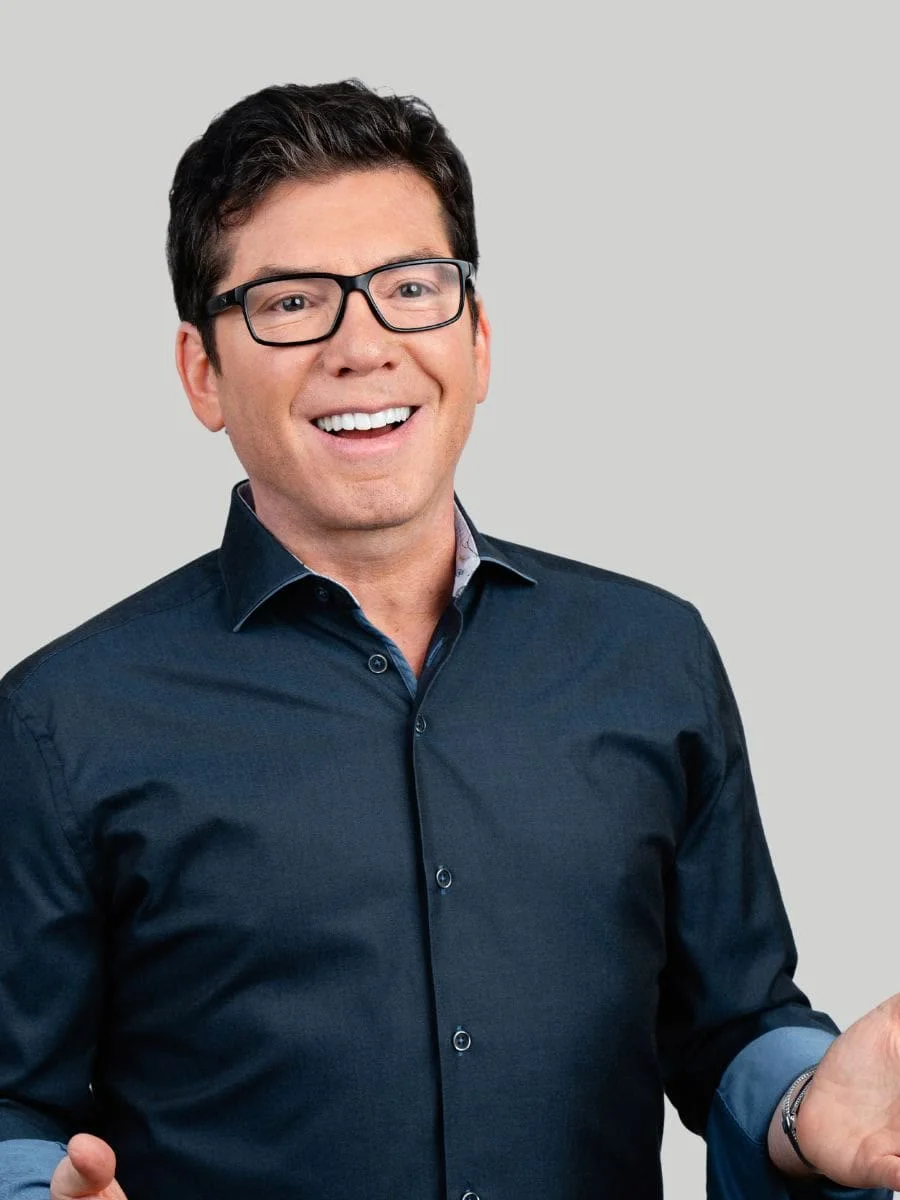
David Cowan
Proposed Bessemer's anti-portfolio during the dot-com era, according to Eric Newcomer; the published feature is institutionally authored.
A programmer learns that building and judging are different crafts
David Cowan's investment story begins with a small operating experiment, not a fund. In Bessemer's later account, he wrote software for school libraries, sold it through a company called Data Route, used the proceeds to help pay for college, and sold the business to Brad Feld after graduation. The story establishes early technical fluency and firsthand exposure to customers, but no contemporaneous incorporation, revenue, sale, or role record was recovered. It is formative context, not proof that later investment judgment came from operating success (BVP biography, “First lessons in entrepreneurship”; [retrospective witness; support: moderate]).
A VeriSign filing supplies the harder biographical anchors: an A.B. in mathematics and computer science, an M.B.A. from Harvard, and Bessemer service beginning as an associate in July 1992. Cowan later described two years at Oracle and a summer at TA Associates before Neill Brownstein recruited him to Bessemer. Those operating and institutional encounters plausibly gave him three different vantage points—product building, structured financial analysis, and apprenticeship inside an established venture partnership—but the public record does not show what he learned on particular Oracle or TA projects (VeriSign 1999 Form 10-K/A, Part III, Item 10; Startup Grind, 02:34–07:27; [researcher inference; support: moderate]).
The decisive intellectual origin in Cowan's own telling was failure as a novice picker. He says Felda Hardymon redirected him from evaluating isolated companies toward mapping an industry first: talk to experts and customers, divide the opportunity into sectors, identify bottlenecks, and hunt deliberately. This recollection appears across later interviews and aligns with his 2005 written description of a 38-sector map narrowed to five. No original 1992 map or complete early opportunity set survives publicly, so the evidence supports a durable self-described method, not proof that the method improved returns from inception (Full Ratchet #125, mentor exchange; Road Map Investing, paragraphs 3–10; [investor-stated; support: moderate]).
Internet trust, institution building, and contested credit, 1995–2000
VeriSign was the first publicly documented setting in which Cowan combined investment, company formation, and operating responsibility. Formal records place him on the board from the April 1995 founding and as chairman through June 1996. The 1999 10-K/A says he was initial CFO through June 1995 and joined Bessemer as an associate in July 1992; the earlier 1998 S-1 instead says CFO through June 1996 and associate from August 1992. That issuer-record conflict is unresolved. Both records support his August 1996 promotion to general partner and his Visto CEO service from August 1996 through April 1997. The roles are real; they do not establish a sole-founder narrative or reveal the original Bessemer check, allocation, ownership, or carried interest (VeriSign 1999 Form 10-K/A, Part III, Item 10; VeriSign S-1, “Management” and “Certain Transactions”; [contemporaneous record; support: moderate]).
The origin story is irreducibly shared. Cowan later described a poker conversation with Ron Rivest, a blocked RSA investment, incorporation of a separate certificate company, and negotiation with Jim Bidzos. VeriSign's institutional history instead roots the service in RSA and centers Bidzos. The filing establishes offices and relationships but cannot adjudicate whose idea, IP, capital, or execution was decisive. The most defensible account treats Rivest and RSA as technical and market antecedents, Bidzos and management as company-forming actors, Cowan as a founding-era financing, governance, and temporary operating participant, and Bessemer as the institution deploying capital (Practicing the Art of Pitchcraft, rule 3; VeriSign history, “Verisign's Origin”; [researcher inference; support: strong]).
This period also supplied a favorable regime. Commercial internet adoption, browser integration, emerging public-key infrastructure, and receptive public markets created both the problem and the financing path. NIST's 1996 security guidance shows that organizational information-security practice was still being formalized. Cowan's technical training and early access may have helped him recognize an internet-trust bottleneck, but market timing, RSA's position, founders, Bessemer's reputation, and the IPO window are alternative causal explanations for the visible outcome (NIST SP 800-14, executive summary and principles; VeriSign S-1, business; [researcher inference; support: moderate]).
By April 2000, Qualys announced an $8.4 million financing from Bessemer and VeriSign and identified Cowan as a Qualys board member. The record shows that the early cyber network could source and govern another company; it does not date his board appointment, show which person originated the opportunity, or establish what the investment returned (Qualys announcement, opening and board paragraphs; [contemporaneous record; support: strong]).
A failed map, an overfull sector, and a more explicit method, 1999–2007
Cowan's polished roadmap doctrine contains its own negative controls. He says a 1999 business-to-business exchange map failed, Bessemer did not exit telecommunications quickly enough, and the firm had overallocated to security by 2004. His written response was not to abandon maps but to add a stopping rule: burn a stale map, revisit the system, and stop funding categories whose supply outruns attractive demand. The claim is unusually valuable because it predates many later celebrated deep-tech investments, but the public record does not provide the failed portfolio's checks, write-offs, or comparison cohort (Road Map Investing, paragraphs 11, 16, and 19; Too Many Security Startups?, paragraphs 1 and 5–9; [investor-stated; support: strong]).
The period also clarifies Cowan's best attribution habit: he sometimes names the person who actually did the work. In the Cyota acquisition post, he credits Justin Label with pursuing the company and limits his own role to roughly a year on the board. In the 2006 Wikia/Zopa post, he announces institutional investments without converting them into personal checks. These records weaken lone-investor storytelling and support a view of Bessemer as a research, sourcing, and governance production system (RSA Acquires Cyota, Label and board passages; Wikia: Jimmy Wales' Startup, complete post; [documented behavior; support: strong]).
LifeLock is the period's hardest decision record. The 2006 memo disclosed founder, regulatory, claims, legal, operational, and failed-security-audit risks before investment and proposed structured terms. Later FTC actions against the company test whether labeling those risks “manageable” was adequate. A 2010 order and a 2015 $100 million company settlement are company-level counterevidence, not a personal adjudication against Cowan; the derivative settlement named him among directors, denied wrongdoing, imposed governance reforms, and required no personal payment. The lesson is narrower and more demanding than “take risk”: risk identification is not mitigation, and a board needs dated evidence that controls actually changed (LifeLock memo, recommendation through risks; FTC 2010 stipulated order; FTC 2015 settlement release; [researcher inference; support: strong]).
The VeriSign options record is another boundary test. The issuer reported incorrect accounting measurement dates for 8,164 grants on 41 dates and $171.4 million of additional pretax stock compensation. A court opinion recited an allegation that Cowan sold roughly 682,068 shares for more than $31 million, but did not identify him as a backdated-option recipient and found Cowan-specific participation allegations insufficiently particular at that pleading stage. The 2010 settlement contained denials, reforms, and $750,000 of company-paid legal fees. Neither allegation nor settlement proves personal wrongdoing; neither pleading insufficiency nor an SEC staff closure recital proves substantive exoneration (VeriSign 2007 Form 10-Q, option review; 2007 court opinion, allegations and demand-futility analysis; 2010 settlement, recitals and terms; [contemporaneous record; support: strong]).
Option checks, operating metrics, and team-authored decisions, 2008–2012
Around the financial crisis, the public record becomes less biographical and more decision-near. Cowan's recurring-revenue work tells analysts to reconcile bookings, annual contract value, deferred revenue, cash, churn, and gross margin rather than celebrate one growth number. Bessemer's cloud laws are a multi-contributor institutional artifact, so the metric framework can be attributed more confidently to Cowan than the whole cloud practice. The rule is falsifiable: apparent growth that does not reconcile to recurring economics should lose value (Measuring High-Growth, PDF pp. 1–12; 10 Laws of Cloud Computing, PDF pp. 1–2; [investor-stated; support: strong]).
The Dropcam and Twilio memos show a complementary capital behavior: when evidence is incomplete, buy information cheaply. The Dropcam team recommended a $200,000 seed experiment despite no paid demand; the Twilio team recommended $125,000 in a seed extension rather than underwriting the requested Series A. These are option-like checks linked to explicit next evidence, not proof of a general Cowan ownership target. James Cham, Ethan Kurzweil, Mark Lurie, and others share authorship and potential decision credit (Dropcam memo, recommendation, test, risks, and byline; Twilio memo, recommendation, traction, financing, and byline; [documented behavior; support: strong]).
LinkedIn and Twitch expose two more distinctions. Jeremy Levine alone authored and recommended LinkedIn; Cowan later described himself as Bessemer's board representative. Mackey Craven's data work surfaced Twitch's anomalous engagement, while Cowan, Kurzweil, Sunil Nagaraj, and Craven coauthored the Series B memo. “See,” “pick,” “win,” govern, and later narrate are different contributions. Cowan's later statement that Bessemer sold Twitch too early is a useful exit regret, but no public vote, ownership, proceeds, or counterfactual holding record turns it into an economic lesson (LinkedIn memo, byline and recommendation; Grace Gong, 25:21–25:39; Twitch memo, sourcing, recommendation, and byline; Forbes 2021, Twitch passages; [researcher inference; support: strong]).
Skybox supplied the scientific-risk exception that later Bessemer histories use to explain a deep-tech turn. In Cowan's account, commodity components and a replenishable constellation changed satellite cost and iteration; cofounder Dan Berkenstock helped reshape the thesis. Because the original memo, ownership, and complete transaction record are absent, Skybox is stronger as evidence of institutional learning than of Cowan's personal return (Deep Tech roadmap, opening history; Full Ratchet #124, Skybox exchanges; [retrospective witness; support: moderate]).
Systems investing across cyber, space, and frontier technology, 2013–2018
The mature Cowan method looks less like sector enthusiasm than a causal-chain exercise. In cyber, he links observable context to prevented loss; in space, components and standardized interfaces enable replenishable systems, which create data, which must reach a paid workflow; in quantum, modality and fidelity must progress toward error correction, software, and a valuable workload. The transferable unit is the bottleneck-and-milestone map, not any specific category forecast (DEF CON 13, 31:40–38:05; Full Ratchet #124, CubeSat and application exchanges; How Do Quantum Computers Work?, 34:46–43:45; [researcher inference; support: strong]).
Auth0, Velo3D, and Claroty show three sourcing channels. Auth0 arrived through a compressed, coauthored seed process with live developer evidence. Peter Beck referred Velo3D, where the critical technical secret was presented orally and capital/schedule risk remained visible. Claroty emerged through Team8's industrial-security company-creation channel; only Cowan's excerpt of the original memo is accessible. Network access matters, but the records also prescribe tests—retention and integration for Auth0, repeatable parts and qualification for Velo3D, non-disruptive deployments for Claroty (Auth0 memo, recommendation, traction, risks, and byline; Velo3D memo, introduction, technology, risks, and byline; Claroty excerpt, complete post; [documented behavior; support: strong]).
Defense.Net cautions against title inflation. Bessemer's current biography calls Cowan a cofounder; contemporaneous reporting identifies Barrett Lyon as founder and Cowan as lead investor and board member, and F5 also names Lyon as founder. Without formation records, funding-lead and governance credit are supportable; cofounder remains Bessemer's claim (TechCrunch launch report, opening paragraphs; F5 acquisition release, founder paragraph; [researcher inference; support: strong]).
Security for Startups translates Cowan's domain knowledge into a board-operating sequence: quantify exposure, assign owners, establish controls, and pre-remediate. It shows an investor trying to turn a thesis into company practice, while its vendors and control details are dated and its effectiveness across the portfolio is unmeasured (Security for Startups, PDF pp. 3–30; [investor-stated; support: strong]).
Space then becomes the clearest later roadmap. Cowan's 2018 essay maps launch, satellites, stations, data, and applications. Rocket Lab fits the asserted bottleneck, but the chronology conflicts: Sunil Nagaraj says he and Cowan co-led a December 2014 investment and both joined the board; Cowan and Peter Beck recall 2015 in one Bessemer-produced retrospective; the filing begins Cowan's formal board service in December 2015; and Bessemer's 2022 Deep Tech roadmap retrospectively dates its launcher survey and bet to 2016. These may describe different stages of one relationship, but no executed documents resolve them, so the record cannot support one clean source-to-board date (Space Is Open for Business, thesis sections; Nagaraj retrospective; Wish I Knew, opening; Rocket Lab S-1/A, management; Deep Tech, space commercialization; [researcher inference; support: moderate]).
Quantum, public-market windows, and institutional continuation, 2019–2026
In quantum, Cowan describes assembling an 18-PhD panel and evaluating modalities against technical progress and end-user usefulness. This is an extension of roadmap investing into a domain where no individual generalist can personally verify every premise. The method should therefore predict explicit expert disagreement, measurable fidelity/error-correction milestones, and customer workflow evidence—not deference to technical prestige. A 2020 lecture also contains an overstated complexity-theory phrasing, a reminder that technical fluency improves questions without eliminating the need for independent verification (Grace Gong, 49:20–52:32; How Do Quantum Computers Work?, 24:25–44:55; [researcher inference; support: moderate]).
The 2021 space-SPAC discussion is visibly regime-dependent. Cowan linked public combinations to technical milestones, strong public markets, low rates, and earlier access to growth capital. That describes a financing window, not a timeless exit doctrine. The modern lesson is to re-underwrite disclosure, dilution, milestone quality, customer evidence, and runway under the decision-date market rather than repeat “SPAC” as a category rule (SPACs in Space, driving-forces exchange; [investor-stated; support: strong]).
Public filings finally expose some vehicle boundaries. Rocket Lab's initial 13D assigned 81,450,954 shares to two BVP VIII funds. Cowan's later Form 4 separately identified direct shares, David Cowan Partners II, the Cowan Family Trust, and RSUs assigned to Deer. Rigetti's 13D assigns the reported block to two BVP X funds; its S-1/A separately records Cowan's board service, possible indirect pecuniary interest through fund shares, and no individually listed Cowan share block. In-kind distributions are not sales; beneficial ownership is not cost basis, proceeds, or personal return (Rocket Lab initial 13D, cover pages and Items 2–6; Cowan Form 4, tables and footnotes; Rigetti initial 13D, cover pages and Items 2–6; Rigetti S-1/A, principal stockholders and ownership footnotes; [contemporaneous record; support: strong]).
Bessemer's 2022–2025 deep-tech, defense, AI-infrastructure, and agent roadmaps list teams of contributors. They show that the category-building method became institutional and continued beyond any one founding partner. They do not disclose research ownership, IC votes, deal-by-deal roles, succession, or key-person dependence (Deep Tech roadmap, contributor list and opening history; Defense Tech roadmap, contributor list; AI Infrastructure roadmap, contributor list; [contemporaneous record; support: strong]).
Edge thesis: disciplined system maps inside a powerful institution
The most supportable favorable thesis is that Cowan repeatedly converts technical domains into causal maps, uses expert/customer networks to locate bottlenecks, and matches capital to falsifiable operating milestones. The mechanism should work best in emerging cyber, cloud, space, and frontier-technology markets where the value chain is unsettled, technical expertise is fragmented, and a trusted venture platform can recruit specialists and win access. The 2005 roadmap essay, decision-near memos, space map, and quantum-panel account show the method across time and domains (Road Map Investing, paragraphs 3–19; Dropcam memo, recommendation and tests; Space Is Open for Business, roadmap; Grace Gong, 49:20–52:32; [researcher inference; support: moderate]).
The thesis is not a lone Cowan picks technical winners story. It predicts observable behavior in unseen cases:
- a dated pre-investment map names the system, bottleneck, alternatives, and stopping rule;
- sourcing includes independent experts, prospective users, technical contributors, and deliberately hunted companies rather than only inbound referrals;
- the memo distinguishes technical achievement from a paying workflow and records disconfirming evidence;
- the check, rights, reserves, and next financing decision are matched to the evidence still missing;
- attribution records distinguish source, sponsor, diligence, vote, board work, follow-on, exit, and narration; and
- the mapping-and-milestone method recurs across architecture shifts in dated, decision-linked records rather than only later category essays; and
- the method appears in ordinary and failed cases, not only published winners.
Evidence that would weaken or overturn it is equally concrete: roadmaps written only after outcomes; ordinary and failed deals that lack the process; repeated bottleneck errors without documented revision; same-access contemporaneous comparisons showing no better calibration; or complete, vehicle-controlled cash flows showing no persistence outside one dominant outcome. The current record cannot run the economic test because 76 named units yield 71 included company families, 11 primary case packets, zero full forensic reconstructions, and no computable performance coverage (denominator reconciliation; [researcher inference; support: strong]).
Skill, access, team, vehicle, regime, and luck
| Candidate explanation | What the public record supports | What would discriminate it |
|---|---|---|
| Personal skill | Repeated system mapping, metric reconciliation, risk checklists, and milestone language across writings, talks, and selected memos (writings synthesis; talks frameworks). | Dated use across all decisions, calibration scores, and superior ex-outlier cash flows after controls. |
| Access and reputation | Bessemer, Harvard, Oracle/TA contacts, founders, portfolio referrals, Team8, Peter Beck, and specialist panels expanded the opportunity set (Velo3D memo, introduction; Claroty excerpt). | Source funnel and matched same-access pass/invest comparisons. |
| Team and founders | Brownstein/Hardymon mentoring; Label, Levine, Cham, Kurzweil, Nagaraj, Craven, Lee, founders, and experts perform named work. | Deal-level responsibility ledgers and counterfactual evidence about Cowan's marginal contribution. |
| Vehicle and institution | BVP/Deer funds owned securities and used multi-person investment structures; public roadmaps are increasingly collective (Rocket Lab S-1/A, ownership footnotes; Procore proxy, ownership footnotes). | Partnership agreements, votes, allocation policy, partner carry, fees, reserves, and succession records. |
| Regime | Commercial internet formation, post-crisis cheap option checks, falling component costs, government demand, low-rate SPAC markets, and strategic buyers shaped outcomes. | Vintage-, stage-, and sector-matched comparisons using information available at each decision date. |
| Luck and outliers | Cowan explicitly says rankings vary with luck; dominant economic contribution cannot be reconstructed (DishyMix, Midas exchange; Pareto analysis). | Complete checks, ownership, dilution, distributions, write-offs, and returns with and without the largest case. |
The favorable conclusion is therefore bounded: a long-lived, unusually explicit research-and-decision method is well evidenced; persistent personal alpha is not.
People, capital, and influence map
| Actor or institution | Supported role in the story | Boundary |
|---|---|---|
| Neill Brownstein and Felda Hardymon | Brownstein recruited Cowan; Hardymon is the named roadmap mentor (Startup Grind, 02:34–07:27; Full Ratchet #125). | Exact apprenticeship, sponsorship, IC, and economics are private. |
| Ron Rivest, Jim Bidzos, RSA, and VeriSign management | Technical antecedent, company formation, IP/negotiation, management, and governance are distributed across participants. | Incorporation, IP, financing, and founder-allocation records are missing. |
| Justin Label and Jeremy Levine | Label pursued Cyota; Levine authored/recommended LinkedIn; Cowan later describes board roles. | Sourcing and governance are not interchangeable with approval or economics. |
| James Cham, Ethan Kurzweil, Mark Lurie, Sunil Nagaraj, Mackey Craven, and Peter Lee | Named memo coauthors; Craven is named Twitch source; Nagaraj is a Rocket Lab co-lead witness. | IC votes, reserves, exits, and carry remain unknown. |
| Dan Berkenstock, Peter Beck, Barrett Lyon, and Team8 | Founders/operators and company-creation channels changed maps or supplied referrals, execution, and domain knowledge. | Investor narrative must not absorb founder labor or contested founder titles. |
| BVP/Deer funds and committees | Capital owners and shared decision structures appear in issuer filings. | “Bessemer” and “Cowan” cannot be substituted for each other. |
| David Cowan direct, Partners II, and Family Trust interests | Filings identify distinct legal/economic interests. | Basis, beneficiaries, sales, proceeds, and net personal economics are unavailable. |
| Regulators, government, and strategic buyers | FTC, SEC/courts, FAA/NASA/defense demand, RSA, F5, Amazon, and other buyers shape constraints and outcomes. | External action is not evidence of Cowan control or causality. |
For a deal-level responsibility map, see People, capital, and influence. For source-by-source attribution, see the written corpus and the appearance guide.
Failures, process change, and the ordinary record
Four failures or tensions are visible, but process-change proof varies.
- Roadmap failure and concentration. Cowan names the failed 1999 B2B map, telecom persistence, and security overexposure, then states a stopping rule. This is the clearest documented belief-to-process change, though the affected capital and later calibration are missing (Road Map Investing, paragraphs 11, 16, and 19; [investor-stated; support: strong]).
- LifeLock. Serious risks were visible before investment; later company/regulatory outcomes show that recognizing risk did not resolve it. No Cowan-specific checklist change was located (LifeLock case; [researcher inference; support: strong]).
- Twitch. Cowan says the firm sold too early, but the exit decision, economics, and later holding counterfactual are private. No public evidence shows a changed sell discipline (Twitch case; [retrospective witness; support: moderate]).
- eBay, Google, and PayPal. The anti-portfolio names Cowan-associated passes but omits memos, terms, allocation, complete rejections, and resulting process changes. It establishes access and fallibility more readily than learning (Bessemer anti-portfolio, named entries; Hunter Walk denominator critique; [researcher inference; support: strong]).
Ordinary outcomes are the missing center of the record. Bessemer's live page and memo library select for visibility; legacy names such as PSINet, eToys, and Determina lack terms, write-offs, governance, and outcome packets. Delivery Agent supplies only an accessible procedural filing, not a supportable investment-role or merits account. A coherent biography must therefore stop short of hit rates, loss rates, realized returns, and personal contribution claims (uncertainty ledger; [researcher inference; support: strong]).
Sourced chronology
| Period | Event, belief, process, and evidence boundary |
|---|---|
| School years–1992 | Data Route is retrospective; Harvard degrees and July 1992 Bessemer start are filing-supported; Oracle, TA, and recruitment details are later recollection (BVP biography; 1999 filing, Item 10). |
| 1992–1994 | Cowan dates Hardymon's roadmap intervention to early apprenticeship; no original map survives (Full Ratchet #125). |
| 1995–1998 | VeriSign director/chair/initial-CFO roles, Bessemer promotion, Visto CEO stint, and IPO filing are contemporaneous (VeriSign S-1). |
| 1999–2005 | Failed B2B map, telecom persistence, security overexposure, then published map/stopping-rule doctrine (Road Map Investing). |
| 2005–2007 | Cyota credit, Wikia/Zopa announcement, LifeLock memo/board role, and VeriSign option litigation begin; attribution and governance become testable public questions. |
| 2008–2012 | Recurring-revenue metrics, small Dropcam/Twilio option checks, Skybox scientific-risk exception, LinkedIn board/author boundary, and Craven-sourced Twitch memo (writings chronology). |
| 2013–2016 | Defense.Net title conflict, Auth0/Velo3D/Claroty records, Security for Startups, LifeLock regulatory/derivative outcomes. |
| 2014/2015/2016–2018 | Rocket Lab investment, relationship, formal-board, and retrospective “bet” dates remain disputed; space roadmap becomes explicit by 2018 (Rocket Lab case). |
| 2020–2023 | Quantum expert-panel method and space-SPAC window (talks evolution); Rocket Lab and Rigetti public filings clarify vehicle boundaries, while Rocket Lab's 2023 Form 8-K records Cowan's February notice and March 14 effective board resignation and says it was not caused by a disagreement (Rocket Lab 2023 Form 8-K, Item 5.02; [contemporaneous record; support: strong]). |
| 2022–2026 | Multi-author deep-tech, defense, and AI roadmaps show institutional continuation; as of 2026-08-22 Bessemer lists Cowan as a current partner (BVP biography). |
Learning path through the package
Read this biography as the causal spine, then move in this order:
- Writings for the direct doctrine and dated evolution.
- Talks for repeated oral explanations, technical maps, and retrospective conflicts.
- Investments for the searched 71-company floor, vehicle boundaries, cases, failure labs, and the reason economics remain unrankable.
- Investment philosophy for the integrated operating system, peer comparisons, modern translation, and analyst checklists.
- Mental models for model-level provenance, applications, exceptions, and diagnostics.
- Sources whenever a claim needs its canonical route, access boundary, or locator.
The package's central discipline is the same one its subject recommends: map the system, preserve disconfirming evidence, and stop where the public record stops.
1. Snapshot and testable edge thesis
| Dimension | Evidence-backed summary |
|---|---|
| Investor, institution, era | David J. Cowan; Bessemer associate from July 1992 and general partner from August 1996; internet-trust formation through cloud/cyber and later space, quantum, defense, and AI infrastructure (VeriSign 1999 Form 10-K/A, Item 10; BVP biography). |
| Proposed edge | A category-research operating system: map a technical or institutional system before selecting a company, use experts/customers/analysts/operators to locate a narrow bottleneck, source around it, and match capital to unresolved evidence. This is a testable hypothesis, not established alpha (Road Map Investing, paragraphs 3–19; [researcher inference; support: moderate]). |
| Mechanism | System research should reduce reactive pitch selection, direct scarce attention toward binding constraints, expose substitutes and dependencies, and turn uncertainty into staged tests. Bessemer's brand, teams, capital, and networks are part of the mechanism rather than noise. |
| Best-fit scope | Emerging cyber, cloud/API, space, quantum, defense, and AI-infrastructure markets where stacks are unsettled, expert knowledge is dispersed, and technical progress must connect to a paying workflow (Full Ratchet #124, stack and workflow exchanges; Quantum Advantage, stack/modalities; [researcher inference; support: moderate]). |
| Evidence status | The public record strongly supports a repeatedly stated process and selected documented behavior. It does not establish persistent personal returns or causal return contribution ([researcher inference; support: strong]). |
| Denominator | 76 named units were classified: 71 included company families, 5 exclusions, 11 primary packets, and 0 full forensic reconstructions. The 11/71 figure is retrieval readiness, not coverage or performance; performance coverage is not computable (DEALS reconciliation). |
| Predicted unseen evidence | Dated maps predate target contact; search is proactive and bounded; evidence changes check size and rights; maps have stop/refresh decisions; work is distributed and attributable; calibration is better in map-suited categories; and any advantage survives vintage, stage, vehicle, ownership, and regime controls. |
| Falsifiers | Post-outcome maps, ordinary deals without the process, check size driven chiefly by heat or fund availability, elastic categories that never stop, colleague work absorbed into Cowan's story, no category-specific calibration advantage, or no ex-outlier persistence after matched controls. |
The favorable thesis and the skeptical alternative can both be true in part. Cowan may have helped Bessemer build a durable research-and-communication institution while the public record remains unable to show that he personally generated superior investment returns. The decisive test is a dated opportunity/source/decision ledger joined to ownership-adjusted cash flows, not a list of logos or acquisition values ([researcher inference; support: strong]).
2. Core philosophy
Cowan's own doctrine first
- Map before picking. Cowan's 2005 account starts with sector research, expert interviews, narrowing, proactive pursuit, and an explicit instruction to discard stale maps. The method organizes search; the essay does not prove performance (Road Map Investing, paragraphs 3–19; [investor-stated; support: strong]).
- Find the binding constraint and follow it to value. In space, launch and standardized components matter only if systems yield data and applications customers buy; in quantum, modality and fidelity must reach error correction, software, and a useful workload (Full Ratchet #124; How Do Quantum Computers Work?, 34:46–43:45; [investor-stated; support: strong]).
- Buy evidence in stages. The Dropcam and Twilio teams recommended $200,000 and $125,000 checks to answer named questions rather than underwrite full rounds immediately (Dropcam memo, recommendation/risks; Twilio memo, recommendation/financing; [documented behavior; support: strong]).
- Measure economic retention, not cosmetic growth. Cowan's recurring-revenue framework reconciles contracted recurring revenue, churn, cash, gross margin, and finance-controlled definitions (Measuring High-Growth, PDF pp. 3–12; [investor-stated; support: strong]).
- Back truth-seeking teams, not sunk products. Cowan's interviews favor candid founders who recruit well and treat failed experiments as information; the record supports the stated heuristic more strongly than its predictive validity (Startup Grind, 19:04–27:42 and 31:52–43:17; [investor-stated; support: strong]).
- Treat capital markets and government as system variables. Space, defense, cyber, and public listings depend on procurement, licensing, externalities, rates, disclosure, and liquidity; no financing form is timeless (Full Ratchet #125, policy exchange; SPACs in Space, driving-forces exchange; [investor-stated; support: strong]).
Integrated synthesis
The operating loop is: map → identify bottleneck → source deliberately → compress the causal thesis → preserve full diligence → buy the next evidence → measure retained value → assign owners to risk → refresh or stop. [researcher inference; support: strong] It is a search-and-learning architecture, not a formula for choosing every founder or setting every price. Its principal failure mode is elasticity: if a map, milestone, or “great team” can explain every outcome after the fact, it is not a decision rule.
3. Sourcing
Channels and repeatability
| Channel | Documented route | Repeatability and boundary |
|---|---|---|
| Deliberate category research | Cowan describes 38 sectors narrowed to five initiatives through expert and customer work (Road Map Investing, process). | Repeatable as a process; the original universe, contact log, false negatives, and conversion rate are absent. |
| Analyst-led anomaly detection | Mackey Craven's data work surfaced Twitch engagement (Twitch memo, sourcing). | Strong named sourcing evidence in one selected case; query universe and rejected comparables are unknown. |
| Founder and portfolio referrals | Peter Beck introduced Velo3D; founders and portfolio operators inform space/deep-tech maps (Velo3D memo, introduction). | High-signal access can create correlated bias and must not be labeled independent validation. |
| Specialist/company-creation networks | Team8 supplied the Claroty formation channel; quantum work used an 18-PhD panel (Claroty excerpt; Grace Gong, 49:20–52:32). | Expertise is infrastructure only when selection, incentives, dissent, and decision impact are recorded. |
| Bessemer institution and inbound | Brand, portfolio, partners, memos, and long tenure increase access (BVP biography). | Access is not selection, allocation, or Cowan-only skill. |
| Opportunistic exception | Skybox is narrated as an exception that changed a prior avoidance of scientific risk (Deep Tech roadmap, opening). | A map needs exception rules; exceptions cannot become a hindsight escape hatch. |
Reusable sourcing checklist
- Timestamp the map, its owner, its system boundaries, and its expiry date.
- List every expert/customer source, conflicts, predictions, dissent, and the decision each changed.
- Record targeted outbound, warm introductions, inbound, portfolio referrals, and lost allocations separately.
- Predeclare excluded sectors, substitutes, and the evidence that would reopen them.
- Preserve source, sponsor, research, IC, board, and later narrator as separate roles.
- Audit conversion and outcomes for mapped, non-mapped, and rejected opportunities. [researcher inference; support: strong]
4. Picking
Selection hierarchy
| Question | Cowan-derived diagnostic | Red flag / kill condition |
|---|---|---|
| System | What is the causal stack, and which constraint is binding now? | The company solves a technically hard but nonbinding problem. |
| Workflow | Who pays, for what completed job, and why now? | Technical achievement has no customer budget, integration path, or urgency. |
| Founder/team | Does the team tell bad news, learn, recruit, and own the hardest risk? | Narrative certainty, weak recruiting, or attachment to a falsified product. |
| Observed behavior | Does real usage show intensity, retention, and expansion, and is the market broad enough? | Vanity breadth without retention/economics, or intensity confined to a tiny nonexpanding niche. |
| Architecture | Is the market mature enough for modular suppliers, or does the company need integration? | Premature unbundling or permanent integration after interfaces standardize. |
| Diligence | Can a one-sentence causal thesis survive full technical, legal, customer, regulatory, security, and financial review? | Simple story substitutes for verification; secret claims cannot be independently tested. |
| Economics | Do recurring value, churn, gross margin, cash, and customer acquisition reconcile? | Bookings or pipeline obscure retained value and financing needs. |
| Risk and governance | Who owns each material risk, what milestone retires it, and what is pre-remediated? | Risk is named but no owner, date, evidence gate, or response exists. |
| Terms and rights | Does check size, ownership, pro rata, board access, or tranche match the unknowns? | Price and check follow market heat, fund pressure, or logo appeal without an evidence link. |
These tests are strongest as an analyst-created synthesis of Cowan's maps, memos, metric work, and operating guide. They are not a recovered Bessemer IC form (writings decision playbook; [researcher inference; support: strong]).
Decision rights
Public memos reveal recommendations and authors, not final votes. Rocket Lab and Procore filings reveal multi-person Deer structures, not their thresholds. Seniority, authorship, or board service therefore cannot substitute for approval evidence (Rocket Lab S-1/A, ownership footnotes; Procore proxy, ownership footnotes; [contemporaneous record; support: strong]).
5. Deal and portfolio mechanics
| Dimension | Supported behavior | Unknown / misuse guard |
|---|---|---|
| Check size | Selected checks range from $125,000/$200,000 information purchases to $13 million in Twitch and a proposed $1 million Auth0 seed commitment (Twilio; Dropcam; Twitch; Auth0). | No universal Cowan check-size rule, final allocation, or complete cohort. |
| Ownership and price | LinkedIn's memo proposed 5%; Auth0 sought super-pro-rata; Twitch stated a $53 million pre-money price. | Proposed terms are not closing proof; entry ownership, dilution, and retained ownership are mostly absent. |
| Security and terms | SAFE, preferred-round, warrants/participation, observer/board, and milestone concepts appear in selected records. | No evidence supports one invariant security or negotiating doctrine. |
| Reserves and follow-ons | Memos expose future financing need; Cowan's public corpus lacks a reserve-ratio rule. | Do not infer reserves from later holdings or company longevity. |
| Concentration | Cowan acknowledges security overexposure and urges stale-map disposal (Road Map Investing, failure passages). | No portfolio target, loss budget, sector cap, or fund construction ledger. |
| Governance | Board/observer roles and operating checklists are visible across VeriSign, LifeLock, LinkedIn, Rocket Lab, and the security guide. | Board title is not causal value-add; minutes, votes, recruiting, and counterfactuals are private. |
| Exits and liquidity | Cowan says Twitch was sold too early; strategic buyers recur; 2021 SPACs are framed as conditional financing. | Acquisition value, IPO, distribution, sale, and personal proceeds are distinct. No general sell rule is evidenced. |
| Economic Pareto | Auth0, LinkedIn, Twilio, Twitch, and VeriSign are reconstruction priorities. | They cannot be ranked by contribution; no dominant outlier or ex-outlier return test is possible (Pareto boundary). |
The defensible portfolio rule is not concentration inside the map It is to allocate research, checks, reserves, and governance against explicit uncertainty while monitoring category exposure and financing capacity. [researcher inference; support: moderate]
6. Vehicle and incentive fit
| Required dimension | Public record | Strategy implication and gap |
|---|---|---|
| Capital source and form | Separately named BVP/Deer fund entities directly own issuer securities; separate direct, Partners II, trust, and board-award interests also appear (Rocket Lab 13D; Cowan Form 4). | Fund capital can support staged research and follow-ons; entity separation is mandatory. |
| Duration and fundraising pressure | Fund vintages and long-held public snapshots exist; partnership terms and fundraising calendars do not. | Capital duration, recycling, extension, and pressure to deploy or exit are insufficient public record. |
| Fees, carry, and compensation | No public BVP fee/carry schedule or Cowan capital account was recovered. | Do not infer personal economics from fund holdings, board service, or profile cards. |
| Governance and decision rights | Deer control chains and multi-person investment committees appear in filings. | The institutional edge may be shared; thresholds, vetoes, allocation, and conflicts remain unknown. |
| Geographic and sector authority | BVP presents Cowan across US-centered cyber/cloud/consumer and later global frontier practices. | Mandates, partner territories, fund allocation, and cross-office authority are not public. |
| Liquidity and reserves | Rocket Lab filings show in-kind distributions; the 2021 SPAC discussion is regime-specific. | Distribution is not sale; cost basis, reserves, lockups, cash proceeds, and LP instructions are missing. |
| Regulation | Securities reporting, public-company governance, FTC/court records, procurement, launch/spectrum, and national-security markets constrain the strategy. | Regulatory involvement can validate demand or expose conduct risk; it is not a generic moat. |
| Stakeholder incentives | LPs, founders, employees, boards, regulators, customers, trust beneficiaries, and public investors can have different objectives. | The public record cannot map priority, conflict resolution, or Cowan's net exposure. |
| Succession and key person | Later roadmaps name broader teams and specialists, suggesting institutionalization. | No formal succession, key-person clause, continuity plan, or research-ownership ledger was recovered. |
Vehicle-fit conclusion. [researcher inference; support: strong] Bessemer's platform plausibly turns maps into a repeatable team capability by supplying capital, reputation, experts, and follow-on capacity. The same structure prevents clean person-level attribution and may create fund-size, ownership, timing, and consensus constraints that the public doctrine does not disclose.
7. Team attribution and work with founders
Responsibility map
| Function | Publicly named contributors | Boundary |
|---|---|---|
| Mentor / method formation | Neill Brownstein recruited; Felda Hardymon is roadmap mentor. | Retrospective and no original 1992 artifacts. |
| Sourcing / pursuit | Craven—Twitch; Label—Cyota; Levine—LinkedIn; Beck—Velo3D referral; Team8—Claroty channel. | Source does not establish sponsor, vote, or economics. |
| Memo / diligence | Cham, Kurzweil, Lurie, Neider, Nagaraj, Lee, Craven, and Cowan appear across memos. | Authorship does not reveal section ownership or final authority. |
| Decision / capital | BVP/Deer funds and committees; final IC records unavailable. | Firm capital is not Cowan personal capital. |
| Governance | Cowan has formal roles at VeriSign, LifeLock, LinkedIn by recollection, Rocket Lab, and other companies. | Title is not measured intervention or causation. |
| Company creation / execution | Bidzos/RSA/VeriSign management, Lyon, Berkenstock, Beck, founders, operators, and employees. | Investor narrative must not absorb founder work. |
| Exit / later narration | Buyers, public markets, fund managers/LPs, Cowan, Bessemer publications. | Exit vote, proceeds, and narrator are separate. |
Working with founders
The supported founder doctrine is: prefer candid learners who recruit well; separate commitment to people from commitment to a failed product; use boards to expose metrics, risks, recruiting needs, and next milestones; and avoid taking over the operating job. [investor-stated; support: strong] The public record shows this philosophy in interviews and guides more clearly than it shows Cowan-specific causal interventions (Startup Grind, 19:04–43:17; Security for Startups, PDF pp. 6–10 and 26–30).
LifeLock supplies the adverse boundary: board access plus known risk did not prevent later company/regulatory outcomes, and no public minutes establish what Cowan did or should have done. Defense.Net supplies the title boundary: funding leadership and a board seat do not automatically make an operating founder (LifeLock postmortem; Defense.Net case).
8. Views on the craft
| Craft question | Most supportable Cowan view | Evidence boundary |
|---|---|---|
| Power law / luck | Venture outcomes and rankings contain substantial luck; visible winners can dominate attention. | No public cash flows permit a power-law decomposition (DishyMix, Midas exchange). |
| Access versus selection | Maps and expertise should improve both targeted access and screening. | Famous passes show access, not necessarily poor picking; See/Pick/Win must be separated. |
| Fund size | Evidence-gated checks and capital-intensive frontier cases imply different check/reserve needs. | Cowan publishes no universal fund-size doctrine or ownership target. |
| Governance | Boards should recruit, measure, expose risk, and prepare responses. | Board effectiveness and marginal contribution are not measured publicly. |
| Partnership | Colleagues, experts, and vetoes restrain individual enthusiasm; credit should be distributed. | Formal vote, veto frequency, economics, and dissent records are private. |
| Exits | Strategic fit and financing windows matter; Twitch created a reported regret about selling too early. | No general hold/sell algorithm, ownership path, or proceeds record. |
| A great investor | The corpus implies a prepared researcher who finds a binding constraint, recruits the right people, buys evidence, and changes the map when wrong. | This is researcher synthesis, not a recovered Cowan definition ([researcher inference; support: moderate]). |
9. Signature bets and decision process
Use the 14 ex-ante exercises—13 company case labs plus the grouped anti-portfolio miss lab—before reading outcomes. Each freezes the available record, then asks whether to invest, what kills the deal, what ownership/terms fit, and what unlocks the next check.
| Decision lens | Best lab | Why it belongs |
|---|---|---|
| Cheap information purchase | Dropcam and Twilio | Small checks tied to missing proof. |
| Behavior intensity versus breadth | Twitch and LinkedIn | Deep engagement and broad professional identity create different market/risk questions. |
| Visible risk versus mitigation | LifeLock | Decision-near warnings can be tested against later company counterevidence. |
| Technical secret / capital intensity | Velo3D | Oral validation, schedule, qualification, and financing must be made observable. |
| Company-creation access | Claroty | Team8 access and industrial-security expertise need direct-company evidence. |
| Bottleneck roadmap | Rocket Lab and Skybox | Map, exception, launch, proof, and chronology must remain separated. |
| Contested origin / attribution | VeriSign, Cyota, and Defense.Net | Formal role, source, founder, board, and economics are different units. |
| Miss/failure control | eBay, Google, and PayPal exercise | Reconstruct the offered decision before seeing the famous outcome. |
Auth0 is a high-priority economic reconstruction target, not a proven top return; no case meets the full forensic standard (Auth0 lab; [researcher inference; support: strong]).
10. Mental models and maxims
The complete model inventory is fixed at 14. Each link leads to provenance, mechanism, context, application steps, cases, exceptions, evolution, and modern translation in the field guide.
- Map the market—and burn the map. Origin: Cowan's 2005 roadmap account, including failed maps and stopping rules (Road Map Investing).
- bottleneck-to-paying-workflow. Origin: the space stack and application chain (Full Ratchet #124).
- architecture follows maturity. Origin: modular space systems versus integrated early quantum stacks (Full Ratchet #125; Quantum Advantage).
- staged experiments/capital for information gain. Origin: Dropcam and Twilio seed recommendations (Dropcam; Twilio).
- observed behavior—intensity vs breadth/economics. Origin: Twitch intensity, LinkedIn breadth/frequency, and Cowan's experiment doctrine (Twitch; LinkedIn).
- compress thesis, not diligence. Origin: Pitchcraft's concise story plus full risk records (Pitchcraft, rules 1–4).
- operating metrics to retained value/board bridge. Origin: recurring-revenue measurement and controller-owned definitions (Measuring High-Growth, PDF pp. 3–12).
- risk into owned milestones/pre-remediation. Origin: the startup security guide's owners, loss ranking, controls, and incident preparation (Security for Startups, PDF pp. 6–30).
- experts/customers/team-role attribution. Origin: roadmap interviews and named memo/source credits (Road Map Investing; Twitch).
- truth-seeking recruiters, not sunk products. Origin: Cowan's founder and sunk-cost discussion (Startup Grind, 19:04–43:17).
- continuous adaptation/collaborative defense. Origin: adversarial security changes and shared defense (Too Many Security Startups?, paragraphs 5–9; StrictlyVC, Q&A 1–3).
- government customer/rule-maker/externality corrector. Origin: space policy and cyber-externality analysis (Full Ratchet #125, policy exchange).
- financing/liquidity as regime variables. Origin: private-market lag and 2021 space-SPAC conditions (StrictlyVC, Q&A 4; SPACs in Space).
- dated falsification/process change. Origin: failed B2B map, telecom/security concentration, and explicit map disposal (Road Map Investing, failure passages).
Plausible slogans without sufficient reusable decision evidence remain outside this index; see evidence gaps and candidates.
11. Evolution and contradictions
Seven causal-link tests
| Proposed chain | Evidence status | Break in the chain |
|---|---|---|
| Apprenticeship → distrust reactive picking → maps → targeted sourcing → outcomes | Method origin is retrospective; process public by 2005 (Startup Grind). | Original 1992 map and outcome cohort absent. |
| Failed maps/concentration → expiring-map belief → later category expansion | Failure and stated change are direct (Road Map Investing). | Later implementation/calibration ledger absent. |
| VeriSign exposure → system-security doctrine → cyber actions → outcomes | Roles and later doctrine are documented. | Chronology does not prove causation; sector loss denominator absent. |
| Skybox cost inversion → scientific-risk belief → space map → Rocket Lab/Velo3D | Retrospective but repeated; referral and formal roles partly documented. | Original Skybox/Rocket records and cash flows absent. |
| LifeLock risk → proposed mitigation → board governance → later counterevidence → learning | Risk and company outcomes are strong records. | Executed terms, minutes, Cowan actions, and process change absent. |
| Famous passes → exception learning → better later selection | Pass association and public artifact exist. | Complete passes, allocation, original memos, and changed process absent. |
| 2021 capital regime → SPAC advocacy → financing → durable advantage | Regime account is direct. | Listing, durability, realization, and transfer to other regimes are unproved. |
Eight dated contradictions to preserve
- 1992 story / 2005 publication: the roadmap origin is retrospective; repetition in 2017–2020 does not create a contemporaneous 1992 record.
- 2005: systematic mapping coexists with a failed B2B map, telecom overstay, security concentration, and opportunistic exceptions.
- 2005–2015: simple pitch doctrine coexists with complex technical, legal, security, and regulatory diligence.
- 2006 entry / later LifeLock record: enumerating risk coexists with later company-level failure; mitigation is not proved by memo language.
- 2000s institutional anti-portfolio / live page: Cowan may have proposed publicizing misses, but the current page has no personal byline and no pass denominator.
- 2014/2015/December 2015/2016: Rocket Lab investment, relationship, formal-board, and later institutional-survey dates remain unresolved.
- 2013–2014 / current biography: Lyon is contemporaneously identified as Defense.Net founder; Cowan is funding lead/board member; BVP's cofounder label is unresolved.
- 2021 / other regimes: space-SPAC enthusiasm is explicitly low-rate/strong-market conditional, not permanent exit doctrine. [researcher inference; support: strong] See the claim-local record in talks contradictions and writings chronology.
12. Failures and limits
| Failure or limit | What is supported | What remains unproved |
|---|---|---|
| B2B map / telecom / security concentration | Cowan names the errors and a burn-the-map response. | Capital lost, timing, later adherence, and improvement. |
| LifeLock | Visible pre-investment risks and later company/regulatory/derivative records. | Cowan misconduct, executed mitigation, board causality, or a changed checklist. |
| VeriSign options record | Issuer accounting findings, pleaded allegation, pleading ruling, reforms/no admission. | Cowan grant receipt, merits liability, personal proceeds, or substantive exoneration. |
| Twitch exit regret | Cowan says Bessemer sold too early. | Exit vote, liquidity need, ownership, proceeds, counterfactual hold, or changed sell rule. |
| eBay / Google / PayPal passes | Institutionally published Cowan-associated misses. | Investable allocation, exact terms, rationality, opportunity cost, and process change. |
| Delivery Agent / Rising Tide | Accessible filing establishes Cowan as named defendant and procedure. | Claims, investment role, merits, damages, and disposition from the available artifact. |
| Ordinary and failed deals | Legacy/company cards establish names. | Terms, write-offs, ownership, governance, and complete outcomes. |
| Technical authority | Detailed maps improve questions. | Accuracy is not guaranteed; a quantum phrasing and a deep-tech date error require independent control. |
| Corpus selection | BVP publishes rich selected memos and mutable cards. | Lifetime opportunity, accepted-deal, rejected-deal, loss, and cash-flow denominators. |
The strongest failure lesson is procedural: preserve the original claim, evidence, owner, terms, stop rule, and later outcome; only call it learning when a dated process change appears in subsequent decisions. [researcher inference; support: strong]
13. Historical operating environment
| Era | Contemporary conditions relevant to interpretation | Transfer boundary |
|---|---|---|
| 1995–2000 internet trust | PKI, organizational security standards, browsers, internet commerce, strategic incumbents, and public markets were still forming (NIST SP 800-14; VeriSign S-1). | Do not judge architecture or adoption from mature-internet hindsight. |
| 1999–2005 dot-com correction | B2B and telecom enthusiasm reversed; security still faced adversarial demand but crowded supply. | Category expertise can become concentration and identity risk. |
| 2006–2009 consumer/cloud and contraction | LifeLock/LinkedIn faced trust, frequency, regulation, and price questions; 2009 venture funding contracted, while Dropcam/Twilio used small checks (2009 stage snapshot). | Small checks fit cheap software experiments, not every capital-intensive company. |
| 2010–2018 commercial space/deep tech | Commodity components, COTS/CRS, launch options, regulation, and government demand changed feasibility (FAA 2010 report). | Falling component cost does not remove launch, qualification, financing, debris, or customer risk. |
| 2012–2016 APIs/video/cyber | Developer adoption, streaming behavior, identity abstraction, and industrial connectivity created new workflows and threats. | Selected memos are not market base rates. |
| 2020–2021 frontier/public window | Low rates, strong public markets, and milestone narratives supported SPAC financing. | Listing is not validation, realization, or a rule for a different liquidity regime. |
| 2022–2026 institutional frontier research | Multi-author defense and AI roadmaps show broader practice formation. | Current team capability cannot be projected backward onto Cowan or earlier funds. |
No reliable career-wide loss, follow-on, or venture base rate was recovered. Qualitative context is preferable to fabricated precision.
14. Modern VC translation (as of 2026-08-22)
| Major lesson | What transfers / what changed | Applicability signals | Most likely misuse | Grounded current example or hypothetical |
|---|---|---|---|---|
| Map and burn | Timestamped system maps transfer; static taxonomies do not. | Interfaces, buyers, constraints, and substitutes can be named and refreshed. | Publishing a map after a winner. | BVP's AI-infrastructure roadmap explicitly warns that the stack is moving (AI Infrastructure); [researcher inference; support: strong]. |
| Bottleneck to workflow | Constraint analysis transfers; technical difficulty alone does not. | Customers pay to remove the constraint and the next bottleneck is understood. | Calling every hard component a moat. | Defense procurement constraints in the 2024 roadmap (Defense Tech); [researcher inference; support: strong]. |
| Architecture follows maturity | Reassess integration as interfaces standardize. | Supplier quality, standards, coordination cost, and customer control points are observable. | Treating modularity or full stack as ideology. | Analyst hypothetical: tranche an integrated frontier company until external suppliers become reliable; [researcher inference; support: moderate]. |
| Capital buys information | Small checks transfer when experiments are cheap; fixed-cost science needs full milestone funding. | A check produces a dated observation that changes the next decision. | Underfunding hardware while calling it optionality. | Dropcam/Twilio are historical controls; Velo3D is the capital-intensity boundary. |
| Behavior intensity vs breadth/economics | Usage remains valuable only when retention, expansion, breadth, and economics reconcile. | Cohorts and paid workflows distinguish depth from a narrow anomaly. | Treating a viral metric as market proof. | Twitch and LinkedIn show opposite dimensions; [researcher inference; support: strong]. |
| Compress thesis, not diligence | Simple causal statements transfer; diligence expands with security, regulation, and model/technical risk. | One sentence generates testable subclaims and kill criteria. | Rewarding narrative fluency. | Analyst hypothetical: summarize an AI-agent thesis in one sentence, then audit autonomy, data, security, unit cost, buyer, and liability. |
| Retained-value metrics | Reconciliation survives; exact 2008 thresholds and SaaS benchmarks may not. | Finance-controlled definitions connect contracts, usage, churn, gross margin, and cash. | Copying historical benchmark numbers without cohort definitions. | BVP's own multi-era cloud materials illustrate version risk; [researcher inference; support: strong]. |
| Owned risk/pre-remediation | Owners, dates, controls, and rehearsed responses transfer. | Each existential risk has evidence, escalation, and a precommitted response. | Converting a risk register into false safety. | LifeLock is the adverse historical control; [researcher inference; support: strong]. |
| Experts and attribution | Panels transfer only with independence, dissent, prediction, and role logs. | Experts change a named decision and their conflicts are disclosed. | Credential laundering or senior-partner credit absorption. | The quantum panel is a grounded route with incomplete prediction records. |
| Truth-seeking recruiters | Learning and recruiting remain observable; “great founder” is not a waiver. | Bad news arrives early, experiments stop, and stronger people join. | Continuing the same failed product because the team is admired. | Analyst hypothetical: follow the people only if the new plan earns fresh milestones. |
| Continuous/collaborative defense | Adversarial adaptation transfers; product claims need measured loss reduction. | Threat change, shared signals, and customer outcomes are observable. | Funding undifferentiated tools because threats persist. | Cowan's 2005 overconcentration warning is the control. |
| Government as system actor | Customer, regulator, and externality roles transfer, but procurement and policy are jurisdiction-specific. | Budget authority, contracting path, license, liability, and public benefit are explicit. | Calling regulation or a pilot a moat. | Defense roadmap and space-policy discussions are grounded current-in-corpus examples. |
| Financing/liquidity regime | Re-underwrite rates, valuations, dilution, disclosure, runway, and buyer markets at every decision. | Financing improves survival without masquerading as product proof. | Treating listing or distribution as return. | The 2021 SPAC discussion is the regime-conditional control. |
| Dated falsification/process change | Versioned predictions and postmortems transfer fully. | A failed claim changes exposure, criteria, or stop decisions on a date. | Anti-portfolio content without a denominator or changed action. | Analyst hypothetical: publish the original IC scorecard beside the one-year audit; [researcher inference; support: strong]. |
15. Comparison with completed peers
The valid peers are Andy Rachleff, Fred Wilson, and Jim Breyer. All are completed buildout-era US venture dossiers, but their vehicles, sectors, stages, and evidence corpora are not return-comparable. The comparison is process-only. [researcher inference; support: strong]
| Dimension | Cowan | Rachleff | Wilson | Breyer |
|---|---|---|---|---|
| Sourcing | System maps, experts, analysts, founders, portfolio referrals. | Market structure and non-consensus insight; demand pull (Rachleff PMF). | Published thesis, networks, inbound/outbound, small evidence checks (USV thesis). | Prepared mind, specialist/institution networks, founders and universities (AI investing). |
| Picking | Bottleneck, workflow, team truth, observed behavior, milestone evidence. | Urgent market pull, value before growth, and right/non-consensus selection (Rachleff picking). | Thesis fit, product engagement, network effects, team trust, and price (Wilson picking). | Simple product/important market, adaptive team, and institutional validation (Breyer picking). |
| Ownership / price | Selected memo terms vary; no invariant rule. | Magnitude doctrine exists; complete ownership/economics do not. | More explicit public deal-size/reserve doctrine (Deal Size). | Selected price/ownership cases; person economics unresolved. |
| Construction / reserves | Security concentration warning; no complete target or reserve ratio. | Benchmark equal partnership and selected concentrated cases; full construction private. | Explicit reserves and portfolio architecture (Reserves). | Accel/Breyer vehicles and specialist cohorts; allocation remains bounded. |
| Governance | Risk owners, metrics, recruiting, milestones; causal evidence thin. | Public doctrine emphasizes market pull and learning, while marginal board contribution is unresolved (Rachleff founder work). | Founder service, board duty, and partner attribution are explicit themes (Wilson team attribution). | Recruiting, institutions, and adaptive management appear in the completed dossier, with causal contribution bounded (Breyer team attribution). |
| Vehicle / incentives | BVP/Deer funds and multi-person committees plus separate related interests. | Benchmark equal-economics/shared-control claims and earlier MPAE remain vehicle-specific (Rachleff vehicle fit). | Flatiron/USV partnerships and public construction doctrine remain fund-specific (Wilson vehicle fit). | Accel partnership and later Breyer Capital create different institutional/network access (Breyer vehicle fit). |
| Failures | Failed map/concentration, LifeLock, Twitch exit regret, passes, thin ordinary record. | PointCast/Ipsilon and the incomplete denominator test demand-pull doctrine (Rachleff failures). | Kozmo, StarMedia, Turntable, Kik, and the Airbnb miss test thesis/governance claims (Wilson failures). | Weak Accel vintages, Prosper, and incomplete ordinary cases test the prepared-mind narrative (Breyer failures). |
| Incentive lesson | Institutional research may be the edge and the attribution problem. | Equal-economics claims may improve trust while still obscuring individual work; no causal test is public (Rachleff vehicle fit). | Reserve/thesis discipline operates inside shared partnership incentives (Wilson mechanics). | Specialist networks improve access but may be mistaken for personal selection skill (Breyer sourcing). |
Comparison result. [researcher inference; support: strong] Within the cited public corpora, Rachleff is more demand-pull explicit (core philosophy); Wilson is more explicit about portfolio construction and reserves (deal mechanics); Breyer is more explicit about relationship and institutional workflows (sourcing); and Cowan is more explicit about system stacks and bottlenecks. This is a documentation/process comparison, not a finding about actual practice frequency. None of the four public dossiers proves superior personal risk-adjusted returns, and company-value comparisons would be invalid.
16. The strongest case against greatness
The skeptical thesis is that Cowan is an unusually articulate senior partner whose public corpus turns Bessemer's access, people, selected memos, mutable portfolio, and favorable technology regimes into a coherent personal story. The institution-building and teaching contribution may be real while repeatable personal selection skill and return contribution remain unproved. [researcher inference; support: strong]
| Skeptical claim | Supporting record | Favorable response | Evidence that would decide |
|---|---|---|---|
| Institutional curation creates coherence | Selected memos, live cards, and multi-author roadmaps overrepresent successful/teachable cases. | The 2005 roadmap and several decision-near memos predate outcomes. | Complete dated map/memo corpus, including ordinary and failed cases. |
| Access, not selection | Bessemer, founders, boards, Team8, Beck, and specialist panels create scarce deal flow. | Deliberate research and anomaly detection can discriminate within access. | Full source funnel, same-access passes/investments, and calibration. |
| Team misattribution | Levine/LinkedIn, Craven/Twitch, Label/Cyota, coauthors, founders, funds, and committees perform named work. | Cowan sometimes credits them and may orchestrate the system. | Function-level source/sponsor/vote/board/follow-on/exit ledger. |
| Missing denominator and survivorship | 71 included families, 11 packets, 0 full reconstructions; ordinary losses are thin. | The package keeps the denominator failure explicit. | Complete opportunity, accepted, rejected, failed, and archived portfolios. |
| Economics are unproved | No audited Cowan or compatible BVP cash-flow series; ownership snapshots are not returns. | Some entry terms and fund holdings are reconstructable. | Checks, dilution, sales/distributions, write-offs, fees/carry, and net cash flows. |
| Era effects and luck | Cowan credits luck/favorable 1992–1999 conditions; 2009 and 2021 financing regimes matter. | A method can remain useful across regimes if adapted. | Vintage/stage/sector/vehicle matched outcomes and ex-outlier persistence. |
| Doctrine is retrospective | Hardymon, Skybox, Rocket Lab, and anti-portfolio stories are partly post-outcome. | Roadmap doctrine was public by 2005 and some memos are decision-near. | Contemporaneous map versions, interview logs, IC records, and stop decisions. |
| Visible failures challenge calibration | B2B map, telecom/security concentration, LifeLock, passes, Twitch regret, and technical inaccuracies. | Stated revision and candor can be strengths. | Dated process changes tested on subsequent decisions. |
| Governance value is assumed | Board roles are visible; minutes and counterfactuals are not. | Security/metrics guides show a mechanism for board work. | Board minutes, recruiting, risk interventions, dissent, and matched outcomes. |
Eleven reversal gaps
- Original 1992 and later dated roadmap archive.
- Complete opportunity, source, rejection, acceptance, allocation, and role ledger.
- Fund and person economics, including cash flows, fees, carry, and waterfalls.
- Original memo-to-closing chains for the 11 primary packets and teaching cases.
- Rocket Lab 2014/2015/2016 sourcing, commitment, closing, board, basis, and milestone record.
- LifeLock executed financing, remediation, compliance, and board record.
- VeriSign incorporation/IP/financing plus option-grant, trade, and SEC-closure record.
- Defense.Net formation/equity and Rising Tide complaint/merits/disposition record.
- Anti-portfolio archives, byline/edit history, allocation, full pass denominator, and changes.
- Board contribution, recruiting, intervention, and counterfactual record.
- Regime-matched mapped versus non-mapped comparison cohort. [researcher inference; support: strong]
Verdict. [researcher inference; support: moderate] The corpus demonstrates a durable, useful category-research and communication system more clearly than it demonstrates personal economic greatness. Evidence of superior ex-outlier, ownership-adjusted outcomes after team, access, vehicle, and regime controls would strengthen the greatness claim; evidence that maps were post hoc or unrelated to outcomes would weaken the process claim itself.
17. Analyst study guide, glossary, and go deeper
Recommended reading path
- Start with the biography and write down the favorable thesis, seven predicted records, falsifiers, and six alternative explanations.
- Read writings, beginning with Road Map, metrics, LifeLock, Twitch, and Security for Startups.
- Read talks, beginning with Grace Gong, Startup Grind, DEF CON, Full Ratchet, and Churchill 2018.
- Freeze the denominator and three Pareto views before discussing winners or returns.
- Replay Dropcam, Twitch, LifeLock, Rocket Lab, and the eBay/Google/PayPal miss lab without revealing outcomes before voting.
- Work through all 14 mental models, checking documented applications against researcher-applied illustrations and exception ledgers.
- End with §16, the uncertainty ledger, and source coverage.
Investor-specific glossary
| Term | Meaning here |
|---|---|
| Roadmap / map | A dated, revisable system of sectors, actors, constraints, initiatives, and stopping rules; not a market landscape slide. |
| Burn the map | Stop or rewrite a thesis after its premise, timing, concentration, or causal structure fails. |
| Bottleneck | The binding constraint on a paid workflow now; removing it may move value to another layer. |
| Information-gain check | Capital sized to produce evidence that changes the next decision, not merely to own an option. |
| CMRR / retained value | Cowan's recurring-revenue construct joining contracted value and expected churn; definitions require finance control. |
| Pre-remediation | Owners, vendors, communications, recovery, and escalation prepared before an incident. |
| See / Pick / Win | Separate access to a company, selection decision, and obtained allocation/economic outcome. |
| BVP/Deer | Distinct Bessemer fund, manager, GP, and committee entities; not synonyms for Cowan personally. |
| Partners II / Family Trust / direct | Separately reported Cowan-related legal interests; not interchangeable with BVP fund ownership or net wealth. |
| Primary packet readiness | Located decision/filing material for 11 cases; 11/71 is not performance coverage. |
Reusable analyst checklists
Sourcing
- Is the map dated, bounded, versioned, and owned?
- Which expert, customer, analyst, founder, or inbound route produced the lead?
- What was excluded, lost, or passed, and why?
- Is the bottleneck thesis independent of the company already in hand?
Diligence
- What is the one-sentence causal claim?
- Which technical, customer, security, legal, regulatory, financing, and team facts could falsify it?
- Does observed behavior reconcile intensity, breadth, retention, expansion, and economics?
- Who owns each risk, by what date, and what evidence retires it?
- What architecture is required now, and what maturity would change it?
Investment committee
- Would we invest on the frozen record?
- What kills the deal?
- What ownership, security, rights, reserves, and vehicle fit the risk?
- What evidence unlocks the next check?
- Who sourced, researched, sponsored, voted, negotiated, and will govern?
- How will this change category and fund concentration?
Governance and follow-on
- Which operating metric is finance-controlled and tied to retained value?
- Which milestones were met, missed, or redefined?
- Has a failed product been stopped while the team remains supportable?
- Are pre-remediation, regulator/customer duties, and escalation current?
- Does follow-on capital buy new evidence or defend a sunk position?
- What map version, regime assumption, or exit/liquidity premise must change?
Ranked primary learning set
- Road Map Investing — best direct method, failure, concentration, and stopping-rule artifact.
- LifeLock memo paired with the FTC 2010 order — best ex-ante risk versus later counterevidence test.
- Measuring High-Growth — most falsifiable operating/board measurement bridge; canonical provenance remains incomplete.
- Twitch memo — best source/author/engagement/price/risk attribution record.
- Security for Startups — most complete risk-owner/pre-remediation operating framework.
- Grace Gong interview — best single spoken account of method, mentors, team credit, Rocket Lab, quantum panels, and luck.
- Full Ratchet #124 and #125 — clearest system, architecture, workflow, policy, and capital map.
Ranked skeptical and contextual controls
- Hunter Walk's anti-portfolio critique — forces a rejected-deal denominator and See/Pick/Win separation.
- VeriSign 2007 court opinion — preserves allegation, pleading, role, and finding boundaries.
- Rocket Lab initial 13D and Cowan Form 4 — best vehicle/entity controls.
- FAA 2010 commercial-space report and NIST SP 800-14 — decision-era system context independent of Cowan.
- Churchill Club 2018 — peers challenge timing and adoption in real time, limiting retrospective certainty.
Pareto 80/20 — what drove the record
The public record does not support a literal 80/20 split. There is no audited Cowan cash-flow series, complete Bessemer vehicle ledger, ownership-through-exit history, or stable person-attributed deal denominator. The three rankings below therefore answer different questions and deliberately do not convert acquisition values, public-company valuations, or fame into Cowan's realized return. [researcher inference; support: strong] The evidence boundary is the selected Bessemer profile, original memos, issuer filings, direct accounts, and the lower-bound company ledger below (BVP profile, biography and portfolio cards; Rocket Lab initial 13D, Items 2–6).
Ranked view 1 — likely economic contribution, directionally only
| Rank | Candidate | Public basis or measure—not a return calculation | Attribution | Confidence / supported mechanism | Denominator caveat | Case |
|---|---|---|---|---|---|---|
| 1 | Auth0 | The memo recommends $1 million into an $850,000 SAFE at an $8 million cap; Bessemer's current page reports a $6.5 billion Okta acquisition. Final allocation, conversion, dilution, follow-ons, proceeds, and fund are unknown (memo, recommendation/financing; BVP card). | Cowan, Sunil Nagaraj, and Peter Lee coauthored; source, vote, reserves, and exit roles unknown. | [researcher inference; support: moderate] A very large disclosed value span plus super-pro-rata rights makes this the strongest reconstructable candidate, not proven #1 cash return. | Selected published winner; no cash flows or comparable loss ledger. | Auth0 |
| 2 | Levine recommended $12.5 million for 5% at a $237.5 million pre-money valuation; the company later went public and was acquired. Ownership, sales, dilution, and distributions are not public in this record (memo, recommendation/financing; BVP card). | Jeremy Levine alone authored and recommended; Cowan later says he was Bessemer's board representative (Grace Gong, 25:21–25:39). | [researcher inference; support: moderate] Disclosed initial ownership plus major outcome; Cowan personal contribution is not established. | Cannot separate institutional return from Cowan role or know retained ownership. | ||
| 3 | Twilio | The surviving memo recommends only $125,000 in a seed extension; Bessemer's page records a 2016 IPO. Later Bessemer rounds and complete economics are absent (memo, recommendation; BVP card). | Cowan, Kurzweil, Cham, and Lurie authored the seed memo; current profile highlights Byron Deeter as investor. | [researcher inference; support: provisional] Tiny early access check followed by a public outcome suggests high potential multiple, but later capital/ownership could dominate dollars. | Seed check is not the total investment and IPO is not a realized cash return. | Twilio |
| 4 | Twitch | $13 million recommended at $53 million pre-money; later acquired by Amazon. Cowan says Bessemer sold too early, but proceeds and ownership at sale are unavailable (memo, recommendation; Forbes retrospective, Twitch passages). | Craven sourced through analysis; Cowan, Kurzweil, Nagaraj, and Craven coauthored; sale authority unknown. | [researcher inference; support: provisional] Known price and exit make the case reconstructable, while the reported early-sale account suggests foregone rather than maximized contribution. | No ownership, follow-on, proceeds, or total fund denominator. | Twitch |
| 5 | VeriSign | Founding-era roles and 1998 IPO are filing-supported; initial Bessemer terms and fund cash flows are missing. Litigation allegations of Cowan share sales are not Bessemer return evidence (1998 S-1, management/certain transactions; 2007 court opinion). | Cowan was director/chair/initial CFO; RSA, Jim Bidzos, Ron Rivest, management, and Bessemer all require separate credit. | [researcher inference; support: provisional] Historically central and plausibly material, but economics are the least reconstructable of the five. | Personal alleged sale figures, fund holdings, and company value are incommensurate. | VeriSign |
Dominant-outlier test. Auth0 is the most obvious candidate when comparing disclosed entry terms with a disclosed acquisition value, but that is not a contribution multiple. Excluding Auth0 does not produce a defensible replacement winner: LinkedIn's initial 5%, Twilio's seed access, Twitch's priced Series B, and VeriSign's founding-era exposure lack comparable retained-ownership and cash-flow data. [researcher inference; support: strong] The correct conclusion is that public evidence cannot determine either the dominant realized outlier or record concentration.
Ranked view 2 — historical importance
| Rank | Case | Why it matters historically | Attribution and confidence | Denominator caveat |
|---|---|---|---|---|
| 1 | VeriSign | Early certificate authority and founding-era operating/governance roles anchor Cowan's cyber identity and later category research (1999 10-K/A, Item 10). | [contemporaneous record; support: strong] Roles are formal; origin causality remains contested among Cowan, RSA/Bidzos, Rivest, and management. | Historical centrality does not prove top economics. |
| 2 | Skybox / Terra Bella | Cowan/Bessemer later identify Skybox as the scientific-risk exception that opened a deep-tech and space practice (Deep Tech roadmap, opening history). | [retrospective witness; support: moderate] Institutional learning claim; cofounder Dan Berkenstock is a named thesis input. | Post-outcome practice narrative and no original memo. |
| 3 | Connects the cloud/consumer era, a large priced network bet, and a hard lesson in team attribution (LinkedIn memo, byline/governance). | [contemporaneous record; support: strong] Levine authored/recommended; Cowan board role is retrospective. | Bessemer significance is not Cowan sole credit. | |
| 4 | Twitch | Demonstrates analyst/data sourcing of a non-obvious behavior and later becomes Cowan's explicit sell-too-early lesson (Twitch memo, sourcing/market risk). | [researcher inference; support: strong] Craven and coauthors preserved. | A celebrated exit with unknown contribution. |
| 5 | Rocket Lab | Turns the post-Skybox launch bottleneck into a public space platform and creates vehicle-level ownership evidence (BVP interview, investment passages; Rocket Lab 13D). | [researcher inference; support: moderate] Cowan and Nagaraj co-lead claim; date conflict remains. | Public shares and distributions do not reveal cost or return. |
Ranked view 3 — decision-learning value
| Rank | Case | Learning value | Attribution and confidence | Boundary |
|---|---|---|---|---|
| 1 | LifeLock | Known founder, regulatory, legal, and failed-security-audit risks were visible before investment; later FTC action tests whether “manageable” was adequate (memo, regulatory/security/risk; FTC 2015 settlement). | [contemporaneous record; support: strong] Cowan, Cham, Neider memo; later board role. | Company-level counterevidence is not personal liability. |
| 2 | Twitch | Separates See/Pick/Win: Craven surfaces anomalous growth, team prices market-size risk, and Cowan later questions the sale (memo). | [contemporaneous record; support: strong] Best combined sourcing/decision/exit-learning record. | No exit vote, ownership, or proceeds. |
| 3 | Dropcam | A $200,000 check buys an option while explicit demand, latency, support, and team tests remain (memo, recommendation/risks). | [documented behavior; support: strong] Cowan/Cham/Kurzweil coauthored. | Successful later outcome can make every early experiment look wise. |
| 4 | Velo3D | Shows frontier-tech referral, top-down market expansion, oral technical diligence, schedule slip, and future-capital risk in one decision (memo, introduction/diligence/risks). | [contemporaneous record; support: strong] Cowan/Nagaraj coauthored; Beck referred. | The crucial technical secret cannot be independently audited. |
| 5 | eBay / Google / PayPal passes | Forces the missing-denominator question and distinguishes seeing, selecting, allocating, and winning (Bessemer anti-portfolio, named entries; Hunter Walk critique). | [researcher inference; support: moderate] Current page has no byline; Cowan is named in entries. | Reasons, terms, capacity, votes, and process changes are incomplete. |
Evidence boundary and searched denominator
Scope and inclusion rules
The scoped unit is a deduplicated company family with a public Cowan/Bessemer role lead, not a round, board seat, SPV, security, or realized cash flow. Renames are combined—Visto/Good Technology, Skybox/Terra Bella, Justin.tv/Twitch—and follow-ons do not create new companies. Bessemer/Deer funds, David Cowan Partners II, the Cowan Family Trust, direct shares, board compensation, and founders are separate actors. Data Route is excluded as Cowan's pre-VC operating company; eBay/Google/PayPal and other passes belong in the miss ledger rather than the invested-company denominator. [researcher inference; support: strong]
The search covered the live Bessemer Cowan page, Cowan’s 2005 direct portfolio history and blog, the original-memo library, SEC S-1/proxy/13D/Form 4 records, issuer/acquirer releases, litigation/regulator records, Signal and Crunchbase as leads, current/archived biography variants, and aliases Digital Certificates/VeriSign, Visto/Good, Justin.tv/Twitch, Skybox/Terra Bella, Wikia/Wikicities, and Defense.Net. The current page reports “over 30 IPOs” and displays 50 company cards; third-party database totals do not define the same person/round/vehicle universe (BVP profile; Signal profile; [researcher inference; support: moderate]).
Denominator reconciliation
| State | Count | Exact scope | Interpretation |
|---|---|---|---|
| Publicly claimed / known | 50 cards; third-party database total; >30 IPOs | BVP live selected cards; Signal person page; BVP biography | Incompatible marketing/discovery claims, not a cash-flow denominator. |
| Named units classified | 76 | 71 included company families + 5 exclusions | Reproducible scope reconciliation; not a personal cash-flow denominator. |
| Included and identity/role researched | 71 company families | 50 current-card families + 17 absent legacy families + Twitch + Good/Visto + Wikia/Wikicities + Zopa, after alias/follow-on deduplication | Every included family was checked; current-page mutation can still change membership. |
| Primary case packets | 11 | Auth0, Cyota, Defense.Net, Dropcam, LifeLock, LinkedIn, Rocket Lab, Twitch, Twilio, Velo3D, VeriSign | Packet readiness varies and is not full forensic reconstruction. |
| Without a primary case packet | 60 | The remainder of the named included-company ledger | Public identity/role research is not a reconstructed decision packet. |
| Sufficiently reconstructed to the full DEALS standard | 0 / 71 | No case has a complete decision, terms, ownership-through-exit, cash-flow, governance, outcome, and process-change record | All 71 included families remain unresolved on at least one material field. |
| Excluded | 5 | Data Route, Delivery Agent, eBay, Google, PayPal | Operating company, adverse-only unresolved candidate, or pass-only company rather than a sufficiently established included family. |
Coverage fraction: not computable. The 11/71 figure is 15.5% primary-case retrieval readiness, not reconstruction or performance coverage: none of the 71 included families meets the full forensic standard, 60 have no primary packet, all 71 remain unresolved on at least one material field, and the lifetime person-attributed investment/cash-flow denominator remains unknown. Missing deals, archived cards, changing 2024–2026 additions, selected memo publication, private follow-ons, and team attribution create survivorship and visibility bias. [researcher inference; support: strong]
Historical market, regulatory, and base-rate context
| Decision era | What a diligent contemporary could know | Case implication | Evidence boundary |
|---|---|---|---|
| 1995–2000 internet trust/security | Public-key infrastructure, certificate authorities, and organizational security practice were emerging while internet commerce needed authenticated counterparties; VeriSign's 1998 S-1 describes the issuer, RSA relationship, roles, and financing context (VeriSign S-1, business/management/certain transactions; NIST SP 800-14, security principles). | VeriSign should be judged against an unsettled architecture and market, not today's domain infrastructure. | No sourced contemporary venture base rate or complete alternative-financing set was found. |
| 2005–2007 security, consumer internet, identity | Cowan contemporaneously warned about security overfunding; LifeLock's memo documented FTC/claims/security risk; LinkedIn's memo priced a network with weak frequency (security essay, ¶¶1 and 5–9; LifeLock memo; LinkedIn memo). | These were not risk-free category bets: regulation, customer trust, price, and engagement were visible before outcomes. | No complete 2006 seed/A/B loss distribution was located. |
| 2009 post-crisis seed market | An academy-hosted PwC/NVCA snapshot shows the 2009 contraction and stage mix; Dropcam and Twilio used $200,000/$125,000 option checks rather than full underwriting (2009 stage snapshot; Dropcam memo; Twilio memo). | Cheap access and milestone financing fit a constrained funding environment, but causation from macro scarcity is researcher inference. | Industry presentation is secondary to MoneyTree; no deal-specific financing auction record. |
| 2010–2015 commercial space/deep tech | FAA's 2010 report mapped COTS/CRS programs, vehicles, spaceports, and regulatory conditions; Skybox used commodity components; Rocket Lab addressed launch; Velo3D anticipated slip and another round (FAA 2010 report; Full Ratchet #124, Skybox/launch exchanges; Velo3D memo). | Hardware risk had to be financed to on-orbit, prototype, qualification, and production milestones, not software growth alone. | No comparable failure cohort or cost-of-capital series for these companies. |
| 2012–2016 cloud APIs, video, cyber | Twitch already had large engagement but uncertain market size; Auth0 had early recurring developer evidence in a crowded identity field; Claroty began from OT uptime and attack exposure (Twitch memo; Auth0 memo; Claroty excerpt). | Product abstraction and anomalous use justified investment only with distinct adoption, market-size, integration, and security tests. | Published memos are selected and company-reported metrics unaudited. |
| 2021 public/SPAC window | Cowan linked space SPACs to technical milestones, strong public markets, low rates, and earlier access to growth; founders described disclosure/customer effects (SPACs in Space, full transcript). | A public listing can be financing and credibility, not proof of realized venture return or durable company quality. | Later share performance must not leak into the 2021 decision; no fund cash-flow schedule is public. |
Historical context is qualitative where no defensible base rate survives. No number is substituted for missing venture loss, follow-on, dilution, or exit distributions. [researcher inference; support: strong]
Vehicle economics and incentives
What the filings establish
| Capital / governance unit | Public evidence | Supported implication | Unknown economics |
|---|---|---|---|
| Bessemer Venture Partners / Deer Management | Rocket Lab's initial 13D assigns 81,450,954 shares to two BVP VIII funds and describes the Deer control chain; issuer filings use distinct fund and manager entities (13D, cover pages and Items 2–6). | [contemporaneous record; support: strong] The funds—not Cowan personally—were direct owners at listing. | LPs, commitments, fees, carry, cost basis, reserve policy, net cash flows. |
| Multi-person investment authority | Rocket Lab and Procore filings describe Deer investment committees rather than Cowan unilateral control (Rocket Lab S-1/A, ownership footnotes; Procore proxy, ownership footnotes). | [contemporaneous record; support: strong] Senior title or board seat does not equal sole investment authority. | Voting thresholds, allocation conflicts, partner carry, deal ownership. |
| In-kind distributions | BVP VIII Form 4s report March and June 2022 pro-rata distributions; later 13D/As track more distributions (March Form 4; June Form 4). | [contemporaneous record; support: strong] Distribution changes holder identity; it is not necessarily a sale or realized gain. | Recipient basis, later sales, taxes, LP/GP allocation, net IRR/TVPI. |
| David Cowan direct shares | Cowan's June 2022 Form 4 reports 294,310 direct shares, including 256,220 received through in-kind distributions (Form 4, Table I/footnotes). | [contemporaneous record; support: strong] Direct registration is separate from original fund ownership; receipt does not disclose personal cost or carry. | Beneficial source, basis, restrictions, sales, proceeds. |
| David Cowan Partners II | Same filing reports 79,881 shares through the partnership (Form 4, footnote 2). | [contemporaneous record; support: strong] A named partnership is not interchangeable with Cowan, the BVP funds, or family trust. | Partners, partnership agreement, allocation, basis, proceeds. |
| Cowan Family Trust | Same filing reports 119,203 shares through the trust (Form 4, footnote 3). | [contemporaneous record; support: strong] Related-person beneficial reporting does not reveal beneficiaries or personal economics. | Trust terms, beneficiaries, tax/basis, disposition. |
| Board compensation assigned to Deer | Form 4 reports 38,090 Rocket Lab board RSUs assigned to Deer Management (Form 4, footnote 4). | [documented behavior; support: strong] Board compensation could accrue to the management entity rather than the director personally. | Internal compensation/carry treatment and final proceeds. |
| LifeLock fund/co-invest/personal-related units | The 2016 proxy separately lists BVP VI, co-investment entities, David Cowan Partners II, and Cowan Family Trust (LifeLock proxy, beneficial ownership table/footnotes). | [contemporaneous record; support: strong] One company can expose several legally distinct economic channels. | Acquisition basis, allocations, dilution, sales, and Cowan net economics. |
Incentive analysis and modern-fund comparison
Bessemer is treated here as an LP-backed venture organization only to the dimensions filings demonstrate: separate fund entities, a Deer management/control layer, committee decision rights, co-investment entities, long-held private-to-public positions, and in-kind distributions. [researcher inference; support: moderate] No public partnership agreement or LP letter was located, so fund duration, fundraising pressure, management fees, carry, reserves, recycling, key-person clauses, geography authority, succession, and net performance are insufficient public record. A current LP-backed fund comparison is therefore limited: both can use pooled long-duration capital, committees, reserves, and distributions, but the exact Bessemer contract and Cowan incentive cannot be inferred from industry convention.
Vehicle structure plausibly constrains behavior in three ways. First, large technical rounds and follow-ons require fund/committee capacity rather than personal conviction alone. Second, board compensation assignment and in-kind distributions can align the partner with the management company and LP vehicle while obscuring person-level cash realization. Third, separate family/partnership holdings create related economic exposure that must be reported but not automatically treated as carry or an original personal check. [researcher inference; support: moderate] Each mechanism is plausible from the filings; none proves a specific deal decision was caused by incentive design.
People, capital, and influence map
| Actor | Publicly supported roles | Cases | Roles still unknown |
|---|---|---|---|
| David Cowan | Memo coauthor; general partner; board/director/chair/CFO in named cases; public narrator; related-entity beneficial reporter | VeriSign, Cyota, LifeLock, LinkedIn, Rocket Lab, Rigetti, original memos | Deal-by-deal source, IC vote, negotiation, reserves, exit authority, carry, net economics. |
| Felda Hardymon / Neill Brownstein | Mentor/roadmap intervention; recruitment/apprenticeship in Cowan's retrospective | Early Bessemer method | Contemporaneous decisions, formal authority, economics. |
| Jeremy Levine | Sole LinkedIn memo author and recommender; Cowan credits him with finding the deal | IC vote, negotiation, later ownership/exit. | |
| Justin Label | Cowan credits pursuit of Cyota and anti-phishing vendors | Cyota | Formal title, sponsor, board, economics. |
| Mackey Craven | Data-driven Twitch sourcing and memo coauthor | Twitch | Query universe, diligence, vote, exit role. |
| James Cham / Ethan Kurzweil / Mark Lurie / Brian Neider | Named original-memo coauthors | Dropcam, Twilio, Twitch, LifeLock | Source, sponsor, vote, board, reserves, carry. |
| Sunil Nagaraj / Peter Lee | Memo coauthors; Nagaraj says he co-led Rocket Lab with Cowan | Twitch, Auth0, Velo3D, Rocket Lab | Allocation, voting, board/follow-on/exit roles. |
| Peter Beck | Rocket Lab founder; introduced Velo3D; retrospective deal witness | Rocket Lab, Velo3D | Financing records, counterparty negotiation, complete board record. |
| Dan Berkenstock / Skybox team | Berkenstock introduced Cowan to the commercial-space industrial shift in Cowan's account | Skybox | Original source, memo, ownership, board and exit roles. |
| Ron Rivest / Jim Bidzos / RSA / VeriSign executives | Technical/origin inputs, RSA antecedent/license, formal executive roles | VeriSign | Incorporation/IP/equity/financing allocation and settled founder vocabulary. |
| Barrett Lyon | Contemporaneous reports and F5 identify him as Defense.Net founder | Defense.Net | Incorporation, Bessemer incubation and Cowan formation roles. |
| Founders and operating teams | Built products, recruited teams, sold, and operated; company-specific records vary | All companies | Investor value-add cannot be inferred from an exit. |
| BVP/Deer funds and committees | Direct capital owners and multi-person decision/control structures | LifeLock, Rocket Lab, Rigetti, Procore | Internal votes, LP capital, fees/carry, reserves and distributions. |
| Cowan Partners II / Cowan Family Trust | Separate beneficially reported holdings | LifeLock, Rocket Lab | Capital source, beneficiaries/partners, basis, proceeds. |
| Acquirers/public investors/regulators | Exit counterparties, post-listing owners, and constraints | Auth0, Twitch, Skybox, Defense.Net, LifeLock, others | Causal attribution to investor actions. |
Role vocabulary is deliberately narrow: memo author is not automatically source; board representative is not memo author; lead investor is not founder; beneficial reporter is not direct owner; distribution is not sale; and later narrator is not necessarily the decision-maker. [researcher inference; support: strong]
Comprehensive all-discovered-company ledger
| # | Company family and evidence route | Publicly supported role / stage / vehicle boundary | Deep-case materiality |
|---|---|---|---|
| 1 | Anything | BVP live card lists Cowan and Lance Co Ting Keh; partnered 2024; round and fund unknown. (retrospective witness; support: moderate.) | No packet; private outcome/economics unknown. |
| 2 | Auth0 | 2014 seed memo by Cowan, Sunil Nagaraj, and Peter Lee recommends $1m into a SAFE at an $8m cap; exact BVP vehicle and executed allocation unknown. (contemporaneous record; support: strong.) | Primary packet; ownership, follow-ons, exit cash flows, and role chain incomplete. |
| 3 | Auterion | BVP card lists Cowan and Alex Ferrara; partnered 2025; round/fund and decision rights unknown. (retrospective witness; support: moderate.) | No packet. |
| 4 | Bastille Networks | BVP card lists Cowan; partnered 2015; stage, vehicle, and governance unknown. (retrospective witness; support: moderate.) | No packet. |
| 5 | Blue Nile | BVP card lists Cowan and a 2004 IPO; investment stage, vehicle, ownership, and proceeds unknown. (retrospective witness; support: moderate.) | No packet. |
| 6 | Boom Supersonic | BVP card lists Cowan; partnered 2021; fund, terms, and milestones unknown. (retrospective witness; support: moderate.) | No packet. |
| 7 | Breaker | BVP card lists Cowan and Keh; partnered 2025; round/fund unknown. (retrospective witness; support: moderate.) | No packet. |
| 8 | ChipAgents | BVP card lists Cowan and Keh; partnered 2025; round/fund unknown. (retrospective witness; support: moderate.) | No packet. |
| 9 | Claroty | Cowan published an excerpt referring to an April 2016 recommendation and $32m Series A; allocation, full byline, fund, and terms absent. (investor-stated; support: moderate.) | Decision-lab case; partial excerpt, not primary-packet readiness; complete memo and economics missing. |
| 10 | Crosschq | BVP card lists Cowan; partnered 2019; stage/fund and roles unknown. (retrospective witness; support: moderate.) | No packet. |
| 11 | Cyota | Cowan says Justin Label pursued the deal and Cowan served roughly one year on the board; BVP partnered 2004; fund/check unknown. (investor-stated; support: strong.) | Primary packet; consideration, ownership, proceeds, and full IC/exit roles missing. |
| 12 | DEFCON AI | BVP card lists Cowan; partnered 2024; stage/fund and roles unknown. (retrospective witness; support: moderate.) | No packet. |
| 13 | Defense.Net | Bessemer-funded/incubated; Barrett Lyon is identified as founder and Cowan as lead investor/board member, while later BVP “co-founder” language conflicts; fund/check unknown. (retrospective witness; support: moderate.) | Primary packet; role conflict and economics unresolved. |
| 14 | DroneDeploy | BVP card lists Cowan; partnered 2019; stage/fund unknown. (retrospective witness; support: moderate.) | No packet. |
| 15 | Dropcam | 2009 Cowan/James Cham/Ethan Kurzweil memo recommends a $200k seed option; BVP vehicle unspecified. (contemporaneous record; support: strong.) | Primary packet; source, allocation, follow-on, board, and proceeds missing. |
| 16 | Endgame | BVP card lists Cowan; partnered 2010 and later acquired by Elastic; stage/fund and economics unknown. (retrospective witness; support: moderate.) | No packet. |
| 17 | Fern | BVP card lists Cowan and Keh; partnered 2025 and reports a 2026 Postman acquisition; round/fund/economics unknown. (retrospective witness; support: moderate.) | No packet. |
| 18 | GetInsured | BVP card lists Cowan; partnered 2005; stage/fund and economics unknown. (retrospective witness; support: moderate.) | No packet. |
| 19 | Halter | BVP card lists Cowan; partnered 2022; stage/fund and roles unknown. (retrospective witness; support: moderate.) | No packet. |
| 20 | Iris Automation | BVP card lists Cowan; partnered 2017 and reports a 2023 uAvionix acquisition; stage/fund/economics unknown. (retrospective witness; support: moderate.) | No packet. |
| 21 | iSIGHT Security | BVP card lists Cowan; partnered 2014 and reports a 2016 FireEye acquisition; stage/fund/economics unknown. (retrospective witness; support: moderate.) | No packet. |
| 22 | LifeLock | 2006 Series A memo by Cowan, Cham, and Brian Neider; later filings identify BVP VI/co-invest, partnership, and trust channels. (contemporaneous record; support: strong.) | Primary packet; controls, allocations, dilution, sales, and net economics missing. |
| 23 | Jeremy Levine alone recommends $12.5m for 5%; Cowan later says he was Bessemer’s board representative; fund unspecified. (contemporaneous record plus retrospective witness; support: strong.) | Primary packet; role separation is clear, retained ownership and proceeds are not. | |
| 24 | Modelcode | BVP card lists Cowan; partnered 2024; round/fund unknown. (retrospective witness; support: moderate.) | No packet. |
| 25 | NODA AI | BVP card lists Cowan and Janelle Teng Wade; partnered 2025; round/fund unknown. (retrospective witness; support: moderate.) | No packet. |
| 26 | Nominum | BVP card lists Cowan and reports a 2017 Akamai acquisition; stage/fund/economics unknown. (retrospective witness; support: moderate.) | No packet. |
| 27 | Picogrid | BVP card lists Cowan; partnered 2026; round/fund unknown. (retrospective witness; support: moderate.) | No packet. |
| 28 | Playdom | BVP card lists Cowan; partnered 2009 and reports a 2010 Disney acquisition; stage/fund/economics unknown. (retrospective witness; support: moderate.) | No packet. |
| 29 | Postini | BVP card lists Cowan; partnered 2003 and reports a 2007 Google acquisition; stage/fund/economics unknown. (retrospective witness; support: moderate.) | No packet. |
| 30 | Qualys | 2000 financing names Bessemer and VeriSign and identifies Cowan as a board member; it does not date his appointment, and allocations, stage detail, and vehicle remain unknown. (contemporaneous record; support: strong.) | No deep packet. |
| 31 | Reputation | BVP card lists Cowan; partnered 2009; stage/fund unknown. (retrospective witness; support: moderate.) | No packet. |
| 32 | Rigetti Computing | Filing supports Bessemer affiliate ownership and Cowan’s board role/pecuniary disclaimer; BVP card says partnered 2020. (contemporaneous record; support: strong.) | No deep packet; original terms and cash flows missing. |
| 33 | Rocket Lab | BVP VIII entities owned shares at listing; Cowan/Nagaraj co-lead claim and 2014/2015 date conflict remain; Cowan board, direct, partnership, trust, and Deer channels must stay separate. (contemporaneous record plus retrospective witness; support: strong.) | Primary packet; initial cost, full dilution, recipients’ later sales, and net return missing. |
| 34 | Smule | BVP card says partnered 2008; Jeff Smith and Ge Wang are operators, Cowan the EIR/early-capital narrator; round/fund unknown. (investor-stated; support: moderate.) | No deep packet. |
| 35 | Solomon | BVP card lists Cowan; partnered 2024; round/fund unknown. (retrospective witness; support: moderate.) | No packet. |
| 36 | Spire | Cowan says Bessemer first passed and later partnered after satellites/contracts; fund/terms and role chain unknown. (investor-stated; support: moderate.) | No deep packet. |
| 37 | Team8 | BVP card associates Cowan; partnered 2015; platform/spinout fund and economics unknown. (retrospective witness; support: moderate.) | No packet. |
| 38 | Terra Bella / Skybox Imaging | One deduplicated family; card associates Cowan and reports Google acquisition; Dan Berkenstock is named thesis input; BVP vehicle/terms unknown. (retrospective witness; support: moderate.) | Decision-lab case; retrospective routes, not primary-packet readiness; original memo, role chain, price, ownership, and proceeds absent. |
| 39 | Tripwire | BVP card lists Cowan and later transactions; stage/fund and economics unknown. (retrospective witness; support: moderate.) | No packet. |
| 40 | TurbineOne | BVP card lists Cowan; partnered 2024; round/fund unknown. (retrospective witness; support: moderate.) | No packet. |
| 41 | Twilio | 2009 Cowan/Kurzweil/Cham/Mark Lurie memo recommends a $125k seed extension while declining the larger Series A; vehicle unspecified. (contemporaneous record; support: strong.) | Primary packet; later rounds, board, ownership, distributions, and proceeds missing. |
| 42 | Vega Health | BVP card lists Cowan and Keh; partnered 2025; round/fund unknown. (retrospective witness; support: moderate.) | No packet. |
| 43 | Velo3D | 2015 Cowan/Nagaraj memo proposes roughly $8m within a $15m round; exact fund unknown; Peter Beck introduced the company. (contemporaneous record; support: strong.) | Primary packet; oral technical secret, executed terms, follow-ons, and cash flows incomplete. |
| 44 | VeriSign | 1995 formation and Cowan director/chair/initial-CFO roles are filing-supported; RSA/Bidzos/Rivest/management and Bessemer roles remain distinct. (contemporaneous record; support: strong.) | Primary packet; origin causality and institutional/personal economics unresolved. |
| 45 | Verse | BVP card lists Cowan; partnered 2026; round/fund unknown. (retrospective witness; support: moderate.) | No packet. |
| 46 | Virtru | BVP card lists Cowan; card says partnered 2016 while another reported financing route suggests chronology needs reconciliation; terms/fund unknown. (retrospective witness; support: provisional.) | No packet. |
| 47 | Voxel51 | BVP card lists Cowan; partnered 2024; round/fund unknown. (retrospective witness; support: moderate.) | No packet. |
| 48 | Waymo | BVP card lists Cowan, Byron Deeter, and Sameer Dholakia; partnered 2026; round/fund and roles unknown. (retrospective witness; support: moderate.) | No packet. |
| 49 | Xanadu | BVP card lists Cowan; partnered 2021 and reports 2026 listing; fund, ownership, and proceeds unknown. (retrospective witness; support: moderate.) | No packet. |
| 50 | Zapier | BVP card lists Cowan; partnered 2014; stage/fund and roles unknown. (retrospective witness; support: moderate.) | No packet. |
| 51 | NetSys | Cowan’s 2005 history links it to the 1992 network-management initiative; round/fund/roles unknown. (investor-stated; support: moderate.) | Legacy; no packet. |
| 52 | Cell Access | Named under ATM; company-family identity, stage, vehicle, and economics unresolved. (investor-stated; support: moderate.) | Legacy; no packet. |
| 53 | Data Labs | Named under ATM; exact identity/alias and all mechanics unresolved. (investor-stated; support: moderate.) | Legacy; no packet. |
| 54 | Ciena | Named under wavelength-division multiplexing; public-company fame is not Bessemer/Cowan return evidence. (investor-stated; support: moderate.) | Legacy; no packet. |
| 55 | Worldtalk | Named under enterprise email; round/fund/roles/economics unknown. (investor-stated; support: moderate.) | Legacy; no packet. |
| 56 | ON Technology | Named under enterprise email; round/fund/roles/economics unknown. (investor-stated; support: moderate.) | Legacy; no packet. |
| 57 | Tumbleweed | Named under enterprise email; kept distinct from Jeff Smith’s later Smule role. (investor-stated; support: moderate.) | Legacy; no packet. |
| 58 | PSI-Net / PSINet | Alias-normalized; Cowan links it to enterprise email/commercial IP; stage/fund/roles/economics unresolved. (investor-stated; support: moderate.) | Legacy; no packet. |
| 59 | Keynote | Named in the internet-services roadmap; round/fund/roles/economics unknown. (investor-stated; support: moderate.) | Legacy; no packet. |
| 60 | Flycast | Named in the internet-services roadmap; round/fund/roles/economics unknown. (investor-stated; support: moderate.) | Legacy; no packet. |
| 61 | Register / Register.com | Alias normalized; named in internet services; investment mechanics unresolved. (investor-stated; support: moderate.) | Legacy; no packet. |
| 62 | eToys | Named in consumer e-commerce; round, write-off/exit, and economics unresolved. (investor-stated; support: moderate.) | Legacy; no packet. |
| 63 | BabyCenter | Named in consumer e-commerce; round/fund/roles/economics unknown. (investor-stated; support: moderate.) | Legacy; no packet. |
| 64 | HotJobs | Named in consumer e-commerce; round/fund/roles/economics unknown. (investor-stated; support: moderate.) | Legacy; no packet. |
| 65 | Elemental | Named as a security-map incubation; exact issuer identity and all economics unresolved. (investor-stated; support: moderate.) | Legacy; no packet. |
| 66 | Determina | Named as a security-map incubation; round/fund/roles/economics unknown. (investor-stated; support: moderate.) | Legacy; no packet. |
| 67 | Infinitrust | Named as a security-map incubation; exact identity, round, outcome, and economics unresolved. (investor-stated; support: moderate.) | Legacy; no packet. |
| 68 | Twitch / Justin.tv | One alias-normalized family; 2012 memo by Cowan, Kurzweil, Nagaraj, and Mackey Craven recommends a $13m Series B; fund/executed allocation unknown. (contemporaneous record; support: strong.) | Primary packet; sourcing is visible, ownership/follow-ons/exit decision/proceeds are not. |
| 69 | Good Technology / Visto | One alias-normalized family; Cowan’s Visto CEO episode and later BVP biography support roles, but round, fund, and investor/operator boundary remain incomplete. (contemporaneous record plus retrospective witness; support: moderate.) | No deep packet. |
| 70 | Wikia / Wikicities | Cowan announces a Bessemer investment in 2006; Wikicities/Wikia treated as one family; vehicle, check, and Cowan individual role unknown. (investor-stated; support: strong.) | Included; no primary packet. |
| 71 | Zopa | Same direct post announces a Bessemer financing; round, vehicle, team roles, and economics unknown. (investor-stated; support: provisional.) | Included; no primary packet. |
Exclusion ledger — 5 rows
| ID | Excluded unit | Reason and boundary |
|---|---|---|
| E1 | Data Route | Cowan’s pre-VC operating/software company, not a Bessemer invested-company family. The biography is retrospective and no contemporaneous sale record was recovered. (retrospective witness; support: moderate.) |
| E2 | Delivery Agent | Excluded from the 71 arithmetic because the recovered route does not fully establish the person-attributed investment chain. A public-pension record separately calls it a BVP VI portfolio company and names litigation involving Cowan, so it remains a high-priority adverse/failure retrieval lead—not a finding of non-investment or wrongdoing. (contemporaneous record; support: provisional.) |
| E3 | eBay | Cowan-associated pass, not an invested-company family in this denominator; terms, allocation, and complete decision record missing. (retrospective witness; support: strong.) |
| E4 | Cowan-associated pass, not an invested-company family in this denominator; later Bessemer relationships or acquirer roles do not convert the pass into an investment. (retrospective witness; support: strong.) | |
| E5 | PayPal | Cowan-associated pass, not an invested-company family in this denominator; no original pass memo or attainable-allocation record. (retrospective witness; support: strong.) |
Ex-ante cases and decision labs
Each case freezes the decision-date record before revealing the later outcome. The four questions are analyst-created exercises, not claims that Cowan or Bessemer used those exact words. [researcher inference; support: strong]
Auth0 — 2014 seed abstraction and speed
Frozen record. Two weeks after first meeting Auth0, Cowan, Sunil Nagaraj, and Peter Lee recommended $1 million into an already-open $850,000 SAFE at an $8 million cap, plus super-pro-rata rights through as much as one-third of a Series A. The product abstracted heterogeneous identity systems for developers. Reported evidence was about $10,000 MRR, 75 paying customers, nearly 5,000 developers, about 350 live implementations, over 90% gross margin, no recent churn, and 15–20% monthly growth; crowding, internal builds, early-adopter concentration, and integration complexity remained risks (Auth0 memo, recommendation, product, traction, competition, financing and risk; [contemporaneous record; support: strong]).
Unknown or disputed then. Security/customer diligence, the competing deal set, precise cohort windows, final IC vote, fund, ownership after conversion, board rights, and what would falsify the two-week conviction are absent. [researcher inference; support: strong]
No-hindsight exercise.
- Would you invest then? Decide whether developer/live-implementation evidence compensates for the compressed diligence clock and crowded identity market.
- What would kill the deal? Specify security failure, churn, build-internal preference, integration burden, or weak expansion thresholds.
- What ownership/terms fit the risk? Price SAFE-cap exposure and pro-rata rights without assuming the later acquirer.
- What evidence unlocks the next check? Require cohort retention, security references, enterprise expansion, integration cost, and repeatable developer conversion.
Actual decision and outcome. The memo records a Bessemer recommendation; the current BVP page reports Auth0 was acquired by Okta for $6.5 billion in 2021. No final Bessemer allocation, retained ownership, dilution, proceeds, or person-level economics is public here (memo, recommendation; BVP profile, Auth0 card; [contemporaneous record; support: strong]).
Dropcam — 2009 seed option on a prototype
Frozen record. Cowan, James Cham, and Ethan Kurzweil recommended a $200,000 seed as an option to lead a later Series A. The product paired off-the-shelf hardware/firmware with Wi-Fi streaming and a $10 monthly cloud-storage plan. Evidence was a prototype and a three-day AdWords test with a reported 20% signup rate but no payment request; unresolved tests were sub-$30 acquisition cost, latency, setup, support burden, marketing efficiency, and a two-engineer team's inexperience (Dropcam memo, recommendation, product, traction, financing and risk; [contemporaneous record; support: strong]).
Unknown or disputed then. Willingness to pay, retention, hardware compatibility, support cost, storage gross margin, ownership, governance, and a committed Series A decision rule are absent. The advanced computer-vision roadmap was explicitly speculative.
No-hindsight exercise.
- Would you invest then? Decide whether $200,000 is a rational information purchase despite no paid demand.
- What would kill the deal? Set latency, setup failure, support, paid conversion, retention, and customer-acquisition limits.
- What ownership/terms fit the risk? Choose option value and follow-on rights without overpricing an email-signup test.
- What evidence unlocks the next check? Require reliable installs, paid subscriptions, cohort retention, support economics, and inventory/compatibility proof.
Actual decision and outcome. The seed recommendation was institutional and coauthored. BVP reports Google acquired Dropcam in 2014; final seed ownership, follow-ons, distributions, and proceeds remain unknown (memo; BVP profile, Dropcam card; [contemporaneous record; support: strong]).
Twilio — 2009 seed extension buys more evidence
Frozen record. Cowan, Kurzweil, Cham, and Mark Lurie recommended $125,000 in an extension bringing the seed to $800,000 while declining to underwrite the requested roughly $3 million Series A. Twilio reduced telephony to a compact API; reported MRR was roughly $17,000–$20,000 after nine months but growth was not explosive. A named implementation took under a day, while large-company names were pipeline rather than customers; distribution was developer-led, and reported blended gross margin was 56% (Twilio memo, recommendation, product, traction, pipeline, economics and financing; [contemporaneous record; support: strong]).
Unknown or disputed then. Cohort retention, customer concentration, carrier-price sensitivity, enterprise conversion, sales repeatability, fund, ownership, board rights, and later-round allocation are absent.
No-hindsight exercise.
- Would you invest then? Decide whether product leverage and live revenue justify only access, a full Series A, or a pass.
- What would kill the deal? Define MRR-growth, gross-margin, carrier-dependence, retention, and enterprise-conversion failures.
- What ownership/terms fit the risk? Match a small extension and pro-rata/next-round rights to evidence still missing.
- What evidence unlocks the next check? Require repeatable developer activation, paid expansion, large-customer closure, durable margin, and a sales motion.
Actual decision and outcome. The record supports the small Bessemer extension, not Cowan sole credit. BVP reports Twilio went public in 2016 and currently lists Byron Deeter on the company card; follow-on capital, ownership, distributions, and person-level returns remain unavailable (memo; BVP profile, Twilio card; [researcher inference; support: strong]).
Twitch — 2012 Series B on anomalous engagement
Frozen record. Mackey Craven's data analysis surfaced Twitch; Cowan, Kurzweil, Nagaraj, and Craven recommended $13 million at a $53 million pre-money valuation. Reported scale was about 18 million monthly uniques, 9.6% monthly unique growth, 16% monthly minutes growth, and roughly 75 daily minutes among engaged users. The thesis joined creators, viewers, and publishers around the then-non-obvious behavior of watching games; market size, monetization, rights, mobile, infrastructure, and competition remained uncertain (Twitch memo, sourcing, product, engagement, growth, market risk and recommendation; [contemporaneous record; support: strong]).
Unknown or disputed then. The query universe, raw cohorts, retention, broadcaster economics, follow-on need, fund, ownership, governance, exit rights, and sell thresholds are absent.
No-hindsight exercise.
- Would you invest then? Separate intense observed engagement from an unproven broad market and decide at the stated price.
- What would kill the deal? Set creator concentration, retention, rights/moderation, infrastructure-margin, mobile, and monetization thresholds.
- What ownership/terms fit the risk? Price the Series B and reserves for a potentially capital-intensive marketplace.
- What evidence unlocks the next check? Require creator supply durability, cohort engagement, monetization, publisher alignment, and scalable delivery cost.
Actual decision and outcome. The memo records the Bessemer recommendation and Craven sourcing. Twitch was acquired by Amazon; Cowan later said Bessemer sold too early, but the record lacks ownership at sale, proceeds, vote, reserves, or counterfactual value (memo; Forbes retrospective, Twitch passages; [retrospective witness; support: moderate]).
LifeLock — 2006 risk priced but not proved mitigated
Frozen record. Cowan, Cham, and Brian Neider recommended $4.5 million at a $17.85 million pre-money valuation, 35% warrant coverage, an effective $13.8 million valuation, roughly one-quarter ownership, uncapped participating preferred, and a possible $1.5 million option. Reported evidence included about 1% monthly churn and mostly automated bureau processing. The memo also recorded founder regulatory/legal history, possible credit-bureau retaliation, pricing/insurance questions, FTC advertising risk, and a failed initial Barclays security audit, then judged mitigation achievable (LifeLock memo, recommendation, operations, team, regulatory, security, financing and risk; [contemporaneous record; support: strong]).
Unknown or disputed then. Complete legal opinions, background files, security remediation tests, claims/guarantee economics, customer cohorts, regulator engagement, board monitoring milestones, final fund allocation, and decision dissent are absent. Adviser reassurance was not agency approval.
No-hindsight exercise.
- Would you invest then? Decide whether price/structure can compensate for trust, founder, regulatory, and failed-security-audit risk.
- What would kill the deal? Name regulator objection, unremediated security, misleading claims, bureau retaliation, adverse founder facts, churn, or manual-service costs.
- What ownership/terms fit the risk? Test whether warrants/participation align incentives or merely shift downside while conduct risk remains.
- What evidence unlocks the next check? Require independent security pass, approved claims, board compliance controls, cohort/claims economics, and regulator-grade documentation.
Actual decision and outcome. The memo records a team recommendation and filings later establish Cowan board service and several distinct BVP/related holders. LifeLock went public and was acquired; the FTC imposed a 2010 order and announced a $100 million 2015 settlement over alleged order violations. Those are company-level counterevidence to mitigation confidence, not findings of personal Cowan liability (LifeLock proxy; FTC 2010 order; FTC 2015 release; [contemporaneous record; support: strong]).
LinkedIn — 2006 priced network effects with limited control
Frozen record. Jeremy Levine alone recommended $12.5 million for 5% at a $237.5 million pre-money valuation plus an option pool. LinkedIn reported 8.15 million users, $1.5 million monthly revenue, near breakeven operations, and diversified revenue, but weak frequency: 42% of mature users had not used it in six months. Management depth, engagement, breadth, and price were risks; Bessemer expected observer rather than director rights. The memo's loss/multiple probabilities were subjective inputs, not calibrated base rates (LinkedIn memo, byline, recommendation, engagement, revenue, management, financing, governance, risks and return cases; [contemporaneous record; support: strong]).
Unknown or disputed then. Source beyond Levine, IC vote, exact fund, future board change, engagement turnaround plan, follow-on rights, dilution, sales, and complete return-case calibration are absent.
No-hindsight exercise.
- Would you invest then? Decide whether a global professional namespace/network effect compensates for high price and low frequency.
- What would kill the deal? Set mature-user activity, revenue durability, CEO recruitment, network breadth, and valuation-discipline thresholds.
- What ownership/terms fit the risk? Evaluate 5% and observer rights against limited control and a fully priced entry.
- What evidence unlocks the next check? Require engagement cohorts, repeat corporate revenue, management completion, international/vertical breadth, and governance access.
Actual decision and outcome. The memo is Levine's institutional recommendation. Cowan later says Levine found/recommended LinkedIn and Cowan served as Bessemer's board representative. The company later went public and was acquired; no Cowan sourcing, personal economics, or retained Bessemer ownership is established (Grace Gong, 25:21–25:39; BVP profile, LinkedIn card; [researcher inference; support: strong]).
Velo3D — 2015 technical secret and capital risk
Frozen record. Peter Beck introduced Velo3D. Cowan and Nagaraj evaluated about $8 million within a $15 million financing at a $40.4 million post-money valuation. The thesis was supportless metal printing that could reduce time/material/post-processing and expand beyond a roughly $350 million printing market into parts of machining. The 12-person company had a prototype; the decisive technical secret was presented orally. The memo expected schedule slip, aggressive forecasts, competition, unfinished technology, no customer/market-expansion proof, and another financing (Velo3D memo, introduction, recommendation, technology, market, team, diligence, projections, financing and risk; [contemporaneous record; support: strong]).
Unknown or disputed then. Independent expert reports, reproducibility tests, customer qualification, reliability/service cost, production yields, final allocation/ownership, board plan, and the oral technical record are unavailable.
No-hindsight exercise.
- Would you invest then? Decide whether an oral secret and prototype justify the proposed price/check before qualification.
- What would kill the deal? Set reproducibility, supportless geometry, yield, customer qualification, schedule, burn, and financing limits.
- What ownership/terms fit the risk? Match tranched or milestone rights, reserves, and governance to hardware/capital intensity.
- What evidence unlocks the next check? Require independent prints, customer parts, repeatability, machine uptime, unit economics, and financed production milestones.
Actual decision and outcome. The memo documents consideration by Cowan/Nagaraj and Beck's referral; BVP reports Velo3D went public in 2021. Final Bessemer check, ownership, dilution, distributions, and realized/unrealized result remain unknown (memo; BVP profile, Velo3D card; [contemporaneous record; support: strong]).
Claroty — 2016 partial memo and company-creation channel
Frozen record. Cowan's selected excerpt from an April 2016 recommendation describes a $32 million Series A, attacks on industrial systems, OT teams' uptime constraint, and a visibility/operational wedge across heterogeneous ICS/HMI environments. Bessemer had invested in Team8, whose attacker roadmap formed Claroty as its second spinout; the excerpt names Benny Porat, Amir Zilberstein, and Galina Antova (Claroty excerpt, threat, Team8, product, people and financing paragraphs; [contemporaneous record; support: moderate]).
Unknown or disputed then. The complete memo/byline, Bessemer allocation, valuation, ownership, product tests, customer references, competition, distribution, explicit risks, dissent, governance, and Team8/direct-company economics are unavailable.
No-hindsight exercise.
- Would you invest then? Decide whether incident evidence, specialist formation, and operator insight validate Claroty rather than merely the category.
- What would kill the deal? Set uptime disruption, false positive, deployment, security efficacy, customer procurement, and channel-conflict limits.
- What ownership/terms fit the risk? Separate Team8 platform exposure from direct Claroty round economics and price both.
- What evidence unlocks the next check? Require live OT deployments, passive visibility accuracy, no-disruption proof, customer expansion, and complete security diligence.
Actual decision and outcome. The excerpt supports Cowan's publication of a firm-level recommendation, not the complete decision. BVP currently lists Claroty; no full memo, direct allocation, ownership, outcome, or personal economics is public here (BVP profile, Claroty card; [contemporaneous record; support: moderate]).
Rocket Lab — 2014/2015/2016 bottleneck thesis and vehicle boundaries
Frozen record. No original investment memo or closing file is public. Retrospective accounts say Skybox exposed launch as the constellation bottleneck; Cowan emphasizes Peter Beck's small-payload focus, technical dedication, progress, and comparison with alternatives including Firefly. Sunil Nagaraj says he and Cowan co-led a December 2014 investment; Cowan and Beck recall 2015 within one Bessemer-produced retrospective; Bessemer's 2022 Deep Tech roadmap instead dates its launcher survey and bet to 2016. These are interested retrospective accounts that may refer to different stages, not one resolved closing chronology (Grace Gong, 37:47–39:02; Nagaraj retrospective; Wish I Knew, investment passages; Deep Tech, space commercialization; [retrospective witness; support: moderate]).
Unknown or disputed then. Exact commitment/closing date, original stage, check, fund, ownership, competing launcher scorecard, technical diligence, dissent, board rights, reserves, milestone tranches, and initial kill criteria are unavailable. The S-1/A's December 2015 Legacy Rocket Lab board date does not resolve whether the 2014, 2015, and 2016 statements describe sourcing, financing, board effectiveness, or a later institutional survey.
No-hindsight exercise.
- Would you invest then? Decide whether launch is a sufficiently constrained bottleneck and whether Beck's small-payload architecture beats rideshare and rival launchers.
- What would kill the deal? Set propulsion/test, launch cadence, payload demand, regulatory, capital, reliability, and queue-cost thresholds.
- What ownership/terms fit the risk? Match milestone/tranche, reserve, board, and downside rights to catastrophic technical and financing risk.
- What evidence unlocks the next check? Require engine/vehicle tests, signed payload backlog, launch license, team build, cost/cadence proof, and financed next milestones.
Actual decision and outcome. Cowan served Legacy Rocket Lab's board from December 2015; after the 2021 public combination, two BVP VIII funds reported 81,450,954 shares/18.2%. Subsequent 2022 filings report no-consideration in-kind distributions, not sales; direct, Cowan Partners II, family-trust, fund, and Deer-assigned RSU interests remain separate. No original invested capital, cost basis, proceeds, fund return, or Cowan personal return is computable (initial 13D, Items 2–6; S-1/A, holders/biography; Cowan Form 4, tables/footnotes; [contemporaneous record; support: strong]).
Skybox — circa 2010 cost-curve exception
Frozen record. No original memo survives publicly. Cowan says cofounder Dan Berkenstock introduced him to a commercial-space shift: commodity phone-era components, replaceable small satellites, standardized interfaces, frequent refresh, and imagery/data applications could break the bespoke long-life satellite cost loop. He recalls paid outside consultants initially rejecting Skybox and later changing their view, with the first on-orbit image as a major technical milestone (Full Ratchet #124, Skybox-origin, legacy-cost-loop and diligence exchanges; [investor-stated; support: moderate]).
Unknown or disputed then. Decision date, check, fund, valuation, ownership, Berkenstock versus Bessemer sourcing sequence, consultant identities/reports, customer contracts, regulatory/licensing record, launch plan, board work, follow-ons, dissent, and exit authority are absent.
No-hindsight exercise.
- Would you invest then? Decide whether commodity components and replenishment truly overcome radiation, launch, image-quality, and government-procurement risk.
- What would kill the deal? Set component, image-resolution, launch, license, constellation-financing, ground-system, and customer-demand thresholds.
- What ownership/terms fit the risk? Price milestone tranches, reserves, board rights, and technical information rights before on-orbit proof.
- What evidence unlocks the next check? Require subsystem tests, launch slot, license, on-orbit image, paid imagery workflow, and constellation financing.
Actual decision and outcome. BVP's current page says it partnered in 2010 and Google acquired Skybox in August 2014. Bessemer later says the success emboldened a deep-tech practice, but no complete ownership or cash-flow result is public (BVP profile, Terra Bella card; Deep Tech roadmap, opening history; [retrospective witness; support: moderate]).
VeriSign — 1995 formation case with contested origin
Frozen record. Formal filings place Cowan as director from April 1995 and chairman through June 1996. The 1999 10-K/A says initial CFO through June 1995 and Bessemer associate from July 1992; the earlier 1998 S-1 says CFO through June 1996 and associate from August 1992, so those dates remain disputed. Cowan's later account says internet transactions required trust, RSA's valuation blocked an RSA investment, and he proposed/incorporated a separate certificate company and negotiated with Jim Bidzos; VeriSign's house history instead roots the service in RSA and Bidzos. These are role evidence and attributed formation narratives, not interchangeable sole-founder proof (1999 10-K/A, Part III Item 10; 1998 S-1, Management; Startup Grind, 07:27–18:47; VeriSign history, origin; [researcher inference; support: moderate]).
Unknown or disputed then. Incorporation/IP/license papers, RSA/Bessemer initial financing, founder equity, alternatives, demand forecast, certificate economics, browser negotiation documents, fund, ownership, governance allocation, and original stop criteria are incomplete.
No-hindsight exercise.
- Would you invest then? Decide whether a certificate authority can create trusted internet transactions before a clear paid market exists.
- What would kill the deal? Set browser inclusion, RSA/IP, customer trust, certificate adoption, competition, security, and financing thresholds.
- What ownership/terms fit the risk? Allocate founder/IP/management equity and Bessemer capital without assuming network standardization.
- What evidence unlocks the next check? Require executed RSA license, browser integration, paying certificate use, security controls, and recruited operating leadership.
Actual decision and outcome. VeriSign filed to go public in 1998; Cowan's formal roles are supported. Initial Bessemer economics and personal/fund boundaries remain incomplete. Later option-accounting litigation is an adverse governance record, not ex-ante proof about the 1995 investment and not return evidence (1998 S-1, management/certain transactions; [contemporaneous record; support: strong]).
Cyota — 2004/2005 team credit and strategic exit
Frozen record. The surviving source is a celebratory acquisition post rather than an original memo. Cowan says Justin Label pursued Cyota and other anti-phishing companies; Cyota adapted its model, recruited leaders, won banks, and fit RSA's stronger-authentication strategy. Cowan bounds his own board tenure to barely a year (RSA Acquires Cyota, paragraphs 2–8; [investor-stated; support: strong]).
Unknown or disputed then. Original search map, competing companies, decision date, round/check/fund, valuation/ownership, customer and churn evidence, IC roles, board interventions, follow-ons, strategic alternatives, sale vote, consideration allocation, and cash flows are absent.
No-hindsight exercise.
- Would you invest then? Decide whether adaptive fraud-defense, bank adoption, and team pivots justify the opportunity before RSA interest.
- What would kill the deal? Set bank-pilot, false-positive, fraud-loss, churn, integration, regulatory, and competitive thresholds.
- What ownership/terms fit the risk? Price cross-border security/customer concentration and reserve for model changes.
- What evidence unlocks the next check? Require validated bank deployments, retention, fraud reduction, scalable integration, and a durable product model.
Actual decision and outcome. BVP's page says it partnered in 2004 and RSA acquired Cyota in December 2005. The record supports Label pursuit and Cowan board narration, not sole-Cowan sourcing or return contribution; transaction consideration, Bessemer ownership, and proceeds are unknown (BVP profile, Cyota card; Cowan post; [researcher inference; support: strong]).
Defense.Net — 2012–2014 incubation role conflict
Frozen record. No memo, incorporation file, or financing terms are public. A contemporaneous launch report identifies Barrett Lyon as founder and Cowan as lead investor/board member; Cowan later says the service was expensive to build and that he would have continued financing, while understanding the team's choice to sell. Bessemer's current biography calls Cowan a cofounder, creating an unresolved vocabulary conflict (TechCrunch launch report, opening paragraphs; StrictlyVC, Defense.Net exchange; BVP biography; [researcher inference; support: strong]).
Unknown or disputed then. Incorporation, founder equity, Bessemer incubation contribution, check/fund, valuation/ownership, product/customer evidence, capital plan, board rights, alternatives, follow-ons, and decision authority are absent.
No-hindsight exercise.
- Would you invest then? Decide whether DDoS-as-a-service need and Lyon's background justify an expensive build.
- What would kill the deal? Set attack-mitigation efficacy, capacity cost, gross margin, customer concentration, uptime, and financing thresholds.
- What ownership/terms fit the risk? Separate founder/incubator equity, investor ownership, reserves, board rights, and strategic-sale consent.
- What evidence unlocks the next check? Require live attack performance, contracted revenue, network capacity economics, retention, and a financed scale plan.
Actual decision and outcome. F5 acquired Defense.Net in 2014 and identifies Lyon as founder. Price, ownership, personal/fund economics, and exit vote are absent. The safest public role language is Lyon founder; Cowan Bessemer funding lead/board member; Bessemer-claimed cofounder unresolved (F5 release, transaction/founder paragraphs; [contemporaneous record; support: strong]).
Portfolio-level forensics
What the observed 71-family floor can and cannot show
| Dimension | Observed public pattern | Denominator and bias control |
|---|---|---|
| Stage | The strongest decision records span very early option checks (Dropcam, Twilio, Auth0), a priced growth/network round (LinkedIn, Twitch), and capital-intensive technical rounds (Velo3D/Claroty). [documented behavior; support: strong] | Only selected memos disclose stage; stage distribution across 71 is not computable. |
| Check size | Known recommendations range from $125,000 Twilio and $200,000 Dropcam to $1 million Auth0, $4.5 million LifeLock, about $8 million considered for Velo3D, $12.5 million LinkedIn, and $13 million Twitch (original memos). | Heterogeneous stages/years/terms and absent follow-ons make mean, median, concentration, or total capital invalid. |
| Ownership / terms | LifeLock targeted roughly one-quarter ownership with warrants/participation; LinkedIn sought 5% with observer rights; Auth0 sought super-pro-rata; public filings expose later fund blocks but not entry ownership (LifeLock memo; LinkedIn memo; Auth0 memo). | No stable Cowan ownership target follows; deal structure responds to perceived evidence and bargaining position. |
| Sector | Cyber/security dominates the early/direct record; cloud/API, consumer/network, and later space/quantum/defense/deep-tech clusters are visible (BVP profile, roadmaps/cards; Road Map Investing, initiative list). | Current cards are multi-labeled and mutable; legacy names lack standardized sectors, so exact mix is not reported. |
| Geography | The public examples include U.S., Israel-linked Team8/Claroty, New Zealand-linked Rocket Lab/Halter, and Canadian Xanadu routes. [contemporaneous record; support: moderate] | Incorporation, operating geography, fund mandate, and lead-office definitions differ; no geographic return comparison is supportable. |
| Sourcing | Expert/customer maps, portfolio-founder referrals, analyst data, company-creation platforms, and inbound/relationship routes all appear. Craven/Twitch, Beck/Velo3D, Label/Cyota, and Levine/LinkedIn correct a lone-rainmaker story (Twitch memo; Velo3D memo; Cyota post; LinkedIn memo). | Source is known in only a small subset; current-card association cannot fill the rest. |
| Reserves / follow-ons | Dropcam and Twilio explicitly buy optionality; Auth0 seeks super-pro-rata; Velo3D anticipates another financing; Rocket Lab public filings show later ownership/distributions (memos). | No vehicle reserve policy, total follow-on ledger, dilution, or lost pro-rata denominator is public. |
| Governance | Formal Cowan roles exist at VeriSign, Cyota, LifeLock, LinkedIn, Rocket Lab, Rigetti, and Defense.Net; LinkedIn began with observer rights, and Deer uses multi-person committees. | Board service is visible because filings select public companies; causal value-add and complete board denominator are unknown. |
| Exit / liquidity | Strategic acquisitions, IPOs, SPAC combinations, and in-kind public-share distributions appear. Twitch supplies an investor-stated sold-too-early lesson; Cyota supplies strategic fit; Rocket distributions are not sales (Forbes Twitch retrospective; Cyota post; Rocket Form 4). | No systematic sell rule, holding-period series, proceeds, or write-off ledger. |
| Outcomes | The selected BVP page foregrounds public/acquired companies and current holdings; the 2005 essay also names failed maps/overconcentration. | Marketing and memo-selection survivorship prevent hit rate, loss rate, or literal power-law concentration estimates. |
Known ownership snapshots are not returns
- Rocket Lab. The two BVP VIII funds reported 81,450,954 shares/18.2% at the August 2021 event. March, June, August, and November 2022 records describe pro-rata, no-consideration in-kind distributions, ultimately leaving 57,023,508 aggregate shares/12.0% at the November event. These are dated fund holdings and transfers, not sales, proceeds, MOIC, or Cowan ownership (initial 13D; November 13D/A, Items 4–5; [contemporaneous record; support: strong]).
- Rigetti. The initial 13D reports two BVP X funds with 21,582,218 shares/19.0%; the S-1/A lists no individual Cowan share block while preserving a possible indirect pecuniary interest. It proves neither zero Cowan economic exposure nor a personal 19% stake (Rigetti 13D, Items 2–6; Rigetti S-1/A, holders/biography; [contemporaneous record; support: strong]).
- LifeLock. The 2016 proxy aggregate of 8,996,905 shares/9.6% decomposes into 8,376,021 BVP-fund shares, 153,413 trust shares, 389,303 Cowan Partners II shares, 31,168 direct shares, and 47,000 exercisable options. The aggregate is an SEC-rule reporting row, not Cowan personal ownership (LifeLock proxy, ownership footnote; [contemporaneous record; support: strong]).
No fund-level cash-flow, gross/net IRR, TVPI, DPI, MOIC, write-off schedule, or person-level realized return is published in the reviewed record. Acquisition prices and entry valuations remain separate sourced facts; they are not divided to manufacture returns. [researcher inference; support: strong]
Failure, miss, and anti-portfolio postmortems
LifeLock — visible risks, capital structure, and later company-level counterevidence
| Postmortem field | Evidence and boundary |
|---|---|
| Original thesis / evidence | Marketing-led fraud-alert administration, service, and guarantee with reported low churn and automated bureau processing; terms sought warrants, participation, and roughly one-quarter ownership (memo, product/operations/financing; contemporaneous record; support: strong). |
| Warning signs before capital | Founder legal/regulatory history, FTC/advertising exposure, failed Barclays security audit, bureau retaliation, pricing/insurance and operating risks were explicitly named (memo, team/regulatory/security/risk; contemporaneous record; support: strong). |
| Capital response | The multi-author memo recommended $4.5 million with a possible $1.5 million option; closing on those terms is not proved. Downside terms addressed financial risk but could not themselves change conduct/compliance (memo, recommendation/deal; researcher inference; support: strong). |
| Governance response | Cowan served on the board from 2006. Later derivative settlement consideration consisted of company reforms/internal controls and $6 million company-paid plaintiffs' fees; defendants denied wrongdoing (2016 proxy, biography; settlement, reforms/fees/denial). |
| Outcome / stop / exit | FTC order in 2010; FTC announced $100 million 2015 settlement over alleged order violations; LifeLock later was acquired. The record does not expose Bessemer's stop, sale, or escalation decision (FTC order; FTC release). |
| Claimed lesson / process change | No documented Cowan checklist change was located. [researcher inference; support: insufficient public record] The supportable lesson is narrower: identifying and pricing risk is not mitigation; adviser comfort is not regulator approval; governance needs dated control evidence. |
| Attribution / counterfactual | Company and board-wide records do not prove Cowan personal misconduct or causal responsibility. It is also unknown whether a pass, stricter milestones, or different board action would have changed consumer/company outcomes. |
VeriSign options review — keep accounting, allegation, and settlement numbers separate
- Issuer finding. VeriSign's 2007 10-Q reported incorrect measurement dates for 8,164 grants on 41 dates and $171.4 million of additional pretax stock compensation, plus issues in 27 director grants with $0.3 million expense. It did not identify Cowan as a backdated-grant recipient (10-Q, options review/restatement; [contemporaneous record; support: strong]).
- Plaintiff allegation and pleading ruling. A court opinion recounts an allegation that Cowan sold about 682,068 shares for more than $31 million from 1998–2003, but notes another director was the alleged backdated-grant recipient and finds Cowan-specific participation allegations insufficiently particular for demand futility. The sale number is allegation, not verified profit or misconduct-linked proceeds; pleading insufficiency is not merits exoneration (opinion, allegations/demand-futility analysis; [contemporaneous record; support: moderate]).
- Settlement. The 2010 stipulation records denials, three years of governance reforms, and $750,000 in company-paid attorneys' fees with no individual-defendant payment obligation. It is not a $78 million settlement and not a merits finding. Its recital about SEC staff ending an investigation needs the underlying letter for independent confirmation (settlement, recitals/reforms/fees; [contemporaneous record; support: strong]).
- Process change and counterfactual. Governance reforms are documented; Cowan-specific learning, compensation-committee action, and whether earlier controls would have prevented accounting errors require minutes/review workpapers. [researcher inference; support: insufficient public record]
Delivery Agent / Rising Tide — adverse lead, not a substantive finding
The official public PDF establishes only case 3:17-cv-01232, a March 2017 complaint date, Cowan as a named defendant, separate counsel, and a response/briefing schedule. It does not expose the causes of action, allegations, investment vehicle, damages, findings, or disposition. No fraud, fiduciary breach, loss, dismissal-on-merits, or settlement is inferred (federal scheduling stipulation/order, caption and paragraphs 1–4; [contemporaneous record; support: strong]). Complaint, amended complaint, dismissal motion/order, judgment, financing/cap table, board records, and role appointment remain required.
Cowan-named anti-portfolio misses — eBay, Google, and PayPal
| Miss | Public retrospective | Original decision evidence, warning signs, capital/governance, outcome, process change |
|---|---|---|
| eBay | Current institutional page retrospectively labels the pass obvious and preserves a dismissive collectibles analogy (anti-portfolio, eBay). | No dated memo, offered terms, allocation, capacity, vote, or subsequent checklist change; the later company outcome alone cannot prove the pass irrational ex ante. |
| Page says Cowan avoided a garage introduction in 1999/2000 (anti-portfolio, Google). | An introduction is not a financing offer or won allocation. Search/market thesis, terms, partner capacity, and counterfactual ownership are unknown. | |
| PayPal | Page says Bessemer passed on Series A because of a “rookie” team and regulatory risk (anti-portfolio, PayPal). | Team/regulation were real decision dimensions; no memo, pricing, allocation, alternative, or later process change is published. Later success does not show those risks were false rather than overcome. |
The page contains 15 selected misses and no byline. Newcomer reports Cowan proposed a public miss list, but that does not make him author of the current mutable page; Hunter Walk's critique is decisive for method: anti-portfolios can signal access while omitting the rejected-deal denominator (Newcomer, anti-portfolio section; Hunter Walk critique; [researcher inference; support: moderate]).
No-hindsight miss exercise.
- Would you invest then? Reconstruct the specific round, terms, capacity, team, market and regulatory facts separately for eBay, Google, and PayPal; do not answer from outcome logos.
- What would kill the deal? Decide which concerns are fatal, which are milestone risks, and which can be priced or governed.
- What ownership/terms fit the risk? Model only the ownership actually obtainable, reserves required, and opportunity cost against contemporaneous alternatives.
- What evidence unlocks the next check? Demand a dated pass memo, founder/partner accounts, financing documents, allocation proof, and the documented process change before calling the miss learned.
Actual decision and outcome. The live page reports Cowan-associated passes and later famous company outcomes. It does not prove investable allocation, foregone return, or any later Cowan/Bessemer process change. [retrospective witness; support: moderate]
Other documented failure signals
- Roadmap failure and concentration. Cowan acknowledges an unsuccessful 1999 B2B-exchange map, failure to leave telecom, and security overallocation by 2004. His claimed response is to burn a stale map, but company-level capital, write-offs, governance, and subsequent test results are missing (Road Map Investing, paragraphs 11, 16 and 19; [investor-stated; support: strong]).
- Twitch exit error. Cowan says Bessemer sold too early. The original entry memo is strong; the exit vote, sale chronology, ownership, proceeds, liquidity needs, distribution rules, and counterfactual holding value are missing, so the evidence cannot support an unconditional ban on selling winners (Twitch memo; Forbes retrospective; [retrospective witness; support: moderate]).
- Spire initial pass/re-entry. Cowan says Bessemer invested after the company returned with four satellites and contracts. This is evidence of a milestone-based reversal, but no pass memo, terms, ownership, or comparable rejected-company set exists (SPACs in Space, Platzer introduction; [investor-stated; support: moderate]).
- Ordinary unresolved families. PSINet, eToys, Determina and other legacy names are retained in the ledger because their outcomes could materially change failure interpretation. The located 2005 essay is too selected to assign check, write-off, governance, or lesson company by company (Road Map Investing, portfolio-history; [researcher inference; support: strong]).
Uncertainty and retrieval ledger
| Missing record | Routes attempted / current result | What it could change |
|---|---|---|
| Lifetime denominator and archived card sets | Live BVP cards, 2005 direct history, memos, Signal/Crunchbase leads, aliases; exact result is 71 included, 76 named classified units, 5 exclusions. | Add/remove families, resolve current-page mutation, and make a named reconstruction fraction possible; still not a performance denominator without cash flows. |
| Complete Bessemer memo/IC archive | Public memo library processed; Claroty canonical body inaccessible and excerpt partial; no public IC minutes. | Byline, source, sponsor, alternatives, dissent, final terms, milestone and decision-rights corrections. |
| Fund/LP performance | SEC issuer ownership filings, source-map searches for public LP letters/pension cash flows; no audited Bessemer/Cowan series found. | Actual economic Pareto rank, dominant-outlier test, gross/net fund returns, loss rates and person/vehicle contribution. |
| Ownership/dilution/cash flows | S-1/proxy/13D/Form 4 for Rocket Lab, Rigetti, LifeLock, VeriSign; public snapshots only. | Entry-to-exit ownership, MOIC/IRR/DPI, distributions/sales, fund versus personal economics. |
| Rocket Lab original record | Retrospectives, S-1/A, 13D/Form 4 chain; 2014/2015 date conflict remains. | Original check/fund/ownership, alternatives, technical milestones, reserves, board/closing chronology and return. |
| Skybox original memo and transaction chain | Direct interviews, BVP card/roadmaps; no original memo/cap table/exit allocation. | Test the cost-curve thesis ex ante, allocate team credit, and determine whether Skybox drove economic or only historical importance. |
| VeriSign formation and options control record | Issuer filings/history, Cowan interviews, 10-Q, court opinion, settlement; underlying SEC closure letter and complete trade/grant files absent. | Founder/IP/capital roles, initial economics, option-decision attribution, verify/dismiss pleaded sale theories. |
| LifeLock closing and oversight record | Memo, proxy, FTC records, derivative settlement, 10-Q; no stock-purchase agreement, security/board minutes, FTC correspondence. | Whether proposed terms closed, what Cowan knew/did, mitigation monitoring, fund/person cash flows. |
| Defense.Net formation and financing | BVP bio, TechCrunch launch, StrictlyVC, F5; no incorporation/first financing. | Resolve founder/cofounder/funding-lead language, equity, check, board and exit authority. |
| Cyota decision/exit file | Cowan acquisition post and BVP card; no memo/transaction record. | Validate bank/churn claims, Label/Cowan/team roles, terms, consideration, ownership and proceeds. |
| Delivery Agent / Rising Tide merits record | GovInfo scheduling order and docket metadata; complaint/substantive order not publicly recovered. | Causes, allegations, investment role, loss, disposition, and accountability; until then no substantive claim is supportable. |
| Anti-portfolio pass records | Current no-byline page, 2005 mentions, cached Newcomer history, practitioner critique; no eBay/Google/PayPal memos or complete pass ledger. | Ex-ante rationality, See/Pick/Win classification, attainable allocation, opportunity cost, and documented process change. |
| Ordinary/failure families | Current 50 cards and 17-name legacy history checked; most have no memo or filing packet. | Correct survivorship bias, stage/sector/outcome mix, write-off rate, and whether famous cases represent the wider record. |
Record-specific retrieval priorities
- Obtain public-pension/FOIA LP cash flows, fund investment schedules, and any legitimately public Bessemer partnership terms; without invested capital and distributions, economic ranking remains directional.
- Freeze archived BVP Cowan pages by year and export the complete public memo library with bylines, stages, and unavailable bodies.
- Retrieve original memos, term sheets, closing documents, cap tables, board consents, follow-on approvals, and exit/distribution records for the 11 primary case packets and the additional teaching cases.
- Obtain PACER complaint, amended pleadings, motions, dismissal order, judgment, and docket for Rising Tide; do not summarize the matter from the scheduling order.
- Obtain VeriSign grant schedules, compensation minutes, Cowan Forms 3/4/5 and 144, trade/basis records, review workpapers, and the underlying SEC closure correspondence.
- Obtain LifeLock stock-purchase/closing files plus security, compliance, FTC and board records; separate BVP funds, trust, partners vehicle, direct holdings, options, and board compensation.
- Obtain the complete rejected-deal and loss ledger, including terms and capacity, rather than treating selected anti-portfolio logos as opportunity-cost proof.
The records above could materially reorder the economic Pareto table, change role credit, move cases between unresolved and reconstructed, and transform allegations or narratives. Until then, all 71 included families remain unresolved on at least one material field, 60 have no primary packet, primary-case readiness is 11/71 (15.5%), full reconstruction is 0/71, and performance coverage remains not computable. [researcher inference; support: strong]
1. Coverage and evidence base
The fixed inventory contains 36 priority-written routes representing 35 publication artifacts. The Claroty canonical memo and Cowan's excerpt are two routes to one artifact; the Blogger HACK post is a distinct derivative artifact but not independent corroboration of the overlapping A Contrarian Futurist cyber forecast. The 35 artifacts comprise 29 full-content works, three partial-content works, one metadata-only agriculture record, Cowan's Startup Stuff navigation index, and the inaccessible full chapter in Venture Capitalists at Work. WRITINGS created 33 route-level notes and 33 source-by-source subsections for the 29 full, three partial, and one metadata-only artifacts; the navigation index and unavailable book chapter remain coverage boundaries rather than content notes. This is not a claim that Cowan's mutable Blogger/Bessemer corpus is complete (Startup Stuff, complete linked list; contemporaneous record; support: moderate).
| Evidence state | Underlying items | Treatment |
|---|---|---|
| Full content accessible | 29 | Full note and substantive subsection for each artifact, including the derivative HACK post and the now-live full AI Agent article. Measuring High-Growth is complete on a noncanonical mirror; SPACs in Space is counted once. |
| Partial content accessible | 3 | Newcomer cached section; Claroty excerpt; Deep Tech written page without separately verified embedded-video transcript. Each is analyzed only within the material actually visible. |
| Metadata-only | 1 | Tech-Enabled Agriculture: title, date, and six contributors were available, but no body. It is inventoried below and not content-analyzed. |
| Navigation-only | 1 | Startup Stuff is a selective index rather than an independent work; it is fully available as navigation but cannot be content-analyzed. |
| Full body inaccessible | 1 | The O'Reilly/Apress chapter exposes catalog/preview metadata but not enough text for analysis. |
| Route-level notes / subsections | 33 | Twenty-nine full artifacts, three partial artifacts, and one metadata-only artifact each receive a note/subsection. HACK is counted as a derivative artifact but not independent corroboration. |
The exact partial boundaries matter. The Claroty canonical memo body was not recoverable, but Cowan's September 2016 post preserves a selected excerpt from an April memo (Claroty excerpt, sole post body; contemporaneous record; support: strong). Roadmap: Deep Tech exposes the written page and a video ID, but the embedded video was not separately transcribed; visible contributor attribution to Cowan also conflicts with machine-readable authorship naming Christine Deakers (Deep Tech, contributor module and embedded metadata; contemporaneous record; support: strong). The AI Agent article is now fully accessible and credits four contributors, defines five criteria, and presents L0–L6; it remains a Bessemer-authored taxonomy without independent validation (AI Agent Autonomy Scale, contributors, criteria, and level table; contemporaneous record; support: strong). Newcomer was available only through cached article text, so its reported anti-portfolio origin and economics are not treated as independently verified facts (Newcomer, “The Anti-Portfolio” section; retrospective witness; support: provisional). The agriculture page exposed only metadata, and a Wayback CDX attempt timed out; no argument was reconstructed from its title (Tech-Enabled Agriculture, title/contributor/date metadata; contemporaneous record; support: insufficient public record).
The corpus is mostly primary but not uniformly personal. Cowan is the sole named author of several early essays and PDFs; many Bessemer roadmaps are collective works; LinkedIn is authored by Jeremy Levine alone; Twilio and the other memos have artifact-specific coauthors; the current anti-portfolio has no byline. Those distinctions constrain every philosophy and deal attribution below. A published memo is unusually valuable ex-ante evidence, but it may still be edited, selected, stripped of attachments, and published after outcome; none supplies a complete IC transcript, fund cash-flow ledger, or person-level return record (researcher inference; support: strong).
2. Source-by-source analysis
Road Map Investing — 2005-08-12
Cowan's foundational essay describes a 1992 three-month funnel: enumerate 38 technology sectors, remove areas outside competence, too early, too crowded, or insufficiently proven, consult specialists and customers, then convert the survivors into five narrow data-communications initiatives. He retrospectively connects those initiatives to named investments and later repeats the method in security, while crediting operating and investing colleagues for the later map (Road Map Investing, article body ¶¶3–6 and ¶¶14–15; investor-stated; support: strong). The causal rule is research → narrow initiative → proactive search → faster, more informed selection, with an opportunistic exception and an explicit duty to “burn” the map when conditions or portfolio exposure change (Road Map Investing, article body ¶¶9, 12–19; investor-stated; support: strong).
The evidence is illustrative, not performance-validating: selected winners, acquisitions, one failed B2B-exchange theme, and an admitted failure to leave telecom appear without the original 1992 deck, losses, ownership, or cash flows. The essay also says Bessemer was overallocated to security by 2004, which limits the superficially broader claim that adaptive threats always create room for another security startup (Road Map Investing, article body ¶¶11 and 16–19; researcher inference; support: strong). Operationally, the work supports a category-research and stopping discipline, not the stronger claim that thematic fit caused superior returns (researcher inference; support: moderate).
Too Many Security Startups? — 2005-07-13
Prompted by closing Bessemer's Cyota investment, Cowan argues that cybersecurity is an adaptive human contest: each defense induces a workaround, so defenses cannot converge on a permanent solution. Large buyers may prefer integrated incumbents, yet startups can keep producing novelty that incumbents acquire into suites (Too Many Security Startups?, article ¶1 and ¶¶5–9; investor-stated; support: strong). Named expert/company pairs show a people-centered sourcing hypothesis; they do not prove Bessemer created, sourced, or led every company (Too Many Security Startups?, article ¶9; contemporaneous record; support: moderate).
The rule depends on continuing adversarial innovation, faster startup learning, incumbent acquisition appetite, and eventual customer adoption. It supplies no acquisition-price or failure denominator, and the customer preference for established vendors is also a go-to-market and exit-concentration risk. Cowan calls Cyota his twelfth security deal but does not define the universe, vehicle, or personal role; Road Map Investing says the firm was already overallocated to security (Too Many Security Startups?, article body ¶¶1, 7–9; Road Map Investing, article body ¶16; researcher inference; support: strong).
How To NOT Write A Business Plan — 2005-11-17
Cowan separates an internal operating plan from an external fundraising artifact. A ten-slide main deck should let an attention-constrained investor identify fit and teach the opportunity internally; unrestricted appendices should preserve the evidence. The ten-part sequence moves from mission, team gaps, and customer pain through product, technical differentiation, distribution, acquisition cost, competition, and financing needs (How To NOT Write A Business Plan, numbered guidance 1–10; investor-stated; support: strong). His mechanism is not a short-deck guarantee; it is narrative compression paired with prepared diligence, candor about competition, and explicit future capital requirements (researcher inference from investor-stated framework; support: strong).
The essay reports that “we” assess about one hundred opportunities per investment without a period or firm denominator, and its 1995 origin anecdote is explicitly uncertain about the company and CEO. The operating implication is a diagnostic of founder clarity and stakeholder communication, not a causal proof that slide count predicts sales or investment performance (How To NOT Write A Business Plan, opening ¶¶4–7, historical anecdote, postscript, and author comment 17; investor-stated; support: moderate).
RSA Acquires Cyota — 2005-12-05
Cowan's acquisition post attributes Cyota's result to founder persistence through business-model changes, recruited executives, reported bank adoption and low churn, and strategic fit with RSA under stronger authentication requirements. Crucially, he credits Justin Label with pursuing Cyota and other anti-phishing vendors, while describing his own board tenure as barely a year (RSA Acquires Cyota, article body ¶¶2–8; investor-stated; support: strong). The record supports a category-search → adaptable team → customer proof → strategically matched acquirer chain, while rejecting sole-Cowan sourcing attribution (researcher inference; support: strong).
It is still a celebratory retrospective: “zero churn,” thousands of banks, buyer choice, and regulatory timing lack a transaction file, metric definition, consideration, ownership, or cash flows. The post's Digital Certificates/VeriSign anecdote supports Cowan's claimed participation with Jim Bidzos but does not settle the origin conflict with issuer histories (RSA Acquires Cyota, article body ¶¶2–7; VeriSign history, “Verisign's Origin”; VeriSign 1998 S-1, management and certain-transactions sections; investor-stated plus contemporaneous record; support: strong).
Practicing the Art of Pitchcraft — 2006-01-23
Pitchcraft treats an elevator pitch as company infrastructure. The four rules are: state a large, legible problem; name the product early; compress differentiation into one intelligible sentence; and use relevant founder, customer, or independent-expert credibility instead of a technical lecture or investor prestige (Pitchcraft, rules 1–4; investor-stated; support: strong). Under rule 3, Cowan uses VeriSign as the corrective case: his own mathematics-heavy description failed, while Stratton Sclavos reframed the product as trust in cyberspace and an Internet driver's license (Pitchcraft, VeriSign story under rule 3; investor-stated; support: strong).
The diagnostic transfers to customer communication, but clarity can hide scientific, security, or regulatory complexity. The VeriSign account supports participation and explicit executive credit, not sole formation; Cowan and issuer records differ in emphasis on RSA, Bidzos, Rivest, Cowan, and Sclavos (Pitchcraft, VeriSign story under rule 3; VeriSign history, “Verisign's Origin”; VeriSign 1998 S-1, management and certain-transactions sections; researcher inference; support: strong). A compelling metaphor therefore earns diligence rather than substituting for it (researcher inference; support: strong).
Wikia: Jimmy Wales' Startup — 2006-03-27
Cowan announces Bessemer's investment in Wikia and compresses the thesis to an ad-supported, open-source community-wiki platform extending activity outside Wikipedia's encyclopedia boundary. He cites more than 1,000 wikis, 35 languages, and growth said to track Wikipedia, while also announcing a Zopa financing in the same post (Wikia, sole post body; investor-stated; support: moderate). The implied rule is to pair a behavioral/category analogy with early multilingual community growth (researcher inference; support: moderate).
The post has no cohorts, engagement, revenue, valuation, risk analysis, board role, vehicle, or partner decision record. Similarity to Wikipedia is an assumption about transferable community behavior, not proof that governance, utility, or monetization transfer. It is decision-near public narration but weak underwriting evidence (researcher inference; support: strong).
Measuring High-Growth, Recurring Revenue Businesses — circa 2008
The complete Cowan-authored paper argues that bookings and GAAP revenue can make a weakening subscription business look healthy. Boards should organize around MRR and forward CMRR—contracted recurring revenue adjusted for expected churn—then reconcile new, expansion, contraction, and lost business and align compensation to the value-producing bridge (Measuring High-Growth, PDF pp. 1–8; investor-stated; support: strong). The anonymized Acme example shows how strong bookings and GAAP growth can coexist with declining recurring economics; the reasoning is operationally falsifiable even though the example is simplified (Measuring High-Growth, PDF pp. 4–8; contemporaneous record; support: strong).
The paper's strongest decision implication is measurement architecture: price a recurring company on reconciled revenue quality, cohort change, cash need, and incentive alignment rather than headline bookings. Its assumptions—predictable contracts, measurable churn, comparable recurring revenue, and sufficient cohort maturity—do not automatically fit volatile consumption, services-heavy, or AI-cost-exposed businesses. The body is complete, but the canonical Bessemer copy and exact publication date remain unresolved (Measuring High-Growth, PDF p. 1 and file metadata; researcher inference; support: moderate).
Dropcam Investment Memo — 2009-01-30
Cowan, James Cham, and Ethan Kurzweil recommend a $200,000 seed check as a cheap experiment that preserves the option to lead a Series A. The product combines firmware on an off-the-shelf camera, Wi-Fi streaming, and a $10 monthly storage service while using Amazon direct shipment to avoid initial inventory (Dropcam memo, recommendation, product, business-model, and financing sections; contemporaneous record; support: strong). A three-day AdWords test produced a reported 20% signup rate but asked for no payment; the memo names sub-$30 acquisition cost, latency, setup, support, marketing, and an inexperienced two-engineer team as unresolved tests (Dropcam memo, traction and risk sections; contemporaneous record; support: strong).
This is the cleanest small-check real-options case in the corpus: cap loss before paid demand and technical reliability are proven, while keeping access to a competitive later round (researcher inference; support: strong). The advanced computer-vision roadmap is explicitly speculative, and the memo's inventory-light claim shifts rather than eliminates compatibility, supply, and support risk (researcher inference; support: moderate).
Multi-core Processors Are Key to Security — 2009-09-11
Cowan uses Ron Rivest's MD6 work on Tilera's 64-core processor to argue that attacker compute advances can outpace defensive algorithms on stale architectures, turning processor design into security infrastructure (Multi-core Processors, four-paragraph body; investor-stated; support: moderate). The reasoning extends road-map investing from security applications to a technical bottleneck: follow standards/research constraints into enabling hardware (researcher inference; support: moderate).
Tilera is disclosed as a Bessemer company, so the essay is also portfolio advocacy. One NIST/MD6 episode does not establish multicore hardware as the binding security constraint; the page has no adoption, cost, power, competing architecture, or outcome evidence. Standards rejection could indicate demand for enabling compute or an impractical algorithm, and the post evaluates only the first interpretation (researcher inference; support: strong).
Twilio Investment Memo — 2009-11-06
Cowan, Kurzweil, Cham, and Mark Lurie recommend only $125,000 into an extension of an $800,000 seed despite Twilio's request for a roughly $3 million Series A. The product reduces telephony to a compact XML-like API; Earth911 reportedly rebuilt an application in less than a day, and monthly recurring revenue was about $17,000–$20,000 after nine months but not yet growing explosively (Twilio memo, recommendation, product, customer, traction, and financing sections; contemporaneous record; support: strong). Developer contests and social distribution showed affinity without an enterprise sales motion; Google, Best Buy, and Deutsche were pipeline rather than validated customers. The memo reports a 0.6-cent-per-minute cost, about 3-cent pricing, and 56% blended gross margin (Twilio memo, distribution, pipeline, and economics sections; contemporaneous record; support: strong).
Like Dropcam, the decision uses check size to match evidence: product leverage and some revenue justify access, while weak growth and unproven enterprise demand postpone full Series A underwriting (researcher inference; support: strong). The memo's collaborative byline and cautious sizing are stronger evidence than later winner-centered narratives; named pipeline, per-minute spread, and rounded MRR should not be converted into paid customer proof or complete unit economics (researcher inference; support: strong).
Bessemer's 10 Laws of Cloud Computing — 2019 eleventh-anniversary edition; original-date conflict
The institutional presentation turns recurring-revenue measurement into a broader operating system: pursue very large category leadership, retain efficient unit economics, scale only learned sales motions, protect proprietary product focus, reconcile CARR/churn, use bespoke leading product metrics, build customer success, invest in culture, and finance before necessity (10 Laws, PDF pp. 3–14; contemporaneous record; support: strong). Cowan is one of 18 listed authors, while Byron Deeter signs the introduction; no law is individually attributed (10 Laws, PDF pp. 1–2; contemporaneous record; support: strong).
The work broadens Cowan's earlier CMRR paper into an institutional framework, but survivorship, portfolio marketing, and 2019 market thresholds limit causal claims. Law 1/10 favor aggressive category investment and ample capital; Laws 2/3 demand efficiency and proven learning, without a precise conflict-resolution rule. The edition says the original laws were penned in 2008, while the source map previously carried winter 2010; the original artifact is still needed (10 Laws, PDF pp. 2–14; researcher inference; support: strong).
Twitch Investment Memo — 2012-07-07
Cowan, Kurzweil, Sunil Nagaraj, and Mackey Craven recommend $13 million at a $53 million pre-money valuation. The memo specifically credits Craven's data analysis for surfacing the opportunity, and frames Twitch as a creator-viewer-publisher marketplace built on the then-strange behavior of watching other people play games (Twitch memo, byline, sourcing, product, and recommendation sections; contemporaneous record; support: strong). It reports about 18 million monthly uniques, 9.6% average monthly unique-user growth, 16% monthly minutes growth, and about 75 daily minutes among engaged users, while treating ultimate market size as the central uncertainty (Twitch memo, engagement, growth, and market-risk sections; contemporaneous record; support: strong).
The decision rule is to treat anomalous, intense engagement in a non-obvious behavior as investable evidence before social consensus, but not to confuse adopter intensity with total market or monetization (researcher inference; support: strong). Later Bessemer accounts identify advertising, financing, broadcaster, and mobile omissions; those are hindsight audits, not original memo risks. The artifact also requires junior/team sourcing credit instead of a sole senior-partner narrative (researcher inference; support: strong).
A Contrarian Futurist — 2013-05-28
Cowan publishes two falsifiable forecasts after a Churchill Club panel: wearable/vision interfaces would displace handset interaction, and cyber operations would become normalized instruments of statecraft (A Contrarian Futurist, “EyePhones” and “Cyber Warfare” sections; investor-stated; support: strong). He reasons from interface friction and from observed state behavior, using technological and geopolitical extrapolation rather than a named investment memo (investor-stated; support: moderate).
The work is useful because it can be scored at fixed horizons instead of remembered selectively, but neither section states probability, timetable discipline, disconfirming evidence, or portfolio action. The cyber section later appeared as HACK Won't Always Be a Dirty Four-Letter Word; that duplicate does not add independent corroboration (researcher inference; support: strong).
HACK Won't Always Be a Dirty Four-Letter Word — 2013-06-03
This Blogger post republishes the cyber-warfare portion of A Contrarian Futurist, arguing that governments will increasingly treat offensive cyber capability as a normal strategic tool and that skilled hackers will gain institutional legitimacy (HACK, post body; investor-stated; support: strong). It extends the 2005 adaptive-adversary thesis from commercial defense to state conflict and talent normalization (researcher inference; support: moderate).
Because it is duplicated text from the same underlying prediction, it is processed for source parity but not counted as independent evidence. The claim risks collapsing lawful research, state action, crime, and defense into one label, and the post provides no procurement, regulation, company-selection, or outcome denominator (researcher inference; support: strong).
Auth0 Investment Memo — 2014-06-28
Cowan, Sunil Nagaraj, and Peter Lee recommend $1 million into the prior $850,000 SAFE financing with an $8 million cap and super-pro-rata rights through as much as one-third of a Series A. After meeting the company two weeks earlier, they frame Auth0 as a developer abstraction over legacy and modern identity—an analogy to Twilio's developer abstraction, applied to identity (Auth0 memo, recommendation, financing, and product sections; contemporaneous record; support: strong). Reported evidence includes a 12-person team, about $10,000 MRR from 75 customers, over 90% gross margin, nearly 5,000 developers, about 350 live implementations, no recent churn, and 15–20% monthly self-service/enterprise growth (Auth0 memo, team and traction sections; contemporaneous record; support: strong).
The thesis is an API/abstraction pattern applied to identity, with explicit risks from Okta/OneLogin and other competitors, internal builds, early-adopter concentration, and integration complexity (Auth0 memo, competition and risk sections; contemporaneous record; support: strong). The unusually short diligence period may show prepared category conviction or insufficient testing; without customer/security diligence and IC records, the public memo cannot discriminate those explanations (researcher inference; support: moderate).
Security for Startups — 2015-01
Cowan's 32-page guide rejects both security neglect and an enterprise-control transplant. Startups should estimate business-specific annual likelihood and full loss, rank expected-loss exposure, choose affordable prevention/detection/remediation, create founder-led culture, secure identity and networks, outsource commodity controls, rehearse incident response, and revisit the plan quarterly (Security for Startups, PDF pp. 3–30; investor-stated; support: strong). The framework is explicitly practitioner-informed: Cowan names founders, security leaders, and Sunil Nagaraj as sources of likely original wisdom (Security for Startups, PDF p. 5; contemporaneous record; support: strong).
Its most reusable rule is architecture, not the 2015 vendor list: quantify crown-jewel loss, buy or build controls that materially change the ranking, name owners, and pre-commit a response (researcher inference from investor-stated framework; support: strong). Limits include uncertain fat-tail probabilities, correlated vendor risk, disclosed portfolio conflicts in product recommendations, dated technical/legal guidance, and no controlled evidence that companies using the plan suffered less loss (Security for Startups, PDF pp. 5–30; researcher inference; support: strong).
Velo3D Investment Memo — 2015-05-23
Cowan and Nagaraj consider about $8 million of a $15 million round at a $40.4 million post-money valuation after Rocket Lab CEO Peter Beck introduced Velo3D. Supportless metal printing is expected to reduce time, material, and post-processing and expand beyond the roughly $350 million metal-printing market into portions of a much larger machining market (Velo3D memo, introduction, recommendation, technology, and market sections; contemporaneous record; support: strong). The proposed model combines an approximately $700,000 machine with $200,000 annual cloud software, but the company had about 12 people and a prototype; the key technical secret was conveyed orally rather than preserved in the written memo (Velo3D memo, team, business-model, and diligence sections; contemporaneous record; support: strong).
The memo anticipates schedule slip, aggressive projections, another financing, unfinished technology, competition, and unproven customer/market expansion. It demonstrates portfolio-founder referrals and technical/big-market reasoning before Bessemer's public 2022 deep-tech roadmap, but the non-reproducible oral diligence and top-down machining TAM weaken outside auditability (Velo3D memo, projections and risk sections; researcher inference; support: strong).
Claroty Investment Recommendation excerpt — April/September 2016
Cowan's September post preserves a selected excerpt from an April internal recommendation for Claroty's $32 million Series A. The threat case uses attacks on industrial systems and the operating insight that OT teams prioritize uptime, making heterogeneous-system visibility and operational value a more credible wedge than importing conventional IT security (Claroty excerpt, threat and product-approach paragraphs; investor-stated; support: strong). Bessemer's Team8 investment and a roadmap that follows attacker migration supplied the formation/sourcing channel; the excerpt names Benny Porat, Amir Zilberstein, and Galina Antova and describes Claroty as Team8's second spinout (Claroty excerpt, Team8 and people paragraphs; contemporaneous record; support: strong).
This is partial evidence only. The $32 million amount is the round, not Bessemer's check; the excerpt omits the complete byline, valuation, ownership, customers, competitors, explicit risk section, and IC record. Its useful rule is to begin from a regulated/operational user's non-negotiable constraint, but threat examples and elite-unit provenance do not validate product efficacy or economics (researcher inference; support: strong).
LifeLock Investment Memo — 2006-09-25
Cowan, Cham, and Brian Neider recommend $4.5 million at a $17.85 million pre-money valuation with 35% warrant coverage, an effective valuation stated as $13.8 million, roughly one-quarter ownership, participating preferred without a cap, and a possible additional $1.5 million option (LifeLock memo, recommendation and financing sections; contemporaneous record; support: strong). The model is marketing-led fraud-alert administration, service, and a guarantee; reported operating evidence includes about 1% monthly churn and bureau automation that leaves roughly 5% of cases for manual work (LifeLock memo, product, distribution, and operations sections; contemporaneous record; support: moderate).
The memo's exceptional value is adverse ex-ante specificity. It records founder legal/regulatory history, credit-bureau retaliation, pricing and insurance-classification questions, FTC advertising risk, a failed initial Barclays security audit, legal/team risk, and planned remediation, then judges them manageable (LifeLock memo, team, regulatory, security, and risk sections; contemporaneous record; support: strong). Later FTC company settlements are counterevidence to the adequacy of that confidence, but not proof of personal Cowan liability (FTC 2010 stipulated order, findings/injunction/relief; FTC 2015 settlement release, allegations and redress; contemporaneous record; support: strong). The case tests whether terms and belief in mitigations substituted for sufficiently enforceable compliance milestones (researcher inference; support: strong).
LinkedIn Investment Memo — 2006-12-11
Jeremy Levine alone authored this memo; its presence in Bessemer's library is institutional-corpus evidence, not Cowan writing or deal-role evidence. Levine recommends $12.5 million for 5% at a $237.5 million pre-money valuation plus an option pool, despite calling the deal fully priced (LinkedIn memo, byline, recommendation, and financing sections; contemporaneous record; support: strong). The case combines 8.15 million registered users, about $1.5 million monthly revenue and breakeven operations with weak daily use and 42% of mature users inactive over six months; Bessemer would have observer rather than board rights (LinkedIn memo, company, revenue, engagement, and governance sections; contemporaneous record; support: strong).
The institutional thesis is that network effects and a global professional namespace can outweigh weak frequency, management depth, and a high price. The memo authors assign subjective ex-ante scenario probabilities, including less than 1% to a complete loss and 35% to a 2x outcome; these are memo-estimated underwriting inputs, not reported realized returns, and no calibration set is disclosed (LinkedIn memo, market, management, risk, and return-case sections; contemporaneous record; support: moderate). No Cowan philosophy should be inferred from the artifact without another source (researcher inference; support: strong).
An Inside Look at Our Investment Process for Twilio — 2017-04-11
Ethan Kurzweil's post-IPO retrospective explains Bessemer's memo-publication rationale and distills eight developer-platform laws: metered service, expansion with customer success, major functionality, excellent developer experience, developer affinity, network effects, removal of non-core skills, and democratization (Twilio process, eight-law list; retrospective witness; support: strong). It cites original memo excerpts but also later Q3 2016 evidence—155% net expansion and 34,457 active accounts—so the framework mixes contemporaneous reasoning with outcome knowledge (Twilio process, original-memo excerpts and Q3 2016 passage; retrospective witness; support: strong).
Kurzweil says Twilio memos across rounds were coauthored with Byron Deeter and Cowan; that broader statement must not overwrite the 2009 seed-extension artifact's Cowan/Kurzweil/Cham/Lurie byline. The laws are useful platform diagnostics but remain winner-derived without the rejected and failed developer-platform denominator (researcher inference; support: strong).
Space Is Open for Business — 2018-07-24
The Bessemer page visibly lists Cowan as contributor while machine-readable metadata names Christine Deakers. Its institutional argument is that commodity components, CubeSat standards, low-Earth-orbit economics, constellations, and specialist suppliers break a vertically integrated space system into investable layers (Space Is Open, contributor module, embedded metadata, and “The new mindset”; contemporaneous record; support: strong). The stack runs from launch, ground systems, propulsion, and data tooling to terrestrial applications, with launch identified as a binding bottleneck and OSI networking used as a modularity analogy (Space Is Open, “A new ecosystem”; contemporaneous record; support: strong).
The operational rule is to locate the unbundled layer, enabling interface/cost curve, bottleneck, and paying Earth customer rather than underwriting scientific novelty alone (researcher inference; support: strong). Limits are substantial: selected portfolio examples, no capital/ownership/return data, unsourced cost claims, live-page modification, and regulatory, debris, reliability, financing, and integration constraints unlike software. It is a mature post-Skybox thesis articulation, not the original decision memo (researcher inference; support: strong).
Roadmap: Tech-Enabled Agriculture — 2018-10-18
The live record provides only the title, date, and contributors David Cowan, Rob Stavis, Talia Goldberg, Ray Johnson, Lindsey Li, and Tess Hatch. No article body, roadmap headings, examples, evidence, assumptions, or conclusion were retrievable (Tech-Enabled Agriculture, page metadata; contemporaneous record; support: insufficient public record). Cowan can therefore be described only as one of six listed contributors; no agriculture thesis, decision rule, authorship share, or deal implication is inferred.
The Race to Quantum Advantage — 2020-08-17
Cowan and Tomer Diari define the investable milestone as commercially valuable performance beyond conventional systems, then decompose the stack across applications, compilers, classical/analog control, error correction, and the processor. Because interfaces are immature, they argue that proprietary integrated stacks are most likely to reach practical advantage first (Quantum Advantage, “QC 101” and “The QC Stack”; investor-stated; support: strong). Their modality comparison evaluates speed, coherence, fidelity, scaling, and ecosystem maturity and favors superconducting systems for the earliest practical milestone while preserving alternative modalities and a long hybrid path (Quantum Advantage, “QC Modalities” and “The Race Is a Marathon”; investor-stated; support: moderate).
Bessemer's disclosed Rigetti ownership creates a direct economic conflict, and qubit counts do not prove error-tolerant commercial performance. The work's valuable diagnostic is the falsifiable technical/economic milestone; its weak point is timing elasticity—near-term demonstration language coexists with a decades-long marathon, so delay can be rationalized unless stage gates and kill criteria are fixed in advance (researcher inference; support: strong).
SPACs in Space — 2021-06-04
This is a spoken roundtable preserved as a full official transcript and counted once, not again in TALKS. Cowan and Tess Hatch host Peter Beck, Peter Platzer, Benny Buller, and Lori Garver; Bessemer reports more than $155 million deployed since 2010 without vehicle or cash-flow detail (SPACs in Space, overview and capital-deployment passage; contemporaneous record; support: strong). Cowan attributes the SPAC wave to technical milestones, high public valuations, low rates, and public investors seeking earlier growth; he also says Beck introduced Velo3D and that Bessemer revisited Spire only after satellites and contracts (SPACs in Space, speaker-labeled company and market passages; investor-stated; support: strong).
The document captures regime dependence. Public status can fund capital intensity and reassure customers, but this 2021 discussion follows announced SPAC mergers and is advocacy in a favorable window. “Impossible” technical claims become useful only when specific milestones, exceptional teams, or contracts reduce uncertainty; vertical integration and orbital externalities remain risks rather than proof of defensibility (researcher inference; support: strong).
Roadmap: Deep Tech — 2022-03-01
The written page says Bessemer mostly avoided non-biotech scientific risk until Skybox around 2010 and that the later outcome emboldened it to recruit a deep-tech team spanning space, aerospace, quantum, and sustainable agriculture (Deep Tech, opening history; retrospective witness; support: moderate). Across the four sections, the implied filter is scientific inflection + expert validation + commercialization bottleneck + a very large market, illustrated by Velo3D/Rocket Lab/Spire, Boom/DroneDeploy/Iris, Rigetti/Xanadu, and Black Sheep/Atomo (Deep Tech, four roadmap headings; contemporaneous record; support: moderate).
The roadmap is team evidence, not Cowan-only doctrine: it names Ray Johnson, Lori Garver, Tess Hatch, and Cowan; visible contribution and Christine Deakers metadata conflict. The narrative that Skybox changed the practice is post-outcome, portfolio examples omit failures/economics, and the page's body contains transcription-like errors while the embedded 12:09 video was not independently transcribed (Deep Tech, contributor module, embedded metadata, and video ID; researcher inference; support: strong).
Roadmap: Defense Tech — 2024-01-28
Six contributors including Cowan define defense tech as a business for which DOD/defense is a core growth pillar and map AI/ML, data/network infrastructure, cybersecurity, vertical systems, and autonomy. Their underwriting qualities are defense procurement fluency, a cross-branch/allied market, sticky contracts, non-dilutive funding leverage, and evidence of traction through procurement friction (Defense Tech, definition, five theses, and five principles; contemporaneous record; support: strong). Program of Record, IDIQ, SBIR, FedRAMP/ITAR, long sales cycles, and lumpy revenue turn top-down enthusiasm into identifiable process tests (Defense Tech, B2G pros/cons; contemporaneous record; support: strong).
The framework's strongest improvement over broad market maps is institutional specificity: a pilot or grant is not a durable budget line. Its limits are an $886 billion top-down budget frame, portfolio marketing, geopolitical timing, and no complete failed-procurement or customer-concentration denominator. Procurement fluency is a selection variable, not assurance of venture-scale margins (researcher inference; support: strong).
Roadmap: AI Infrastructure — 2024-06-11
Six contributors including Cowan argue that AI workloads require a new infrastructure stack across model architecture/specialization, deployment/inference, training, DataOps 2.0, observability, and orchestration. Each area is tied to a bottleneck: model-layer capital/talent, inference cost/latency/utilization, training scalability, data quality/modalities, evaluation/drift/security, or tool sprawl (AI Infrastructure, six numbered opportunity headings; contemporaneous record; support: strong). The article openly says rapid research can obsolete prior views, making refresh rate part of the investment process (AI Infrastructure, “An emerging infrastructure stack”; contemporaneous record; support: strong).
The useful rule is to underwrite the economic leverage of a bottleneck rather than “AI exposure.” The roadmap does not resolve whether value accrues to foundation models, specialized models, integrated platforms, or vendor-neutral orchestration; picks-and-shovels language and firm support are also founder marketing. High thesis decay, crowded maps, overlapping bets, and unit-economics volatility require company-specific tests (researcher inference; support: strong).
Bessemer's AI Agent Autonomy Scale — 2025-04-09
The full first-party article credits Talia Goldberg, David Cowan, Janelle Teng Wade, and Sameer Dholakia. It defines agents around foundation-model reasoning and action across sequenced workflows, then evaluates state/perception, reasoning, action, workflow complexity, and reliable authority/entitlement. Its seven levels move from an L0 state without agency through an L6 state in which agents manage agent teams (AI Agent Autonomy Scale, contributor module, five criteria, and L0–L6 table; contemporaneous record; support: strong). The framework's best contribution is making reliability and permissions part of maturity rather than equating an “agent” label with product capability (researcher inference; support: moderate).
The framework is an institutional proposal, not a validated outcome scale. Higher autonomy is not inherently more valuable: error cost, reversibility, auditability, liability, and human override remain underdeveloped, and hidden chain-of-thought is a contestable reliability observable. Its examples and self-driving analogy do not establish calibration, inter-rater reliability, or returns (researcher inference; support: moderate).
The Anti-Portfolio — public by 2000; live mutable page
Bessemer's no-byline page humorously presents 15 selected famous passes. Cowan is named in the eBay, Google, and PayPal entries, which describe category dismissal, avoiding a garage introduction, and team/regulatory concern (Anti-Portfolio, introduction and eBay/Google/PayPal entries; contemporaneous record; support: strong). The current page demonstrates institutional willingness to publicize selected errors; it does not prove Cowan authored the artifact, that investable terms were available, or that the founders would have accepted Bessemer (researcher inference; support: strong).
The decision lesson is to preserve the pass reason and distinguish access, selection, and allocation. The artifact lacks the full rejected-deal denominator, contemporaneous memos, counterfactual check/ownership, alternative capital use, and documented process changes; its winner-only curation cannot measure opportunity cost (researcher inference; support: strong).
Newcomer — The Anti-Portfolio — 2021-07-27
Eric Newcomer reports that Cowan proposed publishing Bessemer's major misses during the dot-com boom and that Felda Hardymon embraced the idea. That supports Cowan as a reported proposer, not author of the current no-byline page (Newcomer, “The Anti-Portfolio” section; retrospective witness; support: provisional). The article also uses Twilio, Shopify, Coinbase, and Auth0 to show how firm thesis discipline, employee participation, allocation, and post-distribution decisions can separate company success from who captured the economics (Newcomer, named investment passages; retrospective witness; support: provisional).
Cached/partial access and unaudited reported economics limit reuse. The strongest intellectual point is institutional: public partner visibility can absorb the work and opportunity cost of Kurzweil, Deeter, Ferrara, Oelschig, Levine, Hardymon, and others unless artifact-specific credit is preserved (researcher inference; support: moderate).
Building an Anti-Portfolio — 2005-09-29
Rick Munarriz confirms that a Bessemer anti-portfolio was public by September 2005 and repeats Google, eBay, PayPal, and FedEx examples before translating the idea into a retail-investing lesson (Motley Fool, opening Bessemer paragraphs and “Tapping into your inner anti”; contemporaneous record; support: moderate). This controls publication timing but depends on Bessemer for the underlying stories; it is not independent verification of who passed, whether allocation was available, or why (researcher inference; support: strong).
The article praises humility but offers no rejected-deal denominator or evidence that Bessemer changed its process, and its second half promotes Motley Fool products. Its transferable rule—learn from foregone winners—becomes useful only when converted into a specific changed diagnostic rather than a famous-miss list (researcher inference; support: moderate).
VCs' Anti-Portfolio Lists Are Mostly Performative BS — 2022-03-03
Hunter Walk's external critique separates venture access into See, Pick, and Win: encountering a company, selecting it, and winning allocation are different. He argues that many pass lists reassert access after success and should instead disclose blind spots, warm-introduction policy, partnership correction, and process change (Hunter Walk, “See, Pick, Win” and closing diagnostics; retrospective witness; support: strong). He treats Bessemer's original intention more favorably but does not establish that the current page meets his standard.
This is the strongest located falsifier for Cowan/Bessemer's anti-portfolio narrative. It supplies a learning audit, not Cowan evidence or a quantitative study of pass behavior; founder testimony and contemporaneous records are still needed to classify the three Cowan stories (researcher inference; support: strong).
3. Cross-source synthesis
The foundational loop: map, search, test, revise
The most persistent Cowan-associated pattern is not a fixed sector preference but a research loop. Road Map Investing starts with catalysts, competence, customers, expert input, crowding, and timing, narrows them into search initiatives, and demands that stale or overallocated maps be burned (Road Map Investing, article body ¶¶3–19; investor-stated; support: strong). Later works repeatedly decompose new markets into stacks and bottlenecks—security's adaptive contest, cloud recurring economics, modular space, quantum layers, defense procurement, and AI infrastructure decay (Too Many Security Startups?, article ¶¶5–9; Space Is Open, named sections; AI Infrastructure, six headings; researcher inference; support: strong).
The causal chain is category research → a narrow non-obvious bottleneck → targeted sourcing → evidence thresholds → a company/round decision → refresh or stop. It is supported as a stated process, not as a proven source of excess returns because no complete candidate, deal, or cash-flow denominator links map adherence to economics (researcher inference; support: strong). The 2005 B2B-map failure, telecom exit error, security overallocation, and anti-portfolio exception are not footnotes; they are evidence that maps can mistime, overconcentrate, and blind a firm to outliers (Road Map Investing, article body ¶¶11, 16–17; investor-stated; support: strong).
Sourcing: expertise, anomalous data, and portfolio networks
Three sourcing modes recur. First, expert networks translate technical uncertainty: the original 1992 advisers, security practitioners, Quantum Fellows, and defense/procurement advisers help define the search rather than merely bless a selected company (Road Map Investing, article body ¶¶4–6; Security for Startups, PDF p. 5; Deep Tech, Quantum section; contemporaneous record; support: strong). Second, anomalous behavior/data can surface an opportunity before consensus, most clearly Mackey Craven's Twitch analysis (Twitch memo, sourcing section; documented behavior; support: strong). Third, portfolio/founder relationships produce adjacent opportunities: Peter Beck introduced Velo3D, and Team8 served as a Claroty company-formation channel (Velo3D memo, introduction; Claroty excerpt, Team8 paragraphs; documented behavior; support: strong).
These modes imply a modern research operation, not a lone rainmaker. Justin Label gets Cyota pursuit credit; Craven gets Twitch sourcing credit; Kurzweil, Nagaraj, Cham, Lee, Lurie, and others share memo work; Jeremy Levine alone authors LinkedIn (RSA Acquires Cyota, ¶8; Twitch memo, byline/sourcing; LinkedIn memo, byline; contemporaneous record; support: strong). A Cowan “edge” inferred from this corpus is therefore at least partly an institutional ability to assemble maps, experts, analysts, founders, and operating knowledge; person-level causal credit remains insufficient (researcher inference; support: strong).
Picking: compress complexity, then demand disconfirming evidence
Pitchcraft and the business-plan essay favor teams that can name a large problem, explain the product and differentiation simply, acknowledge gaps and competitors, and prepare detailed proof (Pitchcraft, rules 1–4; How NOT, guidance 1–10; investor-stated; support: strong). Memos then show what “proof” means by case: paid/retained recurring use for Auth0/Twilio; a paid-demand experiment and technical reliability for Dropcam; engagement plus market-size uncertainty for Twitch; technical reproducibility, customer qualification, and future capital for Velo3D; regulatory/security milestones for LifeLock (Auth0 memo, traction/risks; Dropcam memo, traction/risks; Twitch memo, engagement/market risk; Velo3D memo, diligence/risks; LifeLock memo, regulatory/security risks; contemporaneous record; support: strong).
The repeated selection rule is not founder belief alone It is identify a hard constraint, specify the milestone that reduces it, and size exposure to the evidence. The corpus documents exceptions—Twitch's larger Series B on strong engagement and Dropcam/Twilio's tiny optionality checks—but no universal score or kill threshold (researcher inference; support: strong).
Pricing, ownership, and portfolio construction: evidence argues against one invariant
The memos reveal radically different initial structures: $200,000 Dropcam and $125,000 Twilio access checks; $1 million Auth0 seed rights; $13 million Twitch at $53 million pre; a proposed ~5% LinkedIn position at $237.5 million pre; and LifeLock terms aimed at roughly one-quarter ownership with warrants and participating preference (Dropcam memo, recommendation; Twilio memo, recommendation; Auth0 memo, financing; Twitch memo, recommendation; LinkedIn memo, financing; LifeLock memo, financing; contemporaneous record; support: strong). The supported pattern is evidence-adjusted optionality and negotiation, not a stable Cowan ownership target or valuation ceiling (researcher inference; support: strong).
At category level, Cowan states “one investment” per narrow initiative and a duty to stop when exposure is excessive, but his historical examples do not use a stable initiative unit and the published corpus lacks reserves, concentration, ownership, cross-company conflicts, or fund budgets (Road Map Investing, article body ¶¶14–19; investor-stated; support: moderate). Portfolio construction beyond map-level diversification is therefore insufficient public record.
Boards and portfolio support: moderate
Security for Startups and the recurring-revenue papers are board-usable operating systems: quantify business risk, reconcile CMRR/CARR, align incentives, name owners, scale only learned motions, and preserve financing runway (Security for Startups, PDF pp. 6–30; Measuring High-Growth, PDF pp. 4–12; 10 Laws, PDF pp. 3–14; investor-stated; support: strong). Cyota names recruited contributors but does not claim a particular Cowan intervention; LinkedIn records only observer rights; the memos rarely specify governance plans (RSA Acquires Cyota, ¶¶2–6; LinkedIn memo, governance; contemporaneous record; support: strong).
The corpus supports a portfolio-support philosophy but not the causal claim that Cowan's board work produced outcomes. LifeLock is the counterpressure: a memo can identify risks and a board can exist without public evidence that mitigations were effective (LifeLock memo, regulatory/security risks; FTC 2015 settlement release, allegations and redress; researcher inference; support: strong).
Exits and misses: strategic fit, market windows, and counterfactual humility
Cyota's post favors a strategically matched buyer with brand and distribution; SPACs in Space treats 2021 public-market conditions as a financing/credibility window; the cloud laws favor financing before necessity and optionality rather than an explicit sell rule (RSA Acquires Cyota, ¶6; SPACs in Space, market passages; 10 Laws, Law 10; investor-stated; support: strong). No source supplies a repeatable Cowan sell discipline, distribution policy, price-to-exit rule, or person-level realized proceeds (researcher inference; support: insufficient public record).
The anti-portfolio supplies a better decision-process warning than a return calculation. See, Pick, and Win must be separated; decision-date concerns may have been real even when the company later won; opportunity cost depends on allocation, check, ownership, reserves, and alternative use (Anti-Portfolio, Cowan entries; Hunter Walk, “See, Pick, Win”; researcher inference; support: strong).
4. Intellectual chronology, evolution, and contradictions
- 1992, narrated in 2005 — process before sectors. Cowan says senior colleagues interrupted reactive pitch enthusiasm and pushed him into a researched 38-sector map, customer/expert inquiry, and five data-communications initiatives (Road Map Investing, ¶¶3–6; investor-stated; support: strong). This is the earliest stated process origin, but the original artifact is missing and the causal account is retrospective.
- 2005 — adaptive security plus portfolio brakes.
Too Many Security Startups?argues that human adversaries generate continuing novelty and acquisition demand, whileRoad Map Investingsays Bessemer was already overallocated and had to burn the security map (Too Many Security Startups?, ¶¶5–9; Road Map Investing, ¶16; investor-stated; support: strong). The unreconciled tension is opportunity abundance versus finite portfolio capacity. - 2005–2006 — clarity becomes a selection and operating diagnostic.
How NOTandPitchcraftmove from category choice to how founders define problem, product, differentiation, evidence, competition, and capital need. The VeriSign example explicitly credits Sclavos with fixing Cowan's technology-first message (Pitchcraft, rule 3; investor-stated; support: strong). The doctrine remains stable, but the corpus never validates pitch quality against outcomes. - 2006 — public deal narration exposes attribution and risk. Cyota credits Justin Label and a broad operating team; Wikia offers a thin analogy; LifeLock records serious risks and aggressive terms; LinkedIn is Levine-only. Together they show that the Cowan/Bessemer corpus label ranges from personal observation to colleague-authored institutional evidence and cannot be collapsed into one voice (RSA Acquires Cyota, ¶¶2–8; LifeLock memo, byline/risks; LinkedIn memo, byline; contemporaneous record; support: strong).
- 2008–2010 — the map becomes a measurement system. Cowan's MRR/CMRR paper replaces headline bookings with a forward recurring-revenue bridge; the later collective cloud laws add product pull, efficiency, customer success, culture, and financing (Measuring High-Growth, PDF pp. 1–8; 10 Laws, PDF pp. 2–14; researcher inference; support: strong). Authorship broadens from Cowan to institutional doctrine, and the original 2008/2010 date conflict remains.
- 2009–2014 — staged evidence and APIs. Dropcam and Twilio use tiny checks to buy information; Twitch uses a larger round after anomalous engagement; Auth0 extends the API-abstraction pattern into identity (Dropcam memo, recommendation; Twilio memo, recommendation; Twitch memo, engagement/recommendation; Auth0 memo, product/recommendation; documented behavior; support: strong). The stable idea is evidence-adjusted commitment; the contradiction is that winner retrospectives later package these heterogeneous decisions into cleaner platform laws.
- 2013–2016 — security moves from market prediction to portfolio operations and industrial constraints. Cyber normalization forecasts become a detailed expected-loss operating guide, then Claroty begins from OT uptime and Team8 formation (A Contrarian Futurist, cyber section; Security for Startups, PDF pp. 6–30; Claroty excerpt, product/Team8; researcher inference; support: strong). The theme persists, but controls and regulatory assumptions are domain- and date-specific.
- 2015–2022 — deep tech moves from exceptions to a public practice. Velo3D shows technical-market underwriting and founder-network sourcing in 2015; 2018 space maps modular layers; 2020 quantum favors integrated stacks; 2022 Bessemer says Skybox emboldened a formal team (Velo3D memo, introduction/technology; Space Is Open, named sections; Quantum Advantage, stack; Deep Tech, opening history; researcher inference; support: strong). Modularity is not dogma: quantum may require integration, and frontier space companies in the 2021 transcript vertically integrate when suppliers do not exist.
- 2021 — financing doctrine is revealed as regime-dependent.
SPACs in Spacelinks public listings to low rates, high valuations, milestones, capital need, and customer credibility (SPACs in Space, market passages; investor-stated; support: strong). This qualifies the cloud-era preference to finance ahead of necessity: capital availability and exit form are state variables, not permanent laws (researcher inference; support: strong). - 2024–2025 — roadmaps become team taxonomies with explicit decay. Defense maps procurement mechanics; AI infrastructure maps technical/economic bottlenecks and admits daily obsolescence; the full AI-agent framework adds permissions, reliability, and an L0–L6 maturity scale (Defense Tech, B2G headings; AI Infrastructure, six headings; AI Agent Scale, criteria and L0–L6 table; contemporaneous record; support: strong). Cowan's public role is now one contributor among specialist teams, a maturation of the 1992 expert-assisted map and a warning against personal authorship inflation (researcher inference; support: strong).
The deepest unresolved contradiction is between disciplined maps and outlier openness. Cowan says category research improves speed and expertise but invokes the anti-portfolio to preserve opportunism; the current anti-portfolio shows selected failures without demonstrating the process change that prevents recurrence (Road Map Investing, ¶17; Anti-Portfolio, introduction; investor-stated plus researcher inference; support: strong). A second contradiction is between simplification and deep risk: pitches should be simple, while LifeLock, Velo3D, quantum, and defense require legal, scientific, operational, or procurement complexity that cannot safely be compressed away (Pitchcraft, rules 1–4; LifeLock memo, risks; Velo3D memo, diligence; researcher inference; support: strong).
5. Decision playbook and modern translation
Rule 1 — Build a map that contains a stopping rule
- Historical rule. Start with disruptive catalysts, remove categories outside competence or timing, consult experts and customers, define narrow initiatives, search proactively, and burn the map when evidence or exposure turns (Road Map Investing, ¶¶3–19; investor-stated; support: strong).
- Diagnostics. What changed? Which buyer has a painful job now? What must be true technically and commercially? How crowded is the initiative? Which evidence would end the search or stop additional exposure? (researcher inference; support: strong).
- Boundary conditions and failure modes. The method fails when a broad trend is mistaken for a serviceable market, expertise becomes confirmation, initiative boundaries expand after the fact, or the map screens out an exceptional company. Security overallocation and the B2B/telecom admissions are the internal counterexamples (Road Map Investing, ¶¶11, 16–17; investor-stated; support: strong).
- Modern VC translation (as of 2026-08-22). The map transfers, but refresh cadence must accelerate in AI: Bessemer's 2024 infrastructure roadmap says research can make views obsolete daily. Observable applicability is a stable customer bottleneck despite shifting model/vendor layers; likely misuse is publishing a broad landscape and treating every box as conviction. A grounded current example is to freeze the six 2024 AI-infrastructure zones, record expected value-capture and disconfirmers, and score them against the 2025 autonomy framework's five criteria and L0–L6 levels rather than silently redrawing the thesis (AI Infrastructure, six headings and obsolescence passage; AI Agent Scale, criteria and L0–L6 table; researcher inference; support: moderate).
Rule 2 — Match check size and rights to evidence, not excitement
- Historical rule. Buy cheap information when product promise exceeds validation; increase commitment when usage, customers, technical milestones, and market evidence justify it. Dropcam and Twilio use small seed extensions, Auth0 adds super-pro-rata rights, and Twitch accepts a larger priced round after scale and engagement (Dropcam memo, recommendation; Twilio memo, recommendation; Auth0 memo, financing; Twitch memo, recommendation/engagement; documented behavior; support: strong).
- Diagnostics. What single next milestone changes the probability distribution? What check buys access to that observation? What pro-rata/governance right preserves upside? What capital and dilution arrive before the milestone? (researcher inference; support: strong).
- Boundary conditions and failure modes. A tiny check can become a lottery ticket without follow-on access; a large check can hide weak market-size proof; “optionality” can excuse shallow diligence. The public corpus does not show follow-on decision rights or the complete set of small checks that expired worthless (researcher inference; support: strong).
- Modern VC translation (as of 2026-08-22). The principle transfers to capital-efficient software and milestone-based deep tech, but the milestone must be dimensioned to compute, certification, manufacturing, and financing needs. Observable applicability is a result that can be reached before the next forced raise; likely misuse is underfunding a company whose technical milestone requires an integrated system. Velo3D's anticipated schedule slip/next round and quantum's integrated-stack requirement are grounded cautions (Velo3D memo, projections/financing; Quantum Advantage, stack; researcher inference; support: strong).
Rule 3 — Compress the thesis; never compress the diligence
- Historical rule. Require a founder to state problem, product, differentiation, evidence, competition, team gaps, go-to-market, and capital need clearly, while keeping the detailed proof immediately available (How NOT, guidance 1–10; Pitchcraft, rules 1–4; investor-stated; support: strong).
- Diagnostics. Can a customer repeat the value proposition? Which phrase is metaphor and which is measurable? What does the appendix show about cohorts, security, regulation, and financing? Which material risk disappeared from the short pitch? (researcher inference; support: strong).
- Boundary conditions and failure modes. Simplicity becomes dangerous in regulated, safety-critical, or scientific systems. LifeLock shows that a legible consumer promise can coexist with regulatory and security hazards; Velo3D shows that the decisive mechanism may remain oral and non-reproducible (LifeLock memo, regulatory/security; Velo3D memo, diligence; researcher inference; support: strong).
- Modern VC translation (as of 2026-08-22). The communication test transfers; “AI agent” labeling does not. Observable applicability requires reliable action, permissions, workflow depth, and measurable error cost; likely misuse is rewarding a polished autonomy label without entitlement and override diligence. Bessemer's full scale supplies five criteria and seven levels but not a complete error/liability framework (AI Agent Scale, definition, criteria, and L0–L6 table; researcher inference; support: moderate).
Rule 4 — Underwrite the bottleneck and the system around it
- Historical rule. Map the full stack, locate the binding technical or institutional constraint, and test whether removing it unlocks a paying workflow. This appears in multicore security, modular space, quantum integration, defense procurement, and AI inference/data/observability (Multi-core Processors, body; Space Is Open, named sections; Quantum Advantage, stack; Defense Tech, B2G; AI Infrastructure, six headings; researcher inference; support: strong).
- Diagnostics. Which layer constrains system cost, reliability, latency, certification, or adoption? Is the interface standardized? Must the startup integrate vertically? Who pays when the bottleneck moves? What adjacent dependency can strand the product? (researcher inference; support: strong).
- Boundary conditions and failure modes. A bottleneck can be temporary, solved by an incumbent, or displaced to another layer. Modular analogies fail when reliability/regulation demand integration; integrated stacks fail when capital and organizational complexity overwhelm learning (researcher inference; support: strong).
- Modern VC translation (as of 2026-08-22). The rule transfers, but value capture must be refreshed as model performance, hardware, and vendor boundaries change. Observable applicability is persistent customer spend caused by the constraint; likely misuse is a picks-and-shovels investment with no durable margin once the upstream platform bundles the feature. Bessemer's 2024 roadmap itself presents competing model, infrastructure, and orchestration value hypotheses, so conviction must remain company-specific (AI Infrastructure, model and orchestration headings; researcher inference; support: strong).
Rule 5 — Reconcile the operating metric to economic reality
- Historical rule. Replace headline bookings/revenue with a bridge that explains recurring base, expansion, contraction, churn, acquisition cost, gross margin, and forward cash; align incentives to the bridge (Measuring High-Growth, PDF pp. 1–8; 10 Laws, Laws 2–8; researcher inference; support: strong).
- Diagnostics. What is recurring versus services or one-time? Which cohort bridge reconciles beginning to ending revenue? What usage/customer-result metric leads retention? What gross-margin and support cost sits behind growth? (researcher inference; support: strong).
- Boundary conditions and failure modes. MRR/ARR can mislead when usage is volatile, minimums mask consumption, implementation work is material, gross margins move with compute, or expansion is concentrated. The paper gives architecture, not universal modern cutoffs (researcher inference; support: strong).
- Modern VC translation (as of 2026-08-22). The reconciliation principle transfers; the metric name may not. Observable applicability is a stable causal bridge from customer use/value to retained gross profit and cash. Likely misuse is applying 2019 cloud benchmarks to AI-native consumption without workload-level cost and retention. The 2024 AI roadmap's emphasis on inference cost/utilization is a grounded reason to add gross-profit-per-workload and cost-decay sensitivity to CMRR/CARR analysis (AI Infrastructure, deployment/inference heading; researcher inference; support: strong).
Rule 6 — Convert risk into owned milestones and pre-remediation
- Historical rule. Quantify business loss, name prevention/detection/remediation, assign owners, and plan failure before it arrives; in investment memos, preserve explicit legal, security, technical, customer, and financing risks rather than replacing them with optimism (Security for Startups, PDF pp. 6–30; LifeLock memo, risk sections; Velo3D memo, risk sections; investor-stated/contemporaneous record; support: strong).
- Diagnostics. What loss is existential? What evidence would show mitigation works? Who owns it at board/company level? Is the milestone contractual, testable, and timed before additional capital? What happens after control failure? (researcher inference; support: strong).
- Boundary conditions and failure modes. Expected-loss math can underweight uncertain catastrophes; adviser reassurance is not regulator approval; certification is not security; identifying a risk is not mitigating it. LifeLock is the corpus's principal warning (LifeLock memo, regulatory/security; Security for Startups, PDF p. 30; researcher inference; support: strong).
- Modern VC translation (as of 2026-08-22). The architecture transfers, while the 2015 control/vendor list does not. Observable applicability is a risk register tied to current data flows, entitlements, model actions, supplier concentration, incident response, and legal duties; likely misuse is false precision around low-frequency harm. The 2025 agent criteria's emphasis on reliable entitlement supplies a grounded current extension, but the framework still does not settle liability or override design (AI Agent Scale, reliability/entitlement criterion and level table; researcher inference; support: moderate).
Rule 7 — Treat experts and team credit as underwriting infrastructure
- Historical rule. Use domain experts, operators, analysts, and portfolio founders to create and test maps; record who sourced, authored, referred, and governed. The corpus specifically credits Label, Craven, Beck, practitioner contributors, and coauthors (RSA Acquires Cyota, ¶8; Twitch memo, sourcing/byline; Velo3D memo, introduction; Security for Startups, PDF p. 5; contemporaneous record; support: strong).
- Diagnostics. Who generated the lead? Who framed the thesis? Who validated the science/customer/regulation? Who held decision rights? What view did the expert change, and how was independence/conflict assessed? (researcher inference; support: strong).
- Boundary conditions and failure modes. Prestige can become a proxy for validation; oral diligence can resist audit; public senior-partner narration can erase junior and colleague work. LinkedIn's Levine-only byline is a hard attribution stop (LinkedIn memo, byline; contemporaneous record; support: strong).
- Modern VC translation (as of 2026-08-22). The team model transfers and becomes more important across defense, AI, quantum, and regulated markets. Observable applicability is a traceable decision log showing how specialist evidence changed price, milestone, or pass/invest; likely misuse is listing advisers as marketing. The six-person defense and AI roadmaps are grounded examples of collective authorship, not Cowan-only doctrine (Defense Tech, contributor list; AI Infrastructure, contributor list; researcher inference; support: strong).
Rule 8 — Make misses change the process
- Historical rule. Preserve the original reason for a pass, classify whether the failure occurred at See, Pick, or Win, and specify the future diagnostic or process change (Anti-Portfolio, Cowan entries; Hunter Walk, central framework and closing; researcher inference; support: strong).
- Diagnostics. Was there a real allocation? What terms and ownership were available? Which belief drove the pass? Was it wrong then or later solved? What changed in sourcing, analogy, regulation assessment, speed, or partnership review? (researcher inference; support: strong).
- Boundary conditions and failure modes. Famous winner curation, uncertain counterfactual allocation, missing rejected-deal denominator, and access signaling can turn humility into marketing. A correct concern can coexist with a bad pass if the team or market later resolves it (researcher inference; support: strong).
- Modern VC translation (as of 2026-08-22). The artifact transfers only as a structured decision audit. Observable applicability is a dated memo plus a named changed checklist and subsequent test cases; likely misuse is a social post listing logos. For Cowan, the eBay/Google/PayPal entries remain insufficient until decision records, allocation evidence, and process changes are recovered (Anti-Portfolio, eBay/Google/PayPal; researcher inference; support: strong).
6. Best writings and unresolved record
Ranked top five
- Road Map Investing (2005). It is the clearest statement of Cowan's core research loop, names inputs and stopping rules, credits team participation, and includes internal failures/overexposure rather than only winners. Its missing original deck and denominator limit proof, but no other piece explains the full sourcing architecture as directly (Road Map Investing, ¶¶3–19; researcher inference; support: strong).
- LifeLock Investment Memo (2006). It is the best adverse decision document: terms, operating assumptions, founder/regulatory/security warnings, and the authors' mitigation judgment are visible before later FTC company outcomes. It permits a real test of risk judgment while preserving team and liability boundaries (LifeLock memo, recommendation through risk sections; FTC 2010 stipulated order, findings/injunction/relief; FTC 2015 settlement release, allegations and redress; researcher inference; support: strong).
- Measuring High-Growth, Recurring Revenue Businesses (circa 2008). It provides a falsifiable operating/valuation bridge rather than category rhetoric and shows how incentives can corrupt headline metrics. Provenance/date are weaker than the content because only a complete noncanonical mirror was found (Measuring High-Growth, PDF pp. 1–12; researcher inference; support: strong).
- Twitch Investment Memo (2012). It freezes price, usage, non-obvious behavior, market-size risk, and Mackey Craven's sourcing contribution before the outcome. It is the strongest antidote to both hindsight and sole-partner attribution in a celebrated case (Twitch memo, byline, sourcing, engagement, market risk, and recommendation; researcher inference; support: strong).
- Security for Startups (2015). It is Cowan's most complete board-operating framework, converting a threat thesis into quantification, ownership, controls, and pre-remediation while disclosing practitioner input and portfolio conflicts. The mechanism transfers better than its dated vendor/control recommendations (Security for Startups, PDF pp. 3–30; researcher inference; support: strong).
Space Is Open for Business, the Dropcam/Twilio/Auth0 memos, and the quantum roadmap are close alternatives: each supplies a reusable map or decision mechanism, but they are narrower, partly post-outcome, conflicted, or less complete on risk and attribution.
Unresolved record that could change the synthesis
- Corpus denominator.
Startup Stuffis selective and mutable; Blogger pagination and archived Bessemer pages were not proven complete. A dated archive export could add or remove priority writings (Startup Stuff, linked list; contemporaneous record; support: moderate). - Book chapter. The full David Cowan chapter in Venture Capitalists at Work remains paywalled; only catalog/preview material was available. Printed pages could add direct doctrine or correct chronology (O'Reilly chapter 10 catalog; contemporaneous record; support: insufficient public record).
- Claroty and agriculture. Recover the complete April 2016 Claroty memo and an archived body for
Tech-Enabled Agriculture; current access cannot establish full bylines, terms, risks, or the agriculture thesis (Claroty canonical route; Agriculture metadata; contemporaneous record; support: insufficient public record). - Deep Tech mixed media. The Deep Tech embedded video/captions need separate verification, and visible Cowan contribution conflicts with Christine Deakers metadata (Deep Tech, contributor/metadata/video; contemporaneous record; support: provisional).
- Authorship and version history.
Space Is Openhas the same visible-contributor/machine-author conflict; the canonical publication/date ofMeasuring High-Growthand the original 2008-versus-2010 cloud-laws artifact are unresolved (Space Is Open, contributor and Article metadata; 10 Laws, PDF p. 2; contemporaneous record; support: moderate). - Memo completeness. Published memo bodies may omit attachments, legal/technical reports, forecasts, IC debate, amendments, and redactions. Recovering original files could materially change the Auth0 two-week diligence, Velo3D oral validation, LifeLock mitigation, and Twitch market-risk interpretations (researcher inference; support: insufficient public record).
- Anti-portfolio audit. Archived 2000/2005 page snapshots, authorship/edit history, Cowan's eBay/Google/PayPal decision records, allocation evidence, the complete pass denominator, and documented process changes remain missing (Anti-Portfolio, live page; Newcomer, partial history; Hunter Walk, diagnostics; researcher inference; support: insufficient public record).
- Economics and causal validation. No public LP letters, fund cash-flow series, complete company ledger, IC minutes, or person-level economics were located. The corpus can reconstruct stated process and selected decisions, but it cannot establish that the process produced superior returns or allocate those returns to Cowan rather than partners, vehicles, access, era, or luck (researcher inference; support: insufficient public record).
Denominator and access reconciliation
The fixed sweep produced 22 distinct worthwhile appearances from 2005 through 2023. Every appearance has a unique notes/t-*.md record and a checked source-map row. Fifteen have usable full captions, transcripts, or edited Q&A text; seven are access-bounded after caption, transcript, and legitimate text-route checks. A 2023 Grace Gong upload is an edited reroute of the 2020 Smart Venture interview and is excluded from the distinct-work denominator (2020 full appearance, 00:00–01:01:55; 2023 duplicate video ID IPp3KJBOq7Y; [researcher inference; support: strong]).
The 15 full-text appearances are DEF CON, DishyMix, Startup Grind, Bloomberg Cyber, StrictlyVC, Bloomberg Mars, both Full Ratchet episodes, Churchill Club 2018, the 2020 quantum lecture, Grace Gong, SPACs in Space, the deep-tech presentation, Wish I Knew, and Xanadu. The seven bounded appearances are Angel E38 and Danny in the Valley (producer timestamps only), Churchill Club 2013, RSA Conference 2014, and FounderLine 2015 (public audio/video but no text layer), Burkland 2022 (audio plus producer synopsis), and FT Tech Tonic 2023 (audio plus producer synopsis; transcript subscription-blocked). No Cowan answer or quotation is inferred from those seven routes (Angel episode outline; Danny episode outline; [researcher inference; support: strong]).
“Appearance processed” means the best accessible artifact was examined and its access boundary recorded; it does not mean that every audio file was independently transcribed. Host edits, auto-captions, promotional settings, retrospective memory, and missing rejected-deal, ownership, and return denominators remain evidence constraints. Direct Cowan speech is investor-stated; firm and producer artifacts are contemporaneous record for what they publish; founder memories are retrospective witness; and synthesis is researcher inference. Speaker and producer identities remain explicit in the prose.
Dated guide to all 22 appearances
1. 2005 — DEF CON 13: “The Information Security Industry: $3 Billion of Snake Oil”
- Cowan makes failure analysis the organizing device, then judges security products economically: fragile products are bought mainly to satisfy boards, auditors, regulators, or customers, while durable products solve painful operating problems. His constructive alternative is context-aware, behavior-based defense using identity, history, and transaction signals (00:48–00:55, 15:55–21:15, 31:40–38:05; [investor-stated; support: strong]).
- The talk's “17 security companies” and “twelfth security investment” counts are self-reported, firm/personal scopes are not reconciled, and no outcome ledger is supplied (04:30–05:28, 46:32–47:25; [researcher inference; support: strong]). It is the best early test of whether later cyber doctrine existed before later outcomes.
2. circa 2007 — DishyMix Episode 5: “Critical Thinking and More”
- Cowan attributes large annual variation in venture rankings to luck and says partners restrain his enthusiasm for nearly every plan; this is unusually direct counterevidence to a stable lone-picker narrative (Midas exchange, transcript paragraphs 71–80; [investor-stated; support: moderate]).
- His epistemic ideal is evidence-first and bias-aware: pattern recognition, selective memory, and failure to recognize randomness produce false conclusions (transcript paragraphs 120–179; [investor-stated; support: moderate]). The migrated page contains spam links and the audio was not independently aligned, so the transcript is usable but artifact integrity is weaker than the current official sources ([researcher inference; support: strong]).
3. recorded 2011 / published 2013 — Startup Grind: “From the Vault”
- The most useful general interview joins biography to operating rules: Oracle and TA Associates led to Bessemer; cheap internet experiments should be built and observed; failure is information; loyalty to a team need not imply continued financing of the same failed product; founders should admit mistakes and recruit missing skill (02:34–07:27, 19:04–27:42, 31:52–55:22; [investor-stated; support: moderate]).
- Cowan claims important formation and financing roles in Digital Certificates/VeriSign, but he also credits Jim Bidzos, Ron Rivest, and CEO Stratton Sclavos. The retrospective does not settle sole origin, vehicle, approval, ownership, or proceeds (07:27–18:47; [investor-stated; support: moderate]). The issuer/RSA history conflict must remain open rather than being resolved by this later interview.
- His internet underwriting diagnostics are acquisition cost, lifetime value, time to realize value, and channel depth, with live use preferred to hypothetical surveys (47:31–55:22, 1:00:25–1:07:39; [investor-stated; support: strong]).
4. 2012 — Bloomberg: “Cyber Security, Part 2”
- The Skybox rationale is a component-cost inversion: young physicists using modern components could challenge bespoke, government-oriented satellite programs (01:58–03:02; [investor-stated; support: strong]). This is the compact spoken bridge from cyber investor to the later space/deep-tech roadmaps.
- The clip is portfolio advocacy. Cowan's descriptions of Reputation.com and LifeLock and his brief answer on satellite regulation are not independent efficacy, legal, or regulatory findings (00:20–01:54, 03:03–03:18; [researcher inference; support: strong]).
5. 2013 — Churchill Club: 15th Annual Top 10 Tech Trends
- Event metadata verifies Cowan as a participant in the May 23 panel, but the 1:53:49 route exposes no captions or legitimate transcript. No spoken prediction, example, or disagreement is attributed ([contemporaneous record; support: moderate]).
- Cowan's later written “Contrarian Futurist” list may be used as a separate post-event artifact, not as a transcript substitute. Audio alignment remains necessary to score what he said onstage ([researcher inference; support: insufficient public record]).
6. 2014 — RSA Conference: “Key Trends in Security — The Venture Capitalists' View”
- Metadata identifies Cowan with Asheem Chandna and Ray Rothrock in a Joseph Menn-moderated panel, but no caption or transcript route survived the fixed search ([contemporaneous record; support: moderate]).
- Security theses, disagreements, company examples, and quotes remain unprocessed, not inferred from the title or participant list ([researcher inference; support: insufficient public record]).
7. 2014 — StrictlyVC: Cybersecurity Investor David Cowan
- Cowan says preparedness must complement prevention, prefers technology-leveraged products to labor-heavy breach response, and allows a vertical exception for severe connected-medical-device risk despite Bessemer's horizontal default (Q&A 1–2; [investor-stated; support: moderate]).
- On Defense.Net, he says he would have continued financing but understood the team's early strategic sale. The contemporaneous article describes Barrett Lyon as founder and Cowan as investor/board member; that is the safer role boundary than Bessemer's later “cofounder” wording absent formation records (introductory exchange; [investor-stated; support: moderate]).
- The claim that private valuations rise within weeks but take months to fall is a falsifiable market heuristic, not a demonstrated law (Q&A 4; [investor-stated; support: moderate]).
8. 2015 — FounderLine Episode 36
- The one-hour interview is priority by length, but neither manual nor automatic captions nor a legitimate transcript were located. Metadata establishes the appearance only ([contemporaneous record; support: moderate]).
- Its topics, examples, and claims are deliberately absent from synthesis until text or a verified transcription is available ([researcher inference; support: insufficient public record]).
9. 2016 — Bloomberg: “How Realistic Is Elon Musk's Plan to Colonize Mars?”
- Cowan separates an inspirational goal from its schedule: he doubts human arrival within ten years while endorsing the galvanizing effect (00:00–00:38; [investor-stated; support: strong]).
- The investable mechanism is nearer-term: commodity components and replenishable small satellites lower equipment and launch cost, while communications and Earth observation can support revenue; Mars settlement retains radiation, biology, and government-dependence risks (00:48–04:33; [investor-stated; support: strong]).
10. 2017 — The Full Ratchet #124: Space Tech Investing, Part 1
- Cowan credits Skybox cofounder Dan Berkenstock with introducing the industrial shift, then maps the Space 1.0 cost loop and the alternative of standardized, replaceable low-orbit hardware. Interfaces, replenishment, software refresh, and commodity parts—not fascination with space alone—drive the thesis (Skybox-origin, legacy-industry, and CubeSat exchanges; [investor-stated; support: strong]).
- The underwriting sequence is map the system, identify a bottleneck and paying terrestrial/data use, use an on-orbit result to retire technical risk, and budget launch delay and rebuild capital. Skybox consultant recollections and a self-described milestone budget below $10 million lack a comparison denominator (Skybox diligence and capital-intensity exchanges; [investor-stated; support: moderate]).
11. 2017 — The Full Ratchet #125: Space Tech Investing, Part 2
- Cowan reconciles modularity with integration: specialized suppliers become attractive when interfaces stabilize, while SpaceX-style integration can overcome missing layers. The practical application test traces a sensor through data to a paid operational decision (modularity and floating-sensors exchanges; [investor-stated; support: moderate]).
- He credits Felda Hardymon with forcing a 1992 roadmap and directing him to domain experts, and describes Bessemer as an equal partnership without a managing partner. Those claims support a team method, not Cowan-only decisions or personal economics (mentor and partnership exchanges; [investor-stated; support: moderate]).
12. 2018 — Churchill Club: 20th Annual Top 10 Tech Trends
- Cowan predicts that cheap components and replenishable low-orbit systems will open space to startups and non-space industries; peers accept lower costs but challenge his three-to-five-year timing and application breadth (24:22–30:36; [investor-stated; support: strong]).
- Elsewhere he predicts narrow conversational agents will replace interfaces and argues public blockchain gives non-repudiation rather than privacy or user control (01:14:01–01:19:38, 01:43:21–01:44:39; [investor-stated; support: strong]). The adversarial panel is especially useful because it exposes timing risk in his cost-curve analogies.
13. 2020 — Angel E38
- The producer outline places Bessemer hiring, sunk cost, anti-portfolio origin and famous passes, Twitch, selling, Zapier, quantum, and robotics across 01:54–1:02:19. Those labels are a research map, not evidence of Cowan's answers ([contemporaneous record; support: provisional]).
- No quote, anti-portfolio authorship claim, Twitch/Zapier attribution, or sell rule is carried forward without audio verification. A list of famous misses also lacks the full rejected-deal denominator ([researcher inference; support: insufficient public record]).
14. 2020 — “How Do Quantum Computers Work?”
- Cowan builds from bits, reversible gates, complexity, superposition, measurement, and interference, then distinguishes annealers, noisy circuit systems, and universal fault-tolerant machines (00:00–36:24; [investor-stated; support: strong]). The valuable investment frame is a measurable stack: qubit count plus fidelity, isolation, correction, software, APIs, and applications (39:25–43:07).
- He favors early full-stack coupling with possible later decoupling and forecasts a long noisy-intermediate era (43:07–44:55; [investor-stated; support: strong]). His statement that quantum turns NP-hard traveling salesman into NP is technically overstated; investor education is not scientific authority ([researcher inference; support: strong]).
15. 2020 — Grace Gong / Smart Venture Podcast
- This is the best integrated account of Cowan's process: after weak early selection, Hardymon told him to pause business plans, interview experts, narrow roughly 40 areas to five, and contact startups proactively. Cowan separately credits the favorable 1992–1999 technology cycle (17:21–21:10; [investor-stated; support: strong]).
- Attribution is unusually precise. Cowan says Jeremy Levine found and recommended LinkedIn while Cowan served as Bessemer's board representative; for Rocket Lab he names the roadmap bottleneck, Peter Beck's team and progress, and comparison with alternatives including Firefly (25:21–25:39, 37:47–39:02; [investor-stated; support: strong]).
- The current organizational rule is to hire critical thinkers who can abandon an old strategy, give them 6–18 months to learn, and use operators and prospective customers to inform rather than dictate underwriting. Board transparency is his broad health diagnostic (39:22–44:54; [investor-stated; support: strong]).
16. 2021 — SPACs in Space
- Cowan ties the SPAC wave to technical milestones, strong public markets, low rates, and demand for earlier growth exposure. The page reports firm deployment exceeding $155 million since 2010 is a firm-level unaudited deployment claim, not Cowan's personal capital or performance (Overview and “driving forces” exchange; [investor-stated; support: strong]).
- Deal evidence is bounded: Peter Beck introduced Velo3D; Bessemer initially passed on Spire/NanoSatisfy and invested after satellites and contracts; unnamed experts called several companies impossible. These facts show referral, milestone, and dissent, but not sole sourcing, IC authority, vehicle, ownership, or returns (Cowan opening and company-commonalities paragraphs; [investor-stated; support: moderate]).
- The reusable financing rule is regime-conditional: match capital and disclosure to technical milestones, customer confidence, and scale, while testing whether favorable markets mask weak execution ([researcher inference; support: moderate]).
17. 2022 — Bessemer: “The Future of Deep Tech”
- Cowan says Bessemer mostly avoided non-biotech scientific risk until Skybox around 2010, then built a team including Ray Johnson, Lori Garver, and Tess Hatch. This is institutional evolution, not a lone-investor edge (00:05–01:33; [investor-stated; support: strong]).
- Aerospace, quantum, and agriculture are mapped through mutually enabling layers, expert/customer panels, technical modality choices, and route-to-market constraints (01:33–11:43; [contemporaneous record; support: strong]). The video misstated Skybox's acquisition year as 2015 rather than 2014, and its impact/performance framing lacks failed-company and cash-flow denominators ([researcher inference; support: strong]).
18. 2022 — Danny in the Valley: Quantum Primer
- Producer timestamps cover hardware appearance, Moore's law, the double-slit experiment, traveling salesman, application classes, and a “quantum heist” (02:30–35:15; [contemporaneous record; support: provisional]).
- The accessible page provides no Cowan wording, company-selection test, or attribution. Technical feasibility, commercially valuable problems, and migration urgency remain audio-verification questions ([researcher inference; support: insufficient public record]).
19. 2022 — Burkland: “Improving the World Through Proactive Investment Strategies”
- The producer synopsis frames proactive conference/expert research and lists government-startup collaboration, quantum, seven climate areas, and Bubbleproof as topics ([contemporaneous record; support: provisional]).
- The 30:58 audio is public, but no transcript, captions, chapter timestamps, or quote locator was located. Producer framing is not converted into Cowan doctrine ([researcher inference; support: insufficient public record]).
20. 2023 — FT Tech Tonic: “The Quantum Revolution”
- The FT frames commercial promise against engineering difficulty and includes Cowan alongside Microsoft and Google personnel and skeptic Sankar Das Sarma ([contemporaneous record; support: provisional]).
- The linked transcript is subscription-blocked and the accessible page has no Cowan segment timestamps. No technical or investment claim is assigned to him from this route ([researcher inference; support: insufficient public record]).
21. 2023 — Wish I Knew Then: Peter Beck
- Cowan connects the 2015 Rocket Lab decision to the post-Skybox launch bottleneck and recalls a rapid handshake after Beck's visit, but the retrospective provides no original memo, alternatives ledger, terms, vehicle, dissent, or ownership (Cowan opening and runway-handshake exchanges; [investor-stated; support: moderate]).
- Most operating rules belong to Beck: first-principles experimentation, craft tied to failure analysis, mapped risk, earlier senior hiring, and staged reversal on reuse and Neutron. Cowan elicits them; they do not become Cowan's authored doctrine (founder education, failures, risk, hiring, and Neutron exchanges; [retrospective witness; support: strong]).
- Beck criticizes hot-theme deep-tech financing without adequate diligence, and Cowan says VCs deserve the criticism. This is direct adverse evidence against unqualified frontier-tech success narration (Silicon Valley “bad stuff” exchange; [retrospective witness; support: strong]).
22. 2023 — Xanadu: XB 100 Deep Tech
- Cowan's question sequence—founder motive, hardest bottleneck, falsifiable milestone, and end-user outcome—is a compact diligence template (00:05–06:24; [researcher inference; support: moderate]).
- Founder Christian Weedbrook, not Cowan, supplies the photon-loss, error-correction, benchmark, chemistry, battery, and drug-discovery claims. The edited sponsored format does not establish commercial advantage or Bessemer's original decision process ([retrospective witness; support: strong]).
Recurring frameworks across appearances
- Map before picking. The persistent method is system mapping: interview domain experts and prospective customers, narrow sectors, identify the bottleneck, then approach companies proactively. It appears in the 1992 Hardymon story, the space stack, and the 18-PhD quantum panel (Full Ratchet #125, mentor exchange; Grace Gong, 17:21–20:35 and 49:20–52:32; [investor-stated; support: strong]). The rule is strongest as a process description; no complete pre-roadmap universe or outcome control proves excess return.
- Underwrite the causal chain, not the theme. Space is components -> standardized interface -> replenishable systems -> data -> paid decision; quantum is modality -> qubit/fidelity progress -> error correction -> software -> workload; security is context signal -> prevented operational loss. These are explicit causal maps rather than sector labels (Full Ratchet #124, CubeSat and application exchanges; quantum lecture, 34:46–43:45; DEF CON, 31:40–38:05; [researcher inference; support: strong]).
- Let architecture follow maturity. Commodity interfaces support modular ecosystems in space; missing suppliers justify integration at SpaceX; tight hardware/software coupling favors early full-stack quantum companies with possible later separation (Full Ratchet #125, modularity exchange; quantum lecture, 39:25–43:45; [investor-stated; support: strong]). Modularity is conditional, not dogma.
- Demand falsifiable milestones and a paying workflow. Build and observe internet products, obtain satellites/images and contracts, or measure qubits and fidelity. A technical feat is not enough without a customer use and financing path (Startup Grind, 47:31–55:22; SPACs in Space, Spire exchange; [investor-stated; support: strong]).
- Back people, stop products, preserve attribution. Cowan prefers candid founders who recruit well, treats failure as evidence, and distinguishes supporting a team from financing the same failed experiment. His best interviews also credit Berkenstock, Levine, Beck, Hardymon, partners, founders, and expert panels (Startup Grind, 19:04–27:42 and 31:52–43:17; Grace Gong, 25:21–25:39; [investor-stated; support: strong]).
- Treat government as customer, rule-maker, and externality corrector. Space depends on launch, licensing, NASA/defense demand, and orbital governance; cyber insecurity can impose losses sellers and buyers do not bear. This is not blanket pro-regulation doctrine but a recurring market-structure constraint (Bloomberg Mars, 03:12–04:33; Full Ratchet #125, policy exchange; [investor-stated; support: strong]).
Evolution, biography, and deal rationales
- 1992 formation, told retrospectively. Across Startup Grind, Full Ratchet, and Grace Gong, Cowan describes computer science, Oracle, TA Associates, persistent Bessemer entry, early weak selections, and Hardymon's roadmap intervention. The repeated chronology raises confidence that this is his stable self-account, but no contemporaneous 1992 roadmap or opportunity set was recovered (Grace Gong, 01:19–20:35; [investor-stated; support: moderate]).
- 2005–2014 cyber: from category concentration to operational utility. DEF CON rejects compliance-only demand and static defenses; the 2014 Q&A adds preparedness, technical leverage, collaborative defense, and domain-specific exceptions. The evolution is refinement within security, not abandonment (DEF CON, 15:55–38:05; StrictlyVC, Q&A 1–3; [researcher inference; support: strong]).
- 2010–2018 space: exception becomes system roadmap. Skybox supplied the component-cost and on-orbit proof story; Berkenstock is credited as a thesis input; launch becomes the bottleneck; Rocket Lab is selected around small-payload progress and team; the later panel exposes timing skepticism (Bloomberg Cyber, 01:58–03:02; Full Ratchet #124, Skybox and launch exchanges; Grace Gong, 37:47–39:02; [researcher inference; support: strong]).
- 2020–2023 quantum/deep tech: customer panels and integrated stacks. Cowan moves from explaining the full technical stack to describing an 18-PhD customer/expert panel, portfolio modality choices, and end-user outcomes. By 2022 Bessemer presents this as a team practice across aerospace, quantum, and agriculture (quantum lecture, 34:46–44:55; Future of Deep Tech, 00:05–11:43; [investor-stated; support: strong]).
- Deal role boundaries. LinkedIn's spoken correction assigns sourcing and recommendation to Jeremy Levine and board representation to Cowan; Rocket Lab is linked to the roadmap and Beck/team comparison; Velo3D arrives via Beck; Spire required later satellites and contracts. None of these accounts establishes personal check, carried interest, fund ownership, or sole IC authority (Grace Gong, 25:21–25:39 and 37:47–39:02; SPACs in Space, Cowan introductions; [investor-stated; support: strong]).
Contradictions, failure modes, and contemporaneous-record checks
- Luck versus method. DishyMix says ranking varies substantially with luck; Grace Gong credits both roadmap discipline and the extraordinary 1992–1999 market. The responsible conclusion is a repeatable research process under favorable regimes, not demonstrated permanent alpha (DishyMix, Midas exchange; Grace Gong, 20:35–21:10; [investor-stated; support: moderate]).
- VeriSign origin remains contested. Startup Grind gives Cowan thesis, incorporation, RSA negotiation, and financing roles while naming Bidzos, Rivest, and Sclavos; issuer/RSA histories center a 1995 RSA spinout and Bidzos. Treat Cowan's version as participant testimony, not sole-founder proof (Startup Grind, 07:27–18:47; [investor-stated; support: moderate]).
- LinkedIn and Defense.Net correct title inflation. Cowan directly credits Levine for LinkedIn sourcing/recommendation; contemporaneous Defense.Net reports identify Barrett Lyon as founder and Cowan as lead investor/board member. Board work and funding leadership do not automatically become sourcing or cofounding (LinkedIn memo, byline and recommendation; F5 acquisition release; [contemporaneous record; support: strong]).
- Anti-portfolio humility is incomplete without a denominator. Angel's producer outline cannot prove Cowan's wording or authorship; Bessemer's current page is institutionally written and outcome-selected. Famous misses show access and fallibility but not rejection quality without all passes, terms, capacity, and decision rights (Angel outline, 14:12–19:13; Bessemer anti-portfolio; [researcher inference; support: strong]).
- Technical authority has limits. The 2020 lecture's NP-hard/NP phrasing is overstated, the 2022 video misdates Skybox's acquisition, and peer panelists challenge space timing. Deep technical explanation improves diligence questions but does not replace external scientific, market, or chronology verification (quantum lecture, 24:25–36:24; Future of Deep Tech, 00:05–01:15; Churchill 2018, 26:29–29:14; [researcher inference; support: strong]).
- Promotional and retrospective selection persist. SPACs in Space and Wish I Knew were produced by Bessemer after material company progress; both contain valuable direct evidence but omit comparable failures, complete economics, and counterfactuals. Founder operating lessons remain retrospective-witness evidence rather than Cowan-authored doctrine (SPACs in Space, Overview and full transcript; Wish I Knew, full transcript; [researcher inference; support: strong]).
Listen-first five
- Grace Gong / Smart Venture, 2020 — best single account of roadmap formation, hiring, expert/customer panels, LinkedIn credit correction, Rocket Lab comparison, boards, and acknowledged era luck (17:21–52:32; [investor-stated; support: strong]).
- Startup Grind, recorded 2011 — best general operating interview for career, experimentation, sunk cost, founder criteria, and internet economics; use the edited transcript cautiously (02:34–1:07:39; [investor-stated; support: moderate]).
- DEF CON 13, 2005 — earliest and most falsifiable doctrine, useful for testing whether later security claims were present before outcomes (00:48–50:14; [investor-stated; support: strong]).
- The Full Ratchet #124, 2017 — clearest system map from legacy cost loop through standardized hardware, milestones, bottlenecks, and capital risk ([investor-stated; support: strong]). Pair with Part 2 for modularity, applications, partnership, and mentor formation.
- Churchill Club 2018 — best adversarial forecast artifact because peers contest timing and adoption rather than allowing a clean retrospective narrative (24:22–30:36, 01:14:01–01:19:38; [investor-stated; support: strong]).
Unresolved record
- Obtain creator transcripts or independently verified transcriptions for Angel E38, Danny in the Valley, Churchill Club 2013, RSA Conference 2014, FounderLine 2015, Burkland 2022, and FT Tech Tonic 2023 before quoting or assigning spoken rules.
- Recover the original 1992 roadmap, expert interview list, sector scores, rejected categories, and later outcomes to test whether roadmap investing improved decisions rather than merely organizing them.
- Retrieve VeriSign formation/license/financing records and Defense.Net incorporation/first-financing records to resolve founder, funding-lead, board, and vehicle language.
- Build complete contemporaneous accepted/rejected deal universes, fund vehicles, check sizes, ownership, reserves, write-offs, distributions, and decision participants. The public talks cannot support person-level return attribution.
- Validate quantum claims with scientists and dated technical milestones; validate space cost, launch, regulatory, debris, and customer claims with independent records; score the 2013 and 2018 predictions against explicit horizons.
- Recover original Rocket Lab, Skybox, Rigetti, and Xanadu decision documents and panel evidence. Retrospective roadmaps and founder interviews show reasoning narratives, not the complete ex-ante record.
Map the market—and burn the map
- Rule. Begin with a dated map of disruptive catalysts and narrow investable initiatives; source deliberately inside it, but retire or override the map when evidence, allocation, or an exceptional off-map company invalidates it. (investor-stated plus researcher inference; support: strong.)
- Evidence status. Attribution: investor-stated for roadmap construction and “burn the map”; researcher inference for the explicit override checklist. Support: strong across Cowan’s 2005 essay and 2017 oral history, with performance causality still unproved.
- Provenance and origin. Cowan dates the rule to Felda Hardymon’s 1992 intervention after Cowan brought weak deals: interview experts and return with a plan. His later formulation is “knowing when to burn the map.” Road Map Investing, origin and exit paragraphs
- Mechanism and reasoning. A map directs scarce attention toward causal change, builds repeated domain judgment, and produces quicker noes; expiration and exceptions prevent the research prior from becoming dogma. (investor-stated plus researcher inference; support: strong.)
- Historical and vehicle context. Cowan attributes early planning time partly to Bessemer’s then-single-capital-source structure and names operators and partners who built the security map; the vehicle claim does not disclose funds, ownership, or returns. Road Map Investing, Bessemer structure and security-team paragraphs
- When to use. Use before category sourcing and during annual exposure reviews; do not use a stale map as a reason to ignore decisive product evidence or as retrospective cover for any outcome.
- How to apply it. Date the catalyst, affected workflow, necessary conditions, expert dissent, company set, one-company-per-initiative intent, exposure cap, kill signals, review date, and written exception test; predeclare the observation that would force the map to be discarded
- Examples.
- Security, documented articulation. Technical, regulatory, and psychographic catalysts became initiatives in compliance, spam, identity theft, and intrusion prevention; Cowan also said Bessemer later became over-allocated. Road Map Investing, security-map paragraphs
- Space, documented articulation. Dan Berkenstock’s Skybox work exposed the commodity-components/constellation pivot, which Cowan expanded into a space map. Full Ratchet 124, Dan Berkenstock through CubeSat discussion
- Telecom, documented failure. Cowan says Bessemer failed to exit telecom in 1999, a direct exception to the claim that maps reliably time regime changes. Road Map Investing, “burn the map” paragraph
- Evidence. The 2005 primary essay supplies origin, procedure, team, and failure; the 2017 transcript independently repeats Hardymon, expert interviews, and category focus. Full Ratchet 125, mentor answer
- Limits, failure modes, and exception ledger. Selection bias, map-stretching, sector over-allocation, missed outliers, and hindsight revision remain live; Bessemer’s outcome-selected anti-portfolio shows fallibility but not the rejected denominator. Bessemer Anti-Portfolio, Cowan entries
- Evolution and contradictions. The 1992 broad technology map narrowed into security and later space; a 2024 AI-infrastructure roadmap explicitly warns that layers can move, strengthening versioning while increasing hindsight risk. Roadmap: AI Infrastructure, opportunity areas and obsolescence warning
- Modern VC translation (as of 2026-08-22). What survives: map the system, name the bottleneck, and predeclare when to redraw it. Changed assumption/failure test: AI supplier, model, and cost layers can change faster than a classic annual sector map; a map fails when its value-capture premise or exposure limit no longer matches observed customer behavior. Observable applicability: a dated version, explicit disconfirmers, portfolio exposure, and an exception log. Likely misuse: silently relabeling every architecture change as confirmation. Grounded current example: Bessemer's 2024 AI-infrastructure roadmap explicitly warns that fast research can obsolete views, so its six zones should be frozen and rescored rather than remembered selectively (AI Infrastructure, six headings and obsolescence passage; researcher inference; support: moderate).
Underwrite the bottleneck-to-paying-workflow chain
- Rule. Invest only after tracing an enabling change through its binding bottleneck, complete delivery stack, paying user workflow, and retained economics; a breakthrough without that chain is not yet a venture thesis. (researcher inference; support: strong.)
- Evidence status. Attribution: researcher inference reconstructed from Cowan’s space, security, cloud, and developer-platform work. Support: strong across independent primary sources; Cowan does not state this exact sentence.
- Provenance and origin. The earliest visible form is the 2005 security map from attacker change to enterprise need and incumbent acquisition; the clearest stack articulation is the 2018 space essay. Too Many Security Startups?, suite/startup ecosystem paragraphs
- Mechanism and reasoning. Value is lost at the weakest link: a sensor needs launch, communications, analytics, distribution, and a customer decision; a developer tool needs integration, usage, conversion, retention, and margin.
- Historical and vehicle context. Cowan’s early cyber bets arose as networks opened, while later small satellites harvested commodity cost curves; these are Bessemer-associated category programs, not evidence of personal capital or identical vehicle economics. Space is open for business, “New space stack”
- When to use. Use for deep tech, infrastructure, security, marketplaces, and developer platforms; do not force a known workflow onto exploratory science before the relevant customer can exist.
- How to apply it. Draw each dependency; name owner, maturity, cost, failure mode, customer, procurement path, measurable benefit, willingness to pay, gross margin, and next proof; kill if one necessary link has no plausible experiment or capital path.
- Examples.
- Space constellations, researcher-applied illustration. Cowan identifies launch as the singular delay/loss/cash bottleneck and data applications as the value layer. Full Ratchet 124, sectors and launch-risk answers
- Auth0, documented application. The seed memo pairs developer pull and live implementations with integration, adoption, and crowded-market risks rather than underwriting identity abstraction alone. Auth0 memo, product, traction, and risks
- Cyota, documented application. Cowan connects changing fraud, bank workflows, customer retention, regulation, and RSA distribution; the celebratory post still lacks economics. RSA Acquires Cyota, customer and buyer paragraphs
- Evidence. The space stack and Full Ratchet transcript independently establish bottleneck mapping; Auth0 and Cyota show the method at company level, across different eras and sectors.
- Limits, failure modes, and exception ledger. Stack maps can miss emergent demand, assume interfaces too early, or confuse urgent problems with payable products; none of the examples publishes full ownership-adjusted returns.
- Evolution and contradictions. Cowan moved from security’s specialist-to-incumbent handoff toward space’s modular ecosystem; his own SpaceX discussion admits that vertical integration can be necessary when suppliers and interfaces are immature. Full Ratchet 125, opening integration exchange
- Modern VC translation (as of 2026-08-22). What survives: trace a technical capability through the binding constraint to a paying workflow before using TAM. Changed assumption/failure test: frontier companies may face certification, procurement, integration, and compute constraints absent from internet-software maps; the chain fails when no actor owns a durable budget or the bottleneck moves outside the company. Observable applicability: a dependency diagram, named buyer, paid workflow, milestone, and value-capture evidence. Likely misuse: treating a fashionable enabling layer as a customer budget. Grounded current example: Bessemer's defense roadmap separates program-of-record, appropriation, contracting, and production mechanics, so a prototype without a procurement path does not complete the chain (Defense Tech, B2G and procurement headings; researcher inference; support: moderate).
Let architecture follow ecosystem maturity
- Rule. Prefer modular specialists once interfaces, suppliers, and standards are credible; tolerate or require vertical integration while coordination and missing-component risk exceed scale benefits. (researcher inference; support: strong.)
- Evidence status. Attribution: researcher inference from Cowan’s explicit space ecosystem thesis and acknowledged SpaceX counterexample. Support: strong for the conditional rule, provisional for long-run superiority.
- Provenance and origin. Cowan’s 2017 contrast says an ecosystem is likelier than one monolith to reach Mars, while recognizing SpaceX’s integration enabled launch success. Full Ratchet 125, opening SpaceX exchange
- Mechanism and reasoning. Modular systems allow parallel experimentation, supplier competition, and replacement; integration reduces interface, schedule, and coordination failures before the ecosystem is ready.
- Historical and vehicle context. The rule emerged after bespoke, Apollo-derived satellites gave way to commodity hardware, standard form factors, and new launch providers; Bessemer’s institutional space participation does not expose the economics of each layer. Space is open for business, “New ecosystem”
- When to use. Use in infrastructure transitions and stack design; avoid modularity when no supplier can meet mission assurance or when a proprietary closed loop is the product advantage.
- How to apply it. Score interface stability, supplier depth, qualification time, switching cost, failure coupling, required cadence, capital duplication, and control value; choose integration only for named missing links and define an unbundling trigger.
- Examples.
- CubeSat ecosystem, documented articulation. Commodity modules and small-satellite standards support specialized launch, tracking, analytics, and subsystem firms. Full Ratchet 124, CubeSat and sector-map answers
- SpaceX, documented counterexample. Cowan credits integration for extraordinary launch execution even while criticizing its extension across the Mars stack. Full Ratchet 125, lines following ecosystem thesis
- AI infrastructure, researcher-applied illustration. Bessemer’s 2024 roadmap warns that architectural layers and value capture can move as capabilities mature. Roadmap: AI Infrastructure, obsolescence warning
- Evidence. Two Cowan primary appearances state the space case, while the institutional AI roadmap supplies an independent modern architecture domain.
- Limits, failure modes, and exception ledger. Premature specialization creates coordination failures; permanent integration duplicates capital and slows ecosystem learning; a successful integrated incumbent can invalidate an investor’s preferred architecture.
- Evolution and contradictions. Cowan’s categorical-sounding 2017 ecosystem forecast becomes more defensible when recast as maturity-contingent; the explicit SpaceX exception is not noise but the boundary condition.
- Modern VC translation (as of 2026-08-22). What survives: choose modular or integrated architecture according to interface maturity and missing suppliers. Changed assumption/failure test: foundation models, agent protocols, and frontier hardware can appear standardized before reliability, entitlement, or economics stabilize; the rule fails when integration cost outweighs coordination benefit. Observable applicability: interoperable interfaces, supplier quality, switching evidence, and workload-level reliability. Likely misuse: treating either full stack or platform as intrinsically superior. Grounded current example: Bessemer's 2025 autonomy framework requires state, reasoning, action, workflow, and reliable entitlement together, a reminder that a nominal agent interface is not yet a mature modular boundary (AI Agent Scale, five criteria and L0–L6 table; researcher inference; support: moderate).
Stage experiments and capital around information gains
- Rule. Spend the smallest credible check to resolve the highest-value uncertainty, and release larger capital only after the named evidence threshold is met. (investor-stated plus documented behavior; support: strong.)
- Evidence status. Attribution: investor-stated in Startup Grind and institutional cloud law; documented behavior in decision-near Dropcam and Twilio memos. Support: strong, though executed closings and later allocations remain incomplete.
- Provenance and origin. Cowan’s build-first logic contrasts cheap live tests with expensive hypothetical research: build a cheap live product and observe what happens. Startup Grind, 50:07
- Mechanism and reasoning. Staging protects option value, reduces sunk-cost defense, and prices the next check against a falsifiable milestone rather than enthusiasm.
- Historical and vehicle context. Falling software-development cost made this unusually powerful for 2010s internet products; launch, hardware, and regulation require costlier experiments and different time horizons.
- When to use. Use when a small test can resolve demand, technical, integration, unit-economic, or go-to-market risk; do not underfund tests so severely that ambiguous execution masquerades as falsification.
- How to apply it. Rank uncertainties by decision value; specify experiment, budget, owner, deadline, success/failure threshold, runway after result, and next-check decision; kill or redesign when the decisive threshold fails twice without a new causal explanation.
- Examples.
- Dropcam, documented application. The memo proposes $200,000 as an option while separating email signups from paid conversion, retention, latency, support, and inventory proof. Dropcam memo, recommendation and risks
- Twilio, documented application. The team recommends $125,000 while declining to underwrite the requested Series A, using observed MRR and implementation speed as partial evidence. Twilio memo, recommendation and traction
- Old enterprise model, documented failure pattern. Cowan describes companies learning product error only after several rounds and about $30 million, the sunk-cost regime staging is meant to avoid. Startup Grind, 19:04 answer
- Evidence. Dropcam and Twilio are independent company memos with proposed check sizes; Startup Grind explains the causal logic; Cloud Law 3 generalizes experiment-before-ramp. 10 Laws of Cloud, Law 3, p. 5
- Limits, failure modes, and exception ledger. Tiny checks may buy no governance or allocation, staged rounds may increase price, noisy tests can kill good companies, and hardware/safety proof may not be divisible.
- Evolution and contradictions. Cowan’s cheap-software rule later meets Velo3D’s schedule, qualification, and capital risks; the principle survives only if “smallest credible” changes with the domain. Velo3D memo, risks and financing
- Modern VC translation (as of 2026-08-22). What survives: size the first check to the highest-value uncertainty and predeclare what releases more capital. Changed assumption/failure test: compute, hardware, certification, or launch may make a cheap experiment impossible; staging fails when the first tranche cannot reach a decision-changing milestone. Observable applicability: a priced milestone, time/capital budget, kill threshold, and conditional reserve. Likely misuse: calling any small check disciplined after the fact. Analyst hypothetical: for an AI inference company, fund one workload to a retained-gross-profit and latency target, then release the next check only if the dated target is met (researcher inference; support: moderate).
Prefer observed behavior, then separate intensity from breadth and economics
- Rule. Prefer actual user behavior to stated intent, but independently test depth, breadth, retention, conversion, unit economics, and market size before scaling conviction. (documented behavior plus researcher inference; support: strong.)
- Evidence status. Attribution: investor-stated for build-and-observe; documented behavior in Twitch, Twilio, and Dropcam memos. Support: strong, with selection bias from public winning memos.
- Provenance and origin. Cowan’s 2011 statement is that live use beats asking hypothetical buyers; the 2012 Twitch memo makes the crucial intensity-versus-breadth distinction. Startup Grind, 50:07
- Mechanism and reasoning. Behavior eliminates politeness bias, while metric decomposition prevents a passionate niche, free usage, pipeline, or gross transaction volume from standing in for retained value.
- Historical and vehicle context. Cheap internet deployment enabled early behavioral evidence; Bessemer team memos disclose proposed institutional checks, not Cowan personal investment or realized proceeds.
- When to use. Use for consumer, developer, SaaS, and marketplaces with observable usage; do not confuse early-adopter behavior with mainstream willingness to pay or use it where deployment itself is safety-critical.
- How to apply it. Define activation, frequency, cohort retention, creator/user concentration, breadth, conversion, gross margin, acquisition cost, and counterfactual benchmark; kill if intensity cannot broaden or monetize within the staged runway.
- Examples.
- Twitch, documented application. The memo values unusually intense viewing and creator activity while preserving breadth and market-size risk. Twitch memo, engagement, growth, and market risk
- Twilio, documented application. Real MRR and rapid implementation count more than named pipeline, while the memo distinguishes blended gross margin from simple per-minute spread. Twilio memo, traction and economics
- Dropcam, documented boundary case. Email signups show interest but not paid conversion, retention, support load, or hardware economics. Dropcam memo, marketing test and risks
- Evidence. The Startup Grind direct rule and three independent decision-near memos supply more than one sector and both positive and boundary evidence.
- Limits, failure modes, and exception ledger. Instrumentation can be gamed, cohorts can be selected, free intensity may not monetize, and public memos overrepresent companies Bessemer later celebrated.
- Evolution and contradictions. LinkedIn’s memo flags low frequency despite network breadth, showing neither intensity nor breadth alone is sufficient. LinkedIn memo, engagement and risks
- Modern VC translation (as of 2026-08-22). What survives: observe real behavior, then separate depth, breadth, retention, and economics. Changed assumption/failure test: AI usage can be subsidized by inference discounts, pilots, or human services; intensity fails as a signal when it does not produce retained gross profit. Observable applicability: cohort frequency, paid workflow repetition, gross profit after compute, and renewal. Likely misuse: counting tokens, agents, or pilots as demand. Grounded current example: the 2024 AI-infrastructure roadmap makes inference cost, latency, and utilization explicit bottlenecks, so agent usage should be reconciled to workload margin rather than celebrated alone (AI Infrastructure, deployment and inference heading; researcher inference; support: moderate).
Compress the thesis, never the diligence
- Rule. Make the problem, product, differentiation, and credibility legible in seconds, while preserving a deep appendix of evidence, assumptions, risks, and financing needs. (investor-stated; support: strong.)
- Evidence status. Attribution: investor-stated in two 2005–2006 essays and Startup Grind. Support: strong for Cowan’s screen; moderate for predictive validity.
- Provenance and origin. Cowan traces concise plans to a 1995 CEO and later says an elevator pitch should take seconds rather than minutes. Practicing the Art of Pitchcraft, opening
- Mechanism and reasoning. Compression reduces cognitive and partnership-transmission friction; a detailed appendix prevents clarity from becoming shallow analysis.
- Historical and vehicle context. Bessemer’s high-volume funnel and equal-partnership process made retellability valuable, but the rule reflects Cowan’s screening preference, not an institutional approval formula.
- When to use. Use for first meetings, IC summaries, recruiting, and strategic alignment; do not demand a simple metaphor to carry technical, legal, or safety diligence.
- How to apply it. State one sentence each for pain, product, differentiated mechanism, proof, and ask; attach the evidence map, competing hypotheses, downside cases, milestones, and financing bridge; reject when compression hides a missing market.
- Examples.
- VeriSign, documented communication change. Cowan’s cryptographic tutorial confused audiences; Stratton Sclavos reframed the product as a driver’s license for the internet. Startup Grind, 17:28–17:58
- Determina, documented illustration. Cowan’s worked pitch leads with patching pain, a memory firewall, differentiation, and MIT-team credibility. Practicing the Art of Pitchcraft, closing example
- Ten-slide plan, documented boundary. The core deck is short, but Cowan explicitly permits a large appendix and even an eleventh or twelfth financial/roadmap slide. How To NOT Write A Business Plan, numbered list
- Evidence. The two essays independently define surface and depth; Startup Grind shows operating-team correction and states that five minutes of confusion is a bad sign.
- Limits, failure modes, and exception ledger. Coaching and charisma can create false positives; novel categories can be genuinely hard to explain; metaphors can become technically false; no rejected-deck denominator is public.
- Evolution and contradictions. Cowan’s later Claroty excerpt compresses a category around industrial exposure and passive visibility but withholds the full memo, demonstrating both the power and audit cost of compression. Claroty recommendation excerpt, complete post
- Modern VC translation (as of 2026-08-22). What survives: compress the causal thesis while preserving full diligence. Changed assumption/failure test: generative tools make polished narratives cheap and regulated/autonomous systems require deeper security and liability work; compression fails when a short story hides a missing control or economic dependency. Observable applicability: a one-minute thesis linked to reproducible customer, model, security, and unit-economic evidence. Likely misuse: rewarding fluent decks as diligence. Grounded current example: the 2025 agent scale supplies five concrete criteria, but its level label should be tested against entitlement, reliability, override, and error-cost evidence before underwriting (AI Agent Scale, definition and five criteria; researcher inference; support: moderate).
Reconcile operating metrics to retained economic value—and make the board use the bridge
- Rule. Rebuild headline growth as a bridge from starting recurring value through new, expanded, contracted, churned, discounted, and cash-consuming components, then align board and operating incentives to the same retained-value measure. (investor-stated; support: strong.)
- Evidence status. Attribution: investor-stated in Cowan’s recurring-revenue paper; institutional participation in the 10 Laws of Cloud. Support: strong for the method, moderate for company-level adoption.
- Provenance and origin. Cowan’s paper, circulated by 2008, argues that bookings and GAAP revenue can hide subscription deterioration and calls recurring revenue the business flywheel. Measuring High-Growth, pp. 1–8
- Mechanism and reasoning. A reconciled bridge exposes churn, discounts, deployment lags, weak productivity, and cash exhaustion that aggregate bookings conceal; incentives then reward durable value rather than gross activity.
- Historical and vehicle context. The framework arose from Cowan’s subscription-company boards; the public record does not identify adoption by every named company or prove fund returns caused by the metric.
- When to use. Use for recurring and contracted businesses; adapt rather than copy it for consumption, marketplaces, hardware-plus-service, or usage models where “MRR” is not the value denominator.
- How to apply it. Reconcile beginning-to-ending recurring gross profit by cohort; define contracted future value and expected churn; audit discounting, acquisition payback, cash, and deployment; set board review and compensation to the governed bridge.
- Examples.
- Acme, documented worked case. Positive bookings reverse into churn, discounting, poor sales productivity, and cash stress after Cowan rebuilds the bridge. Measuring High-Growth, pp. 2–10
- Cloud laws, documented institutional extension. Laws 5–7 combine growth with retention, acquisition efficiency, and a business-specific leading indicator. 10 Laws of Cloud, Laws 5–7, pp. 7–10
- Twitch, researcher-applied boundary. Intense engagement was decision-relevant but still had to become breadth and economics; attention alone is not retained economic value. Twitch memo, engagement and market-risk sections
- Evidence. The Cowan paper gives mechanism and worked math; the multi-author cloud framework independently generalizes retention and efficiency; Twitch tests the boundary outside subscription SaaS.
- Limits, failure modes, and exception ledger. Expected churn is judgmental, CMRR can be gamed, short-term gross-profit optimization can underinvest in network effects, and the metric must reconcile to cash and customer outcomes.
- Evolution and contradictions. Cowan’s early MRR focus evolves toward bespoke leading indicators in the 2019 framework; the tension resolves only if the custom metric still bridges to retained economics.
- Modern VC translation (as of 2026-08-22). What survives: force headline revenue through a cohort bridge to retained economic value and board action. Changed assumption/failure test: consumption pricing, compute decay, model subsidies, and human-in-the-loop service weaken classic ARR comparability; the bridge fails when workload costs or concentration are omitted. Observable applicability: beginning-to-ending recurring gross profit, expansion, contraction, churn, inference cost, and cash conversion. Likely misuse: substituting ARR labels or booked pilots for retained margin. Grounded current example: Bessemer's AI-infrastructure map identifies inference cost/utilization as a first-order bottleneck, which makes gross-profit-per-workload a necessary addition to CMRR/CARR analysis (AI Infrastructure, deployment and inference heading; researcher inference; support: strong).
Convert risk into owned milestones and pre-remediation
- Rule. Enumerate material risks, separate likelihood from loss severity, assign an owner and dated evidence threshold, and pre-arrange detection, response, and remediation before the adverse event. (investor-stated plus researcher inference; support: strong.)
- Evidence status. Attribution: investor-stated in Security for Startups; documented behavior in LifeLock, Velo3D, and space-risk records. Support: strong for identification, moderate for mitigation effectiveness.
- Provenance and origin. Cowan’s 2015 guide makes a living Business Cyber Risk Analysis the operating unit and says the goal is not to eliminate all risk. Security for Startups, Step 1
- Mechanism and reasoning. Explicit ownership prevents risks from becoming disclaimers; likelihood/severity prioritization allocates scarce capital; pre-remediation shortens response and protects mission continuity.
- Historical and vehicle context. The guide is collaborative and vendor-linked, while the memos document Bessemer institutional recommendations; none establishes Cowan personal liability or economics.
- When to use. Use for security, regulation, founder integrity, technical qualification, launch, and capital risk; do not turn uncertain estimates into false precision or outsource board responsibility to a checklist.
- How to apply it. For each risk: state scenario, leading indicator, likelihood range, loss range, owner, prevention, detection, response, evidence deadline, kill/escalation threshold, and financing reserve; review after every incident.
- Examples.
- LifeLock, documented application and failure. The memo identifies founder, claims, regulatory, legal, operational, and failed-security-audit risks; later FTC actions show identification did not guarantee control. LifeLock memo, risks
- Velo3D, documented application. The memo preserves schedule slip, qualification, future-capital, and production risks around an orally explained technical secret. Velo3D memo, technology and risks
- Launch, documented application. Cowan decomposes expense, payload loss, queue delay, and burn while waiting rather than labeling “space risk” generically. Full Ratchet 124, launch-risk answer
- Evidence. Security for Startups gives the control system; two independent company memos and the space transcript show cross-domain use and a documented mitigation failure.
- Limits, failure modes, and exception ledger. Checklists create complacency, owners may lack authority, rare-event probabilities are unstable, remediation plans can be untested, and legal/regulatory risks can compound after financing.
- Evolution and contradictions. Cowan’s early thesis of continuing attacker adaptation matures into explicit prevention/detection/remediation ownership; LifeLock prevents a triumphalist claim that awareness is sufficient.
- Modern VC translation (as of 2026-08-22). What survives: convert each material risk into an owner, control, test, and pre-remediation plan. Changed assumption/failure test: model actions, data rights, export controls, and supplier concentration add correlated and low-frequency harms; expected-loss arithmetic fails when severity is existential or probabilities are unknowable. Observable applicability: funded controls, dated tests, incident ownership, and a contingency before the next check. Likely misuse: documenting risk without testing or financing mitigation. Grounded current example: the agent scale's reliable-entitlement criterion is a useful control prompt but still requires company-specific authorization, override, audit, and liability tests (AI Agent Scale, reliability and entitlement criterion; researcher inference; support: strong).
Use experts, customers, and team-role attribution as underwriting infrastructure
- Rule. Build category judgment with domain experts and customers, and record who sourced, diligenced, sponsored, decided, governed, and narrated each deal; never substitute public partner branding for the work ledger. (investor-stated plus researcher inference; support: strong.)
- Evidence status. Attribution: investor-stated for expert interviews and equal partnership; contemporaneous record for memo bylines and sourcing. Support: strong, with many final votes and board roles still unknown.
- Provenance and origin. Hardymon sent Cowan to experts in 1992; the original roadmap and later security map name operators and Bessemer partners as co-producers. Full Ratchet 125, mentor answer
- Mechanism and reasoning. Experts reveal non-obvious failure modes, customers test willingness to change behavior, and role attribution reduces key-person myths and improves process learning.
- Historical and vehicle context. Bessemer’s partnership and operating networks are institutional advantages; a company card bearing Cowan’s name cannot establish personal capital, sole sourcing, or carry allocation.
- When to use. Use in every sector map, diligence, board review, and postmortem; do not let pedigree or expert authority replace falsifiable product/customer evidence.
- How to apply it. Maintain a people/decision-rights ledger; record conflicts, compensation, exact question answered, disconfirming view, and role at every capital decision; kill attribution claims lacking a decision-near route.
- Examples.
- Security roadmap, documented team method. Cowan names Peter Watkins, Chini Krishnan, Devesh Garg, Justin Label, Jeremy Levine, and Rob Stavis. Road Map Investing, security team
- Twitch, contemporaneous role separation. The memo credits Mackey Craven’s data-driven sourcing and has four authors, directly resisting a Cowan-only story. Twitch memo, byline and sourcing
- LinkedIn, documented correction. Jeremy Levine alone authored the recommendation, while Cowan later served as Bessemer’s board representative; sourcing and governance are distinct. LinkedIn memo, byline and recommendation
- Evidence. The Road Map and Full Ratchet sources establish the doctrine; Twitch and LinkedIn provide independent decision-near role records.
- Limits, failure modes, and exception ledger. Expert consensus can herd, customers can be polite, public memos may omit dissent and allocation, and later narrators can acquire undue credit.
- Evolution and contradictions. Cowan’s public first-person storytelling sits in tension with his equal-partnership doctrine; the primary memos resolve it by forcing work-level attribution rather than discarding his contribution.
- Modern VC translation (as of 2026-08-22). What survives: experts, customers, analysts, founders, and partners improve underwriting when their evidence and roles are traceable. Changed assumption/failure test: frontier specialization and paid expert networks increase both information quality and correlated/prestige bias; the method fails when independence, incentives, or decision impact are hidden. Observable applicability: an IC role table, expert compensation/conflict disclosure, dissent, and the action each input changed. Likely misuse: marketing senior-partner reputation while others performed the decisive work. Grounded current example: the six-person defense and AI-infrastructure contributor lists are evidence of collective institutional work, not Cowan-only doctrine (Defense Tech, contributor list; AI Infrastructure, contributor list; researcher inference; support: strong).
Back truth-seeking recruiters, not sunk products
- Rule. Prefer founders who expose mistakes and unknowns, recruit exceptional people to solve them, and abandon failed products while preserving a high-trust core team. (investor-stated; support: strong.)
- Evidence status. Attribution: investor-stated in Startup Grind; retrospective witness in the VeriSign and Smule stories. Support: strong for the screen, moderate for predictive base rate.
- Provenance and origin. Cowan says he looks for a scientific mindset, comfort discussing mistakes, and action on unknowns; he says blame-shifting quickly loses his interest. Startup Grind, 36:54–43:13
- Mechanism and reasoning. Candor improves the information set, recruiting closes capability gaps, and low sunk-cost attachment allows the team to redirect before capital and identity harden around a weak product.
- Historical and vehicle context. The rule reflects cheap-software iteration and Cowan’s board/recruiting memories; it does not specify Bessemer ownership, founder replacement rights, or consistent application.
- When to use. Use in founder references, failure reviews, and early pivots; do not mistake performative self-criticism for truth seeking or force capital-intensive science to pivot on consumer-software cadence.
- How to apply it. Ask for one owned failure, causal update, unknown, evidence plan, and hardest missing hire; reference who followed the founder through adversity; kill if the founder externalizes every failure or fills critical roles below the stated bar.
- Examples.
- VeriSign, retrospective application. Recruiter Steven Combs surfaced Stratton Sclavos, whose operating team and simpler value proposition became the value-creation inflection in Cowan’s account. Startup Grind, 07:27–17:58
- Smule, retrospective application. Jeff Smith told Cowan when an idea was not working; they tried alternatives before social music emerged. Startup Grind, answers following cost-curve discussion
- LifeLock, documented counterexample. A memo can identify founder, claims, and compliance risks without proving the organization remediated them; candor must become controls. LifeLock memo, founder and risk sections
- Evidence. Startup Grind supplies the decision rule and two separate company stories; LifeLock supplies an independent adverse decision-near record.
- Limits, failure modes, and exception ledger. Charismatic founders can rehearse vulnerability, repeated pivots can evade falsification, talent brands can obscure weak execution, and survivorship overstates celebrated recruits.
- Evolution and contradictions. Cowan’s founder ideal moves from heroic conviction toward scientific humility; his claim that luck is the only universal success trait is the necessary brake on the checklist.
- Modern VC translation (as of 2026-08-22). What survives: prefer founders who expose mistakes, update, recruit, and detach from a failing product. Changed assumption/failure test: abundant capital and rapid AI pivots can reward narrative resets without learning; the rule fails when confession is not followed by changed evidence, team, or control. Observable applicability: dated belief changes, recruiting closes, killed work, and new thresholds. Likely misuse: celebrating endless pivots as flexibility. Analyst hypothetical: compare two AI founders after a failed pilot by whether each preserves the loss analysis, changes the product gate, and recruits the missing deployment owner rather than merely renaming the strategy (researcher inference; support: moderate).
In adversarial markets, underwrite continuous adaptation and collaborative defense
- Rule. Assume an intelligent adversary will adapt; back organizations that shorten detection-response learning loops and share defensive information without surrendering privacy, trust, or accountability. (investor-stated plus researcher inference; support: strong.)
- Evidence status. Attribution: investor-stated in Cowan’s 2005 and 2013 essays; researcher inference for the explicit governance boundary. Support: strong for the threat mechanism, moderate for investment outcomes.
- Provenance and origin. Cowan’s 2005 axiom is that yesterday’s suite cannot withstand today’s attacks; he later argues that hacker expertise and collaboration can become legitimate defensive capacity. Too Many Security Startups?, suite paragraph
- Mechanism and reasoning. Static defenses decay as attacker payoffs and techniques change; specialist startups and information sharing accelerate adaptation, while incumbents provide distribution and integration.
- Historical and vehicle context. The model arose from Bessemer’s concentrated security program and M&A ecosystem; company success and Cowan personal economics remain unreported.
- When to use. Use for cyber, fraud, abuse, identity, model attacks, and defense; do not assume every new attack vector supports a standalone company or that unrestricted sharing is safe.
- How to apply it. Map attacker payoff, capability, next move, telemetry, detection lag, response owner, learning channel, distribution partner, privacy constraint, and recovery plan; kill if the product cannot improve faster than the adversary or incumbent.
- Examples.
- Cyota, documented application. Cowan connects fraud adaptation to real-time detection, bank workflows, and an incumbent buyer. RSA Acquires Cyota, service and acquisition paragraphs
- Security-startup portfolio, documented articulation. Cowan names specialists across intrusion prevention, DNS, cryptography, and integrity as ecosystem inputs. Too Many Security Startups?, closing roster
- LifeLock, documented failure boundary. The adverse risk record and later enforcement show that threat urgency and marketing are not substitutes for effective controls. LifeLock memo, security and regulatory risks
- Evidence. The 2005 essay, Cyota exit post, and LifeLock memo are independent company/category records; the later collaboration essay shows evolution. HACK Won’t Always Be a Dirty Four-Letter Word, complete article
- Limits, failure modes, and exception ledger. Security markets can fragment into features, sharing can leak sensitive data, incentives can reward fear, and M&A does not prove venture returns or customer protection.
- Evolution and contradictions. Cowan evolves from perpetual specialist innovation to institutional collaboration and pre-remediation; the tension is that central coordination can itself create concentrated risk.
- Modern VC translation (as of 2026-08-22). What survives: adversarial markets require continuous telemetry, adaptation, and governed collaboration. Changed assumption/failure test: AI agents enlarge action surfaces and can propagate correlated failures; the doctrine fails when update speed outruns authorization, audit, or safe rollback. Observable applicability: incident telemetry, patch cadence, entitlement scope, shared-data governance, and measured loss reduction. Likely misuse: treating every benchmark exploit as a company or sharing sensitive data without controls. Grounded current example: Bessemer's agent definition makes action plus reliable entitlement explicit, so autonomy-security diligence should test who an agent acts for and how credentials can be revoked (AI Agent Scale, action and entitlement criteria; researcher inference; support: moderate).
Treat government as customer, rule-maker, and externality corrector
- Rule. Model government simultaneously as buyer, budget setter, regulator, and corrector of harms private actors can impose on others; underwrite each channel’s incentives and failure modes separately. (investor-stated plus researcher inference; support: strong.)
- Evidence status. Attribution: investor-stated for cyber externalities; contemporaneous record for defense-market mapping. Support: strong for the multi-role frame, moderate for any specific policy outcome.
- Provenance and origin. Cowan’s 2017 formulation compares cyber insecurity to pollution and drunk driving and calls for agencies to set and enforce safeguards. Full Ratchet 125, cybersecurity-policy answer
- Mechanism and reasoning. Government demand can create markets and validation; rules internalize external costs; procurement, election, budget, security, and compliance cycles also create concentration, delay, and policy risk.
- Historical and vehicle context. Space depended on NASA contracting and policy shifts, cyber demand on regulation and breach externalities, and later defense work on Bessemer’s institutional roadmap; exact fund exposures are not public.
- When to use. Use for defense, cyber, health, finance, climate, infrastructure, and dual-use technology; do not assume a budget authorization is revenue or that regulation guarantees adoption.
- How to apply it. Separate buyer, user, appropriator, regulator, and affected third party; map authority, budget, procurement path, accreditation, renewal, political reversal, data rights, export controls, ethics, and commercial fallback.
- Examples.
- Cyota, documented application. Cowan links RSA’s timing to an FFIEC authentication directive while crediting buyer brand and bank distribution. RSA Acquires Cyota, acquisition paragraph
- Space, documented boundary. Cowan describes NASA funding as both a catalyst for SpaceX and a source of architecture direction, showing buyer power can reshape product strategy. Full Ratchet 124, SpaceX/NASA answer
- Defense tech, institutional application. Bessemer maps procurement, budgets, dual-use constraints, integration, and mission outcomes rather than treating government logos as uniform traction. Roadmap: Defense Tech, procurement and opportunity sections
- Evidence. The Full Ratchet transcript supplies Cowan’s policy view; Cyota and the defense roadmap independently cover regulation and procurement.
- Limits, failure modes, and exception ledger. Procurement can favor incumbents, policy can reverse, concentrated customers can dictate roadmaps, compliance can become theater, and state demand raises civil-liberties and ethics risks.
- Evolution and contradictions. Cowan moves from regulation as a security-demand catalyst to government as a full market participant; his surveillance concern shows that state action can create the harm it is asked to correct.
- Modern VC translation (as of 2026-08-22). What survives: model government separately as customer, rule-maker, subsidizer, and externality corrector. Changed assumption/failure test: geopolitical, procurement, and administration shifts can change budgets and permissions faster than product demand; the thesis fails when one program or rule supplies the whole market. Observable applicability: appropriated budget, contracting path, production authority, concentration, and a downside case for policy change. Likely misuse: labeling public-sector interest durable product-market fit. Grounded current example: Bessemer's defense roadmap distinguishes appropriations, programs of record, contracting vehicles, and production, making a letter of interest insufficient evidence of a scalable government workflow (Defense Tech, B2G and procurement headings; researcher inference; support: strong).
Treat financing and liquidity as regime variables, preserving optionality before necessity
- Rule. Map capital needs to technical and commercial milestones, raise before runway removes choice, and treat public-market or acquisition liquidity as a changing financing regime—not evidence of realized quality or return. (investor-stated plus researcher inference; support: strong.)
- Evidence status. Attribution: contemporaneous record in Cloud Law 10 and the SPAC page; documented behavior in staged memos. Support: strong for financing discipline, insufficient public record for Cowan’s sell discipline.
- Provenance and origin. The cloud framework states that financing risk is controllable by raising before necessity; Cowan’s earlier staged checks supply decision-near practice. 10 Laws of Cloud, Law 10, p. 14
- Mechanism and reasoning. Runway buys negotiating leverage and experiment capacity; regime-aware planning prevents low rates, hot SPACs, or strategic M&A from being mistaken for permanent capital access.
- Historical and vehicle context. The 2021 space-SPAC discussion occurred amid low rates and receptive markets; Rocket Lab filings later distinguish BVP funds, affiliated entities, trust, and director holdings rather than one “Cowan stake.” SPACs in Space, overview and transcript
- When to use. Use for runway, follow-ons, capital-intensive milestones, tender/IPO/SPAC/M&A decisions; do not raise reflexively before evidence or manufacture a return from entry and exit valuations.
- How to apply it. Map base/downside cash, milestone dates, financing lead time, dilution, ownership target, reserves, alternative capital, covenant/regulatory risk, and liquidity decision rights; trigger a raise while at least two credible paths remain.
- Examples.
- Twilio, documented staging. A small seed extension preserves learning while the team declines the larger Series A ask. Twilio memo, financing and recommendation
- Velo3D, documented capital risk. The memo records qualification delays and future-capital needs around a frontier-hardware plan. Velo3D memo, projections, risks, and financing
- Space SPACs, documented regime case. Cowan and founders connect listings to milestones, low rates, capital need, disclosure, and customer credibility; the event itself does not prove durable returns. SPACs in Space, driving-forces exchange
- Evidence. The cloud framework, two independent memos, and SPAC transcript cover private staging and public liquidity across regimes.
- Limits, failure modes, and exception ledger. Early raising can dilute discipline, late raising destroys leverage, reserves may be unavailable, public prices can collapse, and no public record reconstructs Cowan’s general exit policy.
- Evolution and contradictions. Cowan later called Twitch’s sale too early, but without ownership, decision-right, distribution, and counterfactual data it remains a lesson claim rather than a sell rule. Twitch memo, financing and exit-evidence boundary
- Modern VC translation (as of 2026-08-22). What survives: preserve financing optionality before necessity and separate company, fund, and person liquidity. Changed assumption/failure test: public listings, secondaries, in-kind distributions, and related vehicles can create marks without cash realization; the rule fails when runway or ownership chains are hidden. Observable applicability: milestone/runway, vehicle ownership, dilution, distribution, sale, and proceeds tables. Likely misuse: calling a financing mark or listing DPI or assigning fund economics to a partner. Analyst hypothetical: before crediting a public-company exit, reconcile every fund distribution and recipient sale to cost basis and net cash rather than multiplying a filing snapshot by market price (researcher inference; support: strong).
Turn misses and forecasts into dated falsification and process change
- Rule. Preserve what was believed, rejected, or predicted at the time; score it at the stated horizon and require a documented checklist or allocation change before calling the episode a lesson. (investor-stated plus researcher inference; support: strong.)
- Evidence status. Attribution: investor-stated for prospective forecasts and map failures; researcher inference for the process-change gate. Support: strong for falsifiability, moderate for documented learning because change records are sparse.
- Provenance and origin. Cowan’s 2005 roadmap records both successful sector exits and the failed 1999 telecom exit; his 2013 forecast essay creates observable horizons rather than rewriting the prediction later. Road Map Investing, “burn the map” paragraph
- Mechanism and reasoning. A dated record prevents hindsight leakage; explicit horizons separate wrong timing from wrong mechanism; process change turns embarrassment into a reusable control.
- Historical and vehicle context. Bessemer’s anti-portfolio is a mutable institutional artifact with Cowan-named passes; it proves access and fallibility more readily than attainable allocation, decision quality, or personal economics.
- When to use. Use after passes, write-offs, early exits, forecasts, and thesis expirations; do not use famous misses as marketing or score a forecast without its original premise and horizon.
- How to apply it. Freeze decision date, terms, capacity, information, thesis, dissent, and kill rule; at horizon score mechanism/timing/outcome; identify the counterfactual; name one checklist, sourcing, sizing, or governance change and audit later use.
- Examples.
- eBay/Google/PayPal, documented pass archive. The live anti-portfolio associates Cowan with these misses but omits terms, allocation, complete rejects, and subsequent process changes. Bessemer Anti-Portfolio, Cowan entries
- Telecom, documented process failure. Cowan says Bessemer did not burn the telecom map in 1999, a less glamorous but more diagnostic internal miss. Road Map Investing, exit paragraph
- Contrarian Futurist, documented forecast ledger. The dated essay permits later scoring of themes and timing but is not itself an investment record. A Contrarian Futurist, complete essay
- Evidence. Road Map Investing and the forecast essay are independent Cowan primary records; the institutional anti-portfolio supplies named passes and external criticism tests its selection bias.
- Limits, failure modes, and exception ledger. Famous misses are outcome-selected, archives mutate, unavailable deal terms make regret cheap, wrong timing can be rationalized forever, and no complete Cowan pass denominator is public.
- Evolution and contradictions. Newcomer reports Cowan proposed publicizing misses, but the current artifact has no byline; Hunter Walk argues such lists can be performative access signaling. Hunter Walk, denominator critique
- Modern VC translation (as of 2026-08-22). What survives: preserve forecasts and passes at decision time, then require a dated process change. Changed assumption/failure test: public anti-portfolios and prediction posts are selected marketing artifacts; learning fails when attainable terms, alternatives, ordinary misses, and later behavior are absent. Observable applicability: immutable thesis, access/price/capacity, decision owner, counterfactual, and evidence of a changed rule. Likely misuse: publishing famous logos as humility theater. Grounded current example: Bessemer's live anti-portfolio identifies selected Cowan-associated passes but lacks the full rejection denominator, so it is a falsification lead rather than performance evidence (Anti-Portfolio, introduction and Cowan-named entries; researcher inference; support: strong).
Evidence gaps and candidate models
- Repeatable sell discipline. Cowan’s reported Twitch regret and SPAC discussion do not reveal a general hold/sell rule, decision rights, distributions, or ownership-adjusted outcomes; support remains insufficient public record.
- Exact ownership, concentration, and reserve policy. Public memos expose proposed checks in selected deals, while Rocket Lab filings show multiple affiliated and personal/trust routes; no complete cross-portfolio policy is public.
- Horizontal default, vertical exception. The architecture rule is supportable, but the stronger slogan is concentrated in the 2017 space appearance and needs more independent decision-near applications before elevation.
- Private-valuation lag. A single public assertion does not establish a reusable Cowan rule or application denominator.
- Vehicle/person economics. Separating Bessemer funds, David Cowan Partners II, Cowan Family Trust, and director holdings is an analyst control, not evidence of a Cowan-stated investment model.
- Tech-enabled agriculture. The canonical route is identifiable, but its inaccessible body does not support Cowan authorship, reasoning, or cases. Roadmap: Tech-Enabled Agriculture, route
- Beck's craft maxim. Peter Beck’s founder maxim belongs to Beck; it should not be laundered into Cowan’s operating system without Cowan adoption and application evidence.
- Anti-portfolio authorship. The live Bessemer page is collective and unbylined. Reporting that Cowan proposed publicizing misses does not make him author of every version, and the complete pass denominator remains missing.
What the evidence supports
The strongest supported account is narrower than a great-investor legend. Cowan repeatedly describes a process of mapping a technical system, interviewing specialists and customers, locating a binding constraint, and approaching companies deliberately. His 2005 roadmap essay supplies the clearest first-person written account: a 1992 exercise divided data communications into 38 sectors and narrowed the field to five initiatives; the same essay also records a failed business-to-business map, a telecom overstay, security concentration, and a rule to discard stale maps (Road Map Investing, paragraphs 3–19). Felda Hardymon's intervention and the partnership method recur in a later direct interview, but no contemporaneous 1992 map was recovered (Full Ratchet #125, mentor and partnership exchanges). [investor-stated; support: moderate]
The best decision evidence shows a research process rather than a lone picker. Dropcam and Twilio use small checks to buy named information; Auth0 records a compressed team-authored seed decision; LinkedIn is Jeremy Levine's recommendation with Cowan later describing a board role; Twitch credits Mackey Craven's sourcing analysis and four memo authors. These artifacts support staged learning, observed-behavior underwriting, and explicit role separation (Dropcam memo, recommendation and risks; Twilio memo, recommendation and financing; Auth0 memo, recommendation and byline; LinkedIn memo, byline and recommendation; Twitch memo, sourcing, recommendation, and byline). They do not disclose final votes, executed allocations, complete follow-ons, ownership through exit, or person-level economics. [documented behavior; support: strong]
The formal record supports meaningful founding-era, governance, and vehicle roles without supporting sole causality. VeriSign filings document Cowan as a director from April 1995, chairman through June 1996, and an initial CFO, while conflicting on the CFO end date and Bessemer associate start month (VeriSign 1999 Form 10-K/A, Item 10; VeriSign 1998 S-1, Management). Rocket Lab and Rigetti filings separate BVP fund ownership, Deer control structures, board service, related vehicles, and direct interests; they do not turn a fund stake into Cowan's personal return (Rocket Lab initial 13D, Items 2–6; Rocket Lab S-1/A, holders and management; Cowan Form 4, tables and footnotes; Rigetti initial 13D, Items 2–6; Rigetti S-1/A, principal stockholders). [contemporaneous record; support: strong]
The corpus therefore supports a falsifiable process thesis: in technically unsettled markets, a prepared institution may improve selection speed and learning by building causal maps, recruiting domain evidence, buying information in stages, and preserving role credit. It does not establish persistent personal alpha, a complete return record, or the proposition that the visible winners were caused by the method. The package correctly states those limits in the profile thesis and falsifiers, denominator reconciliation, and skeptical case. [researcher inference; support: moderate]
What could falsify the thesis
The favorable thesis should weaken if contemporaneous roadmaps appear only after outcomes; ordinary and failed companies do not show the claimed process; repeated bottleneck errors produce no documented revision; or a matched comparison finds no better calibration for mapped opportunities than for same-access alternatives. A complete vehicle-controlled cash-flow record could also show that one outlier, market timing, or institutional access explains nearly all economics.
Existing evidence already supplies adverse tests. Cowan's roadmap essay acknowledges a failed B2B-exchange map, excessive telecom persistence, and security overexposure (Road Map Investing, paragraphs 11, 16, and 19). The LifeLock memo identified regulatory and security risk before later FTC company actions, showing that risk recognition is not mitigation (LifeLock memo, regulatory, security, and risk sections; FTC 2015 settlement release). Cowan's reported Twitch exit regret lacks the vote, ownership, liquidity need, proceeds, and counterfactual hold required to derive a general sell rule (Twitch memo; Forbes retrospective, Twitch passages). [researcher inference; support: strong]
The strongest skeptical explanation is institutional and regime-based: Bessemer's brand, colleagues, analyst labor, founder referrals, specialist networks, multi-person committees, and favorable internet/cloud/public-market windows may explain both access and visible outcomes. The public corpus is selected, mutable, and winner-rich. DishyMix provides direct counterpressure because Cowan attributes meaningful ranking variation to luck, although the legacy transcript's artifact integrity supports only a moderate grade (DishyMix, Midas exchange). The correct conclusion is a repeatable research process under favorable regimes, not demonstrated permanent alpha. [investor-stated; support: moderate]
Attribution and denominator audit
The denominator is internally reconciled as 76 named units: 71 included company families and 5 explicit exclusions. Eleven included families have primary case packets, 60 do not, and zero of 71 satisfies the full decision-to-cash-flow forensic standard. All 71 remain unresolved on at least one material field. The 11/71 ratio is 15.5% packet-retrieval readiness, not performance coverage; performance coverage is not computable. The two 71-row ledgers are byte-identical after correction, including Wikia/Wikicities and Zopa (see denominator table and ledger; the internal reconciliation note was mechanically matched). [researcher inference; support: strong]
The final source map contains 103 canonical rows: 57 three-star, 45 two-star, and 1 one-star; 95 are processed and 8 retain explicit access, navigation, or lead boundaries. The increase from the earlier 97-row scout map reflects the full live AI-agent article, the Bessemer memo-library landing route, and five peer-comparison sources. Canonical URLs are unique, the six reader-facing research roots have zero cited external URLs absent from the map, and all 33 writing-note plus 22 talk-note canonical routes match it exactly (source map). [researcher inference; support: strong]
The writing corpus reconciles 36 routes to 35 publication artifacts and 33 processed notes/subsections. Claroty has two routes to one artifact; the HACK post is a distinct derivative artifact but not independent corroboration. Access states are 29 full, 3 partial, 1 metadata-only, 1 navigation-only, and 1 inaccessible (writings coverage). The talk corpus contains 22 distinct appearances: 15 full-text and 7 precisely access-bounded, each with a note and mapped route (talks coverage). [researcher inference; support: strong]
Seven material attribution cross-checks were independently reopened:
| Case | Independent underlying checks | Result |
|---|---|---|
| VeriSign | 1999 10-K/A, 1998 S-1, issuer history, and Cowan retrospective | Formal director/chair/CFO roles pass; founder causality stays contested; the CFO/associate date conflict is now explicit. |
| Levine-only memo plus Cowan's Grace Gong account | Levine retains sourcing/recommendation credit; Cowan's supportable role is Bessemer board representative. | |
| Twitch | Original memo plus later reported interview | Craven retains sourcing credit; four authors retain decision credit; exit authority and economics remain unknown. |
| Rocket Lab | Nagaraj retrospective, Cowan/Beck retrospective, S-1/A, 13D, Form 4, and 8-K | 2014/2015/December-2015/2016 chronology remains unresolved; fund, related-vehicle, direct-interest, and resignation claims are separated. |
| Rigetti | Initial 13D plus S-1/A | The reported 19% block belongs to BVP X funds; board service and possible indirect pecuniary interest do not equal a personal 19% stake. |
| LifeLock | Memo, proxies, FTC records, and acquirer record | Team-authored thesis, BVP/related holdings, board era, regulatory failure, and transaction remain distinct; no personal-liability or fund-return inference is made. |
| Defense.Net | TechCrunch launch report, F5 release, and BVP biography | Barrett Lyon is the contemporaneously identified founder; Cowan is documented as lead investor/board member; cofounder remains Bessemer's interested claim (TechCrunch launch report; F5 release). |
Transfer limits for modern VCs
The transferable unit is a dated, falsifiable system map, not a sector label. Modern use requires a versioned bottleneck thesis, explicit customer budget, disconfirmers, exposure cap, and a rule for discarding the map. AI shortens the refresh cycle: Bessemer's 2024 infrastructure roadmap says research can make views obsolete rapidly, so silent retrospective redrawing is especially dangerous (AI Infrastructure, six headings and obsolescence passage). [researcher inference; support: moderate]
Staged checks transfer only when the first tranche can reach a decision-changing milestone. Compute, hardware, launch, certification, and procurement can make a small experiment underpowered. Every model therefore now states what survives, what changed or fails, an observable applicability signal, a likely misuse, and a grounded current example or clearly labeled hypothetical (mental models). [researcher inference; support: strong]
Metrics must reconcile behavior to retained gross profit and cash. Usage, tokens, pilots, financing marks, public listings, beneficial ownership, and in-kind distributions are not interchangeable with retention, margin, DPI, or personal proceeds. The 2025 AI-agent article is a four-contributor, five-criterion, L0–L6 institutional framework (AI Agent Autonomy Scale, contributors, criteria, and levels). [contemporaneous record; support: strong] It is useful as diligence vocabulary but lacks published calibration, inter-rater reliability, or return validation. [researcher inference; support: moderate]
Government and frontier markets require additional transfer controls: appropriation, contracting, production authority, export rules, launch/certification, supplier concentration, and policy durability. Public-sector interest is not automatically product-market fit, and a technical milestone is not a paid workflow. The modern translation table and decision checklists preserve these limits.
Unresolved evidence
- No original 1992 roadmap, complete opportunity universe, contemporaneous expert list, or before/after calibration record was recovered.
- No public Bessemer LP letters, audited fund cash flows, Cowan capital account, fee/carry schedule, or complete person-attributed return series supports a personal performance claim.
- No material case has the complete original memo-to-closing, allocation, ownership-through-exit, follow-on, vote, governance, stop/exit, and net-cash-flow chain.
- Rocket Lab's 2014, 2015, December 2015, and 2016 records may describe different relationship stages, but executed financing and board documents are required to resolve them.
- The complete Claroty memo, agriculture article body, Deep Tech embedded-video transcript, full book chapter, selected legacy audio transcripts, and several archive histories remain unavailable after documented legitimate route checks.
- Delivery Agent remains an explicit denominator exclusion and adverse retrieval lead; the underlying complaint, merits record, and disposition are required before a stronger conclusion.
- Anti-portfolio authorship, full passes, attainable terms, capacity, vote, allocation, opportunity cost, and later process changes remain absent. The live page proves selected institutional disclosure, not decision quality (Bessemer anti-portfolio; Hunter Walk critique).
- VeriSign's formation credit, incorporation/IP/license record, initial Bessemer financing, founder equity, and conflicting CFO/associate dates remain incompletely resolved.
These are decision-relevant limits, not invitations to fill the record with estimates. The package labels them and identifies the documents that would reverse the synthesis.
Corrections made during review
- Disclosed the conflicting VeriSign CFO and Bessemer-associate dates instead of silently choosing one filing.
- Replaced Qualys board-appointment language with the supported board-membership claim and canonical live route.
- Added Rigetti S-1/A support to the profile's fund-versus-person boundary.
- Added the Rocket Lab 8-K Item 5.02 locator for the 2023 board resignation.
- Propagated the 2014/2015/December-2015/2016 Rocket Lab chronology conflict across profile, case, philosophy, and adverse note.
- Corrected the Rocket Lab S-1 filing date in the adverse chronology and removed the false independent-source characterization of Cowan and Beck in one Bessemer artifact.
- Preserved VeriSign founder status as contested and Delivery Agent as an exclusion/adverse lead.
- Corrected the 11 primary-packet list to Auth0, Cyota, Defense.Net, Dropcam, LifeLock, LinkedIn, Rocket Lab, Twitch, Twilio, Velo3D, and VeriSign.
- Made the two 71-row ledgers byte-identical and corrected the rendered denominator link.
- Fixed the philosophy case-lab anchor and clarified 13 company labs plus one anti-portfolio miss lab.
- Replaced all legacy talk-grade codes across talks and 22 talk notes with canonical attribution and support labels; inaccessible content now uses insufficient public record.
- Reopened the live AI-agent article, corrected four-contributor and L0–L6 coverage, and expanded its note and modern applications.
- Reconciled writings as 36 routes, 35 artifacts, and 33 notes; corrected the cloud paper to 18 authors and 14 pages and the security guide to 32 pages.
- Normalized five writing-note mirrors, added six genuine source-map routes, and achieved exact source-map URL parity.
- Expanded all 14 mental-model transfer tests to the full modern-translation contract.
- Added claim-local evidence to every peer-comparison dimension and narrowed the conclusion to public-corpus documentation.
- Dequoted unsupported analyst/source-like phrases while retaining only exact titles, headings, or note-supported language.
- Removed the unsupported closed-end vehicle characterization and normalized all reader-facing attribution labels to the five canonical terms.
Central-claim citation audit trail
| ID | Central claim audited | Source and locator reopened | Result |
|---|---|---|---|
| C01 | The edge is system mapping before picking. | Road Map Investing ¶¶3–19; Full Ratchet #125 mentor exchange. | Pass, bounded. Direct and repeated; no contemporaneous 1992 artifact or return test. |
| C02 | The edge thesis is falsifiable. | Profile thesis/falsifiers; skeptical case. | Pass. Mechanism, domain, predictions, alternatives, and reversal evidence are explicit. |
| C03 | Core biography dates are filing-supported. | VeriSign 10-K/A Item 10 and 1998 S-1 Management. | Corrected. Roles pass; conflicting CFO/associate dates disclosed. |
| C04 | Cowan founded VeriSign. | BVP biography, VeriSign filings, issuer history, Startup Grind formation account. | Downgraded. Bessemer-claimed founder; contemporaneous founding-era roles; shared origin remains contested. |
| C05 | The Pareto economic ranking identifies the largest Cowan returns. | Pareto section and denominator. | Pass as directional only. No literal 80/20, personal ranking, or computed return. |
| C06 | Auth0's memo supports the check and Cowan role. | Auth0 recommendation, financing, risks, and byline. | Pass. $1m proposed, $8m SAFE cap, three coauthors; execution/economics unknown. |
| C07 | LinkedIn supports Cowan sourcing credit. | LinkedIn byline/recommendation; Grace Gong 25:21–25:39. | Corrected boundary. Levine sourced/recommended; Cowan later reports board representation. |
| C08 | Twitch supports lone-partner selection and an exit rule. | Twitch sourcing/byline/recommendation; Forbes Twitch passages. | Rejected. Craven and four authors retain credit; exit vote/economics absent. |
| C09 | Rocket Lab has one settled investment date. | Nagaraj account; Wish I Knew opening; S-1/A management; Deep Tech space section. | Corrected. 2014/2015/December-2015/2016 conflict preserved. |
| C10 | Rocket Lab's reported block is Cowan's personal stake/return. | 13D Items 2–6; S-1/A holders; Form 4 footnotes. | Rejected. BVP funds, Deer, Partners II, trust, direct shares, and RSUs separated. |
| C11 | Rigetti's reported 19% is Cowan's personal ownership. | Rigetti 13D Items 2–6; S-1/A holders and disclaimers. | Rejected. Two BVP X funds own the block; board/indirect-interest boundaries retained. |
| C12 | LifeLock's risk memo proves mitigation or Cowan liability. | Memo risk sections; FTC 2010 order and 2015 release; proxies. | Rejected. Identification is not mitigation; company adverse record is not personal adjudication. |
| C13 | Defense.Net cofounder credit is settled. | TechCrunch launch opening; F5 founder paragraph; BVP bio. | Corrected. Lyon founder; Cowan lead investor/board; BVP cofounder claim remains contested. |
| C14 | The writings denominator is 34 independent items. | Writings coverage and 33 note files. | Corrected. 36 routes → 35 artifacts → 33 notes/subsections. |
| C15 | Every priority appearance has verified Cowan speech. | Talks coverage and 22 talk notes. | Pass with boundary. 15 full-text; 7 metadata/audio bounded; no invented speech. |
| C16 | The anti-portfolio proves learning or authorship. | Live page; Angel producer outline; Hunter Walk critique. | Rejected. Selected institutional artifact; authorship, denominator, and process change absent. |
| C17 | Completed-peer comparison proves superior practice. | Peer comparison and claim-local peer sections. | Pass as process documentation only. No return ranking. |
| C18 | All 14 mental models meet the required evidence structure. | Mental models and model citation inventories. | Pass. Twelve fields each, cases/exceptions, multiple sources, and full dated transfer tests. |
| C19 | The AI-agent scale is partial L0–L5 evidence. | Official article contributor module, five criteria, L0–L6 table. | Corrected. Full article, four contributors, seven levels; validation remains absent. |
| C20 | The package forms a usable learning path. | Profile study path, philosophy guide, and 14 labs. | Pass. Chronology, cross-links, glossary, maps, checklists, and no-hindsight exercises are connected. |
Ordinary-claim citation audit trail
The ordinary sample uses two predetermined claims from each of the seven pre-review root documents, for 14 checks spread across the package.
| ID | Document and ordinary claim | Source and locator | Result |
|---|---|---|---|
| O01 | _profile.md — Data Route sale story. | BVP biography, First lessons in entrepreneurship. | Pass, bounded retrospective. No contemporaneous company/sale record claimed. |
| O02 | _profile.md — degrees and Bessemer start. | VeriSign 10-K/A Item 10. | Corrected. Degrees pass; July 1992 retained as 10-K/A wording and the S-1 conflict is disclosed. |
| O03 | sources.md — Qualys raised $8.4m from Bessemer and VeriSign and Cowan was a board member. | Qualys release, opening and board paragraphs. | Corrected. Board membership, not appointment date. |
| O04 | sources.md — Rocket Lab resignation date/reason. | Rocket Lab 8-K, Item 5.02. | Pass. February notice, March 14 effectiveness, no disagreement. |
| O05 | writings.md — 38 sectors narrowed to five. | Road Map Investing ¶¶3–6 and 14–15. | Pass. Direct investor account, not a return claim. |
| O06 | writings.md — Dropcam $200k experiment and demand/technical tests. | Dropcam recommendation, product, traction, financing, and risks. | Pass. Proposed check and tests supported; execution/return bounded. |
| O07 | talks.md — Oracle/TA/Bessemer chronology and build/founder rules. | Startup Grind 02:34–07:27, 19:04–27:42, 31:52–55:22. | Pass. Edited direct transcript, moderate where artifact editing matters. |
| O08 | talks.md — modularity depends on interface maturity. | Full Ratchet #125 modularity exchange. | Corrected. Analyst sensor-to-paid-workflow formula was dequoted; underlying concept remains supported. |
| O09 | investments.md — Dropcam frozen-record facts. | Dropcam recommendation, product, marketing test, financing, and risks. | Pass. No hindsight outcome used in the exercise. |
| O10 | investments.md — Rocket Lab ownership boundaries. | Initial 13D Items 2–6; S-1/A holders; Form 4 tables/footnotes. | Pass. Fund, Deer, related, trust, and direct channels stay separate. |
| O11 | investmentphilosophy.md — controller/metrics model. | Measuring High-Growth pp. 3–12. | Pass. Operating bridge supported; portfolio adoption remains unknown. |
| O12 | investmentphilosophy.md — case-lab count and route. | Ex-ante cases. | Corrected. 13 company labs plus one miss lab = 14; anchor resolves. |
| O13 | mental-models.md — Hardymon origin and burn-map rule. | Road Map Investing origin/exit passages; Full Ratchet #125 mentor exchange. | Pass, bounded. Retrospective formation plus 2005 written rule. |
| O14 | mental-models.md — build-first information-gain logic. | Startup Grind 47:31–55:22; Dropcam and Twilio memos. | Corrected. Unsupported exact wording removed; causal rule and cases remain. |
Twenty-point acceptance evidence
| # | Required improvement | Result | Document/section inspected | Correction or continuation required |
|---|---|---|---|---|
| 1 | Deep chronological investment biography | PASS | _profile.md, chronology and narrative | VeriSign and Rocket Lab date conflicts corrected; no continuation. |
| 2 | Falsifiable thesis of the edge | PASS | Profile thesis/falsifiers; philosophy snapshot/skeptical case | Alternative explanations and reversal evidence are explicit. |
| 3 | Ex-ante deal reconstruction | PASS | 13 company cases plus one miss lab | Unknown terms, ownership, dissent, governance, and exits remain named rather than invented. |
| 4 | Pareto economic, historical, and learning analysis | PASS | First H2 of investments.md | Directional ranks only; no unsupported literal percentage or personal return. |
| 5 | No premature completion or placeholders | PASS | All eight roots and note inventories | Every root is substantive; no phase/status preamble or placeholder. |
| 6 | Searched portfolio denominator and coverage | PASS | Investments denominator and both ledgers | 76/71/5, 11 packets, 60 without, 0 full, all 71 unresolved; coverage not computable. |
| 7 | Comprehensive source-by-source writings | PASS | 33 writing notes and 33 writings subsections | 36-route/35-artifact accounting and AI/full-access corrections made; precise access limits retained. |
| 8 | Detailed, cited mental models | PASS | 14 models and evidence-gap ledger | Twelve required fields, grounded cases, failures, citations, and inference labels present. |
| 9 | Dated modern-VC translation | PASS | Writings rules; all 14 model translations; philosophy modern table | Each now states survival, changed/failure premise, signal, misuse, and current example/hypothetical. |
| 10 | Full failure postmortems | PASS | LifeLock, VeriSign, Delivery Agent lead, misses, Twitch, roadmap failures | Adverse/company evidence is separated from personal liability and return. |
| 11 | Partner, team, and decision-rights attribution | PASS | People/capital map, memos, deal ledger, philosophy role map | Levine, Craven, Nagaraj, coauthors, founders, funds, and unknown votes remain distinct. |
| 12 | Vehicle economics and incentive analysis | PASS | Investments vehicle chapter; philosophy vehicle fit | Unsupported closed-end label removed; carry, duration, reserves, and key-person gaps explicit. |
| 13 | Historical market, regulatory, and base-rate context | PASS | Investments historical context; dated philosophy environment | No invented base rates; retrospective evidence labeled. |
| 14 | Direct voice and primary-archive exhaustion | PASS | Sources coverage; writings/talks access boundaries | 33 writing and 22 talk routes processed or precisely bounded; inaccessible speech is not inferred. |
| 15 | Pinpoint citations | PASS | Central and ordinary trails; source map; anchor/URL checks | Broken lab/Rocket/denominator anchors and mirror routes corrected; external parity is zero-miss. |
| 16 | Explicit attribution and evidence labels | PASS | Six root research docs plus all writing/talk notes | Only investor-stated, contemporaneous record, documented behavior, retrospective witness, and researcher inference remain; support axis is canonical. |
| 17 | Strongest case against greatness | PASS | Philosophy skeptical case and this review | Luck, access, team/vehicle credit, denominator, survivorship, era, economics, and contradictions tested. |
| 18 | Comparison with completed peers | PASS | Philosophy peer table | Rachleff, Wilson, and Breyer are completed peers; every dimension now has claim-local evidence and a process-only boundary. |
| 19 | Investment-committee decision exercises | PASS | 14 no-hindsight exercises and study-guide links | Four decision questions plus separately sourced outcomes; anti-portfolio miss exercise included. |
| 20 | Reader learning architecture | PASS | Profile study path; chronology; cross-links; glossary; maps; checklists | Markdown-native learning path works without bespoke site components. |
Final verdict
The package is accepted as a rigorous learning and process-reconstruction dossier. Its defensible conclusion is that Cowan helped articulate and institutionalize a map-and-bottleneck research method, often through teams and staged evidence, across cyber, cloud, space, and frontier technology. It is not a verified personal track record, a complete deal denominator, or proof of persistent excess return.
All twenty acceptance conditions pass after the corrections recorded above. The unresolved items are specifically identified public-record limits that could change the thesis; they are not silently converted into facts, returns, or personal credit. No REVIEW continuation is required for the legitimately accessible record.
Identity, chronology, and long-form direct voice
- ★★★ | Bessemer Venture Partners — David Cowan | https://www.bvp.com/team/david-cowan | live; accessed 2026-08-22 | official biography and current portfolio page | Best first-party route for current role, education, stated practice launches, operating history, and current self-selected portfolio; the page is firm marketing, not a complete personal outcome ledger. (reliability: A; access: full; accessed: 2026-08-22; locator: biography, “Portfolio companies,” and “David's story” headings)
- ★★★ | Startup Grind — From the Vault: David Cowan, Partner, Bessemer Ventures | https://www.startupgrind.com/blog/from-the-vault-david-cowan-partner-bessemer-ventures/ | 2013-04-15; interview recorded 2011 | full edited event transcript | Long direct-voice chronology covering Oracle/TA Associates, Bessemer recruitment, selection, sunk cost, boards, and failed investments; retrospective and host-edited. (reliability: A; access: full; accessed: 2026-08-22; locator: timestamped transcript, 02:34–1:07:39)
- ★★★ | The Full Ratchet — Space Tech Investing, Part 1 (David Cowan) | https://fullratchet.net/124-space-tech-investing-part-1-david-cowan/ | 2017 | full podcast transcript | Direct account of career formation, Bessemer's road-map process, category timing, and the path into space; retrospective claims require records. (reliability: A; access: full; accessed: 2026-08-22; locator: transcript questions 1–6)
- ★★★ | The Full Ratchet — Space Tech Investing, Part 2 (David Cowan) | https://fullratchet.net/125-space-tech-investing-part-2-david-cowan/ | 2017 | full podcast transcript | Direct voice on selection criteria, capital intensity, failure, timing, and mentor Felda Hardymon; use with Part 1 as one interview sequence. (reliability: A; access: full; accessed: 2026-08-22; locator: transcript questions 7–12)
- ★★★ | Angel, hosted by Jason Calacanis — E38: David Cowan | https://shows.acast.com/angel-hosted-by-jason-calacanis/episodes/604ae90446f4f67d027c520d | 2020-03-18 | podcast episode with producer timestamps | Long direct-voice route on Bessemer hiring, sunk cost, anti-portfolio, Twitch, selling, Zapier, quantum, and robotics; current artifact has chapter-level rather than verbatim text locators. (reliability: A; access: partial; accessed: 2026-08-22; locator: producer timestamp outline across 00:00–1:37:00)
- ★★ | Danny in the Valley — Bessemer's David Cowan: A Primer on Quantum Computing | https://shows.acast.com/dannyinthevalley/episodes/david-cowan | 2022-02-25 | podcast episode with timestamps | Direct explanation of the quantum thesis and company landscape; route is useful for spoken evolution but requires audio verification before quotation. (reliability: A; access: partial; accessed: 2026-08-22; locator: producer topic timestamps 02:30–35:15)
Talks, panels, and podcasts
★★★ | DEF CON 13 — The Information Security Industry: $3 Billion of Snake Oil | https://www.youtube.com/watch?v=1QC6TdhYcEQ | recorded 2005; uploaded 2014-02-07 | conference talk with full captions | Cowan's earliest located full talk is a falsifiable security-industry critique, not a portfolio-performance record. (reliability: A; access: full; accessed: 2026-08-22; locator: video captions 00:00–50:39)
★★ | DishyMix Episode 5 — David Cowan on Critical Thinking and More | https://podcasts.personallifemedia.com/podcasts/232-dishymix/episodes/3067-david-cowan-managing-partner-bessemer/ | circa 2007; exact date unavailable | full host transcript on a compromised legacy page | Useful direct voice on luck, learning, boards, and decision style; spam links on the current page make artifact integrity an explicit limitation. (reliability: B; access: full transcript/compromised page; accessed: 2026-08-22; locator: speaker-labeled transcript)
★★ | Bloomberg — Cyber Security, Part 2 | https://www.youtube.com/watch?v=eCKijZ4xeVw | 2012-07-10 | television interview with full captions | Short contemporaneous security-market view; useful for timing and category language, not deal attribution. (reliability: A; access: full; accessed: 2026-08-22; locator: video captions 00:00–03:28)
★★ | Churchill Club — 15th Annual Top 10 Tech Trends | https://www.youtube.com/watch?v=JtWcBP_l3m8 | event 2013-05-23; uploaded 2013-05-28 | panel video without retrievable captions or transcript | Appearance and prediction context are verified, but Cowan's spoken claims were not reconstructed from metadata. (reliability: A for metadata; access: partial; accessed: 2026-08-22; locator: event/video metadata; no content locator)
★★ | RSA Conference — Key Trends in Security: The Venture Capitalists' View | https://www.youtube.com/watch?v=1XFX7pxmOTI | 2014; uploaded 2014-05-22 | panel video without retrievable captions or transcript | Cowan's participation is verified; no statement or quotation is attributed without a transcript. (reliability: A for metadata; access: partial; accessed: 2026-08-22; locator: video metadata; no content locator)
★★ | StrictlyVC — Cybersecurity Investor David Cowan on Hackers, Valuations, and What's Hot | https://strictlyvc.com/2014/05/28/cybersecurity-investor-david-cowan-hackers-valuations-whats-hot/ | 2014-05-28 | full edited Q&A | Near-period direct voice on security-market structure, valuation, and Defense.Net; contemporaneous founder attribution conflicts with later Bessemer wording. (reliability: A; access: full; accessed: 2026-08-22; locator: complete Q&A paragraphs)
★★★ | FounderLine Episode 36 — David Cowan of Bessemer Venture Partners | https://www.youtube.com/watch?v=xq3bpbdson4 | 2015-09-17 | long-form interview video without retrievable captions or transcript | Priority route by length and subject breadth, but content claims remain unavailable after caption/transcript checks. (reliability: A for metadata; access: partial; accessed: 2026-08-22; locator: video metadata; no content locator)
★★ | Bloomberg Originals — How Realistic Is Elon Musk's Plan to Colonize Mars? | https://www.youtube.com/watch?v=6jqjvGOPJqg | 2016-09-30 | television segment with full captions | Concise space-cost and Mars-timeline claims; interview framing is broader than Cowan's own Rocket Lab thesis. (reliability: A; access: full; accessed: 2026-08-22; locator: video captions 00:00–04:35)
★★ | Churchill Club — 20th Annual Top 10 Tech Trends | https://www.youtube.com/watch?v=RcyrsbiErEQ | event 2018-05-22; uploaded 2018-05-25 | panel video with full captions | Long falsifiable forecast record spanning biology, blockchain, space, and market cycles. (reliability: A; access: full; accessed: 2026-08-22; locator: video captions 00:00–02:08:40)
★★★ | Grace Gong / Smart Venture Podcast — David Cowan of Bessemer Venture Partners | https://www.youtube.com/watch?v=6rZnvq7nqk8 | 2020-08-09 | long-form video interview with full captions | Best integrated spoken account of roadmaps, expert panels, partner roles, boards, and deal stories; a 2023 Grace Gong upload is an edited duplicate, not a distinct appearance. (reliability: A; access: full; accessed: 2026-08-22; locator: video captions 00:00–01:01:55; duplicate alternate: https://www.youtube.com/watch?v=IPp3KJBOq7Y)
★★★ | David Cowan — How Do Quantum Computers Work? | https://www.youtube.com/watch?v=gZr0bQ-2sS8 | 2020-06-10 | lecture video with full captions | Detailed investor explanation of quantum mechanics and computing; technical claims require scientific corroboration and one complexity claim is overstated. (reliability: A for direct voice; access: full; accessed: 2026-08-22; locator: video captions 00:00–45:09)
★★★ | Bessemer Venture Partners — The Future of Deep Tech | https://www.youtube.com/watch?v=42fLpv-JVQ0 | 2022-01-24 | official video with full captions | Direct evolution story from Bessemer's avoidance of scientific risk to a team deep-tech practice; the video misstated Skybox's acquisition year. (reliability: A for direct voice; access: full; accessed: 2026-08-22; locator: video captions 00:00–12:08)
★★★ | Burkland — Improving the World Through Proactive Investment Strategies with David Cowan | https://burklandassociates.com/podcasts/improving-the-world-through-proactive-investment-strategies-w-david-cowan/ | 2022-05-10 | 30:58 podcast audio with producer synopsis | Topics and appearance are verified; no verbatim transcript was available, so answers remain access-bounded. (reliability: A for metadata and producer synopsis; access: partial; accessed: 2026-08-22; locator: producer synopsis and full-audio duration; alternate host: Spreaker)
★★ | FT Tech Tonic — The Quantum Revolution: The Race to Build a Quantum Computer | https://shows.acast.com/ft-tech-tonic/episodes/the-quantum-revolution-the-race-to-build-a-quantum-computer | 2023-03-14 | podcast audio and producer outline | Cowan's participation and topic sequence are verified; the linked FT transcript is subscription-blocked and no quotation was inferred. (reliability: A for metadata and producer outline; access: partial; accessed: 2026-08-22; locator: producer outline; linked FT transcript inaccessible)
★★ | Xanadu — XB 100 Deep Tech with Bessemer Venture Partners | https://www.youtube.com/watch?v=mWzCLLKeVu0 | 2023-08-30 | short interview video with full captions | Direct voice on deep-tech criteria, learning, and patience; sponsored platform context limits independence. (reliability: A for direct voice; access: full; accessed: 2026-08-22; locator: video captions 00:00–06:32)
★★ | Forbes — David Cowan, The Midas List 2006 | https://images.forbes.com/lists/2006/99/UGBJ.html | 2006 | contemporaneous ranking profile | Independent near-period snapshot credits VeriSign, Ciena, Blue Nile, and Cyota and documents rank movement; Forbes methodology and outcome attribution are not an audited personal record. (reliability: B; access: full; accessed: 2026-08-22; locator: profile and methodology text)
★★ | Venture Capitalists at Work — David Cowan chapter | https://www.oreilly.com/library/view/venture-capitalists-at/9781430238379/ | 2011 | book catalog and chapter preview | Identifies a dedicated Cowan interview chapter on LinkedIn, Smule, and Zoosk; full chapter remains paywalled and must be obtained before quotation. (reliability: B; access: partial; accessed: 2026-08-22; locator: table of contents, chapter 10)
Investor-authored writings and doctrine
- ★★ | David Cowan — Startup Stuff | https://whohastimeforthis.blogspot.com/p/startup-stuff.html | live archive; accessed 2026-08-22 | first-person topical index | Canonical navigation for Cowan's personal startup essays and corpus denominator lead; index is selective, mutable, and not proof of completeness. (reliability: A; access: full; accessed: 2026-08-22; locator: complete linked list on page)
- ★★★ | David Cowan — Road Map Investing | https://whohastimeforthis.blogspot.com/2005/08/road-map-investing.html | 2005-08-12 | investor-authored essay | Early direct statement of a 38-sector research funnel narrowed to five priorities; core evidence for a repeatable category-selection process. (reliability: A; access: full; accessed: 2026-08-22; locator: article body ¶¶1–19 and numbered initiative list)
- ★★ | David Cowan — Too Many Security Startups? | https://whohastimeforthis.blogspot.com/2005/07/too-many-security-startups.html | 2005-07-13 | investor-authored market essay | Decision-era security market map and competition concern; tests whether later cybersecurity claims were present before outcomes. (reliability: A; access: full; accessed: 2026-08-22; locator: article ¶1 and ¶¶5–9)
- ★★ | David Cowan — How To NOT Write A Business Plan | https://whohastimeforthis.blogspot.com/2005/11/how-to-not-write-business-plan.html | 2005-11-17 | investor-authored operating essay | Direct criteria for founder communication and diligence; doctrine, not evidence that every deal followed it. (reliability: A; access: full; accessed: 2026-08-22; locator: numbered plan-writing guidance)
- ★★★ | David Cowan — RSA Acquires Cyota | https://whohastimeforthis.blogspot.com/2005/12/rsa-acquires-cyota.html | 2005-12-05 | investor-authored deal retrospective | Essential team-credit correction: Cowan credits Justin Label with pursuing Cyota and describes his own board year; the post does not by itself establish sole sourcing. (reliability: A; access: full; accessed: 2026-08-22; locator: Justin Label and board-role paragraphs)
- ★★★ | David Cowan — Practicing the Art of Pitchcraft | https://whohastimeforthis.blogspot.com/2006/01/practicing-art-of-pitchcraft.html | 2006-01-23 | investor-authored essay and origin retrospective | Direct pitch doctrine plus Cowan's account of VeriSign's origin; preserve the conflict with VeriSign's RSA/Jim Bidzos history rather than treating this as sole-origin proof. (reliability: A; access: full; accessed: 2026-08-22; locator: numbered rules 1–4; VeriSign story under rule 3)
- ★★ | David Cowan — Wikia: Jimmy Wales' Startup | https://whohastimeforthis.blogspot.com/2006/03/wikia-jimmy-wales-startup.html | 2006-03-27 | investor-authored investment post | Decision-near rationale for Wikia and a useful test of community/network beliefs; vehicle and partner approval remain unstated. (reliability: A; access: full; accessed: 2026-08-22; locator: investment announcement and rationale)
- ★★ | David Cowan — Multi-core Processors Are Key to Security | https://whohastimeforthis.blogspot.com/2009/09/multi-core-processors-are-key-to.html | 2009-09-11 | investor-authored technical thesis | Shows expansion from security applications toward architecture and infrastructure; technical prediction requires later outcome testing. (reliability: A; access: full; accessed: 2026-08-22; locator: thesis and implications paragraphs)
- ★★ | David Cowan — HACK Won't Always Be a Dirty Four-Letter Word | https://whohastimeforthis.blogspot.com/2013/06/hack-wont-always-be-dirty-4-letter-word.html | 2013-06-03 | investor-authored market essay | Direct framing of security talent and market normalization; useful for longitudinal doctrine, not investment-return proof. (reliability: A; access: full; accessed: 2026-08-22; locator: opening and closing thesis paragraphs)
- ★★★ | David Cowan — Security for Startups: The Affordable Ten-Step Plan to Survival in Cyberspace | https://www.bvp.com/assets/uploads/2015/01/securityforstartups-theaffordabletenstepplantosurvivingincyberspace.pdf | 2015-01 | official first-party PDF guide | Substantive security operating framework with stable page locators; separates portfolio support doctrine from selection skill. (reliability: A; access: full; accessed: 2026-08-22; locator: PDF pp. 1–32 and ten numbered steps)
- ★★★ | David Cowan — Measuring High-Growth, Recurring Revenue Businesses | https://static1.squarespace.com/static/642339d2515f4b7c48490928/t/65e623e1e8be7a58dad9e3ec/1709581282166/Bessemer_VenturePartners%2B-%2BMeasuring_High-Growth.pdf | circa 2008 | investor-authored primary content on a noncanonical mirror | Early recurring-revenue metrics framework and candidate precursor to cloud doctrine; the body is complete, but the canonical Bessemer copy and exact publication date were not located. (reliability: A for primary content; access: full mirror; accessed: 2026-08-22; locator: PDF pp. 1–12 and named section headings)
- ★★★ | Bessemer Venture Partners — Bessemer's 10 Laws of Cloud Computing | https://www.bvp.com/assets/uploads/2019/06/10_laws_of_cloud_bessemer_venture_partners.pdf | 2019-06 eleventh-anniversary edition; introduction dates original laws to 2008 | multi-author official presentation | Institutional cloud-economics framework listing Cowan among 18 authors; Byron Deeter signs the introduction, but the ten laws carry no individual bylines and must not become Cowan-only doctrine. (reliability: A; access: full; accessed: 2026-08-22; locator: PDF pp. 1–14, author list, introduction, and ten numbered laws)
- ★★★ | Bessemer Venture Partners — Space Is Open for Business | https://www.bvp.com/atlas/space-is-open-for-business | 2018-07-24 | first-party thesis essay with authorship conflict | Mature space roadmap with explicit industry structure and investment logic; the visible page lists Cowan as a contributor while structured metadata names Christine Deakers, so Cowan-only authorship is unproven. (reliability: A; access: full; accessed: 2026-08-22; locator: contributor module, machine-readable author field, named section headings, and conclusion)
- ★★ | Bessemer Venture Partners — Roadmap: Tech-Enabled Agriculture | https://www.bvp.com/atlas/tech-enabled-agriculture-practice | 2018-10-18 | multi-author official roadmap | The live route exposes title, date, and six contributors including Cowan, but no retrievable article body; no agriculture thesis was inferred from metadata. (reliability: A for metadata; access: partial/metadata-only; accessed: 2026-08-22; locator: page title, contributor module, and date metadata)
- ★★★ | David Cowan and Tess Hatch — SPACs in Space | https://www.bvp.com/atlas/spacs-in-space | 2021-06-04 | official video and full transcript | Direct discussion of space-company financing and Bessemer's stated $155 million-plus firm deployment since 2010; the number is firm-level and unaudited. (reliability: A; access: full; accessed: 2026-08-22; locator: full transcript and capital-deployment passage)
- ★★★ | David Cowan and Tomer Diari — The Race to Quantum Advantage | https://www.bvp.com/atlas/the-race-to-quantum-advantage | 2020-08-17 | coauthored thesis essay | Direct quantum market map, readiness tests, and portfolio context; requires decision-date memo comparison in later phases. (reliability: A; access: full; accessed: 2026-08-22; locator: contributor module, date, and named section headings)
- ★★★ | Bessemer Venture Partners — Roadmap: Deep Tech | https://www.bvp.com/atlas/roadmap-deep-tech | 2022-03-01 | first-party roadmap with embedded video and authorship conflict | Retrospective admission that Bessemer mostly avoided non-biotech scientific risk until Skybox around 2010, followed by a team deep-tech buildout; the visible page lists Cowan as a contributor while structured metadata names Christine Deakers. (reliability: A; access: partial—full written page, embedded video not separately transcribed; accessed: 2026-08-22; locator: contributor module, machine-readable author field, opening history, four roadmap headings, and video ID 42fLpv-JVQ0)
- ★★★ | Bessemer Venture Partners — Roadmap: Defense Tech | https://www.bvp.com/atlas/roadmap-defense-tech | 2024-01-28 | multi-author official roadmap | Current defense-market framework with Cowan among the team; use exact bylines to prevent personal absorption of institutional research. (reliability: A; access: full; accessed: 2026-08-22; locator: contributor list and roadmap sections)
- ★★ | Bessemer Venture Partners — Roadmap: AI Infrastructure | https://www.bvp.com/atlas/roadmap-ai-infrastructure | 2024-06-11 | multi-author official roadmap | Current AI infrastructure thesis route; evidence of team research and sector evolution, not Cowan-only origination. (reliability: A; access: full; accessed: 2026-08-22; locator: contributor list and named sections)
- ★★★ | Bessemer Venture Partners — Bessemer's AI Agent Autonomy Scale | https://www.bvp.com/atlas/bessemers-ai-agent-autonomy-scale | 2025-04-09 | full multi-author official framework | Full first-party article credited to Talia Goldberg, David Cowan, Janelle Teng Wade, and Sameer Dholakia; defines five agent criteria and seven maturity levels from L0 through L6. It is an institutional framework, not independently validated performance evidence. (reliability: A; access: full; accessed: 2026-08-22; locator: contributor module, five-criteria list, and L0–L6 table)
- ★★★ | Bessemer Venture Partners — The Anti-Portfolio | https://www.bvp.com/anti-portfolio | live retrospective; accessed 2026-08-22 | firm-authored retrospective and pass archive | Mandatory miss route naming Cowan in the eBay, Google, and PayPal passes, but the current page uses collective voice and has no byline; personal authorship of the artifact is unproven. (reliability: A; access: full; accessed: 2026-08-22; locator: introduction and Cowan-named eBay, Google, and PayPal entries)
- ★★ | Newcomer — The Anti-Portfolio | https://www.newcomer.co/p/the-anti-portfolio?s=w | 2021-07-27 | reported firm history and interviews | Reports that Cowan proposed a public list of Bessemer major misses during the dot-com boom, while also describing Felda Hardymon support; this supports an origin proposal, not personal authorship of the current no-byline page. (reliability: B; access: partial/cached; accessed: 2026-08-22; locator: The Anti-Portfolio section)
- ★★ | The Motley Fool — Building an Anti-Portfolio | https://www.fool.com/investing/high-growth/2005/09/29/building-an-antiportfolio.aspx | 2005-09-29 | contemporaneous independent commentary | Confirms that Bessemer institutional anti-portfolio was public by September 2005; it does not establish Cowan as author of the page. (reliability: B; access: full; accessed: 2026-08-22; locator: opening description and Bessemer examples)
- ★★ | Hunter Walk — VC Anti-Portfolio Lists Are Mostly Performative BS | https://hunterwalk.com/2022/03/03/vcs-anti-portfolio-lists-are-mostly-performative-bs/ | 2022-03-03 | practitioner criticism | Supplies the strongest located skeptical argument: curated misses omit the rejected-deal denominator and may signal access more than judgment. (reliability: B; access: full; accessed: 2026-08-22; locator: argument and denominator-critique paragraphs)
- ★★ | David Cowan — A Contrarian Futurist | https://allthingsd.com/20130528/a-contrarian-futurist/ | 2013-05-28 | investor-authored conference follow-up | Direct record of Cowan's futurist predictions after a Churchill Club panel; useful for scoring falsifiable predictions rather than remembering only winners. (reliability: A; access: full; accessed: 2026-08-22; locator: numbered predictions)
Original investment memos and decision records
- ★★★ | Bessemer Venture Partners — Auth0 Investment Memo | https://www.bvp.com/memos/auth0 | 2014-06-28 | published original seed memo | Decision-time thesis and risk record coauthored by Cowan, Sunil Nagaraj, and Peter Lee; strongest route for avoiding sole-deal attribution. (reliability: A; access: full; accessed: 2026-08-22; locator: recommendation, team, product, traction, competition, financing, risks, and byline sections)
- ★★★ | Bessemer Venture Partners — Dropcam Investment Memo | https://www.bvp.com/memos/dropcam | 2009-01-30 | published original seed memo | Recommends a $200,000 seed investment and names Cowan, James Cham, and Ethan Kurzweil; decision evidence, not realized-return proof. (reliability: A; access: full; accessed: 2026-08-22; locator: recommendation, product, marketing test, financing, risks, and byline)
- ★★★ | Bessemer Venture Partners — Twilio Investment Memo | https://www.bvp.com/memos/twilio | 2009-11-06 | published original seed memo | Recommends a $125,000 seed and records Cowan, Kurzweil, Cham, and Mark Lurie; exposes ex-ante sizing and team authorship. (reliability: A; access: full; accessed: 2026-08-22; locator: recommendation, product, traction, pipeline, economics, financing, and byline)
- ★★★ | Bessemer Venture Partners — Twitch Investment Memo | https://www.bvp.com/memos/twitch | 2012-07-07 | published original Series B memo | Recommends $13 million at a $53 million pre-money valuation, names four coauthors, and credits Mackey Craven's data-driven sourcing; essential for role attribution. (reliability: A; access: full; accessed: 2026-08-22; locator: recommendation, sourcing narrative, engagement, growth, market risk, financing, and byline)
- ★★★ | Bessemer Venture Partners — LifeLock Investment Memo | https://www.bvp.com/memos/lifelock | 2006-09-25 | published original Series A memo | Records both the proposed terms and serious founder, regulatory, security, and operating risks; use with FTC and court records rather than the memo's company framing alone. (reliability: A; access: full; accessed: 2026-08-22; locator: recommendation, financing, operations, team, regulatory, security, risks, and byline)
- ★★★ | Bessemer Venture Partners — LinkedIn Investment Memo | https://www.bvp.com/memos/linkedin | 2006-12-11 | published original investment memo | Decision-time institutional route authored by Jeremy Levine alone; the artifact supplies no Cowan authorship, sourcing, governance, or approval evidence. (reliability: A; access: full; accessed: 2026-08-22; locator: byline, recommendation, engagement, revenue, financing, governance, risks, and return cases)
- ★★★ | Bessemer Venture Partners — Velo3D Investment Memo | https://www.bvp.com/memos/velo3d | 2015-05-23 | published original investment memo | Deep-tech decision record coauthored by Cowan and Sunil Nagaraj; Peter Beck is the named introducer, while the key technical secret was presented orally. (reliability: A; access: full written memo/partial technical record; accessed: 2026-08-22; locator: introduction, recommendation, technology, market, projections, risks, financing, and byline)
- ★★★ | Bessemer Venture Partners — Claroty Investment Memo (canonical route) | https://www.bvp.com/memos/claroty | April 2016 | internal memo route | The canonical body was not retrievable; do not infer its complete byline, terms, risks, or recommendation from route metadata. (reliability: A for route; access: inaccessible body; accessed: 2026-08-22; locator: canonical URL only)
- ★★★ | David Cowan — Claroty Investment Recommendation (excerpt) | https://whohastimeforthis.blogspot.com/2016/09/investment-recommendation-claroty.html | 2016-09-13; excerpt identifies April 2016 memo | investor-published memo excerpt | Decision-era evidence for the Team8/industrial-security thesis and $32 million Series A, but not the complete memo, byline, terms, or risk section. (reliability: A for Cowan's excerpt; access: partial; accessed: 2026-08-22; locator: sole post body, threat context, Team8 roadmap, product approach, people, and closing round reference)
Portfolio, deal, press, and independent witnesses
- ★★ | Bessemer Venture Partners — An Inside Look at Our Investment Process for Twilio | https://www.bvp.com/atlas/an-inside-look-at-our-investment-process-for-twilio/ | 2017-04-11 | official process retrospective by Ethan Kurzweil | Explains why original memos were published and attributes different Twilio memos across Cowan, Kurzweil, and Byron Deeter; interested post-IPO retrospective, useful for artifact-specific provenance. (reliability: A; access: full; accessed: 2026-08-22; locator: memo-publication section, eight developer-platform laws, original-memo excerpts, and Q3 2016 metric passage)
- ★★ | Bessemer Venture Partners — Wish I Knew Then: Peter Beck | https://www.bvp.com/wish-i-knew/peter-beck | 2023-06-15 | official founder interview and full transcript hosted by Cowan | Direct founder/investor retrospective on Rocket Lab; relationship evidence but not independent proof of sourcing, board causality, or value-add. (reliability: A; access: full; accessed: 2026-08-22; locator: full transcript, Rocket Lab investment and board passages)
- ★★ | Ubiquity Ventures — Four “Ridiculous” Comments That Almost Prevented Our Rocket Lab Investment | https://www.ubiquity.vc/blog/4-ridiculous-comments-that-almost | retrospective; accessed 2026-08-22 | former Bessemer partner account | Sunil Nagaraj says he and Cowan co-led the December 2014 investment and both joined the board; a useful named witness, but retrospective and economically interested. (reliability: B; access: full; accessed: 2026-08-22; locator: Rocket Lab sourcing and board-role paragraphs)
- ★★ | Forbes — An Early Investor in Twitch Explains Why He's Betting Big on Quantum Computing | https://www.forbes.com/sites/kevindowd/2021/10/31/an-early-investor-in-twitch-explains-why-hes-betting-big-on--quantum-computing/ | 2021-10-31 | reported interview | Direct retrospective on Twitch entry/exit and Rigetti; reported valuation and regret claims need memo, filing, and cash-flow controls. (reliability: B; access: partial; accessed: 2026-08-22; locator: Twitch and Rigetti interview passages)
- ★★ | Washington Post — Former NSA Internet Specialist Gets Funds for E-mail Security Tool | https://www.washingtonpost.com/business/capitalbusiness/former-national-security-agency-internet-specialist-gets-funds-for-e-mail-security-tool/2014/06/16/fd84708a-f593-11e3-8aa9-dad2ec039789_story.html | 2014-06-16 | contemporaneous reported financing story | Near-decision route for Virtru's $6 million Bessemer round and Cowan's stated rationale; access may be paywalled. (reliability: B; access: partial; accessed: 2026-08-22; locator: financing and Cowan quotation paragraphs)
- ★★ | Qualys — Qualys Secures $8.4 Million from Bessemer Venture Partners and VeriSign | https://www.qualys.com/company/newsroom/news-releases/usa/2000-04-24/ | 2000-04-24 | company press release | Contemporaneous route for financing and Cowan's board membership; it does not date his appointment and is not return evidence. (reliability: A; access: full; accessed: 2026-08-22; locator: opening financing and board paragraphs)
- ★★ | F5 — F5 Networks Acquires Defense.Net | https://www.f5.com/company/news/press-releases/f5-networks-acquires-defensenet | 2014-05-22 | acquirer press release | Names Barrett Lyon as Defense.Net founder, conflicting with Bessemer's current description of Cowan as cofounder; supports a funding-lead/board versus operating-founder boundary. (reliability: A; access: full; accessed: 2026-08-22; locator: transaction and founder paragraphs)
- ★★ | TechCrunch — Defense.Net Launches With Bessemer Funding | https://techcrunch.com/2013/08/06/defense-net/ | 2013-08-06 | contemporaneous launch report | Identifies Barrett Lyon as founder and Cowan as lead investor and board member, directly supporting the role boundary absent from later acquisition coverage. (reliability: B; access: full; accessed: 2026-08-22; locator: opening funding and founder/board paragraphs)
- ★★ | Security Boulevard — Barrett Lyon on Founding Defense.Net | https://securityboulevard.com/2022/04/barrett-lyon-netography-network-metadata-is-abundant-and-badly-underutilized-in-most-it-environments/ | 2022-04-12 | founder interview retrospective | Lyon says he founded Defense.Net; useful direct witness evidence against converting Bessemer incubation into settled sole or co-founder credit. (reliability: B; access: full; accessed: 2026-08-22; locator: Defense.Net and career-history passages)
- ★★ | TechCrunch — F5 Acquires Defense.Net | https://techcrunch.com/2014/05/22/f5-acquires-defense-net/ | 2014-05-22 | contemporaneous reported acquisition story | Independent near-period account also calls Barrett Lyon the founder; use to preserve the origin conflict, not to settle every role. (reliability: B; access: full; accessed: 2026-08-22; locator: opening acquisition and founder paragraphs)
- ★ | Signal by NFX — David Cowan | https://signal.nfx.com/investors/david-cowan | live; accessed 2026-08-22 | third-party investor database | Candidate denominator lead only; its headline count is not accepted because database provenance, duplicates, vehicles, and personal-versus-firm roles are unresolved. (reliability: C; access: partial; accessed: 2026-08-22; locator: profile investment-count field)
Filings, regulator records, litigation, and governance boundaries
- ★★★ | VeriSign — Registration Statement / Prospectus | https://investor.verisign.com/static-files/723440a0-012e-45b7-bdf2-e3d8fa143ad1 | 1998-01-13 | company-hosted copy of S-1 | Contemporaneous chronology for Cowan's director status from April 1995, initial CFO role, Bessemer associate/partner dates, and Visto CEO period. (reliability: A; access: full; accessed: 2026-08-22; locator: “Management—Directors and Executive Officers” and “Certain Transactions”)
- ★★★ | VeriSign — 1999 Form 10-K/A | https://investor.verisign.com/static-files/00dbfb4c-647c-4a9f-b4dd-762543a91771 | 1999 | company-hosted SEC filing | Contemporaneous biography and governance record for Cowan’s director, chair, CFO, Bessemer, education, and Visto roles; it establishes formal roles, not a sole-founder account or individual control over later grants. (reliability: A; access: full; accessed: 2026-08-22; locator: Part III, Item 10, “Directors and Executive Officers of the Registrant”)
- ★★★ | VeriSign — History and Company Timeline | https://www.verisign.com/about-us/verisign-history/ | live; accessed 2026-08-22 | issuer institutional history | Traces trust services to RSA, describes the 1995 spinout, and centers Jim Bidzos; a current corporate retrospective to compare with Cowan/Bessemer's Rivest story, not neutral adjudication. (reliability: A; access: full; accessed: 2026-08-22; locator: “Verisign's Origin” and 1995 timeline entry)
- ★★★ | SEC — VeriSign 2007 Form 10-Q, stock-option review and derivative litigation | https://www.sec.gov/Archives/edgar/data/1014473/000119312507154190/d10q.htm | 2007-07-13 | SEC filing | Primary company disclosure on special-committee review, measurement-date errors, remediation, and pending derivative cases; company position, not an independent exoneration. (reliability: A; access: full; accessed: 2026-08-22; locator: stock-based compensation review and legal proceedings)
- ★★★ | U.S. District Court, N.D. California — In re VeriSign, Inc. Derivative Litigation | https://www.govinfo.gov/app/details/USCOURTS-cand-4_06-cv-04165 | 2006–2010 | official federal court docket collection | Canonical court route for pleadings and orders in the stock-option case naming Cowan; document-level retrieval is required for claim-specific quotations. (reliability: A; access: full index/partial documents; accessed: 2026-08-22; locator: docket 4:06-cv-04165 and dated filings)
- ★★★ | In re VeriSign, Inc. Derivative Litigation, 531 F. Supp. 2d 1173 | https://www.ecases.us/case/cand/c696313/in-re-verisign-inc-derivative-litigation | 2007-09-14 | mirror of federal district-court opinion | Opinion names Cowan as director/compensation-committee member, says director defendants were not alleged to receive backdated options, and finds participation allegations insufficiently particular at that stage. (reliability: A; access: full mirror; accessed: 2026-08-22; locator: factual allegations, demand futility, and disposition sections)
- ★★★ | VeriSign — Stipulation of Settlement in Derivative Litigation | https://www.sec.gov/Archives/edgar/data/1014473/000119312510051406/dex991.htm | 2010-03-11 | SEC-filed court settlement stipulation | Records governance and option-remediation measures, $750,000 in company-paid plaintiffs’ attorneys’ fees, releases, no admission, and the company disclosure that the SEC investigation ended without an enforcement recommendation; it imposes no individual-defendant payment and proves neither Cowan liability nor exoneration. (reliability: A; access: full; accessed: 2026-08-22; locator: recitals, settlement consideration, fee provision, releases, and no-admission clauses)
- ★★★ | FTC — LifeLock 2010 Stipulated Final Judgment and Order | https://www.ftc.gov/sites/default/files/documents/cases/2010/03/100309lifelockstip.pdf | 2010-03-09 | federal regulator settlement PDF | Primary company-level adverse record imposing conduct and payment terms; contains no finding of personal Cowan liability. (reliability: A; access: full; accessed: 2026-08-22; locator: PDF findings, injunction, and monetary-relief sections)
- ★★★ | FTC — LifeLock to Pay $100 Million to Settle Charges It Violated 2010 Order | https://www.ftc.gov/news-events/news/press-releases/2015/12/lifelock-pay-100-million-consumers-settle-ftc-charges-it-violated-2010-order | 2015-12-17 | regulator press release | Primary regulator account of alleged order violations and settlement; allegations target LifeLock and must not be converted into a Cowan personal finding. (reliability: A; access: full; accessed: 2026-08-22; locator: allegations, settlement, and consumer-redress sections)
- ★★★ | LifeLock — 2013 Proxy Statement | https://www.sec.gov/Archives/edgar/data/1383871/000119312513129349/d480818ddef14a.htm | 2013-03-29 | SEC filing | Establishes Cowan's board service from November 2006 and committee roles; issuer record, not sole deal attribution. (reliability: A; access: full; accessed: 2026-08-22; locator: director biographies and board committees)
- ★★★ | LifeLock — 2016 Proxy Statement | https://www.sec.gov/Archives/edgar/data/1383871/000119312516516967/d133788ddef14a.htm | 2016-03-25 | SEC filing | Separates Bessemer Venture Partners VI, co-investment entities, David Cowan Partners II, and Cowan Family Trust holdings; core vehicle-boundary evidence. (reliability: A; access: full; accessed: 2026-08-22; locator: beneficial ownership table and footnotes)
- ★★★ | LifeLock — Stipulation of Settlement in Derivative Litigation | https://www.sec.gov/Archives/edgar/data/1383871/000119312516649378/d224572dex991.htm | 2016-07-08 | SEC-filed court settlement exhibit | Names Cowan among director defendants and records governance reforms and no-admission settlement mechanics; allegations and settlement are not adjudicated personal misconduct. (reliability: A; access: full; accessed: 2026-08-22; locator: recitals, definitions, reforms, releases, and no-admission terms)
- ★★★ | LifeLock — 2016 Q3 Form 10-Q | https://www.sec.gov/Archives/edgar/data/1383871/000162828016021047/lock-20160930x10q.htm | 2016-11-04 | SEC filing | Company procedural update records final settlement approval and dismissal with prejudice; useful disposition control. (reliability: A; access: full; accessed: 2026-08-22; locator: legal proceedings / derivative litigation)
- ★★ | U.S. District Court, N.D. California — Rising Tide Fund v. Cowan et al. | https://dockets.justia.com/docket/california/candce/3%3A2017cv01232/308570 | filed 2017-03-08 | public docket metadata mirror | Adverse discovery route for Delivery Agent investor claims naming Cowan; the Cowan dismissal order appears PACER-only in searched routes and was not independently recovered. (reliability: B; access: partial metadata; accessed: 2026-08-22; locator: docket 3:17-cv-01232, parties and filings)
- ★★★ | U.S. District Court, N.D. California — Rising Tide Fund v. Cowan, public filing | https://www.govinfo.gov/content/pkg/USCOURTS-cand-3_17-cv-01232/pdf/USCOURTS-cand-3_17-cv-01232-0.pdf | 2017 | official federal-court PDF | Confirms Cowan was a named defendant in the Delivery Agent litigation; this artifact does not by itself resolve claims against him. (reliability: A; access: full; accessed: 2026-08-22; locator: PDF caption and party references)
- ★★★ | Bessemer Venture Partners VIII — Rocket Lab Initial Schedule 13D | https://www.sec.gov/Archives/edgar/data/1819994/000119312521266638/d221791dsc13d.htm | 2021-09-07 | SEC beneficial-ownership filing | Establishes 81,450,954 shares owned directly by the two BVP VIII funds and the Deer control chain; these are fund holdings, not Cowan personal shares. (reliability: A; access: full; accessed: 2026-08-22; locator: cover pages, Items 2–6, and ownership tables)
- ★★★ | Bessemer Venture Partners VIII — Rocket Lab March Distribution Form 4 | https://www.sec.gov/Archives/edgar/data/1508902/000089924322009722/doc4.xml | 2022-03-07 | SEC ownership filing | Records an 8,142,482-share pro-rata in-kind distribution by the BVP VIII funds; distribution is not a sale or personal realized-return record. (reliability: A; access: full; accessed: 2026-08-22; locator: Table I and transaction footnotes)
- ★★★ | Bessemer Venture Partners VIII — Rocket Lab June Distribution Form 4 | https://www.sec.gov/Archives/edgar/data/1508902/000089924322021010/doc4.xml | 2022-06-03 | SEC ownership filing | Records a 4,071,241-share pro-rata in-kind distribution by the BVP VIII funds; use with recipient filings to trace entity changes without inferring proceeds. (reliability: A; access: full; accessed: 2026-08-22; locator: Table I and transaction footnotes)
- ★★★ | Rocket Lab — David Cowan Form 4 | https://www.sec.gov/Archives/edgar/data/1819994/000089924322024330/xslF345X03/doc4.xml | 2022-06-27 | SEC ownership filing | Separates David Cowan Partners II, Cowan Family Trust, BVP VIII Institutional, and BVP VIII holdings and records Cowan's pecuniary-interest disclaimer. (reliability: A; access: full; accessed: 2026-08-22; locator: Table I/Table II and footnotes 1–4)
- ★★★ | Rocket Lab — Registration Statement on Form S-1/A | https://www.sec.gov/Archives/edgar/data/1819994/000119312522157742/d311567ds1a.htm | 2022-05-24 | SEC filing | Records Cowan board service from December 2015, 73,308,472 BVP shares at the snapshot, the two BVP VIII funds, Deer VIII multi-person investment committee, and Cowan beneficial-ownership disclaimer. (reliability: A; access: full; accessed: 2026-08-22; locator: management, principal stockholders, and beneficial-ownership footnotes)
- ★★★ | Bessemer Venture Partners et al. — Rocket Lab Schedule 13D/A | https://www.sec.gov/Archives/edgar/data/1819994/000119312522230078/d390168dsc13da.htm | event 2022-08-24; filed 2022-08-25 | SEC beneficial-ownership filing | Tracks the Bessemer reporting persons and another distribution after listing; use with the Form 4 chain to separate fund actions, recipient interests, and distributions. (reliability: A; access: full; accessed: 2026-08-22; locator: reporting-person cover pages, Items 4–6, and exhibits)
- ★★★ | Bessemer Venture Partners et al. — Rocket Lab Schedule 13D/A | https://www.sec.gov/Archives/edgar/data/1819994/000119312522289128/d402918dsc13da.htm | 2022-11-18 | SEC beneficial-ownership filing | Records a later BVP distribution and remaining reporting-person holdings; completes the located 2022 distribution chain without establishing sales, cost basis, carry, or personal proceeds. (reliability: A; access: full; accessed: 2026-08-22; locator: Items 4–6 and beneficial-ownership tables)
- ★★★ | Rocket Lab — Current Report on Form 8-K | https://www.sec.gov/Archives/edgar/data/1819994/000095017023005103/rklb-20230227.htm | 2023-02-27 | SEC filing | Establishes Cowan's board resignation effective March 14, 2023 and states it was not due to disagreement. (reliability: A; access: full; accessed: 2026-08-22; locator: Item 5.02)
- ★★★ | Rigetti Computing — Registration Statement on Form S-1/A | https://www.sec.gov/Archives/edgar/data/1838359/000119312522113117/d200128ds1a.htm | 2022-04-18 | SEC filing | Records Bessemer affiliate ownership, Cowan board service, and ownership disclaimers; distinguishes firm vehicle exposure from zero listed individual shares. (reliability: A; access: full; accessed: 2026-08-22; locator: principal stockholders, director biography, and ownership footnotes)
- ★★★ | Rigetti Computing — Initial Schedule 13D | https://www.sec.gov/Archives/edgar/data/1838359/000119312522074639/d282772dsc13d.htm | 2022-03-02 | SEC beneficial-ownership filing | Records 10,450,110 shares held by BVP X Institutional and 11,132,108 by BVP X, or 21,582,218/19.0% in aggregate, and separates the Deer control chain and Cowan governance role from personal direct ownership. (reliability: A; access: full; accessed: 2026-08-22; locator: cover pages and Items 2–6)
- ★★ | Procore — 2022 Proxy Statement | https://s27.q4cdn.com/467206001/files/doc_financials/2021/annual/Procore-2022-Proxy-Statement-v25-04-22-22-Final-%28Combo-Book%29.pdf | 2022 | company-hosted SEC proxy PDF | Shows Deer/Bessemer entities and investment-committee decision rights including Cowan; firm governance evidence, not Cowan-only deal authorship. (reliability: A; access: full; accessed: 2026-08-22; locator: PDF beneficial-ownership table and footnotes)
Historical market, financing, and regulatory context
- ★★ | NIST — Generally Accepted Principles and Practices for Securing Information Technology Systems (SP 800-14) | https://nvlpubs.nist.gov/nistpubs/legacy/sp/nistspecialpublication800-14.pdf | 1996-09 | federal technical guidance | Decision-era baseline for organizational information-security practice around VeriSign and Cowan early cyber work; context, not evidence of his thesis or causality. (reliability: A; access: full; accessed: 2026-08-22; locator: PDF title, executive summary, and security-principles sections)
- ★★ | National Academies — U.S. Venture Capital by Stage of Investment, 2009 | https://sites.nationalacademies.org/cs/groups/pgasite/documents/webpage/pga_056287.pdf | 2010-03-09 | academy-hosted presentation citing PwC/NVCA MoneyTree | Provides the contemporary 2009 seed/early-stage financing contraction and stage mix for interpreting the Dropcam/Twilio entry environment; secondary presentation of industry data. (reliability: B; access: full; accessed: 2026-08-22; locator: slide U.S. Venture Capital by Stage of Investment 2009)
- ★★ | FAA — 2010 U.S. Commercial Space Transportation Developments and Concepts | https://www.faa.gov/about/office_org/headquarters_offices/ast/media/ast_developments_concepts_2010.pdf | 2010 | federal industry report | Contemporary map of vehicles, technologies, spaceports, COTS/CRS programs, and regulatory-commercial conditions when Bessemer opened its space roadmap. (reliability: A; access: full; accessed: 2026-08-22; locator: report contents, COTS/CRS, launch-vehicle, and regulatory sections)
Institutional library and peer-comparison routes
- ★★ | Bessemer Venture Partners — Original Investment Memos | https://www.bvp.com/memos | live; accessed 2026-08-22 | official memo-library landing page | Navigation route for the selected published memo collection; it does not establish corpus completeness, unchanged originals, or personal authorship. (reliability: A; access: full; accessed: 2026-08-22; locator: memo-card library)
- ★★ | Fast Company — Why You Should Find Product-Market Fit Before Sniffing Around for Venture Money | https://www.fastcompany.com/3014841/why-you-should-find-product-market-fit-before-sniffing-around-for-venture-money | 2013-07-12 | reported Andy Rachleff framework | Peer-comparison route for demand-pull/product-market-fit doctrine; current automated access is bounded and the claim is not Cowan evidence. (reliability: B; access: partial; accessed: 2026-08-22; locator: product-market-fit definition and market-pull discussion)
- ★★ | Union Square Ventures — Investment Thesis @ USV | https://www.usv.com/writing/2012/05/investment-thesis-usv/ | 2012-05-24 | official firm thesis | Peer-comparison evidence for an explicitly published USV thesis; supports a process comparison, not return comparability. (reliability: A; access: full; accessed: 2026-08-22; locator: thesis statement and network sections)
- ★★ | Jim Breyer — Some Thoughts on AI Investing | https://medium.com/@jimbreyer/some-thoughts-on-ai-investing-765c839fde6 | 2017-08-01 | first-person peer essay | Peer-comparison route for Breyer's stated AI sourcing and domain-network approach; platform access is partial and it is not Cowan evidence. (reliability: B; access: partial; accessed: 2026-08-22; locator: prepared-mind and domain-network passages)
- ★★ | Union Square Ventures — Deal Size | https://www.usv.com/writing/2006/10/deal-size/ | 2006-10-11 | official partner essay | Peer-comparison evidence for USV's public deal-size doctrine; vehicle-, era-, and stage-specific rather than universally comparable. (reliability: A; access: full; accessed: 2026-08-22; locator: check-size and ownership discussion)
- ★★ | Union Square Ventures — Reserves | https://www.usv.com/writing/2007/04/reserves/ | 2007-04-29 | official partner essay | Peer-comparison evidence for USV's public reserve architecture; process comparison only, not proof of superior performance. (reliability: A; access: full; accessed: 2026-08-22; locator: reserve-allocation discussion)
Coverage assessment, retrieval gaps, and next-phase routes
Search coverage
- Identity and chronology: Searched Bessemer's current team page, SEC issuer filings, Forbes ranking archives, LinkedIn, book catalogs/previews, Startup Grind, and long-form podcast archives. Variants included
David Cowan,David J. Cowan,COWAN DAVID J,David JCowan,@davidcowan,Bessemer,VeriSign/Digital Certificates,Visto/Good Technology,Justin.tv/Twitch,Skybox/Terra Bella,Defense.Net, andData Route. - Direct archive and writings: Traversed Cowan's Blogger home, “Startup Stuff” index, dated post routes, Bessemer Atlas, memo library, PDF assets, Vimeo, Acast, Full Ratchet, and Startup Grind. The personal blog is selective and Blogger pagination is not a verified complete corpus denominator.
- Deals and denominator: Searched Bessemer’s current portfolio list, original memo library, Cowan’s 2005–2006 archive, issuer press releases, SEC S-1/proxy/Form 4/13D filings, Signal, Crunchbase, Forbes, and former-partner accounts. Name-by-name alias and role reconciliation classifies 76 named units: 71 included company families and 5 explicit exclusions. Eleven included families have primary case packets, none reaches full forensic reconstruction, 60 lack a primary packet, and all 71 remain unresolved on at least one material field. This is a reproducible searched lower bound, not a complete personal performance denominator; coverage fraction is not computable (denominator reconciliation).
- Adverse, criticism, lawsuits, and misses: Searched
Cowan lawsuit,fraud,complaint,derivative,stock options,backdating,dismissed,settlement,controversy,criticism,failed investment,anti-portfolio,LifeLock,VeriSign,Delivery Agent, andRising Tide. Located primary or court-route materials for VeriSign and LifeLock and a partial official route for Delivery Agent. The anti-portfolio is institutional; the current page attributes the eBay, Google, and PayPal passes to Cowan without making him author of the collective artifact. - Archives and historical context: Searched Computer History Museum collections/oral histories, Stanford SearchWorks, WorldCat, Internet Archive, and Bancroft-style oral-history routes. No Cowan-specific oral history or archival collection record was located. This is a negative search result, not proof none exists.
- Vehicle and attribution controls: Searched Deer/Bessemer entities, investment committees, Cowan Family Trust, David Cowan Partners II, coauthored memos, board roles, and colleague retrospectives. Filings establish beneficial-ownership and disclaimer boundaries but not internal sourcing votes, carry, LP economics, or realized cash flows.
Evidence conflicts and barriers
- VeriSign origin: Cowan/Bessemer's retrospective poker/Ron Rivest account conflicts in emphasis with VeriSign histories that root the service in RSA and Jim Bidzos. The 1998 S-1 controls formal founding-era roles; later phases should present origin accounts as attributed narratives, not a settled single-founder story.
- Defense.Net origin: Bessemer's current bio calls Cowan a cofounder, while F5 and TechCrunch identify Barrett Lyon as founder. Until incorporation, financing, and formation records are recovered, classify Cowan as a Bessemer funding lead/board participant and preserve “cofounder” as Bessemer's claim.
- VeriSign options case: The 2007 opinion names Cowan as a director/compensation-committee member, not an option recipient, and found participation allegations insufficiently particular at that stage. The 2010 settlement denied wrongdoing. SEC closure/no-enforcement correspondence remains a retrieval lead; do not infer exoneration or liability from silence or settlement.
- Delivery Agent: Public docket/PDF routes confirm Cowan was sued. The reported order dismissing claims against him was not available through the searched public docket artifacts; retrieve PACER docket entries and the November 2017 order before stating the exact disposition.
- Access barriers: O'Reilly/Apress chapter text, Washington Post/Forbes pages, LinkedIn/Crunchbase, and some audio transcripts are partial, paywalled, or non-stable. No public Bessemer LP letters, audited person-level return series, complete deal ledger, internal IC minutes, carry schedules, or realized company cash flows were found.
Candidate deal denominator and attribution schema
Use four separate universes in later phases: (1) the current Bessemer profile list as a selected marketing snapshot; (2) original memos as documented decision records; (3) issuer filings as vehicle/board/ownership evidence; and (4) third-party databases as discovery leads only. Deduplicate companies, rounds, renamed issuers, and follow-ons. For every deal, record sourced by, memo author, IC sponsor, vehicle, board role, follow-on role, exit decision, and public narrator; leave unknowns unknown. BVP/Deer funds, personal/family vehicles, founders, and Cowan must never be treated as one economic actor.
Completed-peer candidates for later synthesis
- Fred Wilson (
032-fred-wilson) — strongest candidate for public-writing corpus, thesis evolution, category formation, institutional team credit, and anti-portfolio comparison. - Andy Rachleff (
031-andy-rachleff) — same broad early-stage institutional era and a useful comparator for articulated mental models, partnership design, and attribution boundaries. - Jim Breyer (
030-jim-breyer) — useful cross-sector/platform and board-network comparator, with different firm and vehicle architecture. - Ann Winblad (
034-ann-winblad) — useful software-specialist/operator comparator for pre-cloud category formation and founder support.
Priority retrieval leads
- PACER documents for Rising Tide Fund v. Cowan, especially the Cowan dismissal order and amended complaint.
- Complete chapter 10 of Venture Capitalists at Work, with printed page locators.
- Archived Cowan/Bessemer portfolio pages by year and full memo index exports to build a time-bounded denominator.
- VeriSign formation records and contemporaneous RSA/Jim Bidzos materials to resolve role language without privileging later house history.
- Defense.Net incorporation and first-financing documents to distinguish founder, cofounder, funding lead, and board roles.
- SEC closure/no-action correspondence for the VeriSign options review, if publicly available.
- Creator transcripts or independently verified transcriptions for Angel E38, Danny in the Valley, Churchill Club 2013, RSA Conference 2014, FounderLine 2015, Burkland 2022, and FT Tech Tonic 2023 before attributing spoken claims or quotations; Wish I Knew and Xanadu were processed from full text/captions.
- Public-pension or FOIA LP cash-flow records for relevant Bessemer vintages; no public LP letter or audited person-level performance was located in SCOUT.
Source notes
David Cowan — adverse record and vehicle forensics
Boundary and method
This note stress-tests five cases in which a favorable biography is most likely to confuse company outcome, fund ownership, individual credit, governance, or later narration. It is an audit aid for the deal record, not a standalone accusation ledger. A complaint is an allegation unless a court resolved it; a settlement is not an admission beyond its terms; a public-company value is not a venture return; and a firm page is an interested source.
The chronology contains exactly 21 dated entries: Rocket Lab 7, LifeLock 7, VeriSign 4, Delivery Agent 1, and Rigetti 2. Figures are reported only as the cited filing, agency, or firm source states them. No entry supplies a complete Bessemer cash-flow reconstruction.
Case group 1 — Rocket Lab: one company, three start-date narratives, several capital owners
| ID | Date | Contemporaneous or later record | What it establishes | What it does not establish |
|---|---|---|---|---|
| R1 | 2010 | Bessemer’s 2022 roadmap says the firm funded Skybox around 2010 and that its later exit emboldened further scientific-risk investing (opening, “Roadmap: Deep Tech”). | The institutional learning narrative begins with Skybox. | That the Rocket Lab thesis or sourcing decision already existed in 2010. |
| R2 | 2014 | Bessemer’s current Rocket Lab record says “Partnered 2014,” and Cowan’s current biography says he believed in Peter Beck “all the way back in 2014” (Cowan biography; company record). | The firm’s maintained date is 2014. | Closing date, first check, board date, or which Bessemer entity invested. |
| R3 | 2015 | Cowan says he funded and joined the board in 2015; Beck recalls meeting him in 2015 in the same Bessemer-produced retrospective (Wish I Knew transcript, opening). | Two participants supply distinct recollections within one interested institutional artifact; they are not independent sources. | Whether either memory refers to first contact, executed financing, or board effectiveness. |
| R4 | 2016 | Bessemer’s 2022 roadmap says “In 2016” the firm surveyed launch startups and “bet on” the New Zealand company (“Space commercialization”). | A third later firm retrospective dates the search/bet to 2016. | That 2016 supersedes the 2014 or 2015 records; the sentence may compress a multi-year process. |
| R5 | 2021-06 | In the SPAC roundtable, Bessemer described announced mergers for Rocket Lab, Spire, and Velo3D and reported investing more than $155 million in space/emerging technologies since 2010 (introduction). | The firm publicly framed several portfolio financings as one ecosystem during the 2021 SPAC regime. | Company-level cost, proceeds, ownership, or realized economics. |
| R6 | 2022-05-09 | Rocket Lab’s SEC registration statement, accession 0001193125-22-143910, says Bessemer affiliates beneficially owned approximately 22.5% and identifies Cowan as a Bessemer partner and Rocket Lab director (S-1, ownership footnotes 4-5). | Substantial fund ownership and a board role are documented in a 2022 filing; it is not a pre-combination 2021 snapshot. | Cowan’s personal ownership, personal economics, sole vote, or realized return. |
| R7 | 2022-06-23 | Cowan’s Form 4 reports holdings received through in-kind partnership distributions in David Cowan Partners II and the Cowan Family Trust, while continuing to identify Bessemer entities separately (SEC Form 4, footnotes). | Fund-held securities and later personal/family vehicles can coexist and must be tracked separately. | Original cost basis, taxes, cash realized, or Bessemer fund net return. |
Adversarial finding — researcher inference / strong: the public record supports Cowan’s board involvement and Bessemer’s material ownership, but it does not support one clean “2014 investment” date or a personal-return claim. The biography should preserve the 2014/2015/2016 conflict until executed documents resolve it.
Case group 2 — LifeLock: attractive ex-ante terms, governance exposure, regulatory failure, and exit
| ID | Date | Contemporaneous or later record | What it establishes | What it does not establish |
|---|---|---|---|---|
| L1 | 2006-09-25 | Cowan, James Cham, and Brian Neider recommended a reported $4.5 million Series A at a reported $17.85 million pre-money valuation, with 35% warrant coverage and a conditional $1.5 million follow-on option (Bessemer investment memo, header and recommendation). | The ex-ante thesis, co-authors, proposed terms, and marketing-led strategy are public. | Final closing terms, later dilution, fund proceeds, or that Cowan acted alone. |
| L2 | 2010-03-09 | LifeLock agreed to a reported $12 million settlement with the FTC and 35 states concerning allegedly false identity-theft prevention and data-security claims (FTC case page and final order). | A material regulatory event occurred while Bessemer was an investor. | Individual director knowledge, fault, or a venture-fund loss. |
| L3 | 2012-09-19 | LifeLock’s S-1/A says a voting agreement entitled Bessemer to designate Cowan to the board; Bessemer’s portfolio page dates the IPO to October 2012 (S-1/A, voting agreement; Bessemer company record). | Cowan’s governance role and public transition are documented. | How Cowan voted on compliance, advertising, security, or later exit decisions. |
| L4 | 2015-07-21 | The FTC filed an action alleging violations of four components of the 2010 order, including information-security and advertising failures during specified 2012-2014 periods (FTC enforcement summary). | The agency’s allegations and periods are identifiable. | Adjudicated findings against Cowan or Bessemer. |
| L5 | 2015-12-17 | LifeLock agreed to deposit a reported $100 million to resolve the contempt charges; the FTC called it the agency’s largest monetary award in an order-enforcement action at that time (FTC release). | The adverse record was economically and institutionally material. | The exact effect on Bessemer ownership value or whether the settlement drove the later sale. |
| L6 | 2016-11-20 | The merger proxy says Cowan was a director and Bessemer owned a reported 5,540,485 shares, about 5.8%; the merger support record names both Bessemer and Cowan (DEF 14A, share ownership; Symantec 8-K). | A material fund stake and Cowan’s board/transaction role survived into the exit process. | Net proceeds to the original fund, carry, or counterfactual value absent the regulatory events. |
| L7 | 2017-02-09 | Symantec’s 10-K reports approximately $2.377 billion gross consideration and approximately $2.283 billion net consideration transferred after acquired cash (10-K, LifeLock purchase-price table). | The acquirer’s transaction accounting and close date are documented. | A venture multiple: ownership changed, shares may have been sold or distributed, and all cash flows are not public. |
Adversarial finding — documented behavior / strong: LifeLock combines a legible ex-ante thesis and material exit with repeated regulatory failure during Cowan’s board era. A “good investment” label cannot substitute for a governance postmortem; nor does the adverse record alone prove Cowan caused or ignored the failures.
Case group 3 — VeriSign: founder/operator credit versus the economic asset that remained
| ID | Date | Contemporaneous or later record | What it establishes | What it does not establish |
|---|---|---|---|---|
| V1 | 1995 | Bessemer says a conversation with Ron Rivest inspired Cowan to found VeriSign inside the firm and that he served as initial chairman and CFO (Cowan biography, “Securing the Internet”). | Strong firm-claimed founder/operator attribution. | Independent corroboration of the origin scene, security design, team contributions, or Cowan’s exact equity. |
| V2 | 1998 | Bessemer’s company record says VeriSign went public in 1998 (portfolio record). | A public-market outcome. | Fund proceeds, ownership at IPO, or a reported return multiple. |
| V3 | 2000-06-09 | An SEC-filed issuer record says VeriSign acquired Network Solutions, coupling domain registration with trust services (issuer 10-K, acquisition description). | The later company combined a registry asset with the original authentication business. | That Cowan originated, negotiated, or governed the acquisition. |
| V4 | 2010-08-09 | VeriSign’s 10-K says it sold the authentication-services business, brands, and related IP to Symantec for reported net cash consideration of approximately $1.14 billion, then retained its registry-focused business (2010 10-K, divestiture note). | The original authentication identity and the continuing registry economics diverged. | How much of later VeriSign value should be attributed to the 1995 certificate-authority thesis or to Network Solutions. |
Adversarial finding — researcher inference / strong: Bessemer claims founder credit for Cowan; contemporaneous issuer records document founding-era director, chair, and CFO roles but do not independently settle sole or shared founder status. The enduring public-company record also cannot be narrated as one unchanged asset: authentication, registry, acquisitions, later management, and capital allocation need separate attribution.
Case group 4 — Delivery Agent: preserve an allegation without turning it into a finding
| ID | Date | Contemporaneous or later record | What it establishes | What it does not establish |
|---|---|---|---|---|
| D1 | 2017-03-08 | A public pension investment-committee agenda reports that Rising Tide I & II filed a federal complaint against nine former Delivery Agent directors/officers and Cowan individually concerning plaintiffs’ 2014-2016 purchases of Delivery Agent securities; the same record identifies Delivery Agent as a BVP VI portfolio company (SJCERA agenda, litigation disclosure). | A named civil allegation touching a Bessemer vehicle and Cowan exists in a public record. | Liability, merits, damages, or disposition. The underlying docket and resolution were not recovered in this run. |
Adversarial finding — contemporaneous record / provisional: Delivery Agent remains an explicit exclusion and adverse retrieval lead, not one of the 71 included company families. Do not state that Cowan committed wrongdoing. The 2016 bankruptcy and 2017 complaint make it a priority failure case; a court docket is required before any stronger conclusion.
Case group 5 — Rigetti: firm ownership, decision committee, dilution, and public disposition
| ID | Date | Contemporaneous or later record | What it establishes | What it does not establish |
|---|---|---|---|---|
| Q1 | 2022-03-02 | Bessemer X entities filed an initial Schedule 13D reporting 21,582,218 shares, about 19.0%, acquired through the business combination and PIPE; the filing identifies Cowan as a Deer X director and Rigetti director while reserving fund-level action rights (initial Schedule 13D, Items 2, 4, and 5). | The owners were Bessemer fund entities and governance sat in a legal/committee structure; the public transition added PIPE capital and registration rights. | Cowan’s personal ownership, sole authority, original venture cost, or realized return. |
| Q2 | 2024-11-25 | Bessemer’s amended 13D reports 10,790,049 shares, about 4.7%, after open-market sales and dilution; the reporting persons ceased to own more than 5% (Schedule 13D/A, Item 5 and transaction table). | Publicly reported ownership and disposition changed materially after listing. | Total distributions, remaining fund economics, net performance, or whether sales reflected thesis change, liquidity policy, or fund life. |
Adversarial finding — contemporaneous record / strong: Rigetti is a clean example of why “Cowan owned” is wrong. Funds owned the securities, legal general partners controlled them, several Bessemer directors participated in governance, and Cowan’s board role was distinct.
Twelve tempting-inference tests
| # | Tempting inference | Required correction |
|---|---|---|
| 1 | “Cowan owned the stake.” | Name the fund, partnership, trust, or personal vehicle shown in the filing. A partner’s pecuniary interest is not the fund’s entire position. |
| 2 | “Cowan was on the board, so he sourced and approved the deal.” | Board service begins after a decision and does not prove sourcing, diligence, negotiation, or sole approval. |
| 3 | “Bessemer’s biography independently proves the origin story.” | Treat it as an interested institutional source and seek filings, founder testimony, or contemporaneous records. |
| 4 | “Current beneficial ownership equals the original check.” | Reconcile financing rounds, conversions, splits, PIPE purchases, secondary sales, and distributions. |
| 5 | “Exit enterprise value equals venture proceeds.” | Venture proceeds require security, ownership, dilution, preferences, sale timing, fees, and cash-flow data. |
| 6 | “Public listing means the return was realized.” | Listing creates liquidity potential; lock-ups, distributions, sales, and remaining shares determine realization. |
| 7 | “Gross company outcome equals net LP performance.” | Fund fees, carry, reserves, recycling, timing, and other portfolio losses sit between company value and LP return. |
| 8 | “One clean start date is close enough.” | Preserve Rocket Lab’s 2014/2015/2016 records until closing and board documents reconcile them. |
| 9 | “A regulatory settlement is irrelevant because the company exited well.” | Governance quality and consumer harm remain part of investment quality, even when financial outcome may be positive. |
| 10 | “A filed complaint establishes wrongdoing.” | Use “alleged” until the docket, judgment, dismissal, or settlement establishes disposition. |
| 11 | “Five famous cases represent the portfolio.” | These cases are an adverse sample inside a searched 71-company-family denominator, not a performance sample. |
| 12 | “A later lesson proves the original thesis.” | Separate contemporaneous memo evidence from post-outcome interviews and institutional marketing. |
Vehicle and attribution reconciliation
| Case | Capital/owner visible publicly | Cowan role visible publicly | Adverse or conflicting evidence | Highest-value missing record |
|---|---|---|---|---|
| Rocket Lab | BVP VIII entities; later Cowan partnership/family vehicles | Bessemer partner; director | Three dates; SPAC-regime exposure; distribution complexity | Executed first-round and board-consent documents; full distribution ledger |
| LifeLock | Bessemer funds; reported 5.8% near merger | memo co-author; Bessemer designee/director | 2010 order, 2015 contempt allegations/settlement | Board compliance record; fund cash flows and dilution |
| VeriSign | Bessemer investment; exact early vehicle/equity unresolved | founder; initial chair/CFO | Authentication/registry identity split | incorporation/financing cap table; Cowan tenure and role chronology |
| Delivery Agent | BVP VI identified in public pension record | alleged former director/officer defendant | bankruptcy-era securities complaint | complaint, motions, judgment/dismissal/settlement, loss ledger |
| Rigetti | BVP X funds and Deer X control chain | Deer X director; company director | ownership decline and public sales after SPAC | venture-round cost, PIPE allocation, distributions, fund cash flows |
Retrieval boundary
- No audited fund cash-flow schedule, carry allocation, or LP-level net return was public in the reviewed record.
- No complete Delivery Agent federal docket was recovered; the pension agenda is a lead with a specific date and parties, not a merits source.
- Rocket Lab’s 2014/2015/2016 conflict remains unresolved; repeating the firm’s current “partnered” date would create false precision.
- LifeLock’s FTC record supports a governance test but does not disclose individual board deliberations.
- All five cases should remain linked to the complete denominator and ordinary outcomes so the adverse sample does not become reverse hagiography.
[d] David Cowan public investment-denominator reconciliation
- Built from: Bessemer’s live Cowan cards, Cowan’s 2005 portfolio history, Bessemer’s original-memo library, SEC/issuer filings, and named direct-history/adverse routes | Reliability: A/B as identified claim-locally | Access: full for the classified routes except where stated | Accessed: 2026-08-22 | Locator scheme: card, memo section, filing item/table/footnote, or named blog paragraph
Scope, unit, and inclusion rule
The unit is one deduplicated company family with a public Cowan/Bessemer investment-role lead. A round, follow-on, board seat, security, fund, SPV, distribution, rename, or founder reference does not create another family. The aliases Digital Certificates/VeriSign, Visto/Good Technology, Justin.tv/Twitch, Skybox/Terra Bella, and PSI-Net/PSINet are each one row. (researcher inference; support: strong.)
This is a searched public universe, not Cowan’s audited lifetime portfolio. The live BVP page is selected and mutable; Cowan’s direct history is incomplete; databases count rounds and people differently; and older fund, board, and outcome records are missing. The ledger therefore preserves the original at-least-69 discovery lower bound and records two later direct additions rather than pretending the true denominator is closed. BVP profile, 50 live cards and “over 30 IPOs” Road Map Investing, portfolio-history paragraphs
Exact count reconciliation
| State | Exact count | Derivation and interpretation |
|---|---|---|
| Live selected BVP card families | 50 | The 2026-08-22 page snapshot exposes 50 deduplicated cards; it is a marketing/current-selection route, not lifetime completeness. |
| Legacy families absent from those cards | 17 | Names in Cowan’s 2005 direct portfolio history after alias deduplication. |
| Other included families in the frozen lower bound | 2 | Twitch/Justin.tv and Good Technology/Visto. |
| Preserved searched discovery lower bound | at least 69 | 50 + 17 + 2. This is the required historical checkpoint, not a performance denominator. |
| Later direct additions | 2 | Wikia/Wikicities and Zopa, both announced as Bessemer investments in Cowan’s 2006 post. |
| Included, named, and searched families | 71 | Rows 1–71 below. |
| Primary packet readiness | 11 / 71 | Auth0, Cyota, Defense.Net, Dropcam, LifeLock, LinkedIn, Rocket Lab, Twitch, Twilio, Velo3D, and VeriSign. “Packet” is not full reconstruction. |
| Ex-ante company case studies / decision labs | 13 | The 11 primary-packet companies plus Claroty and Skybox/Terra Bella; this is a decision-lab count, not primary-packet readiness or full reconstruction. |
| Sufficiently reconstructed to the complete §2.4 case standard | 0 / 71 | Every family lacks at least one material field; even the 11 primary packets lack complete ownership-adjusted cash flows, decision rights, or a full ex-ante/post-exit chain. |
| Without a primary packet | 60 / 71 | 71 minus 11. |
| Unresolved on at least one material field | 71 / 71 | Decision date, thesis, terms, vehicle, ownership, roles, governance, follow-ons, outcome, or cash flows remain incomplete. |
| Excluded but explicitly classified | 5 | Data Route, Delivery Agent, eBay, Google, and PayPal. |
| Total classified units | 76 | 71 included + 5 excluded. |
“Researched” means every row was checked against the scoped routes; it does not mean reconstructed. The 11/71 ratio is 15.5% primary-packet readiness of this public ledger, not investment coverage and not performance coverage. The 13 ex-ante company case studies are a separate decision-lab count, not a packet or performance denominator. (researcher inference; support: strong.)
Vehicle, ownership, and attribution boundary
- BVP/Deer fund ownership. Rocket Lab’s initial Schedule 13D assigns 81,450,954 shares to two BVP VIII funds and describes the Deer control chain. Those funds—not Cowan personally—were the direct owners at listing. Rocket Lab 13D, cover pages and Items 2–6 (contemporaneous record; support: strong.)
- Committee authority. Rocket Lab ownership footnotes describe a multi-person Deer investment committee. A senior title, memo byline, or board seat is therefore not evidence of unilateral investment authority. Rocket Lab S-1/A, ownership footnotes (contemporaneous record; support: strong.)
- Distributions are not sales. BVP VIII Form 4s document pro-rata in-kind distributions; they change the registered holder without disclosing cost basis, taxes, later sales, or realized return. March 2022 Form 4 (contemporaneous record; support: strong.)
- Direct, partnership, trust, and board-compensation channels. Cowan’s June 2022 Form 4 separately reports direct shares, David Cowan Partners II shares, Cowan Family Trust shares, and board RSUs assigned to Deer Management. None is interchangeable with the original BVP fund position. Cowan Form 4, Table I and footnotes (contemporaneous record; support: strong.)
- Cross-company corroboration. LifeLock’s proxy likewise separates BVP VI, co-investment entities, David Cowan Partners II, and Cowan Family Trust. LifeLock 2016 proxy, beneficial-ownership table and footnotes (contemporaneous record; support: strong.)
- Marketing/board attribution. A BVP card proves that the institution currently associates Cowan with a company; it does not alone prove source, sponsor, vote, check, board work, exit authority, personal capital, or carried interest. (researcher inference; support: strong.)
Included company-family ledger — 71 rows
| # | Company family and evidence route | Publicly supported role / stage / vehicle boundary | Deep-case materiality |
|---|---|---|---|
| 1 | Anything | BVP live card lists Cowan and Lance Co Ting Keh; partnered 2024; round and fund unknown. (retrospective witness; support: moderate.) | No packet; private outcome/economics unknown. |
| 2 | Auth0 | 2014 seed memo by Cowan, Sunil Nagaraj, and Peter Lee recommends $1m into a SAFE at an $8m cap; exact BVP vehicle and executed allocation unknown. (contemporaneous record; support: strong.) | Primary packet; ownership, follow-ons, exit cash flows, and role chain incomplete. |
| 3 | Auterion | BVP card lists Cowan and Alex Ferrara; partnered 2025; round/fund and decision rights unknown. (retrospective witness; support: moderate.) | No packet. |
| 4 | Bastille Networks | BVP card lists Cowan; partnered 2015; stage, vehicle, and governance unknown. (retrospective witness; support: moderate.) | No packet. |
| 5 | Blue Nile | BVP card lists Cowan and a 2004 IPO; investment stage, vehicle, ownership, and proceeds unknown. (retrospective witness; support: moderate.) | No packet. |
| 6 | Boom Supersonic | BVP card lists Cowan; partnered 2021; fund, terms, and milestones unknown. (retrospective witness; support: moderate.) | No packet. |
| 7 | Breaker | BVP card lists Cowan and Keh; partnered 2025; round/fund unknown. (retrospective witness; support: moderate.) | No packet. |
| 8 | ChipAgents | BVP card lists Cowan and Keh; partnered 2025; round/fund unknown. (retrospective witness; support: moderate.) | No packet. |
| 9 | Claroty | Cowan published an excerpt referring to an April 2016 recommendation and $32m Series A; allocation, full byline, fund, and terms absent. (investor-stated; support: moderate.) | Decision-lab case; partial excerpt, not primary-packet readiness; complete memo and economics missing. |
| 10 | Crosschq | BVP card lists Cowan; partnered 2019; stage/fund and roles unknown. (retrospective witness; support: moderate.) | No packet. |
| 11 | Cyota | Cowan says Justin Label pursued the deal and Cowan served roughly one year on the board; BVP partnered 2004; fund/check unknown. (investor-stated; support: strong.) | Primary packet; consideration, ownership, proceeds, and full IC/exit roles missing. |
| 12 | DEFCON AI | BVP card lists Cowan; partnered 2024; stage/fund and roles unknown. (retrospective witness; support: moderate.) | No packet. |
| 13 | Defense.Net | Bessemer-funded/incubated; Barrett Lyon is identified as founder and Cowan as lead investor/board member, while later BVP “co-founder” language conflicts; fund/check unknown. (retrospective witness; support: moderate.) | Primary packet; role conflict and economics unresolved. |
| 14 | DroneDeploy | BVP card lists Cowan; partnered 2019; stage/fund unknown. (retrospective witness; support: moderate.) | No packet. |
| 15 | Dropcam | 2009 Cowan/James Cham/Ethan Kurzweil memo recommends a $200k seed option; BVP vehicle unspecified. (contemporaneous record; support: strong.) | Primary packet; source, allocation, follow-on, board, and proceeds missing. |
| 16 | Endgame | BVP card lists Cowan; partnered 2010 and later acquired by Elastic; stage/fund and economics unknown. (retrospective witness; support: moderate.) | No packet. |
| 17 | Fern | BVP card lists Cowan and Keh; partnered 2025 and reports a 2026 Postman acquisition; round/fund/economics unknown. (retrospective witness; support: moderate.) | No packet. |
| 18 | GetInsured | BVP card lists Cowan; partnered 2005; stage/fund and economics unknown. (retrospective witness; support: moderate.) | No packet. |
| 19 | Halter | BVP card lists Cowan; partnered 2022; stage/fund and roles unknown. (retrospective witness; support: moderate.) | No packet. |
| 20 | Iris Automation | BVP card lists Cowan; partnered 2017 and reports a 2023 uAvionix acquisition; stage/fund/economics unknown. (retrospective witness; support: moderate.) | No packet. |
| 21 | iSIGHT Security | BVP card lists Cowan; partnered 2014 and reports a 2016 FireEye acquisition; stage/fund/economics unknown. (retrospective witness; support: moderate.) | No packet. |
| 22 | LifeLock | 2006 Series A memo by Cowan, Cham, and Brian Neider; later filings identify BVP VI/co-invest, partnership, and trust channels. (contemporaneous record; support: strong.) | Primary packet; controls, allocations, dilution, sales, and net economics missing. |
| 23 | Jeremy Levine alone recommends $12.5m for 5%; Cowan later says he was Bessemer’s board representative; fund unspecified. (contemporaneous record plus retrospective witness; support: strong.) | Primary packet; role separation is clear, retained ownership and proceeds are not. | |
| 24 | Modelcode | BVP card lists Cowan; partnered 2024; round/fund unknown. (retrospective witness; support: moderate.) | No packet. |
| 25 | NODA AI | BVP card lists Cowan and Janelle Teng Wade; partnered 2025; round/fund unknown. (retrospective witness; support: moderate.) | No packet. |
| 26 | Nominum | BVP card lists Cowan and reports a 2017 Akamai acquisition; stage/fund/economics unknown. (retrospective witness; support: moderate.) | No packet. |
| 27 | Picogrid | BVP card lists Cowan; partnered 2026; round/fund unknown. (retrospective witness; support: moderate.) | No packet. |
| 28 | Playdom | BVP card lists Cowan; partnered 2009 and reports a 2010 Disney acquisition; stage/fund/economics unknown. (retrospective witness; support: moderate.) | No packet. |
| 29 | Postini | BVP card lists Cowan; partnered 2003 and reports a 2007 Google acquisition; stage/fund/economics unknown. (retrospective witness; support: moderate.) | No packet. |
| 30 | Qualys | 2000 financing names Bessemer and VeriSign and identifies Cowan as a board member; it does not date his appointment, and allocations, stage detail, and vehicle remain unknown. (contemporaneous record; support: strong.) | No deep packet. |
| 31 | Reputation | BVP card lists Cowan; partnered 2009; stage/fund unknown. (retrospective witness; support: moderate.) | No packet. |
| 32 | Rigetti Computing | Filing supports Bessemer affiliate ownership and Cowan’s board role/pecuniary disclaimer; BVP card says partnered 2020. (contemporaneous record; support: strong.) | No deep packet; original terms and cash flows missing. |
| 33 | Rocket Lab | BVP VIII entities owned shares at listing; Cowan/Nagaraj co-lead claim and 2014/2015 date conflict remain; Cowan board, direct, partnership, trust, and Deer channels must stay separate. (contemporaneous record plus retrospective witness; support: strong.) | Primary packet; initial cost, full dilution, recipients’ later sales, and net return missing. |
| 34 | Smule | BVP card says partnered 2008; Jeff Smith and Ge Wang are operators, Cowan the EIR/early-capital narrator; round/fund unknown. (investor-stated; support: moderate.) | No deep packet. |
| 35 | Solomon | BVP card lists Cowan; partnered 2024; round/fund unknown. (retrospective witness; support: moderate.) | No packet. |
| 36 | Spire | Cowan says Bessemer first passed and later partnered after satellites/contracts; fund/terms and role chain unknown. (investor-stated; support: moderate.) | No deep packet. |
| 37 | Team8 | BVP card associates Cowan; partnered 2015; platform/spinout fund and economics unknown. (retrospective witness; support: moderate.) | No packet. |
| 38 | Terra Bella / Skybox Imaging | One deduplicated family; card associates Cowan and reports Google acquisition; Dan Berkenstock is named thesis input; BVP vehicle/terms unknown. (retrospective witness; support: moderate.) | Decision-lab case; retrospective routes, not primary-packet readiness; original memo, role chain, price, ownership, and proceeds absent. |
| 39 | Tripwire | BVP card lists Cowan and later transactions; stage/fund and economics unknown. (retrospective witness; support: moderate.) | No packet. |
| 40 | TurbineOne | BVP card lists Cowan; partnered 2024; round/fund unknown. (retrospective witness; support: moderate.) | No packet. |
| 41 | Twilio | 2009 Cowan/Kurzweil/Cham/Mark Lurie memo recommends a $125k seed extension while declining the larger Series A; vehicle unspecified. (contemporaneous record; support: strong.) | Primary packet; later rounds, board, ownership, distributions, and proceeds missing. |
| 42 | Vega Health | BVP card lists Cowan and Keh; partnered 2025; round/fund unknown. (retrospective witness; support: moderate.) | No packet. |
| 43 | Velo3D | 2015 Cowan/Nagaraj memo proposes roughly $8m within a $15m round; exact fund unknown; Peter Beck introduced the company. (contemporaneous record; support: strong.) | Primary packet; oral technical secret, executed terms, follow-ons, and cash flows incomplete. |
| 44 | VeriSign | 1995 formation and Cowan director/chair/initial-CFO roles are filing-supported; RSA/Bidzos/Rivest/management and Bessemer roles remain distinct. (contemporaneous record; support: strong.) | Primary packet; origin causality and institutional/personal economics unresolved. |
| 45 | Verse | BVP card lists Cowan; partnered 2026; round/fund unknown. (retrospective witness; support: moderate.) | No packet. |
| 46 | Virtru | BVP card lists Cowan; card says partnered 2016 while another reported financing route suggests chronology needs reconciliation; terms/fund unknown. (retrospective witness; support: provisional.) | No packet. |
| 47 | Voxel51 | BVP card lists Cowan; partnered 2024; round/fund unknown. (retrospective witness; support: moderate.) | No packet. |
| 48 | Waymo | BVP card lists Cowan, Byron Deeter, and Sameer Dholakia; partnered 2026; round/fund and roles unknown. (retrospective witness; support: moderate.) | No packet. |
| 49 | Xanadu | BVP card lists Cowan; partnered 2021 and reports 2026 listing; fund, ownership, and proceeds unknown. (retrospective witness; support: moderate.) | No packet. |
| 50 | Zapier | BVP card lists Cowan; partnered 2014; stage/fund and roles unknown. (retrospective witness; support: moderate.) | No packet. |
| 51 | NetSys | Cowan’s 2005 history links it to the 1992 network-management initiative; round/fund/roles unknown. (investor-stated; support: moderate.) | Legacy; no packet. |
| 52 | Cell Access | Named under ATM; company-family identity, stage, vehicle, and economics unresolved. (investor-stated; support: moderate.) | Legacy; no packet. |
| 53 | Data Labs | Named under ATM; exact identity/alias and all mechanics unresolved. (investor-stated; support: moderate.) | Legacy; no packet. |
| 54 | Ciena | Named under wavelength-division multiplexing; public-company fame is not Bessemer/Cowan return evidence. (investor-stated; support: moderate.) | Legacy; no packet. |
| 55 | Worldtalk | Named under enterprise email; round/fund/roles/economics unknown. (investor-stated; support: moderate.) | Legacy; no packet. |
| 56 | ON Technology | Named under enterprise email; round/fund/roles/economics unknown. (investor-stated; support: moderate.) | Legacy; no packet. |
| 57 | Tumbleweed | Named under enterprise email; kept distinct from Jeff Smith’s later Smule role. (investor-stated; support: moderate.) | Legacy; no packet. |
| 58 | PSI-Net / PSINet | Alias-normalized; Cowan links it to enterprise email/commercial IP; stage/fund/roles/economics unresolved. (investor-stated; support: moderate.) | Legacy; no packet. |
| 59 | Keynote | Named in the internet-services roadmap; round/fund/roles/economics unknown. (investor-stated; support: moderate.) | Legacy; no packet. |
| 60 | Flycast | Named in the internet-services roadmap; round/fund/roles/economics unknown. (investor-stated; support: moderate.) | Legacy; no packet. |
| 61 | Register / Register.com | Alias normalized; named in internet services; investment mechanics unresolved. (investor-stated; support: moderate.) | Legacy; no packet. |
| 62 | eToys | Named in consumer e-commerce; round, write-off/exit, and economics unresolved. (investor-stated; support: moderate.) | Legacy; no packet. |
| 63 | BabyCenter | Named in consumer e-commerce; round/fund/roles/economics unknown. (investor-stated; support: moderate.) | Legacy; no packet. |
| 64 | HotJobs | Named in consumer e-commerce; round/fund/roles/economics unknown. (investor-stated; support: moderate.) | Legacy; no packet. |
| 65 | Elemental | Named as a security-map incubation; exact issuer identity and all economics unresolved. (investor-stated; support: moderate.) | Legacy; no packet. |
| 66 | Determina | Named as a security-map incubation; round/fund/roles/economics unknown. (investor-stated; support: moderate.) | Legacy; no packet. |
| 67 | Infinitrust | Named as a security-map incubation; exact identity, round, outcome, and economics unresolved. (investor-stated; support: moderate.) | Legacy; no packet. |
| 68 | Twitch / Justin.tv | One alias-normalized family; 2012 memo by Cowan, Kurzweil, Nagaraj, and Mackey Craven recommends a $13m Series B; fund/executed allocation unknown. (contemporaneous record; support: strong.) | Primary packet; sourcing is visible, ownership/follow-ons/exit decision/proceeds are not. |
| 69 | Good Technology / Visto | One alias-normalized family; Cowan’s Visto CEO episode and later BVP biography support roles, but round, fund, and investor/operator boundary remain incomplete. (contemporaneous record plus retrospective witness; support: moderate.) | No deep packet. |
| 70 | Wikia / Wikicities | Cowan announces a Bessemer investment in 2006; Wikicities/Wikia treated as one family; vehicle, check, and Cowan individual role unknown. (investor-stated; support: strong.) | Included; no primary packet. |
| 71 | Zopa | Same direct post announces a Bessemer financing; round, vehicle, team roles, and economics unknown. (investor-stated; support: provisional.) | Included; no primary packet. |
Exclusion ledger — 5 rows
| ID | Excluded unit | Reason and boundary |
|---|---|---|
| E1 | Data Route | Cowan’s pre-VC operating/software company, not a Bessemer invested-company family. The biography is retrospective and no contemporaneous sale record was recovered. (retrospective witness; support: moderate.) |
| E2 | Delivery Agent | Excluded from the 71 arithmetic because the recovered route does not fully establish the person-attributed investment chain. A public-pension record separately calls it a BVP VI portfolio company and names litigation involving Cowan, so it remains a high-priority adverse/failure retrieval lead—not a finding of non-investment or wrongdoing. (contemporaneous record; support: provisional.) |
| E3 | eBay | Cowan-associated pass, not an invested-company family in this denominator; terms, allocation, and complete decision record missing. (retrospective witness; support: strong.) |
| E4 | Cowan-associated pass, not an invested-company family in this denominator; later Bessemer relationships or acquirer roles do not convert the pass into an investment. (retrospective witness; support: strong.) | |
| E5 | PayPal | Cowan-associated pass, not an invested-company family in this denominator; no original pass memo or attainable-allocation record. (retrospective witness; support: strong.) |
Why performance coverage is not computable
No public record supplies the true lifetime company denominator, every Bessemer/Cowan check and follow-on, security and vehicle, ownership and dilution path, exits/distributions/write-offs, fees/carry/taxes, or comparable ordinary and failed deals. An IPO, acquisition price, financing valuation, registered holding, or in-kind distribution is not a realized return. Dividing entry value by exit value would invent ownership and cash flows; dividing 11 primary packets by 71 would measure research depth only. (researcher inference; support: strong.)
Consequently:
- Primary-packet readiness: 11/71 = 15.5%, descriptive only.
- Ex-ante company decision-lab count: 13; not packet readiness, full reconstruction, or performance coverage.
- Full case reconstruction coverage: 0/71 under the complete public §2.4 standard.
- Performance coverage: not computable.
- Hit rate, loss rate, TVPI, DPI, IRR, personal return, and fund return: insufficient public record.
Highest-value unresolved routes
- Recover the underlying Delivery Agent docket, motions, disposition, BVP VI investment record, and director/decision-right history; the current exclusion is classification caution, not closure.
- Recover original memos, term sheets, capitalization tables, and distribution records for VeriSign, Skybox, Cyota, Defense.Net, Twitch, and Rocket Lab.
- Reconcile every Rocket Lab 13D amendment and Form 4 through recipients and subsequent dispositions without merging BVP VIII, Deer, direct, David Cowan Partners II, Cowan Family Trust, or board compensation.
- Locate archived BVP card snapshots and the original 1992/2005 roadmap documents to test whether the 17 legacy names and Wikia/Zopa are still incomplete rather than aliases or later reclassifications.
- Obtain the full ordinary-deal and pass denominator before making any claim about selection skill, economic concentration, or repeatability.
David Cowan — synthesis adversarial map
Edge thesis and seven predicted tests
Proposed edge thesis — researcher inference / moderate: From the early internet through the cloud, cybersecurity, space, and quantum eras, Cowan’s repeatable advantage was not generic contrarianism. It was the institutionalized conversion of an architecture shift into (1) a layer-by-layer market roadmap, (2) technical/customer expert infrastructure, and (3) staged board and capital milestones—then backing unusually committed technical founders before the category’s commercial vocabulary stabilized. The favorable case is bounded by Bessemer access, partnership credit, missing fund economics, a selected public record, and regime effects. See writings, talks, deal forensics, and adverse/vehicle tests.
| Test | Predicted observable evidence if the thesis is true | Evidence now | Failure condition |
|---|---|---|---|
| 1 | Pre-investment roadmaps should identify a bottleneck and paying workflow, not only a large theme. | LifeLock’s 2006 memo begins with a consumer-security roadmap; the space essay decomposes a stack (LifeLock memo; space essay). | Roadmaps consistently appear only after wins or cannot be tied to decisions. |
| 2 | Repeated deals should cross architecture changes while preserving the mapping method. | Public work spans recurring-revenue metrics, cloud laws, cybersecurity, space, and quantum (MRR paper; Deep Tech roadmap). | Success clusters in one company, era, or inherited Bessemer access channel. |
| 3 | Cowan should recruit domain expertise when personal expertise is insufficient. | The security guide credits named practitioners; the quantum roadmap names eighteen PhD fellows; the deep-tech team names Hatch, Johnson, and Garver (security guide; Deep Tech roadmap). | Experts are marketing decoration rather than decision participants. |
| 4 | First-check decisions should use observable founder behavior and technical milestones. | Beck’s experimentation and Rocket Lab’s first-principles practice are visible retrospectively (Beck transcript). | Contemporary memos rely mainly on charisma or large-market narrative. |
| 5 | Board practice should translate the thesis into retained-value, risk, and financing bridges. | Cowan’s CMRR and cyber-risk guides specify board metrics and pre-remediation; the cloud laws map go-to-market and financing gates. | Portfolio boards did not use the tools or outcomes did not improve after adoption. |
| 6 | The method should survive exclusion of the most famous outlier. | The public denominator includes cloud, cyber, consumer, space, and quantum cases, but only 11 of 71 company families have primary packets. | The favorable pattern disappears when the dominant economic contributor or marketing cases are removed. |
| 7 | Forecasts should generate dated reversals or process changes when wrong. | The 2022 quantum and 2021 SPAC claims are falsifiable; LifeLock supplies an adverse governance case. | Later materials celebrate wins but do not document forecast errors, governance failure, or changed rules. |
Strongest skeptical alternative
Skeptical alternative — researcher inference / moderate: Cowan may be a talented narrator and team member inside an unusually durable, well-connected vehicle whose brand, partnership, reserves, expert access, and long historical reach created the apparent pattern. Public materials disproportionately expose winners and post-outcome roadmaps; firm pages blur individual and institutional authorship; public economics are too sparse to show that Cowan’s selections outperformed the searched denominator; and several celebrated categories benefited from extraordinary liquidity or regulatory regimes. The evidence that discriminates the two stories is not another famous deal: it is dated IC records, ordinary and failed cases, role-by-role team attribution, fund cash flows, and prospective roadmap predictions scored after the fact.
Six-way attribution decomposition
| Component | Favorable reading | Skeptical reading | Discriminating evidence |
|---|---|---|---|
| Skill | Architecture maps, expert diligence, metrics, and board staging recur across domains. | Recurrence may be imposed retrospectively on selected winners. | Dated memos, rejected alternatives, ordinary-case boards, forecast scorecards. |
| Access | Cowan found or attracted unusual technical founders early. | Bessemer’s century-scale brand and network may be the repeatable asset. | Inbound/outbound source records and lost competitive deals. |
| Team | Cowan built/used specialist teams and founder/operator networks. | Cowan may receive narrative credit for partnership work by Cham, Neider, Deeter, Hatch, Fisher, and others. | Deal-by-deal source/diligence/approval/board/exit roles. |
| Vehicle | Long-duration Bessemer funds could follow capital-intensive or slow categories. | Reserves, follow-ons, governance rights, and LP patience—not picking—may explain survival. | Fund terms, reserve policy, check history, decision rights, distributions. |
| Regime | Cowan recognized real architecture and financing shifts. | Cloud multiples, zero-rate SPACs, government space spending, or favorable regulation lifted cohorts. | Vintage-matched base rates and performance outside the favored window. |
| Luck | Power-law outcomes are compatible with a correct process plus unavoidable variance. | One or a few outliers may dominate the reputation; missing economics prevent testing. | Complete cash-flow denominator and record excluding the top contributor. |
Seven causal-chain tests
| # | Claimed chain | Evidence check | Current verdict |
|---|---|---|---|
| 1 | Harvard technical training → ability to evaluate scientific founders. | Biography supports education; no direct causal source ties the degree to a specific decision. | Researcher inference / provisional. Keep chronology separate from causation. |
| 2 | VeriSign operating experience → cybersecurity investing competence. | Bessemer supports founder/chair/CFO roles; later security writing is deep. | Researcher inference / moderate. Needs failed cyber cases and role dates. |
| 3 | Subscription boards → CMRR measurement method → better allocation. | Cowan explicitly describes thirteen years of board exposure and the metric mechanism. | Investor-stated / moderate. Portfolio adoption/outcome denominator missing. |
| 4 | Skybox success → space-practice expansion → Rocket Lab/Spire/Velo3D. | The 2022 roadmap explicitly states the emboldening sequence. | Institutional retrospective / moderate. Outcome-conditioned learning risk. |
| 5 | Expert networks → better quantum selection. | Quantum Fellows and led rounds are documented by Bessemer. | Institutional statement / provisional. No rubric, dissent, or comparative results. |
| 6 | Cyber-risk playbook → stronger governance. | The guide is operational; LifeLock’s regulatory record is adverse during Cowan’s board era. | Contradicted/unknown. Guidance is not adoption evidence. |
| 7 | Anti-portfolio transparency → lower sunk-cost bias and better future decisions. | The Angel E38 producer outline places anti-portfolio and sunk-cost topics in the episode, but no verified transcript establishes Cowan's wording or links them causally; institutional authorship is separate. | Producer-outline metadata / insufficient public record. No verified Cowan statement or before/after decision evidence. |
Eight contradictions that must survive synthesis
- Rocket Lab date: Bessemer currently says partnered/believed in 2014; Cowan and Beck recall 2015; a later roadmap describes a 2016 survey and bet. Do not harmonize.
- LifeLock governance: the 2006 memo is unusually clear and the exit was material, yet FTC actions in 2010 and 2015 expose product-claim and data-security failures during Cowan’s board era.
- Founder versus fund: Cowan founded/operated VeriSign, while its later registry economics included Network Solutions and survived after authentication assets were sold.
- Individual versus institution: eighteen authors appear on the 2019 Cloud Laws title page; several writings and deals name partners or experts whom a Cowan-only story would erase.
- Roadmap timing: several best roadmaps were published after portfolio wins; they may encode learning or retrofit a clean causal story.
- Scientific boldness versus evidence gates: Deep Tech rhetoric calls quantum potentially the century’s most important invention, while commercial advantage remained a forecast.
- Optionality versus exuberance: Cowan emphasizes financing ahead of need, but the 2021 SPAC discussion explicitly depends on high markets and low rates.
- Public transparency versus missing economics: Bessemer publishes memos and an anti-portfolio, yet company-level ownership, dilution, proceeds, and fund net returns remain mostly unavailable.
Three completed-peer controls
| Peer | Why comparable | Process-level comparison only | Boundary |
|---|---|---|---|
| Andy Rachleff | Early-stage enterprise/company-building investor inside a strong partnership. | Compare explicit market insight and team-building with Cowan’s roadmaps and expert networks. | Do not compare unsourced returns or assume identical vehicle rights. |
| Fred Wilson | Public writer using market maps and network/architecture theses across internet eras. | Compare thesis transparency, ownership discipline, and postmortem practice. | Different fund size, geography, consumer exposure, and blogging record. |
| Jim Breyer | Long-tenured institutional investor associated with category-defining technology outcomes. | Compare access, partner attribution, governance, and outlier dependence. | Economic and attribution records are uneven; keep comparison architectural. |
Eight modern-VC controls as of 2026-08-22
- Prospective roadmap registry: timestamp the layer map, rejected subsegments, expected catalysts, and kill conditions before the first investment.
- Bottleneck-to-workflow bridge: require every technical milestone to name the paying customer, switching event, deployment path, and proof threshold.
- Expert-conflict ledger: record who recruited each expert, compensation/portfolio ties, independent dissent, and which judgment changed.
- Retained-value bridge: reconcile bookings, ARR/MRR, usage, churn risk, gross margin, cash, and concentration; do not reward one vanity metric.
- Pre-remediation gate: assign owner, trigger, response, and financing consequence for cyber, regulatory, supply, safety, and key-person risks before funding.
- Vehicle-fit worksheet: match fund duration, reserves, follow-on rights, liquidity pressure, geography, and governance capacity to the company’s information-gain schedule.
- Attribution log: at every IC/board milestone record source, sponsor, dissent, approval, negotiation, recruiting, follow-on, exit influence, and later narrator.
- Forecast/reversal review: score dated category claims annually and publish what changed; prohibit silent goalpost movement after a win or miss.
Twelve-party people, capital, and influence map
| # | Party | Supported role | Attribution guardrail |
|---|---|---|---|
| 1 | David Cowan | Bessemer partner; public author; company founder/operator; director in selected cases | Distinguish each hat and date; never collapse fund ownership into personal ownership. |
| 2 | Bessemer partnership | IC, capital, brand, portfolio support, and institutional publishing | Identify named partners and decision rights per deal. |
| 3 | James Cham | LifeLock memo co-author | Do not call LifeLock Cowan-only. |
| 4 | Brian Neider | LifeLock memo co-author | Preserve diligence/term contribution as unknown rather than erase it. |
| 5 | Byron Deeter and cloud authors | Cloud-practice synthesis and 2019 Cloud Laws authorship | Assign laws to the author group unless version history proves otherwise. |
| 6 | Tess Hatch | Aerospace partner and SPAC roundtable co-host | Separate her sourcing, technical diligence, and board work where records exist. |
| 7 | Ray Johnson | Deep-tech specialist; former Lockheed Martin CTO named by Bessemer | Expert participation is not automatically IC authority. |
| 8 | Lori Garver | Space/government specialist and Bessemer EIR in the 2021 event | Government network and policy expertise should be credited. |
| 9 | Quantum Fellows | Eighteen PhDs described as customer/technical inputs | Recover rubric, conflicts, dissent, and decision influence. |
| 10 | Founders/executives | Ex-ante information, execution, hiring, product, and later recollection | Founder success is not investor skill; founder memory is retrospective evidence. |
| 11 | Fund entities and general partners | Legal ownership, voting/disposition, reserves, and distributions | Name BVP VIII/X, Deer entities, or other vehicle at point of use. |
| 12 | Government, regulators, customers, and acquirers | Rules, demand, externalities, enforcement, and liquidity | These actors can create or destroy outcomes independently of venture selection. |
Eleven reversal and retrieval gaps
- Executed Rocket Lab financing and board-consent dates resolving 2014/2015/2016.
- Company-by-company Bessemer check, security, ownership, dilution, reserve, distribution, and realized cash-flow data.
- Full 71-company-family outcome denominator with consistent stage, vehicle, team, and status fields.
- Complete Delivery Agent federal docket and disposition of the 2017 allegations.
- LifeLock board/compliance record showing Cowan’s knowledge, votes, escalation, or remediation during FTC periods.
- VeriSign formation cap table, Cowan tenure/roles, and decision attribution for Network Solutions and the Symantec divestiture.
- Quantum Fellows’ scoring rubric, conflicts, dissent, and prospective technical milestones for Rigetti/Xanadu.
- Contemporaneous Twitch, Zapier, Skybox, Rocket Lab, and ordinary-case memos sufficient to test later stories.
- Version history allocating authorship for the Cloud Laws and Deep Tech roadmap metadata conflict.
- Dated scorecard for Cowan/Bessemer forecasts, including quantum advantage, SPAC durability, and space application timing.
- Fund-level gross/net performance, fee/carry treatment, and record excluding the largest economic contributor.
Nine staff instructions for final synthesis and review
- State the edge thesis as a falsifiable researcher inference, never as Cowan’s self-described rule.
- Preserve every material date, authorship, and attribution conflict at the point of use; do not bury them in a final caveat.
- Use the searched 71-company-family denominator and the 11-primary-packet readiness boundary in every Pareto or “greatness” judgment.
- Keep economic contribution, historical importance, and decision-learning value in separate ranked views; do not infer return from entry/exit valuations.
- Give partners, experts, founders, fund entities, government actors, and later owners explicit credit or
unknownroles. - Cross-link ex-ante decision labs before revealing outcomes; at least one failure/miss lab must be used in the study path.
- Label 2021 SPAC and 2022 quantum claims as dated forecasts and test them with later evidence without hindsight leakage.
- Audit every central claim plus a reproducible spread of ordinary claims; open the source, verify the locator, and downgrade unsupported language.
- Complete the package only if the skeptical alternative remains plausible where evidence is missing and the reader can identify exactly what would decide it.
[t] Angel E38 — David Cowan on anti-portfolio, sunk cost, founders, and venture craft
- URL: https://shows.acast.com/angel-hosted-by-jason-calacanis/episodes/604ae90446f4f67d027c520d | Published: 2020-03-18 | Format: podcast | Reliability: A for Cowan’s remarks; C for untranscribed interpretation | Access: partial (time-coded official show notes and stream; no verified full transcript) | Accessed: 2026-08-22 | Locator scheme: official show-note timestamps
Takeaways
- The official timeline makes the appearance unusually broad: Cowan’s 1992 entry into venture (1:54), VC hiring (4:22), sunk cost (8:10), anti-portfolio origins (14:12), famous passes (16:03), Twitch (24:05), enterprise versus consumer (26:00), sales culture (29:42), exits (33:31), technology backlash (41:15), founder assessment (47:38), Zapier (52:10), quantum (58:53), and robotics (1:02:19) (official episode notes).
- Investor-stated / provisional: the sequence suggests that Cowan uses anti-portfolio discussion to teach sunk-cost discipline rather than to claim error avoidance. Exact reasoning cannot be promoted from the topic labels without a transcript.
- The juxtaposition of Napster and YouTube at 19:13 flags regulation and rights clearance as a market-architecture variable, not merely founder quality. The show notes establish the comparison topic but not Cowan’s exact rule.
- The episode links consumer/enterprise differences, sales-driven culture, and exit timing. Researcher inference / provisional: Cowan appears to distinguish go-to-market architecture when evaluating companies; exact thresholds remain unavailable.
- Zapier and Twitch are the two timestamped deal stories. They are retrospective narratives after strong outcomes and require contemporary memo/ledger checks before use as ex-ante rationale.
Quotes
- No quote included. The accessible official page supplies topic timestamps, not a verbatim transcript; quoting the streamed audio without a captured, checked transcript would violate the repository’s locator gate.
Biography and decision evidence
- The episode is direct evidence that Cowan publicly dated his venture start to 1992 and discussed how Bessemer’s investor-hiring profile had changed (1:54-8:09), but the show notes do not preserve the details.
- At 14:12-24:04 he covers Bessemer’s anti-portfolio and passes on Facebook, Tesla, Google, PayPal, Napster, and YouTube before turning to Twitch. The institutional anti-portfolio’s published authorship must remain separate from Cowan’s later narration.
- At 52:10 the notes place Cowan’s meeting with Wade Foster and investment in Zapier. They do not establish check, ownership, approval rights, or partner contributions.
Philosophy signals
- risk: sunk costs should not determine the next decision; support is provisional pending transcript.
- picking: regulation can separate superficially similar consumer products; support is provisional.
- people: Cowan discusses founder/CEO quality and whether growth/product operators make strong investors; exact criteria are unavailable.
- exits: sell timing is a separate decision from initial picking; no exact threshold is recoverable from the notes.
- macro: quantum and robotics are treated as investable domains, but the show-note outline does not prove a diligence process.
Contradictions, counterevidence, and access limits
- Coverage is bounded to the official description and timestamps. No exact quotation, causal claim, or detailed deal rationale from the audio is used here.
- The title’s “owning up to his anti-portfolio” can over-personalize a firm-authored and firm-wide artifact. Cowan’s contribution and Eric Newcomer’s account of institutional authorship should be kept distinct.
- Famous misses are selected after outcomes and contain no declined-deal denominator. They teach cognitive discipline but cannot measure decision quality.
- The host’s framing is not Cowan’s statement. Any synthesis must cite Cowan only where the transcript or verified audio supports it.
Open questions
- Obtain a legitimate transcript or caption file and verify the 8:10 sunk-cost story, 19:13 regulatory comparison, and 33:31 exit rule word-for-word.
- What contemporaneous evidence survives for the Twitch and Zapier first meetings?
- Who originated the anti-portfolio feature, and when did Cowan first advocate it internally or publicly?
[t] Bloomberg TV Money Moves — David Cowan on Cyber Security, Part 2
- URL: https://www.youtube.com/watch?v=eCKijZ4xeVw | Published: 2012-07-10 | Format: broadcast interview clip | Reliability: A for Cowan's statements, B for host framing and unverified company claims | Access: full 3:28 video with auto-generated captions | Accessed: 2026-08-22 | Locator scheme: video timestamp
Takeaways
- [investor-stated; support: strong] Cowan corrects the host's description of Reputation.com: its function is not simply pushing favorable search results upward, but helping people surface positive information and find unwanted privacy exposure (00:20–01:22).
- [investor-stated; support: strong] He describes LifeLock as a cloud service monitoring for potentially fraudulent transactions using a person's identity credentials and intervening before financial damage (01:24–01:54). This is portfolio-company advocacy, not an independent product-efficacy test.
- [investor-stated; support: strong] On Skybox, Cowan's investment rationale is the “democratization” of geospatial imagery: young Stanford physicists could use modern components and entrepreneurial integration to challenge government-oriented, multi-contractor satellite development (01:58–03:02).
- [investor-stated; support: strong] When asked about government friction, he says picture-taking and resolution rules were already understood (03:03–03:18). The short answer understates the full licensing, national-security, and regulatory risk record, which must be reconstructed separately.
Quotes
- “If you want good things said about you, do good things. Be a good person.” (00:44–00:49)
- “They really want to democratize this asset of imagery of our planet.” (02:30–02:40)
Biography and decision evidence
- [investor-stated; support: strong] The host attributes investments in Reputation.com, LifeLock, and Skybox to Cowan; Cowan discusses each without correcting the relationship (00:20–03:18). This supports public association, not sole sourcing, approval, ownership, or return attribution.
- [investor-stated; support: strong] His Skybox explanation is decision-near relative to later deep-tech retrospectives and records a thesis about cheaper components and vertically integrated startup execution before the company's exit (02:13–03:02).
Philosophy signals
- picking / sourcing: look for a cost-and-architecture inversion that opens a government-dominated capability to commercial users.
- risk: separate a product's claimed function from a host's simplified description.
- macro: regulation can define the operating envelope without eliminating entrepreneurial opportunity.
Contradictions, counterevidence, and access limits
- This is labeled Part 2; no Part 1 route was located in the fixed appearance sweep, so the interview's opening context is missing.
- Auto-captions misrecognize LifeLock and several names. Quotes are limited to clear audio/caption passages, and company names were corrected only where identity is unambiguous.
- The clip predates later LifeLock regulatory and litigation evidence and therefore must not be used as a retrospective validation of product efficacy or founder conduct.
- Cowan's claim that imaging rules were “worked out” is narrower than a complete regulatory-risk assessment.
Open questions
- Can the missing Part 1 broadcast be recovered from Bloomberg's archive?
- What Skybox licensing risks, milestones, and mitigation steps were recorded in the original investment memo or board materials?
[t] Bloomberg Originals — How Realistic Is Elon Musk's Plan to Colonize Mars?
- URL: https://www.youtube.com/watch?v=6jqjvGOPJqg | Published: 2016-09-30 | Format: broadcast interview clip | Reliability: A for Cowan's statements, B for unsourced industry history and forecasts | Access: full 4:35 video with auto-generated captions | Accessed: 2026-08-22 | Locator scheme: video timestamp
Takeaways
- [investor-stated; support: strong] Cowan separates Musk's inspirational objective from his timetable: he calls the plan galvanizing but says human arrival within ten years was unlikely (00:00–00:38). This is a useful contemporaneous falsifiable forecast rather than a generic endorsement.
- [investor-stated; support: strong] His new-space mechanism is an inversion from ever-larger, costlier, long-lived satellites toward CubeSats assembled from mass-market components, harvesting decades of semiconductor progress and lowering launch/equipment costs (00:48–01:58).
- [investor-stated; support: strong] He distinguishes a Mars settlement mission from the nearer commercial space ecosystem. Radiation and other human factors remain unsolved, while in-space fuel depots and lunar/asteroid resources could eventually reduce mission cost and risk (02:10–03:10).
- [investor-stated; support: strong] His venture test combines mission value with a revenue path: long-horizon science or species-preservation ventures may depend on NASA/government customers, while communications and Earth-observation applications offer nearer economic value (03:12–04:33).
Quotes
- “Getting to Mars is very, very difficult.” (02:18–02:23)
- “This is worth taking a risk on.” (03:33–03:44)
- “Companies can be profitable only if they're able to sell their technologies to the government.” (03:58–04:05)
Biography and decision evidence
- [investor-stated; support: strong] Cowan names Spire as an example of a CubeSat company exploiting the platform transition (01:48–01:58). The clip does not establish Cowan's role in sourcing, leading, or governing the investment.
- [investor-stated; support: strong] By September 2016, his spoken opportunity map covered launch, communications, Earth/atmospheric/marine sensing, zero-gravity pharmaceutical research, and asteroid mining (03:42–04:33).
Philosophy signals
- picking: split heroic destination risk from enabling ecosystem businesses with observable customers.
- macro / risk: government is both a constraint and a possible anchor customer in frontier technology.
- sourcing: search for cost curves and component reuse that invert an industry's traditional design assumptions.
- portfolio: pursue multiple layers of an emerging ecosystem instead of underwriting only its most visible flagship mission.
Contradictions, counterevidence, and access limits
- Cowan calls Musk's ten-year human-arrival timetable unrealistic while remaining bullish on the broader ecosystem; these are different claims and should not be collapsed into “bullish on Mars.”
- The interview is only 4:35 and supplies no terms, ownership, loss cases, capital requirements, or base rates.
- Auto-generated captions are imperfect. Short quotations were restricted to passages with clear language.
- Government-customer dependence may produce revenue but also procurement concentration, schedule, policy, and program-cancellation risk not discussed here.
Open questions
- Which 2016 portfolio companies matched each layer of Cowan's opportunity map, and what decision-time evidence supported them?
- How did his ten-year Mars skepticism and ecosystem forecast score by 2026?
[t] Burkland Startup Success — Improving the World Through Proactive Investment Strategies with David Cowan
- URL: https://burklandassociates.com/podcasts/improving-the-world-through-proactive-investment-strategies-w-david-cowan/ | Published: 2022-05-10 | Format: podcast interview with producer synopsis; audio hosted on Spreaker | Reliability: B for producer framing, A for episode metadata; direct claims not rated without transcript | Access: partial—30:58 audio and topic outline, no transcript located | Accessed: 2026-08-22 | Locator scheme: producer synopsis/topic bullets and audio duration; no timestamped transcript
Takeaways
- [contemporaneous record; support: provisional] Burkland frames Cowan's approach as proactive research—attending conferences and speaking with technical experts—rather than letting inbound deal flow determine sectors (producer synopsis).
- [contemporaneous record; support: provisional] The listed discussion topics are government-startup collaboration, quantum computing, seven climate-innovation areas, proactive investing, and Cowan's Bubbleproof mockumentary (producer “We discuss” bullets).
- [researcher inference; support: insufficient public record] The canonical page links to a complete 30:58 Spreaker audio route, but neither route supplies a transcript, captions, chapter timestamps, or a Cowan-specific quote locator. The producer's summary is not treated as Cowan's verbatim statement.
Quotes
- No quote stored: only producer-written description text was accessible as a verifiable text layer.
Biography and decision evidence
- [contemporaneous record; support: provisional] The page calls Cowan a Bessemer partner and says 34 of “those companies” had reached IPO. The antecedent and personal-attribution denominator are unclear, so the figure is not accepted as a Cowan performance count.
- [contemporaneous record; support: moderate] Marc Zablatsky appears as special co-host. The route discloses no deal terms, board roles, investment vehicles, or team decision rights.
Philosophy signals
- sourcing: producer framing is consistent with roadmap research, but remains secondary until the audio is transcribed and speaker-aligned.
- macro: the topic list suggests expansion across government, quantum, climate, agriculture, space, and security; it does not establish a detailed rule.
Contradictions, counterevidence, and access limits
- The page says “unlike other VCs” while immediately saying other Bessemer partners follow the same approach; this is marketing contrast, not comparative evidence.
- The “34 IPOs” line is ambiguous and unaudited. It cannot be converted into person-level realized returns or a denominator.
- Audio route: https://www.spreaker.com/episode/improving-the-world-through-proactive-investment-strategies-w-david-cowan--51920472. No transcript or timestamped chapter structure was exposed.
- No body claims from the audio are inferred from the producer topic list.
Open questions
- Can Burkland or Spreaker provide a transcript or chapter markers?
- What are the seven climate areas, and which are Cowan's personal thesis versus Bessemer's team roadmap?
- What set of companies underlies the 34-IPO statement?
[t] Churchill Club — 15th Annual Top 10 Tech Trends
- URL: https://www.youtube.com/watch?v=JtWcBP_l3m8 | Published: event 2013-05-23; uploaded 2013-05-28 | Format: multi-speaker predictions panel | Reliability: A for event metadata; content reliability not rated because Cowan's turns were not transcript-accessible | Access: partial—full 1:53:49 video/audio, no subtitles or transcript located | Accessed: 2026-08-22 | Locator scheme: event/video metadata only; no content locator available
Takeaways
- [contemporaneous record; support: moderate] The Churchill Club archive identifies a Top 10 Tech Trends panel dated May 23, 2013, with Cowan among the participants. The full video is public, but the route exposes no manual or auto-generated subtitles.
- [researcher inference; support: insufficient public record] A transcript/caption search and YouTube subtitle enumeration found no text layer. The audio route is playable, but no legitimate aligned transcript was available in the research environment; therefore no spoken argument, example, prediction, or disagreement is attributed here.
- [documented behavior; support: strong] Cowan's May 28, 2013 AllThingsD follow-up, “A Contrarian Futurist,” is a separate written work that lists predictions after this conference. It can establish what he chose to publish after the event, not the exact wording, sequence, or peer challenges in the panel.
Quotes
- No quote stored: the accessible video lacks a verifiable text/timestamp route, and the separate written follow-up is not a transcript.
Biography and decision evidence
- [contemporaneous record; support: moderate] Cowan's participation establishes that he was publicly presenting technology forecasts by May 2013. The route does not support a deal, board, or portfolio attribution.
Philosophy signals
- macro / risk: the existence of a dated predictions panel provides a potential out-of-sample forecast record, but its content cannot be scored from this route without transcript or manual review.
Contradictions, counterevidence, and access limits
- The 2013 written follow-up is not substituted for the spoken panel. Differences between delivered remarks, debate, audience vote, and edited essay remain unknown.
- No captions, transcript, speaker-turn index, or stable content locator was located. Treating the video title as substantive evidence would be fabrication.
- The full audio/video is legitimately accessible, so a future human listening pass can upgrade this note.
Open questions
- Can Churchill Club provide a transcript, caption file, slide deck, or speaker-turn index?
- How did Cowan's spoken predictions differ from the AllThingsD follow-up and from other panelists' objections?
[t] Churchill Club — 20th Annual Top 10 Tech Trends
- URL: https://www.youtube.com/watch?v=RcyrsbiErEQ | Published: event 2018-05-22; uploaded 2018-05-25 | Format: multi-speaker predictions panel | Reliability: A for clearly attributed speaker statements, B for forecasts and unsourced market claims | Access: full 2:08:40 video with auto-generated captions | Accessed: 2026-08-22 | Locator scheme: video timestamp and named trend segment
Takeaways
- [investor-stated; support: strong] Cowan's principal trend is that cheap components and replenishable low-Earth-orbit constellations ended a long period in which space defied Moore's law, opening an ecosystem to startups and non-space industries (24:22–26:18).
- [investor-stated; support: strong] He makes a broad platform analogy: critics were limiting space to familiar imaging and communications uses just as early internet observers saw only email and FTP; machine colonization through sensors, communications, and resources would precede people (29:14–30:36).
- [contemporaneous record; support: strong] Other panelists broadly accept falling costs but challenge Cowan's three-to-five-year timing, the need for ordinary companies to go to space, and whether the market will support many application companies rather than a few infrastructure providers (26:29–29:14). The disagreement is part of the evidence, not noise.
- [investor-stated; support: strong] Cowan also argues that narrow conversational intelligences will displace many app interfaces; he responds to peer skepticism by saying earlier bots tried to replace whole applications rather than decomposing domains (01:14:01–01:19:38).
- [investor-stated; support: strong] In a privacy/blockchain debate, he agrees regulation will expand user control but rejects the data-as-oil oligopoly analogy and says public blockchain provides non-repudiation rather than privacy or control (01:43:21–01:44:39).
- [researcher inference; support: moderate] The panel format is especially valuable because every claim is immediately contested and audience-voted. It exposes Cowan's tendency to reason from platform cost curves and historical analogy—and the timing/adoption risks those analogies can hide.
Quotes
- “This is one industry that defied Moore's law for 50 years.” (24:23–24:40)
- “It's good to be contrarian.” (26:50–26:56)
- “Every company has to make its own decisions.” is not from this panel and is therefore excluded; no cross-appearance quote substitution is permitted.
Biography and decision evidence
- [contemporaneous record; support: moderate] The event identifies Cowan as a repeat participant in Churchill's predictions panel (16:47–16:52).
- [investor-stated; support: strong] Cowan says entrepreneurs pitched him new space applications “every day” (30:18–30:36), evidence of deal-flow exposure but not a count, diligence record, or investment outcome.
- [investor-stated; support: strong] The panel documents his 2018 public opportunity thesis before later Rocket Lab, Spire, and space-roadmap retrospectives: constellations, launch/replenishment, Earth awareness, communications, and resources (24:22–30:36).
Philosophy signals
- sourcing / macro: use a component-cost inversion to identify an ecosystem before its end applications are obvious.
- picking: favor narrow domains where a new interface or model can work reliably before underwriting a general replacement.
- risk: invite explicit peer disagreement and force a time horizon onto a thesis.
- portfolio: distinguish enabling infrastructure from the downstream applications it may support.
Contradictions, counterevidence, and access limits
- Panelists challenge Cowan's three-to-five-year space timetable and platform breadth. A later space boom does not automatically validate the stated timing or every application category.
- His conversational-interface forecast underestimated the durability of graphical/mobile interfaces in the near term, while later generative systems may support part of the broader language-interface thesis; scoring requires fixed 2018 criteria rather than hindsight.
- His blockchain criticism is narrower and more technically precise than common “decentralized data control” claims, but the panel does not test alternative privacy-preserving architectures.
- The auto-captions do not label speakers consistently. Only segments with a moderator handoff or clear response attribution were assigned to Cowan.
- The talk contains multiple unrelated trends and speakers; no other panelist's forecast is absorbed into Cowan's doctrine.
Open questions
- How should the space and conversational-interface forecasts be scored at three, five, and eight years using observable measures?
- Which 2018 pitches or investments corresponded to Cowan's downstream space-application claim?
- Did the panel publish slide text that would sharpen each prediction's original wording and time horizon?
[t] Danny in the Valley — A primer on quantum computing
- URL: https://shows.acast.com/dannyinthevalley/episodes/david-cowan | Published: 2022-02-25 | Format: podcast | Reliability: A for speaker/topic metadata; C for untranscribed interpretation | Access: partial (official time-coded synopsis and stream; no verified transcript) | Accessed: 2026-08-22 | Locator scheme: official show-note timestamps
Takeaways
- Danny Fortson’s official synopsis sequences the discussion from what a quantum computer looks like (2:30), the possible end of Moore’s law (4:55), the double-slit experiment (6:45), quantum computing (15:30), the traveling-salesman problem (22:15), candidate problem classes (30:35), and a “quantum heist” threat (35:15) (official episode notes).
- The pedagogical chain moves from physical intuition to computation and then to commercial/security consequences. Researcher inference / provisional: Cowan’s sourcing method may begin with technical mechanism and end at bottleneck workflows; the synopsis alone does not establish an investment rule.
- The “quantum heist” segment makes cybersecurity an adoption externality: a technology can create value and simultaneously obsolete current defenses. Exact threat horizon and mitigation claims require transcript verification.
- The traveling-salesman example is a problem-class illustration, not evidence that a specific quantum system had achieved advantage by 2022.
- The talk is valuable as direct-voice domain education but weak as deal attribution: the official notes do not mention Rigetti, Xanadu, check size, ownership, or the Quantum Fellows.
Quotes
- No quote included. The accessible page provides only a time-coded synopsis; there is no verified transcript from which to reproduce Cowan’s exact wording.
Biography and decision evidence
- The appearance documents Cowan publicly teaching quantum-computing fundamentals in February 2022, near the period when Bessemer’s Deep Tech roadmap described investments in Rigetti and Xanadu.
- It supports his public role as a category educator, but it does not establish who sourced, diligenced, approved, or governed either investment.
- The episode title misspells “Bessemer” as “Bessmer”; this note preserves the canonical URL and date while normalizing the firm name in analysis.
Philosophy signals
- sourcing: teach the underlying science before mapping companies; inference remains provisional.
- picking: commercial advantage must be tied to problems beyond practical classical capability; corroborate with the Deep Tech roadmap.
- risk: cryptographic disruption creates a pre-remediation need before the upside arrives.
- people: no expert-network or team attribution is recoverable from the episode synopsis.
- macro: the Moore’s-law framing positions quantum as a possible architecture shift rather than a faster conventional computer.
Contradictions, counterevidence, and access limits
- “Potential end of Moore’s law” and “impending quantum heist” are show-note framings. Without a transcript they cannot be attributed as exact Cowan predictions or given a horizon.
- The accessible record cannot show whether Cowan distinguished gate-model, annealing, photonic, and superconducting approaches or discussed error correction.
- A 2022 category primer is contemporaneous with aggressive public-market quantum forecasts. It needs later falsification checks; it is not proof that any portfolio company reached commercial quantum advantage.
- No quotes or detailed paraphrases from the audio are used because the stream has not been transcribed and checked.
Open questions
- Acquire a legitimate transcript and verify Cowan’s definitions, timelines, and “heist” scenario at the listed timestamps.
- Did he name measurable technical milestones—logical qubits, error rates, or customer advantage—that could falsify the thesis?
- How did the claims compare with the Quantum Fellows’ actual diligence record?
[t] DEF CON 13 — The Information Security Industry: $3 Billion of Snake Oil
- URL: https://www.youtube.com/watch?v=1QC6TdhYcEQ | Published: recorded 2005 at DEF CON 13; uploaded 2014-02-07 | Format: conference talk and Q&A | Reliability: A for Cowan's statements, B for unverified market totals and outcome claims | Access: full video with auto-generated captions | Accessed: 2026-08-22 | Locator scheme: video timestamp
Takeaways
- [investor-stated; support: strong] Cowan frames the talk as a failure analysis, arguing that it is more instructive to identify mistakes than to promote his own investments (00:48–00:55). He extends Bessemer's anti-portfolio logic to the security industry by naming the firm's passes on Intel, FedEx, Apple, eBay, and Google (02:00–02:20).
- [investor-stated; support: strong] His historical market map says Bessemer had backed 17 security companies by the talk and presents that experience as a basis for criticizing a funding boom (04:30–05:28). The count is a contemporaneous spoken claim, not an audited personal-deal denominator.
- [investor-stated; support: strong] The selection rule is economic rather than purely technical: reject products bought principally to satisfy boards, auditors, regulators, customers, or Congress, and seek products that solve a painful operational problem well enough to sustain use (15:55–21:15). Compliance can create demand, but Cowan treats checkbox demand as fragile.
- [investor-stated; support: strong] He identifies categories he believed were overfunded or structurally weak—server antivirus, unmanaged firewalls, some intrusion-prevention products, and broad public-key-infrastructure applications—while explicitly preserving SSL as a useful exception (16:09–19:27; 23:49–28:35; 50:01–50:14).
- [investor-stated; support: strong] Cowan's constructive alternative is context-aware, behavior-based defense: systems should use identity, history, transaction context, and anomaly signals rather than asking users to interpret certificate warnings or static signatures (31:40–38:05). This anticipates later risk-based authentication and security-analytics theses, although the talk does not prove investment success in those categories.
- [investor-stated; support: strong] He describes a personal concentration problem after his twelfth security investment, Cyota: his wife asked why the companies looked alike, forcing him to articulate category differences (46:32–47:25). This is a decision-process anecdote about overlap risk, not evidence that the portfolio was economically diversified.
Quotes
- “I think it's more instructive to highlight mistakes.” (00:48–00:53)
- “There is a lot of business activity around comforting rather than securing.” (20:20–20:28)
- “SSL is terrific.” (50:01–50:05)
Biography and decision evidence
- [investor-stated; support: strong] Cowan says Bessemer had made 17 security investments and describes Cyota as his twelfth security investment (04:30–05:28; 46:32–46:37). The first number is firm-level; the second is personal retrospective attribution.
- [investor-stated; support: strong] He names Ron Rivest in connection with VeriSign and later distinguishes the value of SSL from broader PKI applications (05:00–05:10; 23:59–24:15; 50:01–50:14). This talk does not resolve the separate documentary conflict over VeriSign's origin story.
- [investor-stated; support: strong] Bessemer's public enumeration of famous passes was already part of Cowan's presentation practice in 2005 (02:00–02:25), contemporaneous evidence for an institutional learning device but not proof that Cowan authored the current anti-portfolio page.
Philosophy signals
- risk / picking: distinguish products that reduce measurable loss from products purchased to create an appearance of diligence.
- sourcing / picking: map crowded categories and identify where technical differentiation changes customer behavior rather than merely adding a feature.
- portfolio: audit thematic concentration at the problem and buyer level, not only by company name.
- people: invite technically sophisticated audiences to challenge the investment industry's assumptions rather than treating capital as validation.
Contradictions, counterevidence, and access limits
- The title and several category judgments are deliberately provocative. Later security outcomes cannot be read backward into a 2005 prediction score without reconstructing each named company, price, and exit.
- Auto-generated captions contain recognition errors, so quotes were limited to short phrases whose audio and caption context are clear. Market counts and portfolio outcomes remain Cowan's unaudited claims.
- Cowan criticizes overfunding while presenting Bessemer as a prolific security investor; the tension is useful but unresolved without the complete contemporary deal denominator and fund economics.
- His praise for SSL and criticism of other PKI applications complicate any simplified claim that he rejected certificate infrastructure wholesale.
Open questions
- Which of the 17 firm security investments were still active, realized, impaired, or written off at the talk date, and which were personally sourced or led by Cowan?
- Which product categories he criticized subsequently produced durable independent companies, and which were absorbed into suites as he expected?
- Is a contemporaneous slide deck available with the underlying company and funding counts?
[t] DishyMix Episode 5 — David Cowan on Critical Thinking and More
- URL: https://podcasts.personallifemedia.com/podcasts/232-dishymix/episodes/3067-david-cowan-managing-partner-bessemer/ | Published: circa 2007; exact date not exposed on the migrated page | Format: podcast with full host transcript | Reliability: B because the transcript is direct voice but the migrated page is compromised and audio was not independently aligned | Access: full transcript; page shell contains unrelated spam links | Accessed: 2026-08-22 | Locator scheme: transcript speaker turns and paragraph sequence
Takeaways
- [investor-stated; support: moderate] Asked about his high Midas ranking, Cowan rejects a stable-skill interpretation: venture results vary by year, luck is substantial, and famous peers subsequently backed companies he missed (Midas exchange, transcript ¶¶71–76).
- [investor-stated; support: moderate] He identifies a concrete guardrail against his own enthusiasm bias—smart partners stop him from following every “tickle” of gut conviction—and admits that he finds almost every business plan exciting (Midas exchange, transcript ¶¶75–80).
- [investor-stated; support: moderate] His product orientation is explicit: computer science and technology drew him into venture more than business, while accumulating board and partnership duties reduced his daily time for new pitches to roughly one or two hours (transcript ¶¶77–80). This is a self-report, not a time study.
- [investor-stated; support: moderate] In the NextMedium discussion, Cowan says a new advertising medium must measure effectiveness and therefore requires campaign metadata (transcript ¶¶82–93). The broader convergence basket included NextMedium, GoTV, Revver, and Delivery Agent, but the interview supplies no performance denominator.
- [investor-stated; support: moderate] His critical-thinking framework is evidence-first and bias-aware: he cites pattern recognition, selective memory, and failure to recognize randomness as reasons people reach false conclusions (transcript ¶¶120–179). The personal discussion is not an investing manual, but it exposes the epistemic ideal he says he values.
- [investor-stated; support: moderate] Cowan uses Vonnegut's The Sirens of Titan to explain his interest in emergent properties of complex systems (transcript ¶¶277–287), a plausible bridge to platform/ecosystem investing but not documented proof that the book caused a specific investment.
Quotes
- “There is a lot of luck in venture capital.” (Midas exchange, transcript ¶74)
- “Smart partners…stop me from pursuing my gut feel every time.” (Midas exchange, transcript ¶76)
- “I want to teach my children to form beliefs based upon evidence.” (critical-thinking exchange, transcript ¶127)
Biography and decision evidence
- [contemporaneous record; support: moderate] The host dates Cowan's Bessemer tenure from 1992 and calls him managing partner (transcript ¶71). She also attributes 45 early-stage investments, 19 IPOs, and 17 acquisitions to him (¶72), but these promotional counts were not independently reconciled and must not become a personal performance denominator.
- [contemporaneous record; support: moderate] The host lists Netli, NextMedium, Nominum, Vimo, Flock, Determina, and LifeLock as current board seats; Cowan responds by discussing the portfolio rather than correcting the list (transcript ¶¶82–114). This is public association, not evidence of sourcing or sole investment credit.
- [investor-stated; support: moderate] Cowan discusses being a father of three, teaching a TED session on raising children without religion, and using evidence-based critical thinking in family life (transcript ¶¶115–179). These personal facts explain worldview but should not be overfit to returns.
Philosophy signals
- risk / picking: treat excitement as a biased signal and use partners as a veto/check mechanism.
- people: intellectual honesty includes acknowledging luck and others' later successes.
- sourcing: spend time with products and entrepreneurs while recognizing governance duties reduce new-deal bandwidth.
- macro / picking: a scalable market requires measurable customer value, not only novel distribution.
Contradictions, counterevidence, and access limits
- The host page has been compromised by unrelated gambling/spam links. The episode transcript remains readable, but the page's current shell reduces provenance confidence.
- No publication date is shown. Internal chronology supports circa 2007: the host says Cowan had been at Bessemer about 15 years since 1992 and calls Vonnegut's April 2007 death recent. This is an inference, not confirmed metadata.
- The host's personal outcome counts are unreconciled and selection-biased. Cowan's own luck admission cuts against using the Midas rank as proof of a timeless edge.
- The partner-veto claim explains a control but does not show how often partners blocked bad investments versus good ones.
- The transcript has no timestamps and was not checked against audio; quotes use speaker-turn locators only.
Open questions
- Can an archived RSS feed or audio file establish the exact episode date and timestamp alignment?
- Which named convergence investments succeeded, failed, or were written off, and which did Cowan personally lead?
- How did Bessemer's partner checks operate formally at the time?
[t] FounderLine Episode 36 — David Cowan of Bessemer Venture Partners
- URL: https://www.youtube.com/watch?v=xq3bpbdson4 | Published: 2015-09-17 | Format: long-form founder/investor video interview | Reliability: A for episode metadata; content reliability not rated because no text route was located | Access: partial—full 1:00:38 video/audio, no subtitles or transcript located | Accessed: 2026-08-22 | Locator scheme: video metadata only; no content locator available
Takeaways
- [contemporaneous record; support: moderate] FounderLine's episode title and upload metadata identify a one-hour David Cowan interview.
- [researcher inference; support: insufficient public record] YouTube exposes neither manual nor automatic subtitles for this route, and no legitimate episode transcript was found during the fixed sweep. Its interview topics, examples, and claims are therefore not summarized.
Quotes
- No quote stored: no verifiable transcript/caption locator was available.
Biography and decision evidence
- [contemporaneous record; support: moderate] The appearance documents a long-form public interview in September 2015. The metadata alone supports no biography or deal claim beyond Cowan's Bessemer affiliation.
Philosophy signals
- people / sourcing: none assigned from content; the lack of a text layer prevents evidence-complete interpretation.
Contradictions, counterevidence, and access limits
- A playable video is not equivalent to a processed source when exact speaker turns and quotations cannot be verified within the research pass.
- No producer chapter outline, caption file, transcript, or stable topic locator was located.
- Later interviews must not be projected backward into this 2015 appearance.
Open questions
- Can FounderLine provide a transcript or original captions?
- Which claims in the 2015 interview predate Cowan's later space, quantum, and deep-tech retrospectives?
[t] FT Tech Tonic — The Quantum Revolution: The Race to Build a Quantum Computer
- URL: https://shows.acast.com/ft-tech-tonic/episodes/the-quantum-revolution-the-race-to-build-a-quantum-computer | Published: 2023-03-14 | Format: reported podcast episode with multiple interview subjects | Reliability: B for FT producer framing; Cowan-specific content not rated without transcript access | Access: partial—full audio and producer synopsis; linked FT transcript is subscription-blocked | Accessed: 2026-08-22 | Locator scheme: Acast episode description and credits; no Cowan segment timestamp available
Takeaways
- [contemporaneous record; support: provisional] The FT episode examines the race for commercially viable quantum computing, prospective climate/drug/economic applications, engineering difficulty, and skepticism about hype (Acast description).
- [contemporaneous record; support: provisional] Cowan is one interview subject alongside Microsoft quantum personnel, a Google engineer, and researcher/skeptic Sankar Das Sarma (Acast description and credits). The route is valuable for placing investor optimism beside technical counterargument.
- [researcher inference; support: insufficient public record] Acast links to an FT transcript, but the canonical transcript page is subscription-blocked. The accessible episode page supplies no chapter timestamps or Cowan-specific excerpt, so no quantum claim is assigned to him from this appearance.
Quotes
- No quote stored: the accessible text is producer narration, not Cowan's speaker-aligned words.
Biography and decision evidence
- [contemporaneous record; support: moderate] The appearance documents Cowan as Bessemer's investor voice in a March 2023 reported quantum episode. It does not identify a specific deal, vehicle, governance role, or outcome.
Philosophy signals
- risk / macro: the episode's structure offers a useful optimism-versus-skepticism test, but Cowan's side of that test cannot be reconstructed without the transcript or audio-aligned segment.
Contradictions, counterevidence, and access limits
- The linked transcript route is https://www.ft.com/content/f25038fd-a48f-4010-94a6-63e000ffae2d and displays “Subscribe to read.” No paywall was bypassed.
- Cowan's other quantum lectures and interviews cannot be substituted for this reported episode, especially because the FT edited multiple subjects into one narrative.
- Acast exposes no Cowan segment time. Without speaker alignment, audio-derived paraphrase would risk misattributing the journalist, company scientists, or skeptic.
Open questions
- Can the transcript be accessed through a legitimate institutional subscription or supplied by the FT?
- Which Cowan claims did Das Sarma directly contest, and how were they edited in sequence?
[t] 124. Space Tech Investing, Part 1 (David Cowan)
- URL: https://fullratchet.net/124-space-tech-investing-part-1-david-cowan/ | Published: 2017-01-19 | Format: podcast with official full transcript | Reliability: A | Access: full | Accessed: 2026-08-22 | Locator scheme: transcript question/answer sequence and page line anchors; audio timestamps not supplied
Takeaways
- Cowan says he forms an investment hypothesis around a technology area and focuses there; space joined a career sequence spanning internet/email, cybersecurity, communications protocols, and cloud delivery. This is investor-stated; support: moderate.
- Skybox co-founder Dan Berkenstock is the named catalyst. Berkenstock showed Cowan that commodity components, low-earth orbit, and constellations could break the cost/longevity spiral of large Apollo-era satellites. The sourcing path is expert-led rather than a purely desk-generated roadmap.
- Cowan’s Space 2.0 mechanism has four links: mobile-component miniaturization; CubeSat/MicroSat standardization; Moore’s-law improvement during short asset lives; and launch innovation. Skybox’s first high-resolution image is the proof event he says changed industry belief.
- He segments the field into government contractors, defense contractors, commercial constellations, mining, tourism/exploration, satellite subsystems, and operator services such as ground stations, tracking, collision warning, and launch. He excludes one-off contracting from the venture opportunity and says tourism lacks a sustainable business case for him.
- The investment opportunity is less about exotic material science than data science on large sensor streams. This informs a bottleneck-to-workflow rule: underwrite what satellites enable on Earth, not merely the ability to place hardware in orbit.
- He argues launch is the singular space-specific constraint because it adds cash cost, payload-loss risk, schedule delay, and burn while waiting. Smaller payloads, rideshares, and purpose-built launch vehicles should reduce but not eliminate it.
- SpaceX served as a capital-market proof point while, in Cowan’s view, Falcon 9 still served old-space payload architecture more than new small constellations. The distinction separates a company that legitimizes a sector from the architecture he prefers within it.
Quotes
- “Generally I create an investment hypothesis around one area, and I’ll focus in on that.” — transcript answer after career overview.
- “the most important enabling technology for the new space revolution is this CubeSat technology” — catalyst answer near transcript end.
- “Getting to space is the hardest part of all this.” — sector-map answer.
- “space companies tend to be much scrappier, much leaner, much more efficient” — capital-intensity answer.
Biography and decision evidence
- Cowan repeats that he joined Bessemer as its technology investor in the early 1990s and calls the timing unusually lucky. This is useful counterweight to a pure-skill narrative.
- Dan Berkenstock’s Skybox pitch is the dated bridge into space; the talk does not establish that Cowan led Skybox’s Bessemer investment or supply its vehicle, check, or ownership.
- He discloses personal intellectual interest and long-run importance as high-level screens, but his investable filters are narrower: repeatable commercial work, scrappy capital use, ecosystem leverage, and launch-risk management.
- The examples identify markets and technical shifts but do not disclose Bessemer decision rights, partner dissent, reserves, or Cowan’s economics. “I” statements about sector focus should not be converted into sole deal attribution.
Philosophy signals
- Tags: sourcing / picking / portfolio / risk / people / macro.
architecture-follows-maturity: prefer modular specialization when standards and suppliers allow it; tolerate more integration while infrastructure is missing.bottleneck-chain: trace enabling technology through launch, sensor deployment, data transmission, and a paying terrestrial application.harvest-cost-curves: seek old industries that can suddenly absorb decades of commodity improvement.capital-as-information: small, short-lived assets can validate performance earlier and improve with successive generations.market-map-with-exclusions: say which subsegments are structurally non-venture before selecting companies.
Contradictions, counterevidence, and access limits
- The page warns that the transcript may contain errors and supplies no timestamps. Locators use the question sequence; technical and proper-name spellings require caution.
- Several historical generalizations—industry-wide bankruptcy, NASA funding, orbital-slot exhaustion, satellite costs, and 3D printing as the most important launch enabler—are Cowan’s oral synthesis, not independently verified within the note.
- His SpaceX critique is architectural and ex-ante. Later company results cannot retroactively prove or disprove the specific 2017 ecosystem thesis without defining the predicted measures.
- “Mostly software” may understate qualification, manufacturing, launch integration, spectrum, insurance, regulation, and failure-recovery demands.
Open questions
- Which Bessemer memo first records the space roadmap and which partner/team members performed the technical and regulatory diligence?
- What kill thresholds did Cowan use for launch delay, capital intensity, constellation replenishment, and customer willingness to pay?
- Which 2017 sector predictions were later falsified, and did Cowan change portfolio construction as a result?
[t] 125. Space Tech Investing, Part 2 (David Cowan)
- URL: https://fullratchet.net/125-space-tech-investing-part-2-david-cowan/ | Published: 2017-01-26 | Format: podcast with official full transcript | Reliability: A | Access: full | Accessed: 2026-08-22 | Locator scheme: transcript question/answer sequence and page line anchors; audio timestamps not supplied
Takeaways
- Cowan argues that a specialized ecosystem is more likely to reach and sustain deep-space activity than a monolithic government or vertically integrated company. The mechanism is parallel learning across propulsion, radios, launch, habitats, human factors, and resource infrastructure. This is investor-stated; support: provisional.
- His criticism of SpaceX is conditional rather than categorical. He credits its extraordinary launch achievements and sector-legitimizing effect, yet thinks extending full integration to every Mars dependency increases cost and safety risk.
- Human survival is the kill-risk he believes the headline Mars plan underweights. He calls for evidence on long-duration health before treating transport capacity as mission completion. The transcript records a forecast, not biomedical proof.
- The timing thesis is “harvesting” decades of Moore’s law at once: commodity hardware, software, data science, machine learning, and improving launch converge in a previously capital-starved sector.
- Constellations are floating sensor networks. Cowan identifies weather/climate, logistics, and crop health as important workflows; their investment value depends on turning more frequent/cheaper data into customer decisions, not on imagery volume alone.
- He is explicitly humble about application forecasting. Infrastructure for launch, communications, and analytics may be mapped, but the highest-value applications should emerge from the ecosystem. This limits the roadmap: map enabling layers while preserving optionality for unexpected use cases.
- Outside space, Cowan calls cybersecurity a public externality like pollution or drunk driving and argues that agencies must establish and enforce safeguards. This is investor-stated; support: moderate.
- Cowan names Felda Hardymon as his central venture mentor: Hardymon told him to stop bringing weak deals, interview experts, build roadmaps, cultivate an equal partnership, and improve his interpersonal behavior.
Quotes
- “I think the way we’re going to get there more successfully is through the development of an ecosystem” — opening SpaceX answer.
- “we have the opportunity to harvest 50 years of Moore’s law” — timing answer.
- “what’s most exciting is that I can’t predict it” — 10–20-year outlook.
- “we really need the government to set rules here” — cybersecurity-policy answer.
Biography and decision evidence
- The 1992 mentor episode supplies a causal process account: Hardymon challenged Cowan’s deal quality, sent him to external experts, and prompted a roadmap. Cowan names Eric Schmidt at Sun, Al Lill at Gartner, and Rick Sherlund at Goldman among the consulted experts.
- Cowan credits the equal-partnership idea to Hardymon, explicitly arguing against a single dominant managing partner. That bears on decision attribution: portfolio outcomes should be analyzed at Bessemer team and vehicle levels, not assigned solely from public narration.
- The talk shows a 2017 expansion of Cowan’s security and cloud frameworks into space, data, and public policy; it does not disclose specific investment approvals, ownership, or follow-on decisions.
- The SpaceX and Mars discussion is an external comparison, not evidence that Cowan or Bessemer invested in SpaceX.
Philosophy signals
- Tags: sourcing / picking / portfolio / boards / risk / people / macro.
ecosystem-before-monolith: as interfaces mature, prefer specialists that can learn and compete independently.necessary-condition-first: identify the unsolved dependency—launch, human survival, data workflow—whose failure kills the larger thesis.forecast-humility: make layer forecasts and staged bets while admitting that application winners are unknowable.externality-regulation: when one actor’s insecurity harms others, private willingness to pay may need rules and enforcement.equal-partnership: use multiple strong investors and outside experts to reduce individual blind spots.
Contradictions, counterevidence, and access limits
- The transcript is full but carries the publisher’s error warning and no timestamps. It appears to misrender at least one agency name; no uncertain acronym is quoted as authoritative.
- The ecosystem thesis may fail before standards stabilize: vertical integration can remove coordination, interface, and supplier risk, as SpaceX’s launch execution itself illustrates.
- Cowan’s forecast about Mars-colony survival is strongly worded and outside the investment record’s core expertise; treat it as a risk hypothesis requiring biomedical evidence.
- Weather, logistics, and agriculture are application examples, not documented Bessemer investment rationales in this talk.
- The political/regulatory comments are dated to January 2017 and should not be generalized to later administrations or current rules.
Open questions
- What observations would cause Cowan to prefer vertical integration at a given layer, and when should a company later unbundle?
- Which space applications produced durable gross margins after launch, replenishment, data-processing, and distribution costs?
- Did later SpaceX, Rocket Lab, Spire, or Velo3D evidence change Cowan’s 2017 architecture and launch views?
[t] Bessemer Venture Partners — The Future of Deep Tech
- URL: https://www.youtube.com/watch?v=42fLpv-JVQ0 | Published: uploaded 2022-01-24; associated roadmap published 2022-03-01 | Format: first-party presentation by David Cowan and Tess Hatch | Reliability: A for speaker statements and portfolio identification, B for promotional performance and market claims | Access: full 12:08 video with auto-generated captions | Accessed: 2026-08-22 | Locator scheme: video timestamp
Takeaways
- [investor-stated; support: strong] Cowan opens with an unusually explicit institutional-history admission: outside biotech, Bessemer mostly avoided scientific risk until the Skybox investment around 2010; he says that success emboldened the firm to build a deep-tech team (00:05–01:15).
- [contemporaneous record; support: strong] The presentation describes a team capability rather than a lone-investor edge, naming Ray Johnson, Lori Garver, and Tess Hatch and crediting a mapped space roadmap (00:56–01:33). Any personal attribution must preserve those roles.
- [contemporaneous record; support: strong] The aerospace thesis links additive manufacturing, smaller launch vehicles, replenished microsatellite constellations, software-operated drone fleets, and detect-and-avoid systems as mutually enabling layers (01:33–07:15).
- [contemporaneous record; support: strong] In quantum, the selection process uses an 18-PhD customer/expert panel, near-term superconducting systems, and longer-run photonic scalability to explain the Rigetti and Xanadu bets (07:15–09:42). The claims about competitive leadership and timing are promotional forecasts, not independently verified outcomes.
- [contemporaneous record; support: strong] Agriculture is framed around bypassing fragmented, cash-constrained farm buyers and competing directly in large food supply chains through plant-based or molecular alternatives (09:42–11:43). This is a go-to-market rule as much as a scientific thesis.
- [contemporaneous record; support: strong] The closing joins fund gains to mission impact (11:44–12:00), but provides neither cash-flow evidence nor a denominator of failed or unrealized deep-tech investments.
Quotes
- “We mostly avoided other kinds of scientific risks in the portfolio until about 2010.” (00:16–00:25)
- “That successful investment emboldened Bessemer.” (00:47–00:55)
- “Rather than try to sell technology to farmers,” BVP companies target food supply chains. (09:54–10:09)
Biography and decision evidence
- [investor-stated; support: strong] Cowan places Skybox at the pivot from Bessemer's prior avoidance of non-biotech scientific risk to a staffed deep-tech practice (00:16–01:15). This is retrospective causal attribution and needs contemporaneous decision records to establish mechanism.
- [contemporaneous record; support: strong] The presentation names Bessemer investments in Velo3D, Rocket Lab, Spire, Boom Supersonic, DroneDeploy, Iris Automation, Rigetti, Xanadu, Black Sheep Foods, and Atomo (01:48–11:43). It does not identify Cowan's individual role in every case.
- [contemporaneous record; support: strong] For Rocket Lab, the presenters say Bessemer surveyed launch startups in 2016 and favored the team, battery-powered pump architecture, and private launch range (02:30–03:25). This is a later summary, not the full decision memo.
Philosophy signals
- sourcing / picking: build category roadmaps and recruit domain experts after a platform transition becomes investable.
- people: combine generalist investors with operators, engineers, government experts, and prospective enterprise users.
- risk: find a commercialization wedge that changes capital intensity or buyer economics, not merely impressive science.
- portfolio: construct related layers across aerospace, quantum, and sustainable food while retaining team-level attribution.
Contradictions, counterevidence, and access limits
- The presentation says Skybox's exit occurred in 2015, while the acquisition was announced and completed in 2014; treat the spoken year as an error rather than a reliable chronology anchor.
- Several performance, ARR, growth, order, mission, and market-size figures are first-party marketing claims without cited source tables in the video.
- The roadmap is co-presented and institutionally produced. Sections and company claims cannot automatically be assigned to Cowan personally.
- Later public-market performance of de-SPAC companies is outside the talk and must be evaluated independently; “went public” is not synonymous with a successful realized venture outcome.
- Auto-generated captions contain name and technical transcription errors; quotations are short and limited to clear passages.
Open questions
- Which deep-tech investments were originated or led by Cowan versus Hatch, Johnson, Garver, Nagaraj, or other partners?
- What were the loss ratio, follow-on capital, ownership, and realized cash returns across the full deep-tech denominator?
- Which expert-panel recommendations were documented before the Rigetti and Xanadu decisions?
[t] Grace Gong / Smart Venture Podcast — David Cowan of Bessemer Venture Partners
- URL: https://www.youtube.com/watch?v=6rZnvq7nqk8 | Published: 2020-08-09 | Format: long-form video interview | Reliability: A for Cowan's statements, B for retrospective causality and unverified deal/outcome claims | Access: full 1:01:55 video with auto-generated captions | Accessed: 2026-08-22 | Locator scheme: video timestamp
Takeaways
- [investor-stated; support: strong] Cowan reconstructs his path from childhood software for law libraries through Harvard, Oracle product management, TA Associates, and persistence after Bessemer initially declined to hire him (01:19–17:16). The chronology is retrospective and partly anecdotal, but unusually detailed.
- [investor-stated; support: strong] He says early poor deal selection led Felda Hardymon to tell him to stop bringing companies and research a roadmap. Cowan paused business-plan review, interviewed domain experts, narrowed roughly 40 areas to five, and then proactively contacted startups rather than waiting for inbound plans (17:21–20:35).
- [investor-stated; support: strong] He explicitly separates method from era luck: the roadmap helped, but 1992–1999 was an exceptionally favorable period for a technology investor (20:35–21:10). This is one of the clearest limits he places on his own edge.
- [investor-stated; support: strong] Cowan corrects the host's LinkedIn attribution: he was Bessemer's board representative, but Jeremy Levine found the deal and recommended it to the partnership (25:21–25:39). This is decisive evidence against sole-deal credit.
- [investor-stated; support: strong] For Rocket Lab, he ties the decision to a roadmap need—launch for microsatellite constellations—and says Peter Beck's technical dedication, small-payload focus, and team drove the choice after comparing alternatives including Firefly (37:47–39:02).
- [investor-stated; support: strong] His institutional-learning model rejects static investor specialization: hire critical thinkers able to abandon a working strategy, give them 6–18 months without pressure to invest, and add operators/domain experts to inform the firm's underwriting rather than dictate company strategy (39:22–43:33).
- [investor-stated; support: strong] Board style can vary, but Cowan's broad diagnostic is transparency: successful teams do not spin data even when they use directors minimally (43:35–44:54).
- [investor-stated; support: strong] His quantum roadmap shifted from professors with conflicting modality convictions to prospective industrial users running expensive supercomputing workloads; the resulting 18-PhD fellows panel informed the Rigetti decision (49:20–52:32). The panel's evidence and dissent are not published here.
Quotes
- “That was a very different motion than waiting for business plans to come in.” (20:22–20:35)
- “A lot of the success, though, was dumb luck.” (20:39–20:56)
- “Successful teams are very honest with their boards and don't spin the data.” (44:29–44:39)
Biography and decision evidence
- [investor-stated; support: strong] Cowan dates his original roadmap work to December 1992 or January 1993 and names network security, network management, ATM, wavelength-division multiplexing, and the internet among the five areas (17:21–20:22).
- [investor-stated; support: strong] He credits Hardymon with the intervention that produced roadmap investing (17:38–17:57), Jeremy Levine with LinkedIn sourcing/recommendation (25:21–25:39), and Scott Smith and Ray Johnson with space-domain expertise (41:08–43:33).
- [investor-stated; support: strong] He says he invested in Skybox, Rocket Lab, Forever Oceans, and Rigetti, and served as Bessemer's LinkedIn board representative (25:21–25:39; 37:47–43:33). These statements do not establish vehicle economics, approval votes, ownership, or realized contribution.
- [investor-stated; support: strong] Cowan says he did not deliberately cultivate friendships for business opportunities and describes himself as “anti-cultivating” despite long-standing relationships (25:39–26:42). That complicates a simple network-sourcing story.
Philosophy signals
- sourcing: replace undifferentiated inbound screening with a researched category target and proactive outreach.
- picking: triangulate experts, competitors, and especially potential customers; treat confident expert disagreement as a reason to change the evidence source.
- people: hire adaptable critical thinkers and domain operators, while preserving exact credit for the partner who found and recommended a deal.
- boards: transparency matters more consistently than a universal high-touch or low-touch governance style.
- risk / macro: separate method from the favorable regime in which it operated.
Contradictions, counterevidence, and access limits
- The roadmap origin is a 2020 recollection of 1992–1993. The 2005 essay provides a contemporaneous-enough written articulation, but original calendars, notes, and IC records were not located.
- Cowan's LinkedIn correction conflicts with profiles that loosely bundle the company into his portfolio; Jeremy Levine's sole-authored memo strengthens Cowan's correction.
- The Rocket Lab story identifies criteria but not the Peter Beck introduction documented in the Velo3D memo, the full alternative set, terms, dissent, or team decision rights.
- The expert-panel story describes a process but publishes no member-by-member forecasts, conflicts, or evidence that the selected company was the best economic investment.
- Auto-generated captions contain many proper-name errors. Quotes are short and limited to clear passages.
- A 2023 Grace Gong upload (https://www.youtube.com/watch?v=IPp3KJBOq7Y) is an edited reroute of this same COVID-era interview—the opening begins around 39:35 of this version—so it is not counted as an independent appearance.
Open questions
- Can the original 1992–1993 roadmap or Hardymon correspondence be recovered?
- Which Rocket Lab alternatives reached diligence, and how did their terms and technical milestones compare?
- What evidence did the quantum fellows panel supply before Rigetti, and which members dissented?
[t] David Cowan — How Do Quantum Computers Work?
- URL: https://www.youtube.com/watch?v=gZr0bQ-2sS8 | Published: 2020-06-10 | Format: technical lecture | Reliability: A for Cowan's statements, B for technical simplifications and unsourced forecasts | Access: full 45:09 video with auto-generated captions | Accessed: 2026-08-22 | Locator scheme: video timestamp
Takeaways
- [investor-stated; support: strong] Cowan's aim is educational rather than promotional: build an intuitive explanation from classical bits, reversible gates, complexity classes, superposition, measurement, interference, and multi-qubit gates to a toy quantum algorithm (00:00–34:21).
- [investor-stated; support: strong] The key conceptual explanation is interference, not merely “trying every answer”: amplitudes representing wrong states cancel while useful output states remain measurable (24:25–34:21). That distinction matters for avoiding a common quantum-investing caricature.
- [investor-stated; support: strong] He separates annealers, noisy circuit-model machines, and universal fault-tolerant systems rather than treating all quantum hardware as interchangeable (34:46–36:24).
- [investor-stated; support: strong] The application map includes cryptographic migration, catalysis/fertilizer energy, battery materials, protein folding, drug targets, and molecular simulation (36:26–38:38). These are candidate workloads, not evidence of commercial willingness to pay.
- [investor-stated; support: strong] Cowan names qubit count and fidelity/error rate as joint progress variables, then explains isolation, decoherence, readout, error correction, compilers, languages, APIs, and applications as a full stack (39:25–43:07).
- [investor-stated; support: strong] His architecture thesis favors full-stack companies initially because hardware/software coupling is difficult, while allowing later stack decoupling (43:07–43:45).
- [investor-stated; support: strong] He forecasts a long noisy-intermediate-scale-quantum period with workload-specific usefulness and names Rigetti, PsiQuantum, and IonQ as leading private systems companies; he says Bessemer was Rigetti's largest shareholder (43:51–44:55). These are time-stamped 2020 claims, not current rankings.
Quotes
- “It's very important to maintain superposition inside a quantum computer.” (20:06–20:14)
- “The full-stack approaches are moving ahead much faster.” (43:26–43:45)
- “Bessemer is the largest shareholder of Rigetti.” (44:38–44:52)
Biography and decision evidence
- [investor-stated; support: strong] The lecture demonstrates that Cowan personally worked through a technical model rather than presenting only market slides, consistent with his later claim that he first had to learn how quantum computing worked.
- [investor-stated; support: strong] Cowan publicly ties Bessemer to Rigetti as its largest shareholder in June 2020 (44:38–44:55). The statement is firm-level and supplies no personal ownership, terms, cost basis, or realized return.
- [investor-stated; support: strong] He credits Terry Rudolph's Q Is for Quantum and Andrew Helwer/Microsoft for much of the instructional content (44:59–45:09), limiting any claim that the explanatory framework is Cowan's original work.
Philosophy signals
- picking: understand the technical mechanism and bottleneck before mapping commercial applications.
- risk: evaluate hardware on both scale and fidelity; raw qubit counts are insufficient.
- portfolio: early vertical integration may outrun a modular ecosystem when interfaces and error budgets remain unstable.
- macro: treat cryptographic migration as a system transition, not only a security-company opportunity.
Contradictions, counterevidence, and access limits
- Cowan says quantum computers can turn NP-hard problems such as traveling salesman into NP (34:32–34:45). Quantum computers are not generally known to solve NP-hard problems efficiently; this is an overstatement or pedagogical error and materially limits technical reliability.
- The suggestion that roughly 60 qubits reaches quantum advantage (39:46–40:39) ignores problem specificity and error correction, although Cowan immediately qualifies the Google 53-qubit example for high error rates.
- The 2020 NISQ timing forecast—starting in about two years and lasting about ten—is a historical prediction requiring a later score, not current fact (43:51–44:16).
- The lecture is an investor's educational presentation, not peer-reviewed technical literature. Auto-captions contain errors in names and technical terms.
Open questions
- Which parts of the lecture's market and architecture forecast were used in the Rigetti IC decision?
- How did the 2020 modality ranking and NISQ timetable perform through 2026?
- What independent technical reviewers challenged the complexity-class and qubit-threshold claims?
[t] RSA Conference — Key Trends in Security: The Venture Capitalists' View
- URL: https://www.youtube.com/watch?v=1XFX7pxmOTI | Published: 2014 conference; uploaded 2014-05-22 | Format: multi-investor conference panel | Reliability: A for event metadata; content reliability not rated because no text route was located | Access: partial—full 1:00:35 video/audio, no subtitles or transcript located | Accessed: 2026-08-22 | Locator scheme: video metadata only; no content locator available
Takeaways
- [contemporaneous record; support: moderate] RSA Conference identifies a security-venture panel with David Cowan, Asheem Chandna, and Ray Rothrock, moderated by Joseph Menn.
- [researcher inference; support: insufficient public record] YouTube subtitle enumeration returned no manual or automatic captions, and the fixed transcript search found no legitimate text route. The panel's actual security trends, disputes, deal examples, and Cowan-specific claims are therefore unprocessed rather than inferred.
Quotes
- No quote stored: no verifiable transcript/caption locator was available.
Biography and decision evidence
- [contemporaneous record; support: moderate] Cowan appeared as a cybersecurity investor alongside peers in 2014. Participation alone does not establish any specific thesis, investment, or result.
Philosophy signals
- sourcing / people: a peer-panel setting could reveal comparative sector judgment, but no philosophy signal is assigned without attributable content.
Contradictions, counterevidence, and access limits
- The full video/audio is public, but no text layer or speaker-turn index was found. No attempt was made to convert generic panel metadata into Cowan doctrine.
- Cowan's 2014 StrictlyVC Q&A is a separate, text-accessible interview and cannot stand in for this panel.
- Multi-speaker format creates high misattribution risk without speaker-labeled captions.
Open questions
- Does RSA Conference retain a transcript, session brief, or caption file?
- What did the other investors challenge in Cowan's view, and which claims were contemporaneous with specific deals?
[t] SPACs in Space
- URL: https://www.bvp.com/atlas/spacs-in-space | Published: 2021-06-04 | Format: video roundtable with full transcript | Reliability: A | Access: full transcript; video timestamps not exposed on page | Accessed: 2026-08-22 | Locator scheme: “Full transcript,” speaker turns, and named takeaway headings
Takeaways
- Cowan explains the 2021 space-SPAC wave as the conjunction of highly visible exploration milestones, private-company growth narratives, record equity markets, and low interest rates (Cowan opening turn). Investor-stated / strong for his explanation; it is a regime diagnosis, not a timeless financing law.
- Tess Hatch’s opening identifies Rocket Lab, Spire, and Velo3D as having announced mergers with Vector, NavSight, and Jaws Spitfire respectively. The event therefore examines Bessemer portfolio companies during pending transactions, before long-run public outcomes were known.
- Cowan maps Earth observation beyond visible imagery to multispectral, hyperspectral, synthetic-aperture radar, emissions detection, and crop health, then maps communications to low-bandwidth satellite links for distributed IoT devices (Cowan turn after Hatch’s operator-stack question).
- Government and startups are complements: Cowan argues that government supplies resolve and monolithic mission funding while distributed companies supply the ecosystem of incremental capabilities (closing application discussion).
- Peter Beck says public currency could accelerate acquisitions and an end-to-end space-systems strategy. That is Beck’s financing rationale, not Cowan’s investment rule.
Quotes
- “Space in the last few years has really captured the imagination of the public.” — David Cowan, opening discussion.
- “Governments can’t do it alone. And start-ups can’t do it alone.” — David Cowan, closing application discussion.
Biography and decision evidence
- Cowan co-hosted with partner Tess Hatch; Bessemer EIR Lori Garver joined Rocket Lab CEO Peter Beck, Spire CEO Peter Platzer, and Velo3D CEO Benny Buller (event introduction). This is explicit partner/founder attribution.
- The page says Bessemer had invested more than a reported $155 million in space and adjacent emerging technologies since 2010. It does not disclose Cowan’s personal check, individual company cost, ownership, dilution, or realized return.
- Cowan’s questions reveal portfolio work around application maps and financing use, but a moderated public event cannot substitute for board minutes or IC documents.
Philosophy signals
- macro: liquidity and rates change the exit channel; financing structure is a regime variable.
- sourcing: decompose sensing and connectivity by modality and end workflow rather than treating “space” as one market.
- portfolio: shared infrastructure and customer demand can create an ecosystem across multiple companies.
- exits: a SPAC may provide capital and acquisition currency, but those benefits must be tested against dilution, projections, and later performance.
- people: domain partners, government operators, and founders contribute distinct knowledge; Cowan is not the only narrator.
Contradictions, counterevidence, and access limits
- This is a Bessemer-hosted promotional setting involving companies pursuing public transactions. Statements about prospects and applications are interested narratives, not independent underwriting.
- The talk captures pre-close expectations, not post-SPAC outcomes. Later public-market performance cannot be backfilled into what participants knew in June 2021.
- Cowan’s macro explanation partly attributes SPAC demand to all-time-high markets and low rates, which cuts against interpreting the vehicle as a durable property of space investing.
- The page transcript has speaker turns but no stable timestamps; exact audio timing remains unresolved.
Open questions
- What ownership, dilution, lock-up, governance, and cash-redemption outcomes did each transaction produce for Bessemer and other holders?
- Which applications Cowan described generated durable customer revenue versus remaining technical possibility?
- Did the subsequent SPAC reversal change Bessemer’s financing checklist or deep-tech reserve policy?
[t] From The Vault: David Cowan (Partner @ Bessemer Ventures)
- URL: https://www.startupgrind.com/blog/from-the-vault-david-cowan-partner-bessemer-ventures/ | Recorded: 2011 | Published: 2013-04-15 | Format: video/interview with official transcript | Reliability: A | Access: full | Accessed: 2026-08-22 | Locator scheme: transcript timestamps and speaker labels
Takeaways
- Cowan describes an accidental path from computer science to Oracle, then a self-directed search for venture work on Sand Hill Road, a TA Associates summer role, and Bessemer after business school. This is investor-stated retrospective evidence; support: moderate.
- The VeriSign narrative begins with an explicit investment constraint: RSA’s controlling angel asked for a $20 million valuation, so Cowan proposed a separate certificate-authority company and negotiated a technology arrangement with RSA CEO Jim Bidzos. He recalls a $1.5 million financing and manual certificate issuance before the operating plan matured.
- Cowan credits CEO Stratton Sclavos—not the original cryptographic explanation—with the critical commercial reframing: an internet “driver’s license” that made trust and transactions understandable. Recruiting, therefore, can replace the initial plan and sharpen the category.
- He contrasts capital-heavy product development with a newer build-test loop. Cheap software lets teams expose product risk before scaling, stop weak ideas, and redirect without defending sunk cost. This is investor-stated; support: moderate.
- His founder screen favors customer-founders, scientific thinking, candor about mistakes and unknowns, the ability to recruit strong people, and using each meeting to acquire resources. He explicitly says luck is the only common trait across successful founders, limiting any deterministic checklist.
- For internet products, his preferred diligence is observed behavior: build the product and let users reveal demand. At 47:31 he advises stopping when traction remains absent; at 50:07 he contrasts live use with hypothetical customer surveys.
- He describes Bessemer’s funnel as multi-stage and partnership-based: junior staff may take the first pitch, founders must retell the story, and a large firm cannot route every opportunity directly to a partner. This is contemporaneous process evidence, not a universal rule for all Bessemer eras.
Quotes
- “failure is an option you should expect” — 19:04–31:15 answer on falling startup costs.
- “Go for the idiot over the arrogance anytime.” — 41:20.
- “the best due diligence to do on any internet company is just build the damn thing” — 50:07.
- “I'd much rather have positions not filled than filled with B players” — 51:26.
Biography and decision evidence
- 02:34–07:27: Cowan says he studied computer science, joined Oracle after an unexpected recruiting trip, worked at TA Associates during business school, and maintained a relationship with Bessemer’s Neil Brownstein before being hired.
- 07:27–17:28: he recounts approaching RSA, negotiating the spinout arrangement with Jim Bidzos, incorporating the company from Bessemer’s Boston office, and relying on Ron Rivest’s reassurance before financing. The transcript misspells several names; canonical identities require external corroboration.
- 17:58–19:04: Cowan uses Sclavos’s messaging change as a board/founder lesson. Credit is distributed across RSA, Bidzos, Rivest, recruiter Steven Combs, Sclavos, the operating team, Cowan, and Bessemer; the appearance does not support a lone-founder narrative.
- 31:52–43:13: he connects founder motivation to firsthand customer pain and screens executive responsibility by asking about a prior employer’s failure. “I don’t know” is acceptable when paired with a plan to recruit or test.
- 47:31–51:26: he distinguishes a small trust-based founding team from later functional executives and tells founders to demonstrate traction before expecting the best specialist hires.
Philosophy signals
- Tags: sourcing / picking / portfolio / boards / risk / people / exits / macro.
observed-behavior: test live use before financing forecasts when build cost permits.truth-seeking-founder: reward candid error analysis and action on unknowns; treat blame-shifting and arrogance as negative evidence.sunk-cost-optionality: make failure cheap enough that stopping or changing direction is rational.message-compression: require a business to be explainable without stripping away the later diligence record.team-role-attribution: a recruit may create more value by changing category and message than by executing the investor’s first plan.
Contradictions, counterevidence, and access limits
- Startup Grind labels the item “From the Vault”; the page was published in 2013 after a 2011 recording. Claims must be dated to the recording, not the page date.
- The official transcript is complete but visibly error-prone: personal names, company names, and technical terms are mistranscribed. Quotes above use clear passages; ambiguous spellings are not treated as authoritative.
- Cowan’s VeriSign formation account conflicts in emphasis with RSA/VeriSign corporate histories that foreground Jim Bidzos and RSA. The accounts may describe different roles, but this transcript alone cannot resolve founder primacy.
- “Build it” is bounded by cheap internet software. Hardware, safety-critical, defense, and regulated products cannot always expose the decisive risk with a low-cost public prototype.
- His “100 to 1” historical funnel and “15–25 a year” endpoint are oral approximations with changing definitions; they are not a portfolio-return denominator.
Open questions
- Which 2011 event date and original video/caption file can establish an authoritative transcript?
- What contemporaneous RSA/VeriSign agreements specify Cowan’s, Bidzos’s, Rivest’s, Bessemer’s, and the operating team’s formal roles?
- How did Bessemer apply build-first diligence where prototypes required launches, clinical/regulatory work, or classified customers?
[t] StrictlyVC — Cybersecurity Investor David Cowan on Hackers, Valuations, and What's Hot
- URL: https://strictlyvc.com/2014/05/28/cybersecurity-investor-david-cowan-hackers-valuations-whats-hot/ | Published: 2014-05-28 | Format: edited phone Q&A | Reliability: A for Cowan's attributed answers, B for company metrics and market framing | Access: full article | Accessed: 2026-08-22 | Locator scheme: introduction and five Q&A exchanges
Takeaways
- [investor-stated; support: moderate] On Defense.net's early sale to F5, Cowan says the service was expensive to build and that he would have been willing to continue, while understanding the team's decision to accept a strategic multiple (introductory Defense.net exchange). This is a board/investor preference signal, not the founders' full decision record.
- [investor-stated; support: moderate] He treats breaches as inevitable enough that preparedness must join prevention, but says pure breach-response services are less interesting to him when they use little technology (Q&A 1). The rule favors scalable technical leverage over labor-heavy services.
- [investor-stated; support: moderate] Cowan says Bessemer generally did not invest vertically, then identifies legacy connected medical devices and unsupported hospital Windows systems as an attractive security vertical (Q&A 2). The exception shows that severe domain-specific exposure can override a horizontal default.
- [investor-stated; support: moderate] His Internet Identity rationale is collaborative defense: attackers exchange information, so public and private defenders need a network where one identified attacker can be blocked across participants (Q&A 3). The claimed federal and technology-company customer counts are company advocacy, not independently audited here.
- [investor-stated; support: moderate] Cowan expects private-market valuations to respond asymmetrically to public markets—upward moves in weeks, downward moves in months (Q&A 4). It is a falsifiable market-timing heuristic, not a law demonstrated by the interview.
Quotes
- “Awareness that breaches are inevitable.” (Q&A 1)
- “We generally don't have a vertical approach.” (Q&A 2)
- “When the public market goes up, it's a matter of weeks before the private market does the same.” (Q&A 4)
Biography and decision evidence
- [contemporaneous record; support: moderate] The article identifies Barrett Lyon as Defense.net's founder and says the company was incubated at Bessemer; Cowan describes his willingness to continue funding it (introduction). This supports funding/board influence, not BVP's later “co-founder” characterization of Cowan.
- [investor-stated; support: moderate] Cowan personally says, “I invested” in Internet Identity and explains the network rationale (Q&A 3). The route does not disclose vehicle, terms, co-investors, approval, board role, or realized return.
Philosophy signals
- picking: prefer security products where technology creates scalable defense rather than primarily staffing an incident process.
- sourcing: preserve a horizontal-market default while allowing vertical exceptions where legacy infrastructure creates acute, visible pain.
- exits: compare continued-build value with an offered strategic multiple; the team, not the investor alone, decides.
- macro / risk: model lagged transmission from public to private valuation regimes.
Contradictions, counterevidence, and access limits
- The contemporaneous article calls Barrett Lyon the founder and Cowan the investor/funding voice; BVP's later profile calls Cowan a Defense.net co-founder. F5 and TechCrunch also identify Lyon as founder. The origin attribution remains contested and should not be resolved in Cowan's favor from later firm marketing.
- The Q&A was edited for length, so omissions and question framing are unknown.
- Cowan's Internet Identity adoption figures and Defense.net cost narrative are unaudited portfolio advocacy.
- The valuation-lag heuristic is asserted without a dataset, time window, or definition of comparable rounds.
Open questions
- What did Defense.net board materials say about capital needs, alternatives, founder preference, and the F5 offer?
- Did Cowan's medical-device-security thesis produce investments, and what happened to them?
- How well did the weeks-versus-months valuation rule fit later down-cycles?
[t] Wish I Knew — Peter Beck: Transforming fascination with space into a rocket company
- URL: https://www.bvp.com/wish-i-knew/peter-beck | Published: 2023-06-15 | Format: founder interview with full transcript | Reliability: A for speaker statements; B for retrospective deal memory | Access: full transcript | Accessed: 2026-08-22 | Locator scheme: page headings and transcript speaker turns; no stable timestamps
Takeaways
- Beck describes a long “second shift” of self-directed rocket building, a lack of formal aerospace credentials, and first-principles engineering. The investable signal is demonstrated obsession plus accumulated experiments, not outsider status by itself (“With enough persistence” and transcript).
- Cowan retrospectively says Skybox taught Bessemer that launch was the hardest constellation bottleneck, and that this led him to evaluate launch startups before meeting Beck (Cowan turn after the 2015 meeting question). Retrospective witness / moderate: this is a plausible learning chain, not contemporaneous IC proof.
- Beck says Cowan did not want him to leave Silicon Valley without a handshake; Beck confirms the handshake occurred while he was on the runway (financing transcript turns). This supports founder-investor urgency but not terms, ownership, or approval mechanics.
- Beck’s failure analysis separates design, process, and individual care. Tiny electrical or third-party mistakes can be catastrophic, so high-reliability culture rejects “break things fast” (flight-failure discussion).
- The “eat your hat” story is a public falsification ritual: Beck reversed his prior opposition to a large rocket when he perceived a future launch-capacity deficit. It shows a commitment can change with evidence, but the capacity forecast still requires independent validation.
Quotes
- “There’s nothing like experiencing those failures.” — Peter Beck, early experimentation discussion.
- “If something’s beautiful it works.” — Peter Beck, manufacturing-quality discussion.
- “It’s been one of the great joys and privileges of my career.” — David Cowan, opening, on serving on Rocket Lab’s board.
Biography and decision evidence
- Cowan says he had invested in aerospace since 2010 and that in 2015 he funded and joined Rocket Lab’s board; Beck separately recalls meeting him in 2015 (opening transcript).
- Bessemer’s current team/company pages instead say Cowan believed in Beck in 2014 or list Rocket Lab as “partnered” in 2014. The conflict must remain visible; this transcript supplies independent speaker recollection but not a closing document.
- Cowan connects Skybox’s sale to Google with the search for launch infrastructure. Because he narrates after Rocket Lab’s success, outcome-conditioned memory remains possible.
- Beck credits an inexperienced-in-space team, first-principles design, and pride in manufacturing. Cowan’s role is capital/board support; engineering success belongs to Beck and the Rocket Lab team.
Philosophy signals
- sourcing: follow a newly exposed bottleneck from one portfolio company into its enabling layer.
- picking: prefer accumulated behavior, technical pride, and an earned non-consensus architecture over credentials alone.
- boards: high-reliability companies need design, process, supplier verification, and cultural accountability.
- risk: stage evidence around tests; a small unverified dependency can destroy a mission.
- people: founders should be able to reverse a public commitment when the evidence changes and own the reversal visibly.
Contradictions, counterevidence, and access limits
- Cowan says the investment/board start and first meeting were in 2015; Bessemer’s portfolio record says “partnered 2014,” and its biography says he believed in Beck in 2014. No date is harmonized without transaction documents.
- The interview is produced by Bessemer and hosted by a current board member. It is strong direct voice but not independent evaluation.
- Claims about launch count, comparative success rate, and a “billion-dollar” company are date-bound promotional statements. They need SEC/company-operational sources before use as current facts.
- Beck’s pride/beauty heuristic may work in high-reliability manufacturing but can become aesthetic perfectionism; the transcript does not provide a cost or schedule denominator.
Open questions
- Retrieve the executed financing and board-consent dates that resolve 2014 versus 2015.
- What did the original memo identify as kill criteria, ownership target, milestones, and follow-on plan?
- How did Cowan’s board role affect management hiring, failure response, financing, acquisitions, or exit choices?
[t] Xanadu — XB 100 Deep Tech with Bessemer Venture Partners
- URL: https://www.youtube.com/watch?v=mWzCLLKeVu0 | Published: 2023-08-30 | Format: short founder interview hosted by David Cowan | Reliability: A for each speaker's statements, B for company performance and technical claims without independent validation | Access: full 6:32 video with auto-generated captions | Accessed: 2026-08-22 | Locator scheme: video timestamp
Takeaways
- [investor-stated; support: strong] Cowan introduces quantum computing as a potential defining invention and explains the basic investment premise: increasing qubit number, stability, and accuracy could unlock chemistry, batteries, climate modeling, and drug discovery (00:05–01:22).
- [retrospective witness; support: strong] Xanadu founder Christian Weedbrook says the company was created to move photonic quantum research from academic publication toward commercially useful systems (01:44–02:19).
- [retrospective witness; support: strong] Weedbrook identifies photon loss as the central technical problem and fault tolerance/error correction as the mitigation path (02:19–03:25). This is founder testimony, not Cowan's independent diligence conclusion.
- [retrospective witness; support: strong] He cites Xanadu's claimed quantum-computational-advantage experiment and Nature review as a milestone, then identifies quantum chemistry—especially battery design—and drug discovery as likely applications (03:27–06:24). The interview does not test whether the benchmark represented commercial advantage.
- [researcher inference; support: moderate] Cowan's questions focus on founder motivation, the hardest bottleneck, a falsifiable technical milestone, and a concrete end-user outcome. That sequence is a useful diligence template, but the edited six-minute format does not show the actual investment process.
Quotes
- Cowan: “The race is on to commercialize quantum technology.” (01:04–01:10)
- Weedbrook: “In one word: loss.” (02:19–02:28)
- Weedbrook: “The world will always need faster computers.” (05:49–06:01)
Biography and decision evidence
- [investor-stated; support: strong] Cowan appears as Bessemer partner and interviewer of an existing portfolio founder; the video supports relationship and thesis advocacy, not sourcing, approval, ownership, board, or return attribution (00:05–01:44).
- [retrospective witness; support: strong] Weedbrook says the team came from academia and wanted to commercialize quantum computing (01:44–02:19), evidence about founder motivation as narrated in 2023.
Philosophy signals
- people: test whether scientists want to convert research into a usable product, not only publish.
- picking / risk: identify the principal physical bottleneck and a measurable milestone that would falsify progress.
- macro: connect a computing platform to costly industrial workloads, while distinguishing benchmark advantage from commercial value.
Contradictions, counterevidence, and access limits
- The video's “XB 100” selection and congratulatory framing are promotional. It does not disclose selection methodology, investment terms, technical diligence, or negative evidence.
- Cowan's opening compresses quantum mechanics and computational scaling for a general audience; it should not substitute for technical documentation.
- The founder's “9,000 years versus less than a second” benchmark claim is workload-specific and not evidence of broad commercial quantum advantage.
- Auto-captions misrecognize Bessemer and some technical terms. Quotes were limited to clear passages.
Open questions
- What milestone and valuation assumptions supported Bessemer's original and follow-on Xanadu investments?
- How did independent researchers characterize the benchmark's classical baseline and commercial relevance?
- What governance or board role, if any, did Cowan hold?
[w] Bessemer's AI Agent Autonomy Scale
- URL: https://www.bvp.com/atlas/bessemers-ai-agent-autonomy-scale | Published: 2025-04-09 | Format: full multi-author institutional framework | Reliability: A | Access: full | Accessed: 2026-08-22 | Locator scheme: contributor module; definition; five-criteria list; L0–L6 table
Takeaways
- Talia Goldberg, David Cowan, Janelle Teng Wade, and Sameer Dholakia jointly propose the taxonomy; the artifact supports Cowan's participation, not sole authorship (contributor module; contemporaneous record; support: strong).
- Their definition requires foundation-model reasoning that produces action across sequenced workflows. Five criteria add state/perception, logic, action, workflow complexity, and reliable authority/entitlements (definition and five criteria; contemporaneous record; support: strong).
- Seven levels run from L0 no agency through L1 reasoning, L2 conditional copilot action, L3 autonomous task action, L4 job performance, L5 agent teams, and L6 management of agent teams (L0–L6 table; contemporaneous record; support: strong).
- The taxonomy is most useful as a diligence vocabulary: it forces permissions, workflow depth, and reliability to be observed rather than inferred from “agent” branding (researcher inference; support: moderate).
Quotes
- No verbatim quotation retained. The definition, criteria, and level headings are paraphrased with section locators.
Biography and decision evidence
- Cowan is one of four credited contributors. The page does not attribute particular criteria or level definitions to him and supplies no deal, IC vote, company, ownership, or return record (contemporaneous record; support: strong).
- The artifact shows the roadmap method extending into a 2025 team-authored classification exercise; it does not prove the scale preceded or improved an investment decision (researcher inference; support: moderate).
Philosophy signals
- Tags: classification / maturity / AI agents / entitlements / reliability / institutional authorship.
- Observable tests include whether software perceives a state, reasons, acts with authority, spans a sequenced workflow, and supplies reliability guarantees. Score levels per use case rather than assigning one company-wide label (researcher inference; support: moderate).
Contradictions, counterevidence, and access limits
- The self-driving analogy supplies no calibration set, inter-rater testing, error-rate threshold, or performance comparison. This is a proposed taxonomy, not a validated measurement instrument (researcher inference; support: strong).
- Higher autonomy is not necessarily higher customer value. Liability, reversibility, auditability, economic cost, and human override are not integrated into the level number; hidden chain-of-thought is a contested reliability observable (researcher inference; support: moderate).
- The contributors are interested venture practitioners and the article is firm marketing; no independent evidence links the scale to investment returns (researcher inference; support: strong).
Open questions
- What reliability, authorization, and error-cost thresholds distinguish adjacent levels in production?
- Can independent reviewers assign the same level to the same workflow, and does level predict retained gross profit or customer outcomes?
- Which Bessemer decisions used the framework ex ante, and what evidence changed price, milestones, or pass/invest outcomes?
[w] Roadmap: AI Infrastructure
- URL: https://www.bvp.com/atlas/roadmap-ai-infrastructure | Published: 2024-06-11 | Format: multi-author institutional roadmap | Reliability: A | Access: full | Accessed: 2026-08-22 | Locator scheme: contributor module; “An emerging infrastructure stack”; six numbered opportunity headings
Takeaways
- The six opportunity headings map model architecture and specialization, deployment and inference, training, DataOps 2.0, observability, and orchestration to specific bottlenecks: capital and talent, inference cost/latency/utilization, training scalability, data quality/modalities, evaluation/drift/security, and tool sprawl (contributor module and six numbered headings; contemporaneous record; support: strong).
- The mechanism is not generic “AI exposure”: an infrastructure company must turn a measurable system bottleneck into customer-level economic leverage (six numbered headings; researcher inference; support: strong).
- The article explicitly warns that rapid research can obsolete prior views. A usable roadmap therefore needs a dated version, observable invalidation signals, and a refresh cadence (“An emerging infrastructure stack”; contemporaneous record; support: strong).
- Assumption: customers will buy independent infrastructure rather than absorb the function into foundation-model vendors, clouds, or integrated application platforms (six opportunity headings; researcher inference; support: moderate).
Quotes
- No quotation retained. The contributor module, six numbered headings, and explicit obsolescence warning are the stable evidence anchors.
Biography and decision evidence
- David Cowan is one of six visible contributors, placing him inside Bessemer’s 2024 institutional AI-infrastructure work; the page does not assign him a section or establish sole authorship (contributor module; contemporaneous record; support: strong).
- The source documents a current category-research practice, not which company Cowan sourced, sponsored, priced, governed, or exited (contributor module and portfolio examples; researcher inference; support: strong).
- No check size, ownership, IC vote, board action, or outcome cash flow is disclosed, so the roadmap cannot support person-level performance attribution (complete page; researcher inference; support: strong).
Philosophy signals
- Tags: category maps / AI infrastructure / bottlenecks / architecture maturity / map expiration / portfolio overlap.
- Decision rule: identify the binding economic or technical constraint, specify the evidence that it is durable and independently monetizable, and set a date to revisit it (six headings plus obsolescence warning; researcher inference; support: strong).
- Diagnostic questions: who owns the interface; what cost, latency, reliability, or data-quality metric improves; what integration path exists; and what event makes the mapped layer disappear (researcher inference; support: strong).
- Modern transfer as of 2026-08-22: compare infrastructure gross margin and customer switching cost with the risk that model providers commoditize the layer; this is a researcher-created application, not a Cowan-stated rule (researcher inference; support: moderate).
Contradictions, counterevidence, and access limits
- The article leaves value capture unresolved across foundation models, specialized models, integrated platforms, and vendor-neutral orchestration; several opportunity areas can therefore be mutually cannibalizing (six headings; researcher inference; support: strong).
- “Picks and shovels” framing and Bessemer portfolio references are also founder marketing; no rejected-company or failed-infrastructure denominator is supplied (complete page; researcher inference; support: strong).
- A live, mutable page can absorb hindsight unless archived versions preserve which layers and exclusions were stated at each date (page format and obsolescence warning; researcher inference; support: moderate).
- The roadmap supplies no calibrated base rate for technical obsolescence, customer consolidation, or unit-economics volatility (complete page; support: insufficient public record).
Open questions
- Which opportunity areas and exclusions were fixed before Bessemer made the relevant investments?
- Who owned the research, sourcing, sponsorship, diligence, and board work for each cited portfolio company?
- Which cost, latency, utilization, reliability, and customer-retention thresholds would cause Bessemer to stop investing in a layer?
- Can archived versions show whether the map predicted changes or incorporated them after the fact?
[w] The Anti-Portfolio
- URL: https://www.bvp.com/anti-portfolio | Published: public by 2000; live mutable page | Format: firm-authored retrospective and pass archive | Reliability: A | Access: full | Accessed: 2026-08-22 | Locator scheme: introduction; Cowan-named eBay, Google, and PayPal entries; complete 15-entry page
Takeaways
- The no-byline page presents 15 selected famous passes in institutional voice and names Cowan in the eBay, Google, and PayPal entries (introduction and named entries; contemporaneous record; support: strong).
- The artifact proves that Bessemer publicized selected mistakes and that the current institutional narrative assigns those three pass stories to Cowan; it does not prove that Cowan authored the page or that every detail is contemporaneous (introduction and byline absence; researcher inference; support: strong).
- The operational lesson is to preserve a pass reason and distinguish seeing an opportunity, selecting it, and winning an attainable allocation; the page itself does not supply those three states systematically (named entries; researcher inference; support: strong).
- Assumption: publicizing famous misses improves future decisions. The page names no checklist, partner-vote, sourcing, or allocation change that resulted (complete page; researcher inference; support: moderate).
Quotes
- No quotation retained. The introduction and the three Cowan-named entries are paraphrased to avoid treating humorous copy as a decision record.
Biography and decision evidence
- The eBay entry attributes category dismissal to Cowan; the Google entry describes avoiding a garage introduction; the PayPal entry records concern about team and regulation (three named entries; contemporaneous record; support: strong).
- These are retrospective institutional attributions, not original memos, calendars, term sheets, or founder accounts. Cowan’s exact role in access, selection, partner approval, or allocation remains unknown (three named entries; researcher inference; support: strong).
- Newcomer separately reports that Cowan proposed publishing the misses, but that retrospective report is not evidence that he wrote or controlled the live page (cross-source boundary; retrospective witness; support: provisional).
Philosophy signals
- Tags: misses / institutional memory / humility / See-Pick-Win / allocation / denominator / falsification.
- Decision rule: log every serious pass with decision-date evidence, investability, requested terms, expected ownership, competing use of capital, and a scheduled postmortem (researcher inference; support: strong).
- The page’s strongest legitimate signal is fallibility under access; it is weak evidence of improved picking because process change and the full pass population are absent (researcher inference; support: strong).
- A useful anti-portfolio should compare rejected winners with rejected failures, not select only outcome-famous misses (researcher inference; support: strong).
Contradictions, counterevidence, and access limits
- The full rejected-deal denominator, investable terms, founder willingness, fund capacity, alternative capital use, and contemporaneous rationale are absent (complete page; support: insufficient public record).
- Winner-only curation creates hindsight and survivorship bias; the page cannot measure opportunity cost or decision accuracy (complete page; researcher inference; support: strong).
- The live page has no visible author or edit history, so wording and selection may have changed after outcomes became known (page metadata; researcher inference; support: moderate).
- Hunter Walk’s external See/Pick/Win critique is a valid audit framework, but it does not independently prove the facts of the three Cowan stories (cross-source limitation; researcher inference; support: strong).
Open questions
- Recover archived versions, original publication records, and any underlying pass memos for eBay, Google, and PayPal.
- Were allocations genuinely available on terms Bessemer could accept, and would the founders have taken Bessemer’s capital?
- What specific sourcing, diligence, voting, or portfolio-construction rules changed after each miss?
- How many ordinary rejected companies failed, survived modestly, or became large outcomes during the same period?
[w] Auth0 Investment Memo
- URL: https://www.bvp.com/memos/auth0 | Published: 2014-06-28 | Format: original seed memo | Reliability: A | Access: full | Accessed: 2026-08-22 | Locator scheme: byline; recommendation; financing; product; team; traction; competition; risks
Takeaways
- David Cowan, Sunil Nagaraj, and Peter Lee recommend $1 million into the prior $850,000 SAFE financing at an $8 million cap with super-pro-rata rights for as much as one-third of a Series A (byline, recommendation, and financing; contemporaneous record; support: strong).
- The central thesis treats identity as developer infrastructure: Auth0 abstracts legacy and modern authentication complexity in a pattern compared with Twilio’s API abstraction (product and recommendation; contemporaneous record; support: strong).
- Reported evidence at the decision date includes a 12-person team, about $10,000 MRR from 75 customers, over 90% gross margin, nearly 5,000 developers, about 350 live implementations, no recent churn, and 15–20% monthly self-service/enterprise growth (team and traction; contemporaneous record; support: strong).
- The mechanism is developer pull plus live implementation evidence; the rights preserve the ability to scale ownership if customer, integration, and security evidence improves (recommendation, traction, and financing; researcher inference; support: strong).
Quotes
- No quotation retained. Numeric and role claims use the memo’s byline, recommendation, financing, team, and traction headings.
Biography and decision evidence
- The collaborative byline establishes Cowan as one of three memo authors, not sole source or decision-maker (byline; contemporaneous record; support: strong).
- The memo says the team met Auth0 roughly two weeks earlier, creating a genuine ex-ante ambiguity: prepared category conviction may have enabled speed, or diligence may have been compressed (recommendation/context; researcher inference; support: moderate).
- The artifact does not disclose who sourced the company, the final partnership vote, SAFE close, later conversion, follow-on allocations, board work, or distributions (complete memo; support: insufficient public record).
Philosophy signals
- Tags: developer abstraction / identity / early-stage traction / staged ownership / super pro rata / disconfirming evidence / team attribution.
- Decision rule: test abstraction value through live implementations and developer adoption, then preserve rights to buy more only if enterprise, security, and integration risks decline (traction, risks, and financing; researcher inference; support: strong).
- Assumptions: developers influence identity purchases; an independent layer can coexist with Okta, OneLogin, internal builds, and cloud/platform bundling; early adopters represent a scalable customer set (competition and risks; contemporaneous record; support: strong).
- Diagnostic questions: how many deployments are production-critical; what is cohort retention; what integration/security failures occur; and what evidence distinguishes developer enthusiasm from budget authority (researcher inference; support: strong).
Contradictions, counterevidence, and access limits
- Explicit risks include crowded competition, internal builds, early-adopter concentration, integration complexity, and the short diligence interval (competition and risks; contemporaneous record; support: strong).
- Bessemer’s later stated acquisition value of $6.5 billion cannot be divided by the SAFE cap to manufacture a return: dilution, conversion, follow-ons, distributions, and vehicle ownership are missing (researcher inference; support: strong).
- Published-after-outcome selection and possible editorial cleanup cannot be excluded because the memo library does not provide a version history (page format; researcher inference; support: moderate).
Open questions
- Did the $1 million recommendation close on the stated SAFE terms, and how did it convert?
- Who sourced Auth0, sponsored it in committee, owned customer/security diligence, and controlled later pro-rata decisions?
- What retention, enterprise-conversion, integration-failure, and security evidence was available beyond the published memo?
- What vehicle-level cash flows, dilution, ownership, and distributions would permit a defensible reported return calculation?
[w] Claroty Investment Recommendation excerpt
- URL: https://whohastimeforthis.blogspot.com/2016/09/investment-recommendation-claroty.html | Published: 2016-09-13; excerpt identifies April 2016 memo | Format: investor-published excerpt | Reliability: A | Access: partial | Accessed: 2026-08-22 | Locator scheme: sole post body; threat examples; Team8 and people paragraphs; product-approach paragraphs
Takeaways
- Cowan’s September post preserves a selected excerpt from an April 2016 recommendation concerning Claroty’s $32 million Series A; the amount is the total round, not Bessemer’s check (opening/closing framing; contemporaneous record; support: strong).
- The category argument follows attacks on industrial systems and the operational constraint that OT teams prioritize uptime, making passive heterogeneous-system visibility and operating value a more credible wedge than importing conventional IT security (threat and product-approach paragraphs; investor-stated; support: strong).
- Bessemer’s Team8 investment and its attacker-migration roadmap supplied a company-creation and sourcing channel; the excerpt names Benny Porat, Amir Zilberstein, and Galina Antova and identifies Claroty as Team8’s second spinout (Team8 and people paragraphs; contemporaneous record; support: strong).
- The mechanism is constraint-first underwriting: begin with the customer’s non-negotiable operating condition, then ask whether the product improves security without violating it (product-approach paragraphs; researcher inference; support: strong).
Quotes
- No quotation retained. Every accessible paragraph was processed; the source is too short to support a fuller memo reconstruction.
Biography and decision evidence
- The post documents Cowan’s public industrial-security thesis and the Team8 relationship, but not sole sourcing, sole authorship, or final allocation (complete post; contemporaneous record; support: strong).
- Named elite-unit backgrounds are people and channel evidence, not proof of product efficacy, customer adoption, or venture economics (people paragraphs; researcher inference; support: strong).
- The complete memo byline, IC vote, valuation, ownership, board rights, and closing are absent (access boundary; support: insufficient public record).
Philosophy signals
- Tags: industrial security / OT uptime / passive visibility / company creation / expert networks / government-origin talent / partial evidence.
- Decision rule: underwrite the user’s binding operational constraint before applying a sector playbook; in OT, security that interrupts production can destroy the value it seeks to protect (product-approach paragraphs; researcher inference; support: strong).
- Assumptions: attacks will continue migrating into industrial systems; passive visibility can cover heterogeneous assets; Team8’s roadmap and personnel advantages transfer into product and distribution (threat, Team8, and product paragraphs; researcher inference; support: moderate).
- Diagnostic questions: can the system detect material threats without downtime or unsafe intervention; how are false positives handled; and what repeatable procurement proof exists (researcher inference; support: strong).
Contradictions, counterevidence, and access limits
- Threat examples validate category urgency, not Claroty’s detection quality, deployment safety, customer retention, or pricing power (threat paragraphs; researcher inference; support: strong).
- The excerpt omits customers, competitors, explicit risks, financial metrics, and the recommendation’s exact terms, preventing a balanced ex-ante replay (complete accessible body; support: insufficient public record).
- Because Cowan selected the excerpt for public release months after the internal memo, favorable selection and omitted dissent cannot be excluded (publication framing; researcher inference; support: moderate).
Open questions
- Recover the canonical full April 2016 memo, its byline, attachments, risk section, and IC disposition.
- What portion of the $32 million round did Bessemer fund, through which vehicle, at what price and ownership?
- Which deployments, false-positive rates, outage constraints, and procurement evidence were tested before closing?
- Who at Team8 and Bessemer sourced, built, sponsored, governed, and followed on the company?
[w] A Contrarian Futurist
- URL: https://allthingsd.com/20130528/a-contrarian-futurist/ | Published: 2013-05-28 | Format: investor-authored forecast essay | Reliability: A | Access: full | Accessed: 2026-08-22 | Locator scheme: “EyePhones”; “Cyber Warfare”; forecast-horizon framing
Takeaways
- After a Churchill Club panel, Cowan records two forward-looking theses: wearable or vision interfaces would displace handset interaction, and cyber operations would become normalized tools of statecraft (“EyePhones” and “Cyber Warfare”; investor-stated; support: strong).
- The interface forecast reasons from interaction friction; the cyber forecast extrapolates from observed state behavior. Neither is tied to a named investment decision (“EyePhones” and “Cyber Warfare”; investor-stated; support: moderate).
- The source’s main analytical value is falsifiability: its publication date and horizons let a reader score timing and mechanism rather than remember only a correct theme (forecast-horizon framing; researcher inference; support: strong).
- Assumption: technical possibility and geopolitical use translate into mainstream adoption or investable company formation within the implied horizon (both sections; researcher inference; support: moderate).
Quotes
- No quotation retained. The two named sections and dated horizon are sufficient locators for the forecast record.
Biography and decision evidence
- The essay documents Cowan publicly making prospective technology forecasts in 2013, between the mature cloud/cyber corpus and the later space/quantum/deep-tech roadmaps (publication context; contemporaneous record; support: strong).
- It does not disclose portfolio exposure, check size, ownership, sourcing, or any decision taken because of either forecast (complete article; support: insufficient public record).
- The later Blogger post
HACK Won’t Always Be a Dirty Four-Letter Wordrepublishes the cyber portion and is not an independent source (cross-source text identity; researcher inference; support: strong).
Philosophy signals
- Tags: forecasting / contrarianism / interface shifts / state cyber power / falsification / time horizon.
- Decision rule: timestamp a contrarian forecast, state its causal mechanism and horizon, and preserve the result even if no investment follows (researcher inference; support: strong).
- A forecast should specify probability, observable milestones, disconfirming evidence, and portfolio action; this article supplies the topic and direction but not those controls (researcher inference; support: strong).
- Modern transfer as of 2026-08-22: score old forecasts against stated mechanisms and timing, not merely whether a related technology eventually appeared; researcher-created audit (researcher inference; support: strong).
Contradictions, counterevidence, and access limits
- Correct direction can coexist with unusable timing; the article states no probability or explicit kill condition (complete article; researcher inference; support: strong).
- The forecasts are not company theses, priced securities, or return records, so later sector success cannot validate Cowan’s investment performance (complete article; researcher inference; support: strong).
- The cyber framing may collapse lawful research, defense, espionage, and crime into one category, leaving regulatory and ethical boundaries unspecified (“Cyber Warfare”; researcher inference; support: moderate).
Open questions
- What exact horizon, probability, and observable disconfirming signals did Cowan assign to each forecast?
- Which sourcing maps, portfolio checks, or pass decisions changed because of the wearable-interface and cyber-state theses?
- Were forecast misses or timing errors later documented with the same visibility as the successful themes?
- Can the original Churchill Club remarks supply more precise context or omitted qualifications?
[w] Roadmap: Defense Tech
- URL: https://www.bvp.com/atlas/roadmap-defense-tech | Published: 2024-01-28 | Format: multi-author institutional roadmap | Reliability: A | Access: full | Accessed: 2026-08-22 | Locator scheme: contributor module; defense-tech definition; five thesis headings; five principles; “B2G pros/cons”
Takeaways
- Six contributors including Cowan define defense tech as a business for which defense or the U.S. Department of Defense is a core growth pillar, then map AI/ML, data and network infrastructure, cybersecurity, vertical systems, and autonomy (definition, contributor module, and five thesis headings; contemporaneous record; support: strong).
- The underwriting framework emphasizes procurement fluency, a cross-branch and allied market, sticky contracts, leverage from non-dilutive funding, and evidence of traction through procurement friction (five principles; contemporaneous record; support: strong).
- Program of Record, IDIQ, SBIR, FedRAMP/ITAR, long sales cycles, and lumpy revenue turn top-down demand into identifiable company tests rather than generic market enthusiasm (“B2G pros/cons”; contemporaneous record; support: strong).
- Mechanism: policy demand matters only when a company can translate mission value into a durable budget line, compliant procurement path, repeatable deployment, and venture-compatible economics (five principles and B2G section; researcher inference; support: strong).
Quotes
- No quotation retained. The definition, five theses, five principles, and B2G constraints provide precise locators.
Biography and decision evidence
- Cowan is one visible contributor to a team roadmap; the page shows later-career participation in defense category research but assigns no section or company decision to him (contributor module; contemporaneous record; support: strong).
- Portfolio examples are institutional evidence and do not identify sourcing, sponsorship, IC approval, negotiation, board work, or exit influence (portfolio examples; researcher inference; support: strong).
- The source discloses no check, ownership, vehicle, cash flow, or failed-procurement denominator, so it cannot support person-level return attribution (complete page; support: insufficient public record).
Philosophy signals
- Tags: government / procurement / defense / systems / regulation / externalities / customer concentration / non-dilutive funding.
- Decision rule: replace budget-size narratives with procurement-stage evidence, deployment milestones, program durability, and branch/allied portability (five principles and B2G section; researcher inference; support: strong).
- Assumptions: sticky contracts compensate for long cycles; non-dilutive funding accelerates rather than distorts product learning; allied or cross-branch demand reduces concentration (researcher inference; support: moderate).
- Diagnostic questions: is a pilot tied to an appropriated program; who owns the budget; what compliance blocks scale; what commercial margin remains after integration and support; and what policy change kills demand (researcher inference; support: strong).
Contradictions, counterevidence, and access limits
- The $886 billion top-down budget frame says little about the portion reachable by startups or available to a specific company (market framing; researcher inference; support: strong).
- Government can validate a market while creating policy, timing, ethics, concentration, and customer-power risks (B2G section; researcher inference; support: strong).
- Procurement fluency is a selection variable, not evidence of venture-scale margins, repeatability, or mission success (five principles; researcher inference; support: strong).
- Portfolio marketing and geopolitical timing may select favorable examples; failed pilots, delayed programs, and canceled procurements are not enumerated (complete page; support: insufficient public record).
Open questions
- Who authored each thesis and which company decisions changed because of it?
- Which named companies advanced from pilots or grants to durable funded programs, and on what timeline?
- What failed-procurement, customer-concentration, and margin denominator was searched?
- Which ethical, export-control, and policy boundaries would cause Bessemer to pass or exit?
[w] Dropcam Investment Memo
- URL: https://www.bvp.com/memos/dropcam | Published: 2009-01-30 | Format: original seed memo | Reliability: A | Access: full | Accessed: 2026-08-22 | Locator scheme: byline; recommendation; product; business model; marketing test; financing; risks
Takeaways
- Cowan, James Cham, and Ethan Kurzweil recommend a $200,000 seed check as an inexpensive experiment that preserves the option to lead a Series A (byline, recommendation, and financing; contemporaneous record; support: strong).
- The product combines firmware on an off-the-shelf camera, Wi-Fi streaming, and a $10 monthly storage service; Amazon direct shipment limits initial inventory exposure (product and business model; contemporaneous record; support: strong).
- A three-day AdWords test reportedly produced a 20% signup rate but did not ask users to pay. The memo separates that signal from unproved conversion, retention, latency, setup, support, compatibility, and acquisition cost (marketing test and risks; contemporaneous record; support: strong).
- Mechanism: cap the first-loss amount while using the seed period to buy information before committing a Series A; access to the next round is part of the option value (recommendation and financing; researcher inference; support: strong).
Quotes
- No quotation retained. The recommendation, marketing-test, and risk headings are the stable evidence anchors.
Biography and decision evidence
- The three-person byline documents shared memo authorship, not who sourced Dropcam, led diligence, controlled the vote, or negotiated final terms (byline; contemporaneous record; support: strong).
- The recommendation is decision-near and explicitly sized to the uncertainty, making it stronger process evidence than later winner-centered retellings (recommendation and risks; researcher inference; support: strong).
- The memo does not establish that the check closed unchanged, who held board rights, what later rounds Bessemer funded, or what proceeds were realized (complete memo; support: insufficient public record).
Philosophy signals
- Tags: staged capital / real options / experiments / consumer hardware / recurring revenue / team attribution / next-check evidence.
- Decision rule: when demand and technical reliability are unproved, size the first check to fund decisive tests and predefine the evidence required for the next check (recommendation, test, and risks; researcher inference; support: strong).
- Assumptions: signup intent predicts some paid demand; an off-the-shelf camera plus cloud service can deliver acceptable setup and latency; direct shipment reduces capital intensity without destroying support quality (product, test, and risks; researcher inference; support: moderate).
- Diagnostic questions: paid conversion, cohort retention, support contacts, failure/return rates, latency, CAC, storage margin, and evidence needed to lead the Series A (researcher inference; support: strong).
Contradictions, counterevidence, and access limits
- The signup test captured interest without price acceptance; treating it as product-market fit would leak hindsight from Dropcam’s later success (marketing test; researcher inference; support: strong).
- Avoiding owned inventory shifts rather than eliminates compatibility, vendor, returns, and customer-support risk (business model and risks; researcher inference; support: moderate).
- The advanced computer-vision roadmap is speculative in the decision record and should not be treated as proved differentiation (product roadmap; contemporaneous record; support: strong).
- No rejected-experiment denominator shows whether this staged-check method was calibrated across failures as well as winners (complete memo library; support: insufficient public record).
Open questions
- Did the proposed $200,000 investment close, and what security, price, and ownership resulted?
- Which paid-demand, retention, latency, setup, support, and CAC thresholds unlocked or killed the Series A?
- Who sourced the company, owned each experiment, and led later governance and follow-ons?
- What were vehicle-level dilution, distributions, and realized proceeds?
[w] HACK Won't Always Be a Dirty Four-Letter Word
- URL: https://whohastimeforthis.blogspot.com/2013/06/hack-wont-always-be-dirty-4-letter-word.html | Published: 2013-06-03 | Format: investor-authored derivative essay | Reliability: A | Access: full | Accessed: 2026-08-22 | Locator scheme: complete post body; paragraph sequence mirrors “Cyber Warfare” in
A Contrarian Futurist
Takeaways
- The post argues that states will increasingly treat offensive cyber capability as a normalized strategic instrument and that skilled hackers will gain institutional legitimacy (complete body; investor-stated; support: strong).
- It extends Cowan’s 2005 adaptive-adversary view from commercial defense into state conflict and talent normalization (complete body plus dated cross-source chronology; researcher inference; support: moderate).
- The text is a republication of the cyber section of
A Contrarian Futurist; processing it preserves source parity but does not create independent corroboration (paragraph-level text identity; contemporaneous record; support: strong). - Assumption: institutional acceptance of offensive capability creates legitimate, scalable demand rather than primarily legal, geopolitical, privacy, or coordination risk (complete body; researcher inference; support: moderate).
Quotes
- No quotation retained. The complete short body is paraphrased, and the duplicate-source relationship is more important than repeating its wording.
Biography and decision evidence
- The post documents Cowan publishing the cyber-state thesis on his own Blogger archive in June 2013 (page byline/date and complete body; contemporaneous record; support: strong).
- It supplies no company, check, vehicle, sourcing action, board role, or return outcome, so it cannot prove the thesis changed investment behavior (complete body; support: insufficient public record).
- Because the same text appeared days earlier at AllThingsD, the two URLs represent one underlying forecast for evidentiary counting (cross-source reconciliation; researcher inference; support: strong).
Philosophy signals
- Tags: cyber / adaptive adversaries / state power / talent legitimacy / forecast discipline / duplicate-source control.
- Decision rule: trace how an adversarial capability moves from stigmatized practice to institutional demand, then specify legal and customer boundaries before treating it as investable (researcher inference; support: moderate).
- A forecast becomes operational only with a horizon, probability, leading indicators, disconfirming evidence, and named action; this post provides none of those controls (complete body; researcher inference; support: strong).
- Modern transfer as of 2026-08-22: distinguish lawful defensive research, state activity, commercial offensive tools, and crime instead of using “hackers” as one market category (researcher inference; support: moderate).
Contradictions, counterevidence, and access limits
- The post normalizes a capability without resolving privacy, trust, liability, escalation, export-control, or democratic-oversight risks (complete body; researcher inference; support: strong).
- Institutional demand does not prove a startup can capture value, maintain authorization boundaries, or avoid customer concentration (complete body; researcher inference; support: strong).
- Duplicate publication can create a false sense of repeated support if counted as two independent works (cross-source identity; researcher inference; support: strong).
Open questions
- What prospective milestones or dates would falsify the normalization thesis?
- Which portfolio controls, companies, or pass decisions operationalized the forecast?
- How did Cowan distinguish legitimate research and defense from offensive misuse in diligence and governance?
- Did later writings explicitly score the prediction’s timing and unintended consequences?
[w] How To NOT Write A Business Plan
- URL: https://whohastimeforthis.blogspot.com/2005/11/how-to-not-write-business-plan.html | Published: 2005-11-17 | Format: essay/blog post | Reliability: A | Access: full | Accessed: 2026-08-22 | Locator scheme: numbered slide list (1–10, with stated 11–12 exception) and titled paragraphs
Takeaways
- Cowan separates an internal operating plan from an investor-facing fundraising artifact. Teams should write as much operational detail as needed for alignment, but send a compact slide deck that a time-constrained investor can quickly evaluate. This is investor-stated; support: moderate.
- The mechanism is attention and transmission: Bessemer reviews roughly one hundred opportunities for each investment, thick plans accumulate unread, while a short deck can be skimmed and retold inside the partnership.
- He proposes ten core slides: cover/tagline; mission; team; customer problem; product and benefits; enabling technology; customer/distribution proof; sales and acquisition economics; competition and market size; and historical/forecast financials with headcount, cash, and capital need.
- Compression does not mean shallow diligence. Cowan explicitly allows an extensive appendix, values detailed backup for operating questions, and says the internal plan can be thick. The rule is to separate narrative surface from evidence depth.
- Good mission statements are attainable but unfinished and clarify what the company will not do. Competition should be anticipated, never denied; financial forecasts should expose the assumptions and future financing requirement.
- His own change of mind came from a 1995 CEO who pointed at a laptop deck and said it was the business plan. This is investor-stated retrospective origin evidence; support: moderate.
Quotes
- “nothing slows down a VC as much as a comprehensive business plan” — paragraph beginning “That’s why,” no stable paragraph number.
- “Your presentation should not exceed 10 slides.” — immediately before numbered list.
- “never deny that you have competitors” — item 9, competitive landscape.
Biography and decision evidence
- Cowan reports that Bessemer assessed about 100 opportunities per funded company in 2005. The ratio is a contemporaneous self-report, not a full searched denominator or audited acceptance rate.
- The 1995 story records a specific update in his fundraising heuristic: an operator’s concise deck displaced Cowan’s expectation of a prose plan.
- The essay describes how a pitch is screened and socialized, not who at Bessemer can approve a deal, what ownership is targeted, or which fund bears the risk.
Philosophy signals
- Tags: sourcing / picking / portfolio / risk / people.
- Sourcing: respect the scarce-attention gate and make the opportunity legible before asking for deep work.
- Picking: test whether a founder can state customer pain, differentiated product, proof, route to market, competitive response, and capital requirements coherently.
- Risk: force hidden dependencies into the appendix; treat denial of competitors and ungrounded forecasts as diligence warnings.
- People: a concise deck should be portable across an equal partnership, but portability must not substitute for direct founder assessment.
Contradictions, counterevidence, and access limits
- The post is presentation advice, not a causal study. Selection effects are large: strong companies may both communicate well and get funded for other reasons.
- Cowan allows 11 or 12 slides immediately after stating a ten-slide ceiling; the deeper rule is compression and prioritized evidence, not literal numerology.
- A short deck can hide technical, regulatory, or safety complexity. The appendix and later diligence are necessary safeguards, especially in deep tech.
- The examples are selected by Cowan and do not document rejected decks, false positives, or whether teams followed the template successfully.
Open questions
- What minimum evidence advances a deck from screening to partner meeting and from partner meeting to diligence?
- Which slide failures most often predicted later company failure rather than merely poor communication?
- How did Cowan adapt this screen for hardware, defense, space, and regulated companies with longer validation cycles?
[w] VC Anti-Portfolio Lists Are Mostly Performative BS
- URL: https://hunterwalk.com/2022/03/03/vcs-anti-portfolio-lists-are-mostly-performative-bs/ | Published: 2022-03-03 | Format: practitioner criticism | Reliability: B | Access: full | Accessed: 2026-08-22 | Locator scheme: “See, Pick, Win”; anti-portfolio critique paragraphs; closing process diagnostics
Takeaways
- Hunter Walk separates venture access into See, Pick, and Win: encountering a company, selecting it, and securing allocation are different events (“See, Pick, Win”; retrospective witness; support: strong).
- He argues that many public miss lists reassert access after success while omitting the rejected-deal denominator, founder willingness, and actual decision process (critique paragraphs; retrospective witness; support: strong).
- His preferred audit asks whether a firm exposes blind spots, warm-introduction policy, partnership correction, and concrete process change (closing diagnostics; retrospective witness; support: strong).
- Applied to Bessemer, this is a falsification framework: the eBay, Google, and PayPal stories should be classified by access, selection, and attainable allocation before any lesson is credited (researcher inference; support: strong).
Quotes
- No quotation retained. The named See/Pick/Win framework and closing diagnostics are paraphrased from the original post.
Biography and decision evidence
- This source does not document Cowan’s original decisions, conversations, terms, or authority; it is an external practitioner critique of the artifact class (complete post; researcher inference; support: strong).
- Walk treats Bessemer’s original intent more favorably than generic performative lists, but does not establish that the current live page satisfies his standard (Bessemer discussion; retrospective witness; support: moderate).
- The post provides no Bessemer pass ledger, founder testimony, or contemporaneous memo, so it cannot adjudicate the three Cowan-named stories alone (complete post; support: insufficient public record).
Philosophy signals
- Tags: criticism / denominator / access / selection / allocation / institutional learning / narrative control.
- Decision rule: record whether the firm saw, picked, and could win a deal; only then diagnose the error and change a specific process (See/Pick/Win and closing diagnostics; researcher inference; support: strong).
- Anti-portfolio learning requires counterfactual ownership, terms, capacity, and alternative capital use, not just the eventual company value (researcher inference; support: strong).
- The critique guards against hero worship by treating a famous miss as possible access marketing rather than automatic humility (critique paragraphs; researcher inference; support: strong).
Contradictions, counterevidence, and access limits
- Walk’s essay is reasoned practitioner criticism, not a quantitative study of miss lists or venture decision accuracy (complete post; researcher inference; support: strong).
- It does not prove that every public anti-portfolio is performative or that Bessemer made no substantive process changes (complete post; support: insufficient public record).
- Founder accounts and original records could reclassify an apparent Pick error as a Win/allocation failure or a non-investable encounter (See/Pick/Win; researcher inference; support: strong).
Open questions
- For each Cowan-named miss, did Bessemer See, Pick, and have a realistic chance to Win?
- What terms, ownership, capacity, and founder preference existed at the decision date?
- Which blind-spot, sourcing, diligence, or partnership rules changed afterward?
- Can a full pass denominator compare famous misses with ordinary rejected failures?
[w] LifeLock Investment Memo
- URL: https://www.bvp.com/memos/lifelock | Published: 2006-09-25 | Format: original Series A memo | Reliability: A | Access: full | Accessed: 2026-08-22 | Locator scheme: byline; recommendation; financing; product; distribution; operations; team; regulatory; security; risks
Takeaways
- Cowan, James Cham, and Brian Neider recommend $4.5 million at a $17.85 million pre-money valuation with 35% warrant coverage, an effective valuation stated as $13.8 million, roughly one-quarter ownership, participating preferred without a cap, and a possible $1.5 million additional option (byline, recommendation, and financing; contemporaneous record; support: strong).
- The model is marketing-led fraud-alert administration, customer service, and a guarantee; reported evidence includes about 1% monthly churn and bureau automation leaving roughly 5% of cases for manual work (product, distribution, and operations; contemporaneous record; support: moderate).
- The memo records unusually adverse ex-ante evidence: founder legal/regulatory history, bureau retaliation, pricing and insurance questions, FTC advertising risk, a failed initial Barclays security audit, legal/team concerns, and planned remediation (team, regulatory, security, and risks; contemporaneous record; support: strong).
- Mechanism: Bessemer sought downside protection through price, warrants, participating preference, ownership, and remediation confidence, but contractual economics cannot substitute for enforceable compliance and security controls (financing and risks; researcher inference; support: strong).
Quotes
- No quotation retained. The recommendation, financing, team, regulatory, security, and risk headings carry the key evidence.
Biography and decision evidence
- The three-person byline supports Cowan’s participation in a decision-near adverse record and later public filings support his board role; neither proves sole sourcing, vote control, or personal ownership (byline and cross-source board record; contemporaneous record; support: strong).
- The published memo does not disclose source, final partnership vote, executed terms, board deliberations, control ownership, or distributions (complete memo; support: insufficient public record).
- The case is strong evidence that risks were identified before investment; it is not evidence that the planned mitigations were implemented or effective (risks and remediation passages; researcher inference; support: strong).
Philosophy signals
- Tags: risk / structured terms / governance / security / regulation / founder diligence / remediation milestones.
- Decision rule: enumerate legal, regulatory, security, founder, and operational failure modes before approval, then make mitigation ownership and evidence conditions explicit (risks; researcher inference; support: strong).
- Assumption: management could remediate the audit and regulatory issues and that structured terms adequately compensated for residual risk (recommendation, financing, and risks; researcher inference; support: moderate).
- Diagnostic questions: which controls are launch conditions; who owns them; what independent test verifies completion; what breach triggers a stop, reserve change, or board escalation (researcher inference; support: strong).
Contradictions, counterevidence, and access limits
- Later FTC company actions in 2010 and 2015 are counterevidence to the adequacy of mitigation confidence, but they do not prove Cowan personal misconduct (FTC stipulated order and settlement release; contemporaneous record; support: strong).
- A failed security audit plus planned remediation is not equivalent to a passed retest; the memo does not publish the later control evidence (security section; support: insufficient public record).
- Terms can improve fund recovery while leaving customers exposed; downside economics and operational safety are different objectives (financing versus risks; researcher inference; support: strong).
- The memo library’s selection and possible post-outcome editing prevent treatment as a complete IC record (page format; researcher inference; support: moderate).
Open questions
- Did the financing close on the stated terms and through which Bessemer vehicle?
- Which controls followed the Barclays failure, who owned them, and what independent evidence verified remediation?
- What did Cowan and other directors do when later regulatory or security warnings emerged?
- What ownership, dilution, distributions, and realized proceeds would support vehicle- or person-level economics?
[w] LinkedIn Investment Memo
- URL: https://www.bvp.com/memos/linkedin | Published: 2006-12-11 | Format: original investment memo | Reliability: A | Access: full | Accessed: 2026-08-22 | Locator scheme: byline; recommendation; company; revenue; engagement; market; management; financing; governance; risks; return cases
Takeaways
- Jeremy Levine alone authored the memo and recommends $12.5 million for 5% at a $237.5 million pre-money valuation plus an option pool, while characterizing the deal as fully priced (byline, recommendation, and financing; contemporaneous record; support: strong).
- The ex-ante evidence combines 8.15 million registered users, roughly $1.5 million monthly revenue, and breakeven operations with weak daily use and 42% of mature users inactive for six months (company, revenue, and engagement; contemporaneous record; support: strong).
- The institutional thesis is that network effects and a global professional identity layer can outweigh low frequency, management depth concerns, high price, and limited control (market, management, financing, governance, and risks; contemporaneous record; support: strong).
- Subjective scenarios include less than 1% probability of total loss and 35% probability of a 2x outcome; these are memo-estimated inputs, not reported realized returns, and no calibration history is supplied (return cases; contemporaneous record; support: moderate).
Quotes
- No quotation retained. The byline, recommendation, engagement, financing, governance, and return-case headings are the decisive locators.
Biography and decision evidence
- The artifact supplies no Cowan authorship or sourcing evidence. Its presence in Bessemer’s library is institutional-corpus evidence only (byline; contemporaneous record; support: strong).
- A separate retrospective has Cowan describe himself as Bessemer’s board representative; sourcing/recommendation and later board representation are distinct roles (cross-source role boundary; retrospective witness; support: moderate).
- The memo states that Bessemer would receive observer rather than board rights, so any later board role requires date- and instrument-specific reconciliation rather than projection backward (governance; contemporaneous record; support: strong).
Philosophy signals
- Tags: network effects / identity / breadth versus frequency / price / governance / scenario underwriting / role attribution.
- Institutional decision rule: tolerate low use frequency when the network’s identity utility, reach, revenue, and operating leverage plausibly create durable value—but price and control remain explicit risks (market, engagement, and risks; researcher inference; support: strong).
- No Cowan philosophy should be inferred from this sole-Levine artifact without independent Cowan evidence (byline; researcher inference; support: strong).
- Diagnostic questions: active-user cohort depth, invitation and profile utility, revenue concentration, management gaps, price sensitivity, control rights, and scenario calibration (researcher inference; support: strong).
Contradictions, counterevidence, and access limits
- Company success does not make the 2006 price, 5% ownership, subjective probabilities, or Cowan’s contribution ex ante correct (recommendation and return cases; researcher inference; support: strong).
- Registered-user scale coexisted with low frequency; later network success should not erase that genuine decision-date uncertainty (engagement; researcher inference; support: strong).
- No final allocation, follow-on ownership, observer/board chronology, dilution, exit authority, or cash-flow record is provided (complete memo; support: insufficient public record).
- Publishing a successful memo creates selection risk because rejected and failed network-company memos are not provided as a comparison set (memo library context; researcher inference; support: strong).
Open questions
- What role did Cowan actually perform after investment, on what dates, and under what governance rights?
- Who controlled follow-ons, ownership retention, and any exit or distribution decisions?
- How did the subjective return-case probabilities compare with Bessemer’s broader calibration record?
- What vehicle-level cash flows and dilution would make realized economics computable?
[w] Measuring High-Growth, Recurring Revenue Businesses
- URL: https://static1.squarespace.com/static/642339d2515f4b7c48490928/t/65e623e1e8be7a58dad9e3ec/1709581282166/Bessemer_VenturePartners%2B-%2BMeasuring_High-Growth.pdf | Published: undated in accessible PDF (circulated by 2008) | Format: 12-page paper | Reliability: A | Access: full | Accessed: 2026-08-22 | Locator scheme: PDF pages 1-12; printed page numbers match PDF pages
Takeaways
- Cowan argues that bookings and GAAP revenue can misdescribe a subscription business because cash, delivery, and revenue recognition occur on different schedules (pp. 1-5).
- Monthly recurring revenue consolidates new accounts, churn, pricing erosion, and upsell into one operating bridge. The paper prefers monthly to annual measurement because the business and cash expense base can change quickly (pp. 6-7).
- For enterprise services with deployment lags, Cowan defines committed MRR as recognized recurring revenue plus contracted future recurring revenue minus expected churn (pp. 7-8). The subtraction requires a governed definition because expected churn is subjective.
- The metric is also an incentive architecture: net MRR can align salespeople with acquisition, expansion, renewal, and price, while CMRR plus cash can align the CEO with retained value and financing discipline (pp. 7-9).
- The worked Acme example is a decision lab: apparently positive bookings obscure churn, discounts, poor sales productivity, and cash exhaustion. Rebuilding the quarter as an MRR/CMRR bridge reverses management’s interpretation (pp. 2-10).
- Investor-stated / strong: the decision rule is to reconcile the metric to retained recurring value and make operating incentives use the same bridge. Researcher inference / moderate: this likely informed Cowan’s cloud boards, but no company-by-company adoption denominator is public.
Quotes
- “Recurring revenue (RR) is the flywheel in the engine that drives value in a TSV.” — David Cowan, p. 6.
- “The reps’ top 3 priorities should be (i) MRR, (ii) MRR, and (iii) MRR.” — David Cowan, p. 7.
Biography and decision evidence
- The title page says Cowan had spent thirteen years serving on boards of subscription technology vendors and lists Postini, PSINet, Register.com, VeriSign, Keynote, Telocity, Counterpane, Netli, Qualys, Cyota, LifeLock, LinkedIn, and Perimeter eSecurity (p. 1). The list establishes exposure, not exclusive deal credit.
- The paper links measurement, board interpretation, executive compensation, sales compensation, and cash planning. It is unusually direct evidence that Cowan treated metrics as governance infrastructure rather than reporting decoration.
Philosophy signals
- boards: require a bridge that makes growth, churn, and cash consequences legible in one meeting.
- people: incentives should reward retained value and should not punish frontline disclosure of churn risk.
- risk: subjective fields need definitions and a controller; otherwise a metric becomes a narrative weapon.
- portfolio: recurring revenue is not enough—retention and deployment quality determine the durable base.
- exits: CMRR may inform value, but the paper does not license a valuation multiple or return calculation.
Contradictions, counterevidence, and access limits
- The accessible PDF has no publication date on its title page. A widely mirrored copy is used because the legacy Bessemer URL is no longer stable; “circulated by 2008” is a source-map dating boundary, not a date printed in the document.
- CMRR embeds judgment about expected churn and signed-but-not-live contracts. Cowan acknowledges this and relies on controller discipline and later surprise churn to expose gaming (p. 8).
- The paper predates usage-based pricing, consumption commitments, multi-product SaaS, and modern revenue data systems. A literal CMRR implementation can fail when “recurring” contract value is not the same as retained economic value.
- The worked company is illustrative. It does not establish that the metric predicts venture returns, nor does it separate Cowan’s contribution from Bessemer’s broader cloud practice.
Open questions
- Which companies used the proposed two-thirds CMRR/one-third cash CEO bonus split, and with what unintended consequences?
- Did subsequent Bessemer cloud scorecards preserve CMRR or replace it with net retention, CAC payback, free-cash-flow, and usage metrics?
- Can surviving board materials establish whether this method preceded, followed, or co-evolved with portfolio practice?
[w] Building an Anti-Portfolio
- URL: https://www.fool.com/investing/high-growth/2005/09/29/building-an-antiportfolio.aspx | Published: 2005-09-29 | Format: contemporaneous independent commentary | Reliability: B | Access: full | Accessed: 2026-08-22 | Locator scheme: opening Bessemer paragraphs; Google/eBay/PayPal/FedEx examples; “Tapping into your inner anti”
Takeaways
- Rick Munarriz’s article independently establishes that a Bessemer anti-portfolio was public by September 2005 (opening Bessemer paragraphs; contemporaneous record; support: moderate).
- It repeats Google, eBay, PayPal, and FedEx stories before translating the device into a retail-investing lesson (“Tapping into your inner anti”; contemporaneous record; support: moderate).
- The timing corroboration is independent, but the underlying deal anecdotes appear to derive from Bessemer rather than separate original records (named examples; researcher inference; support: strong).
- Mechanism proposed by the article: reviewing foregone winners can expose recurring judgment errors; without a process change and comparison denominator, the mechanism remains untested (closing lesson; researcher inference; support: moderate).
Quotes
- No quotation retained. The opening provenance and named-example sections are paraphrased.
Biography and decision evidence
- The source is useful near-period evidence for the existence of the institutional artifact, not for Cowan’s authorship or the exact facts of his named passes (opening paragraphs; contemporaneous record; support: strong).
- It supplies no access records, founder testimony, terms, IC materials, or attribution ledger for Bessemer partners (complete article; support: insufficient public record).
- The article’s retail-product promotion is unrelated to Cowan and should not be treated as corroboration of the venture lessons (second-half commercial context; researcher inference; support: strong).
Philosophy signals
- Tags: misses / publication chronology / institutional memory / independent timing control / denominator.
- Decision rule: turn a foregone winner into a changed diagnostic with a decision-date record; the famous company name by itself teaches little (researcher inference; support: moderate).
- The article supports humility rhetoric but not measurable improvement in access, selection, allocation, or return (researcher inference; support: strong).
- A useful comparison would include rejected failures and opportunity-cost alternatives from the same period (researcher inference; support: strong).
Contradictions, counterevidence, and access limits
- Repetition by a contemporaneous publication does not make the underlying Bessemer anecdotes independent evidence (named examples; researcher inference; support: strong).
- The article gives no complete rejected-deal denominator or evidence that Bessemer changed its process (complete article; support: insufficient public record).
- Retail-investing analogy may flatten venture-specific constraints such as allocation, founder choice, fund construction, and ownership (closing section; researcher inference; support: strong).
Open questions
- Locate archived Bessemer anti-portfolio versions from 2000–2005 and compare the entry set and wording.
- Recover original pass records, terms, and founder accounts for Cowan-named cases.
- What explicit decision rule changed after each miss?
- How did rejected failures compare with rejected winners in the same vintage?
[w] Multi-core Processors Are Key to Security
- URL: https://whohastimeforthis.blogspot.com/2009/09/multi-core-processors-are-key-to.html | Published: 2009-09-11 | Format: investor-authored technical essay | Reliability: A | Access: full | Accessed: 2026-08-22 | Locator scheme: complete four-paragraph body; MD6/Rivest; Tilera disclosure; NIST episode
Takeaways
- Cowan uses Ron Rivest’s MD6 work on Tilera’s 64-core processor to argue that attacker compute advances can outpace defensive algorithms running on stale architectures (complete body, MD6/Rivest passage; investor-stated; support: moderate).
- The implied roadmap move is to follow a standards or research constraint down-stack into enabling hardware rather than analyze only security applications (MD6 and Tilera passages; researcher inference; support: moderate).
- Tilera is disclosed as a Bessemer company, making the article both a technical thesis and portfolio advocacy (Tilera disclosure; contemporaneous record; support: strong).
- Assumption: parallel compute is the binding security constraint and improves practical defender outcomes enough to overcome cost, power, software, adoption, and competing-architecture tradeoffs (complete body; researcher inference; support: moderate).
Quotes
- No quotation retained. The short source is located by the MD6/Rivest, Tilera, and NIST paragraph sequence.
Biography and decision evidence
- The post demonstrates Cowan’s continued direct technical writing after Bessemer’s early cyber investment period (publication date and body; contemporaneous record; support: strong).
- It connects Bessemer portfolio exposure to a standards/research event but does not disclose Cowan’s role in sourcing, selecting, financing, or governing Tilera (Tilera disclosure; support: insufficient public record).
- No investment economics, customer adoption, or outcome record appears (complete body; support: insufficient public record).
Philosophy signals
- Tags: architecture / cybersecurity / compute bottlenecks / technical diligence / standards / portfolio advocacy.
- Decision rule: when an algorithm fails a practical constraint, test whether the bottleneck is software, architecture, cost, or the algorithm itself before financing an enabling layer (researcher inference; support: strong).
- The essay extends category mapping toward first-principles technical constraints, but one episode is insufficient to establish a durable market (researcher inference; support: strong).
- Diagnostic questions: benchmark advantage, power/cost, software portability, standards adoption, customer urgency, and alternative architectures (researcher inference; support: strong).
Contradictions, counterevidence, and access limits
- NIST’s MD6 episode could indicate demand for more compute or that the algorithm was impractical; the post explores only the first interpretation (NIST episode; researcher inference; support: strong).
- One research demonstration does not show multicore hardware was the binding constraint in deployed security systems (complete body; researcher inference; support: strong).
- No adoption, cost, power, software ecosystem, competing design, or failure denominator is provided (complete body; support: insufficient public record).
- Portfolio ownership creates incentive to emphasize the architecture’s promise (Tilera disclosure; researcher inference; support: strong).
Open questions
- Which investment decision and decision-date benchmark relied on the multicore-security thesis?
- Did customer adoption, performance per watt, software tooling, or standards outcomes validate or falsify it?
- What alternative explanations for the MD6/NIST result were considered?
- What were Tilera’s vehicle-level ownership, follow-on, and outcome economics?
[w] The Anti-Portfolio
- URL: https://www.newcomer.co/p/the-anti-portfolio?s=w | Published: 2021-07-27 | Format: reported firm history/interviews | Reliability: B | Access: partial cached | Accessed: 2026-08-22 | Locator scheme: cached “The Anti-Portfolio” section; named Twilio, Shopify, Coinbase, and Auth0 passages
Takeaways
- Eric Newcomer reports that Cowan proposed publishing Bessemer’s major misses during the dot-com boom and that Felda Hardymon supported the idea (“The Anti-Portfolio” section; retrospective witness; support: provisional).
- That report supports Cowan as a reported proposer of an institutional learning device, not author of the current no-byline page (same section plus live-page attribution boundary; researcher inference; support: strong).
- Named Twilio, Shopify, Coinbase, and Auth0 passages illustrate how thesis discipline, employee participation, allocation, and post-distribution decisions can separate company success from who captured economics (named investment passages; retrospective witness; support: provisional).
- Mechanism: institutional memory can counter winner-centered storytelling only if artifact-specific sourcing, work, decision rights, ownership, and distribution choices remain visible (researcher inference; support: moderate).
Quotes
- No quotation retained. Only the accessible cached section and named investment passages were used.
Biography and decision evidence
- The article adds a plausible Cowan role in proposing the anti-portfolio and identifies Hardymon as an institutional supporter (origin section; retrospective witness; support: provisional).
- It also highlights contributions by Kurzweil, Deeter, Ferrara, Oelschig, Levine, Hardymon, and others, limiting senior-partner absorption of team work (named passages; retrospective witness; support: provisional).
- The account is retrospective and partially accessible; underlying interviews, memos, allocation ledgers, and fund cash flows were not available (access boundary; support: insufficient public record).
Philosophy signals
- Tags: misses / institutional memory / team credit / allocation / employee participation / distribution decisions / authorship boundary.
- Decision rule: audit a celebrated outcome across See, Pick, Win, ownership retention, and distribution rather than infer economics from company value (researcher inference; support: moderate).
- The reported origin story suggests Cowan valued public error memory, but it does not show which decision process changed or whether the device improved performance (researcher inference; support: moderate).
- Diagnostic questions: who did the work, who held decision rights, which vehicle owned the stake, who could follow on, and who chose when to distribute or sell (researcher inference; support: strong).
Contradictions, counterevidence, and access limits
- Cached/partial access prevents full context and makes the reported economics unaudited for this note (access boundary; support: provisional).
- Retrospective interviews can compress team contributions and reconstruct clean causal stories after outcomes (source format; researcher inference; support: strong).
- The article cannot prove the current anti-portfolio’s byline, edit history, entry accuracy, or complete pass denominator (access boundary; support: insufficient public record).
- Company success does not establish which partner, employee, vehicle, or distribution decision captured the return (named passages; researcher inference; support: strong).
Open questions
- Recover full lawful article access and the underlying interview or documentary records.
- Locate contemporaneous evidence of Cowan’s proposal and Hardymon’s support.
- Reconcile partner/employee attribution and ownership for the named deals with memos and filings.
- What process changes followed the anti-portfolio, and how were they monitored?
[w] Practicing the Art of Pitchcraft
- URL: https://whohastimeforthis.blogspot.com/2006/01/practicing-art-of-pitchcraft.html | Published: 2006-01-23 | Format: essay/blog post | Reliability: A | Access: full | Accessed: 2026-08-22 | Locator scheme: four numbered rules and named company examples; no stable paragraph numbers
Takeaways
- Cowan treats the elevator pitch as an operating test, not cosmetic polish: if a team cannot describe an important problem and a legible solution in seconds, recruiting, sales, fundraising, and board alignment will all suffer. This is investor-stated; support: moderate.
- His four-part structure is: establish the size and obviousness of the problem; say what the company sells; state one comprehensible differentiation; and establish credibility through the team, customers, authorities, or investors.
- The key cognitive rule is to reduce audience effort. Lead with the product category before technical detail; describe the market problem rather than displaying the inventor’s sophistication.
- VeriSign is the central negative example. Cowan says he initially explained public-key mathematics at length; CEO Stratton Sclavos instead framed the company as bringing trust to cyberspace and an SSL certificate as an internet driver’s license.
- Determina is the positive worked example: urgent patching problem, memory-firewall product, no false positives/signature stream as differentiation, and MIT compiler-team pedigree. The example supports the pitch structure, not the underlying technical claims or investment outcome.
- A board meeting where management struggled to describe the business triggered the post, showing that the test applies after financing too. The pitch must evolve into a shared strategic language.
Quotes
- “the delivery ought to be measured in seconds, not minutes” — opening explanation of an elevator pitch.
- “tell the audience up front what your company sells” — rule 2.
- “Stratton's simple message focused on the market problem, not the underlying technology.” — VeriSign example.
Biography and decision evidence
- Cowan links his communication rule to a costly personal mistake in launching Digital Certificates, Inc./VeriSign and to later board observation. This is retrospective self-attribution; it does not independently establish company formation roles.
- The Sclavos example is evidence that Cowan values recruiting a leader who can change the commercial framing rather than defending the original investor-founder narrative.
- Named examples—Healthia, Counterpane, VeriSign, and Determina—show the heuristic applied across health commerce and security, but not the deal terms or portfolio results.
- The blog’s personal-opinion disclaimer limits institutional attribution; the rule is Cowan-stated, not necessarily a formal Bessemer policy.
Philosophy signals
- Tags: sourcing / picking / boards / risk / people.
- Sourcing: an easily transmitted problem/solution statement helps an opportunity survive scarce attention and reach the right internal experts.
- Picking: inability to name a large problem or state the product plainly is a possible market-orientation warning, not merely a speaking weakness.
- Boards: revisit the pitch when a management team cannot align on what it sells and why it wins.
- People: credibility signals are proxies that earn further diligence; they are not substitutes for product or customer evidence.
Contradictions, counterevidence, and access limits
- Compression can oversimplify complex or novel technology. Cowan’s safeguard is that the pitch should inspire deeper inquiry, but the post gives no diligence protocol for avoiding charismatic false positives.
- The VeriSign anecdote privileges Cowan’s memory and Sclavos’s messaging contribution; independent company and RSA records are needed for formation history.
- Several examples contain marketing assertions that are not verified in the post. They illustrate structure only.
- A polished pitch may correlate with coaching or access rather than founder quality; the essay provides no rejected-company denominator.
Open questions
- How did Cowan distinguish an intrinsically weak market from a strong founder who had not yet learned compression?
- What evidence, beyond pedigree and logos, converted the first impression into conviction?
- Which portfolio failures had excellent pitches, and did they change the heuristic?
[w] The Race to Quantum Advantage
- URL: https://www.bvp.com/atlas/the-race-to-quantum-advantage | Published: 2020-08-17 | Format: institutional roadmap essay | Reliability: A | Access: full | Accessed: 2026-08-22 | Locator scheme: contributor module; “QC 101”; “The QC Stack”; “QC Modalities”; “The Race Is a Marathon”
Takeaways
- Cowan and Tomer Diari define the investable milestone as commercially valuable performance beyond conventional systems and decompose the stack across applications, compilers, classical/analog control, error correction, and processors (“QC 101” and “The QC Stack”; investor-stated; support: strong).
- Because interfaces are immature, they argue proprietary integrated stacks are more likely to reach practical advantage first (“The QC Stack”; investor-stated; support: strong).
- Their modality comparison evaluates speed, coherence, fidelity, scaling, and ecosystem maturity and favors superconducting systems for the earliest practical milestone while preserving alternatives and a long hybrid path (“QC Modalities” and “The Race Is a Marathon”; investor-stated; support: moderate).
- Mechanism: replace qubit-count excitement with modality-specific technical milestones and an end-user workload that delivers commercial advantage (stack and modality sections; researcher inference; support: strong).
Quotes
- No quotation retained. The stack, modalities, and marathon headings provide precise locators.
Biography and decision evidence
- Cowan is a visible coauthor inside Bessemer’s later quantum practice; the work documents category research, not deal-by-deal sourcing, approval, governance, or returns (contributor module; contemporaneous record; support: strong).
- Bessemer’s disclosed Rigetti ownership creates an economic conflict that should qualify the modality preference (portfolio disclosures and modality section; contemporaneous record; support: strong).
- The page does not publish original Rigetti or Xanadu IC records, expert forecasts, check sizes, ownership, or cash flows (complete page; support: insufficient public record).
Philosophy signals
- Tags: system map / quantum / architecture maturity / integrated stacks / expert panels / technical milestones / workflows.
- Decision rule: define a workload-level economic threshold, decompose the system, compare modalities on explicit dimensions, and set stage gates before financing scale (stack and modality sections; researcher inference; support: strong).
- Assumptions: immature interfaces favor integration; superconducting systems lead the first practical milestone; technical progress converts into end-user economic value (investor-stated assumptions; support: moderate).
- Diagnostic questions: logical error rate, coherence/fidelity, scaling path, control burden, error-correction overhead, workload advantage, customer willingness to pay, and the date of each kill criterion (researcher inference; support: strong).
Contradictions, counterevidence, and access limits
- Qubit counts do not prove error-tolerant commercial performance, and a modality lead can change as interfaces and error-correction methods evolve (modality sections; researcher inference; support: strong).
- Near-term advantage language coexists with a decades-long marathon; without fixed stage gates, delay can be rationalized after the fact (“The Race Is a Marathon”; researcher inference; support: strong).
- Selected portfolio examples and disclosed ownership create promotion and survivorship risks; no failed-modality denominator is presented (complete page; researcher inference; support: strong).
- A roadmap can improve diligence without proving modality selection, timing, or realized return (researcher inference; support: strong).
Open questions
- Recover original Rigetti and Xanadu decision records, expert-panel predictions, and dated milestone forecasts.
- Which workload-level thresholds and dates would falsify the superconducting-first thesis?
- Who owned research, sourcing, technical diligence, approval, and board work for each quantum company?
- What failed or passed quantum opportunities form the relevant denominator?
[w] Road Map Investing
- URL: https://whohastimeforthis.blogspot.com/2005/08/road-map-investing.html | Published: 2005-08-12 | Format: essay/blog post | Reliability: A | Access: full | Accessed: 2026-08-22 | Locator scheme: titled paragraphs and numbered 1992 initiative list; no stable paragraph numbers
Takeaways
- Cowan argues that a venture investor should begin with a researched map of disruptive catalysts and narrowly defined initiatives, then source deliberately inside those initiatives. This is investor-stated; support: moderate.
- His origin story is corrective: after joining Bessemer in 1992 and liking nearly every pitch, senior partners told him to stop and think before funding. He spent three months reducing 38 technology sectors to five. This is investor-stated retrospective evidence; support: moderate.
- The five initial initiatives were network management, network security, ATM, wavelength-division multiplexing, and enterprise email. He connects them to NetSys, VeriSign, Cell Access/Data Labs, Ciena, Worldtalk/ON Technology/Tumbleweed, and PSINet.
- A roadmap is not just a sector label. Cowan says it starts with technical, demographic, regulatory, psychographic, or geopolitical catalysts and turns them into specific investable responses. The practical benefit is faster rejection outside the map and deeper diligence inside it.
- The security roadmap was a team product. Cowan names operating partners Peter Watkins, Chini Krishnan, and Devesh Garg and investment partners Justin Label, Jeremy Levine, and Rob Stavis; the resulting initiatives included compliance, low-false-positive intrusion prevention, spam, identity theft, and spyware.
- The portfolio-construction rule contains its own exception: choose one best team per initiative, monitor sector allocation, remain open to exceptional off-map companies, and know when to “burn the map.” The post cites timely exits from biotech, big-box retail, and e-tailing, but also failure to exit telecom in 1999.
Quotes
- “Perhaps the most difficult step of road map investing is knowing when to burn the map.” — paragraph beginning “Perhaps,” no stable paragraph number.
- “Each Bessemer investor's road map begins with an analysis of disruptive catalysts” — paragraph beginning “Each Bessemer,” no stable paragraph number.
- “Even with a great road map, it's always necessary to maintain an open mind” — penultimate substantive paragraph.
Biography and decision evidence
- Cowan dates his Bessemer start and first formal roadmap to 1992, immediately after business school. The account links mentor intervention to a process change rather than claiming that the skill was innate.
- He says the map evolved from network infrastructure to internet services, consumer e-commerce, a failed 1999 B2B-exchange thesis, and then information security. This is a dated evolution sequence, not proof that every named deal was personally sourced or led.
- For the security map, explicit people attribution matters: Cowan describes joint work with Bessemer partners and outside operators; he distinguishes follow-on investments (Postini, Cyota) from office-incubated teams (Elemental, Determina, Infinitrust).
- Vehicle context is historical and bounded: Cowan attributes longer planning capacity to Bessemer then having one capital source and not conducting the usual recurring fundraise. The post does not disclose fund, ownership, reserves, carry, or the economics of any company.
Philosophy signals
- Tags: sourcing / picking / portfolio / risk / people / macro.
- Sourcing: decide which problems deserve attention before taking meetings; seek operators who can refine the map.
- Picking: select a narrow problem and the strongest team addressing it, while preserving an exception path for rare off-map opportunities.
- Portfolio and risk: sector allocation and map retirement are explicit decisions; a good thesis can still become dangerous through over-allocation or regime change.
- People: domain experts and equal partners are part of the research system, so the essay does not support a lone-investor attribution.
Contradictions, counterevidence, and access limits
- The post is a retrospective success-and-failure narrative by the investor. It does not provide the original 1992 document, rejected alternatives, deal memos, investment sizes, loss amounts, or audited returns.
- “One investment in the best team” is aspirational wording; the same essay names multiple companies in broad initiatives, so the operative unit is the narrower problem, not the sector.
- Roadmap discipline can create confirmation bias and missed outliers. Cowan acknowledges this through the anti-portfolio and off-map exception, but gives no formal kill threshold for overriding either side.
- The blog’s standing disclaimer says the views are Cowan’s and not reviewed or approved by Bessemer; institutional adoption and vehicle claims therefore require corroboration.
Open questions
- Does the original 1992 roadmap survive in a Bessemer or personal archive, and what evidence caused each of the 38-to-five cuts?
- What quantitative exposure or loss threshold made a sector “over-allocated,” and who held the final decision right?
- Which off-map investments were admitted, rejected, or later reclassified, and with what performance consequence?
[w] Roadmap: Deep Tech
- URL: https://www.bvp.com/atlas/roadmap-deep-tech | Published: 2022-03-01 | Format: roadmap with embedded video/transcript | Reliability: A | Access: full page; embedded-media metadata partially inconsistent | Accessed: 2026-08-22 | Locator scheme: section headings and transcript paragraph sequence; no stable timestamps on page
Takeaways
- The roadmap joins aerospace, quantum computing, and sustainable agriculture under a commercialization test: scientific difficulty matters only when it can be converted into a customer, workflow, and scalable production system (roadmap sections).
- Bessemer says Skybox’s exit changed its willingness to underwrite non-biotech scientific risk, then describes building a specialist team around Cowan, Tess Hatch, Ray Johnson, and Lori Garver (opening and “Space commercialization”). This is explicit team evidence against a lone-investor account.
- In aerospace, the mechanism is a connected stack: additive manufacturing enables new engine geometries; smaller launch vehicles replenish small-satellite constellations; sensing and software turn orbital infrastructure into Earth workflows.
- In quantum, Bessemer used eighteen PhD “Quantum Fellows” from potential customer industries to assess technical approaches and led rounds in Rigetti and Xanadu (“Quantum computing”). Expert/customer infrastructure is part of underwriting, not merely post-investment advice.
- In agriculture, the roadmap prefers replacing supply-chain outputs over selling tools into a fragmented, capital-constrained farm customer base (“Sustainable agriculture”). The shared rule is to trace scientific capability to a paying value chain.
- Institutional statement / moderate: Bessemer says Skybox emboldened later deep-tech bets. Researcher inference / moderate: this is a learning loop from one successful exit, but it can also create outcome-conditioned risk appetite.
Quotes
- “Skybox was space breaking.” — Bessemer roadmap, opening.
- “QC is the most important scientific invention of the 21st century.” — Bessemer roadmap, “Quantum computing.”
Biography and decision evidence
- The visible contributor area names David Cowan, while the page and embedded-media metadata encountered during retrieval did not consistently preserve authorship and surfaced Christine Deakers in one metadata route. Attribute the work to Bessemer with Cowan as visible contributor unless a canonical title-page record resolves the conflict.
- The roadmap names the specialist deep-tech team and describes Bessemer as leading Rigetti’s reported $79 million Series C and Xanadu’s reported $100 million Series B (“Quantum computing”). Round size is a firm-reported financing figure, not Cowan’s check or fund return.
- The page says Bessemer had mostly avoided non-biotech scientific risk before Skybox around 2010. That is a retrospective firm narrative, not a complete pre-2010 denominator.
Philosophy signals
- sourcing: build a scientific literature map, recruit domain experts, and trace commercial bottlenecks.
- picking: distinguish technical novelty from a path to quantum advantage, lower launch cost, or supply-chain substitution.
- people: expert fellows and partners with operating/technical histories are underwriting infrastructure.
- portfolio: a successful adjacent investment can justify building a dedicated practice, but it can also bias the next cohort.
- macro: government customers, regulatory permissions, and cloud distribution materially shape commercialization.
Contradictions, counterevidence, and access limits
- The article calls Rigetti a likely early winner and says Rigetti, IBM, and Google were expected to reach commercial quantum advantage first. This is a dated 2022 prediction, not established outcome; preserve it as a falsifiable forecast.
- Several transcription errors are visible on the page (“cubits” for qubits and garbled phrases). Quotes and technical details should be checked against the video before exact attribution.
- Skybox’s successful exit is used as proof of category learnability, but one outlier cannot establish a deep-tech base rate. Failed and ordinary deals remain necessary counterevidence.
- The roadmap describes “big gains for the fund” without public cash-flow, ownership, dilution, or net-return support. Do not convert that language into deal or fund economics.
Open questions
- What scored rubric did the Quantum Fellows use, and how did dissent affect the Rigetti/Xanadu decisions?
- Which team member sourced, led, negotiated, and governed each deep-tech investment?
- Which 2022 predictions failed, and what process changed afterward?
[w] RSA Acquires Cyota
- URL: https://whohastimeforthis.blogspot.com/2005/12/rsa-acquires-cyota.html | Published: 2005-12-05 | Format: essay/blog post | Reliability: A | Access: full | Accessed: 2026-08-22 | Locator scheme: titled paragraphs; no stable paragraph numbers
Takeaways
- Cowan attributes Cyota’s value to a years-long sequence of business-model changes that produced a suite of anti-fraud services, broad bank adoption, and reportedly zero churn during his roughly one year on the board. This is investor-stated retrospective evidence; support: moderate.
- The customer evidence he highlights is concrete but promotional: thousands of banks, eight of the twelve largest, and named customers including Capital One, RBC, Barclays, ING, Bank of America, Chase, US Bank, CIBC, and Providian.
- He rejects luck as the explanation and names the operating contributors: CEO Naftali Bennett; co-founders Amir Orad, Lior Golan, and Gilad Zvi; CFO Jason Schwartz; board member Amit Yoran; sales leader Geoff Geane; and chair Kelly Doherty.
- Timing and buyer fit matter in the exit narrative. Cowan links RSA’s acquisition to an FFIEC directive on stronger online-bank authentication and says Cyota chose RSA over several acquirers because of RSA’s brand and authentication presence.
- Credit attribution is unusually explicit: Cowan praises Bessemer partner Justin Label for chasing Cyota and other anti-phishing vendors within a focused roadmap. Cowan’s board role therefore should not be rewritten as sole sourcing or sponsorship.
Quotes
- “This outcome was not a product of luck.” — paragraph naming the operating team.
- “Cyota's account churn was absolutely zero.” — first substantive paragraph.
- “Justin Label of Bessemer, who chased down Cyota” — final paragraph.
Biography and decision evidence
- Cowan says he served on Cyota’s board for barely a year. The note supports governance participation but not the exact appointment date, committee work, or decision rights.
- He records business-model iteration before the exit, senior recruiting, customer traction, regulatory timing, competing acquirers, and strategic buyer selection—the components of a deal narrative, though not a full ex-ante memo.
- The article also recalls a prior corporate-development negotiation with RSA’s Jim Bidzos that helped create Digital Certificates, Inc., later VeriSign. That is Cowan’s retrospective account and should be checked against RSA/VeriSign corporate records before assigning founder primacy.
- No Bessemer fund, check size, ownership, dilution, proceeds, or Cowan personal economics are disclosed.
Philosophy signals
- Tags: sourcing / picking / boards / risk / exits / people / macro.
- Sourcing: narrow a roadmap to an urgent attack vector and search the vendor set deliberately.
- Picking: prefer adaptable teams that can zig and zag toward a valuable workflow and recruit domain-specific operators.
- Boards: measure customer retention and help recruit, but separate board participation from founder execution.
- Exits: compare acquirers on strategic distribution and trust, not only nominal price; regulation can accelerate the buyer’s need.
Contradictions, counterevidence, and access limits
- The essay was published at the successful exit and is celebratory. It omits failed models, financing stress, dissent, price negotiation, and any investors’ realized return.
- The zero-churn and customer-count claims are unverified self-report and may depend on the measurement period and customer definition.
- RSA’s acquisition announcement and filings are needed to verify consideration and timing; this source alone does not support a return multiple.
- Cowan’s VeriSign origin anecdote conflicts in emphasis with corporate histories centered on RSA and Jim Bidzos; the difference may be role framing rather than mutually exclusive fact.
Open questions
- What were Cyota’s original models, kill decisions, capital requirements, and warning signals before product-market fit?
- What ownership and proceeds did each Bessemer vehicle realize, net of follow-ons and dilution?
- Which board member led the sale process, and what tradeoffs drove the choice among acquirers?
[w] A comprehensive guide to security for startups
- URL: https://www.bvp.com/assets/uploads/2015/01/securityforstartups-theaffordabletenstepplantosurvivingincyberspace.pdf | Published: 2015-01-02 | Format: essay and 32-page guide | Reliability: A | Access: full | Accessed: 2026-08-22 | Locator scheme: named step headings; PDF printed pages 1-32
Takeaways
- Cowan rejects the early-stage excuse that a company is too small to attract attackers: shared cloud infrastructure, concentrated user data, automated scanning, and DDoS extortion make small companies reachable and sometimes especially vulnerable (“Too small to worry about security?”).
- The operating unit is a living Business Cyber Risk Analysis: enumerate threats, estimate incident likelihood and loss severity independently, rank expected loss, and attach costed prevention, detection, and remediation plans (Step 1). This is an investor-stated / strong risk-prioritization rule, not a recommendation to eliminate every risk.
- Security is assigned across functions rather than delegated to a future CISO. The ten chapters name owners in finance/legal, the CEO, engineering, IT/operations, product, and facilities; CEO behavior sets the cultural permission structure (Steps 1-2).
- Architecture is path-dependent. Platform choices, identity systems, DevOps practice, code scanning, and incident workflows are materially more expensive to retrofit than to include in early design (Steps 3 and 6).
- Resilience includes pre-remediation, not only prevention: legal notification duties, incident communications, backup infrastructure, forensic support, and customer remediation should be arranged before a breach (Step 9).
- The guide is deliberately capital-sensitive. Its mechanism is to protect mission continuity while minimizing distraction, using managed services and recurring tests where buying a full security organization would be premature.
Quotes
- “A secure organization starts at the top with the CEO, but it demands a team effort with contributions from everyone.” — David Cowan, introduction.
- “The purpose here is not to develop a plan to eliminate all these risks.” — David Cowan, Step 1.
Biography and decision evidence
- The author biography identifies Cowan as a co-founder of Defense.net, Good Technology, and VeriSign and as a director of LifeLock when the guide was published (PDF, “About the Author,” printed p. 32). These are role claims, not proof that every recommendation came from those companies.
- Cowan credits named founders, later security executives, Richard Clarke, Nils Puhlman, Barrett Lyon, Sunil James, Sunil Nagaraj, and others for the underlying operational wisdom (introduction). The intellectual product is therefore visibly collaborative even though Cowan is the bylined author.
- References to Bessemer companies such as Defense.net and LifeLock disclose a portfolio relationship inside the guide; they should not be treated as neutral vendor comparisons.
Philosophy signals
- risk: quantify business harm before selecting controls; accept residual risk explicitly.
- boards: turn security into owned milestones and a recurring review rather than episodic alarm.
- people: founder behavior and functional ownership are controls; a tool stack alone is insufficient.
- portfolio: preserve runway by buying targeted managed capability before building a complete internal team.
- picking: secure-by-design behavior is evidence of management quality, but the guide does not document Cowan using it as an investment screen.
Contradictions, counterevidence, and access limits
- The document is a 2015 operating guide. Vendor names, attack volumes, prices, identity practices, and legal duties are dated; the durable contribution is the risk-accountability process, not the shopping list.
- LifeLock is recommended as a potential breach-remediation vendor, while the FTC had already entered a 2010 order concerning LifeLock’s advertising and data-security claims and later alleged violations of that order. That conflict is material to vendor neutrality and is treated in
d-adverse-vehicle-forensics.md. - The guide’s examples are practitioner interviews and portfolio observations, not a controlled outcome study. Researcher inference / moderate: early security architecture probably reduces retrofit cost; the public document does not quantify its causal effect on survival or returns.
Open questions
- Which portfolio boards adopted the BCRA, and what decision or incident changed because of it?
- Did the 2015 recommendations alter Bessemer diligence or reserve/governance practice, or were they founder guidance only?
- Which named experts authored particular steps? The guide credits the group but does not allocate chapter-level authorship.
[w] Space is open for business
- URL: https://www.bvp.com/atlas/space-is-open-for-business | Published: 2018-07-24 | Format: essay | Reliability: A | Access: full | Accessed: 2026-08-22 | Locator scheme: named headings and paragraph sequence; no stable paragraph IDs
Takeaways
- Cowan’s central mechanism is stack modularization: commodity computing and small satellites replace monolithic, bespoke, long-duration systems, which creates demand for launch, ground stations, control software, tracking, analytics, communications, and components (“New space stack” and “New ecosystem”).
- CubeSats and accumulated computing improvements are treated as the enabling shock. The investable claim is not simply that space is exciting, but that smaller, cheaper, more replaceable systems change entrant economics and product iteration speed.
- The essay analogizes the fragmented space stack to the networking stack that allowed specialized datacom startups to challenge proprietary incumbents (“New ecosystem”). Investor-stated / moderate: it is a causal market map; the analogy is not a sourced base-rate study.
- Earth observation and communications sit above an enabling layer of launch and infrastructure. The bottleneck-to-workflow chain provides an explicit sourcing map rather than a list of themes.
- Cowan predicts that a distributed commercial ecosystem will outperform any single company or government in extending activity beyond Earth. That is an investor forecast, not an observed result as of publication.
Quotes
- “True scalability comes not from bigger satellites, but many cheap small ones.” — David Cowan, “New space stack.”
- “This new space stack promises a virtuous cycle of innovation, diversity, and growth.” — David Cowan, “New mindset.”
Biography and decision evidence
- The page visibly names David Cowan as its contributor. It was published after Bessemer’s Skybox exit and after investments in Spire, Rocket Lab, and Velo3D, so it is at least partly retrospective portfolio synthesis.
- Skybox and Planet are used as operator examples; Rocket Lab and Virgin Orbit as launch examples; Spire as a general-purpose small-satellite constellation example. These examples support the stack, but the essay does not disclose original IC records or Cowan’s exact role in every investment.
- The piece marks Cowan’s public shift from cloud/cyber frameworks toward aerospace as an ecosystem thesis rather than a sequence of isolated moonshots.
Philosophy signals
- sourcing: map every enabling layer created by a cost/architecture discontinuity.
- picking: prefer products that convert cheaper components into faster iteration and terrestrial customer value.
- portfolio: related layers may reinforce each other, but the essay does not prescribe concentration or reserve policy.
- macro: public programs and private companies are complements; government capability is not treated as replaceable.
- risk: capital intensity is reframed through modularity, but launch failure, regulation, and customer concentration remain underdeveloped here.
Contradictions, counterevidence, and access limits
- The essay says “100X cost savings” for microsatellite constellations without an adjacent calculation or defined comparison. Treat it as a directional firm claim, not a reusable base rate.
- The internet and 2008 financial crisis are used as historical turning points, but the essay offers no systematic denominator of failed space startups or government dependence.
- Virgin Orbit later failed, showing that fitting the correct stack layer does not establish viable unit economics or financing durability. That later outcome is a boundary case, not evidence available in 2018.
- “Colonization” rhetoric extends well beyond the near-term Earth-observation and communications workflows that the article actually documents.
Open questions
- Which layer did Cowan believe had the highest return potential ex ante, and how did that view affect ownership and reserves?
- What portfolio evidence would falsify the modular-stack analogy?
- How much of the map came from Tess Hatch, Ray Johnson, Lori Garver, founders, or Cowan himself?
[w] SPACs in Space
- URL: https://www.bvp.com/atlas/spacs-in-space | Published: 2021-06-04 | Format: institutional article and full official transcript | Reliability: A | Access: full | Accessed: 2026-08-22 | Locator scheme: overview; capital-deployment passage; speaker-labeled market exchange; company introductions; full transcript
Takeaways
- Cowan and Tess Hatch host Peter Beck, Peter Platzer, Benny Buller, and Lori Garver; Bessemer reports more than $155 million deployed in space since 2010 without vehicle or cash-flow detail (overview and capital-deployment passage; contemporaneous record; support: strong).
- Cowan attributes the 2021 space-SPAC wave to technical milestones, high public valuations, low rates, and public investors seeking earlier growth (speaker-labeled market exchange; investor-stated; support: strong).
- Cowan says Beck introduced Velo3D and that Bessemer revisited Spire only after satellites and contracts, preserving referral and staged-evidence details that generic portfolio lists omit (speaker-labeled company passages; investor-stated; support: strong).
- Mechanism: a public listing can fund capital intensity and reassure customers, but it remains a financing and signaling event rather than proof of durable quality or realized venture return (full transcript; researcher inference; support: strong).
Quotes
- No quotation retained. Speaker-labeled exchanges are paraphrased so founder testimony remains distinct from Cowan and Bessemer claims.
Biography and decision evidence
- Cowan hosts and frames Bessemer portfolio narratives; founders supply their own operating histories, which are retrospective witness evidence rather than Cowan’s direct record (speaker labels; support: strong).
- The Beck-to-Velo3D introduction is specific sourcing-channel evidence, while the Spire story shows an initial pass followed by re-entry after observable milestones (company passages; investor-stated; support: strong).
- The source does not disclose partner votes, exact checks, ownership, distributions, board decisions, or the allocation of the reported $155 million across companies and vehicles (complete page; support: insufficient public record).
Philosophy signals
- Tags: financing regime / space / SPACs / technical milestones / contracts / government / customer signaling / referral networks.
- Decision rule: revisit a capital-intensive pass only after technical assets and customer contracts reduce uncertainty; treat favorable public markets as temporary financing conditions, not underwriting proof (company and market passages; researcher inference; support: strong).
- Assumptions: public capital remains available, disclosure increases customer trust, and a listing can fund the long path to scalable economics (market exchange; researcher inference; support: moderate).
- Diagnostic questions: remaining technical milestone, contract quality, cash burn, financing need, public-market window, ownership retention, and failure plan if the window closes (researcher inference; support: strong).
Contradictions, counterevidence, and access limits
- The discussion occurred after announced SPAC mergers in a favorable 2021 window, creating advocacy and selection bias (publication context; researcher inference; support: strong).
- Low rates and high valuations are explicitly regime-dependent; a later market cannot assume the same financing path (market exchange; investor-stated; support: strong).
- Technical achievements and contracts do not establish positive unit economics, durable demand, or venture proceeds (company passages; researcher inference; support: strong).
- Vertical integration, orbital externalities, regulation, reliability, and future capital remain unresolved in the celebratory format (full transcript; researcher inference; support: strong).
Open questions
- What exact ownership and distributions did Bessemer realize before and after each public listing?
- Which technical, contract, and financing milestones governed follow-ons or exits?
- How did the companies perform after the 2021 valuation/rate regime changed?
- Who controlled each deal’s sourcing, sponsorship, board work, and public-market decision?
[w] Roadmap: Tech-Enabled Agriculture
- URL: https://www.bvp.com/atlas/tech-enabled-agriculture-practice | Published: 2018-10-18 | Format: roadmap metadata route | Reliability: A for route metadata | Access: inaccessible body | Accessed: 2026-08-22 | Locator scheme: title, date, canonical route, and contributor metadata only; no retrievable body
Takeaways
- The canonical route establishes that Bessemer published a work titled
Roadmap: Tech-Enabled Agricultureon 2018-10-18 (title/date metadata; contemporaneous record; support: strong). - The metadata lists David Cowan, Rob Stavis, Talia Goldberg, Ray Johnson, Lindsey Li, and Tess Hatch as contributors (contributor metadata; contemporaneous record; support: strong).
- No body, thesis headings, examples, evidence, assumptions, or conclusion were retrievable, so no agriculture investment thesis is reconstructed (access boundary; support: insufficient public record).
- This record is inventory evidence, not content evidence; inferring a strategy from the title would be fabrication (researcher inference; support: strong).
Quotes
- None. No source body was accessible, and metadata is not paraphrased as a quotation.
Biography and decision evidence
- Cowan can be described only as one of six listed contributors to an institutional publication route (contributor metadata; contemporaneous record; support: strong).
- The source does not identify Cowan’s authorship share, research role, company sourcing, IC participation, board work, or outcome (metadata boundary; support: insufficient public record).
- The multi-contributor list prevents sole-Cowan attribution even if the body is later recovered (contributor metadata; researcher inference; support: strong).
Philosophy signals
- Tags: roadmap / agriculture / institutional category work / team attribution / access boundary.
- No sourcing, picking, portfolio, governance, risk, exit, people, or macro rule can be supported from the accessible record (support: insufficient public record).
- A future note should analyze only the recovered body or a dated archive snapshot, preserving the current metadata as provenance (researcher inference; support: strong).
Contradictions, counterevidence, and access limits
- The page body was inaccessible; a Wayback CDX attempt timed out during the parent research pass, so the argument remains unprocessed (attempted-route record; support: insufficient public record).
- Title and contributor metadata cannot establish what the roadmap recommended, which examples it used, or whether Cowan wrote any specific portion (metadata boundary; researcher inference; support: strong).
- No claim about category attractiveness, market size, company quality, or Cowan decision behavior is warranted (support: insufficient public record).
Open questions
- Recover a lawful archived snapshot containing the full article body and contributor module.
- Does an alternate Bessemer route, newsletter, PDF, or syndication preserve the roadmap?
- Which contributor owned each thesis and which companies or decisions were discussed?
- What access date and archive snapshot should become the stable citation if recovered?
[w] Roadmap: 10 Laws of Cloud — Eleventh Anniversary Edition
- URL: https://www.bvp.com/assets/uploads/2019/06/10_laws_of_cloud_bessemer_venture_partners.pdf | Published: 2019-06-19 | Format: 14-page firm roadmap | Reliability: A | Access: full | Accessed: 2026-08-22 | Locator scheme: PDF pages and numbered laws
Takeaways
- This is the 2019 eleventh-anniversary edition of a framework first published in 2008, not a 2008 paper newly authored by Cowan. The title page names eighteen Bessemer authors, including Cowan (title page and introduction, pp. 1-2).
- The ten laws connect market scale, efficient growth, staged go-to-market learning, product expansion, cloud-finance metrics, company-specific leading indicators, retention, engagement, leadership, and financing timing. The “public playbook” is a bonus rather than an eleventh law.
- Law 3 creates an information-gain gate: experiment cautiously until the sales motion repeats, then scale hiring aggressively (Law 3, p. 5).
- Laws 5-7 make retained economics the denominator: ARR growth without customer retention and efficient acquisition is not durable growth (Laws 5-7, pp. 7-10).
- Law 6 warns that generic benchmarks are incomplete; a business needs a bespoke leading indicator tied to its value proposition, such as messages sent, signed envelopes, or merchant GMV (Law 6, p. 9).
- Law 10 treats financing risk as controllable: map milestones and raise before necessity removes optionality (Law 10, p. 14).
Quotes
- “Experiment with the sales and marketing model.” — Bessemer authors, Law 3, p. 5.
- “Great cloud companies have a bespoke metric (or multiple) that is a leading indicator of success.” — Bessemer authors, Law 6, p. 9.
Biography and decision evidence
- Cowan is one of eighteen authors, so the paper evidences his participation in an institutional cloud playbook, not sole intellectual ownership (title page).
- The Twilio vignette identifies David Cowan, Byron Deeter, Ethan Kurzweil, and Kristina Shen as partners and gives a November 2009 seed date and June 2016 IPO (Law 1, p. 2). It is team attribution, not proof of each partner’s role at every decision.
- Byron Deeter signs the introduction and describes founders/CEOs as inputs to the framework. The roadmap’s provenance is firm-and-portfolio synthesis.
Philosophy signals
- sourcing: a roadmap creates an explicit market map and a repeatable language for finding companies.
- picking: test market leadership, product expansion potential, retention, and a bespoke leading indicator.
- portfolio: scale only after a repeatable motion; protect financing optionality with planned “fuel stops.”
- boards: metric bridges and milestones should determine deployment, not narrative confidence.
- people: tone and talent systems are treated as economic inputs, not soft culture afterthoughts.
Contradictions, counterevidence, and access limits
- Firm authorship prevents assigning any law uniquely to Cowan. Documented participation / strong for Cowan’s exposure; researcher inference / provisional for personal authorship of a particular law.
- Several numerical market-share and benchmark statements are presented by the firm without an adjacent underlying dataset. They are contemporaneous institutional claims, not independently verified base rates.
- “Scale wins” and “raise ahead” depend on abundant growth capital and power-law market structure. They can destroy value in a niche market, a low-retention product, or a tighter funding regime.
- The current Bessemer HTML page foregrounds Byron Deeter, Elliott Robinson, and Mary D’Onofrio, while the PDF title page records eighteen authors. Both must be preserved rather than retroactively narrowing authorship.
Open questions
- Can version history attribute which laws Cowan proposed or revised?
- Which laws changed materially from the original 2008 edition, and what failed in the intervening portfolio?
- Did Bessemer test Law 10 against companies that over-raised or scaled before product-market fit?
[w] Too Many Security Startups?
- URL: https://whohastimeforthis.blogspot.com/2005/07/too-many-security-startups.html | Published: 2005-07-13 | Format: essay/blog post | Reliability: A | Access: full | Accessed: 2026-08-22 | Locator scheme: titled paragraphs; no stable paragraph numbers
Takeaways
- Cowan rejects the 2005 consolidation thesis for data security. Attack techniques keep changing, so yesterday’s integrated suite needs continual injections of startup innovation. This is investor-stated; support: moderate.
- The buyer and innovation dynamics differ: enterprises prefer established vendors, unified appliances, management consoles, and balance-sheet comfort, but attackers exploit novel gaps faster than suite release cycles. The implied venture opportunity sits at the moving frontier, with acquisition by incumbents as a recurring ecosystem mechanism.
- He frames the Cyota investment as his twelfth data-security deal and lists recent acquisitions—Neoteris, Riptech, Recourse, Pedestal, NetSec, Entercept, Okena, and IntruVert—as evidence that M&A was persistent rather than terminal consolidation.
- The sourcing rule is expert-centered. Cowan names Dan Farmer/Elemental, Bruce Schneier/Counterpane, Ron Rivest/VeriSign, Saman Amarasinghe/Determina, Paul Mockapetris/Nominum, Mark Maiffret/eEye, and Gene Spafford and Gene Kim/Tripwire.
- The essay implies an adversarial-market model: identify the attacker’s next viable behavior, back technically credible specialists, and underwrite a likely strategic handoff to larger distribution. It does not say every security startup is attractive or that acquisition alone makes a good return.
Quotes
- “yesterday's security suite can never withstand today's attacks” — paragraph beginning “But yesterday’s,” no stable paragraph number.
- “the M&A trend, rather, is a fixture of the new ecosystem” — same paragraph.
- “hungry, brilliant teams that innovate new defenses” — opening theater analogy.
Biography and decision evidence
- Cowan places Cyota within a repeated security-investing program rather than an isolated deal; the wording “our investment” supports Bessemer vehicle attribution but does not identify the exact fund or Cowan’s personal economics.
- The spouse/movie anecdote shows the thesis arose in response to a reasonable portfolio-concentration question. It is illustrative memory, not investment-committee documentation.
- Named technical founders and academics show how Cowan built expert networks across cryptography, DNS, intrusion prevention, and software integrity. The post does not allocate sourcing, diligence, board, or approval work among the Bessemer team.
Philosophy signals
- Tags: sourcing / picking / portfolio / boards / risk / exits / people / macro.
- Sourcing and picking: follow evolving attack surfaces and partner with domain authorities who understand the new failure mode.
- Portfolio: apparent overlap can be rational if each company addresses a distinct, changing vector; this must still be reconciled with Cowan’s later admission that Bessemer was over-allocated to security.
- Exits: incumbent acquisition is treated as structural distribution of innovation, not evidence that the category is finished.
- Risk: buyer conservatism creates a distribution and trust hurdle that technical novelty alone does not solve.
Contradictions, counterevidence, and access limits
- The essay names acquired companies but supplies no acquisition prices, Bessemer ownership, losses, time-to-exit, or base rate; it cannot establish that the strategy produced attractive fund returns.
- It predates later cloud platforms and security consolidation. The claim is durable only where attacks evolve faster than incumbent response and startups can cross enterprise procurement barriers.
- Several company/founder associations are presented as Bessemer partnerships, not necessarily Cowan-originated deals. Treating the list as sole personal attribution would overstate the evidence.
- The playful invented attack names and herd analogy are rhetoric, not empirical support.
Open questions
- Of the twelve deals, how many produced positive cash returns after dilution and follow-ons, and which Bessemer vehicles funded them?
- What evidence distinguished a new attack category from a feature an incumbent could ship quickly?
- Did subsequent security losses or consolidation change the one-company-per-initiative rule?
[w] Twilio Investment Memo
- URL: https://www.bvp.com/memos/twilio | Published: 2009-11-06 | Format: original seed memo | Reliability: A | Access: full | Accessed: 2026-08-22 | Locator scheme: byline; recommendation; product; customers; traction; distribution; pipeline; economics; financing; risks
Takeaways
- Cowan, Ethan Kurzweil, James Cham, and Mark Lurie recommend only $125,000 into an extension of an $800,000 seed despite Twilio’s request for a roughly $3 million Series A (byline, recommendation, and financing; contemporaneous record; support: strong).
- The product compresses telephony into an XML-like API; Earth911 reportedly rebuilt an application in less than a day, demonstrating implementation leverage rather than yet proving broad demand (product and customer sections; contemporaneous record; support: strong).
- Monthly recurring revenue was roughly $17,000–$20,000 after nine months and not growing explosively. Google, Best Buy, and Deutsche were pipeline rather than validated customers (traction and pipeline; contemporaneous record; support: strong).
- The memo reports about 0.6 cents per minute of cost, roughly 3 cents pricing, and 56% blended gross margin; per-minute spread and blended company margin are distinct measures (economics; contemporaneous record; support: strong).
- Mechanism: product leverage and some revenue justify a small access check, while weak growth and unproved enterprise demand defer full Series A underwriting (recommendation, traction, and financing; researcher inference; support: strong).
Quotes
- No quotation retained. Numeric claims use the recommendation, traction, pipeline, economics, and financing headings.
Biography and decision evidence
- The four-person byline is direct evidence of collaborative memo authorship and rejects a sole-Cowan narrative (byline; contemporaneous record; support: strong).
- The artifact does not identify who sourced Twilio, controlled the vote, negotiated allocation, led later rounds, took a board role, or decided distributions (complete memo; support: insufficient public record).
- The $125,000 recommendation is not Bessemer’s total later investment and cannot be treated as Cowan’s personal capital (recommendation and financing; researcher inference; support: strong).
Philosophy signals
- Tags: staged capital / developer adoption / abstraction / observed behavior / gross margin / enterprise proof / team attribution.
- Decision rule: match check size and rights to evidence; fund the next experiment when product leverage is visible but customer growth is not yet sufficient for a large round (researcher inference; support: strong).
- Assumptions: developer affinity can become enterprise revenue; compact implementation creates durable adoption; usage economics remain attractive at scale (product, distribution, and economics; researcher inference; support: moderate).
- Diagnostic questions: production usage, paid cohorts, net expansion, support burden, carrier concentration, enterprise conversion, true blended margin, and the milestone for a larger check (researcher inference; support: strong).
Contradictions, counterevidence, and access limits
- Developer contests and social distribution show affinity, not a repeatable enterprise sales motion (distribution; researcher inference; support: strong).
- Named pipeline companies are not customers, and rounded MRR is not evidence of rapid growth (pipeline and traction; researcher inference; support: strong).
- Per-minute gross spread does not capture full company gross margin, support, carrier concentration, or future pricing pressure (economics; researcher inference; support: strong).
- Later Twilio success and post-IPO metrics cannot be leaked into the 2009 decision record (researcher inference; support: strong).
Open questions
- Did the $125,000 recommendation close, and on what security, price, and ownership?
- Which customer, growth, retention, and margin thresholds unlocked the Series A?
- Who led source, sponsorship, technical diligence, later financing, governance, and exit decisions?
- What complete vehicle cash-flow record permits a defensible return calculation?
[w] An Inside Look at Our Investment Process for Twilio
- URL: https://www.bvp.com/atlas/an-inside-look-at-our-investment-process-for-twilio/ | Published: 2017-04-11 | Format: official post-IPO process retrospective | Reliability: A | Access: full | Accessed: 2026-08-22 | Locator scheme: memo-publication rationale; eight-law list; original-memo excerpts; Q3 2016 metrics; authorship discussion
Takeaways
- Ethan Kurzweil explains Bessemer’s reason for publishing original memos and distills eight developer-platform laws: metered service, customer-success expansion, major functionality, excellent developer experience, developer affinity, network effects, removal of non-core skills, and democratization (memo-publication rationale and eight-law list; retrospective witness; support: strong).
- The article combines excerpts from decision-era memos with later Q3 2016 evidence, including 155% net expansion and 34,457 active accounts (original-memo excerpts and Q3 2016 metrics; retrospective witness; support: strong).
- Because the framework is selected after Twilio’s IPO, it is useful institutional learning but not a pure reconstruction of the 2009 information set (publication context; researcher inference; support: strong).
- The mechanism is that a developer platform compounds when low-friction adoption expands with customer success and becomes embedded in critical functionality; the failed/rejected platform denominator is not supplied (eight-law list; researcher inference; support: moderate).
Quotes
- No quotation retained. The eight-law list and dated Q3 2016 metrics are stable locators.
Biography and decision evidence
- Kurzweil says Twilio memos across rounds were coauthored with Byron Deeter and Cowan, supporting team participation over time (authorship discussion; retrospective witness; support: strong).
- That broad statement must not overwrite the 2009 seed artifact’s Cowan/Kurzweil/Cham/Lurie byline; artifact-specific attribution controls (authorship discussion versus original memo byline; researcher inference; support: strong).
- The retrospective does not resolve source, section ownership, sponsorship, vote, board work, allocation, or exit authority (complete article; support: insufficient public record).
Philosophy signals
- Tags: institutional process / memo provenance / developer platforms / expansion / network effects / team attribution / hindsight control.
- Decision rule: test whether usage is metered, expands with customer success, removes non-core work, and becomes functionally important; preserve the original memo so later metrics cannot rewrite the thesis (eight-law list and memo rationale; researcher inference; support: strong).
- Assumptions: winner-derived laws generalize beyond Twilio and can distinguish durable platforms from developer-friendly features (researcher inference; support: moderate).
- Diagnostic questions: initial adoption, paid conversion, cohort expansion, mission-critical depth, switching cost, platform externalities, and performance versus rejected/failed peers (researcher inference; support: strong).
Contradictions, counterevidence, and access limits
- Later 155% expansion and 34,457 accounts are outcome evidence, not information available for the 2009 seed-extension decision (Q3 2016 passage; researcher inference; support: strong).
- Eight laws derived from a winner risk survivorship and post-hoc selection without a failed developer-platform comparison set (eight-law list; researcher inference; support: strong).
- Institutional “our” language can obscure artifact-specific junior, senior, and partner work unless each memo and action is separately attributed (authorship discussion; researcher inference; support: strong).
- Public memo selection and version history remain undisclosed (memo-publication rationale; support: insufficient public record).
Open questions
- Recover all Twilio round memos, final terms, allocations, and role records.
- Which laws were explicit before each investment, and which were inferred after success?
- How did rejected and failed developer platforms score on the same eight laws?
- Who controlled board work, follow-ons, ownership retention, and distributions?
[w] Twitch Investment Memo
- URL: https://www.bvp.com/memos/twitch | Published: 2012-07-07 | Format: original Series B memo | Reliability: A | Access: full | Accessed: 2026-08-22 | Locator scheme: byline; sourcing; product; engagement; growth; market risk; financing; recommendation
Takeaways
- Cowan, Ethan Kurzweil, Sunil Nagaraj, and Mackey Craven recommend $13 million at a $53 million pre-money valuation (byline, financing, and recommendation; contemporaneous record; support: strong).
- The memo explicitly credits Craven’s data analysis for surfacing the opportunity, making it unusually strong evidence for separating analyst sourcing from senior-partner authorship (sourcing passage; contemporaneous record; support: strong).
- Reported evidence includes roughly 18 million monthly uniques, 9.6% average monthly unique-user growth, 16% monthly minutes growth, and about 75 daily minutes among engaged users; ultimate market size remains the central uncertainty (engagement, growth, and market risk; contemporaneous record; support: strong).
- Mechanism: anomalously intense creator-viewer behavior can reveal a non-obvious market before consensus, but intensity among adopters is not evidence of total-market breadth or monetization (product, engagement, and market risk; researcher inference; support: strong).
Quotes
- No quotation retained. The sourcing, engagement, growth, market-risk, financing, and recommendation passages control.
Biography and decision evidence
- The four-person byline and Craven attribution document shared work and a specific sourcing role; they do not identify the final partnership vote or negotiated allocation (byline and sourcing; contemporaneous record; support: strong).
- The memo is the best public correction to a sole-Cowan story for this celebrated deal (sourcing and byline; researcher inference; support: strong).
- Final ownership, follow-ons, board authority, and the decision to sell are not documented in the artifact (complete memo; support: insufficient public record).
Philosophy signals
- Tags: observed behavior / intensity versus breadth / analyst sourcing / marketplaces / price / market size / exits.
- Decision rule: investigate strange, high-intensity behavior before it becomes culturally obvious; then separately underwrite breadth, monetization, supply quality, and price (engagement and market-risk sections; researcher inference; support: strong).
- Assumptions: viewing others play games can expand beyond an engaged niche; creators, viewers, and publishers form a defensible marketplace; growth persists at scale (product and market-risk sections; researcher inference; support: moderate).
- Diagnostic questions: engaged-versus-total cohorts, creator concentration, viewer retention, advertiser demand, content rights, mobile behavior, acquisition cost, and market-expansion milestones (researcher inference; support: strong).
Contradictions, counterevidence, and access limits
- Intense use can coexist with a small ceiling, fragile creator supply, or weak monetization; the memo acknowledges market-size risk (market risk; contemporaneous record; support: strong).
- Later Bessemer accounts identify advertising, financing, broadcaster, and mobile omissions, but those are hindsight audits rather than original memo risks (cross-source chronology; researcher inference; support: strong).
- Cowan’s later statement that the sale was too early cannot be evaluated without proceeds, distribution timing, ownership, alternative financing, and counterfactual holding evidence (support: insufficient public record).
- Published-winner selection does not show how similarly intense but failed communities were underwritten (memo library context; researcher inference; support: strong).
Open questions
- Did the $13 million recommendation close at the stated price and what ownership resulted?
- Who sponsored and approved the deal after Craven sourced it, and who owned diligence and governance?
- Which breadth, creator, monetization, and mobile assumptions were falsified or confirmed?
- Who approved the exit, what proceeds were realized, and what evidence supports the “too early” counterfactual?
[w] Velo3D Investment Memo
- URL: https://www.bvp.com/memos/velo3d | Published: 2015-05-23 | Format: original investment memo | Reliability: A | Access: full written memo / partial technical record | Accessed: 2026-08-22 | Locator scheme: byline; introduction; recommendation; technology; market; team; business model; diligence; projections; financing; risks
Takeaways
- Rocket Lab CEO Peter Beck introduced Velo3D, and Cowan with Sunil Nagaraj consider roughly $8 million of a $15 million round at a $40.4 million post-money valuation (introduction, byline, recommendation, and financing; contemporaneous record; support: strong).
- The thesis is that supportless metal printing can reduce time, material, and post-processing and expand from an approximately $350 million metal-printing market into portions of a much larger machining market (technology and market; contemporaneous record; support: strong).
- The proposed model combines an approximately $700,000 machine with $200,000 annual cloud software, while the company had about 12 people and a prototype (team and business model; contemporaneous record; support: strong).
- The decisive technical secret was conveyed orally rather than preserved in writing; external audit therefore cannot reproduce the core diligence (diligence section; contemporaneous record; support: strong).
- Mechanism: a trusted portfolio-founder referral plus a technical inflection and a large adjacent workflow can justify a frontier-tech bet only if product, qualification, schedule, and financing milestones remain explicit (introduction, technology, market, and risks; researcher inference; support: strong).
Quotes
- No quotation retained. The introduction, technology, diligence, projections, and risk headings provide precise locators.
Biography and decision evidence
- Beck’s introduction is specific sourcing-channel evidence; the Cowan/Nagaraj byline shows shared memo authorship rather than sole credit (introduction and byline; contemporaneous record; support: strong).
- The memo predates Bessemer’s public 2022 deep-tech roadmap and shows company-level technical/big-market reasoning in 2015 (publication chronology; contemporaneous record; support: strong).
- It does not disclose final terms, allocation, IC vote, board work, follow-ons, or cash flows (complete memo; support: insufficient public record).
Philosophy signals
- Tags: frontier technology / founder referral / technical milestone / capital intensity / oral diligence / market expansion / team attribution.
- Decision rule: use trusted technical referrals to access unusual claims, but convert every confidential explanation into independently testable product, customer, schedule, yield, uptime, and financing milestones (researcher inference; support: strong).
- Assumptions: supportless printing is technically reproducible, customers will qualify it, the system can scale from prototype, and metal printing can capture machining spend (technology, market, and risks; researcher inference; support: moderate).
- Diagnostic questions: repeatability, part quality, yield, uptime, qualification cycle, customer backlog, machine/software margin, burn, and capital required before commercial scale (researcher inference; support: strong).
Contradictions, counterevidence, and access limits
- Oral diligence prevents an outside reader from testing the core technical claim and raises key-person and reproducibility risk (diligence; researcher inference; support: strong).
- The larger machining TAM is top-down and does not establish reachable demand, qualification speed, or customer willingness to switch (market; researcher inference; support: strong).
- The memo itself anticipates schedule slip, aggressive projections, another financing, unfinished technology, competition, and unproved customer expansion (projections and risks; contemporaneous record; support: strong).
- A simple investment thesis cannot substitute for production proof and funding endurance in capital-intensive hardware (researcher inference; support: strong).
Open questions
- Did Bessemer invest the contemplated amount and on the stated valuation and ownership?
- Which technical secret was tested, by whom, and with what reproducible benchmark?
- Which schedule, qualification, yield, uptime, customer, unit-economic, and financing milestones were met?
- Who controlled follow-ons, board decisions, and public-listing or exit choices?
[w] Wikia: Jimmy Wales' Startup
- URL: https://whohastimeforthis.blogspot.com/2006/03/wikia-jimmy-wales-startup.html | Published: 2006-03-27 | Format: investor-authored investment-near post | Reliability: A | Access: full | Accessed: 2026-08-22 | Locator scheme: complete short article body; Wikia announcement; reported community metrics; Zopa announcement
Takeaways
- Cowan announces Bessemer’s investment in Wikia and describes an ad-supported, open-source community-wiki platform extending participation beyond Wikipedia’s encyclopedia boundary (Wikia announcement; investor-stated; support: strong).
- He reports more than 1,000 wikis, 35 languages, and growth said to track Wikipedia, using early multilingual community activity as evidence (reported-metrics passage; investor-stated; support: moderate).
- The same post announces a Zopa financing, adding both companies to the public institutional investment ledger (Zopa announcement; contemporaneous record; support: strong).
- The implied mechanism is a behavioral/category analogy: community-authored knowledge can extend into other verticals and support advertising. Similarity to Wikipedia is an assumption, not proof that governance, utility, or monetization transfer (complete body; researcher inference; support: moderate).
Quotes
- No quotation retained. The complete source is short; the Wikia, metrics, and Zopa paragraphs are the locators.
Biography and decision evidence
- The post is investment-near evidence that Cowan publicly narrated Bessemer’s Wikia and Zopa investments in 2006 (complete body; contemporaneous record; support: strong).
- It does not establish that Cowan sourced, sponsored, approved, negotiated, or personally financed either deal (complete body; support: insufficient public record).
- No check size, price, vehicle, ownership, IC vote, governance role, follow-on, disposition, or proceeds are disclosed (complete body; support: insufficient public record).
Philosophy signals
- Tags: consumer communities / behavioral analogy / multilingual growth / sourcing / advertising / institutional attribution.
- Decision rule: use an existing behavior as a starting hypothesis, then demand company-specific retention, contribution quality, governance, monetization, and distribution evidence (researcher inference; support: strong).
- Assumptions: Wikipedia-like contribution behavior transfers to non-encyclopedia verticals; language breadth indicates durable network value; advertising can fund the community (complete body; researcher inference; support: moderate).
- Diagnostic questions: active contributors, reader cohorts, moderation cost, content quality, language-level retention, advertiser demand, and governance conflict (researcher inference; support: strong).
Contradictions, counterevidence, and access limits
- Aggregate wiki and language counts are breadth indicators, not retention, engagement, revenue, or unit-economics evidence (reported-metrics passage; researcher inference; support: strong).
- Wikipedia’s mission, governance, and contributor incentives may not transfer to an ad-supported commercial platform (Wikia announcement; researcher inference; support: strong).
- Later omission from a mutable portfolio page cannot prove failure, disposition, or Cowan’s noninvolvement (cross-source boundary; researcher inference; support: strong).
- The post is advocacy without a risk section or failed community-company denominator (complete body; researcher inference; support: strong).
Open questions
- Who sourced, sponsored, approved, governed, followed on, and exited Wikia and Zopa?
- What were the actual check, price, ownership, vehicle, and later cash flows?
- How did contributor and reader cohorts, moderation cost, advertising, and governance evolve?
- Were the investments later omitted, renamed, realized, or written down, and on what evidence?