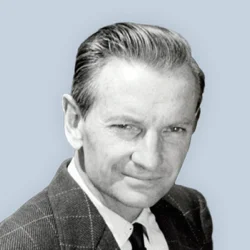
Laurance Rockefeller
Converted family-backed aviation investing into Rockefeller Brothers, Inc. and the family-led Venrock partnership.
Inherited platform, not a self-made origin
[documented behavior · strong] Laurance Spelman Rockefeller was born in New York City on 26 May 1910, the fourth child and third son of John D. Rockefeller Jr. and Abby Aldrich Rockefeller. He graduated from Princeton in 1932 after studying philosophy, spent two years at Harvard Law School, and entered the Rockefeller family office in 1935. Those facts locate the starting point: education, inherited wealth, a staffed office, and a famous surname preceded every investment attributed to him. Rockefeller Archive Center (RAC), institutional biography, “The fourth child” and “Early Venture Capitalist” sections
[investor-stated · moderate] In late-life testimony Rockefeller remembered a childhood organized around religious obligation, strict family discipline, and repeated direct exposure to landscapes in Maine, Tarrytown, and Wyoming. He also said the discipline constrained freedom of thought and action. The formation story is therefore duty and resistance, not an uncomplicated march from inherited values to later virtue. PBS transcript, printed pp. 28, 34, and 37, speaker “Laurance Rockefeller”
[researcher inference · strong] The inherited platform explains unusual risk capacity, travel, introductions, trust, and the ability to wait; it does not explain which opportunities were chosen well, what staff contributed, or whether returns exceeded a matched alternative. Treat privilege as a causal input, neither as a refutation of all skill nor as background scenery. Kenney, printed pp. 1683–1684/PDF pp. 7–8 · Nicholas, limited-preview printed pp. 95–98
1932–1938 — searching for a constructive use of capital
[documented behavior · strong] Rockefeller's law-school departure and 1935 family-office entry placed him inside a shared organization with legal, accounting, investment, philanthropic, and archival functions. A later family-office profile described separate sibling staffs alongside common infrastructure and recurring family meetings; the arrangement supported specialization without proving that each project was independently owned or decided. RAC biography · E. J. Kahn Jr., The New Yorker, Part II, Room 5600 and staff passages
[investor-stated · moderate] Rockefeller later said the siblings deliberately avoided duplicating one another's institutional responsibilities. In context this was a family-governance statement, not evidence that capital, staff, information, or board work never overlapped. Kahn, Part II, non-conflicting-responsibilities passage
[researcher inference · moderate] Aviation supplied the first tractable arena in which enthusiasm, elite relationships, technical change, and capital shortage coincided. The evidence does not reveal a written 1935 master thesis or an open sourcing funnel; it shows an emerging domain commitment assembled case by case. Kenney, printed p. 1683/PDF p. 7
1938–1941 — Eastern, McDonnell, and the limits of personal capital
[documented behavior · moderate] In 1938 Rockefeller participated in Eastern Air Lines' refinancing around Eddie Rickenbacker's operating leadership. reported: 24,400 shares bought at $9, $3.5 million helped raise, and about $3.97 million paper value by 1959 (TIME, “Space-Age Risk Capitalist,” Eastern passages, 1959). These are contemporary-reported purchase and paper-value observations, not a cash-flow return or sole-founder credit.
[researcher inference · moderate] Eastern illustrates the early mechanism better than a hero label does: relationship access surfaced a regulated airline in distress, family risk capacity made a recapitalization possible, Rickenbacker operated, and later Harper Woodward represented the interest. Capital, operating work, and board labor belonged to different people. TIME, 1959 · 1974 Washington Post investigation reprinted in the Congressional Record, printed p. 32736
[documented behavior · moderate] James S. McDonnell approached Rockefeller in 1939. Public reports conflict over whether the first commitment was $10,000 or $40,000, and later family financing is incompletely separated. The disagreement is preserved rather than averaged. TIME, “Rock Bros Inc.” · TIME, 1959, McDonnell passage
[investor-stated · moderate] A 27 November 1940 letter reproduced by Kenney says Rockefeller had already put almost $100,000 into small aeronautical companies and sought permission to sell trust-held oil shares. The father's reply was not found; the letter proves a request and a capital constraint, not that permission was granted or that every later check was personal. Kenney, printed p. 1683/PDF p. 7
1939–1945 — public service, defense demand, and privileged information channels
[documented behavior · strong] Rockefeller joined the Palisades Interstate Park Commission in 1939 and served in the Navy's Bureau of Aeronautics from 1942 to 1945, attaining lieutenant commander. The two tracks—public-land stewardship and aviation procurement—developed in parallel; neither should be used to prove the other. RAC biography
[contemporaneous record · moderate] Kenney reports that James Forrestal asked Rockefeller to help organize financing and management for small Navy suppliers. Wartime procurement, federal R&D, cost-plus contracting, and price-insensitive military demand created a market unusually favorable to specialized aerospace suppliers. That environment is a rival explanation for later technical-company outcomes, not merely context around investor selection. Kenney, printed pp. 1683–1684/PDF pp. 7–8
[researcher inference · moderate] The wartime contribution most plausibly expanded Rockefeller's map of technical people, supplier bottlenecks, and state demand. The public record does not demonstrate a before/after change in his underwriting process, so “the Navy taught him venture capital” remains too strong. Kenney, printed pp. 1683–1684/PDF pp. 7–8
1946–1951 — RBI turns sponsorship into a staffed search function
[documented behavior · strong] In 1946 the siblings established Rockefeller Brothers, Inc. (RBI), a family investment organization distinct from the Rockefeller Brothers Fund (RBF), the philanthropic institution created in 1940. Conflating the two launders commercial and charitable objectives. RBI records, RAC · Peter Crisp papers, HBS finding aid · RBF 1975 annual report, PDF p. 7
[contemporaneous record · moderate] Kenney reproduces a small RBI team's finance, procurement, and aeronautics expertise and a 1947 procedure manual favoring aviation, housing, electronics, and opportunities contributing to human welfare. [researcher inference · provisional] Nicholas's limited-preview reconstruction reports that by 1951 the organization had reviewed about 400 plans, invested roughly $5 million, and held about 25 companies. The full manual and calculation files remain archival, so these are RBI-level findings rather than a complete Laurance-authored operating system. Kenney, printed pp. 1688–1689/PDF pp. 12–13 · Nicholas, limited-preview printed pp. 93–94
[retrospective witness · moderate] Peter Crisp remembered a process in which staff researched and presented opportunities, Rockefeller gave the go-ahead, and relatives or associates could subscribe deal by deal. His interviews conflict on dates, participating siblings, and later opening-capital figures; they support a family-controlled staff process, not a clean vote or ownership ledger. Crisp long oral history, printed pp. 37–40/PDF pp. 41–44 · Crisp short oral history, printed pp. 12–17/PDF pp. 16–21
[researcher inference · moderate] RBI was the organizational innovation: family decision authority remained, but professional staff converted a wealthy enthusiast's attention into recurring screening, technical review, syndication, board work, and monitoring. Whether that system improved risk-adjusted returns is a separate empirical question. Hsu and Kenney, PDF pp. 14–16
1946–1959 — technical ambition meets ordinary failure
[documented behavior · moderate] Postwar Rockefeller-linked companies included Reaction Motors, Marquardt, and Itek. Their common environment combined difficult engineering, scarce private finance, and defense or intelligence demand. Company importance is not equivalent to investor return, and government procurement is not equivalent to selection skill. TIME, 1959, company passages · Kenney, printed pp. 1690–1692/PDF pp. 14–16
[contemporaneous record · moderate] reported: $500,000 in Reaction Motors and a later $4.2 million Thiokol paper position, and $202,000 in Marquardt with a $5.2 million paper value (TIME, Reaction and Marquardt passages, 1959). TIME also said Rockefeller overrode an unnamed aide on Reaction. Missing memoranda, follow-ons, dilution, and sales prevent converting these snapshots into realized multiples or a general override rule.
[documented behavior · moderate] Itek exposes why check-size and hero narratives fail. Public accounts report about $279,000, $600,000, $750,000, and a $60,000 Laurance recollection at different dates or attribution levels; Theodore Walkowicz, Richard Leghorn, Franklin Lindsay, staff, co-investors, classified customers, staged securities, and management change all mattered. The supported case is an RBI/Rockefeller-interest team investment, not a solitary check. TIME, 1959 · TIME, “Itek Refocused” · 1974 Congressional Record, p. 32736 · Crisp long oral history, printed pp. 25–27/PDF pp. 29–31
[documented behavior · strong] Failure was not marginal. Island Packers, co-financed with ARD, failed because the fish supply could not support fixed capacity; TIME also reported an unsuccessful prefabricated-steel-housing venture. These cases disprove a wins-only story and show that purpose or technical novelty could not repair a missing operating premise or absent customer adoption. Hsu and Kenney, PDF p. 19 n. 13 · TIME, 1959, failure passage
[contemporaneous record · moderate] reported: roughly $5 million placed in about 24 postwar ventures and retained positions near $33 million, excluding securities already sold or donated (TIME, opening paragraph, 1959). The numbers are unaudited paper-value snapshots with no legal-owner map, loss denominator, cash-flow timing, or benchmark; they cannot support IRR, TVPI, DPI, or personal alpha.
1949–1965 — conservation becomes an operating institution
[documented behavior · strong] John D. Rockefeller Jr., not Laurance, led the foundational Grand Teton land-acquisition program. Laurance participated in the 1949 transfer through Jackson Hole Preserve and later led successor stewardship. Family inheritance, later management, and original project authorship are separate contributions. NPS, Grand Teton cultural history · RAC, “National Parks and Public Lands,” Jackson Hole sections
[documented behavior · strong] Rockefeller established the American Conservation Association in 1958 and chaired the Outdoor Recreation Resources Review Commission (ORRRC). Its 1962 report used inventories, commissioned studies, agency participation, and a Census survey of roughly 16,000 people to distinguish total acreage from effective, accessible recreation capacity. The recommendations were commission consensus, not Rockefeller's sole text. Outdoor Recreation for America, printed pp. 179–188/PDF pp. 180–189
[retrospective witness · moderate] Rockefeller later credited Joseph Penfold's conceptual leadership and acknowledged that Nelson Rockefeller and Horace Albright probably helped secure his commission role. This candor makes elite access part of the causal record rather than a footnote. LBJ oral history, printed pp. 1–3, speaker R · Laurance and Mary oral history, printed pp. 17–18, speaker LR
[researcher inference · moderate] The conservation work reveals a strong public-action method—system mapping, heterogeneous evidence, layered authority, operating capacity, and institutional handoff. It does not establish that Rockefeller used the same method in RBI underwriting. Chronology and conceptual resemblance are insufficient transfer evidence. 1967 committee report, pp. 1–28 · LBJ oral history, printed pp. 2–20 and 25–29
1952–1972 — resorts test the “conservation and use” bargain
[documented behavior · moderate] Caneel Bay, later Mauna Kea and Dorado projects, attempted to combine tourism, development, landscape protection, and public access. At Caneel, Rockefeller developed a resort and participated with family and institutional entities in land assembly and public transfer; a 2024 federal court found a donative structure after examining contemporaneous documents. That judgment establishes the legal question before it, not net social or ecological performance. RAC, “Tourism Plus Environmentalism” · EHI Acquisitions, LLC v. United States, pp. 1–7 and conclusion
[researcher inference · moderate] Resorts were not ordinary venture bets: expected losses, land gifts, operating businesses, public parks, tax and legal structures, communities, and environmental consequences had different objective functions. Treating them as proof of either investment greatness or conservation hypocrisy without a project ledger would be equally reductive. TIME, 1959, Caribbean resort passage · RAC public-lands essay
[documented behavior · moderate] Later Caneel litigation and environmental investigation require procedural precision. A 2021 NPS evaluation found unacceptable long-term risks in maintenance/landscaping and landfill areas but no evidence of contamination in public areas; it did not assign each deposit to Rockefeller or another operator across the site's long operating history. NPS Engineering Evaluation/Cost Analysis, executive summary and §§2.2–2.4
1958–1969 — national influence and a consequential failed compromise
[documented behavior · strong] Presidents Eisenhower, Kennedy, Johnson, and Nixon used Rockefeller in outdoor-recreation, natural-beauty, and environmental advisory roles. The surviving reports show a chair working through commissions, counsel, professional staff, task forces, agencies, industry, and citizen groups. Signature and chairmanship establish responsibility for the process and broad agenda, not sentence-level authorship of collective reports. RAC biography · 1967 signed transmittal, scan p. PP7 · 1969 signed transmittal, p. v
[investor-stated · strong] In a 1969 oral history Rockefeller emphasized that authorization differs from implementation, that inexperienced users need a “human bridge,” and that goals, guidelines, hearings, trained leaders, programming, and operating institutions must follow formal policy. These are direct public-governance principles; their commercial relevance remains analogical. LBJ oral history, printed pp. 12–20 and 25–29, speaker R
[documented behavior · moderate] The 1965–1968 Redwood episode is the strongest negative case. Rockefeller advised a politically feasible Mill Creek/Tall Trees compromise; the NPS administrative history says the administration miscalculated Miller-Rellim's shutdown incentives, adjacent clear-cutting followed, and 94% of pro-park testimony favored Redwood Creek. The later 1978 expansion corrected watershed inadequacy. Spence, Watershed Park, printed pp. 70–74/PDF pp. 72–76
[researcher inference · moderate] Redwood shows that minimizing counterparties and headline cost can concentrate existential loss on one actor and produce adversarial destruction. It is evidence of a failed public-policy judgment and possible learning, not proof of bad faith—and not a hidden venture portfolio rule. Spence, printed pp. 70–74/PDF pp. 72–76
1960–1969 — professionalization before Venrock
[retrospective witness · moderate] Crisp joined Rockefeller's investment staff in 1960. Across his accounts, a more specialized group researched people, technology, markets, and proprietary position; staff presented recommendations while Rockefeller retained remembered approval authority. Randy Marston, Harper Woodward, Theodore Walkowicz, J. Richardson Dilworth, and Charles B. Smith appear across screening, finance, technical coordination, boards, syndication, and monitoring. Crisp short oral history, printed pp. 12–17/PDF pp. 16–21 · 1974 Congressional Record, pp. 32735–32736
[retrospective witness · moderate] Theodore Walkowicz described the family as usually taking a minority stake, never above one-third, and attracting other investors into fields conventional capital still judged too risky. This is valuable near-contemporaneous practitioner testimony, not a cap-table invariant across every company or era. 1974 Congressional Record, p. 32736
[researcher inference · moderate] By the late 1960s Rockefeller's personal contribution was increasingly platform design—capital, approval, access, staffing, and institutional permission—while specialists performed more of the sourcing and company work. That strengthens the claim that he helped build an institution and weakens automatic personal attribution for later winners. Nicholas, limited-preview printed p. 168
1969 — Venrock changes the vehicle and the unit of attribution
[documented behavior · moderate] Venrock Associates formed in 1969 as a family limited partnership, replacing optional deal-by-deal participation with a more stable pool. Nicholas reconstructs a $7.7 million opening pool—$3.5 million of investments and $4.2 million cash—while Crisp remembered about $7.5 million, five or seven holdings, and conflicting capital-call amounts. The partnership agreement and transfer ledger must resolve the differences. Nicholas, limited-preview printed pp. 167–168 · Crisp long oral history, printed p. 38 · Crisp short oral history, printed p. 15
[researcher inference · moderate] Stable family and trust/affiliated-nonprofit capital reduced recurring fundraising pressure and supported follow-ons. Nicholas reports budgeted expenses, no fixed management fee, and GP carried interest; Anthony Evnin remembered no family GP and light LP governance. Carry rate, hurdle, clawback, expense formula, LP/GP schedule, and net returns remain unavailable. Nicholas, printed pp. 167–170 and note 80 · Evnin oral history, printed pp. 61–63
[researcher inference · moderate] The vehicle solved continuity and incentive problems while creating new risks: weak stop discipline, rescue-capital escalation, and confusion between family LP capital and partner skill. A vehicle that can wait still needs a falsifiable reason to continue. Nicholas, printed p. 169
1968–1981 — Intel and Apple are team and vehicle outcomes
[documented behavior · moderate] The known Intel financing activity began in 1968, before Venrock's 1969 formation. Nicholas later reports a Venrock investment and 1978 gain, but the Rockefeller allocation, security transfer, sponsor, board work, and personal Laurance role are not public. Intel therefore belongs first to the Rockefeller-group/Venrock record, not to a personal-deal list. Nicholas, limited-preview printed p. 170 · investment-record retrieval boundary
[contemporaneous record · strong] Apple's 1980 prospectus identifies Venrock Associates—not Laurance—as purchaser and shareholder. It supports a $499,998 disclosed basis, 3,801,822 shares or 7.6% before the offering, and a board-nomination right while Venrock held at least 5%; Henry S. Smith served first and Peter Crisp replaced him in October 1980. Apple prospectus, printed pp. 21–28
[retrospective witness · moderate] Mike Markkula traced the sourcing chain from Jobs and Wozniak through Nolan Bushnell, Don Valentine, himself, and a younger Hank Smith at Venrock. He credited his own product assessment, business plan, financing, and operating work; he named Henry Singleton and Arthur Rock as especially valuable directors. Laurance is absent from the described sourcing and governance chain. Markkula oral history, printed pp. 21–29 and 34–43
[researcher inference · strong] Absence does not prove Laurance had no internal conversation or economic exposure. It does defeat default assignment of Apple's sourcing, approval, board work, or gain to him. Apple is the clearest test of whether a family name is being substituted for team attribution. Markkula, printed pp. 21–29 · Joint Economic Committee testimony, printed pp. 44–45
1970s–1980s — institution builder, controversy, and receding deal authority
[investor-stated · strong] As RBF chairman in 1975, Rockefeller praised a model in which active trustees supplied interests and professional staff supplied contextual diligence, program connections, counsel, and execution. Most of the described method is explicitly credited to Dana Creel and concerns philanthropy; it is evidence of what Rockefeller valued, not proof that he invented or used the same process at Venrock. RBF 1975 annual report, PDF pp. 7–9
[documented behavior · strong] Rockefeller served as RBF president and chair, as a Sloan Foundation trustee, and as Memorial Sloan Kettering chair from 1960 to 1982. These roles show extraordinary institutional breadth and competing attention demands. They do not transform grants, laboratories, or health governance into commercial portfolio evidence. RAC biography
[contemporaneous record · strong] A 1974 Senate record states that Laurance financed $65,000 for a book attacking Arthur Goldberg during Nelson Rockefeller's 1970 campaign. Nelson accepted responsibility and called the episode poor judgment; the committee reported no evidence of illegal acts. The case belongs in the biography as a use-of-capital and power controversy, not as proof of criminal conduct or venture method. Congressional Record, 9 December 1974 · Nelson Rockefeller statement, Ford Library
[documented behavior · moderate] By the later Venrock period, partners including Crisp, Ted McCourtney, Anthony Evnin, Henry/Hank Smith, Anthony Sun, and David Hathaway supplied differentiated domain and board work. Nicholas says Rockefeller became less active as environmental interests occupied more attention. Later Venrock company outcomes must therefore be assigned company by company, partner by partner, and vehicle by vehicle. Nicholas, limited-preview printed p. 168 · Venrock 2009 deck, slides 98–99
1982–2004 — catalyst, handoff, and retrospective coherence
[documented behavior · strong] Litigation involving Rockefeller-linked land and resort projects must be read at the procedural level. Rockefeller settled before the Akau appeal; Wells records allegations and a remand, not a fraud judgment against him; Ash Creek ended for lack of standing rather than a merits finding. Neither allegation nor dismissal is a general verdict on the underlying projects. Akau v. Olohana Corp. · Wells v. Rockefeller · Ash Creek Mining Co. v. Lujan
[investor-stated · moderate] In the 1995 Woodstock oral history Rockefeller called himself a catalyst and preferred influence as a team member rather than a figurehead. He also admitted that family connections probably helped his public appointments and described the local program as emergent rather than master-planned. This is unusually revealing self-interpretation, but it is not a contribution ledger. Laurance and Mary oral history, printed pp. 17–18, 25–26, and 34–35, speaker LR
[documented behavior · strong] The JY Ranch transfer in 2001 and the Marsh-Billings-Rockefeller park work extended family stewardship into public institutional custody. Mary Rockefeller, family predecessors, local collaborators, foundation staff, historians, and federal agencies were material actors. “Laurance donated” is too blunt for multi-stage acquisition, operation, preparation, and handoff. JY transfer report · Laurance and Mary oral history, printed pp. 15–26
[documented behavior · strong] Rockefeller died on 11 July 2004 at age 94. The late record makes the public catalyst identity clearer than the commercial decision record: many investment speeches, approvals, ledgers, and recordings remain archival, while public conservation testimony is extensive. Washington Post obituary · RAC speech-files route
A testable thesis of Rockefeller's edge
[researcher inference · moderate] Proposed edge: in U.S. technical and defense-adjacent private companies from the late 1930s through the 1960s, Rockefeller combined inherited risk capacity, privileged aviation/government networks, a staffed specialist search-and-diligence function, minority syndication, active governance, and unusually long duration to finance useful technologies before conventional proof. The repeatable unit is the capital-and-institution bundle, not a solitary stock picker. TIME, 1959 · Kenney, printed pp. 1683–1689/PDF pp. 7–13 · Walkowicz, printed p. 32736
[researcher inference · moderate] Mechanism: relationships reveal undercapitalized technical projects; specialists test people, technology, market, and finance; family capital absorbs a long adoption cycle; minority ownership and syndication recruit additional capital; board and staff work help the company reach a strategic or public-market handoff. Eastern, McDonnell, Reaction Motors, and Itek support pieces of this chain, but no one public file proves all links. Decision labs 1–5
[researcher inference · strong] Predictions: unseen ordinary RBI files should show repeated pre-approval technical, market, people, terms, governance, and follow-on analysis; specialist assignments should precede decisions; minority rights and syndication should recur; technical/defense-adjacent cases should outperform unrelated cases after controlling for state demand, access, and capital duration; helped companies should improve at the diagnosed constraint. RBI archive retrieval ledger
[researcher inference · strong] Falsifiers: the thesis fails if the 59-case cash flows do not beat a matched alternative after access and vehicle effects; ordinary files show ad hoc patronage rather than a repeatable process; success disappears after removing government demand or one outlier; Laurance was not decisive in approvals; or staff intervention has no relationship to company outcomes. Evidence already weakens the thesis: reported: PME 0.86 for the pre-1969 reconstruction and extreme Apple dependence in the early Venrock cohort (Nicholas, limited-preview printed pp. 95–96 and 171–172, 2019), while public decision rights remain incomplete.
Skill, access, vehicle, team, era, and luck
| causal component | supported contribution | evidence boundary |
|---|---|---|
| Skill | [researcher inference · moderate] Early sector commitment, willingness to act before complete proof, staff construction, syndication, and institution handoff recur. | No complete approval corpus connects those practices causally to returns. TIME, 1959 |
| Access | [documented behavior · moderate] Family name and wealth, a documented request to sell trust-held assets, aviation enthusiasm, Navy/Forrestal relationships, private travel, and political connections expanded opportunity and potential risk capacity. | Access does not show which decision was correct, whether trust-sale permission was granted, or what a less connected investor could reproduce. Kenney, pp. 1683–1684 |
| Vehicle | [researcher inference · moderate] Personal/family capital, deal-by-deal RBI subscriptions, then pooled Venrock capital progressively stabilized duration and staff incentives; one 1940 trust-asset request does not establish a separate funded vehicle. | Partnership terms and net cash flows remain unavailable; patience could subsidize weak companies. Vehicle analysis |
| Team | [documented behavior · strong] Staff and partners screened, negotiated, boarded, recruited, monitored, and exited; operators built the companies. | Most case-level role assignments remain incomplete; famous firm outcomes are not personal outcomes. People map |
| Era | [researcher inference · moderate] Thin private risk markets and extraordinary federal aerospace/defense demand created gaps family capital could exploit. | Later markets, regulation, competition, and capital intensity differ; transfer is conditional. Kenney, pp. 1683–1692 |
| Luck / outliers | [researcher inference · strong] A few large outcomes drove reported economics, especially Apple in the 1969–1978 cohort. | Underlying cash flows and benchmark definitions are not public; reported: PME 2.3 excluding Apple (Nicholas, limited-preview printed pp. 171–172, 2019) is provisional. |
People, capital, and influence map
| actor | documented contribution | do not assume |
|---|---|---|
| Laurance Rockefeller | [documented behavior · moderate] Early aviation capital and relationships; remembered RBI approval lead; institutional sponsor; later family LP. TIME, 1959, Eastern/McDonnell passages · Crisp short oral history, printed pp. 12–17/PDF pp. 16–21 | Personal sourcing, check, vote, board work, or proceeds for every RBI/Venrock company. |
| John D. Rockefeller Jr.; siblings; trusts | [documented behavior · moderate] Controlled or supplied family capital and shared infrastructure; participated selectively. Kenney, printed pp. 1683–1689/PDF pp. 7–13 | Uniform subscriptions, motives, or joint ownership across deals. |
| Randy Marston, Harper Woodward, Theodore Walkowicz, J. Richardson Dilworth, Charles B. Smith | [documented behavior · moderate] Finance, technical review, screening, boards, syndication, and monitoring across the family-office era. Walkowicz account, Congressional Record, printed pp. 32735–32736 | Interchangeable roles, uniform titles, carry, or complete deal assignment. |
| Peter Crisp | [retrospective witness · strong] Joined in 1960; partner and firm historian; sponsored and boarded New England Nuclear; later held Apple's board seat. Crisp long oral history, printed pp. 43–48 and 72–74 · Apple prospectus, printed pp. 21–25 | That every remembered event, date, amount, or outcome is exact; personal Laurance credit through association. |
| Ted McCourtney, Anthony Evnin, Henry/Hank Smith, Anthony Sun, David Hathaway | [documented behavior · moderate] Later Venrock specialists, sponsors, directors, and successors. Venrock 2009 deck, slides 97–99 · Evnin oral history, printed pp. 61–63 | Laurance's personal decision where a partner or team acted. |
| Rickenbacker, McDonnell, Reaction engineers, Leghorn, Lindsay, Markkula, Jobs, Wozniak, other operators | [documented behavior · strong] Built products, companies, markets, teams, and operating systems. TIME, 1959, company passages · Apple prospectus, printed pp. 21–28 | Investor capital as the sole cause of company outcome. |
| ARD, Arthur Rock, Henry Singleton, and other co-investors | [documented behavior · strong] Shared capital, referrals, diligence, governance, or syndication in specific cases. Hsu and Kenney, PDF p. 19 n. 13 · Markkula oral history, printed pp. 25–26 | A Rockefeller monopoly on opportunity or board value. |
| Mary Rockefeller, William Whyte, Henry Diamond, Lady Bird Johnson, William Reilly, agency and community actors | [documented behavior · strong] Coauthored, staffed, designed, operated, contested, and implemented public/conservation projects. 1967 committee report, signed transmittal and printed pp. 1–28 · Laurance and Mary oral history, printed pp. 15–21 | Conservation output as Laurance-only authorship or commercial investing evidence. |
Vehicle and incentive chronology
| period | vehicle and capital | supported strategic effect | unresolved risk |
|---|---|---|---|
| 1938–1945 | [documented behavior · moderate] Personal/family capital, ad hoc syndication, and one documented request to sell trust-held oil shares. Kenney, printed pp. 1683–1684/PDF pp. 7–8 | Long duration and rapid use of personal relationships. | Whether trust permission was granted, legal owner, concentration, and no external discipline. |
| 1946–1968 | [retrospective witness · moderate] RBI/RF&A staff with relatives and associates subscribing deal by deal. Crisp short oral history, printed pp. 12–17/PDF pp. 16–21 | Flexible participation, professional review, syndication, and company-specific exposure. | Laurance/family decision rights, staff carry, reserve logic, and subscription ledger. |
| 1969 onward | [documented behavior · moderate] Original Venrock family limited partnership with family, trust, and affiliated-nonprofit capital. Nicholas, limited-preview printed pp. 167–170 | Stable pool, specialist partnership, follow-ons, and reported carry without a fixed fee. | Opening schedule conflicts, carry/hurdle/clawback, rescue bias, and net return. |
| later Venrock | [documented behavior · strong] Changing partners, vehicles, LPs, and domain teams. Evnin oral history, printed pp. 61–63 · Venrock 2009 deck, slides 97–99 | Institution survives beyond the founder and family subscription model. | Later outcomes cannot be back-projected onto the 1969 vehicle or Laurance. |
| parallel vehicles | [documented behavior · strong] RBF, public commissions, resort companies, land entities, and family trusts. RBF 1975 annual report, PDF pp. 7–9 · RAC public-lands history, “Tourism Plus Environmentalism” | Different missions and authorities could supply complementary capital or institutions. | Objective laundering, conflicts, and false aggregation of economics. |
Performance, denominator, and the strongest skeptical case
[researcher inference · provisional] Nicholas reconstructs 59 pre-1969 investments and $21.6 million deployed. reported: 44% produced no positive return and consumed more than one-quarter of capital; reported: 7% exceeded 10x; reported: 3.2x portfolio multiple versus 8.6x for an S&P comparator; and reported: PME 0.86 (Nicholas, limited-preview printed pp. 95–96, 2019). The underlying schedule, scope, benchmark, and cash-flow method are unavailable. If correct, this is evidence against exceptional pre-Venrock economic performance.
[researcher inference · provisional] For 31 Venrock investments made from 1969–1978, reported: gross IRR 26.8% with Apple and 3.4% without it; reported: PME 13.3 with Apple and 2.3 without (Nicholas, limited-preview printed pp. 171–172, 2019). For a broader 214-investment 1969–1996 series, reported: PME 3.9 (Nicholas, limited-preview printed pp. 171–172, 2019). These are firm-level reconstructions, not personal Laurance returns or audited net LP performance.
[researcher inference · moderate] The skeptical case is that inherited wealth and state-linked access financed enough long-duration experiments for a few visible winners to emerge; professional staff and operators supplied much of the real work; Apple later transformed the firm narrative; and conservation prominence reinforced a heroic integrated-life story. Under this view, Rockefeller's durable contribution was institution sponsorship rather than demonstrated personal alpha. Investment-record portfolio forensics
[researcher inference · moderate] The favorable answer is narrower than legend but still material: before a mature U.S. venture industry, Rockefeller repeatedly placed family capital behind underfunded technical teams, built professional infrastructure, accepted minority syndication, and helped transition a personal practice into an institution that outlived him. Greatness, if retained, belongs to platform formation under unusual privilege—not to sole authorship of every famous deal. Kenney, pp. 1683–1700 · Venrock 2009 deck, slides 90–99
Sourced chronology
| date | event | decision relevance and boundary |
|---|---|---|
| 1910-05-26 | Born in New York City. | [documented behavior · strong] Identity anchor; inherited platform precedes investing. RAC |
| 1932–1935 | Princeton philosophy degree, two Harvard Law years, family-office entry. | [documented behavior · strong] Formation and organizational entry; no causal method yet. RAC |
| 1938 | Eastern refinancing. | [documented behavior · moderate] Early aviation sponsorship; Rickenbacker and syndicate attribution retained. TIME |
| 1939–1940 | McDonnell approach; trust-asset request. | [documented behavior · moderate] Founder backing under family-capital constraint; check conflict unresolved. Kenney, p. 1683 |
| 1942–1945 | Navy Bureau of Aeronautics. | [documented behavior · strong] Defense-demand and supplier-network exposure; method causation unproved. RAC |
| 1946 | RBI forms. | [documented behavior · strong] Staffed family investing begins; not RBF and not yet Venrock. RBI records |
| 1948 | Island Packers co-investment. | [documented behavior · moderate] A federal operating record documents failed catch efforts, two trial runs, and the later Interior acquisition; Hsu and Kenney separately establish shared ARD/Rockefeller participation. Fish & Wildlife report, opening “Background,” PDF p. 1 · Hsu and Kenney, PDF p. 19 n. 13 |
| 1952 onward | Caneel and resort/public-land work. | [documented behavior · moderate] Mixed objective and multi-entity operating case, not an ordinary VC return. RAC |
| 1955 | Sloan Fellows “Venture Capital Investment.” | [contemporaneous record · strong] Speech exists; only a derivative excerpt is public. RAC DIMES |
| 1958–1962 | American Conservation Association and ORRRC. | [documented behavior · strong] Research-heavy public institution building; collective authorship. ORRRC excerpt |
| 1959 | TIME portfolio profile. | [contemporaneous record · moderate] Best public-era snapshot, but unaudited and incomplete. TIME |
| 1960 | Crisp joins. | [retrospective witness · moderate] Increasing partner specialization; recollection requires records. Crisp |
| 1965–1978 | Redwood recommendation, failure, and expansion. | [documented behavior · moderate] Negative policy decision lab and possible correction. Spence |
| 1969 | Venrock Associates forms. | [documented behavior · moderate] Vehicle change and new attribution unit; opening figures conflict. Nicholas, p. 168 |
| 1974 | Political attack-book financing disclosed. | [contemporaneous record · strong] Poor-judgment controversy; no illegal act found. Congressional Record |
| 1978–1980 | Venrock finances and boards Apple. | [contemporaneous record · strong] Partnership/team outcome; no personal Laurance role established. Apple prospectus |
| 1988 | Second Venrock Conference welcome. | [contemporaneous record · strong] Appearance proven; text unavailable and authority unknown. RAC DIMES |
| 1995 | Laurance and Mary oral history. | [investor-stated · moderate] Catalyst/team self-concept; public/conservation context, not commercial process. Transcript |
| 2001 | JY Ranch transfer ceremony. | [documented behavior · moderate] Intergenerational handoff with a planned transition. AP report |
| 2004-07-11 | Dies at 94. | [documented behavior · strong] Individual record closes; later firm results require separate attribution. Washington Post |
Read the package as a decision curriculum
- [researcher inference · strong] Start with this biography for chronology, vehicle transitions, causal alternatives, and the falsifiable edge.
- [researcher inference · strong] Read the written corpus to separate Rockefeller's signatures and direct prose from committee, coauthor, staff, reporter, and metadata-only material.
- [researcher inference · strong] Read the talks and interviews for commercial voice, public-governance method, late-life catalyst language, and access boundaries.
- [researcher inference · strong] Work the seven investment decision labs in order: Eastern, McDonnell, Reaction, Island Packers, Itek, Apple, and Advent.
- [researcher inference · strong] Use the investment philosophy as the operating-system synthesis and the mental-model field guide as the application and falsification layer.
[researcher inference · strong] The package's governing rule is attribution before admiration: personal/family capital, any trust-authorized proceeds, RBI/RF&A, RBF, original Venrock, later Venrock, resort entities, public bodies, family members, staff, partners, co-investors, and operators are separate units. Where a public source cannot identify who decided, what vehicle paid, or what cash came back, the answer remains unknown.
1. Snapshot and testable edge thesis
| dimension | evidence-backed answer |
|---|---|
| Investor and scope | [documented behavior · strong] Laurance Spelman Rockefeller (1910–2004), first using personal and family-syndicate capital—with one documented 1940 request to sell trust-held assets—then RBI/RF&A, and from 1969 the original Venrock partnership. Public-service, foundation, land, and resort work is parallel context, not venture performance. RAC biography · Kenney, printed p. 1683/PDF p. 7 · vehicle analysis |
| Era and domain | [researcher inference · moderate] Most plausible edge window: U.S. aviation, aerospace, electronics, and defense-adjacent private companies from the late 1930s through the 1960s, before organized venture capital was deep and while federal demand supported technical suppliers. Kenney, printed pp. 1683–1692/PDF pp. 7–16 |
| Proposed edge | [researcher inference · moderate] Convert inherited risk capacity and privileged technical/government access into a staffed institution that can identify undercapitalized useful technologies, test them with specialists, finance before conventional proof, syndicate minority positions, govern actively, and wait through long adoption cycles. Kenney, printed pp. 1683–1693/PDF pp. 7–17 · Crisp short oral history, printed pp. 12–17/PDF pp. 16–21 |
| Mechanism | [researcher inference · moderate] Access creates differentiated opportunity flow; staff make the opportunity legible; family-duration capital carries uncertainty; governance and follow-ons preserve optionality; public or strategic maturity recycles capital. Eastern, McDonnell, Reaction, and Itek each support parts, not the entire chain. Decision labs |
| Where it should work | [researcher inference · moderate] Technically difficult, underfinanced businesses where a credible operator, an identifiable customer/procurement path, specialist diligence, patient capital, and investor influence can change a specific bottleneck. Hsu and Kenney, PDF pp. 14–19 · TIME, company cases |
| Where it should fail | [researcher inference · strong] Missing physical inputs, absent demand, capital-intensive consumer hardware, undisciplined rescues, inaccessible customers, externalities that provoke opposition, or deals where prestige/purpose substitutes for testable economics. Island Packers, steel housing, Advent, and Redwood supply bounded warnings. Failure postmortems |
Predictions
[researcher inference · strong] If the thesis is true, ordinary unseen RBI and early Venrock files should repeatedly identify source, people, technical proof, customer/procurement path, proprietary position, price/security, minority rights, milestones, follow-on logic, governance owner, and liquidity route before approval. Staff assignments should precede company assistance, and outcomes should improve most where the intervention changes the diagnosed constraint. RBI archive retrieval ledger
[researcher inference · strong] The thesis also predicts better matched performance in technical/defense-adjacent cases than in unrelated ventures after controlling for inherited access, federal purchasing, capital duration, and outliers. Merely finding more famous aerospace companies would not satisfy this test. Kenney, performance boundary, printed pp. 1690–1693/PDF pp. 14–17 · Nicholas, limited-preview reported estimates, printed pp. 95–96 and 171–172
Falsifiers
[researcher inference · strong] The thesis fails if original cash flows show no matched outperformance; approval files are ad hoc patronage rather than repeatable analysis; staff assistance was nominal; company outcomes do not relate to the promised intervention; success disappears after government demand or one outlier is removed; or family/partner records show that Laurance supplied only capital and reputation. reported: PME 0.86 for Nicholas's provisional pre-1969 reconstruction, and extreme Apple dependence in early Venrock (Nicholas, limited-preview printed pp. 95–96 and 171–172, 2019), already impose serious contrary evidence.
2. Core philosophy
What Rockefeller actually said about commercial investing
- [investor-stated · moderate] In a 1953 derivative excerpt, he favored pioneer capital before a field was completely safe when proper backing could advance sound scientific and economic development. The original page and interview context remain unretrieved. Venrock deck, slide 91 and reference 6
- [investor-stated · moderate] A 1955 derivative line contrasts the calendar with the stopwatch. This establishes patience as self-description, not a reserve rule, stopping discipline, or proof of return. Deck, slide 90 and reference 4
- [investor-stated · moderate] The accessible excerpt from his 1955 Sloan Fellows speech joins analytical and technical ability with purpose, conviction, and faith. The full manuscript, cases, and Q&A remain offline. RAC speech record · deck, slide 95 and reference 18
- [investor-stated · strong] In 1959 he said his purpose was constructive use of money rather than accumulation alone. The surrounding selection method and portfolio values belong to TIME, not to his direct words. TIME, opening paragraph
- [investor-stated · moderate] Selected 1973 CBS excerpts add people judgment, socially desirable long-term potential, intelligent risk, 10–30-year persistence, production-maturity exits, cycles, timing, and luck. The raw session and complete answers are unavailable; the excerpts were selected by Venrock. Deck, slides 92–95 and references 8, 9, 13, 16, 20
Synthesis
[researcher inference · moderate] The commercial core is constructive pioneer capital under uncertainty: back capable people developing technically and economically credible work before conventional safety, combine analysis with purpose, prepare to wait, and recycle when production maturity creates a better institutional home or liquidity opportunity. This is a synthesis of sparse direct voice plus behavior; it is not a recovered Rockefeller-authored manual. Talks evidence boundary
[researcher inference · strong] Three guardrails prevent romantic misuse:
- purpose is an objective, not evidence that a company works;
- patience is a financing option, not proof that continuing is rational; and
- a family or firm outcome is not a personal Rockefeller outcome without source, decision, ownership, and governance evidence.
3. Sourcing
Four supported engines
- Aviation and elite relationship access. [documented behavior · moderate] Rickenbacker, McDonnell, Forrestal, Navy suppliers, military customers, family contacts, and private travel created a privileged technical and geographic network. It was differentiated but not broadly reproducible. Kenney, printed pp. 1683–1684/PDF pp. 7–8 · Nicholas, limited-preview printed p. 98
- Staffed institutional intake. [contemporaneous record · moderate] Kenney reproduces specialist staff roles and the 1947 procedure manual. Kenney, printed pp. 1688–1689/PDF pp. 12–13 [researcher inference · provisional] Nicholas's limited-preview reconstruction reports about 400 plans reviewed by 1951. Nicholas, limited-preview printed pp. 93–94 [contemporaneous record · strong] The RAC catalog metadata contains 1,894 file units and at least 121 explicit decline prefixes, proving a real search archive without proving a funded-deal denominator. Denominator reconciliation
- Domain adjacency. [researcher inference · moderate] Aviation led to propulsion, instruments, imaging, electronics, and defense suppliers; later specialist partners extended into semiconductors, computing, and biotechnology. The accessible record does not measure whether adjacency flow outperformed broad intake. TIME, 1959 · Venrock roster, slides 98–99
- Operator and co-investor networks. [documented behavior · strong] ARD co-invested in Island Packers and Airborne Instruments; Markkula routed Apple to the younger Hank Smith; later partners and syndicates shared information, capital, and boards. Relationship provenance is visible even when relative causal value is not. Hsu and Kenney, PDF p. 19 n. 13 · Markkula, printed pp. 25–26
Analyst use and boundary
[researcher inference · moderate] A faithful sourcing ledger records introducer, relationship, proprietary information, staff sponsor, channel, conflicts, and whether the source changes the decision. “Rockefeller network” is too coarse: it can mean family access, Navy procurement, a staff relationship, a co-investor, an operator, or a later Venrock partner.
[researcher inference · insufficient public record] No public source supplies inbound/outbound mix, source-to-close conversion, source-level performance, geographic funnel, or whether Laurance personally saw every proposal. The 540 normalized archive roots and 121 decline prefixes are discovery controls, not acceptance-rate denominators. Evidence boundary
4. Picking
| underwriting question | supported historical signal | attribution and limit |
|---|---|---|
| Is the work useful before it is safe? | 1953 pioneer-capital excerpt and 1959 constructive-purpose statement. | [investor-stated · moderate] Usefulness and early entry are supported; “sound” and “proper backing” lack operational definitions. Deck, slide 91 |
| Can the people carry a long technical journey? | 1973 excerpts put people judgment near the front; Crisp later describes management as a key screen. | [investor-stated · moderate] for importance; [retrospective witness · moderate] for practice; no standard founder-reference process survives. Deck, slide 92 · Crisp short interview, pp. 12–15 |
| Does the technology work, and who can judge it? | Aeronautics staff, Walkowicz's technical role, Itek staging, and later domain specialists. | [documented behavior · moderate] Specialist review is supported; Laurance's own technical depth and test thresholds vary by case. 1974 Congressional Record, p. 32736 |
| Is there a real demand system? | Defense procurement supported Reaction/Marquardt/Itek; Island Packers lacked reliable supply; steel housing lacked adoption. | [researcher inference · strong] Underwrite customer, procurement, channel, and critical input—not only artifact performance. TIME, 1959 |
| Is the proprietary position broad enough? | Crisp remembers technology with multiple applications and proprietary position; Nicholas reproduces a later written Venrock criterion. | [retrospective witness · moderate] / [contemporaneous record · moderate] through a scholarly transcription; original policy required. Nicholas, pp. 168–170 |
| Can this investor change the bottleneck? | Staff, board surrogates, syndication, recruiting, financing, and introductions recur. | [researcher inference · moderate] Capability must be named before approval; platform rhetoric alone is not evidence. People map |
| Can purpose and economics coexist? | Rockefeller repeatedly joined constructive/social value to technical and economic credibility. | [investor-stated · moderate] Purpose may veto a deal; it cannot excuse missing commercial proof unless the capital is explicitly noncommercial. |
| Is there a credible maturity or liquidity path? | 1973 excerpts describe production-maturity sales; Nicholas reproduces “visibility of a route to liquidity.” | [investor-stated · moderate] and [contemporaneous record · moderate]; no universal hold/sell formula or realized holding-period series. Deck, slide 92 · Nicholas, p. 169 |
Kill criteria implied by the failures
[researcher inference · moderate] Stop or defer when the scarce physical input is unproved; customer adoption is assumed rather than observed; capital intensity outruns demand evidence; classified/state demand is mistaken for a broad market; management cannot absorb governance; the next check buys time but no information; or purpose masks an incompatible objective. These are analyst-created rules grounded in Island Packers, steel housing, Itek, Advent, and resort boundary cases. Investment failure postmortems
5. Deal and portfolio mechanics
| mechanic | what the record supports | what remains unknown |
|---|---|---|
| Ownership and syndication | [retrospective witness · moderate] Walkowicz said the family usually stayed below one-third and attracted other capital; Apple documents a 7.6% pre-IPO Venrock position. Walkowicz, p. 32736 · Apple prospectus, pp. 27–28 | Universal ownership target, valuation ceiling, and whether minority rights were consistent. |
| Security design | [documented behavior · moderate] Common, preferred, convertibles, warrants, debt, guarantees, and staged financing appear across Itek, Intel, Apple, and other cases. Itek lab · Apple prospectus, printed pp. 21–28 | Standard term sheet, liquidation rights, anti-dilution, pro rata, covenants, or personal Laurance negotiation. |
| Staging | [researcher inference · moderate] Itek and Apple show multi-step financing; Charles B. Smith and Crisp describe paying for technical and commercial progress. | A firm-wide milestone template, reserve ratio, or causal comparison with unstaged deals. Itek lab |
| Governance | [documented behavior · strong] Board representation is visible at Eastern, Itek, Apple, and other holdings, often through staff or partners rather than Laurance. Walkowicz account, Congressional Record, printed pp. 32735–32736 · Apple prospectus, printed pp. 21–25 | Complete board minutes, intervention attribution, and counterfactual outcome. |
| Follow-ons | [retrospective witness · moderate] Long-duration family capital and later pooled Venrock capital supported rescue and continuation financing. Crisp short oral history, printed pp. 15–17 and 26–30 · Nicholas, limited-preview printed pp. 168–170 | When follow-on preserved valuable option value versus escalated commitment to weak companies. |
| Portfolio shape | [researcher inference · provisional] reported: 59 pre-1969 investments, 44% no-positive-return outcomes, and 7% above 10x; the early Venrock result is Apple-dominated (Nicholas, limited-preview printed pp. 95–96 and 171–172, 2019). | Audited inclusion, cash flows, gross/net basis, valuation policy, and matched benchmark. Portfolio forensics |
| Exit | [documented behavior · moderate] Visible modes include maturation sales, mergers, public offerings, distributions, government acquisition, and bankruptcy. Portfolio exit analysis | Standard sell rule, DPI, donation treatment, tax effects, and opportunity cost. |
[researcher inference · strong] The mechanical lesson is conditional patience: reserve enough capital and governance capacity to reach a decision-relevant milestone, but require changed evidence before each continuation. Rockefeller's own calendar metaphor supplies duration; the stop rule is a modern analytical addition necessitated by the failure record. 1955 excerpt, deck slide 90 · Advent lab
6. Vehicle and incentive fit
| era | capital and governance | strategic fit | failure mode / missing evidence |
|---|---|---|---|
| 1938–1945: personal/family capital; trust-asset sale requested | [documented behavior · moderate] Personal and family assets; ad hoc syndicates; one 1940 request sought permission to sell trust-held oil shares. | Long horizon, concentrated conviction, unusual travel and access. | Capital ownership, whether trust consent was granted, diversification, tax, and no independent performance pressure. Kenney, printed p. 1683/PDF p. 7 |
| 1946–1968: RBI/RF&A | [retrospective witness · moderate] Staff prepared cases; Laurance was remembered as approval lead; relatives/associates opted in deal by deal; professionals reportedly lacked modern carry. | Flexible syndication and professional diligence without recurring third-party fundraising. | Subscription/vote ledgers, staff co-investment, incentives, reserves, and key-person dependence. Crisp short oral history, pp. 12–17 · Kenney, p. 1697 n. 9 |
| 1969 onward: original Venrock | [documented behavior · moderate] Family limited partnership; family, trust, and affiliated-nonprofit capital; budgeted expenses, no fixed fee, reported GP carry; no family GP in Evnin's recollection. | Stable pool, partner specialization, follow-ons, and succession beyond a personal sponsor. | Opening schedule conflicts; carry rate, hurdle, clawback, expenses, LP/GP authority, rescue bias, and net LP return. Nicholas, pp. 167–170 · Evnin, pp. 61–63 |
| Later Venrock | [documented behavior · strong] Changing partners, funds, and institutional investors. | Shows organizational durability and specialist professionalization. | Later assets, returns, and practice are not evidence about Laurance or the opening partnership. Venrock 2009 deck, slides 97–99 |
[researcher inference · moderate] Vehicle design was part of strategy: personal capital maximized discretion; optional RBI subscriptions preserved family choice; pooled Venrock capital increased continuity and partner incentives. Each solved one constraint while creating another—concentration, family veto, weak staff upside, or rescue-capital escalation. Crisp short oral history, printed pp. 12–17/PDF pp. 16–21 · Nicholas, limited-preview printed pp. 167–170 · Evnin, printed pp. 61–63
7. Team attribution and work with founders
Responsibility map
| role | named actors and supported contribution | attribution boundary |
|---|---|---|
| Capital sponsor / approver | [documented behavior · moderate] Laurance in early aviation; remembered RBI go-ahead; family members/trusts as subscribers and later LPs. TIME, 1959, Eastern/McDonnell passages · Crisp short oral history, printed pp. 12–17/PDF pp. 16–21 | Approval, cash source, beneficial ownership, and outcome must be reconstructed separately. |
| Family-office specialists | [documented behavior · moderate] Marston, Woodward, Walkowicz, Dilworth, Charles B. Smith: finance, technical review, screening, boards, syndication, monitoring. | No universal title or complete deal-by-deal assignment. 1974 Congressional Record, pp. 32735–32736 |
| Venrock partners | [documented behavior · moderate] Crisp, McCourtney, Evnin, Smith, Sun, Hathaway and others supplied domain, sponsorship, board, and exit work. Venrock 2009 deck, slides 97–99 · Evnin oral history, printed pp. 61–63 | A partnership outcome is not Laurance work; remembered dates and amounts require filings. |
| Operators | [documented behavior · strong] Rickenbacker, McDonnell, Reaction engineers, Leghorn/Lindsay, Markkula, Jobs, Wozniak, and others built companies and markets. TIME, 1959, company passages · Apple prospectus, printed pp. 21–28 | Investor finance is not company authorship. |
| Co-investors / public actors | [documented behavior · strong] ARD, Arthur Rock, Henry Singleton, agencies, military buyers, and other syndicate members supplied capital, governance, demand, or legitimacy. Hsu and Kenney, PDF p. 19 n. 13 · Markkula oral history, printed p. 43/PDF p. 43 · Kenney, printed pp. 1683–1692/PDF pp. 7–16 | External demand and co-investor work cannot be converted into selection alpha. |
Founder relationship
[retrospective witness · moderate] The visible practice combined backing, board representation, recruiting, financing, and sometimes management change. Itek shows that active support could become founder-control conflict; Apple shows vehicle board continuity through Smith and Crisp; Eastern shows later board representation by Woodward. These are case-specific firm/staff behaviors, not a fully authenticated Rockefeller personal style. Itek lab · Apple prospectus, pp. 21–25 · 1974 Congressional Record, printed pp. 32735–32736
[investor-stated · moderate] Rockefeller's later catalyst/team self-description favors influence without figurehead monopoly. It is consistent with institutional behavior but cannot retroactively allocate source, decision, check, board action, or causal value in contested deals. 1995 oral history, printed pp. 25–26, speaker LR
8. Views on the craft
Capital should make constructive work possible
[investor-stated · strong] Rockefeller publicly put constructive purpose ahead of accumulation. The disciplined interpretation is not “returns do not matter”; it is that capital should enable work with scientific, economic, and social promise. The 1953 and 1955 excerpts retain economic and technical conditions beside purpose. TIME, 1959 · deck, slides 91 and 95
Intelligent risk is not gambling
[investor-stated · moderate] The 1973 excerpts reject the gambler analogy and allocate outcomes among prepared capital, engineers, businesspeople, cycles, timing, opportunity, and luck. That direct multi-causal account is stronger evidence than later “golden touch” labels. Deck, slide 94 and reference 16
Patience has an opportunity cost
[investor-stated · moderate] Rockefeller described 10–30-year work, acknowledged that an earlier sale might sometimes have paid better, and said some companies were sold as production maturity developed. Patient ownership was conditional, not permanent. Deck, slide 92 and references 8–9
Venture investing is institutional work
[researcher inference · moderate] Rockefeller's strongest durable contribution was building a staffed and then partnership-based capital system. Direct commercial voice is too sparse to credit him with every mechanic, while staff and partner evidence is too extensive to preserve a lone-investor story. Talks bottom line
9. Signature bets and decision process
| decision lab | ex-ante question | supported lesson and attribution |
|---|---|---|
| 1. Eastern Air Lines | Can refinancing plus a credible operator survive regulated-airline risk? | [researcher inference · moderate] Access and duration mattered; Rickenbacker operated and Woodward later governed. Paper appreciation is not cash return. |
| 2. McDonnell Aircraft | Should family capital back a credible engineer before production scale? | [researcher inference · moderate] Founder conviction met future state demand; initial check and family-capital sequence remain disputed. |
| 3. Reaction Motors | Is rescue capital underwriting technology, procurement, or both? | [researcher inference · moderate] Patience worked inside a state-created market; commercial transfer requires a buyer-of-last-resort test. |
| 4. Island Packers | Is tuna supply adequate before financing fixed processing capacity? | [researcher inference · strong] Prove the scarce physical input; shared ARD/Rockefeller diligence did not save a false premise. |
| 5. Itek | Can staged capital control technical, customer, and founder-governance risk? | [researcher inference · moderate] Tranches and board action matter, but classified demand, staff, and management succession share causality. |
| 6. Apple | What does the operator network, financing, and board right establish before the famous outcome? | [researcher inference · strong] It establishes a Venrock/Markkula/Smith/Crisp team case and the largest attribution trap, not a personal Laurance deal. |
| 7. Advent | Can a capital-intensive consumer product reach adoption before runway ends? | [researcher inference · moderate] Bankruptcy contradicts “no bankruptcy” memory and requires a stop rule even with durable capital. |
[researcher inference · strong] Use the labs in order. Eastern/McDonnell establish the early access-and-duration thesis; Reaction tests state demand; Island Packers forces operating arithmetic; Itek introduces staging and governance; Apple tests attribution and outliers; Advent tests stopping.
10. Mental models and maxims
- Purpose is a gate; commercial and public-benefit tests stay separate. [researcher inference · moderate] Origin: RBI's reported 1947 welfare preference, a partial 1955 Sloan excerpt, and Rockefeller's direct 1959 constructive-capital statement; none permits purpose to waive commercial proof. Kenney, printed p. 1689/PDF p. 13 · TIME, 1959, opening paragraph
- Select a consequential, tractable problem inside a live decision window. [investor-stated · strong] Origin: Rockefeller's complete 1965 conference opening called for nonduplicative critical problems, actors able to act, and use of the immediate decision window; commercial transfer remains analogical. Beauty for America, printed pp. 18–22
- Let trusted networks open the door; let specialists test people, technology, market, and control. [researcher inference · moderate] Origin: the 1959 network record plus Crisp's account of specialist screening and boards; no Laurance-authored universal scorecard survives. TIME, 1959, company passages · Crisp long oral history, printed pp. 25–32
- Take intelligent risk before complete safety—and keep context, cycles, and luck in the base rate. [investor-stated · moderate] Origin: partial 1953 and selected 1973 Rockefeller-attributed excerpts; missing source pages and raw CBS sessions limit exact doctrine. Venrock deck, slides 91 and 94 plus references 6 and 16
- Stage capital to buy information; make patience conditional on milestones and a maturity path. [researcher inference · moderate] Origin: the derivative 1955 calendar line, selected 1973 maturity-exit remarks, and Crisp's later milestone account; the stop condition is analyst-added. Venrock deck, slides 90 and 92 · Crisp long oral history, printed pp. 39–44
- Use demonstrations to buy decision-relevant learning; audit adoption and replication separately. [researcher inference · moderate] Origin: collective 1967–1972 public reports separated research, demonstration, operation, adoption, and reproducibility; no source proves RBI used the same framework. 1967 report, printed pp. 23–25 · 1972 report, PDF pp. 35–44
- Measure effective capacity, not nominal assets. [researcher inference · moderate] Origin: ORRRC combined inventories, use, access, geography, and a roughly 16,000-person survey; venture application is a researcher analogy. ORRRC report, printed pp. 179–183/PDF pp. 180–184
- Fund the operating layer and a durable handoff, not merely the asset. [investor-stated · strong] Origin: Rockefeller's 1969 distinction between authorization and implementation, reinforced by collective guides and later coauthored work; commercial transfer is analogical. LBJ oral history, printed pp. 12–13 and 25–29, speaker R
- Segment before allocation; different contexts need different instruments. [researcher inference · moderate] Origin: ORRRC's six land classes and later committee segmentation; these are collective public-policy designs, not a recovered commercial allocation rule. ORRRC report, printed pp. 183–188/PDF pp. 184–189
- Map the whole system before funding the visible artifact. [researcher inference · moderate] Origin: the 1968–1972 public-action record mapped ownership, law, budgets, authorities, finance, opposition, operations, and end markets; commercial transfer requires separate deal evidence. 1968 guide, internal pp. 1–4 · 1970 guide, printed pp. 1–34
- Underwrite externalities, concentrated burdens, and adversarial response. [researcher inference · moderate] Origin: the 1967 procedural architecture and Redwood's negative record show why concentrated loss and irreversible counterparty action can defeat an apparent compromise. 1967 report, printed pp. 9–14 · Spence, Watershed Park, printed pp. 70–74/PDF pp. 72–76
- Acquire the necessary right, not automatically the whole asset. [researcher inference · moderate] Origin: public guides distinguish ownership, regulation, easements, leases, and gifts; Itek and Apple provide analogous commercial rights evidence without proving cross-domain transfer. 1968 guide, internal pp. 5–19 · Apple prospectus, printed pp. 21–28
- Build a catalyst stack around actors who own the work. [researcher inference · moderate] Origin: the 1965–1975 public record layered operators, authorities, citizens, capital, and incubating institutions; Rockefeller later described himself as catalyst and team member. Beauty for America, printed pp. 18–22 · Laurance and Mary oral history, printed pp. 25–26
- Separate advice, approval, execution, ownership, and credit. [researcher inference · strong] Origin: Rockefeller's public testimony separates advice from authority, while Crisp and Evnin distinguish referrals, family approvals, LP capital, GP decisions, and board service. LBJ oral history, printed pp. 2–20 · Crisp long oral history, printed pp. 37–48
- Match vehicle incentives and liquidity to the work's duration. [researcher inference · moderate] Origin: RBI optional subscriptions and Venrock's pooled family partnership with reported professional economic upside and a later liquidity screen; original agreements, calls, fees, carry, and schedules remain missing. Crisp long oral history, printed pp. 37–41 · Nicholas, limited-preview printed pp. 167–172
- Seek useful output with less resource waste—and measure the whole lifecycle. [researcher inference · moderate] Origin: the 1971–1972 collective reports joined measurable benefit, reuse, recovery, and system costs; Rockefeller's 1976 essay directly joined anti-waste purpose, technology, restraint, and equity. This does not establish a commercial screen. 1972 report, PDF pp. 3–44 · 1976 essay, printed pp. 7339–7340
- Make evidence, reasons, dissent, and appeal visible before lock-in. [researcher inference · moderate] Origin: collective 1967–1969 highway and environmental work called for precommitment review, alternatives, hearings, reasons, appeals, and revisable recommendations; no source proves a commercial IC analogue. 1968 report, printed p. 2 · 1969 environmental-quality report, report pp. 1–7
- Layer public and private authority, capital, and execution around local ownership. [researcher inference · moderate] Origin: ORRRC and later committees separated federal coordination/finance, state planning, local delivery, private provision, and citizen action; the 1970 guide warned that outside subsidy can weaken ownership and replication. 1968 report, printed pp. 7–31 · 1970 guide, printed pp. 10–20
- Use influential minority ownership and useful syndication without breaking operator incentives. [researcher inference · moderate] Origin: Walkowicz's below-one-third recollection, Crisp's three-party ownership account, Itek's staged rights, and Apple's ownership-linked board right; no universal cap or Laurance-authored formula survives. Walkowicz, printed p. 32736 · Crisp long oral history, printed pp. 37–41 · Apple prospectus, printed pp. 21–28
- Pair active governance with professional staff and a capacity budget. [researcher inference · moderate] Origin: RBI/RF&A specialists presented opportunities and served on boards, while Rockefeller's signed RBF essay separately praised active trustees and a small professional staff; the shared capacity mechanism does not turn philanthropy into a Venrock manual. Crisp long oral history, printed pp. 25–43 · RBF 1975 annual report, PDF pp. 8–9
[researcher inference · strong] The companion field guide expands each indexed model with mechanism, application, cases, counterexample, falsifier, limits, evolution, and a dated modern translation. Models 2, 6–13, 16–18, and part of 20 originate primarily in public/conservation or philanthropic work and remain analogies until commercial files demonstrate transfer.
11. Evolution and contradictions
| period | visible evolution | unresolved contradiction |
|---|---|---|
| 1938–1945 | [documented behavior · moderate] Personal aviation sponsorship, trust constraint, Navy supplier exposure. Kenney, printed pp. 1683–1684/PDF pp. 7–8 | Independent judgment rested on inherited capital and privileged state access. |
| 1946–1959 | [documented behavior · moderate] RBI staff, broader technical search, minority syndication, visible wins and failures. Kenney, printed pp. 1688–1692/PDF pp. 12–16 · TIME, 1959 | Constructive purpose coexisted with weak adoption and operating-premise failures. |
| 1958–1969 | [documented behavior · strong] Public institution building became research-heavy and implementation-focused. ORRRC report, printed pp. 179–188/PDF pp. 180–189 · LBJ oral history, printed pp. 12–20 and 25–29 | Strong transfer analogies coexist with no proof that public methods governed RBI. |
| 1960–1969 | [retrospective witness · moderate] More specialist staff and explicit people/technology/market/proprietary screens. Crisp long oral history, printed pp. 25–32 | Professionalization strengthened the institution while weakening personal attribution. |
| 1969 onward | [documented behavior · moderate] Pooled partnership capital, partner specialization, reported carry, and succession. Nicholas, limited-preview printed pp. 167–170 · Evnin oral history, printed pp. 61–63 | Long duration and reserves could preserve option value or subsidize losers. |
| 1973–1995 voice | [investor-stated · moderate] Rockefeller articulated people, purpose, long duration, maturity exits, luck, and catalyst/team identity. Venrock deck, slides 92–95 · Laurance and Mary oral history, printed pp. 25–26 | Retrospective coherence may hide rejected alternatives, staff labor, and economic underperformance. |
Durable tensions
- Privilege vs purpose. [researcher inference · strong] Wealth enabled constructive experiments and insulated them from ordinary market discipline. Kenney, printed pp. 1683–1689/PDF pp. 7–13
- Conservation vs development. [researcher inference · moderate] Resorts and land projects attempted joint use and protection while creating access, labor, community, and ecological conflicts. RAC, “Tourism Plus Environmentalism” · NPS Caneel evaluation, executive summary and §§2.2–2.4
- Long duration vs loss aversion. [researcher inference · moderate] Stable capital can create value or defer recognition of failure. Nicholas, limited-preview printed pp. 168–172 · Advent lab
- Expert collaboration vs capture. [researcher inference · moderate] Cross-sector task forces broaden evidence but can overweight incumbent institutions. 1969 environmental-quality report, report pp. 3–15
- Compromise vs system integrity. [documented behavior · moderate] Redwood's feasible midpoint undermined the watershed objective. Spence, pp. 70–74
- Individual brand vs collective production. [researcher inference · strong] Rockefeller's name attracted capital and legitimacy while obscuring staff, partner, operator, coauthor, and public authority. Walkowicz account, Congressional Record, printed pp. 32735–32736 · Crisp long oral history, printed pp. 37–48
- Family duration vs professional incentives. [researcher inference · moderate] Family capital supported duration; reported carry and LP/GP separation were part of scalable partner ownership. Nicholas, limited-preview printed pp. 167–170 · Evnin oral history, printed pp. 61–63
12. Failures and limits
| failure / limit | what failed | decision lesson and evidence boundary |
|---|---|---|
| Island Packers | [documented behavior · strong] A federal operating record documents failed catch efforts, only two trial runs, and the Interior Department's 1952 acquisition; Hsu and Kenney separately establish ARD/Rockefeller co-investment. | [researcher inference · strong] Prove throughput before plant. Capital split and stop vote remain unknown. Fish & Wildlife report, opening “Background,” PDF p. 1 · Hsu and Kenney, PDF p. 19 n. 13 |
| Prefabricated steel housing | [contemporaneous record · moderate] Buyers did not adopt the product. | [researcher inference · moderate] Technical feasibility is not customer demand. TIME, 1959 |
| European experiment | [retrospective witness · moderate] Crisp recalled four losses in five startups, including two Italian bookkeeping frauds, offset by one Israeli winner. | [researcher inference · moderate] Geography, controls, and local diligence matter; one winner can hide control failures. Crisp long oral history, pp. 65–69 |
| Advent | [contemporaneous record · strong] Public bankruptcy contradicts Crisp's no-bankruptcy recollection. | [researcher inference · moderate] Capital-intensive consumer products need adoption and a stop rule; memory is not a denominator. Advent lab |
| Redwood compromise | [documented behavior · moderate] Counterparty incentives and watershed boundaries were underweighted. | [researcher inference · moderate] Model concentrated harm and irreversible pre-closing behavior. Spence, pp. 70–74 |
| Portfolio economics | [researcher inference · provisional] reported: PME 0.86 pre-1969; reported: gross IRR 26.8% with Apple and 3.4% without it for the early Venrock cohort (Nicholas, limited-preview printed pp. 95–96 and 171–172, 2019). | The record does not establish superior personal risk-adjusted performance or audited net returns. |
| Attribution | [documented behavior · strong] Apple, public reports, and conservation work have named partners, operators, coauthors, staff, and authorities. Apple prospectus, printed pp. 21–28 · 1967 committee report, signed transmittal and printed pp. 1–28 | Famous surname and founder status do not allocate contribution. |
| Access | [researcher inference · strong] Many decisive speeches, books, approvals, ledgers, partnership documents, and recordings remain partial or archival. | Titles and metadata support retrieval, not doctrine. Source map |
[researcher inference · moderate] The record shows failures but rarely documents the process change they caused. Do not convert “he learned” from chronology alone; require a changed memo, criterion, structure, allocation, or later decision.
13. Historical operating environment
[researcher inference · moderate] Rockefeller invested before today's venture ecosystem, when wealthy families, banks, brokers, ARD, and a few organized private groups filled gaps around young enterprises. RBI's family-controlled structure and ARD's public closed-end corporation were competing organizational experiments, not merely branding choices. Hsu and Kenney, PDF pp. 14–17
[contemporaneous record · moderate] Aviation and electronics were inseparable from federal procurement, R&D, cost-plus contracting, classified demand, and Cold War priorities. Defense access helped reveal and finance suppliers, while changing procurement could destroy the same advantage. Kenney, pp. 1683–1692
[researcher inference · moderate] Family capital had no ordinary fundraising cycle and could tolerate illiquidity, but trust authority, family decisions, concentration, and weak staff upside constrained it. Venrock's partnership professionalized these trade-offs; modern fund assumptions should not be back-projected before 1969. Kenney, printed pp. 1683–1700/PDF pp. 7–24 · Nicholas, limited-preview printed pp. 167–170
[researcher inference · moderate] The surviving record instead shows heterogeneous common, preferred, debt, warrant, guarantee, and staged structures; public-company ARD and family-controlled RBI offered different financing alternatives, incentives, and constraints. Historical check sizes, holding periods, and ownership snapshots are therefore evidence of a specific environment, not portable prescriptions. Hsu and Kenney, PDF pp. 14–17 and 29–37 · investment-record historical context
14. Modern VC translation (as of 2026-08-01)
All transfer claims in this section are researcher inference · moderate unless stated otherwise. The historical sources supply decision dimensions; the current official anchors supply dated controls. Neither proves a modern company outcome.
| historical dimension | what transfers | current control and observable test | likely misuse | 2026 application |
|---|---|---|---|---|
| Effective capacity, not gross assets | Measure useful, accessible outcomes rather than licenses, models, facilities, or capital installed. | NIST's current AI RMF emphasizes context-specific lifecycle measurement and affected parties. NIST AI RMF Core Test activated workflows, time-to-value, retention, reliability, affordability, and nonuser constraints. | Celebrating provisioned seats or benchmark scores without completed user work. | Analyst-created hypothetical: An AI product with 100,000 seats but 8% weekly task completion has low effective capacity. |
| Demonstration for learning | Use pilots where uncertainty concerns real operation, integration, safety, demand, or economics. | DOE distinguishes pilot validation, demonstration, and commercialization. DOE Liftoff Enabling Programs Predeclare hypothesis, representative site, failure threshold, replication cost, and ordinary-price conversion. | Counting an MOU, bespoke subsidy, or showcase as product-market fit. | Analyst-created hypothetical: A climate pilot passes only if a second site can reproduce it without the original grant and founder-heavy support. |
| Active governance and explicit rights | Match board authority, specialist capability, conflicts, and action ownership to the bottleneck. | Delaware Code Title 8 §§141 and 144 provides the board/conflict baseline. Delaware Code Test decision-rights map, conflict record, capacity, cadence, and changed milestone. | Calling attendance, advice, or access “value add”; displacing the operator. | Analyst-created hypothetical: Add a reimbursement expert only when payment is the binding healthcare constraint and contracting progress is measured. |
| Layered infrastructure governance | Underwrite regulator, operator, customer, community, finance, and queue dependencies as one system. | FERC Order 2023 links interconnection study process, readiness, withdrawal, and cost allocation. FERC explainer Test authority, queue status, cost allocation, dissent, and escalation. | Treating a prestigious consortium as consent or execution authority. | Analyst-created hypothetical: A grid startup separates technical advisers from procurement owners and models withdrawal/cost exposure before financing. |
| Operations after launch | Fund maintenance, customer success, training, monitoring, end markets, and decommissioning. | NIST's lifecycle control requires post-deployment monitoring and affected-community feedback. NIST AI RMF Core Test support-adjusted gross margin, backlog, renewals, reliability, and named owner. | Calling installation or acquisition the outcome. | Analyst-created hypothetical: A public-data platform is not successful until feeds stay reliable and users complete workflows under a funded operating owner. |
| Externalities and adversarial response | Map who bears concentrated loss, what they can do, and which harms are irreversible. | NIST includes affected communities; historical Redwood supplies the negative mechanism. NIST AI RMF Core Test burden/benefit map, counterparty outside option, grievance, and remedy. | Choosing an apparent midpoint without testing rational opposition. | Analyst-created hypothetical: A land-tech company models tenant displacement and owner behavior before optimizing permit speed. |
| Resource productivity | Measure absolute and per-unit energy/material use with a lifecycle boundary. | EPA's current guidance uses cradle-to-grave life-cycle assessment. EPA sustainable-marketplace FAQ Test baseline, rebound, payback, and total load. | Calling efficiency sustainable without system boundaries or absolute-use data. | Analyst-created hypothetical: An inference provider reports energy per completed customer task and total fleet load, not only energy per token. |
| Long-duration capital with a stop gate | Reserve for long learning cycles, but release each follow-on only against changed evidence. | The current Venrock adviser filing identifies later management entities and Associates IV–X, not the 1969 partnership; applicability is vehicle-specific, so test legal mandate, duration, reserves, board capacity, next milestone, and fail action. SEC/IAPD Form ADV, filed 2026-04-28 | Copying reporter-mediated or derivative accounts of Rockefeller's horizon while ignoring price, opportunity cost, or fund life. | Analyst-created hypothetical: A deep-tech tranche funds certification evidence with adequate runway and an explicit stop or syndication response. |
[researcher inference · moderate] These translations should be abandoned when the historical assumptions do not hold: privileged access is mistaken for proprietary insight; government demand is absent; public authority cannot be replicated privately; long-duration family capital is replaced by a short fund life; or stakeholders lack legitimate representation.
15. Comparison with completed peers
Only the two completed predecessors are used: Georges Doriot's canon philosophy and Jock Whitney's canon philosophy. They are valid comparators because ARD and J. H. Whitney & Co. were contemporaneous U.S. experiments in organized private-company finance, but their public-company, family-office, and family-partnership forms are not interchangeable. Every comparative conclusion below is [researcher inference · moderate] unless marked otherwise.
| dimension | Rockefeller / RBI–Venrock | Doriot / ARD | Whitney / J. H. Whitney & Co. | comparative conclusion |
|---|---|---|---|---|
| Sourcing | Aviation, Navy, family, staff-intake, adjacency, and syndicate channels; denominator weakest. Rockefeller canon · Kenney, printed pp. 1683–1689/PDF pp. 7–13 | MIT/HBS/Army networks plus banks, brokers, staff, and proposals. Doriot canon · Hsu and Kenney, Table 2 and printed p. 594 | Relationships, staffed intake, active sector search, and adjacency loops. Whitney canon · Petersmeyer, printed pp. 120 and 124 | All institutionalized access; none supports a lone cold-start picker. Rockefeller's privilege and state access are most explicit, while Doriot has the best reconstructed funnel. |
| Picking | Useful early technology, people, technical/economic credibility, proprietary position, and addable capability; exact gates are partly derivative or staff evidence. Rockefeller canon · Venrock deck, slides 91–95 | Able people, patents/know-how, commercial practicability, and a whole-company lens. Doriot canon · HBS, “Financing New Ideas” | People, purpose/fit, multidisciplinary investigation, influence, and realizability. Whitney canon · Modern Venture Capitalism, printed p. 17759, ¶¶13–19 | The shared core is people plus enterprise viability; Whitney has the clearest contemporaneous public operating doctrine, Doriot the richer developmental pedagogy, and Rockefeller the thinnest direct commercial corpus. |
| Ownership, price, and security | Influential minority syndication plus common, preferred, convertibles, warrants, debt, guarantees, and staged securities; no stable price rule. Rockefeller canon · Walkowicz, printed p. 32736 · Apple prospectus, printed pp. 21–28 | Equity, debt, and mixed structures; DEC terms and ownership sources conflict. Doriot canon · Hsu and Kenney, Table 3 | Sizeable non-control positions and heterogeneous equity, debt, warrants, guarantees, and syndication; no valuation ceiling. Whitney canon · Petersmeyer, printed pp. 121–126 | All used more than seed common stock; none supports a timeless standard term sheet or direct price-discipline ranking. |
| Portfolio construction and follow-ons | Long-duration reserves and follow-ons, but provisional economics show frequent weak outcomes and Apple concentration. Rockefeller canon · Nicholas, limited-preview printed pp. 95–96 and 171–172 | Diversified by count, concentrated in result; staged follow-ons and acquisitions mattered. Doriot canon · Hsu and Kenney, Tables 3–4 and printed p. 599 | Explicit reserves/diversification, large follow-on escalation, and five-position concentration in reported appreciation. Whitney canon · Petersmeyer, printed pp. 123 and 125–127 | Each shows asymmetric outcomes and the dual use of reserves: buying information in winners or escalating sunk cost in losers. Incompatible denominators prohibit ranking portfolio skill. |
| Governance and founder work | Staff/partner boards, syndication, recruiting, follow-ons, and occasional management change; personal Laurance style remains incomplete. Rockefeller canon · Walkowicz, printed pp. 32735–32736 | Demanding mentorship, staged capital, direct operating intervention, and board monitoring. Doriot canon · Ken Olsen oral history | Active supervision and specialist help; later partner/operator cases make non-Jock work explicit. Whitney canon · Dunn oral history, printed pp. 26–36 | All reject passive money; Doriot has stronger founder testimony, Whitney stronger direct organizational doctrine and later partner cases, and Rockefeller clearer family-to-partnership succession evidence. |
| Vehicle and incentives | Personal/family capital plus one unresolved trust-asset request → optional family subscriptions → pooled family LP with reported carry and no fixed fee; exact agreement missing. Rockefeller canon · Nicholas, limited-preview printed pp. 167–170 | Public closed-end corporation broadened capital but constrained compensation, liquidity, geography, and succession. Doriot canon · House hearing, printed pp. 339–340 | Private family-backed staffed organization with reported partner participation; legal form, duration, and carry remain sparse, and later key-person failure is documented. Whitney canon · Kahn, The New Yorker, proposal/partner passages · Planitzer, printed pp. 50–54 | [researcher inference · provisional] Rockefeller shows the clearest explicit move toward LP/GP specialization; only Doriot has a well-documented founding-vehicle failure mechanism, while Whitney shows later succession discontinuity. |
| Failures and process learning | Island Packers, steel housing, Europe, Advent, Redwood, and a weak provisional pre-1969 comparator; standard process changes rarely documented. Rockefeller canon · Rockefeller postmortems | Island Packers, named passes, lower later gain frequency, and vehicle/talent deterioration. Doriot canon · Doriot misses | Personal novelty losses, a 38-case cohort, paid pass, follow-on escalation, exit traps, and later governance failures. Whitney canon · Whitney postmortems | Whitney has the richest ordinary-case public cohort; Doriot the strongest long-period reconstructed denominator and institutional-change record; Rockefeller the strongest cross-domain externality case but weakest deal-level cash-flow access. |
| Outlier dependence | reported: PME 0.86 pre-1969; reported: gross IRR 26.8% with Apple and 3.4% without in early Venrock (Nicholas, limited-preview pp. 95–96 and 171–172, 2019). | reported: 14.7% compound with DEC and 7.4% without, versus 12.8% DJIA (Hsu and Kenney, printed p. 599, 2005). Doriot canon | reported: five positions supplied 250 of 300 appreciation points; categories are unaudited (Petersmeyer, printed p. 123, 1958). Whitney canon | All three reputations are outlier-sensitive; incompatible methods, legal owners, periods, and gross/net bases prohibit ranking personal or vehicle performance. |
16. Strongest case against greatness
[researcher inference · provisional] The strongest skeptical case is not that Rockefeller had failures. It is that “great venture capitalist” may be a retrospective brand created by inherited access, state-supported sectors, an enormous experimentation budget, professional staff, a firm that later owned Apple, and an integrated conservation narrative—without demonstrated personal risk-adjusted outperformance.
- Capital and access may explain the opportunity set. [researcher inference · moderate] Inherited wealth, a family office, one documented request to sell trust-held assets, private travel, Navy relationships, and political reach were advantages unavailable to ordinary investors; the trust request does not prove sale or investment use. Kenney, pp. 1683–1684
- Government demand may explain the winners. [researcher inference · moderate] Aerospace, propulsion, imaging, and electronics benefited from procurement, classified customers, and Cold War R&D. Kenney, printed pp. 1683–1692/PDF pp. 7–16
- The pre-1969 economics may be ordinary or poor. [researcher inference · provisional] reported: PME 0.86 and 3.2x portfolio multiple versus 8.6x for the S&P comparator (Nicholas, limited-preview printed pp. 95–96, 2019).
- Apple can launder the history. [researcher inference · strong] The largest reported early-Venrock gain is a partnership/partner/operator outcome with no public personal Laurance role. Apple lab
- Team credit weakens personal skill. [documented behavior · strong] Staff, partners, operators, co-investors, customers, and public institutions performed material work in every reconstructed case. People and role matrix · Apple prospectus, printed pp. 21–28
- Patience may be loss aversion. [researcher inference · moderate] Pride in avoiding bankruptcy sits beside Advent's bankruptcy and a reported no-bankruptcy culture; stable capital may have delayed stops. Nicholas, p. 169
- Purpose can obscure objective failure. [researcher inference · moderate] Resorts, philanthropy, political spending, and commercial investments had different objectives; combining them makes success impossible to falsify. RAC, “Tourism Plus Environmentalism” · RBF 1975 annual report, PDF pp. 7–9
- The direct commercial corpus is thin. [researcher inference · strong] The key 1955 and 1988 speeches remain mostly or entirely offline; reporter and partner testimony supplies most mechanics. Talks access ledger
[researcher inference · strong] The favorable thesis survives only if unseen files repeatedly connect Laurance's decisions and the institution's distinctive work to outcomes across ordinary cases, and if matched cash flows remain attractive without access subsidies and dominant outliers. The skeptical thesis strengthens if the ledgers reveal ordinary returns, staff-led approvals, nominal assistance, rescue escalation, or successes concentrated in state demand and Apple.
17. Analyst study guide, glossary, and go deeper
Recommended reading path
- Investment biography — chronology, vehicle transitions, people/capital map, and falsifiable thesis.
- Written corpus — direct signature, collective report, coauthor, staff, scholarly, and access boundaries.
- Talks and interviews — direct commercial voice, public-action process, retrospective catalyst identity, and retrieval ledger.
- Investment record — denominator, vehicle economics, full ledger, cases, failures, and outlier tests.
- This synthesis, then the mental-model field guide.
- Completed comparators: Doriot's philosophy and Whitney's philosophy.
Decision-lab path
- Work Eastern and McDonnell before reading outcomes to test access, operator quality, and state-demand assumptions.
- Use Reaction Motors to distinguish patient capital from procurement subsidy.
- Pair Island Packers with Itek: one fails before fixed capacity, the other tests staged learning and governance.
- Use Apple as the attribution and outlier exam.
- Finish with Advent to write the stop rule the historical record lacks.
Glossary
| term | meaning in this package |
|---|---|
| Personal/family capital and trust-asset request | Assets invested by or for Laurance before RBI are incompletely mapped; one 1940 request to sell trust-held assets does not prove permission, sale, or investment use. |
| RBI | Rockefeller Brothers, Inc., the 1946 family investment organization; not RBF. |
| RF&A | Rockefeller Family & Associates, a later family-office label appearing in staff and archive records; do not assume identical legal scope with RBI. |
| RBF | Rockefeller Brothers Fund, the philanthropic institution; grants and public programs are not venture returns. |
| Original Venrock | The 1969 family limited partnership with family/trust/affiliated-nonprofit capital and professional partners. |
| Later Venrock | Later funds, partners, LPs, and management entities; outcomes require vehicle-specific attribution. |
| Constructive capital | Rockefeller's stated preference for enabling useful work; not a waiver of economic evidence. |
| Catalyst | A convener/funder/institutional role that must be connected to a named changed bottleneck; not sole causal credit. |
| Patient capital | Capital capable of waiting through long uncertainty; not evidence that waiting is optimal. |
| Reported return | A source's historical figure, not an audited net return; no synthetic multiple without ownership, timing, dilution, and cash flows. |
| PME | Public market equivalent, a method comparing private cash flows with a public benchmark; conclusions depend on complete cash flows, benchmark, and convention. |
| Researcher-applied analogy | A public/conservation principle translated to investing; not Rockefeller's commercial practice unless files prove transfer. |
Reusable sourcing checklist
- Who introduced the opportunity, through which relationship, and what information advantage followed?
- Was the source personal/family, Navy/government, staff intake, portfolio adjacency, operator, bank/broker, or co-investor?
- Which source claim is proprietary, independently verifiable, and ethically usable?
- Can the sourcing edge recur without the Rockefeller name, private travel, or public office?
- What are the screened, diligenced, approved, funded, and declined denominators?
Reusable diligence and IC checklist
- What is the technical claim, and which specialist can falsify it?
- Who is the user, buyer, regulator, procurement owner, channel, and critical physical input?
- What single result would kill the deal, and is it written before diligence?
- Does the team have integrity, learning rate, operating capacity, and a credible succession plan?
- What proprietary right or multiple application creates defensibility?
- What exact capability can this investor add, through which named person and milestone?
- Are purpose, commercial return, strategic value, and public benefit separate objectives with separate vetoes?
- What check, security, ownership, board/information right, and milestone fit the remaining uncertainty?
- Does the deal still pass after removing prestige, government subsidy, and outcome knowledge?
Reusable portfolio and governance checklist
- Separate personal/family, any documented trust-authorized proceeds, RBI/RF&A, RBF, original Venrock, later fund, resort, and public-body exposure.
- Attribute source, sponsorship, diligence, approval, negotiation, board work, recruiting, follow-on, and exit separately.
- Report losses, flat outcomes, passes, unrealized marks, donations, and performance with and without the top one and top five.
- Reserve against decision-relevant milestones, not founder optimism or sunk cost.
- Model state demand, regulation, counterparty outside options, concentrated harms, and irreversible action.
- Define board, founder, partner, LP, co-investor, and public-authority decision rights before promising help.
- Stress duration, reserves, incentives, geography, conflicts, key-person succession, and the legal vehicle.
- Write a stop, sale, syndication, or institutional-handoff rule before the next check.
Ranked sources
- TIME, “Space-Age Risk Capitalist” (1959) — best near-contemporaneous commercial snapshot; sparse direct voice and unaudited figures.
- CBS/Cronkite excerpts (1973), deck slides 92–95 — richest public direct commercial voice; interested excerpt selection pending raw sessions.
- Martin Kenney, national innovation-system history — strongest institutional and historical context, with explicit assumptions and archive routes.
- Tom Nicholas, VC: An American History, limited-preview pp. 91–98 and 167–172 — decisive reported cash-flow, vehicle, policy, and outlier estimates; full book and workpapers required.
- Peter Crisp long oral history and short oral history — richest practitioner process testimony; conflicts must remain visible.
- Apple 1980 prospectus, pp. 21–28 — strongest primary ownership, basis, and board-right record; no personal Laurance attribution.
- LBJ oral history (1969) — strongest complete direct process account, bounded to public/conservation governance.
- 1967 committee report, pp. 1–28 and 1972 report, PDF pp. 3–60 — best collective evidence on decision architecture, implementation, and operations; not commercial doctrine.
- Walkowicz in the 1974 Congressional Record, pp. 32734–32736 — strongest near-contemporaneous minority/syndication and staff evidence.
- Spence, Watershed Park, pp. 70–74 — strongest negative public-policy decision case.
Decisive missing evidence
- [researcher inference · strong] Retrieve the 1955 Sloan speech, 1988 Venrock welcome, CBS raw sessions, reporter notes, and delivery annotations to recover Rockefeller's own commercial language.
- [researcher inference · strong] Retrieve the 1947 RBI procedure manual, ordinary approvals and declines, subscription ledgers, staff assignments, board minutes, follow-on decisions, and compensation records.
- [researcher inference · strong] Obtain the 59-investment and 31/214-company cash-flow schedules, inclusion rules, benchmark code, valuations, fees, donations, taxes, and distributions; reproduce every reported PME and IRR.
- [researcher inference · strong] Recover the 1969 partnership agreement, contribution schedule, transfer valuations, capital calls, LP/GP list, carry, expenses, hurdle, clawback, reserve policy, and succession terms.
- [researcher inference · strong] Retrieve decision files for Eastern, McDonnell, Reaction, Island Packers, Itek, Intel, Apple, and Advent to map source, sponsor, vote, terms, board work, follow-ons, stop, and realization.
- [researcher inference · strong] Test conservation/resort projects with independent community, Indigenous, labor, ecological, landowner, government, and operating records rather than using family or park narratives as outcome measures.
[researcher inference · strong] Until those records are recovered, the defensible conclusion is bounded: Rockefeller helped turn inherited capital and privileged access into a staffed, increasingly professional institution backed by unusually stable, long-duration family capital. The public record does not prove a complete personal operating manual, a personal claim on Apple or later Venrock outcomes, or superior lifetime risk-adjusted performance.
Pareto 80/20 — what drove the record
The economic record is highly concentrated, but a literal lifetime 80/20 calculation is not defensible. The public evidence mixes Laurance's personal/family positions and one documented request to sell trust-held assets, optional Rockefeller-family subscriptions through Rockefeller Brothers, Inc. (RBI) and Rockefeller Family & Associates (RF&A), resort projects, Venrock partnership investments, and later institutional Venrock funds. It also mixes realized proceeds, paper values, company outcomes, and a scholarly cash-flow reconstruction whose underlying schedules are not public. The three rankings below therefore answer different questions and must not be collapsed into one league table.
Economic contribution — directional ranking, not a synthetic return table
| rank / investment | reported basis or measure | attribution | evidence and support | supported mechanism | denominator caveat | reconstruction |
|---|---|---|---|---|---|---|
| 1. Apple | Nicholas reports a $116.6m gain in a 31-investment Venrock cohort; his reported gross IRR falls from 26.8% with Apple to 3.4% without it, and PME from 13.3 to 2.3 | Venrock Associates; Markkula referred, Henry/Hank Smith sponsored and first boarded, Peter Crisp later boarded; no public evidence assigns Laurance the deal | researcher inference · provisional | trusted operating network, partnership selection, board representation, extraordinary public-market exit | reported scholarly reconstruction; underlying Crisp cash flows, distribution dates, fees, and benchmark are unavailable | Apple lab |
| 2. Intel | Nicholas reports $300k invested and a $13.6m gain in 1978 | predecessor Rockefeller group in the 1968 financing, then a later Venrock holding/possible transfer; sponsor and personal Laurance role unknown | researcher inference · provisional | early semiconductor exposure plus liquidity | aggregate security is known, but Rockefeller allocation, transfer, ownership, follow-ons, cash flows, and partner attribution are unavailable | ledger |
| 3. Itek | Nicholas reports about $3m cumulative investment, almost $14m exit value, and 3.6x versus a reported 2.1x public comparator; contemporary figures separately show large paper appreciation | Laurance/Rockefeller interests, Theodore Walkowicz, professional staff, founder Richard Leghorn, later Franklin Lindsay | researcher inference · provisional for economics; documented behavior · moderate for process | staged financing, warrants/convertibles, monitoring, and management intervention | the simple headline quotient is about 4.7x, not 3.6x, but is not a substitute investor multiple; cash-flow timing, basis, partial realizations, and family allocation are missing | Itek lab |
| 4. Marquardt | TIME reported $202k invested in 1950 and a $5.2m paper interest in 1959 | Rockefeller interests and staff; Laurance owned stock; exact subscribing entities unknown | contemporaneous record · moderate for the 1959 snapshot | defense-funded propulsion demand and technical coordination | paper value, not realized return; no dilution, follow-on, or exit ledger | ledger |
| 5. Reaction Motors | TIME reported $500k invested and $4.2m of Thiokol stock after the 1958 merger | Laurance/Rockefeller interests; staff and management; Navy demand was a material external mechanism | contemporaneous record · moderate | patient rescue capital, military procurement, rocket-engine commercialization, strategic merger | paper value, not realized proceeds; federal demand prevents a pure investor-skill attribution | Reaction lab |
| 6. Eastern Air Lines | TIME reported 24,400 shares bought at $9 in the 1938 refinancing and worth about $3.97m in 1959 | Laurance personally/family-backed; exact source of subscribed funds unresolved; Eddie Rickenbacker operated; later Harper Woodward represented the investment | contemporaneous record · moderate | crisis refinancing, regulated-airline growth, long holding period, board oversight | paper value before a stock split; dividends, later sales, and complete basis unavailable | Eastern lab |
The ranks above compare incompatible measures and therefore indicate likely contribution order only. TIME also reported Itek paper profit above $10m in 1959, Marquardt and Reaction paper values, and Eastern's quoted value; none is added to Nicholas's later cash-flow series. McDonnell is historically important but excluded from this economic rank because the accessible reports conflict on the initial check ($10k versus $40k), later family capital, and what the reported “tripled” result measured. TIME, 1959, paragraphs beginning “Rockefeller's $202,000” and “His greatest paper profit” · TIME, 1949, paragraph beginning “In 1939, Rockefeller” · Nicholas, printed pp. 95–96 and 170–72, limited-preview search windows
Dominant-outlier test. [researcher inference | provisional] Nicholas's reported 1969–1978 cohort contains 31 investments observed through exits to 1993. The reported gross IRR is 26.8% with Apple and 3.4% without it; reported PME is 13.3 with Apple and 2.3 without it. Apple therefore appears to dominate early Venrock economics, while the positive ex-Apple PME prevents the stronger claim that everything else failed. In the distinct 1938–1969 reconstruction, Nicholas reports 59 investments and $21.6m invested: 44% produced no positive return and consumed more than one-quarter of capital; 7% generated more than 10x; the reported portfolio multiple was 3.2 versus 8.6 for the S&P comparator and PME was 0.86. The pre-1969 record thus does not look economically exceptional on that reconstruction even before debating Apple attribution. Every figure is a reported scholarly estimate pending the underlying schedules, scope rules, gross/net definition, and benchmark method. Nicholas, printed pp. 95–96 and 171–72, limited-preview windows · Nicholas, printed p. 171, limited-preview window
Historical importance — distinct from economic contribution
| rank / investment or transition | historical basis | attribution | evidence and support | supported mechanism | denominator caveat | reconstruction |
|---|---|---|---|---|---|---|
| 1. Eastern and McDonnell | personal aviation commitments in 1938–40 preceded the staffed family venture office | Laurance supplied/organized capital; Rickenbacker and James McDonnell built the companies; trust/family consent constrained capital | documented behavior · moderate | inherited risk capacity plus sector access, operating talent, and long duration | prominence does not establish superior risk-adjusted return | Eastern · McDonnell |
| 2. Reaction Motors | early private backing of liquid-rocket propulsion that powered the Bell X-1 and later entered Thiokol | Laurance/Rockefeller capital, Reaction engineers, Navy and federal procurement | documented behavior · strong for technical history; moderate for investor mechanism | capital bridged a fragile supplier into a state-created market | technological importance and investor return are different outcomes | case |
| 3. Itek | a visible pre-Silicon-Valley example of staged technology finance, board monitoring, and management succession | Rockefeller interests, Walkowicz, Leghorn, Lindsay, staff | researcher inference · moderate | staged securities and active governance around classified imaging demand | terms and intervention sequence are partly scholarly/retrospective | case |
| 4. Intel and the 1969 Venrock pool | specialist partnership and pooled family/trust capital replaced optional deal-by-deal subscriptions | Venrock team and Rockefeller-family/trust LPs; Laurance's activity reportedly receded | documented behavior · moderate | stable capital, specialization, follow-ons, and systematic screening | firm formation matters historically; Intel partner attribution remains unknown | vehicle analysis |
| 5. Apple | canonical proof of network-routed venture finance and board continuity | Markkula, two men remembered as Hank/Henry Smith, Venrock partnership, Crisp, co-investors and founders | documented behavior · strong for legal owner/board sequence; moderate for internal selection | operator trust and board rights connected company building to liquidity | later fame and return cannot be reassigned to Laurance | case |
Decision-learning value — ranked for replayability
| rank / case | why it teaches | attribution | evidence and support | supported mechanism | denominator caveat | reconstruction |
|---|---|---|---|---|---|---|
| 1. Itek | staged commitment, founder-control tension, acquisition overreach, and management replacement can be examined in one chain | Walkowicz/staff, Laurance/Rockefeller interests, Leghorn, Lindsay | researcher inference · moderate | price risk in tranches; pair capital with explicit governance triggers | original memo, board minutes, subscriber ledger, and complete cash flows absent | case |
| 2. Island Packers | fish supply—not plant technology—was the critical operating assumption; the project failed despite co-investor diligence | Laurance/RBI, ARD, Harold Gatty, later U.S. Interior Department | researcher inference · strong for learning priority | prove the scarce physical input before financing fixed capacity | exact check/security/ownership and stop votes absent | failure lab |
| 3. Apple | strongest warning against confusing firm economics, partner work, family LP capital, and founder reputation | Venrock/Smith/Crisp/Markkula/founders | researcher inference · strong | decision attribution and ownership must be reconstructed before learning from a win | internal memo and partner vote absent | case |
| 4. Reaction Motors | patience worked inside a huge defense-demand subsidy; the same behavior may not transfer to commercial markets | Rockefeller capital, engineers, Navy/federal customers | researcher inference · moderate | underwrite buyer-of-last-resort and procurement regime, not technology alone | counterfactual without federal demand unknowable | case |
| 5. Advent | public bankruptcy contradicts retrospective “no bankruptcy” memory and disciplines portfolio storytelling | Venrock; deal sponsor and Laurance role unknown | researcher inference · moderate | product-market failure requires a stop rule even with evergreen capital | no investment file, check, security, or board record | failure lab |
| 6. Explicit RBI declines | 121 normalized catalog prefixes show that proposal rejection was routine and often recorded with a reason | RBI/RF&A staff and family decision makers named only by initials in metadata | contemporaneous record · strong for catalog classification; insufficient public record for decision quality | a real funnel contains no-investment decisions, not only winners | underlying files unread; prefixes are not necessarily 121 investment-committee votes | anti-portfolio appendix |
Evidence boundary and searched denominator
Scope and attribution rules
- Included vehicles and years. Personal/family and family-office investments from 1938, with the 1940 trust-asset request kept as an unresolved funding route; RBI/RF&A activity from 1946–1969; the Venrock Associates opening pool and first 1969–1978 cohort; selected later outcomes needed to test continuity through 1996. Resort and conventional holding cases are retained but labeled separately from venture investments.
- Entity boundary.
Laurance,Rockefeller interests,RBI/RF&A,Venrock Associates,later Venrock, the Rockefeller Brothers Fund, and another sibling's entity are not synonyms. Nelson Rockefeller's IBEC commitments and a file about Mrs. Laurance Rockefeller's holdings are not Laurance venture deals. - Discovery universe. Searches covered Laurance Spelman Rockefeller, Laurance S. Rockefeller, Laurance Rockefeller, LSR, the misspelling Laurence, RBI, RF&A, Venrock, staff and company aliases across contemporary press, SEC and court records, government documents, scholarship, oral histories, firm materials, Apple filings, the Peter Crisp finding aid, and all five Rockefeller Archive Center RBI company-file accessions.
- Inclusion rule. A named company/project enters the ledger when a source says Laurance, RBI/RF&A, or Venrock invested, held stock, guaranteed/financed a venture, or contributed it to the partnership. Catalog-positive ownership, investment-company, person, aggregate-country, and attribution-mismatch records remain visible as boundary candidates rather than silently becoming venture deals.
- Deduplication rule. Repeated folders, board/finance/merger files, follow-ons, and reorganizations are one issuer family. GCA is Geophysics Corporation of America; Squire-Sanders became Computone; Nuclear Development's transferred assets are linked to United Nuclear; Scantlin and Quotron are one lineage. Potential aliases such as Filatures/Filtisaf/USICAF are not merged without proof.
- Outcome rule. A public quote, paper value, acquisition, IPO, donated shares, partnership distribution, and realized cash return are different events. No multiple is calculated from two headline values without ownership, dilution, timing, and cash flows.
- Archive-enumeration rule. The five accession IDs were queried at
https://api.rockarch.org/collections/<accession-id>/children?limit=1000; only immediate children were counted. For the 540-root control, retain the substring before the first literal-, strip a trailingInc.,Corp., orCorporationplus adjacent punctuation, trim/collapse whitespace, then exact-deduplicate across accessions. Aliases, successor names, joint records, people, vehicles, and noncompany subjects remain distinct. This mechanical rule yields 574 accession-level roots and 540 cross-accession roots; it is not semantic issuer deduplication.
Reconciled counts
| denominator state | count / scope | reconciliation and boundary |
|---|---|---|
| publicly claimed / known | 59 Laurance-era investments, 1938–1969; 31 Venrock investments, 1969–1978; 214 Venrock investments, 1969–1996 | Nicholas's overlapping scholarly cohorts, not audited public ledgers. They cannot be added. The 59 series reportedly deployed $21.6m. Nicholas, printed pp. 95–96, 171–72 |
| archive universe screened | 1,894 file units | five RBI accessions: 866 + 189 + 252 + 253 + 334. Folders include proposals, duplicates, holdings, board records, financings, follow-ons, mergers, and exits—not 1,894 deals. RBI records · accessions 1, 2, 3, 4, 5 |
| simple-normalized catalog title roots | 540 | mechanical normalization of the 1,894 titles; aliases, subsidiaries, people, topics, and repeated issuers remain. This is a reproducible discovery control, not an issuer denominator |
| high-recall title-screen output | 584 units / about 119 canonical issuer groups | a permissive screen catches investment-like titles but also proposals, holdings, restructurings, duplicates, and false positives. It is not used as a deal denominator |
| described file units | 352 | only these expose a catalog description adequate for positive/no-investment coding; the catalog title alone cannot prove a transaction |
| catalog-positive transaction/ownership units | 105 units / 69 raw title prefixes | descriptions explicitly use investment, stock, holding, financing, or interest language. Multiple Eastern/FMA folders inflate units; some prefixes are funds, persons, public holdings, geographic aggregates, nonprofits, or another family member's position. candidate ledger |
| explicit no-investment/decline units | 122 units / 121 raw title prefixes | descriptions explicitly say no investment/no interest/commitment not completed. Two Education folders normalize to one prefix. This is anti-portfolio metadata, not proof each reached a formal vote. appendix |
| unclassified file units | 1,667 | 1,894 minus 105 positives minus 122 explicit negatives. Many contain no description; investment status remains unknown |
| materially reconstructed cases | 7 | Eastern, McDonnell, Reaction, Island Packers, Itek, Apple, and Advent have enough public evidence for bounded no-hindsight exercises; only Apple has primary ownership/board filings, and none has a complete investor cash-flow ledger |
| researched named evidence | 69 positive prefixes + 121 decline prefixes + noncatalog public cases | every listed catalog prefix was classified to the metadata boundary; the substantive depth varies sharply. Overlap with Nicholas's 59 and with public named cases cannot be determined |
| excluded from venture-performance totals | not one comparable count | 1,894 archive units, 121 declines, Nelson/IBEC-only positions, Mrs. Rockefeller holdings, philanthropic grants, conventional/public holdings, investment vehicles, noncompany files, later promotional selections, and follow-ons are categories, not commensurable deals |
Coverage fraction: not computable. The numerator can be stated only as seven materially reconstructed cases; no compatible named denominator exists. 7 / 59 would be misleading because the public seven cross personal, RBI, and Venrock eras and cannot be matched to Nicholas's unpublished 59-row scope. 69 / 59 is impossible because the 69 archive prefixes include conventional holdings, financial vehicles, family attribution mismatches, aggregates, and repeated/adjacent entities. 7 / 31 would likewise mix Apple-era Venrock with pre-1969 cases. Within the archive coding pipeline, 352/1,894 units have descriptions and 227/1,894 receive explicit positive/negative codes, but those are metadata-coverage fractions—not portfolio coverage.
Selection bias. [researcher inference | strong] Public narratives overrepresent aerospace winners, Apple, and witnesses' memorable interventions. Catalog metadata restores ordinary names and declines but does not expose terms or outcomes. Nicholas's reported pre-1969 loss distribution and the explicit-decline appendix are the strongest safeguards against a trophy-only narrative; the unavailable schedules and 1,667 unclassified units keep both positive and negative selection bias unresolved.
Historical market, regulatory, and base-rate context
What could have been known before the early investments
[documented behavior | moderate] Aviation in 1938–40 was not a mature private-equity category. Kenney places Laurance among wealthy aviation enthusiasts and records a November 1940 request to sell trust-held oil stock after almost $100k had already gone into small aeronautics companies. The missing reply means the record proves inherited wealth and constrained access to one possible asset pool, not permission, sale proceeds, or the source of every later check. A 1940 Navy/Forrestal request to help organize aviation management and finance also gave the Rockefeller office privileged sector access. Kenney, printed pp. 1683–85 / PDF pp. 7–9
[researcher inference | strong] Aerospace performance must be decomposed into investor selection, operator execution, and state demand. Wartime cost-plus contracting, military procurement, federally funded R&D, and price-insensitive defense demand expanded McDonnell, Reaction, Marquardt, Itek, and related electronics markets. Those mechanisms can validate a sector thesis while making the resulting outcomes less portable to markets without a government buyer. Kenney, printed pp. 1683–84 and 1690–92 / PDF pp. 7–8 and 14–16 · Air Force Magazine, 1955, printed p. 94
Organizational alternatives and regulation
[researcher inference | moderate] In 1946 the relevant organizational experiment was not today's ten-year limited partnership. RBI used family capital and optional deal subscriptions; American Research and Development Corporation (ARD) used a publicly traded closed-end investment company. Public-company disclosure, shareholder liquidity, compensation constraints, and Investment Company Act rules differed from private family capital. RBI and ARD co-invested in Island Packers in 1948 and Airborne Instruments Laboratory in 1950, showing that vehicle design did not prevent syndication. Hsu and Kenney, PDF pp. 14–16, 19 n.13, and 29–34
[documented behavior | moderate] A 1947 RBI policy memo reportedly targeted aviation, housing, electronics, isotopes, Mexican enterprise, wood-plastics, and nuclear applications, while preferring projects that could contribute to human welfare. By 1949, a published description emphasized established firms, sound management, and common or convertible preferred securities—evidence that the practice was broader and often later-stage than modern seed venture. Kenney, printed p. 1688 / PDF p. 12 · Hsu and Kenney, PDF pp. 31–32
What later base rates can and cannot tell us
No decision-date numerical base rate was found for private family venture portfolios in 1938–69. A 1981 TIME industry article reported a contemporary rule of thumb that roughly half of initial investments were written off; it is useful context for the mature 1970s industry, not a benchmark that Laurance could have used in 1938. The same article describes the early-1970s market contraction, a maximum capital-gains rate falling from 49% to 28% in 1978, and venture capital raised rising from a reported $39m in 1977 to $570m in 1978. Those conditions help explain Apple's exit environment but do not prove the investment's ex-ante quality. TIME, 1981, paragraphs beginning “Venture capitalists reckon” and “The boom began”
Vehicle economics and incentives
| era / vehicle | capital source and legal form | duration / fundraising / liquidity | compensation and decision rights | plausible behavioral effect | evidence boundary |
|---|---|---|---|---|---|
| 1938–45 personal/family capital; trust-asset sale requested | Laurance's personal/family wealth; a documented request to sell trust-held oil shares; ad hoc syndication | very long duration and exceptional loss capacity; family/trust permission could constrain liquidation of at least one asset pool | Laurance exercised judgment but the 1940 request shows that he did not control every possible source of funds; no carry | researcher inference · moderate: patience and travel/network access were unusually affordable; concentration and weak external discipline were also possible | Kenney's missing reply prevents a clean capital-authority narrative or a claim that the proposed sale funded an investment. printed pp. 1683–85 |
| RBI/RF&A, 1946–68 | family office/corporate staff; family members and associates could subscribe deal by deal | no recurring third-party fundraising; company-specific participation could vary; positions sold/recycled when mature | staff prepared cases; Crisp recalls Laurance giving the go-ahead; family members retained decisions; professionals could co-invest but reportedly had no carry | researcher inference · moderate: patient capital and flexible syndication supported unusual projects, while no carry and family control may have reduced staff ownership of upside and strengthened key-person dependence | subscription, approval, and compensation ledgers are not public. Crisp, 2018, printed pp. 6–15 · Kenney, printed p. 1697 n. 9/PDF p. 21 |
| Draper, Gaither & Anderson participation, 1959–61 | RBI reportedly invested $1.2m in DGA's $6m nonfamily vehicle | external pooled vehicle; organizational form differed from family subscriptions | influence and LP participation did not confer deal control | researcher inference · provisional: the commitment diversified manager exposure and helped transmit an institutional model | exact commitment timing, distributions, and control rights need the fund file. Kenney, printed pp. 1700–01 / PDF pp. 24–25 |
| Venrock Associates, 1969 onward | family limited partnership; Rockefeller family and trust/affiliated-nonprofit capital; Nicholas reports $9.6m from 33 family members and 40 trusts by 1974 | stable pool reduced deal-by-deal subscription and fundraising pressure; follow-on capacity; liquidity still an explicit criterion | Nicholas reports budgeted expenses, no fixed management fee, and GP carried interest; Evnin recalls no family GP and light LP governance; original agreement must control | researcher inference · moderate: evergreen-like backing enabled patience and reserves, while carry professionalized upside incentives; durable capital could also encourage rescues or weak stop discipline | opening holdings/calls conflict; carry rate, hurdle, clawback, expense formula, LP/GP schedule, and cash ledger are unavailable. Nicholas, pp. 167–70 and note 80, citing Crisp Papers Box 1 Folder 3 · Evnin, printed pp. 61–63 |
| later institutional Venrock | later funds added institutional LPs and eventually separated from Rockefeller family capital | conventional fundraising cycles, fund vintages, reserve and exit pressure increasingly relevant | professional partnership succession; family relation weakened and separated by 2008 | documented behavior · moderate: later deals and current firm claims cannot be back-attributed to Laurance | fund-by-fund agreements, net returns, and attribution are outside this Laurance scope. Evnin, printed pp. 61–63 |
Opening-capital reconciliation. [researcher inference | provisional] Nicholas's reported reconstruction from Peter Crisp Papers, Box 2, Folder 4 gives a $7.7m opening pool: $3.5m of investments and $4.2m cash. Within the reported contribution schedule, Laurance supplied $1.2m of securities, $600k cash, and a $400k commitment, while a $1.7m family call is separately reported. These components must not be silently merged with Crisp's oral-history recollections of a $7.5m opening value, five or seven holdings, and a $1.5m call—or his later recollection of seven holdings and a $2.5m call. The partnership agreement, transfer schedule, valuations, and call ledger must decide the conflict. Nicholas, printed pp. 167–68, limited-preview window · Crisp 2008, printed p. 38 · Crisp 2018, printed p. 15
Compared with a current LP-backed venture fund, the supported differences are capital source, fundraising pressure, family decision authority, compensation form, and succession—not presumed superiority. Geography was formally broad in the Rockefeller practice and enabled by private travel and international family infrastructure. Nicholas's no-fixed-fee/carry account remains a provisional archival reconstruction; no public agreement supplies the carry rate, fund-level geographic limit, reserve formula, hurdle, clawback, expense formula, exact regulatory exemption, or net return. Venrock's reproduced policy sought long-term gains, capable management, multiple technology applications, a sound plan, return targets, monitoring, and a visible liquidity route. Because the original policy document remains inaccessible, this is a scholarly transcription rather than investor-authenticated doctrine. Nicholas, printed pp. 168–70
People, capital, and influence map
Institutions and recurring roles
| actor | capital / formal position | supported work | not established |
|---|---|---|---|
| Laurance Rockefeller | personal/family investor; documented requester of a trust-asset sale; family decision maker; RBI/RF&A principal; Venrock-associated family backer | early aviation decisions, some approvals, sector advocacy, selected boards/monitoring | trust-sale permission or use of proceeds; personal authorship of every RBI decision; Apple/Intel sourcing or board work; a lifetime personal IRR |
| Rockefeller family subscribers and trusts | optional deal subscribers before 1969; Venrock LP capital after formation | supplied varying capital; retained family decision authority in the earlier form | identical participation in each investment; ownership matching headline “Rockefeller interests” figures |
| Randy Marston, Harper Woodward, Theodore Walkowicz, J. Richardson Dilworth, Charles B. Smith | professional family-office staff across periods | screening, finance, technical review, boards, syndication, and monitoring; Walkowicz was a visible aerospace technical coordinator | uniform titles, carried interest, or deal-by-deal role allocation without files |
| Peter Crisp | joined RF&A in 1960; Venrock partner; later Apple director | presented cases to Laurance, sponsored New England Nuclear, participated in Apple decision/governance, narrated firm history | sole Apple source; exact Intel sponsor; infallible memory |
| Ted McCourtney, Henry/Hank Smith, Anthony Evnin, Anthony Sun, David Hathaway | later specialists/partners | sector sourcing, selection, boards, and succession in named periods | automatic Laurance co-decision or personal-capital attribution |
| operators and founders | company equity and management | Rickenbacker, McDonnell, Reaction engineers, Leghorn/Lindsay, Hatsopoulos, Markkula/Jobs/Wozniak and others created most operating value | replaceable recipients of Rockefeller capital |
| co-investors | ARD, Arthur Rock and Apple syndicate, other family offices and later VCs | shared risk, referrals, pricing, and governance where documented | identical theses or returns; one party's involvement proving another's role |
This map is grounded in Crisp's staff chronology and optional-subscription description, Walkowicz's contemporary account of minority positions, Evnin's partnership recollection, and company filings. Crisp remembers staff presenting investments and Laurance authorizing them, often at $200k–$300k aggregate scale, but the missing subscription ledger prevents allocation among Laurance, relatives, and associates. Crisp 2018, printed pp. 6–16 · 1974 Congressional Record, printed pp. 32735–36 · Apple prospectus, printed pp. 21–28
Material-case role matrix
| case | source / sponsor | diligence / approval | terms / negotiation | board / recruiting / follow-on | exit / later narrator |
|---|---|---|---|---|---|
| Eastern | Laurance encountered/refinanced Rickenbacker-led airline | advisers and exact vote unknown | helped raise $3.5m; Laurance purchase reported at 24,400 shares × $9 | Laurance then Harper Woodward represented interest; Rickenbacker operated | sale timing unknown; TIME narrates |
| McDonnell | James McDonnell approached Laurance with a prewar plan | Laurance backed; siblings later participated; diligence unknown | initial check disputed $10k/$40k; later family capital reported $400k | McDonnell operated; Rockefeller voting interest reported one-fifth in 1949 | sale timing unknown; TIME/Nicholas narrate |
| Reaction | Navy brass reportedly requested rescue | aide opposed; Laurance approved; exact committee unknown | $500k reported; security/ownership unknown | engineering team operated; Walkowicz coordinated related propulsion research; follow-ons unknown | 1958 Thiokol merger; TIME/Smithsonian narrate |
| Island Packers | Harold Gatty / South Pacific tuna thesis; ARD co-invested | source and approval record unknown | Rockefeller and ARD amounts/securities unresolved | Gatty operated; supply trials failed; follow-on/stop actor unknown | Interior acquired plant in 1952; government report narrates |
| Itek | founder Richard Leghorn; Walkowicz/Rockefeller network | Walkowicz and staff evaluated; Laurance involved; dissent details unavailable | staged ~$650k counterproposal reported, using stock/bonds/warrants and a founder buyback option | Walkowicz directed; Franklin Lindsay recruited after losses/acquisition-control problems | full exit sequence/cash flows unknown; Nicholas/TIME narrate |
| Apple | Markkula network → older and younger Hank/Henry Smith → Venrock | partnership group reportedly decided; attendee/vote minutes absent | Venrock bought shares in two 1978 placements; prospectus controls disclosed securities/cost | Smith first board representative; Crisp replaced him in Oct. 1980; founders/Markkula operated | distribution/sale schedule unresolved; Nicholas reports gain; multiple witnesses narrate |
| Advent | unknown | unknown | check/security/ownership unknown | product and board response unknown | voluntary Chapter 11, March 1981; court record and TIME narrate |
[researcher inference | strong] The role matrix's main result is negative: the farther the chronology moves from 1969, the less defensible the lone-Laurance story becomes. Apple is a Venrock partnership result; Coherent and BioSurface are staff-introduction/co-investment leads; Intel lacks an assigned sponsor; later biotechnology is Evnin and team history. Introduction is not sourcing, capital is not approval, board presence is not operating authorship, and later narration is not contemporaneous belief. Franklin P. Johnson oral history, printed pp. 31–32 · Markkula JEC testimony, printed pp. 43–45
Comprehensive deal ledger
The two ledgers below deliberately overlap. The first reconstructs named investments found in public narrative, filings, and government evidence. The second reproduces all 69 raw catalog-positive prefixes from the archive screen, including ordinary cases and false-positive boundaries. They are not additive. Unknown is a result, and “material” means enough public evidence for a decision lab—not proof of complete economics.
Reported and reconstructed deal ledger
| company / chronology / stage / vehicle | contemporaneous thesis or evidence | check / security / ownership | people and governance | outcome / economics | status, label, source |
|---|---|---|---|---|---|
| Eastern Air Lines; 1938 refinancing; personal/family, exact subscribed-fund source unresolved | finance a Rickenbacker-led airline in distress | 24,400 shares at $9 reported; helped raise $3.5m; ownership later described as largest shareholder | Laurance then Woodward represented interest; exact terms/vote unknown | 1959 paper value about $3.97m; later resort transactions are separate | material; contemporaneous record · moderate. TIME, 1959, opening aviation paragraphs |
| McDonnell Aircraft; 1939 startup; personal/family | back James McDonnell's aircraft plan | initial $10k in 1959 account versus $40k for 4,000 preferred in 1949; family aggregate later $400k and one-fifth vote reported | McDonnell operated; Laurance/family capital; board work unknown | original stake reportedly tripled in 1949 account; realization undefined | material; contemporaneous record · provisional due conflict. TIME, 1949 · TIME, 1959 |
| Reaction Motors; postwar rescue; personal/RBI/RF&A attribution unresolved | preserve rocket-engine supplier after Navy request | $500k reported; security and ownership unknown | Laurance approved over aide objection; Walkowicz later technical role | merged into Thiokol 1958; $4.2m paper stock reported; RMI closed 1972 as business declined | material; documented behavior · moderate. TIME, 1959 · Smithsonian |
| Island Packers / Harold Gatty tuna; 1948–52; Laurance/RBI with ARD | supply a South Pacific tuna cannery | check/security/ownership unknown in Rockefeller sources; ARD co-investment established | Gatty led; approval/board/stop roles unknown | catch effort failed; only two trial runs; Interior acquired plant in 1952 | material failure; contemporaneous record · strong for operations. Fish & Wildlife report, opening “Background,” PDF p. 1 · Hsu and Kenney, PDF p. 19 n.13 |
| Airborne Instruments Laboratory; 1950; RBI/ARD co-investment | electronic research and manufacture | unknown | RBI staff; ARD co-invested in purchase; board/exit unknown | unknown | unresolved; contemporaneous record · moderate for investment. Hsu and Kenney, PDF p. 19 n.13 · RAC object |
| Filatures & Tissages Africains; by 1949; Rockefeller interests | African textile manufacturing | included in reported aggregate $5m non-IBEC deployment; row amount/terms unknown | team/governance unknown | unknown | unresolved; contemporaneous record · provisional. TIME, 1949, post-1946 venture list |
| Laboratory for Electronics; by 1949; Rockefeller interests | electronics | amount/terms unknown | team/governance unknown | unknown | unresolved; contemporaneous record · provisional. TIME, 1949 |
| Vitarama; by 1949; Rockefeller interests | cinema/exhibition technology | amount/terms unknown | team/governance unknown | unknown | unresolved; contemporaneous record · provisional. TIME, 1949 |
| Universal Business Machines; by 1949; Rockefeller interests | office equipment | amount/terms unknown | team/governance unknown | unknown | unresolved; contemporaneous record · provisional. TIME, 1949 · RAC object |
| unnamed steel-prefabricated housing company; by 1959; Rockefeller | postwar housing demand | unknown | unknown | failed because buyers did not adopt; loss amount unknown | failure lead; contemporaneous record · moderate. TIME, 1959, failures paragraph |
| Marquardt; 1950 onward; Rockefeller interests | jet/rocket propulsion | $202k reported; security/ownership/follow-ons unknown | Laurance stockholder; Walkowicz vice-chair of joint propulsion program; board/mergers in archive | $5.2m paper interest reported in 1959; later merger with CCI cataloged | unresolved economics; contemporaneous record · moderate. TIME, 1959 · Air Force Magazine, p. 94 |
| Itek; 1957–73; Rockefeller interests/RF&A | optical-reconnaissance technology and applications | terms reported as staged ~$650k initially; cumulative ~$3m reported; Rockefeller interest 20% in 1963 press | Walkowicz director; Leghorn founder; Lindsay recruited after 1961 loss/control problems | almost $14m exit value and 3.6x reported by Nicholas; simple headline quotient about 4.7x is not a substitute multiple; 1961 company loss $2.5m | material; researcher inference · provisional for return. Nicholas, pp. 95–96 · TIME, 1963 |
| Geophysics Corp. of America / GCA; by 1959; Rockefeller interests | atmospheric/geophysical equipment | SEC reported Laurance as owner of 50,000 shares in 1965; cost/percentage unknown | team/board unknown | outcome/economics unknown | unresolved; contemporaneous record · strong for shares/alias. SEC News Digest, 1965-09-10, GCA registration · RAC object |
| Nuclear Development Corp. / United Nuclear; 1950s–61 lineage; Rockefeller interests | integrate uranium resources with reactor work | check/security/ownership unknown | Rockefeller team; exact company-lineage exposure needs files | mines reportedly profitable, plant businesses sold at losses; years of company losses; asset/personnel transfer recorded May 1961 | unresolved; contemporaneous record · moderate. 1974 Congressional Record, pp. 32735–36 · Federal Register, 1961-07-19, printed p. 6469 |
| New England Nuclear; 1960s; RF&A/family subscribers | nuclear instrumentation opportunity referred through Brady family office | aggregate capital/terms unknown | Randy Marston referral; Crisp sponsored and joined board with Jimmy Walker; Laurance approval remembered | DuPont acquired it in 1981 for about $430m in stock, contradicting Crisp's recalled 1972/$250m; investor proceeds unknown | process reconstructed, economics unresolved; retrospective witness · moderate for process, contemporaneous record · moderate for acquisition. Crisp 2018, printed pp. 6–9 · Washington Post, 1981, paragraph 8 |
| Thermo Electron; 1960s; RF&A/family subscribers | thermionic conversion, later need to repurpose technology | check/terms unknown | George Hatsopoulos operated; Laurance asked team to seek a new application after DARPA cancellation; board roles unknown | later outcome/economics not reconstructed here | process evidence; retrospective witness · moderate. Crisp 2018, printed pp. 12–13 · RAC object |
| Evans & Sutherland Computer; by 1974; RF&A/Venrock boundary unresolved | advanced computing | unknown | exact sponsor/board unknown | unknown | unresolved; contemporaneous record · provisional. 1974 Congressional Record, pp. 32735–36 |
| Iomec; by 1974; RF&A/Venrock boundary unresolved | electronics/computing | unknown | exact sponsor/board unknown | unknown | unresolved; contemporaneous record · provisional. 1974 Congressional Record |
| Safetran Systems; by 1974; RF&A/Venrock boundary unresolved | transport-control electronics | unknown | exact sponsor/board unknown | unknown | unresolved; contemporaneous record · provisional. 1974 Congressional Record |
| Scantlin Electronics / Quotron; by 1974; RF&A/Venrock boundary unresolved | electronic securities-price quotation | unknown | exact sponsor/board unknown | struggled when larger rivals entered; economics unknown | weak-outcome lead; contemporaneous record · moderate. 1974 Congressional Record · RAC object |
| Coherent Radiation; late 1960s/early 1970s; Venrock with Asset Management | laser opportunity | check/terms unknown | Rockefeller staff introduced Franklin Johnson to McCourtney/Crisp/Smith; exact Venrock sponsor/board unknown | outcome/economics unknown | attribution-limited; retrospective witness · moderate. Johnson oral history, pp. 31–32 |
| BioSurface Technologies; late 1960s/early 1970s; Venrock with Asset Management | medical-technology opportunity | check/terms unknown | same introduction evidence; exact source/approval/board unknown | outcome/economics unknown | attribution-limited; retrospective witness · moderate. Johnson oral history, pp. 31–32 |
| European experiment: five unnamed startups; 1960s; Rockefeller interests | replicate venture practice in Europe | individual checks/terms unknown | Crisp remembers five companies; sponsors unknown | four losses; alleged bookkeeping fraud in two Italian companies; one Israeli winner reportedly offset losses | aggregate only; retrospective witness · provisional. Crisp 2008, printed pp. 30–31 |
| Draper, Gaither & Anderson; 1959–61; family/RBI investment in manager | gain exposure to a nonfamily venture vehicle | $1.2m of $6m vehicle reported | DGA managed; catalog metadata names JRD/REM/HW/TFW, not LSR; investor status did not confer default deal control | distributions/return unknown | fund commitment, not operating deal; researcher inference · provisional. Kenney, pp. 1700–01 · RAC object |
| Intel; October 1968 financing / 1969-pool boundary; predecessor Rockefeller group, later Venrock attribution | semiconductor venture | company statement: aggregate $2.5m of 6% convertible subordinated debentures, convertible at $5/share, with dividend and two-thirds-holder amendment protections; Nicholas reports $300k and Crisp recalls $250k, but Rockefeller allocation/ownership is unknown | sponsor and board role unresolved; Arthur Rock central outside Venrock; initial financing predates Venrock's 1969 formation | Nicholas reports a $13.6m gain in 1978 | contemporaneous record · strong for aggregate security; researcher inference · provisional for Rockefeller/Venrock economics. The holding may have entered the opening pool; do not rewrite the financing as a Venrock origination. Intel 1968 statement, PDF pp. 2–3 and 6 · Nicholas, p. 170 · Crisp 2018, pp. 15–16 · Intel distribution route |
| Compat; 1969; Venrock | unknown | Nicholas reports $1m exposure | roles/governance unknown | loser in reported early cohort; amount lost/timing unknown | counterweight; researcher inference · provisional. Nicholas, p. 171, limited-preview cohort discussion |
| Altus; 1977; Venrock | unknown | Nicholas reports $423,358 exposure | roles/governance unknown | loser in reported early cohort; amount lost/timing unknown | counterweight; researcher inference · provisional. Nicholas, p. 171, limited-preview cohort discussion |
| Apple; 1978–80; Venrock | Markkula-backed personal-computer plan and trusted operator network | prospectus: 3.2m split-adjusted common shares within a 5.52m-share January placement whose exact aggregate implies $300k for Venrock, then $199,998 of preferred in September; $499,998 total; 3,801,822 shares/7.6% pre-IPO | younger Smith first boarded; Crisp replaced in Oct. 1980; partnership held nomination right while above 5% | Nicholas reports $116.6m gain; distribution/realization schedule unavailable | material; contemporaneous record · strong for securities/board, researcher inference · provisional for gain. Apple prospectus, pp. 21–28 · Crisp 2008, pp. 46–47 · Nicholas, p. 171 |
| Advent; before Mar. 1981; Venrock | big-screen audiovisual equipment | check/security/ownership unknown | sponsor, board, follow-ons, and Laurance role unknown | voluntary Chapter 11 March 17, 1981; TIME reported televisions did not sell | material failure; contemporaneous record · strong for filing, moderate for product explanation. In re Advent Corp. · TIME, 1981 |
| Avila Hotel; 1939; family/Rockefeller | resort in Caracas | amount/terms unknown | family roles unknown | TIME reported it paid off; economics undefined | commercial nonventure; contemporaneous record · provisional. TIME, 1949 |
| Caneel Bay Plantation; 1950s; Laurance/Rockresorts boundary | conservation-tourism resort | amount/security unknown; land/use arrangements separate | Laurance and staff; operating roles unresolved | no investor return; later land donation/use history | commercial/mission project; contemporaneous record · moderate. RAC object · NPS planning record |
| Dorado Beach and Cerromar; 1950s–70s; Laurance/Rockresorts | destination resorts, later airline relationship | combined capital/economics unresolved; 1974 press claimed resort values | Laurance/Rockresorts; Eastern transaction and CAB mattered | Eastern reportedly received 40% of resorts; unaudited values and cash flows unavailable | commercial/related-party boundary; contemporaneous record · provisional. 1974 Congressional Record |
| Mauna Kea Beach Hotel; 1960s–70s; Laurance/Rockresorts | destination resort | amount/terms unknown | Laurance/Rockresorts | Eastern later sold interest back after CAB denied Pacific route, per 1974 report | commercial nonventure; contemporaneous record · provisional. 1974 Congressional Record |
| Little Dix Bay; 1960s; Laurance/Rockresorts | destination resort and conservation model | amount/terms unknown | Laurance/Rockresorts | investor economics unknown | commercial nonventure; insufficient public record. RBI records discovery route |
Bounded early-Venrock cohort — all 31 reported 1969–1978 investments
This table closes the membership gap between the narrative ledger and Nicholas's reconstructed 31-company cohort. Membership, entry years, stage mix, and performance are [researcher inference | provisional] because the public preview does not expose the underlying Peter Crisp schedule. Cohort-only means the name is discovered and included here but no reliable public check, security, ownership, sponsor, governance, follow-on, or outcome was reconstructed; it does not mean nothing happened. The narrative ledger already covers seven names, while Cutler-Hammer also appears in the 69-prefix archive set. The tables overlap and are never added. Nicholas, printed pp. 171–73 and underlying Peter Crisp Papers Mss 784
| # | company / reported alias | reconstructed public fields | overlap and unresolved boundary |
|---|---|---|---|
| 1 | Apple Computer | 1978 Venrock securities, $499,998 basis, board right, IPO and reported gain reconstructed above | narrative ledger; distribution ledger and partner vote missing |
| 2 | Cutler-Hammer / Kasper | established issuer and LSR holding in archive; cohort mapping reported by Nicholas | archive-positive; Kasper alias, cohort security and outcome missing |
| 3 | Boschert Associates | unknown | cohort-only |
| 4 | Baker International | unknown | cohort-only |
| 5 | Intel | October 1968 aggregate debenture financing; predecessor-to-Venrock transfer and reported later gain bounded above | narrative ledger; Rockefeller allocation, sponsor and transfer missing |
| 6 | Millipore / Worthington | unknown | cohort-only; alias/reorganization needs schedule |
| 7 | Evans & Sutherland Computer | named in 1974 reporting; terms/outcome unknown | narrative ledger |
| 8 | New England Business Service | unknown | cohort-only |
| 9 | OPCOA | unknown | cohort-only |
| 10 | Plasmachem | unknown | cohort-only |
| 11 | AVX | unknown | cohort-only |
| 12 | Echlin / Rotomaster | unknown | cohort-only; alias/reorganization needs schedule |
| 13 | International Diagnostics | unknown | cohort-only |
| 14 | Atlantic Aviation | unknown | cohort-only |
| 15 | Trans Microwave | unknown | cohort-only |
| 16 | Cambridge Memories | 1969 investment-agreement and 1973 security-transaction records exist | cohort-only for economics; agreement · security route |
| 17 | UMF Systems | unknown | cohort-only |
| 18 | EOCOM | unknown | cohort-only |
| 19 | Scidata | unknown | cohort-only |
| 20 | CAERE | unknown | cohort-only |
| 21 | C.P. Clare / Theta-J | unknown | cohort-only; alias/reorganization needs schedule |
| 22 | Advent | product failure and March 1981 Chapter 11 reconstructed below | narrative ledger; sponsor, check, governance and loss missing |
| 23 | Chemetal | unknown | cohort-only |
| 24 | Mohawk Data Sciences / Qantel | unknown | cohort-only; alias/reorganization needs schedule |
| 25 | Biotech / Bios | unknown | cohort-only; entity/alias needs schedule |
| 26 | Inflight Devices | unknown | cohort-only |
| 27 | Data 100 / Iomec | Iomec appears in 1974 reporting; terms/outcome unknown | narrative ledger; alias/reorganization needs schedule |
| 28 | Mediscan | financing/board/merger records culminate in a 1980 liquidating distribution | cohort-only for economics; liquidation route |
| 29 | Princeton Gamma-Tech | unknown | cohort-only |
| 30 | Altus | Nicholas reports $423,358 exposure and a losing outcome | narrative ledger; thesis, cash flows and actors missing |
| 31 | Compat | Nicholas reports $1m exposure and a losing outcome | narrative ledger; thesis, cash flows and actors missing |
Archive candidate ledger — all 69 catalog-positive prefixes
This is the catalog-positive candidate set, not a portfolio. The coding is: I = description explicitly records an operating-company/project investment or financing; H = ownership/holding, established security, resort, or investment-vehicle exposure whose venture status is not established; A = aggregate, person, nonprofit, interest-only, or attribution-mismatch record that is not a clean Laurance operating-company deal. Even an I code proves only what the official metadata description says; the underlying file was not read. All rows are therefore [contemporaneous record | strong] for catalog metadata and [insufficient public record] for terms and economics unless reconstructed above.
The attribution column makes the split auditable row by row: LSR-explicit means the description names a Laurance investment/holding; other/RBI means another family member, RBI, or an unassigned “investment made” without Laurance; boundary means a person, noncompany, interest-only record, or Mrs. LSR's holding. The totals are 45 LSR-explicit + 18 other/RBI + 6 boundary = 69; no bucket by itself is a venture-deal denominator.
| # | raw normalized prefix | code | attribution | catalog boundary |
|---|---|---|---|---|
| 1 | Aeronca Manufacturing Corp. | I | LSR-explicit | LSR investment; metadata says all LSR stock sold in 1964 |
| 2 | Airborne Instruments Lab | I | other/RBI | electronic-equipment company; investment made; also ARD co-investment |
| 3 | Aircraft Radio Corp. | I | other/RBI | aircraft devices; investment made |
| 4 | Allied Research Associates | I | other/RBI | nuclear/electronics R&D; investment made |
| 5 | American Home Craft, Inc. | I | other/RBI | cabinet/furniture business; investment made |
| 6 | American Research and Development Corporation | H | LSR-explicit | investment in/co-investment relationship with a financing company, not an underlying operating venture |
| 7 | Anacongo | I | LSR-explicit | Belgian Congo pineapple packing; investment made |
| 8 | Applied Radiation Corp. | I | LSR-explicit | industrial-radiation accelerators; investment made; description names LSR and other participants |
| 9 | BONAF (Bonneterie Africaine) | I | other/RBI | knitting mill; investment made; Laurance's own share not stated |
| 10 | Barish, David | A | boundary | person/inventor file; LSR financed a vortex project, not necessarily an issuer |
| 11 | Belgian Congo Investments | A | other/RBI | geographic aggregate of family investments |
| 12 | CEGEAC | I | other/RBI | automotive distributor; investment made |
| 13 | Cadillac Color Productions | I | LSR-explicit | color-photography process; LSR/other family investment |
| 14 | Caneel Bay Plantation | H | LSR-explicit | LSR resort investment; commercial/mission project, not ordinary venture |
| 15 | Caribbean Atlantic Airlines, Inc. | I | LSR-explicit | airline; LSR investment |
| 16 | Carpenter, Randall H. | A | boundary | person/manager file concerning the Wayfarer Ketch investment; underlying entity needs deduplication |
| 17 | Chemical Contour Corp. | I | other/RBI | metadata gives a $25k investment; investor identity, terms, and outcome unstated |
| 18 | China Industries | I | other/RBI | business development in China; RBI investment |
| 19 | Colchester Gallery | I | LSR-explicit | LSR investment; business form/outcome unknown |
| 20 | Colonial Airlines, Inc. | I | LSR-explicit | airline; LSR investment |
| 21 | Committee for Military Affairs | A | boundary | correspondence/LSR “interest”; not an investment |
| 22 | Commonwealth and European Investment Trust (COMMET) | H | LSR-explicit | financial vehicle; LSR investment, underlying deals unknown |
| 23 | Cornell Aeronautical Labs, Inc. | I | LSR-explicit | aeronautical R&D; LSR investment |
| 24 | Crawford de Mexico, S.A. | I | LSR-explicit | food distribution/shopping center; LSR investment |
| 25 | Cryonetics | I | other/RBI | Cryogenics subsidiary; investment made |
| 26 | Cutler-Hammer, Inc. | H | LSR-explicit | established electrical-controls issuer; DR/LSR investment, venture status unknown |
| 27 | Deltec Investment and Development, S.A. | H | LSR-explicit | investment/development vehicle; LSR investment, underlying portfolio unknown |
| 28 | Eastern Airlines | H | LSR-explicit | LSR ownership/refinancing; 18 positive folders collapse to one issuer prefix |
| 29 | Electronic Teaching Labs | I | LSR-explicit | educational technology; LSR investment |
| 30 | Epstein and Carrol Associates | I | LSR-explicit | publishing company; LSR investment |
| 31 | FMA, Inc. | I | LSR-explicit | information retrieval; ARM/LSR investments; 15 positive units collapse to one prefix |
| 32 | Filtisaf | I | LSR-explicit | Congolese mining; NAR/LSR investment; possible African-name overlap unproved |
| 33 | Flight Refueling, Inc. | I | LSR-explicit | aviation; LSR investment |
| 34 | General Applied Science Labs | I | LSR-explicit | technology company; LSR investment |
| 35 | General Technology Corp. | I | LSR-explicit | technology company; LSR investment |
| 36 | Geophysics Corporation of America | I | LSR-explicit | LSR investment; same GCA lineage as the SEC row above |
| 37 | Great Southwest Corp. | I | LSR-explicit | recreation/real-estate development; LSR investment |
| 38 | Hallicrafters Co. | H | LSR-explicit | electronics concern; LSR investment, stage/venture status unknown |
| 39 | Harmon, William H. Corp. | I | LSR-explicit | building contractor; LSR investment |
| 40 | Honolulu Oil Corp. | H | LSR-explicit | LSR security interest; two positive units, stage unknown |
| 41 | Hooker Chemical Co. | H | LSR-explicit | LSR security interest; three positive units, established-company boundary |
| 42 | Horizons, Inc. | I | LSR-explicit | mining company; LSR investment |
| 43 | Hydrofoils | A | boundary | three project/topic folders say LSR investment; issuer identity missing |
| 44 | Institute for Defense Analysis | A | boundary | nonprofit/institutional boundary despite “LSR investment” catalog wording |
| 45 | International Nickel | H | LSR-explicit | established-company holding; LSR investment, venture status unknown |
| 46 | Island Packers | I | LSR-explicit | South Sea fishery; LSR investment; also ARD co-investment |
| 47 | Macalaster Scientific Corp. | I | other/RBI | stock purchase, reorganization, divisional sales; acquired by Raytheon in 1965 |
| 48 | Marquardt | I | LSR-explicit | LSR investment; management, mergers, final CCI merger cataloged |
| 49 | McDonnell Aircraft | I | LSR-explicit | LSR investment; progress, ownership changes, and philosophy files cataloged |
| 50 | New York Airways | I | LSR-explicit | helicopter service; LSR/DR investment |
| 51 | North American Co. | A | boundary | public-utility holding-company file describes Mrs. LSR holdings, not Laurance's deal |
| 52 | Piasecki Helicopters | I | LSR-explicit | aircraft R&D/manufacturing; LSR investment |
| 53 | Reaction Motors, Inc. | I | LSR-explicit | rocket engines; LSR investment |
| 54 | Republic Aviation Corp. | H | LSR-explicit | aircraft manufacturer; LSR investment, stage and security unknown |
| 55 | SIDRO | H | LSR-explicit | Belgian utility holding company; DR/LSR investment |
| 56 | Scantlin Electronics | I | other/RBI | electronic devices; investment made; Quotron lineage |
| 57 | Seaboard and Western Airlines, Inc. | H | LSR-explicit | catalog says LSR holdings, not transaction terms |
| 58 | Squire-Sanders | I | other/RBI | radio equipment; investment made; renamed Computone |
| 59 | Stavid Engineering | I | LSR-explicit | electronic/electromechanical engineering; DR/LSR investment |
| 60 | Templeton Growth Fund of Canada, Ltd. | H | LSR-explicit | investment-fund exposure; not an underlying venture deal |
| 61 | Thermo-Electron Engineering Corp. | I | LSR-explicit | thermionic-conversion company; LSR investment |
| 62 | Transoceanic Development Corp. | H | LSR-explicit | investment vehicle for noncommunist-world projects; multiple family members |
| 63 | USICAF | I | LSR-explicit | African cotton mills; LSR investment; possible name overlap unproved |
| 64 | United States Borax and Chemical Corp. | H | other/RBI | established chemical/mineral company; investment made, personal attribution unstated |
| 65 | Universal Business Machines | I | other/RBI | office equipment; investment made |
| 66 | Vertol-Boeing | H | other/RBI | established aircraft-company holding; “investment made,” attribution/terms unknown |
| 67 | Wallace Aviation | I | LSR-explicit | aircraft parts; LSR investment |
| 68 | Webb and Knapp, Inc. | A | other/RBI | description says NAR and IBEC invested in Carbonic Products; not a Laurance/RBI deal in Webb and Knapp |
| 69 | Western Natural Gas Co. | I | other/RBI | West Coast drilling; investment made in 1959, personal subscriber unstated |
The archive also exposes high-value unclassified routes—Reaction closing papers, stock interests, participation and voting-trust records; Marquardt financing, directors and family-stock-interest files; Intel 1975–76 stock-distribution files; and the Computone bankruptcy file. Their titles identify what records may contain, not their contents or economics. Reaction closing papers · Reaction voting-trust record · Marquardt financing · Marquardt directors · Intel distribution, 1975 · Intel distribution, 1976
Ex-ante forensic case studies and decision labs
Each case first freezes the investable information set. Known means supported as available at or near the decision; unknown means the public record does not establish it; disputed means sources conflict. The worksheet is analyst-created and is not presented as Rockefeller's historical memo. The actual choice and outcome appear only after the worksheet.
Decision lab 1: Eastern Air Lines — access, patience, and regulated growth
Decision freeze: 1938 refinancing. [documented behavior | moderate] The investable proposition was an operating airline under Eddie Rickenbacker that needed a $3.5m refinancing. Laurance could assess the operator and an industry he already followed; the reported purchase was 24,400 shares at $9. The public record does not expose traffic forecasts, route rights, aircraft economics, debt covenants, liquidation preference, board agreement, competing bids, or a written downside case. TIME, 1959, opening aviation paragraphs · Kenney, printed pp. 1683–85 / PDF pp. 7–9
Alternatives and risks then. Laurance could retain trust-held liquid securities, invest a smaller syndicate amount, condition capital on refinancing completion and governance, or pass on a capital-intensive regulated carrier. Demand cyclicality, accident risk, aircraft obsolescence, route regulation, fuel and labor costs, and repeated capital needs were knowable categories. War mobilization and the carrier's later scale were not permissible assumptions.
No-hindsight IC worksheet — analyst-created.
| prompt | disciplined 1938 answer |
|---|---|
| Would you invest then? | Conditionally, only if the $3.5m refinancing closes as a complete plan and Rickenbacker's operating authority is clear. |
| What would kill the deal? | No durable route economics, a financing gap after this round, unbounded aircraft commitments, or governance that leaves the new money unable to detect deterioration. |
| What ownership/terms fit the risk? | A security senior to common or with downside protection, information rights, a board/observer right, and participation in later financings; the actual security protections are unknown. |
| What evidence unlocks the next check? | Route-level load factors, cash burn and maintenance needs, refinancing commitments, regulatory status, and monthly operating variance. |
Actual decision and outcome — revealed after the exercise. [contemporaneous record | moderate] Laurance participated and reportedly became the largest shareholder; TIME valued the 24,400 shares at $155 each in 1959, about $3.97m before a split. A 1974 account says Harper Woodward later represented the interest and describes related resort transactions, but neither source provides the complete cash/distribution history. This is a reported paper-value success, not an audited multiple. TIME, 1959 · 1974 Congressional Record, pp. 32735–36
Decision lab 2: McDonnell Aircraft — founder backing before a defense scale-up
Decision freeze: 1939. [documented behavior | provisional] James McDonnell approached with an aircraft-company plan and little institutional venture market. The amount is disputed: a 1949 TIME account reports $40k for 4,000 preferred shares, while the 1959 profile reports $10k. By 1949, the founder and Rockefeller brothers together reportedly had $400k invested and one-fifth of the vote, but that later capitalization must not be leaked into the first decision. TIME, 1949, paragraph beginning “In 1939, Rockefeller” · TIME, 1959, McDonnell paragraph
Known/unknown boundary. The founder and aviation opportunity were knowable. A wartime procurement boom, specific military contracts, postwar jet demand, later dilution, and the eventual company scale were not. No public primary term sheet, technical review, order book, reserve plan, board agreement, or dissent record was found.
No-hindsight IC worksheet — analyst-created.
| prompt | disciplined 1939 answer |
|---|---|
| Would you invest then? | Only as a small option-sized founder bet tied to prototype and customer milestones; the evidence cannot support a large initial concentration. |
| What would kill the deal? | No credible government or commercial launch customer, inability to finance prototype completion, weak engineering leadership, or refusal to share information/governance. |
| What ownership/terms fit the risk? | Preferred equity with staged funding, protective provisions, follow-on rights, and founder incentives; the reported preferred security is directionally compatible, but its rights are unknown. |
| What evidence unlocks the next check? | Prototype performance, customer testing, contract pipeline, unit economics under non-cost-plus conditions, and a fully financed program budget. |
Actual decision and outcome — revealed after the exercise. [contemporaneous record | provisional] Laurance invested and relatives later participated. The 1949 report says the original stake had tripled, but it is unclear whether “original stake” means Laurance's $40k position, aggregate cost, realized value, or quoted paper value. McDonnell became a major defense contractor; wartime and federal demand are material causal mechanisms, not background noise. The conflict in initial check size and absent cash flows prohibit a synthetic multiple. TIME, 1949 · Kenney, printed pp. 1683–84 / PDF pp. 7–8
Decision lab 3: Reaction Motors — patient capital inside a defense market
Decision freeze: postwar rescue request. [documented behavior | moderate] TIME reports that Navy officers asked Laurance to keep the rocket-engine company alive, an aide argued against it, and Laurance committed $500k. The dissent is important: technical importance did not make the financing self-evident. The public record does not reveal security, ownership, backlog, burn, alternative buyers, liquidation value, milestones, reserve ceiling, or whether government purchase commitments accompanied the request. TIME, 1959, Reaction paragraph
Market and governance context. The state was both technology sponsor and likely customer. A diligent committee had to separate engineering validation from durable procurement, and strategic value from investor value. By 1955, a trade report identifies Walkowicz as vice-chair of a Marquardt–Reaction–Olin Mathieson propulsion program and Laurance as a stockholder, but that later coordination cannot prove the original underwriting logic. Air Force Magazine, 1955, printed p. 94
No-hindsight IC worksheet — analyst-created.
| prompt | disciplined postwar answer |
|---|---|
| Would you invest then? | Conditionally, if the Navy's technical need converts into funded milestones and $500k reaches a defined demonstration or strategic-sale point. |
| What would kill the deal? | Political sponsorship without a funded procurement path, no second customer/application, technical milestones that slip beyond reserves, or inability to protect IP/team continuity. |
| What ownership/terms fit the risk? | Milestone tranches, senior preferred/convertible claims, board and budget controls, pro rata rights, and a strategic-sale process if the buyer base remains narrow. Actual terms are unknown. |
| What evidence unlocks the next check? | Engine-test reliability, funded order backlog, customer concentration, remaining cash to qualification, and third-party interest from airframe/chemical groups. |
Actual decision and outcome — revealed after the exercise. [documented behavior | strong] Laurance funded the company. Reaction's XLR-11 powered the Bell X-1 through the sound barrier; the company became a Thiokol division in 1958 and closed in 1972 as business declined. TIME reported the post-merger Thiokol stock at $4.2m in 1959. The technology history is strong; the investor result remains a paper snapshot with no complete cash flows. Smithsonian, “Reaction Motors' 75th Anniversary” · TIME, 1959
Decision lab 4: Island Packers — prove supply before fixed capacity
Decision freeze: 1948 cannery financing. [researcher inference | moderate] The proposition combined Harold Gatty's Pacific operating knowledge, a fixed processing plant, and an assumed local tuna supply. ARD co-invested with Laurance, which shows syndicate validation but not independent proof of fish availability. The public evidence does not disclose check size, security, ownership, planned catch per vessel, survey duration, cold-chain design, working-capital requirement, or a minimum-catch covenant. Hsu and Kenney, PDF p. 19 n.13 · RAC Island Packers object
The critical uncertainty — analyst-created, outcome still hidden. A fixed cannery could work technically yet lack an economical local input. A diligent 1948 committee therefore needed multi-season catch, fleet-incentive, spoilage, delivered-cost, buyer, and working-capital evidence before funding full capacity. The public record does not establish that such a decision-date test existed.
No-hindsight IC worksheet — analyst-created.
| prompt | disciplined 1948 answer |
|---|---|
| Would you invest then? | Not in the full plant yet; finance a bounded fishing/supply pilot first, with plant capital contingent on repeatable catch and delivered-cost evidence. |
| What would kill the deal? | Catch per boat-day below break-even, unacceptable seasonality/variance, no reliable fleet incentives, spoilage losses, or required working capital beyond committed reserves. |
| What ownership/terms fit the risk? | A small pilot note convertible only after supply proof; equipment financing should be nonrecourse where possible. Actual terms are unknown. |
| What evidence unlocks the next check? | Multi-season catch logs, species/size mix, delivered cost per ton, fleet contracts, trial-run yield, buyer commitments, and sensitivity to half the forecast supply. |
Actual decision and outcome — revealed after the exercise. [contemporaneous record | strong] The investors financed the project. Tuna-supply efforts failed, production was limited to two trial runs, and the U.S. Interior Department bought the plant in 1952 to prevent dismantling. TIME later reduced the failure to fish that “did not bite”; the government report supplies the stronger operating record. No public source establishes the Rockefeller cash loss, stop decision, or who approved continued spending. Fish & Wildlife report, PDF p. 1 · TIME, 1959, failures paragraph
Decision lab 5: Itek — staging, governance, and founder control
Decision freeze: 1957 proposal and counterproposal. [researcher inference | provisional] Nicholas reports that founder Richard Leghorn sought $2m for 49%. Laurance reportedly countered with a staged structure: first about $100k in stock, bonds and warrants, followed after six months by about $550k split between stock and convertible bonds; before the second stage, the founder could buy the first position back at cost. This is unusually useful term evidence, but it is visible only through limited-preview scholarship citing Lewis and the Peter Crisp Papers—not the underlying documents. Nicholas, printed pp. 95–96, limited-preview window
Known, unknown, and disputed. The team and classified imaging opportunity were knowable; customer concentration, secrecy, future acquisition integration, and founder-control conflict were material risks. A 1963 TIME account says Rockefeller interests put in $600k and held 20%; a 1974 report says the family invested $750k; Nicholas's longer 1957–73 series reports $3m cumulative. These may describe different dates/scopes and must not be forced into one opening check. TIME, 1963 · 1974 Congressional Record, pp. 32735–36
No-hindsight IC worksheet — analyst-created.
| prompt | disciplined 1957 answer |
|---|---|
| Would you invest then? | Yes only in the staged first tranche, provided customer/technical evidence and governance rights can be tested before the larger commitment. |
| What would kill the deal? | Classified single-customer dependence without visibility, founder resistance to financial controls, acquisition plans before the core is repeatable, or failure to meet the six-month technical/commercial milestone. |
| What ownership/terms fit the risk? | The reported mixed security and buyback-at-cost option align incentives, but the second tranche should require board, budget, information, and acquisition-consent rights. Actual provisions require retrieval. |
| What evidence unlocks the next check? | Contract backlog and renewal probability, product acceptance, burn versus plan, founder-management assessment, independent technical review, and a board-approved use-of-funds plan. |
Actual decision and outcome — revealed after the exercise. [documented behavior | moderate] Rockefeller interests invested, Walkowicz served as director, and after acquisitions/weak central control contributed to a $2.5m 1961 company loss, Franklin Lindsay was recruited and Leghorn's power receded. Nicholas reports about $3m invested over 1957–73, almost $14m exit value, and a 3.6x return versus 2.1 for an S&P comparator. The simple quotient of the two rounded headlines is about 4.7x, not 3.6x, but it is not a substitute investor multiple; timing, partial realizations, follow-ons, basis, and methodology are missing. Itek did not go bankrupt: a federal court's factual history records Litton's tender offer closing on March 4, 1983 and Itek's merger into a Litton subsidiary. TIME, 1963 · Nicholas, pp. 95–96 · Litton Industries v. Lehman Brothers, background at 709 F. Supp. 440–41
Decision lab 6: Apple — the economic outlier that is not a Laurance-only deal
Decision freeze: 1978 financing. [retrospective witness | moderate] Markkula says he had developed a plan, invested about $100k, and taken an operating role; his network connected Apple to a younger Hank/Henry Smith at Venrock after an older Intel director of the same remembered name provided the referral. Crisp remembers a small partner group evaluating the founders. The original plan, Venrock memo, attendee list, dissent, valuation work, and minutes are not public, so the exact beliefs and vote remain unresolved. Markkula JEC testimony, printed pp. 43–45 · Markkula CHM oral history, printed pp. 25–29 · Crisp 2018, printed pp. 15–16
Terms and attribution known from the filing. [contemporaneous record | strong] Apple's prospectus records Venrock—not Laurance personally—as purchaser. It displays the January placement price as a rounded $0.09, but reports an exact $517,500 aggregate for 5.52m uniform-price shares, or $0.09375 each; Venrock's 3.2m shares therefore cost $300k. The September preferred purchase cost $199,998, making the disclosed total $499,998, consistent with Crisp's rounded $300k plus $200k account. Venrock held 3,801,822 shares, 7.6% pre-offering, and a board-nomination right while holding at least 5%. Smith first held the board seat; Crisp replaced him in October 1980. Apple prospectus, printed pp. 21–28 · Crisp 2008, printed pp. 46–47 · Apple 1994 proxy
No-hindsight IC worksheet — analyst-created.
| prompt | disciplined 1978 answer |
|---|---|
| Would you invest then? | Conditionally, if Markkula's operating commitment, product evidence, gross margin, channel plan, and founder roles support a company rather than a hobbyist product. |
| What would kill the deal? | No repeatable manufacturing quality, founder conflict without governance, weak working-capital control, incumbent response that destroys margin, or failure to hire an operating team. |
| What ownership/terms fit the risk? | Meaningful minority ownership, pro rata rights, information rights, staged capital, and a board nomination right; the filing later proves that Venrock obtained a nomination right tied to 5% ownership. |
| What evidence unlocks the next check? | Unit sales and returns, bill-of-materials/margin trend, channel reorder, production yield, hiring milestones, cash conversion, and a board-approved operating plan. |
Actual decision and outcome — revealed after the exercise. [contemporaneous record | strong] Venrock invested and its partners governed through Smith and then Crisp. Apple completed its 1980 public offering. Nicholas reports a $116.6m Venrock gain and an early-cohort gross IRR of 26.8% with Apple versus 3.4% without it; the underlying distribution ledger is unavailable. Markkula, prospectus, and proxy evidence supply no basis for assigning sourcing, a personal check, a vote, or board work to Laurance. This is the largest supported firm-level outcome and the clearest attribution trap. Apple prospectus · Nicholas, printed pp. 171–72
Decision lab 7: Advent — underwrite a capital-intensive consumer product
Decision freeze: proposal date and memo unavailable; outcome hidden. [researcher inference | insufficient public record] The surviving public material does not reveal the entry date, sponsor, product proof, market size, check, security, ownership, board work, follow-ons, dissent, or Laurance's role. A no-hindsight investor cannot responsibly reconstruct an invest/pass recommendation from later reporting alone; the worksheet therefore states the evidence threshold and defers.
No-hindsight IC worksheet — analyst-created.
| prompt | disciplined pre-filing answer |
|---|---|
| Would you invest then? | Defer. There is not enough public ex-ante evidence to reach an investment judgment. |
| What would kill the deal? | Unproven consumer willingness to pay, poor display reliability, negative unit contribution, high returns/service burden, or inventory financing beyond reserves. These are proposed tests, not documented historical concerns. |
| What ownership/terms fit the risk? | Unknown until product, channel, and capital-intensity evidence exists; staged financing and inventory controls would be prudent analyst proposals, not known historical terms. |
| What evidence unlocks the next check? | Cohort sell-through/returns, warranty cost, unit margin, dealer reorders, production yield, cash tied in inventory, and a financing plan to break-even. |
Actual decision and outcome — revealed after the exercise. [contemporaneous record | strong] Advent filed a voluntary Chapter 11 petition on March 17, 1981. TIME reported that its television sets did not sell. This contemporaneous court opinion is counterevidence to Crisp's retrospective recollection that no Venrock company had gone bankrupt; it does not prove why the investment was approved or how much Venrock lost. In re Advent Corp., opening factual paragraph · Crisp 2008, bankruptcy discussion
Portfolio-level forensics
Reported performance views — never combine these cohorts
| observed denominator | period / basis | reported result | what it supports | what it does not support |
|---|---|---|---|---|
| 59 Laurance-era investments / $21.6m | 1938–1969; Nicholas reconstruction | 44% no positive return and >25% of capital; 7% realized >10x; 3.2 portfolio multiple versus 8.6 S&P comparator; PME 0.86 | losses were frequent and a few large wins did not beat the reported public comparator | audited personal performance, reproducible IRR, or a claim that all 59 were Laurance-only checks |
| 31 Venrock investments | 1969–1978 entries, exits observed through 1993 | gross IRR 26.8% with Apple / 3.4% without; PME 13.3 / 2.3 without Apple | extreme Apple concentration and positive ex-Apple outcome in the reported model | net LP return, Laurance personal return, or a literal lifetime 80/20 split |
| 214 Venrock investments | 1969–1996 | PME 3.9 reported | broader firm cohort did not depend only on the first 31 names | partner-level attribution, fund-vintage net performance, or comparison with the pre-1969 59 without method harmonization |
| about 24 ventures / about $5m invested / retained stock about $33m | TIME's 1959 snapshot, excluding sold/donated holdings | contemporary paper-value snapshot | capital scale and the media-visible concentration in Itek, Marquardt, Reaction and Eastern | realized return, denominator identity, taxes, dividends, or cash-flow timing |
All Nicholas figures are [researcher inference | provisional] pending his source notes and the Crisp schedules; the 1959 figures are [contemporaneous record | moderate] and unaudited. The sources cannot be combined because their entities, dates, valuation conventions, and cash-flow treatment differ. Nicholas, printed pp. 95–96 and 171–72 · TIME, 1959
Stage, sector, geography, ownership, and concentration
- Stage. [documented behavior | moderate] The observed sample includes true startups (McDonnell, Itek, Apple), rescues/refinancings (Eastern, Reaction), established-company securities (International Nickel, Hooker, Cutler-Hammer), projects/resorts, and pooled investment vehicles. A 1949 description favored established firms with sound management and common or convertible preferred instruments. Calling the whole record “seed investing” would be wrong. Hsu and Kenney, PDF pp. 31–32
- Sector. [researcher inference | strong] Aviation, propulsion, electronics, nuclear technology, and defense-adjacent companies dominate visible U.S. technical cases; the 69-prefix archive set also contains furniture, publishing, mining, oil, real estate, tourism, education, food, and African/international operating companies. This breadth weakens a pure specialist narrative even while aerospace was the clearest early network.
- Geography. [documented behavior | moderate] The ledger spans the United States, Caribbean, Latin America, Africa, Europe, Israel, and Canada. Private air travel and inherited international networks made monitoring more feasible, but the European five-company experiment reportedly produced four losses. Geographic reach was an access advantage, not proof of repeatable local selection. Nicholas, printed p. 98 · Crisp 2008, printed pp. 30–31
- Check size. [retrospective witness | moderate] Crisp remembers typical RF&A/Venrock starting exposure around $200k–$300k for meaningful ownership, with later rounds priced up after milestones. Public examples range from $25k in Chemical Contour metadata to $500k Reaction, staged Itek capital, $1m Compat, and much larger resorts. The examples do not yield a stable median because dates, inflation, family allocations, and follow-ons differ. Crisp 2018, printed p. 15 · Chemical Contour object
- Ownership. [retrospective witness | moderate] Walkowicz said the family normally remained a minority and never exceeded one-third. Apple's filing proves 7.6% immediately before the IPO and a board right above 5%; Itek press reported 20% in 1963. These snapshots support influential minority investing, not one universal target. 1974 Congressional Record, pp. 32735–36 · Apple prospectus, pp. 25 and 27–28 · TIME, 1963
- Concentration. [researcher inference | strong] The reported early Venrock IRR and PME both collapse when Apple is removed, while the pre-1969 series reports only 7% of investments above 10x and still underperforms its public comparator. The defensible lesson is not “one deal always makes the fund,” but that outlier sensitivity must be disclosed alongside the ex-outlier result.
Reserves, governance, and exits
[retrospective witness | moderate] Long-duration family capital supported follow-ons and rescues. Crisp remembers milestone-based repricing and seven-to-nine-year average holding periods, while Nicholas describes persistent support and a written liquidity screen. Thermo Electron shows option-preserving repurposing after a customer cancellation; Itek shows management intervention after a loss; Apple shows a contractual board right. The missing portfolio schedule prevents testing whether milestones were consistently enforced or whether patience became loss escalation. Crisp 2018, printed pp. 12–16 · Nicholas, printed pp. 168–72
[documented behavior | moderate] Exit modes in the visible set include stock sales (Aeronca metadata), strategic mergers/acquisitions (Reaction/Thiokol, Macalaster/Raytheon, New England Nuclear/DuPont), public-market ownership/distributions (Apple, Intel archive routes), government acquisition (Island Packers), and bankruptcy (Advent, Computone metadata). Contemporary reporting dates DuPont's New England Nuclear acquisition to 1981 at about $430m in stock, correcting Crisp's 1972/$250m memory without revealing Rockefeller proceeds. “Held patiently” was a financing option, not a single exit policy. No public source supplies DPI, TVPI, net IRR, complete fee/carry terms, taxes, donated-share treatment, or complete realized/unrealized classification for a comparable vehicle. Aeronca object · Macalaster object · Washington Post, 1981 · Crisp 2018, company-outcome discussion · Intel distribution route
People and capital versus “alpha”
[researcher inference | strong] The supported edge is a bundle: inherited loss capacity, trust/family capital, elite and government networks, professional staff, specialist partners, private travel, patient reserves, minority governance, and willingness to finance applications before a conventional market existed. Company operators and federal procurement were frequently decisive. To call the bundle Laurance's personal picking alpha would require unseen deal-level sponsor, approval, ownership, dilution, and cash-flow evidence. Conversely, the consistent family-office formation and early approvals mean it would also be wrong to erase Laurance from the pre-1969 system.
Failure, miss, and anti-portfolio postmortems
Funded failures, weak outcomes, and rescues
| case | original thesis / evidence | warning signs | capital response | governance | stop / exit | outcome | claimed lesson | documented process change | attribution / counterfactual uncertainty |
|---|---|---|---|---|---|---|---|---|---|
| Island Packers | Gatty-led South Pacific tuna cannery; Hsu and Kenney identify ARD/Rockefeller co-investment | the essential catch-volume assumption failed; only two trial runs | follow-ons and additional financing unknown | board, sponsor, and intervention roles unknown | Interior bought the plant in 1952 to prevent dismantling | operating failure; investor loss unknown | No investor-stated lesson. [researcher inference · moderate] Validate physical input supply before fixed assets. | none documented | Attribution: Gatty operated; ARD and Rockefeller interests co-invested; payer and stop actor unknown. Counterfactual: alternative supply/site economics are unavailable. Federal report, opening “Background,” PDF p. 1 · Hsu and Kenney, PDF p. 19 n. 13 |
| Unnamed steel-prefab housing | postwar housing/product adoption; only a one-sentence contemporary account survives | buyers did not adopt | escalation and total capital unknown | sponsor, board, and intervention unknown | stop date and actor unknown | failed; loss unknown | No investor-stated lesson. [researcher inference · provisional] Manufacturability is not demand. | none documented | Attribution: TIME places the failure in the Rockefeller portfolio; company and team are unnamed. Counterfactual: price, customer, channel, and product evidence are missing. TIME, 1959 |
| European five-company experiment | attempt to replicate U.S. venture practice abroad; known only through Crisp's later account | four losses; alleged bookkeeping fraud in two Italian companies | follow-on and loss-funding sequence unknown | controls allegedly failed; remedial response unknown | individual stops/exits unknown; one Israeli success reportedly offset losses | aggregate reported offset/break-even, unaudited | No Rockefeller-stated lesson. [researcher inference · moderate] Local accounting and governance capability are underwriting variables. | no control reform documented | Attribution: Crisp attributes the experiment to the Rockefeller group; companies, sponsors, and Laurance's decisions are unknown. Counterfactual: company files are absent, so geography cannot be isolated from selection or execution. Crisp 2008, pp. 30–31 |
| Scantlin / Quotron | electronic market-data distribution; original approval thesis is not public | larger rivals entered; company struggled | follow-ons and refusal points unknown | sponsor, board, and intervention unknown | stop/exit unknown | weak outcome; investor economics unknown | No recorded lesson. [researcher inference · provisional] Test incumbent response and distribution control. | none documented | Attribution: Walkowicz is the later narrator; sponsor, Laurance role, and board work are unknown. Counterfactual: pricing, channel, capital, and competitor evidence are unavailable. 1974 Congressional Record, printed p. 32736 |
| United Nuclear lineage | integrate uranium mines with reactor/power-plant activities | plant activities lost money while mines were profitable | operations continued for years; financing sequence unknown | sponsor, board, and intervention unknown | plant activities reportedly sold at losses | company lost money for years; investor outcome unknown | No recorded lesson. [researcher inference · moderate] Do not let profitable assets mask a failed integration thesis. | none documented | Attribution: Walkowicz is the later narrator; deal sponsor and Laurance's role are unknown. Counterfactual: standalone plant economics and an earlier separation case are unavailable. 1974 Congressional Record, printed p. 32736 |
| Itek, 1961 intervention | imaging technology and applications supported by contemporaneous reporting and later scholarship | acquisition spree, weak central control, and a $2.5m company loss | continued/staged financing is reported; rescue amount and timing are not reproducible | Walkowicz helped recruit Franklin Lindsay; founder power receded | support continued; later strategic acquisition ended independence | company recovered; Nicholas later reports a positive investor result | [documented behavior · moderate] Management intervention coincided with recovery; it does not prove causation or validate every acquisition. | one intervention is documented; no firmwide rule change is | Attribution: Walkowicz, Lindsay, Leghorn, staff, and capital all mattered; this is not Laurance-only credit. Counterfactual: recovery without the intervention cannot be observed. TIME, 1963 · Nicholas, limited-preview pp. 95–96 |
| Compat / Altus | original theses absent from the public window | no warning sequence available | reported exposures, but no follow-on or refusal sequence | unknown | Nicholas classifies both as losers; exit mechanics unknown | reported: Compat $1m and Altus $423,358 exposure in losing outcomes | [researcher inference · strong] Use only as denominator counterweights; no causal rule is supportable. | none documented | Attribution: early Venrock cohort; partner and Laurance roles unknown. Counterfactual: approval files and operating histories are unavailable. Nicholas, p. 171 |
| Advent | audiovisual/big-screen product category; original approval thesis and evidence unknown | televisions reportedly did not sell | reserves, follow-ons, and refusal points unknown | sponsor, board, and intervention unknown | voluntary Chapter 11 petition on 17 March 1981 | bankruptcy | [contemporaneous record · strong] Counterexample to Crisp's retrospective “no bankruptcy” recollection; no investor-claimed lesson survives. | none documented | Attribution: Venrock exposure is retrospective; sponsor, board, Laurance role, and loss are unknown. Counterfactual: whether an earlier stop or product change could have altered failure is unknowable. Court opinion, opening factual paragraph · Crisp 2008 |
| Squire-Sanders / Computone | radio-equipment company later renamed Computone; underlying investment file unread | warning chronology unavailable | follow-ons and loss funding unknown | sponsor, board, and response unknown | catalog title records bankruptcy and sale of LSR stock; contents unread | bankruptcy is a metadata lead; loss unknown | [researcher inference · strong] As an evidence boundary, metadata supplies counterevidence, not a causal lesson. | none documented | Attribution: catalog metadata links LSR stock but not sourcing, approval, board work, or stop. Counterfactual: no operating record supports one. Investment object · bankruptcy/stock-sale object |
Bounded no-hindsight pass labs from catalog metadata
The catalog descriptions preserve a conclusion and sometimes a reason, but not the full proposal, memo, committee attendance, terms, or later outcome. The exercises below therefore test what evidence would be needed; they do not claim that the analyst prompts were historical RBI rules.
| case and decision-date metadata | would you invest then? | kill / terms | evidence that could unlock a check | actual recorded conclusion / later outcome |
|---|---|---|---|---|
| A B C Compound, 1960–61 — soil conditioner application judged too complex and expensive | pass unless application labor/cost can be redesigned | kill if delivered customer ROI remains negative; use a tiny pilot, not full equity | repeat-use trial, labor time, dosage/cost, crop yield and willingness to pay | no interest or investment; later outcome unknown. contemporaneous record · strong for metadata object |
| Al-Ber-OX, 1961 — ceramic electronics company judged in infancy with insufficient information | defer | kill if no reproducible material performance or customer qualification; stage any capital | independent tests, manufacturing yield, customer qualification, team and financing plan | no investment; later outcome unknown. contemporaneous record · strong for metadata object |
| Marine Aircraft, 1950–53 — an LSR commitment was never completed | do not treat a commitment as funded exposure; require closing conditions | kill on financing gap, technical/customer failure, or unmet closing condition; escrow/stage capital | signed syndicate, prototype/inspection, customer path, complete capitalization | no completed investment; catalog description records bankruptcy. contemporaneous record · strong for metadata only object |
| Thompson Industries, 1946–62 — LSR guaranteed a Chase loan but made no investment | evaluate guarantee as contingent credit exposure, not equity | cap guarantee, require covenants/collateral and information; kill if downside lacks recovery | borrowing-base, cash flow, collateral, default and subrogation terms | loan guaranteed; no investment. contemporaneous record · strong for metadata; guarantee outcome unknown object |
The nine catalog declines that name LSR directly
These nine are more attributable than the other 112 decline prefixes, but still do not prove nine formal IC votes: Alaska, American Heritage Publishing, Education, Educational Sciences, Hughes Tool, International Petroleum, JIL Aircraft, Marine Aircraft, and Thompson Industries. Hughes records discussion/interest but no investment; Marine records an uncompleted commitment and bankruptcy; Thompson records a loan guarantee but no investment. Those distinctions prevent conversations, commitments, and contingent credit from inflating the funded ledger.
Later remembered misses and a documented policy change
[retrospective witness | provisional] Crisp variously remembers Venrock passing on Xerox, Tandem, Genentech, Compaq, and Amgen, sometimes because of conflict rules or reluctance toward therapeutics. The interviews do not establish that each was a financeable proposal, the date/terms, the decision maker, or foregone ownership, so no “missed return” is calculated. The more defensible learning is process change: diagnostics were initially acceptable while therapeutics were resisted; Anthony Evnin's later biotechnology practice relaxed that boundary. Crisp 2018, printed pp. 23–24 · Crisp 2008, pass discussion
Appendix B: 121 explicit no-investment catalog prefixes
This reproducible list deduplicates the 122 explicit-negative described file units by raw normalized title prefix; two Education units collapse to one, producing 121 prefixes. It is derived from the five RBI company-file accessions. A prefix can be a company, person, topic, or proposal, and “no investment” in a description does not prove a formal committee vote.
  1. A B C Compound
  2. Al-Ber-OX Corp.
  3. Advanced Miniaturized Electronics
  4. Adela Investment Co., S.A.- Chile-Canadian Mines
  5. Aircraft Armaments
  6. Aircraft Mechanics, Inc.
  7. Air Museum
  8. Aironics, Inc.
  9. Alaska
 10. Albee Research and Development
 11. Allen Organization
 12. Allied Technology
 13. Alpine Geophysics Associates
 14. American Airlines
 15. American Aircraft, Inc.
 16. American Heritage Publishing Company
 17. Amotape Oil Company
 18. Aqua-Chem, Inc.
 19. Arizona Research Labs
 20. Athabaska Tar Sands
 21. Atlantic Acceptance Corp.
 22. Bahnson, Agnew
 23. Barth Engineering and Manufacturing
 24. Baseball Proposal
 25. Baty, Gordon
 26. Bede Aircraft Corporation
 27. Bio-Tronics Research
 28. Birs Dehydration Process
 29. Blyth and Co., Inc.
 30. Bolt Associates, Inc.
 31. Bowser, Inc.
 32. Brew, Richard D., Co.
 33. Briarcliff Farms, Inc.
 34. Brightwater Paper, Co.
 35. Brunswick Mining & Smelting Corp.
 36. Bull Line
 37. California Eastern Aviation
 38. Canborough Corp.
 39. Canadian Javelin, Ltd.
 40. Capital for Science
 41. Charitable Funds
 42. Charles Center Corp.
 43. Chicago Dock Corp.
 44. Cinerama Camera Corp.
 45. Cinerama, Inc.
 46. Cohon, Morris and Co.
 47. Compagnie Internationale de Placements et de Capitalisation
 48. Compagnie Miron Limitee
 49. Controls Company of America
 50. Cooper, Tinsley Labs
 51. Cotton Bay Club, Ltd.
 52. Craig Systems
 53. Cranmer, Robert L.
 54. Curtis Publishing Co.
 55. Datatype Corp.
 56. Dean, Norman L.
 57. Defense Research Corp.
 58. Digitronics Corp.
 59. Donner Electronics
 60. Dracone Operations
 61. Drum Publications
 62. Dynatech Corp.
 63. East African Printers, Ltd.
 64. Ecuador Sulphur Co.
 65. Education
 66. Educational Sciences, Inc.
 67. Eisenhower Exchange Fellowships
 68. Energy Conversion
 69. Erickson, Rodney
 70. Farley Associates
 71. Fitzpatrick, Donald
 72. Floats, Inc.
 73. Florida Timber Project
 74. Flow Labs
 75. Four Star TV
 76. Gaither, H. Rowan
 77. Garsite Products
 78. Geonautics
 79. Gila River Ranch
 80. Gould Paper Co.
 81. Gray Industries, Inc.
 82. Griswold, Roger W. II
 83. Hawker, Siddley
 84. Heath de Rochment Corp.
 85. Heller, Robert & Associates
 86. Helmore Reaction Simulator
 87. Highstown Rug Co.
 88. Hilburn, Earl D.
 89. Hiller Aircraft
 90. Hitchcock, Ethan Allen
 91. Hughes Laser Group
 92. Hughes Tool Co.
 93. Hunsaker, S.V. and Sons
 94. Hycon Manufacturing Co.
 95. Hydro-Space Technology
 96. Index and Retrieval Systems
 97. Industrial Research
 98. Industrial Rockets
 99. Information for Industry
100. Information Retrieval
101. Institute of Educational Technology
102. Institute for Scientific Information
103. International Aerospace Center
104. International Cooperation Administration
105. International Electronic Research Corp.
106. International Petroleum Co., Ltd.
107. International Products Corp.
108. International Research Corp.
109. International Research Institute
110. Intertech Corp.
111. Interphase Corp.
112. IRECO Chemicals
113. JIL Aircraft, Inc.
114. KRS Electronics
115. Kellett Aircraft Corp.
116. Kentucky Finance Co.
117. Kenyon Investment Co.
118. La Fleur Corp.
119. Marine Aircraft Corp.
120. National Old Line Insurance Co.
121. Thompson Industries
Uncertainty and retrieval ledger
| priority | unresolved fact that could change the assessment | decisive retrieval | current boundary |
|---|---|---|---|
| 1 | pre-1969 59-investment membership, $21.6m cash flows, 44% loss statistic, Itek staging and reported 3.6x | Peter Crisp Papers Box 1, Folder 4; Nicholas note 45/Lewis pp. 37–43; lawful full-book pages and calculation workbook | researcher inference · provisional; headline dollars do not mechanically reproduce the reported Itek multiple |
| 2 | Venrock's opening holdings, $7.7m reconstruction, Laurance/family contributions, capital calls, LP/GP rights, and carry | 1969 transfer schedule and partnership agreement; Peter Crisp Papers Box 2, Folder 4; contribution/call ledger | Nicholas's schedule conflicts with Crisp's $7.5m and $1.5m/$2.5m call memories |
| 3 | whether the 69 positive prefixes map into Nicholas's 59 and which of 1,667 unclassified units are funded deals | RBI Active Projects checklist, investment-policy/status reports, participant/subscription ledgers, and issuer normalization across all accessions | catalog metadata is a discovery universe, never a funded-deal denominator |
| 4 | personal versus family/RBI/RF&A ownership, approval, dilution, and proceeds in Eastern, McDonnell, Reaction, Marquardt, Itek and ordinary archive names | company closing papers, cap tables, stock ledgers, board minutes, sale records, family subscription letters | “Rockefeller interests” cannot be assigned pro rata or personally |
| 5 | Apple attendee/vote, original memo, distribution dates and exact $116.6m gain; Intel financing chronology and partner credit | Apple 1978 agreements and Venrock minutes; Intel 1968 debenture and later distribution files; Crisp cash-flow schedules | Apple filing proves $499,998 Venrock basis/board rights, not Laurance work; Intel's 1968 financing activity predates Venrock's 1969 formation and may have entered the pool later |
| 6 | failure causality and capital escalation in Advent, Computone, Compat, Altus, European companies, United Nuclear and Quotron | investment memos, board packages, reserve decisions, bankruptcy claims, sale/distribution ledgers | outcomes or metadata titles are known; underwriting and investor loss are not |
| 7 | whether explicit declines were staff screens, family decisions, duplicate proposals, or later status summaries | underlying files for all 121 prefixes, with dates, authors, recommendation and approval fields | descriptions prove cataloged “no investment,” not 121 IC votes or saved losses |
| 8 | current-firm promotional survivorship and later partner/company attribution | complete vintage-by-vintage Venrock portfolio, audited gross/net cash flows, partner ledgers and fund agreements | Venrock's public selections are incomplete and partly chosen for positive performance; later wins cannot validate Laurance's record. Venrock contact disclaimer |
[researcher inference | moderate] The evidence most likely to overturn the current economic ranking is the underlying 31-company cash-flow schedule: it could change Apple/Intel magnitudes, gross-IRR/PME methodology, or company matching. The evidence most likely to overturn personal attribution is the subscription and approval ledger: it could show where Laurance supplied capital or voted, but it could also further shift credit to staff, relatives, trusts, and partners. Until those records are retrieved, the supported conclusion is narrower: Laurance helped build a long-duration, professionally staffed family-capital system; its pre-1969 reported performance was not superior to the cited public comparator; early Venrock economics were exceptionally Apple-dependent; and Apple remains a Venrock team outcome, not a personal Laurance deal.
What the surviving written record actually establishes
The public record does not contain a complete Laurance Rockefeller investment doctrine. The strongest accessible commercial-investing source is a 1959 TIME profile: Rockefeller directly states a constructive purpose for capital, while the reporter—not Rockefeller—supplies the apparent selection pattern, long horizon, maturity-based selling, checks, paper values, winners, and failures. Evidence label: investor-stated · strong for the short purpose statement; contemporaneous record · moderate for TIME's unaudited account of method and results. TIME, “Space-Age Risk Capitalist”
The larger first-person corpus concerns conservation, public policy, and philanthropy. Rockefeller's signed letters, prefaces, and essays repeatedly endorse selective problem choice, cross-sector diligence, citizen participation, implementation, maintenance, durable institutions, and leverage. But most report bodies are collective, and his own transmittals disclaim detail-level unanimity. Evidence label: investor-stated · strong for signed framing; contemporaneous record · strong for committee positions; researcher inference · moderate for any cross-domain synthesis. 1967 transmittal · 1972 transmittal
The most defensible synthesis is that Rockefeller repeatedly helped construct catalytic operating systems: choose a tractable wedge, convene actors with different authority and knowledge, combine public and private instruments, demonstrate what is uncertain, and fund the operating layer after launch. That pattern is well supported in public-action and philanthropic texts; it is researcher inference · moderate, not proof that he selected, priced, governed, reserved for, or exited venture investments by the same playbook. 1968 citizen guide, internal pp. 1–27 · RBF essay, PDF pp. 7–9
The surviving record also refuses a simple performance legend. Kenney says the Rockefeller return record was unknown; Nicholas reports estimates suggesting Laurance's pre-1969 portfolio underperformed a public-market comparator while later Venrock results were dominated by Apple, but the underlying cash flows and notes were not visible in the limited preview. These are useful counterweights, not audited conclusions. Evidence label: researcher inference · moderate for the historical warning; researcher inference · provisional for reported estimates. Kenney, printed p. 1693/PDF p. 17 · Nicholas, limited-preview pp. 95–96 and 171–172
Overall boundary — researcher inference · moderate: the corpus supports Rockefeller's directly stated constructive purpose and 1965 selectivity framework, plus active public/philanthropic institution building, more strongly than it supports a commercial playbook, portable investing edge, patient-capital doctrine, or superior returns. TIME—not Rockefeller—supplies the duration narrative, while the scholarship leaves performance provisional. TIME, reporter-mediated method and duration · 1965 direct remarks, printed pp. 18–22 · RBF essay, PDF pp. 7–9 · Kenney, printed p. 1693/PDF p. 17 · Nicholas, limited-preview pp. 95–96 and 171–172
Coverage and evidence base
Literal priority-source reconciliation
At the WRITINGS-phase cutoff, the source map contained 91 routed priority rows: 59 ★★★ and 32 ★★. Each was routed once below by its primary analytical destination, and the counts sum exactly: 23 WRITINGS + 17 TALKS + 28 DEALS + 23 PROFILE/SYNTH = 91. Later TALKS and DEALS research expanded the live map; those additions do not retroactively change the 23-item written-corpus denominator. A route identifies where the source belongs, not whether a later phase has processed it.
| destination | count | every priority row routed there |
|---|---|---|
| WRITINGS | 23 | Rockefeller Brothers Fund 1975 Annual Report; “Space-Age Risk Capitalist”; “The Future of Outdoor Recreation”; Outdoor Recreation for America excerpt; “A New Conservation Century”; “The Rockefellers, National Parks, and Public Lands”; letter to C. K. Wesley; “Parks, Plans, and People”; “The Case for a Simpler Life-Style”; 1967 recreation/natural-beauty annual report; 1968 recreation/natural-beauty annual report; Community Action for Natural Beauty; 1969 environmental-quality report; Community Action for Environmental Quality; 1971 environmental-quality report; 1972 environmental-quality annual report; The Use of Land; Kenney's national-system history; Nicholas's VC: An American History; Winks's Catalyst for Conservation; Lewis's Spy Capitalism; Hsu and Kenney's ARD history; Spence's Watershed Park |
| TALKS | 17 | LBJ Library oral history I; Laurance and Mary Rockefeller oral history; The Rockefellers program transcript; Rockefeller's opening remarks in Beauty for America; Sloan Fellows “Venture Capital Investment”; Second Venrock Conference welcoming speech; “Business and Beauty”; Sheila Holtzman interview; RAC Speech Files; Crisp NVCA oral history; Crisp long CHM oral history; Crisp short CHM oral history; Markkula oral history; Kramlich oral history; The Next New Thing exhibition; David Rockefeller memoir excerpt; “Climate for Entrepreneurship and Innovation,” Part II |
| DEALS | 28 | RBI records; RBI company-file accessions 1–5; Office of Messrs. Rockefeller RG2; Peter O. Crisp papers; Crisp collection highlight; Venrock Associates records; Active Projects checklist; RBI Investment Policy; Investment Meetings—Aviation; Status Report—Existing Ventures; Laurance S. Rockefeller memoranda; Organization and Procedure; Eddie Rickenbacker papers; “Rock Bros., Inc.”; “Itek Refocused”; “Boom Time in Venture Capital”; Apple 1980 prospectus; Apple 1994 DEF 14A; Venrock portfolio-selection disclaimer; Venrock Fund VI release; Venrock SEC/IAPD summary; Venrock Form ADV; “Personality Change”; Reaction Motors anniversary history |
| PROFILE / SYNTH | 23 | Laurance S. Rockefeller papers; Billings Family Papers finding aid; ORRRC files; Business Interests Series 3; NARA RG368; RAC access policy; RAC biography; NPS biography; Washington Post obituary; RBF conservation history; EHI Acquisitions; Caneel environmental evaluation; Akau; Wells; Ash Creek; Congressional Record confirmation inquiry; Nelson Rockefeller statement; Grand Teton cultural history; JY Ranch history; LBJ statement receiving the first annual report; Nixon environmental-advisory statement; Caneel planning record; GAO ORRRC audit |
The two ★ rows present at the WRITINGS cutoff are not in this priority denominator. The 1974 successor committee report was inspected only to establish that Henry L. Diamond chaired and signed it; the Forbes venture article remained a low-priority reported-performance lead. Later additions are governed by the current source map's own coverage accounting.
Written-corpus denominator
The 23 WRITINGS rows reconcile as follows:
| access state | rows | exact sources |
|---|---|---|
| full content or full target content | 16 | RBF 1975 essay; TIME 1959 profile; “A New Conservation Century”; RAC public-lands story; digitized Wesley letter; “The Case for a Simpler Life-Style”; 1967 report; 1968 report; Community Action for Natural Beauty; 1969 report; Community Action for Environmental Quality; 1971 report; 1972 report; Kenney; Hsu and Kenney; Watershed Park target passage (printed pp. 70–74 only) |
| partial content | 6 | “The Future of Outdoor Recreation”; Outdoor Recreation for America anthology excerpt; “Parks, Plans, and People”; The Use of Land; Nicholas; Winks |
| metadata only | 1 | Lewis, Spy Capitalism publisher route; no book-body claim is used |
| deep analysis completed to the stated access boundary | 22/22 | every full or partial row has its own source-specific note and analysis below; Watershed Park is intentionally bounded to printed pp. 70–74 |
All 23 WRITINGS rows have their own w-* note; all 22 accessible rows also have a source subsection, while metadata-only Spy Capitalism is inventoried without pretending to analyze its book body. The two manifestations of the 1950 evidence are intentionally separate: w-rockefeller-public-lands-story.md audits the 2021 archive synthesis, while w-rockefeller-1950-public-lands-letter.md confines direct attribution to the one-page primary document. Two supplementary TALKS controls use t-* names: t-beauty-for-america-opening-remarks.md supplies the additional deep subsection from a newly recovered full federal transcript, while t-business-and-beauty.md records an exact archive/bibliography route and rejects a false-positive Congressional Record PDF without inventing content.
Processed metadata and access boundaries
| item | state | defensible use |
|---|---|---|
| Spy Capitalism | publisher metadata only; note | priority route to private Itek papers and secrecy/state-demand questions; no method or deal claim |
| “Business and Beauty” | archive and bibliography metadata only; note | exact Vital Speeches, Audubon, and Billings A67/1043 route; no argument inferred from title |
| 1955 Sloan Fellows venture speech | RAC object metadata only | highest-value early direct commercial-doctrine retrieval; content deferred to TALKS |
| 1988 Venrock welcoming speech | RAC object metadata only | highest-value late direct commercial-doctrine retrieval; content deferred to TALKS |
| 1988 Holtzman interview | RAC object metadata only | business-success and Rockresorts route; content deferred to TALKS |
“The Future of Outdoor Recreation,” “Parks, Plans, and People,” The Use of Land, Nicholas, and Winks are analyzed only within the visible boundaries stated in their notes. Partial access is not represented as full reading. The 1967 and 1968 annual reports and the 1968–1972 committee publications were recovered in full from Google Books, EPA, Internet Archive, and ERIC; their report bodies remain collective even where Rockefeller signed the front matter.
One source recovered during adversarial QA belongs primarily to TALKS but is analyzed here because it materially strengthens the direct-voice chronology: the 1965 GPO proceedings preserve Rockefeller's full opening remarks and later brief interventions at the White House Conference on Natural Beauty. Its addition raises the live priority denominator from 90 to 91 without changing the 23-source WRITINGS denominator. Evidence label: documented behavior · strong for the federal record and investor-stated · strong for speaker-labeled remarks. Beauty for America, printed pp. 18–22 and 687–689
Source-by-source analysis
RAC — “The Rockefellers, National Parks, and Public Lands” (2021)
Context and access. This full Rockefeller Archive Center photo essay is a retrospective institutional synthesis with linked and reproduced archival records. It must be separated from the embedded 1950 letter and from the actions of John D. Rockefeller Sr., John D. Rockefeller Jr., Nelson, Mary, and later family members. Full photo essay · source note
Argument and attribution control. Documented behavior · moderate: the essay places the original Jackson Hole/Grand Teton land-acquisition program with John D. Rockefeller Jr.; Laurance-specific evidence instead includes long Palisades commission service, the Rockwood Hall park announcement and later transfers, the JY Ranch conveyance, and the St. John land/resort sequence. Family formation and later succession are context, not personal deal attribution. Jackson Hole, Palisades, Rockwood Hall, JY Ranch, and St. John sections
Examples, tensions, and rule. Researcher inference · moderate: private acquisition, public transfer, visitor access, resort development, retained enjoyment, and continuing operation are distinct states. The cases support long institutional continuity but also expose local opposition and a conservation/development tension. Use the essay as an evidence map to linked originals, not as proof of causality, net impact, or a venture rule. Full photo essay and linked RAC objects
Rockefeller letter to C. K. Wesley (1950)
Context and access. The archive exposes a one-page typed office copy inside a Jackson Hole Preserve/Menor's Ferry object. Rockefeller writes in his own name but presents the Jackson Hole sentiment jointly with Mary. The broader RAC story supplies chronology; it does not turn every folder document into evidence of a land decision. Digitized letter, object PDF p. 17 · source note
Argument and biographical signal. Investor-stated · strong: Jackson Hole visits gave the family satisfaction and, in Rockefeller's view, helped their children. This is early evidence that he valued place as lived experience and formation, not merely scenery or acreage. Digitized letter, object PDF p. 17
Assumptions, limits, and usable rule. The letter contains no acquisition, restoration, budget, public-policy, or operating instruction. Treating it as a conservation strategy or venture principle would be researcher inference · insufficient public record. Its useful rule is archival: distinguish a document's narrow action from its folder's much broader subject. Digitized letter, object PDF p. 17
TIME — “Space-Age Risk Capitalist” (1959)
Context and access. This is the only accessible near-contemporaneous source that combines Rockefeller quotations with an investment portfolio snapshot. TIME's prose and figures are journalistic and unaudited; only words explicitly placed in his mouth are direct voice. Full article · source note
Argument and process. Investor-stated · strong: Rockefeller says capital should do constructive work rather than merely compound wealth. Contemporaneous record · moderate: TIME depicts careful selection of young technical businesses, an aviation/defense focus shaped by Navy experience, ten- to twenty-year horizons, and redeployment after maturation. Eastern, McDonnell, Reaction Motors, Marquardt, and Itek illustrate relationship-backed refinancing, pre-company technical risk, one Reaction Motors override against staff advice, sector adjacency, and personal-domain interest. TIME, company sequence and Rockefeller remarks
Portfolio evidence and counterexamples. TIME reports about $5 million placed in roughly twenty-four postwar ventures and retained positions worth about $33 million, excluding prior sales and donations. It also names steel-housing and Samoan-tuna failures and says Caribbean resorts were expected to lose money for the foreseeable future. Contemporaneous record · moderate: this shows visible downside and mixed objectives; it cannot produce TVPI, DPI, IRR, hit rate, or personal attribution. TIME, portfolio and closing paragraphs
Usable rule. Researcher inference · moderate: informed networks, domain familiarity, willingness to finance before conventional proof, and long duration may combine productively. The source supplies no repeatable screen, pricing rule, ownership target, reserve model, board system, or complete denominator. TIME, full article
Rockefeller — “The Future of Outdoor Recreation” (1962)
Context and access. Oxford verifies Rockefeller's sole byline, ORRRC-chair affiliation, and Journal of Forestry 60(8):521–524. The body remains gated. A later USDA bibliography provides only an annotated abstract, and even misspells his given name. Publisher record · bounded note
Argument reconstructed within the boundary. The secondary annotation says the article rejects goals expressed only as dollars or acres and favors varied opportunities responsive to different people and future needs. Researcher inference · provisional: the implied distinction is gross input versus effective user value, with metropolitan-edge and forest settings serving different jobs. No primary wording, examples, qualifications, or distributional analysis is visible. USDA bibliography, entry 25, printed p. 7/PDF p. 13
Usable rule and limit. Researcher inference · provisional: measure access and utility, not assets alone, and preserve heterogeneous options when demand differs. This is an analogue reconstructed from a secondary annotation; it is not direct Rockefeller doctrine until the four-page article is retrieved. USDA bibliography, entry 25, printed p. 7/PDF p. 13
Outdoor Recreation for America (1962 commission excerpt)
Context and attribution. The documentary anthology reproduces printed pp. 179–188 from the commission report, not the full 245-page work or a separately signed chairman's letter. Rockefeller chaired a fifteen-member commission supported by staff, contractors, an advisory council, federal agencies, states, and a roughly 16,000-person Census survey. Recommendations are explicitly commission consensus. Anthology excerpt, PDF pp. 180–189 · source note
Argument and reasoning. Contemporaneous record · strong: location, management, and fit with demand make land usable; gross acreage is a weak measure. The report forecasts to 2000, segments land into six use classes, and combines federal coordination and aid with state planning, local delivery, research, acquisition, protection, access, education, and private provision. ORRRC excerpt, printed pp. 181–188/PDF pp. 182–189
Assumptions and contradictions. Researcher inference · moderate: the mixed system tries to reconcile access, preservation, fiscal tools, concessions, public control, and private enterprise without supplying one ranking rule. Forecast accuracy, dissent, and implementation outcomes are outside the excerpt. ORRRC recommendations, printed pp. 185–188/PDF pp. 186–189
Usable rule. Researcher inference · moderate: forecast heterogeneous demand, discount nominal capacity by actual access and management, segment assets by intended use, and match each gap with the right institution. This is a public-planning decision model, not an individual investment memorandum. ORRRC findings and recommendations, printed pp. 181–188/PDF pp. 182–189
Rockefeller — opening remarks in Beauty for America (1965)
Context and access. The 782-page GPO proceedings disclose that the conference transcript was edited and sometimes revised. They preserve Rockefeller's speaker-labeled opening remarks at printed pp. 18–22, brief later interventions, an indexed closing statement, and an organization account. This is full targeted access to his conference voice, not a claim that he authored the proceedings or every panel recommendation. Full proceedings · source note
Argument and selection logic. Investor-stated · strong: Rockefeller calls for action on concrete problems, selects cities, countryside, highways, and implementation methods close to daily life, omits important subjects already served by established programs, chooses panelists as individuals rather than offices, and reserves half of each session for audience challenge. He wants ideas that are imaginative in concept but practical in application. Opening remarks, printed pp. 18–21; OCR lines 1036–1156
Evidence, operations, and contradiction. Documented behavior · strong: Rockefeller engaged Henry Diamond and William Whyte as co-managers, secured federal officials with authority and departmental cost shares, obtained philanthropic underwriting, and organized working panels instead of ceremonial speeches. Investor-stated · strong: at closing he distinguishes immediate recommendations from conflicts needing further testing and admits that a conference is only one step. The proceedings do not identify an adoption denominator or independent outcomes. Organization account, printed pp. 687–689; OCR lines 28843–28869 · closing remarks, printed p. 674; OCR lines 28452–28476
Usable rule. Researcher inference · moderate: focus a temporary institution on neglected, actionable bottlenecks; recruit viewpoint and authority; force concrete options; preserve unresolved disagreement; and hand execution to actors with resources. The source shows public-conference design, not a commercial screen, governance system, or return process. Opening remarks, printed pp. 18–22 · organization account, printed pp. 687–689
Mary and Laurance Rockefeller — “Parks, Plans, and People” (1967)
Context and access. The National Geographic catalog gives Mary and Laurance a joint byline; an ERIC bibliography summarizes travel through conservation areas in Chile, Argentina, Uruguay, Brazil, and Peru. No lawful full article was reviewed, and the Billings reprint remains onsite in Box A67/folder 1043. Issue record · ERIC annotation, PDF pp. 96–97 · source note
Argument reconstructed within the boundary. The annotation describes budgets, scientific attention to soil and water, conservation organizations, refuges, and changing laws. Researcher inference · provisional: the apparent method is comparative field observation of ecological assets plus institutional capacity. No sentence, photograph, country ranking, or recommendation can be assigned to Laurance alone. ERIC entry 70471, printed p. 91/PDF pp. 96–97
Usable rule and limit. Researcher inference · provisional: protection depends on law, budgets, science, organizations, and operating capacity, not scenic value alone. The full article is required to test whether local and Indigenous perspectives, failed cases, enforcement, or causal comparisons appear at all. ERIC entry 70471, printed p. 91/PDF pp. 96–97
1967 recreation and natural-beauty annual report
Context and attribution. Rockefeller's signed transmittal endorses broad committee policy, disclaims personal agreement with every detail, separates completed recommendations from work in progress, and offers implementation help. The twenty-eight-page body is collective. Signed letter, scan p. PP7 · source note
Argument and decision architecture. Contemporaneous record · strong: a small citizen body should select issues where it can contribute, then build process before prescribing outcomes. The highway section requires resource input before commitment, alternatives and criteria, early and sometimes second hearings, impartial officers, screened appeals, public recommendations, and written final reasons. It admits that participation can add cost and delay. 1967 report, internal pp. 1–14
Examples and implications. Contemporaneous record · strong: scenic-road policy uses existing authority immediately while larger design proceeds. A broad utility task force studies economics, technology, siting, law, cost allocation, and public acceptance. Parks are treated regionally so surrounding public and private capacity reduces pressure on the core asset; user-fee legitimacy depends on consistency, equity, communication, and experience quality. 1967 report, internal pp. 15–28
Usable rule. Researcher inference · moderate: select the decision, redesign its evidence and appeal path, pilot with existing authority, and make reasons visible. The report supplies unusually granular governance evidence but no commercial pricing, ownership, reserves, or exit discipline. 1967 report, internal pp. 1–28
Community Action for Natural Beauty (1968)
Context and authorship. Rockefeller's signed preface presents the guide as practical local help and credits the YWCA, American Conservation Association, and especially William H. Whyte for source material and assembly. The guide is therefore collective/editorial work with direct Rockefeller framing. Preface, scan p. PP7 · source note
Argument and operating sequence. Contemporaneous record · strong: start with a visible, bounded project without abandoning a comprehensive plan; inventory law, budgets, agencies, property, sentiment, supporters, and likely opposition; then combine zoning, easements, gifts, leasebacks, bonds, grants, and private organizations. Acquisition is not completion: maintenance, supervision, programming, user inclusion, and named watchdogs sustain the asset. 1968 citizen guide, internal pp. 1–27
Reasoning and failure modes. Contemporaneous record · strong: late discovery of political conflict can destroy a project. Neglected spaces undermine future support. Public pressure works better with treatment-capacity data, enforcement facts, industrial economics, prepared meetings, developers and utilities at the table, and credible cost rebuttals. The guide also warns that grant stacks bring paperwork, planning, matching, and operating obligations. 1968 citizen guide, internal pp. 5–27
Usable rule. Researcher inference · moderate: map the system, choose a reproducible wedge, acquire only the rights needed, stack aligned capital, name the continuing owner, model opposition, and budget maintenance. This is the corpus's most concrete execution manual, but it is not evidence of a venture process. 1968 citizen guide, internal pp. 1–27
1968 second recreation and natural-beauty annual report
Context and attribution. Rockefeller's signed letter calls the recommendations committee consensus, disclaims detail-level unanimity, and offers continued help. The full thirty-six-page body remains institutional. Transmittal, scan p. PP7 · source note
Argument and evidence model. Contemporaneous record · strong: the committee combines member experience, experts, citizen groups, and operators, while labeling recommendations preliminary where agency scrutiny remains. A cross-sector electric-utility task force supplies evidence, but the committee explicitly retains judgment and says its recommendations may not represent task-force views. 1968 report, internal pp. 1–8
Examples and portfolio logic. Contemporaneous record · strong: distribution-line policy separates new construction from expensive legacy conversion; it tests state rules, federal precedent, industry replacement cycles, grants, and research rather than forcing one instrument on every case. Scenic-road policy rejects massive new construction in favor of existing corridors, demonstrations, inventories, flexible standards, seed money, matching funds, and durable administration. Urban recreation is diagnosed as a distribution problem; urban forestry adds training, research, grants, and local management. 1968 report, internal pp. 8–31
Contradictions and rule. Industry participation creates expertise and capture risk; nuclear optimism is paired with incomplete treatment of long-tail risk; grant recommendations lack total exposure estimates. Researcher inference · moderate: distinguish intervention types, reserve decision authority, and pair pilots with an institutional owner. No outcome series proves that the recommendations worked. 1968 report, internal pp. 7–36
1969 environmental-quality report
Context and attribution. Rockefeller's signed transmittal divides the report into review and new agenda and requests presidential guidance. The body is the work of a fifteen-member part-time citizen committee without a large substantive staff. Signed letter · full EPA compilation · source note
Argument and implementation diagnosis. Contemporaneous record · strong: formal authorization and installed assets are insufficient without funding, maintenance, trained leadership, enforcement, access, and programming. Urban recreation is evaluated per person reached, not per acre acquired; high-cost central land can be economical when usable by many people. 1969 report, internal pp. 7–10 and 28–32
Innovation mechanism. Contemporaneous record · strong: standard grants make cities with backlogs choose standard projects. The committee therefore proposes enhanced matching for experiments, demonstration at useful scale, dissemination, and later operating support. A twenty-seven-member utility task force is offered as a prototype for citizen–industry–government work, although adoption claims do not prove causality or outcomes. 1969 report, internal pp. 3–6, 9, 13, and 29–31
Usable rule. Researcher inference · moderate: identify the blocked system, alter the incentive that suppresses experimentation, test the intervention, fund operations, and track implementation. The catalyst has convening power, not execution authority; confusing the two would overstate Rockefeller's role. 1969 report, internal pp. 3–13 and 29–31
Community Action for Environmental Quality (1970)
Context and attribution. Rockefeller signs the preface and credits William H. Whyte with assembly; the forty-two-page guide is collective. Full Internet Archive scan · source note
Argument and sequence. Contemporaneous record · strong: begin with a bounded problem, facts, field observation, institutional mapping, and a steering group. Combine regulation and ownership tools, use easements when the necessary right is cheaper than fee-simple acquisition, and convert plans into hearings, standards, demonstrations, leadership, enforcement, media, bargaining, watchdogs, and persistence. 1970 guide, printed pp. 1–42
A notable replication warning. The guide says national-foundation money can weaken local ownership and make an apparent model impossible to reproduce. Contemporaneous record · strong: subsidy can create a showcase whose operating conditions do not travel. That is a sharper caveat than generic praise for philanthropic leverage. 1970 guide, printed p. 10
Usable rule. Researcher inference · moderate: design the pilot around the resources, rights, and ownership available to the eventual adopter; otherwise the pilot measures subsidy access rather than solution quality. The body is not Rockefeller-authored and the source contains no commercial outcome data. 1970 guide, printed pp. 1–42
1971 environmental-quality report
Context and attribution. The transmittal speaks for the committee; a separate pull quote is explicitly attributed to Rockefeller and places execution in local communities through government, industry, and citizen cooperation. Full report · source note
Argument and operating system. Contemporaneous record · strong: land-use planning, public control around new communities, environmental disclosure, energy review, R&D, public comment, enforcement, procurement, demonstrations, incentives, education, and citizen participation are complementary tools. The financing section asks for measurable goals, annual progress checks, priorities, and cost-benefit comparisons. 1971 report, printed pp. 1–45
Implications and limits. Researcher inference · moderate: the report expands the leverage concept beyond grants: licensing, procurement, land-use review, disclosure, standards, private action, and enforcement may move outcomes at lower public cost. Yet it does not provide a common metric across social, environmental, and financial objectives, and committee proposals are not measured results. 1971 report, printed pp. 1–45
Usable rule. Researcher inference · moderate: inventory every available decision lever before defaulting to more capital; attach goals and review cadence to each. The direct Rockefeller evidence supports collaboration and local execution, not the authorship of each policy instrument. 1971 report, chairman pull quote and printed pp. 39–45
1972 environmental-quality annual report
Context and attribution. Rockefeller's two-page signed letter selects priorities across land, transit, recreation, waste, energy, evaluation, and education while expressly stating that broad agreement did not imply detailed unanimity. The sixty-plus-page body is collective. Transmittal, PDF pp. 3–4 · source note
Argument and maturity of the model. Investor-stated · strong: Rockefeller emphasizes operations, maintenance, trained people, reuse of existing facilities, public-private cleaner-energy development, demonstrations, recycling incentives, and comparative cost-benefit analysis. Contemporaneous record · strong: the body studies nonusers and access constraints, repurposes canals, rail corridors, airports, and other existing capacity, and links recovery technology to financing, procurement, freight, taxes, and end markets. 1972 transmittal and body, PDF pp. 3–4 and 23–50
Failure evidence. Contemporaneous record · strong: volunteer recovery programs can collapse through weak planning, absent buyers, or fatigue; disposal capacity remains necessary during transition. Demonstrations must operate at decision-relevant scale, but the report supplies no universal threshold for public downside or a complete record of realized results. 1972 report, PDF pp. 35–50
Usable rule. Researcher inference · moderate: observe nonconsumption, reuse before building, test at relevant scale, align the market around the technology, and fund the human operating layer. This is the strongest mature committee synthesis, not a substitute for Venrock records. 1972 report, PDF pp. 23–50
The Use of Land (1973)
Context and access. Catalogs identify the task force as corporate author, William K. Reilly as editor, and RBF as sponsor. The full book was not reviewed. Reilly's 2014 firsthand retrospective and contemporaneous press coverage provide bounded evidence. Google Books record · Reilly retrospective · source note
Argument reconstructed within the boundary. The sources reject both piecemeal unconstrained growth and blanket no-growth. The visible toolkit includes ecological mapping, agricultural and wetlands protection, green space, easements, transferable development density, review, land trusts, state oversight, tax reform, and developer contributions. Retrospective witness · moderate: Reilly says Rockefeller conceived the task force and nearly withheld approval over its proposed takings-doctrine argument. Reilly retrospective · contemporaneous summary, printed pp. 18836–18838/PDF pp. 70–72
Reasoning and contradiction. Researcher inference · moderate: local parcel economics can impose regional externalities; authority must match the scope of impact. Yet the near-break over property-value regulation exposes a boundary between environmental systems thinking and property-rights risk. No full text, drafts, or contemporaneous minutes were available to identify the final compromise. Reilly retrospective, takings-doctrine passage · contemporaneous summary, printed pp. 18836–18838/PDF pp. 70–72
Usable rule. Researcher inference · moderate: reject false extremes, price externalities beyond the local transaction, assemble multiple instruments, and assign region-scale decisions to region-scale governance. Its venture analogy remains provisional. Reilly retrospective · contemporaneous summary, printed pp. 18836–18838/PDF pp. 70–72
Rockefeller — RBF tribute to Dana S. Creel (1975)
Context and access. Rockefeller signs the annual-report essay as RBF chairman. It is a retrospective account of family philanthropy and Creel's work, not a Venrock document. Full essay, PDF pp. 7–9 · source note
Argument and organizational design. Investor-stated · strong: six siblings created a shared research, advice, and giving vehicle while retaining individual interests. Rockefeller credits Creel with examining project, grantee, and context; finding leverage and connections; supporting grantees; and converting active trustees' varied concerns into coherent programs with a small professional staff. RBF essay, PDF pp. 7–9
Incubation logic. Investor-stated · strong: RBF sometimes originated, housed, and directed work with no other institutional home, especially policy studies. The essay's venture-philanthropy language means focused grants, context, connection, counsel, and incubation; it does not mean equity, carry, ownership, portfolio-company boards, or return maximization. RBF essay, PDF p. 9
Usable rule. Researcher inference · provisional: combine engaged principals with professional diligence, look for leverage across programs, and incubate an orphaned initiative only when there is a path to a durable home. Rockefeller praises this system but does not document how he resolved a contested grant or measure Creel's causal impact. RBF essay, PDF pp. 8–9
Rockefeller — “The Case for a Simpler Life-Style” (1976)
Context and access. The complete Reader's Digest essay is preserved at Congressional Record printed pp. 7339–7340; Senator Percy's introduction is separate. Official reprint · source note
Argument. Investor-stated · strong: Rockefeller links ecological limits, stewardship, reduced waste, less mechanical dependence, physical and spiritual capacity, affluent restraint, resource equity, renewable energy, cleaner processes, recycling, employment, and democratic choice. He directly acknowledges that inherited abundance makes his advocacy appear inconsistent and answers with a family ethic of work and non-waste. Official reprint, printed pp. 7339–7340
Assumptions and tensions. Investor-stated · strong for the essay's position; contemporaneous record · moderate for TIME's counterevidence: simplicity is relative rather than ascetic, and technology remains an ally. The essay asserts that conservation investment can support growth and jobs but offers no data, distributional mechanism, or full accounting of Rockefeller's own consumption. TIME's 1959 account of multiple homes, cars, art, a boat, and resorts is relevant counterevidence, not proof that every later practice contradicted the essay. Official reprint, printed pp. 7339–7340 · TIME closing paragraphs
Usable rule. Researcher inference · moderate: resource productivity and avoided waste belong inside value creation, but moral aspiration needs measurable baselines, boundaries, and behavior. The essay is normative, not investment underwriting. Official reprint, printed pp. 7339–7340
Johnson and Rockefeller — “A New Conservation Century” (2000)
Context and attribution. Lady Bird Johnson and Rockefeller jointly byline the full op-ed; no drafting record allocates sentences between them. Washington Post op-ed · source note
Argument and institutional continuity. Investor-stated · strong for the joint text: conservation requires continuous work plus moments of decisive action. The authors connect ORRRC, the Land and Water Conservation Fund, matching grants, permanent acquisition, state and local choice, urban recreation, and the proposed Conservation and Reinvestment Act. Op-ed, paragraphs 5–11
Financing logic. Investor-stated · strong for the joint text: depletion revenue from offshore resources should fund other land and water assets; predictable liabilities created by population, development, and wear require a durable revenue stream rather than irregular appropriations. Bipartisan sponsorship and a large House vote are used as coalition and bottleneck evidence, not as proof of program quality. Op-ed, paragraphs 7 and 10–14
Usable rule. Researcher inference · moderate: fund a permanent obligation with a durable mechanism and distribute decisions to the level with implementation knowledge. Volatile revenues, competing claims, project selection, and operating capacity remain untested in the op-ed. Op-ed, paragraphs 7 and 10–12
Kenney — venture capital as a national system of innovation (2011)
Context and role. Kenney's full scholarly article uses archival citations to place Rockefeller inside a coevolving system of entrepreneurs, financiers, procurement, technologies, professions, and legal forms. It is interpretation, not Rockefeller voice. Full article · source note
Argument and evidence. Documented behavior · moderate: Rockefeller participated in Eastern and McDonnell and wrote in 1940 seeking permission to sell trust-held oil shares after substantial aviation investing. The missing reply means permission and funding sequence remain unresolved. Kenney describes a 1947 RBI procedure manual favoring aviation, housing, electronics, and human-welfare benefits, and says family members retained decisions while professionals lacked modern carry. Kenney, printed pp. 1683, 1688–1689, and 1697/PDF pp. 7, 12–13, and 21
Alternative explanations. Researcher inference · moderate: wartime procurement, federal R&D, cost-plus contracting, specialized suppliers, inherited money, and family control helped create the opportunity set. Itek's early price endpoints do not establish realized return, and Kenney's later-bankruptcy statement is contradicted by a federal court record of Litton's successful 1983 tender and merger. Kenney explicitly says Rockefeller and Whitney returns were unknown. Kenney, printed pp. 1683–1684 and 1690–1693/PDF pp. 7–8 and 14–17 · Litton Industries v. Lehman Brothers, background at 709 F. Supp. 440–41
Usable rule. The source's deepest lesson is institutional: apparent investor edge can be inseparable from customer structure, state demand, capital source, labor incentives, and vehicle design. Any modern transfer that isolates personal judgment is researcher inference · provisional. Kenney, printed pp. 1677–1680, 1697, and 1712–1715/PDF pp. 1–4, 21, and 36–39
Nicholas — VC: An American History (2019, limited preview)
Context and access. Only public snippets tied to printed pp. 91–98 and 167–172 were available; page images, notes, figures, bibliography, and cash-flow data were not. Google Books record · source note
Argument and reported estimates. Nicholas presents RBI as a family office formalizing risky investing and Venrock as a more systematic family limited partnership. He reports fifty-nine Laurance investments from 1938–1969, a 3.2 multiple versus 8.6 for a public comparator, and a 0.86 PME; later he reports Apple-dominated Venrock estimates. Researcher inference · provisional: the figures are scholarly reports, not reproducible or audited here. Nicholas, limited-preview printed pp. 95–96 and 171–172
Process evidence. Researcher inference · provisional: visible policy fragments mention long-term gains, innovative enterprises, social/technical/economic benefit, extensive review, management, multiple applications, plans, monitoring, assistance, return targets, and liquidity. Apple sourcing and governance are assigned to Henry Smith, Markkula, and Crisp, not Laurance. Patience is treated ambivalently: follow-on capacity can preserve optionality, but pride in avoiding bankruptcy can subsidize weakness. Nicholas, limited-preview printed pp. 168–171
Usable rule. Researcher inference · provisional: separate founder mythology from team action, and test patient capital against milestones and opportunity cost. This rule is bounded by a limited preview; retrieve note 81 and the Crisp cash flows before publishing policy language or performance as primary fact. Nicholas, limited-preview printed pp. 169–172
Hsu and Kenney — ARD organizational history (2005)
Context and authorship. The full paper is by David H. Hsu and Martin Kenney; Richard Florida is acknowledged, not a coauthor. It compares organizational forms rather than ranking Rockefeller and Doriot. Working paper · source note
Argument. Researcher inference · moderate: ARD's public-company form attracted and legitimized institutional venture capital but later constrained cash, compensation, tax treatment, and control; limited partnerships fit illiquidity and professional incentives better. RBI offered family patience and control through deal-by-deal participation, but inherited backing made it non-replicable for independent professionals. Hsu and Kenney, PDF pp. 14–16 and 36–37
Counterweights. Researcher inference · moderate: a reproduced 1949 account says RBI favored established concerns with management nuclei and common or convertible preferred stock, complicating a pure seed-investing story. Government-related fields may have benefited from Rockefeller connections, but the source does not test which connection changed which outcome. ARD's return with and without DEC shows how one outlier can reverse a narrative; it is not Rockefeller performance evidence. Hsu and Kenney, PDF pp. 14 and 23–24
Usable rule. Researcher inference · moderate: vehicle design is part of strategy, and its fitness changes with regulation, talent incentives, liquidity needs, and capital supply. A historically catalytic structure can later become maladapted. Hsu and Kenney, PDF pp. 36–37
Spence — Watershed Park and the Redwood negative case (2011)
Context. The NPS/OAH administrative history reconstructs Rockefeller as one adviser among the White House, NPS, conservation groups, timber companies, Congress, governments, communities, and foundations. Target passage, printed pp. 70–74/PDF pp. 72–76 · source note
Decision and ex-ante logic. Documented behavior · moderate: after rejecting a larger, costlier NPS plan, the Johnson administration followed Rockefeller's advice to seek a smaller compromise. Fewer sellers, lower cost, less industry disruption, and presumed local support appeared to improve feasibility. Spence, printed pp. 70–74/PDF pp. 72–76
Failure mechanism. Documented behavior · moderate: the administration misread incentives: concentrating existential harm on Miller-Rellim encouraged adjacent clear-cutting, weakened the proposal, and failed to protect watershed integrity. Reported hearing evidence overwhelmingly favored Redwood Creek, and later ecological correction was required. Possible foundation money depended on boards; no personal Rockefeller commitment is established. Spence, printed pp. 70–74/PDF pp. 72–76
Usable rule. Researcher inference · moderate: reducing transaction complexity can intensify adversarial incentives and destroy option value. Model the counterparty's survival response and the system boundary, not only acquisition cost and political midpoint. This is a failed public-policy judgment, not evidence of bad faith or a generalized investment failure. Spence, printed pp. 70–74/PDF pp. 72–76
Winks — Laurance S. Rockefeller: Catalyst for Conservation (1997, partial)
Context, relationship, and access. JSTOR exposes the table of contents and chapter openings but not the book, notes, bibliography, or index. Robin W. Winks—not Jonathan Winks—was the author. Billings records show Winks consulting on Rockefeller enterprises and corresponding about the biography; that relationship requires disclosure without proving unreliability. JSTOR record · source note
Visible thesis and counterweights. Researcher inference · provisional: the openings connect venture investing, medical philanthropy, and conservation and frame Rockefeller as a catalyst. Yet they also credit John D. Rockefeller Jr. with the family's leading park contribution and Joseph Penfold with the ORRRC idea. A mentor chapter suggests Rockefeller gathered background from partners before decisions, but the excerpt ends before evidence or names. JSTOR chapter openings, pp. 41, 53, 75, 121, and 195
Limits and usable rule. Promotional metadata associates Rockefeller with famous deals without proving sourcing, approval, governance, or economics. The annotated draft, source notes, interview transcript, reviews, and correspondence in Billings A51–A53 are the audit route. “Catalyst” remains a retrospective self-concept and biographer's thesis, retrospective witness · provisional, until full cases are tested. JSTOR description and previews · Billings finding aid, printed pp. 194–198/PDF pp. 196–200
Cross-source synthesis
What recurs across the evidence ladder
| recurring idea | strongest support | defensible synthesis | hard boundary |
|---|---|---|---|
| Constructive purpose | 1959 TIME quotation; 1976 signed essay, printed pp. 7339–7340 | investor-stated · strong: Rockefeller wanted capital and institutions to produce human or environmental value, not wealth alone | intent does not prove impact, return, or motive in each deal |
| Selectivity under constraint | 1965 remarks, printed pp. 19–21; 1967 report, pp. 1–4; 1968 report, pp. 1–4; 1969 report, pp. 1–2 | investor-stated · strong for Rockefeller's 1965 issue-selection rule; contemporaneous record · strong for continuity in later committees | no public RBI proposal funnel or rejection denominator |
| Effective use over gross assets | ORRRC, printed p. 181/PDF p. 182; 1969 report, pp. 9–10 and 28–32; 1972 report, PDF pp. 23–34 | contemporaneous record · strong: access, programming, management, maintenance, and user fit determine whether capacity is real | public recreation is not a portfolio-company KPI without translation |
| Catalyst and leverage | 1968 guide, internal pp. 5–14; 1969 report, pp. 3–6; RBF essay, PDF pp. 8–9 | researcher inference · moderate: convening, connection, incentives, rights, and grants can unlock systems without owning every component | the term does not identify causality or excuse weak execution |
| Demonstration for learning | 1968 report, pp. 17–22; 1969 report, pp. 9, 13, and 29–31; 1970 guide, p. 10; 1972 report, PDF pp. 35–44 | contemporaneous record · strong: pilots need differentiated support, decision-relevant scale, dissemination, and an operating path | subsidized showcases can fail replication and hide economics |
| Active institutions | 1967 report, pp. 2 and 7–14; RBF essay, PDF pp. 8–9 | investor-stated · strong for active trustees and professional staff in philanthropy; contemporaneous record · strong for transparent public procedure | no direct evidence of Laurance's portfolio-company board system |
| Long horizon plus continuity | TIME, company and failure paragraphs; 1968 scenic-road fund, pp. 17–22; 2000 joint op-ed | researcher inference · moderate: patient work needs durable capital, administration, and maintenance | patience can become loss aversion or indefinite subsidy |
| Mixed public-private implementation | ORRRC, printed pp. 185–187/PDF pp. 186–188; 1968 utility section, pp. 7–14; 1972 report, PDF pp. 35–50 | contemporaneous record · strong: government, industry, citizens, experts, nonprofits, and local operators hold complementary capabilities | collaboration can create capture, diffuse accountability, and vetoes |
| Resource productivity and restraint | 1976 essay, printed pp. 7339–7340 | investor-stated · strong: reducing waste and using technology for conservation are stated goals | the essay has no company screen, unit economics, or audited personal baseline |
The recurring public-action sequence—select, map, convene, demonstrate, institutionalize, maintain—is researcher inference · moderate. Calling it Rockefeller's commercial flywheel would cross three unsupported steps: committee body to individual author, public policy to venture investing, and stated process to measured performance. 1968 guide, internal pp. 1–27 · 1969 report, pp. 3, 9, 13, and 29–31 · RBF essay, PDF pp. 8–9
What the corpus does not establish
- Researcher inference · insufficient public record: no accessible Rockefeller text sets a venture check-size range, security preference, ownership target, valuation method, reserve ratio, dilution rule, veto package, board cadence, management-replacement threshold, write-off rule, or portfolio-construction target. Highest-value unpublished policy and operating records
- Researcher inference · insufficient public record: no complete personal, RBI, or original-Venrock cash-flow ledger permits audited net returns, PME, hit rate, loss ratio, holding-period distribution, or comparison with a properly matched public benchmark. Kenney, printed p. 1693/PDF p. 17 · Nicholas's limited estimates, printed pp. 95–96 and 171–172
- Researcher inference · insufficient public record: no public source assigns Laurance's personal sourcing, approval, governance, or exit work for Intel or Apple. The accessible Apple record instead assigns visible action to the Venrock team. Nicholas, limited-preview pp. 168–172 · Apple prospectus, pp. 27–28
- Researcher inference · insufficient public record: famous outcomes do not identify the contribution of inherited wealth, trust permissions, elite and military networks, federal procurement, private aircraft, family reputation, staff work, co-investors, operators, or luck. Kenney, institutional context · Hsu and Kenney, organizational comparison
- Researcher inference · insufficient public record: “venture philanthropy,” committee demonstrations, and public-private collaboration cannot be converted into commercial alpha without separate company and return evidence. RBF essay, PDF pp. 7–9 · 1969 demonstration proposals
Intellectual chronology, evolution, and contradiction audit
Evolution of the visible record
The numbered sequence below follows the primary record through 2000. Scholarship published across 1997–2019 is separated afterward as an interpretive overlay so its later analysis is not mistaken for a contemporaneous stage.
- 1938–1959 — mission-inflected technical risk. TIME's reconstruction depicts aviation and defense adjacency, relationship sourcing, one Reaction Motors override against advice, long duration, visible failures, and sale after maturation. The direct Rockefeller content is purpose, not a complete process. Investor-stated · strong; contemporaneous record · moderate. TIME, full article · Kenney, printed p. 1683/PDF p. 7
- 1950–1962 — place, demand, and usable capacity. The Wesley letter frames place as family experience; ORRRC then converts recreation into a data-heavy national system where location and management matter more than acreage alone. Investor-stated · strong for the letter; contemporaneous record · strong for commission consensus. Wesley letter, object PDF p. 17 · ORRRC, printed p. 181/PDF p. 182
- 1965 — direct action and selection design. Rockefeller's conference remarks make the choice rule personal rather than merely committee-derived: focus on concrete, neglected problems; recruit people for viewpoint and judgment; create room for challenge; and distinguish immediate proposals from conflicts requiring testing. Investor-stated · strong for the remarks; documented behavior · strong for the organization account. Beauty for America, printed pp. 18–22 and 687–689
- 1967–1968 — decision-process engineering. The committee corpus becomes operational: selective scope, early evidence, hearings, reasons, appeals, cross-sector task forces, differentiated interventions, demonstrations, capital stacks, maintenance, and opposition modeling. Contemporaneous record · strong. 1967 report, pp. 1–16 · 1968 guide, internal pp. 1–27 · 1968 report, pp. 1–31
- 1969–1972 — implementation and market-system design. Authorization is separated from adoption and outcomes; the reports add incentives, procurement, enforcement, nonuser research, end markets, operations, people, annual review, and cost-benefit comparison. Contemporaneous record · strong. 1969 report, pp. 7, 9–10, 15, and 26–32 · 1971 report, pp. 39–45 · 1972 report, PDF pp. 23–60
- 1973–1976 — limits, rights, and moral restraint. The Use of Land surfaces the conflict between regional externalities and property rights; the RBF essay codifies active trustees, professional diligence, leverage, connection, and incubation; the simplicity essay moves from institutions to personal and industrial resource ethics. Retrospective witness · moderate for Reilly; investor-stated · strong for the signed essays. Reilly retrospective · contemporaneous land-use summary, PDF pp. 70–72 · RBF essay, PDF pp. 7–9 · simplicity essay, printed pp. 7339–7340
- 2000 — durable finance for durable obligations. The Johnson/Rockefeller op-ed returns to ORRRC's intergovernmental design and argues for predictable conservation funding. Investor-stated · strong for joint authorship. Op-ed, paragraphs 5–12
Interpretive overlay, 1997–2019. Researcher inference · moderate for the synthesis drawn from full Kenney and Hsu/Kenney texts; researcher inference · provisional for Winks and Nicholas claims visible only through partial access. Winks supplies the catalyst thesis but requires relationship disclosure; Kenney embeds Rockefeller in state demand and vehicle evolution; Hsu and Kenney stress organizational fit; Nicholas reports team attribution, nonportable access, uncertain personal performance, and outlier dependence. Winks previews · Kenney, PDF pp. 7–21 · Hsu and Kenney, PDF pp. 14–16, 23–24, and 36–37 · Nicholas, limited-preview pp. 95–96 and 168–172
The clearest evolution is from assets to effective use, from recommendation to implementation, and from single intervention to system of complements. That pattern is researcher inference · moderate across the committee texts. Whether Rockefeller personally originated it, or carried it into RBI/Venrock, remains unproven. ORRRC, printed p. 181/PDF p. 182 · 1967 report, pp. 9–16 · 1969 report, pp. 9–10 and 29–31 · 1972 report, PDF pp. 23–44
Contradiction audit
- Purpose versus privilege. Rockefeller advocates constructive capital and later simplicity while contemporaneous reporting describes extraordinary inherited wealth and consumption. He acknowledges the tension but does not publish a full resource or impact account. Investor-stated · strong for acknowledgment; contemporaneous record · moderate for TIME's counterevidence. Simplicity essay, printed p. 7339 · TIME closing paragraphs
- Conservation versus development. Resort projects combine access, development, and conservation claims while also creating land, legal, ecological, and long-term operating risks. Later Caneel evidence cannot assign every contamination episode to Rockefeller, but it defeats a frictionless stewardship story. Researcher inference · moderate. NPS Caneel planning record · EHI Acquisitions, pp. 1–7 and conclusion · NPS engineering evaluation, executive summary and §§2.2–2.4
- Catalytic compromise versus system integrity. Redwood's smaller compromise improved apparent feasibility but underestimated adversarial behavior and watershed boundaries. Documented behavior · moderate for the failed sequence; no bad-faith conclusion follows. Spence, printed pp. 70–74/PDF pp. 72–76
- Expert collaboration versus capture. Utility task forces brought operator knowledge and regulatory actors together, but the reports expose no dissent ledger or independent replication. Contemporaneous record · moderate. 1968 report, pp. 7–8 · 1969 report, p. 3
- Patience versus loss aversion. TIME celebrates long horizons; Nicholas questions pride in avoiding bankruptcy. Follow-on capital can preserve option value or postpone recognition of failure. Researcher inference · moderate. TIME, long-horizon and failure paragraphs · Nicholas, limited-preview p. 169
- Federal coordination versus local ownership. The corpus repeatedly wants national finance and standards alongside local execution and citizen legitimacy. It offers layered governance, not a universal subsidiarity rule. Contemporaneous record · strong. ORRRC, printed pp. 185–188/PDF pp. 186–189 · 1971 report, Rockefeller pull quote · 2000 joint op-ed
- Growth versus restraint. Committee reports seek technology, development, jobs, and energy while the simplicity essay argues for lower waste and material demand. Rockefeller's resolution is qualitative resource productivity, not a quantified boundary. Investor-stated · strong for the aspiration; researcher inference · insufficient public record for reconciliation. 1971 energy program, pp. 17–22 · 1972 transmittal, PDF pp. 3–4 · simplicity essay, printed pp. 7339–7340
- Individual brand versus collective production. Chairmanship, signature, and publisher billing repeatedly center Rockefeller, while the documents credit staff, commissioners, Mary Rockefeller, Lady Bird Johnson, William H. Whyte, Reilly, operators, and other originators. Contemporaneous record · strong. 1967 front matter · 1968 guide preface · 1972 transmittal · joint 2000 byline · Reilly retrospective
- Family patience versus professional scalability. Inherited capital enabled duration and discretion but limited replicability and concentrated decision rights; later partnerships improved professional incentives while changing who acted. Researcher inference · moderate. Hsu and Kenney, PDF pp. 14–16 · Nicholas, limited-preview pp. 168–172
- Visible wins versus the denominator. Itek and Apple attract attention; failures, passes, unknown cash flows, public procurement, and one-outlier sensitivity prevent a clean edge claim. Researcher inference · moderate for the denominator warning; researcher inference · provisional for any performance comparison. TIME, portfolio and failures · Kenney, Itek and unknown returns, PDF pp. 15–17 · Nicholas, limited-preview pp. 95–96 and 168–172 · Hsu and Kenney, outlier test, PDF pp. 23–24
Reconstructed decision playbook
This playbook is a researcher reconstruction, not a discovered Rockefeller checklist. Each numbered imperative, as a generalized rule, is researcher inference · moderate unless a narrower grade is stated. The label inside each step grades the underlying historical proposition; it does not turn the modern imperative into Rockefeller's own commercial doctrine.
- Define the objective and attribution boundary. State whether the job is financial return, public access, conservation, philanthropy, or a hybrid; name the actual author, decision-maker, capital source, and vehicle. Researcher inference · strong. Ask: Who owns the objective, check, decision, work, and result? Boundary/failure: mixed objectives and family, committee, staff, or vehicle labels make credit and economics non-comparable. TIME attribution problem · 1972 collective-work boundary
- Choose a tractable problem, not a universal mandate. Select issues where the team has a distinct contribution and enough authority to influence action. Investor-stated · strong for Rockefeller's direct formulation; contemporaneous record · strong for the later committee continuity. Ask: Why this problem, why this body, and what can it actually change? Boundary/failure: selectivity can omit affected people or merely choose easy wins. 1965 remarks, printed pp. 19–21 · 1967 report, pp. 1–4
- Map the system before advocating. Identify law, budgets, official rights, technical constraints, property, users and nonusers, operators, supporters, opponents, and public sentiment. Contemporaneous record · strong. Ask: Which hidden institution, incentive, or veto determines the outcome? Boundary/failure: a map can become analysis without action or reproduce the mapper's blind spots. 1968 citizen guide, internal pp. 1–4
- Measure effective capacity. Discount nominal assets by access, location, utilization, management, maintenance, and fit with the user's job. Contemporaneous record · strong. Ask: Who can actually use the asset, for what, at what reliability and recurring cost? Boundary/failure: observed use may understate latent demand or reflect exclusion rather than poor fit. ORRRC findings, printed p. 181/PDF p. 182 · 1972 nonuser analysis, PDF pp. 26–29
- Segment rather than average. Different users, assets, time horizons, and intervention types require different operating models. Contemporaneous record · strong for recreation and utility policy; commercial transfer is researcher inference · moderate. Ask: Which dimensions make two cases genuinely different? Boundary/failure: segmentation can become arbitrary complexity or conceal a weak aggregate result. ORRRC land classes, PDF pp. 185–186 · 1968 utility interventions, pp. 8–14
- Start with a learning wedge. Use an immediate project or demonstration that tests the disputed mechanism and can inform broader action. Make subsidy and special conditions visible. Contemporaneous record · strong. Ask: What uncertainty will this resolve, and what result changes the next decision? Boundary/failure: a showcase can prove bespoke effort, not replicability. 1968 guide, internal pp. 1–2 · 1969 demonstration logic, report pp. 9, 13, and 29–31
- Acquire the necessary right, not automatically the whole asset. Compare regulation, contract, easement, grant, fee purchase, leaseback, partnership, and procurement. Contemporaneous record · strong in the citizen guides; commercial translation is researcher inference · moderate. Ask: Which right is indispensable, enforceable, and cheapest over the required duration? Boundary/failure: a narrow right is fragile when a revocable dependency controls the core service. 1970 guide, printed pp. 15–19
- Design decision rights and reasons. Bring evidence in before commitment, separate recommendation from approval, publish rationale where appropriate, create review paths, and retain accountability. Contemporaneous record · strong. Ask: Who proposes, reviews, decides, appeals, and records why? Boundary/failure: procedural layers can increase delay, favor well-resourced participants, or diffuse ownership. 1967 highway architecture, pp. 9–14
- Fund the operating layer. Budget maintenance, programming, trained people, enforcement, market development, dissemination, and follow-through—not merely acquisition or launch. Investor-stated · strong in Rockefeller's 1972 letter; contemporaneous record · strong in the body. Ask: Who owns recurring execution, and what budget and capability survive the launch team? Boundary/failure: permanent support can hide non-scalable labor or an asset with no natural owner. 1972 transmittal, PDF p. 3 · recreation chapter, PDF pp. 23–34
- Model opposition and externalities. Ask how each counterparty responds if the plan succeeds, what burden is concentrated, what lies outside the chosen boundary, and which stakeholder can destroy the option. Documented behavior · moderate in the Redwood negative case; contemporaneous record · strong in citizen guides. Ask: Whose rational response breaks the base case, and which harm is irreversible? Boundary/failure: stakeholder analysis can become an unranked veto list. Redwood sequence, printed pp. 70–71/PDF pp. 72–73 · 1968 guide, internal pp. 18–27
- Review adoption, outcomes, and replication separately. A recommendation, appropriation, pilot, and lasting result are different states. Track annual goals, effective use, unsubsidized continuation, and distributional effects. Contemporaneous record · strong. Ask: Did behavior and outcomes change after the announcement, for whom, and without exceptional support? Boundary/failure: attribution remains weak without a counterfactual or independent measurement. 1969 implementation review · 1971 annual-review and cost-benefit proposals
- Add a modern stop gate (not found in the corpus). The historical record supports iteration and annual review but supplies no general termination rule; the proposed scale/redesign/stop gate is therefore researcher inference · provisional. Ask: Which result earns more resources, which triggers redesign, and which ends the program? Boundary/failure: attributing a kill rule to Rockefeller would invent doctrine; failing to create one makes patience unfalsifiable. 1971 review proposals · Nicholas's persistence caveat
Modern VC translation (as of 2026-08-01)
Every row below is researcher inference · moderate unless a narrower grade is stated. The final column contains an analyst-created hypothetical, not a claim about a real current company. Historical source links identify the evidence being translated; no hypothetical is attributed to Rockefeller. Current factual premises are linked to official 2026-accessed sources; every uncited changed-assumption statement is explicitly an analyst diligence hypothesis, not a measured market conclusion.
| lesson and historical evidence | what survives | changed assumptions / where it fails | decision signals | misuse to avoid | analyst-created current hypothetical |
|---|---|---|---|---|---|
| Effective capacity, not gross assets | Usage, access, reliability, and user fit can be more decision-relevant than deployed dollars or installed units. Researcher inference · moderate. | Current AI guidance treats measurement as context-specific across deployment and lifecycle risks; applying workflow, trust, integration, affordability, and regulation as access constraints is an analyst diligence hypothesis. NIST AI RMF Core | Activated users, time-to-value, utilization, uptime, retention by segment, nonuser interviews. | Celebrating seats, models, data, acreage, or hardware shipped without verified use. | An AI tool with 100,000 provisioned seats but 8% weekly task completion has less effective capacity than its license count suggests. |
| Catalyst and leverage | Introductions, standards, procurement, shared infrastructure, and policy can unlock complements that one company cannot own. Researcher inference · moderate. | DOE's current commercialization programs use stakeholder collaboration and third-party validation as enabling mechanisms; the risk that a connector without authority merely adds meetings is an analyst diligence hypothesis. DOE Liftoff Enabling Programs | Named dependency owner, committed counterparty, changed bottleneck, measurable adoption after intervention. | Using “catalyst” as causal credit for activity that others originated and executed. | A climate investor helps a pilot secure an offtake contract and interconnection owner; the test is whether those commitments remove the financing bottleneck. |
| Demonstration for learning | Pilots remain valuable when uncertainty concerns real operation, integration, safety, demand, or economics. Researcher inference · moderate for commercial transfer. | DOE currently distinguishes pilot-scale operational validation from large-scale demonstration and commercialization; bespoke subsidy and unrepresentative conditions remain analyst diligence hypotheses to test. DOE Liftoff Enabling Programs | Predeclared hypothesis, representative site, failure threshold, replication budget, conversion to ordinary pricing and ownership. | Counting a press release, memorandum of understanding, or one-off showcase as product-market fit. | A municipal waste pilot succeeds only if a second city can reproduce it without the original foundation staff and special grant ratio. |
| Patient capital with milestones | Long technical, regulatory, and infrastructure cycles may require duration and reserves. Researcher inference · moderate. | Analyst diligence hypothesis: continuation can preserve learning or hide failure, while market windows and opportunity costs can change before a technical program matures. | Technical gates, customer evidence, regulatory path, burn-to-learning, reserve case, explicit kill review. | Treating endurance itself as evidence of quality or pride in zero failures as portfolio health. | A hard-tech company receives a follow-on only after the prototype meets an independently verified performance threshold and a buyer funds the next validation stage. |
| Active governance plus professional staff | Engaged principals and domain staff can combine judgment, diligence, networks, and post-close help. Researcher inference · moderate for venture translation; the source itself is philanthropy. | Delaware law assigns corporate management to the board and sets statutory conflict procedures; founder autonomy, helper overload, and fragmented ownership are analyst diligence hypotheses beyond that legal baseline. Delaware Code, Title 8 §§141 and 144 | Clear decision rights, board skills map, action owner, cadence, conflict policy, evidence of changed company outcome. | Converting access, attendance, or advice into personal deal credit. | A board adds a reimbursement specialist because payment—not product—is the binding healthcare bottleneck, then measures contracting progress. |
| Acquire the needed right | Contracts, licenses, easements, partnerships, and interoperability can be more capital efficient than full ownership. Researcher inference · moderate. | Analyst diligence hypothesis: partial rights become fragile when a strategic dependency is revocable, nonexclusive, or adversarially controlled. | Enforceability, duration, exclusivity, renewal, switching cost, failure remedy, control of critical data or infrastructure. | Asset-light rhetoric that leaves the company unable to guarantee its core service. | A robotics startup licenses a component until volume justifies integration, but owns the safety data and replacement path. |
| Fund operations after launch | Maintenance, customer success, training, enforcement, market development, and end markets determine whether installed capacity works. Researcher inference · moderate for venture translation. | NIST's current lifecycle framework calls for post-deployment monitoring, user and affected-community feedback, and safe decommissioning; the scalability cost of service remains an analyst diligence hypothesis. NIST AI RMF Core | Gross margin after support, maintenance backlog, training completion, renewal, owner at handoff, end-market depth. | Funding construction or acquisition while omitting the recurring owner and budget. | A public-data platform cannot count launch as success until agencies maintain feeds, users complete workflows, and a funded team owns reliability. |
| Layered public-private governance | Regulated and infrastructure markets still require operators, regulators, customers, communities, and finance. Researcher inference · moderate for present venture practice. | FERC's current interconnection rule links study processes, queue discipline, readiness, withdrawal, and cost allocation; capture, veto proliferation, and responsibility gaps remain analyst diligence hypotheses. FERC Order No. 2023 explainer | Stakeholder map, legal authority, dissent record, independent validation, decision owner, escalation path. | Treating a prestigious task force as independent evidence or stakeholder consent. | A grid startup's consortium separates technical advice from procurement authority and publishes conflict disclosures before selecting a vendor. |
| Externalities and adversarial response | System boundaries, concentrated losses, community effects, and counterparty incentives belong in underwriting. Researcher inference · moderate. | NIST's current framework explicitly includes impacts on affected communities; quantification, political contestability, and veto weight remain analyst diligence hypotheses. NIST AI RMF Core | Beneficiary/burden map, downside concentration, response scenarios, irreversible harm, grievance and remedy design. | Choosing the apparent midpoint without testing whether one actor will rationally destroy value. | A land-tech project models tenant displacement and owner behavior before optimizing permitting speed. |
| Resource productivity and simplicity | Lower energy, material, and operational waste can improve resilience and economics. Researcher inference · moderate for the commercial link. | EPA's current guidance uses cradle-to-grave life-cycle assessment to expose tradeoffs; customer willingness and rebound effects remain analyst diligence hypotheses. EPA sustainable-marketplace FAQ | Unit resource intensity, lifecycle boundary, avoided cost, rebound, customer payback, absolute as well as relative use. | Calling any efficiency feature sustainable without a measured baseline and system boundary. | An inference provider reports energy per completed customer task and total load, not only efficiency per token. |
| Durable finance for durable obligations | Recurring liabilities need recurring revenues, reserves, or ownership structures rather than episodic enthusiasm. Researcher inference · moderate. | Analyst diligence hypothesis: revenue volatility, mission mismatch, and entrenched allocation can defeat nominal permanence. | Liability duration, revenue correlation, reserve coverage, governance review, beneficiary accountability. | Labeling a fund permanent while leaving maintenance subject to annual discretion. | A conservation or open-source vehicle pairs an endowment-style reserve with periodic outcome and governance review. |
Researcher inference · moderate: these translations preserve decision dimensions, not historical prescriptions. They should be tested against contemporary evidence and abandoned when the original assumptions—public authority, patient family capital, predictable institutions, or replicable local ownership—do not hold. The current anchors above are diagnostic controls, not proof of company outcomes. NIST AI RMF Core · DOE Liftoff Enabling Programs · Delaware Code, Title 8 §§141 and 144 · FERC Order No. 2023 explainer · EPA life-cycle guidance
Five writings to read first
Researcher inference · moderate: this ranking maximizes, in order, direct commercial relevance, full decision-process visibility, implementation detail, mature systems coverage, and direct philanthropic-governance voice; it is a reading sequence, not a quality or influence score. TIME · 1967 report · 1968 citizen guide · 1972 report · RBF essay
- TIME, “Space-Age Risk Capitalist” (1959) — the best accessible commercial-investment voice and portfolio snapshot; read with its unaudited, reporter-mediated boundary.
- 1967 recreation and natural-beauty annual report — the clearest full decision-process architecture: selective scope, early evidence, alternatives, hearings, reasons, appeals, pilots, and layered governance.
- Community Action for Natural Beauty (1968) — the most practical implementation manual: political diligence, a small wedge, rights and capital stacks, opposition, named owners, and maintenance.
- 1972 environmental-quality annual report — the mature systems synthesis: nonusers, reuse, scaled demonstrations, end markets, people, operations, incentives, and double-entry evaluation.
- RBF 1975 annual-report essay — Rockefeller's strongest signed account of active trustees, professional diligence, leverage, program connections, incubation, and pooled family philanthropy; do not relabel it Venrock doctrine.
For moral and resource philosophy, read “The Case for a Simpler Life-Style” next. For the most important negative case, read Watershed Park, pp. 70–74 (publication-index fallback).
Evidence that would change the synthesis
Researcher inference · strong as retrieval planning, not as evidence about unseen content: these priorities target the largest remaining attribution, method, performance, and outcome uncertainties already inventoried in the direct-source routes, archives and control records, company and performance evidence, and critical/community evidence.
- The 1955 Sloan Fellows “Venture Capital Investment” speech. It could establish an early first-person commercial doctrine and test whether public-purpose language was integrated with return, risk, terms, governance, and exit.
- The 1988 Venrock Conference welcoming speech and Holtzman interview. They could show whether Rockefeller's late-career account delegated credit to partners, changed its criteria, or described failure and liquidity.
- RBI Investment Policy, Organization and Procedure, Active Projects, Existing Ventures, and Laurance memoranda. These could replace reported method with contemporaneous decision rights, screens, proposals, and portfolio states.
- The 1969 Venrock contribution schedule and cash-flow ledgers. The exact retrieval routes are the Venrock Associates records series and Peter O. Crisp papers; these records are necessary to separate contributed holdings, capital calls, family and nonprofit participants, follow-ons, distributions, write-offs, and performance.
- Complete company files. Eastern, McDonnell, Reaction, Marquardt, Itek, Intel, Apple, Advent, European losses, and passes need source, approval, terms, board work, reserves, exit, and counterparty evidence. The reproducible archive routes are RBI accession 1, 2, 3, 4, and 5, supplemented by the Crisp papers.
- The full partial-access texts. Retrieve “The Future of Outdoor Recreation”, “Parks, Plans, and People”, The Use of Land, Winks, Nicholas's notes and figures, and Lewis's Spy Capitalism before expanding their claims.
- Committee drafts, minutes, votes, and staff correspondence. The RAC ORRRC files and NARA Record Group 368 could map Rockefeller's actual authorship, dissent, edits, and implementation work across the 1962–1973 public-policy corpus.
- Outcome audits. Trace adoption, utilization, maintenance, ecological effects, community distribution, and cost for the demonstrations, grants, scenic-road, recreation, utility, land-use, and resource-recovery programs. Start with the existing GAO ORRRC audit, NARA ORRRC files, Caneel engineering evaluation, and Rockefeller papers, then retrieve program-specific outcome records rather than infer success from recommendations.
- Independent critical records. Indigenous, resident, worker, landowner, ecological, agency, and counterparty archives could change the evaluation of resort development, land protection, local legitimacy, and claimed catalytic impact. Existing exact starting points include the Caneel federal planning record, EHI Acquisitions, Akau, Wells, and Ash Creek; these do not substitute for the still-missing community and Indigenous archives.
Researcher inference · moderate: the disciplined conclusion is narrow. Rockefeller directly articulated constructive purpose and a selectivity/action framework, and the signed and collective public/philanthropic record supports collaborative institution building. Commercial patience is principally reporter-mediated rather than a recovered Rockefeller doctrine; the accessible evidence does not prove a complete personal venture method or superior performance. TIME, attribution boundary · 1965 direct remarks, printed pp. 18–22 · 1967 signed transmittal and collective report · RBF essay, PDF pp. 7–9 · Kenney performance boundary, printed p. 1693/PDF p. 17
What direct voice survives
The accessible spoken corpus does not contain a complete Laurance Rockefeller venture-capital interview. The richest public direct commercial voice is now five selected excerpt clusters from Walter Cronkite's 1973 CBS interview(s), reproduced and precisely footnoted in Venrock's interested 2009 anniversary deck. The strongest near-contemporaneous commercial profile remains TIME in 1959, but only its explicitly quoted words are Rockefeller's; method and numbers are reporter-mediated and unaudited. The richest complete Rockefeller transcript remains his 1969 LBJ Library oral history on conservation commissions, implementation, and public-private governance. Venrock deck, slides 92–95 and references 8, 9, 13, 16, 20 · TIME, “Space-Age Risk Capitalist” · LBJ oral history, printed pp. 1–42
Six Rockefeller source families are publicly available in full: TIME in 1959; Kahn's two-part 1965 New Yorker profile; the 1965 White House Conference on Natural Beauty proceedings; the 1969 LBJ oral history; the 1995 Laurance-and-Mary oral history; and the 2000 American Experience program transcript. Nine more preserve only partial Rockefeller voice: reported excerpts from 1953 and March 1955; the December 1955 Sloan speech excerpt; Lady Bird Johnson's 1965 JY briefing account; a 1972 Hawaii Business excerpt; five 1973 CBS interview excerpt clusters; the 1991 Gold Medal acceptance fragment; the 2001 JY transfer fragment; and a 2004 Washington Post obituary preserving one circa-2003 Forbes maxim plus one separately unprovenanced financing phrase. Fifteen additional direct-appearance records remain request-only.
[researcher inference | moderate] Rockefeller's direct excerpts now support purpose, people, long horizon, intelligent risk, production-maturity exits, cycles, timing, luck, and a provisional preference against financing-forced mergers. Staging, board practice, specialization, capital mechanics, and most deal execution still require Charles B. Smith, Theodore Walkowicz, Peter Crisp, Franklin Pitcher Johnson, Anthony Evnin, Mike Markkula, contemporaneous Apple records, and other named witnesses. Those sources establish what staff, syndicate partners, and Venrock partners say or did; they cannot be silently converted into Rockefeller's own words or personal credit. Each material claim pairs one attribution label—investor-stated, contemporaneous record, documented behavior, retrospective witness, or researcher inference—with one support grade: strong, moderate, provisional, or insufficient public record. CBS excerpts, deck slides 92–95 · Smith transcription · Walkowicz · Crisp 2008 · Johnson · Evnin · Apple prospectus
Appearance denominator and access reconciliation
As of 2026-08-01, the working denominator is 44 priority appearance or recording/source families. It contains 30 Rockefeller appearance/source families and 14 high-priority witness or derivative source families needed to reconstruct the operating record. It is not a claim that Rockefeller gave only 30 talks or interviews in his lifetime.
| coverage state | direct Rockefeller appearances | witness / derivative source families | total |
|---|---|---|---|
| accessible in full | 6 | 13 | 19 |
| accessible in part | 9 | 1 | 10 |
| metadata-only / request required | 15 | 0 | 15 |
| found and reconciled | 30 | 14 | 44 |
Coverage arithmetic: 19 full + 10 partial + 15 metadata-only/request-required = 44 found. Deep analysis covers 29/29 content-accessible source families. No fraction is claimed against the unknowable universe of unindexed speeches, private meetings, or discarded recordings.
[researcher inference | strong] The denominator follows eight anti-inflation rules:
- Berkeley's NVCA transcript and the Computer History Museum's long preservation copy are the same October 21, 2008 Crisp interview, not independent corroboration. CHM provenance cover, PDF p. 1
- Billings excerpts, duplicate transcripts, DVDs, and three CD-R parts are manifestations of the underlying interview or speech, not additional appearances. Billings finding aid, PDF pp. 216–217
- The RAC Speech Files series is a retrieval universe, not a talk; only item-level dated or distinctly titled records enter the count. RAC Speech Files
- A presidential page that merely names Rockefeller as an attendee does not prove he spoke. The October 13, 1966 National Recreation and Park Association event is therefore excluded; the March 29, 1968 reception is included because Johnson explicitly says Rockefeller had just spoken. 1966 attendance record · 1968 appearance confirmation
- Venrock's 2009 anniversary deck counts once as a derivative presentation because it adds a dated firm-curated corpus, statistics, roster, and original framing; it is not independent corroboration of the underlying 1953, 1955, 1972, or 1973 words, each of which counts once at the underlying source-family level. Deck, slides 90–99 and references
- The deck's references say Cronkite interview or interviews, but no public session log distinguishes them. The 1973 CBS material therefore counts as one appearance family pending session-level evidence. Paley catalog
T81:0116· Deck references 8, 9, 13, 16, 20 - Kahn's January 9 and 16 installments are two parts of one reported profile family, not two interviews; the full digital route and its partial Laurance voice count once. Part I · Part II
- Bernstein's 2004 obituary counts once as a derivative reported-voice source family. Only the risk maxim is explicitly Forbes-attributed; the financing phrase has no recovered origin. Winks, obituary, and online repetitions do not create independent direct appearances without their own authenticated question or source route. Bernstein, Washington Post
[researcher inference | moderate] Supplemental records not counted include a 1979 prepared statement about Nelson Rockefeller, a 1984 “Fragmentation” memorandum routed to WRITINGS rather than TALKS, a 1998 park-opening presence, the undated “unfinished portrait” recording in Billings A80/1118.4, presidential conversations about Rockefeller rather than with him, and modern speakers who remember something Rockefeller told them. Dan Rather's 1977 The Rockefellers transcript contains Nelson and Happy Rockefeller rather than Laurance. William Draper's oral history and the Draper/Bancroft event illuminate Rockefeller-family LP representation and Charles B. Smith's industry role but expose no Laurance-specific conduct or voice, so they remain source-map leads below the high-priority denominator threshold. They can generate attribution tests but do not become distinct priority appearances without a Laurance-specific act, recoverable voice, or authenticated item route. Draper oral history · Draper/Bancroft event
Source-by-source guide — accessible Rockefeller voice
1953 — Joe Alex Morris, Those Rockefeller Brothers
Context and access. Venrock's 2009 anniversary deck reproduces a Rockefeller-attributed passage from Morris's 1953 book and precisely cites p. 170. The original page, question, and source trail were not publicly inspected, so this is partial direct voice through an interested derivative selector. Deck, slide 91 and reference 6
Argument and limit. [investor-stated | moderate] Rockefeller defines pioneer capital as acting before a field or idea is completely safe where proper backing could advance sound scientific and economic development. [researcher inference | strong] The excerpt supplies no definition of “sound,” diligence process, company, check, owner, milestone, loss limit, or return test; it establishes purpose and risk posture, not a complete screen or successful outcome. Deck, slide 91 and reference 6
1955-03 — Richard Austin Smith, “The Rockefeller Brothers, Part II”
Context and access. Venrock reproduces one Rockefeller-attributed line from Smith's March 1955 profile and cites original p. 116 through the RAC quotation compilation. The public route is a derivative excerpt, not the original article or reporter notes. Deck, slide 90 and reference 4
Argument and limit. [investor-stated | moderate] Rockefeller contrasts the calendar with the stopwatch, placing patience in his commercial self-description before the Sloan speech and TIME profile. [researcher inference | strong] One aphorism gives no expected duration, reserve or stop rule, opportunity cost, vehicle, or evidence that patience improved results. Deck, slide 90 and reference 4
1955-12 — Sloan Fellows, “Venture Capital Investment”
Context and access. RAC authenticates the speech file; Venrock reproduces one passage and cites the December 1955 speech, Box 1. The manuscript, delivery, examples, and Q&A remain offline. RAC record · Deck, slide 95 and reference 18
Argument and limit. [investor-stated | moderate] Rockefeller says effective venture investment, like effective giving, combines reason and technical skill with purpose, conviction, and faith. [researcher inference | strong] The excerpt establishes a hybrid judgment ideal, not identical objectives, an allocation rule, a selection scorecard, or evidence of financial or social performance. Deck, slide 95 and reference 18
1959-08-24 — TIME: “Space-Age Risk Capitalist”
Context and access. This is the only accessible near-contemporaneous public source combining Rockefeller quotations with a commercial portfolio snapshot. It is a reported profile, not an interview transcript, audited schedule, or Rockefeller-authored essay. Full profile
Argument and process. Investor-stated · strong: Rockefeller says he wants money to do constructive work rather than merely make more money. Contemporaneous record · moderate: TIME depicts technically ambitious young companies, aviation and defense familiarity, relationship sourcing, long duration, and sale after maturity. The reporter—not Rockefeller—supplies that apparent method. Full profile
Cases and limits. [contemporaneous record | moderate] Eastern involves a relationship-backed refinancing; McDonnell a pre-scale aircraft company; Reaction Motors an override against an aide's advice; Marquardt sector adjacency; Itek photography and information-processing interest; and Caribbean resorts mixed commercial, conservation, and regional-development objectives. The profile also names steel-housing and tuna failures. [researcher inference | strong] Its reported $5 million across roughly 24 ventures and $33 million retained value omit the cash-flow, entity, dilution, write-off, and opportunity denominators needed for TVPI, DPI, IRR, hit rate, or personal attribution. Company, portfolio, resort, and failure paragraphs
1965-01 — E. J. Kahn Jr., “Resources and Responsibilities”
Context and access. This two-part New Yorker profile centers David Rockefeller and Room 5600, but preserves partial Laurance voice and near-contemporaneous family-office evidence. The digitized text is full but carries an automated-transcription warning. Part I · Part II
Argument and attribution. [investor-stated | moderate] Laurance says the siblings intentionally avoided duplicating institutional responsibilities. [contemporaneous record | moderate] Kahn nevertheless documents recurring sibling meetings, separate personal staffs, shared legal/investment/philanthropic/accounting staff, Dilworth as RBI president and principal family investment adviser, and representative board roles. [researcher inference | strong] Specialization and common infrastructure coexist; neither proves isolated decisions nor joint participation in every deal. Part II, Room 5600, Dilworth, and responsibility paragraphs
1965-05-24 — White House Conference on Natural Beauty
Context and access. The federal proceedings preserve Rockefeller's opening and closing remarks plus the conference-organization account. The transcript was edited and sometimes revised, so it is authoritative public record but not guaranteed verbatim audio. Proceedings, printed pp. 18–22, 674, and 687–689
Argument and process. [investor-stated | strong] Rockefeller defines an action forum: select specific neglected problems, recruit varied people for judgment rather than office alone, reserve room for challenge, make recommendations practical, and distinguish actions ready now from proposals requiring more testing. He treats the coming construction cycle as the decision window in which environmental consequences must enter ordinary capital and planning choices. Opening remarks, printed pp. 18–22
Biography and attribution. [documented behavior | strong] Henry Diamond and William Whyte co-managed; federal departments supplied authorized officials and shared costs; the American Conservation Association underwrote work; Rockefeller set agenda and assembled resources. [researcher inference | moderate] This is strong evidence of convener and system-design behavior, not sole authorship of every panel idea or proof that recommendations were adopted. Organization account, printed pp. 687–689
1965-09-09 — JY Ranch press briefing
Context and access. Lady Bird Johnson's same-day audio diary records Rockefeller briefing reporters over coffee and touring the ranch. She preserves one short Rockefeller statement and explicitly marks the longer passage as only approximate. This is partial direct voice through a contemporaneous ally, not Rockefeller audio. Annotated transcript, printed pp. 1–2
Argument and process. [contemporaneous record | moderate] Johnson reports that Rockefeller saw national concern about beautification reaching a political decision window and announced the merger of roughly six conservation groups into the National Recreation and Park Association, expecting lower overhead and more effective advocacy. [researcher inference | strong] Those are ex-ante institutional claims; no post-merger cost, representation, lobbying, or outcome audit appears. Annotated transcript, printed pp. 1–2
1969-08-05 — LBJ Library oral history, interview I
Context and access. This is the most substantial complete Rockefeller transcript: 42 speaker-labeled pages with Joe Frantz and Henry Diamond. Rockefeller discusses ORRRC, the White House conference, the citizens' committee, utilities, roads, recreation programming, and Redwood. Full transcript
Argument and process. [investor-stated | strong] Rockefeller denies sole authorship of the ORRRC report, credits collective thinking, distinguishes advisory goals from legislative or executive authority, and repeatedly separates authorization from implementation. [researcher inference | moderate] His cases support a public-action sequence: define the human need, assemble actors with different authority and information, expose alternatives before technical lock-in, design an enabling mechanism, fund operations and capable people, and hand execution to the institution that owns it. Printed pp. 2–20 and 25–29
Contradiction. [retrospective witness | moderate] Diamond corrects Rockefeller's dates inside the transcript, and Rockefeller remembers the Redwood compromise favorably. [contemporaneous record | strong] The later NPS/OAH account shows that the smaller Mill Creek plan misread timber incentives, enabled damaging adjacent cutting, and underweighted Redwood Creek testimony. Oral history, printed pp. 38–42 · Spence, Watershed Park, printed pp. 70–74
1972-12 — Hawaii Business: “Economic Development with a Conservationist's Touch”
Context and access. Venrock reproduces a Rockefeller-attributed passage and cites the December 1972 profile at p. 44 through the RAC quotation compilation. The complete article and interview context were not recovered. Deck, slide 93 and reference 11
Argument and limit. [investor-stated | moderate] Rockefeller says reversing destructive environmental practice requires business, government, citizens, and science, with science guided to avoid new mistakes. [researcher inference | moderate] This is a cross-sector governance ideal, not proof that a Rockefeller-linked resort or conservation project represented all actors, avoided harm, or achieved the claimed balance. Deck, slide 93 and reference 11
1973-12-28 — CBS Reports, The Rockefellers
Context and access. Paley authenticates the 1:41:29 Cronkite documentary and lists Rockefeller among participants. Venrock reproduces five excerpt clusters through Carol Lynn Yellin's RAC compilation, but the broadcast, raw session(s), transcript, and outtakes were not recovered publicly. Paley catalog T81:0116 · Deck, slides 92–95 and references 8, 9, 13, 16, 20
Commercial method. [investor-stated | moderate] Rockefeller rejects the gambler analogy, prefers seeing projects through for 10–20 years, and gives a compact sequence: notice opportunity, judge people, require socially desirable long-term potential, enter, and persist. He describes 20–30-year ventures, concedes earlier sale might have paid better, says he sold non-airline companies as production maturity developed, and returned to new ventures. Deck, slide 92 and references 8–9
Cycles, people, and limits. [investor-stated | moderate] Rockefeller answers the “golden touch” premise with R&D cycles, intelligent risk, prepared capital, engineers, businesspeople, timing, opportunity, and luck. [researcher inference | strong] This direct credit allocation weakens a lone-genius story, while the excerpts still omit vehicles, checks, ownership, staff decisions, write-offs, and cash flows. Deck, slide 94 and reference 16
Macro belief. [investor-stated | moderate] Rockefeller anticipates lower consumption and smaller cars, and treats guided science, nuclear energy, fusion, poverty, growth, resources, and pollution as one tension. These are dated 1973 beliefs, not validated forecasts. Deck, slides 93 and 95 and references 13, 20
1991-09-27 — Congressional Gold Medal acceptance
Context and access. Public Law 101-296 and the Billings finding aid authenticate the honor and manuscript route. Robin Winks provides a short secondary transcription in a sympathetic biography preview; no complete official acceptance transcript or recording was recovered. Public Law 101-296 · Billings A80/1118.2, PDF p. 216
Partial argument and limit. [retrospective witness | moderate] Winks reports that Rockefeller credited four generations and other participants, tied environmental work to human welfare, and prioritized a conservation ethic. [researcher inference | strong] Legislative findings are honor language, not a neutral outcome audit; the archive manuscript must control wording, sequence, and delivery when retrieved. Winks preview
1995-07-24 — Laurance and Mary Rockefeller oral history
Context and access. The complete, timecoded interview is about family, Woodstock, conservation, the inn, local institutions, and transfer to a national park—not venture capital. Mary carries much of the first half; plural “we” must not erase spouse-level attribution. Full transcript
Argument and process. [investor-stated | moderate] Laurance prefers durable institutional stewardship, describes himself as a catalyst inside a team, and says the Woodstock work expanded adaptively rather than from a master plan. He also admits that Nelson's influence and Horace Albright probably helped secure his ORRRC role, an unusually direct acknowledgment of privileged access. Printed pp. 16–17, 21–26, and 34–35
Limit. [retrospective witness | moderate] The adaptive “catalyst” account is a late self-interpretation. [researcher inference | insufficient public record] It contains no RBI/Venrock sourcing, pricing, ownership, reserves, board work, failure denominator, return, or exit evidence. Full transcript, especially printed pp. 25–26 and 34–35
2000 — The Rockefellers, American Experience
Context and access. Laurance appears in eight short speaker blocks across a 73-page family documentary. His direct topics are inherited obligation, childhood enterprise, resistance to control, nature, family legacy, and generational challenge—not commercial investment. Transcript, printed pp. 14, 28–29, 34, 37, 43, 51, and 71
Argument and counterpoint. [investor-stated | moderate] Rockefeller presents privilege as duty but also says strict formation constrained thought and action; he treats each generation as responsible for challenging inherited values. [researcher inference | moderate] The playful rabbit “venture capital” story is not adult doctrine. The documentary's historians place stewardship beside inherited wealth, concentrated power, reputational repair, cover companies, Park Service assistance, and local Teton opposition. Those critiques are identified secondary commentary, not Laurance admissions, but they prevent a benefit-only family story. Printed pp. 27–39 and 69–72
2001-05-26 — JY Ranch transfer ceremony
Context and access. Cheney's official page is Cheney's speech, not Rockefeller's. AP preserves one Rockefeller statement and a reported five-year transition; Cheney relays a just-spoken future-generations line. Official ceremony record · AP report
Partial argument and limit. [contemporaneous record | moderate] Rockefeller places the 1,100-acre transfer inside his father's vision and intergenerational stewardship. [researcher inference | strong] The celebratory sources do not establish acquisition history, appraisal, retained rights, restoration cost, access conditions, or implementation. This is a land-stewardship disposition, not venture-exit evidence. Official ceremony record · AP report
2004-07-11/12 — Washington Post obituary preserving a circa-2003 Forbes maxim
Context and access. Adam Bernstein's full obituary preserves one Rockefeller maxim explicitly attributed to Forbes and one separately reported Rockefeller phrase about financing independence. Forbes had listed his net worth the preceding year, but the exact issue, interviewer, question, full answer, and source for the financing phrase were not recovered. Bernstein, venture-capital and Forbes paragraphs
Partial argument and limit. [investor-stated | provisional] Rockefeller's reported wording favors a life that does not avoid risk and financing projects so lack of capital alone does not force a merger. [researcher inference | strong] These fragments provide no investment threshold, reserve, stop rule, merger comparison, vehicle, or outcome; they cannot override his 1973 statement that some companies were sold as production maturity developed. Bernstein, venture-capital and Forbes paragraphs · 1973 excerpts, deck slide 92
Source-by-source guide — direct appearances requiring retrieval
Each row is included because an authenticated record confirms a distinct Rockefeller appearance. [contemporaneous record | strong] applies to existence and route; [researcher inference | insufficient public record] applies to every prohibited content inference.
| date | appearance and exact route | what is known | prohibited inference until retrieval |
|---|---|---|---|
| 1965, date not exposed | Mauna Kea Beach Hotel dedication, Billings A67/1045, PDF p. 204 | direct remarks manuscript survives | no resort philosophy, economics, or sole-development credit from venue alone |
| 1965-12-02 | “Business and Beauty” | National Association of Manufacturers speech record | no claim that Rockefeller linked business value and conservation in any particular way |
| 1968-03-29 | White House Citizens' Advisory Committee response, appearance-confirming presidential transcript | Johnson says Rockefeller had just spoken; the event coincided with a council-chair order | no Rockefeller wording, advocacy position, or authorship of the executive order |
| 1969-11-23 | Woodstock Inn dedication, Billings A68/1050.1, PDF p. 205 | dedication remarks survive; NPS separately photographs him speaking | no resort economics, community-benefit, or design doctrine from the item title |
| date not exposed | Rockefeller Laboratories at Memorial Sloan Kettering groundbreaking, Billings A51/979, PDF p. 195 | remarks manuscript survives | no health-investment, research-selection, or outcome claim |
| 1983-02 | Rockefeller interview transcript, Billings A51/979, PDF p. 195 | transcription survives; subject is not exposed | no quotation, topic assignment, or evidence label beyond existence |
| 1988-05-10 | Second Venrock Conference welcoming speech | highest-value late direct venture-speech target | no late-career doctrine until manuscript and delivery are inspected |
| 1988-06-20 | Sheila Holtzman interview | catalog identifies business success and Rockresorts | no answer, question, editorial, or prepared-versus-spoken claim |
| 1991-08-12 | Woodstock national-park public hearing, Billings A67/1042.1, PDF p. 203 | separate Laurance and Mary remarks survive | no plural “we” or sole-spouse attribution without speaker separation |
| 1992-02-20 | Charles Guggenheim / Lady Bird Johnson interview, Billings A80/1118.1 and 1118.4, PDF pp. 216–217 | transcript, excerpt, DVD, and three CD-R parts survive | alternate media and excerpt do not count as new interviews; editing must be mapped |
| 1993-12-16 | Fraser Seitel conservation interview, Billings A80/1118.1, PDF p. 216 | transcript survives | no conservation argument or communications authorship from the folder label |
| 1994-01-24 | Fraser Seitel interview, Billings A80/1118.1, PDF p. 216 | distinct transcript survives; topic not exposed | no substantive claim until content and interviewer framing are reviewed |
| 1995-05-23 | Theodore Roosevelt Award remarks, Billings A80/1118.2, PDF p. 216 | speech manuscript survives | no award-speech doctrine or causal conservation credit |
| 1997-01-23 | Charles Guggenheim interview for A Place in the Land, Billings A80/1118.1 and 1118.3, PDF p. 216 | transcript and excerpts survive | duplicate transcript/excerpts count once; film editing cannot be inferred |
| 1997-09-20 | Lady Bird Conservation Award remarks, Billings A80/1118.2, PDF p. 216 | speech manuscript survives | no late conservation summary until delivered/prepared text is verified |
Source-by-source guide — witnesses, counterparties, and derivative presentation
Thirteen full and one partial witness/derivative families are content-accessible and deeply analyzed. They are not Rockefeller appearances and never become Rockefeller-stated doctrine.
| date | source family | best-supported contribution | evidence label | attribution / reliability boundary |
|---|---|---|---|---|
| 1969-05-12 | Edward Crafts, LBJ oral history II | Rockefeller diagnosed weak rotating council authority, persuaded Humphrey to chair, and later routed Crafts through a private conservation organization after Hickel resisted a committee appointment | [contemporaneous record | strong] | close contemporaneous participant, but interested and critical of Hickel; the staffing workaround can be adaptive or an accountability evasion |
| 1970-05-28/29 | Charles B. Smith, “Venture Capital and Management”, authenticated by ERIC | small family-funded RF&A group; early advanced technology; primarily equity; hard entry pricing; management incentives; government R&D/equipment finance; failed European replication | [contemporaneous record | moderate] | partial derivative transcription of practitioner/firm voice, not Rockefeller doctrine; original proceedings and questions remain unavailable |
| 1974-09-22/26 | Theodore Walkowicz in the Washington Post investigation and Congressional Record | ordinary minority participation, never above one-third; help ventures start and attract other capital into promising risky fields | [contemporaneous record | moderate] | former RF&A associate quoted by reporters; official reprint authenticates the article, not its unaudited amounts, outcomes, or complete denominator |
| 1984-08 | Mike Markkula, Joint Economic Committee testimony | Valentine-to-Markkula-to-Hank-Smith-to-Venrock network; Venrock capital and partner board representation | [contemporaneous record | strong] | near-contemporaneous firm/partner evidence; no Laurance sourcing, vote, check, or board credit |
| 1996-03-04 | Nash Castro, LBJ Memorial Grove oral history VI | multi-person memorial origin; Rockefeller as committee president and major but unquantified donor; Castro as chair; Palmer as designer; Congress as authorizer | [retrospective witness | moderate] | participant account 23 years later; donor ledger, minutes, budget, and causal legislative claims remain unverified |
| 2002-10 | David Rockefeller memoir excerpt | sibling portrait of Laurance as philosophical, creative, venturesome, and searching for an independent path | [retrospective witness | moderate] | primary for David's memory, not audited temperament or venture performance; affectionate excerpt selection |
| 2008-10-21 | Peter Crisp NVCA oral history and CHM preservation copy | richest public testimony on pre-1969 staff, approval, optional family subscription, Venrock formation, New England Nuclear, Apple, boards, passes, European losses, and specialization | [retrospective witness | moderate] | one interview in two copies; decades-late founding-partner memory; Apple, bankruptcy, capitalization, and Itek claims require contemporary records |
| 2008 interviews / 2009 publication | Franklin Pitcher Johnson, Berkeley oral history | Rockefeller personally introduced Johnson to McCourtney, Crisp, Smith, and others, opening a relationship that Johnson says led to Coherent Radiation, BioSurface Technologies, and perhaps one more shared deal | [retrospective witness | moderate] | supports convening and network introduction, not Rockefeller sourcing, diligence, governance, or sole capital; exact meeting date and third deal remain unresolved; quotation restricted |
| 2009 | Venrock, Shaping the Future, 40 Years of Innovation | firm-curated chronology, team roster, company sample, statistics, and precisely referenced Rockefeller excerpts | [retrospective witness | moderate] | interested anniversary presentation and selection layer; not independent corroboration of underlying Rockefeller words or unaudited performance claims |
| 2009-06-30 | Anthony B. Evnin, NVCA oral history | family members as early sole/substantial LPs; light governance; no family member ever a GP; Crisp as last partner close to Laurance; later institutionalization | [retrospective witness | moderate] | later participant account; firm culture is Evnin's interpretation, partnership documents must control legal status and reserved rights, and quotation is restricted |
| 2012-05-01 | Mike Markkula CHM oral history | distinguishes two Hank Smiths; separates Apple product/plan/operator work, Markkula credit line, Venrock investment, and partner board seat | [retrospective witness | moderate] | retrospective operator testimony; explicitly supplies no Laurance action in the Apple chain |
| 2015-03-31 | Dick Kramlich CHM oral history | corroborates Crisp/Hank-Smith network and a multi-partner Apple presentation | [retrospective witness | provisional] | Kramlich relays Crisp rather than witnessing the meeting; “all Laurance's money” conflicts with partnership ownership in Apple's prospectus |
| 2018-08-30 | Peter Crisp CHM oral history | explicit people/technology/market/proprietary-position screen, background checks, milestone staging, Thermo Electron continuation, Apple and major passes | [retrospective witness | moderate] | later consistency test; contains an internal 1968/1960 error and conflicts with 2008 on siblings, holdings, call size, Apple dates, and Smith identities |
| current exhibition | CHM, “The Next New Thing” | useful visual gateway to Crisp's Navy-to-postwar-company-search and staffed-team story | [retrospective witness | moderate] | derivative Crisp presentation, not a new witness or Rockefeller recording; cite full oral history for precise claims |
Recurring stories and frameworks
Constructive purpose is direct; commercial optimization is not
[investor-stated | strong] Rockefeller directly says capital should do constructive work, and his conservation appearances repeatedly connect institutions with human and environmental value. [investor-stated | moderate] His 1955 Sloan excerpt combines analytical and technical competence with purpose, conviction, and faith. Those statements establish a stated objective and judgment ideal. [researcher inference | strong] They do not establish a single return function, impact measure, or proof that each venture produced public benefit. TIME, opening paragraph · Sloan excerpt, deck slide 95 and reference 18 · LBJ oral history, printed pp. 2–7
[researcher inference | moderate] Hybrid projects make the boundary visible. TIME says Caribbean resorts mixed donation, tourism, conservation, regional development, and expected losses. Charles B. Smith separately says the family's venture activity had an unambiguous financial objective. A mission-compatible subsidy may be rational under one objective and a poor venture result under another; neither purpose language nor later firm culture collapses commercial and philanthropic accounting. TIME, Caribbean paragraph · Smith transcription, displayed p. 20
Select the problem before selecting the program
[investor-stated | strong] The 1965 conference remarks give the clearest direct selection rule: spend scarce institutional attention on specific neglected problems in a live decision window, avoid duplicating competent work, and recruit distinct viewpoints capable of practical action. Beauty for America, printed pp. 18–22
[investor-stated | strong] The 1969 interview adds sequencing: consult before technical lock-in, reveal alternatives and costs, distinguish advice from authority, and build the operating “human bridge” needed after authorization. This is strong public-governance evidence and only a [researcher inference | moderate] analogy to venture diligence. LBJ oral history, printed pp. 13–20 and 25–29
Catalyst and institution builder, not lone genius
[investor-stated | moderate] Rockefeller's late self-model is catalytic and team-based; his direct 1969 account credits commissions, staff, officials, regulators, industry, and citizens. [documented behavior | strong] Castro's memorial history and Crafts's governance episodes similarly show Rockefeller convening, funding, recruiting, and using relationships while other people designed, chaired, authorized, or executed. 1995 oral history, printed pp. 25–26 · Castro, printed pp. 3–8 · Crafts, printed pp. 5 and 14–15
[retrospective witness | moderate] The same correction is essential commercially. Crisp names Marston, Woodward, Walkowicz, Dilworth, Smith, Evnin, Hathaway, and others; Markkula names founders, operators, counsel, customers, bankers, funders, and directors. Johnson adds a narrower Rockefeller action: introducing an outside investor to named staff, after which Johnson says he and the office shared deals. [researcher inference | strong] Rockefeller can receive credit for that introduction without absorbing Johnson's technical preparation, staff diligence, syndicate capital, board labor, or company outcomes. Crisp 2008, printed pp. 25–32, 37–42, and 45–51 · Johnson, printed pp. 31–32 · Markkula JEC, printed pp. 43–45
Public-private stacking is an operating mechanism—and a power risk
[documented behavior | strong] The White House conference combined presidential sponsorship, departmental authority and costs, Rockefeller-linked philanthropy, staff design, and outside participants. The Memorial Grove combined private fundraising, congressional authorization, public land, professional design, and later maintenance. The Crafts episode shows why parallel private institutions can preserve capability under political constraint. [contemporaneous record | moderate] Charles B. Smith identifies government R&D contracts and equipment financing as analogous infrastructure for early technical companies, making public demand and non-dilutive support part of the commercial causal chain. [researcher inference | moderate] These arrangements can unlock action; they also create transparency, representation, accountability, crowd-out, and elite-access questions. Beauty for America, printed pp. 687–689 · Castro, printed pp. 3–9 · Crafts, printed pp. 14–15 · Smith transcription, displayed p. 21
Long duration is direct; patience is not proof of value
[investor-stated | moderate] Rockefeller's 1955 calendar-versus-stopwatch line and 1973 description of 10–20- and 20–30-year work make long duration part of his own reported commercial voice. He also concedes that earlier sale could have paid better and describes selling some companies as production maturity developed. [investor-stated | provisional] The later obituary-preserved financing phrase favors continuity when capital scarcity alone would force a merger, but its original source is unknown. [retrospective witness | moderate] Crisp remembers seven-to-nine-year average holdings, rescue capital, non-punitive repricing, and merger homes for weak companies. [researcher inference | strong] Together these support persistent sponsorship with selective exits, not infinite patience or a proof of value; opportunity cost, abandoned capital, write-offs, and counterfactual sale outcomes remain missing. 1955 excerpt, deck slide 90 and reference 4 · 1973 excerpts, deck slide 92 and references 8–9 · Bernstein, venture-financing paragraph · Crisp 2008, printed pp. 40–44
Networks source; specialists decide and govern
[retrospective witness | moderate] New England Nuclear arrived through the Brady office and Randy Marston; Apple through Valentine, Markkula, and Hank Smith; later biotechnology through Tony Evnin. Johnson remembers Rockefeller personally introducing him to McCourtney, Crisp, Smith, and others, but also assigns Coherent/BioSurface preparation and independent capital to himself. Crisp describes references, background checks, technical and market assessment, meaningful ownership, staged financings, and active board work; Evnin attributes his hiring and company-partner model primarily to Crisp. [researcher inference | strong] Rockefeller sometimes opened networks, while specialist evaluation and governance belong most securely to the named staff, syndicate, and partnership. Johnson, printed pp. 31–32 · Crisp 2018, printed pp. 13–20 · Evnin, printed pp. 19–21
Minority syndication and LP/GP boundaries constrain personal credit
[contemporaneous record | moderate] Walkowicz says the family ordinarily took minority positions, never above one-third, and sought to attract other investors into risky emerging fields. [retrospective witness | moderate] Evnin says Rockefeller family members were early sole or substantial LPs, governance was light, no family member was ever a GP, and Crisp was the last partner close to Laurance. [researcher inference | strong] These accounts make syndication and delegated partnership authority central: family capital and cultural influence do not prove a Laurance vote, board action, or ownership in every later company. Walkowicz, Congressional Record printed p. 32736 · Evnin, printed pp. 61–63
The denominator and failure record remain the decisive missing evidence
[researcher inference | strong] The talks preserve misses—Xerox, Tandem, Genentech, Amgen, and Compaq—European losses and failed replication, named early failures, and Advent's bankruptcy. Walkowicz's reporters add losses and distressed positions but no audited schedule. No accessible source supplies a complete opportunity, funded-deal, cash-flow, write-off, or personal-ownership ledger. Selected wins and recalled discipline cannot prove repeatable edge or superior performance. Crisp 2008, printed pp. 66–69 · Smith transcription, displayed p. 21 · Walkowicz investigation, printed pp. 32734–32736 · TIME, 1959 failure paragraph · In re Advent Corp., opening factual record
Evolution across time
| period | strongest surviving voice | evidence label | supportable change | boundary |
|---|---|---|---|---|
| 1938–1959 | 1953 and 1955 reported excerpts plus TIME | [investor-stated | moderate] | before-complete-safety financing, calendar rather than stopwatch, analysis joined to purpose, constructive capital, technical adjacency, visible failures, and long duration enter the public record | excerpt selection, reporter mediation, missing vehicles, no full speech/interview notes, and no audited returns deck excerpts · TIME |
| 1965–1969 | Kahn, direct conference remarks, JY briefing, LBJ oral history, and Crafts | [investor-stated | strong] | voice becomes explicit about non-duplicative roles, shared infrastructure, selective agenda setting, heterogeneous participants, early consultation, implementation capacity, advisory limits, and institutional decision rights | most method evidence is public-service rather than venture-domain evidence; shared staff does not prove shared participation in each deal Kahn · conference · LBJ interview · Crafts |
| 1969–1974 | CBS excerpts plus Smith and Walkowicz practitioner evidence | [investor-stated | moderate] | Rockefeller directly adds people, social purpose, intelligent risk, 10–30-year persistence, cycles, luck, and production-maturity exits; staff sources add hard pricing, incentives, government finance, minority syndication, and capital attraction | raw CBS sessions, original Smith proceedings, legal vehicles, deal ledgers, and audited outcomes remain unavailable CBS excerpts · Smith · Walkowicz |
| 1974–1988 | Crisp and Evnin retrospective accounts plus archival speech routes | [retrospective witness | moderate] | evergreen partnership practice, specialist recruitment, active company partnership, boards, and staged financings become more visible | formation holdings, partners, calls, transfer values, and exact family rights conflict or remain undocumented; the 1988 venture speech is offline Crisp · Evnin · 1988 route |
| 1978–1984 Apple evidence | Apple prospectus and Markkula's JEC testimony | [contemporaneous record | strong] | opportunity and governance are attributable to Markkula, Hank Smith, Venrock partners, and the partnership; network infrastructure is explicit | no source assigns Apple sourcing, board work, or shares to Laurance personally Apple prospectus · Markkula testimony |
| 1991–1997 | partial award voice, full joint oral history, and request-only interview cluster | [investor-stated | moderate] | Rockefeller's public self-description emphasizes catalyst, team, intergenerational duty, preservation, and institutional handoff | award and documentary editing, late memory, and celebratory venues require counterweights Winks preview · 1995 interview · Billings routes |
| 2000–2004 | PBS family documentary, JY transfer ceremony, and obituary-preserved fragments | [investor-stated | provisional] | late voice holds duty beside rebellion, frames land transfer around future generations, and preserves general risk-acceptance and financing-independence language | family reconciliation, ceremony, obituary mediation, missing Forbes context, and unknown financing-phrase provenance do not establish a complete venture doctrine or outcome PBS · JY record · Bernstein |
[researcher inference | moderate] The chronology therefore supports domain continuity with changing expression, not a demonstrated conversion from “venture capitalist” to “conservationist.” Constructive purpose, selective attention, people, patient sponsorship, and long-lived institutions recur; direct 1973 voice makes the commercial continuity stronger than the earlier public corpus suggested. The evidence is still too thin to prove that the same decision system governed every commercial, philanthropic, resort, health, and public-service project. 1955 and 1973 excerpts · 1969 oral history · 1995 oral history
Biography, team, and vehicle attribution
[researcher inference | moderate] Rockefeller's own late accounts connect conservation attention to childhood landscapes, his father, Horace Albright, and direct experience. The PBS transcript adds inherited Christian duty and resistance to paternal control; the 1995 oral history candidly adds Nelson's and Albright's probable help in securing federal leadership. These are formative conditions and access advantages, not proof of skill. PBS, printed pp. 28, 34, and 37 · 1995 oral history, printed pp. 17 and 21–22
[researcher inference | strong] Mary Rockefeller is not background scenery. The 1995 transcript is jointly spoken; the Woodstock hearing preserves separate Laurance and Mary remarks; the Gold Medal account credits her; and public land and local institutions were shared family work. Attribution must stay speaker-, entity-, and decision-specific. 1995 oral history, printed pp. 1–37 · Billings finding aid, PDF pp. 203 and 216
Commercially, four regimes must remain separate:
- [contemporaneous record | moderate] Pre-1946 personal/family-office activity: TIME and later witnesses move loosely among Laurance, family “interests,” and associates. Transaction files must identify the legal payer and owner. TIME, portfolio paragraphs
- [retrospective witness | moderate] Rockefeller Brothers, Inc. / RF&A and optional subscriptions: Crisp remembers staff presenting deals, Laurance approving, and named relatives or associates subscribing opportunity by opportunity. Kahn documents shared family-office infrastructure; Walkowicz describes minority syndication; Johnson remembers Rockefeller introducing him to named staff. None proves RBI or Laurance legally held every investment. Kahn, Part II · Walkowicz, printed p. 32736 · Crisp 2008, printed pp. 37–38 · Johnson, printed pp. 31–32
- [retrospective witness | provisional] Venrock Associates from 1969: selected holdings and cash entered an evergreen partnership, but Crisp's two accounts conflict on five-versus-seven holdings, $1.5-versus-$2.5 million call, sibling participation, and what the recalled $7.5 million represented. Evnin says family members were LPs, governance was light, and no family member was ever a GP; those boundaries require the partnership agreements before they become legal conclusions. Crisp 2008, printed p. 38 · Crisp 2018, printed pp. 13 and 15 · Evnin, printed pp. 61–63
- [contemporaneous record | strong] Later Venrock funds and partner outcomes: Apple, Intel, biotechnology, and later funds belong to their dated vehicles and named partners unless primary files assign Rockefeller a role. Apple's prospectus identifies Venrock Associates' shares and the Smith-to-Crisp board transition; it does not identify Rockefeller shares or a Rockefeller board seat. Evnin's later history reinforces the GP/LP and partner-generation separation. Apple prospectus, printed pp. 21–22, 25, and 27–28 · Evnin, printed pp. 61–63
Deal rationales and operating evidence
| case | evidence label | ex-ante or remembered rationale | named operating actors | result evidence and limit |
|---|---|---|---|---|
| Eastern Air Lines | [contemporaneous record | moderate] | relationship with Rickenbacker and refinancing risk; aviation interest | Rickenbacker, Rockefeller-associated capital, company governance | contemporaneous press supports financing presence, not sole control or complete return TIME, Eastern paragraph |
| McDonnell | [contemporaneous record | moderate] | aircraft plans before a scaled operating company; technical/defense adjacency | James McDonnell, family capital, later procurement ecosystem | reported favorable realization, but initial amounts conflict and procurement is an alternative causal explanation TIME, McDonnell paragraph |
| Reaction Motors | [contemporaneous record | moderate] | rescue capital despite an aide's objection; technical risk | unnamed aide, Rockefeller, company, later Thiokol | later acquisition and paper value are reported; missing memo, dilution, cash flows, and opportunity cost TIME, Reaction Motors paragraph |
| Itek | [retrospective witness | provisional] | photography/information-processing adjacency in TIME; honorable Kodak exit and plan in Crisp's later account | Richard Leghorn, Theodore Walkowicz, Burden/Walker interests, Rockefeller-associated capital | dates, source credit, $60,000/$279,000/$600,000, and capital entity remain unresolved Crisp 2008, printed pp. 26–27 · TIME, 1963 |
| New England Nuclear | [retrospective witness | moderate] | trusted management, technical promise, family-office referral | Brady office, Randy Marston, Peter Crisp, Jimmy Walker, Bob Waterman | Crisp reports success and later DuPont sale; no cap table, check, or realized return Crisp 2008, printed pp. 28–32 |
| Thermo Electron | [retrospective witness | moderate] | after DARPA canceled the only contract, preserve the team and seek another application | George Hatsopoulos, Rockefeller, staff | recalled option-preserving decision; no comparable outcome or reserve analysis Crisp 2018, printed pp. 12–13 |
| Coherent Radiation / BioSurface Technologies | [retrospective witness | moderate] | Johnson's prior technical interest plus a Rockefeller introduction to McCourtney, Crisp, Smith, and the office | Johnson, Rockefeller as introducer, named RF&A staff, company teams, syndicate participants | Johnson remembers two named shared deals and BioSurface's later Genzyme sale; exact date, vehicle, terms, governance, third possible deal, and returns remain unresolved Johnson, printed pp. 31–32 |
| Apple | [contemporaneous record | strong] | Markkula referral, product/operator work, relationship trust, partner evaluation, repeated financing, board right | Jobs, Wozniak, Markkula, two Smith identities, Crisp, Venrock partners, other directors | prospectus fixes 1978 placements and partnership ownership; Laurance is absent from the witnessed chain Apple prospectus, printed pp. 21–22, 25, and 27–28 |
| Caribbean resorts | [contemporaneous record | moderate] | conservation, travel, regional development, and commercial operation under one project | Rockefeller, Rockresorts staff, governments, residents, later operators | TIME expected continuing losses; mission and financial performance cannot be collapsed TIME, Caribbean paragraph |
[researcher inference | moderate] The cases support a staffed, networked, long-duration sponsorship model more strongly than a portable personal stock-picking model. The most consequential missing files are the ex-ante memoranda, approval record, subscription/capital schedule, follow-on logic, board minutes, and realized cash flows. TIME · Crisp · Johnson · Evnin
Contradiction and counterevidence matrix
| claim or recollection | counterevidence | evidence label | disciplined treatment |
|---|---|---|---|
| CHM-long independently corroborates Berkeley Crisp | CHM's cover identifies the same October 2008 NVCA interview | [contemporaneous record | strong] | count one source family, two access copies CHM cover, PDF p. 1 |
| Crisp joined Rockefeller in 1968 | the 2018 transcript repeatedly says the TIME article led to a 1960 hire | [retrospective witness | strong] | treat isolated 1968 as memory/transcript error unless personnel files show otherwise Crisp 2018, printed pp. 8–9 and 22 |
| Venrock began with a settled seven holdings and call | Crisp 2008 says five or seven and $1.5 million; 2018 says seven and $2.5 million; $7.5 million changes meaning | [retrospective witness | provisional] | formation remains provisional pending the contribution schedule and call ledger Crisp 2008, printed p. 38 · Crisp 2018, printed p. 15 |
| Nelson did or did not participate | Crisp 2008 excludes Nelson; Crisp 2018 includes him; both exclude Winthrop | [retrospective witness | insufficient public record] | use deal-level subscription records, not harmonized memory Crisp 2008, printed p. 38 · Crisp 2018, printed p. 13 |
| no Venrock company went bankrupt | TIME and In re Advent Corp. record Advent's March 17, 1981 Chapter 11 filing | [contemporaneous record | strong] | the absolute claim fails; reconstruct scope and all insolvencies In re Advent Corp. |
| Venrock's Apple financing and board role began in 1979 | Apple's prospectus dates placements to January and September 1978 and Crisp's board substitution to October 1980 | [contemporaneous record | strong] | contemporaneous prospectus controls dates Apple prospectus, printed pp. 21–22 and 25 |
| Apple was “all Laurance's money” | prospectus identifies Venrock Associates as shareholder and partnership board rights; Markkula separates his own credit line | [contemporaneous record | strong] | capital, ownership, and governance stay with dated entities and people Apple prospectus, printed pp. 25 and 27–28 · Markkula, printed pp. 25–30 |
| family LP capital or culture makes Laurance a Venrock general partner | Evnin says family members were LPs under light governance and no family member was ever a GP; Crisp was the last partner close to Laurance | [retrospective witness | moderate] | verify fund by fund in partnership agreements; absent contrary primary evidence, do not assign GP decisions to Rockefeller Evnin, printed pp. 61–63 |
| Rockefeller's Johnson introduction proves Rockefeller sourced or governed Coherent and BioSurface | Johnson describes his own prior technical knowledge and independent capital, then names staff and only two shared deals with confidence | [retrospective witness | moderate] | credit Rockefeller's introduction; allocate sourcing, diligence, capital, boards, and exits from company and syndicate records Johnson, printed pp. 31–32 |
| long holding itself proves superior returns | Rockefeller says earlier sale might have paid better; no complete opportunity-cost, write-off, ownership, or cash-flow denominator survives | [investor-stated | moderate] | treat duration as a preference and operating condition, not performance proof 1973 excerpts, deck slide 92 |
| the Forbes maxim is a complete risk rule | the underlying issue, question, full answer, company context, and loss threshold were not recovered | [researcher inference | strong] | retain as a provisional life/risk signal only Bernstein, Forbes paragraph |
| one Hank Smith cleanly explains the Apple referral | Markkula distinguishes older and younger Hank Smiths; Crisp uses Charlie Smith plus younger Hank | [retrospective witness | insufficient public record] | personnel and board records must resolve identities; no silent merge Markkula, printed pp. 25–26 · Crisp 2008, printed pp. 45–48 |
| Itek has one settled source, date, and check | Crisp and two contemporaneous TIME accounts vary on Walkowicz/Leghorn, dates, $60,000/$279,000/$600,000, and “Rockefeller interests” | [contemporaneous record | provisional] | preserve possible tranches and entities; do not add or average Crisp 2008, printed pp. 26–27 · TIME 1959 · TIME 1963 |
| Redwood was an intelligent successful compromise | later NPS/OAH history documents ecological and incentive failures in the smaller plan | [researcher inference | strong] | retain Rockefeller's broker memory beside outcome evidence, not as the verdict LBJ oral history, printed pp. 38–42 · NPS/OAH history, printed pp. 70–74 |
| conservation work was a lone Rockefeller achievement | direct voice credits teams; Castro, Crafts, conference records, and PBS name designers, officials, staff, funders, and contested communities | [documented behavior | strong] | allocate proposal, capital, office, design, execution, and outcome separately conference organization, printed pp. 687–689 · Castro · Crafts |
| the Woodstock work had “no plan” | the same record shows foundations, resort entities, specialists, hearings, preservation choices, and eventual NPS handoff | [researcher inference | moderate] | read “no plan” as adaptive late self-description, not absence of organization 1995 oral history, printed pp. 21–26 and 34–35 · Billings hearing route, PDF p. 203 |
| ceremony proves a successful public transfer | JY sources omit appraisal, retained rights, conversion cost, access rules, and later outcome | [researcher inference | insufficient public record] | ceremony establishes intent and announced sequence only official ceremony record · AP report |
Listen or read these five first
[researcher inference | moderate] This ranking optimizes commercial relevance, direct voice, operating detail, and adversarial balance; it is not a quality or influence score.
- CBS Reports / Cronkite excerpts (1973) — richest public direct commercial voice: people, purpose, intelligent risk, 10–30-year duration, production-maturity exits, cycles, timing, and luck; read through the deck's interested selection layer and Paley's program authentication.
- TIME, “Space-Age Risk Capitalist” (1959) — best near-contemporaneous commercial profile and portfolio snapshot; keep direct quotations separate from the reporter's method, checks, values, and outcomes.
- Peter Crisp, NVCA oral history (2008) — richest public reconstruction of the staff, pre-1969 approval and subscriptions, Venrock formation, board work, passes, losses, and Apple; read adversarially against its conflict ledger and Evnin's GP/LP boundary.
- LBJ Library oral history (1969) — best complete Rockefeller transcript and clearest evidence on collective authorship, advisory boundaries, early consultation, implementation, and institutional handoff.
- Beauty for America remarks (1965) — clearest contemporaneous direct framework for selecting problems, choosing people, using a decision window, and turning values into action.
Then read Evnin's oral history, printed pp. 61–63 for the LP/GP boundary, Johnson, printed pp. 31–32 for the network-introduction boundary, and the PBS program transcript as the critical counterweight on inherited duty, rebellion, concentrated power, and local opposition.
Retrieval queue
[researcher inference | moderate] The order below ranks expected decision value, directness, and the likelihood that one retrieval resolves multiple conflicts.
- View Paley item
T81:0116and retrieve the raw Cronkite interview session(s), questions, production logs, outtakes, complete transcript, and Carol Lynn Yellin's RAC RG 43 Box 75 quotation compilation; map every deck excerpt to timecode and full answer. - Request the complete 1955 Sloan Fellows venture-capital speech and 1988 Second Venrock Conference welcome together; they are the highest-value direct tests of commercial-method continuity across career stages.
- Recover the original 1970 Boston College “Venture Capital and Management” proceedings, audience questions, and recording; use the ERIC citation to replace the 1974 derivative transcription.
- Identify and retrieve the underlying circa-2003 Forbes appearance and the source of the financing-forced-merger phrase, including interviewer, full questions, transcript, recording, and editorial context.
- Request the 1988 Sheila Holtzman interview with audio, transcript, questions, releases, and editorial notes; it may connect business-success claims with Rockresorts.
- Request Billings A80/1118.1–1118.4 as one deduplicated batch: 1991 Gold Medal, 1992 Guggenheim media, 1993/1994 Seitel, 1995 Theodore Roosevelt, 1997 Guggenheim, and 1997 Lady Bird Award. Record prepared/delivered status and edits.
- Request Billings A51/979, A67/1042.1 and 1045, and A68/1050.1 for the 1965 Mauna Kea dedication, 1969 Woodstock Inn dedication, MSK groundbreaking, 1983 interview, and 1991 hearing; request the missing March 29, 1968 White House response from event and audiovisual files.
- Recover raw audio, questions, production logs, and unused footage for the 1969 LBJ interview, 1995 oral history, and 2000 PBS program; compare prepared, spoken, transcribed, and edited wording.
- Retrieve the 1969 Venrock contribution schedule, partnership agreement, limited-partner list, capital calls, opening valuations, and reserved-rights amendments, then the proposal, syndicate, board, and cash-flow files needed to test Crisp, Walkowicz, Johnson, and Evnin.
Bottom line
[investor-stated | strong] The public talks support a disciplined but bounded conclusion. Rockefeller directly articulated constructive purpose, selective problem choice, action-oriented convening, collective credit, implementation capacity, institutional durability, and late-life catalyst/team identity. [investor-stated | moderate] Selected commercial excerpts also establish people judgment, socially desirable long-term potential, intelligent risk, 10–30-year persistence, production-maturity exits, R&D cycles, timing, and luck; the Forbes risk maxim and separately unprovenanced financing fragment remain [investor-stated | provisional]. [researcher inference | strong] Staging, board practice, specialization, capital mechanics, and most deal-level execution remain journalist-, staff-, or partner-mediated. The accessible record does not prove a complete personal venture doctrine, personal ownership or GP control of later Venrock outcomes, a clean failure denominator, or superior risk-adjusted performance. Beauty for America, printed pp. 18–22 and 687–689 · LBJ oral history · CBS excerpts · Evnin, printed pp. 61–63 · Apple prospectus
1. Purpose is a gate; commercial and public-benefit tests stay separate
- Rule — Ask whether the proposed work is genuinely useful, then apply the objective function of the capital vehicle without substitution: commercial money still needs a credible risk-adjusted profit mechanism, while philanthropic or public work needs an authorized beneficiary, delivery mechanism, and outcome test.
- Evidence status — Investor-stated · strong for Rockefeller's constructive-purpose preference; contemporaneous record · moderate for the 1947 Rockefeller Brothers, Inc. (RBI) human-welfare preference and the 1970 family-profit boundary; researcher inference · moderate for the combined dual-gate rule. The record supports both purposes, but no recovered Rockefeller text says one test can excuse failure of the other. 1959 TIME profile, opening paragraph · Kenney, printed p. 1689/PDF p. 13 · Charles B. Smith lecture excerpt, displayed p. 20
- Provenance and origin — The earliest organizational statement recovered is RBI's 1947 preference for opportunities that could contribute materially to human welfare. A partial 1955 Sloan speech has Rockefeller describing venture judgment as involving both intellect and values, and his 1959 direct statement says he preferred constructive uses of money to merely making more. These sources establish a purpose orientation, not a complete screen, causal chain, or return waiver. Kenney, p. 1689 · Sloan excerpt, Venrock deck slide 95/ref. 18 · TIME, 1959
- Mechanism and reasoning — A purpose gate rejects work whose success would not be worth creating; a vehicle-specific economics gate prevents purpose language from hiding absent demand, untenable costs, or misallocated subsidy. Keeping the ledgers separate also makes trade-offs visible: name the paying customer and investor return for a company, or the beneficiary, authorized subsidy, and measured public result for a grant or policy. The model works by preventing both extractive profit seeking and impact-washing.
- Historical and vehicle context — Rockefeller moved among personal or family subscriptions, RBI/RF&A commercial investing, the 1969 Venrock partnership, Rockefeller Brothers Fund (RBF) philanthropy, resorts, and public advisory bodies. Smith's 1970 practitioner account says family venture investing had an unambiguous profit objective, while Rockefeller's 1975 RBF essay describes grants and incubated policy work. Those are different legal and economic settings; “venture philanthropy” is not evidence of venture-capital returns. Smith, displayed pp. 20–21 · RBF 1975 annual report, PDF pp. 7–9 · vehicle analysis
- When to use — Use at thesis formation, initial screening, conflicts review, and any proposal mixing returns with social or environmental claims. Do not use “constructive” as a sector label; require an observable beneficiary and counterfactual, and do not force a financial-return target onto a deliberately philanthropic or public obligation.
- How to apply it — (1) Identify the capital owner and legal vehicle. (2) Write the commercial, philanthropic, or public objective before seeing the sponsor's narrative. (3) Name beneficiary, customer, willingness to pay, full cost, externalities, and expected investor cash-flow path separately. (4) Reject any benefit claim that depends only on the investor's stated intention. (5) Route a worthy but noncommercial project to a vehicle authorized to bear that cost. (6) Review realized financial and public outcomes in separate ledgers.
- Examples —
- Researcher-applied illustration — McDonnell Aircraft. Early founder backing in an emerging technical field fits the constructive-purpose preference, but the public record does not say that purpose caused Rockefeller's decision; defense procurement and operator execution remain independent mechanisms. The model would require both useful capability and a funded customer path. McDonnell decision lab · Kenney, pp. 1683–84/PDF pp. 7–8
- Documented organizational application — RBI's 1947 policy. The procedure manual, as reproduced by Kenney, preferred human-welfare contribution while the organization still invested through commercial securities. That is a dual aspiration at organization level, not proof that every deal passed both tests. Kenney, p. 1689
- Documented objective exception — Caribbean resorts. reported: TIME said Rockefeller expected losses for the foreseeable future while combining tourism, land donation, and regional-development aims. The case belongs in a hybrid mission ledger, not among ordinary venture-return successes. TIME, Caribbean paragraph · reported and reconstructed deal ledger
- Documented failure test — steel housing and Island Packers. Prefabricated housing reportedly lacked buyer adoption; the tuna cannery's physical supply premise failed. Whatever their useful intent, neither purpose nor capital repaired the missing commercial mechanism. TIME, failures paragraph · Island Packers lab
- Evidence — Three independent source families—near-contemporaneous press, archive-based scholarship reproducing the RBI manual, and a practitioner lecture—support purpose plus profit boundaries; the RBF primary essay supplies a distinct philanthropic comparison. The four cases above are grounded, but only the policy and resort objectives are documented as such. The consolidated evidence and attribution limits are cross-linked in writings, talks, investments, and the source map.
- Limits, failure modes, and exception ledger — “Useful” is contestable and can conceal paternalism, elite preference, defense externalities, resort displacement, or unmeasured environmental harm. Rockefeller's own 1959 profile pairs giving with substantial consumption, and his later simplicity essay acknowledges privilege without auditing his footprint. Commercially successful work can be socially harmful; socially beneficial work can be commercially nonviable. No public record supplies a consistent impact score, return threshold, subsidy ceiling, or tie-break rule. TIME, closing paragraph · 1976 simplicity essay, printed pp. 7339–7340
- Evolution and contradictions — Researcher inference · moderate. The 1947 welfare preference precedes Rockefeller's 1955 and 1959 purpose language; Smith's 1970 profit statement and a later Venrock policy combining long-term gains with social, technical, and economic benefit make the commercial boundary explicit. Rockefeller's 1976 restraint ethic broadens purpose further, while resort and defense cases prevent a simple conservation-first chronology. The evidence shows continuing tension, not a resolved single utility function. Nicholas, printed pp. 168–70 · 1976 essay
- Modern VC translation (as of 2026-08-01) — Researcher inference · moderate. Preserve the purpose gate, but require an IC memo to show customer value, unit economics, externalities, and vehicle authorization independently. Changed assumptions include institutional LP duties, impact-reporting incentives, and public scrutiny unavailable to an informal family syndicate. Observable signals are paid retention, contribution margin, beneficiary outcome, externality metric, and explicit subsidy source; likely misuse is calling a company “mission-driven” to avoid a financial or impact kill test. Analyst-created hypothetical: a climate-hardware investor funds a commercially priced deployment only after separately recording avoided emissions under a lifecycle boundary and a customer-backed payback case; a noncommercial habitat benefit is financed by a named grant, not hidden in the venture return. EPA's current guidance emphasizes cradle-to-grave assessment rather than a single favorable attribute. EPA sustainable-marketplace FAQ
2. Select a consequential, tractable problem inside a live decision window
- Rule — Concentrate scarce attention where a problem matters, competent institutions are not already solving it, a bounded intervention can generate action or evidence, and delay would close a real decision window.
- Evidence status — Investor-stated · strong for Rockefeller's 1965 action, selectivity, participant, and timing language; contemporaneous record · strong for repeated committee selection and bounded-project practice; researcher inference · moderate for transfer to venture selection. Beauty for America, printed pp. 18–22 · 1967 committee report, pp. 1–4
- Provenance and origin — Rockefeller's White House Conference opening is the earliest complete direct articulation recovered: do not duplicate competent work, choose critical problems, gather people able to act, and use the present opportunity. The 1967–1972 committee reports repeat selectivity because part-time citizens with a small staff could not cover the whole field. Beauty for America, pp. 18–22 and 687–689 · 1969 environmental-quality report, report pp. 1–3
- Mechanism and reasoning — Selection creates leverage when the chosen problem has (a) high consequence, (b) a decision maker or institution able to act, (c) a tractable first wedge, (d) information that the intervention can produce, and (e) a timing reason to act now. The wedge should resolve a bottleneck or build a reusable model; visible activity without a decision pathway merely consumes attention.
- Historical and vehicle context — This model is best documented in conferences and public advisory work, not in RBI approval memoranda. The committees had convening access, limited staff, and no direct executive authority, so selection compensated for capacity limits. Rockefeller's late Woodstock recollection instead describes local work that expanded without a master plan; the corpus therefore supports both formal triage for national work and adaptive response in a place already under long-term stewardship. 1995 oral history, printed pp. 34–35, speaker LR · profile context
- When to use — Use when a fund, board, foundation, or policy group has more worthy problems than it can own. Do not use the “live window” to manufacture urgency, bypass diligence, or prefer photogenic projects over consequential but less visible operating work.
- How to apply it — (1) Inventory problems rather than solutions. (2) Score consequence, neglect, tractability, institutional owner, evidence value, and reversibility. (3) State the decision window and what closes it. (4) Check for duplication and invite the existing competent owner before creating another initiative. (5) Choose the smallest wedge that can change a decision or reveal a scalable mechanism. (6) Predefine handoff, expansion, and stop conditions.
- Examples —
- Documented application — 1965 White House Conference. Rockefeller and the organizers selected issues, designed work groups, assembled participants with authority or expertise, and aimed at action rather than a universal survey. This is a direct public-process case, not a venture deal. Beauty for America, pp. 18–22 and 687–689
- Documented application — scenic roads. The 1967 committee urged immediate use of existing authority and vulnerable corridors rather than waiting for a comprehensive new national program, while longer-run design and funding continued. 1967 report, pp. 15–16
- Documented application — urban recreation. The 1968 report selected a mismatch that existing agencies had not measured—distant nominal assets did not solve dense-city access—and proposed a purposeful task force rather than another general study. 1968 report, pp. 25–26
- Documented counterexample — a subsidy-dependent showcase. The 1970 citizen guide warns that national-foundation money can weaken local ownership and make a supposed model non-reproducible. A bounded project is useful only if ordinary actors can sustain or replicate it. Community Action for Environmental Quality, printed p. 10
- Evidence — Four grounded cases draw on four independently produced government or committee publication families. The 1965 opening supplies direct Rockefeller voice; the reports and guide supply collective execution evidence. No recovered venture file proves that he used the same scorecard in commercial selection, so the transfer remains explicitly researcher-applied. See the writing corpus and authorship map and source map.
- Limits, failure modes, and exception ledger — Selectivity can encode elite blind spots: committee members decide which problems count, and affected communities may lack equal access. A “tractable” problem may be chosen because it avoids political conflict rather than because it produces the largest benefit. Small wedges can become symbolic local optima; deadlines can induce premature commitment; a strong incumbent may be competent but conflicted. The reports disclose no comparative score or rejected-issue denominator.
- Evolution and contradictions — Researcher inference · moderate. The 1965 direct framework becomes an explicit capacity rule in 1967–1969 and a local bounded-project method in 1968–1970. The 1995 “no plan” Woodstock memory is not a reversal: it describes adaptive work in one long-held place, whereas national committees used formal selection and process architecture. The contradiction is a mode boundary—emergent local stewardship versus deliberate portfolio triage—not a universal rejection of planning. 1995 oral history, pp. 21–35 · 1967 report
- Modern VC translation (as of 2026-08-01) — Researcher inference · moderate. Transfer the problem inventory, neglect test, decision-window clock, and bounded wedge. Changed assumptions include faster software iteration, crowded capital markets, and the ease of manufacturing “urgency”; observable signals are a named blocked decision, current owner, deadline, value-of-information, and a second site or buyer able to replicate. Likely misuse is thesis shopping for fashionable sectors or calling any pilot a wedge. Analyst-created hypothetical: a grid investor selects interconnection-study delay—not “energy transition” broadly—only after naming the queue owner, the rule-bound decision, a six-month test, and the conditions under which a second utility adopts it. FERC's current interconnection framework makes study process, readiness, withdrawal, and cost allocation explicit system constraints. FERC Order No. 2023 explainer
3. Let trusted networks open the door; let specialists test people, technology, market, and control
- Rule — Treat a trusted referral as access, not proof. Assign a domain specialist to test the team, technology, addressable market, proprietary position, and governance needs; preserve who sourced, recommended, decided, and served after the check.
- Evidence status — Investor-stated · moderate for Rockefeller's reported emphasis on people; retrospective witness · moderate for Crisp's explicit multi-factor screen and specialist process; contemporaneous record · strong for Apple ownership and board succession; researcher inference · strong for the referral-versus-proof boundary. Venrock deck, slides 92–95 and cited CBS excerpts · Crisp 2018, printed pp. 13–15 · Apple prospectus, printed pp. 21–28
- Provenance and origin — The 1959 profile links opportunities to aviation, Navy, technical, and personal-interest networks. Rockefeller's later reported voice puts exceptional weight on people, while the postwar staff made the method operational: finance, procurement, aeronautics, electronics, and later biotechnology specialists screened proposals, studied references, and took boards. No source shows a single founder aphorism becoming a formal Laurance-authored scorecard. TIME, company paragraphs · Crisp 2008, printed pp. 25–32
- Mechanism and reasoning — Networks reduce search cost and reveal reputation, but they also amplify homophily and privilege. A specialist converts the lead into falsifiable questions: can the people adapt, does the technology work, is the market large and reachable, what is genuinely proprietary, and which decision rights protect the thesis? Independent references and primary evidence keep trust from becoming borrowed conviction; post-close ownership gives the specialist accountability for the judgment.
- Historical and vehicle context — Before 1969, professional staff presented opportunities and Rockefeller reportedly gave the go-ahead before relatives and associates subscribed deal by deal. After the Venrock pool formed, named partners specialized and later company work increasingly belongs to the partnership, not its family backer. Federal demand, inherited access, private travel, and family reputation made the network unusually powerful and less reproducible. Crisp 2008, printed pp. 37–39 · Nicholas, printed pp. 91–98 and 167–71
- When to use — Use for relationship-sourced deals, unfamiliar technical domains, management references, and assignment of post-close responsibility. Do not use when the only evidence is a prestigious introducer, when conflicts prevent independent review, or when the firm lacks the specialist capacity it advertises.
- How to apply it — (1) Record referral chain and conflicts. (2) Assign a specialist with relevant operating or technical competence. (3) Test people, technology, market, proprietary control, capital need, and adverse references separately. (4) Write the specialist's view before group discussion. (5) Identify the board or help owner and capacity budget. (6) Compare the referred deal with an outside base set. (7) In the postmortem, credit the introduction, judgment, operating work, and company execution separately.
- Examples —
- Documented application — New England Nuclear. A Brady family-office relationship routed the opportunity to Randy Marston; Peter Crisp recommended it and joined the board with Jimmy Walker. The chain shows referral, specialist judgment, and governance as different contributions. Crisp 2008, printed pp. 28–32 · investment ledger
- Documented application — Apple. Mike Markkula's network reached a younger Hank/Henry Smith at Venrock; a small partner group decided; Smith held the first board seat and Crisp replaced him. The filing assigns the shares to Venrock and supplies no Laurance sourcing or board work. Markkula oral history, printed pp. 25–29 · Apple prospectus, pp. 21–28 · Apple lab
- Documented application with governance stress — Itek. Theodore Walkowicz is credited with sourcing and served as a director; later weak central control and acquisition problems led to Franklin Lindsay's recruitment and reduced founder power. The case supports specialist intervention, not a clean personal-Laurance pick. TIME, 1963 · Itek lab
- Documented counterexample — European portfolio. Crisp recalls five European startups producing four losses, with alleged bookkeeping fraud in two Italian companies. Familiar process did not transfer cleanly across management culture, institutions, ownership norms, and monitoring distance. Crisp 2008, printed pp. 66–69
- Evidence — Four cases use participant testimony, contemporaneous press, and a primary company filing—more than two independent underlying source families and more than four claim-supporting placements. The evidence is strongest for a team process and weak for any claim that Rockefeller personally selected later Venrock winners. The talks evidence ledger, investment role matrix, and profile preserve those boundaries.
- Limits, failure modes, and exception ledger — Relationship sourcing can exclude unfamiliar founders, recycle consensus, and confuse access with skill. “People first” can become charisma bias; specialist authority can become narrowness; board help can displace founders or exceed capacity. The record includes famous passes—Xerox, Tandem, Amgen, and Compaq—and staff memories conflict on Apple dates, Itek amounts, and Venrock formation. A good referral chain does not prove an attractive price or portfolio return.
- Evolution and contradictions — Researcher inference · moderate. Early sourcing appears personal and military/aviation-linked; the postwar office adds specialist staff; the 1969 partnership deepens specialization; later biotechnology is associated with Anthony Evnin and other partners. Rockefeller's people language is continuous, but agency migrates from sponsor to professional partnership. The European losses and conflict-driven passes show that screens and networks embodied period-specific assumptions rather than timeless judgment. Evnin oral history, printed pp. 20–21 and 61–63 · Crisp 2018, pp. 23–24
- Modern VC translation (as of 2026-08-01) — Researcher inference · moderate. Transfer the referral ledger, independent specialist review, adverse references, explicit capacity owner, and postmortem attribution. Changed assumptions include larger remote networks, synthetic diligence material, specialized technical risk, and formal director duties. Observable signals are independent customer references, reproducible technical evidence, conflict disclosure, board-skill match, and actual time available; likely misuse is a celebrity referral or “proprietary network” claim standing in for evidence. Analyst-created hypothetical: an AI-infrastructure deal referred by a hyperscaler is reviewed by an independent systems specialist, benchmarked on customer workloads, and assigned a board owner only after the hyperscaler's commercial conflict is recorded. Delaware law keeps management authority and conflict procedure explicit; access alone does not confer competence. Delaware Code, Title 8 §§141 and 144
4. Take intelligent risk before complete safety—and keep context, cycles, and luck in the base rate
- Rule — Enter a scientifically and economically plausible field before conventional proof when the upside justifies the uncertainty, but size conviction against the actual demand regime, capital source, cycle, and role of luck rather than narrating all subsequent growth as selection skill.
- Evidence status — Investor-stated · moderate for the 1953 pioneer-capital rationale and reported 1973 language on intelligent risk, cycles, timing, and luck; documented behavior · moderate for early aviation and propulsion commitments; researcher inference · strong for the context-adjusted base-rate discipline. Morris excerpt, Venrock deck slide 91/ref. 6 · CBS excerpts, slides 92–95 · Kenney, pp. 1683–84 and 1690–92
- Provenance and origin — A 1953 Rockefeller-attributed passage says pioneer projects deserve backing before a field is completely safe when they can advance sound scientific and economic development. The 1959 profile supplies cases and failures; the 1973 CBS excerpts add the qualifications that risk should be intelligent and outcomes depend on cycles, timing, and luck. The original 1953 page and full CBS session remain unavailable, so wording and completeness are bounded. 1953 excerpt · TIME, 1959 · talks access ledger
- Mechanism and reasoning — Acting before safety creates option value when information is incomplete and incumbents or conventional financiers wait. The return, however, depends on more than technical foresight: procurement, regulation, customer budgets, complementary infrastructure, financing duration, and cycle liquidity can expand or destroy the opportunity. The decision is intelligent only when those conditions, a failure mode, and a loss-bearing amount are explicit ex ante.
- Historical and vehicle context — Aviation and electronics were shaped by wartime procurement, cost-plus contracting, military R&D, and price-insensitive federal demand. Rockefeller also had inherited capital, trust access, Navy and Washington relationships, staff, and private travel. Those mechanisms made early action possible and limit portability to an ordinary time-bounded fund. Kenney, pp. 1683–84 and 1690–92 · Nicholas, pp. 91–98
- When to use — Use when uncertainty is real but reducible, a small position preserves upside, and there is evidence of a plausible customer or institutional path. Do not use for unfalsifiable science, political sponsorship without funded demand, irreversible harm, or any situation where inherited loss capacity is silently treated as general investment skill.
- How to apply it — (1) Freeze the decision-date evidence. (2) Separate technical, market, financing, regulatory, and timing uncertainties. (3) Identify the demand engine and who controls it. (4) Estimate downside, reversibility, and the amount that buys the next decisive fact. (5) Compare with a noninvestment base rate and alternative uses of capital. (6) Record which favorable conditions are investor-created, externally supplied, or luck. (7) Re-score after each cycle or policy change.
- Examples —
- Researcher-applied illustration — McDonnell Aircraft. The founder and aircraft plans offered large technical upside before a scaled company existed; later defense demand was a powerful external enabler. A decision-date investor would require prototype and funded-customer milestones rather than infer inevitability from the later aerospace franchise. McDonnell lab · Kenney, pp. 1683–84
- Documented application — Reaction Motors. reported: TIME says Navy officers requested rescue capital, an aide objected, and Rockefeller approved $500,000. The dissent makes the uncertainty visible; the missing funded backlog, security, reserve ceiling, and memo prevent judging whether the risk was intelligent at the time. TIME, Reaction paragraph · Reaction lab
- Documented application with state-demand caveat — Itek. Classified imaging demand, staff monitoring, staged finance, and later management intervention supported an important technology, but secrecy and government access are rival mechanisms to pure selection skill. Itek lab · TIME, 1963
- Documented counterexample — Island Packers. Co-investment and an experienced Pacific operator did not validate the physical tuna supply. Fishing failed, production reached only two trials, and Interior acquired the plant. Early entry without decisive operating evidence was not intelligent risk. Fish & Wildlife report, opening background · Island Packers lab
- Evidence — Four company cases, direct or Rockefeller-attributed purpose/risk language, a federal operating report, contemporaneous press, and independent scholarship exceed the default breadth bar. They support willingness to act early and the importance of context; they do not supply a complete opportunity denominator, audited cash flows, or an invariant personal risk threshold. See investments for the no-hindsight cases and sources for retrieval boundaries.
- Limits, failure modes, and exception ledger — “Before safety” can become romanticized recklessness; “intelligent” is undefined in the surviving excerpt. State demand can be unstable or socially costly; technical success can still fail commercially; easy family follow-ons can weaken loss discipline. Public narratives overselect aerospace winners. reported: Nicholas's provisional pre-1969 reconstruction includes 44% nonpositive outcomes and a PME below its cited public comparator, pending unavailable schedules. Nicholas, printed pp. 95–96
- Evolution and contradictions — Researcher inference · moderate. Early aviation behavior precedes the explicit 1953 rationale; 1959 press cases make duration and failure visible; 1973 language adds cycles, timing, and luck. A circa-2003 general life-risk maxim is too thin to extend the model. The later qualifications narrow, rather than repeal, pioneer risk: early action is defensible only with humility about context and outcome attribution.
- Modern VC translation (as of 2026-08-01) — Researcher inference · moderate. Transfer decision-date freezes, option sizing, demand-engine mapping, and luck/context attribution. Changed assumptions include formal fund lives, denser capital markets, modern regulation, and faster information diffusion. Observable signals are independent technical validation, a funded customer, time-to-next-proof, policy dependency, downside containment, and base-rate sensitivity; likely misuse is labeling any frontier technology contrarian. Analyst-created hypothetical: a fusion-component investor buys a small option only after independent materials testing, a customer-funded validation stage, and a written policy/base-rate scenario; a government memorandum without appropriated demand does not pass. DOE's current commercialization programs explicitly distinguish validation, demonstration, and market-enabling work. DOE Liftoff Enabling Programs
5. Stage capital to buy information; make patience conditional on milestones and a maturity path
- Rule — Fund the smallest tranche that can resolve the critical uncertainty, reserve enough for evidence-based follow-ons, remain patient while the thesis survives, and define both the stop test and plausible realization or maturity path before entry.
- Evidence status — Investor-stated · moderate for reported ten-to-thirty-year duration and sale after production maturity; retrospective witness · moderate for milestone-based staging and supportive repricing; documented behavior · strong for Apple's two placements and board right; the integrated stage–patience–exit rule is researcher inference · moderate. TIME, 1959 · Crisp 2018, printed pp. 12–16 · Apple prospectus, pp. 21–28
- Provenance and origin — A 1955 reported Rockefeller line contrasts calendar patience with stopwatch investing; the 1959 profile says some investments could take ten or twenty years and reports sale after company maturity; 1973 excerpts extend the horizon and mention recycling after production maturity. reported: Crisp's retrospective account describes $200,000–$300,000 initial exposure, milestone repricing, boards, rescue capital, and seven-to-nine-year average holds. These are separate source layers, not one recovered Rockefeller checklist. 1955 and 1973 excerpts, deck slides 90 and 94 · Crisp 2008, pp. 39–44
- Mechanism and reasoning — Staging converts capital into information: a first tranche tests a named technical, customer, or operating claim; new evidence determines the next price and check. Patient reserves prevent premature failure in long-cycle work, while a stop rule prevents sunk-cost rescue. A maturity or liquidity path disciplines opportunity cost without requiring a premature sale.
- Historical and vehicle context — Long-duration personal and family capital faced no ordinary ten-year fundraising clock. Deal-by-deal subscriptions before 1969 made each follow-on a new family choice; Venrock's pooled capital later improved reserve availability. Securities, rights, and actual holding periods varied widely, and the record contains strategic sales, IPOs, government acquisition, mergers, and bankruptcy—not one exit route. Crisp 2008, pp. 37–44 · reserve and exit analysis
- When to use — Use when time and capital can resolve uncertainty in discrete steps and the vehicle can finance the full success case. Do not tranche routine execution into runway cliffs, prolong a falsified thesis because capital is evergreen, or treat a visible IPO/acquirer as guaranteed liquidity.
- How to apply it — (1) Name the thesis and one critical uncertainty. (2) Set the smallest safe tranche, milestone, verification method, date, and owner. (3) Model success, ambiguous, and failure actions before funding. (4) Reserve against the success case plus responsible shutdown, not historical cost. (5) Reprice on evidence without destroying management incentives. (6) At every follow-on, compare continuation with sale, pivot, and shutdown. (7) Track primary financing, marks, and cash distributions separately.
- Examples —
- Documented application — Itek. reported: limited-preview scholarship gives a roughly $100,000 first stage, a six-month founder buyback option, and a larger mixed-security second stage; later management intervention followed acquisition and control problems. The underlying term sheet and cash flows remain missing. Nicholas, printed pp. 95–96 · Itek lab
- Documented option-preserving continuation — Thermo Electron. Crisp recalls that after DARPA canceled the only contract, Rockefeller asked George Hatsopoulos to seek another application rather than simply reclaim capital. This is one repurposing decision, not proof that unlimited patience was optimal. Crisp 2018, printed pp. 12–13
- Documented application — Apple. reported: Apple's prospectus says Venrock bought shares in January and preferred shares in September 1978 for a total basis of $499,998, held a board-nomination right above 5%, and reached the 1980 IPO. The filing proves staging and governance, not Laurance's personal role or the distribution schedule. Apple prospectus, pp. 21–28 · Apple lab
- Documented counterexample — Advent. The company filed Chapter 11 after its televisions reportedly failed to sell, contradicting Crisp's absolute no-bankruptcy memory. Missing memos prevent reconstructing whether milestones failed, reserves escalated, or the stop came late. In re Advent Corp. · Advent lab
- Evidence — Four company cases use independent scholarship, participant testimony, a primary prospectus, court record, and contemporaneous reporting. More than four claim placements support the components, but no complete portfolio schedule shows consistent application or superior returns. The case and return boundaries are audited in investments and the direct-duration fragments in talks.
- Limits, failure modes, and exception ledger — Milestones can be gamed, too narrow, or unsafe; a staged round can underfund the company; patience can become loss aversion; an apparent maturity path can vanish with the cycle. Crisp's remembered practice of meeting payroll while seeking a merger home and Nicholas's concern about pride in avoiding bankruptcy show the risk of preserving companies rather than theses. Apple demonstrates rapid realization despite long-horizon rhetoric, so patience was conditional rather than absolute. Crisp 2008, pp. 42–44 · Nicholas, pp. 169–72
- Evolution and contradictions — Researcher inference · moderate. Direct or attributed patience language appears by 1955; the 1959 profile ties maturity to sale; later staff testimony makes milestones and reserves explicit; Apple's 1978–1980 path proves that exceptional liquidity could shorten duration. Advent defeats the retrospective zero-bankruptcy claim. The evidence supports flexible duration governed by evidence and opportunity, not “hold forever.”
- Modern VC translation (as of 2026-08-01) — Researcher inference · moderate. Transfer burn-to-learning, independent milestone verification, adequate runway, success-case reserves, explicit kill review, and separate DPI/TVPI accounting. Changed assumptions to test include formal fund lives, selective secondary liquidity, and milestone clauses that can shift risk to founders. Observable signals are technical gates, paid customer evidence, regulatory path, gross margin, reserve coverage, and time-to-liquidity; likely misuse is celebrating endurance or engineering a coercive tranche. Analyst-created hypothetical: a hard-tech follow-on closes only after an independent prototype threshold and a buyer-funded field test, while the tranche includes enough runway to reach that test safely and a board-approved shutdown budget if it fails. DOE's current enabling programs distinguish validation, large-scale demonstration, and commercialization support. DOE Liftoff Enabling Programs
6. Use demonstrations to buy decision-relevant learning; audit adoption and replication separately
- Rule — Run a pilot only when it can resolve uncertainty under representative conditions, then treat pilot success, ordinary adoption, measured outcomes, and replication without exceptional support as four separate gates.
- Evidence status — Contemporaneous record · strong across the 1968–1972 committee reports and citizen guides; investor-stated · strong for Rockefeller's 1972 endorsement of better-funded demonstrations; researcher inference · moderate for commercial transfer. 1969 report, report pp. 9, 13, 29–31 · 1972 signed transmittal, printed p. 2/PDF p. 4
- Provenance and origin — The 1967 utility task force was designed to produce evidence before recommendations. The 1968 report distinguishes new construction, legacy conversion, demonstration, and research; the 1969 report explains why ordinary grant ratios discourage costly experiments; the 1970 guide warns that national-foundation subsidy can make a model non-reproducible; the 1972 report separates laboratory inquiry from full-scale operating demonstrations and records failure modes. 1967 report, pp. 23–25 · 1970 guide, printed p. 10 · 1972 report, pp. 33–42/PDF pp. 35–44
- Mechanism and reasoning — A representative demonstration exposes integration, operator, demand, safety, and unit-economic facts that laboratory work cannot. Adoption shows that an ordinary owner chooses the intervention; outcomes show that use produced the intended result; replication tests whether the mechanism survives a new site without the original sponsor's staff, prestige, subsidy, or favorable conditions. Conflating the gates creates showcase bias.
- Historical and vehicle context — These were public-policy programs in which government grants could deliberately buy social learning that no single private actor could capture. That logic differs from venture financing: a publicly valuable failed pilot may still generate useful information, while a company must also finance and monetize replication. Committee claims of influence or adoption remain interested process evidence unless agency and outcome records corroborate them.
- When to use — Use for infrastructure, regulated markets, new operating processes, hardware, safety-critical systems, and any thesis whose risk appears only in field conditions. Do not pilot settled facts, run a bespoke showcase with no replication path, or call a memorandum, press event, grant award, or one subsidized site product-market fit.
- How to apply it — (1) Pre-register the uncertainty and decision the result will change. (2) Select a representative site and comparison. (3) Define failure, safety stop, cost, and measurement owner. (4) Record every exceptional subsidy, staff input, waiver, and relationship. (5) After operation, score technical result, user behavior, economics, and externalities separately. (6) Require an ordinary owner and price for adoption. (7) Reproduce at a second site before claiming a model.
- Examples —
- Documented application — electric-utility inquiry. A cross-sector task force conducted meetings and fieldwork across economics, law, technology, siting, acceptance, and cost allocation before the committee issued its own recommendations. Process evidence is strong; ultimate policy outcomes are not established. 1967 report, pp. 23–25 · 1968 report, pp. 7–8
- Documented application — scenic-road demonstrations. The committee proposed existing-road pilots, inventories, flexible standards, seed money, and continuing administration rather than a universal construction program. It did not report comparative outcomes. 1968 report, pp. 17–22
- Documented application — resource recovery. The 1972 report argues that uncertain recovery technology may need full-scale operating demonstration plus procurement, finance, tax, freight, and end-market support. This is a system test, not proof that any one technology succeeded. 1972 report, pp. 33–42/PDF pp. 35–44
- Documented counterexample — volunteer recycling and exceptional subsidy. The report records collapse from weak planning, absent end markets, and fatigue; the citizen guide separately warns that a nationally subsidized model may not replicate locally. Enthusiasm and a showcase did not establish durable adoption. 1972 report, pp. 34–41/PDF pp. 36–43 · 1970 guide, p. 10
- Evidence — Four grounded program families and more than four distributed citations support the model. Rockefeller's signature and priority summary establish broad endorsement, while the report bodies remain collective. No RBI/Venrock file shows direct reuse, so the modern venture application is an analogy. See writings for authorship and sources for access limits.
- Limits, failure modes, and exception ledger — Pilots can be underpowered, cherry-picked, nonrepresentative, or prolonged to avoid a decision. High subsidies may be appropriate for public learning but conceal commercial economics. Adoption can reflect mandate or prestige rather than value; replication can spread harm as well as benefit. The committee sources often propose future demonstrations and report selected uptake, not randomized comparisons or durable outcomes.
- Evolution and contradictions — Researcher inference · strong. The sequence sharpens from evidence-producing inquiry in 1967, to differentiated demonstrations in 1968, to explicit grant incentives and dissemination in 1969, to a reproducibility warning in 1970, to full-scale operating and failure evidence in 1972. This is documented institutional evolution even though individual drafting credit is unknown.
- Modern VC translation (as of 2026-08-01) — Researcher inference · moderate. Transfer predeclared hypotheses, representative sites, full exceptional-support accounting, ordinary adoption, second-site replication, and outcome measurement. Changed assumptions include faster telemetry and experimentation but also vendor-funded pilots and innovation theater. Observable signals are conversion to ordinary pricing, independent operator ownership, gross margin after support, failure rate, and second-site performance; likely misuse is counting a press release or bespoke grant as market proof. Analyst-created hypothetical: a municipal waste pilot passes only when a second city reproduces recovery yield and labor economics without the original foundation team or grant ratio. DOE currently distinguishes pilot-scale validation, demonstration, and commercialization-enabling work. DOE Liftoff Enabling Programs
7. Measure effective capacity, not nominal assets
- Rule — Discount installed assets by location, access, reliability, user fit, and actual utilization; investigate nonusers as deliberately as users before allocating more capital.
- Evidence status — Contemporaneous record · strong for the commission's “effective acres” diagnosis and the 1972 committee's use/nonuse analysis; investor-stated · strong for Rockefeller's 1972 priority summary; researcher inference · moderate for venture transfer. Outdoor Recreation for America, printed p. 181/PDF p. 182 · 1972 report, printed pp. 21–32/PDF pp. 23–34
- Provenance and origin — ORRRC used inventories, a roughly 16,000-person Census survey, projections, and geographic analysis to distinguish total land from land that could actually serve people. A partial 1962 authored-article route appears to restate the metric, but the article body is unavailable. Later reports deepen it by asking who does not use facilities, why, and whether existing spaces can be repurposed. ORRRC process, pp. 179–183/PDF pp. 180–184 · partial article route
- Mechanism and reasoning — Gross assets are inputs; effective capacity is the amount that performs the intended job for the relevant user. Distance, price, workflow, trust, maintenance, training, reliability, and product fit can reduce effective capacity to a fraction of the headline. Nonusers reveal constraints that visible demand and installed-base counts systematically omit.
- Historical and vehicle context — The evidence comes from national recreation planning and urban programs, where access and public benefit—not financial return—were the primary objectives. Survey and planning capacity was unusually public. The venture analogue is valid only at the metric level; it does not convert park usage into a commercial KPI or prove Rockefeller used utilization in company underwriting.
- When to use — Use when pitches emphasize seats, acreage, data, devices, facilities, licenses, or capital deployed. Do not ignore reserve capacity needed for resilience, or infer that low current utilization means low future option value without investigating the constraint.
- How to apply it — (1) Define the user job and target segment. (2) Measure provisioned, reachable, activated, successfully used, and retained capacity separately. (3) Interview nonusers and churned users. (4) Identify access, reliability, price, integration, skill, and trust losses. (5) Compare improving utilization with building new supply. (6) Recalculate unit economics and benefit per effective unit.
- Examples —
- Documented application — national recreation supply. ORRRC found that aggregate acreage was misleading because location, management, and metropolitan fit governed usefulness. Outdoor Recreation for America, p. 181/PDF p. 182
- Documented application — central-city recreation. The 1969 report says nominally public parks may be unreachable and raw open space may lack facilities, programming, or leadership; high urban land cost can still be economical per person served. 1969 report, pp. 9–10 and 28–32
- Documented application — nonusers and reuse. The 1972 report calls for studying nonparticipants and reclaiming canals, rail corridors, underused airports, and other existing spaces before assuming greenfield supply is the answer. 1972 report, pp. 21–32/PDF pp. 23–34
- Researcher-applied counterexample — Island Packers. A cannery was nominal processing capacity; failed fish supply made it economically ineffective. The analogy is analyst-created, while the operating failure is documented. Fish & Wildlife report · Island Packers lab
- Evidence — Four cases span a federal commission, two later committee reports, and an independent federal operating history. They provide more than four claim-supporting placements and two independent source families. The metric is well supported in public work; its commercial use remains researcher-applied. writings synthesis · sources
- Limits, failure modes, and exception ledger — Utilization can be gamed, high use can damage a scarce asset, and nonuse may reflect prudent reserve or protection rather than failure. Survey measures can miss latent demand and excluded communities. Optimizing a single use metric can sacrifice reliability, equity, ecological integrity, or future option value. ORRRC's forecasts and categories are historical, not current demand facts.
- Evolution and contradictions — Researcher inference · strong. The 1962 commission distinguishes effective from gross acres; 1967–1969 reports add geographic distribution and operating access; 1972 adds nonuser research and reuse. The sequence moves from supply correction to behavior and constraint diagnosis. No evidence shows the metric migrating into RBI or Venrock.
- Modern VC translation (as of 2026-08-01) — Researcher inference · moderate. Transfer the provisioned→reachable→activated→successful→retained funnel and nonuser interviews. Changed assumptions include software telemetry and AI lifecycle risks, which make measurement easier but proxy gaming more likely. Observable signals are time-to-value, completed workflows, uptime, retained use by segment, and cost per successful task; likely misuse is celebrating licenses, model size, or hardware shipped. Analyst-created hypothetical: an enterprise AI product with 100,000 provisioned seats but 8% weekly successful task completion is valued on effective workflows, not seat count. NIST's current framework treats measurement and monitoring as context- and lifecycle-specific. NIST AI RMF Core
8. Fund the operating layer and a durable handoff, not merely the asset
- Rule — Every acquired, built, or launched asset needs a named operator, recurring budget, maintenance and training capacity, feedback loop, and a successor institution whose mandate can outlast the sponsor.
- Evidence status — Investor-stated · strong for Rockefeller's 1972 emphasis on operations, maintenance, and trained staff and his 1995 preference for durable institutional custody; contemporaneous record · strong for repeated operating-layer recommendations; researcher inference · moderate for commercial translation. 1972 transmittal, printed p. 1/PDF p. 3 · 1995 oral history, printed pp. 15–17, speaker LR
- Provenance and origin — The 1968 citizen guide already treats maintenance, supervision, programming, and continuing watchdogs as part of acquisition. The 1969 report separates authorization from implementation; the 1972 signed letter explicitly shifts aid toward operations and trained personnel. The 2000 Johnson–Rockefeller op-ed argues that continuing wear and development pressure require continuing finance. 1968 guide, internal pp. 13–14 and 23–27 · 1969 report, pp. 7, 9–10, 26–32 · 2000 op-ed, paras. 10–12
- Mechanism and reasoning — Capital expenditure creates potential; operators convert it into service. Maintenance prevents decay, training makes the asset usable, market development supplies demand, and a durable owner preserves accountability after the original sponsor leaves. Matching recurring liabilities with recurring revenue or reserves prevents launch-day success from becoming long-run abandonment.
- Historical and vehicle context — Public parks and conservation assets can impose obligations beyond a family lifetime, so NPS, state, trust, or foundation transfer was a governance and finance decision. Company boards and venture funds have different duties and exit rights, but the same duration mismatch can strand software, hardware, data, or open-source infrastructure after a financing event.
- When to use — Use before construction, acquisition, deployment, grant completion, or sponsor exit. Do not use “durable institution” as a reason to entrench an ineffective owner; operating mandates, revenue, performance review, and transfer remedies must be real.
- How to apply it — (1) Name the service and recurring obligations. (2) Assign operator, authority, budget, training, maintenance cadence, data, and escalation path. (3) Model revenue or reserve coverage across the liability duration. (4) Define user and affected-community feedback. (5) Set handoff criteria and verify the successor's mandate and capacity. (6) Retain review, remedy, and decommissioning paths.
- Examples —
- Documented application — urban recreation. Rockefeller's signed 1972 summary asks that aid finance operations, maintenance, and trained program staff rather than physical facilities alone. 1972 transmittal, p. 1/PDF p. 3
- Documented application — community open space. The citizen guide treats neglected post-acquisition spaces as a threat to future support and requires supervision, programming, access, and continuing watchdog responsibility. 1968 guide, internal pp. 13–14 and 23–27
- Documented application — Woodstock/NPS handoff. Rockefeller describes federal park stewardship as a way to carry the Billings–Marsh landscape into a third century and relieve indefinite family responsibility. This is his preferred institutional solution, not an audit of subsequent appropriations or outcomes. 1995 oral history, pp. 15–17
- Documented counterexample — volunteer resource recovery. Programs collapsed through weak planning, missing end markets, and participant fatigue; an installed collection idea lacked a durable operating and market layer. 1972 report, pp. 34–41/PDF pp. 36–43
- Evidence — Four grounded cases draw on Rockefeller-signed material, a direct oral history, and two collective publications. The model has more than four supporting placements and independent source families; NPS handoff quality and program outcomes remain unmeasured. Root-document context is in writings, profile, and sources.
- Limits, failure modes, and exception ledger — Recurring finance can be volatile, politically diverted, or mission-mismatched; institutional transfer can diffuse accountability; maintenance can preserve an obsolete asset. The 2000 dedicated-funding proposal relies on extraction revenue and does not test volatility or competing claims. A successor's longevity does not prove competence, legitimacy, or ecological success.
- Evolution and contradictions — Researcher inference · strong. Maintenance appears in the 1968 guide, authorization-versus-implementation in 1969, direct operations priority in 1972, institutional handoff in the 1995 recollection, and durable finance in 2000. The through-line is obligation after acquisition. The later sources strengthen duration and succession without proving a single commercial exit doctrine.
- Modern VC translation (as of 2026-08-01) — Researcher inference · moderate. Transfer total-cost-of-ownership, funded operations, successor capacity, user feedback, and safe decommissioning. Changed assumptions include subscription revenue, cloud dependencies, open-source maintenance, and rapid obsolescence. Observable signals are support-adjusted gross margin, maintenance backlog, training completion, renewal, owner at handoff, reserve coverage, and decommission plan; likely misuse is counting launch or acquisition as success. Analyst-created hypothetical: a public-data platform is not complete until agencies maintain feeds, users finish workflows, and a funded team owns reliability after the grant. NIST currently includes post-deployment monitoring, feedback, and lifecycle risk management. NIST AI RMF Core
9. Segment before allocation; different contexts need different instruments
- Rule — Do not optimize an average case. Segment users, assets, geographies, maturity states, and institutional regimes first, then assign a distinct objective, intervention, metric, and risk limit to each segment.
- Evidence status — Contemporaneous record · strong for ORRRC's six land classes, the utility program's new-versus-legacy distinction, and urban/nonurban access differences; retrospective witness · moderate for the failed European transfer; researcher inference · moderate for venture use. ORRRC, pp. 184–185/PDF pp. 185–186 · 1968 report, pp. 8–14
- Provenance and origin — ORRRC classified land from intensive recreation through general, natural, unique, primitive, and historic settings so one development rule would not damage unlike assets. The 1968 committee then separated new distribution construction from legacy conversion and research-stage transmission. These are collective policy designs under Rockefeller's chairmanship, not direct venture doctrine.
- Mechanism and reasoning — Aggregation hides different jobs, cost curves, externalities, adoption barriers, and failure distributions. Segmentation prevents a successful rule in an easy cohort from subsidizing or obscuring a structurally different one. It also makes capital allocation falsifiable: each segment gets its own base rate and evidence threshold.
- Historical and vehicle context — Public planning involved heterogeneous land, jurisdictions, and user access; later commercial investing crossed aviation, electronics, housing, resorts, Europe, and biotechnology under changing vehicles. The record offers no formal Rockefeller sector weights, but it clearly shows the danger of applying one institutional template across contexts.
- When to use — Use when portfolio averages, blended retention, total addressable markets, or “global rollout” conceal cohort differences. Do not segment until every subgroup looks favorable, or create tiny categories that destroy statistical and operating usefulness.
- How to apply it — (1) Identify dimensions that change mechanism: user job, geography, maturity, regulation, capital intensity, and ownership. (2) Predefine segments before outcome review. (3) Estimate base rate, economics, and externalities for each. (4) Match instrument and operator to the segment. (5) Report aggregate and segment results. (6) Stop transfer when local evidence violates the assumed mechanism.
- Examples —
- Documented application — ORRRC land classes. Six classes allowed protection and development intensity to vary with resource character rather than maximizing one gross acreage target. ORRRC, pp. 184–185
- Documented application — utility new build versus legacy stock. The committee proposed a 1975 new-residential target, conversion during major replacement, grants for existing systems, and more research before long-distance underground transmission. One technology label did not imply one financing rule. 1968 report, pp. 8–14
- Documented application — urban versus distant recreation. National parks did not solve dense-city access; the report asked for urban-specific institutions and operating support. 1968 report, pp. 25–31
- Documented counterexample — Europe. RF&A's attempted European replication reportedly produced major losses amid different government–science relations, management culture, equity norms, and monitoring conditions. The U.S. advanced-technology template did not transfer unchanged. Smith lecture, displayed p. 21 · Crisp 2008, pp. 66–69
- Evidence — Four grounded cases use a federal commission, committee report, practitioner lecture, and participant testimony. Independent sources and more than four placements support segmentation as a decision rule; they do not reveal a Rockefeller-authored portfolio taxonomy or segment-level returns. talks · writings
- Limits, failure modes, and exception ledger — Segments can encode discrimination, hide poor aggregate economics, or be selected after outcomes. Small samples create false precision. Historical categories may be obsolete; cross-border failures can reflect selection rather than geography. The European account is underspecified and lacks company-level capital and loss records.
- Evolution and contradictions — Researcher inference · moderate. Formal segmentation is strongest in 1962 and 1968 public work. The commercial record later shows partner specialization and policy changes around biotechnology, but no evidence says those changes derived from public planning. The European failure is negative transfer evidence, not documented learning by Rockefeller himself.
- Modern VC translation (as of 2026-08-01) — Researcher inference · moderate. Transfer predeclared cohorts, segment-specific base rates, and instrument fit. Changed assumptions to test include abundant telemetry and a higher risk of post hoc slicing. Observable signals are retention, margin, sales cycle, regulation, capital need, and externality by segment; likely misuse is averaging a strong enterprise cohort with a weak self-serve cohort or calling all AI one market. Analyst-created hypothetical: a climate fund underwrites new-build grid equipment, legacy retrofit, and research-stage transmission as three portfolios with different proof, ownership, and reserve policies. NIST's current AI framework makes context-specific mapping and measurement a lifecycle requirement, not a license for ex-post cohort invention. NIST AI RMF Core
10. Map the whole system before funding the visible artifact
- Rule — Trace the complete path from resource or technology through operator, complement, authority, financing, customer, maintenance, and end market; fund the artifact only when every critical dependency has evidence or an accountable resolution path.
- Evidence status — Contemporaneous record · strong for the 1968–1972 guide/report diligence sequences; researcher inference · strong for the systems synthesis and commercial transfer; no direct Rockefeller investment checklist survives. 1968 citizen guide, internal pp. 1–27 · 1972 report, pp. 33–48/PDF pp. 35–50
- Provenance and origin — The 1968 guide begins with field observation, law, ownership, budgets, agencies, organizations, supporters, and public sentiment before proposing a project. The 1970 guide adds facts, decision-maker mapping, financing, legal rights, opposition, and follow-through. The 1972 resource-recovery analysis connects technology to tax, procurement, freight, finance, end markets, disposal, and labor. 1968 guide, pp. 1–4 · 1970 guide, pp. 1–34
- Mechanism and reasoning — A visible product can succeed technically yet fail because one complement is absent. A dependency graph exposes single points of failure, parties with authority, hidden capital, and sequencing. The model turns “market risk” into specific claims and makes clear whether the investor can influence them.
- Historical and vehicle context — The guides addressed local public action across fragmented agencies, property rights, and grant programs. Their system maps were collective artifacts assembled partly by William H. Whyte and endorsed through Rockefeller's signed prefaces. Commercial use is analytical, not proof that RBI mapped every company this way.
- When to use — Use for infrastructure, hardware, regulated markets, marketplaces, supply-constrained businesses, and any pitch that treats complements as somebody else's problem. Do not demand ownership of every node; distinguish a dependency that needs proof from one that needs control.
- How to apply it — (1) Draw input→production→approval→distribution→use→service→end-market flow. (2) Name owner, authority, evidence, lead time, economics, and fallback for each node. (3) Identify the one dependency that can cap the system. (4) Stress simultaneous failures and sequencing. (5) Decide whether to own, contract, partner, insure, or wait. (6) Tie each critical node to a milestone and board owner.
- Examples —
- Documented application — community open space. The guide combines ownership records, zoning, easements, bonds, grants, maintenance, inclusion, and local leadership rather than treating purchase as the whole project. 1968 guide, internal pp. 1–14
- Documented application — resource recovery. Technology, procurement, tax, freight, financing, end markets, and fallback disposal are analyzed as complements. 1972 report, pp. 33–42
- Documented application — utility infrastructure. Operators, regulators, public power, cooperatives, telephone interests, siting, technology, public acceptance, and cost allocation entered the inquiry. 1967 report, pp. 23–25
- Documented counterexample — Island Packers. Investors financed fixed processing capacity before the fish-supply node was proven; two trial runs and a government acquisition followed. Fish & Wildlife report · decision lab
- Evidence — Four cases and four independent publication or operating-record families support the rule. Evidence is distributed across provenance, application, and failure; no source proves commercial consistency or causal returns. writings · investments · sources
- Limits, failure modes, and exception ledger — Maps can become endless diligence, imply false control, or freeze a changing system. Some complements emerge after entry; some dependencies are correlated; a prestigious participant list can conceal capture. Missing one critical node matters more than mapping dozens of nonbinding ones. The public guides supply tactics, not audited comparative outcomes.
- Evolution and contradictions — Researcher inference · strong. The map grows from 1968 local fact and institution discovery, through 1970 rights/finance/opposition, to 1972 technology–market–operations integration. Island Packers supplies an earlier commercial failure consistent with the model, but no evidence says it caused the later public framework.
- Modern VC translation (as of 2026-08-01) — Researcher inference · moderate. Transfer dependency graphs, named authorities, fallback paths, and milestone owners. Analyst diligence should test whether modular cloud services and APIs reduce ownership cost while adding concentration or revocation risk. Observable signals are enforceable contracts, lead times, switching costs, regulator/customer commitments, and end-market depth; likely misuse is a beautiful ecosystem slide without ownership or failure data. Analyst-created hypothetical: a battery-recycling IC maps feedstock, permits, yield, offtake, freight, working capital, and residual disposal before valuing plant capacity. NIST's current AI framework requires organizations to map context, affected actors, dependencies, and applicable law before risk measurement. NIST AI RMF Core
11. Underwrite externalities, concentrated burdens, and adversarial response
- Rule — Before choosing a compromise or scaling a project, identify beneficiaries, burdened parties, irreversible harm, outside options, and how a rationally threatened actor can delay, capture, litigate, exit, or destroy value.
- Evidence status — Documented behavior · moderate for Rockefeller's Redwood compromise and its failure; contemporaneous record · strong for committee procedures designed to surface alternatives and affected views; researcher inference · strong for the reusable adversarial-response rule. Redwood administrative history, pp. 70–74 · 1967 report, pp. 9–14
- Provenance and origin — The 1967 highway architecture calls for early resource review, alternatives, hearings, reasons, appeals, and public dispositions because narrow engineering systems otherwise ignore other values. The clearest negative case is Redwood: a smaller acquisition concentrated existential loss on Miller-Rellim, which then clear-cut near the proposed park and helped collapse the plan. 1967 report, pp. 9–14 · Redwood history, pp. 70–73
- Mechanism and reasoning — A project can improve aggregate value while concentrating losses on an actor with a strong veto or destructive outside option. Mapping burdens and grievance paths changes design before commitment; scenario analysis reveals whether a midpoint is stable or merely moves all harm to one party. Remedies and appeals can reduce irreversible error, though they add cost and delay.
- Historical and vehicle context — Rockefeller operated through public advisory roles, private land/resort interests, and family/foundation networks. Influence without public authority made legitimacy and attribution unusually important. The same person could advise government, own nearby assets, and sit near foundation capital while each entity retained separate rights.
- When to use — Use for land, infrastructure, labor transitions, regulated platforms, data/AI systems, acquisitions, and any deal that changes another party's livelihood or control. Do not give every actor an unlimited veto or treat opposition itself as proof the project is wrong.
- How to apply it — (1) Map beneficiaries and burdens by group, not net average. (2) Identify rights, vetoes, litigation, exit, sabotage, and political channels. (3) Quantify irreversible loss and distribution. (4) Seek dissent before lock-in. (5) Model best response under each design. (6) Add remedy, compensation, appeal, and monitoring. (7) Reject a compromise that is stable only if the harmed party behaves passively.
- Examples —
- Documented counterexample — Redwood. The smaller plan reduced apparent cost and counterparties but threatened one employer with shutdown; clear-cutting and political retreat followed. The case is a failed judgment, not evidence of bad faith. Redwood history, pp. 70–73
- Documented application — highway review. Alternatives, early hearings, reasons, impartial officers, appeals, and public dispositions were designed to admit affected evidence before route commitment. 1967 report, pp. 9–14
- Documented tension — Caneel Bay. A federal court later reconstructed land donation and retained-use arrangements, while environmental investigation and beach-access litigation show that conservation, resort use, public access, and operating impacts were not one uncontested benefit. The records do not assign every contaminant or adjudicate Rockefeller's merits liability. EHI Acquisitions v. United States · Caneel environmental evaluation · Akau v. Olohana
- Documented warning — land-use exclusion. Contemporary coverage records Ronald Brown's warning that environmental or growth controls could conceal racial or class exclusion. A public-benefit label does not answer who bears the restriction. 1973 Congressional Record, printed p. 18836/PDF p. 70
- Evidence — Four grounded cases use an NPS/OAH history, a primary committee report, court and federal investigation records, and contemporaneous coverage. The breadth supports the rule and its failure mechanism; it does not isolate Rockefeller's causal weight in every result. critical coverage in sources · profile
- Limits, failure modes, and exception ledger — Stakeholder mapping can become veto proliferation, performative consultation, or capture by the best-resourced voice. Historical court records distinguish allegations, settlements, standing, remand, and merits; they cannot be compressed into guilt. Quantitative Redwood figures remain secondary until underlying notes are audited. Public participation adds cost and delay, which the 1967 report itself acknowledges.
- Evolution and contradictions — Researcher inference · moderate. The Redwood advice and failure occur alongside the 1965–1967 rise of formal participation procedures. Later reports add disclosure, appeals, local action, and affected-community concerns, but no source proves Rockefeller personally revised his model because of Redwood. Development-oriented conservation later drew ecological criticism, showing unresolved evolution rather than a clean conversion. RBF self-critical history
- Modern VC translation (as of 2026-08-01) — Researcher inference · moderate. Transfer beneficiary/burden maps, adversarial best-response scenarios, irreversible-harm gates, and remedy design. Changed assumptions include data-scale externalities and formal AI risk governance. Observable signals are burden concentration, rights and vetoes, complaints, response time, and remedy uptake; likely misuse is choosing the apparent midpoint without testing incentives. Analyst-created hypothetical: a land-tech company models tenant displacement and owner behavior before optimizing permitting speed, and an AI lender tests denial burdens and appeals before rollout. NIST currently includes impacts on affected communities in risk mapping and measurement. NIST AI RMF Core
12. Acquire the necessary right, not automatically the whole asset
- Rule — Define the control needed to make the thesis work, then obtain the narrowest enforceable right—contract, license, easement, option, board right, or staged security—that protects it without paying for unnecessary ownership.
- Evidence status — Contemporaneous record · strong for committee guidance on easements, leases, options, and fee ownership; documented behavior · strong for Apple's board-nomination right; researcher inference · moderate for the cross-domain control-right model. 1970 guide, printed pp. 15–19 · Apple prospectus, printed pp. 21–28
- Provenance and origin — The 1968 and 1970 citizen guides distinguish regulation from ownership and repeatedly prefer fishing, trail, scenic, or conservation easements when only a use or restriction is needed. They also inventory leaseback, life tenancy, gift, bond, fee purchase, and stacked grants. In commercial records, Itek's reported mixed securities and founder buyback option and Apple's ownership-linked board right show analogous tailoring, but no source says one domain caused the other. 1968 guide, internal pp. 5–19 · Nicholas on Itek, pp. 95–96
- Mechanism and reasoning — Full ownership bundles useful and unnecessary rights, capital cost, liabilities, and operating burden. A narrow right preserves capital and incentives while protecting the critical dependency. The right must be enforceable, durable enough, transferable when needed, and paired with a remedy; otherwise “asset light” simply leaves the thesis hostage to a revocable counterparty.
- Historical and vehicle context — Conservation involved land, public access, retained use, and intergenerational transfer; family capital could buy fee title, but public programs often needed only a restriction or use. Venture minority positions similarly relied on securities, governance rights, and syndication rather than control. Property, corporate, and public-law rights are not interchangeable, so the model transfers at the decision dimension only.
- When to use — Use when a thesis depends on access, exclusivity, data, distribution, land use, governance, supply, or a future purchase option. Do not minimize ownership where safety, service continuity, IP, regulated accountability, or an adversarial dependency requires control.
- How to apply it — (1) Name the exact decision or use the thesis must control. (2) List ownership, contract, license, option, governance, and partnership alternatives. (3) Test enforceability, duration, exclusivity, renewal, assignment, information, remedies, and counterparty insolvency. (4) Price the right and retained liabilities. (5) Preserve operator incentives. (6) Define the trigger for deeper integration or exit.
- Examples —
- Documented application — conservation easements. The 1970 guide says access or development restrictions can preserve the needed use at a fraction of fee-simple cost. 1970 guide, pp. 15–17
- Documented application — Apple board right. reported: Apple's prospectus records Venrock at 7.6% before the offering and a board-nomination right while it held at least 5%; the right connected influential minority ownership to governance without corporate control. Apple prospectus, pp. 21–28 · Apple lab
- Documented application, source-limited — Itek. Nicholas reports stock, bonds, warrants, a second-stage convertible, and a founder buyback option. The architecture preserved information and founder choice, but original documents are still missing. Nicholas, pp. 95–96 · Itek lab
- Documented counterexample — zoning as false security. The citizen guide warns that zoning alone can be changed or poorly enforced. A nominal restriction without durable control, owner, or remedy is not the needed right. 1970 guide, printed pp. 11–17
- Evidence — Four grounded cases use two public guides, limited-preview scholarship, and a primary prospectus. They exceed four citation placements and two independent sources. The model is direct for land-right selection and researcher-applied for venture structuring. writings · investments
- Limits, failure modes, and exception ledger — Narrow rights can be nonexclusive, revocable, hard to enforce, or too short for the obligation. Complex instruments can hide economics and misalign founders. Easement analogy must not erase differences among land, corporate control, and IP. Walkowicz's below-one-third generalization is not a universal cap-table invariant, and no full term-set denominator exists.
- Evolution and contradictions — Researcher inference · moderate. The public guides make rights engineering explicit in 1968–1970; the reported Itek structure predates them and Apple follows them, but chronology is not proof of transfer. Later land transfers with retained uses reinforce the importance of decomposing title and use, while court records show that long-lived arrangements can generate later interpretation disputes. EHI Acquisitions
- Modern VC translation (as of 2026-08-01) — Researcher inference · moderate. Transfer critical-control definition and a rights matrix. Analyst diligence should test API/cloud dependence, data rights, and preferred-stock complexity rather than assume partial rights are sufficient. Observable signals are enforceability, exclusivity, renewal, switching time, information access, board authority, and failure remedy; likely misuse is asset-light rhetoric that leaves core service revocable. Analyst-created hypothetical: a robotics company licenses a component until volume supports integration but owns safety data, replacement tooling, and a step-in right if the supplier fails. Delaware law makes board authority and conflict procedure explicit, while the commercial adequacy of a narrower right remains deal-specific. Delaware Code, Title 8 §§141 and 144
13. Build a catalyst stack around actors who own the work
- Rule — When no single organization controls the outcome, combine capital, expertise, standards, procurement, public authority, and local execution around named owners; judge the catalyst by the bottleneck changed, not by meetings convened or fame attached.
- Evidence status — Investor-stated · moderate for Rockefeller's 1995 team-member catalyst self-description and 1975 praise of leverage and connections; contemporaneous record · strong for multi-actor committee designs; researcher inference · strong for the causal-accountability test. 1995 oral history, pp. 25–26 · RBF 1975 report, pp. 8–9
- Provenance and origin — The 1965 conference assembled people able to act; the 1967–1969 reports used operators, regulators, industry, citizens, grants, permits, and standards; the 1975 RBF essay praises finding leverage, connecting programs, and incubating work without another logical home; Rockefeller later calls himself a catalyst and team member rather than a figurehead. Beauty for America, pp. 18–22 · 1969 report, pp. 3–15
- Mechanism and reasoning — A small actor can unlock a system by supplying a missing connection or temporary home, but complements create value only when the parties with authority commit. A catalyst has causal value if an intervention changes a named dependency; a connector without authority can merely add coordination cost. Temporary incubation should end in an accountable operating home.
- Historical and vehicle context — Rockefeller's wealth, reputation, family political access, boards, foundations, and public appointments made convening unusually powerful. That access also raises capture and credit risks. The RBF examples are philanthropic; the committee examples are public; introductions into venture networks are commercial. They share a leverage mechanism, not a common return function.
- When to use — Use when a viable outcome is blocked by missing coordination, validation, standard, procurement, or institution rather than by the core artifact alone. Do not convene a consortium when one owner can contract directly, or when the investor lacks legitimacy with affected parties.
- How to apply it — (1) Name the blocked outcome and dependency. (2) Identify each actor's authority, incentive, contribution, and conflict. (3) Obtain written commitments rather than attendance. (4) Assign operating owner, decision owner, budget, and timeline. (5) Define the catalyst's bounded contribution and exit. (6) Measure adoption and outcome after the connector leaves. (7) Allocate credit from the contribution ledger.
- Examples —
- Documented application — White House Conference. Rockefeller framed a decision window and the organizers delegated work groups, resources, and participant assembly. The proceedings show collective design, not sole causation. Beauty for America, pp. 18–22 and 687–689
- Documented application — utility task force. Industry, public power, regulators, cooperatives, telephone interests, and committee members produced evidence; the committee retained recommendation authority. Some guidance was reportedly adopted, but capture and causal impact remain unmeasured. 1968 report, pp. 7–16 · 1969 report, p. 3
- Documented application — RBF incubation. Rockefeller says RBF sometimes originated and housed important initiatives when no logical institutional home existed, with active trustees and professional staff. This is foundation practice, not commercial venture creation. RBF 1975 report, p. 9
- Documented counterexample — politically constrained staffing workaround. Edward Crafts recalls Rockefeller using influence to preserve council staff through an institutional workaround. It shows leverage under constraint but also how elite access can bypass ordinary structure; policy outcomes are not proven. Crafts oral history, interview II
- Evidence — Four grounded cases use direct Rockefeller voice, a primary signed essay, collective government reports, and an independent participant oral history. More than four placements support the mechanism. No complete contribution ledger proves causal effect across the celebrated portfolio. talks · writings · profile
- Limits, failure modes, and exception ledger — Convening can create capture, veto proliferation, responsibility gaps, and self-credit. RBF's tribute is celebratory; task forces can be industry-heavy; informal political access is not replicable or necessarily legitimate. A temporary incubator can become permanent overhead. Rockefeller's self-effacing “catalyst” label does not quantify money, staff work, opposition, or outcomes.
- Evolution and contradictions — Researcher inference · moderate. Catalyst behavior is observable by the mid-1960s; 1969 reports make the stack explicit; the 1975 essay names leverage and institutional white space; the 1995 self-description supplies a late personal frame. Chronology supports continuity, but retrospective language must not be projected backward as the reason for every investment or public project.
- Modern VC translation (as of 2026-08-01) — Researcher inference · moderate. Transfer dependency ownership, written counterparty commitments, bounded connector work, and post-intervention outcome tests. Changed assumptions include professional platform teams and public–private commercialization programs. Observable signals are a committed offtaker, regulator or infrastructure owner, changed bottleneck, time saved, and adoption after investor withdrawal; likely misuse is converting introductions into personal deal credit. Analyst-created hypothetical: a climate investor secures an offtake contract and interconnection owner, then exits the coordination role once those commitments remove the financing bottleneck. DOE's current enabling programs use stakeholder collaboration and third-party validation as commercialization mechanisms. DOE Liftoff Enabling Programs
14. Separate advice, approval, execution, ownership, and credit
- Rule — Write the decision-rights and contribution ledger before action: who advises, proposes, approves, funds, owns, governs, operates, follows on, exits, and later narrates the result.
- Evidence status — Investor-stated · strong for Rockefeller's explicit advisory-authority boundary and signed consensus disclaimers; contemporaneous record · strong for Apple legal ownership and board rights; retrospective witness · moderate for family LP/GP and staff roles; the general ledger is researcher inference · strong. LBJ oral history, pp. 15–24 · 1972 transmittal, p. 2/PDF p. 4 · Apple prospectus
- Provenance and origin — In 1969 Rockefeller distinguishes advice from governmental authority and repeatedly credits collective work. His signed committee letters say broad consensus does not mean each member endorses each detail. Staff and partner testimony later distinguishes referrals, recommendations, family approvals, LP capital, GP decisions, and board service. LBJ oral history · Crisp 2008, pp. 37–48 · Evnin, pp. 61–63
- Mechanism and reasoning — Clear rights prevent authority gaps and retrospective hero stories. Independent advice remains useful without becoming a shadow veto; an approval owner becomes accountable; operators retain agency; legal ownership and economics are not confused with labor; contribution-level credit makes postmortems learnable and preserves trust.
- Historical and vehicle context — Personal investments, optional family subscriptions, RF&A staff work, Venrock LP/GP roles, foundation boards, public committees, and government decisions overlap socially but not legally. Rockefeller could influence several layers while lacking unilateral authority in each. Vehicle and era must be identified before naming a decider or beneficiary.
- When to use — Use for ICs, boards, syndicates, public–private projects, conflicts, follow-ons, exits, and historical attribution. Do not reduce genuine collective causality to atomized entries or pretend informal influence disappears because formal rights are clear.
- How to apply it — (1) Record source, sponsor, diligence owner, dissent, and approver. (2) Identify legal investor, security, beneficial owner, and economics. (3) Assign board, recruiting, operating, reserve, and exit work. (4) Separate advice from authority and attendance from consent. (5) Capture changed decisions and evidence. (6) In postmortems, credit each contribution and disclose unknowns rather than backfilling a famous sponsor.
- Examples —
- Documented application — committee consensus. Rockefeller's signed letters transmit strategic agreement while denying detail-level unanimity; body prose remains collective and staff drafting unknown. 1967 transmittal, PP7 · 1972 transmittal, p. 2
- Documented application — Apple. Markkula referred, Venrock partners decided, Venrock owned, Smith and Crisp held the board seat, and founders/operators built the company. The filing supports no Laurance personal check or board work. Apple prospectus, pp. 21–28 · role matrix
- Documented application — public advice. Rockefeller says his committee could advise but elected and executive officials retained decision and implementation authority; his LBJ recollection also emphasizes staff and collective production. LBJ oral history, pp. 15–24
- Documented counterexample — loose later attribution. Venrock anniversary material names partners for later companies, yet promotional lineage and publisher copy still compress Apple and Intel into Rockefeller fame. Team pages and primary filings defeat that shortcut. Venrock deck, slides 97–99 · Apple prospectus
- Evidence — Four cases use direct oral history, signed primary letters, a primary filing, practitioner testimony, and firm material. The evidence is stronger for the need to preserve roles than for the completeness of any public role map. talks · investments role map · sources
- Limits, failure modes, and exception ledger — Formal ledgers can miss persuasion, hierarchy, invisible labor, and shared causality; they can also become surveillance theater. A chairman's signature carries responsibility without proving sentence authorship. An LP may exert informal influence without being a GP. Overcorrection can erase real sponsor work, but underdocumentation makes that work unprovable.
- Evolution and contradictions — Researcher inference · strong. Family members reportedly held final pre-1969 approval while staff sourced and governed; public committee work formalized advice/authority and consensus limits; later Venrock professionalized GP execution and reduced family control. Evnin's no-family-GP recollection requires original agreements, but the direction is away from lone-sponsor agency. Crisp 2008 · Evnin
- Modern VC translation (as of 2026-08-01) — Researcher inference · moderate. Transfer independent votes, a source-to-exit role ledger, conflict procedures, and contribution-linked postmortems. Changed assumptions include formal fiduciary duties, larger syndicates, and platform-team claims. Observable signals are recorded dissent, legal rights, named action owners, time spent, and outcome-changing work; likely misuse is treating a board seat or famous LP as causal credit. Analyst-created hypothetical: an AI-software memo records referral, independent dissent, promised recruiting owner, board authority, and the founder's execution, then updates credit only when evidence shows who changed the decision. Delaware law assigns management to the board and specifies conflict procedures; it does not certify investor competence. Delaware Code, Title 8 §§141 and 144
15. Match vehicle incentives and liquidity to the work's duration
- Rule — Choose a capital vehicle whose funding horizon, reserve capacity, professional incentives, decision rights, succession, and liquidity pressure fit the time and uncertainty of the work.
- Evidence status — Documented behavior · moderate for RBI's deal-by-deal family subscriptions and Venrock's pooled family/trust capital; retrospective witness · moderate for professional incentives and LP/GP separation; researcher inference · strong for vehicle fit. Hsu and Kenney, PDF pp. 14–16 · Nicholas, pp. 167–70 · Evnin, pp. 61–63
- Provenance and origin — RBI assembled professional staff while family members subscribed by investment; the 1969 Venrock pool reduced recurring subscription pressure, concentrated selected holdings and cash, and added professional economic upside. Nicholas later reports a steady stream of proposals, long-term gain policy, patience, and an eventual route to liquidity. Original agreements, capital calls, fee/carry terms, and opening schedules remain decisive missing records. Crisp 2008, pp. 37–41 · Nicholas, pp. 167–72
- Mechanism and reasoning — Long technical cycles need stable reserves and freedom from short-term income pressure; professional upside can align judgment and labor. Yet committed duration creates agency and rescue risk, so explicit thesis review, succession, loss budgets, and liquidity criteria must bound patience. Vehicle architecture is strategy because it determines which opportunities can survive long enough to prove themselves and which managers can act.
- Historical and vehicle context — Personal/family capital with one unresolved trust-asset request, RBI/RF&A optional subscriptions, the 1969 family limited partnership, and later institutional Venrock funds are distinct regimes. ARD's public closed-end company helped legitimate the field but suffered current-income, compensation, and net-asset-discount pressures. The Rockefeller family model solved some constraints through privilege and was not readily replicable by professionals without wealthy backers. Kenney, printed p. 1683/PDF p. 7 · Hsu and Kenney, pp. 29–37
- When to use — Use at fund formation, strategy expansion, reserve planning, team-incentive design, succession, and liquidity review. Do not copy evergreen duration without a stop system, call inherited capital a scalable institutional design, or assume that the longest-lived vehicle is automatically best.
- How to apply it — (1) Model company maturity and cash-flow duration. (2) Map fund life, capital calls, reserves, fees/carry, LP liquidity, and key-person exposure. (3) Assign IC and conflict rights. (4) Precommit success-case and failure-case reserves. (5) Define evidence-triggered continuation and stop reviews. (6) Map liquidity routes without forcing premature sale. (7) Stress losses, follow-ons, and succession.
- Examples —
- Documented application — RBI/RF&A subscriptions. Staff presented opportunities, family members and associates subscribed deal by deal, and ultimate family approval reportedly remained distinct from staff work. This offered choice but could make reserve availability episodic. Crisp 2008, pp. 37–39
- Documented application — Venrock 1969 pool. Selected holdings and cash moved into a stable partnership, reducing deal-by-deal fundraising and enabling follow-ons; opening holdings and capital-call figures conflict, and original agreements are unavailable. Crisp 2008, p. 38
- Documented structural comparator — ARD. A public closed-end company supplied persistent capital but created current-income, compensation, and net-asset-discount pressures ill-suited to venture labor and duration. It shows why permanence alone is not fit. Hsu and Kenney, pp. 29–37
- Documented counterexample — durable-capital stop risk. Advent's Chapter 11 and Crisp's incorrect zero-bankruptcy memory show how a patient vehicle can narrate away failure. The vehicle still needs evidence-triggered stops and a loss ledger. In re Advent · Crisp 2008, pp. 48–50
- Evidence — Four grounded cases use scholarship, two participant histories, a court record, and vehicle-level reconstruction. They support vehicle mechanics and risks, not superior net performance. Deal-level ownership and syndication are deliberately tested separately in Model 19. vehicle table · sources
- Limits, failure modes, and exception ledger — Family capital concentrates power and depends on inherited privilege; evergreen pools can hide opportunity cost; carry can reward marks; optional subscriptions can strand follow-ons; fixed fund lives can force sales. No audited personal or vehicle IRR, complete fee/carry terms, formation ledger, or consistent vintage comparison is public.
- Evolution and contradictions — Researcher inference · strong. Optional subscriptions evolve into pooled family capital, then professional specialization and later institutional funds. Laurance's reported investment activity recedes while GP agency grows. Stable capital enabled patience, yet written liquidity criteria and Apple's rapid exit show that duration remained conditional. Nicholas, pp. 167–72 · Evnin, pp. 61–63
- Modern VC translation (as of 2026-08-01) — Researcher inference · moderate. Transfer duration matching, reserve stress tests, explicit GP/LP rights, succession, evidence-triggered stops, and DPI separate from marks. Changed assumptions must be checked vehicle by vehicle: current regulatory entities, institutional duties, liquidity tools, and fund structures cannot be back-projected. Observable signals are runway-to-proof, reserve coverage, key-person capacity, fund-life fit, review overrides, and cash distributions; likely misuse is using “permanent capital” to avoid stop decisions. Analyst-created hypothetical: a twelve-year industrial project sits in a vehicle with success-case reserves, specialist governance, periodic thesis review, and a liquidity path that neither forces a year-eight sale nor permits unreviewed perpetual rescue. Venrock Management's current Form ADV identifies later management entities and Associates IV–X, not the 1969 partnership. SEC/IAPD Form ADV, filed 2026-04-28
16. Seek useful output with less resource waste—and measure the whole lifecycle
- Rule — Prefer solutions that produce the needed human or economic outcome with lower material, energy, land, and operating waste, but verify absolute as well as relative use, rebound, distribution, and cradle-to-grave trade-offs.
- Evidence status — Investor-stated · strong for Rockefeller's 1976 anti-waste, technology, equity, and restraint argument and his 1972 reuse priority; contemporaneous record · strong for resource-recovery and cost-benefit mechanisms; researcher inference · moderate for a commercial investment model. 1976 essay, pp. 7339–7340 · 1972 transmittal, p. 2/PDF p. 4
- Provenance and origin — The 1971 report calls for more benefit per environmental dollar, measurable goals, annual checks, and comparative cost-benefit analysis. In 1972 Rockefeller highlights reuse of obsolete or underused facilities and recovery markets. His 1976 essay makes the direct moral argument: abundance does not excuse waste, technology can reduce resource use, and affluent restraint can improve equity. 1971 report, pp. 39–45 · 1972 report · 1976 essay
- Mechanism and reasoning — Lower resource intensity can reduce cost, exposure to scarcity, pollution, and operating fragility. Lifecycle accounting prevents shifting impact upstream or downstream; absolute-use tracking catches rebound, where cheaper efficiency increases total consumption. Distribution analysis distinguishes voluntary restraint by the affluent from deprivation imposed on people with inadequate access.
- Historical and vehicle context — The strongest source is a normative essay, not an investment memo, and Rockefeller explicitly acknowledges inherited abundance. Committee reports concern public programs and social costs. The model therefore supports an evaluative dimension, not a claim that his resorts, venture portfolio, or personal consumption consistently met it.
- When to use — Use for energy, materials, compute, logistics, land, circular systems, and any efficiency claim. Do not label a feature sustainable from relative efficiency alone, or impose “simplicity” on users whose baseline consumption is already inadequate.
- How to apply it — (1) Define the completed user outcome. (2) Set a cradle-to-grave boundary. (3) Measure material, energy, land, water, labor, and operating inputs per outcome and in total. (4) Compare reuse, repair, and new build. (5) Test rebound, transition cost, waste destination, and burden distribution. (6) Require customer payback and absolute-impact reporting. (7) Revisit as scale changes.
- Examples —
- Documented personal illustration — splitting firewood. Rockefeller uses manual work to connect self-reliance and reduced mechanical dependence; it is a narrow first-person example, not a household footprint audit. 1976 essay, p. 7339
- Documented application — reuse before greenfield. His 1972 signed summary highlights obsolete and underused facilities as lower-cost opportunities, while the report lists canals, rail corridors, and airports. 1972 transmittal, p. 2 · report pp. 21–32
- Documented application with system limits — resource recovery. The committee combines recovery technology with procurement, tax, freight, finance, and end markets and keeps disposal capacity during transition. 1972 report, pp. 33–42
- Documented counterexample — principle versus personal scale. A later obituary reports multiple residences, numerous cars, an aircraft, boat, and art around the essay's period. Ownership does not establish utilization or emissions, but it makes an unaudited simplicity claim untenable. Guardian obituary · 1976 essay, p. 7339
- Evidence — Four grounded cases use a complete direct essay, Rockefeller-signed report material, a collective report, and an independent obituary. The model has multiple independent sources and citations across mechanism, cases, and limits. It does not establish a measured Rockefeller company-selection edge. writings · sources
- Limits, failure modes, and exception ledger — Lifecycle boundaries can be manipulated; efficiency can rebound; cleaner technology can create new mining, waste, or equity burdens. The 1976 essay asserts compatibility among growth, jobs, technology, equity, and restraint without quantified trade-offs. Its religious and American framing is not universal, and personal compliance is unmeasured.
- Evolution and contradictions — Researcher inference · strong. Capital-efficiency and reuse appear in 1971–1972 public work, then become a direct moral and technological argument in 1976. The essay's explicit privilege acknowledgment marks evolution in framing, not proof of changed behavior. Resorts, aviation, and personal assets remain unresolved counterevidence to a consistent low-resource practice.
- Modern VC translation (as of 2026-08-01) — Researcher inference · moderate. Transfer outcome-normalized and absolute resource accounting, lifecycle boundaries, reuse comparisons, customer payback, rebound tests, and distribution review. Changed assumptions include compute-intensive AI and more mature lifecycle methods. Observable signals are energy/material per completed task, total load, avoided cost, repair/reuse rate, waste destination, and burden distribution; likely misuse is reporting efficiency per token while total consumption rises. Analyst-created hypothetical: an inference provider reports joules and water per completed customer workflow, total fleet load, hardware life, and rebound—not only a lower per-token number. EPA's current guidance uses cradle-to-grave lifecycle assessment to surface trade-offs. EPA sustainable-marketplace FAQ
17. Make evidence, reasons, dissent, and appeal visible before lock-in
- Rule — Before an important decision becomes hard to reverse, solicit affected and independent evidence, compare real alternatives against stated criteria, record dissent, publish or preserve the deciding reasons, and provide a bounded impartial review path.
- Evidence status — Contemporaneous record · strong for the committee's alternatives, hearing, reasons, and appeal architecture; investor-stated · strong for Rockefeller's early-hearing and advisory-boundary explanations; researcher inference · moderate for transfer to venture committees. 1967 report, pp. 9–14 · LBJ oral history, pp. 15–20
- Provenance and origin — The 1967 highway section supplies the fullest recovered sequence: bring resource agencies in before commitment, disclose alternatives and criteria, use early and sometimes second hearings, appoint impartial officers, permit screened appeals, and publish recommendations and final reasons. The 1968 report repeats the procedure because adoption was incomplete; 1969 retains appeals and calls its broader agenda tentative and revisable. 1968 report, p. 2 · 1969 report, pp. 1–7
- Mechanism and reasoning — Early contrary evidence is cheaper than reversal after engineering, reputation, and capital become committed. Stated criteria expose hidden trade-offs; recorded dissent preserves information that consensus can erase; reasons make authority auditable; a bounded appeal corrects error without turning every choice into an endless veto. Productive conflict requires a decision owner and deadline, not harmony or paralysis.
- Historical and vehicle context — This is direct evidence about federal-aid highways and citizen advisory committees, where public reason-giving and redress have legitimacy functions absent from a private IC. Rockefeller's signed transmittals represent strategic consensus but disclaim detail-level unanimity, and the body text remains collective. Commercial transfer therefore concerns the decision dimensions—evidence timing, alternatives, dissent, reasons, review—not a claim that every private deal needs a public hearing.
- When to use — Use before irreversible buildout, concentrated externalities, founder removal, conflict transactions, major follow-ons, or a decision dominated by one sponsor. Scale formality to stakes and reversibility; do not create an appeal layer for routine reversible execution or use consultation to shift responsibility away from the actual decider.
- How to apply it — (1) Name the decision owner and lock-in date. (2) Publish the question, criteria, alternatives, and evidence standard before advocacy. (3) Solicit operators, specialists, affected parties, and an independent challenge. (4) Separate factual findings from value judgments. (5) Record votes, conflicts, dissent, and unresolved uncertainty. (6) Give reasons tied to the criteria. (7) Allow a time-boxed review by an impartial owner for new evidence, process error, or conflict. (8) Preserve the record for the postmortem.
- Examples —
- Documented application — highway routing. The committee recommends evidence before commitment, alternatives, criteria, early and sometimes second hearings, impartial officers, public recommendations, written final reasons, and screened appeals. It also admits added cost and delay. 1967 report, pp. 9–14
- Documented application — qualified committee consensus. Rockefeller's signed letters transmit broad agreement while stating that each member need not support every detail. That preserves collective authority without inventing unanimity. 1967 transmittal, PP7 · 1972 transmittal, p. 2/PDF p. 4
- Documented application — utility task force. Industry, regulators, public-power entities, cooperatives, telephone interests, and committee members supplied evidence over eighteen months; the committee retained judgment over recommendations. Participation was an input, not delegated approval. 1968 report, pp. 7–16 · 1969 report, p. 3
- Documented failure — Redwood compromise. The Rockefeller/White House proposal reportedly underweighted hearing support for Redwood Creek and concentrated existential harm on an adjacent owner, encouraging strategic clear-cutting and later ecological correction. A nominal midpoint without adversarial evidence and reasoned burden analysis was not a neutral solution. NPS/OAH administrative history, printed pp. 70–74/PDF pp. 72–76
- Evidence — The four cases use a primary committee report, Rockefeller's direct oral history, later signed reports, and an independently produced NPS/OAH history. They support the public decision architecture across more than four claim-bearing citations and two genuinely independent source families. No recovered RBI or Venrock memorandum proves an equivalent commercial appeals process. See writings, talks, and the source map.
- Limits, failure modes, and exception ledger — Process can privilege actors with money, counsel, time, or technical language; public reasons can become sanitized rationalizations; dissent can be performative; appeals can invite delay, forum shopping, leakage, or veto capture. Confidential commercial facts may need restricted records. The committee reports do not measure whether their procedure improved outcomes, and Redwood does not prove that a formal appeal would have produced the right boundary.
- Evolution and contradictions — Researcher inference · moderate. ORRRC supplies planning and shared institutional responsibility; the 1965 conference emphasizes action and capable participants; the 1967–1969 corpus makes conflict and redress operational; the 1971 report adds measurable goals and annual review. Rockefeller's late Woodstock “no plan” recollection is a bounded local mode, not evidence against formal procedure where public coercion and irreversible construction were at stake. Beauty for America, pp. 18–22 · 1971 report, pp. 39–45
- Modern VC translation (as of 2026-08-01) — Researcher inference · moderate. Transfer precommitment criteria, independent challenge, dissent capture, reason codes, and bounded reconsideration; preserve confidentiality by controlling access rather than deleting the record. Changed assumptions include larger funds, formal conflicts, algorithmic decisions, and faster lock-in. Observable signals are alternatives considered, dissent resolved, conflict recusals, reason/evidence links, appeal turnaround, and reversals after new evidence; likely misuse is a red-team meeting with no authority or response. Analyst-created hypothetical: an AI underwriting company records the evidence and reason for each deployment gate, gives risk staff an independent escalation path, and measures overturned decisions rather than treating objections as consent. NIST's current AI RMF asks organizations to document context, impacts, roles, risks, and feedback across governance, mapping, measurement, and management. NIST AI RMF Core
18. Layer public and private authority, capital, and execution around local ownership
- Rule — In infrastructure, regulated markets, and public goods, assign each durable layer to the actor that actually has the mandate and capability—public standards and finance, private capital and execution, regional coordination, local ownership and operation, and citizen review—then make the interfaces and accountability explicit.
- Evidence status — Contemporaneous record · strong for ORRRC's intergovernmental/public-private system and the later committee's mixed implementation; investor-stated · strong for Rockefeller's 1971 local-action and 1972 shared-sector framing; researcher inference · moderate for venture translation. ORRRC recommendations, printed pp. 184–188/PDF pp. 185–189 · 1972 report, pp. 11–20 and 33–42
- Provenance and origin — ORRRC combines federal coordination and finance with state plans, local delivery, research, acquisition, and private provision. The 1968–1972 reports add utilities, permits, standards, matching funds, industry, nonprofits, citizens, and local operators. The 1970 guide supplies the sharp boundary: outside foundation money can weaken local ownership and make an apparent model non-reproducible. 1968 report, pp. 7–31 · 1970 guide, printed pp. 10–20
- Mechanism and reasoning — Some outcomes require powers that no startup or fund owns: siting, standards, permits, cost allocation, rights-of-way, procurement, maintenance, and public legitimacy. Layering lets each actor contribute its comparative authority while local ownership supplies contextual knowledge and post-grant durability. Explicit interfaces prevent “partnership” from hiding capture, unfunded mandates, or an orphaned operating obligation.
- Historical and vehicle context — These designs arose in national recreation, environmental quality, utility siting, open space, and resource recovery—not in a modern fund portfolio. Rockefeller had unusual federal, state, philanthropic, family, and business access; that made cross-layer work possible but not automatically legitimate or replicable. Public subsidy, private investment, and local labor must remain separate economic and credit ledgers.
- When to use — Use when adoption depends on regulated infrastructure, public land, permitting, standards, reimbursement, shared facilities, or durable local service. Do not build a coalition where one accountable buyer can contract directly, or invoke “local ownership” while national capital retains every consequential right.
- How to apply it — (1) Map the service and every required legal power. (2) Assign standard-setting, permitting, finance, procurement, ownership, operation, maintenance, review, and remedy. (3) Build a sources-and-uses stack with recurring costs, not only construction money. (4) Test each actor's incentive, veto, conflict, and failure mode. (5) Obtain local operating and budget commitment before showcase funding. (6) Define escalation and handoff across layers. (7) Measure service, burden, and replication after special support ends.
- Examples —
- Documented application — ORRRC system. The commission recommends federal coordination and matching finance, state planning focal points, local land-use and delivery, private owners and operators, research, acquisition, access, and education. It is a layered operating system rather than a federal asset-buying program alone. ORRRC, printed pp. 181–188/PDF pp. 182–189
- Documented application — utility governance. The 1968 task force combines utilities, regulators, public power, cooperatives, telephone interests, research, state rules, federal precedent, grants, and replacement cycles. Different line contexts receive different instruments, while the committee retains recommendation responsibility. 1968 report, pp. 7–16
- Documented application — community open space. The citizen guide stacks inventory, zoning, easements, fee title, leaseback, gifts, bonds, and public grants while assigning maintenance, programming, supervision, and watchdog roles locally. 1968 guide, internal pp. 5–27 · 1970 guide, printed pp. 11–20
- Documented counterexample — externally subsidized showcase. The 1970 guide warns that national-foundation funding can weaken local ownership and produce a model ordinary communities cannot replicate. Cheap launch capital is a liability when it substitutes for a durable owner, budget, and ordinary institutional pathway. 1970 guide, printed p. 10
- Evidence — Four cases use the federal ORRRC report, two distinct committee guide/report families, and Rockefeller-signed later material. These are independent publications and exceed four claim-bearing citations. The evidence supports durable allocation of authority and capital; it does not establish Rockefeller's individual authorship of body prose or comparative program performance. See writings and sources.
- Limits, failure modes, and exception ledger — Layering can multiply vetoes, transaction cost, capture, blame shifting, and schedule risk. “Local” institutions can be unrepresentative; national standards may be necessary for rights or interoperability; private provision can privatize upside while socializing loss. Matching grants can distort priorities, and the corpus lacks a universal rule for resolving federal–local conflicts. Model 13's catalyst may assemble a stack temporarily; this model requires a durable post-catalyst allocation.
- Evolution and contradictions — Researcher inference · strong. ORRRC establishes intergovernmental architecture by 1962; 1967–1969 reports make public-private task forces and implementation tools concrete; 1970 insists on local ownership; 1972 expands federal finance while retaining regional, local, private, and citizen roles; the 2000 joint op-ed returns to permanent acquisition and state/local matching funds. The through-line is layered governance, not a universal preference for decentralization. 2000 Johnson/Rockefeller op-ed, paras. 5–11
- Modern VC translation (as of 2026-08-01) — Researcher inference · moderate. Transfer authority mapping, recurring-cost stacks, local operator commitment, conflict disclosure, escalation, and post-subsidy replication. Changed assumptions include wholesale-market rules, interconnection queues, sophisticated project finance, and community-benefit scrutiny. Observable signals are executed permits and offtake, readiness deposits, cost-allocation exposure, local budget/owner, service reliability, complaints, and second-site replication; likely misuse is treating consortium membership as consent or revenue. Analyst-created hypothetical: a grid startup separates the utility's interconnection authority, regulator's cost rules, community remedy, developer capital, and local operating owner before calling a pilot financeable. FERC's current Order No. 2023 framework makes study process, readiness, withdrawal, and cost allocation explicit constraints. FERC Order No. 2023 explainer
19. Use influential minority ownership and useful syndication without breaking operator incentives
- Rule — Seek enough ownership and enforceable rights to influence the critical decisions, preserve meaningful operator upside, and syndicate only with investors who add capital, expertise, governance capacity, or credible follow-on support; do not assume either minority status or a famous co-investor is protection.
- Evidence status — Retrospective witness · moderate for Walkowicz's below-one-third norm and outside-capital preference; retrospective witness · moderate for Crisp's three-part ownership recollection; contemporaneous record · strong for Apple's ownership and board right—reported: 7.6% and a board-nomination right; researcher inference · strong for the combined deal-level model. Walkowicz, printed p. 32736 · Apple prospectus, pp. 21–28
- Provenance and origin — Walkowicz describes Rockefeller interests as generally keeping below one-third while attracting other capital; Crisp remembers management, the lead capital group, and useful outside investors each retaining meaningful shares. Itek's reported staged securities and founder buyback option and Apple's ownership-linked board right show instruments tailored around influence rather than full control. The evidence does not establish a universal cap, security, or Laurance-authored formula. Crisp 2008, pp. 37–41 · Nicholas on Itek, pp. 95–96
- Mechanism and reasoning — Minority ownership preserves founder effort and makes room for complementary investors, while board, information, approval, follow-on, and liquidity rights can protect the thesis. A useful syndicate diversifies capital and adds capabilities the lead lacks. The mechanism fails when responsibility diffuses, rights are nominal, co-investors herd, or dilution and preference stacks destroy the operator's marginal incentive.
- Historical and vehicle context — Pre-1969 family members and associates could subscribe deal by deal; staff then governed investments. Venrock later invested from a pool with partners, boards, and co-investors. Historical percentages are not directly comparable to modern fully diluted ownership or preferred-stock economics, and Apple is a Venrock partnership case rather than proof of Laurance's personal deal decision.
- When to use — Use in financing design, board-right negotiation, follow-on planning, and syndicate construction. Do not default to minority status where safety, regulated accountability, fraud control, or a turnaround requires more authority; do not add investors solely for prestige or confuse a board right with effective board work.
- How to apply it — (1) Identify the critical decisions and downside states. (2) Model fully diluted founder, employee, lead, and co-investor economics across rounds and exits. (3) Select only the information, board, approval, pro rata, transfer, and remedy rights needed. (4) Assign each syndicate member a capability and follow-on commitment. (5) Name the lead for governance and hard calls. (6) Stress deadlock, insider conflict, financing failure, and founder dilution. (7) Reprice or relinquish rights when the contribution changes.
- Examples —
- Documented application — Apple. reported: Apple's prospectus records Venrock at 7.6% before the offering and able to nominate a director while it held at least 5%; named Venrock partners, not Laurance, held the board role. The case shows formal influence without control and strict attribution boundaries. Apple prospectus, pp. 21–28 · Apple lab
- Documented application, source-limited — Itek. Nicholas reports stock, bonds, warrants, a staged convertible, and a founder buyback option. The structure appears to preserve founder choice while buying information, but underlying term sheets and the full cap table are missing. Nicholas, pp. 95–96 · Itek lab
- Documented application, retrospective — New England Nuclear. Crisp recalls a shared investment, Rockefeller-side board work, and later public financing; the case fits co-capital plus active influence, but original subscriptions, ownership, and meeting records are unavailable. Crisp 2008, pp. 39–43 · material-case role matrix
- Documented counterexample — Advent. Advent's Chapter 11 defeats any inference that patient minority capital or investor association inherently protects downside. The public record does not expose the cap table or prove that a different ownership level would have prevented failure. In re Advent · portfolio exception ledger
- Evidence — Four cases combine a primary prospectus, a near-contemporaneous practitioner statement, retrospective partner testimony, scholarship, and a court record—more than two independent source families and four claim-bearing citations. They support influential-minority mechanics, not a universal ownership optimum or superior return. Model 15 separately tests whether the fund vehicle can sustain the deal. role matrix · sources
- Limits, failure modes, and exception ledger — Walkowicz's one-third and Crisp's three-part recollections are norms, not audited cap tables. Minority rights can be too weak, coercive, or waived; syndicates can free-ride, leak information, or block rescue; pro rata can crowd out new expertise. Concentrated control can sometimes be necessary. The dossier lacks fully diluted denominators, liquidation stacks, side letters, follow-on allocations, and rejected syndicate comparisons.
- Evolution and contradictions — Researcher inference · moderate. Early optional subscriptions and reported syndicates precede the 1969 pooled vehicle; later partner specialization and larger deals likely changed ownership and collaboration needs. Itek's complex staged structure and Apple's clean disclosed board threshold show variety, not convergence on one formula. The remembered minority norm coexists with reported management intervention, proving that nominal ownership and practical influence are different dimensions.
- Modern VC translation (as of 2026-08-01) — Researcher inference · moderate. Transfer fully diluted incentive modeling, critical-right selection, explicit syndicate jobs, one governance lead, and downside/deadlock tests. Changed assumptions include standard preferred documents, larger rounds, pro rata side letters, employee pools, and secondaries. Observable signals are post-round founder/employee ownership, right-trigger thresholds, board workload, co-investor follow-on reserves, decision latency, and down-round behavior; likely misuse is collecting logos while no one owns governance. Analyst-created hypothetical: a deep-tech lead accepts 14% ownership with one board seat and narrow protective rights, brings a strategic investor only after documenting qualification capacity, and reserves enough capital to avoid a coercive insider round. Delaware law assigns management to the board and supplies conflict procedures, so contractual influence still carries governance duties and process risk. Delaware Code, Title 8 §§141 and 144
20. Pair active governance with professional staff and a capacity budget
- Rule — Long-duration, uncertain work needs engaged principals and domain professionals who can test assumptions, recruit, govern, and unblock execution after funding; assign each helper a decision right, action, time budget, and measurable bottleneck without taking over the operator's job.
- Evidence status — Investor-stated · strong for Rockefeller's 1975 account of active trustees and professional staff in philanthropy; retrospective witness · moderate for venture staff specialization and board work; contemporaneous record · strong for Apple's board succession; researcher inference · moderate for the unified post-investment model. RBF 1975 report, PDF pp. 7–9 · Apple prospectus, pp. 21–28
- Provenance and origin — RBI/RF&A built a staff spanning finance, procurement, aeronautics, electronics, and later biotechnology; witnesses describe staff presenting opportunities and serving on boards. Rockefeller's signed RBF essay independently praises active trustees, close project/context examination, small professional staff, connection, and incubation. These settings share a capacity mechanism, but the philanthropic essay is not a Venrock operating manual. Crisp 2008, pp. 25–43 · RBF 1975 report, pp. 8–9
- Mechanism and reasoning — Capital alone cannot resolve a technical, recruiting, procurement, reimbursement, governance, or institutional bottleneck. A skilled owner with time and authority can bring evidence and coordinate a hard intervention. Capacity budgeting prevents the same celebrated helper from promising more than can be delivered; measurable changed outcomes separate active ownership from attendance, introductions, and retrospective credit.
- Historical and vehicle context — Active work belonged largely to named staff, directors, trustees, partners, and company operators, not automatically to the family capital provider. Board norms and fiduciary doctrine evolved; travel and elite networks gave the Rockefeller system unusual access. Public evidence is rich in role recollection but thin in calendars, board packets, votes, action logs, and founder assessments of help.
- When to use — Use where the investor has a verified capability against a high-value bottleneck and enough capacity to own the work. Stay lighter where founders are executing well, advice would duplicate management, conflicts are high, or an investor lacks domain competence. Governance authority should rise with downside responsibility, not ego.
- How to apply it — (1) Map the company bottleneck and board skill gap. (2) Name the person, authority, hours, deliverable, and end date. (3) Obtain operator consent except where a formal duty requires intervention. (4) Separate board oversight from staff support and operating management. (5) Measure the changed decision or outcome. (6) Disclose conflicts and recuse when required. (7) Reallocate or stop support when capacity or value disappears. (8) Preserve operator and employee credit.
- Examples —
- Documented application, retrospective — New England Nuclear. Crisp recalls Rockefeller-side board participation and active company work around a capital-intensive regulated venture. The account supports governance labor but lacks board minutes and a causal outcome audit. Crisp 2008, pp. 39–43 · material-case role matrix
- Documented application, source-limited — Itek. After losses and acquisition-control problems, Rockefeller interests reportedly recruited Franklin Lindsay and intervened in management. The case shows that follow-on help can become governance repair, but underlying board records and counterfactual results remain missing. Nicholas, pp. 94–99 · Itek lab
- Documented application — Apple board succession. The prospectus identifies Venrock's board-nomination right and the Smith-to-Crisp director succession. It proves formal governance capacity, not the outcome value of every intervention and not Laurance's personal board work. Apple prospectus, pp. 21–28
- Documented application — RBF institution building. Rockefeller credits active trustees and a small professional staff with diligence, grantee support, program connection, and incubation where no institutional home existed. This is direct philanthropic practice and only a dimension-matched commercial analogue. RBF 1975 report, pp. 7–9
- Documented failure and boundary — Advent and “few strings.” Advent's Chapter 11 shows that associated professional capital can still fail, while Smith's 1970 account says the family sought little interference in operating decisions. Active governance is therefore conditional, capacity-bound help—not a claim to run every company. In re Advent · Charles B. Smith lecture, displayed pp. 20–21
- Evidence — Five cases use a primary filing, a Rockefeller-signed institutional essay, scholarship, partner testimony, a practitioner lecture, and a court record. That exceeds four claim-bearing citations and two independent source families. The corpus documents staff and formal roles better than hours, interventions, or causal value. Pre-investment referral and specialist screening remain Model 3; this model begins with governance and assistance after commitment. investment labs · talks · sources
- Limits, failure modes, and exception ledger — Active investors can override founders, create helper overload, leak information, favor their networks, confuse advice with orders, or claim credit for operator work. Board authority without preparation is ceremonial; platform activity without a bottleneck is overhead. RBF's celebratory institutional retrospective is not an independent performance evaluation, and no public company-level time or founder-satisfaction ledger exists.
- Evolution and contradictions — Researcher inference · moderate. Early staff made an informal family subscription system operational; boards and sector specialization grew; the 1969 pool professionalized partner economics and authority; the 1975 essay describes an analogous active-principal/professional-staff institution in philanthropy. Smith's “few strings” boundary and later GP independence show evolution toward selective help and professional agency, not escalating family control. Hsu and Kenney, pp. 14–16 · Evnin, pp. 61–63
- Modern VC translation (as of 2026-08-01) — Researcher inference · moderate. Transfer a board skill map, support SLA, capacity budget, conflict procedure, and changed-bottleneck log. Changed assumptions include professional platform teams, remote boards, larger portfolios, and formal fiduciary exposure. Observable signals are owner hours, response time, actions completed, decision changes, hiring or contracting progress, founder opt-in, and unresolved conflicts; likely misuse is equating meetings or introductions with value-add. Analyst-created hypothetical: a healthcare board adds a reimbursement specialist because payment—not product—is the binding constraint, gives that person a 60-day contracting deliverable, and retires the role when evidence shows the bottleneck moved. Delaware law assigns corporate management to the board and specifies conflict procedures; it does not certify investor competence or operating contribution. Delaware Code, Title 8 §§141 and 144
Evidence gaps and candidate models
This index keeps every reusable model that clears the dossier's evidence threshold. It merges only mechanisms that operate as one decision sequence, and it preserves the following boundaries: purpose and vehicle-specific economics are one dual gate; referral and specialist screening are one lead-to-underwriting sequence; stage gates, conditional patience, and the maturity/liquidity path are one financing lifecycle; demonstrations and adoption/replication are one learning chain but retain separate pilot, adoption, outcome, and replication tests; operating capacity and durable finance/custodianship are one recurring-obligation and handoff mechanism. Fund-vehicle fit (Model 15), deal-level influential minority syndication (Model 19), pre-investment specialist screening (Model 3), and post-investment active governance (Model 20) remain separate.
The following candidate models were tested and excluded from full-model status; each entry records the attempted evidence route and the missing proof rather than silently dropping the signal:
- Formal entry-price, return-threshold, or security rule — excluded. Attempted routes: the Charles B. Smith lecture, Nicholas's reported Venrock policy, Itek's reported terms, Apple's prospectus, and RBI policy metadata. Missing: a Rockefeller-authored ceiling, hurdle, valuation method, security-selection rule, or repeated ex-ante application. Smith lecture · Nicholas, pp. 167–72
- Formal portfolio construction or power-law doctrine — excluded. Attempted routes: Nicholas's partial cash-flow reconstructions, the 1959 TIME snapshot, Rockefeller Archive Center counts, Crisp's portfolio recollections, and the selected Venrock history. Missing: contemporaneous portfolio denominator, sizing and reserve policy, concentration rule, rejected-opportunity comparison, and audited returns. Outcome concentration remains a researcher audit, not an investor-stated model. TIME · investment evidence table
- Standalone exit formula — excluded and bounded inside Model 5. Attempted routes: TIME's production-maturity sale account, CBS/Cronkite fragments, Nicholas's route-to-liquidity policy, Apple, Itek, and other reported exits. Missing: a repeated ex-ante timing, price, buyer, control, or distribution formula and complete cash flows. Nicholas, pp. 167–72 · Apple lab
- Macro timing or portfolio-pacing model — excluded and retained as context in Model 4. Attempted routes: CBS timing/cycle/luck excerpts, Crisp's recalled 1964–1965 pause, Nicholas's reported 1973–1974 pause, and the investment chronology. Missing: observable macro indicators, thresholds, decision memos, and proof that Rockefeller set either pause. Venrock deck, slides 92–95 · Crisp 2008
- General life-risk maxim — excluded. Attempted routes: the 2004 obituary's derivative Forbes anecdote, the surviving Forbes fragment, and deal chronology. Missing: the underlying complete Forbes source, a defined loss bound, reusable steps, and a documented decision application. Guardian obituary · talks
- Tacit “no plan” or grooming-intuition doctrine — excluded. Attempted routes: the 1995 Woodstock oral history, local institution chronology, 1965 conference, and formal committee reports. Missing: an ex-ante decision rule and independent application; the phrase is late, tentative, place-bounded, and contradicted as a universal method by explicit national planning. 1995 oral history, pp. 21–35 · 1967 report
- Rockefeller-authored founder scorecard — excluded; supported components remain in Model 3. Attempted routes: Crisp's staff screen, CBS people/technology/market fragments, company cases, and reported references. Missing: Rockefeller's original factor weights, vetoes, reference procedure, decision records, and rejected-founder denominator. Crisp 2018, pp. 13–15 · Venrock deck, slides 92–95
- Sector-allocation or thematic-adjacency doctrine — excluded. Attempted routes: archive series, portfolio lists, aerospace/technology clusters, and later partner specialization. Missing: sector weights, opportunity-set base rates, rebalancing rules, adjacency criteria, contemporaneous thesis memos, and rejected-deal comparisons. RAC Laurance papers · investments
- Universal ownership cap or security design — excluded. Attempted routes: Walkowicz's below-one-third recollection, Crisp's three-part norm, Itek's reported instruments, and Apple's disclosed terms. Missing: full cap-table denominators, repeated terms, counterexamples, and a Rockefeller-authored invariant. The supportable decision dimensions appear in Models 12 and 19. Walkowicz · Apple prospectus
- Commercial transfer of conservation/public-process models — excluded as a historical causal claim. Attempted routes: RBI/Venrock histories, committee reports, Rockefeller speeches, and company cases. Missing: a memo, testimony, or repeated matched decision explicitly showing that the public frameworks caused a commercial investment method. Modern sections are labeled dimension-matched researcher inference, not Rockefeller doctrine.
- Stable performance or alpha doctrine — excluded. Attempted routes: reported deal values, Nicholas's reconstructions, TIME, Crisp, selected exits, bankruptcy records, and portfolio lists. Missing: complete personal and vehicle cash flows, ownership/dilution, fees/carry, write-offs, IRR/TVPI/DPI, benchmark method, and vintage-adjusted opportunity set. investment evidence table · sources
Highest-priority retrievals are the raw CBS/Cronkite sessions; complete 1955 Sloan and 1988 venture speeches; RBI's 1947 policy, Active Projects, and Organization and Procedure; Laurance-specific approval and investment memoranda; the 1969 Venrock agreement, transfer schedules, capital calls, and LP/GP rights; company term sheets, cap tables, board minutes, and cash-flow schedules; complete Nicholas, Winks, and Lewis source chains; committee drafts, votes, staff correspondence, appeals, and outcome audits; and Billings/Rockefeller Archive Center interview and hearing files. The source map, writings synthesis, talks audit, investment decision labs, and _profile preserve the current retrieval routes and attribution boundaries.
What the evidence supports
The strongest defensible conclusion is institutional rather than heroic. Rockefeller began with inherited loss capacity, a staffed family office, elite and government access, and unusual freedom to wait. He then helped turn those advantages into a recurring system: professional staff screened and presented opportunities; family participants could subscribe; specialists and later Venrock partners supplied domain judgment and board work; and patient capital supported technical companies before conventional markets or financing were mature. Evidence label: researcher inference · strong for the bundle and researcher inference · provisional for any claim that it produced superior returns. Kenney, printed pp. 1683–1693/PDF pp. 7–17 · Crisp, printed pp. 37–51 · Evnin, printed pp. 19–21 and 61–63
The operating mechanism is visible in behavior, but it belongs to a system of people. Rockefeller supplied early sponsorship and approval in the pre-1969 recollection; Charles B. Smith, Harper Woodward, Theodore Walkowicz, Peter Crisp, Anthony Evnin, Hank Smith, and other staff or partners performed identifiable investigation, sponsorship, governance, recruiting, and follow-on work. Operators and public customers were equally consequential: Rickenbacker operated Eastern, engineers built Reaction and McDonnell, Markkula developed Apple's business plan and organization, and federal procurement created demand for several aerospace and imaging companies. Evidence label: documented behavior · strong for named roles; researcher inference · strong that the evidence rejects a lone-picker account. Walkowicz, Congressional Record pp. 32735–32736 · Markkula, printed pp. 25–30 · Apple prospectus, printed pp. 21–28
Rockefeller's own surviving voice supports constructive purpose, long duration, intelligent risk, attention to people, production maturity, and a multi-causal account of outcomes that includes cycles, timing, and luck. It does not publicly supply a complete commercial underwriting manual. The portfolio mechanics instead come chiefly from reporter excerpts, a later Venrock deck, and participant recollections. Evidence label: investor-stated · moderate for the direct fragments and researcher inference · strong for the access boundary. CBS excerpts, deck slides 92–95 and references 8, 9, 13, 16, and 20 · TIME, 1959, opening and closing paragraphs · Crisp, printed pp. 12–20
The public-action corpus supplies a separate, well-supported method: choose a consequential problem, gather heterogeneous evidence, distinguish nominal assets from effective capacity, test alternatives before lock-in, fund operations and trained people, and build an institutional handoff. Rockefeller directly emphasized implementation, hearings, goals, guidelines, and a human operating layer; commission reports add inventories, demonstrations, end markets, cost comparisons, and failure evidence. These are investor-stated · strong or contemporaneous record · strong public-governance principles. Their use in venture analysis is researcher inference · moderate, not proof that RBI used the same process. LBJ oral history, printed pp. 12–20 and 25–29 · Outdoor Recreation for America, printed pp. 179–188/PDF pp. 180–189 · 1972 environmental-quality report, PDF pp. 23–50
The economic record materially narrows the favorable thesis. For a reconstructed 59-investment, 1938–1969 series, reported: $21.6 million deployed, 44% nonpositive outcomes, 7% above 10x, a 3.2x portfolio multiple against 8.6x for the cited S&P comparator, and PME 0.86. For 31 Venrock investments begun in 1969–1978, reported: gross IRR of 26.8% with Apple and 3.4% without it, and PME of 13.3 with Apple and 2.3 without. These are reported scholarly reconstructions whose schedules, inclusion rules, cash flows, benchmark code, fees, and gross/net treatment are not public. Evidence label: researcher inference · provisional. Nicholas, limited-preview printed pp. 95–96 and 171–172
Accordingly, the favorable thesis that survives is narrow: Rockefeller helped build a long-duration, professionally staffed family-capital institution with valuable access, technical networks, and minority-governance capacity. The record does not establish personal picking alpha, audited net outperformance, or individual causality for Apple and most later Venrock outcomes. Profile edge thesis · Strongest skeptical case
What could falsify the thesis
The institutional-edge thesis would fail if original RBI and Venrock files showed an ad hoc patronage process rather than repeated specialist screening; if staff assistance was nominal or unrelated to the diagnosed company constraint; if ordinary assisted companies performed no better than reasonable alternatives; or if approval, board, and follow-on records assigned the consequential decisions to other family members, staff, partners, customers, or government actors. It would also weaken sharply if a harmonized return reconstruction remained unattractive after removing Apple and controlling for access, state demand, duration, risk, and donated or unrealized securities. Peter Crisp Papers, HBS finding aid · Rockefeller Brothers, Inc. records, RAC · Nicholas, printed pp. 95–96 and 171–172
The strongest skeptical explanation is privilege plus state-supported opportunity plus professional staff plus retrospective selection. Family wealth absorbed experiments; aviation, Navy, political, and philanthropic relationships shaped the opportunity set; defense and intelligence procurement supplied unusually powerful demand; famous wins survived in public memory; and Apple can be attached to the founder's reputation even though the evidenced sourcing, check, ownership, and board work belong to Markkula, Venrock, and named partners. Evidence label: researcher inference · provisional. Kenney, printed pp. 1683–1692/PDF pp. 7–16 · Markkula, printed pp. 25–30 · Apple prospectus, printed pp. 21–28
The record already contains disconfirming cases. Island Packers failed after its physical supply premise collapsed; a steel-housing venture reportedly failed to find buyers; four of five companies in a European experiment reportedly lost money; Advent entered Chapter 11 despite Crisp's later absolute no-bankruptcy recollection; the Redwood compromise underestimated adjacent logging incentives; and the reported pre-1969 portfolio did not beat its cited public comparator. Fish & Wildlife report, opening background · TIME, 1959, failures paragraph · Crisp, printed pp. 30–31 · In re Advent Corp., opening factual paragraph · Spence, printed pp. 70–74/PDF pp. 72–76
The evidence that would discriminate the favorable and skeptical explanations is concrete: deal-level sponsor and approval records; contemporaneous memos and dissent; board minutes tying a named intervention to a diagnosed constraint; ownership, dilution, reserves, distributions, fees, and comparable cash flows; a matched ex-Apple portfolio result; and ordinary-case outcomes rather than only remembered winners and failures. Until those records surface, institutional importance passes while personal alpha remains unproved.
Attribution and denominator audit
The package correctly separates the changing unit of analysis. Before 1946 there was personal/family capital and a 1940 request to sell trust-held assets whose permission and proceeds remain unresolved; RBI then combined professional staff with deal-by-deal family subscriptions; the 1969 Venrock pool introduced a partnership with family and affiliated nonprofit limited partners; and later institutional Venrock funds are a different regime. RBF is philanthropic and cannot be merged into the commercial vehicle. Evnin recalls light family governance and no Rockefeller family general partner, but the governing agreements remain the controlling missing evidence. Kenney, printed p. 1683/PDF p. 7 · RBI records, RAC · RBF 1975 annual report, PDF pp. 7–9 · Evnin, printed pp. 61–63
The portfolio denominator is searched but not solved. Nicholas's 59 pre-1969 investments, 31 early Venrock investments, and 214 later Venrock investments are overlapping scholarly cohorts and cannot be added. The RAC search universe contains 1,894 file units, not 1,894 deals: it includes duplicates, proposals, follow-ons, conventional holdings, reorganizations, exits, and other family members' interests. The package reports 540 normalized title roots, 352 described units, 105 positive transaction/ownership descriptions across 69 raw prefixes, 122 explicit no-investment units across 121 prefixes, and 1,667 unclassified units. Seven materially reconstructed labs cross eras and vehicles, so 7/59, 7/31, and 69/59 would each be false precision. Coverage fraction is correctly stated as not computable. RAC RBI collection · Nicholas, limited-preview printed pp. 95–96 and 171–172 · Denominator reconciliation
Apple is the decisive attribution test. The 1980 prospectus identifies Venrock Associates as purchaser and shareholder, records a disclosed basis of $499,998 across the January and September 1978 placements, reports 3,801,822 shares or 7.6% before the offering, and gives the partnership a board-nomination right while it held at least 5%. Markkula's account separates two people remembered as Hank Smith and assigns the referral and initial Venrock board role to the younger Smith; Crisp later replaced him. No reviewed source assigns Apple sourcing, a personal check, the vote, the shares, or board work to Laurance. Apple prospectus, printed pp. 21–28 · Markkula, printed pp. 25–29 · Crisp, printed pp. 45–48
The source denominators also reconcile. The map contains 132 rows and 125 unique linked external URLs; 122 rows were checked to their stated boundary and 10 are precise request-only or archive retrieval targets. The WRITINGS cutoff routes all 91 then-priority rows exactly once—23 writings, 17 talks, 28 deals, and 23 profile/synthesis—and all 23 writing rows have notes; all 22 content-accessible rows have deep subsections. TALKS reconciles 44 families: 30 direct and 14 witness/derivative, split into 19 full, 10 partial, and 15 request-only, with all 29 content-accessible families analyzed. These are bounded research denominators, not lifetime totals. Source coverage assessment · Writings coverage · Talks reconciliation
The attribution audit therefore passes because it preserves unknowns. It does not convert a Rockefeller-related archive title into a funded company, a reporter's paper value into cash return, a family holding into personal ownership, a chair's signature into sentence-level authorship, a partner's board work into Laurance's intervention, or a government-supported company outcome into selection alpha.
Transfer limits for modern VCs
Five procedures transfer with moderate confidence: freeze the information available at the decision date; use staged capital to buy a decisive fact; distinguish referral, approval, ownership, and board work; fund the operating layer rather than only the asset; and test the dominant outcome both with and without the outlier. These are researcher inference · moderate, not timeless Rockefeller maxims. Decision labs · Mental-model field guide
The historical advantages do not transfer mechanically. Inherited family capital did not face the fundraising cadence, mandate constraints, finite fund life, or LP reporting of a contemporary institutional fund. Defense procurement and classified demand are not ordinary product-market fit. A minority board right does not prove useful governance. Patient support can buy information or preserve a failing company. A commission's ability to convene agencies and citizens does not give a startup equivalent authority, consent, or procurement access.
Modern use therefore requires observable tests. Board and conflict rules must be tied to the actual entity and decision, as Delaware's current statutes distinguish management authority from interested-transaction safe harbors. A regulated-market consortium needs a named decision owner, queue rules, withdrawal conditions, and cost allocation, as FERC's current interconnection framework illustrates. Demonstrations need representative conditions and a path from validation to commercialization, consistent with DOE's current program distinctions. Lifecycle or impact claims need a defined boundary rather than one favorable attribute, consistent with EPA guidance. Delaware Code, Title 8 §§141 and 144 · FERC Order No. 2023 explainer · DOE Liftoff Enabling Programs · EPA sustainable-marketplace FAQ
The practical transfer test is: identify the binding uncertainty, the person with competence and authority to change it, the evidence that releases the next check, the vehicle's capacity to fund the path, the external demand or subsidy on which the case depends, and the condition that stops support. “Patient capital,” “systems thinking,” “catalyst,” or “purpose” without those fields is analogy, not an operating mechanism.
Unresolved evidence
- The 59-investment and 31/214-company schedules, inclusion rules, benchmark construction, cash-flow dates, fees, donations, taxes, valuations, and distributions remain unavailable. Nicholas's reported figures cannot yet be independently reproduced. Nicholas, printed pp. 95–96 and 171–172
- The RBI procedure manual, deal recommendations, family subscription and approval ledgers, board minutes, and Peter Crisp cash-flow schedules are cataloged but not publicly digitized. They could change both personal attribution and economics. Peter Crisp Papers, HBS finding aid · RBI records, RAC
- The exact Venrock opening capitalization and capital-call recollections conflict; the 1969 partnership agreement, LP schedule, management-fee and carry terms, amendments, and fund-by-fund decision rights remain controlling missing records. Crisp 2008, printed pp. 39–42 · Crisp 2018, printed pp. 12–16 · Evnin, printed pp. 61–63
- The full 1955 Sloan speech, 1988 Venrock conference speech, Business and Beauty, Sheila Holtzman interview, company-level archive files, and other request-only items remain bounded by specific catalog or archival routes. Their titles are not treated as content. Talks retrieval queue · Sources archive routes
- Itek's staged terms and reported return cannot be reconciled from rounded headlines; Apple's exact $116.6 million reported gain and distribution timing remain unavailable; Intel and later biotechnology outcomes remain partnership or partner-level unless primary files establish Laurance's role. Itek lab · Apple lab
- Public-action reports document recommendations and process more strongly than implementation, adoption, utilization, maintenance, ecological effects, community distribution, or cost. The GAO audit validates administration within its scope, not policy outcomes. GAO ORRRC audit · Writings evidence-change ledger
The audit corrected early trust-funding overstatements, a no-carry locator, compound evidence labels, central claim-local citations, a faux quotation, the Advent court-source description, and missing capital-response, attribution, counterfactual, and process-change fields in the failure table. After those corrections, no blocking defect remains in _profile.md, sources.md, writings.md, talks.md, investments.md, investmentphilosophy.md, or mental-models.md. The unresolved items above are explicit archival, attribution, denominator, or outcome limits after bounded public-route exhaustion; none is a silently waived phase requirement or a still-retrievable public analysis task. No REVIEW continuation is required on the present record.
Twenty-point acceptance evidence
| # | result | document / section inspected | acceptance evidence, correction, or continuation required |
|---|---|---|---|
| 1 | PASS — corrected | _profile.md chronology | The narrative connects formation, privilege, public service, vehicle change, cases, outcomes, and later identity; causal interpretations are labeled. The audit removed an unsupported implication that trust capital funded every early investment. |
| 2 | PASS | Profile thesis; philosophy thesis | Scope, mechanism, predictions, favorable and disconfirming cases, alternative explanations, denominator limits, and overturning evidence are explicit. None. |
| 3 | PASS | Seven decision labs | Each lab freezes known, unknown, and disputed evidence before its outcome; absent historical terms or dissent remain explicit rather than reconstructed as fact. None. |
| 4 | PASS | Pareto opening | Economic contribution, historical importance, and learning value are separately ranked with basis, attribution, confidence, caveat, and case link; Apple is tested out; no unsupported literal split appears. None. |
| 5 | PASS | All eight reader-facing root documents, including this review | Every file is substantive, its H1 is followed by a substantive H2, and no placeholder or workflow preamble remains. None. |
| 6 | PASS | Evidence boundary and searched denominator | Vehicles, eras, sources, aliases, inclusion rules, archive counts, known/searched/researched/reconstructed/unresolved/excluded categories, deduplication, selection bias, and non-computable coverage are explicit. None. |
| 7 | PASS | Writings coverage; source-by-source analysis | All 91 cutoff-priority rows route once; all 23 WRITINGS rows have notes and all 22 accessible rows have substantive subsections; the metadata-only item is not content-analyzed. None. |
| 8 | PASS | mental-models.md | Twenty models each retain all 12 labeled bullets, at least four grounded cases including counterevidence where available, distributed citations, multiple source families, exceptions, and dated transfer tests. None. |
| 9 | PASS | Writings translation; model translations | Major lessons and every model test changed assumptions, observable signals, misuse, and a current official premise or labeled hypothetical as of 2026-08-01. None. |
| 10 | PASS — corrected | Failure and anti-portfolio postmortems | The nine funded-failure, weak-outcome, and rescue rows now preserve thesis/evidence, warnings, capital response, governance, stop/exit, outcome, labeled lesson, process change, attribution, and counterfactual uncertainty; four bounded catalog pass labs and remembered misses retain explicit evidence limits. |
| 11 | PASS | People map; profile map | Sourcing, sponsorship, diligence, approval, board work, recruiting, follow-ons, exit influence, ownership, and narration are separated by person and vehicle; unknown roles remain unknown. None. |
| 12 | PASS — corrected | Vehicle economics; vehicle fit | Capital form, duration, fundraising, compensation uncertainty, governance, decision rights, geography, liquidity, regulation, reserves, stakeholder incentives, succession, and key-person continuity are covered without invented terms. The trust-sale request and no-carry footnote now use the supported boundary and exact locator. |
| 13 | PASS | Historical context; historical environment | Decision-date financing, technology maturity, state demand, regulation, underwriting context, and available comparisons are separated from retrospective evidence; absent base rates are not manufactured. None. |
| 14 | PASS | sources.md; writings coverage; talks reconciliation | Direct voice, writings, public reports, annual reports, oral histories, filings, archives, catalogs, and named collections were processed or assigned exact legitimate routes and barriers. No continuation. |
| 15 | PASS — corrected | Seven core documents and all 71 files under notes | Material claims use adjacent source links and the best available page, printed/PDF page, paragraph, slide, filing, archive, or heading locator; the audit corrected Kenney's no-carry locator to printed p. 1697 n. 9/PDF p. 21. |
| 16 | PASS — corrected | writings.md, talks.md, investments.md, investmentphilosophy.md, and mental-models.md | Material rationales, rules, lessons, comparisons, and applications distinguish investor statement, contemporaneous record, documented behavior, witness memory, and researcher inference with canonical support grades. Compound Nicholas/catalog claims and Walkowicz's later account were relabeled at point of use. |
| 17 | PASS | Strongest case against greatness; falsification audit | Privilege, state demand, staff and vehicle credit, denominator gaps, survivorship, economics, Apple concentration, era effects, contradiction, and discriminating evidence are tested. None. |
| 18 | PASS | Completed-peer comparison | Completed Doriot and Whitney packages are compared across sourcing, picking, terms, construction, governance, vehicles, incentives, failures, and outlier dependence; incompatible denominators bar a synthetic rank. None. |
| 19 | PASS | Decision labs; study-guide path | Seven cases end with four-question no-hindsight worksheets and separately sourced outcomes; Island Packers and Advent supply failure exercises. None. |
| 20 | PASS | Chronology; recommended path; maps, glossary, and checklists | The package supplies chronology, relative cross-links, reading and lab paths, investor-specific glossary, reusable decision checklists, and Markdown-native people/capital maps without bespoke site components. None. |
After the recorded corrections, no acceptance item requires a public-record continuation. Remaining uncertainty is preserved in the retrieval ledgers and the substantive evidence boundary above.
Central-claim citation audit trail
| ID | high-risk claim family | controlling source and locator | independent or adversarial check | result |
|---|---|---|---|---|
| C01 | Institutional edge and falsifiers | Kenney, printed pp. 1683–1693/PDF pp. 7–17; Crisp, printed pp. 37–51 | Nicholas economics, failure cases, and missing approval files test mechanism against outcome and personal credit. | PASS — institution supported; personal alpha provisional. |
| C02 | Inherited platform, education, and family-office entry | RAC institutional biography, biographical and early-venture sections; Kenney, printed p. 1683/PDF p. 7 | RAC supports education, inherited wealth, and family-office entry; Kenney supports only a request to sell trust-held assets, not permission or use of proceeds. | PASS — corrected |
| C03 | Constructive-purpose public position | TIME, 1959, opening and closing paragraphs | 1953 and 1955 deck excerpts retain technical, economic, and social conditions rather than turning purpose into a return claim. | PASS |
| C04 | Eastern entry and paper-value economics | TIME, 1959, Eastern paragraph | 1974 Congressional Record assigns later board representation to Woodward; reported: $9 purchase and later paper value are not called realized return. | PASS |
| C05 | McDonnell entry-check conflict | TIME, 1949, 1939 McDonnell paragraph; TIME, 1959, McDonnell paragraph | $10,000 and $40,000 accounts remain separate; later family capital and reported tripling are not merged into a multiple. | PASS |
| C06 | RBI's staffed process and family approval | Crisp, printed pp. 37–42; Kenney, printed pp. 1688–1689/PDF pp. 12–13 | Crisp's conflicting dates, sibling counts, and capital memories are logged; the archival manual remains unretrieved. | PASS — process supported, exact votes and ownership unresolved. |
| C07 | Government demand as rival explanation | Kenney, printed pp. 1683–1692/PDF pp. 7–16 | Company cases distinguish investor work from military procurement, classified demand, and operator execution. | PASS |
| C08 | ORRRC evidence method and effective capacity | Outdoor Recreation for America, printed pp. 179–188/PDF pp. 180–189 | Commission/staff/Census authorship is preserved; roughly 16,000 respondents are not represented as Rockefeller's personal research. | PASS |
| C09 | Public-policy implementation doctrine | LBJ oral history, printed pp. 12–20 and 25–29 | Collective reports corroborate operations and trained-leader concerns; commercial transfer remains labeled analogical. | PASS |
| C10 | Redwood as a negative public-action case | Spence, printed pp. 70–74/PDF pp. 72–76 | Adjacent clear-cutting, 94% pro-park preference for Redwood Creek, and later expansion challenge a frictionless compromise story. | PASS |
| C11 | 1959 portfolio paper-value snapshot | TIME, 1959, opening and company paragraphs | Reported: about $5m/24 ventures/$33m retained stock; the snapshots exclude sold/donated securities and lack cash-flow timing, so no IRR is derived. | PASS |
| C12 | Pre-1969 reported economics | Nicholas, limited-preview printed pp. 95–96 | Kenney says the return record was historically unknown; package marks every figure reported and provisional pending schedules. | PASS |
| C13 | Early Venrock outlier dependence | Nicholas, limited-preview printed pp. 171–172 | Reported with/without-Apple IRR and PME are shown together; ex-Apple PME remains positive; no net LP or personal return is claimed. | PASS |
| C14 | Portfolio and archive denominators | RAC RBI collection; Nicholas, printed pp. 95–96 and 171–172 | 1,894 archive units and 59/31/214 cohorts are kept nonadditive; seven labs do not become a coverage percentage. | PASS |
| C15 | Reaction rationale, dissent, and paper value | TIME, 1959, Reaction paragraph | Navy rescue request, aide dissent, reported $500,000, and later $4.2m paper position remain unaudited; no realized multiple is inferred. | PASS |
| C16 | Island Packers operating failure | Fish & Wildlife report, opening background | Hsu and Kenney independently identify ARD co-investment; two small trials and 1952 Interior purchase show failure without inventing investor loss. | PASS |
| C17 | Itek staging, ownership, and reported outcome | Nicholas, limited-preview printed pp. 95–96; TIME, 1963, financing and management paragraphs | Conflicting $279k/$600k/$750k/$3m scopes remain periodized; rounded $3m and $14m headlines are not substituted for the reported 3.6x method. | PASS |
| C18 | Apple terms, ownership, and board right | Apple prospectus, printed pp. 21–28 | Exact placement aggregate reconciles $300,000 plus $199,998; 7.6% and the 5% nomination threshold are partnership facts. | PASS |
| C19 | Apple sourcing and personal-credit boundary | Markkula, printed pp. 25–30; Crisp, printed pp. 45–48 | Two Hank Smith identities, Markkula's role, Smith's board seat, and Crisp's succession are explicit; no Laurance action is added. | PASS |
| C20 | Advent bankruptcy versus zero-bankruptcy memory | In re Advent Corp., opening factual paragraph; Crisp, bankruptcy discussion | The contemporaneous court opinion controls company status; it does not expose the petition itself, entry thesis, Venrock loss, or Laurance's role. | PASS as corrective |
| C21 | Venrock LP/GP boundary | Evnin, printed pp. 61–63 | Witness recollection is not the partnership agreement; light family governance and no-family-GP claim remain moderate pending primary documents. | PASS |
| C22 | Conservation-development contradiction | NPS Caneel evaluation, executive summary and §§2.2–2.4; EHI Acquisitions, pp. 1–7 and conclusion | Legal structure, environmental conditions, operating eras, and causal attribution remain separate; no frictionless stewardship claim survives. | PASS |
| C23 | Doriot and Whitney peer comparison | Hsu and Kenney, ARD Tables 2–4 and printed pp. 594–599; Petersmeyer, printed pp. 117–131 | Completed canon records preserve vehicle, denominator, period, and valuation differences; no synthetic ranking is calculated. | PASS |
| C24 | Current transfer premises | NIST AI RMF Core; DOE Liftoff programs; Delaware §§141/144; FERC Order 2023; EPA lifecycle guidance | Official current pages support only the cited premise; each startup example remains labeled analyst-created, not a historical claim. | PASS |
Ordinary-claim citation audit trail
The sample was fixed at two claims from each pre-review core document before results were recorded; it was not selected after checking.
| ID | document and ordinary claim | source / locator | result |
|---|---|---|---|
| O01 | _profile.md — birth, Princeton graduation, two Harvard Law years, and 1935 family-office entry |
RAC institutional biography, biographical and early-venture sections | PASS |
| O02 | _profile.md — Caneel investigation found unacceptable long-term risks in maintenance/landfill areas but no evidence of contamination in public areas |
NPS engineering evaluation, executive summary and §§2.2–2.4 | PASS — no operator-specific deposit attribution added. |
| O03 | sources.md — Markkula distinguishes two people remembered as Hank Smith in the Apple referral chain |
Markkula oral history, printed pp. 25–27 | PASS |
| O04 | sources.md — GAO found ORRRC administration and fund accounting proper within its audit scope |
GAO B-146771, highlights and decision | PASS — no policy-outcome validation inferred. |
| O05 | writings.md — the 1970 guide warns that national-foundation money can weaken local ownership and make a showcase hard to reproduce |
Community Action for Environmental Quality, printed p. 10 | PASS |
| O06 | writings.md — the 1976 essay acknowledges inherited abundance while arguing for restraint, reduced waste, cleaner processes, recycling, and technology |
Congressional Record reprint, printed pp. 7339–7340 | PASS |
| O07 | talks.md — authorization differs from implementation and inexperienced users need operating support |
LBJ oral history, printed pp. 12–13 and 25–29 | PASS |
| O08 | talks.md — Apple reached the younger Hank Smith at Venrock; Smith held the first board role |
Markkula oral history, printed pp. 25–29 | PASS — no Laurance sourcing claim. |
| O09 | investments.md — Island Packers completed only two roughly three-ton trials before Interior bought the plant in 1952 |
Fish & Wildlife report, PDF p. 1 | PASS |
| O10 | investments.md — Venrock's disclosed Apple basis was $499,998, with 3,801,822 shares/7.6% and a nomination right above 5% |
Apple prospectus, printed pp. 21–28 | PASS |
| O11 | investmentphilosophy.md — Evnin remembers substantial affiliated LP capital, light family governance, and no family general partner |
Evnin oral history, printed pp. 61–63 | PASS — retained as witness evidence pending agreements. |
| O12 | investmentphilosophy.md — RBF combined active trustees with a small professional staff and sometimes incubated work lacking an institutional home |
RBF 1975 annual report, PDF pp. 7–9 | PASS — philanthropic mechanism is not converted into equity practice. |
| O13 | mental-models.md — ORRRC used a roughly 16,000-person Census survey and distinguished effective recreation capacity from nominal acreage |
Outdoor Recreation for America, printed pp. 179–181/PDF pp. 180–182 | PASS |
| O14 | mental-models.md — volunteer recovery programs failed through poor planning, absent end markets, and fading participation |
1972 environmental-quality report, PDF pp. 35–44 | PASS |
Citation and link QA
The source map mechanically reconciles to 132 rows: 122 checked and 10 unchecked request-only or archival targets, using 125 unique external URLs. The investor package contains 71 notes; every note retains a source-metadata line and all six required analytical H2 sections. All seven pre-review root documents have a substantive H2 immediately after the H1, and investments.md opens with the required Pareto section. No empty or status-only file was found.
A final automated sweep covered all 284 unique external URLs across the seven pre-review core documents after fragment normalization: 202 returned HTTP 200, 22 returned 403, 3 returned 406, 54 returned 429, and 3 Washington Post routes returned curl-level 000. No route returned 404, 410, or 5xx. The 403/406/429 set is concentrated in automation-controlled hosts; the three Washington Post routes remained live and indexed. A fresh final-page audit resolved 242 internal link targets across 79 unique destinations with zero missing files or anchors. Automation status alone was not treated as link failure.
The review also checked quote length, reported-return labeling, source-map arithmetic, writings and talks reconciliation, seven four-question decision labs, all twenty twelve-component mental models, and the attribution of Apple, Intel, Itek, and the public-policy reports. No unsupported literal 80/20 split, personal Apple ownership claim, audited-return claim, or hidden accessible-source waiver survived the audit.
Reader conclusion
Read Rockefeller as a builder and sponsor of a capital-and-institution system, not as a demonstrated lone picker. His most supportable contribution was to combine inherited duration and access with professional screening, specialist governance, and a willingness to finance difficult applications. The same record requires a harder conclusion: pre-1969 reported economics were not exceptional against the cited comparator; early Venrock results were extraordinarily Apple-sensitive; Apple is a partnership and operator outcome; public-purpose methods transfer only by analogy; and original ledgers could still change both attribution and performance. The package is useful because it preserves those boundaries instead of polishing them away.
Direct writings, speeches, interviews, and recorded voice
- ★★★ | Rockefeller Brothers Fund 1975 Annual Report | 1975 | signed institutional essay | reliability: A; access: full; PDF pp. 7–9 gives Rockefeller's direct account of the Fund's origin, active trustees, leverage, connections, experimentation, and “venture philanthropy”; this is philanthropy evidence, not a commercial return source.
- ★★★ | LBJ Library oral history, interview I | 1969-08-05 | 42-page oral-history transcript | reliability: A; access: full; Joe B. Frantz interview, NAID 24617781; direct discussion of inherited conservation interests, ORRRC, Lyndon and Lady Bird Johnson, beautification, collective authorship, and Rockefeller's advisory limits.
- ★★★ | Laurance and Mary Rockefeller oral history | 1995-07-24 | 37-page timecoded transcript | reliability: A; access: full; Direct late-life reflections on family influence, conservation, teamwork, and the “catalyst” role; use printed page plus timecode and distinguish Mary from Laurance.
- ★★★ | The Rockefellers program transcript | 2000 | on-camera documentary transcript | reliability: A for labeled Rockefeller testimony and B for documentary context; access: full; Speaker-labeled Laurance testimony on family discipline, inherited wealth, responsibility, freedom, and nature, alongside independent critical family history; not venture-performance evidence.
- ★★★ | Space-Age Risk Capitalist | 1959-08-24 | contemporaneous interview/profile | reliability: B; access: full; Best public investment-voice source and portfolio snapshot; direct remarks sit beside unaudited reported checks, paper values, winners, and failures.
- ★★★ | Joe Alex Morris, Those Rockefeller Brothers—1953 Rockefeller excerpt | 1953 original; reproduced 2009 | reported book excerpt | reliability: B; access: partial derivative; Venrock slide 91/reference 6 reproduces Rockefeller's pioneer-capital rationale and precisely cites Morris p. 170, but the original context was not inspected.
- ★★★ | Richard Austin Smith, “The Rockefeller Brothers, Part II”—March 1955 excerpt | 1955-03 original; reproduced 2009 | reported magazine excerpt | reliability: B; access: partial derivative; Venrock slide 90/reference 4 preserves the calendar-versus-stopwatch duration line and cites p. 116; original interview context remains offline.
- ★★★ | E. J. Kahn Jr., “Resources and Responsibilities”—Part II and Part I | 1965-01 | two-part reported profile centered on David Rockefeller | reliability: B; access: full digitized text with transcription warning; partial Laurance voice supports deliberate sibling-role specialization while the reporter documents common staff, Dilworth's RBI/adviser role, and shared family-office infrastructure; both installments are one profile family.
- ★★★ | The Future of Outdoor Recreation | 1962-08-01 | authored journal article | reliability: B for the accessible metadata and annotated abstract; access: partial; the publisher record, first-page preview, and a later USDA bibliography annotation were inspected, but the body of Journal of Forestry 60(8):521–524 remains subscription-gated and was neither quoted nor reconstructed.
- ★★★ | Outdoor Recreation for America—excerpt in America's National Park System: The Critical Documents | 1962 report; 1994 anthology | reproduced federal report excerpt | reliability: A for the reproduced federal document; access: full excerpt; anthology printed pp. 179–188 reproduce title, process, findings, and selected recommendations, not the complete 245-page report or a separately signed chair letter; the text represents the commission collectively.
- ★★★ | Beauty for America—opening remarks to the White House Conference on Natural Beauty | 1965-05-24 | direct chairman's remarks in edited federal proceedings | reliability: A for the government proceedings; access: full targeted text; printed pp. 18–22 record Rockefeller's action, issue-selection, participant, and decision-window framework, while pp. 687–689 document delegated conference design and resource assembly; the proceedings disclose transcript editing and occasional revision.
- ★★ | Lady Bird Johnson White House diary—JY Ranch press briefing and annotated transcript | 1965-09-09 | contemporaneous audio diary and annotated transcript reporting Rockefeller's remarks | reliability: A for Johnson's diary and B for her transcription of Rockefeller; access: partial Rockefeller voice; transcript pp. 1–2 preserves one short quotation and one explicitly approximate paraphrase on conservation politics, plus the announced merger creating the National Recreation and Park Association.
- ★★ | White House reception for the Citizens' Advisory Committee | 1968-03-29 | presidential transcript confirming a prior Rockefeller response | reliability: A for the transcribed presidential record; access: metadata/indirect for Rockefeller; Johnson says Rockefeller had just spoken, but Rockefeller's remarks are absent, so the page supports an appearance and role—not his argument or wording.
- ★ | National Recreation and Park Association event | 1966-10-13 | presidential attendance record | reliability: A for the transcribed presidential record; access: full for Johnson, no Rockefeller voice; Rockefeller is named as an attendee but not a speaker, so the event is an explicit exclusion from the TALKS denominator.
- ★★ | A New Conservation Century | 2000-09-13 | coauthored op-ed | reliability: A; access: full; Direct late conservation argument by Rockefeller and Lady Bird Johnson; attribute the joint text rather than assigning every sentence individually.
- ★★★ | The Rockefellers, National Parks, and Public Lands | 2021; includes 1950 document | archive essay with reproduced letter | reliability: A for the reproduced letter and B for archive synthesis; access: full; Provides a digitally readable 1950 Rockefeller letter and park chronology while also surfacing conservation/development tensions; distinguish embedded primary text from RAC synthesis.
- ★★ | Letter to C. K. Wesley on Jackson Hole family visits | 1950-12-18 | digitized one-page office-copy letter | reliability: A; access: full; Narrow direct evidence that Laurance represented his and Mary's Jackson Hole visits as constructive for their children; the letter records no land, restoration, spending, or policy decision.
- ★★ | Parks, Plans, and People | 1967-01 | jointly credited magazine article | reliability: B for catalog metadata and annotations; access: partial; National Geographic 131(1):74–119 was not available in full, so analysis is confined to the joint byline, bibliography annotations, and the Billings Box A67/folder 1043 retrieval route; a secondary bibliography starts at p. 75.
- ★★★ | The Case for a Simpler Life-Style | 1976-02; reprinted 1976-03-22 | authored magazine essay preserved in the Congressional Record | reliability: A; access: full; Printed pp. 7339–7340 provide Rockefeller's resource, equity, technology, democratic-choice, and personal-privilege argument; Percy’s introduction is separately attributed.
- ★★★ | Sloan Fellows, Venture Capital Investment | 1955-12 | speech-file record plus public derivative excerpt | reliability: A for catalog metadata and B for Venrock's transcription; access: partial; slide 95/reference 18 preserves one purpose-and-judgment passage, while the manuscript, full reasoning, delivery, and Q&A remain offline.
- ★★ | Hawaii Business, “Economic Development with a Conservationist's Touch” excerpt | 1972-12 original; reproduced 2009 | reported profile excerpt | reliability: B; access: partial derivative; Venrock slide 93/reference 11 preserves Rockefeller's business-government-people-science framing and cites original p. 44; no project or outcome is exposed.
- ★★★ | CBS Reports, The Rockefellers | 1973-12-28 | 1:41:29 Walter Cronkite documentary plus five public Rockefeller excerpt clusters | reliability: A for Paley metadata and B for Venrock's interested derivative transcription; access: partial; slides 92–95/references 8, 9, 13, 16, and 20 cover people, purpose, duration, exits, cycles, luck, consumption, and science, while full broadcast/raw sessions remain unavailable.
- ★★★ | Adam Bernstein, “Laurance Rockefeller Dies at 94” | 2004-07-11/12 | derivative obituary source family with reported Rockefeller wording | reliability: B; access: full obituary, underlying contexts unavailable; preserves a risk/life maxim explicitly attributed to a circa-2003 Forbes appearance and a separately unprovenanced financing-independence phrase, neither sufficient for a complete risk or exit rule.
- ★★★ | Second Venrock Conference: Welcoming Speech—Venture capital | 1988-05-10 | speech-file metadata | reliability: A for catalog metadata; access: metadata-only; Best late-career direct venture-method target; request the file before quoting or synthesizing doctrine.
- ★★★ | Business and Beauty | 1965-12-02 | speech-file metadata | reliability: A for catalog metadata; access: metadata-only; National Association of Manufacturers address may connect business, design, and conservation; title alone supports no substantive claim.
- ★★★ | Interview by Sheila Holtzman | 1988-06-20 | interview-file metadata | reliability: A for catalog metadata; access: metadata-only; Catalog identifies a business-success and Rockresorts interview; retrieve audio/transcript and verify interviewer questions before use.
- ★★ | Mauna Kea Beach Hotel dedication remarks | 1965, exact date not exposed | archival remarks manuscript | reliability: A for holdings metadata; access: request-only; Box A67/1045, PDF p. 204 authenticates the appearance but exposes no wording, authorship, delivery changes, or resort economics.
- ★★ | Woodstock Inn dedication remarks | 1969-11-23 | archival remarks manuscript | reliability: A for holdings metadata; access: request-only; Box A68/1050.1, PDF p. 205 routes the text; venue presence alone supplies no design, capital, operating, or community-outcome credit.
- ★★ | Rockefeller Laboratories at Memorial Sloan Kettering groundbreaking remarks | date not exposed | archival remarks manuscript | reliability: A for holdings metadata; access: request-only; Box A51/979, PDF p. 195 establishes an appearance, not a health-research selection or institution-building doctrine.
- ★★★ | February 1983 Laurance Rockefeller interview | 1983-02 | interview transcription | reliability: A for holdings metadata; access: request-only; Box A51/979, PDF p. 195 exposes neither interviewer, subject, questions, editing, nor wording.
- ★★ | Woodstock national-park public-hearing remarks | 1991-08-12 | separate Laurance and Mary Rockefeller manuscripts | reliability: A for holdings metadata; access: request-only; Box A67/1042.1, PDF p. 203 requires speaker-level attribution and preserves no public argument or response.
- ★★ | Charles Guggenheim / Lady Bird Johnson interview | 1992-02-20 | transcript, excerpt, DVD, and three CD-R parts | reliability: A for holdings metadata; access: request-only; Boxes A80/1118.1 and 1118.4, PDF pp. 216–217 describe one interview in multiple manifestations, counted once.
- ★★ | Fraser Seitel conservation interview | 1993-12-16 | interview transcript | reliability: A for holdings metadata; access: request-only; Box A80/1118.1, PDF p. 216 exposes a subject label but no argument, decision, or quotation.
- ★★ | Fraser Seitel interview | 1994-01-24 | interview transcript | reliability: A for holdings metadata; access: request-only; Box A80/1118.1, PDF p. 216 identifies a distinct session whose topic and wording cannot be borrowed from the 1993 interview.
- ★★ | Theodore Roosevelt Award remarks | 1995-05-23 | archival award remarks | reliability: A for holdings metadata; access: request-only; Box A80/1118.2, PDF p. 216 authenticates the event but no doctrine or causal conservation credit.
- ★★ | Charles Guggenheim interview for A Place in the Land | 1997-01-23 | transcript and excerpts | reliability: A for holdings metadata; access: request-only; Boxes A80/1118.1 and 1118.3, PDF p. 216 describe one interview; duplicate transcript and excerpts do not inflate the denominator.
- ★★ | Lady Bird Conservation Award remarks | 1997-09-20 | archival award remarks | reliability: A for holdings metadata; access: request-only; Box A80/1118.2, PDF p. 216 establishes late public recognition, not a recovered late-career philosophy.
- ★★ | Public Law 101-296—Congressional Gold Medal | enacted 1990-05-17; ceremony 1991-09-27 | official authorization plus request-only acceptance manuscript | reliability: A for the law and archival route, B for Winks's partial transcription; access: partial Rockefeller voice; the law records Congress's judgment, not a neutral impact audit, and the complete acceptance must be retrieved from Billings A80/1118.2.
- ★★ | JY Ranch transfer—official ceremony record | 2001-05-26 | Cheney transcript plus contemporaneous AP report | reliability: A for Cheney's text and B for AP's Rockefeller transcription; access: partial Rockefeller voice; supports intergenerational purpose and a planned transition, not a full transfer-accounting or restoration audit.
Federal commission and advisory-committee publications
- ★★★ | 1967 annual report of the Citizens' Advisory Committee on Recreation and Natural Beauty | 1967-06-29 | collective report with Rockefeller-signed transmittal | reliability: A; access: full; The letter is direct Rockefeller evidence; internal pp. 1–28 are committee positions on governance, highway procedure, scenic roads, utilities, recreation, fees, land, education, and citizen action.
- ★★★ | 1968 second annual report of the Citizens' Advisory Committee on Recreation and Natural Beauty | 1968-06-12 | collective report with Rockefeller-signed transmittal | reliability: A; access: full; Internal pp. 1–36 document selective issue choice, cross-sector utility diligence, scenic-road portfolio design, urban recreation, forestry, surplus land, and unresolved federal environmental ownership.
- ★★★ | Community Action for Natural Beauty | 1968 | collective citizen guide with Rockefeller-signed preface | reliability: A; access: full; The preface credits committee, association, and William H. Whyte contributions; the body builds a small-project-to-comprehensive-plan operating sequence with political, capital, maintenance, and citizen-watchdog requirements.
- ★★★ | 1969 Report to the President and the President's Council on Environmental Quality | 1969-08-26 | collective report with Rockefeller-signed transmittal | reliability: A; access: full; EPA compilation printed pp. 3269–3292 contains the complete report; the original signed letter is individually attributable while the body is committee consensus.
- ★★★ | Community Action for Environmental Quality | 1970 | collective citizen guide with Rockefeller-signed preface | reliability: A for reproduced government publication; access: full; Forty-two printed pages turn environmental concern into issue choice, facts, coalitions, opposition, funding, publicity, implementation, monitoring, and follow-through.
- ★★★ | 1971 Report to the President and to the Council on Environmental Quality | 1971-04-09 | collective report with Rockefeller-signed transmittal | reliability: A for reproduced government publication; access: full; The 54-page body treats growth, land, transportation, energy, waste, institutions, and implementation while preserving the chair-letter/body boundary.
- ★★★ | 1972 Annual Report of the Citizens' Advisory Committee on Environmental Quality | 1972-06-01 | collective report with Rockefeller-signed transmittal | reliability: A; access: full; The report links land use, urban recreation, reuse, resource recovery, energy, manpower, cost-benefit analysis, and education; the letter explicitly disclaims detail-level unanimity.
- ★★ | The Use of Land: A Citizens' Policy Guide to Urban Growth | 1973 | committee task-force book | reliability: B for accessible metadata, contemporaneous coverage, and staff recollection; access: partial; Rockefeller's chairmanship and agenda are documented, but no full text was reviewed and no body sentence is personally attributed.
- ★ | 1974 Report to the President and to the Council on Environmental Quality | 1974 | successor committee report | reliability: A for reproduced government publication; access: partial inspection; Henry L. Diamond, not Rockefeller, chaired and signed it, so it is inventoried as institutional context rather than processed as Rockefeller writing.
Archives, finding aids, and control records
- ★★★ | Laurance S. Rockefeller papers | 1878–2010 | official finding aid, 815.18 cubic feet | reliability: A for catalog metadata; access: metadata-only; Central corpus for correspondence, personal papers, photographs, audiovisual records, and associates' files; collection is open under stated terms but material is not broadly online.
- ★★★ | Billings Family Papers finding aid | updated 2024 | archival finding aid | reliability: A for catalog metadata; access: full finding aid, holdings by arrangement; Rockefeller material begins around PDF p. 194; Box A51/979 and Box A80/1118.1–1118.4 route direct interviews and speeches, with access by prior arrangement through Billings Farm & Museum.
- ★★★ | Speech Files | 1941–2004 | archival series | reliability: A for catalog metadata; access: metadata-only; Main route to authenticated investment, conservation, resort, and public-service speeches; audiovisual availability and content require retrieval.
- ★★★ | Outdoor Recreation Resources Review Commission files | 1949–1964 | archival series | reliability: A for catalog metadata; access: metadata-only; Rockefeller-office route for separating his contributions from collective commission authorship.
- ★★★ | Rockefeller Brothers, Inc. records | 1936–1985, bulk 1946–1983 | official investment-record finding aid | reliability: A for catalog metadata; access: metadata-only; Best denominator and attribution archive: company, formation, financing, board, merger, sale, and dissolution files; the catalog's 1,894 file units are not 1,894 investments.
- ★★★ | RBI company files A–Z, accession 1 | RBI era | archival accession, 866 file units | reliability: A for catalog metadata; access: metadata-only; First component of the reproducible 1,894-unit archive universe; file units include more than funded investments and are not unique companies.
- ★★★ | RBI company files A–Z, accession 2 | RBI era | archival accession, 189 file units | reliability: A for catalog metadata; access: metadata-only; Second component of the archive denominator; requires issuer normalization and funded-versus-proposal coding.
- ★★★ | RBI company files A–Z, accession 3 | RBI era | archival accession, 252 file units | reliability: A for catalog metadata; access: metadata-only; Third component; folders may represent follow-ons, reorganizations, exits, or unfunded opportunities.
- ★★★ | RBI company files A–Z, accession 4 | RBI era | archival accession, 253 file units | reliability: A for catalog metadata; access: metadata-only; Fourth component; the catalog count is evidence of archive scale, not performance or deal count.
- ★★★ | RBI company files A–Z, accession 5 | RBI era | archival accession, 334 file units | reliability: A for catalog metadata; access: metadata-only; Fifth component; 866 + 189 + 252 + 253 + 334 = 1,894 file units before deduplication.
- ★★★ | Office of Messrs. Rockefeller records, Record Group 2 | chiefly 1920–1961 | official family-office finding aid | reliability: A for catalog metadata; access: metadata-only; Contains venture-opportunity memoranda, financial material, personal files, and speeches; living-family and net-worth restrictions may apply.
- ★★ | Business Interests, Series 3 | 1946–1967 | archival series | reliability: A for catalog metadata; access: metadata-only; Strong on resorts and the Howard Hughes dossier but explicitly sparse on Rockefeller's venture activity; useful negative archive evidence.
- ★★★ | Peter O. Crisp papers | 1946–2008 | HBS archival finding aid, 1.5 linear feet | reliability: A for catalog metadata; access: metadata-only, holdings on-site; Contains investment performance, partner analysis, Laurance aviation history, RBI/Venrock files, and notes; onsite access and some restrictions remain.
- ★★★ | Peter O. Crisp papers—collection highlight | 1946–2008 | institutional collection guide | reliability: B; access: full; Accessible overview of investment-history, aviation, RBI, Venrock, performance-analysis, and venture-speech holdings plus the research-access route; founder and opening-capital detail comes from the full HOLLIS finding aid.
- ★★★ | Venrock Associates records series | 1946–2001 | HBS archival series | reliability: A for catalog metadata; access: metadata-only, holdings on-site; Specifically inventories investment results, partnership reviews, and Crisp's trend/history notes; restricted items are redacted from the list.
- ★★★ | NARA Record Group 368—ORRRC | 1958–1962 | federal finding aid | reliability: A for catalog metadata; access: full finding aid; Primary route to central, administrative, meeting, project, author, and study-report files for testing Rockefeller's individual contribution.
- ★★★ | Active Projects checklist | 1948 | RBI control-file metadata | reliability: A for catalog metadata; access: metadata-only; Priority denominator document for separating active financings from the much larger universe of proposals and company folders.
- ★★★ | RBI Investment Policy | 1947 | policy-file metadata | reliability: A for catalog metadata; access: metadata-only; Priority direct organizational doctrine; retrieve before assigning the policy to Rockefeller personally.
- ★★★ | Investment Meetings—Aviation | 1947–1951 | meeting-file metadata | reliability: A for catalog metadata; access: metadata-only; Likely decision and participant evidence for the core aviation book; requires page-level processing.
- ★★★ | Status Report—Existing Ventures | 1958 | portfolio-control metadata | reliability: A for catalog metadata; access: metadata-only; Best dated route to funded-company status near the 1959 press snapshot.
- ★★★ | Laurance S. Rockefeller memoranda | 1954–1962 | memorandum-file metadata | reliability: A for catalog metadata; access: metadata-only; Priority route to personal direction and approval evidence; content remains offline.
- ★★ | Organization and Procedure | RBI era | organization-file metadata | reliability: A for catalog metadata; access: metadata-only; Could establish decision rights, staff roles, and workflow without relying on retrospective testimony.
- ★★ | RAC access and material requests | current, accessed 2026-08-01 | archive access policy | reliability: A; access: full; Anyone may research, but undigitized material requires RACcess requests or an appointment; normal digitization and audiovisual delivery can take months and may face extent, condition, or fee limits.
- ★★ | Eddie Rickenbacker papers | 1890–1973 | Auburn archival finding aid | reliability: A for catalog metadata; access: metadata-only; Primary route for Eastern Air Lines financing, governance, and Rockefeller correspondence; collection must be searched at item level.
Practitioner testimony, deal-network oral histories, and visual context
- ★★★ | Charles B. Smith, “Venture Capital and Management” | delivered 1970-05-28/29; reproduced 1974 | RF&A associate lecture excerpts; ERIC catalog authentication | reliability: A for ERIC bibliography and B for derivative transcription; access: partial; Smith describes family funds, advanced technology, equity, price, incentives, government R&D, and a failed European effort; this is practitioner/firm voice, not Rockefeller doctrine.
- ★★★ | Theodore Walkowicz in “Rockefeller Family Holdings Touch Every Economic Sphere” | 1974-09-22; reprinted 1974-09-26 | former-RF&A-associate testimony in Washington Post investigation and official Congressional Record | reliability: A for reprint and B for named recollection/reporter figures; access: full; printed p. 32736 supports minority ownership, syndication, staff attribution, and failures but not an audited denominator.
- ★★★ | Venrock, Shaping the Future, 40 Years of Innovation | 2009 | 101-slide / 103-page anniversary history uploaded by Venrock | reliability: B; access: full; Firm-curated company sample, dated team roster and counts, and precisely referenced Rockefeller excerpts; promotional selection and unaudited “superior performance” language require independent ledgers.
- ★★★ | Franklin Pitcher Johnson, Berkeley oral history | interviewed 2008; published 2009 | participant oral-history transcript | reliability: A for authenticated testimony and B for retrospective accuracy; access: full for research with quotation restricted; printed pp. 31–32 support Rockefeller's staff introductions and a later shared-deal relationship while preserving Johnson's independent sourcing and execution.
- ★★★ | Anthony B. Evnin, NVCA oral history | interviewed 2009-06-30; published 2009 | participant oral-history transcript | reliability: A for authenticated testimony and B for retrospective accuracy; access: full for research with quotation restricted; printed pp. 20–21 and 61–63 distinguish Rockefeller-linked culture and family LP capital from general-partner governance and later partner execution.
- ★ | William H. Draper III, NVCA oral history | interviewed 2009; published 2010 | participant oral-history transcript | reliability: A for authenticated testimony and B for retrospective accuracy; access: full for research with quotation restricted; useful family-office LP-representative context, but no Laurance-specific conduct or voice, so excluded from the 44-family TALKS denominator.
- ★ | Draper/Bancroft venture-capital event transcript | 2009 | participant event transcript | reliability: A for authenticated testimony and B for retrospective accuracy; access: full for research with quotation restricted; useful Charles B. Smith and NVCA-origin context, but no Laurance-specific conduct or voice, so excluded from the 44-family TALKS denominator.
- ★★★ | Peter Crisp—NVCA Venture Capital Greats oral history | interview 2008; published 2009 | 78-page participant transcript | reliability: A for participant testimony and B for retrospective accuracy; access: full; Richest public testimony on pre-Venrock staff, approvals, capitalization, Apple, passes, European losses, and specialization; retrospective claims include “no bankruptcy,” contradicted by contemporary Advent reporting.
- ★★★ | Peter Crisp oral history—long Computer History Museum preservation copy | interview 2008-10-21; copyright transferred 2018; CHM copy published 2019 | preservation copy of the NVCA participant transcript | reliability: A for participant testimony and B for retrospective accuracy; access: full; same underlying interview as the Berkeley NVCA transcript, not an independent 2018 session; detailed account of the pre-1969 portfolio, RBI presentations, Venrock formation, and Apple pipeline; preserve conflicting numbers and Crisp's attribution limits.
- ★★ | Peter Crisp oral history—short Computer History Museum transcript | 2018 | participant transcript | reliability: A for participant testimony and B for retrospective accuracy; access: full; Direct criteria and staging testimony, plus passes; contains a start-year typo and conflicts with Crisp's longer account on siblings and capital calls.
- ★★★ | Mike Markkula oral history | 2012-05-01 | participant transcript | reliability: A for participant testimony and B for retrospective accuracy; access: full; Printed pp. 25–27 distinguish two people named Hank Smith and clarify the network that brought Apple to Venrock; no Laurance sourcing claim.
- ★★ | C. Richard “Dick” Kramlich oral history, part 1 | 2015 | participant transcript | reliability: A for participant testimony and B for retrospective accuracy; access: full; Corroborates Peter Crisp/Hank Smith and the Venrock Apple financing while loosely describing capital as Laurance's; do not convert that phrase into sole decision or ownership.
- ★★ | The Next New Thing: Venture Capital Stories | current exhibition accessed 2026-08-01 | museum exhibition with oral-history clips | reliability: B; access: full; Useful visual and historical framing for Eastern and the postwar staff, explicitly sourced to Crisp rather than Rockefeller's own words.
- ★★ | David Rockefeller memoir excerpt | 2002-10 | sibling memoir excerpt | reliability: A for witness testimony and B for historical accuracy; access: full; Direct family witness on Laurance's temperament and search for an independent path; affectionate testimony, not investment-process proof.
- ★★ | Climate for Entrepreneurship and Innovation in the United States, Part II | 98th Congress | government hearing | reliability: A; access: full; Markkula testimony describes the Intel/Fairchild network, Hank Smith's move to Venrock, firm financing, and a Venrock partner board seat.
- ★★ | Nash Castro—LBJ Memorial Grove oral history, interview VI and correct interview-VI PDF | 1996-03-04 | participant transcript | reliability: A for Castro's testimony and B for retrospective accuracy; access: full; documents a multi-person memorial origin, private fundraising, committee roles, and Rockefeller as a major but unquantified donor; the item page's displayed PDF link incorrectly routes to interview VII.
- ★★ | Edward C. Crafts—LBJ Library oral history, interview II and direct transcript PDF | 1969-05-12 | participant transcript | reliability: A for Crafts's testimony and B for interested contemporaneous interpretation; access: full; records Rockefeller's council-chair intervention and a politically constrained staffing workaround, without proving policy outcomes.
Books and scholarship
- ★★★ | How Venture Capital Became a Component of the U.S. National System of Innovation | 2011 | scholarly history using archives | reliability: B; access: full; Reconstructs Eastern, McDonnell, the 1940 family letter, Navy role, federal-procurement context, and the absence of known Rockefeller/Whitney returns; separates evidence from one authorial assumption.
- ★★★ | VC: An American History | 2019 | scholarly monograph, partial preview | reliability: B; access: partial; Pages 91–98 and 167–172 route RBI, Venrock, Intel, Apple, selected losses, and a historical dataset; retrieve footnotes and tables before publishing derived performance.
- ★★★ | Laurance S. Rockefeller: Catalyst for Conservation | 1997 | Robin W. Winks's archive-based biography | reliability: B; access: partial; table of contents, publisher description, and chapter-opening excerpts were inspected, but the connected institution lacks full-book access; Winks's prior work with Rockefeller and the book's sympathetic premise require disclosure and counterweights.
- ★★★ | Spy Capitalism: Itek and the CIA | 2008 | scholarly book, publisher record | reliability: B; access: metadata-only; Based partly on Rockefeller's private Itek papers and important for secrecy, state demand, power, and company history; full text must be obtained before granular claims.
- ★★ | Organizing Venture Capital: The Rise and Demise of ARD | 2005 | scholarly institutional history | reliability: B; access: full; Structural peer comparison: ARD raised public/institutional capital while RBI used family subscriptions; footnote 13 identifies ARD co-investments with Laurance in Island Packers (1948) and Airborne Instruments Laboratory (1950); not a clean return comparison.
- ★★★ | Watershed Park: Administrative History, Redwood National and State Parks | 2011 | NPS/OAH administrative history | reliability: B; access: full; Pages 70–74 document Rockefeller's smaller 1965 compromise, timber-industry response, public testimony, and why later ecological correction was needed.
Firm, company, deal, and performance evidence
- ★★★ | Rock Bros., Inc. | 1949-01-31 | contemporaneous business report | reliability: B; access: full; Documents RBI's structure, named early ventures, the Gatty failure, and a reported $40,000 McDonnell start/$400,000 family position; conflicts with the 1959 initial amount.
- ★★★ | Wilvan G. Van Campen, “Tuna Fishing at American Samoa, January–April 1954” | 1954-11 | U.S. Fish and Wildlife Service operating report | reliability: A for the agency's operating history; access: full; Opening “Background” records Rockefeller financing of Island Packers, complete failure of the 1949 supply attempts, only two roughly three-ton cannery trials, and the Interior Department's 1952 plant purchase; it does not disclose the security, ownership, or investor loss.
- ★★★ | “Tech Talk,” Air Force Magazine | 1955-11 | contemporaneous aviation trade report | reliability: B; access: full; Printed p. 94 identifies Theodore Walkowicz of Rockefeller's staff as vice-chair of the Marquardt–Reaction Motors–Olin Mathieson propulsion-research program and Laurance as a stockholder in Marquardt and Reaction; establishes a technical coordination role and ownership, not check size, control, or return.
- ★★★ | Atomic Energy Commission notice on Nuclear Development Corporation of America | 1961-07-19 | Federal Register notice | reliability: A; access: full; Printed p. 6469 records the May 1961 transfer of Nuclear Development's assets and personnel to United Nuclear, anchoring the corporate lineage without establishing Rockefeller ownership or proceeds.
- ★★★ | Itek Refocused | 1963-11-08 | contemporaneous business report | reliability: B; access: full; Credits Theodore Walkowicz with sourcing and reports $600,000 from “Rockefeller interests”/20%; this conflicts with the 1959 $279,000 and Crisp's $60,000 personal-Laurance recollection and may reflect different dates or tranches.
- ★★★ | SEC News Digest—Geophysics Corporation of America registration | 1965-09-10 | regulator bulletin | reliability: A; access: full; The GCA registration notice lists Laurance Rockefeller among holders of 50,000 shares; it supports a dated ownership snapshot, not cost, percentage ownership, venture stage, or realized return.
- ★★★ | Intel Corporation 1968 financial statement | 1968, company history scan posted 2025 | primary company financial statement | reliability: A for the statement with company-hosted scan provenance; access: full; PDF pp. 2–3 and 6 record an October 1968 aggregate $2.5 million issue of 6% convertible subordinated debentures, convertible at $5 per share, plus dividend and amendment protections; the statement does not allocate a Rockefeller/Venrock amount, and the issue predates Venrock's 1969 formation.
- ★★★ | Litton Industries v. Lehman Brothers Kuhn Loeb | 1989-03-27, recording 1982–83 transaction | federal district-court opinion transcription | reliability: A for the court's transaction history through a third-party legal database; access: full; 709 F. Supp. 440–41 records Litton's successful $48-per-share tender and Itek's merger into a wholly owned Litton subsidiary, disproving Kenney's later-bankruptcy statement; it does not disclose Rockefeller ownership or proceeds at exit.
- ★★ | Boom Time in Venture Capital | 1981-08-10 | contemporaneous industry report | reliability: B; access: full; Reports Advent's bankruptcy and a $1.5 million Venrock Apple “stake” in 1978, both conflicting with Crisp's recollections; its Douglas/McDonnell error requires claim-by-claim triangulation.
- ★★★ | “Du Pont Gives Harvard $6 Million” | 1981-06-30 | contemporary business report | reliability: B; access: full; Reports DuPont's 1981 acquisition of New England Nuclear for about $430 million in DuPont stock, correcting Crisp's recalled 1972/$250 million timing and value; it does not establish the Rockefeller-family basis, ownership, distributions, or realized proceeds.
- ★★★ | In re Advent Corp. | 1982 appellate decision recording 1981-03-17 filing | judicial-opinion transcription | reliability: A for the court's procedural factual record through a third-party legal database; access: full; confirms Advent's voluntary Chapter 11 petition and defeats an absolute no-Venrock-bankruptcy recollection, without supplying a complete insolvency denominator.
- ★★★ | Apple 1980 prospectus | 1980-12 | primary offering document, third-party scan | reliability: A, with third-party scan provenance; access: full; Pages 27–28 report Venrock Associates' 3,801,822 shares/7.6% pre-offering stake; those were partnership shares, not personal Crisp or Rockefeller ownership.
- ★★★ | Apple 1994 DEF 14A | 1994-12-12 | SEC proxy filing | reliability: A; access: full; Confirms Crisp's Apple directorship since 1980 and Venrock general-partner role; supplies no Laurance board role.
- ★★ | Venrock portfolio-selection disclaimer | current page accessed 2026-08-01 | firm disclosure | reliability: A for firm disclosure; access: full; States displayed companies are incomplete and chosen partly for positive performance, disqualifying the public site as a denominator.
- ★★ | Venrock Announces Sixth Fund | 2010-07-06 | firm release | reliability: A for firm disclosure; access: full; Reports later Fund VI and cumulative firm counts spanning four decades and multiple vehicles; these are promotional firm-level totals, not Laurance performance.
- ★★ | Venrock Management—SEC/IAPD firm summary | current record accessed 2026-08-01 | regulator record | reliability: A; access: full; Maps the current exempt reporting adviser and provides a route to filings; current entities and assets are not the 1969 partnership.
- ★★ | Venrock Management—Form ADV | filed 2026-04-28 | regulator filing | reliability: A; access: full; Identifies later management entities, Associates IV–X and related funds, current partners, and regulatory status; none is Laurance-era performance.
- ★★ | Personality Change—verified text mirror | 2000-04-03 | business feature, original blocked | reliability: B; access: full; Preserves the publisher text reporting firm distributions, claimed CAGR, and loss categories without an audited denominator or gross/net method; do not back-project it into personal IRR.
- ★ | A Starting Point for Venture Capital | 1998-06-01 | business feature | reliability: B; access: full; Reports a 35.5% annual Venrock return since 1969 but discloses no denominator, valuation method, fees, or independent audit; lead only.
- ★★ | Reaction Motors—75th Anniversary | 2016 | Smithsonian technical history | reliability: B; access: full; Independent institutional history of Reaction Motors and its 1958 Thiokol acquisition; does not establish Rockefeller check size or return.
Biography, public service, criticism, litigation, and community impact
- ★★★ | Laurance S. Rockefeller—RAC biography | current institutional biography accessed 2026-08-01 | archive biography | reliability: B; access: full; Strong chronology for education, family office, Navy, sectors, Venrock, conservation, and institutions; celebratory and not sufficient for performance or causal credit.
- ★★ | Laurance Rockefeller—National Park Service | official interpretive biography accessed 2026-08-01 | government biography | reliability: B; access: full; Distinguishes some public-land roles and describes profit-seeking resort ventures; use with local and ecological records.
- ★★ | Laurance Rockefeller Dies at 94 | 2004-07-12 | independent obituary | reliability: B; access: full; Corroborates inherited fortune, education, Navy service, aviation deals, McDonnell board role, RBI leadership, conservation, and death chronology.
- ★★★ | Conservation and the Environment | current institutional history accessed 2026-08-01 | self-critical foundation history | reliability: B; access: full; Acknowledges that Rockefeller's development-oriented conservation model drew ecological criticism and later changed; important house-source counterevidence.
- ★★★ | EHI Acquisitions, LLC v. United States | 2024-04-22 | federal court opinion | reliability: A; access: full; Reconstructs the 1977/1983 Caneel structure from contemporaneous records and grants summary judgment to the government on a donative plan; not venture evidence.
- ★★★ | Caneel Bay Engineering Evaluation/Cost Analysis | 2021-06-08 | federal environmental investigation | reliability: A; access: full; Finds pesticide/metal risks in the maintenance/landscaping area and landfill, no evidence of contamination in public areas, and no basis to assign each deposit among multiple operators.
- ★★★ | Akau v. Olohana Corp. | 1982-10-28 | Hawaii Supreme Court opinion transcription | reliability: A for the transcribed opinion; access: full; Rockefeller was an original beach-access defendant and settled before appeal; the ruling established standing and class certification, not his merits liability.
- ★★ | Wells v. Rockefeller | 1984 | federal appellate opinion transcription | reliability: A for the transcribed opinion; access: full; Documents the abandoned St. Croix project and disputed allegations; most issues were procedural or rejected, and remand was not a fraud judgment against Rockefeller.
- ★★ | Ash Creek Mining Co. v. Lujan | 1992 | federal appellate opinion transcription | reliability: A for the transcribed opinion; access: full; Establishes the JY easement/coal-exchange chronology and a dismissal for plaintiff standing; does not adjudicate wrongdoing by Rockefeller.
- ★★★ | Congressional Record—Rockefeller confirmation inquiry | 1974-12-09 | official government record | reliability: A; access: full; Records Laurance's $65,000 financing of a critical Goldberg book, Nelson's responsibility statement, and the committee's conclusion that it found no illegal acts.
- ★★ | Nelson Rockefeller statement and supporting material | 1974 | presidential-library record | reliability: A for the interested primary record; access: full; Primary family-side response to the book-financing controversy; interested evidence to read with the committee record.
- ★★ | Grand Teton cultural history | official NPS history accessed 2026-08-01 | government interpretive history | reliability: B; access: full; Corrects attribution by placing the foundational secret land-acquisition program with John D. Rockefeller Jr.; local opposition remains part of the record.
- ★★ | JY Ranch history | official NPS history accessed 2026-08-01 | government interpretive history | reliability: B; access: full; Separates Laurance's later retained-parcel stewardship and transfer from his father's original Grand Teton acquisitions.
- ★★ | LBJ statement receiving the first annual advisory report | 1967-06-30 | presidential document transcription | reliability: A for the transcribed presidential document; access: full; Confirms Rockefeller's committee chair role without treating him as sole report author or elected decision-maker.
- ★★ | Nixon statement creating environmental advisory bodies | 1969-05-29 | presidential document transcription | reliability: A for the transcribed presidential document; access: full; Direct official evidence of Rockefeller's advisory appointment and scope; not evidence of policy outcomes attributable to him alone.
- ★★ | Caneel Bay planning record | current federal project page accessed 2026-08-01 | government planning record | reliability: A; access: full; Concisely anchors the 1956 land/resort split, 1983 donation, retained-use estate, and 2023 expiration.
- ★★ | GAO audit of ORRRC accounts | 1963-03-12 | federal audit decision | reliability: A; access: full; Clean-accounting counterweight for the 1958–1962 commission: GAO reported proper administration and fund accounting within its audit scope; this does not validate policy outcomes.
Coverage assessment
- Source-map protocol (accessed 2026-08-01): ★★★ must process · ★★ should process · ★ if time.
[x]means inspected within the stated access boundary;[ ]marks later retrieval. Original records and direct words are preferred, while reported figures remain unaudited unless explicitly stated otherwise. - Corpus shape: this map contains 132 source rows and 125 unique Markdown-linked URLs across direct writings, public transcripts, federal commission and committee publications, archival control records, practitioner oral histories, scholarship, contemporaneous press, company and filing evidence, public-service records, environmental investigation, litigation, and community-impact routes. 122 rows are checked to their stated access boundary; 10 remain unchecked retrieval targets. Unread archive objects are never treated as substantive evidence.
- Name variants searched: Laurance Spelman Rockefeller, Laurance S. Rockefeller, Laurance Rockefeller, LSR, and the recurring misspelling Laurence Rockefeller, combined with Rockefeller Brothers, Inc., RBI, Venrock Associates, Rockresorts, Eastern Air Lines, McDonnell, Reaction Motors, Marquardt, Itek, Peter Crisp, Theodore Walkowicz, Hank Smith, J. Richardson Dilworth, speech, interview, oral history, lawsuit, bankruptcy, failure, SEC, and portfolio. Results for Laurance S. Rockefeller Jr./Larry Rockefeller and unrelated people were excluded.
- Direct voice: the public corpus is strong on conservation, family life, public service, and committee agenda setting but still incomplete on commercial investing. Five 1973 CBS/Cronkite excerpt clusters are the richest public direct commercial voice; the 1959 TIME interview/profile remains the best near-contemporaneous full commercial profile; and the 1969 LBJ oral history is the richest complete Rockefeller transcript. Reported 1953 and March/December 1955 excerpts add pioneer risk, duration, and judgment/purpose; a 1972 excerpt adds cross-sector governance; the circa-2003 Forbes fragment adds only a provisional general risk signal. The 1975 signed RBF essay is philanthropy evidence, not Venrock doctrine, and signed 1967–1972 committee letters and prefaces support only what they say. No standalone memoir or investment book surfaced. The full 1955 and 1988 venture speeches, 1965 business address, 1988 interview, Forbes source, CBS sessions, and RAC/Billings audiovisual or manuscript holdings require retrieval.
- Archive access and barriers: RAC DIMES exposes rich hierarchy but not the decisive investment documents. Researchers must request PDFs or visit; large/fragile holdings and audiovisual work can delay delivery. HBS's Crisp collection is onsite and partly restricted. Billings Family Papers boxes A51/979, A67/1042.1 and 1043–1045, A68/1050.1, and A80/1118.1–1118.4 require prior-arrangement archive access. The Future of Outdoor Recreation, Parks, Plans, and People, The Use of Land, and the Winks biography were only partially accessible. These are explicit retrieval gaps, not evidence of absence.
- Candidate portfolio denominator: the five mapped RBI accessions total 1,894 file units, an archive universe containing duplicates, unfunded proposals, conventional investments, follow-ons, reorganizations, and exits—not a deal count. A complete public-metadata screen produced 540 simple-normalized title roots; only 352 units have descriptions. Description coding found 105 transaction/ownership-positive units across 69 raw title prefixes, 122 explicit no-investment units across 121 prefixes, and 1,667 unclassified units; positive wording can still describe another family member, a holding, or a noncompany interest rather than a Laurance-funded deal. A separate high-recall filename screen produced 584 units across roughly 119 simple-canonical issuer groups, but imperfect aliases and selection heuristics prevent treating that as a denominator. The public record otherwise supplies incompatible snapshots: about 24 ventures in 1959, a reported 59-investment 1938–1969 scholarly series whose inputs remain inaccessible, five or perhaps seven contributed holdings in 1969, and later firm totals. No audited personal Rockefeller IRR, complete hit rate, or reproducible cash-flow ledger surfaced.
- Vehicle and person attribution: personal/family-office capital before 1946, RBI/RF&A and optional family subscriptions from 1946, the Venrock pool with family and affiliated-nonprofit LP capital from 1969, and later institutional Venrock funds are separate regimes. Evnin remembers light family governance and no Rockefeller family general partner; partnership documents must verify that fund by fund. RBF is philanthropic. Johnson supports a Rockefeller staff introduction but not personal sourcing or governance of the resulting deals. In Markkula's Apple account, the older Intel-board Hank Smith recommended the younger Hank to Venrock before dying; the younger Hank received Markkula's Apple referral and took the board seat, while Crisp was the later board representative and participating Venrock partner. Intel and later biotechnology likewise remain firm/partner outcomes unless primary files establish Laurance's role.
- Historical context: inherited wealth, trust permissions, an NYSE seat, elite networks, Navy service, federal defense procurement, professional staff, long-duration family capital, and loss capacity remain plausible alternative explanations alongside sector judgment and governance. Aerospace outcomes cannot be attributed solely to investor skill.
- Critical coverage: searches covered inherited access, failed ventures, passes, bankruptcies, political book financing, Redwood compromise, public-land attribution, resort development, beach access, pollution, property/mineral exchanges, SEC/enforcement, conflicts, and criminality. Reviewed court records distinguish allegations, settlement, standing, remand, and merits. No substantiated personal criminal conduct or venture-related regulatory sanction surfaced; that is a bounded search result, not proof of universal absence.
- Completed-peer comparison: Doriot's ARD used public/institutional capital in a regulated company; Whitney and Rockefeller converted inherited wealth into staffed postwar investing, but Rockefeller's optional family syndication evolved into an evergreen partnership. This is a valid vehicle/process comparison, not a ranking or “first” claim; none of the public peer records supplies comparable audited lifetime net returns.
- Highest-value retrievals: (1) raw CBS/Cronkite sessions, full transcript, production files, and Yellin's RAC quotation compilation; (2) RBI formation, policy, active-project, existing-venture, participant, and company files; (3) the 1969 Venrock transfer schedule, agreement, LP/GP list, reserved rights, contribution/call ledger, and opening valuations; (4) the full 1955 Sloan and 1988 Venrock speeches, original 1970 Boston College proceedings, and underlying Forbes source; (5) Crisp performance analyses and underlying cash flows; (6) Billings A51/979 and A80/1118.1–1118.4; (7) McDonnell, Itek, Reaction, Intel, Apple, Advent, Computone, Coherent, BioSurface, and European-company files; (8) partner memoranda and board minutes assigning source, approval, governance, and exit work.
- WRITINGS retrieval saturation: the writing-specific pass recovered Rockefeller's full targeted remarks in the 1965 Beauty for America proceedings, full 1967 and 1968 recreation/natural-beauty reports, the 1968 and 1970 citizen guides, the complete 1969, 1971, and 1972 environmental-quality reports, and the full 1976 simplicity essay. Exact-title, government-catalog, Google Books, Internet Archive, EPA, archive, and bibliography routes then converged on these texts, partial previews already bounded above, metadata-only speeches, or successor reports not chaired by Rockefeller. Public-web retrieval is saturated for this run; archival completeness is explicitly not claimed.
- TALKS retrieval saturation: the bounded talk-specific pass searched exact names and misspellings across general web, YouTube, C-SPAN, American Archive of Public Broadcasting, Paley, presidential records, LBJ oral histories, award and venue names, Billings item descriptions, RAC speech/quotation records, exact interview titles and phrases, Congressional Record, ERIC, and the Berkeley/NVCA/CHM oral-history collections. It reconciled 44 priority families: 30 direct and 14 witness/derivative; 19 full, 10 partial, and 15 metadata/request-only; all 29 content-accessible families were deeply analyzed. Late adjacent-source sweeps added Kahn, CBS and precisely cited deck excerpts, Charles B. Smith, Walkowicz, the Forbes fragment, Johnson, and Evnin, then converged: Internet Archive retained borrow-only Morris scans; full Fortune, Hawaii Business, Sloan, Smith proceedings, Yellin compilation, Forbes source, and CBS session material remained unavailable. Dan Rather's 1977 transcript contained Nelson and Happy rather than Laurance; generic Draper family-LP/industry evidence is mapped but excluded from the Laurance-specific denominator. The 2008 Berkeley and CHM preservation copies are one Crisp interview, Kahn Parts I/II one profile, CBS one unresolved session family, and Billings alternate media one underlying appearance. Public-web retrieval is saturated for this bounded run; archival completeness is explicitly not claimed.
Source notes
[t] Anthony B. Evnin — NVCA oral history
- URL: Anthony B. Evnin, Venture Capital Greats: A Conversation with Anthony B. Evnin | Interviewed: 2009-06-30 | Published: 2009 | Format: participant oral-history transcript | Reliability: A for authenticated participant testimony; B for retrospective accuracy | Access: full for research; rights notice prohibits publication quotation without permission, so this note paraphrases | Accessed: 2026-08-01 | Locator scheme: printed pp. 20–21 and 61–63
Takeaways (evidence-complete bullets in your words; no arbitrary count)
- [retrospective witness | moderate] Evnin, who joined Venrock in 1974, remembers the inherited operation as beginning with Rockefeller in the 1930s and investing in entrepreneurs who built companies in new technology areas (printed p. 20).
- [retrospective witness | moderate] He links a firm culture of commercial success producing social benefit back to Rockefeller only with an explicit qualification; this is later participant interpretation, not a recovered Rockefeller maxim (printed pp. 20–21).
- [retrospective witness | moderate] Evnin says Rockefeller family members were initially the sole and then substantial limited partners, governance was light, and no family member was ever a general partner (printed pp. 61–62).
- [retrospective witness | moderate] He identifies Crisp as the last Venrock partner closely connected to Laurance and describes later institutional diversification, parallel family/institutional partnerships from 1995, and formal separation from the family office in 2008 (printed pp. 61–62).
- [researcher inference | strong] The LP/GP boundary materially limits personal attribution: family capital and cultural influence do not make Rockefeller a general partner responsible for every later sourcing, board, or exit decision (printed pp. 61–63).
Quotes (each ≤25 words, verbatim, with timestamp or paragraph anchor)
No quotation is reproduced because the transcript's rights notice requires written permission for publication. The relevant passages are paraphrased from printed pp. 20–21 and 61–63.
Biography and decision evidence (dated facts, ex-ante information, people/vehicle attribution)
- [retrospective witness | moderate] Evnin says he and Hank Smith joined Venrock within two months in 1974, with Crisp making the hiring decision; this assigns the recruitment action to Crisp rather than Rockefeller (printed pp. 19–20).
- [retrospective witness | moderate] Evnin attributes his scientific-business fit to his own training and credits Crisp's mentoring, work ethic, and company-partner model (printed pp. 20–21).
- [retrospective witness | moderate] Early Rockefeller-family LPs could retain distributed securities and use appreciated, low-basis shares for charitable gifts; this describes investor tax and disposition context, not Rockefeller's personal realized return (printed pp. 60–61).
- [researcher inference | insufficient public record] The account names neither every early LP nor each fund, agreement, commitment, capital call, advisory right, distribution, and tax outcome (printed pp. 61–63).
Philosophy signals (tags: sourcing / picking / portfolio / boards / risk / exits / people / macro)
- tags: people / picking — [retrospective witness | moderate]. Evnin describes new-technology company building around entrepreneurs and a science-business interface; the wording is his characterization of the inherited operation (printed pp. 20–21).
- tags: boards / people — [retrospective witness | moderate]. The active company-partner and director model is attributed primarily to Crisp's mentoring, not directly to Rockefeller (printed pp. 20–21 and 32).
- tags: portfolio / exits — [retrospective witness | moderate]. Evnin distinguishes family LPs who could retain distributed shares from later institutions assumed to sell promptly; that is an LP-liquidity difference, not proof of a Rockefeller company-exit rule (printed pp. 60–61).
- tags: risk / macro — [researcher inference | insufficient public record]. The Laurance-specific passages expose no risk budget, reserve rule, macro screen, or stopping condition (printed pp. 20–21 and 61–63).
Contradictions, counterevidence, and access limits
- [retrospective witness | moderate] Evnin's culture claim is expressly qualified and made decades after the firm's founding; it cannot convert a later Venrock identity into Rockefeller's verbatim doctrine (printed pp. 20–21 and 62–63).
- [retrospective witness | moderate] His never-a-family-GP statement and light-governance account are material participant evidence, but partnership agreements and amendments must control legal status and reserved rights fund by fund (printed pp. 61–62).
- [researcher inference | strong] Early sole or substantial family LP capital does not prove a particular family member subscribed to, approved, owned, or governed every investment (printed pp. 61–63).
- [researcher inference | strong] Evnin's own hiring, scientific diligence, boards, and biotechnology outcomes belong to Evnin and the dated Venrock vehicles unless company or partnership records assign Rockefeller a role (printed pp. 19–21 and 61–63).
Open questions
- Which partnership agreements verify the LP/GP boundary and light governance across each Laurance-era vehicle?
- Which Rockefeller family members subscribed to which funds, and with what commitments, advisory rights, and distributions?
- What did 1995 parallel partnerships change legally and economically, and what did the 2008 separation transfer?
- Which elements of the company-partner model predate Crisp, and which were introduced by Crisp or later partners?
- Can contemporaneous memoranda identify any Rockefeller decision in Evnin's recruitment or biotechnology portfolio?
[t] Beauty for America — opening remarks to the White House Conference on Natural Beauty
- URL: Internet Archive proceedings | Published: 1965 | Format: edited federal conference proceedings containing direct Rockefeller remarks | Reliability: A for the government proceedings; transcript was edited and in some cases revised | Access: full for the targeted Rockefeller passages — opening remarks at printed pp. 18–22, brief interventions indexed at pp. 23–24, 48, 81, 435, 574, 631–632, 674–675, and organization account at pp. 687–689 | Accessed: 2026-08-01 | Locator scheme: printed page in the 782-page GPO volume; Internet Archive full-text line numbers where noted
Takeaways (evidence-complete bullets in your words; no arbitrary count)
- [investor-stated | strong] Rockefeller defines the conference as an action forum: it should generate practical responses to specific problems, not repeat settled principles or substitute debate for execution (opening remarks, printed pp. 18–21; OCR lines 1036–1156).
- [investor-stated | strong] His selection rule is explicit. The agenda focuses on cities, countryside, highways, and implementation methods close to daily life, while omitting already-established topics so the conference can concentrate on neglected opportunities (opening remarks, printed pp. 19–20; OCR lines 1086–1123).
- [investor-stated | strong] He asks for varied participants chosen as individuals rather than officeholders, reserves half of each panel session for audience questions and recommendations, and demands ideas that are imaginative in concept but practical in application (opening remarks, printed pp. 20–21; OCR lines 1124–1140).
- [investor-stated | strong] Rockefeller frames the coming construction cycle as the decision window: buildings, suburbs, factories, and highways would shape the environment more than protected acreage alone, so natural beauty had to enter ordinary capital and planning decisions rather than remain a compensating add-on (opening remarks, printed pp. 21–22; OCR lines 1161–1192).
- [documented behavior | strong] The organization account places Rockefeller in conference architecture rather than sole content authorship: he engaged Henry Diamond and William Whyte as co-managers, secured agency officials with authority and departmental cost commitments, obtained philanthropic underwriting, and centered the program on working panels rather than ceremonial speeches (organization account, printed pp. 687–689; OCR lines 28843–28869).
- [researcher inference | moderate] The defensible operating sequence is to identify an actionable decision window, exclude problems already served by competent programs, recruit people with distinct viewpoints and authority, force concrete recommendations, expose unresolved conflict, and treat the conference as a step toward implementation rather than an outcome (opening remarks, printed pp. 18–22; closing remarks, printed p. 674; OCR lines 28452–28476). This is public-conference design, not a demonstrated venture process.
Quotes (each ≤25 words, verbatim, with timestamp or paragraph anchor)
- “This conference is organized for action.” — Rockefeller, printed p. 18; OCR lines 1041–1045. [investor-stated | strong]
- “we chose the individual, not the office.” — Rockefeller, printed p. 20; OCR lines 1124–1131. [investor-stated | strong]
- “new, practical ideas for solving specific problems.” — Rockefeller, printed p. 21; OCR lines 1147–1156. [investor-stated | strong]
Biography and decision evidence (dated facts, ex-ante information, people/vehicle attribution)
- [documented behavior | strong] President Johnson appointed Rockefeller conference chairman; Rockefeller then asked Diamond and Whyte to co-manage the work and took their proposal to six federal principals represented on the Recreation Advisory Council (organization account, printed pp. 687–688; OCR lines 28843–28860).
- [documented behavior | strong] The participating departments supplied authorized officials and shared costs, while the American Conservation Association supplied grant support. This is concrete evidence of a public-philanthropic resource stack and delegated execution, although the source does not quantify each contribution (organization account, printed p. 688; OCR lines 28856–28868).
- [investor-stated | strong] Rockefeller personally sets priorities, explains exclusions, chooses a heterogeneous participant model, and defines the output as concrete proposals for the President and public (opening remarks, printed pp. 18–22).
- [investor-stated | strong] His closing remarks explicitly distinguish productive confrontation, immediate recommendations, unresolved proposals requiring more testing, and a conference's limited role. This is rare first-person evidence that disagreement and incompleteness were expected rather than erased (closing remarks, printed p. 674; OCR lines 28452–28476).
- [researcher inference | moderate] The source shows Rockefeller operating as agenda setter, convener, resource assembler, and translator to executive authority. It does not show that he originated every panel idea or that conference recommendations produced later outcomes (organization account, printed pp. 687–689; closing remarks, printed p. 674).
Philosophy signals (tags: sourcing / picking / portfolio / boards / risk / exits / people / macro)
- [investor-stated | strong] Action over ceremony: settle the moral premise quickly and spend scarce group time on decisions and implementation (opening remarks, printed pp. 18–21).
- [investor-stated | strong] Selective attention: do not duplicate established programs merely because their subjects are important; direct the temporary institution toward neglected questions where it may add value (opening remarks, printed p. 20; OCR lines 1113–1123).
- [investor-stated | strong] Person over title: recruit for judgment and viewpoint, not office alone, while still including actors from business, labor, farming, government, Congress, citizen groups, conservation, and abroad (opening remarks, printed p. 20; OCR lines 1124–1136).
- [investor-stated | strong] Build externalities into the base decision: the environmental quality of ordinary construction cannot be repaired solely through separate parks and open-space purchases (opening remarks, printed pp. 21–22; OCR lines 1161–1192).
- [investor-stated | strong] Make conflict productive: do not seek easy agreement; separate immediately actionable recommendations from proposals requiring testing and thought (closing remarks, printed p. 674; OCR lines 28452–28474).
- [researcher inference | moderate] Match the forum to the bottleneck: a short conference can define options and mobilize actors, but cannot substitute for authority, operating ownership, finance, or outcome measurement (closing remarks, printed p. 674).
Contradictions, counterevidence, and access limits
- [contemporaneous record | strong] The proceedings state that the transcript was edited and in some cases revised. The remarks are authoritative federal proceedings, but not necessarily a verbatim audio transcript (front matter, unnumbered page iii; OCR lines 228–244).
- [investor-stated | strong] Rockefeller privileges action over philosophizing, yet his own opening devotes substantial space to moral, spiritual, educational, and aesthetic premises. The tension is better read as a demand to convert values into decisions than as a rejection of theory (opening remarks, printed pp. 18–22).
- [investor-stated | strong] He says participants were chosen as individuals rather than offices, but the conference still depended on federal authority, congressional status, institutional constituencies, and Rockefeller's elite access. The text does not test who remained unrepresented (opening remarks, printed p. 20; organization account, printed pp. 687–689).
- [investor-stated | strong] The forty-year construction forecast supplies urgency but no confidence interval or later accuracy test. Its durable analytical point is that the dominant capital cycle can overwhelm compensating conservation, not that the numerical forecast was proven (opening remarks, printed pp. 21–22).
- [documented behavior | moderate] The source records audience participation and conflicting viewpoints but no demographic representation audit, dissent ledger, adoption denominator, independent outcome evaluation, or causal attribution to Rockefeller (closing remarks, printed p. 674).
- [researcher inference | insufficient public record] Nothing in these proceedings establishes a commercial screen, security preference, ownership target, pricing rule, reserve policy, board practice, or exit method (targeted Rockefeller passages and index, printed pp. 18–24, 631–632, 674–675, 687–689).
Open questions
- Compare the edited proceedings with surviving audio, stenographic transcript, drafts, and Rockefeller's RAC speech file to identify revisions and staff contributions.
- Recover the panel-selection memoranda and rejected participant list to test whose viewpoints and communities were excluded.
- Trace each actionable recommendation, conflicting proposal, state follow-on conference, and federal commitment to adoption, funding, operation, and outcome.
- Quantify the agency and philanthropic cost shares and identify who owned post-conference implementation.
- Compare the 1965 selection and conference-design rules with the 1967–1972 advisory reports to separate continuity from later learning.
- Do not translate the remarks into venture doctrine without RBI or Venrock records showing the same agenda, participant, decision, and review design.
[t] Billings Family Archives — 1965–1991 direct-appearance routes
- URL: Billings Family Papers finding aid | Holdings dates: 1965–1991 (plus one undated groundbreaking) | Format: item-level archival descriptions across four folders | Reliability: A for holdings metadata only | Access: full finding aid; described manuscripts are request-only | Accessed: 2026-08-01 | Locator scheme: PDF pp. 195, 203–205; Boxes A51/979, A67/1042.1 and 1045, A68/1050.1
Takeaways (evidence-complete bullets in your words; no arbitrary count)
- [contemporaneous record | strong] Box A67/folder 1045 preserves remarks from the 1965 dedication of the Mauna Kea Beach Hotel; Box A68/folder 1050.1 preserves Rockefeller's November 23, 1969 Woodstock Inn dedication remarks (finding aid, PDF pp. 204–205).
- [contemporaneous record | strong] Box A51/folder 979 contains a transcription of a February 1983 Rockefeller interview and remarks at the groundbreaking of Rockefeller Laboratories at Memorial Sloan Kettering (finding aid, PDF p. 195).
- [contemporaneous record | strong] Box A67/folder 1042.1 contains remarks by both Laurance and Mary Rockefeller at the August 12, 1991 Woodstock public hearing on the proposed national park. Joint presence requires speaker-level separation (finding aid, PDF p. 203).
- [researcher inference | insufficient public record] Titles and folder descriptions establish five appearance routes, not what Rockefeller argued in them. (source)
Quotes (each ≤25 words, verbatim, with timestamp or paragraph anchor)
No quotation is reproduced. The finding aid describes the manuscripts but does not reproduce their words.
Biography and decision evidence (dated facts, ex-ante information, people/vehicle attribution)
- [contemporaneous record | strong] The dedications anchor Rockefeller's public role at two operating resort projects; the 1991 hearing anchors public advocacy for a land-transfer institution; the laboratory remarks anchor his health-research role. (source)
- [researcher inference | strong] Venue presence does not prove sole development, design, finance, governance, or outcome credit. The relevant operating teams and public authorities must remain visible. (source)
- [researcher inference | insufficient public record] The 1983 interview's interviewer, subject, duration, and question set are not stated in the finding aid. (source)
Philosophy signals (tags: sourcing / picking / portfolio / boards / risk / exits / people / macro)
- [researcher inference | provisional] The cluster may test whether Rockefeller used a consistent conservation/development language across resorts, health research, and parks. The titles alone cannot establish such continuity. (source)
- [researcher inference | insufficient public record] No venture-capital philosophy is recoverable from the metadata. (source)
Contradictions, counterevidence, and access limits
- [contemporaneous record | strong] Billings provides the exact boxes and folders but requires advance archival arrangements; no public scans of these manuscripts were found. (source)
- [researcher inference | strong] Resort anniversary pages confirm event dates but are promotional and cannot substitute for Rockefeller's texts or community/ecological records. (source)
- [researcher inference | strong] The Rockefeller Laboratories item has no date in the finding aid; the building's later opening date must not be silently assigned to the groundbreaking. (source)
- [researcher inference | strong] The 1991 hearing includes Mary Rockefeller's remarks. A combined transcript must be transcribed by speaker before analysis. (source)
Open questions
- Can Billings digitize all five manuscripts in one request and provide page counts, dates, and provenance?
- Who interviewed Rockefeller in February 1983, and what was the project's purpose?
- What did the resort dedications say about capital, employees, local communities, design, conservation, and access?
- When was the laboratory groundbreaking, and which decisions or donors did Rockefeller actually discuss?
- How did Laurance's and Mary's 1991 hearing arguments differ, and what objections did local speakers raise?
[t] February 1983 Laurance Rockefeller interview
- URL: Billings Family Papers finding aid | Recorded: 1983-02, exact day not exposed | Format: interview transcription | Reliability: A for holdings metadata only | Access: request-only transcript | Accessed: 2026-08-01 | Locator scheme: Billings Box A51/folder 979, finding-aid PDF p. 195
Takeaways (evidence-complete bullets in your words; no arbitrary count)
- [contemporaneous record | strong] Billings inventories a distinct February 1983 Rockefeller interview transcription (PDF p. 195).
- [researcher inference | insufficient public record] Interviewer, subject, questions, wording, editing, and recording status are not exposed. (source)
Quotes (each ≤25 words, verbatim, with timestamp or paragraph anchor)
No quotation is available.
Biography and decision evidence (dated facts, ex-ante information, people/vehicle attribution)
- [researcher inference | insufficient public record] Existence alone supports no biographical turning point or decision attribution. (source)
Philosophy signals (tags: sourcing / picking / portfolio / boards / risk / exits / people / macro)
- tags: all — [researcher inference | insufficient public record]. No philosophy signal is extracted from metadata. (source)
Contradictions, counterevidence, and access limits
- [contemporaneous record | strong] A transcription may differ from raw audio, edited excerpts, and speaker-approved copy; none is available publicly. (source)
Open questions
- Retrieve transcript, audio, interviewer identity, questions, releases, drafts, and corrections.
- Determine whether the subject was investing, resorts, conservation, health, family, or another domain before prioritizing claims.
[t] Billings Family Archives — 1992–1997 interviews and award speeches
- URL: Billings Family Papers finding aid | Recorded/delivered: 1991–1997; compiled 2003–2008 | Format: transcripts, speech manuscripts, and recordings | Reliability: A for holdings metadata only | Access: full finding aid; described content request-only | Accessed: 2026-08-01 | Locator scheme: PDF pp. 216–217, Box A80/folders 1118.1–1118.4
Takeaways (evidence-complete bullets in your words; no arbitrary count)
- [contemporaneous record | strong] Folder 1118.1 inventories five transcript records: a February 20, 1992 Charles Guggenheim/Lady Bird Johnson interview and excerpt; Fraser Seitel interviews on December 16, 1993 (conservation) and January 24, 1994; and a January 23, 1997 Guggenheim interview (finding aid, PDF p. 216).
- [contemporaneous record | strong] Folder 1118.2 inventories Rockefeller's September 27, 1991 Congressional Gold Medal acceptance, May 23, 1995 Theodore Roosevelt Award remarks, and September 20, 1997 Lady Bird Conservation Award remarks (finding aid, PDF p. 216).
- [contemporaneous record | strong] Folder 1118.3 contains the January 23, 1997 Guggenheim interview transcript for A Place in the Land plus excerpts; folder 1118.4 contains the 1992 interview on DVD and three CD-Rs, plus an “unfinished portrait” recording from Memorial Sloan Kettering (finding aid, PDF pp. 216–217).
- [researcher inference | strong] Duplicates and excerpts are manifestations, not independent appearances. The working denominator counts the 1992, 1993, 1994, and 1997 interviews once each and the three award speeches once each. (source)
Quotes (each ≤25 words, verbatim, with timestamp or paragraph anchor)
No archive quotation is reproduced. Public secondary excerpts from the Gold Medal ceremony are handled separately and do not turn the request-only manuscript into a publicly verified transcript.
Biography and decision evidence (dated facts, ex-ante information, people/vehicle attribution)
- [contemporaneous record | strong] The holdings demonstrate a concentrated late-life recorded-voice project involving Guggenheim, Seitel, conservation, Lady Bird Johnson, awards, and A Place in the Land. (source)
- [researcher inference | strong] The interviews were shaped for documentary or communications purposes. Questions, edits, excerpt selection, and delivered-versus-prepared status must be logged. (source)
- [researcher inference | insufficient public record] The 1994 Seitel subject and the “unfinished portrait” date, format, participants, and completeness are not described. (source)
Philosophy signals (tags: sourcing / picking / portfolio / boards / risk / exits / people / macro)
- [researcher inference | provisional] These records can test how Rockefeller narrated catalyst, stewardship, family inheritance, and public/private partnership across late life. (source)
- [researcher inference | strong] Repetition within interviews made for related films may reflect reuse of the same recording rather than independent reaffirmation. (source)
- [researcher inference | insufficient public record] The holdings establish no commercial venture process or performance claim without content. (source)
Contradictions, counterevidence, and access limits
- [contemporaneous record | strong] The material is precisely inventoried but not publicly reproduced. Billings access requires prior arrangement. (source)
- [researcher inference | strong] “Compiled in 2003–2008” describes later arrangement, not the dates of the original words. (source)
- [researcher inference | strong] The January 23, 1997 interview appears in folders 1118.1 and 1118.3; counting both would inflate the denominator. (source)
- [researcher inference | strong] The February 20, 1992 interview has transcript, excerpt, DVD, and three CD-R parts. These are formats/derivatives of one appearance unless content comparison proves otherwise. (source)
Open questions
- Can Billings supply transcript scans and preservation copies for all seven distinct appearances?
- Which interviews were edited into A Life: The Story of Lady Bird Johnson and A Place in the Land, and what was omitted?
- Who was Fraser Seitel's client and intended audience in 1993–94?
- Do prepared award texts differ from delivered recordings or contemporary reports?
- What is the “unfinished portrait” recording, and should it enter the denominator after inspection?
[t] Business and Beauty
- URL: Billings Family Archives finding aid | Published: 1965-12-02 (address); 1966-01-15 and 1966-03/04 (reported reprints) | Format: speech known through authoritative bibliographic and archival metadata | Reliability: A (authorship and publication metadata only) | Access: metadata-only | Accessed: 2026-08-01 | Locator scheme: finding aid PDF p. 203, internal p. 200, Box A67/folder 1043; full speech text not located
Takeaways (evidence-complete bullets in your words; no arbitrary count)
- [researcher inference | insufficient public record] No substantive takeaway is assigned to Rockefeller because the address itself was not accessed. Its title is not evidence for its argument, examples, or recommendations (Billings finding aid, PDF p. 203; internal p. 200).
- [contemporaneous record | strong] Authoritative bibliographic records identify “Business and Beauty” as a Laurance S. Rockefeller address delivered December 2, 1965, reprinted in Vital Speeches of the Day 32:219–221 on January 15, 1966, and in Audubon 68:112–115 in March 1966 (official “Beauty for America” bibliography, entry 321).
- [contemporaneous record | strong] The Billings Farm archival finding aid confirms a copy of Rockefeller’s article from the March–April 1966 Audubon issue in the Laurance Rockefeller files, Box A67, folder 1043 (finding aid, PDF p. 203; internal p. 200).
- [researcher inference | strong] The Congressional Record PDF initially supplied as a possible February 10, 1966 reprint is a false positive. Full-document extraction finds no Rockefeller address; the nearby indexed speech is Morris Ketchum Jr.’s “The Great Urban Challenge.” Its language must not be used as evidence for Rockefeller (supplied candidate PDF, printed pp. 2969–2970).
- [researcher inference | insufficient public record] Possible themes of business, design, beautification, or public–private collaboration remain research questions, not findings, until the actual address is retrieved (Billings finding aid, PDF p. 203; internal p. 200).
Quotes (each ≤25 words, verbatim, with timestamp or paragraph anchor)
No quotation is reproduced. The finding aid confirms the item but does not reproduce it; quoting search snippets, a title, or a different speaker’s text would create false attribution.
Biography and decision evidence (dated facts, ex-ante information, people/vehicle attribution)
- [contemporaneous record | strong] Bibliographic identity is supported by an official “Beauty for America” bibliography, entry 321, which lists Laurance S. Rockefeller, the December 2, 1965 address date, Vital Speeches 32:219–221, and Audubon 68:112–115.
- [contemporaneous record | strong] A later official Congressional Record bibliography, entry “Rockefeller, L. S. Business and Beauty” independently lists the same address and periodical manifestations. These records establish publication history, not the speech’s contents.
- [contemporaneous record | strong] The Billings Family Archives finding aid places the surviving copy in Series I, Rockefeller Papers, LSR Files, Box A67, folder 1043, “Recreational Issues, 1961–1987, n.d.” It describes “a copy of an article by LSR, ‘Business and Beauty’ from Audubon Magazine, March-April, 1966” (finding aid, PDF p. 203; internal p. 200).
- [researcher inference | strong] The archive folder also contains other recreational and conservation materials, including writings by Mary and Laurance Rockefeller and Anne Morrow Lindbergh. Folder co-location does not prove that their arguments appear in “Business and Beauty” (finding aid, PDF p. 203; internal p. 200).
- [researcher inference | insufficient public record] No case-level decision, business transaction, design intervention, governance mechanism, or collaboration model can be extracted responsibly from the metadata alone (finding aid, PDF p. 203; internal p. 200).
Philosophy signals (tags: sourcing / picking / portfolio / boards / risk / exits / people / macro)
- [researcher inference | insufficient public record] None established. Even the apparent conjunction of commerce and aesthetics comes only from the title and cannot support a claim about Rockefeller’s philosophy (finding aid, PDF p. 203; internal p. 200).
- [researcher inference | provisional] Publication in Vital Speeches and Audubon, plus preservation in a recreational-issues folder, makes the address relevant to future research on Rockefeller’s public conservation and beautification advocacy. This is a routing judgment, not content evidence (official bibliography, entry 321; finding aid, PDF p. 203).
Contradictions, counterevidence, and access limits
- [researcher inference | strong] The provided Congressional Record candidate, printed pp. 2969–2970 is not a usable manifestation of the address. The 142-page February 10, 1966 Senate section contains no searchable instance of Laurance or Rockefeller tied to the speech; the apparent topical match leads to Morris Ketchum Jr.’s “The Great Urban Challenge.”
- [researcher inference | strong] Exact-title searches paired with “Vital Speeches” and page 219, “Audubon” and page 112, and Internet Archive serial indexes did not surface a readable full-text copy. Search-result snippets were not treated as source text; the finding aid route remains the precise retrieval path.
- [contemporaneous record | strong] The Billings finding aid is public and precise, but the item it describes is not reproduced in the finding aid. Access currently stops at metadata; an archival reproduction request or licensed periodical scan is needed (finding aid, PDF p. 203; internal p. 200).
- [contemporaneous record | strong] The reported publication manifestations vary in date granularity: the address was delivered December 2, 1965; Vital Speeches is dated January 15, 1966; Audubon is described bibliographically as March 1966 and archivally as March–April 1966. These are compatible manifestations, not proof of identical text (official bibliography, entry 321; finding aid, PDF p. 203).
- [researcher inference | insufficient public record] No claim about business/design collaboration, beautification strategy, conservation philosophy, or private-sector responsibility should be imported from later summaries or similarly titled speeches without comparing the actual text (finding aid, PDF p. 203; internal p. 200).
Open questions
- Can Billings Family Archives provide a scan from Series I, Rockefeller Papers, LSR Files, Box A67, folder 1043?
- Is the Vital Speeches 32:219–221 text available through a licensed library database or physical issue, and does it match Audubon 68:112–115?
- Was the address ever reprinted in the Congressional Record on a different date or in a different part than the supplied false-positive PDF?
- Do National Association of Manufacturers proceedings identify the venue, audience, sponsoring program, or subsequent discussion?
- Once retrieved, what does Rockefeller actually argue about business, beauty, design, public–private collaboration, incentives, and implementation—and what counterexamples or costs does he omit?
[t] CBS Reports — *The Rockefellers*, Walter Cronkite interview excerpts
- URL: Paley Center catalog record | Public excerpts: Venrock, Shaping the Future, slides 92–95 and references 8, 9, 13, 16, 20 | Aired: 1973-12-28 | Format: CBS Reports documentary, 1:41:29; Rockefeller interview excerpts later reproduced by Venrock | Reliability: A for Paley metadata; B for interested derivative transcription | Access: partial Rockefeller voice; full program and raw interview unavailable in the public route used | Accessed: 2026-08-01 | Locator scheme: deck printed slide/reference and Paley catalog ID
T81:0116
Takeaways (evidence-complete bullets in your words; no arbitrary count)
- [investor-stated | moderate] Rockefeller rejects the gambler analogy because he associates gambling with quick answers and gains, while describing his own 10- and 20-year persistence as enjoyment of seeing work completed (deck, slide 92; ref. 8).
- [investor-stated | moderate] His surviving selection sequence is opportunity recognition, judgment of people, belief in socially desirable long-term potential, entry, and persistence; the excerpt does not define thresholds or a diligence procedure (deck, slide 92; ref. 9).
- [investor-stated | moderate] He says the ventures lasted 20 or 30 years, concedes earlier sellers might have done better, describes staying with airlines, selling other companies at production maturity, and returning to new ventures (deck, slide 92; ref. 9).
- [investor-stated | moderate] Asked about a “golden touch,” Rockefeller emphasizes R&D cycles, intelligent risk, timely capital, association with engineers and businesspeople, opportunity, and luck rather than personal inevitability (deck, slide 94; ref. 16).
- [investor-stated | moderate] Outside venture method, he anticipates structurally lower consumption and frames science as a tool that must be guided through the tension among energy, poverty, growth, resources, and pollution (deck, slides 93 and 95; refs. 13 and 20).
- [researcher inference | strong] These are the richest publicly readable direct commercial-method excerpts found, but they remain five selected fragments from an interested 2009 deck, not the complete interview (deck, slides 92–95 and 102–103).
Quotes (each ≤25 words, verbatim, with timestamp or paragraph anchor)
“No. A gambler’s interested in quick answers and short-term gains.”
— Laurance Rockefeller, 1973 Cronkite interview excerpt; deck slide 92, reference 8. [investor-stated | moderate]
Biography and decision evidence (dated facts, ex-ante information, people/vehicle attribution)
- [contemporaneous record | strong] Paley catalogs the 101-minute CBS Reports program as aired December 28, 1973 and lists Laurance Rockefeller among the participants (Paley catalog
T81:0116). - [investor-stated | moderate] Rockefeller's 1973 answers retrospectively span prewar and postwar R&D, airlines, other companies, long holding periods, and exits; they do not identify legal vehicles, check sizes, shares, staff decisions, or realized cash flows (deck, slides 92 and 94; refs. 8, 9, 16).
- [researcher inference | strong] His explicit credit to cycles, prepared capital, engineers, businesspeople, timing, and luck cuts against a lone-investor or timeless-skill story (deck, slide 94; ref. 16).
Philosophy signals (tags: sourcing / picking / portfolio / boards / risk / exits / people / macro)
- tags: sourcing / picking / people — [investor-stated | moderate]. Listen for opportunity, judge people, require socially desirable long-term potential, and work with technical and business specialists (deck, slides 92 and 94; refs. 9 and 16).
- tags: risk / portfolio — [investor-stated | moderate]. Take chances intelligently and hold for long periods, while acknowledging cycles, luck, and possible foregone gains from not selling earlier (deck, slides 92 and 94; refs. 8, 9, 16).
- tags: exits — [investor-stated | moderate]. Rockefeller describes selling non-airline companies as production maturity developed and recycling attention to new ventures; the excerpt supplies no price, valuation, or stop rule (deck, slide 92; ref. 9).
- tags: macro — [investor-stated | moderate]. R&D priority, energy scarcity, consumption, nuclear/fusion expectations, resource depletion, pollution, and poverty form part of his opportunity-and-risk context (deck, slides 93–95; refs. 13, 16, 20).
Contradictions, counterevidence, and access limits
- [contemporaneous record | moderate] Venrock's references trace every excerpt through Carol Lynn Yellin's “Some Quotations from LSR,” RAC RG 43, Box 75, Seitel background material, rather than to raw CBS timecodes (deck, references 8, 9, 13, 16, 20 on pp. 102–103).
- [researcher inference | strong] Persistence is not automatically efficacy: Rockefeller admits earlier exit might have paid better, and the public record still lacks opportunity cost, write-offs, ownership, and a complete denominator (deck, slide 92; ref. 9).
- [researcher inference | moderate] The apparent exit-at-production-maturity rule may be edited hindsight; the raw question, complete answer, exceptions, and company examples are needed before treating it as consistent policy (deck, slide 92; ref. 9).
- [researcher inference | strong] 1973 optimism about atomic power and fusion is a dated ex-ante belief, not evidence that the technology, economics, regulation, or externalities resolved as expected (deck, slide 95; ref. 20).
- [researcher inference | insufficient public record] The public sweep did not recover the full broadcast, raw interview session(s), transcript, production log, or unused footage; “interview(s)” are counted as one appearance family pending session-level evidence (Paley catalog; deck references).
Open questions
- View Paley item
T81:0116and recover the complete broadcast transcript with Rockefeller timecodes. - Retrieve the raw Cronkite interview tapes, questions, production logs, releases, outtakes, and Yellin compilation from RAC RG 43, Box 75.
- Identify every venture behind the 20/30-year, earlier-exit, production-maturity, and recycling statements.
- Test the stated people/purpose/duration sequence against dated RBI/Venrock proposals, approvals, follow-ons, board minutes, and cash flows.
[t] Charles B. Smith — “Venture Capital and Management”
- URL: 1974 congressional research report transcription, displayed pp. 20–21 | Independent catalog: ERIC resource guide, printed p. 104 / PDF p. 130 | Delivered: 1970-05-28/29 | Format: RF&A associate's Boston College seminar lecture, reproduced in a 1974 report | Reliability: A for ERIC bibliographic authentication; B for the interested 1974 report and derivative transcription | Access: partial; attributed excerpts public, original proceedings unavailable | Accessed: 2026-08-01 | Locator scheme: displayed report pages/HTML paragraphs and ERIC printed/PDF page
Takeaways (evidence-complete bullets in your words; no arbitrary count)
- [contemporaneous record | moderate] Smith describes RF&A as a small, loosely organized group investing some family members' personal funds, primarily through equity in early advanced-technology companies with high risk and potential reward (1974 transcription, displayed pp. 20–21).
- [contemporaneous record | moderate] He states an unambiguous financial goal for the family, hard bargaining on entry price, generally few post-investment strings, and generous management incentives (1974 transcription, displayed pp. 20–21).
- [contemporaneous record | moderate] Smith identifies pre-McNamara government R&D contracts and equipment financing as critical company-financing infrastructure, making state demand and non-dilutive support an alternative explanation for technical-company outcomes (1974 transcription, displayed p. 21).
- [contemporaneous record | provisional] He says a 1960 attempt to replicate the activity in Europe failed amid government-scientist relations, management culture, and weak understanding of equity ownership and options (1974 transcription, displayed p. 21).
- [researcher inference | strong] This is staff/firm-method evidence, not Rockefeller-stated doctrine. It sharpens the economic and institutional account while preventing personal credit for the full operating system (1974 transcription, displayed pp. 20–21).
Quotes (each ≤25 words, verbatim, with timestamp or paragraph anchor)
No quotation is repeated here. The public transcription reproduces multiple Smith passages at displayed pp. 20–21; the original proceedings must control exact wording.
Biography and decision evidence (dated facts, ex-ante information, people/vehicle attribution)
- [contemporaneous record | strong] ERIC independently catalogs Venture Capital and Management as the proceedings of Boston College's second annual management seminar, May 28–29, 1970, covering technology, entrepreneurs, government, capital, and institutional participation (ERIC, printed p. 104 / PDF p. 130).
- [contemporaneous record | moderate] The 1974 report identifies Charles B. Smith as an RF&A associate and reproduces the lecture as evidence about the family's venture activity (report, displayed pp. 18 and 20–21).
- [researcher inference | strong] Smith's plural “we,” small-group description, and personal-family-funds language require deal-level separation among staff, subscribing relatives, RF&A/RBI, and the newly formed Venrock partnership (1974 transcription, displayed pp. 20–21).
Philosophy signals (tags: sourcing / picking / portfolio / boards / risk / exits / people / macro)
- tags: picking / risk — [contemporaneous record | moderate]. The method targets early advanced technology, primarily equity, high risk/high potential reward, and hard price negotiation (1974 transcription, displayed pp. 20–21).
- tags: people / ownership — [contemporaneous record | moderate]. Management incentives and equity ownership are explicit, while the surviving excerpt suggests fewer contractual strings after entry than modern venture practice might imply (1974 transcription, displayed p. 21).
- tags: macro — [contemporaneous record | moderate]. Government R&D and equipment financing are part of the opportunity system, not background noise (1974 transcription, displayed p. 21).
- tags: sourcing / boards / exits — [researcher inference | insufficient public record]. The excerpts do not expose proposal flow, approval rights, board practice, follow-ons, or disposition rules (1974 transcription, displayed pp. 20–21).
Contradictions, counterevidence, and access limits
- [contemporaneous record | moderate] Smith's stated family-profit goal complicates any attempt to treat the 1955 Sloan purpose language as proof that commercial and philanthropic objectives were identical (1974 transcription, displayed p. 20).
- [researcher inference | moderate] Hard entry bargaining plus “few strings” differs from Crisp's later emphasis on active boards and staged financing; the evidence may describe different dates, instruments, or operating phases rather than a single contradiction (1974 transcription, displayed pp. 20–21; Crisp 2008, printed pp. 40–44).
- [researcher inference | strong] The European failure is valuable denominator evidence but remains underspecified: no company list, committed capital, losses, dates, local partners, or alternative causal test appears in the excerpt (1974 transcription, displayed p. 21).
- [researcher inference | insufficient public record] Exact-title and archive searches did not recover the original proceedings; the 1974 transcription may omit context or contain errors despite ERIC's independent bibliographic authentication (ERIC, printed p. 104 / PDF p. 130).
Open questions
- Retrieve the full Boston College proceedings, speaker biography, audience questions, and seminar recordings.
- Identify the RF&A members, participating relatives, entities, and companies inside Smith's 1970 “we.”
- Reconstruct the 1960 European vehicle, opportunity set, investments, losses, government programs, and stop decision.
- Reconcile Smith's pricing/strings/incentives account with contemporaneous term sheets, board minutes, and Crisp's later staging narrative.
[t] Congressional Gold Medal acceptance
- URL: Public Law 101-296 and Billings manuscript route | Delivered: 1991-09-27 | Format: short acceptance known through archival metadata and a biography preview | Reliability: A for law/archival existence; B for Winks's retrospective transcription | Access: partial; official manuscript request-only | Accessed: 2026-08-01 | Locator scheme: Public Law pp. 197–198; finding aid PDF p. 216; Winks preview opening
Takeaways (evidence-complete bullets in your words; no arbitrary count)
- [contemporaneous record | strong] Congress authorized the medal in recognition of Rockefeller's natural-resource conservation and historic-preservation leadership; the law's findings are legislative judgments, not a neutral outcome audit (Public Law 101-296).
- [retrospective witness | moderate] Robin Winks reports that Rockefeller accepted collectively, credited four generations and other participants, called environmental work central to human welfare, and prioritized creating a conservation ethic (publisher preview of Winks's opening).
- [researcher inference | strong] The official acceptance manuscript exists in Billings Box A80/folder 1118.2, but until inspected Winks's wording is a secondary chain rather than a verified complete transcript (finding aid, PDF p. 216).
Quotes (each ≤25 words, verbatim, with timestamp or paragraph anchor)
- “gratefully and humbly” — Winks's account of Rockefeller's acceptance, book preview. [retrospective witness | moderate]
- “creation of a conservation ethic in America” — Winks's transcription, book preview. [retrospective witness | moderate]
- “central to the welfare of people” — Winks's transcription, book preview. [retrospective witness | moderate]
Biography and decision evidence (dated facts, ex-ante information, people/vehicle attribution)
- [contemporaneous record | strong] The authorization became law May 17, 1990; President George H. W. Bush presented the medal September 27, 1991. Authorization and ceremony dates are distinct. (source)
- [retrospective witness | moderate] Winks says Rockefeller credited his grandfather, father, brother Nelson, wife Mary, son Larry, and future participants, resisting lone-hero attribution. (Winks preview)
- [researcher inference | insufficient public record] The short acceptance supplies no RBI/Venrock decision, commercial performance, or causal proof for the statutory findings. (source)
Philosophy signals (tags: sourcing / picking / portfolio / boards / risk / exits / people / macro)
- [retrospective witness | moderate] Shape a social ethic, not only preserve parcels: the reported priority is durable public norms. (Winks preview)
- [retrospective witness | moderate] Distribute credit across generations and participants: the reported acceptance frames the medal as collective recognition. (Winks preview)
- [researcher inference | provisional] The ceremony supports conservation-purpose continuity, not a transferable venture-capital rule. (source)
Contradictions, counterevidence, and access limits
- [contemporaneous record | strong] Public Law 101-296 attributes numerous outcomes to Rockefeller and ORRRC in celebratory findings. Legislative honor language should be tested against program records and ecological counterevidence. (source)
- [retrospective witness | moderate] Winks worked closely with Rockefeller and wrote a sympathetic biography. The preview is useful but not equivalent to the archive manuscript or recording. (Winks preview)
- [researcher inference | strong] Online repetitions of the “conservation ethic” line commonly cite Winks; repetition does not make them independent transcripts. (Winks preview)
- [researcher inference | insufficient public record] No public official ceremony video, audio, or complete speaker-labeled transcript surfaced in exact-date, White House, presidential-library, Congress, or archive searches. (source)
Open questions
- Does the Billings manuscript match Winks's quoted wording and sequence?
- Does a Bush Presidential Library recording or event transcript survive?
- Which statutory findings withstand outcome-level and ecological review?
- What edits distinguish the prepared text from delivered acceptance?
- Did Rockefeller explain how a conservation ethic should be measured or institutionalized?
[t] Peter O. Crisp oral history, Computer History Museum preservation copy
- URL: CHM preservation copy | Published: 2019 preservation copy (interview recorded 2008-10-21; copyright transferred to CHM in 2018-11) | Format: oral-history transcript | Reliability: A for Crisp's testimony; B for retrospective historical accuracy | Access: full, 79-page PDF | Accessed: 2026-08-01 | Locator scheme: printed transcript page plus PDF page; printed p. 1 = PDF p. 6; CHM reference X8628.208
Takeaways (evidence-complete bullets in your words; no arbitrary count)
- [contemporaneous record | strong] This is CHM's preservation copy of the October 2008 NVCA interview, not a second interview conducted in 2018 or 2019. The cover says NVCA transferred copyright in November 2018; the underlying questions and answers duplicate the Berkeley manuscript. CHM cover, PDF p. 1
- [retrospective witness | moderate] Crisp distinguishes the pre-1969 organization as “Laurance Rockefeller and his staff,” then describes Venrock as a later evergreen vehicle built from selected holdings, cash, and a capital call. That supports a vehicle transition, not a claim that Rockefeller began investing in 1969. Crisp, printed pp. 25 and 37–39/PDF pp. 30 and 42–44
- [retrospective witness | moderate] The witness assigns opportunity presentation to staff and final pre-1969 approval to Laurance. He separately assigns subscriptions to named relatives and associates. The transcript does not identify RBI as the legal owner or payer in each transaction. Crisp, printed pp. 37–38/PDF pp. 42–43
- [retrospective witness | moderate] The remembered investment system prioritized technical ventures, trusted people, specialist staff, syndicate relationships, active boards, repeated founder backing, and long holding periods. Crisp also admits that favorable early outcomes, access, and luck shaped his confidence. Crisp, printed pp. 28–32, 39–44, and 65–71/PDF pp. 33–37, 44–49, and 70–76
- [retrospective witness | provisional] Crisp's formation figures—five or seven holdings, a $1.5 million call, and $7.5 million day-one value—are internally qualified by his inability to remember the holding count and externally contradicted by his 2018 $2.5 million-call account. Crisp, printed p. 38/PDF p. 43 · Crisp 2018, printed p. 15/PDF p. 15
- [retrospective witness | moderate] Apple is narrated as a Markkula-to-Hank-Smith referral followed by a multi-person Venrock judgment. Crisp claims credit only for later board work and explicitly disclaims credit for what Apple's builders achieved. Crisp, printed pp. 45–48/PDF pp. 50–53
- [contemporaneous record | strong] Apple's prospectus resolves two important boundaries the oral history blurs: Venrock invested in January and September 1978, and Crisp replaced Henry S. Smith on the board in October 1980. The holdings were partnership shares. Apple prospectus, printed pp. 21–22, 25, and 27–28
- [retrospective witness | moderate] Crisp's later-career reflections document both opportunity cost and downside: conflict policies excluded Amgen, Tandem, and Compaq; four of five European ventures reportedly failed; and the firm later changed its restriction against therapeutics. Crisp, printed pp. 66–69/PDF pp. 71–74
- [researcher inference | moderate] The transcript supports a durable-capital and team-specialization interpretation, but it cannot establish superior returns. It contains no audited cash flows, complete deal denominator, contribution schedule, or ownership history. Crisp, printed pp. 37–44 and 65–69/PDF pp. 42–49 and 70–74
Quotes (each ≤25 words, verbatim, with timestamp or paragraph anchor)
- “There was no Venrock, and so this was Laurance Rockefeller and his staff.” — Peter Crisp, printed p. 25/PDF p. 30. Transcript
- “We presented the opportunities, and he would say: ‘Let's do it.’” — Peter Crisp, printed pp. 37–38/PDF pp. 42–43. Transcript
- “We looked at each other, and we shrugged our shoulders and said, What the hell?” — Peter Crisp on Apple, printed p. 47/PDF p. 52. Transcript
- “I can't take credit for what these people did.” — Peter Crisp on Apple, printed p. 45/PDF p. 50. Transcript
- “Success polluted the business.” — Peter Crisp, printed p. 40/PDF p. 45. Transcript
Biography and decision evidence (dated facts, ex-ante information, people/vehicle attribution)
- 1959–1960 — retrospective witness | strong. A TIME profile prompted Crisp's letter; Marston and the existing staff interviewed him; he joined in 1960. The account names a preexisting institutional capability rather than a solo investor. Crisp, printed pp. 7–10/PDF pp. 12–15
- Pre-1969 office — retrospective witness | moderate. Marston, Woodward, Walkowicz, Dilworth, and Crisp played distinct screening, technical, family-advisory, and board-support roles. Crisp also identifies a predecessor's negative Haloid memorandum and Marston's concurrence as the Xerox pass. Crisp, printed pp. 8 and 25–28/PDF pp. 13 and 30–33
- Laurance's approval role — retrospective witness | moderate. Crisp reports that staff presented deals and Laurance led the final pre-1969 decision. This does not show that Laurance personally sourced every company or that every sibling joined every financing. Crisp, printed pp. 37–38/PDF pp. 42–43
- New England Nuclear — retrospective witness | moderate. The Brady office sourced it through Randy Marston; Crisp evaluated and recommended it, joined the board, and later worked with Bob Waterman. The outcome narrative is favorable but lacks investment cash flows. Crisp, printed pp. 28–32/PDF pp. 33–37
- Apple — retrospective witness | moderate. Markkula recommended the company to Hank Smith; several Venrock people met Jobs and Wozniak; Smith held the early board seat; Crisp later performed board and underwriting-introduction work. Nothing in this chain assigns sourcing or governance to Laurance. Crisp, printed pp. 45–51/PDF pp. 50–56
- Apple — contemporaneous record | strong. In January 1978 Venrock bought 3.2 million split-adjusted common shares. The prospectus displays a rounded $0.09 per-share price but reports $517,500 for the uniform-price 5.52 million-share placement, implying $300,000 for Venrock; the September preferred placement cost $199,998. Total basis was therefore $499,998, consistent with Crisp's rounded account. Smith was the original nominee, and Crisp replaced him in October 1980. Apple prospectus, printed pp. 21–22 and 25
- Later team — retrospective witness | moderate. Crisp credits Tony Evnin, Dave Hathaway, and other partners with domain and regional specialties, and his Apple account credits Markkula, Smith, and the board. Later Venrock performance is therefore team and vehicle evidence. Crisp, printed pp. 66–67/PDF pp. 71–72
Philosophy signals (tags: sourcing / picking / portfolio / boards / risk / exits / people / macro)
- tags: sourcing / people — retrospective witness | moderate. High-value opportunities came through trusted networks and repeated relationships, not solely cold inbound or Rockefeller prestige. Crisp, printed pp. 29–31 and 45–46/PDF pp. 34–36 and 50–51
- tags: picking / people — retrospective witness | moderate. Crisp emphasizes honesty, technical quality, market control, and hard work, while acknowledging luck. The source supports his stated screen but not its predictive accuracy across the full portfolio. Crisp, printed pp. 30–32/PDF pp. 35–37
- tags: portfolio / macro — retrospective witness | moderate. During remembered down-market years with no new deals, the staff concentrated on protecting existing holdings; later larger funds created deployment pressure and reduced syndication. Crisp, printed pp. 37 and 39–40/PDF pp. 42 and 44–45
- tags: boards / risk — retrospective witness | moderate. Crisp describes shared diligence, co-board service, more than half of later work time on existing companies, and continuing support through difficulty. Those practices establish engagement, not value creation or return causality. Crisp, printed pp. 39–44/PDF pp. 44–49
- tags: exits / portfolio — retrospective witness | provisional. A claimed seven-to-nine-year average and merger “burials” suggest flexible duration, but no holding-period distribution, realized-return series, or opportunity-cost analysis is supplied. Crisp, printed pp. 42 and 44/PDF pp. 47 and 49
- tags: risk / picking — retrospective witness | moderate. The European experiment and conflict-driven passes are explicit counterexamples: familiar governance assumptions did not transfer cleanly, and portfolio ethics excluded later winners. Crisp, printed pp. 66–69/PDF pp. 71–74
Contradictions, counterevidence, and access limits
- Source independence — contemporaneous record | strong. This CHM file adds preservation provenance and one PDF page, but its transcript is the same 2008 interview as the Berkeley/NVCA manuscript. Do not cite both as two witnesses. CHM cover, PDF p. 1 · Berkeley manuscript
- Formation numbers — retrospective witness | insufficient public record. The 2008 account says five or seven holdings and a $1.5 million call; the 2018 account says seven holdings and a $2.5 million call. Crisp 2008, printed p. 38/PDF p. 43 · Crisp 2018, printed p. 15/PDF p. 15
- Sibling participation — retrospective witness | insufficient public record. The 2008 account excludes Nelson; the 2018 account includes him. Both exclude Winthrop. Crisp 2008, printed p. 38/PDF p. 43 · Crisp 2018, printed p. 13/PDF p. 13
- Bankruptcy — contemporaneous record | strong. Counterevidence: the absolute “no Venrock company” claim conflicts with TIME's 1981 report that Advent filed for bankruptcy and a 1982 appellate opinion recording its voluntary Chapter 11 petition on March 17, 1981. Crisp, printed p. 42/PDF p. 47 · TIME, paragraph beginning “When younger members” · In re Advent Corp., opening factual record
- Apple timing — contemporaneous record | strong. Counterevidence: Crisp's 1979 investment and board recollections conflict with Apple's 1978 placements and October 1980 board substitution. Crisp, printed pp. 39 and 46–47/PDF pp. 44 and 51–52 · Apple prospectus, printed pp. 21–22 and 25
- Apple economics — contemporaneous record | moderate. Counterevidence: the prospectus identifies a $0.09-per-share common purchase and a later $199,998 preferred purchase plus a 7.6% pre-offering stake, not the oral history's exact 10%/total-value framing. It also makes clear that the shares belonged to Venrock. Crisp, printed pp. 46–47 and 51/PDF pp. 51–52 and 56 · Apple prospectus, printed pp. 25 and 27–28
- Audio and exhibits — researcher inference | insufficient public record. The transcript has no timestamps or attached portfolio chronology. Printed and PDF pages are the only stable locators; audio inflection, omitted material, and referenced internal slides cannot be evaluated. CHM preservation copy, PDF pp. 1–79
Open questions
- Obtain CHM/NVCA catalog metadata that formally links the Berkeley and CHM objects, and avoid counting the mirror in any source-breadth denominator.
- Retrieve the 1969 contributed-holdings schedule, valuation basis, partner subscriptions, and cash-call records.
- Reconcile the Smith identities and Apple board sequence against Venrock personnel records and Apple's January 1978 shareholder agreement.
- Audit every “respectable burial,” merger, bankruptcy, and write-off before inferring loss avoidance.
- Reconstruct Apple distributions and partnership cash flows rather than repeating rounded recollections of cost or IPO value.
[t] Oral History of Peter Crisp, 2018 Computer History Museum interview
- URL: CHM transcript | Published: 2018 (recorded 2018-08-30) | Format: oral-history transcript | Reliability: A for Crisp's testimony; B for retrospective historical accuracy | Access: full, 27-page PDF | Accessed: 2026-08-01 | Locator scheme: printed page equals PDF page; CHM reference X8765.2019
Takeaways (evidence-complete bullets in your words; no arbitrary count)
- [retrospective witness | moderate] Crisp again says the 1959 TIME profile led him to write Rockefeller and join the existing staff in 1960. A later sentence says he was with Laurance only from 1968 to 1969; the transcript's repeated 1960 chronology makes that an apparent error, not a second start date. Crisp, printed pp. 8–9 and 22/PDF pp. 8–9 and 22
- [retrospective witness | moderate] Crisp describes Laurance as the final decision-maker for family technology investments, but also names an existing three-person staff and later partners who screened, recommended, governed, and specialized. The “all investments” phrasing should not erase staff work or convert team outcomes into personal sourcing. Crisp, printed pp. 8–10 and 12–15/PDF pp. 8–10 and 12–15
- [retrospective witness | provisional] This account includes John, Nelson, David, and Abby Mauzé as participants and excludes Winthrop. The 2008 account excludes both Nelson and Winthrop; only subscription records can resolve the difference. Crisp 2018, printed p. 13/PDF p. 13 · Crisp 2008, printed p. 38/PDF p. 43
- [retrospective witness | moderate] Crisp gives an explicit selection screen: people, interesting technology, large markets, proprietary positions, early market formation, background checks, references, and judgment. He openly says the method was not always right and that luck mattered. Crisp, printed pp. 13–14/PDF pp. 13–14
- [retrospective witness | moderate] The Thermo Electron account portrays Laurance as willing to reconsider after DARPA canceled the company's only contract: rather than take the money back, he asked Hatsopoulos to develop a new use. This is evidence of a recalled option-preserving decision, not proof that unlimited follow-ons were rational. Crisp, printed pp. 12–13/PDF pp. 12–13
- [retrospective witness | provisional] Venrock is described as seven common-cost holdings, $7.5 million of initial capitalization, and a $2.5 million call. The 2008 version says five or seven holdings, a $1.5 million call, and $7.5 million total day-one value, leaving the meaning of the $7.5 million itself uncertain. Crisp 2018, printed p. 15/PDF p. 15 · Crisp 2008, printed p. 38/PDF p. 43
- [retrospective witness | moderate] Crisp describes milestone-based staging: initial checks of roughly $200,000–$300,000 for meaningful ownership, followed by higher-priced financings only if objectives and milestones were met. The source supplies no complete portfolio test of whether that discipline was consistently followed. Crisp, printed p. 15/PDF p. 15
- [retrospective witness | provisional] The condensed Apple story calls one young Venrock partner Hank Smith, places Venrock's first $300,000 and $200,000 follow-on in 1979, and credits a four-person group decision. Markkula's account distinguishes two men called Hank Smith; Apple's prospectus dates the placements to 1978. Crisp, printed pp. 15–16/PDF pp. 15–16 · Markkula, printed pp. 25–26/PDF pp. 25–26 · Apple prospectus, printed p. 25
- [retrospective witness | moderate] Crisp assigns Apple sourcing to Markkula's relationship with a Venrock partner, initial board representation to Smith, and later board/underwriting work to himself. He assigns no Apple action to Laurance. Crisp, printed pp. 15–18/PDF pp. 15–18
- [retrospective witness | moderate] The interview preserves failure and change: Xerox, Tandem, Genentech, and Amgen were declined; diagnostics were initially acceptable while therapeutics were rejected; Tony Evnin's biotechnology work marked a later change. Crisp, printed pp. 23–24/PDF pp. 23–24
- [researcher inference | moderate] This shorter interview is most useful as a later consistency and conflict test. Where it sharpens a screen or staging rule, it helps; where it replaces uncertainty with cleaner dates or numbers, the earlier account and contemporaneous records should control. Crisp, printed pp. 13–16 and 22–23/PDF pp. 13–16 and 22–23
Quotes (each ≤25 words, verbatim, with timestamp or paragraph anchor)
- “All I have is great people, interesting technology, large markets, proprietary positions in the industry.” — Peter Crisp, printed p. 14/PDF p. 14. Transcript
- “We worked hard to study them before we invested, in most cases.” — Peter Crisp, printed p. 14/PDF p. 14. Transcript
- “Don’t worry about the money.” — Peter Crisp quoting Laurance, printed p. 21/PDF p. 21. Transcript
- “No way did I imagine that it would become the first company valued at a trillion dollars.” — Peter Crisp on Apple, printed p. 19/PDF p. 19. Transcript
- “Good people address tough issues with care and insight, and that combined with luck and good fortune let them prosper.” — Peter Crisp, printed p. 19/PDF p. 19. Transcript
Biography and decision evidence (dated facts, ex-ante information, people/vehicle attribution)
- 1938–1939 origins — retrospective witness | provisional. Crisp compresses Eastern and McDonnell into direct-financing stories and misdates Rockefeller's Princeton graduation as around 1936–1937. The contemporaneous 1959 TIME account instead dates the Eastern refinancing to 1938 and McDonnell's approach to 1939; the archival company files remain the stronger route. Crisp, printed p. 8/PDF p. 8 · TIME, 1959, paragraphs beginning “Rockefeller got blooded” and “In 1939”
- 1960 entry — retrospective witness | strong. The interview repeatedly says Crisp was hired after HBS in 1960 at $6,500 and worked as a junior analyst. The isolated 1968 sentence on printed p. 22 is internally inconsistent. Crisp, printed pp. 8–10 and 22/PDF pp. 8–10 and 22
- Itek — retrospective witness | provisional. Crisp places Leghorn's approach around 1958 and says Laurance funded it after demanding an honorable Kodak exit and business plan. The long interview gives $60,000 in 1960; contemporaneous TIME gives different dates, amounts, and Walkowicz sourcing credit. Crisp, printed p. 10/PDF p. 10 · Crisp 2008, printed pp. 26–27/PDF pp. 31–32 · TIME, 1963
- New England Nuclear — retrospective witness | moderate. Crisp calls it his first investment role and board experience, credits honest and candid management, and reports a later DuPont sale. The source supplies neither starting ownership nor realized economics. Crisp, printed pp. 9–10/PDF pp. 9–10
- Apple sourcing and board — retrospective witness | moderate. Markkula alerted a younger Venrock partner called Hank Smith; Venrock's group approved the investment; Smith held the initial seat; Crisp later joined and made underwriting introductions. Laurance is absent from the decision chain. Crisp, printed pp. 15–18/PDF pp. 15–18
- Apple formal record — contemporaneous record | strong. Venrock bought 3.2 million split-adjusted shares in January 1978. The prospectus's rounded $0.09 display price and exact $517,500 aggregate for the 5.52 million-share uniform-price placement imply $300,000 for Venrock; preferred shares cost $199,998 in September, for $499,998 total basis. Henry S. Smith was the original Venrock nominee; Crisp replaced him in October 1980. Apple prospectus, printed pp. 21–22 and 25
- Intel — retrospective witness | provisional. Crisp recalls a $250,000 Venrock investment in a $2.5 million financing and explicitly says Arthur Rock would know for sure. This is firm/team capital, not personal Laurance capital, and it conflicts with other reconstructed figures. Crisp, printed pp. 19–20/PDF pp. 19–20
- Later team — retrospective witness | moderate. Crisp names Woodward, Walkowicz, Charlie Smith, Dilworth, McCourtney, Evnin, Tony Sun, Hathaway, and Rothrock. The roster shows that later Venrock outcomes cannot be assigned to a single patron. Crisp, printed pp. 20–21/PDF pp. 20–21
Philosophy signals (tags: sourcing / picking / portfolio / boards / risk / exits / people / macro)
- tags: sourcing / people — retrospective witness | moderate. Crisp's cases repeatedly arrive through trusted people: the Brady office, prior board relationships, Markkula, and domain specialists. The relationship network is a team asset. Crisp, printed pp. 9, 15–16, and 19/PDF pp. 9, 15–16, and 19
- tags: picking / people — retrospective witness | moderate. People dominate the stated screen, but technology, addressable market, proprietary position, background, references, and founder resolve also appear. “Gut feel” remains an unaudited judgment step. Crisp, printed pp. 13–14/PDF pp. 13–14
- tags: portfolio / risk — retrospective witness | moderate. The three-part ownership norm distributed influence among management, Rockefeller-associated capital, and a useful co-investor. Milestone-based follow-ons were supposed to reprice progress. Neither convention is proven universal. Crisp, printed pp. 13 and 15/PDF pp. 13 and 15
- tags: boards / people — retrospective witness | moderate. Crisp describes learning from junior employees, reviewing board materials, cultivating trust, and solving difficult issues without coercion. Those actions belong to named staff and directors, not automatically to Laurance. Crisp, printed pp. 10–11 and 19–20/PDF pp. 10–11 and 19–20
- tags: risk / exits — retrospective witness | moderate. Thermo Electron illustrates continuation after a thesis-breaking contract loss; Apple illustrates rapid scaling and repeated crises; the source does not supply opportunity-cost or return comparisons for either decision. Crisp, printed pp. 12–13 and 17–19/PDF pp. 12–13 and 17–19
- tags: picking / portfolio — retrospective witness | moderate. Conflict avoidance and a moral aversion to therapeutics generated misses before the firm's policy changed. This is evidence that screens embody values and can create expensive false negatives. Crisp, printed pp. 23–24/PDF pp. 23–24
Contradictions, counterevidence, and access limits
- Start date — retrospective witness | strong. Internal counterevidence: the 1968 start on printed p. 22 conflicts with the same transcript's 1959 letter, 1960 hiring, and 1960–1969 work. Treat 1968 as a transcript or memory error. Crisp, printed pp. 8–9 and 22/PDF pp. 8–9 and 22
- Sibling participation — retrospective witness | insufficient public record. Nelson changes from nonparticipant in 2008 to participant in 2018. Crisp 2008, printed p. 38/PDF p. 43 · Crisp 2018, printed p. 13/PDF p. 13
- Venrock capitalization — retrospective witness | insufficient public record. The two Crisp interviews disagree on holding count, call size, and whether $7.5 million includes or precedes the call. Crisp 2008, printed p. 38/PDF p. 43 · Crisp 2018, printed p. 15/PDF p. 15
- Smith identities — retrospective witness | insufficient public record. Crisp describes Charlie Smith on Intel's board recruiting the younger Hank Smith; Markkula describes an older Hank Smith as Venrock's Intel-board representative who recommended his younger namesake. The two accounts may refer to the same older person under different names, but the public transcripts do not prove that. Crisp, printed pp. 15–16/PDF pp. 15–16 · Markkula, printed pp. 25–26/PDF pp. 25–26
- Apple timing and ownership — contemporaneous record | strong. Counterevidence: Crisp's 1979 date is wrong against the prospectus's 1978 placements. The prospectus attributes shares to Venrock and board rights to the partnership, not to Laurance personally. Crisp, printed p. 16/PDF p. 16 · Apple prospectus, printed pp. 25 and 27–28
- Performance assertion — retrospective witness | insufficient public record. Crisp rejects a hypothetical Exxon buy-and-hold comparison and says Rockefeller “did very well,” but provides no cash flows, benchmark dates, taxes, distributions, or entity scope. Crisp, printed p. 23/PDF p. 23
- Interview design — researcher inference | moderate. The 27-page session compresses six decades, contains interviewer praise and few adversarial follow-ups, and includes no exhibits. It is valuable testimony but weak standalone proof of economics or universal process. CHM transcript, PDF pp. 1–27
Open questions
- Resolve Crisp's 1960/1968 sentence against employment records; retain 1960 unless primary files show otherwise.
- Identify every family subscriber by deal and legal entity, including whether RBI—not an individual—held or funded a position.
- Retrieve Venrock's 1969 schedule and partnership agreement to define contributed holdings, opening value, cash, calls, and partners.
- Resolve Charlie Smith, the older Hank Smith, and the younger Henry/Hank Smith with Intel minutes, Venrock personnel files, and Apple's January 1978 agreement.
- Reconstruct milestone memoranda and follow-on pricing across ordinary and failed deals to test the stated staging discipline.
- Obtain Rockefeller/Venrock cash flows before evaluating the claimed Exxon comparison or philanthropy-through-stock cycle.
[t] Peter O. Crisp, “Venture Capital Greats: A Conversation with Peter O. Crisp”
- URL: Berkeley/NVCA transcript | Published: 2009 (interview recorded 2008-10-21) | Format: oral-history transcript | Reliability: A for Crisp's testimony; B for retrospective historical accuracy | Access: full, 78-page PDF; the Berkeley rights notice restricts quotation without permission | Accessed: 2026-08-01 | Locator scheme: printed transcript page plus PDF page; printed p. 1 = PDF p. 5
Takeaways (evidence-complete bullets in your words; no arbitrary count)
- [retrospective witness | moderate] Crisp says a 1959 TIME profile prompted him to write Rockefeller unsolicited; Rockefeller's staff hired him in 1960. His own account therefore makes the existing team—not Crisp and not a later Venrock entity—the institutional bridge between Laurance's prewar aviation interests and the postwar technology portfolio. The interview strongly authenticates Crisp's testimony but only moderately supports the historical reconstruction. Crisp, printed pp. 7–10/PDF pp. 11–14
- [retrospective witness | moderate] Crisp names Randy Marston, Harper Woodward, Theodore Walkowicz, and J. Richardson Dilworth around the Rockefeller office. He describes his first work as organizing files, screening incoming proposals, analyzing board material, and supporting senior colleagues; this is team-process evidence, not proof that every investment was personally sourced by Laurance. Crisp, printed pp. 8–9 and 25–28/PDF pp. 12–13 and 29–32
- [retrospective witness | moderate] For 1960–1969, Crisp recalls staff presenting opportunities, Laurance giving the go-ahead, and family members and associates subscribing deal by deal. The transcript never identifies Rockefeller Brothers, Inc. as the legal subscriber for each check, so this process must not be relabeled as an RBI ledger. Crisp, printed pp. 37–38/PDF pp. 41–42
- [retrospective witness | provisional] Crisp recalls John, David, and Abby Mauzé participating, Nelson and Winthrop not participating, associates investing roughly $5,000–$6,000, and aggregate checks usually totaling $200,000–$300,000. These are recalled patterns, not transaction-level capital records. Crisp, printed p. 38/PDF p. 42
- [retrospective witness | provisional] Venrock's 1969 opening is described as five or perhaps seven contributed holdings, cash, a $1.5 million call, and total day-one value of $7.5 million. Crisp explicitly cannot remember the holding count; the 2018 interview gives seven holdings and a $2.5 million call, so neither version resolves the formation ledger. Crisp, printed p. 38/PDF p. 42 · Crisp 2018, printed p. 15/PDF p. 15
- [retrospective witness | moderate] The early operating model combined technology focus, collaborative syndication, shared diligence, board participation, and non-punitive rescue capital. Crisp's “three-legged stool” divided ownership conceptually among management, the lead group, and helpful co-investors; this is a remembered norm, not a verified cap-table rule applied uniformly. Crisp, printed pp. 37 and 39–41/PDF pp. 41 and 43–45
- [retrospective witness | moderate] New England Nuclear supplies the cleanest Crisp-attributed early decision: the Brady family office routed the opportunity to Randy Marston; Crisp recommended it and joined the board with Jimmy Walker. Crisp later calls that first success misleading because it made venture investing appear easy. Crisp, printed pp. 28–32/PDF pp. 32–36
- [retrospective witness | moderate] Crisp's Apple story assigns referral to Mike Markkula, initial Venrock handling to partner Hank Smith, group approval to four or five Venrock people, and the later board role to Crisp. It supplies no Laurance sourcing, approval, diligence, or board action. Crisp, printed pp. 45–48/PDF pp. 49–52
- [retrospective witness | moderate for cost; provisional for IPO value] Crisp reports a $300,000 first Apple check, a $200,000 follow-on, and $110 million of value at the IPO. Apple's prospectus fixes the first placement in January 1978 at 3.2 million shares; its displayed $0.09 price is rounded because the stated $517,500 aggregate for 5.52 million uniform-price shares implies $300,000 for Venrock. The September preferred purchase was $199,998, making total basis $499,998; the prospectus reports 3,801,822 Venrock shares, or 7.6%, immediately before the offering rather than a clean 10% at that date. Crisp, printed pp. 46–47/PDF pp. 50–51 · Apple prospectus, printed pp. 25 and 27–28
- [retrospective witness | moderate] Crisp says more than half of his later work time went to existing portfolio companies, the average holding lasted seven to nine years, and the team met payroll until a weak company found a merger home. Those statements support an active-governance and patient-capital description, but not its economics or universal efficacy. Crisp, printed pp. 42 and 44/PDF pp. 46 and 48
- [retrospective witness | moderate] The record includes anti-portfolio and failure evidence: Xerox, Tandem, Amgen, and Compaq were declined; five European startups produced four losses and alleged bookkeeping fraud at two Italian companies; one Israeli outcome reportedly offset the experiment. This defeats a wins-only narrative but remains an incomplete denominator. Crisp, printed pp. 66–69/PDF pp. 70–73
- [researcher inference | moderate] The transcript's most transferable lesson is organizational rather than heroic: a wealthy sponsor supplied duration, specialists supplied judgment and board labor, relationships supplied opportunities, and later outcomes were partnership results. The surviving account does not support collapsing those layers into “Laurance picked Apple.” Crisp, printed pp. 25–32, 37–42, and 45–51/PDF pp. 29–36, 41–46, and 49–55
Quotes (each ≤25 words, verbatim, with timestamp or paragraph anchor)
- No interview quotation is reproduced from this copy. Its rights notice requires written NVCA permission for publication quotations. Berkeley rights notice, PDF p. 2 The same underlying interview is preserved by CHM and treated separately in the CHM-mirror note.
Biography and decision evidence (dated facts, ex-ante information, people/vehicle attribution)
- 1959–1960 — retrospective witness | strong. Crisp says the August 1959 TIME profile led to his letter, multiple interviews, and a 1960 job at $6,500 per year. He distinguishes “Laurance Rockefeller and his staff” from Venrock, which did not exist until 1969. Crisp, printed pp. 7–10 and 25/PDF pp. 11–14 and 29
- Early staff — retrospective witness | moderate. Marston brought banking experience, Woodward wartime procurement experience, Walkowicz technical and MIT relationships, and Dilworth senior family advice. Crisp's junior role included file organization, proposal triage, board-material analysis, and acquisition screening. Crisp, printed pp. 8–9 and 27–28/PDF pp. 12–13 and 31–32
- Itek — retrospective witness | provisional. Crisp recalls Laurance investing $60,000 in 1960 alongside William A. M. Burden & Co. and the Walker brothers, while contemporaneous TIME accounts report $279,000 around 1957 and $600,000 from “Rockefeller interests” with Theodore Walkowicz as source and director. The figures may represent different dates, tranches, or entities and cannot be combined. Crisp, printed pp. 26–27/PDF pp. 30–31 · TIME, 1959, paragraph beginning “In 1950” · TIME, 1963, “Power Struggle”
- New England Nuclear — retrospective witness | moderate. Crisp assigns routing to the Brady family office and Randy Marston, recommendation and board service to himself, co-board work to Jimmy Walker, and negotiation mentorship to Bob Waterman. He reports a later DuPont sale but provides no cap table, invested amount, or realized return. Crisp, printed pp. 28–32/PDF pp. 32–36
- 1969 vehicle change — retrospective witness | provisional. Venrock consolidated selected holdings and cash into an evergreen partnership. The oral history does not identify every contributed company, limited partner, valuation basis, legal transfer, or call payment. Crisp, printed pp. 37–39/PDF pp. 41–43
- Apple sourcing — retrospective witness | moderate. Markkula routed the opportunity to a Venrock partner named Hank Smith; Jobs and Wozniak presented in New York; four or five Venrock people made the decision. The witness does not assign this work to Laurance. Crisp, printed pp. 45–47/PDF pp. 49–51
- Apple governance — contemporaneous record | strong. The prospectus says Henry S. Smith was Venrock's original board nominee and Crisp replaced him in October 1980. It also says the reported shares were held by Venrock Associates; Crisp only shared voting and investment power as a general partner. Apple prospectus, printed pp. 21–22, 25, and 27–28
- Later specialization — retrospective witness | moderate. Crisp assigns biotechnology to Tony Evnin and Pacific Northwest technology deals to Dave Hathaway. This directly limits any Laurance-only attribution for later Venrock outcomes. Crisp, printed pp. 66–67/PDF pp. 70–71
Philosophy signals (tags: sourcing / picking / portfolio / boards / risk / exits / people / macro)
- tags: sourcing / people — retrospective witness | moderate. Sourcing ran through prior operators, family offices, co-investors, and specialist networks: Brady-to-Marston for New England Nuclear, Waterman-to-Crisp for Evnin, and Markkula-to-Smith for Apple. Crisp, printed pp. 29–31 and 45–46/PDF pp. 33–35 and 49–50
- tags: picking / people — retrospective witness | moderate. Crisp stresses honest, capable people, technical differentiation, market control, and careful study, but acknowledges luck and hindsight. New England Nuclear is evidence of the stated screen and a favorable result, not proof of repeatability. Crisp, printed pp. 30–32/PDF pp. 34–36
- tags: portfolio / macro — retrospective witness | moderate. Crisp recalls no new investments in 1964–1965 during a market downdraft; the staff guarded existing positions instead. This suggests pacing responded to market conditions, though the cited internal chronology was not included. Crisp, printed p. 37/PDF p. 41
- tags: portfolio / risk — retrospective witness | moderate. Follow-on money could be priced down without destroying management incentives, and the firm repeatedly backed some founders. The missing cash-flow denominator prevents concluding that the supportive posture improved returns. Crisp, printed pp. 40–44/PDF pp. 44–48
- tags: boards / people — retrospective witness | moderate. Crisp describes board work as problem-solving, recruiting, negotiating, and maintaining relationships, not merely monitoring. Apple also shows that the named partner and the partnership—not the family sponsor—performed visible governance. Crisp, printed pp. 30–31, 41–42, and 47–51/PDF pp. 34–35, 45–46, and 51–55
- tags: exits / risk — retrospective witness | provisional. Crisp describes weak companies being merged rather than liquidated and cites a seven-to-nine-year average holding period. Without the underlying portfolio schedule, “patient” can indicate either productive duration or unmeasured capital rescue. Crisp, printed pp. 42 and 44/PDF pp. 46 and 48
- tags: picking / risk — retrospective witness | moderate. Conflict avoidance caused Venrock to pass on later winners; the pharmaceutical restriction later changed as biotechnology developed. These are genuine exception cases showing that ethical and conflict screens had opportunity costs. Crisp, printed pp. 66–67/PDF pp. 70–71
Contradictions, counterevidence, and access limits
- Duplicate-source boundary — contemporaneous record | strong. The CHM long transcript is the same October 2008 NVCA interview with a CHM provenance cover, not an independent recollection. It must not count as corroboration. CHM cover, PDF p. 1
- Sibling participation — retrospective witness | insufficient public record. This interview excludes Nelson and Winthrop; the 2018 interview includes Nelson and excludes only Winthrop. Deal-level subscription letters are required. Crisp 2008, printed p. 38/PDF p. 42 · Crisp 2018, printed p. 13/PDF p. 13
- Formation capital — retrospective witness | insufficient public record. Five-or-seven holdings and a $1.5 million call conflict with seven holdings and a $2.5 million call. Both accounts agree only on 1969 and a recalled $7.5 million opening value. Crisp 2008, printed p. 38/PDF p. 42 · Crisp 2018, printed p. 15/PDF p. 15
- Bankruptcy — contemporaneous record | strong. Counterevidence: Crisp says no Venrock company ever went bankrupt; TIME reported in 1981 that Venrock-backed Advent Corp. filed for bankruptcy, and a 1982 appellate opinion records its voluntary Chapter 11 petition on March 17, 1981. Scope, timing, or memory may explain the discrepancy, but the absolute claim fails. Crisp, printed p. 42/PDF p. 46 · TIME, paragraph beginning “When younger members” · In re Advent Corp., opening factual record
- Apple dates and board credit — contemporaneous record | strong. Counterevidence: Crisp recalls investing and joining the board in 1979; the prospectus dates Venrock's placements to January and September 1978 and Crisp's substitution for Henry S. Smith to October 1980. Crisp, printed pp. 39 and 46–47/PDF pp. 43 and 50–51 · Apple prospectus, printed pp. 21–22 and 25
- Apple ownership — contemporaneous record | strong. Counterevidence: the 3,801,822 shares and 7.6% stake belonged to Venrock Associates. Crisp's role as general partner caused shared voting and investment power; it did not make the shares personally his or Laurance's. Apple prospectus, printed pp. 27–28
- Itek capital and source — contemporaneous record | moderate. Counterevidence: Crisp's $60,000 personal-Laurance recollection conflicts with two contemporaneous TIME figures and TIME's Walkowicz sourcing credit. Treat all three as different possible tranches until company files resolve them. Crisp, printed pp. 26–27/PDF pp. 30–31 · TIME, 1959 · TIME, 1963
- Witness incentives — researcher inference | moderate. Crisp is unusually candid about luck, passes, and European losses, but he is also a founding partner narrating a celebrated career decades later. Statements about universal conduct, performance, and personal influence need files or independent records. Crisp, printed pp. 65–71/PDF pp. 69–75
- Access limit — contemporaneous record | strong. The Berkeley copy is fully readable, but its rights notice restricts quotation. The CHM mirror supplies a public preservation route; neither version supplies audio timestamps, underlying exhibits, capital ledgers, or the internal portfolio chronology Crisp references. Berkeley PDF p. 2 · CHM cover, PDF p. 1
Open questions
- Retrieve 1960–1969 approval memoranda, subscription letters, canceled checks, and RBI entity records to identify who sourced, approved, and legally held each deal.
- Retrieve the 1969 Venrock contribution schedule, valuation work, limited-partner list, and capital-call ledger to resolve five versus seven holdings and $1.5 million versus $2.5 million.
- Identify the two people Markkula called Hank Smith and reconcile them with Crisp's Charlie Smith/Hank Smith account, Intel board records, and Venrock personnel files.
- Reconstruct Apple cash flows from January 1978 through distributions; do not treat Crisp's rounded $500,000 or $110 million recollections as audited return data.
- Reconcile every Venrock bankruptcy, merger burial, write-off, and rescue—including Advent—against the searched denominator.
- Retrieve the internal annual family briefings, employment/tax slides, and complete European portfolio records before treating social impact or the claimed offsetting Israeli winner as measured results.
[t] David Rockefeller — memoir excerpt on Laurance
- URL: Vanity Fair, “To Be a Rockefeller” | Published: 2002-10 (book excerpt; page updated later) | Format: sibling memoir excerpt | Reliability: A for David Rockefeller's recollection; B for retrospective character and history claims | Access: full excerpt | Accessed: 2026-08-01 | Locator scheme: paragraph anchors by quoted phrase in the web text
Takeaways (evidence-complete bullets in your words; no arbitrary count)
- [retrospective witness | moderate] David remembers Laurance as philosophical, creative, quiet, less shy than John, and more venturesome; this is unusually close family testimony about temperament, not an independently measured trait profile (paragraph beginning “Laurance—the unusual spelling”).
- [retrospective witness | moderate] He describes a young adult searching for an independent path before later becoming a venture capitalist and conservationist. That supports biography and identity formation, but supplies no deal process or return evidence (same passage).
- [retrospective witness | moderate] David places 27-year-old Laurance in aviation investing with Eddie Rickenbacker near the time of the family's 1937 photograph. The account is directionally useful but imprecise about entity, date, capitalization, and board roles (early family-photograph passage).
Quotes (each ≤25 words, verbatim, with timestamp or paragraph anchor)
- “the philosopher and the creative one” — David on Laurance, memoir excerpt. [retrospective witness | moderate]
- “less shy and more venturesome” — David on Laurance, memoir excerpt. [retrospective witness | moderate]
- “searched endlessly for the right road” — David on Laurance's early adulthood, memoir excerpt. [retrospective witness | moderate]
Biography and decision evidence (dated facts, ex-ante information, people/vehicle attribution)
- [retrospective witness | strong] David explains that Laurance's spelling honored their grandmother Laura and situates him between older brothers John and Nelson and younger Winthrop and David. This is direct family-identity evidence (memoir passage).
- [retrospective witness | moderate] He recalls their father responding to Laurance's Princeton “most likely to succeed” recognition with a letter stressing that the reputation had to be earned. The memory supports inherited obligation as family context, not later investment motivation (paragraph beginning “His sense of parental responsibility”).
- [retrospective witness | moderate] David identifies Laurance and Nelson as a childhood pair and candidly records their teasing of Winthrop. That is counterweight to a purely reverential character portrait, although it remains one sibling's late recollection (paragraphs following the Laurance profile).
Philosophy signals (tags: sourcing / picking / portfolio / boards / risk / exits / people / macro)
- [retrospective witness | provisional] Curiosity and willingness to experiment are plausible traits in David's portrait, but “try anything once” is remembered private speech and cannot be promoted into a documented investment screen. (source)
- [researcher inference | provisional] The search for a distinct role helps explain why Laurance combined business, conservation, health, and philanthropy. It does not show that those activities shared one return function or operating model. (source)
- [researcher inference | insufficient public record] David supplies no evidence for price discipline, ownership, staging, reserves, board intervention, or exit. (source)
Contradictions, counterevidence, and access limits
- [retrospective witness | moderate] The memoir labels Laurance a “highly successful venture capitalist” without a denominator, cash-flow ledger, or audited return. It is sibling assessment, not performance evidence. (source)
- [retrospective witness | moderate] The account describes an emerging aviation investor and a later Eastern stake but compresses Laurance's capital, family participation, Rickenbacker's operating role, and transaction sequence. (source)
- [researcher inference | strong] Affection and family rivalry shape the selection of stories. David's testimony is primary for what he remembers and secondary for historical claims outside his direct observation. (source)
- [researcher inference | strong] Vanity Fair presents an excerpt rather than the full memoir; omitted chapters and editorial selection may contain qualifications not visible here. (source)
Open questions
- What was in John D. Rockefeller Jr.'s original Princeton letter, and did Laurance answer it?
- How did Laurance describe his search for a role in contemporaneous diaries or correspondence?
- Which Eastern transaction was David recalling, and what capital came from Laurance personally versus family vehicles?
- Does the complete memoir add direct observations of RBI or Venrock meetings and partner roles?
- How do Winthrop's and other siblings' records complicate David's temperament portrait?
[t] Edward C. Crafts — LBJ Library oral history, interview II
- URL: LBJ Library item and transcript | Recorded: 1969-05-12 | Format: 16-page participant oral-history transcript | Reliability: A for Crafts's testimony; B for interested contemporaneous interpretation | Access: full | Accessed: 2026-08-01 | Locator scheme: printed transcript pages
Takeaways (evidence-complete bullets in your words; no arbitrary count)
- [contemporaneous record | strong] Crafts says Rockefeller identified defects in the rotating chairmanship of the President's Council on Recreation and Natural Beauty, used his access to persuade Vice President Humphrey to chair it, and sometimes went with Crafts. This supports concrete institutional intervention, not policy authorship alone (printed p. 5).
- [contemporaneous record | strong] After Crafts left government, Rockefeller wanted him as staff director of the citizens' committee. Interior Secretary Walter Hickel objected; Rockefeller shifted Crafts to an independent conservation organization and assigned him back to related work (printed pp. 14–15).
- [researcher inference | moderate] The episode shows Rockefeller using private organizational flexibility to preserve access to experienced staff under political resistance. It does not establish whether the arrangement complied with every intended governance boundary or improved outcomes. (source)
Quotes (each ≤25 words, verbatim, with timestamp or paragraph anchor)
- “Laurance Rockefeller could” — Crafts on changing the council structure, printed p. 5. [contemporaneous record | strong]
- “He wanted me to be the staff director” — Crafts on Rockefeller's recruiting request, printed p. 14. [contemporaneous record | strong]
- “trying to re-establish himself as a Republican” — Crafts relaying Rockefeller, printed p. 14. [contemporaneous record | moderate]
Biography and decision evidence (dated facts, ex-ante information, people/vehicle attribution)
- [contemporaneous record | strong] Crafts was a senior Interior recreation official and then a Rockefeller-linked conservation consultant. He directly observed some council work and personally experienced the staffing dispute. (source)
- [contemporaneous record | strong] Rockefeller's role in the first episode was diagnosis plus political persuasion; Humphrey accepted formal chair authority. This preserves the distinction between a private advisor's influence and a public official's office (printed p. 5).
- [contemporaneous record | moderate] The hiring episode suggests Rockefeller valued specialized federal experience and could route work through an organization he controlled. Crafts describes the route as a “shenanigan,” making the governance tension part of the evidence rather than an editorial afterthought (printed pp. 14–15).
Philosophy signals (tags: sourcing / picking / portfolio / boards / risk / exits / people / macro)
- [documented behavior | strong] Fix decision rights before adding activity: the council's rotating chairmanship diluted authority, so Rockefeller pursued a durable chair with greater governmental weight. (source)
- [documented behavior | moderate] Recruit experienced operators: Rockefeller tried to retain Crafts's institutional knowledge during an administration transition. (source)
- [researcher inference | moderate] Use parallel institutions under political constraint: the private conservation-organization route maintained work when a cabinet officer resisted the committee appointment. The same maneuver also raises accountability and transparency questions. (source)
Contradictions, counterevidence, and access limits
- [contemporaneous record | moderate] Crafts had just experienced a bitter transition and repeatedly criticizes Hickel. His account is detailed but interested; Hickel, committee, and White House records should be read before judging motive. (source)
- [contemporaneous record | moderate] Crafts relays Rockefeller's concern about re-establishing himself as a Republican after closeness to the Johnsons. That is second-hand private speech, not a public Rockefeller statement. (source)
- [researcher inference | strong] The workaround can be read as adaptive staffing or as evasion of a cabinet official's preference. The transcript alone cannot settle the normative question. (source)
- [researcher inference | insufficient public record] The interview supplies no employment contract, compensation, assignment memorandum, committee order, deliverable, or outcome record. (source)
Open questions
- What executive orders changed the council chairmanship, and what role do White House memoranda assign to Rockefeller and Crafts?
- What did Hickel tell Rockefeller, and how did his office document the staffing objection?
- Which Rockefeller conservation organization employed Crafts, under what terms and conflict safeguards?
- What work did Crafts deliver to the citizens' committee, and who supervised or accepted it?
- Did similar private-to-public staffing routes appear in RBI or Venrock, or is any commercial analogy unsupported?
[t] Late risk and financing fragments preserved in a Washington Post obituary
- URL: Adam Bernstein, “Laurance Rockefeller Dies at 94” | Source family: 2004 obituary; the risk maxim alone is attributed to a circa-2003 Forbes appearance, while the financing phrase's origin is not identified | Preserved: 2004-07-11 online / 2004-07-12 archive URL | Format: reputable obituary preserving two reported Rockefeller fragments | Reliability: B for the obituary; provisional for both missing underlying contexts | Access: full obituary; underlying source material unavailable | Accessed: 2026-08-01 | Locator scheme: venture-capital paragraphs and Forbes-attribution paragraph
Takeaways (evidence-complete bullets in your words; no arbitrary count)
- [investor-stated | provisional] Bernstein attributes to a Forbes appearance Rockefeller's view that consistently avoiding risk produces a dull life; the maxim establishes appetite for experience, not an investment threshold, loss budget, or expected-return rule (Washington Post, Forbes-attribution paragraph).
- [investor-stated | provisional] The obituary separately reports Rockefeller's financing rationale as preventing promising projects from disappearing into mergers merely because they lacked capital; it does not identify the interview, date, company set, or exact decision context (Washington Post, aviation-financing paragraph).
- [researcher inference | strong] Read together, the fragments suggest risk acceptance and financing continuity, but neither proves that independence was always preferable to acquisition or that long holding improved returns (Washington Post, venture-capital paragraphs).
- [researcher inference | strong] This is one derivative obituary source family containing two reported fragments, not proof of one shared underlying appearance or two independent interviews; only the risk maxim is explicitly Forbes-attributed (Washington Post, venture-capital and Forbes paragraphs).
Quotes (each ≤25 words, verbatim, with timestamp or paragraph anchor)
“People who try to play it safe in the long run have very dull lives”
— Rockefeller as attributed to Forbes by Bernstein's obituary, Forbes paragraph. [investor-stated | provisional]
Biography and decision evidence (dated facts, ex-ante information, people/vehicle attribution)
- [contemporaneous record | moderate] The obituary says Forbes had listed Rockefeller's net worth the preceding year, bounding but not exactly dating the underlying appearance to roughly 2003 (Washington Post, Forbes-attribution paragraph).
- [contemporaneous record | moderate] Bernstein places the financing-independence phrase within an aviation narrative spanning Eastern, McDonnell, Reaction Motors, and supersonic research, but supplies no transaction-level source or legal vehicle for that statement (Washington Post, venture-capital paragraphs).
- [researcher inference | insufficient public record] The fragments expose no proposal, price, ownership, reserve, board action, merger alternative, cash flow, or failure denominator (Washington Post, venture-capital paragraphs).
Philosophy signals (tags: sourcing / picking / portfolio / boards / risk / exits / people / macro)
- tags: risk — [investor-stated | provisional]. Rockefeller's Forbes-attributed maxim favors a life that accepts risk, but its general wording cannot be converted into a portfolio risk rule (Washington Post, Forbes-attribution paragraph).
- tags: portfolio / exits — [investor-stated | provisional]. The reported financing rationale values giving projects enough capital to avoid a financing-forced merger; it does not reject strategic sales after maturation or failure (Washington Post, aviation-financing paragraph).
- tags: sourcing / picking / boards / people — [researcher inference | insufficient public record]. No selection process, governance practice, or actor allocation survives in these fragments (Washington Post, venture-capital paragraphs).
Contradictions, counterevidence, and access limits
- [contemporaneous record | moderate] Bernstein's page identifies Adam Bernstein as author; the underlying Forbes issue, question, and full answer are absent, so later repetitions do not become independent evidence (Washington Post article header and Forbes paragraph).
- [researcher inference | moderate] Avoiding a financing-forced merger can preserve option value, but continued financing can also delay necessary closure or a superior sale; the excerpt supplies no comparative outcome evidence (Washington Post, aviation-financing paragraph).
- [researcher inference | strong] A general life maxim cannot validate the obituary's broader venture record, reported holdings, or causal credit for Intel and Apple (Washington Post, venture-capital paragraphs).
- [researcher inference | insufficient public record] Exact-title, exact-phrase, Forbes-archive, and obituary-repetition routes did not recover the original Forbes page, transcript, recording, interviewer, or publication date (Washington Post, Forbes-attribution paragraph).
Open questions
- Which Forbes issue, interviewer, question, and complete answer produced the risk maxim?
- What source produced the financing-forced-merger phrase, and did Rockefeller name particular companies?
- Did the original context distinguish operating independence from a later sale at production maturity?
- Which projects actually needed follow-on capital to avoid acquisition, and what were their counterfactual outcomes?
- Did Rockefeller define acceptable loss, stopping conditions, or opportunity cost alongside risk acceptance?
[t] Richard Austin Smith — “The Rockefeller Brothers, Part II” excerpt
- URL: Venrock, Shaping the Future, slide 90 and reference 4 | Original source: Richard Austin Smith, “The Rockefeller Brothers, Part II” (March 1955), p. 116 | Format: Rockefeller-attributed magazine excerpt reproduced by Venrock | Reliability: B | Access: partial derivative excerpt; original article page and interview context not inspected | Accessed: 2026-08-01 | Locator scheme: printed slide and reference number
Takeaways (evidence-complete bullets in your words; no arbitrary count)
- [investor-stated | moderate] The reproduced March 1955 line contrasts a calendar with a stopwatch: Rockefeller represents his enterprises as requiring patient time rather than rapid answers (deck, slide 90; ref. 4).
- [researcher inference | strong] One aphorism establishes a stated duration preference, not an average holding period, reserve policy, willingness to stop, or proof that patience improved outcomes (deck, slide 90; ref. 4).
Quotes (each ≤25 words, verbatim, with timestamp or paragraph anchor)
No quotation is repeated here. The short Rockefeller-attributed calendar/stopwatch line is publicly readable on slide 90, reference 4.
Biography and decision evidence (dated facts, ex-ante information, people/vehicle attribution)
- [contemporaneous record | moderate] The statement predates the December 1955 Sloan speech and the 1959 TIME profile, placing patience in Rockefeller's public commercial self-description before Venrock (deck, slide 90; ref. 4).
- [researcher inference | insufficient public record] “My enterprises” does not identify the legal owner, RBI's role, family subscriptions, staff work, or any particular company (deck, slide 90; ref. 4).
Philosophy signals (tags: sourcing / picking / portfolio / boards / risk / exits / people / macro)
- tags: risk / exits — [investor-stated | moderate]. Rockefeller states a long-time-horizon disposition but gives no exit trigger in this excerpt (deck, slide 90; ref. 4).
- tags: portfolio — [researcher inference | insufficient public record]. The line cannot show whether duration was planned, forced by illiquidity, or varied between winners and weak companies (deck, slide 90; ref. 4).
Contradictions, counterevidence, and access limits
- [contemporaneous record | moderate] Venrock's deck cites Smith, article date, page, and the archival quotation compilation, but the interested 2009 reproduction is not the original printed page (deck, slide 102, ref. 4).
- [researcher inference | strong] Patient capital can preserve upside or prolong weak commitments; no opportunity cost, write-off denominator, or matched comparison survives here (deck, slide 90; ref. 4).
Open questions
- Inspect the March 1955 article and reporter files for the question, context, and named enterprises.
- Compare intended duration with actual company-level follow-ons, rescues, write-offs, and exits.
- Determine whether the line described Rockefeller's choice or a family-office/RBI operating policy.
[t] Franklin Pitcher Johnson — Berkeley oral history
- URL: Franklin Pitcher Johnson, Bay Area Venture Capitalists: Shaping the Economic and Business Landscape | Interviewed: 2008 | Published: 2009 | Format: participant oral-history transcript, interview 2 | Reliability: A for authenticated participant testimony; B for retrospective accuracy | Access: full for research; rights notice prohibits publication quotation without permission, so this note paraphrases | Accessed: 2026-08-01 | Locator scheme: printed pp. 31–32; timecodes 02-00:33:26–35:58 and following chronology on p. 32
Takeaways (evidence-complete bullets in your words; no arbitrary count)
- [retrospective witness | moderate] Johnson remembers seeking a mid-1960s meeting through his mother-in-law, hearing Rockefeller describe the family's venture history and deals, and then being personally introduced by Rockefeller to Ted McCourtney, Peter Crisp, Charles B. Smith, and other staff (printed p. 31, 02-00:33:26–35:56).
- [retrospective witness | moderate] Johnson says the introduction opened a relationship with the office that led to two or three shared deals; he can name Coherent Radiation and BioSurface Technologies with confidence (printed pp. 31–32, 02-00:33:26 onward).
- [researcher inference | strong] The evidence supports a Rockefeller convening and network-introduction role. It does not show that Rockefeller sourced the companies, led diligence, set terms, supplied all capital, joined boards, or chose the exits (printed pp. 31–32).
- [retrospective witness | moderate] Johnson attributes his own technical alertness, independent capital, and later execution to himself; that self-attribution is essential to avoiding a Rockefeller-only origin story (printed pp. 31–32).
Quotes (each ≤25 words, verbatim, with timestamp or paragraph anchor)
No quotation is reproduced because the transcript's rights notice requires written permission for publication. The relevant passages are paraphrased from printed pp. 31–32.
Biography and decision evidence (dated facts, ex-ante information, people/vehicle attribution)
- [retrospective witness | moderate] Johnson situates the meeting after Draper & Johnson had been sold and while he was investing independently, before he hired Brook Byers in 1972 (printed pp. 31–32).
- [retrospective witness | moderate] He calls the office Rockefeller Family and Associates and names McCourtney, Crisp, and Smith as people Rockefeller introduced; contemporary personnel and entity records must settle formal titles and the office's legal name (printed p. 31, 02-00:33:26–35:56).
- [retrospective witness | moderate] Johnson identifies Coherent Radiation as a laser company and BioSurface Technologies as a regenerative-tissue company later sold to Genzyme; he calls them Rockefeller-related deals, not personal Rockefeller holdings (printed p. 31).
- [researcher inference | insufficient public record] No term sheet, syndicate allocation, check, cap table, approval, board minute, reserve schedule, or cash-flow record is present (printed pp. 31–32).
Philosophy signals (tags: sourcing / picking / portfolio / boards / risk / exits / people / macro)
- tags: sourcing / people — [documented behavior | moderate]. Rockefeller used a direct meeting to connect an emerging outside investor with named internal specialists, creating a relationship that Johnson says later produced co-investments (printed pp. 31–32).
- tags: picking — [researcher inference | insufficient public record]. Johnson's technical interest preceded the introduction, and the transcript does not allocate screening or approval for Coherent or BioSurface among Johnson, Rockefeller, and the staff (printed pp. 31–32).
- tags: portfolio / boards / risk / exits — [researcher inference | insufficient public record]. The account names relationships and outcomes but exposes no portfolio construction, governance, follow-on, risk, or disposition process (printed pp. 31–32).
Contradictions, counterevidence, and access limits
- [retrospective witness | moderate] Johnson first dates the discussion broadly to the mid-1960s, then connects the Rockefeller visit to activity spanning his independent 1965–1972 period; the exact meeting date remains unresolved (printed pp. 31–32).
- [retrospective witness | moderate] He remembers two or three shared deals but names only two with confidence; the unnamed possibility must not inflate the portfolio (printed p. 32).
- [researcher inference | strong] A relationship-opening introduction is not proof that Rockefeller originated the companies or governed them; Johnson explicitly describes prior technical knowledge and independent investing (printed pp. 31–32).
- [researcher inference | moderate] The oral history is interviewee-reviewed but remains a partisan reconstruction decades later; office calendars, correspondence, syndicate files, and company records must control dates and allocations (oral-history method and rights notice; printed pp. i–ii).
Open questions
- What date, calendar entry, correspondence, and visitor log document Johnson's meeting?
- Which legal entity employed McCourtney, Crisp, Smith, and the unnamed staff at that moment?
- Which Coherent Radiation and BioSurface financings included Rockefeller-associated capital, and on what terms?
- Who sourced, diligenced, approved, governed, followed on, and chose each exit?
- What was the third possible shared deal, and does contemporaneous documentation confirm it?
[t] Fraser Seitel conservation interview
- URL: Billings Family Papers finding aid | Recorded: 1993-12-16 | Format: interview transcript | Reliability: A for holdings metadata only | Access: request-only transcript | Accessed: 2026-08-01 | Locator scheme: Billings Box A80/folder 1118.1, finding-aid PDF p. 216
Takeaways (evidence-complete bullets in your words; no arbitrary count)
- [contemporaneous record | strong] The finding aid identifies a dated Rockefeller interview with Fraser Seitel and labels its subject conservation (PDF p. 216).
- [researcher inference | insufficient public record] A subject label supplies no argument, chronology, decision, or quotation. (source)
Quotes (each ≤25 words, verbatim, with timestamp or paragraph anchor)
No quotation is available.
Biography and decision evidence (dated facts, ex-ante information, people/vehicle attribution)
- [researcher inference | insufficient public record] The record cannot distinguish spontaneous answer, prepared message, interviewer framing, or later editing. (source)
Philosophy signals (tags: sourcing / picking / portfolio / boards / risk / exits / people / macro)
- tags: macro — [researcher inference | insufficient public record]. No conservation framework is inferred from metadata. (source)
Contradictions, counterevidence, and access limits
- [contemporaneous record | strong] Transcript access is required before comparing the interview with 1965–1969 direct voice or 1995 recollection. (source)
Open questions
- Retrieve transcript, audio, questions, production brief, drafts, approvals, and uses of the interview.
[t] Fraser Seitel interview
- URL: Billings Family Papers finding aid | Recorded: 1994-01-24 | Format: interview transcript | Reliability: A for holdings metadata only | Access: request-only transcript | Accessed: 2026-08-01 | Locator scheme: Billings Box A80/folder 1118.1, finding-aid PDF p. 216
Takeaways (evidence-complete bullets in your words; no arbitrary count)
- [contemporaneous record | strong] Billings inventories a distinct January 24, 1994 Fraser Seitel interview transcript (PDF p. 216).
- [researcher inference | insufficient public record] The topic and wording are not exposed and cannot be borrowed from the December 1993 conservation interview. (source)
Quotes (each ≤25 words, verbatim, with timestamp or paragraph anchor)
No quotation is available.
Biography and decision evidence (dated facts, ex-ante information, people/vehicle attribution)
- [researcher inference | insufficient public record] Distinct date proves a separate session, not a new position or change of mind. (source)
Philosophy signals (tags: sourcing / picking / portfolio / boards / risk / exits / people / macro)
- tags: all — [researcher inference | insufficient public record]. No signal is extracted from the catalog title. (source)
Contradictions, counterevidence, and access limits
- [researcher inference | strong] The session must not be merged with or reconstructed from the 1993 interview. (source)
Open questions
- Retrieve transcript, audio, questions, editorial notes, and intended publication; compare with the prior Seitel session.
[t] Charles Guggenheim / Lady Bird Johnson interview
- URL: Billings Family Papers finding aid | Recorded: 1992-02-20 | Format: transcript, excerpt, DVD, and three CD-R parts | Reliability: A for holdings metadata only | Access: request-only media and transcript | Accessed: 2026-08-01 | Locator scheme: Billings Box A80/folders 1118.1 and 1118.4, finding-aid PDF pp. 216–217
Takeaways (evidence-complete bullets in your words; no arbitrary count)
- [contemporaneous record | strong] Billings authenticates one February 20, 1992 Guggenheim/Lady Bird Johnson interview in several media manifestations (PDF pp. 216–217).
- [researcher inference | strong] Transcript, excerpt, DVD, and CD-R parts count once; no content is inferred from format duplication. (source)
Quotes (each ≤25 words, verbatim, with timestamp or paragraph anchor)
No quotation is available.
Biography and decision evidence (dated facts, ex-ante information, people/vehicle attribution)
- [contemporaneous record | moderate] The production context plausibly concerns Lady Bird Johnson, but exact subjects and speakers require the transcript. (source)
Philosophy signals (tags: sourcing / picking / portfolio / boards / risk / exits / people / macro)
- tags: people / macro — [researcher inference | insufficient public record]. No theme is assigned from the project label alone. (source)
Contradictions, counterevidence, and access limits
- [researcher inference | strong] Excerpt selection may remove qualifications; raw media, full transcript, and edit map must be compared. (source)
Open questions
- Retrieve all manifestations, deduplicate content, identify speakers, questions, edits, and production purpose, and generate timecode/page concordance.
[t] Charles Guggenheim interview for A Place in the Land
- URL: Billings Family Papers finding aid | Recorded: 1997-01-23 | Format: interview transcript and excerpts | Reliability: A for holdings metadata only | Access: request-only transcript/excerpts | Accessed: 2026-08-01 | Locator scheme: Billings Box A80/folders 1118.1 and 1118.3, finding-aid PDF p. 216
Takeaways (evidence-complete bullets in your words; no arbitrary count)
- [contemporaneous record | strong] Billings authenticates a January 23, 1997 Rockefeller interview used for A Place in the Land, with a duplicate transcript route and excerpts (PDF p. 216).
- [researcher inference | strong] Duplicate transcript and excerpts are one appearance; no film wording is assigned until the edit is matched to full testimony. (source)
Quotes (each ≤25 words, verbatim, with timestamp or paragraph anchor)
No quotation is available.
Biography and decision evidence (dated facts, ex-ante information, people/vehicle attribution)
- [contemporaneous record | moderate] Production context links the session to Woodstock/place history; exact subjects, collaborators, and decisions remain unknown. (source)
Philosophy signals (tags: sourcing / picking / portfolio / boards / risk / exits / people / macro)
- tags: people / macro — [researcher inference | insufficient public record]. No place or stewardship rule is inferred from a documentary title. (source)
Contradictions, counterevidence, and access limits
- [researcher inference | strong] Documentary selection can create retrospective coherence; raw questions, unused answers, transcript, and final cut must be compared. (source)
Open questions
- Retrieve full transcript, excerpts, raw media, question list, edit decision list, production bibliography, and final film.
[t] *Hawaii Business* — “Economic Development with a Conservationist's Touch” excerpt
- URL: Venrock, Shaping the Future, slide 93 and reference 11 | Original source: Hawaii Business (December 1972), p. 44 | Format: Rockefeller-attributed profile excerpt reproduced by Venrock | Reliability: B | Access: partial derivative excerpt; original article and interview context not inspected | Accessed: 2026-08-01 | Locator scheme: printed slide and reference number
Takeaways (evidence-complete bullets in your words; no arbitrary count)
- [investor-stated | moderate] Rockefeller says destructive environmental practices require combined effort by business, government, citizens, and science, and that science must be guided to avoid compounding mistakes (deck, slide 93; ref. 11).
- [researcher inference | moderate] This is a cross-sector governance principle, not proof that any resort, company, or conservation intervention actually balanced those actors or avoided harm (deck, slide 93; ref. 11).
Quotes (each ≤25 words, verbatim, with timestamp or paragraph anchor)
No quotation is repeated here. The Rockefeller-attributed passage is available on slide 93, reference 11.
Biography and decision evidence (dated facts, ex-ante information, people/vehicle attribution)
- [contemporaneous record | moderate] The December 1972 profile places Rockefeller's business-government-people-science framing beside his Hawaii development and conservation identity (deck, slide 93; ref. 11).
- [researcher inference | insufficient public record] The excerpt names no project, decision, affected community, regulator, scientific adviser, cost, or result, so it cannot allocate implementation credit (deck, slide 93; ref. 11).
Philosophy signals (tags: sourcing / picking / portfolio / boards / risk / exits / people / macro)
- tags: people / macro / risk — [investor-stated | moderate]. Rockefeller treats environmental problem solving as plural and science-guided rather than purely private or governmental (deck, slide 93; ref. 11).
- tags: picking / portfolio / exits — [researcher inference | insufficient public record]. No commercial selection, ownership, reserve, or exit rule appears in the surviving excerpt (deck, slide 93; ref. 11).
Contradictions, counterevidence, and access limits
- [contemporaneous record | moderate] The 2009 deck identifies the original publication, date, page, and archival compilation but selects only a brief passage (deck, slide 103, ref. 11).
- [researcher inference | strong] Later court, environmental, and community records must test any benefit claim for Rockefeller-linked resort projects; the excerpt itself reports no outcome (deck, slide 93; ref. 11).
Open questions
- Recover the full December 1972 article, interview notes, photographs, and any Rockefeller fact-check correspondence.
- Identify the Hawaii projects, scientific advisers, regulators, residents, and tradeoffs discussed around the excerpt.
- Compare the stated coordination ideal with contemporaneous land, access, environmental, and operating records.
[t] Mike Markkula — Joint Economic Committee testimony on the Silicon Valley network
- URL: Joint Economic Committee hearing, part II | Hearing: 1984-08-27–31; published: 1985 | Format: government hearing with Markkula prepared statement | Reliability: A for contemporaneous participant testimony; B for historical accuracy | Access: full | Accessed: 2026-08-01 | Locator scheme: printed pp. 43–45
Takeaways (evidence-complete bullets in your words; no arbitrary count)
- [contemporaneous record | strong] Markkula's prepared statement gives a first-person Apple network chain: Jobs approached him after a Don Valentine referral; Markkula developed the business plan, invested about $100,000 for roughly one-third, and became president (printed p. 44).
- [contemporaneous record | strong] He then says a former Intel colleague, Hank Smith, had joined Venrock, “the Rockefeller's venture-capital firm”; Venrock invested early and a partner held an Apple board seat. This is firm and partner evidence, not a claim that Laurance sourced or governed Apple (printed p. 44).
- [contemporaneous record | strong] Markkula uses Apple to show an interlocking network of operating alumni, funders, directors, counsel, users, bankers, and journalists. The venture-capital community is called a catalyst, not the sole cause of company creation (printed pp. 44–45).
Quotes (each ≤25 words, verbatim, with timestamp or paragraph anchor)
- “Venrock became an early investor in Apple” — Markkula, printed p. 44. [contemporaneous record | strong]
- “one of its partners still occupies a seat on the board” — Markkula, printed p. 44. [contemporaneous record | strong]
- “The catalyst for the network is the venture-capital community” — Markkula, printed p. 45. [contemporaneous record | strong]
Biography and decision evidence (dated facts, ex-ante information, people/vehicle attribution)
- [contemporaneous record | strong] Markkula spoke as Apple Computer chairman and an early executive-investor, within seven years of the events. His statement directly supports his own investment and operating role (hearing witness identification and printed pp. 43–44).
- [contemporaneous record | strong] The Apple chain separates contributions: Valentine referral, Markkula plan/capital/presidency, Smith-to-Venrock connection, Venrock financing and partner board representation, and Art Rock/Singleton investment and directorship (printed p. 44).
- [researcher inference | strong] Laurance's absence from the witnessed chain is material. It does not prove he had no internal role, but it prohibits default assignment of Apple sourcing, approval, or board work to him. (source)
Philosophy signals (tags: sourcing / picking / portfolio / boards / risk / exits / people / macro)
- [contemporaneous record | strong] Networks compound: prior employment relationships lower discovery and trust costs across founders, managers, funders, and directors (printed pp. 43–45).
- [contemporaneous record | strong] Capital is one component: Markkula explicitly includes business planning, management, boards, legal counsel, customers, bankers, and media in the supporting infrastructure. (source)
- [researcher inference | moderate] The testimony supports an institution-level Venrock model of connection plus governance; it does not establish that Rockefeller personally articulated or executed that model. (source)
Contradictions, counterevidence, and access limits
- [retrospective witness | strong] Markkula's 2012 CHM oral history distinguishes two Hank Smiths: an older Intel director who pointed him toward a younger Atari colleague, and the younger man who later joined Venrock. The 1984 prepared statement compresses the identity chain (CHM transcript, printed pp. 25–27).
- [contemporaneous record | strong] “The Rockefeller's venture-capital firm” is colloquial possessive language, not a capitalization table. Apple's prospectus identifies Venrock Associates' shares and should control legal ownership (prospectus, printed pp. 27–28).
- [contemporaneous record | moderate] The statement was policy advocacy about entrepreneurship and highlights a successful outcome. It does not supply failed referrals, rejected deals, financing terms, dilution, cash flows, or a portfolio denominator. (source)
- [researcher inference | insufficient public record] No sentence establishes Laurance's attendance, vote, check, board seat, monitoring, or exit decision. (source)
Open questions
- Which Hank Smith did Markkula mean in each 1984 sentence, and what contemporaneous Intel, Atari, and Venrock employment records resolve the chain?
- Which Venrock partner occupied the Apple board seat on the hearing date, and when did that role pass from Smith to Crisp?
- What did Venrock's Apple memorandum say about Markkula, the founders, market, risks, valuation, and governance?
- How did the early financing syndicate allocate shares and board rights among Venrock, Art Rock, Henry Singleton, and other investors?
- What comparable networks led Venrock to failed investments or passes, and how did those cases differ?
[t] JY Ranch press briefing recorded in Lady Bird Johnson's diary
- URL: LBJ Presidential Library item and annotated transcript | Published/recorded: 1965-09-09 | Format: contemporaneous audio diary and annotated transcript reporting a Rockefeller press briefing | Reliability: A for Johnson's diary; B for her transcription and characterization of Rockefeller | Access: partial Rockefeller voice | Accessed: 2026-08-01 | Locator scheme: transcript printed pages 1–3; page 1 is unnumbered and the next leaves show “- 2 -” and “- 3 -”
Takeaways (evidence-complete bullets in your words; no arbitrary count)
- [contemporaneous record | moderate] Lady Bird Johnson records joining Rockefeller while he briefed reporters over coffee at the JY Ranch and then led them around the property. Her same-day diary establishes the event and context, but it is not a press transcript or recording of Rockefeller (transcript, printed p. 1).
- [contemporaneous record | moderate] Johnson transcribes Rockefeller saying national concern about beautification had peaked and approximately paraphrases him contrasting the current climate with five years earlier, when “beauty” would have seemed frivolous. The first phrase is presented as verbatim; the second is explicitly introduced as only “something like” his words (printed p. 1).
- [contemporaneous record | moderate] Johnson says Rockefeller announced that roughly six conservation groups would merge into the National Recreation and Park Association, with lower overhead and stronger lobbying as the expected benefits. This is a concrete institutional-design claim, not evidence that the merger achieved either result (printed pp. 1–2).
- [researcher inference | moderate] The briefing links agenda reframing, institutional consolidation, operating cost, and political influence. It does not disclose the merger terms, board composition, dissent, budget, or subsequent outcomes. (source)
Quotes (each ≤25 words, verbatim, with timestamp or paragraph anchor)
“We have reached a peak of National concern.”
— Rockefeller on beautification as transcribed by Lady Bird Johnson, printed p. 1. [contemporaneous record | moderate]
Johnson's next Rockefeller passage is not reproduced as a quotation because she introduces it as only “something like” his wording.
Biography and decision evidence (dated facts, ex-ante information, people/vehicle attribution)
- [contemporaneous record | strong] The briefing occurred at the JY Ranch in Wyoming before a press group and members of Rockefeller-linked conservation organizations. Johnson's account places Henry Diamond and other institutional representatives at the later lunch but does not identify every briefing participant (printed pp. 1–3).
- [contemporaneous record | moderate] Rockefeller appeared as a conservation convener and organizational president, not as an elected official. Johnson's diary shows unusual access to press and federal leadership, but it supplies no decision instrument transferring governmental authority. (annotated transcript, printed pp. 1–3)
- [researcher inference | insufficient public record] No RBI, personal investment, Venrock, check, board, return, or commercial decision appears. The institutional-overhead logic is public-association evidence only. (annotated transcript, printed pp. 1–3)
Philosophy signals (tags: sourcing / picking / portfolio / boards / risk / exits / people / macro)
- tags: macro / people — [contemporaneous record | moderate]. Rockefeller perceived a change in the political acceptability of beauty and conservation; recognizing a decision window preceded institution building. (annotated transcript, printed p. 1)
- tags: boards / portfolio — [contemporaneous record | moderate]. Consolidating multiple organizations was presented as a way to reduce duplicated overhead and improve collective advocacy. The diary does not test integration costs, representation, or post-merger performance. (annotated transcript, printed pp. 1–2)
- tags: sourcing / people — [researcher inference | moderate]. A press briefing on the working ranch combines place-based demonstration with coalition communication. The evidence cannot establish whether this was a repeatable operating practice. (annotated transcript, printed pp. 1–3)
Contradictions, counterevidence, and access limits
- [contemporaneous record | strong] This is Johnson's annotated diary transcript, not Rockefeller audio. Her praise of his knowledge, success, and demeanor is an interested ally's evaluation. (annotated transcript, printed pp. 1–3)
- [contemporaneous record | moderate] Johnson marks the longer Rockefeller statement as approximate. It cannot be quoted verbatim or used to infer every causal link in the paraphrase. (annotated transcript, printed p. 1)
- [researcher inference | moderate] Expected lower overhead and more effective lobbying are ex-ante claims. The diary contains no budget, legislative attribution, stakeholder dissent, or post-merger audit. (annotated transcript, printed pp. 1–2)
- [researcher inference | strong] Johnson's following argument that ordinary constituents had to write Congress is her own analysis, not Rockefeller's, and is excluded from his philosophy. (annotated transcript, printed p. 2)
Open questions
- Locate press notes, wire stories, photographs, audio, attendance lists, and the National Recreation and Park Association merger resolution from September 9, 1965.
- Recover Rockefeller's prepared points, if any, and separate exact delivery from Johnson's remembered paraphrase.
- Compare pre- and post-merger overhead, membership, governance, lobbying activity, legislative objectives, and outcomes.
- Identify which six organizations merged and whether affected constituencies or dissenters had representation.
[t] JY Ranch transfer ceremony
- URL: Vice President Cheney's official remarks and contemporaneous AP report | Delivered: 2001-05-26 | Format: public ceremony; full Cheney transcript plus one reported Rockefeller statement | Reliability: A for official Cheney text; B for AP transcription of Rockefeller | Access: partial Rockefeller voice | Accessed: 2026-08-01 | Locator scheme: speaker paragraphs
Takeaways (evidence-complete bullets in your words; no arbitrary count)
- [contemporaneous record | moderate] AP records Rockefeller saying the final 1,100 acres completed his father's vision, which he shared; it also reports a planned five-year transition for removal/preparation before public operation (AP/Los Angeles Times).
- [contemporaneous record | strong] Cheney's official remarks credit family stewardship and quote Rockefeller's just-spoken focus on future generations, but the page contains Cheney's speech—not a complete Rockefeller transcript (official remarks).
- [researcher inference | strong] The appearance supports continuity with John D. Rockefeller Jr. and planned public transfer; it does not establish acquisition history, valuation, conditions, restoration cost, or outcome by itself. (source)
Quotes (each ≤25 words, verbatim, with timestamp or paragraph anchor)
- “completes his vision, which I share” — Rockefeller as transcribed by AP, report. [contemporaneous record | moderate]
- “she's what this is all about, future generations” — Cheney relaying Rockefeller, official remarks. [contemporaneous record | moderate]
Biography and decision evidence (dated facts, ex-ante information, people/vehicle attribution)
- [contemporaneous record | strong] Rockefeller appeared with Cheney and Interior Secretary Gale Norton at the JY Ranch. The government accepted the planned transfer on behalf of the public. (source)
- [contemporaneous record | moderate] AP reports a transition in which the family retained use for three years and then helped prepare the land for two years; later records are needed to verify implementation and final dates. (AP/Los Angeles Times)
- [researcher inference | strong] The decision followed an inherited holding and decades of family access. It is a land-stewardship disposition, not evidence of venture sourcing or return skill. (source)
Philosophy signals (tags: sourcing / picking / portfolio / boards / risk / exits / people / macro)
- [contemporaneous record | moderate] Intergenerational continuity: Rockefeller explicitly placed the transfer within his father's vision. (AP/Los Angeles Times)
- [contemporaneous record | moderate] Prepare before handoff: the reported transition linked donation to operational conversion for public use. (AP/Los Angeles Times)
- [researcher inference | provisional] Future-generation language is consistent with his conservation record but too general to establish a commercial time-horizon rule. (source)
Contradictions, counterevidence, and access limits
- [researcher inference | strong] The official page is often cited as if it were Rockefeller's speech. It is Cheney's speech and contains only a brief reported Rockefeller line. (source)
- [contemporaneous record | moderate] The AP report calls the ranch $30 million and describes acreage, but supplies no appraisal method or transfer instrument. (AP/Los Angeles Times)
- [researcher inference | strong] Celebratory ceremony sources do not evaluate displaced structures, access caps, restoration costs, federal operating obligations, or local criticism. (source)
- [researcher inference | insufficient public record] No complete Rockefeller prepared text, recording, or Q&A surfaced. (source)
Open questions
- Does NPS hold Rockefeller's prepared remarks, the transfer instrument, appraisal, and restoration plan?
- What conditions, retained rights, access limits, and cost allocations governed the transfer?
- Did the five-year transition occur as announced, and what changed before public opening?
- How did local residents, tribes, conservation groups, and NPS staff assess the plan?
- Which elements represented Rockefeller's decision versus staff, family, or agency design?
[t] E. J. Kahn Jr. — “Resources and Responsibilities” profile
- URL: Part II, The New Yorker | Companion: Part I | Published: 1965-01-02 and 1965-01-09 in article metadata; print issues 1965-01-09 and 1965-01-16 | Format: two-part reported profile centered on David Rockefeller with partial Laurance voice | Reliability: B | Access: full digitized text; automated transcription may contain errors | Accessed: 2026-08-01 | Locator scheme: Part II paragraph/topic and article lines 40–88 in the web text
Takeaways (evidence-complete bullets in your words; no arbitrary count)
- [investor-stated | moderate] Laurance says the siblings intentionally avoided duplicating one another's institutional responsibilities, a direct specialization claim inside a reporter's family-office account (Part II, non-conflicting responsibilities paragraph).
- [contemporaneous record | moderate] Kahn reports that the six siblings met two or three times yearly, maintained separate personal staffs, and shared a general organization with legal, investment, philanthropic, accounting, and archival functions (Part II, Room 5600 and staff paragraphs).
- [contemporaneous record | moderate] J. Richardson Dilworth is described as RBI president and principal financial adviser to family members individually; this makes professional shared infrastructure visible behind any individual-investor narrative (Part II, Dilworth paragraphs).
- [researcher inference | strong] Specialization and common infrastructure coexist: non-duplication does not prove isolated capital, decisions, ownership, or execution, while shared staff does not prove joint participation in every project (Part II, sibling and staff paragraphs).
Quotes (each ≤25 words, verbatim, with timestamp or paragraph anchor)
“We purposely don’t duplicate each other”
— Laurance Rockefeller, Part II, non-conflicting responsibilities paragraph. [investor-stated | moderate]
Biography and decision evidence (dated facts, ex-ante information, people/vehicle attribution)
- [contemporaneous record | moderate] Kahn reports that RBI was established in 1946 by the five brothers with sister Abby as limited partner and that Dilworth later presided over it (Part II, Dilworth paragraph).
- [contemporaneous record | moderate] Laurance is identified as Rockefeller Brothers Fund president while the Fund's staff specialized by philanthropic field, separating an institutional office from personal authorship of each activity (Part II, Fund paragraphs).
- [contemporaneous record | moderate] Part I separately says Laurance preceded David on the Chase board and identifies Dilworth as an additional family spokesman there, evidence of dated representation rather than sole beneficial ownership (Part I, Chase-board paragraph).
- [researcher inference | insufficient public record] The profile does not expose venture proposal flow, subscriber decisions, cap tables, staff allocation, board work, or realized returns company by company (Part II, Room 5600 and staff paragraphs).
Philosophy signals (tags: sourcing / picking / portfolio / boards / risk / exits / people / macro)
- tags: people / portfolio — [investor-stated | moderate]. Avoid duplicating sibling responsibilities and rely on differentiated stewardship roles (Part II, non-conflicting responsibilities paragraph).
- tags: sourcing / people / boards — [documented behavior | moderate]. Shared specialist staff, recurring sibling meetings, advisers, and representative directors are part of the opportunity and governance infrastructure (Part I, Chase-board paragraph; Part II, Room 5600 and staff paragraphs).
- tags: picking / risk / exits — [researcher inference | insufficient public record]. The profile gives no venture screen, risk budget, reserve practice, or disposition rule attributable to Laurance (Part II, staff and responsibility paragraphs).
Contradictions, counterevidence, and access limits
- [contemporaneous record | moderate] The profile centers David and family institutions, not Laurance's venture practice; Laurance's two short statements cannot carry Kahn's entire reconstruction (Part II).
- [researcher inference | strong] “Non-duplication” refers to institutional responsibility in the surrounding text and should not be inflated into a rule against shared investments, advice, staff, or governance (Part II, non-conflicting responsibilities paragraph).
- [contemporaneous record | moderate] The New Yorker warns that its digitized archive was created through an automated process and may contain transcription errors; the original print image should control punctuation and wording (Part II, archive notice).
- [researcher inference | insufficient public record] No reporter notes, interview recording, fact-check file, or family response was recovered in the public route used here (Parts I–II).
Open questions
- Inspect the original print pages and Kahn's reporter/fact-check files for Laurance's complete answers.
- Map the six siblings' stated responsibilities against actual capital subscriptions, shared staff assignments, and board seats.
- Determine how RBI, individual family accounts, trusts, RBF, and other entities paid for staff and held each venture.
- Recover the meeting records behind the reported two-or-three-times-yearly sibling discussions.
[t] Dick Kramlich — Computer History Museum oral history, part 1
- URL: Computer History Museum transcript | Recorded: 2015-03-31 | Format: 42-page participant oral-history transcript | Reliability: A for Kramlich's testimony; B for retrospective accuracy and second-hand stories | Access: full | Accessed: 2026-08-01 | Locator scheme: printed transcript pages (matching PDF pages after front matter)
Takeaways (evidence-complete bullets in your words; no arbitrary count)
- [retrospective witness | strong] Kramlich independently remembers Peter Crisp as a Harvard Business School peer who had joined Venrock, placing Crisp—not Laurance Rockefeller—in the working venture network that Kramlich observed directly (printed p. 4).
- [retrospective witness | moderate] His Apple account credits an Atari contact named Hank Smith with directing Steve Jobs to Crisp, describes the two Steves presenting at Rockefeller Center, and attributes the approval to a room of roughly five Venrock partners. The story is useful for network and committee attribution, but Kramlich was not in that room and explicitly relays Crisp's recollection (printed pp. 13–14).
- [retrospective witness | provisional] Kramlich says the capital was all Laurance's rather than the family's. That recollection is too loose to establish the legal owner or vehicle: by Apple's financing, Venrock Associates was a partnership, and Apple's prospectus identifies partnership shares rather than Rockefeller's personal shares (Kramlich, printed p. 14; Apple prospectus, printed pp. 27–28).
- [researcher inference | strong] The defensible contribution is triangulation: East Coast relationships routed Apple to Venrock; Crisp and other partners evaluated and governed it; this interview supplies no evidence that Laurance sourced, approved alone, negotiated, or joined Apple's board. (source)
Quotes (each ≤25 words, verbatim, with timestamp or paragraph anchor)
- “Apple did the original financing through Venrock.” — Kramlich, printed p. 13. [retrospective witness | moderate]
- “this is all Laurance Rockefeller's money” — Kramlich, printed p. 14. [retrospective witness | provisional]
- “What do you think?” “Let's do it.” — Kramlich relaying Crisp's meeting story, printed p. 14. [retrospective witness | provisional]
Biography and decision evidence (dated facts, ex-ante information, people/vehicle attribution)
- [retrospective witness | strong] Kramlich's direct biography establishes that he knew Crisp from HBS and had invested personally in Apple before forming NEA; his proximity makes him a useful network witness, not an eyewitness to Venrock's internal meeting (printed pp. 4, 7, and 13–14).
- [retrospective witness | moderate] He remembers Crisp as an original Apple investor and long-serving director. Apple's 1980 prospectus and 1994 proxy independently identify the Venrock stake and Crisp's board role, while also showing that the equity and directorship must not be reassigned to Laurance (Kramlich, printed p. 13; prospectus, pp. 27–28; 1994 proxy).
- [retrospective witness | moderate] The remembered Monday sequence—an 8 a.m. partner meeting followed by the founders' 9 a.m. presentation—suggests a recurring partnership forum and fast collective judgment. No minutes, term sheet, or participant list was produced, so the exact sequence remains unverified (printed pp. 13–14).
Philosophy signals (tags: sourcing / picking / portfolio / boards / risk / exits / people / macro)
- [retrospective witness | moderate] Kramlich's story presents Venrock as relationship-routed, partner-evaluated, and willing to overlook founders' presentation style. These are signals about the firm in one case, not Rockefeller-stated doctrine (printed pp. 13–14).
- [researcher inference | moderate] The fast approval story is compatible with prepared network trust—Markkula, Hank Smith, and prior Atari/Intel ties—not proof of casual diligence. The missing files are the referral correspondence, meeting minutes, memorandum, capitalization schedule, and board designation. (source)
- [retrospective witness | provisional] Kramlich calls Laurance the family's “real entrepreneur,” but offers no screen, reserve rule, ownership target, or performance denominator for that character judgment (printed p. 14).
Contradictions, counterevidence, and access limits
- [contemporaneous record | strong] Apple's prospectus records Venrock Associates holding 3,801,822 shares, or 7.6% before the offering. It does not identify those shares as Laurance Rockefeller's personal property (printed pp. 27–28).
- [retrospective witness | strong] Markkula's own CHM testimony distinguishes an older Intel director named Hank Smith from a younger Atari employee with the same name; Kramlich compresses the chain and also mentions a “Charlie Smith.” Name ambiguity must be resolved rather than silently harmonized (Markkula, printed pp. 25–27; Kramlich, printed pp. 13–14).
- [retrospective witness | moderate] The interview was recorded roughly thirty-seven years after the Apple financing. It provides no documents and mixes Kramlich's own experience with stories that Crisp told him. (source)
- [researcher inference | insufficient public record] The transcript cannot establish Laurance's attendance, vote, personal check, ownership percentage, board work, or Apple return. (source)
Open questions
- Who attended the relevant Venrock meeting, and do minutes identify the presenting partner, dissent, approval conditions, or Laurance's participation?
- Which Hank/Charles Smith does each sentence refer to, and what do payroll, correspondence, and oral-history speaker maps show?
- What legal entities funded the Apple rounds, and how were capital calls allocated among Venrock partners?
- Did Kramlich hear the Monday-morning story directly from Crisp, and did Crisp repeat it consistently in his three oral histories?
- How do the prospectus share count, financing dates, board minutes, and Venrock cash ledger reconcile with the varying reported check sizes?
[t] Lady Bird Conservation Award remarks
- URL: Billings Family Papers finding aid | Delivered: 1997-09-20 | Format: archival award remarks | Reliability: A for holdings metadata only | Access: request-only manuscript | Accessed: 2026-08-01 | Locator scheme: Billings Box A80/folder 1118.2, finding-aid PDF p. 216
Takeaways (evidence-complete bullets in your words; no arbitrary count)
- [contemporaneous record | strong] Billings authenticates dated Rockefeller remarks at the Lady Bird Conservation Award event (PDF p. 216).
- [researcher inference | insufficient public record] No late-career summary, personal credit, or policy position can be recovered from the folder title. (source)
Quotes (each ≤25 words, verbatim, with timestamp or paragraph anchor)
No quotation is available.
Biography and decision evidence (dated facts, ex-ante information, people/vehicle attribution)
- [contemporaneous record | moderate] The venue anchors continued association with Lady Bird Johnson and conservation recognition; it does not prove a specific contribution or outcome. (source)
Philosophy signals (tags: sourcing / picking / portfolio / boards / risk / exits / people / macro)
- tags: people / macro — [researcher inference | insufficient public record]. No doctrine is inferred from the award alone. (source)
Contradictions, counterevidence, and access limits
- [researcher inference | strong] Honor language and later biographies are interested summaries; the manuscript and critical record must remain separate. (source)
Open questions
- Retrieve manuscript, delivery recording, citation, program, drafts, and press coverage; compare with the 1991 and 1995 award speeches.
[t] Laurance and Mary Rockefeller oral history
- URL: Billings transcript | Published: 1995-07-24 | Format: speaker-labeled, timecoded family oral-history transcript | Reliability: A for the identified speakers' testimony; late-life memory and self-interpretation require corroboration | Access: full | Accessed: 2026-08-01 | Locator scheme: transcript printed page plus bracketed tape timecode and speaker code (
LRLaurance,MRMary,JBJane Beck,JHJanet Houghton); timecode resets at Tape One side B on printed p. 16 and Tape Two side A on printed p. 30
Takeaways (evidence-complete bullets in your words; no arbitrary count)
- [researcher inference | strong] This is principally a shared family-and-place oral history, not an interview about venture capital. Mary carries much of the first half; Laurance becomes dominant when the discussion turns to preservation, the inn, skiing, local institutions, and the transition to a national park. A plural “we” does not identify which spouse originated or executed a decision (full transcript, speaker labels LR/MR/JB/JH).
- [retrospective witness | moderate] Mary says her sister interpreted the stained-glass window as passing responsibility from one generation to the next. This is Mary's recollection of her sister's interpretation; it is neither Laurance's phrase nor independent evidence that the family consistently acted by it (printed p. 1, Tape One side A, 2:13, speaker MR).
- [investor-stated | moderate] Laurance frames National Park Service stewardship as a durable way to carry the Billings-Marsh landscape into a third century and to “unburden” family responsibility. The claim identifies his preferred institutional solution, not proof that federal ownership automatically ensured better outcomes (printed p. 16, Tape One side B before 4:31, speaker LR).
- [retrospective witness | moderate] Rockefeller openly credits privileged access in his ORRRC appointment: he says Nelson Rockefeller's influence and Horace Albright probably helped make him a member and then chair, while Eisenhower supplied the formal designation. The recollection complicates a merit-only leadership story (printed p. 17, Tape One side B, 5:29–6:17, speaker LR).
- [investor-stated | moderate] He traces his Woodstock conduct to John D. Rockefeller Jr.'s pattern of protecting views, streams, trails, and open land at Pocantico, Maine, and Jackson Hole. He says he began preserving scenic value and open space at Woodstock because that behavior felt natural after childhood exposure (printed pp. 21–22, Tape One side B, 13:44–15:22, speaker LR).
- [investor-stated | moderate] Rockefeller says he and Mary worked through the Woodstock Foundation and Woodstock Inn & Resort and kept the family name largely out of view for roughly twenty years. That is direct evidence of his preferred institutional posture, but not an independent measure of local power, ownership, subsidy, or public recognition (printed p. 22, Tape One side B, 15:22–16:38, speaker LR).
- [investor-stated | moderate] His most explicit self-model is catalytic and team-based: disparate people, collections, preservation ideas, and institutions coalesced, and he describes influence as coming from membership in a team rather than figurehead status. The phrasing is self-description, not independently allocated credit (printed pp. 25–26, Tape One side B, 21:20–22:57, speaker LR).
- [investor-stated | moderate] At the close, Rockefeller says Woodstock had no master plan: it “breathed” and expanded, while his father's grooming supposedly let him know what to do without conscious deliberation. He immediately calls that explanation only “as plausible as anything,” making the passage evidence of retrospective meaning-making as well as of belief (printed pp. 34–35, Tape Two side A after 6:10, speaker LR).
- [researcher inference | moderate] The strongest grounded pattern is inherited attention plus adaptive institution-building: preserve what has durable use, renovate rather than erase where feasible, create a legal and operating home, recruit specialists, and pass responsibility to a longer-lived institution. It remains a reconstruction from one family project, not a demonstrated commercial investment method (printed pp. 15–26 and 30–35).
- [researcher inference | insufficient public record] The transcript never addresses RBI or Venrock sourcing, diligence, approvals, prices, ownership, reserves, board rights, failures, returns, or exits. Neither “catalyst” nor “important things take a long time” can be converted into venture doctrine without commercial records (full transcript).
Quotes (each ≤25 words, verbatim, with timestamp or paragraph anchor)
“passing the torch of responsibility from one generation to the next.”
— Mary Rockefeller recounting her sister's interpretation, printed p. 1, Tape One side A, 2:13, speaker MR. [retrospective witness | moderate]
“I like to think of myself as a catalyst.”
— Laurance Rockefeller, printed p. 26, Tape One side B, 21:20–22:57, speaker LR. [investor-stated | moderate]
“the influence of a person as a member of a team rather than as a figurehead.”
— Laurance Rockefeller, printed p. 26, Tape One side B, 21:20–22:57, speaker LR. [investor-stated | moderate]
“we never had a plan you know what I mean, we just breathed, we just expanded”
— Laurance Rockefeller on the Woodstock work, printed p. 34, Tape Two side A after 6:10, speaker LR. [investor-stated | moderate]
“I've been groomed by my father to know what to do without even thinking about it.”
— Laurance Rockefeller, printed pp. 34–35, Tape Two side A after 6:10, speaker LR. [investor-stated | moderate]
Biography and decision evidence (dated facts, ex-ante information, people/vehicle attribution)
- [retrospective witness | moderate] Mary describes the Billings home, her grandparents, childhood summers, horses, religious practice, and family artifacts; Laurance frequently prompts or supplements her. These are Mary's family-history memories except where the speaker label changes to LR (printed pp. 1–15, Tape One side A, speakers MR/LR/JB/JH).
- [retrospective witness | moderate] Mary says “we felt” that a national heritage trust could preserve both Billings Farm & Museum and the mansion; Laurance then explains why a park offered continuity. The decision is presented jointly in conversation, while the rationale sentences must remain assigned to their individual speakers (printed pp. 15–16, Tape One transition A/B, speakers MR/LR).
- [retrospective witness | moderate] Rockefeller links Lady Bird Johnson's designation of the site as a National Historic Landmark to Robin Winks's work and the later national park. This is a participant's causal reconstruction; the transcript gives no decision memorandum or counterfactual showing that the later steps depended on that event alone (printed pp. 16–17, Tape One side B, 4:31–5:29, speaker LR).
- [retrospective witness | moderate] He states that Nelson's relationship with Speaker Sam Rayburn helped obtain funding for ORRRC after formal authorization. The episode is self-reported and should be checked against congressional records, but it is direct evidence that Rockefeller himself understood family political access as part of the enabling mechanism (printed pp. 17–18, Tape One side B, 5:29–7:26, speaker LR).
- [retrospective witness | moderate] Rockefeller says the Woodstock property became impractical under joint ownership around 1953, after which Mary acquired her siblings' interests; the couple then spent two years modernizing systems while preserving appearance and moved into fuller local involvement around 1958. These dates are memory-based and require deed, construction, and foundation records before use in a high-risk ownership claim (printed pp. 21 and 34–35, Tape One side B, 12:45–13:44; Tape Two side A after 6:10, speaker LR).
- [retrospective witness | moderate] He says the old inn was a fire trap and that relocating the new inn behind it allowed the old one to remain open; he also acknowledges criticism for not restoring the original building. This is a compact example of adaptive preservation with an explicit dissenting view, but no project economics or independent safety analysis appears (printed pp. 23–24, Tape One side B, 17:35–19:33, speaker LR).
- [retrospective witness | moderate] Rockefeller credits Scott Hastings with introducing crafts and folklife ideas and describes debate over the farm museum's historical cutoff. He claims the non-fossil-fuel interpretation prevailed, then uses the episode to explain catalytic coalescence rather than sole authorship (printed pp. 25–26, Tape One side B, 21:20–22:57, speaker LR).
- [researcher inference | strong] The interview supplies abundant evidence about family estate stewardship and local institution-building but no commercial decision evidence. Any later use should route the transcript to biography, governance, conservation, and attribution—not to deal performance (full transcript).
Philosophy signals (tags: sourcing / picking / portfolio / boards / risk / exits / people / macro)
- tags: people / sourcing — [investor-stated | moderate]. Rockefeller treats formative exposure as a source of tacit judgment: family walks, landscape projects, advisers, and inherited practices taught him what to notice. His “groomed” explanation is retrospective and explicitly tentative, so it cannot establish a reliable selection process by itself (printed pp. 21–22 and 34–35, speaker LR).
- tags: boards / people — [investor-stated | moderate]. The catalyst should operate as a team member rather than a figurehead. This self-described norm is consistent with Rockefeller's 1975 praise for active trustees and professional staff, but neither retrospective statement independently allocates credit in contested decisions (printed pp. 25–26, speaker LR; RBF 1975 annual report, PDF pp. 8–9).
- tags: risk / governance — [researcher inference | moderate]. Rockefeller prefers durable institutional custody to indefinite family responsibility. The park is framed as a continuity mechanism, while the transcript does not evaluate federal operating capacity, future appropriations, community accountability, or reversibility (printed p. 16, speaker LR).
- tags: picking / portfolio — [investor-stated | moderate]. Woodstock evolved through successive concrete problems—house systems, landscape, inn, skiing, museum, historic society—rather than an articulated master plan. This supports adaptive problem selection in one place, not a general thesis that planning is unnecessary (printed pp. 21–35, speaker LR).
- tags: exits / governance — [researcher inference | moderate]. “Unburdening” responsibility through a national park resembles institutional succession: find a custodian whose mandate and duration fit the asset. Transfer quality still depends on authority, funding, operating skill, and stakeholder legitimacy, none of which the interview measures (printed pp. 15–17, speakers MR/LR).
- tags: macro / people — [researcher inference | moderate]. The transcript makes inherited wealth, family relationships, political access, ownership, and institutional standing part of the causal environment. These advantages may enable patient stewardship but also weaken claims that the approach was broadly replicable (printed pp. 17–18, 21–26, and 34–35).
Contradictions, counterevidence, and access limits
- [researcher inference | strong] The transcript's speaker labels are essential. The “passing the torch” phrase comes from Mary reporting her sister; the catalyst and no-plan language comes from Laurance; references to “we” can indicate a shared couple-level position but do not reveal origin, labor, or decision rights (printed pp. 1, 15–16, 25–26, and 34–35).
- [investor-stated | moderate] Rockefeller's claim that Woodstock had no plan is bounded to the estate and town work. His 1965 remarks and the 1967 advisory report show deliberate agenda selection, process architecture, alternatives, hearings, staff, and implementation design in public work. The evidence supports two modes—adaptive local evolution and formal public planning—not a global rejection of planning (printed pp. 34–35, speaker LR; Beauty for America, printed pp. 18–22; 1967 report, pp. 1–28).
- [researcher inference | moderate] “Destiny,” “osmosis,” and knowing without thinking make the late-life story coherent but obscure alternatives, conflicts, rejected plans, staff work, and capital constraints. The transcript itself preserves criticism over the inn, evidence that outcomes were not simply inevitable (printed pp. 22–25 and 34–35, speaker LR).
- [retrospective witness | moderate] Rockefeller says Lady Bird Johnson had been a friend since the early 1950s. In 1969 he called a March 1965 White House meeting “certainly one of the early times” he met with her, while saying he first met Lyndon Johnson in 1961. The statements may refer to different kinds of contact, but the friendship chronology remains unresolved (printed p. 17, Tape One side B, 5:29–7:26, speaker LR; 1969 LBJ oral history, printed pp. 3–5).
- [researcher inference | moderate] The team/catalyst formulation resists hero worship, but Rockefeller remains the narrator and does not enumerate financial contributions, staff hours, decision rights, local opposition, or failure cases. A self-effacing label is not an attribution ledger (printed pp. 21–26, speaker LR).
- [researcher inference | strong] The 1959 TIME profile records specific reported investments and losses; the 1995 interview does not revisit any of them. Its silence cannot establish that conservation principles governed RBI/Venrock or that commercial results validated the catalyst model (full 1995 transcript; TIME, “Space-Age Risk Capitalist”).
- [contemporaneous record | strong] The scan is complete and includes bracketed timecodes, but OCR quality degrades sharply on printed pp. 29–34 and several time references are absent between brackets. Pinpoints should use printed page, speaker, tape side, and the nearest bracketed time—not invented continuous timestamps (transcript, especially printed pp. 29–34).
Open questions
- Obtain the audio and any corrected transcript to verify wording, inaudible passages, timecode resets, and speaker assignments.
- Recover deeds, foundation minutes, construction files, project budgets, and operating records for the mansion, inn, ski area, museum, and park transfer.
- Build a people-and-capital map separating Mary, Laurance, Mary French Rockefeller's relatives, Woodstock Foundation staff, Scott Hastings, John and Shummy Mayer, advisers, local government, and federal officials.
- Test the claim that the Rockefeller name remained largely invisible for twenty years against local press, deeds, foundation records, and community testimony.
- Reconstruct the ORRRC appointment and Sam Rayburn funding episode from Eisenhower, congressional, Albright, Nelson Rockefeller, and commission records.
- Resolve the Lady Bird Johnson relationship chronology and distinguish social acquaintance from documented conservation collaboration.
- Compare the “no plan” memory with contemporaneous Woodstock plans, rejected alternatives, budgets, and board minutes; identify which actions were genuinely emergent.
- Do not apply the catalyst/team model to RBI or Venrock until commercial records establish who sourced, decided, funded, governed, and received outcomes.
[t] LBJ Library oral history, interview I
- URL: LBJ Library transcript | Published: 1969-08-05 | Format: speaker-labeled oral-history interview transcript | Reliability: A for Rockefeller's recorded testimony and the identified exchanges; retrospective factual claims still require corroboration | Access: full | Accessed: 2026-08-01 | Locator scheme: transcript printed page plus speaker code (
RLaurance Rockefeller,FJoe B. Frantz,DHenry L. Diamond); no timecodes; LBJ Library NAID 24617781
Takeaways (evidence-complete bullets in your words; no arbitrary count)
- [investor-stated | moderate] Rockefeller traces his conservation interest to childhood, his father John D. Rockefeller Jr., and long contact with Horace Albright, Fairfield Osborn, and Robert Moses. The interview establishes his late-1960s self-explanation; it does not prove that inheritance was the only cause of his later choices (transcript, printed pp. 1–2, speaker R).
- [investor-stated | strong] He explicitly denies sole authorship of Outdoor Recreation for America: Congress created a mixed legislative-citizen commission, Joe Penfold supplied important conceptual leadership, and the report projected the commission's collective thinking. Rockefeller interprets recreation as a physical, cultural, and spiritual need rather than mere amusement (printed p. 2, speaker R).
- [retrospective witness | moderate] Rockefeller recalls President Johnson instructing the 1964 task force to state what ought to be done without filtering recommendations for political feasibility. This is Rockefeller's recollection of Johnson's rule, not a Rockefeller-authored maxim and not a verbatim White House recording (printed pp. 3–4, speakers F/R/D).
- [investor-stated | strong] His own conference logic is action-oriented and plural: bring federal, state, local, and private actors together, clarify each actor's role, and treat grassroots participation as necessary for success. The 1965 proceedings independently show that Rockefeller framed the conference around selected problems, heterogeneous participants, and practical proposals (printed pp. 4–7, speaker R; Beauty for America, printed pp. 18–22).
- [investor-stated | strong] Rockefeller repeatedly marks the advisory boundary: his group did not help draft Johnson's legislation, could not adjudicate every highway controversy, and offered goals, guidelines, information, and recommendations rather than pretending to possess executive or legislative authority (printed p. 10, pp. 18–20, speaker R).
- [investor-stated | strong] The clearest operational principle is that authorization is not implementation. Rockefeller says laws must be applied, parks must be programmed, and users unfamiliar with nature need trained leaders who can serve as a human bridge. Capital assets without operations and people do not produce effective use (printed pp. 12–13 and 25–29, speaker R).
- [retrospective witness | moderate] The utility task force illustrates his preferred intervention: convene operators, public-power entities, regulators, and government; examine technology and economics; set a forward-looking standard; and create a matching-grant mechanism for expensive retrofits. The interview reports industry agreement but supplies no independent adoption, cost, or outcome audit (printed pp. 13–16, speakers R/D/F).
- [investor-stated | strong] He favors early hearings before engineers become committed, public explanation of alternatives, improving existing roads rather than designating a few showcases, and secondary-road improvement over a costly national scenic-highway network that could destroy the scenery it purported to reveal (printed pp. 16 and 18–20, speaker R).
- [retrospective witness | moderate] In the Redwood case, Rockefeller claims the committee volunteered its help, informally represented Johnson in negotiations with Governor Reagan, coordinated with numerous federal and state actors, and later withdrew when Congress took over. He credits a team and describes the resulting park as a constructive compromise rather than a personal victory (printed pp. 38–42, speakers R/F/D).
- [researcher inference | moderate] Across the interview, the defensible public-action sequence is: define the human need, assemble actors with different authority and information, make trade-offs visible early, design a prototype or enabling mechanism, fund operations and leadership, and hand execution to the institution that owns it. This is a reconstruction of conservation governance, not evidence of Rockefeller's commercial venture process (printed pp. 2–20 and 25–29).
Quotes (each ≤25 words, verbatim, with timestamp or paragraph anchor)
“this report was the projection of our collective thinking.”
— Laurance Rockefeller on ORRRC, printed p. 2, speaker R. [investor-stated | strong]
“it's one thing to pass legislation and another to get it applied.”
— Laurance Rockefeller, printed p. 13, speaker R. [investor-stated | strong]
“We had goals and guidelines as our contribution.”
— Laurance Rockefeller on the committee's role, printed p. 20, speaker R. [investor-stated | strong]
“There has got to be a human bridge.”
— Laurance Rockefeller on outdoor programs for inexperienced urban youth, printed p. 28, speaker R. [investor-stated | strong]
“We dropped out of it, and the program went ahead.”
— Laurance Rockefeller on the Redwood negotiations, printed p. 39, speaker R. [retrospective witness | moderate]
Biography and decision evidence (dated facts, ex-ante information, people/vehicle attribution)
- [retrospective witness | moderate] Rockefeller initially dates the ORRRC presentation and first Johnson meeting to 1958, Diamond corrects him to 1961, and Rockefeller accepts the correction. The exchange is valuable precisely because it exposes memory repair inside the transcript rather than presenting a seamless chronology (printed pp. 2–3, speakers R/D).
- [retrospective witness | moderate] He distinguishes the 1964 natural-beauty task force, the February 1965 presidential message, the May 1965 White House conference, and the later citizens' advisory committee. Diamond again corrects Rockefeller's date for the publication that became A More Beautiful America, underscoring the need to anchor chronology in the written record (printed pp. 3–4, speakers R/D/F).
- [documented behavior | strong] Rockefeller served as chair of the Citizens' Advisory Committee on Recreation and Natural Beauty; he describes the Cabinet council as the committee's initial governmental counterpart and the Bureau of Outdoor Recreation as its professional staff. The 1967 report independently names the roster and staff and confines direct Rockefeller authorship to his signed transmittal (printed p. 12, speaker R; 1967 report, front matter and signed transmittal).
- [retrospective witness | moderate] He says the committee helped finance a Watts Branch program, supplied an F-27 aircraft for Lady Bird Johnson's travel, and volunteered for Redwood work. These examples show access to private resources and elite convening power, but the transcript does not give a contribution ledger or causal outcome evaluation (printed pp. 11 and 21–25, speaker R).
- [investor-stated | strong] Rockefeller says the committee was not part of Johnson's legislative operation, wired legislators only periodically, and lacked information about the mechanics of passage. This directly limits any later claim that he authored the administration's conservation statutes (printed p. 10, speakers F/R).
- [retrospective witness | moderate] His Redwood account names Henry Diamond, Horace Albright, Newton Drury, Fred Smith, Sam Hughes, Ike Livermore, senators, agency officials, the State of California, and lumber interests. The person map contradicts a lone-broker story even before later documentary criticism is added (printed pp. 38–42, speakers R/F/D).
- [researcher inference | insufficient public record] The interview contains no RBI or Venrock proposal, pricing analysis, ownership target, reserve plan, company-board episode, portfolio denominator, financial result, or exit decision. Its relevance to investing is limited to clearly labeled analogies about governance, implementation, and stakeholder design (full interview, printed pp. 1–42).
Philosophy signals (tags: sourcing / picking / portfolio / boards / risk / exits / people / macro)
- tags: people / governance — [investor-stated | strong]. Collective intelligence requires explicit credit and role boundaries: Rockefeller credits congressional sponsors, Penfold, committee members, Diamond, agency staff, regulators, industry representatives, and other advisers rather than claiming the reports as his own (printed pp. 1–7 and 38–40, speaker R).
- tags: picking / risk — [investor-stated | strong]. Advice should state the desirable end state before political filtering, but implementation must then confront cost, authority, timing, and affected interests. The first half of this rule is Rockefeller's recollection of Johnson; the second is visible throughout Rockefeller's cases (printed pp. 3–4 and 13–20, speaker R).
- tags: boards / people — [investor-stated | strong]. Nominal authority is not enough: laws, grants, parks, and programs need applied procedures, capable leaders, maintenance, and programming. Rockefeller's “human bridge” is an operating-capacity claim, not merely an educational metaphor (printed pp. 13 and 25–29, speaker R).
- tags: sourcing / macro — [retrospective witness | moderate]. He treats industry, regulators, public agencies, citizens, and communities as distinct sources of constraints and know-how. Representation produces a richer problem map, but the interview does not show whether power imbalances or excluded constituencies were corrected (printed pp. 6–7 and 13–20, speaker R).
- tags: risk / governance — [investor-stated | strong]. Hearings should occur before technical commitment, and plans should expose alternatives and trade-offs while change is still possible. The 1967 written report supplies a more formal collective version of the same procedure (printed p. 16, speaker R; 1967 report, pp. 9–14).
- tags: portfolio / exits — [researcher inference | moderate]. Improve the broad installed base instead of concentrating all attention on a few scenic showcases, and withdraw when the authorized institution takes ownership. These are defensible public-governance analogies; they are not evidence of a commercial portfolio or exit rule (printed pp. 18–20 and 38–42, speaker R).
Contradictions, counterevidence, and access limits
- [retrospective witness | moderate] The interview is unusually candid about imperfect recall. Diamond corrects Rockefeller's 1958/1961 ORRRC chronology and his 1961/1965 publication date. Dates should come from the underlying commission and White House records, while the oral history supports how Rockefeller remembered the sequence (printed pp. 2–4, speakers R/D).
- [researcher inference | strong] Rockefeller's praise of “collective thinking” is compatible with the signed 1967 transmittal, which says committee members joined only in general policy and could reject details. Collective authorship should not be flattened into either unanimous endorsement or individual Rockefeller doctrine (printed p. 2, speaker R; 1967 transmittal, scan p. PP7).
- [retrospective witness | moderate] Rockefeller describes the Redwood outcome as substantially aligned with his work and an intelligent compromise. The later NPS/OAH history says the smaller Mill Creek plan badly miscalculated Miller-Rellim's incentives, triggered adjacent clear-cutting, and underrepresented overwhelming pro–Redwood Creek testimony. The favorable broker memory and documented failure mechanics must remain together (printed pp. 38–42, speaker R; Spence, Watershed Park, printed pp. 70–74).
- [researcher inference | moderate] The interview credits Johnson and Lady Bird with making environmental quality a national value and with effects extending toward social cohesion and religious renewal. These are sweeping causal judgments without a counterfactual, adoption denominator, or independent outcome measure (printed pp. 33–37, speaker R).
- [researcher inference | moderate] Rockefeller celebrates citizen and grassroots involvement, yet most named actors are presidents, Cabinet members, governors, agencies, industry leaders, philanthropists, and established conservationists. The transcript has no participant-selection file, power map, demographic audit, or dissent ledger sufficient to test representativeness (printed pp. 4–7, 13–20, and 38–42).
- [researcher inference | strong] The public-action record cannot substitute for the commercial record. The 1959 TIME profile contains Rockefeller's direct investment-purpose remark and reported company cases; this 1969 interview contains none, despite occurring in the year Venrock was organized (full LBJ interview; TIME, “Space-Age Risk Capitalist”).
- [contemporaneous record | strong] The PDF is fully readable and speaker-labeled but supplies no audio timecodes, production notes, interviewer research file, or annotation distinguishing verbatim transcription from light editorial cleanup. The final page includes Rockefeller's later gift-of-personal-statement instrument, not additional interview testimony (transcript and gift statement).
Open questions
- Locate and compare the surviving audio, transcript drafts, Rockefeller corrections, and Joe Frantz research notes; determine whether wording or chronology changed before release.
- Reconstruct the ORRRC appointment, chair selection, budget, authorship, and 1961 presentation from official minutes and correspondence rather than memory.
- Test the utility task force's reported national undergrounding commitment against company policies, regulator records, cost data, adoption, and realized environmental outcomes.
- Trace each committee recommendation from proposal through authority, funding, implementation, maintenance, user behavior, and outcome; distinguish committee influence from parallel policy work.
- Retrieve the committee's Woodside and Redwood memoranda, maps, meeting notes, and dissent; determine what alternatives Rockefeller saw and why the group preferred its compromise.
- Compare the 1969 Redwood recollection with Rockefeller's later position and the 1978 park expansion to identify documented learning rather than post-hoc continuity.
- Do not transfer the interview's conservation-governance principles to RBI or Venrock until commercial memoranda, minutes, and company files show the same procedures in use.
[t] Oral History of Armas Clifford “Mike” Markkula Jr.
- URL: CHM transcript | Published: 2012 (recorded 2012-05-01) | Format: oral-history transcript | Reliability: A for Markkula's testimony; B for retrospective historical accuracy | Access: full, 49-page PDF | Accessed: 2026-08-01 | Locator scheme: printed page equals PDF page; CHM reference X6501.2012
Takeaways (evidence-complete bullets in your words; no arbitrary count)
- [retrospective witness | moderate] Markkula's Apple account begins with operator and referral networks: Jobs approached Nolan Bushnell; Bushnell pointed him to Don Valentine; Valentine declined but referred the two Steves to Markkula's free Monday advisory practice. Laurance Rockefeller is absent from this sourcing chain. Markkula, printed pp. 21–22/PDF pp. 21–22
- [investor-stated | moderate] Markkula says his Intel operating experience let him recognize the Apple II's usability, integrated design, home-television display, color graphics, slots, semiconductor RAM, and BASIC in ROM. The transcript strongly supports his remembered product assessment, while his “world's first” claims require separate technical-history verification. Markkula, printed pp. 22–25/PDF pp. 22–25
- [retrospective witness | moderate] Markkula says he wrote the business plan after Jobs and Wozniak did not, concluded Apple could reach the Fortune 500 within five years, required Wozniak's full-time commitment, recruited Mike Scott, and took responsibility for marketing. This is operator-founder work, not Venrock diligence. Markkula, printed pp. 24–27/PDF pp. 24–27
- [retrospective witness | moderate] Markkula identifies two different people called Hank Smith: an older Intel director representing Venrock, and Markkula's younger Fairchild/Intel colleague. The older man, facing terminal cancer, recommended the younger to Venrock; Markkula then referred Apple to the younger Smith. Markkula, printed pp. 25–26/PDF pp. 25–26
- [retrospective witness | moderate] Markkula says the younger Hank Smith was the first Apple board member he recruited and that Venrock put in $300,000. Apple's prospectus contemporaneously reports 3.2 million shares in the January 1978 placement; although its per-share price is displayed as a rounded $0.09, the exact placement aggregate implies the same $300,000 Venrock cost and establishes a contractual Venrock board seat. Markkula, printed pp. 25–26/PDF pp. 25–26 · Apple prospectus, printed p. 25
- [documented behavior | strong] Apple was not financed only by Venrock. Markkula describes equal 26% founder stakes, an option/recruiting pool, his own $250,000 Bank of America credit line, cash-in-advance orders, and operating discipline. These should remain separate from Venrock's partnership investment and from any Rockefeller family capital. Markkula, printed pp. 26–30/PDF pp. 26–30
- [retrospective witness | moderate] The board sequence in Markkula's account is Hank Smith first and Peter Crisp later for Venrock. The prospectus dates the substitution to October 1980 and describes the seat as a partnership nomination right. Markkula, printed pp. 25–26 and 34–35/PDF pp. 25–26 and 34–35 · Apple prospectus, printed pp. 21–22 and 25
- [retrospective witness | moderate] Asked which directors stood out, Markkula names Henry Singleton and Arthur Rock as exceptional contributors. That does not prove Crisp was unhelpful, but it is contrary evidence against assigning all board value or Apple success to Venrock, Crisp, or Laurance. Markkula, printed p. 43/PDF p. 43
- [retrospective witness | moderate] Markkula describes operating and governance choices—employee ownership, cash discipline, targeted hobbyist launch, values-led hiring, planned infrastructure, and board-led management changes—that explain more of early Apple's execution than capital alone. Markkula, printed pp. 20 and 26–35/PDF pp. 20 and 26–35
- [researcher inference | strong] This oral history is powerful negative attribution evidence: it names the people and sequence that brought Venrock into Apple, yet never assigns sourcing, selection, financing, or governance to Laurance Rockefeller personally. Absence is not proof of zero influence, but it defeats an unsupported personal-Apple narrative. Markkula, printed pp. 21–29 and 34–43/PDF pp. 21–29 and 34–43
Quotes (each ≤25 words, verbatim, with timestamp or paragraph anchor)
- “Oh man, I know what to do with this.” — Mike Markkula on seeing the Apple II, printed p. 23/PDF p. 23. Transcript
- “The only person I talked to at that point was Hank Smith.” — Mike Markkula, printed p. 26/PDF p. 26. Transcript
- “And he was the first board member that I recruited.” — Mike Markkula on the younger Hank Smith, printed p. 26/PDF p. 26. Transcript
- “There are no secrets.” — Mike Markkula quoting Henry Singleton, printed p. 48/PDF p. 48. Transcript
- “Create value; don't just rearrange it.” — Mike Markkula quoting Robert Noyce, printed p. 48/PDF p. 48. Transcript
Biography and decision evidence (dated facts, ex-ante information, people/vehicle attribution)
- 1969–1974 — retrospective witness | moderate. Markkula moved from Fairchild to Intel around late 1969 or early 1970, worked in product marketing and operations, benefited from employee equity, and retired after reaching financial independence around 1974. That operating experience preceded Apple. Markkula, printed pp. 13–20/PDF pp. 13–20
- 1976 referral — retrospective witness | moderate. Valentine sent Markkula to Jobs and Wozniak after declining them; Markkula saw the product, volunteered to help, and ended up writing the plan. Arthur Rock had also reportedly passed, but this transcript does not document his reasoning. Markkula, printed pp. 21–25/PDF pp. 21–25
- Founder/operator capitalization — retrospective witness | moderate. Markkula recalls allocating 26% each to himself, Jobs, and Wozniak, reserving the balance for options and recruiting, and arranging a $250,000 bank line. Those are Markkula/Apple actions, not Venrock or Rockefeller contributions. Markkula, printed pp. 26–29/PDF pp. 26–29
- Venrock referral — retrospective witness | moderate. Markkula contacted only his younger Hank Smith at Venrock, offered the firm a chance to participate, and says Smith became the first recruited director. Markkula, printed pp. 25–26/PDF pp. 25–26
- Venrock capital and board right — contemporaneous record | strong. Apple sold 3.2 million split-adjusted common shares to Venrock in January 1978. The prospectus displays a rounded $0.09 price but gives an exact aggregate that implies $300,000 for Venrock; 22,222 preferred shares cost $199,998 in September, for $499,998 total basis. The agreements reserved a board nominee while Venrock held at least 5%. Apple prospectus, printed p. 25
- Board transition — contemporaneous record | strong. Henry S. Smith resigned in October 1980; Crisp replaced him and represented the partnership's board right. Markkula's transcript corroborates the order but not the date. Apple prospectus, printed pp. 21–22 and 25 · Markkula, printed p. 35/PDF p. 35
- Governance credit — retrospective witness | moderate. Markkula praises the overall board, specifically elevates Singleton and Rock, and describes his own roles in removing Mike Scott, serving temporarily as CEO, recruiting John Sculley, and later board decisions. The source does not assign those decisions to Crisp or Laurance. Markkula, printed pp. 34–43/PDF pp. 34–43
Philosophy signals (tags: sourcing / picking / portfolio / boards / risk / exits / people / macro)
- tags: sourcing / people — documented behavior | moderate. Apple reached Venrock through a multi-hop network: Bushnell to Valentine to Markkula, then Markkula to the younger Hank Smith. Relationship provenance is observable; the relative causal importance of each hop is not quantified. Markkula, printed pp. 21–22 and 25–26/PDF pp. 21–22 and 25–26
- tags: picking / people — investor-stated | moderate. Markkula's conviction came from direct technical appraisal, perceived use cases, founder motivation, and his own ability to supply missing planning and marketing. It was not a generic “back unconventional founders” rule. Markkula, printed pp. 22–27/PDF pp. 22–27
- tags: risk / portfolio — documented behavior | moderate. Equal founder stakes, a recruiting pool, bank credit, cash-in-advance orders, and a narrowly targeted hobbyist launch distributed technical, financing, and demand risk. These are company-building controls, not proof of investment return. Markkula, printed pp. 26–31/PDF pp. 26–31
- tags: boards / people — retrospective witness | moderate. The seat progression from Smith to Crisp shows continuity of vehicle representation; Markkula's praise for Singleton and Rock shows that formal Venrock representation was only one component of board value. Markkula, printed pp. 34–35 and 43/PDF pp. 34–35 and 43
- tags: boards / risk — retrospective witness | moderate. Markkula's governance examples emphasize timely disclosure, personnel decisions, board support without operational intrusion, and management accountability. The evidence concerns Apple and Markkula's board, not Rockefeller's own stated philosophy. Markkula, printed pp. 34–43 and 48/PDF pp. 34–43 and 48
- tags: exits / macro — researcher inference | insufficient public record. This interview does not reconstruct Venrock's sale timing, distributions, realized return, or Laurance's exposure. It cannot support an exit rule or personal Rockefeller economics. Markkula transcript, printed pp. 21–43/PDF pp. 21–43
Contradictions, counterevidence, and access limits
- Two Hank Smiths — retrospective witness | moderate. Markkula is explicit that the older Intel-board Venrock representative and his younger Fairchild/Intel colleague were different people. Crisp's short interview instead names Charlie Smith as Intel director and recruiter. Personnel and board records are needed to map full names. Markkula, printed pp. 25–26/PDF pp. 25–26 · Crisp 2018, printed pp. 15–16/PDF pp. 15–16
- Apple date — contemporaneous record | strong. Markkula does not date the $300,000 Venrock check in the relevant passage; Crisp dates it to 1979; the prospectus fixes the common placement in January 1978 and its exact placement aggregate reconciles the $300,000 amount despite displaying the per-share price as a rounded $0.09. Markkula, printed p. 26/PDF p. 26 · Crisp 2018, printed p. 16/PDF p. 16 · Apple prospectus, printed p. 25
- Board date — contemporaneous record | strong. Crisp recalls joining in 1979 in the long interview; Apple's prospectus says October 1980. Markkula supports only the sequence “Hank Smith or Peter Crisp who came later.” Crisp 2008, printed pp. 39 and 47/PDF pp. 44 and 52 · Markkula, printed p. 35/PDF p. 35 · Apple prospectus, printed pp. 21–22
- Capital boundary — contemporaneous record | strong. The filing identifies Venrock Associates as purchaser and shareholder. Markkula's own credit line and founder stake were separate. No cited source makes the Apple shares or Markkula's financing personal Laurance capital. Apple prospectus, printed pp. 25 and 27–28 · Markkula, printed pp. 26–29/PDF pp. 26–29
- Board-credit boundary — retrospective witness | moderate. Markkula's explicit praise goes to Singleton and Rock, while Crisp describes himself as a stabilizing director. Both are retrospective self/witness assessments; minutes and decision-specific records are required to assign causal board credit. Markkula, printed p. 43/PDF p. 43 · Crisp 2008, printed pp. 47–49/PDF pp. 52–54
- Technical-first claims — retrospective witness | provisional. Markkula's “world's first” product claims and five-year forecast reflect his remembered thesis and technical expertise; the note does not independently audit every priority claim. Markkula, printed pp. 23–25/PDF pp. 23–25
- Interview scope — researcher inference | moderate. The session is full and page-locatable but conducted thirty-five years after Apple's formation. It contains no attached business plan, bank agreement, board minutes, financing documents, or Venrock files. CHM transcript, PDF pp. 1–49
Open questions
- Identify the older and younger Hank Smith by full legal name, dates, Intel role, Venrock role, and Apple board tenure using corporate and personnel records.
- Retrieve Apple's January and September 1978 purchase agreements and capitalization tables to reconcile Markkula's rounded $300,000 with Crisp's 10% claim and subsequent dilution.
- Retrieve the original Apple business plan and Markkula's Bank of America credit documents to separate operating capital from venture capital precisely.
- Audit Apple board minutes for decision-specific work by Smith, Crisp, Rock, Singleton, Markkula, and other directors; avoid reputation-based credit allocation.
- Reconstruct Venrock distributions and realized cash flows; the pre-offering stake proves ownership, not return contribution or Laurance's personal economics.
[t] Mauna Kea Beach Hotel dedication remarks
- URL: Billings Family Papers finding aid | Delivered: 1965, exact date not exposed | Format: archival remarks manuscript | Reliability: A for holdings metadata only | Access: request-only manuscript | Accessed: 2026-08-01 | Locator scheme: Billings Box A67/folder 1045, finding-aid PDF p. 204
Takeaways (evidence-complete bullets in your words; no arbitrary count)
- [contemporaneous record | strong] The finding aid authenticates a distinct Rockefeller dedication appearance at the Mauna Kea Beach Hotel (PDF p. 204).
- [researcher inference | insufficient public record] The record exposes no wording, exact date, delivered-versus-prepared status, audience response, or Q&A. (source)
Quotes (each ≤25 words, verbatim, with timestamp or paragraph anchor)
No quotation is available from the request-only manuscript.
Biography and decision evidence (dated facts, ex-ante information, people/vehicle attribution)
- [contemporaneous record | strong] The venue links Rockefeller publicly to a resort project; it does not establish sole development, ownership, design, operation, or financing. (source)
Philosophy signals (tags: sourcing / picking / portfolio / boards / risk / exits / people / macro)
- tags: macro / people — [researcher inference | insufficient public record]. No resort or conservation principle can be inferred from a dedication title. (source)
Contradictions, counterevidence, and access limits
- [researcher inference | strong] Later celebratory resort histories cannot substitute for the manuscript or an outcome audit. (source)
Open questions
- Retrieve the manuscript, event program, recording, press coverage, authorship drafts, and delivered-text corrections.
- Reconstruct the resort's team, capital, land, labor, community, environmental, and operating record separately.
[t] Rockefeller Laboratories at Memorial Sloan Kettering groundbreaking remarks
- URL: Billings Family Papers finding aid | Delivered: date not exposed | Format: archival groundbreaking remarks | Reliability: A for holdings metadata only | Access: request-only manuscript | Accessed: 2026-08-01 | Locator scheme: Billings Box A51/folder 979, finding-aid PDF p. 195
Takeaways (evidence-complete bullets in your words; no arbitrary count)
- [contemporaneous record | strong] The finding aid authenticates Rockefeller remarks at the Rockefeller Laboratories groundbreaking (PDF p. 195).
- [researcher inference | insufficient public record] The catalog supplies neither date nor content, so it cannot support a health-research selection or funding doctrine. (source)
Quotes (each ≤25 words, verbatim, with timestamp or paragraph anchor)
No quotation is available.
Biography and decision evidence (dated facts, ex-ante information, people/vehicle attribution)
- [contemporaneous record | moderate] The venue establishes a public MSK role; it does not identify who proposed, funded, designed, governed, or operated the laboratories. (source)
Philosophy signals (tags: sourcing / picking / portfolio / boards / risk / exits / people / macro)
- tags: picking / people — [researcher inference | insufficient public record]. No research-selection or institution-building rule can be inferred from the folder label. (source)
Contradictions, counterevidence, and access limits
- [researcher inference | strong] Naming rights and podium presence are not outcome or causal evidence. (source)
Open questions
- Retrieve manuscript, date, program, recording, donor agreement, project budget, scientific plan, and governance records.
[t] Nash Castro — LBJ Memorial Grove oral history
- URL: LBJ Library item and full transcript | Recorded: 1996-03-04 | Format: 14-page participant oral-history transcript, interview VI | Reliability: A for Castro's testimony; B for retrospective accuracy | Access: full transcript | Accessed: 2026-08-01 | Locator scheme: printed transcript pages; the item page's displayed file link incorrectly points to interview VII, so the interview-VI filename was verified separately
Takeaways (evidence-complete bullets in your words; no arbitrary count)
- [retrospective witness | strong] Castro recalls that Rockefeller proposed considering a Johnson memorial while flying to LBJ's funeral; Brooke Astor suggested a simple grove and Castro suggested Lady Bird Johnson Park. This is a three-person origin story, not sole Rockefeller authorship (printed pp. 1–2).
- [retrospective witness | strong] Mary and Laurance Rockefeller, Lady Bird Johnson, Liz Carpenter, and Castro assembled a committee; Rockefeller became president, Castro chairman, and Carpenter helped launch the work. The committee raised private money while landscape architect Meade Palmer designed the memorial (printed pp. 3–4).
- [retrospective witness | moderate] Castro identifies Rockefeller among the larger benefactors but provides no amount or complete donor schedule. Congress authorized the memorial; private funds financed construction (printed pp. 6–9).
- [retrospective witness | moderate] Castro interprets the Rockefeller–Johnson relationship through repeated conservation work and personal camaraderie. His causal chronology overstates how directly ORRRC produced several statutes and needs legislative testing (printed pp. 11–13).
Quotes (each ≤25 words, verbatim, with timestamp or paragraph anchor)
- “it's time to start thinking about a memorial” — Castro recalling Rockefeller, printed p. 2. [retrospective witness | moderate]
- “there isn't a market for our services” — Castro recalling Rockefeller's later joke, printed p. 10. [retrospective witness | moderate]
- “deep respect and admiration for each other” — Castro on Rockefeller and Johnson, printed p. 12. [retrospective witness | moderate]
Biography and decision evidence (dated facts, ex-ante information, people/vehicle attribution)
- [retrospective witness | strong] Castro was a participant: he traveled with the Rockefellers, chaired the memorial committee, helped choose the site and stone, and coordinated public authorization. His testimony is much closer to this project than to Rockefeller's venture activity. (source)
- [retrospective witness | strong] The role map is unusually explicit: Rockefeller was committee president and major donor; Castro was chair; Carpenter helped organize; Palmer designed; Carol Fortas was remembered as treasurer; Jake Pickle and Lloyd Bentsen carried authorization (printed pp. 3–8).
- [retrospective witness | moderate] Rockefeller approved photographs of the selected Texas stone, but Castro claims the immediate selection. That prevents later biographies from making Rockefeller the project's sole design authority (printed p. 5).
Philosophy signals (tags: sourcing / picking / portfolio / boards / risk / exits / people / macro)
- [retrospective witness | moderate] Start with a concrete institutional form: memorial discussion moved from a broad need to a simple grove, named site, professional design, model, fundraising, authorization, construction, and maintenance. (source)
- [retrospective witness | strong] Stack private initiative with public authorization: Congress approved a memorial on public land, but Castro says construction used no public money (printed pp. 6–7).
- [researcher inference | moderate] The project shows Rockefeller as convener, funder, and relationship bridge. It does not establish a commercial investment method. (source)
Contradictions, counterevidence, and access limits
- [retrospective witness | moderate] The interview occurred twenty-three years after the memorial's conception; exact dialogue, sequence, and titles may have compressed. (source)
- [retrospective witness | moderate] Castro says ORRRC “resulted in” a list of major laws. That causal claim needs bill histories, sponsors, hearings, and enacted provisions; commission influence is not sole causation (printed p. 12).
- [researcher inference | strong] The Discover LBJ item labels interview VI correctly but its visible download link points to a filename for interview VII. The verified VI PDF at the URL cited here controls this note. (source)
- [researcher inference | insufficient public record] No donor ledger, committee minutes, construction budget, maintenance agreement, or outcome evaluation was reviewed. (source)
Open questions
- What do the committee minutes and correspondence say about who proposed, approved, designed, and funded each element?
- What were Rockefeller's and other major donors' exact contributions?
- Did contemporary press accurately report the airplane conversation, or did publicity assign roles prematurely as Castro recalls?
- Which ORRRC recommendations can be traced textually into each statute Castro names?
- How were long-term maintenance standards and the residual private fund governed?
[t] Computer History Museum — “The Next New Thing: Venture Capital Stories”
- URL: Computer History Museum exhibition | Published: current web exhibition, accessed 2026-08-01 | Format: museum synthesis with embedded oral-history clips | Reliability: B for curatorial synthesis; A for clearly attributed participant excerpts, subject to retrospective accuracy | Access: full page; linked media selectively routed | Accessed: 2026-08-01 | Locator scheme: page sections and linked oral-history source
Takeaways (evidence-complete bullets in your words; no arbitrary count)
- [retrospective witness | moderate] The Rockefeller-specific passage is Peter Crisp's account: after Navy service, Laurance looked for useful postwar technologies and assembled three people to search for companies. The words are Crisp's retrospective explanation, not Rockefeller's voice (“Pioneers and Problem Solvers,” 1930s–1940s).
- [documented behavior | moderate] The exhibition links the early aviation investment and the postwar team rather than presenting Laurance as a solo stock picker. Its narrative is a useful visual gateway to Crisp's full oral histories, not a substitute for them. (source)
- [researcher inference | strong] Because the passage derives from a source already processed independently, it is corroborative presentation rather than a new witness. Claims should cite the full Crisp transcript whenever page-level precision matters. (source)
Quotes (each ≤25 words, verbatim, with timestamp or paragraph anchor)
- “there must be some interesting companies around” — Crisp on Rockefeller's postwar premise, CHM exhibition. [retrospective witness | moderate]
- “put that team of three guys together” — Crisp on organizational response, CHM exhibition. [retrospective witness | moderate]
Biography and decision evidence (dated facts, ex-ante information, people/vehicle attribution)
- [contemporaneous record | moderate] The page identifies Rockefeller's 1938 Eastern Air Lines investment and displays an Auburn archival board photograph; the caption misspells his first name as “Laurence,” a reminder that the image establishes presence rather than check size or causal credit (CHM, 1930s–1940s section).
- [retrospective witness | moderate] Crisp's passage links Navy exposure to postwar technological opportunity and a staffed search function. It supports the sequence as a participant's recollection; the underlying hiring dates and job descriptions require office records. (source)
- [researcher inference | strong] The curatorial page does not attribute individual portfolio sourcing, approval, board service, or exit decisions to Rockefeller. (source)
Philosophy signals (tags: sourcing / picking / portfolio / boards / risk / exits / people / macro)
- [retrospective witness | moderate] Useful technology, not novelty alone: Crisp remembers Rockefeller asking whether wartime developments could support useful companies (CHM exhibition).
- [retrospective witness | moderate] Create a search institution: the response in Crisp's account was to recruit a team rather than depend only on Rockefeller's personal technical judgment. (source)
- [researcher inference | provisional] These two signals resemble Rockefeller's public constructive-purpose language, but the exhibition supplies no commercial selection, pricing, governance, reserve, or exit rule. (source)
Contradictions, counterevidence, and access limits
- [researcher inference | strong] The page's broad claim that Rockefeller invested in Eastern in 1938 compresses a financing and governance history that included Eddie Rickenbacker, family capital, and other actors. It should not be read as sole founder or operator credit. (source)
- [retrospective witness | moderate] Crisp spoke decades after the events and had incentives to give Venrock a coherent origin story. The page excerpt omits his contradictions about dates, capital, losses, and vehicle formation documented in the full transcripts. (source)
- [researcher inference | strong] The exhibition's present-day explanations and statistics describe venture capital generally. They are not Rockefeller statements and cannot be back-projected into RBI practice. (source)
- [researcher inference | insufficient public record] No independent recording of Rockefeller appears in this section; the linked voice belongs to Crisp. (source)
Open questions
- Which full Crisp recording supplies the embedded passage, and what timestamp and surrounding qualifications accompany it?
- What were the three staff members' exact titles, start dates, mandates, compensation, and decision rights?
- Did Rockefeller describe the Navy-to-company-search sequence contemporaneously in letters or meeting minutes?
- Which technologies were screened and rejected before the first postwar investments?
- Can the Auburn board photograph be dated and matched to Eastern corporate minutes?
[t] Rockefeller Archive Center — Laurance S. Rockefeller speech-files route
- URL: Speech Files series | Dates: 1941–2004 | Format: archival series catalog | Reliability: A for hierarchy and metadata only | Access: series-level metadata; most content undigitized | Accessed: 2026-08-01 | Locator scheme: DIMES collection ID
H47AJen6jP8XnQhkSNTZjeand individual object IDs
Takeaways (evidence-complete bullets in your words; no arbitrary count)
- [contemporaneous record | strong] The official series is the principal control route for Rockefeller's authenticated speeches across investment, conservation, health, resorts, philanthropy, and public service. (source)
- [researcher inference | strong] A series is not a talk and its file-unit count is not an appearance denominator. Only dated, titled records are counted as appearances in the synthesis. (source)
- [researcher inference | strong] The route is valuable for completeness, draft/delivery comparison, and staff-authorship tests; unread files supply no doctrine. (source)
Quotes (each ≤25 words, verbatim, with timestamp or paragraph anchor)
No quotation is reproduced. The series catalog identifies holdings rather than exposing speech text.
Biography and decision evidence (dated facts, ex-ante information, people/vehicle attribution)
- [contemporaneous record | strong] Individual records already surfaced within the route include the 1955 Sloan Fellows address, 1965 “Business and Beauty,” and 1988 Second Venrock Conference welcome. (source)
- [researcher inference | strong] The series permits chronology and venue mapping, but a file's presence does not establish that Rockefeller delivered it, wrote every word, answered questions, or held the decision authority implied by the venue. (source)
- [researcher inference | insufficient public record] No global content claim or talk count is derived from the series without item-level inspection and deduplication. (source)
Philosophy signals (tags: sourcing / picking / portfolio / boards / risk / exits / people / macro)
- [researcher inference | insufficient public record] None at series level. (source)
- [researcher inference | moderate] As a research method, compare drafts, final text, delivery evidence, audience questions, and contemporaneous reporting before treating a recurring phrase as stable philosophy. (source)
Contradictions, counterevidence, and access limits
- [contemporaneous record | strong] RAC explains that researchers must use RACcess or arrange a visit for undigitized material; audiovisual work and large requests may take months and involve fees or format constraints (access policy).
- [researcher inference | strong] Search snippets and titles were excluded from quotation. Identical speeches reprinted in periodicals are manifestations, not independent arguments. (source)
- [researcher inference | strong] Billings Family Archives preserves overlapping interviews and speech copies. Cross-archive duplicates must be reconciled before claiming a denominator. (source)
Open questions
- Can RAC export the full item-level inventory with titles, dates, venues, formats, and digitization status?
- Which files contain delivered-text annotations, recordings, Q&A, or press reports?
- Which manuscripts were drafted or substantially edited by staff?
- Which items duplicate Billings, LBJ Library, published proceedings, or periodical reprints?
- What single request batch maximizes investment-specific content while preserving archival context?
[t] The Rockefellers — American Experience program transcript
- URL: PBS transcript | Published: 2000 (program; transcript PDF itself is undated) | Format: 73-page speaker-labeled documentary program transcript | Reliability: A for the wording of labeled Laurance Rockefeller testimony; B for edited narration and identified historian/biographer commentary | Access: full transcript; raw interviews and full audiovisual edit not accessed | Accessed: 2026-08-01 | Locator scheme: transcript printed page plus exact speaker label; no timestamps or stable scene identifiers
Takeaways (evidence-complete bullets in your words; no arbitrary count)
- [researcher inference | strong] Laurance Rockefeller appears in only eight short speaker blocks across the 73-page family documentary. His direct voice concerns family discipline, religious obligation, childhood enterprise, resistance to control, nature, family legacy, and generational conflict—not RBI, Venrock, investment decisions, or performance (speaker blocks, printed pp. 14, 28–29, 34, 37, 43, 51, and 71).
- [investor-stated | moderate] Rockefeller recalls a childhood saturated in prayer, Bible memorization, and his father's emphasis that exceptional gifts created exceptional obligations. The testimony supports a formative duty narrative; it does not establish how that norm was applied in any later capital decision (printed p. 28, speaker “Laurance Rockefeller”).
- [investor-stated | moderate] His rabbit story deliberately calls a childhood breeding-and-resale scheme the siblings' “first venture capital.” It establishes humor, small-scale enterprise, and the use of Rockefeller Institute access; it is not evidence of an adult investment model, return discipline, or independent founder experience (printed p. 29, speaker “Laurance Rockefeller”).
- [investor-stated | moderate] Rockefeller says his father's strict formation limited freedom of thought and action even though it was not simply bad. Duty and autonomy therefore coexist as formative forces rather than forming one uncomplicated inherited creed (printed p. 34, speaker “Laurance Rockefeller”).
- [investor-stated | moderate] He recalls John D. Rockefeller Jr. opening landscapes in Maine, Tarrytown, and Wyoming so others could experience natural beauty, and taking the children camping, hiking, riding, building cabins, and photographing views. This supports experiential transmission of conservation attention, not the ethics or outcomes of every later land transaction (printed p. 37, speaker “Laurance Rockefeller”).
- [retrospective witness | moderate] Rockefeller presents John D. Rockefeller Sr.'s withdrawal from active business as evidence that power, money, status, and position no longer mattered to him. The program's adjacent narration says Senior retained the presidency in name and remained exposed to pending cases, making “gave it all up” a moral interpretation rather than a literal severance of every tie (printed pp. 14–15, speaker “Laurance Rockefeller” and Narrator).
- [investor-stated | moderate] His late-life account of the fourth generation says inherited values must be challenged and made one's own. The same sentence says this challenge can lead back to conformity, preserving an unresolved tension between genuine revision and renewed family alignment (printed p. 71, speaker “Laurance Rockefeller”).
- [researcher inference | moderate] The documentary's strongest analytical value is counterpoint. Labeled historians and narration place family stewardship beside inherited wealth, strict control, reputational repair, political and institutional access, local opposition, and concentrated power. Those claims are program-level secondary interpretation, not Laurance's admissions (printed pp. 27–39, 51–53, and 69–72).
- [researcher inference | moderate] The supportable formative chain is: inherited obligation and discipline generated both public-service expectations and resistance; repeated exposure taught attention to nature; later generations had to renegotiate the family script. Any further chain from those experiences to venture selection or returns remains unsupported by this source (printed pp. 28–29, 34, 37, and 71).
Quotes (each ≤25 words, verbatim, with timestamp or paragraph anchor)
“Unto he who much is given, much is required,” that was almost like our flag.
— Laurance Rockefeller quoting the verse emphasized by his father, printed p. 28, speaker “Laurance Rockefeller”. [retrospective witness | moderate]
“We all had our first venture capital by borrowing engaged couples, meaning rabbits”
— Laurance Rockefeller, printed p. 29, speaker “Laurance Rockefeller”. [investor-stated | moderate]
“All young people rebel, but I perhaps had more to rebel against.”
— Laurance Rockefeller, printed p. 34, speaker “Laurance Rockefeller”. [investor-stated | moderate]
“Power, money, status, position were no longer important to him.”
— Laurance Rockefeller describing John D. Rockefeller Sr., printed p. 14, speaker “Laurance Rockefeller”. [retrospective witness | moderate]
“Each generation has to challenge the values and the appearances of their parents and make them theirs”
— Laurance Rockefeller, printed p. 71, speaker “Laurance Rockefeller”. [investor-stated | moderate]
Biography and decision evidence (dated facts, ex-ante information, people/vehicle attribution)
- [retrospective witness | moderate] Rockefeller's p. 28 testimony directly supports the family's daily prayer and Bible-recitation practice. The adjacent claims about chores, allowances, detailed ledgers, and Junior's motives come from the Narrator, David Rockefeller, and quoted Junior material—not Laurance (printed pp. 28–29, identified speakers).
- [investor-stated | moderate] The rabbit activity used the Rockefeller Institute as supplier and buyer and earned fifty cents per young rabbit according to Laurance. It shows that even childhood enterprise depended on family institutional access; the program supplies no cost, duration, profit, sibling-role, or loss ledger (printed p. 29, speaker “Laurance Rockefeller”).
- [investor-stated | moderate] Rockefeller pairs strict inherited ethics with personal resistance. The program's surrounding historians characterize John D. Rockefeller Jr. as exacting and the third generation as engaged in subterranean rebellion, but those causal and psychological judgments belong to the named commentators (printed pp. 27–35, speakers Ron Chernow, Albert Schenkel, Peter Collier, and Laurance Rockefeller).
- [retrospective witness | moderate] The p. 37 memory names Maine, Tarrytown, and Wyoming and identifies camping, cabins, riding, hiking, photography, and view selection as the mechanism of childhood exposure. It is direct evidence about experience; the subsequent acreage, acquisition cost, cover-company, public-opposition, and Park Service claims are separately attributed to David Rockefeller and historians Judith Sealander, Albert Berger, and Ron Chernow (printed pp. 37–39, identified speakers).
- [retrospective witness | moderate] Rockefeller says his father answered a favorable Fortune article by declaring that he would henceforth be known as the father of his sons. This is Laurance quoting a reported family letter; the original letter must be recovered before the wording is treated as independently authenticated (printed pp. 51–52, speaker “Laurance Rockefeller”).
- [retrospective witness | moderate] Rockefeller introduces a verse as his grandfather's words and says he had carried it for years. The work-and-play verse is evidence of what he chose to preserve, but authorship belongs to his grandfather and the program provides no underlying document (printed pp. 43–44, speaker “Laurance Rockefeller”).
- [retrospective witness | moderate] On the public family dispute, Laurance interprets the cousins' 1970s criticism as generational growing pains; Peggy Dulany separately says the published book included genuine criticism, distortion, and material believed off-record. The transcript preserves two family perspectives rather than resolving them (printed pp. 70–71, speakers Peggy Dulany and Laurance Rockefeller).
- [researcher inference | insufficient public record] No Laurance speaker block addresses Eastern Air Lines, McDonnell, Reaction Motors, Itek, RBI, Venrock, Apple, company governance, portfolio economics, or commercial failure. Documentary proximity to business history cannot be converted into direct investment testimony (all Laurance speaker blocks, printed pp. 14, 28–29, 34, 37, 43, 51, and 71).
Philosophy signals (tags: sourcing / picking / portfolio / boards / risk / exits / people / macro)
- tags: people / risk — [investor-stated | moderate]. Privilege carries duty, but imposed duty can suppress autonomy. The source supports the tension, not a complete rule for resolving it in founders, heirs, or institutions (printed pp. 28 and 34, speaker “Laurance Rockefeller”).
- tags: sourcing / picking — [investor-stated | moderate]. Direct experience—walking, riding, camping, building, photographing, and comparing views—formed Rockefeller's attention to place. The program does not show whether he used an analogous field-observation method in commercial diligence (printed p. 37, speaker “Laurance Rockefeller”).
- tags: people / governance — [investor-stated | moderate]. A succeeding generation should interrogate inherited values and internalize rather than merely receive them. “Come back and conform” leaves open whether the test permits true rejection or mainly legitimizes eventual continuity (printed p. 71, speaker “Laurance Rockefeller”).
- tags: exits / people — [retrospective witness | moderate]. Rockefeller admires Senior's capacity to relinquish active business and remain whole without status. The film's own qualification—that Senior retained the title—shows why psychological detachment, formal office, legal exposure, and economic ownership must be measured separately (printed pp. 14–15, speaker “Laurance Rockefeller” and Narrator).
- tags: macro / governance — [researcher inference | moderate]. Inherited wealth and institutions expand the opportunity set, time horizon, visibility, and political access while also creating reputational burden and control conflicts. The documentary supports these background conditions; it does not quantify their share of Laurance's outcomes (printed pp. 27–39 and 51–53).
- tags: portfolio — [researcher inference | insufficient public record]. The rabbit anecdote is not a portfolio model. There is no evidence here about diversification, concentration, ownership, reserves, loss tolerance, or return distribution (printed p. 29, speaker “Laurance Rockefeller”).
Contradictions, counterevidence, and access limits
- [researcher inference | strong] Speaker and nested-source boundaries are non-negotiable. The obligation verse is biblical language recalled through his father; the work-and-play verse is attributed to his grandfather; the “father of my sons” line is attributed to his father. They demonstrate what Laurance repeated, not phrases he authored (printed pp. 28, 43, and 51, speaker “Laurance Rockefeller”).
- [retrospective witness | moderate] “Gave it all up” compresses a more complicated retirement: the Narrator immediately says Senior retained the presidency in name, made no public announcement, and remained tied to pending litigation. Rockefeller's admiration should not overwrite the formal boundary (printed pp. 14–15, speaker “Laurance Rockefeller” and Narrator).
- [researcher inference | moderate] The stewardship account is challenged inside the program. Historians say Junior used concentrated wealth, contacts, a cover company, and Park Service assistance; local ranchers and businesses experienced the Teton acquisition as coercive. These are named secondary interpretations rather than Laurance testimony, but they prevent a benefit-only inheritance story (printed pp. 37–39, speakers Judith Sealander, Albert Berger, Ron Chernow, and Narrator).
- [researcher inference | strong] The “first venture capital” label is playful and anachronistic. The contemporaneous 1959 TIME profile supplies the actual public investment record—reported company checks, winners, failures, patience, and one direct purpose statement—and must remain the source for those claims (printed p. 29; TIME, “Space-Age Risk Capitalist”).
- [researcher inference | moderate] The Christian duty narrative coexists with Rockefeller's complaint that inherited discipline limited thought and action. The evidence supports a formative contradiction, not a clean progression from ethics to public service or investment skill (printed pp. 28 and 34, speaker “Laurance Rockefeller”).
- [researcher inference | moderate] The program was edited for a family documentary. It provides no interviewer questions, raw Laurance interview, shot dates, unused testimony, or timecodes, so sequence and selection effects cannot be audited from the PDF. Reliability A applies to the displayed speaker-labeled wording, not completeness or unedited context (full transcript).
- [contemporaneous record | strong] The PDF is fully readable and has printed pages, but its visible text does not state a broadcast date or identify the source for every narrated number and quotation. Program-level historical claims need the production bibliography or underlying primary document before high-risk reuse (full transcript).
Open questions
- Obtain the raw Laurance Rockefeller interview, interviewer questions, production logs, shot date, full tape, and unused footage.
- Recover the original Junior and Senior letters behind the “father of my sons,” work-and-play, and retirement passages; verify exact wording and context.
- Identify the source files behind each narrated dollar, acreage, date, and institutional claim before using them quantitatively.
- Compare Laurance's family-discipline memories with contemporaneous childhood letters, diaries, allowance books, and siblings' accounts.
- Reconstruct the Teton acquisition from deeds, Jackson Hole Preserve records, Park Service correspondence, local testimony, and pricing records; separate stewardship benefit from coercion and privileged access.
- Test whether the generational-challenge model produced documented changes in family governance or merely retrospective reconciliation.
- Keep the rabbit anecdote out of venture-method synthesis unless another direct source explicitly connects the childhood experience to adult investment practice.
[t] Second Venrock Conference — welcoming speech
- URL: Rockefeller Archive Center DIMES record | Dated: 1988-05-10 | Format: speech-file catalog record | Reliability: A for archival metadata only | Access: metadata-only; no manuscript, transcript, or audio exposed | Accessed: 2026-08-01 | Locator scheme: DIMES object ID
numUeucVjtULucLBZFXztS
Takeaways (evidence-complete bullets in your words; no arbitrary count)
- [contemporaneous record | strong] The catalog authenticates Rockefeller's May 10, 1988 welcoming speech at the Second Venrock Conference and tags it to venture capital. (source)
- [researcher inference | strong] Its date makes it the highest-value late-career direct venture target: it could show whether Rockefeller still framed, delegated, or revised the institution's method after four decades. (source)
- [researcher inference | insufficient public record] “Welcoming speech” does not reveal length, substance, participants, case examples, performance claims, or whether the remarks were ceremonial. (source)
Quotes (each ≤25 words, verbatim, with timestamp or paragraph anchor)
No quotation is reproduced. The DIMES record supplies no accessible Rockefeller text.
Biography and decision evidence (dated facts, ex-ante information, people/vehicle attribution)
- [contemporaneous record | strong] The appearance establishes Rockefeller's public association with a Venrock conference in 1988. (source)
- [researcher inference | insufficient public record] Presence and welcome do not establish contemporary investment authority, partner status, capital contribution, portfolio work, or performance responsibility. (source)
- [researcher inference | strong] Conference agendas, attendee lists, other presentations, and meeting records are necessary to map whose operating doctrine was being discussed. (source)
Philosophy signals (tags: sourcing / picking / portfolio / boards / risk / exits / people / macro)
- [researcher inference | insufficient public record] None established. The venture-capital subject tag is a route marker, not a philosophy statement. (source)
- [researcher inference | provisional] Comparison with the 1955 Sloan speech could reveal evolution, but only after both texts are obtained. (source)
Contradictions, counterevidence, and access limits
- [contemporaneous record | strong] The item remains offline. RAC's request policy requires a RACcess request or appointment for undigitized material.
- [researcher inference | strong] Later firm outcomes and Peter Crisp's recollections cannot be backfilled into Rockefeller's remarks. (source)
- [researcher inference | insufficient public record] Exact-title, Venrock-history, video, conference, archive, and transcript searches surfaced the same catalog route but no public text or recording. (source)
Open questions
- Was Rockefeller's speech substantive or ceremonial, and how long was it?
- What did the conference agenda identify as the first and second Venrock conferences' purposes?
- Which partners, limited partners, founders, and portfolio companies spoke?
- Did Rockefeller discuss losses, passes, succession, vehicle design, returns, or partner autonomy?
- Do drafts or annotations distinguish staff language from delivered remarks?
[t] Sheila Holtzman interview with Laurance Rockefeller
- URL: Rockefeller Archive Center DIMES record | Dated: 1988-06-20 | Format: interview-file catalog record | Reliability: A for archival metadata only | Access: metadata-only; carrier, transcript, and questions not exposed | Accessed: 2026-08-01 | Locator scheme: DIMES object ID
XoYh9AccXreWN8oyyGehHA
Takeaways (evidence-complete bullets in your words; no arbitrary count)
- [contemporaneous record | strong] The official catalog identifies a June 20, 1988 interview by Sheila Holtzman concerning business success and Rockresorts. (source)
- [researcher inference | strong] Because it is a named interview rather than a speech title, it may preserve prompted answers, caveats, and case recollections absent from public profiles; that is a retrieval rationale, not content evidence. (source)
- [researcher inference | insufficient public record] The phrases “business success” and “Rockresorts” cannot support any particular claim about returns, design, conservation, employees, or community impact. (source)
Quotes (each ≤25 words, verbatim, with timestamp or paragraph anchor)
No quotation is reproduced. Neither interviewer questions nor Rockefeller answers are visible in the catalog record.
Biography and decision evidence (dated facts, ex-ante information, people/vehicle attribution)
- [contemporaneous record | strong] The date, interviewer, and broad subject are authenticated at metadata level. (source)
- [researcher inference | insufficient public record] The record does not show whether Holtzman recorded audio, created a transcript, published an article, or interviewed other participants. (source)
- [researcher inference | strong] Rockresorts was an operating enterprise with staff, capital, communities, and environmental consequences; Rockefeller's recollection would require comparison with company and local records. (source)
Philosophy signals (tags: sourcing / picking / portfolio / boards / risk / exits / people / macro)
- [researcher inference | insufficient public record] None established. Even “success” may be the cataloger's topic label rather than Rockefeller's own criterion. (source)
- [researcher inference | provisional] If accessible, the interview could test whether Rockefeller treated commercial resort development, conservation, and public access as one model or distinct objectives. (source)
Contradictions, counterevidence, and access limits
- [contemporaneous record | strong] DIMES exposes metadata only; the RAC policy requires a request or appointment for undigitized content.
- [researcher inference | strong] Promotional resort histories and favorable staff recollections cannot substitute for the interview or establish what questions were asked. (source)
- [researcher inference | insufficient public record] Exact-name, date, business-success, Rockresorts, transcript, audio, press, and archive searches found no public manifestation beyond DIMES. (source)
Open questions
- What was Holtzman's institutional affiliation, project, and intended publication?
- Does audio survive, and is any transcript complete and speaker-labeled?
- Which resorts and definitions of success were discussed?
- Did the interview address failures, sales, community opposition, pollution, beach access, or capital returns?
- Which staff or local witnesses should be used to test each recollection?
[t] Sloan Fellows — “Venture Capital Investment”
- URL: Rockefeller Archive Center DIMES record | Public excerpt: Venrock, Shaping the Future, slide 95 and reference 18 | Dated: 1955-12 | Format: speech-file catalog record plus interested derivative excerpt | Reliability: A for archival metadata; B for derivative transcription | Access: partial; one excerpt public, manuscript/transcript/audio unavailable | Accessed: 2026-08-01 | Locator scheme: DIMES object ID and deck printed slide/reference
Takeaways (evidence-complete bullets in your words; no arbitrary count)
- [contemporaneous record | strong] The official catalog authenticates a December 1955 Rockefeller address to Sloan Fellows titled “Venture Capital Investment” (DIMES record).
- [investor-stated | moderate] The public excerpt says effective venture investing, like effective giving, combines analytical and technical capability with purpose, conviction, and faith; it establishes a hybrid judgment ideal, not a measurable return or impact function (deck, slide 95; ref. 18).
- [researcher inference | strong] The full reasoning chain, examples, definitions, tradeoffs, and delivered wording remain unavailable, so the excerpt cannot support a complete commercial/philanthropic equivalence or screen (DIMES record; deck, slide 95).
Quotes (each ≤25 words, verbatim, with timestamp or paragraph anchor)
“the head and the heart are combined and work together”
— Laurance Rockefeller, deck slide 95, reference 18. [investor-stated | moderate]
Biography and decision evidence (dated facts, ex-ante information, people/vehicle attribution)
- [contemporaneous record | strong] The date places the address after the postwar RBI buildout and before the 1959 TIME profile, making it an important contemporaneous bridge (DIMES record).
- [researcher inference | insufficient public record] The public material supplies no audience questions, companies, checks, decision rights, failures, returns, or team attribution (DIMES record; deck, slide 95).
- [researcher inference | strong] Authorship metadata proves a Rockefeller speech file exists; it does not show who drafted it or whether prepared and delivered remarks matched (DIMES record).
Philosophy signals (tags: sourcing / picking / portfolio / boards / risk / exits / people / macro)
- tags: picking / people — [investor-stated | moderate]. The excerpt combines reason and technical skill with purpose and conviction rather than treating either analysis or values as sufficient alone (deck, slide 95; ref. 18).
- tags: portfolio / boards / risk / exits — [researcher inference | insufficient public record]. The excerpt supplies no ownership, diversification, reserve, governance, loss, or disposition rule (deck, slide 95; ref. 18).
Contradictions, counterevidence, and access limits
- [contemporaneous record | strong] DIMES presents catalog metadata, not a digitized view. RAC says undigitized material requires a RACcess request or research appointment and may take months to deliver (access policy).
- [contemporaneous record | moderate] The 2009 Venrock deck precisely cites the December 1955 speech file but is an interested retrospective selector, not an independent transcript (deck, slide 103, ref. 18).
- [researcher inference | strong] The title and excerpt may invite hindsight from the 1959 profile or 1975 philanthropic essay; importing either would fabricate the missing context (DIMES record).
- [researcher inference | insufficient public record] No audio, full transcript, delivery annotations, Q&A, or independent contemporaneous report was recovered through the public routes used here (DIMES record).
Open questions
- Can RAC provide the complete manuscript, drafts, correspondence, and any delivered-text or recording evidence?
- Who invited Rockefeller, who attended, and did the audience discussion survive?
- Which venture and giving examples did he compare, and what objective function did he assign to each?
- Did the speech distinguish personal capital, RBI, family subscriptions, and philanthropy?
- How does its wording compare with the 1959 TIME profile without assuming continuity?
[t] Theodore Roosevelt Award remarks
- URL: Billings Family Papers finding aid | Delivered: 1995-05-23 | Format: archival award remarks | Reliability: A for holdings metadata only | Access: request-only manuscript | Accessed: 2026-08-01 | Locator scheme: Billings Box A80/folder 1118.2, finding-aid PDF p. 216
Takeaways (evidence-complete bullets in your words; no arbitrary count)
- [contemporaneous record | strong] The finding aid authenticates dated Rockefeller remarks at a Theodore Roosevelt award event (PDF p. 216).
- [researcher inference | insufficient public record] The manuscript's title supplies no conservation ethic, historical claim, credit allocation, or delivered wording. (source)
Quotes (each ≤25 words, verbatim, with timestamp or paragraph anchor)
No quotation is available.
Biography and decision evidence (dated facts, ex-ante information, people/vehicle attribution)
- [contemporaneous record | moderate] The appearance anchors late public recognition; award selection is not an independent outcome audit. (source)
Philosophy signals (tags: sourcing / picking / portfolio / boards / risk / exits / people / macro)
- tags: macro / people — [researcher inference | insufficient public record]. No doctrine is inferred from an honor or title. (source)
Contradictions, counterevidence, and access limits
- [researcher inference | strong] Celebratory institutional biographies cannot substitute for the speech or its counterevidence. (source)
Open questions
- Retrieve prepared/delivered text, recording, program, award citation, drafts, and press coverage.
[t] Joe Alex Morris — *Those Rockefeller Brothers* direct-voice excerpt
- URL: Venrock, Shaping the Future, slide 91 and reference 6 | Original source: Joe Alex Morris, Those Rockefeller Brothers (1953), p. 170 | Format: Rockefeller-attributed book excerpt reproduced by Venrock | Reliability: B | Access: partial derivative excerpt; original page and interview context not inspected | Accessed: 2026-08-01 | Locator scheme: printed slide and reference number
Takeaways (evidence-complete bullets in your words; no arbitrary count)
- [investor-stated | moderate] The reproduced 1953 passage defines Rockefeller's intended reversal of conventional capital rationing: fund pioneer projects before a field is completely safe, provided backing can advance sound scientific and economic development (deck, slide 91; ref. 6).
- [researcher inference | moderate] This is direct purpose-and-risk language, not a complete screen. “Sound,” “proper backing,” and “promise” are undefined; no check, ownership, milestone, loss limit, or return threshold accompanies the excerpt (deck, slide 91; ref. 6).
- [researcher inference | strong] The quotation predates the 1959 TIME profile and 1969 Venrock formation, so it cannot be silently assigned to the later partnership or its partners (deck, slides 90–91).
Quotes (each ≤25 words, verbatim, with timestamp or paragraph anchor)
No verbatim excerpt is repeated here. The public derivative preserves a longer Rockefeller-attributed passage on slide 91, reference 6; the original book page must control exact wording.
Biography and decision evidence (dated facts, ex-ante information, people/vehicle attribution)
- [contemporaneous record | moderate] The passage places a stated pioneer-capital rationale in 1953, during the RBI/family-subscription era rather than the later Venrock partnership (deck, slide 91; ref. 6).
- [researcher inference | insufficient public record] The excerpt names no staff member, subscriber, vehicle, company, governance act, or decision date; it cannot allocate execution or economics to Rockefeller personally (deck, slide 91; ref. 6).
Philosophy signals (tags: sourcing / picking / portfolio / boards / risk / exits / people / macro)
- tags: risk / picking — [investor-stated | moderate]. Rockefeller favors acting before conventional proof where a project plausibly opens a new scientific and economic field (deck, slide 91; ref. 6).
- tags: portfolio / boards / exits — [researcher inference | insufficient public record]. The excerpt supplies no diversification, ownership, governance, reserve, or disposition rule (deck, slide 91; ref. 6).
Contradictions, counterevidence, and access limits
- [contemporaneous record | moderate] Venrock's 2009 anniversary deck is an interested retrospective selector, although its reference identifies Morris's book and page precisely (deck, slide 103, ref. 6).
- [researcher inference | strong] Willingness to enter before safety does not prove undisciplined gambling, successful selection, or superior returns; those require the missing funded-and-rejected denominator and cash flows (deck, slide 91; ref. 6).
- [researcher inference | insufficient public record] The original question, surrounding prose, editing, and source of Morris's wording remain unavailable in the public route used here (deck, slide 103, ref. 6).
Open questions
- Inspect Morris p. 170 and its notes to determine whether the wording came from an interview, speech, letter, or paraphrased conversation.
- Recover RBI proposal and subscription files for the projects Rockefeller had in mind in 1953.
- Test whether “proper backing” meant capital alone or staff, board, recruiting, and follow-on work.
[t] TIME — “Space-Age Risk Capitalist” interview/profile
- URL: TIME archive | Published: 1959-08-24 | Format: contemporaneous reported profile with short Rockefeller quotations | Reliability: B for reporter-mediated facts; A only for words explicitly attributed to Rockefeller | Access: full | Accessed: 2026-08-01 | Locator scheme: paragraph/topic in the one-page web edition; no interview transcript or reporter notes exposed
Takeaways (evidence-complete bullets in your words; no arbitrary count)
- [investor-stated | strong] Rockefeller directly frames capital as a means for constructive work rather than wealth maximization. That is a stated purpose, not a return objective, selection rule, or impact result (opening paragraph).
- [contemporaneous record | moderate] TIME reports roughly $5 million invested in about 24 postwar ventures and retained positions then valued near $33 million, excluding prior sales and donations. The unaudited snapshot lacks cash flows, write-offs, ownership entities, dilution, and dates (opening paragraph).
- [contemporaneous record | moderate] The profile depicts early technical companies, aviation/defense familiarity, relationship sourcing, long duration, and sale after maturity; TIME, not Rockefeller, supplies that apparent method (company paragraphs).
- [contemporaneous record | moderate] Eastern, McDonnell, Reaction Motors, Marquardt, Itek, Caribbean resorts, steel housing, and Samoan tuna expose different objectives, wins, rescue capital, and failures but not a complete portfolio denominator (full profile).
Quotes (each ≤25 words, verbatim, with timestamp or paragraph anchor)
“I like doing constructive things with my money, rather than just trying to make more.”
— Laurance Rockefeller, opening paragraph. [investor-stated | strong]
Biography and decision evidence (dated facts, ex-ante information, people/vehicle attribution)
- [contemporaneous record | moderate] TIME dates the Eastern refinancing to 1938 and McDonnell approach to 1939, connects Rockefeller's Navy experience and interests to later technical exposure, and reports one Reaction Motors override against an unnamed aide. (source)
- [researcher inference | insufficient public record] The article shifts among Rockefeller, family interests, companies, and donated securities without a legal ownership map. Later RBI and Venrock entities must not be projected backward. (source)
Philosophy signals (tags: sourcing / picking / portfolio / boards / risk / exits / people / macro)
- tags: sourcing / picking — [researcher inference | moderate]. Domain familiarity and trusted technical or military networks appear to shape opportunity access. (source)
- tags: risk / portfolio — [contemporaneous record | moderate]. Long duration, technical uncertainty, visible failures, and large paper gains imply asymmetric risk tolerance without proving portfolio construction. (source)
- tags: exits — [contemporaneous record | moderate]. TIME reports sale after maturity, but supplies no formal sell discipline or lifetime distribution. (source)
Contradictions, counterevidence, and access limits
- [contemporaneous record | strong] Direct voice is sparse; headline praise, method, amounts, values, and most cases belong to TIME's unsigned narrative. (source)
- [contemporaneous record | moderate] McDonnell and Itek amounts conflict with other public records and may represent different dates, tranches, or entities. (source)
- [researcher inference | strong] The $33 million paper-value snapshot cannot support TVPI, DPI, IRR, hit rate, or personal alpha. (source)
Open questions
- Recover reporter notes, fact-check correspondence, interview transcript, and named aide memoranda.
- Reconcile each check, share count, owner, follow-on, sale, donation, loss, and 1959 value with primary ledgers.
- Build the full opportunity and funded-deal denominator before evaluating performance.
[t] Venrock — *Shaping the Future, 40 Years of Innovation*
- URL: SlideShare copy uploaded by Venrock | Published: 2009 | Format: 101-slide / 103-printed-page firm anniversary history | Reliability: B for precisely footnoted reproductions and interested firm narrative | Access: full public deck | Accessed: 2026-08-01 | Locator scheme: printed slide/page plus numbered reference on pp. 102–103
Takeaways (evidence-complete bullets in your words; no arbitrary count)
- [documented behavior | moderate] The deck profiles 40 selected companies, pairs milestone pages with founder/operator testimony, and closes with Rockefeller excerpts, firm statistics, team biographies, and archival references (deck, slides 1–101).
- [researcher inference | strong] It is an access bridge rather than independent corroboration: the Rockefeller excerpts point to print, speech, CBS, and RAC sources, while the deck's selection and framing belong to Venrock in 2009 (deck, slides 90–95 and references pp. 102–103).
- [documented behavior | moderate] Venrock reports 430 companies, 118 then held, 124 IPOs, 126 acquisitions, a 72% IT/energy and 28% healthcare split, and 25 investment professionals; these are promotional firm counts without an audited denominator or return schedule (deck, slide 97).
- [researcher inference | strong] The team pages visibly assign later companies to named partners, reinforcing that post-1969 firm outcomes cannot be credited wholesale to Rockefeller (deck, slides 98–99).
Quotes (each ≤25 words, verbatim, with timestamp or paragraph anchor)
No quotation is repeated here. Rockefeller excerpts are mapped to their underlying sources in the separate 1953, 1955, 1972, and 1973 notes; firm claims are paraphrased above.
Biography and decision evidence (dated facts, ex-ante information, people/vehicle attribution)
- [documented behavior | moderate] Venrock's 2009 self-history links Rockefeller's early financing to a 1969 firm continuity story, then presents four decades of companies and named investment professionals (deck, opening and slides 90–99).
- [researcher inference | strong] That continuity is a firm-authored lineage claim, not proof that one legal vehicle, decision process, ownership base, or individual attribution persisted across four decades (deck, opening and slides 97–99).
- [contemporaneous record | moderate] The 2009 roster identifies Peter Crisp, David Hathaway, Ted McCourtney, and Hank Smith as retired partners alongside active partners and associated companies (deck, slides 98–99).
Philosophy signals (tags: sourcing / picking / portfolio / boards / risk / exits / people / macro)
- tags: people / boards — [documented behavior | moderate]. Venrock presents domain-specialist partners, operational experience, board involvement, recruiting, strategy, customers, and alliances as the firm's 2009 value-add model (deck, slides 97–99).
- tags: portfolio — [researcher inference | provisional]. The 430-company and exit counts are a useful dated snapshot but cannot yield hit rate or performance without inclusion, follow-on, write-off, value, and vehicle definitions (deck, slide 97).
- tags: sourcing / picking / risk / exits — [researcher inference | insufficient public record]. The 40 showcased companies are not a searched denominator and cannot alone establish selection edge or repeatability (deck, opening and slides 4–89).
Contradictions, counterevidence, and access limits
- [documented behavior | strong] The deck is expressly a 40th-anniversary celebration produced by Venrock; its positive company sample and “superior performance” claim are interested evidence (deck, opening and slide 97).
- [researcher inference | strong] IPO and acquisition counts are not returns, and currently held companies are not outcomes; the deck gives no gross/net basis, cash flows, write-offs, fees, benchmarks, or independent audit (deck, slide 97).
- [researcher inference | strong] The deck reproduces selected Rockefeller language but not the raw sources; wording, context, edits, and omissions must be checked against each cited original (deck, slides 90–95 and references pp. 102–103).
Open questions
- Recover the underlying print pages, Sloan manuscript, Cronkite broadcast/raw sessions, Yellin compilation, and 1984 memorandum.
- Obtain the company inclusion rules and complete 1969–2009 funded, written-off, exited, and held denominator.
- Reconcile the 430-company snapshot with vehicle-by-vehicle ledgers and later firm disclosures.
- Test every named partner/company pairing against dated source, approval, board, follow-on, and exit records.
[t] Theodore Walkowicz — 1974 Washington Post practitioner evidence
- URL: Congressional Record reprint, printed pp. 32734–32736 | Original: William Greider and Thomas O'Toole, “Rockefeller Family Holdings Touch Every Economic Sphere,” Washington Post, 1974-09-22 | Format: near-contemporaneous investigation with direct former-RF&A-associate testimony | Reliability: A for official reprint; B for named practitioner recollection and reporter figures | Access: full article | Accessed: 2026-08-01 | Locator scheme: Congressional Record printed page and article paragraph/topic
Takeaways (evidence-complete bullets in your words; no arbitrary count)
- [retrospective witness | moderate] Walkowicz, who had left RF&A about a year earlier, says the family usually invested as a minority and never above one-third, then tried to attract other investors into promising fields still considered too risky (printed p. 32736).
- [researcher inference | moderate] His account supports a seed-and-syndicate model: accept early uncertainty, cap family ownership below control, and use participation to crowd in capital. It does not show whether those rules held in every vehicle, era, or company (printed p. 32736).
- [contemporaneous record | moderate] Greider and O'Toole report family-office staff, board surrogates, family participation in GCA and Itek, Rockefeller-linked Eastern and resort positions, and an estimated $30 million of seed capital across at least a dozen companies over two decades (printed pp. 32735–32736).
- [contemporaneous record | moderate] The article preserves denominator counterevidence: Scantlin/Quotron struggled against larger competitors, and United Nuclear lost money for years because profitable mining sat beside power-plant losses (printed p. 32736).
- [researcher inference | strong] Walkowicz is the best public near-contemporaneous operating witness found for minority ownership and syndication, but his recollection and the reporters' unaudited figures cannot substitute for term sheets, cap tables, or cash-flow ledgers (printed p. 32736).
Quotes (each ≤25 words, verbatim, with timestamp or paragraph anchor)
No quotation is repeated here. Walkowicz's two attributed sentences appear in full at Congressional Record printed p. 32736.
Biography and decision evidence (dated facts, ex-ante information, people/vehicle attribution)
- [contemporaneous record | strong] The official reprint identifies Theodore “Teddy” Walkowicz as a longtime Rockefeller Family & Associates member who had resigned his partnership about a year before the 1974 article (printed p. 32736).
- [contemporaneous record | moderate] The reporters distinguish brothers' individual projects, family participation after ventures prospered, a coordinated investment staff, and named surrogates such as Harper Woodward; those categories remain reporter reconstruction rather than an entity ledger (printed pp. 32735–32736).
- [contemporaneous record | moderate] The article reports that Woodward represented Rockefeller interests on Eastern's board after Laurance tired of the role, a useful warning that capital, beneficial ownership, and board labor can belong to different people (printed p. 32736).
- [researcher inference | insufficient public record] The article does not reconcile personal accounts, trusts, RBI/RF&A, family subscriptions, Venrock, foundations, and bank custody company by company (printed pp. 32734–32736).
Philosophy signals (tags: sourcing / picking / portfolio / boards / risk / exits / people / macro)
- tags: risk / ownership / portfolio — [retrospective witness | moderate]. Enter emerging fields before conventional capital, remain a minority below one-third, and recruit other investors (printed p. 32736).
- tags: people / boards — [contemporaneous record | moderate]. Staff and board surrogates appear as operating infrastructure, limiting personal-credit claims (printed pp. 32735–32736).
- tags: picking — [researcher inference | provisional]. “Blossoming” fields implies perceived emergence, but the article supplies no technical screen, approval memo, or rejected-opportunity comparison (printed p. 32736).
- tags: exits — [researcher inference | insufficient public record]. Reported sales and ownership snapshots do not reveal a consistent price, maturity, liquidity, or stop rule (printed pp. 32735–32736).
Contradictions, counterevidence, and access limits
- [contemporaneous record | moderate] The reported $750,000 initial Itek family investment conflicts with the 1959 $279,000 and 1963 $600,000 accounts and Crisp's later $60,000 recollection; possible dates, tranches, and entities must remain separate (printed p. 32736).
- [contemporaneous record | moderate] Walkowicz's below-one-third generalization must sit beside company-specific positions and instruments; it is not a cap-table invariant (printed pp. 32735–32736).
- [researcher inference | strong] The article's $30 million/two-decades/at-least-twelve-company estimate is not a complete opportunity, funded-deal, or cash-flow denominator and may combine people and entities (printed p. 32736).
- [researcher inference | moderate] The investigation was written during Nelson Rockefeller's vice-presidential confirmation and emphasizes concentrated power; its adversarial context is valuable but does not make every financial estimate audited (printed pp. 32734–32736).
Open questions
- Recover the reporters' notes, Walkowicz interview transcript, RF&A response, and source documents for each amount and share count.
- Test minority ownership and syndication company by company against term sheets, cap tables, and subscription records.
- Reconstruct Scantlin/Quotron and United Nuclear as full ex-ante failure cases, including follow-ons, governance, losses, and stop decisions.
- Separate personal, family, RBI/RF&A, Venrock, foundation, university, and bank-custody positions throughout the reported corpus.
[t] White House reception for the Citizens' Advisory Committee on Recreation and Natural Beauty
- URL: American Presidency Project transcript of President Johnson's remarks | Delivered: 1968-03-29 | Format: presidential transcript confirming a preceding Rockefeller response | Reliability: A for the transcribed presidential record; no Rockefeller transcript recovered | Access: metadata/indirect for Rockefeller | Accessed: 2026-08-01 | Locator scheme: paragraphs beginning “When Laurance Rockefeller” and the source note; no locator exists for the missing Rockefeller remarks
Takeaways (evidence-complete bullets in your words; no arbitrary count)
- [contemporaneous record | strong] President Johnson's transcript says Rockefeller “just spoke to you,” confirming a Rockefeller appearance immediately before Johnson's East Room remarks. It does not preserve Rockefeller's response (paragraph beginning “When Laurance Rockefeller”).
- [contemporaneous record | strong] The source note identifies Rockefeller as chair of the Citizens' Advisory Committee and places the reception on the day Johnson signed Executive Order 11402 making Vice President Humphrey chair of the governmental council. Those facts establish role and institutional context, not Rockefeller's authorship of the order (source note).
- [researcher inference | insufficient public record] No argument, framework, quotation, or reaction can be assigned to Rockefeller from this source. The event remains in the appearance denominator because the contemporaneous presidential record explicitly confirms that he spoke. (source)
Quotes (each ≤25 words, verbatim, with timestamp or paragraph anchor)
No Rockefeller quotation survives in the reviewed record. Johnson's praise is presidential voice and is not republished as Rockefeller testimony.
Biography and decision evidence (dated facts, ex-ante information, people/vehicle attribution)
- [contemporaneous record | strong] Rockefeller attended with Mary Rockefeller as chair of the citizens' committee; Johnson, Lady Bird Johnson, Vice President and Mrs. Humphrey, Cabinet members, legislators, and committee members were present. (source)
- [contemporaneous record | strong] The government council and Rockefeller's citizens' committee were distinct bodies. The executive order changed the government council's chair; it did not make Rockefeller an executive official. (source)
- [researcher inference | insufficient public record] The missing response cannot establish whether Rockefeller advocated the chair change, reviewed the order, described committee work, or addressed another topic. (source)
Philosophy signals (tags: sourcing / picking / portfolio / boards / risk / exits / people / macro)
- tags: boards / people — [contemporaneous record | moderate]. The event illustrates a public-private advisory structure and elite access. Without Rockefeller's text, no personal governance maxim can be inferred. (source)
- tags: macro — [researcher inference | insufficient public record]. The timing suggests institutional transition, but the source does not disclose Rockefeller's position on it. (source)
Contradictions, counterevidence, and access limits
- [contemporaneous record | strong] Johnson's praise that Rockefeller reclaimed wilderness and sponsored projects is political acknowledgment, not a project-by-project causal or outcome audit. (source)
- [researcher inference | strong] A nearby October 13, 1966 presidential address names Rockefeller as association president and attendee but does not prove he spoke; that event is contextual metadata and is excluded from the appearance denominator. (source)
- [researcher inference | insufficient public record] Searches of the presidential transcript route, RAC catalog, general web, video, and broadcast archives did not recover Rockefeller's response. Archival completeness is not claimed. (source)
Open questions
- Request the White House event file, press-office transcript, committee records, audiovisual logs, Rockefeller speech files, and participant papers for the missing response.
- Determine whether a prepared manuscript differs from delivered remarks and whether questions followed.
- Reconstruct who proposed Executive Order 11402, who negotiated the chair change, and Rockefeller's documented position.
[t] Woodstock Inn dedication remarks
- URL: Billings Family Papers finding aid | Delivered: 1969-11-23 | Format: archival remarks manuscript | Reliability: A for holdings metadata only | Access: request-only manuscript | Accessed: 2026-08-01 | Locator scheme: Billings Box A68/folder 1050.1, finding-aid PDF p. 205
Takeaways (evidence-complete bullets in your words; no arbitrary count)
- [contemporaneous record | strong] Billings preserves a dated Rockefeller dedication manuscript; NPS also depicts him speaking at the opening (finding aid, PDF p. 205; NPS biography).
- [researcher inference | insufficient public record] Neither route exposes the speech text, authorship, Q&A, or audience response. (source)
Quotes (each ≤25 words, verbatim, with timestamp or paragraph anchor)
No Rockefeller quotation is available from the reviewed routes.
Biography and decision evidence (dated facts, ex-ante information, people/vehicle attribution)
- [contemporaneous record | strong] The event anchors public association with the rebuilt inn; a podium photograph does not assign design, capital, management, or outcome credit. (source)
Philosophy signals (tags: sourcing / picking / portfolio / boards / risk / exits / people / macro)
- tags: people / macro — [researcher inference | insufficient public record]. No community or resort-development framework can be recovered from the item title. (source)
Contradictions, counterevidence, and access limits
- [researcher inference | strong] Later “vision” language is retrospective promotion and cannot be imported into the missing 1969 remarks. (source)
Open questions
- Retrieve manuscript, audio, program, local press, drafts, and participant records.
- Test stated benefits against financing, subsidy, employment, community, and operating evidence.
[t] Woodstock national-park public-hearing remarks
- URL: Billings Family Papers finding aid | Delivered: 1991-08-12 | Format: separate Laurance and Mary Rockefeller remarks | Reliability: A for holdings metadata only | Access: request-only manuscripts | Accessed: 2026-08-01 | Locator scheme: Billings Box A67/folder 1042.1, finding-aid PDF p. 203
Takeaways (evidence-complete bullets in your words; no arbitrary count)
- [contemporaneous record | strong] The finding aid records separate Laurance and Mary remarks at a public hearing on the proposed national park (PDF p. 203).
- [researcher inference | insufficient public record] No argument, opposition, response, or speaker wording is public. (source)
Quotes (each ≤25 words, verbatim, with timestamp or paragraph anchor)
No quotation is available.
Biography and decision evidence (dated facts, ex-ante information, people/vehicle attribution)
- [contemporaneous record | strong] Separate manuscripts require spouse-level attribution; “the Rockefellers said” would erase distinct testimony. (source)
Philosophy signals (tags: sourcing / picking / portfolio / boards / risk / exits / people / macro)
- tags: governance / people — [researcher inference | insufficient public record]. Hearing participation establishes a public process, not either speaker's position or influence. (source)
Contradictions, counterevidence, and access limits
- [researcher inference | strong] Later joint oral history cannot substitute for the hearing's ex-ante arguments or dissent. (source)
Open questions
- Retrieve both manuscripts, hearing transcript, exhibits, public comments, opposition, amendments, and final authorization record.
[w] Citizens' Advisory Committee on Recreation and Natural Beauty — *Annual Report to the President and the President's Council on Recreation and Natural Beauty*
- URL: Google Books full-view scan | Published: 1967-06-29 | Format: collective federal advisory-committee report with Rockefeller-signed transmittal | Reliability: A | Access: full | Accessed: 2026-08-01 | Locator scheme: Google Books
PP1–PP8front matter and internal report pp. 1–28 atPA1–PA28
Takeaways
- [investor-stated | strong] Rockefeller's signed transmittal says the recommendations represent committee consensus while each member may reject a detail. It divides the report between recommendations and work in progress and offers committee help in implementation (transmittal, scan p. PP7).
- [contemporaneous record | strong] The committee explicitly narrows its scope because part-time citizens with a small staff cannot study every issue. It selects subjects of public concern where it believes it can contribute practically, criticizes deficiencies, and treats public conferences as a source of signal and action (Introduction, pp. 1–4).
- [contemporaneous record | strong] The governance diagnosis precedes substantive recommendations: a rotating Cabinet council with staff embedded in one department lacks sustained ownership, senior attention, and cross-department authority. The proposed remedy is a stronger forum, permanent leadership, explicit member responsibility, and transport representation (pp. 2 and 7–8).
- [contemporaneous record | strong] The highway-routing section is a complete decision architecture, not a beauty slogan: consult resource agencies before commitment; present alternatives and criteria; hold early and, when necessary, second hearings; issue formal explanations; use impartial hearing officers; permit screened appeals; make recommendations and final reasons public; and return most disputes to state-level resolution (pp. 9–14).
- [contemporaneous record | strong] That architecture acknowledges costs and trade-offs. More participation may increase expense and delay, and natural values differ across places; the committee still argues that procedures are needed because engineering and construction systems otherwise optimize the narrow objective they were built to execute (pp. 9–10).
- [contemporaneous record | strong] The scenic-roads section rejects waiting for a grand national program when existing statutory tools, designated roads, local skills, and vulnerable corridors permit immediate action. It pairs short-run use of available authority with longer-run expert design and funding decisions (pp. 15–16).
- [contemporaneous record | strong] The electric-utility task force is designed as an evidence-producing prototype: investor-owned and public utilities, regulators, cooperatives, telephone representatives, and committee members study economics, law, technology, siting, public acceptance, and cost allocation before recommending action (pp. 23–25).
- [contemporaneous record | strong] Recreation planning is treated as a regional portfolio problem. Concentrating lodging and visitors inside parks can degrade the resource; coordination with surrounding public and private lands can distribute capacity while preserving experience quality (p. 18).
- [contemporaneous record | strong] The report treats fee design as a product and legitimacy question: inconsistent charges and poor promotion reduce revenue and public acceptance, while a nominal, equitable, nationally consistent fee linked to the actual experience may be defensible (p. 19).
- [researcher inference | moderate] Across the report, the repeatable operating pattern is selective problem choice, process redesign, multi-party evidence gathering, explicit reasons, pilots, and public accountability. It is a supported interpretation of committee governance, not a Rockefeller-authored venture-capital method (report pp. 1–28).
Quotes
“Each individual member does not necessarily endorse each detail, but joins in the general expression of policy.”
— Laurance S. Rockefeller, signed transmittal, scan p. PP7. [investor-stated | strong]
Biography and decision evidence
- [documented behavior | strong] The report is the committee's first annual report under Executive Order 11278. Its roster names Rockefeller as chair alongside nine members; staff include executive director Charles H. Stoddard, counsel Henry L. Diamond, associate director James N. Smith, and Warren P. Miller (front matter, PP5–PP7).
- [investor-stated | strong] Rockefeller's transmittal claims consensus and offers implementation help but explicitly denies detail-level unanimity. The unsigned body must therefore remain collective, and even endorsement of every recommendation by Rockefeller personally is not established (transmittal, PP7).
- [contemporaneous record | strong] The recommendation portfolio covers presidential-council governance, highway routes, scenic roads, sign design, interagency planning, and recreation fees. The work-in-progress portfolio covers utility infrastructure, environmental education, land acquisition, recreational use of private land, and the citizen-action guide (pp. 1–28).
- [contemporaneous record | strong] The highway process separates proposal, public evidence, technical review, recommendation, decision, and written rationale. It also distinguishes national policy from local variation and federal review from state settlement, supplying unusually granular governance evidence for this phase of Rockefeller's public work (pp. 9–14).
- [documented behavior | strong] The utility task force names Rockefeller as chairman but also identifies more than twenty industry, public-power, regulatory, cooperative, telephone, and committee participants. It proposes survey and research work rather than claiming a finished result (pp. 23–25).
- [contemporaneous record | moderate] The land-acquisition section gives a projected federal funding deficit of roughly $2.7 billion over ten years and explores revenue and acquisition mechanics. That is a contemporaneous committee estimate and agenda, not an audited outcome or evidence about Rockefeller's personal capital allocation (p. 27).
Philosophy signals
- tags: picking / risk — [contemporaneous record | strong]. A resource-constrained advisory body should select nationally important problems where a citizen perspective can change policy or execution rather than attempt universal coverage (pp. 1–4).
- tags: boards / people — [contemporaneous record | strong]. Governance requires stable leadership, explicit responsibility, senior attention, staff support, and transparent reasons; nominal committee membership is not enough (pp. 2 and 7–14).
- tags: sourcing / people — [contemporaneous record | strong]. Public conferences, affected agencies, citizens, experts, operators, regulators, and private organizations are distinct sources of evidence and constraints (pp. 1–4, 9–14, and 23–25).
- tags: risk / portfolio — [contemporaneous record | strong]. Alternatives and total effects should enter before commitment, and scarce park capacity should be coordinated regionally rather than concentrated until the core asset degrades (pp. 9–14 and 18).
- tags: picking — [researcher inference | moderate]. The scenic-road lesson favors immediate, reversible action with existing tools while more comprehensive design is pending; its venture relevance is an analyst-created analogy, not direct doctrine (pp. 15–16).
- tags: exits — [researcher inference | provisional]. Written appellate dispositions and state-level handoff provide procedural closure for route disputes, but the report gives no general stop rule for unsuccessful committee projects (pp. 9–14).
Contradictions, counterevidence, and access limits
- [contemporaneous record | moderate] The committee advocates more procedural review while admitting additional participation can increase highway cost and delay. It asserts the environmental and legitimacy benefit outweighs these costs but supplies no comparative decision-time or outcome data (pp. 9–14).
- [researcher inference | moderate] The report treats stronger presidential coordination as a remedy for departmental fragmentation, then generally favors state resolution of specific highway disputes. The federal–state allocation is pragmatic but not derived from a consistent subsidiarity test (pp. 2 and 7–14).
- [contemporaneous record | moderate] The introduction cites more than thirty state conferences and says many recommendations had already translated into action. This is committee-reported activity, not evidence that its work caused implementation or that resulting projects improved outcomes (pp. 1–4).
- [researcher inference | moderate] The utility study is prospective; its detailed plan and broad representation demonstrate process design, not successful execution. Nuclear siting is included mainly through aesthetic and public-acceptance questions, without a symmetrical treatment of accident, waste, or security risk (pp. 23–25).
- [researcher inference | moderate] The report frames recreation fees as a revenue and marketing problem but does not fully analyze exclusion of low-income users, administrative cost, or alternative tax funding (p. 19).
- [contemporaneous record | strong] Full text is available, but direct voice is limited to Rockefeller's signed transmittal. The report body is institutional consensus, and the transmittal itself says detail-level individual endorsement cannot be assumed (transmittal, PP7).
- [researcher inference | insufficient public record] Nothing in the report addresses commercial sourcing, price, ownership, reserves, financial returns, board rights in portfolio companies, or exits. Public-governance insights cannot be relabeled as proven venture rules (full report, pp. 1–28).
Open questions
- Retrieve minutes, drafts, and Rockefeller correspondence to identify who designed the highway-review architecture and which details he supported or changed.
- Compare each recommendation with the 1968 and 1969 status reports and with independent agency records to distinguish implementation, committee influence, coincidence, and outcome.
- Obtain the electric-utility task-force research, questionnaires, dissent, and final report; test whether cross-sector representation reduced or merely managed conflict.
- Examine whether written-reason and appeals procedures improved route quality without creating capture, delay, or inequitable access to participation.
- Test the report's public-fee, park-capacity, and private-land proposals against subsequent usage, maintenance, distribution, and ecological evidence.
[w] Citizens' Advisory Committee on Recreation and Natural Beauty — *Second Annual Report to the President and the President's Council on Recreation and Natural Beauty*
- URL: Google Books full-view scan | Published: 1968-06-12 | Format: collective federal advisory-committee report with Rockefeller-signed transmittal | Reliability: A | Access: full | Accessed: 2026-08-01 | Locator scheme: Google Books
PP1–PP8front matter and internal report pp. 1–36 atPA1–PA36
Takeaways
- [investor-stated | strong] Rockefeller's signed transmittal presents the recommendations as committee consensus while warning that no member necessarily endorses every detail. He offers the committee's help with implementation, so the individually attributable evidence is strategic endorsement and implementation commitment—not sole authorship of the unsigned body (transmittal, scan p. PP7).
- [contemporaneous record | strong] The committee defines its operating model as selective rather than comprehensive: combine outside expertise and citizen-group input with members' experience, choose issues where a small body can contribute, make actionable recommendations, and label proposals preliminary when agency scrutiny is still needed (Introduction and Summary, pp. 1–4).
- [contemporaneous record | strong] The report repeats the prior year's highway-process recommendation because adoption was incomplete: federal aid should depend on early resource review, two public hearings where appropriate, citizen participation, public findings, and a defined avenue of redress (p. 2).
- [contemporaneous record | strong] The electric-utility inquiry separates evidence production from committee judgment. A cross-sector task force of investor-owned, public, cooperative, regulatory, telephone, and committee participants studied the system; the committee borrowed heavily from that work but says its recommendations are its own and may not reflect the task force's views (pp. 7–8).
- [contemporaneous record | strong] The utility program distinguishes new construction from legacy conversion. It proposes a 1975 target for undergrounding new residential distribution lines, public-sector demonstration and precedent, state rules, industry conversion during major replacement, federal grants rather than untested tax devices for existing systems, and research before attempting long-distance underground transmission (pp. 8–14).
- [contemporaneous record | strong] The nuclear section combines technological optimism with explicit implementation risks: siting, public understanding, safety history, waste heat, visual integration, and research on reuse or dissipation of thermal discharge. It treats public acceptance as partly informational but does not claim that communication resolves technical risk (pp. 15–16).
- [contemporaneous record | strong] The scenic-roads proposal rejects a massive new-construction program. It prioritizes existing roads and corridors, demonstration projects, route inventories, statewide coordination, flexible design standards, seed money, and a dedicated matching fund with long-run administrative continuity (pp. 17–22).
- [contemporaneous record | strong] Urban recreation is framed as a distribution and product-fit failure: distant national assets do not solve dense-city access, and fragmented agencies had not measured the mismatch. The remedy is a purposeful interagency task force under the vice president, plus state and regional institutions—not another general academic inquiry (pp. 25–26).
- [contemporaneous record | strong] The urban-tree and surplus-land sections link resource preservation to operating capacity. They call for municipal forestry, training, research, grants, and local management; for surplus land, they distinguish low accounting price from local affordability and condition transfer on recreation need and plan compatibility (pp. 27–31).
- [researcher inference | moderate] Across these domains, the repeatable decision pattern is to inventory existing capacity, identify the real bottleneck, convene operators and affected institutions, distinguish pilots from universal commitments, create durable ownership, and preserve feedback through hearings and review. This is a synthesis of a collective public-policy report, not evidence that Rockefeller used an equivalent venture-capital checklist (report pp. 1–36).
Quotes
“Each individual member does not necessarily endorse each detail, but joins in the general expression of policy.”
— Laurance S. Rockefeller, signed transmittal, scan p. PP7. [investor-stated | strong]
Biography and decision evidence
- [documented behavior | strong] Rockefeller chaired the ten-member committee and signed its 12 June 1968 transmittal; the roster also names counsel Henry L. Diamond, staff director James N. Smith, and staff assistant Warren P. Miller (front matter, PP6–PP7).
- [investor-stated | strong] His letter selects recommendations for federal, state, local, and private action and offers continued implementation help. It simultaneously limits personal attribution by disclaiming detail-level unanimity (transmittal, PP7).
- [contemporaneous record | strong] The committee says it reviewed earlier recommendations and was pleased by some adoption, but it explicitly renews the highway-procedure recommendation because the central early-participation mechanism remained unresolved (pp. 1–2).
- [documented behavior | strong] The electric-utility inquiry records committee members working with twelve industry executives and representatives from federal, municipal, cooperative, state-regulatory, and telephone bodies. Five meetings in fifteen months and three-city fieldwork document a diligence process, not the success of resulting policy (pp. 7–8).
- [contemporaneous record | strong] A December 1967 scenic-roads conference assembled conservation, landscape, planning, land-use, public-administration, and highway experts; its participant list names Rockefeller as chairman and William H. Whyte among participants (pp. 19 and 36).
- [contemporaneous record | strong] The closing work agenda recognizes that landscape architects may be underused or inadequately trained for public and private development decisions. It proposes interviewing designers, administrators, architects, engineers, businesspeople, and public officials before recommending changes (pp. 35–36).
Philosophy signals
- tags: picking / risk — [contemporaneous record | strong]. A small committee should choose consequential problems where its citizen perspective can change action rather than claim universal coverage (pp. 1–3).
- tags: sourcing / people — [contemporaneous record | strong]. Operators, regulators, citizens, public agencies, private industry, and domain experts supply different evidence; representation alone does not transfer decision rights from the committee (pp. 3–4 and 7–8).
- tags: picking / portfolio — [researcher inference | moderate]. New-build policy, legacy conversion, research, and demonstration are different intervention types and should not share one underwriting rule. This is an analyst's translation of pp. 8–14, not stated investment doctrine.
- tags: reserves / portfolio — [contemporaneous record | strong]. Dedicated funds, matching grants, maintenance, staff, and administrative continuity matter because a designation without durable operating capacity does not preserve a corridor or urban asset (pp. 17–22 and 27–31).
- tags: boards / risk — [contemporaneous record | strong]. Public findings, early participation, review, written routes of redress, and stable responsibility are governance mechanisms against commitment before relevant evidence enters (pp. 2 and 33–34).
- tags: exits — [researcher inference | provisional]. The report repeats unfinished recommendations and calls for continued implementation, but it offers no general termination rule for programs that fail to produce adoption or results (pp. 1–4 and 33–36).
Contradictions, counterevidence, and access limits
- [investor-stated | strong] Rockefeller's signature supports the transmittal and its broad agenda, but his own disclaimer prevents attribution of every body recommendation to him personally. No drafting history in the scan identifies authors or edits (transmittal, PP7).
- [contemporaneous record | strong] The utility task force was industry-heavy and the committee borrowed its evidence, even though public and regulatory representatives also participated and the committee reserved recommendation authority. The report supplies no record of dissent, capture analysis, or independent replication (pp. 7–8).
- [contemporaneous record | moderate] The undergrounding program acknowledges enormous legacy cost and rejects examined tax incentives as inequitable or ineffective, yet it recommends federal grants without estimating total fiscal exposure or comparing measured benefits with alternatives (pp. 9–12).
- [contemporaneous record | moderate] The nuclear section anticipates cleaner air and improved safety while treating public fear partly as an education problem. It discusses thermal waste but not the full long-run waste, accident, decommissioning, proliferation, or security portfolio (pp. 15–16).
- [contemporaneous record | moderate] Scenic-road policy favors flexible standards and immediate use of existing tools, but the committee declines to specify the fund's size and provides no outcome evidence for the demonstrations, corridor controls, or seed-money logic (pp. 19–22).
- [contemporaneous record | moderate] Claims that earlier recommendations were adopted or that conferences produced consensus are committee-reported process evidence. They do not establish causality, durability, public benefit, or cost-effectiveness (pp. 1–4 and 19–22).
- [researcher inference | insufficient public record] The full scan establishes what the committee published in 1968, not how Rockefeller handled commercial sourcing, valuation, ownership, reserves, portfolio-company boards, returns, or exits. Any venture translation remains inference (report pp. 1–36).
Open questions
- Recover drafts, minutes, votes, correspondence, and staff files to distinguish Rockefeller's edits from committee, task-force, and staff authorship.
- Trace each renewed 1967 recommendation through agency decisions and the 1969 successor report; separate adoption from implementation and measured outcomes.
- Retrieve the electric-utility task force's full report, raw research, funding disclosures, dissent, and subsequent distribution- and transmission-line results.
- Test whether undergrounding grants, scenic-road demonstrations, and urban-recreation coordination produced benefits proportionate to their costs and whether distribution was equitable.
- Reconstruct the nuclear section's technical sources and compare its risk framing with contemporaneous independent safety and waste evidence.
- Determine whether the proposed federal environmental owner and landscape-architect inquiry influenced the 1969 committee redesign or later institutional practice.
[w] Citizens' Advisory Committee on Environmental Quality — *Report to the President and the President's Council on Environmental Quality*
- URL: EPA, Legal Compilation—General, volume 6 | Published: 1969-08-26 | Format: collective federal advisory-committee report with a Rockefeller-signed transmittal | Reliability: A | Access: full | Accessed: 2026-08-01 | Locator scheme: EPA compilation printed pp. 3269–3292 and report internal pp. 1–32; original transmittal at Google Books front matter p. v
Takeaways
- [investor-stated | strong] Rockefeller's signed transmittal defines the document as a committee report, divides it into a review of earlier recommendations and an initial agenda, and asks for presidential guidance. It establishes his chairman role and endorsement, not sole authorship of the body (transmittal, p. v).
- [contemporaneous record | strong] The committee presents itself as a citizen channel to senior government, but it also acknowledges that fifteen periodic volunteers without a substantive staff must be selective and avoid most local disputes. Its stated method is practical policy guidance rather than universal technical expertise (report pp. 1–2; compilation pp. 3269–3270).
- [contemporaneous record | strong] A twenty-seven-member utility task force is the report's principal demonstration case: industry executives and public officials worked for eighteen months; the Federal Power Commission adopted parts of their guidance; and the committee inferred that joint citizen–industry–government work could transfer to other problems (report p. 3; compilation p. 3271).
- [contemporaneous record | strong] The report repeatedly distinguishes authorization from implementation. It identifies funding shortfalls, maintenance budgets, trained leadership, and enforcement as constraints that can nullify formally approved programs or installed assets (report pp. 7, 9–10, 15, 26–32; compilation pp. 3274–3292).
- [contemporaneous record | strong] Its innovation mechanism is explicit: use enhanced matching grants and demonstration projects because cities with a backlog of standard projects will predictably avoid costlier experiments when the subsidy is identical. The report pairs pilots with dissemination and later operating support rather than treating a demonstration as an end (report pp. 9, 13, 29–31; compilation pp. 3276, 3279, 3290–3291).
- [contemporaneous record | strong] The committee evaluates recreation by effective access and use, not merely acres or capital expenditure: central-city residents may be unable to reach nominally public parks; raw open space needs facilities, programming, leadership, and maintenance; and high land cost can still be economical per person served (report pp. 9–10 and 28–32; compilation pp. 3276–3292).
- [contemporaneous record | strong] The agenda uses several forms of leverage—federal permits, matching funds, industry standards, private organizations, volunteer networks, and convened experts—rather than assuming the committee can execute programs itself (report pp. 3–6, 12–15, and 29–30; compilation pp. 3271–3281 and 3290–3291).
- [researcher inference | moderate] The operating pattern is catalytic institution-building: identify a blocked system, convene actors with authority or expertise, design a pilot or rule, track implementation, and adapt. That inference is well supported for this committee program but is not a Rockefeller-authored commercial-investment rule (report pp. 3–15 and 19–32).
- [researcher inference | insufficient public record] The report cannot establish that the committee's recommendations caused the cited policy changes, that the programs produced durable environmental outcomes, or that Rockefeller originated each recommendation; it often reports association, partial adoption, or a next proposed step rather than a controlled result (report pp. 1–32).
Quotes
“The second part is an initial proposal for action agenda for the new Committee.”
— Laurance S. Rockefeller, signed transmittal, original front matter p. v. The awkward wording is reproduced verbatim; the report body is collective. [investor-stated | strong]
Biography and decision evidence
- [documented behavior | strong] Rockefeller signed the report on August 26, 1969 as chairman. The letterhead lists fourteen other committee members and Henry L. Diamond as counsel, visibly contradicting any lone-author treatment (transmittal, p. v).
- [contemporaneous record | strong] The body carries work forward from the Citizens' Advisory Committee on Recreation and Natural Beauty into the new environmental-quality mandate. Appendix A audits fifteen earlier recommendation groups and records implementation, partial implementation, conflict, or inaction rather than erasing unfinished work (report pp. 19–25; compilation pp. 3282–3287).
- [contemporaneous record | strong] The committee describes an eighteen-month utility task force and two-hearing highway procedure, then asks for appeals machinery, scenic-road demonstrations, urban forestry, environmental education, and federal-licensing review. These are documented committee recommendations; the report does not allocate drafting or negotiation credit among Rockefeller, members, counsel, staff, agencies, or task-force participants (report pp. 3–7 and 12–18; compilation pp. 3271–3282).
- [contemporaneous record | moderate] The funding appendix compares authorization and appropriation for six federal program families and identifies material gaps. The numbers are contemporaneous committee calculations, not proof that higher appropriation alone would have delivered the intended outcomes (report pp. 26–27; compilation pp. 3287–3288).
- [contemporaneous record | strong] The report proposes a 90% demonstration-grant mechanism, direct urban grants, limited operating support, recreation training, technical-assistance grants, and private-group participation on public or publicly accessible land. This is unusually concrete evidence about the committee's preferred implementation architecture (report pp. 28–32; compilation pp. 3289–3292).
Philosophy signals
- tags: boards / people — [contemporaneous record | strong]. A small advisory body should remain selective, recruit domain experts, and operate through actors with execution authority rather than pretend to possess a full operating staff (report pp. 1–3).
- tags: portfolio / risk — [contemporaneous record | strong]. The committee proposes a mixed action portfolio—policy rules, appeals, pilots, education, grants, permits, standards, and volunteer action—and calls its agenda tentative and revisable as evidence changes (report pp. 1–18 and 28–32).
- tags: picking — [researcher inference | moderate]. The source's practical selection test is whether a citizen committee can add distinctive leverage to a tractable bottleneck. It is a public-policy selection rule inferred from the agenda, not a venture screen stated by Rockefeller (report pp. 1–3).
- tags: risk / macro — [contemporaneous record | strong]. Authorization, funding, enforcement, maintenance, access, training, and population pressure are treated as interacting system constraints; nominal adoption is not equated with execution (report pp. 7–10, 15, and 26–32).
- tags: sourcing / people — [contemporaneous record | strong]. Citizen organizations and private actors are both sources of information and potential implementers, while public agencies supply authority, funding, and program infrastructure (report pp. 3–6, 12–15, and 29–30).
- tags: exits — [researcher inference | insufficient public record]. The report audits prior recommendations but defines no termination, handoff, or failure threshold for the committee's own initiatives (report pp. 19–25).
Contradictions, counterevidence, and access limits
- [researcher inference | moderate] The introduction calls for a balanced approach that accommodates housing, highways, airports, and power while improving environmental weight in decisions. That pragmatism can enable implementable compromise, but the report supplies no general test for when “balance” becomes avoidable ecological loss (report pp. 1–2; compilation pp. 3269–3270).
- [researcher inference | moderate] The utility section recommends public education about nuclear power's environmental and economic benefits without analyzing accident, waste, security, or lifecycle risks. The omission limits any claim that the report applies symmetrical scrutiny to favored technologies (report p. 3; compilation p. 3271).
- [researcher inference | moderate] The population section invokes carrying capacity and calls for at least reducing population-growth acceleration, while acknowledging personal sensitivity and the need for education. It does not address coercion, reproductive rights, unequal consumption, demographic composition, or distributive burdens (report p. 8; compilation p. 3275).
- [researcher inference | moderate] Several recommendations rely on the assumption that larger or better-structured federal subsidies will induce good local execution. The report offers mechanisms and selected examples but no comparative outcome study, fraud controls, or durable measurement system (report pp. 9, 13, and 28–32; compilation pp. 3276, 3279, and 3289–3292).
- [contemporaneous record | strong] The original report is fully readable through the official EPA compilation. The Rockefeller-signed transmittal is separately visible in the Google Books scan; only that letter can be labeled investor-stated. The unsigned report body is collective contemporaneous evidence even where Rockefeller likely endorsed it (full report; signed transmittal).
- [researcher inference | insufficient public record] No passage discusses venture sourcing, commercial underwriting, ownership, reserve strategy, board rights, financial returns, or exits. Any venture translation must therefore remain a dimension-matched researcher inference (report pp. 1–32).
Open questions
- Retrieve committee minutes and draft files to assign authorship, dissent, and Rockefeller's intervention in each recommendation.
- Test the utility-task-force, highway-hearing, tree, recreation, education, and solid-waste recommendations against later implementation and outcome records rather than the committee's own status descriptions.
- Determine which recommendations originated before the 1969 reconstitution and which were personally reframed by Rockefeller in the new committee.
- Establish whether demonstration grants produced replication after subsidy, and whether operating-support proposals improved maintenance or merely shifted fiscal burden.
- Compare the report's “balance” language with Rockefeller's Redwood compromise and resort projects to determine whether the same decision principle governed conflicts involving his own institutions.
[w] Citizens' Advisory Committee on Environmental Quality — *Report to the President and to the Council on Environmental Quality*
- URL: https://archive.org/details/micro_IA41153120_0312 | Published: 1971-04-09 | Format: 58-page committee report with signed chairman's transmittal | Reliability: A for the reproduced committee document; direct for Rockefeller's signature and explicitly attributed pull quote; collective for the report body | Access: full | Accessed: 2026-08-01 | Locator scheme: unnumbered transmittal and printed report pages 1–54; Internet Archive scan/OCR identifier
micro_IA41153120_0312
Takeaways
[contemporaneous record | strong]The signed transmittal frames citizen participation, more output per environmental dollar, joint industry-government programs, enforcement, and fresh proposals as the committee's basic propositions. Rockefeller signs as chairman, but the letter repeatedly speaks for the committee (unnumbered transmittal, 9 April 1971).[investor-stated | strong]A separate pull quote explicitly attributed to Rockefeller puts execution in the local community and calls for government, industry, and citizens to work together. This is direct conservation-governance evidence, not an investment memorandum (printed p. 1).[contemporaneous record | strong]The report advocates coordinated land-use planning, public control around new communities, shared federal-state-local management, and timely environmental-impact disclosure (printed pp. 5–15).[contemporaneous record | strong]Its energy program combines long-range regional planning, pre-construction review, R&D, public comment, industry tax incentives, and demand reduction; it asks policy makers to test economic and environmental consequences together (printed pp. 17–22).[contemporaneous record | strong]Its pollution and education sections mix regulation with demonstrations, public procurement, market incentives, disclosure, citizen participation, and university or industry research (printed pp. 23–37).[contemporaneous record | strong]Its financing section calls for measurable goals, yearly progress checks, priority setting, cost-benefit comparisons, and low-cost levers such as enforcement, licensing, procurement, land-use review, and private-industry action (printed pp. 39–45).
Quotes
[contemporaneous record | strong]“much more can be done with each environmental dollar” (unnumbered transmittal, 9 April 1971).[investor-stated | strong]“Here is where rhetoric is meaningless and only deeds count.” (printed p. 1, pull quote attributed to Rockefeller).
Biography and decision evidence
[documented behavior | strong]Rockefeller chaired a 15-member committee supported by an executive director, counsel, editorial consultant, and other staff; six subject subcommittees developed recommendations for adoption by the full committee (committee and staff lists, transmittal, and printed pp. 47–49).[documented behavior | strong]The report describes a workflow of specialist study, full-committee review, recommendation, public guide publication, and distribution through government, corporations, media, and civic groups (transmittal and printed pp. 47–54).[researcher inference | moderate]Rockefeller's supported individual contribution is chairmanship, signature, and the separately attributed local-action statement. The public scan does not identify who drafted each body section, how Rockefeller voted on each recommendation, or which details he originated (front matter and report).[researcher inference | insufficient public record]Nothing in this source establishes a venture selection rule, security structure, ownership position, portfolio return, or use of these public-policy ideas in Rockefeller Brothers, Inc. or Venrock (full report).
Philosophy signals
[investor-stated | strong]execution / coalition: local deeds and cooperation among citizens, government, and industry are more important than rhetoric (printed p. 1).[contemporaneous record | strong]capital efficiency: seek more benefit per dollar before assuming financing alone is the constraint (transmittal and printed pp. 23 and 39–45).[contemporaneous record | strong]experimentation: use specialist subcommittees, research, demonstrations, and evaluated pilot programs before broad adoption (transmittal and printed pp. 18, 23, and 32–37).[contemporaneous record | strong]systems planning: coordinate land, energy, transport, pollution, and population decisions across jurisdictions and over long horizons (printed pp. 5–22).[contemporaneous record | strong]incentives plus accountability: combine tax incentives and public-private R&D with disclosure, standards, procurement, licensing, penalties, and enforcement (printed pp. 18, 23–29, 34–36, and 43–45).[researcher inference | moderate]institutional leverage: the committee's use of government purchasing, licensing, media distribution, and partner networks shows how a small advisory body sought effects beyond its own budget. Transfer to investing remains an inference (printed pp. 34–36 and 43–54).
Contradictions, counterevidence, and access limits
[contemporaneous record | strong]The transmittal says there is broad consensus but that not every member endorses every detail. The report therefore cannot support personal attribution of each recommendation to Rockefeller (transmittal).[contemporaneous record | strong]The energy section resists both unchecked environmental damage and project stoppage, supports continued energy expansion, and includes now-dated confidence in breeder reactors and nuclear development. It is a balancing program, not a preservation-only doctrine (printed pp. 17–22).[researcher inference | strong]The report's 1971 cost estimates, population and energy projections, institutional names, and technology judgments are historical evidence; they are not current operating facts (full report).[researcher inference | strong]A chairman's signature establishes formal transmission and responsibility for the committee process, not sole authorship of a staff-edited collective report (transmittal and front matter).[researcher inference | strong]The source documents public policy and conservation governance. Recasting “low-cost/high-benefit,” experimentation, or leverage as Rockefeller's venture method would exceed the evidence without RBI or Venrock records (full report).
Open questions
- Retrieve committee drafts, editorial files, minutes, and subcommittee records to assign authorship and dissent at recommendation level.
- Recover the August 1969 report in full and compare its positions with the 1971 and 1972 reports.
- Test which recommendations were adopted, funded, or reversed rather than equating publication with policy impact.
- Search RBI and Venrock files for any contemporaneous cross-reference showing that Rockefeller applied these public-policy concepts to investment decisions.
[w] Citizens' Advisory Committee on Environmental Quality: 1972 Annual Report
- URL: https://files.eric.ed.gov/fulltext/ED076429.pdf | Published: 1 June 1972 | Format: federal advisory-committee annual report with Rockefeller-signed transmittal | Reliability: A | Access: full — 66-page ERIC scan, including the two-page transmittal and report | Accessed: 2026-08-01 | Locator scheme: report printed page followed by PDF page
Takeaways
- [investor-stated | strong] Rockefeller's signed transmittal treats environmental problems as social and institutional as well as technical. It advocates stronger land-use planning, inner-city-oriented new towns, state land-development corporations, mass transit, urban recreation, resource recovery, cleaner energy, cost-benefit analysis, and environmental education (transmittal, printed p. 1; PDF p. 3).
- [investor-stated | strong] In recreation, his summary asks for more federal funding but changes what money can buy: operations, maintenance, and trained program staff should receive greater weight, especially in urban areas, rather than concentrating aid on physical facilities (transmittal, printed p. 1; PDF p. 3).
- [investor-stated | strong] Rockefeller also highlights low-cost reuse of obsolete or underused facilities, public-private development of cleaner energy, better-funded demonstration projects for resource recovery, tax changes that support recycling, and comparative cost-benefit analysis across programs (transmittal, printed p. 2; PDF p. 4).
- [contemporaneous record | strong] The collective report organizes environmental quality around three linked jobs: repair past damage, improve how land and resources are used, and improve urban social conditions such as housing, education, work, recreation, culture, transportation, dignity, and participation (printed pp. 7–10; PDF pp. 9–12).
- [contemporaneous record | strong] Its land-use recommendations connect local and regional planning, state capacity, urban development, transport mode choice, and federal incentives rather than isolating environmental decisions project by project (printed pp. 11–20; PDF pp. 13–22).
- [contemporaneous record | strong] The recreation chapter distinguishes installed assets from actual use. It proposes reclaiming canals, rail corridors, underused airports, and other existing spaces; studying nonparticipants as well as current users; improving programming and outreach; and making operations and training eligible for aid (printed pp. 21–32; PDF pp. 23–34).
- [contemporaneous record | strong] The resource-recovery chapter combines public financing, tax and procurement incentives, market development, and full-scale demonstrations. It also records failure modes: volunteer programs can collapse from weak planning, absent end markets, or participant fatigue, and disposal capacity remains necessary during transition (printed pp. 33–42; PDF pp. 35–44).
- [contemporaneous record | strong] The technology and manpower chapter couples cleaner-energy research and wastewater technology with implementation constraints, public employment, training, and youth conservation work (printed pp. 43–48; PDF pp. 45–50).
- [contemporaneous record | strong] The final section argues that program comparisons should recognize environmental and social costs while also counting benefits, and it treats education, international cooperation, urban quality, and institutional roles as part of the same system (printed pp. 49–58; PDF pp. 51–60).
- [researcher inference | moderate] The report's reusable decision model is to measure utilization and constraints, repurpose existing capacity first, test uncertain technology at decision-relevant scale, shape incentives and end markets, and fund the human operating layer. This is a synthesis of the recreation chapter, printed pp. 21–32; PDF pp. 23–34 and resource-recovery chapter, printed pp. 33–42; PDF pp. 35–44, not a Rockefeller-authored investment checklist.
Quotes
- “Each member of the Committee does not necessarily endorse each detail, but there is a broad consensus on the basic recommendations.” — Rockefeller-signed transmittal, printed p. 2; PDF p. 4. [investor-stated | strong]
Biography and decision evidence
- [documented behavior | strong] Rockefeller signed and submitted the transmittal to President Richard Nixon and the Council on Environmental Quality as committee chairman on 1 June 1972 (printed pp. 1–2; PDF pp. 3–4). This makes the letter individually attributable at the signature level.
- [contemporaneous record | strong] The report separately identifies fourteen other committee members and staff, including executive director Lawrence N. Stevens, assistant director Noel W. Beyle, editorial consultant William H. Whyte, projects consultant Fred Smith, and Harry Rand as assistant to the chairman (committee and staff roster, PDF p. 5). The body remains collective unless a passage names an individual source.
- [investor-stated | strong] Rockefeller discloses that detailed unanimity was not required while representing the recommendations as broadly agreed. This is evidence of a governance model that permits local disagreement within an approved strategic direction (transmittal, printed p. 2; PDF p. 4).
- [documented behavior | strong] The committee announced a special task force on the urban environment for the following year (transmittal, printed p. 2; PDF p. 4). This documents a move from annual diagnosis toward a focused workstream; the precise drafting link to the 1973 land-use report still requires archival confirmation.
- [researcher inference | moderate] Rockefeller's signed letter, printed pp. 1–2; PDF pp. 3–4 does more than ceremonially transmit the report: it selects priorities across land, transport, recreation, waste, energy, evaluation, and education. Selection is evidence of agenda setting, though committee staff may have drafted the prose and the underlying work is collective.
Philosophy signals
- [investor-stated | strong] People and operations over asset accumulation: recreation capital is ineffective without maintenance, programming, and trained personnel (transmittal, printed p. 1; PDF p. 3).
- [investor-stated | strong] Reuse before greenfield build: underused and obsolete facilities can offer favorable benefit relative to cost (transmittal, printed p. 2; PDF p. 4).
- [contemporaneous record | strong] Observe nonconsumption: planners should study people who do not use facilities and the constraints keeping them away, not infer total demand only from visible participants (printed pp. 24–27; PDF pp. 26–29).
- [contemporaneous record | strong] Pilot for learning, then demonstrate at useful scale: uncertain recovery technology may require public support for operating demonstrations rather than more laboratory analysis alone (printed pp. 33–38; PDF pp. 35–40).
- [contemporaneous record | strong] Align the market around the intervention: tax policy, public procurement, freight economics, financing, and reliable end markets influence whether reuse scales (printed pp. 35–42; PDF pp. 37–44).
- [contemporaneous record | strong] Double-entry evaluation: compare financial, environmental, and social costs while retaining benefits that narrow accounting can omit (printed pp. 53–54; PDF pp. 55–56).
- [researcher inference | moderate] Systems investing analogue: technology, incentives, operating talent, customers, infrastructure, and regulation can be complements; funding only the artifact risks stranded capacity. This is an analytical translation from the resource-recovery and technology chapters, printed pp. 33–48; PDF pp. 35–50, not a stated venture practice.
Contradictions, counterevidence, and access limits
- [investor-stated | strong] Rockefeller explicitly limits the attribution boundary: broad strategic agreement did not mean every member endorsed every detail. Recommendations in the body are committee positions, not automatically Rockefeller's personal views (transmittal, printed p. 2; PDF p. 4).
- [contemporaneous record | strong] The signed letter, printed pp. 1–2; PDF pp. 3–4 is individually attributable, but the scan does not provide drafting history. Staff authorship or editing may underlie its wording, so signature should not be confused with solitary composition.
- [contemporaneous record | moderate] The report expands federal finance and coordination while also assigning major implementation roles to state, regional, local, private, and citizen actors. It offers shared responsibility but leaves recurring authority conflicts incompletely resolved (printed pp. 11–20, 33–42, 55–58; PDF pp. 13–22, 35–44, 57–60).
- [contemporaneous record | moderate] It encourages technical risk-taking through large demonstrations while also asking for disciplined cost-benefit comparison. The report does not supply a universal threshold for when learning value justifies public downside (printed pp. 35–38, 53–54; PDF pp. 37–40, 55–56).
- [contemporaneous record | strong] The recycling discussion does not assume enthusiasm guarantees durability: it records volunteer fatigue, planning failures, missing markets, and the continuing need for landfills during transition (printed pp. 34–41; PDF pp. 36–43). These caveats counter a frictionless innovation narrative.
- [contemporaneous record | moderate] Broader access to recreation can conflict with preservation, while urban growth and energy demand can conflict with pollution and land protection. The chapters surface both sides but do not reduce them to one ranking rule (recreation, land-use, and technology chapters, printed pp. 11–32, 43–48; PDF pp. 13–34, 45–50).
- [researcher inference | provisional] Forecasts, cost claims, technology expectations, and program examples are 1972 evidence in the committee report. This note has not tested their realized performance or subsequent policy adoption.
Open questions
- Recover committee minutes, subcommittee files, drafts, and votes to map authorship and dissent by recommendation.
- Determine who drafted Rockefeller's transmittal and what edits he personally made.
- Trace the announced urban-environment task force into the 1973 land-use project using contemporaneous correspondence and rosters.
- Evaluate which land-use, transit, recreation, waste, energy, manpower, education, and cost-benefit recommendations were adopted and with what outcomes.
- Reconstruct William H. Whyte's observational evidence and test whether later usage data supported the chapter's claims about underuse and nonparticipation.
- Compare demonstration-project predictions with actual technical, market, and fiscal performance, including failures.
- Find the Nixon administration's and CEQ's responses to the report and evidence that the committee helped convert recommendations into action.
[w] The Case for a Simpler Life-Style
- URL: Congressional Record reprint of “The Case for a Simpler Life-Style” | Published: 1976-02 (Reader’s Digest); reprinted 1976-03-22 | Format: magazine essay preserved in an official Congressional Record reprint | Reliability: A | Access: full | Accessed: 2026-08-01 | Locator scheme: printed Congressional Record Senate pages 7339–7340 for Rockefeller’s essay; pages 7338–7339 for Senator Charles H. Percy’s introduction
Takeaways
- [investor-stated | strong] Rockefeller proposes an ecological ethic and a simpler style of life as a unifying democratic response to finite resources and the social fragmentation he associates with assassinations, war, and upheaval (Congressional Record reprint, printed pp. 7339–7340).
- [investor-stated | strong] He explicitly confronts the apparent inconsistency between inherited material abundance and his argument. His answer is a family teaching that work has value and waste is wrong regardless of how many resources one possesses (Congressional Record reprint, printed p. 7339).
- [investor-stated | strong] “Simpler” is relative rather than ascetic in his formulation. He advocates reduced waste and mechanical dependence alongside fuller use of physical, mental, and spiritual capacities, using splitting firewood as a personal example (Congressional Record reprint, printed p. 7339).
- [investor-stated | strong] He connects ecology with Judeo-Christian ethics: humans should see themselves as part of nature and as stewards rather than exploiters; durable wellbeing cannot come from continuous satisfaction of material wants (Congressional Record reprint, printed p. 7339).
- [investor-stated | strong] Rockefeller argues that simplicity can coexist with economic growth. Investment in conservation equipment and industrial processes can create employment while reducing resource use, although the essay provides no supporting data or boundary conditions for that claim (Congressional Record reprint, printed p. 7340).
- [investor-stated | strong] He also frames reduced consumption by affluent people as an equity mechanism, reasoning that it leaves a greater share of scarce resources available to poorer people (Congressional Record reprint, printed p. 7340).
- [investor-stated | strong] Science and technology are allies, not enemies, in his program. He points to renewable energy, cleaner use of coal, and recycling as routes to less wasteful living (Congressional Record reprint, printed p. 7340).
- [investor-stated | strong] His closing political argument is consequential: voluntary, democratic changes are preferable because failure to restore balance between people and resources could invite authoritarian controls (Congressional Record reprint, printed p. 7340).
- [researcher inference | provisional] The essay’s operating model combines moral restraint, household behavior, industrial innovation, and public purpose. It is a broad normative program, not a quantified investment thesis or an account of how Rockefeller changed his own complete consumption footprint (Congressional Record reprint, printed pp. 7339–7340).
Quotes
“Some may think it ironic that one who has been blessed with a large measure of material resources should be advocating a simpler life-style.”
— Congressional Record, printed p. 7339, left column, second paragraph of Rockefeller’s essay. [investor-stated | strong]
Biography and decision evidence
- [contemporaneous record | strong] Senator Charles H. Percy inserted the essay into the Congressional Record on March 22, 1976, identifying it as an article in the February issue of Reader’s Digest. Percy’s introductory claims are his own and are not treated here as Rockefeller’s words (Percy introduction, printed pp. 7338–7339).
- [investor-stated | strong] Rockefeller’s first-person acknowledgment of material privilege is direct autobiographical evidence. He says his father and grandfather taught that waste was sinful regardless of available resources and that the value of work ran through the family tradition (Rockefeller essay, printed p. 7339).
- [investor-stated | strong] He gives a concrete household example: splitting firewood with a maul and wedge rather than relying entirely on fuel and machinery. This shows how he wanted to connect physical effort, self-reliance, and resource restraint, but it does not establish the net environmental footprint of his household (Rockefeller essay, printed p. 7339).
- [investor-stated | strong] The essay organizes its practical case into six numbered propositions: simplicity is not deprivation; it has American and stewardship precedents; it applies in cities; it can coexist with growth; it can advance equity; and it can work with science and technology (Rockefeller essay, printed pp. 7339–7340).
- [investor-stated | strong] Rockefeller then recommends individual behavior including walking, cycling, smaller cars, active sports, thrift, handwork, reduced food waste, and family planning. These are public recommendations rather than documentation of his own compliance with each practice (Rockefeller essay, printed p. 7340).
- [researcher inference | provisional] The explicit decision criterion is resource intensity: individuals, firms, and society should seek wellbeing and useful growth with less waste of finite resources. The essay does not specify a measurement framework, threshold, or process for resolving tradeoffs (Rockefeller essay, printed pp. 7339–7340).
Philosophy signals
- [investor-stated | strong] Anti-waste ethic: abundance does not excuse waste; responsibility rises from stewardship rather than scarcity alone (Rockefeller essay, printed p. 7339).
- [investor-stated | strong] Self-reliance with limits: Rockefeller invokes Thoreau and Emerson to connect simpler living with an American tradition of personal capacity and harmony with nature (Rockefeller essay, printed p. 7339).
- [investor-stated | strong] Non-ascetic sufficiency: the intended shift is modest and relative, aimed at better use of human capacities rather than universal deprivation (Rockefeller essay, printed pp. 7339–7340).
- [investor-stated | strong] Technology conditioned by conservation: innovation is desirable when it reduces waste, expands renewable supply, or makes resource use cleaner (Rockefeller essay, printed p. 7340).
- [investor-stated | strong] Equity through restraint: those with greater resources should consume a smaller share of scarcity so poorer people can obtain more (Rockefeller essay, printed p. 7340).
- [investor-stated | strong] Democratic voluntarism under urgency: he prefers freely chosen change but warns that ecological imbalance can produce coercive political responses (Rockefeller essay, printed p. 7340).
- [researcher inference | provisional] Rockefeller is attempting to reconcile growth, technology, conservation, and distributive ethics rather than choosing a pure anti-growth position. The reconciliation remains conceptual because the essay does not test cases in which those aims conflict (Rockefeller essay, printed pp. 7339–7340).
Contradictions, counterevidence, and access limits
- [researcher inference | strong] Rockefeller acknowledges the central contradiction—an affluent heir advocating simplicity—but answers it with family teaching and an anti-waste ethic, not with an inventory of his assets, travel, energy use, or consumption (Rockefeller essay, printed p. 7339).
- [retrospective witness | moderate] His 2004 Guardian obituary reports that in 1976 he owned multiple residences, numerous cars including a Bentley, an aircraft, a 65-foot speedboat, and valuable art. This secondary account makes the gap between principle and personal material scale a substantive unresolved question; ownership alone does not show utilization, emissions, or whether he changed behavior after the essay.
- [researcher inference | provisional] The essay asserts compatibility among simpler living, growth, jobs, technology, and equity without quantitative support. Rebound effects, transition costs, pollution from proposed energy sources, and distribution of costs are not considered (Rockefeller essay, printed pp. 7339–7340).
- [researcher inference | provisional] References to Judeo-Christian ethics and an American tradition do not establish universality. The piece gives limited attention to other ethical traditions or to people for whom reduced consumption would mean deprivation rather than voluntary simplicity (Rockefeller essay, printed pp. 7339–7340).
- [contemporaneous record | strong] The official reprint is complete, but it is a later reproduction of the Reader’s Digest article rather than the magazine’s original page images. The Congressional Record introduction is Percy’s framing and must be separated from the essay (reprint and Percy introduction, printed pp. 7338–7340).
Open questions
- What evidence documents Rockefeller’s own changes in household energy use, transport, property management, or consumption after publication?
- Did the original Reader’s Digest version differ in wording or layout from the Congressional Record reprint?
- How did Rockefeller resolve conflicts among growth, conservation, employment, and equity in a concrete grant, business, or policy decision?
- Did he define or measure “waste” consistently across personal life, philanthropy, tourism, and venture investing?
- What contemporary criticism or reader response tested the essay’s claims and the credibility of its author?
[w] Citizens' Advisory Committee on Environmental Quality — *Community Action for Environmental Quality*
- URL: https://archive.org/details/micro_IA41153124_0480 | Published: 1970 | Format: 42-page citizen action guide with Rockefeller-signed preface | Reliability: A for the reproduced committee publication; direct for the signed preface; collective/editorial for the guide body | Access: full | Accessed: 2026-08-01 | Locator scheme: printed guide pages 1–42; Internet Archive scan/OCR identifier
micro_IA41153124_0480
Takeaways
[investor-stated | strong]Rockefeller's preface says the national program is ultimately tested in local communities, where citizens need to combine fragmented government tools and sustain follow-through. The preface thanks William H. Whyte for assembling the guide, establishing an explicit editorial boundary (unnumbered preface).[contemporaneous record | strong]The guide begins with a bounded project, facts, field observation, institutional mapping, and a steering group; a modest local intervention can become a reproducible model and a wedge for broader action (printed pp. 1–11).[contemporaneous record | strong]It warns that national-foundation money can weaken local ownership and make a supposed model non-reproducible. Local foundations may help, but should not become a crutch (printed p. 10).[contemporaneous record | strong]Its open-space toolkit distinguishes regulation from ownership and combines ground-level inventory, strategic parcel acquisition, zoning, fee purchase, leaseback, easements, gifts, bonds, and stacked public grants (printed pp. 11–20).[contemporaneous record | strong]The guide repeatedly favors capital-efficient control of the necessary right over buying the whole asset: fishing, trail, scenic, and conservation easements can preserve use or restrict development at a fraction of fee-simple cost (printed pp. 16–17).[contemporaneous record | strong]The later sections turn planning into execution through public hearings, standards, matching funds, demonstrations, youth leadership, named watchdogs, litigation, targeted media, bargaining with developers and utilities, hard-number rebuttals, and persistence (printed pp. 20–34).
Quotes
[investor-stated | strong]“The ultimate test of the federal programs, however, is what happens in the local community.” (unnumbered preface).[contemporaneous record | strong]“getting the facts about the situation down cold is far more important than generating emotional heat” (printed p. 2).
Biography and decision evidence
[documented behavior | strong]Rockefeller chaired the 15-member committee and signed the preface; the publication identifies Henry L. Diamond as counsel and William H. Whyte as the person who pulled its elements together (title, committee pages, and preface).[documented behavior | strong]The guide is an operational artifact, not just an aspirational speech: it sequences fact collection, coalition building, financing, legal tools, implementation, and continuing oversight, then supplies agency and publication directories (printed pp. 1–42).[researcher inference | moderate]The signed preface supports Rockefeller's responsibility for publishing and promoting the guide. It does not establish that he drafted the body, selected every example, or personally endorsed every tactical phrase (unnumbered preface).[researcher inference | insufficient public record]The guide gives no RBI or Venrock decision, check, security, board role, portfolio outcome, or evidence that Rockefeller carried its civic-action tools into venture investing (full guide).
Philosophy signals
[investor-stated | strong]local execution: national coordination matters only if it produces tangible action where people live (preface).[contemporaneous record | strong]start small, then scale: solve a specific problem well enough to involve people, demonstrate a model, and widen the program (printed pp. 1–2).[contemporaneous record | strong]diligence before advocacy: inspect the ground, master statutes, ownership, budgets, and public attitudes, and identify the real decision makers before applying pressure (printed pp. 2–11).[contemporaneous record | strong]reproducibility and ownership: outside subsidy is not proof of a model; local leaders, capital, and maintenance capacity determine whether it persists (printed pp. 10, 19–20, and 30–34).[contemporaneous record | strong]capital and rights engineering: choose among fee ownership, leaseback, life tenancy, easements, gifts, bonds, and matching grants according to the right actually needed (printed pp. 15–19).[contemporaneous record | strong]leverage: combine local commitments with state and federal matches, connect separate agencies' acquisitions, and use public rules or developer incentives to make each dollar and parcel do more (printed pp. 17–20 and 32–33).[contemporaneous record | strong]governance after launch: assign a watchdog, monitor budgets and private actors, preserve legal standing, and maintain a long-pull institution after the initial campaign (printed pp. 30–34).[researcher inference | moderate]modern investment analogy: staged pilots, narrow rights, matched capital, stakeholder mapping, and post-launch ownership resemble useful investment tools. The resemblance is analytical; the guide never calls them venture rules (full guide).
Contradictions, counterevidence, and access limits
[documented behavior | strong]The signed preface credits Whyte with assembly. The body is a committee guide and should not be quoted as Rockefeller's sole writing (preface).[contemporaneous record | strong]The guide rejects a simple conservation-versus-growth framing, recommends bargaining with developers and utilities, and says coalitions should retain leverage and vigilance. It is pro-planning and pro-development under constraints, not anti-development (printed pp. 10–11 and 32).[contemporaneous record | strong]It cautions that zoning can create false security, grant percentages do not produce a free ride, visible publicity is not impact, and successful histories often conceal luck (printed pp. 13–19 and 31–34).[researcher inference | strong]Agency names, statutes, funding percentages, engineering claims, social categories, and some rhetoric are specific to 1970 and must not be treated as current guidance (full guide).[researcher inference | strong]The guide supplies examples and tactics, not audited before-and-after outcomes. Its own final section acknowledges survivorship, contingency, opposition, and implementation failure (printed pp. 30–34).
Open questions
- Retrieve committee drafts and Whyte's working papers to distinguish Rockefeller's edits from staff and committee contributions.
- Trace the cited model projects to independent outcome records, including maintenance and access after publication.
- Compare the guide's local-ownership warning with Rockefeller Brothers Fund grant files and Rockefeller resort-development records.
- Search RBI and Venrock files for any explicit reuse of the guide's staged-pilot, rights-engineering, matched-capital, or watchdog concepts.
[w] Citizens' Advisory Committee on Recreation and Natural Beauty — *Community Action for Natural Beauty*
- URL: Google Books full-view scan | Published: 1968 | Format: collective federal citizen-action guide with a Rockefeller-signed preface | Reliability: A | Access: full | Accessed: 2026-08-01 | Locator scheme: Google Books scan page IDs
PP1–PP40; guide internal pp. 1–29 begin atPP9; Rockefeller preface isPP7
Takeaways
- [investor-stated | strong] Rockefeller's signed preface defines the guide as practical help for citizens, says federal and state programs are difficult to combine, and argues that informed local follow-through is where citizens can make a critical difference (preface, scan p. PP7).
- [investor-stated | strong] He credits the Young Women's Christian Association, the American Conservation Association, and especially William H. Whyte for source material and assembly. The signature therefore establishes Rockefeller's endorsement and framing, not sole authorship of the guide (preface, scan p. PP7).
- [contemporaneous record | strong] The guide combines a comprehensive-plan ideal with an explicit start-small tactic: an immediate tree, roadside, playground, or small-watershed project can produce facts, coalition experience, and a visible wedge for broader work (“The Groundwork,” internal pp. 1–2; scan pp. PP9–PP10).
- [contemporaneous record | strong] Its first diligence sequence is institutional and political: identify relevant law, official decision rights, budgets, agencies, civic organizations, property conditions, likely supporters, and public sentiment before making demands. The guide warns that controversy can destroy a project if discovered late (“The Groundwork,” internal pp. 1–4; scan pp. PP9–PP12).
- [contemporaneous record | strong] Open-space implementation is engineered through a stack of zoning, easements, gifts, purchase-and-leaseback, bond issues, federal and state grants, private organizations, and multiple-use acquisition. The guide says combined grants may leave only 20–30% of land cost locally financed, but it also warns that paperwork, planning, maintenance, inclusion, and matching requirements remain (internal pp. 5–13; scan pp. PP13–PP21).
- [contemporaneous record | strong] The guide treats stewardship after acquisition as part of the decision. Neglected spaces undermine future support; communities need maintenance, supervision, programming, and deliberate user access rather than a completed purchase alone (internal pp. 13–14; scan pp. PP21–PP22).
- [contemporaneous record | strong] Its pollution chapter is an accountability playbook: inspect treatment capacity, connections, staff, training, standards, enforcement, and industrial economics; use public data and organized pressure; and expect well-resourced opposition rather than assuming shared incentives (internal pp. 18–21; scan pp. PP26–PP29).
- [contemporaneous record | strong] The follow-through chapter emphasizes named owners, watchdog groups, churches, local media, well-designed meetings, developer and utility engagement, opposition modeling, specific cost evidence, and the ability to use an unexpected crisis without confusing timing with causation (internal pp. 23–27; scan pp. PP31–PP35).
- [researcher inference | moderate] The supported operating model is: map the system, start with a reproducible wedge, assemble rights and capital, assign continuing owners, document economics, anticipate opposition, and sustain maintenance. This is a public-action method inferred from a committee guide, not a demonstrated commercial-investment process (internal pp. 1–27; scan pp. PP9–PP35).
Quotes
“This is where the efforts of the informed citizens can make the critical difference.”
— Laurance S. Rockefeller, signed preface, scan p. PP7. [investor-stated | strong]
Biography and decision evidence
- [documented behavior | strong] The committee roster names Rockefeller as chairman alongside nine other members, Henry L. Diamond as counsel, and James N. Smith as staff director. The collective institutional setting is visible on scan p. PP4 (front matter, PP4).
- [investor-stated | strong] Rockefeller's first-person preface says the committee undertook the guide because its members were citizens too and had received many requests for actionable help. He describes committee review of federal programs as the background but locates the main implementation burden in communities (preface, PP7).
- [contemporaneous record | strong] The guide is organized as groundwork; open space and recreation; townscape and landscape; clean air and water; training younger people; follow-through; and an appendix of agencies, organizations, and publications. That architecture moves from selection and diligence through resources, execution, governance, and replication rather than stopping at advocacy (contents and internal pp. 1–29; PP8–PP37).
- [contemporaneous record | moderate] Several examples are presented as lessons: local groups pioneered programs that became models; bond campaigns require sustained public education; land trusts can accept gifts; New York's state-local grant stack can reduce local cost; citizen tree campaigns can spread through visible success; and a New York statewide bond campaign combined multiple constituencies. These are illustrative contemporaneous cases, not comparative evaluations (internal pp. 1–27; PP9–PP35).
- [contemporaneous record | strong] The guide explicitly notes that successful campaigns often receive causal credit for late accidents or breaks that had little to do with prior work. This unusually skeptical passage is evidence that the committee understood narrative attribution risk, although it offers no formal method to measure each contributor (“Capitalize on Bad Breaks,” internal pp. 26–27; PP34–PP35).
Philosophy signals
- tags: sourcing / people — [contemporaneous record | strong]. Useful projects begin with local observation, ownership records, government budgets, community organizations, agency expertise, and residents' views rather than with a preselected solution (internal pp. 1–4; PP9–PP12).
- tags: picking / risk — [researcher inference | moderate]. A good first project is important, achievable, fact-generating, visible, and capable of mobilizing broader participation. This is an inferred civic-project screen, not Rockefeller's venture underwriting language (internal pp. 1–2; PP9–PP10).
- tags: portfolio — [contemporaneous record | strong]. The guide recommends complementary tools—regulation, rights, grants, gifts, purchase, public pressure, education, and private participation—because no single intervention controls the system (internal pp. 5–27; PP13–PP35).
- tags: boards / people — [contemporaneous record | strong]. Continuing responsibility should be assigned to named watchdogs and institutional owners; volunteer energy without follow-through is treated as a known failure mode (internal pp. 13–14 and 23–27; PP21–PP22 and PP31–PP35).
- tags: risk / macro — [contemporaneous record | strong]. Land price, tax base, future development, access, recurring maintenance, matching money, enforcement capacity, and political opposition are all explicit constraints on nominally attractive projects (internal pp. 5–27; PP13–PP35).
- tags: exits — [researcher inference | insufficient public record]. The guide discusses sustained ownership and public handoff but gives no stop rule for failing campaigns or test for when continued advocacy destroys value (internal pp. 13–27; PP21–PP35).
Contradictions, counterevidence, and access limits
- [researcher inference | moderate] The guide repeatedly treats beautification, recreation, conservation, and growth as jointly attainable, but it gives no general resolution for cases in which open-space preservation, housing supply, tax revenue, private rights, and ecological integrity cannot all be preserved (internal pp. 1–27; PP9–PP35).
- [researcher inference | moderate] Its language sometimes assumes that informed citizens and objective facts will yield a sensible community consensus. It acknowledges opposition and interest groups but does not systematically examine exclusion from planning, unequal political power, displacement, race, or who bears conservation costs (internal pp. 1–4 and 23–27; PP9–PP12 and PP31–PP35).
- [researcher inference | moderate] Grant stacking is presented as leverage, but the apparent reduction in local acquisition cost does not eliminate taxes, matching funds, conditions, administrative work, long-term operating expense, or opportunity cost. It is not analogous to financial investment leverage without those differences (internal pp. 5–14; PP13–PP22).
- [researcher inference | moderate] The pollution chapter contemplates pressuring or even closing noncompliant industry while recognizing potential job loss and hardship. It calls pollution control costly but does not supply a transition, compensation, or distribution framework (internal pp. 20–21; PP28–PP29).
- [contemporaneous record | strong] The 1968 scan is fully visible, but the unsigned body remains collective. Rockefeller's signed preface, not the full guide, is direct voice. Whyte's acknowledged assembly role makes sentence-by-sentence personal attribution especially unsafe (preface, PP7).
- [researcher inference | moderate] The later Community Action for Environmental Quality substantially revises and broadens this guide. Repetition across the two works establishes institutional continuity, not independent evidence or commercial-investment origin (1970 successor guide).
Open questions
- Retrieve committee drafts and William H. Whyte's working files to separate Rockefeller's edits, staff writing, borrowed material, and collective approval.
- Test the guide's named local projects for durability, replication, cost, inclusion, environmental outcome, and maintenance after initial publicity.
- Determine whether the committee measured how often small visible projects became broader programs versus remaining isolated successes.
- Compare the 1968 and 1970 editions line by line to identify which decision rules were retained, removed, or sharpened after field experience.
- Examine Rockefeller's own resorts and land projects against the guide's diligence, access, maintenance, public-benefit, and opposition standards.
[w] The Future of Outdoor Recreation
- URL: https://doi.org/10.1093/jof/60.8.521 | Published: August 1962 | Format: signed journal article; bibliographic record plus later annotated abstract | Reliability: B | Access: partial — publisher metadata/first-page preview and a USDA Forest Service bibliography annotation; article body remains subscriber-only | Accessed: 2026-08-01 | Locator scheme: Journal of Forestry volume/issue/pages; bibliography entry and printed/PDF page
Takeaways
- [contemporaneous record | strong] The publisher record identifies Laurance S. Rockefeller as the sole named author, gives his affiliation as chairman of the Outdoor Recreation Resources Review Commission, and places the article in the August 1962 issue of the Journal of Forestry, volume 60, issue 8, pages 521–524 (Oxford Academic record). This establishes authorship and institutional context, not the article's complete argument.
- [researcher inference | provisional] A later USDA Forest Service annotated bibliography summarizes the article as rejecting recreation goals framed only in dollars and acreage and favoring a mix of opportunities responsive to people over time (Stankey and Lime, entry 25, printed p. 7; PDF p. 13). Because the primary text was not available, this is a reconstruction from the annotators' characterization, not an investor-stated finding.
- [researcher inference | provisional] The same annotation implies a practical chain: recreation needs differ by place and user; a single gross-input metric can obscure those differences; therefore planners should provide a portfolio spanning forest and metropolitan-edge settings. The chain is plausible but cannot be checked against Rockefeller's own examples, qualifications, or sequencing without the article body (bibliography entry 25, printed p. 7; PDF p. 13).
- [researcher inference | provisional] The article appears to treat public support as an outcome of providing useful, varied opportunities, rather than as proof that more acreage alone is better (bibliography entry 25, printed p. 7; PDF p. 13). Whether Rockefeller supplied evidence for that relationship is unknown.
- [researcher inference | moderate] A defensible decision analogue is to evaluate effective access, user fit, and option diversity alongside capital deployed or assets accumulated. It is not defensible to elevate that analogue into a Rockefeller venture-capital rule from this source alone (secondary abstract, entry 25, printed p. 7; PDF p. 13).
Quotes
- [researcher inference | insufficient public record] No quotation is recorded. The publisher record and secondary annotation are insufficient to verify wording from the article body.
Biography and decision evidence
- [documented behavior | strong] Rockefeller published on outdoor-recreation planning while serving as ORRRC chairman, close to the commission's January 1962 final report (Oxford Academic author and affiliation record). That is evidence that he publicly carried the commission's subject into a professional forestry forum.
- [researcher inference | provisional] The timing suggests an effort to translate national commission work for land-management professionals. The source record does not establish whether the article originated as a speech, who helped draft it, or which claims came from commission staff research.
- [researcher inference | moderate] The summarized preference for a mixture of opportunities is consistent with portfolio thinking: preserve heterogeneous options instead of optimizing one aggregate measure. That comparison is analytical, not evidence that Rockefeller explicitly connected recreation planning to investment selection (secondary abstract, entry 25, printed p. 7; PDF p. 13).
Philosophy signals
- [researcher inference | provisional] Outcome metrics over input metrics: gross acres and dollars are weak proxies if facilities are inaccessible or poorly matched to users (secondary abstract, entry 25, printed p. 7; PDF p. 13).
- [researcher inference | provisional] Portfolio variety: metropolitan-edge and forest settings may serve different jobs and should be planned as complements (secondary abstract, entry 25, printed p. 7; PDF p. 13).
- [researcher inference | provisional] Long-duration planning: the bibliography's summary places future needs and changes in public use ahead of static targets (secondary abstract, entry 25, printed p. 7; PDF p. 13).
- [researcher inference | provisional] Stakeholder legitimacy: useful public benefits may generate durable support, but the causal mechanism and evidence are not visible in the accessible material (secondary abstract, entry 25, printed p. 7; PDF p. 13).
Contradictions, counterevidence, and access limits
- [contemporaneous record | strong] Oxford Academic exposes bibliographic information but gates the article PDF. Searches of the DOI/publisher route, exact-title indexes, and an Internet Archive journal index did not produce a lawful open full text. The note therefore does not claim full-source review.
- [contemporaneous record | moderate] The 1973 bibliography is a secondary abstract published eleven years later. It misspells the author's given name as “Lawrence,” which is a warning to treat its compressed interpretation carefully (entry 25, printed p. 7; PDF p. 13).
- [researcher inference | insufficient public record] The accessible publisher record and secondary abstract cannot reveal whether Rockefeller resolved the tension between expanding access and protecting fragile places, quantified demand, compared alternatives, or addressed distributional access.
- [researcher inference | insufficient public record] The accessible record cannot distinguish Rockefeller's original reasoning from ORRRC staff work, editorial help, or arguments already present in the collective commission report.
Open questions
- Obtain a licensed scan of Journal of Forestry 60(8), pages 521–524, and verify every summarized claim against the article.
- Determine whether the article was adapted from a speech and, if so, identify its date, audience, and surviving manuscript.
- Identify the specific forest and metropolitan examples and any counterexamples or implementation constraints Rockefeller discussed.
- Compare its prescriptions line by line with Outdoor Recreation for America to separate Rockefeller's individual framing from commission consensus.
- Test whether the article supplies evidence for the asserted connection between a varied recreation portfolio and public support.
[w] How Venture Capital Became a Component of the U.S. National System of Innovation
- URL: https://kenney.faculty.ucdavis.edu/wp-content/uploads/sites/332/2018/03/how-venture-capital-became-a-component-of.pdf | Published: 2011 | Format: peer-reviewed scholarly article, Industrial and Corporate Change 20(6), 1677–1723 | Reliability: B | Access: full | Accessed: 2026-08-01 | Locator scheme: printed journal page / PDF page; embedded archival references retain collection, box, and folder where the article supplies them
Takeaways
- Source argument; evidence label: researcher inference / moderate. Martin Kenney argues that U.S. venture capital became an institution through coevolution among entrepreneurs, financiers, public policy, technology markets, professional services, and competing organizational forms. The history therefore resists a lone-founder account: legitimacy required visible financial success, and the eventual limited-partnership form emerged only after public corporations, family partnerships, and SBICs were tried. Kenney, printed pp. 1677–80 and 1712–15 / PDF pp. 1–4 and 36–39
- Documented behavior reported by scholarship; evidence label: documented behavior / moderate. Kenney places Laurance Rockefeller's first aviation investments inside an earlier market of wealthy aviation enthusiasts. He identifies participation in Eastern Air Lines' 1938 refinancing, support for James McDonnell's new firm, and a November 27, 1940 letter seeking permission to sell trust-held oil stock after almost $100,000 of aviation investment. The article's bibliography locates that letter in Rockefeller Family RG2 (OMR), LSR Papers, Box 21, “Family Correspondence.” Kenney, printed p. 1683 / PDF p. 7; archival citation at printed p. 1721 / PDF p. 45
- Source inference, not established fact; evidence label: researcher inference / provisional. Kenney explicitly says the father's response is absent and then assumes permission was granted. The surviving request proves inherited-capital dependence and a proposed transaction; it does not prove the response, the eventual source of each check, or that family permission caused the later investment program. Kenney, printed p. 1683 / PDF p. 7
- Historical-context argument; evidence label: contemporaneous record / moderate. The article connects aviation and electronics investing to wartime procurement, cost-plus contracting, price-insensitive military demand, federal R&D, and highly specialized suppliers. This is a strong alternative explanation to pure investor-selection skill: Rockefeller entered a field whose customer and pricing environment was unusually supportive, and that advantage weakened when defense procurement changed and commercial electronics expanded. Kenney, printed pp. 1683–84 and 1690–92 / PDF pp. 7–8 and 14–16
- Vehicle comparison; evidence label: contemporaneous record / moderate. Postwar ARD raised public and institutional money, while the Rockefeller, Whitney, and Payson family operations were family-capital partnerships. Kenney describes those pioneers as attempts to professionalize informal investing and notes that the Rockefeller organization's 1947 procedure manual preferred aviation, housing, electronics, and opportunities promising human-welfare benefits, while still considering a notably eclectic sector set. Kenney, printed pp. 1688–89 / PDF pp. 12–13
- Decision-rights evidence; evidence label: contemporaneous record / moderate. In comparing family funds with Draper, Gaither & Anderson, Kenney says investment decisions in the family vehicles were made by family members; professionals were employees or junior partners, could sometimes invest alongside the partnership, and did not receive carry. The cited Rockefeller memoranda are therefore important retrieval targets before attributing a rule or deal to Laurance alone. Kenney, printed p. 1697 n. 9 / PDF p. 21; source list at printed p. 1723 / PDF p. 47
- Outcome evidence with a denominator warning; evidence label: documented behavior / provisional. Kenney reports that RBI bought Itek at $2 per share in 1958 and that the shares traded at $60 in May 1961, but his later-bankruptcy statement is false: a federal court's transaction history records Litton's successful $48-per-share tender in 1983 and Itek's merger into a wholly owned Litton subsidiary. The early market-price endpoints still do not establish Rockefeller's realized cash return, ownership, dilution, taxes, distributions, or the outcome of the rest of the portfolio. Kenney, printed p. 1691 / PDF p. 15 · Litton Industries v. Lehman Brothers, background at 709 F. Supp. 440–41
- Counterweight to performance mythology; evidence label: researcher inference / moderate. When explaining early SBIC entry, Kenney states that ARD's returns were then unimpressive and the Rockefeller and Whitney returns were unknown. That is a direct warning against treating later famous holdings as proof of an attractive full-period personal or vehicle return. Kenney, printed p. 1693 / PDF p. 17
- Boundary condition; evidence label: researcher inference / moderate. The conclusion says VC is structurally selective: high failure rates and liquidity-dependent economics push capital toward opportunities capable of very high returns, historically concentrated in ICT and biomedicine, while capital-intensive systems and many incremental innovations do not fit. This is a macro explanation of the craft, not a documented Rockefeller investment rule. Kenney, printed pp. 1712–15 / PDF pp. 36–39
Quotes
- “I have already invested almost $100,000 in various small companies in the aeronautics industry” — Laurance Rockefeller's 1940 letter as reproduced by Kenney, printed p. 1683 / PDF p. 7. Source [investor-stated | moderate]
- “we can assume that he allowed him to tap his trust fund” — Kenney's expressly inferential sentence, printed p. 1683 / PDF p. 7. Source [researcher inference | provisional]
- “promise of contributing materially to general human welfare should be preferred” — 1947 RBI procedure manual as reproduced by Kenney, printed p. 1689 / PDF p. 13. Source [contemporaneous record | moderate]
Biography and decision evidence
- 1938–1940 — aviation entry and family-capital constraint; evidence label: documented behavior / moderate. The article supports a sequence of Eastern participation, McDonnell support, and a request to unlock trust assets, but the request's outcome and the precise date and amount of McDonnell's first check remain unverified here. The evidence is strongest for access, sector focus, and dependence on family-controlled capital, not for an independently financed personal strategy. Kenney, printed p. 1683 / PDF p. 7
- 1940 — procurement connection; evidence label: contemporaneous record / moderate. Rockefeller told his father that Assistant Secretary of the Navy James Forrestal had asked him to organize a company to help manage and finance suppliers of interest to the Navy. This is a contemporaneous claim by Rockefeller embedded in a secondary article; it establishes a proposed role and network connection, not the later company's formation, mandate, or results. Kenney, printed p. 1683 / PDF p. 7
- 1946–1947 — organization, not yet Venrock; evidence label: contemporaneous record / moderate. The article describes a professional Rockefeller family venture operation and cites an RBI procedure manual. It does not support collapsing Rockefeller Brothers, Inc., the Rockefeller Brothers Fund, and the 1969 Venrock partnership into one vehicle. Kenney, printed pp. 1688–89 / PDF pp. 12–13
- 1958–1961 — Itek is RBI-level evidence; evidence label: documented behavior / provisional. The transaction is attributed to RBI, and the article derives the price comparison from Jeffrey Lewis's Spy Capitalism. It is not evidence that Laurance personally sourced, approved, governed, or realized the entire reported increase. Kenney, printed p. 1691 / PDF p. 15
- 1959–1961 — organizational influence without ownership confusion; evidence label: documented behavior / moderate. Kenney calls RBI a possible inspiration for Draper, Gaither & Anderson and records RBI as an investor, but the nonfamilial DGA structure differed materially from the Rockefeller family model. Influence, LP participation, and deal control are separate questions. Kenney, printed p. 1697 n. 9 / PDF p. 21
Philosophy signals
- tags: sourcing / macro — evidence label: documented behavior / moderate. Aviation enthusiasm was paired with a privileged channel into Navy supplier problems and a demand environment created by federal procurement. The article supports network- and context-assisted sourcing; it does not prove a general Rockefeller sourcing maxim. Kenney, printed pp. 1683–84 / PDF pp. 7–8
- tags: picking / people — evidence label: contemporaneous record / moderate. The 1947 RBI manual points to sector themes and human-welfare preference, while the family-fund comparison locates ultimate decision authority with family members. Retrieve the full manual before turning these fragments into a complete screen. Kenney, printed pp. 1688–89 and 1697 n. 9 / PDF pp. 12–13 and 21
- tags: portfolio / risk — evidence label: researcher inference / provisional. Eclectic sector exploration and optional staff co-investment suggest experimentation, but the paper supplies no complete portfolio, reserve policy, ownership schedule, or loss denominator. Kenney, printed pp. 1689 and 1697 n. 9 / PDF pp. 13 and 21
- tags: exits — evidence label: documented behavior / provisional. Itek shows why an early public mark must be separated from later investor cash flows: the shares rose sharply by 1961, while the public record still does not reveal the Rockefeller sale schedule before Litton acquired Itek in 1983. Kenney, printed p. 1691 / PDF p. 15 · Litton Industries v. Lehman Brothers, background at 709 F. Supp. 440–41
Contradictions, counterevidence, and access limits
- Evidence label: researcher inference / moderate. The article is a national-system history, not a Rockefeller biography or audited performance study. Its broad institutional argument is stronger than its deal-level attribution. Kenney, printed pp. 1677–80 and 1712–15 / PDF pp. 1–4 and 36–39
- Evidence label: researcher inference / provisional. The 1940 trust-fund conclusion is openly an authorial assumption because John D. Rockefeller Jr.'s answer was not found. It must not be converted into a verified transfer or motive. Kenney, printed p. 1683 / PDF p. 7
- Evidence label: researcher inference / insufficient public record. The article's McDonnell chronology should be reconciled against the underlying letter and contemporaneous press before choosing between 1938 and 1939 accounts. Kenney, printed p. 1683 / PDF p. 7
- Evidence label: researcher inference / provisional. Federal purchasing, cost-plus contracts, war demand, inherited wealth, family name, and Washington connections are credible rival explanations for access and early aviation outcomes. They do not eliminate skill, but they prevent a clean skill-only story. Kenney, printed pp. 1683–84 / PDF pp. 7–8
- Evidence label: documented behavior / strong for the correction; provisional for Rockefeller economics. The Itek $2-to-$60 comparison is a security-price observation sourced through a later history, not a fund cash-flow return. Kenney's later-bankruptcy claim conflicts with the federal court record: Litton completed a $48-per-share tender on March 4, 1983, then merged Itek into a wholly owned subsidiary. Rockefeller ownership and realized proceeds at that exit remain unknown. Kenney, printed p. 1691 / PDF p. 15 · Litton Industries v. Lehman Brothers, background at 709 F. Supp. 440–41
- Evidence label: researcher inference / moderate. “Rockefeller organization,” RBI, the family, staff, and Laurance are not interchangeable actors. The article rarely exposes sourcing, diligence, approval, board, follow-on, or exit roles deal by deal. Kenney, printed p. 1697 n. 9 / PDF p. 21
- Evidence label: researcher inference / moderate. Kenney says Rockefeller returns were unknown. Any later reconstructed return series must disclose its vehicle, inclusion rule, cash-flow coverage, valuation policy, and exclusions before it can supersede that boundary. Kenney, printed p. 1693 / PDF p. 17
Open questions
- Retrieve the November 27, 1940 letter and search adjacent correspondence for John D. Rockefeller Jr.'s response, transaction records, and the proposed Navy company's actual formation.
- Retrieve the full 1947 RBI procedure manual in Rockefeller Family Collection, RBI Record Group, Box 92, Folder “Organization–RBI (1946)” and distinguish policy language from implemented decisions.
- Retrieve the 1959 Walkowicz/Woodward and 1960 Woodward DGA memoranda to map family-versus-staff decision rights, employee co-investment, and the absence or presence of carry.
- Reconstruct Itek's RBI cash flows, ownership, sales, distributions, write-downs, and board work rather than using two quoted market prices.
- Build a vehicle-specific Rockefeller denominator—personal syndicates, RBI, the 1969 Venrock partnership, and later funds—before comparing outcomes with ARD, Whitney, or public equities.
[w] A New Conservation Century
- URL: The Washington Post, “A New Conservation Century” | Published: 2000-09-13 | Format: coauthored newspaper op-ed | Reliability: A | Access: full | Accessed: 2026-08-01 | Locator scheme: 15 body paragraphs counted from the first paragraph after the byline
Takeaways
- [investor-stated | strong] Johnson and Rockefeller jointly argue that conservation requires moments of decisive action as well as continuous work, and present the Conservation and Reinvestment Act (CARA) as such a legislative opportunity (op-ed, paras. 1–4).
- [investor-stated | strong] Their jointly authored institutional model combines permanent land acquisition, state and local matching funds, long-term planning, and urban recreation. They root CARA in the earlier Outdoor Recreation Resources Review Commission and Land and Water Conservation Fund (LWCF), framing it as renewal and expansion rather than a wholly new idea (op-ed, paras. 5–7 and 11).
- [investor-stated | strong] The authors jointly propose dedicating offshore oil and gas lease revenue to conservation. The stated logic is compensatory: income produced by depletion of one public natural resource should protect other land and water resources (op-ed, para. 7).
- [investor-stated | strong] Predictability is central to their joint case. They contend that population growth, development, and physical wear create continuing obligations that cannot be handled through irregular annual funding (op-ed, paras. 10–12).
- [investor-stated | strong] The jointly authored op-ed treats federalism and coalition-building as implementation strengths: nationally financed programs should support federal acquisition while leaving meaningful choices and projects to states and localities (op-ed, paras. 3, 7–9, and 11).
- [investor-stated | strong] The authors jointly use bipartisan sponsorship, an administration endorsement, and a 315–102 House vote as practical evidence that a broad political coalition already exists and that Senate action is the remaining near-term bottleneck (op-ed, paras. 4 and 13–14).
- [researcher inference | provisional] The decision logic is “fund a permanent liability with a durable revenue stream.” That is a useful institutional principle, but the op-ed does not test revenue volatility, competing claims on offshore receipts, project quality, or implementation capacity (op-ed, paras. 7 and 10–12).
Quotes
“population growth, the inexorable march of development and simple wear-and-tear on resources require a permanent commitment”
— Johnson and Rockefeller jointly, paragraph 12. [investor-stated | strong]
Biography and decision evidence
- [contemporaneous record | strong] The byline names Lady Bird Johnson and Laurance S. Rockefeller. The Washington Post’s contributor note identifies Johnson with the Highway Beautification Act and Rockefeller as a conservationist and philanthropist (contributor note after para. 15).
- [researcher inference | strong] Every substantive sentence in the article is jointly authored. The text supplies no drafting history or speaker tags, so no particular policy claim, statistic, or phrase can be assigned exclusively to Rockefeller (byline and paras. 1–15).
- [investor-stated | strong] The authors say they had worked with federal, state, local, and private partners for nearly four decades. This is self-described experience supporting their standing to advocate, not a detailed record of each author’s contribution (para. 15).
- [investor-stated | strong] They identify the 1958 Outdoor Recreation Resources Review Commission as the source of ideas for federal acquisition and state matching grants, and the 1964 LWCF as the resulting policy vehicle (paras. 5–7).
- [investor-stated | strong] They state that LWCF helped support 37,000 projects, preserve 2.3 million state and local acres, and protect 3.4 million federal acres. These are advocacy figures within the op-ed and are not sourced or independently audited on the page (paras. 8–9).
- [investor-stated | strong] They also state that more than $11 billion had been diverted from LWCF since 1980 and that CARA would provide approximately $3 billion annually for conservation, wildlife protection, and related programs. The article provides no methodology or uncertainty range for those numbers (paras. 10–12).
- [investor-stated | strong] The concrete decision urged is time-bound: the Senate should pass CARA while bipartisan support and an active legislative window are present (paras. 13–15).
Philosophy signals
- [investor-stated | strong] Joint position—conservation as continuing stewardship: protection does not end with a single acquisition or law; resources face ongoing development pressure and wear (paras. 1–2 and 12).
- [investor-stated | strong] Joint position—intergenerational duty: the final appeal asks current legislators to preserve opportunities for children in the next century (para. 15).
- [investor-stated | strong] Joint position—dedicated funding: the authors prefer a dependable statutory stream to a yearly contest for discretionary appropriations (paras. 10–12).
- [investor-stated | strong] Joint position—partnership across levels of government: federal resources can enable state and local choice rather than displace it (paras. 3, 7–9, and 11).
- [investor-stated | strong] Joint position—extraction paired with restoration: offshore lease receipts are presented as a source of conservation capital because they arise from depletion of public natural assets (para. 7).
- [researcher inference | provisional] Their case treats institutional durability and coalition breadth as mutually reinforcing: a permanent program becomes politically plausible when benefits are geographically distributed and decision rights are shared (paras. 3–4, 7–9, and 13–14).
Contradictions, counterevidence, and access limits
- [contemporaneous record | strong] The archive page’s URL is dated September 14, 2000, while the visible publication line says September 13, 2000. This note uses the visible publication date and preserves the URL discrepancy (archive page).
- [researcher inference | strong] The piece is policy advocacy, not a neutral program evaluation. It describes benefits and political support but does not consider fiscal opportunity cost, environmental effects of relying on extraction revenue, federal–state conflicts, land-management costs after acquisition, or evidence that all proposed projects would be additional and effective (paras. 3–14).
- [researcher inference | moderate] All statistics and vote counts are author-stated on the page. They need official legislative and program records before use as verified quantitative evidence (paras. 8–13).
- [researcher inference | strong] The two authors’ individual contributions cannot be separated. The article is strong evidence that Rockefeller publicly endorsed the joint position, but weak evidence that any particular formulation originated with him (byline and paras. 1–15).
- [researcher inference | insufficient public record] The article concerns public conservation finance and political coalition-building. It does not establish Rockefeller’s commercial investment selection, portfolio construction, or return discipline (paras. 1–15).
- [contemporaneous record | strong] The Post archive supplies the full article, but no links to the bill text, score, source data, editorial correspondence, or later results (archive page).
Open questions
- Which version of CARA was before the Senate when the op-ed appeared, and how did its funding and governance provisions differ from the House bill?
- Were the LWCF acreage, project, diversion, and projected annual-funding figures confirmed in contemporaneous official records?
- How did the proposed reliance on offshore revenue perform under different energy-price and leasing scenarios?
- What parts of the argument came from Johnson, Rockefeller, or their staffs?
- Which later legislation implemented, modified, or rejected the institutional design advocated here, and with what measurable conservation outcomes?
[w] VC: An American History — Rockefeller and Venrock excerpts
- URL: https://books.google.com/books?id=uSmWDwAAQBAJ | Published: 2019 | Format: scholarly monograph, Google Books limited preview | Reliability: B | Access: partial (bibliographic page and public in-volume search snippets only; full page images and notes were unavailable at the active viewing limit) | Accessed: 2026-08-01 | Locator scheme: printed page from Google Books SearchWithinVolume results; analyzed window limited to pp. 91–98 and 167–172
Takeaways
- Access ledger. Google Books identifies Tom Nicholas as author and Harvard University Press as publisher, labels the 2019 edition a limited preview, and exposes a contents page. This note uses only the public snippets attached to printed pp. 91–98 and 167–172; it does not claim to have read the intervening full pages, footnotes, bibliography, or underlying datasets. Google Books bibliographic record and contents
- Source argument; evidence label: researcher inference / moderate. In pp. 91–98 Nicholas uses Laurance Rockefeller to show how a family office formalized risk investing before an independent VC industry existed: aviation exposure preceded RBI, RBI assembled functional expertise and review capacity, and extreme wealth plus private-air travel reduced constraints that ordinary investors faced. Nicholas, printed pp. 91–98, limited-preview window
- Reported personal-portfolio estimate; evidence label: researcher inference / provisional. Nicholas reports fifty-nine Laurance investments from 1938–1969, a portfolio multiple of 3.2 versus 8.6 for the stock-market comparator, and a public-market-equivalent estimate of 0.86. Because the page images, note 45, underlying cash flows, benchmark definition, and inclusion rules were not available, these are reported scholarly estimates—not audited returns or a currently reproducible calculation. Nicholas, printed pp. 95–96, SearchWithin snippets
- Counterweight to portable “edge”; evidence label: researcher inference / moderate. The private-plane discussion makes geography an access variable rather than an incidental biographical detail. If Laurance could personally monitor distant companies when mid-1940s commercial travel was slow and capacity-constrained, some sourcing and governance advantage depended on wealth and infrastructure that other investors could not replicate. Nicholas, printed p. 98, SearchWithin snippet
- Vehicle argument; evidence label: documented behavior / moderate. Nicholas presents Venrock Associates, formed in 1969, as a systematic family limited partnership that consolidated venture activity. Stable Rockefeller backing reduced recurring fundraising pressure, supported follow-ons, and reduced the risk of pulling deployed capital mid-investment. He reports that by 1974 the vehicle held $9.6 million contributed by thirty-three family members and forty trusts. Nicholas, printed pp. 167–68, SearchWithin snippets
- Formal strategy evidence; evidence label: contemporaneous record / moderate. The visible Venrock policy fragments distinguish objectives, activities, and criteria: long-term gains in innovative enterprises; social, technical, and economic benefits; screening and extensive review; monitoring and assistance; management quality; technologies with multiple applications; a sound plan; return targets; and a visible liquidity route. The underlying policy document is cited in inaccessible note 81, so Nicholas's transcription is usable but should be checked against the original. Nicholas, printed pp. 168–70, SearchWithin snippets
- Patience can become loss aversion; evidence label: researcher inference / moderate. Nicholas describes Venrock as persistent and proud that no portfolio company had gone bankrupt, then asks whether this reflected East Coast conservatism and too much aversion to failure. This directly complicates a simple celebration of patient capital: follow-on capacity may preserve optionality or subsidize weak companies. Nicholas, printed p. 169, SearchWithin snippet
- Team attribution; evidence label: documented behavior / moderate. The visible Apple account assigns the pitch and initial conviction to a Venrock team. Henry Smith, the firm's ICT specialist, reportedly favored Apple because he knew and trusted Mike Markkula from Fairchild and Intel; Smith joined Apple's board, and Peter Crisp later took the seat. Nothing in the accessible window shows Laurance sourcing, selecting, or governing Apple. Nicholas, printed pp. 168 and 171, SearchWithin snippets
- Firm-level outcome evidence; evidence label: documented behavior / provisional. Nicholas reports a $300,000 Venrock investment in Intel in 1969 and a 1978 exit with a $13.6 million gain. The snippet does not expose the sourcing partner, security, ownership, follow-ons, distributions, or cash-flow worksheet; the result belongs to Venrock unless better evidence assigns individual work. Nicholas, printed p. 170, SearchWithin snippet
- Outlier dependence; evidence label: researcher inference / provisional. For thirty-one 1969–1978 investments with exits observed through 1993, Nicholas estimates a PME of 13.3; without Apple, he reports 2.3. For 214 investments over 1969–1996, he reports 3.9. Figure 5.1 is described as based on Peter Crisp Papers, but the figure, methodology, cash flows, and footnotes were not fully available. The direction is analytically useful—Apple was a dominant outlier—but none of the figures should be presented as audited fund performance. Nicholas, printed pp. 171–72, SearchWithin snippets
- Internal tension; evidence label: researcher inference / moderate. The policy combines long-term capital gains and persistent support with a visible route to liquidity. Nicholas treats Venrock's rapid Apple realization—reported as roughly three and a half years—as evidence that the time horizon shifted when an exceptional exit appeared. Patient ownership was therefore conditional, not an absolute rule. Nicholas, printed pp. 169–72, SearchWithin snippets
Quotes
- “Seek long-term capital gains through investments in innovative enterprises” — Venrock strategy as reproduced by Nicholas, printed p. 168. Limited-preview source [contemporaneous record | moderate]
- “Visibility of a route to liquidity” — Venrock criterion as reproduced by Nicholas, printed p. 169. Limited-preview source [contemporaneous record | moderate]
- “grimly tenacious” — Nicholas's cited description of Venrock's persistence, printed p. 169. Limited-preview source [researcher inference | moderate]
Biography and decision evidence
- 1938–1946 — from personal aviation investing to a family-office arm; evidence label: documented behavior / moderate. The accessible snippets connect Eastern and McDonnell to Laurance, then state that Laurance and his siblings established RBI in 1946 to pool capital for venture investment. They do not supply a partnership agreement or deal-by-deal personal cash-flow ledger. Nicholas, printed pp. 91–94
- 1946–1951 — staff-built review process; evidence label: documented behavior / provisional. RBI's small 30 Rockefeller Plaza group reportedly included finance, wartime procurement, and aeronautics expertise. Nicholas reports about 400 plans received, approximately $5 million invested, and roughly twenty-five portfolio companies by 1951. These are RBI-scale figures; they are not proof that Laurance made every decision personally. Nicholas, printed pp. 93–94
- 1938–1969 — a personal-era denominator is proposed but not presently auditable; evidence label: researcher inference / provisional. The claimed fifty-nine-investment series and PME calculation are more specific than many public histories, but the inaccessible source notes prevent validation of entity boundaries, follow-ons, write-offs, valuation dates, taxes, and whether family syndicates and RBI positions were mixed. Nicholas, printed pp. 95–96
- 1969 onward — Venrock is a new vehicle and Laurance's role recedes; evidence label: documented behavior / moderate. Nicholas says Laurance became less active in investment decisions as environmental interests occupied more attention; the visible roster instead names Peter Crisp, Ted McCourtney, Anthony Evnin, Henry Smith, Anthony Sun, and David Hathaway across different joining dates and specialties. Nicholas, printed p. 168
- Apple — relationship, domain expertise, and governance were team functions; evidence label: documented behavior / moderate. The account identifies Jobs, Markkula, and Mike Scott at a New York pitch, Henry Smith's prior relationship with Markkula, Smith's board role, Crisp's succession in October 1980, and Venrock's reported 7.6% common-stock ownership at the December 1980 IPO. The prospectus is the stronger primary source for the ownership figure; Nicholas is useful for the proposed decision chain. Nicholas, printed p. 171
Philosophy signals
- tags: sourcing / people — evidence label: documented behavior / moderate. RBI and Venrock used specialist staff, and the Apple story suggests trusted operating-network references mattered. This is a team process, not evidence of a Laurance-only founder heuristic. Nicholas, printed pp. 168 and 171
- tags: picking — evidence label: contemporaneous record / moderate. Management competence, multiple product applications, plan quality, return targets, and liquidity visibility form the clearest accessible written screen. Original policy note 81 remains necessary before treating wording as fully verified. Nicholas, printed pp. 168–69
- tags: portfolio / risk — evidence label: researcher inference / moderate. Stable family capital enabled follow-ons and patience, while the no-bankruptcy pride and Apple outlier show two opposing risks: rescuing too long and narrating aggregate success through one exceptional result. Nicholas, printed pp. 168–71
- tags: boards — evidence label: documented behavior / moderate. “Monitor and assist” is supported by the Apple board sequence, but the excerpt does not show Laurance doing that work. Nicholas, printed pp. 169 and 171
- tags: exits — evidence label: contemporaneous record / moderate. A visible liquidity route appears in the written criteria, and the rapid Apple exit shows it could override longer holding-period rhetoric. Nicholas, printed pp. 169–72
- tags: macro — evidence label: researcher inference / provisional. The source says no new investments were made in 1973–1974 amid oil-shock uncertainty. The snippet does not establish whether this was a formal moratorium, opportunity scarcity, or retrospective explanation. Nicholas, printed p. 171
Contradictions, counterevidence, and access limits
- Evidence label: documented behavior / strong. Google Books currently enforces a viewing limit for this volume. Public SearchWithin snippets expose only short context windows; full-page syntax, charts, tables, notes 45/81/82/85/87, bibliography, and surrounding qualifications were not available. Google Books record
- Evidence label: contemporaneous record / moderate. Google Books metadata says 352 pages while its displayed contents runs through an index beginning at p. 361. Edition and digital-pagination differences make printed page anchors essential. Google Books record
- Evidence label: researcher inference / provisional. Nicholas's 0.86 personal-era PME conflicts with the older literature's statement that Rockefeller returns were unknown. The later estimate may improve the record, but without the underlying cash flows and methods it remains a reported reconstruction, not a resolved denominator. Nicholas, printed pp. 95–96 Kenney, printed p. 1693
- Evidence label: researcher inference / provisional. The Venrock figures are estimates from archival data. A 13.3 PME for the first decade, 2.3 without Apple, and 3.9 over 1969–1996 depend on cash-flow completeness, benchmark choice, terminal values, and entity scope that the accessible snippets do not reveal. Nicholas, printed pp. 171–72
- Evidence label: researcher inference / provisional. The claim that roughly two-thirds of investments made money can coexist with a long-tail portfolio, but it does not show economic contribution by deal. Apple still appears to dominate the first-decade comparison. Nicholas, printed pp. 170–71
- Evidence label: documented behavior / moderate. The book's Apple narrative supports Henry Smith and Peter Crisp attribution, not personal Laurance attribution. Intel is attributed only to the firm in the accessible passage. Nicholas, printed pp. 170–71
- Evidence label: researcher inference / moderate. “Long-term” and “visible route to liquidity” are not fully contradictory: one is an objective and the other a gate. The rapid Apple exit nevertheless proves that patience had a price- and opportunity-dependent boundary. Nicholas, printed pp. 168–72
- Evidence label: researcher inference / insufficient public record. Inflation-adjusted parenthetical figures in the snippets cannot be reproduced without the book's index/base-year convention and are therefore omitted here. Google Books record
Open questions
- Obtain lawful full-book access and inspect printed pp. 91–98 and 167–172 plus notes 45, 81, 82, 85, and 87; record Nicholas's exact archive citations and calculation method.
- Retrieve the cash-flow schedules behind the fifty-nine 1938–1969 investments and define which personal, syndicate, and RBI positions are included.
- Retrieve Figure 5.1's Peter Crisp Papers inputs for all thirty-one 1969–1978 investments and the complete 214-investment 1969–1996 series; reproduce PME under named public benchmarks.
- Reconcile Nicholas's $300,000 Intel figure with other Crisp accounts and identify source, sponsor, approval, board, follow-on, and exit work.
- Cross-check the Apple decision chain against the Apple prospectus and the separate Markkula and Crisp oral histories, preserving the identity of Henry Smith and any other similarly named participants.
- Determine whether the 1973–1974 investment pause was a recorded policy decision, a result of no qualifying closings, or a retrospective macro explanation.
[w] Organizing Venture Capital: The Rise and Demise of American Research & Development Corporation, 1946–1973
- URL: https://brie.berkeley.edu/sites/default/files/wp163.pdf | Published: 2005 (open Working Paper 163 is dated December 2004; journal version: Industrial and Corporate Change 14(4), 579–616, DOI 10.1093/icc/dth064) | Format: archive- and dataset-based scholarly article / open working paper | Reliability: B | Access: full | Accessed: 2026-08-01 | Locator scheme: working-paper PDF page; journal pagination differs
Takeaways
- Authorship correction. The open paper and journal metadata name David H. Hsu and Martin Kenney as authors. Richard Florida is thanked in the acknowledgments but is not an author; “Kenney/Florida 2005” is therefore an incorrect attribution. Working paper title page, PDF p. 1 journal metadata and DOI
- Source argument; evidence label: researcher inference / moderate. Hsu and Kenney argue that ARD was a conscious institutional innovation by Boston civic and academic elites, but its public closed-end funding model constrained investment practice and ultimately fit the venture environment worse than the limited partnership. The conclusion is organizational, not a claim that ARD lacked historical influence. Abstract, PDF p. 2; conclusion, PDF pp. 36–37
- Comparative vehicle evidence; evidence label: documented behavior / moderate. The paper contrasts ARD's public/institutional capital with Rockefeller Brothers, Inc.: RBI had professional staff, assembled family money investment by investment, used a limited partnership, and remained family-controlled. That model supplied patience and control but depended on inherited access, so it could not be copied by professionals without wealthy backers. Hsu and Kenney, PDF pp. 14–16
- Important attribution caution; evidence label: researcher inference / provisional. The authors say RBI often invested in government-related fields where Rockefeller Washington connections could help, citing Jeffrey Lewis's Itek history. This is a credible access hypothesis, but it is not a deal-level test of which connection changed which decision or outcome. Hsu and Kenney, PDF p. 14
- Learning evidence with explicit measurement limits; evidence label: researcher inference / provisional. The paper infers that ARD learned which sectors suited venture investing and became more early-stage over time, but it also reports missing deal-source information for as much as 50% in some periods, undocumented stage-classification criteria before 1966, and post-1966 coding based on majority recollection when interviewees disagreed. The direction is suggestive, not a clean causal estimate of learning. Hsu and Kenney, PDF pp. 18–21
- Outlier test; evidence label: researcher inference / moderate. Citing Peter Liles, the paper reports ARD annualized returns of 7.4% for 1946–1971 excluding DEC versus 14.7% including it, and describes the $70,000 DEC investment as producing a $355 million gain by 1971. Even if the figures are accepted, the comparison demonstrates how one outlier can reverse a portfolio narrative. It is ARD evidence, not a Rockefeller return comparison. Hsu and Kenney, PDF pp. 23–24
- Organizational-design mechanism; evidence label: contemporaneous record / moderate. ARD's public-company form created three linked disadvantages: pressure for current cash, compensation restrictions that prevented investment professionals from sharing fully in capital gains, and a persistent discount to net assets that increased takeover vulnerability. Limited partnerships instead passed through gains, funded operations with fees, paid carry, separated LPs from decisions, and tolerated illiquidity. Hsu and Kenney, PDF pp. 29–34
- Financing-choice comparison; evidence label: contemporaneous record / moderate. A 1949 Fortune description reproduced by the authors says Rockefeller Brothers favored established concerns with a sound-management nucleus and mainly common or convertible preferred stock. The paper contrasts this with ARD's need for notes, debentures, dividends, or management fees to meet current cash demands. This is evidence against casually describing every Rockefeller investment as seed-stage or purely patient equity. Hsu and Kenney, PDF pp. 31–32
- Governance as a separate capability; evidence label: documented behavior / moderate. ARD's “Doriot style” combined board monitoring and assistance with occasional management replacement and staged financing. The source establishes these ARD practices; it does not show that RBI or Laurance applied the same system. Hsu and Kenney, PDF pp. 34–35
- Counterweight to “best structure” stories; evidence label: researcher inference / moderate. ARD's form helped attract public and institutional money and legitimate the field before later becoming a handicap. Vehicle fitness changed with competition, regulation, talent markets, and investor horizons; a structure can be catalytic in one phase and maladapted in another. Hsu and Kenney, PDF pp. 30 and 36–37
Quotes
- “the funds were collected from family members for each investment” — Hsu and Kenney's RBI description, PDF p. 14. Source [documented behavior | moderate]
- “it was completely controlled by the family” — Hsu and Kenney's RBI description, PDF p. 14. Source [documented behavior | moderate]
- “The Corporation does not invest in the ordinary sense. It creates. It risks.” — 1951 ARD annual report reproduced on PDF p. 15. Source [contemporaneous record | moderate]
Biography and decision evidence
- 1946 — vehicle separation; evidence label: contemporaneous record / moderate. RBI is presented as a family-controlled partnership with professional staff; ARD was a public closed-end investment corporation. Comparing their results or decisions without distinguishing capital source and governance would confound organizational form with investor skill. Hsu and Kenney, PDF pp. 14–17
- 1948 and 1950 — co-investment, not sole credit; evidence label: documented behavior / moderate. Footnote 13 records ARD co-investing with Laurance Rockefeller in Island Packers in 1948 and joining him in purchasing Airborne Instruments Laboratory in 1950. The paper does not identify sourcing, underwriting, negotiation, board work, capital split, or realized outcome, so these are shared-deal leads rather than Laurance case studies. Hsu and Kenney, PDF p. 19 n. 13
- 1949 — reported RBI screen and instrument mix; evidence label: contemporaneous record / moderate. The embedded Fortune passage describes established firms, capable management, and common or convertible preferred stock. Because it is contemporaneous reporting rather than the RBI manual itself, the exact operational screen needs primary confirmation. Hsu and Kenney, PDF p. 31
- 1958–1960 — SBIC choice was considered, not adopted here; evidence label: retrospective witness / provisional. Peter Crisp retrospectively recalled that the Rockefeller operation discussed using the SBIC program. The article does not establish a decision, license, or financed portfolio through an SBIC. Hsu and Kenney, PDF p. 28
- 1960s — staff incentives differ materially; evidence label: contemporaneous record / moderate. ARD employees were constrained by Investment Company Act rules and low compensation relative to option- and carry-rich alternatives. Family-fund professionals also require separate study: the absence of public-company regulation does not by itself reveal their carry, co-investment rights, or decision power. Hsu and Kenney, PDF pp. 33–34
Philosophy signals
- tags: portfolio / risk — evidence label: researcher inference / moderate. The paper supports matching capital duration and cash-flow needs to company maturity. This is an institutional lesson inferred from ARD and RBI, not an investor-stated Rockefeller rule. Hsu and Kenney, PDF pp. 29–32
- tags: picking / people — evidence label: contemporaneous record / moderate. The reported RBI preference for established concerns and adequate management is the clearest comparative screen, but it should be verified against the underlying 1949 article and RBI records. Hsu and Kenney, PDF p. 31
- tags: sourcing — evidence label: documented behavior / provisional. Island Packers and Airborne Instruments show co-investing across pioneer firms; missing co-investor records and role assignments prevent a stronger network model. Hsu and Kenney, PDF p. 19 n. 13
- tags: boards — evidence label: documented behavior / moderate. ARD's active governance demonstrates that professional assistance was separable from capital provision. It cannot be transferred to Rockefeller without case evidence. Hsu and Kenney, PDF pp. 34–35
- tags: exits / incentives — evidence label: researcher inference / moderate. Public-company discounts, current-income demands, and limited staff upside made ARD vulnerable; the LP aligned staff and investors around capital gains and periodic liquidation. Hsu and Kenney, PDF pp. 29–34
- tags: macro — evidence label: contemporaneous record / moderate. New Deal securities rules, 1958 SBIC legislation, tax treatment, and the emergence of LP competitors shaped which organizational forms could survive. Hsu and Kenney, PDF pp. 16–17 and 27–30
Contradictions, counterevidence, and access limits
- Evidence label: contemporaneous record / strong. The assigned “Kenney/Florida” citation is wrong. Florida contributed comments; Hsu and Kenney wrote the paper. Working-paper title page and acknowledgments, PDF pp. 1 and 5
- Evidence label: contemporaneous record / strong. The open file is the December 2004 working-paper version. The 2005 journal pagination is 579–616, so citations must not silently mix journal and PDF page numbers. Working paper Journal DOI
- Evidence label: researcher inference / moderate. The paper sometimes calls ARD the first organized or first independent venture firm while also describing contemporary family operations. “First” depends on the definition—publicly capitalized, independent, professional, or merely organized—and should not become an absolute ranking. Hsu and Kenney, PDF pp. 14–17
- Evidence label: researcher inference / provisional. RBI's family capital solved recurring fundraising and current-income pressure, but concentrated control and depended on privilege. The paper does not show that this structure produced superior risk-adjusted returns. Hsu and Kenney, PDF pp. 14–16
- Evidence label: researcher inference / provisional. ARD's 7.4%/14.7% return comparison and $355 million DEC gain come through Liles rather than audited statements reproduced in the paper. They are reported estimates and a sensitivity demonstration. Hsu and Kenney, PDF pp. 23–24
- Evidence label: contemporaneous record / moderate. The paper's
GAINoutcome variable is binary and coarse; it cannot measure the size, timing, or concentration of economic contribution. Its authors also acknowledge reverse causality and alternative interpretations of local and R&D-intensive performance. Hsu and Kenney, PDF pp. 25–26 - Evidence label: researcher inference / moderate. ARD's decline had several intertwined causes—competition, compensation, cash demands, net-asset discount, succession, and Doriot's centrality. The organizational-form thesis is persuasive but not mechanically isolated. Hsu and Kenney, PDF pp. 30–37
- Evidence label: researcher inference / provisional. The Washington-connections claim concerning RBI is a secondary causal explanation. It should be tested against procurement, board, and deal records rather than repeated as a universal mechanism. Hsu and Kenney, PDF p. 14
Open questions
- Retrieve the journal version and confirm whether any argument, table, or wording changed from Working Paper 163.
- Retrieve the underlying 1949 Fortune account and RBI procedure materials to distinguish public description from actual investment policy.
- Reconstruct Island Packers and Airborne Instruments with capital split, security, decision roles, governance, follow-ons, and outcomes for ARD and Rockefeller separately.
- Compare ARD and RBI/Venrock only after building matched vehicle-level cash flows, dates, fees, carry, taxes, liquidity, and valuation policies.
- Retrieve RBI partnership agreements and compensation records to determine staff carry, co-investment, family approval rights, reserves, and succession rather than inferring them from contrast with ARD.
- Inspect the authors' portfolio dataset and coding files for missing deal sources, stage definitions, co-investors, and the sensitivity of the
GAINresults.
[w] Outdoor Recreation for America
- URL: https://www.arlis.org/docs/vol1/AK_Heritage/NPS/1994/29955028.pdf#page=180 | Published: January 1962 | Format: federal commission report, reproduced in a documentary anthology | Reliability: A | Access: partial — complete anthology excerpt at printed pp. 179–188, not the complete original report and not a separately signed chair letter | Accessed: 2026-08-01 | Locator scheme: anthology printed page followed by PDF page
Takeaways
- [contemporaneous record | strong] The report frames outdoor recreation as a long-range national planning problem: it surveys past and present conditions, projects needs toward 2000, and argues that choices made in 1962 would shape future supply (printed p. 179; PDF p. 180).
- [contemporaneous record | strong] Its evidence base was unusually broad for a policy commission: inventories covering thousands of public recreation areas, special studies, state and federal inputs, and a Census survey of roughly 16,000 people informed projections tied to population, income, leisure, and travel (printed pp. 180–181; PDF pp. 181–182).
- [contemporaneous record | strong] The report distinguishes nominal land supply from usable supply. Location, management, and fit with metropolitan demand determine whether a public acre actually serves people (printed p. 181; PDF p. 182).
- [contemporaneous record | strong] The institutional answer is a coordinated portfolio, not one program: a national policy; management principles; expanded programs; a coordinating Bureau of Outdoor Recreation; and federal aid to state and local planning, acquisition, and development (printed pp. 183–188; PDF pp. 184–189).
- [contemporaneous record | strong] The land framework separates six use classes, from intensive recreation through general and natural settings to unique, primitive, and historic areas. The distinction lets planners match development intensity to resource character rather than impose one operating model (printed pp. 184–185; PDF pp. 185–186).
- [contemporaneous record | strong] The recommendations combine state plans, local land-use planning, interstate coordination, research, strategic acquisition, wilderness and river protection, access, education, and partnerships with private owners and operators (printed pp. 185–187; PDF pp. 186–188).
- [researcher inference | moderate] The underlying decision model is: forecast heterogeneous demand; measure where existing supply fails in practice; segment assets by intended use; then deploy coordination, regulation, grants, acquisition, and private participation according to the gap. This synthesis follows the excerpt, but the report does not state it as an investment framework (printed pp. 179–188; PDF pp. 180–189).
- [researcher inference | moderate] For capital allocation, the strongest analogue is to discount headline capacity by accessibility and actual utility, then build complementary options rather than maximize one gross resource count. This is a modern analytical translation, not an investor-stated rule (findings and classifications, printed pp. 181, 184–185; PDF pp. 182, 185–186).
Quotes
- “The problem is not one of total acres but of effective acres.” — collective commission report, finding on usable supply, printed p. 181; PDF p. 182. [contemporaneous record | strong]
- “The final recommendations are a consensus of the Commission.” — collective commission report, process statement, printed p. 183; PDF p. 184. [contemporaneous record | strong]
Biography and decision evidence
- [documented behavior | strong] The title page identifies Laurance S. Rockefeller as chairman of the Outdoor Recreation Resources Review Commission (printed p. 179; PDF p. 180). His role supports responsibility for leading the process, not sole authorship of its language or research.
- [contemporaneous record | strong] The report says the fifteen commissioners spent about fifty days in formal discussion and reached consensus, aided by a twenty-five-member advisory council, representatives of fifteen federal agencies, state contacts, staff, and contractors (printed p. 183; PDF p. 184). The correct attribution for substantive recommendations is therefore commission consensus.
- [documented behavior | moderate] Rockefeller's chairmanship over a research-heavy, multi-stakeholder process is evidence of institution-building and synthesis across government, private enterprise, and nonprofit actors. The excerpt does not expose how he handled specific disagreements or which recommendations he personally originated (process account, printed p. 183; PDF p. 184).
- [researcher inference | moderate] The design favors a durable operating system—shared classifications, state focal points, a federal clearinghouse, research, and matching funds—over isolated land purchases. That suggests attention to implementation capacity, while remaining a collective-policy inference (printed pp. 184–188; PDF pp. 185–189).
Philosophy signals
- [contemporaneous record | strong] Utility-adjusted capacity: asset quantity is inadequate without location, access, management, and relevance to users (printed p. 181; PDF p. 182).
- [contemporaneous record | strong] Segmentation before allocation: different land classes call for different levels of development and protection (printed pp. 184–185; PDF pp. 185–186).
- [contemporaneous record | strong] Layered governance: federal coordination and finance coexist with state planning, local delivery, and private provision (printed pp. 184–188; PDF pp. 185–189).
- [contemporaneous record | moderate] Demand-led planning: survey data and demographic projections inform action, though the excerpt acknowledges the need for better valuation and management research (printed pp. 180–182; PDF pp. 181–183).
- [researcher inference | moderate] Portfolio construction: intensive, general, natural, unique, primitive, and historic resources function as differentiated components, not interchangeable acreage (classification, printed pp. 184–185; PDF pp. 185–186).
- [researcher inference | provisional] Patient horizon: planning to 2000 resembles long-duration capital allocation, but the report offers no direct evidence about Rockefeller's venture holding periods or security selection (scope and forecast horizon, printed pp. 179–180; PDF pp. 180–181).
Contradictions, counterevidence, and access limits
- [contemporaneous record | strong] The reproduced text explicitly assigns the recommendations to commission consensus. Rockefeller's chair credit must not be converted into individual authorship, and staff research must not be silently credited to him (printed p. 183; PDF p. 184).
- [contemporaneous record | strong] The accessible anthology excerpt, printed pp. 179–188; PDF pp. 180–189 is a digest, not all pages of the original report. It does not include a separately signed Rockefeller transmittal or chair letter; no such individual statement is analyzed here.
- [contemporaneous record | moderate] The report praises private enterprise as a major delivery force while also proposing federal coordination, grants, acquisition, zoning, and other public controls (printed pp. 184–188; PDF pp. 185–189). This is a mixed institutional model, not a simple market-first or state-first philosophy.
- [contemporaneous record | moderate] It gives social, cultural, and environmental benefits priority but also invokes economic activity, user fees, bonds, concessions, and cost sharing. The excerpt does not fully specify how conflicts among access, preservation, commercial use, and fiscal discipline should be ranked (printed pp. 184, 187–188; PDF pp. 185, 188–189).
- [researcher inference | provisional] The demand projections and participation estimates are contemporaneous forecasts, not independently validated facts in this note. Their later accuracy remains untested (printed pp. 180–182; PDF pp. 181–183).
- [researcher inference | insufficient public record] The digest, printed pp. 179–188; PDF pp. 180–189 cannot reveal commissioner dissents, draft evolution, staff authorship by section, or whether the headline recommendations survived implementation intact.
Open questions
- Retrieve the complete original report and determine whether it contains a Rockefeller-signed transmittal omitted from the anthology.
- Map named staff, contractors, advisory-council members, and commissioners to individual chapters and recommendations.
- Compare the 1976 and 2000 demand forecasts with realized participation, population, travel, and public-land use.
- Trace which recommendations produced statutes, the Bureau of Outdoor Recreation, state plans, acquisition, or grant programs, and identify failures as well as successes.
- Examine minutes and draft files for disagreements over private enterprise, user fees, metropolitan access, wilderness protection, and federal authority.
[w] Parks, Plans, and People: How South America Guards Her Green Legacy
- URL: https://dialnet.unirioja.es/ejemplar/509024 | Published: January 1967 | Format: jointly credited illustrated magazine article; catalog records and bibliographic annotations | Reliability: B | Access: partial — article metadata and third-party annotations only; no lawful full article text reviewed | Accessed: 2026-08-01 | Locator scheme: National Geographic volume/issue/pages; ERIC bibliography entry/page; archive box/folder and PDF page
Takeaways
- [contemporaneous record | strong] The National Geographic issue record credits Mary Rockefeller and Laurance S. Rockefeller jointly and places the article in volume 131, issue 1, January 1967, pages 74–119 (Dialnet issue contents). The record establishes the joint byline; it does not divide research, prose, photography, or judgment between them.
- [contemporaneous record | moderate] A 1969 ERIC-indexed annotation describes the article as an illustrated account of conservation activity in Chile, Argentina, Uruguay, Brazil, and Peru, based on the authors' visits to resource areas (Index to Selected Outdoor Recreation Literature, entry 70471, printed p. 91; PDF pp. 96–97).
- [contemporaneous record | moderate] The annotation says the article assesses institutional change as well as landscapes: rising budgets, scientific attention to soil and water, conservation organizations, refuges, and revised laws following the creation of the Latin American Committee on National Parks in 1964 (entry 70471, printed p. 91; PDF pp. 96–97). These are the indexer's summaries, not verified quotations or a substitute for the article.
- [researcher inference | provisional] The accessible description suggests a comparative field method: visit several countries, observe varied ecological settings, and compare public institutions and conservation mechanisms. The full article is needed to know whether the comparisons were systematic, anecdotal, or primarily narrative (ERIC entry 70471, printed p. 91; PDF pp. 96–97).
- [researcher inference | provisional] A possible decision signal is that protection requires operating capacity—law, budgets, scientific knowledge, organizations, and managed refuges—not scenic value alone. This inference comes from a secondary annotation and cannot yet be attributed directly to either author (ERIC entry 70471, printed p. 91; PDF pp. 96–97).
- [researcher inference | insufficient public record] No reliable conclusion can be drawn about country rankings, causal reasoning, recommendations, investment analogies, or treatment of local and Indigenous communities from the catalog record and bibliographic annotation alone.
Quotes
- [researcher inference | insufficient public record] No quotation is recorded. The issue record does not expose the article body, so even wording reproduced in secondary summaries is left unquoted.
Biography and decision evidence
- [documented behavior | strong] Mary and Laurance Rockefeller converted a multi-country conservation trip into a jointly bylined National Geographic feature (Dialnet issue contents; ERIC entry 70471). This supports direct field engagement and public communication, but not separate individual authorship claims.
- [documented behavior | strong] The Billings Farm & Museum archive finding aid records a January 1967 reprint in Laurance Rockefeller's recreational-issues files at Box A67, folder 1043 (2024 finding aid, printed p. 201; PDF p. 203). The nearby folder 1042.1 is not the cited article container.
- [researcher inference | moderate] Retaining the reprint in a long-running recreational-issues file indicates the article remained within Rockefeller's working archive. Retention alone does not prove later reliance on any particular observation or recommendation (2024 finding aid, printed p. 201; PDF p. 203).
- [researcher inference | provisional] Cross-border site visits may reflect a preference for comparative learning before policy advocacy. Without the article, itinerary, notes, correspondence, or interviews, the depth of that diligence cannot be judged (ERIC entry 70471, printed p. 91; PDF pp. 96–97).
Philosophy signals
- [researcher inference | provisional] Field observation: the indexed description centers travel through actual resource areas rather than desk research alone (ERIC entry 70471, printed p. 91; PDF pp. 96–97).
- [researcher inference | provisional] Institutional capacity: budgets, law, scientific study, protected areas, and civic organizations appear as complementary conservation infrastructure (ERIC entry 70471, printed p. 91; PDF pp. 96–97).
- [researcher inference | provisional] Comparative pattern recognition: five national cases could reveal transferable mechanisms and local differences, but the article's comparison criteria are unknown (ERIC entry 70471, printed p. 91; PDF pp. 96–97).
- [researcher inference | insufficient public record] People and participation: the title invokes people, yet the accessible annotation does not show whose perspectives were included, how communities were affected, or whether conservation success was locally defined.
- [researcher inference | insufficient public record] Decision translation: the issue record and annotation do not provide enough primary text to responsibly convert this travel feature into a sourcing, diligence, portfolio, governance, or exit principle.
Contradictions, counterevidence, and access limits
- [contemporaneous record | strong] The issue record gives a joint byline, with Mary Rockefeller listed first. No sentence, observation, photograph, or judgment should be assigned solely to Laurance Rockefeller without manuscript or editorial evidence.
- [contemporaneous record | moderate] Bibliographic records disagree slightly on pagination: the National Geographic issue record and one ERIC index begin at page 74, while a regional ERIC bibliography cites pages 75–119 (regional bibliography record). The note preserves the journal issue record's 74–119 range and flags the discrepancy.
- [researcher inference | provisional] A progress narrative about expanding parks and improving law may overstate implementation, enforcement, distributional effects, or ecological outcomes. The accessible abstract does not expose contrary cases.
- [researcher inference | insufficient public record] No full article was found through the issue record, ERIC bibliographies, archival journal indexes, or back-issue routes. The archive finding aid confirms an onsite reprint but does not digitize its contents.
- [researcher inference | insufficient public record] The issue record, annotation, and finding aid do not disclose editorial shaping by National Geographic, translation or interpreter use, local interlocutors, photo selection, or the relative contributions of the two authors.
Open questions
- Obtain a licensed January 1967 issue or inspect the reprint in Billings Farm & Museum Box A67, folder 1043.
- Attribute prose, field notes, photographs, and country research between Mary Rockefeller, Laurance Rockefeller, editors, and other contributors.
- Recover the travel itinerary, interview list, correspondence, and contemporaneous notebooks to evaluate field-method depth.
- Extract the actual assessments and recommendations for Peru, Chile, Argentina, Brazil, and Uruguay, including negative or failed cases.
- Determine whether local, Indigenous, rural, and displaced communities appear as decision-makers, beneficiaries, constraints, or merely scenery.
- Compare the article's claims with subsequent budgets, laws, park creation, enforcement, and conservation outcomes in each country.
[w] A Tribute to a Master Craftsman in American Philanthropy
- URL: Rockefeller Brothers Fund 1975 Annual Report | Published: 1975 | Format: signed institutional essay in the Rockefeller Brothers Fund annual report | Reliability: A | Access: full | Accessed: 2026-08-01 | Locator scheme: PDF pages 7–9 of 72
Takeaways
- [investor-stated | strong] Rockefeller says the siblings created the Rockefeller Brothers Fund (RBF) because each was developing distinct ideas about public need, yet they wanted common research, advice, and a vehicle through which some gifts could be combined. The stated design therefore joined individual initiative with shared diligence and pooled execution (annual report, PDF p. 7).
- [investor-stated | strong] The institution initially operated without an endowment: for its first ten years its assets consisted only of the siblings’ annual contributions. Rockefeller says their father’s 1951 capital gift and later bequest then changed its scale materially (annual report, PDF p. 7).
- [investor-stated | strong] Rockefeller’s account places staff judgment at the center of grant selection. He credits Dana S. Creel with examining the project, grantee, and surrounding context; finding leverage and connections; and still providing the grantee with counsel and moral support (annual report, PDF p. 8).
- [investor-stated | strong] “Venture philanthropy” in this source means using focused grants, contextual diligence, and program connections across multiple social fields. It is Rockefeller’s description of Creel’s philanthropic practice, not evidence that RBF used venture-capital ownership, return targets, or a Venrock investment process (annual report, PDF p. 8).
- [investor-stated | strong] Rockefeller describes an unusually active board–staff model: trustees supplied substantive interests and ideas, while Creel and a small staff shaped those interests into executable, coherent programs (annual report, PDF pp. 8–9).
- [investor-stated | strong] When an important initiative had “no other logical home,” RBF sometimes originated, housed, and helped direct it. Rockefeller particularly associates this method with policy studies intended to frame major concerns and develop alternative responses (annual report, PDF p. 9).
- [researcher inference | provisional] The strongest decision principle supported here is not “pick winners” but institutional leverage: diagnose context, connect programs, combine interested principals with professional staff, and incubate work when existing institutions cannot. This translation assumes Rockefeller endorsed the methods he praises in a signed retrospective as chairman; the essay does not show how he resolved any contested grant himself (annual report, PDF pp. 8–9).
Quotes
“to see in the germ of an idea or interest the larger possibility, to find points of leverage, to make connections between programs”
— Annual report, PDF p. 8, right column, paragraph beginning “In addition to his unusual administrative ability”. [investor-stated | strong]
Biography and decision evidence
- [investor-stated | strong] Rockefeller writes in the first person as RBF chairman and one of its six sibling founders. He explains that the siblings’ different views of public need, rather than a lack of existing Rockefeller institutions, motivated the new fund in 1940 (annual report, PDF p. 7).
- [investor-stated | strong] He reports that family members had given approximately $719 million by 1940, of which $406 million went to grant-making institutions; he also says those institutions had made about $710 million in grants after endowment growth. These are retrospective figures asserted by the author and are not audited or sourced within the essay (annual report, PDF p. 7).
- [investor-stated | strong] He reports that RBF annual contributions rose from $257,000 in 1949 to $1.2 million four years later after John D. Rockefeller Jr.’s 1951 capital gift, and that annual contributions reached as much as $10–$11 million by the end of the 1960s after the father left half his estate to RBF (annual report, PDF p. 7).
- [investor-stated | strong] Creel had joined the Rockefeller family office in 1939, became RBF director in 1950, and served for 25 years as executive director and then president. Rockefeller attributes to him imagination tempered by realism and patience with trustees who had different personalities and interests (annual report, PDF pp. 7–8).
- [investor-stated | strong] Rockefeller reports that RBF disbursed more than $150 million during Creel’s 25 years. The essay lists work in medicine, conservation, population, education, economic development, racial equity, the arts, religion, and other fields; it is evidence of breadth, not an outcome evaluation (annual report, PDF p. 8).
- [investor-stated | strong] The operational evidence is unusually specific: Creel personally handled almost every grant decision, pushed staff to analyze both proposal and context, and sought leverage and program connections. This is direct evidence about the diligence culture Rockefeller admired, though the account is not a case-level decision log (annual report, PDF p. 8).
- [investor-stated | strong] Rockefeller says the fund’s policy studies were undertaken with active trustee participation and could be initiated, housed, and directed by RBF. This supports an institution-building role extending beyond passive check-writing (annual report, PDF p. 9).
- [investor-stated | strong] Creel moved from the presidency to vice chairman and was assigned to review long-running RBF and Rockefeller-family enterprises for future responsibilities and new directions. William M. Dietel succeeded him as president, illustrating planned continuity rather than an abrupt handoff (annual report, PDF p. 9).
Philosophy signals
- [investor-stated | strong] Public-need pluralism: the fund was built to preserve the siblings’ different interests while supplying common advice and opportunities to combine resources (annual report, PDF p. 7).
- [investor-stated | strong] Context before transaction: Rockefeller praises diligence that asks where a proposed grant sits within its field, not merely whether the immediate applicant is worthy (annual report, PDF p. 8).
- [investor-stated | strong] Leverage and adjacency: he values small beginnings that can reveal a larger possibility and connections among programs (annual report, PDF p. 8).
- [investor-stated | strong] Active stewardship: trustees are participants whose interests shape the program, while staff convert those interests into coherent execution (annual report, PDF pp. 8–9).
- [researcher inference | provisional] The essay implies a tolerance for organizational white space: RBF could temporarily become the home for an initiative when no suitable vehicle existed. That resembles venture creation at the level of institutional design, but the analogy should not be stretched into a commercial-investment claim (annual report, PDF p. 9).
Contradictions, counterevidence, and access limits
- [researcher inference | strong] This is a retirement tribute written by the institution’s chairman. Its purpose is celebratory, and it offers no failed grants, internal disagreements, rejected proposals, costs of hands-on governance, or independent outcome measures (annual report, PDF pp. 7–9).
- [researcher inference | strong] Most of the decision method is explicitly credited to Dana Creel. Rockefeller’s praise is evidence of what he valued, but it cannot be converted without qualification into proof that Rockefeller personally originated or consistently applied every practice (annual report, PDF pp. 8–9).
- [researcher inference | insufficient public record] RBF is a philanthropic foundation. The source does not establish a direct line from its “venture philanthropy” language to Rockefeller Brothers, Inc., Venrock, a commercial portfolio, or financial-return decisions (annual report, PDF pp. 7–9).
- [researcher inference | moderate] The large historical dollar figures and program accomplishments are author-stated within the annual report. They require independent financial records and program evaluations before being treated as verified results (annual report, PDF pp. 7–9).
- [researcher inference | strong] The PDF is fully accessible, but the three-page essay compresses 35 years of institutional history. It provides a retrospective synthesis rather than contemporaneous meeting minutes or grant memoranda (annual report, PDF pp. 7–9).
Open questions
- Which board minutes or grant files show Rockefeller personally arguing for or against a specific proposal?
- Did RBF staff use explicit leverage, risk, or outcome criteria, and how did those criteria change under Creel and Dietel?
- Which initiated programs succeeded, failed, or found permanent institutional homes?
- Did Rockefeller use the phrase or method of “venture philanthropy” elsewhere, especially in records that can be compared responsibly with Venrock’s commercial practice?
- How do independently audited RBF grants and outcomes compare with the totals and examples in this tribute?
[w] Letter to C. K. Wesley on Jackson Hole Family Visits
- URL: Rockefeller Archive Center digital object R8B7KPMmVrVEpjL8YEMa8U | Published: 1950-12-18 | Format: one-page archival personal letter, preserved as a digitized office-copy scan | Reliability: A | Access: full | Accessed: 2026-08-01 | Locator scheme: object PDF page 17 of 27; IIIF canvas labeled “Page 18”
Takeaways
- [investor-stated | strong] Rockefeller tells C. K. Wesley that he and “Mrs. Rockefeller” shared Wesley’s pleasure in visits to Jackson Hole and believed those visits had a constructive influence on their children (archival letter, PDF p. 17; IIIF “Page 18”).
- [investor-stated | strong] He also expresses delight at the enlarged photograph Wesley sent of the crossing at Menor’s Ferry and regret that a short visit prevented them from meeting. The letter is cordial acknowledgment, not a policy or transaction document (archival letter, PDF p. 17).
- [researcher inference | provisional] The letter supplies narrow, early evidence that Rockefeller framed Jackson Hole as a family experience with educational or character-forming value. That interpretation should remain narrow because the letter never discusses conservation strategy, public-land acquisition, operating decisions, or financial commitment (archival letter, PDF p. 17).
Quotes
“We feel as you do about the pleasure and satisfaction of our visits to Jackson Hole, and the constructive influence it has on the children”
— Archival letter, PDF p. 17, first body paragraph; IIIF canvas labeled “Page 18”. [investor-stated | strong]
Biography and decision evidence
- [contemporaneous record | strong] The letter is dated December 18, 1950, addressed to C. K. Wesley of The Monroe Evening News in Monroe, Michigan, and signed in Laurance S. Rockefeller’s name (archival letter, PDF p. 17).
- [investor-stated | strong] Rockefeller refers to “Mrs. Rockefeller and I” and then to “we.” The sentiment about Jackson Hole is therefore presented by Laurance as jointly held with Mary Rockefeller; the surviving letter does not allow separate attribution to her (archival letter, PDF p. 17).
- [contemporaneous record | strong] The enclosing archival object is titled “Organizations and Parks - Jackson Hole Preserve, Inc. - Menors Ferry,” covers 1949–1952, and is described by the Rockefeller Archive Center as correspondence concerning Laurance Rockefeller’s restoration of the Snake River crossing at Menor’s Ferry. That folder-level description supplies context, but this particular letter records no restoration decision (archive object description and PDF p. 17).
- [researcher inference | moderate] The image appears to be a retained typed office copy with a typed signature line rather than a recipient-held, hand-signed original. Authorship is strongly supported by the archive’s provenance and filing context, while the physical form should not be overstated (archival letter, PDF p. 17).
- [researcher inference | strong] The most decision-relevant fact is what is absent: Rockefeller does not use the exchange to request action, authorize spending, negotiate land, or set public policy (archival letter, PDF p. 17).
Philosophy signals
- [investor-stated | strong] Place and family formation: Rockefeller explicitly connects repeated visits to Jackson Hole with constructive influence on children (archival letter, PDF p. 17).
- [investor-stated | strong] Personal appreciation: he responds to a photograph of Menor’s Ferry and to Wesley’s account in relational, experiential terms rather than in institutional language (archival letter, PDF p. 17).
- [researcher inference | provisional] The letter is consistent with a conservation outlook rooted partly in lived experience and intergenerational value. It cannot by itself prove that this outlook determined later land or philanthropic decisions (archival letter, PDF p. 17).
Contradictions, counterevidence, and access limits
- [researcher inference | provisional] The source is only one page and is socially conventional correspondence. Polite agreement may reflect genuine conviction, courtesy, or both; the document offers no way to measure the relative weight (archival letter, PDF p. 17).
- [researcher inference | strong] The archive folder concerns Menor’s Ferry restoration, but the letter itself merely thanks Wesley for an enlarged photograph and discusses visits. Folder context must not be substituted for sentence-level evidence (archive object description and PDF p. 17).
- [researcher inference | strong] The statement about “the children” is explicitly collective language attributed by Laurance to himself and Mary. It should not be presented as Mary Rockefeller’s independently documented testimony (archival letter, PDF p. 17).
- [contemporaneous record | strong] The scan is fully accessible and legible, but appears to preserve an office copy. No recipient annotation or reply is included on the cited page (archival letter, PDF p. 17).
- [researcher inference | moderate] A Rockefeller Archive Center interpretive essay, “The Rockefellers, National Parks, and Public Lands”, places the letter in a broader family conservation history. That later institutional synthesis is useful context but is not interchangeable with the 1950 primary document.
Open questions
- Does Wesley’s incoming letter survive in the same folder, and what precisely prompted Rockefeller’s response?
- What restoration actions at Menor’s Ferry did Rockefeller personally approve or fund, and where are those decisions documented?
- How did Mary Rockefeller describe Jackson Hole’s influence in her own words?
- Can contemporaneous diaries or family correspondence show whether the educational value stated here recurred in later conservation decisions?
[w] The Rockefellers, National Parks, and Public Lands
- URL: https://resource.rockarch.org/story/the-rockefellers-national-parks-and-public-lands/ | Published: 2021-06-16 | Format: Rockefeller Archive Center photo essay with linked and reproduced archival records | Reliability: B for retrospective institutional synthesis; A only where an underlying digitized primary document is separately inspected | Access: full | Accessed: 2026-08-01 | Locator scheme: named web sections and linked archival objects; page has no stable paragraph anchors
Takeaways
- [documented behavior | moderate] The essay reconstructs three generations of park activity while explicitly locating the original Jackson Hole/Grand Teton acquisition program with John D. Rockefeller Jr., not Laurance. It describes local opposition, federal delay, and a resort-development tension rather than a frictionless gift narrative (“An Ideal Project” section).
- [documented behavior | moderate] Laurance-specific evidence includes service on the Palisades Interstate Park Commission from 1939 to 1978, a 1967 announcement that Rockwood Hall would become a state park, later parcel donations, the 2008 JY Ranch transfer, and the St. John land-and-resort sequence (“Passing Private Estates to the Public,” “Palisades Interstate Park,” and “Third Generation Rockefellers” sections).
- [documented behavior | moderate] The essay treats Laurance's Caneel, Mauna Kea, and Dorado projects as attempts to combine tourism, development, and conservation, while noting that only Caneel adjoined a national park and that the resort later closed after hurricane damage (“Tourism Plus Environmentalism” section).
- [researcher inference | moderate] The strongest analytical use is attribution control: family conservation, land acquisition, public service, resort operation, and later donation are different actions by different people and vehicles. A Rockefeller surname or later transfer cannot assign the original decision to Laurance (full photo essay).
- [researcher inference | moderate] The cases support a recurring private-acquisition/public-transfer structure, but also show that preservation, access, tourism, private enjoyment, development, maintenance, and local legitimacy can conflict. They do not establish a universal decision rule or measured net impact (Jackson Hole and tourism sections).
Quotes
- [researcher inference | insufficient public record] No archive-author prose is quoted here. The essay reproduces a 1950 Laurance letter, but that primary text is processed separately in
w-rockefeller-1950-public-lands-letter.mdso the institutional synthesis and direct document are not collapsed (embedded letter route).
Biography and decision evidence
- [documented behavior | moderate] The essay places Laurance on family western trips in 1924 and 1926 and distinguishes those formative experiences from John D. Rockefeller Jr.'s later maps, land purchases, financing, and donation plan (“Expanding the Function of Parks in the West” through “An Ideal Project”).
- [documented behavior | moderate] It reports that Laurance's 1939–1978 Palisades commission service overlapped Nelson Rockefeller's governorship, while Laurance's son later succeeded him. This supports long institutional continuity but does not isolate which decision Laurance personally caused (“Palisades Interstate Park” section).
- [documented behavior | moderate] Rockwood Hall and JY Ranch show long gaps between intention, parcel transfer, and public use: announcement is not conveyance, conveyance is not operation, and family-era landscaping is not automatically a public outcome (“Passing Private Estates to the Public” and “Third Generation Rockefellers” sections).
- [documented behavior | moderate] On St. John, the essay separates Laurance's nearby Caneel acquisition, land assembly with his father and Jackson Hole Preserve, congressional park creation, RBF contribution, and RockResorts operation. That is a multi-actor capital and authority stack, not one personal donation (“Tourism Plus Environmentalism” section).
- [researcher inference | provisional] The essay's linked archival objects provide high-value routes for deal-level verification, but its narrative alone cannot establish check sizes, approvals, terms, board work, ecological outcomes, or counterparty experience (linked RAC objects throughout the essay).
Philosophy signals
- [researcher inference | moderate] Separate inherited platform from individual action: formative family travel and earlier land programs shaped Laurance's opportunity set but are not his personal decisions (western-trip and Jackson Hole sections).
- [documented behavior | moderate] Long institutional continuity: multi-decade commission service, staged parcel transfers, and later succession recur across the Palisades, Rockwood, and JY cases (Laurance-specific sections).
- [researcher inference | moderate] Public access requires an operating path: transfer to a commission, state, trust, or NPS differs from creating trails, maintaining landscapes, and managing visitation (Rockwood Hall, Palisades, and JY Ranch sections).
- [researcher inference | moderate] Conservation and development are not opposites by definition: the Caneel model deliberately joined a resort to park formation, so the proper questions concern boundaries, distribution, environmental effects, and durable governance rather than labels alone (“Tourism Plus Environmentalism” section).
- [researcher inference | moderate] Use linked originals to test the story: the essay is most valuable as a map from retrospective synthesis to named people, entities, and digitized records (full photo essay and embedded RAC links).
Contradictions, counterevidence, and access limits
- [documented behavior | moderate] The archive itself notes that family wealth both enabled public gifts and came from an industrial system associated with concentrated wealth, extraction, infrastructure, and landscape change. That institutional self-critique complicates a purely beneficent family narrative (opening sections).
- [documented behavior | moderate] Jackson Hole acquisitions faced opposition from ranchers, loggers, the Forest Service, and other local actors and years of federal delay. Later public status does not prove contemporaneous legitimacy or erase concentrated costs (“An Ideal Project” section).
- [documented behavior | moderate] The essay explicitly surfaces the tension between conservation and a Jackson Lake hotel, then treats similar tension as central to Laurance's tourism projects. “Responsible use” is therefore a contested program, not an outcome established by the label (Jackson Hole and tourism sections).
- [researcher inference | moderate] The Rockefeller Archive Center is the custodian of the underlying family records and writes from an institutional vantage. Its linked sources improve auditability, but independent government, community, ecological, legal, and financial records remain necessary (full photo essay).
- [researcher inference | insufficient public record] The public essay does not provide a denominator of proposed acquisitions, abandoned projects, cost overruns, foregone alternatives, maintenance burdens, local distribution, or measured ecological change (full photo essay).
Open questions
- Which specific Palisades, Rockwood Hall, JY Ranch, and St. John decisions did Laurance propose, approve, finance, or operate?
- What did local residents, workers, landowners, Indigenous communities, public agencies, and resort counterparties record about costs and legitimacy?
- Which land transfers included retained rights, use estates, operating obligations, restrictions, or public subsidies?
- What outcomes followed each announcement, acquisition, conveyance, and opening, and who funded maintenance?
- How do the linked RAC objects compare with NPS, state, court, environmental, and company records?
- Which attempted or rejected public-land and resort projects are absent from the retrospective success narrative?
[w] Jonathan E. Lewis — *Spy Capitalism: Itek and the CIA*
- URL: Yale University Press publisher record | Published: 2008-10-01 | Format: scholarly book; publisher metadata and description only | Reliability: B for bibliographic identity and description | Access: metadata-only | Accessed: 2026-08-01 | Locator scheme: publisher description; 336-page book body not accessed
Takeaways
- [contemporaneous record | strong] The publisher identifies Jonathan E. Lewis as the author, dates the 336-page book to 1 October 2008, and describes its subject as Itek, the CIA, Cold War reconnaissance, venture capital, secrecy, management, and national-security contracting (publisher record).
- [researcher inference | insufficient public record] No substantive claim about Rockefeller's selection, financing terms, governance, returns, motives, or relationship with intelligence agencies is taken from the unread book. The title and sales description cannot substitute for pages, notes, and archival citations (publisher record).
- [contemporaneous record | moderate] Yale's description says Lewis used Rockefeller's private Itek papers and presents information about Rockefeller's venture operations and Itek financing. This establishes the book as a priority retrieval route, not the content or correctness of any underlying conclusion (publisher description).
- [researcher inference | provisional] The description surfaces an important alternative hypothesis: classified demand, government relationships, and information asymmetry may have shaped Itek's financing and outcome alongside technical judgment. Testing that hypothesis requires the book and underlying records (publisher description).
Quotes
[researcher inference | insufficient public record] No book quotation is reproduced. Only publisher metadata and promotional description were accessible; quoting that description as though it were Lewis's evidenced argument would blur source levels (publisher record).
Biography and decision evidence
- [contemporaneous record | strong] The publisher record supports the book's author, date, length, formats, and stated case-study scope. It does not establish which Itek papers Lewis saw, what Rockefeller personally wrote, or how complete the archive was (publisher record).
- [researcher inference | insufficient public record] This route supplies no authenticated Rockefeller voice. It also does not by itself assign sourcing, approval, check size, ownership, board work, follow-on decisions, or exit economics to him (publisher record).
- [researcher inference | provisional] The book should be compared with the 1959 and 1963 TIME accounts, Peter Crisp's recollections, Itek corporate records, government procurement records, and Rockefeller's private papers; those public accounts report incompatible check sizes and attribution boundaries (publisher description).
Philosophy signals
- tags: sourcing / risk — [researcher inference | insufficient public record]. The publisher's secrecy-and-capital framing is a research question, not a supported Rockefeller rule (publisher description).
- tags: picking / people — [researcher inference | insufficient public record]. No hiring, founder, technology, market, or diligence method can be responsibly extracted from metadata (publisher record).
- tags: boards / reserves / exits — [researcher inference | insufficient public record]. The accessible page contains no terms, governance, follow-on, or realization evidence (publisher record).
Contradictions, counterevidence, and access limits
- [contemporaneous record | strong] The publisher description is promotional copy rather than the book's documented reasoning or evidence apparatus. It may accurately summarize the work, but it cannot support page-level claims (publisher record).
- [contemporaneous record | strong] The book was not lawfully accessible in full during this run. Search snippets, reviews, or unsourced summaries were not used to reconstruct it (publisher access route).
- [researcher inference | moderate] The description's focus on Rockefeller can create protagonist bias. Itek executives, staff, co-investors, customers, agencies, classified procurement, and state power must remain separate causal actors (publisher description).
- [researcher inference | provisional] The book's use of private papers may add unique evidence, but archive selection, redactions, author interpretation, and unavailable counter-records still require evaluation after retrieval (publisher description).
- [researcher inference | insufficient public record] Nothing on the accessible page supplies a portfolio denominator or audited return record (publisher record).
Open questions
- Obtain the full book and map every Rockefeller/Itek claim to its page, endnote, archive collection, box, and folder.
- Request the cited private Itek papers and compare Lewis's interpretation with the underlying documents.
- Reconcile the competing public investment amounts, dates, ownership entities, and sourcing accounts.
- Separate technical selection from classified customer demand, political access, governance, and luck.
- Identify Itek's complete financing, dilution, board, contract, follow-on, and exit sequence.
[w] TIME — “Space-Age Risk Capitalist”
- URL: TIME archive | Published: 1959-08-24 | Format: contemporaneous reported profile with short Rockefeller quotations | Reliability: B | Access: full | Accessed: 2026-08-01 | Locator scheme: paragraph/topic in the one-page web edition
Takeaways
- [investor-stated | strong] Rockefeller directly frames capital as a means for constructive work rather than wealth maximization. That establishes stated purpose, not a return objective, selection rule, or proof that funded companies produced social benefit (opening paragraph).
- [contemporaneous record | moderate] TIME reports roughly $5 million invested in about two dozen postwar long shots and retained positions then valued near $33 million, excluding securities already sold or donated. These are magazine-reported, unaudited snapshots with no cash-flow ledger, write-off denominator, ownership schedule, or entity boundary (opening paragraph).
- [contemporaneous record | moderate] The profile depicts a deliberate, technology-oriented selection pattern: early companies, idea-rich founders, aviation and missiles, potential national-defense contribution, and links between Navy experience and sector conviction. It does not disclose screening volume, rejected proposals, diligence tests, pricing, co-investors, or approval rights (second paragraph).
- [contemporaneous record | moderate] Five examples provide a rough reasoning chain: Eastern Air Lines had control and refinancing risk; McDonnell had plans before an operating company of scale; Reaction Motors required rescue capital against an aide's advice; Marquardt offered ramjet exposure; and Itek combined Rockefeller's photographic interest with emerging information-processing technology (Eastern through Itek paragraphs).
- [contemporaneous record | moderate] TIME says Rockefeller usually sold when a company matured so he could redeploy into newer businesses. The McDonnell example supports one reported realization, but the article gives no consistent maturity definition, target return, exit-control evidence, or lifetime holding-period distribution (McDonnell paragraph).
- [contemporaneous record | moderate] The profile says Rockefeller expected investments to require ten or even twenty years and names two failures: steel prefabricated housing because buyers did not adopt it and Samoan tuna because the operating premise failed. These examples show demand and execution risk but are not a complete loss record (Caribbean and failures paragraph).
- [contemporaneous record | moderate] Caribbean resorts are presented as a hybrid of travel, conservation, and regional development. Rockefeller reportedly expected losses for the foreseeable future, which makes the projects evidence of mission and patient capital but prevents treating them as ordinary venture-return successes (Caribbean paragraph).
- [researcher inference | moderate] The strongest supported 1959 method signal is not “bet on science” alone: Rockefeller appears to combine personal domain familiarity, trusted technical and military networks, willingness to fund before conventional proof, long duration, and recycling after maturation. This is an analytical reconstruction from a press profile, not authenticated written doctrine (full TIME profile).
- [researcher inference | provisional] The reported portfolio values suggest asymmetry—several large paper gains alongside visible failures—but the missing denominator, dilution, dates, distributions, taxes, donated shares, and unrealized values make any multiple or hit-rate calculation invalid (portfolio and failure paragraphs).
Quotes
“I like doing constructive things with my money, rather than just trying to make more.”
— Laurance S. Rockefeller, quoted by TIME in the opening paragraph. [investor-stated | strong]
Biography and decision evidence
- [contemporaneous record | moderate] TIME dates Rockefeller's venture activity to the 1938 Eastern Air Lines refinancing and reports a 24,400-share purchase. It identifies Eddie Rickenbacker as a boyhood hero, revealing relationship and motivation evidence alongside financial action (Eastern paragraph).
- [contemporaneous record | moderate] The article reports a $10,000 McDonnell commitment in 1939, $500,000 to Reaction Motors after World War II, $202,000 to Marquardt in 1950, and $279,000 to Itek around 1957. Each number is a dated journalistic claim requiring reconciliation with stock ledgers, family correspondence, co-investor records, and later testimony (company paragraphs).
- [contemporaneous record | moderate] Reaction Motors is the clearest reported override: Rockefeller invested despite an unnamed financial aide's opposition. The merger into Thiokol and stated 1959 paper value record subsequent state, but not the aide's analysis, Rockefeller's rebuttal, ownership dilution, or realized outcome (Reaction Motors paragraph).
- [contemporaneous record | moderate] The resort passage records a different objective function: land donation, park creation, hotel development, and an expectation of near-term losses coexist. The profile does not allocate benefits and costs among Rockefeller, residents, workers, governments, ecosystems, or later operators (Caribbean paragraph).
- [contemporaneous record | moderate] TIME contrasts charitable giving from profits with substantial personal consumption. This contemporaneous tension matters when interpreting later simplicity and stewardship rhetoric, although the article provides neither an audited giving ratio nor a net-worth account (closing paragraph).
Philosophy signals
- tags: picking / people — [contemporaneous record | moderate]. The profile emphasizes early founders with ideas and technically ambitious businesses, but its gendered language and promotional framing are historical evidence, not a modern talent rubric (second paragraph).
- tags: sourcing / picking — [researcher inference | moderate]. Navy contacts, personal interests, rescue referrals, and established relationships appear to source or shape opportunities; no open, repeatable sourcing funnel is documented (company paragraphs).
- tags: risk / portfolio — [contemporaneous record | moderate]. Long duration, highly uncertain technical projects, visible failures, and a few very large paper gains imply tolerance for asymmetric outcomes without establishing portfolio construction (portfolio and failure paragraphs).
- tags: exits — [contemporaneous record | moderate]. Maturity-triggered redeployment is reported in the McDonnell example, but no formal sell discipline, distribution policy, or comparison with retained winners is available (McDonnell paragraph).
- tags: boards / reserves — [researcher inference | provisional]. Eastern refinancing and the Reaction rescue imply active sponsorship and follow-on judgment, but the article does not document board rights, staged reserves, milestones, or intervention methods (Eastern and Reaction Motors paragraphs).
Contradictions, counterevidence, and access limits
- [contemporaneous record | moderate] TIME's headline and opening call Rockefeller unusually daring and successful. That is editorial characterization; it is not independent performance analysis and may reflect access journalism and survivor selection (headline and opening).
- [contemporaneous record | moderate] The $33 million figure is a paper-value snapshot that excludes earlier sales and donations but does not include a complete loss denominator. It cannot support TVPI, DPI, IRR, attribution, or a claim of repeatable alpha (opening paragraph).
- [contemporaneous record | moderate] The article shifts among Rockefeller personally, unspecified Rockefeller interests, companies, and charitable destinations without reconstructing legal ownership or capital source. Later RBI and Venrock entities must not be projected backward onto every deal (full profile).
- [contemporaneous record | moderate] Reported company checks conflict with or differ from other public records—especially McDonnell and Itek—and may reflect initial checks, aggregate interests, later tranches, or date differences. This note preserves rather than resolves those discrepancies (company paragraphs).
- [contemporaneous record | moderate] The article celebrates defense-linked growth without analyzing dependence on procurement, Cold War policy, security classification, political access, or externalities. These are alternative explanations for opportunity and outcome alongside investor judgment (aviation and defense paragraphs).
- [contemporaneous record | strong] Direct voice is sparse: a handful of quotations sit inside an unsigned TIME narrative. Reporter paraphrases and company values are not Rockefeller-authored writing, and no interview transcript or notes are available on the page (full profile).
- [contemporaneous record | moderate] The two named failures disprove a wins-only story but cannot establish overall failure rate. No inactive, flat, abandoned, diluted, donated, or privately settled positions are enumerated (failure paragraph).
Open questions
- Recover TIME's reporter notes, fact-check correspondence, and interview transcript to separate direct statements from editorial paraphrase.
- Reconcile every check, share count, date, ownership entity, follow-on, sale, donation, and 1959 value with RBI, family-office, company, and tax records.
- Build the contemporaneous opportunity denominator, including rejected, unfunded, failed, flat, and confidential projects.
- Identify the financial aide who opposed Reaction Motors, recover the underlying memorandum, and test why Rockefeller overrode it.
- Measure holding periods and realized cash flows rather than treating one McDonnell sale and 1959 paper values as a general exit system.
- Test how much defense procurement, inherited capital, reputation, technical network, selection, governance, and luck contributed to each outcome.
- Reconstruct the resort economics and distributional effects separately from the venture portfolio and conservation narrative.
[w] The Use of Land: A Citizens' Policy Guide to Urban Growth
- URL: https://books.google.com/books?id=uIcFAAAAMAAJ | Published: 1973 | Format: task-force book/report; catalog metadata, contemporaneous coverage, and a staff director's retrospective | Reliability: B | Access: partial — book metadata and contents only; no full book text reviewed | Accessed: 2026-08-01 | Locator scheme: catalog record; Congressional Record printed/PDF page; retrospective topic passage (web page has no stable anchors)
Takeaways
- [contemporaneous record | strong] Catalog records identify the Task Force on Land Use and Urban Growth as the corporate author, William K. Reilly as editor, Thomas Y. Crowell as the 1973 publisher, and the Rockefeller Brothers Fund as sponsor (Smithsonian Libraries record; Google Books record). The publication should not be described as a Rockefeller-authored book.
- [retrospective witness | moderate] Reilly recalls that Laurance Rockefeller conceived the committee, recruited him to direct the work, and allowed him to shape its central argument (Reilly, 2014 retrospective, task-force origin passage). This is firsthand testimony given four decades later, not a contemporaneous project record.
- [contemporaneous record | moderate] Contemporary Christian Science Monitor coverage, inserted in the Congressional Record, describes the report as responding to resistance against piecemeal development while rejecting both unrestrained growth and a blanket no-growth position (Congressional Record, 8 June 1973, printed p. 18836; PDF p. 70).
- [retrospective witness | moderate] Reilly summarizes the policy toolkit as agricultural protections, ecological mapping, wetlands and scenic-land safeguards, green space, easements, transferable development density, environmental review, land trusts, and state oversight of regionally significant development (Reilly retrospective, policy-toolkit passage). These are retrospective summaries, not verified extracts from the full book.
- [retrospective witness | moderate] Reilly identifies the report's most consequential legal proposal as reconsidering takings doctrine so that loss of land value alone would not automatically defeat protective regulation (Reilly retrospective, takings-doctrine passage). He also says that this constitutional argument was the point at which Rockefeller nearly withheld approval.
- [contemporaneous record | moderate] The 1973 coverage presents implementation as a mixed public-private system: regulation of private open land, agricultural-tax reform, federal support for green space, a national land trust, development-right mechanisms, and developer contributions (Congressional Record, printed pp. 18837–18838; PDF pp. 71–72).
- [researcher inference | moderate] The implied decision sequence is to reject false extremes, define the community and environmental costs ignored by parcel-level economics, assemble several legal and financial instruments, and assign regionally consequential choices to an authority with the right scope. That is a synthesis of Reilly's account and contemporary coverage, printed pp. 18836–18838; PDF pp. 70–72, not Rockefeller's individually documented framework.
- [researcher inference | provisional] A capital-allocation analogue is to treat unconstrained local optimization as a source of portfolio-level externalities and to design governance rights before scale compounds them. The accessible retrospective does not establish that Rockefeller applied this principle to venture investments.
Quotes
- “socially open and environmentally sound” — Rockefeller on the communities the task should help create, as reported contemporaneously by Robert Cahn, Congressional Record, printed p. 18836; PDF p. 70. [investor-stated | moderate]
- “When giving advice to the landowning class, one should be careful not to give offense to that class.” — Rockefeller, recalled by Reilly, 2014 retrospective, cartoon-review passage. [retrospective witness | moderate]
Biography and decision evidence
- [retrospective witness | moderate] Reilly says Rockefeller initiated the task force under the President's Citizens' Advisory Committee on Environmental Quality and recruited him after his work at the Urban America Center (Reilly retrospective, task-force origin passage).
- [retrospective witness | moderate] Rockefeller, Rockefeller Brothers Fund president Bill Dietel, and Reilly selected the members; Reilly then prepared the outline, directed case research, and coordinated writers, photographs, and a key chapter by Jack Noble (Reilly retrospective, membership and production passages). This testimony places Rockefeller in sponsorship, recruitment, and governance while locating much substantive production with Reilly and the team.
- [retrospective witness | moderate] Reilly recalls presenting the central direction early and receiving Rockefeller's deference, followed by a late-stage challenge to the report's most controversial legal reasoning (Reilly retrospective, mandate and final-approval passages). This suggests delegated authorship with retained approval authority.
- [researcher inference | moderate] The episode is useful decision evidence because it separates three roles often collapsed in retrospective profiles: Rockefeller as convener and final approver, Reilly as intellectual and editorial lead, and the task force as corporate author (Reilly retrospective; Smithsonian catalog record).
- [researcher inference | provisional] Rockefeller's final hesitation could reflect legal caution, reputational sensitivity, class interest, or concern about his brother Nelson's political position. Reilly himself offers the political explanation tentatively; the accessible record does not adjudicate motive (Reilly retrospective, final-approval passage).
Philosophy signals
- [retrospective witness | moderate] Delegate to domain expertise: Reilly reports meaningful latitude to set the report's central direction and manage its production (Reilly retrospective, mandate and production passages).
- [retrospective witness | moderate] Retain a controversy gate: Rockefeller reviewed the finished argument and challenged a proposal he believed could provoke property owners (Reilly retrospective, final-approval passage).
- [contemporaneous record | moderate] Reject binary framing: the report's public presentation opposes both unbounded development and indiscriminate growth prohibition (Congressional Record, printed p. 18836; PDF p. 70).
- [researcher inference | moderate] Match governance scale to externality scale: regionally significant land decisions exceed the competence and incentives of parcel-by-parcel or municipality-only action (Reilly retrospective, state-authority passage).
- [researcher inference | moderate] Use an instrument portfolio: acquisition, zoning, easements, tax policy, review, trusts, and density transfer address different failure modes (Reilly retrospective, policy-toolkit passage).
- [researcher inference | provisional] Accessible communication: Reilly's account says the team used cases, writers, and visual material for a lay audience; whether Rockefeller personally drove that editorial choice is unclear (Reilly retrospective, report-production passage).
Contradictions, counterevidence, and access limits
- [contemporaneous record | strong] Google Books marks the volume as unavailable for ebook reading or PDF download, and its record exposes only metadata and limited contents. No conclusion here rests on an unverified claim of full-book review (Google Books record).
- [contemporaneous record | strong] The book's corporate authorship and Reilly's editorship constrain attribution. Sponsorship, chairmanship, recruitment, and approval do not make every argument Rockefeller's (Smithsonian catalog record).
- [retrospective witness | moderate] Reilly's account is firsthand but was delivered in 2014, roughly forty-one years later. It may compress disputes, privilege the director's perspective, and infer Rockefeller's electoral motive without documentary confirmation.
- [contemporaneous record | moderate] The Congressional Record material, printed pp. 18836–18838; PDF pp. 70–72 is journalism entered into the legislative record, not the report itself. It is valuable contemporaneous reception but cannot authenticate every recommendation or nuance in the book.
- [contemporaneous record | moderate] Ronald Brown warned that environmental and land-use controls could conceal racial or class exclusion (Congressional Record, printed p. 18836; PDF p. 70). That challenge complicates any uncomplicated equation of growth control with public benefit.
- [researcher inference | moderate] The framework must reconcile inclusion with restrictions, inevitable household and population growth with conservation, local citizen participation with state or federal power, and private property with regional externalities. The retrospective and contemporary summary do not provide a complete priority rule.
- [researcher inference | insufficient public record] The available retrospective and catalog record do not show task-force votes, dissenting memoranda, draft changes, case-selection criteria, quantitative evaluation, or later outcomes.
Open questions
- Obtain a lawful full copy and verify the report's argument, recommendations, evidence, and legal analysis chapter by chapter.
- Recover task-force rosters, minutes, draft memoranda, Rockefeller correspondence, and the final approval exchange.
- Determine whether Rockefeller's concern was constitutional, strategic, reputational, political, or some combination, using contemporaneous records rather than later inference.
- Identify the communities and cases studied by Phyllis Myers and test whether the report represented affected residents, including those vulnerable to displacement or exclusion.
- Trace adoption and outcomes of the proposed green-space finance, land-trust, state-review, easement, transfer, and agricultural-protection tools.
- Compare the final book with the Citizens' Advisory Committee's 1972 annual report and later Rockefeller land-use advocacy to isolate continuity and change.
[w] Watershed Park: Administrative History, Redwood National and State Parks — pp. 70–74
- URL: https://www.npshistory.com/publications/redw/adhi.pdf | Published: 2011 | Format: National Park Service administrative history prepared by Mark David Spence through an Organization of American Historians cooperative agreement | Reliability: B | Access: full PDF; analysis here is intentionally focused on printed pp. 70–74 | Accessed: 2026-08-01 | Locator scheme: printed page / PDF page; target passage is printed pp. 70–74 / PDF pp. 72–76
Takeaways
- Source argument; evidence label: documented behavior | moderate. Spence reconstructs a constrained 1965–1968 park-design contest involving the Johnson White House, NPS, Save the Redwoods League, Sierra Club, timber firms, Congress, state officials, local communities, and prospective foundations. Laurance Rockefeller appears as one adviser in that multi-actor process, not as the sole author of Redwood National Park. Spence, printed pp. 70–74 / PDF pp. 72–76
- Decision attribution; evidence label: documented behavior | moderate. After rejecting an NPS-supported 93,000-acre proposal with a reported $120 million acquisition cost, the Johnson administration followed Rockefeller's advice to seek a plan between the Sierra Club and industry positions. The White House proposed about 39,000 acres centered on Mill Creek plus a 1,600-acre Tall Trees unit. Spence, printed p. 70 / PDF p. 72
- Ex-ante rationale; evidence label: documented behavior | moderate. The smaller proposal sought less lumber-industry disruption, lower political resistance, easier land negotiation, and local support. Because Mill Creek could be bought from Miller-Rellim rather than four corporations, the plan assumed the three larger firms would have little reason to defend a smaller competitor. Spence, printed pp. 70–71 / PDF pp. 72–73
- Outcome and counterevidence; evidence label: documented behavior | moderate. Spence says the administration miscalculated: Miller-Rellim faced shutdown, retaliated by clear-cutting next to Jedediah Smith Redwoods State Park in 1966, and undermined the proposed park. Sierra Club publicity further damaged the plan, and by 1967 the administration was retreating. Spence, printed p. 71 / PDF p. 73
- Public-preference counterweight; evidence label: documented behavior | moderate. Citing historian Susan Schrepfer, Spence reports that 94% of pro-park testimony at Washington and California hearings favored Redwood Creek protection. The Rockefeller/White House compromise therefore was not a neutral median of expressed pro-park opinion. Spence, printed pp. 72–73 / PDF pp. 74–75
- Political-economy context; evidence label: documented behavior | moderate. Del Norte County's opposition reflected Miller-Rellim's employment role and the fact that federal public lands already covered a reported 70% of the county, whereas Humboldt had several large operators and a reported 21% public-domain share. The geography of jobs and tax base shaped what “local support” meant. Spence, printed pp. 72–73 / PDF pp. 74–75
- Capital and authority boundary; evidence label: documented behavior | moderate. The Bureau of the Budget capped public land-acquisition funds at $60 million. Possible Rockefeller and Ford foundation contributions were described as welcome but dependent on their own boards and directors. The passage does not say that Laurance personally committed funds or that RBI, RBF, or Venrock financed the proposal. Spence, printed p. 73 / PDF p. 75
- Researcher inference; evidence label: researcher inference | moderate. The episode is a negative test of “catalytic compromise.” Reducing the number of counterparties simplified acquisition on paper but concentrated existential harm on one employer, creating an incentive to destroy the very resource under negotiation. The mechanism is supported by the sequence; it should not be generalized to Rockefeller's investment practice without separate evidence. Spence, printed pp. 70–71 / PDF pp. 72–73
- Researcher inference; evidence label: researcher inference | moderate. Rockefeller's advice appears to optimize political feasibility and transaction complexity under a budget constraint, but the resulting plan underweighted watershed integrity and adversarial response. This is evidence of a failed public-policy judgment, not proof of bad faith or indifference to conservation. Spence, printed pp. 70–73 / PDF pp. 72–75
Quotes
- “minimum disruption of the lumber industry and of the local politico-economic situation” — White House proposal description, printed p. 70 / PDF p. 72. Source [contemporaneous record | strong]
- “the Johnson administration badly miscalculated” — Spence's assessment, printed p. 71 / PDF p. 73. Source [researcher inference | moderate]
- “94 percent of all pro-park testimony” — Schrepfer finding as reported by Spence, printed p. 73 / PDF p. 75. Source [documented behavior | moderate]
Biography and decision evidence
- 1965 — Rockefeller advised; the White House decided; evidence label: documented behavior | moderate. The passage assigns counsel to Laurance Rockefeller and adoption of the 39,000-acre proposal to the Johnson administration. It does not reveal who drafted the plan, what staff analysis Rockefeller reviewed, whether he negotiated with companies, or how much influence other officials had before the decision. Spence, printed p. 70 / PDF p. 72
- The vehicle was public policy, not venture capital; evidence label: documented behavior | moderate. No investment entity is implicated. Potential foundation money was separate, discretionary, and board-controlled; public acquisition authority and the federal budget were separate again. This distinction prevents conservation activity from being misattributed to RBI, RBF, Venrock, or personal capital. Spence, printed p. 73 / PDF p. 75
- Miller-Rellim was a stakeholder with a kill incentive; evidence label: researcher inference | moderate. The plan's attractiveness to larger timber firms came from shifting most acquisition harm to one smaller company. That design produced a foreseeable stakeholder-concentration risk, although the source does not show whether Rockefeller personally anticipated or discussed it. Spence, printed pp. 70–71 / PDF pp. 72–73
- Redwood Creek support exceeded the compromise; evidence label: documented behavior | moderate. National testimony, Tall Trees symbolism, old-growth concentration, county tax structures, and state-park transfer politics all constrained the final choice. The episode cannot be reduced to a two-party Rockefeller-versus-Sierra Club disagreement. Spence, printed pp. 72–74 / PDF pp. 74–76
Philosophy signals
- tags: risk / macro / people — evidence label: documented behavior | moderate. Rockefeller favored a politically feasible middle course that reduced the number of industrial counterparties and the immediate acquisition price. This is a documented public-policy recommendation, not an investor-stated universal rule. Spence, printed p. 70 / PDF p. 72
- tags: portfolio — evidence label: researcher inference | provisional. The analogy to concentration risk is instructive but analyst-created: concentrating impact on Miller-Rellim increased tail risk. It should be used as a decision exercise, not as evidence about Rockefeller's portfolio construction. Spence, printed pp. 70–71 / PDF pp. 72–73
- tags: boards / governance — evidence label: documented behavior | moderate. Foundation contributions remained subject to board discretion, and public land decisions remained governmental. Institutional decision rights mattered even when a famous individual advised multiple circles. Spence, printed p. 73 / PDF p. 75
- tags: exits — evidence label: researcher inference | provisional. The failed compromise illustrates that a nominally easier transaction can worsen the counterparty's outside option and provoke destructive pre-closing behavior. Spence, printed pp. 70–71 / PDF pp. 72–73
Contradictions, counterevidence, and access limits
- Evidence label: documented behavior | moderate. The source is a later NPS/OAH administrative history using documentary evidence, not a verbatim transcript of Rockefeller's full advice. Only the quoted fragment is presented as his words. Spence, printed p. 70 / PDF p. 72
- Evidence label: researcher inference | moderate. The five-page slice supports a specific failure in the Redwood process; it does not evaluate Rockefeller's entire conservation record or ultimate contribution to later park expansion. Spence, printed pp. 70–74 / PDF pp. 72–76
- Evidence label: documented behavior | moderate. Rockefeller's plan is often framed as pragmatic conservation, but the account records clear-cutting, political retreat, and overwhelming pro–Redwood Creek testimony. Those facts must remain beside any positive “broker” narrative. Spence, printed pp. 70–73 / PDF pp. 72–75
- Evidence label: researcher inference | moderate. The text states the White House followed Rockefeller's counsel but does not isolate causal weight among Rockefeller, Johnson, budget officials, NPS, congressional sponsors, state officials, or industry actors. Spence, printed pp. 70–74 / PDF pp. 72–76
- Evidence label: documented behavior | provisional. The reported 70%, 21%, 94%, $120 million, $60 million, 39,000 acres, and 1,600 acres are historical figures in Spence's synthesis. Their underlying footnotes should be checked before using them in a high-risk quantitative claim outside this case. Spence, printed pp. 70–74 / PDF pp. 72–76
- Evidence label: researcher inference | moderate. The source does not establish intent. Political feasibility, cost, industry disruption, watershed science, and local employment were competing considerations; claiming Rockefeller preferred industry over ecology would exceed the passage. Spence, printed pp. 70–74 / PDF pp. 72–76
Open questions
- Retrieve the Rockefeller memorandum, meeting record, or correspondence underlying note 48 and reconstruct exactly what alternatives, maps, ecological analysis, and stakeholder reactions he saw.
- Determine whether Rockefeller or his staff anticipated Miller-Rellim's shutdown and clear-cutting incentives and whether the 1966 outcome changed his later recommendations.
- Trace who authored the 39,000-acre map and whether Rockefeller proposed the 1,600-acre Tall Trees unit or only endorsed a broader middle course.
- Retrieve Rockefeller and Ford foundation board minutes to determine whether contributions were proposed, approved, conditioned, declined, or never formally considered.
- Compare this 1965 advice with Rockefeller's later position on Redwood Creek and the 1978 expansion; distinguish documented learning from simple chronology.
- Audit Spence's notes 48–58 and the underlying Schrepfer evidence before carrying the quantitative figures into synthesis.
[w] Laurance S. Rockefeller: Catalyst for Conservation — lawful partial-access route
- URL: https://doi.org/10.2307/jj.41379866 | Published: 1997 | Format: archive-based scholarly biography on JSTOR | Reliability: B | Access: partial (table of contents, publisher description, and chapter-opening excerpts only; JSTOR states that the connected institution lacks full-book access) | Accessed: 2026-08-01 | Locator scheme: printed opening page and chapter-specific JSTOR stable DOI; no claims from inaccessible chapter remainders
Takeaways
- Authorship and publication correction. JSTOR identifies the author as Robin W. Winks, not Jonathan Winks, and gives a 1997 copyright date, Island Press/Princeton University Press platform attribution, and EISBN 978-1-61091-090-3. BiblioVault independently lists Robin W. Winks and Island Press. JSTOR book record BiblioVault record
- Exact lawful access boundary. JSTOR exposes the table of contents and the opening excerpt only for chapters beginning on printed pp. 1, 5, 21, 41, 53, 75, 121, 141, 161, and 195. It simultaneously states, “Your institution does not have access to this book.” No claim below is drawn from the inaccessible portions, notes (pp. 213–230), bibliography (pp. 231–250), or index. JSTOR table of contents and access notice
- Biographical mission; evidence label: researcher inference / provisional. The opening of “The Quieter Path” frames Laurance as neglected in the large Rockefeller literature. That remedial purpose explains the biography's value, but it also raises the prior probability of a favorable correction narrative and makes independent counterweights essential. Winks, “The Quieter Path,” opening at printed p. 5
- Integrated-life thesis; evidence label: researcher inference / provisional. The visible opening of “Conservation and Use” says Winks viewed Rockefeller's venture investing, medical philanthropy, and conservation as connected rather than compartmentalized. This is Winks's interpretation of Laurance's life—not an accessible Rockefeller-authored investment doctrine. Winks, “Conservation and Use,” opening at printed p. 53
- Lone-hero counterweight; evidence label: researcher inference / moderate. The “National Parks” opening credits four Rockefeller generations and says John D. Rockefeller Jr. gave more than any other family member and initiated Grand Teton's growth. Even this sympathetic biography therefore requires family-level credit separation. Winks, “National Parks,” opening at printed p. 75
- ORRRC origin credit; evidence label: documented behavior / moderate. The opening of “Shaping a National Outdoor Recreation Policy” says the idea for a federal outdoor-recreation commission apparently originated with Izaak Walton League representative Joseph W. Penfold. Laurance's later chairmanship and orchestration should not erase Penfold's originating role. Winks, chapter opening at printed p. 121
- Mentor-process lead; evidence label: retrospective witness / provisional. The “Mentors and Partners” opening says Laurance identified a small group of older male mentors and relied on partners and friends for background material before decisions. The excerpt truncates before naming them or demonstrating a repeatable decision process, so it is a retrieval lead rather than a finished mental model. Winks, chapter opening at printed p. 41
- Retrospective catalyst framing; evidence label: retrospective witness / provisional. The final chapter's opening says a late-1993 “pre-retirement” interview emphasized activities in which Rockefeller hoped he had acted as a catalyst. The accessible excerpt ends before enumerating or testing those activities; “catalyst” must remain a retrospective self-concept until the complete interview and cases are checked. Winks, “A Legacy of Hope,” opening at printed p. 195
- Promotional metadata is not deal evidence; evidence label: researcher inference / insufficient public record. JSTOR's publisher description calls Rockefeller an astute venture capitalist and associates him with seed money for Eastern, Intel, and Apple. The accessible chapter openings do not substantiate sourcing, decision, board, or exit roles for those deals, so the description cannot support personal deal attribution. JSTOR description
- Author–subject relationship; evidence label: contemporaneous record / moderate. The Billings Family Papers finding aid records Winks as a consultant to Laurance Rockefeller on Woodstock enterprises, says Rockefeller employee Fred Smith appears to have approved Winks's expenses, and catalogs Winks–Rockefeller correspondence about the biography. This does not prove editorial control or factual unreliability, but it weakens any assumption of complete authorial distance. Billings finding aid, Box A53/999 and A53/1000.1–1000.4, printed pp. 196–198 / PDF pp. 198–200
- Audit route; evidence label: contemporaneous record / strong. The same finding aid catalogs a heavily annotated 1994 draft (Box A51/973), bibliography/source notes (A51/975.1–975.3), a 1983 LSR interview transcript (A51/979), research notes and draft reviews (A52/985–988), and biography correspondence (A53/993, 999). Those holdings provide a legitimate route to test Winks's claims and identify his underlying primary sources. Billings finding aid, printed pp. 194–196 / PDF pp. 196–198
Quotes
- “socially responsible venture capitalism” — Winks's authorial phrase, “Conservation and Use,” opening at printed p. 53. Chapter opening [researcher inference | provisional]
- “Mentors were individuals he greatly admired.” — Winks's authorial sentence, “Mentors and Partners,” opening at printed p. 41. Chapter opening [retrospective witness | provisional]
- [researcher inference | insufficient public record] No Rockefeller quotation is used: the chapter openings are too abbreviated to establish the original venue and surrounding context. Partial-access route
Biography and decision evidence
- Formation narrative is visible only in outline; evidence label: researcher inference / provisional. The p. 21 opening connects childhood, parents, siblings, and outdoor memories; the p. 41 opening introduces mentors; the p. 53 opening links investing, medicine, and conservation. These openings suggest the biography's causal architecture but do not supply enough evidence to affirm any life-experience-to-investment-rule chain. Winks, openings at printed pp. 21, 41, and 53
- Family attribution is explicitly material; evidence label: researcher inference / moderate. The p. 75 opening distinguishes the collective Rockefeller parks record and John Jr.'s leading role. Laurance's later work must be separated from land purchases, gifts, institutions, and initiatives begun by his father or other relatives. Winks, opening at printed p. 75
- Policy attribution is explicitly distributed; evidence label: documented behavior / moderate. The p. 121 opening assigns the commission idea to Penfold, while the publisher description emphasizes Laurance's chairmanship under Eisenhower and Kennedy. Originating an idea, chairing a commission, staff research, presidential sponsorship, and legislative consequences are different contributions. Winks, opening at printed p. 121 JSTOR description
- The investment record is not visible; evidence label: researcher inference / insufficient public record. No exposed chapter opening reconstructs Eastern, Intel, Apple, RBI, or Venrock. The publisher description alone cannot assign individual deal credit. Partial-access route
- The source-production process is discoverable; evidence label: contemporaneous record / strong. The archive contains draft text, bibliographic cards, interviews, secondary materials, corrections, testimonials, and correspondence with the subject. That makes the biography potentially auditable, but only after arranged archive access. Billings finding aid, Boxes A51–A53, printed pp. 194–198 / PDF pp. 196–200
Philosophy signals
- tags: people — evidence label: retrospective witness / provisional. Winks's opening suggests mentors and partners supplied background for decisions, but names, examples, and contemporaneous corroboration are absent from the visible excerpt. Winks, opening at printed p. 41
- tags: sourcing / portfolio — evidence label: researcher inference / insufficient public record. The accessible material does not show how Rockefeller sourced or constructed an investment portfolio. Publisher copy naming famous companies is not an acceptable substitute. Partial-access route
- tags: risk / macro — evidence label: researcher inference / provisional. Winks's integrated-life frame may imply that wealth creation funded social and environmental action, but the opening does not establish risk tolerance, return thresholds, or capital-allocation mechanics. Winks, opening at printed p. 53
- tags: boards / governance — evidence label: documented behavior / provisional. The ORRRC and national-park openings identify arenas of influence but do not reveal meeting-level decision rights or staff authorship. Winks, openings at printed pp. 75 and 121
- tags: exits — evidence label: researcher inference / insufficient public record. No accessible opening addresses venture exits. Partial-access route
Contradictions, counterevidence, and access limits
- Evidence label: contemporaneous record / strong. The assigned author name “Jonathan Winks” is incorrect; the record consistently names Robin W. Winks. JSTOR record Publisher DOI
- Evidence label: documented behavior / strong. This route is partial, not metadata-only, because chapter openings are visible. It is also not full access: JSTOR explicitly denies institutional access to the book, and only the opening excerpt of each chapter is exposed. JSTOR access route
- Evidence label: researcher inference / strong. Several JSTOR OCR passages are visibly garbled. They are paraphrased conservatively, and no number or awkward phrase from the OCR is treated as exact without independent support. JSTOR access route
- Evidence label: contemporaneous record / moderate. Winks's project was both scholarly and close to the subject. Consulting work, expense administration through a Rockefeller employee, and direct biography correspondence create a relationship that must be disclosed; they do not by themselves prove bias or error. Billings finding aid, Boxes A53/999 and A53/1000.1–1000.4, printed pp. 196–198 / PDF pp. 198–200
- Evidence label: retrospective witness / provisional. The book's “catalyst” thesis appears partly grounded in a 1993 retrospective interview. Retrospective self-description can illuminate intended role but cannot independently prove causal impact. Winks, opening at printed p. 195
- Evidence label: researcher inference / insufficient public record. The sympathetic publisher description over-compresses Eastern, Intel, and Apple into personal Rockefeller seed-money credit. Team, vehicle, and decision-rights evidence must come from investment records, filings, and participant testimony. JSTOR description
- Evidence label: researcher inference / moderate. The visible national-parks opening itself counters individual hero worship by elevating collective family contribution and John Jr.'s earlier role; the ORRRC opening likewise credits Penfold with originating the commission idea. Winks, openings at printed pp. 75 and 121
- Evidence label: documented behavior / strong. “A Note on Sources” at pp. 205–206, the endnotes, and bibliography are inaccessible through this JSTOR session. The strongest claimed virtue—extensive archive use—cannot yet be audited from the book itself. JSTOR access route
Open questions
- Obtain lawful full-book access and process every chapter, “A Note on Sources” (pp. 205–206), notes (pp. 213–230), and bibliography (pp. 231–250) with page-level citations.
- Retrieve Billings Box A51/973 and compare the annotated 1994 draft with the published text for changes in attribution, criticism, and causation.
- Retrieve A51/975.1–975.3 and map every important Winks claim to the primary archive, interview, or secondary source behind it.
- Retrieve A51/979's February 1983 LSR interview and the late-1993 interview underlying the catalyst framing; distinguish Laurance's words from Winks's synthesis.
- Inspect A52/987–988 draft comments/corrections and A53/999–1000 correspondence for evidence of substantive review by the subject or his staff; do not infer control merely from contact.
- Test the ORRRC and parks narratives against commission records, presidential papers, NPS histories, and other participants so originating, chairing, staff, funding, and implementation credit remain separate.
- Do not use Winks for Intel or Apple attribution until the full relevant passage and its source notes are retrieved and reconciled with Venrock records, Apple's prospectus, and participant oral histories.