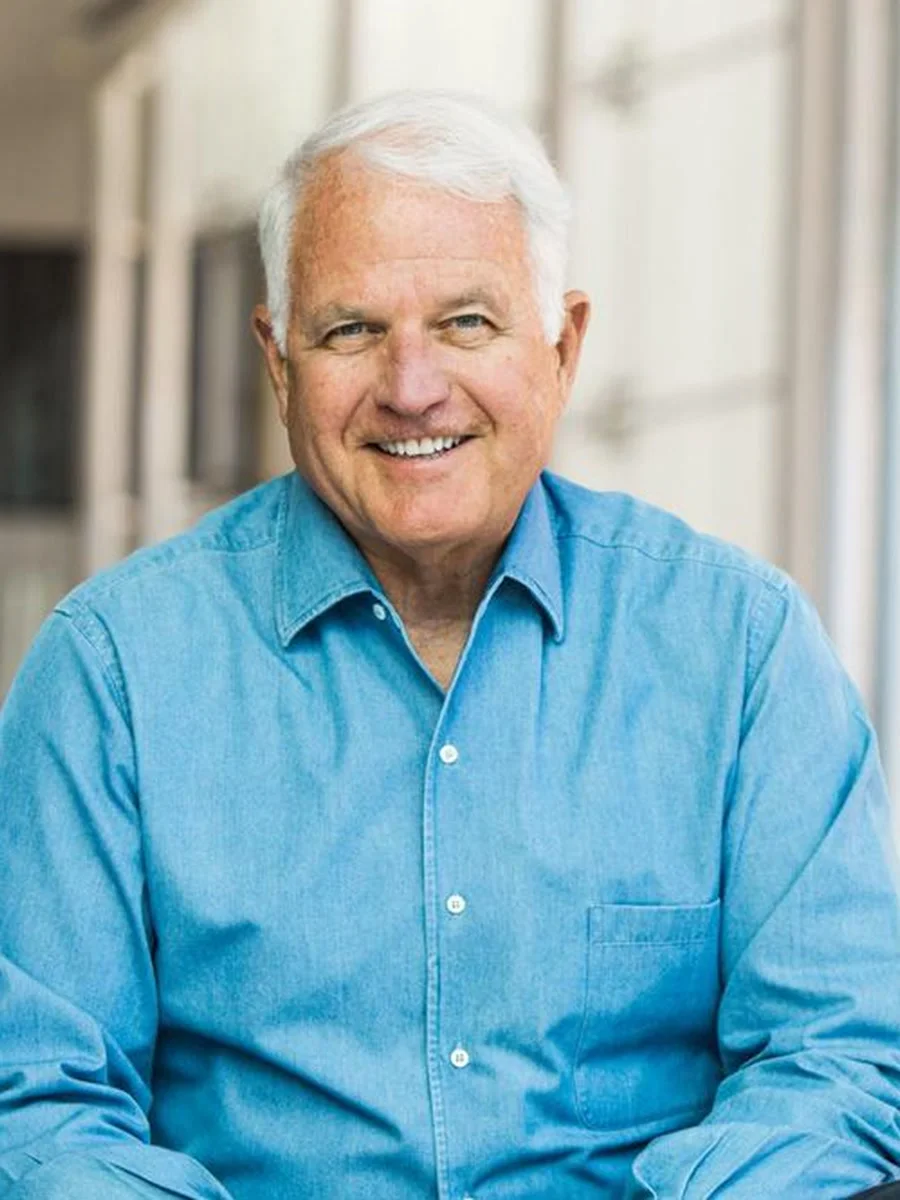
Jim Swartz
Co-founded Accel and co-authored the 'prepared mind' thesis-driven investing doctrine.
Chronological investment biography
1942–1965 — from a mill town to technical management
James R. Swartz was born in 1942 and grew up as an only child in Coraopolis, Pennsylvania, a working-class town down the Ohio River from Pittsburgh. His father moved from farm and mill work into the local water department; his mother eventually ran a hospital pathology laboratory. The important biographical boundary is not a romantic “outsider” story but exposure to practical work, mechanical curiosity, and people outside elite professional networks. Swartz later remembered engineering cousins and football as early models for disciplined problem solving and judging whose advice merited attention. 2006 NVCA/CHM oral history, PDF pp. 6–10 · 2013 CHM oral history, pp. 2–7
At Harvard he studied general engineering, including Engineering Sciences and Applied Physics, and then earned an M.S. in Industrial Administration from Carnegie Mellon’s Graduate School of Industrial Administration. The educational sequence matters: Harvard was undergraduate engineering, not Harvard Business School; Carnegie Mellon's computer-based management program was the graduate bridge between technology and business. Riverbed's 2006 S-1 independently states those two degrees. 2013 CHM, pp. 6–8 · Riverbed S-1, “Management—Board of Directors,” James R. Swartz
Swartz's first post-graduate role, assisting Campbell Soup's head of manufacturing, quickly showed him that large-company operating problems offered less scope for strategic change than he wanted. Military service in an engineering reserve unit interrupted the role; afterward he moved to Cresap, McCormick & Paget, choosing the smaller consulting organization over McKinsey partly because he saw more room to learn and advance. [investor-stated | moderate] This did not yet create an investing rule, but it put broad company diagnosis ahead of functional specialization and supplied the repair orientation he later brought to boards. 2013 CHM, pp. 9–11 · SeedToScale transcript, pp. 1–3
1971–1978 — consulting becomes venture apprenticeship at Citicorp
A relationship with the founders of Data Science Ventures exposed Swartz to a then-unusual specialist technology fund. They did not hire him; instead, the route eventually led to Citicorp Venture Capital, one of the large-bank platforms that supplied much early institutional venture capital. At Citicorp he combined new investments with work on an inherited portfolio, including international holdings, and operated inside a nine-person group that included Arthur Patterson. 2013 CHM, pp. 10–14 · 2006 NVCA/CHM, PDF pp. 20–23
The causal contribution of Citicorp was twofold. First, troubled-company and board work converted consulting diagnosis into ownership-side intervention. Second, responsibility for international holdings created relationships and institutional familiarity in Europe decades before Accel opened London. [investor-stated | moderate] The later European expansion therefore looks less like a dot-com improvisation than the delayed exercise of an old capability; it is still not evidence that geography itself produced excess returns. 2013 CHM, pp. 12–15 and 27–29
Citicorp also introduced Fred Adler. Swartz remembers joint board work on an ophthalmic-equipment company and a successful repair effort before they formed Adler & Company in 1978. Arthur Patterson was a Citicorp colleague whom Swartz later recruited into Adler; Fred Adler and Swartz—not Patterson—were Adler's founders. 2013 CHM, pp. 14–16 · CHM institutional profile
1978–1983 — Adler, Amdax, and the first test of a prepared mind
At Adler & Company, Swartz gained personal upside, a technology-focused platform, and latitude to lead. The most instructive sequence begins with Amdax, a factory-networking company whose founder died soon after investment. Swartz temporarily operated it until a successor could be installed. That experience did not become a visible success, but it taught him enough about network architecture to interpret a later weak signal. Von Burg and Kenney, printed pp. 217–218 / PDF pp. 11–12
In 1980, after hearing Robert Metcalfe discuss data communications and seeing Ungermann-Bass on an Ethernet-adopter list, Swartz visited the company. The market was pre-standard, large incumbents were expected to own networking, and U-B had spent months trying to raise capital. The surviving academic reconstruction says Bessemer had committed conditionally; Swartz/Adler joined, and Oak also invested. It reports $1.5 million initial capital, $10 million total before the 1983 IPO, and a $48 million IPO valuation—company financing and valuation, not Swartz's return. It also contains an internal chronology conflict: a December 1980 conference precedes a financing dated February 1980. Only the broad 1980 sequence is safe. Von Burg and Kenney, printed pp. 216–218 / PDF pp. 10–12
This is the strongest causal case in the record. Amdax supplied costly operating knowledge; the conference created a search list; Ralph Ungermann and Charlie Bass supplied specific team evidence; Bessemer and Oak supplied syndicate validation and capital. Swartz later said incumbent diligence would likely have rejected the opportunity, so he emphasized founder history, integrity, and ethics. [retrospective witness | moderate] The edge was not clairvoyance. It was the ability to recognize a technically credible team when standard customer evidence did not yet exist. Von Burg and Kenney, printed p. 218 / PDF p. 12 · 2013 CHM, pp. 23–24
1983–1987 — Accel is designed as a specialist partnership
A strong 1983 IPO market made Adler-era holdings—including Ungermann-Bass and Daisy Systems—liquid enough for Swartz to choose independence rather than retirement. He and Patterson formed Accel as a 50/50 partnership, deliberately avoiding their surnames in the firm's name. Swartz says the founding design divided domain preparation: he concentrated on communications while Patterson concentrated on software. [investor-stated | strong] 2013 CHM, pp. 16–19 · SeedToScale, pp. 4–7
Formation, fundraising, and close should not be collapsed. Swartz remembers fundraising beginning in fall 1983 and describes two parallel pools: $40 million domestic and $28 million international. Kaplan's 1999 teaching case reports a $64 million first fund but warns that some facts are disguised. [researcher inference | provisional] Both accounts support an unusually international capital base; neither justifies silently harmonizing the totals. 2006 NVCA/CHM, PDF pp. 28–29 · Kaplan, pp. 1 and 4
The method Accel called a “prepared mind” was category work before company contact: talk throughout an ecosystem, map where technology and demand could move, and use a founder meeting to update rather than initiate the analysis. Later institutional descriptions add active recruiting, business development, and strategic partnering. [investor-stated | strong] Preparation raises recognition speed; it does not prove a decision is correct, and it can harden a thesis into confirmation bias. 2013 CHM, pp. 17–18 · Kaplan, p. 4
The regulatory setting also shaped the vehicle. In 1986 and 1988, contemporaneous articles reprinted in the Congressional Record identify Swartz first as an Accel investor and later as NVCA president; he argued that higher capital-gains taxes could redirect individual and institutional capital away from startups and toward mature companies or buyouts. [contemporaneous record | moderate] These are observable capital-supply beliefs, not proof that tax policy caused Accel's results. Congressional Record, 1986, printed p. 22565 · Congressional Record, 1988, printed p. 3788
1987–1999 — company building, apprenticeship, and fund-scale pressure
Swartz's visible work in this era combines selection and board development. PictureTel required a technically demanding videoconferencing product, manufacturing/distribution work, and international expansion; Remedy was the cleaner software case in which an Accel team helped connect founders and build the company; Polycom and other communications companies extended the domain. These are recollected cases rather than complete deal files, and they do not reveal check, ownership, dilution, or personal economics. 2006 NVCA/CHM, PDF pp. 45–49 · 2013 CHM, pp. 22–24
Institution building mattered alongside deals. Accel hired Jim Breyer from Harvard Business School and brought in Joe Schoendorf, whom Swartz knew from Ungermann-Bass, illustrating a repeat network becoming a recruiting system. Later testimony describes a flat partnership: colleagues criticize a proposed project, one partner owns the decision, and the firm supports the investment once made. [investor-stated | moderate] The design explains how specialized judgment could coexist with collective challenge, but no public IC minutes show how consistently it operated. 2013 CHM, pp. 20–21 · 20VC, 23:36–28:45
By 1999, Kaplan's case describes reported net returns above 100% annually for Accel IV and V at that point in time and a proposed $500 million Accel VII with 30% carry. Those are reported firm/fund figures from a case with disguised facts, not audited final returns and not Swartz-specific economics. The same case supplies the best contemporary Swartz roster: nine lead-linked companies plus seven then-current private directorships. Kaplan, pp. 1 and 5–7
1997–2005 — bubble recognition did not prevent deployment error or misses
Swartz says the market felt excessive by 1997. Accel nonetheless participated in the boom, accelerated fundraising, and later suffered. The 2006 oral history describes an unnamed fund invested in nine months during 1999 as a disaster that might only return capital. The 2013 oral history dates Accel VIII fundraising to early 2000. [researcher inference | strong] The two vehicles must remain separate unless an original LP record proves otherwise. 2006 NVCA/CHM, PDF pp. 59–60 · 2013 CHM, pp. 25–27
Public accounts of Accel VIII's size conflict materially: Forbes reports $1.2 billion reduced to $680 million; Metrick and Yasuda report $1.6 billion reduced to $680 million; SFGate reported $1.4 billion reduced to $950 million in 2002. [researcher inference | strong] These may describe different commitments, dates, or related pools, but the public record does not reconcile them. Metrick and Yasuda report that as of March 2007 the fund had returned 37% of committed capital, carried a 2.6% net IRR, and ranked in the second quartile—secondary, point-in-time fund evidence, not Swartz's return. Forbes, ¶¶52–53 · Metrick and Yasuda, p. 89 · SFGate, 2002
The misses were not one lesson. Accel saw the internet early through UUNET but missed Netscape amid many browser companies, missed Amazon while it was less nimble than it should have been, and attempted but failed to enter Google. [investor-stated | moderate] Access, timing, thesis interpretation, and internal allocation are different failure modes; collapsing them into “stay prepared” destroys the diagnostic value. 2013 CHM, pp. 25–26
Quokka is a necessary attribution control. Kaplan's 1999 case says Bruce Golden led Accel's investment; a later mutable Accel page has associated Swartz with the company. The SEC later revoked Quokka's securities registration for periodic-reporting failures. [contemporaneous record | strong] Quokka is therefore an Accel firm-level adverse case with contested later Swartz association, not a Swartz-led success or personal failure. Kaplan, p. 5 · SEC News Digest, 2008-10-27
2000–2013 — Europe, Riverbed, and succession
Swartz's European ambition predated the crash, but the London operation began in 2000 and had to survive a market contraction. His 2013 account credits Jim Breyer with introducing Kevin Comolli and describes Swartz and Comolli doing the launch work; the restricted HBS case metadata independently dates the operating decision to the spring 2001 crash and frames the first-investment process, but the case body was not legitimately accessible in this research. 2013 CHM, pp. 27–29 · HBS case 9-803-021 metadata
Riverbed provides unusually strong legal-role evidence. Its 2006 S-1 says Swartz had joined the board in November 2002 and separately lists company shares held by Accel VIII, Accel Internet Fund IV, Accel Investors 2002, and Swartz-managed vehicles. The filing also identifies shared managing members for the Accel GP entities; shared voting power is not the same as sourcing or sponsorship. [contemporaneous record | strong] A later Form 4 again separates direct, Swartz-managed, and Accel fund holdings. Riverbed S-1, “Management,” “Certain Relationships,” and “Principal and Selling Stockholders” · Riverbed Form 4, explanations 1–15
The post-crash account is institutional rather than heroic. Swartz says Breyer was essential, Riverbed emerged from the era, and founders sometimes reinforced younger partners through the downturn. [investor-stated | moderate] Later Accel successes do not retroactively erase bad pacing, LP conflict, or the missing personal deal-return denominator. 2013 CHM, pp. 28–30
Succession was designed through equal standing, internal development, and economic dilution by founders as newer partners assumed ownership. [investor-stated | moderate] The public record supports the stated design and later partner continuity, but not the private carry schedule, promotion votes, key-person clauses, or office authority. 20VC, 23:36–33:23 · Accel, “What comes next,” “It Begins with Team”
2013–2025 — mentor, philanthropist, and a late-life restatement of the filter
Later appearances repeat the core ideas but should be treated as retrospection, not original decision evidence. The 2023 SeedToScale transcript connects sector maps, founder judgment, boards, and succession; the 2025 Carnegie Mellon event report emphasizes intellectual honesty, adaptability, demonstrated mastery, continual learning, and openness to opportunity. [investor-stated | moderate] Stability across decades increases confidence that these are genuinely Swartz's beliefs; it does not show that they caused the visible outcomes. SeedToScale, pp. 4–10 · CMU, “Advice to entrepreneurs,” 2025-10-30
His institutional legacy also extends beyond Accel. CHM describes him as instrumental in Accel London and Meritech Capital and a former NVCA chair; Carnegie Mellon describes the Swartz Center for Entrepreneurship, launched in 2015, as a continuing university platform. These are influence facts, not additions to an investment-return record. CHM profile · CMU, “Championing innovation,” 2025
A falsifiable thesis of the edge
Thesis. [researcher inference | moderate] Swartz's most defensible edge was prepared interpretation in communications and systems markets: he converted prior technical and operating exposure into a category map, used founder record and integrity to choose under severe uncertainty, and then worked through boards, recruiting, and a partnership network to help the company cross from technology to market. Amdax→Ungermann-Bass is the strongest causal demonstration; PictureTel and Remedy provide later board-work illustrations; Riverbed shows persistence into another networking generation. LAN case, printed pp. 216–218 / PDF pp. 10–12 · 2006 NVCA/CHM, PDF pp. 45–49 · Riverbed S-1
Mechanism. [researcher inference | moderate] Preparation reduces interpretation time; domain networks improve source quality and recruiting; founder judgment substitutes only when ordinary market evidence is unavailable; board work creates corrective options after investment; an apprenticeship partnership transfers the system. The necessary condition is enough recurring opportunity density for specialization to compound. Kaplan, p. 4 · 20VC, 07:50–11:58 and 23:36–28:45
Predictions if true. Swartz's full deal file should show unusually detailed pre-contact category work; decisions should be strongest where he had prior operating or board exposure; founder assessments should identify observable mastery and integrity rather than generic charisma; post-investment records should show recruiting, distribution, and strategic interventions; and results should remain stronger than comparable Accel and peer communications deals after removing the best outlier. [researcher inference | moderate]
Evidence that would overturn it. The thesis fails if contemporaneous memos show company-first improvisation rather than prior maps; if Swartz-linked communications deals do not outperform an era- and stage-matched cohort; if founders, colleagues, or minutes assign the decisive work elsewhere; if board intervention added no measurable option; or if outcomes disappear after controlling for Accel access, co-investors, vintage, and one dominant winner. [researcher inference | strong]
Strongest alternative. [researcher inference | strong] The visible record can be explained by elite institutional access, a favorable communications/software category-formation era, long-duration partnership capital, co-investors, strong founders, Accel's pooled brand and later partners, and survivor-selected publication. The searched ledger has eighteen supported names but only four deeply reconstructed cases, no complete loss/pass cohort, and no personal cash-flow denominator. Kaplan roster, p. 5 · denominator and cases
The exact eighteen-name deal reconciliation
The inclusive searched ledger is eighteen names, not fifteen or sixteen. Kaplan's 1999 page 5 supplies sixteen: nine lead-linked companies and seven then-current private directorships. Riverbed and Qualtrics are later supported additions. Four of the eighteen—Ungermann-Bass, Remedy, Riverbed, and Avici—are deeply reconstructed in the deal forensics. The other fourteen are researched at ledger level; they must not be promoted to equivalent causal evidence.
| Contemporary category | Exact names | What the record supports |
|---|---|---|
| Kaplan lead-linked, 9 | BroadBand Technologies; FVC.com; Illustra/Informix; Medical Care America; Netopia; PictureTel; Polycom; Remedy Corporation; Ungermann-Bass | Contemporary case says Swartz was closely involved as lead investor; deal economics and complete decision rights remain uneven. Kaplan, p. 5 |
| Kaplan then-current directorships, 7 | 2Wire; Avici Systems; CallNet; Cohera; FastForward Networks; InGenuity Systems; MetraTech | Board/directorship association, not automatically sourcing or economic leadership. Kaplan, pp. 5–6 |
| Later supported additions, 2 | Riverbed; Qualtrics | Riverbed has filing-grade board/vehicle evidence; Qualtrics has official firm association but thinner personal decision evidence. Riverbed S-1 · Accel, “What comes next,” Qualtrics |
Quokka is excluded from this denominator. Kaplan assigns Accel's investment lead to Bruce Golden, and the SEC record establishes a later reporting failure/revocation at the issuer; neither supports a Swartz-led deal. Genentech is also excluded: its appearance in broad venture histories is namesake or industry context, not a supported Swartz investment. Facebook, UUNET, Imperva, and Nebius are useful attribution controls for other Accel partners or institutional involvement, not additions to Swartz's personal ledger. [researcher inference | strong]
People and decision-rights map
| Person or institution | Supported role in Swartz's development or record | Attribution boundary |
|---|---|---|
| Swartz's parents and engineering cousins | Work ethic, practical judgment, early technical models | Formative recollection; no direct investment causality |
| Data Science Ventures founders | First specialist-technology venture exposure and job-network bridge | Mentors/connectors, not Swartz employers 2013 CHM, pp. 10–12 |
| Citicorp Venture Capital | Institutional apprenticeship, board repair, international portfolio | Bank platform supplied capital, colleagues, and access |
| Fred Adler | Co-investor/board colleague; co-founded Adler with Swartz | Adler's capital, reputation, and consent matter to U-B |
| Arthur Patterson | Citicorp/Adler colleague; 50/50 Accel co-founder; software domain | Equal co-founder, not subordinate; joint statements require speaker care |
| Ralph Ungermann and Charlie Bass | U-B founders; technical and ethical evidence | Company creation and execution belong to founders |
| Neil Brownstein / Bessemer and Stewart Greenfield / Oak | U-B syndicate investors | Capital and validation were shared, not solo Swartz action |
| Jim Breyer | Accel apprentice then managing partner; post-crash and global firm leader | Later Accel outcomes cannot be assigned backward to Swartz |
| Joe Schoendorf | U-B executive recruited into Accel communications network | Demonstrates network reuse; role differs by company |
| Kevin Comolli and London team | Built Accel's European operation with Swartz sponsorship/mentoring | Local sourcing and execution belong to the local team |
| Eric Wolford and Riverbed team | Riverbed operator and later Accel investor; company-building counterpart | Filing proves role/holdings, not sole sponsorship attribution |
| Bruce Golden | Kaplan identifies him as lead on Quokka | Controls against later Swartz web-tag contamination |
Unknown unless a case says otherwise: who first sourced each of the eighteen; the exact diligence owner; IC dissent and approval mechanics; term negotiation; follow-on advocate; board intervention; recruiting owner; exit influence; individual carry; and personal realized return.
Capital, vehicle, and influence map
Cresap diagnosis
  └─> Citicorp corporate capital + international portfolio
       ├─> Fred Adler relationship ─> Adler & Company (1978)
       │    └─> Amdax operating exposure ─> U-B recognition + Bessemer/Oak syndicate
       └─> Arthur Patterson relationship ─> Accel (1983 formation; later fund close)
            ├─> domestic pool: Swartz recalls $40m
            ├─> parallel international pool: Swartz recalls $28m
            ├─> specialist communications/software partnership
            ├─> later funds + internet/specialist vehicles
            ├─> London team and local European vehicles
            └─> successor partners, pooled GP control, and founder dilution
The map distinguishes capital from labor and legal control. Riverbed is the cleanest example: Accel fund entities, Swartz-managed entities, shared GP managing members, and Swartz's board seat coexist. A filing's shared voting-power footnote cannot establish which partner originated the thesis, and a public board seat cannot calculate a personal return. Riverbed S-1, principal-stockholder footnotes 1 and 9 · Riverbed Form 4, explanations 1–15
Skill, access, team, era, and luck
| Driver | Evidence for contribution | What prevents a clean allocation |
|---|---|---|
| Skill | Amdax→U-B preparation, repeated communications boards, founder/people diagnostics | Retrospective selection; four deep cases; no pass cohort |
| Access | Citicorp, Adler, NVCA, international LPs, and category networks created proprietary routes | Access may be an institutional asset rather than individual picking alpha |
| Team | Patterson domain split, co-investors, founders, Breyer/Schoendorf/Comolli, later Accel partners | Most deal labor and pooled economics remain private |
| Vehicle | Long-duration LP funds, reserves, board rights, parallel vehicles, succession | First-fund totals conflict; carry and individual economics undisclosed |
| Era | LAN standardization, microprocessor/PC diffusion, capital-gains and ERISA changes, 1983 IPO window | Category formation can make a specialist look prescient ex post |
| Luck | U-B's emerging standard, power-law outcomes, timing of liquidity and misses | No counterfactual or complete return distribution can isolate luck |
Overall attribution. [researcher inference | moderate] Swartz's record supports real preparation and board craft, but the evidence does not support a lone-picker or audited personal-return biography. The correct unit is Swartz operating inside evolving teams, syndicates, vehicles, and technology regimes.
Adverse eras and learning edges
- 1974 capital scarcity: Swartz remembered a near-dead startup environment and later used it in tax-policy advocacy. The lesson is to model capital supply, not to treat one remembered count as a base rate. [investor-stated | provisional] Congressional Record, printed p. 22565
- Pre-standard LAN uncertainty: incumbent validation could have killed U-B; people judgment mattered because a market did not yet exist. The boundary is that ignoring customers becomes reckless after demand is measurable. [retrospective witness | moderate] LAN chapter, printed p. 218 / PDF p. 12
- Dot-com pacing: recognizing excess by 1997 did not prevent a nine-month deployment disaster or later LP conflict. The lesson is to convert macro concern into check-size, pacing, reserve, and price rules. [researcher inference | strong] 2006 NVCA/CHM, PDF pp. 59–62
- Netscape, Amazon, Google: distinct misses show why a pass ledger needs failure codes rather than one anti-portfolio story. [investor-stated | moderate] 2013 CHM, pp. 25–26
- Quokka: contemporaneous partner attribution defeats a convenient later personal tag. The lesson is credit hygiene, not a Swartz failure narrative. [contemporaneous record | strong] Kaplan, p. 5
- Accel VIII and adjacent vehicles: three incompatible size histories and point-in-time secondary performance prevent a tidy turnaround story. [researcher inference | strong] Metrick and Yasuda, p. 89
No personal SEC enforcement or adjudicated fraud involving Swartz surfaced in the searched record. PictureTel's issuer/CFO proceeding, LogicTier's Olympics appearance-of-conflict report, and Quokka's issuer reporting failure should not be converted into personal wrongdoing without evidence. Absence from a public search is not proof that no dispute ever existed.
Reader path and cross-links
- Start with this chronology and the edge falsifiers.
- Use sources.md to understand discovery scope and access barriers.
- Read writings.md for the honest zero-bylined-public-corpus conclusion and institutional written controls.
- Read talks.md for seven substantive direct-voice families and their retrospective limits.
- Work through the three rankings, eighteen-name denominator, and four no-hindsight cases in investments.md.
- Convert evidence into a decision system through investmentphilosophy.md and mental-models.md.
- End with review.md, which audits central and ordinary claims rather than merely praising the package.
Investor-specific glossary
- Prepared mind: category study before company contact, designed to improve recognition and question quality; not a claim of prediction.
- Project owner: the partner accountable for a proposed investment after open criticism; not proof of sole economics or labor.
- Opportunity supply: the number and quality of investable company formations, distinct from capital price or public-market multiples.
- People judgment: evaluation of founder mastery, integrity, adaptability, recruiting, and prior execution; not generic charisma.
- Vehicle fit: matching fund size, stage, pacing, reserves, and geography to the opportunity set.
- Attribution boundary: the line separating individual sponsorship, shared GP legal power, firm ownership, co-investor work, operator execution, and later narration.
Unresolved biographical and evidentiary questions
- Recover original Amdax and U-B investment papers, cap tables, board minutes, and distribution records; resolve the 1980 chronology conflict.
- Reconcile the 1983 formation, 1984 close, $40m/$28m oral account, and disguised $64m case figure with partnership records.
- Identify the unnamed vehicle invested in nine months during 1999; do not label it Accel VIII without an LP document.
- Reconcile the $1.2bn→$680m, $1.6bn→$680m, and $1.4bn→$950m Accel VIII reports by commitment date, legal entity, and effective reduction.
- Recover complete sponsorship, diligence, ownership, reserves, governance, and realized cash flows for all eighteen names and a contemporaneous pass/loss cohort.
- Retrieve the licensed HBS Europe case body, public NVCA files from Swartz's presidency, and any legitimately public Swartz-authored letters or memos. No such bylined public investing corpus was located in the routes searched as of 2026-08-24.
1. Snapshot and testable edge thesis
Jim Swartz moved from Citicorp Venture Capital to Adler & Company and then co-founded Accel with Arthur Patterson in 1983. The most defensible edge thesis is narrow: from roughly 1980 through the enterprise-networking/software era, Swartz and the Accel system built a repeatable advantage by studying bounded technical markets before a company appeared, recognizing architecture/category inflections faster, and converting a focused network into recruiting, partnering, and board help. researcher inference / moderate: this mechanism is supported by Swartz’s repeated direct accounts, Kaplan’s near-contemporaneous description of Accel’s focus/prepared-mind strategy, U-B’s historical reconstruction, and multiple board/lead associations; it is not proven by complete personal cash flows. Kaplan, pp.4–6 LAN chapter, PDF pp.10–12 / printed pp.216–218
Predictions. In unseen Swartz-sponsored deals, pre-deal sector work should precede contact; sponsors should articulate architectural/customer change rather than only founder charisma; focused executives/co-investors should appear in sourcing and company-building; and the edge should weaken when fund scale or pacing reduces preparation and partner bandwidth.
Falsifiers. The thesis weakens if original memos show opportunistic follow-the-crowd investing, if the ordinary/loss denominator performs no better than comparable generalists, if credited companies were sourced/led by other partners, if returns collapse after removing one outlier, or if vehicle/era/network access explains selection and outcomes better than prepared analysis. The 18-name inclusive denominator has only four deep reconstructions, so the test is incomplete. Denominator reconciliation
2. Core philosophy
investor-stated / strong: Swartz repeatedly describes doing the work to form a “prepared mind” before evaluating a live company. The 2006/2013 CHM oral histories and SeedToScale give the personal account; Kaplan records the institutional version in 1999 as focus, venture development, and commitment to winning, with focus intended to help partners recognize an entrepreneur’s idea promptly and intelligently. 2013 CHM transcript, pp.18–22 SeedToScale transcript, pp.4–7 Kaplan, pp.4–6
researcher inference / moderate: the operating system is focus → prior map → faster recognition → concentrated network → board/company-building leverage → updated map. It is a learning loop, not a prediction that every thesis-backed company wins. Avici is the essential boundary case: a real technology transition and board commitment did not ensure adoption, financing durability, or a great outcome. Avici case
3. Sourcing
- Study before inbound.
investor-stated / strong: select a bounded technical domain, talk to researchers/operators/customers, map architecture and bottlenecks, then use that map to recognize a credible company. SeedToScale, pp.4–7 - Use a network as a sensing system.
researcher inference / moderate: focus makes executive, founder, corporate, and co-investor relationships denser; Kaplan explicitly describes Accel’s network value. Kaplan, pp.4–5 - Separate access from selection. U-B’s syndicate included Bessemer and Oak; Riverbed was jointly sponsored with Eric Wolford. Access and team infrastructure are part of the result, not noise to subtract. LAN chapter, PDF pp.10–12 / printed pp.216–218 Riverbed case
researcher inference / moderate: Repeatability test. A modern team should archive the market map before sourcing begins and compare it with later memos. If every thesis is written after a promising founder arrives, “prepared mind” is branding rather than process. Kaplan, pp.4–6
4. Picking
investor-stated / moderate: later interviews emphasize founder integrity, stamina, curiosity, and recruiting ability while treating plans as changeable. Deseret interview researcher inference / moderate: Swartz appears to combine founder quality with a market/architecture map—neither founder worship nor thesis determinism.
researcher inference / moderate: Diligence sequence. First test whether the architecture/customer shift is real; then whether the team has privileged insight and recruits; then whether adoption, capital needs, and competitive response fit the vehicle. Red flags: thesis borrowed from consensus, inability to name a falsifier, a plan requiring standards/adoption/capital all to break perfectly, weak referenceability, or a company that needs board substitution for founder ownership. Exact historical IC votes and kill criteria are insufficient public record. Deseret interview Avici risk control
5. Deal and portfolio mechanics
The public record is much stronger on philosophy and board roles than on terms. U-B has reported financing totals, Riverbed has a 23.8% pre-offering Accel-affiliate stake, and the rest mostly lack check, security, ownership, dilution, reserves, and distributions. U-B case Riverbed S-1/A, principal stockholders
documented behavior / moderate: Swartz repeatedly took board seats, consistent with an ownership/governance strategy rather than passive indexing.researcher inference / moderate: focused early-stage investing likely required meaningful ownership and reserves, but the public evidence cannot specify targets.- Price discipline: insufficient public record at deal level. Boom-era fund/pacing reflections indicate awareness of price and cadence risk, not a documented valuation formula.
- Exits: company filings establish transactions; no evidence supports a general Swartz exit-timing maxim.
- Portfolio construction: use the three Pareto views without turning fame or acquisition value into return contribution.
6. Vehicle and incentive fit
Accel was an LP-backed partnership with long-duration capital. Kaplan’s 1999 case says Accel VII sought $500m, 2.5% management fees declining to 1.5% in year seven, and 30% carry after a 125% value threshold; it also explains standard ten-year structures but warns some facts were disguised. Kaplan, pp.1–2,6,8–9
| Dimension | Fit or constraint | Evidence boundary |
|---|---|---|
| Capital/duration | supports staged company-building and patience | exact deal reserves and extensions unknown |
| Fundraising/carry | higher carry could retain talent; bigger pools create deployment pressure | personal carry allocations private |
| Governance/approval | named GPs shared legal voting/investment power | legal control is not sponsor/IC-work attribution Portal proxy |
| Geography | domestic/international structures and later expansion | HBS Europe case is metadata-only; authority/economics not inferred metadata |
| Liquidity/regulation | closed-end capital fits illiquid private securities; public filings reveal only selected events | complete cap tables and private decisions unseen |
| Succession/key person | partner renewal can preserve knowledge and network | key-person clauses not public; attribution becomes harder |
researcher inference / moderate: the strategy works only when fund size, partner bandwidth, ownership, and reserves match narrow, active board work. The 1999 unnamed vehicle and separately documented Accel VIII reset show how pace/scale can break the loop. Failure postmortems
7. Team attribution and work with founders
Swartz deserves high-confidence personal credit for U-B participation/leadership and high-confidence board credit at Riverbed/Avici. Remedy and nine Kaplan companies support lead-linked attribution, but sourcing, diligence, negotiation, reserves, recruiting, and exit roles are often unknown. Kaplan, p.5
| Work | Supported pattern | Attribution guardrail |
|---|---|---|
| Sourcing | focus/network generates opportunities | exact individual source unknown on most deals |
| Sponsorship | Kaplan names nine Swartz lead-linked companies | “lead-linked” is not every task or all economics |
| Board work | direct voice plus Avici/Riverbed filings | title does not prove intervention quality |
| Recruiting/partnering | Kaplan records Accel’s claimed network value | firm capability cannot be assigned solely to Swartz |
| Follow-ons/exits | insufficient public record | do not infer from later ownership or outcome |
| Later narration | Swartz explains U-B, Remedy, misses, and funds | retrospective memory is evidence, not a contemporaneous memo |
The people/capital/influence map separates Fred Adler, Arthur Patterson, Eric Wolford, co-investors, founders, later partners, LP vehicles, and shared GPs.
8. Views on the craft
- Power law:
investor-stated / moderate: reported outcomes and Swartz’s stories acknowledge that a few companies matter greatly; the denominator cannot quantify the concentration. CHM 2006, PDF pp.45–51/printed pp.42–48 Pareto evidence - Fund size and pace:
investor-stated / moderate: capital must fit the stage/craft. Public Accel VIII size histories conflict, so the lesson is dimensional, not a precise “right” number. Fund context - Access versus selection:
researcher inference / moderate: a focused network creates both; the record cannot cleanly decompose them. - Governance:
investor-stated / moderate: boards should add diagnosis, recruiting, and relationships without taking operating ownership. 2013 CHM, transcript pp.15–18 and later board discussion - Great investor:
researcher inference / moderate: prepare deeply, keep learning, recognize change quickly, win founder trust, and renew the partnership. Persistence across talks shows consistency, not efficacy. CHM 2006, PDF pp.39–51/printed pp.36–48 2013 CHM, pp.27–31
9. Signature bets and decision process
Use the no-hindsight labs rather than outcome summaries:
- Ungermann-Bass: strongest prepared-mind reconstruction and chronology warning.
- Remedy: spectacular reported multiple, incomplete economics/team credit.
- Riverbed: strongest filing-based ownership/governance attribution and joint sponsorship.
- Avici: failure/ordinary-outcome boundary for adoption, capex, and financing risk.
Each lab freezes what was known/unknown, distinguishes analyst-created kill criteria from historical facts, asks invest/pass, terms, and next-check questions, then reveals the sourced outcome.
10. Mental models and maxims
- Prepare the mind before the deal — research precedes opportunity; origin evidence in U-B/Accel records.
- Back adaptive founders, not brittle plans — evaluate integrity, learning, and recruiting with bounded application evidence.
- Convert focus into networked board leverage — a narrow network should improve recruiting/partnerships, not substitute for operators.
- Fit fund size and pace to the craft — match capital and partner bandwidth to stage and opportunity.
- Build succession into the investment system — renew the partnership so maps/networks outlive one sponsor.
The inventory merges “focus,” “prepared mind,” and “thesis before company” into one model; splitting them would inflate the count. It excludes pricing precision, ownership targets, and exit timing because no reusable Swartz rule is publicly supported.
11. Evolution and contradictions
| Period | Supported development | Tension |
|---|---|---|
| 1970s Citi | portfolio diagnosis and board work precede firm creation | retrospective causal story; original records absent |
| 1978–1983 Adler/U-B/Accel | sector preparation crystallizes into a company-recognition model | U-B date sequence conflicts; first Accel capital is $40m+$28m in oral history vs $64m in disguised Kaplan case |
| 1990s | focus expands into institutional network and venture development | firm/team contribution grows, weakening solo attribution |
| 1999–2002 | boom pacing and fund growth expose discipline/scale limits | unnamed 1999 vehicle must not be mislabeled Accel VIII; VIII size reports conflict |
| 2006–2025 | founder quality, learning, board craft, and succession dominate reflection | late narratives are coherent but more hindsight-exposed |
Durable belief: preparation and learning. Clear evolution: personal craft becomes institutional process and succession. Unresolved contradiction: strong focus coexisted with boom-vintage pacing; the record does not show a precise new rule applied after each failure.
12. Failures and limits
- Avici: board involvement and real technology did not guarantee adoption or financing durability; no documented personal process change. Case
- Unnamed 1999 vehicle:
investor-stated / moderatepacing disaster; exact vehicle and cash flows unknown. Postmortem - Accel VIII: distinct vehicle; three incompatible size histories and a weak March-2007 snapshot. Postmortem
- Netscape/Amazon/Google: different miss mechanisms; original memos absent. Miss analysis
- Quokka: current firm association conflicts with Kaplan’s Bruce Golden lead attribution; excluded from personal denominator. Control
- Era/selection limits: hardware/networking cycles, small early funds, scarce specialist capital, brand access, and public-story survivorship constrain transfer and evaluation.
13. Historical operating environment
The strategy emerged when enterprise networking categories lacked mature public data, startups needed hardware/manufacturing/channel capital, and a concentrated specialist network could supply both information and company-building resources. researcher inference / moderate: preparation had more scarcity value when technical/category knowledge was hard to acquire. LAN chapter, PDF pp.10–12 / printed pp.216–218
By 1999, Accel’s focus covered communications and internet/intranet, and industry fund benchmarks plus large partnership structures were visible to LPs. Kaplan, pp.4–8 The dot-com reset exposed how fundraising pressure, price, pacing, and partner bandwidth could overwhelm the prepared-mind ideal. No numerical company-level base rate is invented where contemporary data are absent.
14. Modern VC translation as of 2026-08-24
Every translation and present-day condition below is an analyst-created transfer assumption labeled researcher inference / moderate, not a claim that Swartz observed remote/global teams, AI tooling, larger rounds, secondaries, or platform teams.
| Major lesson | What transfers | What changed/does not transfer | Observable applicability signals | Likely misuse | Adapted action |
|---|---|---|---|---|---|
| Prepared mind | pre-deal maps, falsifiers, ecosystem interviews | information is abundant; synthesis and proprietary evidence matter more | memo predates deal; explicit disconfirmers; differentiated data | post-hoc thesis laundering | timestamp the market map and score each deal against it |
| Adaptive founders | integrity, learning speed, recruiting remain relevant | remote/global teams and AI tooling change execution evidence | rapid truthful updates, high-caliber recruits, reference consistency | charisma as proxy | use structured references and work-sample/milestone evidence |
| Networked board leverage | recruiting/customer/partner help transfers | founders can access larger networks directly; conflicts and governance expectations differ | founder-initiated calls, measurable recruiting/partner outcomes | investor overreach or vanity introductions | agree board operating contract and log interventions/outcomes |
| Fund fit | stage/ownership/reserves/bandwidth alignment remains essential | larger rounds, faster formation, secondaries, and platform teams change liquidity/attention | stable ownership logic, reserve discipline, partner-hours per company | equating larger fund with stronger franchise | precommit pacing, reserve, and board-capacity guardrails |
| Succession | institutional memory and generational renewal transfer | distributed/global partnerships create new decision-right complexity | explicit mentoring, attribution logs, stable culture plus dissent | using “team” to blur accountability | record source/sponsor/IC/board roles and succession readiness |
A grounded contemporary illustration is Accel’s 2021 insurtech map: it shows the firm still publishing sector preparation, but institutional continuity does not prove Swartz authorship or outcome efficacy. Accel insurtech prepared mind, 2021
15. Comparison with completed peers
The closest completed external peers are Reid Dennis, Peter Brooke, and Pitch Johnson: all built early US venture institutions across overlapping eras, but with different sourcing and vehicle architectures. Arthur Patterson is essential to Swartz attribution as Accel co-founder, not an external comparator.
| Dimension | Swartz | Reid Dennis | Peter Brooke | Pitch Johnson |
|---|---|---|---|---|
| Validity | Focused technology/communications partnership builder; Kaplan pp.4–6 | Early Valley network/institution builder; Dennis oral history, printed pp.13–28 | Bank-originated venture and cross-border institution builder; Brooke CHM, printed pp.16–47 | Early Valley partnership and patient company builder; Pitch CHM, PDF pp.11–16 |
| Sourcing | researcher inference / moderate: sector map plus specialist network; SeedToScale pp.4–7 |
researcher inference / moderate: Stanford/referral, Group, corporate, and partnership networks; Dennis pp.13–28 |
researcher inference / moderate: relationships and local comparative advantage; Brooke CHM pp.22–24,36–47 |
researcher inference / moderate: local search, professionals, friends, and co-investors; Pitch CHM pp.13–16 |
| Picking | investor-stated / moderate: architecture/category plus adaptive founder; Deseret interview |
researcher inference / moderate: technology-to-market judgment with relationship-heavy access; Dennis pp.50–56 |
researcher inference / moderate: candid managers, staged information, and vehicle fit; Brooke CHM pp.22–24,36–47 |
investor-stated / moderate: people, market, integrity, and technical understanding; Pitch CHM pp.19–20 |
| Ownership/portfolio | researcher inference / insufficient public record: active boards, exact universal targets unknown; Riverbed filing control |
researcher inference / insufficient public record: heterogeneous checks/rights, no universal target; Dennis oral history pp.22–28 |
researcher inference / insufficient public record: vehicles/stages vary and personal economics are incomplete; Brooke CHM pp.16–47 |
researcher inference / insufficient public record: no universal target/security rule; Pitch Bancroft pp.42–46,88–91 |
| Governance | investor-stated / moderate: recruiting/strategy/network with operator ownership; CHM 2006 pp.45–51 |
researcher inference / moderate: varied board/observer/replacement roles; Dennis raw transcript 2 pp.7–10,27–32 |
researcher inference / moderate: active board work through different institutional forms; Brooke CHM pp.36–47 |
retrospective witness / moderate: weekly work, recruiting, replacement, and board leadership; Pitch Bancroft pp.87–91 |
| Vehicles/incentives | contemporaneous record / strong: LP funds, growing scale, carry/fund-fit tension; Kaplan pp.1,6,8–9 |
researcher inference / insufficient public record: personal/Group/corporate/LP progression; Dennis pp.22–28 |
investor-stated / moderate: bank, family, TA, and global structures changed with opportunity; Brooke CHM pp.16–47 |
researcher inference / insufficient public record: SBIC/personal/family/regional forms with missing fee/carry continuity; Pitch CHM pp.11–16 |
| Failures/limits | researcher inference / moderate: boom pacing, Avici, misses, and missing economics; Swartz postmortems |
researcher inference / moderate: missing denominator, people errors, liquidity conflicts, and institutional discontinuity; Dennis raw transcript 2 pp.17–18,26–32 |
researcher inference / moderate: Japan/International Network Fund and local-support failures bound global claims; Brooke CHM pp.44–47 |
retrospective witness / moderate: shutdown weakness, early-AI loss, VisiCorp/Talkway, and famous misses; Pitch CHM pp.20–25 |
See each completed canon package and its underlying sources: Reid Dennis profile and sources; Peter Brooke profile and sources; Pitch Johnson profile and sources. researcher inference / moderate: Swartz’s distinctive emphasis is the explicit pre-deal sector map; the peers remind us that networks, boards, patient capital, and institutional timing were wider features of pioneering VC, not uniquely his.
16. The strongest case against greatness
The skeptical thesis is that Swartz’s reputation reflects favorable era, privileged access, Accel’s firm/team/network, shared vehicles, public survivorship, and retrospective narrative more than demonstrable personal selection alpha. Remedy’s >100:1 is self-reported without cash flows; U-B’s historical sequence conflicts internally; Riverbed is joint; 14/18 names lack deep reconstruction; fund reports are incompatible; legal GP control can be mistaken for sponsorship; and the boom-era record shows focus did not prevent pacing/scale error. Accel’s later institutional success may demonstrate firm renewal more than founder-specific repeatability.
researcher inference / moderate: the positive thesis survives provisionally because preparation is independently recorded in 1999, appears before and beyond one outlier, and aligns with supported board/lead work across U-B, PictureTel, Remedy, Polycom, and Riverbed. Evidence that would decide between views: timestamped investment memos, rejected-deal records, full cash flows, partner attribution logs, comparable generalist portfolios, and intervention/outcome data across wins and losses.
17. Analyst study guide, glossary, and go deeper
Reading path. Start with the final _profile, then the spoken corpus, the writings/control analysis in writings, the three Pareto views and denominator, and all four decision labs—especially Avici. Use mental models only after the cases so the rules do not become outcome slogans. Finish with the adversarial review.
Glossary. Prepared mind: a timestamped pre-deal market/architecture map. Venture development: recruiting, strategy, partnerships, and governance beyond financing. Lead-linked: Kaplan’s person/company attribution; not proof of every task or economics. Shared GP control: legal voting/investment power held by multiple managers; not deal sponsorship. Affiliate ownership: holdings of fund/GP entities, not the named partner’s personal stake. Deep-case coverage: sufficiently reconstructed cases divided by the explicit inclusive names, here 4/18—not a success rate.
Reusable checklists. Sourcing: map inflection, customers, architectures, standards, incumbents, and disconfirmers before company meetings. Diligence: founder truthfulness/learning/recruiting; product evidence; adoption timing; capital intensity; competitive response. IC: name sponsor/source/dissent, kill criteria, terms/ownership, reserve logic, next-check milestone, and thesis timestamp. Governance: agree founder/board roles, recruit and partner with measurable outcomes, log follow-on/stop decisions, and review counterfactuals after outcome.
Best primary/direct sources. 2013 CHM for citable career/firm detail; 2006 CHM for breadth (paraphrase only); SeedToScale for compact direct voice; Riverbed S-1/Form 4 for governance/ownership; Avici proxy/10-K for adverse-case control. Best independent context. Kaplan for 1999 strategy/team/vehicle; von Burg/Kenney for U-B; Metrick/Yasuda plus Forbes/SFGate for irreconcilable fund evidence. Full rankings and access boundaries are in sources.md.
Pareto 80/20 — what drove the record
The 80/20 frame is used only to prioritize attention. A literal contribution split is not computable: public sources do not disclose a complete portfolio, deal-level cash flows, original ownership, dilution, reserves, timing, or Swartz’s carry. The economic view is therefore directional and keeps fame separate from return evidence.
Ranked by probable economic contribution
| Rank | Deal | Public basis or measure | Attribution | Evidence status | Supported mechanism | Denominator caveat | Deep case |
|---|---|---|---|---|---|---|---|
| 1 | Remedy | Swartz retrospectively reported a return above 100:1; Peregrine’s S-4 describes a roughly $1.4bn transaction, but neither proves Accel cash flows | Swartz leadership plus unnamed/team sourcing; exact roles unresolved | investor-stated / moderate |
early enterprise-software category recognition and board support | multiple unverified; no original check/ownership/dilution/distributions | case |
| 2 | Ungermann-Bass | LAN chapter reports $1.5m initial financing, $10m aggregate venture financing, and a $48m IPO valuation—inputs, not investor return | Swartz/Adler lead; Bessemer and Oak co-investors | contemporaneous record / moderate |
sector preparation recognized a LAN architecture inflection | date conflict; proceeds/ownership/dilution unknown | case |
| 3 | Riverbed | S-1 reports Accel affiliates at 23.8% pre-offering; Form 4 records later holdings/dispositions | joint Swartz/Eric Wolford sponsorship; legal GP control shared | contemporaneous record / strong |
focused networking knowledge plus active board governance | affiliate stake is not Swartz’s personal economics | case |
| 4 | PictureTel | Kaplan names Swartz lead-linked; merger filing gives about $362m deal context | Swartz lead; full team unknown | contemporaneous record / moderate |
communications focus and board involvement | no entry stake, dilution, distributions, or fund attribution | ledger |
| 5 | Polycom | Kaplan names Swartz lead-linked and public issuer records establish outcome history | Swartz lead; full team unknown | contemporaneous record / moderate |
communications/video collaboration domain knowledge | exact economics absent | ledger |
Dominant-outlier test. Excluding Remedy’s self-reported multiple, the public record still contains U-B, Riverbed, PictureTel, and Polycom as independently supported outcomes across different vintages. researcher inference / moderate: that persistence is more consistent with a repeatable sector/board process than a single lucky hit, but missing cash flows prevent comparing it with the alternative explanation of brand access, team skill, and favorable communications cycles.
Ranked by historical importance
| Rank | Deal | Why historically important | Attribution/support | Denominator caveat | Link |
|---|---|---|---|---|---|
| 1 | Ungermann-Bass | early commercial LAN pioneer and canonical origin of the prepared-mind account | documented behavior / strong for participation; rationale remains investor-stated / moderate |
disputed internal date sequence | case |
| 2 | PictureTel | visible video-conferencing company in Accel’s communications specialization | contemporaneous record / moderate |
economic rank uncertain | ledger |
| 3 | Remedy | major enterprise help-desk/software outcome and strongest reported multiple | documented behavior / moderate |
later outcome can distort ex-ante importance | case |
| 4 | Riverbed | WAN optimization translated the networking lineage into a later era | contemporaneous record / strong |
joint sponsorship, not solo credit | case |
| 5 | Polycom | enduring communications endpoint/platform company | contemporaneous record / moderate |
return contribution unknown | ledger |
Ranked by decision-learning value
| Rank | Case | Learning value | Attribution/support | Denominator caveat | Link |
|---|---|---|---|---|---|
| 1 | Avici | tests whether prepared-mind conviction can overrun adoption and capital-intensity risk | documented behavior / strong for board role; thesis reconstruction researcher inference / moderate |
exact Accel cash flows absent | case |
| 2 | Ungermann-Bass | best positive ex-ante reconstruction; shows sector work before company recognition | retrospective witness / moderate plus historical control |
chronology conflict | case |
| 3 | Riverbed | cleanest filing-based separation of sponsor, director, affiliate ownership, and personal holdings | contemporaneous record / strong |
private IC/board deliberations absent | case |
| 4 | Remedy | forces discipline around a spectacular self-reported multiple and incomplete team credit | investor-stated / moderate |
no audited return record | case |
| 5 | Netscape/Amazon/Google misses | demonstrates that access, timing, allocation, and judgment are different failure mechanisms | investor-stated / moderate |
rejection records absent; not in investee denominator | postmortems |
Evidence boundary and searched denominator
Scoped universe. The investee denominator is every company Kaplan p.5 attributed to Swartz as a lead-linked company or then-current private directorship in 1999, plus later Riverbed and Qualtrics associations supported by direct voice/official records. It covers Citicorp/Adler/Accel-associated work from roughly 1980 through later Accel activity. Search routes were the 2006 and 2013 CHM oral histories, SeedToScale, 20VC, the 1999 Kaplan case, Accel company/profile pages, the LAN history, company/acquirer records, SEC S-1/S-4/10-K/proxy/Form 4 archives, name variants Jim, James, and James R. Swartz, and company aliases such as Illustra/Informix. A company counts once across follow-ons and aliases. Board membership is inclusion evidence, not proof of sourcing or lead sponsorship.
| Reconciliation class | Count | Scope and rule | Names/reason |
|---|---|---|---|
| Publicly claimed/known | 18 | inclusive, deduplicated person-linked roster | Kaplan’s 16 plus Riverbed and Qualtrics |
| Searched | 18 | each name queried across direct voice, firm pages, filings, outcomes, aliases | all 18 |
| Researched | 18 | each has at minimum contemporary roster attribution plus targeted outcome/governance search | all 18 |
| Sufficiently reconstructed | 4 | supports ex-ante case with independent control, governance/outcome, explicit unknowns, and exercise | Ungermann-Bass, Remedy, Riverbed, Avici |
| Unresolved | 14 | attribution is supported but thesis, terms, ownership, governance mechanics, and/or economics remain insufficient | the other 14 ledger names |
| Excluded | 8 | tested controls outside the inclusive personal denominator | Quokka (Bruce Golden lead conflict), UUNET (Kapor introduction/firm), Facebook (Breyer), Portal (Patterson), Imperva (Theresia Gouw), Genentech (namesake contamination), Trifacta (firm/late), Nebius (introduction/firm-only) |
Coverage fraction: 4 sufficiently reconstructed / 18 inclusive names = 22.2%. This is a deep-case coverage fraction, not a success rate or share of capital. An investment-return coverage fraction is not computable because the complete historical portfolio and cash flows are not public. Selection/survivorship bias is acute: the public roster favors boards and recognized companies; unannounced passes, write-offs, small outcomes, bridges, and follow-ons are mostly unobserved.
Historical market, regulatory, and base-rate context
Early networking and 1980s venture
At the U-B decision, Ethernet/LAN commercialization was emergent, minicomputer/mainframe architectures dominated corporate computing, and a startup needed expensive hardware development, manufacturing, and channel capital. The LAN history describes multiple venture investors financing U-B and supplies contemporaneous financing/valuation points, but its sequence says a conference occurred in December 1980 while the financing is dated February 1980. The contradiction is preserved. von Burg/Kenney, PDF pp.10–12 / printed pp.216–218
researcher inference / moderate: in that environment, a prepared technical map could create a speed advantage because public category data and mature comparables were scarce. It did not remove standards, adoption, manufacturing, channel, or financing risk. No defensible contemporary numerical base rate for first-time LAN startups was located; qualitative context is used instead.
1990s communications and enterprise software
Kaplan’s 1999 case records Accel’s focus on communications and internet/intranet, its claim that focus built current industry knowledge and networks, and the then-visible company set. It also provides vintage-fund benchmarks through March 1999, which were available to a contemporary LP but are fund-level—not Swartz-deal base rates. Kaplan, pp.4–8 and Exhibit 1
contemporaneous record / strong: Accel publicly positioned focused experience, recruiting, business development, and strategic partnerships as the value-add mechanism. researcher inference / moderate: this made firm network and brand inseparable from personal selection skill.
1999–2002 boom and reset
The public record shows rapid vehicle growth, then incompatible reports of an Accel VIII reduction. Forbes says $1.2bn to $680m; Metrick/Yasuda use $1.6bn and $680m; SFGate says $1.4bn to $950m. These may refer to different pools or moments; no source allows a clean reconciliation. Metrick/Yasuda report 37% committed capital returned and 2.6% net IRR as of March 2007 for their Accel VIII observation, a point-in-time measure rather than final performance. Metrick/Yasuda, p.7 Forbes, “Comeback Kid” SFGate, 2002
2000s networking and SaaS
Riverbed entered a networking market with recognized enterprise buyers but material competition, protocol change, customer concentration, long sales cycles, and incumbent response—risks stated in its S-1 before the IPO. Riverbed S-1, “Risk Factors” and “Business” Later cloud and software economics are not back-projected onto the U-B era.
Vehicle economics and incentives
| Dimension | Public evidence | Interpretation and boundary |
|---|---|---|
| Capital source/form | Swartz retrospectively describes the first Accel effort as $40m domestic plus $28m international; Kaplan reports a $64m first fund and warns some facts are disguised. CHM 2006 Kaplan, pp.1,4 | LP-backed closed-end partnerships enabled staged financing and portfolios; exact first-vehicle total is unresolved. |
| Duration/liquidity | Kaplan explains a typical ten-year partnership and extensions; its Accel VII section proposes a $500m vehicle. Kaplan, pp.2,6,8–9 | researcher inference / moderate: long duration fits company-building but can make boom-vintage mistakes slow to resolve. Actual Accel agreement controls over generic terms where disclosed. |
| Fees/carry | Accel VII proposed 2.5% management fee, declining to 1.5% in year seven, and 30% carry once investment value exceeded 125% of invested capital; other terms were described as standard. Kaplan, pp.1,6 | Higher carry was defended as a retention/recruiting tool; it also raises the LP hurdle. Personal carry allocations remain private. |
| Governance/decision rights | Portal filings show Swartz, Breyer, and Patterson as shared managing members/GPs with voting and investment power in named Accel vehicles. Portal proxy, beneficial ownership footnotes | Shared legal power is not sourcing, IC sponsorship, diligence, or board credit. Those must be proven company by company. |
| Geography | Accel used domestic/international structures early and later expanded; the HBS Europe case is metadata-only. HBS case metadata | European authority, economics, and decision allocation are insufficient public record and are not inferred from the case title. |
| Reserves/follow-ons | Closed-end fund terms permit reserves; deal-specific reserve policy is not public. | Unknown. Absence is material for interpreting Avici and boom-era pacing. |
| Regulation | LP/fund structure and portfolio issuers operated under private-placement, securities, fiduciary, and public-company regimes; filings reveal ownership only after applicable disclosure thresholds/events. | Filings are partial windows, not complete cap tables or personal economics. |
| Succession/key person | Oral histories describe generational partner renewal; public profile/history records continuing institution. | researcher inference / moderate: succession reduced key-person risk while increasing attribution complexity. Key-person clauses are not public. |
Current-fund comparison (as of 2026-08-24). researcher inference / moderate: the transferable comparison is dimensional, not nominal. A contemporary seed/Series A fund should match fund size, ownership target, reserves, partner bandwidth, and deployment pace to a narrow strategy; it should not copy a 1999 fee/carry schedule or hardware-era time-to-liquidity without current LP/market evidence. Observable mismatch signals are rising check size without ownership rationale, fewer partner-hours per board, accelerated deployment, and dependence on follow-on marks rather than distributions.
People, capital, and influence map
| Actor/institution | Supported role | Decision-right boundary |
|---|---|---|
| Jim Swartz | Citicorp investor/board member; Adler founding GP; Accel co-founder; named lead-linked sponsor on nine Kaplan companies; director on seven others; later Riverbed director | personal sourcing, diligence, negotiation, follow-on, and exit rights are unknown unless case evidence says otherwise |
| Fred Adler / Adler & Company | Swartz’s pre-Accel partner and co-investment platform | U-B work is Swartz/Adler-era, not retroactively Accel |
| Arthur Patterson | Accel co-founder; shared legal GP power in filings | co-founder/control, not automatic co-sponsor of every Swartz deal |
| Jim Breyer and later Accel partners | partners and shared vehicle decision makers | Facebook and many later firm wins are not Swartz credits |
| Eric Wolford | Riverbed joint sponsor/board contributor in the later firm record | Riverbed is joint, not solo Swartz attribution |
| Bessemer and Oak | U-B co-investors in the LAN historical record | investment terms, board division, and proceeds split remain unknown |
| Founders/executives | operating ownership and company creation | VC board role is not founder credit |
| LPs/Accel funds | supply capital and define fund incentives/constraints | fund returns and affiliate stakes do not equal Swartz personal economics |
| SEC/company filings | reveal directors, certain holdings, issuer risks, and transactions | disclosure thresholds and group reporting leave many private details unseen |
Case decision-right checklist
- Sourced/sponsored: U-B—Swartz supported as personal lead; Remedy—Swartz leadership with team sourcing unresolved; Riverbed—Swartz/Wolford joint; Avici—Swartz board/association, source unknown.
- Diligenced/approved/negotiated: insufficient public record for all four; shared GP structures may have approved fund action but cannot identify who did the work.
- Board/governance: Swartz is supported for all four at varying confidence; Avici proxy and Riverbed S-1 are strongest contemporaneous controls.
- Recruiting/follow-ons/exit: episodic retrospective claims exist, but complete rights/actions are unknown; do not infer from board title.
- Later narration: Swartz narrates U-B and Remedy; company filings narrate public risks/outcomes for Riverbed/Avici.
Comprehensive 18-name deal ledger
Unknown means the searched public record did not establish the field. Economics are never inferred from entry/exit valuations.
| Company | Chronology/stage/entity | Contemporaneous thesis and team attribution | Terms/ownership/governance | Outcome/reported economics | Evidence status and uncertainty |
|---|---|---|---|---|---|
| BroadBand Technologies | 1980s/1990s communications; Accel; lead-linked | communications/WAN focus; Swartz named lead-linked by Kaplan | check/security/ownership/follow-ons unknown; board role reported | public-company history; personal/fund economics unknown | contemporaneous record / moderate; Kaplan p.5, SEC archive |
| FVC.com | 1990s communications; Accel; lead-linked | exact thesis unknown; Swartz named lead-linked | all deal mechanics unknown | outcome/economics unresolved | contemporaneous record / moderate; Kaplan p.5; later aliases not conclusively reconciled |
| Illustra/Informix | 1990s software; Accel; lead-linked | object-relational database context; Swartz named lead-linked | stage/check/ownership/board split unknown | merger into Informix reported; economics unknown | contemporaneous record / moderate; Kaplan p.5; alias deduplicated once |
| Medical Care America | healthcare; pre-/early Accel association; lead-linked | exact thesis unknown | mechanics/governance unknown | outcome/economics unresolved | contemporaneous record / moderate; Kaplan p.5 |
| Netopia | networking; Accel; lead-linked | networking focus; precise ex-ante thesis unknown | mechanics/governance unknown | public-company outcome; economics unknown | contemporaneous record / moderate; Kaplan p.5 |
| PictureTel | communications/video; Accel; lead-linked | Swartz lead-linked; technical/category thesis not located contemporaneously | ownership/dilution/reserves unknown; board involvement reported | approximately $362m merger context; no return multiple | contemporaneous record / moderate; Kaplan p.5, merger filing |
| Polycom | communications; Accel; lead-linked | Swartz named lead-linked | exact stage/check/ownership/follow-on unknown | durable public company; economics unknown | contemporaneous record / moderate; Kaplan p.5; SEC archive |
| Remedy Corporation | enterprise software; Accel; lead-linked; deep case | Swartz leadership plus team sourcing; exact original IC record absent | original check/ownership/dilution unknown; board work retrospectively described | Peregrine transaction about $1.4bn; Swartz reported >100:1 | investor-stated / moderate for multiple; Kaplan p.5, S-4 |
| Ungermann-Bass | c.1980 networking; Adler-era syndicate; deep case | prepared-mind story; Swartz/Adler lead with Bessemer/Oak | reported $1.5m initial, $10m aggregate; security/ownership/dilution unknown | reported $48m IPO valuation; return not computable | retrospective witness / moderate rationale plus contemporaneous record / moderate; LAN PDF pp.10–12 / printed 216–218 |
| 2Wire | private in 1999; Accel; directorship list | thesis and source unknown; Swartz listed director | terms/ownership/follow-ons unknown | later outcome not used to infer return | contemporaneous record / moderate; Kaplan p.5 |
| Avici Systems | private in 1999; Accel; director; deep case | high-performance routing context; rationale reconstructed, not stated | proxy supports board/ownership record; check/reserves unknown | public-company volatility/weak ultimate result; economics unknown | documented behavior / strong board; Kaplan p.5, proxy pp.5–8, 10-K |
| CallNet | private in 1999; Accel; directorship list | thesis/source unknown | mechanics unknown | outcome/economics unresolved | contemporaneous record / moderate; Kaplan p.5 |
| Cohera | private in 1999; Accel; directorship list | thesis/source unknown | mechanics unknown | outcome/economics unresolved | contemporaneous record / moderate; Kaplan p.5 |
| FastForward Networks | private in 1999; Accel; directorship list | thesis/source unknown | mechanics unknown | outcome/economics unresolved | contemporaneous record / moderate; Kaplan p.5 |
| InGenuity Systems | private in 1999; Accel; directorship list | thesis/source unknown | mechanics unknown | outcome/economics unresolved | contemporaneous record / moderate; Kaplan p.5 |
| MetraTech | private in 1999; Accel; directorship list | thesis/source unknown | mechanics unknown | outcome/economics unresolved | contemporaneous record / moderate; Kaplan p.5 |
| Riverbed | early 2000s networking; Accel funds; joint sponsorship; deep case | WAN-optimization opportunity; Swartz/Wolford joint attribution | Accel affiliates 23.8% pre-offering; Swartz director; Form 4 separates interests | IPO then 2015 take-private; exact fund/personal return unknown | contemporaneous record / strong; S-1, Form 4 |
| Qualtrics | later software relationship; Accel/Swartz association | precise sponsorship and entry thesis insufficient public record | mechanics/board role unknown | SAP announced/closed $8bn acquisition; no Swartz economics | documented behavior / provisional; Accel profile, SAP release |
Ex-ante forensic cases and decision labs
Ungermann-Bass
Decision-date freeze. The LAN chapter describes a market in which local networking architectures and standards were unsettled, venture funding had to support hardware/product development, and the commercial size/timing of the LAN category was uncertain. Swartz had studied the space and encountered the U-B opportunity through this network. retrospective witness / moderate: he later framed recognition as a prepared-mind result. contemporaneous record / moderate: the independent chapter records Swartz/Adler, Bessemer, and Oak in the financing, but its December-1980 conference and February-1980 financing sequence is internally impossible as printed. LAN chapter, PDF pp.10–12 / printed pp.216–218
- Known then: technically credible networking problem/opportunity, an emerging category, identifiable team, syndicate interest, and a need for meaningful hardware capital.
- Unknown/disputed: standard adoption, buyer timing, manufacturing/channel execution, exact competitive response, and even the public historical sequence.
- Alternatives/dissent: other network architectures and incumbents were plausible; specific IC alternatives and dissent are not public.
- Terms/ownership: the chapter reports $1.5m initial and $10m aggregate venture financing; security, ownership, dilution, reserves, and partner economics are unknown.
- Milestones/follow-ons/governance: product/market validation and later financing occurred; exact milestone gates, board division, and follow-on authority are unknown.
No-hindsight reader exercise. 1) Would you invest then? Decide using only an emerging LAN thesis, team/architecture evidence, and high capital needs. 2) What would kill the deal? Failure to prove interoperability, credible buyer demand, or a financeable manufacturing/channel plan. 3) What ownership/terms fit the risk? Propose staged preferred financing with board/information rights; do not use the unknown historical terms. 4) What evidence unlocks the next check? Working product, reference customers, standard traction, gross-margin/manufacturing proof, and syndicate capacity.
Actual decision and outcome. Swartz/Adler and co-investors financed U-B; the chapter reports $10m aggregate venture financing and a $48m IPO valuation. Those numbers do not establish investor proceeds or a return multiple. researcher inference / moderate: the case supports prepared recognition, not proof that preparation alone caused the outcome.
Remedy
Decision-date freeze. Public evidence supports Swartz as lead-linked to Remedy and later accounts describe an unusually successful outcome. The original memo, first check, ownership, competitive map, pricing assumptions, and team decision are absent. The historically available proposition was enterprise software addressing support/help-desk workflow; exact evidence seen by Accel is unknown. Kaplan, p.5
- Known then: enterprise software was within Accel’s focus; a founder/team and product existed; Accel chose to invest and Swartz was lead-linked.
- Unknown/disputed: who sourced it, customer evidence, market-size estimate, alternatives, dissent, price, security, ownership, and reserve plan.
- Risks/kill criteria: customer concentration, weak repeatability, long sales cycles, services-heavy economics, platform dependence, and founder/team gaps would be defensible analyst kill tests—not documented historical criteria.
- Governance/follow-ons/exit: Swartz later described board/company-building work; the complete intervention and follow-on record is not public.
No-hindsight reader exercise. 1) Would you invest then? Require proof of recurring workflow pain and repeatable product adoption without using the later acquisition. 2) What would kill the deal? Bespoke services masquerading as software, weak renewal/use, or no scalable distribution. 3) What ownership/terms fit the risk? Design stage-appropriate preferred terms and reserves; historical terms are unknown. 4) What evidence unlocks the next check? Repeat customers, shorter implementation, rising recurring mix, referenceability, and a recruitable management bench.
Actual decision and outcome. Accel invested with Swartz lead-linked; Peregrine’s 2001 filing describes the acquisition consideration at roughly $1.4bn. Swartz later reported a return above 100:1. It remains reported, because public evidence does not supply original investment, ownership, dilution, cash distributions, timing, or whether the multiple was gross, net, deal, fund, or personal. Peregrine/Remedy S-4, transaction summary
Riverbed
Decision-date freeze. Before the IPO, Riverbed sold WAN-optimization products into an enterprise networking market with long sales cycles, competition, protocol/platform risks, and customer/channel dependencies described in its S-1. The opportunity was to reduce application-performance problems across distributed networks. contemporaneous record / strong: Swartz served as director; public firm history supports joint Swartz/Eric Wolford involvement rather than solo sponsorship. Riverbed S-1, “Business,” “Risk Factors,” and directors
- Known then: measurable enterprise network pain, product/customer evidence by filing time, and a market adjacent to Accel’s long networking specialization.
- Unknown/disputed: original sourcing sequence, private IC dissent, entry valuation, initial security/check, partner time split, and early kill criteria.
- Terms/ownership: the amended S-1 reports Accel affiliates at 23.8% pre-offering. That is group beneficial ownership and does not equal Swartz’s personal stake. Riverbed S-1/A, principal stockholders
- Governance/follow-ons/exit: Swartz was a director; a 2007 Form 4 identifies him as director/10% owner and separates fund-affiliated/direct holdings and reported transactions. The public record does not expose board debate or reserve approval. Riverbed Form 4, Tables I–II/footnotes
No-hindsight reader exercise. 1) Would you invest then? Underwrite measurable customer ROI, technical differentiation, sales efficiency, and protocol durability. 2) What would kill the deal? A feature incumbents can bundle, weak expansion, excessive channel dependence, or protocol change that removes the bottleneck. 3) What ownership/terms fit the risk? Propose staged preferred financing tied to product/reference milestones; historical entry terms are unknown. 4) What evidence unlocks the next check? Repeatable deployments, expansion, gross margin, shortening sales cycle, and defensible performance benchmarks.
Actual decision and outcome. Accel invested; Swartz and Wolford deserve joint sponsorship credit, Swartz held a board seat, and Accel affiliates owned 23.8% pre-offering. Riverbed went public and was later taken private in 2015. Exact Accel and Swartz returns remain unknown. Riverbed merger materials
Avici
Decision-date freeze. By 1999 Avici was a private communications company on Swartz’s directorship list; at public-company stage it sold high-capacity routing systems into a capital-intensive, incumbent-dominated telecom market. researcher inference / moderate: it was legible to Accel’s communications prepared mind, but no source connects Swartz to a specific original thesis. Kaplan, p.5 Avici 10-K, business/risk sections
- Known then: rapid data traffic and carrier demand were plausible; the product addressed core routing; large incumbents, concentration, adoption, and telecom capex were material risks.
- Unknown/disputed: original source, investment date/check/security/ownership, IC alternatives/dissent, reserves, milestone gates, and personal economics.
- Governance: the proxy supports Swartz’s director role and ownership/governance context; it does not reveal deliberations. Avici proxy, printed pp.5–8
- Warning signs/capital decision: public filings reveal concentration, losses, adoption and financing exposure. Private responses, follow-on approvals, or a stop decision are insufficient public record.
No-hindsight reader exercise. 1) Would you invest then? Decide whether technical differentiation and carrier demand justify extreme adoption/capex risk. 2) What would kill the deal? Failure to secure diversified production customers, incumbents matching performance, or cash burn outrunning a credible financing path. 3) What ownership/terms fit the risk? Use staged preferred financing, board/information rights, and explicit financing/customer milestones; historical terms are unknown. 4) What evidence unlocks the next check? Paid multi-carrier deployments, repeat orders, gross-margin progress, lower concentration, and runway beyond the next capex cycle.
Actual decision and outcome. Accel was involved and Swartz served as director; Avici became public but did not become a durable category-defining winner. Exact loss/recovery and decision changes are unknown. researcher inference / moderate: the case warns that a prepared mind can identify a real technical transition while overestimating adoption velocity or financing durability; this is an analyst lesson, not a documented Swartz confession.
Portfolio-level forensics
| Dimension | Observed in 18-name denominator | Missing-data bias |
|---|---|---|
| Stage | early/private and board-stage technology companies dominate; exact round labels sparse | public rosters omit passes, bridges, and unannounced seed work |
| Sector | communications/networking and enterprise software dominate; one healthcare company appears | Kaplan’s 1999 snapshot reflects strategy and era, not full lifetime portfolio |
| Geography | mainly US technology; international vehicle history exists | company geography and European decision authority incompletely public |
| Check/security | only U-B financing totals are reported; exact Swartz/Accel checks and securities mostly unknown | cannot compare position sizing |
| Ownership | Riverbed’s 23.8% affiliate stake is the cleanest public point; it is group, pre-offering ownership | cannot derive personal/fund proceeds or dilution patterns |
| Concentration/reserves | no deal-by-deal reserve schedule; larger fund/pacing debate is public | cannot test whether winners or failures received disproportionate follow-ons |
| Governance | many board links; Avici proxy/Riverbed filing are strongest controls | board membership over-samples visible companies and does not measure intervention quality |
| Exit/hit/miss | several public/acquired outcomes, Avici as weak result, numerous unresolved | fame and survival bias prevent a success-rate estimate |
Fund-level controls. Kaplan reports Accel IV and V net returns above 100% per year as of 1999; Forbes later reports the 1996 fund at nearly 20x after fees. These are reported, vintage- and date-specific measures, not interchangeable with deal multiples or personal performance. Kaplan, p.1 Forbes, 2011
Failure, miss, and anti-portfolio postmortems
Avici — supported failure/ordinary-outcome lab
- Original thesis/evidence: no original memo; communications expertise and routing demand are plausible context only.
researcher inference / moderate. - Warnings: concentrated customers, long carrier cycles, incumbent competition, losses, and financing dependence appear in public filings.
- Capital/governance response: Swartz board role is documented; follow-on, escalation, recruiting, and stop decisions are unknown.
- Outcome: public-company path without a durable category-defining outcome; exact Accel recovery/loss unknown.
- Claimed lesson/process change: none located from Swartz; the lesson about adoption velocity is researcher-created and bounded.
- Counterfactual: telecom-cycle timing, technology execution, financing, and competition could each explain the result; the record cannot isolate judgment quality.
Unnamed 1999 vehicle — pacing failure, not Accel VIII by assumption
The 2006 oral history describes an unnamed fund/vehicle invested in roughly nine months during 1999 as a disaster that might return capital. Original thesis: capitalize on an extraordinary internet/communications opportunity set. Warning: investment pace compressed diligence and inflated exposure. Capital response, governance, and exact stop decisions are not public. Outcome is Swartz’s retrospective vehicle-level assessment. Later process change is described generally as returning to discipline, not documented deal-by-deal. Because the 2013 oral history places Accel VIII fundraising in early 2000, investor-stated / moderate: the 1999 vehicle remains unnamed. 2006 oral history 2013 oral history
Accel VIII — separate fund-level reset
- Original thesis/evidence: scale the platform in the internet boom; exact PPM unavailable.
- Warnings: technology-market collapse, inflated entry prices, rapid pacing, and portfolio deterioration; public reports disagree on initial/reduced fund sizes.
- Capital response: a reduction/renegotiation is consistently reported, but the amount is not.
- Outcome: Metrick/Yasuda report 37% capital returned and 2.6% net IRR as of March 2007, a second-quartile point-in-time observation—not final performance or Swartz economics. Metrick/Yasuda, p.7
- Process change: later direct voice emphasizes fund fit, pace, and prepared focus; causal linkage to specific changed policies is
researcher inference / provisional. - Counterfactual: vintage and market collapse may explain much of the weak snapshot; without company cash flows and comparable opportunity sets, skill cannot be isolated.
Quokka Sports — attribution-control adverse case
| Required postmortem field | Evidence-bound answer |
|---|---|
| Original thesis/evidence | Insufficient public record. Kaplan identifies Quokka as an Accel investment led by Bruce Golden; it does not state the original thesis. Kaplan, p.5 |
| Warning/decision signals | The later dormant-issuer status is a terminal outcome signal, not evidence available at entry. Operating warnings before failure were not sufficiently reconstructed. |
| Capital response | Unknown: no fund cash-flow, bridge, reserve, or write-off record was located. |
| Governance response | Unknown: a current Accel page associates the company with Swartz, but no contemporaneous board/decision record supports his personal role. current Accel page |
| Stop/pass/exit | Exact investment stop/exit decision unknown; SEC later revoked/suspended the dormant issuer’s registration/status. SEC order |
| Outcome | Adverse issuer outcome; no personal misconduct finding against Swartz in the cited order. |
| Claimed lesson | No Swartz lesson located. researcher inference / moderate: use contemporaneous sponsor records before attributing firm failures or wins. |
| Later process change | None documented. |
| Attribution | contemporaneous record / strong: Bruce Golden, not Swartz, is the 1999 lead attribution. Quokka is excluded from the 18-name personal denominator. |
| Counterfactual uncertainty | Unknown thesis, ownership, governance, and capital decisions prevent assigning the failure to selection, execution, financing, or sponsor intervention. |
Missed Netscape, Amazon, and Google
Swartz discusses these as misses in later direct voice, but no original rejection/meeting memo was located. They are outside the investee denominator and are not treated as foregone returns.
| Miss | Original thesis/evidence | Warning or decision signal | Capital response | Governance/stop-pass/outcome | Claimed lesson and later change | Attribution/support and counterfactual |
|---|---|---|---|---|---|---|
| Netscape | Original proposal, market memo, terms, and internal thesis unknown | Later account suggests an access/relationship/timing problem; exact contemporaneous signal unknown | No capital invested; allocation/alternative use unknown | No board role; pass/miss mechanism not documented in an original record; Netscape later became historically important | Swartz treats it as a miss; no Netscape-specific process change documented | investor-stated / provisional: retrospective account only. A different relationship or meeting path might have changed access, but whether Accel would have invested on offered terms is unknowable. |
| Amazon | Original proposal, retail/internet thesis, terms, and evidence unknown | Later account points toward timing/judgment rather than a documented kill criterion | No known Accel/Swartz check; alternative capital deployment unknown | No board/governance role; exact pass/stop decision unknown; Amazon later became a major company | Claimed lesson is fallibility; no Amazon-specific policy change documented | investor-stated / provisional: selection and access cannot be separated. Entry price, round allocation, and IC authority are missing, so a foregone return cannot be computed. |
| Original meeting/allocation/terms and search-market thesis unknown | Later account is consistent with access/allocation/judgment, but no contemporaneous rejection memo was found | No known Swartz check; whether a fund had allocation or mandate capacity is unknown | No Swartz board role; exact pass/stop authority unknown; Google later became a major company | Claimed lesson is humility about misses; no Google-specific process change documented | investor-stated / provisional: the counterfactual depends on access, allocation, price, mandate, and partner decision rights, all unresolved. |
researcher inference / moderate: the reusable process is to classify a miss by mechanism—access, timing, price, mandate, judgment, or allocation—and design a remedy matched to it. More sector research cannot solve every access failure; larger funds cannot solve a judgment failure. This is an analyst translation, not a Swartz-stated universal rule.
Conduct and governance controls
The PictureTel SEC matter concerned issuer/CFO reporting, not a finding against Swartz. SEC order The LogicTier Olympic-contract story reported an appearance-of-conflict question and Swartz’s denial; no adjudicated misconduct finding surfaced in the searched record. Washington Post, 2002 Mendell v. Greenberg supplies a director-litigation control around Loehmann’s but does not establish personal fraud by Swartz. Court opinion These controls belong in an adversarial record; none is converted into guilt or exoneration beyond what the source says.
Uncertainty and retrieval ledger
| Unresolved item | Attempted public routes | What would resolve it | Effect on assessment |
|---|---|---|---|
| Complete personal investment denominator | Kaplan roster, Accel profile/portfolio, oral histories, name/company sweeps, filings | partner deal list or fund portfolio/attribution records | could change hit/miss and Pareto ranks |
| Deal cash flows and personal economics | S-1/S-4/proxy/Form 4, acquirer releases, reported profiles | original cap tables, distribution schedules, fund LP reports, carry allocations | could reorder economic contribution and falsify return claims |
| U-B chronology | CHM accounts, SeedToScale, LAN chapter | original 1980–1981 financing/board records and interview transcript | could correct sequence; likely not participation |
| Remedy multiple/team credit | CHM/direct voice, Kaplan, merger filing | original memo, investment ledger, cap table, distributions, board minutes | could verify/downgrade >100:1 and individual credit |
| Riverbed sponsor split | S-1/Form 4, firm/direct voice | IC memo, board minutes, partner attribution record | could allocate Swartz/Wolford contribution |
| Avici loss and response | proxy/10-K, direct voice search | fund cash flows, board minutes, follow-on approvals, partner reflections | could convert provisional lessons into documented process change |
| Accel VIII size/final performance | Forbes, Yale paper, SFGate, oral histories | final audited LP report and exact vehicle definitions | could reconcile sizes and assess final—not interim—outcome |
| Unnamed 1999 vehicle | both CHM transcripts and fund chronology | original LP/fund records | prevents false Accel VIII identification |
| European vehicle/authority | HBS case metadata, firm history | legitimately accessible case/full fund records | could deepen geographic/decision-right analysis |
Until those records surface, the defensible conclusion is narrow: Swartz’s participation and board work are well supported on several important companies; his prepared-mind rationale is repeatedly stated and independently recorded at the firm level; precise personal returns and a comprehensive success rate are not public.
Coverage and evidence base
No Jim Swartz-bylined public investing essay, memo, letter, book, shareholder or LP communication, testimony, long thread, or paper was located through the legitimately accessible personal, Accel, NVCA, congressional, university, museum, library-catalog, web-archive, and cited-reference routes searched as of 2026-08-24. This is a bounded discovery result, not a claim that Swartz never wrote privately or that no public item survives outside indexed routes. The public intellectual record is overwhelmingly oral. Accordingly, this document analyzes seven priority written context works that preserve contemporary statements, independently reconstruct a decision, or show how Accel later transmitted founder-associated practices; none is misrepresented as a Swartz-authored work.
The priority written/control denominator is exactly 15 underlying families: 14 accessible in full and one metadata-only. Seven full-access contextual writings were deeply analyzed and have w-* notes. Eight non-writing controls were routed to deal, vehicle, attribution, or review work; treating filings and performance reports as Swartz writings would inflate the corpus and blur provenance. No priority family is silently dropped.
| # | Priority family | Access | WRITINGS treatment and reason |
|---|---|---|---|
| 1 | Accel, Prepared Mind: the insurtech landscape and five predictions | Full | Deep analysis; Luca Bocchio byline, later institutional descendant of prepared mind. note |
| 2 | Accel/Rich Wong, Investing Outside Silicon Valley, “Prepared Minds” and How to Build Strong Boards | Full | Deep analysis; later partner testimony about transmission, geography, boards, and apprenticeship. note |
| 3 | Accel, What comes next | Full | Deep analysis; unsigned firm self-description of team, preparation, early stage, and global organization. note |
| 4 | Congressional Record, 1986-09-10, printed p. 22565 | Full | Deep analysis; reprinted journalism with contemporaneous Swartz remarks, not a Swartz-authored submission. note |
| 5 | Congressional Record, 1988-03-14, printed p. 3788 | Full | Deep analysis; reprinted journalism naming Swartz as NVCA president, not testimony or a byline. note |
| 6 | Steven Kaplan, Accel Partners VII | Full | Deep analysis; 1999 teaching case, with an explicit disguised-facts warning. note |
| 7 | Urs von Burg and Martin Kenney, Venture Capital and the Local Area Networking Industry | Full | Deep analysis; independent U-B reconstruction using named 1995 interviews. note |
| 8 | Metrick and Yasuda, Accel performance chapter, p. 89 | Full | Routed control: secondary, reported, point-in-time Accel VIII performance; not Swartz writing or economics. |
| 9 | Forbes, The Comeback Kid, ¶¶45–59 | Full | Routed control: reported fund results, prepared-mind quotation, LP conflict, and team credit; profile is about Breyer. |
| 10 | SFGate, Accel fund reduction, 2002 | Full | Routed control: an incompatible Accel VIII size history, preserved rather than harmonized. |
| 11 | Riverbed S-1 | Full | Routed control: board tenure, financings, fund/direct holdings, and shared GP legal control. |
| 12 | Riverbed Form 4 | Full | Routed control: separates direct, Swartz-managed, and shared Accel vehicle interests. |
| 13 | Avici proxy | Full | Routed control: board/ownership evidence; not a rationale or personal-return statement. |
| 14 | SEC Quokka suspension and revocation family | Full | Routed control: issuer reporting failure and revocation; read with the final revocation digest and order, but one underlying regulatory family. |
| 15 | Hardymon, Leamon, and Lerner, Accel Partners’ European Launch, case 9-803-021 | Metadata only | Routed control: abstract and bibliographic metadata only. The restricted case body was not analyzed or cited for undisclosed content. |
Accounting. Found: 15 priority written/control families. Full access: 14. Partial access: 0. Inaccessible/metadata-only: 1, the HBS Europe case. Deeply analyzed as written context: 7/7 eligible writings. Routed, not content-analyzed as writings: 8/8 controls. Located Swartz-bylined public investing corpus: 0. The seven direct-voice interview/oral-history families belong in talks.md, not in this written denominator.
Source-by-source analysis
1. Von Burg and Kenney — Venture Capital and the Local Area Networking Industry (2001)
Authorship, publication context, and access. Urs von Burg and Martin Kenney wrote an academic chapter about venture capital's role in the emergence of the LAN industry. The full thirty-one-page chapter is accessible through UC Davis. Its Swartz evidence relies principally on named 1995 interviews with Swartz and industry participants, so it is independent synthesis using retrospective testimony rather than a contemporaneous 1980 memo. Chapter opening, printed pp. 209–210 / PDF pp. 3–4 · note
Central argument and reasoning chain. The chapter argues that new industries are socially and organizationally constructed, not produced automatically by superior technology. Before a dominant design, entrepreneurs must assemble capital, customers, standards, suppliers, and legitimacy under unusually weak benchmarks. Venture investors can help create that economic space, but most will rationally avoid it because both risk and reward are hard to quantify. Printed pp. 209–214 / PDF pp. 3–8
Evidence and examples. U-B struggled for eight months because investors expected standards bodies or computer incumbents to dominate. Bessemer would invest if it found a co-investor. After a data-communications conference and Ethernet-adopter list, Swartz visited U-B; prior Amdax investment and interim operating work had made the networking problem legible to him. Bessemer, Swartz/Adler, and Oak then formed the syndicate. The chapter reports $1.5 million initial capital, $10 million total capital before IPO, and $48 million IPO valuation, none of which is a Swartz return. Printed pp. 216–218 / PDF pp. 10–12
Assumptions, rule, and operational implication. The strongest rule is conditional: when customer reference data cannot exist because the market is pre-standard, use prior operating exposure to understand the architecture and evaluate founder mastery, history, integrity, and ethics. [retrospective witness | moderate] The modern analyst should document why normal diligence is unavailable, what evidence substitutes for it, and which standard/adoption milestone would falsify the thesis. The rule is not permission to skip customer work once buyers and alternatives exist. [researcher inference | strong]
Relationship to decisions and biography. This is the best written causal evidence in the package. It links an uncelebrated operating episode, Amdax, to a specific later decision rather than deriving a principle from U-B's success alone. It also prevents lone-investor attribution by naming founders and co-investors. Profile, “Adler, Amdax, and the first test”
Evolution, contradiction, and limit. The chapter's own dates conflict: the conference is December 1980 while financing is dated February 1980. [researcher inference | strong] Only the year-level sequence is defensible until contemporaneous records resolve it. Nestar and 3Com also show the wider error surface: early-networking visions could fail to attract capital, arrive too early, or win through a different syndicate and product path. One U-B outcome cannot validate every prepared-mind application.
2. Congressional Record — 1986 tax reform and venture formation
Authorship, publication context, and access. The Senate record for 10 September 1986 reprints a Wall Street Journal article from 19 August. Swartz is an attributed source, not the writer, petitioner, or witness. The full official PDF is accessible; the relevant locator is printed Congressional Record p. 22565. Official record, p. 22565 · note
Central argument and reasoning chain. Swartz argues that eliminating preferential long-term capital-gains treatment changes the relative reward for illiquid startup risk. He expects marginal individual capital to leave startup formation and some venture firms to move toward mature companies or leveraged buyouts. [contemporaneous record | moderate] The reasoning runs from after-tax payoff to investor supply, then to company formation and stage allocation.
Evidence, assumptions, and examples. The article cites NVCA estimates about taxable and angel capital, compensation in stock, and an asserted 1974 startup drought. The last is rhetoric relayed in journalism, not a verified national base rate. The argument assumes investor supply is elastic to tax rates and that other macro drivers do not dominate. It does not show an Accel allocation response. Official record, p. 22565
Decision rule and operational implication. Separate company quality from capital-supply conditions. An IC evaluating formation risk should track angel participation, option economics, stage migration, and financing alternatives after a policy change rather than merely lowering a market-size estimate. [researcher inference | moderate]
Biographical/intellectual evidence. The source places Swartz at Accel in Princeton and shows public macro-policy engagement before his later NVCA chairmanship. It is rare because it records a falsifiable belief near the event, before the later firm-history narrative.
Evolution, contradiction, and limit. Read against the 1988 record, the thesis persists. Read against later Accel outcomes, it remains underidentified: the firm also benefited from technical category formation, an IPO window, international LPs, and regulatory changes affecting pension capital. Repetition is consistency, not causal proof.
3. Congressional Record — 1988 venture capital after the tax change
Authorship, publication context, and access. The 14 March 1988 Senate record reprints an article on capital gains and high-technology formation. It identifies Swartz as NVCA president and preserves two attributed observations. Again, it is reprinted journalism, not testimony or a Swartz byline. The full official GovInfo PDF is accessible at printed p. 3788. Official record, p. 3788 · note
Central argument and reasoning chain. Swartz says people with discretionary money are talking less about venture and placing capital elsewhere; the article says venture firms are moving toward buyouts and retail. [contemporaneous record | moderate] This is an observable intermediate prediction from the 1986 theory, stronger than merely restating that higher tax is bad.
Evidence, assumptions, and examples. The broader article uses 1970s and 1980s venture totals, high-technology examples, international tax comparisons, and employee stock-option incentives. Those facts were not authored by Swartz and are not independent proof of his claim. Its assumption that tax treatment is the main driver competes with the 1987 stock-market break, interest rates, technology cycles, and opportunity supply.
Decision rule and operational implication. Following a policy shock, predefine the migration evidence: changes in taxable individual commitments, seed-round count, stage mix, compensation, and expected holding period. Kill the causal story if the flow does not move or if a stronger contemporaneous driver explains it. [researcher inference | moderate]
Relationship to behavior and evolution. The 1986–88 pair reveals an early Swartz habit later visible in prepared-mind work: identify a structural variable, state a mechanism, and watch for second-order changes in the opportunity set. [researcher inference | provisional] No recovered investment memo shows that Accel mechanically translated this macro view into pacing or sector changes.
Contradiction and limit. The same article notes that recessions can reduce competition and improve formation conditions, complicating the one-direction capital-supply story. Taxes, competition, prices, and company supply must remain separate variables.
4. Kaplan — Accel Partners VII (1999)
Authorship, publication context, and access. Steven N. Kaplan wrote a teaching case from the perspective of an LP considering Accel VII. The full case is available through the Chicago Fed, but footnote 1 explicitly warns that some information and facts are disguised. Every amount, term, and performance figure is therefore reported case evidence. Kaplan, p. 1 n.1 · note
Central argument and reasoning chain. The case poses a vehicle question, not a celebration: do Accel's focus, team, network, and prior reported performance justify a 30% carry and a much larger fund? It presents focus, venture development, and commitment to winning as the firm's three principles. Preparation is supposed to create faster interpretation, better recruiting, and relevant strategic relationships. Kaplan, pp. 1 and 4
Evidence and examples. The case reports Accel IV and V running above 100% annual net returns at that time, a $500 million target, a 2.5% fee, and 30% carry. It also gives the decisive attribution table: nine Swartz lead-linked companies and seven then-current private directorships. On the same page it says Bruce Golden led Quokka. Kaplan, pp. 1 and 5–7
Assumptions, rule, and operational implication. The case assumes historical fund performance and team continuity predict an ability to deploy a larger pool without diluting edge. The rule for an LP is to test whether category opportunity, ownership capacity, reserve needs, and partner time scale with committed capital; higher prior returns do not answer that question. [researcher inference | strong] A modern allocator should compare net outcomes after fees and stage-matched alternatives, not brand or gross deal anecdotes.
Relationship to decisions and biography. Kaplan is the cleanest contemporary boundary on Swartz's public company set. The exact roster is sixteen, not fifteen: BroadBand Technologies; FVC.com; Illustra/Informix; Medical Care America; Netopia; PictureTel; Polycom; Remedy Corporation; Ungermann-Bass; 2Wire; Avici Systems; CallNet; Cohera; FastForward Networks; InGenuity Systems; and MetraTech. Riverbed and Qualtrics later expand the inclusive searched ledger to eighteen. Profile reconciliation
Evolution, contradiction, and limit. Kaplan's disguised $64 million first-fund figure conflicts with Swartz's later $40 million domestic plus $28 million international account. The 1999 confidence also precedes dot-com deployment problems. The document therefore records both the strength of the institutional theory and the vehicle-scale risk that later became visible. Quokka is a firm-level adverse control led by Golden, not a Swartz-led case.
5. Wong/Accel — Investing Outside Silicon Valley, “Prepared Minds” and How to Build Strong Boards (2017)
Authorship, publication context, and access. Accel displays Rich Wong as author and presents edited highlights from his 20VC appearance. Full page access does not equal full interview-transcript access; the selection and editorial process are undisclosed. Swartz appears only in the founder-origin statement. Byline and introduction · note
Central argument and reasoning chain. Wong links three institutional capabilities. Local networks make geographically distant companies discoverable; prepared category work distinguishes authentic founder mastery from superficial opportunity; diverse boards improve post-investment decisions. Geography, Prepared Mind, and Boards sections
Evidence and examples. The page names companies outside Silicon Valley and recounts Wong leading his first Accel deal within thirty days because the organization supported junior ownership. These are selected later-partner examples, not a historical Swartz performance sample. Wong explicitly attributes the prepared-mind tenet jointly to Patterson and Swartz. Prepared Mind ¶¶1–2 and Boards bullet 2
Assumptions, rule, and operational implication. The argument assumes locally knowledgeable networks reduce search cost without lowering the quality bar and that viewpoint diversity improves boards without producing paralysis. A usable rule is to require a local-source map, founder-specific evidence of problem mastery, and a board-composition memo naming the distinct information each director adds. [researcher inference | moderate]
Relationship to behavior and intellectual development. The page is evidence that a founder-associated idea survived in a successor partner's practice. [retrospective witness | moderate] It also broadens preparation from narrow communications/software sectors to geography and board composition. That institutional transmission is more important than treating a slogan as Swartz's proprietary text.
Evolution, contradiction, and limit. Wong says Accel shares conviction when it invests, while the founders later describe one accountable project owner proceeding after open criticism. These can coexist if “shared conviction” means post-decision commitment rather than unanimous pre-decision approval, but the public record does not explicitly reconcile them. Selected wins provide no false-positive or failed-board denominator.
6. Accel — What comes next (2019)
Authorship, publication context, and access. This full-access Accel essay is unsigned. It is a firm self-description published after the firm's thirty-fifth anniversary, not a Swartz-authored statement. Its facts are dated to 14 March 2019 and must not be treated as current statistics. Opening and “It Begins with Team” · note
Central argument and reasoning chain. The essay says the founders' decision not to put their names on the door became a group-before-individual culture; internal development sustains the partnership; shared primary research creates prepared views; narrow stage focus protects attention; early entry plus patient board work compounds relationships; locally immersed teams globalize the model. All four rendered sections
Evidence and examples. As of publication, nine of eleven U.S. partners reportedly began at Accel as associates or principals; the firm says it was initiating or lead investor in more than 70% of portfolio companies over the prior decade and names selected prepared investments including Qualtrics. “It Begins with Team,” ¶2; “Preparations and Focus”; “First” These are firm claims with undefined denominator details, not Swartz deal or return evidence.
Assumptions, rule, and operational implication. The essay assumes culture survives scale when promotions, economics, and decision rights reinforce it. The operational test is not whether the firm avoids founders' surnames; it is whether junior investors obtain real sponsorship, dissent remains non-transactional, and attribution remains accurate through success and failure. [researcher inference | moderate]
Relationship to biography and decisions. The piece corroborates the founders' stated non-namesake intent and provides later institutional evidence for apprenticeship. It associates Qualtrics with prepared research but does not identify Swartz's sourcing, sponsorship, board work, ownership, or economics.
Evolution, contradiction, and limit. “First” and seed/Series A focus sit alongside growth vehicles and a global platform. This can be stage specialization across distinct teams, but the essay does not expose conflicts for time, allocation, reserves, or brand. [researcher inference | provisional] The clean cultural account also omits the dot-com fund conflict and partner departures.
7. Bocchio/Accel — Prepared Mind: the insurtech landscape and five predictions (2021)
Authorship, publication context, and access. Luca Bocchio is the displayed author. The full page is a public sector map from the peak 2021 funding environment; it attributes the method's origin jointly to Patterson and Swartz. Byline and opening ¶¶1–3 · note
Central argument and reasoning chain. The essay makes the modern research sequence unusually explicit: choose a category, work proactively through a network, research the trends, map companies, name predictions, find the category leader, and move. It then argues that digital customer journeys, new data/distribution, funding/exits, and talent created an insurtech inflection. Opening; “Mapping out the insurtech landscape”
Evidence and examples. The map cites 2017–21 funding growth, company rounds, portfolio examples, and market-size estimates before predicting vertical specialists, European SMB products, embedded insurance, deeper infrastructure, and a European billion-dollar exit. The post contains linked external and Accel analyses, but not a raw reproducible dataset. Mapping and five prediction sections
Assumptions, rule, and operational implication. The essay assumes funding, talent movement, and exit activity reveal durable industry change rather than a financing bubble. Its most useful practice is to time-stamp a map and state predictions before selecting a company. [documented behavior | moderate] A modern IC should also specify disconfirming outcomes and measure the map after the forecast horizon.
Relationship to decisions and intellectual development. The document shows the founder-associated method scaled through a London partner into a global vertical. It does not show that Swartz wrote, approved, or invested from the insurtech thesis. [researcher inference | strong] The evolution is institutional: a personal pattern-recognition heuristic becomes a published team artifact.
Contradiction and limit. The essay uses funding and exits as both inflection evidence and opportunity drivers, which can turn preparation into momentum. Swartz's 2011 warning against momentum makes the missing disconfirmation test especially important. Forbes, ¶¶46–49
Cross-source synthesis
What is foundational
Three beliefs recur across genuinely different written settings:
- Build a causal category map before a company meeting. [researcher inference | strong] The LAN chapter shows the mechanism at U-B; Kaplan codifies sector focus and recognition speed; Wong and Bocchio show later partners using maps and network work. LAN, printed pp. 216–218 / PDF pp. 10–12 · Kaplan, p. 4 · Bocchio, opening
- Treat founder mastery and integrity as evidence under irreducible uncertainty. [retrospective witness | moderate] U-B is the written case; Wong's later formulation adds authentic problem understanding. This rule is strongest before a market standard exists and weakest when it becomes a substitute for available customer evidence. LAN, printed p. 218 / PDF p. 12 · Wong, Prepared Mind bullet 2
- Make knowledge institutional through networks, boards, and apprenticeship. [researcher inference | moderate] Kaplan describes recruiting and strategic networks; Wong connects diverse boards to lasting success; the unsigned 2019 essay describes internal promotion and shared research. Kaplan, p. 4 · Wong, Boards · Accel, “It Begins with Team”
What is occasional or weakly evidenced
The 1986–88 capital-gains argument is a substantive two-period macro thesis but not a recurring written corpus. [contemporaneous record | moderate] The later global “Silicon Valley state of mind” is an institutional expansion argument, not demonstrably Swartz's personal rule. [researcher inference | provisional] Insurtech's five predictions are Bocchio's/Accel's, not Swartz's. The public record cannot show Swartz's pricing thresholds, target ownership, reserve formula, exit rule, loss ratio, or personal return because no bylined decision corpus or cash-flow dataset was located.
Rhetoric versus documented decisions
Prepared-mind rhetoric aligns most clearly with U-B because the LAN chapter supplies prior experience, search path, founder evidence, co-investors, and market uncertainty. PictureTel, Remedy, and Riverbed are behaviorally consistent but less complete: the oral histories and filings do not preserve full ex-ante memoranda. [researcher inference | moderate] LAN, printed pp. 216–218 / PDF pp. 10–12 · 2006 NVCA/CHM, PDF pp. 45–49 · Riverbed S-1 Accel's dot-com pacing and the unnamed 1999 vehicle cut against any claim that awareness automatically became portfolio discipline. Quokka cuts against careless attribution, because Kaplan assigns the lead to Golden. 2006 NVCA/CHM, PDF pp. 59–60 · Kaplan, p. 5 · profile adverse eras
Causal synthesis
The best-supported chain is:
operating/board exposure
  -> category model and vocabulary
  -> faster interpretation of a founder's novel claim
  -> selective reliance on people evidence under pre-standard uncertainty
  -> syndicate + board resources
  -> company milestones and new network knowledge
  -> institutional teaching to the next partner generation
[researcher inference | moderate] U-B supports the first five links; Wong, Accel 2019, and Bocchio show the final institutional link. No source proves that the chain raised fund returns across the full denominator, and the dot-com era shows that portfolio pacing can overwhelm company-level insight. LAN, printed pp. 216–218 / PDF pp. 10–12 · Accel, “Preparations and Focus”
Intellectual chronology, evolution, and contradictions
| Date | Evidence-bearing development | What changed or remained unresolved |
|---|---|---|
| 1980 | Amdax exposure helps Swartz interpret U-B under pre-standard LAN uncertainty. LAN, printed pp. 216–218 / PDF pp. 10–12 | Preparation begins as personal accumulated experience; exact month sequence conflicts. |
| 1986 | Swartz publicly links capital-gains treatment to angel supply and stage migration. Record, p. 22565 | Adds policy and vehicle environment to company selection; causal magnitude unproven. |
| 1988 | As NVCA president, he reports less discretionary interest and movement toward buyouts/retail. Record, p. 3788 | The intermediate prediction is observable, but market-break and cycle confounders remain. |
| 1999 | Kaplan codifies focus, venture development, networks, and premium vehicle economics. Kaplan, pp. 1, 4–7 | A personal heuristic has become a firm system; larger fund and higher carry create new pressure. |
| 2000–01 | Accel launches Europe around the crash. Only HBS case metadata was accessible. HBS metadata | International experience becomes a local team/vehicle; restricted body prevents WRITINGS analysis. |
| 2017 | Wong applies preparation to geography, founder authenticity, boards, and junior leadership. Accel/Wong | Method transfers to successors; “shared conviction” remains in tension with accountable dissent. |
| 2019 | Unsigned Accel essay joins team culture, shared research, early stage, first-investor intent, and global local teams. Accel | System is broader than Swartz; firm claims lack loss and attribution denominator. |
| 2021 | Bocchio publishes a testable insurtech map and five predictions. Accel/Bocchio | Preparation becomes a public artifact, but boom funding may contaminate opportunity inference. |
The central contradiction is not “thesis versus people.” Swartz uses a category thesis to know which founder-specific claim matters, then uses people evidence because pre-standard markets cannot supply normal proof. The harder contradiction is preparation versus momentum: the firm recognized bubble risk yet deployed an unnamed 1999 vehicle rapidly, and a 2021 sector map used funding and exits as inflection evidence. [researcher inference | strong] 2006 oral-history note · Bocchio note
A second tension is individual ownership versus team narrative. Kaplan names lead investors and directors; later firm essays emphasize collective culture; Riverbed filings show shared legal control and multiple vehicles. The correct resolution is role-specific attribution, not choosing either solo genius or undifferentiated team. [researcher inference | strong] Kaplan, p. 5 · Riverbed Form 4, explanations 1–15
Decision playbook
Rule 1 — prepare the category before evaluating the company
Historical rule. [investor-stated | strong] Build a view of the technology architecture, standards, value chain, customer alternatives, and likely inflections before the pitch; use the meeting to discover what the founder knows that the map misses. Kaplan, p. 4 · LAN, printed pp. 216–218 / PDF pp. 10–12
Diagnostics. What did we believe before contact? Which founder claim changes the map? What evidence could disconfirm it cheaply? Who else has tried? Which standard, complement, or distribution dependency must emerge? Kill the thesis if the founder offers no non-obvious update or the necessary ecosystem milestone cannot be financed within the fund's horizon.
Boundary and failure mode. Use under technical/category uncertainty with repeated opportunity density. Do not use a thesis to ignore available customer evidence or to turn a crowded financing wave into proof of demand. Confirmation bias is the principal misuse.
Rule 2 — use people evidence when markets cannot yet provide ordinary evidence
Historical rule. [retrospective witness | moderate] In a pre-standard market, examine founder mastery, prior execution, integrity, ethics, adaptability, and recruiting capacity; do not confuse confidence with competence. LAN, printed p. 218 / PDF p. 12 · Wong, Prepared Mind bullet 2
Diagnostics. Ask the founder to map competitors and failed approaches, explain what would change their mind, identify the strongest recruit, and expose one uncomfortable fact. Kill if mastery is rehearsed but not causal, references contradict integrity, or the team cannot recruit the missing skill.
Boundary and failure mode. People evidence is a substitute only for genuinely unavailable market proof. Once reference customers, standards, or cohorts exist, refusing them is not conviction.
Rule 3 — match vehicle size and pacing to opportunity supply
Historical rule. [researcher inference | strong] Fundraising success does not create investable companies. Before increasing committed capital, show that category breadth, ownership, reserves, partner time, and stage mandate can absorb it without accelerating pace or paying away return. Kaplan's 1999 vehicle question and the later dot-com histories make this rule adverse-evidence-driven. Kaplan, pp. 1 and 7 · Metrick and Yasuda, p. 89
Diagnostics. What is the count of fund-returning opportunities at the intended ownership? How does the deployment schedule change if prices double? Which reserves protect the best companies? What happens after excluding the expected dominant winner? Kill the size increase if required pace exceeds prepared opportunities or if partner coverage falls below the board-work promise.
Boundary and failure mode. Reported Accel VIII histories conflict; use them as a warning, not as a precise causal estimate. The unnamed nine-month 1999 vehicle cannot be relabeled Accel VIII.
Rule 4 — make dissent accountable and attribution role-specific
Historical rule. [investor-stated | moderate] Let the partnership challenge a project, name one accountable owner, support the decision after it is made, and distinguish sourcing, diligence, board work, legal control, and economics. 20VC, 23:36–28:45 · Kaplan, p. 5
Diagnostics. Who first sourced it? Who owns the memo, model, references, terms, board seat, recruiting plan, follow-on, and exit? What did dissenters predict? Does a GP signature show only legal power? Kill a personal attribution if the closest contemporaneous source assigns the lead elsewhere—as with Quokka and Golden.
Boundary and failure mode. Collective support can erase dissent and produce hindsight credit. “Team” cannot mean unknown; one board seat cannot mean sole causality.
Rule 5 — design boards and apprenticeship as learning infrastructure
Historical rule. [researcher inference | moderate] Use boards to add non-overlapping knowledge and use real project ownership to train successors; otherwise prepared knowledge remains trapped in one partner. Wong, Boards section · Accel, “It Begins with Team”
Diagnostics. Which uncertainty can each director reduce? What intervention belongs to the company rather than the investor? Which junior investor owns a decision, and what evidence will be reviewed later? Kill a board candidate who duplicates prestige but adds no distinct information or damages founder candor.
Boundary and failure mode. Later firm self-description cannot prove every historical board was constructive. Excess investor control, political promotion, and outcome-biased credibility are the principal failures.
Rule 6 — model regulation as capital-flow mechanics, not ideology
Historical rule. [contemporaneous record | moderate] Translate a tax or regulatory change into after-tax investor payoff, employee incentive, financing alternatives, and stage allocation; then test the predicted flow. 1986 Record, p. 22565 · 1988 Record, p. 3788
Diagnostics. Which investor class is marginal? What safer asset becomes more attractive? Do deal count, stage, option compensation, and holding period move as predicted? Kill the story if flows do not change or another contemporaneous shock explains the movement better.
Boundary and failure mode. Advocacy often chooses dramatic historical comparisons. Do not turn them into base rates without original data.
Modern VC translation (as of 2026-08-24)
What transfers
- Pre-meeting evidence artifacts transfer. [researcher inference | strong] A written category map, dated predictions, founder-specific update, and falsification milestone remain useful in AI, cybersecurity, climate, defense, healthcare, and other markets where architectures and rules are moving. Bocchio's published map shows the artifact even though its sector claims are not Swartz's. Bocchio, opening and predictions
- Role-specific attribution transfers. [researcher inference | strong] Modern multi-stage, scout, platform, opportunity, and SPV structures make it even more important to separate originator, sponsor, board lead, GP voting power, and economics. Riverbed's filings show why. S-1, principal-stockholder footnotes
- Vehicle-fit discipline transfers. [researcher inference | strong] Model opportunity supply, check size, ownership, reserves, and partner capacity before accepting an AUM-driven pace. The historical Accel VIII reports cannot supply today's benchmark, but they expose the failure mode.
- Founder mastery plus adaptability transfers. [researcher inference | moderate] Use it as one evidence layer, strongest where reliable market data is not yet available; require observable learning rather than charisma.
What does not transfer cleanly
- A 1980 LAN decision occurred before cloud distribution, open-source adoption, product telemetry, and globally searchable founder networks; customer and usage evidence is often available much earlier now. [researcher inference | strong] The U-B exception should therefore be narrower, not broader.
- The 1986–88 capital-gains argument does not map one-for-one to today's mix of institutional venture funds, angels, syndicates, corporate capital, sovereign pools, secondaries, and global vehicles. [researcher inference | moderate] The mechanism must be rebuilt for the marginal capital source.
- Accel's founder-era communications/software split cannot simply become a trendy micro-thesis if the opportunity count cannot sustain a modern fund's required ownership and reserves.
- The later Accel platform's global local teams are an organizational solution, not evidence that a single analyst can source globally without local networks or institutional support.
Observable applicability signals and likely misuse
A prepared-mind approach applies when a new architecture, standard, regulation, or cost curve creates multiple plausible companies; expert disagreement is high; recurring founder formation is visible; and a pre-meeting map can state what would change. It does not apply when the “thesis” is a label attached after a financing wave, when only one company exists, or when the investor cannot specify a disconfirming signal. [researcher inference | strong]
The most likely misuse is thesis laundering: call market enthusiasm preparation, retrofit a winner to a deck, ignore passes and losses, and assign the outcome to the most famous partner. The safeguards are a dated artifact, explicit pass/failure codes, named role ledger, stage-matched denominator, and postmortem against the original forecast.
Analyst-created modern example
[researcher inference | provisional] Consider an analyst evaluating agentic software for regulated financial workflows. Before meeting companies, map model reliability, audit logs, human approval, data residency, regulator expectations, buyer budget, and integration cost. The founder must change one important premise with evidence. Set a kill criterion—such as no repeatable audited workflow after two design partners—and a next-check milestone. This illustrates the transferred process; it is not a documented Swartz investment or prediction.
Best five written context works
- Von Burg and Kenney, Venture Capital and the Local Area Networking Industry — best causal reconstruction: prior operating exposure, source path, uncertainty, founders, co-investors, financing, and a preserved chronology conflict. note
- Kaplan, Accel Partners VII — best contemporary institutional control: strategy, vehicle terms, reported point-in-time performance, exact sixteen-name roster, Quokka lead attribution, and an explicit disguised-facts warning. note
- Congressional Record, 1986, printed p. 22565 — best contemporaneous Swartz macro thesis before later hindsight, with a mechanism that can be tested rather than admired. note
- Wong/Accel, Investing Outside Silicon Valley, “Prepared Minds” and How to Build Strong Boards — best successor-partner evidence that the method transferred into geography, founder assessment, boards, and apprenticeship. note
- Accel, What comes next — best compact statement of the later institution's own theory of team, shared research, early-stage focus, and local global teams; valuable precisely when read skeptically as unsigned firm material. note
Unresolved written record
- Bylined/public corpus gap. No Swartz-bylined public investing writing was located. A personal or firm archive could contain sector studies, investment memoranda, correspondence, board papers, or LP communications; none should be inferred from later oral history.
- HBS Europe case. Only title, authors, date, case identifiers, setting, and abstract were accessible through the legitimate metadata route. The licensed body could materially improve European process and decision-rights analysis. SSRN metadata
- NVCA records. The Congressional reprints preserve attributed remarks, but no Swartz-authored NVCA policy paper, board memorandum, or formal testimony was located.
- U-B records. Contemporary investment memo, Amdax files, board minutes, and cap tables are needed to resolve the 1980 chronology and distinguish ex-ante reasoning from the 1995 recollection.
- Vehicle records. Original partnership and LP documents are needed to reconcile the first funds, identify the unnamed 1999 vehicle, resolve three Accel VIII size histories, and test final net results.
- Attribution records. Complete sourcing, diligence, IC, board, follow-on, and distribution files could change the eighteen-name ledger and the edge thesis. Quokka remains Golden-led in the closest contemporary source; Genentech remains excluded because no source connects it to Swartz.
Coverage and evidence base
The spoken corpus resolves to seven substantive direct-voice families plus one moderator-only appearance. All seven substantive families were processed: two long CHM oral histories (2006 and 2013), Deseret (2012), TechCrunch (2016), 20VC (2021), SeedToScale (2023), and Carnegie Mellon (2025). The CHM 2023 event was inspected but Swartz is moderator rather than principal witness, so its panelists’ statements are not attributed to him. CHM catalog/PDF pairs, the 20VC audio/show route, the creator-hosted SeedToScale transcript, event pages, podcast/video year sweeps, university archives, and caption/transcript searches were attempted. No official 20VC transcript or full CMU transcript was located. See the reconciled 43-representation/39-family source map and eight source notes: seven substantive notes/t-*.md plus one moderator-only note.
Direct speech shows what Swartz later said he believed; it does not by itself prove what an investment committee knew or decided decades earlier. Every decision claim below is therefore identified by the closest allowed attribution/support pair, and material recollections are cross-checked against the near-contemporaneous Kaplan case, pp.4–6, the LAN chapter, PDF pp.10–12 / printed pp.216–218, or filings.
Source-by-source guide
2006 NVCA/Computer History Museum oral history
The 60-page interview is the spine of the direct-voice record. Education and the Citi-to-Adler-to-Accel sequence appear at PDF pp.4–28/printed pp.1–25; deal sourcing and prepared minds at PDF pp.39–42/printed pp.36–39; PictureTel, Remedy, and board/company building at PDF pp.45–51/printed pp.42–48; and boom pacing plus the unnamed 1999 vehicle at PDF pp.58–62/printed pp.55–59. Access boundary: full transcript; because its publication notice calls for permission to publish quotations, this package paraphrases rather than quotes it. CHM/NVCA transcript, PDF pp.4–62/printed pp.1–59
investor-stated / strong: preparation is work performed before a live deal—study a sector, develop relationships and architecture knowledge, then recognize the company that makes the map actionable. CHM/NVCA transcript, PDF pp.39–41/printed pp.36–38investor-stated / moderate: Swartz’s PictureTel/Remedy stories treat board contribution, team sourcing, and company building as venture work, but they do not provide a complete intervention denominator. CHM/NVCA transcript, PDF pp.45–51/printed pp.42–48researcher inference / moderate: the claimed edge is recognition speed inside a bounded technical domain, not generic intuition. Kaplan independently records Accel’s strategy as focus, venture development, and a prepared mind. Kaplan, pp.4–6- The account’s unnamed vehicle that invested during nine months of 1999 and might only return capital is not labeled Accel VIII. CHM/NVCA transcript, PDF pp.58–62/printed pp.55–59 The 2013 interview dates Accel VIII fundraising to early 2000, so naming it would exceed the evidence. 2013 CHM transcript, pp.23–31
2012 Deseret interview
This concise interview foregrounds founder motivation, integrity, stamina, recruiting, and willingness to revise a plan. It is best used as a later articulation of a picking heuristic, not as proof that the rule selected U-B or Remedy. Deseret interview, article body
investor-stated / moderate: durable founders can matter more than precision in an early forecast.researcher inference / provisional: a mutable plan plus an unusually capable recruiting founder may be a better seed-stage signal than spreadsheet accuracy. No deal-level source connects this exact formulation to a particular decision.- Contradiction/boundary: retrospective descriptions of successful founders are selection-biased; no public record of passed founders tests false positives.
2013 Computer History Museum oral history
The second long interview adds operational texture: at Citicorp, Swartz says he took board responsibility for a neglected ophthalmic-equipment company and worked with Fred Adler; a colleague’s challenge preceded several colleagues leaving to form venture partnerships. It also gives a clearer sequence from Citi to Adler to Accel, discusses fund cycles, and frames succession as deliberate institution building. CHM oral history, transcript pp.15–18
investor-stated / strong: the sector-study/relationship network is a repeatable process rather than an isolated U-B story.investor-stated / moderate: board work is diagnosis, recruiting, and strategic connection—not operating substitution.researcher inference / moderate: partnership succession is part of the strategy because sector knowledge and networks must survive an individual sponsor.- Evolution: the later interview adds explicit cycle/fund-size humility to the earlier success narrative. Its early-2000 Accel VIII date also prevents conflating that fund with the 2006 transcript’s unnamed 1999 vehicle.
2016 TechCrunch interview
Swartz presents Accel’s 1983 formation with Arthur Patterson as a choice to build a focused technology partnership. The account corroborates the stable public narrative—prepared minds, early company development, partnership—but has no complete transcript, cap-table evidence, or failure denominator. TechCrunch, page/video
investor-stated / moderate: sector focus should precede opportunity evaluation.researcher inference / moderate: partnership continuity compounds a network and pattern library; it does not prove personal alpha.- Counterevidence: the clean origin story is late and institutionally celebratory. Kaplan p.1 warns its own 1999 facts are partly disguised, while the oral histories disagree with Kaplan’s first-fund number; neither should be forced into a single precise figure.
2021 20VC interview
This late-career synthesis revisits early Accel, focus, and prepared minds at audio 07:50–11:58, then fund/firm craft and generational handoff at 23:36–28:45. No creator transcript was located, so the note uses only broad timestamped paraphrase and other sources for precise facts. 20VC episode, audio 07:50–11:58 and 23:36–28:45
investor-stated / strong: domain preparation and continuous learning are durable claims across the 2006–2025 record.investor-stated / moderate: fund scale and deployment pace should fit stage and opportunity set.researcher inference / moderate: Netscape, Amazon, and Google are diagnostically different misses—relationship/access, timing, and judgment/allocation should be separated rather than folded into a heroic anti-portfolio.- Transfer boundary: a late reflection supplies a checklist to test, not causal proof that focus generated reported returns.
2023 SeedToScale transcript
The creator-hosted ten-page transcript is the most compact citable route through Citi, Adler, Accel, U-B, sector studies, founder help, and succession. Printed/PDF pp.1–4 cover formative and pre-Accel history; pp.4–7 cover Accel/focus; pp.7–10 cover board work, cycles, and succession. SeedToScale transcript, pp.1–10
investor-stated / strong: a prepared mind comes from recurring ecosystem conversations and technical/market study, not a slogan.investor-stated / moderate: the board should be close enough to help while the founder retains operating ownership.researcher inference / moderate: institutional research and mentoring make a personal heuristic more scalable.- Chronology control: the U-B recollection is checked against von Burg/Kenney. That chapter places the financing narrative at PDF pp.10–12 / printed pp.216–218 but contains an internal December-1980 conference versus February-1980 financing inconsistency, which remains unresolved. LAN chapter, PDF pp.10–12 / printed pp.216–218
2023 CHM event — moderator-only control
Swartz moderates a panel on venture capital in the 1970s and 1980s. It confirms his continuing institutional role but does not add a Swartz interview to the denominator. Panelists’ statements are not converted into Swartz beliefs. CHM event page
2025 Carnegie Mellon fireside chat
The latest located appearance emphasizes entrepreneurship, technical curiosity, continuous learning, mentorship, and his relationship with Carnegie Mellon. The university article is honorific and summary-driven; it is useful for continuity and institutional biography but weak evidence about ex-ante deal reasoning. CMU event report
investor-stated / moderate: curiosity and continued technical learning remain part of Swartz’s late self-description.researcher inference / provisional: institutional mentorship extends the succession model beyond Accel; the page supplies no process/outcome test.- Access boundary: no full stable transcript/caption file was located through the event report.
Recurring frameworks across the corpus
- Prepare before the pitch.
investor-stated / strong: the idea appears in both CHM oral histories, 20VC, and SeedToScale, while Kaplan records Accel’s contemporary institutional version. It is foundational because it has independent, near-contemporaneous support—not merely repetition. Kaplan, pp.4–6 - Judge adaptive people, not fixed forecasts.
investor-stated / moderate: Deseret and later talks consistently emphasize founder quality. Application evidence is thinner than articulation evidence, so this remains a supported heuristic rather than a proven return mechanism. - Use the board to compound a focused network.
investor-stated / moderate: the oral histories and SeedToScale connect boards to recruiting and strategy; the Riverbed S-1 independently records Swartz as a director but cannot reveal the quality of his contribution. Riverbed S-1, management/director and principal-stockholder sections - Fit fund scale to craft.
investor-stated / moderate: late interviews acknowledge boom-era pacing and scale risk. Public size histories conflict, so the rule can be tested without pretending the vehicle numbers reconcile. - Build a firm that can renew its judgment.
investor-stated / moderate: succession recurs in later talks.researcher inference / moderate: this is an anti-key-person mechanism, but it also makes personal attribution harder.
Evolution, contradictions, and decision evidence
| Period | Direct-voice emphasis | Independent control | What changed or remains unresolved |
|---|---|---|---|
| 1970s–1983, recalled later | board repair at Citi; partnership with Adler; focused-network opportunity | Kaplan pp.4–6; Congressional Record controls | chronology is supported; causal motivation remains retrospective |
| 1980–1983 U-B/Accel formation | prepared mind becomes canonical story | LAN chapter PDF pp.10–12 / printed pp.216–218 | U-B sequence has an unresolved internal date conflict; Accel first-capital totals conflict |
| 1990s | focused communications/software, venture development, active boards | Kaplan’s 1999 roster of 16 Swartz-linked companies | individual sponsorship is supported for nine names; economics mostly unknown |
| 1999–2002 | rapid deployment and cycle damage | Forbes, Yale, SFGate report incompatible Accel VIII sizes/outcomes | unnamed 1999 vehicle is not named; no personal return attribution |
| 2006–2025 | founder quality, fund fit, misses, mentorship, succession | filings and firm records | philosophy appears stable; hindsight and selection bias grow with time |
The oral record supports decision process most strongly and economics least strongly. It documents a claim that Remedy returned more than 100:1, but without the original check, ownership, dilution, distributions, and timing that multiple is reported, not verified. Riverbed offers better public governance/ownership controls: the S-1 lists Swartz as director and Accel affiliates at 23.8% pre-offering, while the Form 4 separates direct and fund-related holdings. Riverbed S-1, principal stockholders Riverbed Form 4, Tables I–II and footnotes
Listen to these five first
- 2006 CHM/NVCA oral history — broadest career narrative and richest failure/miss material; paraphrase because of the publication notice. Transcript
- 2013 CHM oral history — best page-located account of Citi, Adler, Accel, cycles, and succession. Transcript
- 2023 SeedToScale — shortest creator-hosted full transcript and best first pass at the prepared-mind logic. Transcript, pp.1–10
- 2021 20VC — best late-career synthesis of craft, fund scale, misses, and succession; audio-only access boundary. Episode
- 2016 TechCrunch — compact firm-origin account, useful after the primary transcripts as a narrative-compression control. Interview/video
Unresolved spoken-record work
- No official transcript or stable timestamps were located for 20VC; no full transcript was located for the CMU event.
- No public audio/transcript was found for original Accel investment-committee meetings, LP presentations, or material board meetings.
- A 1995 Swartz interview underlies the LAN chapter, but the publicly available chapter—not a standalone interview transcript—is the legitimate access route located.
- A lawful full transcript of those routes could sharpen wording and chronology. It would not by itself solve personal economics, the complete deal denominator, or team credit; those require fund and company records.
Prepare the mind before the deal
- Rule — Choose a bounded technical market, write the architecture/customer-change map and falsifiers before meeting a company, then invest only when a team has evidence that fits or improves the map.
- Evidence status —
investor-stated / strongfor the rule;documented behavior / moderatefor application across the searched denominator. Direct accounts recur from 2006–2023 and Kaplan independently records Accel’s 1999 prepared-mind strategy. Kaplan, pp.4–6 - Provenance and origin — Earliest supportable observed use is the Adler-era U-B market work around 1980; Swartz later recounts it, while von Burg/Kenney supplies an independent historical reconstruction. The explicit institutional formulation is in Kaplan’s 1999 case. LAN chapter, PDF pp.10–12 / printed pp.216–218
- Mechanism and reasoning —
researcher inference / moderate: prior study compresses recognition time, exposes architecture/standards/adoption risk, and makes founder claims testable; repeated ecosystem contact also creates sourcing and recruiting leverage. It works only if the map predates the opportunity and can be falsified. Kaplan, pp.4–6 - Historical and vehicle context — Early networking knowledge was scarce, hardware companies required syndicates and patient capital, and LP funds enabled staged financing. Kaplan says focus was meant to keep Accel current and help it recognize implications promptly. Kaplan, pp.4–6
- When to use —
researcher inference / moderate: Use in technical markets with uncertain architectures, standards, buyer behavior, or regulation; do not use it to dismiss a company merely because it contradicts the map, or where customer evidence can be gathered faster than a grand thesis. - How to apply it —
researcher inference / moderate: 1) Timestamp a one-page map of inflection, customer pain, architecture, standards, incumbents, capital needs, and falsifiers. 2) Interview disconfirming experts. 3) Score the company against the map and record surprises. 4) Kill if the thesis requires three independent uncertainties to resolve perfectly. 5) Unlock the next check only on predeclared product/customer/standard milestones. - Examples —
- Ungermann-Bass — documented application. Swartz’s prior LAN work is connected to the decision in retrospective accounts; the independent chapter records the financing and co-investors. The company became a major early LAN case, but the public chronology conflicts and return is not computable. LAN chapter, PDF pp.10–12 / printed pp.216–218
- Riverbed — researcher-applied illustration. Its WAN-optimization problem fits Accel’s networking lineage, and filings prove Swartz’s board role/affiliate ownership; no source proves that this exact model drove entry. Riverbed S-1, business/risk/director sections
- Avici — counterexample/researcher-applied illustration. A real routing transition and sector fit did not guarantee adoption, financing durability, or a great outcome; the proxy proves board involvement, not original rationale. Avici proxy, printed pp.5–8
- Evidence — Primary/direct placements: 2006 CHM prepared-mind/network discussion, PDF pp.39–42 / printed pp.36–39; SeedToScale, pp.4–7. Independent placements: Kaplan, pp.4–6; LAN chapter, PDF pp.10–12 / printed pp.216–218.
- Limits, failure modes, and exception ledger — Thesis laundering, confirmation bias, stale maps, false precision, and ignoring exceptional companies are core failures. Avici tests adoption risk; the unnamed 1999 vehicle tests whether pace can erase preparation. Attempted routes: both CHM oral histories, SeedToScale, 20VC, Kaplan, LAN history, 43 source representations, Accel archive/pages, SEC filings, annual/LP-letter and web-archive queries. Missing: original market maps, IC memos, rejected-deal files, and ordinary-deal outcomes. Avici 10-K, risk factors CHM 2006, bubble section
- Evolution and contradictions —
investor-stated / moderate: focus is stable across the record. The 1999 bubble account contradicts perfect adherence—rapid approvals displaced preparation. Later Accel essays show institutional continuity but are not Swartz writings. CHM 2006, PDF pp.58–62 / printed pp.55–59 Accel insurtech map, 2021 - Modern VC translation (as of 2026-08-24) —
researcher inference / moderate: what transfers is a timestamped map and falsifiers; what fails is treating abundant online information as proprietary insight. Applicability signals are non-consensus evidence, pre-deal timestamps, and disconfirming interviews. Likely misuse is retrofitting a memo after inbound. Adapt by archiving the pre-deal thesis, tracking prediction error, and requiring primary customer/technical evidence. The 2021 Accel insurtech essay is a grounded institutional example, not proof of Swartz authorship or returns. Accel, 2021
Back adaptive founders, not brittle plans
- Rule — Prefer founders who tell the truth, learn faster than the market changes, recruit unusually strong people, and revise tactics without abandoning the core problem; do not mistake a polished forecast for adaptability.
- Evidence status —
investor-stated / moderate: later interviews clearly articulate founder integrity, passion, and recruiting;documented behavior / provisional: only selected retrospective deal stories connect the heuristic to decisions. Deseret interview, article body - Provenance and origin — The earliest public personal articulation located is the 2006 oral history’s reflection that the common thread was backing a passionate person he could work with and help build a company. CHM 2006, PDF pp.49–51 / printed pp.46–48
- Mechanism and reasoning —
researcher inference / moderate: early plans are fragile because markets and products evolve; truthfulness improves feedback, learning speed improves adaptation, and recruiting multiplies capability. The mechanism fails when charisma masks weak evidence or endless pivoting erases a coherent problem. CHM 2006, PDF pp.49–51/printed pp.46–48 Deseret interview - Historical and vehicle context — In early enterprise technology, long product/channel cycles and scarce executive talent made board-assisted recruiting valuable. Kaplan says Accel believed its focused network helped portfolio companies access executives and peers. Kaplan, pp.4–5
- When to use —
researcher inference / moderate: Use at seed/early stage when forecasts are least reliable and adaptation is necessary; do not use founder qualities to waive product evidence, integrity checks, capital constraints, or governance risk. - How to apply it —
researcher inference / moderate: 1) Ask for the most important changed belief and underlying evidence. 2) Reference former colleagues for truthfulness and recruiting. 3) Run a work-sample/customer-learning exercise. 4) Kill on evasiveness, blame shifting, or inability to recruit a missing function. 5) Unlock follow-on only when learning velocity produces measurable product/customer progress. - Examples —
- Remedy — retrospective application. Swartz describes a good product, good market, and strong people, and notes the entrepreneur came through another Accel colleague; the account is after the outcome. CHM 2006, PDF pp.49–50 / printed pp.46–47
- PictureTel — retrospective application. Swartz describes multi-year technology, distribution, Japan, and IP shifts requiring company building; this supports adaptation but not a clean entry-stage founder test. CHM 2006, PDF pp.45–49 / printed pp.42–46
- Avici — counterexample/researcher-applied illustration. A technically serious team/market still faced customer concentration, incumbent, and financing risks; founder quality could not repeal the adoption curve. Avici 10-K, business/risk sections
- Evidence — Primary/direct placements: Deseret interview; CHM 2006, PDF pp.49–51 / printed pp.46–48; SeedToScale, pp.7–10. Independent context: Kaplan, pp.4–5.
- Limits, failure modes, and exception ledger — Retrospective founder traits invite survivorship bias; intensity can resemble learning; references can be selected; adaptability can become incoherence. Attempted routes: seven direct-voice families, Kaplan, 18-company ledger, company filings, annual-report and rejection-memo searches. Missing: structured founder scorecards, rejected-founder outcomes, and documented false positives. Therefore application evidence remains moderate/provisional rather than strong. Avici case Source-route ledger
- Evolution and contradictions — The 2006 and 2012 statements are stable, while later succession talk broadens “adaptive founder” into “adaptive institution.” Tension: Swartz says friendship with entrepreneurs can inhibit judgment, so trust must not become social closeness. CHM 2006, PDF pp.50–51 / printed pp.47–48
- Modern VC translation (as of 2026-08-24) —
researcher inference / moderate: truthfulness, learning, and recruiting transfer; what changes is evidence from remote teams, open-source communities, AI-assisted product velocity, and global references. Applicability signals are fast honest updates, high-quality unsolicited references, and improved decisions after disconfirming data. Likely misuse is charisma worship. Adapt with structured references, written belief updates, and milestone evidence; an analyst-created hypothetical is a technical founder who changes go-to-market after five consistent lost-deal interviews while retaining the core problem. Deseret interview, historical heuristic
Convert focus into networked board leverage
- Rule — Invest actively only where a focused network can materially improve recruiting, partnerships, strategy, and governance; define the board’s help contract and never substitute investor activity for founder operating ownership.
- Evidence status —
investor-stated / moderatefor the board/company-building role;documented behavior / strongfor Swartz’s repeated directorships; intervention efficacy remains moderate. Riverbed and Avici filings establish roles, not causal contribution. Riverbed S-1, directors Avici proxy, printed pp.5–8 - Provenance and origin — Swartz describes doing portfolio diagnosis and board work at Citicorp before Accel and later gives PictureTel as his most multi-dimensional company-building experience. 2013 CHM, transcript pp.14–18 CHM 2006, PDF pp.45–49 / printed pp.42–46
- Mechanism and reasoning —
researcher inference / moderate: sector focus creates a denser graph of executives, customers, co-investors, and partners; board access converts that graph into company help and earlier risk detection. It fails if the board lacks trust, relevant network, time, or clear boundaries. Kaplan, pp.4–5 - Historical and vehicle context — Hardware/enterprise companies needed senior executives, channels, manufacturing, standards relationships, and staged capital. LP funds and significant board ownership could support long work, while larger portfolios reduce partner time. Kaplan records Accel’s claimed recruiting/business-development network mechanism. Kaplan, pp.4–5
- When to use —
researcher inference / moderate: Use when a board can change access to scarce executives, customers, partners, financing, or strategic choices; do not use in markets outside the firm’s competence or when founders need operators rather than board advice. - How to apply it —
researcher inference / moderate: 1) Before investing, list three network assets and one governance risk. 2) Agree owner, success metric, and time horizon for each board intervention. 3) Keep founder/CEO accountable for operating decisions. 4) Kill/follow-on cautiously if repeated board substitution hides an unfixable leadership gap. 5) Review outcomes and conflicts quarterly. - Examples —
- PictureTel — documented retrospective application. Swartz describes financing, Japan/distribution, business-unit, and IP-transition decisions across six or seven years. CHM 2006, PDF pp.45–49 / printed pp.42–46
- Riverbed — documented role/researcher-applied mechanism. Swartz was a director and Accel affiliates held 23.8% pre-offering; public records do not expose the board’s causal effect. Riverbed S-1/A, directors/principal stockholders
- Avici — counterexample. Swartz’s documented board role did not prevent a weak ultimate company outcome; board access cannot overcome adoption, capex, competition, or financing constraints by itself. Avici proxy, printed pp.5–8 Avici 10-K, risk factors
- Evidence — Direct: CHM 2006, PDF pp.45–51 / printed pp.42–48; 2013 CHM, transcript pp.14–18. Independent: Kaplan, pp.4–5; Riverbed S-1; Avici proxy.
- Limits, failure modes, and exception ledger — Board-seat counts overstate help, intervention narratives are sponsor-selected, networks create conflicts, and overhelp can undermine founders. Avici is a substantive exception. Attempted routes: S-1/proxy/Form 4, both oral histories, SeedToScale, Kaplan, company outcome filings, board-minute searches. Missing: board minutes, founder evaluations, intervention logs, and comparable non-Swartz boards. Avici proxy, printed pp.5–8 Riverbed S-1
- Evolution and contradictions — Citicorp repair work precedes Accel; PictureTel exemplifies deep intervention; later interviews stress restraint and succession. Tension: founder trust and board usefulness can conflict with independence, and Swartz says becoming too close to entrepreneurs can inhibit judgment. CHM 2006, PDF pp.50–51 / printed pp.47–48
- Modern VC translation (as of 2026-08-24) —
researcher inference / moderate: scarce-executive/customer help still transfers, but founders now access broader global networks and governance expectations/conflicts are more explicit. Signals are founder-initiated calls and measurable hire/partner outcomes. Misuse is performative introductions or shadow operating. Adapt with a written board contract, conflict register, intervention metric, and founder feedback. A grounded institutional example is Rich Wong’s Accel discussion of prepared minds and strong boards; it is not Swartz authorship. Accel/Rich Wong, 2017
Fit fund size and pace to the craft
- Rule — Size the fund, checks, reserves, deployment cadence, and partner portfolio so the team can preserve selectivity, target ownership, follow-on capacity, and board attention; slow down when those constraints break.
- Evidence status —
investor-stated / moderate: Swartz’s bubble account directly diagnoses rapid-fire decisions;contemporaneous record / strongfor Accel VII terms and later reported Accel VIII data; the precise causal rule isresearcher inference / moderate. CHM 2006, PDF pp.58–62 / printed pp.55–59 - Provenance and origin — Earliest clear public articulation is the 2006 reflection on 1999 pacing and an unnamed vehicle invested in nine months. Kaplan’s 1999 case had already framed the LP question: whether a larger, higher-carry Accel VII could justify its terms. Kaplan, pp.1,6
- Mechanism and reasoning —
researcher inference / moderate: too much capital and short deployment periods raise check size, lower decision thresholds, increase weak-deal exposure, reduce board time, and encourage mark dependence. Too little capital can also underreserve winners; fit, not smallness, is the rule. CHM 2006, PDF pp.58–62/printed pp.55–59 - Historical and vehicle context — Accel evolved from early LP pools to a proposed $500m Accel VII and boom-era vehicles. Public Accel VIII histories conflict: $1.2bn→$680m, $1.6bn→$680m, or $1.4bn→$950m. Forbes Metrick/Yasuda, p.7 SFGate
- When to use —
researcher inference / moderate: Use at fund formation, annual portfolio reviews, and before accelerating deployment; do not use “discipline” to ignore a genuinely larger opportunity set or to starve validated winners. - How to apply it —
researcher inference / moderate: 1) Set stage, ownership, check, reserve, and partner-capacity constraints. 2) Model how many companies a partner can govern. 3) Track time-to-invest, exception rate, and follow-on obligations. 4) Kill new deployment if decision time collapses or reserves fall below policy. 5) Resume only after opportunity/capacity evidence changes. - Examples —
- First Accel pools — grounded context. Swartz reports $40m domestic plus $28m international; Kaplan reports $64m and warns facts were disguised. The discrepancy teaches definition discipline rather than a “correct” size. CHM 2006, PDF pp.27–28 / printed pp.24–25 Kaplan, pp.1,4
- Unnamed 1999 vehicle — documented failure. Swartz says it was invested in nine months and might only return capital; exact vehicle/cash flows unknown. CHM 2006, PDF pp.58–60 / printed pp.55–57
- Accel VIII — fund-level boundary. Metrick/Yasuda report 37% capital returned and 2.6% net IRR as of March 2007; incompatible size histories and interim measurement prevent a clean causal conclusion. Metrick/Yasuda, p.7
- Evidence — Direct: CHM 2006, PDF pp.58–62 / printed pp.55–59; 20VC, audio 23:36–28:45. Independent: Kaplan, pp.1,6; Metrick/Yasuda, p.7; Forbes and SFGate above.
- Limits, failure modes, and exception ledger — Vehicle definitions differ, interim IRRs age, and market vintage can dominate manager choices. A large fund can fit a broader/global strategy; a small one can underreserve. Attempted routes: oral histories, Kaplan, Forbes, SFGate, Yale paper, HBS metadata, firm pages, LP-letter/annual-report/PPM searches. Missing: final audited LP statements, exact vehicle groupings, company cash flows, reserve policy, and personal carry. Metrick/Yasuda, p.7 Source-route ledger
- Evolution and contradictions — Early pools and focused work grew into much larger vehicles; the bubble record shows discipline failure; later reflections restore fund-fit emphasis. The unnamed 1999 vehicle remains distinct from Accel VIII because the 2013 chronology places VIII fundraising in early 2000. 2013 CHM, transcript pp.23–31
- Modern VC translation (as of 2026-08-24) —
researcher inference / moderate: fit across stage, ownership, reserves, and partner hours transfers; historical fee/fund numbers do not. Signals are rising check size without ownership logic, shorter diligence, more boards per partner, reserve erosion, and mark-heavy performance. Misuse is “small is always better.” Adapt with pacing triggers, partner-capacity budgets, reserve stress tests, and distribution/mark separation. Kaplan, pp.1,6 Metrick/Yasuda, p.7
Build succession into the investment system
- Rule — Treat partner mentoring, delegated decision rights, explicit attribution, and generational renewal as part of portfolio strategy so sector knowledge, founder trust, and governance capacity outlive one star.
- Evidence status —
investor-stated / moderatefor Swartz’s firm-renewal/mentoring emphasis;documented behavior / moderatefor Accel’s multi-generational continuity; the link from succession to returns isresearcher inference / provisional. 2013 CHM, transcript pp.27–31 - Provenance and origin — The 2006 oral history recounts a 1990s sabbatical partly intended to let the firm operate without him, an early observable anti-key-person test. CHM 2006, PDF pp.43–45 / printed pp.40–42
- Mechanism and reasoning —
researcher inference / moderate: mentoring transfers pattern libraries and networks; delegated authority reveals judgment; attribution preserves accountability; renewal attracts talent and prevents founder/LP relationships from depending on one aging partner. It can fail through culture ossification or blurred responsibility. 2013 CHM, transcript pp.27–31 - Historical and vehicle context — Closed-end LP funds outlast individual deal cycles, while key-person dependence can threaten commitments and portfolio boards. Kaplan’s 1999 roster shows a broader team, and later Accel writing emphasizes institutional continuity. Kaplan, pp.4–6 Accel, “What comes next”
- When to use —
researcher inference / moderate: Use before fundraises, partner transitions, and concentration of key relationships; do not use “team” language to erase who sourced, decided, or governed a deal. - How to apply it —
researcher inference / moderate: 1) Map critical knowledge, founder/LP relationships, boards, and decision rights by person. 2) Pair successors on live work. 3) Give bounded decisions with written attribution. 4) Kill promotion if judgment, integrity, or dissent quality fails repeated tests. 5) Track whether founders/LPs call the institution, not only the star. - Examples —
- Swartz sabbatical — documented application. He says he stepped away partly so the firm could breathe and prove life went on; later he returned because institution-building was unfinished. CHM 2006, PDF pp.43–45 / printed pp.40–42
- Accel’s 1999 team — contemporaneous illustration. Kaplan lists multiple sector partners and argues portfolio companies accessed a team/network rather than one individual. Kaplan, pp.4–6
- Riverbed — attribution boundary/counterexample. Joint Swartz/Wolford involvement and shared GP filings show why continuity can work but also why legal control must not substitute for sponsor credit. Riverbed S-1/A, directors/principal stockholders Riverbed Form 4
- Evidence — Direct: CHM 2006, PDF pp.43–45 / printed pp.40–42; 2013 CHM, transcript pp.27–31; SeedToScale, pp.7–10. Independent/institutional: Kaplan, pp.4–6; Accel, 2019.
- Limits, failure modes, and exception ledger — Firm longevity can reflect brand/fee assets rather than judgment transfer; “team” can hide star dependence or misattribute deals; successors may inherit a stale map. Riverbed demonstrates attribution ambiguity. Attempted routes: oral histories, SeedToScale/20VC, Kaplan roster, firm succession essay/history, HBS Europe metadata, shared-GP filings. Missing: key-person clauses, carry allocations, promotion records, decision-score data, and LP/founder evaluations. Riverbed Form 4 Accel, 2019
- Evolution and contradictions — Swartz’s personal network/board craft becomes a multi-generation firm story. The 1990s sabbatical, Europe mentoring, and later succession remarks point in the same direction. Tension: institutional brand can preserve access while obscuring whether prepared-mind judgment actually transferred. CHM 2006, PDF pp.43–45/printed pp.40–42 Accel, 2019
- Modern VC translation (as of 2026-08-24) —
researcher inference / moderate: mentoring, paired decisions, and relationship transfer remain relevant; distributed/global firms add authority and attribution complexity. Signals are partner-independent founder/LP trust, explicit role logs, and successor-owned wins/failures. Misuse is calling continuity successful because AUM grows. Adapt with source/sponsor/IC/board attribution, decision journals, key-person drills, and outcome review by partner generation. Accel’s 2019 succession essay is a grounded institutional example, not personal proof. Accel, 2019
Evidence gaps and candidate models
- Pricing/valuation discipline: plausible from cycle reflections, but no reusable Swartz valuation rule, ownership target, or deal example was located. Attempted: oral histories, talks, Kaplan, filings, fund reports.
- Contrarianism as a standalone model: Swartz describes non-obvious investments, but contrarianism without the prepared-mind mechanism is a slogan; it is merged into the first model. CHM 2006, PDF pp.45–51 / printed pp.42–48
- Exit timing: transactions are documented, but no general exit rule connects evidence, decision, and counterexample.
- Ownership concentration: Riverbed supplies one affiliate ownership point; one case cannot establish a model.
- Geographic expansion: Europe appears in direct voice, but the HBS case is metadata-only and decision/economic evidence is too thin for a model.
- Model inventory reconciliation: the five retained models cover distinct signals across eight talk notes, seven writing-note families, the 18-name ledger, four deep cases, and the philosophy index. Focus/thesis/prepared-mind synonyms are merged; board/network/value-add synonyms are merged; fund size/pacing/reserves are one fit model; succession remains separate because its signal is institutional continuity rather than deal selection.
What the evidence supports
The package supports a bounded, falsifiable favorable thesis—not a personal-return league table. researcher inference / moderate: from about 1980 through the enterprise-networking/software era, Swartz and the Accel system appear to have built an advantage by preparing technical market maps before live deals, recognizing architecture/category changes, and converting a focused network into recruiting, partnering, and board work. The claim has direct support across the 2006/2013 oral histories and SeedToScale, and near-contemporaneous institutional support in Kaplan’s 1999 case. CHM 2006, PDF pp.39–51 / printed pp.36–48 SeedToScale, pp.4–10 Kaplan, pp.4–6
Participation and governance are stronger than economics. Kaplan’s 1999 roster names nine Swartz lead-linked companies and seven then-current private directorships; later Riverbed and Qualtrics associations produce an inclusive 18-name searched denominator. Four cases—U-B, Remedy, Riverbed, Avici—meet the deep reconstruction threshold. Kaplan, p.5 Denominator
The strongest positive case is U-B: a direct prepared-mind narrative has an independent historical control and named co-investors. The strongest governance/ownership case is Riverbed: filings identify Swartz as director, Accel affiliates at 23.8% pre-offering, and a Form 4 that separates direct and affiliate interests. LAN chapter, PDF pp.10–12 / printed pp.216–218 Riverbed S-1/A, directors/principal stockholders Riverbed Form 4, Tables I–II/footnotes
The direct-voice record is unusually full for a discreet pioneer: seven substantive families plus one moderator-only control. The written record is the inverse: no Swartz-bylined public investing work was found, so writings.md correctly analyzes seven written-context works and routes eight controls rather than laundering institutional texts into personal authorship. Coverage Written denominator
What could falsify the thesis
The thesis should be downgraded or rejected if original memos show the market maps were written after opportunities arrived; if partner attribution logs show other people sourced, sponsored, diligenced, and governed the celebrated deals; if full cash flows reveal no advantage beyond one outlier; if ordinary and failed deals show no better selection than comparable generalists; or if fund brand, access, vintage, check size, and follow-on capacity explain results better than preparation.
Current disconfirming evidence is substantive. Avici shows that technical fit and board involvement did not guarantee adoption or financing durability. The unnamed 1999 vehicle shows rapid deployment could erase preparation. Accel VIII has a weak March-2007 snapshot and irreconcilable size reports. Netscape, Amazon, and Google demonstrate several miss mechanisms. Quokka shows current firm association can conflict with contemporaneous partner credit. Avici case Fund postmortems Quokka audit
researcher inference / moderate: excluding Remedy’s self-reported >100:1 does not erase U-B, Riverbed, PictureTel, or Polycom, but missing cash flows prevent a quantitative ex-outlier performance test. Thus the favorable thesis remains plausible, not proven.
Attribution and denominator audit
The mechanical denominator is internally consistent: 18 publicly linked names, 18 searched, 18 researched, four sufficiently reconstructed, 14 unresolved, and eight tested exclusions. The 4/18 = 22.2% figure is explicitly a deep-case coverage fraction, never a hit rate or share of capital. Aliases/follow-ons are deduplicated once. Reconciliation table
Attribution guardrails passed:
- U-B is Swartz/Adler-era and includes Bessemer/Oak; it is not retroactively an Accel-only deal. LAN chapter, PDF pp.10–12 / printed pp.216–218
- Remedy carries Swartz leadership plus team-sourcing uncertainty; the self-reported multiple is not upgraded into audited economics. CHM 2006, PDF pp.49–50 / printed pp.46–47
- Riverbed is joint Swartz/Eric Wolford sponsorship; affiliate ownership and shared legal GP power are not personal economics. S-1/A Form 4
- Quokka is excluded because Kaplan attributes the Accel lead to Bruce Golden; the current mutable firm page is treated as conflict, not override. Kaplan, p.5
- Portal/shared-GP filings prove legal voting/investment power among named managers, not who sourced or sponsored Portal. Portal proxy, beneficial-ownership footnotes
No personal SEC enforcement or adjudicated fraud finding against Swartz surfaced in the searched record. That is a bounded search result, not a character guarantee. The PictureTel order concerns issuer/CFO reporting; the LogicTier story reports an appearance question and denial; Mendell is director litigation without a personal fraud finding. PictureTel SEC order LogicTier report Mendell opinion
Transfer limits for modern VCs
researcher inference / moderate: timestamped thesis maps, founder truthfulness/learning, measurable board help, fund-fit constraints, and succession/attribution logs transfer as decision disciplines. The historical numbers do not: 1980s hardware capital, 1999 fund terms, public-company exit windows, and specialist-information scarcity differ from an analyst-created 2026 environment. Historical context Modern translation
The likely misuses are predictable: write the thesis after inbound, equate founder charisma with learning, count introductions instead of outcomes, call a large fund proof of franchise quality, or use “team” to blur responsibility. Each mental model therefore includes kill criteria, exceptions, attempted-route evidence, and a dated transfer test. Mental-model field guide
The three completed-peer comparisons are fit-for-purpose but not performance rankings. Reid Dennis, Peter Brooke, and Pitch Johnson share pioneering institution/network/board features while differing in vehicles and geography. Each comparison cell links a peer canon page and a specific underlying source; Arthur Patterson remains an attribution control as Accel co-founder, not an external peer. Peer comparison
Unresolved evidence
The missing records are material, not cosmetic: original market maps and investment memoranda; complete personal and fund deal lists; cap tables; check/security/ownership/dilution; reserve/follow-on approvals; board minutes; rejection memos; LP reports; final Accel VIII statements and exact vehicle definitions; partner carry/attribution; and the full HBS Europe case. Their absence blocks personal IRR, hit rate, a literal 80/20 split, complete intervention analysis, and causal ranking against peers. Retrieval ledger
Two contradictions remain intentionally visible. The first Accel capital is $40m domestic plus $28m international in Swartz’s account versus $64m in Kaplan, whose case warns of disguised facts. Accel VIII is variously reported as $1.2bn→$680m, $1.6bn→$680m, or $1.4bn→$950m. The unnamed 1999 vehicle is not silently relabeled Accel VIII because Swartz’s 2013 chronology places VIII fundraising in early 2000. CHM 2006, PDF pp.27–28,58–60 / printed pp.24–25,55–57 Kaplan, pp.1,4 Metrick/Yasuda, p.7
Acceptance evidence
High-risk central-claim audit
Every central claim below was reopened against the linked source; “pass with boundary” means the claim remains only because the package states the unresolved term.
| # | Central claim | Document/section | Source and locator reopened | Result/correction |
|---|---|---|---|---|
| C1 | prepared-mind edge and mechanism | profile edge; philosophy §1–2 | Kaplan pp.4–6; CHM 2006 PDF pp.39–42; SeedToScale pp.4–7 | Pass as researcher inference / moderate; not personal-alpha proof |
| C2 | education and Citi→Adler→Accel chronology | profile chronology | CHM 2006 PDF pp.4,9–13,22–28; 2013 CHM pp.14–18 | Pass; corrected prior HBS error to Harvard undergraduate + Carnegie Mellon/GSIA MSIA |
| C3 | U-B financing, co-investors, and prepared-mind application | profile; deals; model 1 | LAN PDF pp.10–12 / printed pp.216–218 | Pass with boundary; internal December-1980/February-1980 conflict preserved |
| C4 | first Accel capital | profile; vehicles; model 4 | CHM 2006 PDF pp.27–28; Kaplan pp.1,4 | Pass as unresolved $68m versus $64m; no harmonization |
| C5 | Remedy >100:1 and ~$1.4bn transaction | deals; philosophy | CHM 2006 PDF pp.49–50; Peregrine/Remedy S-4 transaction summary | Pass with boundary; multiple marked reported and basis unknown |
| C6 | Riverbed director, 23.8% affiliate ownership, joint credit, Form 4 | profile; deals; review | S-1/A director/principal-stockholder sections; Form 4 Tables I–II/footnotes | Pass; group/direct interests separated; exact returns unknown |
| C7 | Avici board role and failure lesson | deals; model 1/3 | Avici proxy printed pp.5–8; 10-K business/risk sections | Pass with boundary; rationale/lesson labeled inference |
| C8 | Quokka belongs to Bruce Golden lead attribution | deals; review | Kaplan p.5; SEC order; current Accel page | Pass; excluded/contested, no Swartz failure attribution |
| C9 | Accel IV/V net returns above 100% annually as of 1999 | deals portfolio controls | Kaplan p.1 | Pass as reported fund measure, not deal/personal return |
| C10 | 1996 fund nearly 20x after fees | deals fund controls | Forbes “Comeback Kid,” reported passage | Pass as reported, vehicle-level, date/definition distinct |
| C11 | Accel VIII size conflict and March-2007 snapshot | profile; deals; model 4 | Forbes; SFGate; Metrick/Yasuda p.7 | Pass; three size histories retained; 37% returned/2.6% net IRR labeled interim |
| C12 | unnamed 1999 vehicle not identified as Accel VIII | talks; deals; review | CHM 2006 PDF pp.58–60; 2013 CHM pp.23–31 | Pass; false identification removed |
| C13 | seven substantive direct-voice families plus moderator control | sources; talks | 43-representation inventory and eight t-* notes |
Pass; talks opening corrected from seven notes to eight notes |
| C14 | no public Swartz-bylined investing corpus located | writings; sources | route ledger: museum, firm, congressional, university, catalogs, archives | Pass as bounded absence; no claim about private/unindexed writing |
| C15 | three completed-peer comparisons | philosophy §15 | peer canon pages plus claim-local Dennis/Brooke/Pitch primary links | Pass; Arthur Patterson treated as control, not external peer |
| C16 | modern translations | philosophy §14; five models | historical sources plus explicit analyst-created 2026 assumptions | Pass; contemporary premises labeled inference/hypothetical rather than attributed to Swartz |
Ordinary-claim citation audit
Selection rule was fixed before checking as a document-specific class pair: profile—biography and legacy; sources—provenance and access; writings—denominator and authorship; talks—content and role attribution; deals—denominator and economics; philosophy—vehicle and peer; models—vehicle and ownership; review—source arithmetic and adverse-search. Within each class, select the first qualifying externally checkable claim in document order. This yields 16 reproducible checks across all eight core files rather than a convenient cluster.
| # | Document | Ordinary claim | Source/locator | Result |
|---|---|---|---|---|
| O1 | _profile.md |
born 1942 and raised in Coraopolis | CHM 2006 PDF pp.5–6; 2013 CHM pp.2–7 | Pass |
| O2 | _profile.md |
CMU 2025 appearance is late-career/legacy evidence | CMU event page, heading/body; no transcript locator | Pass with access boundary |
| O3 | sources.md |
2006 CHM/NVCA transcript identity/date/provenance | CHM PDF cover/introduction pp.1–4 | Pass |
| O4 | sources.md |
HBS Europe case is metadata-only | SSRN metadata record for case 9-803-021 | Pass; no content analysis |
| O5 | writings.md |
exact 15-family denominator: 14 full, one metadata-only | source map F09–F23 and seven w-notes | Pass mechanically |
| O6 | writings.md |
1986/1988 Congressional records are contextual, not Swartz-authored | 1986 printed p.22565; 1988 printed p.3788 | Pass |
| O7 | talks.md |
2012 Deseret is a concise founder-heuristic interview | Deseret article body; no stable paragraph number | Pass with locator boundary |
| O8 | talks.md |
2023 CHM appearance is moderator-only | CHM event page/role listing | Pass |
| O9 | investments.md |
4/18 deep-case coverage equals 22.2% | denominator table and 18-row ledger | Pass mechanically; explicitly not hit rate |
| O10 | investments.md |
U-B chapter reports $1.5m initial, $10m aggregate, $48m IPO valuation | LAN PDF pp.10–12 / printed pp.216–218 | Pass; no return derived |
| O11 | investmentphilosophy.md |
Accel VII proposed $500m, 2.5%→1.5% fee, 30% carry and 125% threshold | Kaplan pp.1,6 | Pass |
| O12 | investmentphilosophy.md |
Pitch Johnson is completed and valid external peer | investors/_index.md row 010; Pitch CHM pp.11–20 |
Pass |
| O13 | mental-models.md |
first Accel pools conflict at $68m versus $64m | CHM 2006 PDF pp.27–28; Kaplan pp.1,4 | Pass; conflict shown |
| O14 | mental-models.md |
Riverbed filing separates affiliate/direct interests | S-1/A ownership section; Form 4 footnotes | Pass |
| O15 | review.md |
43 representations resolve to 39 families | numbered R01–R43/F01–F39 in sources.md |
Pass mechanically |
| O16 | review.md |
no personal SEC enforcement/adjudicated fraud found in scoped search | PictureTel order, Quokka order, LogicTier report, Mendell opinion plus route ledger | Pass as bounded search result, not exoneration claim |
Twenty-point acceptance matrix
| # | Required improvement | Result | Document/section inspected | Correction or continuation required |
|---|---|---|---|---|
| 1 | Deep chronological investment biography | Pass | _profile.md chronology, people/capital maps, sourced chronology |
none |
| 2 | Falsifiable thesis of the edge | Pass | profile edge; philosophy §1; review falsifiers | none; moderate boundary retained |
| 3 | Ex-ante deal reconstruction | Pass | four cases in investments.md |
none; unknown fields explicit |
| 4 | Pareto economic, historical, and learning analysis | Pass | first H2 and three ranked views | none; no unsupported percentage |
| 5 | No premature completion or placeholders | Pass | all eight root documents and notes | none |
| 6 | Searched portfolio denominator and coverage | Pass | 18/18/18/4/14/8 reconciliation and ledger | none |
| 7 | Comprehensive source-by-source writings | Pass | seven deep subsections, 15-family accounting, seven w-notes | none |
| 8 | Detailed, cited mental models | Pass | five models, twelve labels each, cases/evidence/exception ledgers | none |
| 9 | Dated modern-VC translation | Pass | writings, philosophy §14, each model | none; present-day conditions explicitly analyst-created |
| 10 | Full failure postmortems | Pass | Avici, unnamed 1999 vehicle, Accel VIII, Quokka, Netscape/Amazon/Google | none; unknowns preserved |
| 11 | Partner, team, and decision-rights attribution | Pass | profile maps; investments people map/ledger/cases | none |
| 12 | Vehicle economics and incentive analysis | Pass | investments vehicle table; philosophy §6 | none; personal carry/key-person clauses unknown |
| 13 | Historical market, regulatory, and base-rate context | Pass | profile eras; deals history; philosophy §13 | none; absent numerical base rates not invented |
| 14 | Direct voice and primary-archive exhaustion | Pass | sources coverage; talks 7+1; writings route ledger; filings | none |
| 15 | Pinpoint citations | Pass | central and ordinary audits; notes; case claims | none after page/timestamp corrections |
| 16 | Explicit attribution and evidence labels | Pass | material claims across phase/synthesis docs | none; only allowed attribution/support tokens used |
| 17 | Strongest case against greatness | Pass | philosophy §16; review falsifiers | none |
| 18 | Comparison with completed peers | Pass | philosophy §15; Reid Dennis/Peter Brooke/Pitch Johnson | none; claim-local primary sources added |
| 19 | Investment-committee decision exercises | Pass | U-B, Remedy, Riverbed, Avici labs; study-guide links | none; Avici supplies failure lab |
| 20 | Reader learning architecture | Pass | profile reader path/glossary; philosophy §17; cross-links/checklists/maps | none |
The package passes acceptance with explicit evidence limits. “Pass” does not turn missing private records into certainty; it means every feasible public route required by the method was processed or bounded, and no remaining gap is disguised as proof.
Priority map and counting rule
This inventory contains 43 source representations belonging to 39 underlying source families. A representation is a distinct public route—a transcript PDF, catalog record, episode page, filing, or mirror—while a family is the underlying work or event. F01, F02, F05, and F06 each have two representations; every other family has one. Mirrors are retrieval redundancy, never independent corroboration. The seven substantive direct-voice families are F01–F06 and F08; F07 is moderator-only. No Swartz-bylined public investment essay, memo, letter, book, annual letter, or LP communication was located after the routes in the coverage assessment were searched. That is a bounded search result, not a claim that no private writing exists.
Oral histories, interviews, and talks
- ★★★ | R01/F01 | James R. Swartz oral history, NVCA/CHM transcript | 2006-07-19 | transcript PDF, 60 PDF pages | fullest career narrative; creator-hosted, but its publication notice requires paraphrase rather than quotation.
- ★★★ | R02/F01 | CHM oral-history collection index | collection page | catalog representation | confirms James Swartz in the NVCA collection; no item-level locator.
- ★★★ | R03/F02 | Oral History of Jim Swartz | 2013-10-15 | transcript PDF, CHM ref. X6985.2014 | second long-form direct account; usable transcript-page locators.
- ★★★ | R04/F02 | CHM catalog record X6985.2014 | 2014 | catalog representation | provenance and collection identifier for R03.
- ★★ | R05/F03 | Deseret News interview: venture capitalist Jim Swartz | 2012-01-15 | interview | concise direct voice on founders and conviction; HTML has no stable paragraph numbers.
- ★★★ | R06/F04 | TechCrunch: Accel co-founder Jim Swartz on the firm’s beginnings | 2016-12-04 | interview/video page | direct account of the firm’s origin and early focus; page-heading locators.
- ★★★ | R07/F05 | 20VC: Jim Swartz on early Accel and venture craft | 2021 | podcast/show page | late-career direct voice on prepared minds, fund scale, misses, and succession; no creator transcript.
- ★★ | R08/F05 | 20VC episode, Apple Podcasts representation | 2021 | audio mirror | retrieval control only; same underlying episode as R07.
- ★★★ | R09/F06 | SeedToScale: Jim Swartz transcript | 2023 | creator-hosted transcript PDF, 10 pages | direct discussion of Citi, Adler, Accel, prepared-mind work, U-B, and firm building.
- ★★ | R10/F06 | SeedToScale episode index | 2023 | episode-page representation | creator context; same underlying interview as R09.
- ★ | R11/F07 | CHM: Venture Capital in the 1970s and 1980s | 2023 | event/video | Swartz moderates; panelists’ claims are not Swartz direct voice.
- ★★★ | R12/F08 | Carnegie Mellon fireside chat with Jim Swartz | 2025-10 | university event report/video | latest located direct voice and institutional biography; report has heading but no transcript timestamp locators.
Written corpus and written-context controls
These 15 priority writing/control families reconcile to 14 full-access records and one metadata-only record: the seven items below plus F16–F23 in the control section. None of F09–F11 is Swartz-bylined; they are institutional context and cannot be treated as his personal writing.
- ★★★ | R13/F09 | Accel, “Prepared Mind: The insurtech landscape and five predictions for the future” | 2021-08-03 | firm essay | institutional modern use of the prepared-mind label; not authored by Swartz.
- ★★★ | R14/F10 | Rich Wong/Accel, “Investing Outside Silicon Valley, ‘Prepared Minds’ and How to Build Strong Boards” | 2017-12-20 | firm interview/article | later partner’s explicit institutional transmission; not evidence that Swartz authored the rule.
- ★★ | R15/F11 | Accel, “What comes next” | 2019-03-14 | firm essay | succession and forward-looking firm narrative; institutional rather than personal authorship.
- ★★★ | R16/F12 | Congressional Record, Senate | 1986-09-10 | government record PDF | printed p.22565 is a contemporaneous Accel/Ungermann-Bass context control.
- ★★ | R17/F13 | Congressional Record, Senate | 1988-03-14 | government record PDF | printed p.3788 supplies a second contemporaneous institutional/company context.
- ★★★ | R18/F14 | Steven Kaplan, Accel Partners VII | 1999 | teaching case PDF | strategy, team, fees, fund history, and 16-name Swartz attribution denominator; p.1 warns some facts are disguised.
- ★★★ | R19/F15 | von Burg and Kenney, “Venture Capital and the Local Area Networking Industry” | chapter based on 1995 interviews | academic chapter | U-B narrative at PDF pp.10–12 / printed pp.216–218; preserves its internal December-1980/February-1980 chronology conflict.
Written controls for funds, ownership, attribution, and access
- ★★★ | R20/F16 | Metrick and Yasuda, The Best Venture Capitalists? | 2011 | academic working paper | Accel VIII sample at p.7: 37% capital returned and 2.6% net IRR as of March 2007; point-in-time, not personal attribution.
- ★★ | R21/F17 | Forbes, “Comeback Kid” | 2011-04-06 | reported profile | reported 1996-fund and Accel VIII outcomes; applies to vehicles/firm, not Swartz’s personal economics.
- ★★ | R22/F18 | SFGate: Accel’s top investors cut size of venture fund | 2002-05-01 | reported press | one of three irreconcilable public Accel VIII size histories.
- ★★★ | R23/F19 | Riverbed Technology Form S-1 | 2006-04-20 | SEC S-1 | contemporaneous board, risk, financing, and ownership record.
- ★★★ | R24/F20 | Riverbed Form 4 — James R. Swartz | 2007-03-21 | SEC Form 4 | director/10% owner designation and fund-versus-direct holdings; prevents treating group ownership as personal economics.
- ★★★ | R25/F21 | Avici Systems 2002 proxy | 2002 | SEC proxy PDF | board/ownership/governance control; printed proxy pages 5–8.
- ★★★ | R26/F22 | SEC order in the matter of dormant issuers including Quokka Sports | 2008 | SEC order | primary adverse issuer record; no personal finding against Swartz.
- ★★ | R27/F23 | Hardymon, Leamon, and Lerner, Accel Partners’ European Launch, HBS case 9-803-021 | 2003 | metadata-only case record | title/abstract metadata only; no content analysis or inferred European decision mechanics.
Company, governance, outcome, and attribution records
- ★★★ | R28/F24 | Jim Swartz — Accel | mutable current page, accessed 2026-08-24 | official profile | firm-claimed biography and investments; marketing source, not independent performance evidence.
- ★★ | R29/F25 | Ungermann-Bass — Accel | mutable current page | firm portfolio page | firm attribution control; historical rationale requires F01/F06/F15.
- ★★★ | R30/F26 | PictureTel merger filing | 2001 | SEC registration statement | acquisition terms and issuer history; insufficient for Accel cash-on-cash return.
- ★★ | R31/F27 | SEC administrative proceeding concerning PictureTel reporting | 2002 | regulator order | issuer/CFO reporting control; no finding against Swartz.
- ★★★ | R32/F28 | Peregrine/Remedy merger registration | 2001 | SEC S-4 | transaction value and terms; reported >100:1 remains a Swartz retrospective claim, not filing-derived.
- ★★ | R33/F29 | Polycom filing index | 1996–2018 | SEC issuer archive | board/ownership route; exact Accel return remains unestablished.
- ★★ | R34/F30 | Avici Systems 2001 Form 10-K | 2002 | SEC 10-K | contemporaneous operating and risk record; separates company outcome from later memory.
- ★ | R35/F31 | BroadBand Technologies filing index | 1990s | SEC issuer archive | public-record route; exact Swartz/Accel economics not established.
- ★★ | R36/F32 | Riverbed merger materials | 2015 | SEC Schedule 14A materials | later outcome context; not an entry-decision rationale.
- ★ | R37/F33 | Quokka Sports — Accel | mutable current page | firm portfolio page | conflicts with Kaplan p.5, which attributes Accel’s Quokka lead to Bruce Golden.
- ★★ | R38/F34 | Portal Software proxy | 2013 | SEC proxy | shows Swartz, Breyer, and Patterson shared legal voting/investment power in named Accel funds; not proof Swartz sponsored Portal.
- ★★ | R39/F35 | SAP completes acquisition of Qualtrics | 2019-01-23 | acquirer release | outcome/price context; Swartz association comes from direct voice and official profile.
- ★ | R40/F36 | Google Cloud acquires Trifacta | 2022-02-01 | acquirer release | late firm outcome; excluded from the 18-name personal denominator.
- ★ | R41/F37 | Accel: Our Story | mutable current page | firm history | institutional chronology and current narrative; no stable paragraph locators.
- ★★ | R42/F38 | Mendell v. Greenberg | 1996 | court opinion | Loehmann’s director-litigation control; does not establish personal fraud by Swartz.
- ★ | R43/F39 | LogicTier Olympic-network contract coverage | 2002-02-14 | reported press | appearance-of-conflict allegation and Swartz denial; no adjudicated misconduct finding located.
Coverage assessment
Direct voice and archive routes. Seven of seven located substantive interview/oral-history families were processed: 2006 CHM/NVCA, 2012 Deseret, 2013 CHM, 2016 TechCrunch, 2021 20VC, 2023 SeedToScale, and 2025 CMU. The 2023 CHM event was checked but is moderator-only. CHM catalog/PDF pairs, creator-hosted transcript routes, podcast pages, Apple representation, Accel archive/pages, Google/YouTube-style year sweeps, Stanford and university archives, WorldCat/library queries, SEC EDGAR, firm pages, annual-report/shareholder/LP-letter queries, and web-archive searches were attempted. No legitimately public Swartz-bylined investment essay, letter, memo, annual report, shareholder/LP communication, or book was found. The HBS Europe case is metadata-only and cannot support content claims.
Name/date variants. Searches used Jim Swartz, James Swartz, James R. Swartz, James W. Swartz (a frequent error), Accel co-founder, Adler & Company, Citicorp Venture Capital, and combinations with interview, transcript, oral history, paper, speech, portfolio, board, S-1, proxy, annual report, letter, and fund. The SEC and CHM routes resolve the identity as James R. Swartz.
Portfolio denominator. Kaplan’s p.5 contemporary list supplies 16 Swartz-linked companies: nine described as lead-investor involvements and seven then-current private directorships. Riverbed and Qualtrics add two later supported associations for an inclusive 18-name searched denominator. Four are sufficiently reconstructed—Ungermann-Bass, Remedy, Riverbed, and Avici—so deep-case coverage is 4/18 (22.2%). Every name is present in the ledger. Quokka is excluded/contested because Kaplan attributes the Accel lead to Bruce Golden, despite a current mutable firm page associating it with Swartz.
Historical/fund contradictions. Swartz’s 2006 oral history says the first Accel effort comprised $40 million domestic plus $28 million international, while Kaplan p.4 reports a $64 million first fund and warns that some facts are disguised. Public Accel VIII size histories are incompatible: Forbes reports $1.2 billion reduced to $680 million, Metrick/Yasuda use $1.6 billion and $680 million, and SFGate reports $1.4 billion cut to $950 million. These may refer to different groupings or moments; they are not harmonized. The unnamed 1999 vehicle in the 2006 oral history is not relabeled Accel VIII because the 2013 oral history dates Accel VIII fundraising to early 2000.
Access barriers and reliability. The 2006 oral history is full-access but its publication notice calls for paraphrase; no quotation from it is used. Some podcast pages lack stable timestamps, current Accel pages are mutable, Forbes may enforce metering, and the LogicTier story is a press report rather than adjudication. Kaplan is near-contemporaneous and unusually useful but explicitly says some facts were disguised. Fund-size and performance reports use incompatible definitions/dates; none supports Swartz’s personal carried-interest economics.
Saturation and highest-value residual retrieval. The final three targeted sweeps—public Swartz writings/letters, additional direct-voice transcripts, and deal-level SEC/board attribution—produced no new Tier-1/Tier-2 fact families after the Avici proxy and Riverbed Form 4 were added. Highest-value unavailable records are original investment memoranda, fund LP reports, board minutes, cap tables, and lawful archive boxes for Adler/Accel. Those would change ex-ante rationale, ownership, reserves, and personal-versus-team credit; they should not be guessed from outcomes.
Source notes
t 20VC interview with Jim Swartz
- URL: https://www.thetwentyminutevc.com/jim-swartz/ | Published: 2021 | Format: podcast/show page | Reliability: A for Swartz’s statements | Access: audio/show notes; no official full transcript | Accessed: 2026-08-24 | Locator scheme: audio timestamps
Takeaways
- Swartz revisits Accel’s formation, focus, and prepared-mind research in the early/middle interview. audio 07:50–11:58
- Later segments address portfolio/fund craft, errors, and generational handoff. audio 23:36–28:45
- The late interview supports persistence of the philosophy, not proof that it caused returns.
Quotes
- None used; no creator transcript was available to verify punctuation verbatim.
Biography and decision evidence
- The early segment discusses the pre-Accel/Accel origin and focused market work. audio 07:50–11:58
- The later segment is retrospective evidence about fund/firm craft rather than contemporaneous deal evidence. audio 23:36–28:45
Philosophy signals
- Tags: sourcing / picking / portfolio / people / macro.
investor-stated / moderate: narrow preparation and continuous learning are emphasized. audio 07:50–11:58investor-stated / moderate: fund/firm design should preserve selectivity and renewal. audio 23:36–28:45researcher inference / provisional: classify misses by process mechanism rather than celebrate a generic anti-portfolio; this inference requires the CHM record for specific company examples. 2013 CHM, transcript pp.23–31
Contradictions, counterevidence, and access limits
- No official full transcript was located; only audio/show notes were legitimately available.
- Timestamps identify broad segments, not sentence-level written text; no verbatim quote is used.
- Late-life recollection magnifies hindsight and selection effects; reported vehicle results cannot be assigned personally.
Open questions
- What were the contemporary rejection memos for the famous misses discussed elsewhere in Swartz’s oral record?
t Venture Capital in the 1970s and 1980s
- URL: https://computerhistory.org/events/venture-capital-in-the-1970s-and-1980s/ | Published: 2023 | Format: event/video | Reliability: A for roles and direct remarks | Access: full event page/video route | Accessed: 2026-08-24 | Locator scheme: event page/video; no creator transcript located
Takeaways
- Swartz appears as moderator, not principal oral-history subject.
- The event is useful evidence of his continuing historical/mentoring role but supplies no additional Swartz interview family.
- Panelist claims are not attributed to Swartz and do not count as independent support for his philosophy.
Quotes
- None used; no stable creator transcript locator was located.
Biography and decision evidence
- The event establishes Swartz’s moderator role in a CHM historical program.
- It adds no deal terms, ownership, return, or decision-right evidence.
Philosophy signals
- Tags: people / history.
documented behavior / moderate: Swartz continued participating in venture-history transmission.researcher inference / provisional: moderation is consistent with a mentoring identity, but it does not prove a decision model.
Contradictions, counterevidence, and access limits
- This is deliberately excluded from the seven substantive direct-voice denominator.
- A panelist’s recollection cannot be relabeled as Swartz’s belief.
Open questions
- No full official transcript/caption route was located; one could improve panel attribution but would not change the moderator-only classification.
t Carnegie Mellon fireside chat with Jim Swartz
- URL: https://www.cmu.edu/news/stories/archives/2025/october/venture-capitalist-jim-swartz-joins-president-jahanian-for-fireside-chat-on-entrepreneurship-and | Published: 2025-10 | Format: university event report/video | Reliability: A for direct remarks, B for university summary | Access: full report; video route where available | Accessed: 2026-08-24 | Locator scheme: event-page headings; video timestamps unavailable in the report
Takeaways
- The latest located direct-voice appearance emphasizes entrepreneurship, sustained curiosity, disciplined technology learning, and giving back to the institution that trained him.
- It is useful for continuity and legacy, but too late and too summary-driven to establish ex-ante deal rationales.
- The event supports the importance of technical literacy and mentoring in Swartz’s self-conception.
Quotes
- None used because the university article summarizes rather than provides a full stable transcript.
Biography and decision evidence
- Carnegie Mellon supplies an institutional control for Swartz’s education and later relationship to the university.
- The event does not add ownership, check-size, or board-decision evidence.
Philosophy signals
- Tags: people / picking / sourcing.
investor-stated / moderate: curiosity and continuous learning are enduring prerequisites for technology investment.researcher inference / provisional: institutional mentoring extends the firm-building model beyond Accel.
Contradictions, counterevidence, and access limits
- A university event is naturally honorific; it is weak evidence against the skeptical thesis.
- The event postdates the relevant investments by decades.
Open questions
- Is a full event transcript or caption file available through CMU’s media archive?
t Deseret News interview with Jim Swartz
- URL: https://www.deseret.com/2012/1/15/20391743/venture-capitalist-jim-swartz-talks-about-entrepreneurs-and-innovation/ | Published: 2012-01-15 | Format: interview | Reliability: A | Access: full | Accessed: 2026-08-24 | Locator scheme: article headings; no stable paragraph numbers
Takeaways
- Swartz presents entrepreneurship as a response to a hard, important problem rather than an exercise in producing a fashionable pitch.
- He stresses founder integrity, stamina, and capacity to recruit, while treating the business plan as something that will change.
- The interview supports founder judgment as a recurring filter, but it does not connect the heuristic to a specific documented investment decision.
Quotes
- No short quote is necessary; the synthesis paraphrases to avoid relying on an unstable web paragraph locator.
Biography and decision evidence
- The interview identifies Swartz as Accel co-founder and a long-tenured technology investor.
- It supplies later-career articulation, not contemporaneous evidence from U-B, Remedy, or Riverbed decision dates.
Philosophy signals
- Tags: picking / people / risk.
investor-stated / moderate: prefer founders with durable motivation and recruiting capacity.researcher inference / provisional: a mutable plan plus a durable team can be a better early-stage signal than forecast precision.
Contradictions, counterevidence, and access limits
- The source is concise and has no deal-level cross-check.
- Selection and survivorship bias are substantial: successful founder traits are described after decades of outcomes.
Open questions
- Which declined deals failed this founder test, and did those decisions outperform?
t James R. Swartz oral history
- URL: https://archive.computerhistory.org/resources/access/text/2019/03/102781072-05-01-acc.pdf | Published: 2006-07-19 interview; CHM access copy 2019 | Format: oral-history transcript | Reliability: A | Access: full | Accessed: 2026-08-24 | Locator scheme: PDF page / transcript printed page; publication notice restricts quotation, so this note paraphrases
Takeaways
- Swartz narrates Harvard undergraduate engineering and Carnegie Mellon/GSIA’s MSIA program before Citicorp Venture Capital, Adler & Company, and co-founding Accel. PDF pp.4,9–13 / printed pp.1,6–10
- He describes early venture work as technically focused pattern-building and calculated risk rather than undirected risk taking. PDF pp.15–18 / printed pp.12–15
- He names historical relationships and prior projects as primary deal-sourcing routes, then defines Accel’s differentiation as focus and a prepared mind that enables quick recognition. PDF pp.39–42 / printed pp.36–39
- PictureTel is his detailed board/company-building example; Remedy is described as more straightforward and sourced through an entrepreneur’s friendship with another Accel colleague. PDF pp.45–50 / printed pp.42–47
- The bubble section describes rapid-fire approvals and an unnamed vehicle invested in nine months during 1999 that might only return capital. PDF pp.58–62 / printed pp.55–59
Quotes
- None reproduced. The transcript’s publication notice requires permission for publication; paraphrase is sufficient for this research record.
Biography and decision evidence
- The creator introduction identifies Swartz as Accel founder, active in venture since the early 1970s, previously at Adler and Citicorp, and educated at Harvard and Carnegie Mellon. PDF p.4 / printed p.1
- Swartz describes meeting Fred Adler through a shared board around 1975, forming Adler with him, and leaving with Arthur Patterson to launch Accel during 1983–84. PDF pp.22–28 / printed pp.19–25
- He reports two first Accel pools totaling $68m—$40m domestic and $28m international. PDF pp.27–28 / printed pp.24–25 Kaplan reports $64m and warns facts were disguised, so the discrepancy is preserved.
- PictureTel/Remedy pages show team sourcing and active board/company-building in Swartz’s own retrospective account. PDF pp.45–51 / printed pp.42–48
Philosophy signals
- Tags: sourcing / picking / portfolio / boards / risk / exits / people / macro.
investor-stated / strong: sector preparation precedes company recognition. PDF pp.39–41 / printed pp.36–38investor-stated / moderate: venture work is a continuing learning exercise and uses boards/company building, but the interview supplies only selected examples. PDF pp.45–51 / printed pp.42–48researcher inference / moderate: the repeatable edge is faster interpretation inside a narrow domain, not clairvoyance about single companies. This inference combines the prepared-mind section with the bubble counterexample. PDF pp.39–42,58–62 / printed pp.36–39,55–59
Contradictions, counterevidence, and access limits
- Retrospective memory can compress chronology and attach a clean theory to outcomes; compare U-B with the LAN chapter rather than treating this interview as contemporaneous.
- The unnamed 1999 vehicle must not be relabeled Accel VIII because the 2013 oral history dates Accel VIII fundraising to early 2000.
- Fund/firm outcomes do not disclose Swartz’s personal economics.
- The transcript is full-access, but quotations are intentionally omitted because of its publication notice.
Open questions
- Original investment memoranda, cap tables, board minutes, and LP reports could verify ex-ante theses, check sizes, reserves, and decision rights.
- The unnamed 1999 vehicle requires an original LP report before it can be identified confidently.
t Oral History of Jim Swartz
- URL: https://archive.computerhistory.org/resources/access/text/2015/05/102746860-05-01-acc.pdf | Published: 2013-10-15 interview; CHM transcript 2014 | Format: oral-history transcript | Reliability: A | Access: full | Accessed: 2026-08-24 | Locator scheme: CHM transcript page, ref. X6985.2014
Takeaways
- The transcript supplies Swartz’s account of Citicorp portfolio work, Fred Adler, the Adler partnership, and forming Accel. transcript pp.14–18
- It describes the prepared-mind approach as focused industry study and relationship building before a particular opportunity. transcript pp.18–22
- It discusses market/fund cycles, Accel VIII fundraising in early 2000, misses, and succession. transcript pp.23–31
- The account treats Accel as multi-generational; legal GP control and personal deal sponsorship still require filing-based separation.
Quotes
- “If you guys are so frickin’ smart, why are you here?” (transcript p.15), a Citicorp colleague’s challenge that Swartz says preceded departures into venture partnerships.
Biography and decision evidence
- At transcript p.15, Swartz describes a Citicorp ophthalmic-equipment portfolio company and joint board work with Fred Adler. transcript p.15
- At pp.15–18, he recounts moving into Adler & Company and later co-founding Accel with Arthur Patterson. transcript pp.15–18
- The later cycle/succession discussion is retrospective, not an original IC or LP record. transcript pp.23–31
Philosophy signals
- Tags: sourcing / picking / portfolio / boards / people / macro.
investor-stated / strong: focused preparation improves recognition speed. transcript pp.18–22investor-stated / moderate: board contribution includes diagnosis, recruiting, strategic connection, and restraint. transcript pp.14–18researcher inference / moderate: succession is part of the investment system because network and judgment must persist beyond one partner. transcript pp.27–31
Contradictions, counterevidence, and access limits
- The interview is long-form but retrospective and interviewer-shaped.
- It cannot establish personal carry, fund cash flows, or complete loss rates.
- Company attribution requires contemporaneous filings and Kaplan’s 1999 roster.
Open questions
- Which formal decision rights changed across Accel generations?
- Which lessons caused an observable change in check size, pacing, or reserves?
t SeedToScale interview with Jim Swartz
- URL: https://cdn.prod.website-files.com/6410c4927a4ae326761f2b26/64bf4d7739503b30149624c7_Jim%20Swartz%20Transcript.pdf | Published: 2023 | Format: creator-hosted podcast transcript | Reliability: A | Access: full | Accessed: 2026-08-24 | Locator scheme: printed/PDF pages 1–10
Takeaways
- Printed/PDF pp.1–4 revisit education, Citicorp, Fred Adler, and the transition toward independent venture work. pp.1–4
- Printed/PDF pp.4–7 cover Accel’s formation, sector focus, U-B, and preparation before a live deal. pp.4–7
- Printed/PDF pp.7–10 address boards, cycles, mentoring, and succession. pp.7–10
- U-B is presented as recognition of a systems/networking change; the LAN chapter remains the independent chronology control.
Quotes
- No quote reproduced; paraphrase is used because the analytical value lies in the reasoning chain rather than a slogan.
Biography and decision evidence
- The Citi/Adler/Accel sequence is described at pp.1–5. pp.1–5
- U-B and early sector preparation appear at pp.4–7. pp.4–7
- Board/founder/succession observations appear at pp.7–10. pp.7–10
Philosophy signals
- Tags: sourcing / picking / boards / people / portfolio.
investor-stated / strong: prepare a sector map before evaluating the company. pp.4–7investor-stated / moderate: stay close enough to founders to help without substituting investor judgment for operating ownership. pp.7–10researcher inference / moderate: institutionalized research and mentoring can scale a personal heuristic. pp.6–10
Contradictions, counterevidence, and access limits
- The interview is retrospective and celebratory; the denominator and adverse outcomes require independent controls.
- It does not disclose deal ownership, dilution, fund cash flows, or personal economics.
- The LAN chapter contains an internal December-1980/February-1980 sequence conflict that this later interview cannot resolve.
Open questions
- Which sector studies led to passes or losses, not only winners?
t Accel co-founder Jim Swartz on the firm’s beginnings
- URL: https://techcrunch.com/2016/12/04/accel-co-founder-jim-swartz-on-the-firms-beginnings/ | Published: 2016-12-04 | Format: interview/video page | Reliability: A for attributed speech, B for editorial framing | Access: full page | Accessed: 2026-08-24 | Locator scheme: page heading/video; no stable transcript paragraph numbers
Takeaways
- Swartz retells Accel’s founding as a focused technology partnership rather than a generalist capital pool.
- He frames prepared-mind research as pre-deal work and emphasizes partnership durability.
- The appearance corroborates a stable public philosophy but adds little new deal-level evidence.
Quotes
- None used because the page does not provide a stable verbatim transcript locator.
Biography and decision evidence
- The page identifies the firm’s 1983 formation by Swartz and Arthur Patterson.
- It describes focus and early fund-building retrospectively; Kaplan 1999 and the two oral histories provide stronger locators and detail.
Philosophy signals
- Tags: sourcing / picking / people / portfolio.
investor-stated / moderate: work on a sector thesis before a specific company arrives.researcher inference / moderate: partnership continuity compounds pattern recognition and networks.
Contradictions, counterevidence, and access limits
- A founder-story interview can smooth conflict and hindsight into a coherent institutional narrative.
- No ownership, check-size, fund-cash-flow, or failure denominator appears.
Open questions
- Which Accel research projects failed to produce good investments?
w Prepared Mind: The insurtech landscape and five predictions for the future
- URL: https://www.accel.com/news/prepared-mind-the-insurtech-landscape-and-five-predictions-for-the-future | Published: 2021-08-03 | Format: firm essay | Reliability: B for institutional history and forward-looking analysis; not Swartz-authored | Access: full | Accessed: 2026-08-24 | Locator scheme: rendered headings and paragraphs
Takeaways
- Luca Bocchio, not Jim Swartz, is the displayed author. The opening attributes Accel's “Prepared Mind” method to Arthur Patterson and Swartz, then defines its 2021 institutional form: select a category, research trends, activate a network, identify a category leader, and move quickly. Opening, ¶¶1–3
- The essay makes the research artifact visible. It maps a sector, names four observed drivers, and then states five falsifiable predictions rather than merely claiming thematic expertise. “Mapping out the insurtech landscape” and “Predictions for the future”
- Its examples show the method's evolution from Swartz's communications focus into a global, multi-partner platform. That is evidence of institutional transmission, not evidence that Swartz made or approved any named insurtech investment. [documented behavior | moderate]
- The five predictions—vertical specialists, European SMB insurance, embedded distribution, deeper infrastructure, and a near-term European exit—were forward-looking in 2021. Their subsequent accuracy requires separate outcome evidence; the post cannot validate itself. [researcher inference | strong]
Quotes
- “Prepared Minds involve our team honing in on specific categories and industries” — opening ¶2.
- “and then moving fast (for the right reasons!)” — opening ¶2.
Biography and decision evidence
- The piece is a 2021 descendant of a founder-associated method, not a biographical source about Swartz. Its only Swartz-specific statement is the joint origin attribution in the opening.
- It shows the method being carried by a London-based partner and applied to European insurtech, consistent with Accel's later global organization. It does not identify historical decision rights, fund vehicle, ownership, or Swartz board work.
Philosophy signals
- Tags: sourcing / picking / portfolio / people / macro.
- Operational sequence: scope the category; map change drivers; build a company landscape; articulate predictions; seek a leader; move when evidence converges. [documented behavior | moderate]
- The post treats funding and exits as both evidence of an inflection and a driver of more investor attention. That creates a momentum risk the older anti-momentum formulation would require an analyst to test. [researcher inference | moderate]
Contradictions, counterevidence, and access limits
- The article is firm-authored evidence with an explicit Bocchio byline; it cannot be promoted to Swartz's own writing or personal forecast.
- Several quantitative claims rely on linked third-party analyses or Accel's analysis; no raw dataset is provided in the page.
- A 2021 opportunity map could reflect a hot market as much as proprietary preparation. Performance and pass-denominator evidence are absent.
Open questions
- Which five predictions were later borne out under a predeclared test?
- Which companies were sourced from this map, by whom, under which vehicle, and with what result?
- Did the investment committee record disconfirming evidence or only the public opportunity thesis?
w Investing Outside Silicon Valley, “Prepared Minds” and How to Build Strong Boards
- URL: https://www.accel.com/news/investing-outside-silicon-valley-prepared-minds-and-how-to-build-strong-boards | Published: 2017-12-20 | Format: edited interview highlights | Reliability: A for Rich Wong's represented statements; B for founder-history framing; not Swartz-authored | Access: full | Accessed: 2026-08-24 | Locator scheme: rendered headings and bullets
Takeaways
- The page names Rich Wong as author and speaker. It attributes the prepared-mind approach jointly to Patterson and Swartz and presents it as an operating tradition nearly thirty-five years later. Byline and “A ‘Prepared Mind’ to Identify Opportunity”
- Wong connects category preparation with founder authenticity: at early stage the investor still bets on teams, but preparation helps distinguish founders who understand the problem from fashionable entrants. Prepared Mind, bullets 1–2
- Geography is treated as a search-cost problem. Locally informed networks reveal companies “hiding in plain sight”; uniqueness matters more than proximity. “Multi-Billion Dollar Companies Outside of Silicon Valley”
- Wong links durable outcomes to viewpoint diversity on boards and to an internal system that lets junior investors lead early. That is later-partner evidence about institution design, not proof that every historical Accel board or promotion worked this way. [retrospective witness | moderate]
Quotes
- “what matters is the unique or special company” — geography section, bullet 2.
- “Having a diverse syndicate that has different points of view” — boards section, bullet 1.
Biography and decision evidence
- This source does not add a personal Swartz deal. It provides an independent later-partner account that founders Patterson and Swartz institutionalized thesis preparation.
- Wong says the organization enabled him to lead a deal within thirty days of joining. This is a 2000s-era succession and apprenticeship example; it cannot establish 1980s governance.
Philosophy signals
- Tags: sourcing / picking / boards / people / geography.
- Preparation narrows what the investor studies; authentic founder mastery supplies the company-specific update; a diverse board provides post-investment error correction. [researcher inference | moderate]
- An analyst can test this chain by saving the pre-meeting category map, writing what the founder changed, and recording board disagreement before outcomes are known. [researcher inference | moderate]
Contradictions, counterevidence, and access limits
- The page is edited highlights, not a full transcript; omissions and Accel editorial framing are unknown.
- “Shared conviction” sits in tension with the founders' later description of individual project ownership after open criticism. Conviction may describe company partnership rather than unanimous IC approval, but the public sources do not reconcile the wording.
- The named outcomes are selected successes. There is no false-positive, pass, or board-conflict denominator.
Open questions
- Which historical investment first generated a written prepared-mind map?
- How did Accel distinguish healthy board dissent from loss of founder trust?
- What were the unsuccessful geographic searches omitted from the public examples?
w What comes next
- URL: https://www.accel.com/news/what-comes-next | Published: 2019-03-14 | Format: unsigned firm essay | Reliability: B for firm self-description; not Swartz-authored | Access: full | Accessed: 2026-08-24 | Locator scheme: rendered headings and paragraphs
Takeaways
- The unsigned essay says Patterson and Swartz deliberately kept their names off the firm and interprets that choice as the root of collaboration, group-before-individual culture, and internal investor development. “It Begins with Team,” ¶¶1–2
- It updates prepared mind into shared primary research on technology themes across a global team. “Preparations and Focus,” ¶1
- It claims focus on seed/Series A and bootstrapped growth equity, a goal of being first, and active patient partnership. “Preparations and Focus,” ¶¶2–3; “First,” ¶¶1–2
- The essay frames global reach as local immersion rather than hub-and-spoke coverage. “A Silicon Valley State of Mind,” ¶¶2–3
- The causal claim that a nameless firm created collaboration is plausible but underidentified: pooled economics, partner selection, succession design, and survival may be equally important. [researcher inference | provisional]
Quotes
- “putting the group ahead of the individual” — “It Begins with Team,” ¶1.
- “doing the work up front and developing deep views” — “Preparations and Focus,” ¶1.
Biography and decision evidence
- The document supports a founder-era intent not to create a namesake firm. It does not expose the 1983 partnership agreement or prove the motive independently.
- As of publication, it reported that nine of eleven U.S. partners had begun at Accel as associates or principals. That dated ratio is evidence of internal development, not a permanent current statistic. “It Begins with Team,” ¶2
- Qualtrics appears as a firm example of preparation. The essay does not assign sourcing, sponsorship, board work, ownership, or return to Swartz.
Philosophy signals
- Tags: sourcing / picking / portfolio / boards / people / geography.
- The institutional model combines shared research, narrow stage mandates, early entry, active work, and local teams. [documented behavior | moderate]
- The relevant falsifier is whether internally developed teams produced durable decision quality across ordinary and failed deals, not whether selected famous companies can be named. [researcher inference | strong]
Contradictions, counterevidence, and access limits
- The page is unsigned promotional material; authorship, editing, and evidentiary basis are undisclosed.
- It says the practice evolved while principles remained constant, but does not name decisions where evolution contradicted a founder-era rule.
- “First” is an aspiration plus selected portfolio statistic, not proof of ownership, returns, or Swartz attribution.
Open questions
- What governance and economic mechanisms made internal succession work?
- Which deals violated the stated seed/Series A and first-investor focus?
- What failure cohort would test whether shared preparation improved outcomes?
w Congressional Record — tax reform and venture formation
- URL: https://www.congress.gov/99/crecb/1986/09/10/GPO-CRECB-1986-pt16-3-1.pdf | Published: 1986-09-10; reprints Wall Street Journal 1986-08-19 | Format: Congressional Record reprint of journalism | Reliability: B for attributed Swartz remarks and contemporaneous context | Access: full | Accessed: 2026-08-24 | Locator scheme: printed Congressional Record page
Takeaways
- A contemporaneous Wall Street Journal article reprinted in the Senate record identifies Swartz as an Accel venture capitalist in Princeton and records his concern that raising capital-gains taxes would deter individual seed capital. Congressional Record, printed p. 22565
- The article reports Swartz's forecast that investors might shift toward mature companies and leveraged buyouts, invoking the capital-starved 1974 environment. Printed p. 22565
- This is rare contemporaneous evidence: it predates the later oral-history narrative and exposes a macro belief when it could still be wrong. It does not prove the predicted magnitude or isolate taxes from market cycles. [contemporaneous record | moderate]
Quotes
- “Individuals are the ones who get these companies started” — printed p. 22565.
- “we could return to a 1974 environment” — printed p. 22565.
Biography and decision evidence
- The page places Swartz in Princeton and Accel by 1986 and shows public-policy engagement consistent with his later NVCA leadership.
- It documents a capital-supply thesis, not a company-selection rule. No Accel allocation or specific investment is attributed to the forecast.
Philosophy signals
- Tags: macro / portfolio / sourcing / risk.
- Swartz treated tax policy as an input to founder formation, employee incentives, and the stage mix of available capital. [contemporaneous record | moderate]
- The operational implication is to model policy-driven changes in capital supply separately from changes in underlying company quality. [researcher inference | moderate]
Contradictions, counterevidence, and access limits
- The record republishes journalism; it is not a Swartz-authored submission or verbatim hearing transcript.
- The “one start-up” comparison is rhetoric relayed by the article, not a verified national count.
- Later venture recovery cannot by itself validate or invalidate this marginal tax-policy claim; multiple macro variables moved.
Open questions
- What data or personal portfolio experience supported Swartz's 1974 comparison?
- Did Accel actually alter stage, reserves, or sector allocation after the 1986 tax change?
- Are NVCA board papers available that would separate Swartz's analysis from association advocacy?
w Congressional Record — venture capital after the 1986 tax change
- URL: https://www.govinfo.gov/content/pkg/GPO-CRECB-1988-pt3/pdf/GPO-CRECB-1988-pt3-7-2.pdf | Published: 1988-03-14; reprints journalism | Format: Congressional Record reprint of article | Reliability: B for attributed Swartz remarks and contemporaneous context | Access: full | Accessed: 2026-08-24 | Locator scheme: printed Congressional Record page
Takeaways
- The Senate record reprints an article identifying Swartz as NVCA president and reporting that individuals with discretionary capital were talking less about venture after the tax change. Congressional Record, printed p. 3788
- It attributes to him a shift among venture firms from high technology toward leveraged buyouts and retail. Printed p. 3788
- Read with 1986, the source shows persistence in Swartz's capital-supply thesis; two repeated observations do not establish causal identification. [contemporaneous record | moderate]
- The surrounding article argues that recessions could be good times to start electronics companies because competition declines, which complicates a simple tax-rate-to-startup-volume mechanism. That proposition belongs to the article, not necessarily to Swartz.
Quotes
- “there is a lot less talk about venture capital” — printed p. 3788.
- “They are putting their money somewhere else.” — printed p. 3788.
Biography and decision evidence
- The record places Swartz as president of the National Venture Capital Association in March 1988.
- It does not identify a Swartz-authored policy paper, data table, Accel investment, or fund allocation.
Philosophy signals
- Tags: macro / portfolio / risk / regulation.
- The two-period rule is: when after-tax upside shrinks, watch whether risk capital migrates toward nearer and more predictable cash flows. [researcher inference | moderate]
- An investment committee should test the observable migration—angel activity, stage mix, option compensation, and deal supply—rather than treating tax rates as a sufficient explanation. [researcher inference | moderate]
Contradictions, counterevidence, and access limits
- This is reprinted journalism, not Swartz's bylined analysis or legislative testimony.
- The article's historical capital figures and international tax comparisons were not independently reconstructed in this note.
- Accel's own 1980s performance, firm formation, and sector focus could reflect category opportunity and a favorable IPO window as well as tax policy.
Open questions
- Did the observed move to buyouts and retail persist beyond 1988?
- Which policy memoranda did Swartz or NVCA submit, if any?
- Can vehicle-level deployment data distinguish tax effects from the 1987 market break?
w Accel Partners VII
- URL: https://www.chicagofed.org/-/media/others/events/2010/private-equity-conference/07-21-kaplan-2-pdf.pdf | Published: 1999 | Format: teaching case | Reliability: B; explicitly says some facts are disguised | Access: full | Accessed: 2026-08-24 | Locator scheme: PDF/printed page and exhibit
Takeaways
- Kaplan presents Accel VII as a 1999 LP decision: prior funds IV and V were reported as running above 100% annual net returns while the proposed fund sought a $500 million target and 30% carry. Kaplan, p. 1
- The case states at the outset that some information and facts have been disguised. Every precise amount or performance figure therefore remains reported case evidence, not audited truth. Kaplan, p. 1 n.1
- It describes Accel's strategy as focus, venture development, and a commitment to winning; focus is intended to create recognition speed, relevant networks, and hands-on company-building capacity. Kaplan, p. 4
- Page 5 attributes nine lead-linked companies and seven then-current private directorships to Swartz: an exact sixteen-name contemporary roster. Kaplan, pp. 5–6
- The same page states that Bruce Golden led Accel's Quokka investment. That contemporaneous team attribution controls over a mutable later web tag unless better primary deal evidence emerges. Kaplan, p. 5
Quotes
- “focus, venture development, and a commitment to winning” — p. 4.
- “Some information and facts have been disguised.” — p. 1 n.1.
Biography and decision evidence
- Swartz's sixteen-name roster is: BroadBand Technologies; FVC.com; Illustra/Informix; Medical Care America; Netopia; PictureTel; Polycom; Remedy Corporation; Ungermann-Bass; 2Wire; Avici Systems; CallNet; Cohera; FastForward Networks; InGenuity Systems; and MetraTech. The first nine are described as lead-linked; the final seven as then-current private directorships.
- The case describes pooled team capability and firm networks. It does not disclose Swartz's personal carry, fund ownership in each company, partner vote, or realized deal cash flows.
Philosophy signals
- Tags: sourcing / picking / portfolio / boards / people / exits.
- Focus can create a flywheel: repeated category work improves recognition; companies and executives deepen the network; the network improves sourcing and recruiting. [researcher inference | moderate]
- Fees create a counterforce: larger committed capital and higher carry can alter deployment pressure, talent economics, and the return hurdle. [researcher inference | strong]
Contradictions, counterevidence, and access limits
- The case's $64 million first-fund number conflicts with Swartz's later $40 million domestic plus $28 million international recollection. Its disguise warning prevents false reconciliation.
- Reported prior-fund performance was point-in-time and not Swartz-specific; cash flows and final outcomes are absent.
- Quokka is evidence of a firm-level relationship and Bruce Golden sponsorship, not a Swartz-led deal.
Open questions
- Which facts were disguised, and how do partnership records reconcile the first vehicles?
- What were the final net cash flows for IV–VII and Swartz-attributable deal outcomes?
- How did Accel's larger vehicle alter opportunity set, ownership, reserves, and decision rights?
w Venture Capital and the Local Area Networking Industry
- URL: https://kenney.faculty.ucdavis.edu/wp-content/uploads/sites/332/2018/03/there-at-the-beginning.pdf | Published: 2001 chapter | Format: academic book chapter | Reliability: B; uses named 1995 interviews and contemporary references | Access: full | Accessed: 2026-08-24 | Locator scheme: printed page and PDF page
Takeaways
- Von Burg and Kenney reconstruct the pre-dominant-design LAN market: multiple architectures, uncertain demand, weak benchmarks, reluctant capital, and the need to assemble customers, standards, personnel, and finance. Printed pp. 209–214 / PDF pp. 3–8
- They describe Ungermann-Bass as an eight-month financing search. Bessemer would invest if a co-investor appeared; Swartz encountered the company after a data-communications conference and Ethernet-adopter list. Printed pp. 216–217 / PDF pp. 10–11
- The chapter connects Swartz's earlier Amdax investment and interim operating role to his ability to recognize networking potential before an obvious market existed. Printed pp. 217–218 / PDF pp. 11–12
- It records a co-investor structure: Bessemer, Swartz/Adler, and Oak—not a solo bet—and reports $1.5 million initial capital, $10 million aggregate capital, and a $48 million IPO valuation. Those figures are financing/issuer values, not Swartz or fund returns. Printed p. 218 / PDF p. 12
- The chapter says the conference occurred in December 1980 but dates financing to February 1980. The internal contradiction is preserved; no month-level sequence should be asserted. Printed pp. 217–218 / PDF pp. 11–12
Quotes
- “he was primed to make an investment” — printed p. 218.
- “classic résumé tracking” — Swartz 1995 interview quoted on printed p. 218.
Biography and decision evidence
- Amdax supplied lived operating knowledge; the conference supplied a search list; founders supplied specific credibility; Bessemer and Oak supplied syndicate capital. This is the clearest recovered causal chain from experience to preparation to decision. [retrospective witness | moderate]
- Swartz's reported diligence emphasized founder record, integrity, and ethics because incumbent consultation would likely have rejected the market. That is a context-specific response to pre-standard uncertainty, not a universal instruction to skip customer work. [retrospective witness | moderate]
Philosophy signals
- Tags: sourcing / picking / boards / people / risk / macro.
- Prepared mind here means an accumulated causal model that lets an investor interpret a weak signal; it does not mean predicting the final market size. [researcher inference | strong]
- The case also shows why standards matter: Xerox's open licensing plus DEC and Intel support reduced adoption risk after the initial commitment. [contemporaneous record | moderate]
Contradictions, counterevidence, and access limits
- Core rationale comes through retrospective 1995 interviews, not a surviving 1980 memo.
- The month chronology is irreconcilable inside the chapter; only the broad 1980 sequence is safe.
- Reported company capitalization cannot establish investment multiple after dilution, follow-ons, fees, carry, or distribution timing.
- Nestar and 3Com show that similar early signals produced both passes and alternate winners; one success does not validate a general picker model.
Open questions
- Can the conference date or February financing date be corrected from contemporaneous records?
- What did the Amdax board and operating record teach Swartz before U-B?
- What ownership, follow-on, dilution, and distribution data survive for the U-B syndicate?