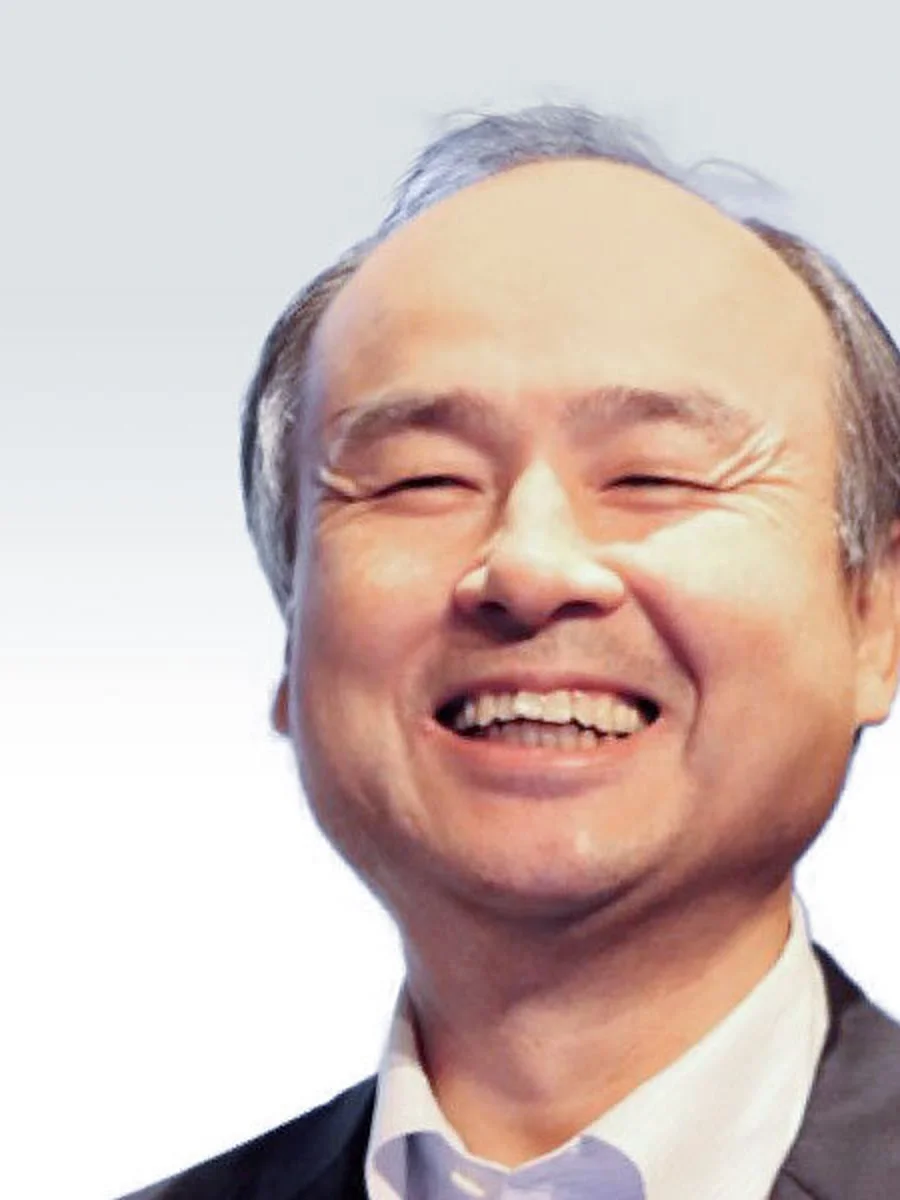
Masayoshi Son
Transformational platform investor whose Alibaba outlier, operating acquisitions, and Vision Fund scale demand vehicle- and denominator-aware analysis.
The outsider learns to manufacture access, 1957–1981
Masayoshi Son's official biography fixes the least controversial starting points: he was born on 11 August 1957 and founded Nihon SoftBank in September 1981. The investment-relevant story between those dates is much less settled. Son later described growing up in Japan with Korean ancestry, experiencing discrimination, and responding by working harder to prove his worth; TIME's 2026 profile reconstructs a Korean-Japanese childhood, the family's use of the Japanese surname Yasumoto, and a later return to the Son name. These are Son's testimony and reporter reconstruction, not a contemporaneous childhood record. They establish a self-narrative of outsider status and urgency, but they do not prove that identity caused later investment performance. [retrospective witness · moderate] SoftBank officer biography, Biography and Career Bloomberg transcript, paragraphs beginning “Did you suffer discrimination” and “I had to change” TIME, first biographical section
The cleanest formative mechanism is not poverty or destiny but deliberate access-seeking. Son recalled that at sixteen he repeatedly called Den Fujita, flew to Tokyo, and eventually obtained a short meeting with the McDonald's Japan founder. In Son's later account, Fujita told him to study the industries of the future and computers. No 1970s Fujita record survives in the frozen corpus, so the advice remains recollection. The observable behavior—pursuing a difficult meeting before possessing institutional status—is more defensible than the remembered dialogue. The plausible life-to-process link is: outsider without a network → manufacture access to an experienced operator → orient study toward a secular transition → later seek scarce founders and platform owners directly. That chain is a hypothesis, not an established cause of Yahoo or Alibaba. [researcher inference · moderate] Bloomberg Fujita excerpt, paragraphs from 00:00 through “That's the one you should focus”
The Berkeley period adds a second claimed mechanism: systematic idea generation. Son told David Rubenstein that he imposed a five-minute daily invention routine, developed an electronic dictionary, sold it to Sharp for $1.7 million, earned $3.2 million across two projects in eighteen months, and used the proceeds to begin SoftBank. TIME records a materially messier picture: sources disagree whether an arcade-machine business produced $1.5 million or $200,000; the profile challenges a simple bootstrap narrative with family-wealth details; and Berkeley professor Forrest Mozer told a later interviewer that he had been inadequately compensated on the Sharp project, while Son answered that the arrangement was only hourly pay and Mozer conceded there had been no formal agreement. The corpus cannot adjudicate the amounts or dispute. [retrospective witness · provisional] Bloomberg transcript, paragraphs beginning “But when you were there” through “So that is better” TIME, final biographical section, paragraphs beginning “Son is the consummate salesman” and “In California”
What can travel from Berkeley into an investment biography is narrower than the legend. A daily idea quota, an effort to pair a technical collaborator with a commercial counterparty, and the conversion of a prototype into starting capital are consistent with Son's later preference for technology transitions, alliances, and scale finance. They do not establish sole invention, fair contributor economics, exact proceeds, or a repeatable investment edge. The causal chain—structured experimentation → search for a commercial control point → partnership and financing → operating launch—is therefore supported as a recurring pattern, while the heroic-inventor version is not. [researcher inference · moderate] Bloomberg transcript, Berkeley and Sharp paragraphs TIME, Mozer and arcade-account paragraphs
TIME also places a hepatitis diagnosis and return to Japan in the early biography. Later accounts connect illness and mortality awareness to Son's speed and long-horizon institutional ambition, but no decision-time record proves the link. It is safer to say that urgency became part of Son's public self-conception, while later succession reversals show that awareness of mortality did not create a durable transfer mechanism. In 2017 he said he would choose a successor during his sixties and become a coach; in 2026 he extended his personal mission into his seventies. [researcher inference · moderate] TIME, early biographical section Bloomberg transcript, succession paragraphs 46th AGM presentation, pp. 6–8 and 62
The formative record therefore supports three traits with different confidence. Persistent access-seeking is visible in Son's Fujita account; deliberate experimentation is visible in his Berkeley account but has disputed economics; future-industry orientation is explicitly remembered and later repeated. None is sufficient on its own. The investable advantage, if one existed, required an institution capable of converting those traits into distribution, ownership, operating execution, and duration. [researcher inference · moderate] Bloomberg Fujita excerpt Bloomberg full interview, Berkeley paragraphs
Software and distribution before the investor myth, 1981–1994
SoftBank began as an operator. The corporate history describes the 1981 business as distribution of packaged personal-computer software and records publishing in 1982. These were not venture-fund positions: they were attempts to own information and commercial routes between producers and users. Software distribution supplied relationships and market visibility; publishing supplied audience and technical information. The operating lesson was that a company could gain leverage by controlling a channel even when it did not build every underlying product. [contemporaneous record · strong] SoftBank Group history, 1981–1982 SoftBank Group Report 2022, history, PDF p. 12
The causal inference from this era is distribution-first rather than invention-first: operate at a technology ecosystem's bottleneck → observe many suppliers and demand signals → use the resulting access to add adjacent channels and investments. That mechanism fits later moves into technology publishing, COMDEX, Ziff-Davis, portals, broadband, mobile networks, Arm IP, and AI infrastructure. It is strongest for the continuity of strategic form; it is not proof that the same economics or skill governed each transaction. [researcher inference · strong] SoftBank Group Report 2022, history, PDF p. 12 FY2000 report, corporate structure and divestitures, printed pp. 2–6 and 35–37
The ordinary and adverse evidence begins here too. Ziff-Davis and COMDEX gave SoftBank control of technology-media and event distribution, but leverage, the print transition, restructuring, divestitures, and impairments produced mixed accounting outcomes; the public record does not yield a complete acquisition-to-sale return. This matters because a biography built only from Yahoo and Alibaba would make distribution control appear automatically profitable. The earlier pattern was experimentation through corporate ownership, including assets later sold or impaired. [contemporaneous record · strong] FY2000 report, printed pp. 2–6 and 35–37
In 1994 SoftBank created a U.S. holding company for strategic investment in internet companies. That legal and geographic move converted an operating-company network into a capital-allocation platform. The plausible biography-to-process link is that Son's earlier distributor position created both deal access and a view of the next channel shift, while the U.S. vehicle made repeated minority investments possible. Yet the frozen record does not name the complete sourcing team, approval process, rejected opportunities, or early return denominator. [researcher inference · moderate] SoftBank Group Report 2022, history, PDF p. 12
Portals, Yahoo, Alibaba, and the dot-com fracture, 1995–2000
Yahoo was the first well-documented translation of channel logic into an internet security. In November 1995, SoftBank Holdings and Ziff-Davis together invested $2 million for about 5% of a portal reporting about 800,000 daily users; the announcement already contemplated Japan localization. By April 1996 Yahoo reported about 15 million daily users in more than ninety countries, and SoftBank disclosed $108.25 million of cumulative investment for 37.02% of expected post-offering shares, subject to dilution. A July 1998 private placement added $250 million under a contractual 35% adjusted ownership ceiling. The evidence describes staged capital after observable traffic growth, not one instantaneous act of intuition. [contemporaneous record · strong] 1995 announcement, purpose and investment 12 April 1996 announcement, traffic and stake Yahoo 1999 10-K, Note 7
Yahoo Japan made the pattern more distinctive. SoftBank and Yahoo combined brand and technology with local capital, distribution, management, and adaptation. The FY2015 selected scorecard later presented ¥7.7 billion of accumulated investment against ¥1,358.9 billion of estimated value and recovered amounts, 176x and a 78% IRR; because that table is outcome-selected and mixes market value with recovered value, it is not a cash-only lifetime return. The institutional capability was the cross-border reuse of a proven gateway, not Son operating the portal himself. [contemporaneous record · moderate] Yahoo 1999 10-K, Yahoo Japan and Notes 6–7 FY2015 report, selected scorecard, printed p. 26 / PDF p. 28
The life-to-belief-to-action chain is most defensible here: a remembered future-industry orientation met an operating history in distribution; SoftBank then identified an emerging attention gateway, used institutional access to take a meaningful stake, and localized it through a joint venture. The outcome came from Yahoo's founders and team, Yahoo Japan's local management and employees, public-market adoption, partners, and SoftBank capital. Son's contribution can be framed as sponsorship, strategic pattern recognition, and willingness to size; sole outcome attribution cannot. [researcher inference · strong] 1995 Yahoo announcement Yahoo 1999 10-K
By 1998–1999 Son's annual-report messages made the internet-centered thesis explicit. The corporate architecture expanded into a web of investments, operating companies, geographic vehicles, and joint ventures, and the FY2000 report counted more than 400 group and fund-investee companies. That count combined controlled and noncontrolled entities and says nothing about realized returns. Breadth increased access and optionality, but it also made attribution, leverage, governance, and denominator discipline harder. [investor-stated · strong] FY1998 report, Son message FY1999 report, Son message FY2000 report, printed pp. 4–5 / PDF pp. 37–38
Alibaba entered this expanding system in 2000 and ultimately became its dominant economic outcome. The 2014 prospectus says a group of investors led by SoftBank invested an aggregate $20 million in 2000; it does not allocate the entire amount to SoftBank. It records later ownership and governance developments, including the 2005 Yahoo transaction. Son and Jack Ma later described a rapid meeting in which Son chose Ma for conviction, purpose, charisma, and ability to attract followers despite little revenue and an inadequate plan. Those later accounts explain the claimed heuristic but are winner-selected recollections, not the original memo or term sheet. [contemporaneous record · strong] Alibaba 2014 prospectus, history and principal shareholders [retrospective witness · provisional] Tokyo Forum, 03:14–17:11
The Alibaba case is where Son's personal narrative is most tempting and most dangerous. The supported causal hypothesis is founder access plus tolerance for incomplete metrics at the start of a vast market transition. The unsupported leap is that intuition alone produced the result. Alibaba's founders, employees, customers, board, Yahoo, follow-on capital, Chinese market development, and two decades of duration were essential. SBG later reported ¥9.7 trillion of total return and a 57% IRR through 11 May 2023 on a defined, largely monetized, pre-tax perimeter net of monetization costs and excluding the then-unmonetized stake. That is a company-reported SBG result, not Son's personal cash return. [researcher inference · strong] Alibaba prospectus, company and shareholder history SoftBank Group Report 2023, CFO message
The dot-com collapse separated thesis durability from portfolio quality. Son later recalled a roughly 99% SoftBank share-price fall and near-bankruptcy. Yahoo! BB and Alibaba endured, but other holdings did not: the FY2015 selected table includes CNET at 0.1x and Asia Global Crossing at zero, while Ziff-Davis/COMDEX had mixed divestitures and impairments. Surviving the crash supports psychological tolerance and continued operating action; it does not prove valuation was irrelevant or that every internet investment was sound. [investor-stated · moderate] Bloomberg transcript, paragraphs beginning “Now let's talk about one big mistake” [contemporaneous record · strong] FY2015 report, complete selected table, printed p. 26 / PDF p. 28
The process change after the fracture was behavioral rather than a disclosed investment policy: SoftBank built Yahoo! BB in 2001 instead of abandoning the internet thesis. The company accepted years of operating losses to control the broadband access layer. This looks like conviction converted from a broad securities portfolio into a focused operating build, but the corpus does not show a formal postmortem, kill criteria, or base-rate comparison. [documented behavior · strong] FY2003 report, broadband sections
Broadband, fixed line, and mobile control, 2001–2011
Yahoo! BB reframed SoftBank from an internet investor into an access-layer operator. The thesis was that lower-priced broadband would expand usage and create a platform for services; the mechanism required network build, customer acquisition, equipment, service operations, and sustained financing. Son later used the four loss-making years as proof that adversity can be an attractive time to advance. That retrospective lesson is real as a statement of conviction, but only the dated operating records can establish what capital was consumed and which teams produced the turnaround. [investor-stated · strong] FY2016 report, printed p. 9 / PDF p. 11 [contemporaneous record · strong] FY2003 report, broadband operations
Japan Telecom in 2004 supplied fixed-line infrastructure and enterprise customers. The board-approved transaction contemplated approximately ¥340 billion across ¥143.3 billion of common stock, estimated ¥164.0 billion of net debt, and ¥32.5 billion of preferred stock. The target's FY2004 sales were ¥347.2 billion but it recorded a ¥50.6 billion net loss. SoftBank initially emphasized the consumer Otoku Line service, later shifted back toward corporate customers, and recognized an ¥18.0 billion fixed-line impairment within a wider ¥36.4 billion consolidated impairment. This is an ordinary control acquisition with an operating pivot and accounting loss, not a hidden clean winner or a complete acquisition return. [contemporaneous record · strong] May 2004 transaction outline July 2004 completion release May 2006 impairment release, sections 1–2
Vodafone K.K. in 2006 was the much larger expression of the same access thesis. Son later recalled first seeking spectrum, then challenging the government's refusal, and finally buying Vodafone Japan for about $20 billion with roughly $2 billion of equity and $18 billion of debt. The recollection connects mobile-internet belief to a concentrated control action, but the transaction documents—not memory—govern price, financing, entity, and rights. Lenders, Vodafone instruments, Yahoo Japan, SoftBank Mobile management, network teams, product teams, and distribution all contributed. [retrospective witness · provisional] Bloomberg transcript, Vodafone paragraphs [contemporaneous record · strong] 2006 acquisition release, transaction and financing
The operator years refined a distinctive rule: when the strategic bottleneck is licensed infrastructure or national distribution, minority exposure may be inadequate; buy control, accept leverage, and use the operating system to change the asset. The benefit was the ability to coordinate network, devices, content, pricing, and customers. The cost was balance-sheet concentration and dependence on execution. Yahoo! BB and Vodafone support the rule; Japan Telecom's impairment shows that control does not guarantee value creation. [researcher inference · strong] FY2006 report, mobile-entry discussion, printed pp. 6–10 Japan Telecom impairment release
The 2008–2011 record is more ordinary than the later mythology. AGM documents show mobile and internet operating-income improvement alongside lower sales, sharply lower net income, investment-fund losses, and the nonrecurrence of an Alibaba.com listing gain. They also show debt reduction and cash-generation targets. Son remained the formal leader, but boards included Ken Miyauchi, Ronald Fisher, Jack Ma, Tadashi Yanai, Jun Murai, and others; carrier executives and employees did the operating work. Consolidated profit, investment marks, and Son's personal return were already different measures. [contemporaneous record · strong] 29th AGM business report, PDF pp. 2–3 29th AGM resolutions, PDF p. 1
In 2010 Son formalized a Next 30-Year Vision under a 300-year organizational aspiration. The durable biographical move was to convert personal forecast-making into an institutional narrative: begin with a far future, backcast the platform transition, and design a company meant to outlive the current product. Yet the vision was a strategic commitment, not a forecast scorecard, and the dependence on Son as narrator remained unresolved. [investor-stated · strong] 2010 vision announcement full presentation page
Sprint and Arm: cross-border control at a different scale, 2012–2016
The Sprint proposal is the best ex-ante record of Son's control-acquisition logic. In the SEC-filed 15 October 2012 remarks, he argued that the United States was a large but structurally concentrated mobile market, that the shift from voice to mobile internet created an opening, and that Sprint needed both capital and network/procurement strategy. He acknowledged transaction risk but framed strategic inaction as the greater danger. The initial proposal contemplated approximately 70% fully diluted ownership; after a competing bid and amended terms, the July 2013 closing gave the SoftBank vehicle approximately 78% on the stated fully diluted basis. The final state, not the announcement percentage, controls the chronology. [investor-stated · strong] SEC-filed transcript, lines 701–787 and 1,065–1,264 [contemporaneous record · strong] completion release, ownership paragraph
Sprint also made Son's operating involvement observable. The 2013 strategy deck forecast annual operating-expense synergies above $2 billion during FY2014–FY2017, above $3 billion in FY2017, and 32%–36% capital-expenditure reductions. In 2016 Son admitted the rebuild had been harder than expected and described work with Sprint's engineering team, while also crediting CEO Marcelo Claure as the person driving the turnaround. Alok Sama later recalled Son identifying a Houston network blind spot. These records support direct intervention and shared execution, not lone-operator authorship. [contemporaneous record · strong] 2013 strategy deck, PDF pp. 57–86 FY2016 report, printed pp. 9–11 / PDF pp. 11–13 [retrospective witness · strong] TIME, paragraph beginning “I vividly recall”
The later outcome was mixed rather than a clean vindication. Sprint remained a repeated drag, the strategic exit required a merger with T-Mobile and regulatory remedies, and SBG received shares, contingent consideration, options, and later sale proceeds. The 2020 presentation's company-calculated 25% equity IRR includes marked and contingent components and excludes a potential indemnity; it is not an independently reconstructed cash IRR. The biography-level lesson is that Son could transfer some operating practices and persist through adversity, but cross-border control exposed SBG to competition, leverage, network execution, and regulation beyond the Yahoo! BB analogy. [researcher inference · strong] Annual Report 2020, printed p. 4 / PDF p. 8 2020 AGM presentation, pp. 34–35 Annual Report 2021, MD&A, PDF pp. 84–85
Nikesh Arora's rise and departure exposed succession risk during the same period. In 2015 SoftBank named him Representative Director, President and COO and presented him as Son's global-strategy partner; in 2016 the transition reversed, Arora left the board, and Son retained leadership while Ken Miyauchi became Representative Director. This is evidence of an attempted institutional handoff that did not hold. The public record does not establish the interior reasons, deal-level attribution, or an enduring post-Son allocator process. [contemporaneous record · strong] 2015 personnel release FY2016 report, succession reversal, printed pp. 10–11 / PDF pp. 12–13 2016 AGM resolutions, PDF p. 1
Arm was a different kind of control bet. In 2016 SoftBank agreed to acquire the chip-design and licensing company for £24 billion, and Son framed it as a platform he had followed for a decade and as a foundational layer for the Internet of Things. Unlike Sprint, Arm did not depend on turning around a weak consumer carrier; its attraction was the reach of an architecture and licensing ecosystem across devices and industries. The move shifted Son's control-point search from customer distribution to compute IP. [investor-stated · strong] 2016 acquisition announcement, sections 2–7 and 11 SoftBank World 2016 official video, 02:03–05:38
The Arm path prevents retrospective inevitability. SBG transferred 24.99% to SVF1 through an in-kind contribution; the proposed NVIDIA sale later failed under regulatory pressure; a $1.25 billion non-refundable deposit became termination consideration for an SBG subsidiary; SBG then returned Arm to public markets while retaining control. The 2024 CEO message's company-reported ¥24.6 trillion result and 10x multiple were pre-tax and substantially dependent on retained, marked equity, as well as in-kind and deposit treatment; they were not fully realized cash or Son's personal return. Arm management, engineers, regulators, public investors, SBG, SBGC, and SVF1 all occupy distinct causal and economic roles. [contemporaneous record · strong] SVF1 first-close release 2022 termination notice Arm prospectus, offering and controlled-company disclosure 2024 CEO message, Arm return discussion
The 2012–2016 evolution was therefore from operating control of customer access toward ownership of a foundational technical standard. The repeated process was forecast the next platform, acquire a bottleneck, supply capital, and seek board-level influence. The counterevidence was equally consistent: public price hurdles were thin, control created large financing and regulatory exposures, and succession remained Son-centered. [researcher inference · strong] Sprint SEC transcript Arm acquisition announcement, sections 2–7 and 11
The Vision Fund scales access—and scales the error surface, 2017–2019
SVF1 changed both Son's opportunity set and the meaning of his record. At FY2022 the fund was reported with $98.6 billion of commitments: $33.1 billion from SBG and $65.5 billion from third parties; the SBG component included about $8.2 billion of Arm shares contributed in kind and a $2.5 billion incentive scheme. PIF, Mubadala, Apple, Foxconn, Qualcomm, Sharp, and others supplied capital or partnership capacity. SBIA, led at the relevant dates by Rajeev Misra, was the manager. These were commitments and structured interests, not one $100 billion Son-personal check or a common cash pool. [contemporaneous record · strong] SVF1 first close, investors and commitments FY2022 report, fund terms, printed pp. 91–93
Son's stated rationale was to remove capital scarcity while covering the late-stage AI category-leader set. The 2018 “Cluster of No.1” design favored typically 20%–30% stakes, often as leading shareholder, while avoiding unnecessary majority control and common branding so founders could retain autonomy. The 2019 “conductor” metaphor cast SBG and the fund as coordinating an orchestra of portfolio companies. The change from Sprint/Arm was structural: one control asset became many minority positions; operating authority shifted toward founders and boards; external LP and manager economics entered; private marks and follow-on reserves became central. [investor-stated · strong] 2018 CEO message, “Creating a unique synergy group structure” and “Driving the evolution” 2019 AGM presentation, pp. 27–50
The life-to-process link was access at institutional scale. Son's teenage and early-business stories emphasize reaching scarce people; the Vision Fund manufactured such access with capital size, speed, and a founder network. The potential mechanism was genuine: large checks could make SBG relevant to category leaders, reserve capital could support growth, and cross-company relationships could create information and commercial option value. The failure mode was also built in: speed and founder affinity could weaken price, governance, security, country, and follow-on discipline; portfolio breadth could mask shared exposure to cheap capital, private marks, regulatory windows, and founder control. [researcher inference · strong] Milken Japan, 24:42–29:27 FY2019 report, portfolio map, printed pp. 87–89
Some outcomes support the category-leader thesis without proving it generally. At 31 March 2026 SVF1 reported Coupang at $2.729 billion cost and $11.821 billion gross return, 4.3x, and DoorDash at $680 million cost and $7.944 billion gross return, 11.7x. Company founders, employees, boards, and markets created the operating outcomes; SVF1/SBIA supplied and managed the securities. The figures include retained market value and are gross company rows, not fully realized LP-net or Son-personal returns. [contemporaneous record · strong] FY2025 results presentation, SVF1 public table, p. 78 Coupang prospectus, principal shareholders, pp. 178–179
The ordinary distribution is indispensable. The same 2026 table reported Uber at 1.2x, Grab at 0.8x, DiDi at 0.3x, and Paytm at 0.7x; it also showed Getaround and View at zero, Ginkgo near zero, and other large impairments. SVF2's public-company table was 0.9x on its stated cross-section. A category leader can therefore be an ordinary or losing security when entry price, votes, regulation, incentives, or duration differ. The biography-level correction is that bold founder selection and capital scale may create access, but security underwriting determines who receives the economics. [researcher inference · strong] FY2025 results presentation, public-company tables, pp. 78–79
NVIDIA supplies the exit counterexample. SBG acquired the position and transferred it to SVF1; the fund used derivatives and exited in January 2019. The 2019 report recorded a $2.834 billion acquisition cost and about $2.915 billion of total gain across shares and the derivative, while the later standardized table reported 2.0x. Son's 2026 explanation that COVID-era financial pressure forced the sale conflicts with the contemporaneous January 2019 date, roughly a year before the pandemic. The record supports a profitable early exit and immense hindsight opportunity cost, not an actual loss, a feasible privatization counterfactual, or proof that Son controlled the exit alone. [contemporaneous record · strong] FY2019 report, NVIDIA note, printed p. 66 / PDF p. 68 TIME, paragraph beginning “When it comes to selling”
WeWork was the decisive failure of the scaled founder heuristic. Its S-1 already exposed long lease obligations, capital dependence, related-party transactions, founder control, and weak governance. By September 2019 SBG subsidiaries and SVF1 had $7.8 billion of equity exposure on the company's stated accounting perimeter. A proposed transaction could take combined economic ownership to approximately 80% without majority voting or board control. Son later admitted paying too much and believing too much in the entrepreneur. The eventual FY2025 table reclassified $6.71 billion of prior losses as realized across SVF1 and SVF2, but that accounting scope is not all support cash or final recovery. [contemporaneous record · strong] WeWork S-1, risks, pp. 49–51 FY2019 Q2 deck, accounting slides 4–5 Forbes interview, node 10 FY2025 report, WeWork note, printed p. 91 / PDF p. 93
The causal sequence is unusually clear and falsifies the idea that visionary-founder recognition is self-correcting: affinity and category narrative → large and repeated capital → economics without commensurate governance → failed IPO and rescue/intervention → accounting losses and public remorse. The record does not disclose every IC vote or warning, so it cannot assign the whole sequence to Son alone. It does show that his publicly acknowledged errors were valuation and founder belief, the two variables that the celebrated Alibaba story tended to waive. [researcher inference · strong] WeWork S-1 Forbes interview, node 10
Failure, defense, and incomplete institutional correction, 2019–2023
WeWork was not an isolated adverse mark. OneWeb accumulated $2.023 billion across equity, loans, warrants, and shareholder loans before SBG recorded a $1.593 billion FY2019 loss and zero carrying value; DiDi later sat at 0.3x amid PRC data and listing intervention; Greensill joined portfolio-company finance with concentration and insurance risk before administration; Katerra failed amid a disputed receivable restructuring; Wag was reportedly sold back with a board-seat relinquishment; Zume shut down. For several cases, complete security-level losses, named decision owners, and Son-authored lessons remain unavailable. [contemporaneous record · strong] OneWeb instruments and loss, printed p. 14 / PDF p. 18 DiDi 20-F, principal shareholders [retrospective witness · moderate] UK Treasury Greensill evidence, Q189–Q199 and Q293 Axios Wag Axios Zume
COVID and the market cycle turned the biography from offense to liquidity. SBG announced asset monetization, used Alibaba-linked forwards, floors, and collars, and emphasized parent loan-to-value and cash. SB Northstar then created a distinct listed-stock and derivatives risk: SBG indirectly held 67% and Son 33%, with Son responsible for his pro-rata share of certain unfunded repayment obligations. This was not SVF venture performance or an ordinary personal brokerage account. [contemporaneous record · strong] FY2021 report, SB Northstar, PDF p. 86 / printed p. 82
The documented process response unfolded in layers. In November 2019 SoftBank installed new WeWork management, halted expansion, cut costs, emphasized monitoring and governance, and stated a self-financing/no-rescue rule, though continuing support complicated the rhetoric. FY2020 formalized an SBIA Valuation and Financial Risk Committee. FY2021–FY2022 materials described SVF2 moving earlier with typical $100–200 million checks and 10%–15% ownership, plus an Operating Group of more than thirty people. These are actual institutional changes; public evidence does not show their case-specific causation, enforcement rate, or performance effect. [documented behavior · strong] FY2019 Q2 deck, slides 20–29 FY2020 report, valuation process, p. 25 FY2022 report, portfolio model, printed pp. 22–25
By August 2022 Son explicitly added price to the leader thesis. He said SoftBank had invested in leaders but had sometimes overpaid, moved to slower deployment, cost cuts, cash accumulation, and value caution, and distinguished his deeper responsibility for SVF2 from Rajeev Misra's continuing responsibility for SVF1. FY2023 then consolidated overseas investing under SBIA/SBGA and emphasized portfolio runway and monetization. These statements are evidence of regret and organizational adaptation, not proof that an independent price discipline or deal-level kill system became binding. [investor-stated · strong] FY2022 Q1 transcript, A1, A4–A5 and A9 [documented behavior · strong] FY2023 CFO message
The vehicle architecture also weakened any lone-genius reading. SVF2 used SBG preferred equity with an 8% fixed distribution and priority, while MASA USA/MgmtCo held a restricted 17.25% equity interest in the scoped co-investment program. Son's disclosed related-party economics therefore differed from SBG's and outside capital's economics. External LPs, SBIA/SBGA investment teams, legal and risk functions, boards, and operating founders held different rights and incentives. [contemporaneous record · strong] FY2022 report, co-investment program, printed pp. 92–93
The most honest assessment of the defense period is partial correction. SoftBank made liquidity, LTV, runway, valuation review, smaller-check, and organization changes visible. It did not publish the original deal memos, veto logs, reserve policies, follow-on exception rules, or pre/post cohort results needed to prove learning. Son's later renewed concentration must therefore be treated as a live test of whether defense became process or remained a market-regime response. [researcher inference · strong] FY2022 Q1 transcript FY2026 report, Investment Committee and financial policy, printed pp. 54 and 101–102
Arm, OpenAI, and the concentrated AI stack, 2023–2026
Arm's September 2023 IPO restored an offensive narrative. The final prospectus expected SBG to retain approximately 90.6% after the offering, or approximately 89.9% if the underwriters fully exercised the option. By the 2024 AGM, Arm represented 55% of company-reported holding equity value, making the asset both strategic platform and concentrated NAV exposure. Marked appreciation expanded financing capacity; it did not become cash merely because the market price rose. [contemporaneous record · strong] Arm 424B4, cover and controlled-company disclosure 2024 AGM presentation, pp. 5–15
Son's current thesis is vertically coordinated rather than merely diversified. Arm and other chip assets supply compute architecture; OpenAI supplies frontier models; Stargate proposes data-center capacity; SoftBank Corp. offers Japanese network and distribution; agents, robotics, and portfolio companies supply applications and physical deployment. The mechanism is to own or coordinate scarce layers of the AI stack so that demand at one layer reinforces another. The same architecture raises common-factor risk: model progress, power, construction, financing, regulation, chip supply, utilization, and public-market confidence can fail together. [researcher inference · strong] 2025 AGM presentation, pp. 15–28 2026 AGM presentation, pp. 27–38 and 66
OpenAI is the largest current capital-allocation test, but it has no realized investment outcome as of 22 August 2026. The frozen record distinguishes funded preferred-equity tranches, decided follow-on commitments, expected ownership, bridge funding, and syndication; these cannot be collapsed into one check. SBG and SVF2 provide capital, Son sponsors the thesis, Yoshimitsu Goto has delegated financing authority at stated dates, and OpenAI's board, Sam Altman, employees, co-investors, lenders, Oracle, MGX, and site counterparties retain separate roles. Stargate's announced capacity is not funded equity, completed construction, utilization, or return. [contemporaneous record · strong] FY2026 report, OpenAI, printed pp. 23–25 2026 OpenAI follow-on release, sections 1–5 White House Stargate remarks, 01:00–01:46
Forecast compression increases the burden of proof. Son's 2017–2019 singularity framing was measured over decades; in 2023 he described 10,000-times superintelligence as a few decades away; in 2024 he moved that capability to about ten years while forecasting AGI within two or three. This may reflect rapid model progress, but the public appearances do not define the benchmark, confidence interval, or dated failure criterion. Capital commitments are therefore observable tests of belief intensity, not validation of the forecast. [researcher inference · strong] Bloomberg transcript, singularity paragraphs 2023 AGM presentation, pp. 3–32 SoftBank World 2024, 00:00:56–00:03:22
The NVIDIA recollection correction is especially important in this era. In 2024 Jensen Huang and Son recalled discussions about privatizing NVIDIA and combining it with Arm; in 2026 Son described the earlier sale as forced by COVID-era financial pressure. The dated FY2019 record fixes the exit in January 2019, so the COVID explanation is chronologically false. Regret may still explain today's preference for concentrated duration, but it cannot retroactively prove that privatization was financeable or that holding the liquid stake through later volatility was institutionally possible. [researcher inference · strong] NVIDIA AI Summit Japan, 01:19:13–01:21:38 FY2019 report, NVIDIA note, printed p. 66 / PDF p. 68 TIME, NVIDIA-sale correction
The present biography ends with a tension, not a resolution. Son has moved from defense back to offense, from many minority category leaders toward a coordinated and capital-intensive AI stack, and from a planned succession in his sixties to continued personal leadership. Current policy discloses an independent investment-risk review, a five-member SBG Investment Committee with majority approval and dissent escalation, parent LTV limits, and a two-year liquidity floor. The record does not disclose actual veto use, a post-Son plan, stack-level concentration limits, project kill criteria, or realized OpenAI/Stargate returns. [researcher inference · strong] FY2026 report, Investment Committee, printed p. 54 FY2026 report, independent investment-risk-team review, printed p. 103 / PDF p. 105 FY2026 CFO message
People, capital, and influence map
The map below separates influence from authority, capital, operating work, and economic ownership. A named role establishes what that person or institution did at a date; it does not allocate every deal or outcome. [researcher inference · strong] investments people map FY2022 report, vehicle and team boundaries, printed pp. 68–69 and 91–103
| Person or institution | Dated influence on Son or the system | Supported decision / execution role | Attribution boundary |
|---|---|---|---|
| Den Fujita | Son remembers Fujita directing his attention toward future industries and computers when he was sixteen. [retrospective witness · provisional] Bloomberg Fujita excerpt | Formative adviser in Son's account; no surviving formal SoftBank role. [researcher inference · provisional] | Do not treat remembered advice as a contemporaneous investment doctrine or assign later results to Fujita. [researcher inference · moderate] |
| Family and Korean-Japanese experience | Son says ancestry-based discrimination made him work harder; TIME complicates the later bootstrap narrative with family-wealth evidence. [retrospective witness · moderate] Bloomberg discrimination paragraphs TIME, biographical and final sections | Context for Son's stated outsider identity and urgency, not an institutional investment role. [researcher inference · moderate] | No public evidence converts family history into causal alpha; family capital and claimed project proceeds remain incompletely reconciled. [researcher inference · moderate] |
| Forrest Mozer, Sharp, and early collaborators | Mozer contributed technical work to the translator project; Sharp was the commercial counterparty in later accounts. [retrospective witness · moderate] TIME, paragraph beginning “In California” | Early technical collaboration and commercialization. [researcher inference · moderate] | Compensation is disputed; do not call Son sole inventor or accept remembered proceeds as audited. [researcher inference · moderate] |
| Masayoshi Son | Founder; current Representative Director, Corporate Officer, Chairman & CEO; public sponsor of major theses; FY2026 SBG IC member. [contemporaneous record · strong] official biography FY2026 report, printed p. 54 | His public theses, formal roles, disclosed approvals, admissions, and separately evidenced personal economics. [researcher inference · strong] | SBG, fund, opco, partner, lender, LP, board, founder, and employee actions are not automatically his actions or returns. [researcher inference · strong] |
| Jerry Yang, Yahoo, and Yahoo Japan leadership | Yahoo supplied the gateway brand and technology; the JV localized the model. [contemporaneous record · strong] Yahoo 1999 10-K | Founders, managers, employees, and partner governance created product and operating value. [researcher inference · strong] | SoftBank's capital/access contribution does not make Yahoo/Yahoo Japan execution Son's personal output. [researcher inference · strong] |
| Jack Ma, Alibaba team, Yahoo, and Alibaba board | Ma and team built Alibaba; SoftBank sponsored early investment and held governance roles; Yahoo entered the 2005 structure. [contemporaneous record · strong] Alibaba prospectus, history and shareholders | Founder execution, staff recruiting, market development, board governance, financing, and later SBG monetization are distinct functions. [researcher inference · strong] | The prospectus says a group led by SoftBank invested $20M; it does not assign the full amount to SoftBank. Later Son–Ma stories do not replace transaction records. [researcher inference · strong] |
| Ken Miyauchi and domestic telecom teams | Miyauchi was a long-running domestic operating leader and Representative Director at relevant dates. [contemporaneous record · strong] FY2015 report, printed pp. 6–7 / PDF pp. 8–9 | Broadband/mobile network, customer, cost, and service execution. [researcher inference · strong] | Operating improvements are shared company outcomes, not evidence that Son personally executed the carrier turnaround. [researcher inference · strong] |
| Dan Hesse, Marcelo Claure, Sprint/T-Mobile teams, and regulators | Hesse led Sprint at announcement; Claure led the later turnaround; DOJ/FCC and T-Mobile shaped the exit. [contemporaneous record · strong] Sprint SEC filing FY2015 report, printed pp. 22–23 | Carrier operations, network improvement, negotiation, approval, and merger execution. [researcher inference · strong] | Son sponsored and intervened, but did not singly produce the operating or regulatory outcome. [researcher inference · strong] |
| Arm management, Simon Segars, engineers, boards, and regulators | Arm's people maintained the architecture/licensing platform; SBG/SBGC/SVF1 held different interests; regulators stopped the NVIDIA sale. [contemporaneous record · strong] Arm 424B4 termination release | Technology, customer ecosystem, governance, sale negotiations, and IPO execution. [researcher inference · strong] | Market capitalization and retained marks are not Son cash; SBG and SVF1 economics must remain separate. [researcher inference · strong] |
| Nikesh Arora | President/COO and planned global-strategy successor in 2015; left in 2016. [contemporaneous record · strong] 2015 personnel release FY2016 report, printed pp. 10–11 | Dated management and transition role. [researcher inference · strong] | No complete public deal-attribution ledger; a failed succession attempt is not evidence of his later authority. [researcher inference · strong] |
| Rajeev Misra, SBIA/SBGA, and fund teams | Misra led the fund at stated dates; investment, legal, finance, risk, valuation, and operating teams supported the portfolios. [contemporaneous record · strong] FY2017 report, printed pp. 14–15 / PDF pp. 16–17 FY2022 report, printed pp. 68–69 and 91–93 | Fund management and committee authority where dated. [researcher inference · strong] | Son's public sponsorship does not establish that he sourced, diligenced, approved, monitored, or exited every security. [researcher inference · strong] |
| PIF, Mubadala, and other LPs | Supplied most SVF1 third-party commitments and held contractual/advisory interests. [contemporaneous record · strong] SVF1 first close | Capital, governance, preferred distributions, and fund economics. [researcher inference · strong] | Their commitments and returns are not SBG's or Son's; committed capital is not deployment. [researcher inference · strong] |
| Yoshimitsu Goto and current SBG IC | Goto leads finance and had delegated OpenAI execution authority; the FY2026 five-member committee also includes Son, Kazuko Kimiwada, Seiichi Morooka, and Yoshimasa Magata. [contemporaneous record · strong] OpenAI follow-on release FY2026 report, printed p. 54 | Majority approval, dissent escalation, board reporting, financing, and liquidity management within disclosed scope. [researcher inference · strong] | Proposal-level votes, dissent, and a tested post-Son allocation system remain undisclosed. [researcher inference · strong] |
| Portfolio-company founders, boards, employees, lenders, and regulators | Built products and businesses, supplied debt, governed companies, and constrained transactions. [researcher inference · strong] major-case evidence boundary FY2026 report, risk and governance | Operating results and institutional checks belong to the relevant actors. [researcher inference · strong] | Ownership does not transfer all causal credit to Son; economic exposure does not equal voting or accounting control. [researcher inference · strong] |
The biography is thus not a lone-genius story. Son repeatedly supplied mission, access, sponsorship, concentrated conviction, public persuasion, and sometimes operating intervention. The institution supplied listed-company capital, leverage, managers, investment committees, risk and finance teams, operating companies, and outside LP money. Founders and employees created most company value; regulators and capital markets shaped exits; luck and era determined how long cheap capital and favorable marks were available. [researcher inference · strong] FY2022 report, vehicles and teams, printed pp. 68–69 and 91–93 FY2026 report, IC and capital policy, printed pp. 54 and 101–102
A precise, falsifiable thesis of Son's edge
Thesis. Between roughly 1995 and 2016, Son's most defensible edge was not general venture selection. It was the combination of (1) self-created access to scarce founders and strategic counterparties, (2) early recognition that a technology transition would rearrange a distribution or infrastructure control point, and (3) an unusual ability to match institutional capital, ownership, partnership, or operating control to that bottleneck and then preserve duration. The domain was platform transitions in which capital and distribution could materially accelerate adoption: internet attention, localized portals, broadband, mobile access, and compute IP. The edge should weaken when entry valuation dominates the company outcome, minority governance cannot control founder or regulatory risk, capital must be repeatedly escalated, or a fund-scale portfolio shares one financing/liquidity factor. [researcher inference · strong] Yahoo 1995 announcement Sprint SEC transcript Arm acquisition announcement, sections 2–7 and 11 FY2022 Q1 price admission
Mechanism and domain
The mechanism has five observable steps: forecast a secular transition; identify the scarce gateway, network, standard, or founder capable of capturing it; use access and capital to obtain meaningful economics or control; add localization, financing, operating assets, or partners; and hold long enough for adoption to compound. Yahoo U.S. and Yahoo Japan show staged validation plus localization; Yahoo! BB and Vodafone show access-layer control; Alibaba shows founder access plus duration; Arm shows foundational-IP control plus retained exposure. These cases differ enough that the thesis is about a common bottleneck process, not one security type. [researcher inference · strong] Yahoo 1999 10-K FY2003 broadband record Alibaba prospectus Arm 424B4
The edge is partly personal and partly institutional. Son's access-seeking, willingness to make a nonconsensus platform forecast, and sponsorship are personal inputs. SoftBank's distribution relationships, permanent listed-company balance sheet, lenders, brands, operating teams, board authority, geographic vehicles, and later fund/LP capital are institutional inputs. Favorable platform timing, public-market liquidity, regulatory permissions, and Alibaba's exceptional execution are era and luck. The outcome cannot be called Son's skill unless the personal component predicts results after those other inputs are controlled. [researcher inference · strong] FY2022 vehicle definitions Alibaba prospectus, company and shareholder history
Evidence from wins, ordinary outcomes, and failures
The strongest positive evidence is Yahoo/Yahoo Japan, the operating access builds, Alibaba, and Arm. Alibaba is also a dominant-outlier problem: SBG's FY2015 selected 23-position scorecard attributed about 75% of its reported value/return to Alibaba. Removing it mechanically leaves about 7.1x before timing; removing Yahoo Japan too leaves about 3.5x. Those residuals remain outcome/size-selected and cannot become full-history returns. The supported conclusion is that a smaller group of platform/control successes survives exclusion, but the extraordinary record is not independent of Alibaba. [researcher inference · strong] FY2015 report, full selected table and notes, printed p. 26 / PDF p. 28
Ordinary outcomes narrow the claim. Sprint required a merger exit and has only a company-calculated mixed-perimeter result; Japan Telecom produced an impairment without a complete return; Uber's disclosed gross result was 1.2x; Grab 0.8x; Paytm 0.7x; NVIDIA produced a profitable 2.0x exit while surrendering later duration. These cases imply that recognizing a large or leading platform is more repeatable than buying it at the right price, structuring governance, or choosing the right exit. [researcher inference · strong] 2020 AGM presentation, Sprint, pp. 34–35 Japan Telecom impairment release FY2025 results, SVF1 public table, p. 78
Failures identify the edge's boundary. WeWork shows founder recognition without price or governance discipline; DiDi shows category leadership without sufficient country/regulatory protection; OneWeb shows ecosystem fit without diversified financing; Greensill/Katerra show correlated portfolio/counterparty risk; the broad public tables show a long tail of impairments. The mechanism fails when narrative and access produce escalating capital but no security-level right to stop, govern, or survive. [researcher inference · strong] WeWork S-1 DiDi 20-F OneWeb loss table FY2025 public-company tables, pp. 78–79
Denominator limit
The frozen deals corpus contains 830 source observations deduplicated to 534 canonical company-family keys under stated rules. Only 11 are sufficiently reconstructed for strict decision-level evaluation; 523 remain unresolved, and 11 additional contexts are excluded from that canonical union. The 2.1% figure is only the ratio of sufficiently reconstructed cases to the scoped union, not population coverage, because there is no complete all-history investment universe. Eight anonymous historical positions are all SVF2; 39 keys are historical-only; 35 successor mappings and 28 net additions materially affect the reconciliation. Any claim of a general hit rate, base-rate-adjusted alpha, or literal 80/20 distribution would therefore be false precision. [researcher inference · strong] denominator reconciliation FY2022 position disclosures, printed pp. 98, 101–103 and 109–110
Predictions
If the thesis is true, newly recovered pre-decision records from the 1995–2016 domain should show Son or SoftBank identifying a specific distribution or infrastructure bottleneck before outcome, gaining differentiated counterparty access, choosing ownership/control to match that bottleneck, adding a credible operating or localization path, and underwriting duration. Matched cases with those features should outperform contemporaneous technology investments after price, leverage, stage, geography, team, and market regime are controlled. Cases based only on “No. 1 company” status, without a bottleneck right or entry-price discipline, should not show the same advantage. [researcher inference · moderate] Yahoo 1995 announcement Sprint SEC transcript
For the 2023–2026 AI stack, the thesis predicts more than rising marks. SBG should disclose or eventually demonstrate durable model access, financed compute and power, high utilization, differentiated distribution, operating synergies that survive transfer-pricing scrutiny, and returns above the cost of capital after leverage and dilution. A stack that merely correlates several expensive assets to the same AI enthusiasm would not confirm the earlier edge. [researcher inference · moderate] FY2026 report, OpenAI and capital policy, printed pp. 23–25 and 101–102
Falsifiers and strongest alternative
The thesis would be falsified if original records show that the celebrated decisions lacked pre-outcome bottleneck reasoning; if matched-cohort results disappear after controlling for access, team, vehicle, and era; if the residual record without Alibaba and Yahoo Japan is not economically attractive on complete cash flows; if price and governance errors recur despite stated reforms; or if current AI returns are explained by Arm marks and generalized multiple expansion rather than operating or contractual advantage. It would also be weakened if deal teams, partners, or founders—not Son—prove to have supplied most sourcing and analysis. [researcher inference · strong] FY2015 scorecard FY2026 report, IC
The strongest alternative explanation is that Son is an exceptional promoter and capital mobilizer with privileged institutional access whose reputation rests on one enormous Alibaba outlier, a favorable internet/mobile era, teams and founders who created the operating value, and mark-sensitive financing—not on a generalizable security-selection process. Yahoo Japan, Vodafone, and Arm make a pure-luck explanation too weak, because they show repeated strategic action across different control points. WeWork, DiDi, OneWeb, the ordinary public rows, the NVIDIA duration error, and the incomplete denominator make a broad investing-genius explanation too strong. The narrower access-plus-control-point thesis is the version that survives both sides. [researcher inference · strong] FY2015 selected scorecard FY2025 SVF1 public distribution, p. 78
What changed, what persisted, and what remains unlearned
| Dimension | Early/operating form | Fund-era form | Current AI form | Assessment |
|---|---|---|---|---|
| Horizon | PC software, internet, broadband, mobile; later 30-year/300-year vision. SoftBank history 2010 Vision, PDF pp. 30–32 and 105–123 | Singularity thesis and late-stage AI leaders. FY2017 report, printed pp. 14–15 / PDF pp. 16–17 2018 CEO message | AGI within two or three years, ASI around a decade, vertically coordinated stack. SoftBank World 2024, 00:00:56–00:03:22 2026 AGM, pp. 27–38 | Forecast-led action persists; forecast horizon compressed without a public calibration scorecard. [researcher inference · strong] 2010 announcement SoftBank World 2024, 00:00:56–00:03:22 |
| Instrument | Operating company, JV, minority stake, leveraged control. Yahoo 1999 10-K, Notes 6–7 Vodafone acquisition, sections 1–5 | LP-backed funds, minority stakes, preferreds, marks, follow-ons. FY2022 report, fund terms and position tables, printed pp. 91–103 | SBG/SVF2 equity, asset monetization, bridge/syndication, proposed project finance, controlled Arm. OpenAI follow-on, sections 1–5 Arm 424B4, controlled-company disclosure | Instrument flexibility is real; it makes return and authority comparisons harder. [researcher inference · strong] FY2022 vehicle terms, printed pp. 91–103 |
| People rule | Seek scarce advisers/partners; localize with operators. Forbes, Yahoo Japan and alliance passages Yahoo 1999 10-K, Note 6 | Choose ambitious category-leading founders; coordinate a company “family.” 2018 CEO message, “Creating a unique synergy group structure” | Coordinate model, chip, network, infrastructure, agent, and robotics partners. 2026 AGM, pp. 27–38 and 66 | Access and relationship orchestration persist; WeWork shows founder affinity requires independent price/governance controls. [researcher inference · strong] Forbes, WeWork admission |
| Control | Own customer distribution when necessary. FY2007 report, printed pp. 13–20 | Usually 20%–30% minority positions; control selected assets. 2018 CEO message | Retain Arm control while taking major minority/model and consortium exposures. Arm 424B4, controlled-company disclosure OpenAI follow-on, sections 1–5 Stargate announcement | No public general rule determines minority, board influence, or control; rights must be case-specific. [researcher inference · strong] 2018 CEO message Arm 424B4 |
| Risk | Debt paydown and cash-generation targets after operating build. FY2009 report, printed pp. 17–20 | External LP capital, private marks, shared factor exposure, repeated follow-ons. FY2022 report, fund terms and position tables, printed pp. 91–103 | LTV/liquidity floors plus renewed asset and project concentration. FY2026 CFO message FY2026 report, OpenAI and financial policy, printed pp. 23–25 and 101–102 | Solvency controls improved in disclosure; deal-level reserve, veto, concentration, and kill evidence remains incomplete. [researcher inference · strong] FY2026 CFO message |
| Error response | Continue broadband after the crash; no formal public postmortem was found in the frozen corpus. FY2003 report, printed pp. 2–3 and 10 / PDF pp. 4–5 and 12 writings unresolved-record ledger | Governance/monitoring, valuation committee, smaller checks, slower deployment, and price admission. FY2019 Q2 presentation, pp. 6–29 FY2022 Q1 transcript | Return to offense with current IC/risk review and no realized stack result. FY2026 report, Investment Committee and risk review, printed pp. 54 and 103 / PDF pp. 56 and 105 OpenAI follow-on, sections 1–5 | Documented changes exist, but causal effectiveness and durability are unproved. [researcher inference · strong] FY2022 Q1 transcript FY2026 report, printed pp. 54 and 103 / PDF pp. 56 and 105 |
| Succession | Founder-led operating group. official history | Arora transition failed; the intended August 2017 handoff was not completed. 2015 personnel release FY2016 report, printed pp. 9–11 / PDF pp. 10–12 | Son extends the mission; a five-member IC exists without a disclosed post-Son plan. 2026 AGM, pp. 6–8 and 62 FY2026 report, Investment Committee, printed p. 54 / PDF p. 56 | The 300-year institution remains exposed to key-person continuity. [researcher inference · strong] 2010 Vision, PDF pp. 105–123 FY2026 report, risk management, printed pp. 103–107 |
The deepest continuity is not “bet big.” It is a sequence: construct a long-range technology narrative, obtain access to the person or asset that appears to control the transition, and reorganize capital and institutions around it. The deepest unresolved weakness is that conviction changes the instrument and risk regime faster than public decision rules change. The biography shows repeated learning in language and organization, but no published evidence yet demonstrates a stable, independent price, governance, reserve, exit, and succession system that survives Son's own enthusiasm. [researcher inference · strong] writings decision playbook talks framework evolution FY2026 report, IC and risk
Sourced chronology
| Date | Biography / institutional event | Investment significance and evidence boundary |
|---|---|---|
| 1957-08-11 | Son born. | Official identity fact; childhood context comes from later accounts. [contemporaneous record · strong] officer biography |
| c. 1973–1974 | Son says he persistently secured a meeting with Den Fujita. | Formative access/future-industry story; no contemporary Fujita record. [retrospective witness · provisional] Bloomberg excerpt |
| late 1970s | Berkeley invention routine, translator/Sharp and arcade ventures in later accounts. | Experimentation and early-capital narrative; amounts and contributor economics disputed. [retrospective witness · provisional] Bloomberg interview TIME |
| 1981-09 | Nihon SoftBank founded; packaged-software distribution. | Operating distribution origin, not a fund. [contemporaneous record · strong] SoftBank history |
| 1982 | Publishing added. | Adjacent information channel; supports distribution-system interpretation. [contemporaneous record · strong] FY2022 report, history, p. 12 |
| 1994 | U.S. strategic-investment vehicle formed. | Institutionalizes internet investing; full early decision/team ledger absent. [contemporaneous record · strong] FY2022 report, p. 12 |
| 1995–1998 | Staged Yahoo U.S. investment; Yahoo Japan launched in 1996. | Attention gateway plus localization; partnership/team outcome. [contemporaneous record · strong] 1995 announcement Yahoo 10-K |
| 2000 | Investor group led by SoftBank invests in Alibaba. | Prospectus controls aggregate $20M wording; Son–Ma founder story is later recollection. [contemporaneous record · strong] Alibaba 424B4 |
| 2001 | Yahoo! BB launched after dot-com collapse. | Conviction shifts into operating access layer; years of losses precede later platform value. [documented behavior · strong] FY2003 report |
| 2004 | Japan Telecom acquired. | Fixed-line control with later pivot and impairment; no complete return. [contemporaneous record · strong] transaction outline |
| 2006 | Vodafone K.K. acquired. | Leveraged national mobile control; lender and operator contributions remain separate. [contemporaneous record · strong] acquisition release |
| 2010-06-25 | Next 30-Year Vision announced. | Long-horizon/backcast doctrine and 300-year institution aspiration; not performance evidence. [investor-stated · strong] announcement |
| 2012-10 to 2013-07 | Sprint proposed, amended, and closed at approximately 78%. | Strong ex-ante rationale; outcome later mixed across operations, shares, options, and regulation. [contemporaneous record · strong] SEC filing closing |
| 2014-09 | Alibaba IPO. | Marked/strategic inflection, not realization of the entire later SBG return. [contemporaneous record · strong] Alibaba 424B4 |
| 2015–2016 | Arora succession path announced, then reversed. | Evidence of key-person continuity failure; detailed causes not inferred. [contemporaneous record · strong] 2015 release FY2016 report |
| 2016-09 | Arm acquisition completed. | Control of foundational compute IP; later vehicle and mark boundaries matter. [contemporaneous record · strong] Arm prospectus |
| 2017-05 | SVF1 first close. | Access and check-size scaled with external LP capital; manager/LP economics enter. [contemporaneous record · strong] first-close release |
| 2018 | Cluster-of-No.1 / strategic-holding-company model formalized. | Minority founder autonomy and orchestration replace uniform control. [investor-stated · strong] 2018 CEO message |
| 2019-01 | SVF1 exits NVIDIA. | Profitable exit and duration miss; later COVID explanation contradicted. [contemporaneous record · strong] FY2019 report, p. 66 |
| 2019-10 onward | WeWork intervention; portfolio monitoring and governance changes. | Founder/valuation failure forces process response; full support economics remain incomplete. [contemporaneous record · strong] Q2 deck |
| 2020-04 | Sprint merges with T-Mobile; asset-monetization era. | Operating control becomes securities, options, contingent rights, and later sales. [contemporaneous record · strong] FY2021 report, pp. 84–85 |
| 2020–2021 | SB Northstar operates with disclosed 67% SBG / 33% Son indirect economics. | Related-party public-markets risk, distinct from fund venture record. [contemporaneous record · strong] FY2021 report, p. 82 |
| 2021–2022 | SVF2 co-investment architecture and defense disclosed. | Different preferred/equity incentives; slower deployment and price admission. [contemporaneous record · strong] FY2022 report, pp. 92–93 Q1 transcript |
| 2022-02 | Arm/NVIDIA sale terminated; IPO route restored. | Regulatory failure changes exit, not platform thesis; deposit is not full return. [contemporaneous record · strong] joint release |
| FY2022 | Alibaba voting ownership reduced from 24.4% to 13.7%, mainly through prepaid-forward settlement. | Substantial monetization; not an invented single exit date. [contemporaneous record · strong] FY2023 CFO message |
| 2023-09 | Arm IPO with SBG control retained. | Marked AI exposure and financing capacity rise together. [contemporaneous record · strong] Arm 424B4 |
| 2024–2026 | OpenAI, Stargate, chip, agent, and robotics stack expands. | Current concentrated thesis; funded, committed, planned, and marked states remain separate, with no realized portfolio outcome. [contemporaneous record · strong] FY2026 report, pp. 23–25 |
| 2026-06-24 | Son remains Representative Director, Chairman & CEO; five-member IC disclosed. | Formal institutional process exists, but no completed succession or public veto record. [contemporaneous record · strong] officer biography FY2026 report, p. 54 |
Reading path and evidence boundary
Read this biography with the phase files in the order that tests narrative most directly:
- Writings reconstructs thirty-five dated works and shows how information-distribution language became a capital-provider, cluster, and ASI narrative.
- Talks separates live speech, decks, reporters, and witnesses across forty-six appearances, including Fujita/Berkeley recollections, Sprint's ex-ante case, WeWork remorse, NVIDIA contradiction, and forecast compression.
- Investments contains the vehicle map, the 830-to-534 denominator reconciliation, strict ex-ante decision labs, ordinary and failed cases, and Alibaba/outlier exclusion tests.
- Investment philosophy translates supported principles into sourcing, picking, sizing, governance, risk, and exit rules while carrying the counterevidence.
- Mental models indexes the recurring reasoning tools and the conditions under which they fail.
This profile uses only the frozen T039 notes and phase documents. Early life, Fujita, Berkeley, Sharp, and several celebrated deal stories remain retrospective; the TIME account carries reporter and witness voices separately and corrects rather than silently harmonizes the NVIDIA chronology. Official corporate materials are stronger for dated roles, vehicles, terms, accounting, and ownership but remain issuer records rather than independent cash-flow audits. Slides were not converted into spoken quotations; no audio was downloaded or transcribed; no local or non-OpenAI transcription was used. [researcher inference · strong] TIME, NVIDIA correction and early-business disputes talks access ledger investments uncertainty ledger
The return boundary is strict. Marks are not cash; commitments are not funding; acquisition prices are not losses; operating results are not acquisition returns; company-reported results are not Son-personal economics; and third-party LP value is not SBG value. The public corpus does not expose a full all-history denominator, original IC records, decision-owner map, or security-level cash series. Where those records are absent, this biography preserves uncertainty instead of converting a famous anecdote into evidence of repeatable skill. [researcher inference · strong] FY2022 vehicle definitions FY2025 result definitions, pp. 78–79
1. Snapshot and testable edge thesis
Masayoshi Son's defensible edge is a repeatable sequence, not clairvoyance: hold the mission constant; name the next technology regime; locate the scarce distribution, infrastructure, intellectual-property, or capital layer; select an ambitious leader; then choose minority influence, operating control, or a scaled fund vehicle to match the work. The pattern is visible from Internet portals and broadband through mobile, Arm, the Vision Funds, and the current AI stack. [researcher inference · strong] FY1998 report, printed pp. 4–5 FY2001 report, printed pp. 2–5 Arm rationale, paragraphs 2–7 FY2026 message, “Securing the four corners”
The thesis is falsifiable. It predicts decision-date regime maps, access to scarce assets before consensus, ownership rights matched to the intervention, independently measured operating transfer, and attractive outlier-removed cash returns after price, financing and dilution. The public record only partly passes. Alibaba is a dominant company-reported SBG outcome; Arm is strategically central but materially marked and retained; Sprint and WeWork show that a correct regime can coexist with poor price, governance, financing, or execution. Only 11 of 534 company-family keys are sufficiently reconstructed: each has chronology plus material ownership, structure, governance, financing or reported-economics evidence. That threshold is not a full decision/economics reconstruction, so no career hit rate or personal IRR is supportable. [researcher inference · strong] denominator reconciliation dominant-outlier tests FY2022 held-position disclosures, printed pp. 98, 101–103 and 109–110
The strongest test is therefore prospective: freeze the regime, security, price, ownership, team, financing, milestones, falsifiers, and stop rule before approval; then compare actual cash and remaining marked value with the memo and a matched opportunity set. If the method disappears outside famous winners, or if ex-Alibaba and outlier-removed cohorts do not beat comparable alternatives, the edge thesis fails. [researcher inference · strong] operational rules Sprint ex-ante transcript, lines 701–787 and 1,065–1,264 FY2022 Q1 transcript, A9
2. Core philosophy
Keep purpose fixed and technology flexible
Son's most stable doctrine is “information revolution—happiness for everyone,” while products, technologies, and organizational forms must be cannibalized before they become obsolete. The 2010 vision explicitly separates a durable purpose from any thirty-year technology forecast and favors a self-renewing federation over attachment to one product. [investor-stated · strong] Next 30-Year Vision, PDF pp. 89–99 WIRED/Reuters report, paragraphs 74–100
Backcast from a future state, then identify the control point
The historical method starts with a long-horizon state—Internet traffic, broadband adoption, mobile data, connected devices, AI—and works backward to the layer that constrains participation or captures coordination value. Portals aggregate attention; broadband and mobile networks control access; Arm licenses foundational compute IP; the 2026 AI map links models, chips, data centers, agents, and robotics. [researcher inference · strong] FY1999 report, printed pp. 3–5 FY2026 report, printed pp. 23–25
That is a search heuristic, not valuation evidence. A regime can arrive later, value can accrue elsewhere, and a strategically central layer can still earn poor returns after capital intensity, competition, regulation, or an excessive entry price. [researcher inference · strong] historical context FY2015 selected scorecard, printed p. 26 / PDF p. 28 Japan Telecom impairment, sections 1–2
Prefer category leaders and ambitious founders—but use a second key
Son repeatedly describes selecting founders with conviction, recruiting force, and category ambition, then preserving operating autonomy. The Alibaba story is the iconic retrospective example; the Vision Fund later formalized the category-leader screen. [retrospective witness · provisional] Tokyo Forum, 03:14–17:11 Milken, 24:42–29:27
The second key is price, security, governance, and survivability. Son's 2020 WeWork admission and 2022 defense-mode postmortem make explicit what the winner stories omit: the best company can be a poor investment if conviction overwhelms valuation or control. [investor-stated · strong] Forbes, WeWork admission FY2022 Q1 transcript, A9
Protect the right to wait
Long horizons are usable only while the owner can finance them. The 2009–2010 record treats free cash flow and debt reduction as option value; the 2022 record adds normal and emergency LTV limits, a cash buffer, and slower deployment. These are not side constraints on the philosophy. They determine whether a thesis can survive a closed exit window. [documented behavior · strong] FY2009 report, printed pp. 3–7 FY2022 message, “Defense Mode” and LTV policy
3. Sourcing
Son's visible sourcing begins top-down. He selects a technological regime, maps its leaders and bottlenecks, and seeks assets that can change SoftBank's strategic position. Yahoo U.S. combined observed usage growth with an attention gateway; Yahoo Japan added a local operating partner; Vodafone Japan and Sprint supplied controlled distribution; Arm supplied foundational IP; the Vision Funds expanded access to late-stage category leaders. [researcher inference · strong] Yahoo U.S. lab Sprint SEC-filed transcript
The second channel is relational and team-mediated. The 1999 Forbes account attributes SoftBank Technology Ventures' operating work to Gary Rieschel and describes a network of alliances and follow-ons; Yahoo Japan depended on Jerry Yang/Yahoo and Masahiro Inoue's local execution; later fund teams, partners, founders, banks, and LPs widened the funnel. This record does not justify calling every opportunity “Son-sourced.” [contemporaneous record · moderate] Forbes, Yahoo/STV and alliance passages people map
The public gap is a sourcing denominator. No disclosed ledger shows inbound versus outbound, introducer, rejected themes, first meeting, competing opportunities, source-to-IC conversion, or performance by channel. A usable reconstruction should record those fields, conflicts and which entity had lawful capacity to invest. [researcher inference · strong] retrieval ledger FY2022 position lists, printed pp. 98, 101–103 and 109–110
Sourcing checklist
- Name the regime change and the dated evidence that makes it investable now.
- Map the scarce layer, leading substitutes, regulators, customers, suppliers, and capital providers.
- Record who introduced the company, who owns the relationship, and any economic interest.
- Separate the local operator's edge from SoftBank's brand, balance sheet, and later narration.
- Log every serious pass and rejected alternative before the outcome is known.
This is an analyst-created implementation of the evidence, not a recovered SoftBank template. [researcher inference · strong] writings playbook
4. Picking
Regime, company, and security are three decisions
The regime must have independent adoption evidence; the company must show durable capture; the security must offer an acceptable price, ownership path, governance, financing burden, and exit. Son's public record is strongest on the first question, mixed on the second, and thinnest on the third. [researcher inference · strong] writings playbook failure postmortems WeWork S-1, risk factors, printed pp. 49–51 FY2022 Q1 transcript, A9
Founder and team
Test ambition, speed, recruiting force, integrity, learning rate, and willingness to surface bad news. The later Alibaba accounts support Son's founder heuristic as testimony, but not as a base rate: the rejected-founder denominator and original memo are unavailable. WeWork demonstrates why magnetism cannot replace related-party, voting, board, and capital-dependence analysis. [researcher inference · strong] Alibaba lab WeWork S-1, printed pp. 49–51
Product, market, and control point
Require product evidence that the company—not merely the category—captures the scarce layer. Measure retention, willingness to pay, unit economics, technical performance, switching costs, supplier/customer concentration, and regulatory permission. “No. 1” must be defined by a dated metric and geography; local network effects can justify multiple leaders, but also reveal factor concentration. [researcher inference · strong] Vision Fund screen, Milken 24:42–29:27 portfolio factor analysis
Price, ownership, governance, and financing
Write expected return at entry across base, upside, and downside cases; identify the legal owner and security; model dilution and follow-ons; name votes, vetoes, board seats, information rights, related parties, founder control, covenants, capital calls, and refinancing. The corpus supports no universal Son hurdle rate, ownership target, position ceiling, or loss ratio. [researcher inference · strong] vehicle map FY2026 report, IC and risk, printed pp. 54 and 101–102
Pre-IC decision card
Before approval, freeze:
- regime claim, observed evidence, forecast horizon, probability, and falsifier;
- bottleneck, substitutes, value-accrual mechanism, and synergy counterfactual;
- founder/team references, attribution, governance risks, and bad-news channel;
- security, cost, ownership, dilution, valuation bridge, and expected return;
- vehicle, decision rights, geographic authority, financing, and stakeholder conflicts;
- first-check size, reserve, next milestone, follow-on gate, and stop rule; and
- exit routes, duration, regulatory path, cash downside, and benchmark.
[researcher inference · strong] operational rules
5. Deal and portfolio mechanics
Early Yahoo evidence supports small entry followed by larger commitment as evidence improved. That is not a universal historical rule: Vodafone Japan, Sprint, Arm, SVF late-stage rounds, and OpenAI use much larger and less reversible commitments. Staging is valid only when the milestone changes risk and the vehicle retains the legal and financial ability to stop. [researcher inference · strong] Forbes, Yahoo/STV passages OpenAI 2026 release, sections 1–5
Ownership should follow the work:
- use a small minority stake for learning and optionality;
- use a material minority plus information/board rights when founder autonomy and influence are sufficient;
- buy control only when operating transfer or ownership of a bottleneck is necessary, jurisdictionally feasible, and financed through downside;
- use a fund only when its duration, LP rights, fees/carry, reserves, concentration limits, and valuation process fit the strategy.
[researcher inference · strong] Yahoo Japan lab Vodafone Japan lab SVF1 terms, FY2022 printed pp. 91–93
Portfolio construction must be factor-aware rather than company-count-aware. Mobility across Uber, DiDi, Grab and Ola is geographic breadth but a shared category/exit factor; the 2025–2026 Arm–OpenAI–Ampere–Stargate program connects several assets but concentrates AI adoption, compute, power, financing, execution, and regulatory risk. [researcher inference · strong] portfolio forensics FY2026 report, printed pp. 23–25 and 80–83
Every portfolio review needs separate operating, mark, and cash ledgers. Report security-level contributions, follow-ons, realized proceeds, retained fair value, transfers, debt, fees/carry, tax, currency, and outside interests. Then show vintage cohorts, loss ratio, concentration, reserves, and results excluding the largest one and two outcomes. The 830 public observations and 534 canonical families are a discovery universe, not an investable or economic denominator; only 11 families are sufficiently reconstructed. [researcher inference · strong] denominator reconciliation reported snapshots FY2015 selected scorecard, printed p. 26 / PDF p. 28 FY2025 gross public-company tables, pp. 78–79
6. Vehicle and incentive fit
“SoftBank invested” can mean Son personally, SBG parent, SBGC or another subsidiary, a telecom operating company, Yahoo Japan/LY, SVF1/SBIA, SVF2/SBGA, the LatAm funds, SB Northstar, MASA USA/MgmtCo, or an external LP/co-investor. These are different owners, beneficiaries, decision systems, durations, and return perimeters. [contemporaneous record · strong] vehicle and economics map FY2021 Northstar disclosure, printed p. 82 / PDF p. 86 FY2022 fund and co-investment terms, printed pp. 68–69 and 91–93
| Dimension | Supported configuration | Fit test and unresolved boundary |
|---|---|---|
| 1. Capital source and form | SBG uses listed-company equity, debt, preferreds, forwards, margin and asset-backed finance; SVF1 mixes SBG and outside LP commitments, including Arm shares in kind; SVF2 mixes company, MgmtCo equity/preferred forms; opcos use operating capital. [contemporaneous record · strong] FY2022 report, printed pp. 91–93 |
Identify the legal payer and beneficiary. Commitment, draw, in-kind transfer, guarantee, loan, preferred, warrant, common equity, mark, and cash distribution cannot be pooled. [researcher inference · strong] |
| 2. Duration | SBG corporate capital is legally evergreen; SVF1 has a defined investment period and fund life in principle to 2029 with extensions. [contemporaneous record · strong] FY2022 report, printed pp. 68–69 and 91–92 |
Evergreen legal duration does not remove refinancing, LTV, rating, liquidity, public-shareholder, or key-person limits. [researcher inference · strong] |
| 3. Fundraising and fund cycle | SBG has no closed-end fundraising cycle, but competes for capital-market access and monetization capacity; SVF1 depended on outside-LP commitments and a dated investment period. [contemporaneous record · strong] FY2022 report, printed pp. 68–69 and 91–93 |
Match deployment, reserves and exits to the actual cycle; complete call/distribution schedules are unavailable. [researcher inference · moderate] |
| 4. Compensation and carry | SVF1 disclosed adviser fees and realization-linked performance fees/clawback; SVF2 disclosed SBG preferred priority and an 8% fixed distribution with MgmtCo recovery tests. [contemporaneous record · strong] FY2022 report, printed pp. 91–93 |
Separate LP return, SBG return, manager economics, employee incentives, and Son's disclosed related-party interests; complete individual carry is private. [researcher inference · strong] |
| 5. Governance and oversight | SBG's board and a five-member FY2026 Investment Committee sit above delegated decisions; external LPs and advisory bodies have separate rights. [contemporaneous record · strong] FY2026 report, printed p. 54 SVF1 first close, governance and investor terms |
Public summaries do not reveal proposal-level votes, dissents, recusals, exceptions, or company-by-company oversight. [researcher inference · insufficient public record] |
| 6. Decision rights and approval | FY2026 describes majority IC approval, dissent escalation, and board reporting; Son is one member and public sponsor. [contemporaneous record · strong] FY2026 report, printed p. 54 |
Advocacy, legal approval, negotiation, diligence, funding, board work, and operating execution must be attributed separately. [researcher inference · strong] |
| 7. Geographic authority | SVF1, SVF2 and LatAm funds had distinct dated managers/teams; Yahoo Japan relied on local operating authority. [contemporaneous record · strong] FY2022 report, printed pp. 91–93, 109–110 and 124 Yahoo 1999 10-K, Note 6 |
A complete country-by-country sourcing, approval, reserve, and intervention map is unavailable. [researcher inference · insufficient public record] |
| 8. Liquidity and financing | SBG publishes LTV and cash policies and can monetize listed assets; funds and private companies face capital calls, financing windows, and exit restrictions. [documented behavior · strong] FY2022 message |
Stress cash, collateral, FX, maturities, calls, construction funding, and correlated marks; never infer patience from stated horizon alone. [researcher inference · strong] |
| 9. Regulation | Telecom, listings, data, merger control, semiconductors, financial products, and AI infrastructure create different approval and liability paths. Sprint consolidation, DiDi's listing episode, and the failed Arm sale show binding paths. [contemporaneous record · strong] T-Mobile/Sprint remedy, opening and settlement terms DiDi 20-F, Risk Factors and principal shareholders Arm termination |
Map approvals and failure consequences before entry; current regulation cannot be back-projected onto a historic decision. [researcher inference · strong] |
| 10. Reserves and follow-ons | The corpus records repeated follow-ons and support but no career-wide reserve ratio, company cap, re-IC rule, or exception ledger. [researcher inference · insufficient public record] failure packet FY2019 Q2 deck, slides 20–29 |
Precommit reserve, milestone, expected return, governance escalation, and stop; treat every follow-on as a new security decision. [researcher inference · strong] |
| 11. Stakeholder incentives and related parties | Public shareholders, external LPs, managers, Son-linked vehicles, founders, lenders, advisers, and counterparties can receive different economics. Northstar and SVF2/MgmtCo make the related-party boundary explicit. [contemporaneous record · strong] FY2021 report, printed p. 82 / PDF p. 86 FY2022 co-investment terms, printed pp. 92–93 |
Disclose conflicts, allocation among vehicles, priority, guarantees, cross-collateral, fees, votes, and who bears downside. [researcher inference · strong] |
| 12. Succession and key-person continuity | Arora's announced 2015 transition reversed in 2016; current IC membership distributes formal approval while the 2026 life plan keeps Son central. [documented behavior · strong] FY2015 report, printed p. 7 FY2016 report, printed pp. 10–11 FY2026 report, printed p. 54 46th AGM presentation, pp. 6–8 and 62 |
No disclosed post-Son allocator succession plan, authority-transfer test, or key-person continuity mechanism closes the gap. [researcher inference · insufficient public record] |
7. Team attribution and work with founders
Son can be credited with his stated mission, public regime thesis, sponsorship of named transactions, and formal votes where disclosed. He cannot automatically be credited with sourcing, diligence, negotiation, board labor, operating execution, or company value creation. SBG and its vehicles supplied capital; founders and employees built companies; operating executives and fund teams performed distinct work. [researcher inference · strong] people and influence map FY2017 organization and fund roles, printed pp. 14–15 FY2026 Investment Committee, printed p. 54
The dated map matters. Gary Rieschel led STV's operating model, while Masahiro Inoue led Yahoo Japan. [contemporaneous record · moderate] Forbes, STV operating passages Yahoo 1999 10-K, Note 6 Masayoshi Son and Yoshimitsu Goto occupy different current sponsorship/financing roles; Nikesh Arora carried a dated global-strategy and succession remit; Ken Miyauchi and Marcelo Claure had telecom operating roles. [contemporaneous record · strong] OpenAI follow-on release, sections 1–5 2015 Arora appointment FY2015 telecom roles, printed pp. 6–7 FY2016 Sprint roles, printed pp. 9–11 Rajeev Misra had dated Vision Fund roles; SBIA/SBGA teams managed, valued, and supported investments; external LPs supplied capital and contractual governance; the current SBG IC has five members. [contemporaneous record · strong] FY2017 fund roles, printed pp. 14–15 FY2022 manager and operating-team roles, printed pp. 68–69 and 91–93 SVF1 first close, investor and governance terms FY2026 Investment Committee, printed p. 54
The founder-working model is conditional autonomy: supply capital, strategic access, recruiting, customers, financing, and sometimes operating transfer while leaving the entrepreneur room to lead. The model works only when autonomy is paired with information rights, bad-news channels, related-party controls, milestone review, and a precommitted intervention/stop rule. Yahoo Japan is the positive localization case; WeWork is the warning that economic exposure without voting control can leave responsibility and authority misaligned. [researcher inference · strong] Yahoo Japan lab WeWork lab Yahoo 1999 10-K, Note 6 WeWork S-1, risk factors, printed pp. 49–51
For every deal, maintain a role ledger: sourced; introduced; sponsored; diligenced; voted; negotiated; funded; served on board; recruited; provided customers/technical help; approved follow-ons; managed crisis; influenced exit; narrated later. Unknown stays unknown, and legal decision rights do not prove labor. [researcher inference · strong] people and influence map Sprint ex-ante role record FY2026 delegated approval record, printed p. 54
8. Views on the craft
Son treats investing as future design rather than passive security selection. The craft combines technology forecasting, founder judgment, corporate strategy, financing, operating intervention, and institution building. This broader remit explains why an Internet portal, a telecom acquisition, an IP platform, a fund, and an AI-infrastructure consortium can belong to one narrative—but it also makes a single venture-return score misleading. [researcher inference · strong] writings synthesis Next 30-Year Vision, PDF pp. 89–99 FY2026 stack map, printed pp. 23–25
Power-law economics make access to rare companies valuable, but fund size does not manufacture selection skill. Larger pools widen the check-size frontier and can change company runway; they also raise the amount each winner must return, increase price pressure, consume governance bandwidth, and correlate marks and exits. A great investor must therefore show both access and disciplined conversion of access into security-level, outlier-tested cash economics. [researcher inference · strong] Pareto and outlier views SVF1 terms, FY2022 printed pp. 91–93
Governance and exit are parts of picking, not aftercare. Rights must match the work; continued ownership must beat selling after financing, fund life, regulation, and opportunity cost; and company success must be separated from who sourced, governed, funded, and received the return. On this record, greatness means recognizing a durable regime early, securing the value-capture layer on defensible terms, helping the institution execute, surviving long enough to realize value, and producing repeatable ex-outlier economics—not merely naming the future. [researcher inference · strong] team and authority map exit modes and duration Arm prospectus, “Principal and Selling Shareholder” FY2025 gross public-company tables, pp. 78–79
Speed is valuable after preparation. The 2016 Arm record describes a decade-watched asset and rapid action once available; the 1990s Yahoo pattern shows learning before expansion. Speed without a frozen price, rights, financing, and downside memo is merely compressed error. [researcher inference · strong] SoftBank World 2016 official English video, 02:03–05:38 Yahoo U.S. lab
Ambition is an organizational technology, not a probability. Backcasting can align resources, while extreme forecasts and round-number NAV goals require explicit baselines, scenarios, confidence intervals, and failure dates. The movement from a roughly thirty-year singularity horizon to near-term AGI and ten-year ASI is a reason to strengthen forecast scoring, not proof of acceleration. [researcher inference · strong] talks, forecast timing FY2026 message
Humility has to be procedural. Admissions after WeWork and 2022 defense mode are valuable, but learning is credible only when it changes position limits, price discipline, follow-on gates, governance, risk budgets, and stop authority in records created before the next outcome. [researcher inference · strong] documented process changes FY2022 Q1 transcript, A4–A5 and A9 FY2026 Investment Committee, printed p. 54
9. Signature bets and decision process
Yahoo U.S. and Yahoo Japan
Yahoo U.S. is the cleanest early example of observing an attention gateway, making a small commitment, and increasing exposure; Yahoo Japan adds local partnership, meaningful ownership, and operating autonomy. These cases support staged conviction and localization, but not a general formula: complete cash-flow ledgers and rejected-opportunity cohorts remain absent. [researcher inference · strong] Yahoo U.S. lab Yahoo Japan lab 1995 announcement, investment and users 1996 follow-on announcement, stake and traffic Yahoo 1999 10-K, Notes 6–7
Alibaba
Alibaba is the strongest founder-selection story and the dominant company-reported SBG outcome. SBG reported ¥9.7T total return and 57% IRR through 2023-05-11, but those figures belong to the disclosed SBG perimeter, not Son personally or a complete fund-net ledger. The original memo, exact initial security, rejected-founder denominator, and full cash-flow attribution remain incomplete. [contemporaneous record · strong] Alibaba lab Pareto economic view FY2023 CFO message, Alibaba return perimeter
Yahoo! BB and Vodafone Japan
Yahoo! BB built the broadband access layer through subsidized acquisition and losses; Vodafone Japan bought national mobile distribution through a layered, leveraged control transaction. Together they show why a bottleneck thesis becomes an operating and financing problem. Their lesson is not “always buy control,” but “buy control only when the transfer plan and downside financing are explicit.” [researcher inference · strong] Yahoo! BB lab Vodafone Japan lab FY2003 broadband operations Vodafone acquisition, sections 1–5
Sprint to T-Mobile
The 2012 SEC-filed materials freeze the ex-ante mobile-data, procurement, network, and turnaround logic. Later T-Mobile consideration is economically meaningful but includes securities, contingent rights, financing, and a long regulatory path; a later company-calculated IRR cannot replace the transaction ledger. Sprint tests the portability of an operating playbook across countries and the value of an exit route not controlled at entry. [contemporaneous record · strong] Sprint lab SEC transcript
Arm
Arm is the clearest strategic-control case: foundational IP across computing waves, acquired outright, partly transferred to SVF1, subjected to a failed NVIDIA sale, relisted, and largely retained. It is both a powerful thesis result and a reminder that marked retained value, intra-group transfers, IPO proceeds, deposits, tax, and financing cannot be collapsed into cash return. [contemporaneous record · strong] Arm lab 2024 AGM presentation, p. 15
Vision Fund and WeWork
The Vision Fund made capital scale and speed part of the offering to late-stage AI/category leaders. WeWork is the decisive countercase: high economic exposure, weak voting control, repeated follow-ons, and a severe valuation reset. Son's admission that valuation and founder trust were wrong is important, but no public precommitment shows when SoftBank should have stopped. [researcher inference · strong] Vision Fund rationale, Milken 24:42–29:27 WeWork lab
NVIDIA
NVIDIA supports early recognition of a compute platform and a profitable SBG/SVF1 transaction, not the counterfactual that a longer hold was feasible. FY2019 discloses a $2.834B SBG purchase, September 2017 SVF1 transfer, collars, January 2019 exit, and a reported $2.915B gain; later regret conflicts with the documented sale chronology and omits authorization, vehicle, and liquidity constraints. [contemporaneous record · strong] NVIDIA lab FY2019 report, printed p. 66
OpenAI, Stargate, and the ASI stack
The current program applies the full architecture—model partnership, chips, data centers, agents, and robotics—but combines minority preferred equity, a control acquisition, corporate bridge capacity, and consortium infrastructure. It has no realized return, and announced maximums, funded tranches, project capacity, partner economics, power, utilization, and stop rules must remain separate. [contemporaneous record · strong] OpenAI/Stargate lab FY2026 report, printed pp. 23–25 and 80–83
10. Mental models and maxims
The 16 promoted models below are the complete reconciled inventory. Their detailed provenance, exceptions, falsifiers, and 2026 translations belong in mental-models.md; none is a claim that Son published this exact wording.
- Keep the mission fixed; cannibalize the method — origin: FY1998, printed pp. 2–5 and WIRED/Reuters, paragraphs 74–79.
- Backcast from a future state, but make forecasts falsifiable — origin: 2010 vision, PDF pp. 1, 30–32 and 125–127.
- Name the regime before the company — origin: FY1999, printed pp. 2–5.
- Own or influence the bottleneck where value can accrue — origin: FY2001, printed pp. 2–5.
- Use the time machine through local operators, not copy-paste — origin: Yahoo 1999 10-K, Note 6.
- Back ambitious category leaders with a separate price-and-governance key — origin: 2018 message, “Creating a unique synergy group structure”.
- Stage conviction; re-underwrite every follow-on and precommit the stop — origin: Forbes, Yahoo/STV passages.
- Match ownership and control to the work required — origin: FY1999, printed pp. 3–5.
- Write the operating-transfer plan before a control acquisition — origin: 2006 acquisition release, sections 1–5 and FY2007, pp. 13–20.
- Treat capital scale and speed as a product inside vehicle and price limits — origin: SVF1 first close.
- Build ecosystems around scarce infrastructure, but make synergy earn a number — origin: Forbes, alliance passages.
- Separate adoption from market price, but never from financing survival — origin: FY2002, printed pp. 2–3.
- Attach every return numerator and denominator — origin: FY2017, Note 48.
- Underwrite duration and exits separately from entry conviction — origin: 2001 Yahoo sale release and Alibaba prospectus.
- Treat internal data and experiments as evidence only after outcome measurement — origin: SoftBank World 2013 deck, pp. 33–42 and 47–58.
- Institutionalize attribution, decision rights, and succession — origin: Forbes, STV passages and FY2017 governance, printed pp. 70–73.
[researcher inference · strong] Regret minimization is not promoted because the visible examples are isolated and outcome-aware. Probability trees are a missing corrective folded into falsifiable backcasting, not a Son-stated standalone model. writings decision playbook Milken Japan, Amazon regret at 08:48–10:37 Next 30-Year Vision, backcasting at PDF pp. 30–32 and 125–127
11. Evolution and contradictions
| Period | Operating philosophy | Change, contradiction, or unresolved test |
|---|---|---|
| 1995–2000: portals, alliances, and option value | Internet traffic and aggregation drive value; use alliances, localized portals, minority stakes, and follow-ons. [contemporaneous record · strong] FY1998 report, pp. 4–5 |
Broad company/fund counts and bubble marks did not prove realized returns; later survivor stories obscure failed positions. |
| 2001–2005: broadband bottleneck | Own access, accept early operating losses, and pair content with distribution. [documented behavior · strong] FY2001 report, pp. 2–5 |
Adoption could grow while capital intensity and solvency constrained duration. |
| 2006–2010: mobile control and balance-sheet repair | Acquire Vodafone Japan, transfer an operating playbook, generate FCF, reduce debt, and articulate a technology-flexible 300-year institution. [documented behavior · strong] FY2009 report |
The debt-zero aspiration later gives way to strategic leverage; long-lived institution remains founder-centered. |
| 2011–2016: global control and succession trial | Backcast, acquire Sprint and Arm, and install a global successor/operating team. [contemporaneous record · strong] Sprint transcript |
Sprint tests transferability; Arora succession reverses; Arm's exit route later fails regulatory review. |
| 2017–2019: external capital and minority cluster | Use SVF1 to remove capital scarcity, own 20%–40% of AI category leaders, and orchestrate a self-renewing cluster. [investor-stated · strong] 2018 AGM presentation, pp. 7–33 |
Company breadth masked shared factors, marks dominated early evidence, and outside-LP/manager incentives complicated “patient capital.” |
| 2019–2022: intervention and defense | WeWork triggers intervention; asset sales, cash, LTV, cost cuts, and slower deployment protect survival. [documented behavior · strong] FY2022 Q1 transcript |
“No rescue” conflicts with follow-on support; price discipline is admitted after the outcome; causal process change remains incomplete. |
| 2023–2026: offense and integrated AI stack | Concentrate around Arm, OpenAI, chips, data centers, agents, and robotics; pursue ASI and a ¥1 quadrillion NAV goal. [investor-stated · strong] FY2026 message |
Minority-company diversification becomes vertical factor concentration; defense flips to offense without a disclosed numerical risk budget; forecast horizons move. |
The recurring tensions should travel with the method: autonomy versus intervention; category leadership versus valuation; long horizon versus forced liquidity; operating earnings versus NAV; debt elimination versus leverage; ecosystem breadth versus factor concentration; humane AI aspiration versus operational safeguards; and a self-renewing institution versus Son-centered succession. [researcher inference · strong] writings contradiction ledger talks counterevidence FY2022 Q1 transcript, A4–A5 and A9 46th AGM presentation, pp. 6–8 and 62
12. Failures and limits
- WeWork: category/founder conviction overwhelmed valuation, governance, related-party, lease, and financing evidence; later support blurred rescue and new investment. FY2025 reports $6.71B of reclassified losses across SVF1/SVF2, not a Son-personal loss.
[contemporaneous record · strong]case lab FY2025 report, printed p. 91 - DiDi: category leadership did not neutralize data, listing, governance, and regulatory risk; the FY2025 public table showed 0.3x on the disclosed gross perimeter.
[contemporaneous record · strong]case lab DiDi 20-F, Risk Factors and principal shareholders FY2025 results, p. 78 - Greensill/Katerra and OneWeb: ecosystem adjacency and internal relationships did not substitute for counterparty, financing, collateral, or independent survival evidence. Complete security-level loss and personal-attribution ledgers remain unavailable.
[researcher inference · strong]Greensill lab OneWeb lab UK Treasury evidence, Q189–Q199 and Q293 OneWeb loss, printed p. 14 / PDF p. 18 - Sprint: the strategic logic was contemporaneous, but turnaround, leverage, regulation, and exit took a different path from the Vodafone precedent. Later consideration should not be read as clean validation of the entry plan.
[researcher inference · strong]Sprint lab Sprint ex-ante transcript, lines 701–787 and 1,065–1,264 2020 AGM result perimeter, pp. 34–35 - NVIDIA: a profitable exit can still be a duration regret, but later counterfactual storytelling cannot establish that holding was feasible.
[researcher inference · strong]NVIDIA lab FY2019 NVIDIA note, printed p. 66 / PDF p. 68 - Ordinary outcomes: FY2025 public rows such as Uber 1.2x, Grab 0.8x, and Paytm 0.7x prevent the winner/failure binary from hiding the middle of the distribution. They are gross disclosed snapshots, not fund-net returns.
[contemporaneous record · strong]FY2025 results, p. 78 - Amazon and other misses: later regret can identify a blind spot, but does not prove a feasible security, allocation, or return.
[retrospective witness · provisional]Amazon lab Milken Japan, 08:48–10:37
The public process changes—leadership intervention, overseas-team consolidation, cost reduction, lower deployment, cash buffers, and LTV policy—are documented. A company-by-company revised IC template, position-limit schedule, price rule, reserve rule, and causal before/after cohort are not. [researcher inference · strong] documented later changes FY2019 Q2 deck, slides 20–29 FY2022 Q1 transcript, A4–A5 and A9
13. Historical operating environment
1995–2000: Internet distribution was scarce, public adoption rose rapidly, and small stakes/alliances offered cheap strategic optionality before bubble valuations and failures exposed selection and realization risk. The correct comparator is the period's portal, publishing, trade-show, and venture alternatives—not today's platform maturity. [researcher inference · strong] 1995 Yahoo announcement FY2015 scorecard, printed p. 26
2001–2006: broadband and mobile distribution required operating losses, infrastructure, spectrum, financing, and control. Yahoo! BB and Vodafone Japan should be compared with telecom builds and leveraged acquisitions, not seed venture. [researcher inference · strong] FY2006 report, printed pp. 6–10
2012–2016: Sprint and Arm moved the same control-point heuristic into cross-border control at much larger scale. Competition, capital expenditure, debt, merger review, customer neutrality, currency, and public-shareholder premiums became first-order. [researcher inference · strong] Sprint materials Arm transaction announcement, sections 1–2, 4, 7, and 11
2017–2022: large late-stage private rounds, outside LP capital, cheap financing, and rising marks expanded the opportunity set while correlating valuation, listing, subsidy, and governance risks. The FY2025 disclosed public-company tail shows that category leadership was not sufficient. [researcher inference · strong] FY2025 results, p. 78
2023–2026: the program shifts from defense to concentrated AI equity, semiconductor control, and infrastructure. Base rates now span late-stage AI securities, chip acquisitions, data-center construction, energy/power procurement, model governance, and consortium execution; Alibaba is not a sufficient analogy. [researcher inference · strong] OpenAI/Stargate lab FY2026 stack and investment states, printed pp. 23–25 and 80–83
Across eras, public company counts are non-additive and outcome-selected. FY1998 “more than 60,” FY2000 “more than 400,” the 23-position FY2015 table, a 2021 count including unclosed projects, a later “nearly 500,” 337 live SVF cards, and FY2022 fund counts use different entities and rules. Adding them would manufacture a base rate. [contemporaneous record · strong] public-count boundary FY1998 report, printed pp. 4–5 FY2000 report, printed pp. 4–5 FY2015 selected table, printed p. 26 / PDF p. 28 FY2022 position lists, printed pp. 98, 101–103 and 109–110
14. Modern VC translation (as of 2026-08-22)
Every row is an analyst translation, not a claim that Son stated the rule in this wording. “Current” means grounded in the frozen record through 2026-08-22; announced, conditional, funded, operating, marked, and realized states remain distinct.
| Model / major lesson | What transfers and what changed | Observable signals | Likely misuse | Grounded current example |
|---|---|---|---|---|
| 1. Keep the mission fixed; cannibalize the method | Stable purpose can align a changing portfolio; it does not exempt a listed company or fund from mandate, safety, and return constraints. [researcher inference · strong] |
Written invariant, product sunset triggers, capital reallocation, explicit mission/NAV conflict rule. | Rebranding every pivot as continuity or using mission to avoid accountability. | SoftBank's purpose persists while its 2026 methods move to an AI stack. FY2026 message |
| 2. Backcast from a future state, but make forecasts falsifiable | Backcasting coordinates action; modern AI forecasts need benchmarks, probability ranges, scenario bridges, and failure dates. [researcher inference · strong] |
Baseline capability, dated target, confidence, capex bridge, leading indicators, annual score. | Treating a vivid end state or round number as probability and valuation evidence. | Test the ten-year ASI/¥1 quadrillion program against annual technical, financial, and governance gates. FY2026 report, pp. 23–25 |
| 3. Name the regime before the company | A technical/economic map improves search; faster model cycles and uncertain stack economics make company capture a separate proof. [researcher inference · strong] |
Independent adoption, cost decline per useful task, workflow change, budgets, regulation, substitutes. | Calling every AI company a beneficiary of AI adoption. | Use the four-corner map as a dependency inventory, not as proof each announced asset earns excess return. FY2026 message, “Securing the four corners” |
| 4. Own or influence the bottleneck where value can accrue | Scarce IP, distribution, compute, data, power, or approvals can confer leverage only if the owner captures after-cost economics. [researcher inference · strong] |
Durable rights, utilization, switching costs, customer neutrality, gross margin, capex/maintenance return. | Equating technical centrality or scarcity with monopoly economics. | Arm is strategically central, but retained marks, neutrality, concentration, and financing still matter. Arm lab Arm prospectus, controlled-company and ownership disclosure |
| 5. Use the time machine through local operators, not copy-paste | Transfer a validated pattern through accountable local leaders; current data, sanctions, culture, and regulation increase adaptation needs. [researcher inference · strong] |
Named local owner, independent references, localized product/economics, board/information rights, regulatory clearance. | Assuming a prior-country winner or minority stake guarantees local success. | SB OAI Japan—established by SBG and SoftBank Corp. with OpenAI—is a live localization test: score the Japanese product, authority, adoption, and economics rather than infer success from Yahoo Japan. FY2026 report, printed p. 24 |
| 6. Back ambitious category leaders with a separate price-and-governance key | Founder force and category position aid selection; late-stage rounds demand explicit expected return, votes, related parties, dilution, and downside. [researcher inference · strong] |
Cohort retention, durable leadership definition, references, price bridge, rights, board composition, integrity evidence. | Treating “No. 1” or charisma as sufficient underwriting. | OpenAI's strategic importance does not answer preferred terms, minority influence, price, dilution, or realized return. OpenAI lab FY2026 report, printed pp. 24 and 102 |
| 7. Stage conviction; re-underwrite every follow-on and precommit the stop | Evidence-gated reserves preserve upside and bound sunk-cost escalation; mega-rounds reduce reversibility. [researcher inference · strong] |
Tranche milestone, fresh valuation, remaining reserve, follow-on IRR, governance trigger, owner with stop authority. | Calling every rescue a planned top-up or treating lower price alone as improved value. | Model each OpenAI closing and conditional right separately; do not call the maximum committed amount deployed. 2026 release, sections 1–5 |
| 8. Match ownership and control to the work required | Rights should follow the intervention: learning option, minority influence, or control. Cross-border control now carries additional review and integration risk. [researcher inference · strong] |
Required decisions, votes/vetoes, board seats, information, financing duty, operator bench, exit constraints. | Buying control for narrative coherence or accepting exposure without authority to fix the thesis. | Ampere control and OpenAI minority preferred equity require different work and scorecards. FY2026 report, pp. 80–83 |
| 9. Write the operating-transfer plan before a control acquisition | Name baselines, owners, interventions, milestones, capital, and jurisdiction differences before close. [researcher inference · strong] |
Customer retention, technical roadmap, unlevered FCF, integration velocity, talent, covenant and regulatory headroom. | Importing the Vodafone playbook into a different industry or country without base rates. | The chip/robotics build needs an auditable integration plan, not only a stack diagram. FY2025 message |
| 10. Treat capital scale and speed as a product inside vehicle and price limits | Fast, large financing can win access and change company strategy; it also changes ownership, price discovery, reserve, and governance capacity. [researcher inference · strong] |
Competing term sheets, security rights, use of proceeds, runway, reserve concentration, manager/LP economics, partner bandwidth. | Treating check size as founder service or market validation. | SVF2's OpenAI exposure must be tested against its preferred structure, SBG financing, and concentration—not SoftBank brand scale. FY2026 report, pp. 80–83 |
| 11. Build ecosystems around scarce infrastructure, but make synergy earn a number | Shared infrastructure, distribution, or customers can create value only through named bilateral transfers and measurable incremental economics. [researcher inference · strong] |
Counterparties, owner, consent, baseline, incremental revenue/savings, time, capital cost, failure counterfactual. | Counting common ownership, introductions, or thematic adjacency as synergy. | Stargate/Arm/OpenAI/agents is a hypothesis until capacity, utilization, prices, costs, and counterparties are reconciled. OpenAI/Stargate lab FY2026 stack map, printed pp. 24–25 |
| 12. Separate adoption from market price, but never from financing survival | Product adoption can outlast a crash; the investor still needs liquidity, covenants, capital calls, and a price that permits return. [researcher inference · strong] |
Retention and unit economics beside LTV, cash runway, debt maturity, collateral, FX, calls, closed-exit stress. | Using a correct long-term theme to dismiss entry valuation or forced-sale risk. | OpenAI is the live financing-survival test: $34.6B was invested by 2026-03-31, a further $30B was decided, and a $40B bridge facility primarily supports the follow-on; test those states against LTV, liquidity, syndication, and refinancing rather than assuming patience. FY2026 report, printed pp. 24 and 101–102 |
| 13. Attach every return numerator and denominator | Operating metrics, gross marks, NAV, realized proceeds, fund-net DPI/TVPI, and personal economics answer different questions. [researcher inference · strong] |
Entity, vehicle, security, dates, cost, proceeds, remaining mark, fees, tax, leverage, currency, benchmark. | Quoting an IRR or multiple without its beneficiary, cash/mark mix, and time boundary. | Alibaba's reported SBG return and Arm's retained marked value must remain different ledgers. economic ranking FY2023 CFO message, Alibaba perimeter Arm prospectus, retained ownership |
| 14. Underwrite duration and exits separately from entry conviction | A correct asset thesis can still fail through fund life, regulation, refinancing, or sale timing. [researcher inference · strong] |
Exit routes, buyer universe, listing conditions, lockups, fund life, forced-sale stress, opportunity cost, reinvestment case. | Calling every early sale a mistake after a later price rise. | SBG's retained Arm control is the live duration case: reconcile strategic hold and retained marks with concentration, LTV, asset-backed financing, and monetization optionality rather than assuming indefinite patience. Arm prospectus, retained ownership FY2026 report, financial policy and Arm-linked financing, printed pp. 18 and 101–102 |
| 15. Treat internal data and experiments as evidence only after outcome measurement | Portfolio or operating-company trials can shorten learning; captive use and subsidies can create false positives. [researcher inference · strong] |
Pretrial baseline, task success, reliability, security, retention, external conversion, contribution margin, independent audit. | Counting deployments, proposals, agents, or internal activity instead of outcomes. | The planned Cristal deployment across 2,500 SBG systems becomes evidence only after measured improvement and external demand. FY2025 message, “A historical turning point” |
| 16. Institutionalize attribution, decision rights, and succession | Durable investing requires named labor, formal authority, dissent, conflicts, and tested transfer beyond the founder. [researcher inference · strong] |
Role ledger, vote record, recusal, postmortem owner, successor decisions, retention, independent board challenge. | Using “team” to erase accountability or a committee to imply independent strategy. | The five-member IC is a control; Son's extended life plan leaves allocator succession unresolved. FY2026 report, p. 54 |
15. Comparison with completed peers
Gary Rieschel, Jim Breyer, and Scott Sandell are completed canon peers with underlying evidence and useful matched dimensions. Rieschel is the direct former-SoftBank/local-authority comparison; Breyer tests prepared themes, cross-border networks, minority governance, and outlier dependence; Sandell tests technical/customer proof, distributed team credit, and an LP-backed multi-stage institution. This is a comparison of disclosed doctrine and boundaries, not a return ranking. [researcher inference · moderate] Rieschel Breyer Sandell Rieschel, 2005 USCC statement Breyer, Facebook S-1/A Sandell, CHM oral history, PDF pp. 1–75
| Dimension | Son / SoftBank | Gary Rieschel | Jim Breyer | Scott Sandell |
|---|---|---|---|---|
| Sourcing | Top-down regime/bottleneck map plus alliances, founders, operating companies, fund teams, and balance-sheet access; no channel denominator. T039 sourcing | Local sector maps, partner/founder referrals, field networks, and formal escalation; no conversion denominator. Rieschel sourcing | Prepared themes, repeat founders, universities/specialists, and partner discovery; access still needs independent validation. Breyer sourcing | Distributed partner/founder/customer networks with technical access; named origins prevent single-partner mythology. Sandell sourcing |
| Picking | Regime, category leader, founder force, and control point are visible; price, expected return, falsifier, and kill criteria are usually not. T039 picking | Value migration, local trust, sector-specific proof, and reconstructed ground truth; cost/exit still separate. Rieschel picking | Simple high-engagement wedge, adaptive team, important market, and institutional fit; explicit price/ownership rule absent. Breyer picking | Technical edge, customer pull, founder quality, market, capital efficiency, and role clarity; adverse evidence is carried into selection. Sandell picking |
| Ownership and intervention | Moves among option stakes, influential minorities, control acquisitions, funds, and consortiums; rights sometimes lag economic exposure. T039 mechanics | Locally empowered partnership and company governance; no career-wide target or cost/dilution path. Rieschel mechanics | Minority governance and long support; issuer filings bound entities, not a universal target or labor. Breyer mechanics | Board-intensive minority investing with explicit partner bandwidth; ownership math is company/fund specific. Sandell mechanics |
| Portfolio construction | Company breadth coexists with large outliers and correlated themes; 534 discovered families are not a full economic denominator. T039 denominator | Vintage pacing and sector teams are stated; reserves, concentration, and full outlier-removed cash flows are absent. Rieschel mechanics | Fund size, ownership, reserves, correlation, and partner attention are explicit controls; Accel VIII is an adverse scale case. Breyer mechanics | Multi-stage breadth is constrained by reserves, ownership, board load, and fund duration; full cohort economics remain incomplete. Sandell mechanics |
| Governance and team | Founder-led public sponsorship plus changing operators, fund teams, LPs, and a current five-member IC; most deal labor/votes remain private. T039 team | Equal senior economics, sector teams, shared review, local authority, and succession; ByteDance exposes an escalation breach. Rieschel team | Senior sponsorship plus partner discovery, recruiting, and boards; Facebook requires Chien/Efrusy/Accel attribution. Breyer team | Distributed sourcing and board labor across Ayer, Huthseesing, Baskett, Bhusri, Prince, and others limits “Sandell deal” claims. Sandell team |
| Vehicles | Listed parent, opcos, SBGC, SVF1, SVF2, LatAm, Northstar, MgmtCo and LPs have distinct capital, duration, leverage, liquidity, and authority. T039 vehicles | SoftBank, SAIF/Ceyuan, and Qiming China/U.S. vehicles change mandate, currency, duration, and liquidity. Rieschel vehicles | Accel funds, trust, Breyer Capital, and IDG-Accel cannot be pooled. Breyer vehicles | LP-backed fund duration, stages, reserves, and partner bandwidth constrain the disclosed strategy. Sandell vehicles |
| Incentives | Public shareholders, outside LPs, adviser fees/carry, preferred priority, Son-linked vehicles, managers, and founders can receive different economics. T039 incentives | Equal senior economics are reported as a sharing mechanism; agreements, allocations, and realized effects remain private. Rieschel incentives | One disclosed Accel fee/carry context is not universal; family-office and partner allocation rules remain private. Breyer incentives | Partner allocation, carry, reserve incentives, and individual economics remain private despite clearer LP-backed constraints. Sandell incentives |
| Failure test | WeWork, Sprint, DiDi, OneWeb, NVIDIA duration, and ordinary public rows expose price, governance, portability, regulation, financing, and exit weaknesses. T039 failures | SoftBank pacing, early semiconductor misses, ByteDance bypass, and China liquidity shift test the institution. Rieschel failures | Accel VIII, Google, Prosper, AOL–Time Warner, and Harbor test scale, passes, regulation, and attribution. Breyer failures | Historical adverse cases test technical proof, board capacity, follow-on, exit, and outcome attribution. Sandell failures |
Underlying controls anchor the comparison: Rieschel's 2005 USCC statement and Qiming formation/process account; Breyer's Facebook S-1/A; and Sandell's Computer History Museum oral history, PDF pp. 1–75, official NEA biography, and Cloudflare founder account. The shared result is that access, institution building, and company success do not by themselves prove personal alpha. [researcher inference · strong]
16. The strongest case against greatness
The skeptical case is that Son is an exceptional storyteller and corporate financier whose reputation is dominated by one extraordinary Alibaba outlier, selected survivor histories, and company-reported marks. The reconstructed universe has 534 canonical company families but only 11 sufficiently reconstructed with chronology plus material ownership, structure, governance, financing or reported-economics evidence; the subset is not a full decision/economics reconstruction, and selection and career-performance coverage are not computable. In the FY2015 selected scorecard, Alibaba supplied about 75% of reported value/return; removing Alibaba and Yahoo Japan reduced the researcher-calculated selected-table multiple to roughly 3.5x, before fees, tax, leverage, and selection-bias correction. [researcher inference · strong] dominant-outlier tests FY2015 selected scorecard, printed p. 26 / PDF p. 28 FY2022 position disclosures, printed pp. 98, 101–103 and 109–110
Many achievements are institution- and team-produced. Founders and employees created Yahoo, Alibaba, Arm, Coupang, DoorDash, and other company value; operating executives ran telecom assets; fund professionals sourced and managed positions; LPs supplied most SVF1 commitments. Son's public role is often thesis sponsor and narrator, while private sourcing, dissent, security design, board work, and exit authority remain unavailable. [researcher inference · strong] people map FY2017 organization and fund roles, printed pp. 14–15 SVF1 first close, investors and commitments FY2026 Investment Committee, printed p. 54
The philosophy's weakest operational link is between strategic vision and security economics. The record is rich in regime, category, mission, scale, and synergy, but thin in entry expected return, competing valuation, ownership target, reserve schedule, probability, negative diligence, position cap, and stop rule. WeWork, DiDi, Sprint, OneWeb, and ordinary outcomes show these are not clerical omissions. [researcher inference · strong] failure packet WeWork S-1, risk factors, printed pp. 49–51 FY2022 Q1 transcript, A9 FY2025 public-company tables, pp. 78–79
The current AI stack renews the strongest and weakest parts simultaneously: a coherent bottleneck map and extraordinary access, paired with concentrated factor exposure, large conditional financing, incomplete project economics, and founder/key-person dependence. Until a full security-level cash ledger, decision/pass archive, outlier-removed cohort, team attribution, and post-Son authority test are available, the most defensible conclusion is exceptional regime recognition and strategic asset assembly with unproved career-wide personal investment alpha. [researcher inference · strong] OpenAI/Stargate lab uncertainty ledger FY2026 stack and financing states, printed pp. 23–25 and 101–103
17. Analyst study guide, glossary, and go deeper
Recommended order
- Start with the profile for chronology, entity boundaries, and the falsifiable edge.
- Read the writings synthesis and talks operating sequence before using retrospective anecdotes.
- Read Yahoo U.S., Alibaba, Vodafone Japan, Sprint, Arm, and OpenAI/Stargate in decision-date order.
- Read WeWork, DiDi, OneWeb, and the ordinary public tail before accepting a winner-led rule.
- Reconcile vehicles, people, and the denominator.
- Apply all 16 mental models to a live opportunity and score every forecast, follow-on, and exit without hindsight.
Decision labs
Lab A — regime without a company. Write the regime map, bottlenecks, substitutes, adoption falsifiers, and value-accrual paths before naming candidates. Add three ways the regime can be right while every available security is wrong. [researcher inference · strong] Model 3
Lab B — founder with a second key. Evaluate ambition, integrity, learning, and recruiting; then independently price the security, map votes/related parties, model dilution, and assign stop authority. Compare Alibaba and WeWork without importing either outcome into the decision-date memo. [researcher inference · strong] Model 6
Lab C — ownership mode. For the same opportunity, write small-option, influential-minority, and control cases. State the work each permits, capital each obligates, and evidence that makes the extra ownership worthwhile. [researcher inference · strong] Model 8
Lab D — follow-on under stress. Hide the eventual outcome. Re-IC a down round using only fresh probability, security, expected return, remaining reserve, governance leverage, and portfolio liquidity. Force a named stop. [researcher inference · strong] WeWork failure lab
Lab E — return reconstruction. Build separate entity/security cash ledgers for Alibaba, Arm, and NVIDIA; show realized cash, remaining marks, transfers, fees, tax, leverage, and attribution unknowns. Then remove the top one and two outcomes. [researcher inference · strong] dominant-outlier tests
Lab F — 2026 AI stack. Treat OpenAI, Ampere, Stargate, Arm, agents, and robotics as both linked projects and correlated risk factors. Require bilateral synergy numbers, financing/downside cases, operational milestones, and decision rights. [researcher inference · strong] OpenAI/Stargate lab
Reusable checklists
Pre-IC: regime evidence; company capture; founder references; price/security; ownership/rights; vehicle/beneficiary; team attribution; financing; regulation; synergy math; milestone/falsifier; reserve/stop; duration/exit; comparable alternatives. [researcher inference · strong] Sprint ex-ante transcript, lines 701–787 and 1,065–1,264 FY2026 approval process, printed p. 54
Follow-on: original prediction versus actual; new security and price; ownership/dilution; fresh expected return; remaining reserves; governance change; correlated portfolio exposure; cash/LTV stress; stop authority; no sunk-cost language. [researcher inference · strong] WeWork S-1, risk factors, printed pp. 49–51 FY2022 Q1 transcript, A9
Portfolio review: complete active/exited/written-off/pass denominator; vintage and stage; cost/proceeds/mark; DPI/TVPI/IRR definitions; fees/tax/leverage/currency; vehicle and third-party interests; factor concentration; outlier-one and outlier-two exclusions; ordinary-outcome controls. [researcher inference · strong] FY2015 selected scorecard, printed p. 26 / PDF p. 28 FY2025 public-company tables, pp. 78–79
Postmortem: decision-date context; alternatives; original thesis/risks; warning chronology; each follow-on; governance and intervention; exit; cash/mark outcome; founder/team/vehicle attribution; violated rule; documented process change; prospective test of that change. [researcher inference · strong] FY2019 Q2 WeWork response, slides 20–29 FY2022 Q1 transcript, A4–A5 and A9
Ranked primary sources
- 2012 Sprint SEC-filed transaction transcript — strongest ex-ante major-deal rationale, with market, operating-transfer, financing, competition, regulation, and alternatives visible.
[contemporaneous record · strong] - SoftBank Next 30-Year Vision, deck PDF — best primary statement of mission, backcasting, federation, values, and succession; it is a vision document, not a return method.
[investor-stated · strong] - FY2022 Q1 earnings transcript and FY2022 Son message — strongest public failure/defense record for price regret, selection, cash, LTV, costs, and slower deployment.
[investor-stated · strong] - FY2026 annual report, pp. 23–25, 54, 80–83, and 101–102 — best current control for the ASI stack, IC, OpenAI/Ampere states, financing, and risk; announced strategy is not realized outcome.
[contemporaneous record · strong] - FY2015 annual report, printed pp. 26–29 — best bounded historic selected-position scorecard and outlier test; it is thresholded, company-selected, and not a complete portfolio.
[contemporaneous record · strong] - Arm acquisition terms and rationale, sections 1–2, 4, 7, and 11 and Arm sale termination — decision and exit-route controls for the strategic-IP thesis; neither alone supplies complete return economics.
[contemporaneous record · strong] - Tokyo Forum with Jack Ma, 03:14–17:11 — the fullest direct founder-selection recollection in the processed corpus; it remains retrospective and supplies no original term sheet or rejected-founder denominator.
[retrospective witness · provisional]
Ranked secondary and edited sources
- Forbes, Master of the Internet — richest near-contemporaneous early report on Yahoo, STV, alliances, team, follow-ons, and misses; it is edited reporting, not Son-authored or a full denominator.
[contemporaneous record · moderate] - Bloomberg/Rubenstein interview — high-density biography, Alibaba, Vodafone Japan, leverage, and succession testimony; the route is edited and the deal memories are retrospective.
[retrospective witness · provisional] - TIME, 2026 profile — strongest current external chronology check on NVIDIA regret and the AI allocation thesis; reporter framing and later memory cannot replace transaction records.
[retrospective witness · moderate] - Forbes, 2020 WeWork interview — rare direct admission on valuation and founder trust under pressure; it does not disclose the rescue decision expected return or full loss ledger.
[investor-stated · strong]
Glossary
- ASI / AGI: Son's forecast categories for intelligence beyond or near broad human capability; public benchmarks and failure dates are incomplete.
- Backcasting: define a future state, then work backward to present actions; useful for coordination, not a probability estimate.
- Bottleneck / control point: scarce layer that constrains a system; strategic importance does not guarantee value capture.
- Category leader: company judged first in a defined market/geography; not a valuation, governance, or return conclusion.
- Decision-date freeze: evidence, alternatives, terms, risks, and forecasts recorded before the outcome.
- DPI / TVPI / IRR / MOIC: distributions, total value, time-weighted return, and value multiple; each requires a named vehicle, numerator, denominator, dates, and cash/mark boundary.
- LTV: holding-company loan-to-value; a financing-survival constraint, not a company-selection metric.
- Mark: estimated or public value still held; not cash distribution.
- Operating transfer: specific people, processes, assets, or procurement moved into a controlled company against a baseline.
- Power law: a small number of outcomes drive a large share of value; it does not excuse price, concentration, or missing denominator data.
- Sufficient reconstruction: this project's threshold requires chronology plus material ownership, structure, governance, financing or reported-economics evidence; it is not a full decision/economics reconstruction. Eleven of 534 company-family keys meet it, not the whole career. FY2022 position disclosures, printed pp. 98, 101–103 and 109–110
- Vehicle: legal/economic entity that owns the security and receives or bears cash flows; names below must not be pooled. vehicle map FY2022 fund terms, printed pp. 91–93
- SBG: SoftBank Group Corp., the listed strategic-holding parent. Its board, corporate financing, and Investment Committee govern the parent perimeter; its economics accrue to SBG and its shareholders, not automatically to Son personally or to fund LPs. vehicle map FY2026 group/IC disclosures, printed pp. 54 and 98
- SBGC / direct holding subsidiaries / operating companies: SBG subsidiaries can acquire, hold, transfer, finance, or operate assets; SoftBank Corp. and other opcos have their own management, boards, operating capital, and results. They are neither fund managers nor Son-personal accounts; operating revenue is not investment proceeds. vehicle map FY2026 group structure, printed p. 98
- Yahoo Japan / Z Holdings / LY Corp.: the Japanese portal/platform operating-family and its successors, with local management, boards, and joint-ownership history. It is not Yahoo U.S., an SBG fund, or Son personally; current LY operating results cannot be assigned to the 1996 investment without a security-level ledger. vehicle map FY2026 ownership map, printed p. 98
- SVF1 / SBIA: Vision Fund 1 limited-partnership/AIV perimeter and its manager. FY2022 reports $98.6B commitments—$33.1B SBG and $65.5B third parties—so SBG LP value, outside-LP value, and SBIA fee/performance economics must remain separate. vehicle map FY2022 terms, printed pp. 91–92
- SVF2 / SBGA: Vision Fund 2 limited-partnership/AIV perimeter and its SBG-owned manager. SBG and MgmtCo used different preferred/program-equity forms and distribution priorities; fund assets, manager economics, and participant economics are not interchangeable. vehicle map FY2022 terms, printed pp. 92–93
- SoftBank Latin America funds: regional and parallel investment vehicles managed by SBGA from FY2022 onward, with a separate portfolio/team history and economics. The FY2022 101-position disclosure is outside the live 337-card Vision Fund denominator; its gross fair value is not cash performance. vehicle map FY2022 LatAm disclosures, printed pp. 109–110 and 124
- SB Northstar: the listed-stock, derivative, and credit partnership disclosed as 67% SBG / 33% Son at FY2021, including Son's pro-rata unfunded obligation. It is not a venture fund; its gains, losses, liabilities, and instruments must retain the disclosed split. vehicle map FY2021 Northstar disclosure, printed p. 82 / PDF p. 86
- MASA USA LLC / MgmtCo: Son-controlled co-investment entity for specified SVF2/LatAm program investments. Its 17.25% applies only to scoped program equity, with restricted distributions and SBG preferred priority—not to SVF2, LatAm, each company, or SBG as a whole; it is related-party management capital, not an external LP. vehicle map FY2022 co-investment terms, printed pp. 92–93 and 124
Go-deeper questions
- Which private record would most likely falsify the regime-and-control edge?
- What was known, forecast, and unavailable at each decision date?
- Which security and vehicle funded the decision, and who ultimately received the economics?
- Who sourced, diligenced, voted, operated, governed, financed, and exited?
- What would results look like without Alibaba and without the top two outcomes?
- Which ordinary companies applied the same thesis but produced mediocre results?
- What milestone earned each follow-on, and who had authority to stop?
- What is the operational evidence for each claimed ecosystem synergy?
- What capital/liquidity state makes the investor a forced seller?
- Can the method operate and retain confidence without Son?
Pareto 80/20 — what drove the record
The public record supports concentration, but not a literal claim that 20% of investments produced 80% of all returns. There is no complete all-history position denominator, the available scorecards mix cash and marks, and the legal/economic perimeter changes from SBG corporate capital to controlled operating companies, SVF1, SVF2, LatAm, co-investment programs, and Son's separately disclosed interests. Alibaba is nevertheless the best-supported dominant realized contributor: SBG reported ¥9.7 trillion of total return and a 57% IRR through 11 May 2023, largely monetized, pre-tax and net of monetization costs, while excluding the then-unmonetized stake. That is a company-reported SBG measure—not a Son-personal, fund-net, or independently reconstructed result. [contemporaneous record · strong] SoftBank Group Report 2023, CFO message major-case packet, Alibaba
The rankings below deliberately answer three different questions. “Economic contribution” ranks the best-supported directional contribution, not a currency-converted common return series. “Historical importance” ranks changes to SoftBank's capabilities and strategic path, not money. “Decision-learning value” ranks cases that most sharply test process. Every row states why the rank is bounded. [researcher inference · strong] major-case contribution audit
Ranked by economic contribution
| Rank | Case | Basis / measure | Entity, vehicle, and team attribution | Confidence / support | Mechanism | Denominator caveat | Case anchor |
|---|---|---|---|---|---|---|---|
| 1 | Alibaba | Company-reported ¥9.7T total return and 57% IRR through 2023-05-11; largely monetized, pre-tax, monetization costs netted, unmonetized stake excluded. | SBG/group capital and governance history; Son sponsored the original decision, but Alibaba's founders, managers, employees, board, Yahoo and later capital-market participants created and shared the result. | [contemporaneous record · strong] 2023 CFO message |
Early founder/platform selection, follow-ons, unusually long duration, governance access, then staged monetization. | A single dominant case cannot establish portfolio hit rate; original security-level cash flows remain incompletely reconciled. | Alibaba lab |
| 2 | Arm | SBG's 2024 CEO message reported ¥24.6T return and 10x on its stated perimeter; much of the figure reflected retained/unrealized equity and internal/in-kind paths rather than distributable cash. | SBG/SBGC acquired Arm; 24.99% moved into SVF1 through an in-kind contribution; Arm's management and engineers created operating value. | [contemporaneous record · strong] 2024 CEO message, Arm return discussion |
Control of foundational compute IP, retained duration, IPO repricing, and AI-option value. | The measure is pre-tax and not an acquisition-to-date cash IRR; acquisition cost, retained equity, SVF1 transfer, NVIDIA deposit, IPO proceeds, fees and intra-group effects remain separate. | Arm lab |
| 3 | Yahoo Japan | FY2015 selected-scorecard estimate: ¥7.7B accumulated investment to ¥1,358.9B value/return, 78% IRR and 176x. | SBG/group and the Yahoo Japan JV; Son and SoftBank supplied capital/market entry, while Jerry Yang/Yahoo, local management and employees supplied brand, technology and execution. | [contemporaneous record · moderate] FY2015 report, printed p. 26 / PDF p. 28 |
Localization, joint ownership, local operating autonomy, and long holding period. | Outcome-selected table; market value plus recovered amounts, not a complete cash-only ledger or current result. | Yahoo Japan lab |
| 4 | Coupang | At 2026-03-31, SVF1 reported $2.729B cost, $11.821B gross return, $9.092B gross gain, and 4.3x. | SVF1/SBIA-managed minority; Bom Kim retained supervoting control, and Lydia Jett's board role did not make the position Son-personal. | [contemporaneous record · strong] FY2025 results presentation, SVF1 public table, PDF p. 78 |
Scale capital into logistics density and e-commerce leadership, with exposure retained after listing. | Gross company row includes remaining market value; not fully realized, not LP net, and sensitive to the measurement date. | Coupang lab |
| 5 | DoorDash | At 2026-03-31, SVF1 reported $0.680B cost, $7.944B gross return, $7.264B gross gain, and 11.7x. | SVF1/SBIA-managed position; company founders and team produced the operating outcome. | [contemporaneous record · strong] FY2025 results presentation, SVF1 public table, PDF p. 78 |
Category leadership plus public-market repricing. | Comparator only: the reviewed public record lacks a full decision lab, security/cash-flow ledger, and named SoftBank contribution. | portfolio forensics |
| 6 | NVIDIA | At the 2019 exit, SBG reported $2.834B acquisition cost and about $2.915B total gain across shares and the derivative; the 2026 standardized table reports $2.878B cost, $5.813B return, $2.936B gain and 2.0x. | SBG bought the shares and transferred them to SVF1; SBIA managed the fund exit. NVIDIA's management and engineers created the subsequent company value. | [contemporaneous record · strong] FY2019 report, NVIDIA table FY2025 results, p. 78 |
Profitable liquid position and hedge execution—but insufficient duration against later AI upside. | Realized gross gain is not the enormous hindsight counterfactual; Son's later COVID-sale recollection conflicts with the January 2019 record. | NVIDIA lab |
Ranked by historical importance
| Rank | Case | Basis / measure | Entity, vehicle, and team attribution | Confidence / support | Mechanism | Denominator caveat | Case anchor |
|---|---|---|---|---|---|---|---|
| 1 | Yahoo U.S. | The 1995–1998 position gave SoftBank an early gateway asset, syndicate credibility, traffic evidence, and a path to Yahoo Japan. | SBH/SoftBank and Ziff-Davis entered the first disclosed syndicate; Yahoo founders, management and other investors built the gateway. | [contemporaneous record · strong] 1995 announcement, purpose and investment |
Attention gateway plus staged validation and cross-border reuse. | Historical importance is not final cash contribution; the full Yahoo cash ledger is missing. | Yahoo U.S. lab |
| 2 | Yahoo Japan | The localized JV converted a U.S. relationship into a durable domestic operating platform. | SoftBank/Yahoo JV with local management autonomy; not a Son-only company. | [contemporaneous record · strong] Yahoo 1999 10-K, Yahoo Japan discussion |
Local rights, partner technology, distribution, and operating control. | Success does not prove every localization JV worked. | Yahoo Japan lab |
| 3 | Alibaba | The result supplied capital, credibility, and the canonical founder/platform narrative used to justify later scale investing. | SBG/group position; Alibaba team and market structure dominate operating causality. | [researcher inference · strong] Alibaba 2014 prospectus, SoftBank history |
Founder selection, China platform exposure, duration, and partial monetization. | Narrative centrality is magnified by outcome and survivorship bias. | Alibaba lab |
| 4 | Yahoo! BB | SBG endured early operating losses to build broadband distribution and a customer access layer. | SBG/operating companies; network, sales, finance and product teams—not a fund portfolio. | [contemporaneous record · strong] FY2003 report, broadband sections |
Subsidized infrastructure build, distribution control, and adjacent services. | Organic operating evidence is excluded from the 534-key external-position union. | Yahoo! BB lab |
| 5 | Vodafone Japan | The 2006 control acquisition turned broadband ambition into national mobile distribution at leveraged scale. | SBG corporate acquisition; lenders, Vodafone instruments, SoftBank Mobile management and network teams were essential. | [contemporaneous record · strong] FY2006 report, printed pp. 6–10 |
Control, leverage, subscriber turnaround, device/content distribution. | Operating improvement is not acquisition IRR; complete financing/distribution ledger is absent. | Vodafone lab |
| 6 | Arm | Control of compute IP reoriented SBG from mobile distribution toward AI infrastructure and now anchors the OpenAI/Ampere/Stargate thesis. | SBG/SBGC/SVF1 holding paths plus Arm management and engineers. | [investor-stated · strong] 2016 acquisition announcement, sections 2–7 and 11 |
Foundational IP and long-duration strategic optionality. | Current strategic importance and marked value are not realized investment performance. | Arm lab |
| 7 | OpenAI / Stargate | As of the cutoff, this is the largest test of SBG's current AI concentration, financing capacity, minority governance and infrastructure coordination. | SVF2/SBG funded preferred equity; OpenAI, syndicate investors, Oracle/MGX and project counterparties remain distinct. | [contemporaneous record · strong] FY2026 report, printed pp. 23–25 |
Model-platform concentration linked to compute, power and data-center capacity. | Funded equity, decided follow-on and planned project capacity are not one check or a return. | OpenAI / Stargate lab |
Ranked by decision-learning value
| Rank | Case | Basis / measure | Entity, vehicle, and team attribution | Confidence / support | Mechanism | Denominator caveat | Case anchor |
|---|---|---|---|---|---|---|---|
| 1 | WeWork | Decision-near S-1 risks, repeated capital escalation, economic ownership without voting control, then $6.71B of company-reported reclassified SVF1/SVF2 losses. | SBG support vehicles, SVF1/SVF2/SBIA/SBGA, WeWork board and management; Son later admitted valuation and belief errors. | [contemporaneous record · strong] 2025 report, printed p. 91 / PDF p. 93 |
Founder conviction outran valuation, governance and stop discipline. | The $6.71B accounting scope is not all support cash or final recovery. | WeWork lab |
| 2 | Sprint / T-Mobile | Control thesis met operating underperformance, repeated intervention, regulation and a merger exit with mixed shares/options/cash. | SBG corporate capital; Sprint/T-Mobile management, Marcelo Claure, lenders and regulators share causal roles. | [contemporaneous record · strong] 2013 completion release |
Forecast calibration, turnaround control, regulatory optionality, and exit complexity. | SBG's stated 25% IRR is not independently reconstructed cash IRR. | Sprint lab |
| 3 | NVIDIA sale | A profitable 2.0x realization became a much larger unpriced opportunity-cost miss. | SBG-to-SVF1 position; fund exit authority and liquidity constraints matter; NVIDIA created the later value. | [contemporaneous record · strong] FY2019 report |
Sell discipline and duration must be underwritten separately from entry quality. | Counterfactual hold return is not an actual loss and is path-dependent. | NVIDIA lab |
| 4 | DiDi | A regional leader suffered foreseeable data, listing and regulatory risks; 2026 gross return was 0.3x on the fund table. | SVF1/SBIA minority with 20.0% economics but 10.7% votes in the 2021 filing. | [contemporaneous record · strong] DiDi 2021 20-F, shareholder table |
Category leadership could not substitute for country/regulatory underwriting. | OTC remaining value means the row is not all realized cash. | DiDi lab |
| 5 | OneWeb | $2.023B cumulative multi-instrument exposure ended at zero carrying value in FY2019 after financing failure. | SBG and SVF1 across equity, loans, warrants and shareholder loans; OneWeb management and capital markets were distinct. | [contemporaneous record · strong] FY2019 financial report, Note 6(2), printed p. 14 / PDF p. 18 |
Strategic fit could not cure staged-finance and lender-of-last-resort risk. | Accounting exposure/loss is not a net LP cash return. | OneWeb lab |
| 6 | Paytm / Wirecard | Paytm shows distinct listed-company and regulated-affiliate risk; Wirecard shows why issuer, purchaser, financing affiliate and public narrative must be separated. | SVF1/One97/PPBL in one case; SBG affiliate/third-party arrangements disputed in the other. | [researcher inference · strong] RBI Paytm action Bundestag Wirecard report, p. 153 |
Legal-entity mapping before economics or governance attribution. | Neither case supports collapsing regulated affiliate events or disputed third-party financing into “Son lost X.” | Paytm / Wirecard |
What remains after Alibaba. Removing Alibaba eliminates the best-supported dominant largely realized contributor. The remaining record still includes a historically valuable Yahoo Japan position, operating-platform builds, the marked Arm stake, Coupang and DoorDash gains, and a profitable NVIDIA exit—but no source permits their aggregation into one clean corporate/fund cash return. In the disclosed SVF1 public-company table alone, removing Coupang leaves about 1.03x; removing Coupang and DoorDash leaves about 0.87x. This mechanical test is not an adjusted fund return, yet it demonstrates how quickly the public-book conclusion changes when two contributors are excluded. [researcher inference · strong] FY2025 results presentation, SVF1 table, p. 78 failure/ordinary packet, dominant-outlier test
Evidence boundary and denominator reconciliation
This synthesis is built from three frozen evidence packets: the denominator, vehicle, people, and full-ledger packet; the nine major-case packet; and the failures, ordinary deals, and anti-portfolio packet. Writings and talks are used to establish dated thesis evolution and admissions, not to replace transaction records. The cutoff is 2026-08-22. [researcher inference · strong]
Exact reconciliation: 830 observations become 534 keys, not a complete population
| Measure | Count | Meaning and arithmetic |
|---|---|---|
| Source-defined position observations checked | 830 | 337 live SVF cards + 332 FY2022 held SVF positions + 101 FY2022 LatAm positions + 23 FY2015 threshold rows + 8 FY2014 disclosed investments + 29 annual-report/transaction additions. Repeated companies remain repeated at this route/table layer. [researcher inference · strong] denominator packet, exact reconciliation live SVF index, card filters FY2022 report, printed pp. 98, 101–103 and 109–110 FY2015 report, printed p. 26 / PDF p. 28 |
| Canonical company/fund-position keys researched | 534 | The 337 current SVF cards reconcile to the historical held-position tables through 35 manually reviewed name/successor mappings, yielding 39 historical-only named families plus eight anonymous historical positions—all SVF2—for 337 + 39 + 8 = 384. Then +101 LatAm − 6 overlaps = 479; +23 FY2015 = 502; +4 net-new FY2014 = 506; and +28 net-new report/transaction families = 534. LINE/LY updates the Yahoo Japan successor family rather than adding a key. Each key has at least one official route checked; that is not deep reconstruction. [researcher inference · strong] denominator packet 35 mappings 39 historical-only families FY2022 held-position tables, printed pp. 98 and 101–103 live SVF index |
| Strict sufficiently reconstructed | 11 | Yahoo U.S., Yahoo Japan, Alibaba, Vodafone K.K./SoftBank Mobile, Sprint, T-Mobile consideration, Arm, NVIDIA, WeWork, OpenAI, and Ampere. “Sufficient” means the ledger has chronology plus material ownership, structure, governance, financing or reported-economics evidence—not that every IC field or cash flow is known. [researcher inference · strong] denominator packet FY2015 scorecard, printed p. 26 / PDF p. 28 FY2019 NVIDIA, printed p. 66 / PDF p. 68 FY2025 public-return table, p. 78 FY2026 report, printed pp. 23–25 |
| Unresolved | 523 | 534 − 11; each lacks at least one material field such as decision-date thesis, security, SoftBank-only check, ownership/dilution, team, governance, follow-ons, realization or loss. Twenty-nine anonymous disclosed positions—eight historical SVF2 positions and 21 LatAm positions—cannot be named. [researcher inference · strong] denominator packet FY2022 SVF2 and LatAm tables, printed pp. 101–103 and 109–110 |
| Excluded context entities | 11 | Apple, PIF, Mubadala, Foxconn, Qualcomm and Sharp as LPs; Microsoft as a co-investor/counterparty; Oracle and MGX as Stargate participants; DOJ and FCC as regulators. NVIDIA is instead a sufficiently reconstructed investee. [researcher inference · strong] denominator packet SVF1 first close, LP list Stargate announcement, partner roles T-Mobile 2020 10-K, regulatory conditions |
| Population coverage | Not computable | Early “more than” totals, threshold selection, approved-but-unclosed projects, manager-curated current cards, omitted exits and anonymous rows prevent a defensible all-history denominator. 11 / 534 = 2.1% is only a scoped strict-reconstruction ratio, never a hit rate, success rate, or population-coverage claim. [researcher inference · strong] denominator packet FY2015 selection rule, printed p. 26 / PDF p. 28 FY2022 held-position boundaries, printed pp. 98, 101–103 and 109–110 live SVF index |
The 24 unique deep/partial case labs are a different analytical set from the eleven strict sufficient ledger families. They comprise nine major labs plus fifteen adverse/ordinary labs after deduplicating NVIDIA across packets, treating Greensill/Katerra and Ziff-Davis/COMDEX as paired transaction systems, and treating Wag and Zume as distinct underlying adverse companies. Yahoo! BB is an organic operating lab and Amazon is a missed-investment lab, so neither is an external-position denominator key. Several labs remain partial because terms, team attribution or complete cash flows are missing. [researcher inference · strong] major packet, scope failure packet, scope
Eight public portfolio counts are visible but non-additive: FY1998 “more than 60” indirect fund companies; FY2000 “more than 400” group companies and fund investees; 23 thresholded FY2015 scorecard rows; 264 Vision Fund “investments” in 2021 including 44 IC-approved but unclosed projects; “nearly 500” invoked in 2023; 337 live SVF cards on 2026-08-22; 101 FY2022 LatAm held positions; and 332 FY2022 held SVF positions. Their dates, entities, pipeline states and inclusion rules differ. Adding them would manufacture a denominator. [contemporaneous record · strong] FY2022 report, printed pp. 98, 101–103 and 109–110 denominator packet, public claims
Selection bias runs in both directions. Corporate histories emphasize defining wins and major crises; the FY2015 scorecard admits only large positions; the live SVF page omits economics and may omit historical failures; adverse press overweights spectacular losses. This report therefore uses ordinary public rows—Uber, Grab, Paytm, low-value SVF1/SVF2 positions—as controls, while refusing to invent decision narratives for thin rows. [researcher inference · strong] FY2015 report, printed p. 26 / PDF p. 28 failure packet, public tail
Historical context, contemporaneous alternatives, and base rates
1995–2000: scarce Internet distribution and cheap optionality—followed by bubble selection
SoftBank entered the public Internet from a technology-media and trade-show base. Yahoo's 800,000 daily users in November 1995 and roughly 15 million daily users by April 1996 were contemporaneous traction, not a story retrofitted after the IPO. The decision set included a small syndicate check, a larger follow-on, internally built portal/distribution, regional licensing, or continued ownership of publishing and events. SoftBank used several at once. The defensible skill claim is staged recognition of an attention gateway and localization optionality; it is not that Internet affiliation reliably produced returns. The FY2015 threshold ledger itself includes Betfair at 0.8x, Renren at 0.9x, Key3Media at 0.6x, Zynga at 0.7x, CNET at 0.1x and Asia Global Crossing at 0x. [researcher inference · strong] 1995 Yahoo announcement FY2015 report, p. 26
Alibaba's 2000 decision belongs to the same post-portal search for control points but in a much thinner China Internet market. Alternatives included smaller exposure, regional portals, incumbent commerce companies, a fund basket, or passing until monetization was established. Public records do not supply a 2000 valuation memo or base-rate analysis. That missing counterfactual matters: a 761x selected-scorecard outcome can make sparse ex-ante evidence appear obvious. [researcher inference · strong] Alibaba 2014 prospectus, history denominator packet, FY2015 ledger
2001–2006: capital-intensive distribution and control
After the technology crash, Yahoo! BB and the Vodafone Japan acquisition changed the problem from minority optionality to operating execution. The alternatives were to remain an investor/content distributor, lease networks, partner with incumbents, buy a smaller carrier, or acquire national control with leverage. Yahoo! BB required subsidized customer acquisition and ongoing operating losses before scale; Vodafone combined roughly ¥1.75T of equity value with a layered financing structure that included SBG cash, Yahoo Japan preferred securities, nonrecourse acquisition debt and Vodafone instruments. These cases should be evaluated against telecom turnarounds and leveraged-control base rates, not early-stage venture checks. [contemporaneous record · strong] FY2006 report, pp. 6–10 major packet, Vodafone
2012–2016: cross-border control at much larger scale
Sprint and Arm applied the same “control point plus operating playbook” method in different industries. At Sprint, the decision alternatives included a minority partnership, roaming/device cooperation, waiting for consolidation, or declining a leveraged U.S. turnaround. The public case asserted purchasing, devices, network and operational synergies, while contemporaneous risks included competitive intensity, capital expenditure, debt, regulation and uncertain consolidation. Arm offered a cleaner control asset with foundational IP and no comparable turnaround, but exposed SBG to sterling acquisition price, public-shareholder premium, semiconductor cyclicality, customer neutrality and the challenge of translating technology importance into cash return. [researcher inference · strong] Sprint SEC-filed transaction materials Arm acquisition announcement, sections 2–7 and 11
2017–2022: scale fund investing, cheap capital, marks, and correlated downside
SVF1 began with outside LP capital and a $98.6B commitment structure; the scale changed both opportunity set and error cost. Category leaders could accept larger primary/secondary checks and extend runway, but late-stage private valuations, founder votes, shared listing windows, leverage and subsidy-dependent unit economics correlated supposedly diverse positions. Mobility exposure across Uber, DiDi, Grab and Ola diversified geography while concentrating the same category; WeWork/OYO/Compass diversified names while retaining physical-network and capital-intensity risk. Against the public-company base rates now visible, “leader” was not sufficient: 2026 rows showed Uber 1.2x, Grab 0.8x, DiDi 0.3x and Paytm 0.7x. [researcher inference · strong] FY2025 results, SVF1 public table, p. 78 failure packet, portfolio patterns
2023–2026: defense gives way to concentrated AI infrastructure
After defense-mode rhetoric, overseas-team consolidation and tighter liquidity/runway focus, SBG returned to very large concentration through Arm, OpenAI, Ampere and Stargate. The historical analogy is not simply Alibaba. OpenAI is a minority preferred-equity position at a mature private valuation, funded through SVF2 and corporate bridge capacity; Stargate is an infrastructure program involving other counterparties; Ampere is a control acquisition. Alternatives include smaller staged exposure, syndicated equity, customer/offtake partnerships, project-level nonrecourse financing, and a diversified model/compute basket. The proper base rate spans late-stage AI equity, semiconductor acquisitions, hyperscale infrastructure construction and technology-platform regulation—not venture-company selection alone. [researcher inference · strong] FY2026 report, pp. 23–25 and 80–83 major packet, OpenAI
Vehicles, economics, and incentives
| Vehicle / actor | Capital and economics | Decision / incentive boundary | Analytical consequence |
|---|---|---|---|
| Son personally | No evidence permits SBG or fund capital to be called Son's personal money. Separate exposures include an indirect 33% interest in SB Northstar at FY2021 and control of MASA USA/MgmtCo's 17.25% scoped co-investment-program equity. [contemporaneous record · strong] FY2021 report, p. 82 FY2022 report, pp. 92–93 |
Founder authority is material, but FY2026 shows a five-member SBG Investment Committee, majority approval, dissent escalation and board reporting. | Attribute advocacy and stated thesis to Son; attribute legal capital, manager rights, team work and outcomes to their actual owners. |
| SBG parent / SBGC | Permanent listed-company capital using equity, debt, preferreds, forwards, margin and asset-backed finance; direct-holding subsidiaries can move positions internally. | Board and delegated IC rights; leverage, liquidity, ratings, parent LTV and public-shareholder constraints. [contemporaneous record · strong] FY2026 report, pp. 54 and 101–102 |
An intra-group transfer is not a sale to an external buyer; a mark or accounting gain is not cash distribution. |
| SoftBank Corp. / opcos | Telecom, broadband, platform and controlled-company operating capital. | Operating boards and executives execute; revenue/EBITDA/subscribers are business outcomes. | Do not calculate “investment return” from operating improvement without acquisition, financing, dividend, tax, sale and retained-value cash flows. [researcher inference · strong] FY2026 report, p. 98 |
| Yahoo Japan → Z Holdings → LY | JV/successor-company equity and operating economics across changing ownership. | Partner and local management autonomy; joint-ownership and dilution history. | FY2015 marked/recovered scorecard value cannot be treated as final cash return or current stake value. [researcher inference · strong] FY2015 report, pp. 26–29 |
| SVF1 / SBIA | $98.6B committed at FY2022: $33.1B SBG, $65.5B third parties; SBG component included about $8.2B of Arm shares in kind and $2.5B incentive scheme. Investment period ended 2019-09-12. [contemporaneous record · strong] FY2022 report, pp. 91–92 |
SBIA investment/exit/risk processes, advisory-board roles, fees and realization-linked performance fees/clawback. | Separate SBG LP value, third-party LP value and SBIA manager economics; commitment, cost held, gross gain and LP net return differ. |
| SVF2 / SBGA | FY2022: $56.0B committed, $53.4B company and $2.6B MgmtCo; FY2026 reports $100B capital accepted using program equity/preferred forms. | SBG preferred equity carried priority and an 8% fixed distribution; MgmtCo equity distribution was restricted by recovery tests. [contemporaneous record · strong] FY2022 report, pp. 92–93 |
“SVF2 performance” may allocate differently to SBG and management; OpenAI funding through SVF2 is not a Son-personal check. |
| LatAm funds | FY2022: 101 combined held positions, $6.9B cost and $9.4B fair value. | Separate historic team, later SBGA management; excluded from the live 337-card page. | Fair value above cost is not cash; incomplete visibility makes it unsafe to fold LatAm into live-card hit rates. [contemporaneous record · strong] FY2022 report, pp. 109–110 |
| SB Northstar | Listed stocks, derivatives and credit instruments; FY2021 disclosed 67% SBG / 33% Son indirect economics and a Son pro-rata unfunded repayment obligation. | Separate asset-management subsidiary and related-party risk. | Split the 67/33 disclosed perimeter; do not collapse options, futures, margin borrowing and underlying shares into a venture check. [contemporaneous record · strong] FY2021 report, p. 82 |
| External LPs / co-investors | PIF, Mubadala, Apple, Foxconn, Qualcomm, Sharp and others supplied capital or partnership capacity. | Their approvals, advisory rights and economics remain separate. | Commitment is not draw; draw is not current cost; in-kind value is not cash; third-party capital is not SBG/Son return. [contemporaneous record · strong] SVF1 first close |
Instrument type repeatedly changes apparent exposure. WeWork used convertibles, warrants, preferreds and support finance; OneWeb used common/preferred equity, loans, warrants and shareholder loans; Sprint ended in T-Mobile shares, conditional shares, options and sales; Arm involved corporate acquisition, in-kind transfer, failed-sale deposit, IPO and retained equity; OpenAI involves funded preferred equity, syndication, decided follow-ons and bridge finance. A valid result therefore needs a security-by-security, date-stamped cash-flow ledger before any IRR or multiple. [researcher inference · strong] denominator packet, vehicle map WeWork S-1/A, pp. 118–119 OneWeb instruments, printed p. 14 / PDF p. 18 OpenAI 2026 tranches, sections 1–5
Structural comparison with an LP-backed venture fund. SBG corporate capital is evergreen in legal duration but constrained by listed-company leverage, liquidity, ratings, governance and NAV discount. SVF1 is itself LP-backed: it had a defined investment period, a fund life in principle to 2029 with extension options, outside LPs, adviser fees, realization-linked performance fees and clawback. Thus “patient SoftBank capital” applies most cleanly to retained corporate holdings, not automatically to every fund asset. An LP-backed vehicle can diversify capital sources and formalize manager/advisory rights, while also introducing fund-life, distribution, valuation and manager/LP incentive constraints. This is a structural comparison on disclosed terms, not a claim about a generic venture-fund return benchmark. [researcher inference · strong] FY2022 report, pp. 68–69 and 91–93
Fundraising, geographic authority, reserves, succession, and key-person continuity. SBG's listed-company capital has no closed-end fundraising cycle, but every large commitment competes with capital-market access, liquidity, leverage and asset-monetization capacity; SVF1 instead combined outside-LP fundraising with a defined investment period and fund life. The dated authority map puts SVF1 under SBIA, SVF2 under SBGA, and the LatAm funds under a historically distinct team later managed by SBGA; it does not disclose a complete geography-by-geography approval map, company-level reserve policy, follow-on reserve schedule, or exception log, so those remain unknown. Nikesh Arora's announced 2015 management transition and later reversal, Rajeev Misra's dated fund roles, and the current five-member SBG Investment Committee show changing institutional seats, not a disclosed post-Son succession plan or a tested key-person continuity mechanism. [researcher inference · strong] FY2015 report, management transition, printed p. 7 / PDF p. 9 FY2016 report, reversal, printed pp. 10–11 / PDF pp. 12–13 FY2017 report, fund leadership, printed pp. 14–15 / PDF pp. 16–17 FY2022 report, advisers and LatAm management, printed pp. 91–93 and 124 FY2026 report, Investment Committee, printed p. 54
People, capital, and influence map
| Person / team | Dated supported role | What can be attributed | What cannot be attributed |
|---|---|---|---|
| Masayoshi Son | Founder, Representative Director, Chairman & CEO; public sponsor of major decisions; FY2026 SBG IC member; only disclosed FY2022 MgmtCo participant. [contemporaneous record · strong] official biography FY2026 report, p. 54 |
His stated thesis, advocacy, formal votes where disclosed, admissions, and separately evidenced personal economics. | Sole sourcing, diligence, negotiation, approval, board work, operating execution or outcome for an unnamed card. |
| Yoshimitsu Goto | CFO/senior executive and FY2026 IC member; delegated OpenAI financing execution. [contemporaneous record · strong] OpenAI follow-on release |
Financing, liquidity/LTV leadership and disclosed delegated execution. | Original sourcing or unilateral investment authority. |
| Kazuko Kimiwada, Seiichi Morooka, Yoshimasa Magata | Other FY2026 IC members. | Majority decision rights and dissent escalation in the stated delegated perimeter. [contemporaneous record · strong] FY2026 report, p. 54 |
Proposal-level vote, thesis and contribution; not public. |
| Nikesh Arora | 2015 Representative Director, President & COO and global-strategy partner. | Dated SoftBank 2.0/global-growth and transition role. [contemporaneous record · strong] 2015 personnel release |
Deal-by-deal credit or continuing authority after his 2016 transition. |
| Ken Miyauchi | Domestic telecom operating leader in FY2015. | Domestic carrier execution. | SBG portfolio selection or fund performance. [contemporaneous record · strong] FY2015 report, pp. 6–7 |
| Marcelo Claure | Sprint CEO from 2014 and turnaround operator. | Sprint customer/network/cost execution. [contemporaneous record · strong] FY2015 report, pp. 22–23 |
Original acquisition sourcing or sole merger/exit authority. |
| Rajeev Misra | FY2017 Vision Fund leader; FY2022 SBIA CEO and SBGA head/IC member. | Fund management and committee authority for those dates. [contemporaneous record · strong] FY2022 report, p. 92 |
Every portfolio decision, current authority, or personal ownership. |
| PIF / Yasir Al-Rumayyan and other LPs | Major SVF1 capital/governance participants; Al-Rumayyan also sat on SBG's board in FY2017. | Their documented LP/board capital and governance role. | Their economics as Son/SBG economics or undisclosed deal votes. [contemporaneous record · strong] FY2017 report, p. 14 and Note 48 |
| Arm, Yahoo, Alibaba, Sprint, WeWork and other company teams | Founders, boards, engineers and operators created operating results. | Company execution, technology, customers and governance as sourced. | Son/SoftBank outcome credit merely because SBG owned securities. [researcher inference · strong] major-case attribution rule Alibaba prospectus, company and shareholder history Arm prospectus, business and ownership |
| SBIA/SBGA investment, legal, finance, risk and value-creation teams | Fund sourcing, diligence, IC, valuation, monitoring, support and exit functions. | Institutional process where documented. | Named deal attribution for most cards; not publicly established remains the default. [contemporaneous record · strong] FY2022 report, pp. 68–69 and 91–93 |
Influence and economics do not travel together. Coupang illustrates large economic ownership with founder supervotes; WeWork could reach approximately 80% economic ownership without majority shareholder/board votes; DiDi disclosed 20.0% economics but 10.7% voting power for the SVF entity; PPBL's regulatory obligations remained distinct from listed One97; Stargate partners do not become SBG investees merely through project participation. Every case below therefore maps capital provider, legal holder, manager, board/vote rights, operating team and regulator separately. [researcher inference · strong] Coupang 424B4, principal shareholders FY2019 Q2 WeWork deck, accounting slides 4–5 DiDi 20-F
Case-specific decision-role map
“Unknown” means the scoped public record does not assign that function; it does not mean no one performed it. [researcher inference · strong] denominator packet, ledger controls
| Case | Sourced / sponsored | Diligenced / approved / negotiated | Board, operating, and follow-on roles | Exit and later narration |
|---|---|---|---|---|
| Yahoo U.S. | Son/SoftBank sponsored; initial individual sourcing inside SBH/Ziff syndicate unknown. | SBH/SoftBank approval and negotiation personnel unknown; syndicate members named. | Yahoo founders/management/board operated; exact SoftBank director and follow-on sponsors unknown. | SoftBank America executed 2001–2002 sales; Son later narrated, with numbers controlled by contemporaneous releases. [contemporaneous record · strong] 1995 release |
| Yahoo Japan | SoftBank and Yahoo sponsored the JV; individual source unknown. | Original approvers, counsel and negotiators unknown. | Yahoo Japan local executives, partner board and employees operated; subsequent dilution decisions unknown. | Later successor transactions are entity decisions; Son narrates the founding thesis, not every exit. [contemporaneous record · strong] Yahoo 10-K |
| Alibaba | Son is the supported public sponsor; full sourcing/diligence team unknown. | SBG/group approvals in 2000/2003 unknown; Yahoo/Alibaba/SoftBank parties negotiated 2005 structure. | Alibaba founders/management/board built the company; SoftBank/Yahoo governance roles evolved. | SBG finance/treasury executed monetization; Son narrates founder conviction. [contemporaneous record · strong] Alibaba prospectus |
| Yahoo! BB | Son/SBG sponsored organic broadband. | SBG/opco approvals and detailed diligence owners unknown. | Network, product, sales, customer-service and finance teams executed; no fund IC. | Continuing opco, not a discrete exit; Son narrated persistence. [investor-stated · strong] FY2003 report |
| Vodafone Japan | Son sponsored; SBG board approved. | Named advisers, lenders, Vodafone and Yahoo Japan negotiated capital layers; internal team detail partial. | SoftBank Mobile network/product/distribution/finance teams operated; Vodafone retained a temporary director right. | Later listing/stake decisions are SBG/SoftBank Corp. actions; Son's 2017 financing recollection is approximate. [contemporaneous record · strong] 2006 release |
| Sprint / T-Mobile | Son sponsored; Sprint board considered alternatives. | SBG/Sprint boards, advisers and lenders negotiated; final 2013 terms superseded initial proposal. | Dan Hesse then Marcelo Claure and Sprint teams operated; DOJ/FCC conditioned exit. | SBG/T-Mobile teams executed merger, sales/options; Son narrated forecast difficulty. [contemporaneous record · strong] SEC filing |
| Arm | Son sponsored; SBG board approved; adviser teams named. | SBG/Arm boards and advisers negotiated; detailed internal diligence/dissent unknown. | Arm management/engineers operated; SBGC/SVF1 held securities; Arm China governance separately contested. | SBGC/SVF1 negotiated NVIDIA sale; SBG managed IPO/repurchase; Son narrates strategic value. [contemporaneous record · strong] 2016 acquisition announcement, sections 2–7 and 11 |
| NVIDIA | Individual original source/sponsor unknown. | SBG acquired, SVF1/SBIA later managed; original approval/dissent unknown. | NVIDIA executives/engineers operated; no SoftBank control. | SVF1 executed collars and exit; Son later expressed regret and misstated timing. [contemporaneous record · strong] FY2019 report |
| OpenAI / Stargate | Son sponsors AI thesis and chairs Stargate. | SBG board approved; Son/Goto received delegated 2025 term authority, Goto 2026 authority; SVF2 is investor. | OpenAI/Altman operate model company; Oracle/site partners build; lenders/syndicate fund separately. | No exit; Son/Goto narrate strategy/finance, not realized return. [contemporaneous record · strong] 2026 release |
| WeWork | Son publicly sponsored; fund deal source/diligence team incompletely public. | SBG, SVF managers/ICs and boards held separate approvals; exact votes/dissent unknown. | WeWork management/board operated; SBG/SVF instruments and post-failure interventions differed. | Bankruptcy/restructuring actors resolved claims; Son admitted valuation/belief errors. [contemporaneous record · strong] FY2019 Q2 deck |
| DiDi | Son publicly sponsored the regional-leader thesis; deal source unknown. | SVF/SBIA manager path supported; individual IC votes/dissent unknown. | DiDi board/management and PRC regulators controlled operating/listing response. | SVF position remained partly OTC; Son later narrated China reallocation. [contemporaneous record · strong] DiDi 20-F |
| OneWeb | Son/SBG publicly sponsored ecosystem thesis. | SBG/SVF1 instrument approvers and dissent unknown. | OneWeb management, launch vendors and regulators operated; follow-on release owners not fully public. | Chapter 11 followed financing failure; no case-specific Son postmortem found. [contemporaneous record · strong] FY2019 loss note |
| Coupang | Deal source/sponsor unknown from scoped primary record. | SBIA UK had exclusive final fund authority; specific IC personnel/votes unknown. | Bom Kim/company team operated; Lydia Jett served on board but lacked fund-share vote/disposition authority. | Position partly retained; no case-specific Son lesson. [contemporaneous record · strong] Coupang 424B4 |
| Paytm | Son narrated payments thesis; source/diligence detail unknown. | SVF vehicle/manager; actual pre/post-IPO nominee mechanism depends on ownership/law/approval. | One97 and PPBL boards/management distinct; RBI regulates PPBL. | Fund fully exited by current table; exit owner/rationale and Son lesson unknown. [contemporaneous record · strong] Paytm RHP |
| Wirecard | Issuer said SoftBank affiliate; ultimate sponsorship/beneficial financing disputed. | SVF IC/Son approval not established; financing employees/affiliate roles disputed. | Wirecard board/management/auditors/regulators operated. | Corporate failure; no supported SVF loss or Son exit role. [retrospective witness · moderate] Bundestag report, p. 153 |
Comprehensive case ledger
This ledger indexes the 24 unique deep/partial labs. It does not replace the full 534-key union: every FY2015, FY2014, annual-report, live-SVF, historical-SVF and LatAm row remains in the full denominator packet. “Outcome” below always retains the cited source's date and perimeter. [researcher inference · strong]
| # | Case / decision-date thesis | Vehicle, terms, team, and governance | Dated outcome / unresolved boundary | Evidence packet |
|---|---|---|---|---|
| 1 | Yahoo U.S. (1995–1998): scarce attention gateway, publishing/event complements, Japan localization. | SBH/SoftBank minority; initial joint $2M syndicate check not separable, then cumulative $108.25M and later $250M issuance; dilution and ownership ceiling disclosed. | Large 1998 mark and 2001–2002 partial sale proceeds/gains; no complete cash ledger. [contemporaneous record · strong] |
Major case 1 1996 follow-on, “Investment in Yahoo” 1998 mark |
| 2 | Yahoo Japan (1996): localize a proven portal with partner technology and local operation. | 60/40 JV at formation; SoftBank/Yahoo/local management roles and later dilution must remain separate. | FY2015 selected scorecard reported ¥7.7B to ¥1,358.9B, 176x/78%; mark/recovered perimeter, not final cash. [contemporaneous record · moderate] |
Major case 2 filed JV license, recitals A–B FY2015 report, printed p. 26 / PDF p. 28 |
| 3 | Alibaba (2000, 2003): founder-led China commerce platform; follow-on through changing structures. | SBG/group $20M original; 2003 JV/subscription/convertible sequence; 2005 Yahoo/Alibaba/SoftBank secondary, exchange and reinvestment paths. | Company-reported ¥9.7T total return, 57% through 2023-05-11, with stated exclusions; original security ledger unresolved. [contemporaneous record · strong] |
Major case 3 Alibaba prospectus, SoftBank history 2023 CFO message, return perimeter |
| 4 | Yahoo! BB (2001–2003): build broadband access despite subsidized rollout losses. | Organic SBG/opco build, not an external investment; network, sales, finance and product teams essential. | Later operating platform value; no investment multiple, and excluded from the 534-key union. [contemporaneous record · strong] |
Major case 4 FY2003 report, broadband sections |
| 5 | Vodafone Japan (2006): acquire national mobile control and apply distribution/network playbook. | SBG corporate control; about ¥1.75T equity value funded through SBG cash, Yahoo prefs, acquisition debt and Vodafone instruments; opco/lender roles separate. | Subscriber/operating improvement and retained SoftBank Corp. stake; no acquisition-to-date cash IRR. [contemporaneous record · strong] |
Major case 5 2006 transaction release, purchase price and financing FY2007 report, pp. 13–20 |
| 6 | Sprint→T-Mobile (2012–2020): U.S. scale, turnaround and eventual consolidation. | SBG corporate capital; final close about $21.6B for ~78% fully diluted; Sprint management, lenders and regulators constrained control/exit. | T-Mobile shares, conditional shares, options and sales; stated 25% IRR not independently cash-reconstructed. [contemporaneous record · moderate] |
Major case 6 2013 completion terms 2020 AGM deck, pp. 34–35 |
| 7 | Arm (2016): foundational compute IP with long-duration paradigm-shift option. | SBG/SBGC control acquisition; 24.99% in-kind to SVF1; Arm management/engineering credit; later NVIDIA sale process and IPO. | Large company-reported mark/return perimeter, mostly retained; no full cash IRR. [contemporaneous record · strong] |
Major case 7 2016 acquisition announcement, sections 2–7 and 11 2024 CEO message, stated return perimeter |
| 8 | NVIDIA (2016–2019): liquid strategic semiconductor exposure. | SBG shares transferred to SVF1; derivative/hedge and fund exit; company value created by NVIDIA team. | About 2.0x gross/profitable exit; vast later counterfactual is not an actual loss. [contemporaneous record · strong] |
Major case 8 FY2019 report, printed p. 66 / PDF p. 68 |
| 9 | OpenAI / Stargate (2024–2026): model-platform plus compute/infrastructure concentration. | SVF2/SBG preferred equity, syndicate, bridge capacity; OpenAI minority governance; Stargate partners/projects distinct. | $34.6B invested at 2026-03-31, further $30B decided; no realized return. [contemporaneous record · strong] |
Major case 9 FY2026 report, printed pp. 23–25 2026 follow-on, sections 1–5 |
| 10 | WeWork (2017–2019): technology/community thesis for flexible space. | SBG support instruments plus SVF1/SVF2; founder governance, board votes and fund-manager roles distinct; exposure repeatedly escalated. | FY2025 reclassified $6.71B losses across SVF1/SVF2; recovery/support perimeter incomplete. [contemporaneous record · strong] |
Failure case FY2025 report, printed p. 91 / PDF p. 93 |
| 11 | DiDi (2017–2021): geographic leader within a regional mobility portfolio. | SVF1/SBIA; 20.0% economics and 10.7% votes in 2021 filing; regulatory/listing diligence record absent. | 2026 table $12.073B cost/$3.980B return/0.3x; OTC residual, not full cash. [contemporaneous record · strong] |
Failure case DiDi 20-F, principal shareholders FY2025 results, p. 78 |
| 12 | Greensill/Katerra (2018–2020): Greensill's tech-enabled supply-chain-finance thesis; Katerra retained only as an outcome-linked partial control. | SVF equity/bridge and separate Credit Suisse fund exposure; related-portfolio/conflict claims disputed; Katerra is a separate company with no sufficiently reconstructed standalone ex-ante lab. | Both failed; no complete SVF security/recovery ledger, and Katerra receivable allegations remain contested. [retrospective witness · moderate] |
Greensill lab / Katerra boundary Treasury oral evidence, Q189–Q199 and Q293 FY2024 report, p. 138 |
| 13 | OneWeb (2016–2020): satellite connectivity complementary to Arm/Sprint. | SBG/SVF1 equity, loans, warrants and shareholder loans; hard capital/launch milestones not public. | $2.023B cumulative exposure and $1.593B FY2019 loss, carrying value zero; not net LP cash. [contemporaneous record · strong] |
Failure case FY2019 financial report, printed p. 14 / PDF p. 18 |
| 14 | OYO (2018–2026): data/platform standardization of fragmented hospitality. | SVF-managed minority and founder/company governance; precise SoftBank follow-on/dissent record incomplete. | Still-live outcome; 2026 updated DRHP does not provide a final fund return. [contemporaneous record · moderate] |
Failure case SEBI 2026 updated-DRHP record |
| 15 | Amazon miss (pre-IPO recollection): invest at $100M versus founder's requested $130M. | Recollected negotiation only; no security, syndicate, valuation or document proving the proposed nearly-30% stake. | No investment; no lawful foregone-return calculation. [retrospective witness · provisional] |
Miss case Milken Japan, 08:48–10:37 |
| 16 | Uber: global/regional mobility leadership and autonomy optionality. | SVF1/SBIA minority; separate Uber ATG round and company transaction must not be folded into the listed-position row. | 2026 table $7.666B cost/$9.215B return/1.2x, fully exited; gross, not LP net. [contemporaneous record · strong] |
Ordinary case FY2025 results, p. 78 |
| 17 | Coupang: Korean e-commerce/logistics leader. | SVF1/SBIA; large economic stake with founder supervotes; board attribution bounded. | 2026 table 4.3x and $9.092B gain with residual mark. [contemporaneous record · strong] |
Ordinary case Coupang 424B4, principal shareholders FY2025 results, p. 78 |
| 18 | Grab: Southeast Asian mobility/super-app leader. | SVF1/SBIA minority; incentives, several regimes and later public listing; exact initial check and governance chronology partial. | 2026 table $2.993B cost/$2.448B return/0.8x with retained value. [contemporaneous record · strong] |
Ordinary case Grab 20-F, p. 64 FY2025 results, p. 78 |
| 19 | Paytm / One97: Indian payment ecosystem and financial-services adjacency. | SVF1 minority; One97 listed company, PPBL regulated affiliate, founder and RBI roles distinct. The pre-IPO SHA ended, but a conditional post-listing articles mechanism could continue an SVF nomination right above 10% subject to law/special resolution. | 2026 table $1.600B cost/$1.056B return/0.7x, fully exited. [contemporaneous record · strong] |
Ordinary case Paytm RHP, printed pp. 223 and 261 FY2025 results, p. 78 |
| 20 | Wirecard: strategic Asian payments relationship. | Issuer €900M convertible and disputed employee/affiliate financing; exact purchaser/beneficial exposure cannot be collapsed into SVF. | Corporate failure, but no supported SVF-book loss amount. [contemporaneous record · moderate] |
Disputed case Bundestag inquiry report, p. 153 |
| 21 | Wag: pet-services marketplace growth. | SVF position; sale-back and board-seat relinquishment reported, terms incomplete. | Adverse outcome, exact security-level loss undisclosed. [contemporaneous record · moderate] |
Adverse pair packet Axios, opening four paragraphs |
| 22 | Zume: robotics-enabled food production/delivery. | SVF financing rounds; SoftBank-only checks, terms, board rights and full follow-ons incomplete. | Company shutdown reported; no audited fund loss ledger. [contemporaneous record · moderate] |
Adverse pair packet Axios, opening paragraphs |
| 23 | Ziff-Davis / COMDEX: own technology-media and event distribution, then divest. | SBG corporate acquisitions and leverage; publishing, trade-show and buyer teams separate. | Mixed divestiture proceeds and impairments; no complete acquisition-to-sale return. [contemporaneous record · moderate] |
Historical case FY2000 report, printed pp. 2–6 and 35–37 |
| 24 | Japan Telecom: acquire fixed-line network/customer base, then shift toward consumer broadband/mobile. | SBG corporate control; about ¥340B transaction perimeter includes equity, debt assumption and preferreds. | Later ¥18B fixed-line impairment inside ¥36.4B group impairment; no stand-alone return. [contemporaneous record · strong] |
Historical case May 2004 transaction outline 2006 impairment release |
Nine major decision labs
For each lab, the order is fixed: contemporaneous information and alternatives first; an analyst-created four-prompt investment-committee worksheet second; actual outcome only third. The worksheet is explicitly a research inference—not an allegation about SoftBank's unreleased internal memo. [researcher inference · strong] major-case method
1. Yahoo U.S. — attention gateway and staged conviction
Ex ante (November 1995–July 1998). Yahoo was a young portal with about 800,000 daily users when SoftBank Holdings and Ziff-Davis together invested $2M for about 5%; SBH's exact portion is not disclosed. The thesis joined traffic and navigation technology to SoftBank's publishing/event distribution and already contemplated Japan localization. By April 1996 Yahoo reported about 15M daily users in more than 90 countries, and SoftBank disclosed $108.25M cumulative investment for 37.02% of expected post-offering shares, subject to option/underwriter dilution. July 1998 added a $250M private placement under a contractual 35% adjusted ownership ceiling. Alternatives were to keep the original small syndicate position, invest through diversified funds, rely on distribution partnerships, build a portal, or stage follow-ons. Missing were a public revenue model, preference schedule, board-rights map, downside case, reserve policy and named dissent. [contemporaneous record · strong] 1995 announcement, company/purpose/investment 12 April 1996 announcement Yahoo 1999 10-K, Note 7
No-hindsight IC worksheet. (1) Invest now? Make a staged minority investment because traffic leadership and regional rights create asymmetric optionality, but do not size from a future IPO. (2) Kill the deal? Persistent traffic-share loss, failure to monetize repeat use, dilution below strategic relevance, or inability to obtain Japan/localization rights. (3) Ownership/terms? Information and pro-rata rights, a board/observer path, explicit territorial/JV rights, and a hard ownership/valuation ceiling; only the stake and ceiling are publicly proven. (4) Next check? Retention, advertiser conversion, public-market financing, and executed Yahoo Japan rights. [researcher inference · moderate] 1996 announcement, traffic and dilution
Actual decision and outcome. SoftBank escalated after observable adoption. Its July 1998 release reported about ¥332.5B of unrealized gain—a mark, not cash. SoftBank America then agreed to sell 17,290,866 shares for about $300M/¥39.4B in December 2001, expecting about ¥27B gain, and sold another 11.5M shares for about $171M/¥22.4B in April 2002, expecting about ¥15.7B gain. Neither transaction closes the full ledger. Son's 2017 recollection—$100M for 35%—is directionally close but conflicts with the exact 1996 $108.25M/37.02% record, which controls. The case supports gateway recognition, staged follow-on and localization; it does not prove that traffic is a sufficient screen or yield a complete cash multiple. [contemporaneous record · strong] 9 July 1998 announcement 28 December 2001 release major packet
2. Yahoo Japan — localization, joint control, and operating autonomy
Ex ante (January–April 1996). SoftBank and Yahoo created a Japanese joint venture in January 1996 with a 60/40 ownership split, combining a proven portal/brand and SoftBank's local distribution and operating capacity. The decision was not merely to buy Yahoo U.S. shares: it was to secure territory, localize the service and create a separate issuer/operator. Alternatives included licensing, a distribution agreement, internal build, a smaller minority, or postponing until Japan's Internet adoption matured. Public records support the JV and partner logic but do not expose the original cash/security schedule, board reserved matters, budget, unit economics, management selection, downside case or dissent. [contemporaneous record · strong] Yahoo 1999 10-K, Yahoo Japan discussion major packet, ex-ante freeze
No-hindsight IC worksheet. (1) Invest now? Form the JV if exclusive/local rights, management accountability and staged funding can be secured. (2) Kill the deal? Nonexclusive brand/technology, partner veto without operating responsibility, weak Japanese adoption, or no path to local monetization. (3) Ownership/terms? Joint board, reserved matters, territorial rights, IP/service commitments, pro-rata funding and explicit dilution/exit rules. (4) Next check? Japanese traffic retention, advertiser demand, local content depth, reliable service and a stand-alone financing plan. [researcher inference · moderate] Yahoo 10-K, JV discussion
Actual decision and outcome. Yahoo Japan listed and diluted over time while remaining a separately managed platform. FY2015 reported SoftBank's voting rights at 43.0% and placed the position in a selected threshold scorecard: ¥7.7B accumulated investment, ¥1,358.9B estimated value/accumulated return, 78% IRR and 176x. Those are management estimates within a size-selected table and include mark/recovered-value concepts, not a current cash-only return. Later Z Holdings/A Holdings/LY structures further change the perimeter. The evidence supports local platform construction and long-duration partnership, but not sole Son execution or a timeless ownership figure. [contemporaneous record · strong] FY2015 report, pp. 26–29 denominator packet, Yahoo Japan
3. Alibaba — founder selection, follow-ons, governance, and monetization
Ex ante (2000–2005). The public chronology says a SoftBank-led group invested $20M in Alibaba in 2000, but does not publish the original security, SoftBank-only allocation, valuation, cap table or IC alternatives. The discernible thesis was a founder-led Chinese commerce platform with network effects and a long market runway. The 2003 structure added joint-venture subscriptions and convertibles: public records distinguish a $50M subscription, $30M convertibles and later exchanges rather than one simple check. In 2005 Yahoo invested $1B and contributed Yahoo China; Yahoo paid SoftBank $360M for shares, while SoftBank exchanged remaining Taobao-related interests and reinvested $180M through convertibles. These separate primary, secondary, contributed-asset and rollover flows. Alternatives included smaller staged exposure, a China Internet basket, regional portals, waiting for monetization, or partnering without ownership. Key missing decision-time evidence is a valuation memo, customer/merchant cohorts, regulatory/currency downside, founder-governance protections, reserve limits and dissent. [contemporaneous record · strong] Alibaba 2014 prospectus, history and principal shareholders major packet, ex ante
No-hindsight IC worksheet. (1) Invest now? Take a staged minority only if merchant liquidity, founder integrity and enforceable information/governance rights compensate for a nascent model and China risk. (2) Kill the deal? Weak repeat merchant activity, unreliable payment/trust infrastructure, opaque related parties, regulatory inability to own/enforce rights, or follow-on price untethered to operating evidence. (3) Ownership/terms? Pro-rata and information rights, board/observer access, founder-transfer limits, related-party approval and explicit protections through reorganizations; do not equate percentage ownership with voting power. (4) Next check? Marketplace liquidity, repeat merchants/buyers, monetization without destroying growth, regulatory structure, qualified finance controls and outside financing. [researcher inference · moderate] Alibaba prospectus
Actual decision and outcome. SoftBank followed on, accepted changing governance and capitalization, held through the 2014 IPO and monetized in stages. The prospectus recorded SoftBank at 32.4% before the offering and described voting/proxy/partnership arrangements; that ownership is not timeless. In 2023 SBG reported ¥7.4B invested and ¥9.7T total return, 57% IRR through 11 May 2023, net of monetization costs, pre-tax and excluding the unmonetized stake. The apparent ¥7.4B cost does not reconcile every $20M/2003/2005 security flow in the public chronology, so the company-reported return may be quoted only with its perimeter. Alibaba's team created the business; Son's supported contribution is early sponsorship, continued backing and later strategic governance. [contemporaneous record · strong] 2023 CFO message major packet, actual
4. Yahoo! BB — organic access layer built through losses
Ex ante (June 2001–FY2003). Yahoo! BB was an SBG operating build, not an external investee. The thesis was that low-price high-speed broadband could break an incumbent bottleneck and give SoftBank a direct customer/distribution layer for Internet services. Decision-time alternatives included remaining a content/portal investor, reselling incumbent access, a network JV, slower regional rollout or abandoning the subsidy. Risks were capital burn, customer support, network quality, incumbent response, financing during the technology crash and uncertain attachment economics. The reports document operating ambition and losses but not a standalone IC memo, contribution-margin cohorts, hard customer-acquisition ceiling, named dissent or shutdown trigger. [investor-stated · strong] FY2003 report, broadband sections major packet
No-hindsight IC worksheet. (1) Invest/build now? Proceed only as milestone-funded infrastructure with explicit group liquidity protection. (2) Kill the build? Churn or service failures above plan, contribution margin that does not improve with scale, financing runway below the network break-even interval, or incumbent pricing that destroys the cost advantage. (3) Ownership/terms? Because this is an opco build, focus on project budget, procurement, financing covenants, accountability and customer-quality metrics rather than venture preference terms. (4) Next check? Net adds, churn, activation cost, support cost, network uptime, ARPU, contribution margin and months to cash break-even. [researcher inference · strong] FY2003 report
Actual decision and outcome. SBG continued through large broadband losses, built scale and used the access relationship as a strategic foundation for later services and mobile entry. The evidence supports concentration, persistence and operating execution by broad teams. It does not support translating subscriber or operating improvement into a venture multiple, and the case is excluded from the 534-key external-position union. Persistence was valuable here, but that fact cannot justify rescuing any capital-intensive portfolio company without comparable milestone evidence. [researcher inference · strong] major packet, outcome FY2003 report, broadband results and strategy
5. Vodafone Japan — leveraged control of mobile distribution
Ex ante (17 March 2006). Vodafone K.K. was Japan's third-largest mobile operator, with more than 15M subscribers and over 99% population coverage; mobile-number portability was expected that November. A wholly owned SoftBank subsidiary agreed to acquire 97.7% at ¥1.75T equity value. The announced financing was ¥200B SoftBank common equity, ¥120B Yahoo Japan preferred shares, ¥1.1–1.2T nonrecourse LBO debt, and ¥400B from Vodafone International through preferred shares/warrants and subordinated loans; Vodafone retained a director appointment while its preferreds remained. The thesis was buy-versus-build: combine inherited coverage with broadband/portal assets, procurement, handsets, sales channels and Yahoo content. Alternatives were organic spectrum pursuit, MVNO entry, a smaller partnership or waiting. The chosen leverage amplified churn, network-quality, integration, price-war and refinancing risk. No public downside valuation, covenant schedule, integration budget, fairness opinion, dissent or leverage stop rule is available. [contemporaneous record · strong] 17 March 2006 release, sections 1–5 FY2006 report, pp. 6–10
No-hindsight IC worksheet. (1) Acquire? Only with control and a ring-fenced debt-service plan because the national network is scarce but the equity cushion is thin. (2) Kill the deal? Portability-driven subscriber loss, persistent network gaps, EBITDA inadequate for nonrecourse debt, poor handset economics, partner conflict or refinancing dependence before repair. (3) Ownership/terms? Operating control, covenants aligned to carrier cash flow, capex authority, preferred-capital clarity and a board-approved integration plan; the release proves the main layers, not detailed covenants. (4) Next check? Coverage/speed, handset depth, churn, net additions, ARPU, EBITDA, free cash flow and debt repayment—not subscriber count alone. [researcher inference · strong] 2006 release, transaction overview
Actual decision and outcome. SoftBank doubled targeted 3G base stations, expanded handsets, introduced Yahoo! Keitai, installments and White Plan pricing. One year later it reported subscriber-addition share up from 3.5% to 14.2% and Mobile Communications operating income of ¥155.7B; it described about ¥1.4T acquisition debt as nonrecourse to other operations and serviced by mobile EBITDA. These are operating/financing milestones, not final return. Son's 2017 recollection of roughly $2B equity/$18B debt is less precise than the announcement structure and cannot replace it. The case supports control plus coordinated operating intervention by network, product, finance and distribution teams. A complete return still requires acquisition funding, capex, debt service, dividends, taxes, listing/stake-sale proceeds and retained SoftBank Corp. value. [contemporaneous record · strong] FY2007 report, pp. 13–20 major packet, outcome
6. Sprint to T-Mobile — control, turnaround, and regulatory exit
Ex ante (15 October 2012). The initial agreement contemplated $20.1B for about 70% fully diluted: $12.1B secondary cash and $8.0B new Sprint capital, beginning with a $3.1B seven-year 1% convertible at $5.25, followed by $4.9B common at $5.25 and cash consideration; SoftBank also received a five-year warrant for about 55M shares at $5.25. Son said funding would combine about ¥700B cash and a ¥1.5T bridge loan, without new SBG equity, and retained Sprint's listing partly to preserve financing access. A ten-member proposed board gave SoftBank majority appointment rights, Son chairmanship and Dan Hesse continued CEO authority. The thesis was U.S. mobile-data scale, new network capital and transfer of procurement/device/network experience. Alternatives included tender offer variants, minority partnerships, other strategic partners or no transaction. Missing are internal spectrum/capex cases, leverage stress, churn downside, integration budget, required-return bridge and dissent. [contemporaneous record · strong] SEC-filed transcript/slides, lines 701–814 and 1794–1928
No-hindsight IC worksheet. (1) Invest? Conditionally, with majority rights and milestone-gated capital; do not treat Vodafone as a sufficient base rate. (2) Kill? Network metrics fail despite capex, churn/ARPU deteriorate, refinancing fails, regulation blocks the strategic path, or required capital exceeds a predefined SBG balance-sheet ceiling. (3) Ownership/terms? Majority board rights, primary/secondary pricing clarity, management-replacement authority, funding limits and a liquid minority float. (4) Next check? Coverage, speed, churn, net adds, post-capex free cash flow, leverage and management execution. [researcher inference · strong] SEC-filed materials, financing and governance
Actual decision and outcome. Final July 2013 terms superseded the proposal: SBG invested about $21.6B and held about 78% fully diluted of New Sprint; about 72% of old shares received $7.65 cash, Sprint had acquired Clearwire, and SBG borrowed ¥1,284.9B under the bridge facility. By 2016 Son admitted the rebuild was harder than expected and credited CEO Marcelo Claure with execution. DOJ/FCC conditions then shaped the 2020 T-Mobile combination. At close, Sprint shares converted at 0.10256 T-Mobile shares; after 48,751,557 contingent shares were surrendered, Deutsche Telekom and SoftBank held about 43.6% and 24.7%. T-Mobile reported $40.8B acquisition-date consideration, including stock, Sprint debt repayment and contingent value. SBG's AGM-reported 25% Sprint equity IRR mixed shares, sales, options and a contingent right while excluding a potential indemnity. It is company-calculated, not a final cash IRR. [contemporaneous record · strong] 2013 completion release T-Mobile 2020 10-K, Note 2 2020 AGM deck, pp. 34–35
7. Arm — foundational IP, control, failed sale, and relisting
Ex ante (18 July 2016). SBG agreed to buy 100% of Arm for 1,700 pence per share—about £24.3B equity value and $31B/¥3.3T total investment—at a 43% prior-close and 69.3% three-month-VWAP premium. Up to ¥1T came from a Mizuho facility and the balance from cash. Son's thesis was a horizontal, energy-efficient processor architecture for IoT and later AI, with Arm remaining independent in Cambridge, retaining talent and customer neutrality while accelerating R&D. Alternatives were minority ownership, strategic partnership or no deal. Risks included the control premium, licensee neutrality, customer design-arounds, RISC-V/x86 competition, cyclicality, royalty economics and financing. The public announcement names advisers and approvals but not a customer-diligence file, royalty downside, R&D budget, independent SBG fairness opinion, dissent or exit rule. [contemporaneous record · strong] 18 July 2016 announcement, sections 2–7 and 11 6 September 2016 statement
No-hindsight IC worksheet. (1) Acquire? Conditionally, after a valuation and ecosystem-neutrality stress test; secular importance does not itself justify the premium. (2) Kill? Licensees design around Arm, ownership impairs neutrality, R&D fails in servers/AI/automotive, open architectures compress royalties, or financing crowds out investment. (3) Ownership/terms? Full control paired with an independent Arm board, neutrality commitments, engineering retention and leverage ceiling; only control and public promises are established. (4) Next check? License renewal, royalty growth, non-mobile design wins, talent retention, R&D milestones and customer evidence that ownership has not damaged the ecosystem. [researcher inference · strong] Arm 2023 prospectus, business model and risks
Actual decision and outcome. SBG completed a £24B cash acquisition in September 2016 and later used about 24.99% of Arm, valued around $8.2B for commitment purposes, as part of its SVF1 in-kind commitment. In 2020 SBGC/SVF1 agreed to sell Arm to NVIDIA for up to $40B across a deposit, cash, stock, earn-out and employee awards. Competition authorities challenged customer-access risks; the parties terminated in 2022, leaving a nonrefundable $1.25B deposit, 24.99% attributable to SVF1. The Arm China governance dispute and Acetone structure show that owning Arm did not mean simple direct control of the China operation. Before the 2023 IPO, an SBG subsidiary repurchased substantially all of SVF1's 24.99% for $16.1B through installments—an intra-group transaction. The IPO sold 102.5M ADSs at $51; Arm received no proceeds and SBG retained control. SBG's later ¥24.6T/10x claim is company-reported and largely mark/retained-value dependent, not a cash IRR. [contemporaneous record · strong] 2022 termination Arm prospectus, cover major packet, actual
8. NVIDIA — profitable exit, duration failure, and recollection conflict
Ex ante (December 2016–September 2017). SBG bought public NVIDIA shares for $2.834B and transferred the same shares to SVF1 at cost in September 2017. The timing beside Arm suggests semiconductor/accelerated-computing exposure, but the public note provides no original thesis, price target, target ownership, board right, alternatives, duration, kill criteria or dissent. This was liquid minority equity, not Arm control. SVF1 used collars, monetized shares into borrowings and later delivered shares against those borrowings, so downside protection, liquidity and surrendered upside were part of the position. [contemporaneous record · strong] FY2019 report, “Investment in NVIDIA,” printed p. 66
No-hindsight IC worksheet. (1) Invest? Yes only as a sized liquid position with an explicit accelerated-computing thesis and horizon; the source is too thin to score the actual memo. (2) Kill? Competitive displacement, thesis failure in data center/AI, valuation far above underwritten cash flows or portfolio liquidity breaching policy. (3) Ownership/terms? Position-size, collar, borrowing/collateral and sell-rule limits matter more than board control; any hedge should price surrendered upside. (4) Next check? Data-center/AI revenue materiality, product leadership and a portfolio liquidity budget that does not force sale simply because the asset is liquid. [researcher inference · provisional] FY2019 report, NVIDIA note
Actual decision and outcome. SVF1 unwound collars and sold/delivered all NVIDIA shares in January 2019, reporting $2.915B total gain before third-party interests: $1.450B share gain and $1.465B derivative gain. The later standardized table gives $2.878B cost, $5.813B return and 2.0x. It was profitable, but missed far larger later upside. Son's 2026 recollection that COVID-era financial constraints forced the sale conflicts with the January 2019 filing chronology and is not used as fact. The useful lesson is to make thesis duration, liquidity, collateral and re-underwriting explicit; it is not “never sell.” The unearned later value is a counterfactual, not a loss to net against realized gain. [contemporaneous record · strong] FY2019 report, NVIDIA table TIME, sale discussion failure packet, NVIDIA
9. OpenAI and Stargate — current concentration with no realized return
Ex ante (September 2024–January 2025). SBG first invested $2.2B through SVF2 from September 2024. A March 2025 agreement then authorized up to $40B at $260B pre-money, with up to $10B third-party syndication and effective SBG exposure up to $30B. The convertible interest was expected to become preferred stock with 1x liquidation preference and automatic IPO conversion; a $10B first close preceded a conditional second close. The thesis linked a leading model platform to Arm and Stargate. Stargate separately announced an intention to invest $500B over four years, with $100B “immediately”; SoftBank, OpenAI, Oracle and MGX were initial equity funders, while SoftBank held financial responsibility, OpenAI operational responsibility and Son chairmanship. These were roles and plans, not a completed project-capital ledger. Alternatives included a smaller syndicate position, a model basket, waiting, customer-backed projects or staged nonrecourse infrastructure. Risks included valuation, minority governance/recapitalization, model competition, safety/regulation, power, construction, demand and correlated Arm/OpenAI/compute exposure. [contemporaneous record · strong] 1 April 2025 transaction release 22 January 2025 Stargate announcement
No-hindsight IC worksheet. (1) Invest? Only in staged tranches, with model equity and infrastructure project finance underwritten separately. (2) Kill? Recapitalization weakens rights, model leadership/retention erodes, regulation blocks deployment, sites lack contracted demand/power, construction fails, or SBG breaches LTV/liquidity policy. (3) Ownership/terms? Preferred liquidation/information rights, tranche conditions, syndication and group exposure cap for OpenAI; nonrecourse vehicles, offtake, completion guarantees and equity-loss caps for sites. (4) Next check? Closed recapitalization, funded syndication, stable rights, revenue/retention, powered sites, contracted customers and genuinely nonrecourse financing. [researcher inference · strong] 2025 transaction release
Actual funding through 2026-08-22. SBG says it completed $7.5B first-close and $22.5B second-close investments through SVF2 in 2025; third parties supplied $11B, producing $41B aggregate commitment and about 11% SBG ownership. In February 2026 SBG agreed to another $30B through SVF2 at $730B pre-money in three $10B preferred tranches. The first two were funded by July; the third remained scheduled for 1 October, so $20B was funded and $10B was still committed at the cutoff. If all closed, guidance was $64.6B cumulative investment and about 13% ownership. The July tranche used $10B bridge borrowing. Planned Stargate capacity, expected jobs and future project investment are not deployed SBG capital or return; current nonrecourse project-finance language is policy, not proof every site closed. OpenAI is FVTPL, so marks can affect profit/NAV without cash. Son owns the thesis and Stargate chair role; boards, Goto, SVF2, OpenAI, co-investors, lenders, Oracle and site teams own distinct approvals and execution. No realized return is claimed. [contemporaneous record · strong] 31 December 2025 completion 27 February 2026 follow-on 1 July 2026 funding FY2026 CFO message
Failure, miss, and ordinary-outcome decision labs
These fifteen analytical units add the adverse and ordinary comparison set; the Greensill unit includes Katerra only as an outcome-linked partial control, not a complete standalone decision lab. NVIDIA's exit/miss appears once, in the major section, to avoid double counting. A “no documented process change” conclusion means no case-specific change was found in the scoped public sources—not that no private lesson or control existed. [researcher inference · strong] failure-packet scope
1. WeWork — conviction, escalation, governance, and stop discipline
Ex ante (2017–14 August 2019). Son described WeWork's workspace network and $890M 2017 sales as technology/community-driven category creation. Before the planned IPO, however, the issuer's S-1 disclosed dependence on continuing capital, large lease liabilities, immature controls, related parties, broad founder discretion and founder financing. The amended filing also documented a $1.0B 2018 SBG convertible, $2.5B paid under a warrant, a further $1.5B commitment and $1.6B Asia-JV preferred liquidation preferences. These were decision-near warnings, not hindsight. Alternatives were a smaller milestone round, governance restructuring, senior rescue terms, an external syndicate or refusal. The public record does not reveal the full IC comparison, reserve cap or dissent. [contemporaneous record · strong] We Company S-1, pp. 49–51 S-1/A, pp. 118–119
No-hindsight IC worksheet. (1) Invest then? Only as a staged restructuring, not a growth top-up. (2) Kill? Unresolved founder related parties, no lease-adjusted path to self-financing, weak controls or votes/board rights inadequate for total exposure. (3) Ownership/terms? Senior preference, independent board, related-party veto, founder-liquidity limits, hard reserve cap and votes matching downside. (4) Next check? Location cohorts, cash burn, lease-adjusted contribution, controls and an IPO feasible without optimistic marks. [researcher inference · strong] S-1 risk/control sections
Actual outcome and process evidence. After the IPO failed, a November 2019 package put total equity exposure at $7.8B and could raise economic ownership to about 80%, yet SBG lacked majority shareholder/board votes and therefore accounting control. New financing, management replacement, halted openings and cost cuts were intervention rather than a clean stop. The 2024 SVF1 public row later showed $3.468B cost and zero return; the broader FY2025 reclassification showed $6.71B losses—$3.18B SVF1 and $3.53B SVF2. Those perimeters differ. Son later admitted paying too high a valuation and believing too much in the entrepreneur; 2022 defense mode and leadership changes are documented, but their exclusive causal origin in WeWork is not. [contemporaneous record · strong] FY2019 Q2 deck, slides 4–5 and 20–29 FY2025 report, p. 91 failure packet
2. DiDi — category leader with regulatory and listing risk
Ex ante (2017–30 June 2021). Son treated ride sharing as a portfolio of geographic leaders, making DiDi consistent with a number-one/network thesis. Yet the public case did not state a China cybersecurity protocol, foreign-listing contingency or country concentration budget. DiDi's later filing showed the SVF entity with 20.0% economic interest and 10.7% voting power; SBIA, not Son personally, was manager. Alternatives included a smaller position, pre-IPO reduction, waiting for written regulatory status, or allocating across regions. [investor-stated · strong] Milken Japan, 24:42–31:45 DiDi 2021 20-F, shareholders
No-hindsight IC worksheet. (1) Invest/hold? Only after counsel documents data, listing and regulator clearance. (2) Kill? Unresolved cybersecurity review, app-removal/new-user risk, or listing downside that cannot be priced. (3) Ownership/terms? Country cap, staged capital, information rights and a board/regulatory committee; avoid financing against assumed listing liquidity. (4) Next check? Written regulator status, privacy remediation, subsidy-normalized unit economics and voting power sufficient to influence compliance. [researcher inference · strong] DiDi 2022 20-F, cybersecurity section
Actual outcome and process evidence. Two days after the NYSE listing, authorities suspended new-user registration, followed with app removals and rectification; the company later delisted, paid an RMB8.026B administrative fine and resumed registrations in 2023. At 2026-03-31 SBG reported $12.073B cost, $3.980B gross return, $8.093B gross loss and 0.3x, including an OTC residual rather than all cash. Son's later “leader but overpaid” admission fits the public selection logic, and his 2026 China-stop statement documents geographic reallocation; no source proves DiDi alone caused it or identifies internal dissent. [contemporaneous record · strong] DiDi 2022 20-F FY2025 results, p. 78
3. Greensill — correlated finance; Katerra as an outcome-only control
Ex ante (2018–October 2019). Lex Greensill later testified that SVF invested more than $1.5B of equity at a $3.5B valuation, about 20 times one-year-forward earnings, and used a 0%, ten-year bridge automatically converting after approvals. His testimony is a failed founder's account, not an SBG memo. By mid-2019 public concern already covered fund liquidity, customer concentration, GAM/Tim Haywood, Gupta-linked instruments and regulatory experience. Greensill said SoftBank introduced fewer than ten portfolio companies as customers and acknowledged a conflict while asserting separate credit/risk committees; that does not independently prove controls worked. Alternatives were pass, asset-level diligence, a capped exposure, unaffiliated funding or commercial introductions without portfolio financing. [retrospective witness · moderate] Treasury Committee evidence, Q85–Q97 and Q163–Q206
No-hindsight IC worksheet. (1) Invest? Pass or cap pending receivable-level proof. (2) Kill? Insurance loss, irreducible borrower concentration, unverifiable future receivables or related-company credit outside demonstrably independent approval. (3) Ownership/terms? No zero-cost bridge before approvals; independent risk chair, loan-level reporting, concentration covenants and restrictions on related-portfolio products. (4) Next check? Insurer renewal, regulatory capital, top obligors, cash collection and third-party receivable audit. [researcher inference · strong] Treasury evidence, Q92–Q98
Actual outcome and process evidence. Greensill conceded concentrations were unacceptably high and connected insurance nonrenewal/funding withdrawal to its March 2021 administration, while the parliamentary report preserved wider regulatory questions. Katerra failed separately, but the scoped record provides no standalone Katerra decision-date thesis, terms, IC record, warning/governance sequence or stop decision; Katerra is excluded from the complete-lab count and retained only as an outcome-linked partial control. SBG disclosed plaintiffs' allegation that SBG/SVF/Greensill orchestrated a Katerra receivable restructuring causing a $440M loss and the SoftBank parties' denial; it is contested, not adjudicated. No public security-level SVF cost/recovery or Son-authored case lesson was found. Later valuation/risk controls and defense posture exist, but no source causally attributes one to this paired analytical unit. [contemporaneous record · strong] Treasury report, chapter 1 FY2024 financial report, Note 46(3)(a), p. 138
4. OneWeb — ecosystem logic versus financing dependence
Ex ante (2016–2017). SBG linked OneWeb's planned low-earth-orbit constellation with Arm chips, Sprint spectrum and connecting unserved populations. This was strategic complementarity and a deployment plan, not operating cash flow. Alternatives were no investment, milestone tranches, vendor partnership or a diversified consortium. Capital intensity, launch/execution risk, approvals and a long pre-cash interval were knowable; no public IC memo, launch-release schedule, named dissent or Son-only instrument decision is available. [investor-stated · strong] FY2017 report, pp. 13–15
No-hindsight IC worksheet. (1) Invest? Only through milestone tranches sized for launch and refinancing failure. (2) Kill? Missed spectrum/launch milestones, no diversified syndicate, unproven terminal economics or revised plan making SBG lender of last resort. (3) Ownership/terms? Senior downside, board/technical-audit rights, a hard follow-on cap and outside-capital conditions. (4) Next check? Satellites built/launched, tested performance, customer contracts, unit cost, insured-launch record, runway and third-party financing. [researcher inference · strong] FY2017 report, OneWeb plan
Actual outcome and process evidence. OneWeb filed Chapter 11 after failing to secure required funding. SBG recorded a $1.593B FY2019 loss and carrying value zero on $2.023B cumulative exposure: $1.000B common/preferred equity, $487M loans, $426M warrants and $110M shareholder loans. That is escalation across instruments, not an LP-net cash return. No OneWeb-specific Son postmortem or causal control change was found; later operating support, valuation review and defense mode are only group-level changes. [contemporaneous record · strong] FY2019 financial report, Note 6(2), printed p. 14 / PDF p. 18
5. OYO — platform ambition, forecast calibration, and unresolved outcome
Ex ante (2018–March 2019). Son framed OYO as a hotel category rebuilt with data, dynamic pricing and AI and predicted it would soon be the world's largest hotel company. Geographic growth was visible; mature cohorts, partner retention, audit quality, governance and downside criteria were not publicly presented. The later DRHP supplies company/securities/risk evidence, not the missing SVF IC memo or dissent. Alternatives were geography-gated tranches, asset-light partnership, smaller minority or pass. [investor-stated · strong] Milken Japan, 31:45–34:16 Oravel DRHP
No-hindsight IC worksheet. (1) Invest? Only with geography-level cohorts and tranches; global room count is not a moat. (2) Kill? Negative mature-market contribution, partner churn/refunds, unreliable reporting, service quality lagging expansion or capital beyond a fixed reserve. (3) Ownership/terms? Audit/information rights, independent directors, related-party controls, founder-liquidity limits and milestone follow-ons. (4) Next check? Retained hotels/customers, revenue per available room, take rate, contribution, complaints/refunds, burn and tested systems. [researcher inference · strong] Oravel DRHP, risks and metrics
Actual outcome and process evidence. OYO shifted from rapid to sustainable growth; its FY2022 report showed revenue INR47,813.62M versus INR39,616.49M and adjusted EBITDA negative INR4,717.21M versus negative INR17,447.26M. These issuer-selected non-GAAP improvements are retrenchment evidence, not fund recovery. SEBI lists a new updated DRHP filed 30 June 2026, so no realized IPO exit can be claimed. Security-level cost, follow-ons/refusals, proceeds, mark, named postmortem and OYO-caused process change remain unavailable. [contemporaneous record · strong] OYO FY2022 report SEBI 2026 updated DRHP page
6. Amazon — a recollected miss, not a return ledger
Ex ante record. Son said in 2019 that he offered $100M for nearly 30% of private Amazon, Bezos requested $130M, and the $30M gap ended the negotiation. No contemporaneous term sheet, date, capitalization table, Bezos confirmation, SBG board record, business evidence or security was found. The decision is therefore a retrospective witness account, not a verified rejected transaction. [retrospective witness · provisional] Milken Japan, 08:48–10:37
No-hindsight IC worksheet. (1) Invest? Insufficient public decision-time record. (2) Kill? Failure to establish date, security, ownership, governance, dilution, operating evidence or funding capacity. (3) Ownership/terms? Never convert “nearly 30%” into an exact stake or value it using later market capitalization. (4) Next check? Original term sheet, cap table, operating metrics, counterparty corroboration and approval record. [researcher inference · strong] failure packet, Amazon Milken Japan, 08:48–10:37
Actual non-decision and lesson. No investment closed, so there is no actual return. Son used Amazon, eBay, Baidu and Google misses to justify preparing a much larger capital pool so cash scarcity would not recur. That is a documented later lesson, but a hypothetical stake could have diluted, been sold, hedged, taxed or never closed. Larger capital removes one constraint while potentially weakening price and concentration discipline. [investor-stated · moderate] Milken Japan, 08:48–10:37
7. Uber — a category leader with an ordinary 1.2x result
Ex ante (2017–2019). Son described a geographic mobility portfolio including Uber, DiDi, Grab and Ola, with autonomy as later optionality. This diversified issuers/geographies but concentrated subsidy, regulatory, labor, listing and category economics. Public sources do not disclose a cross-company scorecard, aggregate category cap, valuation ceiling or dissent. Uber ATG's separate $1B financing—$333M from SVF and a 13.8% post-money stake for the investor group at $7.25B post—must not be treated as the SVF1 listed-Uber check. [investor-stated · strong] Milken Japan, 24:42–31:45 Uber amended S-1, ATG investment terms
No-hindsight IC worksheet. (1) Invest? Only at a price supported by subsidy-normalized cohorts and a defined regulatory/labor case. (2) Kill? No path to contribution after driver incentives, persistent safety/regulatory failures, or autonomous optionality required to justify the base valuation. (3) Ownership/terms? Information, board/observer, pro-rata and orderly-liquidity rights with a category exposure cap. (4) Next check? Cohort contribution, retention, take rate, insurance/safety, free cash flow and economics excluding ATG narrative. [researcher inference · strong] Uber amended S-1, risk factors and ATG terms
Actual outcome and process evidence. At 2026-03-31 SBG classified Uber as fully exited: $7.666B cost, $9.215B gross return, $1.549B gross gain and 1.2x. It is a positive but ordinary gross fund row before taxes, financing liabilities, fees and expenses—not evidence that category leadership delivered power-law performance. No complete follow-on/refusal schedule, case-specific Son postmortem or Uber-caused control change was found. [contemporaneous record · strong] FY2025 results, SVF1 table, p. 78
8. Coupang — a large winner with founder control and retained-mark risk
Ex ante (2015–2017). SBG described Coupang as a fast-growing Korean e-commerce company likely to benefit from the information revolution. The public record does not disclose initial unit economics, valuation, competitors, staged alternatives or dissent. By IPO, the prospectus showed 568,156,413 shares attributable to SVF—39.4% pre-offering and 36.8% post—but only 8.6% post-offering votes because founder Bom Suk Kim held 76.7% of voting power. SBIA UK held exclusive final fund decision authority; Lydia Jett sat on the board but disclaimed voting/dispositive authority over the fund shares. [contemporaneous record · strong] FY2016 report, pp. 10–11 Coupang 424B4, pp. 178–179
No-hindsight IC worksheet. (1) Invest/hold? If repeat purchase, fulfillment density and mature-market contribution support price; discount founder-vote risk. (2) Kill? Cohort degradation, capex without density gains, founder control blocking remediation or IPO assumptions requiring implausible margins. (3) Ownership/terms? Information, board, pro-rata, related-party and transfer protections, with economics assessed separately from votes. (4) Next check? Active-customer retention, revenue/customer, fulfillment utilization, free cash flow and governance incidents. [researcher inference · strong] Coupang prospectus
Actual outcome and process evidence. At 2026-03-31 the public row reported $2.729B cost, $11.821B gross return, $9.092B gain and 4.3x. With no fully-exited designation, return includes residual marked securities/hedges and is not all cash. The case supports patient exposure to a genuine operator-led leader, but not Son-only credit; no full follow-on/refusal schedule, final exit or Coupang-caused process change is public. [contemporaneous record · strong] FY2025 results, p. 78
9. Grab — regional leadership, incentives, and a 0.8x marked outcome
Ex ante (2018–6 March 2019). Son's thesis was Southeast Asian leadership across mobility, delivery and financial-services optionality. It did not disclose profitability thresholds or prove incentive-normalized network effects. Grab's filed subscription agreement records the Series H and amendment chronology involving SVF entities; it does not show Son alone sourced, priced or approved each tranche. Alternatives included a smaller country-gated round, category/country caps, or pass. [investor-stated · strong] Milken Japan, 24:42–31:45 Grab subscription agreement
No-hindsight IC worksheet. (1) Invest? Only after incentive-normalized city cohorts and portfolio category limits. (2) Kill? Growth disappears without subsidies, burn does not decline, financial-services credit losses exceed risk capacity or multi-vertical complexity erodes execution. (3) Ownership/terms? Preferred downside, information/observer rights, follow-on cap and milestones by country/vertical. (4) Next check? Contribution by city, rider/driver retention, incentive share of GMV, burn, credit loss, licenses and runway. [researcher inference · strong] Grab 2021 20-F
Actual outcome and process evidence. Grab's first 20-F disclosed large 2019–2021 losses and preference/listing accounting effects—warning evidence, not a SoftBank intervention. At 2026-03-31 SBG reported $2.993B cost, $2.448B gross return, $545M gross loss and 0.8x. Because the row retained market exposure, the result can change. No complete follow-on/refusal schedule, case-specific postmortem or Grab-caused control change was found. [contemporaneous record · strong] Grab 20-F, p. 64 FY2025 results, p. 78
10. Paytm — payments growth, regulated-affiliate risk, and a 0.7x exit
Ex ante (2017–before 18 November 2021). Son highlighted a 35-fold rise in transaction value from FY2014 to FY2017 as proof of cashless-payment potential. That selected scale metric did not establish take-rate durability, revenue quality, bank compliance or valuation discipline. The prospectus showed SVF India Holdings at 113,262,230 shares/17.3% plus another SVF Panther holding. The pre-IPO shareholder agreement and special rights terminated at IPO, but Part A of the post-listing articles contemplated an SVF director-nomination mechanism while the relevant SVF shareholder held at least 10%, subject to law and a shareholder special resolution. This was neither a guaranteed continuing seat nor a complete governance sunset. One97 and regulated PPBL remain separate entities. [contemporaneous record · strong] 2018 CEO message, Paytm Paytm RHP, pp. 223 and 261
No-hindsight IC worksheet. (1) Invest/hold? Only if payment scale converts to contribution and regulated affiliates pass independent testing. (2) Kill? Repeated restrictions, weak KYC/customer controls, subsidy-dependent monetization, or post-listing influence legally unavailable/falling below threshold without price compensation. (3) Ownership/terms? Audit/information rights, compliance committee, entity separation, orderly sale and confirmation of required approval for any nominee mechanism. (4) Next check? Revenue/take rate, contribution, PPBL audits, complaints/fraud, burn, 10% threshold and actual Part A right status. [researcher inference · strong] Paytm RHP, pp. 223 and 261
Actual outcome and process evidence. RBI's 2022/2024 directions constrained PPBL and later barred new deposits/top-ups and most services while preserving withdrawals of existing balances; this was action against PPBL, not proof listed One97 closed or that Son managed compliance. At 2026-03-31 SBG classified Paytm fully exited at $1.600B cost, $1.056B gross return, $544M loss and 0.7x. No complete follow-on/refusal chronology, Paytm-specific Son lesson or causal control change was found. [contemporaneous record · strong] RBI release, items 1–5 FY2025 results, p. 78
11. Wirecard — strategic intent and disputed financing attribution
Ex ante (24 April–September 2019). Wirecard's offering memorandum described a binding term sheet under which a SoftBank affiliate would invest about €900M through five-year convertibles, initially convertible at €130 into up to 6,923,076 shares, alongside Asian payments/AI/data cooperation. This is issuer advocacy, not independent diligence. The document does not identify a Vision Fund IC decision, Son-personal approval, named dissent or beneficial holders behind the financing. Alternatives were forensic diligence before direct equity, staged conversion, commercial partnership without finance or pass. [contemporaneous record · strong] Wirecard offering memorandum, §6.5.2, pp. 62–63
No-hindsight IC worksheet. (1) Invest? Pass pending independent cash, bank, acquiring and customer confirmation. (2) Kill? Failed confirmations, untraceable cash, regulatory/audit inconsistency, opaque beneficial ownership or conversion economics requiring an unverified narrative. (3) Ownership/terms? Escrowed stages, audit access, independent compliance/board rights, default security and no reputation licensing before financing ownership is known. (4) Next check? Bank confirmations, merchant/acquirer reconciliation, regulator files, concentration, cash conversion and beneficial ownership. [researcher inference · strong] Wirecard memorandum, risks and §6.5.2
Actual outcome and process evidence. Wirecard failed in 2020. The Bundestag record contains testimony/assertions that employees used SoftBank's name for financed speculation rather than SBG placing €900M at risk, while the issuer document called the buyer an affiliate. Without the final financing/recovery chain, this report does not book an SVF loss or Son-personal decision. No case-specific Son postmortem or causal control change was found; the supported rule is to prove beneficial ownership before attributing a branded affiliate transaction. [retrospective witness · moderate] Bundestag report, p. 153
12. Wag — an adverse exit with incomplete terms
Ex ante. FY2019 lists Wag as an SVF1 holding but supplies no thesis, terms, evidence, named decision owner or dissent. The analytical alternatives are staged city exposure, lower-cost partnerships or pass; the public record is insufficient to score what SoftBank actually considered. [contemporaneous record · moderate] FY2019 report, portfolio list, pp. 87–89
No-hindsight IC worksheet. (1) Invest? Only with city-level repeat use and contribution after walker acquisition, insurance, support and promotions. (2) Kill? Weak retention, adverse incidents, no density advantage or capital beyond reserve. (3) Ownership/terms? Downside security, information/board rights and staged funding. (4) Next check? Retained users, fulfilled-walk density, claim rate, contribution and burn. [researcher inference · provisional] FY2019 portfolio list
Actual outcome and process evidence. In December 2019 SVF reportedly agreed to sell its stake back for undisclosed consideration and relinquish its board seat after a reported $300M 2018 investment. This supports an exit/governance stop but not exact loss or MOIC. No Wag-specific Son lesson or process change was found. [contemporaneous record · moderate] Axios, opening four paragraphs
13. Zume — a shutdown without a security-level loss ledger
Ex ante. FY2019 lists Zume but provides no original robotics/food/packaging thesis, security, valuation, team attribution or dissent. Decision alternatives included one-business pilots, customer-funded automation or pass; no primary IC record resolves them. [contemporaneous record · moderate] FY2019 report, portfolio list, pp. 87–89
No-hindsight IC worksheet. (1) Invest? Only by milestones after one repeatable business model is proven. (2) Kill? Pivots before unit economics, capex ahead of demand, excessive food/logistics/robotics complexity or capital beyond reserve. (3) Ownership/terms? Staged preferred capital, board/technical rights and pivot-specific covenants. (4) Next check? Contracts, gross margin, asset utilization, throughput, burn and milestone delivery. [researcher inference · provisional] FY2019 portfolio list
Actual outcome and process evidence. Zume shut down and liquidated in 2023 after reportedly raising $445M from SoftBank and others, including a reported $375M from SoftBank. Round amounts are not security-level cost/recovery or audited fund loss. No Zume-specific Son lesson or causal process change was found. [contemporaneous record · moderate] Axios, opening paragraphs
14. Ziff-Davis and COMDEX — distribution control, leverage, and mixed divestiture
Ex ante (1995–1998). SoftBank argued that COMDEX trade shows plus Ziff-Davis publishing would control technology-promotion channels, share advertising/information and bridge print into electronic content; it projected first-year EPS contribution. The assets became wholly owned consolidated subsidiaries—corporate acquisitions, not fund checks. Alternatives were minority partnerships, selected assets or preserving balance-sheet capacity. The announcement lacked purchase-price allocation, downside, integration gates, dissent and kill rules; by 1999 Forbes reported that acquisitions including these helped leave SoftBank with about $3B debt, a publisher account rather than audited return. [investor-stated · strong] 1995 acquisition announcement Forbes 1999
No-hindsight IC worksheet. (1) Invest? Prefer staged/minority or asset-specific purchases until cross-media synergy is measured. (2) Kill? Leverage breach, faster print decline than digital monetization, weakening events or failure of projected EPS/cross-sell. (3) Ownership/terms? Ring-fenced debt, indemnities, management retention, accountability and divestiture triggers. (4) Next check? Segment cash flow, advertisers, digital revenue/audience, bookings, interest coverage and realized cross-sell. [researcher inference · strong] 1995 announcement
Actual outcome and process evidence. FY2000 recorded a ¥119.1B one-time evaluation loss on Ziff-Davis intangibles/restructuring; later discontinued-operation losses followed. The CNET/ZDNet combination produced a disclosed ¥29.4B share-sale gain, but the exchange itself was noncash and left an 18.1% CNET stake. Management divested publishing, separated exhibitions and shifted architecture. These actions are documented; a complete acquisition/debt/operations/sale/tax return and Son-authored causal postmortem are not. [contemporaneous record · strong] FY2000 report, pp. 35–37 CNET/Ziff completion
15. Japan Telecom — control acquisition, operating pivot, and impairment
Ex ante (May–July 2004). SBG bought 100% to combine roughly 12,000km fiber, enterprise customers and about 10M access lines with its broadband base. The roughly ¥340B announced perimeter comprised ¥143.3B common-stock purchase, estimated ¥164.0B net debt and ¥32.5B preferred stock. The target's FY2004 sales were ¥347.2B with ¥50.6B net loss. Alternatives were wholesale access, partial ownership or organic build. Public materials do not reveal bid comparison, synergy sensitivity, dissent or stop criteria; Hideki Kurashige and operating teams remain separate from Son's sponsorship. [contemporaneous record · strong] May 2004 announcement July completion
No-hindsight IC worksheet. (1) Acquire? Only if enterprise cash flow and replacement value cover leverage before consumer synergies. (2) Kill? Interest-coverage failure, consumer economics below plan, duplicate capex or no measurable cross-sell. (3) Ownership/terms? Full control with ring-fenced debt, integration gates, management accountability and asset-sale options. (4) Next check? EBITDA-to-cash conversion, churn, utilization, Otoku Line contribution, capex, debt service and cross-sell. [researcher inference · strong] May 2004 announcement
Actual outcome and process evidence. Japan Telecom shifted Otoku Line emphasis from consumers toward corporate customers. SBG recognized an ¥18.0B fixed-line impairment within a ¥36.4B group fixed-asset impairment because consumer-related/suspended facilities were not expected to be used. A later acquisition note reported ¥189.959B cost, ¥29.462B loans, ¥60.584B cash acquired and ¥158.837B payments—an accounting perimeter legitimately different from announced enterprise-value components. The operating reset is documented; a standalone return or Son-authored process lesson is not. [contemporaneous record · strong] 2006 impairment release FY2006 report, p. 91
Portfolio forensics — what the distribution says
Stage and check-size evolution
SoftBank's historical “portfolio” is not one venture vintage. Early Yahoo/Alibaba positions were corporate or subsidiary interests with very long duration; Yahoo! BB was an organic build; Vodafone, Japan Telecom, Sprint and Arm were corporate control acquisitions; SVF1 was a late-stage scale fund; SVF2 moved toward earlier stages; OpenAI is again a giant late-stage minority and Ampere a control acquisition. At March 2019 SVF1 reported 69 companies and $60.1B cumulative acquisition cost. By FY2022 SBG described SVF2 as typically investing $100–200M for 10–15% ownership and held more than 250 companies after deploying $46.9B. Smaller checks reduce single-name exposure but can increase selection and monitoring load; 208 investments in one year do not by themselves prove better diversification. [contemporaneous record · strong] FY2019 report, p. 25 FY2022 report, pp. 22–25
The observed check distribution has a long tail plus exceptional concentration. The live portfolio page omits checks; historical filings reveal a few very large positions—DiDi $12.073B cost in the current public table, Uber $7.666B, WeWork's multi-vehicle exposure, Arm's £24B acquisition, and OpenAI's current tens of billions—alongside hundreds of undisclosed/smaller names. A median check, weighted ownership or concentration ratio for the 830 observations cannot be calculated from available rows. [researcher inference · strong] FY2025 results, p. 78 denominator packet, ledger field controls
Sector and factor concentration
The 2019 portfolio taxonomy spread across consumer, enterprise, fintech, frontier tech, health, real estate and transportation/logistics. Economic factors were less diverse. Uber/DiDi/Grab/Ola shared mobility subsidies, regulation and listing windows; WeWork/OYO/Compass shared physical-network execution and private-market marks; Greensill/Katerra linked portfolio financing and counterparty risk; Arm/NVIDIA/Ampere/OpenAI/Stargate now share AI-compute demand, capital markets, power and infrastructure. The correct concentration analysis looks through sector labels to cheap-growth capital, founder votes, private marks, IPO liquidity, regulation and follow-on dependence. [researcher inference · strong] FY2019 report, portfolio map, pp. 87–89 failure packet, portfolio patterns
Geography and regulation
At March 2020, SVF1's 91-company/$81.0B acquisition-cost book was reported as 36% Americas, 18% EMEA and 46% Asia. This distribution did not diversify shared liquidity or regulatory shocks. DiDi exposed PRC data/listing risk; Paytm separated listed-company and regulated-bank risk; Grab operated across multiple Southeast Asian regimes; Sprint's exit required DOJ/FCC remedies; Arm's proposed NVIDIA sale failed under multi-jurisdiction competition review. Son's later statement that SBG stopped new China investing is a documented geographic change, not proof that geographic diversification previously worked or that DiDi alone caused the stop. [contemporaneous record · strong] FY2020 report, pp. 20–21 TIME, China discussion
Ownership, governance, and follow-on behavior
Economic ownership frequently exceeded governance. WeWork's proposed 80% economics did not convey accounting control; DiDi's 20.0% economics carried 10.7% votes; Coupang's 36.8% post-IPO economics carried only 8.6% votes; Paytm's pre-IPO SHA ended while a conditional articles-based nomination path depended on a 10% threshold and approvals. Conversely, corporate purchases of Vodafone, Sprint, Arm and Japan Telecom created control but exposed SBG to operating, debt and regulator obligations. An IC ledger that records only ownership percentage is therefore incomplete. [researcher inference · strong] FY2019 Q2 deck, accounting slides 4–5 Coupang 424B4, pp. 178–179 Paytm RHP, pp. 223 and 261
Follow-on capital shaped losses as much as initial selection. WeWork escalated across convertibles, warrants, preferreds, joint ventures and support finance; OneWeb escalated across equity, loans, warrants and shareholder loans. Both cases argue for a fresh IC, maximum total exposure and outside-financing proof at every follow-on. Coupang is the necessary adverse control to a blanket “never double down” rule: retained exposure preserved substantial upside. The supported rule is conditional re-underwriting, not automatic rescue or automatic abandonment. [researcher inference · strong] WeWork S-1/A, pp. 118–119 OneWeb table, printed p. 14 / PDF p. 18 FY2025 results, Coupang row, p. 78
Exit modes and duration
The disclosed outcomes include full cash exits, partial sales, residual public marks, OTC securities, mergers, in-kind transfers, collars, deposits, impairments and bankruptcy claims. Uber and Paytm were labeled fully exited; Coupang and Grab retained exposure; DiDi remained OTC; NVIDIA was a profitable collar-assisted exit; Sprint became shares, contingent shares and options; Arm combined IPO sale and retained control. Exit policy therefore needs a thesis horizon, liquidity/collateral hierarchy, valuation re-underwriting, governance constraints and security-specific tax/financing treatment. A single “hold winners forever” rule ignores solvency; a single “take profit at 2x” rule ignores power-law duration. [researcher inference · strong] FY2025 results, p. 78 FY2019 report, NVIDIA note
Reported performance snapshots—kept incomparable
| Scope and date | Reported measure | What it supports / does not support |
|---|---|---|
| FY2015 selected 23-position scorecard | ¥387.8B accumulated investment to ¥10,653.5B value/return; 45% IRR and 27x. | Outcome/size-selected and dominated by Alibaba/Yahoo Japan; not full portfolio, cash-only, current, fund-net or Son-personal. [contemporaneous record · strong] FY2015 report, p. 26 |
| SVF1 held positions at 2022-03-31 | 82 held positions; $70.37B cost, $78.57B fair value; $28.75B cumulative gross investment gain including $18.14B realized gain, $1.48B derivative gain and $0.94B dividends. | Fund-reported gross measures; held fair value cannot be added again to cumulative gain; not LP net. [contemporaneous record · strong] FY2022 report, pp. 91 and 98 |
| SVF2 held positions at 2022-03-31 | 250 positions; $46.59B cost, $45.98B fair value; $0.08B cumulative gross gain including $1.11B realized and $0.42B derivative loss. | Time-specific gross fund snapshot, not position performance or LP net. [contemporaneous record · strong] FY2022 report, pp. 91 and 101–103 |
| LatAm held positions at 2022-03-31 | 101 combined positions; $6.9B cost and $9.4B fair value. | Mark above cost, not realized cash; vehicle excluded from live 337-card page. [contemporaneous record · strong] FY2022 report, pp. 109–110 |
| SVF1 public-company table at 2026-03-31 | $46.966B cost, $57.572B gross return, $10.606B gross gain and 1.2x. | Auditable public-row cross-section; excludes the private/etc. bucket and is not adjusted fund return. [contemporaneous record · strong] FY2025 results, p. 78 |
| SVF2 public-company table at 2026-03-31 | $13.262B cost, $11.754B return, $1.507B gross loss and 0.9x. | Public-row cross-section with realized/unrealized mix; not all SVF2 or LP net. [contemporaneous record · strong] FY2025 results, p. 79 |
| Segment snapshot in FY2025 report | SVF1 $113.0B cumulative return on $89.6B investment; SVF2 $37.9B on $60.8B, a $22.9B gross loss. | Different vehicles/vintages; consolidated SBG, adviser and outside-LP economics remain distinct. [contemporaneous record · strong] FY2025 report, pp. 84–85 |
The public tail prevents a winners-only reading. SVF1's 2026 table also showed Getaround $348M/zero, Ginkgo $404M/$4M, View $1.175B/zero, OneConnect $100M/$6M and GoTo $841M/$363M. SVF2's public table included Klarna $1.706B/$202M, Better $497M/$44M, JD Logistics $601M/$205M, DingDong $325M/$36M, Ola Electric $556M/$279M, Chime $350M/$95M and Pear $46M/zero. These are comparators, not complete failure labs: the table lacks original thesis, security, dissent, team, warnings and process response. [contemporaneous record · strong] FY2025 results, pp. 78–79
Cross-case failures, misses, and postmortems
| Case | Decision-time thesis / warning | Capital, governance, and stop | Outcome / claimed lesson / later change |
|---|---|---|---|
| WeWork | Community/technology workspace thesis; S-1 already showed capital dependence, leases, related parties and weak controls. | Repeated instruments and post-IPO-failure support; about 80% economics without majority votes; management replaced and openings halted. | $6.71B FY2025 reclassified losses across SVF1/SVF2. Son admitted valuation/belief errors; monitoring and defense changes documented, exclusive causation unproved. [contemporaneous record · strong] case WeWork S-1, pp. 49–51 FY2025 report, printed p. 91 / PDF p. 93 |
| DiDi | Geographic leader; data/listing clearance not a substitute for scale. | Large economics but smaller votes; no documented SBG intervention before post-IPO regulator action. | 0.3x gross marked/OTC result; later China stop documented, DiDi-specific causation unproved. [contemporaneous record · strong] case DiDi 20-F, shareholder table FY2025 results, p. 78 |
| Greensill | Tech-enabled supply-chain finance; public concerns included concentration, insurance and related portfolio use. | Equity/bridge and portfolio links; claimed credit committees; administration after insurance/funding loss. | Security-level SVF outcome and case-specific lesson unresolved; Katerra claim disputed. [retrospective witness · moderate] case Treasury oral evidence, Q189–Q199 and Q293 FY2024 report, p. 138 |
| Katerra | No sufficient standalone ex-ante public lab; retained only as outcome-linked partial control. | Plaintiffs allege a 2020 receivable restructuring; SoftBank parties deny it. | Failure supported, causal/economic allocation contested; no case-specific process change. [contemporaneous record · strong] FY2024 report, p. 138 |
| OneWeb | Connectivity/Arm/Sprint ecosystem; funding and launch dependence visible. | Exposure escalated through equity, loans, warrants and shareholder loans; no diversified finance. | $2.023B exposure, $1.593B FY2019 loss, zero carrying value; no case-specific Son lesson/change. [contemporaneous record · strong] case FY2019 financial report, printed p. 14 / PDF p. 18 |
| OYO | Data/AI hotel standardization and hypergrowth; mature cohorts/governance missing. | Retrenchment toward core/sustainable growth; security-level follow-ons/refusals unresolved. | Still live with 2026 DRHP; overconfident forecast supported, final return/process change not. [contemporaneous record · strong] case OYO FY2022 report SEBI 2026 updated-DRHP record |
| Amazon | Retrospective $100M versus $130M negotiation; no verified term sheet. | Capital refused/transaction did not close; no governance. | No actual return. Son's “prepare more capital” lesson is documented, but counterfactual and its scale effects are uncertain. [retrospective witness · provisional] case Milken Japan, 08:48–10:37 |
| NVIDIA | Liquid semiconductor exposure; original thesis/duration missing. | Collars, borrowing, delivery and January 2019 exit. | Profitable 2.0x gross outcome plus large opportunity cost; no documented NVIDIA-specific duration reform. [contemporaneous record · strong] case FY2019 report, printed p. 66 / PDF p. 68 |
| Uber / Grab / Paytm | Category leadership and scale; valuation, incentives and regulation remained separate underwriting questions. | Mix of full exits and retained marks; governance varied by founder votes, articles and regulated affiliates. | 1.2x / 0.8x / 0.7x gross rows; no case-specific causal control changes found. [contemporaneous record · strong] FY2025 results, p. 78 |
| Wirecard | Strategic payments/Asia partnership; audit and beneficial ownership were decisive risks. | Affiliate financing attribution disputed; no verified SVF-book exposure. | Corporate failure but no supported SBG/SVF loss; lesson is entity/financing verification, not a fabricated return. [retrospective witness · moderate] case Bundestag inquiry report, p. 153 |
| Wag / Zume | Thin public ex-ante record; consumer density and robotics/capex hypotheses respectively. | Wag stake reportedly sold back/board seat relinquished; Zume liquidated. | Genuine adverse outcomes, exact fund losses and case-specific lessons unavailable. [contemporaneous record · moderate] cases Axios Wag, opening four paragraphs Axios Zume, opening paragraphs |
| Ziff-Davis / COMDEX | Control technology-promotion distribution; leverage and print transition risk. | Asset divestitures, CNET/ZDNet exchange and restructuring. | Impairments plus selected gains, no complete return; architecture changed, explicit causal postmortem absent. [contemporaneous record · strong] case FY2000 report, printed pp. 2–6 and 35–37 |
| Japan Telecom | Fixed-line customer/network control and broadband adjacency. | Full control; consumer Otoku emphasis reset toward enterprise. | ¥18B fixed-line impairment within wider group impairment; no standalone return or Son-authored lesson. [contemporaneous record · strong] case May 2004 transaction outline 2006 impairment release |
Documented later process changes—and causal limits
| Date / trigger | Documented change | What is not established |
|---|---|---|
| November 2019 / WeWork response | New management, halted expansion, cost cuts, portfolio monitoring, governance emphasis and a stated self-financing/no-rescue rule. [documented behavior · strong] FY2019 Q2 deck, slides 20–29 |
The additional financing complicates “no rescue”; the deck does not prove uniform enforcement or isolate causation. |
| FY2020 valuation formalization | SBIA's Valuation and Financial Risk Committee reviewed portfolio valuation before board submission. [documented behavior · strong] FY2020 report, p. 25 |
Formal review does not make marks cash or show which failure caused the committee. |
| FY2021–FY2022 portfolio model | SVF2 moved earlier with typical $100–200M checks/10–15% ownership; a 30-plus-person Operating Group supported companies. [documented behavior · strong] FY2022 report, pp. 22–25 |
Smaller checks may raise monitoring burden; no pre/post return test or case attribution is published. |
| August 2022 defense | Slower new investment, cost cuts, cash accumulation, value caution, Son deeper in SVF2 and Rajeev Misra continuing SVF1 responsibility. [investor-stated · strong] FY2022 Q1 transcript, A1, A4–A5, A9 |
“Leader but overpaid” is an admission, not a security-level postmortem; later AI concentration tests the durability of defense. |
| FY2023 organizational consolidation | Overseas investing consolidated into SBIA/SBGA; portfolio cash runway, monetization and lower new-investment pace emphasized. [documented behavior · strong] FY2023 CFO message |
No deal-to-control causal map, veto log or error-rate series is disclosed. |
| Current policy | Independent investment-risk review covers fit, return, funding, liquidity and concentration; parent LTV and two-year liquidity floors disclosed. [documented behavior · strong] current risk factors FY2026 CFO message |
Policy is not evidence of actual veto use or loss prevention; OpenAI/Stargate tests concentration controls. |
Operational rules supported by the record
- Freeze the memo. Record thesis, evidence, base rate, alternatives, valuation, security, ownership/votes, decision owners, dissent, reserve and kill criteria before approval. Founder enthusiasm and market rank are not reproducible process.
[researcher inference · strong]WeWork S-1, risks - Underwrite company and price separately. Uber 1.2x, Grab 0.8x, DiDi 0.3x and Paytm 0.7x show that a leader can be a middling or losing security.
[researcher inference · strong]FY2025 results, p. 78 - Re-IC every follow-on. Reset the thesis, price, governance, runway, outside-funding proof and maximum total exposure; sunk cost and reputational rescue are not evidence.
[researcher inference · strong]OneWeb exposure table, p. 14 / PDF p. 18 - Treat governance as a security. Map economics, votes, board rights, manager authority, regulated affiliates, conflicts, audit/enforcement and their duration.
[researcher inference · strong]Coupang prospectus, pp. 178–179 - Separate solvency from duration. LTV/cash floors protect the parent; they do not decide whether a liquid winner's thesis has matured. Record re-underwriting and hedge/collar rules.
[researcher inference · strong]FY2019 NVIDIA note - Report distributions, not stories. Show defined cohorts, gross/net, realized/unrealized, security-level cash flows and outlier-excluded views.
[researcher inference · strong]FY2025 results, pp. 78–79
Dominant-outlier exclusion tests
Corporate-history scorecard: remove Alibaba
The FY2015 selected 23-position table reported ¥387.8B accumulated investment and ¥10,653.5B estimated value/accumulated return, summarized as 27x and 45% IRR. Alibaba alone contributed ¥10.5B of the reported investment and ¥7,993.4B of value/return—about 75% of the table's reported value/return, not 80%. Mechanically removing it leaves ¥377.3B against ¥2,660.1B, roughly 7.1x before considering timing. Removing Yahoo Japan as well leaves ¥369.6B against ¥1,301.2B, roughly 3.5x. These are researcher subtractions from an outcome/size-selected management table, not portfolio returns or recomputed IRRs. [researcher inference · strong] FY2015 report, complete table and notes, printed p. 26 / PDF p. 28
That residual still contains large successes—Yahoo U.S., Trend Micro, SBI, GungHo—and severe losses such as CNET at 0.1x and Asia Global Crossing at zero. But because the table's admission rule favored accumulated investment or return of at least ¥10B and current listed affiliates, even the 7.1x residual cannot estimate all-history performance. The valid conclusion is narrower: Alibaba dominates the best published corporate scorecard; Yahoo Japan provides a second large contributor; without both, the selected record remains positive but far less extraordinary. [researcher inference · strong] denominator packet, FY2015 full ledger FY2015 report, selected table and notes, printed p. 26 / PDF p. 28
SVF1 public book: remove current disclosed leaders
At 2026-03-31 the disclosed SVF1 public-company table reported $46.966B cost, $57.572B gross return, $10.606B gross gain and 1.2x. Coupang, DoorDash, NVIDIA and Guardant Health contributed $21.650B of rounded gross gains—more than twice the public book's net gain—so other rows offset more than half of those four gains. Removing Coupang alone leaves $44.237B cost, $45.751B return and $1.514B gain, about 1.03x. Removing DoorDash as well leaves $43.557B cost, $37.807B return and a $5.750B loss, about 0.87x. [researcher inference · strong] FY2025 results, SVF1 table and notes, p. 78
This second test is also bounded. It excludes SVF1's $38.215B private-company/etc. cost and $51.873B gross return bucket, which includes Arm, and it does not adjust fees, tax, financing, timing, LP interests or intra-group Arm transactions. It is not an adjusted fund multiple. It does establish that the disclosed public book's sign and magnitude depend heavily on a few names, so principles repeated in speeches cannot stand in for distributional evidence. [researcher inference · strong] FY2025 results, p. 78 and note 11 talks synthesis
Overall verdict without Alibaba
Without Alibaba, the record still supports several real capabilities: recognizing an attention gateway; localizing it through a JV; financing broadband/mobile access; executing at least one difficult carrier turnaround; acquiring and retaining foundational semiconductor IP; and producing some fund winners. It also becomes materially harder to defend a general selection edge. Yahoo/Vodafone/Arm mix corporate, operating and marked effects; Coupang and DoorDash are gross fund rows; NVIDIA was sold profitably but early; Sprint has a company-calculated mixed-perimeter return; OpenAI remains unrealized. No defensible common denominator or currency/timing-consistent cash series permits an aggregate residual multiple. [researcher inference · strong] major packet, cross-case implications 2023 CFO message, Alibaba perimeter FY2025 public-return table, p. 78 FY2026 report, OpenAI, printed pp. 23–25
The practical answer to “what drove the record?” is therefore: one exceptional, largely monetized Alibaba outcome; a smaller set of durable platforms/control assets and fund winners; and a long tail that contains ordinary returns, marks, write-offs, disputed cases and unknowns. That is a power-law-shaped assessment, not a sourced literal 80/20 law. [researcher inference · strong] major-case contribution audit 2023 CFO message, Alibaba perimeter FY2025 SVF1 public-return distribution, p. 78
Uncertainty and retrieval ledger
| Domain | What the public record supports | What remains unresolved | Highest-value retrieval and how it could change the assessment |
|---|---|---|---|
| Denominator | A source-layer observation count, a deduplicated scoped union, and explicit sufficient/unresolved/excluded classifications. | No all-history universe; early “more than” claims, anonymous positions, omitted exits and threshold/current-page selection. | Archived fund/company lists, complete investment registers and adviser realization schedules could change the canonical union and make a coverage fraction possible. [researcher inference · insufficient public record] denominator packet FY2022 held-position boundaries, printed pp. 98, 101–103 and 109–110 live SVF index |
| Early Internet economics | Exact selected releases, partial sales, IPO/prospectus ownership and FY2015 scorecard values. | Original Yahoo/Yahoo Japan/Alibaba securities, every follow-on, dilution, dividend, tax and cash realization. | Stock-purchase/JV agreements, cap tables, board minutes and treasury ledgers could produce real cash returns and refine attribution. [researcher inference · insufficient public record] major packet, gaps Yahoo 1999 10-K, Notes 6–7 Alibaba prospectus, SoftBank history |
| Control acquisitions | Announcement terms, financing layers, governance, early operating evidence, merger/IPO consideration. | Full Vodafone, Japan Telecom, Sprint and Arm acquisition-to-date cash flows, capex, debt service, distributions, taxes and residuals. | Financing/cash ledgers and board materials could confirm or reverse apparent operating success as investment return. [researcher inference · insufficient public record] major packet Sprint SEC filing, financing/governance Arm prospectus, offering and ownership |
| Fund returns | Dated gross company rows, held-position cost/fair value, selected cumulative segment measures and definitions. | LP net cash flows, allocation of manager fees/carry/clawback, security-level transfers, hedges and taxes for most names. | LP statements, audited partnership accounts and realization waterfalls could separate SBG LP, outside LP and manager economics. [researcher inference · insufficient public record] FY2022 report, pp. 91–93 |
| Team attribution | Son sponsorship/narration, legal manager roles, some board/executive/adviser names and current SBG IC structure. | Who sourced, diligenced, priced, voted, dissented, negotiated, sat on boards, released follow-ons and ordered exits for most keys. | IC minutes, deal-team records, board minutes and partner interviews could materially redistribute credit and responsibility. [researcher inference · insufficient public record] people map FY2026 report, Investment Committee, printed p. 54 |
| Failures and rescues | Strong transaction/outcome evidence for WeWork, DiDi and OneWeb; partial/disputed evidence for Greensill/Katerra, Wirecard, Wag and Zume. | Complete support cash, claims/recoveries, beneficial ownership, security priority, named warnings and case-specific process causation. | Court/administrator distributions, financing agreements, IC/board files and regulator records could change loss amounts and attribution. [researcher inference · insufficient public record] failure packet, gaps FY2025 WeWork table, printed p. 91 / PDF p. 93 OneWeb loss, printed p. 14 / PDF p. 18 Bundestag Wirecard report, p. 153 |
| OpenAI / Stargate | Funded OpenAI tranches, decided commitment, expected ownership, bridge use, high-level partner roles and intended nonrecourse policy. | OpenAI governance/waterfall, syndicate economics, third tranche, dilution, marks; Stargate entity capitalization, site-level equity, power/offtake, construction and nonrecourse closes. | Definitive equity/project agreements, lender closes, site cap tables and customer contracts could distinguish model-equity return from infrastructure risk. [researcher inference · insufficient public record] major packet, OpenAI gaps 2026 follow-on, sections 1–5 FY2026 CFO message, financing policy |
| Process effectiveness | Monitoring, valuation committee, Operating Group, defense, consolidation, independent risk review and LTV/liquidity policy are documented. | Veto use, exception logs, control causation, pre/post error rate and performance effectiveness. | Internal policy versions, committee minutes and cohort performance before/after each change could test whether lessons became controls. [researcher inference · insufficient public record] process ledger FY2022 report, valuation/operating approach, printed pp. 68–69 FY2026 report, Investment Committee, printed p. 54 |
Access boundary. Official annual-report PDFs, SEC/issuer filings, regulator/court/parliamentary materials, transaction releases, the live manager index, and selected credible adverse reporting were used. Video evidence was limited to official or already verified timestamp/caption routes in the frozen talks corpus; slides were not treated as spoken words. No audio was downloaded or transcribed, and no local or non-OpenAI transcription was used. [researcher inference · strong] talks access ledger failure packet, final boundary
Final evidence rule. A public mark may be informative without being cash; a commitment may be strategically meaningful without being funded; a famous founder story may explain intent without proving team attribution; and a repeated principle may be consistent without being true. Where a complete cash flow, approval record or denominator is absent, this synthesis preserves unknown rather than converting narrative into performance. [researcher inference · strong] denominator packet, field controls
Coverage and evidence base
This corpus contains 35 underlying works across 36 legitimate routes: 16 ★★★, 11 ★★, and 8 ★. Every work has a source note, a documented disposition, and its own subsection below, yielding 100% disposition for ★★★ (16/16), ★★ (11/11), and ★ (8/8). Thirty-four full-access works—15 ★★★, 11 ★★, and 8 ★—were deeply content-analyzed. The remaining ★★★ work is Alan M. Webber’s 1992 Harvard Business Review interview: its public page exposes the title, byline, issue, and purchase controls but not the body, so it was lawfully inventoried and access-audited, not content-analyzed, and no doctrine is inferred from it. HBR public-page access boundary
| Inventory | ★★★ | ★★ | ★ | Total |
|---|---|---|---|---|
| Underlying works found | 16 | 11 | 8 | 35 |
| Deeply content-analyzed in full | 15 | 11 | 8 | 34 |
| Full access | 15 | 11 | 8 | 34 |
| Lawful partial access, inventoried but not content-analyzed | 1 | 0 | 0 | 1 |
| Inaccessible / metadata-only beyond the named partial | 0 | 0 | 0 | 0 |
| Disposed with a source note and subsection below | 16 | 11 | 8 | 35 |
By route, the same inventory is 17 ★★★, 11 ★★, and 8 ★. The 36-route count is one greater than the work count because the 2010 Next 30-Year Vision was checked through both the 133-page official deck and its related announcement; those are two routes to one underlying work, not independent corroboration. deck, PDF pp. 1–133 related announcement, paragraphs 7–9
Most of the record is signed or first-person SoftBank annual-report material. The doctrine can therefore be attributed to Son where the text does so, but charts, footnotes, calculations, transaction states, and selected examples remain corporate disclosures, not proof of Son's sole authorship or personal economics. Forbes, Reuters/Wired, HBR, and Asahi are edited publications: speaker-labeled answers remain Son's voice; reporter synthesis and named witnesses remain theirs. Throughout, SBG, its controlled operating companies, SoftBank-managed funds, outside LP capital, portfolio-company teams, and Son's personal holdings are kept separate. Marks, NAV, commitments, announced projects, and conditional transactions are never treated as realized cash.
Source-by-source analysis
Access and attribution convention for every subsection. Unless a subsection states the sole HBR partial boundary, the linked work was accessed in full. Signed or first-person official messages support Son attribution for the doctrine; their charts, notes, translations, and calculations remain corporate-report apparatus. Edited interviews and reports preserve only speaker-labeled Son remarks as direct voice; reporter and witness analysis remains separately attributed.
1. Japanese-Style Entrepreneurship — HBR interview (1992)
- Context, attribution, and access — contemporaneous record · strong. HBR identifies Alan M. Webber as author/interviewer, Son as SoftBank CEO, and January–February 1992 as the issue. The interview body was not publicly visible, so the record establishes an early direct-voice route but no investable proposition. title, byline, issue, and access boundary
- Argument, reasoning, evidence, and assumptions — researcher inference · insufficient public record. None can be reconstructed from the headline or metadata. The title cannot support claims about Son's entrepreneurship, Japanese management, biography beyond the named role, or investment process. public-page boundary
- Rule, implication, and evolution — researcher inference · strong. The only decision-useful rule is evidentiary: retrieve a lawful full copy, separate Webber's framing from Son's answers, and withhold doctrinal comparison with the late-1990s Internet record until page-level text exists. The missing body is the corpus's sole access exception. public-page boundary
2. Annual Report 1998 — To Our Shareholders (1998)
- Context and argument — investor-stated · strong. Against weak Japanese and Asian conditions and lackluster earnings, Son narrows a broad digital-information portfolio toward Internet services. His four-stage history moves from analog technology and services to digital technology and then digital services, which he expects to become the largest layer. printed pp. 2, 4; PDF pp. 4, 6
- Reasoning, evidence, and assumptions — investor-stated · moderate. Yahoo Japan's listing, Yahoo, GeoCities, ZDNet, and the public value of Ziff-Davis are selected evidence that traffic, service ownership, and listings can expose value. The examples are marks, not a complete return denominator, and assume page-view leadership will translate into defensible economics. printed pp. 2–5; PDF pp. 4–7
- Rules, operations, and implications — researcher inference · moderate. Seek Internet leaders by traffic and unique users, use subsidiary-managed venture funds for option-like relationships, localize U.S. models into adoption-lagging Japan, and list mature companies to reveal value. The more-than-60-company count belongs to group funds, not Son personally; modern use requires retention, monetization, localization, price, governance, and a loss denominator. printed p. 5; PDF p. 7
3. Annual Report 1999 — Dear Shareholders (1999)
- Context and central argument — investor-stated · strong. Son dates the Internet-centric turn to a January 1, 1996 email asking the board to focus resources on Internet opportunities. The strategy is sequential: secure information flow through portals, place digital finance on that traffic, then add goods and services. printed pp. 2–4; PDF pp. 3–5
- Reasoning and evidence — investor-stated · moderate. Yahoo is treated as digital prime real estate: despite about $1.6 million of sales and a roughly $1 million loss when visited, search could aggregate exploding information. Finance should move first because it is database-heavy and physically light. The logic is coherent, but the choice is also described as intuitive and gives no valuation ceiling or losing-deal denominator. printed pp. 2–4; PDF pp. 3–5
- Rules, organization, and evolution — contemporaneous record · strong. Secure the aggregation point, prioritize low-friction digital categories, take meaningful minority positions, localize through joint ventures, and preserve operating autonomy while centralizing cash allocation. The approved holding-company structure, majority-external board, and monthly subsidiary forecasts show an attempt to institutionalize the method; they do not establish security-level diligence. printed pp. 3–5; PDF pp. 4–5
4. Master of the Internet — Forbes profile/interview (1999)
- Context, attribution, and argument — contemporaneous record · moderate. Neil Weinberg reconstructs a method of early, unusually large bets followed by managerial autonomy, while preserving the skeptical alternatives of breadth, luck, a rising Internet market, and bubble-valued public holdings. That thesis is Forbes's synthesis; only speaker-labeled passages are Son's own words. paragraphs beginning “Venture capitalists,” “That's vintage,” and “Just about anyone”
- Reasoning and evidence — contemporaneous record · moderate. The Yahoo case includes a team model of distribution-cost removal and 30% pretax margins, followed by a $2 million 1995 test, a $105 million offer for 33% in 1996, and later purchases by SoftBank. The E-Trade case records rapid $9 million and later $400 million decisions and a contemporaneous $2.4 billion mark. These are corporate or venture-vehicle commitments and public marks, not Son-personal cash returns. Yahoo and E-Trade passages
- Portfolio, team, and counterevidence — contemporaneous record · strong. Gary Rieschel ran the $230 million first SoftBank Technology Ventures pool across 55 companies; American Cybercast and OnLive failed. Forbes also reports a mixed more-than-100-company denominator and separates SoftBank, its venture arm, and Son's 42% corporate holding. Category mapping and staged top-ups therefore reflect team and vehicle machinery, not lone intuition. paragraphs beginning “All told,” “In 1995 Son discovered,” and “In a frenetic first year”
- Decision rule and implications — researcher inference · moderate. Enter a secular service shift early, start with a falsifiable commercial model, top up when operating evidence improves, preserve management autonomy, and measure portfolio alliances in transactions or revenue. The rule fails if top-ups merely chase prices, breadth buys market beta, or network adjacency never creates economics. Yahoo, STV, alliance, and failure passages
5. Annual Report 2000 — Message from the President (2000)
- Argument and context — investor-stated · strong. Son formalizes the fourth-stage focus on digital information services and cites the sale of Kingston and most Ziff-Davis assets as evidence that management resources should leave digital hardware and legacy publishing. printed pp. 2–4; PDF pp. 35–37
- Reasoning, examples, and assumptions — investor-stated · moderate. U.S. venture operations discover models, geographic and business vehicles transplant them, and joint ventures scale faster than internal invention. Yahoo leads the examples and the report counts more than 400 group and fund-investee companies; the count mixes controlled and noncontrolled entities and says nothing about realized portfolio economics. printed pp. 4–5; PDF pp. 37–38
- Operating rule and evolution — documented behavior · moderate. A three-tier structure assigns group capital and strategy to SoftBank, coordination to operating holding companies, and cash generation to operators, with a CEO Council, board supervision, and monthly corporate-value review. It is a more explicit operating system than 1999, but still lacks security-level authority, ownership returns, reserves, and named accountability. printed pp. 5–6; PDF pp. 38–39
6. Softbank's Son: “Cannibalize!” — Reuters/Wired report (2000)
- Context and attribution — contemporaneous record · strong. This Reuters dispatch reports Son's World Economic Forum remarks alongside Barry Diller, Michael Dell, and Michael Capellas. Their comments provide event context but are not Son's doctrine. paragraphs 74–96
- Argument and reasoning — investor-stated · moderate. An incumbent confronting e-commerce should isolate the Internet unit, appoint separate leadership, and authorize it to attack the legacy business. Son's “zero and infinity” framing assumes digital distribution compresses time and variable cost while expanding inventory, information, and reach; the dispatch supplies no unit economics or SoftBank case validating that abstraction. paragraphs 74–90
- Rule, operations, and limits — researcher inference · moderate. Make self-cannibalization a governed mandate rather than a side project, but specify ownership, customer conflict, transfer pricing, resource authority, and shutdown tests. The rule is a sharp organizational complement to the 2000 holding-company design; separation alone is not evidence of a viable challenger. paragraphs 74–79
7. Annual Report 2001 — Message from the President (2001)
- Context and argument — investor-stated · strong. After Internet valuations became volatile, Son separates market price from continuing adoption and technology progress. The new operating focus is broadband access plus transaction platforms: infrastructure has become the bottleneck preventing Internet services from flourishing. printed pp. 2–5; PDF pp. 63–66
- Reasoning and evidence — investor-stated · moderate. User growth, South Korea's broadband lead, Japanese deregulation, and a national connectivity goal support the view that low-priced always-on access can unlock creation and commerce. Yahoo! BB and procurement platforms are concrete actions, but projected adoption is not a return model. printed pp. 3–5; PDF pp. 64–66
- Rule, implication, and evolution — researcher inference · moderate. Ignore price volatility only when adoption and technical evidence improve; identify the binding bottleneck; exploit regulatory openings; and pair access with monetizable transactions. This materially shifts SoftBank from minority optionality into owned, capital-intensive infrastructure, so funding runway and stop conditions become indispensable. printed pp. 2–5; PDF pp. 63–66
8. Annual Report 2002 — To Our Shareholders (2002)
- Context and argument — investor-stated · strong. After an ¥88.755 billion consolidated net loss tied to broadband start-up costs, weak equity markets, valuation losses, and accounting change, Son concentrates rather than abandons the thesis. Leadership must span infrastructure, platforms, and content/services and eventually produce stable profit and cash flow. printed pp. 2–3; PDF pp. 4–5
- Capital evidence and assumptions — contemporaneous record · strong. Security-sale proceeds funded bond redemption and repurchases while Yahoo! BB built a nationwide low-price ADSL network. This shows offense alongside deleveraging, but not that the remaining concentration was economically optimal or sufficiently funded. printed pp. 2–3; PDF pp. 4–5
- Rules and implications — researcher inference · strong. Direct capital toward the bottleneck, seek scale across complementary layers, sell securities to protect solvency, and judge the program by cash flow rather than marks. A contemporary IC would require burn, liquidity, deleveraging, contribution-margin, and abandonment gates; continued conviction is not itself discipline. printed pp. 2–3; PDF pp. 4–5
9. Annual Report 2003 — To Our Shareholders (2003)
- Context and argument — contemporaneous record · strong. Released in July 2003 for the year ended March 31, 2003, the report records a ¥99.989 billion consolidated net loss, exceeding the prior year's loss. Son identifies Broadband Infrastructure start-up costs, acquisition expense, and equipment depreciation, while saying the rest of the group reached operating profitability; he still argues for accepting upfront losses to layer services onto a low-cost owned network. signed message, printed pp. 2–3; PDF pp. 4–5
- Evidence and assumptions — investor-stated · moderate. The report gives two correctly separated subscriber dates—about 2.36 million installed lines at March 31 and 2.82 million at June 2003—and a funding bridge from cash and asset sales to broadband investment and debt reduction. It provides no cohort margin, payback, cumulative-burn cap, or hurdle rate. printed p. 10; PDF pp. 12, 17
- Rules, operations, and evolution — researcher inference · strong. Separate acquisition cost and depreciation from group performance, hold measures to fixed dates, diversify funding, reduce debt concurrently, and demand eventual segment cash flow. Compared with 2002, the doctrine becomes more falsifiable because it names costs and funding, though still not the stop condition. signed message, printed p. 2; PDF p. 4
10. Annual Report 2004 — Message from the President (2004)
- Argument and context — investor-stated · strong. Broadband becomes the substrate joining television, telephony, and microprocessors; the ambition shifts from access to a “lifestyle company” combining infrastructure, distribution, and content. printed pp. 2–3; PDF pp. 4–5
- Evidence and counterevidence — contemporaneous record · strong. Broadband sales exceeded ¥100 billion and the segment loss narrowed, yet the group still reported a ¥107.0 billion net loss. An unauthorized acquisition of Yahoo! BB customer information led to 649 reported countermeasures—an early trust and governance failure that the original growth doctrine had not priced. printed pp. 2–3; PDF pp. 4–5
- Rules and implications — researcher inference · strong. Build infrastructure, use distribution to acquire customers, add content, and extend service to difficult geographies, but measure attach rate, margin, retention, security incidents, and remediation efficacy together. Segment improvement cannot validate the platform while group losses and trust failures persist. printed pp. 2–3; PDF pp. 4–5
11. Annual Report 2005 — Message from the President (2005)
- Argument and reasoning — investor-stated · strong. As broadband commoditizes access, competition moves to services and content. Son combines infrastructure cash flow, Yahoo Japan reach, and assets such as GungHo and the Hawks into a lifestyle platform; breadth is offered as synergy potential, not evidence that coordination exceeds its cost. printed pp. 4–5; PDF pp. 6–7
- Operating and financial evidence — contemporaneous record · strong. ADSL reached quarterly operating surplus while debt rose with Japan Telecom, Cable & Wireless IDC, and Hawks acquisitions. The evidence is a transition marker, not proof from a single quarter that the acquired platform earns its cost of capital. printed p. 5; PDF p. 7
- Rules, governance, and evolution — documented behavior · moderate. Use low-price infrastructure as a wedge, lift revenue through services, acquire customer bases and networks, and add group controls as complexity rises. Planned internal-auditor, disclosure, and security changes record intent rather than effectiveness; any modern adjacency acquisition needs attach economics, integration owners, leverage limits, and an organic-build counterfactual. printed pp. 4–5; PDF pp. 6–7
12. Annual Report 2006 — To Our Stakeholders (2006)
- Context and argument — contemporaneous record · strong. SoftBank returned to profit after broadband investment and then acquired Vodafone K.K. Son's “three-dimensional simultaneous growth” expands customers, services/content, and distribution beyond the existing network and Japan; mobile is presented as the next distribution layer, not a standalone carrier bet. printed pp. 6–9; PDF pp. 8–11
- Reasoning, examples, and assumptions — investor-stated · moderate. Yahoo! Streaming is the proposed video-era analogue to Yahoo Japan, while Vodafone contributes devices, software, content, and global distribution. These are ex-ante analogies before turnaround evidence and assume the portal/content advantage can transfer into a leveraged telecom acquisition. printed pp. 8–9; PDF pp. 10–11
- Rules, governance, and implications — researcher inference · strong. Harvest operating leverage after infrastructure scale, buy distribution when organic entry is too slow, and balance growth, profitability, and safety. A revised charter, conduct code, and security committee are described controls, not tested controls; build-versus-buy logic, covenant headroom, integration owners, milestones, and downside triggers remain the practical requirements. printed pp. 6–10; PDF pp. 8–12
13. Annual Report 2007 — CEO's Message (2007)
- Context and central argument — contemporaneous record · strong. One year after Vodafone K.K., the mobile segment drove growth, subscriber-addition share rose from 3.5% to 14.2%, and operating income reached ¥155.7 billion. Son's turnaround sequence is to fix inherited weaknesses, improve quantity and customer-valued quality together, and then deploy differentiated services and pricing. printed pp. 13–18; PDF pp. 15–20
- Evidence and operations — documented behavior · strong. The group expanded 3G base stations and handset variety, launched Yahoo! Keitai and streaming, separated handset payments, and introduced White Plan pricing. These are operational interventions and first-year outcomes, not a lifetime acquisition return. printed pp. 16–18; PDF pp. 18–20
- Capital rule and evolution — researcher inference · strong. Use operating free cash flow for acquisition debt, diversify finance, and add outside-director oversight while pursuing the turnaround. This is more falsifiable than the 2006 strategic analogy, but a modern board still needs cohorts, unlevered returns, milestones, and named owners before calling success. printed pp. 19–20; PDF pp. 21–22
14. Annual Report 2008 — CEO's Message (2008)
- Argument and evidence — investor-stated · strong. Mobile phones are becoming “Internet Machines,” shifting power toward portals, content, services, and usable devices as well as networks. Subscriber additions, White Plan, installment sales, Yahoo! Keitai, tailored handsets, and the iPhone 3G launch support operating momentum but not full investment return. printed pp. 13–18; PDF pp. 15–20
- Geography and portfolio reasoning — investor-stated · strong. Son proposes transferring Japanese mobile-Internet learning into Asia through Alibaba and other partnerships. Mature businesses should supply cash while expanding businesses reinvest; the report frames ROIC minus WACC as the value-creation test. printed pp. 17–19; PDF pp. 19–21
- Rule, assumptions, and evolution — researcher inference · moderate. Stage capital by business maturity, reuse operating learning geographically, and compare return on capital with its cost. The 2007 operating turnaround becomes a portfolio-allocation theory, but supplier power, country risk, partner economics, and ownership-level cash capture are missing; 2009 adds harder debt and free-cash-flow constraints. printed pp. 13–19; PDF pp. 15–21
15. Annual Report 2009 — To Shareholders and Investors (2009)
- Context and central argument — contemporaneous record · strong. After the global financial crisis, Son declares a turn from investment to harvest: positive ¥181.5 billion free cash flow and falling net debt support explicit targets to halve net debt by fiscal 2012 and reach zero by fiscal 2015. A maturing platform should earn market trust through predictable cash, debt reduction, and staged dividends. printed pp. 11, 17–18; PDF pp. 13, 19–20
- Evidence, attribution, and assumptions — investor-stated · moderate. Subscriber growth, data ARPU, churn, bad-debt, inventory, capex, and cross-segment benefits are selected operating evidence, not a full Vodafone acquisition return. Director Kazuhiko Kasai—not Son—is the source for adjacent funding-duration and liquidity detail. printed pp. 12–15, 19–20; PDF pp. 14–17, 21–22
- Rules and evolution — researcher inference · strong. Forecast operating income and FCF only after stabilization, apply cash to dated net-debt targets, stage shareholder payouts, and diversify funding under stress. The growth thesis survives, but near-term allocation becomes subordinate to solvency; modern use requires cash, refinancing, and payout gates that cannot be replaced by EBITDA or guidance. printed pp. 17–20; PDF pp. 19–22
16. Annual Report 2010 — To Shareholders and Investors (2010)
- Context and argument — contemporaneous record · strong. Fiscal 2010 operating income of ¥465.8 billion, FCF of ¥390.8 billion, and a ¥438.4 billion reduction in net interest-bearing debt support Son's claim that mobile growth and stabilization can coexist. The medium-term plan joins leadership in mobile Internet and Asian Internet with at least ¥1 trillion of aggregate FCF and the previously stated debt targets. printed pp. 15, 18; PDF pp. 17, 20
- Reasoning, evidence, and assumptions — investor-stated · strong. Subscriber additions, data ARPU, iPhone/PhotoVision, Alibaba Japan/Taobao, Ustream, and network-capacity investment illustrate a mechanism: create new mobile-data markets domestically, then scale services through partners and infrastructure. These are operating measures and strategic examples, not ownership-level returns from Asian investees. printed pp. 16–21; PDF pp. 18–23
- Rules and evolution — researcher inference · strong. Put growth initiatives inside explicit cash, debt, liquidity, and capacity envelopes; assign owners to partner and infrastructure trade-offs. This annual message supplies near-term controls distinct from the same year's 300-year vision, and prevents the long-range mission from being mistaken for a financing plan. printed pp. 15–23; PDF pp. 17–25
17. SoftBank Next 30-Year Vision (2010)
- Context, access, and central argument — investor-stated · strong. In a fully accessible 133-page official deck, with a related announcement treated as a second route rather than a second work, Son frames the next 30 years as the first step toward 300-year corporate DNA. The invariant purpose is human happiness through the Information Revolution; technologies and business models are replaceable means. deck PDF pp. 1, 5, 30–32, 125–127 announcement, paragraphs 7–9
- Reasoning and assumptions — investor-stated · provisional. Charts extrapolate computation, transistors, networks, storage, automation, and longevity toward machines beyond human-brain component counts. The forecasts are directional and method-light; they supply a search horizon, not a probability-weighted underwriting case. deck PDF pp. 40–75
- Organization, ownership, and succession — investor-stated · strong. The strategic-synergy group should use multiple brands, 20%–40% stakes, category-leading partners, decentralized autonomy, and a web of as many as 5,000 companies. SoftBank Academia is meant to train successors before Son's planned handoff in his sixties. deck PDF pp. 89–123
- Rule and contradiction — researcher inference · strong. Keep the mission fixed while switching technologies, use meaningful minority ownership rather than permanent operating control, and design succession early. The failure conditions are equally important: forecasts may not produce welfare or returns, minority stakes may lack governance, breadth may destroy accountability, and the announced succession timetable later slips. deck PDF pp. 89–123
18. Annual Report 2011 — Philosophy, Vision, and Strategy for Sustained Growth (2011)
- Context and argument — investor-stated · strong. Son defines a hierarchy—philosophy gives purpose, vision gives destination and time, and strategy follows—and says about 20,000 employees contributed responses to the 2010 vision. The human-benefit objective remains above any one information technology or business model. printed pp. 8–13; PDF pp. 10–15
- Organization and evidence — documented behavior · strong. The message repeats the 20%–40% strategic-synergy design and describes SoftBank Academia's candidate funnel, presentations, and evaluations. After the Great East Japan Earthquake, it also records network restoration and a planned ¥1 trillion investment, roughly 80% mobile, alongside debt reduction. printed pp. 14–19; PDF pp. 16–21
- Rules, implications, and evolution — researcher inference · moderate. Begin with human benefit, choose the era's technology, distribute authority among aligned category leaders, train successors through real decisions, and fund resilience when use and reliability require it. Unlike the vision deck, this is an implementation update; yet a shared philosophy does not substitute for minority protections or prove authority has transferred. printed pp. 8–19; PDF pp. 10–21
19. Masayoshi Son off on new quest to raise green profile — Asahi Q&A (2011)
- Context, attribution, and argument — investor-stated · strong. In an edited post-Fukushima Q&A preserved by the Japan Disasters Digital Archive, Son says the disaster widened his obligations beyond the information business. He advocates gradual replacement of nuclear and thermal generation with locally adapted renewables, while defining SoftBank as a temporary catalyst rather than a permanent energy operator. opening answer and “SON TO SERVE AS CATALYST”
- Reasoning, evidence, and access — investor-stated · moderate. Human error, involuntary local exposure, multigenerational waste, and accident compensation form the tail-risk case. Land availability, cost crossover, and 20%–30% growth are his forecasts rather than verified base rates. The archive stores 2011-09-01T00:00:00Z while its U.S. Eastern interface renders 2011-08-31; no original dateline or raw audio is separately visible, so speaker labels govern attribution. risk, policy, and archive-metadata fields
- Rule and operating implications — researcher inference · moderate. Intervene outside the core only after a severe shock exposes an unpriced societal risk; define a catalytic vehicle, make follower economics viable, ring-fence proceeds, and state the handoff condition. A modern IC would need the entity, capital cap, policy dependency, unit economics, and exit trigger, otherwise “catalyst” can conceal open-ended subsidy or mission drift. “SON TO SERVE AS CATALYST”
- Biography and contradiction — retrospective witness · provisional. Son separates a reported ¥10 billion personal donation from corporate restoration and network spending, and gives a contested retrospective account of the Aozora/Nippon Credit Bank exit. The work expands the 2010 mission while insisting the information revolution remains SoftBank's core; absent vehicle and outcome evidence, the boundary cannot be tested. opening setup and “SON'S ENTHUSIASM”
20. Goal-Oriented Management (2012)
- Context and argument — investor-stated · strong. Son attributes record fiscal 2011 results to anticipating mobile Internet and executing smartphone strategy early. “Goal-oriented management” means selecting an ambitious measurable end, reasoning backward to required actions, and executing rather than extrapolating current operations. printed p. 010; PDF p. 12
- Evidence and assumptions — contemporaneous record · strong. The target is ¥1 trillion of consolidated operating income in fiscal 2016, announced in February 2012 and described as certain. The one-page message gives no scenarios, base rates, downside buffer, or revision trigger, and assumes SoftBank's Internet heritage yields distinctive pattern recognition. printed p. 010; PDF p. 12
- Rule and limits — researcher inference · moderate. Backward planning is useful only when a secular shift connects to interim milestones and falsifiers. The work introduces a recurring strength—turning ambition into dated targets—and a recurring risk: confidence in a public target can substitute for probability, price discipline, or abandonment criteria. printed p. 010; PDF p. 12
21. Global No. 1 Is the Starting Point (2013)
- Argument and context — investor-stated · strong. Son ranks financial strength, global leadership, and even 300-year continuity as intermediate conditions beneath a social purpose: improving life through information technology and earning gratitude. The hierarchy is explicit; the terminal stakeholder outcome has no measurement system. printed p. 007; PDF p. 9
- Evidence and boundary — contemporaneous record · strong. The message was published in the month Sprint closed but does not state Sprint's price, financing, baseline, or turnaround case. It is contemporaneous ambition, not the acquisition memo. printed p. 007; PDF p. 9
- Rule and contradiction — researcher inference · strong. Scale belongs in a mission hierarchy only when financial and stakeholder outcomes are measurable. The hidden assumption—that corporate scale and social benefit align—has no counterexample here; modern misuse is using “global No. 1” or centuries-long intent to excuse value-destructive expansion. printed p. 007; PDF p. 9
22. We Can Change the World (2014)
- Context and argument — investor-stated · strong. Son divides SoftBank's history into a Japan-changing first 33 years and a global second stage beginning with Sprint. The transaction's stated mechanism is operating transfer: apply SoftBank's experience, technology, and commitment to build a leading U.S. mobile Internet service. printed p. 003; PDF p. 5
- Reasoning and assumptions — researcher inference · strong. The case extrapolates from Japan without disclosing the U.S. competitive baseline, spectrum, regulation, financing, timetable, capital need, or falsifier. Mission language from 2010 describes the hoped-for purpose, not economic or consumer proof. printed p. 003; PDF p. 5
- Rule and operational implication — researcher inference · strong. Transfer a home-market playbook only after explicitly testing jurisdiction differences, responsible operators, milestones, capital reserves, and stop rules. The work marks a shift from partnership-led internationalization to a control acquisition in a foreign regulated market. printed p. 003; PDF p. 5
23. Transformation into “SoftBank 2.0” (2015)
- Argument and diagnosis — investor-stated · strong. Son wants SoftBank to become a genuinely global, centuries-lasting company. Technology businesses, he argues, often have roughly 30-year lives because technologies, models, and founder dependence decay; a federation that repeatedly supports disruptive entrepreneurs is the proposed institutional answer. printed p. 005; PDF p. 7
- Evidence and assumptions — contemporaneous record · strong. Domestic telecom FCF, Alibaba's listing, Sprint stabilization, and growth at Snapdeal, Ola, and GrabTaxi are selected examples for funding a distributed Internet portfolio. Son argues local entrepreneurs outperform exported Japanese models, but leaves the autonomy/intervention balance undefined. printed pp. 006–007; PDF pp. 8–9
- People, succession, and implications — investor-stated · strong. Nikesh Arora is named the management partner who can help build the global company, based on operating experience and networks rather than disclosed decision-right tests. The work deepens local-partner sourcing and institutional succession, but the latter reverses in 2016; modern use requires authority, incentives, portfolio limits, and a key-person plan, not credentials alone. printed p. 007; PDF p. 9
24. Finding Opportunities in Adversity (2016)
- Argument and context — investor-stated · strong. Son uses Yahoo! BB's post-bust losses and later platform role to argue that adversity can offer the best moment to advance. He applies the analogy to Sprint while conceding that its turnaround is harder than expected. printed pp. 009–010; PDF pp. 11–12
- Reasoning, evidence, and attribution — investor-stated · strong. Direct work with Sprint engineers, network improvement, churn, procurement, finance, and transfer of Japanese know-how are the claimed mechanism. Comparing Sprint with Vodafone K.K. is a one-case analogy that does not control for spectrum, competition, leverage, regulation, or capital. printed pp. 009–010; PDF pp. 11–12
- Portfolio and succession evidence — contemporaneous record · strong. Growth holdings such as Snapdeal, Ola, Grab, Coupang, and SoFi sit beside sales of Alibaba, GungHo, and Supercell, but no security-level rule joins the lists. Son also cancels the Arora succession, citing another five-to-ten-year mission need rather than a disclosed board process. printed pp. 010–011; PDF pp. 12–13
- Rule and failure mode — researcher inference · strong. Adversity is investable only with a funded recovery plan, accountable operators, new evidence, milestones, and a refreshed downside. Without those, analogy and persistence can launder sunk-cost escalation into contrarian discipline. printed pp. 009–011; PDF pp. 11–13
25. Leading the Information Revolution to the Next Paradigm Shift (2016)
- Context and argument — investor-stated · strong. Signed the day after Arm's acquisition completed, Son presents Arm as a shared-mission platform: SoftBank contributes connectivity and Internet assets; Arm supplies pervasive, energy-efficient computing architecture. paragraphs 1–3
- Reasoning and operating plan — investor-stated · strong. Computing and connectivity converge, IoT becomes the next platform, Arm is a core layer, and SoftBank capital should accelerate products and infrastructure. Son promises to preserve senior leadership, customer neutrality, efficient design, partner economics, and engineering talent while expanding R&D. Execution and resulting operating outcomes remain attributable to Arm's leadership and engineers as well as SBG sponsorship; the statement provides no budget, milestone, price test, or return hurdle. paragraphs 2–7
- Rule, contradiction, and implications — researcher inference · strong. A foundational-IP acquisition should protect ecosystem neutrality and customer trust while accelerating R&D. The unresolved tension is whether ownership can increase speed without compromising neutrality; modern underwriting requires retention, roadmap, governance, financing, regulatory, and return gates rather than secular-platform conviction alone. paragraphs 5–7
26. On Our Journey to Make the World a Better Place (2017)
- Context and argument — investor-stated · strong. Achieving the ¥1 trillion operating-income target is offered as evidence that implausible goals can be met, then subordinated to an AI/IoT vision in which data, chips, and connectivity become the next Information Revolution stack. Arm and OneWeb are presented as complementary infrastructure. printed pp. 012–014; PDF pp. 14–16
- Arm reasoning and assumptions — investor-stated · strong. Son calls Arm a hidden gem and predicts it could become his most important investment, citing smartphone share and chip shipments. The thesis is contemporaneous and direct, but omits valuation, cash flows, rival architectures, and customer switching. printed p. 014; PDF p. 16
- Vehicle and team boundary — contemporaneous record · strong. More than $93 billion at SVF1 first close is committed capital, not deployment; SBG's $28 billion includes about $8.2 billion of Arm shares contributed in kind. Outside LPs are named, Rajeev Misra is assigned fund responsibility, and Simon Segars, Marcelo Claure, and Yasir Al-Rumayyan have distinct roles. printed pp. 014–015 and Note 48(2)(b), printed p. 179; PDF pp. 16–17, 181
- Rule and implications — researcher inference · strong. Map every strategic fund's mandate, GP/LP economics, capital-call timing, conflicts, governance, and liquidity before treating scale as access advantage. The work inaugurates the Vision Fund era but supplies no evidence that a larger pool preserves price discipline or converts early marks into cash. printed pp. 014–015; PDF pp. 16–17
27. Cluster of No.1 Strategy for 300 Years of Continuous Growth (2018)
- Argument and organization — investor-stated · strong. Son codifies a group of category leaders held typically at 20%–30%, often as largest shareholder, with founder autonomy and easier entry/exit than majority control. Biological evolution is the analogy for a self-propagating, self-renewing institution, not an empirical longevity base rate. “Creating a unique synergy group structure” and “Driving the evolution of the Group”
- Portfolio, people, and evidence — contemporaneous record · strong. The domestic telecom listing and Sprint–T-Mobile plan support a holding-company transition; Son credits Ken Miyauchi and Marcelo Claure for operating roles and redirects his own time toward Vision Fund investing. The fund is said to invest roughly ¥100 billion on average in established or near-leading firms, with selected growth examples but no hit-rate denominator. “Transforming from telecommunications business” and “A growing list”
- Valuation and contradiction — researcher inference · strong. The claimed sum-of-parts discount mixes public marks, acquisition cost, merger-premised value, private fair values, and manager economics of unequal observability. Minority influence is useful only when founder incentives, governance rights, price, and liquidity align; category rank and a 20%–30% stake are not substitutes for enforceable influence or unit economics. “Our share price of ¥8,070 is undervalued,” footnotes 4–5
28. Aiming to Orchestrate the AI Revolution (2019)
- Context and argument — investor-stated · strong. Before the WeWork IPO failure became public, Son compares AI with the Industrial Revolution and casts SoftBank as conductor while independent entrepreneurs remain performers. The metaphor promises value through coordination without operating every company. printed pp. 002–004; PDF pp. 4–6
- Evidence and assumptions — contemporaneous record · strong. Son calls the Vision Fund an unconventional venture investor making large checks into actual or likely unicorns and says he is extremely satisfied after roughly two years. The message does not separate cash realization, unrealized marks, or third-party interests, and analogy to historical industrialists does not validate the portfolio. printed pp. 003–004; PDF pp. 5–6
- Rules, succession, and limits — researcher inference · strong. Cross-portfolio coordination should have named owners, counterparties, consent, and measurable incremental value. The orchestra's changing conductor is a succession metaphor, not governance design; past target achievement and 16% annualized market-cap growth do not prove that public commitments cause results or calibrate the next target. printed p. 004; PDF p. 6
29. Leading the Digital Transformation While Increasing Shareholder Value (2020)
- Context and argument — investor-stated · strong. After the Vision Fund/WeWork break and during COVID-19, Son argues that crises accelerate infrastructure and behavior change. Usage at selected portfolio companies supports digital adoption, but not profitability or a portfolio-wide hit rate. printed pp. 002–003; PDF pp. 6–7
- Scorecard and capital response — contemporaneous record · strong. Son prioritizes shareholder value over operating income while acknowledging a ¥1.4 trillion operating loss and ¥961.6 billion net loss. The plan monetizes up to ¥4.5 trillion of assets, repurchases up to ¥2.0 trillion of shares, lowers debt, and builds cash; it does not quantify tax, foregone upside, or persistence of the discount. printed pp. 003–004; PDF pp. 7–8
- Sprint, governance, and attribution — investor-stated · moderate. Son concedes Sprint had dragged earnings, then calls the combined investment adequate after the T-Mobile merger without a complete cash-flow ledger. More outside directors and a nominating and compensation committee are recorded, but not tied to a named decision-process change after failure. printed pp. 004–005; PDF pp. 8–9
- Board-role entity control — contemporaneous record · strong. The same pages distinguish reciprocal board departures—Jack Ma left SBG’s board, while Son left Alibaba’s board on June 25, 2020—but later describe both as stepping down as Alibaba directors; that later phrase is internally ambiguous and must not erase the entity distinction. printed pp. 004–005; PDF pp. 8–9
- Rule and evolution — researcher inference · strong. A shock-accelerated adoption thesis needs durable retention, margin conversion, and liquidity preservation. The piece is the essential counterweight to 2019: ecosystem rhetoric survives, but asset sales and loss recognition reveal that marks, temporary engagement, and strategic adjacency are not realized returns. printed pp. 002–004; PDF pp. 6–8
30. Creating the Future with AI Entrepreneurs as a “Vision Capitalist” (2021)
- Context and argument — investor-stated · strong. After the 2020 Vision Fund/WeWork crisis and market recovery, Son rejects “investment company” as SBG's identity and describes a long-duration capital provider for the Information Revolution. An industrial-history analogy assigns invention to entrepreneurs and risk capital to SBG, but does not prove the analogy or that greater risk produces greater return. “SoftBank Group = A capital provider” and “The goal of a capital provider”
- Evidence, scorecard, and denominator — contemporaneous record · strong. The cited 264 investments span SVF1, SVF2, and the Latin America Fund and include 44 investment-committee-approved projects not yet closed. Reported 43% IRRs use management-defined scopes, combine SBG LP and manager economics, and include unrealized NAV; neither is an audited Son-personal cash return. “SoftBank Vision Funds have been driving NAV growth,” footnotes 1–3
- Rules and operations — investor-stated · strong. Select 10–30-year paradigm shifts, tolerate absent current profit when the eventual market can expand, use NAV rather than current income as SBG's principal scorecard, and weigh repurchases against financing and investment opportunities. The work supplies no valuation ceiling, loss limit, reserve rule, governance test, or mechanism to distinguish a durable shift from fashion. capital-provider section and share-buyback Q&A
- Biography, attribution, and contradiction — researcher inference · strong. Approvals belong to named fund investment committees and results to vehicles, teams, and LP structures, not Son alone. His intention to identify a successor in his sixties is later deferred, while 2022 adds explicit risk limits and 2023 returns to offense—evidence that long duration never makes financing conditions secondary. footnote 1 and succession Q&A
31. Investing in Technology Evolution While Adhering to Our LTV Commitment (2022)
- Context and central argument — investor-stated · strong. During the technology correction, Son separates thesis conviction from solvency: Vision Funds and Arm remain the growth engines, but normal-times LTV should remain below 25%, 35% is an emergency ceiling, and cash should cover at least two years of bond redemptions. “Investing in technology evolution” and “Proper LTV control”
- Reasoning and denominator — investor-stated · moderate. Son links SBG NAV and share price to Internet traffic and cites 475 portfolio companies, but the count mixes completed, exited, post-year-end, and approved-not-closed investments; Arm share figures are Arm estimates. Industry growth does not prove security selection, value capture, or the absence of leverage and dilution risk. “SBG's share price = NAV = Internet traffic,” footnotes 2–7
- Observed risk response — documented behavior · strong. As falling marks lifted LTV to 21.6% at December 2021, SBG tightened selection, slowed investment, sold assets, ended the year at 20.4% LTV, and held ¥2.9 trillion against ¥1.3 trillion of two-year bond redemptions. These are holding-company actions, not proof of improved security-level underwriting. “Proper LTV control,” footnotes 9–10
- Rule and evolution — researcher inference · strong. Precommit liquidity floors and deployment brakes before a downturn, but stress correlated marks, FX, asset-backed finance, capital calls, and illiquidity. The later offensive and concentrated AI plans test whether the 2022 limits govern position size and project finance as well as reported holding-company leverage. 2022 message
32. Going on the Offensive to Lead the Information Revolution (2023)
- Context and argument — investor-stated · strong. Son says generative AI and future superintelligence restore the reason to take offensive risk after fiscal 2022's defense. Arm and selected Vision Fund companies should sit around the platform shift; more than ¥5 trillion of cash and 11% LTV at March 31, 2023 are the corporate gate for changing posture. “An architect supporting the future of humanity” and “Empowering happiness,” footnotes 1–2
- Reasoning, evidence, and assumptions — investor-stated · moderate. Computing progresses from calculation to storage, search, inference, and creation; AI is predicted to exceed collective human intelligence within a decade, while 10,000-times superintelligence is placed “a few decades” away. Nearly 500 portfolio companies and a 52,000-proposal employee competition supply option breadth and experimentation, not validated products, returns, or forecast base rates. “Beyond the boundaries of wisdom,” “AI continues to evolve,” and “Arm has benefited”
- Biography and team boundary — retrospective witness · moderate. Son dates a confidence crisis to autumn 2022 and reports roughly 630 ideas in eight months, most expected to fail. Eleven employee finalists were reviewed with external director Yutaka Matsuo; this establishes Son's final-review role but not sole ideation or implementation credit. “An architect supporting the future of humanity” and employee-competition section
- Rules and limits — researcher inference · moderate. Build excess liquidity before offense, use high experiment throughput, combine infrastructure and application exposure, and delegate quarterly operations. The method requires technical milestones, governance, valuation, and downside cases; idea counts and predicted intelligence multiples are not investability evidence. 2023 CEO message
33. Realizing Artificial Super Intelligence for the Evolution of Humanity (2024)
- Argument and strategic evolution — investor-stated · strong. Son joins maximizing NAV through “evolution and multiplication” with an ASI mission. His six-stage history moves from software/Yahoo through broadband/mobile, Sprint, Alibaba, Vision Funds, and Arm-led AI; it is a useful management taxonomy but compresses overlaps, losses, financing, and team execution. “Maximizing shareholder value” and “Our mission”
- Arm evidence and return boundary — contemporaneous record · moderate. The company-reported ¥24.6 trillion return and 10x MOIC include IPO proceeds, retained shares at market, in-kind dividends, and the non-refundable NVIDIA advance, before tax and with expenses/intra-group effects excluded. Doubling engineers is linked to market expansion, but the resulting marked value cannot isolate management, engineering, market, customer, financing, or Son effects and is not a cash multiple. Figure 2 and “Maximizing shareholder value”
- Reasoning and operating implications — investor-stated · moderate. A network of AGI systems is expected to create ASI and move into the physical world; Arm, AI chips, data centers, power, and robotics become complementary layers. The architecture is more operational than 2023, but the causal and value-capture case remains forecast-led. “Our mission,” “Arm provides,” and “Driving innovation”
- Forecast acceleration — researcher inference · strong. The 10,000-times forecast accelerates from “a few decades” in 2023 to “about ten years” in 2024 without a disclosed forecasting bridge. 2023, “AI continues to evolve towards superintelligence” 2024, “Our mission: Evolution of humanity”
- Rule and contradiction — researcher inference · strong. Map each layer's bottleneck, owner, capital budget, dependency, milestone, and failure condition; decide which requires control and which can be partnered. High public-asset marks cannot both prove the broad forecast and automatically fund unrelated layers, and a normal-market LTV ceiling does not answer project-level concentration. Figure 2 and “Driving innovation”
34. Becoming the World's No. 1 ASI Platform Provider (2025)
- Argument and biography — investor-stated · strong. The ASI mission becomes a competitive objective: combine Arm and OpenAI with infrastructure and enterprise deployment to lead the platform. Son retrospectively traces this to a 1975 microchip image; that is first-person memory, not contemporaneous proof that ASI was a formulated 50-year investment thesis. “At the forefront of ASI,” “It all began with a photo,” and “The vision that shaped SoftBank”
- Economics and transaction boundary — contemporaneous record · strong. The up-to-$32.2 billion OpenAI exposure comprises SVF2's $2.2 billion initial investment and an effective follow-on of up to $30 billion subject to recapitalization conditions; it could instead be $10 billion. SBG's own 5%-of-GDP value forecast and near-50% margin suggestion have no probability tree, comparable base rate, capital bridge, or competitive analysis. “At the forefront of ASI,” footnotes 2–3
- Operating evidence and team — documented behavior · moderate. Arm chip shipments, completed Graphcore and expected Ampere acquisitions, and a plan to deploy Cristal across 2,500 internal systems illustrate vertical expansion and an internal design-partner loop. They do not yet show integration, productivity, security, retention, external revenue, or sole Son execution; OpenAI, Arm, acquired teams, partners, and SBG employees all matter. “At the forefront of ASI” and “A historical turning point”
- Rule and contradiction — researcher inference · strong. Seek a control point, combine compute with models, use the group as first customer, and treat conditional commitments as scenario trees. “Going all in” intensifies the conflict with 2022 discipline; winner-take-most expectations cannot justify any price or prove that partner access equals control, and the humane-ASI aspiration lacks evaluation, liability, and shutdown governance. 2025 CEO message
35. Leading ASI's Four Key Areas to Become the No. 1 Platform Provider (2026)
- Argument and evolution — investor-stated · strong. The 2025 two-engine story becomes four “corners”: frontier models, semiconductors, power/data-center infrastructure, and robots. OpenAI, Arm and a new chip business, infrastructure projects, and robotics assets form the intended system, while Son sets a ¥1 quadrillion NAV objective for 2042. “Securing the four corners” and “Aiming for NAV”
- Reasoning and project boundary — investor-stated · moderate. The Othello analogy argues that controlling all four layers creates positional advantage, but does not prove control, necessary ownership, or equal margins across software/IP and physical infrastructure. Ohio and France capacity plans and the announced ABB Robotics acquisition were future or unclosed at the message date, not operating or return evidence. “Securing the four corners,” footnotes 2–4
- Target and scorecard — investor-stated · moderate. Son compares approximately ¥3 trillion of 2010 NAV with ¥74 trillion on June 23, 2026 and extrapolates to a target about 13.5 times the latter. No annual cash-flow, dilution, leverage, or scenario bridge supports the next 16 years; the number is ambition, not forecast guidance. “Aiming for NAV of ¥1 quadrillion in 2042”
- Biography, operations, and contradiction — researcher inference · strong. Son explicitly extends his university-era life plan into his seventies, reversing the 2010/2021 succession timetable. The four-layer thesis requires a capital/dependency ledger by control, duration, technical milestone, demand contract, energy, unit economics, permit, counterparty, and stop condition; survivorship analogy to Internet winners cannot establish present entry-price returns or resolve the tension between NAV maximization and human-centered purpose. “Updating my 50-year life plan,” “The internet was called a bubble,” and “Aiming for NAV”
Cross-source synthesis
The durable architecture: mission, regime, bottleneck, vehicle
[researcher inference · strong] The corpus is not a stable list of sectors; it is a repeated four-step architecture. First, Son defines an invariant mission—human benefit through the Information Revolution. Second, he forecasts the next technological regime. Third, he identifies a bottleneck or aggregation point. Fourth, he changes the vehicle and degree of control to pursue it. The sequence runs from Internet traffic and portals in 1998–1999, through broadband infrastructure in 2001, mobile distribution in 2006, Arm's architecture in 2016, the Vision Fund's capital scale in 2017, and the model/compute/infrastructure/robotics stack in 2024–2026. FY1998, printed pp. 4–5 FY2001, printed pp. 2–5 2016 Arm statement, paragraphs 2–7 2026 CEO message, “Securing the four corners”
[researcher inference · strong] The enduring insight is technology flexibility inside mission continuity, not a prediction that every named technology wins. Son explicitly says SoftBank should not bind itself to one technology or business model, and the historical record documents large changes in operating form. Next 30-Year Vision, PDF pp. 89–99 The critical boundary is that a correct regime forecast does not establish value capture, entry-price return, governance, or survival: 2001 adoption coexisted with heavy broadband losses, 2019 AI optimism preceded the Vision Fund crisis, and current ASI layers have different capital intensity and transaction states. FY2003, printed pp. 2–3 FY2019 CEO message, printed pp. 003–004 2026 CEO message, footnotes 2–4
Foundational beliefs versus occasional positions
| Belief | Corpus status | Evidence and boundary |
|---|---|---|
| Information technology changes the highest-value layer of the economy | Foundational — investor-stated · strong | Repeated from digital services through mobile, AI, and ASI. The recurrence shows conviction, not efficacy. FY2000, printed pp. 2–4 2024 CEO message, “Our mission” |
| Find the aggregation point or control layer before monetization matures | Foundational — researcher inference · strong | Yahoo/search, broadband access, mobile distribution, Arm, and the four-corner plan share the pattern. The documents rarely supply price or competitive base rates. FY1999, printed pp. 2–4 2016 Arm statement, paragraphs 2–7 2026 CEO message |
| Back category leaders and preserve entrepreneur autonomy | Foundational — investor-stated · strong | The 1999 alliance model, 2010 strategic-synergy group, and 2018 cluster repeat it. Sprint and Vodafone show that Son also uses control and direct intervention. Forbes, category/alliance passages 2018 CEO message, “Driving the evolution” |
| Large ambition and backward planning mobilize execution | Foundational — investor-stated · moderate | Public goals recur from ¥1 trillion operating income to 300 years and ¥1 quadrillion NAV. Some earlier targets were achieved, but the writings do not establish that declaration caused achievement or calibrate the unachieved targets. FY2012, printed p. 010 2026 CEO message, “Aiming for NAV” |
| Solvency must preserve the long horizon | Foundational but episodically explicit — documented behavior · strong | Asset sales and debt reduction appear after the dot-com bust, GFC, and 2020–2022 drawdowns; 2022 provides the clearest policy. FY2002, printed pp. 2–3 2022 CEO message, “Proper LTV control” |
| Temporary renewable-energy catalyst | Occasional — investor-stated · moderate | The 2011 post-Fukushima Q&A gives a bounded non-core intervention. It is not repeated as a general portfolio doctrine and lacks vehicle/outcome evidence. Asahi Q&A, “SON TO SERVE AS CATALYST” |
From rhetoric to documented behavior
- Bottleneck commitment — documented behavior · strong. SoftBank did not merely describe broadband; it funded a network through continuing losses, security sales, and debt reduction, then reported improving segment economics. That supports willingness to act on the thesis, not the optimality of price, financing, or ultimate return. FY2002–2004 messages FY2004, printed pp. 2–3
- Operating transfer — documented behavior · strong. The Vodafone turnaround record names base-station expansion, product breadth, installment sales, and pricing changes. Sprint's writings name engineering, network, procurement, and financing intervention but also concede greater difficulty; the comparison supports a repeatable intent, not a repeatable outcome. FY2007, printed pp. 16–20 FY2016, printed pp. 009–010
- Balance-sheet reflex — documented behavior · strong. Son repeatedly sells assets or slows investment when financing risk rises. The practice is real, but may force opportunity-costly sales and does not prove the original underwriting; it should be evaluated separately from the technology thesis. FY2009, printed pp. 17–20 FY2020, printed pp. 003–004 2022 CEO message
- Network synergy — researcher inference · provisional. Alliance density, strategic-synergy groups, clusters, and orchestras recur across decades, but the works seldom measure incremental revenue, cost savings, retention, or return caused by the network. Common investors, branding, and marks are not synergy. Forbes, alliance passages FY2019, printed pp. 003–004
- Failure learning — researcher inference · provisional. The corpus acknowledges dot-com losses, failed early STV positions, Sprint difficulty, WeWork/Vision Fund embarrassment, and portfolio companies that did not succeed. It discloses clear financing responses, but not a complete security-level before/after investment-committee rulebook. Forbes, STV failures 2021 CEO message, Vision Fund section 2022 CEO message
Actionable implications by investment function
- Sourcing — researcher inference · strong. Start with a regime map, then search for the aggregation point, technical bottleneck, or distribution owner. Use local operators and specialist teams rather than assuming the founder personally originated every opportunity. FY1999, printed pp. 2–5 FY2015, printed p. 007
- Picking — researcher inference · moderate. Category leadership, control points, increasing returns, and founder autonomy are recurring screens. The writings do not provide a stable founder test, valuation method, unit-economics threshold, or portfolio-company governance red flags; those must not be invented as Son rules. 2018 CEO message 2025 CEO message
- Pricing — researcher inference · insufficient public record. Aside from sum-of-parts arguments and management scorecards, the written corpus contains little repeatable entry-price discipline. A secular winner can still be a poor investment at the wrong price; this is one of the most important missing components. 2018 CEO message, valuation section 2024 CEO message, Figure 2
- Ownership and governance — researcher inference · strong. Choose deliberately among small test stakes, meaningful minority positions, largest-shareholder influence, and control acquisitions. Match rights to the intended intervention; autonomy cannot be assumed to coexist with influence, and control does not guarantee transfer. Forbes, Yahoo/E-Trade passages 2018 CEO message 2016 Arm statement
- Portfolio construction — researcher inference · strong. Early breadth followed by top-ups, a thousands-company network, large late-stage checks, and current full-stack concentration are materially different architectures. A usable policy must name the vehicle, denominator, reserves, correlation, position limit, and role of the dominant asset rather than call all of them “ecosystem.” Forbes, STV passages 2017 annual report, Note 48 2026 CEO message
- Exits and scorecards — researcher inference · strong. Asset sales, listings, M&A, and buybacks are recurring tools, but NAV and public marks mix realization states. Track gross and net cash, remaining value, tax, leverage, dilution, third-party interests, and foregone upside separately. FY2020, printed pp. 003–004 2021 CEO message, footnotes 2–3 2024 CEO message, Figure 2
Attribution boundary across the corpus
[researcher inference · strong] Son supplies mission, public targets, strategic analogies, and at times direct operating involvement. The record also names Gary Rieschel at STV; telecom leaders Ken Miyauchi and Marcelo Claure; Arm's Simon Segars and engineers; Vision Fund leader Rajeev Misra and fund investment committees; external director Yutaka Matsuo; sovereign and corporate LPs; and portfolio founders and teams. Forbes, STV people passages FY2017, printed pp. 014–015 2018 CEO message 2023 CEO message The writings do not expose complete sourcing, diligence, vote, board, follow-on, or exit attribution for most securities. Any thesis about Son's individual investment skill must therefore remain distinct from SBG corporate capital, managed-fund economics, LP capital, team execution, and partner-company performance.
Intellectual chronology, evolution, and contradictions
Dated evolution
| Period | Dominant written argument | What changed | What remained stable |
|---|---|---|---|
| 1992 | The HBR route exists, but the body is unavailable. | No doctrine can be admitted. | Evidence restraint is required. HBR boundary |
| 1998–2000 | Digital services, portals, category leaders, time-machine localization, alliances, and decentralized holding-company design. | SoftBank moves away from hardware/publishing; outside venture machinery becomes visible. | Secular regime mapping and meaningful stakes. FY1998–2000 |
| 2001–2005 | Broadband is the bottleneck; infrastructure, distribution, and content become a lifestyle platform. | Minority optionality gives way to owned infrastructure, heavy losses, acquisitions, security remediation, and eventual segment surplus. | Willingness to cannibalize and concentrate behind the predicted layer. FY2001 FY2005 |
| 2006–2010 | Mobile distribution, operational turnaround, Asian expansion, then cash harvest and balance-sheet gates. | Control acquisition and direct operations coexist with debt, FCF, and dividend milestones. | Technology shift plus operating leverage. FY2007 FY2009 |
| 2010–2016 | A 300-year mission, minority-partner federation, backward planning, global expansion, and proposed institutional succession. | Sprint tests cross-border operating transfer; Arora's announced succession is reversed; adversity becomes an explicit doctrine. | Large goals, local entrepreneurs, and mission continuity. Next 30-Year Vision FY2016 |
| 2016–2020 | Arm as foundational IP; SVF1 as capital accelerator; cluster/orchestra as portfolio organization. | Scale moves from operating platforms to a managed-fund and mark-based holding company; 2020 forces asset sales and loss recognition. | Category leadership and network coordination. FY2017 FY2020 |
| 2021–2026 | SBG as capital provider, then explicit LTV defense, renewed AI offense, and finally ASI models/compute/infrastructure/robotics. | The portfolio narrows toward an increasingly integrated and concentrated industrial stack; Son extends his own tenure. | Long horizon, platform/control-point search, public ambition. 2021 2026 |
Chronology alone does not prove influence. The 2010 vision predates the 2016 Arm thesis and resembles later ASI language, but it does not specify OpenAI, current counterparties, or the four-layer capital plan. Son's 2025 memory of a 1975 microchip image is evidence of how he narrates continuity, not contemporaneous proof that the current thesis existed then. [retrospective witness · moderate] 2010 deck, PDF pp. 40–75 2025 CEO message, “It all began with a photo”
Contradiction ledger
| Tension | Earlier evidence | Later evidence | Resolution status |
|---|---|---|---|
| Breadth versus concentration | STV spreads a $230 million pool across 55 companies; the 2010 vision imagines 5,000 companies. Forbes 2010 deck, pp. 105–115 | Large late-stage checks, “all in” on ASI, and four linked layers. 2018 2025 | researcher inference · strong: unresolved without vehicle-level correlation, position, and reserve limits. |
| Autonomy versus intervention | Minority partners should retain autonomy; Son initially declines an E-Trade board seat. Forbes 2018 | Vodafone and Sprint rely on direct operating transfer; current ASI seeks stack leadership. FY2007 2026 | researcher inference · moderate: different ownership modes can justify different behavior, but the writings do not state a choice rule. |
| Long horizon versus forced liquidity | Capital-provider doctrine tolerates unprofitability and long duration. 2021 | Recurrent asset sales, deployment brakes, cash floors, and LTV caps. FY2020 2022 | documented behavior · strong: solvency limits the horizon; price and sale-opportunity cost remain unresolved. |
| Operating earnings versus NAV | Broadband/mobile writings focus on segment profit, FCF, ROIC, and debt. FY2008–2010 | Holding-company messages prioritize shareholder value and NAV, including unrealized marks. 2020 2024 | researcher inference · strong: both are relevant but not comparable; a cash/NAV reconciliation is missing. |
| Mission versus financial objective | Human happiness is the invariant purpose; scale is intermediate. 2010 deck FY2013 | NAV maximization and ¥1 quadrillion become explicit targets. 2024 2026 | researcher inference · moderate: no rule resolves a trade-off when stakeholder welfare and NAV diverge. |
| Succession design versus founder dependence | Handoff in Son's sixties, SoftBank Academia, then Arora as partner/successor. 2010 deck FY2015 | Arora plan reverses; Son extends the life plan into his seventies. FY2016 2026 | documented behavior · strong: the 300-year institution remains exposed to key-person continuity. |
| Goal certainty versus falsifiability | Backward plan from a declared target and promise achievement. FY2012 | 10,000-times intelligence and ¥1 quadrillion NAV lack scenario bridges. 2024 2026 | researcher inference · strong: ambition is a mobilization device, not probability or valuation evidence. |
| Human-centered AI versus operational safety | ASI is framed as humane, wise, and happiness-enhancing. 2025 2026 | No evaluation, liability, shutdown, rights, or independent-governance mechanism is specified. | researcher inference · strong: aspiration and control system remain unreconciled. |
Decision playbook
Historical rules reconstructed from the corpus
- Name the regime before the company — researcher inference · strong. Start with the structural shift—digital services, broadband, mobile Internet, AI—then specify the adoption evidence that could refute it. Ask: what changed in cost, capability, regulation, or behavior; which claim is forecast rather than observed; and what outcome would prove the regime is real but the investment wrong? FY1998 2023
- Find the bottleneck or aggregation point — researcher inference · strong. Identify where information, distribution, compute, or infrastructure constrains the new system. Ask who controls it, whether control is durable, what alternatives exist, and whether value accrues there after capital cost. Failure mode: a technologically central layer with commoditized economics. FY1999 2016 Arm statement
- Stage conviction against evidence — researcher inference · moderate. The early Forbes record supports a test-and-top-up pattern, but later giant checks make it unsafe to describe staging as universal Son doctrine. Define first-check size, milestone, reserve, valuation update, and kill criterion before investing. Failure mode: top-ups driven by price momentum or sunk cost. Forbes, Yahoo/STV passages 2018 CEO message
- Choose ownership from the work required — researcher inference · strong. Use minority partnership when local founder autonomy and access matter; use control only when operating transfer or infrastructure ownership is necessary and fundable. Ask which rights, board seats, information, vetoes, or operating authority the thesis requires. Failure mode: influence without rights or control without transferable competence. 2010 deck FY2007
- Write the operating-transfer plan before acquisition — researcher inference · strong. Name inherited weaknesses, responsible leaders, interventions, baselines, milestones, financing, and jurisdiction differences. Vodafone shows an observable intervention sequence; Sprint shows why one precedent is not a base rate. FY2007 FY2016
- Protect the right to wait — documented behavior · strong. Put concentration inside liquidity, debt, refinancing, and deployment gates. Ask what a correlated mark decline, FX move, capital call, covenant shock, or closed exit window does to the plan. Failure mode: selling the best liquid assets to fund the most illiquid thesis. FY2009 2022
- Separate operating, mark, and cash scorecards — researcher inference · strong. Report users and margins, public/private marks and NAV, and realized net cash as distinct ledgers with taxes, fees, leverage, dilution, and third-party interests. Failure mode: using a rising mark or commitment as proof of return. 2021, footnotes 1–3 2024, Figure 2
- Make “synergy” earn a number — researcher inference · strong. Name the two counterparties, owner, customer consent, transfer, incremental revenue or savings, time, and counterfactual. Failure mode: counting common capital, introductions, or brand adjacency as value. Forbes, alliance passages FY2019
- Precommit the failure response — researcher inference · strong. State warning signals, follow-on cap, governance escalation, asset-sale priority, and stop/exit rule before adversity. Failure mode: interpreting all drawdowns as opportunity and all persistence as long-termism. FY2004 FY2016 2020
- Institutionalize credit and succession — researcher inference · strong. Record who sourced, diligenced, voted, operated, governed, funded, and exited; define authority transfer, not merely candidate training. Failure mode: a supposedly self-evolving institution whose strategy and public confidence remain founder-dependent. FY2017, printed pp. 014–015 2026, “Updating my 50-year life plan”
Modern VC translation (as of 2026-08-22)
Every row below is researcher inference; support grades describe the historical evidence, not a claim that Son stated the translation.
| Lesson | What transfers | What does not / changed assumptions | Observable applicability signals | Likely misuse | Current or hypothetical application |
|---|---|---|---|---|---|
| Regime and bottleneck mapping — strong | Start with a technical/economic map before company selection. | Today's AI stack has faster model cycles, higher compute/power needs, more regulatory scrutiny, and uncertain value capture across layers; a single “Internet traffic” proxy is inadequate. | Independent adoption, falling cost per useful task, contracted demand, durable gross margin, and switching costs. | Treating technological importance as sufficient for venture return. | Grounded current case: Son's 2026 four-corner map is a useful dependency inventory but announced capacity and transactions are not operating proof. 2026 message |
| Staged conviction — moderate | Prewrite evidence that earns the next check. | Mega-rounds and strategic commitments can make reversibility far lower than in the 1990s test-stake examples. | Cohort retention, unit economics, technical milestones, valuation reset, and remaining reserves. | Calling any later concentration a planned top-up. | Analyst-created hypothetical: invest a small first tranche in an agent platform and release reserves only after audited task success, retention, and gross-margin gates. Historical basis: Forbes. |
| Local autonomy with meaningful ownership — strong | Partner with operators who understand the market; specify influence rights. | Cross-border data, sanctions, national security, and AI governance can limit informal networks and exit liquidity. | Named local decision maker, information rights, aligned incentives, board access, and measurable collaboration. | Assuming a 20%–30% stake ensures control or easy exit. | Analyst-created hypothetical: require country-specific data/governance rights before backing a global model's local distributor. Historical basis: 2018 message. |
| Operating transfer in control deals — strong | Convert a strategic thesis into owners, baselines, milestones, and financing. | Telecom turnarounds and frontier-AI infrastructure have different regulation, talent, capex cycles, and failure modes. | Milestone attainment, customer retention, unlevered FCF, integration velocity, and covenant headroom. | Importing one successful playbook without a jurisdiction/base-rate comparison. | Grounded historical/current bridge: Vodafone supplied a defined intervention list; the current chip/robotics build needs equivalent integration evidence. FY2007 2025 |
| Financing envelope — strong | Precommit liquidity floors and deployment brakes. | Closed-end funds lack SBG's liquid listed assets, while infrastructure projects may need nonrecourse finance and long construction periods. | Cash coverage, undrawn facilities, debt maturity, LTV, capital-call schedule, and downside liquidity. | Copying SBG's 25% LTV rule into a fund without matching asset liquidity and liabilities. | Grounded current rule: SBG's normal <25%, emergency 35%, and two-year cash policy is the clearest source; test it against later commitments rather than assume compliance. 2022 message |
| Cash/mark separation — strong | Maintain three ledgers: operating proof, marked NAV, realized net cash. | Private secondary markets, structured rounds, waterfalls, and intra-group transfers make headline valuations even less comparable. | Distributions, taxes/fees, ownership/dilution bridge, mark methodology, and third-party interests. | Treating portfolio count, commitments, MOIC on retained public shares, or conditional capital as cash return. | Grounded current case: OpenAI's up-to-$32.2 billion amount is conditional and vehicle-level; model each closing and right separately. 2025 message, footnote 2 |
| Internal design partner — moderate | Use the investor's network to test and refine a product before external scale. | Internal use can be captive, subsidized, or security-sensitive and may not predict third-party willingness to pay. | Baseline productivity, reliability, security, user retention, external conversion, and contribution margin. | Counting deployments or proposals instead of verified outcomes. | Grounded current case: the planned Cristal deployment across 2,500 SBG systems becomes evidence only after measured improvement and external revenue. 2025, “A historical turning point” |
| Mission and audacious targets — moderate | A stable purpose and backward plan can align people across changing products. | Public-company fiduciary duties, LP mandates, AI safety, and infrastructure externalities require measurable stakeholder trade-offs. | Milestones, scenarios, probability-weighted capital needs, falsifiers, and explicit mission/NAV conflict rules. | Treating scale, a round number, or moral language as underwriting evidence. | Analyst-created hypothetical: pair a ten-year market ambition with base/downside cases and an annual abandon vote. Current contrast: 2026 NAV target. |
Best writings and unresolved record
The five best places to start
- Master of the Internet (1999) — contemporaneous record · strong for learning. It is the rare early source that combines actual cases, check sizes, a mixed denominator, a named fund leader, team modeling, autonomy, follow-ons, failures, and an explicit skeptical alternative. Its edited-reporting boundary is clear and useful.
- SoftBank Next 30-Year Vision (2010), deck PDF — investor-stated · strong. This is the operating constitution: stable mission, flexible technology, minority partnership, decentralized organization, extreme scale, values, and succession. It is also the cleanest place to see where vision outruns governance and forecast method.
- Annual Report 2009 — To Shareholders and Investors — investor-stated · strong. It turns ambition into FCF, debt, liquidity, and dividend gates after a crisis. Those hard constraints are essential counterweight to the more famous visionary texts.
- On Our Journey to Make the World a Better Place (2017) — contemporaneous record · strong. It freezes the Arm and SVF1 thesis near inception, exposes commitment versus deployment, names external LPs and senior operators, and makes the transition from operating company to scaled capital vehicle auditable.
- Investing in Technology Evolution While Adhering to Our LTV Commitment (2022) — investor-stated · strong. It is Son's clearest public survival policy and the best test for every later “offense” or “all in” declaration: conviction is bounded by leverage, liquidity, and deployment speed.
Unresolved record
- 1992 HBR body — insufficient public record. A lawful full-text copy with page numbers could materially change the earliest intellectual baseline; title metadata cannot. HBR page
- Authorship apparatus — unresolved. Signed CEO messages support Son attribution for first-person doctrine, but the drafting roles behind charts, footnotes, translations, calculations, and selected examples are not public. Corporate report apparatus must remain SBG disclosure.
- Security-level cash-return ledger — unresolved and decision-critical. The works do not reconcile contributions, follow-ons, transfers, fees, leverage, tax, dilution, realizations, remaining marks, and outside LP interests across Son's career. Management IRR, NAV, public marks, and individual transaction snapshots cannot substitute. 2021 footnotes 2–3 2024 Figure 2
- Complete team and decision-right attribution — unresolved. Named executives and committees establish that Son did not act alone, but most deals lack public sourcing, diligence, dissent, vote, board, follow-on, and exit records. FY2017, printed pp. 014–015 2021 footnote 1
- Price discipline and kill criteria — insufficient public record. The corpus is rich on paradigm, category, scale, and financing after drawdowns, but thin on entry valuation, expected return, position ceilings, negative diligence, and precommitted stop rules.
- Failure-process change — provisional. Son says embarrassing investments produced lessons, and the company later slowed deployment and strengthened liquidity. The public writings do not identify the failed cases, revised investment-committee tests, or security-level evidence that new rules bound subsequent decisions. 2021 Vision Fund section 2022 risk section
- Renewable catalyst outcome — unresolved. The 2011 Q&A does not establish the legal vehicle, approvals, financing, capital cap, profit ring-fence, handoff, or performance, nor independently resolve the Aozora exit account. Asahi Q&A
- Succession and key-person continuity — unresolved. Training and candidate announcements did not produce the planned handoff; the 2026 extension makes authority after Son more important, not less. 2010 deck, PDF pp. 116–123 2026 life-plan section
- Current ASI rights and milestones — unresolved and potentially decisive. The ownership, governance, waterfalls, funding, permits, customer contracts, integration plans, security controls, and abandonment criteria across OpenAI, Arm, chip acquisitions, power/data-center projects, and robotics are not reconciled in Son's messages. Announced scale must not be treated as closed capacity or realized return. 2025 footnote 2 2026 footnotes 2–4
- Forecast calibration — unresolved. The writings repeatedly use exponential technology, intelligence multiples, GDP share, and NAV targets without disclosed probability distributions or consistent base rates. Future annual reports can test outcomes, but they cannot retroactively supply the ex-ante model that is absent here. 2010 deck, PDF pp. 40–75 2025 footnote 3 2026 NAV section
The useful way to read Son: follow the operating sequence, then audit the missing price
Masayoshi Son's public record is most useful as a map of how he turns a technological forecast into institutional action. He starts with a long secular curve, identifies a platform or category leader, recruits unusually ambitious people, mobilizes capital at a scale meant to alter the competitive field, and then seeks coordination across operating companies, minority holdings, infrastructure, and governments. The sequence is remarkably stable from mobile internet and Sprint through Arm, the Vision Funds, and the 2024–2026 artificial-superintelligence stack. What changes is the instrument: a leveraged operating acquisition becomes a fund ecosystem, then a concentrated group-wide stack of chips, models, data centers, agents, and robots. Sprint SEC transcript 2026 presentation, pp. 27–38 [researcher inference · strong]
That consistency is not evidence of accuracy or effectiveness. The recurring weakness is the missing bridge from technological importance to security-level return: entry price, dilution, financing, governance rights, downside probability, portfolio concentration, and exit rules are often absent. Son's best public admissions—overpaying for WeWork, trusting its entrepreneur too much, and later saying the No. 1-company process could still overpay—show that identifying a real wave or a surviving leader does not close the underwriting case. Forbes, node 10 FY2022 Q1 transcript, A9 The reader should therefore use these appearances for hypothesis generation and decision chronology, then test every economic claim against transaction documents, vehicle-level cash flows, and contemporaneous forecasts. [researcher inference · strong]
Coverage, denominator, and evidence rules
- Underlying works: 46 processed appearances. Priority is 14 ★★★ / 18 ★★ / 14 ★. Access is 11 full / 35 partial; source reliability is 43 A / 3 B. An appearance remains one work when a publisher page, embedded player, deck, transcript, recap, or mirror provides another route to it. The frozen work-level priority mapping is encoded on each dated H3 and is an editorial research priority independent of route-level stars; route priorities measure retrieval importance and do not aggregate to work priority. Mapping context: the fully processed August 2022 composite is ★★★, while the separate partial 2010 TALKS digest stays ★★ despite higher-priority WRITINGS deck/announcement routes.
- Checked source-map routes:
sources.mdcontains 144 checked / 0 open TALKS route rows, split 34 early-AGM + 31 later-AGM + 39 SoftBank World + 40 official, dialogue, interview, and current-era routes. Route priority is 39 ★★★ / 78 ★★ / 27 ★. This is the checked source-map route denominator and does not change the 46-work denominator. - Note-header URL declarations: the frozen notes contain 75 URL-bearing route declarations in their metadata/header blocks. This is an inventory of URLs surfaced in note headers, not the checked source-map route denominator.
- Broader evidence universe: the corpus contains 152 distinct cited URL strings once timestamp/query variants, contextual controls, comparison-year documents, and supporting releases are included. That figure is deliberately not a route denominator and must not be collapsed into the 75 note-header declarations or the 144 checked source-map rows.
- Speech boundary: deck text, press-release prose, and event descriptions are corporate written evidence, not Son's verbatim speech. Unverified automatic captions support cautious paraphrase only. No local or non-OpenAI audio transcription informed this corpus.
- Attribution boundary: SBG corporate capital, SBIA-managed funds, SVF1, SVF2, regional funds, operating subsidiaries, founders, boards, lenders, LPs, and Son personally are not interchangeable. Commitment, cost, mark, NAV, proceeds, distribution, and realized return are also different measures.
- Interpretive boundary: repeated themes establish persistence of belief. They do not prove forecast truth, causal contribution, or investment effectiveness.
Dated source-by-source guide
1. 2008-06-25 — 28th AGM: governance flexibility meets shareholder constraint — ★
Source note · Access: partial. The official archive preserves the meeting route but no speech, deck, Q&A, or timestamps; the accessible evidence is the linked corporate record. The key action was a proposed preferred non-voting share class intended to widen financing and acquisition options without ordinary-vote dilution, followed by withdrawal after shareholder feedback. That sequence shows a control-preserving capital-design impulse constrained by owners, but it is a board/company action rather than a Son-only investment rule. [contemporaneous record · strong] AGM archive, “VOD, Materials” table May 8 release, “Purpose” and “Reasons” May 20 release, “Reason for cancellation”
Operationally, the appearance begins the record with a useful negative lesson: strategic flexibility is not authorization, and a proposed financing instrument is not deployed capital. No valuation, target, leverage limit, or expected return survives in the accessible meeting record, so later acquisition logic cannot be backfilled into 2008. [researcher inference · strong] AGM archive, “VOD, Materials” table May 8 release, “Reasons” May 20 release, “Reason for cancellation”
2. 2009-06-24 — 29th AGM: infrastructure plus content as a digital flywheel — ★
Source note · Access: partial. The webcast is closed, while the notice, business report, and resolutions survive. SoftBank described itself as a comprehensive digital-information company, joining communications infrastructure with content and services; iPhone 3G momentum supplied the operating example even as FY2008 sales and net income had declined and charges remained material. [contemporaneous record · strong] Notice/business report, PDF pp. 2–3 AGM archive, “VOD, Materials” table
The investable inference is a distribution flywheel: own the access layer, use compelling devices/content to improve demand, and reinvest network economics. Yet the documents do not disclose churn, acquisition cost, handset subsidy payback, or incremental returns. The thesis may explain why a platform matters without establishing whether the owner paid an attractive price. [researcher inference · moderate] Notice/business report, PDF pp. 2–3
3. 2010-06-25 — 30th AGM: an explicit, dated deleveraging regime — ★
Source note · Access: partial. The closed webcast prevents speech attribution; the official notice and governance documents control. After mobile-led improvement, SoftBank set unusually concrete corporate targets: halve net interest-bearing debt in three years, reduce it to zero in six, and generate at least ¥1 trillion of free cash flow over six years. The perimeter and later policy changes matter, so this is a dated balance-sheet program rather than a permanent Son doctrine. [contemporaneous record · strong] Notice/business report, PDF pp. 4–5 AGM archive, “VOD, Materials” table
This is one of the clearest early risk rules in the corpus: translate strategic ambition into a cash-generation and debt path. It later contrasts with Sprint leverage and fund-scale expansion, showing that Son's capital regime changes with opportunity and perceived capacity. [researcher inference · strong] Notice/business report, PDF pp. 4–5 Sprint SEC transcript, lines 1083–1087 and 1408–1416 2017 presentation, pp. 36–40
4. 2010-06-25 — Next 30-Year Vision digest: mission and horizon, not a transcript — ★★
Source note · Access: partial. SoftBank supplies a six-minute digest of a two-hour presentation, an event notice, an announcement, and a 133-page deck; the player has no caption track. Only the verified publisher description and written announcement are used. They define a long-run mission—contribute to human happiness through the IT revolution and become a group needed around the world—without proving which detailed slide claims Son spoke in the edit. [contemporaneous record · strong] Official digest, description Same-day announcement
The decision value is the horizon itself: build an institution able to rotate across technologies rather than optimize a single product cycle. The access limit is substantive; brain-computer, robot, IoT, 300-year, and valuation targets in written routes are not reconstructed as speech. [researcher inference · strong] Official digest, description Same-day announcement
5. 2011-06-24 — 31st AGM: a self-renewing group and a conditional energy initiative — ★
Source note · Access: partial. A 108-page official deck survives, but the webcast is closed. The deck operationalizes the long-horizon vision as a 5,000-company synergy group and an immense market-cap aspiration; these are organizational ambitions, not an achieved portfolio or probability-weighted forecast. After the earthquake, it also advances renewable energy subject to feed-in tariffs, grid access, and governance approval—a useful example of a public mission becoming investable only when institutional conditions align. [contemporaneous record · moderate] Strategy deck, PDF pp. 54–75 AGM archive, “VOD, Materials” table
The implied rule is conditional rather than purely visionary: pair a social need with a policy and distribution mechanism before committing. Missing are project returns, capital requirements, failure thresholds, and evidence that the proposed 5,000-company architecture improved selection or governance. [researcher inference · moderate] Strategy deck, PDF pp. 54–75
6. 2012-06-22 — 32nd AGM: debt capacity is reallocated from survival to growth — ★
Source note · Access: partial. The 137-page deck is available; speech and Q&A are not. After reporting a fall in net interest-bearing debt from roughly ¥2.4 trillion to ¥0.5 trillion, SoftBank shifted from the earlier debt-zero objective toward balancing growth investment, shareholder returns, and debt reduction; the annual dividend rose from ¥5 to ¥40 and an operating-income target of ¥1 trillion was presented. [contemporaneous record · strong] Strategy deck, PDF pp. 31–56 and 115–127
This is an explicit regime change: deleveraging created option value, then management chose to spend some of that capacity. The claimed 960 group companies and 1.4 billion aggregate users are not a deduplicated exposure measure, while hurdle rates, concentration limits, and veto rules remain missing. [researcher inference · strong] Strategy deck, PDF pp. 31–56 and 115–127
7. 2012-10-15 — Sprint announcement: capital plus operating strategy, before the outcome — ★★★
Source note · Access: full. The SEC-filed corrected transcripts preserve both the investor call and Tokyo press conference with line and timestamp locators. Son's ex-ante case was that the U.S. mobile market was large, the shift from voice to mobile internet created a platform transition, and Sprint needed both capital and network/procurement strategy. He acknowledged higher transaction risk but argued that refusing the challenge could create greater strategic risk. [investor-stated · strong] SEC transcript, Son remarks and press conference, lines 701–787 and 1065–1264
The operational playbook is speed after conviction: improve the network rapidly and transfer Japan experience. The missing underwriting bridge is material—entry value, spectrum economics, integration cost, downside scenarios, and exit conditions are not turned into a repeatable return model. This was a leveraged corporate-control transaction, not a Vision Fund bet. [researcher inference · strong] SEC transcript, Son remarks and press conference, lines 701–787 and 1065–1264
8. 2013-06-21 — 33rd AGM: Sprint synergy forecasts before closing — ★
Source note · Access: partial. The meeting occurred after DISH abandoned its competing bid and before Sprint closed; the official deck survives, not the speech. Son's corporate case combined U.S. market scale, common LTE/smartphone technologies, and transfer of the Japan turnaround playbook. Crucially, the presentation gave falsifiable operating targets: average annual operating-expense synergies above $2 billion in FY2014–FY2017, above $3 billion in FY2017, and capital-expenditure reductions of 32%–36%. [contemporaneous record · strong] Strategy deck, PDF pp. 57–86 AGM archive, “VOD, Materials” table
Those targets make the source more valuable than a generic vision speech: later analysis can test timetable and scope. They also suggest a kill-or-resize discipline if technology transfer, local execution, or regulatory constraints block the expected path, although the deck does not state such a rule explicitly. [researcher inference · moderate] Strategy deck, PDF pp. 79–86
9. 2013-07-23 — SoftBank World 2013: data closes the operating loop — ★★
Source note · Access: partial. The official 52-minute VOD has no public transcript or captions; the 64-page deck and official/contemporaneous recaps control the analysis. Twelve days after Sprint closed, the keynote tied global scale to a longer technology curve and described using tens of billions of network records to optimize service. [contemporaneous record · moderate] Official deck, PDF pp. 4–9 and 33–42 Official recap, opening
The framework is data-to-decision: obtain distribution, collect proprietary operational data, turn it into optimization, and embed the result in customer workflows. That mechanism is more actionable than the global slogan, but the accessible evidence still omits model lift, causal attribution, cost, data rights, and return. Deck language is not treated as verified Son speech. [researcher inference · strong] Official deck, PDF pp. 33–42 and 47–58
10. 2014-03-27 — CCA Global Expo: coalition building after Sprint — ★★★
Source note · Access: full. An official eight-page transcript is controlling; YouTube automatic captions are only timestamp backup. Son argued that AT&T and Verizon's combined subscriber share had risen from 56% to 73% in five years and presented Sprint plus smaller carriers as a structural coalition against incumbent scale. The thesis required assets, capital, technology, and reciprocal commercial arrangements, not entrepreneurial passion alone. [investor-stated · strong] Official transcript, pp. 1–6
This is post-close but pre-outcome evidence. It reveals the board-level intervention logic—use Sprint chairmanship to recruit partners and improve challenger economics—while leaving price, leverage ceilings, contract terms, and failure triggers unresolved. The equal-opportunity mission explains urgency but is not a required-return threshold. [researcher inference · strong] Official transcript, pp. 1–6
11. 2014-06-20 — 34th AGM: investor-role boundary and Pepper's platform hypothesis — ★
Source note · Access: partial. The official strategy deck and governance documents survive; the webcast is closed. The presentation combines Sprint's scale opportunity with U.S. LTE, pricing, and satisfaction deficiencies, while explicitly speaking as investor rather than Sprint operator. It also advances Pepper as a cloud-connected, emotion-oriented robot whose learning could compound across devices. [contemporaneous record · moderate] Strategy deck, PDF pp. 25–36 and 49–61 AGM archive, “VOD, Materials” table
The two cases share an operating-platform logic: acquire or seed a distribution layer, transfer know-how, collect data, and improve the system. The Sprint actor boundary is unusually valuable; the Pepper claims are much weaker because customer value, learning validation, safety, cost, and unit economics are missing. Alibaba and partner/director material also reinforces that outcomes belong to founders, companies, and boards, not Son alone. [researcher inference · strong] Strategy deck, PDF pp. 25–36 and 49–61
12. 2014-07-15 — SoftBank World 2014: technology as an answer to demographic constraint — ★★
Source note · Access: partial. The 64-minute VOD is uncaptioned; the 66-page official deck and recap provide the stable record. The keynote starts from Japan's shrinking labor force and GDP pressure, then presents smartphones, tablets, cloud systems, connected objects, and robots as ways to raise productivity per worker. Company before-and-after examples are issuer-selected operating metrics, not audited customer returns. [contemporaneous record · moderate] Official deck, PDF pp. 3–27 and 39–58
The reusable reasoning chain is: identify the binding social or operational constraint, map a technology to it, distribute through an adoption platform, and learn from live feedback. Pepper as a labor substitute depends on task quality, deployment cost, reliability, and complementary process change; none is quantified. The deck therefore establishes a hypothesis and market-selection method, not verified speech or economics. [researcher inference · strong] Official deck, PDF pp. 39–58
13. 2015-06-19 — 35th AGM: SoftBank 2.0 and the permanent-capital selection claim — ★
Source note · Access: partial. The webcast is closed; the official strategy deck survives. SoftBank's stated transition is from a Japan telecom operator to a global technology group. The selection frame joins permanent capital with the right market, idea, and team, while a company-reported 43% aggregate IRR is used to support the historical case. That IRR spans ongoing holdings and incomplete cash-flow disclosure, so it is neither a fully realized series nor Son's personal return. [contemporaneous record · strong] Strategy deck, PDF p. 7 and pp. 19–27 AGM archive, “VOD, Materials” table
The source is an early articulation of a platform-investor identity: recycle operating cash and appreciated assets into the next information-revolution layer. It also exposes the recurring omission—entry price, ownership, realized distributions, losses, and exit policy are not supplied alongside the winner narrative. [researcher inference · strong] Strategy deck, PDF p. 7 and pp. 19–27
14. 2015-07-30 — SoftBank World 2015: structural adoption can outlive a market crash — ★★
Source note · Access: partial. The official VOD is uncaptioned; deck, recap, and a speaker-labeled third-party transcript provide partial text. Son distinguishes the dot-com bubble from the underlying IT regime, using SoftBank's roughly 99% share-price collapse and longer-run recovery as evidence that adoption can continue through financial destruction. He then links connected devices, data, analysis, and new business models, with Pepper for Biz as a product-platform example. [investor-stated · moderate] Official deck, PDF pp. 2–10 and 43–44 Logmi transcript, “インターネット産業の20年”
The sound rule is to track users, engagement, and workflow value separately from market price. The dangerous extension is to treat secular correctness as protection against overvaluation or insolvency. AI labor forecasts and robot economics remain weakly specified, so staged pilots and cohort evidence should precede large commitments. [researcher inference · strong] Official deck, PDF pp. 2–10 and 43–44 Logmi transcript, “インターネット産業の20年”
15. 2016-06-22 — 36th AGM: technology plus finance becomes the corporate identity — ★
Source note · Access: partial. The closed webcast leaves the official deck and governance record. SoftBank separates operating assets from investment assets and presents an ambition to combine leading free cash flow with leading investment IRR. A company-selected history reports roughly $3.7 billion invested and $92 billion of value, or 44% IRR and 25 times cost; the scope mixes realized and unrealized holdings and lacks full cash-flow reconstruction. [contemporaneous record · strong] Strategy deck, PDF pp. 3–5 and 34–40 AGM archive, “VOD, Materials” table
The organizational rule is to use operating cash and financing capacity to buy exposure to the next technology paradigm, then recycle appreciation. Sprint and the domestic telecom operations supplied distributed operating evidence; singularity forecasts supplied the next theme. The deck does not establish a stable leverage perimeter, independent return series, or successor-ready decision system. [researcher inference · strong] Strategy deck, PDF pp. 7–17, 34–40, and 41–58
16. 2016-07-21 — SoftBank World 2016: wait for the mapped asset, then move very fast — ★★
Source note · Access: full. Official video, English upload, deck, and recap cover the appearance, with automatic captions treated cautiously. Three days after announcing Arm, Son said he had followed the possibility for roughly a decade, met Arm's leadership over lunch about two weeks earlier, and completed diligence and funding work in that compressed period. [investor-stated · moderate] Official English-upload video, 02:03–05:38
Arm's rationale was architectural: a licensing ecosystem with broad mobile share and roughly 14.8 billion annual chip shipments could become the control point for IoT. The actionable sourcing rule is to maintain a long-term target map so that speed follows preparation, not discovery from scratch. But the talk supplies little entry-price analysis, no rejected-case record, and no explicit walk-away threshold; speed therefore remains both capability and risk. [researcher inference · strong] Official English-upload video, 02:03–05:38 Official deck, PDF pp. 19–25 and 30–39
17. 2017-06-21 — 37th AGM: the Vision Fund adds external capital to the control-point strategy — ★
Source note · Access: partial. The official deck is complete; the Brightcove webcast has no captions. After moving from FY2003 losses to FY2016 operating income above ¥1 trillion, the presentation connects AI and a trillion-device IoT forecast to Arm, OneWeb, robotics, and Guardant Health. The ¥10 trillion Vision Fund figure is committed vehicle capital, not deployed SBG cost, Son's money, NAV, distribution, or return. [contemporaneous record · strong] Presentation PDF, pp. 4–13, 14–35, and 36–37
The portfolio architecture becomes explicit: control selected infrastructure, own minority positions in category leaders, and use outside LP capital to broaden reach. Founders, directors, SBIA, SBG, and portfolio boards remain separate actors. Missing are entry-price rules, conflict management, measured synergy, reserves, and a vehicle-level loss budget. [researcher inference · strong] Presentation PDF, pp. 21–43
18. 2017-07-20 — SoftBank World 2017: a capital-and-technology industrial revolution — ★★
Source note · Access: full. The official 132-minute keynote, English upload, deck, and recap are available; automatic captions and guest voices remain separated. Son frames Arm, OneWeb, IoT, data, and deep learning as an integrated stack and gives ¥10 trillion of Vision Fund commitments as scale. A selected historical display reports about $11 billion invested and $175 billion accumulated value, 15 times and 44% gross IRR; it is issuer-selected, gross, estimated, and heavily unrealized. [investor-stated · moderate] Official deck, PDF pp. 10–45 Official English-upload video, 22:20–28:03
The important counterweight is concentration: the top five names account for 94% of the reported cumulative return. Portfolio-company examples voiced by guests belong to those executives, not Son. The talk shows why Son values a network of complementary leaders, but not how SBIA prices coordination, governs conflicts, or protects LPs when the same ecosystem contains competitors. [researcher inference · strong] Official deck, PDF pp. 31–33
19. 2017-09-19 — Bloomberg/Rubenstein: biography, founder selection, leverage, and succession in one record — ★★★
Source note · Access: full. Bloomberg's publisher transcript controls the recorded September 19 interview; Omny audio is a duplicate route. Son ties the Vision Fund to a 30-year singularity thesis and retells Fujita, Berkeley invention, Sharp, Yahoo, Alibaba, the dot-com crash, Vodafone Japan, and Arm. These stories show his self-described process—pursue future industries, judge a founder's intensity, and mobilize large capital—but most deal amounts and early biography are retrospective testimony, sometimes prompted by Rubenstein. [retrospective witness · provisional] Bloomberg transcript, singularity paragraphs beginning “So one vision which is singularity” and “That is the point” Bloomberg transcript, Fujita excerpt through “That's the one you should focus” Bloomberg transcript, deal-story paragraph groups beginning “But when you were there,” “One of the investments,” “Before Yahoo was so famous,” “Now let's talk about one big mistake,” “At that time I said,” and “Why did you spend”
The most decision-useful contrasts are within the interview. Alibaba is a leader-first story despite no revenue or correct plan; Vodafone Japan is a concentrated acquisition financed with roughly $2 billion of equity and $18 billion of debt; Arm is a platform forecast. At sixty, Son also planned to choose a successor in his sixties and become a coach—a dated intention that the 2026 life-plan extension later contradicts. [retrospective witness · moderate] Bloomberg transcript, Alibaba paragraphs Bloomberg transcript, Vodafone Japan financing paragraphs Bloomberg transcript, succession paragraphs 2026 presentation, pp. 6–8 and 62
20. 2018-06-20 — 38th AGM: the minority-owned “Cluster of No. 1” becomes the formal design — ★
Source note · Access: partial. The full deck and governance page survive; the webcast has no captions. SBG explicitly moves from telecom operator to strategic holding company and proposes a 300-year, self-renewing cluster: hold roughly 20%–40% of category leaders, recycle mature assets, and add new leaders rather than preserve one controlled conglomerate. [contemporaneous record · strong] 2018 presentation, pp. 7–33
The deck's examples mix SBG subsidiaries, SB Delta Fund, affiliates, and Vision Fund exposure, so portfolio labels do not define one vehicle. The shareholder-value response uses a company-assumption SOTP of ¥14,199 per share versus an ¥8,070 price, not executable liquidation value. A purportedly self-evolving organization also remains centered on Son, without a succession mechanism or consistent definition of category leadership. [researcher inference · strong] 2018 presentation, pp. 44–76
21. 2018-07-19 — SoftBank World 2018: invest before the precursor becomes obvious — ★★
Source note · Access: partial. The official 167-minute VOD lacks captions and no official deck was found; speaker-labeled Logmi text and contemporaneous recaps provide partial access. Son's framework is to identify precursors of a future industry and act early, using an Arm-at-the-edge, GPU/cloud/network stack and predictive applications as examples. Portfolio-company guests supply their own operating claims and must remain separately attributed. [investor-stated · moderate] Logmi transcript, “未来のことはわからない” through “AIの進化は二次曲線” AINOW recap, “それぞれの産業” and “これからはAI群戦略”
The stated selection ambition is to become a leading shareholder in the company most likely to redefine each industry through AI, then encourage family-company cooperation. That architecture may create option value, but the talk offers no entry-price test, governance protocol, conflict rule, measured synergy, loss limit, or exit discipline. Acting early is not enough when timing and valuation determine survival. [researcher inference · strong] AINOW recap, “これからはAI群戦略” Business Network recap, opening
22. 2019-03-25 — Milken Japan: the clearest full statement of the late-stage AI screen — ★★
Source note · Access: full. The 43-minute official video has timestamped English automatic captions, with speaker roles established by Milken. Son describes AI as an economy-wide platform shift and states a narrow Vision Fund screen: AI exposure, late-stage or pre-IPO unicorns, and the No. 1 company in each segment. In geographically segmented ride sharing, he instead sought multiple regional leaders. [investor-stated · strong] Official video, 24:42–29:27
The talk also contains the essential counterexample inside the origin story: Son says a $30 million gap cost him a large private Amazon position, motivating a much larger pool of capital. Removing the funding constraint can prevent missed opportunities, but it can also weaken price and sizing discipline. Product adoption through a market crash is a useful operating signal; OYO, autonomy, and AI/fintech forecasts remain untested here. [researcher inference · strong] Official video, 08:48–12:45 and 29:28–34:16
23. 2019-06-19 — 39th AGM: the AI orchestra and the fragility of headline IRR — ★
Source note · Access: partial. The 103-page deck is full; the webcast is uncaptioned. SBG casts itself as conductor of an AI orchestra—a holding company and funds coordinating founders—and reports $97.2 billion of Vision Fund commitments. March 2019 performance varies sharply by definition: 45% LP net equity IRR, 29% LP net blended IRR, and 62% from an SBG-LP-plus-manager-fee perspective. All include important NAV, leverage, coupon, fee, transfer, and unrealized-value effects. [contemporaneous record · strong] 2019 presentation, pp. 40–44 and 102
Vision Fund 2 and expansion from 415 to 1,000 SBIA employees were still plans, not outcomes. The ¥200 trillion 2040 path assumes no dividends and sustained 19% gross IRR for twenty years; it is explicitly non-assured. The orchestra metaphor clarifies intended coordination while leaving investment-committee dissent, capacity, pricing, and succession unresolved. [researcher inference · strong] 2019 presentation, pp. 45–80
24. 2019-09-19 — Sozo Summit with Larry Fink: a documented appearance with no recoverable claims — ★★★
Source note · Access: partial. SoftBank's official page establishes a 47:53 conversation between Son and BlackRock CEO Larry Fink and supplies the Brightcove player. It provides no transcript, captions, recap, moderator, or content timestamps; the permitted OpenAI transcription route was unavailable. Therefore no investment claim, decision rule, deal account, quotation, or forecast is inferred from speaker identity or event label. [contemporaneous record · strong] Official page and speaker paragraph
This is a substantive negative result: media availability is not textual access. The September 2019 event date controls over Brightcove's later ingestion metadata, and Son, Fink, SBG, and BlackRock remain separate people and institutions. This appearance is best treated as a high-value retrieval target, not filled with plausible themes from surrounding events. [researcher inference · strong] Official page and speaker paragraph
25. 2019-11-06 — FY2019 Q2 and WeWork: economic exposure without voting control — ★★★
Source note · Access: partial. The webcast has no captions; the official investor deck controls. At September 30, SoftBank presented $7.8 billion of total WeWork equity exposure split between an SBG wholly owned subsidiary and SVF1, across multiple securities and affiliates. Economic ownership could rise to 80%, yet WeWork remained an associate because SoftBank lacked majority shareholder and board voting rights. [contemporaneous record · strong] Official investor deck, Accounting slides 4–5
The valuation bridge fell roughly 74% from an earlier $29.6–$33.1 billion range to $7.8 billion post-transaction. Management proposed stopping new office openings, cutting costs, changing oversight, and supplying more capital while repeating that portfolio companies should be self-financing and not rescued. The enduring lesson is to underwrite governance rights, security terms, runway, and cross-vehicle exposure together; remedial process after impairment does not prove prospective control. [researcher inference · strong] Official investor deck, pp. 48–49 and 61, 77–84
26. 2019-12-06 — Tokyo Forum with Jack Ma: mutual recognition, fast conviction, and its base-rate problem — ★★★
Source note · Access: full. The official hour-long video and University of Tokyo recap provide timestamped, speaker-controlled evidence. Son recalls sampling about twenty Chinese startups in 2000 and choosing Ma after a short meeting because Ma expressed a future for small businesses and could attract followers; Ma recalls Son moving toward funding within minutes. Their recollections agree on fast mutual recognition but are not the 2000 term sheet or an audited return record. [retrospective witness · provisional] Official video, 03:14–08:22 and 13:36–17:11
Son's current rule was to back ambitious AI founders and connect them in a renewable 300-year cluster, while treating entrepreneurs as company captains. Ma supplies the strongest countervoice: too much money can generate mistakes and capital is a responsibility. The dialogue spotlights an extreme winner but omits the comparison set, failures, false positives, formal board rights, and exit rules—exactly the evidence needed to test charisma-based selection. [researcher inference · strong] Official video, 22:16–29:18 and 54:06–59:17
27. 2020-02-12 — FY2019 Q3: a smaller loss is not a turnaround — ★★
Source note · Access: partial. The official webcast has no captions; the earnings deck controls. SoftBank called the SVF segment's movement from a ¥970.3 billion Q2 loss to a ¥225.1 billion Q3 loss the beginning of a turnaround. Public-mark improvement and a smaller quarterly loss are directional changes, not recovery of cumulative value or a realized LP return. [contemporaneous record · strong] Official earnings deck, slides 4–8
WeWork's $5.3 billion liquidity plan assumed signed-building openings, a pause elsewhere, cost reduction, and 2022 break-even. Installing Sandeep Mathrani added real-estate operating experience, but biography and funding do not prove the forecast. The repeated no-rescue rule remains unresolved against continuing support, and the pre-COVID date prevents later office-demand damage from being treated as known. [researcher inference · strong] Official earnings deck, slides 26–30 and 58–59
28. 2020-04-06 — Forbes under pressure: Son admits price and founder errors — ★★★
Source note · Access: full. Forbes supplies an edited article with direct, publisher-vetted Son quotations from a private interview and observed investor summit, not the full raw exchange. Son admits two WeWork mistakes: paying too high a valuation and believing too much in the entrepreneur. He nonetheless separates tactical regret from strategic continuity and forecasts that new management can produce a decent return. [investor-stated · strong] Forbes, node 10 and node 23
His portfolio defense is power-law: tolerate roughly fifteen failures if a similar number of breakouts can carry the fund. The reported $150 billion sufficiency calculation comes from insiders and depends on principal, a 7% preferred distribution, and portfolio outcomes; it is not Son's guarantee. Forbes' counter-thesis is equally important: huge checks can inflate burn, late-stage valuations are vulnerable, and cash conservation requires a different managerial skill set. Parent asset sales are not SVF1 returns. [researcher inference · strong] Forbes, nodes 38 and 44–52
29. 2020-05-18 — FY2019 results: survival liquidity alongside long-duration conviction — ★★
Source note · Access: partial. The webcast is uncaptioned; the release, 61-page deck, and financial report control. SoftBank reported negative ¥1.365 trillion consolidated EBIT and negative ¥962 billion attributable net income. From inception through March 2020, 26 SVF1 markups contributed $13.4 billion while 47 markdowns produced $14.2 billion of losses, including $0.2 billion realized loss; the net $0.8 billion loss is an SBG-consolidated mark bridge, not investor IRR. [contemporaneous record · strong] Official earnings deck, slides 11–27
The crisis response raised $11.5 billion through Alibaba-linked forward, floor, and collar contracts while presenting 14% LTV, then described a pandemic valley in which digital services might lead recovery. Arm's 166 billion cumulative shipments and falling adjusted EBITDA are company-reported operating inputs, not an investment return. The playbook is a barbell: monetize liquid holdings to survive while retaining the technology thesis; mission continuity does not cancel financing risk. [researcher inference · strong] Official earnings deck, slides 34–54
30. 2020-06-25 — 40th AGM: NAV replaces EBIT as the central scoreboard — ★★
Source note · Access: partial. The official deck is full; the webcast has no captions. SBG treats COVID-era online adoption as acceleration and elevates shareholder value—company-calculated at $218 billion on June 24—over EBIT as its key KPI. Holdings less net debt is a mark-based measure, not cash, distributions, or Son's return. [contemporaneous record · strong] 2020 presentation, pp. 4–32 and 58–62
Sprint's stated 25% equity IRR includes T-Mobile shares, sale proceeds, options, and a contingent right while excluding a potential indemnity; the asset-monetization program likewise mixes executed transfers, financing contracts, and expected proceeds. The useful rule is to keep marks, cash, forwards, and contingent value separate. The counter-risk is that NAV can foreground capital allocation while obscuring portfolio-company unit economics and private-mark realizability. [researcher inference · strong] 2020 presentation, pp. 34–43
31. 2021-06-23 — 41st AGM: “Vision Capital” scales breadth faster than governance evidence — ★
Source note · Access: partial. The deck is full; no captions or transcript exist. SBG reframes itself as capital provider to the information revolution and reports ¥26 trillion NAV. Its 264-company ecosystem mixes SVF1, SVF2, LatAm, JVs, exited names, 44 approved-but-unclosed firms, and duplicate companies; it is not 264 unique, live, completed investments. [contemporaneous record · strong] 2021 presentation, pp. 17–32
Company-selected Internet and combined-fund IRRs of 43% contain unrealized NAV, financing, manager-fee, and transferred-asset effects. The ambition to expand toward 500 companies may improve sourcing breadth but raises diligence, board-capacity, and accountability questions. Purpose language and founder support do not remove funding constraints; the 2022 LTV/cash reset is later counterevidence. [researcher inference · strong] 2021 presentation, pp. 33–56
32. 2022-02-08 — Arm/NVIDIA termination: change the exit route, not the platform thesis — ★★
Source note · Access: partial. The official interview player has no captions; same-day releases provide direct written attribution and transaction controls. SoftBank and NVIDIA terminated the sale because regulatory challenges prevented completion, and Son immediately pivoted to preparing an Arm IPO. The $1.25 billion non-refundable deposit was termination consideration recognized as profit by an SBG subsidiary, not Arm operating return or full sale proceeds. [contemporaneous record · strong] Joint release, opening and Son paragraphs Transaction notice, paragraphs 1–3
The strategic claim—Arm as a platform across mobile, cloud, automotive, IoT, metaverse, and AI—survived the failed counterparty route. SBGC and SVF1 held different portions, including 24.99% attributable to SVF1, so later marks and proceeds require vehicle allocation. The adaptive rule is valuable; the source gives no minimum IPO valuation, timing probability, or net whole-position return. [researcher inference · strong] Transaction notice, paragraph 1 and footnote 1
33. 2022-05-12 — FY2021 results interview package: a stated 30% hurdle for stressed follow-ons — ★★
Source note · Access: partial. The post-results interview itself is uncaptioned; quotations and claims come only from the distinct same-day, speaker-labeled global-call transcript. Son argued that private marks could lag public repricing by one or two years and said a stressed down- or flat-round investment should proceed only if SoftBank expected a 30% IRR, not merely because the company needed rescue. [investor-stated · strong] Official global-call transcript, A3 and A15, pp. 1–5
Defense had operating form: reduce deployment by one-half to three-quarters over the next year, mark quarterly with specialist teams, monitor runway, and retain cash and realization optionality. Son described about thirty geography/sector teams, SVF1 as concentrated, SVF2 as more distributed, and Arm as a core position he wanted largely to retain. The 30% figure lacks inputs, duration, probability, and later cash-flow verification; it is a stated hurdle, not performance evidence. [researcher inference · strong] Official transcript, A18, A20–A21, A26 and A32
34. 2022-06-24 — 42nd AGM: theme persistence inside an LTV and cash envelope — ★★
Source note · Access: partial. The year page and deck are full, while the webcast and edited highlight have no captions. The 475-company ecosystem mixes SVF1, SVF2, LatAm, approved-but-unclosed firms, JVs, exits, token exposure, and duplicates, so it cannot be used as a clean diversification denominator. Arm remains the enabling-platform anchor. [contemporaneous record · strong] 2022 presentation, pp. 15–24
The new portfolio rule is explicit: lower LTV, strictly select new investment, monetize appropriately, and cover maturities. FY2021 year-end LTV was 20.4% under company definitions, versus an illustrated 25% normal threshold and 35% emergency boundary; reported standalone cash included an undrawn line and must not be read as cash on hand. Relative to 2021 expansion, the theme stays constant while pace becomes subordinate to financing survival. [researcher inference · strong] 2022 presentation, pp. 33–43
35. 2022-08-08 — FY2022 Q1: the strongest public defense-mode postmortem — ★★★
Source note · Access: full. The paired official global-call transcript gives full Son Q&A; the separate video interview remains uncaptioned and is not treated as a duplicate transcript. Son directed continuous defense—accumulate cash, cut SBG expenses, and avoid excess risk because the downturn could last months or years. He also identified the process error precisely: selecting the No. 1 company did not prevent overpayment. [investor-stated · strong] Official transcript, A1, A4, A6, A9, A16 and A23
Son said roughly 80%–90% of portfolio companies had 24 months of cash, but memory-qualified the estimate and did not define the vehicle denominator. Rajeev Misra remained responsible for SVF1 while Son took deeper leadership of SVF2; this is responsibility evidence, not sole attribution. The operating rule is category strength plus an independent price test, with willingness to sell non-core assets at a reasonable price. Neither “reasonable” nor the trigger for renewed offense is quantified. [researcher inference · strong] Official transcript, A5, A8, A22 and A32–A34
36. 2023-06-21 — 43rd AGM: defense flips to offense without a disclosed risk budget — ★
Source note · Access: partial. The official deck is full; the webcast has no captions. SBG declares a move from defense to offense and uses GPT-4, an internal contest that generated 52,000 proposals, and a broad application map to frame generative AI as a shift from calculation/search to inference/creation. The contest proves experimentation, not commercial value, and future capability claims are illustrative or non-guaranteed. [contemporaneous record · strong] 2023 presentation, pp. 3 and 7–23
Arm-supplied metrics support the infrastructure anchor, while Rene Haas's SBG board election shows alignment and related-party complexity. The implied playbook is to anchor in Arm, test applications internally, and resume thematic exposure. The bridge does not state whether prices, liquidity, fundamentals, or conviction justified the pivot, nor does it replace the prior LTV ceiling with a new exposure cap or stop rule. [researcher inference · strong] 2023 presentation, pp. 25–33
37. 2024-06-21 — 44th AGM: Arm becomes both proof point and concentration risk — ★★★
Source note · Access: partial. The official deck is complete; the webcast is uncaptioned. SBG reports ¥34 trillion NAV on June 20, up ¥20 trillion in a year, with Arm at 55% of holding equity value. It also presents a company-reported ¥24.6 trillion Arm investment result, 10 times gross multiple, and 34% equity IRR combining realized IPO proceeds, marked retained shares, in-kind distributions, and an NVIDIA deposit, before tax and excluding related costs and intra-group effects. It is not fully realized or Son's personal return. [contemporaneous record · strong] 2024 presentation, pp. 5–15
The thesis accelerates from generative AI to AGI/ASI and a stack of chips, data centers, and robots. Arm is both strategic control point and financing capacity; the same 55% weight makes NAV and borrowing capacity sensitive to one listed asset. The deck's claim that SoftBank was founded for ASI is a 2024 reinterpretation, not a contemporaneous 1981 fact. [researcher inference · strong] 2024 presentation, pp. 17–40
38. 2024-10-03/04 — SoftBank World 2024: the forecast accelerates and agents become the mechanism — ★★
Source note · Access: partial. The full official video has only Japanese automatic captions; claims are timestamped paraphrases and no quotation is admitted. Son compresses an earlier within-ten-years AGI forecast to roughly two or three years and places ASI at roughly 10,000 times human intelligence within ten years. That is a dated acceleration, not evidence that either milestone occurred. [investor-stated · moderate] Official video, 00:00:56–00:03:22 and 00:05:53–00:07:15
The mechanism is an organization of agents: many systems perform trial and error against rewards, select stronger outputs, and coordinate into swarms. Son reports thousands of agents and 188 invention candidates submitted for patents, while acknowledging that grants were uncertain. Submission is not defensible IP, product, revenue, or return; the personal trading-agent example is illustrative, not a live account. The missing controls are reward design, human approval, cost, false-positive rate, permissions, and shutdown conditions. [researcher inference · strong] Official video, 00:27:02–00:41:03
39. 2024-10 — FII 8 with Richard Quest: forecast the bottleneck, conserve capital, but disclose no deal — ★★
Source note · Access: partial. Only FII's edited executive-report page is lawfully accessible; there is no verified full-video route. The organizer attributes to Son an ASI forecast around 2035, at 10,000 times human intelligence, a $9 trillion generative-AI capital-expenditure estimate, at least 5% additional global GDP, 400 GW of AI-data-center power, and 200 million chips. None comes with period, model, benchmark, probability, or security-level valuation inputs. [investor-stated · moderate] FII 8 Executive Report, p. 61
Son also said he was conserving funds for an unidentified large move. The investable chain is visible—forecast superintelligence, infer compute and energy scarcity, preserve liquidity for concentration—but the vehicle, target, approval, size, and downside rules are not. FII's page says ASI, not merely AGI, and its editor's transitions must remain separate from Son's short direct attributions. [researcher inference · strong] FII 8 Executive Report, p. 61
40. 2024-11-14 — NVIDIA AI Summit Japan with Jensen Huang: stack orchestration and outcome-aware regret — ★★★
Source note · Access: full. NVIDIA's creator-provided English captions cover the complete dialogue; the On-Demand session is a duplicate route. Son describes founder recognition through shared vision, passion, and instinct, while Huang supplies the celebratory claim that Son chose the winner in every computing generation. Son's response that he was lucky and the omitted denominator prevent Huang's praise from becoming an audited selection record. [retrospective witness · strong] Official video, 00:57:42–01:00:21
The operating plan is an AI grid for Japan: data centers train, AI-RAN distributes, the telecom network and consumer services seed applications, and subsidized compute encourages local experimentation. Their NVIDIA history—privatization discussion, market purchase, and attempted Arm combination—is recalled after enormous appreciation, so regret is outcome-aware and says little about financing feasibility or hold discipline. Speaker and entity boundaries matter: Huang, Son, Miyakawa, SBG, SoftBank Corp., Arm, and NVIDIA contribute different claims and actions. [researcher inference · strong] Official video, 01:03:49–01:21:38
41. 2025-01-21 — Stargate White House remarks: announcement scale is not deployed capital — ★★
Source note · Access: partial. The official White House page and embedded YouTube are duplicate routes with automatic English captions; the two-minute speech is paraphrased, not quoted. President Trump, not Son, opens with arithmetic combining earlier U.S. commitments. Son separately recounts a $50 billion commitment becoming $70 billion, a later $200 billion commitment, and a $500 billion SoftBank–OpenAI–Oracle–MGX Stargate ambition. The clip supplies no deployment schedule, asset list, vehicle reconciliation, or return. [contemporaneous record · moderate] Official White House video, 00:00–01:27
The causal thesis is that compute infrastructure enables AI across industries and that U.S. innovation leadership should anchor the buildout. Son's institutional role moves from selecting companies toward convening and financing a consortium, but announcement-stage leadership is not closed financing, commissioned capacity, or cash realization. Partner obligations, governance, power contracts, demand, unit economics, and stop rules remain absent. [researcher inference · strong] Official White House video, 00:00–01:27
42. 2025-06-27 — 45th AGM: the minority cluster becomes a vertically linked ASI platform — ★★★
Source note · Access: partial. The full deck survives; the webcast is uncaptioned. SBG reports ¥31 trillion NAV with Arm at 51% and Vision Funds at 27%, then defines a ten-year ambition across chip design, models, agents, and robots. Graphcore was completed; Ampere remained pending. An “up to $32 billion” OpenAI figure combines $2.2 billion in SVF2 with a conditional SBG follow-on up to $30 billion that could fall to $10 billion depending on recapitalization timing. [contemporaneous record · strong] 2025 presentation, pp. 8–23
The architecture is changing: Arm IP, adjacent chip acquisitions, a frontier-model partner, agents, and physical systems create coordination potential but also common-factor exposure. Cristal's goal across employees and customers is non-guaranteed and lacks adoption or ROI evidence. The deck's Intel-8080-at-seventeen origin story and 1981 ASI purpose are retrospective leads, not contemporaneous founding records; governance dissent on stock-option revisions is a relevant counterweight. [researcher inference · strong] 2025 presentation, pp. 4–7 and 24–38
43. 2025-07-16 — Son and Sam Altman at SoftBank World: strategic association, content inaccessible — ★★★
Source note · Access: partial. SoftBank's official page establishes a distinct 18:23 joint appearance by Son and OpenAI CEO Sam Altman, held July 16 and published September 1. The Brightcove player exposes no transcript or caption track, and the adjacent second-half keynote is not a transcript of this session. No claim, forecast, commitment, quotation, or division of labor is reconstructed. [contemporaneous record · strong] Official webcast, title and description
The recoverable evidence is relationship and timing: the two leaders appeared publicly amid SoftBank's agent, OpenAI, and Stargate initiatives. Named roles do not make Son, Altman, SBG, SoftBank Corp., OpenAI, SB OpenAI Japan, Stargate, or any fund interchangeable. This is the corpus's highest-priority modern transcript gap because the relationship is central and metadata alone cannot resolve governance or commitments. [researcher inference · strong] Official webcast, title and description
44. 2025-07-16 — SoftBank World 2025 keynote: from agent experiment to a one-billion-agent operating target — ★★
Source note · Access: partial. The official webcast and YouTube are duplicate routes; only Japanese automatic captions are available, so the note uses paraphrase. Son turns the 2024 swarm idea into the Cristal program and a one-billion-agent target, with telecom-network monitoring as an early architecture and a vision of employees managing hundreds or thousands of agents across functions. Target count is not production deployment. [investor-stated · moderate] Official caption route, 00:00:42–00:04:00
The platform claim is an agent operating system that lets systems chain work, create descendants, and optimize against goals and rewards. A stated ¥40 monthly cost per agent omits utilization, model/compute, integration, evaluation, supervision, security, and incident response, so it is not all-in unit economics. The reader should demand agent inventories, authorization scopes, rollback controls, error rates, and realized productivity before treating abundance as operating leverage. [researcher inference · strong] Official caption route, 00:17:03–00:37:40
45. 2026-02-24 — TIME: current allocation thesis under a reporter's chronology check — ★★★
Source note · Access: full through lawful search-index route. Direct canonical and AMP requests returned 406, but the full canonical article, byline, timestamp, and section structure were exposed through a lawful search index. Son says AI will transform essentially every industry, forecasts 10,000-times-human ASI within a decade, and gives 10%–30% global-GDP scenarios for ASI plus physical AI. Those claims lack a model, probability, and falsification rule. [investor-stated · strong] TIME, opening and paragraph beginning “Not that Son agrees”
The profile's critical control is voice separation. Son says he sold NVIDIA because of COVID-era financial constraints; Charlie Campbell corrects that SoftBank sold in January 2019, a year before the pandemic. Son says new investment in China is zero and U.S. frontier research is the focus; Campbell, Lionel Barber, Alok Sama, and Forrest Mozer supply separate reporting, interpretation, witness accounts, and dispute. NVIDIA regret reveals capital scarcity across admired assets, while WeWork and Barber's founder-syndrome critique show why visionary affinity needs governance and price controls. [researcher inference · strong] TIME, paragraphs beginning “Then there were the misses,” “When it comes to selling,” and “Son's break-up with China”
46. 2026-06-24 — 46th AGM: physical ASI, a ¥1 quadrillion target, and an extended key-person horizon — ★★★
Source note · Access: partial. The official 66-page deck is full; the webcast has no captions. Son's life plan changes from an earlier handoff in his sixties to realizing ASI in his seventies. The deck presents cognitive agents and physical-ASI robots across a four-part stack of models, semiconductors, infrastructure, and robots, while Ohio and France remain announced projects and ABB Robotics a pending acquisition. [contemporaneous record · strong] 2026 presentation, pp. 6–38
SBG reports ¥74 trillion NAV on June 23 and targets ¥1 quadrillion in 2042, about fourteen times in sixteen years; the target is expressly non-guaranteed and the NAV is a company-defined financing construct, not cash. The succession change heightens key-person risk just as execution spreads across OpenAI, Arm, financiers, subsidiaries, fund managers, and robot companies. Announced capacity, pending acquisition, operating asset, committed capital, mark, debt-adjusted NAV, and realized proceeds must remain distinct. [researcher inference · strong] 2026 presentation, pp. 40–66
Recurring stories and the decision frameworks behind them
1. Start with the future state, then work backward to control points. Son rarely begins with a current-market screen. He forecasts the next dominant interface or intelligence layer, identifies bottlenecks, and then seeks assets at those layers: mobile distribution, spectrum and networks, Arm's instruction-set ecosystem, AI models, compute, data centers, agents, and robots. [investor-stated · strong] Sprint transcript, lines 701–787 2026 presentation, pp. 27–38
The strength of this method is coherence: it helps an allocator ignore incumbent category labels and map enabling infrastructure. The weakness is forecast stacking. Each layer can be technologically important while the security is overpriced, the owner lacks control, demand arrives late, or a cheaper architecture wins. The 2024–2026 ASI stack needs independent probabilities for model progress, power, chips, project financing, utilization, regulation, and physical deployment rather than one shared conviction multiplier. [researcher inference · strong] Sprint transcript, lines 701–787 2026 presentation, pp. 27–38
2. Treat founder quality as a force multiplier—but not a substitute for governance. The Alibaba, Fujita, and pioneer stories emphasize persistence, conviction, recruiting power, and a felt recognition of unusual people. Son's own best counterevidence is WeWork: he says he paid too much and believed too much in the entrepreneur. The later No. 1-company postmortem adds that even a surviving leader can be a poor investment at the wrong price. [investor-stated · strong] Tokyo Forum, 03:14–16:18 Forbes, node 10 FY2022 Q1 transcript, A9
The modern translation is a two-key approval: exceptional founder evidence plus an independent security-and-governance case. Required controls include unit economics, runway, board and voting rights, related-party risk, check-size limits, follow-on obligations, reference calls beyond admirers, and a pre-written disconfirming case. Charisma should increase diligence, not reduce it. [researcher inference · strong] Tokyo Forum, 03:14–16:18 Forbes, node 10 FY2022 Q1 transcript, A9
3. Use capital scale and speed as competitive products. Sprint, Arm, the Vision Fund, Stargate, and OpenAI all express the belief that unusually fast, large capital can change what a company or market can attempt. The 2016 Arm appearance suggests the best version: track an asset for years, then compress execution once it becomes actionable. The Amazon regret story shows the motivation to remove funding constraints. [retrospective witness · moderate] SoftBank World 2016 route Milken, 08:48–10:37
Scale creates its own failure mode. A larger check can bid up price, subsidize uneconomic growth, concentrate the portfolio, weaken syndicate price discovery, and create implicit rescue expectations. The proper gate is not whether capital can accelerate a company, but whether the incremental capital raises probability-weighted value per share after governance, dilution, burn, and financing risk. [researcher inference · strong] Forbes, nodes 46–47
4. Build ecosystems around scarce infrastructure, but measure rather than narrate synergy. Son moves repeatedly from a single asset to a network: telecom distribution plus content; Sprint plus smaller carriers; Arm plus IoT; Vision Fund founders; the Japan AI grid; or models, chips, data centers, agents, and robots. The hypothesis is that common infrastructure, data, and relationships lower costs and accelerate adoption. [investor-stated · moderate] CCA transcript, pp. 2–6 NVIDIA AI Summit, 01:03:49–01:19:11
The missing evidence is consistently the same: contracted cross-selling, shared-customer conversion, incremental margin, data-rights economics, integration cost, governance when portfolio companies compete, and attribution of benefits by vehicle. Without those measures, an ecosystem can be a collection of correlated exposures rather than a flywheel. [researcher inference · strong] CCA transcript, pp. 2–6 NVIDIA AI Summit, 01:03:49–01:19:11
5. Separate market-price collapse from operating adoption, but never from financing survival. Son's dot-com lesson is that users and engagement can grow while shares collapse. The 2020 valley model and 2022 defense posture add the missing half: an investor must retain enough liquidity and reduce burn to survive until the thesis can mature. [investor-stated · strong] Milken, 10:41–12:45 FY2022 Q1 transcript, A16 and A20–A23
This yields a usable cycle framework: monitor adoption separately from valuation; model portfolio-company runway; impose holding-company LTV, liquidity, and maturity limits; slow deployment until private marks reset; and define the conditions for offense before the crisis. The public record supplies many elements but leaves the offense trigger discretionary. [researcher inference · strong] Milken, 10:41–12:45 FY2022 Q1 transcript, A16 and A20–A23
6. Treat data and experiments as a bridge from vision to operations. Network telemetry in 2013, the 52,000 internal AI proposals in 2023, 188 patent candidates in 2024, and the 2025 Cristal target show a repeated instinct to turn a thesis into internal trials. That is stronger evidence than a forecast alone. [documented behavior · moderate] 2023 presentation, p. 8 SoftBank World 2024, 00:34:20–00:41:03
The evaluation discipline is underdeveloped in public. Proposal count, patent submission, agent count, and low nominal unit cost are activity measures. Decision-quality evidence would include control groups, total cost, false positives, grants, adoption, error and incident rates, human-review load, counterfactual productivity, and realized cash benefit. [researcher inference · strong] 2023 presentation, p. 8 SoftBank World 2024, 00:34:20–00:41:03
7. Keep every return numerator and denominator attached. Across the talks, Son and SBG use gross and net IRR, equity and blended IRR, SBG-perspective manager economics, SOTP, NAV, markups, accumulated value, and transaction-specific return. Those measures answer different questions. Many include unrealized holdings, financing, transfers, coupons, fees, or contingent value. [contemporaneous record · strong] 2019 presentation, pp. 43–44 and 102 2024 presentation, p. 15
The analyst's rule is simple: record entity, vehicle, cash-flow perspective, cost, dates, realized proceeds, remaining mark, debt, fees/carry, tax, currency, contingent components, and benchmark before comparing any two returns. Repetition of a high IRR under shifting definitions is not corroboration. [researcher inference · strong] 2019 presentation, pp. 43–44 and 102 2024 presentation, p. 15
How the framework changed, 2008–2026
2008–2012 — operator discipline and balance-sheet option value. The early record is corporate rather than fund-centric: combine telecom infrastructure with content, improve mobile economics, pay down debt under explicit cash-flow targets, and then reallocate capacity toward growth and dividends. The proposed preferred-share instrument and its withdrawal show that governance can constrain control-preserving finance. [contemporaneous record · strong] 2008 archive 2010 archive 2012 archive
2012–2016 — control transactions and platform transfer. Sprint is a leveraged operating-control bet justified ex ante by market scale, mobile-internet transition, and transfer of capital and network strategy. Arm is a different control point: an IP-licensing platform that can span devices and industries. In both, Son treats speed and board-level influence as part of the value proposition, while public price discipline remains thin. [researcher inference · strong] Sprint SEC transcript SoftBank World 2016
2017–2019 — external capital and the minority-company cluster. The Vision Fund scales the playbook from selected corporate assets to scores of late-stage AI/category leaders financed partly by LPs. SBG becomes the “conductor,” and the 20%–40% cluster is supposed to renew itself over centuries. The gain is reach; the new problems are manager/LP alignment, private marks, governance capacity, cross-vehicle exposure, and winner concentration. [contemporaneous record · strong] 2018 presentation, pp. 7–33 2019 presentation, pp. 27–50
2019–2022 — intervention, liquidity, and explicit process regret. WeWork forces the public record to confront valuation, founder trust, control without votes, follow-on financing, and cross-vehicle concentration. COVID then makes asset monetization and holding-company liquidity central. By August 2022 Son has added the missing price clause to category leadership and adopted cash, cost, LTV, runway, and slower deployment as survival rules. [researcher inference · strong] WeWork deck FY2022 Q1 transcript
2023–2026 — renewed offense and vertical AI concentration. The organization returns to offense around Arm, then broadens into chip companies, OpenAI, Stargate, agents, and robotics. This is not merely a return to the 2018 minority cluster: the stack is more vertically coordinated and more exposed to a common AI factor. Forecasts accelerate from a long singularity horizon to AGI in two or three years and ASI within about a decade, while announced infrastructure and acquisition states expand faster than disclosed project economics. [researcher inference · strong] 2023 presentation, pp. 3–32 2025 presentation, pp. 15–28
Biographical turning points and what they can—and cannot—prove
- Identity and discrimination: Son says Korean ancestry and discrimination made him work harder; later profiles connect dual identity and mortality to urgency. These are useful motivation accounts, not causal proof of investment performance. [retrospective witness · moderate] Bloomberg interview, discrimination paragraphs TIME, biography sections
- Den Fujita and future-industry orientation: Son recalls persistently securing a teenage meeting and receiving advice to study future industries and computers. The story plausibly explains top-down theme selection, but no contemporary Fujita record survives in the corpus. [retrospective witness · provisional] Bloomberg excerpt
- Berkeley invention routine and early capital: daily invention, the Sharp translator, and arcade-machine accounts support an experimentation-and-self-financing identity. Amounts and contributor economics vary across later sources; the Mozer dispute and conflicting arcade figures remain unresolved. [retrospective witness · provisional] TIME, final biographical section
- Dot-com collapse: Son uses a roughly 99% SoftBank share-price fall and Alibaba endurance as proof that adoption can outlive a crash. It supports psychological tolerance and the market-versus-product distinction, but does not show that all positions survived, that valuation was irrelevant, or that later crises share the same economics. [investor-stated · moderate] Milken, 10:41–12:45
- Illness and succession: later profiles tie a hepatitis diagnosis and mortality awareness to urgency. In 2017 Son planned a handoff in his sixties; in 2026 he extended the personal mission into his seventies. That dated change is evidence of key-person persistence, not a completed succession process. [contemporaneous record · strong] Bloomberg succession paragraphs 2026 presentation, pp. 6–8 and 62
Deal rationales reconstructed from the public record
Alibaba — founder and market before metrics. Son's later accounts say he entered China as the next internet market, sampled founders quickly, and chose Jack Ma for conviction, purpose, and recruiting force despite little revenue and an inadequate plan. This is the purest expression of the people heuristic and the strongest positive outcome associated with it. It is also retrospective and winner-selected: the corpus lacks the original memo, security, exact cost, ownership path, rejected-founder denominator, and attribution of Alibaba's execution among Ma, staff, directors, shareholders, and markets. [retrospective witness · provisional] Tokyo Forum, 03:14–17:11
Vodafone Japan and Sprint — buy control when distribution blocks the thesis. The Vodafone Japan recollection links a mobile-internet thesis to the need for spectrum and a heavily leveraged carrier acquisition. Sprint's SEC record supplies the stronger ex-ante logic: large market, mobile-data transition, weak challenger network, procurement and operating transfer, and rapid capital deployment. Later T-Mobile consideration can be evaluated only against corporate cost, financing, options, contingent rights, indemnities, and ownership period; it cannot be converted into a Vision Fund result. [investor-stated · strong] Sprint SEC transcript 2020 presentation, pp. 34–35
Arm — own the instruction-set tollbooth across successive computing waves. In 2016 Son presented Arm as a decade-watched licensing ecosystem positioned for IoT. In 2022, regulatory failure ended the NVIDIA sale and shifted the exit route to an IPO without changing the platform thesis. In 2024, SBG's company-reported result was dominated by marked retained equity and must remain pre-tax and partly unrealized. By 2025–2026 Arm had become both the core ASI asset and a source of correlated NAV and financing risk. [researcher inference · strong] Arm termination release 2024 presentation, p. 15
Vision Fund — remove capital scarcity and cover the late-stage AI winner set. The stated screen is late-stage/pre-IPO AI category leaders, supplemented with multiple geographic leaders where network effects remain local. External LP capital widened the search and check-size frontier. The economic case is power-law: a minority of extraordinary outcomes must cover failures, preferred distributions, fees, and costs. The public record does not show that bigger checks improved price discovery, and the 2017/2019 metrics were concentrated, largely unrealized, and definition-sensitive. [investor-stated · strong] Milken, 24:42–29:27 2019 presentation, pp. 43–44 and 102
WeWork — a technology-platform interpretation overwhelmed price and control. Son continued to view real estate through a technology-and-community lens, but the contemporaneous record shows a severe valuation reset, large exposure across SBG and SVF1, and economic ownership without majority voting or board control. His 2020 admission closes the two most important errors—valuation and entrepreneur trust—while the rescue/no-rescue question remains unresolved because the expected return on follow-on financing was not disclosed. [investor-stated · strong] WeWork deck, Accounting slides 4–5 and SVF slide 6 Forbes, node 10
NVIDIA — correct platform recognition with an unproven hold counterfactual. The 2024 Huang dialogue supports that Son valued NVIDIA and explored several routes, while the 2026 TIME interview records deep regret and current capital prioritization toward OpenAI, data centers, and Stargate. Campbell's January 2019 sale-date correction defeats the COVID chronology Son offered. Even if conviction was real, the record does not establish feasible privatization terms, authorization, vehicle constraints, or the ability to hold through later volatility. [researcher inference · strong] NVIDIA AI Summit, 01:19:13–01:21:38 TIME, final section
OpenAI, Stargate, and the ASI stack — integrate the bottlenecks rather than pick one application. The 2025 AGM distinguishes SVF2's funded amount from SBG's conditional maximum; Stargate is a consortium ambition, not a single funded security. The rationale is vertical: model partnership creates demand for chips, data centers, distribution, agents, and physical systems. This may capture more of the value chain, but also couples capital needs and correlated failure across the stack. Partner economics, exclusivity, governance, project finance, power, utilization, and stop rules are not public in these appearances. [contemporaneous record · strong] 2025 presentation, p. 23 White House remarks, 01:00–01:46
Recollection versus contemporaneous record
- Alibaba: the 2017 and 2019 interviews corroborate what Son and Ma said years later, not what was documented in 2000. Dollar figures are partly interviewer/moderator framing, and neither route supplies the original term sheet, ownership, dilution, or realized distributions. Record the people heuristic as retrospective testimony, then audit the transaction separately. [retrospective witness · provisional] Bloomberg Alibaba paragraphs Tokyo Forum, 03:14–17:11
- Sprint: the 2012 SEC-filed transcript is the controlling ex-ante rationale. The 2013 synergy deck is a dated forecast, CCA is a post-close strategy appeal, and the 2020 25% IRR is a later company calculation containing marked and contingent components. Later recollection must not overwrite those states. [contemporaneous record · strong] SEC transcript 2020 presentation, pp. 34–35
- WeWork: the November 2019 deck documents exposure, control, valuation, and the proposed intervention contemporaneously. The April 2020 Forbes interview records Son's admission and forward-looking recovery belief. Neither later remorse nor later outcome changes the pre-existing governance and price facts. [contemporaneous record · strong] WeWork deck Forbes
- NVIDIA: the 2024 Son–Huang dialogue documents shared recollection of attempted routes; the 2026 profile documents Son's COVID explanation and Campbell's contradiction. The January 2019 transaction date has precedence over a memory-based pandemic cause. [contemporaneous record · strong] TIME, paragraph beginning “When it comes to selling”
- Arm: 2016 supplies post-announcement rationale; 2022 supplies failed-sale and IPO-pivot evidence; 2024 supplies SBG's result definition. Each answers a different question. Combining them into an inevitable success story would erase regulatory failure, ownership across SBG/SVF1, deposit treatment, IPO proceeds, retained marks, tax, and intra-group effects. [researcher inference · strong] Transaction notice 2024 presentation, p. 15
- Founding purpose and ASI: 2010's contemporaneous announcement speaks of happiness through the IT revolution. The 2024–2025 claim that SoftBank was founded to realize ASI is later reinterpretation. It may express current identity, but it is not an original 1981 artifact. [contemporaneous record · strong] 2010 announcement 2024 presentation, pp. 20–22
- Forecast timing: the record moves from a roughly thirty-year singularity horizon in 2017–2019 to, in 2024, AGI within two or three years and ASI within ten, followed by 2025–2026 ten-year platform ambitions. This is forecast acceleration and reframing, not cumulative confirmation. [researcher inference · strong] Bloomberg singularity paragraphs SoftBank World 2024, 00:00:56–00:03:22
Contradictions and counterevidence that should travel with the playbook
- Category leadership versus valuation: the 2019 selection screen favors the No. 1 company; the 2022 postmortem says SoftBank may have overpaid while applying that screen. Category quality and investment quality are separate. [investor-stated · strong] Milken, 24:42–27:27 FY2022 Q1 transcript, A9
- No rescue versus WeWork follow-on capital: 2019–2020 materials repeat self-financing/no-rescue while SoftBank supplies substantial financing and intervention. The record never discloses the expected-return threshold that would distinguish rescue from new value-seeking investment. [researcher inference · strong] Q3 deck, slides 26–30 and 58–59
- Debt elimination versus strategic leverage: 2010 sets a path toward zero net debt; later Sprint, fund, asset-backed, margin-loan, and infrastructure strategies use financing as a strategic tool. The rational reading is regime dependence, not permanent adherence to a debt-zero principle. [contemporaneous record · strong] 2010 archive 2026 presentation, p. 66
- Self-renewing institution versus Son-centered succession: the 300-year cluster is supposed to transcend any product or leader, yet the 2019 conductor metaphor and 2026 life-plan extension keep Son central. Distributed execution does not resolve allocator succession. [researcher inference · strong] 2019 presentation, pp. 47–50 2026 presentation, pp. 6–8 and 62
- Minority diversification versus vertical concentration: the 2018 cluster holds many category leaders at minority stakes; the 2025–2026 stack concentrates capital and coordination around Arm, OpenAI, infrastructure, and robotics. Company count can rise while common-factor diversification falls. [researcher inference · strong] 2018 presentation, pp. 23–33 2025 presentation, pp. 15–28
- Defense versus offense: 2022 emphasizes cash, lower LTV, slower deployment, and strict selection; 2023 declares offense without publishing the new numerical risk budget. A discretionary confidence change may be legitimate, but it is not a reproducible capital-allocation rule. [researcher inference · strong] 2022 presentation, pp. 33–41 2023 presentation, pp. 3 and 32
- Forecast certainty versus changing horizon: a long singularity horizon compresses into near-term AGI and ten-year ASI. None of the public appearances defines the benchmark, baseline human, confidence interval, or failure date needed to distinguish learning from moving the goalposts. [researcher inference · strong] Bloomberg singularity paragraphs SoftBank World 2024, 00:00:56–00:03:22
- Cash rhetoric versus economic reality: Son's 2022 claim that cash alone does not change value is rhetorical. Currency, inflation, counterparty risk, and opportunity cost remain, and the answer itself acknowledges currency movement. [researcher inference · strong] FY2022 Q1 transcript, A16
- Regulatory caution versus maximum-speed deployment: Son supports safeguards and innovation acceleration, while agent and infrastructure plans scale rapidly without public detail on testing, liability, permissions, project downside, or kill switches. The policy position is directional, not an operational safety rule. [researcher inference · strong] TIME, Stargate section
Listen to these 5 first
- 2012 Sprint announcement call and press conference. This is the best ex-ante decision record: full SEC-filed text, clear transaction state, Son's own market/operating logic, explicit risk-of-action versus risk-of-inaction reasoning, and enough specificity to test later outcomes. Source note SEC transcript [researcher inference · strong]
- 2017 Bloomberg interview with David Rubenstein. This is the highest-density biographical and decision-style source, spanning founder selection, access-seeking, invention, Alibaba/Yahoo, leverage, Arm, Vision Fund scale, drawdown psychology, and a dated succession plan. Read every early fact as retrospective testimony. Source note Bloomberg interview [researcher inference · strong]
- 2019 Milken Japan conversation. This gives the clearest single statement of the late-stage AI/No. 1 selection screen, the geographic-leader exception, the operating-adoption-versus-market-price distinction, and the Amazon regret that motivated greater capital scale. Source note Official video [researcher inference · strong]
- 2022 FY2022 Q1 global call. This is the best skeptical companion to the expansion-era talks: a full, speaker-labeled postmortem with defense rules, overpayment admission, fund-leadership boundaries, runway caveats, asset-sale flexibility, and continued AI conviction. Source note Official transcript [researcher inference · strong]
- 2024 NVIDIA AI Summit Japan with Jensen Huang. This is the best current operating-stack source and has creator-provided English captions. It shows founder recognition, infrastructure orchestration, sovereign AI, subsidized ecosystem formation, and NVIDIA regret with both speakers' voices preserved. Source note Official video [researcher inference · strong]
For the fastest corrective reading after those five, read the April 2020 Forbes interview: it contains the cleanest Son admission on WeWork price and founder trust, plus a contemporaneous counter-thesis to the power-law defense. [researcher inference · strong] Forbes, node 10 and nodes 44–52
Access and retrieval limits; highest-value next routes
The largest systematic gap is AGM speech and Q&A. Nineteen annual meetings from 2008 through 2026 are in the corpus, but their archive quality ranges from governance-only pages to full decks plus uncaptioned webcasts. Decks are valuable contemporaneous corporate records, yet they cannot show Son's exact language, improvisation, questions, dissent, or how management defended assumptions. Official speaker-labeled transcripts or caption files for the Brightcove AGM archive would have the highest cross-period value. [researcher inference · strong] 2008 AGM archive 2026 AGM archive
Two modern relationship appearances remain content-dark. The 2019 Son–Fink Sozo conversation and 2025 Son–Altman session have playable official media but no lawful text. Because BlackRock and OpenAI are strategically important counterparties, official transcripts or OpenAI-API transcription from the first-party media—with speaker diarization and manual verification—would be high-value. No local or non-OpenAI transcription was used here. [researcher inference · strong] Sozo official page Son–Altman official webcast
FII 8 and the 2010 vision need fuller first-party text. FII's single report page preserves only edited fragments of large forecasts; the Next 30-Year Vision digest omits most of a two-hour speech. Obtain the full FII Quest interview and official captions/transcript for Brightcove 6314097694112 before assigning omitted reasoning or treating decks as speech. [researcher inference · strong] FII 8 Executive Report, p. 61 Next 30-Year Vision digest
Automatic-caption keynotes need primary transcript replacement. SoftBank World 2024, Stargate, and SoftBank World 2025 are deeply analyzed only to the confidence permitted by platform-generated captions. The corpus therefore paraphrases, avoids direct quotation, and keeps forecast/agent claims at moderate confidence. Creator-provided subtitles would upgrade voice and wording without changing the work denominator. [researcher inference · strong] SoftBank World 2024, 00:00:56–00:03:22 Stargate official video SoftBank World 2025, 00:00:42–00:04:00
Transaction and performance closure requires non-talk evidence. The highest-value missing records are original Alibaba terms and cash flows; Sprint financing, synergy realization, and T-Mobile consideration; Arm acquisition/IPO/retained-share cash bridge by vehicle; complete Vision Fund vintage cash flows and fee/coupon treatment; WeWork follow-on underwriting; NVIDIA sale authorization and liquidity context; and Stargate/OpenAI binding obligations, project finance, utilization, and returns. These are not failures of speech retrieval—they are the evidence required to test the speeches. [researcher inference · strong] Sprint SEC transcript Arm transaction notice WeWork deck TIME profile
The retrieval standard remains conservative: alternate publisher pages and mirrors improve access but do not create new appearances; an indexed canonical article can be full access even when direct HTTP returns 406 if the lawful route exposes the entire text and voice boundaries; and unavailable content remains unavailable rather than reconstructed from adjacent decks, event titles, or plausible themes. [researcher inference · strong] TIME canonical article Sozo official page Next 30-Year Vision digest
Keep the mission fixed; cannibalize the method
- Rule. Define the enduring human or customer outcome, then treat every technology, product, business model, and organizational form as replaceable; fund the challenger before the incumbent economics force the change.
[researcher inference · strong]Next 30-Year Vision, PDF pp. 30–32 and 89–99 - Evidence status. The mission/means distinction is investor-stated and strongly repeated; the governed self-cannibalization procedure is a researcher inference with strong behavioral support but no published security-level checklist.
[investor-stated · strong]FY2011 report, printed pp. 8–13 / PDF pp. 10–15[researcher inference · strong]Wired/Reuters, paragraphs 74–79 - Provenance and origin. The earliest accessible corpus evidence is the 1998–2000 pivot from PC software distribution and publishing toward Internet services; in 2000 Son explicitly urged cannibalization. The 2010 vision later formalized a fixed philosophy above changing technologies and business models.
[investor-stated · strong]FY1998 report, printed pp. 2–5 / PDF pp. 4–7 Wired/Reuters, paragraphs 74–79 Next 30-Year Vision, PDF pp. 89–99 - Mechanism and reasoning. A stable mission lowers identity costs when the profit pool moves, while an explicit challenger prevents installed assets and current managers from vetoing the next architecture. It works only if the new unit has authority, talent, capital, customer access, and a measurable reason to exist; separation without those inputs merely duplicates cost.
[researcher inference · strong]FY2000 report, printed pp. 5–6 / PDF pp. 38–39 - Historical and vehicle context. SoftBank could move among operating subsidiaries, corporate minority stakes, control acquisitions, and later managed funds. That flexibility is not available to every closed-end VC fund, and SBG's public shareholders, debt, LPs, regulators, and operating-company boards constrain which method can be replaced.
[researcher inference · strong]investments vehicle map FY2022 report, printed pp. 91–93 - When to use. Use it when a durable customer need survives a technology discontinuity and the incumbent has a credible organizational conflict. Do not use it to rename unrelated diversification as mission continuity, or when the proposed challenger has no independent adoption, economics, or right to compete.
[researcher inference · strong]writings synthesis Wired/Reuters, paragraphs 74–79 - How to apply it. (1) State the invariant outcome in observable terms; (2) map the incumbent profit pool and the new substitute; (3) appoint a separate accountable owner; (4) preallocate a bounded budget and customer/data rights; (5) set adoption, unit-economics, and shutdown gates; (6) decide when to migrate, sell, or close the incumbent. Ask which stakeholder loses, which board can approve the conflict, and what evidence would prove the new method is merely fashionable.
[researcher inference · strong]Wired/Reuters, paragraphs 74–79 - Examples.
- Documented application — Internet pivot ·
[documented behavior · strong]. SoftBank sold or de-emphasized older publishing/distribution assets while redirecting capital toward Internet gateways and services; this is a change of method, not proof every Internet investment worked. FY1998 report, printed pp. 2–5 - Documented application — Yahoo! BB ·
[documented behavior · strong]. SBG built subsidized broadband despite losses because it treated access as the next delivery layer; the operating build is excluded from the external-investment denominator. FY2003 report, printed pp. 2–3 and 10 / PDF pp. 4–5 and 12 case lab - Researcher-applied illustration — Arm and the AI stack ·
[researcher inference · strong]. The move from mobile distribution to processor IP, models, infrastructure, agents, and robots fits method replacement, but the 2026 stack remains a mixture of holdings, commitments, partnerships, and pending assets rather than proven value capture. 2026 CEO message, “Securing the four corners”
- Documented application — Internet pivot ·
- Evidence. Independent support comes from contemporaneous annual reports, the Reuters-reported 2000 remarks, the full 2010 vision, and later operating/deal records. Together they establish repeated adaptation and one explicit cannibalization statement; they do not establish a common return series or Son-only causation.
[researcher inference · strong]writings chronology investments evidence boundary FY1998 report, printed pp. 2–5 Wired/Reuters, paragraphs 74–79 Next 30-Year Vision, PDF pp. 89–99 2026 CEO message, “Securing the four corners” - Limits, failure modes, and exception ledger. A broad mission can become unfalsifiable, moral language can hide poor price or governance, and simultaneous bets can create correlated exposure rather than renewal. The 2010 claim of a self-renewing 300-year institution is also weakened by repeated succession reversals and current key-person dependence.
[researcher inference · strong]2010 vision, PDF pp. 105–123 FY2026 CEO message, “Updating my 50-year life plan” - Evolution and contradictions. The method evolved from portfolio-company autonomy to operating control, then to a fund-led cluster and a concentrated AI stack. The unresolved contradiction is whether “technology flexibility” permits abandoning a thesis, or merely allows every new concentration to be narrated as the same mission.
[researcher inference · strong]2018 CEO message, “Driving the evolution” 2025 CEO message, “Going all in on ASI” - Modern VC translation (as of 2026-08-22). What transfers is a thesis-level mission with explicit permission to obsolete portfolio support tools and sector labels. What fails is pretending a ten-year fund can imitate a listed conglomerate's duration or cross-subsidies. Signals are a durable customer problem, falling cost curve, incumbent conflict, and an independently improving challenger; misuse is mission drift. A grounded current example is SBG's four-corner AI map: use it as a dependency inventory, but require product adoption, security, unit economics, financing, and realized value at each layer.
[researcher inference · strong]2026 AGM deck, PDF pp. 27–38
Backcast from a future state, but make forecasts falsifiable
- Rule. Describe the future state, work backward to dated operating and financing milestones, and attach probabilities, base/downside cases, falsifiers, and an abandonment review before committing capital.
[researcher inference · strong]FY2012 report, printed p. 010 / PDF p. 12 - Evidence status. Large goals and backward planning are investor-stated with strong recurrence.
[investor-stated · strong]2010 vision, PDF pp. 40–75 2026 CEO message, “Aiming for NAV” Probability trees and kill gates are a researcher-applied correction because the public record repeatedly omits them.[researcher inference · strong]writings contradiction ledger FII 8 report, p. 61 - Provenance and origin. The 2010 Next 30-Year Vision supplies the first accessible full architecture: philosophy, future destination, technology curves, organizational design, and a thirty-year horizon. The 2012 message then turns the method into a dated ¥1 trillion operating-income target, asserted without a disclosed scenario bridge.
[investor-stated · strong]2010 vision, PDF pp. 1, 30–32 and 125–127 FY2012 report, printed p. 010 - Mechanism and reasoning. A vivid destination can coordinate talent and capital across long projects, while backward milestones reveal dependencies early. Falsifiers prevent the target from becoming its own evidence: each technological, demand, financing, regulatory, and execution layer must carry an independent probability and observable stop condition.
[researcher inference · strong]talks framework 2010 vision, PDF pp. 40–75 - Historical and vehicle context. Public target-setting spanned an operating telecom group, a strategic holding company, managed funds, and current infrastructure consortia. The same headline ambition has different capital-call, governance, liquidity, and fiduciary consequences in each vehicle, so the backcast must begin with the legal payer and decision owner.
[researcher inference · strong]investments vehicle map FY2022 report, pp. 91–93 - When to use. Use it for long-cycle infrastructure, platform transitions, market creation, and organizational renewal where current screens miss future bottlenecks. Do not use it for a one-way commitment when intermediate evidence cannot arrive before most capital is spent, or where the destination is too vague to falsify.
[researcher inference · strong]2025 CEO message, OpenAI conditional commitment footnote 2 - How to apply it. (1) Define the end-state customer behavior; (2) decompose technology, adoption, unit economics, capital, regulation, and exit; (3) assign base/upside/downside probabilities without a shared conviction multiplier; (4) date the next observable; (5) prewrite capital releases and kill criteria; (6) refresh the tree rather than moving the deadline. Ask which assumption can fail while the secular forecast remains right.
[researcher inference · strong]2026 AGM deck, PDF pp. 27–38 - Examples.
- Documented application — fiscal 2016 operating-income target ·
[investor-stated · moderate]. Son publicly backcast to ¥1 trillion, but the one-page record provides no base rate, downside buffer, or revision trigger; it shows mobilization more clearly than forecast method. FY2012 report, printed p. 010 / PDF p. 12 - Researcher-applied illustration — Sprint ·
[researcher inference · strong]. The acquisition materials specified network and operating synergies, yet lacked a public probability-weighted valuation, capex downside, and exit tree; later difficulty shows why a prior Vodafone outcome was not a base rate. SEC-filed Sprint transcript, lines 701–814 and 1794–1928 case lab - Boundary case — ASI and ¥1 quadrillion NAV ·
[investor-stated · moderate]. The 2026 targets orient the organization but lack a disclosed annual cash-flow, dilution, leverage, or probability bridge; they are ambitions, not investment guidance. 2026 CEO message, “Aiming for NAV”
- Documented application — fiscal 2016 operating-income target ·
- Evidence. The model is supported by independent 2010, 2012, Sprint, 2024, and 2026 records plus the cross-talk forecast audit. Those sources establish repeated target use and repeated missing scenario controls; they do not show that the same internal backcast governed every decision.
[researcher inference · strong]writings contradiction ledger Next 30-Year Vision, PDF pp. 40–75 FY2012 report, printed p. 010 Sprint SEC transcript, lines 701–814 FII 8 report, p. 61 2026 CEO message, “Aiming for NAV” - Limits, failure modes, and exception ledger. Targets can mobilize without predicting, deadlines can move, correlated assumptions can be multiplied by rhetoric rather than arithmetic, and goal certainty can suppress dissent. A correct long-run direction can still yield a poor security because price, dilution, governance, financing, or duration is wrong.
[researcher inference · strong]FY2022 Q1 transcript, A9 - Evolution and contradictions. Early targets emphasized operating income and debt; later targets emphasize NAV, ASI capability, GDP impact, compute, and infrastructure. The contradiction is a move from nearer operating milestones toward increasingly interdependent forecasts without a more visible probability discipline.
[researcher inference · strong]FY2009 report, printed pp. 17–20 TIME 2026, paragraph beginning “Not that Son agrees” - Modern VC translation (as of 2026-08-22). What transfers is future-back roadmapping; what fails is using a charismatic forecast as valuation evidence. Today's AI models, power projects, and regulation change faster than telecom buildouts, so signals must include falling cost per useful task, contracted demand, utilization, interconnection/power milestones, security, and financing closes. Misuse is stacking optimistic layer probabilities. SBG's current OpenAI/Stargate plan is the grounded test: treat each funded tranche, partner obligation, site, power contract, and deployment milestone as a separate branch.
[researcher inference · strong]OpenAI follow-on release, sections 1–5
Name the regime before the company
- Rule. Begin with the structural shift in capability, cost, behavior, or regulation; define how to observe adoption and then search for companies, rather than projecting a favored company into a fashionable theme.
[researcher inference · strong]FY1998 report, printed pp. 2–5 - Evidence status. Son repeatedly states long-horizon information-revolution and AI regime theses.
[investor-stated · strong]FY1999 report, printed pp. 2–5 / PDF pp. 3–5 2021 CEO message, “SoftBank Group = A capital provider” 2026 CEO message, “Securing the four corners” Converting that habit into a company-selection sequence is a researcher inference with strong cross-era support.[researcher inference · strong]portfolio forensics FY2025 SVF1 table, p. 78 - Provenance and origin. The earliest full written corpus frames Internet services as the next economic layer before listing gateway, commerce, finance, and distribution assets. Later materials apply the same order to broadband, mobile Internet, IoT, AI, and ASI.
[investor-stated · strong]FY1999 report, printed pp. 2–5 / PDF pp. 3–5 FY2001 report, printed pp. 2–5 / PDF pp. 63–66 2018 CEO message, “Driving the evolution” 2026 CEO message, “Securing the four corners” - Mechanism and reasoning. Regime-first work expands the opportunity set beyond current sector labels and focuses diligence on secular adoption. Its causal weakness is that technological importance says nothing by itself about industry structure, value capture, price, ownership, survival, or the winning company.
[researcher inference · strong]talks opening synthesis FY1999 report, printed pp. 2–5 - Historical and vehicle context. The method emerged when public Internet adoption was visible but monetization was immature, then migrated into capital-intensive telecom and giant managed funds. Later-stage checks and current infrastructure commitments are less reversible than early minority optionality, so regime confidence cannot justify the same position size across vehicles.
[researcher inference · strong]FY2022 report, printed pp. 22–25 - When to use. Use it in genuine technology or regulatory discontinuities where independent adoption evidence exists and the investable landscape is still forming. Do not use it when the “regime” is defined only by capital inflows, valuation, management forecasts, or a single company's promotional metric.
[researcher inference · strong]Paytm lab FY2025 SVF1 table, p. 78 - How to apply it. Write a regime memo before the company memo: changed primitive, user behavior, cost curve, adoption measure, incumbent response, regulatory constraint, value-chain map, alternative architectures, and disconfirming evidence. Only then score companies on durable value capture, price, rights, financing, and team.
[researcher inference · strong]writings decision playbook FY1999 report, printed pp. 2–5 - Examples.
- Documented application — Internet gateways ·
[documented behavior · strong]. SoftBank mapped traffic, portals, commerce, and financial services before building the Yahoo and Yahoo Japan positions; the record also contains failed Internet bets, so the regime did not select every winner. FY1999 report, printed pp. 2–5 Forbes, paragraphs beginning “All told” - Documented application — mobile Internet ·
[investor-stated · strong]. Sprint materials start from rising mobile-data demand and then propose network, procurement, device, and operating transfer. Sprint SEC transcript, lines 701–787 Cross-period outcome boundary ·[researcher inference · strong]. Son's later admission that the turnaround was harder than expected separates regime accuracy from deal quality. FY2016 report, printed pp. 9–10 - Boundary case — late-stage category leaders ·
[researcher inference · strong]. Uber, Grab, DiDi, and Paytm occupied real adoption categories yet produced reported gross results of 1.2x, 0.8x, 0.3x, and 0.7x at the stated 2026 perimeter. A valid regime did not rescue entry price or regulation. FY2025 results, SVF1 table, PDF p. 78
- Documented application — Internet gateways ·
- Evidence. Independent support spans signed annual reports, SEC-filed Sprint remarks, fund-return tables, and the frozen writings/talks syntheses. The evidence establishes a repeated search orientation and its counterexamples, not a proprietary regime-prediction accuracy rate.
[researcher inference · strong]writings synthesis portfolio forensics FY1999 report, printed pp. 2–5 Sprint SEC transcript, lines 701–787 FY2025 SVF1 table, p. 78 - Limits, failure modes, and exception ledger. Themes can be too broad to falsify, adoption can coexist with commodity economics, adjacent companies can share hidden factor exposure, and a regime label can suppress price discipline. WeWork's workspace/community narrative and the mobility basket show how a plausible category can sit atop weak governance, subsidies, or regulatory risk.
[researcher inference · strong]WeWork S-1, pp. 49–51 - Evolution and contradictions. The sequence moved from many Internet categories to mobile control, then hundreds of fund companies, and now a concentrated AI stack. Breadth and concentration are both called regime exposure; without vehicle-level position and correlation limits, they are contradictory portfolio architectures.
[researcher inference · strong]FY2019 report, portfolio map, printed pp. 87–89 2026 CEO message - Modern VC translation (as of 2026-08-22). What transfers is separating a technical/economic map from company enthusiasm. Changed conditions include faster AI model cycles, hyperscale compute/power needs, data rights, export controls, and uncertain value capture. Signals are independent retention, falling cost per useful task, contracted demand, durable margins, and switching costs; misuse is calling every AI company a regime winner. The current four-corner plan is useful as a research map, not as proof that every layer or security is investable.
[researcher inference · strong]2026 AGM deck, PDF pp. 27–38
Own or influence the bottleneck where value can accrue
- Rule. Identify the scarce gateway, distribution channel, infrastructure layer, standard, or coordination point in a new system; invest only if durable control or influence can convert that scarcity into cash economics after capital and regulation.
[researcher inference · strong]FY1999 report, printed pp. 2–5 - Evidence status. Bottleneck search is a researcher-reconstructed rule with strong repeated behavior across portals, broadband, mobile, processor IP, and AI infrastructure; no source publishes this exact unified checklist.
[researcher inference · strong]FY1999 report, printed pp. 2–5 FY2001 report, printed pp. 2–5 2006 Vodafone acquisition release, sections 1–5 2016 Arm statement, paragraphs 2–7 2026 CEO message, “Securing the four corners” - Provenance and origin. Yahoo appears in the late-1990s record as an Internet gateway and aggregation point.
[contemporaneous record · strong]FY1999 report, printed pp. 2–5 / PDF pp. 3–5 The 2001 message then names broadband infrastructure as the constraint on Internet services.[investor-stated · strong]FY2001 report, printed pp. 2–5 / PDF pp. 63–66 Those precede the later Vodafone customer-access and Arm processor-IP control rationales.[researcher inference · strong]2006 Vodafone acquisition release, sections 1–5 2016 Arm strategic rationale, paragraphs 2–7 - Mechanism and reasoning. A scarce layer can tax or accelerate many downstream applications, collect data, create switching costs, and preserve option value as products change. The mechanism fails when the layer commoditizes, customers multi-home, standards remain neutral, capital cost absorbs rents, or ownership damages ecosystem trust.
[researcher inference · strong]Arm 2023 prospectus, business and risk sections - Historical and vehicle context. Bottlenecks were pursued through minority corporate stakes, organic infrastructure, leveraged control acquisitions, in-kind fund transfers, and current preferred equity/project commitments. The value-capture test must therefore use the relevant entity's rights, financing, duration, and cash-flow perimeter.
[researcher inference · strong]investments comprehensive ledger FY2022 report, pp. 91–103 - When to use. Use it when demand depends on a genuinely scarce interface or asset and the investor can specify why rents persist. Do not use it when “foundational” means merely technically important, when open standards shift value elsewhere, or when the investor owns an adjacent asset but no contractual right to the bottleneck.
[researcher inference · strong]Arm lab 2016 Arm acquisition release - How to apply it. Map the value chain; name the constrained resource; test substitutes, multi-homing, customer bargaining, regulation, capacity expansion, and capital intensity; specify required ownership/votes/contracts; model unit economics and reinvestment; set milestones for durable rent rather than gross traffic.
[researcher inference · strong]writings decision playbook CCA transcript, pp. 2–6 - Examples.
- Documented application — Yahoo and Yahoo Japan ·
[documented behavior · strong]. Gateway traffic plus local rights created distribution optionality, but the full cash ledger and original security terms remain incomplete. Yahoo 1999 10-K, Notes 6–7 Yahoo Japan lab - Documented application — broadband and mobile access ·
[documented behavior · strong]. Yahoo! BB and Vodafone Japan placed SBG at customer-access layers; operating milestones are documented, but acquisition/build returns are not fully reconstructed. FY2007 report, printed pp. 13–20 - Boundary case — Arm ·
[researcher inference · strong]. Arm's instruction-set ecosystem is strategically central, yet ownership must preserve licensee neutrality, and SBG's reported ¥24.6T/10x perimeter depends heavily on retained/unrealized value. Arm prospectus 2024 CEO message, Arm return discussion
- Documented application — Yahoo and Yahoo Japan ·
- Evidence. Independent corporate reports, SEC filings, transaction releases, and case labs support repeated bottleneck ownership and its economic boundaries. The record does not establish a denominator of attempted bottleneck bets or that bottleneck centrality caused the reported outcomes.
[researcher inference · strong]denominator boundary FY1999 report, printed pp. 2–5 Sprint SEC transcript, lines 701–814 2016 Arm statement, paragraphs 2–7 FY2022 report, pp. 91–103 - Limits, failure modes, and exception ledger. A central layer can have weak margins, require perpetual capex, invite regulation, or lose to an open substitute. Sprint and OneWeb show that infrastructure relevance does not solve operating or financing dependence; the current AI stack could couple power, compute, model, and project-finance risk rather than diversify it.
[researcher inference · strong]OneWeb outcome, financial report printed p. 14 / PDF p. 18 - Evolution and contradictions. The rule moved from influencing gateways through minority stakes to owning networks and Arm, then to partnering around OpenAI/Stargate. “Control point” now includes assets SBG does not control, so contractual access, governance, exclusivity, and partner economics matter more than narrative adjacency.
[researcher inference · strong]FY1999 report, printed pp. 2–5 2016 Arm acquisition release 2026 report, printed pp. 23–25 - Modern VC translation (as of 2026-08-22). What transfers is dependency mapping; what fails is assuming the most expensive AI layer captures the most value. Signals are constrained supply, contractual demand, switching costs, pricing power, neutral ecosystem growth, and returns above reinvestment needs. Misuse is paying any price for technical importance. The current Arm/OpenAI/Stargate stack should be evaluated layer by layer: IP royalties, model access, compute utilization, power/offtake, project finance, and governance cannot share one valuation shortcut.
[researcher inference · strong]2026 AGM deck, PDF pp. 27–38 and 66
Use the time machine through local operators, not copy-paste
- Rule. Transfer a proven model into a less-mature market only through operators who understand local demand, regulation, distribution, and culture; preserve their autonomy while contracting for the information and influence the investment case requires.
[researcher inference · strong]FY1999 report, printed pp. 3–5 / PDF pp. 4–5 - Evidence status. The “time machine” and local-partner logic are investor-stated and well documented in the early Internet record.
[investor-stated · strong]Forbes, Yahoo Japan and joint-venture passages The full rights-and-localization checklist is researcher inference because original agreements and governance maps are incomplete.[researcher inference · strong]Yahoo 1999 10-K, Note 6 - Provenance and origin. The earliest accessible use is the 1995–1999 Yahoo/Yahoo Japan sequence: take exposure to a leading U.S. gateway, then form a 60/40 Japanese joint venture rather than export the service unchanged.
[contemporaneous record · strong]Yahoo 1999 10-K, Note 6 and Yahoo Japan discussion - Mechanism and reasoning. A model already validated elsewhere reduces product/category uncertainty, while a local operator supplies distribution, regulation, language, and adaptation. It fails when market maturity, payments, data rules, labor, consumer behavior, or competition differ enough that the foreign analogy hides the real underwriting problem.
[researcher inference · strong]FY2015 report, printed pp. 6–7 / PDF pp. 8–9 - Historical and vehicle context. Early localization used corporate capital and joint ventures; the Vision Fund later held large minority stakes through Cayman and other entities across regions, sometimes without matched votes. Cross-border data, listing, national-security, and regulated-affiliate risk became more binding than in the 1990s portal cases.
[researcher inference · strong]DiDi 2021 20-F, principal-shareholder table Paytm RHP, printed pp. 223 and 261 - When to use. Use it when the core behavior is independently proven, local adoption lags for identifiable reasons, and a named operator has incentives and authority to adapt it. Do not use it where regulation blocks the ownership/data model, subsidies create apparent adoption, or “local leader” is only a fundraising rank.
[researcher inference · strong]failure/ordinary labs Alibaba prospectus, “Our History” - How to apply it. Compare origin and target markets across infrastructure, income, payments, regulation, data, labor, distribution, unit economics, and exit markets; identify the local decision maker; define territory/IP/data rights, board/information rights, pro-rata capital, milestones, and a country-specific kill case.
[researcher inference · strong]Yahoo Japan IC worksheet Alibaba prospectus, “Our History” - Examples.
- Documented application — Yahoo Japan ·
[documented behavior · strong]. The localized JV joined Yahoo's brand/technology to SoftBank's Japanese operating capacity and later became a separately managed public platform. Yahoo 1999 10-K - Documented application — E*Trade Japan and other early JVs ·
[contemporaneous record · moderate]. Forbes reports a repeated alliance/localization program, but edited reporting and incomplete security terms prevent treating every venture as a proven application or success. Forbes, E*Trade and alliance passages - Counterexample — Sprint ·
[researcher inference · strong]. SBG attempted to transfer Japanese network, procurement, and operating experience into the United States; the harder-than-expected turnaround shows that a home-market playbook does not travel without a jurisdiction-specific base rate and operator plan. FY2016 report, printed pp. 9–10 / PDF pp. 11–12
- Documented application — Yahoo Japan ·
- Evidence. Independent SEC filings, early corporate reports, Forbes's contemporaneous profile, and later deal records establish repeated localization and its failures. They do not reveal a complete country-decision denominator, uniform security terms, or the share of outcomes created by local teams rather than SoftBank.
[researcher inference · strong]people map Forbes 1999, paragraphs beginning “Masayoshi Son” Yahoo 1999 10-K, Note 6 Alibaba prospectus, “Our History” Sprint SEC transcript, lines 701–814 - Limits, failure modes, and exception ledger. Copy-paste can import the wrong maturity curve; autonomy without rights leaves the investor unable to intervene; control can displace the local knowledge the strategy needs. DiDi and Paytm add regulator/entity risks, while Sprint adds financing and operating-transfer risk.
[researcher inference · strong]RBI Paytm action, items 1–5 - Evolution and contradictions. Early evidence favored small or meaningful minority partnerships and local autonomy; Vodafone and Sprint used control, and the current AI program again mixes foreign minority equity, subsidiaries, and consortia. The record offers no universal choice rule, so ownership must be derived from the work required rather than from the “time machine” label.
[researcher inference · strong]writings contradiction ledger Forbes 1999, Yahoo Japan passages 2006 Vodafone acquisition release Sprint SEC transcript, lines 701–814 2026 report, printed pp. 23–25 - Modern VC translation (as of 2026-08-22). What transfers is market-by-market localization; what fails is assuming software distribution erases national boundaries. Signals are local retention, contribution after incentives, regulatory clearance, data portability, enforceable rights, and an accountable local leader. Misuse is treating global brand or a 20%–30% stake as control. A current AI example would require country-specific model, data, safety, compute, and distribution rights before funding a local frontier-model distributor; this is an analyst-created application, not a documented Son deal rule.
[researcher inference · moderate]TIME 2026, paragraph beginning “Son's break-up with China”
Back ambitious category leaders with a separate price-and-governance key
- Rule. Exceptional founder ambition and category leadership may open the diligence gate, but approval requires an independent case for valuation, security, votes, board rights, related-party controls, runway, and disconfirming evidence.
[researcher inference · strong]FY2022 Q1 transcript, A9 - Evidence status. Founder intensity and No. 1 selection are investor-stated.
[investor-stated · strong]Tokyo Forum, 03:14–16:18 The two-key approval is a researcher reconstruction strongly supported by WeWork and ordinary outcomes; the record does not disclose a stable Son-authored founder scorecard.[researcher inference · strong]Forbes pressure interview, node 10 FY2025 SVF1 table, p. 78 - Provenance and origin. The 1999 profile documents Son's Yahoo and U.S. venture selections, while Alibaba's prospectus documents SoftBank's 2000 investment and 2005 transaction but not an original founder scorecard.
[contemporaneous record · strong]Forbes 1999, Yahoo/STV passages Alibaba prospectus, “Our History” and “SoftBank” Son's and Jack Ma's founder-selection account is retrospective, not decision-near proof.[retrospective witness · moderate]Tokyo Forum, 03:14–16:18 The 2018 holding-company message later formalizes a cluster of autonomous No. 1 companies.[investor-stated · strong]2018 CEO message, “Creating a unique synergy group structure” - Mechanism and reasoning. Ambitious founders can recruit, learn, and compound faster in increasing-return markets. The same charisma can weaken price discipline and oversight, so founder evidence must increase—not reduce—reference depth, downside work, and governance protection.
[researcher inference · strong]talks framework Forbes 1999, paragraphs beginning “All told” - Historical and vehicle context. Early corporate stakes, control acquisitions, and SVF minorities assigned different rights. Founder supervotes, fund-manager authority, regulated subsidiaries, and outside LP capital mean economic ownership is not governance and Son's relationship is not the legal security.
[researcher inference · strong]Coupang 424B4, principal shareholders, printed pp. 178–179 - When to use. Use it in markets with increasing returns where leadership is independently evidenced and founder capability is relevant to the next stage. Do not use it when rank depends on subsidy, an unaudited forecast, temporary valuation, or when governance risk cannot be priced or controlled.
[researcher inference · strong]Uber/Grab/Paytm labs FY2019 Q2 presentation, pp. 6–19 - How to apply it. Run two separate memos: founder/category evidence and security/governance. Require customer and former-colleague references beyond admirers, cohort/unit-economics proof, cap table and votes, board/audit rights, related-party map, valuation cases, reserve cap, and written kill criteria. A pass on one memo cannot offset failure on the other.
[researcher inference · strong]WeWork S-1, pp. 49–51 - Examples.
- Researcher-applied illustration — Alibaba ·
[researcher inference · strong]. The result supports early founder sponsorship and long duration, but the public record lacks the original founder scorecard and complete security cash flows; Alibaba's team created the business. Alibaba 2014 prospectus, history and principal shareholders - Documented boundary — Coupang ·
[contemporaneous record · strong]. A large reported SVF1 gain coexisted with Bom Kim's supervoting control; operating success and the investor's governance power were separate. Coupang 424B4, pp. 178–179 FY2025 results, p. 78 - Counterexample — WeWork ·
[investor-stated · strong]. Son admitted paying too high a valuation and believing too much in the entrepreneur; the decision-near S-1 had already disclosed capital dependence, leases, controls, and related parties. Forbes, node 10 WeWork S-1, pp. 49–51
- Researcher-applied illustration — Alibaba ·
- Evidence. Direct Son remarks, company filings, corporate reports, and reported fund outcomes provide independent support across wins, ordinary rows, and failure. They show that leadership/founder belief recurred and that price/governance mattered; they do not yield a founder-heuristic hit rate.
[researcher inference · strong]decision-learning ranking Tokyo Forum, 03:14–16:18 WeWork S-1, pp. 49–51 Forbes pressure interview, node 10 FY2025 SVF1 table, p. 78 - Limits, failure modes, and exception ledger. False positives, founder syndrome, supervotes, related parties, subsidy-led rank, and survivor selection are the central risks. Uber, Grab, DiDi, and Paytm show that a category leader can be a middling or losing security; no evidence supports treating charisma as proprietary diligence.
[researcher inference · strong]FY2025 SVF1 table, p. 78 - Evolution and contradictions. The rhetoric stayed founder-friendly while the public lessons added price after WeWork and defense in 2022. Yet current OpenAI concentration again combines founder relationship, category leadership, and large commitments, testing whether the separate governance/price key is institutionalized.
[researcher inference · strong]Forbes pressure interview, node 10 FY2022 Q1 transcript, A16 and A20–A23 2026 OpenAI follow-on release, sections 1–5 - Modern VC translation (as of 2026-08-22). What transfers is testing founder learning velocity and market leadership; what fails is equating media rank or frontier-AI access with investability. Signals are retained users, normalized unit economics, reference consistency, governance maturity, transparent conflicts, and price-supported return. Misuse is lowering standards for a famous founder. OpenAI is the grounded current test: preferred terms, ownership, governance, syndication, tranches, and concentration must stand independently of model leadership.
[researcher inference · strong]FY2026 report, printed pp. 23–25
Stage conviction; re-underwrite every follow-on and precommit the stop
- Rule. Buy optionality with a bounded first commitment, release reserves only when prewritten evidence arrives, and treat every follow-on, rescue, or refusal as a fresh IC with a maximum total exposure and stop rule.
[researcher inference · strong]Forbes, Yahoo/STV passages - Evidence status. Early test-and-top-up behavior is contemporaneously reported.
[contemporaneous record · strong]Forbes 1999, paragraphs beginning “Since setting up” The universal re-IC/stop discipline is a researcher inference strongly supported by later failures and the Coupang exception; staging was not universal across Son's record.[researcher inference · strong]portfolio forensics, follow-ons WeWork S-1/A, pp. 118–119 FY2025 Coupang row, p. 78 - Provenance and origin. The 1999 Forbes profile describes small initial Internet positions and subsequent top-ups, while also reporting a $230M STV pool spread across 55 companies.
[contemporaneous record · moderate]Forbes, paragraphs beginning “In 1995 Son discovered” and “In a frenetic first year” Later very large checks and support packages make the early pattern a useful origin, not a timeless doctrine.[researcher inference · strong]FY2019 Q2 WeWork presentation, pp. 6–29 OneWeb loss disclosure, printed p. 14 / PDF p. 18 - Mechanism and reasoning. Staging buys information and limits initial loss; a fresh IC prevents sunk cost, reputation, and a rising prior mark from laundering escalation into conviction. It works only if milestones arrive before capital is exhausted and the investor can actually refuse the next tranche.
[researcher inference · strong]OneWeb financial report, Note 6(2), printed p. 14 / PDF p. 18 - Historical and vehicle context. Corporate follow-ons, fund reserves, warrants, convertibles, loans, and rescue finance create different seniority and approval paths. Outside LPs, SBG balance-sheet support, and cross-vehicle exposure must be aggregated before a manager calls a follow-on “small.”
[researcher inference · strong]WeWork S-1/A, printed pp. 118–119 - When to use. Use it whenever uncertainty can resolve in stages and the investor retains contractual discretion. Do not pretend a huge first check is staged because accounting closes occur in tranches, or apply “never double down” when the company is meeting evidence and the security remains attractive.
[researcher inference · strong]Coupang lab FY2025 SVF1 table, p. 78 - How to apply it. Before entry, write first-check purpose, next milestone, reserve, valuation reset, outside-financing proof, governance escalation, maximum look-through exposure, and kill conditions. At every follow-on, rebuild the cap table, security stack, runway, cohort economics, conflicts, and counterfactual use of capital; record dissent and the reason to invest, hold, sell, or stop.
[researcher inference · strong]operational rules FY2019 Q2 presentation, pp. 6–19 - Examples.
- Documented application — early Yahoo/STV ·
[contemporaneous record · moderate]. The early profile supports test-and-top-up behavior across a broad pool, but team attribution and complete losses prevent calling it a Son-only staged system. Forbes, STV and Yahoo passages - Counterexample — WeWork ·
[contemporaneous record · strong]. Convertibles, warrants, preferreds, JV instruments, and support capital accumulated while governance and lease/cash risks were visible; the $6.71B later loss perimeter is fund-accounting, not total support cash. WeWork S-1/A, pp. 118–119 FY2025 report, printed p. 91 / PDF p. 93 - Counterexample and exception pair — OneWeb/Coupang ·
[researcher inference · strong]. OneWeb escalated across equity, loans, warrants, and shareholder loans before a financing failure; Coupang shows why automatic abandonment would also be wrong because retained exposure preserved a large reported gross gain. OneWeb report, printed p. 14 / PDF p. 18 FY2025 Coupang row, p. 78
- Documented application — early Yahoo/STV ·
- Evidence. Independent contemporary journalism, issuer filings, corporate loss disclosures, and standardized fund rows support both early staging and later escalation. The case set supports conditional re-underwriting, not a claim that published post-2019 controls caused better outcomes.
[researcher inference · strong]failure packet Forbes 1999, STV and Yahoo passages WeWork S-1/A, pp. 118–119 OneWeb loss disclosure, printed p. 14 / PDF p. 18 FY2025 SVF1 table, p. 78 - Limits, failure modes, and exception ledger. Milestones can be gamed, insiders may suppress bad news, reserves create implicit rescue expectations, and pro rata rights can become psychological obligations. A small first check is not disciplined if the fund has already promised unlimited support; a refusal can destroy option value if the evidence still supports the company.
[researcher inference · strong]FY2019 Q2 deck, slides 20–29 - Evolution and contradictions. Early optionality gave way to front-loaded scale; WeWork and the 2022 drawdown produced monitoring, runway, slower-deployment, and liquidity language. The renewed AI offense tests whether stop and concentration limits govern giant conditional commitments as well as ordinary portfolio follow-ons.
[researcher inference · strong]FY2021 results transcript, A18, A20–A21 and A26 OpenAI follow-on release - Modern VC translation (as of 2026-08-22). What transfers is evidence-gated reserves; what fails is cosmetic tranche language when commitments are economically irreversible. Signals are audited milestone attainment, third-party funding, improving unit economics, governance compliance, and sufficient remaining runway. Misuse is rescuing to protect a mark or abandoning every down round. For current frontier-model deals, release capital against model capability, paid retention, safety, compute efficiency, governance, and syndication—not a calendar alone.
[researcher inference · strong]2026 OpenAI release, sections 1–5
Match ownership and control to the work required
- Rule. Choose minority, largest-shareholder, joint-venture, or control ownership from the exact information, veto, board, operating, and financing work the thesis requires; never infer governance from economic percentage alone.
[researcher inference · strong]FY2019 Q2 WeWork deck, accounting slides 4–5 - Evidence status. The autonomy and strategic-synergy architecture is investor-stated.
[investor-stated · strong]FY1999 report, printed pp. 3–5 2018 CEO message The rights-to-work decision rule is a researcher inference with strong evidence across minority and control cases.[researcher inference · strong]2006 Vodafone acquisition release 2016 Arm acquisition release - Provenance and origin. The 1999 record combines meaningful minority stakes, local JVs, operating autonomy, and centralized capital allocation.
[contemporaneous record · strong]FY1999 report, printed pp. 3–5 Later Vodafone, Sprint, and Arm acquisitions document the distinct financing, operating, regulatory, and governance obligations created by control.[documented behavior · strong]2006 Vodafone acquisition release, sections 1–5 2012 Sprint SEC-filed remarks, lines 701–814 2016 Arm acquisition release - Mechanism and reasoning. Rights should match the intervention: local founders need room to operate, while turnarounds may require management, budget, and integration authority. Too few rights produce influence theater; too much control adds debt, regulation, fiduciary, integration, and execution risk.
[researcher inference · strong]Vodafone release, sections 1–5 - Historical and vehicle context. SBG corporate control, opco governance, SVF manager rights, founder supervotes, regulated affiliates, and LP capital are not interchangeable. The legal holder and manager—not Son's public relationship—determine most enforceable rights.
[researcher inference · strong]vehicles and people map FY2022 report, pp. 91–103 - When to use. Use it before every investment and again after dilution, IPO, merger, affiliate formation, or rescue. Do not seek control merely for accounting consolidation, or accept a large economic stake when the thesis requires rights that the security does not provide.
[researcher inference · strong]Paytm RHP, pp. 223 and 261 - How to apply it. List the work—information, hiring, capital allocation, related-party approval, audit, regulation, product integration, follow-on, or exit—then map ownership, votes, board seats, reserved matters, manager authority, affiliate boundaries, duration, and enforcement. Price any missing right and name the walk-away gap.
[researcher inference · strong]Coupang 424B4, pp. 178–179 - Examples.
- Documented application — Yahoo Japan JV ·
[contemporaneous record · strong]. A 60/40 JV joined local operation and partner technology; the public record still omits the original reserved-matters map. Yahoo 1999 10-K - Documented application — Vodafone Japan control ·
[documented behavior · strong]. The 97.7% acquisition enabled operating intervention but added layered financing, lender, preferred-holder, and board obligations. 2006 transaction release - Counterexample — WeWork, DiDi, and Coupang ·
[researcher inference · strong]. Large economics did not equal control: WeWork's proposed roughly 80% economics lacked majority votes/accounting control; DiDi's 20.0% economics carried 10.7% votes; Coupang's founder retained supervotes. WeWork deck, slides 4–5 DiDi 20-F Coupang 424B4
- Documented application — Yahoo Japan JV ·
- Evidence. Corporate filings, prospectuses, transaction releases, and the people/vehicle maps independently support the ownership-rights distinction. They do not reveal every side letter, IC vote, or informal influence channel, so
unknownremains the correct default.[researcher inference · strong]case-specific decision-role map Alibaba prospectus, “Our History” and “SoftBank” 2006 Vodafone acquisition release Sprint SEC transcript, lines 701–814 2016 Arm acquisition release - Limits, failure modes, and exception ledger. Rights may be legally weak, expire at IPO or dilution thresholds, conflict with regulation, or be unusable without board support. Control can still fail operationally; minority autonomy can still create excellent outcomes. This model chooses a governance fit, not a guarantee.
[researcher inference · strong]Sprint/T-Mobile lab Sprint SEC transcript, lines 701–814 - Evolution and contradictions. Son's early minority-alliance rhetoric coexists with direct control and intervention, then returns to large minority/fund positions and consortium leadership. The tension is resolvable only case by case; the public writings never state a stable ownership algorithm.
[researcher inference · moderate]writings contradiction ledger FY1999 report, printed pp. 3–5 2006 Vodafone acquisition release FY2017 report, Vision Fund governance, printed pp. 70–73 2026 report, printed pp. 23–25 - Modern VC translation (as of 2026-08-22). What transfers is designing rights from intended work; what fails is relying on reputation or headline ownership. Signals are enforceable information, independent board/audit rights, founder alignment, regulatory separation, and rights that survive financing. Misuse is demanding control without operating competence. In current frontier AI, a minority investor must distinguish model access, equity rights, compute/offtake agreements, safety governance, and project-company control rather than treat partnership as ownership.
[researcher inference · strong]FY2026 report, pp. 23–25 and 80–83
Write the operating-transfer plan before a control acquisition
- Rule. Before buying control, name the inherited weaknesses, transferable capabilities, accountable operators, jurisdiction differences, financing envelope, milestones, and conditions for abandoning or selling the turnaround.
[researcher inference · strong]FY2007 report, printed pp. 13–20 - Evidence status. Direct operating intervention is documented behavior.
[documented behavior · strong]FY2003 Yahoo! BB report, printed pp. 2–3 and 10 FY2007 Vodafone report, printed pp. 13–20 FY2016 report, printed pp. 42–47 The pre-acquisition transfer-plan checklist is researcher inference with strong comparative support from Vodafone, Sprint, Yahoo! BB, and Japan Telecom.[researcher inference · strong]control-acquisition labs Sprint SEC transcript, lines 1065–1264 - Provenance and origin. Yahoo! BB first exposed the operating-build pattern, but Vodafone Japan provides the earliest accessible control-acquisition sequence with financing layers and later network, product, pricing, and distribution interventions.
[documented behavior · strong]2006 acquisition release, sections 1–5 FY2007 report, pp. 13–20 - Mechanism and reasoning. Control creates authority to change capital allocation, management, product, pricing, and infrastructure, but value arises only if the buyer owns a relevant capability and can transfer it across context. The plan converts “synergy” into owners and baselines and exposes integration, leverage, and regulator dependencies before closing.
[researcher inference · strong]Sprint SEC transcript, lines 1065–1264 - Historical and vehicle context. Vodafone, Sprint, Japan Telecom, and Arm were corporate-control transactions, not ordinary SVF minority checks. Their debt, capex, employees, boards, regulators, and consolidated operating results belong to SBG/opcos; they cannot be evaluated with a venture mark alone.
[researcher inference · strong]vehicles map FY2016 report, printed pp. 42–47 - When to use. Use it when the thesis requires authority over operations or scarce infrastructure and the acquirer has proven, transferable competence. Do not use control to compensate for a weak thesis, when the buyer lacks operators, or when leverage leaves no time to learn.
[researcher inference · strong]Japan Telecom lab FY2007 report, printed pp. 13–20 - How to apply it. Freeze the pre-close baseline; assign leaders for network/product/pricing/talent/finance; compare the prior playbook with local regulation and customers; budget capex and integration; set churn, revenue, margin, FCF, leverage, and covenant gates; define management escalation and exit. Ask which capability is truly portable and what failure would prove it is not.
[researcher inference · strong]Vodafone IC worksheet FY2007 report, printed pp. 13–20 - Examples.
- Documented application — Vodafone Japan ·
[documented behavior · strong]. Base-station expansion, handset breadth, installments, Yahoo! Keitai, and White Plan were named interventions; one-year subscriber and operating-income improvements are milestones, not a complete acquisition return. FY2007 report, pp. 13–20 - Counterexample — Sprint ·
[documented behavior · strong]. SBG proposed transferring network, device, procurement, and financing experience, but Son later admitted the rebuild was harder than expected and credited Marcelo Claure's execution. FY2016 report, printed pp. 9–10 - Boundary case — Arm ·
[researcher inference · strong]. Arm required protecting neutral ecosystem trust while accelerating R&D, not importing a telecom turnaround; control did not simplify Arm China governance or make the later reported return cash. 2016 Arm statement, paragraphs 5–7 Arm prospectus
- Documented application — Vodafone Japan ·
- Evidence. Transaction releases, annual reports, SEC materials, and the ex-ante labs independently establish operating plans, outcomes, and attribution limits. They do not provide a common acquisition-to-date cash IRR or prove Son personally executed the turnarounds.
[researcher inference · strong]major-case packet 2006 Vodafone acquisition release Sprint SEC transcript, lines 1065–1264 2016 Arm strategic rationale FY2016 report, printed pp. 42–47 - Limits, failure modes, and exception ledger. Prior success can create false confidence; jurisdiction, spectrum, labor, technology, and customer economics may differ; leverage can force decisions before learning; control can damage talent or ecosystem neutrality. Japan Telecom's impairment and Sprint's difficulty prevent a Vodafone-only lesson.
[researcher inference · strong]2006 Japan Telecom impairment release - Evolution and contradictions. The operating-transfer idea moved from domestic broadband/mobile to U.S. telecom and then foundational semiconductor IP. Current Ampere and robotics plans revive control acquisition, but the public record does not yet provide equivalent integration owners, baselines, or completed outcomes.
[researcher inference · strong]FY2007 Vodafone report, printed pp. 13–20 Sprint SEC transcript, lines 1065–1264 2016 Arm strategic rationale 2026 AGM deck, PDF pp. 27–38 and 66 - Modern VC translation (as of 2026-08-22). What transfers is writing the value-creation plan before price and closing; what fails is importing telecom milestones into semiconductors, robotics, or AI infrastructure. Signals are named operators, customer retention, technical roadmap delivery, unlevered FCF, integration velocity, and covenant headroom. Misuse is calling a generic network an operating playbook. Ampere and the announced robotics build are current tests that require foundry/customer, talent, roadmap, integration, and financing evidence before claiming SBG synergy.
[researcher inference · strong]FY2026 report, pp. 23–25
Treat capital scale and speed as a product inside vehicle and price limits
- Rule. Use unusually large, fast, or patient capital only when its incremental amount changes a valuable feasible action and increases probability-weighted value per share after price, dilution, burn, governance, concentration, and financing risk.
[researcher inference · strong]Forbes pressure interview, nodes 46–47 - Evidence status. Capital scale and speed are investor-stated strategic advantages with strong recurrence.
[investor-stated · strong]FY2017 report, printed pp. 14–15 Investment effectiveness is only moderately supported because the same mechanism can bid up prices, subsidize loss, and create rescue expectations.[researcher inference · moderate]Forbes 1999, Yahoo follow-on passages Forbes pressure interview, WeWork admission at node 10 - Provenance and origin. Early Yahoo follow-ons, Son's 2016 account of tracking Arm before committing, and the 2017 Vision Fund first close support a cross-record synthesis: mobilize unusually large capital after a strategic asset becomes actionable. This is a researcher reconstruction, not a Son-published rule.
[researcher inference · moderate]Forbes 1999, Yahoo follow-on passages SoftBank World 2016 official English video, 02:03–05:38 SVF1 first close - Mechanism and reasoning. Capital can fund infrastructure, outlast competitors, compress negotiation, recruit talent, and make SBG a preferred counterparty. Beyond the useful amount, it can inflate valuation, reduce external price discovery, weaken operating constraints, correlate the portfolio, and make the investor lender of last resort.
[researcher inference · strong]Tokyo Forum, 54:06–59:17 - Historical and vehicle context. SBG corporate cash/debt, SVF1 outside-LP commitments, SVF2 preferred/co-invest economics, and nonrecourse project finance have different durations, costs, approvals, and loss bearers. “SoftBank capital” is not one balance sheet and Son's public commitment is not necessarily funded cash.
[researcher inference · strong]FY2022 report, pp. 91–93 - When to use. Use it when a defined capital bottleneck blocks a positive-unit-economics plan, speed changes strategic access, and the security retains return at the proposed price. Do not use it to manufacture demand, win a valuation auction, or conceal a company that cannot attract outside capital.
[researcher inference · strong]OneWeb lab FY2019 financial report, printed p. 14 - How to apply it. Calculate the minimum capital that unlocks the milestone; compare staged, syndicated, debt, project-finance, and control alternatives; model per-share return and total look-through exposure; set outside-financing proof, runway, governance, reserve, and stop gates; record who funds and who receives the economics.
[researcher inference · strong]vehicles map FY2022 report, pp. 91–103 - Examples.
- Documented application — Arm ·
[documented behavior · strong]. SBG executed a £24B cash acquisition; the transaction amount and structure are documented contemporaneously. 2016 acquisition release Preparedness account ·[investor-stated · moderate]. Son later said he had tracked Arm for roughly a decade and committed within two weeks; that recollection supports speed, while price and return still require separate ledgers. SoftBank World 2016 official English video, 02:03–05:38 - Documented application — Vision Fund and OpenAI ·
[contemporaneous record · strong]. SVF1 pooled $98.6B of committed capital at FY2022; the 2026 OpenAI plan separates $34.6B invested from a decided further $30B through SVF2. Scale is documented, realized return is not. FY2022 report, pp. 91–92 OpenAI follow-on, sections 1–5 - Counterexample — WeWork ·
[researcher inference · strong]. Son's admission that he overpaid and believed too much in the entrepreneur supports the researcher-applied conclusion that capital scale can amplify a selection/governance error rather than create advantage. Forbes, node 10
- Documented application — Arm ·
- Evidence. Independent fund disclosures, transaction releases, direct talks, and failure records establish scale, speed, and their adverse mechanisms. They do not isolate the causal contribution of capital from founders, employees, markets, other investors, or later marks.
[researcher inference · strong]people/capital map 2016 Arm acquisition release FY2017 report, printed pp. 70–73 Forbes pressure interview, WeWork admission at node 10 OneWeb loss disclosure, printed p. 14 / PDF p. 18 - Limits, failure modes, and exception ledger. More capital can lower discipline, fund negative unit economics, create governance mismatch, crowd out syndicate signals, and force follow-ons.
[researcher inference · strong]Forbes, WeWork admission at node 10 OneWeb loss disclosure, printed p. 14 / PDF p. 18 Jack Ma's warning that too much money produces mistakes and Son's Amazon regret are retrospective witness accounts; neither proves that every larger check was unjustified or justified.[retrospective witness · moderate]Tokyo Forum, 54:06–59:17 Milken Japan, 08:48–10:37 - Evolution and contradictions. Scale moved from corporate follow-ons and leveraged acquisitions to an LP-backed fund, then defense and back to concentrated AI equity/infrastructure. The 2022 liquidity discipline and 2025–2026 “all in” posture remain in tension until position, project-finance, and stop limits are disclosed.
[researcher inference · strong]FY2017 report, printed pp. 14–15 2022 CEO message, “Proper LTV control” 2025 CEO message - Modern VC translation (as of 2026-08-22). What transfers is treating capital certainty and speed as part of the founder offer; what fails is copying a conglomerate's balance sheet inside a finite fund. Signals are capital-constrained positive economics, milestone leverage, outside validation, disciplined price, and explicit reserves. Misuse is “blitzscaling” without normalized contribution. Stargate is the current test: announced capacity and partner names do not substitute for site equity, nonrecourse closes, power/offtake, utilization, or customer contracts.
[researcher inference · strong]Stargate announcement
Build ecosystems around scarce infrastructure, but make synergy earn a number
- Rule. Assemble complementary assets only when named counterparties can produce measurable incremental revenue, savings, retention, learning, or risk reduction after consent, integration cost, conflicts, and vehicle allocation.
[researcher inference · strong]CCA transcript, pp. 2–6 - Evidence status. Cluster, alliance, and ecosystem creation are investor-stated and recurrent.
[investor-stated · strong]Forbes 1999, alliance passages 2010 vision, PDF pp. 105–115 FY2019 CEO message, printed pp. 3–4 / PDF pp. 5–6 Realized synergy is only provisionally supported because the corpus rarely quantifies counterfactual economics; the measurement rule is researcher-applied.[researcher inference · provisional]FY2024 report, Note 46(3)(a), p. 138 - Provenance and origin. The late-1990s Internet alliance network is the earliest accessible version; later texts rename it strategic-synergy group, cluster, and orchestra while retaining autonomous category leaders around common capital and relationships.
[investor-stated · strong]Forbes, alliance passages 2018 CEO message - Mechanism and reasoning. Shared infrastructure can lower fixed cost, common distribution can accelerate adoption, and portfolio relationships can improve information or customer access. The mechanism fails when companies compete, consent/data rights block transfer, benefits are captive or subsidized, integration costs exceed gains, or common capital merely creates correlated exposure.
[researcher inference · strong]NVIDIA AI Summit, 01:03:49–01:19:11 - Historical and vehicle context. Synergy crossed corporate subsidiaries, JVs, minority stakes, SVF companies, and current infrastructure partners. Benefits and costs accrue to different entities and LPs, so SBG NAV, fund gross marks, opco revenue, and partner economics cannot be merged into one “ecosystem return.”
[researcher inference · strong]vehicles map FY2022 report, pp. 91–103 - When to use. Use it when complementarity is contractual or experimentally testable and participants have aligned incentives. Do not use it when the only commonality is theme, investor, brand, or valuation, or where cross-portfolio data/customer transfer violates governance or competition rules.
[researcher inference · strong]portfolio factor analysis FY2024 financial report, Note 46(3)(a), p. 138 - How to apply it. Name both counterparties, asset/data/customer transferred, consent, integration owner, baseline, incremental metric, time window, cost, competing interests, and benefit allocation. Require a counterfactual and stop the program when measured incremental value does not cover cost and concentration.
[researcher inference · strong]writings rule CCA transcript, pp. 2–6 - Examples.
- Researcher-applied illustration — Yahoo/telecom distribution ·
[researcher inference · strong]. Yahoo content, broadband, and later mobile distribution formed a plausible access stack, but customer and segment improvements are not a complete cross-asset return attribution. FY2007 report, pp. 13–20 - Documented thesis — Sprint/CCA and the Vision Fund cluster ·
[investor-stated · moderate]. Son proposed network and portfolio coordination, yet the sources omit incremental revenue, savings, and counterfactuals attributable to the network itself. CCA transcript, pp. 2–6 FY2019 message - Counterexample — Greensill/Katerra and correlated factors ·
[researcher inference · strong]. Portfolio links can transmit financing/counterparty risk rather than synergy; allegations remain disputed, and the public record does not yield security-level net losses for the pair. FY2024 report, Note 46(3)(a), p. 138
- Researcher-applied illustration — Yahoo/telecom distribution ·
- Evidence. Independent writings, official talks, operating reports, and failure records establish the ecosystem thesis and repeated measurement gap. Because the model lacks quantified causal outcomes across three cases, its efficacy remains provisional despite strong evidence that Son advocated it.
[researcher inference · provisional]talks framework Forbes 1999, alliance passages CCA transcript, pp. 2–6 FY2019 CEO message, printed pp. 3–4 FY2024 report, Note 46(3)(a), p. 138 - Limits, failure modes, and exception ledger. Narrative synergy can hide conflicts, data-rights problems, transfer pricing, cross-subsidy, double counting, and thematic concentration. A large portfolio increases possible connections but also coordination load; introductions, shared investors, and common branding are not measured economic benefit.
[researcher inference · strong]FY2019 portfolio map, pp. 87–89 - Evolution and contradictions. The network moved from loosely allied Internet companies to telecom integration, a 5,000-company vision, an SVF orchestra, and now a more vertically linked AI stack. Increasing integration may improve coordination while reducing autonomy and increasing common-factor risk.
[researcher inference · strong]2010 vision, PDF pp. 105–115 2026 AGM deck, pp. 27–38 - Modern VC translation (as of 2026-08-22). What transfers is using portfolio companies as opt-in design partners and distribution tests; what fails is forcing captive cross-selling or treating correlation as a moat. Signals are signed pilots, independent conversion, incremental margin, lower acquisition cost, authorized data use, and benefit attribution. Misuse is counting meetings or shared branding. The current model/chip/data-center/agent/robot stack should publish customer contracts, utilization, integration cost, and entity-level value before claiming synergy.
[researcher inference · provisional]2026 CEO message, “Securing the four corners”
Separate adoption from market price, but never from financing survival
- Rule. Track user adoption and operating proof separately from market valuation, while maintaining enough portfolio-company runway and vehicle liquidity to survive until the thesis can mature or be disproved.
[researcher inference · strong]Milken Japan, 10:41–12:45 - Evidence status. The adoption/price distinction and defense posture are investor-stated.
[investor-stated · strong]FY2002 report, printed pp. 2–3 FY2022 Q1 transcript, A16 and A20–A23 The integrated cycle checklist is researcher inference with strong behavior across the dot-com bust, GFC, 2020, and 2022.[researcher inference · strong]FY2002 report, printed pp. 2–3 FY2009 report, printed pp. 17–20 FY2020 report, printed pp. 3–4 FY2022 Q1 transcript, A16 and A20–A23 - Provenance and origin. The early-2000s record shows Internet/broadband use growing while SoftBank's share price and finances deteriorated. Son made the adoption-versus-market distinction explicit again in the 2015 presentation and the 2019 Milken interview; annual reports document asset sales and debt reduction needed to continue.
[investor-stated · strong]FY2002 report, printed pp. 2–3 SoftBank World 2015 deck, pp. 2–10 Milken Japan, 10:41–12:45 - Mechanism and reasoning. Markets can reprice long before operating adoption changes; the investor earns the horizon only if companies and the capital vehicle remain solvent. Separate scorecards prevent a falling mark from automatically disproving demand and prevent rising usage from excusing leverage, burn, or an unaffordable valuation.
[researcher inference · strong]2022 CEO message, “Proper LTV control” - Historical and vehicle context. SBG could sell listed assets and manage parent LTV, while private portfolio companies depended on outside funding and fund support. A closed-end fund, opco, project company, and listed holding company require different cash, maturity, covenant, capital-call, and reserve tests.
[researcher inference · strong]FY2022 report, pp. 91–93 - When to use. Use it during rapid repricing, financing shocks, or long adoption curves. Do not use it to deny evidence of product failure, defend stale private marks, or postpone a kill decision when retention, margin, regulation, or technical progress has broken.
[researcher inference · strong]failure labs FY2019 financial report, printed p. 14 - How to apply it. Maintain separate adoption, operating, valuation, and liquidity dashboards; stress revenue, burn, FX, marks, collateral, capital calls, maturities, and closed exits; precommit minimum runway, parent/fund liquidity, and deployment brakes; define the evidence that reopens offense.
[researcher inference · strong]2022 CEO message - Examples.
- Documented application — dot-com/broadband ·
[documented behavior · strong]. Broadband adoption rose while SoftBank endured major losses, sold assets, and reduced debt; persistence was possible because financing actions accompanied the operating thesis. FY2003 report, printed pp. 2–3 and 10 - Documented application — 2020–2022 defense ·
[documented behavior · strong]. SBG monetized assets, accumulated cash, slowed deployment, monitored runway, and stated normal/emergency LTV and two-year redemption policies. These are parent/fund controls, not proof security selection improved. FY2020 report, printed pp. 3–4 2022 CEO message - Counterexample — OneWeb ·
[contemporaneous record · strong]. Strategic adoption potential did not cure financing dependence; failed funding preceded Chapter 11 and a $1.593B reported FY2019 loss on $2.023B cumulative exposure. FY2019 financial report, printed p. 14 / PDF p. 18
- Documented application — dot-com/broadband ·
- Evidence. Direct talks, annual reports, and loss disclosures independently support the distinction and the financing reflex. They do not provide a public, consistently applied offense trigger or prove that the later AI concentration remains inside the same risk limits.
[researcher inference · strong]talks change chronology FY2002 report, printed pp. 2–3 Milken Japan, 10:41–12:45 OneWeb loss disclosure, printed p. 14 / PDF p. 18 FY2022 Q1 transcript, A16 and A20–A23 - Limits, failure modes, and exception ledger. “The thesis is intact” can become a sunk-cost defense; runway can be bought at destructive dilution; selling liquid winners can preserve weak illiquid holdings; asset-backed finance can correlate collateral and mark risk. Adoption is necessary evidence, not sufficient return.
[researcher inference · strong]NVIDIA lab FY2019 report, NVIDIA note, printed p. 66 - Evolution and contradictions. The balance-sheet reflex recurs after crises, but public offense repeatedly returns. The unresolved question is whether 2022's LTV/cash rules constrain current project-level commitments, position concentration, and conditional capital—or only the reported parent perimeter.
[researcher inference · strong]FY2020 report, asset-sale program, printed pp. 3–4 2022 CEO message, “Proper LTV control” 2026 CFO message, financing policy - Modern VC translation (as of 2026-08-22). What transfers is dual underwriting of adoption and survival; what fails is copying SBG's 25% LTV threshold into a venture fund with different assets and liabilities. Signals are retention, contribution, runway, financing diversity, covenant headroom, and realistic exit timing. Misuse is marking to narrative or holding solely because price fell. For AI infrastructure, contracted demand, utilization, power, construction draws, model efficiency, and nonrecourse financing must be tracked alongside capability progress.
[researcher inference · strong]FY2026 report, pp. 80–83
Attach every return numerator and denominator
- Rule. Before quoting or comparing performance, state the entity, vehicle, cash-flow perspective, cost, dates, ownership/dilution, realized proceeds, remaining mark, debt/hedges, fees/carry, tax, currency, contingencies, and benchmark.
[researcher inference · strong]2019 AGM presentation, pp. 43–44 and 102 - Evidence status. The underlying figures are contemporaneous corporate records.
[contemporaneous record · strong]2019 AGM presentation, pp. 43–44 and 102 FY2022 report, pp. 91–103 2024 AGM presentation, p. 15 The common denominator discipline is researcher inference because SBG uses materially different IRR, MOIC, NAV, SOTP, operating, and transaction perimeters.[researcher inference · strong]denominator field controls FY2025 SVF1 table, p. 78 - Provenance and origin. Early reports already separated public marks, sales, and operating results, but the need becomes acute in the SVF era when SBG LP economics, manager performance fees, third-party interests, in-kind transfers, and unrealized NAV appear beside corporate returns.
[contemporaneous record · strong]FY1998 report, financial review, printed pp. 26–31 FY2017 report, Note 48 FY2022 report, fund structure and economics, pp. 91–103 - Mechanism and reasoning. A return ratio is meaningful only if cash flows and ownership share the same perimeter and time axis. The ledger prevents marks, commitments, intra-group transfers, operating revenue, and contingent securities from being misread as distributable cash or Son-personal performance.
[researcher inference · strong]denominator field controls FY2022 report, pp. 91–103 - Historical and vehicle context. SBG corporate capital, SBGC, opcos, SVF1/SBIA, SVF2/SBGA, outside LPs, LatAm funds, SB Northstar, and Son-controlled co-investment have different economics. A reported gross company row is not LP net, consolidated IFRS income, parent cash, or personal return.
[researcher inference · strong]vehicles map FY2022 report, pp. 91–103 - When to use. Use it for every return, ownership, valuation, commitment, exit, impairment, or “value created” claim. Do not compare figures when dates, currencies, realization states, security stacks, or legal entities cannot be reconciled; preserve
not computable.[researcher inference · strong]uncertainty ledger FY2025 SVF1 table, p. 78 - How to apply it. Build security-level dated cash flows; reconcile shares and votes through dilution; separate primary, secondary, in-kind, debt, hedge, and contingent flows; allocate fees, tax, financing, third-party and manager economics; report operating, mark/NAV, gross-return, and realized-net-cash ledgers separately; show exclusions.
[researcher inference · strong]full denominator packet FY2022 report, pp. 91–103 - Examples.
- Documented measure — Alibaba ·
[contemporaneous record · strong]. SBG reported ¥9.7T total return and 57% IRR through 2023-05-11, net of monetization costs, pre-tax, and excluding the unmonetized stake; the stated ¥7.4B cost does not reconcile every public historical security flow. 2023 CFO message - Documented boundary — Arm ·
[contemporaneous record · strong]. SBG's reported ¥24.6T/10x includes retained market value and internal/in-kind paths; acquisition cost, SVF1 transfer, NVIDIA deposit, IPO proceeds, expenses, taxes, and intra-group effects remain distinct. 2024 CEO message, Arm discussion - Counterexample — OpenAI/Stargate ·
[researcher inference · strong]. Invested tranches, a decided follow-on, expected ownership, bridge finance, partner roles, and announced project capacity are commitments and structures, not one check or a realized return. OpenAI follow-on, sections 1–5 Stargate release
- Documented measure — Alibaba ·
- Evidence. Independent CFO/CEO reports, audited filings, transaction notices, fund tables, and the denominator packet support the perimeter distinctions. The searched record has 534 canonical keys but only eleven sufficiently reconstructed families, so no Son-level all-history return is computable.
[researcher inference · strong]exact denominator reconciliation FY2022 report, fund structure and economics, pp. 91–103 2023 CFO message, Alibaba monetization FY2025 SVF1 table, p. 78 - Limits, failure modes, and exception ledger. Missing private cash flows, taxes, fees, hedges, LP statements, dilution, and realization schedules can defeat reconstruction. Management-defined tables can be internally correct yet outcome-selected or incomparable. Precision must not be fabricated by dividing a known headline numerator by an unknown denominator.
[researcher inference · strong]dominant-outlier tests FY2025 SVF1 table, p. 78 - Evolution and contradictions. The scorecard shifted from segment profit/FCF/debt to NAV and gross fund/company rows, while current communications again mix strategic commitments with asset value. The measures answer different questions; repetition of a high return under changing definitions is not corroboration.
[researcher inference · strong]writings contradiction ledger FY2009 report, printed pp. 17–20 2019 AGM presentation, pp. 43–44 and 102 FY2022 report, pp. 91–103 OpenAI follow-on, sections 1–5 - Modern VC translation (as of 2026-08-22). What transfers is a four-ledger discipline: operating proof, marked NAV, gross security return, and realized net cash. What fails now is reconstructing portfolio- or fund-level IRR from incomplete public aggregates; structured rounds, secondaries, token-like rights, project finance, and cross-vehicle transfers make that shortcut less defensible. Signals are distributions, ownership bridges, independent marks, audited waterfalls, and reconciled fees/tax; misuse is reporting a commitment or last-round valuation as return. OpenAI is the grounded current example: model every closing and vehicle separately until cash realization exists.
[researcher inference · strong]denominator reconciliation FY2025 SVF1 table, p. 78 FY2026 report, printed pp. 23–25
Underwrite duration and exits separately from entry conviction
- Rule. Approve a holding horizon, liquidity hierarchy, re-underwriting cadence, hedge/collar policy, and thesis-completion exit rule separately from the entry thesis; neither “hold forever” nor “take profit at 2x” is universal.
[researcher inference · strong]portfolio exit analysis 2021 CEO message, capital-provider section - Evidence status. Son's long-horizon rhetoric is investor-stated.
[investor-stated · strong]2021 CEO message, capital-provider section The security-specific duration/exit framework is researcher inference strongly supported by Alibaba, Yahoo Japan, NVIDIA, Arm, and standardized fund exits.[researcher inference · strong]2001 Yahoo sale release FY2019 NVIDIA note, printed p. 66 / PDF p. 68 2023 CFO message, Alibaba monetization 2024 CEO message, Arm discussion FY2025 SVF1 exit rows, p. 78 - Provenance and origin. Early Yahoo positions combined staged follow-ons, partial sales, and residual ownership. Alibaba's prospectus documents early ownership and governance; the 2023 CFO message documents later staged monetization. The public sources describe actions, not a contemporaneous universal sell discipline.
[contemporaneous record · strong]2001 Yahoo sale release Alibaba prospectus 2023 CFO message, Alibaba monetization - Mechanism and reasoning. Power-law outcomes may require holding through volatility, but solvency, fund life, collateral, concentration, governance, thesis maturity, taxes, and better uses of capital constrain duration. Separating exit from entry forces the IC to specify why future option value belongs to this security and this owner.
[researcher inference · strong]FY2019 NVIDIA note, printed p. 66 / PDF p. 68 - Historical and vehicle context. Corporate holdings could persist for decades; SVF1 has a defined fund life and outside LPs; public shares can support collars or asset-backed finance; control assets carry operating/regulatory obligations. The feasible horizon is a vehicle property, not merely Son's conviction.
[researcher inference · strong]FY2022 report, pp. 91–93 - When to use. Use it at entry, every financing, listing, merger, large mark change, collateral event, and strategic alternative. Do not hold solely because the company is admired or sell solely because an arbitrary multiple is reached.
[researcher inference · strong]NVIDIA lab FY2019 report, NVIDIA note, printed p. 66 - How to apply it. Write thesis horizon and completion signals; map fund life, cash needs, collateral, lockups, governance, tax, and concentration; schedule re-underwriting; compare hold/sell/hedge/distribute/secondary/M&A; size a residual option explicitly; record counterfactual capital use and the facts that force exit.
[researcher inference · strong]operational rules FY2025 SVF1 table, p. 78 - Examples.
- Documented application — Alibaba ·
[documented behavior · strong]. SBG held across multiple financings, governance changes, IPO, and staged monetization; the company-reported result is exceptional but the original security-level cash ledger remains incomplete. 2023 CFO message - Counterexample — NVIDIA ·
[researcher inference · strong]. The January 2019 exit produced a reported roughly 2.0x gross result in the later standardized table but sacrificed enormous later upside; Son's COVID explanation conflicts with the contemporaneous date. FY2019 report, NVIDIA note TIME 2026, paragraphs beginning “When it comes to selling” - Boundary pair — Coupang versus Uber/Paytm ·
[researcher inference · strong]. Retained Coupang exposure preserved substantial marked value, while Uber and Paytm were fully exited at reported 1.2x and 0.7x. The table documents outcomes, not the original sell rationales. FY2025 SVF1 table, p. 78
- Documented application — Alibaba ·
- Evidence. Independent sale releases, annual reports, TIME's correction, filings, and fund tables establish diverse exit modes and the duration miss. They do not reveal full authorization, liquidity needs, tax, hedge constraints, or a Son-authored exit algorithm for most cases.
[researcher inference · strong]uncertainty ledger 2001 Yahoo sale release FY2019 report, NVIDIA note, printed p. 66 TIME 2026, paragraphs beginning “When it comes to selling” FY2025 SVF1 table, p. 78 - Limits, failure modes, and exception ledger. Hindsight makes every sold winner look obvious; a feasible hold may have violated fund life, leverage, collateral, concentration, or information available then. Conversely, “patient capital” can excuse stale theses. Counterfactual hold returns are not actual losses and should never be booked as such.
[researcher inference · strong]NVIDIA case packet FY2019 report, NVIDIA note, printed p. 66 - Evolution and contradictions. Early corporate duration coexisted with asset sales during crises; the Vision Fund added fund-life and distribution constraints; SBG later repurchased Arm exposure and now emphasizes retaining core AI assets. Long horizon and forced liquidity remain a structural tension, not a contradiction solved by rhetoric.
[researcher inference · strong]2001 Yahoo sale release 2020 CEO message, asset-sale program FY2022 report, fund life and distributions, pp. 91–93 2024 CEO message, Arm discussion - Modern VC translation (as of 2026-08-22). What transfers is prewriting duration and exit governance; what fails is imitating corporate permanence in a finite fund. Signals are thesis completion, marginal return, remaining option value, fund life, concentration, liquidity, and governance. Misuse is “diamond hands” or mechanical MOIC selling. For liquid AI winners, use scheduled technical/competitive re-underwriting and a collateral/liquidity hierarchy before collars or sales; NVIDIA is the historical warning, not a rule to never sell.
[researcher inference · strong]FY2019 NVIDIA note
Treat internal data and experiments as evidence only after outcome measurement
- Rule. Use internal telemetry, proposals, pilots, patents, and deployments to bridge vision to operations, but promote them to investment evidence only after a defined baseline, counterfactual, total cost, error/safety record, adoption, and realized operating outcome.
[researcher inference · strong]SoftBank World 2024, 00:34:20–00:41:03 - Evidence status. High-throughput internal experimentation is documented behavior with moderate support.
[documented behavior · moderate]2023 AGM deck, p. 8 Causal productivity and investment efficacy remain insufficient in the public record because disclosed counts are mostly activity measures.[researcher inference · moderate]SoftBank World 2024, 00:34:20–00:41:03 SoftBank World 2025, 00:17:03–00:37:40 - Provenance and origin. The accessible operating form begins with 2013 network-data optimization and continues through 52,000 internal AI proposals in 2023, 188 patent submissions discussed in 2024, and the planned Cristal deployment in 2025.
[documented behavior · moderate]SoftBank World FY2013 deck, PDF pp. 33–42 and 47–58 2023 AGM deck, p. 8 SoftBank World 2024, 00:34:20–00:41:03 SoftBank World 2025, 00:17:03–00:37:40 - Mechanism and reasoning. An investor-controlled company can become a design partner, shortening feedback and revealing integration, reliability, and customer-workflow constraints. Activity becomes evidence only when the experiment changes a decision or produces a measured outcome relative to a credible counterfactual.
[researcher inference · strong]talks framework SoftBank World 2024, 00:34:20–00:41:03 - Historical and vehicle context. Most examples are SBG or SoftBank Corp. operating programs, not portfolio-company investment returns. Captive deployment may be subsidized and influenced by management, while fund companies have distinct data rights, boards, customers, and economics.
[researcher inference · strong]vehicles map FY2022 report, pp. 91–103 - When to use. Use it when the investor or opco has legitimate access to representative workflows and can run a bounded, reversible test. Do not use proposal count, patents filed, agents created, or internal seats as evidence of external willingness to pay or venture-scale return.
[researcher inference · strong]SoftBank World 2025, official caption route 00:17:03–00:37:40 - How to apply it. Freeze task baseline and owner; define test/control, success, safety, cost, and stop thresholds; include integration, compute, supervision, and incident cost; measure retention and repeat use; test external customers; audit cherry-picking; release capital only when the experiment changes probability-weighted value.
[researcher inference · strong]2025 CEO message, “A historical turning point” - Examples.
- Documented experiment — network telemetry ·
[documented behavior · moderate]. The 2013 framework used network and operational data to optimize decisions; the deck does not disclose model lift, data rights, cost, or causal return. FY2013 deck, pp. 33–42 - Documented experiment — 52,000 AI proposals and 188 patent submissions ·
[documented behavior · moderate]. These counts show participation and pipeline throughput, not granted IP, product adoption, or cash benefit. 2023 AGM deck, p. 8 SoftBank World 2024, 00:34:20–00:41:03 - Boundary case — Cristal/cognitive agents ·
[investor-stated · moderate]. The planned group rollout and nominal per-agent figure omit utilization, model/compute, integration, supervision, security, incidents, and verified productivity; adoption targets are not outcomes. SoftBank World 2025, 00:17:03–00:37:40
- Documented experiment — network telemetry ·
- Evidence. Official decks, provider-generated captions, annual messages, and the talks synthesis independently establish the programs and their measurement gaps. No retained model claims three verified causal operating wins; the support grade therefore remains moderate rather than padded with generic AI examples.
[researcher inference · moderate]talks source guide, 2023–2025 sections SoftBank World FY2013 deck, PDF pp. 33–42 2023 AGM deck, p. 8 SoftBank World 2024, 00:34:20–00:41:03 SoftBank World 2025, 00:17:03–00:37:40 - Limits, failure modes, and exception ledger. Internal demand can be captive; employees may comply without valuing the product; activity measures invite Goodhart's law; patents can be low quality; unsafe or error-prone automation can shift costs to supervision and incident response. No public control-group or all-in ROI series closes these gaps.
[researcher inference · strong]SoftBank World 2025, 00:17:03–00:37:40 - Evolution and contradictions. The record progresses from telemetry to mass ideation, patent pipelines, and autonomous-agent ambition, but public evaluation sophistication does not visibly rise at the same pace. The strongest contradiction is between increasing automation claims and absent error, authorization, rollback, and productivity evidence.
[researcher inference · strong]SoftBank World FY2013 deck, PDF pp. 33–42 SoftBank World 2024, 00:34:20–00:41:03 SoftBank World 2025, 00:17:03–00:37:40 - Modern VC translation (as of 2026-08-22). What transfers is using a portfolio or LP network as an opt-in design-partner pool; what fails is treating captive rollout as product-market fit. Signals are blinded task success, retention, external conversion, gross margin after inference/integration, security incidents, human-review load, and measured productivity. Misuse is funding on proposal or agent count. Cristal is the grounded current case: its evidentiary status should change only when comparable baselines and realized external economics are published.
[researcher inference · moderate]2025 CEO message
Institutionalize attribution, decision rights, and succession
- Rule. Record who sourced, sponsored, diligenced, challenged, approved, negotiated, governed, operated, financed, followed on, and exited each position; attach every right and economic exposure to its legal entity and vehicle; maintain a tested succession and delegated-authority plan.
[researcher inference · strong]case-specific decision-role map FY2026 report, printed pp. 98–103 - Evidence status. The record strongly documents distributed sourcing, operating, governance, and committee roles.
[contemporaneous record · strong]Forbes 1999, U.S. venture-team passages FY2015 report, printed pp. 20–25 FY2016 report, printed pp. 18–19 FY2017 report, Vision Fund governance, printed pp. 70–73 FY2026 report, governance and investment process, printed pp. 98–103 The integrated credit-and-succession rule is researcher synthesis rather than a published Son checklist.[researcher inference · strong]case-specific decision-role map FY2026 report, printed pp. 98–103 - Provenance and origin. Forbes reported that Gary Rieschel ran the $230M Softbank Venture Capital pool in 1999.
[contemporaneous record · strong]Forbes 1999, paragraphs beginning “Masayoshi Son” and “Since setting up” Later reports identify operating deputies and a named successor, that successor's departure, a three-tier Vision Fund governance structure, and a five-member SBG Investment Committee.[contemporaneous record · strong]FY2015 report, printed pp. 20–25 FY2016 report, printed pp. 18–19 FY2017 report, Vision Fund governance, printed pp. 70–73 FY2026 report, investment process, printed pp. 98–103 The recurring lesson is that the lone-genius narrative omits the organization that converts a thesis into a security and an operating result.[researcher inference · strong]case-specific decision-role map - Mechanism and reasoning. A role ledger makes decisions reproducible: it reveals whose thesis, diligence, price, dissent, operating plan, and outcome should update the institution. Explicit authority reduces key-person delay and moral hazard; attribution without entity and decision-right boundaries instead rewards narrative ownership and hides who bore the risk.
[researcher inference · strong]people, capital, and influence map FY2026 report, printed pp. 98–103 - Historical and vehicle context. Son, SBG, SBGC, operating subsidiaries, SVF1/SVF2, the manager, outside LPs, portfolio founders, boards, and counterparties had different rights and economics. An SBG board decision, fund IC recommendation, opco operating result, or founder action cannot be collapsed into “Son invested.”
[researcher inference · strong]FY2022 report, fund governance and related-party boundaries, pp. 91–103 - When to use. Use this model before diligence begins, at every IC and board decision, when a vehicle or related party changes, at executive handoffs, and when public retrospectives assign credit or blame. It is mandatory when founder authority, fund manager incentives, or key-person dependency can change the security's value.
[researcher inference · strong]FY2015 report, succession and governance, printed pp. 20–25 - How to apply it. Maintain a dated RACI-style role map and decision log; identify the legal principal, capital source, votes, vetoes, board rights, conflicts, fees, carry, information rights, and escalation path; preserve dissent and the facts that would reverse a decision; run annual key-person simulations and name interim authorities before a crisis.
[researcher inference · strong]FY2026 report, corporate governance, printed pp. 98–103 - Examples.
- Documented distribution — US venture team ·
[contemporaneous record · strong]. Forbes reported that Rieschel ran the $230M U.S. pool and that it held 55 companies; this is evidence of delegated portfolio work, not proof that every deal or result was his or Son's alone. Forbes 1999, paragraphs beginning “Masayoshi Son” and “Since setting up” - Documented operating delegation — Vodafone Japan and Sprint ·
[documented behavior · strong]. Ken Miyauchi and later Marcelo Claure held operating roles distinct from Son's capital-allocation and chairmanship roles; company outcomes therefore require role-specific attribution. FY2016 report, leadership profiles and Sprint section, printed pp. 16–19 and 42–47 - Counterexample — succession reversal ·
[researcher inference · strong]. The 2015 report presented Nikesh Arora as Son's successor, while the 2016 report recorded Arora's departure and Son's continued leadership. Naming a successor without durable authority transfer did not resolve key-person dependence. FY2015 report, printed pp. 20–25 FY2016 report, printed pp. 18–19
- Documented distribution — US venture team ·
- Evidence. Annual reports, governance disclosures, transaction filings, contemporary profiles, and the case packets independently establish distributed roles and repeated succession risk. They rarely disclose complete individual votes, dissent, compensation allocation, side letters, or informal influence, so this model refuses person-level precision where the record stops.
[researcher inference · strong]Forbes 1999, U.S. venture-team passages FY2015 report, printed pp. 20–25 FY2016 report, printed pp. 18–19 FY2017 report, printed pp. 70–73 FY2026 report, governance and investment process, printed pp. 98–103 vehicle ledger - Limits, failure modes, and exception ledger. Formal titles can understate informal control; logs can become compliance theater; diffuse attribution can erase accountability; over-specific credit can expose confidential deliberation or invite hindsight scoring. Unknown votes, side letters, and undocumented influence stay unknown, and a committee label does not prove independent challenge.
[researcher inference · strong]FY2026 report, governance and risk-management qualifications, printed pp. 98–107 - Evolution and contradictions. SBG evolved from founder-centered corporate investing to operating deputies, fund governance, committees, and more explicit risk functions, yet Son remains representative director, chairman and CEO and central public narrator. The institution has added process without publicly demonstrating a completed transfer of ultimate strategic authority.
[researcher inference · strong]Forbes 1999, U.S. venture-team passages FY2017 report, Vision Fund governance, printed pp. 70–73 Masayoshi Son officer biography FY2026 report, printed pp. 98–103 - Modern VC translation (as of 2026-08-22). What transfers is a security-level credit, authority, conflict, and succession ledger; what fails is founder mythology or committee theater. Signals are named owners, preserved dissent, independent valuation, delegated limits, incident escalation, and tested interim authority; misuse is assigning all wins to a star and all losses to a team. For current OpenAI exposure, keep Son's sponsorship, SBG's capital and approvals, Yoshimitsu Goto's finance role, OpenAI's operating control, Stargate counterparties, lenders, and each vehicle's economics separate.
[researcher inference · strong]OpenAI follow-on, sections 1–5 Stargate release
Evidence gaps and candidate models
- Inventory reconciliation. The sixteen retained models merge every distinct reusable rule supported across the frozen writings, talks, investment cases, vehicle ledger, and failure packet; their order and anchors are the definitive parity ledger for the companion philosophy. Similar slogans were merged where they produced the same decision test, and apparent rules were excluded when the record could not support a repeatable application.
[researcher inference · strong]writings synthesis talks synthesis investment rules FY1998 report, printed pp. 2–5 - Regret minimization — excluded as a standalone model. Son's Amazon and NVIDIA regret accounts are retrospective and outcome-aware; the accessible corpus does not show a contemporaneous rule applied prospectively across three decisions. The useful decision content—option value, duration, and exit discipline—is retained above.
[researcher inference · strong]TIME 2026, paragraphs beginning “When it comes to selling” NVIDIA duration lab - Probability arithmetic and scenario trees — merged, not independently retained. Son uses large numerical forecasts, but the public record rarely supplies probabilities, base rates, sensitivity ranges, or forecast scoring. Falsifiability, scenario ranges, and the outside-view discipline therefore sit inside the backcasting model rather than being padded into a positive standalone doctrine.
[researcher inference · strong]FII 8 executive report, p. 61 forecast-change ledger - “Adversity is opportunity” — excluded as a universal rule. Broadband and Sprint support countercyclical action, while WeWork and repeated rescue rounds show how the same framing can rationalize escalation. The decision-useful content is retained in staged re-underwriting, financing survival, and precommitted stops.
[researcher inference · strong]FY2019 Q2 presentation, pp. 6–19 failure and process-change evidence - Standalone pricing discipline — candidate with insufficient public record. Price and security design matter throughout the record, but no stable Son-authored valuation method, hurdle rate, or forecast-error series survives across regimes and vehicles. Pricing is therefore embedded in the founder, staging, return-ledger, and duration models pending contemporaneous IC materials or complete security cash-flow schedules.
[researcher inference · provisional]exact denominator boundary retrieval ledger FY2025 SVF1 table, p. 78 - Pure founder intuition and personal chemistry — merged, not retained alone. Access and founder rapport recur, but the observable record does not provide a stable scorecard or separate intuition from category selection, price, governance, and operating follow-through. The transferable version is model six's dual-key founder-and-contract test.
[researcher inference · strong]Rubenstein interview synthesis founder-fit failure evidence Bloomberg Rubenstein interview, paragraph beginning “His name is Gary” - The 300-year cluster as an empirically proven longevity model — not established. Mission continuity, ecosystem design, and succession are retained separately, but the public record cannot validate centuries of persistence or show a completed succession mechanism. The literal duration is aspiration, not observed evidence.
[researcher inference · strong]2010 Next 30-Year Vision digest succession evidence 2010 vision, PDF pp. 105–123 - Renewable-energy catalyst — candidate with insufficient repetition. Son's 2011 post-Fukushima advocacy is a grounded episode, but one policy intervention does not establish a repeated investment rule, security-level economics, or outcome-tested playbook. It remains biographical evidence rather than a mental model.
[researcher inference · provisional]Asahi 2011 archive - Self-reflection and course correction — distributed across models rather than retained alone. Public admissions and group-level governance changes exist, but the corpus lacks a complete case-specific causal chain from error to changed rule to improved base rate. The supportable parts are explicit re-underwriting, solvency controls, attribution, and decision rights; generic humility would be slogan padding.
[researcher inference · strong]FY2019 Q2 presentation, pp. 6–19 failure and process-change evidence - Highest-value unresolved route. The 1992 HBR interview remains only partially inventoried because the full body was not lawfully accessible; it could change the provenance of early horizon, founder, or operating rules but cannot be used to manufacture support. Private IC minutes, security cash-flow ledgers, LP reports, and forecast scorecards are the next highest-value evidence because they would test pricing, attribution, and probability discipline directly.
[researcher inference · strong]HBR canonical route writings unresolved record talks access limits investments uncertainty ledger
What the evidence supports
The defensible conclusion is narrower—and more useful—than the legend. From roughly 1995 through 2016, Son and the institutions he led repeatedly combined unusual counterparty access, an early view of a technology transition, selection of a distribution or infrastructure control point, and a capital or control structure capable of accelerating adoption. That pattern is visible in Yahoo and Yahoo Japan, the broadband/mobile operating build, Sprint, and Arm. It is not evidence of a general venture-selection edge, a Son-only operating contribution, or a complete career return. [researcher inference · strong] Yahoo announcement, “Purpose of investment” Sprint SEC-filed remarks, lines 701–814 and 1,065–1,264 Arm acquisition announcement, sections 2–7 and 11 profile thesis
The mechanism is observable enough to test. Son forecast a regime shift, sought a scarce gateway or foundational layer, used SBG or another disclosed vehicle to acquire influence or control, added localization, financing, distribution, or operating intervention, and attempted to preserve duration. Yahoo Japan’s 60/40 structure, Vodafone Japan’s corporate acquisition, Sprint’s majority-control proposal, and Arm’s full acquisition are different legal instruments serving that recurring control-point logic. [researcher inference · strong] Yahoo Japan license agreement, recitals A–B Vodafone acquisition release, sections 1–5 Sprint transaction record, lines 701–814 Arm announcement, sections 2–7
Three qualifications travel with that conclusion. First, the strongest early cases mix investing with corporate strategy and operating execution. Second, the record is power-law shaped: Alibaba dominates the best published corporate scorecard, while a small set of additional wins coexists with ordinary securities and serious losses. Third, the scale-fund period expanded access and capital but also exposed the method’s failure modes—high entry prices, minority governance, correlated financing risk, repeated follow-ons, and reliance on marks. [researcher inference · strong] FY2015 selected-position table, printed p. 26 / PDF p. 28 FY2022 Q1 transcript, answers 1, 4–5, and 9 FY2025 SVF1 public-company table, p. 78
The favorable thesis survives ordinary outcomes, but only in reduced form. Sprint needed a merger exit and has a company-calculated mixed-perimeter 25% equity IRR rather than an independently reconstructed cash return. The FY2025 standardized public rows show Uber at 1.2x, Grab at 0.8x, DiDi at 0.3x, and Paytm at 0.7x. NVIDIA was a profitable 2.0x exit that forfeited later duration. These outcomes support an ability to identify important platforms more strongly than an ability to price, govern, and exit every security well. [researcher inference · strong] 2020 AGM presentation, Sprint, pp. 34–35 FY2025 results, p. 78 FY2019 NVIDIA note, printed p. 66 / PDF p. 68
The failure record is not an appendix to the thesis; it defines its boundary. WeWork shows that founder conviction without price and governance discipline can invite capital escalation. DiDi shows that category leadership does not remove jurisdictional and listing risk. OneWeb shows that ecosystem fit does not ensure financing survival. Greensill and the Katerra-linked allegations show why affiliated exposures, receivables, and vehicle boundaries require independent verification. Later monitoring, valuation, defense, consolidation, investment-risk review, and liquidity controls are documented, but the public record does not establish that any specific loss caused each control or that the controls improved an error rate. [researcher inference · strong] WeWork S-1, pp. 49–51 DiDi 20-F, risk factors OneWeb loss table, printed p. 14 / PDF p. 18 FY2026 report, investment-risk review, printed p. 103 / PDF p. 105
The package’s direct-voice conclusion is also appropriately bounded. Thirty-five writings are disposed across thirty-six routes; thirty-four full works were content-analyzed and the inaccessible HBR body was inventoried without inference. Forty-six appearances are reconstructed from official and credible routes, but only eleven are full access and thirty-five are partial. Decks are treated as written corporate evidence, not speech; reporter prose and witness memory are not converted into Son’s voice; verified short quotations remain under the twenty-five-word source limit. [researcher inference · strong] writings coverage talks coverage HBR access page
The intellectual record is internally coherent without being self-validating. Mission continuity, backcasting, control points, ambitious founders, capital scale, and ecosystems recur from the software and Internet era into the ASI stack. Repetition proves persistence of belief, not forecast accuracy or investment efficacy. The strongest synthesis therefore keeps the doctrine while adding price, security, governance, financing survival, duration, attribution, and denominators as independent keys. [researcher inference · strong] 2010 Vision, PDF pp. 89–123 FY2019 Q2 corrective deck, pp. 6–29 mental-model inventory
What could falsify the thesis
The edge thesis is falsifiable because it predicts decision-near evidence and relative outcomes, not merely compelling retrospective stories. Newly recovered 1995–2016 IC, board, or negotiation records should show a specific control point identified before the outcome, differentiated access, a vehicle and ownership choice matched to the work, an operating or localization plan, and a duration thesis. Matched cases with those features should outperform contemporaneous technology investments after controlling for price, leverage, stage, geography, team, and market regime. If the records show only generic optimism, if matched performance disappears, or if teams rather than Son supplied the decisive sourcing and analysis, the personal-edge thesis weakens. [researcher inference · moderate] Yahoo 1995 announcement, “Purpose of investment” Arm acquisition announcement, sections 1–7 profile predictions
| Test | Evidence that would strengthen the thesis | Evidence that would falsify or materially downgrade it |
|---|---|---|
| Decision-near rationale | Original memos identify a specific bottleneck, alternatives, valuation, rights, milestones, and duration before outcome. [researcher inference · strong] | Celebrated rationales first appear after success, or differ materially from contemporaneous documents. [researcher inference · strong] Alibaba prospectus, “Our History with SoftBank and Yahoo” |
| Matched-cohort result | Comparable access-plus-control cases outperform after price, leverage, era, vehicle, and team controls. [researcher inference · moderate] | The residual advantage disappears, or is entirely explained by cheaper entry, privileged capital, market beta, or operating-company resources. [researcher inference · moderate] denominator boundary |
| Dominant-outlier exclusion | Complete cash flows show attractive outcomes without Alibaba and without Yahoo Japan. [researcher inference · strong] | Full cash flows turn the selected residual unattractive, or gains remain concentrated in one or two unrepeatable cases. [researcher inference · strong] FY2015 scorecard, printed p. 26 / PDF p. 28 |
| Correction effectiveness | Dated controls produce observable vetoes, smaller loss severity, better price discipline, and improved matched cohorts. [researcher inference · moderate] | Price, governance, follow-on, and concentration failures recur despite the stated controls. [researcher inference · strong] FY2022 Q1 transcript, A1 and A9 FY2026 risk review, printed p. 103 / PDF p. 105 |
| Current AI stack | Disclosed contracts show durable model access, financed compute and power, utilization, defensible distribution, and returns above capital cost after leverage and dilution. [researcher inference · moderate] | Returns are explained by retained Arm marks and generalized AI multiple expansion, while project commitments remain unfunded, correlated, or uneconomic. [researcher inference · moderate] FY2026 report, OpenAI and capital policy, printed pp. 23–25 and 101–103 |
| Attribution | Deal records repeatedly show Son supplying a distinctive decision input that predicts the result. [researcher inference · moderate] | Sourcing, analysis, negotiation, governance, and operating value are primarily attributable to partners, fund teams, founders, or favorable counterparties. [researcher inference · strong] FY2026 IC, printed p. 54 |
The strongest skeptical explanation is that Son is an exceptional promoter and capital mobilizer with privileged institutional access, whose reputation is dominated by Alibaba, a favorable Internet/mobile era, and operating value created by founders and teams; marks and selected tables then make the residual record look cleaner than it is. That explanation fits the incomplete denominator, price admissions, ordinary public rows, WeWork, DiDi, OneWeb, and the fact that many major “investments” were corporate or operating combinations. [researcher inference · strong] FY2015 selected table, printed p. 26 / PDF p. 28 FY2022 Q1 price admission, A9 FY2025 public-company table, p. 78
A pure-luck version is nevertheless too strong. Yahoo Japan’s filed localization structure, the broadband and Vodafone operating record, Sprint’s decision-near control logic, and Arm’s transaction design show repeated strategic action across different control points. A broad “investing genius” conclusion is also too strong. The surviving claim is a domain- and period-specific access-plus-control-point capability, with price, governance, financing, and duration as unresolved independent variables. [researcher inference · strong] Yahoo Japan agreement, recitals A–B FY2007 Vodafone operating record, printed pp. 13–20 Sprint SEC record, lines 701–814 Arm announcement, sections 2–7
The outlier tests reinforce this narrower verdict. In SBG’s selected FY2015 table, Alibaba supplied about 75% of the reported value/return perimeter. Mechanical removal leaves roughly 7.1x; removing Yahoo Japan too leaves roughly 3.5x. Those figures are not IRRs or complete-history returns because the table is outcome/size selected and lacks a common cash-flow chronology. In the FY2025 SVF1 public table, removing Coupang leaves about 1.03x; removing Coupang and DoorDash leaves about 0.87x, again before fees, financing, private positions, and LP economics. [researcher inference · strong] FY2015 table, printed p. 26 / PDF p. 28 FY2025 table, p. 78 dominant-outlier tests
Attribution and denominator audit
The source and decision denominators reconcile, but they answer different questions. Route counts measure retrieval; work counts measure writings and appearances; canonical keys measure discovered company/fund-position families; sufficiently reconstructed cases measure decision-level evidence; case labs are teaching units. None is a career investment population or hit-rate denominator. [researcher inference · strong] source-map coverage deals reconciliation
| Layer | Reconciled result | Audit boundary |
|---|---|---|
| Source-map routes | 667 checked / 0 open; 155 ★★★ / 462 ★★ / 50 ★; 614 full / 53 partial. [researcher inference · strong] source freeze | Route priorities and access do not aggregate into work or company priority. |
| Writings | 35 works / 36 routes; work priority 16/11/8; 34 full content analyses plus one lawful HBR partial. [researcher inference · strong] writings coverage | The 2010 deck and announcement are two routes to one work; HBR body claims are excluded. |
| Talks | 46 works; priority 14/18/14; 144 checked routes; 11 full / 35 partial; reliability 43 A / 3 B; 75 note-header declarations and 152 broader cited URL strings. [researcher inference · strong] talks coverage | A deck, player, recap, or mirror does not create another appearance; deck text is not speech. |
| Deals observations | 830 observations: 337 live SVF + 332 historical SVF + 101 LatAm + 23 FY2015 + 8 FY2014 + 29 additions. [researcher inference · strong] exact reconciliation | Observations retain repeats across route/table layers. |
| Canonical union | 534 keys after 35 successor/name mappings, 39 historical-only named families, eight anonymous historical SVF2 positions, overlap removal, and 28 net additions. [researcher inference · strong] denominator packet | A key proves source discovery, not full terms or complete outcome. |
| Strict reconstruction | 11 sufficient; 523 unresolved; 11 excluded contexts; 11 / 534 = 2.1% scoped reconstruction ratio only. [researcher inference · strong] deals table | Population coverage and hit rate are not computable. |
| Teaching cases | 24 unique deep/partial labs: nine major plus fifteen adverse/ordinary after explicit pair and duplicate rules. [researcher inference · strong] case-ledger scope | Partial labs are not promoted into the eleven strict sufficiently reconstructed families. |
| Mental models | 16 models, each with twelve labeled components, three grounded examples including a counterexample where available, and dated transfer tests. [researcher inference · strong] model inventory | Slogans and plausible but unsupported standalone rules are merged or excluded. |
The 534-key arithmetic was re-performed from the frozen packet: 337 live cards plus 39 historical-only named families plus eight anonymous historical SVF2 positions equals 384; adding 101 LatAm positions and removing six overlaps yields 479; adding 23 FY2015 positions yields 502; adding four net-new FY2014 positions yields 506; and 28 net-new report/transaction families yields 534. Eleven sufficient families leave 523 unresolved. The eleven excluded contexts are supporting counterparties or regulators, not portfolio-company keys. [researcher inference · strong] reconciliation and exclusions FY2022 held-position tables, printed pp. 98, 101–103, and 109–110
Independent biography and attribution cross-checks
The formative biography is evidentially uneven and is correctly written that way. Den Fujita’s advice, discrimination, the Berkeley period, and the translator commercialization are mainly Son recollection or later witness reporting; TIME supplies a counterweight on family wealth and Forrest Mozer’s technical contribution. They are context, not proven causes of alpha. The corporate chronology—SoftBank’s formation, operating acquisitions, named roles, Arora’s succession reversal, and the current five-member IC—is supported by issuer records. [researcher inference · strong] Bloomberg Fujita excerpt TIME, biographical sections official history FY2026 report, printed p. 54
| Case or actor | Independent source check | Accepted attribution boundary |
|---|---|---|
| Yahoo U.S. | The 1995 release records a joint $2M SBH/Ziff-Davis investment for about 5%; the 1996 release records cumulative $108.25M and 37.02% before stated dilution. [contemporaneous record · strong] 1995 release, “Investment” 1996 release, “Investment in Yahoo” | Son’s sponsorship is not sole sourcing, company-building, or a complete SoftBank return; Yahoo founders, staff, board, and co-investors retain credit. |
| Yahoo Japan | The filed license/JV agreement establishes 60% SoftBank / 40% Yahoo and majority-control language. [contemporaneous record · strong] agreement, recitals and definitions | Localization and operating value belong to the JV, partners, managers, and staff; do not merge its economics with Yahoo U.S. |
| Alibaba | The prospectus says a group led by SoftBank invested $20M in 2000 and separately records later SoftBank subscriptions and convertibles. [contemporaneous record · strong] prospectus, “Our History with SoftBank and Yahoo” | Do not assign the entire initial $20M to SoftBank or company execution to Son; Ma, the team, boards, Yahoo, and later monetization actors remain distinct. |
| Sprint / T-Mobile | SEC materials establish the initial structure and proposed majority board rights; the 2013 completion release establishes the amended close and approximately 78% stated fully diluted ownership. [contemporaneous record · strong] SEC record, lines 701–814 completion release, ownership paragraph | Son sponsored and intervened; Hesse, Claure, carrier teams, boards, lenders, advisers, DOJ/FCC, and T-Mobile shaped operations and exit. |
| Arm | The acquisition announcement establishes SBG’s terms, approvals, financing, and named advisers; later filings distinguish SBGC, SVF1’s 24.99% path, the failed NVIDIA transaction, IPO, and retained control. [contemporaneous record · strong] 2016 announcement, sections 2–7 and 11 Arm prospectus, principal/selling shareholder and controlled-company sections | Arm engineers and management created operating value; SBG, SBGC, and SVF1 economics are separate; retained marks are not Son cash. |
| WeWork | The S-1 records leases, related parties, governance, and capital dependence; SBG disclosures identify different support and fund-accounting perimeters. [contemporaneous record · strong] S-1, pp. 49–51 FY2025 report, printed p. 91 / PDF p. 93 | Son’s admission belongs to Son; SBG, SVF vehicles, WeWork, Neumann, boards, lenders, and employees retain separate actions and economics. |
| OpenAI / Stargate | The issuer releases specify SBG/SVF2 tranches, decided commitments, conditionality, delegated execution, and partner roles. [contemporaneous record · strong] OpenAI follow-on, sections 1–5 Stargate announcement | Commitments are not cash returns; OpenAI operates the model company, Stargate parties and lenders have distinct roles, and current returns remain unrealized/unproved. |
Economic language passes only when its perimeter travels with the number. Alibaba’s selected scorecard is an SBG management table, Arm’s ¥24.6T/10x is company-reported and substantially retained/unrealized with internal and in-kind paths, Sprint’s 25% is company-calculated with contingent/marked elements, SVF rows are gross manager-reported security perimeters, and WeWork’s $6.71B is a stated fund-accounting loss perimeter rather than total support cash. No number is converted into Son’s personal return, LP net return, or an all-history IRR. [researcher inference · strong] FY2015 report, printed p. 26 / PDF p. 28 2024 Arm discussion 2020 Sprint presentation, pp. 34–35 FY2025 report, printed p. 91 / PDF p. 93
Transfer limits for modern VCs
As of 2026-08-22, the transferable content is a decision system, not Son’s scale, persona, or corporate toolkit. A conventional VC cannot assume access to a listed balance sheet, carrier distribution, acquisition debt, sovereign LP capital, a controlling operating subsidiary, public-market monetization, or project-finance capacity. It can still use the method to identify a regime and control point, stage conviction, match rights to the work, precommit follow-on and stop rules, preserve a common return denominator, and keep credit and authority attached to legal entities. [researcher inference · strong] vehicle analysis FY2022 fund terms, printed pp. 91–93 FY2026 capital policy, printed pp. 101–103
| Transfer test as of 2026-08-22 | What survives | Changed assumption or failure mode | Observable signal and likely misuse |
|---|---|---|---|
| Regime backcasting | Map a technical transition into adoption milestones, control points, and falsifiable dates. [researcher inference · strong] | Model progress, power, regulation, and capital costs can move independently; a directionally correct forecast can still be a bad security. [researcher inference · strong] 2024 keynote, 00:00:56–00:03:22 | Signal: dated forecast revisions and measured adoption. Misuse: treating ASI rhetoric as probability or return. |
| Bottleneck ownership | Ask where contractual control, scarce infrastructure, standards, distribution, or data capture economic value. [researcher inference · strong] | Open standards, customer multi-homing, neutrality duties, and antitrust can prevent value capture. [researcher inference · strong] Arm prospectus | Signal: enforceable rights and retention economics. Misuse: calling any popular layer a moat. |
| Founder plus contract | Evaluate ambition and recruiting while independently underwriting price, votes, board rights, information, conflicts, and removal. [researcher inference · strong] | Founder control and late-stage pricing can make reputation substitute for governance. [researcher inference · strong] WeWork S-1, pp. 49–51 | Signal: transparent related parties and durable independent challenge. Misuse: turning chemistry into diligence. |
| Staged conviction | Write first-check purpose, reserve, next milestone, external-financing proof, valuation reset, maximum exposure, and kill rule. [researcher inference · strong] | Cross-vehicle loans, rescues, reputation, and correlated portfolios can defeat an apparently small follow-on. [researcher inference · strong] OneWeb loss table, printed p. 14 / PDF p. 18 | Signal: genuinely independent re-IC and outside funding. Misuse: calling sunk-cost escalation “support.” |
| Operating transfer | Before a control acquisition, name the capability, owner, baseline, integration budget, customer-neutrality constraints, and stop. [researcher inference · strong] | Telecom operating lessons do not automatically transfer to semiconductor IP, regulated finance, or model companies. [researcher inference · strong] Sprint deck, PDF pp. 57–86 | Signal: accountable owners and measured synergy. Misuse: narrative adjacency. |
| Return discipline | Separate cost, commitment, funded cash, proceeds, distributions, remaining marks, leverage, fees, tax, and outside interests. [researcher inference · strong] | Structured rounds, project finance, secondaries, cross-vehicle transfers, and retained public stakes make one-number storytelling less defensible. [researcher inference · strong] FY2025 table, pp. 78–79 | Signal: reconciled waterfalls and cash. Misuse: treating marks, commitments, or headline project value as realized return. |
| Duration and exits | Underwrite the right and ability to wait separately from entry conviction. [researcher inference · strong] | Fund life, LP distributions, collateral, LTV, regulation, and opportunity cost can force an otherwise regretted sale. [researcher inference · strong] FY2019 NVIDIA note, printed p. 66 / PDF p. 68 | Signal: exit triggers and liquidity stress tests. Misuse: hindsight-based “never sell winners.” |
| Attribution and succession | Maintain a role, vote, conflict, economics, dissent, and interim-authority ledger. [researcher inference · strong] | A committee does not prove independent challenge, and a founder life plan does not constitute succession. [researcher inference · strong] FY2026 report, printed pp. 54 and 98–103 | Signal: preserved dissent and tested delegation. Misuse: assigning wins to a star and losses to “the team.” |
The current OpenAI/Arm/Ampere/Stargate program is a grounded live test, not a validated replay of Yahoo or Arm. The appropriate modern underwriting requires separate legal entities, committed and funded tranches, compute and power contracts, utilization, customer economics, collateral and nonrecourse boundaries, dilution, syndication, and realized cash. Until those facts exist, “integrated AI stack” is an investor-stated strategic thesis and the associated value is conditional or marked. [researcher inference · strong] OpenAI follow-on, sections 1–5 Stargate announcement FY2026 report, printed pp. 23–25 and 101–103
A useful hypothetical application is a seed fund evaluating an AI-agent company. It may borrow Son’s backcast and bottleneck questions, but it should not imitate his check size or assume ecosystem synergy. It should specify whether the bottleneck is proprietary workflow data, distribution, switching cost, or a contract; cap initial exposure; demand security and governance rights proportionate to the work; and define adoption, gross-margin, retention, financing, and safety milestones before the next check. That is a researcher-applied translation, not a documented Son decision. [researcher inference · moderate] mental-model transfer tests OpenAI current transaction boundary
Unresolved evidence
The package is exhaustive over its mapped public routes, not exhaustive over the underlying historical reality. The remaining gaps are decision-critical because each could change price, attribution, or return conclusions. [researcher inference · strong] source-map residual gaps investment retrieval ledger
| Unresolved record | Why it matters | Highest-value legitimate retrieval |
|---|---|---|
| Original Yahoo, Yahoo Japan, and Alibaba term sheets, cap tables, board materials, and cash ledgers | Could distinguish access and rights from later mythology and produce real, time-consistent cash returns. [researcher inference · strong] | Transaction agreements, treasury ledgers, board minutes, tax/distribution schedules, and archived investor records. Alibaba prospectus boundary |
| Complete career company/fund-position universe | Required for hit rate, base rates, literal Pareto claims, and unbiased cohort tests. [researcher inference · strong] | Audited investment registers, historical fund lists, adviser realization schedules, and delisted/failed-position archives. FY2015 selection rule, printed p. 26 / PDF p. 28 |
| Security-level cash, marks, leverage, fees, tax, and LP waterfalls | Necessary to compare corporate, fund, opco, personal, and co-investor outcomes. [researcher inference · strong] | Audited partnership statements, realization waterfalls, financing schedules, and cross-vehicle transfer records. FY2022 fund terms, pp. 91–103 |
| Original IC, dissent, veto, reserve, and follow-on records | Could reallocate decision credit, test causal learning, and separate strategy from retrospective narration. [researcher inference · strong] | IC minutes, approval memos, exception logs, board minutes, and deal-team interviews tied to documents. FY2026 IC, printed p. 54 |
| HBR 1992 body and closed/uncaptioned appearances | Could change provenance or reveal early doctrine, but cannot support claims until lawfully retrieved and speaker-verified. [researcher inference · strong] | Licensed HBR copy; publisher or official transcripts/captions; archive copies with clear provenance. HBR public page talks access ledger |
| Process effectiveness | Disclosed controls prove policy, not veto use, causality, or improved outcomes. [researcher inference · strong] | Versioned policies, committee minutes, exceptions, and pre/post matched cohorts. FY2026 risk review, printed p. 103 / PDF p. 105 |
| Post-Son allocation and key-person continuity | Formal current IC membership does not establish a tested successor or strategy transfer. [researcher inference · strong] | Delegation exercises, successor decisions, recusal/vote history, retention plans, and board-approved contingency authority. FY2026 report, printed p. 54 |
| OpenAI/Stargate/Ampere economics | Could confirm an integrated control-point advantage or expose correlated financing and valuation risk. [researcher inference · strong] | Definitive equity/project documents, lender closes, site cap tables, power/offtake and customer contracts, utilization, and realized distributions. OpenAI follow-on, sections 1–5 |
| Completed-peer comparability | Rieschel, Breyer, and Sandell offer bounded contrasts, but different vehicles, eras, disclosure, and case denominators block a league table. [researcher inference · strong] | Dimension-matched cash-return and decision datasets across the completed dossiers. peer comparison |
The learning path is substantive and works without custom components: begin with the chronological biography, read the source map, then writings, talks, investment forensics, the integrated investment philosophy, and the mental-model workbook. The philosophy supplies a recommended order, six decision labs including WeWork, four reusable checklists, ranked primary and secondary sources, a glossary, and go-deeper questions. People/capital maps appear in both biography and investments. [researcher inference · strong] study guide profile people map investments people map
Acceptance evidence
Central high-risk claim audit trail
| Claim audited | Document / section | Underlying source and locator | Result and correction trail |
|---|---|---|---|
| Edge mechanism and 1995–2016 domain | Profile thesis | Yahoo 1995, “Purpose”; Sprint lines 701–814; Arm sections 2–7 | PASS. Narrow researcher inference; does not claim general selection alpha. |
| Falsifiers and strongest alternative | Profile falsifiers; philosophy skeptical case | FY2015 selected table, p. 26 / PDF p. 28; FY2025 public rows, p. 78 | PASS. Explicit matched-cohort, outlier, process, attribution, and current-AI tests. |
| Causal formative biography | Profile, outsider and Berkeley chapters | Bloomberg Fujita excerpt; TIME biography | PASS. Recollection and counterevidence labeled; no invented interiority or causal alpha. |
| Quotations and speech boundary | Talks evidence rules; writings coverage | 2010 deck, pp. 1–133; HBR access page | PASS. Speaker-labeled/verified excerpts only, no deck-as-speech, no inaccessible HBR inference, quote fragments within limit. |
| Pareto rankings and dominant outlier | Investments opening | FY2015 table, p. 26 / PDF p. 28; FY2025 table, p. 78 | PASS. Economic, historical, and learning ranks separate; no literal unsupported 80/20. |
| Yahoo / Alibaba rationale and economics | Major cases 1–3 | Yahoo 1995 release; Yahoo Japan agreement; Alibaba prospectus | PASS. Initial checks, follow-ons, governance, marks, cash, and founder/team credit remain separate. |
| Sprint rationale and return perimeter | Sprint lab | SEC record, lines 701–814 and 1,065–1,264; 2020 deck, pp. 34–35 | PASS. Initial/amended close distinguished; reported 25% not recast as cash IRR. |
| Arm rationale, attribution, and reported economics | Arm lab | 2016 announcement, sections 2–7 and 11; Arm prospectus; 2024 CEO message | CORRECTED → PASS. Replaced stale bridge-loan alias with transaction announcement; company-reported ¥24.6T/10x remains unrealized/pre-tax/perimeter-bounded. |
| Failures and process change | Failure labs; process ledger | WeWork S-1, pp. 49–51; FY2019 Q2 deck, pp. 20–29; FY2026 risk review, p. 103 / PDF p. 105 | PASS. Each lab preserves ex-ante/outcome order; policy is not claimed as causal effectiveness. |
| NVIDIA chronology and regret | NVIDIA lab | FY2019 note, p. 66 / PDF p. 68; TIME, selling section | PASS. Contemporaneous 2.0x exit controls; later regret is labeled recollection, not zero-profit history. |
| Current AI premises | Profile AI chapter; OpenAI lab | OpenAI follow-on, sections 1–5; FY2026 report, pp. 23–25 and 101–103 | PASS. Dates, funded/decided/conditional states, entities, and lack of realized return retained. |
| Team, vehicle, LP, and decision rights | Vehicle analysis; people map | FY2022 report, pp. 68–69 and 91–103; FY2026 report, pp. 54 and 98–103 | PASS. Capital source, authority, economics, geography, duration, reserves, succession, and unknown roles are separated. |
| Completed-peer conclusion | Peer section | Rieschel dossier; Breyer dossier; Sandell dossier | PASS. Three completed peers compared by dimension; no return league table across incompatible vehicles. |
| Mental-model inventory and modern applications | Mental models; philosophy index | 2010 Vision, pp. 89–123; FY2025 table, p. 78 | PASS, subject to final link gate. Sixteen-model parity; twelve components, examples, counterexamples, independent evidence, and dated transfer per model. |
Reproducible ordinary-claim sample
The sample uses two deterministic claims from each of the seven pre-review core documents: the first suitable dated factual claim in an early section and a later governance, economics, or access-boundary claim. This avoids clustering on famous cases. [researcher inference · strong]
| # | Ordinary claim / document | Source and locator reopened | Result |
|---|---|---|---|
| 1 | Sources: the HBR body is unavailable and no content was inferred. | HBR public title/issue page | PASS. Metadata/access claim only. |
| 2 | Sources: 2010 Vision deck and announcement are two routes to one work. | Deck, pp. 1–133; announcement, paragraphs 7–9 | PASS. Work/route dedupe preserved. |
| 3 | Profile: Yahoo’s 1995 SBH/Ziff-Davis syndicate invested $2M for about 5%. | 1995 release, “Investment” | PASS. Joint amount is not assigned solely to SoftBank. |
| 4 | Profile: Arora’s announced succession role reversed in 2016. | 2015 personnel release; FY2016 report, pp. 10–11 / PDF pp. 12–13 | PASS. No interior motive invented. |
| 5 | Writings: FY2003 denotes report year, while signed message and company exhibits have distinct attribution. | FY2003 report, printed pp. 2–3 / PDF pp. 4–5 | PASS. Year/period and voice boundaries retained. |
| 6 | Writings: 2020 reciprocal board departures distinguish Ma leaving SBG’s board from Son leaving Alibaba’s board. | FY2020 report, printed pp. 4–5 / PDF pp. 8–9 | PASS. Later ambiguous phrasing does not erase entity distinction. |
| 7 | Talks: 2008 preferred non-voting shares were proposed then withdrawn after shareholder feedback. | May 8 release, “Purpose” and “Reasons”; May 20 release, “Reason for cancellation” | PASS. Board/company action, not reconstructed speech. |
| 8 | Talks: 2013 Sprint deck forecast more than $2B annual opex synergy, more than $3B in FY2017, and 32%–36% capex reductions. | Strategy deck, PDF pp. 57–86 | PASS. Forecast retained as forecast; deck not speech. |
| 9 | Investments: December 2001 Yahoo sale was about $300M/¥39.4B proceeds with expected ¥27B gain. | Sale release, transaction paragraphs | PASS. Partial sale, not complete Yahoo return. |
| 10 | Investments: Paytm’s pre-IPO SHA ended, while a post-listing nomination mechanism could continue above 10% subject to law and special resolution. | Paytm RHP, printed pp. 223 and 261 | PASS. Neither guaranteed seat nor complete governance sunset. |
| 11 | Philosophy: SVF1’s disclosed fund life differs from SBG evergreen legal duration. | FY2022 report, printed pp. 68–69 and 91–92 | PASS. Liquidity/key-person limits remain separate. |
| 12 | Philosophy: Northstar was disclosed 67% SBG / 33% Son with Son’s pro-rata unfunded obligation. | FY2021 report, printed p. 82 / PDF p. 86 | PASS. Not treated as a venture fund or wholly Son economics. |
| 13 | Mental models: the FY2013 automation deck supplied activity claims, not outcome/error evidence. | SoftBank World FY2013 deck, PDF pp. 33–42 | PASS. Telemetry rule is labeled researcher synthesis. |
| 14 | Mental models: current IC has five disclosed members, while complete proposal-level votes and post-Son continuity remain unavailable. | FY2026 report, printed pp. 54 and 98–103 | PASS. Formal authority is not equated with demonstrated succession. |
Twenty-point acceptance matrix
| # | §11.1 requirement | Pass / fail | Document / section inspected | Exact evidence, correction, or continuation |
|---|---|---|---|---|
| 1 | Deep chronological investment biography | PASS | _profile.md | Nine chronological chapters connect formative context, operating eras, belief, process, action, and outcome; causal bridges are labeled and culminate in a sourced chronology. TIME biography |
| 2 | Falsifiable thesis of the edge | PASS | Profile thesis; philosophy snapshot | Mechanism, domain/period, wins, ordinary/failure evidence, denominator, predictions, falsifiers, and skeptical alternative are explicit. FY2015 scorecard, p. 26 / PDF p. 28 |
| 3 | Ex-ante deal reconstruction | PASS | Nine major labs; failure/ordinary labs | Each supported lab freezes ex-ante evidence, alternatives, risk/unknowns, rights, milestones, and worksheet before sourced outcome; partial cases say what is missing. |
| 4 | Pareto economic, historical, and learning analysis | PASS | Pareto opening; outlier tests | Three separate ranked tables include basis, attribution, support, mechanism, denominator caveat, and anchors; Alibaba exclusion is tested without claiming literal 80/20. FY2015 table |
| 5 | No premature completion or placeholders | PASS | All eight root documents | Seven phase documents are substantive; review is substantive. Both independent reviewers returned PASS with no P0/P1; link, source-parity, quote-length, build, and diff gates are clean. |
| 6 | Searched portfolio denominator and coverage | PASS | Denominator reconciliation; packet | 830 observations → 534 keys; 11 sufficient, 523 unresolved, 11 excluded; 2.1% is scoped reconstruction only, population coverage not computable. |
| 7 | Comprehensive source-by-source writings | PASS | Writings coverage; source-by-source analysis | 35/35 H3s and 35 notes; 36 routes; 34 full analyses plus lawful HBR partial; 16/11/8 priority work disposition. |
| 8 | Detailed, cited mental models | PASS | Mental models; evidence-gap ledger | Sixteen models match philosophy; each has twelve bullets, normally three grounded examples including failure, four-plus useful citation placements, two-plus underlying sources, and a dated transfer. The 528 / 528 local-link gate and both independent package reviews pass. |
| 9 | Dated modern-VC translation | PASS | Writings playbook; philosophy translation; models | As-of 2026-08-22 tests state transfer, non-transfer, changed assumptions, signals, misuse, and grounded current or labeled hypothetical cases. |
| 10 | Full failure postmortems | PASS | Failure labs; cross-case postmortems | WeWork, DiDi, Greensill/Katerra boundary, OneWeb, OYO, Amazon, ordinary public rows, Wirecard, Wag, Zume, Ziff-Davis/COMDEX, and Japan Telecom retain ex-ante evidence, warning/capital/governance/stop/outcome/process boundaries. |
| 11 | Partner, team, and decision-rights attribution | PASS | Profile map; case-role map | Sourcing, sponsorship, authority, operations, governance, follow-ons, exits, later narration, and unknown roles remain separate; seven material cases independently checked above. |
| 12 | Vehicle economics and incentive analysis | PASS | Vehicles; philosophy vehicle fit | Capital form, duration, fundraising, carry/economics, governance, geography, liquidity, regulation, reserves, stakeholders, succession, and key-person boundaries are substantive. FY2022 terms, pp. 91–103 |
| 13 | Historical market, regulatory, and base-rate context | PASS | Historical context; philosophy environment | Decision-date alternatives and risks precede outcomes; later regulation and hindsight are labeled; absent numerical base rates are not invented. |
| 14 | Direct voice and primary-archive exhaustion | PASS | Sources; writings; talks | 667/667 mapped routes checked; legitimate barriers logged; no deck-as-speech, unavailable reconstruction, or local/non-OpenAI transcription. |
| 15 | Pinpoint citations | PASS | All core documents and claim trails above | Material claims use canonical URL plus page, printed/PDF page, section, heading, paragraph, or timestamp. All package Arm transaction citations now use the canonical announcement, sections 2–7 and 11; all seven synthesis documents have exact source-map URL parity, and the eight-root local-link gate is 528 / 528. |
| 16 | Explicit attribution and evidence labels | PASS | Writings, talks, investments, profile, philosophy, models | Material claims distinguish investor-stated, contemporaneous record, documented behavior, retrospective witness, and researcher inference with support grade; cash/marks/commitments and actor boundaries are explicit. |
| 17 | Strongest case against greatness | PASS | Philosophy skeptical case; falsification section | Outlier luck, privileged access, team/vehicle credit, missing denominator, survivorship, marks, era, and contradictions are tested against the narrow thesis. |
| 18 | Comparison with completed peers | PASS | Peer comparison | Gary Rieschel, Jim Breyer, and Scott Sandell are completed, dimension-matched comparators; vehicle and disclosure differences prevent a ranking. |
| 19 | Investment-committee decision exercises | PASS | Major labs; failure labs; study guide | Every lab puts invest/pass, kill, ownership/terms, and next-check prompts before outcome; the guide includes WeWork as a failure exercise. |
| 20 | Reader learning architecture | PASS | Chronology; study guide; all root cross-links | Chronology, reading order, relative links, glossary, four checklists, six labs, and two people/capital maps are present. All 528 local links resolve, and both independent reviews pass. |
Final verdict — PASS. The evidence supports a narrow, falsifiable access-plus-control-point edge in a defined period, not a general hit-rate or Son-only return claim. The independent source/evidence reviewer returned PASS with no P0/P1 after reconciling the source, writing, talk, deal, model, peer, citation, and anchor gates. The independent CTO/package reviewer also returned PASS with no P0/P1 after the 528-link, quote-length, rendered-anchor, isolated-build, and diff gates. The package satisfies all twenty acceptance conditions on the frozen public record. [researcher inference · strong] source freeze denominator reconciliation
Coverage and route-status convention
Status marks are route-level: [x] means the route is represented and access-attempted in a frozen WRITINGS, TALKS, DEALS, or SYNTH control note; [ ] means an unprocessed discovery/control route. Priorities rank the route for this dossier, not the speaker's importance. Multiple checked routes may represent one underlying work and are deduplicated in the note/retrieval ledger.
WRITINGS — 35 works / 36 processed routes
- ★★★ | Harvard Business Review — Japanese-Style Entrepreneurship: An Interview with Softbank's CEO, Masayoshi Son | https://hbr.org/1992/01/japanese-style-entrepreneurship-an-interview-with-softbanks-ceo-masayoshi-son | 1992-01/02 | edited interview; reliability B; access partial | Public title, byline, and issue metadata only; body remained unavailable, so no interview claims or quotes were reconstructed.
- ★★★ | Forbes — Master of the Internet | https://tollbit.forbes.com/forbes/1999/0705/6401146a.html | 1999-07-05; metadata modified 2013-06-06 | publisher-delivered profile/interview; reliability B; access full | TollBit is the canonical full-body route; original Forbes discovery alias: https://www.forbes.com/forbes/1999/0705/6401146a.html. One work and one route row, not two.
- ★★ | WIRED/Reuters — Softbank's Son: “Cannibalize!” | https://www.wired.com/2000/02/softbanks-son-cannibalize/ | 2000-02-01 | reported World Economic Forum remarks; reliability B; access full | Locator: HTML paragraphs 74–100; reported remarks, not a prepared Son essay.
- ★★★ | SoftBank Annual Report 1998 — To Our Shareholders | https://group.softbank/media/Project/sbg/sbg/pdf/ir/financials/annual_reports/annual-report_fy1998_01_en.pdf | report year 1998; published 1998-07-15 | signed president/CEO letter; reliability A; access full | Printed pp. 2–5 / PDF pp. 4–7.
- ★★★ | SoftBank Annual Report 1999 — Dear Shareholders | https://group.softbank/media/Project/sbg/sbg/pdf/ir/financials/annual_reports/annual-report_fy1999_01_en.pdf | report year 1999; published 1999-08-11 | signed president/CEO letter; reliability A; access full | Printed pp. 2–6 / PDF pp. 3–6.
- ★★★ | SoftBank Annual Report 2000 — Message from the President | https://group.softbank/media/Project/sbg/sbg/pdf/ir/financials/annual_reports/annual-report_fy2000_01_en.pdf | report year 2000; published 2000-08 | signed president/CEO message; reliability A; access full | Printed pp. 2–7 / PDF pp. 35–40.
- ★★★ | SoftBank Annual Report 2001 — Message from the President | https://group.softbank/media/Project/sbg/sbg/pdf/ir/financials/annual_reports/annual-report_fy2001_01_en.pdf | report year 2001; published 2001-08 | signed president/CEO message; reliability A; access full | Printed pp. 2–5 / PDF pp. 63–66.
- ★ | SoftBank Annual Report 2002 — To Our Shareholders | https://group.softbank/media/Project/sbg/sbg/pdf/ir/financials/annual_reports/annual-report_fy2002_01_en.pdf | report year 2002; published 2002-07 | signed president/CEO letter; reliability A; access full | Printed pp. 2–3 / PDF pp. 4–5.
- ★★ | SoftBank Annual Report 2003 — To Our Shareholders | https://group.softbank/media/Project/sbg/sbg/pdf/ir/financials/annual_reports/annual-report_fy2003_01_en.pdf | report year 2003; published 2003-07 | signed letter plus company exhibits; reliability A; access full | Signed message printed pp. 2–3 / PDF pp. 4–5; company evidence remains separately attributed.
- ★ | SoftBank Annual Report 2004 — Message from the President | https://group.softbank/media/Project/sbg/sbg/pdf/ir/financials/annual_reports/annual-report_fy2004_01_en.pdf | report year 2004; published 2004-07 | signed president/CEO message; reliability A; access full | Printed pp. 2–3 / PDF pp. 4–5.
- ★ | SoftBank Annual Report 2005 — Message from the President | https://group.softbank/media/Project/sbg/sbg/pdf/ir/financials/annual_reports/annual-report_fy2005_01_en.pdf | report year 2005; published 2005-07 | signed president/CEO message; reliability A; access full | Printed pp. 4–5 / PDF pp. 6–7.
- ★★★ | SoftBank Annual Report 2006 — To Our Stakeholders | https://group.softbank/media/Project/sbg/sbg/pdf/ir/financials/annual_reports/annual-report_fy2006_01_en.pdf | report year 2006; published 2006-07 | signed president/CEO letter; reliability A; access full | Printed pp. 6–10 / PDF pp. 8–12.
- ★★ | SoftBank Annual Report 2007 — CEO's Message | https://group.softbank/media/Project/sbg/sbg/pdf/ir/financials/annual_reports/annual-report_fy2007_01_en.pdf | report year 2007; published 2007-07 | signed chairman/CEO feature; reliability A; access full | Printed pp. 13–21 / PDF pp. 15–23.
- ★ | SoftBank Annual Report 2008 — CEO's Message | https://group.softbank/media/Project/sbg/sbg/pdf/ir/financials/annual_reports/annual-report_fy2008_01_en.pdf | report year 2008; published 2008-07 | signed chairman/CEO Q&A; reliability A; access full | Printed pp. 13–20 / PDF pp. 15–22.
- ★★★ | SoftBank Annual Report 2009 — To Shareholders and Investors | https://group.softbank/media/Project/sbg/sbg/pdf/ir/financials/annual_reports/annual-report_fy2009_01_en.pdf | report year 2009 | signed chairman/CEO Q&A; reliability A; access full | Printed pp. 11–18 / PDF pp. 13–20; finance continuation is director-attributed.
- ★★★ | SoftBank Annual Report 2010 — To Shareholders and Investors | https://group.softbank/system/files/pdf/ir/financials/annual_reports/annual-report_fy2010_01_en.pdf | report year 2010 | signed chairman/CEO message and Q&A; reliability A; access full | Printed pp. 15–21 / PDF pp. 17–23; finance detail is director-attributed.
- ★★★ | SoftBank Next 30-Year Vision — presentation deck | https://group.softbank/system/files/pdf/philosophy/vision/next30/press_20100625_01_en.pdf | 2010-06-25 | chairman/CEO deck; reliability A; access full | PDF pp. 1–133; deck text is not a speech transcript.
- ★★★ | SoftBank — Announcement of “SoftBank's Next 30-Year Vision” | https://group.softbank/en/news/press/20100625 | 2010-06-25 | official announcement; reliability A; access full | Heading and paragraphs 7–9; second processed route to the same Vision work, not an extra work.
- ★★★ | SoftBank Annual Report 2011 — Philosophy, Vision, and Strategy for Sustained Growth | https://group.softbank/media/Project/sbg/sbg/pdf/ir/financials/annual_reports/annual-report_fy2011_01_en.pdf | report year 2011; published 2011-07 | signed chairman/CEO message; reliability A; access full | Printed pp. 8–19 / PDF pp. 10–21.
- ★★ | The Asahi Shimbun — INTERVIEW: Masayoshi Son off on new quest to raise green profile | https://jdarchive.org/api/item/1531498 | archive timestamp 2011-09-01T00:00:00Z; UI 2011-08-31 EDT | archived Q&A by Yoshibumi Wakamiya; reliability B; access full | Exact UTC/UI boundary retained; original dateline not separately visible; locate by archive fields and paragraph beginnings.
- ★★ | SoftBank Annual Report 2012 — Goal-Oriented Management | https://group.softbank/media/Project/sbg/sbg/pdf/ir/financials/annual_reports/annual-report_fy2012_01_en.pdf | report year 2012; published 2012-07 | annual-report CEO message; reliability A; access full | Printed p. 010 / PDF p. 12.
- ★★★ | SoftBank Annual Report 2013 — Global No. 1 Is the Starting Point | https://group.softbank/media/Project/sbg/sbg/pdf/ir/financials/annual_reports/annual-report_fy2013_01_en.pdf | report year 2013; published 2013-07 | annual-report CEO message; reliability A; access full | Printed p. 007 / PDF p. 9.
- ★★ | SoftBank Annual Report 2014 — We Can Change the World | https://group.softbank/media/Project/sbg/sbg/pdf/ir/financials/annual_reports/annual-report_fy2014_01_en.pdf | report year 2014; published 2014-07 | annual-report CEO message; reliability A; access full | Printed p. 003 / PDF p. 5.
- ★★ | SoftBank Annual Report 2015 — Transformation into “SoftBank 2.0” | https://group.softbank/media/Project/sbg/sbg/pdf/ir/financials/annual_reports/annual-report_fy2015_01_en.pdf | report year 2015; published 2015-07 | annual-report CEO message; reliability A; access full | Printed pp. 005–007 / PDF pp. 7–9.
- ★★ | SoftBank Annual Report 2016 — Finding Opportunities in Adversity | https://group.softbank/media/Project/sbg/sbg/pdf/ir/financials/annual_reports/annual-report_fy2016_01_en.pdf | report year 2016; published 2016-07 | annual-report CEO message; reliability A; access full | Printed pp. 009–011 / PDF pp. 11–13.
- ★★★ | Masayoshi Son — Leading the Information Revolution to the Next Paradigm Shift | https://group.softbank/en/news/press/20160906 | 2016-09-06 | signed official Arm statement; reliability A; access full | Title and HTML paragraphs 1–9; corporate transaction facts remain corporate voice.
- ★★★ | SoftBank Annual Report 2017 — On Our Journey to Make the World a Better Place Through Leading the Information Revolution | https://group.softbank/media/Project/sbg/sbg/pdf/ir/financials/annual_reports/annual-report_fy2017_01_en.pdf | report year 2017; published 2017-07 | annual-report CEO message; reliability A; access full | Printed pp. 012–015 / PDF pp. 14–17.
- ★★★ | Masayoshi Son — Cluster of No.1 Strategy for 300 Years of Continuous Growth | https://group.softbank/en/ir/financials/annual_reports/2018/message/son | report year 2018; published 2018-07 | canonical signed CEO HTML; reliability A; access full | Section headings and visible paragraphs. The report PDF is an alternate corporate route and does not contain this message.
- ★★ | SoftBank Annual Report 2019 — Aiming to Orchestrate the AI Revolution | https://group.softbank/system/files/pdf/ir/financials/annual_reports/annual-report_fy2019_01_en.pdf | report year 2019; published 2019-07 | annual-report CEO message; reliability A; access full | Printed pp. 002–005 / PDF pp. 4–7.
- ★★ | SoftBank Annual Report 2020 — Leading the Digital Transformation While Increasing Shareholder Value | https://group.softbank/system/files/pdf/ir/financials/annual_reports/annual-report_fy2020_01_en.pdf | report year 2020; published 2020-07 | annual-report CEO message; reliability A; access full | Printed pp. 002–005 / PDF pp. 6–9.
- ★★ | Masayoshi Son — Creating the Future with AI Entrepreneurs as a “Vision Capitalist” | https://group.softbank/en/ir/financials/annual_reports/2021/message/son | report year 2021; published 2021-07 | signed CEO message/Q&A; reliability A; access full | Stable section/question headings and numbered footnotes.
- ★ | Masayoshi Son — Investing in Technology Evolution While Adhering to Our LTV Commitment | https://group.softbank/en/ir/financials/annual_reports/2022/message/son | report year 2022; published 2022-07 | signed CEO message; reliability A; access full | Stable section headings and numbered footnotes.
- ★★★ | Masayoshi Son — Going on the Offensive to Lead the Information Revolution | https://group.softbank/en/ir/financials/annual_reports/2023/message/son | report year 2023; published 2023-07 | signed CEO message; reliability A; access full | Stable section headings and numbered footnotes.
- ★ | Masayoshi Son — Realizing Artificial Super Intelligence (ASI) for the Evolution of Humanity | https://group.softbank/en/ir/financials/annual_reports/2024/message/son | report year 2024; signed 2024-06-21; page information 2024-07-29 | signed CEO message; reliability A; access full | Stable headings, figure notes, and numbered footnotes.
- ★ | Masayoshi Son — Becoming the World's No. 1 ASI Platform Provider | https://group.softbank/en/ir/financials/annual_reports/2025/message/son | report year 2025; signed 2025-06-27; page information 2025-07-28 | signed CEO message; reliability A; access full | Stable headings, figure notes, and numbered footnotes.
- ★ | Masayoshi Son — Leading ASI's Four Key Areas to Become the No. 1 Platform Provider | https://group.softbank/en/ir/financials/annual_reports/2026/message/son | report year 2026; signed 2026-06-24; page information 2026-07-27 | signed CEO message; reliability A; access full | Stable section headings and numbered footnotes.
TALKS — AGMs 2008–2016 (nine works; closed-webcast archive routes)
- ★★ | SoftBank — 28th AGM year page | https://group.softbank/en/ir/investors/shareholders/2008 | 2008-06-25 | official archive page; reliability A; access partial | VOD/Materials table says webcast closed; no deck, notice, resolutions, Q&A, captions, or transcript exposed.
- ★ | SoftBank — FY2007 results release linked from the 28th AGM record | https://group.softbank/en/news/press/20080508_1 | 2008-05-08 | official results control; reliability A; access full | Release headings and tables; company disclosure, not AGM speech.
- ★ | SoftBank — 28th AGM convocation notice release | https://group.softbank/en/news/press/20080520/ | 2008-05-20 | official governance control; reliability A; access full | Release heading and meeting metadata; no meeting speech.
- ★★ | SoftBank — 29th AGM year page | https://group.softbank/en/ir/investors/shareholders/2009 | 2009-06-24 | official archive page; reliability A; access partial | Notice/VOD/Materials headings; webcast closed and no transcript/timestamps.
- ★★ | SoftBank — 29th AGM notice and business report | https://group.softbank/media/Project/sbg/sbg/pdf/ir/investors/shareholders/2009/shareholders-meeting_29_01_en.pdf | 2009 | official notice PDF; reliability A; access full | PDF pp. 1–3 and business-report pages; board/company text, not verbatim Son speech.
- ★ | SoftBank — 29th AGM resolutions | https://group.softbank/media/Project/sbg/sbg/pdf/ir/investors/shareholders/2009/shareholders-meeting_29_02_en.pdf | 2009-06-24 | official resolutions PDF; reliability A; access full | PDF p. 1; outcome control only.
- ★★ | SoftBank — 30th AGM year page | https://group.softbank/en/ir/investors/shareholders/2010 | 2010-06-25 | official archive page; reliability A; access partial | Archive headings; webcast closed and no transcript/timestamps.
- ★★ | SoftBank — 30th AGM / Next 30-Year Vision webcast page | https://group.softbank/en/news/webcast/20100625_01_en | 2010-06-25 | official event/VOD route; reliability A; access partial | Page metadata and player route; speech unavailable as captioned transcript.
- ★★ | SoftBank — 30th AGM notice and business report | https://group.softbank/media/Project/sbg/sbg/pdf/ir/investors/shareholders/2010/shareholders-meeting_30_01_en.pdf | 2010 | official notice PDF; reliability A; access full | PDF pp. 1–5 and named business-report pages; company text only.
- ★ | SoftBank — 30th AGM resolutions and voting result | https://group.softbank/media/Project/sbg/sbg/pdf/ir/investors/shareholders/2010/shareholders-meeting_30_03_en.pdf | 2010-06-25 | official resolutions PDF; reliability A; access full | PDF p. 1 and voting-result table.
- ★★ | SoftBank — 31st AGM year page | https://group.softbank/en/ir/investors/shareholders/2011 | 2011-06-24 | official archive page; reliability A; access partial | VOD closed; links governance documents and presentation, with no transcript/Q&A text.
- ★★ | SoftBank — 31st AGM notice and business report | https://group.softbank/media/Project/sbg/sbg/pdf/ir/investors/shareholders/2011/shareholders-meeting_31_01_en.pdf | 2011 | official notice PDF; reliability A; access full | Notice/business-report PDF pages; corporate authorship.
- ★ | SoftBank — 31st AGM resolutions | https://group.softbank/media/Project/sbg/sbg/pdf/ir/investors/shareholders/2011/shareholders-meeting_31_03_en.pdf | 2011-06-24 | official resolutions PDF; reliability A; access full | Resolution page; no speech.
- ★★★ | SoftBank — 31st AGM business-strategy presentation | https://group.softbank/media/Project/sbg/sbg/pdf/ir/investors/shareholders/2011/shareholders-meeting_31_05_en.pdf | 2011-06-24 | official deck; reliability A; access full | Exact PDF slide pages; visible deck text/graphics only, not spoken words.
- ★★ | SoftBank — 32nd AGM year page | https://group.softbank/en/ir/investors/shareholders/2012 | 2012-06-22 | official archive page; reliability A; access partial | VOD closed; documents/deck accessible; no transcript, captions, or Q&A.
- ★★ | SoftBank — 32nd AGM notice and business report | https://group.softbank/media/Project/sbg/sbg/pdf/ir/investors/shareholders/2012/shareholders-meeting_32_01_en.pdf | 2012 | official notice PDF; reliability A; access full | Notice/business-report pages; corporate text.
- ★ | SoftBank — 32nd AGM resolutions | https://group.softbank/media/Project/sbg/sbg/pdf/ir/investors/shareholders/2012/shareholders-meeting_32_03_en.pdf | 2012-06-22 | official resolutions PDF; reliability A; access full | Resolution page; no speech.
- ★★★ | SoftBank — 32nd AGM business-strategy presentation | https://group.softbank/media/Project/sbg/sbg/pdf/ir/investors/shareholders/2012/shareholders-meeting_32_05_en.pdf | 2012-06-22 | official deck; reliability A; access full | PDF slide/page locators; deck text is not transcript text.
- ★★ | SoftBank — 33rd AGM year page | https://group.softbank/en/ir/investors/shareholders/2013 | 2013-06-21 | official archive page; reliability A; access partial | Closed VOD; governance and deck routes only.
- ★ | SoftBank — 33rd AGM resolutions | https://group.softbank/media/Project/sbg/sbg/pdf/ir/investors/shareholders/2013/shareholders-meeting_33_03_en.pdf | 2013-06-21 | official resolutions PDF; reliability A; access full | Resolution page.
- ★★★ | SoftBank — 33rd AGM business-strategy presentation | https://group.softbank/media/Project/sbg/sbg/pdf/ir/investors/shareholders/2013/shareholders-meeting_33_05_en.pdf | 2013-06-21 | official deck; reliability A; access full | PDF page/slide locators; no inferred speech.
- ★★ | SoftBank — 34th AGM year page | https://group.softbank/en/ir/investors/shareholders/2014 | 2014-06-20 | official archive page; reliability A; access partial | Closed VOD; governance/deck routes; no transcript or Q&A text.
- ★★ | SoftBank — 34th AGM notice and business report | https://group.softbank/media/Project/sbg/sbg/pdf/ir/investors/shareholders/2014/shareholders-meeting_34_01_en.pdf | 2014 | official notice PDF; reliability A; access full | Notice/business-report pages; corporate text.
- ★ | SoftBank — 34th AGM resolutions | https://group.softbank/media/Project/sbg/sbg/pdf/ir/investors/shareholders/2014/shareholders-meeting_34_03_en.pdf | 2014-06-20 | official resolutions PDF; reliability A; access full | Resolution page.
- ★★★ | SoftBank — 34th AGM business-strategy presentation | https://group.softbank/media/Project/sbg/sbg/pdf/ir/investors/shareholders/2014/shareholders-meeting_34_04_en.pdf | 2014-06-20 | official deck; reliability A; access full | PDF page/slide locators; deck evidence only.
- ★★ | SoftBank — 35th AGM year page | https://group.softbank/en/ir/investors/shareholders/2015 | 2015-06-19 | official archive page; reliability A; access partial | Closed VOD; governance/deck routes; no transcript/captions/Q&A.
- ★ | SoftBank — 35th AGM convocation release | https://group.softbank/en/news/press/20150511 | 2015-05-11 | official governance release; reliability A; access full | Meeting and proposal headings; no speech.
- ★ | SoftBank — personnel changes following AGM cycle | https://group.softbank/en/news/press/20160621_2 | 2016-06-21 | official personnel release; reliability A; access full | Exact title and named-role paragraphs; team/role control, not Son speech.
- ★ | SoftBank — 35th AGM resolutions | https://group.softbank/media/Project/sbg/sbg/pdf/ir/investors/shareholders/2015/shareholders-meeting_35_03_en.pdf | 2015-06-19 | official resolutions PDF; reliability A; access full | Resolution page.
- ★★★ | SoftBank — 35th AGM business-strategy presentation | https://group.softbank/media/Project/sbg/sbg/pdf/ir/investors/shareholders/2015/shareholders-meeting_35_04_en.pdf | 2015-06-19 | official deck; reliability A; access full | PDF page/slide locators; deck evidence only.
- ★★ | SoftBank — 36th AGM year page | https://group.softbank/en/ir/investors/shareholders/2016 | 2016-06-22 | official archive page; reliability A; access partial | Closed VOD; documents/deck and personnel controls; no transcript or captions.
- ★★ | SoftBank — 36th AGM notice and business report | https://group.softbank/media/Project/sbg/sbg/pdf/ir/investors/shareholders/2016/shareholders-meeting_36_01_en.pdf | 2016 | official notice PDF; reliability A; access full | Notice/business-report pages; corporate voice.
- ★ | SoftBank — 36th AGM resolutions | https://group.softbank/media/Project/sbg/sbg/pdf/ir/investors/shareholders/2016/shareholders-meeting_36_04_en.pdf | 2016-06-22 | official resolutions PDF; reliability A; access full | Resolution page.
- ★★★ | SoftBank — 36th AGM business-strategy presentation | https://group.softbank/media/Project/sbg/sbg/pdf/ir/investors/shareholders/2016/shareholders-meeting_36_05_en.pdf | 2016-06-22 | official deck; reliability A; access full | Exact PDF pages/slides; visible deck text only.
TALKS — AGMs 2017–2026 (ten works; year page + deck + archived player)
- ★★ | SoftBank — 37th AGM year page | https://group.softbank/en/ir/investors/shareholders/2017 | 2017-06-21 | official meeting hub; reliability A; access partial | Page headings and materials table; one 2017 meeting.
- ★★★ | SoftBank — 37th AGM presentation | https://group.softbank/media/Project/sbg/sbg/pdf/ir/investors/shareholders/2017/shareholders-meeting_37_05_en.pdf | 2017-06-21 | official deck; reliability A; access full | PDF page plus printed slide locators; deck text is not speech.
- ★★ | Brightcove — 37th AGM archived webcast | https://players.brightcove.net/5706818909001/default_default/index.html?videoId=6270707408001 | 2017-06-21 | official player; reliability A; access partial | Video ID
6270707408001; no public transcript/caption track. - ★★ | SoftBank — 38th AGM year page | https://group.softbank/en/ir/investors/shareholders/2018 | 2018-06-20 | official meeting hub; reliability A; access partial | Year-page headings and materials table.
- ★★★ | SoftBank — 38th AGM presentation | https://group.softbank/media/Project/sbg/sbg/pdf/ir/investors/shareholders/2018/shareholders-meeting_38_04_en.pdf | 2018-06-20 | official deck; reliability A; access full | PDF/printed slide locators; corporate deck voice.
- ★★ | Brightcove — 38th AGM archived webcast | https://players.brightcove.net/5706818909001/default_default/index.html?videoId=6271422980001 | 2018-06-20 | official player; reliability A; access partial | Video ID
6271422980001; no public transcript/captions. - ★★ | SoftBank — 39th AGM year page | https://group.softbank/en/ir/investors/shareholders/2019 | 2019-06-19 | official meeting hub; reliability A; access partial | Page headings and meeting materials.
- ★★★ | SoftBank — 39th AGM presentation | https://group.softbank/media/Project/sbg/sbg/pdf/ir/investors/shareholders/2019/shareholders-meeting_39_05_en.pdf | 2019-06-19 | official deck; reliability A; access full | PDF page plus printed slide locators.
- ★★ | Brightcove — 39th AGM archived webcast | https://players.brightcove.net/5706818909001/default_default/index.html?videoId=6271430467001 | 2019-06-19 | official player; reliability A; access partial | Video ID
6271430467001; no exposed transcript/captions. - ★★ | SoftBank — 40th AGM year page | https://group.softbank/en/ir/investors/shareholders/2020 | 2020-06-25 | official meeting hub; reliability A; access partial | Year-page and materials headings.
- ★★★ | SoftBank — 40th AGM presentation | https://group.softbank/media/Project/sbg/sbg/pdf/ir/investors/shareholders/2020/shareholders-meeting_40_07_en.pdf | 2020-06-25 | official deck; reliability A; access full | Exact PDF/printed slide locators; no inferred speech.
- ★★ | Brightcove — 40th AGM archived webcast | https://players.brightcove.net/5706818909001/default_default/index.html?videoId=6166819798001 | 2020-06-25 | official player; reliability A; access partial | Video ID
6166819798001; no transcript/caption track. - ★★ | SoftBank — 41st AGM year page | https://group.softbank/en/ir/investors/shareholders/2021 | 2021-06-23 | official meeting hub; reliability A; access partial | Year-page headings and material links.
- ★★★ | SoftBank — 41st AGM presentation | https://group.softbank/media/Project/sbg/sbg/pdf/ir/investors/shareholders/2021/shareholders-meeting_41_05_en.pdf | 2021-06-23 | official deck; reliability A; access full | PDF page plus printed slide locators.
- ★★ | Brightcove — 41st AGM archived webcast | https://players.brightcove.net/5706818909001/default_default/index.html?videoId=6254917265001 | 2021-06-23 | official player; reliability A; access partial | Video ID
6254917265001; no transcript/caption track. - ★★ | SoftBank — 42nd AGM year page | https://group.softbank/en/ir/investors/shareholders/2022 | 2022-06-24 | official meeting hub; reliability A; access partial | Year-page headings and material links.
- ★★★ | SoftBank — 42nd AGM presentation | https://group.softbank/media/Project/sbg/sbg/pdf/ir/investors/shareholders/2022/shareholders-meeting_42_05_en.pdf | 2022-06-24 | official deck; reliability A; access full | PDF page plus printed slide locators.
- ★★ | Brightcove — 42nd AGM archived webcast | https://players.brightcove.net/5706818909001/default_default/index.html?videoId=6307232284112 | 2022-06-24 | official player; reliability A; access partial | Video ID
6307232284112; no native transcript/captions. - ★ | SoftBank YouTube — 42nd AGM highlight | https://youtu.be/j3kZIdhI_nU | 2022-06-24 | official highlight; reliability A; access partial | Uncaptioned excerpt; no unsupported quotation.
- ★★ | SoftBank — 43rd AGM year page | https://group.softbank/en/ir/investors/shareholders/2023 | 2023-06-21 | official meeting hub; reliability A; access partial | Year-page headings and materials.
- ★★★ | SoftBank — 43rd AGM presentation | https://group.softbank/media/Project/sbg/sbg/pdf/ir/investors/shareholders/2023/shareholders-meeting_43_04_en.pdf | 2023-06-21 | official deck; reliability A; access full | PDF/printed slide locators; deck claims only.
- ★★ | Brightcove — 43rd AGM archived webcast | https://players.brightcove.net/5706818909001/default_default/index.html?videoId=6327716164112 | 2023-06-21 | official player; reliability A; access partial | Video ID
6327716164112; no transcript/captions. - ★★ | SoftBank — 44th AGM year page | https://group.softbank/en/ir/investors/shareholders/2024 | 2024-06-21 | official meeting hub; reliability A; access partial | One underlying 2024 meeting.
- ★★★ | SoftBank — 44th AGM presentation | https://group.softbank/media/Project/sbg/sbg/pdf/ir/investors/shareholders/2024/shareholders-meeting_44_05_en.pdf | 2024-06-21 | official alternate deck route; reliability A; access full | PDF/printed slide locators; alternate route to the meeting, not an extra work.
- ★★ | Brightcove — 44th AGM archived webcast | https://players.brightcove.net/5706818909001/default_default/index.html?videoId=6354423982112 | 2024-06-21 | official player; reliability A; access partial | Video ID
6354423982112; no transcript/captions. - ★★ | SoftBank — 45th AGM year page | https://group.softbank/en/ir/investors/shareholders/2025 | 2025-06-27 | official meeting hub; reliability A; access partial | One underlying 2025 meeting.
- ★★★ | SoftBank — 45th AGM presentation | https://group.softbank/media/Project/sbg/sbg/pdf/ir/investors/shareholders/2025/shareholders-meeting_45_05_en.pdf | 2025-06-27 | official alternate deck route; reliability A; access full | PDF/printed slide locators; alternate route to the meeting, not an extra work.
- ★★ | Brightcove — 45th AGM archived webcast | https://players.brightcove.net/5706818909001/default_default/index.html?videoId=6374034241112 | 2025-06-27 | official player; reliability A; access partial | Video ID
6374034241112; no transcript/captions. - ★★ | SoftBank — 46th AGM year page | https://group.softbank/en/ir/investors/shareholders/2026 | 2026-06-24 | official meeting hub; reliability A; access partial | Year-page headings and materials.
- ★★★ | SoftBank — 46th AGM presentation | https://group.softbank/media/Project/sbg/sbg/pdf/ir/investors/shareholders/2026/shareholders-meeting_46_05_en.pdf | 2026-06-24 | official deck; reliability A; access full | PDF/printed slide locators, including AI-stack appendix; deck text is not speech.
- ★★ | Brightcove — 46th AGM archived webcast | https://players.brightcove.net/5706818909001/default_default/index.html?videoId=6397875166112 | 2026-06-24 | official player; reliability A; access partial | Video ID
6397875166112; no transcript/captions.
TALKS — SoftBank World FY2013–FY2018 (six works; 39 distinct processed routes)
- ★★ | SoftBank Corp. — SoftBank World 2013 Japanese event page | https://www.softbank.jp/corp/news/conference/fy2013/ | 2013-07-23 | official event hub; reliability A; access full | Event title/date and material links.
- ★★★ | SoftBank — SoftBank World 2013 “Challenge the World” deck | https://www.softbank.jp/corp/set/data/news/conference/pdf/material/20130723_01.pdf | 2013-07-23 | official 64-page deck; reliability A; access full | PDF page locators; deck text only.
- ★★ | SoftBank Corp. — SoftBank World 2013 English event page | https://www.softbank.jp/en/corp/news/conference/fy2013/ | 2013-07-23 | official English hub; reliability A; access full | Heading and linked materials; duplicate language route to one event.
- ★★ | SoftBank Corp. — SoftBank World 2013 VOD | https://www.softbank.jp/en/corp/news/conference/webcast/?videoId=5813050797001 | 2013-07-23 | official 52-minute VOD; reliability A; access partial | Player metadata; no public transcript/captions/stable text timestamps.
- ★ | SoftBank News — SoftBank World 2013 recap | https://www.softbank.jp/sbnews/entry/20130808_01 | 2013-08-08 | official recap; reliability A; access full | Headings and attributed summary; not verbatim transcript.
- ★ | ITmedia — SoftBank World 2013 coverage | https://www.itmedia.co.jp/news/articles/1307/23/news123.html | 2013-07-23 | contemporaneous press recap; reliability B; access full | Article headings/paragraphs; secondary control.
- ★★ | SoftBank Corp. — SoftBank World 2014 Japanese event page | https://www.softbank.jp/corp/news/conference/fy2014/ | 2014-07-15 | official event hub; reliability A; access full | Event heading and material links.
- ★★★ | SoftBank — SoftBank World 2014 “The Stage of the Information Revolution Goes Global” deck | https://www.softbank.jp/corp/set/data/news/conference/pdf/material/20140715_01.pdf | 2014-07-15 | official 66-page deck; reliability A; access full | Exact PDF pages; visible deck evidence.
- ★★ | SoftBank Corp. — SoftBank World 2014 English event page | https://www.softbank.jp/en/corp/news/conference/fy2014/ | 2014-07-15 | official English hub; reliability A; access full | Heading and linked materials.
- ★★ | SoftBank Corp. — SoftBank World 2014 VOD | https://www.softbank.jp/en/corp/news/conference/webcast/?videoId=5813055525001 | 2014-07-15 | official 64-minute VOD; reliability A; access partial | No public transcript, captions, or stable text timestamps.
- ★ | SoftBank News — SoftBank World 2014 recap | https://www.softbank.jp/sbnews/entry/20140731_01 | 2014-07-31 | official recap; reliability A; access full | Recap headings and paragraph locators; not transcript text.
- ★ | SoftBank Group — SoftBank World 2014 webcast mirror | https://group.softbank/en/news/webcast/y5xk38ht | 2014 | official mirror route; reliability A; access partial | Page/player metadata; same keynote, not an additional work.
- ★★ | SoftBank Corp. — SoftBank World 2015 Japanese event page | https://www.softbank.jp/corp/news/conference/fy2015/ | 2015-07-30 | official event hub; reliability A; access full | Event title/date and material links.
- ★★★ | SoftBank — SoftBank World 2015 “Information Revolution: Now, to the Next World” deck | https://www.softbank.jp/corp/set/data/news/conference/pdf/material/20150730_01.pdf | 2015-07-30 | official 60-page deck; reliability A; access full | PDF page locators; not spoken transcript.
- ★★ | SoftBank Corp. — SoftBank World 2015 English event page | https://www.softbank.jp/en/corp/news/conference/fy2015/ | 2015-07-30 | official English hub; reliability A; access full | Heading and links; alternate language route.
- ★★ | SoftBank Corp. — SoftBank World 2015 VOD | https://www.softbank.jp/en/corp/news/conference/webcast/?videoId=5813067939001 | 2015-07-30 | official 75-minute VOD; reliability A; access partial | No public captions or official transcript.
- ★ | SoftBank News — SoftBank World 2015 recap | https://www.softbank.jp/sbnews/entry/20150814_01 | 2015-08-14 | official recap; reliability A; access full | Heading/paragraph locators; summary voice.
- ★★ | Logmi — SoftBank World 2015 transcript part 1 | https://logmi.jp/main/social_economy/80202 | 2015 | speaker-labeled third-party transcript; reliability B; access full | Article heading and paragraph openings; attribution retained.
- ★★ | Logmi — SoftBank World 2015 transcript part 2 | https://logmi.jp/main/social_economy/80303 | 2015 | speaker-labeled third-party transcript; reliability B; access full | Continuation route to same keynote.
- ★ | SoftBank Mobile — 2015 personnel/company control | https://www.softbank.jp/corp/group/sbm/news/press/2015/20150518_01/ | 2015-05-18 | official release; reliability A; access full | Named-role/context control; not keynote voice.
- ★★ | SoftBank Corp. — SoftBank World 2016 Japanese event page | https://www.softbank.jp/corp/news/conference/fy2016/ | 2016-07-21 | official event hub; reliability A; access full | Event title/date and material links.
- ★★★ | SoftBank — SoftBank World 2016 “The Largest Paradigm Shift in Human History” deck | https://www.softbank.jp/corp/set/data/news/conference/pdf/material/20160721_01.pdf | 2016-07-21 | official 50-page deck; reliability A; access full | Exact PDF page locators.
- ★★ | SoftBank Corp. — SoftBank World 2016 English event page | https://www.softbank.jp/en/corp/news/conference/fy2016/ | 2016-07-21 | official English hub; reliability A; access full | Heading/material links.
- ★★ | SoftBank Corp. — SoftBank World 2016 VOD | https://www.softbank.jp/en/corp/news/conference/webcast/?videoId=5813076730001 | 2016-07-21 | official 77-minute VOD; reliability A; access full | Used with captioned official YouTube duplicate and deck.
- ★★★ | SoftBank official YouTube — SoftBank World 2016 | https://www.youtube.com/watch?v=bewYm7LB9p4 | 2016-07-21 | official video with automatic captions; reliability A; access full | Timestamped caption route; machine-caption caveat retained; citation alias https://www.youtube.com/watch?v=bewYm7LB9p4&t=123s resolves to the same video at 02:03 and is not an extra route.
- ★ | SoftBank News — SoftBank World 2016 recap | https://www.softbank.jp/sbnews/entry/20160721_01 | 2016-07-21 | official recap; reliability A; access full | Heading/paragraph locators; recap voice.
- ★ | SoftBank Group — Execution of Bridge Loan Agreement for ARM Acquisition | https://group.softbank/en/news/press/20160718_0 | 2016-07-18 | official acquisition-financing release; reliability A; access full | Locator: opening and section 1. Bridge-loan agreement and acquisition-financing control; not the Arm transaction announcement or keynote speech.
- ★★ | SoftBank Corp. — SoftBank World 2017 English event page | https://www.softbank.jp/en/corp/news/conference/fy2017/ | 2017-07-20 | official event hub; reliability A; access full | Event heading, speaker roster, and material links.
- ★★ | SoftBank Corp. — SoftBank World 2017 VOD | https://www.softbank.jp/en/corp/news/conference/webcast/?videoId=5813085909001 | 2017-07-20 | official 132-minute VOD; reliability A; access full | Used with official captioned duplicate; guest speakers separately attributed.
- ★★★ | SoftBank — SoftBank World 2017 “A New World Led by the Information Revolution” deck | https://www.softbank.jp/en/corp/set/data/news/conference/pdf/material/20170720_01.pdf | 2017-07-20 | official 47-page deck; reliability A; access full | Exact PDF page locators.
- ★ | SoftBank News — SoftBank World 2017 recap | https://www.softbank.jp/sbnews/entry/20170721_02 | 2017-07-21 | official recap; reliability A; access full | Named guests and recap paragraphs; not transcript voice.
- ★★ | SoftBank official YouTube — SoftBank World 2017 Japanese upload | https://www.youtube.com/watch?v=Zew9RU99NFg | 2017-07-20 | official duplicate video; reliability A; access full | Duplicate-language/player control; one keynote work.
- ★★★ | SoftBank official YouTube — SoftBank World 2017 English upload | https://www.youtube.com/watch?v=z7kHvHKElQc | 2017-07-20 | official video with automatic captions; reliability A; access full | Timestamped caption route; platform-generated captions and guest boundaries disclosed; citation alias https://www.youtube.com/watch?v=z7kHvHKElQc&t=1340s resolves to the same video at 22:20 and is not an extra route.
- ★★ | SoftBank Corp. — SoftBank World 2018 English event page | https://www.softbank.jp/en/corp/news/conference/fy2018/ | 2018-07-19 | official event hub; reliability A; access partial | Event rail and duration; no official deck or caption track found.
- ★★ | SoftBank Corp. — SoftBank World 2018 VOD | https://www.softbank.jp/en/corp/news/conference/webcast/?videoId=5974645263001 | 2018-07-19 | official 167-minute VOD; reliability A; access partial | Player metadata; no official text timestamps or speaker-labeled Q&A.
- ★★ | Logmi — SoftBank World 2018 transcript series | https://logmi.jp/main/technology/301878 | 2018 | speaker-labeled third-party transcript; reliability B; access partial | Headings/paragraphs; series boundary and nonofficial status retained.
- ★ | AI NOW — SoftBank World 2018 recap | https://ainow.ai/2018/07/19/143163/ | 2018-07-19 | contemporaneous Japanese recap; reliability B; access full | Heading/paragraph locators; secondary evidence.
- ★ | Business Network — SoftBank World 2018 coverage | https://businessnetwork.jp/article/6213/ | 2018 | contemporaneous recap; reliability B; access full | Article heading/paragraph controls.
- ★ | Robot Start — SoftBank World 2018 keynote recap | https://robotstart.info/2018/07/19/sbw-ceo-keynote01.html | 2018-07-19 | contemporaneous recap; reliability B; access full | Headings/paragraphs; not verbatim Son speech.
TALKS — official briefings, dialogues, interviews, and current AI appearances (21 works; 40 processed routes)
- ★★ | FII Institute — FII 8 Executive Report, “The Importance of Investing in AI” | https://fii-institute.org/wp-content/uploads/2024/11/FII-8-Executive-Report.pdf | 2024-11-20; interview at FII 8 | institutional recap; reliability B; access partial | Printed/PDF p. 61 quotation blocks; not a full transcript or verified full-video route.
- ★ | SoftBank — Next 30-Year Vision event notice | https://group.softbank/en/news/info/20100621 | 2010-06-21 | official event notice; reliability A; access full | Event heading/date; metadata route to the 2010-06-25 appearance.
- ★★ | SoftBank — FY2019 Q3 earnings webcast notice | https://group.softbank/en/news/info/20200106_01 | event 2020-02-12 | official event page; reliability A; access partial | Event paragraph and Brightcove ID
6132102091001; no captions/transcript. - ★★ | SoftBank — FY2019 full-year earnings webcast notice | https://group.softbank/en/news/info/20200424 | event 2020-05-18 | official release-package route; reliability A; access partial | Release-package row and player metadata; no captions/transcript.
- ★★★ | SoftBank — Consolidated Financial Report for FY2019 / results release | https://group.softbank/en/news/press/20200518 | 2020-05-18 | official results control; reliability A; access full | Release headings and tables; company disclosure, not Son speech.
- ★★★ | SoftBank and NVIDIA — termination of NVIDIA's acquisition of Arm | https://group.softbank/en/news/press/20220208 | 2022-02-08 | joint official release; reliability A; access full | Opening and attributed Son paragraphs; transaction counterparties separated.
- ★★★ | SoftBank — notice concerning termination of sale of Arm shares | https://group.softbank/en/news/press/20220208_0 | 2022-02-08 | official transaction notice; reliability A; access full | Paragraphs 1–3 and numbered footnotes; corporate evidence.
- ★★ | SoftBank — Sozo Summit: Conversation with Masayoshi Son and Larry Fink | https://group.softbank/en/news/webcast/20190919_01_en | 2019-09-19 | official webcast page; reliability A; access partial | Correct work identity/date/speakers; Brightcove upload metadata is not event date.
- ★★ | SoftBank — FY2019 Q2 Earnings Briefing and WeWork Response | https://group.softbank/en/news/webcast/20191106_01_en | 2019-11-06 | official webcast; reliability A; access partial | Event-page paragraph and player ID
6127106634001; no caption track. - ★★ | SoftBank — A Conversation with Masayoshi Son, Arm/NVIDIA termination | https://group.softbank/en/news/webcast/20220208_02_en | 2022-02-08 | official post-results interview; reliability A; access partial | Page title and Brightcove ID
6294735281001; release controls supply text, not video speech. - ★★ | SoftBank — A Conversation with Masayoshi Son, FY2021 results | https://group.softbank/en/news/webcast/20220512_02_en | 2022-05-12 | official post-results interview; reliability A; access partial | Page title/player ID
6304260229001; transcript control is the global call, not necessarily identical wording. - ★★★ | SoftBank — A Conversation with Masayoshi Son, FY2022 Q1 “defense mode” | https://group.softbank/en/news/webcast/20220808_02_en | 2022-08-08 | official post-results interview; reliability A; access full | Paired with official global-call Q&A transcript; vehicle and speaker boundaries retained.
- ★★ | SoftBank World 2025 — Masayoshi Son and Sam Altman special session | https://group.softbank/en/news/webcast/20250901_01 | held 2025-07-16; published 2025-09-01 | official webcast; reliability A; access partial | Brightcove ID
6377401878112, 18:23; no exposed transcript/captions. - ★★ | SoftBank World 2025 — Masayoshi Son keynote | https://group.softbank/en/news/webcast/20250901_02 | held 2025-07-16; published 2025-09-01 | official webcast; reliability A; access partial | Brightcove ID
6377403344112; official YouTube automatic-caption route is separate. - ★★ | SoftBank — Digest Version of “Next 30-Year Vision” | https://group.softbank/en/news/webcast/next30_en | 2010-06-25 | official six-minute digest; reliability A; access partial | Page paragraph and player ID
6314097694112; no exposed caption track. - ★★★ | SoftBank — FY2019 Q3 earnings presentation | https://group.softbank/media/Project/sbg/sbg/pdf/ir/presentations/2019/earnings-presentation_q3fy2019_01_en.pdf | 2020-02-12 | official deck; reliability A; access full | Exact slide/page locators; deck text is corporate presentation evidence.
- ★★★ | SoftBank — FY2019 full-year earnings presentation | https://group.softbank/media/Project/sbg/sbg/pdf/ir/presentations/2019/earnings-presentation_q4fy2019_01_en.pdf | 2020-05-18 | official deck; reliability A; access full | Exact slide locators; not a transcript.
- ★★★ | Masayoshi Son — Keynote Remarks at CCA Global Expo | https://group.softbank/system/files/pdf/ir/presentations/2014/press_20140327_02_en.pdf | 2014-03-27 | official eight-page transcript; reliability A; access full | PDF page locators; preferred quote-control route.
- ★★★ | SoftBank — FY2019 Q2 investor presentation / WeWork accounting | https://group.softbank/system/files/pdf/ir/presentations/2019/investor-presentation_q2fy2019_01_en.pdf | 2019-11-08 | official deck; reliability A; access full | Accounting slides 4–5 / PDF pp. 8–9; SBG subsidiary and SVF1 exposures remain distinct.
- ★★★ | SoftBank — FY2021 global earnings conference call transcript | https://group.softbank/system/files/pdf/ir/presentations/2021/earnings-conference-call_q4fy2021_01.pdf | 2022-05-12 | official speaker-labeled transcript; reliability A; access full | Question/answer number plus printed PDF page; distinguish call from separate interview.
- ★★★ | SoftBank — FY2022 Q1 global earnings conference call transcript | https://group.softbank/system/files/pdf/ir/presentations/2022/earnings-conference-call_q1fy2022_01.pdf | 2022-08-08 | official speaker-labeled transcript; reliability A; access full | Question/answer and printed-page locators.
- ★ | Milken Institute — Japan Symposium 2019 event page | https://milkeninstitute.org/events/japan-symposium-2019 | 2019-03-25 | official event metadata; reliability A; access full | Event date and agenda context; not an extra appearance.
- ★★★ | Milken Institute — Closing Plenary: A Conversation with Masayoshi Son, media 21333 | https://milkeninstitute.org/media/21333 | appearance 2019-03-25; video uploaded 2019-07-09 | official 43:12 video; reliability A; access full | Timestamped English automatic-caption route; event and upload dates kept distinct.
- ★★ | Omny/Bloomberg — A Conversation with Billionaire Masayoshi Son | https://omny.fm/shows/foundering/a-conversation-with-billionaire-masayoshi-son | recorded 2017-09-19 | publisher audio/transcript backup; reliability A; access full | Duplicate/edited backup to Bloomberg interview, not another work.
- ★★ | Brightcove — Sozo Summit Son/Fink player | https://players.brightcove.net/5706818909001/default_default/index.html?videoId=6110251805001 | page dated 2019-09-19 | official 47:53 player; reliability A; access partial | No subtitles/transcript; OpenAI API unavailable, local transcription prohibited and discarded.
- ★★ | TIME — Masayoshi Son Is Betting Everything on American AI | https://time.com/7380074/ai-masayoshi-son-japan-softbank | 2026-02-24 | reported profile/interview; reliability B; access full via lawful index | Canonical/AMP requests returned 406; paragraph openings from lawfully indexed full text; trailing-slash alias https://time.com/7380074/ai-masayoshi-son-japan-softbank/ is the same route, not an extra row.
- ★★★ | Bloomberg — The David Rubenstein Show: Masayoshi Son | https://www.bloomberg.com/news/videos/2017-10-11/the-david-rubenstein-show-masayoshi-son-video | recorded 2017-09-19; published 2017-10-11 | publisher video with CC transcript; reliability A; access full | Transcript paragraph openings used because exposed CC timestamp is 00:00 only.
- ★★ | Bloomberg — The Meeting That Changed Masayoshi Son's Life | https://www.bloomberg.com/news/videos/2017-10-11/the-meeting-that-changed-masayoshi-son-s-life-video | 2017-10-11 | publisher interview excerpt; reliability A; access full | Duplicate excerpt to same Rubenstein recording; retrospective Fujita account.
- ★★ | Forbes — Masayoshi Son Talks WeWork, Vision Fund and SoftBank Under Siege | https://www.forbes.com/sites/alexkonrad/2020/04/05/exclusive-interview-masayoshi-son-talks-wework-vision-fund-softbank | 2020-04-06 | edited interview/profile; reliability B; access full | Publisher JSON node/paragraph locators; observed summit and direct interview text separated; trailing-slash alias https://www.forbes.com/sites/alexkonrad/2020/04/05/exclusive-interview-masayoshi-son-talks-wework-vision-fund-softbank/ is the same route, not an extra row.
- ★★ | NVIDIA On-Demand — AI Summit Japan fireside chat, session SJP1047 | https://www.nvidia.com/zh-tw/on-demand/session/aisummitjp24-sjp1047 | 2024-11-14 | official duplicate session page; reliability A; access full | Duration
PT5211S; duplicate to official captioned video, one work. - ★★★ | SEC — SoftBank–Sprint Strategic Partnership corrected transcripts and slides | https://www.sec.gov/Archives/edgar/data/101830/000119312512423563/d424843ddefa14a.htm | 2012-10-15 | SEC-filed transcripts; reliability A; access full | EDGAR line, press-conference timestamp, and filed-slide locators; initial 70% structure only.
- ★★ | Tokyo Forum — Special Dialogue 2: Masayoshi Son and Jack Ma | https://www.tokyoforum.tc.u-tokyo.ac.jp/ja/event/2019_specialdialog2.html | appeared 2019-12-06; archive 2019-12-17 | official event/video route; reliability A; access full | Timestamped automatic captions; speakers separated.
- ★★ | University of Tokyo — Son and Jack Ma dialogue recap | https://www.u-tokyo.ac.jp/focus/en/features/z0508_00151.html | 2019-12-17 | official companion recap; reliability A; access full | Heading/paragraph openings; preferred control for short verified quotes.
- ★★ | White House — Masayoshi Son speaks about the Stargate Project | https://www.whitehouse.gov/videos/softbank-ceo-masayoshi-son-speaks-about-the-stargate-project-at-the-white-house | remarks 2025-01-21; page 2025-04-30 | official video page; reliability A; access partial | Official video timestamp and embedded YouTube automatic-caption identity.
- ★★ | SoftBank official YouTube — SoftBank World 2025 keynote | https://www.youtube.com/watch?v=2TMANDp9v3w | delivered 2025-07-16 | official duplicate video; reliability A; access partial | Japanese platform-generated WebVTT, duration 47:38; machine-caption caveat.
- ★★ | YouTube backup — CCA Global Expo keynote | https://www.youtube.com/watch?v=2XDW6R9EqMU | 2014-03-27 | video timestamp backup; reliability B; access full | Quotes verified against official transcript before timestamp use.
- ★★ | SoftBank official YouTube — SoftBank World 2024 ASI keynote | https://www.youtube.com/watch?v=BzJHh5IZV2o | uploaded 2024-11-09; delivered 2024-10-03–04 | official 58:53 video; reliability A; access partial | Japanese automatic captions; timestamped with machine-caption caveat.
- ★★★ | Milken Institute official YouTube — Japan Symposium closing plenary | https://www.youtube.com/watch?v=bU0EWl9-9NA | uploaded 2019-07-09; event 2019-03-25 | official duplicate video; reliability A; access full | English automatic-caption timestamps; same work as media 21333.
- ★★★ | Tokyo Forum official YouTube — Son/Jack Ma dialogue | https://www.youtube.com/watch?v=g9id48oj0Bg | event 2019-12-06; archive 2019-12-17 | official 60:22 video; reliability A; access full | English automatic-caption timestamps; one underlying dialogue.
- ★★★ | NVIDIA official YouTube — Son and Jensen Huang at AI Summit Japan | https://www.youtube.com/watch?v=x8O6ChAWBxs | 2024-11-14 | official video with creator-provided English captions; reliability A; access full | Exact timestamps from creator WebVTT; Son/Huang/interviewer voices separated.
SCOUT — identity, corpus, vehicles, transactions, and current AI controls (30 high-priority routes; all processed, including 11 SYNTH controls)
- ★★★ | SoftBank Group — Biography: Masayoshi Son | https://group.softbank/en/about/officer/son | current as of 2026-06-24 | official biography; reliability A; access full; accessed 2026-08-22 | Birth, 1981 founding, current title, and dated career/directorship controls; promotional omissions remain possible.
- ★★★ | SoftBank Group — History | https://group.softbank/en/philosophy/history | 1981–present | official corporate chronology; reliability A; access full; accessed 2026-08-22 | Era/date control for operating entries, acquisitions, investments, and listings; not proof of Son-only authorship or return.
- ★★★ | SoftBank Group — Annual Reports archive | https://group.softbank/en/ir/financials/annual_reports | FY1998–FY2026 | official corpus index; reliability A; access full; accessed 2026-08-22 | Denominator control for 29 report years and canonical message/PDF routes.
- ★★★ | SoftBank Group — Annual Report 2018 PDF | https://group.softbank/media/Project/sbg/sbg/pdf/ir/financials/annual_reports/annual-report_fy2018_01_en.pdf | report year 2018 | official report alternate; reliability A; access full; accessed 2026-08-22 | Corporate alternate route retained for context; does not contain the canonical Son-message HTML and is not an extra WRITINGS work.
- ★★★ | SoftBank Group — Annual Report 2021 | https://group.softbank/media/Project/sbg/sbg/pdf/ir/financials/annual_reports/annual-report_fy2021_01_en.pdf | report year 2021 | audited/corporate report; reliability A; access full; accessed 2026-08-22 | SB Northstar at PDF p. 86 / printed p. 82; SBG 67%, Son 33% indirectly, pro-rata repayment obligation.
- ★★★ | SoftBank Group Report 2022 | https://group.softbank/media/Project/sbg/sbg/pdf/ir/financials/annual_reports/annual-report_fy2022_en.pdf | report year 2022 | audited/corporate report; reliability A; access full; accessed 2026-08-22 | SVF1/SVF2/LatAm structure, SBIA/SBGA, MASA USA, preferred 8% distribution, scoped 17.25% program interest, and team/vehicle controls.
- ★★★ | SoftBank Group Report 2023 | https://group.softbank/media/Project/sbg/sbg/pdf/ir/financials/annual_reports/annual-report_fy2023_en.pdf | report year 2023 | audited/corporate report; reliability A; access full; accessed 2026-08-22 | CFO message printed p. 18: Alibaba voting ownership 24.4% to 13.7%, primarily physical settlement of prepaid forwards.
- ★★★ | SoftBank Group Report 2025 | https://group.softbank/media/Project/sbg/sbg/pdf/ir/financials/annual_reports/annual-report_fy2025_en.pdf | report year 2025 | audited/corporate report; reliability A; access full; accessed 2026-08-22 | WeWork table PDF p. 93 / printed p. 91: $6.71B reclassified losses, $3.18B SVF1 plus $3.53B SVF2; no $4.4B total.
- ★★★ | SoftBank Group Report 2026 | https://group.softbank/media/Project/sbg/sbg/pdf/ir/financials/annual_reports/annual-report_fy2026_en.pdf | report year 2026 | audited/corporate report; reliability A; access full; accessed 2026-08-22 | Current AI holdings, commitments, financing, risks, governance, and group/vehicle denominator.
- ★★★ | SoftBank — Completion of Acquisition of Sprint | https://group.softbank/en/news/press/20130711 | closing 2013-07-10; release 2013-07-11 | official completion release; reliability A; access full; accessed 2026-08-22 | Approximately 78% of New Sprint fully diluted, excluding out-of-the-money options; supersedes initial 70% structure.
- ★★★ | U.S. DOJ — settlement permitting T-Mobile/Sprint merger subject to remedy package | https://www.justice.gov/archives/opa/pr/justice-department-settles-t-mobile-and-sprint-their-proposed-merger-requiring-package | 2019-07-26 | official regulator release; reliability A; access full; accessed 2026-08-22 | Regulatory/remedy control; does not establish operating or investment success.
- ★★★ | FCC — T-Mobile/Sprint transaction approval with conditions | https://www.fcc.gov/document/fcc-approves-t-mobilesprint-transaction-conditions | 2019-11-05 | official regulator order route; reliability A; access full; accessed 2026-08-22 | Communications-regulatory condition and dissent record; separate from DOJ and state litigation.
- ★★★ | T-Mobile — T-Mobile and Sprint are one company | https://www.t-mobile.com/news/un-carrier/t-mobile-sprint-one-company | 2020-04-01 | official closing announcement; reliability B; access full; accessed 2026-08-22 | Counterparty closing-date/management control; use filings for securities and consideration.
- ★★★ | Arm Holdings — final 2023 prospectus (424B4) | https://www.sec.gov/Archives/edgar/data/1973239/000119312523235320/d550931d424b4.htm | 2023-09-14 | SEC filing; reliability A; access full; accessed 2026-08-22 | SBG expected ownership 90.6%, or 89.9% with full option; controlled-company and offering-risk evidence.
- ★★★ | Arm Holdings — registration statement (F-1) | https://www.sec.gov/Archives/edgar/data/1973239/000119312523211673/d393891df1.htm | 2023-08-21 | SEC filing; reliability A; access full; accessed 2026-08-22 | Pre-offering business, ownership, related-party, risk, and historical financial control.
- ★★★ | Alibaba Group — registration statement (F-1) | https://www.sec.gov/Archives/edgar/data/1577552/000119312514184994/d709111df1.htm | 2014-05-06 | SEC filing; reliability A; access full; accessed 2026-08-22 | Offering-era ownership, governance, variable-interest-entity, and risk control; not Son's cash-return ledger.
- ★★★ | Alibaba Group — final IPO prospectus (424B4) | https://www.sec.gov/Archives/edgar/data/1577552/000119312514333674/d709111d424b4.htm | 2014-09-19 | SEC filing; reliability A; access full; accessed 2026-08-22 | Final offering terms and principal-shareholder control; distinguish market value from realization.
- ★★★ | The We Company — registration statement (S-1) | https://www.sec.gov/Archives/edgar/data/1533523/000119312519220499/d781982ds1.htm | 2019-08-14 | SEC filing; reliability A; access full; accessed 2026-08-22 | Decision-near governance, losses, related parties, capitalization, and risk counterevidence before aborted IPO.
- ★★★ | Kroll Restructuring Administration — WeWork Chapter 11 cases | https://restructuring.ra.kroll.com/wework/ | 2023–2024 | court-appointed claims/docket portal; reliability A for filed records; access full; accessed 2026-08-22 | Route to petitions, plan, disclosure statement, confirmation, emergence, and security cancellation.
- ★★★ | SoftBank — establishment of SoftBank Vision Fund | https://group.softbank/en/news/press/20161014 | 2016-10-14 | official fund announcement; reliability A; access full; accessed 2026-08-22 | Initial SBG/PIF capital plan and vehicle purpose; planned terms are not final close.
- ★★★ | SoftBank Vision Fund — first major close announcement PDF | https://www.softbank.jp/corp/d/group_news/press_20170520_01_en.pdf | 2017-05-20 | official fund release; reliability A; access full; accessed 2026-08-22 | More than $93B commitments and named LPs; fund capital not Son personal capital.
- ★★★ | SoftBank — completion of Vision Fund first closing | https://group.softbank/en/news/press/20170522 | 2017-05-22 | official corporate release; reliability A; access full; accessed 2026-08-22 | Corporate route to first close and LP roster; distinct publisher artifact, same close event.
- ★★★ | SoftBank — Launch of SoftBank Vision Fund 2 | https://group.softbank/en/news/press/20190726 | 2019-07-26 | official planned-fund release; reliability A; access full; accessed 2026-08-22 | $108B expected commitments based on MOUs and $38B intended SBG contribution; intentions are not final subscribed capital.
- ★★★ | OpenAI/SoftBank — advanced enterprise AI and Cristal intelligence partnership | https://group.softbank/en/news/press/20250203_0 | 2025-02-03 | joint official release; reliability A; access full; accessed 2026-08-22 | $3B annual SBG deployment claim, proposed 50:50 JV structure, and distinct roles for OpenAI/SBG/SoftBank Corp./Arm.
- ★★★ | SoftBank/OpenAI — Announcing the Stargate Project | https://group.softbank/en/news/press/20250122 | 2025-01-22; announcement 2025-01-21 | joint official release; reliability A; access full; accessed 2026-08-22 | $500B four-year intention, initial equity funders, SBG financial/OpenAI operational split, Son chair; not funded-spend evidence.
- ★★★ | SoftBank — Announcement Regarding Investment in OpenAI | https://group.softbank/media/Project/sbg/sbg/news/press/2025/20250401/pdf/20250401_0_en.pdf | agreement 2025-03-31; release 2025-04-01 | official transaction PDF; reliability A; access full; accessed 2026-08-22 | Up-to-$40B structure, syndication, conditions, delegation, borrowing, FVTPL accounting; commitment is not realized return.
- ★★★ | SoftBank — Completion of Additional $22.5 Billion Investment in OpenAI | https://group.softbank/en/news/press/20251231 | 2025-12-31 | official completion release; reliability A; access full; accessed 2026-08-22 | Tranche/vehicle/co-investor and approximately 11% aggregate ownership control.
- ★★★ | SoftBank — Follow-on Investments in OpenAI | https://group.softbank/en/news/press/20260227 | 2026-02-27 | official transaction announcement; reliability A; access full; accessed 2026-08-22 | Three planned $10B tranches via SVF2 and bridge-finance disclosure; Yoshimitsu Goto delegation preserved.
- ★★★ | SoftBank — Acquisition of Ampere Computing Holdings LLC | https://group.softbank/en/news/press/20250320_0 | 2025-03-20 | official transaction notice; reliability A; access full; accessed 2026-08-22 | $6.5B price, SB6/Summit Bright structure, 8.08% prior holding, financing, advisers, fairness opinion, board/Son delegation, regulatory conditions.
- ★★★ | Wayve — $1.05B Series C led by SoftBank | https://wayve.ai/press/series-c/ | 2024-05-07 | company transaction release; reliability B; access full; accessed 2026-08-22 | Names NVIDIA/Microsoft and stated embodied-AI use of proceeds; company voice and amount require financing records for return analysis.
SCOUT — company, fund, team, and AI context (17 medium-priority routes; all processed, including 14 SYNTH controls)
- ★★ | SoftBank Group — Corporate Data | https://group.softbank/en/about/profile | current; accessed 2026-08-22 | official company profile; reliability A; access full | Legal identity, headquarters, capital, fiscal year, and group description; current-state control only.
- ★★ | SoftBank Group — Corporate Philosophy, Vision & Values | https://group.softbank/en/philosophy | current; accessed 2026-08-22 | official doctrine hub; reliability A; access full | Corporate mission/values route; institutional voice is not automatically Son-sole authorship.
- ★★ | SoftBank Group — Investor Relations | https://group.softbank/en/ir | current; accessed 2026-08-22 | official IR index; reliability A; access full | Routing hub for financials, NAV, debt, presentations, governance, shareholders, and securities documents.
- ★★ | SoftBank Group Report 2024 | https://group.softbank/media/Project/sbg/sbg/pdf/ir/financials/annual_reports/annual-report_fy2024_en.pdf | report year 2024 | audited/corporate report; reliability A; access full; accessed 2026-08-22 | Interim AI-stack, Arm, fund, financing, and risk control between the 2023 IPO and 2025 concentration.
- ★★ | SoftBank Group — SoftBank Vision Funds segment | https://group.softbank/en/segments/svf | current; accessed 2026-08-22 | official segment overview; reliability A; access full | Manager/vehicle overview; marketing framing requires audited fund tables.
- ★★ | SoftBank Vision Fund — Portfolio | https://visionfund.com/portfolio | current; accessed 2026-08-22 | manager-controlled portfolio index; reliability B; access full | Company/status discovery denominator for SVF1/SVF2; not cost, realized-return, or Son-decision evidence.
- ★★ | SoftBank Group — Segments and fund-entity map | https://group.softbank/en/segments | current; accessed 2026-08-22 | official segment/group routing page; reliability A; access full | Identifies reportable segments and routes the Latin America Fund; keeps SBLA/SBGA and teams separate from SVF1/SVF2.
- ★★ | Graphcore — Graphcore joins SoftBank Group to build next generation of AI compute | https://www.graphcore.ai/posts/graphcore-joins-softbank-group-to-build-next-generation-of-ai-compute | 2024-07-11 | company acquisition announcement; reliability B; access full; accessed 2026-08-22 | Company/team rationale and completion claim; price and SBG economics require filings.
- ★★ | OpenAI/Oracle/SoftBank — Stargate expands to five new U.S. sites | https://group.softbank/en/news/press/20250924 | 2025-09-24; announcement 2025-09-23 | joint official release; reliability A; access full; accessed 2026-08-22 | Planned capacity/investment progress; partner claim, not audited spend or return.
- ★★ | Global Tech Alliance — Stargate UAE | https://group.softbank/en/news/press/20250522 | 2025-05-22 | multi-party official release; reliability A; access full; accessed 2026-08-22 | G42-build/OpenAI-Oracle-operate/SBG-partner/NVIDIA-supply role boundaries and planned 2026 first cluster.
- ★★ | SoftBank/OpenAI — launch of SB OAI Japan JV | https://group.softbank/en/news/press/20251105 | 2025-11-05 | joint official release; reliability A; access full; accessed 2026-08-22 | Separate legal entity, ownership, operating and go-to-market roles; current-state control.
- ★★ | SoftBank/Ampere — SoftBank Group to Acquire Ampere Computing | https://group.softbank/en/news/press/20250320 | 2025-03-20 | joint short-form announcement; reliability A; access full; accessed 2026-08-22 | Management quotations and $6.5B headline; detailed transaction notice is the economic control.
- ★★ | Yoshimitsu Goto — CFO Message, SoftBank Group Report 2025 | https://group.softbank/en/ir/financials/annual_reports/2025/message/goto | report year 2025 | signed CFO message; reliability A; access full; accessed 2026-08-22 | Team-credit and financing control for OpenAI follow-ons, LTV/liquidity, and NAV; not Son voice.
- ★★ | SEC — Arm Holdings issuer filings index | https://www.sec.gov/edgar/browse/?CIK=1973239&owner=exclude | 2023–present | official filing index; reliability A; access full; accessed 2026-08-22 | Route to 20-F, 6-K, prospectus and ownership disclosures; use exact filing/date for later claims.
- ★★ | SEC — T-Mobile US issuer filings index | https://www.sec.gov/edgar/browse/?CIK=1283699&owner=exclude | merger era–present | official filing index; reliability A; access full; accessed 2026-08-22 | Route to Sprint-merger consideration, SoftBank stake changes, contingent shares and later sales.
- ★★ | SoftBank — FY2024 Q3 earnings presentation | https://group.softbank/system/files/pdf/ir/presentations/2024/investor-presentation_q3fy2024_01_en.pdf | 2025-02 | official investor deck; reliability A; access full; accessed 2026-08-22 | Investment-count and Wayve/OpenAI timing controls; IC-approved-but-unfunded items remain distinct.
- ★★ | SoftBank Group — Biography: Yoshimitsu Goto | https://group.softbank/en/about/officer/goto | current; accessed 2026-08-22 | official executive biography; reliability A; access full | CFO/team attribution route for delegated financing and investment decisions; not Son biography.
SCOUT — regulator, court, adverse-case, and independent-control leads (13 lower-priority routes; all processed in SYNTH controls)
- ★ | FTC — suit to block NVIDIA/Arm merger | https://www.ftc.gov/news-events/news/press-releases/2021/12/ftc-sues-block-40-billion-semiconductor-chip-merger | 2021-12-02 | official regulator release; reliability A; access full; accessed 2026-08-22 | Alleged vertical harms and named parties; complaint allegations are not adjudicated facts.
- ★ | FTC — NVIDIA/Arm case docket and public complaint | https://www.ftc.gov/legal-library/browse/cases-proceedings/nvidiaarm-matter-timeline-item-2021-12-06 | 2021-12-06 | official administrative record; reliability A; access full; accessed 2026-08-22 | Redacted public complaint and procedural documents; exact allegation/docket control.
- ★ | UK CMA — NVIDIA/Arm merger inquiry | https://www.gov.uk/cma-cases/nvidia-slash-arm-merger-inquiry | 2021–2022 | official case page; reliability A; access full; accessed 2026-08-22 | Phase 1/2, competition/national-security review, and cancellation after abandonment.
- ★ | UK Government — NVIDIA/Arm Phase 1 report and Phase 2 reference | https://www.gov.uk/government/publications/proposed-acquisition-of-arm-limited-by-nvidia-corporation-phase-1-report-and-phase-2-reference-under-section-454-of-the-enterprise-act-2002 | 2021-11-16 | official report hub; reliability A; access full; accessed 2026-08-22 | Full regulator analysis route; preserve allegation/finding/procedure distinctions.
- ★ | UK CMA — NVIDIA abandons takeover of Arm | https://www.gov.uk/government/news/nvidia-abandons-takeover-of-arm-during-cma-investigation | 2022-02-08 | official regulator release; reliability A; access full; accessed 2026-08-22 | Independent termination/regulatory control; does not establish SBG return.
- ★ | European Commission — Annual Competition Report 2022, technology markets | https://competition-policy.ec.europa.eu/system/files/2023-04/annual-competition-report_2022_report_part2_swd_en.pdf | 2023 | official regulator report; reliability A; access full; accessed 2026-08-22 | NVIDIA/Arm withdrawal and Commission competition-concern summary; PDF p. 57.
- ★ | UK Parliament — Propriety of Governance in Light of Greensill | https://publications.parliament.uk/pa/cm5803/cmselect/cmpubadm/888/report.html | 2022-12-02 | parliamentary committee report; reliability A; access full; accessed 2026-08-22 | Adverse institutional/governance context; not a SoftBank investment-return calculation.
- ★ | UK Parliament BEIS Committee — Lessons from Greensill Capital | https://committees.parliament.uk/publications/6795/documents/72201/default/ | 2021 | parliamentary report; reliability A; access full; accessed 2026-08-22 | Company failure, concentration, finance, and witness record; allocate claims to witnesses/committee.
- ★ | German Bundestag — Wirecard Investigation Committee archive | https://www.bundestag.de/webarchiv/Ausschuesse/ausschuesse19/untersuchungsausschuesse/3untersuchungsausschuss | 2020–2021; archived | official parliamentary record hub; reliability A; access full; accessed 2026-08-22 | Routes the final report, hearings, evidence, and disputed assessments; adverse institutional control, not proof of Son involvement.
- ★ | SEC — The We Company issuer filings index | https://www.sec.gov/edgar/browse/?CIK=1533523&owner=exclude | 2019 | official filing index; reliability A; access full; accessed 2026-08-22 | Route to S-1 amendments/withdrawal; exact filing required before claims.
- ★ | OpenAI — Announcing the Stargate Project | https://openai.com/index/announcing-the-stargate-project/ | 2025-01-21 | partner-controlled duplicate announcement; reliability B; access full; accessed 2026-08-22 | Counterparty route to roles/targets; same project, not independent confirmation of execution.
- ★ | Wayve — About/leadership | https://wayve.ai/about/ | current; accessed 2026-08-22 | company team page; reliability B; access full | Founder/operating-team attribution control; company promotional source.
- ★ | Arm — Leadership | https://www.arm.com/company/leadership | current; accessed 2026-08-22 | operating-company team page; reliability B; access full | Separates Arm management/board execution from SBG and Son; current titles require date stamping.
Coverage assessment
- Route denominator: 667 source-map rows: 667 checked / 0 open = 36 WRITINGS + 144 TALKS + 60 SCOUT/control + 421 DEALS + 6 SYNTH peer routes. Thirty-eight of the 60 SCOUT/control rows were closed through the synthesis-control note; the other 22 were already represented in frozen phase evidence. Two later trailing-slash DEALS rows duplicating the existing Forbes and TIME TALKS routes were removed; both URL aliases remain annotated in the canonical rows.
- Priority denominator: 155 ★★★ / 462 ★★ / 50 ★ across all 667 rows. WRITINGS route priorities remain 17 / 11 / 8; TALKS route priorities remain 39 / 78 / 27. Priority is route-level and does not alter the 35 WRITINGS works, 46 TALKS works, or 534 canonical DEALS company/fund-position keys.
- Strong coverage: official identity/chronology; FY1998–FY2026 direct-writing denominator; 2008–2026 AGM denominator; 337 live Vision Fund card routes; FY2022 historical-SVF and LatAm tables; major Yahoo, Alibaba, Sprint/T-Mobile, Arm, NVIDIA, Northstar, MASA USA, WeWork, failure/ordinary-control, and current-AI filings and transaction routes.
- Residual evidence gaps: contemporaneous origin-story records, internal IC/board materials, security-level realized cash-flow denominator, complete fund/LP allocation, lawful HBR body, and uncaptioned Sozo/AGM speech. All retrievable mapped routes are processed, but these evidence gaps remain explicit rather than filled with secondary narrative.
DEALS — Vision Fund live-company denominator (337 processed card routes)
- ★★ | SoftBank Vision Fund portfolio card — 10x Genomics | https://visionfund.com/portfolio/10x-genomics | current; accessed 2026-08-22 | manager-controlled company card; reliability B; access full | Locator: visible card fields; fund SVF1, status Public, sector Health Tech, region Americas, company leadership Serge Saxonov. Denominator/discovery role only; no check, security, ownership, return, or Son attribution.
- ★★ | SoftBank Vision Fund portfolio card — 360Learning | https://visionfund.com/portfolio/360learning | current; accessed 2026-08-22 | manager-controlled company card; reliability B; access full | Locator: visible card fields; fund SVF2, status Private, sector Edtech, region EMEA, company leadership Benjamin Marchal. Denominator/discovery role only; no check, security, ownership, return, or Son attribution.
- ★★ | SoftBank Vision Fund portfolio card — 6sense | https://visionfund.com/portfolio/6sense | current; accessed 2026-08-22 | manager-controlled company card; reliability B; access full | Locator: visible card fields; fund SVF2, status Private, sector Enterprise, region Americas, company leadership Jason Zintak. Denominator/discovery role only; no check, security, ownership, return, or Son attribution.
- ★★ | SoftBank Vision Fund portfolio card — 7shifts | https://visionfund.com/portfolio/7shifts | current; accessed 2026-08-22 | manager-controlled company card; reliability B; access full | Locator: visible card fields; fund SVF2, status Private, sector Enterprise, region Americas, company leadership Jordan Boesch. Denominator/discovery role only; no check, security, ownership, return, or Son attribution.
- ★★ | SoftBank Vision Fund portfolio card — Abogen | https://visionfund.com/portfolio/abogen | current; accessed 2026-08-22 | manager-controlled company card; reliability B; access full | Locator: visible card fields; fund SVF2, status Private, sector Health Tech, region Asia, company leadership Bo Ying. Denominator/discovery role only; no check, security, ownership, return, or Son attribution.
- ★★ | SoftBank Vision Fund portfolio card — AccelByte | https://visionfund.com/portfolio/accelbyte | current; accessed 2026-08-22 | manager-controlled company card; reliability B; access full | Locator: visible card fields; fund SVF2, status Private, sector Enterprise, region Americas, company leadership Junaili Lie. Denominator/discovery role only; no check, security, ownership, return, or Son attribution.
- ★★ | SoftBank Vision Fund portfolio card — Aculys | https://visionfund.com/portfolio/aculys | current; accessed 2026-08-22 | manager-controlled company card; reliability B; access full | Locator: visible card fields; fund SVF2, status Acquired, sector Health Tech, region Asia, company leadership Kazunari Tsunaba. Denominator/discovery role only; no check, security, ownership, return, or Son attribution.
- ★★ | SoftBank Vision Fund portfolio card — Advance Intelligence Group | https://visionfund.com/portfolio/advance-intelligence-group | current; accessed 2026-08-22 | manager-controlled company card; reliability B; access full | Locator: visible card fields; fund SVF2, status Private, sector Fintech, region Asia, company leadership Jefferson Chen. Denominator/discovery role only; no check, security, ownership, return, or Son attribution.
- ★★ | SoftBank Vision Fund portfolio card — Adverity | https://visionfund.com/portfolio/adverity | current; accessed 2026-08-22 | manager-controlled company card; reliability B; access full | Locator: visible card fields; fund SVF2, status Private, sector Enterprise, region EMEA, company leadership Alexander Igelsböck. Denominator/discovery role only; no check, security, ownership, return, or Son attribution.
- ★★ | SoftBank Vision Fund portfolio card — Agility Robotics | https://visionfund.com/portfolio/agility-robotics | current; accessed 2026-08-22 | manager-controlled company card; reliability B; access full | Locator: visible card fields; fund SVF2, status Private, sector Frontier Tech, region Americas, company leadership Peggy Johnson. Denominator/discovery role only; no check, security, ownership, return, or Son attribution.
- ★★ | SoftBank Vision Fund portfolio card — AI Medical Service | https://visionfund.com/portfolio/ai-medical-service | current; accessed 2026-08-22 | manager-controlled company card; reliability B; access full | Locator: visible card fields; fund SVF2, status Private, sector Health Tech, region Asia, company leadership Tomohiro Tada. Denominator/discovery role only; no check, security, ownership, return, or Son attribution.
- ★★ | SoftBank Vision Fund portfolio card — Aidoc | https://visionfund.com/portfolio/aidoc | current; accessed 2026-08-22 | manager-controlled company card; reliability B; access full | Locator: visible card fields; fund SVF2, status Private, sector Health Tech, region EMEA, company leadership Elad Walach. Denominator/discovery role only; no check, security, ownership, return, or Son attribution.
- ★★ | SoftBank Vision Fund portfolio card — AInnovation | https://visionfund.com/portfolio/ainnovation | current; accessed 2026-08-22 | manager-controlled company card; reliability B; access full | Locator: visible card fields; fund SVF2, status Public, sector Enterprise, region Asia, company leadership Hui Xu. Denominator/discovery role only; no check, security, ownership, return, or Son attribution.
- ★★ | SoftBank Vision Fund portfolio card — Airtime | https://visionfund.com/portfolio/airtime | current; accessed 2026-08-22 | manager-controlled company card; reliability B; access full | Locator: visible card fields; fund SVF2, status Private, sector Consumer, region Americas, company leadership Phil Libin. Denominator/discovery role only; no check, security, ownership, return, or Son attribution.
- ★★ | SoftBank Vision Fund portfolio card — Aleo | https://visionfund.com/portfolio/aleo | current; accessed 2026-08-22 | manager-controlled company card; reliability B; access full | Locator: visible card fields; fund SVF2, status Private, sector Fintech, region Americas, company leadership Howard Wu. Denominator/discovery role only; no check, security, ownership, return, or Son attribution.
- ★★ | SoftBank Vision Fund portfolio card — Alibaba Local Services | https://visionfund.com/portfolio/alibaba-local-services | current; accessed 2026-08-22 | manager-controlled company card; reliability B; access full | Locator: visible card fields; fund SVF1, status Private, sector Logistics, region Asia, company leadership Daniel Zhang. Denominator/discovery role only; no check, security, ownership, return, or Son attribution.
- ★★ | SoftBank Vision Fund portfolio card — AlphaSense | https://visionfund.com/portfolio/alpha-sense | current; accessed 2026-08-22 | manager-controlled company card; reliability B; access full | Locator: visible card fields; fund SVF2, status Private, sector Enterprise, region Americas, company leadership Jack Kokko. Denominator/discovery role only; no check, security, ownership, return, or Son attribution.
- ★★ | SoftBank Vision Fund portfolio card — Andela | https://visionfund.com/portfolio/andela | current; accessed 2026-08-22 | manager-controlled company card; reliability B; access full | Locator: visible card fields; fund SVF2, status Private, sector Enterprise, region Americas, company leadership Carrol Chang. Denominator/discovery role only; no check, security, ownership, return, or Son attribution.
- ★★ | SoftBank Vision Fund portfolio card — Animoca Brands | https://visionfund.com/portfolio/animoca-brands | current; accessed 2026-08-22 | manager-controlled company card; reliability B; access full | Locator: visible card fields; fund SVF2, status Private, sector Consumer, region Asia, company leadership Robby Yung. Denominator/discovery role only; no check, security, ownership, return, or Son attribution.
- ★★ | SoftBank Vision Fund portfolio card — Apollo Agriculture | https://visionfund.com/portfolio/apollo-agriculture | current; accessed 2026-08-22 | manager-controlled company card; reliability B; access full | Locator: visible card fields; fund SVF2, status Private, sector Fintech, region EMEA, company leadership Eli Pollak. Denominator/discovery role only; no check, security, ownership, return, or Son attribution.
- ★★ | SoftBank Vision Fund portfolio card — Arkose Labs | https://visionfund.com/portfolio/arkose-labs | current; accessed 2026-08-22 | manager-controlled company card; reliability B; access full | Locator: visible card fields; fund SVF2, status Private, sector Enterprise, region Americas, company leadership Kevin Gosschalk. Denominator/discovery role only; no check, security, ownership, return, or Son attribution.
- ★★ | SoftBank Vision Fund portfolio card — Arm | https://visionfund.com/portfolio/arm | current; accessed 2026-08-22 | manager-controlled company card; reliability B; access full | Locator: visible card fields; fund SVF1, status Public, sector Frontier Tech, region EMEA, company leadership Rene Haas. Denominator/discovery role only; no check, security, ownership, return, or Son attribution.
- ★★ | SoftBank Vision Fund portfolio card — ArsenalBio | https://visionfund.com/portfolio/arsenalbio | current; accessed 2026-08-22 | manager-controlled company card; reliability B; access full | Locator: visible card fields; fund SVF2, status Private, sector Health Tech, region Americas, company leadership Ken Drazan. Denominator/discovery role only; no check, security, ownership, return, or Son attribution.
- ★★ | SoftBank Vision Fund portfolio card — Atom Learning | https://visionfund.com/portfolio/atom-learning | current; accessed 2026-08-22 | manager-controlled company card; reliability B; access full | Locator: visible card fields; fund SVF2, status Private, sector Edtech, region EMEA, company leadership Jake O’Keeffe, Alex Hatvany. Denominator/discovery role only; no check, security, ownership, return, or Son attribution.
- ★★ | SoftBank Vision Fund portfolio card — Attentive | https://visionfund.com/portfolio/attentive | current; accessed 2026-08-22 | manager-controlled company card; reliability B; access full | Locator: visible card fields; fund SVF2, status Private, sector Enterprise, region Americas, company leadership Amit Jhawar. Denominator/discovery role only; no check, security, ownership, return, or Son attribution.
- ★★ | SoftBank Vision Fund portfolio card — Aurora | https://visionfund.com/portfolio/aurora | current; accessed 2026-08-22 | manager-controlled company card; reliability B; access full | Locator: visible card fields; fund SVF1, status Public, sector Transportation, region Americas, company leadership Chris Urmson. Denominator/discovery role only; no check, security, ownership, return, or Son attribution.
- ★★ | SoftBank Vision Fund portfolio card — Auto1 | https://visionfund.com/portfolio/auto1 | current; accessed 2026-08-22 | manager-controlled company card; reliability B; access full | Locator: visible card fields; fund SVF1, status Public, sector Consumer, region EMEA, company leadership Christian Bertermann. Denominator/discovery role only; no check, security, ownership, return, or Son attribution.
- ★★ | SoftBank Vision Fund portfolio card — Automation Anywhere | https://visionfund.com/portfolio/automation-anywhere | current; accessed 2026-08-22 | manager-controlled company card; reliability B; access full | Locator: visible card fields; fund SVF1, status Private, sector Enterprise, region Americas, company leadership Mihir Shukla. Denominator/discovery role only; no check, security, ownership, return, or Son attribution.
- ★★ | SoftBank Vision Fund portfolio card — AutoStore | https://visionfund.com/portfolio/autostore | current; accessed 2026-08-22 | manager-controlled company card; reliability B; access full | Locator: visible card fields; fund SVF2, status Public, sector Logistics, region EMEA, company leadership Mats Hovland Vikse. Denominator/discovery role only; no check, security, ownership, return, or Son attribution.
- ★★ | SoftBank Vision Fund portfolio card — Behavox | https://visionfund.com/portfolio/behavox | current; accessed 2026-08-22 | manager-controlled company card; reliability B; access full | Locator: visible card fields; fund SVF2, status Private, sector Enterprise, region EMEA, company leadership Erkin Adylov. Denominator/discovery role only; no check, security, ownership, return, or Son attribution.
- ★★ | SoftBank Vision Fund portfolio card — Beike | https://visionfund.com/portfolio/beike | current; accessed 2026-08-22 | manager-controlled company card; reliability B; access full | Locator: visible card fields; fund SVF2, status Public, sector Proptech, region Asia, company leadership Stanley Peng. Denominator/discovery role only; no check, security, ownership, return, or Son attribution.
- ★★ | SoftBank Vision Fund portfolio card — Beisen | https://visionfund.com/portfolio/beisen | current; accessed 2026-08-22 | manager-controlled company card; reliability B; access full | Locator: visible card fields; fund SVF2, status Public, sector Enterprise, region Asia, company leadership Ji Weiguo. Denominator/discovery role only; no check, security, ownership, return, or Son attribution.
- ★★ | SoftBank Vision Fund portfolio card — Berkshire Grey | https://visionfund.com/portfolio/berkshire-grey | current; accessed 2026-08-22 | manager-controlled company card; reliability B; access full | Locator: visible card fields; fund SVF2, status Public, sector Logistics, region Americas, company leadership Dave Paratore. Denominator/discovery role only; no check, security, ownership, return, or Son attribution.
- ★★ | SoftBank Vision Fund portfolio card — Better | https://visionfund.com/portfolio/better | current; accessed 2026-08-22 | manager-controlled company card; reliability B; access full | Locator: visible card fields; fund SVF2, status Public, sector Fintech, region Americas, company leadership Vishal Garg. Denominator/discovery role only; no check, security, ownership, return, or Son attribution.
- ★★ | SoftBank Vision Fund portfolio card — Big Health | https://visionfund.com/portfolio/big-health | current; accessed 2026-08-22 | manager-controlled company card; reliability B; access full | Locator: visible card fields; fund SVF2, status Private, sector Health Tech, region Americas, company leadership Yael Berman. Denominator/discovery role only; no check, security, ownership, return, or Son attribution.
- ★★ | SoftBank Vision Fund portfolio card — bKash | https://visionfund.com/portfolio/bkash | current; accessed 2026-08-22 | manager-controlled company card; reliability B; access full | Locator: visible card fields; fund SVF2, status Private, sector Fintech, region Asia, company leadership Kamal Quadir. Denominator/discovery role only; no check, security, ownership, return, or Son attribution.
- ★★ | SoftBank Vision Fund portfolio card — Block Renovation | https://visionfund.com/portfolio/block-renovation | current; accessed 2026-08-22 | manager-controlled company card; reliability B; access full | Locator: visible card fields; fund SVF2, status Private, sector Proptech, region Americas, company leadership Koda Wang, Luke Sherwin. Denominator/discovery role only; no check, security, ownership, return, or Son attribution.
- ★★ | SoftBank Vision Fund portfolio card — Blockdaemon | https://visionfund.com/portfolio/blockdaemon | current; accessed 2026-08-22 | manager-controlled company card; reliability B; access full | Locator: visible card fields; fund SVF2, status Private, sector Fintech, region Americas, company leadership Konstantin Richter. Denominator/discovery role only; no check, security, ownership, return, or Son attribution.
- ★★ | SoftBank Vision Fund portfolio card — bloXroute | https://visionfund.com/portfolio/bloxroute | current; accessed 2026-08-22 | manager-controlled company card; reliability B; access full | Locator: visible card fields; fund SVF2, status Private, sector Fintech, region Americas, company leadership Uri Klarman. Denominator/discovery role only; no check, security, ownership, return, or Son attribution.
- ★★ | SoftBank Vision Fund portfolio card — Brain Corp | https://visionfund.com/portfolio/brain-corp | current; accessed 2026-08-22 | manager-controlled company card; reliability B; access full | Locator: visible card fields; fund SVF1, status Private, sector Frontier Tech, region Americas, company leadership Dr. Eugene Izhikevich. Denominator/discovery role only; no check, security, ownership, return, or Son attribution.
- ★★ | SoftBank Vision Fund portfolio card — ByteDance | https://visionfund.com/portfolio/bytedance | current; accessed 2026-08-22 | manager-controlled company card; reliability B; access full | Locator: visible card fields; fund SVF1, status Private, sector Consumer, region Asia, company leadership Yiming Zhang, Liang Rubo. Denominator/discovery role only; no check, security, ownership, return, or Son attribution.
- ★★ | SoftBank Vision Fund portfolio card — C2FO | https://visionfund.com/portfolio/c2fo | current; accessed 2026-08-22 | manager-controlled company card; reliability B; access full | Locator: visible card fields; fund SVF1, status Private, sector Fintech, region Americas, company leadership Sandy Kemper. Denominator/discovery role only; no check, security, ownership, return, or Son attribution.
- ★★ | SoftBank Vision Fund portfolio card — Cambridge Mobile Telematics | https://visionfund.com/portfolio/cambridge-mobile-telematics | current; accessed 2026-08-22 | manager-controlled company card; reliability B; access full | Locator: visible card fields; fund SVF1, status Private, sector Transportation, region Americas, company leadership Bill Powers. Denominator/discovery role only; no check, security, ownership, return, or Son attribution.
- ★★ | SoftBank Vision Fund portfolio card — Cameo | https://visionfund.com/portfolio/cameo | current; accessed 2026-08-22 | manager-controlled company card; reliability B; access full | Locator: visible card fields; fund SVF2, status Private, sector Consumer, region Americas, company leadership Steven Galanis. Denominator/discovery role only; no check, security, ownership, return, or Son attribution.
- ★★ | SoftBank Vision Fund portfolio card — Cargomatic | https://visionfund.com/portfolio/cargomatic | current; accessed 2026-08-22 | manager-controlled company card; reliability B; access full | Locator: visible card fields; fund SVF2, status Private, sector Logistics, region Americas, company leadership Richard Gerstein. Denominator/discovery role only; no check, security, ownership, return, or Son attribution.
- ★★ | SoftBank Vision Fund portfolio card — Carro | https://visionfund.com/portfolio/carro | current; accessed 2026-08-22 | manager-controlled company card; reliability B; access full | Locator: visible card fields; fund SVF2, status Private, sector Consumer, region Asia, company leadership Aaron Tan. Denominator/discovery role only; no check, security, ownership, return, or Son attribution.
- ★★ | SoftBank Vision Fund portfolio card — CARS24 | https://visionfund.com/portfolio/cars24 | current; accessed 2026-08-22 | manager-controlled company card; reliability B; access full | Locator: visible card fields; fund SVF2, status Private, sector Consumer, region Asia, company leadership Vikram Chopra. Denominator/discovery role only; no check, security, ownership, return, or Son attribution.
- ★★ | SoftBank Vision Fund portfolio card — CAST AI | https://visionfund.com/portfolio/castai | current; accessed 2026-08-22 | manager-controlled company card; reliability B; access full | Locator: visible card fields; fund SVF2, status Private, sector Enterprise, region Americas, company leadership Yuri Frayman. Denominator/discovery role only; no check, security, ownership, return, or Son attribution.
- ★★ | SoftBank Vision Fund portfolio card — Cato Networks | https://visionfund.com/portfolio/cato-networks | current; accessed 2026-08-22 | manager-controlled company card; reliability B; access full | Locator: visible card fields; fund SVF2, status Private, sector Enterprise, region EMEA, company leadership Shlomo Kramer. Denominator/discovery role only; no check, security, ownership, return, or Son attribution.
- ★★ | SoftBank Vision Fund portfolio card — Cerebral | https://visionfund.com/portfolio/cerebral | current; accessed 2026-08-22 | manager-controlled company card; reliability B; access full | Locator: visible card fields; fund SVF2, status Private, sector Consumer, region Americas, company leadership David Mou. Denominator/discovery role only; no check, security, ownership, return, or Son attribution.
- ★★ | SoftBank Vision Fund portfolio card — CertiK | https://visionfund.com/portfolio/certik | current; accessed 2026-08-22 | manager-controlled company card; reliability B; access full | Locator: visible card fields; fund SVF2, status Private, sector Enterprise, region Americas, company leadership Ronghui Gu. Denominator/discovery role only; no check, security, ownership, return, or Son attribution.
- ★★ | SoftBank Vision Fund portfolio card — Chime | https://visionfund.com/portfolio/chime | current; accessed 2026-08-22 | manager-controlled company card; reliability B; access full | Locator: visible card fields; fund SVF2, status Public, sector Fintech, region Americas, company leadership Chris Britt. Denominator/discovery role only; no check, security, ownership, return, or Son attribution.
- ★★ | SoftBank Vision Fund portfolio card — Cityblock | https://visionfund.com/portfolio/cityblock | current; accessed 2026-08-22 | manager-controlled company card; reliability B; access full | Locator: visible card fields; fund SVF2, status Private, sector Health Tech, region Americas, company leadership Toyin Ajayi. Denominator/discovery role only; no check, security, ownership, return, or Son attribution.
- ★★ | SoftBank Vision Fund portfolio card — Clarify Health | https://visionfund.com/portfolio/clarify-health | current; accessed 2026-08-22 | manager-controlled company card; reliability B; access full | Locator: visible card fields; fund SVF2, status Private, sector Health Tech, region Americas, company leadership Jean Drouin. Denominator/discovery role only; no check, security, ownership, return, or Son attribution.
- ★★ | SoftBank Vision Fund portfolio card — Clarity AI | https://visionfund.com/portfolio/clarity-ai | current; accessed 2026-08-22 | manager-controlled company card; reliability B; access full | Locator: visible card fields; fund SVF2, status Private, sector Enterprise, region Americas, company leadership Rebeca Minguela. Denominator/discovery role only; no check, security, ownership, return, or Son attribution.
- ★★ | SoftBank Vision Fund portfolio card — Claroty | https://visionfund.com/portfolio/claroty | current; accessed 2026-08-22 | manager-controlled company card; reliability B; access full | Locator: visible card fields; fund SVF2, status Private, sector Enterprise, region Americas, company leadership Yaniv Vardi. Denominator/discovery role only; no check, security, ownership, return, or Son attribution.
- ★★ | SoftBank Vision Fund portfolio card — Class Technologies | https://visionfund.com/portfolio/class-technologies | current; accessed 2026-08-22 | manager-controlled company card; reliability B; access full | Locator: visible card fields; fund SVF2, status Private, sector Edtech, region Americas, company leadership Michael Chasen. Denominator/discovery role only; no check, security, ownership, return, or Son attribution.
- ★★ | SoftBank Vision Fund portfolio card — Classiq | https://visionfund.com/portfolio/classiq | current; accessed 2026-08-22 | manager-controlled company card; reliability B; access full | Locator: visible card fields; fund SVF2, status Private, sector Frontier Tech, region EMEA, company leadership Nir Minerbi. Denominator/discovery role only; no check, security, ownership, return, or Son attribution.
- ★★ | SoftBank Vision Fund portfolio card — Clearco | https://visionfund.com/portfolio/clearco | current; accessed 2026-08-22 | manager-controlled company card; reliability B; access full | Locator: visible card fields; fund SVF2, status Private, sector Fintech, region Americas, company leadership Andrew Curtis. Denominator/discovery role only; no check, security, ownership, return, or Son attribution.
- ★★ | SoftBank Vision Fund portfolio card — Clikalia | https://visionfund.com/portfolio/clikalia | current; accessed 2026-08-22 | manager-controlled company card; reliability B; access full | Locator: visible card fields; fund SVF2, status Private, sector Proptech, region EMEA, company leadership Alister Moreno. Denominator/discovery role only; no check, security, ownership, return, or Son attribution.
- ★★ | SoftBank Vision Fund portfolio card — Cloudbeds | https://visionfund.com/portfolio/cloudbeds | current; accessed 2026-08-22 | manager-controlled company card; reliability B; access full | Locator: visible card fields; fund SVF2, status Private, sector Enterprise, region Americas, company leadership Adam Harris. Denominator/discovery role only; no check, security, ownership, return, or Son attribution.
- ★★ | SoftBank Vision Fund portfolio card — CloudMinds | https://visionfund.com/portfolio/cloudminds | current; accessed 2026-08-22 | manager-controlled company card; reliability B; access full | Locator: visible card fields; fund SVF1, status Private, sector Frontier Tech, region Asia, company leadership Bill Huang. Denominator/discovery role only; no check, security, ownership, return, or Son attribution.
- ★★ | SoftBank Vision Fund portfolio card — Clutter | https://visionfund.com/portfolio/clutter | current; accessed 2026-08-22 | manager-controlled company card; reliability B; access full | Locator: visible card fields; fund SVF1, status Acquired, sector Logistics, region Americas, company leadership Ari Mir. Denominator/discovery role only; no check, security, ownership, return, or Son attribution.
- ★★ | SoftBank Vision Fund portfolio card — CMR Surgical | https://visionfund.com/portfolio/cmr-surgical | current; accessed 2026-08-22 | manager-controlled company card; reliability B; access full | Locator: visible card fields; fund SVF2, status Private, sector Health Tech, region EMEA, company leadership Supratim Bose. Denominator/discovery role only; no check, security, ownership, return, or Son attribution.
- ★★ | SoftBank Vision Fund portfolio card — CoachHub | https://visionfund.com/portfolio/coachhub | current; accessed 2026-08-22 | manager-controlled company card; reliability B; access full | Locator: visible card fields; fund SVF2, status Private, sector Enterprise, region EMEA, company leadership Matti Niebelschütz. Denominator/discovery role only; no check, security, ownership, return, or Son attribution.
- ★★ | SoftBank Vision Fund portfolio card — Cohesity | https://visionfund.com/portfolio/cohesity | current; accessed 2026-08-22 | manager-controlled company card; reliability B; access full | Locator: visible card fields; fund SVF1, status Private, sector Enterprise, region Americas, company leadership Sanjay Poonen. Denominator/discovery role only; no check, security, ownership, return, or Son attribution.
- ★★ | SoftBank Vision Fund portfolio card — Collective Health | https://visionfund.com/portfolio/collective-health | current; accessed 2026-08-22 | manager-controlled company card; reliability B; access full | Locator: visible card fields; fund SVF1, status Private, sector Health Tech, region Americas, company leadership Ali Diab. Denominator/discovery role only; no check, security, ownership, return, or Son attribution.
- ★★ | SoftBank Vision Fund portfolio card — CommerceIQ | https://visionfund.com/portfolio/commerceiq | current; accessed 2026-08-22 | manager-controlled company card; reliability B; access full | Locator: visible card fields; fund SVF2, status Private, sector Enterprise, region Americas, company leadership Guru Hariharan. Denominator/discovery role only; no check, security, ownership, return, or Son attribution.
- ★★ | SoftBank Vision Fund portfolio card — Compass | https://visionfund.com/portfolio/compass | current; accessed 2026-08-22 | manager-controlled company card; reliability B; access full | Locator: visible card fields; fund SVF1, status Public, sector Proptech, region Americas, company leadership Robert Reffkin. Denominator/discovery role only; no check, security, ownership, return, or Son attribution.
- ★★ | SoftBank Vision Fund portfolio card — Consensys | https://visionfund.com/portfolio/consensys | current; accessed 2026-08-22 | manager-controlled company card; reliability B; access full | Locator: visible card fields; fund SVF2, status Private, sector Fintech, region Americas, company leadership Joseph Lubin. Denominator/discovery role only; no check, security, ownership, return, or Son attribution.
- ★★ | SoftBank Vision Fund portfolio card — Contentsquare | https://visionfund.com/portfolio/contentsquare | current; accessed 2026-08-22 | manager-controlled company card; reliability B; access full | Locator: visible card fields; fund SVF2, status Private, sector Enterprise, region EMEA, company leadership Jonathan Cherki. Denominator/discovery role only; no check, security, ownership, return, or Son attribution.
- ★★ | SoftBank Vision Fund portfolio card — Copado | https://visionfund.com/portfolio/copado | current; accessed 2026-08-22 | manager-controlled company card; reliability B; access full | Locator: visible card fields; fund SVF2, status Private, sector Enterprise, region Americas, company leadership Ted Elliott. Denominator/discovery role only; no check, security, ownership, return, or Son attribution.
- ★★ | SoftBank Vision Fund portfolio card — CopilotIQ | https://visionfund.com/portfolio/copilotiq | current; accessed 2026-08-22 | manager-controlled company card; reliability B; access full | Locator: visible card fields; fund SVF2, status Private, sector Health Tech, region Americas, company leadership David Koretz. Denominator/discovery role only; no check, security, ownership, return, or Son attribution.
- ★★ | SoftBank Vision Fund portfolio card — Cornami | https://visionfund.com/portfolio/cornami | current; accessed 2026-08-22 | manager-controlled company card; reliability B; access full | Locator: visible card fields; fund SVF2, status Private, sector Frontier Tech, region Americas, company leadership Walden Rhines. Denominator/discovery role only; no check, security, ownership, return, or Son attribution.
- ★★ | SoftBank Vision Fund portfolio card — Coupang | https://visionfund.com/portfolio/coupang | current; accessed 2026-08-22 | manager-controlled company card; reliability B; access full | Locator: visible card fields; fund SVF1, status Public, sector Consumer, region Asia, company leadership Bom Kim. Denominator/discovery role only; no check, security, ownership, return, or Son attribution.
- ★★ | SoftBank Vision Fund portfolio card — Creditas | https://visionfund.com/portfolio/creditas | current; accessed 2026-08-22 | manager-controlled company card; reliability B; access full | Locator: visible card fields; fund SVF1, status Private, sector Fintech, region Americas, company leadership Sergio Furio. Denominator/discovery role only; no check, security, ownership, return, or Son attribution.
- ★★ | SoftBank Vision Fund portfolio card — Cruise | https://visionfund.com/portfolio/cruise | current; accessed 2026-08-22 | manager-controlled company card; reliability B; access full | Locator: visible card fields; fund SVF1, status Private, sector Transportation, region Americas, company leadership Kyle Vogt. Denominator/discovery role only; no check, security, ownership, return, or Son attribution.
- ★★ | SoftBank Vision Fund portfolio card — Databricks | https://visionfund.com/portfolio/databricks | current; accessed 2026-08-22 | manager-controlled company card; reliability B; access full | Locator: visible card fields; fund SVF2, status Private, sector Enterprise, region Americas, company leadership Ali Ghodsi. Denominator/discovery role only; no check, security, ownership, return, or Son attribution.
- ★★ | SoftBank Vision Fund portfolio card — DayOne | https://visionfund.com/portfolio/dayone | current; accessed 2026-08-22 | manager-controlled company card; reliability B; access full | Locator: visible card fields; fund SVF2, status Private, sector Frontier Tech, region Asia, company leadership Jamie Khoo. Denominator/discovery role only; no check, security, ownership, return, or Son attribution.
- ★★ | SoftBank Vision Fund portfolio card — DCG | https://visionfund.com/portfolio/dcg | current; accessed 2026-08-22 | manager-controlled company card; reliability B; access full | Locator: visible card fields; fund SVF2, status Private, sector Fintech, region Americas, company leadership Barry Silbert. Denominator/discovery role only; no check, security, ownership, return, or Son attribution.
- ★★ | SoftBank Vision Fund portfolio card — Deep Genomics | https://visionfund.com/portfolio/deep-genomics | current; accessed 2026-08-22 | manager-controlled company card; reliability B; access full | Locator: visible card fields; fund SVF2, status Private, sector Health Tech, region Americas, company leadership Brian O'Callaghan. Denominator/discovery role only; no check, security, ownership, return, or Son attribution.
- ★★ | SoftBank Vision Fund portfolio card — Delhivery | https://visionfund.com/portfolio/delhivery | current; accessed 2026-08-22 | manager-controlled company card; reliability B; access full | Locator: visible card fields; fund SVF1, status Public, sector Logistics, region Asia, company leadership Sahil Barua. Denominator/discovery role only; no check, security, ownership, return, or Son attribution.
- ★★ | SoftBank Vision Fund portfolio card — Devoted Health | https://visionfund.com/portfolio/devoted-health | current; accessed 2026-08-22 | manager-controlled company card; reliability B; access full | Locator: visible card fields; fund SVF2, status Private, sector Health Tech, region Americas, company leadership Ed Park. Denominator/discovery role only; no check, security, ownership, return, or Son attribution.
- ★★ | SoftBank Vision Fund portfolio card — Dewpoint | https://visionfund.com/portfolio/dewpoint | current; accessed 2026-08-22 | manager-controlled company card; reliability B; access full | Locator: visible card fields; fund SVF2, status Private, sector Health Tech, region Americas, company leadership Ameet Nathwani. Denominator/discovery role only; no check, security, ownership, return, or Son attribution.
- ★★ | SoftBank Vision Fund portfolio card — Dianxiaomi | https://visionfund.com/portfolio/dianxiaomi | current; accessed 2026-08-22 | manager-controlled company card; reliability B; access full | Locator: visible card fields; fund SVF2, status Private, sector Enterprise, region Asia, company leadership Jianyin Du. Denominator/discovery role only; no check, security, ownership, return, or Son attribution.
- ★★ | SoftBank Vision Fund portfolio card — DICE | https://visionfund.com/portfolio/dice | current; accessed 2026-08-22 | manager-controlled company card; reliability B; access full | Locator: visible card fields; fund SVF2, status Private, sector Consumer, region EMEA, company leadership Phil Hutcheon. Denominator/discovery role only; no check, security, ownership, return, or Son attribution.
- ★★ | SoftBank Vision Fund portfolio card — DiDi | https://visionfund.com/portfolio/didi | current; accessed 2026-08-22 | manager-controlled company card; reliability B; access full | Locator: visible card fields; fund SVF1, status Public, sector Transportation, region Asia, company leadership Cheng Wei. Denominator/discovery role only; no check, security, ownership, return, or Son attribution.
- ★★ | SoftBank Vision Fund portfolio card — DiDi Autonomous | https://visionfund.com/portfolio/didi-autonomous | current; accessed 2026-08-22 | manager-controlled company card; reliability B; access full | Locator: visible card fields; fund SVF2, status Private, sector Transportation, region Asia, company leadership Wei Cheng. Denominator/discovery role only; no check, security, ownership, return, or Son attribution.
- ★★ | SoftBank Vision Fund portfolio card — Digits | https://visionfund.com/portfolio/digits | current; accessed 2026-08-22 | manager-controlled company card; reliability B; access full | Locator: visible card fields; fund SVF2, status Private, sector Fintech, region Americas, company leadership Wayne Chang. Denominator/discovery role only; no check, security, ownership, return, or Son attribution.
- ★★ | SoftBank Vision Fund portfolio card — Dingdong Maicai | https://visionfund.com/portfolio/dingdong-maicai | current; accessed 2026-08-22 | manager-controlled company card; reliability B; access full | Locator: visible card fields; fund SVF2, status Public, sector Consumer, region Asia, company leadership Changlin Liang. Denominator/discovery role only; no check, security, ownership, return, or Son attribution.
- ★★ | SoftBank Vision Fund portfolio card — DoorDash | https://visionfund.com/portfolio/doordash | current; accessed 2026-08-22 | manager-controlled company card; reliability B; access full | Locator: visible card fields; fund SVF1, status Public, sector Logistics, region Americas, company leadership Tony Xu. Denominator/discovery role only; no check, security, ownership, return, or Son attribution.
- ★★ | SoftBank Vision Fund portfolio card — Dott | https://visionfund.com/portfolio/dott | current; accessed 2026-08-22 | manager-controlled company card; reliability B; access full | Locator: visible card fields; fund SVF2, status Private, sector Transportation, region EMEA, company leadership Henri Moissinac. Denominator/discovery role only; no check, security, ownership, return, or Son attribution.
- ★★ | SoftBank Vision Fund portfolio card — DriveWealth | https://visionfund.com/portfolio/drivewealth | current; accessed 2026-08-22 | manager-controlled company card; reliability B; access full | Locator: visible card fields; fund SVF2, status Private, sector Fintech, region Americas, company leadership Michael Blaugrund. Denominator/discovery role only; no check, security, ownership, return, or Son attribution.
- ★★ | SoftBank Vision Fund portfolio card — EDDA | https://visionfund.com/portfolio/edda | current; accessed 2026-08-22 | manager-controlled company card; reliability B; access full | Locator: visible card fields; fund SVF2, status Private, sector Health Tech, region Asia, company leadership Jianzhong Qian. Denominator/discovery role only; no check, security, ownership, return, or Son attribution.
- ★★ | SoftBank Vision Fund portfolio card — Eigencomm | https://visionfund.com/portfolio/eigencomm | current; accessed 2026-08-22 | manager-controlled company card; reliability B; access full | Locator: visible card fields; fund SVF2, status Private, sector Frontier Tech, region Asia, company leadership Shi Liu. Denominator/discovery role only; no check, security, ownership, return, or Son attribution.
- ★★ | SoftBank Vision Fund portfolio card — Eightfold AI | https://visionfund.com/portfolio/eightfold-ai | current; accessed 2026-08-22 | manager-controlled company card; reliability B; access full | Locator: visible card fields; fund SVF2, status Private, sector Enterprise, region Americas, company leadership Ashutosh Garg. Denominator/discovery role only; no check, security, ownership, return, or Son attribution.
- ★★ | SoftBank Vision Fund portfolio card — ElasticRun | https://visionfund.com/portfolio/elasticrun | current; accessed 2026-08-22 | manager-controlled company card; reliability B; access full | Locator: visible card fields; fund SVF2, status Private, sector Enterprise, region Asia, company leadership Sandeep Deshmukh. Denominator/discovery role only; no check, security, ownership, return, or Son attribution.
- ★★ | SoftBank Vision Fund portfolio card — ElevateBio | https://visionfund.com/portfolio/elevatebio | current; accessed 2026-08-22 | manager-controlled company card; reliability B; access full | Locator: visible card fields; fund SVF2, status Private, sector Health Tech, region Americas, company leadership David Hallal. Denominator/discovery role only; no check, security, ownership, return, or Son attribution.
- ★★ | SoftBank Vision Fund portfolio card — Elliptic | https://visionfund.com/portfolio/elliptic | current; accessed 2026-08-22 | manager-controlled company card; reliability B; access full | Locator: visible card fields; fund SVF2, status Private, sector Fintech, region EMEA, company leadership Simone Maini. Denominator/discovery role only; no check, security, ownership, return, or Son attribution.
- ★★ | SoftBank Vision Fund portfolio card — Embark | https://visionfund.com/portfolio/embark | current; accessed 2026-08-22 | manager-controlled company card; reliability B; access full | Locator: visible card fields; fund SVF2, status Private, sector Consumer, region Americas, company leadership Ryan Boyko. Denominator/discovery role only; no check, security, ownership, return, or Son attribution.
- ★★ | SoftBank Vision Fund portfolio card — Emergent | https://visionfund.com/portfolio/emergent | current; accessed 2026-08-22 | manager-controlled company card; reliability B; access full | Locator: visible card fields; fund SVF2, status Private, sector Enterprise, region Asia, company leadership Mukund Jha. Denominator/discovery role only; no check, security, ownership, return, or Son attribution.
- ★★ | SoftBank Vision Fund portfolio card — Emeritus | https://visionfund.com/portfolio/emeritus | current; accessed 2026-08-22 | manager-controlled company card; reliability B; access full | Locator: visible card fields; fund SVF2, status Private, sector Edtech, region Asia, company leadership Ashwin Damera. Denominator/discovery role only; no check, security, ownership, return, or Son attribution.
- ★★ | SoftBank Vision Fund portfolio card — Encoded Therapeutics | https://visionfund.com/portfolio/encoded-therapeutics | current; accessed 2026-08-22 | manager-controlled company card; reliability B; access full | Locator: visible card fields; fund SVF2, status Private, sector Health Tech, region Americas, company leadership Kartik Ramamoorthi. Denominator/discovery role only; no check, security, ownership, return, or Son attribution.
- ★★ | SoftBank Vision Fund portfolio card — Energy Vault | https://visionfund.com/portfolio/energy-vault | current; accessed 2026-08-22 | manager-controlled company card; reliability B; access full | Locator: visible card fields; fund SVF1, status Public, sector Frontier Tech, region EMEA, company leadership Rob Piconi. Denominator/discovery role only; no check, security, ownership, return, or Son attribution.
- ★★ | SoftBank Vision Fund portfolio card — Enpal | https://visionfund.com/portfolio/enpal | current; accessed 2026-08-22 | manager-controlled company card; reliability B; access full | Locator: visible card fields; fund SVF2, status Private, sector Frontier Tech, region EMEA, company leadership Mario Kohle. Denominator/discovery role only; no check, security, ownership, return, or Son attribution.
- ★★ | SoftBank Vision Fund portfolio card — Envelop Risk | https://visionfund.com/portfolio/envelop-risk | current; accessed 2026-08-22 | manager-controlled company card; reliability B; access full | Locator: visible card fields; fund SVF2, status Private, sector Fintech, region EMEA, company leadership Jonathan Spry. Denominator/discovery role only; no check, security, ownership, return, or Son attribution.
- ★★ | SoftBank Vision Fund portfolio card — Esusu | https://visionfund.com/portfolio/esusu | current; accessed 2026-08-22 | manager-controlled company card; reliability B; access full | Locator: visible card fields; fund SVF2, status Private, sector Enterprise, region Americas, company leadership Wemimo Abbey, Samir Goel. Denominator/discovery role only; no check, security, ownership, return, or Son attribution.
- ★★ | SoftBank Vision Fund portfolio card — Ethos | https://visionfund.com/portfolio/ethos | current; accessed 2026-08-22 | manager-controlled company card; reliability B; access full | Locator: visible card fields; fund SVF2, status Public, sector Fintech, region Americas, company leadership Peter Colis. Denominator/discovery role only; no check, security, ownership, return, or Son attribution.
- ★★ | SoftBank Vision Fund portfolio card — eToro | https://visionfund.com/portfolio/etoro | current; accessed 2026-08-22 | manager-controlled company card; reliability B; access full | Locator: visible card fields; fund SVF2, status Public, sector Fintech, region EMEA, company leadership Yoni Assia. Denominator/discovery role only; no check, security, ownership, return, or Son attribution.
- ★★ | SoftBank Vision Fund portfolio card — Extend | https://visionfund.com/portfolio/extend | current; accessed 2026-08-22 | manager-controlled company card; reliability B; access full | Locator: visible card fields; fund SVF2, status Private, sector Consumer, region Americas, company leadership Woodrow Levin. Denominator/discovery role only; no check, security, ownership, return, or Son attribution.
- ★★ | SoftBank Vision Fund portfolio card — ezCater | https://visionfund.com/portfolio/ezcater | current; accessed 2026-08-22 | manager-controlled company card; reliability B; access full | Locator: visible card fields; fund SVF2, status Private, sector Logistics, region Americas, company leadership Nihad Rahman. Denominator/discovery role only; no check, security, ownership, return, or Son attribution.
- ★★ | SoftBank Vision Fund portfolio card — fabric | https://visionfund.com/portfolio/fabric | current; accessed 2026-08-22 | manager-controlled company card; reliability B; access full | Locator: visible card fields; fund SVF2, status Private, sector Enterprise, region Americas, company leadership Faisal Masud. Denominator/discovery role only; no check, security, ownership, return, or Son attribution.
- ★★ | SoftBank Vision Fund portfolio card — Fanatics | https://visionfund.com/portfolio/fanatics | current; accessed 2026-08-22 | manager-controlled company card; reliability B; access full | Locator: visible card fields; fund SVF1, status Private, sector Consumer, region Americas, company leadership Michael Rubin. Denominator/discovery role only; no check, security, ownership, return, or Son attribution.
- ★★ | SoftBank Vision Fund portfolio card — Fetch | https://visionfund.com/portfolio/fetch | current; accessed 2026-08-22 | manager-controlled company card; reliability B; access full | Locator: visible card fields; fund SVF2, status Private, sector Consumer, region Americas, company leadership Wes Schroll. Denominator/discovery role only; no check, security, ownership, return, or Son attribution.
- ★★ | SoftBank Vision Fund portfolio card — Firework | https://visionfund.com/portfolio/firework | current; accessed 2026-08-22 | manager-controlled company card; reliability B; access full | Locator: visible card fields; fund SVF2, status Private, sector Consumer, region Americas, company leadership Vincent Yang. Denominator/discovery role only; no check, security, ownership, return, or Son attribution.
- ★★ | SoftBank Vision Fund portfolio card — FirstCry | https://visionfund.com/portfolio/firstcry | current; accessed 2026-08-22 | manager-controlled company card; reliability B; access full | Locator: visible card fields; fund SVF1, status Public, sector Consumer, region Asia, company leadership Supam Maheshwari. Denominator/discovery role only; no check, security, ownership, return, or Son attribution.
- ★★ | SoftBank Vision Fund portfolio card — Flexport | https://visionfund.com/portfolio/flexport | current; accessed 2026-08-22 | manager-controlled company card; reliability B; access full | Locator: visible card fields; fund SVF1, status Private, sector Logistics, region Americas, company leadership Ryan Petersen. Denominator/discovery role only; no check, security, ownership, return, or Son attribution.
- ★★ | SoftBank Vision Fund portfolio card — Flipkart | https://visionfund.com/portfolio/flipkart | current; accessed 2026-08-22 | manager-controlled company card; reliability B; access full | Locator: visible card fields; fund SVF2, status Private, sector Consumer, region Asia, company leadership Kalyan Krishnamurthy. Denominator/discovery role only; no check, security, ownership, return, or Son attribution.
- ★★ | SoftBank Vision Fund portfolio card — Flock Freight | https://visionfund.com/portfolio/flock-freight | current; accessed 2026-08-22 | manager-controlled company card; reliability B; access full | Locator: visible card fields; fund SVF2, status Private, sector Logistics, region Americas, company leadership Oren Zaslansky. Denominator/discovery role only; no check, security, ownership, return, or Son attribution.
- ★★ | SoftBank Vision Fund portfolio card — Formlabs | https://visionfund.com/portfolio/formlabs | current; accessed 2026-08-22 | manager-controlled company card; reliability B; access full | Locator: visible card fields; fund SVF2, status Private, sector Frontier Tech, region Americas, company leadership Maxim Lobovsky. Denominator/discovery role only; no check, security, ownership, return, or Son attribution.
- ★★ | SoftBank Vision Fund portfolio card — Forterra | https://visionfund.com/portfolio/forterra | current; accessed 2026-08-22 | manager-controlled company card; reliability B; access full | Locator: visible card fields; fund SVF2, status Private, sector Transportation, region Americas, company leadership Josh Araujo. Denominator/discovery role only; no check, security, ownership, return, or Son attribution.
- ★★ | SoftBank Vision Fund portfolio card — Forto | https://visionfund.com/portfolio/forto | current; accessed 2026-08-22 | manager-controlled company card; reliability B; access full | Locator: visible card fields; fund SVF2, status Private, sector Logistics, region EMEA, company leadership Michael Wax. Denominator/discovery role only; no check, security, ownership, return, or Son attribution.
- ★★ | SoftBank Vision Fund portfolio card — Fountain | https://visionfund.com/portfolio/fountain | current; accessed 2026-08-22 | manager-controlled company card; reliability B; access full | Locator: visible card fields; fund SVF2, status Private, sector Enterprise, region Americas, company leadership Sean Behr. Denominator/discovery role only; no check, security, ownership, return, or Son attribution.
- ★★ | SoftBank Vision Fund portfolio card — Fourier Intelligence | https://visionfund.com/portfolio/fourier-intelligence | current; accessed 2026-08-22 | manager-controlled company card; reliability B; access full | Locator: visible card fields; fund SVF2, status Private, sector Health Tech, region Asia, company leadership Alex Gu. Denominator/discovery role only; no check, security, ownership, return, or Son attribution.
- ★★ | SoftBank Vision Fund portfolio card — Full Truck Alliance | https://visionfund.com/portfolio/full-truck-alliance | current; accessed 2026-08-22 | manager-controlled company card; reliability B; access full | Locator: visible card fields; fund SVF1, status Public, sector Logistics, region Asia, company leadership Peter Hui Zhang. Denominator/discovery role only; no check, security, ownership, return, or Son attribution.
- ★★ | SoftBank Vision Fund portfolio card — Funding Societies | https://visionfund.com/portfolio/funding-societies | current; accessed 2026-08-22 | manager-controlled company card; reliability B; access full | Locator: visible card fields; fund SVF2, status Private, sector Fintech, region Asia, company leadership Kelvin Teo, Reynold Wijaya. Denominator/discovery role only; no check, security, ownership, return, or Son attribution.
- ★★ | SoftBank Vision Fund portfolio card — Fungible | https://visionfund.com/portfolio/fungible | current; accessed 2026-08-22 | manager-controlled company card; reliability B; access full | Locator: visible card fields; fund SVF1, status Acquired, sector Frontier Tech, region Americas, company leadership Eric Hayes, Pradeep Sindhu. Denominator/discovery role only; no check, security, ownership, return, or Son attribution.
- ★★ | SoftBank Vision Fund portfolio card — Futurtec | https://visionfund.com/portfolio/futurtec | current; accessed 2026-08-22 | manager-controlled company card; reliability B; access full | Locator: visible card fields; fund SVF2, status Private, sector Health Tech, region Asia, company leadership Liwei Jiang. Denominator/discovery role only; no check, security, ownership, return, or Son attribution.
- ★★ | SoftBank Vision Fund portfolio card — Fuze Health | https://visionfund.com/portfolio/fuze-health | current; accessed 2026-08-22 | manager-controlled company card; reliability B; access full | Locator: visible card fields; fund SVF2, status Private, sector Health Tech, region Americas, company leadership Paul Greenall. Denominator/discovery role only; no check, security, ownership, return, or Son attribution.
- ★★ | SoftBank Vision Fund portfolio card — Gaussian Robotics | https://visionfund.com/portfolio/gaussian-robotics | current; accessed 2026-08-22 | manager-controlled company card; reliability B; access full | Locator: visible card fields; fund SVF2, status Private, sector Frontier Tech, region Asia, company leadership Edward Cheng. Denominator/discovery role only; no check, security, ownership, return, or Son attribution.
- ★★ | SoftBank Vision Fund portfolio card — Gelato | https://visionfund.com/portfolio/gelato | current; accessed 2026-08-22 | manager-controlled company card; reliability B; access full | Locator: visible card fields; fund SVF2, status Private, sector Consumer, region EMEA, company leadership Henrik Müller-Hansen. Denominator/discovery role only; no check, security, ownership, return, or Son attribution.
- ★★ | SoftBank Vision Fund portfolio card — Getaround | https://visionfund.com/portfolio/getaround | current; accessed 2026-08-22 | manager-controlled company card; reliability B; access full | Locator: visible card fields; fund SVF1, status Public, sector Consumer, region Americas, company leadership AJ Lee. Denominator/discovery role only; no check, security, ownership, return, or Son attribution.
- ★★ | SoftBank Vision Fund portfolio card — GetYourGuide | https://visionfund.com/portfolio/getyourguide | current; accessed 2026-08-22 | manager-controlled company card; reliability B; access full | Locator: visible card fields; fund SVF1, status Private, sector Consumer, region EMEA, company leadership Johannes Reck. Denominator/discovery role only; no check, security, ownership, return, or Son attribution.
- ★★ | SoftBank Vision Fund portfolio card — Ginkgo Bioworks | https://visionfund.com/portfolio/ginkgo-bioworks | current; accessed 2026-08-22 | manager-controlled company card; reliability B; access full | Locator: visible card fields; fund SVF1, status Public, sector Health Tech, region Americas, company leadership Jason Kelly. Denominator/discovery role only; no check, security, ownership, return, or Son attribution.
- ★★ | SoftBank Vision Fund portfolio card — Glean | https://visionfund.com/portfolio/glean | current; accessed 2026-08-22 | manager-controlled company card; reliability B; access full | Locator: visible card fields; fund SVF2, status Private, sector Enterprise, region Americas, company leadership Arvind Jain. Denominator/discovery role only; no check, security, ownership, return, or Son attribution.
- ★★ | SoftBank Vision Fund portfolio card — Globality | https://visionfund.com/portfolio/globality | current; accessed 2026-08-22 | manager-controlled company card; reliability B; access full | Locator: visible card fields; fund SVF1, status Private, sector Enterprise, region Americas, company leadership Joel Hyatt. Denominator/discovery role only; no check, security, ownership, return, or Son attribution.
- ★★ | SoftBank Vision Fund portfolio card — Go1 | https://visionfund.com/portfolio/go1 | current; accessed 2026-08-22 | manager-controlled company card; reliability B; access full | Locator: visible card fields; fund SVF2, status Private, sector Edtech, region Asia, company leadership Andrew Barnes. Denominator/discovery role only; no check, security, ownership, return, or Son attribution.
- ★★ | SoftBank Vision Fund portfolio card — GoPuff | https://visionfund.com/portfolio/gopuff | current; accessed 2026-08-22 | manager-controlled company card; reliability B; access full | Locator: visible card fields; fund SVF1, status Private, sector Logistics, region Americas, company leadership Yakir Gola, Rafael Ilishayev. Denominator/discovery role only; no check, security, ownership, return, or Son attribution.
- ★★ | SoftBank Vision Fund portfolio card — GoStudent | https://visionfund.com/portfolio/gostudent | current; accessed 2026-08-22 | manager-controlled company card; reliability B; access full | Locator: visible card fields; fund SVF2, status Private, sector Edtech, region EMEA, company leadership Felix Ohswald. Denominator/discovery role only; no check, security, ownership, return, or Son attribution.
- ★★ | SoftBank Vision Fund portfolio card — GoTo | https://visionfund.com/portfolio/goto | current; accessed 2026-08-22 | manager-controlled company card; reliability B; access full | Locator: visible card fields; fund SVF1, status Public, sector Consumer, region Asia, company leadership Patrick Sugito Walujo. Denominator/discovery role only; no check, security, ownership, return, or Son attribution.
- ★★ | SoftBank Vision Fund portfolio card — Gousto | https://visionfund.com/portfolio/gousto | current; accessed 2026-08-22 | manager-controlled company card; reliability B; access full | Locator: visible card fields; fund SVF2, status Private, sector Consumer, region EMEA, company leadership Timo Boldt. Denominator/discovery role only; no check, security, ownership, return, or Son attribution.
- ★★ | SoftBank Vision Fund portfolio card — Grab | https://visionfund.com/portfolio/grab | current; accessed 2026-08-22 | manager-controlled company card; reliability B; access full | Locator: visible card fields; fund SVF1, status Public, sector Transportation, region Asia, company leadership Anthony Tan. Denominator/discovery role only; no check, security, ownership, return, or Son attribution.
- ★★ | SoftBank Vision Fund portfolio card — Guardant Health | https://visionfund.com/portfolio/guardant-health | current; accessed 2026-08-22 | manager-controlled company card; reliability B; access full | Locator: visible card fields; fund SVF1, status Public, sector Health Tech, region Americas, company leadership Helmy Eltoukhy. Denominator/discovery role only; no check, security, ownership, return, or Son attribution.
- ★★ | SoftBank Vision Fund portfolio card — Guazi | https://visionfund.com/portfolio/guazi | current; accessed 2026-08-22 | manager-controlled company card; reliability B; access full | Locator: visible card fields; fund SVF1, status Private, sector Consumer, region Asia, company leadership Haoyong (Mark) Yang. Denominator/discovery role only; no check, security, ownership, return, or Son attribution.
- ★★ | SoftBank Vision Fund portfolio card — Helion | https://visionfund.com/portfolio/helion | current; accessed 2026-08-22 | manager-controlled company card; reliability B; access full | Locator: visible card fields; fund SVF2, status Private, sector Frontier Tech, region Americas, company leadership David Kirtley. Denominator/discovery role only; no check, security, ownership, return, or Son attribution.
- ★★ | SoftBank Vision Fund portfolio card — Hesi | https://visionfund.com/portfolio/hesi | current; accessed 2026-08-22 | manager-controlled company card; reliability B; access full | Locator: visible card fields; fund SVF2, status Private, sector Enterprise, region Asia, company leadership Chunquan Ma. Denominator/discovery role only; no check, security, ownership, return, or Son attribution.
- ★★ | SoftBank Vision Fund portfolio card — Hexagon Bio | https://visionfund.com/portfolio/hexagon-bio | current; accessed 2026-08-22 | manager-controlled company card; reliability B; access full | Locator: visible card fields; fund SVF2, status Private, sector Health Tech, region Americas, company leadership Maureen Hillenmeyer. Denominator/discovery role only; no check, security, ownership, return, or Son attribution.
- ★★ | SoftBank Vision Fund portfolio card — Huice | https://visionfund.com/portfolio/huice | current; accessed 2026-08-22 | manager-controlled company card; reliability B; access full | Locator: visible card fields; fund SVF2, status Private, sector Enterprise, region Asia, company leadership Xiao Bin. Denominator/discovery role only; no check, security, ownership, return, or Son attribution.
- ★★ | SoftBank Vision Fund portfolio card — Human Interest | https://visionfund.com/portfolio/human-interest | current; accessed 2026-08-22 | manager-controlled company card; reliability B; access full | Locator: visible card fields; fund SVF2, status Private, sector Fintech, region Americas, company leadership Jeff Schneble. Denominator/discovery role only; no check, security, ownership, return, or Son attribution.
- ★★ | SoftBank Vision Fund portfolio card — Icertis | https://visionfund.com/portfolio/icertis | current; accessed 2026-08-22 | manager-controlled company card; reliability B; access full | Locator: visible card fields; fund SVF2, status Private, sector Enterprise, region Americas, company leadership Samir Bodas. Denominator/discovery role only; no check, security, ownership, return, or Son attribution.
- ★★ | SoftBank Vision Fund portfolio card — Improbable | https://visionfund.com/portfolio/improbable | current; accessed 2026-08-22 | manager-controlled company card; reliability B; access full | Locator: visible card fields; fund SVF1, status Private, sector Enterprise, region EMEA, company leadership Herman Narula. Denominator/discovery role only; no check, security, ownership, return, or Son attribution.
- ★★ | SoftBank Vision Fund portfolio card — InfStones | https://visionfund.com/portfolio/infstones | current; accessed 2026-08-22 | manager-controlled company card; reliability B; access full | Locator: visible card fields; fund SVF2, status Private, sector Fintech, region Americas, company leadership Zhenwu Shi. Denominator/discovery role only; no check, security, ownership, return, or Son attribution.
- ★★ | SoftBank Vision Fund portfolio card — InMobi | https://visionfund.com/portfolio/inmobi | current; accessed 2026-08-22 | manager-controlled company card; reliability B; access full | Locator: visible card fields; fund SVF2, status Private, sector Enterprise, region Asia, company leadership Naveen Tewari. Denominator/discovery role only; no check, security, ownership, return, or Son attribution.
- ★★ | SoftBank Vision Fund portfolio card — Insitro | https://visionfund.com/portfolio/insitro | current; accessed 2026-08-22 | manager-controlled company card; reliability B; access full | Locator: visible card fields; fund SVF2, status Private, sector Health Tech, region Americas, company leadership Daphne Koller. Denominator/discovery role only; no check, security, ownership, return, or Son attribution.
- ★★ | SoftBank Vision Fund portfolio card — InterVenn | https://visionfund.com/portfolio/intervenn | current; accessed 2026-08-22 | manager-controlled company card; reliability B; access full | Locator: visible card fields; fund SVF2, status Private, sector Health Tech, region Americas, company leadership Joshua Stahl. Denominator/discovery role only; no check, security, ownership, return, or Son attribution.
- ★★ | SoftBank Vision Fund portfolio card — IonQ | https://visionfund.com/portfolio/ionq | current; accessed 2026-08-22 | manager-controlled company card; reliability B; access full | Locator: visible card fields; fund SVF2, status Public, sector Frontier Tech, region Americas, company leadership Peter Chapman. Denominator/discovery role only; no check, security, ownership, return, or Son attribution.
- ★★ | SoftBank Vision Fund portfolio card — Iyuno | https://visionfund.com/portfolio/iyuno | current; accessed 2026-08-22 | manager-controlled company card; reliability B; access full | Locator: visible card fields; fund SVF2, status Private, sector Enterprise, region Americas, company leadership David Lee. Denominator/discovery role only; no check, security, ownership, return, or Son attribution.
- ★★ | SoftBank Vision Fund portfolio card — JAKA | https://visionfund.com/portfolio/jaka | current; accessed 2026-08-22 | manager-controlled company card; reliability B; access full | Locator: visible card fields; fund SVF2, status Private, sector Frontier Tech, region Asia, company leadership Young Yang. Denominator/discovery role only; no check, security, ownership, return, or Son attribution.
- ★★ | SoftBank Vision Fund portfolio card — JD Logistics | https://visionfund.com/portfolio/jd-logistics | current; accessed 2026-08-22 | manager-controlled company card; reliability B; access full | Locator: visible card fields; fund SVF2, status Public, sector Logistics, region Asia, company leadership Wei Hu. Denominator/discovery role only; no check, security, ownership, return, or Son attribution.
- ★★ | SoftBank Vision Fund portfolio card — Jellysmack | https://visionfund.com/portfolio/jellysmack | current; accessed 2026-08-22 | manager-controlled company card; reliability B; access full | Locator: visible card fields; fund SVF2, status Private, sector Consumer, region Americas, company leadership Michael Philippe, Robin Sabban. Denominator/discovery role only; no check, security, ownership, return, or Son attribution.
- ★★ | SoftBank Vision Fund portfolio card — Job&Talent | https://visionfund.com/portfolio/jobandtalent | current; accessed 2026-08-22 | manager-controlled company card; reliability B; access full | Locator: visible card fields; fund SVF2, status Private, sector Enterprise, region EMEA, company leadership Juan Urdiales, Felipe Navío. Denominator/discovery role only; no check, security, ownership, return, or Son attribution.
- ★★ | SoftBank Vision Fund portfolio card — Juspay | https://visionfund.com/portfolio/juspay | current; accessed 2026-08-22 | manager-controlled company card; reliability B; access full | Locator: visible card fields; fund SVF2, status Private, sector Fintech, region Asia, company leadership Vimal Kumar. Denominator/discovery role only; no check, security, ownership, return, or Son attribution.
- ★★ | SoftBank Vision Fund portfolio card — Kabbage | https://visionfund.com/portfolio/kabbage | current; accessed 2026-08-22 | manager-controlled company card; reliability B; access full | Locator: visible card fields; fund SVF1, status Acquired, sector Fintech, region Americas, company leadership Rob Frohwein. Denominator/discovery role only; no check, security, ownership, return, or Son attribution.
- ★★ | SoftBank Vision Fund portfolio card — Karius | https://visionfund.com/portfolio/karius | current; accessed 2026-08-22 | manager-controlled company card; reliability B; access full | Locator: visible card fields; fund SVF2, status Private, sector Health Tech, region Americas, company leadership Alec Ford. Denominator/discovery role only; no check, security, ownership, return, or Son attribution.
- ★★ | SoftBank Vision Fund portfolio card — KEENON Robotics | https://visionfund.com/portfolio/keenon-robotics | current; accessed 2026-08-22 | manager-controlled company card; reliability B; access full | Locator: visible card fields; fund SVF2, status Private, sector Frontier Tech, region Asia, company leadership Tony Li. Denominator/discovery role only; no check, security, ownership, return, or Son attribution.
- ★★ | SoftBank Vision Fund portfolio card — Keep | https://visionfund.com/portfolio/keep | current; accessed 2026-08-22 | manager-controlled company card; reliability B; access full | Locator: visible card fields; fund SVF2, status Public, sector Consumer, region Asia, company leadership Ning WANG. Denominator/discovery role only; no check, security, ownership, return, or Son attribution.
- ★★ | SoftBank Vision Fund portfolio card — Kigen | https://visionfund.com/portfolio/kigen | current; accessed 2026-08-22 | manager-controlled company card; reliability B; access full | Locator: visible card fields; fund SVF2, status Private, sector Frontier Tech, region EMEA, company leadership Vincent Korstanje. Denominator/discovery role only; no check, security, ownership, return, or Son attribution.
- ★★ | SoftBank Vision Fund portfolio card — Kitopi | https://visionfund.com/portfolio/kitopi | current; accessed 2026-08-22 | manager-controlled company card; reliability B; access full | Locator: visible card fields; fund SVF2, status Private, sector Consumer, region EMEA, company leadership Mohamad Ballout. Denominator/discovery role only; no check, security, ownership, return, or Son attribution.
- ★★ | SoftBank Vision Fund portfolio card — Klarna | https://visionfund.com/portfolio/klarna | current; accessed 2026-08-22 | manager-controlled company card; reliability B; access full | Locator: visible card fields; fund SVF2, status Public, sector Fintech, region EMEA, company leadership Sebastian Siemiatkowski. Denominator/discovery role only; no check, security, ownership, return, or Son attribution.
- ★★ | SoftBank Vision Fund portfolio card — Klook | https://visionfund.com/portfolio/klook | current; accessed 2026-08-22 | manager-controlled company card; reliability B; access full | Locator: visible card fields; fund SVF1, status Private, sector Consumer, region Asia, company leadership Ethan Lin. Denominator/discovery role only; no check, security, ownership, return, or Son attribution.
- ★★ | SoftBank Vision Fund portfolio card — Labelbox | https://visionfund.com/portfolio/labelbox | current; accessed 2026-08-22 | manager-controlled company card; reliability B; access full | Locator: visible card fields; fund SVF2, status Private, sector Enterprise, region Americas, company leadership Manu Sharma. Denominator/discovery role only; no check, security, ownership, return, or Son attribution.
- ★★ | SoftBank Vision Fund portfolio card — Leah | https://visionfund.com/portfolio/leah | current; accessed 2026-08-22 | manager-controlled company card; reliability B; access full | Locator: visible card fields; fund SVF2, status Private, sector Enterprise, region EMEA, company leadership Sarvarth Misra. Denominator/discovery role only; no check, security, ownership, return, or Son attribution.
- ★★ | SoftBank Vision Fund portfolio card — LegalOn | https://visionfund.com/portfolio/legalon | current; accessed 2026-08-22 | manager-controlled company card; reliability B; access full | Locator: visible card fields; fund SVF2, status Private, sector Enterprise, region Asia, company leadership Daniel Lewis, Nozomu Tsunoda. Denominator/discovery role only; no check, security, ownership, return, or Son attribution.
- ★★ | SoftBank Vision Fund portfolio card — Lenskart | https://visionfund.com/portfolio/lenskart | current; accessed 2026-08-22 | manager-controlled company card; reliability B; access full | Locator: visible card fields; fund SVF2, status Public, sector Consumer, region Asia, company leadership Peyush Bansal. Denominator/discovery role only; no check, security, ownership, return, or Son attribution.
- ★★ | SoftBank Vision Fund portfolio card — LevelBlue | https://visionfund.com/portfolio/level-blue | current; accessed 2026-08-22 | manager-controlled company card; reliability B; access full | Locator: visible card fields; fund SVF2, status Private, sector Enterprise, region Americas, company leadership Bob McCullen. Denominator/discovery role only; no check, security, ownership, return, or Son attribution.
- ★★ | SoftBank Vision Fund portfolio card — Leyden Labs | https://visionfund.com/portfolio/leyden-labs | current; accessed 2026-08-22 | manager-controlled company card; reliability B; access full | Locator: visible card fields; fund SVF2, status Private, sector Health Tech, region EMEA, company leadership Koenraad Wiedhaup. Denominator/discovery role only; no check, security, ownership, return, or Son attribution.
- ★★ | SoftBank Vision Fund portfolio card — Loggi | https://visionfund.com/portfolio/loggi | current; accessed 2026-08-22 | manager-controlled company card; reliability B; access full | Locator: visible card fields; fund SVF1, status Private, sector Logistics, region Americas, company leadership Thibaud Lecuyer. Denominator/discovery role only; no check, security, ownership, return, or Son attribution.
- ★★ | SoftBank Vision Fund portfolio card — LTK | https://visionfund.com/portfolio/ltk | current; accessed 2026-08-22 | manager-controlled company card; reliability B; access full | Locator: visible card fields; fund SVF2, status Private, sector Consumer, region Americas, company leadership Baxter Box. Denominator/discovery role only; no check, security, ownership, return, or Son attribution.
- ★★ | SoftBank Vision Fund portfolio card — LUMICKS | https://visionfund.com/portfolio/lumicks | current; accessed 2026-08-22 | manager-controlled company card; reliability B; access full | Locator: visible card fields; fund SVF2, status Private, sector Health Tech, region EMEA, company leadership Hugo de Wit. Denominator/discovery role only; no check, security, ownership, return, or Son attribution.
- ★★ | SoftBank Vision Fund portfolio card — M1 Finance | https://visionfund.com/portfolio/m1-finance | current; accessed 2026-08-22 | manager-controlled company card; reliability B; access full | Locator: visible card fields; fund SVF2, status Private, sector Fintech, region Americas, company leadership Brian Barnes. Denominator/discovery role only; no check, security, ownership, return, or Son attribution.
- ★★ | SoftBank Vision Fund portfolio card — Manticore Games | https://visionfund.com/portfolio/manticore-games | current; accessed 2026-08-22 | manager-controlled company card; reliability B; access full | Locator: visible card fields; fund SVF2, status Private, sector Consumer, region Americas, company leadership Frederic Descamps. Denominator/discovery role only; no check, security, ownership, return, or Son attribution.
- ★★ | SoftBank Vision Fund portfolio card — MapBox | https://visionfund.com/portfolio/mapbox | current; accessed 2026-08-22 | manager-controlled company card; reliability B; access full | Locator: visible card fields; fund SVF2, status Private, sector Enterprise, region Americas, company leadership Peter Sirota. Denominator/discovery role only; no check, security, ownership, return, or Son attribution.
- ★★ | SoftBank Vision Fund portfolio card — Mathem | https://visionfund.com/portfolio/mathem | current; accessed 2026-08-22 | manager-controlled company card; reliability B; access full | Locator: visible card fields; fund SVF2, status Private, sector Consumer, region EMEA, company leadership André Knüppel. Denominator/discovery role only; no check, security, ownership, return, or Son attribution.
- ★★ | SoftBank Vision Fund portfolio card — Meesho | https://visionfund.com/portfolio/meesho | current; accessed 2026-08-22 | manager-controlled company card; reliability B; access full | Locator: visible card fields; fund SVF2, status Public, sector Consumer, region Asia, company leadership Vidit Aatrey. Denominator/discovery role only; no check, security, ownership, return, or Son attribution.
- ★★ | SoftBank Vision Fund portfolio card — Metsera | https://visionfund.com/portfolio/metsera | current; accessed 2026-08-22 | manager-controlled company card; reliability B; access full | Locator: visible card fields; fund SVF2, status Acquired, sector Health Tech, region Americas, company leadership Whit Bernard. Denominator/discovery role only; no check, security, ownership, return, or Son attribution.
- ★★ | SoftBank Vision Fund portfolio card — Mindtickle | https://visionfund.com/portfolio/mindtickle | current; accessed 2026-08-22 | manager-controlled company card; reliability B; access full | Locator: visible card fields; fund SVF2, status Private, sector Enterprise, region Americas, company leadership Krishna Depura. Denominator/discovery role only; no check, security, ownership, return, or Son attribution.
- ★★ | SoftBank Vision Fund portfolio card — MinIO | https://visionfund.com/portfolio/minio | current; accessed 2026-08-22 | manager-controlled company card; reliability B; access full | Locator: visible card fields; fund SVF2, status Private, sector Enterprise, region Americas, company leadership Anand Babu Periasamy. Denominator/discovery role only; no check, security, ownership, return, or Son attribution.
- ★★ | SoftBank Vision Fund portfolio card — Misfits Market | https://visionfund.com/portfolio/misfits-market | current; accessed 2026-08-22 | manager-controlled company card; reliability B; access full | Locator: visible card fields; fund SVF2, status Private, sector Logistics, region Americas, company leadership Abhi Ramesh. Denominator/discovery role only; no check, security, ownership, return, or Son attribution.
- ★★ | SoftBank Vision Fund portfolio card — MODIVO | https://visionfund.com/portfolio/modivo | current; accessed 2026-08-22 | manager-controlled company card; reliability B; access full | Locator: visible card fields; fund SVF2, status Private, sector Consumer, region EMEA, company leadership Damian Zaplata. Denominator/discovery role only; no check, security, ownership, return, or Son attribution.
- ★★ | SoftBank Vision Fund portfolio card — Nature's Fynd | https://visionfund.com/portfolio/naturesfynd | current; accessed 2026-08-22 | manager-controlled company card; reliability B; access full | Locator: visible card fields; fund SVF2, status Private, sector Consumer, region Americas, company leadership Thomas Jonas. Denominator/discovery role only; no check, security, ownership, return, or Son attribution.
- ★★ | SoftBank Vision Fund portfolio card — Nauto | https://visionfund.com/portfolio/nauto | current; accessed 2026-08-22 | manager-controlled company card; reliability B; access full | Locator: visible card fields; fund SVF1, status Private, sector Transportation, region Americas, company leadership Stefan Heck. Denominator/discovery role only; no check, security, ownership, return, or Son attribution.
- ★★ | SoftBank Vision Fund portfolio card — NAVER Z | https://visionfund.com/portfolio/naverz | current; accessed 2026-08-22 | manager-controlled company card; reliability B; access full | Locator: visible card fields; fund SVF2, status Private, sector Consumer, region Asia, company leadership DaeWook Kim, Chang Kim. Denominator/discovery role only; no check, security, ownership, return, or Son attribution.
- ★★ | SoftBank Vision Fund portfolio card — Netradyne | https://visionfund.com/portfolio/netradyne | current; accessed 2026-08-22 | manager-controlled company card; reliability B; access full | Locator: visible card fields; fund SVF2, status Private, sector Transportation, region Americas, company leadership Avneesh Agrawal. Denominator/discovery role only; no check, security, ownership, return, or Son attribution.
- ★★ | SoftBank Vision Fund portfolio card — Neumora | https://visionfund.com/portfolio/neumora | current; accessed 2026-08-22 | manager-controlled company card; reliability B; access full | Locator: visible card fields; fund SVF2, status Public, sector Health Tech, region Americas, company leadership Paul Berns. Denominator/discovery role only; no check, security, ownership, return, or Son attribution.
- ★★ | SoftBank Vision Fund portfolio card — Neuron23 | https://visionfund.com/portfolio/neuron23 | current; accessed 2026-08-22 | manager-controlled company card; reliability B; access full | Locator: visible card fields; fund SVF2, status Private, sector Health Tech, region Americas, company leadership Nancy Stagliano, PhD. Denominator/discovery role only; no check, security, ownership, return, or Son attribution.
- ★★ | SoftBank Vision Fund portfolio card — Nextbite | https://visionfund.com/portfolio/nextbite | current; accessed 2026-08-22 | manager-controlled company card; reliability B; access full | Locator: visible card fields; fund SVF2, status Private, sector Consumer, region Americas, company leadership Alex Canter. Denominator/discovery role only; no check, security, ownership, return, or Son attribution.
- ★★ | SoftBank Vision Fund portfolio card — Nuro | https://visionfund.com/portfolio/nuro | current; accessed 2026-08-22 | manager-controlled company card; reliability B; access full | Locator: visible card fields; fund SVF1, status Private, sector Transportation, region Americas, company leadership Jiajun Zhu. Denominator/discovery role only; no check, security, ownership, return, or Son attribution.
- ★★ | SoftBank Vision Fund portfolio card — Nvidia | https://visionfund.com/portfolio/nvidia | current; accessed 2026-08-22 | manager-controlled company card; reliability B; access full | Locator: visible card fields; fund SVF1, status Public, sector Frontier Tech, region Americas, company leadership Jensen Huang. Denominator/discovery role only; no check, security, ownership, return, or Son attribution.
- ★★ | SoftBank Vision Fund portfolio card — OakNorth | https://visionfund.com/portfolio/oaknorth | current; accessed 2026-08-22 | manager-controlled company card; reliability B; access full | Locator: visible card fields; fund SVF1, status Private, sector Fintech, region EMEA, company leadership Rishi Khosla. Denominator/discovery role only; no check, security, ownership, return, or Son attribution.
- ★★ | SoftBank Vision Fund portfolio card — Observe.AI | https://visionfund.com/portfolio/observe-ai | current; accessed 2026-08-22 | manager-controlled company card; reliability B; access full | Locator: visible card fields; fund SVF2, status Private, sector Enterprise, region Americas, company leadership Swapnil Jain. Denominator/discovery role only; no check, security, ownership, return, or Son attribution.
- ★★ | SoftBank Vision Fund portfolio card — OfBusiness | https://visionfund.com/portfolio/ofbusiness | current; accessed 2026-08-22 | manager-controlled company card; reliability B; access full | Locator: visible card fields; fund SVF2, status Private, sector Logistics, region Asia, company leadership Asish Mohapatra. Denominator/discovery role only; no check, security, ownership, return, or Son attribution.
- ★★ | SoftBank Vision Fund portfolio card — Ola | https://visionfund.com/portfolio/ola | current; accessed 2026-08-22 | manager-controlled company card; reliability B; access full | Locator: visible card fields; fund SVF1, status Private, sector Transportation, region Asia, company leadership Bhavish Aggarwal. Denominator/discovery role only; no check, security, ownership, return, or Son attribution.
- ★★ | SoftBank Vision Fund portfolio card — Ola Electric | https://visionfund.com/portfolio/ola-electric | current; accessed 2026-08-22 | manager-controlled company card; reliability B; access full | Locator: visible card fields; fund SVF2, status Public, sector Transportation, region Asia, company leadership Bhavish Aggarwal. Denominator/discovery role only; no check, security, ownership, return, or Son attribution.
- ★★ | SoftBank Vision Fund portfolio card — OneConnect | https://visionfund.com/portfolio/oneconnect | current; accessed 2026-08-22 | manager-controlled company card; reliability B; access full | Locator: visible card fields; fund SVF1, status Public, sector Fintech, region Asia, company leadership Wangchun Ye. Denominator/discovery role only; no check, security, ownership, return, or Son attribution.
- ★★ | SoftBank Vision Fund portfolio card — OneTrust | https://visionfund.com/portfolio/onetrust | current; accessed 2026-08-22 | manager-controlled company card; reliability B; access full | Locator: visible card fields; fund SVF2, status Private, sector Enterprise, region EMEA, company leadership Kabir Barday. Denominator/discovery role only; no check, security, ownership, return, or Son attribution.
- ★★ | SoftBank Vision Fund portfolio card — Oosto | https://visionfund.com/portfolio/oosto | current; accessed 2026-08-22 | manager-controlled company card; reliability B; access full | Locator: visible card fields; fund SVF2, status Acquired, sector Enterprise, region EMEA, company leadership Avi Golan. Denominator/discovery role only; no check, security, ownership, return, or Son attribution.
- ★★ | SoftBank Vision Fund portfolio card — OPay | https://visionfund.com/portfolio/opay | current; accessed 2026-08-22 | manager-controlled company card; reliability B; access full | Locator: visible card fields; fund SVF2, status Private, sector Fintech, region Asia, company leadership Yahui Zhou. Denominator/discovery role only; no check, security, ownership, return, or Son attribution.
- ★★ | SoftBank Vision Fund portfolio card — OpenAI | https://visionfund.com/portfolio/openai | current; accessed 2026-08-22 | manager-controlled company card; reliability B; access full | Locator: visible card fields; fund SVF2, status Private, sector Enterprise, region Americas, company leadership Sam Altman. Denominator/discovery role only; no check, security, ownership, return, or Son attribution.
- ★★ | SoftBank Vision Fund portfolio card — Opendoor | https://visionfund.com/portfolio/opendoor | current; accessed 2026-08-22 | manager-controlled company card; reliability B; access full | Locator: visible card fields; fund SVF1, status Public, sector Proptech, region Americas, company leadership Carrie Wheeler. Denominator/discovery role only; no check, security, ownership, return, or Son attribution.
- ★★ | SoftBank Vision Fund portfolio card — Opentrons | https://visionfund.com/portfolio/opentrons | current; accessed 2026-08-22 | manager-controlled company card; reliability B; access full | Locator: visible card fields; fund SVF2, status Private, sector Frontier Tech, region Americas, company leadership Jonathan Brennan-Badal. Denominator/discovery role only; no check, security, ownership, return, or Son attribution.
- ★★ | SoftBank Vision Fund portfolio card — OpusClip | https://visionfund.com/portfolio/opusclip | current; accessed 2026-08-22 | manager-controlled company card; reliability B; access full | Locator: visible card fields; fund SVF2, status Private, sector Consumer, region Americas, company leadership Young Zhao. Denominator/discovery role only; no check, security, ownership, return, or Son attribution.
- ★★ | SoftBank Vision Fund portfolio card — OSIsoft | https://visionfund.com/portfolio/osisoft | current; accessed 2026-08-22 | manager-controlled company card; reliability B; access full | Locator: visible card fields; fund SVF1, status Acquired, sector Enterprise, region Americas, company leadership J. Patrick Kennedy. Denominator/discovery role only; no check, security, ownership, return, or Son attribution.
- ★★ | SoftBank Vision Fund portfolio card — OurCrowd | https://visionfund.com/portfolio/ourcrowd | current; accessed 2026-08-22 | manager-controlled company card; reliability B; access full | Locator: visible card fields; fund SVF2, status Private, sector Fintech, region EMEA, company leadership Jon Medved. Denominator/discovery role only; no check, security, ownership, return, or Son attribution.
- ★★ | SoftBank Vision Fund portfolio card — Paack | https://visionfund.com/portfolio/paack | current; accessed 2026-08-22 | manager-controlled company card; reliability B; access full | Locator: visible card fields; fund SVF2, status Private, sector Logistics, region EMEA, company leadership Fernando Benito Galobart. Denominator/discovery role only; no check, security, ownership, return, or Son attribution.
- ★★ | SoftBank Vision Fund portfolio card — Pacaso | https://visionfund.com/portfolio/pacaso | current; accessed 2026-08-22 | manager-controlled company card; reliability B; access full | Locator: visible card fields; fund SVF2, status Private, sector Proptech, region Americas, company leadership Austin Allison. Denominator/discovery role only; no check, security, ownership, return, or Son attribution.
- ★★ | SoftBank Vision Fund portfolio card — Pantheon | https://visionfund.com/portfolio/pantheon | current; accessed 2026-08-22 | manager-controlled company card; reliability B; access full | Locator: visible card fields; fund SVF2, status Private, sector Enterprise, region Americas, company leadership Sameer Kazi. Denominator/discovery role only; no check, security, ownership, return, or Son attribution.
- ★★ | SoftBank Vision Fund portfolio card — Papa | https://visionfund.com/portfolio/papa | current; accessed 2026-08-22 | manager-controlled company card; reliability B; access full | Locator: visible card fields; fund SVF2, status Private, sector Consumer, region Americas, company leadership Andrew Parker. Denominator/discovery role only; no check, security, ownership, return, or Son attribution.
- ★★ | SoftBank Vision Fund portfolio card — Paper | https://visionfund.com/portfolio/paper | current; accessed 2026-08-22 | manager-controlled company card; reliability B; access full | Locator: visible card fields; fund SVF2, status Private, sector Edtech, region Americas, company leadership Martina Tam. Denominator/discovery role only; no check, security, ownership, return, or Son attribution.
- ★★ | SoftBank Vision Fund portfolio card — PatPat | https://visionfund.com/portfolio/patpat | current; accessed 2026-08-22 | manager-controlled company card; reliability B; access full | Locator: visible card fields; fund SVF2, status Private, sector Consumer, region Asia, company leadership Albert Wang. Denominator/discovery role only; no check, security, ownership, return, or Son attribution.
- ★★ | SoftBank Vision Fund portfolio card — Patsnap | https://visionfund.com/portfolio/patsnap | current; accessed 2026-08-22 | manager-controlled company card; reliability B; access full | Locator: visible card fields; fund SVF2, status Private, sector Enterprise, region Asia, company leadership Jeffrey Tiong. Denominator/discovery role only; no check, security, ownership, return, or Son attribution.
- ★★ | SoftBank Vision Fund portfolio card — Pax8 | https://visionfund.com/portfolio/pax8 | current; accessed 2026-08-22 | manager-controlled company card; reliability B; access full | Locator: visible card fields; fund SVF2, status Private, sector Enterprise, region Americas, company leadership Scott Chasin. Denominator/discovery role only; no check, security, ownership, return, or Son attribution.
- ★★ | SoftBank Vision Fund portfolio card — PayPay | https://visionfund.com/portfolio/paypay | current; accessed 2026-08-22 | manager-controlled company card; reliability B; access full | Locator: visible card fields; fund SVF2, status Public, sector Fintech, region Asia, company leadership Ichiro Nakayama. Denominator/discovery role only; no check, security, ownership, return, or Son attribution.
- ★★ | SoftBank Vision Fund portfolio card — Paytm | https://visionfund.com/portfolio/paytm | current; accessed 2026-08-22 | manager-controlled company card; reliability B; access full | Locator: visible card fields; fund SVF1, status Public, sector Fintech, region Asia, company leadership Vijay Shekhar Sharma. Denominator/discovery role only; no check, security, ownership, return, or Son attribution.
- ★★ | SoftBank Vision Fund portfolio card — Peak | https://visionfund.com/portfolio/peak | current; accessed 2026-08-22 | manager-controlled company card; reliability B; access full | Locator: visible card fields; fund SVF2, status Private, sector Enterprise, region EMEA, company leadership Richard Potter. Denominator/discovery role only; no check, security, ownership, return, or Son attribution.
- ★★ | SoftBank Vision Fund portfolio card — Perch | https://visionfund.com/portfolio/perch | current; accessed 2026-08-22 | manager-controlled company card; reliability B; access full | Locator: visible card fields; fund SVF2, status Private, sector Consumer, region Americas, company leadership Chris Bell. Denominator/discovery role only; no check, security, ownership, return, or Son attribution.
- ★★ | SoftBank Vision Fund portfolio card — Perk | https://visionfund.com/portfolio/perk | current; accessed 2026-08-22 | manager-controlled company card; reliability B; access full | Locator: visible card fields; fund SVF2, status Private, sector Enterprise, region EMEA, company leadership Avi Meir. Denominator/discovery role only; no check, security, ownership, return, or Son attribution.
- ★★ | SoftBank Vision Fund portfolio card — Permutive | https://visionfund.com/portfolio/permutive | current; accessed 2026-08-22 | manager-controlled company card; reliability B; access full | Locator: visible card fields; fund SVF2, status Private, sector Enterprise, region EMEA, company leadership Joe Root. Denominator/discovery role only; no check, security, ownership, return, or Son attribution.
- ★★ | SoftBank Vision Fund portfolio card — Perplexity | https://visionfund.com/portfolio/perplexity | current; accessed 2026-08-22 | manager-controlled company card; reliability B; access full | Locator: visible card fields; fund SVF2, status Private, sector Enterprise, region Americas, company leadership Aravind Srinivas. Denominator/discovery role only; no check, security, ownership, return, or Son attribution.
- ★★ | SoftBank Vision Fund portfolio card — Petuum | https://visionfund.com/portfolio/petuum | current; accessed 2026-08-22 | manager-controlled company card; reliability B; access full | Locator: visible card fields; fund SVF1, status Private, sector Enterprise, region Americas, company leadership Hitesh Dholakia. Denominator/discovery role only; no check, security, ownership, return, or Son attribution.
- ★★ | SoftBank Vision Fund portfolio card — Picsart | https://visionfund.com/portfolio/picsart | current; accessed 2026-08-22 | manager-controlled company card; reliability B; access full | Locator: visible card fields; fund SVF2, status Private, sector Consumer, region Americas, company leadership Hovhannes Avoyan. Denominator/discovery role only; no check, security, ownership, return, or Son attribution.
- ★★ | SoftBank Vision Fund portfolio card — Ping An Good Doctor | https://visionfund.com/portfolio/ping-an-good-doctor | current; accessed 2026-08-22 | manager-controlled company card; reliability B; access full | Locator: visible card fields; fund SVF1, status Public, sector Health Tech, region Asia, company leadership LI Dou. Denominator/discovery role only; no check, security, ownership, return, or Son attribution.
- ★★ | SoftBank Vision Fund portfolio card — Ping An HealthKonnect | https://visionfund.com/portfolio/ping-an-healthkonnect | current; accessed 2026-08-22 | manager-controlled company card; reliability B; access full | Locator: visible card fields; fund SVF1, status Private, sector Health Tech, region Asia, company leadership Weihao Fang. Denominator/discovery role only; no check, security, ownership, return, or Son attribution.
- ★★ | SoftBank Vision Fund portfolio card — Pixis | https://visionfund.com/portfolio/pixis | current; accessed 2026-08-22 | manager-controlled company card; reliability B; access full | Locator: visible card fields; fund SVF2, status Private, sector Enterprise, region Americas, company leadership Shubham A Mishra. Denominator/discovery role only; no check, security, ownership, return, or Son attribution.
- ★★ | SoftBank Vision Fund portfolio card — Platform Science | https://visionfund.com/portfolio/platform-science | current; accessed 2026-08-22 | manager-controlled company card; reliability B; access full | Locator: visible card fields; fund SVF2, status Private, sector Transportation, region Americas, company leadership Jack Kennedy. Denominator/discovery role only; no check, security, ownership, return, or Son attribution.
- ★★ | SoftBank Vision Fund portfolio card — Plenty | https://visionfund.com/portfolio/plenty | current; accessed 2026-08-22 | manager-controlled company card; reliability B; access full | Locator: visible card fields; fund SVF2, status Private, sector Consumer, region Americas, company leadership Arama Kukutai. Denominator/discovery role only; no check, security, ownership, return, or Son attribution.
- ★★ | SoftBank Vision Fund portfolio card — Plexium | https://visionfund.com/portfolio/plexium | current; accessed 2026-08-22 | manager-controlled company card; reliability B; access full | Locator: visible card fields; fund SVF2, status Private, sector Health Tech, region Americas, company leadership Mike Grey. Denominator/discovery role only; no check, security, ownership, return, or Son attribution.
- ★★ | SoftBank Vision Fund portfolio card — Plume | https://visionfund.com/portfolio/plume | current; accessed 2026-08-22 | manager-controlled company card; reliability B; access full | Locator: visible card fields; fund SVF2, status Private, sector Enterprise, region Americas, company leadership Fahri Diner. Denominator/discovery role only; no check, security, ownership, return, or Son attribution.
- ★★ | SoftBank Vision Fund portfolio card — Policybazaar | https://visionfund.com/portfolio/policybazaar | current; accessed 2026-08-22 | manager-controlled company card; reliability B; access full | Locator: visible card fields; fund SVF1, status Public, sector Fintech, region Asia, company leadership Yashish Dahiya. Denominator/discovery role only; no check, security, ownership, return, or Son attribution.
- ★★ | SoftBank Vision Fund portfolio card — Polygon | https://visionfund.com/portfolio/polygon | current; accessed 2026-08-22 | manager-controlled company card; reliability B; access full | Locator: visible card fields; fund SVF2, status Public, sector Fintech, region Americas, company leadership Sandeep Nailwal, Marc Boiron. Denominator/discovery role only; no check, security, ownership, return, or Son attribution.
- ★★ | SoftBank Vision Fund portfolio card — poolside | https://visionfund.com/portfolio/poolside | current; accessed 2026-08-22 | manager-controlled company card; reliability B; access full | Locator: visible card fields; fund SVF2, status Private, sector Enterprise, region EMEA, company leadership Jason Warner. Denominator/discovery role only; no check, security, ownership, return, or Son attribution.
- ★★ | SoftBank Vision Fund portfolio card — PrimaryBid | https://visionfund.com/portfolio/primarybid | current; accessed 2026-08-22 | manager-controlled company card; reliability B; access full | Locator: visible card fields; fund SVF2, status Private, sector Fintech, region EMEA, company leadership Anand Sambasivan. Denominator/discovery role only; no check, security, ownership, return, or Son attribution.
- ★★ | SoftBank Vision Fund portfolio card — PRISM | https://visionfund.com/portfolio/prism | current; accessed 2026-08-22 | manager-controlled company card; reliability B; access full | Locator: visible card fields; fund SVF1, status Private, sector Consumer, region Asia, company leadership Ritesh Agarwal. Denominator/discovery role only; no check, security, ownership, return, or Son attribution.
- ★★ | SoftBank Vision Fund portfolio card — Proximie | https://visionfund.com/portfolio/proximie | current; accessed 2026-08-22 | manager-controlled company card; reliability B; access full | Locator: visible card fields; fund SVF2, status Private, sector Health Tech, region EMEA, company leadership Nadine Hachach-Haram. Denominator/discovery role only; no check, security, ownership, return, or Son attribution.
- ★★ | SoftBank Vision Fund portfolio card — Qualtrics | https://visionfund.com/portfolio/qualtrics | current; accessed 2026-08-22 | manager-controlled company card; reliability B; access full | Locator: visible card fields; fund SVF2, status Public, sector Enterprise, region Americas, company leadership Zig Serafin. Denominator/discovery role only; no check, security, ownership, return, or Son attribution.
- ★★ | SoftBank Vision Fund portfolio card — Quantstamp | https://visionfund.com/portfolio/quantstamp | current; accessed 2026-08-22 | manager-controlled company card; reliability B; access full | Locator: visible card fields; fund SVF2, status Private, sector Enterprise, region Americas, company leadership Richard Ma. Denominator/discovery role only; no check, security, ownership, return, or Son attribution.
- ★★ | SoftBank Vision Fund portfolio card — QuEra Computing | https://visionfund.com/portfolio/quera | current; accessed 2026-08-22 | manager-controlled company card; reliability B; access full | Locator: visible card fields; fund SVF2, status Private, sector Frontier Tech, region Americas, company leadership Andy Ory. Denominator/discovery role only; no check, security, ownership, return, or Son attribution.
- ★★ | SoftBank Vision Fund portfolio card — Quris | https://visionfund.com/portfolio/quris | current; accessed 2026-08-22 | manager-controlled company card; reliability B; access full | Locator: visible card fields; fund SVF2, status Private, sector Health Tech, region EMEA, company leadership Isaac Bentwich. Denominator/discovery role only; no check, security, ownership, return, or Son attribution.
- ★★ | SoftBank Vision Fund portfolio card — RapidAPI | https://visionfund.com/portfolio/rapidapi | current; accessed 2026-08-22 | manager-controlled company card; reliability B; access full | Locator: visible card fields; fund SVF2, status Private, sector Enterprise, region Americas, company leadership Marc Friend. Denominator/discovery role only; no check, security, ownership, return, or Son attribution.
- ★★ | SoftBank Vision Fund portfolio card — Rappi | https://visionfund.com/portfolio/rappi | current; accessed 2026-08-22 | manager-controlled company card; reliability B; access full | Locator: visible card fields; fund SVF1, status Private, sector Logistics, region Americas, company leadership Simón Borrero. Denominator/discovery role only; no check, security, ownership, return, or Son attribution.
- ★★ | SoftBank Vision Fund portfolio card — Recursion | https://visionfund.com/portfolio/recursion | current; accessed 2026-08-22 | manager-controlled company card; reliability B; access full | Locator: visible card fields; fund SVF2, status Public, sector Health Tech, region Americas, company leadership Chris Gibson. Denominator/discovery role only; no check, security, ownership, return, or Son attribution.
- ★★ | SoftBank Vision Fund portfolio card — Redis | https://visionfund.com/portfolio/redis | current; accessed 2026-08-22 | manager-controlled company card; reliability B; access full | Locator: visible card fields; fund SVF2, status Private, sector Enterprise, region Americas, company leadership Rowan Trollope. Denominator/discovery role only; no check, security, ownership, return, or Son attribution.
- ★★ | SoftBank Vision Fund portfolio card — REEF | https://visionfund.com/portfolio/reef | current; accessed 2026-08-22 | manager-controlled company card; reliability B; access full | Locator: visible card fields; fund SVF1, status Private, sector Logistics, region Americas, company leadership Ari Ojalvo. Denominator/discovery role only; no check, security, ownership, return, or Son attribution.
- ★★ | SoftBank Vision Fund portfolio card — Reibus | https://visionfund.com/portfolio/reibus | current; accessed 2026-08-22 | manager-controlled company card; reliability B; access full | Locator: visible card fields; fund SVF2, status Private, sector Logistics, region Americas, company leadership John Armstrong. Denominator/discovery role only; no check, security, ownership, return, or Son attribution.
- ★★ | SoftBank Vision Fund portfolio card — Relay Therapeutics | https://visionfund.com/portfolio/relay-therapeutics | current; accessed 2026-08-22 | manager-controlled company card; reliability B; access full | Locator: visible card fields; fund SVF1, status Public, sector Health Tech, region Americas, company leadership Sanjiv Patel. Denominator/discovery role only; no check, security, ownership, return, or Son attribution.
- ★★ | SoftBank Vision Fund portfolio card — Remote | https://visionfund.com/portfolio/remote | current; accessed 2026-08-22 | manager-controlled company card; reliability B; access full | Locator: visible card fields; fund SVF2, status Private, sector Enterprise, region Americas, company leadership Job van der Voort. Denominator/discovery role only; no check, security, ownership, return, or Son attribution.
- ★★ | SoftBank Vision Fund portfolio card — Repertoire Immune Medicines | https://visionfund.com/portfolio/repertoire-immune-medicines | current; accessed 2026-08-22 | manager-controlled company card; reliability B; access full | Locator: visible card fields; fund SVF2, status Private, sector Health Tech, region Americas, company leadership Torben Straight Nissen. Denominator/discovery role only; no check, security, ownership, return, or Son attribution.
- ★★ | SoftBank Vision Fund portfolio card — Revolut | https://visionfund.com/portfolio/revolut | current; accessed 2026-08-22 | manager-controlled company card; reliability B; access full | Locator: visible card fields; fund SVF2, status Private, sector Fintech, region EMEA, company leadership Nikolay Storonsky. Denominator/discovery role only; no check, security, ownership, return, or Son attribution.
- ★★ | SoftBank Vision Fund portfolio card — RightHand Robotics | https://visionfund.com/portfolio/righthand-robotics | current; accessed 2026-08-22 | manager-controlled company card; reliability B; access full | Locator: visible card fields; fund SVF2, status Private, sector Logistics, region Americas, company leadership Yaro Tenzer. Denominator/discovery role only; no check, security, ownership, return, or Son attribution.
- ★★ | SoftBank Vision Fund portfolio card — Rimac | https://visionfund.com/portfolio/rimac | current; accessed 2026-08-22 | manager-controlled company card; reliability B; access full | Locator: visible card fields; fund SVF2, status Private, sector Transportation, region EMEA, company leadership Mate Rimac. Denominator/discovery role only; no check, security, ownership, return, or Son attribution.
- ★★ | SoftBank Vision Fund portfolio card — Roivant | https://visionfund.com/portfolio/roivant | current; accessed 2026-08-22 | manager-controlled company card; reliability B; access full | Locator: visible card fields; fund SVF1, status Public, sector Health Tech, region Americas, company leadership Matthew Gline. Denominator/discovery role only; no check, security, ownership, return, or Son attribution.
- ★★ | SoftBank Vision Fund portfolio card — Roofstock | https://visionfund.com/portfolio/roofstock | current; accessed 2026-08-22 | manager-controlled company card; reliability B; access full | Locator: visible card fields; fund SVF2, status Private, sector Fintech, region Americas, company leadership Gary Beasley. Denominator/discovery role only; no check, security, ownership, return, or Son attribution.
- ★★ | SoftBank Vision Fund portfolio card — Runway | https://visionfund.com/portfolio/runway | current; accessed 2026-08-22 | manager-controlled company card; reliability B; access full | Locator: visible card fields; fund SVF2, status Private, sector Consumer, region Americas, company leadership Cristóbal Valenzuela. Denominator/discovery role only; no check, security, ownership, return, or Son attribution.
- ★★ | SoftBank Vision Fund portfolio card — SambaNova | https://visionfund.com/portfolio/sambanova | current; accessed 2026-08-22 | manager-controlled company card; reliability B; access full | Locator: visible card fields; fund SVF2, status Private, sector Frontier Tech, region Americas, company leadership Rodrigo Liang. Denominator/discovery role only; no check, security, ownership, return, or Son attribution.
- ★★ | SoftBank Vision Fund portfolio card — Seer | https://visionfund.com/portfolio/seer | current; accessed 2026-08-22 | manager-controlled company card; reliability B; access full | Locator: visible card fields; fund SVF2, status Public, sector Health Tech, region Americas, company leadership Omid Farokhzad. Denominator/discovery role only; no check, security, ownership, return, or Son attribution.
- ★★ | SoftBank Vision Fund portfolio card — Sendbird | https://visionfund.com/portfolio/sendbird | current; accessed 2026-08-22 | manager-controlled company card; reliability B; access full | Locator: visible card fields; fund SVF2, status Private, sector Enterprise, region Americas, company leadership John Kim. Denominator/discovery role only; no check, security, ownership, return, or Son attribution.
- ★★ | SoftBank Vision Fund portfolio card — Sendcloud | https://visionfund.com/portfolio/sendcloud | current; accessed 2026-08-22 | manager-controlled company card; reliability B; access full | Locator: visible card fields; fund SVF2, status Private, sector Logistics, region EMEA, company leadership Rob van den Heuvel. Denominator/discovery role only; no check, security, ownership, return, or Son attribution.
- ★★ | SoftBank Vision Fund portfolio card — Sendoso | https://visionfund.com/portfolio/sendoso | current; accessed 2026-08-22 | manager-controlled company card; reliability B; access full | Locator: visible card fields; fund SVF2, status Private, sector Enterprise, region Americas, company leadership Kris Rudeegraap. Denominator/discovery role only; no check, security, ownership, return, or Son attribution.
- ★★ | SoftBank Vision Fund portfolio card — Sense | https://visionfund.com/portfolio/sense | current; accessed 2026-08-22 | manager-controlled company card; reliability B; access full | Locator: visible card fields; fund SVF2, status Private, sector Enterprise, region Americas, company leadership Anil Dharni. Denominator/discovery role only; no check, security, ownership, return, or Son attribution.
- ★★ | SoftBank Vision Fund portfolio card — ShipBob | https://visionfund.com/portfolio/shipbob | current; accessed 2026-08-22 | manager-controlled company card; reliability B; access full | Locator: visible card fields; fund SVF2, status Private, sector Logistics, region Americas, company leadership Dhruv Saxena. Denominator/discovery role only; no check, security, ownership, return, or Son attribution.
- ★★ | SoftBank Vision Fund portfolio card — Shoplazza | https://visionfund.com/portfolio/shoplazza | current; accessed 2026-08-22 | manager-controlled company card; reliability B; access full | Locator: visible card fields; fund SVF2, status Private, sector Enterprise, region Asia, company leadership Jeff Li. Denominator/discovery role only; no check, security, ownership, return, or Son attribution.
- ★★ | SoftBank Vision Fund portfolio card — Sierra | https://visionfund.com/portfolio/sierra | current; accessed 2026-08-22 | manager-controlled company card; reliability B; access full | Locator: visible card fields; fund SVF2, status Private, sector Enterprise, region Americas, company leadership Bret Taylor. Denominator/discovery role only; no check, security, ownership, return, or Son attribution.
- ★★ | SoftBank Vision Fund portfolio card — Skedulo | https://visionfund.com/portfolio/skedulo | current; accessed 2026-08-22 | manager-controlled company card; reliability B; access full | Locator: visible card fields; fund SVF2, status Private, sector Enterprise, region Americas, company leadership Matthew Fairhurst. Denominator/discovery role only; no check, security, ownership, return, or Son attribution.
- ★★ | SoftBank Vision Fund portfolio card — Slack | https://visionfund.com/portfolio/slack | current; accessed 2026-08-22 | manager-controlled company card; reliability B; access full | Locator: visible card fields; fund SVF1, status Public, sector Enterprise, region Americas, company leadership Denise Dresser. Denominator/discovery role only; no check, security, ownership, return, or Son attribution.
- ★★ | SoftBank Vision Fund portfolio card — Sobot | https://visionfund.com/portfolio/sobot | current; accessed 2026-08-22 | manager-controlled company card; reliability B; access full | Locator: visible card fields; fund SVF2, status Private, sector Enterprise, region Asia, company leadership Xu Yi. Denominator/discovery role only; no check, security, ownership, return, or Son attribution.
- ★★ | SoftBank Vision Fund portfolio card — Socra AI | https://visionfund.com/portfolio/socra-ai | current; accessed 2026-08-22 | manager-controlled company card; reliability B; access full | Locator: visible card fields; fund SVF2, status Private, sector Edtech, region Asia, company leadership SY Park. Denominator/discovery role only; no check, security, ownership, return, or Son attribution.
- ★★ | SoftBank Vision Fund portfolio card — SODA | https://visionfund.com/portfolio/soda | current; accessed 2026-08-22 | manager-controlled company card; reliability B; access full | Locator: visible card fields; fund SVF2, status Private, sector Consumer, region Asia, company leadership Yuta Uchiyama. Denominator/discovery role only; no check, security, ownership, return, or Son attribution.
- ★★ | SoftBank Vision Fund portfolio card — Sorare | https://visionfund.com/portfolio/sorare | current; accessed 2026-08-22 | manager-controlled company card; reliability B; access full | Locator: visible card fields; fund SVF2, status Private, sector Consumer, region EMEA, company leadership Nicolas Julia. Denominator/discovery role only; no check, security, ownership, return, or Son attribution.
- ★★ | SoftBank Vision Fund portfolio card — Soul Machines | https://visionfund.com/portfolio/soul-machines | current; accessed 2026-08-22 | manager-controlled company card; reliability B; access full | Locator: visible card fields; fund SVF2, status Private, sector Enterprise, region Asia, company leadership Julie Kim. Denominator/discovery role only; no check, security, ownership, return, or Son attribution.
- ★★ | SoftBank Vision Fund portfolio card — Spotter | https://visionfund.com/portfolio/spotter | current; accessed 2026-08-22 | manager-controlled company card; reliability B; access full | Locator: visible card fields; fund SVF2, status Private, sector Consumer, region Americas, company leadership Aaron DeBevoise. Denominator/discovery role only; no check, security, ownership, return, or Son attribution.
- ★★ | SoftBank Vision Fund portfolio card — Standard AI | https://visionfund.com/portfolio/standard-ai | current; accessed 2026-08-22 | manager-controlled company card; reliability B; access full | Locator: visible card fields; fund SVF2, status Private, sector Enterprise, region Americas, company leadership Angie Westbrock. Denominator/discovery role only; no check, security, ownership, return, or Son attribution.
- ★★ | SoftBank Vision Fund portfolio card — StreamElements | https://visionfund.com/portfolio/streamelements | current; accessed 2026-08-22 | manager-controlled company card; reliability B; access full | Locator: visible card fields; fund SVF2, status Private, sector Consumer, region EMEA, company leadership Or Perry. Denominator/discovery role only; no check, security, ownership, return, or Son attribution.
- ★★ | SoftBank Vision Fund portfolio card — Swell Energy | https://visionfund.com/portfolio/swell-energy | current; accessed 2026-08-22 | manager-controlled company card; reliability B; access full | Locator: visible card fields; fund SVF2, status Private, sector Frontier Tech, region Americas, company leadership Suleman Khan. Denominator/discovery role only; no check, security, ownership, return, or Son attribution.
- ★★ | SoftBank Vision Fund portfolio card — Swiggy | https://visionfund.com/portfolio/swiggy | current; accessed 2026-08-22 | manager-controlled company card; reliability B; access full | Locator: visible card fields; fund SVF2, status Public, sector Logistics, region Asia, company leadership Sriharsha Majety. Denominator/discovery role only; no check, security, ownership, return, or Son attribution.
- ★★ | SoftBank Vision Fund portfolio card — Symbotic | https://visionfund.com/portfolio/symbotic | current; accessed 2026-08-22 | manager-controlled company card; reliability B; access full | Locator: visible card fields; fund SVF2, status Public, sector Logistics, region Americas, company leadership Rick Cohen. Denominator/discovery role only; no check, security, ownership, return, or Son attribution.
- ★★ | SoftBank Vision Fund portfolio card — Synthego | https://visionfund.com/portfolio/synthego | current; accessed 2026-08-22 | manager-controlled company card; reliability B; access full | Locator: visible card fields; fund SVF2, status Private, sector Health Tech, region Americas, company leadership Paul Dabrowski. Denominator/discovery role only; no check, security, ownership, return, or Son attribution.
- ★★ | SoftBank Vision Fund portfolio card — TabaPay | https://visionfund.com/portfolio/tabapay | current; accessed 2026-08-22 | manager-controlled company card; reliability B; access full | Locator: visible card fields; fund SVF2, status Private, sector Fintech, region Americas, company leadership Rodney Robinson. Denominator/discovery role only; no check, security, ownership, return, or Son attribution.
- ★★ | SoftBank Vision Fund portfolio card — Tempo | https://visionfund.com/portfolio/tempo | current; accessed 2026-08-22 | manager-controlled company card; reliability B; access full | Locator: visible card fields; fund SVF2, status Private, sector Consumer, region Americas, company leadership Moawia Eldeeb. Denominator/discovery role only; no check, security, ownership, return, or Son attribution.
- ★★ | SoftBank Vision Fund portfolio card — Tessera Therapeutics | https://visionfund.com/portfolio/tessera-therapeutics | current; accessed 2026-08-22 | manager-controlled company card; reliability B; access full | Locator: visible card fields; fund SVF2, status Private, sector Health Tech, region Americas, company leadership Michael Severino. Denominator/discovery role only; no check, security, ownership, return, or Son attribution.
- ★★ | SoftBank Vision Fund portfolio card — TigerGraph | https://visionfund.com/portfolio/tigergraph | current; accessed 2026-08-22 | manager-controlled company card; reliability B; access full | Locator: visible card fields; fund SVF2, status Private, sector Enterprise, region Americas, company leadership Yu Xu. Denominator/discovery role only; no check, security, ownership, return, or Son attribution.
- ★★ | SoftBank Vision Fund portfolio card — Tilly | https://visionfund.com/portfolio/tilly | current; accessed 2026-08-22 | manager-controlled company card; reliability B; access full | Locator: visible card fields; fund SVF2, status Private, sector Consumer, region Americas, company leadership Tim Eby. Denominator/discovery role only; no check, security, ownership, return, or Son attribution.
- ★★ | SoftBank Vision Fund portfolio card — Tines | https://visionfund.com/portfolio/tines | current; accessed 2026-08-22 | manager-controlled company card; reliability B; access full | Locator: visible card fields; fund SVF2, status Private, sector Enterprise, region EMEA, company leadership Eoin Hinchy. Denominator/discovery role only; no check, security, ownership, return, or Son attribution.
- ★★ | SoftBank Vision Fund portfolio card — Tractable | https://visionfund.com/portfolio/tractable | current; accessed 2026-08-22 | manager-controlled company card; reliability B; access full | Locator: visible card fields; fund SVF2, status Private, sector Enterprise, region EMEA, company leadership Alex Dalyac. Denominator/discovery role only; no check, security, ownership, return, or Son attribution.
- ★★ | SoftBank Vision Fund portfolio card — Trax | https://visionfund.com/portfolio/trax | current; accessed 2026-08-22 | manager-controlled company card; reliability B; access full | Locator: visible card fields; fund SVF2, status Private, sector Enterprise, region Asia, company leadership Gary Laben. Denominator/discovery role only; no check, security, ownership, return, or Son attribution.
- ★★ | SoftBank Vision Fund portfolio card — Treasure Data | https://visionfund.com/portfolio/treasure-data | current; accessed 2026-08-22 | manager-controlled company card; reliability B; access full | Locator: visible card fields; fund SVF2, status Private, sector Enterprise, region Americas, company leadership Kazuki Ohta. Denominator/discovery role only; no check, security, ownership, return, or Son attribution.
- ★★ | SoftBank Vision Fund portfolio card — Trendyol | https://visionfund.com/portfolio/trendyol | current; accessed 2026-08-22 | manager-controlled company card; reliability B; access full | Locator: visible card fields; fund SVF2, status Private, sector Consumer, region EMEA, company leadership Demet Mutlu. Denominator/discovery role only; no check, security, ownership, return, or Son attribution.
- ★★ | SoftBank Vision Fund portfolio card — Uber | https://visionfund.com/portfolio/uber | current; accessed 2026-08-22 | manager-controlled company card; reliability B; access full | Locator: visible card fields; fund SVF1, status Public, sector Transportation, region Americas, company leadership Dara Khosrowshahi. Denominator/discovery role only; no check, security, ownership, return, or Son attribution.
- ★★ | SoftBank Vision Fund portfolio card — Umoja | https://visionfund.com/portfolio/umoja | current; accessed 2026-08-22 | manager-controlled company card; reliability B; access full | Locator: visible card fields; fund SVF2, status Private, sector Health Tech, region Americas, company leadership Andy Scharenberg, M.D.. Denominator/discovery role only; no check, security, ownership, return, or Son attribution.
- ★★ | SoftBank Vision Fund portfolio card — Unacademy | https://visionfund.com/portfolio/unacademy | current; accessed 2026-08-22 | manager-controlled company card; reliability B; access full | Locator: visible card fields; fund SVF2, status Private, sector Edtech, region Asia, company leadership Gaurav Munjal. Denominator/discovery role only; no check, security, ownership, return, or Son attribution.
- ★★ | SoftBank Vision Fund portfolio card — Unifonic | https://visionfund.com/portfolio/unifonic | current; accessed 2026-08-22 | manager-controlled company card; reliability B; access full | Locator: visible card fields; fund SVF2, status Private, sector Enterprise, region EMEA, company leadership Ahmed Hamdan. Denominator/discovery role only; no check, security, ownership, return, or Son attribution.
- ★★ | SoftBank Vision Fund portfolio card — UPSIDE Foods | https://visionfund.com/portfolio/upside-foods | current; accessed 2026-08-22 | manager-controlled company card; reliability B; access full | Locator: visible card fields; fund SVF2, status Private, sector Consumer, region Americas, company leadership Uma Valeti. Denominator/discovery role only; no check, security, ownership, return, or Son attribution.
- ★★ | SoftBank Vision Fund portfolio card — Variant Bio | https://visionfund.com/portfolio/variant-bio | current; accessed 2026-08-22 | manager-controlled company card; reliability B; access full | Locator: visible card fields; fund SVF2, status Private, sector Health Tech, region Americas, company leadership Andrew Farnum. Denominator/discovery role only; no check, security, ownership, return, or Son attribution.
- ★★ | SoftBank Vision Fund portfolio card — Veho | https://visionfund.com/portfolio/veho | current; accessed 2026-08-22 | manager-controlled company card; reliability B; access full | Locator: visible card fields; fund SVF2, status Private, sector Logistics, region Americas, company leadership Itamar Zur. Denominator/discovery role only; no check, security, ownership, return, or Son attribution.
- ★★ | SoftBank Vision Fund portfolio card — Vendr | https://visionfund.com/portfolio/vendr | current; accessed 2026-08-22 | manager-controlled company card; reliability B; access full | Locator: visible card fields; fund SVF2, status Private, sector Enterprise, region Americas, company leadership Ryan Neu. Denominator/discovery role only; no check, security, ownership, return, or Son attribution.
- ★★ | SoftBank Vision Fund portfolio card — Ventus Therapeutics | https://visionfund.com/portfolio/ventus-therapeutics | current; accessed 2026-08-22 | manager-controlled company card; reliability B; access full | Locator: visible card fields; fund SVF2, status Private, sector Health Tech, region Americas, company leadership Marcelo Bigal. Denominator/discovery role only; no check, security, ownership, return, or Son attribution.
- ★★ | SoftBank Vision Fund portfolio card — Vestiaire Collective | https://visionfund.com/portfolio/vestiaire-collective | current; accessed 2026-08-22 | manager-controlled company card; reliability B; access full | Locator: visible card fields; fund SVF2, status Private, sector Consumer, region EMEA, company leadership Max Bittner. Denominator/discovery role only; no check, security, ownership, return, or Son attribution.
- ★★ | SoftBank Vision Fund portfolio card — Vianai Systems | https://visionfund.com/portfolio/vianai-systems | current; accessed 2026-08-22 | manager-controlled company card; reliability B; access full | Locator: visible card fields; fund SVF2, status Private, sector Enterprise, region Americas, company leadership Vishal Sikka. Denominator/discovery role only; no check, security, ownership, return, or Son attribution.
- ★★ | SoftBank Vision Fund portfolio card — View | https://visionfund.com/portfolio/view | current; accessed 2026-08-22 | manager-controlled company card; reliability B; access full | Locator: visible card fields; fund SVF1, status Public, sector Proptech, region Americas, company leadership Rao Mulpuri. Denominator/discovery role only; no check, security, ownership, return, or Son attribution.
- ★★ | SoftBank Vision Fund portfolio card — VIPThink | https://visionfund.com/portfolio/vipthink | current; accessed 2026-08-22 | manager-controlled company card; reliability B; access full | Locator: visible card fields; fund SVF2, status Private, sector Edtech, region Asia, company leadership Jie Zhang. Denominator/discovery role only; no check, security, ownership, return, or Son attribution.
- ★★ | SoftBank Vision Fund portfolio card — Vir | https://visionfund.com/portfolio/vir | current; accessed 2026-08-22 | manager-controlled company card; reliability B; access full | Locator: visible card fields; fund SVF1, status Public, sector Health Tech, region Americas, company leadership Marianne De Backer. Denominator/discovery role only; no check, security, ownership, return, or Son attribution.
- ★★ | SoftBank Vision Fund portfolio card — Vivid | https://visionfund.com/portfolio/vivid | current; accessed 2026-08-22 | manager-controlled company card; reliability B; access full | Locator: visible card fields; fund SVF2, status Private, sector Fintech, region EMEA, company leadership Alexander Emeshev, Artem Iamanov. Denominator/discovery role only; no check, security, ownership, return, or Son attribution.
- ★★ | SoftBank Vision Fund portfolio card — Vividion Therapeutics | https://visionfund.com/portfolio/vividion-therapeutics | current; accessed 2026-08-22 | manager-controlled company card; reliability B; access full | Locator: visible card fields; fund SVF2, status Acquired, sector Health Tech, region Americas, company leadership Jeff Hatfield. Denominator/discovery role only; no check, security, ownership, return, or Son attribution.
- ★★ | SoftBank Vision Fund portfolio card — VNLIFE | https://visionfund.com/portfolio/vnlife | current; accessed 2026-08-22 | manager-controlled company card; reliability B; access full | Locator: visible card fields; fund SVF1, status Private, sector Fintech, region Asia, company leadership Niraan de Silva. Denominator/discovery role only; no check, security, ownership, return, or Son attribution.
- ★★ | SoftBank Vision Fund portfolio card — Vuori | https://visionfund.com/portfolio/vuori | current; accessed 2026-08-22 | manager-controlled company card; reliability B; access full | Locator: visible card fields; fund SVF2, status Private, sector Consumer, region Americas, company leadership Joe Kudla. Denominator/discovery role only; no check, security, ownership, return, or Son attribution.
- ★★ | SoftBank Vision Fund portfolio card — Wayve | https://visionfund.com/portfolio/wayve | current; accessed 2026-08-22 | manager-controlled company card; reliability B; access full | Locator: visible card fields; fund SVF2, status Private, sector Transportation, region EMEA, company leadership Alex Kendall. Denominator/discovery role only; no check, security, ownership, return, or Son attribution.
- ★★ | SoftBank Vision Fund portfolio card — Weee! | https://visionfund.com/portfolio/weee | current; accessed 2026-08-22 | manager-controlled company card; reliability B; access full | Locator: visible card fields; fund SVF2, status Private, sector Logistics, region Americas, company leadership Larry Liu. Denominator/discovery role only; no check, security, ownership, return, or Son attribution.
- ★★ | SoftBank Vision Fund portfolio card — Wellhub | https://visionfund.com/portfolio/wellhub | current; accessed 2026-08-22 | manager-controlled company card; reliability B; access full | Locator: visible card fields; fund SVF1, status Private, sector Consumer, region Americas, company leadership Cesar Carvalho. Denominator/discovery role only; no check, security, ownership, return, or Son attribution.
- ★★ | SoftBank Vision Fund portfolio card — WeWork | https://visionfund.com/portfolio/wework | current; accessed 2026-08-22 | manager-controlled company card; reliability B; access full | Locator: visible card fields; fund SVF2, status Private, sector Proptech, region Americas, company leadership John Santora. Denominator/discovery role only; no check, security, ownership, return, or Son attribution.
- ★★ | SoftBank Vision Fund portfolio card — Whatfix | https://visionfund.com/portfolio/whatfix | current; accessed 2026-08-22 | manager-controlled company card; reliability B; access full | Locator: visible card fields; fund SVF2, status Private, sector Enterprise, region Asia, company leadership Khadim Batti. Denominator/discovery role only; no check, security, ownership, return, or Son attribution.
- ★★ | SoftBank Vision Fund portfolio card — Whoop | https://visionfund.com/portfolio/whoop | current; accessed 2026-08-22 | manager-controlled company card; reliability B; access full | Locator: visible card fields; fund SVF2, status Private, sector Consumer, region Americas, company leadership Will Ahmed. Denominator/discovery role only; no check, security, ownership, return, or Son attribution.
- ★★ | SoftBank Vision Fund portfolio card — Wiliot | https://visionfund.com/portfolio/wiliot | current; accessed 2026-08-22 | manager-controlled company card; reliability B; access full | Locator: visible card fields; fund SVF2, status Private, sector Frontier Tech, region EMEA, company leadership Tal Tamir. Denominator/discovery role only; no check, security, ownership, return, or Son attribution.
- ★★ | SoftBank Vision Fund portfolio card — Wiz | https://visionfund.com/portfolio/wiz | current; accessed 2026-08-22 | manager-controlled company card; reliability B; access full | Locator: visible card fields; fund SVF2, status Private, sector Enterprise, region EMEA, company leadership Assaf Rappaport. Denominator/discovery role only; no check, security, ownership, return, or Son attribution.
- ★★ | SoftBank Vision Fund portfolio card — WorkBoard | https://visionfund.com/portfolio/workboard | current; accessed 2026-08-22 | manager-controlled company card; reliability B; access full | Locator: visible card fields; fund SVF2, status Private, sector Enterprise, region Americas, company leadership Deidre Paknad. Denominator/discovery role only; no check, security, ownership, return, or Son attribution.
- ★★ | SoftBank Vision Fund portfolio card — XAG | https://visionfund.com/portfolio/xag | current; accessed 2026-08-22 | manager-controlled company card; reliability B; access full | Locator: visible card fields; fund SVF2, status Private, sector Frontier Tech, region Asia, company leadership Bin Peng. Denominator/discovery role only; no check, security, ownership, return, or Son attribution.
- ★★ | SoftBank Vision Fund portfolio card — Xiaopangxiong | https://visionfund.com/portfolio/xiaopangxiong | current; accessed 2026-08-22 | manager-controlled company card; reliability B; access full | Locator: visible card fields; fund SVF2, status Private, sector Consumer, region Asia, company leadership Dalong Niu. Denominator/discovery role only; no check, security, ownership, return, or Son attribution.
- ★★ | SoftBank Vision Fund portfolio card — XMOV | https://visionfund.com/portfolio/xmov | current; accessed 2026-08-22 | manager-controlled company card; reliability B; access full | Locator: visible card fields; fund SVF2, status Private, sector Enterprise, region Asia, company leadership Jinxiang Chai. Denominator/discovery role only; no check, security, ownership, return, or Son attribution.
- ★★ | SoftBank Vision Fund portfolio card — XtalPi | https://visionfund.com/portfolio/xtalpi | current; accessed 2026-08-22 | manager-controlled company card; reliability B; access full | Locator: visible card fields; fund SVF2, status Public, sector Health Tech, region Asia, company leadership Jian Ma. Denominator/discovery role only; no check, security, ownership, return, or Son attribution.
- ★★ | SoftBank Vision Fund portfolio card — Yanolja | https://visionfund.com/portfolio/yanolja | current; accessed 2026-08-22 | manager-controlled company card; reliability B; access full | Locator: visible card fields; fund SVF2, status Private, sector Consumer, region Asia, company leadership Lee Su-jin. Denominator/discovery role only; no check, security, ownership, return, or Son attribution.
- ★★ | SoftBank Vision Fund portfolio card — ZenBusiness | https://visionfund.com/portfolio/zenbusiness | current; accessed 2026-08-22 | manager-controlled company card; reliability B; access full | Locator: visible card fields; fund SVF2, status Private, sector Enterprise, region Americas, company leadership Ross Buhrdorf. Denominator/discovery role only; no check, security, ownership, return, or Son attribution.
- ★★ | SoftBank Vision Fund portfolio card — Zeta | https://visionfund.com/portfolio/zeta | current; accessed 2026-08-22 | manager-controlled company card; reliability B; access full | Locator: visible card fields; fund SVF2, status Private, sector Fintech, region Asia, company leadership Bhavin Turakhia. Denominator/discovery role only; no check, security, ownership, return, or Son attribution.
- ★★ | SoftBank Vision Fund portfolio card — Zhangmen | https://visionfund.com/portfolio/zhangmen | current; accessed 2026-08-22 | manager-controlled company card; reliability B; access full | Locator: visible card fields; fund SVF2, status Public, sector Edtech, region Asia, company leadership Yi Zhang. Denominator/discovery role only; no check, security, ownership, return, or Son attribution.
- ★★ | SoftBank Vision Fund portfolio card — ZhongAn Insurance | https://visionfund.com/portfolio/zhongan-insurance | current; accessed 2026-08-22 | manager-controlled company card; reliability B; access full | Locator: visible card fields; fund SVF1, status Public, sector Fintech, region Asia, company leadership Jiang Xing. Denominator/discovery role only; no check, security, ownership, return, or Son attribution.
- ★★ | SoftBank Vision Fund portfolio card — Zipline | https://visionfund.com/portfolio/zipline | current; accessed 2026-08-22 | manager-controlled company card; reliability B; access full | Locator: visible card fields; fund SVF2, status Private, sector Logistics, region Americas, company leadership Keller Rinaudo. Denominator/discovery role only; no check, security, ownership, return, or Son attribution.
- ★★ | SoftBank Vision Fund portfolio card — Ziroom | https://visionfund.com/portfolio/ziroom | current; accessed 2026-08-22 | manager-controlled company card; reliability B; access full | Locator: visible card fields; fund SVF1, status Private, sector Proptech, region Asia, company leadership Lin Xiong. Denominator/discovery role only; no check, security, ownership, return, or Son attribution.
- ★★ | SoftBank Vision Fund portfolio card — Zomato | https://visionfund.com/portfolio/zomato | current; accessed 2026-08-22 | manager-controlled company card; reliability B; access full | Locator: visible card fields; fund SVF1, status Public, sector Consumer, region Asia, company leadership Deepinder Goyal. Denominator/discovery role only; no check, security, ownership, return, or Son attribution.
- ★★ | SoftBank Vision Fund portfolio card — Zopa | https://visionfund.com/portfolio/zopa | current; accessed 2026-08-22 | manager-controlled company card; reliability B; access full | Locator: visible card fields; fund SVF2, status Private, sector Fintech, region EMEA, company leadership Jaidev Janardana. Denominator/discovery role only; no check, security, ownership, return, or Son attribution.
- ★★ | SoftBank Vision Fund portfolio card — Zum | https://visionfund.com/portfolio/zum | current; accessed 2026-08-22 | manager-controlled company card; reliability B; access full | Locator: visible card fields; fund SVF2, status Private, sector Transportation, region Americas, company leadership Ritu Narayan. Denominator/discovery role only; no check, security, ownership, return, or Son attribution.
- ★★ | SoftBank Vision Fund portfolio card — Zuoyebang | https://visionfund.com/portfolio/zuoyebang | current; accessed 2026-08-22 | manager-controlled company card; reliability B; access full | Locator: visible card fields; fund SVF1, status Private, sector Edtech, region Asia, company leadership Jianbin Hou. Denominator/discovery role only; no check, security, ownership, return, or Son attribution.
DEALS — filings, reports, transaction, regulator, and adverse controls (71 processed routes)
- ★★★ | SoftBank Group Report 2022 — alternate system-host PDF | https://group.softbank/system/files/pdf/ir/financials/annual_reports/annual-report_fy2022_en.pdf | report year 2022 | official corporate report; reliability A; access full; accessed 2026-08-22 | Locator: definitions and printed pp. 22–25. Definitions and early SVF portfolio control; alternate official host to the canonical report, not a new work.
- ★★★ | SoftBank Group — FY2024 Q1 earnings presentation | https://group.softbank/system/files/pdf/ir/presentations/2024/earnings-presentation_q1fy2024_01_en.pdf | 2024-08 | official investor deck; reliability A; access full; accessed 2026-08-22 | Locator: SVF1 table and notes 1–4, PDF pp. 70–71. Contemporaneous fund-position mark and status control; deck evidence, not Son speech.
- ★★★ | Coupang — final prospectus (424B4) | https://www.sec.gov/Archives/edgar/data/1834584/000162828021004565/coupang-424b4.htm | 2021-03 | SEC filing; reliability A; access full; accessed 2026-08-22 | Locator: principal-stockholder footnote 1, printed pp. 178–179. Offering-era ownership and disposition control.
- ★★★ | Uber — 2020 proxy statement | https://www.sec.gov/Archives/edgar/data/1543151/000155278120000238/e20161_uber-def14a.htm | 2020 proxy cycle | SEC filing; reliability A; access full; accessed 2026-08-22 | Locator: beneficial-ownership footnote 14, p. 42. SoftBank beneficial-ownership and governance control.
- ★★★ | Yoshimitsu Goto — CFO Message 2018 | https://group.softbank/en/ir/financials/annual_reports/2018/message/goto | report year 2018 | signed official CFO message; reliability A; access full; accessed 2026-08-22 | Locator: heading “Investment Activities Outside the Framework of Funds”. Vehicle and institutional-process evidence; Goto voice, not Son voice.
- ★★★ | SoftBank Group — Investment risk factors | https://group.softbank/en/ir/investors/management_policy/risk_factor | current; accessed 2026-08-22 | official risk disclosure; reliability A; access full; accessed 2026-08-22 | Locator: heading “Investment risk”. Current institutional risk/process control; not deal-specific outcome evidence.
- ★★★ | The We Company — S-1/A | https://www.sec.gov/Archives/edgar/data/1533523/000119312519236798/d781982ds1a.htm | 2019-09 | SEC filing; reliability A; access full; accessed 2026-08-22 | Locator: convertible-note, warrant, and Asia-JV notes, printed pp. 118–119. Decision-near security, related-party, financing, and governance control.
- ★★★ | DiDi — 2021 Form 20-F | https://www.sec.gov/Archives/edgar/data/1764757/000110465922054213/didi-20211231x20f.htm | fiscal 2021; filed 2022 | SEC filing; reliability A; access full; accessed 2026-08-22 | Locator: principal-shareholder table and footnote 14. Ownership and governance control.
- ★★★ | SoftBank Group — DiDi Schedule 13G | https://www.sec.gov/Archives/edgar/data/1764757/000119312522040048/d315083dsc13g.htm | 2022-02 | SEC filing; reliability A; access full; accessed 2026-08-22 | Locator: Items 2 and 4. Beneficial-ownership and voting-power control.
- ★★★ | DiDi — 2022 Form 20-F | https://www.sec.gov/Archives/edgar/data/1764757/000110465923053304/didi-20221231x20f.htm | fiscal 2022; filed 2023 | SEC filing; reliability A; access full; accessed 2026-08-22 | Locator: heading “Cybersecurity Review and Rectification Measures”. Regulatory chronology and operating-risk control.
- ★★★ | DiDi — July 2021 cybersecurity-review press exhibit | https://www.sec.gov/Archives/edgar/data/1764757/000110465921088672/a21-21375_1ex99d1.htm | 2021-07-02 | SEC-filed issuer exhibit; reliability A; access full; accessed 2026-08-22 | Locator: July 2 announcement. Decision-near regulatory-event control.
- ★★★ | SoftBank Group — FY2025 results presentation | https://group.softbank/media/Project/sbg/sbg/pdf/ir/presentations/2025/earnings-presentation_q4fy2025_01_en.pdf | 2025-05 | official investor deck; reliability A; access full; accessed 2026-08-22 | Locator: SVF1 public-company table, PDF p. 78. Fund position and mark/status control; deck evidence, not Son speech.
- ★★★ | UK Treasury Committee — Greensill oral evidence | https://committees.parliament.uk/oralevidence/2149/html/ | 2021-05-11 | official parliamentary transcript; reliability A; access full; accessed 2026-08-22 | Locator: Q189–Q199 and Q293. Witness-attributed financing, warning, and escalation evidence; testimony is not adjudication.
- ★★★ | UK Treasury Committee — Lessons from Greensill Capital report | https://publications.parliament.uk/pa/cm5802/cmselect/cmtreasy/151/15104.htm | 2021 | official parliamentary report; reliability A; access full; accessed 2026-08-22 | Locator: chapter 1, paragraphs 3 and 8–9. Committee findings and institutional context; not a SoftBank return calculation.
- ★★★ | SoftBank Group — Financial Report FY2024 | https://group.softbank/system/files/pdf/ir/financials/annual_reports/financial-report_fy2024_en.pdf | report year 2024 | official financial report; reliability A; access full; accessed 2026-08-22 | Locator: Note 46(3)(a), printed p. 138. Vehicle/accounting and position-event control.
- ★★★ | SoftBank Group — Annual Report 2021, alternate system-host PDF | https://group.softbank/system/files/pdf/ir/financials/annual_reports/annual-report_fy2021_01_en.pdf | report year 2021 | official corporate report; reliability A; access full; accessed 2026-08-22 | Locator: portfolio list, printed pp. 22–23 / PDF pp. 24–25. Historical portfolio denominator route; alternate official host to canonical report.
- ★★★ | SoftBank Group — FY2019 financial report | https://group.softbank/system/files/pdf/ir/financials/financial_reports/financial-report_q4fy2019_01_en.pdf | report year 2019 | official financial report; reliability A; access full; accessed 2026-08-22 | Locator: Note 6(2), printed p. 14 / PDF p. 18. OneWeb loss and exposure control.
- ★★★ | Oravel Stays — draft red herring prospectus | https://static.paytmmoney.com/data/forms/ipo/Oravel_Stays_Limited_DRHP.pdf | 2021 | issuer prospectus copy; reliability A; access full; accessed 2026-08-22 | Locator: capital structure and principal-shareholder sections. OYO security, ownership, dilution, and risk control.
- ★★★ | SEBI — Oravel Stays DRHP addendum | https://www.sebi.gov.in/filings/public-issues/sep-2022/oravel-stays-limited-addendum-to-the-drhp_63023.html | 2022-09-19 | official regulator filing page; reliability A; access full; accessed 2026-08-22 | Locator: page heading and attached addendum route. Offering chronology/control; no investment-return claim.
- ★★★ | OYO — Annual Report FY2022 | https://dyvmwwyqozzzb.cloudfront.net/main/OYO-AnnualReport-FY22-1.pdf | report year 2022 | issuer annual report; reliability A; access full; accessed 2026-08-22 | Locator: consolidated financials and adjusted-EBITDA reconciliation. Company outcome and accounting control; issuer-defined adjusted measure retained.
- ★★★ | SEBI — Oravel Stays updated DRHP-I | https://www.sebi.gov.in/filings/public-issues/jun-2026/oravel-stays-limited-udrhp-i_102455.html | 2026-06-30 | official regulator filing page; reliability A; access full; accessed 2026-08-22 | Locator: page heading and filing attachment. Current offering-status and disclosure route.
- ★★★ | SoftBank Group — FY2024 Q2 earnings presentation | https://group.softbank/system/files/pdf/ir/presentations/2024/earnings-presentation_q2fy2024_01_en.pdf | 2024-11 | official investor deck; reliability A; access full; accessed 2026-08-22 | Locator: SVF1 public table and definitions, PDF pp. 67–68. NVIDIA/company-position mark and fund-status control; deck evidence only.
- ★★★ | Yoshimitsu Goto — CFO Message 2026 | https://group.softbank/en/ir/financials/annual_reports/2026/message/goto | report year 2026 | signed official CFO message; reliability A; access full; accessed 2026-08-22 | Locator: heading “Making investment decisions”. Current decision-process and team/authority control; Goto voice, not Son voice.
- ★★★ | Uber — July 2019 Form 8-K | https://www.sec.gov/Archives/edgar/data/1543151/000119312519188316/d767435d8k.htm | 2019-07-02 | SEC filing; reliability A; access full; accessed 2026-08-22 | Locator: Item 8.01. ATG transaction-closing and governance chronology control.
- ★★★ | Uber — amended S-1 | https://www.sec.gov/Archives/edgar/data/1543151/000119312519120759/d647752ds1a.htm | 2019-04 | SEC filing; reliability A; access full; accessed 2026-08-22 | Locator: risk factors and ATG investment terms. Decision-near security, ownership, governance, and risk control.
- ★★★ | Grab — subscription agreement | https://www.sec.gov/Archives/edgar/data/1855612/000119312521300606/d496451dex1021.htm | 2021 | SEC-filed transaction exhibit; reliability A; access full; accessed 2026-08-22 | Locator: recitals and amendment chronology. Security and follow-on chronology control.
- ★★★ | Grab — 2021 Form 20-F | https://www.sec.gov/Archives/edgar/data/1855612/000119312522125634/d170219d20f.htm | fiscal 2021; filed 2022 | SEC filing; reliability A; access full; accessed 2026-08-22 | Locator: operating results, liquidity, and risk factors. Post-listing outcome and risk control.
- ★★★ | Paytm — red herring prospectus | https://paytm.com/document/ir/ipo-documents/paytm-red-herring-prospectus.pdf | 2021 | issuer prospectus; reliability A; access full; accessed 2026-08-22 | Locator: termination/Part A articles and SVF nomination provisions, printed pp. 223 and 261. Security, governance, and nomination-rights control.
- ★★★ | Reserve Bank of India — Paytm Payments Bank action | https://www.rbi.org.in/Scripts/BS_PressReleaseDisplay.aspx?prid=57345 | 2024-02-16 | official regulator release; reliability A; access full; accessed 2026-08-22 | Locator: items 1–5. Regulatory chronology and operating constraint control.
- ★★★ | Wirecard — September 2019 offering memorandum | https://wirecard.com/wp-content/uploads/2020/12/02_20190912_Wirecard_Offering_EN.pdf | 2019-09-12 | issuer offering document; reliability A; access full; accessed 2026-08-22 | Locator: section 6.5.2, printed pp. 62–63. Contemporaneous financing/security terms; issuer voice separated from later findings.
- ★★★ | German Bundestag — Wirecard Investigation Committee final report | https://dserver.bundestag.de/btd/19/309/1930900.pdf | 2021 | official parliamentary report; reliability A; access full; accessed 2026-08-22 | Locator: SoftBank transaction discussion, printed p. 153. Institutional/adverse chronology and attributed finding control.
- ★★ | Axios — SoftBank’s Wag investment | https://www.axios.com/2019/12/10/softbank-wag-investment | 2019-12-10 | independent reporting; reliability B; access full; accessed 2026-08-22 | Locator: opening four paragraphs. Deal amount/outcome lead; secondary report, not audited cash-return evidence.
- ★★ | Axios — Zume shuts down after SoftBank funding | https://www.axios.com/2023/06/12/softbank-pizza-robot-shuts-down-zume-445-million | 2023-06-12 | independent reporting; reliability B; access full; accessed 2026-08-22 | Locator: opening paragraphs. Failure/outcome lead; reported investment amount is not a fund-net loss.
- ★★★ | SoftBank — acquisition of Ziff-Davis Publishing | https://group.softbank/news/press/19951109 | 1995-11-09 | official transaction announcement; reliability A; access full; accessed 2026-08-22 | Locator: strategy and earnings-impact sections. Contemporaneous acquisition thesis and transaction-control route.
- ★★★ | SoftBank — Annual Report 2000, alternate system-host PDF | https://group.softbank/system/files/pdf/ir/financials/annual_reports/annual-report_fy2000_01_en.pdf | report year 2000 | official corporate report; reliability A; access full; accessed 2026-08-22 | Locator: MD&A, printed pp. 35–37 / PDF pp. 38–40. Historical acquisition/disposition and economics control; same report work as canonical media-host route.
- ★★★ | SoftBank — CNET/Ziff-Davis completion release | https://group.softbank/en/news/press/20001227 | 2000-12-27 | official transaction release; reliability A; access full; accessed 2026-08-22 | Locator: release heading and transaction paragraphs. Disposition/combination chronology control.
- ★★★ | SoftBank — FY2000 financial report | https://group.softbank/en/media/Project/sbg/sbg/pdf/ir/financials/financial_reports/financial-report_q4fy2000_01_en.pdf | report year 2000 | official financial report; reliability A; access full; accessed 2026-08-22 | Locator: Notes 10–11, printed p. 27. Historical transaction accounting and economics control.
- ★★★ | SoftBank — Annual Report 2001, alternate system-host PDF | https://group.softbank/system/files/pdf/ir/financials/annual_reports/annual-report_fy2001_01_en.pdf | report year 2001 | official corporate report; reliability A; access full; accessed 2026-08-22 | Locator: Ziff-Davis/COMDEX asset-disposition notes. Disposition chronology and accounting control; same report work as canonical media-host route.
- ★★★ | SoftBank — Japan Telecom acquisition announcement | https://group.softbank/en/news/press/20040527_0 | 2004-05-27 | official transaction announcement; reliability A; access full; accessed 2026-08-22 | Locator: purpose and transaction outline. Contemporaneous acquisition rationale, structure, and boundary control.
- ★★★ | SoftBank — Japan Telecom acquisition completion | https://group.softbank/en/news/press/20040729 | 2004-07-29 | official transaction release; reliability A; access full; accessed 2026-08-22 | Locator: acquisition outline. Closing chronology and control-status evidence.
- ★★★ | SoftBank — Japan Telecom impairment release | https://group.softbank/en/news/press/20060510_1 | 2006-05-10 | official accounting release; reliability A; access full; accessed 2026-08-22 | Locator: sections 1(1) and 2. Impairment and outcome control; accounting loss is not total cash return.
- ★★★ | SoftBank — Annual Report 2006, alternate system-host PDF | https://group.softbank/system/files/pdf/ir/financials/annual_reports/annual-report_fy2006_01_en.pdf | report year 2006 | official corporate report; reliability A; access full; accessed 2026-08-22 | Locator: business-combination note, printed p. 91 / PDF p. 93. Vodafone/Japan Telecom transaction-accounting control; alternate host to canonical report.
- ★★★ | Yoshimitsu Goto — CFO Message 2023 | https://group.softbank/en/ir/financials/annual_reports/2023/message/goto | report year 2023 | signed official CFO message; reliability A; access full; accessed 2026-08-22 | Locator: heading “Continuous monetization and curbing new investments”. Monetization, Alibaba ownership, and capital-allocation control; Goto voice.
- ★★★ | SoftBank Group Report 2026 — Who We Are | https://group.softbank/en/ir/financials/annual_reports/2026/who_we_are | report year 2026 | official corporate timeline; reliability A; access full; accessed 2026-08-22 | Locator: “Who We Are” timeline. Institutional chronology control; current retrospective corporate framing.
- ★★★ | SoftBank — Yahoo investment announcement | https://group.softbank/news/press/19951129 | 1995-11-29 | official contemporaneous announcement; reliability A; access full; accessed 2026-08-22 | Locator: sections “Yahoo company” and “Investment”. Yahoo U.S. ex-ante timing, amount, and stated rationale control.
- ★★★ | SoftBank — Yahoo Japan establishment announcement | https://group.softbank/news/press/19960412 | 1996-04-12 | official contemporaneous announcement; reliability A; access full; accessed 2026-08-22 | Locator: sections “Yahoo overview” and “Investment in Yahoo”. Yahoo Japan joint-venture timing, parties, and capitalization control.
- ★★★ | Yahoo — 1999 Form 10-K | https://www.sec.gov/Archives/edgar/data/1011006/000091205700014598/0000912057-00-014598-d1.html | fiscal 1999; filed 2000 | SEC filing; reliability A; access full; accessed 2026-08-22 | Locator: Note 7 “Stockholders' Equity” and Yahoo Japan discussion. Ownership, disposition, and Yahoo Japan structure control.
- ★★★ | SoftBank — 1998 Yahoo reference announcement | https://group.softbank/news/press/19980709_0 | 1998-07-09 | official corporate release; reliability A; access full; accessed 2026-08-22 | Locator: Yahoo reference section. Historical chronology/control route; corporate voice.
- ★★★ | SoftBank — Yahoo U.S. share sale release | https://group.softbank/en/news/press/20011228 | 2001-12-28 | official transaction release; reliability A; access full; accessed 2026-08-22 | Locator: transaction paragraphs. Disposition timing and proceeds/ownership control.
- ★★★ | SoftBank — FY2001 consolidated financial report | https://group.softbank/en/media/Project/sbg/sbg/pdf/ir/financials/financial_reports/financial-report_q4fy2001_01_en.pdf | report year 2001 | official financial report; reliability A; access full; accessed 2026-08-22 | Locator: subsequent events, “Sales of stock of Yahoo! Inc.”. Yahoo disposition accounting and cash-event control.
- ★★★ | Yahoo — Yahoo Japan license agreement | https://www.sec.gov/Archives/edgar/data/1011006/000104746902008093/a2096576zex-10_43.htm | agreement 1996-04-01; filed as SEC exhibit | SEC-filed agreement; reliability A; access full; accessed 2026-08-22 | Locator: recitals A–B. Contemporaneous JV/license rights and party-role control.
- ★★★ | SoftBank — Yahoo Japan financing/ownership release | https://group.softbank/news/press/20090219 | 2009-02-19 | official transaction release; reliability A; access full; accessed 2026-08-22 | Locator: sections 1 and 6. Ownership/financing and governance chronology control.
- ★★★ | SoftBank — Yahoo Japan share transfer release | https://group.softbank/en/news/press/20170601 | 2017-06-01 | official transaction release; reliability A; access full; accessed 2026-08-22 | Locator: heading “Outline of Yahoo Japan”. Successor ownership and transfer control.
- ★★★ | Altaba — 2019 proxy statement | https://www.sec.gov/Archives/edgar/data/1011006/000119312519095735/d724897dpre14a.htm | 2019 proxy cycle | SEC filing; reliability A; access full; accessed 2026-08-22 | Locator: Yahoo Japan tender-offer and JV-termination paragraphs. Yahoo Japan exit/rights chronology and counterparty control.
- ★★★ | Alibaba — 2014 prospectus, SoftBank/Yahoo history | https://www.sec.gov/Archives/edgar/data/1577552/000119312514347620/d709111d424b4.htm | 2014 offering | SEC filing; reliability A; access full; accessed 2026-08-22 | Locator: heading “Our History with SoftBank and Yahoo”. Transaction history, ownership, and governance control.
- ★★★ | Alibaba — 2021 Form 6-K | https://www.sec.gov/Archives/edgar/data/1577552/000110465921096324/a21-17183_36k.pdf | 2021-07 | SEC filing; reliability A; access full; accessed 2026-08-22 | Locator: SoftBank ownership and VIE risk disclosure. Current ownership and structure-risk control.
- ★★★ | Alibaba — amended F-1 | https://www.sec.gov/Archives/edgar/data/1577552/000119312514341794/d709111df1a.htm | 2014-09 | SEC filing; reliability A; access full; accessed 2026-08-22 | Locator: principal-shareholder risk disclosure. Offering-era ownership, dilution, and governance-risk control.
- ★★★ | SoftBank — Alibaba Schedule 13G/A | https://www.sec.gov/Archives/edgar/data/1633999/000110465916097399/a16-4503_1sc13ga.htm | 2016-02 | SEC filing; reliability A; access full; accessed 2026-08-22 | Locator: voting-agreement summary. Beneficial ownership and voting-agreement control.
- ★★★ | SoftBank — Alibaba prepaid-forward monetization release | https://group.softbank/en/news/press/20220810 | 2022-08-10 | official transaction release; reliability A; access full; accessed 2026-08-22 | Locator: opening, “Purpose,” and accounting impact. Monetization structure, ownership change, and accounting control.
- ★★★ | SoftBank — Vodafone K.K. acquisition financing release | https://group.softbank/en/news/press/20060317 | 2006-03-17 | official transaction announcement; reliability A; access full; accessed 2026-08-22 | Locator: sections 1–3. Acquisition purpose, financing, and closing-condition control.
- ★★★ | T-Mobile US — 2020 Form 10-K | https://www.sec.gov/Archives/edgar/data/1283699/000128369921000039/tmus-20201231.htm | fiscal 2020 | SEC filing; reliability A; access full; accessed 2026-08-22 | Locator: Note 2, “Closing of Sprint Merger” and “Consideration Transferred”. Sprint-merger consideration, share, option, and closing control.
- ★★★ | SoftBank — Arm acquisition announcement | https://group.softbank/en/news/press/20160718 | 2016-07-18 | official transaction announcement; reliability A; access full; accessed 2026-08-22 | Locator: sections 1–2, 4, 7, and 11. Arm acquisition rationale, terms, financing, and governance control; distinct work from the
_0bridge-loan release. - ★★★ | SoftBank — Arm acquisition completion | https://group.softbank/en/news/press/20160905 | 2016-09-05 | official transaction release; reliability A; access full; accessed 2026-08-22 | Locator: opening and completion terms. Closing chronology and ownership control.
- ★★★ | SoftBank — Vision Fund first-close release, legacy URL | https://group.softbank/news/press/20170522 | 2017-05-22 | official fund release; reliability A; access full; accessed 2026-08-22 | Locator: Arm in-kind contribution paragraph. SVF1 capitalization and Arm in-kind contribution control; legacy-host alias to the canonical release.
- ★★★ | SoftBank — sale of Arm shares to SVF1 | https://group.softbank/en/news/press/20200914_0 | 2020-09-14 | official transaction release; reliability A; access full; accessed 2026-08-22 | Locator: section 2. Arm vehicle-transfer, ownership, and consideration control.
- ★★★ | UK CMA — competition concerns with NVIDIA purchase of Arm | https://www.gov.uk/government/news/cma-finds-competition-concerns-with-nvidia-s-purchase-of-arm | 2021-08-20 | official regulator release; reliability A; access full; accessed 2026-08-22 | Locator: findings section. Independent regulatory chronology and competition-finding control.
- ★★★ | SoftBank — Arm leadership appointments | https://group.softbank/en/news/press/20220430 | 2022-04-30 | official corporate release; reliability A; access full; accessed 2026-08-22 | Locator: opening and appointments. Operating-team and governance chronology; not transaction-return evidence.
- ★★★ | Arm — 2023 Form 20-F | https://www.sec.gov/Archives/edgar/data/1973239/000197323924000004/arm-20231231.htm | fiscal 2023; filed 2024 | SEC filing; reliability A; access full; accessed 2026-08-22 | Locator: Arm China ownership discussion. Ownership, consolidation, and governance-risk control.
- ★★★ | SoftBank Group Report 2024 — alternate PDF route | https://group.softbank/system/files/pdf/ir/financials/annual_reports/annual-report_fy2024_06_en.pdf | report year 2024 | official corporate report; reliability A; access full; accessed 2026-08-22 | Locator: Arm transaction discussion. Arm offering/retained-stake control; alternate official report artifact.
- ★★★ | SoftBank Group Annual Report 2019 — alternate media-host PDF | https://group.softbank/media/Project/sbg/sbg/pdf/ir/financials/annual_reports/annual-report_fy2019_01_en.pdf | report year 2019 | official corporate report; reliability A; access full; accessed 2026-08-22 | Locator: printed p. 66, “Investment in NVIDIA”. NVIDIA purchase, internal transfer, collars, exit, and reported-gain control; same report work as system-host route.
- ★★★ | SoftBank — Ampere acquisition financing update | https://group.softbank/en/news/press/20260701 | 2026-07-01 | official transaction release; reliability A; access full; accessed 2026-08-22 | Locator: opening and financing paragraph. Post-close acquisition-financing chronology and economics boundary.
DEALS — official canonical-family continuity controls (13 processed routes)
- ★★ | Vir Biotechnology — website terms | https://www.vir.bio/terms-of-use/ | current; accessed 2026-08-22 | official legal terms; reliability A; access full | Locator: opening legal-owner sentence. Vir Biotechnology, Inc. continuity control for the Vir display label.
- ★★ | MODIVO Group — company history | https://modivogroup.com/en/company-history | current; accessed 2026-08-22 | official company history; reliability A; access full | Locator: 2016 entry: eobuwie.pl currently Modivo S.A.; Eobuwie/MODIVO canonical-family continuity control.
- ★★ | Emeritus — Erulearning cookie policy and affiliate list | https://emeritus.org/cookie-policy/erulearning/ | current; accessed 2026-08-22 | official legal policy; reliability A; access full | Locator: heading “List of Affiliates”. Eruditus Learning Solutions and Emeritus entity-family continuity control.
- ★★ | M1 — terms of use | https://m1.com/legal/terms/ | current; accessed 2026-08-22 | official legal terms; reliability A; access full | Locator: Overview legal-entity list. M1 Holdings/M1 Finance controlled-family continuity control.
- ★★ | Pixis — SoftBank-led Series C release | https://pixis.ai/news-press/codeless-ai-firm-raises-100m-in-softbank-vision-fund-2-led-series-c/ | 2022-01-20 | official company release; reliability A; access full | Locator: opening and “About Pixis”. Explicit Pixis formerly Pyxis One continuity plus SVF2 financing control.
- ★★ | Pixis — brand guidelines | https://pixis.ai/wp-content/themes/pixis-main/assets/pdfs/PixisBrandGuidelines.pdf | 2024 | official company brand guide; reliability A; access full | Locator: “Group Structure” legal-guidelines page. Aiquire subsidiaries and Pixis brand/DBA continuity control.
- ★★ | Peak — license agreement | https://peak.ai/peak-license-agreement/ | effective 2022-07-20 | official legal agreement; reliability A; access full | Locator: opening legal-party definition. PEAK AI Limited/Peak display-name continuity control.
- ★★ | Standard AI — terms of use | https://standard.ai/terms/ | effective 2023-02-02 | official legal terms; reliability A; access full | Locator: opening and section 11. Standard Cognition/Standard/Standard AI legal and trade-name continuity control.
- ★★ | Leah — ContractPodAi becomes Leah | https://leahai.com/press-releases/contractpodai-becomes-leah | 2026-01-05 | official company release; reliability A; access full | Locator: opening rebrand paragraphs. Explicit ContractPodAi-to-Leah rebrand continuity control.
- ★★ | Forterra — About | https://www.forterra.com/about | current; accessed 2026-08-22 | official company page; reliability A; access full | Locator: Alberto Lacaze biography. Forterra originally called Robotic Research continuity control.
- ★★ | Forterra — privacy policy | https://www.forterra.com/legal/privacy-policy | updated 2025-07-23 | official legal policy; reliability A; access full | Locator: opening controller identity. Robotic Research OpCo, LLC doing business as Forterra legal continuity control.
- ★★ | Dott — TIER becomes Dott | https://ridedott.com/press-release/tier-becomes-dott/ | 2024-10-01 | official company release; reliability A; access full | Locator: merger and single-brand sections. TIER/Dott merger and final operating-brand continuity control.
- ★★ | Recursion — completion of Exscientia combination | https://ir.recursion.com/news-releases/news-release-details/recursion-and-exscientia-two-leaders-ai-drug-discovery-space | 2024-11-20 | official issuer IR release; reliability A; access full | Locator: opening completion paragraphs. Exscientia wholly owned by Recursion after completed combination.
SYNTH — completed-peer evidence controls (6 processed routes)
- ★★ | Gary Rieschel — Statement to the U.S.-China Economic and Security Review Commission | https://www.uscc.gov/sites/default/files/4.21-22.05rieschel_gary_wrts.pdf | 2005-04-21/22 | signed commission testimony; reliability A; access full; accessed 2026-08-22 | Locator: PDF pp. 1–11. Peer control for China-market localization, operating infrastructure, and institutional constraints; Rieschel voice, not a Son/SoftBank claim.
- ★★ | Qiming Venture Partners — Qiming formation and investment-process account | https://www.qimingvc.com/cn/node/3424 | current archive; accessed 2026-08-22 | official firm history/interview; reliability B; access full | Locator: formation and investment-process paragraphs. Peer control for local authority and institution building; retrospective firm framing, not a complete decision or return ledger.
- ★★ | Facebook — amended Form S-1 | https://www.sec.gov/Archives/edgar/data/1326801/000119312512232582/d287954ds1a.htm | 2012-05 | SEC filing; reliability A; access full; accessed 2026-08-22 | Locator: principal-stockholder, governance, and offering sections. Peer control for Breyer/Accel ownership and governance; issuer filing does not establish Breyer-personal economics or all investment labor.
- ★★ | Computer History Museum — Scott Sandell oral history | https://archive.computerhistory.org/resources/access/text/2021/05/102792219-05-01-acc.pdf | interview 2021 | edited institutional oral history; reliability B; access full; accessed 2026-08-22 | Locator: PDF pp. 1–75, speaker-labeled transcript. Peer control for sourcing, technical/customer diligence, team work, and NEA history; retrospective witness evidence, not audited performance.
- ★ | NEA — Scott Sandell biography | https://www.nea.com/team/scott-sandell | current; accessed 2026-08-22 | official firm biography; reliability B; access full | Locator: biography and selected-investments sections. Current role and portfolio-attribution control; promotional selection is not a denominator or return record.
- ★ | Cloudflare — Growing Cloudflare | https://blog.cloudflare.com/growing-cloudflare/ | 2012-11-07 | founder-authored company account; reliability B; access full; accessed 2026-08-22 | Locator: founder narrative on the financing and Scott Sandell/NEA. Counterparty control for company-side contribution; retrospective company voice does not establish complete terms or investor return.
Coverage and status freeze — 2026-08-22
- Route denominator: 667 source-map rows; 667 checked / 0 open. Checked is a route-status measure, not a work, company, appearance, or investment denominator.
[researcher inference · strong]synthesis route controls - Priority routes: 155 ★★★ / 462 ★★ / 50 ★. Priorities apply to routes; alternate artifacts and hubs remain deduplicated at the underlying-work or transaction level.
- Access: 614 full / 53 partial. A partial route preserves the exact player, caption, paywall, archive, or document barrier; no unavailable speech was reconstructed and no local transcription was used.
- Synthesis URL parity: Every external URL in
_profile.md,investmentphilosophy.md, andmental-models.mdhas an exact source-map route after adding the six completed-peer controls above. URL equality is exact after trimming terminal punctuation; aliases are annotated rather than treated as independent works.
Source notes
d Denominator, vehicles, people, and full-ledger evidence
Evidence boundary and searched denominator
This note is an evidence packet for the later investments.md synthesis. It is not a claim that the public record contains every SoftBank, fund, subsidiary, joint-venture, or Masayoshi Son personal transaction. It uses two-axis labels throughout: source/voice type first, support strength second. “Reported” economics are reproduced as the source defines them; they are not converted into a Son-personal return, audited cash return, or fund-net return.
Scope
- Entities searched. Masayoshi Son personally; SoftBank Corp./SoftBank Group Corp. (
SBG); SoftBank Group Capital Limited (SBGC); domestic and overseas holding/operating subsidiaries; Yahoo Japan and its Z Holdings/LY successors; SoftBank Vision Fund 1 (SVF1); SoftBank Vision Fund 2 (SVF2); SoftBank Latin America funds (LatAm); SB Northstar; MASA USA LLC (MgmtCo); SB Investment Advisers (SBIA); SB Global Advisers (SBGA); SBIA US; named co-investment, alternative-investment, acquisition and financing vehicles. The FY2022 report expressly says SBIA and SBGA manage distinct funds and processes, while the FY2026 report separately identifies SBG, fund managers, funds, operating subsidiaries and portfolio companies. FY2022 report, disclaimer pp. 1–2 and printed pp. 91–93 FY2026 report, definitions pp. 1–3 and printed pp. 98–102[contemporaneous record · strong] - Years searched. FY1998–FY2026 annual reports/messages; the FY2015 printed-p.26 selected Internet-investment table; the FY2015 printed-p.25 disclosed new-investment table; the live Vision Fund portfolio index as accessed 2026-08-22; and every transaction, filing, regulator and court route currently inventoried in
sources.md. The official archive identifies 29 annual-report years, FY1998 through FY2026. annual-report archive, year rails[contemporaneous record · strong] - Inclusion. An externally financed company, acquisition target, controlled operating company acquired from a third party, joint venture receiving contributed capital, or separately identified fund investee enters the ledger when a scoped primary source says SBG, a named subsidiary, or a named managed fund held, bought, funded, contributed, sold, wrote down, or received its security. A “company-position key” is the economic issuer/position, not the number of press releases or follow-on rounds.
- Exclusion. Announced infrastructure projects without an investee security, customers, suppliers, advisers, lenders, LPs, regulators, courts, and co-investors enter the vehicle/people/context maps but not the company-position denominator. An organic service such as Yahoo! BB is operating-case evidence, not an external company investment. A planned commitment or IC-approved-but-unclosed project is not recoded as a completed investment.
- Aliases and successors. Exact rebrands and merged predecessors are one company family when the record supports continuity: GrabTaxi → Grab, OlaCabs → Ola, Tokopedia → GoTo family, and Kuaidi Dache → DiDi family. Yahoo! Inc. (U.S.) and Yahoo Japan remain separate issuers; Alibaba Group and Alibaba Local Services remain separate positions; DiDi and DiDi Autonomous remain separate portfolio cards; Arm’s SBG corporate position and SVF1 card are one company family but retain separate vehicle histories.
- Follow-ons and transfers. Follow-ons, partial sales, prepaid forwards, in-kind transfers, internal transfers and post-merger consideration update the same family row. They do not create a new deal. A genuinely different financed subsidiary remains separate even under a common ultimate parent.
- Return rule. Entry cost, accumulated investment, market value, accumulated return, IRR, multiple, fair value, NAV, realized gain/loss and proceeds remain distinct. No multiple or IRR is derived from entry/exit valuations without complete ownership, dilution, cash-flow and timing evidence.
Public count claims are incomparable
| Dated source claim | Exact stated scope | What it does not establish |
|---|---|---|
| FY1998: “more than 60” | Internet-related companies indirectly held by subsidiary-managed venture funds | Not controlled subsidiaries, not all SBG investments, and not Son-personal positions. FY1998 report, printed p. 5 / PDF p. 7 [contemporaneous record · strong] |
| FY2000: “more than 400” | Group companies and fund investees worldwide | Mixed organizational population; not 400 independent Son decisions or a cash-return denominator. FY2000 report, printed pp. 4–6 / PDF pp. 37–39 [contemporaneous record · strong] |
| FY2015: 23 rows | Internet-related positions with accumulated investment or accumulated return of at least ¥10 billion after the October 1999 pure-holding-company transition, plus current listed subsidiaries/affiliates | Deliberately selected; omits smaller positions and mixes current marks with recovered investments. FY2015 report, printed p. 26 / PDF p. 28, notes 1–2 [contemporaneous record · strong] |
| 2021 CEO message: 264 | SVF1, SVF2 and LatAm “investments,” including 44 projects approved by an investment committee but not yet closed | Not 264 completed investments and not a Son-personal portfolio. 2021 CEO message, footnote 1 [contemporaneous record · strong] |
| 2023 CEO message: “nearly 500” | Vision Fund portfolio-company breadth invoked in Son’s AI narrative | No card list, active/realized split, position count, cost, ownership or cash-return reconciliation. 2023 CEO message, “Arm has benefited from the growth in computing” [investor-stated · moderate] |
| Live page: 337 cards | 68 SVF1 and 269 SVF2 portfolio cards visible on 2026-08-22; 271 labeled Private, 58 Public and 8 Acquired | The company status is not a financing stage or fund-exit status; the page excludes LatAm and discloses no check, security, ownership, follow-on or return. Vision Fund portfolio, card and fund/status filters [contemporaneous record · moderate] |
| FY2022 LatAm: 101 | Combined SBLAF1/SBLAF2 positions held at 2022-03-31 after nine disclosed cross-fund overlaps; 80 company names plus 21 anonymous “other”/LP-interest positions | Excludes exited investments and supplies fund-level cost/fair value, not position economics. FY2022 report, printed pp. 109–110 [contemporaneous record · strong] |
| FY2022 held SVF tables: 332 | Positions held at 2022-03-31: 82 SVF1 and 250 SVF2; 324 named position rows plus eight positions aggregated in anonymous “other investments” rows | Excludes exited positions and is a historical snapshot, not an all-vintage denominator or a company-family count. FY2022 report, printed pp. 98 and 101–103 [contemporaneous record · strong] |
Publicly claimed/known total: not computable as one number. The eight observable claims above use different dates, entities, inclusion rules and pipeline/realization states. Adding them would double-count the same companies and combine investments, subsidiaries and approved-but-unclosed projects. [researcher inference · strong]
Exact scoped reconciliation
Two exact measures are kept separate. A source observation is one row/card/anonymous disclosed position inside one source-defined table. A canonical key collapses the same company across those source layers and collapses exact successor names; it retains a separately disclosed anonymous position as a numbered fund-position key because inventing its issuer would be worse than preserving the disclosure boundary.
| Measure | Exact count | Reconciliation and boundary |
|---|---|---|
| Public count claims found | 8 | Eight non-additive source claims above; no all-history public-universe denominator. |
| Source-defined position observations searched | 830 | 337 live SVF cards + 332 FY2022 held SVF positions + 101 FY2022 LatAm positions + 23 FY2015 threshold rows + 8 FY2014 disclosed investments + 29 annual-report/transaction observations. This is route/table coverage and intentionally contains cross-source repeats. |
| Canonical company/fund-position keys searched | 534 | Current-plus-historical SVF: 337 current + 39 historical-only named families + 8 historical anonymous positions = 384. Add 101 LatAm positions minus six cross-layer company overlaps = 479; add 23 FY2015 threshold families = 502; add four net-new FY2014 families after four alias overlaps = 506; add 28 other report/transaction families = 534. |
| Canonical company/fund-position keys researched | 534 | Every key has at least one official card, annual-report table row, report passage or transaction/filing route checked. This is metadata/evidence-route research, not uniformly deep reconstruction. |
| Sufficiently reconstructed | 11 | Yahoo! Inc., Yahoo Japan, Alibaba, Vodafone K.K./SoftBank Mobile, Sprint, T-Mobile consideration, Arm, NVIDIA, WeWork, OpenAI and Ampere have decision/chronology plus material ownership, structure, governance, financing or reported-economics evidence. “Sufficient” is the ledger threshold, not completion of a full decision lab. |
| Unresolved | 523 | 534 − 11; at least one material field—decision-date thesis, security, SoftBank-only check, ownership/dilution, named team attribution, governance, follow-on chronology, cash realization, or loss—is not publicly established. The 29 anonymous keys (eight historical SVF plus 21 LatAm) are necessarily unresolved by issuer name. |
| Excluded context entities | 11 | Apple, PIF, Mubadala, Foxconn, Qualcomm and Sharp (LPs); Microsoft (co-investor/counterparty roles); Oracle and MGX (Stargate participants); DOJ and FCC (regulators). They remain in context/people maps where relevant. |
The 28 net-new additions outside the live/historical-SVF, FY2015 threshold, FY2014-new-position and LatAm layers are: GeoCities; ZDNet; Ziff-Davis; E*TRADE; InsWeb; E-LOAN; Morningstar; Kingston Technology; Nihon Ariba; Dee Corp.; Japan Telecom; Cable & Wireless IDC; Fukuoka SoftBank Hawks; Vodafone K.K./SoftBank Mobile/SoftBank Corp.; Ustream; Supercell; SoFi; OneWeb; Boston Dynamics; Fortress Investment Group; Sprint; T-Mobile US; Graphcore; Ampere; Brightstar; ZOZO; SoftBank Robotics/Aldebaran; and Televisa-Univision. LINE/LY is evidence for the existing Yahoo Japan → Z Holdings → LY successor family and is not a net-new key. The early names and vehicles appear in FY1998–FY2001 messages; operating/acquisition families appear in FY2005–FY2017 and FY2022/FY2026 reports; current acquisitions have direct transaction rows. FY1998 report, printed pp. 2–5 / PDF pp. 4–7 FY1999 report, printed pp. 2–5 / PDF pp. 3–5 FY2000 report, printed pp. 2–6 / PDF pp. 35–39 FY2001 report, printed pp. 4–5 / PDF pp. 65–66 FY2005 report, printed pp. 4–5 / PDF pp. 6–7 FY2017 report, printed pp. 14–15 / PDF pp. 16–17 FY2022 report, printed pp. 109–110 and 122–124 FY2026 report, printed pp. 98–100 [contemporaneous record · strong]
Coverage fraction: not computable. The researched numerator is exact for this source-defined union, but a defensible denominator of all historical SBG/subsidiary/fund investments is unavailable: early reports disclose only “more than” totals; the 2015 table is thresholded; 2021 mixes approved pipeline with closed deals; the live index is manager-curated and excludes LatAm; FY2022 tables exclude exited positions and withhold 29 issuer names across SVF and LatAm; and smaller/exited positions are not consistently preserved. 11 / 534 = 2.1% is only a scoped reconstruction ratio—not population coverage, a success rate, or a hit rate. [researcher inference · strong]
Selection and survivorship controls
- The FY2015 table is a size/outcome-selected scorecard. Its reported aggregate 45% IRR and 27× return are dominated by Alibaba and Yahoo Japan and cannot be generalized to all investments. FY2015 report, printed p. 26 / PDF p. 28
[researcher inference · strong] - The live portfolio page is an excellent discovery index but a poor economic denominator: it presents current company labels and fund tags, not exits, realized cash, write-offs, ownership or failed companies removed from the site. Vision Fund portfolio, card fields and disclaimer
[researcher inference · strong] - Annual-report narratives name illustrative winners and major losses more often than ordinary positions. The union therefore carries selection, publication, survivorship, currency, mark-date and vehicle-transfer bias.
[researcher inference · strong]
Vehicle economics and incentives map
| Person/entity/vehicle | Capital source and legal/economic form | Decision rights, governance and team | Incentives, constraints and attribution boundary |
|---|---|---|---|
| Masayoshi Son personally | No source supports treating SBG’s corporate balance sheet, the funds or Yahoo Japan as his personal capital. His separately evidenced exposures are an indirect 33% interest in SB Northstar in FY2021 and control of MASA USA/MgmtCo’s 17.25% co-investment-program equity. FY2021 report, printed p. 82 / PDF p. 86 FY2022 report, printed pp. 92–93 and 124 [contemporaneous record · strong] |
Son was one of five members of SBG’s FY2026 Investment Committee; proposals required majority approval, a dissenting member could escalate to the board, and all resolutions were reported to the board. FY2026 report, printed p. 54 [contemporaneous record · strong] |
Founder/CEO influence is material but not sole legal approval. Personal co-investment can align upside and downside, while related-party structures and information/authority asymmetry create conflict risk. Causal effect on selection is not publicly established. [researcher inference · moderate] |
| SBG parent | Listed strategic holding company; equity, debt, preferred instruments, in-kind assets, derivatives, prepaid forwards, margin loans and asset-backed finance appear across the reports. FY2022 report, printed pp. 20, 66–69, 91–93 [contemporaneous record · strong] |
Board delegates smaller investments/loans/borrowings to the Investment Committee; larger or escalated matters reach the board. Internal finance, risk, legal and tax review and outside advisers may support proposals. FY2026 report, printed pp. 54 and 101–102 [contemporaneous record · strong] |
Permanent listed-company capital removes fixed fund expiry but retains leverage, liquidity, rating, NAV-discount, shareholder and governance constraints. SBG corporate economics are not equivalent to fund LP or manager economics. [researcher inference · strong] |
| SBGC and direct holding subsidiaries | SBGC and other wholly owned holding companies acquire, hold, finance or transfer strategic stakes; the Arm acquisition and later transfer/sale documents name corporate holders separately from SVF1. Arm acquisition announcement, sections 1–2, 4, 7, and 11 FY2022 report, printed pp. 122–124 [contemporaneous record · strong] |
Corporate approvals belong to SBG/its delegated bodies; opco boards and executives remain distinct. | A holding subsidiary is not an investment adviser or a Son-personal account. Internal transfers can change the visible vehicle without creating a new underlying company family or external cash return. |
| SoftBank Corp. and operating companies | Domestic telecom/broadband/platform operating capital, including acquired Vodafone K.K. assets and later Yahoo/LINE/PayPay-linked businesses. SoftBank Corp. was 40.1%-held by SBG at FY2026 year-end. FY2026 report, printed p. 98 [contemporaneous record · strong] |
Operating management and boards run businesses; group strategy and ownership do not prove Son sourced or executed each operating initiative. | Operating revenue, EBITDA or subscriber outcomes are not investment proceeds. Intercompany transactions and consolidation must be removed before assigning SBG economics. |
| Yahoo Japan → Z Holdings → LY Corp. family | A separately operated Japanese portal/e-commerce/fintech group. FY2015 reported 43.0% Yahoo Japan voting rights; FY2026 reports A Holdings at 50% and LY Corp. at 62.4% within the SoftBank segment. FY2015 report, printed pp. 27–29 FY2026 report, printed p. 98 [contemporaneous record · strong] |
Yahoo Japan/LY management, boards and joint ownership are separate from SBG and Son. | The FY2015 threshold table’s estimated value/IRR is not a cash-only exit; successor-company operating results cannot be assigned to the 1996 decision without dilution and distribution ledgers. |
| SVF1 | Limited partnership and alternative investment vehicles managed by SBIA. FY2022 reports $98.6B committed: $33.1B SBG and $65.5B third-party; SBG’s commitment included about $8.2B satisfied with Arm shares and $2.5B for an incentive scheme. Investment period ended 2019-09-12; fund life was in principle to 2029 with two possible one-year extensions. FY2022 report, printed pp. 91–92 [contemporaneous record · strong] |
SBIA investment teams/committee; independent portfolio-company valuation firms appointed by the investor advisory board; exit strategies reviewed by committee, risk team and, when required, the advisory board. FY2022 report, printed pp. 68–69 [contemporaneous record · strong] |
SBIA receives management/performance fees; performance fees are realization-linked and subject to clawback. SBG LP value, third-party LP value and SBIA manager economics must remain separate. |
| SVF2 | Limited partnership/alternative vehicles managed by SBGA. FY2022 reported $56.0B committed ($53.4B company, $2.6B MgmtCo) and noted no MgmtCo capital had yet been paid at 2022-03-31; FY2026 reports $100B capital accepted including program equity/preferred forms. FY2022 report, printed pp. 92–93 FY2026 report, printed p. 100 [contemporaneous record · strong] |
SBGA investment committee and teams; in FY2022 SBGA outsourced much investment/operating work to SBIA under a service agreement. FY2022 report, printed p. 92 [contemporaneous record · strong] |
SBG preferred equity had an 8% fixed annual distribution and priority over SBG/MgmtCo program equity; MgmtCo’s equity distributions were restricted until recovery tests. This produces different downside/upside timing for SBG and management. FY2022 report, printed p. 93 |
| SoftBank Latin America funds | SBLA Latin America Fund and related/parallel vehicles; managed by SBGA from FY2022 onward. FY2022 reported 101 investments, $6.9B cumulative cost and $9.4B fair value at 2022-03-31; these are fund-reported gross position figures, not realized returns. FY2022 report, printed pp. 109–110 and 124 [contemporaneous record · strong] |
Separate LatAm team historically; later SBGA management. The same MASA USA program terms apply where scoped. | Excluded from the live 337-card Vision Fund page, so its company denominator remains materially unobserved. Fair value above cost does not establish cash performance. |
| SB Northstar | Asset-management limited partnership for listed stocks, derivatives and credit instruments. At FY2021, SBG indirectly held 67% and Son 33%; Son owed his pro-rata share of any unfunded repayment obligation at fund end. FY2021 report, printed p. 82 / PDF p. 86 [contemporaneous record · strong] |
Separately managed subsidiary; FY2021 record names listed-stock, derivative and credit activity, not a venture portfolio. | Gains/losses and liabilities must be split 67/33 under the disclosed economic structure. Options, futures, margin borrowing and underlying shares cannot be collapsed into a conventional equity-check ledger. |
| MASA USA LLC / MgmtCo | Son-controlled co-investment entity. The program targeted specified SVF2/LatAm investments; MgmtCo held 17.25% of program equity, with restricted distribution rights and SBG priority preferred equity. FY2022 report, printed pp. 92–93 and 124 [contemporaneous record · strong] |
FY2022 says only Son participated at year-end and other management participation was then undecided/planned. | “17.25%” applies to scoped program equity, not 17.25% of SVF2, LatAm, each company, or SBG. The entity is related-party management capital, not an outside LP. |
| SBIA / SBIA US | SBIA manages SVF1; SBIA US supplied investment/operating capability and controlled SPACs. FY2022 report, printed pp. 91–92 [contemporaneous record · strong] |
Adviser committees, investment/risk teams and advisory-board processes; SBIA US SPAC activity lies outside some private-fund mandates. | Adviser fees and performance fees are not LP returns. SPAC sponsor securities, public warrants and portfolio-company equity have different economics. |
| SBGA | SBG-owned adviser managing SVF2 and LatAm; FY2026 names it separately from SBIA. FY2026 report, printed pp. 98 and 102 [contemporaneous record · strong] |
Separate fund committees and fiduciary obligations; no source supports automatic Son approval of every card. | Management and performance-linked fees can influence risk; the report identifies both incentives and conflict controls without proving effectiveness. |
| External LPs and co-investors | SVF1 first close exceeded $93B and named PIF, Mubadala, Apple, Foxconn, Qualcomm and Sharp; SBG’s $28B planned contribution included about $8.2B of Arm shares in kind. FY2017 report, printed p. 14 and Note 48, printed p. 179 [contemporaneous record · strong] |
LP advisory rights and fund documents differ from SBG’s corporate board; co-investors have their own approvals. | Commitment is not draw, draw is not cost still held, and in-kind value is not cash. No LP or co-investor economics may be assigned to Son/SBG. |
| Debt, preferred, equity, in-kind and derivative forms | Observed forms include common/preferred equity, fund LP interests, Arm-share in-kind contribution, debt/credit, guarantees, SPAC sponsor interests, forwards, collars, call options, short index futures, bridge facilities, margin loans and nonrecourse asset-backed finance. FY2021 report, printed pp. 82–86 FY2022 report, printed pp. 91–93 FY2026 report, printed pp. 23–25 and 80–83 [contemporaneous record · strong] |
Approval route depends on SBG vs manager, size, mandate and delegated authority. | Headline “investment” figures may combine funded cash, syndication, borrowing, preferred priority, uncalled commitments and marks; each must be reconstructed before return analysis. |
People, capital, and influence map
| Person/team | Dated role supported by the record | Supported contribution/authority | Boundary and unresolved attribution |
|---|---|---|---|
| Masayoshi Son | SBG founder, Representative Director, Chairman & CEO; FY2026 Investment Committee member; only disclosed FY2022 MgmtCo participant. official biography, career table FY2026 report, printed p. 54 [contemporaneous record · strong] |
Publicly sponsors strategy and named major transactions; holds formal board/committee authority and separately disclosed co-investment interests. | Public narration does not prove sole sourcing, diligence, negotiation, IC approval, portfolio work or exit. Unknown at most card level. |
| Yoshimitsu Goto | SBG CFO/senior executive and FY2026 Investment Committee member. official biography, career/current-title table FY2026 report, printed p. 54 [contemporaneous record · strong] |
Financing/LTV/liquidity leadership; delegated execution appears in OpenAI transaction releases. OpenAI follow-on release, transaction and delegation sections [contemporaneous record · strong] |
Financing execution is not original deal sourcing or sole investment approval. |
| Kazuko Kimiwada, Seiichi Morooka, Yoshimasa Magata | Other FY2026 SBG Investment Committee members. FY2026 report, printed p. 54 [contemporaneous record · strong] |
Majority approval on delegated investments/loans/borrowings; dissent escalation. | Proposal-level votes and contributions are not public. |
| Nikesh Arora | Representative Director, President & COO in 2015; presented as global-strategy partner after involvement since September 2014. FY2015 report, printed p. 7 / PDF p. 9 2015 personnel release, “Reason for the change” [contemporaneous record · strong] |
Supported SoftBank 2.0 global growth strategy and management transition. | Deal-by-deal sourcing/approval and economic credit remain unknown; 2016 advisory-role transition prevents assuming permanent succession authority. |
| Ken Miyauchi | Domestic telecom operating leader in the FY2015 CEO message. FY2015 report, printed pp. 6–7 / PDF pp. 8–9 [contemporaneous record · strong] |
Domestic telecom execution. | Operating credit is not SBG portfolio-selection credit. |
| Marcelo Claure | Sprint President & CEO from 2014; credited with turnaround execution. FY2015 report, printed pp. 22–23 [contemporaneous record · strong] |
Customer, network, cost and operating turnaround work at Sprint. | Does not establish original acquisition sourcing or sole follow-on/exit authority. |
| Rajeev Misra | FY2017 Vision Fund leader; in FY2022 CEO of SBIA and head/IC member of SBGA. FY2017 report, printed pp. 14–15 / PDF pp. 16–17 FY2022 report, printed p. 92 [contemporaneous record · strong] |
Fund management and committee authority for the dated periods. | No inference to current authority after the dated report; individual portfolio-card contribution still requires deal evidence. |
| Yasir Al-Rumayyan / PIF | PIF representative on SBG board in FY2017; PIF was a major SVF1 LP. FY2017 report, printed pp. 14–15 and Note 48 [contemporaneous record · strong] |
LP/board governance and capital-provider role. | PIF capital and decisions are not Son/SBG economics; deal-level votes remain unknown. |
| Simon Segars and Arm operating team | Arm CEO in FY2017; Arm’s management/engineers execute the operating plan. FY2017 report, printed pp. 14–15 / PDF pp. 16–17 [contemporaneous record · strong] |
Arm operations and technology development. | Son’s acquisition sponsorship does not absorb Arm management/engineering credit. Current leader data should be date-stamped separately. |
| SBIA/SBGA investment, value-creation, legal, finance and risk teams | Fund-level sourcing, diligence, IC, valuation, monitoring, exit and risk functions. FY2022 report, printed pp. 68–69 and 91–93 [contemporaneous record · strong] |
Institutional process and post-investment support. | Most live cards do not disclose the individuals who sourced, sponsored, diligenced, negotiated, sat on boards, approved follow-ons or led exits. unknown is the default. |
| Portfolio-company founders/executives | The live index names a leadership contact for most cards. Vision Fund portfolio, individual cards [contemporaneous record · moderate] |
Company building and operating outcomes. | A card’s leadership field is not evidence of SoftBank team attribution, board rights or investment performance. |
Comprehensive discovered company-family ledger
Ledger field controls
Stage/statusmeans the dated source’s transaction or company-status label, not an inferred venture round.Public,Private, andAcquiredin the live appendix are current company labels, not proof that a fund still holds the position.Vehiclepreserves the named legal investor.SBG/groupis used only when the source does not identify a narrower subsidiary/fund; it never means Son personally.Thesisappears only when a contemporaneous or investor-stated source documents it; otherwise it isnot publicly established.Check/security/ownershipdistinguishes SoftBank-only cost from total financing-round size. A round “led by SoftBank” is not recoded as SoftBank’s check.Accumulated investmentis not necessarily the initial check.Follow-on/governance/teamdefaults tounknownunless a source names later transactions, voting/board rights, a manager or an approval body. A company-card employee association is not deal attribution.Outcome/economicskeeps marks, proceeds, realized/unrealized gain/loss and issuer-estimated IRR/multiple separate. All figures are reported with the source’s date and scope.
FY2015 threshold ledger — all 23 selected positions
This is the complete 23-row FY2015 set. Its rule was accumulated investment or accumulated return of at least ¥10 billion after SoftBank became a pure holding company in October 1999, plus current listed subsidiaries/affiliates. “Market value / accumulated return,” IRR and multiple are management estimates; the report gives no security-level cash-flow schedule, fees, tax, dilution or realized/unrealized split. FY2015 report, printed p. 26 / PDF p. 28, table and notes 1–2 [contemporaneous record · strong]
| Company family | Initial investment → valuation | Vehicle/stage; thesis | Reported investment → value/return | Reported IRR; multiple | Security, ownership, governance, team and uncertainty |
|---|---|---|---|---|---|
| Alibaba Group | 2000-02 → 2015-03 | SBG/group; Internet-related; exact decision-date security absent | ¥10.5B → ¥7,993.4B | 76%; 761× | Ownership/security/follow-on cash flows omitted; dominant outlier; expanded below. |
| Yahoo Japan | 1996-01 → 2015-03 | SBG/group; localized portal/JV thesis documented earlier | ¥7.7B → ¥1,358.9B | 78%; 176× | Current listed affiliate; market value is not cash realization; expanded below. |
| Yahoo! Inc. | 1995-09 → 2002-11 | SBG/group; portal/traffic thesis | ¥54.7B → ¥350.9B | 30%; 6× | Recovered; exact security/cash schedule and team omitted; expanded below. |
| GungHo Online Entertainment | 1999-10 → 2015-03 | SBG/group; Internet games; listed subsidiary/affiliate | ¥29.6B → ¥217.7B | 41%; 7× | FY2015 separately reports 40.2% voting rights before its June 2015 associate transition. FY2015 report, printed p. 27 |
| Trend Micro | 1996-12 → 2000-03 | SBG/group; Internet/security; thesis detail omitted | ¥8.5B → ¥136.9B | 153%; 16× | Recovered; security, ownership, governance and cash timing unknown. |
| SBI Holdings | 1999-07 → 2006-08 | SBG/group; online-finance adjacency | ¥6.0B → ¥136.2B | 56%; 23× | Recovered; separation and cash schedule absent. |
| SoftBank Technology / SB Technology | 1997-04 → 2015-03 | Group listed subsidiary; online-business services | ¥3.3B → ¥87.8B | 665%; 27× | High IRR sensitive to small early cost/timing; FY2015 voting rights 55.4%. FY2015 report, printed p. 28 |
| UTStarcom | 1995-10 → 2014-01 | SBG/group; telecom technology | ¥1.0B → ¥59.6B | 25%; 60× | Recovered; ownership/dilution/cash schedule unknown. |
| Yahoo! group companies in Europe and South Korea | 1997-10 → 2005-11 | Regional JVs; localization thesis | ¥2.3B → ¥58.8B | 50%; 26× | Aggregates multiple companies; constituent securities/country cash flows unresolved. |
| Betfair | 2006-04 → 2012-03 | SBG/group; online wagering | ¥51.3B → ¥43.1B | −3%; 0.8× | Below cost; regulation, security, governance and cash schedule unresolved. |
| Renren (Oak Pacific lineage) | 2008-04 → 2015-03 | SBG/group; China social Internet | ¥41.9B → ¥39.1B | −1%; 0.9× | Current/realized state unclear; family alias retained. |
| Cisco Systems K.K. | 1994-10 → 2001-01 | Japanese Cisco venture/position | ¥1.8B → ¥35.3B | 65%; 20× | Recovered; ownership/control/partner economics absent. |
| SKY Perfect Communications | 1996-12 → 2002-03 | SBG/group; communications/content | ¥14.6B → ¥27.9B | 19%; 2× | Recovered; security/governance/cash schedule unresolved. |
| PPLive | 2011-01 → 2013-12 | SBG/group; online video | ¥20.7B → ¥27.8B | 10%; 1× | Reported multiple rounded; ownership/cash detail absent. |
| cyber communications | 1999-04 → 2007-06 | SBG/group; Internet advertising | ¥0.5B → ¥23.0B | 61%; 46× | Recovered; high multiple on small cost; security/team absent. |
| Broadmedia | 1996-09 → 2015-03 | Group listed company; broadband/content | ¥4.5B → ¥14.0B | 24%; 3× | Current/realized split and ownership chronology unresolved. |
| Key3Media | 2000-08 → 2002-12 | SBG/group; events/media | ¥22.8B → ¥13.0B | −24%; 0.6× | Loss; security seniority and restructuring recoveries absent. |
| Zynga | 2010-04 → 2013-08 | SBG/group; social games | ¥13.2B → ¥8.8B | −12%; 0.7× | Recovered below cost; team, terms and cash flow absent. |
| Scigineer | 2014-10 → 2015-03 | SBG/group; marketing technology; listed associate | ¥2.3B → ¥6.8B | 19,131%; 3× | Six-month rounded period makes annualized IRR misleading; FY2015 voting rights 33.2%. FY2015 report, printed p. 29 |
| CNET Networks | 2000-10 → 2002-05 | SBG/group; Internet media | ¥51.4B → ¥5.0B | −69%; 0.1× | Major loss; security, sale/restructuring path and attribution absent. |
| ITmedia | 1999-12 → 2015-03 | Group listed subsidiary; IT media | ¥1.7B → ¥4.8B | 9%; 3× | FY2015 voting rights 57.9%; market value is not cash. FY2015 report, printed p. 28 |
| Vector | 1999-03 → 2015-03 | Group listed subsidiary; software/downloads/games | ¥1.2B → ¥4.6B | 10%; 4× | FY2015 voting rights 52.4%; distribution/dilution history absent. FY2015 report, printed p. 28 |
| Asia Global Crossing | 2000-10 → 2002-11 | SBG/group; telecom infrastructure | ¥36.5B → ¥0 | −100%; 0× | Complete reported loss; security priority/recoveries/team unresolved. |
| Source-reported total | Average nine years | Selected threshold set only | ¥387.8B → ¥10,653.5B | 45%; 27× | Not full-portfolio, fund-net, cash-only or Son-personal; dominated by Alibaba/Yahoo Japan. |
FY2014 disclosed investment ledger — all eight positions
The FY2015 report’s preceding table names eight investments announced in FY2014. Amounts below are the source’s “total investment” or acquisition label, not assumed SoftBank-only checks; co-investors are preserved. FY2015 report, printed p. 25 / PDF p. 27, “Main Investments in Fiscal 2014” [contemporaneous record · strong]
| Company family | Announcement; stage/status | Vehicle and documented thesis/use | Reported check/security/ownership/follow-on | Governance/team/outcome/uncertainty |
|---|---|---|---|---|
| Legendary Entertainment | 2014-10-03; growth investment | SBG/group; film, television, digital media and comics content | $250M total investment; security/ownership not stated | Board rights, follow-ons and realized economics unknown. |
| DramaFever | 2014-10-14; acquisition | SBG/group; online video distribution | Acquisition; price/security not stated | Control implied by acquisition label; later outcome/economics unresolved. |
| Tokopedia → GoTo family | 2014-10-22; growth financing | Primarily SBG, with Sequoia and existing shareholders including SB Pan Asia Fund; Indonesian marketplace | $100M total round, not SoftBank-only check | Current index shows GoTo under SVF1; transfer/security bridge unresolved. Vision Fund, GoTo card |
| Ola | 2014-10-28; growth financing | SBG-led; Indian taxi-booking platform | $210M total round with existing shareholders | Live index: SVF1/Private; exact SBG check, security, ownership, governance and realization undisclosed. Vision Fund, Ola card |
| Snapdeal | 2014-10-28; growth financing | SBG/group; Indian online marketplace | $627M total investment; exact security/ownership not stated | Follow-ons, governance, mark/write-off and cash realization unresolved. |
| GrabTaxi → Grab | 2014-12-04; growth financing | SBG/group; Southeast Asian taxi-booking platform | $250M total investment | Live index: SVF1/Public; dilution, transfers and cash/mark split unresolved. Vision Fund, Grab card |
| Housing.com | 2014-12-16; growth financing | SBG-led with existing shareholders including Falcon Edge; Indian property platform | $90M total round, not SoftBank-only check | Security, governance, follow-ons and outcome economics unresolved. |
| Kuaidi Dache → DiDi family | 2015-01-15; growth financing | SBG-led with Alibaba and Tiger Global; Chinese taxi platform | $600M total round, not SoftBank-only check | Index has separate DiDi (SVF1/Public) and DiDi Autonomous (SVF2/Private); merger/transfer economics unresolved. DiDi card DiDi Autonomous card |
Eleven sufficiently reconstructed company families
| Company family | Ex-ante chronology and documented thesis | Vehicle, check/security/ownership and follow-ons | Governance/team | Outcome and reported economics | Remaining uncertainty |
|---|---|---|---|---|---|
| Yahoo! Inc. (U.S.) | Initial investment 1995-09. The FY1999 account says Son saw search/portal aggregation as pivotal before monetization and records board consent for the broader Internet strategy; it is partly retrospective. FY1999 report, printed pp. 2–4 / PDF pp. 3–5 [retrospective witness · moderate] |
SBG/group; FY2015 reports ¥54.7B accumulated investment, not the initial check/security. Ownership/follow-ons unresolved. | Son strategic sponsorship plus board consent; transaction team/board-seat rights unknown. | Recovered by 2002-11; reported ¥350.9B accumulated return, 30% IRR, 6×. FY2015 report, printed p. 26 / PDF p. 28 [contemporaneous record · strong] |
Cash dates, dilution, fees/tax and contribution separate from Yahoo Japan unresolved. |
| Yahoo Japan | Initial investment 1996-01; localization of a proven U.S. portal documented in FY1998–FY1999. FY1998 report, printed pp. 4–5 / PDF pp. 6–7 [investor-stated · strong] |
SBG/group/JV; ¥7.7B accumulated investment and 43.0% FY2015 voting rights. FY2015 report, printed pp. 26 and 28 | Yahoo Japan management/JV partners distinct; rights beyond voting stake not reconstructed. | 2015 reported value/return ¥1,358.9B, 78% IRR, 176×; later Z Holdings/LY restructurings mean this is not a final cash exit. | Distributions, dilution, partner economics and successor exchange ratios unresolved. |
| Alibaba Group | Initial investment 2000-02; later reports frame China/Asian Internet growth as thesis, but the 2015 table does not preserve the original memo. FY2008 report, printed pp. 17–18 / PDF pp. 19–20 [investor-stated · moderate] |
SBG/group; ¥10.5B accumulated investment by 2015. Alibaba’s SEC filing controls offering-era ownership/governance, not Son-personal return. Alibaba F-1, “Principal Shareholders” | Alibaba board/management and SBG governance separate; deal-team credit beyond Son’s narrative incomplete. | 2015 reported ¥7,993.4B value/return, 76% IRR, 761×. FY2023 reports voting ownership 24.4% → 13.7%, mainly physical settlement of prepaid forwards. FY2023 report, CFO message printed p. 18 [contemporaneous record · strong] |
Full proceeds, derivatives, tax, remaining stake and SBG/Son wealth contribution unresolved. |
| Vodafone K.K. → SoftBank Mobile/SoftBank Corp. | Acquired 2006-04 to enter mobile distribution and combine infrastructure, portal and content; thesis was contemporaneous. FY2006 report, printed pp. 6–10 / PDF pp. 8–12 [investor-stated · strong] |
Corporate control acquisition; acquisition-related debt about ¥1.4T and nonrecourse to other operations in FY2007. FY2007 report, printed p. 19 / PDF p. 21 | Son sponsored strategy; network, handset, distribution, finance and operating teams executed. | FY2007 subscriber/operating improvement is not acquisition IRR; later listing/stake sales need a separate cash ledger. | Purchase-price allocation, financing cash flows, dividends and current retained economics unresolved. |
| Sprint | Strategic partnership announced 2012-10-15; Son argued U.S. scale plus SoftBank’s mobile playbook. SEC-filed transcript/slides, transaction structure [contemporaneous record · strong] |
At closing SBG invested about $21.6B and held approximately 78% of New Sprint fully diluted, excluding out-of-the-money options; this supersedes the initial 70% structure. completion release, opening and transaction summary | Son sponsorship; Sprint board/management and Marcelo Claure execution distinct; regulators constrained exit. | Merged into T-Mobile 2020-04-01. FY2020 called Sprint an earnings drag while claiming adequate return; this requires cash verification. FY2020 report, printed p. 4 / PDF p. 8 [investor-stated · moderate] |
Full acquisition/follow-on/debt/dividend/T-Mobile-sale cash flows unresolved. |
| T-Mobile consideration | Outcome asset received at Sprint merger close after DOJ/FCC conditions. DOJ remedy release FCC approval [contemporaneous record · strong] |
FY2021 reports 305M shares (24.7%) plus a right to 49M shares for no additional consideration subject to conditions; SBG then sold roughly two-thirds and Deutsche Telekom received call options. FY2021 report, printed pp. 12–13 | T-Mobile management/board and regulators separate; financing/exit execution not Son-only. | Sales, retained shares, contingent consideration and derivatives generated mixed realized/mark effects; no multiple computed. | Final Sprint-family cash return after all shares/options/tax unresolved. |
| Arm | SBG agreed acquisition 2016-07-18; Son framed Arm as paradigm-shift infrastructure. acquisition announcement, sections 1–2, 4, 7, and 11 Son statement, paragraphs 1–9 [contemporaneous record · strong] |
Approximately £24B corporate acquisition; later about $8.2B Arm shares contributed in kind to SVF1 commitment. FY2017 report, printed p. 14 and Note 48 | SBG/SBGC/SVF1 holding paths, board approval, Simon Segars/Arm team; Son sponsorship is not sole operating credit. | NVIDIA sale terminated 2022; 2023 prospectus expected SBG ownership 90.6%, or 89.9% on full option exercise. Arm 424B4, “Principal and Selling Shareholder” | No acquisition-to-date IRR: transfers, fees, IPO proceeds, retained mark, dilution and operating cash flows remain separate. |
| NVIDIA | SBG acquired the listed stake in 2016-12 anticipating SVF1 and transferred it to SVF1 in 2017-09; the report preserves the dated corporate-to-fund chronology. FY2019 report, “Investment in NVIDIA,” printed p. 66 [contemporaneous record · strong] |
SBG purchase cost was $2.834B; SVF1 acquired the position from SBG for the same amount, then used collars and related borrowings before the 2019-01 exit. | SBG and SVF1 vehicle roles are explicit; fund/manager teams and Son-personal ownership are not inferred. | SVF1 unwound the collars, delivered covered shares against borrowings and sold the remainder in 2019-01; SBG reported $2.915B total gain before third-party interests, split $1.450B share-price gain and $1.465B derivative gain. same report, printed p. 66 and primary gain/loss table | The report supplies a gross company-reported gain, not LP net IRR; third-party interests, taxes, fees and opportunity cost remain separate. |
| WeWork | SVF investments predated the 2019 S-1, whose losses, related parties and governance were public before the aborted IPO. We Company S-1, risk/related-party/capitalization sections [contemporaneous record · strong] |
SVF1 and SVF2 held old shares/warrants/notes and later claims; live page’s SVF2 tag is incomplete vehicle history. FY2025 report, printed p. 91 / PDF p. 93 | Fund managers/ICs, SBG support, WeWork board/management and bankruptcy actors distinct. | On 2024 emergence old instruments were canceled or claims converted; reported reclassified losses $6.71B: $3.18B SVF1 + $3.53B SVF2—not $4.4B and not Son-personal. FY2025 report, printed p. 91 / PDF p. 93 | Full support cash, debt recoveries, reorganized equity, fees and LP allocation unresolved. |
| OpenAI | Initial SBG/SVF2 investment began 2024-09; thesis is model/platform centrality and complementarity with Arm/infrastructure. FY2026 report, printed p. 24 [contemporaneous record · strong] |
FY2026 reports $34.6B cumulative invested through SVF2 at 2026-03-31 and a further $30B decided, partly financed through a $40B bridge facility. FY2026 report, printed pp. 24 and 101 | SBG/SVF2, syndicate, Goto-delegated financing and OpenAI management distinct; SBG is a minority shareholder with limited influence. | If completed, cumulative investment expected $64.6B for about 13%; commitment/ownership guidance, not a return. FY2026 report, printed p. 24 | Security waterfall, syndication, valuation, dilution, governance and realization unresolved. |
| Ampere | Agreement announced 2025-03-20 to acquire Arm-compatible data-center CPU designer for AI compute. transaction notice, purpose/transaction sections [contemporaneous record · strong] |
$6.5B for remaining equity through wholly owned U.S. vehicles; SBG reported an existing 8.08% holding. | Board approval; notice preserves advisers, fairness opinion, Son conflict/delegation and regulatory conditions. | FY2026 says Ampere became 100%-owned in 2025-11. FY2026 report, printed pp. 24 and 99 | Purchase accounting, integration milestones, financing cost and return unseasoned; no return reported. |
The 28 net-new additional annual-report/transaction families
These are the 28 net-new report/transaction additions used in the final 534-key union. LINE/LY remains evidence inside the Yahoo Japan successor family and is not counted again. They are outside the 337 live-card set, 23-row FY2015 threshold set and eight FY2014 disclosure rows. A shared field rule applies: where the cited report does not state security, ownership, follow-on, board rights, named deal team or cash return, each is unknown; no economics are inferred.
| Company family | Earliest/scoped evidence; stage/vehicle/thesis | Status and economics boundary |
|---|---|---|
| GeoCities | FY1998 SBG/group Internet-services holding used as traffic evidence. FY1998, printed pp. 4–5 | Later outcome/SoftBank cash return unresolved. |
| ZDNet | FY1998 Internet-media holding; SBG/group. FY1998, printed pp. 4–5 | Ownership/security/realization unresolved. |
| Ziff-Davis | Publishing/technology-media acquisition then divestment as SBG shifted to digital services. FY2000, printed pp. 2–4 | No complete acquisition-to-sale cash ledger. |
| E*TRADE | FY1999 records a $400M SBG/group investment tied to online finance. FY1999, printed pp. 3–4 | Security, stake, dilution and cash outcome unresolved. |
| InsWeb | FY1999 online-finance position/JV ecosystem. FY1999, printed pp. 3–4 | All ledger economics unresolved. |
| E-LOAN | FY1999 online-finance position/JV ecosystem. FY1999, printed pp. 3–4 | All ledger economics unresolved. |
| Morningstar | FY1999 online-finance position/JV ecosystem. FY1999, printed pp. 3–4 | All ledger economics unresolved. |
| Kingston Technology | Legacy digital-hardware position divested under layer-selection strategy. FY2000, printed pp. 2–4 | Purchase/sale cash flows and team unresolved. |
| Nihon Ariba | 2001 SBG-backed B2B procurement platform. FY2001, printed pp. 4–5 / PDF pp. 65–66 | Security, ownership and outcome unresolved. |
| Dee Corp. | SBG-established procurement-infrastructure company in 2001. FY2001, printed pp. 4–5 / PDF pp. 65–66 | Organic/JV boundaries and economics unresolved. |
| Japan Telecom | Acquisition used to widen network/customer base. FY2005, printed p. 5 | Debt noted in aggregate; stand-alone return unresolved. |
| Cable & Wireless IDC | Acquisition used to widen infrastructure/customer base. FY2005, printed p. 5 | Stand-alone check/security/return unresolved. |
| Fukuoka SoftBank Hawks | Acquired operating/sports/content asset. FY2005, printed pp. 4–5 | FY2026 still lists 100%-held opco; no investment IRR. FY2026, printed p. 99 |
| Vodafone K.K./SoftBank Corp. | 2006 control acquisition; expanded above. | Retained 40.1% SBG stake at FY2026; no full cash return. FY2026, printed p. 98 |
| Ustream | SBG/group investment/Asian service partnership used in FY2010 mobile-Internet strategy. FY2010, printed pp. 20–21 | Check/security/outcome unresolved. |
| Supercell | Group growth investment; partial/full sale documented by FY2016. FY2016, printed pp. 10–11 | Sale reason and complete cash ledger unresolved. |
| SoFi | Named FY2016 growth investment. FY2016, printed pp. 10–11 | Vehicle/check/ownership/return unresolved in scoped record. |
| OneWeb | Infrastructure holding paired with Arm/connectivity thesis in FY2017. FY2017, printed pp. 13–15 | Bankruptcy/follow-on/recovery cash ledger unresolved here. |
| Boston Dynamics | Named FY2017 robotics portfolio/group company. FY2017, printed pp. 14–15 | Acquisition/sale cash flows unresolved. |
| Fortress Investment Group | FY2022 reports 100%-held alternative-investment manager. FY2022, printed p. 123 | Manager economics must not be mixed with SVF performance. |
| Sprint | 2013 control acquisition; expanded above. | Merged into T-Mobile; cash return unresolved. |
| T-Mobile US | Merger consideration/retained listed position; expanded above. | Shares, options and sales require combined cash ledger. |
| Graphcore | Acquired 2024-07; FY2026 lists 100%-held AI-chip subsidiary. FY2026, printed p. 99 | Price/return not disclosed in scoped source; no invented economics. |
| Ampere | 2025 acquisition; expanded above. | 100%-held from 2025-11; return unseasoned. |
| Brightstar | FY2015 lists 100%-held mobile-distribution group. FY2015, printed p. 27 | Acquisition/follow-on/disposal economics unresolved. |
| ZOZO | FY2022 lists 51.0%-held subsidiary of Z Holdings. FY2022, printed p. 122 | Acquisition cost/follow-ons/return unresolved. |
| SoftBank Robotics/Aldebaran family | Robotics operating/acquisition family; FY2026 lists SoftBank Robotics Group 87.8%-held. FY2026, printed p. 99 | Acquisition security, transfers and realized economics unresolved. |
| Televisa-Univision | FY2022 identifies a separate Media-segment entity’s investment in FY2020 Q3; it is outside the 101-position SBLAF1/SBLAF2 combined table. FY2022, printed p. 110, note 7 | Vehicle is the other Media-segment entity, not SBLAF1/SBLAF2; check/security/ownership/return unresolved. |
Live Vision Fund index — all 337 company cards
The following is the complete card-level discovery index extracted from the official live page on 2026-08-22: 337 cards = 68 SVF1 + 269 SVF2 = 271 Private + 58 Public + 8 Acquired. Fund, status, sector, region and leadership are manager-controlled card metadata. Status is the company’s displayed status, not evidence of a fund exit or an active holding. The page does not disclose decision-date stage/thesis, SoftBank-only check, security, ownership, follow-ons, board/governance rights, realized/unrealized economics or return; those fields are not publicly established in this route for every row unless the expanded ledger above supplies separate evidence. official portfolio index, all company cards and filters [contemporaneous record · moderate]
| # | Company/card | Fund | Displayed status | Sector | Region | Displayed leadership (not deal attribution) |
|---|---|---|---|---|---|---|
| 001 | 10x Genomics | SVF1 | Public | Health Tech | Americas | Serge Saxonov |
| 002 | 360Learning | SVF2 | Private | Edtech | EMEA | Benjamin Marchal |
| 003 | 6sense | SVF2 | Private | Enterprise | Americas | Jason Zintak |
| 004 | 7shifts | SVF2 | Private | Enterprise | Americas | Jordan Boesch |
| 005 | Abogen | SVF2 | Private | Health Tech | Asia | Bo Ying |
| 006 | AccelByte | SVF2 | Private | Enterprise | Americas | Junaili Lie |
| 007 | Aculys | SVF2 | Acquired | Health Tech | Asia | Kazunari Tsunaba |
| 008 | Advance Intelligence Group | SVF2 | Private | Fintech | Asia | Jefferson Chen |
| 009 | Adverity | SVF2 | Private | Enterprise | EMEA | Alexander Igelsböck |
| 010 | Agility Robotics | SVF2 | Private | Frontier Tech | Americas | Peggy Johnson |
| 011 | AI Medical Service | SVF2 | Private | Health Tech | Asia | Tomohiro Tada |
| 012 | Aidoc | SVF2 | Private | Health Tech | EMEA | Elad Walach |
| 013 | AInnovation | SVF2 | Public | Enterprise | Asia | Hui Xu |
| 014 | Airtime | SVF2 | Private | Consumer | Americas | Phil Libin |
| 015 | Aleo | SVF2 | Private | Fintech | Americas | Howard Wu |
| 016 | Alibaba Local Services | SVF1 | Private | Logistics | Asia | Daniel Zhang |
| 017 | AlphaSense | SVF2 | Private | Enterprise | Americas | Jack Kokko |
| 018 | Andela | SVF2 | Private | Enterprise | Americas | Carrol Chang |
| 019 | Animoca Brands | SVF2 | Private | Consumer | Asia | Robby Yung |
| 020 | Apollo Agriculture | SVF2 | Private | Fintech | EMEA | Eli Pollak |
| 021 | Arkose Labs | SVF2 | Private | Enterprise | Americas | Kevin Gosschalk |
| 022 | Arm | SVF1 | Public | Frontier Tech | EMEA | Rene Haas |
| 023 | ArsenalBio | SVF2 | Private | Health Tech | Americas | Ken Drazan |
| 024 | Atom Learning | SVF2 | Private | Edtech | EMEA | Jake O’Keeffe, Alex Hatvany |
| 025 | Attentive | SVF2 | Private | Enterprise | Americas | Amit Jhawar |
| 026 | Aurora | SVF1 | Public | Transportation | Americas | Chris Urmson |
| 027 | Auto1 | SVF1 | Public | Consumer | EMEA | Christian Bertermann |
| 028 | Automation Anywhere | SVF1 | Private | Enterprise | Americas | Mihir Shukla |
| 029 | AutoStore | SVF2 | Public | Logistics | EMEA | Mats Hovland Vikse |
| 030 | Behavox | SVF2 | Private | Enterprise | EMEA | Erkin Adylov |
| 031 | Beike | SVF2 | Public | Proptech | Asia | Stanley Peng |
| 032 | Beisen | SVF2 | Public | Enterprise | Asia | Ji Weiguo |
| 033 | Berkshire Grey | SVF2 | Public | Logistics | Americas | Dave Paratore |
| 034 | Better | SVF2 | Public | Fintech | Americas | Vishal Garg |
| 035 | Big Health | SVF2 | Private | Health Tech | Americas | Yael Berman |
| 036 | bKash | SVF2 | Private | Fintech | Asia | Kamal Quadir |
| 037 | Block Renovation | SVF2 | Private | Proptech | Americas | Koda Wang, Luke Sherwin |
| 038 | Blockdaemon | SVF2 | Private | Fintech | Americas | Konstantin Richter |
| 039 | bloXroute | SVF2 | Private | Fintech | Americas | Uri Klarman |
| 040 | Brain Corp | SVF1 | Private | Frontier Tech | Americas | Dr. Eugene Izhikevich |
| 041 | ByteDance | SVF1 | Private | Consumer | Asia | Yiming Zhang, Liang Rubo |
| 042 | C2FO | SVF1 | Private | Fintech | Americas | Sandy Kemper |
| 043 | Cambridge Mobile Telematics | SVF1 | Private | Transportation | Americas | Bill Powers |
| 044 | Cameo | SVF2 | Private | Consumer | Americas | Steven Galanis |
| 045 | Cargomatic | SVF2 | Private | Logistics | Americas | Richard Gerstein |
| 046 | Carro | SVF2 | Private | Consumer | Asia | Aaron Tan |
| 047 | CARS24 | SVF2 | Private | Consumer | Asia | Vikram Chopra |
| 048 | CAST AI | SVF2 | Private | Enterprise | Americas | Yuri Frayman |
| 049 | Cato Networks | SVF2 | Private | Enterprise | EMEA | Shlomo Kramer |
| 050 | Cerebral | SVF2 | Private | Consumer | Americas | David Mou |
| 051 | CertiK | SVF2 | Private | Enterprise | Americas | Ronghui Gu |
| 052 | Chime | SVF2 | Public | Fintech | Americas | Chris Britt |
| 053 | Cityblock | SVF2 | Private | Health Tech | Americas | Toyin Ajayi |
| 054 | Clarify Health | SVF2 | Private | Health Tech | Americas | Jean Drouin |
| 055 | Clarity AI | SVF2 | Private | Enterprise | Americas | Rebeca Minguela |
| 056 | Claroty | SVF2 | Private | Enterprise | Americas | Yaniv Vardi |
| 057 | Class Technologies | SVF2 | Private | Edtech | Americas | Michael Chasen |
| 058 | Classiq | SVF2 | Private | Frontier Tech | EMEA | Nir Minerbi |
| 059 | Clearco | SVF2 | Private | Fintech | Americas | Andrew Curtis |
| 060 | Clikalia | SVF2 | Private | Proptech | EMEA | Alister Moreno |
| 061 | Cloudbeds | SVF2 | Private | Enterprise | Americas | Adam Harris |
| 062 | CloudMinds | SVF1 | Private | Frontier Tech | Asia | Bill Huang |
| 063 | Clutter | SVF1 | Acquired | Logistics | Americas | Ari Mir |
| 064 | CMR Surgical | SVF2 | Private | Health Tech | EMEA | Supratim Bose |
| 065 | CoachHub | SVF2 | Private | Enterprise | EMEA | Matti Niebelschütz |
| 066 | Cohesity | SVF1 | Private | Enterprise | Americas | Sanjay Poonen |
| 067 | Collective Health | SVF1 | Private | Health Tech | Americas | Ali Diab |
| 068 | CommerceIQ | SVF2 | Private | Enterprise | Americas | Guru Hariharan |
| 069 | Compass | SVF1 | Public | Proptech | Americas | Robert Reffkin |
| 070 | Consensys | SVF2 | Private | Fintech | Americas | Joseph Lubin |
| 071 | Contentsquare | SVF2 | Private | Enterprise | EMEA | Jonathan Cherki |
| 072 | Copado | SVF2 | Private | Enterprise | Americas | Ted Elliott |
| 073 | CopilotIQ | SVF2 | Private | Health Tech | Americas | David Koretz |
| 074 | Cornami | SVF2 | Private | Frontier Tech | Americas | Walden Rhines |
| 075 | Coupang | SVF1 | Public | Consumer | Asia | Bom Kim |
| 076 | Creditas | SVF1 | Private | Fintech | Americas | Sergio Furio |
| 077 | Cruise | SVF1 | Private | Transportation | Americas | Kyle Vogt |
| 078 | Databricks | SVF2 | Private | Enterprise | Americas | Ali Ghodsi |
| 079 | DayOne | SVF2 | Private | Frontier Tech | Asia | Jamie Khoo |
| 080 | DCG | SVF2 | Private | Fintech | Americas | Barry Silbert |
| 081 | Deep Genomics | SVF2 | Private | Health Tech | Americas | Brian O'Callaghan |
| 082 | Delhivery | SVF1 | Public | Logistics | Asia | Sahil Barua |
| 083 | Devoted Health | SVF2 | Private | Health Tech | Americas | Ed Park |
| 084 | Dewpoint | SVF2 | Private | Health Tech | Americas | Ameet Nathwani |
| 085 | Dianxiaomi | SVF2 | Private | Enterprise | Asia | Jianyin Du |
| 086 | DICE | SVF2 | Private | Consumer | EMEA | Phil Hutcheon |
| 087 | DiDi | SVF1 | Public | Transportation | Asia | Cheng Wei |
| 088 | DiDi Autonomous | SVF2 | Private | Transportation | Asia | Wei Cheng |
| 089 | Digits | SVF2 | Private | Fintech | Americas | Wayne Chang |
| 090 | Dingdong Maicai | SVF2 | Public | Consumer | Asia | Changlin Liang |
| 091 | DoorDash | SVF1 | Public | Logistics | Americas | Tony Xu |
| 092 | Dott | SVF2 | Private | Transportation | EMEA | Henri Moissinac |
| 093 | DriveWealth | SVF2 | Private | Fintech | Americas | Michael Blaugrund |
| 094 | EDDA | SVF2 | Private | Health Tech | Asia | Jianzhong Qian |
| 095 | Eigencomm | SVF2 | Private | Frontier Tech | Asia | Shi Liu |
| 096 | Eightfold AI | SVF2 | Private | Enterprise | Americas | Ashutosh Garg |
| 097 | ElasticRun | SVF2 | Private | Enterprise | Asia | Sandeep Deshmukh |
| 098 | ElevateBio | SVF2 | Private | Health Tech | Americas | David Hallal |
| 099 | Elliptic | SVF2 | Private | Fintech | EMEA | Simone Maini |
| 100 | Embark | SVF2 | Private | Consumer | Americas | Ryan Boyko |
| 101 | Emergent | SVF2 | Private | Enterprise | Asia | Mukund Jha |
| 102 | Emeritus | SVF2 | Private | Edtech | Asia | Ashwin Damera |
| 103 | Encoded Therapeutics | SVF2 | Private | Health Tech | Americas | Kartik Ramamoorthi |
| 104 | Energy Vault | SVF1 | Public | Frontier Tech | EMEA | Rob Piconi |
| 105 | Enpal | SVF2 | Private | Frontier Tech | EMEA | Mario Kohle |
| 106 | Envelop Risk | SVF2 | Private | Fintech | EMEA | Jonathan Spry |
| 107 | Esusu | SVF2 | Private | Enterprise | Americas | Wemimo Abbey, Samir Goel |
| 108 | Ethos | SVF2 | Public | Fintech | Americas | Peter Colis |
| 109 | eToro | SVF2 | Public | Fintech | EMEA | Yoni Assia |
| 110 | Extend | SVF2 | Private | Consumer | Americas | Woodrow Levin |
| 111 | ezCater | SVF2 | Private | Logistics | Americas | Nihad Rahman |
| 112 | fabric | SVF2 | Private | Enterprise | Americas | Faisal Masud |
| 113 | Fanatics | SVF1 | Private | Consumer | Americas | Michael Rubin |
| 114 | Fetch | SVF2 | Private | Consumer | Americas | Wes Schroll |
| 115 | Firework | SVF2 | Private | Consumer | Americas | Vincent Yang |
| 116 | FirstCry | SVF1 | Public | Consumer | Asia | Supam Maheshwari |
| 117 | Flexport | SVF1 | Private | Logistics | Americas | Ryan Petersen |
| 118 | Flipkart | SVF2 | Private | Consumer | Asia | Kalyan Krishnamurthy |
| 119 | Flock Freight | SVF2 | Private | Logistics | Americas | Oren Zaslansky |
| 120 | Formlabs | SVF2 | Private | Frontier Tech | Americas | Maxim Lobovsky |
| 121 | Forterra | SVF2 | Private | Transportation | Americas | Josh Araujo |
| 122 | Forto | SVF2 | Private | Logistics | EMEA | Michael Wax |
| 123 | Fountain | SVF2 | Private | Enterprise | Americas | Sean Behr |
| 124 | Fourier Intelligence | SVF2 | Private | Health Tech | Asia | Alex Gu |
| 125 | Full Truck Alliance | SVF1 | Public | Logistics | Asia | Peter Hui Zhang |
| 126 | Funding Societies | SVF2 | Private | Fintech | Asia | Kelvin Teo, Reynold Wijaya |
| 127 | Fungible | SVF1 | Acquired | Frontier Tech | Americas | Eric Hayes, Pradeep Sindhu |
| 128 | Futurtec | SVF2 | Private | Health Tech | Asia | Liwei Jiang |
| 129 | Fuze Health | SVF2 | Private | Health Tech | Americas | Paul Greenall |
| 130 | Gaussian Robotics | SVF2 | Private | Frontier Tech | Asia | Edward Cheng |
| 131 | Gelato | SVF2 | Private | Consumer | EMEA | Henrik Müller-Hansen |
| 132 | Getaround | SVF1 | Public | Consumer | Americas | AJ Lee |
| 133 | GetYourGuide | SVF1 | Private | Consumer | EMEA | Johannes Reck |
| 134 | Ginkgo Bioworks | SVF1 | Public | Health Tech | Americas | Jason Kelly |
| 135 | Glean | SVF2 | Private | Enterprise | Americas | Arvind Jain |
| 136 | Globality | SVF1 | Private | Enterprise | Americas | Joel Hyatt |
| 137 | Go1 | SVF2 | Private | Edtech | Asia | Andrew Barnes |
| 138 | GoPuff | SVF1 | Private | Logistics | Americas | Yakir Gola, Rafael Ilishayev |
| 139 | GoStudent | SVF2 | Private | Edtech | EMEA | Felix Ohswald |
| 140 | GoTo | SVF1 | Public | Consumer | Asia | Patrick Sugito Walujo |
| 141 | Gousto | SVF2 | Private | Consumer | EMEA | Timo Boldt |
| 142 | Grab | SVF1 | Public | Transportation | Asia | Anthony Tan |
| 143 | Guardant Health | SVF1 | Public | Health Tech | Americas | Helmy Eltoukhy |
| 144 | Guazi | SVF1 | Private | Consumer | Asia | Haoyong (Mark) Yang |
| 145 | Helion | SVF2 | Private | Frontier Tech | Americas | David Kirtley |
| 146 | Hesi | SVF2 | Private | Enterprise | Asia | Chunquan Ma |
| 147 | Hexagon Bio | SVF2 | Private | Health Tech | Americas | Maureen Hillenmeyer |
| 148 | Huice | SVF2 | Private | Enterprise | Asia | Xiao Bin |
| 149 | Human Interest | SVF2 | Private | Fintech | Americas | Jeff Schneble |
| 150 | Icertis | SVF2 | Private | Enterprise | Americas | Samir Bodas |
| 151 | Improbable | SVF1 | Private | Enterprise | EMEA | Herman Narula |
| 152 | InfStones | SVF2 | Private | Fintech | Americas | Zhenwu Shi |
| 153 | InMobi | SVF2 | Private | Enterprise | Asia | Naveen Tewari |
| 154 | Insitro | SVF2 | Private | Health Tech | Americas | Daphne Koller |
| 155 | InterVenn | SVF2 | Private | Health Tech | Americas | Joshua Stahl |
| 156 | IonQ | SVF2 | Public | Frontier Tech | Americas | Peter Chapman |
| 157 | Iyuno | SVF2 | Private | Enterprise | Americas | David Lee |
| 158 | JAKA | SVF2 | Private | Frontier Tech | Asia | Young Yang |
| 159 | JD Logistics | SVF2 | Public | Logistics | Asia | Wei Hu |
| 160 | Jellysmack | SVF2 | Private | Consumer | Americas | Michael Philippe, Robin Sabban |
| 161 | Job&Talent | SVF2 | Private | Enterprise | EMEA | Juan Urdiales, Felipe Navío |
| 162 | Juspay | SVF2 | Private | Fintech | Asia | Vimal Kumar |
| 163 | Kabbage | SVF1 | Acquired | Fintech | Americas | Rob Frohwein |
| 164 | Karius | SVF2 | Private | Health Tech | Americas | Alec Ford |
| 165 | KEENON Robotics | SVF2 | Private | Frontier Tech | Asia | Tony Li |
| 166 | Keep | SVF2 | Public | Consumer | Asia | Ning WANG |
| 167 | Kigen | SVF2 | Private | Frontier Tech | EMEA | Vincent Korstanje |
| 168 | Kitopi | SVF2 | Private | Consumer | EMEA | Mohamad Ballout |
| 169 | Klarna | SVF2 | Public | Fintech | EMEA | Sebastian Siemiatkowski |
| 170 | Klook | SVF1 | Private | Consumer | Asia | Ethan Lin |
| 171 | Labelbox | SVF2 | Private | Enterprise | Americas | Manu Sharma |
| 172 | Leah | SVF2 | Private | Enterprise | EMEA | Sarvarth Misra |
| 173 | LegalOn | SVF2 | Private | Enterprise | Asia | Daniel Lewis, Nozomu Tsunoda |
| 174 | Lenskart | SVF2 | Public | Consumer | Asia | Peyush Bansal |
| 175 | LevelBlue | SVF2 | Private | Enterprise | Americas | Bob McCullen |
| 176 | Leyden Labs | SVF2 | Private | Health Tech | EMEA | Koenraad Wiedhaup |
| 177 | Loggi | SVF1 | Private | Logistics | Americas | Thibaud Lecuyer |
| 178 | LTK | SVF2 | Private | Consumer | Americas | Baxter Box |
| 179 | LUMICKS | SVF2 | Private | Health Tech | EMEA | Hugo de Wit |
| 180 | M1 Finance | SVF2 | Private | Fintech | Americas | Brian Barnes |
| 181 | Manticore Games | SVF2 | Private | Consumer | Americas | Frederic Descamps |
| 182 | MapBox | SVF2 | Private | Enterprise | Americas | Peter Sirota |
| 183 | Mathem | SVF2 | Private | Consumer | EMEA | André Knüppel |
| 184 | Meesho | SVF2 | Public | Consumer | Asia | Vidit Aatrey |
| 185 | Metsera | SVF2 | Acquired | Health Tech | Americas | Whit Bernard |
| 186 | Mindtickle | SVF2 | Private | Enterprise | Americas | Krishna Depura |
| 187 | MinIO | SVF2 | Private | Enterprise | Americas | Anand Babu Periasamy |
| 188 | Misfits Market | SVF2 | Private | Logistics | Americas | Abhi Ramesh |
| 189 | MODIVO | SVF2 | Private | Consumer | EMEA | Damian Zaplata |
| 190 | Nature's Fynd | SVF2 | Private | Consumer | Americas | Thomas Jonas |
| 191 | Nauto | SVF1 | Private | Transportation | Americas | Stefan Heck |
| 192 | NAVER Z | SVF2 | Private | Consumer | Asia | DaeWook Kim, Chang Kim |
| 193 | Netradyne | SVF2 | Private | Transportation | Americas | Avneesh Agrawal |
| 194 | Neumora | SVF2 | Public | Health Tech | Americas | Paul Berns |
| 195 | Neuron23 | SVF2 | Private | Health Tech | Americas | Nancy Stagliano, PhD |
| 196 | Nextbite | SVF2 | Private | Consumer | Americas | Alex Canter |
| 197 | Nuro | SVF1 | Private | Transportation | Americas | Jiajun Zhu |
| 198 | Nvidia | SVF1 | Public | Frontier Tech | Americas | Jensen Huang |
| 199 | OakNorth | SVF1 | Private | Fintech | EMEA | Rishi Khosla |
| 200 | Observe.AI | SVF2 | Private | Enterprise | Americas | Swapnil Jain |
| 201 | OfBusiness | SVF2 | Private | Logistics | Asia | Asish Mohapatra |
| 202 | Ola | SVF1 | Private | Transportation | Asia | Bhavish Aggarwal |
| 203 | Ola Electric | SVF2 | Public | Transportation | Asia | Bhavish Aggarwal |
| 204 | OneConnect | SVF1 | Public | Fintech | Asia | Wangchun Ye |
| 205 | OneTrust | SVF2 | Private | Enterprise | EMEA | Kabir Barday |
| 206 | Oosto | SVF2 | Acquired | Enterprise | EMEA | Avi Golan |
| 207 | OPay | SVF2 | Private | Fintech | Asia | Yahui Zhou |
| 208 | OpenAI | SVF2 | Private | Enterprise | Americas | Sam Altman |
| 209 | Opendoor | SVF1 | Public | Proptech | Americas | Carrie Wheeler |
| 210 | Opentrons | SVF2 | Private | Frontier Tech | Americas | Jonathan Brennan-Badal |
| 211 | OpusClip | SVF2 | Private | Consumer | Americas | Young Zhao |
| 212 | OSIsoft | SVF1 | Acquired | Enterprise | Americas | J. Patrick Kennedy |
| 213 | OurCrowd | SVF2 | Private | Fintech | EMEA | Jon Medved |
| 214 | Paack | SVF2 | Private | Logistics | EMEA | Fernando Benito Galobart |
| 215 | Pacaso | SVF2 | Private | Proptech | Americas | Austin Allison |
| 216 | Pantheon | SVF2 | Private | Enterprise | Americas | Sameer Kazi |
| 217 | Papa | SVF2 | Private | Consumer | Americas | Andrew Parker |
| 218 | Paper | SVF2 | Private | Edtech | Americas | Martina Tam |
| 219 | PatPat | SVF2 | Private | Consumer | Asia | Albert Wang |
| 220 | Patsnap | SVF2 | Private | Enterprise | Asia | Jeffrey Tiong |
| 221 | Pax8 | SVF2 | Private | Enterprise | Americas | Scott Chasin |
| 222 | PayPay | SVF2 | Public | Fintech | Asia | Ichiro Nakayama |
| 223 | Paytm | SVF1 | Public | Fintech | Asia | Vijay Shekhar Sharma |
| 224 | Peak | SVF2 | Private | Enterprise | EMEA | Richard Potter |
| 225 | Perch | SVF2 | Private | Consumer | Americas | Chris Bell |
| 226 | Perk | SVF2 | Private | Enterprise | EMEA | Avi Meir |
| 227 | Permutive | SVF2 | Private | Enterprise | EMEA | Joe Root |
| 228 | Perplexity | SVF2 | Private | Enterprise | Americas | Aravind Srinivas |
| 229 | Petuum | SVF1 | Private | Enterprise | Americas | Hitesh Dholakia |
| 230 | Picsart | SVF2 | Private | Consumer | Americas | Hovhannes Avoyan |
| 231 | Ping An Good Doctor | SVF1 | Public | Health Tech | Asia | LI Dou |
| 232 | Ping An HealthKonnect | SVF1 | Private | Health Tech | Asia | Weihao Fang |
| 233 | Pixis | SVF2 | Private | Enterprise | Americas | Shubham A Mishra |
| 234 | Platform Science | SVF2 | Private | Transportation | Americas | Jack Kennedy |
| 235 | Plenty | SVF2 | Private | Consumer | Americas | Arama Kukutai |
| 236 | Plexium | SVF2 | Private | Health Tech | Americas | Mike Grey |
| 237 | Plume | SVF2 | Private | Enterprise | Americas | Fahri Diner |
| 238 | Policybazaar | SVF1 | Public | Fintech | Asia | Yashish Dahiya |
| 239 | Polygon | SVF2 | Public | Fintech | Americas | Sandeep Nailwal, Marc Boiron |
| 240 | poolside | SVF2 | Private | Enterprise | EMEA | Jason Warner |
| 241 | PrimaryBid | SVF2 | Private | Fintech | EMEA | Anand Sambasivan |
| 242 | PRISM | SVF1 | Private | Consumer | Asia | Ritesh Agarwal |
| 243 | Proximie | SVF2 | Private | Health Tech | EMEA | Nadine Hachach-Haram |
| 244 | Qualtrics | SVF2 | Public | Enterprise | Americas | Zig Serafin |
| 245 | Quantstamp | SVF2 | Private | Enterprise | Americas | Richard Ma |
| 246 | QuEra Computing | SVF2 | Private | Frontier Tech | Americas | Andy Ory |
| 247 | Quris | SVF2 | Private | Health Tech | EMEA | Isaac Bentwich |
| 248 | RapidAPI | SVF2 | Private | Enterprise | Americas | Marc Friend |
| 249 | Rappi | SVF1 | Private | Logistics | Americas | Simón Borrero |
| 250 | Recursion | SVF2 | Public | Health Tech | Americas | Chris Gibson |
| 251 | Redis | SVF2 | Private | Enterprise | Americas | Rowan Trollope |
| 252 | REEF | SVF1 | Private | Logistics | Americas | Ari Ojalvo |
| 253 | Reibus | SVF2 | Private | Logistics | Americas | John Armstrong |
| 254 | Relay Therapeutics | SVF1 | Public | Health Tech | Americas | Sanjiv Patel |
| 255 | Remote | SVF2 | Private | Enterprise | Americas | Job van der Voort |
| 256 | Repertoire Immune Medicines | SVF2 | Private | Health Tech | Americas | Torben Straight Nissen |
| 257 | Revolut | SVF2 | Private | Fintech | EMEA | Nikolay Storonsky |
| 258 | RightHand Robotics | SVF2 | Private | Logistics | Americas | Yaro Tenzer |
| 259 | Rimac | SVF2 | Private | Transportation | EMEA | Mate Rimac |
| 260 | Roivant | SVF1 | Public | Health Tech | Americas | Matthew Gline |
| 261 | Roofstock | SVF2 | Private | Fintech | Americas | Gary Beasley |
| 262 | Runway | SVF2 | Private | Consumer | Americas | Cristóbal Valenzuela |
| 263 | SambaNova | SVF2 | Private | Frontier Tech | Americas | Rodrigo Liang |
| 264 | Seer | SVF2 | Public | Health Tech | Americas | Omid Farokhzad |
| 265 | Sendbird | SVF2 | Private | Enterprise | Americas | John Kim |
| 266 | Sendcloud | SVF2 | Private | Logistics | EMEA | Rob van den Heuvel |
| 267 | Sendoso | SVF2 | Private | Enterprise | Americas | Kris Rudeegraap |
| 268 | Sense | SVF2 | Private | Enterprise | Americas | Anil Dharni |
| 269 | ShipBob | SVF2 | Private | Logistics | Americas | Dhruv Saxena |
| 270 | Shoplazza | SVF2 | Private | Enterprise | Asia | Jeff Li |
| 271 | Sierra | SVF2 | Private | Enterprise | Americas | Bret Taylor |
| 272 | Skedulo | SVF2 | Private | Enterprise | Americas | Matthew Fairhurst |
| 273 | Slack | SVF1 | Public | Enterprise | Americas | Denise Dresser |
| 274 | Sobot | SVF2 | Private | Enterprise | Asia | Xu Yi |
| 275 | Socra AI | SVF2 | Private | Edtech | Asia | SY Park |
| 276 | SODA | SVF2 | Private | Consumer | Asia | Yuta Uchiyama |
| 277 | Sorare | SVF2 | Private | Consumer | EMEA | Nicolas Julia |
| 278 | Soul Machines | SVF2 | Private | Enterprise | Asia | Julie Kim |
| 279 | Spotter | SVF2 | Private | Consumer | Americas | Aaron DeBevoise |
| 280 | Standard AI | SVF2 | Private | Enterprise | Americas | Angie Westbrock |
| 281 | StreamElements | SVF2 | Private | Consumer | EMEA | Or Perry |
| 282 | Swell Energy | SVF2 | Private | Frontier Tech | Americas | Suleman Khan |
| 283 | Swiggy | SVF2 | Public | Logistics | Asia | Sriharsha Majety |
| 284 | Symbotic | SVF2 | Public | Logistics | Americas | Rick Cohen |
| 285 | Synthego | SVF2 | Private | Health Tech | Americas | Paul Dabrowski |
| 286 | TabaPay | SVF2 | Private | Fintech | Americas | Rodney Robinson |
| 287 | Tempo | SVF2 | Private | Consumer | Americas | Moawia Eldeeb |
| 288 | Tessera Therapeutics | SVF2 | Private | Health Tech | Americas | Michael Severino |
| 289 | TigerGraph | SVF2 | Private | Enterprise | Americas | Yu Xu |
| 290 | Tilly | SVF2 | Private | Consumer | Americas | Tim Eby |
| 291 | Tines | SVF2 | Private | Enterprise | EMEA | Eoin Hinchy |
| 292 | Tractable | SVF2 | Private | Enterprise | EMEA | Alex Dalyac |
| 293 | Trax | SVF2 | Private | Enterprise | Asia | Gary Laben |
| 294 | Treasure Data | SVF2 | Private | Enterprise | Americas | Kazuki Ohta |
| 295 | Trendyol | SVF2 | Private | Consumer | EMEA | Demet Mutlu |
| 296 | Uber | SVF1 | Public | Transportation | Americas | Dara Khosrowshahi |
| 297 | Umoja | SVF2 | Private | Health Tech | Americas | Andy Scharenberg, M.D. |
| 298 | Unacademy | SVF2 | Private | Edtech | Asia | Gaurav Munjal |
| 299 | Unifonic | SVF2 | Private | Enterprise | EMEA | Ahmed Hamdan |
| 300 | UPSIDE Foods | SVF2 | Private | Consumer | Americas | Uma Valeti |
| 301 | Variant Bio | SVF2 | Private | Health Tech | Americas | Andrew Farnum |
| 302 | Veho | SVF2 | Private | Logistics | Americas | Itamar Zur |
| 303 | Vendr | SVF2 | Private | Enterprise | Americas | Ryan Neu |
| 304 | Ventus Therapeutics | SVF2 | Private | Health Tech | Americas | Marcelo Bigal |
| 305 | Vestiaire Collective | SVF2 | Private | Consumer | EMEA | Max Bittner |
| 306 | Vianai Systems | SVF2 | Private | Enterprise | Americas | Vishal Sikka |
| 307 | View | SVF1 | Public | Proptech | Americas | Rao Mulpuri |
| 308 | VIPThink | SVF2 | Private | Edtech | Asia | Jie Zhang |
| 309 | Vir | SVF1 | Public | Health Tech | Americas | Marianne De Backer |
| 310 | Vivid | SVF2 | Private | Fintech | EMEA | Alexander Emeshev, Artem Iamanov |
| 311 | Vividion Therapeutics | SVF2 | Acquired | Health Tech | Americas | Jeff Hatfield |
| 312 | VNLIFE | SVF1 | Private | Fintech | Asia | Niraan de Silva |
| 313 | Vuori | SVF2 | Private | Consumer | Americas | Joe Kudla |
| 314 | Wayve | SVF2 | Private | Transportation | EMEA | Alex Kendall |
| 315 | Weee! | SVF2 | Private | Logistics | Americas | Larry Liu |
| 316 | Wellhub | SVF1 | Private | Consumer | Americas | Cesar Carvalho |
| 317 | WeWork | SVF2 | Private | Proptech | Americas | John Santora |
| 318 | Whatfix | SVF2 | Private | Enterprise | Asia | Khadim Batti |
| 319 | Whoop | SVF2 | Private | Consumer | Americas | Will Ahmed |
| 320 | Wiliot | SVF2 | Private | Frontier Tech | EMEA | Tal Tamir |
| 321 | Wiz | SVF2 | Private | Enterprise | EMEA | Assaf Rappaport |
| 322 | WorkBoard | SVF2 | Private | Enterprise | Americas | Deidre Paknad |
| 323 | XAG | SVF2 | Private | Frontier Tech | Asia | Bin Peng |
| 324 | Xiaopangxiong | SVF2 | Private | Consumer | Asia | Dalong Niu |
| 325 | XMOV | SVF2 | Private | Enterprise | Asia | Jinxiang Chai |
| 326 | XtalPi | SVF2 | Public | Health Tech | Asia | Jian Ma |
| 327 | Yanolja | SVF2 | Private | Consumer | Asia | Lee Su-jin |
| 328 | ZenBusiness | SVF2 | Private | Enterprise | Americas | Ross Buhrdorf |
| 329 | Zeta | SVF2 | Private | Fintech | Asia | Bhavin Turakhia |
| 330 | Zhangmen | SVF2 | Public | Edtech | Asia | Yi Zhang |
| 331 | ZhongAn Insurance | SVF1 | Public | Fintech | Asia | Jiang Xing |
| 332 | Zipline | SVF2 | Private | Logistics | Americas | Keller Rinaudo |
| 333 | Ziroom | SVF1 | Private | Proptech | Asia | Lin Xiong |
| 334 | Zomato | SVF1 | Public | Consumer | Asia | Deepinder Goyal |
| 335 | Zopa | SVF2 | Private | Fintech | EMEA | Jaidev Janardana |
| 336 | Zum | SVF2 | Private | Transportation | Americas | Ritu Narayan |
| 337 | Zuoyebang | SVF1 | Private | Edtech | Asia | Jianbin Hou |
FY2022 historical Vision Fund reconciliation
The FY2022 annual report supplies a dated, non-live snapshot that catches exits/write-offs and former names omitted from the current card page. At 2022-03-31 the held-position tables contain 332 source positions = 82 SVF1 + 250 SVF2. Parsing the source’s two “2 other investments” rows as four positions yields 324 named + eight anonymous. Against the 337 current cards, 247 named source rows match directly and 35 require conservative name/successor normalization; the remaining 42 named rows collapse to 39 company families because three OYO legal/geographic positions are one disclosed family and FTX Trading/FTX US are one family here. Thus current-plus-historical is 337 + 39 + 8 = 384 canonical keys. The tables expressly exclude exited positions, so 384 is still not an all-vintage total. FY2022 report, “SVF1 Portfolio” printed p. 98 and “SVF2 Portfolio” printed pp. 101–103 current Vision Fund portfolio, card labels [researcher inference · moderate]
Thirty-five manual historical-to-current name/successor normalizations
These mappings prevent false additions; each preserves the old legal/display label and the current or successor card label. The FY2023 report expressly identifies Candy Digital/Fanatics, Grofers/Zomato and Zymergen/Ginkgo as share exchanges; the other successor/rebrand pairs are reconciled to the live official card labels. FY2023 report, SVF1 investment-status share-exchange table [contemporaneous record · moderate]
| ID | FY2022 table label | Current card label | Fund | Official continuity evidence |
|---|---|---|---|---|
| A-01 | PT GoTo Gojek Tokopedia Tbk | GoTo | SVF1 | — |
| A-02 | GPCY Holding (Gympass) | Wellhub | SVF1 | — |
| A-03 | Pollen, Inc. (C2FO) | C2FO | SVF1 | — |
| A-04 | HealthKonnect / Ping An Medical and Healthcare | Ping An HealthKonnect | SVF1 | — |
| A-05 | ANI Technologies (Ola) | Ola | SVF1 | — |
| A-06 | Dice FM Ltd. | DICE | SVF2 | — |
| A-07 | Dingdong (Cayman) Limited | Dingdong Maicai | SVF2 | — |
| A-08 | RewardStyle, Inc. | LTK | SVF2 | — |
| A-09 | Apiom, Inc. (Go1) | Go1 | SVF2 | — |
| A-10 | AnyVision Interactive Technologies | Oosto | SVF2 | — |
| A-11 | Guangzhou Tungee Technology | Hesi | SVF2 | — |
| A-12 | JOB AND TALENT HOLDING | Job&Talent | SVF2 | — |
| A-13 | Movai Inc. | XMOV | SVF2 | — |
| A-14 | Aleo Systems Inc. | Aleo | SVF2 | — |
| A-15 | Zeta Investments Holdings | Zeta | SVF2 | — |
| A-16 | Guangzhou Xaircraft Technology | XAG | SVF2 | — |
| A-17 | EDDA Healthcare and Technology | EDDA | SVF2 | — |
| A-18 | Leyden Laboratories B.V. | Leyden Labs | SVF2 | — |
| A-19 | Veho Tech, Inc. | Veho | SVF2 | — |
| A-20 | Voyager Group (DiDi AV JV) | DiDi Autonomous | SVF2 | — |
| A-21 | Zum Services, Inc. | Zum | SVF2 | — |
| A-22 | Vir Biotechnology | Vir | SVF1 | Vir official terms, opening legal-owner sentence |
| A-23 | Candy Digital | Fanatics | SVF1 | FY2023 report, SVF1 share-exchange table: Candy / Fanatics |
| A-24 | Blinkit / Grofers | Zomato | SVF1 | FY2023 report, SVF1 share-exchange table: Grofers / Zomato |
| A-25 | Zymergen | Ginkgo Bioworks | SVF1 | FY2023 report, SVF1 share-exchange table: Zymergen / Ginkgo |
| A-26 | Eobuwie | MODIVO | SVF2 | MODIVO Group company history, 2016 entry: eobuwie.pl currently Modivo S.A. |
| A-27 | Eruditus | Emeritus | SVF2 | Emeritus cookie policy, “List of Affiliates” |
| A-28 | M1 Holdings | M1 Finance | SVF2 | M1 terms, “Overview” legal-entity list |
| A-29 | Pyxis One / Aiquire | Pixis | SVF2 | Pixis funding release, opening and “About Pixis”: formerly Pyxis One Pixis brand guide, “Group Structure”: Aiquire subsidiaries |
| A-30 | Peak AI | Peak | SVF2 | Peak license agreement, opening legal-party definition |
| A-31 | Standard Cognition | Standard AI | SVF2 | Standard AI terms, opening and section 11 trade-name definition |
| A-32 | ContractPod | Leah | SVF2 | Leah official release, opening: ContractPodAi becomes Leah |
| A-33 | Robotic Research | Forterra | SVF2 | Forterra About, Alberto Lacaze bio: originally called Robotic Research Forterra privacy policy, opening legal d/b/a identity |
| A-34 | TIER Mobility | Dott | SVF2 | Dott official release, merger and single-brand section |
| A-35 | Exscientia | Recursion | SVF2 | Recursion IR release, opening: combination completed and Exscientia wholly owned |
Thirty-nine named historical-only company families
For every row below, the annual report establishes a held position and initial investment fiscal quarter, not the financing stage, SoftBank-only check, security, ownership, board rights, complete follow-ons, exit proceeds, or a Son-personal decision. All such unreported fields remain unknown. Dates are omitted from this compact addition table but remain in the cited printed portfolio tables. FY2022 report, printed pp. 98 and 101–103 [contemporaneous record · strong]
| ID | Canonical company/fund family | FY2022 vehicle | Outcome/economics boundary at the scoped record |
|---|---|---|---|
| H-01 | GlobalBees | SVF1 | Historical held position; realization unknown. |
| H-02 | OYO family (Oravel, OYO China, Tabist/OYO Japan) | SVF1 | Three disclosed legal/geographic positions collapsed to one company-family key; position-level economics unknown. |
| H-03 | Greensill Capital | SVF1 | Historical position; loss/recovery and financing chronology require a separate case reconstruction. |
| H-04 | ZA Tech / ZhongAn affiliate | SVF1 | Historical position distinct from the current ZhongAn Insurance card; economics unknown. |
| H-05 | Arm China | SVF1 | Historical position distinct from Arm; governance/outcome economics unresolved. |
| H-06 | Light Labs | SVF1 | Historical position; realization unknown. |
| H-07 | Zume | SVF1 | Historical position; loss/recovery unknown. |
| H-08 | Katerra | SVF1 | Historical position; bankruptcy loss/recovery not reconstructed here. |
| H-09 | Fair Financial | SVF1 | Historical position; realization unknown. |
| H-10 | SandBox / Bacasable | SVF2 | Historical position; realization unknown. |
| H-11 | DiDi Grocery / Chengxin Technology | SVF2 | Distinct operating position from DiDi and DiDi Autonomous; economics unknown. |
| H-12 | eFishery | SVF2 | Historical position; realization unknown. |
| H-13 | IRL / Get Together | SVF2 | Historical position; realization unknown. |
| H-14 | Oda / Kolonial | SVF2 | Historical position; realization unknown. |
| H-15 | Mmhmm | SVF2 | Historical position; realization unknown. |
| H-16 | Sprout Therapy / Modern Clinics | SVF2 | Historical position; realization unknown. |
| H-17 | OrderMark | SVF2 | Historical position; realization unknown. |
| H-18 | XPX Holdings | SVF2 | Historical position; realization unknown. |
| H-19 | Riiid | SVF2 | Historical position; realization unknown. |
| H-20 | Cybereason | SVF2 | Historical position; realization unknown. |
| H-21 | Ekuaibao / Smooth and Steady | SVF2 | Historical position; realization unknown. |
| H-22 | Zaihui | SVF2 | Historical position; realization unknown. |
| H-23 | Brex equity | SVF2 | Equity position kept separate from Brex Venture Debt Fund. |
| H-24 | Digital Currency Group | SVF2 | Historical position; also appears in the LatAm table and is deduped there. |
| H-25 | FTX family (FTX Trading and FTX US) | SVF2 | Two table positions collapsed to one family key; bankruptcy loss/recovery not reconstructed. |
| H-26 | Agile Robots | SVF2 | Historical position; realization unknown. |
| H-27 | Merantix / MX Fund II | SVF2 | Fund interest; not recoded as underlying portfolio companies. |
| H-28 | 7wire Ventures Fund II | SVF2 | Fund interest; not recoded as underlying portfolio companies. |
| H-29 | Biofourmis | SVF2 | Historical position; realization unknown. |
| H-30 | GoForward | SVF2 | Historical position; realization unknown. |
| H-31 | Noah Medical | SVF2 | Historical position; realization unknown. |
| H-32 | Pear Therapeutics | SVF2 | Historical position; realization unknown. |
| H-33 | RBNC Therapeutics | SVF2 | Historical position; realization unknown. |
| H-34 | Alto Pharmacy / ScriptDash | SVF2 | Historical position; realization unknown. |
| H-35 | Material Bank | SVF2 | Historical position; realization unknown. |
| H-36 | Brex Venture Debt Fund | SVF2 | Fund/credit position kept separate from Brex equity. |
| H-37 | Liberty 77 Capital | SVF2 | Fund interest; not expanded to underlying assets. |
| H-38 | NorthStar Equity Partners V | SVF2 | Fund interest; unrelated to SB Northstar and kept separately named. |
| H-39 | Paradigm One feeder | SVF2 | Fund interest; not expanded to underlying assets. |
All eight anonymous historical SVF positions are SVF2 disclosures and are retained as SVF2-other-01 through SVF2-other-08: FY2022 printed pp. 101–103 show four “1 other” rows plus two “2 other” rows, totaling eight positions. This preserves the source’s exact position count without inventing company identities. FY2022 report, printed pp. 101–103 [researcher inference · strong]
FY2022 SoftBank Latin America full position ledger
The official table reports 101 combined positions = 58 SBLAF1 + 52 SBLAF2 − nine same-company cross-fund overlaps. It names 80 companies and aggregates 21 anonymous positions. Six named families overlap the current/historical SVF layer—Creditas, Loggi, Rappi, Sorare, Gympass/Wellhub and Digital Currency Group—so LatAm adds 95 canonical keys to the union: 101 − 6. Fund initial-investment quarter is the only deal-timing field supplied; individual check, security, ownership, governance and company-level economics remain unknown. The table excludes exited positions. FY2022 report, “SoftBank Latin America Funds Portfolio,” printed pp. 109–110 and notes 2–7 [contemporaneous record · strong]
| ID | Company | Vehicle and initial investment quarter | Cross-layer/dedupe note |
|---|---|---|---|
| LA-01 | Unico | SBLAF1 FY2020 Q3; SBLAF2 FY2021 Q2 | Same company across both LatAm funds; one combined key. |
| LA-02 | Kavak | SBLAF1 FY2019 Q3 | LatAm-only in scoped union. |
| LA-03 | 2TM | SBLAF1 FY2021 Q2; SBLAF2 FY2021 Q2 | Same company across both LatAm funds. |
| LA-04 | Digital Currency Group | SBLAF1 FY2021 Q2 | Deduped to historical SVF2 family. |
| LA-05 | Hashdex | SBLAF1 FY2021 Q1 | LatAm-only in scoped union. |
| LA-06 | Sorare | SBLAF1 FY2021 Q2 | Deduped to current SVF card. |
| LA-07 | Bitso | SBLAF1 FY2021 Q1 | LatAm-only in scoped union. |
| LA-08 | Glorify | SBLAF1 FY2021 Q2; SBLAF2 FY2021 Q3 | Same company across both LatAm funds. |
| LA-09 | Jokr | SBLAF1 FY2020 Q4 | LatAm-only in scoped union. |
| LA-10 | MadeiraMadeira | SBLAF1 FY2019 Q3 | LatAm-only in scoped union. |
| LA-11 | Petlove | SBLAF1 FY2020 Q1 | LatAm-only in scoped union. |
| LA-12 | Rappi | SBLAF1 FY2019 Q3 | Deduped to current SVF card. |
| LA-13 | Olist | SBLAF1 FY2019 Q3; SBLAF2 FY2021 Q4 | Same company across both LatAm funds. |
| LA-14 | VTEX | SBLAF1 FY2019 Q3 | LatAm-only in scoped union. |
| LA-15 | Afya | SBLAF1 FY2020 Q2 | LatAm-only in scoped union. |
| LA-16 | Camino Education | SBLAF1 FY2020 Q2 | LatAm-only in scoped union. |
| LA-17 | Descomplica | SBLAF1 FY2020 Q4 | LatAm-only in scoped union. |
| LA-18 | UOL EdTech | SBLAF1 FY2020 Q3 | LatAm-only in scoped union. |
| LA-19 | Banco Inter | SBLAF1 FY2019 Q3 | LatAm-only in scoped union. |
| LA-20 | Contabilizei | SBLAF1 FY2020 Q3; SBLAF2 FY2021 Q4 | Same company across both LatAm funds. |
| LA-21 | Creditas | SBLAF1 FY2019 Q3; SBLAF2 FY2021 Q4 | Deduped to current/historical SVF family; also a cross-LatAm-fund overlap. |
| LA-22 | DOTZ | SBLAF1 FY2021 Q1 | LatAm-only in scoped union. |
| LA-23 | Isaac | SBLAF1 FY2021 Q3 | LatAm-only in scoped union. |
| LA-24 | Konfio | SBLAF1 FY2019 Q3; SBLAF2 FY2021 Q3 | Same company across both LatAm funds. |
| LA-25 | Kushki | SBLAF1 FY2021 Q1 | LatAm-only in scoped union. |
| LA-26 | Nu Holdings | SBLAF1 FY2021 Q3 | LatAm-only in scoped union. |
| LA-27 | PayClip | SBLAF1 FY2019 Q3 | LatAm-only in scoped union. |
| LA-28 | Yaydoo | SBLAF1 FY2021 Q2 | LatAm-only in scoped union. |
| LA-29 | Gympass / Wellhub | SBLAF1 FY2020 Q2 | Deduped to current/historical SVF family. |
| LA-30 | JusBrasil | SBLAF1 FY2020 Q4 | LatAm-only in scoped union. |
| LA-31 | Betterfly | SBLAF1 FY2021 Q1 | LatAm-only in scoped union. |
| LA-32 | Frubana | SBLAF1 FY2019 Q4; SBLAF2 FY2021 Q3 | Same company across both LatAm funds. |
| LA-33 | Loggi | SBLAF1 FY2019 Q3 | Deduped to current SVF card. |
| LA-34 | Tul | SBLAF1 FY2021 Q2 | LatAm-only in scoped union. |
| LA-35 | Buser | SBLAF1 FY2019 Q3 | LatAm-only in scoped union. |
| LA-36 | Loft | SBLAF1 FY2019 Q3 | LatAm-only in scoped union. |
| LA-37 | Habi | SBLAF1 FY2021 Q1 | LatAm-only in scoped union. |
| LA-38 | QuintoAndar | SBLAF1 FY2019 Q3; SBLAF2 FY2021 Q4 | Same company across both LatAm funds. |
| LA-39 | Cortex | SBLAF1 FY2020 Q1 | LatAm-only in scoped union. |
| LA-40 | Cobli | SBLAF1 FY2021 Q2 | LatAm-only in scoped union. |
| LA-41 | Omie | SBLAF1 FY2021 Q2 | LatAm-only in scoped union. |
| LA-42 | Gabriel | SBLAF1 FY2021 Q3 | LatAm-only in scoped union. |
| LA-43 | Incode | SBLAF2 FY2021 Q3 | LatAm-only in scoped union. |
| LA-44 | Goody | SBLAF2 FY2021 Q3 | LatAm-only in scoped union. |
| LA-45 | Zapt | SBLAF2 FY2021 Q4 | LatAm-only in scoped union. |
| LA-46 | Arch | SBLAF2 FY2021 Q4 | LatAm-only in scoped union. |
| LA-47 | Birdie | SBLAF2 FY2021 Q4 | LatAm-only in scoped union. |
| LA-48 | D-Una | SBLAF2 FY2021 Q3 | LatAm-only in scoped union. |
| LA-49 | Laika | SBLAF2 FY2021 Q4 | LatAm-only in scoped union. |
| LA-50 | Merama | SBLAF2 FY2021 Q2 | LatAm-only in scoped union. |
| LA-51 | GAIA | SBLAF2 FY2021 Q2 | LatAm-only in scoped union. |
| LA-52 | Medway | SBLAF2 FY2021 Q4 | LatAm-only in scoped union. |
| LA-53 | Addi | SBLAF2 FY2021 Q3 | LatAm-only in scoped union. |
| LA-54 | Avenue | SBLAF2 FY2021 Q2 | LatAm-only in scoped union. |
| LA-55 | Bancar | SBLAF2 FY2021 Q3 | LatAm-only in scoped union. |
| LA-56 | OpenCo | SBLAF2 FY2021 Q3 | LatAm-only in scoped union. |
| LA-57 | Pismo | SBLAF2 FY2021 Q3 | LatAm-only in scoped union. |
| LA-58 | Solfacil | SBLAF2 FY2021 Q4 | LatAm-only in scoped union. |
| LA-59 | Swile | SBLAF2 FY2021 Q3 | LatAm-only in scoped union. |
| LA-60 | Terramagna | SBLAF2 FY2021 Q3 | LatAm-only in scoped union. |
| LA-61 | Tribal | SBLAF2 FY2021 Q4 | LatAm-only in scoped union. |
| LA-62 | Satellogic | SBLAF2 FY2021 Q4 | LatAm-only in scoped union. |
| LA-63 | Nilo | SBLAF2 FY2021 Q4 | LatAm-only in scoped union. |
| LA-64 | Salu | SBLAF2 FY2021 Q4 | LatAm-only in scoped union. |
| LA-65 | Alice | SBLAF2 FY2021 Q4 | LatAm-only in scoped union. |
| LA-66 | Justo Seguros | SBLAF2 FY2021 Q3 | LatAm-only in scoped union. |
| LA-67 | Loadsmart | SBLAF2 FY2021 Q4 | LatAm-only in scoped union. |
| LA-68 | Abstra | SBLAF2 FY2021 Q3 | LatAm-only in scoped union. |
| LA-69 | Atom Finance | SBLAF2 FY2021 Q1 | LatAm-only in scoped union. |
| LA-70 | BotCity | SBLAF2 FY2021 Q3 | LatAm-only in scoped union. |
| LA-71 | Buk | SBLAF2 FY2021 Q3 | LatAm-only in scoped union. |
| LA-72 | CRMBONUS | SBLAF2 FY2021 Q3 | LatAm-only in scoped union. |
| LA-73 | Digibee | SBLAF2 FY2021 Q4 | LatAm-only in scoped union. |
| LA-74 | Gupy | SBLAF2 FY2021 Q4 | LatAm-only in scoped union. |
| LA-75 | Neivor | SBLAF2 FY2021 Q4 | LatAm-only in scoped union. |
| LA-76 | Pipefy | SBLAF2 FY2021 Q3 | LatAm-only in scoped union. |
| LA-77 | Worc | SBLAF2 FY2021 Q3 | LatAm-only in scoped union. |
| LA-78 | CargoX | SBLAF2 FY2021 Q3 | LatAm-only in scoped union. |
| LA-79 | Nowports | SBLAF2 FY2021 Q3 | LatAm-only in scoped union. |
| LA-80 | Indaband | SBLAF2 FY2021 Q4 | LatAm-only in scoped union. |
The 21 anonymous LatAm keys preserve the source’s category counts: SBLAF1—Consumer 1, Fintech 1, Real Estate 1, SaaS 1, and Other including LP interests 12 (16); SBLAF2—Fintech 1, Real Estate 1, and Other including LP interests 3 (5). They are not assigned invented company names or underlying LP assets. The nine named cross-fund overlaps are Unico, 2TM, Glorify, Olist, Contabilizei, Creditas, Konfio, Frubana and QuintoAndar. FY2022 report, printed p. 110, sector subtotals and notes 2–6 [contemporaneous record · strong]
Reported economics ledger: incomparable measures kept separate
| Scope/date | Source-reported economics | Permitted interpretation |
|---|---|---|
| FY2015 selected 23-position scorecard | Accumulated investment ¥387.8B; estimated value/accumulated return ¥10,653.5B; average 9 years; IRR 45%; 27×. FY2015 report, printed p. 26 / PDF p. 28 | Outcome-selected gross position scorecard; not all investments, fund net return, Son-personal return, or current mark. |
| SVF1 at 2022-03-31 | 82 held positions; acquisition cost $70.37B and fair value $78.57B. Cumulative gross investment gain $28.75B included $18.14B realized gain, $1.48B derivative gain and $0.94B dividends. FY2022 report, printed p. 91 and p. 98 | Fund-reported gross measures; held-position fair value cannot be added to realized gain as a new return total. Not LP net IRR. |
| SVF2 at 2022-03-31 | 250 held positions; acquisition cost $46.59B and fair value $45.98B. Cumulative gross investment gain $0.08B included $1.11B realized gain and a $0.42B derivative loss. FY2022 report, printed p. 91 and pp. 101–103 | Gross, time-specific fund measures; not position-level returns or LP net performance. |
| LatAm at 2022-03-31 | 101 combined positions; cumulative acquisition cost $6.9B and fair value $9.4B. FY2022 report, printed pp. 109–110 | Fair value above cost is not realized cash and is not a company-level or Son-personal return. |
| WeWork at FY2025 | Reclassified cumulative losses $6.71B: SVF1 $3.18B + SVF2 $3.53B. FY2025 report, printed p. 91 / PDF p. 93 | Fund-attributed accounting losses; not a single false $4.4B figure, and not necessarily all support cash or final recovery. |
| OpenAI at 2026-03-31 | $34.6B cumulative invested via SVF2; further $30B decided; if completed, $64.6B and about 13%. FY2026 report, printed p. 24 | Invested/decided capital and expected ownership, not a mark, cash return or IRR. |
Uncertainty, retrieval, and self-audit ledger
- Searched/researched: every one of the 830 source observations is represented in the six source layers, and every one of the 534 canonical keys has at least one official evidence route. “Researched” means route/metadata examination; it does not upgrade thin rows into fully reconstructed decisions.
[researcher inference · strong] - Unresolved: 523 keys miss one or more decision/economic fields. The 29 anonymous keys cannot be named from the scoped record. Most current cards supply fund/status/sector/region/portfolio-company leadership only; that displayed leadership is not SoftBank deal-team attribution.
- Dedupe: 35 historical names map to current/successor labels; OYO’s three FY2022 legal/geographic positions become one family; FTX/FTX US become one family; nine same-company LatAm cross-fund holdings become one combined LatAm key; six LatAm companies already in current/historical SVF are not re-added.
- Entity/economics: Son personal, SBG parent, corporate subsidiaries/opcos, Yahoo Japan/LY, SVF1, SVF2, LatAm, Northstar, MgmtCo/MASA USA, advisers, LPs and portfolio-company teams remain separate. Equity, preferred equity, debt, derivatives, in-kind transfers, commitments, fair value, realized gain/loss, dividends and retained marks are not collapsed.
- Access boundary: annual-report PDF tables and the live manager index were accessible. Company-card routes were enumerated from the official index; individual cards were not re-probed as if they supplied undisclosed check/security/return fields. No audio, local transcription, or transcript evidence was used.
- Unclosed work: complete cash-flow ledgers, acquisition/fund net returns, decision-team attribution, securities and governance for most companies require filings, company records or unavailable investment memoranda. Those gaps remain explicit rather than filled by hindsight or secondary estimates.
d Masayoshi Son — failures, ordinary deals, and anti-portfolio evidence
Scope, evidence boundary, and comparison rules
- This note tests Son's selection and capital-allocation record against failures, rescues, ordinary outcomes, and missed opportunities. It is deliberately not a return ranking: public records do not supply one security-level cash-flow ledger across SoftBank Group Corp. (SBG), SoftBank Vision Fund 1 (SVF1), SoftBank Vision Fund 2 (SVF2), earlier corporate subsidiaries, co-investors, and Son's personal interests.
[researcher inference · strong]SoftBank Group Report 2022, definitions and pp. 22–25 - Economic vocabulary is fixed. Cost is invested capital as defined by the cited issuer; gross return is the issuer's external cash flows plus remaining market/fair value and related hedges before tax, financing liabilities, fees, and expenses; mark is unrealized fair value; commitment is not funded cash; loss follows the cited accounting or gross-investment definition. No entry/exit valuation pair is converted into a return without ownership, dilution, cash flows, timing, and vehicle scope.
[contemporaneous record · strong]FY2024 Q1 earnings presentation, SVF1 table and notes 1–4, PDF pp. 70–71 - The public denominator changed radically. SVF1 reported 69 holdings and $60.1 billion cumulative acquisition cost at March 2019; by March 2020 it reported 91 investments, $81.0 billion cost, and only $538 million of fiscal-year realizations; by March 2022 the group described 475 investments across SVF1, SVF2, Latin America funds, post-period investments, and 15 approved-but-not-closed SVF2 companies. Counts therefore mix vehicles, exits, affiliates, tokens, and approved transactions unless the footnotes are retained.
[contemporaneous record · strong]Annual Report 2019, printed p. 25 / PDF p. 27 Annual Report 2020, printed pp. 20–21 / PDF pp. 22–23 CEO Message 2022, footnote 4 - Coverage here is a purposeful anti-selection-bias sample of 16 analytical units, not 16 company families: 15 named units—WeWork; DiDi; Greensill/Katerra; OneWeb; OYO; Uber; Coupang; Grab; Paytm; Wirecard; Wag/Zume; Ziff-Davis/COMDEX; Japan Telecom; Amazon; and NVIDIA—plus the broader low-return public cohort. The named units span exactly 18 named companies or operating-asset cases before the additional companies in that cohort because Greensill/Katerra, Wag/Zume, and Ziff-Davis/COMDEX are paired units. Katerra is an outcome-linked partial control, not a complete decision lab, as specified below. These are not all SoftBank investments and do not imply a 16-deal or 18-company fund denominator. Amazon is a miss; Wirecard is a disputed employee/affiliate-vehicle transaction; Ziff-Davis/COMDEX and Japan Telecom were corporate acquisitions; several cases include multiple securities or follow-ons.
[researcher inference · strong]Annual Report 2019, portfolio and fund footnotes, printed pp. 25 and 87–89 / PDF pp. 27 and 89–91 - A case's no-hindsight IC worksheet is an analyst-created exercise using only the information cited above it. It always precedes the sourced actual outcome. “Would invest” is not a claim about what an historical investment committee wrote; public minutes, alternative memoranda, dissent logs, reserve schedules, and kill criteria were generally not found.
[researcher inference · strong]FY2022 Q1 global-call transcript, A9, p. 3
Vehicle and decision-rights controls
- SVF1 was a limited-partnership complex with more than $93 billion of initial close commitments; SBG committed up to $28 billion, including in-kind capital, while external limited partners supplied much of the rest. Fund outcomes cannot be presented as Son-personal returns, and SBG's consolidated result is not the same as an LP's net return.
[contemporaneous record · strong]SVF first-close release, commitment and manager paragraphs - Issuer prospectuses make the manager boundary unusually explicit. Coupang said SB Investment Advisers (UK) Limited (SBIA UK), acting as alternative investment fund manager, was exclusively responsible for final acquisition, structuring, financing, voting, and disposal decisions; Lydia Jett sat on Coupang's board but lacked voting or dispositive power over the fund shares. That legal allocation prevents every institutional act from being credited solely to Son.
[contemporaneous record · strong]Coupang 424B4, principal-stockholder footnote 1, printed pp. 178–179 - The same boundary appears in Uber's filings: SB Cayman 2 held the shares, SVF (AIV S1) L.P. owned the holding entity, and SBIA UK managed the vehicle and its portfolio/risk decisions. Board work, sourcing, diligence, and follow-on advocacy still require person-specific evidence; manager authority does not prove Son abstained or personally decided.
[contemporaneous record · strong]Uber 2020 proxy, beneficial-ownership footnote 14, p. 42 - SBG also invested outside funds. Its FY2018 CFO message specifically distinguished corporate investments in Uber and DiDi from SVF/Delta Fund holdings; DiDi later moved from Delta Fund to SVF1 by promissory note. A company name can therefore span changing vehicles, and an aggregate headline can double-count or misattribute exposure.
[contemporaneous record · strong]CFO Message 2018, “Investment Activities Outside the Framework of Funds” Annual Report 2019, capital-deployment footnote 8, printed p. 89 / PDF p. 91 - From 2019 onward, the disclosed institutional process became more formal on paper: post-WeWork slides described portfolio monitoring and governance; the FY2020 report said valuations were reviewed by SBIA's Valuation and Financial Risk Committee and then submitted to the board; the FY2022 record described an Operating Group of more than 30 specialists; and current risk disclosure identifies independent investment-risk review. These are documented controls, not proof that a specific failure caused them or that they prevented later losses.
[documented behavior · strong]FY2019 Q2 investor deck, slides 22–29 / PDF pp. 77–84 Annual Report 2020, “Valuation Process,” printed p. 25 / PDF p. 27 SoftBank Group Report 2022, Operating Group, pp. 24–25 current SBG risk factors, investment risk
Full failure, rescue, and miss decision labs
WeWork — founder conviction, repeated escalation, governance mismatch, and zeroed SVF1 public-share return
- Frozen ex-ante thesis and evidence (2017–August 2019). The 2018 Son message presented WeWork's $890 million 2017 sales and workspace network as evidence of rapid category creation; the broader thesis was that technology and community could transform a physical real-estate category. By August 2019, however, the company's own S-1 disclosed dependence on continuing capital, immature internal controls, related-party complexity, long lease liabilities, broad management discretion, and founder financing. The public filing was decision-near counterevidence before the planned IPO, not hindsight.
[investor-stated · moderate]CEO Message 2018, WeWork paragraph The We Company S-1, risk factors and “Relationships with Underwriters,” pp. 49–51 - Terms, ownership, team, and alternatives. The amended filing records a $1.0 billion 2018 SBG convertible note, $2.5 billion paid under a 2018 warrant, and a further $1.5 billion 2019 warrant commitment; Asia joint ventures carried $1.6 billion of preferred-stock liquidation preferences at June 2019. The public record establishes SBG/SBWW Cayman and joint-venture instruments but does not disclose a full contemporaneous IC comparison with a smaller check, milestone financing, stronger votes, or a pass.
[contemporaneous record · strong]The We Company S-1/A, convertible-note, warrant, and Asia-JV notes, printed pp. 118–119 - No-hindsight IC worksheet (information frozen at August 14, 2019). Would invest then? Only as a staged restructuring/security, not a growth-equity top-up, because capital dependence and governance were already material. Kill criteria: founder related-party transactions unresolved; no path to contribution margin and self-financing; lease-duration mismatch; votes/board rights insufficient for total exposure. Terms/ownership: senior liquidation preference, independent-board covenants, related-party veto, restricted founder liquidity, hard reserve cap, and voting rights commensurate with economic downside. Next check: verified location cohorts, cash burn, lease-adjusted unit economics, control remediation, and an IPO feasible without optimistic private marks.
[researcher inference · strong]The We Company S-1, risk factors and controls, pp. 49–51 - Warning signals, escalation, governance, and stop/exit. After the IPO failed, the November 2019 deck showed $7.8 billion of total WeWork equity exposure across an SBG wholly owned subsidiary and SVF1. A new package could raise economic ownership to 80%, yet WeWork remained an associate because SoftBank lacked majority votes at shareholder and board levels. The response—new financing, management replacement, halted openings, cost cuts, and promised monitoring—was intervention, not a clean stop; it contradicted the adjacent “self-financing/no rescue” slogan unless one accepts management's unstated distinction between rescue and value-seeking follow-on.
[documented behavior · strong]FY2019 Q2 investor deck, Accounting slides 4–5 and Finance slides 20–29 / PDF pp. 8–9, 48–49, 77–84 - Actual outcome and economics. SBG's FY2024 Q1 table later classified SVF1's public WeWork position as fully exited, with $3.468 billion cost, zero gross return, and 0.0x gross MOIC; the footnote includes $400 million of WeWork Asia cost. A broader 2025 reclassification table reported $6.71 billion of total losses—$3.18 billion SVF1 plus $3.53 billion SVF2—under its stated accounting scope. These are different vehicle/scope measures; neither supports a popular $4.4 billion total-loss claim.
[contemporaneous record · strong]FY2024 Q1 earnings presentation, SVF1 public-company table and note 7, PDF pp. 70–71 SoftBank Group Report 2025, WeWork reclassification table, printed p. 91 / PDF p. 93 - Lesson, later change, and attribution dispute. Son said in April 2020 that SoftBank paid too high a valuation and believed too much in the entrepreneur. In August 2022 he generalized the process error: selecting the number-one company did not prevent overpayment; he moved SBG into defense, cut costs, accumulated cash, and took deeper leadership of SVF2 while Rajeev Misra retained responsibility for SVF1. The public record supports changed rhetoric, leadership, pace, valuation governance, and monitoring, but not a causal audit showing which control originated solely from WeWork or later effectiveness.
[investor-stated · strong]Forbes, node 10 / paragraph beginning “Easier said than done” FY2022 Q1 transcript, A1, A4–A5, A9, pp. 1–3
DiDi — geographic leader thesis met data-regulatory and listing risk
- Frozen ex-ante thesis and evidence (2017–June 2021). Son publicly treated ride sharing as an industry portfolio rather than one global winner: Uber, DiDi, Grab, Ola, and regional leaders could collectively benefit from category growth and future autonomy. DiDi was therefore consistent with the number-one/geographic-network thesis, but the public argument disclosed no PRC cybersecurity-review protocol, foreign-listing contingency, valuation ceiling, or country-exposure budget.
[investor-stated · strong]Milken Japan video, 24:42–31:45 - Vehicle, ownership, governance, and contemporaneous risk. DiDi's 2021 20-F later identified the SVF entity with 242,115,016 shares, 20.0% economic interest, and 10.7% voting power; the 13G traces this to an SVF Singapore subco and SBIA as manager. Economic influence was therefore much larger than votes, and neither filing establishes that Son personally sourced, approved, or governed each follow-on.
[contemporaneous record · strong]DiDi 2021 20-F, principal-shareholder table and footnote 14 DiDi Schedule 13G, Items 2 and 4 - No-hindsight IC worksheet (information frozen immediately before June 30, 2021 listing). Would invest/hold? Hold only if counsel documents approval-path and data/export exposure; do not treat category leadership as regulatory clearance. Kill criteria: unresolved cybersecurity review, app-removal risk, inability to register users, or a listing whose regulatory downside cannot be priced. Terms/ownership: staged capital, country cap, information rights, and a board/regulatory committee; avoid financing against a liquid-listing assumption. Next check: written regulator status, privacy remediation, unit economics without subsidies, and voting rights sufficient to influence compliance.
[researcher inference · strong]DiDi 2022 20-F, “Cybersecurity Review and Rectification Measures” - Warning, intervention, and exit. On July 2, 2021—two days after the NYSE listing—the Cybersecurity Review Office required suspension of new-user registration; authorities then ordered app removals and rectification. Shareholders approved voluntary NYSE delisting on May 23, 2022; the issuer paid an RMB8.026 billion (US$1.2 billion) administrative fine in 2022 and resumed new registrations on January 16, 2023. The filings document issuer/regulator actions, not a SoftBank board intervention or Son stop rule.
[contemporaneous record · strong]DiDi press exhibit, July 2 announcement DiDi 2022 20-F, cybersecurity, delisting, fine, and resumption paragraphs - Actual outcome and economics. At June 30, 2024, SBG reported SVF1 DiDi cost of $12.073 billion and gross return of $4.009 billion, a gross loss of $8.064 billion and 0.3x gross MOIC; the value included an OTC-traded remaining position and was not a full cash exit. At March 31, 2026, the same company-reported table showed $3.980 billion gross return and $8.093 billion gross loss, still 0.3x. These are gross fund measures before tax, financing liabilities, fees, and expenses, not Son-personal cash results.
[contemporaneous record · strong]FY2024 Q1 earnings presentation, SVF1 public-company table, PDF pp. 70–71 FY2025 results presentation, SVF1 public-company table, PDF p. 78 - Lesson and process change. Son's 2022 “leader but overpaid” admission applies directly to the logic used publicly for DiDi, and his 2026 statement that SoftBank had stopped new China investing documents a later geographic reallocation. The record does not show a case-specific DiDi lesson, who dissented before the IPO, or whether the China stop resulted from DiDi rather than the broader regulatory/geopolitical portfolio shock.
[researcher inference · strong]FY2022 Q1 transcript, A9, p. 3 TIME, paragraph beginning “Son's break-up with China”
Greensill — correlated portfolio financing; Katerra retained as an outcome-only control
- Frozen ex-ante thesis, terms, and warnings (2018–October 2019). Greensill offered technology-enabled supply-chain finance; Lex Greensill testified that the SVF valuation was $3.5 billion, about 20 times one-year-forward earnings, and similar to General Atlantic's prior round. His testimony—not an SBG memo—also describes more than $1.5 billion of SVF equity and, at Q199, a 0%, ten-year bridge automatically converting to equity after approvals. By mid-2019, parliamentary questioning and later committee chronology recorded concerns over fund liquidity, customer concentration, GAM/Tim Haywood, Gupta-linked instruments, and regulatory experience. These were public warning signals before the October 2019 final equity investment, although Greensill disputed the adverse interpretations.
[retrospective witness · moderate]Treasury Committee oral evidence, Q189–Q199 and Q293 same evidence, Q85–Q97 - Vehicle/team/governance boundary. Lex Greensill said SoftBank introduced fewer than ten portfolio companies as potential customers and acknowledged a conflict, while denying pressure and describing separate credit/risk committees. He also distinguished SoftBank's equity from its later investment in Credit Suisse funds. These are a failed company's founder statements under parliamentary questioning, not independent proof that controls worked; the committee's questions preserve the adverse circularity hypothesis.
[retrospective witness · moderate]Treasury Committee oral evidence, Q163–Q206 - No-hindsight IC worksheet (information frozen before October 2019 follow-on). Would invest? Pass or cap exposure pending asset-level proof, because insurance, fund liquidity, customer concentration, related-portfolio financing, and bank regulation create correlated tail risk. Kill criteria: loss of insurance, inability to reduce single-borrower exposure, unverifiable “future receivables,” or related-party credit approved outside a demonstrably independent process. Terms/ownership: no zero-cost bridge absent approvals; independent risk chair, loan-level reporting, concentration covenants, restricted use of SoftBank portfolio introductions, and no SBG/fund investment in products holding related-company paper. Next check: insurer renewal, regulatory capital, top-20 obligor performance, cash collections, and third-party audit of receivable existence.
[researcher inference · strong]Treasury Committee oral evidence, Q92–Q98 and Q163–Q206 - Warning escalation and failure. Lex Greensill conceded that concentrations were “unacceptably high,” said a German regulator demanded exposure reduction in December 2020, and testified that nonrenewal of credit insurance and the consequent funding withdrawal precipitated March 2021 administration. The Treasury Committee records the administration and multiple regulatory/investigatory streams; it does not adopt Lex Greensill's single-cause allocation.
[retrospective witness · strong]Treasury Committee oral evidence, Q92–Q98 and Q164 Treasury Committee report, chapter 1, paras. 3 and 8–9 - Katerra evidence boundary and disputed later attribution. The scoped record did not yield a standalone decision-date Katerra thesis, SoftBank security/terms, alternatives, IC record, warning chronology, governance intervention, follow-on/refusal schedule, stop decision, recovery ledger, or case-specific lesson. Katerra is therefore excluded from the complete decision-lab count and retained only as an outcome-linked partial control. SBG's 2024 financial report says Credit Suisse fund plaintiffs alleged SBG, SVF1, SVF2, and Greensill orchestrated a 2020 Katerra receivable restructuring that caused a $440 million loss; the SoftBank parties called the allegations wholly without merit and contested them. This is a live-claim disclosure, not an adjudicated causal finding. Katerra and Greensill remain separate companies and investments even when financing linked them.
[contemporaneous record · strong]Financial Report 2024, Note 46(3)(a), printed p. 138 - Actual outcome/economics and lesson boundary. Greensill entered administration and Katerra failed, but the public records reviewed here do not expose security-level SVF cost, cash recovery, net LP loss, or a Son-authored lesson for either. Annual reports list both as SVF1 holdings; later risk/valuation processes and SBG's 2022 defense posture are documented, yet no public record causally ties a specific new control to Greensill/Katerra.
[contemporaneous record · strong]Annual Report 2021, portfolio list, printed pp. 22–23 / PDF pp. 24–25 FY2022 Q1 transcript, A1, A4–A5 and A9, pp. 1–3
OneWeb — strategic ecosystem logic could not cure financing dependence
- Frozen ex-ante thesis, evidence, and alternatives (2016–2017). SBG's 2017 report linked OneWeb's planned low-earth-orbit constellation to Arm chips, Sprint spectrum, and a goal of connecting billions of unserved people. The evidence was strategic complementarity and a planned network, not operating cash flow from a deployed constellation. A no-invest, smaller milestone tranche, vendor partnership, or consortium structure was therefore a live alternative even though the public report did not compare them.
[investor-stated · strong]Annual Report 2017, Son interview and OneWeb section, printed pp. 13–15 / PDF pp. 15–17 - Terms, vehicle, team, and known risks. The later loss note identifies cumulative SBG and SVF1 exposure across common/preferred shares, loans, warrants, and shareholder loans; it does not supply a public IC memo, dissent record, launch milestone schedule, or proof that Son personally chose every instrument. Capital intensity, launch/execution risk, regulatory approvals, and a long interval before positive cash flow were inferable from the proposed satellite network before failure.
[contemporaneous record · strong]FY2019 financial report, OneWeb loss and exposure table, Note 6(2), printed p. 14 / PDF p. 18 Annual Report 2017, OneWeb section, printed pp. 14–15 / PDF pp. 16–17 - No-hindsight IC worksheet (information frozen at March 2017). Would invest? Only through milestone tranches sized for launch failure and refinancing risk. Kill criteria: missed spectrum/launch milestones, inability to secure a diversified financing syndicate, unproven terminal economics, or a revised build plan requiring SBG to become lender of last resort. Terms/ownership: senior downside protection, board and technical-audit rights, hard follow-on cap, and outside-capital conditions. Next check: satellites built/launched, tested throughput and latency, customer contracts, unit cost, insured-launch performance, cash runway, and third-party financing.
[researcher inference · strong]Annual Report 2017, deployment plan, printed pp. 14–15 / PDF pp. 16–17 - Warnings, escalation, stop, and actual economics. OneWeb filed Chapter 11 in March 2020 after failing to obtain required funding. SBG recorded a $1.593 billion FY2019 loss and reduced its carrying amount to zero; the disclosed cumulative $2.023 billion exposure comprised $1.000 billion common/preferred equity, $487 million loans, $426 million warrants, and $110 million shareholder loans. Those balances show escalation across instrument types; they are company-reported accounting exposures, not a reconstructed net LP return.
[contemporaneous record · strong]FY2019 financial report, OneWeb loss and exposure table, Note 6(2), printed p. 14 / PDF p. 18 - Lesson and later process change. The record reviewed contains no OneWeb-specific Son postmortem, named dissenter, or causal control change. SBG later disclosed deeper operating support, independent valuation review, smaller/earlier SVF2 checks, and a defense posture, but claiming that OneWeb caused any one change would exceed the documents.
[researcher inference · strong]SoftBank Group Report 2022, Operating Group and investment approach, pp. 22–25 FY2022 Q1 transcript, A1 and A9, pp. 1 and 3
OYO — data-platform thesis, forecast calibration, and a still-unresolved fund outcome
- Frozen ex-ante thesis and evidence (2018–March 2019). Son framed OYO as a physical hotel category rebuilt with data, dynamic pricing, and AI, and forecast that it would soon be the world's largest hotel company. The preceding annual-report message pointed to geographic growth but did not present mature cohort economics, franchise retention, audit quality, governance, or a downside case. This is unusually clear investor-stated thesis evidence and unusually weak public falsification criteria.
[investor-stated · strong]Milken Japan video, 31:45–34:16 CEO Message 2018, OYO and portfolio paragraphs - Terms, ownership, team, and alternatives. Oravel's 2021 draft prospectus is the controlling source for the company, securities, shareholders, governance, and risk disclosure; later addenda show the listing process continued. The public sources reviewed do not reproduce SVF's original IC memo, competing term sheets, named dissent, reserve cap, or every follow-on. Alternatives included a smaller staged minority, geography-by-geography milestones, asset-light partnership, or pass.
[contemporaneous record · strong]Oravel Stays DRHP, capital structure and principal-shareholder sections SEBI, 19 September 2022 addendum page - No-hindsight IC worksheet (information frozen at March 26, 2019). Would invest? Only with geography-level cohorts and staged tranches; a global room count is not an economic moat. Kill criteria: negative mature-market contribution after normalized incentives, rising partner churn/refunds, unreliable reporting, expansion faster than service quality, or capital needs beyond a fixed reserve. Terms/ownership: information and audit rights, independent directors, related-party controls, founder-liquidity restrictions, and milestone-based follow-ons. Next check: retained hotels and customers, revenue per available room, take rate, contribution margin, complaint/refund rate, cash burn, and independently tested data systems.
[researcher inference · strong]Milken Japan video, 31:45–34:16 Oravel Stays DRHP, risk-factor and operating-metric sections - Warnings, retrenchment, and operating evidence. OYO's FY2022 report describes a shift from rapid growth to sustainable growth and concentration on core markets. It reported FY2022 revenue of INR47,813.62 million versus INR39,616.49 million in FY2021 and adjusted EBITDA of negative INR4,717.21 million versus negative INR17,447.26 million. Those issuer-selected non-GAAP improvements are evidence of retrenchment, not profitability or fund recovery.
[contemporaneous record · moderate]OYO FY2022 Annual Report, consolidated financials and adjusted-EBITDA reconciliation - Outcome, stop/exit, and lesson boundary as of 2026-08-22. SEBI lists a new updated DRHP filed June 30, 2026, so the reviewed public record still does not support treating the earlier proposed IPO as a realized exit. No complete security-level SVF cost, follow-on/escalation or refusal schedule, cash proceeds, residual fair value, net LP return, case-specific governance intervention, named Son postmortem, or OYO-caused process change was found. The defensible result is a delayed, restructured, still-live investment with an overconfident 2019 forecast—not an invented write-off or return.
[contemporaneous record · strong]SEBI, Oravel updated DRHP-I page, June 30, 2026 SoftBank Group Report 2022, portfolio-status table, printed p. 104
Amazon — the $30 million gap is a recollected miss, not a foregone-return ledger
- Frozen ex-ante record and attribution. Son said in 2019 that he offered $100 million for nearly 30% of private Amazon, Jeff Bezos requested $130 million, and the $30 million gap ended negotiations. No contemporaneous term sheet, Amazon capitalization table, Bezos confirmation, valuation date, or SoftBank board record was found in the reviewed corpus. The account is Son's retrospective witness statement, not a verified rejected investment.
[retrospective witness · provisional]Milken Japan video, 08:48–10:37 - No-hindsight IC worksheet (limited to the recollection). Would invest? Insufficient record: neither Amazon's decision-date performance nor exact security is public here. Kill criteria: inability to establish ownership, governance, security, dilution, business evidence, or funding capacity. Terms/ownership: do not infer 30% from “nearly” or value it using later market capitalization. Next check: retrieve a term sheet, cap table, date, operating metrics, and counterparty corroboration before scoring the decision.
[researcher inference · strong]Milken Japan video, 08:48–10:37 - Actual non-decision, claimed lesson, and counterfactual boundary. Son linked Amazon, eBay, Baidu, and Google misses to building a larger capital pool so insufficient cash would not recur. That is a documented retrospective lesson, but the counterfactual return cannot be computed: a hypothetical stake could have been diluted, sold, hedged, taxed, or never closed. “Prepare money” removes a constraint while potentially weakening price and concentration discipline; later fund size does not validate the Amazon anecdote.
[investor-stated · moderate]Milken Japan video, 08:48–10:37
NVIDIA — profitable realized sale, contradictory recollection, and unpriced duration
- Frozen ex-ante record (2016–2017). SBG's later filing establishes a $2.834 billion purchase and subsequent transfer to SVF1, but the reviewed public record does not disclose the original investment memo, valuation model, alternative securities, dissent, target ownership, or Son-specific thesis at purchase. Treating today's AI leadership as information known in its final form would be hindsight.
[contemporaneous record · strong]Annual Report 2019, “Investment in NVIDIA,” printed p. 66 / PDF p. 68 - No-hindsight IC worksheet (information frozen at transfer to SVF1). Would invest? Only as a sized liquid position with an explicit accelerated-computing thesis and horizon; the missing memo prevents a stronger judgment. Kill criteria: product/architecture displacement, thesis-underwritten cash flows failing, valuation beyond the required return, or portfolio collateral/liquidity pressure. Terms/ownership: liquid-equity sizing, hedge limits, collateral policy, and a sell/re-underwrite rule matter more than board control. Next check: data-center/AI revenue economics, product leadership, valuation, hedge cost, and whether liquidity needs can force sale of the most liquid winner.
[researcher inference · provisional]Annual Report 2019, “Investment in NVIDIA,” printed p. 66 / PDF p. 68 - Exit mechanics and company-reported result. SVF1 unwound collars early in January 2019, delivered covered shares to repay borrowings, and sold the remainder. SBG reported $2.915 billion gain before third-party interests: $1.450 billion valuation/realized share-price gain plus $1.465 billion derivative gain. A later standardized table reports $2.878 billion cost, $5.813 billion gross return, $2.936 billion gross gain, and 2.0x; the differing disclosed perimeters should not be silently harmonized, and neither is an LP net IRR.
[contemporaneous record · strong]Annual Report 2019, NVIDIA table and narrative, printed p. 66 / PDF p. 68 FY2024 Q2 earnings presentation, SVF1 public table and definitions, PDF pp. 67–68 - Miss narrative and contradiction. In 2024 Son told Jensen Huang that he had tried three routes—NVIDIA privatization, a stock position, and the failed Arm sale—and expressed regret. In 2026 he attributed the stock sale to COVID-era financial pressure, but TIME noted that the January 2019 exit preceded the pandemic by about a year. The contemporaneous filing controls chronology; regret is not a realized loss.
[retrospective witness · strong]NVIDIA official video, 01:19:13–01:21:38 TIME, paragraphs beginning “Then there were the misses” and “When it comes to selling” - Lesson and process-change boundary. The case calls for a duration/re-underwriting rule that distinguishes thesis failure from portfolio liquidity. No public record shows that SBG adopted such a case-specific rule; later LTV and two-year liquidity floors manage parent solvency, not necessarily liquid-winner sale discipline.
[researcher inference · strong]SoftBank Group Report 2026, CFO message, “Making investment decisions”
Ordinary and mixed-outcome decision labs
Uber — category leadership produced an ordinary 1.2x gross outcome, not a power-law winner
- Frozen ex-ante thesis, alternatives, and risks (2017–2019). Son described ride sharing as a geographic portfolio—Uber, DiDi, Grab, Ola, and other regional leaders—rather than one winner, with autonomy as eventual category expansion. This could diversify geography but also concentrated SVF1 in correlated mobility, subsidy, regulatory, and public-market risks. Public sources do not show a company-comparison scorecard, valuation ceiling, or why aggregate category exposure beat a smaller basket or pass.
[investor-stated · strong]Milken Japan video, 24:42–31:45 - Terms, vehicle, team, and governance. Uber filings identify SB Cayman 2, the SVF AIV, and SBIA UK as manager; this is SVF1 exposure rather than Son-personal stock. A separate July 2019 ATG security invested $333 million from an SVF affiliate alongside Toyota's $400 million and Denso's $267 million within a $1.0 billion preferred round for 13.8% of ATG at a $7.25 billion post-money valuation. The issuer retained 86.2%. Do not assume the later public-Uber return table separately reports or fully includes ATG economics.
[contemporaneous record · strong]Uber 2020 proxy, ownership footnote 14, p. 42 Uber 8-K, Item 8.01, July 2, 2019 - No-hindsight IC worksheet (information frozen at April 2019). Would invest? Hold/add only at a price supported by mature-city economics; treat ATG as a separate option. Kill criteria: persistent negative contribution excluding incentives, regulatory exclusion from core cities, governance/controls that cannot be remediated, or autonomy spend without measurable technical gates. Terms/ownership: information and board rights, pro-rata discipline, category/country caps, and preferred downside for ATG. Next check: cohort contribution, driver/rider retention, insurance/regulatory costs, cash burn, and independently measured autonomous disengagement/safety milestones.
[researcher inference · strong]Uber S-1/A, risk factors and ATG investment terms - Actual outcome/economics and stop. At March 31, 2026, SBG's table classified Uber as fully exited with $7.666 billion cost, $9.215 billion gross return, $1.549 billion gross gain, and 1.2x gross MOIC. Gross return includes related hedges and is before tax, financing liabilities, fees, and expenses; it is not a net LP multiple or proof that every Uber-related security earned 1.2x.
[contemporaneous record · strong]FY2025 results presentation, SVF1 table and notes 2–4, PDF p. 78 - Lesson and process-change boundary. Uber falsifies the simple “leader equals outlier” inference: a fully exited category leader can be profitable yet ordinary relative to venture risk. Beyond the separately filed ATG financing and ultimate public-share exit, no complete follow-on/refusal schedule, SoftBank warning intervention, Uber-specific Son postmortem, named dissent, or documented causal process change was found; fund-level governance changes cannot be assigned to this case.
[researcher inference · strong]FY2022 Q1 transcript, A9, p. 3 FY2025 results presentation, SVF1 table, PDF p. 78
Coupang — founder control and large unrealized value inside a fund-managed minority
- Frozen ex-ante thesis and alternatives (2015–2017). SBG described Coupang as a fast-growing Korean e-commerce investment and one of the Internet companies expected to benefit from the information revolution. The public annual report supplies category and growth framing, not the original unit economics, valuation, competitive scenario, or comparison with smaller staged exposure.
[contemporaneous record · moderate]Annual Report 2016, growth-investment discussion, printed pp. 10–11 / PDF pp. 12–13 - Ownership, governance, vehicle, and known control risk. Coupang's IPO prospectus reported 568,156,413 shares attributable to SVF—39.4% pre-offering and 36.8% post-offering economic ownership—but only 8.6% post-offering voting power because founder Bom Suk Kim held supervoting stock and 76.7% of votes. SBIA UK had exclusive final fund decision authority; Lydia Jett sat on the board but disclaimed fund-share voting/dispositive power. Large economics therefore did not equal corporate control, and operating credit belongs to Coupang's founder and team.
[contemporaneous record · strong]Coupang 424B4, principal-stockholder table and footnote 1, printed pp. 178–179 - No-hindsight IC worksheet (information frozen before March 11, 2021 IPO). Would invest/hold? Hold if repeat purchase, fulfillment density, and mature-market contribution support the valuation; discount supervoting governance. Kill criteria: cohort degradation, fulfillment capex without density gains, founder control preventing risk remediation, or an IPO price that assumes implausible margin convergence. Terms/ownership: information, board, pro-rata, related-party, and transfer protections; economic ownership should be assessed separately from votes. Next check: active-customer retention, net revenue per customer, fulfillment utilization, free cash flow, and governance incidents.
[researcher inference · strong]Coupang 424B4, business metrics, risk factors, and voting structure - Actual outcome/economics. At March 31, 2026, the company-reported public-security table showed $2.729 billion SVF1 cost and $11.821 billion gross return, a $9.092 billion gross gain and 4.3x. Gross return includes realized external cash flows and any remaining marked securities plus related hedges, before tax, financing liabilities, fees, and expenses; absent a fully-exited designation for this row, it is not all cash.
[contemporaneous record · strong]FY2025 results presentation, SVF1 table and notes 2–4, PDF p. 78 - Lesson and process-change boundary. Coupang supports category-selection and patient follow-on more than Son-only founder picking, but its governance and mark boundaries qualify the win. No public case-specific warning breach, SoftBank intervention, complete follow-on/refusal schedule, final exit, Son lesson, or caused process change was found.
[researcher inference · strong]Coupang 424B4, principal-stockholder table FY2025 results presentation, valuation caveats, PDF p. 78
Grab — regional-leader logic, heavy incentives, and a marked sub-cost outcome
- Frozen ex-ante thesis and evidence (2018–March 2019). Son's rationale was geographic category coverage: Grab was a Southeast Asian leader in a ride-sharing portfolio, with additional delivery and financial-services optionality. The thesis did not disclose a profitability threshold, incentive-normalized network effect, or why correlated holdings improved fund returns rather than merely category exposure.
[investor-stated · strong]Milken Japan video, 24:42–31:45 - Terms, vehicle, and team. Grab's filed subscription agreement records a March 6, 2019 Series H agreement and subsequent amendments involving SVF entities; it is stronger terms evidence than later presentation summaries. Grab management operated the company, and the public agreement does not establish that Son alone sourced, priced, approved, or governed every tranche.
[contemporaneous record · strong]Grab subscription agreement, recitals and amendment chronology - No-hindsight IC worksheet (information frozen at March 6, 2019). Would invest? Only after incentive-normalized city cohorts and a category exposure cap. Kill criteria: growth disappears when incentives normalize, cash burn has no declining trajectory, financial-services credit loss outruns risk capacity, or multi-vertical complexity erodes execution. Terms/ownership: preferred downside, information rights, board/observer rights, follow-on cap, and milestones by country/vertical. Next check: contribution by city, rider/driver retention, incentive share of GMV, operating cash burn, credit losses, regulatory licenses, and liquidity runway.
[researcher inference · strong]Grab 2021 Form 20-F, operating results, liquidity, and risk factors - Warnings and intervention evidence. Grab's first 20-F reported 2021/2020/2019 net losses of $3.6/$2.7/$4.0 billion, revenue of $675/$469/negative $845 million, adjusted EBITDA of negative $842/negative $780/negative $2.237 billion, and large preference-share/public-listing accounting effects. These issuer figures validate scale and improving some measures while showing dependence on incentives and financing; they do not reveal an SVF intervention or Son stop rule.
[contemporaneous record · strong]Grab 2021 Form 20-F, operating-results and liquidity discussion, printed p. 64 - Actual outcome/economics and lesson boundary. At March 31, 2026, SBG reported $2.993 billion cost, $2.448 billion gross return, a $545 million gross loss, and 0.8x for Grab. The row was not fully exited; return includes the dated market value of remaining securities and hedges, so the loss can change. No complete follow-on/refusal schedule, SoftBank warning intervention, case-specific Son postmortem, or causally linked control change was found.
[contemporaneous record · strong]FY2025 results presentation, SVF1 table and valuation caveats, PDF p. 78
Paytm — payment-growth evidence, governance transition at IPO, and a realized 0.7x
- Frozen ex-ante thesis and evidence (2017–2018). Son highlighted a 35-fold rise in Paytm transaction value from fiscal 2014 to fiscal 2017 as evidence that cashless payments could become Indian infrastructure. That issuer-selected scale metric did not establish revenue quality, bank-regulatory compliance, durable take rate, or valuation discipline.
[investor-stated · moderate]CEO Message 2018, Paytm paragraph - Terms, ownership, governance, and entity boundary. The IPO prospectus reported SVF India Holdings (Cayman) at 113,262,230 shares/17.3% and another SVF Panther holding. The pre-IPO shareholders' agreement and its special rights terminated at IPO, but the post-listing articles' Part A contemplated continuing an SVF director-nomination mechanism while the relevant SVF shareholder held at least 10%, subject to applicable law and shareholder approval by special resolution. That conditional articles mechanism must not be collapsed into either a guaranteed continuing seat or a complete governance sunset. One97 Communications Ltd. is the listed parent; Paytm Payments Bank Ltd. (PPBL) is a distinct regulated bank. Neither should be presented as Son's personal company or as identical legal entities.
[contemporaneous record · strong]Paytm RHP, termination/Part A articles and SVF nomination provisions, printed pp. 223 and 261 - No-hindsight IC worksheet (information frozen before November 18, 2021 listing). Would invest/hold? Hold only if payment volume converts to durable contribution and regulated affiliates pass independent compliance testing. Kill criteria: repeated regulator restrictions, poor customer/KYC controls, monetization dependent on subsidies, or post-listing influence becoming legally unavailable or falling below its ownership threshold without a price discount. Terms/ownership: audit/information rights, compliance committee, related-party separation, pro-rata and orderly-sale rights, and confirmation that any post-listing nominee mechanism receives required approval. Next check: revenue/take rate by activity, contribution after incentives, PPBL audit results, complaints/fraud, cash burn, ownership against the 10% threshold, and the actual status of the Part A nomination right.
[researcher inference · strong]Paytm RHP, risk factors, PPBL relationship, and governance provisions, printed pp. 223 and 261 - Warning signal and regulator action. RBI said earlier March 2022 and January 2024 directions already constrained PPBL; from March 15, 2024 it barred further deposits/top-ups and most banking services while permitting use/withdrawal of existing balances, and required termination of One97 and Paytm Payments Services nodal accounts. This is a regulatory action against PPBL, not proof that One97 itself was closed or that Son managed compliance.
[contemporaneous record · strong]RBI release, items 1–5, February 16, 2024 - Actual exit/economics and lesson boundary. At March 31, 2026, SBG classified Paytm as fully exited with $1.600 billion cost, $1.056 billion gross return, a $544 million gross loss, and 0.7x. The table is gross of tax, financing liabilities, fees, and expenses, so it is not an LP net result. No public complete follow-on/refusal schedule, SoftBank intervention tied to the PPBL warning, exit rationale, Paytm-specific Son lesson, named dissent, or causally linked process change was found.
[contemporaneous record · strong]FY2025 results presentation, SVF1 table and notes 2–4, PDF p. 78
Disputed, under-documented, and historical corporate cases
Wirecard — strategic term sheet, affiliate financing, and an attribution dispute
- Frozen ex-ante thesis and terms (April–September 2019). Wirecard's offering memorandum says it signed a binding April 24 term sheet under which a SoftBank affiliate would invest about €900 million through five-year convertible bonds; the initial conversion price was €130 and conversion could produce up to 6,923,076 shares. The accompanying strategic rationale was Asian expansion and cooperation in payments, risk management, AI, analytics, and data services. This is issuer evidence of proposed terms and advocacy, not independent diligence.
[contemporaneous record · strong]Wirecard offering memorandum, §6.5.2, printed pp. 62–63 - Risks, alternatives, governance, and decision ownership. Obvious alternatives were direct equity after audit work, staged conversion, commercial partnership without financing, or pass. The offering memorandum does not identify a Vision Fund investment committee decision, Son's personal approval, named dissent, audit-forensics work, or beneficial holders behind the affiliate financing. Parliamentary evidence later disputed the ordinary “SoftBank invested €900 million” shorthand.
[researcher inference · strong]Wirecard offering memorandum, §6.5.2, printed pp. 62–63 German Bundestag final report, SoftBank transaction discussion, printed p. 153 - No-hindsight IC worksheet (information frozen at April 24, 2019). Would invest? Pass pending independent cash, bank, acquiring, and customer verification; payments balance sheets make accounting integrity the thesis. Kill criteria: third-party confirmations fail, cash cannot be traced, auditors/regulators cannot reconcile operations, opaque affiliate ownership, or conversion economics depend on an unverified growth narrative. Terms/ownership: escrowed/staged funding, audit-access conditions, independent director and compliance rights, default put/security, and no reputation licensing before funding ownership is disclosed. Next check: bank confirmations, merchant/acquirer reconciliation, regulatory files, customer concentration, cash conversion, and beneficial ownership.
[researcher inference · strong]Wirecard offering memorandum, risk factors and §6.5.2 - Actual failure, vehicle dispute, and economics boundary. Wirecard collapsed in 2020, but the Bundestag final report records testimony/assertions that employees used SoftBank's name and reputation for their own financed speculation rather than SoftBank placing €900 million at risk. That is a parliamentary evidentiary record, not a judicial finding; the original issuer document still called the buyer a SoftBank affiliate. Without the final financing chain and recovery ledger, this note does not book Wirecard as an SVF loss or Son-personal decision.
[retrospective witness · moderate]German Bundestag final report, printed p. 153 Wirecard offering memorandum, §6.5.2 - Lesson/process boundary. No public Wirecard-specific Son postmortem, named internal dissent, or causally attributed SBG process change was found. The case does support a general rule: prove beneficial ownership and financing risk before assigning a branded affiliate transaction to SBG, SVF, or Son.
[researcher inference · strong]German Bundestag final report, printed p. 153
Wag and Zume — genuine adverse outcomes with incomplete security-level ledgers
- Wag frozen ex-ante record and no-hindsight worksheet. SBG's FY2019 report lists Wag among SVF1 holdings but supplies no thesis, terms, original evidence, dissent, or Son role. Would invest? Not without city-level repeat usage and contribution after walker acquisition, insurance, support, and promotions. Kill criteria: weak retention, adverse incident trend, no local density advantage, or follow-on capital exceeding a fixed reserve. Terms/next check: downside security, information/board rights, staged capital, retained users, fulfilled-walk density, claim rate, contribution, and burn.
[researcher inference · provisional]Annual Report 2019, SVF1 portfolio list, printed pp. 87–89 / PDF pp. 89–91 - Wag actual outcome and governance stop. Contemporaneous adverse reporting says SVF agreed in December 2019 to sell its stake back for an undisclosed amount and give up its board seat after a reported $300 million 2018 investment. Because consideration and security-level cash flows were undisclosed, the record supports an exit/governance stop but not an exact loss or MOIC. No Wag-specific Son lesson or process change was found.
[contemporaneous record · moderate]Axios, December 10, 2019, opening four paragraphs Annual Report 2019, portfolio list - Zume frozen ex-ante record and no-hindsight worksheet. SBG lists Zume as an SVF1 company but publishes no original robotics/food/packaging thesis, security, valuation, team attribution, or IC dissent. Would invest? Only by milestone tranches after proving one repeatable business model. Kill criteria: pivoting before unit economics, factory/capex scale ahead of demand, food/logistics and robotics complexity without validated throughput, or capital needs beyond the reserve. Terms/next check: staged preferred capital, technical and board rights, customer contracts, gross margin, asset utilization, cash burn, and pivot-specific milestones.
[researcher inference · provisional]Annual Report 2019, SVF1 portfolio list, printed pp. 87–89 / PDF pp. 89–91 - Zume actual outcome and economics boundary. Credible adverse reporting documented that Zume shut down and liquidated in 2023 after raising $445 million from SoftBank and others; it reported $375 million from SoftBank. Those are financing-round amounts, not security-level SVF cost or recoveries, and SBG's public filing does not disclose a case-specific realized return. TIME later grouped Wag and Zume as reporter-described missteps; that label is not a fund ledger.
[contemporaneous record · moderate]Axios, June 12, 2023, opening paragraphs TIME, paragraph beginning “WeWork may have grabbed” - Cross-case lesson/process boundary. These small-company cases show why the ordinary tail matters, but incomplete disclosures prohibit manufacturing loss totals. The later Operating Group and valuation review are fund-level controls; no source reviewed says Wag or Zume caused them.
[researcher inference · strong]SoftBank Group Report 2022, Operating Group, pp. 24–25
Ziff-Davis and COMDEX — distribution control, leverage, divestiture, and mixed accounting outcomes
- Frozen ex-ante thesis, evidence, and terms (1995–1998). SoftBank's 1995 announcement argued that COMDEX/trade shows plus Ziff-Davis publishing would control two promotion tools across the technology product cycle, share global information and advertising, and bridge print into electronic content. It projected first-year EPS contribution, while the FY1998 report shows Ziff-Davis and ZD COMDEX as wholly owned consolidated subsidiaries. These were corporate acquisitions through SoftBank entities, not venture-fund or Son-personal checks.
[investor-stated · strong]November 9, 1995 acquisition announcement, strategy and earnings-impact sections Annual Report 1998, consolidation table, printed pp. 35–36 / PDF pp. 37–38 - Known risks, alternatives, governance, and later contemporary warning. Alternatives were minority/strategic partnerships, selective content/event assets, or preserving balance-sheet capacity. The accessible announcement does not supply purchase-price allocation, downside case, integration milestones, dissent, or kill rules. Forbes reported by 1999 that acquisitions including COMDEX and Ziff-Davis left SoftBank with about $3 billion of debt; that is publisher reporting, not an audited acquisition return.
[contemporaneous record · moderate]Forbes, paragraphs beginning “Son took Softbank public” and “Son, already saddled” - No-hindsight IC worksheet (information frozen at November 9, 1995). Would invest? Prefer a staged/minority or asset-specific purchase until cross-media synergies are measured. Kill criteria: leverage breaches, print cash flow deteriorates faster than online monetization, event economics weaken, or integration cannot produce the promised EPS contribution. Terms/ownership: ring-fenced debt, seller indemnities, management retention, board accountability, and divestiture triggers. Next check: segment free cash flow, advertiser retention, digital audience/revenue, event bookings, interest coverage, and realized cross-selling.
[researcher inference · strong]November 9, 1995 acquisition announcement - Actual restructuring and economics. FY2000 records a ¥119.1 billion one-time evaluation loss on Ziff-Davis intangibles and restructuring costs; fiscal 2001 records additional discontinued-operation loss. The CNET/ZDNet combination produced a disclosed ¥29.4 billion gain on share sale, but the stock exchange itself had no cash-flow effect and left an 18.1% CNET stake. These mixed accounting facts cannot be collapsed into a final acquisition return without the purchase, debt, operations, asset-sale, tax, and residual ledger.
[contemporaneous record · strong]Annual Report 2000, MD&A, printed pp. 35–37 / PDF pp. 38–40 CNET/Ziff-Davis completion release, December 27, 2000 FY2000 financial report, Notes 10–11, printed p. 27 - Lesson and documented decision change. Management divested publishing assets, separated exhibition operations, merged ZDNet with CNET, and shifted corporate architecture toward Internet investments and operating platforms. Those are documented actions after weaker economics; a surviving Son-authored postmortem that assigns causation or a repeatable new acquisition rule was not found.
[documented behavior · strong]Annual Report 2001, Ziff-Davis/COMDEX asset disposition notes
Japan Telecom — strategic control acquisition, early consumer pivot, and impairment
- Frozen ex-ante thesis, evidence, terms, and alternatives (May–July 2004). SoftBank's board approved acquisition of 100% of Japan Telecom to combine roughly 12,000 km of fiber, enterprise customers, about 10 million access lines, and SoftBank's consumer/broadband base. The headline approximately ¥340 billion combined ¥143.3 billion common-stock purchase, estimated ¥164.0 billion net debt, and ¥32.5 billion preferred stock; the closing release separately states the approximately ¥143.3 billion share price. Alternatives included network access/wholesale agreements, partial ownership, or organic build.
[contemporaneous record · strong]May 27, 2004 announcement, purpose and transaction outline July 29, 2004 completion release, acquisition outline - Risks, team, governance, and contemporaneous evidence. The target's FY2004 sales were ¥347.2 billion but it recorded a ¥50.6 billion net loss; ownership created control and debt/capex exposure. The release names Japan Telecom's president Hideki Kurashige and SoftBank's board action, so integration and operating outcome cannot be assigned solely to Son. Public materials do not expose a board dissent log, competing bid, synergy sensitivity, or stop criteria.
[contemporaneous record · strong]July 29, 2004 completion release, FY2004 earnings table - No-hindsight IC worksheet (information frozen at May 27, 2004). Would invest? Only if enterprise cash flow and network replacement value cover leverage before consumer synergy. Kill criteria: interest coverage failure, consumer-line economics below acquisition plan, duplicated network capex, or no measurable enterprise/broadband cross-sell. Terms/ownership: full control fits integration but requires ring-fenced debt, integration milestones, management accountability, and asset-sale options. Next check: EBITDA-to-cash conversion, churn, network utilization, Otoku Line contribution, capex, debt service, and cross-sell.
[researcher inference · strong]May 27, 2004 announcement, purpose, target financials, and transaction outline - Warnings, intervention, and actual accounting outcome. After initially targeting consumers for Otoku Line, Japan Telecom shifted toward corporate customers. SBG recognized ¥18.0 billion fixed-line impairment within a ¥36.4 billion consolidated fixed-asset impairment for FY2005 because consumer-related and suspended facilities were no longer expected to be used. This is a documented operating pivot and accounting loss, not a full acquisition return.
[contemporaneous record · strong]May 10, 2006 impairment release, §1(1) and §2 - Economics and lesson boundary. The FY2006 acquisition note later reported ¥189.959 billion acquisition cost, ¥29.462 billion loans, ¥60.584 billion cash acquired, and ¥158.837 billion payments in its accounting perimeter—figures that differ legitimately from the announcement's enterprise-value components. No standalone realized return, complete debt-service/distribution ledger, or Son-authored case postmortem was found; the documented change is the consumer-to-enterprise operating reset.
[contemporaneous record · strong]Annual Report 2006, business-combination note, printed p. 91 / PDF p. 93 May 10, 2006 impairment release
Portfolio-level patterns and dominant-outlier skepticism
The disclosed public tail — comparators, not mini case studies
- The March 31, 2026 table shows that SVF1's public-company cohort was not simply “winners.” Alongside Coupang's 4.3x and DoorDash's 11.7x, it reported Getaround at $348 million cost/zero return, Ginkgo Bioworks at $404 million/$4 million, View at $1.175 billion/zero, OneConnect at $100 million/$6 million, GoTo at $841 million/$363 million, and the separately reconstructed WeWork and DiDi losses. These are company-reported gross dated outcomes, not proof of equivalent ex-ante quality or complete company failure.
[contemporaneous record · strong]FY2025 results presentation, SVF1 public table and caveats, PDF p. 78 - SVF2's public table provides a second adverse control: $13.262 billion cost, $11.754 billion return, a $1.507 billion gross loss, and 0.9x. Its low-return rows included Klarna at $1.706 billion/$202 million, Better at $497 million/$44 million, JD Logistics at $601 million/$205 million, DingDong at $325 million/$36 million, Ola Electric at $556 million/$279 million, Chime at $350 million/$95 million, and Pear Therapeutics at $46 million/zero. Some rows include unrealized value and some were exited; none is an LP net return.
[contemporaneous record · strong]FY2025 results presentation, SVF2 public table and notes 1–4, PDF p. 79 - These additional company families are included only as a performance cross-section. The public table contains no original IC thesis, alternatives, dissent, terms, team contribution, warning history, or Son lesson for each, so promoting them to full cases would create hindsight worksheets untethered from a decision record. The proper next evidence is the original memo and security ledger, not a story reverse-engineered from a low multiple.
[researcher inference · strong]FY2025 results presentation, selection and valuation caveats, PDF pp. 78–79
Dominant-outlier exclusion test
- At March 31, 2026, the company-reported SVF1 public-company book had $46.966 billion cost, $57.572 billion gross return, $10.606 billion gross gain, and 1.2x. Coupang, DoorDash, NVIDIA, and Guardant Health alone contributed $21.650 billion of rounded gross gains, more than twice the net public-book gain; the rest of the table offset much of their contribution. Repetition of a selection principle cannot substitute for this outcome distribution.
[researcher inference · strong]FY2025 results presentation, SVF1 public table, PDF p. 78 - Mechanical exclusion using the same rounded table is revealing but bounded. Removing Coupang leaves $44.237 billion cost, $45.751 billion gross return, and $1.514 billion gain (about 1.03x); removing DoorDash as well leaves $43.557 billion cost, $37.807 billion return, and a $5.750 billion loss (about 0.87x). This is researcher arithmetic for the disclosed public SVF1 table only, not an adjusted fund return; private positions, Arm, fees, taxes, financing, and timing remain outside it.
[researcher inference · strong]FY2025 results presentation, SVF1 table and notes 2–11, PDF p. 78 - The same page reports SVF1 private-company/etc. cost of $38.215 billion and gross return of $51.873 billion, and says the category includes Arm. Because Arm moved within SBG before its IPO, public-plus-private fund totals involve intra-group and valuation boundaries that cannot be used to credit Son with one clean venture multiple.
[contemporaneous record · strong]FY2025 results presentation, SVF1 totals and note 11, PDF p. 78 - At a broader segment level, SBG's 2025 report said SVF1 had $113.0 billion cumulative return on $89.6 billion investment while SVF2 had $37.9 billion on $60.8 billion, a $22.9 billion gross loss. The contrast matters: combining vehicles can make an early fund's outliers obscure a later fund's weaker book, while SBG consolidated accounting, manager economics, and external LP returns still differ.
[contemporaneous record · strong]SoftBank Group Report 2025, “SoftBank Vision Funds Segment,” printed pp. 84–85 / PDF pp. 86–87
Stage, sector, geography, check, concentration, follow-on, governance, and exit patterns
- Stage/check evolution. SVF1 began as a scale vehicle: 69 companies and $60.1 billion cumulative acquisition cost by March 2019. By FY2021, SBG described SVF2 as earlier-stage, with typical $100–200 million investments and 10–15% ownership, more than 250 companies, $56.0 billion of commitments, and $46.9 billion deployed. Smaller checks diversified single-company exposure but 208 investments in one year increased selection and monitoring load; the record does not prove failure cases caused the redesign.
[contemporaneous record · strong]Annual Report 2019, printed p. 25 / PDF p. 27 SoftBank Group Report 2022, SVF2 approach and activity, pp. 22–25 - Sector correlation. The 2019 portfolio taxonomy spread across consumer, enterprise, fintech, frontier tech, health tech, real estate, and transportation/logistics, yet name-level diversity hid common exposures: cheap growth capital, private marks, public-listing windows, founder governance, and subsidies. Uber/DiDi/Grab/Ola diversified geography while concentrating mobility economics; WeWork/OYO/Compass concentrated physical-network execution.
[researcher inference · strong]Annual Report 2019, portfolio map, printed pp. 87–89 / PDF pp. 89–91 Milken Japan video, 24:42–34:16 - Geography. At March 2020 the 91-company/$81.0 billion SVF1 acquisition-cost book was reported 36% Americas, 18% EMEA, and 46% Asia. Geographic spread did not remove shared liquidity and regulatory shocks: DiDi exposed China/listing risk, Paytm exposed an Indian regulated affiliate, and Grab mixed several Southeast Asian regimes. Son's later China stop was a geographic reallocation, not proof that prior geographic diversification worked.
[contemporaneous record · strong]Annual Report 2020, portfolio geography and cost, printed pp. 20–21 / PDF pp. 22–23 TIME, paragraph beginning “Son's break-up with China” - Concentration and follow-ons. WeWork escalated across convertibles, warrants, preferreds, Asia joint ventures, and rescue-like financing; OneWeb escalated across equity, loans, warrants, and shareholder loans. These are not merely bad initial picks: reserve sizing, milestone release, and willingness to stop changed the loss distribution. Conversely, Coupang shows that large continued exposure can preserve upside. The record supports a conditional follow-on rule, not “never double down.”
[researcher inference · strong]WeWork S-1/A, transaction notes FY2019 financial report, OneWeb table FY2025 results presentation, Coupang row, PDF p. 78 - Governance. Control varied independently of economics: SoftBank's WeWork package could produce 80% economic ownership without accounting control; Coupang founder supervotes dominated voting despite SVF's large stake; PPBL regulation sat inside a distinct affiliate; Wirecard's purchaser identity remained disputed; and SBIA/SBGA held formal fund decision authority. Every IC record should map economic ownership, votes, board seats, manager authority, and regulated entities separately.
[researcher inference · strong]FY2019 Q2 investor deck, Accounting slides 4–5 / PDF pp. 8–9 Coupang 424B4, principal shareholders RBI Paytm release - Exit behavior. The public table contains IPO-marked residuals, full exits, OTC holdings, hedges, and write-downs. Uber and Paytm were fully exited; Coupang and Grab retained market exposure; DiDi traded OTC; NVIDIA was a profitable early exit with opportunity cost. An exit policy therefore needs thesis horizon, liquidity/collateral rules, re-underwriting cadence, and governance/market constraints rather than one universal hold period.
[researcher inference · strong]FY2025 results presentation, SVF1 table and notes, PDF p. 78 Annual Report 2019, NVIDIA table
Documented process-change ledger
| Date / trigger | Documented change | What the record does not prove |
|---|---|---|
| November 2019, WeWork response | New management, halted expansion, cost cuts, portfolio monitoring, governance emphasis, and a stated no-rescue/self-financing framework. [documented behavior · strong] FY2019 Q2 investor deck, slides 20–29 / PDF pp. 77–84 |
It does not resolve whether additional WeWork finance was economically a rescue or show that the rules were enforced consistently. [researcher inference · strong] same deck, slides 20–29 |
| FY2020 valuation formalization | SBIA's Valuation and Financial Risk Committee reviewed portfolio-company valuation results before board submission. [documented behavior · strong] Annual Report 2020, “Valuation Process,” printed p. 25 / PDF p. 27 |
A committee process does not make private marks realizable or identify which failure caused the change. [researcher inference · strong] same report, printed p. 25 / PDF p. 27 |
| FY2021–FY2022 portfolio model | SVF2 moved toward earlier stages, typical $100–200 million checks and 10–15% ownership; an Operating Group of 30-plus specialists offered portfolio support. [documented behavior · strong] SoftBank Group Report 2022, pp. 22–25 |
Smaller checks can reduce concentration while raising monitoring burden; the report does not attribute the redesign to any one failed deal or prove net-return improvement. [researcher inference · strong] same report, pp. 22–25 |
| August 2022 market losses | Son announced defense mode, slower new investment, cost reduction, stronger cash, caution on value, deeper Son control of SVF2, and continuing Rajeev Misra responsibility for SVF1. [investor-stated · strong] FY2022 Q1 transcript, A1, A4–A5 and A9, pp. 1–3 |
“Leader but overpaid” is an admission, not a security-level postmortem; defense later gave way to very large AI concentration. [researcher inference · strong] same transcript, A1 and A9, pp. 1 and 3 |
| FY2023 organizational consolidation | SBG described consolidation of overseas investment functions into SBIA/SBGA and greater attention to portfolio-company cash runway while curbing new investments and monetizing holdings. [documented behavior · strong] SoftBank Group Report 2023, CFO message, “Continuous monetization and curbing new investments” |
The public record does not map individual failure lessons into approval changes or publish pre/post error rates. [researcher inference · strong] same CFO message |
| Current risk governance | SBG says an independent investment-risk management organization assesses strategic fit, returns, funding, liquidity, and concentration; it also uses parent LTV and liquidity policies. [documented behavior · strong] current SBG risk factors, “Risk associated with investment activities” SoftBank Group Report 2026, CFO message, “Making investment decisions” |
Policy disclosure is not evidence of independent IC veto use, loss prevention, or fund-level net performance; current OpenAI/Stargate scale tests whether controls constrain concentration in practice. [researcher inference · strong] same risk disclosure |
Operating rules supported by the adverse record
- Freeze the evidence before the outcome. Record thesis, observable data, base rate, alternatives, valuation, security, ownership/votes, vehicle, decision owners, dissent, reserve, and kill criteria at approval. Founder enthusiasm or category leadership without a dated downside case is not a reproducible decision process.
[researcher inference · strong]WeWork S-1, decision-near risk factors FY2022 Q1 transcript, A9 - Underwrite price and company separately. Uber's 1.2x, Grab's 0.8x, DiDi's 0.3x, and Paytm's 0.7x show that category leadership does not settle entry valuation. Require a return at normalized margins and incentives, not merely growth or market rank.
[researcher inference · strong]FY2025 results presentation, SVF1 table, PDF p. 78 - Make follow-ons pass a fresh IC. Reset the thesis, valuation, governance, cash runway, outside-financing evidence, and maximum total exposure each time; sunk cost and reputational rescue are not evidence. OneWeb's multi-instrument escalation and WeWork's repeated packages show why the reserve is part of the initial decision.
[researcher inference · strong]FY2019 financial report, OneWeb table FY2019 Q2 investor deck, WeWork finance slides - Treat governance as an instrument, not a slogan. Map votes, board rights, founder supervotes, manager authority, regulated subsidiaries, conflicts, audit rights, and enforcement remedies. Large economic ownership without votes can neither ensure control nor excuse inadequate protection.
[researcher inference · strong]Coupang 424B4, principal-stockholder table Paytm RHP, shareholder agreements - Separate solvency from duration. Parent LTV/cash floors protect financing capacity; they do not answer when to sell a liquid winner. A liquid-security policy should require thesis-based re-underwriting, explicit hedge/collar economics, and a hierarchy between portfolio liquidity and expected upside.
[researcher inference · strong]Annual Report 2019, NVIDIA table SoftBank Group Report 2026, CFO message - Report distributions, not anecdotes. Show every deal or a defined cohort, gross and net fund measures, realized and unrealized components, security-level cash flows, and results with/without dominant contributors. The public SVF1 book changes from positive to negative after two outliers are mechanically removed; that does not invalidate the winners, but it prevents them from standing in for selection consistency.
[researcher inference · strong]FY2025 results presentation, SVF1 table, PDF p. 78
Uncertainty, retrieval gaps, and audit boundary
- Decision evidence. Public materials rarely preserve original IC memoranda, price/return models, competing deals, named dissent, reserve schedules, board minutes, milestone releases, or kill decisions. Retrieve these first for OYO, Wag, Zume, Greensill/Katerra, OneWeb, Wirecard, and the low-return cohort; “none found” here means absent from the targeted public corpus, not nonexistent.
[researcher inference · insufficient public record]FY2025 results presentation, selection caveat, PDF pp. 78–79 - Economics. Reconstruct security-level cash flows, dilution, hedges, debt/collateral, tax, fees, recoveries, write-offs, distributions, residual marks, and LP allocations. Priority gaps are total WeWork across every entity, Greensill/Katerra, OYO, Wag, Zume, Wirecard financing ownership, Ziff-Davis/COMDEX, Japan Telecom, and ATG versus public Uber.
[researcher inference · insufficient public record]Annual Report 2020, valuation process FY2025 results presentation, return definitions, PDF pp. 78–79 - People and causation. Identify who sourced, diligenced, priced, voted, dissented, served on boards, released follow-ons, managed operations, and ordered exits. Son's public advocacy and Forbes' report that he had final say on SVF1 deals are relevant but do not erase SBIA's legal manager role, company teams, co-investors, boards, lenders, regulators, or LP economics.
[contemporaneous record · moderate]Forbes, node 59 Coupang 424B4, principal-stockholder footnote 1 - Process effectiveness. The record documents monitoring, VFRC review, operating support, smaller checks, defense, organizational consolidation, independent risk review, and LTV policy. It does not publish a control-by-control causal map, exception log, veto record, or pre/post loss-rate study. Therefore this note says “documented later change,” not “lesson implemented,” unless Son or SBG explicitly makes the causal claim.
[researcher inference · strong]SoftBank Group Report 2022, pp. 22–25 current SBG risk factors - Measurement date. Public marks and ownership can change after the March 31, 2026 company-reported tables. This file's research cut-off is 2026-08-22; it makes no claim about later realizations. No audio was downloaded or transcribed, and no local/non-OpenAI transcription was used. Video evidence was limited to already verified official caption/timestamp routes; all other claims use written filings, issuer records, regulators, parliamentary/court disclosures, or identified publisher reporting.
[researcher inference · strong]FY2025 results presentation, valuation and exchange-rate caveats, PDF pp. 78–79
d Major cases — Masayoshi Son and SoftBank
This note reconstructs nine high-contribution or operating-acquisition cases. It is a case file, not a complete deal denominator and not a Son-personal return table. Each case freezes the public information available at the decision date, places an analyst-created no-hindsight worksheet before the outcome, and then separates cash, accounting marks, securities, commitments, and planned capacity. The evidence cut-off is 2026-08-22.
Scope, method, and actor boundaries
- [researcher inference · strong] Inclusion rule. The sample contains four early Internet/platform decisions (Yahoo in the United States, Yahoo Japan, Alibaba, and Yahoo! BB), three control acquisitions or combinations (Vodafone Japan, Sprint/T-Mobile, and Arm), one liquid public-equity case (NVIDIA), and the current OpenAI/Stargate concentration. They were chosen for directional economic contribution, operating importance, or decision-learning value; they are not the full SoftBank, SBGC, or Vision Fund portfolio. SoftBank Group Report 2026, “Who We Are” timeline
- [researcher inference · strong] Return rule. No multiple is calculated from entry cost and a later valuation unless the sources also establish ownership, dilution, cash flows, timing, vehicle, and the treatment of costs. Company-reported IRR or gains are reproduced with their stated perimeter. Announced purchase price, marked NAV, sale proceeds, accounting gain, committed capital, project investment, and realized distributions remain different quantities. SoftBank Group Report 2023, CFO message, “Continuous monetization and curbing new investments”
- [contemporaneous record · strong] Entity map. “SoftBank” changes meaning across the record. Early positions were held by SoftBank Corp., its wholly owned U.S. holding company, subsidiaries, joint ventures, or subsidiary-managed funds; Sprint and the 2016 Arm acquisition used corporate capital; the NVIDIA holding moved from SBG to SVF1; 24.99% of Arm was later attributable to SVF1; and current OpenAI shares are held through SVF2. Son was sponsor, chairman, or narrator in many cases, but founders, boards, operating executives, lenders, advisers, fund managers, LPs, and regulators supplied capital, rights, execution, and constraints. FY2000 annual report, printed pp. 4–6 / PDF pp. 37–39 SoftBank 2017 annual report, CEO message and Note 48(2)(b), printed pp. 014–015 and 179 / PDF pp. 16–17 and 181
- [researcher inference · strong] Attribution rule. A first-person Son rationale supports advocacy and recollection, not sole sourcing, diligence, approval, negotiation, or execution. Where the public record does not name an owner of one of those functions, this note says
not publicly established. Bloomberg interview transcript, Yahoo, Alibaba, Vodafone, and Arm paragraph groups
Case 1 — Yahoo in the United States: attention as an Internet gateway
Ex-ante freeze: November 1995, April 1996, and July 1998
- [contemporaneous record · strong] Initial information set. SoftBank's 29 November 1995 announcement described Yahoo as an April-1995 company operating one of the most-used web sites, with about 800,000 daily users. SoftBank Holdings Inc. and Ziff-Davis Publishing together invested $2 million for approximately 5%; Capital Group, Open Text, Sequoia, Reuters New Media, Ziff-Davis, and SBH together held about 12%. The document does not isolate SBH's check or security inside the joint $2 million. 1995 announcement, “Yahoo company” and “Investment”
- [investor-stated · moderate] Contemporaneous thesis. The stated rationale was not merely search revenue. SoftBank expected Yahoo's traffic and technology to complement its publishing and trade-show network and was already considering a localized Japanese service. This was a strategic minority investment through SBH, not Son-personal capital. 1995 announcement, “Purpose of investment”
- [contemporaneous record · strong] April 1996 follow-on and price. After Yahoo had grown to about 15 million daily users across more than 90 countries and was preparing to list on Nasdaq, SoftBank disclosed cumulative investment of $108.25 million for 9,515,228 shares, equal to 37.02% of expected post-offering shares. The same release warned that the underwriter option and outstanding options could reduce ownership to 30.61%. 12 April 1996 announcement, “Yahoo overview” and “Investment in Yahoo”
- [contemporaneous record · strong] July 1998 follow-on and ownership ceiling. Yahoo's filing records a $250 million private placement of 10,907,520 newly issued shares to SoftBank and a 1996 agreement barring purchases that would take SoftBank above 35% on an option-and-warrant-adjusted basis. The filing also identifies SoftBank as holding 23% at 31 December 1999, demonstrating later dilution and/or sales without supplying a complete cash-flow ledger here. Yahoo 1999 Form 10-K, Note 7 “Stockholders' Equity” and Yahoo Japan discussion
- [researcher inference · moderate] Alternatives, risks, and dissent. Observable alternatives included smaller exposure alongside the original syndicate, investing through SoftBank's growing venture network, relying on publishing/distribution synergies, or building a portal internally. The sources disclose traffic concentration, issuance dilution, and a contractual ownership ceiling, but no valuation model, liquidation preference, board-right schedule, downside case, kill criteria, or dissenting director. Absence from these public documents is not evidence that no internal debate occurred. 1995 announcement, “Investment” and “Purpose” Yahoo 1999 Form 10-K, Note 7
No-hindsight IC worksheet — written from the 1995–1998 record
- Would you invest then? Invest a staged minority position, not an outcome-sized bet. Traffic leadership and localization optionality were observable, but monetization, retention, and governance were not.
[researcher inference · moderate]1995 announcement, “Yahoo company” and “Purpose” - What would kill the deal? Sustained traffic-share loss; failure to convert usage into repeatable revenue; a syndicate or option pool that eliminates meaningful ownership; or inability to secure localization and information rights.
[researcher inference · moderate]12 April 1996 announcement, dilution scenarios - What ownership and terms fit the risk? A board or observer right, pro-rata protection, information rights, and explicit territorial/JV rights would fit an unprofitable gateway business. The public record proves a large minority stake and ownership ceiling, but not each proposed protection.
[researcher inference · provisional]Yahoo 1999 Form 10-K, Note 7 and joint-venture notes - What unlocks the next check? Verified user retention, advertiser conversion, a credible public-market financing path, and executed Yahoo Japan rights; the 1996 follow-on occurred after traffic expansion and alongside the IPO, but the internal milestone logic is not public.
[researcher inference · moderate]12 April 1996 announcement, “Yahoo overview”
Actual decision, outcome, and narrative audit
- [documented behavior · strong] Decision and governance. SoftBank escalated from a small 1995 syndicate position to a disclosed 37.02% pre-dilution stake in April 1996, then bought newly issued shares again in July 1998. Yahoo's founders, executives, other investors, employees, and board built the company; the available sources do not attribute sourcing, diligence, negotiation, or board service solely to Son. 12 April 1996 announcement, “Investment in Yahoo” Yahoo 1999 Form 10-K, Note 7
- [contemporaneous record · strong] Mark versus cash. SoftBank's July 1998 release reported approximately ¥332.5 billion of unrealized gain on the Yahoo shares then held. That is a dated market mark, not a realized return, and a subsequent partial sale, taxes, follow-ons, dilution, distributions, and residual value must be reconciled before calculating a final multiple. 9 July 1998 announcement, Yahoo reference section
- [contemporaneous record · strong] Realized partial sales during the liquidity stress. SoftBank America agreed in December 2001 to sell 17,290,866 shares for about $300 million/¥39.4 billion, with expected gain around ¥27 billion, reducing the stake from about 20% to 17%. It sold another 11.5 million shares in April 2002 for about $171 million/¥22.4 billion, with expected gain around ¥15.7 billion. These are dated sale proceeds and expected accounting gains, not the complete Yahoo cash-return ledger. 28 December 2001 release, transaction paragraphs FY2001 consolidated report, subsequent events, “Sales of stock of Yahoo! Inc.”
- [retrospective witness · provisional] Recollection conflict. In 2017 Son recalled investing $100 million for 35%; the contemporaneous April 1996 release says cumulative $108.25 million and 37.02%, with explicit dilution scenarios. The filing-grade chronology controls, while the oral account remains useful for how Son later narrated conviction. Bloomberg CC transcript, paragraph group beginning “Before Yahoo was so famous” 12 April 1996 announcement, “Investment in Yahoo”
- [researcher inference · strong] Lesson boundary. The case supports early recognition of an attention gateway, aggressive follow-on after validation, and cross-border localization. It does not establish that traffic alone was a sufficient screen, that every SoftBank Internet investment worked, or that the Yahoo return is computable from the selected public marks. FY1998 annual report, printed pp. 4–5 / PDF pp. 6–7
Case 2 — Yahoo Japan: localization, joint control, and operating autonomy
Ex-ante freeze: January–April 1996
- [contemporaneous record · strong] Terms and rights. The Yahoo Japan license agreement states that Yahoo Japan Corporation was organized 60% owned by SoftBank and 40% by Yahoo under a concurrent JV agreement. Its purpose was to operate a Japanese Yahoo mirror, develop local navigation services, and conduct related businesses. The agreement defines control by majority voting power; it is stronger evidence than later recollection about the original ownership split. Yahoo Japan license agreement, 1 April 1996, recitals A–B
- [contemporaneous record · strong] Initial operating evidence. By 12 April 1996 the Japanese service had launched, registered about 15,000 sites, and recorded approximately 400,000 daily hits. Those are company-reported early activity measures, not unique users, revenue, retention, or profit. 12 April 1996 announcement, “Yahoo overview”
- [retrospective witness · provisional] Capital recollection. Son later described $2 million of initial capital split $1.2 million SoftBank/$0.8 million Yahoo. The 60/40 ratio aligns with the filed agreement, but the capital amounts are not established by that agreement and remain oral-history leads. Bloomberg CC transcript, Yahoo Japan paragraph group Yahoo Japan license agreement, recitals
- [researcher inference · moderate] Ex-ante logic, alternatives, and risks. The decision imported a proven U.S. information-gateway model while assigning local majority ownership to SoftBank. Alternatives were licensing without equity, building an independent Japanese portal, or waiting for adoption. Key risks were localization failure, partner conflict, dilution, uncertain advertising economics, and dependence on Yahoo intellectual property. The public agreement proves structure and purpose, not the internal valuation, management-selection debate, or kill criteria. Yahoo Japan license agreement, recitals and definitions
No-hindsight IC worksheet — written from the April 1996 record
- Would you invest then? Invest with staged operating capital because an already-used service, clear territorial right, and a local-majority JV create more testable control than a passive international license.
[researcher inference · moderate]Yahoo Japan license agreement, recitals - What would kill the deal? Local traffic that does not compound, failure to recruit Japanese management and advertisers, IP/license termination risk, or irreconcilable partner governance.
[researcher inference · moderate]12 April 1996 announcement, Japanese-service metrics - What ownership and terms fit the risk? Local control, durable trademark/technology rights, reserved matters for both partners, and pro-rata rights fit the two-sided dependency. Only the 60/40 split and filed license are public; other protections are not publicly established.
[researcher inference · provisional]Yahoo Japan license agreement - What unlocks the next check? Growth in local usage, advertiser revenue, operating leadership, and a financing event that validates governance; the November 1997 IPO is later evidence, not part of this initial decision record.
[researcher inference · moderate]Yahoo 1999 Form 10-K, Note 6 “Joint Ventures”
Actual decision, follow-ons, and outcome
- [contemporaneous record · strong] Financing and dilution. Yahoo Japan completed an OTC IPO in November 1997 and raised approximately $5.5 million. Yahoo's filing says its ownership was approximately 34% at year-end 1999, down from 40% at inception; it also records a $1.7 million increase to its carrying investment from the IPO's increase in net assets. These are Yahoo's accounting facts, not a complete SoftBank cash-return schedule. Yahoo 1999 Form 10-K, Note 6 “Yahoo Japan”
- [documented behavior · strong] Operating expansion. By January 2009 SoftBank described Yahoo Japan as a core Internet operating company and transferred a data-center subsidiary to it for ¥45 billion after considering net assets, future cash flow, synergy, and a third-party valuation. This is evidence that the JV evolved into an operating platform with its own capital allocation, not merely a marked venture stake. 19 February 2009 release, sections 1 and 6
- [contemporaneous record · strong] Later control and team boundary. At 31 March 2017 SBG reported 43.0% direct and indirect ownership, Yahoo Inc. 35.6%, and overlapping directors including Son, Ken Miyauchi, and Kazuhiko Fujihara; Manabu Miyasaka was Yahoo Japan president. This supports continuing influence and named operating governance, not sole Son execution. 1 June 2017 transfer release, “Outline of Yahoo Japan”
- [contemporaneous record · strong] 2018 partner transition. SoftBank Corp. bought 613,750,500 Yahoo Japan shares from the former Yahoo parent Altaba for approximately $2 billion; Altaba retained about 26.8%, and the parties terminated the 1996 JV agreement. This was a purchase by the Japanese operating company from the U.S. partner, not sale proceeds received by SBG. Altaba 2019 proxy, Yahoo Japan Tender Offer and JV-termination paragraphs
- [researcher inference · strong] Outcome boundary. Yahoo Japan demonstrates localization, durable joint governance, public-market financing, operating adjacency, and eventual partner reconfiguration. A full return still requires every SoftBank contribution, dilution, dividend, sale, restructuring, tax, and residual holding. It should not be added to Yahoo U.S. as one undifferentiated “Yahoo bet.” Yahoo 1999 Form 10-K, Note 6 Altaba 2019 proxy, Yahoo Japan transaction
Case 3 — Alibaba: founder selection, follow-ons, governance, and monetization
Ex-ante freeze: 2000 and 2003 follow-ons
- [contemporaneous record · strong] Initial security boundary. Alibaba's IPO prospectus says a group of investors led by SoftBank invested $20 million in 2000. It does not allocate the $20 million among participants on that line or reproduce the original term sheet, so “SoftBank invested $20 million” is a common but less precise shorthand. Alibaba 2014 prospectus, “Our History with SoftBank and Yahoo”
- [retrospective witness · provisional] Son's selection account. Son later recalled 35–40 employees, no revenue, no settled business plan, and choosing Jack Ma for intensity, charisma, and ability to attract followers. The interview establishes his retrospective explanation, not what the 2000 IC memo said or whether others sourced and diligenced the opportunity. Bloomberg CC transcript, paragraphs beginning “One of the investments” through “So his business model was wrong”
- [contemporaneous record · strong] Follow-ons and instruments. Alibaba's prospectus records a 2003 joint venture with SoftBank for Taobao's predecessor, SoftBank subscriptions totaling $50 million, and $30 million of Alibaba convertible notes that were later converted into ordinary shares. These are separate operating/security decisions and should not be collapsed into one 2000 check. Alibaba 2014 prospectus, “Our History with SoftBank and Yahoo”
- [researcher inference · moderate] Ex-ante market and alternatives. The case offered exposure to nascent Chinese B2B and later consumer e-commerce, but the public record already implies business-model uncertainty. Alternatives included smaller staged exposure, a regional joint venture, partnership without equity, or funding a different local operator. The accessible filings do not reveal the 2000 valuation, liquidation rights, board seat, anti-dilution, milestones, competing bids, or dissent. Alibaba 2014 prospectus, company history
- [researcher inference · strong] Knowable risks. Founder concentration, a changing business plan, cross-border governance, foreign-investment restrictions, competition, follow-on capital, and uncertain exit markets were decision risks; later Chinese regulatory outcomes must not be imported into the 2000 case as though known in their final form. Alibaba 2021 Form 6-K, SoftBank ownership and VIE risk disclosure
No-hindsight IC worksheet — written from the 2000–2003 record
- Would you invest then? Invest a small, milestone-based position; reserve for a validated consumer pivot. Founder magnetism may justify access, but not an uncapped check without product, revenue, and governance evidence.
[researcher inference · moderate]Bloomberg CC transcript, Alibaba paragraphs - What would kill the deal? Inability to retain a strong team, failure to find a repeatable transaction model, governance that prevents investor information or intervention, or regulation that makes the economic interest unenforceable.
[researcher inference · moderate]Alibaba 2014 prospectus, company history - What ownership and terms fit the risk? Convertible or preferred rights, board/information rights, pro-rata participation, founder vesting, and reserved matters fit extreme uncertainty. The 2003 convertible notes are documented; the remaining proposed protections are not publicly established.
[researcher inference · provisional]Alibaba 2014 prospectus, SoftBank history - What unlocks the next check? A coherent market wedge, evidence that Ma recruits and retains exceptional operators, transaction growth, and a legally robust ownership structure. The Taobao JV and convertible follow-on show SoftBank did add capital, but the internal triggers are unknown.
[researcher inference · moderate]Alibaba 2014 prospectus, SoftBank history
Actual decision, governance evolution, and outcome
- [contemporaneous record · strong] 2005 capital reordering. Yahoo invested $1 billion cash and contributed Yahoo China for about 40% fully diluted ownership. Yahoo also paid SoftBank $360 million for part of the Taobao-predecessor stake; SoftBank exchanged its remaining Taobao interest for Alibaba ordinary shares and reinvested $180 million in convertible bonds that later converted. The transaction therefore combined outside primary capital, secondary liquidity to SoftBank, noncash exchange, reinvestment, and dilution—not one simple follow-on. Alibaba 2014 prospectus, “Our History with SoftBank and Yahoo”
- [contemporaneous record · strong] IPO ownership and control limit. Immediately after the 2014 IPO SoftBank was expected to own about 32.4% absent the underwriter option, but voting power above 30% was proxied to Jack Ma and Joe Tsai; the Alibaba Partnership separately held the exclusive right to nominate a board majority. Large economic ownership did not equal operating or board control. Alibaba amended F-1, principal-shareholder risk disclosure Alibaba 2014 prospectus, cover and Alibaba Partnership disclosure
- [contemporaneous record · strong] Governance limits. A later voting agreement let SoftBank nominate one director while it owned at least 15%, required support for Alibaba Partnership nominees until it fell below 15%, and proxied voting power above 30% to Jack Ma and Joseph Tsai. Large economic ownership therefore did not equal unconstrained voting control. SoftBank Schedule 13G/A, voting-agreement summary
- [contemporaneous record · strong] 2022 monetization mechanics. SBG's board approved early physical settlement of prepaid forwards over up to approximately 242 million ADRs. Expected beneficial ownership fell from 23.7% to 14.6%; finance subsidiaries, bank counterparties, derivatives, and share delivery were involved. The release says the choice removed future cash-outflow concern and reduced contract costs in a difficult market. 10 August 2022 release, opening, “Purpose,” and accounting impact
- [contemporaneous record · strong] Reported economics. SBG's 2023 CFO message reports ¥7.4 billion invested, ¥9.7 trillion total return over 23 years, and 57% IRR through 11 May 2023, net of monetization costs, excluding amounts not yet monetized, and before tax. Those company-calculated boundaries control; the note does not independently recalculate the return. SoftBank Group Report 2023, CFO message, “Continuous monetization and curbing new investments,” footnotes 3–4
- [researcher inference · strong] Numerical contradiction to preserve. The Alibaba filing identifies the investor-group $20 million, $50 million Taobao subscriptions, $30 million convertible notes, a $360 million secondary purchase by Yahoo from SoftBank, and a $180 million SoftBank convertible reinvestment; the SBG 2023 message instead reports ¥7.4 billion invested. Groups, gross versus net capital, security exchanges, historical FX, accounting perimeters, and joint-venture entities may explain part of the gap, but the public record does not reconcile it. The ¥9.7 trillion/57% company calculation must not be combined with an independently chosen cost. Alibaba 2014 prospectus, SoftBank history SoftBank Group Report 2023, CFO message
- [researcher inference · strong] Attribution audit. Son can be credited for the reported selection conviction and SoftBank sponsorship; Ma, Tsai, Alibaba's employees and board, Yahoo, other investors, consumers, and regulators shaped the outcome. A celebrated founder story cannot prove the base rate of charisma-led selection across the missing portfolio. Bloomberg CC transcript, Alibaba paragraphs
Case 4 — Yahoo! BB: an operating build financed through the crash
Ex-ante freeze: June 2001 through fiscal 2003
- [contemporaneous record · strong] Decision and vehicle. In June 2001 SoftBank partnered with Yahoo Japan to enter ADSL with low-priced, always-on access. BB Technologies and later SoftBank BB built and operated infrastructure; this was a group operating program, not a Son-personal venture security. FY2001 annual report, printed pp. 4–5 / PDF pp. 65–66
- [investor-stated · moderate] Ex-ante thesis. Japan lagged South Korea in broadband, deregulation was opening the market, and a government goal contemplated 40 million connected households by 2005. Son expected low price to accelerate adoption and make broadband the bottleneck beneath portals, transactions, content, and communications. FY2001 annual report, printed pp. 3–5 / PDF pp. 64–66
- [contemporaneous record · strong] What stress revealed by 2002. SoftBank reported an ¥88.755 billion consolidated net loss for the year ended March 2002, including broadband start-up costs and investment/affiliate valuation losses. It used security-sale proceeds to reduce debt by ¥47.797 billion to ¥365.645 billion while continuing the network build. FY2002 annual report, printed pp. 2–3 / PDF pp. 4–5
- [contemporaneous record · strong] Funding and operating risk by 2003. The following year produced a ¥99.989 billion group net loss; Son identified customer-acquisition costs and equipment depreciation in Broadband Infrastructure as the main driver. Security and affiliate-stock sales funded broadband investment and debt reduction. At March 2003 the company reported about 2.36 million installed lines; at June it reported 2.82 million, distinct dated operating measures rather than profitable retained cohorts. FY2003 annual report, signed message printed pp. 2–3 / PDF pp. 4–5 and exhibit printed p. 10 / PDF p. 12
- [researcher inference · strong] Alternatives, governance, and dissent. Alternatives were wholesaling another network, partnering without owning the access layer, narrower regional rollout, higher prices, or postponement during the crash. Public letters disclose concentration and funding but no maximum burn, customer-cohort payback, covenant floor, board dissent, or security-by-security opportunity cost. Son signed the strategy; network, sales, finance, Yahoo Japan, and subsidiary teams executed it. FY2002 annual report, printed pp. 2–3 / PDF pp. 4–5
No-hindsight IC worksheet — written from the 2001–2003 record
- Would you fund the build? Fund in tranches only if access is the binding constraint and per-line economics improve with density. Subscriber growth alone does not justify an unlimited corporate commitment.
[researcher inference · moderate]FY2001 annual report, printed pp. 3–5 / PDF pp. 64–66 - What would kill it? Failure of gross margin to cover acquisition and network depreciation, liquidity falling below debt-service needs, stalled installations, persistent quality failures, or inability to attach profitable services.
[researcher inference · strong]FY2003 annual report, printed pp. 2–3 / PDF pp. 4–5 - What ownership and terms fit the risk? Because this is an operating build, the relevant terms are subsidiary control, capex authority, debt covenants, vendor commitments, customer contracts, and Yahoo Japan commercial rights—not preferred-share protections. Those details are not publicly reconstructed.
[researcher inference · moderate]FY2001 annual report, printed pp. 4–5 / PDF pp. 65–66 - What unlocks the next check? Cohort contribution margin, falling installation cost, network quality, churn, service attach, and liquidity headroom. The reports provide subscribers and segment direction but not the complete milestone ledger.
[researcher inference · strong]FY2003 annual report, printed pp. 2–3 and 10 / PDF pp. 4–5 and 12
Outcome, operating evidence, and narrative audit
- [contemporaneous record · strong] Early improvement, not final return. By fiscal 2004 Broadband Infrastructure sales exceeded ¥100 billion and its loss narrowed as paying users and variable profit rose, yet the group still reported a ¥107.0 billion consolidated net loss. This supports operating progress, not a completed investment return. FY2004 annual report, printed pp. 2–3 / PDF pp. 4–5
- [documented behavior · strong] Governance failure. Unauthorized acquisition of Yahoo! BB customer information led the group to report 649 countermeasures. Scale created an information-security liability omitted from the original growth thesis; the count of controls does not prove their effectiveness. FY2004 annual report, printed p. 3 / PDF p. 5
- [investor-stated · moderate] Retrospective analogy. Son later used Yahoo! BB's four years of losses and subsequent platform role to justify advancing into adversity. That analogy records his learning, but it is survivor-selected unless tested against failed builds and the value of securities sold to finance it. FY2016 annual report, printed p. 009 / PDF p. 11
- [researcher inference · strong] Economic boundary. The public material supports a high-impact operating platform and a financing trade-off. It does not support a standalone Yahoo! BB IRR because capitalized network spend, corporate overhead, debt, security-sale opportunity cost, cross-subsidy, later mobile synergies, and terminal value are not reconciled. FY2003 annual report, printed pp. 2–3 / PDF pp. 4–5
Case 5 — Vodafone Japan: leveraged entry into national mobile distribution
Ex-ante freeze: 17 March 2006
- [contemporaneous record · strong] Asset and market position. Vodafone K.K. was Japan's third-largest mobile operator, with more than 15 million subscribers and over 99% population coverage. Mobile-number portability was expected in November 2006. SoftBank expected the acquisition to create an integrated fixed, broadband, and mobile provider with about 26 million service lines and approximately ¥2.5 trillion annual consolidated revenue. These were announcement-date facts and forecasts, not achieved synergies. 17 March 2006 release, sections 1–3
- [contemporaneous record · strong] Exact structure. A wholly owned SoftBank subsidiary agreed to acquire 97.7% for ¥1.75 trillion equity value. Financing included ¥200 billion SoftBank common equity, ¥120 billion Yahoo Japan preferred shares, ¥1.1–1.2 trillion nonrecourse LBO debt, and ¥400 billion from Vodafone International through preferred shares/warrants and subordinated loans. Vodafone retained a board-appointment right while it held preferred shares. 17 March 2006 release, section 4 “Transaction Overview”
- [investor-stated · strong] Thesis and operating plan. SoftBank sought immediate national distribution rather than building a mobile network organically; it expected Yahoo Japan content, fixed/mobile integration, network and sales-channel efficiency, handset procurement, and inherited coverage to improve the asset. The thesis depended on transferring broadband/portal capabilities into a regulated carrier. FY2006 annual report, printed pp. 6–10 / PDF pp. 8–12
- [researcher inference · strong] Risks, alternatives, and decision rights. Organic spectrum pursuit, litigation/regulatory advocacy, MVNO entry, a smaller partnership, or waiting were alternatives. The chosen LBO magnified churn, network-quality, price-war, integration, refinancing, and covenant risk. Son sponsored the strategy; Kazuhiko Kasai authored the adjacent finance discussion, and lenders, Yahoo Japan, Vodafone, boards, and operating teams held distinct rights. FY2006 annual report, printed pp. 6–10 and following finance section
- [contemporaneous record · strong] Missing ex-ante record. The acquisition announcement says the effect on consolidated results was not yet ascertained. It does not publish a downside valuation, covenant package, integration budget, synergy bridge, independent fairness opinion for SoftBank shareholders, dissent, or a leverage stop rule. 17 March 2006 release, sections 4–5
No-hindsight IC worksheet — written from March 2006
- Would you acquire? Invest only with control and a ring-fenced debt-service plan. The scarce nationwide network and upcoming portability event made buy-versus-build credible, but the equity cushion was thin relative to enterprise obligations.
[researcher inference · moderate]17 March 2006 release, sections 2 and 4 - What would kill it? Subscriber losses after portability, inability to close network gaps, EBITDA insufficient for nonrecourse debt, adverse handset economics, partner conflict, or refinancing dependence before operating repair.
[researcher inference · strong]17 March 2006 release, sections 2–4 - What ownership and terms fit the risk? Control of the operating company, lender covenants aligned to carrier cash flow, preferred-capital protections, explicit capex authority, and a board-approved integration plan. The release proves 97.7%, capital layers, and Vodafone's director right; detailed covenants remain unavailable.
[researcher inference · moderate]17 March 2006 release, section 4 - What unlocks the next check? Network build, handset breadth, churn, net additions, ARPU, EBITDA, free cash flow, and debt repayment—not subscriber count alone.
[researcher inference · strong]FY2007 annual report, printed pp. 15–20 / PDF pp. 17–22
Actual decision, operating outcome, and attribution
- [documented behavior · strong] First-year interventions. SoftBank more than doubled targeted 3G base stations, expanded handsets, launched Yahoo! Keitai and streaming, introduced handset installments, and used White Plan pricing. The intervention belonged to SoftBank Mobile's network, product, distribution, finance, and content teams; Son articulated the sequence but the report does not name every designer. FY2007 annual report, printed pp. 16–18 / PDF pp. 18–20
- [contemporaneous record · strong] Early outcome. One year after acquisition, the company reported subscriber-addition share rising from 3.5% to 14.2% and Mobile Communications operating income of ¥155.7 billion. It also described approximately ¥1.4 trillion of acquisition debt as nonrecourse to other operations and mobile EBITDA as the repayment source. These are operating and financing milestones, not a final unlevered return. FY2007 annual report, printed pp. 13–14 and 19 / PDF pp. 15–16 and 21
- [retrospective witness · provisional] Later financing recollection. In 2017 Son simplified the deal to about $20 billion with approximately $2 billion equity and $18 billion debt. The announcement-date tranche schedule is more precise and should control. Bloomberg CC transcript, Vodafone paragraph group 17 March 2006 release, section 4
- [researcher inference · strong] Lesson boundary. This case supports acquiring distribution to enter a platform transition, then fixing inherited constraints before monetizing adjacencies. It does not prove that the same turnaround template should transfer to another country or that the acquisition's final return can be calculated from first-year operating income. FY2007 annual report, printed pp. 13–21 / PDF pp. 15–23
Case 6 — Sprint to T-Mobile: control thesis, difficult turnaround, regulatory exit
Ex-ante freeze: 15 October 2012
- [contemporaneous record · strong] Deal terms. Definitive agreements contemplated $20.1 billion for about 70% fully diluted ownership: $12.1 billion to existing shareholders and $8.0 billion of new Sprint capital. A $3.1 billion seven-year 1% convertible bond at $5.25 would fund first; $4.9 billion of new common at $5.25 and $12.1 billion cash consideration would follow. Sprint shareholders could elect $7.30 cash or New Sprint stock subject to proration, and SoftBank received a five-year warrant for about 55 million shares at $5.25. SEC-filed corrected transcript and slides, lines 797–806 and 1794–1928
- [contemporaneous record · strong] Corporate financing. Son said SoftBank would use cash and debt, including approximately ¥700 billion cash on hand and a ¥1.5 trillion bridge loan, without new SoftBank equity. He chose 70% rather than 100% partly to preserve Sprint's listed financing access and reduce lender concern about repeated SoftBank injections. SEC filing, lines 1407–1435
- [contemporaneous record · strong] Governance. The proposed ten-member board included Son as chair, Dan Hesse, six independent directors, three originating from Sprint's board, and SoftBank appointment rights over a majority. Hesse was to remain CEO. This was corporate control before SVF1 existed, not Vision Fund investing. SEC filing, lines 813–814 and 1397–1464
- [investor-stated · strong] Ex-ante thesis. The U.S. mobile market was large and moving from voice to data; Sprint needed capital for network improvement. SoftBank proposed procurement scale, smartphone/network experience, financing, and faster execution. Son explicitly admitted more risk while arguing inaction could be riskier. SEC filing, Son remarks and Q&A, lines 701–713, 770–787, 1065–1070, and 1224–1264
- [researcher inference · strong] Alternatives, dissent, and hidden variables. Son said alternatives including a tender offer were considered; Sprint's board considered multiple strategic partners and options. Public advocacy does not expose internal network-capex cases, spectrum valuation, leverage stress, churn downside, integration budget, or a board minority view. Shareholder and regulatory approvals remained conditions. SEC filing, lines 215, 1421–1435, and 1495
No-hindsight IC worksheet — written from October 2012
- Would you invest then? Conditional invest, with control and milestone-gated capital. Spectrum and an undercapitalized national challenger offered strategic value, but a carrier turnaround should be underwritten independently of the Vodafone analogy.
[researcher inference · moderate]SEC filing, lines 1224–1264 - What would kill it? Network metrics failing despite capex, churn and ARPU deterioration, inability to refinance, regulatory denial, or a credible plan requiring capital beyond the balance-sheet ceiling.
[researcher inference · strong]SEC filing, lines 1407–1435 - What ownership and terms fit the risk? Majority board rights, securities priced separately for primary and secondary capital, a funding covenant, management-replacement authority, and a liquid listed minority. The filing proves most of this structure but not internal capital-call ceilings or performance covenants.
[researcher inference · moderate]SEC filing, lines 797–814 and 1397–1464 - What unlocks the next check? Coverage and speed, churn, net additions, free cash flow after network capex, leverage, and management execution. Acquisition closing alone is not validation.
[researcher inference · strong]SEC filing, lines 674 and 1224–1264
Actual decision, interventions, merger, and economic boundary
- [contemporaneous record · strong] Amended closing terms. In July 2013 SoftBank invested approximately $21.6 billion: about 72% of old Sprint shares were purchased for $7.65 cash and the rest converted one-for-one into New Sprint. Through its U.S. holding company SoftBank then owned about 78% fully diluted of New Sprint, which owned 100% of Sprint; Sprint had separately completed Clearwire. SoftBank borrowed ¥1,284.9 billion under the bridge facility, with SoftBank Mobile and SoftBank Telecom as guarantors, for later refinancing. The final ownership, price, Clearwire perimeter, and financing therefore differed from the October 2012 proposal. SoftBank closing release, opening and sections 2–3
- [investor-stated · strong] Mid-course correction. By 2016 Son acknowledged the rebuild was harder than expected and credited both his work with Sprint engineers and CEO Marcelo Claure as the person driving Sprint. The record supports shared operating attribution and a forecast miss, not a lone-genius turnaround. FY2016 annual report, printed pp. 009–011 / PDF pp. 11–13
- [contemporaneous record · strong] Regulatory exit path. DOJ required a divestiture package to Dish to preserve a fourth facilities-based competitor; the FCC approved with conditions, while separate commissioners dissented. Regulatory approvals therefore shaped the merger's value and structure rather than merely ratifying the parties' thesis. DOJ settlement announcement, “Proposed Settlement” FCC approval page, orders and commissioner statements
- [contemporaneous record · strong] T-Mobile consideration. At 1 April 2020 closing, each Sprint share converted into 0.10256 T-Mobile shares. After SoftBank surrendered 48,751,557 contingent shares, Deutsche Telekom and SoftBank held approximately 43.6% and 24.7%. T-Mobile reported $40.8 billion acquisition-date consideration, including $31.3 billion stock, $7.4 billion Sprint debt repayment, and $1.882 billion fair value for contingent consideration. T-Mobile 2020 Form 10-K, Note 2 “Closing of Sprint Merger” and “Consideration Transferred”
- [contemporaneous record · strong] Marked-return warning. SBG's 2020 AGM deck reported a 25% Sprint equity IRR using T-Mobile shares, sale proceeds, options, and a contingent right while excluding a potential indemnity. It was a company-calculated mixed cash/mark/contingent measure, not fully realized proceeds. 2020 AGM presentation, pp. 34–35
- [researcher inference · strong] Case conclusion. Sprint was initially a harder and longer turnaround than forecast; the later combination converted control into a large minority public stake subject to remedies and contingent value. A final corporate return requires every follow-on, financing cost, cash distribution, sale, tax, indemnity, option, contingent share, and residual T-Mobile position. T-Mobile 2020 Form 10-K, Note 2
Case 7 — Arm: foundational IP, control, failed strategic sale, and relisting
Ex-ante freeze: 18 July 2016
- [contemporaneous record · strong] Terms and premium. SBG agreed to acquire 100% of Arm for 1,700 pence per share, approximately £24.3 billion equity value and about $31 billion/¥3.3 trillion total investment. The price was about 43% above the prior close and 69.3% above the three-month VWAP for ordinary shares. The board approved; Arm's board unanimously intended to recommend; shareholder and English-court approvals remained conditions. 18 July 2016 announcement, sections 2, 4, and 11
- [contemporaneous record · strong] Financing and existing stake. Up to ¥1 trillion came from a Mizuho term facility, the balance from SBG cash, with planned long-term refinancing and no intended equity issue. SBG already held 1.42%; it would own 100% after closing. 18 July 2016 announcement, sections 7 and 11
- [investor-stated · strong] Thesis. Son framed energy-efficient processor architecture as a horizontal bottleneck for IoT and later AI. The operating promise was to keep Arm independent in Cambridge, retain its team, preserve customer neutrality, and accelerate R&D across processors, software, security, wireless, and connected systems. 6 September 2016 signed statement, paragraphs 2–7
- [researcher inference · strong] Tension and alternatives. SBG paid a large all-cash premium for control even though Arm's ecosystem depended on serving competitors neutrally. Alternatives included a minority position, staged strategic partnership, or no deal. The public announcement does not show customer diligence, RISC-V/x86 scenarios, royalty sensitivity, R&D budget, valuation model, acquisition dissent, or a specific exit plan. 18 July 2016 announcement, sections 1–7
- [contemporaneous record · strong] Team and adviser boundary. Arm management and engineers were intended to remain; SBG's board and management supported the transaction; financial advisers included Raine, Robey Warshaw, and Mizuho Securities, while Arm's board was advised by Goldman Sachs and Lazard. The record supports Son as sponsor, not sole diligence or negotiation. 18 July 2016 announcement, sections 3–4 and adviser disclosures
No-hindsight IC worksheet — written from July 2016
- Would you acquire? Conditional invest, but demand a valuation and neutrality stress test. Horizontal architecture can compound across end markets, yet paying a 43% premium with corporate cash/debt requires more than secular inevitability.
[researcher inference · moderate]18 July 2016 announcement, sections 2 and 7 - What would kill it? Major licensees designing around Arm, neutrality doubts reducing adoption, R&D failing to reach servers/AI/automotive, open architectures compressing royalties, or leverage crowding out investment.
[researcher inference · strong]6 September 2016 statement, paragraphs 5–7 - What ownership and terms fit the risk? Full control can protect long-duration R&D, but should pair with an independent Arm board, neutrality commitments, customer-retention metrics, engineering milestones, and a leverage ceiling. The public record proves control and stated independence, not the full governance package.
[researcher inference · moderate]18 July 2016 announcement, sections 1–7 - What unlocks the next check? License renewal, royalty growth, design wins outside mobile, engineering retention, R&D delivery, and evidence that ownership does not impair the ecosystem.
[researcher inference · strong]Arm 2023 prospectus, “Our Business Model” and risk factors
Actual decision, vehicle transfers, failed sale, and IPO
- [contemporaneous record · strong] Closing and in-kind transfer. SBG completed the £24 billion cash acquisition on 5 September 2016. In 2017 SBG said about 24.99% of Arm, valued at approximately $8.2 billion for commitment purposes, would satisfy part of SBG's $28 billion SVF1 commitment in kind. This shifted economic attribution between SBG and a fund with outside LPs; it was not a second acquisition by Son personally. 5 September 2016 completion release SVF1 first-close release, Arm in-kind contribution paragraph
- [documented behavior · strong] 2020 proposed sale. SBGC and SVF1 agreed to sell Arm to NVIDIA for up to $40 billion: $2 billion at signing, $10 billion cash and $21.5 billion NVIDIA shares at close, up to $5 billion earn-out, plus $1.5 billion employee awards. Closing required U.K., China, EU, and U.S. approvals. The agreement disproves any claim that 2016 necessarily meant permanent SoftBank ownership. 14 September 2020 release, section 2
- [contemporaneous record · strong] Regulatory counterevidence and termination. The CMA found serious concern that NVIDIA could restrict rival access to Arm IP; the FTC also challenged the combination. The parties terminated in February 2022 for significant regulatory challenges. SBGC retained a nonrefundable $1.25 billion deposit; 24.99% of that profit was attributable to SVF1. A deposit is realized transaction income, not an Arm exit. CMA findings, 20 August 2021 8 February 2022 termination release
- [contemporaneous record · strong] Operating-governance complication. In April 2022 Arm, HOPU, and SBG said a “longstanding” Arm China governance issue was resolved by a unanimous Arm China board vote appointing Renchen Liu and Eric Chen co-CEOs. Arm later disclosed a 10% nonvoting interest in Acetone Limited, whose principal asset was 48.18% of Arm China. This limits any simple claim that SBG's 100% Arm purchase conveyed direct operating control over China. 30 April 2022 release, opening and appointments Arm 2023 Form 20-F, Arm China ownership discussion
- [contemporaneous record · strong] IPO mechanics. In September 2023 the selling shareholder sold 102.5 million ADSs at $51, including the overallotment; Arm received no proceeds. The prospectus expected SBG to retain about 90.6% before overallotment, so this was a partial monetization with continued control. Arm 2023 prospectus, cover Arm 2023 Form 20-F, “Initial Public Offering”
- [contemporaneous record · strong] SVF1 repurchase boundary. Before the IPO, an SBG wholly owned subsidiary acquired substantially all of SVF1's 24.99% for $16.1 billion with installment payments. That was an intra-group purchase with LP allocation consequences, not outside sale proceeds for SBG consolidated economics. SoftBank Group Report 2024, Arm transaction discussion
- [researcher inference · strong] Outcome boundary. Arm is simultaneously an operating subsidiary, a partially listed controlled company, collateral/NAV capacity, and a past SVF1 asset. Current market value is not realized cash; the failed NVIDIA sale's foregone upside is a counterfactual; and a final return needs acquisition cost, financing, R&D cash flows, in-kind and intra-group transfers, IPO proceeds, taxes, expenses, deposit, and residual value. Arm 2023 prospectus, cover and controlled-company discussion
Case 8 — NVIDIA: a profitable exit and a much larger opportunity-cost miss
Ex-ante freeze: December 2016 and September 2017 transfer
- [contemporaneous record · strong] Cost, security, and vehicle. SBG acquired publicly traded NVIDIA shares in December 2016 for $2.834 billion while anticipating SVF1. In September 2017 SVF1 acquired the same shares from SBG for the same amount. This was first an SBG corporate holding and then a fund holding; it was not Arm, not NVIDIA's proposed acquisition of Arm, and not Son-personal stock. SoftBank 2019 annual report, printed p. 066, “Investment in NVIDIA”
- [researcher inference · moderate] Reconstructable thesis and limits. Timing beside the Arm acquisition and later AI narrative suggests a semiconductor/accelerated-computing thesis, but the 2019 financial note does not publish the original IC thesis, target ownership, board rights, price target, duration, alternatives, dissent, or kill criteria. Unlike Arm, this was liquid minority equity without operating control. SoftBank 2019 annual report, “Investment in NVIDIA”
- [contemporaneous record · strong] Risk-control instrument. SVF1 used collar transactions over NVIDIA shares, monetized shares with the proceeds recorded as borrowings, and later delivered shares to repay those borrowings. The hedge limited downside and reshaped upside, liquidity, and exit mechanics; gross share-price appreciation alone would misstate the investment. SoftBank 2019 annual report, printed p. 066, “Investment in NVIDIA”
No-hindsight IC worksheet — written from the 2016–2017 public record
- Would you invest then? Invest only as a sized liquid-equity position with an explicit thesis horizon. The public record supports a $2.834 billion purchase but is insufficient to score the missing original thesis.
[researcher inference · insufficient public record]SoftBank 2019 annual report, “Investment in NVIDIA” - What would kill it? Thesis failure in accelerated computing, competitive displacement, valuation exceeding underwritten cash flows, or portfolio liquidity/collateral needs. These are analyst-created tests because no original kill memo is public.
[researcher inference · provisional]SoftBank 2019 annual report, “Investment in NVIDIA” - What ownership and terms fit the risk? A liquid minority position requires sizing, hedge limits, collateral terms, and a sell rule rather than board control. Any collar should state how much upside the fund is willing to surrender for liquidity/downside protection.
[researcher inference · moderate]SoftBank 2019 annual report, “Investment in NVIDIA” - What unlocks the next check? Evidence that data-center/AI economics become material, sustained product leadership, and a portfolio-level liquidity budget that does not force a sale solely because the position is liquid.
[researcher inference · provisional]SoftBank 2019 annual report, “Investment in NVIDIA”
Actual exit, reported gain, and recollection contradiction
- [contemporaneous record · strong] Exit mechanics. In January 2019 SVF1 unwound the collars early, delivered covered shares to repay borrowings, and sold all remaining NVIDIA shares. The exit date precedes COVID-19. SoftBank 2019 annual report, printed p. 066, “Investment in NVIDIA”
- [contemporaneous record · strong] Company-reported result. SBG reported $2.915 billion total gain before third-party interests: $1.450 billion valuation/realized share-price gain and $1.465 billion derivative gain. The $2.834 billion cost and $2.915 billion gain are documented, but LP net return, tax, fees, financing cost, distributions, and exact cash timing are not supplied on the page; no independent IRR is derived. SoftBank 2019 annual report, printed p. 066 table
- [retrospective witness · strong] 2026 contradiction. Son told TIME the sale was forced by financial constraints during COVID, while TIME correctly noted the January 2019 exit occurred about a year before the pandemic. His regret and continuing NVIDIA bullishness are retrospective sentiment; the contemporaneous filing controls chronology. TIME profile, paragraphs beginning “Then there were the misses” and “When it comes to selling” SoftBank 2019 annual report, printed p. 066, “Investment in NVIDIA”
- [researcher inference · strong] Decision lesson. This was a profitable realized exit and an enormous hindsight opportunity cost. The valid process question is whether the original thesis, hedge, and liquidity policy contained a duration or re-underwriting rule—not whether one should always hold a later winner. Counterfactual present value is not a realized loss and should not be netted against the reported gain. SoftBank 2019 annual report, “Investment in NVIDIA”
Case 9 — OpenAI and Stargate: current concentration, funded equity, and infrastructure commitments
Ex-ante freeze: September 2024 through January 2025
- [contemporaneous record · strong] Initial OpenAI position and 2025 authorization. SBG disclosed $2.2 billion invested through SVF2 from September 2024, then a March 2025 definitive agreement for up to $40 billion, with planned third-party syndication up to $10 billion and effective SBG exposure up to $30 billion. The pre-money valuation was $260 billion; the security was a convertible interest expected to become preferred stock in a recapitalized entity, with 1x liquidation preference and automatic IPO conversion. 1 April 2025 release PDF, sections 1–2
- [contemporaneous record · strong] Conditionality, authority, and financing. The first closing was $10 billion and a second up to $30 billion depended on OpenAI's recapitalization; if conditions failed, the second amount could be only $10 billion. SBG's board resolved on 27 March 2025 and delegated final terms within the resolution to Son and CFO/CISO Yoshimitsu Goto. The first $10 billion was expected to use bank borrowing including Mizuho, subject to SBG's stated LTV and liquidity policies. 1 April 2025 release PDF, transaction overview, schedule, and financing sections
- [investor-stated · strong] Thesis. SBG called OpenAI the partner closest to AGI and linked the equity investment to building Stargate and increasing SBG NAV. That is management's forward thesis, not proof of model durability, governance protection, or realized return. 1 April 2025 release PDF, “Rationale”
- [contemporaneous record · strong] Stargate announcement boundary. Stargate announced an intention to invest $500 billion over four years and deploy $100 billion “immediately.” Initial equity funders were SoftBank, OpenAI, Oracle, and MGX; SoftBank had financial responsibility, OpenAI operational responsibility, and Son was chair. Arm, Microsoft, NVIDIA, Oracle, and OpenAI were technology partners. Definitive agreements were still being finalized and Texas construction had begun. 22 January 2025 announcement, paragraphs under “Stargate”
- [researcher inference · strong] Alternatives and risks. Alternatives included a smaller syndicate position, staged model exposure, public semiconductor holdings, customer-backed infrastructure, or waiting for clearer unit economics. Risks included model competition, recapitalization/governance, valuation, correlated Arm/OpenAI/compute exposure, electricity and construction, customer concentration, project leverage, political execution, and the possibility that model rents do not cover infrastructure. Public releases do not disclose an independent fairness opinion, IC dissent, model-level cash-flow underwriting, Stargate equity split, customer commitments, or loss caps. SoftBank 2025 CEO message, OpenAI and Arm paragraphs 22 January 2025 announcement
No-hindsight IC worksheet — written from the 2024–January 2025 record
- Would you invest then? Invest only in staged tranches and separate model equity from infrastructure project finance. OpenAI supplied a leading technology/user-base thesis, but price, governance, and correlated capital requirements demanded explicit exposure limits.
[researcher inference · moderate]1 April 2025 release PDF, transaction overview - What would kill it? Recapitalization that weakens economic rights, model leadership or retention erosion, safety/regulatory constraints that impair deployment, infrastructure without contracted demand, power or construction failure, or SBG LTV/liquidity exceeding policy.
[researcher inference · strong]1 April 2025 release PDF, conditions and financial policy - What ownership and terms fit the risk? Preferred liquidation protection, information/governance rights, tranche conditions, syndication, and a group exposure cap fit the model stake; nonrecourse project vehicles, contracted offtake, completion guarantees, and equity-loss caps fit data centers. Only the preferred conversion/liquidation terms and high-level Stargate roles are public.
[researcher inference · moderate]1 April 2025 release PDF, transaction overview 22 January 2025 announcement - What unlocks the next check? Closed recapitalization, funded syndication, stable governance/economic rights, revenue and retention evidence, project sites with power and customers, and financing that caps SBG equity loss. Announcements or planned gigawatts alone do not unlock a check.
[researcher inference · strong]22 January 2025 announcement
Actual funding through 22 August 2026; no realized-return claim
- [contemporaneous record · strong] Stargate progress remains planned capacity. In September 2025 partners announced five new sites and described nearly 7GW planned capacity and more than $400 billion investment over three years. Two sites involved the SoftBank/OpenAI partnership; Oracle/OpenAI agreements accounted for much of the other capacity. Planned capacity, partnership value, expected jobs, and future investment are not deployed SBG capital or project return. 24 September 2025 announcement, opening and site paragraphs
- [contemporaneous record · strong] 2025 completion. SBG says it completed $7.5 billion first-close and $22.5 billion second-close investment through SVF2, while third-party co-investors supplied $11 billion; the final aggregate commitment was $41 billion and SBG's aggregate ownership was approximately 11%. This is funded equity and ownership, not a realized return. 31 December 2025 completion release
- [contemporaneous record · strong] 2026 follow-on authorization. In February 2026 SBG agreed to another $30 billion through SVF2 at $730 billion pre-money, in three $10 billion preferred-share tranches automatically convertible at IPO. The board resolved on 20 February and delegated final terms to Goto—not Son—within the resolution. If all closed, SBG expected cumulative investment of $64.6 billion and approximately 13% ownership. 27 February 2026 release, sections 1–5
- [contemporaneous record · strong] Funded versus future tranches. The April and July 2026 $10 billion tranches were funded; the third $10 billion remained scheduled for 1 October 2026. The July tranche used $10 billion of bridge borrowing. Therefore, as of this evidence cut-off, $20 billion of the new $30 billion was funded and $10 billion remained a commitment. 1 July 2026 release, opening and financing paragraph SoftBank Group Report 2026 CFO message, “Fiscal 2026 investment and financial policy”
- [contemporaneous record · strong] Balance-sheet rules and mark boundary. Goto reports LTV 17.0% and cash position ¥3.5 trillion at 31 March 2026, with policy below 25% normally, 35% in extraordinary conditions, and at least two years of bond redemptions. OpenAI is measured at FVTPL, so quarterly fair-value changes can affect profit and NAV without producing cash. SoftBank Group Report 2026 CFO message, “Performance summary” and “Making investment decisions” 27 February 2026 release, “Impact on consolidated results”
- [contemporaneous record · strong] Project-finance intent, not completed protection. SBG's 2026 CFO message says AI infrastructure should use nonrecourse project finance so SBG risk is in principle capped at its equity contribution and debt is repaid from project cash flow. This is a financing policy and intended structure; it does not prove every Stargate site has achieved nonrecourse close, contracted offtake, or economic operation. SoftBank Group Report 2026 CFO message, “Continuing growth investments while controlling financial risk”
- [researcher inference · strong] Attribution and outcome boundary. Son supplied the concentration thesis and chairs Stargate; SBG's board authorized investments; Goto held delegated term authority in 2026; SVF2 is the investing vehicle; OpenAI/Altman operate the model company; Oracle and site partners build capacity; lenders and co-investors finance portions; Arm/NVIDIA and other vendors supply technology. No realized OpenAI return or Stargate project return is claimed. 27 February 2026 release, timeline and management comments 22 January 2025 Stargate announcement
Cross-case contribution and dominant-outlier-exclusion implications
- **[contemporaneous record · strong] Alibaba is the only case here with a company-reported, largely monetized total-return and IRR perimeter: ¥9.7 trillion and 57% through 11 May 2023, with stated cost, pre-tax, and exclusion boundaries. Yahoo U.S. has a large historic mark but no complete realized ledger; Yahoo Japan, Yahoo! BB, Vodafone, Sprint, and Arm combine operating and investment effects; NVIDIA has a reported gain; OpenAI/Stargate remains mainly funded equity, marked exposure, commitments, and planned infrastructure. SoftBank Group Report 2023, CFO message SoftBank 2019 annual report, NVIDIA table
- **[researcher inference · strong] Directionally, removing Alibaba eliminates the best-supported dominant realized contributor and leaves a much less measurable record: corporate platforms, controlled operating assets, intra-group transfers, residual listed stakes, one profitable liquid exit, and current commitments. The residual record may still be valuable, but public evidence cannot support a literal “80/20,” aggregate multiple, or ranked percentage contribution. SoftBank Group Report 2023, CFO message
- **[researcher inference · strong] Removing Alibaba also changes what the record teaches. Yahoo and Yahoo Japan still support gateway/localization skill; Yahoo! BB and Vodafone support operating concentration and turnaround; Sprint supplies forecast-error and regulatory evidence; Arm supplies foundational-IP conviction plus vehicle complexity; NVIDIA supplies sell-discipline failure; OpenAI/Stargate tests whether the same scale-and-platform method survives at much higher valuations and capital intensity. Repetition supports consistency of method, not truth or effectiveness. FY1998 annual report, printed pp. 4–5 / PDF pp. 6–7 SoftBank Group Report 2026 CFO message
- [researcher inference · strong] Vehicle choice is part of the result. Early corporate/holding-company capital captured very long-duration Yahoo and Alibaba upside; operating acquisitions accepted leverage and control; SVF1 introduced outside LP economics, fund-life/liquidity considerations, hedging, and intra-group Arm transfers; SVF2 and corporate bridge capacity now support OpenAI. Comparing only company names erases the incentive and duration changes. SoftBank 2017 annual report, CEO message and Note 48(2)(b) SoftBank Group Report 2026 CFO message, financing sections
Uncertainty and highest-value retrieval gaps
- [researcher inference · insufficient public record] Early-deal economics. Retrieve original Yahoo, Yahoo Japan, and Alibaba stock-purchase/JV documents, capitalization tables, board minutes, sale/dividend schedules, and tax records. Current sources do not reconcile every check, security, dilution event, or realized cash flow. Alibaba 2014 prospectus, SoftBank history
- [researcher inference · insufficient public record] Team attribution. Identify who sourced, diligenced, negotiated, approved, and served on boards beside Son for the early Internet cases; who owned pricing/network/product interventions at Yahoo! BB and Vodafone; and the specific SBG/SBIA teams behind NVIDIA, Arm transfers, and OpenAI. Public CEO narratives are not sufficient attribution records. FY2000 annual report, operating architecture printed pp. 5–6 / PDF pp. 38–39
- [researcher inference · insufficient public record] Operating-acquisition cash ledgers. Reconstruct Vodafone and Sprint purchase funding, capex, debt service, distributions, taxes, asset sales, merger consideration, contingencies, and residual stakes on one currency-consistent timeline; do the same for Arm including R&D funding, in-kind contribution, SVF1 cash allocation, deposit, IPO, and remaining value. T-Mobile 2020 Form 10-K, Note 2 Arm 2023 prospectus, cover
- [researcher inference · insufficient public record] Decision records and dissent. Obtain investment-committee or board materials that show contemporary alternatives, scenario weights, required return, kill criteria, named dissent, and milestone release. Public transaction advocacy and later shareholder letters rarely contain them. Sprint SEC filing, forward-looking and solicitation record
- [researcher inference · insufficient public record] OpenAI/Stargate perimeter. Resolve OpenAI governance/information rights and syndication economics; Stargate entity capitalization, partner obligations, project-level equity, customer/offtake contracts, power, construction milestones, nonrecourse closes, and deployed cash by site. Until then, the record supports funded preferred equity and planned infrastructure—not realized investment performance. 22 January 2025 announcement 1 July 2026 OpenAI tranche release
Retrieval log — Masayoshi Son
Scope and route ledger
- Research date: 2026-08-22 UTC. This ledger records retrieval and access, not a claim that every surfaced source was used in synthesis.
- Identity strings searched:
Masayoshi Son,Masa Son,Son Masayoshi,孫正義,そん まさよし,손정의,SoftBank,SOFTBANK,ソフトバンク; surname-only results were accepted only when the page itself fixed the SoftBank identity. - Date and era sweeps: pre-1981 origin stories; 1981–1994 distribution/publishing and U.S. entry; 1995–2000 Yahoo/Alibaba/internet; 2001–2006 broadband and telecom; 2007–2012 mobile, crisis, vision, Sprint announcement; 2013–2016 Sprint, Alibaba IPO, Arm; 2017–2019 SVF1 and WeWork; 2020–2023 asset sales, Northstar, SVF2/MASA USA, Alibaba monetization, Arm IPO; 2024–2026 ASI, OpenAI/Stargate, chips, infrastructure, and robotics.
- Languages and geographies: English and Japanese first-party routes were searched directly; Korean and Chinese strings were used as discovery leads. Japan, United States, United Kingdom, China, Saudi Arabia/UAE LP context, and Latin America were kept attached to their legal entities and vehicles.
- Publisher and record sweeps: SoftBank Group/SoftBank Corp. biography, history, press, webcast, presentations, annual reports and AGM archives; SEC/EDGAR; Arm filings; DOJ and court/regulatory leads; White House; NVIDIA; University of Tokyo/Tokyo Forum; Milken; Bloomberg/Omny; Forbes/TollBit; HBR; WIRED/Reuters; Asahi's archived copy; TIME; FII; contemporaneous Japanese recaps and transcript services.
Frozen denominators
- WRITINGS: 35 underlying works across 36 separately checked source-map routes. The work priority denominator is 16 ★★★ / 11 ★★ / 8 ★; route priority denominator is 17 ★★★ / 11 ★★ / 8 ★ because the 2010 Next 30-Year Vision is one work represented by two ★★★ routes (deck and announcement). Access is 34 full / 1 partial: the 1992 HBR interview has lawful title/byline/issue metadata but no accessible interview body. The Forbes work is one route row using publisher-controlled TollBit full body as canonical and the original Forbes URL as an alias, not a second work or route row.
- Annual-report/Son-message archive: 29 report-year works, FY1998 through FY2026 inclusive. FY1998–FY2017 and FY2019–FY2020 use the signed message in the official report PDFs; FY2018 and FY2021–FY2026 use canonical signed Son-message HTML. The 2018 report PDF is retained only as an alternate corporate/report route and explicitly does not contain the canonical HTML message. Dates use report year plus exact publication/signature information where visible, never an ambiguous fiscal-year shorthand.
- TALKS: 46 underlying appearances. Note-level access is 11 full / 35 partial. A note is
fullonly when an official or publisher-controlled transcript/caption track supported the substantive spoken record; decks and recaps alone do not make speech fully accessible. Duplicate VODs, decks, transcripts, release controls, discovery pages, archive pages, and recap companions remain routes to the same underlying appearance. - AGMs: 19 underlying meetings, the 28th through 46th AGMs (2008–2026). The 2008 webcast is closed and no deck was exposed. The 2009–2016 webcasts are closed; surviving notices, resolutions, releases, and/or decks were used without inventing speech. The 2017–2026 year pages expose decks and archived Brightcove players but no public transcript/captions. The 44th/45th AGM presentation PDFs are alternate routes to the 2024/2025 meetings, not extra works.
- SoftBank World: six historical keynote works FY2013–FY2018 plus the separately dated 2024 keynote and two 2025 sessions. Official VOD, deck, official recap, YouTube duplicate, and speaker-labeled third-party transcript routes were deduplicated by appearance.
- Dialogue/interview batch: Bloomberg/Rubenstein (recorded 2017-09-19; published 2017-10-11) uses Bloomberg CC text, with Omny and the Bloomberg Fujita excerpt as duplicate/backup routes; Milken is the 2019-03-25 Japan Symposium closing plenary, with the 2019-07-09 upload date kept separate; Sozo Summit is the official 2019-09-19 Son/Larry Fink work; Tokyo Forum is the 2019-12-06 Son/Jack Ma dialogue, with the 2019-12-17 UTokyo recap as a companion route.
Access and transcription controls
- OpenAI API only: replacement repository instructions prohibit local audio transcription. No local transcript is evidence in this dossier. A local Whisper attempt against the Sozo video was stopped; no local transcript file was retained, read, or cited.
OPENAI_API_KEYwas unavailable on 2026-08-22, so an API transcription could not be run. - Sozo Summit: official SoftBank page and Brightcove video ID
6110251805001were accessible. The player exposed no subtitle/caption track or publisher transcript. With no API credential, the work remains partial and supports only page metadata, visible speaker identity, duration, and non-speech evidence; no spoken quotation or timestamped claim was invented. - Milken: official media ID
21333, event page, and publisher YouTube route were reconciled. English automatic captions were accessible and timestamped; the event occurred 2019-03-25, while the publisher upload was 2019-07-09. Automatic captions are not described as human-authored transcript text. - AGM Brightcove: the 2017–2026 Brightcove IDs were inspected for captions/transcripts and none were exposed. Claims in those notes are deck/page claims unless a separate official text route exists.
- Other machine-caption routes: Tokyo Forum, SoftBank World, White House, and selected official YouTube videos retain explicit automatic-versus-creator-caption labels. Quotes were accepted only when wording was verified against speaker-labeled/publisher text or a sufficiently attributable caption track; deck text is never rendered as spoken text.
- Paywalls and lawful partials: the HBR 1992 body remained unavailable, so the note stops at public metadata. TIME's canonical and AMP fetches returned HTTP 406; lawful indexed full text supported paragraph-level analysis, and the canonical URL remains the source route. The Asahi item is an archive copy: its API timestamp is
2011-09-01T00:00:00Z, while the UI renders 2011-08-31 EDT; both are recorded instead of asserting an unseen original dateline. - Archive limits: closed/removed VOD labels, redirect behavior, missing PDFs, inaccessible player captions, and metadata-only pages are preserved as partial/search-route access. The absence of a public transcript is not evidence that no transcript ever existed.
- Live link audit: all 60 reconstructed unchecked SCOUT/control routes were requested on 2026-08-22 after canonical-route repair. Forty-seven returned HTTP 200. Thirteen regulator, court/docket, SEC, Kroll, Parliament, FCC, or OpenAI routes returned HTTP 403 to the automated
curlprobe rather than 404; their publisher records were separately accessible through lawful indexed/browser retrieval. No SCOUT route remained at 404.
Retrieval and deduplication rules applied
- One source-map row represents one processed route. Tracking parameters, timestamp fragments, trailing slashes,
youtu.beversus equivalent publisher embeds, and duplicate timestamp links do not create additional routes unless a distinct publisher artifact was actually inspected. - Multiple routes can represent one underlying work. The work denominator is controlled in the note, not inferred from source-row count. The 2010 Vision deck/announcement pair, 2024/2025 AGM deck pairs, Bloomberg/Omny duplicates, Milken media/event/video pages, Tokyo Forum video/recap, and Brightcove/player duplicates are explicitly deduplicated.
- Cross-year citations used only as contradiction or evolution controls remain separately annotated; they do not silently enlarge the WRITINGS work denominator.
- First-person Son voice is separated from corporate disclosure, deck text, moderator/interviewer speech, founder recollection, board/management/team decisions, fund-manager decisions, and researcher inference. Unsupported attribution is recorded as
unknown. - Return claims require vehicle, cost, ownership, dilution, realized/unrealized status, financing, fees/third-party interests, tax, timing, and cash flows. Parent NAV, consolidated IFRS results, fund gross marks, portfolio-company operating metrics, and Son's related-party economics are not interchangeable.
Corrections and evidence locks
- Sprint: final closing ownership is approximately 78% of New Sprint on a fully diluted basis, excluding out-of-the-money options; the earlier approximately 70% belongs only to the initial 2012 announced structure.
- Alibaba: the FY2022 report-year control is voting ownership 24.4% to 13.7%, primarily through physical settlement of prepaid forward contracts.
- SB Northstar: detailed related-party disclosure is Annual Report 2021 PDF p. 86 / printed p. 82: 67% SBG and 33% Son indirectly, with Son's pro-rata unfunded-repayment obligation.
- Arm IPO: the 2023 final prospectus gives 90.6% expected SBG ownership, or 89.9% if the underwriters exercised the option in full.
- WeWork: FY2025 PDF p. 93 / printed p. 91 reclassifies $6.71 billion of prior unrealized losses as realized, split $3.18 billion SVF1 and $3.53 billion SVF2. No $4.4 billion total-loss claim is supported by that table.
- Vehicle boundaries: SBG/funding subsidiaries, operating companies, SVF1/SBIA, SVF2/SBGA, LatAm Funds, SB Northstar, MASA USA, advisers, lenders, LPs, boards, founders, and operating/investment teams remain separate.
Coverage assessment and unresolved gaps
- Strong: current identity and role; company chronology; annual-report direct voice; AGM/deck archive denominator; Sprint/Arm transaction terms; Alibaba monetization; Northstar and MASA USA related-party structure; current public AI thesis.
- Moderate: retrospective origin stories, founder interactions, internal allocation of sourcing/diligence/IC/board credit, and reported adverse narratives where transaction records are incomplete.
- Weak or unresolved: contemporaneous records for the Fujita meeting, Berkeley/Sharp invention proceeds, the original Alibaba negotiation and check ledger; a security-level lifetime Son return denominator; complete internal IC materials; fund-level cash-flow reconciliation; unpublished board records; full lawful HBR body; uncaptioned AGM/Sozo speech; the exact realized economics allocated among SBG, outside LPs, managers, related parties, tax, financing, and exits.
- Stop rule: breadth was sufficient to freeze chronology, entities, processed writings/talks, corrections, and contradictions. Later phases must reopen retrieval when making security-level performance, sole-credit, causal, or internal-process claims.
Masayoshi Son — synthesis source controls
Scope and counting rule
This note closes the 38 full-access SCOUT routes that remained open after the WRITINGS, TALKS, and DEALS phases. Each numbered control represents one route, even when several routes concern one underlying work, transaction, issuer, or regulatory matter. Hubs and alternate artifacts are retained as routing or corroboration controls, not counted as extra works or independent confirmations. No route below is used to infer Son-personal capital, speech, decision authority, or return unless the source itself establishes that boundary. [researcher inference · strong] source map
All routes were accessed on 2026-08-22. “Full” means the mapped page or PDF was retrievable; it does not mean the route contains a transcript, a complete security-level ledger, or every decision record. Locators refer to visible headings, filing sections, or printed/PDF pages. [researcher inference · strong] retrieval log
Route controls
01. SoftBank Group history
- Evidence and use: The corporate chronology dates major operating entries, acquisitions, investments, listings, and changes in group identity; it is used only as an era/date cross-check.
[contemporaneous record · strong]History, year blocks 1981–present - Voice, locator, and limit: This is current institutional retrospective voice, located by the year headings and event cards. It does not prove Son-only authorship, original decision logic, security terms, or return.
[researcher inference · strong]same route
02. SoftBank Group Annual Report 2018 PDF
- Evidence and use: The report supplies the FY2018 corporate, governance, financial, Vision Fund, and portfolio context surrounding the separately published signed Son message.
[contemporaneous record · strong]Annual Report 2018, contents and financial/governance sections - Voice, locator, and limit: This is an alternate corporate report artifact, not the canonical Son-message HTML and not an additional WRITINGS work. Page-level corporate text cannot be recoded as Son speech.
[researcher inference · strong]canonical Son message
03. T-Mobile and Sprint closing announcement
- Evidence and use: T-Mobile dates the merger closing to 2020-04-01 and identifies the combined-company leadership and operating transition.
[contemporaneous record · strong]opening and leadership paragraphs - Voice, locator, and limit: This is counterparty corporate voice. It controls close/management chronology, not the full securities, contingent-share, tax, or SBG-return perimeter.
[researcher inference · strong]same announcement
04. Arm registration statement
- Evidence and use: Arm's F-1 supplies pre-offering business, controlled-company, ownership, related-party, Arm China, historical-financial, and risk disclosure.
[contemporaneous record · strong]F-1, “Risk Factors,” “Principal Shareholder,” and “Related Party Transactions” - Voice, locator, and limit: This is issuer disclosure filed with the SEC. It is decision-near for the IPO, not for the 2016 acquisition, and does not by itself compute SBG's realized return.
[researcher inference · strong]same filing
05. Alibaba final IPO prospectus
- Evidence and use: The 424B4 fixes final offering terms, the SoftBank/Yahoo history, principal shareholders, dilution, VIE, governance, and lock-up context at IPO.
[contemporaneous record · strong]424B4, “Our History with SoftBank and Yahoo,” “Principal Shareholders,” and offering sections - Voice, locator, and limit: This is issuer/underwriter filing voice. Market value and offered shares are not automatically SBG cash proceeds, and later monetizations require separate routes.
[researcher inference · strong]same filing
06. WeWork Chapter 11 docket portal
- Evidence and use: The court-appointed administration portal routes the petitions, schedules, plan, disclosure statement, confirmation order, and emergence notices for the WeWork Chapter 11 cases.
[contemporaneous record · strong]Kroll case page, “Court Documents” and “Plan & Disclosure Statement” - Voice, locator, and limit: Filed documents carry the voice and evidentiary status of their specific debtor, claimant, or court author; the portal itself is a docket index. It does not turn allegations into findings or calculate SoftBank's full loss.
[researcher inference · strong]same docket portal
07. Initial Vision Fund announcement
- Evidence and use: The October 2016 release documents the proposed SBG/PIF fund, capital plan, technology focus, and intended scale before final formation.
[contemporaneous record · strong]opening and transaction-outline paragraphs - Voice, locator, and limit: This is SBG/PIF announcement voice and a planned state. Expected size, commitment, and structure are not final subscribed capital or funded cash.
[researcher inference · strong]same release
08. Vision Fund first major close PDF
- Evidence and use: The May 2017 PDF records more than $93 billion of commitments, named LPs, the manager, and the first-close purpose.
[contemporaneous record · strong]PDF, opening and investor/commitment paragraphs - Voice, locator, and limit: This is official fund/corporate voice and an alternate artifact for the first-close work. Commitments are not draws, and third-party LP capital is not Son-personal or SBG-only capital.
[researcher inference · strong]same PDF
09. Vision Fund 2 launch plan
- Evidence and use: The July 2019 release identifies a planned $108 billion fund, intended SBG contribution, and named memorandum-of-understanding participants.
[contemporaneous record · strong]opening, expected commitments, and participant list - Voice, locator, and limit: The source explicitly describes expected commitments and MOUs, not final subscribed capital, funded cash, or completed LP participation.
[researcher inference · strong]same release
10. Cristal intelligence and OpenAI partnership
- Evidence and use: The February 2025 joint release states the planned $3 billion annual SBG-group deployment, the proposed 50:50 SB OAI Japan venture, and distinct OpenAI, SBG, SoftBank Corp., and Arm roles.
[contemporaneous record · strong]“Key initiatives” and joint-venture sections - Voice, locator, and limit: This is partner-controlled announcement voice. Planned deployment, spending, integration, and a proposed JV are not measured adoption, operating performance, or investment return.
[researcher inference · strong]same release
11. Wayve Series C
- Evidence and use: Wayve reports a $1.05 billion Series C led by SoftBank, names NVIDIA and Microsoft as participants, and describes embodied-AI use of proceeds.
[contemporaneous record · moderate]opening and “Investment will accelerate” sections - Voice, locator, and limit: This is investee promotional voice. Total round size is not SoftBank's check, and the release does not supply security terms, ownership, governance, or return.
[researcher inference · strong]same release
12. SoftBank Group corporate data
- Evidence and use: The profile controls current legal name, headquarters, capital, fiscal year, representatives, and group-description fields.
[contemporaneous record · strong]Corporate Data, table rows - Voice, locator, and limit: This is a current-state institutional profile. It does not establish historical roles, deal authority, or investment economics.
[researcher inference · strong]same profile
13. Corporate philosophy, vision, and values
- Evidence and use: The doctrine hub states the corporate philosophy, vision, values, and strategy hierarchy used to distinguish durable institutional purpose from changing methods.
[contemporaneous record · strong]“Corporate Philosophy,” “Vision,” and “Values” headings - Voice, locator, and limit: This is current corporate doctrine, not automatically Son-sole authorship, a security-selection method, or evidence of realized results.
[researcher inference · strong]same hub
14. Investor Relations hub
- Evidence and use: The IR index routes financial results, annual reports, NAV/debt, presentations, governance, shareholder, and security documents used in the dossier.
[contemporaneous record · strong]IR navigation headings - Voice, locator, and limit: This is a discovery/index route. Claims use the exact linked report or filing; the hub alone proves neither a transaction fact nor Son speech.
[researcher inference · strong]same IR index
15. SoftBank Group Report 2024
- Evidence and use: The report controls the interim state between Arm's IPO and later AI concentration: Arm ownership/marks, Vision Fund reporting, financing, risk, governance, and early AI-stack positioning.
[contemporaneous record · strong]Report 2024, Arm, portfolio, financial-policy, and risk sections - Voice, locator, and limit: This is audited/corporate reporting for report year 2024. Marks are not cash, and corporate narration is not Son-personal attribution.
[researcher inference · strong]same report
16. Vision Funds segment page
- Evidence and use: The segment overview identifies the Vision Fund segment, manager structure, portfolio-support framing, and routes to the current portfolio.
[contemporaneous record · moderate]“SoftBank Vision Funds” overview and navigation - Voice, locator, and limit: This is current corporate/marketing voice. Audited fund terms, valuations, and returns require financial-report tables; it does not prove Son approved each card.
[researcher inference · strong]same segment page
17. Segments and fund-entity map
- Evidence and use: The segments page distinguishes reportable businesses and routes the SoftBank Latin America fund separately from the Vision Fund and operating-company segments.
[contemporaneous record · strong]segment cards and Latin America route - Voice, locator, and limit: This is current institutional taxonomy, not a historical vehicle ledger. It prevents pooling SBLA/SBGA, SVF1/SVF2, opcos, and parent economics.
[researcher inference · strong]same segment map
18. Graphcore joins SoftBank Group
- Evidence and use: Graphcore dates transaction completion, identifies the company as an SBG subsidiary, and attributes the strategic rationale to the company and SBG executives.
[contemporaneous record · moderate]opening and management-comment sections - Voice, locator, and limit: This is acquired-company announcement voice. It supplies no purchase price, security-level financing, independent valuation, or realized economics.
[researcher inference · strong]same announcement
19. Stargate UAE alliance
- Evidence and use: The multi-party release assigns G42 the build role, OpenAI and Oracle operation, SBG partnership, NVIDIA supply, and a planned 2026 first cluster.
[contemporaneous record · strong]participant-role and first-cluster paragraphs - Voice, locator, and limit: This is consortium announcement voice. Planned capacity, date, and roles are not completed construction, utilization, project economics, or SBG return.
[researcher inference · strong]same release
20. SB OAI Japan launch
- Evidence and use: The November 2025 release documents the separate legal entity, 50:50 ownership, governance, operating responsibilities, and Japan go-to-market roles.
[contemporaneous record · strong]“Overview of SB OAI Japan” and role sections - Voice, locator, and limit: This is joint partner/company voice and establishes launch state, not product adoption, customer outcomes, profitability, or investment return.
[researcher inference · strong]same release
21. Ampere acquisition announcement
- Evidence and use: The March 2025 announcement identifies a $6.5 billion headline transaction and attributes the strategic rationale and management continuity to SBG and Ampere speakers.
[contemporaneous record · strong]opening, transaction, and management-comment paragraphs - Voice, locator, and limit: This is a short-form joint announcement. The headline price is not a full funding/cash-return ledger, and detailed terms, approvals, and later financing require separate controls.
[researcher inference · strong]same release
22. Yoshimitsu Goto FY2025 CFO message
- Evidence and use: Goto describes financing, liquidity/LTV, asset monetization, and the state of OpenAI-related commitments and follow-ons from the CFO's remit.
[contemporaneous record · strong]message headings on financial strategy and AI investments - Voice, locator, and limit: This is signed CFO voice, useful for team-credit and financing attribution. It is not Son speech and does not supply a complete security-level return ledger.
[researcher inference · strong]same CFO message
23. Arm SEC filing index
- Evidence and use: The EDGAR issuer index routes dated Arm F-1/424B4, 20-F, and 6-K filings used for ownership, controlled-company, risk, and transaction controls.
[contemporaneous record · strong]EDGAR filing table and form filters - Voice, locator, and limit: This is an official filing index, not a substantive filing. Claims cite the exact form/date; index availability does not make each linked filing independent evidence.
[researcher inference · strong]same index
24. T-Mobile SEC filing index
- Evidence and use: The EDGAR issuer index routes filings that document Sprint-merger consideration, contingent shares, later ownership changes, and SoftBank sales.
[contemporaneous record · strong]EDGAR filing table and form filters - Voice, locator, and limit: This is a discovery/index route. Exact claims require the specific 10-K, 8-K, prospectus, or ownership filing and its dated perimeter.
[researcher inference · strong]same index
25. FY2024 Q3 earnings presentation
- Evidence and use: The February 2025 deck controls the then-current investment count and timing/state of Wayve and OpenAI approvals.
[contemporaneous record · strong]investment and portfolio slides - Voice, locator, and limit: This is SBG presentation/deck text, not verbatim Son speech. IC-approved or announced transactions remain distinct from funded cash, closed securities, and realized value.
[researcher inference · strong]same deck
26. FTC NVIDIA/Arm suit announcement
- Evidence and use: The FTC release records the agency's December 2021 challenge and summarizes alleged vertical harms and relevant technology markets.
[contemporaneous record · strong]opening and “The Complaint” sections - Voice, locator, and limit: This is regulator allegation/prosecution voice; allegations are not adjudicated facts, and the release does not establish SBG return.
[researcher inference · strong]same release
27. FTC NVIDIA/Arm docket
- Evidence and use: The matter page routes the public complaint, procedural orders, and docket history for the administrative challenge.
[contemporaneous record · strong]matter timeline and document links - Voice, locator, and limit: The docket distinguishes complaint allegations, party submissions, and procedural orders; the index itself supplies no merits finding or return calculation.
[researcher inference · strong]same docket
28. UK CMA NVIDIA/Arm inquiry
- Evidence and use: The case page records Phase 1/Phase 2 review stages and routes competition and national-security materials before transaction abandonment.
[contemporaneous record · strong]case timeline and document list - Voice, locator, and limit: This is official procedural/regulatory voice. Review status, concerns, and final transaction cancellation remain distinct; the route does not prove damages or SBG return.
[researcher inference · strong]same case page
29. UK Phase 1 report and Phase 2 reference
- Evidence and use: The government publication hub routes the full Phase 1 analysis and the statutory Phase 2 reference under the Enterprise Act.
[contemporaneous record · strong]“Documents” and publication-detail headings - Voice, locator, and limit: This is regulator analysis/procedure, not a court judgment. Exact propositions must preserve whether they are evidence, concern, recommendation, or reference decision.
[researcher inference · strong]same publication hub
30. UK CMA abandonment announcement
- Evidence and use: The February 2022 release independently dates NVIDIA's abandonment during the CMA investigation and summarizes the outstanding competition concerns.
[contemporaneous record · strong]opening and inquiry-status paragraphs - Voice, locator, and limit: This is regulator voice and a termination chronology control. It does not establish contractual termination economics or SBG's investment return.
[researcher inference · strong]same release
31. European Commission competition report
- Evidence and use: The Commission's 2022 competition report records the NVIDIA/Arm withdrawal and summarizes the Commission's technology-market concerns.
[contemporaneous record · strong]report part 2, PDF p. 57 - Voice, locator, and limit: This is retrospective regulator-report voice, useful as jurisdictional corroboration, not an independent transaction-return measure or final merits judgment.
[researcher inference · strong]same report, PDF p. 57
32. UK governance report after Greensill
- Evidence and use: The Public Administration and Constitutional Affairs Committee report examines lobbying, conflicts, and governance questions raised by Greensill.
[contemporaneous record · strong]summary, conclusions, and recommendations - Voice, locator, and limit: Committee conclusions and attributed witness evidence must remain distinct. The report is adverse institutional context, not a SoftBank security or return calculation.
[researcher inference · strong]same report
33. UK BEIS lessons from Greensill
- Evidence and use: The committee report reconstructs Greensill's failure, customer/concentration risks, finance structures, and witness accounts.
[contemporaneous record · strong]summary, evidence, and conclusion sections - Voice, locator, and limit: Witness claims, committee findings, and company representations are not interchangeable. The report does not by itself attribute every act or loss to SoftBank or Son.
[researcher inference · strong]same report
34. German Bundestag Wirecard inquiry archive
- Evidence and use: The archived committee hub routes hearing materials, evidence, and the final Wirecard investigation report.
[contemporaneous record · strong]archive headings and report links - Voice, locator, and limit: This is a parliamentary record index. Exact findings require the linked report/page, and the archive does not prove Son involvement or compute SoftBank economics.
[researcher inference · strong]same archive
35. We Company SEC filing index
- Evidence and use: The EDGAR issuer page routes the 2019 S-1, amendments, exhibits, and withdrawal-era filings used for WeWork governance, related parties, financing, lease, and risk controls.
[contemporaneous record · strong]EDGAR filing table and form filters - Voice, locator, and limit: This is an official index. Exact claims require the specific filing and page/section; a filed issuer statement is not a regulator endorsement.
[researcher inference · strong]same index
36. OpenAI Stargate announcement
- Evidence and use: OpenAI's partner route states the intended project scale, initial equity funders, leadership roles, and infrastructure objective.
[contemporaneous record · moderate]opening and partner-role paragraphs - Voice, locator, and limit: This is project-partner voice and a duplicate announcement, not independent confirmation of funded capital, constructed capacity, utilization, or economics.
[researcher inference · strong]same announcement
37. Wayve leadership page
- Evidence and use: The company page identifies the current founder/leadership team and mission, separating operating-company labor from capital-provider attribution.
[contemporaneous record · moderate]“Our leadership” and company-description sections - Voice, locator, and limit: This is current promotional/company voice; titles are date-sensitive and do not prove deal sourcing, SBG governance rights, or investment performance.
[researcher inference · strong]same page
38. Arm leadership page
- Evidence and use: Arm's current leadership page identifies the operating executives responsible for company execution, preserving the distinction between Arm management and SBG/Son ownership.
[contemporaneous record · moderate]executive and board cards - Voice, locator, and limit: This is a current company roster. Titles require date stamping and do not establish the 2016 acquisition decision, SBG's portfolio labor, or return.
[researcher inference · strong]same page
Completed-peer evidence controls
These six routes are used only for the dimension-matched comparison in the philosophy deliverable. They do not expand Son's work, appearance, or investment denominators.
Peer A. Gary Rieschel USCC testimony
- Evidence, locator, and boundary: Rieschel's signed commission statement, PDF pp. 1–11, supports the China-market localization and operating-infrastructure comparison. It is Rieschel testimony, not a Son/SoftBank claim and not a complete Qiming return ledger.
[retrospective witness · moderate]USCC statement
Peer B. Qiming formation/process account
- Evidence, locator, and boundary: The official firm's formation and investment-process paragraphs support local authority and institution-building dimensions. This is retrospective firm framing, not contemporaneous IC minutes or a complete denominator.
[retrospective witness · moderate]Qiming account
Peer C. Facebook amended S-1
- Evidence, locator, and boundary: The principal-stockholder, governance, and offering sections control the Breyer/Accel ownership and governance comparison. Issuer disclosure does not establish Breyer-personal economics or all sourcing and board labor.
[contemporaneous record · strong]Facebook S-1/A
Peer D. Scott Sandell oral history
- Evidence, locator, and boundary: The speaker-labeled Computer History Museum transcript, PDF pp. 1–75, supports the sourcing, technical/customer diligence, team-work, and NEA-history dimensions. It is edited retrospective witness evidence, not audited performance.
[retrospective witness · moderate]CHM oral history
Peer E. NEA biography
- Evidence, locator, and boundary: The current biography and selected-investments sections control Sandell's present role and official portfolio attribution. Promotional selection is neither a portfolio denominator nor a return record.
[contemporaneous record · moderate]NEA biography
Peer F. Cloudflare founder account
- Evidence, locator, and boundary: The founder narrative around the financing and Sandell/NEA supplies company-side contribution evidence. Retrospective company voice does not establish complete security terms, counterfactual contribution, or investor return.
[retrospective witness · moderate]Cloudflare account
Dedupe, access, and synthesis boundary
- The Annual Report 2018 PDF is an alternate corporate artifact; the signed Son-message HTML remains the one WRITINGS work. The Vision Fund first-close PDF is an alternate official artifact to the later-dated canonical release. The three EDGAR pages, Kroll portal, FTC docket, CMA inquiry, Bundestag archive, and SBG IR page are routing controls; claims cite exact underlying documents where available.
[researcher inference · strong]source map - OpenAI's Stargate page is partner-controlled corroboration of the same announced project, not independent execution evidence. The five Arm-regulatory routes preserve agency, jurisdiction, procedural stage, allegation, finding, and abandonment distinctions and do not create five transactions.
[researcher inference · strong]FTC docket CMA inquiry - All 38 controls are full-access routes. None required audio or transcription. No quote from these routes is reproduced here. The access label therefore describes route retrieval, while the limitations above preserve evidence sufficiency and voice.
[researcher inference · strong]retrieval log
Freeze
Frozen 2026-08-22: 38 route controls, exactly matching the source map's previously open full-access rows: 11 ★★★ / 14 ★★ / 13 ★, plus 6 completed-peer evidence controls already used in the philosophy comparison. The work denominator remains deduplicated; these controls close discovery and synthesis routes rather than create 44 new investments, writings, or appearances.
t FII 8: The Importance of Investing in AI
- URL: https://fii-institute.org/wp-content/uploads/2024/11/FII-8-Executive-Report.pdf | Published: 2024-11-20 | Format: institutional executive-report recap of Richard Quest interview, not a transcript | Reliability: B | Access: partial | Accessed: 2026-08-22 | Locator scheme: printed/PDF p. 61, heading “The Importance of Investing in AI,” direct-quotation blocks; no verified full-video locator
Takeaways (evidence-complete bullets in your words; no arbitrary count)
- The report says Son pursued artificial superintelligence because he wanted to improve humanity's future. That is a mission statement relayed by the event organizer; it is not an investment mandate with measurable beneficiary, return, or safety constraints. FII 8 Executive Report, p. 61, opening paragraph
[investor-stated · moderate] - Son forecast ASI around 2035—“in 10 years”—at 10,000 times human intelligence. The recap supplies neither a definition of the comparison unit nor a probability, benchmark, or mechanism that would make the prediction testable before the date. FII 8 Executive Report, p. 61, paragraph 2
[investor-stated · moderate] - The report attributes a $9 trillion cumulative generative-AI capital-expenditure forecast to Son and says he viewed NVIDIA as undervalued because it supplied essential chips. The page does not disclose the forecast period, spend categories, valuation date, price, multiple, or position; it cannot support a security-level return claim. FII 8 Executive Report, p. 61, paragraph 2
[contemporaneous record · moderate] - Son said he was conserving funds for a future large move but declined to identify it. This is ex-ante liquidity and optionality evidence: cash preservation was tied to an unspecified opportunity, not proof of a completed investment or uniquely identified target. FII 8 Executive Report, p. 61, paragraph 2
[investor-stated · moderate] - The macro case linked AI to at least 5% higher global GDP, especially through AI robotics. The report gives no baseline year, time horizon, counterfactual, sector mix, or distributional effects, so the figure is an unmodeled forecast rather than an economic result. FII 8 Executive Report, p. 61, paragraph 3
[investor-stated · moderate] - Son predicted 400 GW of AI-data-center power and 200 million chips, comparing the power requirement with total U.S. electricity supply. These figures express the physical bottleneck implied by his compute thesis but lack timing, chip definition, utilization, supply, energy-source, and cost assumptions. FII 8 Executive Report, p. 61, paragraph 3
[investor-stated · moderate] - Read as an investment framework, the page joins three steps: forecast superintelligence, infer massive compute/energy demand, then preserve capital for a concentrated move. The first two premises are forecasts; the third is a stated posture. The report provides no evidence that the chain generated an approved deal.
[researcher inference · strong]FII 8 Executive Report, p. 61, paragraph 3
Quotes (each ≤25 words, verbatim, with timestamp or paragraph anchor)
- “I want to make mankind’s future better” — Son, as quoted by FII. FII 8 Executive Report, p. 61, paragraph 1
[investor-stated · moderate] - “That’s coming in 2035, in 10 years” — Son on ASI. FII 8 Executive Report, p. 61, paragraph 2
[investor-stated · moderate] - “so I can make the next big move” — Son on conserving funds. FII 8 Executive Report, p. 61, paragraph 2
[investor-stated · moderate] - “When artificial super intelligence and robotics come together, that will be a tremendous product.” FII 8 Executive Report, p. 61, pull quote
[investor-stated · moderate] - “I have predicted it would take 400GW of AI data center power” FII 8 Executive Report, p. 61, paragraph 3
[investor-stated · moderate]
Biography and decision evidence (dated facts, ex-ante information, people/vehicle attribution)
- The report identifies Son as SBG representative director, corporate officer, chairman and CEO, interviewed by CNN's Richard Quest at FII 8. It places the remarks in a public institutional setting but does not reproduce Quest's questions. FII 8 Executive Report, p. 61, paragraph 1
[contemporaneous record · strong] - Son's withholding of the “next big move” is evidence of intentional secrecy and liquidity preparation, not evidence about a specific company, security, vehicle, or approval.
[researcher inference · strong]FII 8 Executive Report, p. 61, paragraph 1 - Vehicle boundary: “saving his funds” is the report's phrasing and does not establish whether the capital belonged to SBG, a Vision Fund, a subsidiary, or Son personally. No vehicle should be inferred.
[researcher inference · strong]FII 8 Executive Report, p. 61, paragraph 1
Philosophy signals (tags: sourcing / picking / portfolio / boards / risk / exits / people / macro)
- sourcing / picking: Start from a large technological forecast and seek bottleneck assets in compute, chips, power, and robotics; the page supplies no company-selection or valuation rule beyond the NVIDIA opinion.
[researcher inference · moderate]FII 8 Executive Report, p. 61, paragraph 1 - portfolio: Conserve liquidity for an unidentified large move, implying concentration and timing optionality without disclosed sizing or diversification limits.
[researcher inference · moderate]FII 8 Executive Report, p. 61, paragraph 1 - risk: Capital preservation precedes commitment, but the report supplies no LTV, liquidity minimum, scenario analysis, or kill criteria.
[researcher inference · moderate]FII 8 Executive Report, p. 61, paragraph 1 - macro: Model AI as a general-purpose productivity shock constrained by physical power and chip supply; every headline quantity here remains assumption-dependent.
[researcher inference · strong]FII 8 Executive Report, p. 61, paragraph 1 - people: The source contains Son's public account through an FII editor and omits the interviewer exchange, so credit and challenge from Quest cannot be assessed.
[researcher inference · strong]FII 8 Executive Report, p. 61, paragraph 1
Contradictions, counterevidence, and access limits
- Only the one-page executive-report recap was lawfully acquired. No full official video or transcript with stable public access was verified, despite the page's “Rewatch” graphic; no speech was reconstructed.
[researcher inference · strong]FII 8 Executive Report, p. 61, paragraph 1 - Reliability is B because FII is the event organizer but the page is an edited recap. Short quotations are direct attributions, while surrounding summaries and transitions are FII's voice.
[researcher inference · strong]FII 8 Executive Report, p. 61, paragraph 1 - “AGI” in later retellings should not replace this page's “ASI.” The record predicts 10,000-times-human artificial superintelligence, a different and more specific claim.
[researcher inference · strong]FII 8 Executive Report, p. 61, paragraph 1 - The $9 trillion, 5%, 400 GW, and 200 million-chip figures are single-source Son forecasts with omitted model inputs. They are not triangulated facts or returns.
[researcher inference · strong]FII 8 Executive Report, p. 61, paragraphs 2–3 - The source gives no interview date beyond the FII 8 event context; month-level publication/event dating is therefore preserved rather than inventing a day.
[researcher inference · strong]FII 8 Executive Report, p. 61, paragraphs 2–3 - Coverage denominator: one underlying Quest–Son interview, one accessible institutional report route, partial access; no full-video route counted.
[researcher inference · strong]FII 8 Executive Report, p. 61, paragraphs 2–3
Open questions
- Can FII expose the complete Quest interview with stable captions or transcript?
- What time horizon and categories produce the $9 trillion cumulative capex estimate?
- What chip class, utilization, geography, and power assumptions produce 200 million chips and 400 GW?
- Which vehicle held the conserved capital, and what objective threshold would trigger the “next big move”?
t Masayoshi Son's SoftBank World 2024 keynote on artificial superintelligence
- URL: https://www.youtube.com/watch?v=BzJHh5IZV2o | Published: 2024-11-09 (delivered at SoftBank World 2024 on 2024-10-03–04) | Format: official SoftBank full-keynote video with Japanese automatic captions | Reliability: A | Access: partial | Accessed: 2026-08-22 | Locator scheme: official YouTube timestamp from Japanese platform-generated WebVTT; video duration 58:53
Takeaways (evidence-complete bullets in your words; no arbitrary count)
- Son opened by warning that the forecast reflected his own strong conviction, then defined the thesis: artificial superintelligence (ASI) within ten years. His stated distinction was human-level AGI versus ASI at roughly 10,000 times human intelligence; neither multiplier nor deadline comes with a falsifiable measurement protocol. Official video, 00:00:56–00:02:32 and 00:05:53–00:07:15
[investor-stated · moderate] - He compressed his prior AGI forecast from “within ten years” to roughly two or three years, then put ASI within ten. This is an explicit forecast acceleration, not evidence that either milestone was achieved. Official video, 00:02:50–00:03:22
[investor-stated · moderate] - His scaling argument analogized biological neurons and synapses to machine computation: the human brain has about 100 trillion synapses, biological capacity is fixed, and machine connections can expand. The analogy supplies an intuition for scale, not proof that connection count produces general intelligence or the claimed multiplier. Official video, 00:07:37–00:11:00
[investor-stated · moderate] - Son described a progression from conversational systems to agents that perform tasks, invent, and coordinate in swarms. The key mechanism is not a single model answer but many agents conducting trial and error against rewards, selecting better solutions, and composing organizational work. Official video, 00:03:22–00:05:53 and 00:31:49–00:37:27
[investor-stated · moderate] - He used a personal trading-agent thought experiment—open accounts across commodities, stocks, and foreign exchange and pursue a large target—to dramatize autonomous planning and execution. It is an illustrative prompt, not a reported strategy, live portfolio, compliance design, or return. Official video, 00:27:02–00:28:16
[investor-stated · moderate] - A concrete internal experiment was more decision-useful: Son said thousands of agents performed large numbers of trials and generated 188 invention candidates submitted for patents. He explicitly noted that patent grants were uncertain. The appearance does not supply application numbers, independent novelty review, cost, or commercial value. Official video, 00:34:20–00:41:03
[investor-stated · moderate] - The product vision then moved from invention agents to personal agents that learn an individual's history and preferences and can coordinate medical, education, and investment-related tasks. The keynote does not resolve permission, fiduciary, privacy, safety, or liability boundaries. Official video, 00:42:10–00:45:10
[investor-stated · moderate]
Quotes (each ≤25 words, verbatim, with timestamp or paragraph anchor)
- No verbatim quotation is admitted. Only Japanese automatic captions were available; the note paraphrases the speech and does not turn ASR or researcher translation into a verified quote.
[researcher inference · strong]
Biography and decision evidence (dated facts, ex-ante information, people/vehicle attribution)
- The keynote shows Son allocating senior attention to a thesis that links model capability, agent orchestration, SoftBank operating data, and invention. The 188 patent submissions are the closest thing to a disclosed test, but submission is not grant, product, revenue, or investment return.
[documented behavior · moderate]Official video, 00:34:20–00:41:03 - Son's presentation moved from an ontological forecast to a corporate implementation: define goals and rewards, run agent populations, and retain outputs. That suggests experimental action rather than pure futurism, while leaving budget, ownership, evaluation, and failure rates undisclosed.
[researcher inference · moderate]Official video, 00:34:20–00:41:03 - Vehicle/team boundary: “we” and “our company” are not resolved among SoftBank Group, SoftBank Corp., subsidiaries, employees, vendors, or models. No Vision Fund position, fund return, or Son-personal account should be inferred from the examples.
[contemporaneous record · strong]Official video, 00:34:20–00:41:03
Philosophy signals (tags: sourcing / picking / portfolio / boards / risk / exits / people / macro)
- sourcing / picking: Look for platform transitions before consensus and treat rapidly improving capability as a reason to accelerate the forecast. This creates first-mover option value but also confirmation and timing risk.
[researcher inference · strong]Official video, 00:00:56–00:07:15 and 00:34:20–00:41:03 - portfolio: Favor a layered position in intelligence infrastructure, agent orchestration, proprietary data, and applications rather than a single model bet.
[researcher inference · moderate]Official video, 00:03:22–00:05:53, 00:31:49–00:37:27, and 00:42:10–00:45:10 - risk: Use many cheap experiments and reward-ranked selection, but the talk provides no loss budget, false-positive rate, human approval gate, or shutdown condition.
[researcher inference · strong]Official video, 00:34:20–00:41:03 - people: Recast knowledge workers as goal setters and evaluators of agent teams. Responsibility is not displaced: humans still choose rewards and accept outputs.
[researcher inference · moderate]Official video, 00:34:20–00:41:03 - macro: Treat machine intelligence as a fixed-biology versus scalable-compute discontinuity, with enterprise and personal agents as the distribution mechanism.
[researcher inference · moderate]Official video, 00:07:37–00:11:00 and 00:42:10–00:45:10
Contradictions, counterevidence, and access limits
- The 58:53 official video had Japanese automatic captions but no creator-provided transcript or captions. An English machine-translation caption request was attempted and rate-limited; no reconstructed transcript was used. Claim confidence is therefore moderate and no quote is preserved.
[researcher inference · strong]Official video, full player and description - The official upload date is November 9, while the description places the keynote at the October 3–4 event. The exact delivery day is not established by the accessible metadata.
[contemporaneous record · strong]Official video, description - “Two or three years,” “ten years,” and “10,000 times” are Son's predictions and definitions. The talk does not specify benchmark, aggregation rule, baseline human, confidence interval, or falsification date.
[researcher inference · strong]Official video, 00:00:56–00:07:15 - The biological-synapse analogy does not establish an intelligence production function. More compute, connections, or parallel trials may face data, energy, reliability, and coordination constraints absent from the speech.
[researcher inference · strong]Official video, 00:07:37–00:11:00 - Patent applications, agent outputs, and demonstrations are pre-outcome indicators; none establishes defensible IP, customer adoption, profit, or vehicle-level return.
[researcher inference · strong]Official video, 00:34:20–00:41:03 - Coverage denominator: one underlying keynote, one official video route, partial access because only platform-generated Japanese captions were available.
[researcher inference · strong]Official video, full player and caption route
Open questions
- Which benchmarks and dates would let an observer falsify the AGI and ASI forecasts?
- What were the model, compute cost, human-review protocol, duplicate rate, and eventual grant rate behind the 188 patent applications?
- Which SoftBank entity owns the resulting IP and funds the agent platform?
- What authorization, audit, privacy, and liability controls constrain personal or financial agents?
t Masayoshi Son and Jensen Huang at NVIDIA AI Summit Japan
- URL: https://www.youtube.com/watch?v=x8O6ChAWBxs | Published: 2024-11-14 | Format: official NVIDIA event video with creator-provided English captions and duplicate NVIDIA On-Demand route | Reliability: A | Access: full | Accessed: 2026-08-22 | Locator scheme: YouTube timestamp from creator-provided English WebVTT captions; NVIDIA On-Demand session SJP1047 and duration PT5211S
Takeaways (evidence-complete bullets in your words; no arbitrary count)
- Son's founder-selection account is deliberately non-mechanical: luck, shared vision, passion, dream, and instinct for a real pioneer. He offers recognition by affinity—his “wolf” metaphor—rather than a diligence scorecard, so this is a sourcing/picking signal but not a reproducible underwriting process. Official NVIDIA video, 00:59:36–01:00:21
[investor-stated · strong] - Huang opened with a maximal claim that Son had selected and partnered with the winner in every computing generation, naming Gates, Yang, Alibaba, Jobs, and NVIDIA. That is Huang's celebratory retrospective, not a denominator-tested record; Son immediately answered that he had been lucky. Official NVIDIA video, 00:57:42–00:59:43
[retrospective witness · strong] - Son described AI as the largest platform shift yet—100 or 1,000 times bigger—and reasoned from intelligence's role in essentially every economic activity. The scale figures are rhetorical forecasts without disclosed market-sizing inputs. Official NVIDIA video, 01:00:50–01:03:00
[investor-stated · strong] - The joint operating thesis was an “AI grid” for Japan: AI factories would train models, AI-RAN would distribute them, and SoftBank's dense tower network could become national intelligence infrastructure. This was a partnership plan articulated by both speakers, not evidence of completed deployment or return. Official NVIDIA video, 01:03:49–01:05:17
[investor-stated · strong] - Son said SoftBank was building Japan's largest AI data center and discussing subsidized compute for researchers, students, and startups. The stated mechanism is ecosystem seeding: lower the cost of experimentation, stimulate local models/applications, and create demand for infrastructure. No subsidy budget, eligibility rule, ownership economics, or performance threshold was disclosed. Official NVIDIA video, 01:05:48–01:06:27 and 01:12:19–01:13:19
[investor-stated · strong] - His Japan diagnosis was path-dependent: reverence for physical manufacturing and the post-dot-com backlash discouraged software founders, while AI plus robotics creates a “reset” in which Japan can use industrial strengths to catch up. That is Son's causal interpretation, not a measured counterfactual for Japan's three-decade software performance. Official NVIDIA video, 01:07:14–01:09:18 and 01:10:14–01:11:09
[investor-stated · strong] - The application thesis combined enterprise agents with personal agents grounded in Japanese language, behavior, culture, and local APIs. Son's “AI agents to everybody” analogy extends the PC-on-every-desk and smartphone-in-every-hand distribution pattern into lifelong digital companions. Official NVIDIA video, 01:13:25–01:17:03
[investor-stated · strong] - Son and Huang argued that national data encodes culture and security and should be processed in sovereign AI data centers. The speech moves from an investment thesis to a policy prescription; it does not assess the cost, interoperability, privacy, or concentration risks of national compute infrastructure. Official NVIDIA video, 01:17:03–01:19:11
[investor-stated · strong] - The pair reconstructed three NVIDIA-related attempts: financing a privatization, SoftBank buying shares in the market, and discussing an Arm/NVIDIA combination. The story was told after NVIDIA's enormous appreciation, so it is strong evidence of conversations and regret but weak evidence that Son had a complete ex-ante execution plan or would have held the exposure. Official NVIDIA video, 01:19:13–01:21:38
[retrospective witness · moderate]
Quotes (each ≤25 words, verbatim, with timestamp or paragraph anchor)
- “I think I was just lucky.” — Son. Official NVIDIA video, 00:59:36–00:59:48
[investor-stated · strong] - “It's a passion. It's a dream. And it's an instinct that you smell” — Son. Official NVIDIA video, 00:59:50–01:00:04
[investor-stated · strong] - “This is 100 times, a thousand times bigger. This is the biggest wave.” — Son. Official NVIDIA video, 01:00:50–01:01:07
[investor-stated · strong] - “We can't miss this time.” — Son. Official NVIDIA video, 01:11:01–01:11:09
[investor-stated · strong] - “I think now we should say, AI agents to everybody.” — Son. Official NVIDIA video, 01:14:58–01:15:20
[investor-stated · strong] - “Jensen, the market does not understand the value of NVIDIA.” — Huang recounting Son. Official NVIDIA video, 01:20:12–01:20:30
[retrospective witness · moderate]
Biography and decision evidence (dated facts, ex-ante information, people/vehicle attribution)
- The dialogue documents a mature partnership after decades of intermittent investment and transaction discussions. Huang supplied the heroic generational narrative; Son supplied the selection heuristic, Japanese infrastructure commitment, and regret. Keeping those voices separate prevents Huang's praise from becoming Son's self-description.
[researcher inference · strong]Official NVIDIA video, 01:20:12–01:20:30 - Son said the privatization discussion occurred about a month after the Arm acquisition and confirmed three attempts involving NVIDIA. The captions do not establish proposed financing terms, ownership, authorization, or why each route ended. Official NVIDIA video, 01:19:30–01:21:38
[investor-stated · moderate] - Vehicle and team boundary: “SoftBank” in the talk spans SBG, SoftBank Corp.'s telecom network, LINE/Yahoo Japan/PayPay services, Arm, and historical market purchases. Miyakawa is named in discussions over data-center access. The dialogue does not allocate capital, approval, or economics among those entities and people. Official NVIDIA video, 01:04:27–01:06:27 and 01:12:19–01:12:52
[contemporaneous record · strong]
Philosophy signals (tags: sourcing / picking / portfolio / boards / risk / exits / people / macro)
- sourcing / picking: Seek pioneers through shared long-range vision and intuitive recognition; the absence of falsifiable screens makes charisma and hindsight serious failure modes.
[researcher inference · strong]Official NVIDIA video, 01:04:27–01:06:27 and 01:12:19–01:12:52 - portfolio: Build across the stack—Arm IP, NVIDIA compute partnership, telecom distribution, data centers, and consumer services—while recognizing that ecosystem complementarity does not establish vehicle-level returns.
[researcher inference · strong]Official NVIDIA video, 01:04:27–01:06:27 and 01:12:19–01:12:52 - risk: Subsidize early compute to create option value and local adoption, but the talk gives no loss budget, staged milestones, or stop rule.
[researcher inference · moderate]Official NVIDIA video, 01:04:27–01:06:27 and 01:12:19–01:12:52 - people: Son credits entrepreneurs and luck; Huang credits Son's generational pattern; Miyakawa appears as an operating collaborator. This is richer attribution than a lone-genius narrative, though approval rights remain unknown.
[researcher inference · strong]Official NVIDIA video, 01:04:27–01:06:27 and 01:12:19–01:12:52 - macro: Treat a platform reset as a national catch-up window when legacy leaders are weakened and new infrastructure is scarce.
[researcher inference · strong]Official NVIDIA video, 01:04:27–01:06:27 and 01:12:19–01:12:52
Contradictions, counterevidence, and access limits
- NVIDIA supplies creator-provided English captions for the entire 87:11 video. The captions are the quotation control; no speech-to-text reconstruction was used.
[contemporaneous record · strong]Official NVIDIA video, 01:04:27–01:06:27 and 01:12:19–01:12:52 - NVIDIA On-Demand SJP1047 reports the same PT5211S duration and event title. It is a duplicate delivery route, not an independent appearance or corroborating source.
[researcher inference · strong] - Huang's “winner in every generation” claim omits misses, position sizing, realized exits, and vehicle attribution. Repetition on an official stage does not convert it into audited performance evidence.
[researcher inference · strong]NVIDIA On-Demand SJP1047 - Son's regret over NVIDIA is outcome-aware. The record does not show whether SoftBank could have financed privatization, obtained governance approval, avoided dilution, or held through volatility.
[researcher inference · strong]NVIDIA On-Demand SJP1047 - AI-grid scale, subsidized access, “largest” data center, sovereign adoption, and 100–1,000-times market growth are plans or forecasts. None is treated as an achieved return.
[researcher inference · strong]NVIDIA On-Demand SJP1047 - Coverage denominator: one underlying Son–Huang appearance, two official routes (captioned YouTube and duplicate NVIDIA On-Demand), full caption access.
[researcher inference · strong]NVIDIA On-Demand SJP1047
Open questions
- What were the dates, financing terms, decision rights, and failure reasons for the three NVIDIA attempts?
- Which SoftBank entity funds each layer of the AI grid, and what return or utilization milestones govern follow-on capital?
- What evidence would falsify the claim that Japan's AI/robotics reset creates an investable catch-up window?
- How much subsidized compute was ultimately delivered, to whom, and with what measurable output?
t Masayoshi Son's Stargate remarks at the White House
- URL: https://www.whitehouse.gov/videos/softbank-ceo-masayoshi-son-speaks-about-the-stargate-project-at-the-white-house/ | Published: 2025-04-30 (remarks delivered 2025-01-21) | Format: official White House video with embedded official YouTube duplicate and automatic English captions | Reliability: A | Access: partial | Accessed: 2026-08-22 | Locator scheme: official video timestamp; White House page title/date/duration; YouTube ID iuRew5DwCSg automatic-caption route
Takeaways (evidence-complete bullets in your words; no arbitrary count)
- President Trump—not Son—opens the clip by saying Son had raised a prior U.S. commitment from $100 billion to $200 billion and that the newly announced project would take the total to $700 billion. Those numbers are the President's framing and combine separate commitments; they are not treated as Son's audited deployment record. Official White House video, 00:00–00:28
[contemporaneous record · moderate] - Son said his first-administration $50 billion commitment became $70 billion over four years. This is his retrospective performance claim; the short speech supplies no investment schedule, vehicle definition, asset list, valuation basis, or independent reconciliation. Official White House video, 00:28–00:42
[investor-stated · moderate] - He described a negotiation pattern in which he proposed $100 billion, Trump asked for more, and Son committed $200 billion. The sequence shows Son using a public political relationship to escalate scale, but it does not establish that capital was funded rather than announced. Official White House video, 00:42–01:00
[investor-stated · moderate] - Son then presented the SoftBank–OpenAI–Oracle–MGX Stargate announcement as a separate $500 billion AI-infrastructure investment and called it the largest U.S. infrastructure investment. The claim is forward-looking and unsupported by a denominator or deployment evidence in this appearance. Official White House video, 01:00–01:27
[investor-stated · moderate] - His causal thesis is national and platform-wide: compute infrastructure enables AI, AI changes every industry and lifestyle, and U.S. leadership in innovation should therefore anchor the buildout. The speech does not show project economics, power availability, demand contracts, construction milestones, downside cases, or stop rules. Official White House video, 01:09–01:46
[investor-stated · moderate]
Quotes (each ≤25 words, verbatim, with timestamp or paragraph anchor)
- No verbatim Son quotation is admitted. The official host exposes only automatic English captions, so the note uses timestamped paraphrase rather than converting ASR into quotation evidence.
[researcher inference · strong]
Biography and decision evidence (dated facts, ex-ante information, people/vehicle attribution)
- The appearance documents Son's transition from investing in AI companies to publicly convening and financing an infrastructure consortium with OpenAI, Oracle, and MGX. It establishes announcement-stage leadership, not closed financing, deployed capital, or achieved returns.
[documented behavior · strong]Official White House video, 01:09–01:46 - Son's story connects the 2016 $50 billion pledge, a claimed $70 billion outcome, the later $200 billion U.S. commitment, and Stargate's $500 billion ambition. This is useful evidence of a repeated scale-escalation and political-signaling playbook, subject to non-comparable scopes and unverified totals.
[researcher inference · moderate]Official White House video, 01:09–01:46 - Vehicle/team boundary: Son speaks as SoftBank Group chairman and CEO, while Stargate is described as a multi-party project. The clip does not allocate equity, funding obligations, operational responsibility, governance, or economics among SoftBank, OpenAI, Oracle, MGX, Son personally, or other SoftBank vehicles.
[contemporaneous record · strong]Official White House video, 01:09–01:46
Philosophy signals (tags: sourcing / picking / portfolio / boards / risk / exits / people / macro)
- sourcing / people: Use high-level political and founder relationships to assemble a consortium around scarce infrastructure. The record does not reveal team diligence or counterparty selection criteria.
[researcher inference · moderate]Official White House video, 01:09–01:46 - portfolio: Move from minority-company selection toward control, financing, and infrastructure orchestration across a technology stack.
[researcher inference · moderate]Official White House video, 01:09–01:46 - risk: Publicly enlarge the commitment before disclosing unit economics or loss limits; announcement magnitude is therefore a risk signal, not evidence of conviction-adjusted return.
[researcher inference · strong]Official White House video, 01:09–01:46 - macro: Treat U.S. AI leadership and general-purpose industry transformation as the demand thesis for data-center investment.
[researcher inference · strong]Official White House video, 01:09–01:46
Contradictions, counterevidence, and access limits
- The appearance was delivered on January 21, 2025, but the current White House video page is dated April 30, 2025. Both dates are preserved rather than silently treating upload date as event date.
[contemporaneous record · strong]Official White House video, 01:09–01:46 - The White House page embeds the official White House YouTube video (ID iuRew5DwCSg); those are two delivery routes for one 2:07 appearance, not two independent works.
[researcher inference · strong]Official White House video, 01:09–01:46 - Only platform-generated English captions were available; no creator-provided transcript or captions were found. All content-level claims remain paraphrases with moderate confidence, and no quote is admitted.
[researcher inference · strong]Official White House video, 01:09–01:46 - “Commitment,” “investment,” and the $500 billion project ambition are not interchangeable with cash deployed, assets commissioned, or returns earned. The speech contains no later-outcome evidence.
[researcher inference · strong]Official White House video, 01:09–01:46 - Trump's opening arithmetic is kept in Trump's voice. It must not be cited as Son's claim or added to Stargate's amount as though all scopes, periods, and vehicles were comparable.
[researcher inference · strong]Official White House video, 01:09–01:46 - Coverage denominator: one underlying White House appearance, two official routes (White House page and its embedded official YouTube video), partial access because the only speech text is automatic captions.
[researcher inference · strong]Official White House video, 01:09–01:46
Open questions
- What binding funding, governance, and operating obligations did each Stargate partner accept at announcement?
- How much of each stated U.S. commitment was deployed, by which entity and date, and under what definition?
- Which utilization, revenue, power, construction, and return milestones control further capital?
- What downside case or stop rule applies if model efficiency reduces demand for planned compute?
t Masayoshi Son's SoftBank World 2025 keynote
- URL: https://group.softbank/en/news/webcast/20250901_02 | Published: 2025-09-01 (delivered 2025-07-16) | Format: official SoftBank Group webcast with duplicate official SoftBank YouTube route and Japanese automatic captions | Reliability: A | Access: partial | Accessed: 2026-08-22 | Locator scheme: official webcast date/context and Brightcove ID 6377403344112; timestamp from Japanese platform-generated WebVTT at duplicate https://www.youtube.com/watch?v=2TMANDp9v3w; duration 47:38
Takeaways (evidence-complete bullets in your words; no arbitrary count)
- Son set a target of one billion AI agents inside the SoftBank group under the “Cristal” initiative. He described it as a program announced earlier in 2025 and still progressing, so the billion is a target, not a counted installed base. Official YouTube caption route, 00:00:42–00:01:20
[investor-stated · moderate] - The early operating case was telecom-network automation: agents monitor hundreds of thousands of devices, detect anomalies, decide, and take remedial action where humans previously interpreted sensors and typed instructions. This is a stated architecture and demonstration narrative; the keynote does not disclose production scope, error rates, rollback controls, outages avoided, or savings. Official YouTube caption route, 00:01:20–00:02:33
[investor-stated · moderate] - He extended the agent model across HR, finance, sales, and other functions, then reframed an employee as the manager of hundreds or roughly 1,000 agents. The one-billion target is derived from organizational scale and agent abundance rather than disclosed demand or ROI analysis. Official YouTube caption route, 00:02:33–00:04:00 and 00:17:03–00:19:13
[investor-stated · moderate] - Son argued that scale requires an agent operating system: agents must chain work, create child and descendant agents, and coordinate without a human manually specifying every task. This is the platform thesis behind the numerical target. Official YouTube caption route, 00:18:45–00:20:17
[investor-stated · moderate] - The learning rule was explicit: clarify goals and reward systems, then let agents revise their own reasoning processes, create more agents, and improve through reinforcement. That is a managerial control model, but reward misspecification, oversight, access rights, and emergent coordination failures are not analyzed. Official YouTube caption route, 00:21:46–00:23:17
[investor-stated · moderate] - Son supplied a unit-cost anchor of about ¥40 per agent per month and used it to justify giving every employee more than 1,000 agents. The keynote does not disclose utilization, token/compute assumptions, build and supervision labor, vendor pricing, or total cost of ownership; the figure must not be read as a complete marginal cost. Official YouTube caption route, 00:25:32–00:26:37
[investor-stated · moderate] - The closing organization thesis was that internal company data and agent activity create compounding institutional intelligence. It implies a data-moat strategy, but also concentrates privacy, security, governance, and lock-in risks that the keynote did not quantify. Official YouTube caption route, 00:35:35–00:37:40
[investor-stated · moderate]
Quotes (each ≤25 words, verbatim, with timestamp or paragraph anchor)
- No verbatim quotation is admitted. The official webcast exposed no transcript or caption track, and the official YouTube duplicate exposed only Japanese automatic captions.
[researcher inference · strong]
Biography and decision evidence (dated facts, ex-ante information, people/vehicle attribution)
- The keynote records Son turning the 2024 agent-swarm concept into a named internal program with a numeric target, operating examples, an orchestration layer, and a unit-cost claim. That is stronger implementation evidence than a general AI prediction, while remaining pre-outcome.
[documented behavior · moderate]Official YouTube caption route, 00:35:35–00:37:40 - Son's sequencing is consistent: test agents on bounded functions, proliferate them across employees and departments, then connect them through a group knowledge layer. The file contains no independent measures of deployment, productivity, or return.
[researcher inference · moderate]Official YouTube caption route, 00:35:35–00:37:40 - Vehicle/team boundary: SoftBank Group published the webcast, SoftBank Corp. hosted the event, and Son referred broadly to group-internal use. The note does not assign product ownership, costs, data rights, or benefits to SBG, SoftBank Corp., SB OpenAI Japan, OpenAI, or any fund.
[contemporaneous record · strong]Official YouTube caption route, 00:35:35–00:37:40
Philosophy signals (tags: sourcing / picking / portfolio / boards / risk / exits / people / macro)
- portfolio: Prefer an operating platform that can be deployed across portfolio and group functions, potentially converting common infrastructure and data into repeatable capability.
[researcher inference · moderate]Official YouTube caption route, 00:35:35–00:37:40 - risk: Drive the unit cost down and diversify work across many agents, while recognizing that cheap generation can make evaluation, permissions, and failure containment the binding constraints.
[researcher inference · strong]Official YouTube caption route, 00:35:35–00:37:40 - people: Convert employees from task executors into designers of goals, rewards, and agent organizations. The keynote does not address displacement, incentives, accountability, or workforce transition costs.
[researcher inference · strong]Official YouTube caption route, 00:35:35–00:37:40 - macro: Treat agent abundance as an organizational production shock analogous to giving every worker a very large team.
[researcher inference · moderate]Official YouTube caption route, 00:35:35–00:37:40 - boards: A board applying this thesis would require agent inventories, authorization scopes, incident rates, human-review thresholds, all-in cost, and realized productivity—not just target counts.
[researcher inference · strong]Official YouTube caption route, 00:35:35–00:37:40
Contradictions, counterevidence, and access limits
- SoftBank Group's official webcast (Brightcove ID 6377403344112) and the SoftBank official YouTube video are duplicate routes for the same second-half 47-minute keynote. The YouTube description explicitly says the first-half Son–Sam Altman session is separate.
[contemporaneous record · strong]Official YouTube caption route, 00:35:35–00:37:40 - The webcast had no exposed caption track. The YouTube route had Japanese automatic captions but no creator-provided transcript; an English machine-caption request was rate-limited. No ASR was turned into a direct quotation.
[researcher inference · strong]Official YouTube caption route, 00:35:35–00:37:40 - The one-billion agents, 1,000-plus per employee, and ¥40 monthly figures are targets or presentation economics. They are not independently reconciled deployment counts, all-in costs, or productivity results.
[researcher inference · strong]Official YouTube caption route, 00:35:35–00:37:40 - Self-creation, self-improvement, and self-directed action increase the gap between nominal cheapness and governance risk. The talk does not disclose sandboxing, permissions, red-team results, rollback, or incident response.
[researcher inference · strong]Official YouTube caption route, 00:35:35–00:37:40 - “Cristal” is preserved as the initiative name shown/spoken in the official record. The exact product/entity boundary and later commercialization are not inferred from this appearance.
[researcher inference · moderate]Official YouTube caption route, 00:35:35–00:37:40 - Coverage denominator: one underlying second-half keynote, two official routes (SoftBank Group webcast and duplicate SoftBank YouTube), partial access because only platform-generated Japanese captions were available.
[researcher inference · strong]Official YouTube caption route, 00:35:35–00:37:40
Open questions
- How many distinct agents were active in production by the promised dates, and how was “agent” counted?
- What is included in ¥40 per month, and what are the all-in build, evaluation, supervision, and infrastructure costs?
- Which operating metrics show that autonomous remediation or departmental agents outperform human workflows?
- What permissions, data-separation, model-risk, audit, and kill-switch controls apply to self-replicating agents?
- Which entity owns Cristal's software, data, and economics?
t Masayoshi Son and Sam Altman at SoftBank World 2025
- URL: https://group.softbank/en/news/webcast/20250901_01 | Published: 2025-09-01 (session held 2025-07-16) | Format: official SoftBank Group webcast of a special session | Reliability: A | Access: partial | Accessed: 2026-08-22 | Locator scheme: official page title/date/context; Brightcove video ID 6377401878112 and duration 18:23; no exposed transcript or caption track
Takeaways (evidence-complete bullets in your words; no arbitrary count)
- SoftBank Group's official page establishes a distinct joint appearance by Masayoshi Son, SoftBank Group chairman and CEO, and Sam Altman, OpenAI CEO and cofounder, at a SoftBank Corp.-hosted event on July 16, 2025. It was published September 1 and is not the second-half Son keynote. Official webcast, page heading and description
[contemporaneous record · strong] - No content-level takeaway is admitted. The official Brightcove presentation exposes the 18:23 video but no transcript or subtitle/caption track, and the page description contains no claims, decisions, examples, or dialogue to analyze.
[researcher inference · strong]Official webcast, page heading and description - The adjacent second-half keynote says Son and Altman had just spoken and then moves into Son's own Cristal/one-billion-agent presentation. That contextual reference does not reconstruct what either person said in the first-half session and is not treated as an alternate transcript.
[researcher inference · strong]Official webcast, page heading and description
Quotes (each ≤25 words, verbatim, with timestamp or paragraph anchor)
- No quotation is admitted. There is no lawful first-party transcript or caption text against which to verify speaker, wording, or timestamp.
[researcher inference · strong]
Biography and decision evidence (dated facts, ex-ante information, people/vehicle attribution)
- The accessible record documents public co-appearance and institutional roles only: Son for SoftBank Group and Altman for OpenAI, at an event hosted by SoftBank Corp. It does not establish which person originated any idea, approved capital, negotiated terms, or committed a legal entity. Official webcast, page description
[contemporaneous record · strong] - The timing supplies limited relationship evidence: the session occurred amid SoftBank's 2025 agent and OpenAI initiatives and immediately preceded Son's own keynote. Any claim about partnership terms, product design, or personal rapport would require spoken-content access or separate sources.
[researcher inference · moderate]Official webcast, page description - Vehicle/team boundary: named titles do not make Son and Altman interchangeable with SoftBank Group, SoftBank Corp., OpenAI, SB OpenAI Japan, Stargate, or any investment fund. No entity commitment is inferred from the co-appearance.
[researcher inference · strong]Official webcast, page description
Philosophy signals (tags: sourcing / picking / portfolio / boards / risk / exits / people / macro)
- people: A public joint session is evidence that Son chose Altman as a strategic interlocutor, but without dialogue it cannot establish selection criteria, trust, governance, or division of labor.
[researcher inference · moderate]Official webcast, page description - portfolio / boards: No philosophy signal is recoverable from the accessible page beyond strategic association; there is insufficient public record in this route for investment, board, risk, or exit rules.
[researcher inference · strong]Official webcast, page description - macro: The event context is AI transformation, but the official description does not attribute a macro forecast to either speaker.
[researcher inference · strong]Official webcast, page description
Contradictions, counterevidence, and access limits
- Transcript and caption attempts found no exposed Brightcove subtitles and no official textual transcript. Under the repository rule, no local audio transcription was performed; no OpenAI API transcription was commissioned for this batch.
[documented behavior · strong]Official webcast, page description - The official YouTube video for SoftBank World 2025 is explicitly the second-half Son keynote. It is related event context, not a duplicate route for this first-half joint session and not counted as access to it.
[contemporaneous record · strong]Official webcast, page description - Publication date and session date are both preserved. Treating September 1 as the appearance date would be inaccurate; treating July 16 as the page publication date would also be inaccurate.
[researcher inference · strong]Official webcast, page description - The absence of a transcript means content-level attribution confidence is insufficient. Neither Son nor Altman is assigned any claim, quote, forecast, or decision from inaccessible speech.
[researcher inference · strong]Official webcast, page description - Coverage denominator: one underlying 18:23 joint session, one official webcast route, partial access limited to metadata and playable media without lawful text.
[researcher inference · strong]Official webcast, page description
Open questions
- Will SoftBank Group publish a first-party transcript or caption track for the session?
- What claims, commitments, division of labor, and product milestones did Son and Altman actually state?
- Which legal entities, if any, were represented in each commitment discussed on stage?
- What portions were retrospective explanation versus forward-looking forecast?
t TIME: Masayoshi Son is betting everything on American AI
- URL: https://time.com/7380074/ai-masayoshi-son-japan-softbank/ | Published: 2026-02-24 | Format: reported profile and exclusive interview by Charlie Campbell | Reliability: B | Access: full | Accessed: 2026-08-22 | Locator scheme: article section break and distinctive paragraph-beginning phrase in canonical full text exposed through lawful web-search index; direct canonical and AMP HTTP requests returned 406
Takeaways (evidence-complete bullets in your words; no arbitrary count)
- Son's current thesis is totalizing: he told Campbell that AI would transform every industry and almost all human activity through superintelligence and physical AI, and rejected the bubble analogy. This is Son's forecast, while Campbell frames it against economists' overbuild and bubble concerns. TIME, paragraph beginning “Not that Son agrees”
[investor-stated · strong] - He forecast ASI at 10,000 times human intelligence within a decade and estimated that ASI plus physical AI could represent 10% of global GDP within 10–15 years and 30% within 30 years. The article supplies no model, base-year definition, revenue boundary, confidence interval, or falsification rule. TIME, opening section, paragraph beginning “Artificial super intelligence”
[investor-stated · strong] - Son used the dot-com crash as an analog: early business models failed, but the underlying internet adoption thesis proved right. The analogy explains his willingness to tolerate a sector crash; it does not show that today's AI capital intensity, market structure, or project economics match the internet's. TIME, biography section, paragraph beginning “There was a bubble and crash”
[investor-stated · strong] - Campbell describes Son's present stack as control of Arm, Graphcore, and Ampere; Wayve; an Intel investment; OpenAI financing; and Stargate. Those are the reporter's portfolio summary and mixed transaction types, not a Son quotation, one fund, or an audited return calculation. TIME, opening section, paragraph beginning “They may be digs”
[contemporaneous record · moderate] - The NVIDIA passages expose outcome-aware regret and capital allocation constraints. Son said he remained bullish, wanted more NVIDIA, but had to prioritize OpenAI, data centers, and Stargate. This is evidence of scarcity among competing high-conviction bets, not evidence that the NVIDIA exit was rational ex ante. TIME, section after WeWork, paragraph beginning “Then there were the misses”
[investor-stated · strong] - Campbell then directly corrects Son: Son attributed the NVIDIA sale to financial constraints during COVID, but the reporter states SoftBank sold in January 2019, a year before the pandemic. The chronology contradiction materially weakens the retrospective causal account. TIME, final section, paragraph beginning “When it comes to selling”
[contemporaneous record · strong] - Son said SoftBank had stopped investing in China and was now focused on the U.S., while still praising Chinese entrepreneurs and scientists. He dismissed copying/low-cost chasing in favor of expensive frontier research and first-mover advantage. This is a stated geographic and research-intensity reallocation, not a complete inventory of residual Chinese exposure. TIME, Stargate section, paragraph beginning “Son’s break-up with China”
[investor-stated · strong] - On regulation, Son argued both that safeguards are necessary to prevent harm and that policy must support and accelerate innovation. The balance is directionally clear but lacks a concrete rule for testing, disclosure, liability, or deployment restraint. TIME, Stargate section, paragraph beginning “It’s an advantage”
[investor-stated · strong] - Campbell supplies outcome counterweight: roughly $10 billion deployed at Abilene against a $500 billion four-year ambition, temporary rather than permanent-job evidence, tepid investor interest, and abandoned Switch talks. These are the reporter's February 2026 status claims, not Son's admissions, and require primary-source reconciliation before use as audited project facts. TIME, final section, paragraph beginning “Stargate is already underwhelming”
[contemporaneous record · moderate]
Quotes (each ≤25 words, verbatim, with timestamp or paragraph anchor)
- “Everything, every industry.” — Son on AI's scope. TIME, paragraph beginning “Not that Son agrees”
[investor-stated · strong] - “There was a bubble and crash, but that was not a crash forever.” — Son on the dot-com analogy. TIME, paragraph beginning with that sentence
[investor-stated · strong] - “My heart is breaking! ... I'm ashamed. I was very, very bullish.” — Son on NVIDIA. TIME, paragraph beginning “Then there were the misses”
[investor-stated · strong] - “He falls in love with people who talk big, too.” — Lionel Barber on founder selection. TIME, paragraph beginning “But a lot of the firms”
[retrospective witness · strong] - “He just said, ‘I screwed up.’” — Alok Sama on Son after losses. TIME, paragraph beginning “Severely chastened”
[retrospective witness · strong] - “stopped investing into China. Zero. I'm now focused on investing in the U.S.” — Son. TIME, paragraph beginning “Son’s break-up with China”
[investor-stated · strong] - No Altman quotation is assigned: Campbell names Altman as OpenAI CEO, Stargate participant, and strategic counterparty, but the recovered article text does not quote him.
[researcher inference · strong]
Biography and decision evidence (dated facts, ex-ante information, people/vehicle attribution)
- Campbell's profile reconstructs Son's Korean-Japanese childhood and assumed Yasumoto name; pursuit of Den Fujita; U.S. education; daily invention notebooks; early translator and arcade-machine ventures; hepatitis diagnosis; and return to Japan. These are reporter-narrated biography, not automatically Son-verified facts. TIME, first section after opening break, paragraphs beginning “Son was born,” “At 16,” and “But soon”
[contemporaneous record · moderate] - Lionel Barber supplies interpretation rather than direct decision records: dual identity as a formative force, mortality as urgency, “founder syndrome” as a picking weakness, and a calculating mind behind the public joker. Those claims remain Barber's retrospective assessment. TIME, paragraphs beginning “He was brought up,” “If you literally,” “But a lot,” and “What you see”
[retrospective witness · strong] - Alok Sama, identified as a former SoftBank Group International president and CFO, recalled Son diagnosing a Sprint network blind spot in Houston, evidence of operating detail that complicates the hands-off-investor caricature. Sama also said Son accepted blame after losses. Both are witness accounts, not contemporaneous minutes or performance measurements. TIME, paragraphs beginning “I vividly recall” and “Severely chastened”
[retrospective witness · strong] - The profile contrasts Alibaba's enormous outcome with WeWork, Wirecard, Greensill, Wag, and Zume, and describes the Vision Fund's minimum-check/blitzscaling logic. Campbell's figures and causal framing should remain attributable to the reporter until reconciled with fund disclosures and vehicle boundaries. TIME, paragraphs beginning “Indeed, also in 2000,” “Son’s strategy,” and “WeWork may”
[contemporaneous record · moderate] - Vehicle/team boundary: TIME moves among Son's personal net worth, SoftBank Group corporate holdings, operating subsidiaries, Vision Funds, consortium commitments, and partners. None of its aggregate portfolio language is treated as one vehicle, Son-personal capital, or a single return series.
[researcher inference · strong]TIME, paragraphs beginning “Indeed, also in 2000,” “Son’s strategy,” and “WeWork may”
Philosophy signals (tags: sourcing / picking / portfolio / boards / risk / exits / people / macro)
- sourcing / picking: Son's repeated affinity for visionary founders can produce Alibaba-scale upside, but Barber's “founder syndrome” criticism and WeWork outcome show why charisma requires independent unit-economics, governance, and denominator controls.
[researcher inference · strong]TIME, paragraphs beginning “Indeed, also in 2000,” “Son’s strategy,” and “WeWork may” - portfolio: Concentrate the organization around a platform transition and own complementary layers—chips, models, infrastructure, autonomy—while explicitly acknowledging that scarce capital forces choices even between admired assets.
[researcher inference · strong]TIME, paragraphs beginning “Indeed, also in 2000,” “Son’s strategy,” and “WeWork may” - risk: Son's history shows leverage, oversized checks, rapid decisions, and willingness to survive drawdowns; the profile supplies no stable position-size, loss-budget, or stop-rule discipline.
[researcher inference · strong]TIME, paragraphs beginning “Indeed, also in 2000,” “Son’s strategy,” and “WeWork may” - exits: NVIDIA regret plus the reporter's date correction demonstrates that an exit narrative must be checked against transaction chronology, contemporaneous liquidity, vehicle mandate, and the counterfactual probability of holding.
[researcher inference · strong]TIME, paragraphs beginning “Indeed, also in 2000,” “Son’s strategy,” and “WeWork may” - people / boards: Sama's Sprint example shows Son can go deep operationally, while WeWork and Barber's critique show that detail in one domain does not substitute for founder-governance controls.
[researcher inference · strong]TIME, paragraphs beginning “Indeed, also in 2000,” “Son’s strategy,” and “WeWork may” - macro: Son rotates both geography and capital stack around a belief that U.S. frontier research, compute, and regulation will determine AI leadership. China admiration coexists with stated zero new investment, separating capability assessment from allocation.
[researcher inference · strong]TIME, paragraphs beginning “Indeed, also in 2000,” “Son’s strategy,” and “WeWork may”
Contradictions, counterevidence, and access limits
- Direct canonical and AMP HTTP requests returned 406. A lawful web-search index exposed the full canonical article, byline, publication timestamp, section breaks, and text; access is therefore recorded as full through the indexed route, with the direct-request failure preserved.
[documented behavior · strong]TIME, paragraphs beginning “Indeed, also in 2000,” “Son’s strategy,” and “WeWork may” - Voice control: Son's interview statements are labeled investor-stated; Campbell's narrative, figures, corrections, and adjectives remain reporter voice; Barber and Sama remain retrospective witnesses; Mozer's allegation is reported through Campbell/Barber with Son's response; Altman is not converted from named counterparty into speaker.
[researcher inference · strong]TIME, paragraphs beginning “Indeed, also in 2000,” “Son’s strategy,” and “WeWork may” - Campbell says Berkeley professor Forrest Mozer told Barber that he was “cheated” on the Sharp deal; Campbell also records Son's response that only informal hourly pay was agreed, which Mozer conceded. This is a disputed early-business account, not a resolved adjudication. TIME, final section, paragraph beginning “In California”
[retrospective witness · moderate] - Campbell challenges the curated bootstraps narrative with family-wealth and Porsche details, and notes that sources disagree whether the arcade business produced $1.5 million or $200,000. These discrepancies should remain open rather than harmonized. TIME, final section, paragraphs beginning “Son is the consummate salesman” and “In California”
[contemporaneous record · moderate] - The article's “most profitable,” “world's largest,” and present-value counterfactuals are journalistic comparisons. They lack complete denominators, tax, dilution, holding assumptions, and vehicle reconciliation and are not imported as audited return facts.
[researcher inference · strong]TIME, final section, paragraphs beginning “Son is the consummate salesman” and “In California” - TIME's February 2026 judgments about Stargate deployment occur after the January 2025 announcement but before the four-year commitment horizon. They are meaningful interim counterevidence, not final project returns.
[researcher inference · strong]TIME, final section, paragraphs beginning “Son is the consummate salesman” and “In California” - Coverage denominator: one underlying TIME profile/interview, canonical article plus indexed lawful delivery route, full article-text access despite direct-request 406.
[researcher inference · strong]TIME, final section, paragraphs beginning “Son is the consummate salesman” and “In California”
Open questions
- Which contemporaneous liquidity documents explain the January 2019 NVIDIA exit, and why did Son later attribute it to COVID?
- What portion of Stargate's commitment is binding equity, debt, customer-backed project finance, or nonbinding ambition, and what has actually been deployed?
- What portfolio construction rule governs capital tradeoffs among OpenAI, NVIDIA, Arm, data centers, and other stack layers?
- What primary records resolve the Mozer compensation dispute and arcade-profit discrepancy?
- What measurable thresholds would cause Son to revise the ASI timeline, GDP forecast, or U.S.-only allocation?
t The 28th Annual General Meeting of Shareholders (2008)
- URL: https://group.softbank/en/ir/investors/shareholders/2008 | Published: 2008-06-25 | Format: official AGM archive page; webcast closed and no meeting materials exposed | Reliability: A | Access: partial | Accessed: 2026-08-22 | Locator scheme: archive-page VOD/Materials table; linked official press-release headings; no transcript, timestamps, deck, notice, resolutions, or Q&A available
Takeaways (evidence-complete bullets in your words; no arbitrary count)
- Context and disposition — contemporaneous record · strong. SoftBank's official archive identifies one underlying work, the 28th AGM, while its only surviving content says that the online presentation has closed. The meeting date, June 25, 2008, is corroborated by two official pre-meeting releases; the archive does not support content analysis of the presentation itself. AGM archive, “VOD, Materials” table SoftBank release, “Schedule”
- Governance and financing context, not speech — contemporaneous record · strong. On May 8, the board proposed authorizing non-voting preferred stock, reasoning that it could broaden investor choice, enable flexible financing and stock-funded acquisitions, and preserve the voting base supporting long-term management. On May 20, after receiving shareholder opinions, the board withdrew the item before the AGM. This is unusually useful contemporaneous evidence of an explored financing mechanism and a reversal in response to owners, but neither release attributes the reasoning to Son personally or proves that it was discussed at the meeting. SoftBank release, “Purpose” and “Reasons” SoftBank release, “Reason for cancellation”
- Decision implication — researcher inference · moderate. The episode suggests a corporate willingness to design capital instruments around control and acquisition flexibility, with shareholder acceptance operating as a real constraint. The observable action is the board's withdrawal; a general Son rule about control or financing cannot be inferred from this single corporate record. SoftBank release, “Reasons” SoftBank release, “Reason for cancellation”
Quotes (each ≤25 words, verbatim, with timestamp or paragraph anchor)
- None used. No transcript, caption, speaker-labeled Q&A, or surviving webcast was lawfully accessible; corporate press-release prose is not treated as AGM speech.
Biography and decision evidence (dated facts, ex-ante information, people/vehicle attribution)
- On May 8, 2008, SoftBank Corp.'s board, not Son in a verified personal statement, approved putting the preferred-stock authorization to the June 25 AGM; the May 20 release records that the board later canceled the submission after shareholder feedback. The relevant actor and vehicle are therefore the listed operating/holding corporation and its board, not Son's personal capital. SoftBank release, opening and “Schedule” SoftBank release, opening and “Reason for cancellation”
[contemporaneous record · strong] - The proposed security would have been non-voting preferred stock, contemplated first as a gratis allotment to existing common shareholders and potentially later as a financing or acquisition tool. No issuance occurred through this AGM proposal, so it would be wrong to turn the proposal into a completed financing decision. SoftBank release, “Reasons”
[contemporaneous record · strong]
Philosophy signals (tags: sourcing / picking / portfolio / boards / risk / exits / people / macro)
- boards / risk / portfolio — documented behavior · moderate: the board tested a capital-structure option that separated economic exposure from voting control, then stopped when owner opposition emerged. The record supports a board-level governance episode, not a durable Son maxim. SoftBank release, “Reasons” SoftBank release, “Reason for cancellation”
- macro — contemporaneous record · moderate: the proposal explicitly depended on Tokyo Stock Exchange plans for listing class shares, showing that market-rule changes were part of the financing opportunity set. SoftBank release, “Purpose”
Contradictions, counterevidence, and access limits
- The available evidence is an archive stub plus two board releases, not the AGM presentation. The materials can establish the meeting's existence, date, and immediate governance context only; they cannot establish what Son said, how shareholders questioned him, or what argument the meeting presentation made. AGM archive, “VOD, Materials” table
[researcher inference · strong] - The May 8 financing rationale and May 20 withdrawal are a real reversal, but the record supports at least two explanations—responsive governance and inability to secure support. It does not disclose individual directors' positions or the distribution of shareholder opposition. SoftBank release, “Reason for cancellation”
[researcher inference · strong] - No quote was promoted from a corporate release into Son's voice. No slide text, third-party recap, or unverified caption was used to reconstruct the closed webcast.
[researcher inference · strong]SoftBank release, “Reason for cancellation”
Open questions
- Does a lawful library, exchange filing, Japanese-language notice, or archived webcast preserve the 2008 business-strategy presentation or shareholder Q&A?
- Who originated and sponsored the preferred-stock proposal inside SoftBank, and what specific shareholder objections drove the withdrawal?
t The 29th Annual General Meeting of Shareholders (2009)
- URL: https://group.softbank/en/ir/investors/shareholders/2009 | Published: 2009-06-24 | Format: official AGM archive page, notice/business report, and resolutions; webcast closed | Reliability: A | Access: partial | Accessed: 2026-08-22 | Locator scheme: archive-page Notice and VOD/Materials tables; notice PDF pages 1–3; resolutions PDF page 1; no transcript or timestamps
Takeaways (evidence-complete bullets in your words; no arbitrary count)
- Context and access — contemporaneous record · strong. The official notice fixes the meeting at 10:00 a.m. on June 24, 2009 and identifies reporting on FY2008 financials plus four approval items. The archive supplies the notice and resolutions but says the online presentation is closed; therefore the documents establish AGM context and corporate disclosures, not Son's spoken delivery or Q&A. Notice, PDF p. 1 AGM archive, “VOD, Materials” table
- Corporate argument — contemporaneous record · strong. SoftBank's business report framed the group as more than a telecom carrier: infrastructure plus content were to form a “comprehensive digital information company” pursuing global leadership in broadband. Its reasoning chain was that ubiquitous broadband expands access, while control of both access infrastructure and services can make consumer and business activity richer. This is issuer-authored strategy, not a verified Son quotation. Notice/business report, PDF p. 2
- Evidence and counterweight — contemporaneous record · strong. The report supported the mobile-Internet thesis with the iPhone 3G, fixed-mobile-convergence services, 23 consecutive months leading monthly net subscriber additions, and 20.63 million mobile subscribers, more than 90% on 3G. Yet FY2008 net sales declined 3.7% and net income declined 60.3%; a ¥75.0 billion debt-assumption charge and ¥29.5 billion impairment were important offsets. The evidence is company-reported and not audited here beyond the notice's reference to the statutory audit. Notice/business report, PDF pp. 2–3
- Operating rule — researcher inference · moderate. The materials imply a flywheel—acquire subscribers with differentiated mobile Internet devices and bundled services, then use infrastructure/content breadth to lift group economics—but they do not disclose customer-acquisition payback, churn cohorts, or causal attribution among price, product, coverage, and promotion. Treat it as the company's stated growth architecture, not proof that integration created returns. Notice/business report, PDF pp. 2–3
Quotes (each ≤25 words, verbatim, with timestamp or paragraph anchor)
- None used. The accessible documents are corporate notice/report text and resolutions; no transcript, surviving webcast, or speaker-labeled Q&A was found.
Biography and decision evidence (dated facts, ex-ante information, people/vehicle attribution)
- The notice was issued under Masayoshi Son's title as Chairman & CEO, but the business report speaks for SoftBank Corp./the SoftBank Group. It does not identify which strategy statements Son personally authored or which executives produced the operating results. Notice, PDF p. 1; business report, PDF p. 2
[contemporaneous record · strong] - Shareholders elected nine directors, including Son, Ken Miyauchi, Ronald Fisher, Yun Ma, Tadashi Yanai, and Jun Murai; after the AGM the board elected Son Representative Director. This records governance authority and a substantial board/team around him rather than a lone decision-maker. Resolutions, PDF p. 1
[contemporaneous record · strong] - The report distinguishes operating contribution from marks and losses: operating-income growth came from cost reductions, Yahoo Japan, fixed-line, Internet Culture, and broadband, while the prior-year Alibaba.com listing gain did not recur and investment funds generated an equity-method loss. These are SoftBank Group accounts, not Son's personal investment returns. Notice/business report, PDF p. 3
[contemporaneous record · strong]
Philosophy signals (tags: sourcing / picking / portfolio / boards / risk / exits / people / macro)
- portfolio / picking — contemporaneous record · moderate: the corporate strategy linked communications infrastructure, devices, and Internet content rather than treating the carrier as a stand-alone asset. Whether Son selected or managed each component is not established. Notice/business report, PDF p. 2
- risk / macro — contemporaneous record · strong: the global financial-market deterioration hurt equity-method investment-fund performance while debt costs and impairments remained material; the same year delivered mobile subscriber momentum. The record resists a simple growth-only narrative. Notice/business report, PDF p. 3
- boards / people — documented behavior · strong: shareholders elected the board, and the board separately appointed Son Representative Director, preserving the distinction between shareholder mandate and executive authority. Resolutions, PDF p. 1
Contradictions, counterevidence, and access limits
- The high-level aspiration to global broadband leadership sat beside lower sales and sharply lower net income. Operating-income gains therefore should not be presented as uniform economic success. Notice/business report, PDF pp. 2–3
[researcher inference · strong] - Subscriber additions and 3G mix are operating indicators, not evidence by themselves of durable unit economics or investment skill. The disclosed losses from investments, debt-related charges, and broadband impairment are counterevidence to an uncomplicated integration thesis. Notice/business report, PDF pp. 2–3
[researcher inference · strong] - Access is partial for the underlying spoken event: the complete notice and resolution PDFs are accessible, but the official webcast is closed and no presentation deck, transcript, captions, or Q&A text appears on the year page. AGM archive, “VOD, Materials” table
[researcher inference · strong]
Open questions
- Can the 2009 webcast, presentation deck, or shareholder Q&A be recovered lawfully from a SoftBank mirror, exchange archive, or library collection?
- What portion of the mobile strategy and operating execution was attributable to Son versus Miyauchi, carrier management, Yahoo Japan leadership, and the wider board?
t The 30th Annual General Meeting of Shareholders (2010)
- URL: https://group.softbank/en/ir/investors/shareholders/2010 | Published: 2010-06-25 | Format: official AGM archive page, notice/business report, disclosed information, resolutions, and voting results; webcast closed | Reliability: A | Access: partial | Accessed: 2026-08-22 | Locator scheme: archive-page Notice and VOD/Materials tables; notice PDF pages 1–5; resolutions PDF page 1; no transcript or timestamps
Takeaways (evidence-complete bullets in your words; no arbitrary count)
- Context and access — contemporaneous record · strong. The official notice dates the meeting to June 25, 2010 and limits the approval agenda to appropriation of surplus alongside statutory financial reporting. The archive preserves governance documents but says the AGM's online presentation is closed. A separately linked “Next 30-Year Vision” webcast is a related event, not evidence that the same content or words formed the AGM presentation. Notice, PDF p. 1 AGM archive, “VOD, Materials” table
- Corporate argument — contemporaneous record · strong. The business report described SoftBank as a global “lifestyle company” spanning service, content, and infrastructure. The economic case was increasingly mobile-led: FY2009 consolidated sales rose 3.4%, operating income rose 29.7%, and net income rose 124.0%, with the company attributing growth chiefly to mobile subscribers and handset shipments. These are issuer-reported results, not Son's personal investment returns or cash realizations. Notice/business report, PDF pp. 2–3
- Cash-flow reasoning — contemporaneous record · strong. SoftBank paired expansion with an explicit deleveraging plan: halve March 2009 net interest-bearing debt over three years, reduce it to zero over six, and generate at least ¥1 trillion of cumulative free cash flow in FY2009–FY2011. For FY2009 it reported ¥390.9 billion of free cash flow and a ¥438.4 billion debt reduction to ¥1.501 trillion. The definitions exclude lease obligations and specify cash-position adjustments, so later comparisons must retain that perimeter. Notice/business report, PDF pp. 4–5
- Decision implication — researcher inference · moderate. At this date the observable corporate rule was to fund strategic ambition through mobile operating cash flow while compressing leverage. This is a dated policy, not proof of permanent price or balance-sheet discipline; the materials give targets and one year's progress but no stress test for spectrum, acquisition, or technology shocks. Notice/business report, PDF pp. 4–5
Quotes (each ≤25 words, verbatim, with timestamp or paragraph anchor)
- None used. The full business report is corporate prose, while the underlying AGM webcast, transcript, captions, and speaker-labeled Q&A were unavailable.
Biography and decision evidence (dated facts, ex-ante information, people/vehicle attribution)
- The notice identifies Masayoshi Son as Chairman & CEO, but the strategy and accounts are attributed to SoftBank Corp./the Group. No accessible meeting transcript establishes which statements Son delivered, which decisions he originated, or how duties were divided with operating executives. Notice, PDF p. 1; business report, PDF p. 2
[contemporaneous record · strong] - The disclosed capital policy belongs to the consolidated corporate vehicle. The debt and free-cash-flow figures cannot be re-described as Son's personal balance sheet, a venture fund's economics, or investment marks. Notice/business report, PDF pp. 4–5
[contemporaneous record · strong] - The resolutions record only the approved ¥5-per-share dividend; there was no director-election resolution at this AGM. Son's title on the notice therefore should not be confused with a fresh shareholder election in 2010. Resolutions, PDF p. 1
[contemporaneous record · strong]
Philosophy signals (tags: sourcing / picking / portfolio / boards / risk / exits / people / macro)
- risk / portfolio — contemporaneous record · strong: management set quantified cash generation and debt-reduction targets alongside mobile growth, making balance-sheet capacity an explicit part of strategy rather than an invisible constraint. Notice/business report, PDF pp. 4–5
- picking / portfolio — contemporaneous record · moderate: mobile subscriber growth, data-intensive iPhone usage, and service/content/infrastructure integration were the reported operating drivers, but the record does not isolate the contribution of device exclusivity, pricing, network investment, or management execution. Notice/business report, PDF pp. 2–5
- exits — insufficient public record: no investment-exit rule or realized-return evidence appears in the accessible AGM documents.
[researcher inference · insufficient public record]Notice/business report, PDF pp. 2–5
Contradictions, counterevidence, and access limits
- The debt-zero objective is a dated management commitment rather than a timeless Son principle. Future research should test it against later acquisition financing rather than smoothing the change into consistency. Notice/business report, PDF pp. 4–5
[researcher inference · strong] - Strong growth claims coexist with material retirement losses from shutting 2G service and optimizing 3G equipment. Technology transition therefore created both growth and stranded-asset costs. Notice/business report, PDF pp. 3–4
[researcher inference · strong] - Access is partial for the spoken work: the complete notice/disclosure/resolution/vote PDFs are accessible, but the archive says the AGM webcast closed and provides no AGM deck, transcript, captions, or Q&A. The separate June 25 Next 30-Year Vision webcast remains a distinct underlying appearance and is not mined here as the AGM. AGM archive, “VOD, Materials” table
[researcher inference · strong]
Open questions
- Does a lawful archive preserve the 2010 AGM presentation or Q&A separately from the Next 30-Year Vision event?
- What internal leverage ceiling, acquisition hurdle, or downside scenario accompanied the public debt-reduction targets?
- Which executives deserve operating credit for mobile subscriber growth, network investment, handset strategy, and cash conversion?
t The 31st Annual General Meeting of Shareholders (2011)
- URL: https://group.softbank/en/ir/investors/shareholders/2011 | Published: 2011-06-24 | Format: official AGM archive page, governance documents, and business-strategy presentation deck; webcast closed | Reliability: A | Access: partial | Accessed: 2026-08-22 | Locator scheme: presentation-deck PDF pages; notice and resolutions PDF pages; no transcript, captions, Q&A text, or timestamps
Takeaways (evidence-complete bullets in your words; no arbitrary count)
- Context and access — contemporaneous record · strong. The 31st AGM occurred on June 24, 2011. SoftBank preserves the full 108-page English strategy deck and governance documents but says the webcast is closed. The deck therefore records what the company chose to present, not a verbatim or complete account of Son's delivery and shareholder Q&A. AGM archive, Notice and “VOD, Materials” tables Notice, PDF p. 1
- Argument and operating evidence — contemporaneous record · strong. The presentation cast FY2010 as proof that SoftBank's mobile-led expansion could finance a longer ambition: it reported ¥3.0 trillion of sales, ¥629.1 billion of operating income, ¥561.3 billion of free cash flow, and net interest-bearing debt reduced to ¥1.2 trillion. Those are issuer-reported corporate results—not Son's personal returns—and the deck compared operating metrics across companies using public data. Strategy deck, PDF pp. 3–11
- Long-horizon reasoning — contemporaneous record · moderate. SoftBank operationalized its 30-year vision through two compounding targets: a “Strategic Synergy Group” of 5,000 companies growing about 6% annually and market capitalization near ¥200 trillion, requiring about 16% annual growth to 2040. The implied rule was to assemble many Internet businesses and partnerships while measuring progress through scale and market value. These are aspirations and arithmetic assumptions, not evidence that the portfolio structure would produce cash returns. Strategy deck, PDF pp. 54–64
- Shock response and boundary conditions — contemporaneous record · strong. After the March 11 earthquake, the deck connected communications resilience to energy availability and proposed renewable-power activity. It also named the necessary conditions—feed-in tariffs, grid access, and subsequent board deliberation—and explicitly retained the debt-reduction commitment. This is stronger decision evidence than a slogan because shareholders approved adding renewable power to the corporate purposes, while project execution remained conditional. Strategy deck, PDF pp. 65–75 Resolutions, PDF p. 1
- Decision implication — researcher inference · moderate. A useful historical rule is: translate an expansive vision into explicit compounding rates, then gate new adjacencies on regulation, infrastructure access, board approval, and financing capacity. The failure mode is to mistake a market-cap target or partner count for value creation; neither target specifies ownership, capital intensity, dilution, or cash realization. Strategy deck, PDF pp. 54–64, 71–73
Quotes (each ≤25 words, verbatim, with timestamp or paragraph anchor)
- None used. Some slides reproduce text beside social-media-style Son labels, but without the original posts or a transcript they are not promoted into verified AGM speech.
Biography and decision evidence (dated facts, ex-ante information, people/vehicle attribution)
- Shareholders elected nine directors, including Son, Ken Miyauchi, Ronald Fisher, Yun Ma, Tadashi Yanai, Mark Schwartz, and Sunil Bharti Mittal; the board then elected Son Representative Director. The governance record supports Son's formal authority while also identifying a multinational board around him. Resolutions, PDF p. 1
[contemporaneous record · strong] - Renewable-power authority was added to SoftBank Corp.'s corporate purposes. The deck says future projects still required board approval; no personal Son financing or completed power investment follows merely from the resolution. Resolutions, PDF p. 1 Strategy deck, PDF pp. 72–73
[contemporaneous record · strong] - The deck's earthquake sequence is contemporaneous corporate framing. It supports a dated expansion of stated purpose from information access toward energy resilience, but not the causal claim that Son alone devised the response or that it later earned an investment return. Strategy deck, PDF pp. 65–76
[contemporaneous record · strong]
Philosophy signals (tags: sourcing / picking / portfolio / boards / risk / exits / people / macro)
- portfolio / sourcing — contemporaneous record · moderate: build a broad strategic-synergy network through partnerships and group companies, with annual portfolio-count growth as an explicit input. Ownership, selection standards, and partner-level economics remain undisclosed. Strategy deck, PDF pp. 55–58
- risk / boards / macro — contemporaneous record · strong: regulatory support, grid access, board review, and an unchanged debt target constrained the renewable-energy option. Strategy deck, PDF pp. 71–73
- people — documented behavior · strong: shareholders and the board separately allocated director and Representative Director authority; the presentation itself does not assign operating credit among Son and the management team. Resolutions, PDF p. 1
Contradictions, counterevidence, and access limits
- The 2040 market-cap and 5,000-company targets are precise but depend on sustained 16% and 6% annual compounding respectively. The deck supplies no downside distribution, capital requirement, or survivorship denominator, so precision should not be confused with forecast reliability. Strategy deck, PDF pp. 55–64
[researcher inference · strong] - Expanding into power generation could increase capital needs while SoftBank promised to eliminate net debt. The deck acknowledges the tension by retaining the debt commitment and conditioning power projects; it does not quantify the reconciliation. Strategy deck, PDF pp. 71–73
[researcher inference · strong] - The spoken record is partial: the deck is complete, but the webcast has closed and no transcript, timestamps, audience questions, or audible qualification survives on the official page. Slide ordering and labels are not reconstructed into dialogue. AGM archive, “VOD, Materials” table
[researcher inference · strong]
Open questions
- Can the original webcast or shareholder Q&A clarify who presented each segment and what challenges shareholders raised about the power business and 2040 targets?
- How many of the 2011 partnership/group-company additions represented meaningful ownership or cash contribution rather than distribution relationships or small affiliates?
- What project-level hurdle rates and leverage limits governed the subsequent renewable-energy investments?
t The 32nd Annual General Meeting of Shareholders (2012)
- URL: https://group.softbank/en/ir/investors/shareholders/2012 | Published: 2012-06-22 | Format: official AGM archive page, governance documents, and business-strategy presentation deck; webcast closed | Reliability: A | Access: partial | Accessed: 2026-08-22 | Locator scheme: presentation-deck PDF pages; notice and resolutions PDF pages; no transcript, captions, Q&A text, or timestamps
Takeaways (evidence-complete bullets in your words; no arbitrary count)
- Context and access — contemporaneous record · strong. SoftBank held the 32nd AGM on June 22, 2012 and preserves a 137-page English presentation deck plus official documents. The VOD is closed, so the note can analyze the deck's claims and shareholder-question framing but cannot establish Son's exact words, emphasis, or live answers. AGM archive, Notice and “VOD, Materials” tables Notice, PDF p. 1
- Capital-allocation change — contemporaneous record · strong. After reducing net interest-bearing debt from ¥2.4 trillion in June 2006 to ¥0.5 trillion by March 2012, the deck replaced the former debt-zero policy with a three-way balance among strategic growth, shareholder return, and debt. It paired that shift with an eightfold dividend increase from ¥5 to ¥40 per share. This is a clear dated policy change, not a timeless story of either leverage aversion or leverage tolerance. Strategy deck, PDF pp. 31–41 Resolutions, PDF p. 1
- Growth argument and evidence — contemporaneous record · strong. SoftBank targeted ¥1 trillion of consolidated operating income in FY2016 from a ¥675.2 billion FY2011 base, with mobile communications as the largest depicted contributor and broadband/fixed-line plus Yahoo Japan and other businesses as supporting layers. The reasoning relied on expanding mobile data demand, customer base and network capability rather than on a disclosed acquisition pipeline. Strategy deck, PDF pp. 42–56, 107–109
- Portfolio-scale thesis — contemporaneous record · moderate. The deck reported 960 group companies and a 1.4 billion aggregate “user” reach, then projected 5,000 companies and global top-ten market capitalization by 2040. Because the user figure aggregates public-company and platform reach—including InMobi “reaches”—it is not a deduplicated customer count, while company count says nothing about ownership size or returns. Strategy deck, PDF pp. 115–127
- Decision rule — researcher inference · strong. The 2012 record supports a contingent rule: once leverage has been reduced materially and operating cash generation has improved, rebalance capital toward growth without abandoning debt or owner returns. It does not supply the missing IC tests—expected return, downside loss, liquidity buffer, or maximum leverage—needed to decide how much growth is rational. Strategy deck, PDF pp. 36–48
- Adjacency discipline — contemporaneous record · moderate. Renewable projects were presented as roughly 200 MW planned but with “minor impact” on consolidated earnings. That separates mission/option value from near-term financial contribution and warns against assuming every strategic adjacency was expected to be a major return driver. Strategy deck, PDF pp. 110–114
Quotes (each ≤25 words, verbatim, with timestamp or paragraph anchor)
- None used. The deck labels historical shareholder comments and references a 2004 AGM video, but the underlying 2012 speech and replay were unavailable.
Biography and decision evidence (dated facts, ex-ante information, people/vehicle attribution)
- The deck's retrospective slide says the 2004 AGM had articulated trillion-unit profit ambition when net income was in deficit; by 2012 the corporate target was ¥1 trillion of operating income. Without the 2004 primary transcript in this note, the slide is evidence of how SoftBank framed its own history in 2012, not independent verification of the earlier words. Strategy deck, PDF pp. 43–46
[retrospective witness · moderate] - No directors were elected at this AGM; the only approval item was the ¥40 year-end dividend. The strategy deck is a SoftBank Corp. document and does not assign authorship, capital decisions, or operating execution solely to Son. Resolutions, PDF p. 1
[contemporaneous record · strong] - The financial-policy pivot belongs to the consolidated corporation. Its debt, dividend, and operating-income targets must not be restated as personal Son capital or a venture fund's gross/net return. Strategy deck, PDF pp. 31–48
[contemporaneous record · strong]
Philosophy signals (tags: sourcing / picking / portfolio / boards / risk / exits / people / macro)
- portfolio / risk — contemporaneous record · strong: move from one-dimensional deleveraging to an explicit three-way allocation among strategic growth, debt, and shareholder distributions. Strategy deck, PDF pp. 36–41
- picking / portfolio — contemporaneous record · moderate: the growth thesis concentrated on mobile data, customer expansion, network improvement, and Internet-company reach; company count and reach were scale indicators, not disclosed selection rules. Strategy deck, PDF pp. 42–56, 115–123
- exits — insufficient public record: the deck does not explain exit timing, security selection, ownership targets, or realized portfolio cash returns.
[researcher inference · insufficient public record]Strategy deck, PDF pp. 42–56, 115–123
Contradictions, counterevidence, and access limits
- This meeting explicitly changes the 2010–2011 promise to reduce net interest-bearing debt to zero. The change can be explained by the reduction already achieved and a larger opportunity set, but the deck does not quantify a replacement leverage ceiling. 2010 notice/business report, PDF pp. 4–5 2012 strategy deck, PDF pp. 36–41
[researcher inference · strong] - The ¥1 trillion operating-income target, ¥200 trillion market-cap ambition, and 5,000-company plan mix operating, market, and organizational measures. They are not interchangeable evidence of value creation. Strategy deck, PDF pp. 107–109, 115–127
[researcher inference · strong] - Access remains partial for the talk: slides and governance documents are full, but the webcast is closed and no transcript, caption file, or Q&A record is available. No speech was reconstructed from slide sequence. AGM archive, “VOD, Materials” table
[researcher inference · strong]
Open questions
- What maximum leverage, liquidity reserve, and risk-adjusted return hurdle replaced the debt-zero policy?
- How was aggregate “user” reach deduplicated, and what ownership/economic-interest distribution lay behind the 960 group-company count?
- Did shareholder Q&A challenge the new growth allocation or the reliability of the FY2016 operating-income target?
t The 33rd Annual General Meeting of Shareholders (2013)
- URL: https://group.softbank/en/ir/investors/shareholders/2013 | Published: 2013-06-21 | Format: official AGM archive page, governance documents, and business-strategy presentation deck; webcast closed | Reliability: A | Access: partial | Accessed: 2026-08-22 | Locator scheme: presentation-deck PDF pages; notice and resolutions PDF pages; no transcript, captions, Q&A text, or timestamps
Takeaways (evidence-complete bullets in your words; no arbitrary count)
- Ex-ante context — contemporaneous record · strong. The AGM occurred on June 21, 2013, after DISH abandoned its competing Sprint proposal on June 18 and Clearwire's board changed its recommendation on June 20, but before SoftBank expected the Sprint transaction to close in early July. The deck is therefore unusually valuable as a pre-close acquisition case, though it remains company advocacy rather than a transcript or independent diligence record. Strategy deck, PDF pp. 65–70 AGM archive, Notice and “VOD, Materials” tables
- Market-entry argument — contemporaneous record · strong. SoftBank justified entering the United States through market scale and technical commonality: the deck depicted U.S. population, GDP, and mobile subscribers at roughly 2.5–2.6 times Japan's and identified smartphones plus LTE as shared technologies. Combining SoftBank and Sprint was presented as creating the world's third-largest mobile-revenue group. Strategy deck, PDF pp. 57–64
- Turnaround analogy — contemporaneous record · moderate. The case mapped SoftBank's earlier Japanese mobile trajectory onto Sprint: flat versus growing subscribers, weak versus improving financials, missing versus available low-band spectrum, and limited versus richer handset lineup. The causal bet was that experience, purchasing scale, and network know-how could transfer across markets. Similarity of inputs was evidence for a hypothesis, not proof that regulation, competition, brand, and execution would transfer. Strategy deck, PDF pp. 71–79
- Synergy underwriting — contemporaneous record · strong. The deck made the forecast falsifiable: purchasing and operating changes were expected to add more than $2 billion of annual average OPEX synergies in FY2014–FY2017 and more than $3 billion by FY2017, while joint scale was forecast to reduce cumulative CAPEX 32–36% through 2017. It named network OPEX, churn, IT, customer care, traffic management, core capacity, and TDD-LTE as mechanisms. Strategy deck, PDF pp. 79–86
- Boundary condition — contemporaneous record · strong. The CAPEX slide says SoftBank and Sprint would continue managing networks separately except for arm's-length carrier dealings. This limits simplistic “combined scale” claims: forecast savings depended on lawful commercial coordination rather than undifferentiated operational control. Strategy deck, PDF p. 85
- Decision rule — researcher inference · strong. The historical rule is to enter a larger adjacent market when technology stacks converge and an acquired operator exposes multiple remediable gaps, then underwrite the transfer through named operating levers and dated milestones. A modern IC should kill or resize the deal if local constraints prevent capability transfer or if synergy evidence misses the disclosed timetable. Strategy deck, PDF pp. 57–86
Quotes (each ≤25 words, verbatim, with timestamp or paragraph anchor)
- None used. The deck contains presentation slogans and historical quotation slides, but no accessible transcript verifies how or whether they were spoken at this AGM.
Biography and decision evidence (dated facts, ex-ante information, people/vehicle attribution)
- The Sprint case was presented by SoftBank Corp. and its group companies, and the deck's disclaimer says Sprint statements were forward-looking and subject to U.S. transaction and regulatory risks. The acquirer and capital vehicle must not be collapsed into Son personally. Strategy deck, PDF p. 2
[contemporaneous record · strong] - Shareholders elected eight directors, including Son, Miyauchi, Fisher, Yun Ma, Manabu Miyasaka, Tadashi Yanai, and Mark Schwartz; the board then elected Son and Miyauchi Representative Directors. The transaction narrative therefore sat within shared formal governance, even though decision-rights detail is missing. Resolutions, PDF p. 1
[contemporaneous record · strong] - The deck advanced the domestic ¥1 trillion operating-income target from an unspecified “201X” in 2011, to FY2016 in 2012, to FY2013 in 2013. This is contemporaneous evidence of target acceleration before the U.S. deal closed, not proof of Sprint economics. Strategy deck, PDF pp. 52–57
[contemporaneous record · strong]
Philosophy signals (tags: sourcing / picking / portfolio / boards / risk / exits / people / macro)
- picking / macro — contemporaneous record · strong: prefer a large market with common enabling technology and an incumbent whose shortcomings appear operationally addressable. Strategy deck, PDF pp. 57–79
- portfolio / risk — contemporaneous record · strong: make synergy claims measurable by mechanism, amount, and date, while retaining regulatory and separate-network constraints. Strategy deck, PDF pp. 79–86 and disclaimer p. 2
- boards / people — insufficient public record: the resolutions identify directors and representatives but not who sourced, diligenced, negotiated, challenged, or approved each Sprint assumption.
[researcher inference · insufficient public record]Strategy deck, PDF pp. 79–86 and disclaimer p. 2
Contradictions, counterevidence, and access limits
- The Sprint thesis is a pre-close forecast, not a retrospective success narrative. Confidence, projected OPEX, and CAPEX savings must later be tested against actual performance without rewriting what was knowable on June 21, 2013. Strategy deck, PDF pp. 65–86
[researcher inference · strong] - Market size and common technology do not establish competitive advantage. The deck does not provide purchase-price sensitivity, integration downside, customer-acquisition economics, spectrum liabilities, or a no-synergy return case.
[researcher inference · strong]Strategy deck, PDF pp. 65–86 - The expansion follows the 2012 move away from debt zero toward strategic growth, but neither deck states a replacement maximum leverage constraint. 2012 strategy deck, PDF pp. 36–41 2013 strategy deck, PDF pp. 57–86
[researcher inference · strong] - Access is partial for the spoken event: official slides and governance records are full, while the VOD is closed and no transcript, captions, or Q&A text survives on the year page. AGM archive, “VOD, Materials” table
[researcher inference · strong]
Open questions
- What purchase-price, leverage, spectrum, churn, and integration assumptions sat behind the stated OPEX/CAPEX synergies?
- Who inside SoftBank owned the Sprint model, negotiation, regulatory work, and dissent process?
- Did the live Q&A expose shareholder skepticism or management kill criteria omitted from the advocacy deck?
t The 34th Annual General Meeting of Shareholders (2014)
- URL: https://group.softbank/en/ir/investors/shareholders/2014 | Published: 2014-06-20 | Format: official AGM archive page, governance documents, and business-strategy presentation deck; webcast closed | Reliability: A | Access: partial | Accessed: 2026-08-22 | Locator scheme: presentation-deck PDF pages; notice and resolutions PDF pages; no transcript, captions, Q&A text, or timestamps
Takeaways (evidence-complete bullets in your words; no arbitrary count)
- Context and access — contemporaneous record · strong. The 34th AGM occurred on June 20, 2014. SoftBank preserves the 75-page English strategy deck and governance documents but not the webcast, transcript, captions, or Q&A. Slide claims can therefore establish the company's dated case, not a complete record of Son's spoken reasoning. AGM archive, Notice and “VOD, Materials” tables Notice, PDF p. 1
- Post-acquisition argument — contemporaneous record · strong. SoftBank framed U.S. expansion around much larger projected population and GDP but simultaneously documented a weak starting market: U.S. LTE speed lagged, mobile data and wireline broadband cost more, and wireless/ISP customer satisfaction ranked low. The proposed mechanism was to transfer TDD-LTE, big-data, branding, and sales know-how while intensifying price and network competition. Strategy deck, PDF pp. 25–36
- Attribution boundary — contemporaneous record · strong. The deck explicitly says SoftBank discussed Sprint solely in its capacity as an investor, not on Sprint's behalf, and disclaimed any duty to update the Sprint information. This prevents treating the pages as Sprint management guidance or evidence that Son personally controlled each operating statement. Strategy deck, PDF p. 2
- Partner model — contemporaneous record · moderate. The presentation linked global expansion to “partners with a common vision,” using Alibaba's multi-platform ecosystem and issuer-reported ¥375.0 billion FY2013 net income as a prominent example. It then situated external-director nominee Shigenobu Nagamori's operating record beside SoftBank's 2040 market-cap ambition. The pattern implies using strategic holdings and outside operators as capability nodes, but the deck does not disclose ownership economics, decision rights, or causal evidence that board association improves returns. Strategy deck, PDF pp. 36–47
- Technology thesis — contemporaneous record · moderate. Pepper was presented as a personal robot combining cloud AI, an emotional engine, autonomous learning, and “collective wisdom.” The reasoning was that connected machines could improve through pooled data and change human-computer interaction. The deck provides a product vision and mechanism sketch, not technical validation, adoption evidence, unit economics, or a venture-selection rule. Strategy deck, PDF pp. 49–61
- Decision implication — researcher inference · moderate. The supported historical rule is to enter a structurally large market when deficiencies are measurable and the group can name transferable capabilities, while using partnerships and board talent to widen the operating network. The rule fails if capabilities are not portable, investor status limits control, or product vision outruns technical and economic evidence. Strategy deck, PDF pp. 25–47, 49–61
Quotes (each ≤25 words, verbatim, with timestamp or paragraph anchor)
- “The world is a big place. It seems endless. That's what makes it so interesting.” — Masa Son, speaker-labeled text in the official deck; not verified as live AGM speech. Strategy deck, PDF p. 24
Biography and decision evidence (dated facts, ex-ante information, people/vehicle attribution)
- The deck paired SoftBank's 33-year corporate history with Ryoma Sakamoto imagery and global-expansion rhetoric. This is SoftBank's 2014 self-narrative, not independent evidence that the historical analogy caused an investment decision. Strategy deck, PDF pp. 3–6, 20–25
[contemporaneous record · strong] - Shareholders elected three additional directors—Yoshimitsu Goto, Kazuhiko Fujihara, and Shigenobu Nagamori. Son was not the subject of a new election resolution at this meeting; the deck's focus on Nagamori should not erase the roles of the other directors or operating teams. Resolutions, PDF p. 1
[contemporaneous record · strong] - Sprint was an investee/subsidiary operating business discussed by SoftBank as investor. Alibaba earnings were equity-associated corporate economics. Neither is Son's personal capital, and neither the marks nor operating income can be treated as personal cash returns. Strategy deck, disclaimer p. 2; Alibaba section pp. 39–41
[contemporaneous record · strong]
Philosophy signals (tags: sourcing / picking / portfolio / boards / risk / exits / people / macro)
- picking / macro — contemporaneous record · moderate: seek a large future market with visible service deficiencies and a technology/operating toolkit believed to be transferable. Strategy deck, PDF pp. 25–36
- portfolio / people / boards — contemporaneous record · moderate: build a partner ecosystem and recruit proven global operators, but the public deck does not show sourcing, diligence, voting, or intervention rights. Strategy deck, PDF pp. 36–47
- risk — contemporaneous record · strong: preserve issuer/portfolio-company attribution and forward-looking boundaries, especially where the investor discusses an operating company it does not speak for. Strategy deck, PDF p. 2
Contradictions, counterevidence, and access limits
- The 2013 deck expressed confidence in Sprint synergies; the 2014 deck's low U.S. speeds, high prices, and low satisfaction show the turnaround problem remained severe. Those conditions can support opportunity and risk simultaneously; they are not outcome evidence. 2013 strategy deck, PDF pp. 71–86 2014 strategy deck, PDF pp. 25–36
[researcher inference · strong] - Pepper's cloud-AI story is much more technologically specific than earlier mobile/Internet themes, but the deck offers no product-market or investment-return denominator. It should be treated as a thesis expansion, not validation.
[researcher inference · strong]2013 strategy deck, PDF pp. 71–86 2014 strategy deck, PDF pp. 25–36 - Access is partial for the talk: the complete deck and corporate records are available, but the official VOD is closed. The single quote above is used only because the deck itself labels it to Masa Son; no other slide text is reconstructed as speech. AGM archive, “VOD, Materials” table
[researcher inference · strong]
Open questions
- Which Sprint transfer initiatives were actually implemented, by whom, and against what milestones after this AGM?
- What investment, product, and unit-economic thresholds governed Pepper and the wider robotics thesis?
- What specific advice or decision authority did Nagamori and the other new directors exercise after joining?
t The 35th Annual General Meeting of Shareholders (2015)
- URL: https://group.softbank/en/ir/investors/shareholders/2015 | Published: 2015-06-19 | Format: official AGM archive page, governance documents, and business-strategy presentation deck; webcast closed | Reliability: A | Access: partial | Accessed: 2026-08-22 | Locator scheme: presentation-deck PDF pages; notice and resolutions PDF pages; official personnel-release headings; no transcript, captions, Q&A text, or timestamps
Takeaways (evidence-complete bullets in your words; no arbitrary count)
- Context and access — contemporaneous record · strong. SoftBank held the 35th AGM on June 19, 2015 and preserves a 52-page English strategy deck and official governance records. The archive says the webcast is closed, so the deck establishes the corporate framework and evidence chosen for shareholders but not Son's or Nikesh Arora's exact delivery. AGM archive, Notice and “VOD, Materials” tables
- Strategic evolution — contemporaneous record · strong. The presentation explicitly moved from “SoftBank 1.0,” a Japanese company with a telecom focus and some global assets, to “SoftBank 2.0,” a global technology player. This formalizes the transition already visible in Sprint, Alibaba, and robotics and makes portfolio investing—not merely telecommunications—central to the corporate identity. Strategy deck, PDF pp. 19–21
- Selection framework — contemporaneous record · strong. The deck placed “permanent capital” at the center of three filters: the right market (region and industry), right idea (disruptive business model, potential demand, cutting-edge product), and right team (world-class entrepreneurs). The following-year plan was to work with entrepreneurs, maximize existing asset value, and invest selectively. This is a reusable company-stated screen, although no transcript establishes whether Son or Arora authored each element. Strategy deck, PDF pp. 22–27
- Investment-record claim and boundary — contemporaneous record · moderate. The deck reported a 43% aggregate IRR for the depicted track record, scoped to investments with at least ¥10 billion accumulated investment or return after SoftBank became a pure holding company in October 1999 and including current listed subsidiaries/affiliates. It labels company-level values as “estimated return”; because the slide includes ongoing holdings and does not supply cash-flow dates, dilution, taxes, or realized/unrealized reconciliation, the figure is issuer-reported/estimated, not audited cash performance. Strategy deck, PDF p. 7
- Technology thesis — contemporaneous record · moderate. IoT, AI, and smart robotics were identified as the next information-revolution themes. The deck projected more than 1,000 devices per person and 10 trillion devices by 2040, and robots exceeding the human population; those extrapolations motivate sector attention but are forecasts, not addressable-market proof or investment underwriting. Strategy deck, PDF pp. 28–41
- Decision rule — researcher inference · strong. The transferable rule is: use patient corporate capital to match a structurally growing market, a disruptive product/model, and an exceptional operating team, then reserve follow-on attention for asset value creation. The missing safeguards are entry price, ownership, check sizing, loss limits, follow-on discipline, and exit criteria; “permanent” cannot mean costless or indefinite. Strategy deck, PDF pp. 22–27
Quotes (each ≤25 words, verbatim, with timestamp or paragraph anchor)
- None used. No AGM transcript or replay survives, and presentation labels are analyzed as corporate deck language rather than reconstructed speech.
Biography and decision evidence (dated facts, ex-ante information, people/vehicle attribution)
- The deck introduces Nikesh Arora as SoftBank Group Representative Director, President & COO, notes that the appointment was pending AGM resolution, and says Son's Chairman & CEO title would remain unchanged. Shareholders elected both men as directors; the post-AGM board elected both Representative Directors. Strategy deck, PDF p. 22 Resolutions, PDF p. 1
[contemporaneous record · strong] - SoftBank's May personnel release says Arora had been deeply involved in developing and executing group growth strategy since September 2014. That is direct company attribution of team contribution; it does not prove sole deal credit, and Son's title remained unchanged. SoftBank release, “Reason for the change”
[contemporaneous record · strong] - The resolutions also changed the corporate name, shortened director terms, and elected a nine-person board including Miyauchi, Fisher, Yun Ma, Miyasaka, Yanai, Schwartz, and Nagamori. “SoftBank 2.0” was therefore embedded in a corporate governance transition, not a personal Son vehicle. Resolutions, PDF p. 1
[contemporaneous record · strong]
Philosophy signals (tags: sourcing / picking / portfolio / boards / risk / exits / people / macro)
- sourcing / picking / people — contemporaneous record · strong: choose the intersection of market, idea, and team; work with entrepreneurs rather than treating sector exposure alone as sufficient. Strategy deck, PDF pp. 22–27
- portfolio — contemporaneous record · strong: permanent corporate capital is presented as the enabling vehicle, while portfolio work includes both new selective investments and value creation in existing assets. Strategy deck, PDF pp. 22–27
- exits / risk — insufficient public record: the screen does not state price, liquidity, exit, concentration, reserves, or loss-control rules, and the reported IRR does not reconcile marks to cash. Strategy deck, PDF p. 7 and pp. 22–27
[researcher inference · insufficient public record]
Contradictions, counterevidence, and access limits
- “Permanent capital” reduces fund-expiry pressure but does not remove listed-company leverage, liquidity, governance, or mark volatility. The deck does not analyze those costs.
[researcher inference · strong]Strategy deck, PDF p. 7 and pp. 22–27 - The 43% IRR is a selected large-investment aggregation, not a denominator of every investment, and includes estimated value. It cannot establish the hit rate, net return, cash multiple, or performance excluding dominant winners. Strategy deck, PDF p. 7
[researcher inference · strong] - Succession/team evolution is unresolved at this date: Arora is elevated as an architect and executor of SoftBank 2.0, but a June 21, 2016 official release records that he would move to an advisory role because Son planned to remain CEO another five to ten years. The later reversal should not be retrofitted into what shareholders were told in 2015.
[researcher inference · strong] - Access is partial for the spoken event: official slides and documents are complete, while the VOD is closed and no transcript, captions, or Q&A record is available. AGM archive, “VOD, Materials” table
[researcher inference · strong]
Open questions
- Who authored and applied the market/idea/team framework, and what deals were rejected under it?
- How was the 43% IRR computed at the position level, and how much came from realized cash versus current marks?
- What investment-committee, ownership, follow-on, and risk limits accompanied Arora's new operating authority?
t The 36th Annual General Meeting of Shareholders (2016)
- URL: https://group.softbank/en/ir/investors/shareholders/2016 | Published: 2016-06-22 | Format: official AGM archive page, governance documents, business-strategy presentation deck, and contemporaneous personnel releases; webcast closed | Reliability: A | Access: partial | Accessed: 2026-08-22 | Locator scheme: presentation-deck PDF pages; notice, correction, and resolutions PDF pages; official release headings; no transcript, captions, Q&A text, or timestamps
Takeaways (evidence-complete bullets in your words; no arbitrary count)
- Context and access — contemporaneous record · strong. SoftBank held the 36th AGM on June 22, 2016. The official archive preserves the full 61-page English strategy deck and governance documents but says the webcast is closed. The source supports company claims and decisions, not a verbatim account of Son's delivery or shareholder challenges. AGM archive, Notice and “VOD, Materials” tables Notice, PDF p. 1
- Business-model argument — contemporaneous record · strong. The deck separated operating assets from investment assets, setting parallel ambitions of global No. 1 free cash flow and global No. 1 IRR. “Technology + finance” was presented as the group advantage, and growth through successive technology paradigm shifts as the organizing principle. This marks a further move from telecom operator toward technology holding/investment company. Strategy deck, PDF pp. 3–5, 36–40
- Operating evidence and team boundary — contemporaneous record · strong. SoftBank reported a 54% FY2015 domestic-telco EBITDA margin and ¥402.2 billion of free cash flow. For Sprint, it cited Sprint's Nielsen analysis for leading LTE download speed, 1.25 million postpaid net additions, and a plan for at least $2 billion of sustainable run-rate OPEX reduction. The deck says “injecting know-how” and “thorough discussion,” but it does not identify which Son, Sprint, or SoftBank managers produced each result. Strategy deck, PDF pp. 7–17
- Investment-record claim and marks/cash boundary — contemporaneous record · strong. The deck reports $3.7 billion of accumulated investment, $92 billion of accumulated return, 44% IRR, and “return 25x” as of March 31, 2016. It separately says Alibaba IRR uses both the value of remaining shares and recently monetized amounts, while certain other values use June 17 share prices. These are issuer-reported portfolio estimates with realized and unrealized components, not audited cash-on-cash returns; tax, dilution, financing costs, and a complete portfolio denominator are absent. Strategy deck, PDF pp. 34–35
- Balance-sheet reasoning — contemporaneous record · strong. After monetizations, SoftBank depicted net debt/EBITDA excluding Sprint falling from 6.2x after the Vodafone acquisition to 3.8x and toward 3.0x. The footnote excludes mandatory exchangeable trust securities from interest-bearing debt, so the ratio cannot be compared without retaining that perimeter. Strategy deck, PDF p. 36
- Technology thesis and assumptions — contemporaneous record · moderate. The singularity case projected computers exceeding the human brain by transistor count in 2018, three quadrillion transistors by 2040, 10 billion smart robots, and 10 trillion IoT devices; the “IQ 10,000” figure is explicitly labeled an assumption. The mechanism links AI, smart robotics, and IoT, but transistor/device counts are proxies rather than evidence of intelligence, adoption, defensibility, or investment return. Strategy deck, PDF pp. 41–58
- Decision rule — researcher inference · strong. The historical model is to recycle value from mature or appreciated holdings into balance-sheet capacity and bets on the next computing paradigm, while operating assets supply cash flow. A disciplined translation requires separate cash and mark ledgers, vehicle-adjusted leverage, team attribution, and milestones that test whether the technology proxy predicts commercial value. Strategy deck, PDF pp. 34–40, 41–58
Quotes (each ≤25 words, verbatim, with timestamp or paragraph anchor)
- “I feel my work is not done.” — Masayoshi Son, official June 21 statement explaining why he would remain CEO; this is not claimed as AGM speech. SoftBank release, Son comment
Biography and decision evidence (dated facts, ex-ante information, people/vehicle attribution)
- One day before the AGM, SoftBank announced that Nikesh Arora would move to an advisory role. Son said he had expected to hand over at age 60 but now intended to remain CEO another five to ten years to cement SoftBank 2.0, develop Sprint, and pursue further ideas. The release credits Arora with strategy, investments, Alibaba monetization, and the Supercell sale, preserving team contribution even as succession reversed. SoftBank release, Son comments and company background
[contemporaneous record · strong] - Shareholders elected seven directors, excluding Arora; the board then elected Son and Ken Miyauchi Representative Directors. The resolutions also authorized up to ¥1 billion annually of director incentive stock options and transferred all SoftBank Corp. shares to SoftBank Group Japan GK by in-kind contribution effective July 1. These are SBG governance and vehicle decisions, not Son personal-capital transactions. Resolutions, PDF p. 1
[contemporaneous record · strong] - The official resolutions PDF is dated June 22, 2016 at the top but misprints the meeting line as “Friday, June 22, 2015.” The notice and archive consistently establish Wednesday, June 22, 2016; the typo is preserved as a source-quality caution rather than silently normalized. Resolutions, PDF p. 1 Notice, PDF p. 1
[contemporaneous record · strong]
Philosophy signals (tags: sourcing / picking / portfolio / boards / risk / exits / people / macro)
- portfolio / exits / risk — contemporaneous record · strong: combine cash-generating operating assets with investment assets, monetize selectively, and track leverage; reported IRR must remain separated from realized cash and financing perimeter. Strategy deck, PDF pp. 34–40
- picking / macro — contemporaneous record · moderate: orient new investments around paradigm shifts in AI, robotics, and IoT, but the public thesis uses aggressive technology proxies rather than a disclosed company-selection or valuation method. Strategy deck, PDF pp. 39–58
- people / boards — documented behavior · strong: Son retained leadership, Arora exited the board, Miyauchi became Representative Director, and shareholders/board approved new compensation and vehicle structure. SoftBank release Resolutions, PDF p. 1
Contradictions, counterevidence, and access limits
- The 2015 AGM elevated Arora as President & COO and a SoftBank 2.0 architect; within a year the succession timetable diverged and Son chose to remain. This is a substantive people/governance reversal, not a seamless delegation story. 2015 resolutions, PDF p. 1 2016 SoftBank release
[researcher inference · strong] - The portfolio headline combines current value and monetized proceeds. High reported IRR and “25x” therefore do not by themselves establish distributable cash, net shareholder return, repeatability, or performance without Alibaba. Strategy deck, PDF pp. 34–35
[researcher inference · strong] - The singularity slides make the technological ambition more explicit but also expose fragile assumptions: transistor count is not IQ, and device/robot population is not demand or economics. The deck labels some figures as assumptions but provides no downside case. Strategy deck, PDF pp. 41–58
[researcher inference · strong] - Access remains partial for the talk: full slides and corporate records are available, while the webcast is closed and no transcript, captions, or Q&A record survives. The single Son quote above comes from a separately identified, speaker-labeled official release. AGM archive, “VOD, Materials” table
[researcher inference · strong]
Open questions
- What cash-flow schedule and valuation marks produce the reported $92 billion return, 44% IRR, and 25x, and how does the result change without Alibaba?
- Which Sprint operating changes were directly attributable to Son, Arora, Miyauchi, Marcelo Claure, and their teams?
- What governance or succession process changed after the Arora reversal, and what board dissent or shareholder questioning occurred at the AGM?
- What falsifiable commercial milestones linked the 2016 singularity proxies to actual investment selection and follow-on decisions?
t The 37th Annual General Meeting of Shareholders (2017)
- URL: https://group.softbank/en/ir/investors/shareholders/2017 | Published: 2017-06-21 | Format: official AGM year page, presentation PDF, and archived Brightcove webcast (uncaptioned) | Reliability: A | Access: partial | Accessed: 2026-08-22 | Locator scheme: year-page headings; presentation PDF page plus printed slide number; Brightcove video ID 6270707408001 (no transcript/captions)
- Presentation PDF: https://group.softbank/media/Project/sbg/sbg/pdf/ir/investors/shareholders/2017/shareholders-meeting_37_05_en.pdf
- Archived webcast: https://players.brightcove.net/5706818909001/default_default/index.html?videoId=6270707408001
Takeaways (evidence-complete bullets in your words; no arbitrary count)
- [contemporaneous record · strong] The deck moves from 2003 losses to FY2016 EBIT above JPY1 trillion, then rejects satisfaction with the milestone and pivots to reshaping industries through the information revolution. This is SBG's corporate framing, not an audited account that attributes the turnaround to Son alone. Presentation PDF, pp. 4-13 (printed slides 2-11)
- [contemporaneous record · moderate] The investment logic starts with super-intelligence and one trillion IoT devices, then presents Arm, OneWeb, robotics, and Guardant Health as a connected stack of compute, connectivity, action, and data. It depends on adoption, timing, and category-share assumptions the meeting does not independently test. Presentation PDF, pp. 14-35 (printed slides 12-33)
- [contemporaneous record · strong] Vision Fund's JPY10 trillion figure is more than $93 billion of committed capital at first major close; the 1.6-times comparison is against estimated global 2016 venture fundraising. It is not capital deployed, SBG cost, Son's personal capital, or realized return. Presentation PDF, pp. 36-37 (printed slides 34-35)
- [contemporaneous record · strong] Technology-plus-finance, PIF and other global investors, and a five-person director slate spanning Sprint, SBIA, Arm, finance, and PIF show that execution was distributed across partners, managers, companies, boards, and vehicles. Presentation PDF, pp. 38-43 (printed slides 36-41)
- [researcher inference · moderate] The implied rule is to combine controlled infrastructure with minority category-leader stakes and external capital at a scale unavailable to ordinary VC. The architecture is evidenced; the claim that scale improves selection or realized returns is not. Presentation PDF, pp. 21-43 (printed slides 19-41)
- [documented behavior · strong] The official page records five proposals, including dividends, director elections, remuneration, and stock-acquisition rights, with proposal-level votes. These are SBG/shareholder governance acts, not Son-only decisions. Official year page, “Notice of resolutions” and “Voting results”
Quotes (each ≤25 words, verbatim, with timestamp or paragraph anchor)
- None used. The deck is not a speaker-labelled verbatim transcript, and the archived webcast exposes no captions; slide slogans are not quoted as Son's spoken words. Webcast
Biography and decision evidence (dated facts, ex-ante information, people/vehicle attribution)
- [contemporaneous record · strong] At the meeting date, SBG used the 2003 losses and FY2016 milestone as the background to its next phase; the record does not isolate individual causality. Presentation PDF, pp. 4-8
- [documented behavior · strong] Arm was an SBG holding and Vision Fund a separately managed, externally funded vehicle; the deck also says Sprint statements were made by SoftBank solely as an investor. Presentation PDF, pp. 2 and 22-43
- [documented behavior · strong] The meeting occurred on 21 June 2017, with agenda, resolutions, votes, deck, and webcast preserved on the official page. Official year page, “Notice” and “Documents”
Philosophy signals (tags: sourcing / picking / portfolio / boards / risk / exits / people / macro)
- Sourcing / macro: [researcher inference · moderate] Begin with a long-duration discontinuity—AI plus ubiquitous connected devices—and source enabling assets and applications across industries. Presentation PDF, pp. 14-35
- Picking / portfolio: [researcher inference · moderate] Prefer category leaders and assemble infrastructure, connectivity, robots, and data applications into a network; the selected examples are not a complete portfolio or base-rate comparison. Presentation PDF, pp. 21-35
- People / boards: [contemporaneous record · strong] Partner and operator access is part of the strategy, as shown by the technology-plus-finance formulation and named director candidates. Presentation PDF, pp. 41-43
- Risk / exits: [researcher inference · insufficient public record] The deck gives no underwriting hurdle, loss limit, reserve policy, or realized-return reconciliation. Presentation PDF, pp. 1-2 and 14-43
Contradictions, counterevidence, and access limits
- [contemporaneous record · strong] The front matter says selected investments are subjective and unrepresentative, forecasts may fail, and third-party company information was not verified. Presentation PDF, pp. 1-2
- [researcher inference · strong] Committed, called, deployed, marked, distributed, and realized capital are different quantities; this meeting establishes only the commitment headline. Presentation PDF, pp. 36-37
- [researcher inference · moderate] The expanding entrepreneur network may create information and bargaining advantages, but also conflicts and governance complexity not addressed here. Presentation PDF, pp. 38-43
- Access is partial for the spoken appearance. The year page and deck are full and the webcast resolves, but no official transcript/captions were found and the audio was not transcribed; shareholder Q&A is not represented.
[researcher inference · strong]Presentation PDF, pp. 38-43
Open questions
- What underwriting thresholds and ownership targets governed the first Vision Fund?
- How much committed capital was ultimately called, deployed, distributed, and written down by vehicle?
- Which portfolio interactions were contractual rather than aspirational, and how were conflicts governed?
- What was said in the uncaptioned Q&A about concentration, leverage, succession, and downside cases?
t The 38th Annual General Meeting of Shareholders (2018)
- URL: https://group.softbank/en/ir/investors/shareholders/2018 | Published: 2018-06-20 | Format: official AGM year page, presentation PDF, and archived Brightcove webcast (uncaptioned) | Reliability: A | Access: partial | Accessed: 2026-08-22 | Locator scheme: year-page headings; presentation PDF page plus printed slide number; Brightcove video ID 6271422980001 (no transcript/captions)
- Presentation PDF: https://group.softbank/media/Project/sbg/sbg/pdf/ir/investors/shareholders/2018/shareholders-meeting_38_04_en.pdf
- Archived webcast: https://players.brightcove.net/5706818909001/default_default/index.html?videoId=6271422980001
Takeaways (evidence-complete bullets in your words; no arbitrary count)
- [retrospective witness · provisional] The deck uses Son's audio-electronic translator as an origin story for the “Cluster of No.1” organization. Without the original invention record or a transcript, it is qualified biography rather than independently closed evidence. Presentation PDF, pp. 3-6 (printed slides 2-5)
- [contemporaneous record · moderate] The cluster is designed for self-multiplication and self-evolution over 300 years: own roughly 20%-40% of strong category leaders, recycle capital from mature holdings, and add new leaders instead of operating a single controlled conglomerate. Presentation PDF, pp. 7-28 (printed slides 6-27)
- [contemporaneous record · strong] SBG explicitly frames a transition from telecom operator to strategic holding company, placing investment at the center of the organization. Declared strategy does not mean operating or control risk disappeared. Presentation PDF, pp. 29-33 (printed slides 28-32)
- [contemporaneous record · moderate] WeWork, Paytm, OYO, Auto1, Compass, Full Truck Alliance, ridesharing, and GM Cruise are illustrated with selected operating metrics. They are company-sourced growth indicators, not audited fund returns or a complete portfolio. Presentation PDF, pp. 34-51 (printed slides 33-49)
- [contemporaneous record · strong] Vehicle boundaries are explicit: ridesharing positions sat across SBG subsidiaries, SB Delta Fund, and affiliates rather than all in Vision Fund, while GM Cruise remained pending approval. Presentation PDF, pp. 44-51 (printed slides 43-49)
- [contemporaneous record · strong] Of 229 advance questions, 54% concerned share price/returns. The response uses an assumption-based SOTP showing JPY14,199 per share of shareholder value versus an JPY8,070 share price; it is neither executable liquidation value nor cash return. Presentation PDF, pp. 52-76 (printed slides 50-74)
- [documented behavior · strong] The year page records director and remuneration proposals with votes, which belong to SBG/shareholder governance rather than Son's personal track record. Official year page, “Notice of resolutions” and “Voting results”
Quotes (each ≤25 words, verbatim, with timestamp or paragraph anchor)
- None used. The deck is not a speaker-labelled transcript, the 229-question slide preserves no answers, and the webcast exposes no captions. Webcast
Biography and decision evidence (dated facts, ex-ante information, people/vehicle attribution)
- [retrospective witness · provisional] The translator account lacks a date, patent, sale record, or verbatim narration in this source. Presentation PDF, pp. 3-4
- [documented behavior · strong] SBIA-managed investments and SBG/affiliate holdings are separately identified; claims and outcomes require manager, vehicle, company-board, and ownership-period attribution. Presentation PDF, pp. 33-51
- [contemporaneous record · strong] GM Cruise was an announced, not closed, investment at the meeting date. Presentation PDF, p. 50 (printed slide 48)
- [documented behavior · strong] The meeting occurred on 20 June 2018 and its official routes preserve the governance record, deck, and webcast. Official year page, “Notice” and “Documents”
Philosophy signals (tags: sourcing / picking / portfolio / boards / risk / exits / people / macro)
- Picking / portfolio: [researcher inference · moderate] Target category leaders and use minority stakes to construct an information-revolution platform; the deck gives no consistent definition of “No.1” or rejected-deal set. Presentation PDF, pp. 7-28 and 33-51
- Exits: [contemporaneous record · moderate] Recycle mature holdings into new leaders, although no exit thresholds, holding periods, or realized-return evidence are supplied. Presentation PDF, p. 26 (printed slide 25)
- Boards / people: [researcher inference · moderate] Minority ownership makes information, board access, and alignment central, yet those mechanisms are largely absent. Presentation PDF, pp. 23-28
- Risk: [contemporaneous record · strong] Investors may lose capital, selected investments may not be profitable, forecasts are illustrative, and illiquidity can harm results. Presentation PDF, pp. 1-2
Contradictions, counterevidence, and access limits
- [contemporaneous record · strong] The same deck that presents category-leading growth says selections are subjective, incomplete, and not necessarily profitable. Presentation PDF, pp. 1 and 33-51
- [researcher inference · strong] SOTP illuminates management's view of a discount but is sensitive to market prices, ownership assumptions, net debt, taxes, and realizability. Presentation PDF, pp. 54-76
- [researcher inference · moderate] A 300-year self-evolving organization sits in tension with the deck's Son-centered origin and framing; no succession mechanism is offered. Presentation PDF, pp. 3-28 and 83-93
- Access is partial for the spoken appearance. The year page and 94-page deck are full and the webcast resolves, but no official transcript/captions were found and the audio was not transcribed.
[researcher inference · strong]Presentation PDF, pp. 3-28 and 83-93
Open questions
- What quantitative tests defined “No.1” and adjusted for subsidy, unit economics, and market durability?
- How were board rights, follow-on reserves, and exit control negotiated across minority positions?
- How much of the SOTP value was ultimately converted to cash, and how much was written down or diluted?
- What answers were given to the 229 questions on valuation, concentration, leverage, and succession?
t The 39th Annual General Meeting of Shareholders (2019)
- URL: https://group.softbank/en/ir/investors/shareholders/2019 | Published: 2019-06-19 | Format: official AGM year page, presentation PDF, and archived Brightcove webcast (uncaptioned) | Reliability: A | Access: partial | Accessed: 2026-08-22 | Locator scheme: year-page headings; presentation PDF page plus printed slide number; Brightcove video ID 6271430467001 (no transcript/captions)
- Presentation PDF: https://group.softbank/media/Project/sbg/sbg/pdf/ir/investors/shareholders/2019/shareholders-meeting_39_05_en.pdf
- Archived webcast: https://players.brightcove.net/5706818909001/default_default/index.html?videoId=6271430467001
Takeaways (evidence-complete bullets in your words; no arbitrary count)
- [contemporaneous record · moderate] SBG is cast as the “conductor” of an AI orchestra: a strategic holding company plus fund ecosystem coordinating entrepreneurs. The metaphor evidences intended design, not achieved synergy. Presentation PDF, pp. 27-50 (printed slides 25-48)
- [contemporaneous record · moderate] Industrial-revolution analogies, Internet traffic, market capitalization, and selected operating metrics support the claim that intelligence is becoming the next computing layer; none alone establishes durable profits or attractive entry valuations. Presentation PDF, pp. 10-39 (printed slides 8-37)
- [contemporaneous record · strong] Vision Fund reports $97.2 billion of committed capital as of 31 March 2019. Commitment is not SBG deployed cost, Son capital, NAV, distribution, or return. Presentation PDF, pp. 40-42 (printed slides 38-40)
- [contemporaneous record · strong] March 2019 metrics include 45% LP Net Equity IRR, 29% LP Net Blended IRR, and 62% SBG-LP-plus-manager-fee Net Equity IRR. Definitions show NAV, leverage, unrealized values, fees, and coupons differ across them; they are not realized cash returns. Presentation PDF, pp. 43-44 and p. 102, “Definitions of Investment Performance”
- [contemporaneous record · strong] Vision Fund 2 was only an anticipated announcement, and growth from 415 to 1,000 SBIA employees was a non-assured plan. Presentation PDF, pp. 45-46 (printed slides 43-44)
- [contemporaneous record · moderate] The JPY200 trillion 2040 ambition relies on hypothetical compounding paths, including 19% gross IRR for twenty years with no dividends. The deck says this does not promise future IRR. Presentation PDF, pp. 53-80 (printed slides 51-78)
- [documented behavior · strong] The official page records director elections and votes, corporate governance evidence distinct from Son's personal record. Official year page, “Notice of resolutions” and “Voting results”
Quotes (each ≤25 words, verbatim, with timestamp or paragraph anchor)
- None used. The deck is not a speaker-labelled transcript and the Brightcove webcast has no captions; attributed historical slide text is not reused as verbatim Son speech. Webcast
Biography and decision evidence (dated facts, ex-ante information, people/vehicle attribution)
- [retrospective witness · provisional] The deck associates Son's 1981 founding ambition and a 2004 AGM remark with trillion-scale goals, but provides neither the founding artifact nor original transcript. Presentation PDF, pp. 51-54
- [documented behavior · strong] SBIA's valuation team, external valuers, VFRC, and Deloitte are named; marks and IRRs belong to a governed manager/vehicle process, not Son alone. Presentation PDF, pp. 43-44 and p. 102
- [contemporaneous record · strong] VF2 and staffing expansion were prospective and must not be backfilled from later outcomes. Presentation PDF, pp. 45-46
- [documented behavior · strong] The meeting occurred on 19 June 2019; official routes preserve governance, deck, and webcast. Official year page, “Notice” and “Documents”
Philosophy signals (tags: sourcing / picking / portfolio / boards / risk / exits / people / macro)
- Macro / sourcing: [researcher inference · moderate] Start with AI as a dominant layer and source companies that generate, transport, process, or act on data. Presentation PDF, pp. 10-40 and 83-100
- Picking / portfolio: [contemporaneous record · moderate] Specialize in AI/category leaders and seek ecosystem synergies; rejected deals, entry-price rules, and measured synergy are absent. Presentation PDF, pp. 27-50
- People / boards: [researcher inference · moderate] Founders are players and SBG the allocator, but rights remain divided among SBIA, committees, LP governance, SBG, and portfolio boards. Presentation PDF, pp. 43-50
- Risk / exits: [contemporaneous record · strong] Leverage, preferred coupons, fees, illiquidity, private marks, and selected-investment bias are material limitations. Presentation PDF, pp. 1-2 and 102-103
Contradictions, counterevidence, and access limits
- [contemporaneous record · strong] Most stated performance was unrealized; preferred commitments could lower aggregate returns, SBG asset transfers positively affected results, and the fund had limited history. Presentation PDF, pp. 1, 43-44 and 102
- [researcher inference · strong] The JPY200 trillion path assumes no dividends and sustained gross IRR before fees/carry, not evidence the fund can source enough opportunities at those returns. Presentation PDF, pp. 68-80
- [researcher inference · moderate] A self-evolving 300-year ecosystem is organized around a top-conductor metaphor, leaving key-person and succession tension unresolved. Presentation PDF, pp. 47-50
- Access is partial for the spoken appearance. The year page and 103-page deck are full and the webcast resolves, but no official transcript/captions were found and the audio was not transcribed.
[researcher inference · strong]Presentation PDF, pp. 47-50
Open questions
- How much of each IRR was distributions versus NAV, leverage, asset transfers, and manager economics?
- What underwriting, pacing, and reserve rules were proposed for Vision Fund 2?
- Which claimed synergies created measurable incremental value?
- What did shareholders ask about marks, conflicts, leverage, and succession?
t The 40th Annual General Meeting of Shareholders (2020)
- URL: https://group.softbank/en/ir/investors/shareholders/2020 | Published: 2020-06-25 | Format: official AGM year page, presentation PDF, and archived Brightcove webcast (uncaptioned) | Reliability: A | Access: partial | Accessed: 2026-08-22 | Locator scheme: year-page headings; presentation PDF page plus printed slide number; Brightcove video ID 6166819798001 (no transcript/captions)
- Presentation PDF: https://group.softbank/media/Project/sbg/sbg/pdf/ir/investors/shareholders/2020/shareholders-meeting_40_07_en.pdf
- Archived webcast: https://players.brightcove.net/5706818909001/default_default/index.html?videoId=6166819798001
Takeaways (evidence-complete bullets in your words; no arbitrary count)
- [contemporaneous record · moderate] The deck treats COVID-era online work, commerce, education, medicine, and entertainment as acceleration of a long-run digital transition. Rapid usage changes do not prove permanence or portfolio profitability. Presentation PDF, pp. 4-24 (printed slides 2-22)
- [contemporaneous record · strong] SBG replaces EBIT with shareholder value as the key KPI, reaching a company-calculated $218 billion on 24 June 2020. Holdings less net debt is a mark-based measure, not cash, distributions, or a personal return. Presentation PDF, pp. 25-32 and 58-62
- [contemporaneous record · strong] Sprint's stated 25% equity IRR combines T-Mobile shares, sale proceeds, options, and a contingent right, while excluding a potential indemnity. It is not a fully realized cash gain. Presentation PDF, pp. 34-35 (printed slides 32-33)
- [documented behavior · strong] SBG reports JPY3.7 trillion, or 80%, progress toward up to JPY4.5 trillion of monetization through SBKK shares, Alibaba-linked prepaid forwards, and expected T-Mobile consideration. Executed transfers, financing contracts, and expected proceeds are different states. Presentation PDF, p. 36 (printed slide 34)
- [contemporaneous record · moderate] Alibaba, Arm, health, and listed-holding examples support the digital thesis, but the deck labels metrics selected, third-party/company-sourced, and unrepresentative. Presentation PDF, pp. 20-23 and 37-43
- [researcher inference · moderate] The crisis response preserved technology exposure while monetizing liquid holdings, repurchasing shares, and communicating through NAV. This is balance-sheet adaptation, not a deal-level postmortem. Presentation PDF, pp. 25-36 and 44-50
- [documented behavior · strong] The official page records agenda, resolutions, votes, and materials, all corporate/shareholder actions separate from Son's personal record. Official year page, “Notice of resolutions,” “Voting results,” and “Documents”
Quotes (each ≤25 words, verbatim, with timestamp or paragraph anchor)
- None used. The PDF is not a speaker-labelled transcript and the Brightcove video exposes no captions; slide text is not attributed as Son's verbatim speech. Webcast
Biography and decision evidence (dated facts, ex-ante information, people/vehicle attribution)
- [documented behavior · strong] Sprint/T-Mobile involved SBG, lenders, Deutsche Telekom, T-Mobile, underwriters, options, and indemnities; contingent value remained contingent. Presentation PDF, pp. 34-35
- [documented behavior · strong] SBKK, Alibaba, T-Mobile, and repurchase transactions were SBG corporate cash/financing actions, not Son's personal flows. Presentation PDF, p. 36 and p. 62
- [contemporaneous record · strong] The front matter says SBIA operates separately and solely manages its funds, so fund marks and actions cannot be merged with SBG board decisions. Presentation PDF, pp. 1-3
- [documented behavior · strong] The meeting occurred on 25 June 2020; official governance and media routes are preserved. Official year page
Philosophy signals (tags: sourcing / picking / portfolio / boards / risk / exits / people / macro)
- Macro / sourcing: [researcher inference · moderate] Treat shocks as accelerants of an existing technology curve while guarding against temporary-demand extrapolation. Presentation PDF, pp. 4-24
- Portfolio / risk: [documented behavior · strong] Measure liquid/private holdings against net debt, monetize positions, and repurchase shares; gross exposure, collateral, and covenants remain incomplete. Presentation PDF, pp. 25-36 and 58-62
- Exits: [researcher inference · strong] Keep executed sale, prepaid-forward financing, expected price, contingent rights, and marked holdings separate. Presentation PDF, pp. 34-36
- Boards / people: [contemporaneous record · strong] Key-person risk is named and SBIA is separate, but the deck offers no succession solution. Presentation PDF, pp. 1-3
Contradictions, counterevidence, and access limits
- [researcher inference · strong] Listed-holding recovery and selected usage metrics do not erase private losses or validate entry prices; no vintage invested-cost/distribution/NAV bridge is provided. Presentation PDF, pp. 1-3 and 37-43
- [contemporaneous record · strong] Sprint IRR excludes a potential indemnity and counts contingent/marked components; asset-sale progress mixes transaction types. Presentation PDF, pp. 34-36
- [researcher inference · moderate] Replacing EBIT with NAV foregrounds capital allocation but can obscure portfolio-company unit economics and private-mark realizability. Presentation PDF, pp. 25-32
- Access is partial for the spoken appearance. The official page and 62-page deck are full and the webcast resolves, but no transcript/captions were found and the audio was not transcribed.
[researcher inference · strong]Presentation PDF, pp. 25-32
Open questions
- How much of the asset program became unrestricted cash, debt reduction, repurchases, or capital-call funding?
- What were Sprint/T-Mobile's final realized/unrealized returns after costs, taxes, indemnities, and contingencies?
- Which underwriting failures drove the defensive action, and what rules changed?
- What did shareholders ask about marks, collateral, key-person risk, and buybacks?
t The 41st Annual General Meeting of Shareholders (2021)
- URL: https://group.softbank/en/ir/investors/shareholders/2021 | Published: 2021-06-23 | Format: official AGM year page, presentation PDF, and archived Brightcove webcast (uncaptioned) | Reliability: A | Access: partial | Accessed: 2026-08-22 | Locator scheme: year-page headings; presentation PDF page plus printed slide number; Brightcove video ID 6254917265001 (no transcript/captions)
- Presentation PDF: https://group.softbank/media/Project/sbg/sbg/pdf/ir/investors/shareholders/2021/shareholders-meeting_41_05_en.pdf
- Archived webcast: https://players.brightcove.net/5706818909001/default_default/index.html?videoId=6254917265001
Takeaways (evidence-complete bullets in your words; no arbitrary count)
- [contemporaneous record · moderate] SBG is reframed as a capital provider for the information revolution, contrasting an investor “for money” with an allocator “for the future.” This is purpose language, not evidence that return discipline is irrelevant. Presentation PDF, pp. 4-23 and 35-43 (printed slides 3-21 and 33-41)
- [contemporaneous record · moderate] A Rothschild analogy and entrepreneur-plus-capital-provider model assign value creation to founders supported by long-duration capital, but do not isolate Son, SBG, SBIA, or founder causality. Presentation PDF, pp. 6-22
- [contemporaneous record · strong] The 264-company ecosystem mixes SVF1, SVF2, and LatAm, JVs/affiliates, exited firms, 44 approved-but-not-closed companies, and a company counted across funds. It is not 264 distinct live completed investments. Presentation PDF, pp. 17-18 (printed slides 15-16)
- [contemporaneous record · strong] NAV replaces net income as SBG's primary indicator, reported at JPY26 trillion on 31 March 2021. Holdings less net debt under company definitions is not distributable cash or personal return. Presentation PDF, pp. 24-32 and 58-60
- [contemporaneous record · strong] The deck reports 43% equity IRR on a selected 1994-2021 SBG Internet bundle and 43% combined SVF1+2 IRR from an SBG-LP-plus-manager-fee perspective. Definitions disclose NAV, financing, fee, unrealized-value, and asset-transfer effects. Presentation PDF, pp. 33-34 (printed slides 31-32)
- [contemporaneous record · moderate] The “Vision Capital” ambition expands toward roughly 500 companies across health, education, finance, work, and consumer life, without marginal-return, failure-rate, or governance-capacity evidence. Presentation PDF, pp. 44-56
- [documented behavior · strong] Shareholders approved Articles amendments and director elections with votes, board/shareholder acts distinct from personal performance. Official year page
Quotes (each ≤25 words, verbatim, with timestamp or paragraph anchor)
- None used. The deck is not a speaker-labelled transcript and the official webcast has no captions; slogans are not treated as verbatim remarks. Webcast
Biography and decision evidence (dated facts, ex-ante information, people/vehicle attribution)
- [contemporaneous record · strong] The 1994-2021 Internet IRR bundles multiple investments, operators, financings, and periods; it is a company-selected aggregate, not Son's clean personal record. Presentation PDF, p. 33
- [documented behavior · strong] SBIA managed SVF1/2, SBLA managed LatAm, and underlying founders/boards operated companies; the 264 count crosses all these entities. Presentation PDF, pp. 17-18
- [documented behavior · strong] SVF2 had only Class A equity and SBG as sole LP as of 31 March 2021; manager-fee economics enter the SBG-perspective IRR. Presentation PDF, p. 34
- [documented behavior · strong] The meeting occurred on 23 June 2021, with official governance, deck, and webcast routes. Official year page
Philosophy signals (tags: sourcing / picking / portfolio / boards / risk / exits / people / macro)
- Sourcing / people: [researcher inference · moderate] Source through a global founder network and specialist fund teams; rejection rates and committee dissent are absent. Presentation PDF, pp. 6-22 and 44-56
- Portfolio: [contemporaneous record · moderate] Breadth and self-expansion are treated as assets, but the mixed 264 denominator is unsuitable as a clean diversification statistic. Presentation PDF, pp. 17-18
- Risk: [documented behavior · strong] NAV deducts net debt and adjusts asset-backed finance, including Alibaba, SBKK, and T-Mobile loans/forwards; subsidiary borrowing is not a simple isolation claim. Presentation PDF, pp. 58-60
- Boards / exits: [researcher inference · insufficient public record] Valuation governance is described, but deal-specific board intervention, impairment, reserve, and exit triggers are not. Presentation PDF, pp. 33-34
Contradictions, counterevidence, and access limits
- [contemporaneous record · strong] IRRs include unrealized NAV, financing, manager-fee effects, and transferred assets; SVF1 equity metrics omit preferred commitments that could reduce aggregate performance. Presentation PDF, p. 34
- [researcher inference · moderate] A 500-company network may increase opportunity but dilute diligence, board attention, and accountability; no capacity analysis appears. Presentation PDF, pp. 44-56
- [researcher inference · moderate] Purpose language does not remove funding constraints; the 2022 meeting's later LTV/cash focus is direct counterevidence. 2022 presentation, pp. 33-42
- Access is partial for the spoken appearance. The official page and 60-page deck are full and the webcast resolves, but no transcript/captions were found and the audio was not transcribed.
[researcher inference · strong]2022 presentation, pp. 33-42
Open questions
- What portion of each IRR was realized distributions versus private NAV and financing?
- How did diligence and staffing change as the ecosystem expanded?
- What board rights and escalation triggers applied to underperformers?
- What did shareholders ask about margin loans, sole-LP concentration, and succession?
t The 42nd Annual General Meeting of Shareholders (2022)
- URL: https://group.softbank/en/ir/investors/shareholders/2022 | Published: 2022-06-24 | Format: official AGM year page, presentation PDF, archived Brightcove webcast, and official YouTube highlight (uncaptioned) | Reliability: A | Access: partial | Accessed: 2026-08-22 | Locator scheme: year-page headings; presentation PDF page plus printed slide number; Brightcove video ID 6307232284112 and YouTube video j3kZIdhI_nU (no native transcript/captions)
- Presentation PDF: https://group.softbank/media/Project/sbg/sbg/pdf/ir/investors/shareholders/2022/shareholders-meeting_42_05_en.pdf
- Archived webcast: https://players.brightcove.net/5706818909001/default_default/index.html?videoId=6307232284112
- Official YouTube highlight: https://youtu.be/j3kZIdhI_nU
Takeaways (evidence-complete bullets in your words; no arbitrary count)
- [contemporaneous record · moderate] Despite falling share price and JPY18.5 trillion NAV on 31 March 2022, the deck preserves the technology-evolution thesis using Internet traffic and digital market capitalization. Those indicators do not prove winner selection or attractive entry prices. Presentation PDF, pp. 3-11 (printed slides 2-10)
- [contemporaneous record · strong] The 475-company ecosystem mixes SVF1, SVF2, and LatAm, 15 approved-but-unclosed firms, JVs, fully exited names, token exposure, and duplicate companies across funds. It is not 475 unique live completed equity investments. Presentation PDF, p. 15 (printed slide 14)
- [contemporaneous record · moderate] Arm is positioned as an enabling platform across mobile, cloud, automotive, IoT, and metaverse using Arm-supplied shipment/share estimates. These explain strategic intent, not independent value or return evidence. Presentation PDF, pp. 16-24 (printed slides 15-23)
- [contemporaneous record · strong] The risk response combines lower LTV, stricter investment selection, and appropriate monetization. FY2021 year-end LTV was 20.4%, below an illustrated 25% threshold and 35% emergency boundary, but depends on company-defined valuations and financing adjustments. Presentation PDF, pp. 33-37 and 43
- [contemporaneous record · strong] SBG reported JPY2.9 trillion of standalone cash including a JPY124.7 billion undrawn line against JPY1.3 trillion of FY2022-FY2023 bond redemptions. On-hand cash, undrawn credit, restricted liquidity, and maturities are different categories. Presentation PDF, pp. 38-39 (printed slides 37-38)
- [researcher inference · strong] Relative to 2021 expansion, 2022 adds a portfolio-level rule: keep the theme, but pace new exposure within an LTV/cash envelope and narrow selection as risk rises. 2021 presentation, pp. 44-56 2022 presentation, pp. 33-41
- [documented behavior · strong] The year page records director elections/votes; its YouTube item is an edited highlight rather than a full transcript. Official year page
Quotes (each ≤25 words, verbatim, with timestamp or paragraph anchor)
- None used. Neither the deck nor governance page is speaker-labelled; the Brightcove webcast and YouTube highlight expose no native captions, and no audio transcription was performed. Webcast Highlight
Biography and decision evidence (dated facts, ex-ante information, people/vehicle attribution)
- [documented behavior · strong] SBIA, SBGA, and SBLA managed distinct vehicles; SBG funded SVF2 before an external close. Decisions and marks require manager/fund attribution. Presentation PDF, pp. 1-2 and 15
- [contemporaneous record · strong] Fifteen SVF2 companies were approval-stage, pre-closing investments as of 6 May 2022. Presentation PDF, p. 15
- [documented behavior · strong] Arm's contribution was fair value for SBG's 75.01% holding derived from SVF1's mark, net of asset-backed borrowing—not cost, proceeds, or personal capital. Presentation PDF, p. 43
- [documented behavior · strong] The meeting occurred on 24 June 2022 and its official page preserves all media/governance routes. Official year page
Philosophy signals (tags: sourcing / picking / portfolio / boards / risk / exits / people / macro)
- Macro / sourcing: [researcher inference · moderate] Maintain enabling-technology exposure through cyclical drawdowns, using digital activity as a long-run demand indicator. Presentation PDF, pp. 3-32
- Picking: [contemporaneous record · moderate] New investments would be “strictly selected,” but no hurdle, check-size, concentration, or veto rule is disclosed. Presentation PDF, pp. 33-35
- Risk: [contemporaneous record · strong] Use LTV, cash coverage, and near-term maturities as pacing constraints, while stress-testing private marks. Presentation PDF, pp. 33-39 and 43
- Exits: [researcher inference · moderate] Monetize assets to protect the balance sheet; tax, asset ranking, opportunity cost, and timing rules remain absent. Presentation PDF, pp. 34-41
Contradictions, counterevidence, and access limits
- [researcher inference · strong] The 475-company breadth and strict-selection message coexist without evidence that decision rights changed rather than only pacing. Presentation PDF, p. 15 and pp. 33-41
- [contemporaneous record · strong] LTV adjusts asset-backed debt even though some loans retain SBG guarantees and cross-collateral mechanics; the appendix qualifies “non-recourse.” Presentation PDF, p. 43
- [researcher inference · moderate] A cash figure including an undrawn facility is not literal on-hand cash and requires covenants, calls, and maturity context. Presentation PDF, pp. 38-39
- Access is partial for the spoken appearance. The year page/deck are full and both videos resolve, but neither has native captions and no audio transcript was created; the YouTube route is only a highlight.
[researcher inference · strong]Presentation PDF, pp. 38-39
Open questions
- What numerical rules implemented strict selection?
- How did LTV behave under private-asset haircuts and correlated declines?
- How much reported cash was unrestricted after calls, collateral, and maturities?
- Which approved-but-unclosed investments completed or were abandoned?
t The 43rd Annual General Meeting of Shareholders (2023)
- URL: https://group.softbank/en/ir/investors/shareholders/2023 | Published: 2023-06-21 | Format: official AGM year page, presentation PDF, and archived Brightcove webcast (uncaptioned) | Reliability: A | Access: partial | Accessed: 2026-08-22 | Locator scheme: year-page headings; presentation PDF page plus printed slide number; Brightcove video ID 6327716164112 (no transcript/captions)
- Presentation PDF: https://group.softbank/media/Project/sbg/sbg/pdf/ir/investors/shareholders/2023/shareholders-meeting_43_04_en.pdf
- Archived webcast: https://players.brightcove.net/5706818909001/default_default/index.html?videoId=6327716164112
Takeaways (evidence-complete bullets in your words; no arbitrary count)
- [contemporaneous record · strong] The deck declares a shift from defense to offense, reversing 2022's lower-LTV/monetization emphasis without quantifying the new risk budget. Presentation PDF, pp. 3 and 32 2022 presentation, pp. 33-41
- [contemporaneous record · moderate] GPT-4 supports a transition from calculation/search to inference/creation. Current exam metrics are distinguished from an illustrative future top-1% scenario, and “10,000x” intelligence is explicitly non-guaranteed. Presentation PDF, pp. 7-18 (printed slides 6-17)
- [documented behavior · strong] SBG's internal generative-AI contest produced 52,000 proposals in ten days, with JPY10 million first prize and JPY25 million total prizes. This evidences experimentation, not commercial value. Presentation PDF, p. 8 (printed slide 7)
- [contemporaneous record · provisional] The application map spans transport, health, disaster prevention, education, finance, commerce, and work, assuming self-evolving AI; market size, safety, timing, and unit economics are absent. Presentation PDF, pp. 14-23
- [contemporaneous record · moderate] Arm is positioned as AI infrastructure through shipments, FY2022 adjusted EBITDA, and new CPU/GPU performance; the data are Arm-prepared and partly unaudited/non-IFRS. Presentation PDF, pp. 25-30
- [researcher inference · moderate] The implied rule is to anchor in Arm while scouting models/applications and learning through internal use; price, concentration, and stop-loss rules remain undisclosed. Presentation PDF, pp. 7-32
- [documented behavior · strong] Arm CEO Rene Haas is named as director candidate; the official page records his election and a subsidiary-equity contribution proposal. These are distributed SBG/Arm board actions. Presentation PDF, p. 33 Official year page
Quotes (each ≤25 words, verbatim, with timestamp or paragraph anchor)
- None used. The PDF is not a speaker-labelled transcript and the Brightcove webcast has no captions; slide predictions are not quoted as Son speech. Webcast
Biography and decision evidence (dated facts, ex-ante information, people/vehicle attribution)
- [documented behavior · strong] The May 2023 AI contest was implemented across group companies; participant and organizer work cannot be collapsed into Son-only execution. Presentation PDF, p. 8
- [documented behavior · strong] Arm supplied its own data and Rene Haas led Arm/joined the SBG slate; engineering and board outcomes remain distinct from capital-allocation narrative. Presentation PDF, pp. 25-33
- [contemporaneous record · strong] SBIA/SBGA manage separately from one another and SBG; fund marks require vehicle/manager attribution. Presentation PDF, pp. 1-2
- [documented behavior · strong] The meeting occurred on 21 June 2023, with official governance and media routes preserved. Official year page
Philosophy signals (tags: sourcing / picking / portfolio / boards / risk / exits / people / macro)
- Macro / sourcing: [researcher inference · moderate] Treat generative AI as a platform transition and learn through internal experimentation across compute and applications. Presentation PDF, pp. 7-23
- Picking / portfolio: [researcher inference · moderate] Pair a foundational asset with model/application exposure; an application map alone does not identify durable winners. Presentation PDF, pp. 14-32
- People / boards: [documented behavior · strong] Put the core compute asset's CEO on the SBG board, creating information/alignment benefits and related-party questions. Presentation PDF, p. 33
- Risk / exits: [researcher inference · insufficient public record] “Offense” is not paired with an LTV ceiling, cash floor, exposure cap, or exit trigger. Presentation PDF, pp. 3 and 32
Contradictions, counterevidence, and access limits
- [contemporaneous record · strong] Future AI performance and social benefits are labelled illustrative/non-guaranteed. Presentation PDF, pp. 10-23 and 31
- [researcher inference · moderate] The defense-to-offense bridge does not reveal whether improved fundamentals, prices, liquidity, or conviction caused the shift. 2022 presentation, pp. 33-41 2023 presentation, pp. 3 and 32
- [contemporaneous record · strong] Arm's adjusted EBITDA is unaudited, preliminary, directional, and not necessarily IFRS. Presentation PDF, pp. 25-29
- Access is partial for the spoken appearance. The year page and 35-page deck are full and the webcast resolves, but no transcript/captions were found and audio/Q&A were not transcribed.
[researcher inference · strong]Presentation PDF, pp. 25-29
Open questions
- What thresholds converted defense into offense?
- Which contest proposals were funded, deployed, measured, or stopped?
- Which AI exposures sat in SBG versus each fund, and who held approval rights?
- How were safety, energy, regulation, and valuation incorporated into risk budgets?
t The 44th Annual General Meeting of Shareholders (2024)
- URL: https://group.softbank/en/ir/investors/shareholders/2024 | Published: 2024-06-21 | Format: official AGM year page, 44th AGM presentation PDF (alternate route to the same meeting), and archived Brightcove webcast (uncaptioned) | Reliability: A | Access: partial | Accessed: 2026-08-22 | Locator scheme: year-page headings; presentation PDF page plus printed slide number; Brightcove video ID 6354423982112 (no transcript/captions)
- Alternate presentation route, same underlying meeting (not a separate work): https://group.softbank/media/Project/sbg/sbg/pdf/ir/investors/shareholders/2024/shareholders-meeting_44_05_en.pdf
- Archived webcast: https://players.brightcove.net/5706818909001/default_default/index.html?videoId=6354423982112
Takeaways (evidence-complete bullets in your words; no arbitrary count)
- [contemporaneous record · strong] SBG reports JPY34 trillion NAV on 20 June 2024, up JPY20 trillion in one year, with Arm at 55% of holding equity value. This documents public-market re-rating and concentration, not equivalent cash creation. 44th AGM presentation, pp. 5-13 (printed slides 4-12)
- [contemporaneous record · strong] Arm's JPY24.6 trillion “investment result,” 10x gross multiple, and 34% equity IRR combine realized IPO proceeds, marked retained shares, in-kind distributions, and an NVIDIA deposit, before tax and excluding related costs/intra-group effects. It is not fully realized or a Son personal return. 44th AGM presentation, p. 15 (printed slide 14)
- [contemporaneous record · provisional] The thesis moves from generative AI to AGI/ASI, assuming networked AGIs self-improve; AGI/ASI multipliers are conceptual definitions, not observed capabilities. 44th AGM presentation, pp. 17-27
- [retrospective witness · provisional] The deck dates “Realizing ASI” to Son on 11 June 2023 and says SoftBank was founded to realize ASI. The latter is a 2024 reinterpretation, not a contemporaneous 1981 artifact. 44th AGM presentation, pp. 20-22
- [contemporaneous record · moderate] AI chips, data centers, and robots form the proposed stack, with Arm from cloud to edge. Project budgets, contracts, returns, and safety governance are absent. 44th AGM presentation, pp. 28-40
- [researcher inference · moderate] Arm is both strategic anchor and financial capacity for ASI expansion; the same concentration makes NAV and borrowing capacity sensitive to its share price. 44th AGM presentation, pp. 11-15 and 35-40
- [documented behavior · strong] Director-election votes, including 79.22% support for Son, are governance counterevidence rather than a score for one investment. Official year page, “Voting results”
Quotes (each ≤25 words, verbatim, with timestamp or paragraph anchor)
- None used. The 44th AGM PDF is an alternate corporate route to the same meeting, not a speaker-labelled transcript; the webcast has no captions and was not transcribed. Webcast
Biography and decision evidence (dated facts, ex-ante information, people/vehicle attribution)
- [retrospective witness · provisional] The 11 June 2023 insight date and 1981 purpose claim require earlier corroboration before becoming contemporaneous biography. 44th AGM presentation, pp. 20-22
- [documented behavior · strong] Arm's outcome involves SBG, SVF1, Arm, IPO investors, in-kind distributions, lenders, and a failed NVIDIA-sale deposit; it is an SBG-defined aggregate. 44th AGM presentation, pp. 14-15
- [documented behavior · strong] Much of the Arm return remained marked retained equity on 20 June 2024, exposed to price and liquidity. 44th AGM presentation, p. 15
- [documented behavior · strong] The meeting occurred on 21 June 2024; page, deck, and webcast are one underlying meeting, not separate works. Official year page
Philosophy signals (tags: sourcing / picking / portfolio / boards / risk / exits / people / macro)
- Macro / sourcing: [researcher inference · provisional] Start from ASI and identify bottlenecks in compute, energy, data centers, and physical action; timing/falsifiers are missing. 44th AGM presentation, pp. 17-40
- Picking / portfolio: [researcher inference · moderate] Retain foundational platform exposure and build adjacent infrastructure, accepting single-asset dependence. 44th AGM presentation, pp. 11-15 and 35-40
- Risk / exits: [contemporaneous record · strong] Marked equity, in-kind assets, IPO proceeds, deposits, borrowing, and pre-tax IRR must remain separate. 44th AGM presentation, p. 15
- Boards / people: [researcher inference · moderate] Group-wide execution spans Arm, infrastructure, robotics, funds, lenders, and boards; decision rights and succession are thinly addressed. 44th AGM presentation, pp. 1 and 35-40
Contradictions, counterevidence, and access limits
- [researcher inference · strong] A 10x multiple dominated by marked Arm shares can reverse and is not comparable to a fully realized cash multiple. 44th AGM presentation, p. 15
- [contemporaneous record · strong] Funding, investment, key-person, and forecast risks in front matter constrain the apparent certainty of ASI slides. 44th AGM presentation, p. 1 and pp. 17-40
- [researcher inference · moderate] A 2024 statement that SoftBank was founded for ASI should not be treated as a literal 1981 fact. 44th AGM presentation, pp. 20-22
- Access is partial for the spoken appearance. The page/46-page deck are full and webcast resolves, but no transcript/captions were found and audio/Q&A were not transcribed. The deck is an alternate route, not another work.
[researcher inference · strong]44th AGM presentation, pp. 20-22
Open questions
- How much Arm value was unrestricted after-tax cash versus marked, pledged, in-kind, or contingent?
- What capital, leverage, and hurdle rules govern chips, data centers, and robotics?
- What would falsify the ten-year ASI thesis?
- How are key-person, AI-safety, and entity conflicts governed?
t The 45th Annual General Meeting of Shareholders (2025)
- URL: https://group.softbank/en/ir/investors/shareholders/2025 | Published: 2025-06-27 | Format: official AGM year page, 45th AGM presentation PDF (alternate route to the same meeting), and archived Brightcove webcast (uncaptioned) | Reliability: A | Access: partial | Accessed: 2026-08-22 | Locator scheme: year-page headings; presentation PDF page plus printed slide number; Brightcove video ID 6374034241112 (no transcript/captions)
- Alternate presentation route, same underlying meeting (not a separate work): https://group.softbank/media/Project/sbg/sbg/pdf/ir/investors/shareholders/2025/shareholders-meeting_45_05_en.pdf
- Archived webcast: https://players.brightcove.net/5706818909001/default_default/index.html?videoId=6374034241112
Takeaways (evidence-complete bullets in your words; no arbitrary count)
- [retrospective witness · provisional] The deck traces Son's ASI narrative to an Intel 8080 at age 17 in January 1975 and labels SoftBank's 1981 purpose as realizing ASI. This is a biographical lead and later reinterpretation, not a contemporaneous origin record. 45th AGM presentation, pp. 4-7 (printed slides 3-6)
- [contemporaneous record · strong] SBG reports JPY31 trillion NAV on 26 June 2025, with Arm at 51% and Vision Funds at 27% of holding equity value. The strategy rests on concentrated listed equity plus fund marks, not cash. 45th AGM presentation, pp. 8-14 and 29-30
- [contemporaneous record · provisional] The ten-year ambition is to become the leading ASI platform provider across chip design, models, agents, and robots; the slide explicitly says it is illustrative and not guaranteed. 45th AGM presentation, pp. 15-28
- [documented behavior · strong] Graphcore had been acquired in July 2024, while Ampere's acquisition was expected in late FY2025. Completed and pending transactions are distinct. 45th AGM presentation, pp. 16-19
- [contemporaneous record · strong] “Up to $32 billion” for OpenAI aggregates $2.2 billion invested by SVF2 with an SBG follow-on up to $30 billion; recapitalization timing could reduce the latter to $10 billion. This is a conditional maximum, not funded cost or value. 45th AGM presentation, p. 23 (printed slide 22)
- [documented behavior · moderate] Cristal is linked to a non-guaranteed plan for agents serving about 50,000 employees and 100 million customers; deployment, adoption, cost, and benefit are not reported. 45th AGM presentation, pp. 24-25
- [researcher inference · moderate] The portfolio is evolving from a minority-company cluster toward a vertically linked platform across IP, chip companies, a frontier-model partner, agents, and physical systems, increasing coordination potential and correlated risk. 2018 presentation, pp. 23-33 45th AGM presentation, pp. 15-28
- [documented behavior · strong] Son received 95.26% support, while revised director stock options passed with only 55.82%, material governance dissent. Official year page, “Voting results”
Quotes (each ≤25 words, verbatim, with timestamp or paragraph anchor)
- None used. The 45th AGM deck is an alternate route to the same meeting, not a speaker-labelled transcript; the webcast has no captions and was not transcribed. Webcast
Biography and decision evidence (dated facts, ex-ante information, people/vehicle attribution)
- [retrospective witness · provisional] The January 1975 Intel story requires contemporaneous corroboration before supporting a precise origin narrative. 45th AGM presentation, p. 4
- [documented behavior · strong] Graphcore was completed, Ampere pending, $2.2 billion was in SVF2, and the larger OpenAI follow-on was an SBG conditional commitment. 45th AGM presentation, pp. 19 and 23
- [documented behavior · strong] The appendix includes $7.5 billion invested in OpenAI after April 2025 in both SVF2 equity value and SBG net debt; this is treatment, not performance. 45th AGM presentation, p. 38
- [documented behavior · strong] The meeting occurred on 27 June 2025; page, 45th deck, and webcast are routes to one underlying work. Official year page
Philosophy signals (tags: sourcing / picking / portfolio / boards / risk / exits / people / macro)
- Macro / sourcing: [researcher inference · provisional] Treat ASI as a stack and source bottlenecks across silicon, models, agents, and robots; the ten-year horizon needs falsifiers. 45th AGM presentation, pp. 15-28
- Picking / portfolio: [documented behavior · strong] Use Arm as core platform, acquire adjacent chip capabilities, and commit heavily to a model partner; concentration is both thesis and risk. 45th AGM presentation, pp. 14-23
- People / boards: [researcher inference · moderate] Execution is distributed across Arm, Graphcore, Ampere, OpenAI, SBG, fund managers, employees, customers, and boards. 45th AGM presentation, pp. 16-28
- Risk / exits: [contemporaneous record · strong] Conditional commitments, pending acquisitions, completed investments, marks, and margin-loan-adjusted NAV are different states. 45th AGM presentation, pp. 19, 23 and 38
Contradictions, counterevidence, and access limits
- [researcher inference · strong] Arm's 51% weight plus a large OpenAI commitment increases common AI-factor exposure despite multiple company labels. 45th AGM presentation, pp. 14-23
- [contemporaneous record · strong] OpenAI's amount is conditional, Ampere was pending, and the agent goal was non-guaranteed; none should be recorded as completed achievement. 45th AGM presentation, pp. 19 and 23-25
- [documented behavior · strong] Only 55.82% supported stock-option revisions, shareholder resistance absent from the strategy narrative. Official year page
- Access is partial for the spoken appearance. The page/38-page deck are full and webcast resolves, but no transcript/captions were found and audio/Q&A were not transcribed. The deck is an alternate route, not another work.
[researcher inference · strong]Official year page
Open questions
- How much OpenAI capital was funded, by which entity, on what security/governance terms?
- Did Ampere close as expected and under what integration/return hurdles?
- What measurable outcomes resulted from Cristal agents?
- How does the board govern theme concentration and incentive dissent?
t The 46th Annual General Meeting of Shareholders (2026)
- URL: https://group.softbank/en/ir/investors/shareholders/2026 | Published: 2026-06-24 | Format: official AGM year page, presentation PDF, and archived Brightcove webcast (uncaptioned) | Reliability: A | Access: partial | Accessed: 2026-08-22 | Locator scheme: year-page headings; presentation PDF page plus printed slide number; Brightcove video ID 6397875166112 (no transcript/captions)
- Presentation PDF: https://group.softbank/media/Project/sbg/sbg/pdf/ir/investors/shareholders/2026/shareholders-meeting_46_05_en.pdf
- Archived webcast: https://players.brightcove.net/5706818909001/default_default/index.html?videoId=6397875166112
Takeaways (evidence-complete bullets in your words; no arbitrary count)
- [contemporaneous record · strong] Son's 50-year life plan is revised: an earlier handoff in his 60s becomes realizing ASI in his 70s and the start of the “real challenge.” This is a dated succession shift, though the deck is not a verbatim transcript. Presentation PDF, pp. 6-8 and 62 (printed slides 5-7 and 61)
- [contemporaneous record · provisional] Cognitive agents and “physical ASI” robots are projected across education, research, health, factories, logistics, construction, care, dangerous work, disasters, and labor shortages, including 1,000 agents per person. These are intended applications, not achieved products/economics. Presentation PDF, pp. 9-26 (printed slides 8-25)
- [contemporaneous record · provisional] The four-part stack is AI models, semiconductors, AI infrastructure, and robots, illustrated with OpenAI, Arm, 10GW Ohio, 5GW France, and robot holdings. The deck says generated images are illustrative and do not imply realization. Presentation PDF, pp. 27-38 (printed slides 26-37)
- [documented behavior · strong] Ohio and France were announced projects, while the ABB Robotics acquisition was expected to close in late 2026. Announced capacity, construction, pending acquisition, and operating assets are distinct states. Presentation PDF, pp. 34-37 (printed slides 33-36)
- [contemporaneous record · strong] On 23 June 2026 the deck reports JPY37 trillion market cap, JPY55 trillion holdings before asset-backed finance, JPY74 trillion NAV after company-defined financing adjustments, and JPY13,000 NAV per share versus JPY6,500 share price. These are valuation constructs, not cash or realized returns. Presentation PDF, pp. 40-43 and 66 (printed slides 39-42 and 65)
- [contemporaneous record · provisional] SBG updates its target to JPY1 quadrillion NAV in 2042, roughly 14 times the 2026 level in 16 years. The slide labels it a target and disclaims any guarantee, so it is not guidance or a probability-weighted forecast. Presentation PDF, pp. 51-55 (printed slides 50-54)
- [researcher inference · moderate] The goose/eggs analogy assigns unmeasured value to SBG's ability to create future assets. The rise from roughly JPY3 trillion NAV in 2010 to JPY74 trillion does not isolate skill from leverage, currency, multiple expansion, concentration, or survivorship. Presentation PDF, pp. 44-58 (printed slides 43-57)
- [documented behavior · strong] Shareholders approved dividend, Articles, and director proposals; Son received 85.94% support and Kenneth Siegel 70.83%. These votes are governance counterevidence, not return metrics. Official year page, “Voting results”
Quotes (each ≤25 words, verbatim, with timestamp or paragraph anchor)
- None used. The deck is not a speaker-labelled transcript and the Brightcove video has no captions; the full audio was not transcribed. Webcast
Biography and decision evidence (dated facts, ex-ante information, people/vehicle attribution)
- [contemporaneous record · strong] Extending the plan into Son's 70s increases key-person and succession importance rather than resolving it. Presentation PDF, pp. 6-8 and 62
- [documented behavior · strong] OpenAI, Arm, developers/financiers, SBG subsidiaries, SVF, robot companies, and prospective ABB Robotics are distinct entities; product execution belongs to their teams/boards. Presentation PDF, pp. 27-38
- [documented behavior · strong] The appendix attributes holdings across SVF1/SVF2/LatAm and SBG funding subsidiaries, adjusting Arm/SoftBank Corp. margin loans and a T-Mobile prepaid forward. Presentation PDF, p. 66
- [documented behavior · strong] The meeting occurred on 24 June 2026 and its official page preserves notice, resolutions, votes, deck, and webcast. Official year page
Philosophy signals (tags: sourcing / picking / portfolio / boards / risk / exits / people / macro)
- Macro / sourcing: [researcher inference · provisional] Define cognitive/physical ASI as destination, then source control points in models, chips, infrastructure, and robots; technological, cost, regulatory, and timing falsifiers are needed. Presentation PDF, pp. 9-38
- Picking / portfolio: [contemporaneous record · moderate] Combine a model partner, semiconductor IP, large infrastructure, and robot businesses; control, exclusivity, and returns at each layer remain unclear. Presentation PDF, pp. 27-38
- Risk / exits: [researcher inference · strong] Keep announced capacity, pending closing, operating asset, committed funding, marked equity, debt-adjusted NAV, and cash realization distinct. Presentation PDF, pp. 34-38, 40-58 and 66
- People / boards: [contemporaneous record · strong] The life-plan extension makes key-person continuity central even though execution is distributed across many teams and boards. Presentation PDF, pp. 1, 6-8 and 62
Contradictions, counterevidence, and access limits
- [researcher inference · strong] The 2010 handoff plan and 2026 extension into Son's 70s are a real succession-posture change. Presentation PDF, pp. 6-8 and 62
- [contemporaneous record · strong] Platform imagery and NAV targets are explicitly illustrative/non-guaranteed; Ohio, France, ABB, JPY1 quadrillion, and goose value are not realized value. Presentation PDF, pp. 27, 34-38 and 51-61
- [documented behavior · strong] The official page is internally inconsistent: “Notice” correctly identifies FY2025 as April 2025-March 2026, while “Notice of resolutions” repeats FY2024/FY2023 with the 2024-2025 period. This is a webpage defect, not a Son claim. Official year page
- [researcher inference · moderate] The JPY74 trillion NAV exceeds the preceding JPY55 trillion holdings display because the slides use different asset-backed-financing/debt constructions; no simple subtraction should be inferred without the appendix bridge. Presentation PDF, pp. 41-43 and 66
- Access is partial for the spoken appearance. The year page/66-page deck are full and webcast resolves, but no transcript/captions were found and audio/Q&A were not transcribed.
[researcher inference · strong]Presentation PDF, pp. 41-43 and 66
Open questions
- How do cash, net debt, asset-backed finance, commitments, and intra-group balances reconcile the holdings/NAV relationship?
- What ownership, financing, energy, and return hurdles govern Ohio, France, and robotics?
- What milestones would cause SBG to reduce exposure before 2042?
- What succession, delegation, responsible-AI, and concentration oversight accompanies the life-plan extension?
t The David Rubenstein Show: Masayoshi Son (2017)
- URL: https://www.bloomberg.com/news/videos/2017-10-11/the-david-rubenstein-show-masayoshi-son-video | Published: 2017-10-11; recorded 2017-09-19 | Format: Bloomberg Television interview with publisher CC transcript; Bloomberg/Omny edited audio and transcript are duplicate backup routes | Reliability: A | Access: full | Accessed: 2026-08-22 | Locator scheme: Bloomberg CC-transcript paragraph opening plus topic; the transcript exposes 00:00 only, so paragraph anchors are used instead of invented timestamps
- Alternate audio route, same underlying interview (not a separate work): https://omny.fm/shows/foundering/a-conversation-with-billionaire-masayoshi-son (published 2017-10-25; 20:38 edited audio)
- Recording-date corroboration, Bloomberg excerpt from the same interview: https://www.bloomberg.com/news/videos/2017-10-11/the-meeting-that-changed-masayoshi-son-s-life-video (description: “conversation recorded Sept. 19”)
Takeaways (evidence-complete bullets in your words; no arbitrary count)
- [investor-stated · moderate] Son frames the Vision Fund as a vehicle for a 30-year singularity thesis: computers should exceed human ability in most productive domains, so the opportunity set spans industries rather than a conventional sector. This is a 2017 forecast, not evidence that singularity occurred. Bloomberg CC transcript, paragraphs beginning “So one vision which is singularity” and “That is the point”
- [retrospective witness · provisional] The “$45 billion in 45 minutes” Saudi story is partly interviewer framing and partly Son's correction. Rubenstein supplies the commitment and meeting context; Son corrects one hour to 45 minutes and recalls pitching a $1 trillion benefit for a $100 billion fund. These are neither a realized return nor evidence that Son alone approved the sovereign commitment. Bloomberg CC transcript, paragraphs beginning “The Vision Fund” through “So I woke up him”
- [retrospective witness · moderate] Son says discrimination tied to his Korean ancestry made him work harder and prove his worth. This supports a self-described adversity mechanism, while the family-history details remain recollection rather than contemporaneous biography. Bloomberg CC transcript, paragraphs beginning “Did you suffer discrimination” and “I had to change”
- [retrospective witness · provisional] At sixteen, Son says he repeatedly called and then flew to Tokyo to meet McDonald's Japan leader Den Fujita, who advised him to study future industries and computers. The behavior suggests persistent access-seeking; Fujita's words are Son's later recollection, not a surviving 1970s record. Bloomberg excerpt CC transcript, paragraphs 00:00 through “That's the one you should focus”
- [retrospective witness · provisional] Son describes imposing a five-minute daily invention routine at Berkeley, selling an electronic dictionary to Sharp for $1.7 million, earning $3.2 million over 18 months from two projects, and using proceeds to start SoftBank. The transcript supports that he said this, not the amounts independently. Bloomberg CC transcript, paragraphs beginning “But when you were there” through “So that is better”
- [retrospective witness · provisional] Alibaba selection is presented as a people judgment: Rubenstein supplies the approximately $20 million cost and $90 billion value-at-IPO framing; Son recalls 35–40 employees, no revenue or plan, and relying on Jack Ma's intensity, charisma, and ability to attract followers. Do not turn the interviewer's arithmetic into Son's audited return claim. Bloomberg CC transcript, paragraphs beginning “One of the investments” through “So his business model was wrong”
- [retrospective witness · provisional] Son recalls investing $100 million for 35% of private Yahoo after headcount rose from about 15 to 35, and forming Yahoo Japan with $2 million capital split $1.2 million/$0.8 million. These are useful transaction leads but the transcript is noisy and no term sheet accompanies it. Bloomberg CC transcript, paragraphs beginning “Before Yahoo was so famous” and “15 employees”
- [investor-stated · moderate] In explaining the dot-com crash, Son contrasts extreme paper-wealth volatility with survival: he recalls a 99% SoftBank share-price fall and near-bankruptcy. Rubenstein, not Son, supplies the $70 billion personal-loss figure; Son's “$10 billion per week” and richer-than-Gates recollections require market-record corroboration. Bloomberg CC transcript, paragraphs beginning “Now let's talk about one big mistake” and “Actually my net was”
- [retrospective witness · provisional] Son says his mobile-internet thesis led first to seeking spectrum, then suing the Japanese government after refusal, and finally buying Vodafone Japan for about $20 billion with roughly $2 billion of equity and $18 billion borrowed. This connects thesis to concentrated, leveraged action, but financing, entity, and outcome need transaction documents. Bloomberg CC transcript, paragraphs beginning “At that time I said” and “Where'd you get the money”
- [investor-stated · moderate] Son corrects Rubenstein twice on Arm—approximately $34 billion rather than $31 billion and a chip-design company rather than manufacturer—then forecasts one trillion Arm-designed chips over 20 years and greater value than Google. The corrections are contemporaneous; market-share and forecast claims are unaudited here. Bloomberg CC transcript, paragraphs beginning “Why did you spend” and “So I said this is”
- [investor-stated · moderate] Son acknowledges superintelligence could endanger humanity but reasons that greater intelligence should favor efficient cooperation over conflict. This is a normative assumption, not a safety mechanism, governance design, or probability estimate. Bloomberg CC transcript, paragraphs beginning “So you don't worry” through “We are more civilized”
- [investor-stated · strong] At age sixty, Son says he planned to select a successor during his sixties, transfer operating captaincy, and continue coaching. This is a dated intention; subsequent leadership outcomes must be tested separately. Bloomberg CC transcript, paragraphs beginning “But you're sixty years old” through “But even after I find a successor”
Quotes (each ≤25 words, verbatim, with timestamp or paragraph anchor)
- Son: “That made me stronger to work harder.” Bloomberg CC transcript, paragraph beginning “Did you suffer discrimination”
- Son, recalling Fujita's advice rather than speaking in Fujita's contemporaneous voice: “Don't look at the past industry. Look at the future industry.” Bloomberg excerpt CC transcript, paragraph beginning “And if if you tell him”
- Son: “He had no business plan and zero revenue.” Bloomberg CC transcript, paragraph beginning “So 20 million to 90 billion”
- Son: “There is a danger.” Bloomberg CC transcript, paragraph beginning “So you don't worry that robots”
- Son: “I haven't decided what to do.” Bloomberg CC transcript, paragraph beginning “And now today you come back”
Biography and decision evidence (dated facts, ex-ante information, people/vehicle attribution)
- [contemporaneous record · strong] Bloomberg identifies the subject as SoftBank Group Chairman and CEO and dates publication to 11 October 2017; its same-interview excerpt says the conversation was recorded 19 September. Full-interview description Recording-date excerpt description
- [retrospective witness · provisional] Childhood identity, Fujita, Berkeley, Sharp, Alibaba, Yahoo, the crash, Vodafone Japan, and family stories are Son's retrospective testimony. They can generate leads but are not contemporaneous ex-ante records. Bloomberg CC transcript
- [researcher inference · strong] Vehicle boundaries matter: Rubenstein describes the Vision Fund and sovereign commitment; Son describes SoftBank investments and acquisitions; banks supplied acquisition debt; founders and operating teams built portfolio companies. Son did not personally perform every institutional action. Bloomberg CC transcript, Vision Fund, Yahoo, Vodafone Japan, and Arm paragraphs
- [researcher inference · moderate] The interview gives a consistent decision sequence—future-industry thesis, identify a leader or infrastructure asset, mobilize unusually large capital, then seek influence or ownership—but outcome attribution still belongs jointly to founders, managers, lenders, boards, co-investors, and markets. Bloomberg CC transcript
Philosophy signals (tags: sourcing / picking / portfolio / boards / risk / exits / people / macro)
- Sourcing / people: [investor-stated · moderate] Persistent access-seeking and founder assessment precede formal metrics in the Fujita and Alibaba recollections. The former is learning; the latter is a claimed investment rule inferred from one celebrated case. Bloomberg CC transcript, Fujita and Alibaba paragraphs
- Picking / macro: [investor-stated · moderate] Choose platforms exposed to a structural transition—PC software, mobile internet, chip design, or AI—rather than extrapolating a declining industry. Bloomberg CC transcript, SoftBank origin, Vodafone Japan, Arm, and singularity paragraphs
- Portfolio / risk: [documented behavior · moderate] Son's own story embraces scale and leverage: a $100 billion fund, a heavily debt-financed carrier acquisition, and full Arm ownership. Survival after a 99% share-price fall is counterevidence to treating conviction as sufficient risk control. Bloomberg CC transcript, Vision Fund, crash, Vodafone Japan, and Arm paragraphs
- Boards / people: [investor-stated · strong] His 2017 succession plan separates choosing and coaching a captain from personally retaining every operating role, though governance mechanics are absent. Bloomberg CC transcript, successor paragraphs
- Exits: [researcher inference · insufficient public record] IPOs and appreciation are discussed, but no reusable sell discipline, valuation hurdle, or loss-cutting rule is stated. Bloomberg CC transcript
Contradictions, counterevidence, and access limits
- [researcher inference · strong] A 30-year singularity forecast and “more valuable than Google” Arm forecast are falsifiable claims, not established facts; the interview supplies no base rates, valuation model, or downside case. Bloomberg CC transcript, singularity and Arm paragraphs
- [researcher inference · strong] Son's Alibaba leader-first story coexists with his admission that the plan was wrong and revenue zero. It supports tolerance for missing metrics, but a single extreme winner cannot establish the strategy's hit rate. Bloomberg CC transcript, Alibaba paragraphs
- [researcher inference · strong] His optimistic AI-harmony argument acknowledges danger without offering technical, institutional, or portfolio safeguards. Bloomberg CC transcript, robot-risk paragraphs
- [contemporaneous record · moderate] Bloomberg's full CC transcript is accessible but machine-like, lacks speaker names, and exposes only a 00:00 timestamp. Attribution was limited to unambiguous question/answer turns and quotes use paragraph anchors. Omny republishes an edited 20:38 audio version on 25 October 2017; its generated transcript is a backup with errors, not another work or an independent confirmation. Bloomberg CC transcript Omny duplicate route
- [retrospective witness · provisional] Most deal numbers are either Rubenstein's prompts or Son's unaudited recollections. The note preserves who supplied each number and does not convert paper marks, commitments, acquisition prices, or borrowing into realized returns. Bloomberg CC transcript Omny duplicate route
Open questions
- Which contemporaneous documents corroborate the Fujita meeting, Sharp payment, and Berkeley-project proceeds?
- What were the security, ownership, governance, and realized-return terms for Alibaba and Yahoo at each stage?
- Which entity borrowed the Vodafone Japan acquisition debt, on what covenants, and what returns followed?
- How did the actual Vision Fund sovereign commitments and succession path compare with Son's September 2017 intentions?
t Closing Plenary: A Conversation with Masayoshi Son (Milken Japan Symposium 2019)
- URL: https://milkeninstitute.org/media/21333 | Published: 2019-03-25 appearance; official video uploaded 2019-07-09 | Format: official Milken Institute event video (43:12) with English automatic captions; event and panel pages are metadata routes | Reliability: A | Access: full | Accessed: 2026-08-22 | Locator scheme: official video timestamp ranges; official-page heading and speaker role
- Embedded official video, same underlying conversation (not a separate work): https://www.youtube.com/watch?v=bU0EWl9-9NA
- Event metadata route, same underlying conversation: https://milkeninstitute.org/events/japan-symposium-2019
- Moderator: Michael Milken, Chairman, Milken Institute. Speaker: Masayoshi Son, Founder, Chairman and CEO, SoftBank Group Corp. Official media page
Takeaways (evidence-complete bullets in your words; no arbitrary count)
- [investor-stated · moderate] Son's central macro premise is that AI will become more capable than humans in most productive domains over roughly thirty years and therefore redefine automobiles, logistics, medicine, construction, real estate, and finance. This is a dated forecast, not evidence that the transition or its economics occurred. Official video, 04:27–06:30
- [retrospective witness · provisional] An inserted Son clip recounts seeing a microprocessor image at nineteen and concluding it would transform human life. Because this is an edited retrospective clip inside the Milken session, it supports Son's origin story only, not a contemporaneous discovery record. Official video, 03:21–04:17
- [retrospective witness · provisional] Milken asks about the folklore that Son began SoftBank with two part-time employees, a fifty-year plan, and no customers; Son confirms the employees lasted only two weeks and says his image of the future was more right than wrong. The prompt supplies most biographical detail, and no founding document is shown. Official video, 06:30–08:26
- [retrospective witness · provisional] Son says he could have owned nearly 30% of private Amazon: he offered $100 million, Jeff Bezos wanted $130 million, and the $30 million gap stopped the deal. He places Amazon alongside missed eBay, Baidu, and Google opportunities and says he built a larger capital pool to avoid repeating a cash-constraint excuse. These are uncorroborated recollections, not opportunity-cost returns. Official video, 08:48–10:37
- [investor-stated · moderate] Son explains his dot-com response by separating market price from product adoption: financially motivated holders fled when prices crashed, while internet users, hours, and engagement kept growing. This is a useful operating-metric rule, though the session supplies no time series and does not address valuation paid. Official video, 10:41–12:45
- [investor-stated · moderate] He expects physical retail to survive only when connected with online discovery, ordering, data, and delivery, using Alibaba's “new retail” as an example. The claim is a business-model forecast, not a portfolio return. Official video, 12:45–14:00
- [investor-stated · strong] Son defines the 300-year aspiration as an organizational-design problem: SoftBank had become a “pure investment company” focused on the information revolution, with a structure intended to own and finance changing leaders rather than preserve one technology or business model. He says the horizon lacks a detailed plan and instead specifies DNA and ecosystem. Official video, 14:00–17:45
- [investor-stated · provisional] In fintech, Son describes AI/data-based lending as faster and more scientific than branch-manager relationships. The session offers no underwriting cohorts, loss rates, fairness tests, or cycle evidence, so “more accurate” remains a portfolio-company thesis. Official video, 17:45–19:48
- [investor-stated · provisional] Son uses Guardant Health to argue that sequencing plus machine learning can improve cancer characterization and treatment selection. He also makes market-share, clinical, and post-IPO price claims that are not documented in the talk; they should not be treated as medical guidance or verified investment performance. Official video, 19:48–24:42
- [investor-stated · strong] Son states a narrow deployment screen for the Vision Fund: AI exposure, late-stage/pre-IPO unicorns, and the number-one company in each segment. He argues that focus creates specialist knowledge and that online markets tend toward winner-take-all outcomes. This is his stated selection model, not proof that the portfolio “only” picked winners. Official video, 24:42–27:27
- [investor-stated · moderate] Ride sharing qualifies the “one winner” rule. Son says he invests in an industry rather than one horse, holding Uber, Didi, Grab, Ola, and other geographic leaders so the group benefits if the category grows. The claimed 90% worldwide share is unaudited in the session and cross-company ownership does not make results interchangeable. Official video, 27:27–29:27
- [investor-stated · provisional] Son predicts ride sharing would shift toward autonomous driving over ten years and that AI/robotics would connect passenger movement, goods, warehousing, sorting, and delivery. The prediction depends on technology, regulation, capital intensity, and unit economics not analyzed here. Official video, 29:28–31:45
- [investor-stated · provisional] Son presents OYO and Guazi as examples of apparently physical businesses being rebuilt around data, dynamic pricing, and AI. He forecasts OYO would soon be the world's largest hotel company and expresses very high confidence; the appearance provides no downside case and later outcomes require separate testing. Official video, 31:45–34:16
- [investor-stated · provisional] Son says the SoftBank Hawks used AI in baseball but withholds mechanisms. Milken supplies the four-titles-in-five-years and long-run investment-return praise; neither should be attributed to Son or treated as audited causal evidence for AI. Official video, 34:16–36:08
- [investor-stated · moderate] On work and welfare, Son argues that AI should remove tasks people perform from necessity and release time for more human interaction, reducing pain from accidents and disease. His optimism identifies an intended social payoff but does not address distribution, transition costs, safety, or governance. Official video, 36:08–39:25
- [investor-stated · provisional] Son expects India and Africa to follow China's development trajectory and sees communications technology as reducing cross-country gaps. This is broad macro optimism without country-specific sourcing rules, timing, or loss constraints. Official video, 39:25–41:28
Quotes (each ≤25 words, verbatim, with timestamp or paragraph anchor)
- None used. The official video is complete, but its English captions are automatically generated and unlabelled; no human-edited transcript was found and no caption-only wording is elevated to a quote.
Biography and decision evidence (dated facts, ex-ante information, people/vehicle attribution)
- [contemporaneous record · strong] The Milken event page dates the Japan Symposium to 25 March 2019; media 21333 identifies the exact conversation, moderator, and speaker, and embeds the official 43:12 video. Event page Media page
- [retrospective witness · provisional] The microprocessor, founding-employees, Amazon, and dot-com accounts are retrospective. Son's memory and Milken's prompts sometimes carry different pieces of a story; neither substitutes for founding, transaction, or market records. Event page Media page
- [researcher inference · strong] Vehicle and actor boundaries: Son articulates portfolio theses; Vision Fund and SoftBank Group entities invest; portfolio founders and teams operate; banks, limited partners, boards, co-investors, and public markets influence financing and outcomes. Milken's praise and statistics are interviewer claims. Event page Media page
- [researcher inference · moderate] The Amazon story gives a plausible origin for removing capital constraints, but a missed deal does not demonstrate that a larger fund improves selection or price discipline. Official video, 08:48–10:37
Philosophy signals (tags: sourcing / picking / portfolio / boards / risk / exits / people / macro)
- Sourcing / macro: [investor-stated · moderate] Start with a structural AI transition, then scan industries for data-rich business models rather than sourcing from one conventional sector. Official video, 04:27–06:30 and 17:45–24:42
- Picking: [investor-stated · strong] Prefer late-stage AI leaders and segment winners; use product adoption and engagement to distinguish operational trajectory from share-price noise. Official video, 10:41–12:45 and 24:42–27:27
- Portfolio: [investor-stated · moderate] Seek industry coverage through geographic leaders where network effects remain locally segmented, while designing a renewable information-revolution ecosystem. Official video, 14:00–17:45 and 27:27–29:27
- Risk: [researcher inference · strong] “Prepare money” removes a funding constraint but can weaken valuation and concentration discipline. OYO's confident forecast and autonomous-driving timeline are explicit places to test calibration. Official video, 08:48–10:37 and 29:28–34:16
- People / boards: [researcher inference · insufficient public record] The talk celebrates young founders and central strategy but does not explain board rights, manager incentives, conflicts among competing portfolio companies, or intervention rules. Official video, 08:48–10:37 and 29:28–34:16
- Exits: [researcher inference · insufficient public record] IPO appreciation is mentioned for Guardant, yet no sell discipline, distribution policy, valuation hurdle, or realized-return evidence is provided. Official video, 08:48–10:37 and 29:28–34:16
Contradictions, counterevidence, and access limits
- [researcher inference · strong] “Only number one” and “winner takes all” coexist with owning multiple ride-sharing competitors. Son resolves this by treating geographic leaders as one industry portfolio, but collaboration, conflict, and correlated-loss risks remain. Official video, 24:42–29:27
- [researcher inference · strong] Using adoption rather than price helped Son explain holding through the internet crash, but adoption growth cannot by itself justify any purchase price or leverage level. Official video, 10:41–12:45
- [researcher inference · strong] OYO's “largest very soon,” autonomous-driving, AI-credit, and AI-health claims are prospective or promotional and lack falsifiers in the session. They require later operational and independent evidence. Official video, 17:45–24:42 and 29:28–34:16
- [researcher inference · strong] AI optimism omits job-transition distribution, model error, discrimination, safety, portfolio concentration, capital intensity, and governance. Official video, 36:08–39:25
- [contemporaneous record · moderate] Full video access and automatic English captions were available; no publisher transcript or human captions were found. Speaker turns were assigned only where visible/question context was unambiguous, ambiguous company names/numbers were excluded, and no caption-only quotes were used. Official video, 36:08–39:25
- [contemporaneous record · strong] Milken's 2023 event page currently links a stale panel route for the same title. Media 21333 itself embeds a video uploaded in July 2019, and the 2019 event/panel pages date the underlying work to 25 March 2019; it is not a 2023 appearance. Media page 2019 event page
Open questions
- Do transaction records corroborate the Amazon ownership, valuation, and $30 million gap recollection?
- What were the full Vision Fund cohort hit rate, ownership-adjusted returns, and losses under the stated “number one” screen?
- How did Son's March 2019 OYO and autonomous-driving forecasts compare with later operating outcomes?
- What board, conflict, and information-sharing rules governed competing ride-sharing holdings?
- Which AI portfolio claims produced audited clinical, credit, logistics, or productivity outcomes rather than higher private marks?
t The Digest Version of “Next 30-Year Vision”
- URL: https://group.softbank/en/news/webcast/next30_en | Published: 2010-06-25 | Format: official six-minute video digest with official announcement and presentation-deck controls | Reliability: A | Access: partial | Accessed: 2026-08-22 | Locator scheme: digest-page paragraph; event-notice section; announcement paragraph; full-presentation page/deck; Brightcove video ID 6314097694112 (no caption track exposed)
Takeaways (evidence-complete bullets in your words; no arbitrary count)
- SoftBank identifies this as a six-minute digest of Son's two-hour June 25, 2010 presentation, not a complete record of the underlying appearance. The page says the founder presents the Group's vision and business strategies and describes those strategies as unchanged since the company's foundation. That is publisher metadata, not a transcript of Son's speech. Official digest page, description paragraph
[contemporaneous record · strong] - The event was announced as a separate 30th-anniversary presentation after the AGM, open to shareholders and 1,000 members of the public chosen by lottery; Son was the named presenter. It therefore belongs in TALKS as a non-AGM appearance even though it occurred immediately after the shareholder meeting. Official event notice, §§1–3
[contemporaneous record · strong] - The same-day corporate announcement defines the direction more narrowly than later retrospective summaries: contribute to people's happiness through the IT revolution for the next 30 years and become the corporate group most needed around the world. This is the contemporaneous institutional statement, not proof of every sentence spoken in the digest. Official announcement, body
[contemporaneous record · strong] - The 133-page presentation material is a written-route control. It is useful for the appearance's framework and numerical exhibits but cannot establish which slide text survived the six-minute edit or Son's exact spoken wording. Official presentation page, “Presentation material”
[contemporaneous record · strong] - As an ex-ante strategy record, the appearance establishes a very long horizon and mission-first frame before the later Sprint, Arm, and Vision Fund transactions. It does not show that those later deals followed a predetermined security-selection process.
[researcher inference · moderate]Official presentation page, “Presentation material”
Quotes (each ≤25 words, verbatim, with timestamp or paragraph anchor)
- No verbatim spoken quotation is admitted: the official Brightcove player exposes no caption track, and the digest page supplies description rather than dialogue.
[researcher inference · strong]
Biography and decision evidence (dated facts, ex-ante information, people/vehicle attribution)
- Son delivered the vision on SoftBank's 30th anniversary, almost three decades after the company's founding, and framed it as the next 30-year direction. Official event notice, lead and §§1–2
[contemporaneous record · strong] - The contemporaneous announcement makes the beneficiary “people” and the mechanism the continuing IT revolution; it does not identify a fund, portfolio, or return metric. Official announcement, body
[contemporaneous record · strong] - Vehicle boundary: this is a SoftBank Group corporate vision, not a SoftBank Vision Fund mandate; SVF1 did not launch until 2017. The appearance should not be backfilled with fund-level deal mechanics.
[researcher inference · strong]Official announcement, body
Philosophy signals (tags: sourcing / picking / portfolio / boards / risk / exits / people / macro)
- macro: Son uses a multidecade technology-and-society horizon rather than a near-term market forecast; the controlling announcement defines desired direction, not forecast accuracy. Official announcement, body
[investor-stated · moderate] - portfolio: The corporate aspiration implies an ecosystem or group-building orientation, but the accessible spoken record does not verify a portfolio-construction rule.
[researcher inference · provisional]Official announcement, body - people: Happiness is the stated objective and the information revolution the means; this is a mission test, not a measurable underwriting threshold. Official announcement, body
[contemporaneous record · strong] - risk: The accessible routes do not disclose leverage limits, downside cases, valuation discipline, or exit rules.
[researcher inference · strong]Official announcement, body
Contradictions, counterevidence, and access limits
- The primary video is playable, but
yt-dlp --list-subsagainst the official Brightcove route found no subtitles on 2026-08-22. No audio-derived reconstruction was made.[researcher inference · strong]Official announcement, body - The deck and announcement are written-route controls, not a transcript. Detailed later claims about brain computers, robots, IoT, a 300-year horizon, or a ¥200 trillion target are not entered as verified speech without lawful captions or a transcript.
[researcher inference · strong]Official announcement, body - “Strategies remain unchanged since its foundation” is SoftBank's description on the digest page. It is not independent evidence that the strategy was literally unchanged through 2010. Official digest page, description paragraph
[contemporaneous record · moderate] - Coverage denominator: one underlying appearance, four accepted official routes (digest, event notice, announcement, and presentation page/deck), partial spoken access. Alternate routes do not create additional works.
[researcher inference · strong]Official digest page, description paragraph
Open questions
- Can SoftBank expose the English caption or transcript file for Brightcove video 6314097694112?
- Which passages from the two-hour presentation were selected into the six-minute digest?
- Which numerical targets in the deck were spoken by Son, and which were slide-only annotations?
t SoftBank–Sprint Strategic Partnership Announcement Remarks
- URL: https://www.sec.gov/Archives/edgar/data/101830/000119312512423563/d424843ddefa14a.htm | Published: 2012-10-15 | Format: SEC-filed corrected transcripts of investor call and Tokyo press conference, with filed slides | Reliability: A | Access: full | Accessed: 2026-08-22 | Locator scheme: SEC rendered line number; press-conference transcript timestamp; filed slide number
Takeaways (evidence-complete bullets in your words; no arbitrary count)
- Son framed the proposed Sprint acquisition as entry into the world's largest mobile market during a shift from voice to mobile internet. The transaction was still subject to shareholder and regulatory approvals, so his scale, network, and competitive claims were ex-ante rationales rather than outcomes. SEC filing, investor-call Son remarks, lines 701–713 and 770–787
[investor-stated · strong] - The operating thesis combined capital and strategy. Sprint needed investment to improve its network; SoftBank offered capital, procurement scale, smartphone and network experience, and a willingness to accelerate. Son did not present cost cutting alone as the investment case. SEC filing, press conference, lines 1224–1264
[investor-stated · strong] - Son acknowledged that the transaction increased risk but argued that declining to challenge the U.S. market could create a larger strategic risk. That is a relative-risk argument, not quantified downside analysis. SEC filing, press conference 00:01:31–00:03:38 / lines 1065–1070
[investor-stated · strong] - Speed was treated as a competitive resource: once SoftBank chose to enter, Son wanted rapid network improvement and execution. The transcript supplies no independent evidence that faster capital deployment necessarily produced better return on invested capital. SEC filing, investor-call Q&A, lines 863–867; press conference, lines 1233–1240
[investor-stated · strong] - Son invoked prior internet investments and difficult decisions as evidence of appetite for calculated challenge. Those analogies explain his psychology but do not make Sprint equivalent to an early-stage Alibaba investment: Sprint was a leveraged, regulated telecom-control transaction. SEC filing, press conference, lines 1292–1300 and 1358–1375
[investor-stated · moderate] - The decision rule recoverable from the Q&A is countercyclical but incomplete: buy when strategic opportunity and financing capacity coincide, even amid uncertainty. Entry valuation, integration cost, spectrum value, and exit conditions are not reduced to a repeatable underwriting formula.
[researcher inference · strong]SEC filing, press conference, lines 1292–1300 and 1358–1375
Quotes (each ≤25 words, verbatim, with timestamp or paragraph anchor)
- “Without the challenges, you may face the bigger risk.” Press-conference transcript, 00:01:31–00:03:38 / lines 1065–1070
[investor-stated · strong] - “I am a speed maniac.” Investor-call Q&A, lines 865–867
[investor-stated · strong] - “Speed is everything.” Press-conference transcript, lines 1233–1240
[investor-stated · strong] - “One is capital, one other thing is strategy.” Press-conference transcript, lines 1224–1229
[investor-stated · strong] - “If you don’t buy now, when?” Press-conference transcript, lines 1294–1297
[investor-stated · strong]
Biography and decision evidence (dated facts, ex-ante information, people/vehicle attribution)
- The filing preserves two contemporaneous appearances: a global investor call and a Tokyo press conference. They document Son publicly assuming responsibility for a transformational U.S. expansion before completion. SEC filing, corrected-transcript headings and speaker lists
[documented behavior · strong] - Son said he had considered U.S. entry and emphasized that personal age and timing made indefinite delay unattractive. This is decision context, not evidence that urgency improved the price paid. SEC filing, press conference, lines 1292–1300
[investor-stated · strong] - Vehicle boundary: the transaction involved SoftBank Corp./SoftBank Group, a new U.S. acquisition structure, Sprint, and Sprint shareholders. It predates SVF1 and cannot be attributed to Vision Fund capital or its later track record.
[contemporaneous record · strong]SEC filing, press conference, lines 1292–1300
Philosophy signals (tags: sourcing / picking / portfolio / boards / risk / exits / people / macro)
- sourcing: Search for a scaled operating platform in a large market where technology change and competitive weakness create room for a challenger.
[researcher inference · strong]SEC filing, press conference, lines 1292–1300 - picking: Combine market size, spectrum/network assets, management capability, and strategic fit; the record does not show a standalone intrinsic-value calculation.
[researcher inference · moderate]SEC filing, press conference, lines 1292–1300 - boards: Control and governance were integral to a majority acquisition, but the transcript does not specify the post-close board intervention playbook.
[researcher inference · moderate]SEC filing, press conference, lines 1292–1300 - risk: Compare action risk with the strategic risk of inaction, while recognizing that this framing can underweight leverage and integration failure.
[researcher inference · strong]SEC filing, press conference, lines 1292–1300 - people: Son presented capital plus operating strategy and fast execution as the management contribution, rather than passive ownership.
[researcher inference · strong]SEC filing, press conference, lines 1292–1300 - macro: The transition to smartphones and mobile data was the secular tailwind; regulation and an incumbent-heavy U.S. market were constraints.
[researcher inference · strong]SEC filing, press conference, lines 1292–1300
Contradictions, counterevidence, and access limits
- The SEC filing is a solicitation record and includes forward-looking-statement warnings. It preserves corrected wording but remains transaction advocacy by the parties.
[contemporaneous record · strong]SEC filing, press conference, lines 1292–1300 - The appearance precedes closing, integration, later Sprint operating results, and the T-Mobile merger. None of those later outcomes may be inserted into Son's 2012 forecast as if known.
[researcher inference · strong]SEC filing, press conference, lines 1292–1300 - “If you don’t buy now” expresses urgency but does not disclose a quantified opportunity-cost model, downside case, or required return.
[researcher inference · strong]SEC filing, press conference, lines 1292–1300 - Sprint was an operating-control bet financed at the corporate level, unlike a minority venture position. Comparisons must align leverage, governance, holding period, and cash-flow ownership.
[researcher inference · strong]SEC filing, press conference, lines 1292–1300 - Coverage denominator: one transaction-announcement work containing two full corrected transcript records and filed slides at one SEC route; the call and press conference are distinct sessions within the filing, not duplicate web works.
[researcher inference · strong]SEC filing, press conference, lines 1292–1300
Open questions
- What internal downside cases did SoftBank use for network capital expenditure, leverage, and integration?
- Which post-close milestones governed further investment or management intervention?
- How did the realized Sprint/T-Mobile economics compare with the original required return on a corporate-capital basis?
- Which governance rights did Son consider essential before signing?
t Keynote Remarks at CCA Global Expo
- URL: https://group.softbank/system/files/pdf/ir/presentations/2014/press_20140327_02_en.pdf | Published: 2014-03-27 | Format: official eight-page transcript PDF with YouTube timestamp backup | Reliability: A | Access: full | Accessed: 2026-08-22 | Locator scheme: official transcript PDF page; YouTube timestamp from automatic captions, used only after wording is verified against the official transcript
Takeaways (evidence-complete bullets in your words; no arbitrary count)
- Son argued that the U.S. wireless market had become more concentrated: AT&T and Verizon's combined subscriber share rose from 56% to 73% over five years. This was the empirical premise for a challenger strategy, not evidence that scale alone would reverse the trend. Official transcript, pp. 1–2
[investor-stated · strong] - He connected Sprint's interests with smaller competitive carriers: both needed a viable alternative to the two largest incumbents, greater scale, and tools that could improve their ability to compete. The keynote is advocacy to an industry audience, so claimed alignment should not be treated as negotiated economics for every carrier. Official transcript, pp. 2–5
[investor-stated · strong] - Son emphasized structural partnership rather than verbal goodwill. The investable idea is that aligned distribution, procurement, roaming, devices, or network economics can be more durable when embedded in reciprocal arrangements; the talk does not provide contract-level proof for each mechanism. Official transcript, p. 4
[investor-stated · moderate] - “A new weapon” was his metaphor for capabilities needed to challenge entrenched scale. Passion and entrepreneurship were necessary but insufficient without assets, capital, technology, and partner structure. Official transcript, pp. 5–6
[investor-stated · strong] - The speech joined commercial competition to a social claim: communications access should expand opportunity for children regardless of wealth. That mission framing explains willingness to pursue scale but is not a measurable return threshold. Official transcript, pp. 6–7
[investor-stated · strong] - Delivered after SoftBank acquired Sprint, the talk is a post-close strategic narrative but pre-outcome evidence for the turnaround. It shows the theory Son wanted partners to accept, not whether the theory ultimately generated adequate corporate returns.
[researcher inference · strong]Official transcript, pp. 6–7
Quotes (each ≤25 words, verbatim, with timestamp or paragraph anchor)
- “If you look at five years it is a fact that those two big companies increased from 56 percent to 73 percent.” Official transcript, pp. 1–2; video 00:04:33–00:04:43
[investor-stated · strong] - “We are structurally partners, not just saying we would like to be partners.” Official transcript, p. 4; video 00:10:54–00:11:03
[investor-stated · strong] - “We need a new weapon to fight back, not just a passion.” Official transcript, p. 6; video 00:14:44–00:14:51
[investor-stated · strong] - “Any kids born rich or poor should have equal opportunity, equal dream to succeed.” Official transcript, pp. 6–7; video 00:16:48–00:16:57
[investor-stated · strong]
Biography and decision evidence (dated facts, ex-ante information, people/vehicle attribution)
- The official transcript identifies Son as SoftBank chairman and CEO and Sprint chairman, placing him on both sides of the Japan-to-U.S. operating strategy. Official transcript, title and p. 1
[contemporaneous record · strong] - Son addressed CCA members as potential allies in a market-structure campaign, revealing coalition-building as part of the post-acquisition playbook. Official transcript, pp. 3–5
[documented behavior · strong] - Vehicle boundary: this is a SoftBank/Sprint operating-company strategy and Son board-role appearance, not a Vision Fund investment or a personal-capital trade.
[researcher inference · strong]Official transcript, pp. 3–5
Philosophy signals (tags: sourcing / picking / portfolio / boards / risk / exits / people / macro)
- sourcing: Find a large market in which concentration and dissatisfied smaller participants create a coalition opportunity.
[researcher inference · strong]Official transcript, pp. 3–5 - portfolio: Treat the acquired platform and commercial partners as an ecosystem, while keeping their ownership and economics separate.
[researcher inference · strong]Official transcript, pp. 3–5 - boards: Son used Sprint chairmanship to articulate strategic direction publicly; the transcript does not document meeting-level board oversight.
[researcher inference · moderate]Official transcript, pp. 3–5 - risk: Challenger scale can be necessary but is not sufficient; capital intensity, incumbent response, regulation, and execution remain unquantified.
[researcher inference · strong]Official transcript, pp. 3–5 - people: Entrepreneurial passion requires institutional tools and aligned partners to become competitive advantage.
[researcher inference · strong]Official transcript, pp. 3–5 - macro: Son saw mobile connectivity as both an economic platform and an equal-opportunity infrastructure layer.
[researcher inference · moderate]Official transcript, pp. 3–5
Contradictions, counterevidence, and access limits
- The official eight-page PDF is the controlling wording. The YouTube mirror's automatic captions were used only to locate matching moments, not to correct or expand the transcript. Video timestamp backup
[researcher inference · strong] - Market-share concentration can support a competition thesis without proving that Sprint was the correct asset, that another consolidation would be approved, or that synergies exceeded costs.
[researcher inference · strong]Video timestamp backup - The address is persuasive and contains no security price, required return, leverage ceiling, or failure trigger. It is strategy evidence, not a complete investment memorandum.
[researcher inference · strong]Video timestamp backup - Later Sprint outcomes must be separated from the ex-ante 2014 logic, and any eventual T-Mobile economics must be measured on the correct SoftBank corporate-capital basis.
[researcher inference · strong]Video timestamp backup - Coverage denominator: one underlying keynote, two accepted routes (official transcript and YouTube timestamp backup), full transcript access. The mirror is not a second work.
[researcher inference · strong]Video timestamp backup
Open questions
- Which partnership terms converted the “structural” alignment into measurable Sprint economics?
- What market-share, network-quality, or cash-flow milestones would have falsified the challenger thesis?
- How did Son distinguish pro-competitive scale from further concentration?
- Which board decisions implemented the “new weapon” after the speech?
t FY2019 Q2 Earnings Briefing and WeWork Response
- URL: https://group.softbank/en/news/webcast/20191106_01_en | Published: 2019-11-06 | Format: official earnings webcast with November 8 investor-presentation deck control | Reliability: A | Access: partial | Accessed: 2026-08-22 | Locator scheme: event-page paragraph; investor-deck slide and PDF page; Brightcove video ID 6127106634001 (no caption track exposed)
Takeaways (evidence-complete bullets in your words; no arbitrary count)
- The deck valued SoftBank's entire WeWork equity exposure at $7.8 billion on September 30, 2019. It splits holdings between an SBG wholly owned subsidiary and SVF1, and separately identifies warrants, preferred/common equity, WeWork, and three affiliates. This is a cross-vehicle accounting exposure, not a single fund investment or realized loss. Official investor deck, Accounting slide 4 / PDF p. 8
[contemporaneous record · strong] - The transaction could take SoftBank's economic ownership to as much as 80%, yet the deck classified WeWork as an associate rather than a subsidiary because SoftBank would lack majority voting rights at shareholder meetings and at the board. Economic exposure and accounting control were therefore explicitly different. Official investor deck, Accounting slide 5 / PDF p. 9
[contemporaneous record · strong] - The valuation reset was severe. The SVF section compares an independent valuer's earlier $29.6–33.1 billion range with a $7.8 billion post-transaction equity value, a 74% reduction; excluding the new SBG transaction, it gives a $4.9 billion equivalent. These are company-presented valuation bridges, not realized cash returns. Official investor deck, SVF slide 6 / PDF p. 61
[contemporaneous record · strong] - The operating prescription was to pause new office openings, cut costs, and sort unprofitable businesses. The deck also repeated the principle that portfolio companies should be self-financing and receive no rescue. Read together, this is a crisis triage playbook whose consistency depends on how SoftBank classified its additional WeWork capital. Official investor deck, Finance slides 20–21 / PDF pp. 48–49
[contemporaneous record · strong] - SoftBank's parent-level defense rules remained LTV below 25% in normal times, a 35% ceiling in abnormal times, and liquidity covering at least two years of bond redemptions. These are holding-company solvency controls, not portfolio-company leverage limits. Official investor deck, Finance slide 22 / PDF p. 50
[contemporaneous record · strong] - Governance slides describe stronger monitoring and discipline after WeWork, but a process announcement after impairment is not proof that the controls were effective before or after the episode. Official investor deck, slides 22–29 / PDF pp. 77–84
[researcher inference · strong] - The central lesson is that high economic ownership without voting control can concentrate downside while limiting formal control. Governance rights, security terms, follow-on obligations, and valuation must be underwritten together.
[researcher inference · strong]Official investor deck, Accounting slides 4–5 and SVF slide 6 / PDF pp. 8–9 and 61
Quotes (each ≤25 words, verbatim, with timestamp or paragraph anchor)
- No verbatim spoken quotation is admitted from the November 6 webcast: the official Brightcove player exposes no subtitle track. Slide text is written corporate disclosure, not reconstructed speech.
[researcher inference · strong]
Biography and decision evidence (dated facts, ex-ante information, people/vehicle attribution)
- Son presented the reset after WeWork's planned IPO failed and after SoftBank agreed a new financing package. The source is contemporaneous to the intervention, before any turnaround result could be known. Official investor deck, Accounting slides 4–5 / PDF pp. 8–9
[contemporaneous record · strong] - The proposed response combined governance, operating cuts, new financing, and valuation recognition rather than a clean exit. That is documented intervention behavior, not evidence the original underwriting error was repaired.
[documented behavior · strong]Official investor deck, Finance slides 20–29 / PDF pp. 48–49 and 77–84 - Vehicle boundary: SBG parent/wholly owned subsidiary exposure, SVF1 exposure, and WeWork's own balance sheet are separate. Consolidated accounting losses, fund marks, parent cash, and eventual proceeds must not be conflated.
[contemporaneous record · strong]Official investor deck, Accounting slide 4 and SVF slide 6 / PDF pp. 8 and 61
Philosophy signals (tags: sourcing / picking / portfolio / boards / risk / exits / people / macro)
- picking: Founder vision and growth cannot substitute for entry valuation, security structure, cash-runway, and governance-right analysis.
[researcher inference · strong]Official investor deck, Accounting slide 4 and SVF slide 6 / PDF pp. 8 and 61 - portfolio: Cross-vehicle concentration obscures total exposure unless SBG corporate and SVF holdings are recombined explicitly.
[researcher inference · strong]Official investor deck, Accounting slide 4 and SVF slide 6 / PDF pp. 8 and 61 - boards: Voting control and board control can diverge from economic ownership; intervention capacity must be secured before crisis.
[researcher inference · strong]Official investor deck, Accounting slide 4 and SVF slide 6 / PDF pp. 8 and 61 - risk: Maintain parent LTV and redemption liquidity while forcing portfolio companies toward self-financing; the rules operate at different entity levels.
[researcher inference · strong]Official investor deck, Accounting slide 4 and SVF slide 6 / PDF pp. 8 and 61 - exits: The package was a rescue/restructuring route rather than a realization; no exit rule is disclosed.
[researcher inference · strong]Official investor deck, Accounting slide 4 and SVF slide 6 / PDF pp. 8 and 61 - people: Management replacement and tighter oversight can be remedial tools, but the deck does not provide a prospective founder-screening test.
[researcher inference · moderate]Official investor deck, Accounting slide 4 and SVF slide 6 / PDF pp. 8 and 61
Contradictions, counterevidence, and access limits
- The webcast page is accessible, but
yt-dlp --list-subsfound no caption track for official video 6127106634001 on 2026-08-22. No speech was reconstructed from audio.[researcher inference · strong]Official investor deck, Accounting slide 4 and SVF slide 6 / PDF pp. 8 and 61 - “No rescue” sits uneasily beside substantial additional WeWork financing. Whether management viewed the transaction as value-seeking follow-on investment or rescue is not resolved by the slogan; cash-flow and expected-return evidence would be required.
[researcher inference · strong]Official investor deck, Accounting slide 4 and SVF slide 6 / PDF pp. 8 and 61 - Up to 80% economic ownership did not create accounting control under the disclosed voting arrangements. Calling WeWork a “SoftBank subsidiary” at this date would be inaccurate.
[contemporaneous record · strong]Official investor deck, Accounting slide 5 / PDF p. 9 - The $7.8 billion and $4.9 billion figures have different transaction scopes, and the earlier $29.6–33.1 billion range came from a company-presented independent valuation process. They are not interchangeable.
[contemporaneous record · strong]Official investor deck, SVF slide 6 / PDF p. 61 - Coverage denominator: one FY2019 Q2 results appearance, two accepted official routes (webcast and investor deck), partial spoken access and full written access.
[researcher inference · strong]Official investor deck, SVF slide 6 / PDF p. 61
Open questions
- What governance rights and downside protections did SoftBank require before each WeWork investment?
- What expected return supported the additional financing after the valuation reset?
- Which monitoring changes were implemented, and did they apply across both SBG and SVF1?
- Can SoftBank expose official captions or a transcript for Brightcove video 6127106634001?
t FY2019 Q3 Earnings Results Briefing
- URL: https://group.softbank/en/news/info/20200106_01 | Published: 2020-02-12 | Format: official webcast notice and archived Brightcove video with official presentation-deck control | Reliability: A | Access: partial | Accessed: 2026-08-22 | Locator scheme: webcast-page event paragraph; presentation slide number; Brightcove video ID 6132102091001 (no caption track exposed)
Takeaways (evidence-complete bullets in your words; no arbitrary count)
- SoftBank presented the SVF segment as beginning a turnaround because quarterly EBIT improved from negative ¥970.3 billion in Q2 to negative ¥225.1 billion in Q3. That is a smaller quarterly loss, not recovery of the cumulative loss or a realized fund return. Official earnings deck, slides 4–5
[contemporaneous record · strong] - Public portfolio marks were used to argue improving momentum, including December-to-February comparisons. The deck warns that reported gross gains include unrealized value, can move with markets, and do not equal investor-level performance after fees and expenses. Official earnings deck, slides 6–8
[contemporaneous record · strong] - WeWork's liquidity plan added $1.2 billion of cash, $0.8 billion of released cash, $1.1 billion of secured financing, and $2.2 billion of unsecured financing for $5.3 billion available. The plan projected $2.5 billion of use through 2022 break-even and $2.8 billion remaining thereafter. This is management's forecast bridge, not proof of break-even. Official earnings deck, slides 26–29
[contemporaneous record · strong] - The WeWork scenario assumed already-signed buildings would open while growth paused outside Japan, and it depended on cost reduction. Those operating assumptions are essential to the cash-runway claim and must travel with any citation to the $5.3 billion figure. Official earnings deck, slides 27–29
[contemporaneous record · strong] - Sandeep Mathrani was presented as incoming CEO based on real-estate expertise and a GGP turnaround record. Management replacement was part of the remediation thesis; biography is not evidence that WeWork's economics would improve. Official earnings deck, slide 30
[contemporaneous record · strong] - Parent financial policy remained LTV below 25% in normal times, a 35% upper threshold in abnormal times, and cash covering two years of bond redemptions. The deck again stated no rescue for portfolio companies, creating a testable tension with continuing WeWork support. Official earnings deck, slides 58–59
[contemporaneous record · strong] - The investor lesson is to distinguish rate of improvement from level of value: a smaller loss, a public-mark rebound, and a funded plan can all be directionally better while the investment remains impaired and dependent on forecasts.
[researcher inference · strong]Official earnings deck, slides 58–59
Quotes (each ≤25 words, verbatim, with timestamp or paragraph anchor)
- No verbatim spoken quotation is admitted: the official Brightcove player exposes no subtitle track, and the deck is not a transcript.
[researcher inference · strong]
Biography and decision evidence (dated facts, ex-ante information, people/vehicle attribution)
- Son presented after the first WeWork intervention but before the full COVID-19 shock. The operating and financing projections were therefore pre-pandemic forecasts.
[contemporaneous record · strong]Official earnings deck, slides 58–59 - SoftBank installed a real-estate operator and disclosed a multi-year liquidity bridge rather than immediately abandoning the position. This is documented turnaround behavior, not evidence of realized success.
[documented behavior · strong]Official earnings deck, slides 58–59 - Vehicle boundary: the deck mixes SBG consolidated reporting, the SVF segment, SVF1 marks, SBG corporate financing, and WeWork operating cash. Each measure requires its own entity and date.
[contemporaneous record · strong]Official earnings deck, slides 58–59
Philosophy signals (tags: sourcing / picking / portfolio / boards / risk / exits / people / macro)
- portfolio: Track both the number and magnitude of markups and markdowns, and separate quarterly movement from cumulative value.
[researcher inference · strong]Official earnings deck, slides 58–59 - boards: Replace leadership and impose a funded operating plan after governance failure; the deck does not show pre-investment control design.
[researcher inference · moderate]Official earnings deck, slides 58–59 - risk: Stress runway against explicit opening, growth, cost, and break-even assumptions rather than citing headline available cash alone.
[researcher inference · strong]Official earnings deck, slides 58–59 - people: Relevant operating expertise is a turnaround input, not an outcome; incentives and authority remain unspecified.
[researcher inference · strong]Official earnings deck, slides 58–59 - exits: No near-term exit is presented; remediation relies on liquidity and future operating break-even.
[researcher inference · strong]Official earnings deck, slides 58–59 - macro: The deck predates COVID-19 and therefore does not incorporate the subsequent office-demand shock.
[researcher inference · strong]Official earnings deck, slides 58–59
Contradictions, counterevidence, and access limits
- The official player exposes no subtitle track for Brightcove 6132102091001 as of 2026-08-22. No audio reconstruction was made, so slide-based claims are not attributed as Son's exact speech.
[researcher inference · strong]Official earnings deck, slides 58–59 - “Begin turnaround” refers to a reduced quarterly segment loss. It does not establish positive cumulative performance, cash realization, or investor IRR.
[contemporaneous record · strong]Official earnings deck, slides 58–59 - The WeWork bridge assumes a path to 2022 break-even and then-positive cash; it is forecast evidence with material execution and macro sensitivity.
[contemporaneous record · strong]Official earnings deck, slides 58–59 - “No rescue” lacks a disclosed expected-return threshold by which to classify the WeWork financing. The record does not resolve the apparent inconsistency.
[researcher inference · strong]Official earnings deck, slides 58–59 - Coverage denominator: one FY2019 Q3 results appearance, two accepted official routes (webcast notice/player and deck), partial spoken access and full written access.
[researcher inference · strong]Official earnings deck, slides 58–59
Open questions
- Which WeWork assumptions failed after February 2020, and which were revised?
- What expected return did SoftBank assign to each component of new WeWork financing?
- How did the quarterly public-mark rebound translate into later realized, net vehicle returns?
- Can SoftBank expose official captions or a transcript for Brightcove video 6132102091001?
t Forbes: Masayoshi Son Talks WeWork, Vision Fund and SoftBank Under Siege
- URL: https://www.forbes.com/sites/alexkonrad/2020/04/05/exclusive-interview-masayoshi-son-talks-wework-vision-fund-softbank/ | Published: 2020-04-06 | Format: edited Forbes profile/interview based on private interview and observed investor summit | Reliability: B | Access: full | Accessed: 2026-08-22 | Locator scheme: publisher JSON top-level node/paragraph number, beginning with deck paragraph as node 0; direct quotations additionally anchored by paragraph opening
Takeaways (evidence-complete bullets in your words; no arbitrary count)
- Son admitted two WeWork errors: paying too high a valuation and placing too much belief in the entrepreneur. He nevertheless predicted that new management and a new plan could produce a decent return. Forbes, node 10 / paragraph beginning “Easier said than done”
[investor-stated · strong] - His defense separates tactical errors from strategic continuity. The dot-com collapse is used as precedent: he had suffered a 99% SoftBank market-cap decline, held Alibaba through pain, and believed a similar patience-plus-winners pattern could recur. Forbes, nodes 22–23 and 33
[investor-stated · strong] - The portfolio logic was power-law: Son expected roughly 15 companies to fail but considered that tolerable if roughly 15 became breakouts. The article says insiders estimated a $150 billion fund return could satisfy principal and the 7% preferred distribution and leave a profit; that calculation is insider-reported, not Son's guarantee. Forbes, nodes 44–45
[investor-stated · strong] - Son argued that a downturn could create low-cost entry opportunities over the next two years, even as SoftBank told portfolio companies to prioritize profit and cash and reduce hyper-growth. Distress can improve future entry prices while threatening existing high-burn holdings. Forbes, node 38
[investor-stated · strong] - His sector thesis remained that AI would disrupt industries beyond internet advertising and retail. He defended transportation and real estate as analogous to Amazon's early classification problem: today's surface category can obscure the technology platform beneath it. Forbes, nodes 33 and 37
[investor-stated · strong] - Forbes supplies a counter-thesis: large checks can inflate burn and weaken discipline, late-stage/high-valuation exposure is vulnerable when growth capital disappears, and telling hyper-growth managers to conserve cash may demand a different skill set. Forbes, nodes 46–47
[contemporaneous record · moderate] - The planned $41 billion of public-asset sales for buybacks and debt repayment was a parent-company balance-sheet response, not an SVF1 return. Forbes, nodes 17–20 and 49–52
[contemporaneous record · moderate]
Quotes (each ≤25 words, verbatim, with timestamp or paragraph anchor)
- “We paid too much valuation for WeWork, and we did too much believe in the entrepreneur.” Forbes, node 10 / paragraph beginning “Easier said than done”
[investor-stated · strong] - “Tactically, I’ve made regrets. But strategically, I am unchanged. Vision-wise? Unchanged.” Forbes, node 23
[investor-stated · strong] - “We can invest in the next two years at very low cost.” Forbes, node 38
[investor-stated · strong] - “I would say 15 of them will go bankrupt.” Forbes, node 44
[investor-stated · strong] - “It’s always difficult. It’s not science, it’s art.” Forbes, node 51
[investor-stated · strong]
Biography and decision evidence (dated facts, ex-ante information, people/vehicle attribution)
- Forbes places the private interview and investor summit in early March 2020, before the pandemic's full market and operating effects were known. The article followed in early April, so Son's forecasts are ex-ante to much of the subsequent damage. Forbes, nodes 2–15 and publisher metadata
[contemporaneous record · strong] - Son said he remained more bullish on Alibaba than its management during post-dot-com pain and used that endurance as the analogy for the current portfolio. This is retrospective self-report, not an independently reconstructed 2001 memo. Forbes, node 33
[investor-stated · moderate] - The article reports that Son sat on SVF1's three-member investment committee and had final say over deals. This is Forbes' governance reporting, not a Son quotation or fund constitutional document. Forbes, node 59
[contemporaneous record · moderate] - Vehicle boundary: Forbes describes SVF1 as a roughly $100 billion vehicle with most capital supplied by third parties, while also discussing SoftBank corporate assets such as Alibaba, Arm, Sprint, and SoftBank Corp. Those pools and results must remain separate. Forbes, nodes 19–20 and 35–38
[contemporaneous record · moderate]
Philosophy signals (tags: sourcing / picking / portfolio / boards / risk / exits / people / macro)
- picking: Son described founder evaluation as art and acknowledged that excitement about a seemingly great entrepreneur can fail to produce returns. Forbes, node 51
[investor-stated · strong] - portfolio: Accept many failures if a comparable number of breakouts can carry the vehicle; the article's fund-return arithmetic remains reported and assumption-dependent. Forbes, nodes 44–45
[researcher inference · strong] - risk: Shift existing companies toward profit/cash, reserve follow-on capacity for promising holdings, permit weak companies to fail, and exploit lower entry prices later. Forbes, nodes 38 and 44–46
[researcher inference · moderate] - people: Management replacement is part of the WeWork recovery case, but the interview supplies no repeatable founder-governance checklist that would prevent recurrence.
[researcher inference · strong]Forbes, nodes 38 and 44–46 - exits: Public-asset sales and buybacks respond to the holding-company discount; they are distinct from startup exits and SVF1 distributions. Forbes, nodes 17–20 and 49–52
[researcher inference · strong] - macro: Son saw crisis as both a markdown threat and future buying opportunity; the interviewer countered that sharing, travel, transport, and real-estate positions were vulnerable. Forbes, nodes 15 and 38–46
[researcher inference · strong]
Contradictions, counterevidence, and access limits
- This is an edited magazine article, not a full raw transcript. Direct quotations are publisher-vetted but question wording, omitted answers, and complete sequence are unavailable.
[contemporaneous record · strong]Forbes, nodes 15 and 38–46 - Son's confidence that WeWork could produce a decent return is a forecast made before much of the pandemic shock. It must not be restated as an outcome. Forbes, nodes 10 and 15
[investor-stated · strong] - The article juxtaposes “no rescue package” language from February with a $20 billion portfolio reserve and further WeWork funding; the contractual boundary between follow-on investment and rescue is unresolved. Forbes, nodes 38 and 44–45
[contemporaneous record · moderate] - Forbes' 88-company count, capital-source percentages, and $150 billion fund arithmetic are contemporaneous reporting, not audited return disclosures.
[contemporaneous record · moderate]Forbes, nodes 38 and 44–45 - Coverage denominator: one underlying Forbes profile/interview, one publisher route, full article access but not full raw-interview access.
[researcher inference · strong]Forbes, nodes 38 and 44–45
Open questions
- What founder/governance checks did Son change after admitting excessive belief in WeWork's entrepreneur?
- What probability and loss severity underlay the “15 fail, 15 break out” portfolio case?
- Which holdings qualified for follow-on capital, and what minimum return distinguished investment from rescue?
- What happened to the forecast of a decent WeWork return on a realized, vehicle-specific basis?
t FY2019 Earnings Results Briefing
- URL: https://group.softbank/en/news/info/20200424/ | Published: 2020-05-18 | Format: official earnings webcast with results-release and presentation-deck controls | Reliability: A | Access: partial | Accessed: 2026-08-22 | Locator scheme: release-package row; presentation slide number; Brightcove video ID 6157369180001 (no caption track exposed)
Takeaways (evidence-complete bullets in your words; no arbitrary count)
- SoftBank presented FY2019 as an unprecedented crisis: consolidated EBIT was negative ¥1.365 trillion and net income attributable to owners was negative ¥962 billion, versus positive ¥2.074 trillion and ¥1.411 trillion respectively in FY2018. Official earnings deck, slides 11–16
[contemporaneous record · strong] - The SVF1 bridge was candid about dispersion. From inception through March 2020, 26 marked-up investments contributed $13.4 billion of gains, while 47 marked-down investments produced $14.2 billion of losses, including $0.2 billion realized loss; net investment loss was $0.8 billion on the deck's SBG-consolidated basis. Official earnings deck, slides 19–21
[contemporaneous record · strong] - The deck says market uplift is not SVF1's “track record,” includes unrealized estimates, excludes investor-level fees and expenses, and may differ materially from realized value. The evidence is portfolio mark-to-market, not a completed return. Official earnings deck, slides 19–21 and 25–27
[contemporaneous record · strong] - After April 2020 SoftBank raised $11.5 billion through Alibaba-share forward, floor, and collar contracts while reporting 14% LTV as of May 18. This was structured financing against a corporate holding, not an Alibaba operating exit or SVF distribution. Official earnings deck, slides 38–42
[contemporaneous record · strong] - The pandemic thesis used a “valley” model: unicorns faced demand collapse and negative free cash flow, but online meetings, delivery, education, medical care, shopping, and streaming were posited as technologies that could lead recovery. Official earnings deck, slides 44–54
[contemporaneous record · strong] - Arm was presented as an operating investment requiring upfront engineering spend: cumulative Arm-based chip shipments reached 166 billion, while adjusted EBITDA fell from $827 million in FY2016 to $276 million in FY2019. These are Arm company-reported operating metrics, not realized investment returns. Official earnings deck, slides 34–37
[contemporaneous record · strong] - The investor lesson is a barbell between survival liquidity and long-duration technology conviction. Mission continuity did not eliminate the need to monetize assets and reduce risk.
[researcher inference · strong]Official earnings deck, slides 34–37
Quotes (each ≤25 words, verbatim, with timestamp or paragraph anchor)
- No verbatim spoken quotation is admitted: the official FY2019 Brightcove recording exposes no subtitle track, and the deck is not a transcript.
[researcher inference · strong]
Biography and decision evidence (dated facts, ex-ante information, people/vehicle attribution)
- Son presented after the WeWork reset, during the first global COVID-19 shock, and shortly after the Sprint/T-Mobile merger completed on April 1, 2020. The deck combines a portfolio postmortem, macro crisis response, and telecom ownership transition. Official earnings deck, slides 5–11 and 32–33
[contemporaneous record · strong] - The release package links the 61-page deck and 93-page consolidated financial report; these are the controlling written records for figures. Official results release, materials row
[contemporaneous record · strong] - Vehicle boundary: the deck distinguishes SBG consolidated results, the SVF segment, SVF1 limited-partner structures, SoftBank Corp., T-Mobile, and Arm. A loss or gain in one layer cannot be assigned mechanically to Son or another vehicle.
[contemporaneous record · strong]Official results release, materials row
Philosophy signals (tags: sourcing / picking / portfolio / boards / risk / exits / people / macro)
- risk: In a shock, emphasize holding-company liquidity, monetize listed holdings through structured financing, and model portfolio-company cash valleys rather than extrapolating prior growth. Official earnings deck, slides 38–52
[researcher inference · strong] - portfolio: A wide portfolio can contain large winners and more numerous markdowns; aggregate marks still require realization and fee/expense boundaries. Official earnings deck, slides 18–27
[researcher inference · strong] - picking: The crisis deck retains conviction in technology-enabled recovery categories but does not disclose security-level entry prices or expected-return thresholds. Official earnings deck, slides 46–54
[researcher inference · moderate] - exits: Alibaba-share contracts produced cash while preserving optional settlement structures; this is financing/monetization, not automatically a realized sale of the entire exposure. Official earnings deck, slide 41
[contemporaneous record · strong] - macro: Treat demand collapse, capital scarcity, and public-market repricing as a potentially deep but ultimately innovation-shifting valley. The deck offers no reliable duration forecast.
[researcher inference · strong]Official earnings deck, slide 41
Contradictions, counterevidence, and access limits
- The webcast page and player establish the event but provide no transcript;
yt-dlp --list-subsfound no caption track for official video 6157369180001 on 2026-08-22. No audio reconstruction was made.[researcher inference · strong]Official earnings deck, slide 41 - The loss bridge is SBG-consolidated and mixes realized and unrealized components. It is not a net limited-partner IRR and cannot be compared directly with later company-reported NAV without aligning scope and date. Official earnings deck, slides 19–27
[contemporaneous record · strong] - Online-category recovery slides are scenario framing, not evidence that every relevant portfolio company benefited or survived. Official earnings deck, slides 46–54
[researcher inference · strong] - The Arm slides mix company-provided operating metrics and third-party AWS comparisons. The deck disclaims independent verification of some third-party information. Official earnings deck, slides 34–37
[contemporaneous record · strong] - Coverage denominator: one FY2019 results appearance, three accepted official routes (live notice/VOD, release package, and deck), partial spoken access and full written access.
[researcher inference · strong]Official earnings deck, slides 34–37
Open questions
- Which portfolio-company cash-runway scenarios proved accurate, and which required additional SoftBank support?
- How much of the $11.5 billion Alibaba-backed financing ultimately settled in cash versus shares?
- What portion of the $0.8 billion net SVF1 investment loss was subsequently realized, reversed, or further impaired?
- Can SoftBank expose an official English transcript or captions for video 6157369180001?
t A Conversation with Masayoshi Son — Arm/NVIDIA Termination and IPO Pivot
- URL: https://group.softbank/en/news/webcast/20220208_02_en/ | Published: 2022-02-08 | Format: official post-results video interview with same-day transaction-release controls | Reliability: A | Access: partial | Accessed: 2026-08-22 | Locator scheme: webcast page title and Brightcove video ID 6294735281001; release paragraph beginning; transaction-notice paragraph and numbered footnote
Takeaways (evidence-complete bullets in your words; no arbitrary count)
- The appearance followed the termination of NVIDIA's proposed Arm acquisition. The controlling joint release says the parties ended the agreement because significant regulatory challenges prevented completion despite good-faith efforts; this is the documented transaction outcome, not a voluntary realization at the announced sale price. Joint SoftBank/NVIDIA release, paragraph beginning “SANTA CLARA”
[contemporaneous record · strong] - Son's same-day released statement immediately reframed Arm from a failed strategic sale into a public-market route. SoftBank and Arm would prepare an IPO within the fiscal year ending March 31, 2023, with exact timing still exposed to execution and market conditions. Joint release, paragraphs beginning “SBG today” and “Arm is becoming”
[investor-stated · strong] - The strategic rationale changed counterparties rather than technology conviction. Son said Arm had entered a second growth phase spanning mobile, cloud, automotive, IoT, and the metaverse; the joint release separately identified AI as central. These were forward-looking platform claims, not evidence of realized growth or an IPO valuation. Joint release, paragraphs beginning “SBG today” and “Arm is becoming”
[investor-stated · strong] - The terminated agreement still produced a $1.25 billion non-refundable deposit, recognized as fourth-quarter profit by the receiving SBG subsidiary. The notice converts this to ¥143.8 billion at ¥115 per dollar. It is termination consideration/accounting profit, not an Arm operating return or full exit proceeds. Official transaction notice, paragraphs 2–3 and footnote 2
[contemporaneous record · strong] - Ownership was split: the selling holders were wholly owned SoftBank Group Capital Limited and SVF1, and 24.99% of Arm shares were attributable to SVF1. Later Arm proceeds or marks require vehicle-specific allocation rather than assignment wholly to SBG corporate capital or the fund. Official transaction notice, paragraph 1 and footnote 1
[contemporaneous record · strong] - The investable lesson is adaptive exit routing: when a strategic sale is blocked, retain the asset, preserve its operating independence, and pursue an IPO. Whether that route was superior cannot be judged ex ante from the release.
[researcher inference · strong]Official transaction notice, paragraph 1 and footnote 1
Quotes (each ≤25 words, verbatim, with timestamp or paragraph anchor)
- “We will take this opportunity and start preparing to take Arm public, and to make even further progress.” Joint release, Son paragraph beginning “Arm is becoming”
[investor-stated · strong] - “Arm is becoming a center of innovation” Joint release, Son paragraph beginning “Arm is becoming”
[investor-stated · strong] - Both quotations are from Son's same-day written release statement; neither is represented as verified wording from the uncaptioned video interview.
[researcher inference · strong]
Biography and decision evidence (dated facts, ex-ante information, people/vehicle attribution)
- Son had supported the September 2020 NVIDIA sale but, after regulatory failure, remained SoftBank's decision-maker articulating the IPO pivot. The 2022 sources establish the changed decision and its date; they do not reconstruct every negotiation or regulator interaction. Official transaction notice, paragraph 1
[documented behavior · strong] - The event page identifies the recording as “A Conversation with Masayoshi Son — SoftBank Group Earnings: 3Q FY2021.” It is an interview-format response tied to results day, distinct from the jointly issued transaction statement. Official webcast page, title
[contemporaneous record · strong] - Vehicle boundary: SBGC and SVF1 held the Arm shares; SBG was the listed parent; Arm was the operating company; NVIDIA was the proposed acquirer. Deposit recognition, ownership attribution, Arm operating performance, and IPO proceeds are different measures.
[contemporaneous record · strong]Official transaction notice, paragraph 1 and footnote 1
Philosophy signals (tags: sourcing / picking / portfolio / boards / risk / exits / people / macro)
- exits: Maintain an alternate route to liquidity when a strategic buyer cannot clear regulation; the release shows the route change but no minimum acceptable IPO value.
[researcher inference · strong]Official transaction notice, paragraph 1 and footnote 1 - picking: Son's platform thesis favored an intellectual-property layer exposed to several computing markets rather than one end application. Joint release, Son paragraph beginning “Arm is becoming”
[investor-stated · strong] - portfolio: A core operating asset may sit across corporate and fund ownership pools, so analysis must allocate economics rather than rely on the parent narrative.
[researcher inference · strong]Joint release, Son paragraph beginning “Arm is becoming” - risk: Regulatory completion risk can invalidate a signed strategic exit. The documents disclose the proximate reason but not the probability SoftBank assigned when signing.
[researcher inference · strong]Joint release, Son paragraph beginning “Arm is becoming” - macro: Cloud, automotive, IoT, metaverse, and AI were presented as secular drivers; the record supplies no scenario weights or adoption estimates.
[researcher inference · moderate]Joint release, Son paragraph beginning “Arm is becoming”
Contradictions, counterevidence, and access limits
- The official Brightcove player exposes no subtitle track for video 6294735281001 as of 2026-08-22. No audio reconstruction was made, so the interview's questions, sequence, and exact spoken language remain unavailable.
[researcher inference · strong]Joint release, Son paragraph beginning “Arm is becoming” - The joint release is a negotiated corporate communication, not a transcript. Its Son quotation is direct attribution but may be edited, and its platform claims are forecasts.
[contemporaneous record · strong]Joint release, Son paragraph beginning “Arm is becoming” - “Second growth phase” and an IPO within the following fiscal year were contemporaneous expectations, not outcomes. Later listing results must not make the 2022 thesis look inevitable.
[researcher inference · strong]Joint release, Son paragraph beginning “Arm is becoming” - The $1.25 billion deposit was recognized as profit, but the sources do not establish the net economic return on SoftBank's entire Arm holding after acquisition cost, financing, taxes, or subsequent valuation.
[researcher inference · strong]Joint release, Son paragraph beginning “Arm is becoming” - Coverage denominator: one underlying Son video interview, three accepted same-day official routes (webcast, joint release, and detailed transaction notice), partial spoken access and full written transaction access. The releases are not additional interviews.
[researcher inference · strong]Joint release, Son paragraph beginning “Arm is becoming”
Open questions
- Can SoftBank expose an official transcript or captions for Brightcove video 6294735281001?
- What valuation and retained-stake thresholds did Son set for the proposed Arm IPO?
- How did SoftBank revise its regulatory-risk process after the failed NVIDIA transaction?
- How was the deposit profit ultimately allocated between SBGC, SVF1, and SBG consolidated reporting?
t A Conversation with Masayoshi Son — FY2021 Results and Capital-Allocation Reset
- URL: https://group.softbank/en/news/webcast/20220512_02_en | Published: 2022-05-12 | Format: official post-results video interview with same-day global-call transcript control | Reliability: A | Access: partial | Accessed: 2026-08-22 | Locator scheme: webcast page title and Brightcove video ID 6304260229001; global-call question/answer number and printed PDF page
Takeaways (evidence-complete bullets in your words; no arbitrary count)
- In the same day's global call, Son argued that private-company valuations lag public markets by one or two years. His mechanism was growth bridging the gap: a company growing about 50% annually could approximately double in two years and accept a flat round while its multiple compresses. This was a prospective timing argument, not proof that growth or a flat round would occur. Official FY21Q4 global-call transcript, A3, pp. 1–2
[investor-stated · strong] - Son made an explicit follow-on rule: no bailout; consider a down or flat round only if SoftBank expects a 30% IRR and believes value will rise. The threshold supplies no model inputs, probability distribution, holding period, or vehicle-level realization evidence. Official transcript, A15, pp. 4–5
[investor-stated · strong] - Defense translated into pace, not merely rhetoric. Son said the following 12 months' investment pace could fall by half to three quarters versus the prior year, while divestments and lower new investment would preserve room for buybacks. Official transcript, A18, pp. 5–6
[investor-stated · strong] - Marking discipline was described as quarterly and team-based: external and internal professionals considered public comparables and took a conservative view. This describes process, not audit independence or proof every private mark immediately reflected repricing. Official transcript, A6, p. 2
[investor-stated · strong] - The sourcing apparatus was large and specialized. Son described about 30 teams organized by geography or subject and called the United States the largest opportunity by far. No deal-level attribution shows which teams sourced or approved particular investments. Official transcript, A21, p. 6
[investor-stated · strong] - Arm remained a long-duration core-platform thesis. Son wanted to retain as many shares as possible and called the period the beginning of Arm's golden era, while acknowledging not every Vision Fund company had a direct Arm relationship. Official transcript, A23 and A26, pp. 7–8
[investor-stated · strong] - Portfolio construction differed by vehicle: Son described SVF1 as concentrated in ten companies and SVF2 as more distributed with smaller tickets within an overall 475-company set. This is his characterization, not a complete exposure-weight table. Official transcript, A20 and A32, pp. 6 and 10
[investor-stated · strong]
Quotes (each ≤25 words, verbatim, with timestamp or paragraph anchor)
- “Now is not the time to invest at today's valuation of the private market.” Official transcript, A3, p. 2
[investor-stated · strong] - “We only invest for good returns.” Official transcript, A15, p. 5
[investor-stated · strong] - “The U.S. is the biggest opportunity by far.” Official transcript, A21, p. 6
[investor-stated · strong] - “For now at least, I would like to keep as many shares as possible.” Official transcript, A26, p. 8
[investor-stated · strong] - These quotations are from the separate same-day global conference call, not represented as words spoken in the uncaptioned post-results interview.
[researcher inference · strong]
Biography and decision evidence (dated facts, ex-ante information, people/vehicle attribution)
- Son spoke after public growth stocks and SoftBank's marks had fallen sharply. His answer was to delay private-market buying, reduce deployment, sell assets selectively, and preserve liquidity rather than mechanically buy because public prices were lower. Official transcript, A3, A13, and A18, pp. 1–6
[documented behavior · strong] - He distinguished investment from rescue using expected return rather than the target's identity: even a favored company facing a cash crunch had to meet the stated return test. Official transcript, A14–A16, pp. 4–5
[investor-stated · strong] - Vehicle boundary: SVF1, SVF2, Latin America funds, SBG corporate assets, Arm, and SBG repurchases have different capital providers and return measures. $50 billion in prior-year share sales was holding-company liquidity context, not a Vision Fund distribution. Official transcript, A13, p. 4
[contemporaneous record · strong]
Philosophy signals (tags: sourcing / picking / portfolio / boards / risk / exits / people / macro)
- sourcing: Use specialized geography/sector teams, with the United States as the largest opportunity set while still searching globally. Official transcript, A21, p. 6
[investor-stated · strong] - picking: Require expected upside rather than funding need; Son stated a 30% IRR test for a stressed follow-on but not a universal new-deal hurdle.
[researcher inference · strong]Official transcript, A21, p. 6 - portfolio: Combine a concentrated earlier vehicle with a more distributed smaller-ticket successor, accepting that some companies will fail. Official transcript, A14 and A32, pp. 4–5 and 10
[investor-stated · strong] - risk: Slow investment until private valuations reset; monitor cash runways; mark quarterly; and maintain optionality through cash and realizations.
[researcher inference · strong]Official transcript, A14 and A32, pp. 4–5 and 10 - exits: Son described case-by-case liquidation of $30–50 billion per year as normal course, but that forecast is not later realized proceeds. Official transcript, A29, p. 9
[investor-stated · strong] - people: Founders needed to recognize that the next round would be harder and become more cautious about funding sources. Official transcript, A22, pp. 6–7
[investor-stated · strong]
Contradictions, counterevidence, and access limits
- The interview's Brightcove player exposes no subtitle track for video 6304260229001 as of 2026-08-22. No audio reconstruction was made; its exact spoken content remains unavailable.
[researcher inference · strong]Official transcript, A22, pp. 6–7 - The global conference call is a separate same-day appearance, not an alternate transcript of the interview. It is a contemporaneous control, and its quotations are attributed only to that call.
[researcher inference · strong]Official transcript, A22, pp. 6–7 - A stated 30% expected IRR is an underwriting assertion, not a realized return; the transcript provides neither investment memoranda nor eventual cash flows with which to test compliance.
[researcher inference · strong]Official transcript, A22, pp. 6–7 - Son rejected buying listed portfolio stocks in A19 despite calling the public-market fall more advanced than private repricing. The transcript does not explain why that opportunity failed his process. Official transcript, A19, p. 6
[investor-stated · strong] - Coverage denominator: one underlying post-results interview, two accepted official routes (interview webcast and a distinct same-day call transcript used only as control), partial interview access and full call access. The call is not quoted as interview speech.
[researcher inference · strong]Official transcript, A19, p. 6
Open questions
- Can SoftBank expose official captions or a transcript for Brightcove video 6304260229001?
- Which follow-ons were approved under the stated 30% IRR rule, and what outcomes followed?
- How often did private marks lag relevant public comparables by more than the described one-to-two-year window?
- How were authority and attribution divided among Son, the specialist teams, and each fund's investment committee?
t A Conversation with Masayoshi Son — FY2022 Q1 Defense Mode
- URL: https://group.softbank/en/news/webcast/20220808_02_en/ | Published: 2022-08-08 | Format: official post-results video interview paired with official global-call transcript | Reliability: A | Access: full | Accessed: 2026-08-22 | Locator scheme: webcast page title and Brightcove video ID 6309399646112; global-call question/answer number and printed PDF page
Takeaways (evidence-complete bullets in your words; no arbitrary count)
- Son defined the immediate policy as continuous defense: pile up cash, reduce expenses dramatically across SBG, and avoid excess risk because a downturn might last three months or three years. This was an uncertainty response, not a forecast that either duration would occur. Official FY22Q1 global-call transcript, A1, A4, A6, A16, and A23, pp. 1–7
[investor-stated · strong] - The process critique was explicit. Son said choosing the No. 1 company had been a key criterion and that SoftBank may have overpaid. Survival strength and entry-price discipline are separate tests: a leader can survive and still be a poor investment if valuation is excessive. Official transcript, A9, p. 3
[investor-stated · strong] - He reported, from memory, that about 80–90% of portfolio companies had cash for the next 24 months. This was an approximate management statement, not a company-by-company runway audit or guarantee of reaching cash-flow breakeven. Official transcript, A8, p. 2
[investor-stated · moderate] - Leadership boundaries changed by vehicle. Son said Rajeev Misra remained responsible for SVF1 while Son took deeper leadership of SVF2; he did not say he replaced every executive or personally originated every investment. Official transcript, A5, p. 2
[investor-stated · strong] - Private-market repricing still lagged. Son expected entrepreneurs to need another 12–18 months to internalize lower public multiples, often only when cash became scarce. This is a behavioral explanation, not a precise timing law. Official transcript, A24, p. 7
[investor-stated · strong] - The long-term AI thesis did not change with defense. Son compared the stage to 1997–1998 internet investing: a crash can coexist with a platform shift, but survival capital is required before offense resumes. Official transcript, A20, pp. 5–6
[investor-stated · strong] - Son was open to selling any non-core asset at a reasonable price, while declining to identify the several core assets excluded. That preserves discretion but leaves the core/non-core rule under-specified. Official transcript, A32–A34, pp. 9–10
[investor-stated · strong]
Quotes (each ≤25 words, verbatim, with timestamp or paragraph anchor)
- “Our regret is in the process of choosing the No.1 company. We may have overpaid.” Official transcript, A9, p. 3
[investor-stated · strong] - “Cash is the only thing that does not change the value.” Official transcript, A16, p. 4
[investor-stated · strong] - “The protective mode is not forever.” Official transcript, A22, p. 6
[investor-stated · strong] - “Any asset that people pay a reasonable price tag, we are open-minded to sell.” Official transcript, A32, p. 9
[investor-stated · strong] - “I'm in defense mode.” Official transcript, closing remark, p. 10
[investor-stated · strong]
Biography and decision evidence (dated facts, ex-ante information, people/vehicle attribution)
- The call records Son taking deeper leadership of SVF2 while directing an expense reset across the group. This is responsibility evidence after severe losses, though the transcript does not define delegated approval limits or implementation. Official transcript, A4–A5, pp. 1–2
[documented behavior · strong] - Son stated that Arm IPO preparation was progressing and expected an offering sometime in 2023, conditional on market conditions. This remained a forecast, not an accomplished exit. Official transcript, A2–A3, pp. 1–2
[investor-stated · strong] - Vehicle boundary: SBG cash, debt and LTV; SVF1 asset-backed financing and partner distributions; SVF2 leadership and holdings; Arm; and Alibaba are separate pools and metrics. Preference for NAV does not erase audited accounting losses. Official transcript, A11 and A14–A16, pp. 3–5
[contemporaneous record · strong]
Philosophy signals (tags: sourcing / picking / portfolio / boards / risk / exits / people / macro)
- picking: Seek the strongest category company, but add an independent valuation test; survival probability alone does not justify overpayment.
[researcher inference · strong]Official transcript, A11 and A14–A16, pp. 3–5 - portfolio: About 80–90% 24-month runway was the reported defense diagnostic; the evidence does not provide exposure weights or runway quality for the remainder.
[researcher inference · moderate]Official transcript, A11 and A14–A16, pp. 3–5 - risk: Hold cash, reduce cost, avoid over-leverage, and accept looking overprotective when downside length and depth are unknowable. Official transcript, A16 and A22–A23, pp. 4 and 6–7
[investor-stated · strong] - exits: Sell non-core assets when price is reasonable and time the Arm IPO to market conditions; neither instruction supplies an objective valuation threshold.
[researcher inference · strong]Official transcript, A16 and A22–A23, pp. 4 and 6–7 - people: Entrepreneur anchoring to old private valuations can delay resets until a cash shortage forces action. Official transcript, A24, p. 7
[investor-stated · strong] - macro: A technology drawdown need not negate the AI thesis, but capital preservation controls whether the investor survives to participate.
[researcher inference · strong]Official transcript, A24, p. 7
Contradictions, counterevidence, and access limits
- The paired official call transcript provides full speaker-labeled Son Q&A. The separate interview video exposes no subtitle track for Brightcove 6309399646112 as of 2026-08-22, so no claim is reconstructed uniquely from that video's audio.
[researcher inference · strong]Official transcript, A24, p. 7 - Calling cash invariant is rhetorical: nominal cash avoids equity-price volatility but can lose real purchasing power, change value across currencies, and carry counterparty risk. The answer itself acknowledges currency movement. Official transcript, A16, pp. 4–5
[researcher inference · strong] - Son preferred NAV to accounting profit in A15. NAV is still management-calculated and market-sensitive; accounting results and NAV answer different questions. Official transcript, A14–A15, p. 4
[researcher inference · strong] - The 80–90% runway estimate was memory-qualified and did not identify the denominator across SVF1, SVF2, Latin America funds, or other holdings.
[researcher inference · strong]Official transcript, A14–A15, p. 4 - “Protective mode is not forever” provides no trigger for returning to offense. Son said he could switch quickly once confidence and conditions changed, leaving the decision discretionary. Official transcript, A22, pp. 6–7
[investor-stated · strong] - Coverage denominator: one assigned FY2022 Q1 results package, two accepted official routes (video interview and full global-call transcript), full transcript access to the call and player-only access to the separate interview. The two are paired but not verbatim duplicates.
[researcher inference · strong]Official transcript, A22, pp. 6–7
Open questions
- Can SoftBank expose official captions or a transcript for Brightcove video 6309399646112?
- Which SVF2 approval powers did Son assume in practice, and which remained delegated?
- Which objective measures triggered the later switch from defense to offense?
- How many companies in each vehicle fell outside the 80–90% 24-month runway estimate, weighted by exposure?
t SoftBank World 2013 keynote — “Challenge the World”
- URL: https://www.softbank.jp/en/corp/news/conference/webcast/?videoId=5813050797001 | Published: 2013-07-23 | Format: official 52-minute keynote VOD, 64-page official presentation deck, official event recap, and contemporaneous press recaps | Reliability: A | Access: partial | Accessed: 2026-08-22 | Locator scheme: official deck PDF pages; official recap headings; press-recap headings; VOD has no public transcript, captions, or stable text timestamps
Takeaways (evidence-complete bullets in your words; no arbitrary count)
- Context and route disposition — contemporaneous record · strong. This is Son's July 23 opening keynote at the corporate-customer event, delivered twelve days after SoftBank completed the Sprint acquisition. The Japanese and English fiscal-year rails, the official VOD route, the 64-page Son deck, the later SoftBank News recap, and two ITmedia reports all describe the same underlying talk rather than separate works. The deck and recap can establish prepared claims and event context; without a transcript or captions, neither can prove Son's exact spoken wording or preserve audience interaction. English event rail, “SoftBank World 2013” Japanese event rail, “SoftBank World 2013” official deck, PDF pp. 1–64 official event recap, opening
- Global-scale argument — contemporaneous record · strong. The prepared case moves the comparison set from Japanese carriers to global networks: following Sprint, the deck depicts ¥3.3 trillion of combined mobile revenue, nearly 98.9 million subscriptions, operations in 30 countries, network reach across 165 countries, and third place in the U.S. mobile market. These are company-selected operating scale measures, not investment-return evidence, and the revenue slide uses a fixed ¥78 per dollar and January–June 2012 data. official deck, PDF pp. 4–9
- Reasoning from distant horizon to present action — contemporaneous record · moderate. The deck's sequence is: when choices are difficult, look farther out; imagine a 300-year destination; expect computing, storage, and networks to expand dramatically; then build cloud and data capabilities now. It predicts transistor counts overtaking a human-brain proxy in 2018, CPU and memory capacity rising one million-fold by 2040, and communications speed rising three million-fold. These are scenario inputs and technology proxies, not demonstrated intelligence, adoption, or economics. official deck, PDF pp. 10–25
- Data-to-product mechanism — contemporaneous record · strong. The most concrete bridge from thesis to operations is network optimization: SoftBank says it analyzed 30 billion records combining consented app communications logs with location, base-station, building, complaint, time, and store data; it then reports a 97.0% packet-connection rate in an Agoop study of 108,000 randomly selected phones. A second example analyzes 120 million posts for sentiment around network and product events. The mechanism is observable—instrument, integrate, analyze, change capacity or service—but the company selected the metrics and study design. official deck, PDF pp. 33–42
- Enterprise-distribution evidence — contemporaneous record · strong. SoftBank presents mobile/cloud deployments at JR East, Chugai, Misawa Homes, Sanwa Shutter, Art Nature, TamaHome, ANA, and Amada, with device or account counts and specific workflows. The examples support enterprise distribution and use-case discovery, not customer ROI: only Art Nature's slide offers an outcome claim (“business opportunity” tripled), and no baseline or method is disclosed. official deck, PDF pp. 43–58
- Decision rule — researcher inference · strong. Son's prepared operating playbook is to identify a secular infrastructure curve, obtain scale and distribution, then use proprietary activity data to improve a product and sell the workflow to enterprise customers. A defensible investor translation would test each link separately—technology curve, lawful data rights, decision improvement, customer economics, and cross-border repeatability—instead of treating global footprint or data volume as proof of a moat. official deck, PDF pp. 22–42, 47–58
Quotes (each ≤25 words, verbatim, with timestamp or paragraph anchor)
- None used. The official VOD and deck are accessible, but no transcript or captions were found; slide slogans and reporter-selected fragments are not promoted into verified keynote quotations.
Biography and decision evidence (dated facts, ex-ante information, people/vehicle attribution)
- Sprint closed on July 11, 2013; this keynote was Son's first reported public appearance after the transaction. The deck framed Sprint as the move that changed SoftBank's operating comparison set from Japan to the world. This was a SoftBank Group corporate acquisition and operating thesis, not Son's personal-capital trade. official deck, PDF pp. 4–9 ITmedia contemporaneous recap, opening and “買収完了”
[contemporaneous record · strong] - The public materials credit Agoop for statistical analysis and identify enterprise customers by name. Outcomes therefore belong to SoftBank operating teams, data partners, and customers; the record does not support crediting Son personally with the measurement work or customer implementations. official deck, PDF pp. 35–42, 47–58
[researcher inference · moderate] - The prepared thesis already combines a 300-year information-revolution frame with a near-term U.S. acquisition and enterprise execution. That combination—very distant destination, immediate control or distribution move, and selected operating proof—became a recurring Son pattern before the Vision Fund existed. official deck, PDF pp. 4–13, 31–61
[researcher inference · moderate]
Philosophy signals (tags: sourcing / picking / portfolio / boards / risk / exits / people / macro)
- macro / picking — contemporaneous record · moderate: use long-duration compute, storage, and network curves to choose the arena, while treating the numeric forecasts as hypotheses requiring milestones rather than as valuation inputs. official deck, PDF pp. 11–25
- portfolio / sourcing — documented behavior · strong: use a large corporate acquisition to obtain cross-border scale, then distribute cloud/data products through the acquired and existing operating network; this is an SBG corporate strategy, not a diversified fund rule. official deck, PDF pp. 4–9, 53–58
- risk / people — researcher inference · strong: preserve data-consent, study-design, partner, and implementation-team boundaries before accepting a founder narrative about data advantage. official deck, PDF pp. 35–42, 47–58
Contradictions, counterevidence, and access limits
- The deck turns Sprint immediately into evidence of global scale; it does not present acquisition price, leverage, integration risk, network-investment requirements, churn, or a downside case. Scale at closing is not proof of value creation. official deck, PDF pp. 4–9
[researcher inference · strong] - The 2040 forecasts use transistor count, storage, and maximum network speed as proxies for intelligence and utility. The causal chain from technical capacity to customer adoption, defensibility, free cash flow, and return is absent. official deck, PDF pp. 13–30
[researcher inference · strong] - The connection-rate, sentiment, and customer examples are issuer-selected. There is no independent replication, control group, full distribution, retention analysis, or customer-level economic denominator. official deck, PDF pp. 34–42, 47–58
[researcher inference · strong] - Access is partial for spoken content. The official rail and 52-minute VOD remain public, and the full prepared deck plus official and contemporaneous recaps are available, but no official transcript/captions or speaker-labeled Q&A was found. official VOD official event rail
[researcher inference · strong]
Open questions
- What acquisition-underwriting assumptions for Sprint—price, capex, churn, synergies, leverage, and time to cash generation—sat behind the scale story?
- Did the Agoop-derived network measure predict independent drive tests, churn, customer satisfaction, or incremental cash flow?
- Which enterprise deployments expanded, renewed, or produced measurable customer ROI after the case-study date?
- Which 2013 technical forecasts were later used as actual investment or operating gates, and which were merely rhetorical horizon-setting?
t SoftBank World 2014 keynote — “The Stage of the Information Revolution Goes Global”
- URL: https://www.softbank.jp/en/corp/news/conference/webcast/?videoId=5813055525001 | Published: 2014-07-15 | Format: official 64-minute keynote VOD, 66-page official presentation deck, official event recap, and contemporaneous press coverage | Reliability: A | Access: partial | Accessed: 2026-08-22 | Locator scheme: official deck PDF pages; official recap headings; VOD has no public transcript, captions, or stable text timestamps
Takeaways (evidence-complete bullets in your words; no arbitrary count)
- Context and route disposition — contemporaneous record · strong. Son's July 15 corporate-customer keynote is preserved through Japanese and English fiscal-year rails, an official VOD/group webcast route, a 66-page Son deck, and an official SoftBank News recap. These are duplicate routes to one underlying talk. The deck and recap support the prepared thesis, but no transcript, captions, or speaker-labeled Q&A was found, so slide language is not assumed to reproduce delivery. English event rail, “SoftBank World 2014” Japanese event rail, “SoftBank World 2014” official webcast page official deck, PDF pp. 1–66
- Macro diagnosis and proposed equation — contemporaneous record · strong. The deck frames Japan's projected GDP and working-age population decline as a competitiveness problem and reduces the response to “productivity × labor force = competitiveness.” It cites a 2011 Citi scenario and the UN's 2012 population revision, then treats technology as a lever on both terms. This is a strategic framing, not a validated national-production model; capital, energy, demand, trade, institutions, and distributional effects are omitted. official deck, PDF pp. 3–11
- Enterprise-IT mechanism and evidence — contemporaneous record · moderate. “Information armament” means broad smartphone, tablet, and cloud adoption. SoftBank Telecom's slides report 2.3 times more contracts per employee and 2.7 times more acquired lines in FY2014 first quarter versus FY2009, while surveys show 68–73% of Japanese firms had not adopted the three categories. The evidence is directionally consistent with a productivity thesis, but it is an issuer before/after comparison without controls for role mix, incentives, market conditions, or measurement changes. official deck, PDF pp. 11–27
- Data flywheel claim — contemporaneous record · moderate. The deck anticipates 50 billion connected objects by 2020, making big-data analysis the operational key. It offers SoftBank's network, service, and brand data volumes—50 billion records, 56.5 billion monthly Yahoo Japan pageviews, and 200 million cumulative tweets—then an automotive example in which machine data enables condition monitoring and targeted service. Volume alone is not a moat: the untested steps are data rights, labeling quality, decision accuracy, workflow adoption, and unit economics. official deck, PDF pp. 28–38
- Robot-labor substitution thesis — contemporaneous record · moderate. Son's prepared case treats robots as a response to workforce decline: 30 million robots operating 24 hours are modeled as 90 million worker-equivalents; a ¥1 million robot depreciated over five years becomes ¥17,000 per month. Pepper is offered as an early demand signal through an 87% increase in visits to SoftBank Ginza in the week after installation. The arithmetic assumes full utilization, fungible tasks, no maintenance/energy/integration cost, and no demand, safety, displacement, or transition constraints; the store comparison is a short promotional before/after window. official deck, PDF pp. 39–58
- Decision rule — researcher inference · strong. In a structurally constrained market, Son's prepared rule is not simply “invest in robots”; it is to find the binding constraint, select a technology capable of changing the constraint, build an adoption platform, and use live deployments as feedback. An investable version must replace worker-equivalent slogans with task-level utilization, total installed cost, error/safety rates, payback, demand elasticity, and transition risk. official deck, PDF pp. 39–58
Quotes (each ≤25 words, verbatim, with timestamp or paragraph anchor)
- None used. The full deck and official recap survive, but the public VOD has no transcript or captions; reporter- and editor-selected wording is not treated as a verified transcript quotation.
Biography and decision evidence (dated facts, ex-ante information, people/vehicle attribution)
- The keynote makes Pepper—announced by SoftBank Mobile and Aldebaran on June 5—part of a national productivity thesis rather than only a consumer product. The data point is a SoftBank Ginza store deployment; it is not evidence that Son personally designed Pepper or funded it with personal capital. official deck, PDF pp. 44–54 SoftBank Group Annual Report 2014, “Entering the Robot Business,” PDF pp. 50–51
[contemporaneous record · strong] - The operating evidence belongs to SoftBank Telecom, Yahoo Japan, Agoop, VMware, customers, and partners. Son supplied the public strategic synthesis, while the record does not attribute sales-productivity changes, infrastructure, algorithms, or robot engineering to him alone. official deck, PDF pp. 20–38
[contemporaneous record · strong] - Compared with 2013's global mobile/cloud framing, 2014 shifts the public emphasis to AI-adjacent robots as labor and cost substitutes. It is an evolution from information access toward physical-world automation, one year before Son named IoT, AI, and smart robots as three growth fields. 2013 deck, PDF pp. 22–31 2014 deck, PDF pp. 39–60
[researcher inference · moderate]
Philosophy signals (tags: sourcing / picking / portfolio / boards / risk / exits / people / macro)
- macro / picking — investor-stated · strong: begin with a persistent constraint—demography and productivity—then seek infrastructure or automation that can change the constraint rather than merely grow within it. official recap, “日本復活の方程式”
- sourcing / portfolio — researcher inference · moderate: SoftBank's operating customer base, network data, Yahoo Japan activity, and robotics platform can surface enterprise problems and potential complements, but the talk discloses no portfolio construction, valuation, or exit rule. official deck, PDF pp. 20–38, 44–58
- risk / people — researcher inference · strong: retain total-cost, job/task, safety, team, and partner boundaries; robot purchase price and twenty-four-hour theoretical capacity are not cash return. official deck, PDF pp. 44–58
Contradictions, counterevidence, and access limits
- The deck's GDP projection places Japan at $16 trillion in 2050 but still labels the result “stagnation,” while also concluding that Japan can become world No. 1 in competitiveness. The bridge is an aspirational robot-equivalent arithmetic, not a macro model with sensitivities. official deck, PDF pp. 5–11, 49–64
[researcher inference · strong] - The information-armament productivity comparison and Pepper traffic lift are non-randomized before/after observations selected by the issuer. Neither distinguishes causality from product cycle, novelty, staffing, pricing, marketing, or mix. official deck, PDF pp. 20–23, 47
[researcher inference · strong] - The robot model ignores capex beyond hardware, maintenance, downtime, power, supervision, integration, financing, depreciation mismatch, and tasks that cannot be automated. It also equates hours with equivalent output. official deck, PDF pp. 49–57
[researcher inference · strong] - Access is partial for the spoken talk. The official 64-minute VOD and full deck remain available, plus an official prose recap, but no official transcript/captions or audience record was found. official VOD official event recap
[researcher inference · strong]
Open questions
- Did SoftBank Telecom's reported productivity gains persist after FY2014 Q1, and what share came from tools rather than compensation, process, product, or market change?
- What total installed cost, uptime, task throughput, error rate, and customer payback did early Pepper deployments achieve after novelty effects faded?
- Which data assets were contractually usable across SoftBank entities, and which remained siloed by privacy, regulation, or customer agreement?
- What downside or transition plan accompanied the workforce-substitution thesis for affected employees and industries?
t SoftBank World 2015 keynote — “Information Revolution: Now, to the Next World”
- URL: https://www.softbank.jp/en/corp/news/conference/webcast/?videoId=5813067939001 | Published: 2015-07-30 | Format: official 75-minute keynote VOD, 60-page official presentation deck, official event recap, and speaker-labeled third-party transcript | Reliability: A | Access: partial | Accessed: 2026-08-22 | Locator scheme: official deck PDF pages; official recap headings; third-party transcript article headings/paragraphs; official VOD has no public captions or official transcript
Takeaways (evidence-complete bullets in your words; no arbitrary count)
- Context and route disposition — contemporaneous record · strong. Son opened the July 30 corporate-customer event. The Japanese and English fiscal-year rails, official VOD, official 60-page Son deck, SoftBank News recap, and Logmi's two-part speaker-labeled transcript are routes to one keynote. The deck is complete, but the official video exposes no captions or transcript; Logmi is a useful secondary transcript, not an official verbatim record. English event rail, “SoftBank World 2015” Japanese event rail, “SoftBank World 2015” official deck, PDF pp. 1–60 Logmi transcript series, article 1 heading
- Empirical premise for the sector choice — investor-stated · moderate. Son argues that information technology is a structural regime rather than a temporary bubble, using a SoftBank/S&P Capital IQ chart in which internet-industry market capitalization rose 710 times from 1994 to May 2015 versus 12 times for manufacturing. His secondary transcript explicitly juxtaposes the 99% one-year fall in SoftBank's stock around the dot-com crash with the later creation of values above the prior peak. The comparison is memorable but sensitive to the index constituents, start point, survivorship, FX, and whether gross market value translates into investor return. official deck, PDF pp. 2–4 Logmi transcript, “インターネット産業の20年”
- Strategy formula and field selection — contemporaneous record · strong. The deck defines the corporate response as “information armament × growth strategy”: put smartphones, tablets, and cloud into workflows, then combine new technologies with new business models. Son names IoT, AI, and smart robots as the three growth fields. This is a selection framework at the thematic level; the talk gives no company-level valuation, governance, sizing, or exit criteria. official deck, PDF pp. 4–10, 43–44 official recap, “企業成長の鍵”
- IoT reasoning and forecast boundary — contemporaneous record · moderate. The prepared mechanism is connected devices → big data → analysis → new business model, illustrated with a health ecosystem linking devices, insurance, medicine, food, fitness, and incentives. The deck expands Cisco's 50-billion-device 2020 figure into a SoftBank-created 2040 scenario of 10 trillion devices—more than 1,000 per person. The mechanism is plausible, but the 2040 magnitude is a scenario, not Cisco's forecast, and says nothing by itself about active devices, data rights, pricing, margins, or security. official deck, PDF pp. 11–21
- AI and labor thesis — investor-stated · moderate. Son uses transistor count as a proxy for crossing human-brain capacity in 2018 and labels artificial intelligence “IQ 10,000” an assumption. The deck cites Frey and Osborne for 47% of jobs becoming automatable within thirty years, then distinguishes routine information processing from design and creative work. The reasoning correctly separates task types, but transistor count is not cognition, IQ is not a computer-performance measure, and a probability of task automation is not a forecast of realized job loss. official deck, PDF pp. 22–29 Logmi transcript, “コンピュータが人間の知能を超えるとき”
- Commercialization bridge — contemporaneous record · strong. Pepper moves the theme from forecast to product: the deck describes an emotion-generation architecture, opens Pepper for Biz applications on October 1, provides app generation, interaction analytics, fleet configuration, support, partners, and consulting, and prices the service at ¥55,000 per month for 36 months. This is evidence of an enterprise platform and recurring-contract design, not proof of retention, gross margin, task productivity, or payback. official deck, PDF pp. 30–42
- Mission and decision rule — researcher inference · strong. Son's prepared rule is to look decades forward, select a technology/business-model intersection, and force a present operating experiment rather than wait for consensus. The useful discipline is to turn each forecast into staged evidence: technical feasibility, user behavior, distribution, unit economics, and governance/safety. The talk's closing contrast—human evolution or destruction—recognizes stakes but does not supply those gates. official deck, PDF pp. 43–58
Quotes (each ≤25 words, verbatim, with timestamp or paragraph anchor)
- None used. The official video has no captions or transcript; Logmi is speaker-labeled but secondary, so its wording is used only in paraphrase and not elevated to verified verbatim quotation.
Biography and decision evidence (dated facts, ex-ante information, people/vehicle attribution)
- On July 30, 2015—almost a year before the announced Arm transaction—Son publicly selected IoT, AI, and smart robots as the three growth fields. That is strong ex-ante evidence for the thematic direction later used to explain Arm, but not proof that a specific acquisition price, financing plan, or target decision already existed. official deck, PDF pp. 8–10
[contemporaneous record · strong] - Pepper for Biz was an operating-company product and platform. The deck identifies service components and partners; the official event schedule separately names IBM Watson executive Mike Rhodin and Nestlé Japan CEO Kohzoh Takaoka as guests. The record therefore supports an ecosystem/team implementation, not a lone Son invention or personal investment. official deck, PDF pp. 29–42 official event announcement, keynote table
[contemporaneous record · strong] - Son used the dot-com collapse as biographical evidence for endurance through a discredited thesis: the secondary transcript records his statement that SoftBank's stock fell 99% in one year, followed by his argument that later internet-company value surpassed the peak. This is a market-price history and speaker interpretation, not a complete record of personal cash loss or recovery. Logmi transcript, “インターネット産業の20年”
[retrospective witness · moderate]
Philosophy signals (tags: sourcing / picking / portfolio / boards / risk / exits / people / macro)
- picking / macro — investor-stated · strong: identify a long wave through cross-industry market and technology evidence, then choose enabling layers—IoT, AI, robotics—rather than a single consumer application. official deck, PDF pp. 2–15
- sourcing / portfolio — researcher inference · moderate: use SoftBank's enterprise distribution and partner network to expose use cases and complementary companies, while recognizing that the talk discloses no portfolio-size, ownership, follow-on, or exit rule. official deck, PDF pp. 15–17, 38–43
- risk / people — investor-stated · moderate: direct automation toward work humans do not value and keep human creativity central; however, the record offers no concrete labor-transition, privacy, model-safety, or accountability mechanism. official deck, PDF pp. 26–28, 47–56
Contradictions, counterevidence, and access limits
- The market-cap chart is consistent with a secular internet shift but cannot distinguish investable foresight from hindsight, survival, constituent selection, dilution, or the return earned by SoftBank, SBG shareholders, or Son personally. official deck, PDF p. 3
[researcher inference · strong] - The 2018 transistor crossover, IQ 10,000, 10-trillion-device, and 10-billion-robot figures mix external sources with SoftBank assumptions. None is a cash-flow forecast; each requires an explicit source and falsification boundary. official deck, PDF pp. 12–13, 23–31
[researcher inference · strong] - The deck acknowledges the possibility that singularity ends in destruction, yet provides uplifting use cases rather than governance, misuse, cybersecurity, reliability, or concentration controls. official deck, PDF pp. 47–58
[researcher inference · strong] - Access is partial for primary spoken content. The official 75-minute VOD and full deck survive; the official site exposes no captions/transcript, while Logmi's complete-looking two-article speaker-labeled text is a third-party transcription route. official VOD official event rail Logmi transcript series
[researcher inference · strong]
Open questions
- What investable universe, valuation discipline, ownership target, and exit rule converted the three growth fields into specific decisions?
- Which 2040 IoT assumptions came from Cisco and which were SoftBank extrapolations, and what adoption path was required?
- What Pepper for Biz retention, utilization, customer savings, service cost, and gross-margin data followed the launch?
- What safety, privacy, labor-transition, and accountability gates were required before deploying the forecast AI and robotics systems?
t SoftBank World 2016 keynote — “The Largest Paradigm Shift in Human History”
- URL: https://www.softbank.jp/en/corp/news/conference/webcast/?videoId=5813076730001 | Published: 2016-07-21 | Format: official 77-minute VOD, 50-page official presentation deck, official Japanese/English YouTube uploads with automatic captions, and official event recap | Reliability: A | Access: full | Accessed: 2026-08-22 | Locator scheme: official English-upload video timestamps checked against automatic captions; official deck PDF pages; official recap headings; captions are machine-generated and interpretation errors are retained as an access caveat
Takeaways (evidence-complete bullets in your words; no arbitrary count)
- Context and route disposition — contemporaneous record · strong. Son spoke three days after SoftBank announced the agreed Arm acquisition. Japanese and English fiscal-year rails, the Brightcove VOD, Japanese and English official YouTube uploads, the 50-page deck, and a SoftBank News recap are routes to one underlying keynote. The English upload has complete automatic captions and the full deck is public, allowing timestamp/page checking, but caption wording is not treated as an authoritative translation. English event rail, “SoftBank World 2016” Japanese event rail, “SoftBank World 2016” official English-upload video official deck, PDF pp. 1–50
- Decision chronology and speed — investor-stated · strong. In the official English track, Son says Arm had been a vague possibility for roughly ten years, that he first proposed acquiring it at a lunch two weeks before the announcement, and that negotiation, diligence, and funding normally take roughly six months but were completed in two weeks. The evidence is Son's contemporaneous account of his own process, not an independently audited deal log; caption/interpretation errors make exact names and phrasing unsafe. official English-upload video, 02:03–05:38
- Strategic continuity argument — investor-stated · strong. Son links the 2015 singularity thesis to the acquisition: SoftBank historically changed its business domain from PC software distribution/publishing to PC internet to mobile internet, and IoT would be the next shift. Arm is presented not as a generic semiconductor bet but as an architecture and licensing ecosystem that can sit inside many connected devices. official deck, PDF pp. 2–19, 40–43 official English-upload video, 15:58–18:44
- Target-selection evidence — contemporaneous record · strong. The deck reports 14.8 billion Arm-based chips shipped in 2015, shares above 95% in smartphones and tablets and high shares in wearables, storage, communications, and consumer electronics, plus processor families spanning high performance, real-time response, and low-power microcontrollers. Arm-company disclosures are the source. This supports ubiquity, energy efficiency, compatibility, and ecosystem as selection criteria; it does not establish purchase-price attractiveness or future royalties. official deck, PDF pp. 19–25, 30–39
- IoT architecture and risk logic — contemporaneous record · strong. The investment case extends from chips to a platform: Cortex-M, mbed clients, device server/cloud services, provisioning, management, connectivity, TrustZone, and 1,300-plus partners. The deck explicitly adds security and scale to IoT requirements and separates trusted from non-trusted software, data, and hardware. This is a more concrete moat/risk mechanism than the prior year's device-count forecast, although ecosystem scale also creates coordination and attack-surface risk. official deck, PDF pp. 27–39
- Forecast and proxy boundary — investor-stated · moderate. Son again presents artificial intelligence at assumed IQ 10,000, transistor counts surpassing a brain-cell proxy in 2018 and reaching 3,000 trillion by 2040, and AI/robots/IoT as the singularity cluster. These are thesis-strengthening scenarios, not proof that Arm captures the economics; transistor count does not measure general intelligence, and shipment forecasts do not measure active devices, pricing, market share, or cash flow. official deck, PDF pp. 5–16
- Second option beyond Arm — contemporaneous record · moderate. The closing slides add “emotion AI” and a joint-research program intended to put affective behavior into objects. This shows that Son's vision did not stop at control of an enabling architecture; he also wanted application-layer differentiation. The deck supplies a concept and neurotransmitter analogy, not evidence of validated emotion, user benefit, safety, or a commercial moat. official deck, PDF pp. 44–49
- Decision rule — researcher inference · strong. The reconstructable rule is: maintain a long-lived target map; wait for control or partnership to become possible; move very quickly when a rare enabling platform appears; underwrite ecosystem reach, architecture breadth, and switching/compatibility; then test whether the platform actually captures economics. The final two steps—price discipline and post-close validation—are essential additions because the keynote argues strategic necessity but discloses neither valuation work nor kill criteria. official English-upload video, 02:03–05:38 official deck, PDF pp. 18–41
Quotes (each ≤25 words, verbatim, with timestamp or paragraph anchor)
- None used. The complete automatic captions are valuable for timestamps but contain interpretation and recognition errors; no short wording is promoted as Son-verbatim without an official transcript.
Biography and decision evidence (dated facts, ex-ante information, people/vehicle attribution)
- Son's account distinguishes long observation from fast commitment: he says he had known Arm leadership and considered the possibility for about a decade, but first voiced the acquisition proposal only two weeks before the announcement. This is evidence of prepared-mind/rare-window decision making, not evidence that all diligence was personally performed by Son. official English-upload video, 02:03–05:38
[contemporaneous record · strong] - The transaction was an acquisition by SoftBank Group Corp., supported by SBG advisers, financing, diligence, governance, and Arm counterparties. The talk's first-person narrative must not be converted into a personal-capital trade or sole-team attribution. official Arm acquisition announcement, sections 2–7 and 11 official deck, PDF pp. 17–43
[contemporaneous record · strong] - The 2015 public selection of IoT/AI/robots and the 2016 selection of Arm provide an ex-ante evolution path: broad theme → enabling architecture → control acquisition. The timing supports intellectual continuity; it does not validate the price or subsequent return. 2015 deck, PDF pp. 8–15 2016 deck, PDF pp. 15–41
[researcher inference · moderate]
Philosophy signals (tags: sourcing / picking / portfolio / boards / risk / exits / people / macro)
- sourcing / picking — documented behavior · strong: cultivate a target and its leaders for years, then prioritize an enabling platform with broad ecosystem reach when a control opportunity appears. official English-upload video, 02:03–05:38 official deck, PDF pp. 18–39
- risk / portfolio — investor-stated · strong: security, scalability, compatibility, and partner breadth are explicit platform requirements, but the talk does not disclose concentration, leverage, currency, regulatory, integration, or valuation controls. official deck, PDF pp. 27–39
- people / boards — researcher inference · strong: long founder/management relationships can compress negotiation time, while diligence and approval still belong to corporate teams and boards; speed should not erase independent challenge. official English-upload video, 02:03–05:38 official acquisition announcement, sections 2–7 and 11
Contradictions, counterevidence, and access limits
- “Ten years thinking, two weeks deciding” can describe pattern recognition and relationship preparation, but it can also compress price discovery and adversarial review. The keynote offers no bid alternatives, valuation, financing sensitivity, integration plan, or explicit walk-away threshold. official English-upload video, 02:03–05:38
[researcher inference · strong] - Arm's historic share and shipment data are company-reported and backward-looking. An IoT platform thesis still depends on future competitive architectures, licensee incentives, security incidents, pricing, export controls, and the conversion of shipments into royalty cash. official deck, PDF pp. 20–39
[researcher inference · strong] - The singularity and “IQ 10,000” narrative makes urgency vivid but risks turning a broad forecast into valuation immunity. The deck itself labels the IQ figure an assumption and includes a forward-looking-information disclaimer. official deck, PDF pp. 8–13, 50
[researcher inference · strong] - Access is full for the recoverable work: official full-length VOD and Japanese/English uploads, complete automatic English captions, full deck, and official recap. The captions appear to follow an English interpretation and contain obvious recognition errors; timestamps are usable, but exact wording and names require independent audio/transcript verification. official English-upload video official event recap
[researcher inference · strong]
Open questions
- What valuation, currency, leverage, financing, regulatory, and downside cases were placed before the SBG board during the compressed process?
- Which Arm operating and royalty milestones were set at acquisition, and what would have triggered a strategy change or exit?
- How much of the IoT opportunity required Arm to gain new share versus merely retain architecture position while device economics compressed?
- Who led diligence, financing, technical review, integration, and security governance, and where did their judgments differ from Son's?
t SoftBank World 2017 keynote — “A New World Led by the Information Revolution”
- URL: https://www.softbank.jp/en/corp/news/conference/webcast/?videoId=5813085909001 | Published: 2017-07-20 | Format: official 132-minute keynote VOD, 47-page official presentation deck, official Japanese/English YouTube uploads with automatic captions, and official event recap | Reliability: A | Access: full | Accessed: 2026-08-22 | Locator scheme: official English-upload video timestamps checked against automatic captions; official deck PDF pages; official recap headings and named guest roster; captions are machine-generated and guest speakers remain separately attributed
Takeaways (evidence-complete bullets in your words; no arbitrary count)
- Context and route disposition — contemporaneous record · strong. Son opened the July 20 event with a long keynote containing multiple guest presentations. The Japanese/English fiscal-year rails, Brightcove VOD, Japanese/English official YouTube uploads, 47-page Son deck, and official SoftBank News recap are duplicate routes to the same underlying session. The English upload has complete automatic captions; the deck and video are full, but the official guest roster must be used to avoid treating guest demonstrations or company metrics as Son's own work. English event rail, “SoftBank World 2017” official English-upload video and description official deck, PDF pp. 1–47 official event recap, “Day 1”
- Historical model — investor-stated · strong. Son draws an analogy between the industrial and information revolutions: capital plus cutting-edge technology changed industries and social structure in the first; risk-seeking capital plus internet/IoT/AI can do so again, this time enhancing intelligence rather than bodies. This is the intellectual justification for moving SBG from owning operating assets toward supplying capital to technology platforms. official deck, PDF pp. 3–10, 34–45 official English-upload video, 05:35–09:00 and 22:20–28:03
- Technology stack and proof points — contemporaneous record · moderate. The deck links Arm's reported device shares, OneWeb's planned low-earth-orbit constellation, one trillion connected objects, big data, and deep learning to “super-intelligence.” It also lists examples in games, art, tumor detection, industrial sorting, translation, and traffic optimization. The event's named guests—from Boston Dynamics, OneWeb, Guardant Health, OSIsoft, Nauto, Plenty, Brain Corp, CloudMinds, Improbable, and Arm—supplied many demonstrations. These show breadth and access to domain experts, not independent validation of each metric or proof of SBG portfolio synergies. official deck, PDF pp. 10–29 official Japanese-upload description, guest list
- Reported track-record claim and marks/cash boundary — contemporaneous record · strong. The deck reports $11 billion of accumulated investment, $175 billion of accumulated return, 15 times value, and 44% gross IRR for selected internet-company investments over eighteen years. Its mandatory caveats are unusually important: data are selected, estimated, unaudited, partly unrealized, valued as of May 9, 2017, composite rather than a single managed portfolio, denominated in yen, and gross of fees, carry, operating expenses, and unconsummated deal costs. “Return” therefore includes marks and value, not just realized cash or net shareholder proceeds. official deck, PDF pp. 2, 30–33
- Concentration test, not diversification proof — contemporaneous record · moderate. SBG's sensitivity table says gross IRR falls from 44% to 42% when the top investment is excluded and remains 41% after excluding the top five, while cumulative return falls to 49%, 24%, 17%, 11%, and 6% of the original total. This can support repeatability across several selected winners, yet simultaneously shows that the top five account for 94% of reported cumulative return. It does not reveal all losses, write-offs, capital timing, or portfolio-level net results. official deck, PDF pp. 31–33 official English-upload video, 22:48–26:10
- Scale innovation and vehicle boundary — contemporaneous record · strong. The SoftBank Vision Fund is presented as ¥10 trillion of committed capital at first major closing, compared with about ¥7 trillion raised by all venture funds globally in 2016. The deck identifies the September 3, 2016 meeting between Son and then Deputy Crown Prince Mohammed bin Salman and describes Saudi Arabia, UAE, and global investors as partners. This is third-party and SBG vehicle capital—not Son's personal wealth—and commitment size is not invested cost, value, or return. official deck, PDF pp. 35–40 official English-upload video, 26:25–28:03
- Portfolio logic — investor-stated · strong. The strategic-synergy-group model is to combine the fund's capital with portfolio companies' frontier technologies and partner relationships so each can accelerate industry redefinition. The talk is explicit about capital and thematic coordination but not about pricing, ownership targets, reserves, governance rights, conflicts, cross-company data use, liquidity, or the consequences of correlated exposure. official deck, PDF pp. 39–46
- Decision rule — researcher inference · strong. The useful rule is to treat capital supply itself as a competitive product when a technological transition is capital-constrained, then assemble complementary platforms around the transition. The necessary safeguards are net-and-realized performance reporting, concentration/liquidity limits, vehicle/LP alignment, independent valuation, company-specific ownership and governance plans, and evidence that collaboration creates value rather than narrative correlation. official deck, PDF pp. 2, 30–45
Quotes (each ≤25 words, verbatim, with timestamp or paragraph anchor)
- None used. Although the official English upload has complete captions, they are automatic and appear to capture an interpreted track; exact wording is not treated as Son-verbatim.
Biography and decision evidence (dated facts, ex-ante information, people/vehicle attribution)
- By July 2017 Son's public identity had expanded from operator/acquirer to allocator of outside risk capital. The September 2016 meeting with Mohammed bin Salman and the Vision Fund's May 2017 first major closing are documented corporate/vehicle milestones. PIF, Mubadala, other limited partners, SBG teams, and portfolio-company leaders remain causal actors, not background to a sole-Son result. official deck, PDF pp. 35–40
[researcher inference · moderate] - The keynote's guest roster demonstrates Son's platform role—selecting and convening frontier-company leaders—while also imposing attribution limits. Marc Raibert's robot demonstration, Greg Wyler's satellite plan, Helmy Eltoukhy's health evidence, and other guest claims belong to those speakers and companies unless Son separately adopts them. official Japanese-upload description, guest list official event recap, “Day 1”
[contemporaneous record · strong] - The deck's investment-performance selection is SBG's corporate compilation. Individual examples involve different vehicles, leverage, operating control, cycles, and teams; no slide establishes Son's personal cash flows or a single fund's audited track record. official deck, PDF pp. 2, 30–33
[contemporaneous record · strong]
Philosophy signals (tags: sourcing / picking / portfolio / boards / risk / exits / people / macro)
- sourcing / people — documented behavior · strong: use global relationships and a convening platform to source technical leaders and let domain founders demonstrate the opportunity; keep their evidence and execution separately attributed. official video description, guest roster
- portfolio / picking — investor-stated · strong: build a strategic group around enabling layers and industry-redefining companies, with capital supply as an advantage; the talk does not define position size, ownership, reserves, or exit discipline. official deck, PDF pp. 34–45
- risk / exits — researcher inference · strong: audit selected gross IRR against realized cash, current marks, concentration, vehicle costs, leverage, taxes, and loss denominator before using it as evidence of repeatable skill. official deck, PDF pp. 2, 31–33
Contradictions, counterevidence, and access limits
- The deck argues that excluding top winners leaves high IRR, yet its own table shows only 6% of cumulative return remains after the top five are removed. High IRR can coexist with extreme value concentration and says little about dollar loss capacity. official deck, PDF pp. 31–33
[researcher inference · strong] - The selected performance set combines operating acquisitions, public/private investments, leverage, marks, and monetizations across cycles. The issuer explicitly says it is not representative of all investments or a single portfolio and is gross/unaudited. official deck, PDF p. 2
[researcher inference · strong] - Comparing one ¥10 trillion fund's commitments with all 2016 global VC fundraising dramatizes scale but does not establish equivalent mandate, geography, stage, deployment period, leverage, or investable supply. Capital abundance can itself raise entry prices and follow-on exposure. official deck, PDF pp. 36–37
[researcher inference · strong] - Access is full for the recoverable session: complete official VOD/YouTube routes, automatic English captions, full deck, and event recap. Captions may mistranscribe names and figures, and embedded guest segments require speaker separation; no official human-edited transcript or Q&A record was found. official English-upload video official event rail
[researcher inference · strong]
Open questions
- What complete investment denominator, realized-cash ledger, current-mark policy, leverage, fees, carry, taxes, and losses underlie the reported gross IRR?
- How did Vision Fund valuation governance, conflict management, reserves, concentration limits, and exit planning differ from SBG's earlier corporate investments?
- Which cross-portfolio collaborations produced contracted revenue, lower costs, or better outcomes rather than introductions and stage demonstrations?
- What return and risk thresholds justified deploying capital at a scale larger than the cited annual global VC fundraising base?
t SoftBank World 2018 keynote — “AI Will Redefine Every Industry”
- URL: https://www.softbank.jp/en/corp/news/conference/webcast/?videoId=5974645263001 | Published: 2018-07-19 | Format: official 167-minute keynote VOD, speaker-labeled third-party transcript series, and multiple contemporaneous press recaps; no official deck or captions found | Reliability: A | Access: partial | Accessed: 2026-08-22 | Locator scheme: official event-rail/VOD headings and duration; Logmi transcript headings/paragraphs; contemporaneous recap headings/paragraphs; no official text timestamps or speaker-labeled Q&A
Takeaways (evidence-complete bullets in your words; no arbitrary count)
- Context and route disposition — contemporaneous record · strong. Son's July 19 keynote ran about 2 hours 47 minutes and incorporated guest presentations. Japanese and English fiscal-year rails and the official VOD are primary duplicate routes to one session; unlike FY2013–FY2017, the rail provides no Son deck. Logmi's eight-part speaker-labeled series, AINOW, Business Network, Robotstart, and a full-video news mirror are secondary transcript/recap routes, not additional underlying talks. The primary VOD has no exposed captions or transcript, so access to exact delivery is partial. English event rail, “SoftBank World 2018” official VOD Logmi transcript index, “全8記事” AINOW recap, opening and contents
- Epistemic starting point — investor-stated · strong. Son rejects passive uncertainty: the secondary transcript says the future leaves present precursors, and outcomes differ according to whether people see them early, examine them deeply, and act. That becomes a decision philosophy—forecast direction from observable precursors rather than demand exact timing—before he identifies AI as a second “big bang” capable of redefining industries. Logmi transcript, “未来のことはわからない” and “シンギュラリティ”
- Arm thesis becomes an AI-stack thesis — investor-stated · strong. The argument has two coupled layers: Arm at the edge and GPU/cloud computation centrally, joined by faster networks. Son cites 100% smartphone penetration for Arm designs, more than 100 billion cumulative chips, an Arm planning assumption of roughly one trillion chips by 2030, Project Trillium, and a 200-fold increase in per-chip cloud computation by 2030. This is a clearer post-acquisition rationale than 2016's general IoT case, but the forecasts are company/speaker estimates and do not establish Arm's share, royalty rate, or cash capture in 2030. Logmi transcript, “情報革命=AI革命” through “AIの進化は二次曲線” Robotstart recap, paragraphs 41–57
- Predictive-power mechanism — investor-stated · moderate. Son emphasizes prediction rather than only classification: integrate context and historical data, infer the next event, and act before demand or harm appears. Examples include medical diagnosis, traffic demand, criminal-incident heat maps, translation, and identity recognition. The logic is operationally testable, but the talk's examples mix claims from studies, press reports, and guest companies; reported accuracy or incident reductions require independent base rates, evaluation design, fairness, and deployment-cost checks. Logmi transcript, “予測の力がAIの真価” through “AIを制するもの”
- Portfolio-selection and organization rule — investor-stated · strong. “AI group strategy” narrows the 2017 strategic-synergy-group idea: become the leading shareholder in the top company redefining each industry through AI, then have those companies cooperate as a family. Son contrasts the early internet era, when he says he lacked capital to assemble such a family, with the Vision Fund's ability to do so now. The rule is theme- and rank-driven, but no valuation, ownership cap, reserve, governance, independence, or exit discipline is disclosed. AINOW recap, “これからはAI群戦略” Business Network recap, opening
- Case portfolio and attribution boundary — contemporaneous record · strong. The session uses Petuum (machine learning), Didi and Cruise (mobility), Paytm and ZhongAn (financial services), Ping An Good Doctor and Guardant Health (health), Mapbox (mapping), and Cohesity (data infrastructure) to demonstrate industry coverage. Logmi identifies Eric Xing, Jean Liu, Daniel Ammann, Vijay Shekhar Sharma, Wayne Xu, Oliver Wang, and Son as separate presenters. Company metrics and product promises belong to those presenters/companies; Son's attributable contribution is selection, framing, and the claimed portfolio/family logic. AINOW recap, “それぞれの産業” and “AI群戦略” Logmi transcript page, speaker list and eight-part index
- Policy and speed argument — investor-stated · moderate. Son treats a two- or three-year error in AI task forecasts as immaterial compared with the direction and argues that firms should commit early; he criticizes Japanese limits on ride-sharing and online medicine as protection of incumbents. This favors decisive adoption and regulatory experimentation, but it risks dismissing uncertainty exactly where safety, privacy, labor, and public-interest tradeoffs make sequencing consequential. Logmi transcript, “一度追い抜かれると” and “価値をわかっていても” AINOW recap, “モビリティ” and “AI群戦略”
- Decision rule — researcher inference · strong. The reusable playbook is: identify a capability curve and its measurable precursors; map the enabling stack; select category leaders with proprietary data and deployment advantage; connect complementary companies; and push adoption before consensus. The discipline missing from the speech is just as important: define category/leader tests ex ante, insist on price and governance, preserve company autonomy and data rights, measure realized synergy, and precommit loss, concentration, follow-on, and exit limits. Logmi transcript, “未来のことはわからない” through “AIの進化は二次曲線” AINOW recap, “これからはAI群戦略”
Quotes (each ≤25 words, verbatim, with timestamp or paragraph anchor)
- None used. No official transcript or captions were found; Logmi is speaker-labeled but secondary and partly registration-gated, while news recaps contain editor-selected wording.
Biography and decision evidence (dated facts, ex-ante information, people/vehicle attribution)
- Son retrospectively explains the 2016 Arm acquisition as securing a ubiquitous edge-compute architecture before the AI wave, after having deliberately withheld a full rationale at purchase. This supports an ex-ante strategic narrative only in part: the 2015–2016 materials independently establish his IoT/AI/Arm direction, while the 2018 specificity is post-deal interpretation. Logmi transcript, “情報革命=AI革命” and “ARMを得ること” 2016 deck, PDF pp. 15–41
[retrospective witness · moderate] - The Vision Fund and SBG—not Son personally—owned or financed the portfolio stakes. Limited partners, investment teams, portfolio-company boards, founders, and operating executives share responsibility for selection, valuation, governance, follow-ons, and results; stage language about “my family” does not collapse those legal and causal boundaries. AINOW recap, “これからはAI群戦略” SoftBank Group 2018 annual-report CEO message, “SoftBank Vision Fund”
[contemporaneous record · strong] - The progression across these keynotes is visible: 2015 names IoT/AI/robots; 2016 acquires Arm as an IoT architecture; 2017 adds a ¥10 trillion capital vehicle and strategic group; 2018 specifies an AI category-leader portfolio. This is evidence of evolving organization around a stable long-wave thesis, not evidence that every later portfolio company fit the original underwriting. 2015 deck, PDF pp. 8–15 2016 deck, PDF pp. 15–41 2017 deck, PDF pp. 34–45
[researcher inference · moderate]
Philosophy signals (tags: sourcing / picking / portfolio / boards / risk / exits / people / macro)
- sourcing / picking — investor-stated · strong: search globally for category leaders using AI and proprietary data to redefine a large industry, with the edge/cloud stack as a common enabling map. AINOW recap, “それぞれの産業” and “これからはAI群戦略”
- portfolio / people — documented behavior · strong: convene founders and operators across mobility, finance, health, mapping, ML, and data infrastructure to demonstrate a family thesis; keep their technical and operating evidence separately attributed. Logmi transcript page, speaker list and article index
- risk / boards / exits — researcher inference · strong: “top company” and early speed are not substitutes for valuation, independent boards, conflict controls, reserve policy, downside cases, or exit planning; none is disclosed in this talk. AINOW recap, “これからはAI群戦略”
Contradictions, counterevidence, and access limits
- Son says exact AI timing is almost irrelevant, yet investment return depends heavily on entry price, capital duration, financing, competitive timing, regulation, and liquidity. Directional correctness can coexist with a poor investment. Logmi transcript, “一度追い抜かれると”
[researcher inference · strong] - The category-leader model assumes current leaders remain leaders and that portfolio companies cooperate despite competition, fiduciary duties, data restrictions, and different investors. The talk offers examples and aspiration, not realized-synergy or conflict evidence. AINOW recap, “これからはAI群戦略”
[researcher inference · strong] - The mission claim that AI exists for happiness sits beside calls for maximal speed and dismissal of some regulatory resistance. No concrete safety, bias, privacy, labor-transition, liability, or democratic-accountability framework is supplied. AINOW recap, “AIを制するものが未来を制す”
[researcher inference · strong] - Access is partial. The full 167-minute official VOD remains public, but the official rail provides no Son deck and the Brightcove metadata exposes no captions/transcript. Logmi offers a speaker-labeled eight-article secondary transcript route with registration limits; contemporary recaps preserve structure but not a verbatim or complete primary record. official event rail Logmi transcript/index AINOW recap
[researcher inference · strong]
Open questions
- What ex-ante quantitative test defined an “AI category leader,” and how did the team distinguish data advantage from subsidy-driven growth?
- What valuation, ownership, reserve, governance, conflict, concentration, follow-on, and exit rules constrained the AI group strategy?
- Which portfolio-company collaborations generated contracted revenue, lower costs, better models, or customer outcomes, and which remained stage narratives?
- How were safety, privacy, labor displacement, algorithmic bias, regulated-market liability, and national-security risks incorporated into investment and board decisions?
- Which Arm edge-compute assumptions—2030 device count, share, royalty rate, AI content, and cloud/edge split—were formal acquisition milestones?
t Sozo Summit: Conversation with Masayoshi Son and Larry Fink (2019)
- URL: https://group.softbank/en/news/webcast/20190919_01_en | Published: 2019-09-19 | Format: official SoftBank Group webcast page with embedded 47:53 Brightcove video | Reliability: A | Access: partial | Accessed: 2026-08-22 | Locator scheme: official-page title/date/speaker paragraph; Brightcove account 5706818909001, video ID 6110251805001; no transcript, captions, or content timestamps available
- Embedded official player, same underlying conversation (not a separate work): https://players.brightcove.net/5706818909001/default_default/index.html?videoId=6110251805001
- Speakers: Masayoshi Son, Chairman & CEO, SoftBank Group Corp.; Larry Fink, Chairman & CEO, BlackRock Inc. Official page, paragraph beginning “In Conversation”
Takeaways (evidence-complete bullets in your words; no arbitrary count)
- [contemporaneous record · strong] SoftBank's official page identifies one Sozo Summit investor-event conversation between Son and Fink on 19 September 2019. The title, date, two speakers, corporate roles, and embedded media identity are established; no moderator is named. Official page, title/date and “In Conversation” paragraph
- [contemporaneous record · strong] The official Brightcove object is a 47:53 recording under account 5706818909001 and video ID 6110251805001. Its 29 January 2020 upload metadata is an archive-ingestion date, not a second appearance or a correction to SoftBank's 19 September 2019 event date. Official page, embedded player Official Brightcove player
- [researcher inference · insufficient public record] No substantive Son claim, Fink claim, question, response, investment rule, deal account, commitment, valuation, mark, return, or forecast is extracted. The playable recording exposes no publisher transcript or caption track, and the repository-required OpenAI API transcription route was unavailable in this task environment. Inferring themes from the event label, speakers' employers, or later commentary would manufacture evidence. Official page, embedded player Official Brightcove player
Quotes (each ≤25 words, verbatim, with timestamp or paragraph anchor)
- None used. The publisher supplies no transcript or captions, and page metadata is not represented as speech by either Son or Fink.
Biography and decision evidence (dated facts, ex-ante information, people/vehicle attribution)
- [contemporaneous record · strong] On the dated official page, SoftBank identifies Son as its Chairman and CEO and Fink as BlackRock's Chairman and CEO. This establishes their publisher-stated roles at the appearance, not their complete legal titles, mandates, or authority over any transaction. Official page, “In Conversation” paragraph
- [researcher inference · insufficient public record] The accessible text supplies no biography, deal chronology, ex-ante information set, security terms, ownership, governance right, fund vehicle, cash flow, mark, or realized return. Official page, “In Conversation” paragraph
- [researcher inference · strong] Person and institution boundaries remain explicit: Son and Fink are the named speakers; SoftBank Group and BlackRock are separately named corporations. No act or view is assigned from either executive to either institution without speaker-labeled text. Official page, “In Conversation” paragraph
Philosophy signals (tags: sourcing / picking / portfolio / boards / risk / exits / people / macro)
- Sourcing / picking / portfolio / boards / risk / exits / people / macro: [researcher inference · insufficient public record] The official text contains no recoverable content from the conversation, so no philosophy tag can be supported. The speakers' identities and the “Investor event” label are context, not a decision framework. Official page, “In Conversation” paragraph
Contradictions, counterevidence, and access limits
- [contemporaneous record · strong] The full official player resolves, but
yt-dlp --list-subsreported “has no subtitles” for video 6110251805001 on 22 August 2026. Exact-title searches also found no publisher transcript, official recap, or BlackRock companion route. Official page, “In Conversation” paragraph - [researcher inference · strong] Repository instructions require the OpenAI API for any audio transcription.
OPENAI_API_KEYwas absent in the task environment; a prohibited local-transcription attempt was stopped before producing a transcript, no local transcript existed to inspect, and no locally reconstructed speech informed this note. Official page, “In Conversation” paragraph - [researcher inference · strong] “Access: partial” describes the recoverable evidence, not video availability: media playback is full, while the spoken claims cannot be searched, quoted, speaker-separated, or assigned stable timestamps under the permitted evidence route. Official page, “In Conversation” paragraph
- [researcher inference · strong] Brightcove's 2020 upload date must not be treated as the conversation date. The canonical publisher page and its release metadata consistently identify 19 September 2019. Official page, “In Conversation” paragraph
- [researcher inference · strong] No duplicate work count is created: the SoftBank page and embedded Brightcove object are two routes to one conversation. Official page, “In Conversation” paragraph
Open questions
- Can SoftBank expose official captions, a speaker-labeled transcript, or an agenda for Brightcove video 6110251805001?
- Which claims and questions belonged to Son, Fink, or any unlisted host, and what exact timestamp locators support them?
- Did the conversation contain investment decisions, fund economics, commitments, marks, cash flows, or retrospective deal accounts that can be checked against contemporaneous records?
t Tokyo Forum 2019 Special Dialogue 2: Masayoshi Son and Jack Ma
- URL: https://www.tokyoforum.tc.u-tokyo.ac.jp/ja/event/2019_specialdialog2.html | Published: 2019-12-06 appearance; archive video and UTokyo recap published 2019-12-17 | Format: official 60:22 Tokyo Forum video with English automatic captions; official University of Tokyo recap is a companion route | Reliability: A | Access: full | Accessed: 2026-08-22 | Locator scheme: official video timestamp ranges; UTokyo recap heading and paragraph opening
- Embedded official video, same underlying dialogue (not a separate work): https://www.youtube.com/watch?v=g9id48oj0Bg
- Official UTokyo recap, companion route to the same dialogue (not a separate work): https://www.u-tokyo.ac.jp/focus/en/features/z0508_00151.html
- Speakers: Masayoshi Son, SoftBank Group Representative Director, Chairman and President; Jack Ma, Jack Ma Foundation founder and Alibaba Group founder/director/partner. Moderator: economic newscaster Maoko Kotani. Official event page
Takeaways (evidence-complete bullets in your words; no arbitrary count)
- [retrospective witness · provisional] Son recalls treating China as the next internet market in 2000, meeting about twenty startups for roughly ten minutes each, and selecting Ma because he described a future for small Chinese companies rather than asking for money or presenting a business plan. This reconstructs sourcing logic nearly twenty years later, not ex-ante documentation. Official video, 03:14–06:21
- [retrospective witness · provisional] Ma independently recalls arriving without fundraising intent after a recent $5 million raise and Son quickly pressing him to take more capital. Their accounts agree on unusually fast mutual recognition but differ in emphasis: Son remembers listening to philosophy first; Ma remembers Son moving to money within five minutes. Official video, 03:14–08:22
- [retrospective witness · provisional] The dialogue supplies several figures but not a transaction record: the moderator says $20 million; Ma says Son initially proposed $50 million and that, after discussing capacity with his CFO, he accepted roughly $20 million. These are recollections and prompts, not audited cost, ownership, security, or return. Official video, 13:36–17:11
- [investor-stated · moderate] Son describes founder picking as detecting genuine belief, “fighter spirit,” and capacity to attract people when polished presentations and current metrics are absent. That is a high-speed people heuristic; the interview gives no false-positive rate or rejected-company outcomes. Official video, 13:36–16:18
- [investor-stated · moderate] Son and Ma reject a mentor–student framing and call the relationship friendship and partnership. Ma says durable partners know one another's strengths and weaknesses and argue toward agreement; Son identifies Ma's core strength as assembling and developing specialists rather than being the best technical expert himself. Official video, 08:22–12:02
- [investor-stated · moderate] Son distinguishes their comparative advantages: Ma is more interested in people and employees, while Son is more interested in technology and business models, with entrepreneurs as each company's captain. Son says he deep-dives with founders because the work is intellectually exciting, not merely a job. Official video, 27:23–29:18
- [investor-stated · strong] Son states a ten-year intention to invest more in AI, identify “young, crazy and passionate entrepreneurs,” help them change the world, and connect multiple founders so collaboration creates a larger wave. UTokyo's recap confirms the core wording and places it in the $100 billion Vision Fund context. This is an intention and selection thesis, not a funded amount or realized result. Official video, 25:23–27:19 UTokyo recap, paragraph beginning “In the next 10 years”
- [investor-stated · moderate] Son says he was preparing a second fund at similar scale. The statement is contemporaneous evidence of ambition only; the dialogue neither documents a close nor identifies committed limited partners, terms, or governance. Official video, 25:23–26:20
- [investor-stated · moderate] In education, Son argues that children should debate, communicate, and create together rather than optimize for memorization that machines can perform. He uses Japan's shift away from farming to argue that technological displacement changes work rather than necessarily eliminating it. Ma, not Son, supplies the broader “creative, constructive and innovative” formulation highlighted in UTokyo's recap. Official video, 31:03–39:19 UTokyo recap, paragraph beginning “Ma — a co-founder”
- [retrospective witness · provisional] Son says reading a novelized account of Sakamoto Ryoma at fifteen prompted him to look beyond Japan and study in the United States; he rereads it at new life stages. The automated English captions garble the book and author names, so they are not asserted here. Official video, 41:16–44:53
- [investor-stated · moderate] Son's 300-year design rejects dependence on one product or business model. He proposes a renewable cluster of many companies, technologies, models, and entrepreneurs, held together by a belief that the digital/AI revolution can improve lives. This is an organizational aspiration, not proof of indefinite durability. Official video, 54:06–59:17
- [investor-stated · moderate] The dialogue exposes a productive tension around capital: Son says vision, passion, and team formation attract money; Ma warns that excess money creates mistakes and that large fortunes are responsibilities entrusted by others. Ma's warning is countervoice, not Son's rule. Official video, 22:16–24:09
Quotes (each ≤25 words, verbatim, with timestamp or paragraph anchor)
- Son: “In the next 10 years I will continue to invest more and more [in AI] because the world needs continuous revolutions.” UTokyo recap, paragraph beginning “In the next 10 years”; video 25:41–26:20
- Son, describing whom he wanted to back: “young, crazy and passionate entrepreneurs.” UTokyo recap, paragraph beginning “In the next 10 years”; video 26:40–26:59
- No other quotes used. The official video's English track is automatically generated and not speaker-labelled; exact quotation is limited to UTokyo's publisher-edited recap, cross-located to the video.
Biography and decision evidence (dated facts, ex-ante information, people/vehicle attribution)
- [contemporaneous record · strong] The official event page dates the dialogue to 6 December 2019, 13:00–14:00, at Yasuda Auditorium and identifies Son, Ma, and moderator Kotani; the official video is 60:22 and was posted 17 December. Official event page Official video
- [retrospective witness · moderate] Both men place their first meeting in 2000 and describe it as about ten minutes; UTokyo's recap repeats that chronology. Multiple 2019 routes corroborate what was said in 2019, not the underlying 2000 facts independently. Official video, 03:14–08:22 UTokyo recap, paragraph beginning “When they met”
- [researcher inference · strong] Person and vehicle attribution must stay separate: Son articulated selection and portfolio architecture; SoftBank Group and Vision Fund vehicles supplied institutional capital; Ma, Alibaba's staff, CFO, managers, board, and shareholders built and governed Alibaba; the moderator and recap author supplied some amounts and framing. Official video, 03:14–08:22 UTokyo recap, paragraph beginning “When they met”
- [investor-stated · moderate] Son's self-described role is not company operator across the cluster but technology/model selector, capital mobilizer, collaborator, and organization architect, while each entrepreneur remains captain. Official video, 25:23–29:18 and 54:06–59:17
Philosophy signals (tags: sourcing / picking / portfolio / boards / risk / exits / people / macro)
- Sourcing / picking: [investor-stated · moderate] Search structural markets, sample founders, and prioritize conviction, purpose, and recruiting power over polished decks. The heuristic needs independent checks for charisma bias. Official video, 03:42–06:21 and 13:36–16:18
- Portfolio: [investor-stated · moderate] Build a renewable cluster rather than one permanent operating asset; let individual technologies and companies change while a shared mission persists. Official video, 54:06–59:17
- People / boards: [investor-stated · moderate] Treat founders as captains, pair complementary strengths, develop teams, and allow substantive disagreement. The appearance gives no formal board-control or escalation rules. Official video, 08:22–12:02 and 27:23–27:58
- Macro: [investor-stated · moderate] AI is framed as an economy-wide transition requiring capital and education adaptation; optimism is a premise, not an outcome measurement. Official video, 25:23–39:19
- Risk: [researcher inference · moderate] Fast conviction and large checks create selection and sizing risk. Ma's warning that too much money produces mistakes is direct counterevidence inside the conversation. Official video, 13:36–17:11 and 22:16–24:09
- Exits: [researcher inference · insufficient public record] The dialogue discusses long-lived institutions and continued backing, not sell rules, price discipline, loss realization, or distributions. Official video, 13:36–17:11 and 22:16–24:09
Contradictions, counterevidence, and access limits
- [researcher inference · strong] Son's claim that passion can be felt within minutes is not a reproducible diligence test. The dialogue spotlights Alibaba, an extreme winner, without showing the twenty-company comparison set, rejected founders, failures, or base rate. Official video, 03:14–06:21 and 13:36–16:18
- [researcher inference · strong] A second fund at similar scale and ten years of increasing AI investment were commitments/intentions as of December 2019, not completed fundraising or performance. Official video, 25:23–26:20
- [researcher inference · moderate] Son and Ma share AI optimism but allocate attention differently—technology/model selection versus people/education—and Ma explicitly warns that capital abundance raises mistake risk. Their views are complementary, not one merged philosophy. Official video, 22:16–24:09 and 27:23–33:02
- [contemporaneous record · strong] Full video access is available, but the English captions are automatic and unlabelled. Speaker turns were identified from the moderator's questions, visible turn-taking, and first-person context; ambiguous words and names were excluded. Quotes are limited to UTokyo's edited recap and cross-located to video timestamps. Official video, 22:16–24:09 and 27:23–33:02
- [retrospective witness · provisional] The 2000 meeting, investment negotiation, and teenage inspiration are later recollections. The UTokyo recap is a companion summary of the 2019 appearance, not an independent contemporaneous source for those earlier events. Official video, 22:16–24:09 and 27:23–33:02
Open questions
- What did the 2000 term sheet record for amount, ownership, security, governance, and funding entity?
- What were the outcomes for the other approximately nineteen Chinese startups Son says he considered?
- Which concrete collaboration mechanisms connected Vision Fund companies, and did they improve outcomes versus increase correlated risk?
- How did the proposed second fund and ten-year AI-investment intention compare with later funded commitments and distributions?
- What board and succession mechanisms make the 300-year cluster resilient beyond founder control?
w Creating the Future with AI Entrepreneurs as a “Vision Capitalist” for the Information Revolution
- URL: https://group.softbank/en/ir/financials/annual_reports/2021/message/son | Published: 2021-07 | Format: signed CEO annual-report message and Q&A | Reliability: A | Access: full | Accessed: 2026-08-22 | Locator scheme: stable section heading, question heading, and numbered footnote
Takeaways (evidence-complete bullets in your words; no arbitrary count)
- [investor-stated · strong] Central argument. Son rejects “investment company” as an adequate identity and defines SBG as a long-duration capital provider for the Information Revolution. His industrial-history analogy assigns entrepreneurs the inventor role and SBG the risk-capital role; the intended objective is not merely security selection but financing technological change. “SoftBank Group = A capital provider driving the Information Revolution”
- [investor-stated · moderate] Reasoning chain. The message moves from a Watt/Rothschild analogy, to AI as the current technological frontier, to SBG's claimed scale in AI investing, and finally to a normative distinction between investors and “capital providers.” This analogy supplies the logic for accepting unprofitable companies and long holding periods, but it does not demonstrate that SBG is analogous to the historical financiers named or that greater risk mechanically produces greater return. “The goal of a capital provider is to create the future”
- [contemporaneous record · strong] Evidence and denominator. Son cites 264 investments as of 2021-06-18 across SVF1, SVF2, and the Latin America Fund, but footnote 1 includes 44 projects approved by an investment committee and not yet closed. The count is therefore a mixed completed-and-pipeline denominator, not 264 completed investments and not a Son-personal portfolio. footnote 1
- [investor-stated · moderate] Performance claim. He presents NAV as the primary indicator, describes successive NAV drivers—Yahoo, Yahoo Japan, SoftBank Mobile, Alibaba, and the Vision Funds—and reports 43% IRR for 1994–2021 investments and 43% combined net equity IRR for SBG's SVF1/SVF2 interests through 2021-03-31. Footnote 3 says the latter combines SBG LP economics with manager performance fees, includes NAV and unrealized investments, and rests on funds with limited operating histories. It is a management-defined scorecard, not an audited career return for Son. “SoftBank Vision Funds have been driving NAV growth recently,” footnotes 2–3
- [investor-stated · strong] Decision rules. Select technology capable of shifting a 10–30-year paradigm; tolerate absent current profit when the long-run market can expand; measure SBG primarily through NAV rather than current net income; and balance repurchases against financial condition and available investments rather than treating buybacks as automatic. “The goal of a capital provider is to create the future”; Q&A “What are your thoughts on share buybacks?”
- [researcher inference · moderate] Operational implications. The doctrine favors thematic sourcing, many positions, and patience, while NAV and the public-company discount create a second capital-allocation problem: whether incremental capital belongs in new technology bets or discounted SBG shares. The message supplies no valuation discipline, loss limit, reserve rule, governance test, or mechanism for distinguishing a durable paradigm shift from a fashionable one. “The goal of a capital provider is to create the future”; Q&A “What are your thoughts on share buybacks?”
- [researcher inference · moderate] Modern VC translation (as of 2026-08-22). A usable version is: name the technological transition, specify the adoption evidence that would falsify it, and separately define the fund's cash-return and mark-based scorecards. The likely misuse is invoking a long horizon to waive unit economics or governance. A portfolio-company count that includes approved-but-unclosed deals should never be used as evidence of completed deployment. “The goal of a capital provider is to create the future”; footnotes 1–3
Quotes (each ≤25 words, verbatim, with timestamp or paragraph anchor)
- “The most important goal for investors is to make money, but for capital providers, it is to create the future.” “The goal of a capital provider is to create the future,” opening paragraph
Biography and decision evidence (dated facts, ex-ante information, people/vehicle attribution)
- [retrospective witness · moderate] Context and limits. In July 2021 Son described SBG after the 2020 Vision Fund/WeWork crisis and subsequent market recovery, explicitly acknowledging investments whose names embarrassed him. His claim that lessons were applied is direct testimony, but the note does not identify those investments or the changed procedures. “SoftBank Vision Funds have been driving NAV growth recently”
- [contemporaneous record · strong] Vehicle and approval boundary. The capital and performance claims belong to SBG's interests in SVF1/SVF2 and the named fund vehicles. Footnote 1 also assigns approvals to the “respective investment committees”; nothing in the message supports attributing all sourcing, diligence, approval, or performance to Son personally. footnote 1
- [researcher inference · strong] Succession evidence and evolution. The succession Q&A records Son's retrospective five-stage life plan and his 2021 intention to identify a successor in his sixties, while leaving open remaining as CEO after 69 or serving as chair. His later decision to retain the reins and extend the plan into his seventies is documented in the 2023 message, “Empowering happiness through the Information Revolution” and 2026 message, “Updating my 50-year life plan”, complicating the 2021 succession Q&A.
Philosophy signals (tags: sourcing / picking / portfolio / boards / risk / exits / people / macro)
- [researcher inference · moderate] Tags. sourcing / picking / portfolio / risk / exits / macro; AI-first thematic sourcing, long-duration paradigm selection, NAV as corporate scorecard, tolerance for unprofitable holdings, conditional repurchases, and succession as founder duty. 2021 CEO message
- [investor-stated · strong] Assumptions. AI will continue expanding the Internet industry's value; capital providers can recognize structural technological change despite short-run macro noise; SBG can share vision with entrepreneurs without controlling them; and NAV is a more relevant objective than current earnings. 2021 CEO message
- [researcher inference · moderate] Failure conditions. The model weakens if marks fail to become cash, if scale reduces underwriting quality, if portfolio-company governance destroys value, if the NAV discount persists, or if SBG's financing needs force sales before the long horizon matures. 2021 CEO message
Contradictions, counterevidence, and access limits
- [documented behavior · strong] Access and voice boundary. The full official English page was accessible, including footnotes and Q&A. It is a signed CEO message embedded in a company report, so Son's first-person argument is direct voice; graphs, calculations, footnotes, and surrounding report apparatus remain corporate disclosures rather than proof of sole authorship by Son. Official 2021 CEO message
- [researcher inference · strong] Return-scope counterevidence. The 43% figures are unusually sensitive to scope. The SVF figure combines funds and manager economics and uses unrealized NAV; the longer 1994–2021 claim groups acquisitions, operating assets, and investments. Neither should be compared directly with an audited cash-only fund IRR. footnotes 2–3
- [researcher inference · strong] Cross-year tension. The 2022 message retains the vision but adds explicit LTV, liquidity, and selectivity rules after markets fall; the 2023 message then announces a return to offense. This sequence complicates the 2021 message's implication that long duration can make short-run financial conditions secondary.
Open questions
- Which “embarrassing” investments did Son mean, what documented lessons followed, and did investment-committee memoranda or follow-on decisions implement them?
- How were the reported 1994–2021 IRR and the combined SVF net equity IRR reconciled security by security, including transfers, fees, leverage, marks, and realized proceeds?
- Did the 2021 succession process identify candidates, and what governance evidence explains its later deferral?
w Investing in Technology Evolution While Adhering to Our LTV Commitment
- URL: https://group.softbank/en/ir/financials/annual_reports/2022/message/son | Published: 2022-07 | Format: signed CEO annual-report message | Reliability: A | Access: full | Accessed: 2026-08-22 | Locator scheme: stable section heading and numbered footnote
Takeaways (evidence-complete bullets in your words; no arbitrary count)
- [investor-stated · strong] Central argument. Son separates conviction from solvency: SBG should continue backing technological evolution through the Vision Funds and Arm, while keeping normal-times LTV below 25%, recognizing 35% as an emergency ceiling, and retaining cash for at least two years of bond redemptions. “Investing in technology evolution—two growth engines are SoftBank Vision Funds and Arm”; “Proper LTV control is key to risk management”
- [investor-stated · moderate] Reasoning chain. He argues that SBG's NAV and share price have historically moved with Internet traffic because the group owns assets at the technological frontier. From that asserted relationship he infers that long-run Internet/AI growth should increase NAV despite periodic market collapses. Historical co-movement is presented as strategic validation, but the message does not test causation, portfolio selection, leverage, dilution, or the possibility that future assets capture less of the industry's growth. “SBG's share price = NAV = Internet traffic”
- [contemporaneous record · moderate] Evidence and examples. Son cites two engines: Vision Funds backing AI-using companies and Arm extending low-power processor designs from mobile into cloud, automotive, and IoT. The 475-company figure includes completed holdings, fully exited names, investments after fiscal year-end, and investment-committee-approved projects not yet closed; it is not a clean active-company or realized-return denominator. Arm market-share figures are explicitly Arm estimates. footnotes 2–7
- [documented behavior · strong] Risk response. The message says falling marks lifted LTV to 21.6% at 2021-12-31; SBG then tightened investment selection, sold assets, brought LTV to 20.4% at fiscal year-end, and held ¥2.9 trillion of cash against ¥1.3 trillion of two-year bond redemptions. These are company actions and balances, not evidence that every fund investment became more disciplined. “Proper LTV control is key to risk management,” footnotes 9–10
- [investor-stated · strong] Decision rules. Do not short secular technology evolution; concentrate on Vision Funds and Arm; when equity values fall, protect the holding company by selling assets and reducing new-investment pace; keep normal LTV below 25%; and hold at least two years of redemption liquidity. “Investing in technology evolution”; “Proper LTV control is key to risk management”
- [researcher inference · strong] Operational implications. This is Son's clearest public portfolio-survival rule: thematic conviction is permitted only inside a financing envelope. A modern allocator should stress the balance sheet against correlated mark declines, currency changes, asset-backed financing, capital calls, and illiquidity before deciding what “below 25%” protects. “Proper LTV control is key to risk management”
- [researcher inference · moderate] Modern VC translation (as of 2026-08-22). Closed-end venture funds do not have SBG's public holding-company balance sheet, but the transferable rule is to precommit liquidity floors and deployment brakes before a downturn. The likely misuse is applying SBG's asset-sale capacity to illiquid venture portfolios or reading a company-level LTV ceiling as a position-level underwriting rule. “Proper LTV control is key to risk management”
Quotes (each ≤25 words, verbatim, with timestamp or paragraph anchor)
- “Our vision is steadfast, but we will continue to make investments in a careful, disciplined manner.” “Full of motivation, confidence, and dreams,” opening paragraph
Biography and decision evidence (dated facts, ex-ante information, people/vehicle attribution)
- [researcher inference · moderate] Downturn interpretation. Written during the 2022 technology-stock correction, the message frames Son as chastened but not converted away from AI. He acknowledges past failures and embarrassments but interprets the downturn as the third major correction after the dot-com crash and global financial crisis. “Market capitalization of the Internet industry growing despite correction”
- [contemporaneous record · strong] Vehicle and team boundary. The described risk actions belong to SBG and its management; the portfolio-company counts span SVF1, SVF2, and LatAm vehicles, while Arm is a strategic group asset. The message does not expose security-level votes, dissent, team sourcing, or the allocation of losses between SBG, external LPs, and related-party interests. footnotes 2–7; “Proper LTV control is key”
- [investor-stated · moderate] Arm thesis boundary. Son presents Arm's R&D and market expansion after SBG's 2016 acquisition as evidence for patient investment. That is a contemporaneous management thesis before the 2023 IPO, not a cash-realized return demonstration. “Arm expanding its addressable market”
Philosophy signals (tags: sourcing / picking / portfolio / boards / risk / exits / people / macro)
- [researcher inference · moderate] Tags. picking / portfolio / risk / exits / macro; secular technology direction, concentrated growth engines, macro-insensitive thesis selection, macro-sensitive financing, asset monetization, and liquidity reserves. 2022 CEO message
- [investor-stated · strong] Assumptions. Internet traffic remains a useful proxy for the Information Revolution; AI and Arm continue capturing that growth; liquid assets can be monetized without destroying the thesis; and LTV/cash rules are sufficient to prevent forced behavior. 2022 CEO message
- [researcher inference · moderate] Falsifiers. The thesis would be weakened by durable Internet growth without SBG NAV growth, Arm share erosion, Vision Fund returns that remain mark-dependent, or an emergency in which asset sales cannot preserve LTV and redemption cash without crystallizing large losses. 2022 CEO message
Contradictions, counterevidence, and access limits
- [documented behavior · strong] Access and voice boundary. The official English message was fully accessible. The first-person doctrine and signed conclusion are Son voice; footnotes, charts, estimates, and corporate balances are report apparatus and should not be described as independently verified personal claims. Official 2022 CEO message
- [researcher inference · strong] NAV counterevidence. The statement that SBG's share price “naturally” follows NAV sits uneasily with the persistent NAV discount discussed in the 2021 message. The claim also compresses very different assets and capital structures into the 2022 Internet-traffic narrative.
- [researcher inference · strong] Cross-year discipline test. The 2023 message moves from defense to offense after one fiscal year and Son resumes direct visionary leadership; the 2025 and 2026 concentration ambitions test whether the 2022 discipline rules constrain position size as well as holding-company leverage.
Open questions
- What internal triggers, not just reported outcomes, activated stricter selection and asset sales in 2021–2022?
- Did the 25%/35% LTV and two-year cash rules bind later OpenAI, Stargate, data-center, and robotics commitments?
- How did realized and unrealized results differ across the 475-company mixed denominator?
w Going on the Offensive to Lead the Information Revolution
- URL: https://group.softbank/en/ir/financials/annual_reports/2023/message/son | Published: 2023-07 | Format: signed CEO annual-report message | Reliability: A | Access: full | Accessed: 2026-08-22 | Locator scheme: stable section heading and numbered footnote
Takeaways (evidence-complete bullets in your words; no arbitrary count)
- [investor-stated · strong] Central argument. Son says generative AI and a future superintelligence restore SBG's reason to take offensive risk after fiscal 2022's asset monetization and investment curtailment. The corporate objective is to place Arm and selected Vision Fund companies at the center of AI's evolution. “An architect supporting the future of humanity”; “Empowering happiness through the Information Revolution”
- [retrospective witness · moderate] Personal reasoning. He dates a crisis of confidence to autumn 2022, says it reactivated the creative side of his work, and reports roughly 630 invention ideas in eight months. Most ideas, he admits, will be “duds.” This is valuable evidence about how Son narrates renewed conviction, but the message gives no patent, product, revenue, or independent selection record for the ideas. “An architect supporting the future of humanity”
- [investor-stated · moderate] Technology thesis. Son models computing as a progression from calculation to storage, search, inference, and creation. He predicts AI will surpass collective human intelligence within a decade and eventually reach 10,000 times human intelligence, enabling transportation, health, disaster, and basic-needs systems beyond human comprehension. These are forecasts and illustrative use cases, not demonstrated base rates or probability-weighted scenarios. “Beyond the boundaries of wisdom with GPT-4”; “AI continues to evolve towards superintelligence”
- [contemporaneous record · strong] Organizational experiment. The message says a ten-day group competition generated about 52,000 employee proposals for generative-AI uses, with eleven finalists reviewed by external director Yutaka Matsuo and Son. This demonstrates broad internal ideation and a final-review role, but it does not establish implemented value or Son's sole authorship of the proposals. “Beyond the boundaries of wisdom with GPT-4”
- [investor-stated · moderate] Portfolio logic. Arm supplies computation across devices, while some of nearly 500 Vision Fund portfolio companies may use AI to disrupt industries. Son acknowledges that not all fund investments succeeded. The case for the portfolio is option-like breadth plus infrastructure exposure, but no hit-rate, ownership, cash-return, or write-off denominator appears. “Arm has benefited from the growth in computing”
- [documented behavior · strong] Financing pivot. Son says fiscal 2022 defense produced more than ¥5 trillion of cash and 11% LTV at 2023-03-31, creating room to “play offense.” The footnotes define the cash measure and point to the report's LTV detail; these are SBG-level conditions, not a security-level expected-return hurdle. “Empowering happiness through the Information Revolution,” footnotes 1–2
- [investor-stated · strong] Decision rules. Build excess liquidity and low LTV before accelerating; concentrate time on future strategy by delegating quarterly operations; use many experiments to search for a few valuable inventions; place infrastructure plus application exposure around a forecast platform shift; support AI regulation against abuse but oppose rules Son considers excessive. “An architect supporting the future of humanity”; “AI continues to evolve”; “Empowering happiness”
- [researcher inference · moderate] Modern VC translation (as of 2026-08-22). The transferable rule is to require an explicit balance-sheet gate before changing from defense to offense and to distinguish experimentation throughput from validated outcomes. The likely misuse is treating a large idea count, adoption headline, or forecast intelligence multiple as evidence of investability without technical milestones, governance controls, valuation discipline, and downside cases. 2023 CEO message
Quotes (each ≤25 words, verbatim, with timestamp or paragraph anchor)
- “As such, the time has come for our Group to go on the offensive.” “Empowering happiness through the Information Revolution,” paragraph beginning “As such, the time has come”
Biography and decision evidence (dated facts, ex-ante information, people/vehicle attribution)
- [investor-stated · strong] Role redesign. Son says he delegated more day-to-day management, including quarterly earnings calls, to a CFO-led management team in 2022 so he could focus on inventions and strategy. This is a role redesign, not a completed succession. “An architect supporting the future of humanity”
- [contemporaneous record · strong] Team and vehicle boundary. The employee competition credits group employees, pre-screeners, Matsuo, and Son; later analysis should not convert it into a Son-only innovation program. Arm's operating progress belongs to Arm and its engineers; Vision Fund outcomes belong to the fund vehicles, advisers, committees, companies, and capital providers. “Beyond the boundaries of wisdom”; “Arm has benefited”
- [researcher inference · strong] Succession reversal. By July 2023 Son says he no longer wants to relinquish the reins because he enjoys the work. That is a direct reversal in tone from the 2021 succession intention, while remaining compatible with its caveat that he might continue beyond 69. “Empowering happiness through the Information Revolution”
Philosophy signals (tags: sourcing / picking / portfolio / boards / risk / exits / people / macro)
- [researcher inference · moderate] Tags. sourcing / picking / portfolio / boards / risk / people / macro; invention funnels, platform-transition forecasts, infrastructure/application pairing, delegated operations, cash-and-LTV gating, and calibrated regulation. 2023 CEO message
- [investor-stated · moderate] Assumptions. AI capability scales toward superintelligence; broad multimodal capability predicts economic value; Arm captures more AI computation; a subset of a large fund portfolio can supply disruptive applications; and low holding-company leverage converts volatility into offensive opportunity. 2023 CEO message
- [researcher inference · moderate] Failure conditions. The framework fails if capability growth stalls, commercial value concentrates outside SBG's holdings, the invention funnel yields no defensible products, regulation or power/computation constraints slow deployment, or low LTV encourages overpaying rather than disciplined entry. 2023 CEO message
Contradictions, counterevidence, and access limits
- [documented behavior · strong] Access and voice boundary. The official English page was fully accessible. Son's first-person narrative and forecasts are direct voice. The cash, LTV, adoption, exam, chip, and portfolio figures are embedded corporate-report claims and were not independently triangulated in this note. Official 2023 CEO message
- [researcher inference · strong] Safety counterevidence. The regulatory section acknowledges catastrophic misuse but treats reasoning capability as a route to safety without specifying alignment evidence, governance authority, enforcement, or kill criteria. “AI continues to evolve towards superintelligence”
- [researcher inference · strong] Cross-year discipline tension. The move to offense follows quickly after the 2022 promise of careful, disciplined investing. The 2023 message ties the pivot to stronger cash/LTV, but does not show that underwriting standards, governance, or entry valuations improved.
Open questions
- Which of the 630 ideas advanced into protected IP, funded companies, products, or abandoned experiments, and what selection process decided?
- Which eleven employee proposals were implemented, what baselines were used, and who received investment or operating credit?
- What exact cash, LTV, valuation, or technology milestones would have kept SBG in defense mode?
w Realizing Artificial Super Intelligence (ASI) for the Evolution of Humanity
- URL: https://group.softbank/en/ir/financials/annual_reports/2024/message/son | Published: 2024 annual report (signed 2024-06-21; page information as of 2024-07-29) | Format: signed CEO annual-report message | Reliability: A | Access: full | Accessed: 2026-08-22 | Locator scheme: stable section heading, figure note, and numbered footnote
Takeaways (evidence-complete bullets in your words; no arbitrary count)
- [investor-stated · strong] Central argument. Son joins two objectives: maximize SBG's NAV through “evolution and multiplication,” and organize the group's next stage around artificial superintelligence that he expects to arrive in about ten years and exceed human wisdom by 10,000 times. “Maximizing shareholder value by evolution and multiplication”; “Our mission: Evolution of humanity”
- [retrospective witness · moderate] Corporate-history model. He divides SBG into six stages—PC software/Yahoo Japan, broadband/mobile, Sprint, Alibaba, Vision Funds, and an Arm-led AI phase—and portrays changing businesses as changing means to an unchanged mission. This is a useful management taxonomy, but it compresses overlapping periods, financing, team execution, losses, and exits into a successful sequence. “Maximizing shareholder value by evolution and multiplication”
- [contemporaneous record · moderate] Arm scorecard. Son says Arm drove NAV from ¥14 trillion at 2023-03-31 to ¥28 trillion at 2024-03-31 and presents a company-reported ¥24.6 trillion return and 10x MOIC. Figure 2 defines return as realized IPO proceeds plus the market value of retained shares, in-kind dividends, and the non-refundable NVIDIA advance; it is before tax, includes unrealized market value, and excludes related expenses and intra-group transaction effects. It is therefore a management valuation snapshot, not a realized cash multiple. Figure 2 and notes
- [documented behavior · moderate] Operating mechanism. Son links SBG's post-acquisition decision to double Arm engineers with expansion from smartphones into PCs, cloud, automobiles, and IoT. This supports a patient-R&D thesis, but the message does not isolate the return attributable to added engineering from semiconductor markets, Arm management, customer adoption, public-market repricing, or financing. “Maximizing shareholder value by evolution and multiplication”
- [investor-stated · moderate] ASI model. Son distinguishes AGI from a network of AGI models that stimulate one another into ASI. He expects ASI to enter the physical world through robots and treats Arm's compute architecture, AI chips, data centers, power, and robotics as complementary requirements. The mechanism becomes more concrete than 2023's general superintelligence vision, while the intelligence multiple and ten-year timing remain unsupported forecasts. “Our mission: Evolution of humanity”; “Arm provides the foundational technology for ASI”; “Driving innovation in chips, data centers, and robotics with partners”
- [investor-stated · strong] Decision rules. Preserve an evolving operating/investment form around a stable mission; fund foundational infrastructure as well as applications; prefer Arm over a hypothetical NVIDIA repurchase because Son believes Arm offers more future potential; use partners for technological and financial capacity; and keep normal-market LTV below 25% while pursuing the strategy. “Arm provides the foundational technology”; “Driving innovation”
- [researcher inference · strong] Operational implications. The architecture implies a portfolio map across compute IP, model/chip design, data centers, energy, and physical systems rather than a single-company AI bet. Every layer needs a milestone, owner, capital budget, dependency map, and failure condition; otherwise “platform” becomes a label for correlated concentration. “Arm provides the foundational technology”; “Driving innovation”
- [researcher inference · moderate] Modern VC translation (as of 2026-08-22). Translate the thesis into layer-specific bottlenecks and ask which layer captures value, which requires control, and which can be partnered. The likely misuse is treating high marked value in one public asset as both proof of the broad ASI forecast and funding capacity for unrelated layers. Figure 2; “Driving innovation”
Quotes (each ≤25 words, verbatim, with timestamp or paragraph anchor)
- “We will take a dynamic approach, accepting that the journey will not be entirely smooth.” “Driving innovation in chips, data centers, and robotics with partners,” paragraph beginning “Critically, while all of the SoftBank Group”
Biography and decision evidence (dated facts, ex-ante information, people/vehicle attribution)
- [retrospective witness · moderate] Motivation boundary. Son again dates his renewed mission to an autumn 2022 confidence crisis. In this account the mission becomes “evolution of humanity,” linked to grief over his father's death and his mother's stroke. The causal interpretation is retrospective and personal; it is evidence of motivation, not evidence that ASI can deliver the medical outcomes he names. “Our mission: Evolution of humanity”; “Our core business remains unchanged”
- [contemporaneous record · moderate] Deal-credit boundary. The message names Wayve as a 2024 autonomous-driving investment and describes an adaptation-oriented system not reliant on high-resolution maps or hand-coded rules. It does not name the sourcing team, approval vehicle, price, ownership, governance, or milestones, so deal credit remains unresolved. “Arm provides the foundational technology for ASI”
- [researcher inference · strong] Team and counterfactual boundary. Arm engineering and product outcomes belong to Arm's employees and management as well as SBG ownership. The rejected NVIDIA counterfactual is Son's preference in 2024, not evidence that the failed sale was optimal ex ante or that foregone NVIDIA ownership had no opportunity cost. “Maximizing shareholder value”; “Arm provides the foundational technology”
Philosophy signals (tags: sourcing / picking / portfolio / boards / risk / exits / people / macro)
- [researcher inference · moderate] Tags. sourcing / picking / portfolio / risk / exits / people / macro; platform layers, patient R&D, partnership leverage, NAV maximization, retained ownership, physical AI, and holding-company leverage control. 2024 CEO message
- [investor-stated · moderate] Assumptions. Intelligence scales through connected models; Arm remains essential across cloud and edge; power is a binding bottleneck; partner capital and technology can fill gaps; and SBG can keep LTV controlled while financing an infrastructure-heavy strategy. 2024 CEO message
- [researcher inference · moderate] Failure conditions. ASI timing may slip; alternative architectures may weaken Arm's capture; energy and data-center economics may destroy returns; partners may own the scarce layers; regulation may constrain deployment; or concentrated market marks may reverse before projects produce cash. 2024 CEO message
Contradictions, counterevidence, and access limits
- [documented behavior · strong] Access and voice boundary. The full English page, figures, and notes were accessible. Son's signed prose is direct voice; corporate NAV calculations and figure methodology are issuer-produced and explicitly unaudited in Figure 1. Official 2024 CEO message
- [researcher inference · strong] Return-scope counterevidence. The 10x Arm figure is not comparable with a cash-on-cash fund return because retained shares dominate the return definition. Intra-group exclusions and the inclusion of the NVIDIA advance further require a security-level reconciliation. Figure 2, notes 5–6
- [researcher inference · strong] Risk-discipline gap. Son says risk management will not be neglected and repeats the 25% LTV threshold, but gives no project-level concentration limit, valuation hurdle, staged-capital rule, or exit discipline for ASI investments. “Driving innovation in chips, data centers, and robotics with partners”
- [researcher inference · strong] Forecast acceleration. In 2023, “AI continues to evolve towards superintelligence”, Son said 10,000-times-human superintelligence was “a few decades away”; in 2024, “Our mission: Evolution of humanity”, he put 10,000-times-human ASI at “about ten years.” The timing shifted materially within one year and should not be treated as a stable forecast.
Open questions
- What share of Arm's presented return is realized cash versus retained market value, dividends in kind, and the NVIDIA advance at the measurement date?
- Which SBG entity invested in Wayve, who led it, and what technical/commercial milestones govern follow-ons?
- What capital and ownership map connects chips, models, data centers, power, and robots, and where can partner dependence dilute SBG's platform economics?
w Becoming the World's No. 1 ASI Platform Provider
- URL: https://group.softbank/en/ir/financials/annual_reports/2025/message/son | Published: 2025 annual report (signed 2025-06-27; page information as of 2025-07-28) | Format: signed CEO annual-report message | Reliability: A | Access: full | Accessed: 2026-08-22 | Locator scheme: stable section heading, figure note, and numbered footnote
Takeaways (evidence-complete bullets in your words; no arbitrary count)
- [investor-stated · strong] Central argument. Son converts the 2024 ASI mission into a competitive goal: SBG should become the world's leading ASI platform provider, with Arm and OpenAI as its two essential engines and infrastructure/enterprise deployments surrounding them. “At the forefront of ASI”
- [retrospective witness · provisional] Origin story. He dates the conviction behind SoftBank to a 1975 encounter with a microcomputer-chip photograph and presents his later businesses as expressions of a 50-year belief in machine intelligence. This is first-person biographical evidence written decades later, not contemporaneous proof that ASI was a formulated 1975 investment thesis. “It all began with a photo”; “The vision that shaped SoftBank”
- [investor-stated · moderate] Platform economics. Son divides companies into diminishing-return businesses and increasing-return platforms, expects a small number of ASI leaders to create value equal to at least 5% of global GDP in ten years, and suggests margins could approach 50%. Footnote 3 calls the value estimate SBG's own projection; no probability distribution, comparable-company base rate, capital requirement, or competition analysis is supplied. “At the forefront of ASI,” footnote 3
- [contemporaneous record · strong] OpenAI exposure boundary. The message states up to $32.2 billion: SVF2's $2.2 billion fiscal-2024 initial investment plus an effective follow-on amount up to $30 billion. Footnote 2 says the follow-on depends on completion of conditions involving OpenAI Global's economic-waterfall recapitalization and could instead be $10 billion. The amount is a conditional SBG/SVF2 commitment, not a completed Son-personal investment or realized value. “At the forefront of ASI,” footnote 2
- [contemporaneous record · moderate] Arm and chip-stack evidence. Son cites more than 325 billion cumulative Arm-based chips by 2025-06-30, Graphcore's July 2024 acquisition, and the expected Ampere acquisition as steps toward end-to-end chip design. These show intended vertical expansion; cumulative shipments do not reveal current royalty economics, and an announced acquisition is not a completed capability. “At the forefront of ASI”
- [documented behavior · moderate] Deployment-first operating test. SBG planned to deploy “Cristal intelligence” across 2,500 internal business systems, refine it in-house, and then sell it to Japanese companies. This creates a plausible design-partner and proof-of-value loop, but the message supplies targets rather than measured productivity, security, retention, or external revenue. “A historical turning point”
- [investor-stated · strong] Decision rules. Seek the industry's control point rather than a peripheral asset; combine foundational compute with frontier models; use SBG itself as the first enterprise customer; accept unusually high concentration when Son believes increasing returns will crown a few winners; and evaluate ambition over a decade rather than by current market capitalization. “At the forefront of ASI”; “A historical turning point”
- [researcher inference · strong] Operational implications. A platform claim must be decomposed into control rights, technical dependency, distribution, switching costs, capital intensity, and profit capture. The stated Arm/OpenAI pairing also creates correlated model, compute, regulatory, financing, and key-partner risks that a broad “Cluster of No. 1” label does not diversify away. “At the forefront of ASI”
- [researcher inference · moderate] Modern VC translation (as of 2026-08-22). A transferable version is to secure a privileged distribution or design-partner loop before scaling infrastructure and to write conditional commitments as scenario trees. The likely misuse is treating winner-take-most economics as justification for any price or assuming that access to two valuable partners equals ownership of the platform's control point. “At the forefront of ASI”; “A historical turning point”
Quotes (each ≤25 words, verbatim, with timestamp or paragraph anchor)
- “I am going all in—staking everything on the world of ASI.” “At the forefront of ASI,” paragraph beginning “I am going all in”
Biography and decision evidence (dated facts, ex-ante information, people/vehicle attribution)
- [investor-stated · strong] Strategic evolution. Son says this is the first time he has declared the ambition to be the world's number-one ASI platform provider, distinguishing the 2025 competitive objective from earlier information-revolution and ASI mission statements. “Beyond superintelligence”
- [contemporaneous record · strong] Entity and transaction-state boundary. The message's deal references span different entities and states: Arm is a controlled public subsidiary; the OpenAI amounts are stated through SVF2 and a conditional follow-on; Graphcore was acquired; Ampere was expected; Stargate and Cristal are collaborations. None should be collapsed into Son's personal portfolio or treated as equally realized. “At the forefront of ASI”; footnote 2
- [contemporaneous record · strong] Team-credit boundary. The strategy depends on OpenAI and Sam Altman, Arm management and engineers, acquired chip teams, infrastructure partners, and SBG employees testing enterprise agents. Son supplies the narrative and concentration decision; the page does not reconstruct sourcing, diligence, board approval, partner bargaining, or execution credit. “At the forefront of ASI”; “A historical turning point”
Philosophy signals (tags: sourcing / picking / portfolio / boards / risk / exits / people / macro)
- [researcher inference · moderate] Tags. sourcing / picking / portfolio / boards / risk / people / macro; platform control points, increasing returns, concentrated conviction, strategic acquisitions, internal design partner, model/compute complementarity, and mission-led time horizons. 2025 CEO message
- [investor-stated · moderate] Assumptions. OpenAI becomes the world's most valuable company; Arm remains critical to agentic compute; a few ASI companies capture extraordinary GDP share and margins; SBG can finance the stack; and humane superintelligence emerges alongside commercial scale. 2025 CEO message
- [researcher inference · strong] Failure conditions. OpenAI's recapitalization or governance may change the economics; competitors may commoditize models or compute; enterprise deployment may not convert to sales; infrastructure costs may absorb platform rents; acquisitions may fail to integrate; or concentration may outpace SBG's liquidity and risk controls. 2025 CEO message
Contradictions, counterevidence, and access limits
- [documented behavior · strong] Access and voice boundary. The official English page and all visible footnotes were accessible. The signed first-person narrative is Son's; NAV estimates, market data, user counts, technical claims, and transaction conditions are corporate-report material and were not independently verified here. Official 2025 CEO message
- [researcher inference · strong] Safety counterevidence. Son says compassion and humanity are necessary for trustworthy ASI, then says he does not believe AI is “that foolish.” This is aspiration, not a safety mechanism; the message specifies no governance, evaluation, liability, or shutdown rule. “Beyond superintelligence”
- [researcher inference · strong] Cross-year concentration tension. “Going all in” in the 2025 message heightens the tension with 2022's careful-deployment language and 25% LTV discipline. The 2025 message does not state position-size, funding, dilution, reserve, or project-abandonment limits.
- [contemporaneous record · strong] NAV evidence boundary. The 2025 NAV figure is explicitly estimated and partly pro forma; Figure 1 says it is unaudited and not a forecast or basis for investment decisions. It cannot validate the ASI strategy before its cash outcomes exist. Figure 1, notes
Open questions
- What ownership, governance, liquidation, and return rights attach to each OpenAI closing under the revised economic waterfall?
- Which productivity, reliability, security, and customer-conversion metrics determine whether Cristal intelligence moves beyond SBG's internal systems?
- What explicit concentration or liquidity limit would cause SBG to reduce, syndicate, or stop an ASI commitment?
w Japanese-Style Entrepreneurship: An Interview with Softbank’s CEO, Masayoshi Son
- URL: https://hbr.org/1992/01/japanese-style-entrepreneurship-an-interview-with-softbanks-ceo-masayoshi-son | Published: 1992-01/02 | Format: edited magazine interview | Reliability: B | Access: partial | Accessed: 2026-08-22 | Locator scheme: public HTML title, byline, issue line, and access boundary; interview body unavailable
Takeaways (evidence-complete bullets in your words; no arbitrary count)
- [contemporaneous record · strong] Context. Harvard Business Review identifies this as Alan M. Webber’s interview with SoftBank CEO Masayoshi Son and dates it to the January–February 1992 issue. That establishes an unusually early direct-voice route, but not the substance of the interview. title, byline, and issue
- [researcher inference · insufficient public record] Argument, reasoning, assumptions, and decision rules. None can be responsibly reconstructed from the public page: it exposes bibliographic metadata but no interview body. The title alone is not evidence of Son’s entrepreneurial doctrine, operating practice, biography beyond his CEO role, or investment process. public-page access boundary
- [researcher inference · strong] Operational implication for this corpus. Treat this route as a retrieval target, not as support for any proposition later attributed to Son. A lawful full-text copy would need paragraph- or page-level extraction before it could inform comparisons with his late-1990s Internet doctrine. public-page access boundary
- [researcher inference · insufficient public record] Modern VC translation (as of 2026-08-22). No lesson transfers from an inaccessible title page: the only defensible practice is to retrieve the lawful text, separate interviewer framing from Son’s answers, and withhold doctrine claims until then. public-page access boundary
Quotes (each ≤25 words, verbatim, with timestamp or paragraph anchor)
- None used; the public page exposes no interview passage. public-page access boundary
Biography and decision evidence (dated facts, ex-ante information, people/vehicle attribution)
- [contemporaneous record · strong] The title identifies Son as SoftBank’s CEO in the January–February 1992 issue; Webber, not Son, is the named author/editor. No transaction, vehicle, team, or decision-right evidence is visible on the public page. title and byline
Philosophy signals (tags: sourcing / picking / portfolio / boards / risk / exits / people / macro)
- [researcher inference · insufficient public record] tags: people / biography / retrieval; no philosophy signal admitted until the interview text is lawfully accessed. public-page access boundary
- [researcher inference · strong] Failure condition. Any summary of Son’s 1992 beliefs based only on the headline would be circular and should fail citation audit. public-page access boundary
Contradictions, counterevidence, and access limits
- [contemporaneous record · strong] Access boundary. Access is deliberately recorded as partial. The public HBR page showed the title, Alan M. Webber byline, issue date, and purchase/subscription controls, but no article body. No bypass, cached copy, snippet aggregation, or later retelling was used. public page
- [researcher inference · insufficient public record] Reliability boundary. Reliability is B for the route as processed: HBR is a serious publisher and labels it an interview, but the edited body could not be inspected and exact speaker/editor boundaries are unknown. public page
Open questions
- Can a lawful library or subscriber copy provide the complete interview with stable HBR page numbers?
- Which claims are Son’s verbatim answers, which are Webber’s paraphrases, and how does the 1992 account compare with contemporaneous SoftBank filings?
w Master of the Internet
- URL: https://tollbit.forbes.com/forbes/1999/0705/6401146a.html | Published: 1999-07-05 (Forbes metadata modified 2013-06-06) | Format: Forbes profile/interview by Neil Weinberg | Reliability: B | Access: full | Accessed: 2026-08-22 | Locator scheme: paragraph beginning “…”; publisher metadata renders a doubled space in the title; access route is the Forbes-delivered article body, with original discovery alias https://www.forbes.com/forbes/1999/0705/6401146a.html
Takeaways (evidence-complete bullets in your words; no arbitrary count)
- [contemporaneous record · moderate] Context and central argument. Weinberg presents Son’s 1999 method as early, unusually large bets followed by managerial autonomy, but he also tests the favorable story against the Internet wave, breadth, luck, and bubble-valued public holdings. That framing is Forbes’s analysis, not a Son-authored investment memo. paragraphs beginning “Venture capitalists”; “That's vintage”; and “Just about anyone”
- [contemporaneous record · moderate] E-Trade case. Forbes says Christos Cotsakos sought $9 million in 1996 and Son’s venture firm agreed within 30 minutes; when Cotsakos later sought $400 million, Son approved it after one call and initially declined a board seat. Forbes valued that later investment at $2.4 billion one year afterward. These are reported commitments and a contemporaneous market mark, not audited cash returns; the article does not name the exact investing entity. paragraphs beginning “Venture capitalists”; and “When Cotsakos returned”
- [contemporaneous record · provisional] Mixed portfolio denominator. Weinberg reports $1.7 billion invested across more than 100 Internet companies, then separately says SoftBank and its venture arm put $906 million into eight public companies then marked at $14.1 billion, with at least $1.2 billion more planned. The reporter’s “Son” label, SoftBank Corp., and the venture arm are not a single legal or economic denominator; private failures, dilution, ownership, outside LP interests, and realized proceeds are incomplete. paragraph beginning “All told”
- [contemporaneous record · moderate] Yahoo underwriting and staged ownership. The article says an unnamed Son team used Ziff-Davis economics to remove print, mailing, and distribution costs and forecast 30% Yahoo pretax margins, versus 21% reported for the prior year. It then attributes a $2 million November 1995 test stake, a $105 million March 1996 offer for 33%, and $250 million of later purchases to SoftBank—not to Son’s personal capital—while Jerry Yang supplies the quoted witness judgment. paragraphs beginning “Son's first target”; “But Yahoo”; and “Most of us thought”
- [contemporaneous record · strong] SoftBank Technology Ventures boundary. Weinberg says SoftBank created SoftBank Technology Ventures as a limited partnership, hired former Cisco/Intel executive Gary Rieschel to run it from San Jose, raised $170 million in Japan, and contributed $60 million of SoftBank capital. Rieschel—not Son—is the source for the portfolio’s lesson about avoiding products ahead of behavior or technology. paragraphs beginning “In 1995 Son discovered”; “Son, already saddled”; and “In a frenetic first year”
- [contemporaneous record · moderate] Broad-then-top-up strategy and misses. Forbes describes STV investing its $230 million first pool across 55 companies, then synthesizes a method of broad early-stage entry followed by larger follow-ons into the best prospects. American Cybercast failed and OnLive Technologies failed to attract users, providing contemporaneous exceptions rather than a winner-only doctrine. The strategy sentence is Weinberg’s reconstruction; the failure lesson is Rieschel’s. paragraph beginning “In a frenetic first year”
- [investor-stated · moderate] Category and alliance model. Son says SoftBank should seek leading positions across traffic, finance, commerce, and content through meaningful stakes in specialized category leaders rather than one controlled super-company. Weinberg reports that the venture arm analyzed distribution and margins in 30 industries and that affiliates averaged four to five ties, with one-third doing business with Yahoo or Ziff-Davis; those network figures are company claims, not proof of incremental returns. paragraphs beginning “Son wants to be”; “Son does lead”; and “Son looks at investments”
- [investor-stated · moderate] Reasoning and assumptions. Son’s visible premises are that digital services move to the center of technology, the digital revolution compounds for centuries, specialized category expertise beats one firm spanning every niche, and frequent partner contact increases deal formation. The article does not supply valuation ceilings, reserve rules, conflict controls, or evidence that alliances caused the reported marks. paragraphs beginning “He envisions”; “Son, already saddled”; “Son wants to be”; and “Our partners negotiate”
- [researcher inference · moderate] Decision rules. A bounded reconstruction is: enter a secular service shift early; test a position before a larger top-up; underwrite the category’s distribution economics; concentrate behind emerging leaders; leave operating autonomy with management; and use the portfolio as an alliance network. Only the ingredients are in the article—the consolidated rule is researcher-created and must retain the failure denominator. paragraphs beginning “When Cotsakos returned”; “Son's first target”; “In a frenetic first year”; and “Son looks at investments”
- [researcher inference · strong] Operational implications. For each position, an IC would need to record the legal vehicle, initial test size, top-up evidence, category map, ownership, board choice, alliance milestones, reserve cap, valuation, and kill criteria. Otherwise the article’s combination of broad entry, large follow-ons, and network influence cannot be distinguished from capital abundance plus a rising market. paragraphs beginning “All told”; “But Yahoo”; “In a frenetic first year”; and “If Son is to leave”
- [researcher inference · moderate] Modern VC translation (as of 2026-08-22). What transfers is staged conviction: start with a falsifiable commercial model, top up only when operating evidence improves, and measure portfolio introductions as completed transactions or revenue rather than adjacency. What does not transfer is 1999 public-market repricing as proof of realized venture return. Applicability signals are repeatable category economics, independent customer adoption, and follow-ons earned against prewritten milestones; likely misuse is spraying capital, labeling later concentration “cherry-picking” or counting shared investors as synergy. An analyst-created 2026 hypothetical would cap a first check and reserve the top-up for a specified gross-margin and retention threshold. 1999 Yahoo, STV, and alliance passages
Quotes (each ≤25 words, verbatim, with timestamp or paragraph anchor)
- “I don't like accidental success” — Masayoshi Son. paragraph beginning “Just about anyone”
- “Softbank has always been a service firm, and, with the Internet, services became the center of the technology industry.” — Masayoshi Son. paragraph beginning “Son, already saddled”
Biography and decision evidence (dated facts, ex-ante information, people/vehicle attribution)
- [retrospective witness · moderate] Formation narrative. Weinberg reports that Son studied in Berkeley, patented a pocket translator sold to Sharp for $1 million, used $80,000 of that windfall to start SoftBank in 1981, and had earlier drafted a 50-year business-and-succession plan. Son supplies memories about Berkeley and seeing a microprocessor; Weinberg supplies the surrounding chronology, which is not independently verified in this work. paragraphs beginning “At age 16”; “Son transferred”; “A grand dreamer”; “Choosing one”; and “Son graduated”
- [contemporaneous record · moderate] Corporate capital path. Forbes attributes SoftBank Corp.’s 1994 public offering and later Comdex, Ziff-Davis, and Kingston purchases to the listed company, then reports roughly $3 billion of debt before the Internet push. Those corporate acquisitions and obligations must not be recast as Son’s personal venture portfolio. paragraphs beginning “Son took Softbank public”; and “Son, already saddled”
- [contemporaneous record · strong] People and credit boundary. Cotsakos describes Son’s horizon and E-Trade behavior; Yang judges the Yahoo investment aggressive but not lucky; Rieschel ran STV and states the lesson from its misses; Weinberg constructs the “early, bet big, leave managers alone” and broad-then-top-up narratives. Son’s direct voice is limited to passages explicitly assigned to him. paragraphs beginning “That's vintage”; “Most of us thought”; “In a frenetic first year”; and “Our partners negotiate”
- [contemporaneous record · moderate] Personal-capital boundary. Forbes reports Son personally owned 42% of SoftBank and estimates his resulting wealth at $6.4 billion. That personal holding is distinct from SoftBank’s balance-sheet investments and from STV’s mixed SoftBank/outside-capital limited partnership. paragraphs beginning “Masayoshi Son's golden touch”; and “Son, already saddled”
Philosophy signals (tags: sourcing / picking / portfolio / boards / risk / exits / people / macro)
- [researcher inference · moderate] Tags. sourcing / picking / portfolio / boards / risk / exits / people / macro; rapid early decisions, staged top-ups, category mapping, managerial autonomy, minority influence, alliance density, capital recycling, and secular digital-services conviction. full profile, especially paragraphs beginning “Venture capitalists”; “In a frenetic first year”; and “Son wants to be”
- [researcher inference · moderate] Sourcing and picking. STV’s local manager, industry-channel modeling, and broad first pool suggest that institutional sourcing and structured category work complemented Son’s conviction. The article therefore does not support a sole-intuition account. paragraphs beginning “Son, already saddled”; “Son's first target”; and “In a frenetic first year”
- [researcher inference · strong] Portfolio, boards, and exits. E-Trade shows optional rather than mandatory board service; the 55-company pool shows breadth before concentration; GeoCities shows an alliance-mediated stock exit into Yahoo; and the Yahoo stake sale funded new pools. These are separate mechanisms across potentially different vehicles, not one universal ownership rule. paragraphs beginning “When Cotsakos returned”; “In a frenetic first year”; “With GeoCities”; and “To extend its reach”
- [researcher inference · strong] Falsifiers. The model weakens if early breadth merely buys market beta, top-ups follow price rather than new evidence, specialized leaders cannot defend a category, alliance ties do not create measurable economics, or very large checks eliminate exit flexibility. The failed American Cybercast and OnLive positions show that technology novelty and early access were insufficient. paragraphs beginning “Just about anyone”; and “In a frenetic first year”
Contradictions, counterevidence, and access limits
- [contemporaneous record · strong] Skeptical case. Weinberg explicitly notes that Internet valuations may be a bubble, that most 1995 Internet investors rode the same wave, and that placing more bets made some success inevitable. The article therefore preserves a luck/market-regime alternative to its own “golden touch” framing. paragraphs beginning “Internet stock valuations”; “Masayoshi Son's golden touch”; and “Just about anyone”
- [researcher inference · strong] Return boundary. The $14.1 billion eight-company figure, $2.4 billion E-Trade value, $8.4 billion Yahoo stake, and $900 million GeoCities stake are contemporaneous marks or stock consideration, not one realized-cash denominator. The text reports some Yahoo sales but does not reconcile fees, tax, dilution, follow-ons, write-offs, outside LP shares, or the remaining private portfolio. paragraphs beginning “When Cotsakos returned”; “All told”; “Most of us thought”; and “With GeoCities”
- [contemporaneous record · strong] Failure and selection boundary. American Cybercast and OnLive failed within STV’s first pool, yet the article gives no outcome for most of the 55 STV positions or the more-than-100-company mixed portfolio. Famous public winners cannot establish hit rate or fund return. paragraphs beginning “All told”; and “In a frenetic first year”
- [contemporaneous record · strong] Access and voice boundary. The full Forbes-delivered body was inspected and the publisher-controlled TollBit destination is canonical here; the original Forbes URL remains the discovery alias. The piece is Weinberg’s edited profile, not a transcript: only speaker-labeled quotations are treated as direct voice, while Cotsakos, Yang, and Rieschel remain witnesses and company figures remain reported. Forbes-controlled full-body route
- [researcher inference · strong] Evolution boundary. The article documents a 300-year philosophy in 1999, before the 2010 Next 30-Year Vision, but continuity of rhetoric does not prove stable underwriting, governance, or implementation. The later vision must be compared as a distinct work rather than treated as independent validation of 1999 outcomes. paragraphs beginning “He envisions”; and “A grand dreamer” 2010 official vision deck, pp. 30–32 and 89–123
Open questions
- Which E-Trade entity supplied each reported 1996 and 1998 check, on what security and ownership terms, and who approved the follow-on? E-Trade passages
- Can STV’s complete reported 55-company first-pool ledger reconcile invested capital, follow-ons, failures, fees, outside LP interests, distributions, and net returns? paragraph beginning “In a frenetic first year”
- Who built the Yahoo model, what scenario ranges and valuation were used, and what evidence triggered each increase from $2 million to the later aggregate position? Yahoo passages
- Which of the reported four-to-five affiliate ties produced incremental revenue, cost savings, ownership value, or exit liquidity? paragraph beginning “Son looks at investments”
- What contemporaneous records separate Son’s personal holdings from SoftBank Corp., STV, and other venture affiliates across the more-than-100-company claim? paragraphs beginning “All told”; and “Masayoshi Son's golden touch”
w Softbank’s Son: “Cannibalize!”
- URL: https://www.wired.com/2000/02/softbanks-son-cannibalize/ | Published: 2000-02-01 | Format: Reuters/WIRED report of World Economic Forum remarks | Reliability: B | Access: full | Accessed: 2026-08-22 | Locator scheme: HTML paragraphs 74–100
Takeaways (evidence-complete bullets in your words; no arbitrary count)
- [investor-stated · strong] Central argument. Son told the World Economic Forum that an incumbent confronting e-commerce should separate its Internet operation, give it a different CEO, and authorize it to attack the legacy company. He expected pure-play Internet firms to outperform businesses trying to combine old and new models. paragraphs 74–79
- [investor-stated · moderate] Reasoning and assumptions. His “zero and infinity” framing assumed the Internet could drive time lag and variable cost toward zero while expanding access to inventory, information, and customers without the old physical constraints. The dispatch reports the claim but supplies no unit economics, boundary conditions, or SoftBank case study proving it. paragraphs 89–90
- [investor-stated · strong] Decision rule. When a new distribution architecture threatens the incumbent, isolate the challenger organizationally and make self-cannibalization an explicit mandate rather than a side project. paragraphs 74–79
- [researcher inference · moderate] Operating implication. The rule favors separate leadership and permission to destroy existing revenue logic; it does not answer ownership, transfer-pricing, capital-allocation, customer-conflict, or shutdown questions. paragraphs 74–79
- [contemporaneous record · strong] Counterpoint within the event. Barry Diller argued for case-by-case treatment and individual autonomy, while Michael Dell and Michael Capellas discussed how Internet models threatened PC incumbents. Those remarks are context, not Son’s words. paragraphs 80–96
- [researcher inference · moderate] Modern VC translation (as of 2026-08-22). A portfolio company facing architectural disruption can use a separately led challenger with explicit authority and predeclared resource/conflict rules; misuse is treating separation or self-cannibalization as sufficient without unit economics, governance, and shutdown tests. paragraphs 74–79
Quotes (each ≤25 words, verbatim, with timestamp or paragraph anchor)
- “Assign a totally different CEO and tell them to go kill this sister company.” (paragraph 77)
- “It takes a lot of craziness to be successful at a revolutionary time.” (paragraph 100)
Biography and decision evidence (dated facts, ex-ante information, people/vehicle attribution)
- [contemporaneous record · strong] The dispatch identifies Son as SoftBank’s president and CEO and a prominent Internet investor speaking at Davos in early 2000, before the dot-com collapse had tested the portfolio architecture described in the fiscal 2000 report. paragraphs 65–78
- [researcher inference · strong] Attribution boundary. This is a doctrine statement, not evidence that a particular SoftBank investment committee or operating company implemented the separate-CEO rule. paragraphs 74–79
Philosophy signals (tags: sourcing / picking / portfolio / boards / risk / exits / people / macro)
- [researcher inference · moderate] tags: boards / people / risk / operations / macro; self-disruption, separate leadership, pure-play structure, and willingness to accept organizational conflict during technological discontinuity. paragraphs 74–79
- [investor-stated · moderate] Assumptions. Internet-native cost and access advantages are structural; legacy organizations are too constrained to move at native speed; and separate management can outperform integration. paragraphs 74–90
- [researcher inference · moderate] Falsifiers. The rule weakens when shared assets create decisive scale advantages, separation destroys distribution or trust, or the challenger’s economics depend on subsidies from the incumbent. paragraphs 74–90
Contradictions, counterevidence, and access limits
- [contemporaneous record · strong] Access and attribution boundary. WIRED’s page is a short Reuters-style event report, not a full transcript. It interleaves Son, Dell, Capellas, and Diller; only statements explicitly assigned to Son are treated as his voice. paragraphs 65–100
- [researcher inference · moderate] Contradiction. Son’s admission that public-market pressure made him feel “almost like a slave” to the daily stock price complicates his long-horizon posture and foreshadows the conflict between visionary capital allocation and listed-company accountability. paragraphs 98–100
Open questions
- Is a full World Economic Forum recording or transcript available with question, timestamp, and audience context?
- Which SoftBank businesses were actually separated and told to cannibalize a parent, and how did their outcomes compare with integrated launches?
w SoftBank Next 30-Year Vision
- URL: https://group.softbank/system/files/pdf/philosophy/vision/next30/press_20100625_01_en.pdf | Published: 2010-06-25 | Format: chairman and CEO presentation deck; related announcement route | Reliability: A | Access: full | Accessed: 2026-08-22 | Locator scheme: PDF slide pages 1–133; related announcement heading and paragraphs 7–9
Takeaways (evidence-complete bullets in your words; no arbitrary count)
- [investor-stated · strong] Context and central argument. On SoftBank’s 30th anniversary Son defines the next 30 years as only the first step in designing corporate DNA for 300 years. The invariant purpose is “Information Revolution—Happiness for everyone”; technologies and business models are temporary means. deck PDF pp. 1, 5, 30–32, 125–127
- [investor-stated · provisional] Technological reasoning. The deck extrapolates computation per dollar, transistor counts, networking, storage, automation, and life expectancy, predicting computers beyond human-brain component counts and increasingly intelligent machines. It supplies directional charts but limited methodological detail; these are speculative forecasts, not underwriting evidence. deck PDF pp. 40–51, 61–75
- [investor-stated · strong] Strategy. SoftBank should remain in the information industry without committing permanently to one technology or business model, partner with the best available companies, and aim for top-ten global market capitalization rather than become a futurist that only predicts. deck PDF pp. 89–99
- [investor-stated · strong] Organization and ownership. The proposed strategic-synergy group favors multiple brands, fast evolution, a web balancing centralization/decentralization, typical 20–40% stakes instead of majority control, partnerships instead of only internal R&D, and autonomy/decentralization/harmony. Son targets 5,000 companies in 30 years. deck PDF pp. 105–115
- [investor-stated · strong] Succession and people. Son repeats his 50-year life plan, expects to hand the business to the next generation in his sixties, and introduces SoftBank Academia as practical successor training. The deck’s five values combine information-revolution focus, justice, overwhelming number-one ambition, extreme thought effort, and collective execution. deck PDF pp. 116–123
- [researcher inference · strong] Decision rules and operations. Keep mission fixed but technology flexible; prefer category-leading partners and meaningful minority ownership; create a network that can self-replicate; train successors before the founder exits; and assess scale as strategic relevance, not solely near-term earnings. deck PDF pp. 89–123
- [researcher inference · moderate] Modern VC translation (as of 2026-08-22). The useful kernel is mission stability plus model flexibility and explicit succession design. The misuse risk is treating 300-year ambition, 5,000-company breadth, or exponential forecasts as substitutes for valuation, governance, reserves, and cash-return discipline. deck PDF pp. 89–123
Quotes (each ≤25 words, verbatim, with timestamp or paragraph anchor)
- “The next 3 decades is merely the first step” (deck PDF p. 32)
- “SoftBank does not limit ourself to one particular technology nor one business model” (deck PDF p. 96)
Biography and decision evidence (dated facts, ex-ante information, people/vehicle attribution)
- [contemporaneous record · strong] The cover identifies Son as chairman and CEO on June 25, 2010. The succession slides record his self-described life plan and intended handoff; they establish public intent, not that a successor was selected or authority transferred. deck PDF pp. 1, 116–123
- [contemporaneous record · strong] SoftBank’s announcement says the group unveiled the vision that day and links happiness, continued IT revolution, and becoming most needed globally. It is a related release/view of the same underlying work, not a second independent source. announcement paragraphs 7–9
Philosophy signals (tags: sourcing / picking / portfolio / boards / risk / exits / people / macro)
- [researcher inference · strong] tags: sourcing / picking / portfolio / boards / people / macro; invariant mission, technology flexibility, minority partnership, category leadership, decentralized network, extreme scale, long horizon, and founder succession. deck PDF pp. 30–32, 89–123
- [investor-stated · moderate] Assumptions. Computation and connectivity compound for centuries; information technology improves happiness; partner networks adapt faster than centralized conglomerates; and 20–40% stakes can align companies without majority control. deck PDF pp. 40–75, 105–115
- [researcher inference · strong] Falsifiers. Exponential hardware progress may not translate into social welfare or returns; minority stakes may lack governance protection; thousands of companies may reduce accountability; and succession may remain founder-dependent. deck PDF pp. 40–75, 105–123
Contradictions, counterevidence, and access limits
- [contemporaneous record · strong] Access boundary. The 133-page official English deck and short official announcement were fully accessible. This note treats them as one underlying written work; the digest video is a separate playback route and is excluded from WRITINGS. deck PDF pp. 1–133 announcement
- [contemporaneous record · strong] Medium boundary. The deck is presentation text, not a transcript: many slides are images, slogans, or unlabeled forecasts, and no spoken elaboration is inferred. Quotes are limited to visible slide text. deck PDF pp. 1–133
- [researcher inference · moderate] Contradiction. The minority-partnership model and succession deadline conflict with later episodes of concentrated founder influence. Those later facts test the plan but do not change what was stated in 2010. deck PDF pp. 105–123
Open questions
- What data, probability ranges, and failure cases supported the technology forecasts?
- How would a 5,000-company network preserve investment-committee accountability, conflict controls, reserves, and ownership information?
- Which documented milestones governed the promised transition to a successor in Son’s sixties?
w INTERVIEW: Masayoshi Son off on new quest to raise green profile
- URL: https://jdarchive.org/api/item/1531498 | Published: archive media timestamp 2011-09-01T00:00:00Z (UI renders 2011-08-31 EDT; original dateline not separately visible) | Format: archived English-language Asahi Shimbun Q&A by editor-in-chief Yoshibumi Wakamiya | Reliability: B | Access: full | Accessed: 2026-08-22 | Locator scheme: archive field labels, section headings, and paragraph beginnings under “English Description”
Takeaways (evidence-complete bullets in your words; no arbitrary count)
- [investor-stated · strong] Context and central argument. In a post-Fukushima Q&A, Son says the disaster changed his attitude toward life and widened his sense of obligation beyond SoftBank’s information-revolution business. He argues for a gradual shift from nuclear and thermal generation toward a locally adapted mix of renewables, with SoftBank acting as a catalyst rather than making energy its permanent core business. opening answer beginning “The March 11”; “SON TO SERVE AS CATALYST,” paragraphs beginning “In recent years” and “Electric utilities”
- [investor-stated · moderate] Risk reasoning. Son moves from admitted prior deference to nuclear experts to a tail-risk argument: human error is unavoidable, nearby residents cannot choose their exposure, waste liabilities extend across generations, and accident compensation belongs in the economic comparison. The Q&A records his reasoning but does not independently quantify accident probabilities or full-system costs. “SON TO SERVE AS CATALYST,” paragraphs beginning “Not at all,” “Man cannot avoid,” “While nobody,” and “The government should”
- [investor-stated · provisional] Market and technology evidence. He cites 35 supportive prefectures, 400,000 hectares of uncultivated farmland, unused industrial land, and multiple renewable technologies; predicts a fossil-versus-clean cost crossover in about ten years; and forecasts 20–30% annual wind/solar growth for two to three decades. These are Son’s 2011 claims and forecasts, not archive-verified base rates or realized outcomes. “SON TO SERVE AS CATALYST,” paragraphs beginning “So far, 35 prefectures,” “The government should,” and “Human history”
- [investor-stated · strong] Policy mechanism. He says purchase prices, contract duration, and other conditions must let new entrants earn money; charity alone cannot scale an industry. SoftBank would take early risk, reinvest any project profits in renewables rather than dividends or the core business, and withdraw to its information-revolution mission once the market could grow. “SON TO SERVE AS CATALYST,” paragraphs beginning “There is misunderstanding” and “Electric utilities”
- [researcher inference · moderate] Decision rules. A faithful reconstruction is: intervene outside the core only when a severe external shock reveals an unpriced societal risk; define a catalytic, time-bounded role; make the new market economically viable for followers; ring-fence proceeds; and state the handoff condition before capital is committed. These are derived operating rules, not verbatim investment criteria. opening answer beginning “Since I founded”; “SON TO SERVE AS CATALYST,” paragraphs beginning “Electric utilities” and “I have been saying”
- [researcher inference · moderate] Operational implications. An IC applying this logic would specify the vehicle, policy dependency, unit-economics hurdle, reinvestment rule, capital cap, milestone for follower entry, and exit or return-to-core trigger. Without those controls, “catalyst” can become mission drift or an excuse for open-ended subsidies. “SON TO SERVE AS CATALYST,” paragraphs beginning “There is misunderstanding,” “Electric utilities,” and “I have been saying”
- [researcher inference · moderate] Modern VC translation (as of 2026-08-22). What transfers is catalytic market formation: invest where a regulatory or infrastructure change can unlock entrants, then measure whether private follow-on capital and customer adoption replace sponsor support. What does not transfer is Son’s uncross-checked 2011 cost curve, land inventory, or growth forecast. Observable applicability signals are enacted market rules, bankable offtake, declining unsubsidized unit costs, and independent entrant formation; likely misuse is calling weak economics “impact” while leaving capital limits and handoff criteria undefined. An analyst-created 2026 hypothetical would stage an energy-platform investment against those milestones rather than assume the policy forecast. 2011 policy mechanism and forecasts
Quotes (each ≤25 words, verbatim, with timestamp or paragraph anchor)
- “I had little interest in anything other than my own business.” “SON TO SERVE AS CATALYST,” paragraph beginning “Not at all”
- “We will take risks in playing the role of catalyst for growth of the industry” “SON TO SERVE AS CATALYST,” paragraph beginning “Electric utilities”
Biography and decision evidence (dated facts, ex-ante information, people/vehicle attribution)
- [retrospective witness · moderate] Motivation shift. Son dates his change to the March 11, 2011 disaster, says he was in a Tokyo head-office meeting during the earthquake, and recalls visiting a Fukushima evacuation center on March 22. This is his near-contemporaneous recollection through an edited English Q&A, not independent proof of his internal state. opening exchange, paragraphs beginning “I was attending” and “On March 22”
- [contemporaneous record · moderate] Corporate versus personal action. Wakamiya’s setup attributes a ¥10 billion personal donation and pledged executive pay to Son; Son separately discusses SoftBank relay-station restoration, roughly ¥1 trillion of network spending across that year and the next, and a proposed renewable project whose profits would be reinvested. The Q&A does not identify the renewable vehicle, board approval, financing structure, or operating team, so personal, listed-company, and project actions must remain separate. opening setup; paragraphs beginning “Our relay stations” and “There is misunderstanding”
- [retrospective witness · provisional] Aozora/Nippon Credit Bank exit account. Asked about Sadakazu Tanigaki’s criticism, Son says three companies joined the rescue, SoftBank later needed money for broadband, and the stake went to Sumitomo Mitsui Financial Group for the bank’s growth rather than profit. This is Son’s contested retrospective explanation; the archive supplies no transaction filing or counterparty account. “SON’S ENTHUSIASM,” paragraphs beginning “When I recently” and “At that time”
- [researcher inference · strong] Evolution and vehicle boundary. The renewable-energy intervention expands the 2010 mission beyond information technology, while the signed 2011 annual-report message records earthquake restoration and the same approximate ¥1 trillion network plan. Neither source supports attributing execution solely to Son, and neither concerns the later Vision Funds. Asahi opening and “SON TO SERVE AS CATALYST” Annual Report 2011, printed pp. 16–19 (PDF pp. 18–21)
Philosophy signals (tags: sourcing / picking / portfolio / boards / risk / exits / people / macro)
- [researcher inference · moderate] Tags. sourcing / portfolio / risk / exits / people / macro; shock-driven thesis revision, unpriced tail risk, technology cost curves, public-policy market design, catalytic capital, ring-fenced proceeds, and explicit return-to-core intent. full Q&A, especially “SON TO SERVE AS CATALYST”
- [investor-stated · moderate] Assumptions. Renewable costs decline while fossil costs rise; usable land and local resource diversity permit scale; a feed-in framework can create bankable newcomer economics; project profits can be ring-fenced; and a temporary corporate catalyst can withdraw without stopping industry growth. “SON TO SERVE AS CATALYST,” paragraphs beginning “So far,” “The government should,” “There is misunderstanding,” and “Electric utilities”
- [researcher inference · strong] Failure conditions. The thesis weakens if grid, storage, land, permitting, financing, or intermittency costs overwhelm module learning; policy creates rents without durable demand; entrants remain subsidy-dependent; SoftBank cannot separate social aims from shareholder obligations; or no credible handoff occurs. The Q&A does not test these conditions. 2011 forecasts and policy mechanism
Contradictions, counterevidence, and access limits
- [contemporaneous record · strong] Voice and archive boundary. The Japan Disasters Digital Archive preserves the full English Asahi Q&A, but it is an edited publication, not raw audio. Speaker labels control attribution; Wakamiya’s questions, claims, and closing biography are not Son’s testimony. The archive field “Translation Approval” is “Off,” so this note does not assume approval by Son. archive metadata and “English Description” field
- [contemporaneous record · strong] Date boundary. The archive stores the media timestamp as 2011-09-01T00:00:00Z while rendering August 31 in U.S. Eastern time; the original Asahi dateline is not separately visible. Synthesis should disclose that boundary rather than invent a second publication. “Media Date Create” field
- [researcher inference · strong] Profit-purpose tension. Son says an industry must offer profits to entrants, yet says SoftBank does not intend to make money and would reinvest any profits. That may distinguish catalyst from follower incentives, but the missing entity, capital budget, transfer rules, and exit terms prevent testing whether the distinction was operational. “SON TO SERVE AS CATALYST,” paragraphs beginning “There is misunderstanding” and “Electric utilities”
- [researcher inference · moderate] Mission tension. The intervention follows Son’s admission that he previously ignored issues outside his business, yet he also insists the information revolution remains SoftBank’s principal mission. The proposed resolution is a temporary catalyst role; subsequent vehicle actions and exit evidence are needed to determine whether it remained bounded. opening answer beginning “Since I founded”; “SON TO SERVE AS CATALYST,” paragraph beginning “Electric utilities”
Open questions
- Which legal entity funded and owned the renewable projects, under what board approvals, leverage, offtake terms, return hurdle, and loss cap?
- Were project profits actually ring-fenced, and when did SoftBank hand the catalytic role to independent entrants?
- Which of Son’s 2011 land, cost-crossover, domestic-content, and 20–30% growth claims held under comparable definitions?
- What transaction records and third-party accounts resolve the Aozora Bank exit disagreement?
w Annual Report 1998 — To Our Shareholders
- URL: https://group.softbank/media/Project/sbg/sbg/pdf/ir/financials/annual_reports/annual-report_fy1998_01_en.pdf | Published: 1998-07-15 | Format: signed president and CEO shareholder letter | Reliability: A | Access: full | Accessed: 2026-08-22 | Locator scheme: printed pp. 2–5 (PDF pp. 4–7)
Takeaways (evidence-complete bullets in your words; no arbitrary count)
- [investor-stated · strong] Context and central argument. Son opens against sluggish Japanese and Asian conditions and calls the year’s earnings lackluster, then narrows SoftBank’s broad digital-information holdings toward Internet services, which he expects to be larger than the digital-technology layer. printed pp. 2, 4 (PDF pp. 4, 6)
- [investor-stated · moderate] Reasoning and evidence. He divides information history into analog technology, analog services, digital technology, and digital services; the last stage receives the most resources. Yahoo Japan’s listing, Yahoo, GeoCities, ZDNet, and the public value of Ziff-Davis are offered as evidence that traffic, service ownership, and eventual listings can expose value. The marks are management-selected examples, not a complete return denominator. printed pp. 2–5 (PDF pp. 4–7)
- [investor-stated · strong] Decision rules. Acquire or partner with Internet businesses with the highest page views and unique visitors; use venture funds to build option-like relationships; localize proven U.S. models into Japan where adoption lags; and list mature group companies to make created value visible. printed p. 5 (PDF p. 7)
- [investor-stated · moderate] Operations. Son says SoftBank’s subsidiary-managed venture funds indirectly held more than 60 Internet-related companies and could seed later Japanese joint ventures. This is a group/fund count, not a Son-personal portfolio or evidence of equal diligence across 60 holdings. printed p. 5 (PDF p. 7)
- [researcher inference · moderate] Evolution. This letter is the clearest early articulation of “time machine” localization and traffic as a selection proxy; the 1999 letter adds a sequence—information flow, then finance, then goods/services—while the 2001 letter shifts from minority Internet exposure toward owned broadband infrastructure. FY1998 printed pp. 4–5 (PDF pp. 6–7) FY1999 printed pp. 2–4 (PDF pp. 3–5) FY2001 printed pp. 2–5 (PDF pp. 63–66)
- [researcher inference · moderate] Modern VC translation (as of 2026-08-22). Traffic leadership and cross-market model transfer can be sourcing signals, but only when paired with monetization, retention, localization, price, governance, and a full loss denominator; misuse is equating popularity or a public mark with durable return. printed pp. 4–5 (PDF pp. 6–7)
Quotes (each ≤25 words, verbatim, with timestamp or paragraph anchor)
- “This strategic focus on the Internet is, however, not without risk.” (printed p. 5; PDF p. 7)
- “This strategy allows management to minimize the risk involved in investing in Internet-related companies, while maximizing added corporate value.” (printed p. 5; PDF p. 7)
Biography and decision evidence (dated facts, ex-ante information, people/vehicle attribution)
- [contemporaneous record · strong] Son signed as president and CEO on July 15, 1998. The letter attributes strategic intent to him and management, but the holdings sit in SoftBank, subsidiaries, joint ventures, and subsidiary-managed funds. printed p. 5 (PDF p. 7)
- [investor-stated · strong] His disclosed dissatisfaction with results and explicit acknowledgment that Internet concentration carried risk are contemporaneous, before the later dot-com drawdown. printed pp. 2, 5 (PDF pp. 4, 7)
Philosophy signals (tags: sourcing / picking / portfolio / boards / risk / exits / people / macro)
- [researcher inference · strong] tags: sourcing / picking / portfolio / risk / exits / macro; traffic leadership, proven-model localization, fund-mediated optionality, service-layer preference, and IPO-based value revelation. printed pp. 4–5 (PDF pp. 6–7)
- [investor-stated · moderate] Assumptions. U.S.–Japan adoption lag is exploitable; traffic predicts strategic value; leading U.S. models transfer across markets; and public listings reveal rather than distort portfolio value. printed p. 5 (PDF p. 7)
- [researcher inference · moderate] Failure conditions. Traffic may not monetize, imported models may not localize, public marks may reverse, and a wide fund network may create exposure without control or operating capability. printed p. 5 (PDF p. 7)
Contradictions, counterevidence, and access limits
- [contemporaneous record · strong] Access and attribution boundary. The official English PDF is fully accessible and the letter is signed, but transaction values and traffic rankings are company-selected and unaudited within the letter. “Indirectly held” fund positions must not be collapsed into direct SoftBank or personal Son ownership. printed pp. 2–5 (PDF pp. 4–7)
- [researcher inference · moderate] Counterevidence. The letter’s claim that VC funds minimize risk is asserted rather than demonstrated; broad exposure can reduce company-specific risk while increasing cycle and correlation risk. printed p. 5 (PDF p. 7)
Open questions
- Which 60-plus fund holdings generated realized proceeds, which failed, and which became Japanese joint ventures?
- What thresholds converted traffic leadership into investment approval, ownership size, follow-on capital, or exit?
w Annual Report 1999 — Dear Shareholders
- URL: https://group.softbank/media/Project/sbg/sbg/pdf/ir/financials/annual_reports/annual-report_fy1999_01_en.pdf | Published: 1999-08-11 | Format: signed president and CEO shareholder letter | Reliability: A | Access: full | Accessed: 2026-08-22 | Locator scheme: printed pp. 2–6 (PDF pp. 3–6; printed p. 6 shares PDF p. 6)
Takeaways (evidence-complete bullets in your words; no arbitrary count)
- [investor-stated · strong] Context and central argument. Son dates SoftBank’s Internet-centric turn to a January 1, 1996 email asking the board to devote resources to Internet opportunities. His core sequence is to capture information flow through portals, place financial services on that traffic, then expand into goods and services. printed pp. 2–4 (PDF pp. 3–5)
- [investor-stated · moderate] Reasoning and evidence. He recalls visiting Yahoo when it had about 15 employees, approximately $1.6 million of sales, and a roughly $1 million loss, yet judging search pivotal because users would need to locate exploding information. He compares portals with prime retail real estate and argues that finance moves online first because it is database-oriented and lacks physical handling. printed pp. 2–3 (PDF pp. 3–4)
- [investor-stated · strong] Decision rules. Secure the aggregation point before monetization layers; prioritize digitally native categories with low physical friction; buy meaningful minority positions in category leaders; localize them through joint ventures; and separate operating autonomy from holding-company capital control. printed pp. 2–5 (PDF pp. 3–5)
- [contemporaneous record · strong] Operations and capital. The letter records a $400 million E*TRADE investment and names InsWeb, E-LOAN, Morningstar, and multiple Japanese joint ventures. It also says the June 1999 shareholder meeting approved a pure holding company and a majority-external board, with monthly subsidiary forecasts feeding group cash-flow allocation. printed pp. 3–5 (PDF pp. 4–5)
- [researcher inference · moderate] Evolution and tension. Compared with 1998’s traffic heuristic, this is a more explicit market-map and sequencing doctrine. Yet the narrative says Yahoo was selected “intuitively,” leaving diligence, price discipline, downside cases, and a full losing-investment denominator unstated. printed pp. 2–4 (PDF pp. 3–5) FY1998 printed p. 5 (PDF p. 7)
- [researcher inference · moderate] Modern VC translation (as of 2026-08-22). Map the information or transaction flow before choosing an adjacency, but require attribution, entry-price discipline, conversion economics, governance rights, and the losing-deal denominator; misuse is converting a successful intuitive pick into a universal diligence method. printed pp. 2–5 (PDF pp. 3–5)
Quotes (each ≤25 words, verbatim, with timestamp or paragraph anchor)
- “we first had to capture the flow of this information” (printed p. 2; PDF p. 3)
- “we intuitively felt that their business, that of an Internet search engine, would be pivotal in the upcoming Internet revolution.” (printed p. 2; PDF p. 3)
Biography and decision evidence (dated facts, ex-ante information, people/vehicle attribution)
- [investor-stated · strong] Son states that he sent the strategic email to fellow board members and received board consent; that is direct evidence of his advocacy plus a collective approval step, not unilateral transaction authority. printed p. 2 (PDF p. 3)
- [contemporaneous record · strong] He signed as president and CEO on August 11, 1999. Investments and joint ventures are attributed to the SoftBank Group; the letter does not identify deal teams or establish that Son personally supplied the capital. printed p. 6 (PDF p. 6)
Philosophy signals (tags: sourcing / picking / portfolio / boards / risk / exits / people / macro)
- [researcher inference · strong] tags: sourcing / picking / portfolio / boards / people / macro; information-flow control, category leadership, low-friction adjacency sequencing, meaningful minority stakes, local joint ventures, and holding-company cash allocation. printed pp. 2–5 (PDF pp. 3–5)
- [investor-stated · moderate] Assumptions. User attention compounds into commerce; financial data migrates online before physical goods; outside directors improve objectivity; and a holding company can allocate cash better than autonomous subsidiaries alone. printed pp. 2–5 (PDF pp. 3–5)
- [researcher inference · moderate] Falsifiers. The doctrine fails if portals cannot retain users, traffic owners cannot capture adjacent economics, investment price overwhelms strategic value, or holding-company breadth exceeds governance capacity. printed pp. 2–5 (PDF pp. 3–5)
Contradictions, counterevidence, and access limits
- [contemporaneous record · strong] Access boundary. The signed official PDF is fully accessible. Financial and operating numbers are company disclosures, not an independently audited investment-performance schedule. printed pp. 2–6 (PDF pp. 3–6)
- [researcher inference · strong] Counterevidence. The letter uses successful Yahoo and joint-venture examples to explain the strategy but does not enumerate failures. Later market collapse tests the premise that public and private marks reliably represented created value. printed pp. 2–5 (PDF pp. 3–5)
Open questions
- Who sourced, diligenced, negotiated, and approved the Yahoo, E*TRADE, and other named investments alongside Son?
- What valuation and ownership rules governed “significant” minority stakes, and how were monthly forecasts linked to follow-ons or exits?
w Annual Report 2000 — Message from the President
- URL: https://group.softbank/media/Project/sbg/sbg/pdf/ir/financials/annual_reports/annual-report_fy2000_01_en.pdf | Published: 2000-08 | Format: signed president and CEO annual-report message | Reliability: A | Access: full | Accessed: 2026-08-22 | Locator scheme: printed pp. 2–7 (PDF pp. 35–40)
Takeaways (evidence-complete bullets in your words; no arbitrary count)
- [investor-stated · strong] Central argument. Son formalizes SoftBank’s focus on the fourth stage of the information revolution—digital information services—and says management resources should move there from digital hardware and legacy publishing assets. Kingston and most Ziff-Davis assets are cited as divestitures consistent with the rule. printed pp. 2–4 (PDF pp. 35–37)
- [investor-stated · moderate] Reasoning and examples. The group would discover business models through U.S. venture operations, transplant them across geographies, and use funds and joint ventures to expand faster than internal invention alone. Yahoo is the lead example; SoftBank names regional funds/JVs and reports more than 400 group and fund-investee companies worldwide. printed pp. 4–5 (PDF pp. 37–38)
- [investor-stated · strong] Operating model. A three-tier architecture assigns group strategy and alignment to SoftBank, business/geographic strategy and coordination to operating holding companies, and cash generation to operating companies. A CEO Council handles operating oversight; the board handles high-level decisions and supervision; group companies are evaluated monthly with corporate-value-linked metrics. printed pp. 5–6 (PDF pp. 38–39)
- [researcher inference · moderate] Decision rules. Sell assets outside the chosen information-service layer; source category-leading models through the venture network; localize through region/business vehicles; preserve operating speed through decentralization; and centralize capital and corporate-value review. printed pp. 2–6 (PDF pp. 35–39)
- [researcher inference · strong] Attribution boundary. The 400-company figure combines group companies and fund investments; it is neither 400 controlled subsidiaries nor 400 Son-selected personal investments. The organization chart names numerous teams and vehicles but does not reveal security-level approval rights. printed pp. 4–6 (PDF pp. 37–39)
- [researcher inference · moderate] Modern VC translation (as of 2026-08-22). Separate operating autonomy from portfolio-level capital review and state each vehicle’s authority, but do not use breadth, monthly marks, or organizational charts as substitutes for ownership-level returns, reserve policy, realized cash, and named accountability. printed pp. 4–6 (PDF pp. 37–39)
Quotes (each ≤25 words, verbatim, with timestamp or paragraph anchor)
- “Operating companies carry out operations with the objective of generating cash flow.” (printed p. 6; PDF p. 39)
- “SOFTBANK requires all of its Group companies to meet management objectives based on metrics directly linked to corporate value.” (printed p. 6; PDF p. 39)
Biography and decision evidence (dated facts, ex-ante information, people/vehicle attribution)
- [contemporaneous record · strong] Son signed as president and CEO in August 2000. The message describes SoftBank Corp. as pure holding company, regional/business holding companies as coordinators, and operating companies as cash generators. printed pp. 3, 5–7 (PDF pp. 36, 38–40)
- [contemporaneous record · strong] The named vehicles include SoftBank Technology Ventures, SoftBank Capital Partners, SoftBank Latin America Ventures, @viso, eVentures, SoftBank Emerging Markets, and Japanese Internet funds. The report does not establish that these distinct teams, funds, and joint ventures shared one decision process. printed pp. 4–6 (PDF pp. 37–39)
Philosophy signals (tags: sourcing / picking / portfolio / boards / risk / exits / people / macro)
- [researcher inference · strong] tags: sourcing / portfolio / boards / exits / people / operations; external model discovery, global localization, layer-based divestment, decentralized operations, centralized capital allocation, and monthly value measurement. printed pp. 2–6 (PDF pp. 35–39)
- [investor-stated · moderate] Assumptions. Superior Internet models are portable; a vast partner network can preserve speed; corporate value can be measured monthly; and a holding-company structure can control capital without smothering operators. printed pp. 4–6 (PDF pp. 37–39)
- [researcher inference · moderate] Falsifiers. The architecture breaks if model transfer ignores local conditions, marks substitute for cash, the center lacks information, or hundreds of relationships overwhelm governance. printed pp. 4–6 (PDF pp. 37–39)
Contradictions, counterevidence, and access limits
- [contemporaneous record · strong] Access boundary. The signed official PDF is complete, although its pages are stored out of reading order; printed and PDF locators are both provided. printed pp. 2–7 (PDF pp. 35–40)
- [researcher inference · strong] Counterevidence. The message presents breadth as an advantage immediately before the dot-com collapse. The fiscal 2002 letter’s losses and debt reduction are material counterevidence to treating the 400-company network or monthly corporate-value metrics as sufficient risk control. FY2000 printed pp. 4–6 (PDF pp. 37–39) FY2002 printed pp. 2–3 (PDF pp. 4–5)
Open questions
- What common approval, reserve, valuation, and exit rules—if any—spanned the named funds and regional vehicles?
- Which monthly corporate-value metrics used market marks, operating cash flow, or realized proceeds, and who could override them?
w Annual Report 2001 — Message from the President
- URL: https://group.softbank/media/Project/sbg/sbg/pdf/ir/financials/annual_reports/annual-report_fy2001_01_en.pdf | Published: 2001-08 | Format: signed president and CEO annual-report message | Reliability: A | Access: full | Accessed: 2026-08-22 | Locator scheme: printed pp. 2–5 (PDF pp. 63–66)
Takeaways (evidence-complete bullets in your words; no arbitrary count)
- [investor-stated · strong] Context and central argument. After Internet-company valuations became volatile, Son separates market prices from continuing adoption and technology progress. He shifts SoftBank’s immediate operating focus toward broadband access and transaction platforms, presenting infrastructure as the constraint that must be removed for Internet services to flourish. printed pp. 2–5 (PDF pp. 63–66)
- [investor-stated · moderate] Reasoning and evidence. Son contrasts less than 100 million Internet users a few years earlier with more than 300 million in 2001 and an expectation of one billion within a few years. South Korea’s broadband lead, Japanese deregulation, and a government goal to connect 40 million households by 2005 support his view that low-priced, always-on access could unlock creators and commercial use. printed pp. 3–4 (PDF pp. 64–65)
- [contemporaneous record · strong] Operations. In June 2001 SoftBank partnered with Yahoo Japan to enter ADSL, aiming to price high-speed unlimited access near narrowband rates. It also backed Nihon Ariba and established Dee Corp. to build indirect-procurement transaction infrastructure. printed pp. 4–5 (PDF pp. 65–66)
- [researcher inference · moderate] Decision rules. Ignore public-market volatility when adoption and technology improve; identify the binding infrastructure bottleneck; use regulatory openings to reset price/performance; and pair access with transaction platforms that can monetize growing usage. printed pp. 2–5 (PDF pp. 63–66)
- [researcher inference · moderate] Evolution. This is the turn from 1998–2000 minority stakes and localized Internet services toward capital-intensive owned infrastructure. It preserves the information-revolution thesis while materially changing balance-sheet exposure and operating risk. printed pp. 2–5 (PDF pp. 63–66) FY2000 printed pp. 4–6 (PDF pp. 37–39)
- [researcher inference · moderate] Modern VC translation (as of 2026-08-22). When adoption persists but market prices collapse, test the binding bottleneck with subscriber economics, utilization, funding runway, and downside triggers before moving from minority optionality to owned infrastructure; misuse is treating technological progress as proof that entry price and capital intensity do not matter. printed pp. 2–5 (PDF pp. 63–66)
Quotes (each ≤25 words, verbatim, with timestamp or paragraph anchor)
- “While the valuation of Internet-related businesses on the stock market has been volatile” (printed p. 3; PDF p. 64)
- “The door has opened to an exciting age in which creators are free to create.” (printed p. 4; PDF p. 65)
Biography and decision evidence (dated facts, ex-ante information, people/vehicle attribution)
- [contemporaneous record · strong] Son signed in August 2001 as president and CEO and linked his belief directly to SoftBank’s ADSL entry. The network was a SoftBank/Yahoo Japan corporate initiative, not a personal investment. printed pp. 2, 4–5 (PDF pp. 63, 65–66)
- [contemporaneous record · strong] Ex-ante boundary. The message acknowledges valuation volatility before fiscal 2002’s reported losses; it is therefore useful ex-ante evidence of conviction, but not proof the infrastructure bet was correctly sized or financed. printed pp. 2–5 (PDF pp. 63–66)
Philosophy signals (tags: sourcing / picking / portfolio / boards / risk / exits / people / macro)
- [researcher inference · strong] tags: picking / portfolio / risk / macro / operations; adoption-over-price conviction, bottleneck selection, regulation-aware infrastructure entry, price disruption, and platform adjacency. printed pp. 2–5 (PDF pp. 63–66)
- [investor-stated · moderate] Assumptions. User growth and broadband penetration create expanding services; Japan can catch up after deregulation; low price accelerates adoption; and infrastructure ownership produces a defensible position. printed pp. 3–5 (PDF pp. 64–66)
- [researcher inference · moderate] Falsifiers. Subscriber acquisition can destroy value if pricing misses network and support costs; deregulation can change; platform adoption may lag; and market-price falls can signal real rather than temporary impairment. printed pp. 3–5 (PDF pp. 64–66)
Contradictions, counterevidence, and access limits
- [contemporaneous record · strong] Access boundary. The complete signed English report is accessible. User forecasts and national targets are contemporaneous projections, not later-verified outcomes. printed pp. 2–5 (PDF pp. 63–66)
- [researcher inference · strong] Counterevidence. The letter treats technological progress as separable from valuation, but says little about the price paid for growth, funding runway, or loss limits. Fiscal 2002’s ¥88.755 billion net loss supplies the next-year balance-sheet constraint. FY2001 printed pp. 2–5 (PDF pp. 63–66) FY2002 printed pp. 2–3 (PDF pp. 4–5)
Open questions
- What subscriber economics, churn, network utilization, and cash-runway thresholds supported the June 2001 launch?
- Which board or financing approvals bounded Son’s willingness to subsidize adoption?
w Annual Report 2002 — To Our Shareholders
- URL: https://group.softbank/media/Project/sbg/sbg/pdf/ir/financials/annual_reports/annual-report_fy2002_01_en.pdf | Published: 2002-07 | Format: signed president and CEO shareholder letter | Reliability: A | Access: full | Accessed: 2026-08-22 | Locator scheme: printed pp. 2–3 (PDF pp. 4–5)
Takeaways (evidence-complete bullets in your words; no arbitrary count)
- [investor-stated · strong] Context. SoftBank reported a ¥88.755 billion consolidated net loss for the year ended March 2002, attributing it to broadband start-up costs, investment-security and affiliate valuation losses amid weak global equity markets and the U.S. terrorist attacks, plus new U.S. goodwill rules. printed pp. 2–3 (PDF pp. 4–5)
- [investor-stated · strong] Central argument. Son does not abandon the information-revolution thesis after the bubble; he concentrates resources on broadband and defines leadership across three linked layers: infrastructure, platforms, and content/services. The intended payoff is stable long-run profit and cash flow rather than mark appreciation alone. printed pp. 2–3 (PDF pp. 4–5)
- [contemporaneous record · strong] Capital and operations. SoftBank says it used security-sale proceeds to redeem and repurchase straight bonds, reducing debt by ¥47.797 billion to ¥365.645 billion and net debt to ¥232.017 billion. At the same time, BB Technologies had built a nationwide network and Yahoo! BB offered low-priced ADSL, showing simultaneous offense and balance-sheet repair. printed pp. 2–3 (PDF pp. 4–5)
- [investor-stated · strong] Decision rules. Channel capital toward the technological bottleneck; seek number-one scale in each layer; diversify revenue through content/services; monetize securities to reduce debt when markets impair holdings; and judge the broadband program by durable cash flow and shareholder value. printed pp. 2–3 (PDF pp. 4–5)
- [investor-stated · moderate] Social-purpose claim. Son connects commercial infrastructure with free six-year broadband service for eligible schools and libraries, arguing that early IT literacy and knowledge-sharing advance the founding principle. The letter does not quantify program take-up or cost. printed p. 3 (PDF p. 5)
- [researcher inference · strong] Modern VC translation (as of 2026-08-22). A post-crash portfolio can concentrate only if the memo states the bottleneck, funding sources, burn and deleveraging milestones, contribution margins, and stop conditions; misuse is calling continued conviction disciplined merely because securities were sold and debt declined. printed pp. 2–3 (PDF pp. 4–5)
Quotes (each ≤25 words, verbatim, with timestamp or paragraph anchor)
- “Our aim is nothing less than to become the number one” (printed p. 2; PDF p. 4)
- “we will continue to channel our resources to broadband” (printed p. 3; PDF p. 5)
Biography and decision evidence (dated facts, ex-ante information, people/vehicle attribution)
- [contemporaneous record · strong] Son signed in July 2002 as president and CEO. His letter directly owns the strategic concentration but reports SoftBank Group balances and subsidiary operations; it is not evidence of Son-personal capital. printed p. 3 (PDF p. 5)
- [contemporaneous record · strong] Ex-ante boundary. This is unusually useful post-bubble evidence because losses, valuation impairment, debt reduction, and continued investment appear in the same contemporaneous letter, rather than in a later comeback narrative. printed pp. 2–3 (PDF pp. 4–5)
Philosophy signals (tags: sourcing / picking / portfolio / boards / risk / exits / people / macro)
- [researcher inference · strong] tags: picking / portfolio / risk / exits / macro / operations; concentrated bottleneck investment, three-layer leadership, loss acknowledgment, asset sales, debt reduction, and social infrastructure. printed pp. 2–3 (PDF pp. 4–5)
- [investor-stated · moderate] Assumptions. Broadband is the next durable stage despite market collapse; leadership in connected layers creates synergies; start-up losses can mature into stable cash flow; and asset sales can fund both runway and deleveraging. printed pp. 2–3 (PDF pp. 4–5)
- [researcher inference · strong] Failure conditions. The thesis fails if low price cannot cover network and acquisition costs, capital runs out before scale, platforms/content fail to cross-sell, or security sales crystallize losses without lowering operating burn. printed pp. 2–3 (PDF pp. 4–5)
Contradictions, counterevidence, and access limits
- [contemporaneous record · strong] Access boundary. The signed official English PDF is complete. Loss causes and operating forecasts are management explanations, not independent causal findings. printed pp. 2–3 (PDF pp. 4–5)
- [researcher inference · strong] Counterevidence and evolution. The letter pairs concentration with “stable profits and cash flows” but provides no subscriber cohort economics, return hurdle, maximum burn, or stop-loss rule. FY2003 is distinct evidence: the loss rose to ¥99.989 billion while cash from securities and affiliate sales funded broadband investment and debt reduction, so it is processed separately rather than dismissed as a duplicate. FY2002 printed pp. 2–3 (PDF pp. 4–5) FY2003 printed pp. 2–3 (PDF pp. 4–5)
Open questions
- What internal milestones separated acceptable start-up losses from thesis failure?
- How much of debt reduction came from realized gains versus sale of future upside, and what liquidity floor governed the remaining broadband commitment?
w Annual Report 2003 — To Our Shareholders
- URL: https://group.softbank/media/Project/sbg/sbg/pdf/ir/financials/annual_reports/annual-report_fy2003_01_en.pdf | Published: 2003-07 | Format: signed president and CEO shareholder letter with adjacent company operating exhibits | Reliability: A | Access: full | Accessed: 2026-08-22 | Locator scheme: signed message printed pp. 2–3 (PDF pp. 4–5); subscriber exhibit printed p. 10 (PDF p. 12); financial analysis PDF p. 17
Takeaways (evidence-complete bullets in your words; no arbitrary count)
- [contemporaneous record · strong] Context. SoftBank reported a ¥99.989 billion consolidated net loss for the year ended March 2003, versus ¥88.755 billion one year earlier. Son attributes the primary FY2003 loss driver to Broadband Infrastructure start-up costs—customer acquisition and related equipment depreciation—while saying the group excluding that segment reached operating profitability. signed message, printed p. 2 (PDF p. 4)
- [investor-stated · strong] Central argument. Son preserves the broadband thesis but makes its economics explicit: accept up-front losses to expand the customer base, layer services on a low-cost owned network, and seek later stable profitability and cash flow. He couples that offense with debt reduction and diversified funding rather than presenting subscriber growth as self-financing. signed message, printed pp. 2–3 (PDF pp. 4–5)
- [investor-stated · moderate] Reasoning and assumptions. Telephone, television, and microprocessors converge over broadband; a high-capacity network plus distribution and content/services should produce group synergies and higher enterprise value. The message asserts this future value but gives no cohort margin, payback period, hurdle rate, or maximum cumulative burn. signed message, printed pp. 2–3 (PDF pp. 4–5)
- [contemporaneous record · strong] Subscriber evidence. The adjacent company exhibit reports 2.82 million Yahoo! BB lines at June 2003, up 328% year over year; financial analysis reports about 2.36 million installed lines at March 31, 2003. These are different as-of dates and company-defined installed-line measures, not retained cohorts or profitable subscribers. printed p. 10 (PDF p. 12); PDF p. 17
- [contemporaneous record · strong] Funding evidence. Cash, security-sale proceeds, and affiliate-stock-sale proceeds funded both Broadband Infrastructure investment and interest-bearing-debt reduction; the group also applied “conservative assumptions” to investment valuations and promised varied future funding sources. This is a funding-source disclosure, not a security-level realized-return schedule. signed message, printed p. 2 (PDF p. 4)
- [researcher inference · strong] Decision rules and operations. Track acquisition cost and equipment depreciation separately from the rest of the group; measure subscriber scale at fixed dates; fund the build with operating liquidity and selective asset sales; reduce debt concurrently; diversify financing; and require eventual segment cash flow rather than relying on marks. signed message, printed p. 2 (PDF p. 4)
- [researcher inference · strong] Evolution. FY2002 disclosed the initial post-bubble loss and three-layer concentration; FY2003 adds a larger loss, named cost drivers, two dated subscriber measures, and an explicit funding bridge from securities/affiliate sales to both broadband build and debt reduction. It is therefore distinct evidence, not a duplicate view. FY2002 printed pp. 2–3 (PDF pp. 4–5) FY2003 printed pp. 2–3 (PDF pp. 4–5), printed p. 10 (PDF p. 12)
- [researcher inference · strong] Modern VC translation (as of 2026-08-22). For a capital-intensive scale thesis, reconcile cohort quality, contribution margin, capex/depreciation, financing sources, asset-sale opportunity cost, liquidity, and stop conditions at the same as-of date; misuse is celebrating headline users while funding burn with undisclosed portfolio monetization. signed message, printed p. 2 (PDF p. 4); subscriber exhibit printed p. 10 (PDF p. 12)
Quotes (each ≤25 words, verbatim, with timestamp or paragraph anchor)
- “Looking ahead, we will continue our policy of ensuring a variety of funding sources for our future capital requirements.” (printed p. 2; PDF p. 4)
- “We also strive to assist children and adults to make IT a part of their lives.” (printed p. 3; PDF p. 5)
Biography and decision evidence (dated facts, ex-ante information, people/vehicle attribution)
- [contemporaneous record · strong] Son signed in July 2003 as president and CEO. His letter owns the concentration and funding rationale, but BB Technologies/SoftBank BB, Yahoo Japan, subsidiaries, affiliates, and security portfolios are separate corporate assets and teams; the report does not establish Son-personal capital or unilateral sale authority. signed message printed pp. 2–3 (PDF pp. 4–5); exhibit printed pp. 4–10 (PDF pp. 6–12)
- [contemporaneous record · strong] Ex-ante boundary. The same signed message records the loss, the claimed route to profitability, the funding sources, and continued conviction before later broadband outcomes were known. signed message, printed p. 2 (PDF p. 4)
Philosophy signals (tags: sourcing / picking / portfolio / boards / risk / exits / people / macro)
- [researcher inference · strong] tags: picking / portfolio / risk / exits / operations / social purpose; capital-intensive scale, customer acquisition, vertically integrated services, asset-sale funding, debt reduction, funding diversity, and digital-divide access. signed message printed pp. 2–3 (PDF pp. 4–5); exhibit printed p. 10 (PDF p. 12)
- [investor-stated · moderate] Assumptions. Subscriber scale and added services eventually cover acquisition and equipment costs; low-cost owned infrastructure supports differentiation; security monetization can finance growth without exhausting future upside; and funding access remains available. signed message, printed pp. 2–3 (PDF pp. 4–5)
- [researcher inference · strong] Falsifiers. Installed lines may churn or remain loss-making, service attachment may disappoint, asset sales may consume better risk-adjusted opportunities, refinancing may tighten, or cumulative burn may outrun the path to segment cash flow. signed message printed p. 2 (PDF p. 4); exhibit printed p. 10 (PDF p. 12)
Contradictions, counterevidence, and access limits
- [contemporaneous record · strong] Access and authorship boundary. The complete official English PDF is accessible; signed-message claims are separated from adjacent unsigned company exhibits. Financial, subscriber, and ranking measures are corporate disclosures, not independent return validation. signed message printed pp. 2–3 (PDF pp. 4–5); exhibit printed pp. 4–10 (PDF pp. 6–12)
- [contemporaneous record · strong] Counterevidence. The larger group loss and reliance on security/affiliate-sale proceeds complicate the claim that broadband scale was already creating shareholder value, while ex-broadband operating profitability does not prove broadband’s eventual return. signed message, printed p. 2 (PDF p. 4)
- [researcher inference · strong] Denominator boundary. The 2.36 million and 2.82 million line figures use different dates; neither discloses gross additions, disconnects, retained cohorts, ARPU, contribution margin, acquisition payback, or cash return. PDF pp. 12, 17
Open questions
- What cohort-level acquisition cost, churn, ARPU, contribution margin, and payback thresholds governed the decision to keep funding growth?
- Which securities and affiliate stakes were sold, at what realized returns and opportunity cost, and who approved the trade-off between broadband runway and future upside?
w Annual Report 2004 — Message from the President
- URL: https://group.softbank/media/Project/sbg/sbg/pdf/ir/financials/annual_reports/annual-report_fy2004_01_en.pdf | Published: 2004-07 | Format: signed president and CEO annual-report message | Reliability: A | Access: full | Accessed: 2026-08-22 | Locator scheme: printed pp. 2–3 (PDF pp. 4–5)
Takeaways (evidence-complete bullets in your words; no arbitrary count)
- [investor-stated · strong] Central argument. Son frames broadband as the substrate joining television, telephony, and microprocessors, then shifts the goal from access alone to a “lifestyle company” that combines infrastructure, sales/marketing, and content to create new daily behavior. printed pp. 2–3 (PDF pp. 4–5)
- [contemporaneous record · strong] Evidence and financial context. Broadband Infrastructure sales surpassed ¥100 billion and its loss narrowed as paying Yahoo! BB users and variable profit grew; nevertheless SoftBank reported a ¥107.0 billion consolidated net loss. Son describes this as evidence the model was being established, not as achieved group profitability. printed pp. 2–3 (PDF pp. 4–5)
- [documented behavior · strong] Risk response. After unauthorized acquisition of Yahoo! BB customer information, the group says it adopted 649 countermeasures and sought to rebuild safety and reliability. This is a reported remediation count, not proof of effectiveness. printed p. 3 (PDF p. 5)
- [investor-stated · strong] Decision rules and operations. Build infrastructure ahead of rivals, use distribution strength to acquire users, add content as the next competitive layer, and extend access to underserved areas. Hachijojima is the concrete example of accepting difficult geography to narrow the digital divide. printed pp. 2–3 (PDF pp. 4–5)
- [researcher inference · moderate] Evolution. The 2002 three-layer blueprint becomes a more user-centered infrastructure/marketing/content operating model, while the customer-data incident adds an early governance constraint absent from the original growth thesis. FY2002 printed pp. 2–3 (PDF pp. 4–5) FY2004 printed pp. 2–3 (PDF pp. 4–5)
- [researcher inference · strong] Modern VC translation (as of 2026-08-22). An infrastructure-to-services thesis needs attach rate, margin, retention, security incidents, remediation testing, and capital intensity measured together; misuse is calling integration established because one segment improves while group losses and trust failures persist. printed pp. 2–3 (PDF pp. 4–5)
Quotes (each ≤25 words, verbatim, with timestamp or paragraph anchor)
- “everyone has an equal right to gain access to information” (printed p. 3; PDF p. 5)
- “supplying powerful content will also be a key factor” (printed p. 2; PDF p. 4)
Biography and decision evidence (dated facts, ex-ante information, people/vehicle attribution)
- [contemporaneous record · strong] Son signed in July 2004 as president and CEO. He connects strategy, financial results, and information-security response in first person, but the 649 measures were group actions whose designers and accountable executives are not named. printed p. 3 (PDF p. 5)
- [documented behavior · moderate] The Hachijojima rollout is company operating evidence consistent with the access mission; the report does not disclose project economics or whether the same rule governed other underserved areas. printed p. 3 (PDF p. 5)
Philosophy signals (tags: sourcing / picking / portfolio / boards / risk / exits / people / macro)
- [researcher inference · strong] tags: portfolio / risk / people / operations / social purpose; vertical layering, distribution advantage, content adjacency, service reliability, customer-data governance, and universal access. printed pp. 2–3 (PDF pp. 4–5)
- [investor-stated · moderate] Assumptions. Broadband usage keeps rising; an integrated infrastructure-to-content model captures more value; physical distribution capability transfers into telecom; and user trust can be rebuilt through operational controls. printed pp. 2–3 (PDF pp. 4–5)
- [researcher inference · moderate] Falsifiers. Integration can add complexity without synergy, content may not differentiate infrastructure, security failures can overwhelm acquisition gains, and universal-access projects may be uneconomic without explicit subsidy rules. printed pp. 2–3 (PDF pp. 4–5)
Contradictions, counterevidence, and access limits
- [contemporaneous record · strong] Access boundary. The official signed English PDF is fully accessible. Financial and remediation claims are corporate disclosures; the message offers no independent audit of the incident response. printed pp. 2–3 (PDF pp. 4–5)
- [researcher inference · strong] Counterevidence. Calling the business model established while the group still lost ¥107.0 billion is a forward-looking judgment. The narrower segment improvement supports progress, but not consolidated economic success. printed pp. 2–3 (PDF pp. 4–5)
Open questions
- Which of the 649 controls addressed root causes, how were they tested, and what governance changes followed?
- What margin, retention, and content-attach thresholds would validate the lifestyle-company thesis?
w Annual Report 2005 — Message from the President
- URL: https://group.softbank/media/Project/sbg/sbg/pdf/ir/financials/annual_reports/annual-report_fy2005_01_en.pdf | Published: 2005-07 | Format: signed president and CEO annual-report message | Reliability: A | Access: full | Accessed: 2026-08-22 | Locator scheme: printed pp. 4–5 (PDF pp. 6–7)
Takeaways (evidence-complete bullets in your words; no arbitrary count)
- [investor-stated · strong] Central argument. As broadband replaces dial-up, Son says competition moves from access into services and content. SoftBank should combine infrastructure cash flow, portal reach, and diversified content/services into one lifestyle-company model rather than remain a carrier. printed pp. 4–5 (PDF pp. 6–7)
- [investor-stated · moderate] Reasoning and examples. BB Phone and broadband television illustrate how IP networks can remove distance-based telephony economics and blur communication/broadcast boundaries. Yahoo Japan, GungHo, and the Fukuoka SoftBank Hawks are presented as assets spanning portal, games, sports, commerce, music, and broadcasting. The examples demonstrate breadth, not that cross-business synergies exceeded acquisition and coordination costs. printed p. 4 (PDF p. 6)
- [contemporaneous record · strong] Financial and operating evidence. The ADSL business reached operating surplus in fiscal 2005’s fourth quarter, while group debt rose with Japan Telecom, Cable & Wireless IDC, and Hawks acquisitions. Son says those acquisitions widened the customer and infrastructure base and that the group targeted consolidated operating profit in fiscal 2006. printed p. 5 (PDF p. 7)
- [investor-stated · strong] Decision rules. Use a low-priced infrastructure wedge to reach scale; increase ARPU with services; acquire adjacent customer bases and networks; diversify earnings across infrastructure, portal, and content; and strengthen governance as organizational complexity rises. printed pp. 4–5 (PDF pp. 6–7)
- [documented behavior · moderate] Governance response. Son says he planned an internal-auditor governance model, more timely disclosure, and a group information-security department after expansion. The letter records intended controls, not evidence of implementation quality. printed p. 5 (PDF p. 7)
- [researcher inference · strong] Evolution. FY2004 defined the lifestyle company around broadband, distribution, and content while confronting a data-security failure; FY2005 moves from organic layering to acquisition-led expansion, higher debt, and planned group controls. The investment thesis therefore broadens at the same moment its governance burden rises. FY2004 printed pp. 2–3 (PDF pp. 4–5) FY2005 printed pp. 4–5 (PDF pp. 6–7)
- [researcher inference · strong] Modern VC translation (as of 2026-08-22). Underwrite an adjacency acquisition with attach-rate economics, integration owners, leverage limits, governance capacity, and a choice-versus-organic-build comparison; misuse is treating a broad product map or one profitable quarter as proof the platform earns its cost of capital. printed pp. 4–5 (PDF pp. 6–7)
Quotes (each ≤25 words, verbatim, with timestamp or paragraph anchor)
- “the development of services and content for broadband infrastructure will be the focus of competition” (printed p. 4; PDF p. 6)
- “it changes from a dream to an ambition” (printed p. 5; PDF p. 7)
Biography and decision evidence (dated facts, ex-ante information, people/vehicle attribution)
- [investor-stated · strong] Son signed in July 2005 as president and CEO and explicitly tied his board experience at an unnamed non-Japanese company to the planned governance model. The statement is autobiographical but too nonspecific to identify the board or measure transfer. printed p. 5 (PDF p. 7)
- [researcher inference · strong] Attribution boundary. The operating outcomes and debt belong to SoftBank Group and acquired companies; the letter does not attribute sourcing, diligence, or integration to Son alone. printed pp. 4–5 (PDF pp. 6–7)
Philosophy signals (tags: sourcing / picking / portfolio / boards / risk / exits / people / macro)
- [researcher inference · strong] tags: picking / portfolio / boards / risk / people / operations; infrastructure wedge, ARPU expansion, vertical adjacency, acquisition-led scale, lifestyle bundling, and governance following complexity. printed pp. 4–5 (PDF pp. 6–7)
- [investor-stated · moderate] Assumptions. Broadband becomes ubiquitous; access customers adopt higher-value services; portal/content ownership creates cross-sell; and acquisitions can accelerate the platform without destabilizing the balance sheet. printed pp. 4–5 (PDF pp. 6–7)
- [researcher inference · moderate] Falsifiers. Rising debt, poor integration, weak content attach, or governance failures can cause the breadth strategy to destroy rather than maximize enterprise value. printed pp. 4–5 (PDF pp. 6–7)
Contradictions, counterevidence, and access limits
- [contemporaneous record · strong] Access boundary. The signed official PDF is complete. Forecasts, ARPU narrative, and synergy claims are management evidence, not independent proof of investment return. printed pp. 4–5 (PDF pp. 6–7)
- [researcher inference · strong] Contradiction. The shift from a focused broadband build to multiple acquisitions increases the very coordination and governance burden that Son says requires new controls; the message does not state acquisition return hurdles or a leverage ceiling. printed pp. 4–5 (PDF pp. 6–7)
Open questions
- What capital-allocation test ranked network acquisitions against organic expansion and content investment?
- Did the internal-auditor and security systems gain independent authority, budget, and board reporting rights?
w Annual Report 2006 — To Our Stakeholders
- URL: https://group.softbank/media/Project/sbg/sbg/pdf/ir/financials/annual_reports/annual-report_fy2006_01_en.pdf | Published: 2006-07 | Format: signed president and CEO stakeholder letter | Reliability: A | Access: full | Accessed: 2026-08-22 | Locator scheme: printed pp. 6–10 (PDF pp. 8–12)
Takeaways (evidence-complete bullets in your words; no arbitrary count)
- [contemporaneous record · strong] Context. SoftBank returned to consolidated profit and record operating income after heavy broadband investment, then acquired Vodafone K.K. in April 2006 to enter mobile communications. Son presents that acquisition as the next extension of an infrastructure/portal/content model. printed pp. 6–9 (PDF pp. 8–11)
- [investor-stated · strong] Central argument. Sustained growth requires “three-dimensional simultaneous growth”: expand the customer base, broaden services/content, and extend distribution beyond SoftBank’s own infrastructure and Japan. Mobile is not a standalone carrier bet but a way to remove the fixed/mobile boundary and export Internet capabilities. printed pp. 7–9 (PDF pp. 9–11)
- [investor-stated · moderate] Reasoning and examples. Yahoo! Streaming is proposed as the video-era analogue to Yahoo Japan’s text-era portal, while the Vodafone alliance supplies handset procurement, software, content, and global distribution. These are ex-ante strategic analogies; the letter does not yet establish mobile turnaround results. printed pp. 8–9 (PDF pp. 10–11)
- [investor-stated · strong] Decision rules. After a forward investment wins scale, harvest operating leverage; enter the next distribution shift by acquisition when organic construction is slower; reuse portal/content advantages across infrastructure; and manage for medium-to-long-term growth, profitability, and safety rather than short-term enterprise value alone. printed pp. 6–10 (PDF pp. 8–12)
- [documented behavior · moderate] Operations and controls. Son points to a revised group charter, code of conduct, information-security committee, and proactive IR, asserting SoftBank must operate like an established company despite venture-like growth. These are described controls, not control-effectiveness evidence. printed p. 10 (PDF p. 12)
- [researcher inference · strong] Evolution. FY2005 expanded the broadband lifestyle platform through several adjacencies; FY2006 makes a step-change from layering services onto existing assets to buying national mobile distribution through Vodafone K.K., adding integration and financing risk to the platform thesis. FY2005 printed pp. 4–5 (PDF pp. 6–7) FY2006 printed pp. 6–10 (PDF pp. 8–12)
- [researcher inference · strong] Modern VC translation (as of 2026-08-22). An acquisition used to enter a distribution shift needs explicit build-versus-buy logic, financing and covenant headroom, integration owners, customer/network milestones, and reversible downside triggers; misuse is assuming strategic fit guarantees transfer or that governance declarations prove control effectiveness. printed pp. 6–10 (PDF pp. 8–12)
Quotes (each ≤25 words, verbatim, with timestamp or paragraph anchor)
- “From fixed-line to mobile. From Japan to the world.” (printed p. 6; PDF p. 8)
- “We are no longer a venture company in terms of business administration and risk management.” (printed p. 10; PDF p. 12)
Biography and decision evidence (dated facts, ex-ante information, people/vehicle attribution)
- [contemporaneous record · strong] Son signed in July 2006 as president and CEO after SoftBank’s April acquisition of Vodafone K.K. His first-person rationale establishes strategic sponsorship, not sole sourcing, negotiation, board approval, or financing responsibility. printed pp. 6, 9–10 (PDF pp. 8, 11–12)
- [contemporaneous record · strong] Attribution boundary. The report’s adjacent finance section is attributed to director Kazuhiko Kasai, an important boundary: financing design and balance-sheet management cannot be collapsed into Son’s personal decisions merely because the acquisition thesis is his. printed finance section following p. 10
Philosophy signals (tags: sourcing / picking / portfolio / boards / risk / exits / people / macro)
- [researcher inference · strong] tags: picking / portfolio / boards / risk / people / operations; adjacency through acquisition, three-dimensional growth, strategic reuse, harvest after investment, global alliance, and institutionalized governance. printed pp. 6–10 (PDF pp. 8–12)
- [investor-stated · moderate] Assumptions. Broadband capabilities transfer to mobile; an acquired network accelerates market entry; portal/content assets improve carrier economics; and governance can mature without reducing speed. printed pp. 6–10 (PDF pp. 8–12)
- [researcher inference · strong] Falsifiers. The thesis weakens if integration destroys customers, acquisition leverage forces underinvestment, mobile economics resist Internet transfer, or control systems lag group complexity. printed pp. 6–10 (PDF pp. 8–12)
Contradictions, counterevidence, and access limits
- [contemporaneous record · strong] Access boundary. The full signed official PDF is accessible. Performance claims reflect company reporting; the Vodafone rationale is ex ante, while success claims appear in later reports. printed pp. 6–10 (PDF pp. 8–12)
- [researcher inference · strong] Contradiction. Son says the group does not focus on short-term value, yet Vodafone introduced more than ¥1 trillion of acquisition financing and immediate execution risk. The message provides no quantitative downside case or leverage trigger. printed pp. 6–10 (PDF pp. 8–12)
Open questions
- What acquisition alternatives, downside cases, and integration milestones were presented to SoftBank’s board?
- Which authority could slow capital spending or change pricing if the mobile thesis underperformed?
w Annual Report 2007 — CEO’s Message
- URL: https://group.softbank/media/Project/sbg/sbg/pdf/ir/financials/annual_reports/annual-report_fy2007_01_en.pdf | Published: 2007-07 | Format: signed chairman and CEO direct-message feature | Reliability: A | Access: full | Accessed: 2026-08-22 | Locator scheme: printed pp. 13–21 (PDF pp. 15–23)
Takeaways (evidence-complete bullets in your words; no arbitrary count)
- [contemporaneous record · strong] Context. One year after acquiring Vodafone K.K., Son reports that the new Mobile Communications segment drove sales and profit growth, subscriber-addition share rose from 3.5% to 14.2%, and mobile operating income reached ¥155.7 billion. These are company-reported first-year outcomes, not a full acquisition return. printed pp. 13–14 (PDF pp. 15–16)
- [investor-stated · strong] Central argument. His turnaround rule is sequential: expand quantity and user-valued quality together; eliminate inherited weaknesses before competing from them; then use group advantages to introduce services and pricing rivals cannot easily copy. printed pp. 15–18 (PDF pp. 17–20)
- [documented behavior · strong] Operating examples. SoftBank more than doubled targeted 3G base stations, expanded handset variety, launched Yahoo! Keitai and streaming, introduced handset installment sales, and used White Plan pricing. Son says installment separation was fairer to long-tenure users and should lengthen handset life and reduce churn. printed pp. 16–18 (PDF pp. 18–20)
- [investor-stated · strong] Capital and governance rules. Maximize enterprise value by balancing growth, profitability, and sustainability; use operating free cash flow to repay acquisition debt; diversify finance through leases and receivables securitization; and increase outside-director oversight and direct investor explanation. printed pp. 19–20 (PDF pp. 21–22)
- [researcher inference · moderate] Evolution. The 2006 acquisition thesis becomes an observable turnaround playbook. Customer-centered pricing and inherited-weakness removal are more operationally falsifiable than the earlier broad information-revolution narrative, although full acquisition economics remain absent. FY2006 printed pp. 6–10 (PDF pp. 8–12) FY2007 printed pp. 13–21 (PDF pp. 15–23)
- [researcher inference · strong] Modern VC translation (as of 2026-08-22). A turnaround board should sequence inherited bottlenecks, customer value, volume/quality, financing, and named operating owners, then test cohorts and unlevered return; misuse is declaring success from first-year subscriber share or EBITDA before the acquisition cash-flow ledger matures. printed pp. 13–21 (PDF pp. 15–23)
Quotes (each ≤25 words, verbatim, with timestamp or paragraph anchor)
- “our top priority was to eliminate our weaknesses” (printed p. 16; PDF p. 18)
- “doing the right thing for users is just common sense for SOFTBANK” (printed p. 17; PDF p. 19)
Biography and decision evidence (dated facts, ex-ante information, people/vehicle attribution)
- [contemporaneous record · strong] Son signed in July 2007 as SoftBank Corp. chairman and CEO. The report presents him answering stakeholder concerns directly, but the turnaround depended on SoftBank Mobile, network, handset, distribution, finance, and content teams not individually credited in the feature. printed pp. 13, 21 (PDF pp. 15, 23)
- [contemporaneous record · strong] Approximately ¥1.4 trillion of acquisition-related debt is described as nonrecourse to other operations, while Mobile Communications EBITDA is presented as its repayment source. This is group financing structure, not Son-personal leverage. printed p. 19 (PDF p. 21)
Philosophy signals (tags: sourcing / picking / portfolio / boards / risk / exits / people / macro)
- [researcher inference · strong] tags: picking / boards / risk / people / operations; fix weaknesses first, simultaneous volume/quality, user-perspective pricing, group synergy, debt paydown, and governance transparency. printed pp. 15–20 (PDF pp. 17–22)
- [investor-stated · strong] Assumptions. Better network and handsets remove churn constraints; simpler/fairer pricing attracts and retains customers; portal/content assets differentiate the carrier; and mobile EBITDA can service acquisition financing. printed pp. 15–19 (PDF pp. 17–21)
- [researcher inference · strong] Falsifiers. Subscriber growth without durable ARPU or free cash flow, persistent network inferiority, subsidy migration into other costs, or refinancing dependence would undermine the turnaround claim. printed pp. 13–20 (PDF pp. 15–22)
Contradictions, counterevidence, and access limits
- [contemporaneous record · strong] Access and denominator boundary. The complete official English message is signed and direct, but selected subscriber and earnings measures do not provide total acquisition cash flows, cost of capital, or an unlevered return denominator. printed pp. 13–21 (PDF pp. 15–23)
- [researcher inference · strong] Counterevidence. The acquisition is declared a big success after roughly one year. That is useful contemporaneous confidence, but too early to establish the final economics of Vodafone/Sprint-era telecom allocation. printed pp. 13–14 (PDF pp. 15–16)
Open questions
- What customer-cohort, network-quality, and debt-service milestones governed follow-on capital?
- Which executives designed the handset, pricing, network, and financing changes, and how were their recommendations challenged?
w Annual Report 2008 — CEO’s Message
- URL: https://group.softbank/media/Project/sbg/sbg/pdf/ir/financials/annual_reports/annual-report_fy2008_01_en.pdf | Published: 2008-07 | Format: signed chairman and CEO Q&A message | Reliability: A | Access: full | Accessed: 2026-08-22 | Locator scheme: printed pp. 13–20 (PDF pp. 15–22)
Takeaways (evidence-complete bullets in your words; no arbitrary count)
- [investor-stated · strong] Central argument. Son argues that mobile phones are crossing from voice devices into “Internet Machines,” shifting industry power from network owners alone toward companies with Internet portals, content, services, and usable devices. SoftBank’s fixed/mobile infrastructure plus Yahoo Japan are his claimed combined advantage. printed pp. 13, 16–18 (PDF pp. 15, 18–20)
- [documented behavior · strong] Evidence and examples. He points to the number-one rank in net subscriber additions, simpler White Plan pricing, installment handset sales, Yahoo! Keitai, tailored “Internet Machine” handsets, and the July 2008 iPhone 3G launch. These validate operating momentum, not lifetime telecom investment return. printed pp. 13–16 (PDF pp. 15–18)
- [investor-stated · strong] Geographic thesis. SoftBank should turn Japanese mobile-Internet learning into an Asian growth platform, especially through Alibaba and China-focused partnerships. Son compresses the rule into leadership in mobile Internet plus leadership in Asia. printed pp. 17–18 (PDF pp. 19–20)
- [investor-stated · strong] Capital-allocation rule. Businesses at expanding stages should reinvest while mature businesses generate stable cash; portfolio-wide allocation should balance strategic investment, operating cash flow, business synergy, capital gains, and shareholder returns. The report uses ROIC minus WACC as an economic-value measure. printed p. 19 (PDF p. 21)
- [researcher inference · moderate] Evolution. The 2007 turnaround playbook broadens into a portfolio theory: use cash-generating telecom assets to fund Internet growth and Asian exposure. The 2009 report adds harder free-cash-flow and debt targets after the financial crisis. FY2007 printed pp. 13–20 (PDF pp. 15–22) FY2008 printed pp. 13–20 (PDF pp. 15–22) FY2009 printed pp. 17–18 (PDF pp. 19–20)
- [researcher inference · strong] Modern VC translation (as of 2026-08-22). Stage capital by business maturity and compare ROIC with WACC, but measure how much supplier power, country risk, leverage, and partner economics accrue to the investor; misuse is counting strategic “synergy” or regional growth as captured return without ownership-level cash flows. printed pp. 13–19 (PDF pp. 15–21)
Quotes (each ≤25 words, verbatim, with timestamp or paragraph anchor)
- “mobile phones fully make the transition” (printed p. 16; PDF p. 18)
- “My goal is to maximize shareholder value.” (printed p. 19; PDF p. 21)
Biography and decision evidence (dated facts, ex-ante information, people/vehicle attribution)
- [contemporaneous record · strong] Son signed in July 2008 as chairman and CEO. His Q&A directly states the mobile/Asia thesis and capital-allocation framework, while operating achievements belong to SoftBank Group companies and partners. printed pp. 13, 20 (PDF pp. 15, 22)
- [researcher inference · strong] Attribution boundary. Alibaba, Oak Pacific Interactive, China Mobile, Vodafone, Yahoo Japan, and Apple appear as distinct affiliates, investees, partners, or suppliers; their outcomes cannot be treated as Son-only work or one SoftBank-controlled portfolio. printed pp. 13–19 (PDF pp. 15–21)
Philosophy signals (tags: sourcing / picking / portfolio / boards / risk / exits / people / macro)
- [researcher inference · strong] tags: picking / portfolio / risk / exits / macro / operations; platform shifts, mobile-data adoption, Asian demographics, business-stage allocation, ROIC/WACC, and cash-generating core assets. printed pp. 13–19 (PDF pp. 15–21)
- [investor-stated · moderate] Assumptions. Mobile data displaces voice as value driver; Internet-layer skills transfer across borders; Asian adoption outgrows mature markets; and integrated portfolio synergies justify breadth. printed pp. 13–19 (PDF pp. 15–21)
- [researcher inference · moderate] Falsifiers. Carrier infrastructure can retain bargaining power, devices/platforms can disintermediate SoftBank, China risk can overwhelm growth, and reported synergies may not cover capital cost. printed pp. 13–19 (PDF pp. 15–21)
Contradictions, counterevidence, and access limits
- [contemporaneous record · strong] Access and denominator boundary. The full signed official PDF is accessible. ROIC/WACC and market-share evidence are company-defined calculations with stated assumptions, not audited fund returns. printed pp. 13–20 (PDF pp. 15–22)
- [researcher inference · strong] Counterevidence. The iPhone is presented alongside SoftBank’s internal “Internet Machine” thesis, but Apple supplied a powerful external product; the report does not decompose how much subscriber growth came from SoftBank execution versus supplier advantage. printed pp. 13–18 (PDF pp. 15–20)
Open questions
- How did SoftBank allocate economic value among Apple, the carrier, Yahoo Japan, and content providers?
- What country-risk, governance, valuation, and exit rules accompanied the “No. 1 in Asia” ambition?
w Annual Report 2009 — To Shareholders and Investors
- URL: https://group.softbank/media/Project/sbg/sbg/pdf/ir/financials/annual_reports/annual-report_fy2009_01_en.pdf | Published: 2009 | Format: signed chairman and CEO Q&A message | Reliability: A | Access: full | Accessed: 2026-08-22 | Locator scheme: printed pp. 11–18 (PDF pp. 13–20); finance continuation printed pp. 19–20 (PDF pp. 21–22) is director-attributed context
Takeaways (evidence-complete bullets in your words; no arbitrary count)
- [contemporaneous record · strong] Context. After the global financial crisis, Son says fiscal 2009 marked a turn from investment to harvest: operating income rose for a fourth record year, free cash flow became positive ¥181.5 billion, and net interest-bearing debt declined. He announces explicit targets to halve net debt by fiscal 2012 and reach zero by fiscal 2015. printed pp. 11, 17–18 (PDF pp. 13, 19–20)
- [investor-stated · strong] Central argument. A growth platform becomes more valuable when investment-stage assets mature into predictable cash flow; that predictability permits earnings guidance, debt reduction, staged dividend increases, and greater market trust. printed pp. 17–18 (PDF pp. 19–20)
- [investor-stated · moderate] Operating evidence. Son cites subscriber growth, data ARPU, improved churn/bad-debt/inventory measures, lower fixed-line capex, and cross-segment marketing/cost synergies. These support operating improvement but remain management-selected measures rather than a full acquisition return. printed pp. 12–15 (PDF pp. 14–17)
- [investor-stated · strong] Geographic rule. He expects Asia to approach half of global Internet users by 2015 and reasons that leadership in Asia can become global Internet leadership; Alibaba/Taobao and Oak Pacific/Xiaonei are the main strategic examples. printed p. 16 (PDF p. 18)
- [investor-stated · strong] Capital rules. Forecast operating income and free cash flow once the business stabilizes; direct cash first toward net-debt targets; raise dividends in stages as those targets are met; and maintain ample liquidity and diversified, longer-duration funding during market stress. The last funding details are attributed to director Kazuhiko Kasai, not Son. printed pp. 17–20 (PDF pp. 19–22)
- [researcher inference · strong] Evolution. FY2006–08 emphasized acquisition, mobile turnaround, and Asian expansion; after the global financial crisis, FY2009 preserves those growth theses but subordinates near-term cash allocation to explicit free-cash-flow, debt, liquidity, and staged-dividend milestones. FY2008 printed pp. 13–19 (PDF pp. 15–21) FY2009 printed pp. 11, 17–20 (PDF pp. 13, 19–22)
- [researcher inference · strong] Modern VC translation (as of 2026-08-22). Convert a harvest posture into dated FCF, net-debt, liquidity, refinancing, and payout gates with named owners, while stress-testing whether forecasts survive correlated shocks; misuse is treating EBITDA, temporary working-capital gains, or company guidance as realized investment return. printed pp. 17–20 (PDF pp. 19–22)
Quotes (each ≤25 words, verbatim, with timestamp or paragraph anchor)
- “Shift Toward Cash-flow-oriented Management” (printed p. 17; PDF p. 19)
- “Our main theme is to increase corporate value, which we are pursuing through growth in free cash flow.” (printed p. 18; PDF p. 20)
Biography and decision evidence (dated facts, ex-ante information, people/vehicle attribution)
- [contemporaneous record · strong] Son signed the opening and Q&A as chairman and CEO; Kasai is separately named on the detailed finance pages. Son owns the public cash-flow/debt/dividend doctrine, while treasury execution and its recommendations have a broader team attribution. printed pp. 11, 19 (PDF pp. 13, 21)
- [contemporaneous record · strong] Ex-ante boundary. The announced ¥1 trillion three-year free-cash-flow and zero-net-debt targets are contemporaneous and falsifiable. They should not be treated as evidence the eventual targets were achieved without later reports. printed pp. 17–18 (PDF pp. 19–20)
Philosophy signals (tags: sourcing / picking / portfolio / boards / risk / exits / people / macro)
- [researcher inference · strong] tags: portfolio / risk / exits / people / macro / operations; harvest after investment, cash-flow guidance, debt targets, liquidity reserves, staged payout, operating KPIs, and Asian platform exposure. printed pp. 11–20 (PDF pp. 13–22)
- [investor-stated · strong] Assumptions. Mobile and fixed operations can generate stable cash; Asia’s Internet growth contributes to corporate value; explicit targets improve trust; and debt reduction lowers financing risk without ending growth. printed pp. 16–18 (PDF pp. 18–20)
- [researcher inference · strong] Falsifiers. Cash flow may prove cyclical, guidance may induce short-termism, liquidity may be inadequate under correlated shocks, or asset/market concentration may offset lower debt. printed pp. 17–20 (PDF pp. 19–22)
Contradictions, counterevidence, and access limits
- [contemporaneous record · strong] Access and authorship boundary. The complete official English PDF is accessible. The Son/Kasai authorship split is preserved; corporate forecasts and company-created peer rankings are not independent validation. printed pp. 11–20 (PDF pp. 13–22)
- [researcher inference · strong] Contradiction. This is a sharp discipline pivot from the expansionary 2006–08 posture, but not an abandonment of China/Internet growth. The simultaneous growth and deleveraging goals can conflict if operating cash weakens. printed pp. 16–20 (PDF pp. 18–22)
Open questions
- Which board-approved triggers would prioritize debt reduction over growth investments or dividends?
- Were the 2012/2015 targets adjusted for leases, securitizations, restricted cash, or asset-level nonrecourse debt in internal monitoring?
w Annual Report 2010 — To Shareholders and Investors
- URL: https://group.softbank/system/files/pdf/ir/financials/annual_reports/annual-report_fy2010_01_en.pdf | Published: 2010 | Format: signed chairman and CEO message and Q&A | Reliability: A | Access: full | Accessed: 2026-08-22 | Locator scheme: printed pp. 15–21 (PDF pp. 17–23); finance detail printed pp. 22–23 (PDF pp. 24–25) is director-attributed context
Takeaways (evidence-complete bullets in your words; no arbitrary count)
- [contemporaneous record · strong] Context. SoftBank reported ¥465.8 billion operating income and ¥390.8 billion free cash flow for fiscal 2010, then reduced net interest-bearing debt by ¥438.4 billion. Son presents these results as proof that mobile-led growth and financial stabilization can proceed together. printed p. 15 (PDF p. 17)
- [investor-stated · strong] Central argument. The medium-term agenda has two growth vectors—become the number-one mobile Internet company and number-one Internet company in Asia—inside two balance-sheet constraints: at least ¥1 trillion aggregate free cash flow over fiscal 2010–12 and net debt halved by March 2012 and zero by March 2015. printed pp. 15, 18 (PDF pp. 17, 20)
- [contemporaneous record · strong] Operating evidence. Mobile subscriber additions, iPhone/PhotoVision market creation, and data ARPU exceeding basic-plus-voice ARPU support the mobile-data thesis. Alibaba Japan/Taobao commerce links, Ustream, and domestic expertise supplied the stated Asia/group-synergy mechanism. printed pp. 16–17, 20–21 (PDF pp. 18–19, 22–23)
- [investor-stated · strong] Decision rules. Develop new markets and data revenue domestically; build global services through partners; use group expertise to help Asian investees; increase network capacity through microcells, femtocells/Wi-Fi, and the IP backbone; preserve balance-sheet trust through debt and dividend milestones. printed pp. 18–21 (PDF pp. 20–23)
- [researcher inference · moderate] Evolution. The 2009 cash-flow pivot becomes a formal growth-with-stability envelope. This annual-report message is distinct from the June 2010 Next 30-Year Vision deck: it supplies one-year operating metrics and financial controls, while the deck supplies the 300-year doctrine and organizational design. FY2009 printed pp. 17–20 (PDF pp. 19–22) FY2010 printed pp. 15–23 (PDF pp. 17–25)
- [researcher inference · strong] Modern VC translation (as of 2026-08-22). Put growth initiatives inside an explicit holding-company cash, debt, liquidity, and capacity envelope and assign owners to trade-offs; misuse is assuming partner-company growth, ARPU, or long-range mission automatically accrues to the investor or overrides financing constraints. printed pp. 15–23 (PDF pp. 17–25)
Quotes (each ≤25 words, verbatim, with timestamp or paragraph anchor)
- “maintaining high growth and enhancing stability” (printed p. 15; PDF p. 17)
- “Increase management stability by strengthening the financial base” (printed p. 18; PDF p. 20)
Biography and decision evidence (dated facts, ex-ante information, people/vehicle attribution)
- [contemporaneous record · strong] Son is named chairman and CEO on printed p. 15 and answers the Q&A through printed p. 21. Kazuhiko Kasai is separately named on the detailed finance section at printed p. 22; treasury execution should not be attributed to Son alone. printed pp. 15, 22 (PDF pp. 17, 24)
- [researcher inference · strong] Attribution boundary. The report records SoftBank Group targets and subsidiary actions, not Son-personal positions. Alibaba, Oak Pacific, Yahoo Japan, Ustream, and telecom partners retain distinct ownership and operating teams. printed pp. 15–23 (PDF pp. 17–25)
Philosophy signals (tags: sourcing / picking / portfolio / boards / risk / exits / people / macro)
- [researcher inference · strong] tags: picking / portfolio / risk / people / macro / operations; two-engine growth, data ARPU, geographic partnership, capacity investment, explicit debt targets, and staged returns. printed pp. 15–23 (PDF pp. 17–25)
- [investor-stated · strong] Assumptions. Data usage drives mobile economics; Asian Internet adoption provides growth; group know-how increases investee value; and cash generation can fund both network investment and deleveraging. printed pp. 15–21 (PDF pp. 17–23)
- [researcher inference · strong] Falsifiers. Network investment may outrun ARPU, partner value may not accrue to SoftBank, China/Japan commerce may not scale, or financing needs may force a choice between growth and zero net debt. printed pp. 15–23 (PDF pp. 17–25)
Contradictions, counterevidence, and access limits
- [contemporaneous record · strong] Access boundary. The signed official PDF is complete. Company measures and forward targets are contemporaneous management evidence, not independent outcome validation. printed pp. 15–23 (PDF pp. 17–25)
- [researcher inference · strong] Contradiction. The report’s precise debt envelope contrasts with the contemporaneous 300-year vision’s scale ambitions. That tension is analytically useful: long-range doctrine did not eliminate near-term liquidity and financing constraints. annual report printed pp. 15–23 (PDF pp. 17–25) Next 30-Year Vision deck pp. 30–32, 105–115
Open questions
- Did each strategic investment face the same net-debt and free-cash-flow envelope, or were these holding-company targets disconnected from asset-level underwriting?
- Which executive or committee owned the network, Asia-investment, and treasury trade-offs?
w Annual Report 2011 — Philosophy, Vision, and Strategy for Sustained Growth
- URL: https://group.softbank/media/Project/sbg/sbg/pdf/ir/financials/annual_reports/annual-report_fy2011_01_en.pdf | Published: 2011-07 | Format: signed chairman and CEO annual-report message | Reliability: A | Access: full | Accessed: 2026-08-22 | Locator scheme: printed pp. 8–19 (PDF pp. 10–21)
Takeaways (evidence-complete bullets in your words; no arbitrary count)
- [investor-stated · strong] Context and central argument. One year after unveiling the Next 30-Year Vision, Son restates a hierarchy: philosophy defines a century-scale purpose, vision defines a destination and time, and strategy follows. He says the vision incorporated responses from about 20,000 employees rather than being solely top-down. printed pp. 8–11 (PDF pp. 10–13)
- [investor-stated · moderate] Reasoning and assumptions. He extrapolates computing and communications toward an “information Big Bang,” longer life, intelligent robots, and ubiquitous information access, then argues that SoftBank should serve whatever technologies best advance human happiness. The report repeats 2010-deck forecasts; repetition is not independent corroboration. printed pp. 12–13 (PDF pp. 14–15)
- [investor-stated · strong] Organization and succession. The strategic-synergy group is described as autonomous companies linked by capital ties, mainly 20–40% stakes, and a 5,000-company aspiration. Son also describes SoftBank Academia’s internal/external candidate funnel, presentations, evaluations, and exposure to supreme responsibility. printed pp. 14–15 (PDF pp. 16–17)
- [documented behavior · strong] Crisis operations. After the Great East Japan Earthquake, SoftBank reports network restoration, emergency measures, and plans to invest ¥1 trillion over fiscal 2012–13, about 80% in mobile, while continuing debt-reduction targets. This shows the long-range vision translated into near-term infrastructure resilience and capital allocation. printed pp. 16–19 (PDF pp. 18–21)
- [investor-stated · strong] Decision rules. Begin with human benefit, select the information technology/model best suited to the era, build category-leading partnerships, distribute authority across an aligned network, train successors through real decisions, and fund network capacity when usage/reliability demand it. printed pp. 8–19 (PDF pp. 10–21)
- [researcher inference · moderate] Evolution. Unlike the standalone 2010 deck, this message connects philosophy to one year of succession activity, earthquake response, mobile investment, free cash flow, debt reduction, and a ¥1 trillion operating-income ambition. It is therefore a distinct implementation update despite reusing vision material. printed pp. 8–19 (PDF pp. 10–21) Next 30-Year Vision deck pp. 30–32, 105–123
- [researcher inference · strong] Modern VC translation (as of 2026-08-22). Link mission, portfolio design, succession, resilience investment, and balance-sheet targets through named decision rights and measurable milestones; misuse is assuming shared philosophy can replace minority-governance protections or that a founder-run succession contest proves authority has transferred. printed pp. 8–19 (PDF pp. 10–21)
Quotes (each ≤25 words, verbatim, with timestamp or paragraph anchor)
- “Once the vision is clear, strategy starts to fall into place.” (printed p. 11; PDF p. 13)
- “Jack (Mr. Yun Ma) has been a close friend since the founding days of Alibaba. He’s a dear friend and important business partner.” (printed p. 14; PDF p. 16)
Biography and decision evidence (dated facts, ex-ante information, people/vehicle attribution)
- [investor-stated · strong] Son signed in July 2011 as chairman and CEO of SoftBank Corp. and three telecom subsidiaries. He recounts standing on a mandarin-orange box before SoftBank’s founding and announcing trillion-yen sales to two part-time staff; this is first-person retrospective biography, not independently corroborated origin evidence. printed pp. 10, 19 (PDF pp. 12, 21)
- [contemporaneous record · strong] Attribution boundary. The vision is expressly described as employee-informed; successor evaluation involved internal/external applicants and senior managers. Company actions and results cannot be attributed to Son alone despite his signed narrative. printed pp. 8–15 (PDF pp. 10–17)
Philosophy signals (tags: sourcing / picking / portfolio / boards / risk / exits / people / macro)
- [researcher inference · strong] tags: sourcing / picking / portfolio / boards / risk / people / macro; philosophy-before-strategy, strategic partnership, minority network, succession funnel, infrastructure resilience, debt discipline, and long-range technology extrapolation. printed pp. 8–19 (PDF pp. 10–21)
- [investor-stated · moderate] Assumptions. Shared philosophy can align decentralized minority holdings; technology progress remains exponential; successor quality can be developed through competition and responsibility; and network investment improves both resilience and growth. printed pp. 8–19 (PDF pp. 10–21)
- [researcher inference · strong] Falsifiers. Founder-dependent approvals, weak minority governance, succession delays, low returns on infrastructure, or technology progress without captured enterprise value would undermine the model. printed pp. 8–19 (PDF pp. 10–21)
Contradictions, counterevidence, and access limits
- [contemporaneous record · strong] Access and deduplication boundary. The complete signed official English PDF is accessible. The vision pages substantially reproduce the 2010 deck and are treated as derivative exposition; the earthquake, financial, investment, and succession updates are the distinct evidence. printed pp. 8–19 (PDF pp. 10–21)
- [researcher inference · strong] Contradiction. The report combines a decentralized 5,000-company ideal with a founder-led successor contest and multiple Son chair/CEO roles. That tension between distributed architecture and concentrated leadership remains unresolved. printed pp. 14–15, 19 (PDF pp. 16–17, 21)
- [contemporaneous record · strong] Denominator boundary. Reported company results and targets are management disclosures. The message does not provide investment-level cash returns, decision votes, or a complete team-attribution ledger. printed pp. 16–19 (PDF pp. 18–21)
Open questions
- Which SoftBank Academia candidates reached genuine decision authority, and what outcomes tested the selection process?
- How were the ¥1 trillion network plan, debt targets, dividends, and strategic investments ranked under a common capital budget?
- Which 2010 forecasts were formally reviewed or revised after one year?
w Goal-Oriented Management
- URL: https://group.softbank/media/Project/sbg/sbg/pdf/ir/financials/annual_reports/annual-report_fy2012_01_en.pdf | Published: 2012-07 | Format: annual-report CEO message | Reliability: A | Access: full | Accessed: 2026-08-22 | Locator scheme: printed p. 010 / PDF p. 12, “CEO Message”
Takeaways (evidence-complete bullets in your words; no arbitrary count)
- Son attributes fiscal 2011 records in sales, operating income, and net income to anticipating mobile Internet early and executing smartphone strategy before competitors. This is his contemporaneous causal account, not proof that timing alone produced the results. Annual Report 2012, printed p. 010 / PDF p. 12
[investor-stated · strong] - He defines “goal-oriented management” as choosing an ambitious target, reasoning backward to the required actions, and executing them. The chain is explicit—forecast the secular change → set a measurable endpoint → backsolve strategy → act—but the one-page message does not show forecasts, alternatives, or kill criteria. Annual Report 2012, printed p. 010 / PDF p. 12
[investor-stated · strong] - The operating target was consolidated operating income of ¥1 trillion in fiscal 2016, announced in February 2012. Son says the backward plan was already in execution and predicts achievement “without fail”; the message does not disclose scenario ranges or downside buffers. Annual Report 2012, printed p. 010 / PDF p. 12
[contemporaneous record · strong] - The core assumption is that SoftBank’s Internet-industry origin provides superior pattern recognition about mobile Internet. That may explain thesis formation, but the document supplies no comparison set demonstrating that the claimed “native insight” was unique or repeatable. Annual Report 2012, printed p. 010 / PDF p. 12
[researcher inference · moderate] - Modern VC translation (as of 2026-08-22). Apply backward planning when a secular shift can be tied to a measurable endpoint, interim milestones, and revision triggers; misuse begins when conviction in the target substitutes for base rates or falsifiers. Annual Report 2012, printed p. 010 / PDF p. 12
[researcher inference · moderate]
Quotes (each ≤25 words, verbatim, with timestamp or paragraph anchor)
- “anticipating changing times, setting ambitious targets, extrapolating backward from the targets” — Masayoshi Son, “CEO Message,” printed p. 010 / PDF p. 12. Source
- “I am positive that we can achieve this goal without fail.” — Masayoshi Son, “CEO Message,” printed p. 010 / PDF p. 12. Source
Biography and decision evidence (dated facts, ex-ante information, people/vehicle attribution)
- The July 2012 message places Son in the post-Vodafone, smartphone-led operating phase, before the October 2012 Sprint announcement. It evidences a management method and target, not a written Sprint thesis. Annual Report 2012, printed p. 010 / PDF p. 12
[contemporaneous record · strong] - The adjacent CEO interview is a separately formatted spoken Q&A and is excluded from this WRITINGS note for later TALKS processing. The signed message itself occupies one printed page. Annual Report 2012, contents and printed p. 010
[contemporaneous record · strong]
Philosophy signals (tags: sourcing / picking / portfolio / boards / risk / exits / people / macro)
- Macro / picking: look for a platform transition before consensus and express the thesis through measurable operating outcomes. This is a stated management rule, while its application to security selection remains an inference. Annual Report 2012, printed p. 010 / PDF p. 12
[researcher inference · moderate] - Risk: the backward-planning method names no explicit disconfirming signal, probability, or stop rule. A modern investment committee should not translate confidence into certainty without adding those controls. Annual Report 2012, printed p. 010 / PDF p. 12
[researcher inference · strong] - People: the message credits a company-level Internet heritage rather than naming individual operators, so it cannot allocate the result solely to Son. Annual Report 2012, printed p. 010 / PDF p. 12
[researcher inference · strong]
Contradictions, counterevidence, and access limits
- The message’s causal confidence is asymmetric: it links good results to foresight and execution but does not test alternative explanations such as spectrum, handset exclusivity, acquisition scale, or Japanese market structure. Annual Report 2012, printed p. 010 / PDF p. 12
[researcher inference · strong] - The PDF is fully accessible and the message is signed, but the English text may be a corporate translation of Japanese management copy; no original drafting record or translator attribution is supplied. Annual Report 2012, printed p. 010 / PDF p. 12
[contemporaneous record · moderate]
Open questions
- What operating assumptions and interim milestones sat behind the fiscal 2016 ¥1 trillion target?
- Which executives designed and executed the smartphone strategy, network program, and capital plan?
- Which forecast errors did the backward plan tolerate, and what would have caused management to revise the target?
w Global No. 1 Is the Starting Point
- URL: https://group.softbank/media/Project/sbg/sbg/pdf/ir/financials/annual_reports/annual-report_fy2013_01_en.pdf | Published: 2013-07 | Format: annual-report CEO message | Reliability: A | Access: full | Accessed: 2026-08-22 | Locator scheme: printed p. 007 / PDF p. 9, “CEO Message”
Takeaways (evidence-complete bullets in your words; no arbitrary count)
- Son separates scale from purpose: leading profit, cash flow, and equity value would satisfy an obligation to shareholders, but global leadership and even 300-year continuity are intermediate conditions rather than the ultimate goal. Annual Report 2013, printed p. 007 / PDF p. 9
[investor-stated · strong] - The stated end is to earn gratitude and respect by improving life through information technology. The message supplies a hierarchy—financial strength → durable institution → human benefit—but no measurement system for the final social objective. Annual Report 2013, printed p. 007 / PDF p. 9
[investor-stated · strong] - Published in the month Sprint closed, the message is useful as a contemporaneous ambition statement but does not mention Sprint, acquisition price, financing, or turnaround assumptions. Treating it as the transaction rationale would overread the work. Annual Report 2013, printed p. 007 / PDF p. 9
[contemporaneous record · strong] - The work assumes corporate scale and social contribution are aligned. It offers no counterexample in which the pursuit of size, control, or growth could reduce stakeholder welfare. Annual Report 2013, printed p. 007 / PDF p. 9
[researcher inference · strong] - Modern VC translation (as of 2026-08-22). Use mission as a hierarchy only when stakeholder outcomes and financing limits are measurable; misuse is invoking “global No. 1” or a long horizon to excuse value-destructive scale. Annual Report 2013, printed p. 007 / PDF p. 9
[researcher inference · moderate]
Quotes (each ≤25 words, verbatim, with timestamp or paragraph anchor)
- “But global No. 1 is just the starting point, not the goal.” — Masayoshi Son, “CEO Message,” printed p. 007 / PDF p. 9. Source
- “Information Revolution – Happiness for everyone.” — Masayoshi Son, “CEO Message,” printed p. 007 / PDF p. 9. Source
Biography and decision evidence (dated facts, ex-ante information, people/vehicle attribution)
- The signed July 2013 text documents Son’s purpose hierarchy at the start of SoftBank’s U.S. control-investment phase. It cannot establish that the hierarchy caused the Sprint decision. Annual Report 2013, printed p. 007 / PDF p. 9
[researcher inference · moderate] - The same report contains a separate edited CEO interview on printed pp. 016–023 with the Sprint rationale. Because that artifact is Q&A rather than a signed writing, this note records the route but leaves its content to TALKS. Annual Report 2013, printed pp. 016–023 / PDF pp. 18–25
[contemporaneous record · strong]
Philosophy signals (tags: sourcing / picking / portfolio / boards / risk / exits / people / macro)
- Portfolio: the message privileges aggregate corporate scale and longevity, not security-level return, ownership, or diversification. Applying its “No. 1” language as a venture picking rule would be researcher-created. Annual Report 2013, printed p. 007 / PDF p. 9
[researcher inference · strong] - Risk: a 300-year objective encourages long horizons, but the work contains no liquidity, leverage, concentration, or succession boundary. Annual Report 2013, printed p. 007 / PDF p. 9
[researcher inference · strong] - People: “our” and “corporate group” language makes the aspiration organizational; the signature establishes Son’s endorsement, not sole execution. Annual Report 2013, printed p. 007 / PDF p. 9
[contemporaneous record · strong]
Contradictions, counterevidence, and access limits
- The social-purpose claim is not accompanied by welfare indicators or discussion of harms, so later portfolio-company growth cannot be treated as proof of “happiness.” Annual Report 2013, printed p. 007 / PDF p. 9
[researcher inference · strong] - Full PDF access and exact pagination are available. Authorship is explicit, but drafting and translation assistance are undisclosed. Annual Report 2013, printed p. 007 / PDF p. 9
[contemporaneous record · moderate]
Open questions
- What stakeholder or customer outcomes did Son use internally to test “Happiness for everyone”?
- How did the company reconcile this purpose with leverage, control acquisitions, and shareholder-return targets?
- Did the board formally approve the 300-year aspiration or any metrics tied to it?
w We Can Change the World
- URL: https://group.softbank/media/Project/sbg/sbg/pdf/ir/financials/annual_reports/annual-report_fy2014_01_en.pdf | Published: 2014-07 | Format: annual-report CEO message | Reliability: A | Access: full | Accessed: 2026-08-22 | Locator scheme: printed p. 003 / PDF p. 5, “CEO Message — We Can Change the World”
Takeaways (evidence-complete bullets in your words; no arbitrary count)
- Son frames SoftBank’s first 33 years as changing Japan and the Sprint acquisition as the start of a second stage aimed at changing the world, beginning with the United States. Annual Report 2014, printed p. 003 / PDF p. 5
[investor-stated · strong] - His Sprint reasoning is an operating-transfer thesis: inject SoftBank’s expertise, experience, technology, and commitment into the acquired carrier to create the leading U.S. mobile Internet service. The message supplies the intended mechanism but no baseline, timetable, capital requirement, or falsification test. Annual Report 2014, printed p. 003 / PDF p. 5
[investor-stated · strong] - The purpose claim links geographic expansion back to the 2010 vision of reducing sadness and increasing happiness through the Information Revolution. This is contemporaneous mission language, not evidence that the acquisition’s economics or consumer effects would achieve it. Annual Report 2014, printed p. 003 / PDF p. 5
[researcher inference · strong] - The key hidden assumption is transferability: a Japanese mobile turnaround playbook will work in a different competitive, spectrum, regulatory, and capital market. No differences between those environments are addressed in the one-page message. Annual Report 2014, printed p. 003 / PDF p. 5
[researcher inference · strong] - Modern VC translation (as of 2026-08-22). A control acquisition can transfer a playbook only when jurisdiction-specific baselines, owners, milestones, and stop rules support it; misuse is assuming home-market success overrides different regulation, competition, or capital needs. Annual Report 2014, printed p. 003 / PDF p. 5
[researcher inference · strong]
Quotes (each ≤25 words, verbatim, with timestamp or paragraph anchor)
- “Having acquired Sprint last year, we will now infuse it with our expertise, experience, technologies, and passion” — Masayoshi Son, printed p. 003 / PDF p. 5. Source
- “That’s why we are trying to change the world—because we want to make everyone happy.” — Masayoshi Son, printed p. 003 / PDF p. 5. Source
Biography and decision evidence (dated facts, ex-ante information, people/vehicle attribution)
- The message was written one year after SoftBank acquired Sprint and before the later turnaround difficulties were acknowledged. It is unusually valuable ex-ante evidence of what Son publicly said the integration would accomplish. Annual Report 2014, printed p. 003 / PDF p. 5
[contemporaneous record · strong] - The document assigns the expertise to SoftBank collectively and uses “we”; it does not identify who designed Sprint’s network, pricing, procurement, or financing work. Annual Report 2014, printed p. 003 / PDF p. 5
[contemporaneous record · strong]
Philosophy signals (tags: sourcing / picking / portfolio / boards / risk / exits / people / macro)
- Picking / boards: seek a large market where ownership and operating influence can transfer a proven playbook. The influence mechanism is investor-stated; its generalization into a repeatable investing rule is not. Annual Report 2014, printed p. 003 / PDF p. 5
[researcher inference · moderate] - Macro: the U.S. is chosen as the first global theater, but the message offers no market-growth evidence beyond its position as the largest economy. Annual Report 2014, printed p. 003 / PDF p. 5
[investor-stated · strong] - Risk: ambition and mission substitute for explicit downside analysis in this short shareholder communication. A modern analyst should require a jurisdiction-specific transferability checklist before treating a prior turnaround as a base rate. Annual Report 2014, printed p. 003 / PDF p. 5
[researcher inference · strong]
Contradictions, counterevidence, and access limits
- By July 2016 Son wrote that Sprint rebuilding was “more challenging than we initially anticipated,” directly weakening the 2014 confidence in easy playbook transfer. Annual Report 2016, printed p. 009 / PDF p. 11
[investor-stated · strong] - In 2020 he described Sprint as a consistent earnings drag before its T-Mobile merger, although he also claimed the investment had generated an adequate return. The two claims require cash-flow reconstruction rather than accepting either the 2014 optimism or 2020 retrospective conclusion. Annual Report 2020, printed p. 004 / PDF p. 8
[investor-stated · strong] - The source is fully accessible and signed but only one page; it is a statement of intent, not a complete acquisition memorandum. Annual Report 2014, printed p. 003 / PDF p. 5
[contemporaneous record · strong]
Open questions
- Which Japanese operating interventions were transferable to Sprint, and which failed under U.S. market conditions?
- What leverage, spectrum, network-quality, churn, and cash-burn thresholds would have invalidated the thesis in 2014?
- Who at Sprint and SoftBank was accountable for each integration workstream?
w Transformation into “SoftBank 2.0”
- URL: https://group.softbank/media/Project/sbg/sbg/pdf/ir/financials/annual_reports/annual-report_fy2015_01_en.pdf | Published: 2015-07 | Format: annual-report CEO message | Reliability: A | Access: full | Accessed: 2026-08-22 | Locator scheme: printed pp. 005–007 / PDF pp. 7–9, “CEO Message”
Takeaways (evidence-complete bullets in your words; no arbitrary count)
- Son defines “SoftBank 2.0” as a move from a Japan-based holder of overseas assets to a genuinely global company designed for sustained growth over centuries. Annual Report 2015, printed p. 005 / PDF p. 7
[investor-stated · strong] - His institutional diagnosis is that technology companies tend toward a roughly 30-year lifecycle because technologies and business models become obsolete and founders become single points of dependence. The proposed solution is a structure that repeatedly supports disruptive entrepreneurs rather than relying on one operating franchise. Annual Report 2015, printed p. 005 / PDF p. 7
[investor-stated · strong] - The argument uses domestic telecom free cash flow, Alibaba’s listing, Sprint stabilization, and growth at Snapdeal, Ola, and GrabTaxi as evidence that operating cash generation can fund a geographically distributed Internet portfolio. It reports selected examples rather than a complete investment denominator. Annual Report 2015, printed pp. 006–007 / PDF pp. 8–9
[contemporaneous record · strong] - Son argues that overseas replication fails when Japanese companies export a domestic model without local adaptation; his alternative is partnership with entrepreneurs who understand their own markets. This is a specific sourcing and governance premise, although the message does not define the balance between local autonomy and SoftBank intervention. Annual Report 2015, printed p. 007 / PDF p. 9
[investor-stated · strong] - Nikesh Arora is presented as the management partner who will help build the global company, supported by Google operating experience, technology knowledge, and executive relationships. The succession case is based on credentials and Son’s confidence, not disclosed decision-right tests. Annual Report 2015, printed p. 007 / PDF p. 9
[investor-stated · strong] - Modern VC translation (as of 2026-08-22). A durable multi-company platform requires locally credible operators, explicit delegation, incentives, and portfolio limits; misuse is treating a federation of entrepreneurs as a substitute for underwriting, governance, or succession evidence. Annual Report 2015, printed pp. 005–007 / PDF pp. 7–9
[researcher inference · strong]
Quotes (each ≤25 words, verbatim, with timestamp or paragraph anchor)
- “many technology companies face the common challenge of a 30-year life cycle where growth is followed by decline.” — Masayoshi Son, printed p. 005 / PDF p. 7. Source
- “working together with entrepreneurs who have deep insights into their own markets around the world.” — Masayoshi Son, printed p. 007 / PDF p. 9. Source
Biography and decision evidence (dated facts, ex-ante information, people/vehicle attribution)
- Son delegates domestic telecom leadership to Ken Miyauchi, credits Marcelo Claure with Sprint operating improvements, and assigns Arora the global transformation role. This is direct contemporaneous evidence against a lone-genius account. Annual Report 2015, printed pp. 006–007 / PDF pp. 8–9
[contemporaneous record · strong] - The company renaming to SoftBank Group Corp. is framed as clarification of pure-holding-company status. The organizational form precedes the Vision Fund and foreshadows the later strategic-holding-company narrative. Annual Report 2015, printed p. 007 / PDF p. 9
[researcher inference · moderate]
Philosophy signals (tags: sourcing / picking / portfolio / boards / risk / exits / people / macro)
- Sourcing / people: use locally embedded entrepreneurs as interpreters and operators rather than impose a single home-market template. Annual Report 2015, printed p. 007 / PDF p. 9
[investor-stated · strong] - Portfolio: pair a cash-generating core with a changing set of growth companies so one technology or founder does not define the institution. This mechanism is stated, but portfolio concentration and capital-allocation limits are absent. Annual Report 2015, printed pp. 005–007 / PDF pp. 7–9
[researcher inference · moderate] - Risk / exits: obsolescence and founder dependence are named risks; valuation discipline, reserve policy, and exit criteria are not. Annual Report 2015, printed p. 005 / PDF p. 7
[researcher inference · strong]
Contradictions, counterevidence, and access limits
- The 2016 message records that Son abandoned the planned August 2017 handoff to Arora and would remain for another five to ten years. That reversal is direct counterevidence to the 2015 succession confidence and reinforces the founder-dependence risk Son himself identified. Annual Report 2016, printed p. 011 / PDF p. 13
[documented behavior · strong] - The selected-company growth examples do not reveal passed investments, write-offs, capital deployed, or ownership, so they cannot demonstrate portfolio efficacy. Annual Report 2015, printed pp. 006–007 / PDF pp. 8–9
[researcher inference · strong] - Full PDF and printed-page locators are available. The signed message does not disclose drafting support or translation authorship. Annual Report 2015, printed pp. 005–007 / PDF pp. 7–9
[contemporaneous record · moderate]
Open questions
- What decision rights, budget, and succession milestones were assigned to Arora in 2015?
- How did SoftBank test whether a local entrepreneur’s insight justified valuation and governance terms?
- What portfolio and liquidity constraints were meant to keep the “group of disruptive entrepreneurs” durable through a downturn?
w Finding Opportunities in Adversity
- URL: https://group.softbank/media/Project/sbg/sbg/pdf/ir/financials/annual_reports/annual-report_fy2016_01_en.pdf | Published: 2016-07 | Format: annual-report CEO message | Reliability: A | Access: full | Accessed: 2026-08-22 | Locator scheme: printed pp. 009–011 / PDF pp. 11–13, “CEO Message”
Takeaways (evidence-complete bullets in your words; no arbitrary count)
- Son’s central argument is that adversity can create an unusually attractive time to advance. He supports it with a retrospective analogy: investing in Yahoo! BB after the Internet bust produced four years of losses before becoming a platform for later growth. Annual Report 2016, printed p. 009 / PDF p. 11
[investor-stated · strong] - He applies that analogy to Sprint but concedes the turnaround is harder than initially expected. The claimed mechanism is direct involvement with Sprint’s engineering team, network improvement, lower churn, procurement/financing support, and transfer of Japanese know-how. Annual Report 2016, printed pp. 009–010 / PDF pp. 11–12
[investor-stated · strong] - The message compares Sprint favorably with Vodafone K.K. at acquisition and uses that precedent to support confidence. This is case-based reasoning with a sample of one; it does not control for spectrum, competition, leverage, regulation, or required capital. Annual Report 2016, printed p. 010 / PDF p. 12
[researcher inference · strong] - Son distinguishes company-building from monetization: the message lists Snapdeal, Ola, Grab, Coupang, and SoFi as growth investments, while recording partial or full sales of Alibaba, GungHo, and Supercell positions for financial strategy. No security-level decision rule connects the two lists. Annual Report 2016, printed pp. 010–011 / PDF pp. 12–13
[contemporaneous record · strong] - He reverses the intended succession to Nikesh Arora, saying the industry’s transformation requires him to lead another five to ten years. The rationale is mission urgency, not a documented board process or revised key-person assessment. Annual Report 2016, printed p. 011 / PDF p. 13
[investor-stated · strong] - Modern VC translation (as of 2026-08-22). Adversity is investable only when the asset has a funded recovery plan, accountable operators, measurable milestones, and updated downside cases; misuse is relabeling persistence or sunk-cost escalation as contrarian skill after facts change. Annual Report 2016, printed pp. 009–011 / PDF pp. 11–13
[researcher inference · strong]
Quotes (each ≤25 words, verbatim, with timestamp or paragraph anchor)
- “The task of rebuilding Sprint has proved more challenging than we initially anticipated” — Masayoshi Son, printed p. 009 / PDF p. 11. Source
- “for the next five to ten years, I will continue to lead the Company personally.” — Masayoshi Son, printed p. 011 / PDF p. 13. Source
Biography and decision evidence (dated facts, ex-ante information, people/vehicle attribution)
- Son says he personally led the Sprint effort with the engineering team, but later credits CEO Marcelo Claure as the person “really driving Sprint.” The source therefore supports shared rather than sole operating attribution. Annual Report 2016, printed pp. 009–011 / PDF pp. 11–13
[contemporaneous record · strong] - Ken Miyauchi is credited as the strong leader of domestic telecom, and unnamed Japanese teams are credited with financing, procurement, and knowledge transfer. Roles below the executive level remain unidentified. Annual Report 2016, printed pp. 010–011 / PDF pp. 12–13
[contemporaneous record · strong]
Philosophy signals (tags: sourcing / picking / portfolio / boards / risk / exits / people / macro)
- Macro / picking: investigate whether a crisis has created a temporary price or capability gap rather than assume adversity itself is opportunity. Son supplies the positive Yahoo! BB analogy; the required base-rate and disconfirming tests are researcher additions. Annual Report 2016, printed p. 009 / PDF p. 11
[researcher inference · moderate] - Boards / people: active intervention can combine founder-chairman sponsorship, operating CEO accountability, and functional teams. The writing makes those roles visible but does not state formal decision rights. Annual Report 2016, printed pp. 009–011 / PDF pp. 11–13
[researcher inference · moderate] - Exits / risk: the juxtaposition of new investments and disposals shows capital recycling, but the document does not state whether sales were valuation-driven, liquidity-driven, or thesis-driven. Annual Report 2016, printed p. 011 / PDF p. 13
[researcher inference · strong]
Contradictions, counterevidence, and access limits
- The admission that Sprint was harder than expected qualifies the 2014 promise to transplant SoftBank’s operating expertise. In 2020 Son called Sprint a consistent drag before the T-Mobile merger, while claiming an adequate return afterward. Annual Report 2020, printed p. 004 / PDF p. 8
[investor-stated · strong] - The adversity thesis risks survivor selection: Yahoo! BB and Vodafone are used as successful analogies, while the message does not test failed or unresolved contrarian advances. Annual Report 2016, printed pp. 009–010 / PDF pp. 11–12
[researcher inference · strong] - Full PDF access is available. The message is signed, but its examples are management-selected and its English drafting/translation chain is undisclosed. Annual Report 2016, printed pp. 009–011 / PDF pp. 11–13
[contemporaneous record · moderate]
Open questions
- What quantified Sprint milestones changed between the 2013 acquisition case and the 2016 recovery plan?
- Which investments made during adversity failed, and what differentiated them ex ante from Yahoo! BB or Vodafone?
- What board evidence changed the succession plan, and how was key-person risk mitigated after Arora’s departure?
w Leading the Information Revolution to the Next Paradigm Shift
- URL: https://group.softbank/en/news/press/20160906 | Published: 2016-09-06 | Format: signed official statement | Reliability: A | Access: full | Accessed: 2026-08-22 | Locator scheme: title and HTML paragraphs 1–9; no numbered paragraph anchors
Takeaways (evidence-complete bullets in your words; no arbitrary count)
- Written the day after the acquisition completed, Son’s statement presents Arm as a shared-mission platform rather than a financial trade. SoftBank contributes connectivity and Internet businesses; Arm contributes pervasive, energy-efficient processor architecture. Signed statement, paragraphs 1–3
[investor-stated · strong] - The reasoning chain is explicit: computing and connectivity are converging → IoT will be the next information-revolution platform → Arm is a core enabling layer → SoftBank ownership can fund faster product and infrastructure development. Signed statement, paragraphs 2–5
[investor-stated · strong] - Son identifies the asset characteristics he intends to preserve: the senior team, customer neutrality, energy efficiency, broad-market innovation, and partner economics. This makes ecosystem trust and technical architecture part of the acquisition thesis, not merely revenue growth. Signed statement, paragraphs 6–7
[investor-stated · strong] - The operating plan is to intensify research and development across processors, systems, software, physical IP, security, wireless, and connected platforms while retaining specialist engineering talent. The statement gives direction but no R&D budget, milestones, or return hurdle. Signed statement, paragraph 7
[contemporaneous record · strong] - The document assumes SoftBank ownership can accelerate Arm without compromising the neutrality that makes Arm valuable to competing customers. That tension is acknowledged only as a promise, not resolved by governance detail. Signed statement, paragraphs 6–7
[researcher inference · strong] - Modern VC translation (as of 2026-08-22). A foundational-IP acquisition is applicable when neutrality, customer retention, R&D milestones, and ecosystem economics can be protected; misuse is treating a secular platform shift as justification for any price or for ignoring financing and regulatory risk. Signed statement, paragraphs 5–7
[researcher inference · strong]
Quotes (each ≤25 words, verbatim, with timestamp or paragraph anchor)
- “The change of ownership does not mean a change in direction.” — Masayoshi Son, signed statement, paragraph 6. Source
- “ARM is core to what we see as the next paradigm shift in the Information Revolution: IoT.” — Masayoshi Son, signed statement, paragraph 5. Source
Biography and decision evidence (dated facts, ex-ante information, people/vehicle attribution)
- The statement establishes Son’s public post-close rationale on September 6, 2016; it does not establish who sourced, diligenced, priced, financed, negotiated, or approved the acquisition. Signed statement, byline and paragraphs 1–9
[contemporaneous record · strong] - Arm’s senior team and engineers are explicitly positioned as continuing operators. The writing therefore supports Son as sponsor and narrator while leaving most execution credit with Arm and unnamed SoftBank teams. Signed statement, paragraphs 6–7
[contemporaneous record · strong]
Philosophy signals (tags: sourcing / picking / portfolio / boards / risk / exits / people / macro)
- Picking: prefer a horizontal enabling technology embedded across many downstream products and industries, especially before a platform transition. This rule is reconstructed from the Arm rationale rather than stated as a general screen. Signed statement, paragraphs 2–5 and 8–9
[researcher inference · moderate] - Boards / people: protect the acquired team, brand-neutral ecosystem, and R&D culture instead of forcing immediate operating integration. Signed statement, paragraphs 6–7
[investor-stated · strong] - Risk: customer neutrality is a thesis-critical intangible; loss of it would impair the ecosystem. The statement does not name observable retention, licensing, or customer-concentration kill criteria. Signed statement, paragraph 6
[researcher inference · strong]
Contradictions, counterevidence, and access limits
- In September 2020 SoftBank agreed to sell Arm to NVIDIA, while again promising continued open licensing and neutrality. The proposed transfer does not negate the technology thesis, but it weakens any reading of the 2016 statement as a commitment to permanent SoftBank ownership. Arm–NVIDIA agreement, “Commitment to Arm and the UK”
[documented behavior · strong] - The 2016 statement supplies operating aspirations but no acquisition price, cash-flow model, integration alternatives, regulatory analysis, or opportunity cost. It is not a complete investment memorandum. Signed statement, paragraphs 1–9
[contemporaneous record · strong] - Full HTML is accessible. The page is directly bylined to Son, but it has no stable numbered paragraphs; locators in this note count visible body paragraphs below the byline. Signed statement, byline and paragraphs 1–9
[contemporaneous record · strong]
Open questions
- What technical, customer-neutrality, and R&D milestones were approved before the acquisition closed?
- Which people performed commercial and technical diligence, and what evidence supported the price?
- Was an eventual strategic sale contemplated in 2016, and what conditions would make continued ownership preferable?
w On Our Journey to Make the World a Better Place Through Leading the Information Revolution
- URL: https://group.softbank/media/Project/sbg/sbg/pdf/ir/financials/annual_reports/annual-report_fy2017_01_en.pdf | Published: 2017-07 | Format: annual-report CEO message | Reliability: A | Access: full | Accessed: 2026-08-22 | Locator scheme: printed pp. 012–015 / PDF pp. 14–17, “CEO Message”
Takeaways (evidence-complete bullets in your words; no arbitrary count)
- Son treats the fiscal 2016 ¥1 trillion operating-income milestone as evidence that previously implausible targets can be reached, then immediately subordinates it to a larger ambition of leading the Information Revolution. Annual Report 2017, printed pp. 012–013 / PDF pp. 14–15
[investor-stated · strong] - The technology thesis is that AI will exceed human intelligence, data will be its learning input, chips will digitize the physical world, and connectivity will transmit those data. Arm and OneWeb are therefore framed as complementary infrastructure layers rather than unrelated holdings. Annual Report 2017, printed pp. 013–014 / PDF pp. 15–16
[investor-stated · strong] - Son calls Arm the technology industry’s “hidden gem” and predicts it may prove his most important acquisition or investment. He supports the conviction with smartphone share and annual chip-shipment scale, but the message does not compare valuation, cash flows, competing architectures, or customer-switching risk. Annual Report 2017, printed p. 014 / PDF p. 16
[investor-stated · strong] - The Vision Fund is presented as an accelerator with more than $93 billion committed at first close. SBG’s $28 billion was a commitment that included about $8.2 billion of Arm shares contributed in kind; it was not reported as deployed capital or drawn cash. Outside LPs included PIF, Mubadala, Apple, Foxconn, Qualcomm, and Sharp. Son says profit maximization is a fund objective but adds a corporate purpose: expanding SoftBank’s group of technology companies. Annual Report 2017, CEO Message printed p. 014 / PDF p. 16 and Note 48(2)(b), printed p. 179 / PDF p. 181
[contemporaneous record · strong] - The message relies mainly on technological inevitability and scale comparisons. Its principal assumptions are that IoT adoption will be exponential, Arm remains central to the architecture, OneWeb can provide global connectivity, and a very large fund improves access without degrading price discipline. Annual Report 2017, printed pp. 013–015 / PDF pp. 15–17
[researcher inference · strong] - Modern VC translation (as of 2026-08-22). A large strategic fund is applicable only when vehicle mandates, governance, capital-call timing, conflicts, and liquidity are mapped; misuse is treating commitments or in-kind contributions as deployed cash, or early marks as validated returns. Annual Report 2017, printed pp. 014–015 / PDF pp. 16–17 and Note 48(2)(b), printed p. 179 / PDF p. 181
[researcher inference · strong]
Quotes (each ≤25 words, verbatim, with timestamp or paragraph anchor)
- “Our true business is not mobile telecommunications; it is the Information Revolution.” — Masayoshi Son, printed p. 014 / PDF p. 16. Source
- “Arm will stand out as the most important acquisition and investment I have made.” — Masayoshi Son, printed p. 014 / PDF p. 16. Source
Biography and decision evidence (dated facts, ex-ante information, people/vehicle attribution)
- Son says he had wanted Arm for more than ten years, which is retrospective testimony about thesis duration recorded less than a year after closing. No contemporaneous pre-2016 memo in this source proves when the pursuit began. Annual Report 2017, printed p. 014 / PDF p. 16
[investor-stated · moderate] - The message distinguishes SBG as an LP from its overseas subsidiary acting as general partner. It names Rajeev Misra as responsible for the Vision Fund and Simon Segars as Arm CEO, alongside Marcelo Claure at Sprint and LP representative Yasir Al-Rumayyan on the SBG board. Annual Report 2017, printed pp. 014–015 / PDF pp. 16–17 and Note 48(2)(b), printed p. 179 / PDF p. 181
[contemporaneous record · strong] - The text names OneWeb, Boston Dynamics, Guardant Health, and Didi Chuxing as portfolio or group companions; it does not allocate sourcing, diligence, approval, or board work for any of them. Annual Report 2017, printed pp. 014–015 / PDF pp. 16–17 and Note 48(2)(b), printed p. 179 / PDF p. 181
[contemporaneous record · strong]
Philosophy signals (tags: sourcing / picking / portfolio / boards / risk / exits / people / macro)
- Picking / portfolio: build around foundational layers—compute, data capture, and connectivity—then add application companies that may benefit from the same platform shift. This architecture is reconstructed from the examples, not stated as a diversification rule. Annual Report 2017, printed pp. 013–015 / PDF pp. 15–17
[researcher inference · moderate] - People / boards: use specialist operating leaders and LP capital to expand reach; do not collapse SBG, the fund manager, the fund, and portfolio-company management into Son personally. Annual Report 2017, printed pp. 014–015 / PDF pp. 16–17 and Note 48(2)(b), printed p. 179 / PDF p. 181
[researcher inference · strong] - Risk: the work names social risks from AI but not investment risks from scale, valuation, governance, capital calls, or correlated exposure. The stated intent to guide AI toward human benefit is not a control system. Annual Report 2017, printed p. 015 / PDF p. 17
[researcher inference · strong]
Contradictions, counterevidence, and access limits
- The fund’s dual objective—maximize LP profits while expanding SoftBank’s corporate group—creates a potential allocation and governance tension that the CEO message does not resolve. Annual Report 2017, printed p. 014 / PDF p. 16
[researcher inference · strong] - The 2019 message said SoftBank was “extremely satisfied” with early Vision Fund performance; the 2020 report then recorded a ¥1.4 trillion group operating loss and a Vision Fund portfolio fair value below cost. This sequence tests the danger of treating early marks as proof of the 2017 model. Annual Report 2019, printed p. 004 / PDF p. 6 Annual Report 2020, printed pp. 003 and 012 / PDF pp. 7 and 16
[contemporaneous record · strong] - Full PDF access and exact page locators are available. The signed message is management-selected narrative and does not supply the fund’s investment committee record or LP reporting. Annual Report 2017, printed pp. 012–015 / PDF pp. 14–17
[contemporaneous record · strong]
Open questions
- What underwriting linked AI/IoT adoption to the price paid for each portfolio company?
- How were strategic-group benefits weighed against fund-level return and conflict obligations?
- What downside scenarios for Arm, OneWeb, and the Vision Fund were presented to the board and LPs?
w Cluster of No.1 Strategy for 300 Years of Continuous Growth
- URL: https://group.softbank/en/ir/financials/annual_reports/2018/message/son | Published: 2018-07 | Format: official CEO message / essay | Reliability: A | Access: full | Accessed: 2026-08-22 | Locator scheme: HTML section headings and visible paragraphs; information stated as of end-July 2018
Takeaways (evidence-complete bullets in your words; no arbitrary count)
- Son defines the Cluster of No.1 Strategy as holding typically 20%–30% stakes, usually as the largest shareholder, in companies leading their fields. He presents it as an organizational invention meant to let SoftBank evolve for 300 years. “Creating a unique synergy group structure”
[investor-stated · strong] - The reasoning uses biological evolution as analogy: a durable group must self-propagate and self-evolve as technological eras change. The analogy explains the desired adaptability but supplies no empirical base rate for conglomerate or minority-holding longevity. “Driving the evolution of the Group”
[researcher inference · strong] - The two stated design rules are to admit only field leaders and avoid excessive control. Son argues against mandatory SoftBank branding or majority ownership because founder autonomy aids entry and 20%–30% stakes make exit easier. Alibaba is the central example. “Driving the evolution of the Group,” paragraphs beginning “The Cluster” and “The second feature”
[investor-stated · strong] - The group was moving from telecommunications carrier to strategic holding company through the planned SoftBank Corp. listing and Sprint–T-Mobile merger. Son says Ken Miyauchi would run domestic telecom, Marcelo Claure drove Sprint’s turnaround, and he would redirect most of his own time to Vision Fund investments. “Transforming from telecommunications business”
[contemporaneous record · strong] - The Vision Fund selection model is described as investing roughly ¥100 billion on average in established or near-leading companies rather than ordinary start-ups. WeWork, Paytm, OYO, Auto1, Compass, Full Truck Alliance, Uber, DiDi, Ola, and Grab are offered as growth evidence. “A growing list of SoftBank Vision Fund portfolio companies” and “Establishing a strong position in ride-sharing”
[investor-stated · strong] - The valuation argument is sum-of-parts: Son compares a claimed per-share shareholder value of ¥14,199 plus the domestic telecom value with a June 19 share price of ¥8,070. Inputs include public marks, acquisition cost, merger-premised Sprint value, private fair values, fund holdings, and allocated performance economics, so the components are not equally observable or liquid. “Our share price of ¥8,070 is undervalued” and footnotes 4–5
[researcher inference · strong] - Modern VC translation (as of 2026-08-22). Influential minority ownership is applicable when founder incentives, governance rights, price, and exit liquidity align; misuse is treating category rank, growth, or a 20%–30% stake as substitutes for unit economics or enforceable influence. “Driving the evolution of the Group” and “A growing list”
[researcher inference · strong]
Quotes (each ≤25 words, verbatim, with timestamp or paragraph anchor)
- “we do not overly control or manage those companies in the Group.” — Masayoshi Son, “Driving the evolution of the Group.” Source
- “with shareholding limited to 20%–30%, the Group can easily enter or exit from investments.” — Masayoshi Son, “Driving the evolution of the Group.” Source
Biography and decision evidence (dated facts, ex-ante information, people/vehicle attribution)
- This is contemporaneous pre-outcome evidence of Son’s intended shift from operating telecom control toward high-value minority investments, not a retrospective explanation written after WeWork’s collapse. “Transforming from telecommunications business” and July 2018 signature
[contemporaneous record · strong] - The message credits Miyauchi and Claure for operating leadership and identifies the Vision Fund, not Son personally, as the investing vehicle. It does not identify the fund’s sourcing, diligence, or investment-committee participants. “Transforming from telecommunications business” and “A growing list”
[contemporaneous record · strong] - Son’s positive WeWork and OYO evidence consists of rapid sales, network, or room-night growth. The message does not discuss valuation, burn, governance, related parties, unit economics, or downside protection. “A growing list of SoftBank Vision Fund portfolio companies”
[contemporaneous record · strong]
Philosophy signals (tags: sourcing / picking / portfolio / boards / risk / exits / people / macro)
- Picking: target an actual or near category leader in a market exposed to a technology transition; leadership is treated as a competitive filter, but the essay does not define durability or price. “Creating a unique synergy group structure” and “A growing list”
[researcher inference · moderate] - Ownership / boards: use influential minority stakes without brand absorption or routine majority control so founders retain agency and capital remains recyclable. “Driving the evolution of the Group”
[investor-stated · strong] - Portfolio / exits: build a changing federation of leaders rather than one permanently controlled operating hierarchy; 20%–30% ownership is said to ease entry and exit. The work does not address correlation across AI-era assets or whether very large checks impair exit liquidity. “Driving the evolution of the Group”
[researcher inference · strong] - Risk: compare market capitalization with look-through asset value, but normalize valuation basis, liquidity, leverage, tax, fund economics, and merger contingencies before calling the discount investable. Those controls are analyst additions exposed by the mixed inputs in Son’s calculation. “Our share price of ¥8,070 is undervalued” and footnotes 4–5
[researcher inference · strong]
Contradictions, counterevidence, and access limits
- The preference for 20%–30% minority stakes coexisted with controlled assets such as Arm and Sprint. Those cases may represent different strategic categories, but the essay does not state a rule for when control is preferable. “Driving the evolution of the Group” and “Transforming from telecommunications business”
[researcher inference · strong] - WeWork’s appearance as a rapid-growth exemplar before the failed IPO is an anti-hindsight control: growth evidence was visible, but the message did not publicly test governance or pricing. Later loss does not prove that every 2018 premise was knowably false; it does show the published framework was incomplete. “A growing list of SoftBank Vision Fund portfolio companies”
[researcher inference · strong] - The canonical HTML is fully accessible and bylined, with footnote-level valuation detail but no stable paragraph numbers. The source-map “Annual Report 2018” PDF route is the financial book and does not contain this CEO message; the HTML route is the authoritative writing. 2018 CEO message
[contemporaneous record · strong]
Open questions
- What evidence qualified a company as No.1 or near-No.1, and how did valuation alter the decision?
- What governance rights accompanied a 20%–30% stake, and what triggered intervention or exit?
- Which 2018 portfolio companies did not meet the growth narrative, and what was the full searched denominator?
- How did Son reconcile founder autonomy with related-party, board, and follow-on-capital risks?
w Aiming to Orchestrate the AI Revolution
- URL: https://group.softbank/system/files/pdf/ir/financials/annual_reports/annual-report_fy2019_01_en.pdf | Published: 2019-07 | Format: annual-report CEO message | Reliability: A | Access: full | Accessed: 2026-08-22 | Locator scheme: printed pp. 002–005 / PDF pp. 4–7, “CEO Message”
Takeaways (evidence-complete bullets in your words; no arbitrary count)
- Son compares the next phase of the Information Revolution with the Industrial Revolution and identifies AI as the general-purpose force likely to reshape sectors beyond advertising and retail. The historical entrepreneurs are analogies, not causal evidence for Vision Fund outcomes. Annual Report 2019, printed pp. 002–003 / PDF pp. 4–5
[investor-stated · strong] - His organizational metaphor shifts from shareholder to conductor: portfolio-company entrepreneurs play their own instruments, while SoftBank is meant to harmonize them and create incremental value without operating each business. Annual Report 2019, printed p. 003 / PDF p. 5
[investor-stated · strong] - The Vision Fund is described as an unconventional venture investor that makes large checks into actual or likely unicorns and seeks both portfolio-company and group-company collaboration. Son says he is “extremely satisfied” after roughly two years, but the message does not separate realized cash, unrealized marks, or third-party interests. Annual Report 2019, printed p. 004 / PDF p. 6
[contemporaneous record · strong] - The 300-year durability claim rests on changing conductors, performers, and member companies while preserving an ecosystem, illustrated by the Vienna Philharmonic. The analogy describes succession intent but not governance, incentives, or capital allocation that would preserve it. Annual Report 2019, printed p. 004 / PDF p. 6
[researcher inference · strong] - Son uses achievement of earlier trillion-yen targets and 16% annualized market-cap growth since 2010 to argue that large public commitments motivate execution. Past target attainment is evidence of outcomes, not proof that publicly declaring a target caused them or that the next shareholder-value target is calibrated. Annual Report 2019, printed p. 004 / PDF p. 6
[researcher inference · strong] - Modern VC translation (as of 2026-08-22). Cross-portfolio coordination is applicable only when specific synergies have owners, counterparties, and measurable value; misuse is counting common financing, shared branding, or unrealized marks as evidence that the “orchestra” creates returns. Annual Report 2019, printed pp. 003–004 / PDF pp. 5–6
[researcher inference · strong]
Quotes (each ≤25 words, verbatim, with timestamp or paragraph anchor)
- “We want to be the conductor of the AI Revolution” — Masayoshi Son, printed p. 003 / PDF p. 5. Source
- “The Vision Fund is an unconventional venture capitalist” — Masayoshi Son, printed p. 004 / PDF p. 6. Source
Biography and decision evidence (dated facts, ex-ante information, people/vehicle attribution)
- This July 2019 message predates WeWork’s August 2019 S-1 and aborted IPO, making its satisfaction with Vision Fund performance and mature-unicorn model valuable pre-break evidence. Annual Report 2019, signature and printed p. 004 / PDF pp. 6–7
[contemporaneous record · strong] - The “conductor” metaphor asserts a SoftBank coordination role but does not identify who sourced, diligenced, approved, monitored, or governed individual investments. It cannot allocate performance to Son alone. Annual Report 2019, printed p. 003 / PDF p. 5
[researcher inference · strong] - The work connects the domestic telecom IPO to the holding-company transformation, extending the 2015 delegation and 2018 time-allocation narrative. Annual Report 2019, printed p. 003 / PDF p. 5
[contemporaneous record · strong]
Philosophy signals (tags: sourcing / picking / portfolio / boards / risk / exits / people / macro)
- Sourcing / picking: seek entrepreneurs already leading or likely to lead AI-disrupted sectors, then provide unusually large capital. The message does not specify a valuation ceiling or evidence threshold for “likely” leadership. Annual Report 2019, printed p. 004 / PDF p. 6
[investor-stated · strong] - Portfolio / boards: coordination and optional collaboration are proposed sources of value beyond ownership. A modern analyst should require named, observed synergies rather than infer them from common funding. Annual Report 2019, printed pp. 003–004 / PDF pp. 5–6
[researcher inference · strong] - Risk: the message acknowledges that the ecosystem’s members and leaders will change, but it does not address valuation marks, leverage, follow-on concentration, governance failures, or correlated funding needs. Annual Report 2019, printed p. 004 / PDF p. 6
[researcher inference · strong]
Contradictions, counterevidence, and access limits
- The 2020 report recorded a ¥1.4 trillion operating loss and ¥961.6 billion net loss for fiscal 2019, sharply qualifying the July 2019 satisfaction with early fund performance. The later result does not establish what was knowable in July, but it shows early marks were not sufficient validation. Annual Report 2020, printed p. 003 / PDF p. 7
[contemporaneous record · strong] - The conductor metaphor can obscure founder and fund-manager agency: even the writing’s own orchestra analogy says the companies supply the actual instruments and performance. Annual Report 2019, printed p. 003 / PDF p. 5
[researcher inference · strong] - Full PDF and exact pages are accessible. The signed message reports selected operating and market-cap outcomes but is not audited fund-level performance analysis. Annual Report 2019, printed pp. 002–005 / PDF pp. 4–7
[contemporaneous record · strong]
Open questions
- Which measurable cross-portfolio synergies existed by July 2019, and who created them?
- What portion of the “extremely satisfied” assessment came from realized exits versus model-dependent private marks?
- What price, governance, or follow-on limits constrained the actual-or-likely-unicorn strategy?
w Leading the Digital Transformation While Increasing Shareholder Value
- URL: https://group.softbank/system/files/pdf/ir/financials/annual_reports/annual-report_fy2020_01_en.pdf | Published: 2020-07 | Format: annual-report CEO message | Reliability: A | Access: full | Accessed: 2026-08-22 | Locator scheme: printed pp. 002–005 / PDF pp. 6–9, “Message from Our CEO”
Takeaways (evidence-complete bullets in your words; no arbitrary count)
- Son argues that crises accelerate durable infrastructure and behavioral shifts, using cholera-era sanitation, Depression-era public works, and COVID-era digitization as examples. The historical parallels motivate the thesis but do not establish that every digital portfolio company will benefit. Annual Report 2020, printed p. 002 / PDF p. 6
[investor-stated · strong] - He points to pandemic-era usage growth at Uber Eats, Ping An Good Doctor, Zuoyebang, TikTok, and Slack and to therapeutic work at Vir and Roivant. These are selected operating indicators, not a complete portfolio denominator or evidence of profitability. Annual Report 2020, printed pp. 002–003 / PDF pp. 6–7
[contemporaneous record · strong] - Son says shareholder value, not operating income, is the appropriate principal measure for SBG as a strategic holding company. He acknowledges a fiscal 2019 operating loss of ¥1.4 trillion and net loss of ¥961.6 billion, while emphasizing recovery in marked asset value from March 31 to June 24, 2020. Annual Report 2020, printed p. 003 / PDF p. 7
[investor-stated · strong] - The crisis response combines selling or monetizing up to ¥4.5 trillion of assets, repurchasing up to ¥2.0 trillion of shares, reducing debt, and increasing cash. The message reports 80% progress after three months but does not quantify taxes, foregone upside, or the durability of the discount. Annual Report 2020, printed p. 004 / PDF p. 8
[contemporaneous record · strong] - Son reframes Sprint after its T-Mobile merger: he concedes it had consistently dragged earnings, then claims the combined investment generated an adequate return and might improve further. The message provides no complete cash-flow ledger, so the return conclusion remains company-reported. Annual Report 2020, printed p. 004 / PDF p. 8
[investor-stated · moderate] - The long-run thesis remains that digital-company value and Internet traffic can grow on quadratic curves. Governance measures—more external directors and a nominating and compensation committee—are presented as support for durable growth rather than as a documented response to a named investment failure. Annual Report 2020, printed p. 005 / PDF p. 9
[investor-stated · strong] - Modern VC translation (as of 2026-08-22). A shock-accelerated adoption thesis applies when usage converts into durable margins and liquidity actions preserve optionality; misuse is extrapolating temporary engagement or management-defined NAV into realized portfolio performance. Annual Report 2020, printed pp. 002–004 / PDF pp. 6–8
[researcher inference · strong]
Quotes (each ≤25 words, verbatim, with timestamp or paragraph anchor)
- “shareholder value should be used to properly evaluate a holding company like us.” — Masayoshi Son, printed p. 003 / PDF p. 7. Source
- “the company was a consistent drag on earnings” — Masayoshi Son on Sprint, printed p. 004 / PDF p. 8. Source
Biography and decision evidence (dated facts, ex-ante information, people/vehicle attribution)
- The message captures Son’s public crisis narrative after the Vision Fund/WeWork break and pandemic drawdown: defend liquidity and the share price through asset sales while preserving the digital-transformation thesis. Annual Report 2020, printed pp. 003–005 / PDF pp. 7–9
[researcher inference · strong] - The message first records reciprocal but entity-distinct exits: Jack Ma left SBG’s board, while Son left Alibaba’s board on June 25, 2020. Son credits Daniel Zhang as Alibaba’s successor and says SBG intends to retain its Alibaba equity. Its later reference to Jack and Son “stepping down as Alibaba directors” conflicts with that explicit account and is internally ambiguous; it must not erase the entity distinction. Annual Report 2020, printed pp. 004–005 / PDF pp. 8–9
[contemporaneous record · strong] - Arm’s cumulative shipments and AWS Graviton2 adoption are offered as evidence for expected server growth; the claim belongs to the Arm thesis and does not validate other Vision Fund holdings. Annual Report 2020, printed p. 005 / PDF p. 9
[researcher inference · strong]
Philosophy signals (tags: sourcing / picking / portfolio / boards / risk / exits / people / macro)
- Macro / picking: a shock can accelerate an already observable adoption curve, but application requires distinguishing usage growth from durable unit economics and solvency. The first premise is Son-stated; the second is a necessary analyst boundary. Annual Report 2020, printed pp. 002–003 / PDF pp. 6–7
[researcher inference · strong] - Portfolio / exits: manage a holding company through look-through asset value and net debt, then monetize assets when liquidity and the market discount threaten optionality. Son documents the 2020 action; this note does not claim the response was optimal. Annual Report 2020, printed pp. 003–004 / PDF pp. 7–8
[documented behavior · strong] - Boards / risk: formal director independence and compensation oversight are named safeguards, but the message supplies no evidence that those bodies controlled investment valuation, follow-ons, or conflicts at the fund level. Annual Report 2020, printed p. 005 / PDF p. 9
[researcher inference · strong]
Contradictions, counterevidence, and access limits
- Compared with July 2019’s statement of extreme satisfaction with Vision Fund performance, the 2020 message acknowledges record group losses but does not name WeWork anywhere in its four signed pages. A full-text review therefore found no personally attributable written WeWork postmortem in this CEO message. Annual Report 2019, printed p. 004 / PDF p. 6 Annual Report 2020, printed pp. 002–005 / PDF pp. 6–9
[contemporaneous record · strong] - The report’s separate Vision Fund section is organizationally attributed to fund management, not signed by Son. It says failures should be learned from, but it cannot be laundered into Son’s personal written lesson. Annual Report 2020, printed p. 014 / PDF p. 18, “SoftBank Vision Fund: Investment Strategy”
[contemporaneous record · strong] - Marked shareholder value recovered sharply within three months; the work does not separate market beta, execution, currency, or company-specific value creation. Annual Report 2020, printed p. 003 / PDF p. 7
[researcher inference · strong] - Full PDF access and exact pages are available. Numbers are SBG-defined and dated; the message is not an audited personal-return record. Annual Report 2020, printed pp. 002–005 / PDF pp. 6–9
[contemporaneous record · strong]
Open questions
- Where did Son provide a contemporaneous written, personally attributable WeWork mistake analysis, if anywhere?
- What complete cash-flow calculation supports the claimed adequate Sprint return?
- How did the board distinguish prudent discount-closing buybacks from liquidity risk during the March 2020 drawdown?
- Which portfolio-company pandemic usage gains converted into durable margins or exits?