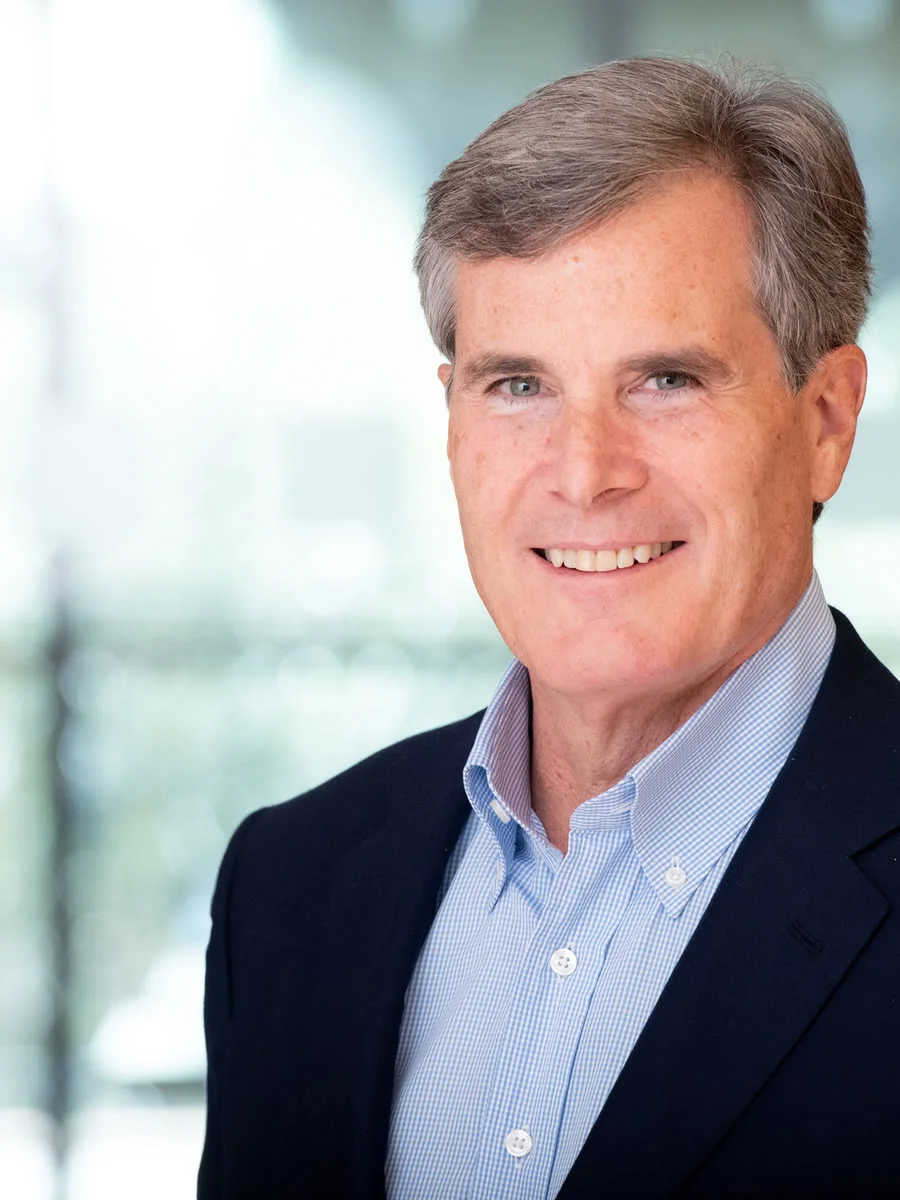
Scott Sandell
Longest-running Midas List performer; enterprise and infrastructure bets across four cycles.
Formation — engineering, selling, operating, and the move into venture
Sandell's later account begins with technical training and a sequence of jobs that forced him to translate between technology and institutions. The oral-history front matter records an A.B. in Engineering Sciences from Dartmouth, Boston Consulting Group, C-ATS Software as its first salesperson and later European-subsidiary cofounder/operator, an M.B.A. from Stanford, and Windows 95 product management at Microsoft. Those facts establish experience; the claim that they caused a particular investment edge is retrospective. [investor-stated · moderate] CHM oral history, front matter and early-life/career interviews
The bridge to venture was not a cold act of individual pattern recognition. Work with Yankee Pacific produced an introduction; Sandell pitched himself to NEA and joined as an associate in 1996. His account stresses the institution's existing norms—humility, respect, integrity, and company-before-personal economics—rather than a new firm built around him. [investor-stated · moderate] CHM physical PDF pp. 21–23 / printed pp. 16–18
The first failure was inside the partnership
About two and a half years into NEA, Sandell says he was nearly asked to leave. He sought feedback from every general partner and changed how he worked. The episode matters because it is a rare failure described before the famous outcome stories: technical fluency was not enough; judgment had to be legible, collaborative, and trusted inside a partnership. [investor-stated · strong] CHM physical PDF p. 25 / printed p. 20; response at physical pp. 26–27 / printed pp. 21–22
His first investment, Mission Critical Software, then supplied a different lesson. Sandell says the investment generated a large positive outcome but that rescuing management consumed too much time and hurt his other work. The remembered economics conflict by date and basis: the Los Angeles Times reported $5 million then worth $116 million in August 2000; he later recalled a peak “100x” and roughly $60–70 million on $4–5 million first-round or $8–10 million total; NetIQ recorded about $1.6 billion of issuer purchase accounting. None is a personal or fund cash-flow ledger. [researcher inference · strong] CHM physical PDF p. 33 / printed p. 28 LA Times, contemporaneous snapshot NetIQ annual report
Enterprise systems across the crash and cloud transition
WebEx shows the system at its most compressed. Douglas Ayer and Ajit Huthseesing supplied the relationship route; Sandell describes hard technology, customer love, viral use, low marginal distribution cost, and recurring revenue producing rapid conviction. The filing establishes his board role from December 1999 and NEA VIII affiliates at 9.0% before the offering; it does not establish a personal check or realized return. The same oral history later records a board/PIPE/balance-sheet conflict and his departure, so the acquisition outcome cannot erase governance friction. [researcher inference · moderate] CHM physical PDF pp. 34–40 / printed pp. 29–35 WebEx S-1, directors and holders
The dot-com collapse exposed the cost of rescue work and insufficiently deep cuts. Sandell describes many failures and later says he protected roughly 25% of his time for new companies. He also names Yahoo, eBay, Amazon, and Google among NEA's misses, attributing part of the anti-portfolio to excessive conservatism. This is evidence of a claimed process change, not a complete loss/pass denominator. [investor-stated · moderate] CHM physical PDF pp. 69–74 / printed pp. 64–69 TechCrunch, post-crash opening
The next enterprise cases were visibly team-produced. Forest Baskett found Tableau through Pat Hanrahan; Sandell recalls accepting a higher price, while Brooke Seawell and Hilarie Koplow-McAdams appear in the scaling account. Kai Li brought Data Domain to Baskett. Aneel Bhusri brought Sandell into Workday. Matthew Prince independently identifies Sandell as Cloudflare's $20 million Series B lead, while later filings show shared NEA control. [researcher inference · strong] TechCrunch Tableau interview CHM physical PDF pp. 94–95 / printed pp. 89–90 Cloudflare founder post
From pattern recognition to a public operating system
By 2012–2023 the private pattern became a public sequence: platform change opens a layer; a product must remove a painful constraint; customer behavior and references test pull; founders must combine clarity, company-first conduct, and perseverance; capital and attention must remain proportional to the possible outcome. The writing corpus moves from online education and data-feedback software to cloud layers, unified APIs, predictive procurement, enterprise knowledge, and AI. It is evidence of an articulated framework, not proof that one framework prospectively caused every selected win. [researcher inference · moderate] writing synthesis Forbes 2014 interview
The clearest visible update is not technological. In 2015 Sandell publicly reversed a patent-policy position after hearing entrant-side concerns. In 2020 he told Stanford that ethical lapses can silently close future doors and described using partners outside his technical domain to judge honesty. The 2023 HBR principles work is coauthored and only partially accessible here, but Stanford confirms its teaching provenance. [documented behavior · strong] patent essay Stanford ethics transcript, PDF pp. 1–4 STVP report
Institutional steward and current vehicle
NEA's current biography identifies Sandell as Executive Chairman and Chief Investment Officer after earlier CEO and Managing General Partner roles. A 2024 transition placed Tony Florence and Mohamad Makhzoumi as co-CEOs. A December 2025 Form D names all three as managers of NEA 19 GP LLC, the GP of the GP; it does not disclose deal votes or personal economics. [contemporaneous record · strong] NEA biography, current role leadership announcement SEC Form D
Public-LP records complicate any star-investor story. CalSTRS reports uneven since-inception IRRs across NEA vintages, from strong positive to negative, under its own method. OCERS describes a consensus/team IC, external passive owners, key-person controls, and current fees/carry; NIC and Aksia publish vehicle-level observations and plans. These are manager/team records, not Sandell returns, and interim methods differ. [contemporaneous record · strong] CalSTRS physical PDF pp. 5–6 vehicle analysis
People and influence map
| Person or institution | Supported contribution | Boundary |
|---|---|---|
| NEA partnership | access, capital, shared decision system, mentorship, follow-on and board capacity | firm outcomes and holdings are not Sandell economics |
| Forest Baskett | Tableau/Data Domain sourcing and technical partnership; shared manager in filings | do not collapse his work into Sandell's narrative |
| Douglas Ayer / Ajit Huthseesing | WebEx relationship route | economics and later governance role unresolved |
| Kai Li | Data Domain technical/founder route to Baskett | investment-decision influence beyond introduction unresolved |
| Aneel Bhusri | brought Sandell into Workday | partner debate and original terms unavailable |
| Brooke Seawell / Hilarie Koplow-McAdams | Tableau operating/finance scaling support in the retrospective | exact causal contribution and economics unavailable |
| Kittu Kolluri | named 2015 Robinhood board appointee | current Sandell association is not original-board credit |
| Matthew Prince and Cloudflare founders | independent founder-side Series B lead attribution | full investor-selection record and fund realization absent |
| Tony Florence / Mohamad Makhzoumi | co-CEOs and current legal co-managers with Sandell | individual deal votes/carry remain private |
| Stanford / NVCA / public LPs | teaching, policy, archive, and vehicle evidence | institutional proximity is not performance validation |
The mapped roles are [researcher inference · strong] from the CHM oral history, TechCrunch Tableau interview, Cloudflare founder account, Robinhood 2015 announcement, leadership announcement, and SEC Form D. Unknown roles remain unknown.
Falsifiable thesis of the edge
[researcher inference · strong] The favorable thesis is that, in US enterprise/infrastructure technology from the late 1990s through the cloud era, Sandell repeatedly combined technical comprehension, network-distributed access, customer-pull evidence, and long-duration board/partnership capacity. The mechanism should be observable before outcomes: an explainable durable edge; product use or reference evidence; a mission- and integrity-tested team; ownership/price math; explicit attention and follow-on capacity; and credited partner roles. decision labs mental models
| Test | Prediction or falsifier |
|---|---|
| Domain | strongest in enterprise/cloud/data/security where technical and customer evidence can appear before complete financial history; weaker in capital-heavy, regulated, consumer, or policy-dependent cases without adapted controls |
| Supporting cases | WebEx, Tableau, Data Domain, and Cloudflare expose several predicted signals, with different attribution strength |
| Ordinary/adverse cases | Mission Critical tests attention; Workday/Coursera remain attribution-incomplete; Robinhood tests regulated operations; dot-com failures and anti-portfolio test conservatism |
| Outlier test | removing Cloudflare still leaves material company-level outcomes, but no comparable cash-flow series proves personal residual alpha |
| Alternative explanations | NEA scale/access, Baskett and other partners, founder execution, long fund duration, abundant-cloud-era capital, survivor selection, and luck may explain the same pattern |
| What would strengthen it | contemporaneous IC memos showing the same gates across wins and losses; complete role and cash-flow ledgers; superior matched-cohort outcomes after team/vehicle controls |
| What would overturn it | no ex-outlier advantage in complete cash flows; memos showing public rules absent or supplied by others; ordinary/failure cases failing the gates at the same rate as alternatives |
The thesis is therefore testable but not proved. The current 58-route official biography is a promotional denominator: only five cases are sufficiently reconstructed for bounded labs, four more are researched but unresolved, and 49 remain promotional-only. [researcher inference · strong] 58-route ledger
Criticism, adverse evidence, and what changed
The strongest criticism is structural rather than scandal-based. Winner narratives are richer than loss records; shared-control filings invite misattribution; remembered economics conflict; public-LP vehicle performance is uneven; and the current biography selects associations. Bloom ended in a $3 million settlement with denial/no admission; Clovis venture defendants were dismissed with prejudice; Tuya ended in judgment for defendants; Data Domain allegations were not adjudicated; Robinhood actions concern the issuer/subsidiary and do not find Sandell conduct. [researcher inference · strong] adverse source map
The visible process changes are narrower than the legend: seeking partner feedback after near-dismissal, protecting new-investment time after the crash, publicly revising a policy view, and formalizing principles/ethics teaching. The record does not show a complete postmortem system, a quantified hit-rate improvement, or how regulatory lessons changed Robinhood governance. [researcher inference · moderate] CHM failure lab
Sourced chronology
| Date | Turning point | Evidence and boundary |
|---|---|---|
| pre-1996 | Dartmouth engineering; BCG, C-ATS, Stanford MBA, Microsoft product work | CHM front matter/direct retrospective; experience, not causal proof |
| 1996 | joins NEA through a relationship route | CHM physical pp. 21–23 / printed pp. 16–18 |
| ~1998–1999 | near-dismissal and partner-feedback reset | CHM physical pp. 25–27 / printed pp. 20–22 |
| 1996–2001 | Mission Critical attention lesson; WebEx route/board | investment labs |
| 2001–2010 | Data Domain, Tableau, Workday, Cloudflare team-produced enterprise arc | deal ledger |
| 2012–2016 | public theses on education, data/cloud, policy updating, and workflow | writings |
| 2019–2023 | exit reflection, ethics/principles, AI/platform synthesis | talks writing evolution |
| 2024 | becomes Executive Chairman/CIO; co-CEO succession | NEA announcement |
| 2025–2026 | NEA 19/VGE legal vehicle and LP diligence become public; current AI/sovereign themes | vehicle evidence |
Learning path
Read talks.md for direct formation, writings.md for the public framework, investments.md for the denominator and no-hindsight cases, investmentphilosophy.md for the full operating system, mental-models.md for decision checklists, and review.md for the adversarial audit.
1. Snapshot and testable edge thesis
| Field | Evidence-bounded answer |
|---|---|
| Investor | Scott D. Sandell |
| Institution | NEA, joined 1996; current Executive Chairman and CIO |
| Strongest domain | US enterprise software, cloud, data, security, and infrastructure across the dot-com-to-cloud transition |
| Public denominator | 58 unique current official portfolio routes; five bounded case reconstructions, four researched but ex-ante unresolved, 49 promotional-only unresolved |
| Economic boundary | no personal MOIC, IRR, DPI, TVPI, loss rate, cash profit, or carry allocation is publicly computable |
Testable edge thesis. [researcher inference · strong] Sandell's most defensible edge is a system, not a slogan: combine technical comprehension with network-distributed access, demand customer-pull evidence and a sustainable advantage, judge whether founders will put the company above ego, then use a long-duration partnership and board capacity to support the company across cycles. It should be strongest where product and customer truth are observable before complete financial history and weaker where regulation, capital intensity, consumer behavior, or policy dominate without adapted controls. profile thesis case labs
Predictions. [researcher inference · moderate] Unseen contemporaneous cases should contain a comprehensible technical wedge, independent customer evidence, explicit ownership/price and attention budgets, credited source/sponsor/board roles, and prospective milestones. Complete records should show the gates applied to ordinary and failed cases, not only WebEx, Tableau, Data Domain, and Cloudflare.
Falsifiers. [researcher inference · strong] The thesis weakens if complete cash flows show no ex-outlier or vintage-adjusted persistence; IC records show the rules absent or supplied by others; ordinary and failed cases are no better calibrated than alternatives; or NEA scale, partner judgment, founder execution, and market regime fully explain the visible outcomes. skeptical case
2. Core philosophy
Sandell's direct public framework emphasizes patience; clarity of purpose; company ahead of ego; drive and perseverance; and learning how an investor behaves after a missed plan. [investor-stated · strong] official NEA Q&A
The technical screen is equally direct: understand the product and core problem, identify why it is better, and ask whether the advantage can persist. In 2014 he added must-have product-market fit, rapid adoption, capital efficiency, founder integrity/determination, and a market large enough to justify scarce partner time. [investor-stated · strong] CHM physical PDF pp. 27–30 / printed pp. 22–25 Forbes 2014
Synthesis. [researcher inference · moderate] The operating sequence is external change → painful constraint → durable product advantage → observable pull → company-first team → ownership/attention budget → milestones and governance. Each link needs a falsifier. Selected winners do not prove the sequence was prospectively or consistently applied.
3. Sourcing
The public record supports a distributed relationship and domain network, not a solo proprietary funnel:
- Douglas Ayer and Ajit Huthseesing supplied the WebEx route. [investor-stated · moderate] CHM physical pp. 34–40 / printed pp. 29–35
- Forest Baskett found Tableau through Pat Hanrahan; Kai Li came to Baskett before Data Domain. [investor-stated · moderate] TechCrunch CHM physical p. 94 / printed p. 89
- Sandell says Aneel Bhusri brought him into Workday. [investor-stated · moderate] CHM physical p. 95 / printed p. 90
- Daphne Koller says Sandell suggested forming Coursera and called John Doerr. [retrospective witness · moderate] American RadioWorks transcript
- Matthew Prince independently identifies Sandell as Cloudflare's Series B lead. [contemporaneous record · strong] founder post
Repeatability boundary. [researcher inference · strong] A modern funnel should record referrer, unique information, conflicts, source, sponsor, diligence owner, vote, board owner, and false-negative review. The 58 official routes contain no inbound volume, conversion rate, cold/warm split, pass reasons, or lost-deal cohort. role matrix
4. Picking
| Gate | Decision-ready test |
|---|---|
| Technical comprehension | Can the team explain the core mechanism, why it is better, and what would erase the advantage? |
| Customer pull | Do retained use, references, time-to-value, and willingness to pay support “must-have,” not merely enthusiasm? |
| Founder quality | What prior behavior shows clarity, integrity, company-first choices, learning, and perseverance under bad news? |
| Market magnitude | Can the plausible market matter at fund scale without using a large TAM to waive weak product evidence? |
| Capital efficiency | What is learned per dollar and per month; does the next round retire a named risk? |
| Decision rights | Who sourced, sponsored, challenged, approved, negotiated, governed, and later narrated? |
[researcher inference · moderate] Kill or stage a case when the investor cannot understand the edge, reference evidence is founder-selected or non-retained, founder behavior fails an adverse scenario, ownership cannot matter, compliance capacity trails product growth, or the memo cannot name a falsifier. Sramana forum Sana diligence
5. Deal and portfolio mechanics
The public record supports case mechanics, not a universal Sandell term sheet. WebEx shows NEA VIII affiliates at 9.0% pre-offer; Workday records a $46 million NEA Series E; Cloudflare's founder reports a $20 million Series B; Tableau's price story is retrospective; Data Domain's reported NEA economics lack a cash-flow bridge. [contemporaneous record · strong] for filed fields; [researcher inference · strong] for the boundary. deal ledger
- Price: pay more only when ownership-weighted scenario value still clears the fund threshold; Tableau is one positive case, not a waiver. [researcher inference · moderate] Tableau lab
- Reserves/follow-ons: pre-register the evidence required for the next check; treat follow-on as a fresh decision. [researcher inference · moderate] Sana pair
- Concentration: size experiments so a total loss is survivable and include partner attention as scarce capital. [investor-stated · moderate] CHM physical p. 74 / printed p. 69
- Exit: company transaction value, public market value, fund proceeds, and personal economics are different bases. [researcher inference · strong] Pareto analysis
6. Vehicle and incentive fit
| Dimension | Evidence | Decision consequence |
|---|---|---|
| Capital form | registered adviser; LP-funded early and growth vehicles; current NEA 19/VGE/Access structures | capital is institutional, not Sandell's personal check |
| Duration | JIC records 12 years plus up to three years extension | patient support is possible, but fund and company clocks can diverge |
| Fees/carry | OCERS reports 1.5–2% fees, 15–20% carry, no preferred return; ATRS shows older NEA 12 terms differ | incentives are vehicle-specific; Sandell share unknown |
| Governance | OCERS describes consensus/team IC; Form D names Sandell, Florence, and Makhzoumi managers of the GP of the GP | legal control is shared and does not expose deal vote |
| Stage/geography | current plan separates early/growth; Aksia describes broad stage and mostly US targets | current manager plan is not a historical personal allocation |
| Reserves/liquidity | large planned follow-ons; 12+3 horizon; slow current exit market | pacing, reserves, and DPI matter; policies remain private |
| Stakeholders/regulation | LPs, companies, boards, regulators; Sandell advocates fund indemnification for board service | board duty and fund incentive can conflict; protection is not immunity |
| Succession/key person | 2024 co-CEOs plus Sandell CIO/Executive Chair; key-person controls summarized by OCERS | institutional continuity reduces but does not eliminate dependence |
[researcher inference · strong] The vehicle supports long-horizon, board-intensive investing and distributed expertise; the same scale obscures personal attribution and raises pacing, allocation, and governance questions. vehicle matrix
7. Team attribution and work with founders
NEA's current Q&A describes a team rather than superstar model. The record is consistent with distributed work: Baskett sourced/assessed, Seawell and Koplow-McAdams supported scaling, Kolluri held the original Robinhood board seat, and current legal management is shared. [documented behavior · strong] NEA Q&A people map
Work with founders is most supportable as behavior under stress: cross-check how the investor responded after missed plans; seek bad news early; use boards to recruit, challenge, finance, and sometimes leave when governance cannot be resolved. [investor-stated · moderate] official Q&A WebEx governance record
[researcher inference · strong] Unknowns remain explicit: most cases do not reveal sponsor, diligence assignments, vote, negotiation, recruiting decision, reserve authority, exit influence, or carry. 10-role matrix
8. Views on the craft
- Power law: few companies drive industry outcomes, but a complete Sandell distribution is absent. [investor-stated · moderate] I+O official video, ~14:49
- Fund size: scale can create sector coverage, follow-on capacity, and succession; it can also dilute accountability and increase deployment pressure. [researcher inference · moderate] OCERS
- Access versus selection: trusted networks generate shots, but the anti-portfolio and team routes show access is neither sole nor sufficient. [researcher inference · strong] CHM
- Governance: board service is active, risky, and reputation-bearing; legal protection may enable service but does not validate conduct. [investor-stated · strong] SEC statement, physical PDF pp. 34–36
- Great investor: a repeatable process includes technical judgment, people judgment, willingness to update, honest attribution, attention allocation, and institutional continuity. [researcher inference · moderate] talk synthesis
9. Signature bets and decision process
Use the no-hindsight labs rather than outcome summaries:
- WebEx — rapid conviction with visible red flags
- Tableau — pay for rare evidence, preserve ownership math
- Data Domain — technical route, people doubt, competitive exit
- Cloudflare — founder-side lead evidence
- Mission Critical / dot-com / anti-portfolio failure lab
Each exercise freezes known/unknown evidence, invest/pass, kill criteria, terms/ownership questions, next-check milestones, and only then the sourced outcome. [documented behavior · strong] coverage reconciliation
10. Mental models and maxims
The supported model inventory is:
- Understand the mechanism and the durability of the edge — origin in the early NEA formation account.
- Turn adjectives into customer evidence — Forbes/Sramana/Sana.
- Follow the next bottleneck in a platform shift — SaaS/cloud/API/AI writing.
- Back company-first missionaries, test them under bad news — Q&A, I+O, ethics.
- Pay for quality only through ownership-weighted math — Tableau with a missing losing cohort.
- Budget attention and size experiments to survive — Mission Critical, dot-com, risk sizing.
- Make references and follow-ons explicit Bayesian updates — Sana pair and pitch forum.
- Use the partnership as a judgment system, preserve role credit — Baskett/routes, outside-domain ethics, shared control.
- Write principles and operating controls before stress — governance, regulated operations, IPO readiness.
11. Evolution and contradictions
| Date | Visible evolution | Unresolved tension |
|---|---|---|
| 1998–2003 | feedback after near-dismissal; Mission rescue and crash produce attention lesson | whether the changes improved outcomes is unmeasured |
| 2004–2010 | team-sourced enterprise/platform cases and price flexibility | winner selection hides paid-up failures and ordinary cases |
| 2012–2016 | public architecture/customer framework; patent-policy reversal | writing may rationalize rather than precede private decisions |
| 2020–2024 | ethics, principles, bad-news behavior, institutional succession | stated values are not a board-conduct audit |
| 2023–2026 | AI, follow-on, IPO readiness, sovereign infrastructure | capital/regulatory intensity strains the low-capital software archetype |
Fast WebEx conviction and dozens of Sana references imply no single diligence minimum. Tableau price flexibility and capital efficiency pull in opposite directions. Founder support and company-first duty can conflict with board and LP obligations. Scale enables continuity but makes personal attribution harder. [researcher inference · strong] writings evolution talk tensions
12. Failures and limits
Mission Critical is outcome-positive but process-negative; the dot-com cohort records under-deep cuts and failures; the anti-portfolio records conservative passes; WebEx records governance conflict; Robinhood records entity-level operational/regulatory failures without a Sandell finding. [researcher inference · strong] postmortems
The primary limits are missing denominator, survivor selection, retrospective/editor-reviewed testimony, shared team/vehicle attribution, incompatible economics bases, incomplete decision rights, and era dependence. Bloom, Clovis, Tuya, Data Domain, and Robinhood records must retain their actual dispositions and cannot be converted into personal misconduct claims. [researcher inference · strong] source boundaries
13. Historical operating environment
The decision environment moved from client-server and early internet distribution through the dot-com boom/crash, capital-efficient enterprise software, cloud/data/security platforms, abundant late-stage capital, and the current AI-concentrated but liquidity-constrained market. Each era changed financing alternatives, technical maturity, regulation, and the information available at underwriting. [researcher inference · moderate] historical comparison
No numerical private-company base-rate series is reconstructed for the early cases. Current NVCA estimates and LP vehicle data are later controls, not facts a 1999 IC could know. [researcher inference · strong] NVCA 2026 Yearbook LP evidence
14. Modern VC translation (as of 2026-08-22)
| Major lesson | What transfers | Changed signal | Grounded current example or honest boundary | Likely misuse |
|---|---|---|---|---|
| Understand the edge | technical comprehension and falsifiability | unit cost, data rights, security, substitutability | Valarian exposes sovereignty/deployment questions but is too recent for outcome evidence. post | “AI” as a moat |
| Demand pull | retained behavior, references, time-to-value | enterprise budgets and GTM efficiency | Sana discloses dozens of references but not sample negatives or retention. 2023 post | registrations/friendly calls as PMF |
| Follow bottlenecks | platform shifts create layers | value may concentrate in incumbents/compute | Merge and current AI writing articulate the layer thesis; no mature AI outcome cohort exists. Merge | category narrative waiving price |
| Founder quality | adverse-scenario references and company-first choices | higher compliance stakes widen references | official Q&A requires cross-checking investor behavior after missed plans; no founder-score error rate exists. Q&A | affinity/rhetoric as integrity |
| Pay for quality | ownership-weighted scenarios | longer duration/weak exits increase dilution and time risk | Tableau is the positive case; no grounded losing paid-up cohort was found. case | one winner justifies every premium |
| Budget attention | partner-hours and rescue milestones | large portfolios multiply governance load | Mission Critical is the documented adverse case; current 58-route weights remain unknown. postmortem | rescuing from sunk cost |
| Re-underwrite follow-ons | original falsifiers plus fresh expected return | cross-vehicle allocation requires independent review | Sana follow-on is public, but price, thresholds, and alternatives are absent. follow-on | “doubling down” as analysis |
| Partnership judgment | outside-domain challenge and role ledgers | global/multi-stage decision rights must be explicit | current Form D names three legal managers; deal votes remain private. Form D | shared control as sole credit |
| Principles and controls | write conflicts, escalation, customer harm, kill rules | fintech/AI/data raise regulatory stakes | Robinhood actions are grounded entity-level controls; no Sandell finding. postmortem | values statement as compliance |
Every row is [researcher inference · moderate]; current premises come from the NVCA Yearbook, NYSE appearance, and vehicle evidence.
15. Comparison with completed peers
These three are valid completed comparators: Andy Rachleff shares the 1980s–1990s enterprise/technology formation; Ann Winblad is an operator-software specialist; Doug Leone is a same-era institutional enterprise/platform builder. They are compared as public systems, not compatible return series.
| Dimension | Sandell | Andy Rachleff | Ann Winblad | Doug Leone |
|---|---|---|---|---|
| Sourcing | NEA/domain/founder relationship routes; partner credit prominent | inflection map plus Stanford/MPAE/Benchmark networks | software operator/customer/incumbent network | technical network, partner specialization, direct hunting |
| Picking | comprehension + must-have pull + people + magnitude | change + non-consensus insight + market pull | buyer budget + stage-matched assumptions | founder motive + customer/GTM reality |
| Ownership/portfolio | case-specific; scale and two vehicles; full weights absent | material filing-visible positions; small equal partnership | software concentration; 98-logo firm denominator | multi-stage/global platform; partner/team attribution |
| Governance | board-intensive; bad-news, principles, indemnification | equal-partner/company governance and staged learning | active boards and recruiting | board recruiting, succession, local authority |
| Failure control | Mission attention, dot-com failures/misses, WebEx conflict, Robinhood entity risk | PointCast/Ipsilon/anti-portfolio and opaque denominator | Slate/Napster/Pets.com and fund evidence | Facebook passes, Color, cycle/scale tensions |
| Vehicle/incentives | long-duration multi-stage manager; consensus IC; current co-management | Benchmark equal economics; individual attribution difficult | specialized LP funds, uneven public fund controls | scaled Sequoia franchise and succession |
[researcher inference · moderate] Sandell sits between Winblad's specialist information system and Leone's scaled institutional system, with Rachleff the closest decision-doctrine control. The distinguishing favorable claim is unusually long continuity across enterprise layers; the distinguishing weakness is that NEA scale and shared roles make personal causality especially hard to isolate. Rachleff sources Winblad sources Leone sources
16. The strongest case against greatness
Steelman. [researcher inference · strong] Sandell may be the visible narrator of a powerful NEA platform rather than the repeatable source of superior personal alpha. Network access delivered WebEx, Tableau, Data Domain, Workday, and Coursera through other people. Founders and operators created value. Filings show shared funds and managers. The current website selects 58 associations and omits passes/write-offs. Cloudflare may dominate current public value. Mission Critical numbers conflict; Data Domain economics are self-reported; transaction values are not proceeds. CalSTRS vintages are uneven. The cloud era and long-duration capital may explain more than selection skill. attribution map LP evidence
The method-free reported 36% firm IRR in the 2023 TechCrunch interview does not solve the denominator, and the Kihm/Tesaro chain supplies a concrete incentive-conflict hypothesis—fundraising, liquidity, and carry—but the Chancery court dismissed all claims and the Delaware Supreme affirmed. [researcher inference · strong] TechCrunch Kihm disposition chain
The favorable response is process evidence across independent source families: technical/customer screens precede or accompany multiple cases; Cloudflare has founder-side lead attribution; failures and misses are admitted; public policy reversal and partnership feedback show some updating; team credit is explicit rather than erased. But this supports a plausible process, not measured personal alpha.
Discriminating evidence: authenticated contemporaneous IC/board records across wins and losses; complete opportunity, cash-flow, and attribution ledgers; matched vintage/sector outcomes excluding outliers; founder/partner evidence of causal board work; and prospective tests of the current rules. Without those, “great institutional venture practitioner” is better supported than “provably superior solo picker.”
17. Analyst study guide, glossary, and go deeper
Recommended path
- Read the chronological profile and CHM source note.
- Compare written synthesis with spoken tensions.
- Run the five no-hindsight exercises, including the failure/miss lab.
- Use the mental-model field guide, then attack it through review.md.
Glossary
| Term | Meaning here |
|---|---|
| Comprehension gate | ability to explain the product, core problem, advantage, and durability before investing |
| Attention capital | fixed partner time consumed by sourcing, diligence, rescue, recruiting, governance, and exit |
| Promotional association | a current official portfolio route without sufficient source/lead/economic evidence |
| Shared control | legal voting/dispositive authority among fund managers; not personal beneficial economics |
| Current-primary responsibility | manager-marketing attribution that may name the current manager rather than original source |
| VGE | NEA's separate venture-growth-equity vehicle |
| Company-first | decisions prioritizing company purpose over investor/founder ego, subject to legal stakeholder duties |
Reusable checklists
- Sourcing: introducer; unique information; conflicts; source/sponsor; cold/warm; false-negative review.
- Diligence: mechanism; durability; customer sample including non-buyers/churn; founder adverse references; regulation/security; capital path.
- IC: alternatives; dissent; valuation/ownership/dilution; vehicle allocation; reserves; attention budget; falsifier; next-check milestone.
- Governance: board owner; information rights; recruiting; bad-news escalation; conflicts; customer harm; follow-on/stop; exit authority; attribution ledger.
Best sources, ranked
- CHM/NVCA oral history — deepest formation, failures, attribution, sizing, and direct voice; use precise physical/printed locators and distrust remembered economics.
- Issuer filings — strongest roles, ownership, governance, and company-outcome control; never infer sourcing or personal return.
- TechCrunch Tableau interview — richest single process case, checked against filings.
- Stanford ethics transcript — concise primary values/governance record.
- Cloudflare founder post — rare independent founder-side lead attribution.
- Public-LP records — strongest vehicle/economics counterweight, method-specific and team-level.
The full route, access, and criticism ledger is in sources.md; unresolved retrieval work is itemized in investments.md.
Pareto 80/20 — what drove the record
No public evidence supports a literal “80% of Sandell's return came from 20% of his deals” calculation. NEA does not publish his complete opportunity, cash-flow, ownership, dilution, distribution, or attribution ledger. The defensible result is a three-axis rank, not a fabricated percentage.
Economic concentration test: if Cloudflare is removed, the public record still contains Tableau, Data Domain, WebEx, Workday, and Mission Critical outcomes, so the favorable thesis does not collapse to one named company. But no fund cash-flow series permits a residual personal MOIC/IRR calculation. [researcher inference · moderate] official portfolio and denominator boundary
Historical rank: WebEx and Workday matter most to the transition from client-server to cloud; Tableau and Data Domain show the enterprise-data pattern; Cloudflare carries it into internet infrastructure. [researcher inference · moderate] CHM WebEx/Data Domain/Workday, physical PDF pp. 34–40 and 94–95 / printed pp. 29–35 and 89–90 Workday S-1
Learning rank: Mission Critical is first because it changed attention allocation; WebEx second for fast conviction plus governance conflict; Tableau third for sourcing, price, and support; Robinhood fourth as a team-attribution and regulated-operations counterexample. [researcher inference · strong] CHM Mission Critical, physical PDF p. 33 / printed p. 28 Robinhood 2015 announcement
Economic-contribution rank
| Rank | Basis/measure | Attribution | Confidence | Mechanism | Denominator caveat / case |
|---|---|---|---|---|---|
| 1 | Cloudflare is Forbes's largest-win claim | founder identifies Series B lead; NEA 13 shared control | moderate | public-company equity value | no cash-flow bridge; case |
| 2 | Tableau ~$14.845B acquisition-date fair value | Sandell board; Baskett source; NEA 11 | strong company value, unknown fund result | large exit after low reported capital use | issuer value ≠ proceeds; case |
| 3 | reported: Data Domain ~$14.7M NEA investment to ~$394M | Sandell retrospective; Kai Li/Baskett route | moderate; single-source | cash acquisition after competitive bidding | vehicle cash flows absent; case |
| 4 | WebEx acquisition plus filed 9.0% pre-offer NEA affiliates | Sandell self-reported lead; NEA VIII | moderate | viral/recurring cloud adoption | acquisition value ≠ fund proceeds; case |
| 5 | reported: Mission Critical time-varying $116M snapshot / later ranges | Sandell/LA Times; vehicle unresolved | provisional | early Windows NT tooling plus rescue | incompatible bases, no ledger; postmortem |
Historical-importance rank
| Rank | Basis/measure | Attribution | Confidence | Mechanism | Denominator caveat / case |
|---|---|---|---|---|---|
| 1 | WebEx | Sandell + introducer network + NEA VIII | moderate | early internet collaboration/viral cloud | retrospective thesis; case |
| 2 | Workday | Bhusri introduction; Sandell board; NEA Series E | strong on roles | enterprise application migration | decision memo absent; ledger |
| 3 | Tableau | Baskett/Hanrahan route; Sandell board | strong on roles | self-service analytics | selected winner; case |
| 4 | Cloudflare | founder names Sandell lead; shared NEA | strong on lead/board | internet security/performance platform | realization absent; case |
| 5 | Data Domain | Li/Baskett/Sandell team | moderate | storage/data infrastructure | winner memory dominates; case |
Decision-learning rank
| Rank | Basis/measure | Attribution | Confidence | Mechanism | Denominator caveat / case |
|---|---|---|---|---|---|
| 1 | Mission Critical | Sandell admits over-rescue | strong | attention is portfolio capital | good outcome masks bad process; postmortem |
| 2 | WebEx | Sandell direct account + filing | moderate | fast conviction needs governance limits | conflict detail retrospective; case |
| 3 | Robinhood | issuer/regulator records; team attribution | strong at entity level | operating/compliance capacity is product risk | no Sandell finding; lab |
| 4 | Tableau | Sandell/Baskett/team | moderate | price flexibility must preserve expected return | losing paid-up cohort absent; case |
Evidence boundary and searched denominator
Scope and reconciliation
| Denominator state | Count | Definition |
|---|---|---|
| Official current profile routes | 58 | unique /portfolio/<slug> links on Sandell's NEA biography, deduplicated 2026-08-22 |
| Searched | 58 | every official slug/name searched with Sandell/NEA plus filing, outcome, loss, lawsuit, and attribution variants |
| Researched in depth | 9 | Mission Critical, WebEx, Tableau, Data Domain, Cloudflare, Workday, Bloom, Robinhood, Coursera |
| Sufficiently reconstructed for a bounded decision lab | 5 | Mission Critical, WebEx, Tableau, Data Domain, Cloudflare; all still lack full fund cash flows |
| Researched but unresolved for ex-ante decision rights | 4 | Workday, Bloom, Robinhood, Coursera |
| Unresolved current-profile routes | 49 | mapped/search-checked but not reconstructed company by company |
| Excluded from official-list denominator | 0 | aliases/follow-ons were deduplicated rather than excluded |
The named reconstruction fraction is 5/58 = 8.6% of the current promotional list, not 10.3% of Sandell's career. Career-wide coverage is not computable because the list omits rejected deals, companies removed from the website, write-offs, opportunity dates, follow-ons, and attribution. [documented behavior · strong] official biography source-map boundary
Five attribution axes
Every deal is classified separately as: sourced / led / board / shared GP control / promotional association only. Board service does not prove sourcing; beneficial-ownership control does not prove a personal check; a current NEA association does not prove the original lead.
Vehicle economics and incentive fit
Capital form, duration, and decision rights
- NEA is a private-fund adviser registered in 2023; registration is a regulatory fact, not validation. [contemporaneous record · strong] SEC IAPD CRD 161004
- A December 2025 Form D identifies Sandell, Tony Florence, and Mohamad Makhzoumi each as a manager of NEA 19 GP LLC, the GP of the GP. It records a Rule 506(b)/3(c)(7) indefinite offering with first sale not yet occurred and $0 sold at filing; carry and a management-company fee exist but terms are confidential. The current NEA disclosure separately names NEA 19, VGE, and a Japan-offered Access Fund. [contemporaneous record · strong] SEC Form D NEA disclosures
- In January 2023 NEA announced $6.2B across an early-stage fund and a growth vehicle. The split supports stage specialization and reserves but also raises deployment, ownership, and cross-vehicle allocation questions. [contemporaneous record · strong] NEA two-fund close
- The retrieved public record does not disclose Sandell's carry share, management-company economics, partner vote, fund-by-fund geographic authority, reserve policy, recycling, distribution timing, or the full partnership agreement. OCERS does disclose summarized current key-person clauses, but that is LP diligence—not an NEA/SEC-filed agreement. [researcher inference · insufficient public record] SEC statement, physical PDF pp. 34–36 OCERS physical PDF pp. 345–348 / printed agenda pp. 363–366
- Board-intensive investing creates long-duration company duties and legal tail risk; Sandell's SEC statement argues indemnification/exculpation sustain willingness to serve. [investor-stated · strong] SEC statement, physical PDF pp. 34–36 OCERS physical PDF pp. 345–348 / printed agenda pp. 363–366
- The 2024 succession separated Sandell's Executive Chairman/CIO role from co-CEOs Tony Florence and Mohamad Makhzoumi, a continuity mechanism that reduces but does not eliminate key-person dependence. [contemporaneous record · strong] leadership announcement
Public-LP fund evidence
CalSTRS reports the following CalSTRS since-inception IRRs as of 2024-06-30. They are LP cash-flow calculations for NEA vehicles, not Sandell returns.
| Vehicle (vintage) | CalSTRS since-inception IRR |
|---|---|
| NEA VIII (1998) | 30.60% |
| NEA IX (1999) | -5.91% |
| NEA 10 (2000) | 2.14% |
| NEA VIII A (2001) | -2.45% |
| NEA XI (2004) | 15.31% |
| NEA 12 (2006) | 6.34% |
| NEA XIII (2009) | 16.74% |
| NEA 14 (2012) | 14.72% |
| NEA 15 (2015) | 10.53% |
| NEA 15 Opportunity Fund (2015) | 24.25% |
| NEA 16 (2017) | 8.40% |
| NEA 17 (2019) | 4.43% |
| NEA 18 (2022) | 20.43% |
| NEA 18 VGE (2022) | -12.32% |
CalSTRS warns that its method can differ because of cash-flow timing, carry, fees, expenses, distributed-stock sales, and valuations; no industry-standard calculation exists; unliquidated partnerships are interim; early-fund IRRs are especially unstable; and GPs did not review or approve the table. [contemporaneous record · strong] CalSTRS physical PDF pp. 5–6
New Mexico PERA separately reports NEA 13 at 17.0% Net IRR / 2.5x DPI / 2.7x TVPI and NEA 14 at 14.7% / 1.1x / 2.7x as of Q2 2024. That triangulates two vehicles under another LP's method; it does not make either number universal. [contemporaneous record · strong] NM PERA physical PDF p. 10
OCERS's February 2026 diligence describes NEA 19 targeting $3.25B and VGE targeting $2.25B, with $20M commitments to each; a consensus/team IC; Dyal and Wafra as passive non-voting owners of a combined 20% firm interest; key-person/owner-key-person controls; management fees of 1.5–2%; carry of 15–20%; and no preferred return. It calls carry above the market median and standalone growth relatively unproven, while reporting historical later-stage >2.5x and a low-single-digit loss ratio plus strong recent quartile/DPI assertions. These are OCERS/Aksia diligence assertions and target terms, not audited Sandell results. [contemporaneous record · moderate] OCERS physical PDF pp. 345–348 / printed agenda pp. 363–366
JIC separately records a $100M commitment split $60M to NEA 19 and $40M to VGE; both funds were established in 2025 with 12-year terms plus extensions of up to three years. [contemporaneous record · strong] JIC release
A November 2025 NEA marketing deck on the official Nebraska Investment Council host supplies manager-asserted composite/hypothetical-net, distribution, current-team, current-primary-responsibility, and Sana project-manager evidence. Because it carries a proprietary/confidential legend despite a public-LP PUBLIC URL, this package uses it only to preserve method and attribution boundaries: unaudited marketing, hypothetical net not received by an investor, current manager not necessarily originator, and no Sandell personal-return inference. [contemporaneous record · provisional] Nebraska-hosted deck, physical PDF pp. 3, 5, 7, 14, 16–18
The companion NIC staff memo reports actual NIC values as of 2025-06-30—NEA 13 at 2.7x TVPI/16.9% IRR, NEA 14 at 2.9x/14.9%, NEA 17 at 1.2x/4.5%, and young NEA 18 at 1.9x/40.5%—and recommends a $50M NEA 19 allocation. The public Aksia memo describes a planned 100–120-company portfolio, $1–30M initial checks and $35M-plus follow-ons, a 60/40 technology-health range, 80–85% US exposure, roughly 40% Series A/30% Series B/10% seed, and about one incubation per year per vertical. These are NIC actual LP observations and Aksia plan assertions, not Sandell returns or a historical personal portfolio. [contemporaneous record · moderate] NIC staff memo, physical PDF p. 1 Aksia public memo
An Arkansas ATRS attachment supplies an older-vehicle control: NEA 12 at 1.4x cost and 6.4% IRR as of 2025-06-30, with 20% carry after an 8% preferred return and no current fee because the fund was past term/in dissolution. Page visually verified; the source text layer is degraded. This is ATRS vehicle evidence—not the CalSTRS metric or Sandell economics. [contemporaneous record · strong] ATRS attachment, physical PDF p. 13
A 2023 TechCrunch interview adds a direct but unaudited manager view: Sandell says NEA operations calculated a reported 36% IRR on roughly $4B invested over a decade, describes a growth fund allocating about one third to existing winners and two thirds to new companies, and forecasts three to four years of capital scarcity favoring an “efficiency gene.” The source omits the composite vehicle set, dates, cash flows, gross/net basis, benchmark, and audit. [investor-stated · provisional] TechCrunch, performance/allocation/efficiency exchanges
The Kihm/Tesaro plaintiff appeal brief alleged that NEA fundraising, liquidity, and carry incentives affected the sale process and discussed Sandell’s NEA 17 fundraising role; Sandell was not a captioned individual defendant. [contemporaneous record · provisional] appeal brief
The Court of Chancery dismissed all claims under Corwin, found the alleged omissions immaterial and the vote fully informed, and the Delaware Supreme affirmed. [contemporaneous record · strong] Chancery dismissal Supreme affirmance
The chain is a useful conflict-hypothesis checklist, not a misconduct or merits finding. [researcher inference · moderate] appeal and dispositions
The incentive reading is mixed: long duration and key-person rules support patient continuity, but no preferred return and above-median carry can shift risk/reward toward the GP; a separate growth vehicle can sharpen expertise while creating allocation and “relatively unproven standalone” risk. [researcher inference · moderate] OCERS diligence
The record is visibly uneven across vintages. That falsifies “many IPOs means uniformly elite fund returns,” but cannot allocate outcomes among partners, sectors, deals, or Sandell's carry. [researcher inference · strong] CalSTRS table
People and decision-rights map
| Person/entity | Observable role | Cases | What remains unknown |
|---|---|---|---|
| Scott Sandell | board member, reported lead in selected cases, later narrator, CIO | Mission Critical, WebEx, Tableau, Data Domain, Cloudflare, Bloom | formal sponsorship/vote, carry, exact proceeds in most cases |
| Forest Baskett | technical partner/source and shared manager | Tableau, Data Domain, Cloudflare | division of diligence and IC authority |
| Douglas Ayer / Ajit Huthseesing | relationship and company route | WebEx | economics and later role |
| Kai Li | founder/technical route to Baskett | Data Domain | exact influence on investment decision |
| Aneel Bhusri | Workday founder; brought Sandell in | Workday | partnership debate and alternative terms |
| Brooke Seawell / Hilarie Koplow-McAdams | portfolio/operating support associated by NEA | Tableau | precise board/recruiting decisions |
| Matthew Prince and Cloudflare founders | founder-side evidence; product/company builders | Cloudflare | full investor-selection process |
| Rick Yang | joint later Robinhood narrator/NEA association | Robinhood | original sourcing/decision rights |
| Kittu Kolluri | NEA board appointee in issuer's 2015 announcement | Robinhood | later division of governance with other partners |
| Tony Florence / Mohamad Makhzoumi | 2024 co-CEOs; current institutional leadership | NEA | exact CIO/CEO decision boundaries |
| NEA fund affiliates / GP managers | legal holders and shared voting/dispositive control | public filings | individual carry and cash distributions |
Deal ledger
| Company | Earliest observable route | Sandell attribution | Vehicle/team | Outcome evidence | Economics status |
|---|---|---|---|---|---|
| Mission Critical | 1996 per NEA/CHM | first investment; over-rescue admitted | exact NEA vehicle unresolved | NetIQ FY2001 ~$1.6B issuer accounting | three incompatible-but-coexisting snapshots; no ledger |
| WebEx | 1998 route; board Dec. 1999 | sourced/led per self-report; board | NEA VIII affiliates, 9.0% pre-offer | Cisco acquisition | proceeds unavailable |
| Tableau | 2004 board | agreed higher price; board | Forest Baskett source; NEA 11 | Salesforce close, ~$14.845B accounting value | original $5M story reported; proceeds unavailable |
| Data Domain | Kai Li → Baskett | board/decision participant | NEA vehicle/team | EMC $33.50 cash | $14.7M→$394M self-reported NEA-level |
| Workday | 2009 board | Bhusri brought him in | NEA Series E $46M / shared control | public company | realization unavailable |
| Cloudflare | Nov. 2010 founder meeting | founder calls him Series B lead; board | NEA 13, Baskett/Kerins shared control | IPO/public company | fund realization unavailable |
| Bloom | board since 2003 | long board role | NEA 10 plus separate board options | public company | personal/fund stock must remain separate |
| Robinhood | 2015 NEA-led round | current association/joint narration only | Kittu Kolluri board; later shared managers | public company | issuer adverse record; no Sandell finding |
| Coursera | 2011–2012 route | Koller says he suggested company/called Doerr; board | NEA 13/17 shared control | public company | malformed blog amount excluded; no personal economics |
Ex-ante case 1 — WebEx: rapid conviction with visible red flags
Freeze before outcome
Known then (retrospective witness): a relationship introduction, hard-to-replicate technology, strong customer adoption, viral use, low marginal distribution, and recurring revenue; founders reportedly had been rejected by other firms. [investor-stated · moderate] CHM physical PDF pp. 34–40 / printed pp. 29–35
Unknown/disputed: exact request, check, ownership, founder-governance allegations, market size, security, and future financing. Sandell says the check was “maybe six or ten,” too imprecise to use. [investor-stated · provisional] CHM physical PDF pp. 38–40 / printed pp. 33–35
Decision and team: Douglas Ayer/Ajit Huthseesing provided the route; Sandell rapidly pursued it and later joined the board. The S-1 records NEA VIII affiliates and 9.0% pre-offer, not a personal check. [researcher inference · moderate] WebEx S-1
No-hindsight IC worksheet
- Invest/pass: invest only if customer calls independently confirm repeat use and differentiated technology.
- Kill criteria: reproducible competitor product, weak paid retention, unresolvable founder integrity/governance risk.
- Terms/ownership: require a scenario table; public record cannot supply the original target.
- Next-check milestones: recurring revenue quality, reference expansion, security, board information, burn.
Actual decision and outcome
NEA invested and Sandell served on the board; Cisco later acquired WebEx. The oral history also describes a board/PIPE/balance-sheet conflict that led him to leave, so the result does not erase governance friction. [investor-stated · moderate] CHM WebEx governance section Cisco annual report
Ex-ante case 2 — Tableau: pay for rare evidence, preserve ownership math
Freeze before outcome
Known then (retrospective): Forest Baskett found the route through Pat Hanrahan; Sandell recalls a $5M proposal at $20M pre-money against lower competing valuations; product/capital evidence later appeared unusually strong. [investor-stated · moderate] TechCrunch pricing/sourcing section
Unknown: the S-1 does not directly prove the original $5M cash flow, alternative ownership, rejected prices, early retention, or dilution. It does establish Sandell's 2004 board role, NEA 11 holdings, Baskett's NEA designation, and a later ~$14.2M tender purchase. [contemporaneous record · strong] Tableau S-1, management/principal holders/related transactions
No-hindsight IC worksheet
- Invest/pass: invest if product love and capital efficiency create a sufficiently high ownership-weighted outcome despite the price gap.
- Kill criteria: weak repeat use, crowded incumbent response, expensive enterprise distribution, or ownership below fund-return threshold.
- Terms/ownership: compare the $20M pre-money recollection with dilution and reserve scenarios; do not treat “pay up” as a blank check.
- Next-check milestones: retained customers, product velocity, first sales leadership, burn, referenceable expansion.
Actual decision and outcome
NEA invested, Sandell/Baskett held board roles, and later team members supported finance/scale. Salesforce closed the acquisition; its accounting fair value was ~$14.845B. NEA distributions remain unavailable. [contemporaneous record · strong] Tableau S-1 Salesforce acquisition note
Ex-ante case 3 — Data Domain: technical route, people doubt, competitive exit
Freeze before outcome
Kai Li brought the technical route to Forest Baskett. Sandell later says he doubted the then-CEO but believed in the technical founder/team and storage opportunity. [investor-stated · moderate] CHM physical PDF pp. 94–95 / printed pp. 89–90
Unknowns include the actual initial memo, partner vote, cap table, milestone terms, and response to management risk. The later $14.7M→$394M statement is NEA-level retrospective testimony. [researcher inference · strong] CHM physical PDF p. 94 / printed p. 89
No-hindsight IC worksheet
- Invest/pass: conditional invest if technical/customer evidence survives independent review and CEO risk has a governance plan.
- Kill criteria: founder/CEO conflict without resolution, unproven performance advantage, or sales motion unable to reach enterprise buyers.
- Terms/ownership: reserve for leadership change and follow-on; exact public target unavailable.
- Next-check milestones: product benchmark, references, leadership decision, repeatable sales, burn.
Actual decision and outcome
NEA invested; Data Domain ultimately accepted EMC's $33.50 cash deal after competitive bidding. Litigation alleged deal-protection breaches but ended without adjudication of those allegations. [contemporaneous record · strong] EMC agreement case disposition
Ex-ante case 4 — Cloudflare: independent founder evidence for a lead role
Freeze before outcome
Matthew Prince says that after a November 2010 meeting, Sandell became lead investor for a $20M Series B and that existing/new investors acted as force multipliers. [contemporaneous record · strong] Cloudflare founder post, meeting/Series B paragraphs
Unknowns include the original security, target ownership, threat model, unit economics, and investment memo. The S-1 later records Sandell's board role from 2009, NEA share blocks, and 2018 participation; dates require careful round/board interpretation rather than a single origin story. [contemporaneous record · strong] Cloudflare S-1
No-hindsight IC worksheet
- Invest/pass: invest if the architecture solves a broad internet pain and adoption, security, and performance evidence support a platform.
- Kill criteria: undifferentiated network, severe security governance gap, weak conversion/retention, or pricing that destroys upside.
- Terms/ownership: record NEA 13 and shared-control roles; target economics remain private.
- Next-check milestones: network growth, paid conversion, incident response, enterprise adoption, burn.
Actual decision and outcome
Cloudflare became public and Forbes later called it Sandell's largest win. That independent founder attribution is stronger than a current marketing association, while the Schedule 13G shows shared reporting/control rather than personal ownership. [researcher inference · moderate] Forbes 13G/A, Item 2 and signatures
Failure and miss lab — Mission Critical, dot-com cohort, and anti-portfolio
Mission Critical: outcome-positive, process-negative
Freeze before outcome
- Known then: Windows NT infrastructure was emerging; Mission Critical offered a product Sandell believed Microsoft was unlikely to build; his early framing sought to turn roughly $10M of entrusted capital into roughly $40M. [investor-stated · moderate] CHM physical PDF pp. 31–33 / printed pp. 26–28
- Unknown then: the public record does not recover the original cap table, ownership, terms, customer evidence, management-risk score, reserve budget, partner-time budget, or explicit kill threshold. [researcher inference · strong] retrieval ledger
No-hindsight IC worksheet
- Invest/pass: invest only if independent product/customer work supports a durable Windows NT infrastructure need and the management plan can be governed without uncapped partner attention; otherwise pass.
- Kill criteria: Microsoft supplies the function, customer pull fails independent checks, management risk cannot be repaired within a precommitted time/capital budget, or incremental rescue value falls below a new opportunity.
- Terms/ownership: require ownership and information/board rights consistent with the risk, plus a written reserve and rescue ceiling; the actual original terms are unavailable.
- Next-check milestones: product differentiation, retained customer use, management remediation, cash runway, partner hours, reserve draw, and a dated stop/reassign decision.
Actual decision and outcome
- Warning and capital response: management problems caused Sandell to overwork the rescue and commit more attention/capital, hurting the rest of his portfolio. [investor-stated · strong] CHM physical PDF p. 33 / printed p. 28
- Outcome reconciliation: LA Times reported $5M then worth $116M in August 2000; Sandell later remembered a “100x” peak and roughly $60–70M on a $4–5M first round or $8–10M total; NetIQ recorded roughly $1.6B of issuer purchase accounting. These are three different dates and economic bases; none is an NEA cash-flow series. [researcher inference · strong] LA Times CHM physical p. 33 / printed p. 28 NetIQ
- Claimed process change: Sandell later reserved about 25% of his time for new companies after the dot-com crash. This is his retrospective account; the exact causal link is plausible, not proved. [investor-stated · moderate] TechCrunch opening
- Counterfactual: a faster management or stop decision might have protected attention but reduced the eventual company outcome. The public record cannot price that trade. [researcher inference · strong] CHM physical PDF p. 33 / printed p. 28 LA Times, contemporaneous value snapshot
Dot-com failures and misses
Sandell describes roughly ten companies, repeated layoffs, many failures, and cuts that were not deep enough. He also says NEA missed Yahoo, eBay, Amazon, and Google partly through excessive conservatism. [investor-stated · moderate] CHM physical PDF pp. 69–74 / printed pp. 64–69
Investor + Operator supplies a conceptual distribution: he says roughly 70–80% of decisions can feel good while ~25–30% outcomes are sheer failures and few drive the industry. This is self-reported framing, not a measured Sandell denominator. [investor-stated · moderate] official video, ~14:49
Robinhood: regulated-operations counterexample
The 2015 issuer announcement says NEA led and Kittu Kolluri joined the board; later NEA materials associate Sandell/Rick Yang and filings show shared managers. [contemporaneous record · strong] 2015 announcement 13D
Robinhood Financial paid $65M in the 2020 SEC matter without admitting/denying; a 2021 FINRA AWC imposed a $57M fine plus ~$12.6M restitution; a 2025 FINRA action imposed a $26M fine plus $3.75M restitution. These challenge a pure outcome narrative and make operating/governance capacity a diligence requirement, but none finds Sandell personally directed, knew of, or committed the conduct. [contemporaneous record · strong] SEC 2020 FINRA 2021 FINRA 2025
No-hindsight failure/miss worksheet
- Invest/pass: for a fast-growing regulated platform, invest only with operational leadership, compliance authority, customer-outcome measures, and board reporting equal to product growth.
- Kill criteria: misleading economics/disclosures, repeated supervision failures, weak incident escalation, or growth incentives overriding customer duty.
- Terms/ownership: require board/information rights and budget for control infrastructure; public original terms unavailable.
- Next-check milestones: best execution, complaint/error rate, options suitability, outages, AML, regulatory remediation, independent compliance reporting.
- Actual outcome revealed afterward: public-company outcome plus repeated entity-level regulatory settlements/findings; no Sandell personal finding.
Historical context and portfolio interpretation
Sandell joined NEA in 1996 before the dot-com surge. The post-2000 contraction reduced new-company competition but trapped investors in rescues; he says he deliberately protected new-investment time. WebEx, Tableau, Data Domain, Workday, and Cloudflare span different layers of the enterprise/internet transition, but several share cloud/data factor exposure. [researcher inference · moderate] CHM TechCrunch
As of 2025-12-31, the NVCA/PitchBook yearbook reports $320B deployment, 65.4% AI, $67B fundraising at a nine-year low, $217B exits (27% of 2021), and $106B secondaries. These current estimates make price, liquidity, and reserve discipline more salient than in a simple abundant-capital story; they do not validate a Sandell forecast. [contemporaneous record · moderate] NVCA 2026 Yearbook
What the record cannot support
- a personal Scott Sandell MOIC, IRR, profit, hit rate, loss ratio, or carry allocation;
- a complete 58-company performance denominator or a claim that every official profile company was sourced/led by him;
- a literal 80/20 return split;
- conversion of issuer transaction value into NEA realized proceeds;
- treatment of fund beneficial ownership as personal ownership;
- any finding of Sandell misconduct in Bloom, Tuya, Clovis, Data Domain, or Robinhood records.
Complete 58-route scoped ledger
The ledger below enumerates every unique company route on the live NEA biography as of 2026-08-22. A row proves only current official association unless a stronger role is linked in the nine-company deal ledger above. “Unresolved” means the route was searched but the public record did not yield a decision-grade memo, attribution chain, and cash-flow bridge. [documented behavior · strong] official biography
| # | Official route | Observable attribution in this package | Vehicle / economics | Outcome / research state |
|---|---|---|---|---|
| 1 | 3ware | promotional association only | unknown | unresolved |
| 2 | Alfred | promotional association only | unknown | unresolved |
| 3 | Arkestro | Sandell observer/coauthor context; lead not established | unknown | unresolved |
| 4 | Automation Anywhere | promotional association only | unknown | unresolved |
| 5 | Bitglass | promotional association only | unknown | unresolved |
| 6 | Bliq | promotional association only | unknown | unresolved |
| 7 | Bloom Energy | board; original sourcing/lead unresolved | NEA 10 plus separately disclosed board options | researched; ex-ante rights unresolved |
| 8 | Brale | promotional association only | unknown | unresolved |
| 9 | Branch | promotional association only | unknown | unresolved |
| 10 | CareZone | promotional association only | unknown | unresolved |
| 11 | Chaos | promotional association only | unknown | unresolved |
| 12 | Cloudflare | founder-documented Series B lead; board; shared GP control | NEA 13; $20M Series B reported by founder | reconstructed bounded lab |
| 13 | Coursera | Koller credits company suggestion/Doerr call; board | NEA 13/17 shared control | researched; ex-ante economics unresolved |
| 14 | Data Domain | Baskett route; Sandell board/decision participant/narrator | vehicle unresolved; reported: ~$14.7M to ~$394M | reconstructed bounded lab |
| 15 | Datrium | promotional association only | unknown | unresolved |
| 16 | Divvy | promotional association only | unknown | unresolved |
| 17 | Enigma | promotional association only | unknown | unresolved |
| 18 | Expanse | promotional association only | unknown | unresolved |
| 19 | Fusion-io | promotional association only | unknown | unresolved |
| 20 | GoodLeap | promotional association only | unknown | unresolved |
| 21 | Green Chef | promotional association only | unknown | unresolved |
| 22 | Grey Rhino | promotional association only | unknown | unresolved |
| 23 | Infoworks | promotional association only | unknown | unresolved |
| 24 | Inkitt | promotional association only | unknown | unresolved |
| 25 | Juvo | promotional association only | unknown | unresolved |
| 26 | Kira | promotional association only | unknown | unresolved |
| 27 | Limitless | promotional association only | unknown | unresolved |
| 28 | Mashgin | promotional association only | unknown | unresolved |
| 29 | Merge | article coauthor context; lead not established | unknown | unresolved |
| 30 | MuleSoft | promotional association only | unknown | unresolved |
| 31 | Neoteris | promotional association only | unknown | unresolved |
| 32 | NetIQ | official-route alias for Mission Critical Software; first investment/over-rescue narrator | exact vehicle unresolved; conflicting snapshots | reconstructed bounded failure lab |
| 33 | Orby AI | promotional association only | unknown | unresolved |
| 34 | P-1 | promotional association only | unknown | unresolved |
| 35 | Patreon | promotional association only | unknown | unresolved |
| 36 | Playdom | promotional association only | unknown | unresolved |
| 37 | Prime Financial Technologies | promotional association only | unknown | unresolved |
| 38 | Pulumi | promotional association only | unknown | unresolved |
| 39 | Retrieve | promotional association only | unknown | unresolved |
| 40 | Robinhood | current/joint narration; 2015 board seat was Kittu Kolluri | later shared GP control | researched adverse case; Sandell lead not established |
| 41 | Salesforce.com | promotional association only in scoped record | unknown | unresolved |
| 42 | SBC | promotional association only | unknown | unresolved |
| 43 | Sentons | promotional association only | unknown | unresolved |
| 44 | Singularity | promotional association only | unknown | unresolved |
| 45 | Snap | promotional association only | unknown | unresolved |
| 46 | Spreadtrum Communications | promotional association only | unknown | unresolved |
| 47 | Stash | promotional association only | unknown | unresolved |
| 48 | Tableau Software | Baskett sourced; Sandell board/pricing narrator | NEA 11; reported initial price not filing-proven | reconstructed bounded lab |
| 49 | Transfix | promotional association only | unknown | unresolved |
| 50 | Tuya | official association; personal lead unresolved | unknown | researched legal disposition; decision rights unresolved |
| 51 | UnifyID | promotional association only | unknown | unresolved |
| 52 | Uniphore | promotional association only | unknown | unresolved |
| 53 | Valarian | article coauthor context; lead not established | unknown | unresolved |
| 54 | VAST Data | promotional association only | unknown | unresolved |
| 55 | WebEx Communications | self-reported source/lead; filed board | NEA VIII affiliates; 9.0% pre-offer | reconstructed bounded lab |
| 56 | Workday | Bhusri brought Sandell in; filed board | NEA Series E $46M; shared control | researched; ex-ante rights unresolved |
| 57 | Workera | promotional association only | unknown | unresolved |
| 58 | World Labs | promotional association only | unknown | unresolved |
Reconciliation: 58 = five bounded reconstructions (including the Mission Critical/NetIQ failure lab) + four researched-but-unresolved cases + 49 promotional-only unresolved routes. The explicit rows prevent the website list from masquerading as a performance ledger. [researcher inference · strong] scope table
Role-by-role decision-rights matrix
“Unknown” is a result, not a guess. “Narration” indicates who later described the decision and is not treated as original authority.
| Case | Source | Sponsor | Diligence | Approve | Negotiate | Board | Recruit | Follow-on | Exit / stop | Narration |
|---|---|---|---|---|---|---|---|---|---|---|
| Mission Critical / NetIQ | Sandell identifies it as first investment; external route unknown | Sandell | product/management work described; team split unknown | formal IC vote unknown | original terms unknown | board status not established here | management rescue by Sandell; exact hires unknown | more capital/attention reported; amount disputed | merger outcome; stop rule unknown | Sandell; LA Times; issuer accounting |
| WebEx | Douglas Ayer / Ajit Huthseesing relationship route | Sandell self-report | Sandell/customer/product work; partner division unknown | IC vote unknown | check/terms imprecise | Sandell from Dec. 1999 filing | unknown | PIPE conflict described; allocation unknown | Sandell left board after conflict; Cisco exit | Sandell plus S-1/Cisco |
| Tableau | Forest Baskett via Pat Hanrahan | Sandell/Baskett team | product/capital evidence; assignments unknown | IC vote unknown | Sandell says he accepted higher valuation | Sandell and Baskett | Seawell/Koplow-McAdams support; exact recruiting decisions unknown | later tender disclosed; reserve authority unknown | Salesforce acquisition; sale vote process not reconstructed | Sandell interview plus filings |
| Data Domain | Kai Li to Forest Baskett | team; Sandell participant | technical/team review; assignments unknown | IC vote unknown | original terms unknown | Sandell | CEO-risk response unknown | reported total capital only | EMC bid; deal-protection case voluntarily dismissed | Sandell plus EMC/disposition |
| Workday | Aneel Bhusri brought Sandell in | Sandell participation; original lead unresolved | unknown | vote unknown | Series E terms filed, negotiator unknown | Sandell from 2009 | unknown | $46M NEA Series E; reserve authority unknown | public outcome; realization unknown | Bhusri route in Sandell oral history; S-1 |
| Cloudflare | Matthew Prince founder meeting | Sandell named Series B lead | partner work division unknown | IC vote unknown | $20M round known; security/ownership terms unknown | Sandell | unknown | 2018 NEA participation filed; authority unknown | IPO/public; realization unknown | founder, S-1, later Sandell |
| Bloom | original route unknown | unknown | unknown | unknown | unknown | Sandell since 2003 | unknown | NEA 10/options disclosed; allocation unknown | public; class settlement without admission | filings and case records |
| Robinhood | original source unresolved | issuer says NEA led; individual sponsor unresolved | unknown | unknown | unknown | Kittu Kolluri in 2015 | unknown | later shared GP control filed | public; repeated entity-level regulatory actions | issuer, filings, Sandell/Yang later |
| Coursera | Sandell suggested company and called Doerr, per Koller | Sandell/Doerr route | education/product work only partly described | unknown | malformed amount excluded; terms unknown | Sandell | unknown | NEA 13/17 shared control; authority unknown | public; realization unknown | Koller contemporaneously/repeatedly; filings |
Boundary: filed boards and holdings support governance/control columns; they do not fill sponsor, approval, negotiation, or carry columns. [researcher inference · strong] WebEx S-1 Workday S-1 Role-row sources also include the CHM oral history, TechCrunch Tableau interview, Cloudflare founder account, Robinhood issuer announcement, and Coursera participant transcript. [researcher inference · strong]
Portfolio-level forensics across the 58-route denominator
| Dimension | What the public record supports | What it cannot support | Decision implication |
|---|---|---|---|
| Stage | studied cases span early WebEx/Cloudflare/Tableau routes and later Workday Series E; current NEA separates early and growth vehicles | original stage for most 58 routes | do not infer a single-stage personal strategy |
| Sector | studied record concentrates in enterprise software, data, cloud, security, and infrastructure; 58 routes also visibly include consumer, fintech, education, and energy companies | audited sector weights or capital-at-risk weights | the strongest supported pattern is enterprise depth, not a complete sector allocation |
| Geography | named cases include US companies and official routes include internationally rooted issuers such as Tuya/Spreadtrum | systematic domicile, operating exposure, or geographic mandate | treat geography as incomplete risk metadata |
| Check size | reported: Cloudflare Series B $20M; filed Workday Series E $46M NEA; WebEx/Mission figures are imprecise or basis-conflicted | personal checks and comparable initial/follow-on checks for 58 | size claims require case-local basis |
| Ownership | WebEx filed 9.0% pre-offer NEA affiliates; several filings show shared GP control | personal beneficial economics, dilution path, realized ownership | separate legal control from personal attribution |
| Concentration | public LP vehicle returns vary and selected wins are large company outcomes | company weights, loss ledger, or personal Pareto | no numerical personal concentration claim |
| Reserves | two-vehicle architecture and selected follow-on filings show institutional capacity | reserve targets, recycling, pro rata policy, cross-vehicle allocation | model follow-on discipline as an unresolved variable |
| Follow-on | Cloudflare/Workday/Tableau filings show later NEA activity; Sana writing shows conceptual follow-on support | who authorized each follow-on or opportunity-cost set | continued support is observable only case by case |
| Governance | board service recurs in studied cases; WebEx shows conflict and departure; Robinhood shows another NEA partner's seat | board effectiveness across all 58 or causality | board seat is an operating obligation, not lead proof |
| Exit / stop | WebEx, Tableau, Data Domain and Mission/NetIQ have documented exits; public companies remain partly unrealized | consistent stop-loss rules or distribution timing | evaluate realized, unrealized, and issuer-value bases separately |
| Hit / miss | five bounded labs, four unresolved studies, 49 unresolved routes; admitted anti-portfolio and dot-com losses | hit rate, loss ratio, or opportunity denominator | denominator insufficiency dominates any “track record” statistic |
[researcher inference · moderate] This table is a map of observed fields, not a completed portfolio database. 58-route ledger public-LP evidence
Vehicle dimension matrix and current comparison
| Dimension | Current NEA evidence | Matched comparison / tension | Personal boundary |
|---|---|---|---|
| Capital form | blind-pool private funds under registered adviser; early and growth vehicles | NEA 19 and VGE are parallel strategies under one manager | not Sandell personal capital |
| Duration | 12 years plus up to three years of extension in JIC release | materially longer than a public-market holding horizon | no individual holding period disclosed |
| Fees / carry | OCERS reports 1.5–2% fees, 15–20% carry, no preferred return | OCERS calls carry above median; long-lived upside can outlast downside | Sandell carry share unknown |
| Decision rights | OCERS describes consensus/team IC; Form D names Florence, Makhzoumi, and Sandell as managers of the GP of the GP; co-CEO/CIO succession | team governance conflicts with sole-investor storytelling | sponsor/vote by deal unknown |
| Ownership of manager | Dyal + Wafra passive, non-voting combined 20%, per OCERS | institutional permanence versus external-owner economics | no personal management-company economics |
| Stage allocation | NEA 19 early and VGE growth, established 2025 | VGE called relatively unproven standalone by OCERS/Aksia | cross-fund allocation rule unavailable |
| Geography | JIC/OCERS disclose global institutional LPs; portfolio spans markets | fund-level mandate not retrieved | Sandell geographic authority unknown |
| Reserves / recycling | capacity implied by fund size and follow-on history | $5.5B target scale increases pacing/reserve stakes amid weak fundraising market | policy and authority unknown |
| Liquidity | 12+3 structure; NVCA reports exits far below 2021 and large secondaries | pressure for DPI and secondary options versus patient compounding | distribution timing unknown |
| Regulation / liability | SEC IAPD registration; Sandell advocated indemnification for fund board service | regulatory oversight does not certify performance | no waiver of individual/company accountability |
| Stakeholders | LPs, founders, employees, boards, creditors, customers, regulators | duties can conflict at follow-on, rescue, or exit | case-specific resolution usually unavailable |
| Succession / key person | Sandell CIO/Executive Chair; Florence/Makhzoumi co-CEOs; OCERS names key-person controls | continuity strengthened, dependence not eliminated | exact authority boundaries private |
The closest observable comparison is NEA 19 versus VGE under the same current governance: equal 12+3 maximum duration, different stage remit, different target size, and OCERS's explicit concern about VGE's standalone history. The broader NVCA environment—fundraising at a nine-year low and exits far below 2021—makes pacing, reserves, and DPI harder than during abundant-capital years. [researcher inference · moderate] OCERS JIC NVCA 2026 Yearbook
Decision-date historical comparison
The cells below are explicitly researcher-inference context, not contemporaneous Sandell underwriting claims; the historical premises are bounded by Sandell’s dated oral history, issuer filings, and current NVCA market data. [researcher inference · moderate] CHM oral history WebEx S-1 NVCA 2026 Yearbook
| Era | Financing alternatives / norms | Technology maturity | Macro / regulation | Base-rate evidence and honest gap |
|---|---|---|---|---|
| 1996–2000 | venture and IPO markets expanded rapidly; relationship routes and board-led governance dominated the retrieved cases | Windows NT/client-server and early internet distribution were emerging | dot-com risk appetite surged before collapse | Mission/WebEx evidence is retrospective; rejected-deal and cohort base rates unavailable |
| 2001–2003 | follow-on rescue versus shutdown became central as capital contracted | many web businesses lacked durable models | crash/recession forced layoffs and repricing | Sandell reports many failures/cuts; exact portfolio denominator and loss severity absent |
| 2004–2012 | enterprise startups could combine venture rounds with more capital-efficient software models | analytics, deduplication, SaaS/cloud and internet infrastructure matured | post-crash selectivity, then global financial crisis and recovery | Tableau/Data Domain/Workday/Cloudflare outcomes are selected winners, not cohort statistics |
| 2013–2021 | abundant late-stage/private capital enabled longer private duration and tenders | cloud platforms scaled globally; public comparables deepened | low rates followed by pandemic acceleration and regulatory scrutiny of fintech | filings support company outcomes; pricing alternatives and losing paid-up cohort absent |
| 2022–2026 | weak fundraising and constrained exits coexist with AI-concentrated deployment and secondaries | generative AI and infrastructure intensity raise capital and technical uncertainty | higher-rate reset, stronger operational/regulatory scrutiny, slow liquidity | NVCA provides market estimates, while NEA vehicle IRRs/DPI are interim and method-specific |
The eras are context, not causal proof. The most defensible change is process: after the crash, Sandell says he protected roughly 25% of his time for new companies; later materials emphasize durable principles, board trust, and instrumented go-to-market. [investor-stated · moderate] TechCrunch NYSE official post
Structured failure and governance postmortems
| Case | Original thesis / evidence | Warning signal | Capital response | Governance / stop / exit | Lesson and process change | Attribution / counterfactual |
|---|---|---|---|---|---|---|
| Mission Critical | Windows NT tooling; first investment | management trouble; time sink | more money/time, amounts conflict | rescue then NetIQ transaction | attention is portfolio capital; later protected new-deal time | Sandell retrospective + issuer/value snapshots; faster stop could protect time but outcome effect unknowable |
| WebEx | differentiated hard tech, customer love, viral recurring use | founder/governance and PIPE/balance-sheet conflict | exact follow-on response unknown | Sandell left board; Cisco exit later | conviction requires explicit governance/recusal/escalation rules | direct retrospective + filing; whether staying/leaving changed exit is unknowable |
| Dot-com cohort | internet growth; company-specific theses not retrieved | crash, repeated layoffs, under-deep cuts | rescues/cuts reported; allocation unavailable | many failures, names/outcomes incomplete | protect new-investment time; size experiments so total loss cannot kill fund | Sandell retrospective only; survivor/recall bias high |
| Yahoo/eBay/Amazon/Google misses | no original memos; opportunity access not proved company by company | conservatism and fear of loss, per Sandell | pass/no capital | no governance; opportunity-cost winners afterward | preserve bounded experimental exposure | retrospective anti-portfolio; counterfactual access/terms/ownership unknown |
| Robinhood | low-cost/mobile brokerage growth; original memo unavailable | execution, supervision, options, AML and customer-outcome failures at entity/subsidiary | original reserve/board response unavailable | Kittu Kolluri held 2015 seat; later public/regulatory actions | regulated operations must be coequal diligence and monitored milestones | issuer/regulator records; no finding against Sandell and no proof he could have prevented conduct |
| Kihm/Tesaro | plaintiff alleged NEA fundraising/liquidity/carry incentives affected sale process; original decision record absent | alleged fund/carry conflict; allegations disputed | response/action unavailable | all claims dismissed under Corwin; Supreme affirmed | disclose and independently review fund/carry/liquidity conflicts before exit | plaintiff filing plus adjudicated dispositions; allegations not merits findings; Sandell not captioned individual defendant |
[researcher inference · moderate] The postmortems distinguish outcome, process, and attribution. CHM oral history Robinhood primary/adverse routes
Retrieval and uncertainty ledger
| Attempted route | Result | Residual uncertainty | Evidence that would change the conclusion |
|---|---|---|---|
| live NEA biography HTML and all 58 unique portfolio slugs | complete current promotional set; no career history or economics | removed companies, rejected deals, write-offs | dated internal portfolio export with attribution and status |
| CHM/NVCA full oral-history PDF | full processed with physical/printed locators | retrospective/editor-reviewed recall and imprecise figures | contemporaneous memos, board minutes, capital calls |
| SEC issuer filings for WebEx, Tableau, Workday, Cloudflare, Robinhood | roles, holdings and legal control retrieved | personal carry, sourcing, partner vote, realized proceeds | cap tables, distribution schedules, signed IC records |
| issuer outcome documents for Cisco/Salesforce/EMC/NetIQ | company transaction/accounting values retrieved | NEA cost, dilution, proceeds, timing | fund cash-flow ledger and allocation schedule |
| CalSTRS, NM PERA, OCERS and JIC official LP records | vehicle returns/terms and current diligence retrieved | methods differ; interim data; not personal attribution | audited vehicle statements using matched methods and final liquidation |
| board minutes, IC memos, LP letters, side letters, partnership agreements | not public/retrieved | dissent, approval, reserves, carry, key-person text | authenticated contemporaneous documents |
| lawsuit/regulator searches for Bloom, Clovis, Tuya, Data Domain, Robinhood | complaints and dispositions/actions retrieved | allegations do not prove personal investment failure or knowledge | merits findings or record specifically attributing conduct to Sandell |
| 13F / personal-ownership routes | structurally poor fit for private-fund early holdings; public beneficial-ownership filings used instead | personal public holdings still not a venture return ledger | verified personal account or tax/distribution record |
| full audio/transcripts for appearance-derived deal claims | CHM/TechCrunch and selected captions processed; some shows partial | question-list/show-note claims not answers; recall risk | publisher transcript or audio-validated timestamp |
| criticism and loss variants across named companies | dot-com admissions, governance conflicts, adverse cases found | unidentified failures and opportunity set remain dominant gap | complete fund/company write-off and passed-deal ledger |
The current record can rank evidence quality and learning value; it cannot compute personal performance. That distinction would change only with authenticated deal-level cash flows and decision-rights records. [researcher inference · strong] source map
Coverage and evidence base
Sandell's public written record is compact enough to reconcile source by source. The priority corpus is 13 ★★★/★★ items: 12 fully processed and one partial—eleven selected NEA routes plus the coauthored HBR article and signed SEC statement. Each has a dedicated note and subsection; the exact denominator and access states reconcile to the source map. The official index also contains a lower-priority immigration comment and accessible institutional brand essay; both are mapped at ★ because neither adds a distinct venture decision rule beyond the priority corpus. Coauthored work remains team-authored.
SaaS 3.0: Big Data That Delivers (2012)
- Context and argument: before “AI-native” became standard language, Sandell proposed a third software layer: not only licensed software or cloud workflow, but systems that use accumulated data to improve the decision itself. [investor-stated · strong] NEA, opening and “SaaS 3.0” discussion
- Reasoning and evidence: the claimed loop is usage → proprietary data → better recommendations → more usage. Selected portfolio examples illustrate it, but there is no prospective cohort, failed-company denominator, privacy cost, or proof that the data remain proprietary. [researcher inference · strong] NEA, company-example paragraphs
- Rule and decision implication: ask whether a product merely records work or learns from it; then test data rights, signal quality, feedback latency, and whether a competitor can reproduce the dataset. [researcher inference · moderate] source note
- Evolution and contradiction: the 2023 AI playbook extends the data-loop intuition to a platform change, but AI can weaken the moat if foundation capabilities are broadly available. The 2012 essay does not anticipate today's compute, consent, model, or regulatory constraints. [researcher inference · moderate] NEA AI playbook, Sandell-attributed passage
- Modern translation (as of 2026-08-22): the loop transfers only when permissioned proprietary feedback changes a customer outcome. Observable signals are unique data rights, model/product improvement by cohort, and retention tied to the learning loop. Likely misuse: calling ordinary telemetry a moat. [researcher inference · moderate] source note
Charting a New Course in Online Education (2012)
- Context and argument: Sandell frames online distribution of elite instruction as a scale/access transition while retaining institutions, teachers, and quality as meaningful parts of the product. [investor-stated · strong] NEA, opening and Coursera rationale
- Reasoning and evidence: lower marginal distribution cost and global reach can expand supply and demand. The post supplies no completed-course, learning, credential, price, or unit-economics comparison; reach is an input, not the outcome. [researcher inference · strong] full essay
- Rule and implication: investigate which cost or access constraint technology removes, then measure the scarce complement it does not remove. For education, that includes motivation, assessment, signaling, and support. [researcher inference · moderate] source note
- Evolution and contradiction: the later Sana thesis retains learning/knowledge as a large market but shifts the product from content distribution toward enterprise knowledge and AI assistance. [researcher inference · moderate] Sana investment rationale
- Modern translation (as of 2026-08-22): use the distribution thesis when engagement and outcome measures—not registrations—show that access converts to value. Likely misuse: treating a larger top of funnel as product-market fit. [researcher inference · strong] source note
A Venture Capitalist's Second Thoughts on Patent Reform (2015)
- Context and argument: Sandell publicly reverses support for proposed reform after hearing that measures aimed at abusive assertion could weaken startups relative to incumbents. [investor-stated · strong] NEA, opening and reconsideration paragraphs
- Reasoning and evidence: a uniform rule can have asymmetric effects because smaller companies have less capital and fewer bargaining alternatives. The essay gives the update logic, not a comprehensive empirical patent study or later policy scorecard. [researcher inference · strong] full essay
- Rule and implication: before supporting a general policy, test burden and option value separately for entrant and incumbent; record what evidence would reverse the revised view. [researcher inference · moderate] source note
- Evolution and contradiction: this is unusually visible belief revision. It supports a learning norm but cannot prove that Sandell applied similar updating to each portfolio decision. [researcher inference · strong] source note
- Modern translation (as of 2026-08-22): transfer the stakeholder-asymmetry audit to AI, privacy, export-control, and platform rules. Likely misuse: treating the existence of startup cost as sufficient to oppose all regulation. [researcher inference · moderate] full essay
Reinventing Customer Service: The Modern Contact Center (2016)
- Context and argument: the post defines the problem as channel fragmentation and ticket-centered architecture; Gladly's thesis is a unified context organized around a person. [investor-stated · strong] NEA, problem and product paragraphs
- Reasoning and evidence: replacing the unit of work can improve continuity, but the company-authored examples do not establish deployment cost, security, sales cycle, gross margin, or retention. [researcher inference · strong] full essay
- Rule and implication: find the real object around which customers experience a workflow, then ask whether a new architecture can reorganize the system around it. [researcher inference · moderate] source note
- Evolution and contradiction: Merge later abstracts integrations across many systems, whereas Gladly seeks a new system organized around the customer. Both remove fragmentation, but one aggregates interfaces and the other redefines the workflow. [researcher inference · moderate] Merge problem/product
- Modern translation (as of 2026-08-22): require migration evidence and end-to-end economics before crediting an architectural reset. Likely misuse: mistaking cleaner demos for easier enterprise adoption. [researcher inference · strong] source note
Enterprise Cloud Adoption: Are We There Yet? (2021)
- Context and argument: Sandell treats cloud adoption as sequential rather than complete: applications, data, security, infrastructure, and workflow openings continue as bottlenecks move. [investor-stated · strong] NEA, phase discussion
- Reasoning and evidence: a durable platform shift creates multiple investable layers. Retrospective winner examples and market totals do not disclose the failed cloud cohort or correlated exposure. [researcher inference · strong] full essay
- Rule and implication: map which constraint the previous adoption wave exposes next; test whether the new company owns that bottleneck rather than repeating a familiar category. [researcher inference · moderate] source note
- Evolution and contradiction: the essay synthesizes themes visible in WebEx, Data Domain, Workday, Tableau, and Cloudflare. That continuity is plausible, but it cannot retroactively prove that one memo caused all five selections. [researcher inference · strong] CHM oral history, physical PDF pp. 34–40 and 94–95; printed pp. 29–35 and 89–90
- Modern translation (as of 2026-08-22): use a layered map, but aggregate shared factor exposure across the portfolio. Observable warning: several “different” companies fail under the same cloud-budget or platform shock. [researcher inference · moderate] source note
Merge: A Unified API Platform to Drive the Future of Integrations (2023)
- Context and argument: Sandell, Andrew Schoen, and Alex Sharata argue that expected integrations create recurring engineering burden; a unified API can centralize that maintenance. [investor-stated · strong] NEA, byline and problem/product paragraphs
- Reasoning and evidence: coverage can compound into developer preference, but each upstream change also expands the maintenance surface. No churn, reliability, margin, or competitive denominator is public. [researcher inference · strong] full essay
- Rule and implication: distinguish repeatable abstraction from hidden services work using connector maintenance hours, error rate, customer self-service, and incremental gross margin. [researcher inference · moderate] source note
- Evolution and contradiction: this updates the cloud-layer thesis from applications to connective infrastructure. The coauthored post cannot establish sole Sandell sourcing or selection. [documented behavior · strong] byline
- Modern translation (as of 2026-08-22): apply when integration breadth measurably reduces customer engineering time and remains software-like. Likely misuse: valuing connector count without quality or maintenance economics. [researcher inference · moderate] source note
Arkestro: Predictive Procurement Orchestration (2022)
- Context and argument: Sandell and Jeff Immelt identify procurement as a large under-digitized workflow in which prediction and orchestration may create measurable savings. [investor-stated · strong] NEA, byline and rationale
- Reasoning and evidence: the attractive chain is data → better sourcing action → financial ROI. The post does not publish baselines, prediction error, implementation cost, procurement-cycle time, or an independent customer cohort. [researcher inference · strong] full essay
- Rule and implication: require a pre-agreed economic baseline and error measure before treating “predictive” as a decision system rather than marketing. [researcher inference · moderate] source note
- Evolution and contradiction: the post extends SaaS 3.0's decision layer into procurement, but the team byline and undisclosed data prevent individual or outcome attribution. [researcher inference · strong] byline and full essay
- Modern translation (as of 2026-08-22): transfer the measurable-ROI screen; reject deployments whose savings disappear after implementation, exception handling, and user behavior. [researcher inference · moderate] source note
Our Investment in Sana Labs (2023)
- Context and argument: Sandell, Philip Chopin, and Luke Pappas combine a large learning/knowledge market, an AI-native product, founder assessment, and reported customer enthusiasm. [investor-stated · strong] NEA, byline and investment rationale
- Reasoning and evidence: the authors say the team made “dozens” of customer reference calls. That is concrete process evidence, but the sample, questions, negatives, retention, and willingness-to-pay results are not public. [investor-stated · moderate] customer-reference paragraph
- Rule and implication: turn product enthusiasm into a structured reference design: sample beyond founder-selected champions, seek churned/non-buyers, and predefine signals that would disconfirm pull. [researcher inference · moderate] source note
- Evolution and contradiction: the undated follow-on, accessed 2026-08-22 says evidence strengthened; without original milestone thresholds and follow-on terms, it is impossible to distinguish Bayesian updating from commitment escalation. [researcher inference · strong] Doubling Down on Sana, progress/follow-on paragraphs
- Modern translation (as of 2026-08-22): references matter most when sampled and scored prospectively. Likely misuse: counting friendly calls rather than information gain. [researcher inference · moderate] source note
Rewriting the Startup Playbook for the Age of AI (2023)
- Context and argument: in a multi-partner article, Sandell's attributed contribution treats AI as a platform change capable of altering products and business models, broadly analogous to the internet transition. [investor-stated · moderate] NEA, Sandell-attributed passage
- Reasoning and evidence: platform shifts reorder cost and capability curves, creating openings. The analogy does not establish which layer captures value, and the 2023 cohort lacks mature outcomes. [researcher inference · strong] full essay
- Rule and implication: re-underwrite workflow, distribution, data rights, unit economics, and incumbent response when a platform changes; do not reward an AI label alone. [researcher inference · moderate] source note
- Evolution and contradiction: the thesis is consistent with Sandell's platform history, but foundation-model commoditization, compute concentration, and regulation may favor incumbents differently from early internet infrastructure. [researcher inference · provisional] source note
- Modern translation (as of 2026-08-22): require evidence that the new capability changes a customer's budget or behavior. Likely misuse: using a true macro shift to waive entry-price and moat discipline. [researcher inference · moderate] full essay
Doubling Down on Sana (undated; accessed 2026-08-22)
- Context and argument: the follow-on post revisits an earlier public thesis and says subsequent enterprise progress warrants continued commitment. [investor-stated · moderate] NEA, progress and follow-on paragraphs
- Reasoning and evidence: new operating evidence can justify more capital, but “doubling down” is not a disclosed two-times check. Price, ownership, milestones, negatives, and remaining upside are absent. [researcher inference · strong] full essay
- Rule and implication: write the original falsifiers before the first check; at follow-on, score what was met, missed, and revised, then underwrite the new price as a fresh decision. [researcher inference · moderate] source note
- Evolution and contradiction: the pair offers unusually visible thesis continuity but not a prospective scorecard. A positive update written by the continuing investor is not independent validation. [researcher inference · strong] 2023 Sana post
- Modern translation (as of 2026-08-22): follow-ons should compete against new opportunities on expected return and information, not loyalty. Likely misuse: interpreting prior spend or narrative consistency as confirmation. [researcher inference · moderate] source note
Our Investment in Valarian (2026)
- Context and argument: the current post links geopolitical sovereignty requirements to infrastructure demand and trusted deployment. [investor-stated · moderate] NEA, problem and rationale
- Reasoning and evidence: national constraints can become product requirements, but policy durability, procurement timing, security certification, and technical differentiation are unresolved. The investment is too recent for an outcome test. [researcher inference · strong] full essay
- Rule and implication: separate durable sovereignty demand from temporary policy urgency; set milestones for procurement, deployment, and product advantage before follow-on. [researcher inference · moderate] source note
- Evolution and contradiction: it broadens Sandell's platform thesis into geopolitically constrained infrastructure. That may expand opportunity but also adds state, cycle, and regulatory risks absent from the low-capital software archetype. [researcher inference · moderate] Forbes 2014, capital-efficiency exchange
- Modern translation (as of 2026-08-22): use scenario-weighted policy and procurement evidence; never count current strategic attention as an exit. [researcher inference · strong] source note
It's Time to Define Your Company's Principles (2023)
- Context and argument: Jack Fuchs, Sandell, and Vikram Shanker distinguish principles that guide hard choices from generic values. Stanford traces the HBR article to their teaching collaboration. [documented behavior · moderate] HBR product abstract STVP 2024 annual report
- Reasoning and evidence: explicit principles can reduce ambiguity when stakeholders conflict. The body was paywalled in this run; no unobserved cases, implementation recipe, or outcome evidence are claimed. [researcher inference · strong] source note
- Rule and implication: convert values into ranked decision rules, write exceptions, and audit actual behavior under stress. [researcher inference · provisional] HBR abstract
- Evolution and contradiction: the course uses Bloom, Tableau, Cloudflare, and Robinhood, linking mature board experience to teaching. Case selection may be survivorship- and access-biased, and Bloom's litigation history prevents an uncritical values narrative. [researcher inference · moderate] ENGR 248 Bloom final approval order
- Modern translation (as of 2026-08-22): a principle is useful only if it changes an observable decision and survives an adverse case. Likely misuse: post-hoc culture storytelling. [researcher inference · moderate] source note
SEC statement on indemnification and exculpation (2022)
- Context and argument: Sandell's signed rulemaking statement says board-centered venture investing creates unpredictable liability and defense costs; indemnification and exculpation support willingness to serve. [investor-stated · strong] SEC comment PDF pp. 34–35
- Reasoning and evidence: the filing links contractual protection to governance supply. Its nearly $29B committed-capital, 230-IPO, and 390-M&A figures are NEA's institutional claims, not an audited Sandell record. [documented behavior · moderate] SEC comment PDF p. 34
- Rule and implication: model legal tail risk and clarify who bears defense/settlement cost before accepting a board seat. Protection does not replace fiduciary duty or misconduct controls. [researcher inference · moderate] source note
- Evolution and contradiction: the statement makes explicit an institutional support beneath Sandell's board-intensive method. It is advocacy, and it presents the cost of restriction more fully than the accountability cost of broad protection. [researcher inference · strong] SEC comment PDF pp. 34–35
- Modern translation (as of 2026-08-22): diligence D&O coverage, indemnity waterfalls, exclusions, advancement, fund documents, and regulatory limits. Likely misuse: treating insurance or indemnity as permission to lower oversight. [researcher inference · moderate] source note
Best writings and unresolved record
Read these five first
- SEC indemnification statement (2022): clearest direct window into the legal/institutional substrate of Sandell's board-intensive method. [researcher inference · strong] physical PDF pp. 34–36
- SaaS 3.0 (2012): earliest compact expression of the data-to-decision loop later visible in AI, procurement, and knowledge products. [researcher inference · moderate] NEA essay
- Second Thoughts on Patent Reform (2015): strongest public evidence of belief revision after stakeholder evidence changed the downside distribution. [researcher inference · strong] NEA essay
- Our Investment in Sana Labs (2023): most concrete public diligence disclosure—dozens of reference calls—while still exposing sampling and measurement gaps. [researcher inference · moderate] NEA essay
- Enterprise Cloud Adoption (current metadata 2021-11-02): best later synthesis of the layered platform thesis, with a CMS-origin caveat. [researcher inference · moderate] NEA essay
Unresolved retrieval and weak interpretations
- HBR principles: authorship and abstract are verified; the paywalled body, cases, exceptions, and outcome evidence remain unobserved. [researcher inference · strong] HBR product page
- Merge date: an origin trace supports 2023-03-08, while current CMS metadata and embedded art conflict; original chronology is not archive-final. [researcher inference · strong] current page
- Enterprise Cloud date: the current page says 2021-11-02 but its language may be migrated from an older artifact; no original capture was recovered. [researcher inference · strong] current page
- Sana follow-on: the body is accessible but has no visible date; it is processed as undated, never assigned a guessed year. [documented behavior · strong] NEA page
- Brand and immigration essays: both are accessible and mapped at ★ because they add institutional/policy worldview but no distinct venture decision rule beyond the priority set. [researcher inference · moderate] brand essay policy comment
- Weakest interpretation: continuity from 2012 SaaS to 2026 sovereign infrastructure may be retrospective thematic compression. Original IC memoranda and rejected-company cohorts would be needed to establish one causal system across sectors. [researcher inference · strong] denominator limits
Cross-source decision synthesis
Every row below is a cross-source researcher inference with moderate support, bounded by the processed authored corpus, talk corpus, and deal record. It does not convert a repeated theme into sole deal attribution.
| Axis | Evidence-weighted synthesis | Boundary |
|---|---|---|
| Sourcing | sector networks, founders, partners, and domain experts create access | the writings seldom identify original source; no solo-credit inference |
| Picking | painful problem + architectural advantage + customer/reference pull + scale-capable people | selected examples; no rejected-opportunity denominator |
| Pricing | public writings give little entry-price math; Tableau's price flexibility comes from an interview | quality cannot waive ownership/dilution expected-return work |
| Ownership | the authored corpus almost never supplies fund ownership | issuer filings show shared vehicles/control, not personal economics |
| Portfolio | follow-on evidence and layered platform exposure recur | correlated thesis exposure and reserve rules are undisclosed |
| Governance | principles, bad-news conduct, board liability, and partner trust are explicit | stated values do not prove company-specific board conduct |
| Exits | the writings do not present a repeatable exit rule | acquisition/IPO outcomes require filings; no distribution ledger |
Documented influence versus coincidence: the patent essay documents a public policy reversal; the 2023 and undated Sana pair documents thesis continuation; the SEC statement documents a governance-risk position. [documented behavior · strong] patent essay Sana pair SEC comment
Coincidence boundary: thematic similarity among SaaS, Cloudflare, Workday, Merge, AI, and Valarian is not evidence that one writing caused a later decision. It may reflect retrospective selection, shared NEA authorship, or a broad platform vocabulary. [researcher inference · strong] source-family audit
Cross-source evolution
The chronology rows are likewise researcher inference with moderate support from the dated source map, not proof that one essay caused a later decision.
| Period | Public emphasis | What changed | Evidence limit |
|---|---|---|---|
| 2012 | distribution shifts, data feedback, cloud software | category and architecture first | two selected thesis essays; no full opportunity set |
| 2015–2016 | policy updating and workflow redesign | more explicit stakeholder and user perspective | essays show positions, not IC decisions |
| 2021–2023 | layered cloud, unified APIs, predictive systems, AI | platform thesis broadens; team authorship becomes more visible | promotional company claims; outcome immaturity |
| 2022–2023 | governance risk and operating principles | board/institution design becomes explicit | policy advocacy and partial HBR access |
| undated follow-on / 2026 | follow-on evidence and sovereignty | public re-underwriting/current macro constraint | too recent for exits; terms undisclosed |
The durable through-line is technology change → painful workflow or constraint → differentiated product → observable customer pull → large market. [researcher inference · moderate] 2012 SaaS essay 2014 Forbes interview 2023 Sana post
The strongest contradiction is between a software archetype of rapid adoption and low capital use and a portfolio that also includes energy, China, regulated infrastructure, and sovereign deployment. Sandell's oral history supplies a partial resolution—size experimental exposure so a full loss does not kill the fund—but the public corpus does not disclose a systematic cross-sector capital-allocation rule. [researcher inference · moderate] CHM oral history, physical PDF p. 74; printed p. 69
Decision playbook distilled from the writings
- Name the external change. What cost, capability, regulation, or distribution constraint moved? [researcher inference · moderate] AI playbook
- Name the urgent user problem. Which current behavior proves that the problem is must-have rather than interesting? [researcher inference · moderate] Gladly thesis
- Trace the feedback mechanism. Does usage create proprietary improvement or only more undifferentiated data? [researcher inference · moderate] SaaS 3.0
- Test customer pull beyond the founder's list. Include users, non-buyers, and churned customers; write disconfirming answers. [researcher inference · moderate] Sana reference paragraph
- Re-underwrite follow-ons. Compare original milestones, new price, remaining upside, and new opportunities; never use “doubling down” as the analysis. [researcher inference · moderate] Sana follow-on
- Write stakeholder asymmetries and principles before conflict. Include board liability, customer harm, founder/LP duties, and exceptions. [researcher inference · moderate] SEC statement, PDF pp. 34–35 HBR abstract
Access and attribution ledger
- Fully processed priority items: 12 of 13, reconciled in the source map.
- Partially processed priority item: HBR article (source-map row)—official title, authors, abstract, and Stanford provenance only; licensed body unavailable.
- Mapped outside the priority corpus: immigration policy plea (accessible but lower relevance), accessible lower-priority brand essay, and the remaining official biography routes described in sources.md.
- Attribution: Merge, Arkestro, Sana, the AI playbook, and HBR remain coauthored/team work. No company post establishes sole sourcing, IC approval, personal ownership, or realized return.
Coverage and evidence base
The priority spoken corpus contains twelve distinct appearances with twelve dedicated notes: the three-session CHM oral history; TechCrunch's Tableau exit interview and 2023 fund-structure interview; Forbes's 2014 framework interview; the accessible half of the Sramana Mitra forum; two distinct 20VC routes; Slush; Investor + Operator; Forbes/Workday; Stanford's 2020 ethics transcript; and the NYSE IPO-readiness video. CHM and Stanford provide human-readable primary transcripts. Sramana Parts 3–4 and audio without stable human text remain explicitly partial; YouTube automatic captions for Investor + Operator were used only for navigation and no machine-text quotation is retained. The denominator and access classes reconcile to the source map.
Computer History Museum/NVCA oral history — 2006, 2011, and 2014 commentary
What the appearance contributes
- Biography: Sandell describes moving from engineering and consulting into NEA, nearly being asked to leave after roughly 2.5 years, seeking feedback from every general partner, and changing his behavior. [investor-stated · strong] near-dismissal at physical PDF p. 25 / printed p. 20; response at physical pp. 26–27 / printed pp. 21–22
- Picking: he says he avoided investments he could not understand, that were not better, or whose edge could not persist; people judgment and rapport remained essential. [investor-stated · strong] physical PDF pp. 28–30; printed pp. 23–25
- Risk and learning: Mission Critical produced an early paper gain but consumed too much rescue time; he recalls approximately $60–70M on about $4–5M first-round capital, or $8–10M including the second round, after also recalling a peak “100x.” These are imprecise memories, not audited economics. [investor-stated · moderate] physical PDF p. 33; printed p. 28
- Sourcing and team credit: Douglas Ayer/Ajit Huthseesing led to WebEx; Kai Li came to Forest Baskett before Data Domain; Aneel Bhusri brought Sandell into Workday. [investor-stated · moderate] physical PDF pp. 34–40 and 94–95; printed pp. 29–35 and 89–90
- Misses: he names Yahoo, eBay, Amazon, and Google as companies NEA missed, preventing an all-winner narrative but not closing the full denominator. [investor-stated · moderate] physical PDF p. 71; printed p. 66
Assumptions, contradictions, and decision use
The transcript assumes that remembered winner narratives still expose the original logic. The edited, participant-reviewed form improves readability but can introduce hindsight and selection. The usable rule is to preserve contemporaneous evidence—what the customer did, what technology could do, what price/ownership was offered—separately from later lessons. [researcher inference · strong] front matter and full transcript
Modern translation (as of 2026-08-22): a modern IC should write sourcing credit, falsifiers, attention budget, and team roles before approval. Observable misuse is a single partner retelling a network- and team-produced investment as personal pattern recognition. [researcher inference · moderate] source note
TechCrunch — Tableau exit interview (2019)
What the appearance contributes
- After the dot-com crash, Sandell says he set aside about 25% of his time for new companies, a concrete response to the Mission Critical-style attention trap. [investor-stated · moderate] post-dot-com opening section
- Forest Baskett sourced Tableau through Pat Hanrahan. Sandell recalls NEA investing $5M at a $20M pre-money valuation despite lower competing prices and frames paying more for a rare great company as rational. [investor-stated · moderate] sourcing and pricing section
- Tableau reportedly consumed under $2M before later scale; Brooke Seawell's CFO coaching and the 2008 hiring decision show board support distributed across people. [documented behavior · moderate] capital-efficiency and board sections
Assumptions, contradictions, and decision use
Exit-era evidence selects a winner and can make price flexibility seem costless; the reusable decision is narrower: compare a valuation gap with prospective ownership and scenario value, then record companies where paying up failed. [researcher inference · strong] Salesforce's filing separately reports approximately $14.845B acquisition-date fair value; headline deal values use a different basis. [contemporaneous record · strong] Salesforce acquisition note
Modern translation (as of 2026-08-22): allow price flexibility only if customer evidence, market, ownership, dilution, and downside still clear the fund-return threshold. Likely misuse: “great company” as a waiver for expected-return math. [researcher inference · moderate] source note
Forbes — innovation-economy interview (2014)
What the appearance contributes
Sandell's compact screen emphasizes must-have product-market fit, rapid adoption, capital efficiency, founder determination and integrity, and a market large enough to justify scarce partner time. [investor-stated · strong] Forbes, product/founder/market exchanges
Assumptions, contradictions, and decision use
The interview supplies no thresholds or failed cohort. Low-capital rapid adoption fits software better than energy or sovereign infrastructure. The decision use is to translate every adjective into a measure: retained cohorts for “must-have,” time-to-value for “rapid,” round-by-round needs for “capital-efficient,” references under stress for “integrity,” and scenario size for “large.” [researcher inference · moderate] source note
Modern translation (as of 2026-08-22): use the screen as a question set, not a score. Likely misuse: allowing a large market to compensate for weak customer pull or founder risk. [researcher inference · moderate] full interview
1Mby1M investor forum — recorded 2015, published 2018
What the appearance contributes
In accessible Parts 1–2, founder pitches force Sandell to test problem severity, customer validation, differentiation, distribution, capital need, and venture scale in real time. Technology novelty is repeatedly subordinated to customer and go-to-market evidence. [documented behavior · moderate] Part 1 Part 2
Assumptions, contradictions, and decision use
Public coaching is not an IC vote. Founder claims are pitches, and Parts 3–4 failed retrieval; no content from those parts is implied. The format is still useful as a diligence template: ask the shortest question that could falsify the next link in the chain. [researcher inference · strong] source note
Modern translation (as of 2026-08-22): preserve question order and founder answers in the memo, then compare them with reference and product data. Likely misuse: treating a polished public response as verified evidence. [researcher inference · moderate] Part 1 Part 2
20VC — venture cycles, pricing, process, and boards (2021)
What the appearance contributes
The official scope covers capital efficiency, valuation, cycles, decision process, and board behavior. It supports a distinction between process quality and a single outcome, but the page does not provide a full transcript or reproducible return model. [documented behavior · moderate] official show notes, 2021-03-11
Assumptions, contradictions, and decision use
Official notes are selective. A “good process” can become an excuse unless it preserved evidence, alternatives, dissent, probability, and a later scoring rule. [researcher inference · strong] source note
Modern translation (as of 2026-08-22): score process at decision time and outcome at the promised horizon. Likely misuse: redefining the thesis after the result. [researcher inference · moderate] official page
Slush — how a venture firm lasts (2021)
What the appearance contributes
The appearance treats multigenerational durability as a product of shared values, trust, succession, and adaptation across cycles—not the immortality of a star investor. [documented behavior · moderate] episode description/audio
Assumptions, contradictions, and decision use
Longevity does not itself establish LP performance or absence of conflict. Sandell's oral history gives a more specific mechanism: senior partners operate within boundaries because the partnership trusts their integrity, competence, and commitment. [investor-stated · moderate] CHM, physical PDF p. 84; printed p. 79
Modern translation (as of 2026-08-22): institutionalize decision rights, escalation, feedback, succession, and shared economics rather than relying on charisma. Likely misuse: equating a large platform with a coherent partnership. [researcher inference · moderate] source note
Investor + Operator — founders, Tableau, boards, and LPs (2024)
What the appearance contributes
Sandell's direct discussion of exceptional founders and investor behavior after a missed plan emphasizes motivation and bad-news conduct; automatic-caption timestamps were checked against the official video for topic identity, not quoted verbatim. [investor-stated · moderate] official video, ~02:14 and ~26:41
Assumptions, contradictions, and decision use
Motivation judgments are vulnerable to presentation skill, affinity, and hindsight. A practical screen requires evidence from prior sacrifice, response to bad news, treatment of colleagues, and willingness to put the company above ego—not a founder's declared mission. [researcher inference · moderate] official biography Q&A
Modern translation (as of 2026-08-22): use behavioral references and adverse scenarios. Likely misuse: confusing passion, identity similarity, or rhetoric with integrity. [researcher inference · moderate] source note
Forbes — Workday and the cloud transition (2012)
What the appearance contributes
The IPO-era interview presents Workday as a replacement architecture within a long enterprise-cloud transition. Workday's S-1 records Sandell's board role from 2009 and NEA's Series E investment. [contemporaneous record · strong] Workday S-1/A Sandell's later oral history separately credits Aneel Bhusri with bringing him into Workday. [investor-stated · moderate] CHM, physical PDF p. 95 / printed p. 90
Assumptions, contradictions, and decision use
IPO context creates promotional incentives, and issuer success does not reveal NEA distributions. The useful test is whether a new architecture produces a migration advantage strong enough to overcome incumbent distribution and switching cost. [researcher inference · moderate] Forbes interview
Modern translation (as of 2026-08-22): demand migration data, implementation time, retained cohorts, and product velocity. Likely misuse: calling hosted delivery an architectural reset. [researcher inference · moderate] source note
20VC — Sandell and Rick Yang on Robinhood
What the appearance contributes
The joint appearance is evidence of an NEA team narrative and continuing founder relationship. It is not evidence that Sandell alone sourced, approved, governed, or economically owned the investment. [documented behavior · strong] official page/byline
Assumptions, contradictions, and decision use
NEA is an interested narrator and the accessible show notes omit negative evidence, terms, internal debate, and a complete governance record. [researcher inference · strong] source note
Modern translation (as of 2026-08-22): write a role ledger—source, sponsor, diligence, approval, negotiation, board, recruiting, follow-on, exit, narration—before using a joint history. Likely misuse: allocating the full result to the most visible current leader. [researcher inference · strong] official page
Stanford eCorner — Ethics in Venture Capital (2020)
What the appearance contributes
Sandell says ethical lapses can close future doors silently because a counterparty often walks away rather than confronts the person. He also describes using partners outside his own technical domain to judge honesty and presents long LP relationships and board diversity as governance inputs. [investor-stated · strong] official transcript PDF pp. 1–4
Assumptions, contradictions, and decision use
Stated ethics are not evidence that every portfolio action met the standard. The decision implication is to treat silent reference loss as a leading indicator and use diverse, outside-domain judgment before conviction. Company litigation must still be assessed through allegation, posture, and disposition, not values language. [researcher inference · strong] official transcript PDF pp. 1–4 Bloom final approval order
Modern translation (as of 2026-08-22): record adverse references, conflicts, data-rights choices, and board dissent; ask what behavior would make trusted partners stop sending opportunities. Likely misuse: treating a published principles statement as an ethics audit. [researcher inference · moderate] source note
NYSE — IPO readiness (circa 2025)
What the appearance contributes
The official NYSE video and platform machine transcript represent Sandell discussing public-company readiness through predictable, instrumented go-to-market, growth/profitability balance, governance, continued innovation, and private-company duration. The machine text was used only for topic-level paraphrase. [investor-stated · provisional] official NYSE post/video
Assumptions, contradictions, and decision use
IPO readiness can be endogenous to market conditions, and the transcript supplies no denominator of companies advised to list, wait, or sell. No exact Rule-of-40 threshold or Databricks wording is retained without audio validation. [researcher inference · strong] source note
Modern translation (as of 2026-08-22): require predictable cohorts, instrumented GTM, governance controls, and an innovation plan before treating an IPO window as readiness. Likely misuse: using one aggregate metric or market enthusiasm as the go/no-go rule. [researcher inference · moderate] official NYSE post
TechCrunch — NEA's two-fund structure and efficiency forecast (2023)
What the appearance contributes
Sandell describes a two-fund architecture, with the growth vehicle intended to put roughly one third into existing winners and two thirds into new opportunities. He frames a three-to-four-year scarcity period as favorable to companies with an “efficiency gene,” and describes RIA flexibility across public stocks, secondaries, and LP interaction. These are dated strategy statements, not verified outcomes. [investor-stated · moderate] fund, efficiency, and RIA exchanges
Assumptions, contradictions, and decision use
The interview reports a firm-calculated 36% IRR on roughly $4 billion invested over a decade and a belief that NEA had returned more than it raised. No cash-flow series, gross/net bridge, vehicle set, benchmark, dates, or audit is supplied; the claim is firm-level and cannot be allocated to Sandell. Public-LP rows use other methods and show uneven vintages. [investor-stated · provisional] performance exchange [researcher inference · strong] CalSTRS physical PDF pp. 5–6
Modern translation (as of 2026-08-22): separate early and growth mandates, predefine cross-vehicle allocation, and score the scarcity forecast against burn, gross margin, growth efficiency, and later DPI. Likely misuse: using a method-free firm composite or macro prediction to waive deal-level underwriting. [researcher inference · moderate] source note
Listen to these five first
- CHM oral history: deepest direct record of formation, failures, sourcing, team credit, sizing, and remembered economics; pair every number with a filing. [researcher inference · strong] CHM PDF
- TechCrunch/Tableau: best single deal-process narrative and clearest evidence of post-dot-com attention allocation, pricing, and team support. [researcher inference · moderate] full interview
- Stanford ethics: short full transcript that makes reputation, partner judgment, LP duration, and diversity explicit. [researcher inference · strong] transcript
- Investor + Operator: best current synthesis and unusually candid self-reported failure distribution; use the video, not its promotional headline. [researcher inference · moderate] official video, ~14:49
- Forbes 2014: most compact investability screen—problem, product-market fit, capital, people, and market size—with no false appearance of a return audit. [researcher inference · moderate] full interview
Cross-appearance synthesis
Durable themes
- Technical comprehension before conviction. The strongest direct wording appears in the 2006 interview; later platform essays extend rather than replace it. [investor-stated · strong] CHM, physical PDF pp. 28–30; printed pp. 23–25
- Customer pull and capital efficiency. WebEx, Tableau, the 2014 framework, and the public pitch forum all return to observable adoption. [researcher inference · moderate] CHM, physical PDF pp. 38–39; printed pp. 33–34 Forbes 2014
- Company-first people and trusted institutions. Integrity, commitment, humility, mission, and partnership trust recur from the oral history to the current bio and teaching. [researcher inference · moderate] CHM, physical PDF p. 84; printed p. 79 official bio Q&A
- Process can be learned. Near-dismissal, the Mission Critical attention error, post-crash new-company time, and public patent-policy reversal show at least some visible updates. [researcher inference · moderate] CHM, physical PDF pp. 25–27 and 33; printed pp. 20–22 and 28 TechCrunch
Unresolved tensions
- Fast conviction versus full diligence: the WebEx story emphasizes a rapid meeting and clear signals, while Sana emphasizes dozens of reference calls. The record does not expose a stable diligence minimum. [researcher inference · moderate] CHM, physical PDF pp. 37–40; printed pp. 32–35 Sana
- Paying up versus return discipline: Tableau supports price flexibility; no public losing-deal cohort tests how often that rule reduced returns. [researcher inference · strong] TechCrunch pricing section
- Founder support versus board duty: public rhetoric favors founders and company purpose, while the SEC statement stresses legal protection and adverse company records demonstrate board risk. Exact intervention thresholds remain private. [researcher inference · moderate] SEC comment PDF pp. 34–35 Bloom final approval order
Corpus and access ledger
- Twelve priority appearances; twelve notes; twelve deep subsections, reconciled in the source map.
- Full human-readable primary transcripts: CHM and Stanford ethics.
- Accessible edited text: TechCrunch 2019 and 2023, Forbes 2014, Forbes/Workday, and Sramana Parts 1–2.
- Audio/show-note or chapter bounded: 20VC 2021, joint Robinhood 20VC, Slush, and Investor + Operator. No automatic-caption quotation retained.
- Partial failures: Sramana Parts 3–4; no human transcript for the audio-bounded routes; the licensed book interview remains catalog-only and is not counted as a processed appearance.
Understand the mechanism and the durability of the edge
- Rule — Invest only after the team can explain what the product does, why it is better, and what prevents the advantage from disappearing.
- Evidence status — [investor-stated · strong] as a direct rule; [researcher inference · moderate] for consistent portfolio application.
- Provenance and origin — Earliest recovered articulation is Sandell's May/November 2006 oral-history account of his early NEA screen. [investor-stated · strong] CHM physical PDF pp. 27–30 / printed pp. 22–25
- Mechanism and reasoning — Comprehension exposes hidden assumptions; durability converts a technical feature into a return-capable wedge. The chain fails when the advantage is copyable, platform-supplied, legally blocked, or unable to reach customers. [researcher inference · moderate] CHM and case record
- Historical and vehicle context — The rule emerged around client-server/internet and enterprise technology, where technical differentiation could be reviewed before a long financial history. NEA's multi-stage capital could support the company, but also increased the cost of a mistaken platform thesis. [researcher inference · moderate] historical context
- When to use — Use for technical enterprise, infrastructure, security, data, and AI decisions. Do not treat investor comprehension as product truth; require expert and customer checks where the investor lacks domain depth.
- How to apply it — Draw the system; name the bottleneck; benchmark the claimed advantage; list substitutability/platform risks; ask what evidence would erase the moat; kill if the team cannot explain the mechanism or durability; next check is an independent technical/customer proof.
- Examples
- WebEx — documented retrospective application: Sandell describes hard technology, customer love, viral use, low marginal distribution, and recurring revenue. Outcome: NEA invested; governance later became contentious; Cisco acquired the company. [investor-stated · moderate] CHM physical pp. 34–40 / printed pp. 29–35
- Cloudflare — researcher-applied illustration: Matthew Prince identifies Sandell as $20 million Series B lead; the later S-1 documents the public-company outcome and board/holdings, but the original security thesis is absent, so applying this rule is inference rather than documented deal logic. [researcher inference · moderate] founder post S-1
- Data Domain — researcher-applied people-risk boundary: Sandell says he believed in the technology/founder despite CEO doubt; EMC later acquired the company, but the original benchmark and governance plan are unavailable, so applying this rule is inferential. [researcher inference · moderate] CHM physical pp. 94–95 / printed pp. 89–90 EMC outcome
- Evidence — CHM comprehension gate; Cloudflare founder account; Forbes 2014 screen; SaaS 3.0 essay.
- Limits, failure modes, and exception ledger — Expertise can create false confidence, and successful outcomes can retrofit an “edge.” Cloudflare's original memo, WebEx customer data, Data Domain benchmarks, ordinary cases, and passes were sought through filings, the CHM transcript, official portfolio routes, and interviews; no complete prospective set was retrieved. [researcher inference · strong] retrieval ledger
- Evolution and contradictions — The model broadens from product comprehension to cloud/API/AI layers, but AI commoditization can make the mechanism comprehensible while the economic moat remains weak. [researcher inference · moderate] writing evolution
- Modern VC translation (as of 2026-08-22) — Add inference-cost, data-rights, security, platform-dependency, and model-substitution tests. Valarian is a current researcher-applied boundary: sovereignty may matter, but policy urgency is not technical durability. [researcher inference · moderate] Valarian post
Turn adjectives into customer evidence
- Rule — Translate “must-have,” “rapid,” “capital-efficient,” and “large” into retained behavior, time-to-value, cash needs, reference quality, and scenario magnitude before investing.
- Evidence status — [investor-stated · strong] for the qualitative screen; [researcher inference · moderate] for the measurement procedure.
- Provenance and origin — WebEx provides the earliest recovered customer-love/virality account; the 2014 Forbes interview states the compact screen. [investor-stated · moderate] CHM physical pp. 38–40 / printed pp. 33–35 Forbes
- Mechanism and reasoning — Observable customer behavior reduces narrative error. Capital efficiency preserves option value. Market magnitude justifies fixed partner time only after the product evidence is credible. [researcher inference · moderate] Forbes screen
- Historical and vehicle context — Capital-efficient enterprise software fit post-crash scarcity and venture fund math. Energy, sovereign infrastructure, and regulated platforms violate the low-capital assumption and require adapted gates. [researcher inference · moderate] historical context
- When to use — Use at initial diligence and each financing. Do not use a large market to offset weak pull, or an early-adopter cohort as a general market.
- How to apply it — Define each adjective numerically; sample users, non-buyers, and churned customers; normalize burn by learning milestone; build downside/base/upside market scenarios; kill when pull disappears outside friendly references; next check is retained expansion or repeatable implementation.
- Examples
- WebEx — direct retrospective: customer enthusiasm and viral recurring use supported the case; Cisco ultimately acquired the company, but exact customer cohorts are absent. [investor-stated · moderate] CHM physical pp. 38–39 / printed pp. 33–34
- Tableau — selected-winner application: Sandell describes unusually low early capital use and strong product evidence; Salesforce ultimately acquired Tableau, but the exit interview is hindsight-selected. [investor-stated · moderate] TechCrunch, capital-efficiency section
- Sana — disclosed process: the authors report dozens of reference calls; the current/private outcome remains unresolved in the retrieved record, while sample design, negatives, retention, and price remain hidden. [investor-stated · moderate] Sana reference paragraph
- Bloom/Robinhood — boundary: both reached public markets, yet later adverse records show why capital or adoption cannot substitute for operating, legal, and customer-outcome controls; neither record proves this rule was used prospectively. [researcher inference · strong] adverse routes
- Evidence — Forbes 2014; Sramana Parts 1–2; Sana 2023; TechCrunch 2023 efficiency interview.
- Limits, failure modes, and exception ledger — Thresholds, losing cohorts, full reference notes, and capital-call data were sought in the talks, writings, filings, LP records, and public cases; none supplies a comparable company cohort. “Efficiency gene” is a forecast, not a validated factor. [researcher inference · strong] source gaps
- Evolution and contradictions — Fast WebEx conviction conflicts with dozens of Sana references; no stable minimum diligence protocol is public. Capital-efficient software conflicts with energy and sovereign-infrastructure exposure. [researcher inference · moderate] talk tensions
- Modern VC translation (as of 2026-08-22) — Add gross-margin after compute, implementation labor, security/compliance cost, and GTM payback. The NYSE discussion supplies a current signal—predictable instrumented GTM—but no IPO-ready cohort. [researcher inference · moderate] NYSE source
Follow the next bottleneck in a platform shift
- Rule — Map how a platform change removes one constraint and invest only where the next exposed bottleneck creates a durable, ownable product layer.
- Evidence status — [investor-stated · strong] for the public thesis; [researcher inference · moderate] for historical application across selected deals.
- Provenance and origin — WebEx and Workday are retrospective precedents; the 2012 SaaS 3.0 and 2021 cloud essays provide the earliest recovered explicit written framework. [investor-stated · strong] SaaS 3.0
- Mechanism and reasoning — Adoption shifts constraints from distribution to data, integration, security, workflow, or governance. A bottleneck captures value only if customers pay to remove it and the layer resists platform absorption. [researcher inference · moderate] Merge thesis
- Historical and vehicle context — The framework spans cloud maturation and today's AI transition. NEA's scale permits multiple layers but can create correlated factor exposure. [researcher inference · moderate] portfolio forensics
- When to use — Use during durable technology/cost/regulatory shifts. Do not use for a renamed feature, a bottleneck owned by the incumbent, or a layer whose maintenance destroys software economics.
- How to apply it — Draw the old/new stack; identify the constraint removed and next bottleneck; measure customer budget and switching cost; model platform entry; aggregate portfolio factor exposure; kill if value capture is unowned; next check is budget migration and retained use.
- Examples
- SaaS 3.0 — thesis, not a scored decision: data feedback should move software from workflow to decisions; no investment outcome attaches to this essay, and privacy, data rights, and failed examples were absent. [investor-stated · strong] essay
- Merge — team-authored application: unified APIs target integration-maintenance burden; NEA invested, but the current/private outcome remains unresolved and connector count can hide services cost. [investor-stated · strong] Merge post
- Cloudflare — researcher-applied historical case: internet scale exposed performance/security needs and the company became public; founder-side lead attribution is strong, but the original bottleneck memo is absent. [researcher inference · moderate] founder post S-1
- AI/Valarian — boundary: a true platform shift does not decide which layer captures value; NEA announced the investment, but the current/private outcome remains unresolved and is too recent for an outcome test. [researcher inference · strong] AI playbook Valarian
- Evidence — SaaS 3.0; Enterprise Cloud; Merge; AI playbook.
- Limits, failure modes, and exception ledger — The original deal memos, losing cloud cohort, correlated-exposure weights, and platform-capture tests were not recovered after writing, filing, interview, and portfolio-route searches. Similar themes may be retrospective compression. [researcher inference · strong] source gaps
- Evolution and contradictions — The thesis evolves from data-enhanced SaaS to APIs, prediction, AI, and sovereign infrastructure; expanding the definition risks making every technology company fit. [researcher inference · moderate] writing evolution
- Modern VC translation (as of 2026-08-22) — Require evidence of budget transfer, proprietary distribution/data, gross margin after compute, and platform non-substitutability. Current AI concentration in the NVCA market raises the risk that “platform shift” becomes consensus pricing. [researcher inference · moderate] NVCA Yearbook
Back company-first missionaries, test them under bad news
- Rule — Prefer founders whose clarity, integrity, mission, and perseverance survive setbacks; judge behavior through adverse references and company-first choices, not rhetoric.
- Evidence status — [investor-stated · strong] for the preference; [researcher inference · moderate] for predictive validity.
- Provenance and origin — Partnership integrity appears in the 2006 oral history; the current Q&A and 2024 I+O appearance make company-first and missed-plan behavior operational. [investor-stated · strong] NEA Q&A
- Mechanism and reasoning — Mission supports persistence; integrity preserves information flow; company-first behavior reduces ego conflict. References under stress reveal those traits better than a polished pitch. [researcher inference · moderate] NEA QA
- Historical and vehicle context — Long holding periods and board service make founder/investor trust economically important. Shared funds also require the founder to work with an institution, not one partner. [researcher inference · moderate] vehicle context
- When to use — Use in founder selection, references, and governance. Do not use “missionary” as a cultural-similarity filter or to ignore competence, customer evidence, regulation, and price.
- How to apply it — Ask for a failed-plan example; call former colleagues, investors, and counterparties; test bad-news speed, credit/blame, and company-versus-ego choices; predefine integrity kill criteria; next check is behavior after the first material miss.
- Examples
- Data Domain — mixed people case: Sandell reports CEO doubt but belief in the technical founder/team; EMC later acquired the company, while the response to the management risk is not public. [investor-stated · moderate] CHM physical pp. 94–95 / printed pp. 89–90 EMC outcome
- Cloudflare — founder-side relationship evidence: Prince describes investors as force multipliers and the company later became public; no blinded founder-quality score exists. [contemporaneous record · moderate] founder post S-1
- Robinhood — exception: Robinhood became public, but its mission/growth narrative could not replace operating/compliance controls; regulatory findings were entity-level, not Sandell findings. [researcher inference · strong] SEC 2020 FINRA 2021
- Evidence — NEA Q&A; Stanford ethics transcript; I+O official video
02:14/26:41; CHM partnership section, physical p. 84 / printed p. 79. - Limits, failure modes, and exception ledger — Founder references, rejected founders, false positives/negatives, and scoring records were not public in the full transcript, case, and portfolio searches. Stated ethics are not evidence that every action met the standard. [researcher inference · strong] source gaps
- Evolution and contradictions — Early rapport/people judgment becomes explicit company-first/principles language. Strong founder support can conflict with board duty, LP duty, or customer protection. [researcher inference · moderate] talk tensions
- Modern VC translation (as of 2026-08-22) — Expand adverse references to security, compliance, data rights, remote-team conduct, and customer harm. The likely misuse is affinity disguised as “mission.” [researcher inference · moderate] Stanford ethics
Pay for quality only through ownership-weighted math
- Rule — A higher valuation can be rational for unusually strong evidence only when ownership, dilution, follow-ons, time, and downside still clear a prospective fund-return threshold.
- Evidence status — [investor-stated · moderate] for Tableau's price decision; [researcher inference · provisional] as a general rule because the losing cohort is missing.
- Provenance and origin — Recovered in the 2019 Tableau exit interview, where Sandell recalls accepting a $20 million pre-money proposal against lower alternatives. [investor-stated · moderate] TechCrunch pricing section
- Mechanism and reasoning — Exceptional evidence can increase outcome probability/magnitude enough to offset entry price, but price still determines ownership and required exit. The rule works only prospectively. [researcher inference · moderate] Tableau lab
- Historical and vehicle context — Tableau's early enterprise-software economics differ from today's longer private duration and large growth rounds. A two-vehicle manager adds allocation and follow-on questions. [researcher inference · moderate] historical context
- When to use — Use when independent customer/product/team evidence is rare and scenario value is robust. Do not use at peak consensus, with weak ownership, or when “great company” replaces return math.
- How to apply it — Compare offered alternatives; calculate security-level ownership and dilution; model follow-ons and exit/time scenarios; identify premium evidence; kill when downside or expected value misses threshold; next check is evidence versus paid-up assumption.
- Examples
- Tableau — direct positive case: Sandell says NEA paid the higher price and Salesforce ultimately acquired Tableau; filings establish later roles/holdings but not the original cash-flow basis. [investor-stated · moderate] TechCrunch S-1
- Cloudflare — boundary: a $20 million Series B and later public-company outcome are documented, but valuation/ownership terms are absent, so the case cannot validate the rule. [contemporaneous record · strong] founder post S-1
- Yahoo/eBay/Amazon/Google misses — counterpressure: conservatism can create false negatives, but access, terms, and actual pass memos are unknown. [investor-stated · moderate] CHM physical p. 71 / printed p. 66
- Evidence — TechCrunch Tableau; Tableau S-1; 20VC scope; NVCA current context.
- Limits, failure modes, and exception ledger — Original term sheet, alternative prices, target ownership, losing paid-up cases, return hurdle, and distributions were sought in filings/interviews/LP records but not recovered. One selected winner cannot prove the policy. [researcher inference · strong] retrieval ledger
- Evolution and contradictions — Price flexibility coexists with capital efficiency and later scarcity rhetoric. The tension resolves only through prospective ownership-weighted expected return, which is not public. [researcher inference · moderate] talk tensions
- Modern VC translation (as of 2026-08-22) — Extend scenarios for private duration, down rounds, preference stack, compute capital, and exit scarcity. No grounded current Sandell price decision was found; use Tableau only as a historical exercise. [researcher inference · moderate] current-vehicle boundary
Budget attention and size experiments to survive
- Rule — Treat partner time as portfolio capital; cap rescues and experimental exposure so a complete loss cannot impair the fund or crowd out new opportunities.
- Evidence status — [investor-stated · strong] for the Mission Critical error and loss-sizing principle; [researcher inference · moderate] for the operational checklist.
- Provenance and origin — Mission Critical is the earliest recovered attention lesson; the dot-com account and later 25% new-company allocation show the claimed change. [investor-stated · strong] CHM physical p. 33 / printed p. 28
- Mechanism and reasoning — Rescue time has opportunity cost; oversized experiments threaten solvency; scheduled new-deal capacity preserves adaptation during downturns. [researcher inference · moderate] Mission postmortem
- Historical and vehicle context — The rule emerged from the dot-com crash. Current 100–120-company planned funds and large follow-ons make attention and reserve systems more, not less, important. [researcher inference · moderate] historical context
- When to use — Use at portfolio construction, follow-on, board assignment, and rescue. Do not abandon a company mechanically when incremental expected value and duty justify support.
- How to apply it — Set company capital and partner-hour budgets; define rescue milestones and escalation; reserve scheduled new-deal time; stress total loss; record opportunity cost; stop/reassign when the next milestone no longer clears alternatives.
- Examples
- Mission Critical — documented failure: Sandell says over-rescue hurt other work despite a positive outcome. [investor-stated · strong] CHM physical p. 33 / printed p. 28
- Dot-com cohort — process change: repeated layoffs/cuts and many failures preceded protected new-company time. [investor-stated · moderate] CHM physical pp. 69–74 / printed pp. 64–69 TechCrunch opening
- Alternative energy/international exposure — sizing: Sandell says NEA sized experiments so full loss would not kill the fund; company-level allocations and outcomes are absent, so the exposure cannot be scored. [investor-stated · moderate] CHM physical p. 74 / printed p. 69
- Evidence — CHM Mission/portfolio passages; TechCrunch Tableau opening; 58-route ledger; Aksia current fund plan.
- Limits, failure modes, and exception ledger — No partner time log, rescue budget, reserve schedule, write-off ledger, or rejected-deal opportunity cost was found after firm, filing, LP, and interview searches. Hard caps can also cause premature abandonment. [researcher inference · strong] retrieval ledger
- Evolution and contradictions — The lesson moves from personal attention to current institutional scale. “Roll up sleeves” founder support conflicts with capped rescue unless milestones and role reassignment are explicit. The I+O self-report that roughly 70–80% of decisions are good and roughly 25–30% are sheer failures, while a few successes drive the industry, adds a power-law rationale but supplies no audited decision denominator. [researcher inference · moderate] failure postmortems I+O ~14:49
- Modern VC translation (as of 2026-08-22) — Track board load, security/regulatory incident load, reserve consumption, and cross-vehicle conflicts. Aksia's planned portfolio/check ranges are current team context, not evidence Sandell personally uses a specific cap. [researcher inference · moderate] current portfolio plan
Make references and follow-ons explicit Bayesian updates
- Rule — Pre-register the initial thesis and falsifiers; use independent references and milestones to update probabilities; underwrite every follow-on at the new price against all available opportunities.
- Evidence status — [documented behavior · moderate] for the disclosed Sana references/follow-on pair; [researcher inference · moderate] for the formal Bayesian procedure.
- Provenance and origin — Customer evidence appears in WebEx; Sana 2023 and the undated follow-on are the clearest public sequence. [documented behavior · moderate] Sana 2023
- Mechanism and reasoning — References reduce uncertainty only when sampled against alternatives. Pre-registered falsifiers prevent narrative drift. A follow-on has sunk-cost and commitment-bias risk. [researcher inference · moderate] Sana pair
- Historical and vehicle context — Large early/growth vehicles can support winners but create allocation and rescue pressure. The 2023 interview says growth capital would mix existing winners and new companies. [researcher inference · moderate] TechCrunch 2023
- When to use — Use before first check, at financing, and after material misses. Do not count only founder-selected champions or prior spend as evidence.
- How to apply it — Write prior probabilities/falsifiers; design reference sample; score positive/negative/ambiguous evidence; compare actual milestones; rebuild ownership/return at new terms; run an independent advocate for “new opportunity”; kill when updates lower expected value below alternatives.
- Examples
- Sana initial — disclosed application: dozens of calls are reported; the current/private outcome remains unresolved in the retrieved record, while the sample and negatives are hidden. [investor-stated · moderate] customer-reference paragraph
- Sana follow-on — continuity with boundary: later progress is asserted and the current/private outcome remains unresolved in the retrieved record, but original thresholds, price, and counterfactual opportunity are absent. [investor-stated · moderate] follow-on
- Sramana forum — question process, not decision: public pitches show falsifying questions but do not prove investment actions. [documented behavior · moderate] Part 1 Part 2
- Mission Critical — grounded counterexample: Sandell reports committing additional capital and disproportionate attention to rescue the company; the outcome was strongly positive, but he says the attention cost harmed other work. [investor-stated · strong] CHM physical p. 33 / printed p. 28
- Evidence — Sana initial; Sana follow-on; Sramana direct transcripts; TechCrunch 2023 allocation interview.
- Limits, failure modes, and exception ledger — Original Sana memo, call list, reference notes, milestone sheet, follow-on terms/vote, and competing opportunities were not found in public company, firm, filing, audio, or LP routes. Public posts are interested narratives. [researcher inference · strong] source gaps
- Evolution and contradictions — The visible process moves from rapid WebEx conviction to deeper Sana references, but no evidence establishes a changed firm-wide minimum. Follow-on continuity can represent learning or escalation of commitment. Sandell's 2015 patent-policy reversal is a documented non-deal update after stakeholder feedback; it shows willingness to revise a public position, not proof that investment updates follow the same rule. [researcher inference · moderate] talk tensions patent reversal
- Modern VC translation (as of 2026-08-22) — Include reference provenance, churned/non-buyers, model/security evaluation, and a clean-room follow-on memo. Sana is current and grounded but still lacks independent customer outcomes. [researcher inference · moderate] Sana initial and follow-on
Use the partnership as a judgment system, preserve role credit
- Rule — Use partners and domain networks to widen access and challenge judgment, while recording every role so shared work and legal control never become sole-investor credit.
- Evidence status — [investor-stated · strong] for partnership trust/outside-domain judgment; [documented behavior · strong] for shared roles; [researcher inference · strong] for the role ledger.
- Provenance and origin — The near-dismissal/feedback episode and partnership norms are earliest; 2020 ethics remarks describe outside-domain partners judging honesty. [investor-stated · strong] CHM physical pp. 25–27 and 84 / printed pp. 20–22 and 79
- Mechanism and reasoning — Different networks and expertise improve access/error checking; shared economics can support cooperation. Explicit attribution preserves accountability and reduces hindsight appropriation. [researcher inference · moderate] role matrix
- Historical and vehicle context — NEA is multigenerational and scaled; current Form D gives three managers legal authority, while OCERS describes consensus IC. Scale helps continuity but obscures causality. [researcher inference · strong] Form D and vehicle evidence
- When to use — Use in sourcing, IC, board allocation, succession, and performance analysis. Do not confuse a board seat, shared manager signature, or current biography with original source/lead/economics.
- How to apply it — Fill source, sponsor, diligence, approve, negotiate, board, recruit, follow-on, exit, narration; mark unknown; preserve founder/operator credit; separate fund, manager, trust, and personal holdings; audit after outcome.
- Examples
- Tableau — distributed case: Baskett/Hanrahan sourced, Sandell priced/served, others supported scaling, and Salesforce ultimately acquired the company; exact votes remain unknown. [retrospective witness · moderate] TechCrunch
- Data Domain/Workday — explicit routes: Kai Li→Baskett and Bhusri→Sandell prevent lone-genius narration; EMC acquired Data Domain and Workday became public, while exact original votes remain unknown. [investor-stated · moderate] CHM physical pp. 94–95 / printed pp. 89–90
- Robinhood — attribution control: issuer says NEA led but Kittu Kolluri took the 2015 board seat; Robinhood later became public, while shared-manager filings still do not establish Sandell's original decision role. [contemporaneous record · strong] issuer announcement 13D
- Evidence — CHM; Stanford ethics; SEC Form D; role matrix.
- Limits, failure modes, and exception ledger — Partnership agreement, votes, carry, attribution ledger, and board minutes were sought through SEC/LP/firm/archive routes but remain private. Shared systems can diffuse accountability or suppress dissent. [researcher inference · strong] retrieval ledger
- Evolution and contradictions — Sandell's public story grows more explicitly team-centered as he becomes institutional leader. Current-primary-responsibility marketing can still obscure original source, so narrative norms and legal records must be reconciled. [researcher inference · moderate] profile institution section
- Modern VC translation (as of 2026-08-22) — Multi-stage/global firms should publish internal role ledgers and allocation/escalation rules. Current Form D is a grounded legal-control example, but it does not reveal the IC vote. [researcher inference · strong] Form D control
Write principles and operating controls before stress
- Rule — Before conflict or scale, write stakeholder principles, bad-news escalation, compliance authority, operating metrics, board duties, and exit/conflict rules; test them through scenarios.
- Evidence status — [investor-stated · strong] for ethics/principles/bad-news preferences; [researcher inference · moderate] for the integrated control system.
- Provenance and origin — WebEx supplies an early governance conflict; Stanford 2020 and HBR 2023 make ethics/principles explicit; NYSE adds instrumented IPO readiness. [investor-stated · strong] Stanford transcript PDF pp. 1–4
- Mechanism and reasoning — Precommitment reduces self-serving reinterpretation. Fast bad-news flow preserves options. Compliance and customer outcomes are product-quality inputs in regulated companies. [researcher inference · moderate] Stanford ethics
- Historical and vehicle context — Board-intensive funds face long legal tail risk; Sandell's SEC statement advocates indemnification. Fintech, AI, data, and sovereign infrastructure raise stakeholder and regulatory complexity. [researcher inference · moderate] vehicle context
- When to use — Use before investment, board appointment, product launch, follow-on, and exit. Do not treat written values, indemnification, or an aggregate metric as evidence the controls operate.
- How to apply it — Map stakeholders/duties; define conflicts and recusals; set escalation owner/timing; fund independent compliance/security; instrument GTM/customer harm; run exit/fund-liquidity scenarios; kill or pause when information/control gaps persist.
- Examples
- WebEx — governance failure/boundary: Sandell reports a PIPE/balance-sheet conflict and board departure; Cisco later acquired the company, but exact minutes and disputed facts are absent. [investor-stated · moderate] CHM WebEx section
- Robinhood — operating-control counterexample: SEC/FINRA actions document entity-level supervision/customer/compliance failures; no Sandell personal finding. [contemporaneous record · strong] SEC 2020 FINRA 2025
- Kihm/Tesaro — conflict-hypothesis boundary: the plaintiff alleged fund/carry/liquidity conflicts. [contemporaneous record · provisional] appeal All claims were dismissed and the Supreme Court affirmed. [contemporaneous record · strong] dismissal affirmance Using the chain as a prospective conflict checklist is a researcher application, not a misconduct finding. [researcher inference · moderate] mapped adverse record
- NYSE — current application: predictable instrumented GTM and governance are presented as readiness signals; machine transcript is topic-level only and no company decision/outcome attaches to this appearance. [investor-stated · provisional] official post
- Evidence — Stanford ethics; SEC statement pp. 34–35; HBR abstract; adverse/disposition ledger.
- Limits, failure modes, and exception ledger — HBR body is inaccessible; board minutes, compliance budgets, escalation logs, recusals, and exit conflicts were not recovered. Principles can become reputation theater; legal protection can create moral hazard if accountability is weak. [researcher inference · strong] source access limits
- Evolution and contradictions — The public framework shifts from resolving case-specific conflict to institution-wide principles. Founder support, fund liquidity, company duty, and customer protection remain irreducibly tense. [researcher inference · moderate] writings evolution
- Modern VC translation (as of 2026-08-22) — Require AI/data/security governance, compliance reporting, customer-harm measures, and disclosed fund/exit conflicts before scale. Robinhood is the grounded adverse control; the likely misuse is substituting a principles deck for operating evidence. [researcher inference · strong] Robinhood adverse controls
Evidence gaps and candidate models
- Patience as an independent model — excluded. The Q&A states patience, but public cases do not separate patient support from rescue, sunk-cost escalation, or long vehicle duration. Needed: dated follow-on/stop decisions and counterfactual alternatives. Attempts: Q&A, CHM, filings, LP records, and case searches; no complete decision pair.
- “Many IPOs” as a selection model — excluded. It is an outcome/promotional claim, not a decision rule, and the IPO denominator is not reconciled. Needed: opportunity and cash-flow records with personal attribution.
- Fund scale as a universal advantage — excluded. NEA describes scale as institutional longevity; LP sources expose pacing, allocation, fee, and key-person tensions. Needed: matched fund outcomes and decision-cost evidence.
- Macro forecasting as a model — excluded. The 2023 three-to-four-year scarcity forecast is one dated claim without a scored horizon in this record. Needed: prospective forecast log and portfolio actions.
- Patent-policy reversal as a separate model — merged. The public reversal after stakeholder feedback is a documented updating example, but not an investment-decision cohort; it is therefore bounded inside the Bayesian-update model. [researcher inference · moderate] patent reversal
- Power-law distribution as a separate model — merged. The I+O self-report about good decisions, failures, and a few industry-driving successes informs the attention-and-sizing model, but lacks an audited decision denominator and is not independently testable here. [researcher inference · moderate] I+O ~14:49
What the evidence supports
The public record supports a durable institutional enterprise-investing process, not a computable personal return record. Across direct voice, founder evidence, filings, company outcomes, LP records, and adverse dispositions, Sandell repeatedly emphasizes technical comprehension, customer pull, company-first founders, long-duration partnership, and behavior under bad news. WebEx, Tableau, Data Domain, and Cloudflare expose parts of that system; Mission Critical, dot-com failures/misses, WebEx governance, Robinhood entity-level regulation, and Kihm/Tesaro's dismissed conflict allegations expose its limits. [researcher inference · strong] profile thesis case/postmortem record
The best independent attribution control is Cloudflare's founder post, which calls Sandell the $20 million Series B lead. The strongest role/economics controls are issuer filings and public-LP records; they consistently show fund affiliates, boards, shared managers, vehicle-level results, and method caveats rather than personal economics. [contemporaneous record · strong] Cloudflare founder post WebEx S-1 CalSTRS physical PDF pp. 5–6
The package also supports several visible updates: partner feedback after near-dismissal, an attention-allocation response after the crash, a public patent-policy reversal, and later principles/ethics teaching. These are documented changes; no source proves they generated superior subsequent cash returns. [documented behavior · moderate] CHM physical PDF pp. 25–27 / printed pp. 20–22 patent essay
What could falsify the thesis
The favorable edge thesis predicts that unseen contemporaneous files will show a comprehensible durable wedge, independent customer evidence, company-first founder behavior, explicit price/ownership/attention budgets, prospective milestones, and credited partner roles. It should recur in ordinary and failed cases and retain explanatory power after Cloudflare and favorable market regimes are removed. [researcher inference · strong] testable thesis
It would be materially weakened or overturned by:
- complete fund/deal cash flows showing no ex-outlier or vintage/sector-adjusted persistence;
- IC records showing the public rules were absent, retrospective, or supplied by partners;
- a complete opportunity set showing no better false-positive/false-negative calibration than plausible alternatives;
- board records showing no causal recruiting, financing, governance, or exit contribution;
- matched evidence that NEA access, scale, founder execution, long duration, and cloud-era beta explain the outcomes; or
- prospective current cases repeatedly failing the published gates despite faithful application.
No retrieved source resolves those tests. The reported 36% firm IRR in the 2023 TechCrunch interview is method-free, whole-firm, and unaudited; it cannot close the personal denominator. [investor-stated · provisional] TechCrunch performance exchange
Attribution and denominator audit
The live NEA biography exposed 58 unique portfolio routes on 2026-08-22. The deal package enumerates all 58: five bounded reconstructions (including Mission Critical/NetIQ), four researched but ex-ante unresolved cases, and 49 promotional-only unresolved routes. Thus 5/58 = 8.6% is a current-page reconstruction fraction, not career coverage or a hit rate. [documented behavior · strong] official biography complete ledger
The role audit separates source, sponsor, diligence, approval, negotiation, board, recruiting, follow-on, exit/stop, and narration. Forest Baskett, Pat Hanrahan, Kai Li, Douglas Ayer, Ajit Huthseesing, Aneel Bhusri, Brooke Seawell, Hilarie Koplow-McAdams, Kittu Kolluri, founders, and current co-managers retain their supported contributions. [researcher inference · strong] role matrix
Every economic basis remains distinct:
| Basis | What it supports | What it does not support |
|---|---|---|
| issuer acquisition/accounting value | company outcome at a stated date/basis | NEA cost, dilution, proceeds, carry, or personal return |
| founder/interview check or return memory | what the participant reported | audited cash flow or consistent timing/basis |
| SEC fund holdings/shared control | legal holder, board, ownership snapshot, manager authority | source, vote, personal beneficial economics |
| LP IRR/TVPI/DPI/cost | one LP's vehicle experience under its method | Sandell deal selection or personal performance |
| manager composite/hypothetical net | manager marketing claim with disclosed assumptions | an investor-received result or audit |
Mission Critical's three numerical views were retained rather than averaged; Data Domain remains reported:; Cloudflare public value and Tableau acquisition accounting are not distributions. CalSTRS is called “CalSTRS since-inception IRR,” never net; NIC/NM PERA labels retain their own metrics. [researcher inference · strong] Pareto ranks LP evidence
Adverse-evidence and disposition audit
- Bloom: $3 million securities-class settlement approved in May 2024; denial/no admission; not a derivative action. [contemporaneous record · strong] final approval
- Clovis: claims against NEA entities, Sandell, and Baskett dismissed with prejudice; no Sandell misconduct finding. [contemporaneous record · strong] opinion
- Tuya: judgment on pleadings/final judgment for defendants after plaintiffs did not amend. [contemporaneous record · strong] case record
- Data Domain: plaintiff-firm record says voluntary dismissal/no adjudicated allegations after bid changes. [contemporaneous record · moderate] disposition
- Robinhood: SEC/FINRA entity/subsidiary actions; no finding that Sandell directed or knew of the conduct. [contemporaneous record · strong] SEC 2020 FINRA 2021 FINRA 2025
- Kihm/Tesaro allegation: the plaintiff alleged NEA fundraising/liquidity/carry conflicts; Sandell was discussed but not a captioned individual defendant. [contemporaneous record · provisional] appeal brief
- Kihm/Tesaro disposition: the Court of Chancery dismissed all claims and the Delaware Supreme affirmed. [contemporaneous record · strong] dismissal affirmance
- Kihm/Tesaro boundary: the chain is a useful conflict checklist, not a misconduct or merits finding. [researcher inference · moderate] mapped adverse record
- Identity false positive: SEC litigation against Scott R. Sand concerns another person, not Scott D. Sandell. [contemporaneous record · strong] SEC release
Transfer limits for modern VCs
The transferable parts are process: explain the mechanism, translate adjectives into evidence, use adverse references, write role and attribution ledgers, pre-register follow-on milestones, budget attention, model ownership, and write governance controls before stress. [researcher inference · strong] mental-model field guide
The non-transferable parts are equally important. WebEx-era distribution economics do not map mechanically to compute-heavy AI. A $5 million historical round does not map to current private duration. Current NEA 19/VGE scale, stage mix, fee/carry, and LP liquidity differ from earlier vehicles. Regulated fintech and sovereign infrastructure require controls absent from the low-capital software archetype. Current market estimates show concentrated AI deployment, weak fundraising, constrained exits, and large secondaries; they are dated premises, not timeless laws. [researcher inference · moderate] historical table NVCA 2026 Yearbook
The likely modern misuse is to copy the legend—“great founders,” “platform shift,” “pay up,” “patient capital”—without the falsifiers, ownership math, compliance capacity, or denominator. Every lesson in the philosophy therefore includes a grounded current example or an honest missing-example boundary. modern translation
Unresolved evidence
The public record remains insufficient for personal performance, complete career coverage, full decision rights, or causal board impact. The most valuable missing items are authenticated IC memos, partner votes/dissent, board minutes, cap tables across rounds, fund/deal cash flows, distributions, carry allocation, reserve policy, write-off/pass ledger, founder reference notes, and matched ordinary/failure cohorts. [researcher inference · strong] retrieval ledger
Access boundaries remain: HBR body partial; licensed book catalog-only; Sramana Parts 3–4 unavailable; several shows lack human transcripts; NYSE machine text was navigation-only; the Nebraska-hosted manager deck was used minimally because it carries a proprietary/confidential legend despite a public-LP route. source-map access accounting
Central high-risk claim audit
| # | Claim audited | Document / source / locator | Result |
|---|---|---|---|
| 1 | falsifiable edge, domain, predictions, alternatives, falsifiers | _profile.md thesis; CHM pp. 27–40; role matrix |
pass — inference, not proved alpha |
| 2 | formative experience caused philosophy | _profile.md, formation; CHM front matter/career |
pass — chronology labeled; no invented causal claim |
| 3 | Mission Critical economics | investments.md, Mission postmortem; CHM physical p. 33/printed p. 28, LA Times, NetIQ |
pass — three bases reconciled, no MOIC |
| 4 | Data Domain reported return | investments.md, economic rank; CHM physical p. 94/printed p. 89, EMC filing |
pass — reported: and vehicle bridge absent |
| 5 | Tableau price/outcome | Tableau lab; TechCrunch and SEC/Salesforce | pass — retrospective price separated from $14.845B accounting value |
| 6 | Cloudflare lead/ownership | Cloudflare lab; founder post, S-1, 13G | pass — founder lead evidence; shared fund control, no personal ownership |
| 7 | WebEx source/board/governance | WebEx lab; CHM physical pp. 34–40/printed 29–35; S-1 | pass — relationship/team and conflict retained |
| 8 | Pareto ranks and outlier test | first H2 in investments.md |
pass — three separate ranks; no fabricated 80/20 share |
| 9 | current vehicle terms/control | vehicle sections; OCERS pp. 345–348, JIC, Form D | pass — team/vehicle; exact vote/carry share unknown |
| 10 | firm reported 36% IRR | TechCrunch 2023 note/talk/investments/philosophy | pass — method-free, unaudited, firm-only |
| 11 | adverse legal/regulatory claims | adverse section above and sources.md |
pass — allegation, entity, disposition, identity boundaries preserved |
| 12 | completed-peer comparison | philosophy §15; Rachleff, Winblad, Leone completed pages and sources | pass — comparable systems, not returns |
| 13 | modern factual premises | philosophy §14; NVCA, NYSE, current LP/vehicle records | pass — dated and inferential |
| 14 | mental-model inventory/completeness | nine model H2s plus candidate gap section | pass — distinct models, no arbitrary cap; 12 fields each |
Ordinary-claim citation audit
The reproducible spread selects claims from every core document rather than a convenient cluster.
| # | Ordinary claim | Document | Source and pinpoint | Result |
|---|---|---|---|---|
| 1 | current Executive Chairman/CIO title | _profile.md |
NEA bio, opening | pass |
| 2 | near-dismissal after ~2.5 years | talks.md |
CHM physical p. 25/printed p. 20 | pass |
| 3 | 13 priority writings, 12 full/one partial | writings.md |
authored reconciliation and 13 w- notes |
pass |
| 4 | Merge coauthorship/date conflict | writings.md / note |
NEA page, source note provenance | pass — current CMS conflict disclosed |
| 5 | 12 priority appearances/notes/sections | talks.md |
talk reconciliation and 12 t- notes |
pass |
| 6 | Sramana Parts 1–2 processed, 3–4 inaccessible | talks.md / note |
direct Part 1 and Part 2 | pass |
| 7 | CalSTRS NEA 15 Opportunity 24.25% | investments.md |
CalSTRS physical pp. 5–6 | pass — since-inception IRR, not net |
| 8 | NEA 19 12+up-to-3-year term | investments.md |
JIC release | pass |
| 9 | patent-policy reversal | writings.md / philosophy |
full essay | pass |
| 10 | founder should ask investor response after missed plan | mental-models.md |
NEA Q&A | pass |
| 11 | Robinhood 2015 board appointee was Kolluri | investments.md / profile |
issuer announcement | pass |
| 12 | NEA 19 legal managers are Sandell, Florence, Makhzoumi | philosophy / investments | SEC Form D | pass |
| 13 | source-map inventory is 85 rows: 57 high, 24 medium, four low; 74 full and 11 bounded | sources.md | inventory and quality | pass |
Twenty-point acceptance evidence
| # | Requirement | Inspection evidence | Status / correction |
|---|---|---|---|
| 1 | Deep chronological biography | _profile.md formation→partnership failure→cases→public system→succession, with sourced chronology |
pass |
| 2 | Falsifiable edge thesis | profile and philosophy specify mechanism/domain/predictions/falsifiers/alternatives/outlier/denominator | pass |
| 3 | Ex-ante deal reconstruction | four win labs plus Mission failure lab freeze known/unknown and reveal outcomes afterward | pass |
| 4 | Three Pareto views | first H2 separately ranks economic, historical, learning; dominant-outlier test; no unsupported percentage | pass |
| 5 | No placeholders/premature completion | eight core documents contain substantive research; no later-phase stub | pass |
| 6 | Searched denominator | explicit 58-row ledger and 58=5+4+49 reconciliation; NetIQ alias; 5/58 boundary | pass |
| 7 | Comprehensive writings | 13 priority items, 13 notes, 13 deep sections; 12 full/one HBR partial; synthesis/ranking/gaps | pass |
| 8 | Detailed mental models | nine distinct models; all 12 labeled fields, grounded examples, source breadth, exception routes | pass |
| 9 | Dated modern translation | writings/talks/philosophy/models use 2026-08-22, signals/misuse/current example or honest boundary | pass |
| 10 | Failure postmortems | Mission, WebEx, dot-com, misses, Robinhood, Tesaro conflict chain cover required fields/dispositions | pass |
| 11 | Team/decision rights | profile people map plus nine-case ten-role matrix; unknowns explicit | pass |
| 12 | Vehicle/incentives | capital, duration, fees/carry, governance, authority, geography, liquidity, regulation, reserves, stakeholders, succession, key person | pass |
| 13 | Historical context | five-era decision-date table covers financing, tech, macro/regulation, base-rate gaps | pass |
| 14 | Direct voice/archive exhaustion | 85-source map; exact web/podcast/video/conference/transcript routes; final no-new three-query gate | pass |
| 15 | Pinpoint citations | CHM physical/printed locators, filing items/routes, LP pages, timestamps, publication sections | pass |
| 16 | Attribution/evidence labels | material rationales/comparisons/applications use canonical two-axis labels; team/personal boundaries | pass |
| 17 | Strongest skeptical case | philosophy §16 and review falsification test luck/access/team/vehicle/denominator/survivorship/economics/era | pass |
| 18 | Completed peers | Andy Rachleff, Ann Winblad, Doug Leone compared across eight dimensions; all complete in roster | pass |
| 19 | IC exercises | WebEx, Tableau, Data Domain, Cloudflare, Mission/Robinhood failure worksheet; study-guide links | pass |
| 20 | Reader architecture | chronology, learning path, glossary, checklists, people/capital maps, cross-links, ranked sources | pass |
Acceptance conclusion. [researcher inference · strong] The package passes the 20-point matrix as an evidence-bounded learning system. It does not certify personal investment performance, complete career coverage, or misconduct. Any future completion status must preserve that boundary and must be applied only after bookkeeping and independent parity checks agree with the audited files.
First-person and authored material
- ★★★ | Scott Sandell — official NEA biography, portfolio, and authored-material index | https://www.nea.com/team/scott-sandell | current; accessed 2026-08-22 | official biography and route index; reliability A for NEA's current role/claims and direct Q&A, B for promotional attribution; access full | Current anchor for title, career chronology, six highlighted board/investment roles, 58 named portfolio-company routes, and 13 NEA writing routes. It is not an audited track record.
- ★★★ | Scott Sandell oral history | https://archive.computerhistory.org/resources/access/text/2021/05/102792219-05-01-acc.pdf | interviews 2006-05-04, 2006-11-29, and 2011-05-16; additional commentary 2014-01 | Computer History Museum/NVCA Venture Capital Greats transcript; direct retrospective testimony reviewed by Sandell; reliability A for what he said, B for remembered chronology/numbers; access full 118-page PDF | Longest direct source on NEA entry, early failures, WebEx, Data Domain, Workday, portfolio sizing, partnership governance, and missed companies.
- ★★★ | Statement by Scott Sandell, New Enterprise Associates — Investment Company Act indemnification and exculpation | https://www.sec.gov/comments/s7-03-22/s70322-20130106-296800.pdf | SEC file cover 2022-04-25; exhibit heading undated | signed policy statement with NEA exhibit; reliability A for the submitted position and NEA's stated scale, not independent validation; access full, Sandell exhibit at physical PDF pp. 34–36 | Direct writing on why VC board service creates risk and why fund indemnification matters; firm-wide claims must remain firm-wide.
- ★★★ | It's Time to Define Your Company's Principles | https://store.hbr.org/product/it-s-time-to-define-your-company-s-principles/R2306J | 2023-11-01 | HBR article by Jack Fuchs, Scott Sandell, and Vikram Shanker; reliability A for authorship/framework; access partial, title/authors/abstract only | Priority coauthored framework; no uncaptured paywalled wording or examples are represented as processed.
- ★★★ | SaaS 3.0: Big Data That Delivers | https://www.nea.com/blog/saas-3-0-big-data-that-delivers | 2012-10-18 | NEA first-person essay; reliability A for stated thesis, B for company examples; access full | Early thesis that cloud software plus data can deliver decisions rather than workflow alone.
- ★★★ | Charting a New Course in Online Education | https://www.nea.com/blog/charting-a-new-course-in-online-education | 2012-04-18 | NEA first-person essay; reliability A for stated thesis; access full | Contemporaneous Coursera/online-learning thesis; company and market forecasts are not outcome evidence.
- ★★ | A Venture Capitalist's Second Thoughts on Patent Reform | https://www.nea.com/blog/a-venture-capitalists-second-thoughts-on-patent-reform | 2015-06-01 | NEA first-person policy essay; reliability A for Sandell's view, B for policy inference; access full | Documents a public reversal after hearing small-company concerns; useful evolution evidence.
- ★★ | Reinventing Customer Service: The Modern Contact Center | https://www.nea.com/blog/reinventing-customer-service-the-modern-contact-center | 2016-06-21 | NEA first-person investment thesis; reliability A for thesis, B for company claims; access full | Connects fragmented customer context to Gladly and a human-centered service thesis.
- ★ | Guest Comment: A Plea to President Trump | https://www.nea.com/blog/guest-comment-a-plea-to-president-trump | 2017-03-07 | NEA first-person policy comment; reliability A for stated view; access full | Immigration-policy position; relevant to people/market worldview, not investment performance.
- ★★★ | Enterprise Cloud Adoption: Are We There Yet? | https://www.nea.com/blog/enterprise-cloud-adoption-are-we-there-yet | current CMS metadata 2021-11-02; language may be migrated/older | NEA essay; reliability A for stated thesis, B for market estimates; access full | Later cloud adoption framework; forecasts and totals require dated interpretation.
- ★★★ | Merge: A Unified API Platform to Drive the Future of Integrations | https://www.nea.com/blog/merge-a-unified-api-platform-to-drive-the-future-of-integrations | origin trace 2023-03-08; current CMS metadata July 2026 and embedded art August 2023 conflict | NEA essay coauthored with Andrew Schoen and Alex Sharata; reliability A for team thesis; access full | Explicit team-authored thesis on integration infrastructure; no sole-Sandell attribution.
- ★★★ | Arkestro: Supercharging Modern Sourcing Teams through Predictive Procurement Orchestration | https://www.nea.com/blog/arkestro-supercharging-modern-sourcing-teams-through-predictive-procurement-orchestration | 2022-06-14 | NEA essay coauthored with Jeff Immelt; reliability A for team thesis; access full | Priority team-authored investment rationale; company claims remain promotional.
- ★★★ | Our Investment in Sana Labs: AI-Powered Learning and Knowledge | https://www.nea.com/blog/our-investment-in-sana-labs-ai-powered-learning-and-knowledge | 2023-06-01 | NEA essay coauthored with Philip Chopin and Luke Pappas; reliability A for NEA process claim, B for company claims; access full | Says the team made dozens of customer-reference calls and emphasizes product, market, and founders.
- ★★★ | Rewriting the Startup Playbook for the Age of AI | https://www.nea.com/blog/4-trends-for-ai-startups-and-generative-ai-companies | 2023-06-06 | multi-partner NEA essay; reliability A for attributed views; access full | Only statements expressly attributed to Sandell are treated as his; shared sections remain NEA-team analysis.
- ★★ | Our Investment in Valarian: Sovereign Infrastructure for the Free World | https://www.nea.com/blog/our-investment-in-valarian-sovereign-infrastructure-for-the-free-world | 2026-07-14 | NEA first-person/team investment post; reliability A for current thesis, B for company claims; access full | Current thesis route beyond the historical cutoff; useful for evolution, too recent for an outcome test.
- ★★ | Doubling Down on Sana | https://www.nea.com/blog/sana-is-using-ai-to-solve-knowledge-for-enterprises | undated; accessed 2026-08-22 | NEA follow-on thesis; reliability A for stated continuation, B for company claims; access full | Follow-on rationale; denominator and economics remain undisclosed.
- ★ | An Evolved Brand for an Evolving World | https://www.nea.com/blog/an-evolved-brand-for-an-evolving-world | 2024-01-09 | NEA/Sandell institutional brand essay; reliability A for institutional messaging; access full | Lower-priority route retained honestly; processed as contextual institutional messaging.
Talks, interviews, and teaching
- ★★★ | Ethics in Venture Capital — Stanford eCorner | https://ecorner.stanford.edu/wp-content/uploads/sites/2/2020/11/ethics-in-venture-capital-transcript.pdf | 2020-11-09 | official four-page transcript; reliability A for direct remarks; access full | Ethics, silent reputation loss, outside-domain partner judgment, LP trust, and board diversity; stated norms are not proof of every action.
- ★★ | NYSE — What does it take to go public? | https://www.linkedin.com/posts/nyse_what-does-it-take-to-go-public-in-2025-scott-activity-7341180756565626882-5Sm5 | circa 2025; accessed 2026-08-22 | official NYSE LinkedIn video with platform machine transcript; reliability A for video custody, C for machine text; access partial | IPO readiness, growth/profitability, Rule of 40, instrumented GTM, innovation, and staying private longer; transcript used only for navigation/paraphrase absent audio validation.
- ★★★ | The Exit: The acquisition — charting Salesforce's future | https://techcrunch.com/2019/07/29/the-exit-the-acquisition-charting-salesforces-future/ | 2019-07-29 | TechCrunch interview by Danny Crichton; reliability A/B for attributed direct testimony and reported context; access full | Detailed Tableau sourcing, pricing, capitalization, board, and exit retrospective; distinguish recollection from filings.
- ★★★ | TechCrunch — NEA manages $25B and looks beyond venture | https://techcrunch.com/2023/01/26/nea-now-manages-25-billion-in-assets-oh-and-its-looking-beyond-venture/ | 2023-01-26 | direct edited interview; reliability A for Sandell statements, B for firm-calculated performance and strategy claims; access full | Dual-fund allocation, capital-efficiency scarcity thesis, RIA flexibility, secondaries/publics/LP interaction, possible fee evolution, and reported firm 36% IRR on $4B over a decade; method/denominator absent and not personal performance.
- ★★★ | Forbes interview: Scott Sandell and the innovation economy | https://www.forbes.com/sites/brucerogers/2014/06/27/1972/ | 2014-06-27 | direct interview; reliability A for stated framework, B for broad claims; access full | Product-market fit, capital efficiency, founder integrity/determination, market size, and time scarcity.
- ★★★ | 1Mby1M Investor Forum with Scott Sandell, NEA — Parts 1–4 | https://www.sramanamitra.com/tag/scott-sandell/ | recorded 2015; transcript published 2018-02 | interviewer-hosted transcript series; reliability A/B; access partial: Parts 1–2 processed, Parts 3–4 routes failed during this run | Direct company-pitch reactions and investment filters; publication and recording dates remain separate. Cross-routes processed: https://www.sramanamitra.com/2018/02/16/1mby1m-virtual-accelerator-investor-forum-with-scott-sandell-of-nea-part-1/ and https://www.sramanamitra.com/2018/02/17/1mby1m-virtual-accelerator-investor-forum-with-scott-sandell-of-nea-part-2/.
- ★★★ | Scott Sandell on The Twenty Minute VC | https://www.nea.com/blog/scott-sandell-on-the-twenty-minute-vc | 2021-03-11 | NEA-hosted official show notes and audio route; reliability A for appearance custody, B for selected summary; access partial, no official transcript | Covers venture cycles, price, capital efficiency, decision process, and board relationships.
- ★★★ | In Conversation with Scott Sandell — Slush | https://podcasts.apple.com/us/podcast/in-conversation-with-scott-sandell-managing-general/id1497150707?i=1000543027772 | 2021-11-25 | Slush podcast audio; reliability A for direct audio, B for platform metadata; access full audio/metadata, no transcript | Firm durability, multigenerational partnership, and operating through cycles.
- ★★★ | Investor + Operator: Scott Sandell | https://www.investoroperator.io/videos/neas-scott-sandell-may-have-the-most-ipos-of-all-time-heres-how-he-did-it-ep-10-io-podcast/ | 2024-05-07 | creator interview/podcast; reliability A for direct audio, B for chapter metadata; access full audio/chapters, no human transcript; official YouTube automatic captions used only for navigation | Chapters cover founder traits, missionaries, Tableau, board work, and LPs; no machine text is quoted. Caption-navigation cross-route: https://www.youtube.com/watch?v=onyAulOLUU8.
- ★★ | Workday investor Scott Sandell on what's next in the cloud | https://www.forbes.com/sites/tomiogeron/2012/10/18/workday-investor-scott-sandell-on-whats-next-in-the-cloud/ | 2012-10-18 | direct reported interview; reliability A/B; access full | Period view of Workday and cloud transition, bounded by issuer filings.
- ★★ | The Twenty Minute VC featuring Scott Sandell and Rick Yang on Robinhood | https://www.nea.com/blog/the-twenty-minute-vc-featuring-scott-sandell-and-rick-yang-on-robinhood | current; accessed 2026-08-22 | NEA official show notes/audio route; reliability A for custody, B for selected narrative; access partial | Team-account route; personal sourcing or economics cannot be inferred from joint storytelling.
- ★★ | Stanford ENGR 248 — Principled Entrepreneurial Decisions | https://web.stanford.edu/class/engr248/ | current; accessed 2026-08-22 | official course site; reliability A for curriculum; access full index, case materials mixed | Course covers Bloom Energy, Tableau, Cloudflare, and Robinhood; teaching cases are not independent proof of investor performance.
- ★★ | Stanford Technology Ventures Program 2024 annual report | https://stvp.stanford.edu/wp-content/uploads/sites/3/2017/10/STVP_AnnualReport_2024_FINAL_Digital.pdf | 2024 | institutional report; reliability A for course/authorship provenance; access full PDF | Confirms the course collaboration and HBR article lineage.
- ★ | Venture Capitalists at Work — Chapter 13, Scott Sandell | https://www.oreilly.com/library/view/venture-capitalists-at/9781430238379/Chapter13.html | 2011 | licensed book chapter; reliability A/B for interview, C for catalog-only access in this run; access partial | Priority lead retained but not used for content beyond catalog metadata.
Primary company, ownership, board, and outcome records
- ★★★ | Tableau Software — Form S-1 | https://www.sec.gov/Archives/edgar/data/1303652/000119312513138700/d469057ds1.htm | 2013-04-02 | SEC registration statement; reliability A; access full | Sandell board service since 2004; NEA-designated directors; NEA affiliate ownership; 2010 tender and company financing details. Beneficial ownership is shared fund control, not personal economics.
- ★★★ | Salesforce and Tableau — merger Form 8-K | https://www.sec.gov/Archives/edgar/data/1303652/000119312519169397/d742689d8k.htm | 2019-06-10 | SEC current report; reliability A; access full | Establishes 1.103 Salesforce shares per Tableau share; it does not state any fund's realized proceeds.
- ★★★ | Salesforce completes acquisition of Tableau | https://www.salesforce.com/news/press-releases/2019/08/01/salesforce-completes-acquisition-of-tableau/ | 2019-08-01 | acquirer announcement; reliability A for closing; access full | Confirms transaction completion.
- ★★★ | Salesforce acquisition accounting — Tableau | https://www.sec.gov/Archives/edgar/data/1108524/000110852420000014/R15.htm | fiscal 2020 filing | SEC-filed acquisition note; reliability A; access full | Records approximately $14.845B acquisition-date fair value; distinguish from announcement-date headline values.
- ★★★ | Cloudflare — Form S-1 | https://www.sec.gov/Archives/edgar/data/1477333/000119312519222176/d735023ds1.htm | 2019-08-15 | SEC registration statement; reliability A; access full | Sandell board role since 2009; NEA affiliate share blocks and voting; 2018 financing participation. Shared control is not personal ownership.
- ★★★ | Cloudflare — NEA Schedule 13G | https://www.sec.gov/Archives/edgar/data/1477333/000107261322000050/nea-sch13g_18590.htm | 2022-02-07; event date 2021-12-31 | SEC beneficial-ownership filing; reliability A; access full | Later fund-affiliate ownership/control record; no investment cash-flow ledger.
- ★★★ | Workday — Form S-1/A | https://www.sec.gov/Archives/edgar/data/1327811/000119312512417643/d385110ds1a.htm | 2012-10-01 | SEC registration statement; reliability A; access full | Sandell director since 2009; NEA Series E purchase and holdings; fund shared control, not personal economics.
- ★★ | Workday — fiscal 2013 annual report and proxy | https://forms.workday.com/content/dam/web/en-us/documents/investor/fiscal-2013-annual-report-and-proxy-statement.pdf | 2013 | issuer filing package; reliability A; access full PDF | Corroborates board and governance role.
- ★★★ | Bloom Energy — 2021 proxy statement | https://www.sec.gov/Archives/edgar/data/1664703/000120677421000937/be_courtesy-pdf.pdf | 2021 | SEC-filed proxy PDF; reliability A; access full | Sandell director since 2003 and disclosed background/board service; no personal return data.
- ★★★ | WebEx — Cisco fiscal 2007 annual report | https://www.cisco.com/c/dam/en_us/about/ac49/ac20/downloads/annualreport/ar2007/pdf/cisco_ar2007_financial_review.pdf | 2007 | acquirer annual report; reliability A; access full PDF | Confirms Cisco's WebEx acquisition accounting; pair with Sandell's retrospective sourcing story.
- ★★ | Robinhood — Form S-8 and indemnification materials | https://www.sec.gov/Archives/edgar/data/1783879/000162828021014826/robinhood-sx8normal.htm | 2021-07-29 | SEC registration statement exhibits; reliability A; access full | Governance/indemnity route; does not prove a particular Sandell investment decision or economics.
- ★★★ | Data Domain — NetApp merger announcement and SEC route | https://www.sec.gov/Archives/edgar/data/1166691/000119312509113551/dex991.htm | 2009-05-20 | issuer/acquirer exhibit; reliability A for proposed deal; access full | Contemporaneous outcome control; later competing-bid/completion records are required before calling consideration final.
- ★★★ | Cloudflare founder post — Growing Cloudflare | https://blog.cloudflare.com/growing-cloudflare/ | 2011-07-12 | founder-authored contemporaneous post; reliability A/B; access full | Matthew Prince identifies Sandell as lead investor for the $20M Series B and describes Sandell/Venrock/Pelion as force multipliers; no fund cash flows or personal economics.
- ★★★ | WebEx — 2000 Form S-1 full submission | https://www.sec.gov/Archives/edgar/data/1109935/000089161800001916/0000891618-00-001916.txt | 2000-03-31 | SEC registration statement; reliability A; access full, lines around 2718–2725 and 3133–3206 | Sandell board since Dec. 1999; NEA VIII affiliates held 9.0% pre-offer; Sandell disclaimed fund holdings beyond pecuniary interest.
- ★★★ | Mission Critical / NetIQ — fiscal 2001 annual report | https://www.sec.gov/Archives/edgar/data/1084827/000095010901503911/d10k4051.pdf | FY2001 | SEC annual report, acquisition note; reliability A; access full | NetIQ accounting records roughly $1.6B total purchase price; issuer value is not NEA proceeds and does not verify Sandell's remembered return ranges.
- ★★★ | Data Domain / EMC — $33.50 agreement and majority-control sequence | https://www.sec.gov/Archives/edgar/data/1391984/000119312509145872/dex991.htm | agreement 2009-07-08 | SEC-filed announcement; reliability A; access full | Final $33.50 cash bid and $57M NetApp termination fee; pair with EMC's 82.1% control route at https://www.sec.gov/Archives/edgar/data/790070/000119312509151301/dex99a1xx.htm .
- ★★ | Data Domain — director vesting/transaction filing | https://www.sec.gov/Archives/edgar/data/1002047/000095012309011206/f52641orsv4.htm | 2009 | SEC transaction filing; reliability A; access full | Sandell was one of seven non-employee directors with accelerated options/restricted shares; board compensation is separate from NEA fund economics.
- ★★★ | Robinhood — official 2015 round announcement | https://robinhood.com/us/en/newsroom/onward/ | 2015 | issuer announcement; reliability A for round/team claim; access full | $50M round led by NEA; Kittu Kolluri, not Sandell, joined the board.
- ★★★ | Robinhood — S-1 and NEA 15/17 Schedule 13D | https://www.sec.gov/Archives/edgar/data/1783879/000162828021013318/robinhoods-1.htm | 2021 S-1; 13D cross-route filed 2022 | SEC filings; reliability A; access full | Issuer risks and shared NEA control; 13D at https://www.sec.gov/Archives/edgar/data/1629794/000107261322000062/nea15-robinhood_18585.htm names Baskett, Florence, Makhzoumi, Sandell, and Sonsini as shared managers.
- ★★ | Coursera — 2022 proxy | https://www.sec.gov/Archives/edgar/data/1651562/000119312522091748/d331267ddef14a.htm | 2022 | SEC proxy; reliability A; access full | Sandell director since Dec. 2011 and NEA 13/17 shared holdings; no personal economics.
- ★★★ | NEA 19, L.P. — SEC Form D | https://www.sec.gov/Archives/edgar/data/2079698/000207969825000001/xslFormDX08/primary_doc.xml | filed 2025-12-18; issuer formed 2025 | SEC exempt-offering filing; reliability A for legal filing facts; access full | Rule 506(b)/3(c)(7), indefinite offering, first sale not yet occurred and $0 sold at filing; Florence, Makhzoumi, and Sandell each manager of the GP of the GP. Carry/management-fee existence disclosed, terms confidential; team legal control, not performance.
- ★★★ | NEA regulatory disclosures — current fund list | https://www.nea.com/regulatory-disclosures | current; accessed 2026-08-22 | official manager disclosure; reliability A for current named vehicles; access full | Identifies NEA 19, NEA 19 Venture Growth Equity, and a Japan-offered NEA 19 Access Fund; no economics or Sandell personal allocation.
- ★★★ | SEC IAPD — NEA Management Company | https://adviserinfo.sec.gov/firm/summary/161004 | current; approved 2023-01-30 | regulator registration portal; reliability A; access full | CRD 161004 / SEC 801-127227 establishes adviser registration, not performance or endorsement.
- ★★★ | NEA closes $6.2B across two funds | https://www.nea.com/news/press-releases/nea-closes-on-two-funds-totaling-62-billion | 2023-01-26 | firm announcement; reliability A for vehicle structure, B for AUM; access full | Early-stage/growth split and stated $25B AUM; firm capital is not Sandell capital or return.
- ★★★ | NEA leadership transition | https://www.nea.com/news/press-releases/tony-florence-and-mohamad-makhzoumi-named-co-ceos-of-nea-scott-sandell-assumes-role-of-executive-chairman-cio | 2024 | firm announcement; reliability A for governance/title; access full | Sandell becomes Executive Chairman/CIO and Tony Florence/Mohamad Makhzoumi co-CEOs; stated firm AUM/exit totals remain unaudited firm claims.
- ★★★ | CalSTRS — Private Equity Portfolio Performance as of 2024-06-30 | https://www.calstrs.com/files/5c3703f7c/CalSTRSPrivateEquityPerformanceReportFYE2025.pdf?stream=top | data as of 2024-06-30; PDF metadata 2024-11-21; accessed 2026-08-22 | official LP report, physical PDF pp. 5–6; reliability A within disclosed method; access full | NEA VIII through 18/VGE CalSTRS since-inception IRR rows are uneven; fund/team evidence only, interim/unrealized caveats, methods differ, and GPs did not approve.
- ★★ | New Mexico PERA — Q2 2024 private-equity review | https://files.nmpera.org/B.1.-Q2-2024-Performance-Review-Private-Equity.pdf | 2024 Q2 | official LP report, physical PDF p. 10; reliability A within method; access full | Reports NEA 13 and 14 net IRR/DPI/TVPI; LP timing/method differs and cannot be allocated to Sandell.
- ★★★ | OCERS 2026 Investment Committee agenda — NEA 19 and VGE | https://www.ocers.org/sites/main/files/file-attachments/02-25-2026_investment_committee_agenda.pdf?1772603098= | 2026-02-25 | official LP agenda/diligence packet, physical PDF pp. 345–348 / printed agenda pp. 363–366; reliability A for OCERS decision, B for Aksia/manager assertions; access full | Target fund sizes, $20M OCERS commitments, consensus/team IC, passive non-voting owners, track-record characterizations, key-person controls, fees/carry/no-pref, and standalone-growth caveat; vehicle/team evidence only.
- ★★★ | JIC commitment to NEA 19 and VGE | https://www.j-ic.co.jp/en/news/.assets/E_20260311_JIC_PressRelease.pdf | 2026-03-11 | official institutional investor release; reliability A for commitment/term facts; access full | $100M split $60M/$40M; both funds established 2025 with 12-year term plus up to three-year extension; current leadership roles. Not endorsement or Sandell economics.
- ★★★ | Nebraska Investment Council-hosted NEA 19 overview | https://nic.nebraska.gov/sites/default/files/doc/6c%20NEA%2019%20Overview%20Presentation%20%28Nebraska%29%20PUBLIC%20vF.pdf | 2025-11; figures as of 2025-06-30 | NEA marketing deck disclosed on official public-LP host, physical PDF pp. 3, 5, 7, 14, 16–18; reliability A for custody, B for manager assertions; access full but used minimally because the deck bears a proprietary/confidential legend despite its PUBLIC route | Composite/hypothetical team returns, distribution claims, current-primary-responsibility definition, and Sana project-manager/capital/ownership claims; unaudited marketing, no investor necessarily received hypothetical net results, and no Sandell personal-return attribution.
- ★★★ | Nebraska Investment Council — NEA 19 staff recommendation | https://nic.nebraska.gov/sites/default/files/doc/6a%20New%20Enterprise%20Associates%2019%20-%20Staff%20Memo.pdf | 2025-11-20; figures as of 2025-06-30 | official LP staff memo, physical PDF p. 1; reliability A for NIC data/recommendation; access full | Proposed $50M allocation and actual NIC TVPI/IRR for NEA 13, 14, 17, and young NEA 18; vehicle/team evidence, not personal attribution.
- ★★★ | Aksia public NEA 19 memorandum hosted by Nebraska Investment Council | https://nic.nebraska.gov/sites/default/files/doc/6b%20New%20Enterprise%20Associates%2019%20-%20Aksia%20Memo%20-%20Public.pdf | 2025-11; accessed 2026-08-22 | consultant diligence on official LP host; reliability A for custody, B for manager/consultant assertions; access full | Target 100–120 companies, $1–30M initial and $35M+ follow-on, 60/40 tech-health range, 80–85% US, stage mix, and incubation plan; current fund plan, not Sandell personal practice.
- ★★ | Arkansas ATRS investment attachment — NEA 12 | https://www.arkleg.state.ar.us/Home/FTPDocument?path=%2FAssembly%2FMeeting+Attachments%2F000%2F27925%2FExhibit+H.04.c+-+ATRS+Submission+of+1211+Investments+for+ALC+Review+.pdf | 2026 attachment; figures as of 2025-06-30 | official state-legislature-hosted LP attachment, physical PDF p. 13; reliability A for ATRS record; access full for intended use; text extraction degraded but rendered physical p. 13 verified | NEA 12 at 1.4x cost/6.4% IRR, 20% carry after 8% preferred return, and no current fee because past term/in dissolution; older-vehicle comparator only.
Adverse evidence, criticism, and independent controls
- ★★★ | Bloom Energy securities-class-action final approval | https://bloomenergysettlement.com/Content/Documents/Final%20Approval%20Order.pdf | final approval 2024-05-06; judgment 2024-05-09 | court order; reliability A; access full | Court approved $3M non-reversionary settlement after most claims were dismissed and two statements survived; defendants denied wrongdoing and made no admission. This was not a derivative action.
- ★★★ | Forbes — Scott Sandell profile | https://www.forbes.com/profile/scott-sandell/ | 2025 profile snapshot; accessed 2026-08-22 | independent/profile reporting; reliability B, access full/partial | Calls Cloudflare his largest win and dates Midas-list history; provides no audited cash-flow calculation and conflicts by one year with an older NEA Midas chronology.
- ★★ | NEA assets/history claims in Sandell SEC statement | https://www.sec.gov/comments/s7-03-22/s70322-20130106-296800.pdf | 2022 | signed policy submission; reliability A for claim provenance, B for firm statistics ; access full | NEA states nearly $29B committed, 230 IPOs, and 390 M&A transactions; promotional firm totals are not Sandell's denominator or performance.
- ★★★ | SEC Litigation Release No. 26517 — Scott R. Sand identity mismatch | https://www.sec.gov/enforcement-litigation/litigation-releases/lr-26517 | 2026 | SEC release; reliability A; access full | Names Scott R. Sand, not Scott D. Sandell; explicitly excluded. Scott Matthew Sandell, Scott Lindell, and similar results were also identity mismatches.
- ★★★ | Tuya — final judgment for defendants | https://securities.stanford.edu/filings-case.html?id=107985 | final judgment 2025-03-31 | Stanford docket summary plus cited court record; reliability A/B; access full | Sandell was a director defendant; judgment on pleadings found no plausibly false/misleading registration statement, plaintiffs did not amend, and final judgment entered for defendants. No Sandell misconduct finding.
- ★★★ | Medina v. Clovis Oncology — venture-defendant dismissal | https://law.justia.com/cases/federal/district-courts/colorado/codce/1%3A2015cv02546/159681/126/ | 2017-02-09 | federal opinion mirror; reliability A for court text, C for custody; access full | Claims against NEA entities, Sandell, and Baskett were dismissed with prejudice; other issuer/executive claims continued. No Sandell misconduct finding.
- ★★ | Scott Sandell — completed-peer comparison: Andy Rachleff | https://github.com/abhishekgarg8/venture-midas-cannon/blob/main/investors/031-andy-rachleff/sources.md | repository state accessed 2026-08-22 | completed peer package; reliability varies; access full | Modern West Coast venture comparator for attribution, denominator, direct-writing, and adverse-evidence controls.
- ★★ | Scott Sandell — completed-peer comparison: Doug Leone | https://github.com/abhishekgarg8/venture-midas-cannon/blob/main/investors/033-doug-leone/sources.md | repository state accessed 2026-08-22 | completed peer package; reliability varies; access full | Closest scaled enterprise/platform and multigenerational-stewardship comparator.
- ★★ | Scott Sandell — completed-peer comparison: Ann Winblad | https://github.com/abhishekgarg8/venture-midas-cannon/blob/main/investors/034-ann-winblad/sources.md | repository state accessed 2026-08-22 | completed peer package; reliability varies; access full | Software-specialist/operator, customer-budget, board-work, and uneven-fund-evidence comparator.
- ★★ | Scott Sandell — completed-peer comparison: Martin Casado | https://github.com/abhishekgarg8/venture-midas-cannon/blob/main/investors/100-martin-casado/sources.md | repository state accessed 2026-08-22 | completed peer package; reliability varies; access full | Later-generation infrastructure/AI economics transfer comparator.
- ★★★ | Kihm v. Mott/Tesaro — conflict allegations, dismissal, and affirmance | https://courts.delaware.gov/supreme/oralarguments/download.aspx?id=4073 | appeal brief; Chancery dismissal 2021-08-31; Supreme affirmance 2022-04-08 | official plaintiff appeal brief plus court opinions; reliability A for posture and party arguments, B/C for allegations; access full | Plaintiff alleged NEA fundraising/liquidity/carry conflicts around Tesaro; Sandell was discussed but not a captioned individual defendant. Chancery dismissed all claims under Corwin and found alleged omissions immaterial; Supreme affirmed. Disposition controls allegations. Chancery: https://law.justia.com/cases/delaware/court-of-chancery/2021/c-a-no-2020-0938-mtz.html ; affirmance: https://law.justia.com/cases/delaware/supreme-court/2022/309-2021.html .
- ★★★ | Data Domain deal-protection litigation disposition | https://www.blbglaw.com/cases/data-domain-inc | 2009 case/disposition | plaintiff-firm disposition, reliability B/C; access full | Delaware plaintiff voluntarily dismissed without prejudice after EMC raised to $33.50 and restrictions fell; California matter narrowed to fees. Allegations were not adjudicated.
- ★★★ | Robinhood Financial — SEC 2020 order/release | https://www.sec.gov/newsroom/press-releases/2020-321 | 2020-12-17 | regulator release/order route; reliability A; access full | Entity paid $65M over PFOF disclosure and best-execution findings without admitting or denying; no finding against Sandell.
- ★★★ | Robinhood Financial — FINRA 2021 AWC | https://www.finra.org/sites/default/files/2021-06/robinhood-financial-awc-063021.pdf | 2021-06 | regulator AWC; reliability A; access full | $57M fine and $12,598,445.16 restitution for systemic supervisory/customer/options/outage failures; issuer-level, not Sandell conduct.
- ★★★ | Robinhood entities — FINRA 2025 action | https://www.finra.org/media-center/newsreleases/2025/finra-orders-robinhood-financial-pay-375-million-restitution | 2025-03-07 | regulator final-action release; reliability A; access full | $26M fine and $3.75M restitution for AML, supervision, disclosure, technology, influencer, and reporting failures; no Sandell finding.
- ★★ | Los Angeles Times — The Man With the Money | https://www.latimes.com/archives/la-xpm-2000-aug-21-fi-7770-story.html | 2000-08-21 | contemporaneous profile; reliability B; access full | Workflow, conflicts, intuition, time-specific reported Mission Critical value, and Vignette miss; figures are reported snapshots, not realized return.
- ★★ | American RadioWorks — Coursera transcript | https://americanradioworks.publicradio.org/features/tomorrows-college/keyboard-college/transcript.html | historical transcript | public-radio transcript; reliability A/B; access full | Daphne Koller says she described the video idea and Sandell suggested a company/called John Doerr; participant account, not sole-deal proof.
- ★★★ | NVCA 2026 Yearbook | https://nvca.org/wp-content/uploads/2026/04/NVCA-2026-Yearbook-4.9.26.pdf | data as of 2025-12-31 | primary trade-association/PitchBook report; reliability A/B; access full | Current fundraising, AI concentration, exit, secondary, and first-time-fund context; dated estimates, not Sandell prediction evidence.
- ★★ | PitchBook-NVCA Venture Monitor Q2 2026 | https://nvca.org/pitchbook-nvca-venture-monitor/ | Q2 2026 | trade-association current context; reliability A/B; access full | More than $400B H1 deployment and concentrated/uneven fundraising and exits; current premise only.
- ★★ | Coursera / William Blair conference transcript | https://s27.q4cdn.com/928340662/files/doc_downloads/2021/06/COUR_William-Blair-Transcript_June-2021.pdf | 2021-06 | company conference transcript, physical PDF p. 1; reliability A/B; access full | Daphne Koller says she described demand to Sandell, who suggested forming a company and called John Doerr; participant account, not sole-investor economics.
- ★ | NYSE/Yahoo current video — Scott Sandell | https://finance.yahoo.com/video/nea-exec-chairman-scott-sandell-150554872.html | 2026-07-09 | current video metadata; reliability B for custody/title; access partial, no stable transcript | Mapped current-appearance lead only; no content claim is treated as processed.
Coverage assessment
Inventory and quality
- Inventory: 85 annotated rows: 17 authored/first-person, 14 talk/teaching, 33 primary company/outcome/vehicle, and 21 adverse/context/peer-control rows. Priority split is 57 ★★★ / 24 ★★ / 4 ★; the 85 first-route fields contain 84 unique routes because the SEC comment is deliberately used twice; all rows contain 92 URL tokens representing 91 distinct routes when paired cross-routes are counted.
- Independent families: direct voice; NEA-hosted writing; Computer History Museum/NVCA oral history; Stanford course/report; SEC issuer, ownership, and comment records; acquirer filings; court-authorized settlement material; independent reporting; and three completed peer packages. Several NEA or SEC URLs are separate routes, not independent corroboration.
- Access accounting: 74 rows are fully accessible for their intended use; 11 are partial, mixed, audio-without-human-transcript, catalog-only, or text-poor routes. Metadata and search snippets were never substituted for unobserved bodies.
- Reliability boundary: “A” means primary custody within the source's competence, not truth of promotional forecasts or remembered numbers. Retrospective oral history is direct evidence of Sandell's account, not contemporaneous proof.
Authored-corpus reconciliation
- The official NEA biography exposes 13 NEA writing routes and all 13 resolved; the brand and immigration pieces are accessible but ranked ★ for limited incremental decision content. The map also found two authored routes outside that index: the coauthored HBR article and signed SEC statement.
- The priority authored corpus is 13 items: the SEC statement, HBR article, and eleven accessible substantive NEA essays from SaaS 3.0 through the AI playbook/Sana. All 13 have dedicated
notes/w-*.mdfiles and source-specific sections inwritings.md; the HBR body remains explicitly partial. The two recent follow-on posts are processed; the policy plea and accessible brand essay remain mapped at lower priority for their limited incremental decision content. - Coauthorship is preserved. Merge, Arkestro, Sana, the AI playbook, and HBR are not represented as sole-Sandell works. Company or policy claims are evidence of a published thesis, not validated outcomes.
Talk-corpus reconciliation
- The priority denominator is 12 distinct appearances, 12
notes/t-*.mdfiles, and 12 deep sections intalks.md: CHM, Stanford ethics, TechCrunch Tableau, TechCrunch 2023 funds, Forbes 2014, Sramana Parts 1–2, 20VC 2021, Slush, Investor + Operator, Forbes/Workday, joint Robinhood 20VC, and the official NYSE appearance. ENGR 248, STVP, and the licensed book are contextual teaching/catalog routes. - CHM and Stanford ethics provide full human-readable transcripts. Sramana Parts 1–2 are full while Parts 3–4 are indexed only. For 20VC, Slush, joint Robinhood 20VC, and Investor + Operator, official show notes/chapters/audio and caption routes were attempted; coverage is partial and no automatic-caption quotation is retained.
Search scope and saturation
The required query battery covered Scott Sandell plus: investment philosophy/strategy; shareholder or annual letter; interview transcript; 13F/ownership; greatest investment/biggest trade; loss/mistake/worst investment; criticism/underperformance; lawsuit/controversy/SEC; book; speech/lecture; obituary; podcast; and named company/partner variants.
Identity and entity variants included Scott D. Sandell, NEA/New Enterprise Associates, the named NEA fund entities exposed by issuer filings, and the official 58-company portfolio routes. The obituary query produced no applicable result because Sandell is living as of the official 2026 biography.
The fifth and final no-new-material-fact gate ran: (1)
"Scott Sandell" litigation fiduciary conflict NEA -Kihm -Clovis -Tuya -Bloom -"Data Domain" -Robinhood; (2)"New Enterprise Associates" DPI TVPI IRR pension 2025 2026 -Nebraska -OCERS -Arkansas -CalSTRS -PERA; and (3)"Scott Sandell" podcast interview transcript venture 2023 2024 2025 2026 -TechCrunch -LinkedIn -Yahoo -20VC -Slush -InvestorOperator -Sramana. Query 1 returned known Clovis/Robinhood issuer controls and low-grade aggregators; query 2 returned already-mapped NM PERA, exposure-only Nebraska QIR rows, and aggregators; query 3 returned the mapped NYSE and joint Robinhood 20VC routes. Full official PDFs/pages were opened; no material fact or claim-changing source appeared. Bounded public-web saturation was reached 2026-08-22.Decade-by-decade interview searches: 2000s searches found the full LA Times workflow profile; 2010s searches found Forbes, Sramana, TechCrunch, American RadioWorks, and William Blair/Coursera; 2020s searches found Stanford ethics, 20VC, Slush, Investor + Operator, and the text-poor 2026 NYSE/Yahoo lead.
Podcast engines: Listen Notes was access-restricted and produced no additional reliable episode; Podchaser reported two credits consistent with already mapped appearances and was used only as an index, not processed audio.
YouTube and channel crawl: NEA, Slush, Stanford, I+O, and name/channel queries repeated the official I+O video and known mirrors. Automatic captions were retrieved for navigation only; no new human transcript or quote-grade route appeared.
Conference archives: Stanford/eCorner, ENGR 248, Slush, Investor + Operator, William Blair/Coursera, HBR/STVP provenance, and NYSE were tested. William Blair added company-side Coursera attribution; NYSE remained text-poor.
Transcript/caption/audio attempts: CHM and Stanford yielded full human-readable transcripts; Sramana Parts 1–2 yielded text while Parts 3–4 failed; 20VC, Slush, joint Robinhood 20VC, and I+O were bounded by official audio/show notes/chapters/captions and remain partial rather than falsely “fully transcribed.”
Attribution and denominator boundaries
- Official portfolio denominator: the NEA biography linked 58 unique companies as of 2026-08-22. It does not disclose rejected opportunities, written-off investments, fund, entry date, check, ownership, follow-on, cash realization, or whether Sandell sourced/led every name.
- Vehicle/team denominator: SEC filings usually report an NEA fund or affiliates with several shared-control persons. Sandell's board seat or shared voting/dispositive power is not his personal check, ownership, proceeds, or sole deal authorship.
- Outcome denominator: Mission Critical, Tableau, WebEx, Cloudflare, Workday, Data Domain, Bloom, Coursera, and Robinhood are selected observable cases. Public issuer values are company-level; they cannot be converted to fund or personal MOIC/IRR without complete cash flows and dilution/distribution records.
- Firm denominator: NEA's stated fund count, committed capital, IPOs, and acquisitions are institutional claims. They are neither a Scott Sandell track record nor an independent performance audit.
- Adverse denominator: company litigation, impairment, bankruptcy, or controversy must remain at the company/defendant level unless a reliable source specifies Sandell's conduct and the disposition. The Bloom securities-class-action settlement includes denials and no admission; Tuya ended in judgment for defendants and the Clovis venture defendants were dismissed with prejudice, with no Sandell misconduct finding.
Evidence gaps
- No public complete opportunity, investment, follow-on, write-off, distribution, or rejected-deal ledger was found for Sandell or the relevant NEA funds.
- No audited personal or deal-level MOIC, IRR, loss ratio, or dollar profit was found. Sandell's oral-history check sizes and returns are remembered estimates and sometimes internally imprecise.
- HBR and the licensed book chapter were not fully accessible. Several audio routes lack human transcripts.
- Board minutes, investment memoranda, partnership votes, LP reports, cap tables across rounds, and distribution schedules remain private.
Source notes
[t] The Twenty Minute VC with Scott Sandell
- URL: https://www.nea.com/blog/scott-sandell-on-the-twenty-minute-vc | Published: 2021-03-11 | Format: official show notes and audio route | Reliability: A for appearance custody; B for selected show-note summary | Access: partial, audio accessible but no official transcript | Accessed: 2026-08-22 | Locator scheme: official numbered show-note question/topic
Takeaways
- The official scope includes venture cycles, capital efficiency, pricing, decision process, and board behavior; those topics corroborate framework continuity but the page does not preserve all answers. [contemporaneous record · strong] official show notes
- The official show notes ask how Sandell evaluates decision process separately from outcomes; because no full transcript or timestamped answer is available, this is recorded as episode scope rather than his answer. [contemporaneous record · strong] publisher show notes
- Capital abundance changes prices and company behavior, but the source supplies no reproducible valuation model or NEA return series. [researcher inference · strong] cycle/price topics
Quotes
- No quotation retained because no official transcript or stable timecoded text was published.
Biography and decision evidence
- The official page establishes a distinct 2021 appearance and Sandell's NEA role, not any personal deal cash flow. [contemporaneous record · strong] official page
Philosophy signals
- process: assess whether information, debate, and decision rules were sound before allowing the outcome to rewrite the ex-ante record. [researcher inference · moderate] decision-process topic
- price / cycles: adapt price discipline to capital conditions without confusing abundance with lower risk. [researcher inference · provisional] cycle/price topics
Contradictions, counterevidence, and access limits
- Official show notes are selective and promotional. They cannot support exact wording, omitted caveats, or a complete appearance analysis. [researcher inference · strong] official page
Open questions
- Obtain a human transcript and timestamp the claims on pricing, board intervention, and decision-process review.
[t] The Twenty Minute VC with Scott Sandell and Rick Yang on Robinhood
- URL: https://www.nea.com/blog/the-twenty-minute-vc-featuring-scott-sandell-and-rick-yang-on-robinhood | Published: current official archive route; accessed 2026-08-22 | Format: NEA-hosted show notes and audio route | Reliability: A for appearance custody; B for selected team narrative | Access: partial, no official transcript | Accessed: 2026-08-22 | Locator scheme: official numbered topic/show-note heading
Takeaways
- Sandell and Rick Yang jointly discuss Robinhood; the route is evidence of an NEA team narrative and should not be used to infer sole Sandell sourcing, approval, board work, ownership, or economics. [documented behavior · strong] official page/byline
- The appearance's accessible scope emphasizes founder relationships and the firm's continuing support. Exact claims from the audio are not reproduced without a human transcript. [contemporaneous record · moderate] official show notes
Quotes
- No quotation retained; the official page supplies no stable human transcript.
Biography and decision evidence
- The co-appearance establishes joint later narration, not the original decision-rights map. Issuer filings and contemporaneous records control vehicle/ownership claims. [researcher inference · strong] official page
Philosophy signals
- team / boards: long relationships are narrated institutionally; a credible account should preserve multiple partners' roles. [researcher inference · moderate] official page
Contradictions, counterevidence, and access limits
- NEA is an interested narrator. The show notes do not provide the negative evidence, terms, internal debate, or complete governance record, and no exact audio wording is used. [researcher inference · strong] official page
Open questions
- Retrieve a human transcript and contemporaneous Robinhood round/board records to allocate sourcing, diligence, approval, governance, and follow-on roles.
[t] Computer History Museum/NVCA oral history — Scott Sandell
- URL: https://archive.computerhistory.org/resources/access/text/2021/05/102792219-05-01-acc.pdf | Published: interviews 2006-05-04, 2006-11-29, and 2011-05-16; additional commentary 2014-01; archive publication/copyright 2021 | Format: interviewer-edited oral-history transcript reviewed and edited by Sandell | Reliability: A for direct retrospective testimony; B for remembered numbers and attribution | Access: full 118-page PDF | Accessed: 2026-08-22 | Locator scheme: PDF page and printed transcript page
Takeaways
- Sandell says he nearly failed during his first roughly 2.5 years at NEA, solicited candid feedback from every general partner, and changed how he worked. [investor-stated · strong] physical PDF pp. 25–27; printed pp. 20–22
- He states a comprehension gate: he avoided investing where he could not understand the product, identify the core issue, or see why the company could sustain an edge. [investor-stated · strong] physical PDF pp. 27–30; printed pp. 22–25
- Mission Critical illustrates a mistake in portfolio attention: he describes spending too much time rescuing the company to the detriment of other work. He recalls a peak “100x” and later approximately $60–70M on a roughly $4–5M first round, or about $8–10M including a second round; the memories are imprecise and not audited. [investor-stated · moderate] physical PDF p. 33; printed p. 28
- WebEx combined an introduction through his father-in-law Douglas Ayer, a rapid conviction after a short founder meeting, hard differentiated technology, customer love, virality, low marginal distribution cost, and recurring revenue. The founders had reportedly been rejected elsewhere; this is a retrospective narrative. [investor-stated · moderate] physical PDF pp. 34–40; printed pp. 29–35
- Data Domain credit is explicitly distributed: Kai Li came to Forest Baskett; Sandell recalls NEA investing about $14.7M and receiving about $394M. Aneel Bhusri brought him into Workday. [investor-stated · moderate] physical PDF pp. 94–95; printed pp. 89–90
- He acknowledges missed companies including Yahoo, eBay, Amazon, and Google, plus dot-com failures. These are important denominator evidence even though the transcript cannot enumerate every miss. [investor-stated · moderate] physical PDF p. 71; printed p. 66
Quotes
- No verbatim quotation retained; page-precise paraphrases avoid overusing the transcript.
Biography and decision evidence
- Yankee Pacific work produced the introduction that led Sandell to pitch himself to NEA; he joined in 1996. He emphasizes humility, respect, integrity, and company-before-personal-economics as partnership norms. [investor-stated · moderate] physical PDF pp. 21–23; printed pp. 16–18
- He says portfolio sizing considered the maximum tolerable loss; international/alternative-energy exposure was sized so a total write-off would not kill the fund. [investor-stated · moderate] physical PDF p. 74; printed p. 69
Philosophy signals
- sourcing: high-trust networks matter, but source credit must remain with introducers and partners. [researcher inference · strong] physical PDF pp. 34–40 and 94–95; printed pp. 29–35 and 89–90
- picking: combine technical comprehension, customer pull, a durable edge, and founder quality. [researcher inference · moderate] physical PDF pp. 27–40; printed pp. 22–35
- portfolio / risk: cap experimental exposure at survivable loss and prevent rescues from consuming the whole portfolio. [researcher inference · moderate] Mission Critical and sizing sections
Contradictions, counterevidence, and access limits
- The transcript was edited and reviewed by Sandell, and several checks/returns are rounded, internally inconsistent, or remembered years later. Treat them as self-reported ranges, never audited MOIC. [researcher inference · strong] front matter physical PDF pp. 1, 5, and 113; Mission Critical at physical p. 33 / printed p. 28
- Winner stories are far more detailed than the opportunity and write-off denominator. Misses partly correct survivorship bias but do not close it. [researcher inference · strong] full transcript
- WebEx and Data Domain involve Douglas Ayer, Forest Baskett, Kai Li, founders, management, and the partnership. The source cannot support sole-investor authorship. [researcher inference · strong] physical PDF pp. 34–40 and 94–95; printed pp. 29–35 and 89–90
Open questions
- Retrieve NEA partnership records, original memos, cap tables, and distributions to test remembered checks and proceeds.
- What portfolio work was deferred during the Mission Critical rescue, and what process changed afterward?
[t] Forbes interview — Scott Sandell and the innovation economy
- URL: https://www.forbes.com/sites/brucerogers/2014/06/27/1972/ | Published: 2014-06-27 | Format: direct interview/article | Reliability: A for attributed views; B for generalizations | Access: full | Accessed: 2026-08-22 | Locator scheme: interviewer question and answer topic
Takeaways
- Sandell emphasizes product-market fit, rapid adoption, and lower capital requirements as signs that a company can compound before financing becomes the binding constraint. [investor-stated · moderate] product-market-fit exchange
- He prioritizes founder determination and integrity and argues that a large potential market matters because investor time is scarcer than capital. [investor-stated · strong] founder and market-size exchanges
- A “must-have” value proposition is the customer-side evidence behind the screen; the interview supplies no quantitative threshold. [investor-stated · moderate] value-proposition exchange
Quotes
- No quotation retained.
Biography and decision evidence
- The article is a 2014 framework interview, not a deal ledger. It does not allocate credit among Sandell, partners, boards, founders, and vehicles. [researcher inference · strong] full interview
Philosophy signals
- picking: require urgent customer value, strong founder character, and a sufficiently large terminal market. [researcher inference · moderate] relevant exchanges
- portfolio: allocate scarce partner time toward outcomes able to matter at fund scale. [researcher inference · moderate] market-size exchange
Contradictions, counterevidence, and access limits
- “Large market” may be endogenous or overstated, and low early capital use is not universal in infrastructure, energy, or regulated sectors also present in his portfolio. [researcher inference · strong] full interview
Open questions
- What observable thresholds distinguished “must-have” pull from early-adopter enthusiasm?
[t] Forbes — Workday investor Scott Sandell on what's next in the cloud
- URL: https://www.forbes.com/sites/tomiogeron/2012/10/18/workday-investor-scott-sandell-on-whats-next-in-the-cloud/ | Published: 2012-10-18 | Format: reported direct interview | Reliability: A/B for attributed views; B for market/company claims | Access: full | Accessed: 2026-08-22 | Locator scheme: question/topic paragraph
Takeaways
- Sandell presents Workday as part of an enterprise-cloud transition, emphasizing a replacement architecture and long adoption runway. [investor-stated · moderate] cloud-transition discussion
- The interview is contemporaneous with Workday's IPO and therefore more useful for period expectations than later winner retrospectives. [researcher inference · strong] publication date and full interview
Quotes
- No quotation retained.
Biography and decision evidence
- Workday's S-1 says Sandell joined the board in 2009 and NEA bought Series E shares; his oral history credits Aneel Bhusri with bringing him into the company. [contemporaneous record · strong] Workday S-1/A CHM, physical PDF p. 95 / printed p. 90
Philosophy signals
- picking / macro: a platform migration can create value when the newcomer rebuilds the architecture rather than merely hosting the incumbent product. [researcher inference · moderate] cloud discussion
Contradictions, counterevidence, and access limits
- The IPO context and investor framing create promotional incentives. Public-company success does not disclose NEA's realized cash flows or Sandell's personal economics. [researcher inference · strong] full interview
Open questions
- Which 2012 product and adoption claims were falsifiable, and how did NEA price the remaining runway at its Series E entry?
[t] Investor + Operator — Scott Sandell
- URL: https://www.investoroperator.io/videos/neas-scott-sandell-may-have-the-most-ipos-of-all-time-heres-how-he-did-it-ep-10-io-podcast/ | Published: 2024-05-07 | Format: 54-minute creator podcast/interview | Reliability: A for direct audio; B for creator chapter metadata | Access: full official audio/video and chapter page; official YouTube automatic captions used only for navigation | Accessed: 2026-08-22 | Locator scheme: official video topic times (~02:14 founders; ~02:41 Data Domain; ~14:49 failure distribution; ~16:20 Tableau; ~26:41 missed-plan question; ~33:02 bad news; ~40:47 cycle forecast)
Takeaways
- The creator's chapters organize Sandell's current framework around mission-driven founders, Tableau, board relationships, and obligations to LPs. [contemporaneous record · strong] episode chapter metadata
- The distinction between missionaries and mercenaries maps founder motivation to perseverance and company-first behavior; it is a qualitative screen rather than a validated predictor. [researcher inference · moderate] founder/missionary chapters
- The Tableau chapter is retrospective and must remain paired with SEC ownership and transaction records. [researcher inference · strong] Tableau chapter
Quotes
- No quotation retained; chapter metadata was used for navigation and no human transcript was available.
Biography and decision evidence
- This is a distinct 2024 appearance, not a new deal record. LP and board discussions provide direct perspective but no partnership agreement or minutes. [contemporaneous record · strong] episode metadata
Philosophy signals
- people: prefer mission-driven founders whose purpose survives setbacks. [researcher inference · moderate] founder chapters
- boards / LPs: treat investor duty as two-sided—serve the company while stewarding pooled capital. [researcher inference · provisional] board/LP chapters
Contradictions, counterevidence, and access limits
- “Missionary” language can be impressionistic and vulnerable to storytelling skill. The source gives no blinded founder cohort or error rate. [researcher inference · strong] episode chapters
Open questions
- What observable evidence changes a founder-motivation assessment, and how are company and LP duties resolved in conflict?
[t] NYSE — What does it take to go public?
- URL: https://www.linkedin.com/posts/nyse_what-does-it-take-to-go-public-in-2025-scott-activity-7341180756565626882-5Sm5 | Published: circa 2025; exact post date unresolved | Format: official NYSE LinkedIn video with platform machine transcript | Reliability: A for video custody; C for machine text | Access: video and full platform machine transcript; coverage partial because audio was not independently validated | Accessed: 2026-08-22 | Locator scheme: platform transcript topic sequence (IPO readiness; growth/profitability and Rule of 40; instrumented GTM; innovation; Databricks/private duration)
Takeaways
- The platform transcript represents Sandell discussing IPO readiness as more than reaching a scale threshold: predictability, instrumented go-to-market, governance, and the ability to balance growth/profitability matter. Because the text is machine generated, this is a topic-level paraphrase, not quote-grade wording. [investor-stated · provisional] official NYSE post/video
- The Rule of 40 and Databricks/private-duration discussion is evidence of current exit framing, not a disclosed NEA exit rule or outcome forecast. [researcher inference · strong] official NYSE post/video
Quotes
- No quotation retained; the platform transcript was not independently audio-checked to publication standard.
Biography and decision evidence
- The video is a current public-market-readiness appearance. It does not identify an original deal decision, vehicle, ownership, board vote, or realized exit. [contemporaneous record · strong] official NYSE post
Philosophy signals
- exits / boards: treat an IPO as an operating-readiness test involving predictability, instrumentation, governance, growth quality, and continued innovation, not merely a liquidity event. [investor-stated · provisional] official video/topic sequence
Contradictions, counterevidence, and access limits
- Platform machine transcripts can corrupt names, numbers, qualifiers, and speaker turns. No exact Rule-of-40 threshold, Databricks claim, or quotation is published from it here. [researcher inference · strong] official post
- IPO readiness may be endogenous to favorable markets; the source supplies no denominator of companies advised to wait, list, or sell. [researcher inference · strong]
Open questions
- Obtain a creator transcript or audio-check stable timestamps for every retained proposition.
- Which operating metrics and board controls must be in place before Sandell would support an IPO?
[t] Slush — In Conversation with Scott Sandell
- URL: https://podcasts.apple.com/us/podcast/in-conversation-with-scott-sandell-managing-general/id1497150707?i=1000543027772 | Published: 2021-11-25 | Format: podcast audio | Reliability: A for direct audio; B for platform metadata | Access: full audio and metadata; no human transcript | Accessed: 2026-08-22 | Locator scheme: official chapter times (01:30 NEA; 02:45 longevity; 14:45 decisions; 27:50 VC model; 33:20 purpose); no human transcript
Takeaways
- The appearance centers on how a venture organization can endure for decades: shared values, succession, trust, and adaptation across cycles. [documented behavior · moderate] official audio, 01:30–05:20
- Firm durability is treated as an institutional-design problem, not the tenure of a single star. That is consistent with Sandell's oral-history partnership account. [researcher inference · moderate] official audio, 02:45–05:20
Quotes
- No quotation retained; no official transcript or stable timecoded text was available.
Biography and decision evidence
- The episode establishes Sandell's 2021 institutional-leadership framing; it does not establish fund returns, partner economics, or investment authorship. [contemporaneous record · strong] episode page
Philosophy signals
- institution: build succession, shared norms, and decision capacity so the firm survives generational change. [researcher inference · moderate] official audio, 02:45–05:20 and 27:50–33:20
Contradictions, counterevidence, and access limits
- Longevity alone does not establish superior LP returns, consistent culture, or absence of partner conflict. The public appearance supplies no institutional scorecard. [researcher inference · strong] episode page
Open questions
- Which governance mechanisms and succession decisions are documented outside participant testimony?
[t] 1Mby1M Investor Forum with Scott Sandell — Parts 1–4
- URL: https://www.sramanamitra.com/2018/02/16/1mby1m-virtual-accelerator-investor-forum-with-scott-sandell-of-nea-part-1/ and https://www.sramanamitra.com/2018/02/17/1mby1m-virtual-accelerator-investor-forum-with-scott-sandell-of-nea-part-2/ | Published: recorded 2015; transcript series published 2018-02 | Format: hosted founder-pitch forum with transcript | Reliability: A for direct answers within edited transcript; B for pitch facts | Access: partial: Parts 1–2 accessible and processed; Parts 3–4 failed retrieval | Accessed: 2026-08-22 | Locator scheme: part number, founder segment, and speaker exchange
Takeaways
- The pitch format makes Sandell's framework operational: he probes problem severity, customer, adoption, competitive differentiation, distribution, capital need, and whether the opportunity can support venture scale. [documented behavior · moderate] Part 1 Part 2
- He does not treat technology novelty as sufficient; the dialogue repeatedly returns to customer validation and go-to-market. [researcher inference · moderate] Part 1 Part 2
- The forum demonstrates questions and reactions, not actual investment decisions. Founders' claims are pitches, not verified facts. [researcher inference · strong] Part 1 Part 2
Quotes
- No quotation retained; the multi-part transcript is paraphrased.
Biography and decision evidence
- Recording in 2015 and publication in 2018 are different dates for one underlying forum. No company in the session is counted as an NEA investment without separate evidence. [documented behavior · strong] Part 1 Part 2
Philosophy signals
- diligence: turn broad enthusiasm into observable customer, product, and distribution questions. [researcher inference · moderate] Part 1 Part 2
- venture fit: reject or redirect opportunities that may be valid businesses but cannot produce fund-scale outcomes. [researcher inference · provisional] Part 1 Part 2
Contradictions, counterevidence, and access limits
- Public coaching can be didactic and polite; it does not expose the private memo, partner debate, reference calls, terms, or later decision. [researcher inference · strong] Part 1 Part 2
Open questions
- Which public questions differed from NEA's private diligence and which forum companies later met the proposed tests?
[t] Stanford eCorner — Ethics in Venture Capital
- URL: https://ecorner.stanford.edu/wp-content/uploads/sites/2/2020/11/ethics-in-venture-capital-transcript.pdf | Published: 2020-11-09 | Format: official four-page Stanford transcript of direct remarks | Reliability: A for Sandell's words within an edited transcript | Access: full PDF | Accessed: 2026-08-22 | Locator scheme: transcript PDF page and speaker paragraph
Takeaways
- Sandell says ethical lapses can silently close future opportunities because counterparties often do not confront the person; reputation therefore compounds through an unseen network. [investor-stated · strong] transcript PDF pp. 1–2
- He describes relying on partners outside his own technical domain to assess whether a founder is honest, making diverse judgment and shared trust part of diligence. [investor-stated · strong] transcript PDF pp. 2–3
- Long-duration LP relationships and board diversity appear as governance inputs rather than public-relations outputs. [investor-stated · moderate] transcript PDF pp. 3–4
Quotes
- No quotation retained; the short transcript is paraphrased with page locators.
Biography and decision evidence
- The Stanford recording dates a direct public articulation of values before the HBR principles article. It is evidence of stated norms, not proof that every NEA decision followed them. [contemporaneous record · strong] official transcript PDF pp. 1–4
Philosophy signals
- people / sourcing: reputation and honesty are network assets whose loss may be invisible until opportunity flow declines. [investor-stated · strong] transcript PDF pp. 1–2
- team / diligence: use partners with different expertise and perspective to reduce one investor's blind spots. [investor-stated · strong] transcript PDF pp. 2–4
Contradictions, counterevidence, and access limits
- Ethical language is aspirational and cannot adjudicate company-specific conduct. Bloom, Tuya, Clovis, and Data Domain require allegation/posture/disposition analysis rather than inference from stated values. [researcher inference · strong] Bloom final approval order
- The transcript supplies no quantified link from diversity, honesty, or LP duration to investment return. [researcher inference · strong] full transcript
Open questions
- What documented NEA decision changed after an integrity concern, and who had authority to stop it?
- How are LP and company duties ranked when a founder relationship, governance fact, and fund economics conflict?
[t] TechCrunch — NEA manages $25B and looks beyond venture
- URL: https://techcrunch.com/2023/01/26/nea-now-manages-25-billion-in-assets-oh-and-its-looking-beyond-venture/ | Published: 2023-01-26 | Format: edited direct interview | Reliability: A for attributed Sandell statements; B for firm-calculated performance and strategy claims | Access: full | Accessed: 2026-08-22 | Locator scheme: question/topic and paragraph
Takeaways
- Sandell describes parallel early-stage and growth funds; roughly one third of growth capital was intended for existing winners and two thirds for new opportunities. [investor-stated · moderate] fund-structure and allocation exchanges
- He argues that a three-to-four-year scarcity period should reward an “efficiency gene,” and discusses RIA flexibility for public stocks, secondaries, and LP interaction. This is a dated forecast and strategy statement, not an outcome. [investor-stated · moderate] efficiency and RIA exchanges
- He reports that NEA operations calculated a 36% IRR on roughly $4 billion invested over a decade and says the firm likely returned more than it raised. The article gives no cash-flow series, gross/net basis, exact dates, vehicle set, benchmark, or audit; it is firm-level, not personal. [investor-stated · provisional] performance exchange
Quotes
- No quotation retained; numerical statements are paraphrased with basis and missing-method controls.
Biography and decision evidence
- The interview predates SEC adviser approval by four days and documents how Sandell publicly framed the $6.2B two-fund close. IAPD proves registration timing, not the interview's performance claims. [contemporaneous record · strong] SEC IAPD CRD 161004
Philosophy signals
- vehicle / portfolio: separate early and growth mandates while explicitly allocating some growth capital to existing winners. [investor-stated · moderate] allocation exchange
- risk / macro: scarcity should increase the value of capital efficiency; the forecast needs prospective scoring rather than retrospective agreement. [researcher inference · moderate] efficiency exchange
Contradictions, counterevidence, and access limits
- The firm-return claim is single-source and method-free. CalSTRS and other LP records use different vehicle, date, and methodology bases and show uneven vintages; neither validates nor directly refutes the undisclosed composite. [researcher inference · strong] CalSTRS physical PDF pp. 5–6
- Possible future fee-on-invested-capital language is a contemplated design, not a filed current term. The interview's “no capital-call trouble” statement is not an LP audit. [researcher inference · strong] full interview
Open questions
- Retrieve the exact NEA composite definition, cash flows, gross/net bridge, benchmark, audit status, and fund-by-fund inclusion set.
[t] TechCrunch — The Exit: Tableau acquisition and Salesforce's future
- URL: https://techcrunch.com/2019/07/29/the-exit-the-acquisition-charting-salesforces-future/ | Published: 2019-07-29 | Format: edited interview/article | Reliability: A for attributed Sandell statements; B for reporter narrative and remembered deal details | Access: full | Accessed: 2026-08-22 | Locator scheme: named section and distinctive paragraph
Takeaways
- Sandell says that after the dot-com crash he reserved roughly one quarter of his time for new companies, an explicit attention-allocation rule meant to avoid becoming trapped in rescues. [investor-stated · moderate] post-dot-com opening section
- Forest Baskett sourced Tableau through Pat Hanrahan. NEA accepted a higher valuation—reported as a $5M investment at $20M pre-money versus lower competing offers—because Sandell believed exceptional companies justify price flexibility. [investor-stated · moderate] Tableau sourcing and price section
- Tableau reportedly used less than $2M before later scale, making capital efficiency part of the retrospective case. SEC filings, not the interview, control ownership and transaction terms. [investor-stated · moderate] capital-efficiency section
- Brooke Seawell's work with first-time CFO Tom Walker and the 2008 hiring slowdown show portfolio support as team and board work, not a single investor intervention. [documented behavior · moderate] board/CFO and 2008 sections
Quotes
- No quotation retained; phrasing is paraphrased from the full article.
Biography and decision evidence
- The interview connects Sandell to Tableau's board and NEA investment, while explicitly crediting Baskett, Hanrahan, Seawell, Walker, and the founders. [documented behavior · strong] Tableau narrative
Philosophy signals
- price: do not lose a rare great company solely over a modest valuation gap, but evaluate price against prospective ownership and outcome—not status. [researcher inference · moderate] price section
- portfolio: preserve time for new opportunities even during a downturn. [investor-stated · moderate] opening
Contradictions, counterevidence, and access limits
- The article is exit-era and selection-biased. It does not disclose losing price flexibility, every company reviewed, or Tableau fund cash flows. [researcher inference · strong] full article
- Salesforce's later filing records about $14.845B acquisition-date fair value; headline announcement values use a different date/basis. [contemporaneous record · strong] Salesforce acquisition note
Open questions
- What were NEA's actual round-by-round cash flows, dilution, distributions, and opportunity-cost comparison to rejected deals?
[w] Rewriting the Startup Playbook for the Age of AI
- URL: https://www.nea.com/blog/4-trends-for-ai-startups-and-generative-ai-companies | Published: 2023-06-06 | Format: multi-partner NEA essay with attributed contributions | Reliability: A for attributed statements; B for forecasts | Access: full | Accessed: 2026-08-22 | Locator scheme: named speaker subsection and numbered trend
Takeaways
- Sandell's attributed contribution treats AI as a platform change capable of reshaping product and business-model assumptions, analogous in breadth—not identical mechanism—to the internet shift. [investor-stated · moderate] Sandell-attributed passage
- The article is a partnership synthesis. Unattributed shared trends are NEA-team content, not automatically Sandell's personal framework. [documented behavior · strong] byline and structure
Quotes
- No quotation retained.
Biography and decision evidence
- The post dates a public AI thesis but supplies no complete opportunity set, checks, ownership, or outcome record. [contemporaneous record · strong] full essay
Philosophy signals
- macro / picking: when a platform changes cost or capability curves, re-test distribution, workflow, and business-model assumptions rather than merely adding a feature. [researcher inference · moderate] Sandell passage and trends
Contradictions, counterevidence, and access limits
- Internet analogies can obscure different data, compute, regulatory, and incumbent advantages. This early-cycle essay has no mature outcome denominator. [researcher inference · strong] full essay
Open questions
- Which AI assumptions would falsify the analogy, and what entry-price discipline accompanies platform enthusiasm?
[w] Arkestro: Supercharging Modern Sourcing Teams through Predictive Procurement Orchestration
- URL: https://www.nea.com/blog/arkestro-supercharging-modern-sourcing-teams-through-predictive-procurement-orchestration | Published: 2022-06-14 | Format: NEA essay coauthored with Jeff Immelt | Reliability: A for team thesis; B for company claims | Access: full | Accessed: 2026-08-22 | Locator scheme: byline and problem/product/team paragraphs
Takeaways
- The authors frame procurement as a large, under-digitized workflow where prediction and orchestration can improve sourcing decisions. [investor-stated · strong] problem and product paragraphs
- The essay pairs domain pain, measurable economic value, and a team assessment; it does not publish the underlying customer data or counterfactual. [researcher inference · moderate] investment rationale
Quotes
- No quotation retained.
Biography and decision evidence
- The byline is shared by Sandell and Immelt. All sourcing, diligence, and selection claims remain team-level unless individually attributed. [contemporaneous record · strong] byline
Philosophy signals
- picking: seek workflow products with an executive-level ROI argument and a path from system of record to system of decision. [researcher inference · moderate] product rationale
Contradictions, counterevidence, and access limits
- “Predictive” performance, implementation cost, procurement-cycle timing, and customer retention are not independently measured. [researcher inference · strong] full essay
Open questions
- What prospective procurement baseline and error metric did the team use before investing?
[w] Enterprise Cloud Adoption: Are We There Yet?
- URL: https://www.nea.com/blog/enterprise-cloud-adoption-are-we-there-yet | Published: current CMS metadata 2021-11-02; original publication unresolved | Format: NEA essay | Reliability: A for stated thesis; B for market estimates and examples | Access: full | Accessed: 2026-08-22 | Locator scheme: numbered trend/phase section and distinctive paragraph
Takeaways
- Sandell treats enterprise cloud adoption as a long transition with multiple application and infrastructure layers, not a one-time migration event. [investor-stated · strong] phase discussion
- The investment implication is that a widely recognized platform shift can still contain sequential openings if cost, security, data, and workflow bottlenecks change. [researcher inference · moderate] trend sections
Quotes
- No quotation retained.
Biography and decision evidence
- This later essay can test continuity with WebEx, Tableau, Workday, and Data Domain, but it is retrospective thematic synthesis rather than proof those investments shared one contemporaneous memo. [researcher inference · strong] full essay
Philosophy signals
- macro / portfolio: enter durable platform shifts at more than one layer and stage, while separating repeated thesis exposure from diversification. [researcher inference · moderate] trend sections
Contradictions, counterevidence, and access limits
- Market totals and winners are selected ex post, and the source does not enumerate failed cloud bets or separate factor exposure from skill. The current 2021-11-02 CMS date may belong to a migrated older artifact; no original archive capture was recovered. [researcher inference · strong] current page
Open questions
- Which cloud subtheses did NEA reject or abandon, and how were correlated exposures capped?
[w] Reinventing Customer Service: The Modern Contact Center
- URL: https://www.nea.com/blog/reinventing-customer-service-the-modern-contact-center | Published: 2016-06-21 | Format: NEA first-person investment thesis | Reliability: A for stated rationale; B for portfolio-company claims | Access: full | Accessed: 2026-08-22 | Locator scheme: problem, product, and Gladly paragraphs
Takeaways
- Sandell describes customer service as fragmented across channels and organized around tickets instead of people; the investment thesis seeks a unified context layer. [investor-stated · strong] problem and product paragraphs
- The picking pattern begins with a costly user pain and a product architecture that reorganizes the workflow, not with a category label alone. [researcher inference · moderate] Gladly rationale
Quotes
- No quotation retained.
Biography and decision evidence
- The essay dates an NEA/Gladly thesis. It does not disclose sourcing credit, partnership vote, fund, check, ownership, follow-on, or outcome. [contemporaneous record · strong] full essay
Philosophy signals
- picking: prefer products that unify a fragmented system around the end user's real object—in this case the customer rather than the ticket. [researcher inference · moderate] product paragraphs
Contradictions, counterevidence, and access limits
- A superior architecture does not establish distribution, switching, security, or unit economics. The post is promotional and supplies no failed-customer evidence. [researcher inference · strong] full essay
Open questions
- What customer-reference evidence, deployment cost, and retention data drove the underwriting?
[w] Charting a New Course in Online Education
- URL: https://www.nea.com/blog/charting-a-new-course-in-online-education | Published: 2012-04-18 | Format: NEA first-person investment essay | Reliability: A for stated thesis; B for company and market claims | Access: full | Accessed: 2026-08-22 | Locator scheme: distinctive paragraph
Takeaways
- Sandell frames elite instruction's online distribution as a scale and access shift, while treating university brands, teachers, and learning quality as complements rather than instantly obsolete incumbents. [investor-stated · strong] opening and Coursera rationale
- The thesis rests on a change in distribution cost and reach; it does not itself resolve credential value, completion, monetization, or learning outcomes. [researcher inference · strong] full essay
Quotes
- No quotation retained.
Biography and decision evidence
- Publication dates the public Coursera thesis. It does not disclose Sandell's personal role, NEA vehicle, check, ownership, or return. [contemporaneous record · strong] full essay
Philosophy signals
- macro / picking: look for technology that changes reach and marginal distribution economics in a large established market. [researcher inference · moderate] opening
- people: retain respect for domain institutions and teachers rather than assuming software alone supplies the product. [researcher inference · moderate] Coursera rationale
Contradictions, counterevidence, and access limits
- Enrollment and access are not equivalent to learning, credentials, retention, or economic returns. The essay offers no counterfactual or denominator. [researcher inference · strong] full essay
Open questions
- What evidence did NEA use on completion and learning quality, and how did that thesis evolve after the first MOOC cycle?
[w] It's Time to Define Your Company's Principles
- URL: https://store.hbr.org/product/it-s-time-to-define-your-company-s-principles/R2306J | Published: 2023-11-01 | Format: HBR article by Jack Fuchs, Scott Sandell, and Vikram Shanker | Reliability: A for authorship and visible abstract; B for framework until full text is recovered | Access: partial, paywalled body unavailable | Accessed: 2026-08-22 | Locator scheme: product metadata and abstract; provenance cross-check in STVP 2024 annual report
Takeaways
- The visible abstract distinguishes operating principles from generic values: principles should guide consequential choices rather than merely describe aspirations. [documented behavior · moderate] HBR product abstract
- Stanford links the article to the coauthors' Principled Entrepreneurial Decisions course. The work is collaborative, not sole-Sandell authorship. [contemporaneous record · strong] STVP 2024 annual report
Quotes
- No quotation retained: only metadata and abstract were accessible, and the paywalled body was not reconstructed from snippets.
Biography and decision evidence
- The course identifies Bloom, Tableau, Cloudflare, and Robinhood as cases through which the coauthors teach company principles. Teaching selection is not proof of outcome causality or sole investor authorship. [contemporaneous record · strong] ENGR 248
Philosophy signals
- people / governance: define principles before stress makes a decision politically convenient. [researcher inference · moderate] HBR abstract
- boards: use cases and explicit tradeoffs to make culture operational. [researcher inference · provisional] ENGR 248
Contradictions, counterevidence, and access limits
- The article body was unavailable. No unobserved taxonomy, example, implementation step, or result is claimed here. [researcher inference · strong] HBR product page
- A principle can rationalize a decision after the fact unless behavior, exceptions, and accountability are observable. The abstract supplies no outcome study. [researcher inference · moderate] HBR abstract
Open questions
- Obtain licensed full text and identify each case, exception, and implementation test without exceeding quotation limits.
[w] Merge: A Unified API Platform to Drive the Future of Integrations
- URL: https://www.nea.com/blog/merge-a-unified-api-platform-to-drive-the-future-of-integrations | Published: origin trace 2023-03-08; current CMS metadata observed July 2026 and embedded art August 2023 conflict | Format: NEA essay coauthored with Andrew Schoen and Alex Sharata | Reliability: A for team thesis; B for company claims | Access: full | Accessed: 2026-08-22 | Locator scheme: author byline and problem/product/team paragraphs
Takeaways
- The authors argue that customers increasingly expect integrations, while building and maintaining each connector creates recurring engineering burden; a unified API can concentrate that work. [investor-stated · strong] problem and product paragraphs
- The thesis underwrites a developer-infrastructure abstraction whose durability depends on coverage, reliability, and pace of upstream change. [researcher inference · moderate] product paragraphs
Quotes
- No quotation retained.
Biography and decision evidence
- The byline assigns authorship to Sandell, Schoen, and Sharata. It cannot establish which partner sourced, approved, negotiated, or owns the investment. [contemporaneous record · strong] byline
Philosophy signals
- picking / moat: fund infrastructure that removes repeated non-core work and compounds through coverage. [researcher inference · moderate] problem/product
Contradictions, counterevidence, and access limits
- Integration breadth can be a moat or a maintenance trap; the post gives no churn, margin, reliability, or competitive denominator. Publication provenance also conflicts: an origin trace supports 2023-03-08 while current CMS metadata and embedded art point later, so the chronology is not archive-final. [researcher inference · strong] current page
Open questions
- What evidence distinguishes a scalable abstraction layer from an expanding custom-maintenance service?
[w] A Venture Capitalist's Second Thoughts on Patent Reform
- URL: https://www.nea.com/blog/a-venture-capitalists-second-thoughts-on-patent-reform | Published: 2015-06-01 | Format: first-person policy essay | Reliability: A for stated view; B for policy causal claims | Access: full | Accessed: 2026-08-22 | Locator scheme: opening position and reversal paragraphs
Takeaways
- Sandell publicly revises his support for proposed patent changes after hearing that rules aimed at abusive litigation could weaken smaller companies against incumbents. [investor-stated · strong] opening and reconsideration paragraphs
- The useful decision behavior is the update: seek stakeholder evidence, identify asymmetric effects, and reverse a convenient consensus when the downside changes. [researcher inference · moderate] reconsideration paragraphs
Quotes
- No quotation retained.
Biography and decision evidence
- This is a policy-position change, not an investment case or proof that the revised policy forecast was correct. [contemporaneous record · strong] full essay
Philosophy signals
- risk / learning: update when a rule has a different burden on resource-constrained entrants than on incumbents. [researcher inference · moderate] reconsideration
Contradictions, counterevidence, and access limits
- The essay gives Sandell's reasons but no systematic evidence on patent-assertion abuse, litigation incidence, or the final statute. Reversal is evidence of updating, not evidence the second conclusion was right. [researcher inference · strong] full essay
Open questions
- Which small-company cases changed his view, and what later evidence tested the revised policy position?
[w] SaaS 3.0: Big Data That Delivers
- URL: https://www.nea.com/blog/saas-3-0-big-data-that-delivers | Published: 2012-10-18 | Format: NEA first-person essay | Reliability: A for Sandell's thesis; B for market/company forecasts | Access: full | Accessed: 2026-08-22 | Locator scheme: section heading and distinctive paragraph
Takeaways
- Sandell describes a progression from licensed software to cloud-delivered workflow and then to systems that use accumulated data to recommend or automate decisions. [investor-stated · strong] opening and “SaaS 3.0” discussion
- The investable claim is not “big data” alone but a closed loop: proprietary usage data improves the product, which attracts more usage and data. [researcher inference · moderate] company-example paragraphs
Quotes
- No quotation retained; the argument is paraphrased.
Biography and decision evidence
- The essay provides a contemporaneous software thesis but no complete list of companies screened, invested in, or rejected under it. [contemporaneous record · strong] full essay
Philosophy signals
- picking / moat: prefer software whose data exhaust improves decisions, not merely digitizes a task. [researcher inference · moderate] SaaS 3.0 discussion
- risk: test whether the feedback loop is proprietary and permissioned; generic datasets may not compound. [researcher inference · provisional] company examples
Contradictions, counterevidence, and access limits
- The examples are selected by an interested investor, with no failed cohort or prospective scorecard. Data accumulation can also create privacy, quality, or regulatory liabilities not developed in the essay. [researcher inference · strong] full essay
Open questions
- Which 2012 portfolio predictions produced durable data advantages after dilution, competition, and regulation?
[w] Our Investment in Sana Labs: AI-Powered Learning and Knowledge
- URL: https://www.nea.com/blog/our-investment-in-sana-labs-ai-powered-learning-and-knowledge | Published: 2023-06-01 | Format: NEA essay coauthored with Philip Chopin and Luke Pappas | Reliability: A for stated process; B for company/customer claims | Access: full | Accessed: 2026-08-22 | Locator scheme: byline, customer-reference, market, and founder paragraphs
Takeaways
- The authors say NEA conducted dozens of customer reference calls, an unusually concrete process disclosure, and describe strong user enthusiasm as a central underwriting input. [investor-stated · moderate] customer-reference paragraph
- The thesis joins a large knowledge/learning market, an AI-native product, and founder quality; none alone is presented as sufficient. [researcher inference · moderate] market/product/team paragraphs
Quotes
- No quotation retained.
Biography and decision evidence
- Sandell, Chopin, and Pappas share the byline. “Dozens” is a process claim without the call list, questions, negative references, or scoring method. [contemporaneous record · moderate] byline and reference paragraph
Philosophy signals
- diligence / picking: use many customer references to test product pull, then connect the evidence to market and people. [researcher inference · moderate] reference and rationale
Contradictions, counterevidence, and access limits
- Reference selection can be curated; enthusiasm does not establish willingness to pay, durable retention, learning efficacy, or attractive acquisition cost. [researcher inference · strong] full essay
Open questions
- How were references sampled, what negatives emerged, and what later cohort evidence tested the thesis?
[w] Doubling Down on Sana
- URL: https://www.nea.com/blog/sana-is-using-ai-to-solve-knowledge-for-enterprises | Published: undated; accessed 2026-08-22 | Format: NEA follow-on investment essay | Reliability: A for stated continuation thesis; B for company claims | Access: full | Accessed: 2026-08-22 | Locator scheme: prior-thesis, progress, and follow-on paragraphs
Takeaways
- The post is a rare public follow-on record: NEA restates the earlier learning/knowledge thesis and argues that subsequent enterprise progress justifies additional commitment. [investor-stated · moderate] progress and follow-on paragraphs
- A follow-on is an opportunity to separate thesis confirmation from commitment escalation; the post supplies selected evidence but not price, ownership, cash flows, or negative indicators. [researcher inference · strong] full essay
Quotes
- No quotation retained.
Biography and decision evidence
- The source documents institutional continuation, not sole Sandell authorship or personal economics. [contemporaneous record · strong] official page
Philosophy signals
- portfolio / follow-on: increase exposure when operating evidence strengthens the thesis, while re-underwriting price and remaining upside. The second clause is a research translation, not disclosed deal practice. [researcher inference · provisional] follow-on rationale
Contradictions, counterevidence, and access limits
- “Doubling down” is promotional language rather than a disclosed 2x check or position. No prospective milestone table or adverse evidence appears. [researcher inference · strong] title and full essay
Open questions
- Which original assumptions were met, missed, or revised, and how did the follow-on price affect prospective return?
[w] SEC statement on investment-company indemnification and exculpation
- URL: https://www.sec.gov/comments/s7-03-22/s70322-20130106-296800.pdf | Published: SEC file cover 2022-04-25; Sandell exhibit heading undated | Format: signed statement and NEA exhibit in SEC comment file | Reliability: A for Sandell/NEA's submitted position; B for unaudited firm statistics | Access: full PDF | Accessed: 2026-08-22 | Locator scheme: physical PDF pp. 34–36, headed “Statement by Scott Sandell”
Takeaways
- Sandell argues that venture investors accept board and governance exposure that can create unpredictable legal costs, so fund indemnification and exculpation are part of risk capacity rather than incidental boilerplate. [investor-stated · strong] PDF pp. 34–35
- The exhibit says NEA had nearly $29B of cumulative committed capital, 230 IPOs, and 390 M&A outcomes. These are firm assertions, not Sandell's personal denominator or returns. [documented behavior · moderate] PDF p. 34
- The argument exposes a portfolio-construction constraint: limiting indemnification can reduce willingness to serve on boards and therefore change how venture funds engage with companies. [researcher inference · moderate] PDF pp. 34–35
Quotes
- No quotation is retained; the policy argument is paraphrased with page locators.
Biography and decision evidence
- The filing identifies Sandell as an NEA leader speaking about the firm's governance practice. It does not establish his role in every NEA transaction or board. [contemporaneous record · strong] PDF p. 34
Philosophy signals
- risk / boards: explicitly price legal tail risk and protect the capacity to take board responsibility. [researcher inference · moderate] PDF pp. 34–35
- institution design: fund terms shape investor behavior; governance engagement is partly an incentive-design problem. [researcher inference · moderate] PDF pp. 34–35
Contradictions, counterevidence, and access limits
- This is advocacy in a rulemaking record, not neutral empirical research. It presents costs of restriction more fully than costs of broad protection or weaker accountability. [researcher inference · strong] PDF pp. 34–35
- Indemnification does not eliminate fiduciary duties, misconduct exposure, or the need to examine dispositions in company litigation. [researcher inference · strong] PDF pp. 34–35
Open questions
- Which NEA board decisions changed because of indemnification limits, and what claims were actually paid by funds or insurers?
[w] Our Investment in Valarian: Sovereign Infrastructure for the Free World
- URL: https://www.nea.com/blog/our-investment-in-valarian-sovereign-infrastructure-for-the-free-world | Published: 2026-07-14 | Format: NEA investment essay by Mustafa Neemuchwala, Scott Sandell, Philip Chopin, and James Kaplan | Reliability: A for current stated thesis; B for company/market claims | Access: full | Accessed: 2026-08-22 | Locator scheme: problem, product, and team paragraphs
Takeaways
- The current thesis links geopolitical sovereignty requirements to infrastructure demand, extending Sandell's platform lens into regulated and national-security-sensitive deployment. [investor-stated · moderate] problem and rationale
- The case depends on policy durability, procurement, technical differentiation, and trusted deployment; the post is too recent for a performance test. [researcher inference · strong] full essay
Quotes
- No quotation retained.
Biography and decision evidence
- The official biography links the post to Sandell's portfolio. Vehicle, check, ownership, team vote, and economics are not disclosed. [contemporaneous record · strong] official biography
Philosophy signals
- macro / risk: treat geopolitical constraints as product requirements, but separate genuine demand from temporary policy-driven procurement. [researcher inference · moderate] thesis
Contradictions, counterevidence, and access limits
- Published after the historical wins and during the current portfolio; no customer, retention, exit, or loss evidence can yet test the thesis. [researcher inference · strong] full essay
Open questions
- What falsification milestones govern follow-on capital, especially if policy or procurement timing changes?