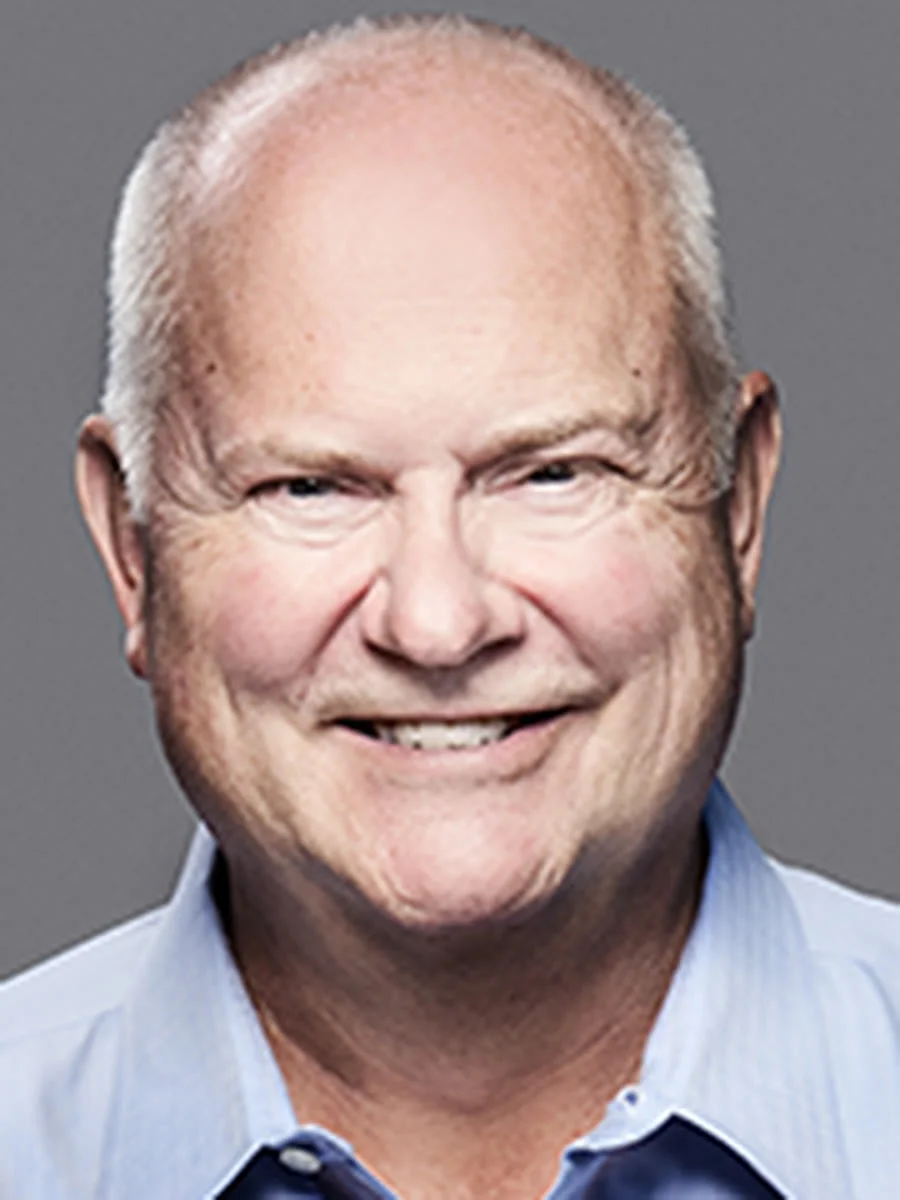
Gary Rieschel
Co-founded Qiming; among the first Western investors to build a genuinely local China firm.
Verified chronology
| period | documented event | evidence boundary and unresolved question |
|---|---|---|
| Before 1979 | Rieschel grew up in Oregon, worked in a lumber mill, studied biology at Reed College, trained as a research biologist, and later earned an MBA from Harvard Business School. | The best public formation account is a 2000 profile; it reports rather than documents the lumber-mill and laboratory episodes. Do not infer that biology caused his later sector method without direct evidence. Forbes, profile entry “Gary Rieschel, Softbank Venture Capital” · Qiming biography, career and education sections |
| 1979–1984 | A Hong Kong prospectus records Intel employment from 1979–82; his 2005 testimony dates his technology career to 1979. Public sources do not reconcile the 1982–84 interval. | The filing is stronger than later promotional bios, but it is a director biography rather than an employment file. hkcyber prospectus, chapter 16 director biography · USCC written statement, PDF p. 1 |
| 1984–1993 | He joined Sequent Computer Systems and spent 1989–93 in Japan, including leadership of Sequent's Asian operation and an American Electronics Association industry committee. | This establishes operating and cross-cultural exposure, not a later investment edge. hkcyber prospectus, chapter 16 · USCC written statement, PDF p. 1 |
| 1993–1995 | The prospectus places Rieschel at Cisco in 1993–94 as director of worldwide channels and at nCUBE in 1995. An AVCJ profile says he helped form the Cisco Japan joint venture backed by SoftBank. | The later account supports a relationship and transaction path but not sole authorship or its precise economics. hkcyber prospectus, chapter 16 · AVCJ profile, “SAIF and sound” |
| 1995–2000 | Rieschel says Masayoshi Son recruited him in November 1995 to form SoftBank's U.S. venture operation. The concentrated Internet strategy included USWeb and participation in SoftBank's Yahoo financing. | SoftBank supplied brand and capital; public material does not disclose IC votes or cash-flow attribution. A 2000 contemporary profile portrayed enthusiasm and emotional attachment as vulnerabilities, recorded Inktomi as his biggest miss, and described an extremely fast deployment culture. [contemporaneous record · moderate] AVCJ Q&A, opening questions · Forbes, profile entry “Gary Rieschel, Softbank Venture Capital” |
| 1999–2004 | Rieschel helped Chauncey Shey form SoftBank China Venture Capital, helped establish the SoftBank Asia Infrastructure Fund/SAIF after Cisco bought SoftBank's Cisco Japan interest, and supported Feng Bo's Ceyuan Ventures. He says he ran SAIF for one year before hiring Andrew Yan. | These are institution-building roles. SAIF, SBCVC, Ceyuan, SoftBank and any personal investment must remain separate vehicles, and “helped” must not become sole-founder credit. AVCJ Q&A, China section · AVCJ profile, “SAIF and sound” |
| 1999–2004 | SoftBank Venture Capital deployed its 1999 fund in about six months; AVCJ later reported it was marked at 3x before the crash but ultimately failed to return 1x. Rieschel left in 2004. | The figures are reported fund-level outcomes, not audited personal returns. Rieschel acknowledged the deployment pace as an error; this is the central public adverse case for his later price and pacing discipline. [investor-stated · moderate] [single-source] [disputed] AVCJ profile, opening section |
| 2005 | In written and oral testimony to the U.S.-China Economic and Security Review Commission, Rieschel argued that China combined manufacturing depth, engineering talent, a large home market and growing risk capital. He also identified IP protection as unresolved. | This is the earliest full primary writing found and freezes his opportunity thesis before Qiming's outcome record. Several quantitative premises were estimates without a source appendix and require contemporary validation. written statement, PDF pp. 1–7 · hearing transcript, printed pp. 43–54/PDF pp. 55–66 |
| 2005–2006 | Rieschel moved to Shanghai, chose former Intel Capital China head Duane Kuang as co-founder, and closed Qiming's first $200 million fund in early 2006. The firm chose an independent Chinese identity rather than “Ignition China”; Ignition did not invest in the GP or funds. | The decision is evidence for local authority, brand and partner selection. It does not show that Rieschel alone created the firm or every operating design. AVCJ profile, section on Qiming's formation |
| 2006–2012 | Qiming built sector teams in technology/consumer, healthcare and cleantech, emphasized early-stage investing, and raised Fund II at $320 million. Nisa Leung led healthcare; JP Gan and the broader team articulated pacing and sector positions. | Firm results and partner work should not be credited to Rieschel personally. Qiming Fund II announcement, mandate and team sections · AVCJ profile, sections on sectors and team governance |
| 2009 | A New York Times profile documented Qiming's unusually field-intensive diligence: mystery renting at eHi, a year-long social-network map before Kaixin, receipt-level financial reconstruction, and walking away from opaque ownership. It named six Rieschel boards and separately credited co-founders Kuang and Gan. | The cases show firm process and some Rieschel governance work, not return causation. The anonymous customer-services investment cannot be independently checked. [documented behavior · moderate] New York Times/Qiming mirror, sections on eHi/Kaixin, the opaque customer-services company and the board roster |
| 2007–2013 | Public records later associated Fund I with Tigermed and Fund II with Gan & Lee and Xiaomi. Hans Tung led Qiming's 2010 Xiaomi investment; Rieschel's 2025 recollection credits Duane Kuang's long advisory work. | These are Qiming vehicle and team outcomes. The public record does not support personalizing Xiaomi as a Rieschel bet. [documented behavior · strong] Forbes on Hans Tung, opening Q&A · Hoover transcript, answer beginning “fund two wound up being quite special” |
| 2012–2016 | In a Fudan lecture summary Rieschel stressed discipline, directness, openness, timing, risk honesty and concise financing pitches. In 2015–16 interviews he stressed macro fit, sector depth, equal partner economics, repeated formal IC discussion, measured deployment and the danger of paper marks. | The Fudan item is a translated/edited summary, not a transcript. The AVCJ profile is stronger direct Q&A but remains retrospective and LP-facing. Fudan summary, sections “Entrepreneurship” and “Financing” · AVCJ profile, sections on the failed SoftBank vintage, sectors and team governance |
| 2013–2017 | Rieschel began stepping back from leading China deals, remained on the investment committee, relocated to Seattle in 2016 and worked on a separate U.S. cross-border-healthcare initiative. An AVCJ succession report describes shared economics, internal promotion and an explicit compensation transition. | This is unusually good vehicle/team evidence; exact carry percentages, legal-entity boundaries and voting rights remained private. AVCJ succession profile, PDF pp. 10–13 · Qiming official biography, closing relocation sentence |
| 2019 | At Fudan, Rieschel again framed partner trust and institutionalization as the decisive organizational choices and described healthcare-market change through Tigermed and other Qiming investments. | The Chinese page says it is selected live shorthand; translations and firm metrics are not audited, and sector outcomes remain team-attributed. Fudan live-note, sections 01–03 |
| 2022–2026 | Qiming reported more than $8 billion of assets in 2022; its current site reports $9.5 billion of capital raised, while a UCSD program page reports more than $11 billion under management. A draft prospectus filed in 2026, reporting facts through 2025, identifies Rieschel and Kuang as the only 30%+ shareholders of Qiming Corporate GP VI. | AUM, capital raised and current managed assets are different metrics and dates; they must not be merged. The draft filing documents corporate control of one GP structure, not the whole firm or an individual carry split. Wire China, PDF pp. 1–2 · Qiming biography · UCSD China Forum profile, “Profile” · HKEX draft prospectus, filed 2026-01-02, PDF p. 19 |
| 2025 | In a Hoover interview, Rieschel described the absence of early legal/accounting infrastructure, VIE ambiguity, equal compensation/carry, curiosity and generosity as hiring filters, one partner's repeated ByteDance passes, long liquidity cycles and current geopolitical constraints. | It is a rich retrospective account, not contemporaneous deal documentation. Specific performance numbers—Tigermed returning Fund I and Gan & Lee returning a reported $1 billion—remain [self-reported] [single-source] and vehicle-level. Hoover transcript, answers on early infrastructure/VIEs, partner design, ByteDance and liquidity |
People, institutions, and authority map
| person or institution | documented relationship | role evidence | attribution boundary |
|---|---|---|---|
| Masayoshi Son / SoftBank | Recruited Rieschel to build the U.S. venture organization; supplied brand and capital. | SoftBank's Internet-scale ambition and vehicle resources predate Qiming. | Separate Son/SoftBank capital and Yahoo exposure from Rieschel's personal economics or sole-decision credit. |
| Duane Kuang | Qiming co-founder; longtime China operator and investor. | Rieschel calls partner selection the key formation decision and credits Kuang's Xiaomi advising. | Preserve co-founder, advisory, IC and GP-control credit; unknown deal-level allocations stay unknown. |
| Nisa Leung | Joined early to lead healthcare. | Sector leadership and many company/board roles are publicly attributed to Leung. | Do not convert Qiming healthcare outcomes into Rieschel's stock-picking record. |
| JP Gan and William Hu | Founding-era senior team and managing partners. | Weekly IC, sector diligence and firm-building are shared. | Specific sourcing, sponsorship, follow-on and exit roles require company-level records. |
| Hans Tung | Joined Qiming after founding; led Xiaomi and several consumer deals. | Contemporaneous Forbes and AVCJ accounts explicitly attribute Xiaomi leadership to Tung. | Rieschel inherited/participated in firm stewardship; that is not original sourcing or thesis ownership. |
| Chauncey Shey, Andrew Yan, Feng Bo and John Zagula | Built SBCVC, SAIF, Ceyuan and Qiming-linked institutions with Rieschel. | The evidence supports sponsor, recruiter, capital and formation relationships. | “Helped form” is not sole-founder status; legal entities and economics remain distinct. |
| Princeton and other LPs | Early institutional backers; Princeton entered Fund I and increased in Fund II. | LP capital and re-ups helped stabilize a local franchise. | LP endorsements are not audited return evidence; current investor lists may be incomplete. |
| Founders and company teams | Lei Jun/Xiaomi, Gan & Lee, Tigermed and others produced operating outcomes. | Rieschel explicitly calls venture a service industry and assigns company building to CEOs and teams. | Never absorb founder/operator value creation into an investor biography. |
[researcher inference · strong] This map is a control against lone-hero narration, supported by the 2016 AVCJ profile, 2016 succession report, Hans Tung attribution and 2025 Hoover transcript.
A testable account of the edge
Rieschel's plausible edge is institutional architecture for low-information cross-border markets, not lone-wolf stock picking. The record shows him combining a value-chain map with embedded local partners, equal senior economics, sector specialists, field-built diligence, collective review and slower deployment after the SoftBank loss. [researcher inference · moderate] The supporting evidence is unusually coherent across a decision-date writing, contemporaneous diligence reporting, partnership filings and later process accounts, but it is not a matched outcome study. 2005 statement · 2009 diligence profile · Taomee 13G · 2016 AVCJ profile
If the thesis is real, previously unseen records should show four things: locally embedded partners holding real authority and economics; sector-specific evidence gates rather than generic growth screens; material opportunities reaching collective review; and Qiming's ordinary cases outperforming comparable vintages after price, ownership and liquidity are controlled. It would be falsified if full files show that Kuang, Leung, Tung, Gan, Hu and other partners supplied the decisive judgment while Rieschel mainly supplied capital or later narration; if the process was used only on remembered winners; or if outlier-removed cash flows show no improvement over the fast-deployment SoftBank record. [researcher inference · strong] AVCJ profile, formation, IC and pacing sections · New York Times/Qiming mirror, diligence and partner-attribution sections
The evidence supports a narrower personal contribution: Rieschel repeatedly sponsored institutions, chose or recruited local leaders, accepted shared economics, served on documented boards and narrated failures without claiming every company. It does not establish a Gary Rieschel personal IRR, hit rate, investment denominator or causal share of Qiming's company outcomes. [researcher inference · strong] deal denominator and cases
Comparison with completed peers
| completed investor | closest similarity | decisive difference | lesson from the comparison |
|---|---|---|---|
| Peter Brooke | Both built institutions across borders by pairing common standards with local champions, authority and succession. | Brooke's affiliate failures expose the control-versus-autonomy problem more directly; Qiming discloses stronger equal-economics and shared-IC evidence. | [researcher inference · moderate] Local authority is testable only through decisions, economics, negative-information flow and survival after the sponsor steps back. |
| Jim Breyer | Both joined U.S. networks, China partnerships and power-law outcomes while creating difficult vehicle and team attribution problems. | Breyer has a more identifiable personal sponsorship case in Facebook; Rieschel's strongest case is franchise design rather than a single famous selection. | [researcher inference · moderate] Separate thematic preparation, access, partner work, securities and fund return before assigning personal greatness. |
| Yigal Erlich | Both treated venture institutions, incentives and local capability as ecosystem infrastructure. | Yozma was a time-bounded public-minority/private-manager program; Qiming is a private multi-vintage partnership operating under different policy and LP constraints. | [researcher inference · moderate] Institutional design can expand an ecosystem without proving the architect's personal deal alpha. |
Profile synthesis
The biography divides into three learning loops. First, Sequent/Cisco/SoftBank taught Rieschel to read standards, distribution and value-chain migration across the United States and Asia. Second, SoftBank's 1999 deployment failure turned capital velocity and paper marks into explicit hazards. Third, Qiming translated those lessons into a locally branded China partnership with shared senior incentives, sector teams, formal discussion and succession. [researcher inference · strong] writings chronology · SoftBank failure lab
The intellectual core was stable: ecosystems matter, technical and commercial capabilities migrate, and local context cannot be learned from a plane. What changed was risk calibration. The 2005 statement treated capital and reform mainly as catalysts; later accounts treat overcapitalization, uncertain legal structures, state intervention and closed exit routes as possible binding constraints. This is learning, but also a warning that the original macro confidence was too categorical. [researcher inference · strong] spoken evolution
The best concrete evidence of application is distributed across the firm. Tigermed links sector infrastructure to a documented Rieschel board role; LanzaTech links a contemporaneous thesis to fourteen years of governance; Gan & Lee and Xiaomi demonstrate power-law economics while allocating operating and partner credit away from Rieschel. The ByteDance pass demonstrates that the collective-review system could fail at its first gate. [researcher inference · moderate] five decision labs
For a modern investor, the reusable achievement is therefore not “copy Qiming's China portfolio.” [researcher inference · strong] It is a governed sequence: map where value is moving; embed decision authority in the market; define proof by sector physics; reconstruct ground truth when institutions are weak; match capital to proof and exit reality; and audit whether collective review actually catches material disagreement. 2005 statement, PDF pp. 2–7 · 2009 diligence profile · 2016 AVCJ profile
The strongest case against greatness
The skeptical case is substantial. Qiming's public record is selected and promotional: 580+ companies, 210+ exits and 80+ unicorns, but no dated full portfolio, write-off set, fund cash-flow schedule or matched pass cohort. Only 33 Qiming lineages were selected for this review and eight were sufficiently reconstructed for a bounded chronology, ownership, governance or outcome claim—at most 5.7% research-selection coverage, not performance coverage. [researcher inference · strong] denominator reconciliation
The largest visible outcomes weaken a personal-picking story. Rieschel assigns Gan & Lee to Nisa Leung and the shared team, Xiaomi's long support to Duane Kuang, and company creation to founders. Tigermed's whole-fund return and Gan & Lee's reported $1 billion remain [self-reported] [single-source] and unaudited. The earlier SoftBank vehicle reportedly fell from a 3x mark to below 1x after six-month deployment [single-source] [disputed], and Qiming passed ByteDance twice outside partnership review. Correct China direction, senior access and excellent partners could explain much of the visible record without repeatable personal alpha. [researcher inference · strong] Hoover, return/ByteDance answers · AVCJ, failed SoftBank vintage · deal attribution and outcome table
No reviewed enforcement route identified a proceeding against Rieschel or Qiming, but that negative search is not legal clearance. The harder criticism is evidentiary: ordinary losses, private disputes, partner labor, price, ownership, distributions and net LP outcomes are mostly unavailable. [researcher inference · strong] adverse search boundary
What the evidence supports—and does not
Supported with strong or moderate evidence: Rieschel formed and sponsored multiple venture institutions; lived in Japan and China; co-founded Qiming with Kuang; accepted documented shared authority/economics in at least named structures; articulated a value-chain and ecosystem thesis before Qiming outcomes; acknowledged the SoftBank pacing failure; held documented Tigermed/LanzaTech governance roles; and helped design a locally led, sector-specialist franchise that survived succession. [documented behavior · strong] chronology · deal/team evidence
Not supported by the public record: a personal return series; audited Qiming fund performance; a complete loss, pass or company denominator; a causal board-effect estimate; sole credit for Xiaomi, Gan & Lee or Qiming's healthcare franchise; stable authority across every USD, RMB, guidance or U.S. vehicle; or proof that the process outperformed matched peers after outliers. [researcher inference · strong] denominator and retrieval boundary
The highest-value missing records are Qiming vintage cash flows, the complete 580+ company and write-off ledger, the twelve unnamed SoftBank investments in Rieschel's biography, the 1999 fund's identity and cash flows, decision and realization records for Tigermed/Gan & Lee/Xiaomi/LanzaTech, the ByteDance rejection files, partner work allocation, and non-U.S. legal dockets. Until those appear, the defensible conclusion is that Rieschel was a consequential institution builder and governor whose personal investment alpha remains unproved. [researcher inference · strong] retrieval ledger
1. Snapshot and testable edge thesis
Rieschel's defensible philosophy is a system for investing where markets grow faster than their information, legal and managerial institutions. Map how value is migrating; put real authority in locally trusted partners; specialize by sector; reconstruct operating truth in the field; require material opportunities to reach collective review; and let company proof and realizable liquidity—not available fund capital or paper marks—set the pace. [researcher inference · moderate] 2005 writing · 2009 diligence profile · 2016 process account
This is an institution-building thesis, not a claim that Rieschel personally selected Qiming's winners. It predicts locally embedded decision rights, sector-specific gates, consistent use on ordinary and failed deals, and better outlier-removed vintage outcomes after the SoftBank process correction. Full partnership, pipeline and cash-flow records could falsify every part. testable profile
2. Core philosophy
Map value migration before selecting a company
The 2005 statement argues that standards, manufacturing density, design tools, technical labor, market scale and risk capital can shift profit from assembly toward design, brand and distribution. [investor-stated · strong] It is a market-formation map, not a security-selection algorithm: company capture, price, governance and exit must still be proved. writing analysis
Embed authority rather than export a brand
Rieschel moved to Shanghai, chose Duane Kuang as co-founder and used an independent Chinese identity rather than a foreign franchise label. He later argued that an investor should live locally for roughly the holding period. [documented behavior · strong] Fudan trust note · Homeward note
Make proof sector-specific
His 2013 remarks distinguish Internet products that may be underwritten before revenue from healthcare companies that need discovery or efficacy evidence and cleantech companies that need customers or a credible service model. [investor-stated · strong] The public deal files are too incomplete to show consistent application. Thoughtful China note
Reconstruct ground truth
The 2009 record describes site visits, mystery rentals, ownership checks, nearly a year of market mapping and receipt-level financial reconstruction. [documented behavior · moderate] These practices reduce dependence on weak records; one selected article cannot establish their portfolio-wide use or causal effect. NYT/Qiming profile
Match capital and liquidity to evidence
SoftBank's 1999 vehicle was reportedly deployed in six months, marked at 3x and ultimately below 1x. The outcome is [retrospective witness · moderate] [single-source] [disputed]; Rieschel's pacing lesson and Qiming's later emphasis on steadier deployment and repeated review are [investor-stated · strong]. SoftBank failure lab
3. Sourcing
The visible sourcing system combines local partner networks, sector reputation, founder and portfolio referrals, university/community ties and systematic market mapping. Gan & Lee entered through a school-parent connection when the healthcare team could not obtain a meeting; that example proves access, not selection skill. Qiming's current page says portfolio referrals increasingly matter, but publishes no channel conversion or performance cohort. [investor-stated · moderate] Gan & Lee/Xiaomi lab · Qiming about
An implementable sourcing ledger should record: introducer and economic interest; local relationship owner; cold-route comparison; sector map position; why the company is visible now; conflicts; prior passes; and whether a material opportunity reached partnership review. The ByteDance account makes escalation part of sourcing quality, not only IC quality. [researcher inference · strong] ByteDance lab
4. Picking
Team
Rieschel repeatedly emphasizes trust, curiosity, generosity, directness and willingness to expose bad news. Equal senior economics and partner succession make those traits institutional inputs rather than founder charisma tests. [investor-stated · moderate] Candor and generosity are plausible signals, but no named accepted/rejected cohort validates predictive power. Fudan trust note · Hoover note
Product and technical proof
The evidence threshold should match sector physics: behavior and retention may lead revenue in Internet products; healthcare needs scientific, clinical and regulatory proof; industrial/climate systems need repeatable yield, counterparties, capex and scale-up evidence. [investor-stated · strong] sector thresholds · LanzaTech lab
Market and ecosystem
Require a reinforcing system of demand, talent, infrastructure, standards and capital—but identify the scarce complement and who controls it. A large country, category or technical wave is not a moat. [researcher inference · strong] The 2005 testimony's correct directional confidence coexisted with insufficient sensitivity to VIE enforceability, capital reversal and exit closure. writings playbook
Data, governance and truth
When accounting, ownership or customer records are unreliable, create independent evidence: observe sites, reconcile receipts, verify legal control, sample customers and identify stop authority. Walk away when ownership cannot be established. [documented behavior · moderate] Diligence intensity cannot cure a prohibited transaction, a non-transferable license or absent liquidity. 2009 profile · Treasury boundary
Price, ownership and exit
Company success, market capitalization, beneficial ownership and fund return are different variables. Underwrite security, cost, dilution, reserves, realization path and vehicle beneficiary. The reviewed public record supports no Rieschel personal IRR and no complete Qiming fund return. [researcher inference · strong] economic-contribution view
Decision card
Before approval, record:
- the value layer moving and the company's evidence of capture;
- the local decision owner, sector specialist and independent references;
- proof thresholds and kill conditions by technical/commercial/regulatory risk;
- ownership, price, reserve need and three-year exit-closure case;
- conflicts, dissent, earlier passes and escalation path;
- the next evidence that changes the follow-on decision; and
- which claim is investor-stated, documented, inferred or still unavailable.
[researcher inference · strong] This card operationalizes the corpus; it is not a recovered Qiming template.
5. Deal and portfolio mechanics
Use staged checks when a proof point materially changes technical, market, regulatory or financing risk. Preserve reserves through long evidence cycles, but do not infer Qiming's historic reserve policy from LanzaTech and WeRide follow-ons. Separate entry decision, board work, follow-on, exit and later narration. [researcher inference · strong] portfolio forensics
At portfolio level, track stage, sector, geography, partner, sourcing channel, check, ownership, reserve, write-off, realized proceeds and public/unrealized value on a consistent vintage basis. Qiming's current 580+ investments, 210+ exits and 80+ unicorns are promotional live counts whose definitions and dated denominator are not public. The 33 selected Qiming lineages here are at most 5.7% research-selection coverage, never a hit-rate sample. [researcher inference · strong] denominator
Pareto analysis needs three views. Gan & Lee, Tigermed and Xiaomi lead the visible economic story; Qiming's local institution and Tigermed matter historically; SoftBank pacing and ByteDance matter most for decision learning. No public cash-flow schedule supports a literal 80/20 split. [researcher inference · strong] Pareto views
6. Vehicle and incentive fit
SoftBank Venture Capital/Mobius, SBCVC, SAIF, Ceyuan, Ignition, Qiming's China USD and RMB funds, guidance capital, U.S. healthcare vehicles and any Rieschel personal commitments are distinct beneficiaries and governance systems. Never pool their companies or economics. [researcher inference · strong] vehicle scopes
Qiming's reported equal managing-partner cash and carry should reduce deal-hoarding and internal status incentives, while weekly collective review should distribute judgment. [investor-stated · moderate] Taomee and Jasper filings confirm shared authority in named structures, not the full partnership or labor performed. Equal economics can also enable groupthink, free riding or slow decisions; ByteDance shows a pre-IC escalation breach. vehicle economics
7. Team attribution and work with founders
Company creation belongs first to founders and employees. Deal credit must be decomposed into sourced, sponsored, diligenced, approved, negotiated, board work, recruited, follow-on, exit influence and later narrator; absent evidence remains unknown. Shared IC or beneficial-ownership filings do not prove individual labor. [researcher inference · strong] people map
Public boundaries are unusually clear in several cases: Hans Tung led Qiming's Xiaomi investment; Rieschel credits Kuang's long company support; Nisa Leung originated Gan & Lee; Rieschel held documented Tigermed and LanzaTech boards. Those facts strengthen a team-franchise thesis and weaken a personal-deal legend. [documented behavior · strong] profile authority map
Rieschel calls venture a service industry. The test is observable founder benefit—recruiting, customer introductions, governance, regulatory navigation, financing or difficult truth—not board tenure or a testimonial. The public record does not estimate causal board value. [researcher inference · strong] Hoover note · board evidence boundary
8. Views on the craft
The corpus treats venture as long-duration apprenticeship, localized judgment and organizational service. Pattern recognition must be paired with curiosity because a remembered pattern can be false in a new market. Partner generosity matters because equal economics and succession depend on sharing opportunity and credit. [researcher inference · moderate] Hoover note
Macro knowledge helps define where to look, not what to buy. Rieschel's talks repeatedly separate China innovation from simplistic copying while later acknowledging that legal and liquidity regimes can overwhelm company quality. The craft therefore needs both structural patience and the humility to stop when title, price or exit cannot be underwritten. [researcher inference · strong] talks synthesis · forecast scorecard
9. Signature bets and decision process
Tigermed
The public rationale was a domestic CRO able to perform trials to global analytical standards; Rieschel served on the board and [self-reported] [single-source] that the company returned Fund I. The outcome is [retrospective witness · moderate]; entry terms, realization and causal board work are unavailable. Tigermed lab
LanzaTech
Qiming led an $18 million 2010 round around industrial-waste-gas fermentation; Rieschel joined as Qiming's nominee and remained through the public transition. [contemporaneous record · strong] Fourteen years of governance is not proof of return. LanzaTech lab
Gan & Lee and Xiaomi
These are Fund II power-law cases with divided credit. Leung originated Gan & Lee; Kuang and Tung receive Xiaomi work credit; issuer/firm records support bounded ownership and chronology. Rieschel's reported $1 billion Gan & Lee return is [self-reported] [single-source] and unaudited; Xiaomi proceeds are unknown. [researcher inference · strong] combined lab
SoftBank 1999 and ByteDance
The SoftBank loss shows capital pacing, paper-mark and reserve risk; ByteDance shows a material opportunity bypassing collective review. They are more useful for process design than any success anecdote because both expose a rule and its failure. [researcher inference · strong] SoftBank lab · ByteDance lab
10. Mental models and maxims
Six models survive the evidence threshold:
- follow value migration, then prove company capture;
- embed local authority for the full risk horizon;
- match proof thresholds to sector physics;
- reconstruct operating truth when institutions are weak;
- match capital pace to proof and realizable liquidity; and
- align senior economics, then force material opportunities into collective review.
Each model has provenance, applications, counterexamples, falsifiers and a dated 2026 translation in mental-models.md. “Curiosity and generosity predict investment outcomes” remains a candidate, not a promoted model, because no named outcome cohort tests it.
11. Evolution and contradictions
| phase | stable belief | material change or contradiction |
|---|---|---|
| 1995–2000 SoftBank | Internet adoption and network effects were structural. | Capital pace overwhelmed price, reserves and realization; a reported 3x mark ended below 1x. [retrospective witness · moderate] [single-source] [disputed] failure lab |
| 2005 market thesis | Manufacturing, design, talent, demand and capital could compound into Chinese innovation. | “Guarantee” language exceeded the paper's sensitivity to reform, IP, VIE and exit reversal. |
| 2006–16 Qiming formation | Local knowledge, sector depth and company service matter. | Equal economics and repeated review responded to earlier incentives but did not prevent the ByteDance bypass. |
| 2016–25 mature view | Structural China capability remained real. | Liquidity, legal ambiguity, state policy and geopolitics became binding constraints; capital shifted from catalyst to potential hazard. |
[researcher inference · strong] The changes show learning, but later clarity cannot be projected backward into the original decisions. writings chronology · spoken change ledger · forecast tensions
12. Failures and limits
- SoftBank/Mobius: rapid deployment, survival triage and a reported sub-1x outcome. Process lesson supported; complete fund economics and numbering disputed. [retrospective witness · moderate] [single-source] [disputed] failure lab
- ByteDance: passed twice outside partnership review. Process failure supported; rejection rationale and counterfactual value unavailable. [investor-stated · moderate] [single-source] miss lab
- China liquidity/regulatory turn: Rieschel says Qiming missed the reversal. Diagnosis is retrospective; write-down and process response are not public. [retrospective witness · moderate] Hoover note
- Inktomi and ordinary companies: contemporary reporting records the miss; Vancl, Kaixin, Touch Media, LP Amina and others prevent a winner-only narrative, but cannot be labeled write-offs without evidence. [researcher inference · moderate] adverse record
- Legal/adverse boundary: targeted U.S. searches found no proceeding naming Rieschel/Qiming. That is not clearance, and non-U.S., private or sealed matters remain outside the record. [researcher inference · insufficient public record] search boundary
Failure and adverse record shows why the philosophy must be tested on full cohorts rather than successful retrospectives.
13. Historical operating environment
SoftBank's U.S. venture operation invested through the 1990s Internet adoption and 2000 crash, when public marks could accelerate private deployment before distributions existed. Qiming formed while China's local venture, accounting, legal and reference infrastructure was immature but engineering talent, domestic demand and capital were expanding. Its 2005–12 opportunity set cannot be evaluated using today's institutions or restrictions. historical context
By the mid-2010s, competition, valuations and RMB liquidity changed entry conditions; later VIE, listing, state-policy, data and geopolitical restrictions changed exit and control. Treasury's outbound program, effective 2025-01-02 for specified China/Hong Kong/Macau semiconductor, quantum and AI transactions, is a current transfer constraint—not evidence that a 2005 deal violated a later rule. Treasury program
14. Modern VC translation (as of 2026-08-22)
What transfers
- Map the full technical, talent, customer, regulatory, capital and exit system. [researcher inference · strong] Model 1
- Put meaningful economics and authority with locally embedded specialists. [researcher inference · strong] Model 2
- Define stage gates by sector physics, not a universal revenue template. [researcher inference · strong] Model 3
- Build independent operating evidence where records or incentives are weak. [researcher inference · strong] Model 4
- Match check size and deployment pace to the next binding proof. [researcher inference · strong] Model 5
- Escalate material passes and record dissent before the outcome is known. [researcher inference · strong] Model 6
What changed
Cross-border advanced-technology investing now faces outbound controls, data/security rules, fragmented standards, uncertain listing routes and higher political tail risk. This translation treats model access, evaluation, inference cost, data rights and security as explicit AI evidence gates; a large technical market remains insufficient without legal title and realizable economics. [researcher inference · strong] Treasury current boundary · modern model translations
A 2026 implementation
Run one pre-IC memo with five ledgers: value-layer capture; local authority and conflicts; sector evidence/kill gates; security/capital/liquidity; and pass/escalation/dissent. At follow-on, compare dated predictions with actual proof. At portfolio review, publish outlier-removed realized/unrealized results and a pass/loss denominator. [researcher inference · strong] six-model implementation · denominator boundary
Misuse guards
Do not use “local context” to excuse opacity, “patient capital” to excuse missing milestones, “service” to claim founder value, “team” to erase responsibility, or a correct macro theme to ignore price and exit. Do not retroactively apply current restrictions to historic decisions. [researcher inference · strong] model failure ledgers · historical boundary
15. Comparison with completed peers
The closest comparison set is Peter Brooke for cross-border institutional translation, Jim Breyer for U.S.–China networks and vehicle attribution, and Yigal Erlich for incentive-led ecosystem design. The cells compare disclosed doctrine and boundaries, not returns or rank. [researcher inference · moderate]
| dimension | Rieschel / Qiming | Peter Brooke | Jim Breyer | Yigal Erlich |
|---|---|---|---|---|
| Sourcing | Local sector teams, partner/founder referrals and market maps; no conversion denominator. T043 sourcing | Relationship funnels plus locally accountable knowledge; Brooke did not invent Morby's later TA outbound system. Brooke sourcing | Prepared themes, partner discovery, repeat founders and institutional networks; access still needs independent validation. Breyer sourcing | Public-office and international-manager access are evidenced; named-company sourcing is not. Erlich sourcing |
| Picking | Sector-specific proof gates, founder candor and formal dissent; original scorecards are unavailable. T043 picking | Market/technology/management/candor screen with external technical dissent; application denominator missing. Brooke picking | Simple high-engagement wedge, adaptive team and institutional fit; explicit price/ownership rule absent. Breyer picking | Manager-capability and public-eligibility screens are visible; company-level picking is not. Erlich picking |
| Ownership | No career-wide target, cost/dilution path or sell rule; a few issuer snapshots bound specific cases. T043 mechanics | No universal target or price rule; one late Unitrode snapshot does not recover entry economics. Brooke mechanics | Facebook/Circle filings separate entities, but no public target, dilution budget or loss ratio exists. Breyer mechanics | Yozma's public stake cap and call option are documented; named-company securities and personal economics are not. Erlich mechanics |
| Portfolio construction | Measured vintage pacing and sector teams are stated; reserves, concentration, loss ratio and outlier-removed cash flows are absent. T043 mechanics | Stage/mandate diversification is explicit; the International Network Fund shows mandate-drift risk. Brooke mechanics | Fund size, ownership, reserves, correlation and partner bandwidth are explicit controls; Accel VIII is the adverse case. Breyer mechanics | Ten fund stakes plus a direct sleeve diversify manager exposure; reserve, loss and ownership-weighted schedules are missing. Erlich mechanics |
| Governance | Equal senior economics, specialist teams, shared IC and succession; named labor still differs from legal authority. T043 team | Local champions plus common evidence/rights; Japan, Hong Kong and affiliate disputes expose the autonomy/control fault line. Brooke governance | Senior sponsorship, recruiting, boards and adverse-first discussion; Facebook requires explicit Chien/Efrusy/Accel credit. Breyer governance | Underlying managers held company authority while public and private actors shared program governance. Erlich governance |
| Vehicles | SoftBank, SAIF/Ceyuan, Qiming China and Qiming U.S. are distinct; duration, currency, geography and liquidity change the strategy. T043 vehicles | Bank, family, SBIC, affiliate, account, country and pooled vehicles changed feasible mandate and rights. Brooke vehicles | Accel funds, trust, Breyer Capital and IDG-Accel cannot be pooled for attribution or economics. Breyer vehicles | Temporary state company, ten private-majority funds, direct sleeve and private successors encode different objectives. Erlich vehicles |
| Incentives | Shared senior compensation/carry and succession are stated, but agreements, allocation and realized effects remain private. T043 incentives | Shared ownership and retained economics were design tools; agreements, carry, offsets and clawbacks are absent. Brooke incentives | Reported Accel fees/carry illuminate one context; family-office duration may differ, but allocation rules are private. Breyer incentives | Capped public upside and private downside aimed to crowd in capability; original fee/carry and successor incentives are incomplete. Erlich incentives |
| Failures | SoftBank pacing, early semiconductors, ByteDance bypass and missed state/liquidity shifts test the doctrine. T043 failures | Japan, International Network Fund, Hong Kong support and Wang test portability, mandate and governance. Brooke failures | Accel VIII, Google, Prosper, AOL–Time Warner and Harbor test fund scale, passes, regulation and outcome attribution. Breyer failures | Expired options, direct-sleeve conflict, e-SIM and unresolved ordinary holdings constrain the policy-success story. Erlich failures |
Underlying controls were reopened in the peer packages: Brooke's Computer History Museum oral history, Breyer's Facebook filing and team-attributed Forbes account, and the OECD's Yozma structure. The shared lesson is that institution building, access and company outcomes do not by themselves establish personal alpha. [researcher inference · strong]
16. The strongest case against greatness
The available record may describe a senior sponsor who correctly recognized China's rise, recruited exceptional local partners and narrated a favorable selected record. The economic leaders are partner- and founder-attributed; ordinary outcomes are mostly invisible; three reported return claims are unaudited; and Qiming's full cash flows, losses, passes, ownership and partner labor are not public. SoftBank's failed fast-deployment vehicle and Qiming's ByteDance bypass also show that articulated rules were not always operating controls. [researcher inference · strong] profile skeptical case
The thesis earns respect because it predicts records that could disprove it. Until those records are available, the strongest conclusion is institution-building skill with unproved personal investment alpha—not a quantified Midas ranking. [researcher inference · strong] retrieval ledger
17. Analyst study guide, glossary, and go deeper
Recommended order
- Read the 2005 authored statement note before later success stories.
- Read the SoftBank and ByteDance labs before the winners.
- Compare Tigermed, LanzaTech, Gan & Lee and Xiaomi for personal/team/vehicle boundaries.
- Use talks.md to distinguish repeated doctrine from one-off remarks.
- Apply the mental models to a current opportunity, including the exceptions.
- Finish with the adversarial review and retrieval ledger.
Ranked primary sources
- 2005 USCC written statement — best decision-date intellectual anchor because Rieschel states the China value-chain, talent, demand, capital and IP-risk thesis before Qiming's results; several estimates still lack a source appendix. [contemporaneous record · strong]
- 2005 USCC hearing transcript, printed pp. 43–54 and 56–62 — best contemporaneous cross-examination of the thesis and product/IP rule; it is policy testimony, not an investment memo. [contemporaneous record · strong]
- Xiaomi prospectus, “Major Pre-IPO Investors,” printed pp. 193–199 and LanzaTech 2024 proxy, printed pp. 9 and 17 — best issuer controls for bounded ownership and governance; neither filing supplies Qiming's entry cost or realized return. [contemporaneous record · strong]
- 2025 Hoover official transcript — richest direct-voice account of formation, partner design, misses and liquidity; its deal and return memories are retrospective, selected and unaudited. [retrospective witness · moderate]
- Taomee SEC 13G and Jasper SEC 13G — best legal-entity controls for shared voting/dispositive authority; authority is not labor, sourcing or personal economics. [contemporaneous record · strong]
Ranked secondary and edited sources
- 2016 AVCJ/Qiming profile — highest-density formation, IC, incentive, pacing and failure account; direct answers are valuable, but the SoftBank outcome remains single-source and vehicle numbering disputed. [retrospective witness · moderate]
- Forbes 2000 profile — strongest near-contemporaneous adverse control on SoftBank deployment, survival triage and Rieschel's operating style; it predates the final fund outcome. [contemporaneous record · moderate]
- 2009 New York Times profile mirrored by Qiming — best field-diligence and partner-credit account from Qiming's early operating period; selected cases cannot prove portfolio-wide use or returns. [documented behavior · moderate]
- 2016 AVCJ succession report, PDF pp. 10–13 — best edited account of shared economics, internal promotion and Rieschel's transition; legal agreements and exact carry allocations remain private. [retrospective witness · moderate]
- Qiming/China Entrepreneur on Gan & Lee — strongest partner-attributed chronology for Nisa Leung's work and the long listing path; firm-hosted retrospective evidence does not prove cash-flow economics. [retrospective witness · moderate]
Glossary
- Decision-date freeze: only evidence available when the decision occurred.
- Documented behavior: an action supported by contemporaneous or primary records.
- Investor-stated: the investor's claim, not independently verified fact.
- Researcher inference: a synthesis that must expose assumptions and falsifiers.
- Vehicle: the legal/economic beneficiary whose security and cash flows matter.
- Paper mark: an unrealized valuation, not a distribution.
- DPI / TVPI / IRR: distributions, total value and time-weighted fund metrics; none is publicly complete here.
- Selection coverage: the share of a public company denominator researched; not a hit rate or economic coverage measure.
- VIE: a contractual control structure whose enforceability and regulatory treatment can be material.
Reusable questions
- Where is value moving, and what proves this company captures it?
- Who is locally accountable, economically aligned and independently referenced?
- What sector-specific evidence unlocks the next check, and what kills the deal?
- Which entity owns the security, who did the work, and who receives the economics?
- What survives a three-year exit closure and an outlier-removed portfolio test?
- Which material opportunities never reached the partnership, and why?
- What private record would most likely falsify the story being told?
Pareto 80/20 — what drove the record
The public record supports a power-law interpretation, but not a literal 80/20 calculation. Qiming says it has backed more than 580 companies, yet it does not publish paid-in capital, write-offs, dilution, distributions, fees, carry, or company-level cash flows. Rieschel's 2025 retrospective [self-reported] identifies Tigermed as sufficient to return Fund I and [self-reported] says Gan & Lee returned $1 billion to Qiming, while crediting Duane Kuang's years of work with Xiaomi; those are unusually useful attribution signals, but they remain unaudited, gross/net basis and timing unspecified. Hoover, transcript, answer beginning “The deals are the deals” Pareto judgment: [investor-stated · moderate] for directional contribution; [insufficient public record] for a numeric split.
Economic-contribution view
| Rank | Candidate driver | Public basis or measure | Attribution | Confidence / support | Mechanism supported | Denominator caveat | Case / ledger |
|---|---|---|---|---|---|---|---|
| 1 | Gan & Lee Pharmaceuticals | Rieschel [self-reported] that the Fund II investment returned $1 billion to Qiming. A contemporaneous Qiming retrospective says the firm invested in 2010 and identifies Nisa Leung as the responsible healthcare partner; it does not disclose cash-flow timing or net LP return. Hoover transcript, Rieschel answer on Fund II; Qiming/China Entrepreneur, “ten-year investor,” paras 20–29 |
Founder Gan Zhongru, company team, Nisa Leung and the Qiming II team; Rieschel shared GP/IC economics and governance, but no personal sourcing claim | [investor-stated · moderate] for reported proceeds; [documented behavior · strong] for Leung/team credit |
Long-duration early biopharma ownership through a difficult domestic listing path | Entry cost, ownership through time, distributions, recycling, fees/carry and gross/net basis are absent | Case 3 |
| 2 | Tigermed | Rieschel [self-reported] that Tigermed “returned the entire” Fund I; a separate retrospective identifies Fund I as $200 million. The claim does not specify realized versus marked value, date, or gross/net basis. Qiming's 2012 release documents its first domestic IPO and a roughly RMB2.7 billion first-day market capitalization, not Qiming proceeds. Hoover transcript, Tigermed answer; AVCJ/Qiming, fund-size history; Qiming, “Tigermed IPO,” offering facts |
Tigermed founder/team; Qiming Fund I; Rieschel was the board member; Ignition was the only other institutional investor identified at IPO | [investor-stated · moderate] for fund-return claim; [contemporaneous record · strong] for IPO/board chronology |
Documented board participation and a domestic listing; the operating/capability-creation mechanism is not established | Cost, security, follow-ons, dilution, sale dates and distributions are missing | Case 1 |
| 3 | Xiaomi | At the 2018 prospectus date, Qiming II vehicles held about 3.98% before the offering; Rieschel calls Xiaomi one of Fund II's two huge hits but credits Duane Kuang for advising it over many years. No realized Qiming proceeds are public here. Xiaomi prospectus, “Major Pre-IPO Investors,” printed p.199 / PDF p.13; Hoover transcript, Fund II answer | Lei Jun/company, Qiming II team, and especially Duane Kuang for Qiming's board/advisory work; not a Rieschel-personal deal | [investor-stated · strong] for explicit teammate credit; [contemporaneous record · strong] for pre-IPO ownership; [insufficient public record] for return |
Early ownership in a scaled consumer-hardware ecosystem | Ownership at one date cannot establish invested cost, dilution path, lockups, sales or contribution | Case 3 |
| NR | SoftBank/Mobius early funds | In July 2000 Rieschel [self-reported] 125%–200% annual returns for the three 1995–1998 funds; a 2016 retrospective says four 1996–1998 funds produced 26 IPOs and 15 M&A exits. The return range is [single-source] in the reviewed record; the two accounts are [disputed] on fund count/scope, and neither supplies audited cash flows. Forbes, paras beginning “Since setting up”; AVCJ/Qiming profile, opening section |
Masayoshi Son, Ronald Fisher, Rieschel and the SoftBank Venture Capital/Mobius team; company founders deserve operating credit | [investor-stated · provisional] for returns; [retrospective witness · moderate] for exit counts |
Dense internet platform/network exposure during the 1990s adoption wave | Fund numbers, realized versus marked value, final DPI/TVPI/IRR and deal-level cash flows are unavailable | Legacy ledger |
Dominant-outlier test. Fund II: removing Gan & Lee's [self-reported] $1 billion leaves Xiaomi as a prospectus-documented ownership position, but no cash-flow schedule establishes Xiaomi's realized contribution or whether the remaining portfolio diversified the vehicle economically. Removing both Gan & Lee and Xiaomi leaves no public cash-flow schedule from which to rank Fund II's remainder. Fund I: Tigermed's separate [self-reported] whole-fund claim cannot be used to test Fund II; removing Tigermed leaves no reconstructable Fund I performance. Evidence label: [researcher inference · moderate] that a few outliers drove visible value; [insufficient public record] for concentration ratios, personal hit rate, DPI, TVPI, IRR or loss ratio.
Historical-importance view
| Rank | Item | Why it matters historically | Attribution | Confidence / support | Denominator caveat | Case / ledger |
|---|---|---|---|---|---|---|
| 1 | Building locally governed China VC institutions | Rieschel helped establish SoftBank China Venture Capital, the SoftBank Asia Infrastructure Fund/SAIF and Ceyuan before co-founding Qiming; he moved to China and designed Qiming to outlast a foreign founder. Hoover transcript, historical background and succession answers; AVCJ/Qiming profile, “SAIF and sound” | Chauncey Shey, Andrew Yan, Feng Bo, Chris Wadsworth, Duane Kuang, Nisa Leung and successive local teams share the credit | [documented behavior · strong] for institution formation; [researcher inference · moderate] for ecosystem importance |
Formation is not performance; SAIF/Ceyuan company outcomes cannot be rolled into Rieschel's personal track record | Vehicle chapter |
| 2 | Tigermed | Qiming's first domestic IPO and, in Rieschel's account, a CRO whose trial mix changed from 95% generics to 95% novel drugs in five years. Qiming IPO release; Hoover transcript, Tigermed discussion | Tigermed company, Rieschel board work, Qiming and Ignition | [investor-stated · moderate] for sector causality; [contemporaneous record · strong] for IPO |
One company does not establish that Qiming caused China's clinical-research transition | Case 1 |
| 3 | Xiaomi / Meituan-Dianping | Qiming's own current profile treats these as flagship consumer/technology outcomes; Xiaomi's prospectus verifies meaningful Qiming II ownership. Qiming, “Why Choose Us,” flagship list; Xiaomi prospectus, printed p.199 / PDF p.13 | Founders and company teams; Duane Kuang is the only partner explicitly credited here for Xiaomi | [documented behavior · strong] for firm investment; [insufficient public record] for Rieschel-personal selection |
Qiming's promotional list is selected; Meituan attribution and economics remain unreconstructed | Later flagship ledger |
| 4 | LanzaTech | Qiming led the $18 million 2010 round and nominated Rieschel to a board seat he held through the public-company transition; it is a long-duration China–New Zealand–U.S. climate-technology case. NBR, 13 Jul 2010, financing announcement; LanzaTech 2024 proxy, printed p.9 / PDF p.17 | LanzaTech founder/scientists and management, Qiming team, Rieschel board role, later syndicate | [contemporaneous record · strong] for round and governance; [insufficient public record] for return |
A public listing is a financing/liquidity event, not proof of realized venture economics | Case 2 |
Decision-learning-value view
| Rank | Case | Decision lesson | Attribution | Confidence / support | Denominator caveat | Case |
|---|---|---|---|---|---|---|
| 1 | SoftBank 1999 rapid deployment | A [single-source] retrospective says a six-month deployment preceded a 3x paper mark and a sub-1x final fund; pacing and reserves are risk controls, not administrative details. |
Rieschel accepts responsibility for permitting the pace; Son and the full partnership shared vehicle decisions | [investor-stated · strong] for lesson; [retrospective witness · moderate] for final fund measure |
Vehicle identity is [disputed]: the retrospective calls it “Fund IV,” while contemporary records name 1999 vehicles differently. AVCJ/Qiming, paras 20–24 |
Case 4 |
| 2 | ByteDance twice passed | A team system fails when a partner can reject a potential outlier twice without putting it before colleagues; Rieschel says the partner left. | Unknown partner made the passes; Qiming and Rieschel own the process design; ByteDance founders created the outcome | [investor-stated · strong] for miss and personnel response; [insufficient public record] for dates, terms and counterfactual ownership |
No rejected-deal memo or opportunity value exists | Case 5 |
| 3 | Tigermed | The public record supports a Rieschel board seat and later IPO, but it does not expose Tigermed-specific entry diligence, board interventions or causal capability creation. | Company built the CRO; Rieschel held the documented board seat; lead-team roles remain unknown | [documented behavior · moderate] for board/IPO chronology; [insufficient public record] for the learning mechanism |
Thesis, terms, interventions and dissent are not public | Case 1 |
| 4 | LanzaTech | Long-cycle technical ventures require milestone finance, syndication and governance across regulatory and commercial regimes; listing alone does not settle return. | Company, Qiming/Rieschel and syndicate | [researcher inference · moderate] |
Qiming cost, ownership and proceeds are unavailable | Case 2 |
Evidence boundary and searched denominator
Scope, entities and inclusion rules
This review searched the period 1995–2026 and kept five economically distinct scopes separate:
- SoftBank Venture Capital and its Mobius Venture Capital successor, including the 1995–2000 U.S. funds and the seven companies named in SoftBank's 2002 official account;
- SoftBank-sponsored China vehicles—SoftBank China Venture Capital, SoftBank Asia Infrastructure Fund/SAIF and Ceyuan—as institution-building evidence, not as Rieschel-personal company returns;
- Qiming's China USD/RMB franchise from Fund I through current vehicles, for which the official live claim is 580+ companies, 210+ IPO/M&A/other exits and 80+ unicorns;
- Qiming U.S. Healthcare Fund II and public filings that name Rieschel as a shared control person; and
- personal fund commitments to Ceyuan and Ignition, which are not Qiming assets and for which no public cash flows were located.
The company ledger includes every name in a deduplicated 43-lineage material-evidence union: eight named SoftBank/Mobius lineages (the seven in SoftBank's official account plus Buy.com in contemporaneous reporting), one SAIF outcome named by Rieschel (Shanda), Qiming's 18-company 2011 milestone roster, thirteen additional flagships named in its 2022/current profile, WeRide, Jasper Therapeutics and the documented ByteDance miss. ByteDance is kept in the anti-portfolio rather than the 42-lineage invested denominator. Follow-ons, aliases and mergers count once: GeoCities/Yahoo, Concentric/XO, Dianping/Meituan, and eHi's financing-to-privatization lineage are each single lineages. The press claim that Rieschel bought stakes “like Yahoo” is folded into the GeoCities/Yahoo lineage because the reviewed record cannot separate a Mobius venture investment in Yahoo from SoftBank parent's strategic Yahoo stake.
Search variants included Gary Rieschel, Gary E. Rieschel, Gary Edward Rieschel, SoftBank Venture Capital, SOFTBANK Technology Ventures, SOFTBANK Capital Partners, Mobius Venture Capital, SB China Holdings, SoftBank China Venture Capital, SBCVC, SoftBank Asia Infrastructure Fund, SAIF Partners, Ceyuan, Qiming, Qiming Venture Partners, Qiming Ventures, Qiming Weichuang, and 启明创投. Routes included Qiming's team/about/portfolio/news archives, SoftBank annual reports, SEC EDGAR, HKEX/SZSE issuer materials, U.S. Treasury rules, contemporaneous Forbes/NYT reporting, AVCJ profiles and the Hoover transcript. Commercial databases were discovery aids only.
Denominator reconciliation
Researched means the named lineage was checked for chronology, vehicle, team or outcome evidence. Sufficiently reconstructed means a primary/contemporaneous record supports at least the decision/outcome boundary; it never means complete economics.
| Scope | Publicly claimed / known | Searched | Researched | Sufficiently reconstructed | Unresolved | Excluded | Reconciliation |
|---|---|---|---|---|---|---|---|
| SoftBank/Mobius company portfolio | Rieschel's current bio claims 12 investments that later exceeded $1 billion in market capitalization; the names are not supplied. SoftBank's 2002 report names 7 lineages; contemporary reporting adds Buy.com and an ambiguous Yahoo reference already folded into GeoCities/Yahoo | 8 named + the 12-name claim | 8 named | 7 at company/vehicle/outcome boundary; 0 with complete investment cash flows | all 12 personal-attribution claim names remain unreconciled; all 8 economics unresolved | 2 pitch-stage candidates (IGeneration, Magellan) not proven closed | SoftBank's official list is Art Technology Group, Concentric/XO, E*TRADE, GeoCities/Yahoo, Net2Phone, USWeb and VeriSign; Buy.com is the eighth named lineage. Qiming, current Rieschel bio; SoftBank Fact Book 2002, printed p.26 / PDF p.28; NYT/Qiming, paras 36–38 |
| SoftBank/Mobius vehicles | 1999–2000 records refer to multiple, inconsistently numbered vehicles | 4 named 1997–2000 vehicles | 4 | 3 fund size/term/portfolio-count snapshots; 1 retrospective outcome | final DPI/TVPI/IRR for all 4 | 0 | 2002 table lists Technology Ventures IV (13 companies), V (25), U.S. Ventures VI (61), and Capital Partners (16), while AVCJ calls the failed 1999 vintage “Fund IV.” SoftBank, printed p.28 / PDF p.30; AVCJ/Qiming |
| Sponsored China funds | 3 institutions in Rieschel's account before Qiming | 3 | 3 at formation level; 1 company outcome (Shanda) | 3 institution histories; no fund economics | all company denominators and returns | 0 | SBCVC, SAIF and Ceyuan are not pooled into Qiming or Rieschel-personal company performance. Hoover transcript, opening history |
| Qiming full firm | 580+ investments, 210+ exits and 80+ unicorns on current official page | 580+ at public-roster/claim level | 33 material named invested lineages | 8 sufficiently reconstructed for bounded chronology, ownership, governance or outcome: Tigermed, Gan & Lee, Xiaomi, LanzaTech, eHi, Taomee, Jasper and WeRide | 572+ lack sufficient public reconstruction; even the 8 lack complete economics | 0 invested names | Qiming, “Exceptional Investment Performances”. The selected ledger is not a substitute for the 580+ denominator. |
| Qiming U.S. | Public U.S. healthcare vehicle/company filings | 1 identified vehicle; 1 company lineage emphasized | 1 (Jasper) | 1 ownership/control boundary | fund performance and deal cash flows | data-aggregator-only personal deal claims excluded unless independently supported | Jasper's 2021 13G reports 16.0% shared control by Rieschel and Mark McDade. LanzaTech remains a Qiming cross-border China-fund case; the reviewed record does not place it in Qiming U.S. Healthcare. SEC Schedule 13G, Item 4 |
| Anti-portfolio / declined | ByteDance passed twice; 2 SoftBank 2000 pitch candidates | 3 | 3 | ByteDance process failure only | price, ownership offered, dates, memo, dissent and opportunity cost | all 3 excluded from invested-company count | Hoover transcript, hiring/process answer; Forbes, investment-committee scene |
Coverage fraction: not computable. The public 580+ Qiming denominator is a live cumulative firm claim, not a dated deal schedule; the official portfolio page omits entry terms and may mix active, exited and follow-on positions. The 33-company Qiming invested subset is 33 / 580+ = at most 5.7% by company count, but that is a research-selection ratio, not economic coverage. The eight named SoftBank lineages cannot be reconciled to Rieschel's unspecified twelve. Survivorship bias is severe because official biographies and milestone releases foreground IPOs, M&A and unicorns while write-offs and ordinary deals remain unobserved.
Historical market, regulatory and base-rate context
U.S. internet venture, 1995–2001
When Rieschel and Son formed the U.S. venture operation, Yahoo and Excite were young, Google did not yet exist and Facebook was years away. The investable thesis was mass internet adoption, but capital velocity soon outran underwriting: Forbes described 1,500 monthly inbound plans, a 99% rejection rate, and public-market damage that repriced two contemporaneous private rounds from requested $40 million valuations to $15 million. AVCJ/Qiming, opening paragraphs; Forbes, paras 29–38 These are contemporary opportunity-set facts, not a base rate for venture success.
The crash changed the relevant decision from “capture market share” to cash survival. Rieschel's team used weekly red/yellow/green reports with revenue, burn, cash and runway; the contemporaneous account quotes imminent layoffs, sales or closures. Forbes, paras 29–32 A [single-source] later profile says the 1999 vintage went from a 3x paper mark to below 1x; the vehicle identity is [disputed] against contemporary numbering. AVCJ/Qiming, paras 20–24 Causal lesson: [investor-stated · strong] that pacing and marked value were unsafe; no public vintage-matched benchmark permits a claim that the loss was better or worse than peers.
China venture formation, 1999–2012
Rieschel's 2025 account says early China VC lacked the accounting, legal, reference and market-data infrastructure familiar in Silicon Valley. Consumer internet investments frequently used variable-interest-entity structures because foreign ownership of internet licenses was restricted; he describes their long-term legal viability as uncertain and says four government bodies issued conflicting fund guidance. Hoover transcript, historical answer on accounting, VIEs and ministries Evidence label: [investor-stated · strong] for his contemporary underwriting problem; [investor-stated · moderate] for market-wide generalization.
By 2009/2011, contemporaneous reporting described unreliable financials and limited market data, while Qiming answered with site visits, cash-receipt reconstruction and niche-leadership filters. The same report cited 138 venture-backed Chinese IPOs raising an estimated $21 billion in the prior year, a reminder that the exit window and underwriting weakness coexisted. NYT/Qiming, paras 24–31 Qiming Fund III's 2011 release reported more than 50 investments, half early and half expansion stage, with $0.5 million–$30 million company commitments. Qiming Fund III announcement, paras 16–18 No defensible contemporaneous loss or return base rate for comparable China funds was located; one is not manufactured here.
Liquidity and regulatory regime shift
Rieschel says Qiming and peers missed the tightening that followed China's 2015–2016 market break; he describes 2018–2022/23 listing approvals and weak liquidity as trapping both foreign and RMB capital. Hoover transcript, market-regulation answer This is a 2025 retrospective, not contemporaneous proof of each regulator's intent. Evidence label: [investor-stated · moderate] for the portfolio-level diagnosis; [insufficient public record] for the affected Qiming NAV or distributions.
The modern U.S. comparison is not dimensionally identical to Qiming's early China period. Treasury's outbound-investment rules, effective 2 January 2025, prohibit or require notification for certain U.S.-person transactions involving China/Hong Kong/Macau entities in semiconductors, quantum technologies and AI. U.S. Treasury, “Outbound Investment Security Program,” program regulations Modern comparison: [researcher inference · strong] that a U.S.-linked China fund today faces a formal national-security compliance layer absent from the 2005 Qiming formation story; this says nothing about whether a specific Qiming transaction is covered.
Vehicle economics and incentives
| Vehicle / period | Capital, term and scale | Fees/carry and incentives | Decision rights / geography | Liquidity, reserves, succession | What it means—and does not mean |
|---|---|---|---|---|---|
| SoftBank Venture Capital / Mobius, 1995–2004 | Corporate-backed but externally capitalized U.S. venture franchise. Forbes reported the June 2000 $1.5 billion fund as half SoftBank and half outside capital. SoftBank's 2002 table gives 10-year terms and commitments/cost snapshots across Technology Ventures IV, V, U.S. Ventures VI and Capital Partners. Forbes, para 12; SoftBank, printed p.28 / PDF p.30 | Forbes reported 2% management fee and 30% carry, with Son receiving a 50% fee discount. These are contemporaneous commercial terms, not evidence of net performance. | Rieschel and partners reportedly governed independently; SoftBank later described Son, Fisher and Rieschel as founders, with SoftBank remaining the largest LP after the Mobius renaming. Forbes, para 16; SoftBank, printed p.26 / PDF p.28 | Ten-year structures existed, but 1999 capital was deployed in six months; crash triage killed companies and reduced staff. Rieschel left in 2004; Mobius stopped new investing. | Corporate network/access and unusually rich carry could increase speed and ambition. Inference: [researcher inference · moderate]; they do not convert firm outcomes into Rieschel-personal returns. |
| SBCVC / SAIF / Ceyuan sponsorship | SoftBank China vehicle formed 1999/2000; SAIF capital came from the Cisco Japan buyout and financing commitment; Ceyuan was created with Feng Bo/Chris Wadsworth. AVCJ/Qiming, “SAIF and sound”; Hoover transcript, opening history | Economics unavailable. Rieschel says he personally invested in Ceyuan and Ignition; those commitments must remain separate from employer/fund assets. | Chauncey Shey ran SBCVC; Rieschel oversaw SAIF's first year then hired Andrew Yan; Feng Bo/Chris Wadsworth ran the third vehicle. | Separate teams outlived Rieschel's sponsorship. | Institution-building and capital formation are supported; company-selection credit and fund returns are not. |
| Qiming I–III, 2006–2011 | Fund I $200 million; Fund II $320 million; Fund III $450 million. LPs included university endowments and foundations; Fund III was roughly half early and half expansion stage. AVCJ/Qiming, paras 33–40; Fund II announcement; Fund III announcement | Rieschel says managing partners received equal cash and carry. That lowers individual deal-volume incentives but does not remove groupthink or prove equal work. Hoover transcript, partnership-design answer | 2016 account: five MPs met weekly, every deal required at least two formal discussions, and all MPs joined specialist questioning. Taomee's 2012 13G identifies Kuang, Rieschel, JP Gan and Robert Headley as the IC exercising voting/investment power. AVCJ/Qiming, paras 39–41; Taomee 13G, Item 4 | Sector teams, staged fund sequence and local successor partners were designed for continuity. Ignition was a founding partner/sister-firm connection, but Rieschel says it did not invest in Qiming's GP or funds. AVCJ/Qiming, paras 33–36 | Equal economics make lone-deal attribution especially misleading. Inference: [researcher inference · strong] from disclosed governance; exact approval thresholds and reserves remain private. |
| Later Qiming China, USD/RMB and guidance capital | Current page says 11 USD and 7 RMB funds with $9.5 billion raised; 2022 Fund VIII package was $3.2 billion. Rieschel separately said the China team managed about $12 billion including a government guidance fund in 2025. Qiming, “Why Choose Us”; Qiming Fund VIII announcement; Hoover transcript, fund-scale answer | Current fee/carry, co-investment, recycling and key-person provisions are not public. | Fund VIII named Kuang, Nisa Leung, William Hu and Rieschel as leaders. An HKEX filing shows Qiming Corporate GP VI owned equally by Kuang, Rieschel and Leung; that is one vehicle vintage, not all Qiming governance. Qiming Fund VIII; HKEX listing document, “Qiming Venture and Qiming Managing,” printed p.254 / PDF p.24 | China and U.S. teams/funds plus government guidance capital create different LP, currency, regulatory and liquidity constraints. | Aggregating $9.5 billion raised with the $12 billion managed claim risks double counting; neither is current NAV. |
| Qiming U.S. Healthcare Fund II | Delaware LP/LLC stack. In 2021 it held 5,852,982 Jasper shares, 16.0% of class. Jasper 13G, Items 2 and 4 | Fee/carry and fund size not established here. | Rieschel and Mark McDade shared voting/dispositive power and disclaimed ownership except pecuniary interests. | U.S. healthcare vehicle separates local governance from China fund decisions; continuity after Rieschel/McDade is not public. | A Section 13 beneficial-ownership attribution is legal control disclosure, not proof each person sourced or approved the deal. |
People, capital and influence map
| Person / institution | Capital or formal role | Supported work | Unknown / attribution boundary |
|---|---|---|---|
| Gary Rieschel | Co-founder of SoftBank VC/Mobius; founding managing partner of Qiming; GP/IC/control person in multiple vintages | SoftBank pacing/triage; Qiming organization; Tigermed and LanzaTech boards; shared fund governance | Most sourcing, diligence leadership, negotiation, follow-ons and exits; personal returns |
| Masayoshi Son | SoftBank founder/capital source and SoftBank VC co-founder | Set internet-network ambition; backed U.S./Asia vehicles | Company-by-company approval and economics inside Mobius |
| Ronald Fisher | SoftBank Holdings/Mobius co-founder | Shared institution formation; 2002 official narrative | Deal-level roles |
| Duane Kuang | Qiming co-founder, MP and IC/GP owner | Rieschel explicitly credits years advising Xiaomi; China local leadership | Xiaomi sourcing/terms and exact board interventions |
| Nisa Leung | Qiming healthcare leader/MP | Gan & Lee was her first Qiming biopharma investment; healthcare practice building | Exact IC vote, check, follow-ons and exit sales |
| JP Gan | Early Qiming partner/IC member | Named in 2012 Taomee IC and 2011 portfolio/team record | No personal credit is assigned here beyond filing evidence |
| Robert Headley / Ignition | Early Qiming team/IC member; Ignition connection | 2012 Taomee filing authority; helped connect initial organization | Ignition did not invest in Qiming GP/funds per Rieschel; economics and each deal role unknown |
| Mark McDade | Qiming U.S. managing partner | Shared Jasper voting/dispositive authority | Sourcing and board work not reconstructed |
| Tigermed management / Qiming / Ignition | Founders/operators and only two institutional investors identified at IPO | Company building; Qiming/Rieschel board; IPO | Entry terms, recruitment, follow-ons, sale timing |
| LanzaTech founders, Jennifer Holmgren, syndicate | Science, operations and successive rounds | Technology commercialization; Rieschel/Qiming board continuity since 2010 | Qiming ownership/cash return and individual intervention record |
| Lei Jun / Xiaomi team | Founder/operator | Company execution | The outcome is not a Qiming-created product; Qiming board credit belongs principally to Kuang in Rieschel's account |
| Gan Zhongru / Gan & Lee team | Founder/operator | Biopharma company and listing | Qiming's reported return is not evidence the VC team created operating value |
| Princeton and other LPs | Long-duration institutional capital | Funded Qiming across vintages | LP-level net returns, side letters and liquidity |
| Chinese guidance-fund stakeholders | Government-linked capital in later platform | Capital scale reported in 2025 | Mandate, economics, investment authority and portfolio overlap |
Decision-rights rule. Unless a filing or direct account says otherwise, sourced, sponsored, diligenced, approved, negotiated, board work, recruited, follow-on, exit influence, and later narrator remain unknown. Shared GP/IC power is not sole authorship; later narration is not ex-ante evidence.
Comprehensive scoped deal ledger
Legacy SoftBank/Venture Capital/Mobius company ledger
| Company / lineage | Chronology / vehicle | Thesis, team and governance | Outcome / economics | Evidence status and uncertainty |
|---|---|---|---|---|
| Art Technology Group | Named 2002 Mobius investment; fund unspecified | Internet software; team attribution unknown | SoftBank says later acquired by Oracle; no fund proceeds | [contemporaneous record · strong]; vehicle/cost/ownership unknown SoftBank, printed p.26 / PDF p.28 |
| Concentric Networks / XO Communications | Named Mobius investment | Network infrastructure; individual roles unknown | Public/merger lineage named; no cash flow | [contemporaneous record · strong] for holding, insufficient return SoftBank, p.26 |
| E*TRADE | Named Mobius investment; SoftBank strategic network also held exposure | Financial services online | Famous public company; no Mobius cost/distribution | Firm/team attribution only SoftBank, p.26 |
| GeoCities / Yahoo | Mobius investment; acquired by Yahoo | Portal/community strategy; exact partner unknown | Acquisition named; no proceeds | Do not conflate GeoCities return with SoftBank parent's separate Yahoo stake SoftBank, p.26 |
| Net2Phone | Named Mobius investment | Internet telephony; team/board unknown | Public-company outcome named; no return | [contemporaneous record · strong]; economics unknown SoftBank, p.26 |
| USWeb | Early Rieschel holding; IPO Dec 1997 | Internet consulting; team attribution unknown | IPO helped early portfolio recovery; later MarchFirst lineage not reconstructed | Financing event, not a realized-return claim Forbes, paras 20–22 |
| VeriSign | Named Mobius investment | Internet trust/security; roles unknown | Public-company outcome implied; no fund proceeds | [contemporaneous record · strong]; individual/economic attribution unknown SoftBank, p.26 |
| Buy.com | Named in NYT retrospective and SoftBank network | Individual sourcing/vehicle unknown | Outcome not reconstructed | [retrospective witness · provisional]; no economics NYT/Qiming, para 37 |
Sponsored China fund outcome
| Company | Vehicle | Attribution | Outcome / economics | Evidence status |
|---|---|---|---|---|
| Shanda | SoftBank Asia Infrastructure Fund/SAIF; Rieschel says he oversaw SAIF only for its first year, then hired Andrew Yan | Shanda founders; SAIF team/Andrew Yan; Rieschel institution sponsor, not established deal lead | Rieschel calls it one of the fund's most successful investments; no number | [investor-stated · moderate]; no company/fund cash flow Hoover transcript, opening history |
Qiming 2011 milestone-roster ledger
The 18 rows below reconcile every company named in Qiming's Fund III closing announcement. Unless stronger evidence is cited, the announcement establishes only firm portfolio membership as of May 2011; entry date, vehicle, security, ownership, dilution, board role, follow-ons, exit proceeds and Rieschel-personal attribution are not publicly established. Qiming Fund III announcement, company roster
| Company / alias | Stage / thesis available then | Team / governance | Outcome evidence | Status / uncertainty |
|---|---|---|---|---|
| ChinaCache | Category-leading CDN; IPO already noted Q4 2010 | Unknown Qiming lead | IPO milestone | Firm-level [contemporaneous record · strong]; return unknown Qiming Fund III roster |
| Mutto Optronics | Touch-panel technology | Unknown | No outcome reconstructed | Portfolio member only Qiming Fund III roster |
| Jiayuan | Online dating; IPO Q2 2011 | Unknown | IPO milestone | Return/ownership unknown Qiming Fund III roster |
| Taomee | Children's entertainment | Kuang, Rieschel, JP Gan and Headley comprised the relevant GP IC; funds held 16.15% at 31 Dec 2011. SEC 13G, Item 4 | Public ownership after IPO | [contemporaneous record · strong] for shared decision rights/ownership; no return |
| Kaixin | Social network; team spent almost a year surveying the market before investing | Lead partner unknown | No investment exit reconstructed; later social-network competition is visible, but must not be confused with Renren's separate Kaixin Auto | Diligence documented; economics/outcome unresolved NYT/Qiming, para 27 |
| Vancl | Branded ecommerce | Unknown | No outcome reconstructed | Portfolio member; survivorship counterweight Qiming Fund III roster |
| eHi Car Services | Auto rental; months of site-level diligence beginning 2007 | Lead partner visited locations; 2008/09 agreements name Hans Tung and John Zagula for indemnification/rights, not Rieschel | NYSE IPO 2014; taken private 2019 at $6.125/share or $12.25/ADS | Company outcome known, Qiming proceeds unknown NYT/Qiming, para 26; SEC merger completion |
| PPS.TV | Online video | Unknown | No outcome reconstructed | Portfolio member only Qiming Fund III roster |
| Touch Media | Outdoor advertising | Rieschel board member in 2009 | No outcome reconstructed | Governance documented; economics unknown NYT/Qiming, para 31 |
| Dianping / Meituan | Lifestyle information; later merged into Meituan-Dianping | Unknown Qiming lead in reviewed record | Qiming later lists Meituan among major exits | Historical importance strong, personal/economic attribution insufficient Qiming, current flagship list |
| Alltech Medical | Domestic MRI systems | Rieschel board member in 2009 | No outcome reconstructed | Governance documented; economics unknown NYT/Qiming, para 31 |
| Arrail Dental | Dental services | Unknown | Later HKEX listing identified on current portfolio page | Firm outcome, return unknown Qiming portfolio, Arrail entry |
| Citic Pharma | Pharmaceutical distribution | Unknown | Sold to Shanghai Pharma Q4 2010 | M&A milestone; no proceeds Qiming Fund III roster |
| Crown Bioscience | Preclinical/compound-optimization services | Unknown | Later acquired, but transaction economics not reconstructed | Portfolio member; outcome boundary incomplete Qiming Fund III roster |
| Tigermed | Clinical-trial CRO; Fund I | Rieschel board member; Qiming and Ignition institutional investors | 2012 ChiNext IPO; [self-reported] whole-fund return |
Deep case below; Qiming IPO release |
| Gan & Lee | Insulin/biopharma; Qiming invested 2010 | Nisa Leung was the responsible investment partner; shared Fund II governance | 2020 A-share IPO; [self-reported] $1 billion returned to Qiming |
Deep case below; Qiming retrospective |
| LP Amina | Coal-plant efficiency/emissions | Rieschel board member in 2009 | No outcome reconstructed | Governance known; economics/outcome unknown NYT/Qiming, para 31 |
| LanzaTech | Industrial-gas fermentation/biofuels | Qiming led 2010 round; Rieschel board | Public-company transition 2023 | Deep case below; LanzaTech proxy, printed p.9 / PDF p.17 |
Later flagship and U.S.-healthcare ledger
| Company | Vehicle / public evidence | Attribution | Outcome / economics | Evidence status |
|---|---|---|---|---|
| Xiaomi | Qiming II; 3.98% pre-IPO ownership in 2018 prospectus | Duane Kuang credited for long advisory role | HKEX IPO; no Qiming realized proceeds here | Deep case; team credit strong Xiaomi prospectus, printed p.199 / PDF p.13 |
| Bilibili | Qiming current flagship/2022 exit list | Partner unknown here | Nasdaq/HKEX listings | Firm outcome; economics/personal role unknown Qiming Fund VIII release |
| Zai Lab | Qiming current flagship/2022 exit list | Healthcare team; individual not established here | Nasdaq/HKEX listings | Firm outcome only Qiming Fund VIII release |
| CanSino Biologics | Qiming current flagship/2022 exit list | Healthcare team; individual not established | HKEX/STAR listings | Firm outcome only Qiming Fund VIII release |
| APT Medical | Qiming current flagship/2022 exit list | Unknown | STAR listing | Firm outcome only Qiming Fund VIII release |
| Roborock | Qiming current flagship/2022 exit list | Unknown | STAR listing | Firm outcome only Qiming Fund VIII release |
| UBTech | Qiming current flagship | Unknown | HKEX listing | Firm outcome only Qiming current flagship list |
| Venus MedTech | Qiming current flagship | Qiming III ownership/control linked to Kuang, Rieschel and Leung in issuer disclosures | HKEX listing; no cash flow | Shared control, not personal deal Venus Medtech annual report, substantial-shareholder section |
| Schrödinger | Qiming current flagship | Qiming healthcare team; individual role not established | Nasdaq listing | Firm outcome only Qiming current flagship list |
| Sanyou Medical | Qiming current flagship | Unknown | STAR listing | Firm outcome only Qiming current flagship list |
| AmoyDx | Qiming current flagship | Unknown | Shenzhen listing | Firm outcome only Qiming current flagship list |
| Berry Genomics | Qiming current flagship | Unknown | Shenzhen listing | Firm outcome only Qiming current flagship list |
| WeDoctor | Qiming current flagship; still private in reviewed record | Unknown | No exit reconstructed | Firm holding; selected biography must not imply success economics Qiming current flagship list |
| WeRide | Qiming says it was earliest and largest financial investor from seed through B and reports a 2024 Nasdaq IPO at $15.50/ADS/$4.3b market cap | Firm/team; individual lead unknown | IPO event; proceeds unknown | [investor-stated · moderate] for role; no return Qiming, WeRide IPO announcement |
| Jasper Therapeutics | Qiming U.S. Healthcare Fund II | Rieschel and Mark McDade shared voting/dispositive power over 5,852,982 shares | 16.0% post-combination position at 24 Sep 2021; later sales not reconstructed | [contemporaneous record · strong] for control/ownership; return unknown SEC 13G, Item 4 |
Ex-ante forensic cases and decision labs
Case 1: Tigermed, 2007–2012 — a foundational Fund I deal
Decision-date freeze. Rieschel dates Qiming's investment to 2007/08 and says about 95% of Tigermed's trials then served generic drugs in China; the firm saw a need for a domestic CRO able to perform clinical trials to global analytical standards. Hoover transcript, Tigermed answers The public record does not disclose the exact date, check, security, valuation, ownership, competing bids, IC dissent, milestone schedule, reserves or kill criteria. The 2012 IPO and later trial-mix reversal were not knowable at entry. Rationale label: [investor-stated · moderate]; it is retrospective, not an investment memo.
What could be known. China lacked a comparable local CRO platform in Rieschel's account; clinical quality, regulator acceptance, customer trust, trained staff and cash runway were obvious underwriting questions. Those risk categories are analyst reconstruction. Qiming's surviving 2008 Fund II announcement confirms healthcare focus and an early/selected-growth mandate, but not Tigermed's specific terms. Qiming Fund II announcement, paras 17–27
Reader exercise — answer before reading the governance and outcome record:
- Would you invest then? Decide whether the absence of a global-standard domestic CRO is validated demand or an adoption/regulatory trap.
- What would kill the deal? Predefine trial-quality failures, sponsor churn, regulator rejection, inability to recruit clinical staff, unreliable site data and runway thresholds.
- What ownership/terms fit the risk? Specify staged financing, information/board rights, compliance covenants and reserves without using the later IPO value.
- What evidence unlocks the next check? Require repeat multinational sponsors, audited trial-quality metrics, regulator acceptance, margin progression and staff retention.
Governance and milestones. Rieschel served on the board and later described a two-hour CSRC examination covering business, gross margin and risks before the listing. Qiming and Ignition were the only institutional investors identified in Qiming's IPO release. Hoover transcript, board-exam answer; Qiming IPO release Recruiting, follow-on authorization and exit influence remain unknown.
Outcome revealed. Tigermed issued 13.4 million shares at RMB37.88 in August 2012, raising RMB508 million; its first-day close implied about RMB2.7 billion market capitalization. Qiming calls it its first domestic IPO. Qiming IPO release Rieschel later [self-reported] that the company returned the entire Fund I and said that within five years its trial mix moved from 95% generics to 95% novel products. Hoover transcript These are reported results, not audited cash flows or proof Qiming caused the industry shift.
Actual decision and result: Qiming invested, Rieschel served on the board and the company listed in 2012; the [self-reported] whole-fund return is not economically reconstructed.
Case 2: LanzaTech, 2010–present — governance through a long commercialization cycle
Decision-date freeze. In July 2010 Qiming led an $18 million round to commercialize gas-fermentation technology; contemporaneous reporting said LanzaTech had operated a New Zealand pilot since 2008, had agreements involving Baosteel and the Chinese Academy of Sciences, targeted a pre-commercial plant in 2011, and aimed eventually at a 200-million-liter commercial facility. NBR, 13 Jul 2010 The record does not provide Qiming's check, valuation, security, ownership, technical-diligence file, dissent, downside cases or tranche milestones.
Ex-ante thesis and risks. Rieschel publicly framed the opportunity as producing fuel from industrial waste gas without food/land competition while reducing emissions. NBR, Rieschel statement That is a contemporaneous thesis. Scale-up yield, feedstock contracts, capex, permitting, commodity prices, project finance, partner concentration and time-to-plant are analyst-created risk prompts. Rationale label: [investor-stated · strong]; mechanism support: [contemporaneous record · moderate] because commercial scale was not yet proven.
Reader exercise — answer before reading the governance and outcome record:
- Would you invest then? Underwrite 2010 pilot evidence and counterparties, not today's climate narrative or listing.
- What would kill the deal? Set biological-yield, feedstock, capex, permitting, offtake, partner and runway thresholds.
- What ownership/terms fit the risk? Choose milestone tranches, board/information rights, project-finance protections and follow-on reserves.
- What evidence unlocks the next check? Require stable pilot runs, independently verified economics, binding industrial/offtake contracts and a financed demonstration plant.
Governance and follow-ons. Rieschel joined the board in 2010 as Qiming's nominee and remained through the 2023 business combination; in 2024 he chaired compensation. LanzaTech 2024 proxy, printed pp.9 and 17 / PDF pp.17 and 25 A 2014 $60 million round added Mitsui and other investors; the announcement records continued Qiming participation only indirectly and does not disclose fund ownership. GlobeNewswire, 26 Mar 2014
Outcome revealed. LanzaTech became public through a business combination in 2023 and Qiming's nominated director remained. A listing does not establish a Qiming realization, multiple or profit. The fourteen-year board duration is strong governance evidence and weak return evidence. Lesson label: [documented behavior · strong] for patient governance; [researcher inference · moderate] for the need to reserve/syndicate long-cycle technical risk.
Actual decision and result: Qiming led the round and appointed Rieschel; a public transition followed after a long syndication/commercialization cycle, but the venture return remains unknown.
Case 3: Gan & Lee and Xiaomi — the Fund II power-law pair with divided credit
Decision-date freeze. Qiming invested in Gan & Lee in 2010, before the STAR Market and while the firm expected a long wait for a profitable-company main-board listing. Leung describes Gan & Lee as her first Qiming biopharma deal. Qiming/China Entrepreneur, paras 20–29 For Xiaomi, the reviewed evidence establishes Qiming II ownership and early-investor status, but not the entry memo, price, check, terms or dissent. Xiaomi prospectus, printed pp.193–199 / PDF pp.7–13; Qiming/AFR profile, opening
Alternatives and attribution. Rieschel says a school-parent connection opened the Gan & Lee founder meeting after Qiming's healthcare partner could not obtain one; this is network access, not proof of selection skill by Rieschel. He credits Lei Jun for Xiaomi's execution and Duane Kuang for advising the company over years. Hoover transcript, Fund II answer Attribution label: [investor-stated · strong] that Leung/team deserve Gan & Lee credit and Kuang/team deserve Xiaomi credit; [insufficient public record] for each IC vote and negotiation.
Reader exercise — answer before reading the outcome record:
- Would you invest then? For Gan & Lee, test product quality, clinical/regulatory path, reimbursement and listing patience; for Xiaomi, test founder/product/brand/channel economics available at entry.
- What would kill the deal? Define clinical/product failures, governance opacity, unit-economics weakness and inability to finance through a long exit wait.
- What ownership/terms fit the risk? Set rights and reserves separately for regulated biopharma and consumer hardware; do not use later market caps as entry inputs.
- What evidence unlocks the next check? Require regulatory/product milestones and repeat demand, plus a credible local listing and liquidity path.
Outcome revealed. Gan & Lee listed in June 2020 after two prior IPO attempts; Qiming's retrospective calls it the largest pre-IPO institutional investor and Rieschel [self-reported] $1 billion returned to Qiming. Qiming/China Entrepreneur, paras 20–29; Hoover transcript Xiaomi's 2018 prospectus shows the three Qiming II entities at about 3.98% pre-offering and about 3.72% after the offering, but supplies no realized proceeds. Xiaomi prospectus, shareholding table and “Major Pre-IPO Investors,” PDF pp.7–13
Actual decision and result: the shared Qiming II vehicle held both outliers; available evidence assigns the active partner credit to Leung and Kuang, not solely to Rieschel.
Case 4: SoftBank/Mobius 1999 vintage — the full failure lab
Decision-date freeze. The reviewed record has no contemporaneous 1999 IC memo, price schedule, reserve plan or full opportunity set. Internet adoption was the stated theme, but the failed fund's complete portfolio, underwriting memos, ownership, write-offs and LP cash flows remain unavailable. The exercise therefore tests whether a sound secular theme can justify six-month deployment without importing the later paper mark or crash.
Reader exercise — answer before reading the deployment and outcome record:
- Would you commit or deploy then? Separate belief in the internet from price, pacing and reserves.
- What would kill the deal/fund pace? Set valuation, cohort-loss, burn/runway, follow-on-capacity and public-window triggers.
- What ownership/terms fit the risk? Preserve downside rights and reserves; do not let a later paper mark justify accelerating uncalled capital.
- What evidence unlocks the next check? Require operating milestones, cash-duration stress tests and realized liquidity—not comparable-company marks.
Original decision and warning signs revealed. A [single-source] 2016 AVCJ profile says the 1999 vintage was fully deployed within six months, marked at 3x a year later and ultimately failed to return 1x; which contemporaneously named vehicle it describes is [disputed]. Rieschel acknowledged that permitting deployment so quickly was an error. AVCJ/Qiming, paras 20–24 Forbes reported that by July 2000 Rieschel's unit had deployed at record speed into wireless, supply-chain, internet telephony, graphics and financial services; contemporary warning signs included an 80% SoftBank stock fall, survival triage, layoffs, cash deadlines and collapsing private valuations. Forbes, paras 11–38
Capital and governance response. The team circulated weekly red/yellow/green cash reports, chose which of more than 100 companies to stop supporting and laid off partners. NYT/Qiming, paras 37–41 The reviewed record does not show company-specific reserve decisions, board actions, sale/closure dates or whether outside LPs approved pacing.
Outcome and process change. A [single-source] retrospective says the fund failed to return capital; Mobius later stopped new investing. At Qiming, Rieschel adopted steadier deployment, at least two formal discussions per deal and equal senior economics, explicitly linking caution to the SoftBank experience. AVCJ/Qiming, paras 23–24 and 35–47 Lesson label: [investor-stated · strong] for pacing/process change; [researcher inference · moderate] that equal compensation reduces but cannot eliminate rush-to-deploy incentives.
Numbering conflict. AVCJ calls the failed 1999 vehicle “Fund IV”; Forbes in 2000 calls the July 1999 $660 million vehicle Fund V, while SoftBank's 2002 table lists Technology Ventures V at $606 million and Capital Partners at $1.45 billion. Forbes, para 15; SoftBank, printed p.28 / PDF p.30 The conflict may reflect parallel/twin vehicles or journalistic numbering; this review does not silently resolve it.
Actual decision and result: a [single-source] retrospective says capital was deployed in six months, the mark rose to 3x and the fund then returned less than 1x; the vehicle identity remains [disputed]. Company-level economics remain unavailable.
Case 5: ByteDance — the twice-passed anti-portfolio lab
Decision-date freeze. No contemporaneous ByteDance pitch or rejection file is public. The available account provides no dates, product stage, valuation, check, proposed ownership, competitive map, IC memo, rejection rationale or evidence other partners would have invested. Later scale must not be inserted into the original information set; without the original packet, the investment question must remain unresolved.
Reader exercise — answer before reading the pass and later outcome:
- Would you invest then? Write the decision using only a retrieved contemporary pitch; if it cannot be retrieved, state
insufficient public record. - What would kill the deal? Predefine retention, content-supply, moderation/regulatory, distribution, founder and financing risks.
- What ownership/terms fit the risk? Choose an option-sized first check and follow-on milestones without using the later ByteDance outcome.
- What evidence unlocks the next check? Require cohort retention, creator supply, engagement quality, cost-efficient distribution and regulatory resilience.
Pass and process failure revealed. Rieschel said one Qiming partner passed on ByteDance twice without showing it to partners. Hoover transcript, hiring/process answer For a team-oriented system, the documented defect was not merely a wrong forecast; it was that a potentially material opportunity never reached collective review. Rieschel said the partner left the firm, framing two undisclosed passes as carrying a cost. It is unknown whether the departure was immediate, solely caused by ByteDance, voluntary or a formal policy change. Attribution label: [investor-stated · strong] for pass/escalation failure; [insufficient public record] for causality of departure and foregone return.
Counterfactual boundary. Opportunity cost cannot be calculated. Qiming might have declined in IC, received too little allocation, failed to follow on or sold early. A famous missed company is evidence about review architecture, not proof that the rejecting investor destroyed the company's later valuation in fund profits.
Actual decision and result: Qiming passed twice before partnership review; the company later became an obvious anti-portfolio outlier, but the fund's counterfactual economics are unknowable.
Portfolio-level forensics
| Dimension | Supported observation | What cannot be inferred |
|---|---|---|
| Stage | In 2011 Qiming reported roughly 50/50 early/expansion investing and $0.5m–$30m company exposure; current page says 70% of investments are Series A. Qiming Fund III; Qiming, “What Do We Invest” | A single consistent historic stage mix, check distribution or ownership concentration across 580+ companies |
| Sector | Early Qiming covered TMT/consumer, healthcare and cleantech; current platform emphasizes technology and healthcare and says healthcare exceeds 100 startups. Qiming Fund II; Qiming about | Sector-level return contribution or whether the category labels are stable across vintages |
| Geography | Qiming was built as a locally staffed China franchise; the U.S. healthcare arm uses a separate local vehicle/team. Rieschel rejects investing remotely without local context. AVCJ/Qiming, cross-border section | Company-level revenue geography, legal domicile, VIE exposure or current country allocation |
| Sourcing | Gan & Lee came through a school-parent connection; Qiming says portfolio referrals increasingly source deals; ByteDance never reached partners. Hoover transcript; Qiming about, ecosystem section | Referral share, proprietary-sourcing advantage or conversion rate by partner |
| Diligence | eHi field rentals/site visits, Kaixin year-long sector work and reconstructed cash receipts show high-intensity verification. NYT/Qiming, paras 25–30 | Whether these practices were consistently applied to wins, failures and the ByteDance miss |
| Governance | Equal MP economics, weekly meetings/two discussions, shared IC control and documented Rieschel boards support team governance. | Who sourced/led most deals; board effectiveness; veto thresholds; founder replacement frequency |
| Follow-ons/reserves | LanzaTech and WeRide show multi-round participation. | Reserve ratio, pro-rata discipline, loss escalation and whether successful companies received disproportionate capital |
| Exits | Current Qiming claim: 210+ IPO/M&A/other exits among 580+ investments; 2022 claim was 180+ exits among 480+. Qiming about; Fund VIII announcement | “Other exits” definition, realized versus partial, gross/net return or exit rate because both counts are live promotional claims |
| Concentration | [self-reported] Tigermed and Gan & Lee outcomes plus documented Xiaomi ownership support outlier dependence. |
Literal 80/20 share, fund-by-fund concentration or performance excluding all outliers |
| Losses/misses | A [single-source] retrospective puts the [disputed] 1999 SoftBank vintage below 1x; ByteDance was passed twice; Qiming missed the China liquidity/regulatory turn. |
Qiming write-off count, loss ratio, anti-portfolio denominator or value destroyed by misses |
The public record does not support a Rieschel-personal hit rate or personal IRR. It supports three narrower claims: he helped design and govern multiple vehicles; he held documented boards in Tigermed/LanzaTech and other early Qiming companies; and he publicly assigns many company-specific wins to partners and founders.
Failure, miss, criticism and adverse record
SoftBank/Mobius rapid deployment and crash
The original thesis was broad internet adoption; the warning signs were falling public/private valuations, rising burn/runway stress and a six-month investment pace. The team shifted to weekly survival reporting, cut companies and partners, and a [single-source] retrospective says the 1999 vintage finished below 1x. The documented process response at Qiming was slower deployment, repeated IC discussion and equal senior economics. Forbes, paras 29–38; AVCJ/Qiming, paras 20–24 and 35–47 Attribution remains shared with Son/Fisher/partners and the market regime; fund numbering is [disputed], and cash-flow details remain unavailable.
ByteDance and the missing rejection denominator
The twice-passed ByteDance opportunity is a full process miss, and Rieschel says the responsible partner left. No other named Qiming pass was found, so one spectacular anecdote cannot establish the false-negative rate or prove the corrected process catches later outliers. Hoover transcript
China liquidity/regulatory miss
Rieschel says Qiming and the wider VC market missed the regulatory/liquidity reversal after the 2015–2016 break. Capital response, write-downs, reserve changes and specific portfolio damage are not public. Hoover transcript, answer on CSRC/liquidity Postmortem status: [investor-stated · moderate] for the diagnosis; [insufficient public record] for financial consequences and subsequent process change.
Adverse, litigation and regulatory search boundary
Targeted searches across SEC/EDGAR, DOJ, FTC, OFAC, congressional/public-report indexes and general web/court-result queries found no enforcement matter directly naming Rieschel or Qiming in the reviewed routes. This is not a clearance opinion: Chinese dockets, private arbitration, LP disputes and sealed matters are not comprehensively searchable. A U.S. government-hosted 2022 security study mentions a reported Qiming public-markets vehicle only in a generalized discussion of Chinese VC/PE influence and IP risk; it is not a finding of misconduct by Qiming or Rieschel. Government-hosted study, printed p.52 n.64
The investee record contains ordinary company risk and competitive loss—Kaixin's social-network thesis, Vancl's unresolved outcome, LanzaTech's long commercialization cycle—but the searched evidence does not permit labeling any of those a Qiming write-off. Absence of public loss data is a denominator defect, not evidence of a clean record.
Uncertainty and retrieval ledger
| Priority | Missing evidence | Why it could change the assessment | Retrieval target / legitimate route attempted or next route |
|---|---|---|---|
| 1 | Qiming fund cash-flow schedules by vintage | Would test Tigermed/Gan & Lee reports, establish DPI/TVPI/IRR and true Pareto concentration | Audited LP reports, annual fund accounts, distribution notices; not public in reviewed Qiming/SEC/HKEX routes |
| 2 | Full 580+ dated company schedule | Would reconcile active/exited/write-off denominator and prevent selected-exit bias | Qiming portfolio page and Wayback snapshots searched; page supplies names but not investment dates, vehicles or losses |
| 3 | Rieschel's 12 SoftBank >$1b companies | Would test current bio's personal attribution claim | Qiming bio, Forbes, SoftBank reports and Mobius naming variants searched; 7 official lineages and one additional distinct press lineage (Buy.com) found; the press Yahoo reference is ambiguous and folded into GeoCities/Yahoo |
| 4 | Failed 1999 SoftBank fund identity/cash flows | Would resolve Fund IV/V/Capital Partners numbering and below-1x methodology | SoftBank 1999–2004 annual/fact books, Mobius/AVCJ/Forbes; parallel-vehicle agreements and LP statements remain needed |
| 5 | Tigermed entry and realization | Could validate the [self-reported] whole-fund return and distinguish realized proceeds from market value |
A-share prospectus, cap tables, Qiming I statements, sale disclosures, distribution notices |
| 6 | Gan & Lee cost, ownership and distributions | Could triangulate the [self-reported] $1 billion and assign Fund II contribution |
Chinese prospectus/legal opinions, Qiming II statements, Qiming vehicle sale records; current sources establish Leung/GP structure, not cash flows |
| 7 | Xiaomi entry memo and disposition | Could reconstruct ex-ante thesis and return rather than a pre-IPO ownership snapshot | Full HKEX prospectus, Qiming II records, board/IC minutes and sale filings; public prospectus establishes only ownership |
| 8 | ByteDance rejected-deal file | Would establish dates, rationale, terms, proposed ownership, dissent and actual process change | Qiming IC pipeline/rejection log, partner account, founder/seed documents; public transcript supplies only retrospective summary |
| 9 | LanzaTech Qiming ownership and sale history | Would distinguish patient governance from economic success | 2010 financing documents, Legacy LanzaTech cap tables, business-combination registration statements, Form 4/13D and fund distributions |
| 10 | Ordinary-company and write-off sample | Could falsify the favorable edge story and estimate false positives | Vancl, Kaixin, Touch Media, LP Amina, Appconomy and inactive/dead portfolio domains; legal/company registries and fund write-off schedules |
| 11 | Partner work allocation | Could correct Rieschel, Leung, Kuang, Gan, Headley, McDade and analyst credit | Board minutes, IC memos, sourcing logs, founder interviews; filings establish shared control, not work performed |
| 12 | Personal Ceyuan/Ignition economics | Required before treating personal fund commitments as part of wealth/track record | Personal subscription/distribution records; no public cash-flow route located |
| 13 | Litigation/regulatory completeness | Could surface disputes outside indexed U.S. routes | Chinese court databases, Cayman fund records, arbitral/LP disclosures; no contact or non-public access attempted |
| 14 | Historic China VC base rates | Needed to compare Qiming with contemporaneous peers rather than current promotional totals | VentureSource/AVCJ/Zero2IPO vintage datasets and LP benchmarks; public articles give market counts, not dimension-matched returns |
The defensible conclusion is deliberately narrower than the legend: Rieschel was a consequential vehicle builder, governor and board investor across U.S. internet and China venture formation. The visible Qiming economics appear power-law driven, but the best public evidence allocates company credit across Nisa Leung, Duane Kuang, local teams and founders; it does not support a Gary Rieschel personal return series.
Coverage and evidence base
The accessible authored corpus contains one qualifying priority work, and this page does not inflate it with reporter-written profiles or interview transcripts. The sole item is Rieschel's seven-page prepared statement for the U.S.-China Economic and Security Review Commission on 2005-04-21; it was accessible in full and is deeply analyzed below and in its exact-schema note. Prepared statement, PDF pp. 1–7
| priority written inventory | found | full | partial | inaccessible/metadata-only | deeply analyzed |
|---|---|---|---|---|---|
| ★★★ authored prepared testimony | 1 | 1 | 0 | 0 | 1 |
| ★★ authored books, essays, letters, long posts | 0 | 0 | 0 | 0 | 0 |
| edited interviews/event/profile text (excluded from writing denominator; includes EY panel) | 6 | 5 | 0 | 1 | 0 |
Named routes searched were Qiming's English/Chinese Insights and Newsroom, LinkedIn Pulse, Medium, Forbes author pages, PERC research, 25iq, Google Books/Scholar patterns, Wayback discovery, public shareholder/LP communications, SEC/USCC testimony, library and oral-history catalogs, and personal-domain/name variants through 2026-08-22. No Rieschel-authored book, recurring blog, annual letter, shareholder letter, public LP letter or essay series was found. The five accessible edited texts plus one inaccessible EY panel text remain valuable direct-voice evidence but are not presented as writings; the full source map records their authorship and access boundaries.
Source-by-source analysis
2005 — China's Global Technology Competitiveness
Authorship, context and access. Rieschel submitted the seven-page statement as executive managing director of Mobius Venture Capital to a public commission hearing on China's high-technology development. It is a near-decision-date source: he had already helped establish multiple China venture institutions and would form Qiming that year, but none of Qiming's later signature results was available. Full official text and a full hearing transcript survive, allowing the prepared argument to be separated from oral delivery and later success narration. Prepared statement, title/PDF p. 1 · official transcript, printed pp. 43–54/PDF pp. 55–66
Central argument. [investor-stated · strong] China was not merely the next low-cost production base. Its manufacturing density, technical education, huge consumer market, standards access, product-cycle compression, design tools, overseas returnees and growing risk capital formed a system capable of moving from assembly to design, then brand and global innovation. Rieschel's conclusion was categorical: these elements would make China a major innovative force. Prepared statement, PDF pp. 2–7
Reasoning chain. The paper proceeds layer by layer:
- Proprietary, vertically integrated systems had favored scale, but standards-based markets increasingly rewarded nimble firms able to innovate around a common core. Prepared statement, PDF pp. 1–2
- Outsourced manufacturing created supplier capability; economics then pulled suppliers toward higher-margin design, while faster product cycles pushed brands to rely more heavily on that supply network. Prepared statement, “China's Competitiveness in Outsourcing,” PDF pp. 2–3
- Design capability plus a large home market let Chinese companies move toward their own brands and channels. Quanta, Flextronics, Haier, Huawei and Lenovo illustrate different steps in the proposed migration. Prepared statement, PDF pp. 3–4
- Universities, foreign R&D facilities and returnees enlarged the technical and managerial pool, while English study and global standards reduced interface costs. Prepared statement, PDF pp. 4–5
- Venture capital, equity incentives, market liquidity and reform supplied the final catalyst, directing talent and capital toward risky new companies. Prepared statement, “The Final Catalyst,” PDF pp. 5–6
Evidence and examples. [investor-stated · moderate] The examples are concrete enough to make the mechanism falsifiable: reported manufacturing-versus-design margins; Quanta's designer count; Flextronics' design/manufacturing role; Haier's brand ascent; Huawei's domestic base; Lenovo's IBM PC acquisition; foreign R&D hiring; engineering graduates; and China-focused capital formation. But the paper gives no references, data definitions or adverse company sample. These are evidence of Rieschel's 2005 information set, not independently verified measurements. Prepared statement, PDF pp. 3–6
The hearing supplies a useful contemporary disagreement rather than hindsight. Accel partner Carl Everett said China had generated little advanced R&D and was then strongest at cost-down and volume production. [contemporaneous record · strong] [researcher inference · moderate] The two accounts could coexist under different definitions: Rieschel described a system likely to become innovative, while Everett asked where original advanced breakthroughs already existed; a rigorous 2005 IC would have separated those propositions. Official transcript, Everett statement and Rieschel panel discussion, printed pp. 43–54/PDF pp. 55–66
Assumptions. The thesis depends on at least seven contestable premises: supplier competence travels upward into differentiated design; standards remain open enough to access; Chinese consumer scale rewards domestic leaders rather than forcing price competition; financial/accounting reform continues; IP enforcement strengthens as domestic owners gain assets; foreign and domestic capital remain available; and liquidity venues remain credible. [researcher inference · strong] The paper acknowledges several of these risks but turns the conclusion into a “guarantee,” leaving no sensitivity case for reform reversal, VIE ambiguity, capital controls, geopolitical bifurcation or exit closure. Prepared statement, PDF pp. 6–7
Decision rules and operational implications. Three supportable rules emerge, with strict attribution boundaries:
- [investor-stated · strong] Underwrite the direction of value migration, not the current low-cost layer. Ask whether the company is gaining design, software, brand or channel power as its ecosystem standardizes. Prepared statement, PDF pp. 2–4
- [investor-stated · moderate] Treat market scale, talent, infrastructure and risk capital as complements. Capital without technical depth and a home-market learning loop is not the same opportunity. Prepared statement, innovation recap and risk-capital section, PDF pp. 4–6
- [researcher inference · moderate] Convert every macro thesis into company-level proof: evidence of proprietary design, time-to-market advantage, customer willingness to pay, margin progression, talent retention, governance enforceability and an executable exit. The prepared statement itself does not provide this checklist. Prepared statement, PDF pp. 2–7
Relationship to actual decisions. [researcher inference · moderate] Qiming's later sector organization and early-stage China focus are consistent with the ecosystem thesis, but sequence is not causation. Duane Kuang, Nisa Leung, JP Gan, William Hu, Hans Tung and other partners supplied local sourcing, sector judgment and company work; no source shows this paper was Qiming's IC blueprint. The clearest contrary attribution is Xiaomi: Hans Tung led the investment, and Rieschel later credited Kuang's long advisory work. AVCJ profile, sections on sector teams and shared IC · Forbes on Hans Tung, opening Q&A · Hoover transcript, answer beginning “fund two wound up being quite special”
Biographical and intellectual-development evidence. [researcher inference · strong] The Japan comparison shows that Rieschel carried an operator's value-chain framework into investing: identify how standards, architecture, cycle time and distribution change where profit pools reside. His testimony dates this perspective before Qiming and connects it to work across Japan, China, India, Europe and the United States. It does not establish that biology training drove the method or that he alone identified China. Prepared statement, PDF pp. 1–2
Evolution and contradictions. Later Qiming-era remarks preserve the long-horizon, local-team and ecosystem emphasis while moderating the capital thesis. In 2016 Rieschel pointed to SoftBank's fast-deployed 1999 fund—reported 3x on paper but below 1x after the crash—as the reason Qiming should be more conservative. [investor-stated · moderate] [single-source] [disputed] Capital changes from catalyst to hazard when price, pace and exit capacity detach from company progress. AVCJ profile, opening section
The legal thesis also became more explicit. In 2025 he described VIE ambiguity, conflicting regulators and unreliable early accounting/reference infrastructure, and argued that liquidity—not geopolitics alone—now constrained venture. [investor-stated · moderate] This adds texture missing from the 2005 reform trajectory, but it is retrospective and should not be projected backward as though the original paper fully priced those risks. Hoover transcript, answers beginning “some of the challenges” and “the single biggest issue is the liquidity side”
Cross-source synthesis
There is only one authored writing, so no honest cross-writing recurrence test is possible. A cross-record comparison can distinguish what remained stable from what later voice added:
| idea | 2005 authored evidence | later direct-voice control | decision use and boundary |
|---|---|---|---|
| Value migrates with ecosystem capability | Manufacturing → design → brand as standards, tools and cycle time change. Statement, PDF pp. 2–4 | 2017 emphasis on infrastructure, demanding consumers and domestic capital/liquidity. AVCJ Q&A, closing questions | [researcher inference · strong] Map the full system; do not equate a big market with a good security. |
| Local talent and authority matter | Returnees reduce execution risk; technical education expands supply. Statement, PDF pp. 5–6 | Local co-founder choice, equal economics and team continuity become the explicit firm design. AVCJ profile, sections on Qiming formation and shared IC | [researcher inference · strong] A foreign brand cannot substitute for local trust, decision rights and durable partner incentives. |
| Capital is catalytic | Venture capital plus equity incentives mobilize talent. Statement, PDF pp. 5–6 | SoftBank failure and RMB-investor pressure reveal speed/price hazards. AVCJ profile, opening · AVCJ Q&A, RMB section | [researcher inference · strong] Capital helps when matched to milestone duration; abundance can corrupt pacing and marks. |
| Reform and liquidity enable innovation | Better accounting, capital markets, IP and standards participation support the flywheel. Statement, PDF pp. 6–7 | Later concerns focus on VIE enforceability, IPO closure and U.S. restrictions. Hoover transcript, answers on VIE structure and “the single biggest issue is the liquidity side” | [researcher inference · strong] Regulation and exit are underwriting variables, not background scenery. |
Intellectual chronology, evolution, and contradictions
- 1989–93 operator comparison: Rieschel observed Japan's vertically integrated technology model and later used it as the contrast for a standards-based, faster-cycle world. [investor-stated · strong] Statement, PDF pp. 1–2
- 1995–2000 scale experiment: SoftBank pursued Internet concentration and exceptionally rapid capital deployment. Contemporary coverage records Rieschel's excitement and emotional involvement as vulnerabilities. [contemporaneous record · moderate] Forbes, profile entry “Gary Rieschel, Softbank Venture Capital”
- 2005 opportunity system: the writing articulates a broad China flywheel—manufacturing, design, talent, consumer scale, standards, capital and reform. It is a thesis of market formation, not a deal checklist. [investor-stated · strong] Statement, PDF pp. 2–7
- 2006–16 organizational response: Qiming chose a local brand, sector teams, equal partner incentives, formal shared IC and steady deployment. [documented behavior · moderate] The public record shows consistency with 2005 but not a causal memo-to-design chain. AVCJ profile, formation/team sections
- 2016–25 risk correction: capital velocity, exit management, VIE ambiguity, liquidity and geopolitics occupy more of the framework. The stable core is local capability and ecosystem depth; the revised boundary is that capital abundance and nominal reform do not guarantee realizable returns. [researcher inference · strong] AVCJ profile, closing warning · Hoover transcript, answer beginning “the single biggest issue is the liquidity side”
The unresolved contradiction is confidence calibration. “It will not fail in China” and “guarantees” are stronger than the paper's own premises permit. The later public record shows real category wins and institution building, but also fast-deployment loss, ByteDance passes, Vancl restructuring, legal ambiguity and liquidity traps. Those adverse cases do not refute China's innovative scale; they refute treating correct macro direction as sufficient investment selection. [researcher inference · strong] Prepared statement, risk-capital and conclusion sections, PDF pp. 5–7 · AVCJ profile, opening SoftBank-fund postmortem · AVCJ Fund IV/Vancl report, PDF pp. 8–9 · Hoover transcript, answers on ByteDance and liquidity · U.S. Treasury, “Outbound Investment Security Program”
Decision playbook and modern translation
Rule 1 — Follow the value layer, then prove capture
- Historical rule: [investor-stated · strong] Seek firms moving from low-margin execution into design, software, standards influence, brand or distribution as product cycles shorten. Statement, PDF pp. 2–4
- IC diagnostics: [researcher inference · moderate] Which layer captures incremental gross profit? What proprietary capability survives supplier substitution? Is time-to-market improving? Does the customer pay for differentiation? Does the company own the brand/channel or remain interchangeable? Prepared statement, PDF pp. 2–4
- Kill criteria: [researcher inference · moderate] No measurable margin/value migration; dependence on one buyer or subsidy; standardization erases differentiation; working-capital needs grow faster than pricing power. Prepared statement, PDF pp. 2–4
- Failure mode: [researcher inference · moderate] Mistaking ecosystem growth for company-specific capture. Prepared statement, PDF pp. 2–4
Rule 2 — Underwrite complements, not isolated metrics
- Historical rule: [investor-stated · strong] Market, talent, infrastructure, standards and risk capital must reinforce one another. Statement, innovation recap, PDF pp. 4–6
- IC diagnostics: [researcher inference · moderate] Which complement is genuinely scarce? Who controls it? Can the company survive if foreign capital, cross-border data, a listing venue or a government-created demand channel disappears? Prepared statement, PDF pp. 4–7
- Kill criteria: [researcher inference · moderate] The thesis requires every complement to improve simultaneously; legal entity or license cannot be diligenced; exit depends on a single policy window. Prepared statement, PDF pp. 4–7
- Failure mode: [researcher inference · moderate] Using a country-level growth statistic as a company moat. Prepared statement, PDF pp. 4–7
Rule 3 — Match capital pace to proof pace
- Historical rule: this is an evolution, not stated in the 2005 paper. [researcher inference · strong] Risk capital is catalytic only while deployment and price remain linked to operating evidence; the SoftBank postmortem shows paper marks can vanish before distributions. Statement, PDF pp. 5–6 · AVCJ profile, opening SoftBank-fund postmortem
- IC diagnostics: [researcher inference · moderate] What milestone reduces the next uncertainty? How much capital and time reach it? Which valuation assumption requires an open IPO market? What does the position look like if the exit window closes for three years? AVCJ profile, sections on the failed SoftBank vintage and Qiming's investment pace
- Kill criteria: [researcher inference · moderate] Round size is driven by peer pace; valuation needs perfect follow-on liquidity; no reserve or downside plan; paper mark is treated as DPI. AVCJ profile, sections on the failed SoftBank vintage and Qiming's investment pace
- Failure mode: [researcher inference · moderate] Confusing capital availability with evidence of company quality. Prepared statement, PDF pp. 5–6 · AVCJ profile, opening SoftBank-fund postmortem
Modern VC translation (as of 2026-08-22)
What transfers. [researcher inference · strong] Value-chain migration, complementary ecosystems, local decision authority and capital-to-milestone discipline remain useful. A modern analyst can apply them to AI infrastructure/applications, industrial automation, biotech services and climate supply chains by tracking who captures margin and data, which standards open or close markets, and whether deployment produces proprietary learning. Prepared statement, PDF pp. 2–7 · AVCJ profile, Qiming formation and pacing sections
What does not transfer unchanged. The 2005 assumption of increasingly frictionless U.S. risk capital into Chinese advanced technology is no longer a safe baseline. Treasury's final outbound-investment rule, effective 2025-01-02, prohibits or requires notification for certain U.S.-person transactions involving China/Hong Kong/Macau semiconductors, quantum technologies and AI. [contemporaneous record · strong] U.S. Treasury, “Outbound Investment Security Program” and “Program Regulations”
Observable applicability signals. [researcher inference · strong] The thesis is live when supplier density shortens iteration time, technical talent moves into startups, customers demand world-standard products, unit margins shift toward proprietary layers, legal ownership and data paths are enforceable, and several independent exit routes exist. It is weak when state procurement is the only customer proof, the VIE/license chain is opaque, outbound rules cover the technology, or paper valuations lack realizations. Prepared statement, PDF pp. 2–7 · Hoover transcript, answers on VIE structure and liquidity · U.S. Treasury, “Outbound Investment Security Program”
Most likely misuse. A modern analyst may quote the correct long-run direction—China innovates, AI diffuses, healthcare demand rises—and skip entry price, ownership, partner attribution, export controls, liquidity, or the company denominator. The SoftBank fund history demonstrates why thematic correctness and fund returns are different propositions. [researcher inference · strong] AVCJ profile, opening section
Grounded current example. Rieschel's 2025 account treats low capital supply amid a larger Chinese entrepreneurial system as an attractive valuation setup, while also describing severe liquidity and regulatory constraints. [investor-stated · provisional] That is a testable forward thesis, not a verified return: it predicts favorable entry prices but still requires lawful sector screening, company-quality evidence and multiple realizable exits. Hoover transcript, answers beginning “the single biggest issue is the liquidity side” and “the money's down to invest in China”
Best writings and unresolved record
Only one qualifying writing survives the searched public record, so a “top five” would be fabricated.
- China's Global Technology Competitiveness (2005) — the best and only full authored text because it freezes the thesis before Qiming's outcome history, lays out a causal system rather than a slogan, and is preserved by an official archive with a hearing transcript and a contemporaneous dissenting witness. Prepared statement
What could change this synthesis:
- a public Qiming annual/LP letter or internal memo would show whether the macro thesis became a company/portfolio process;
- a stable copy of the 2008 EY IPO panel may add governance and post-listing rules, but it remains spoken/editorial rather than authored;
- public archive or library evidence of a book, essay series or collected correspondence would expand the denominator;
- source appendices for the 2005 statistics could distinguish rigorous underwriting premises from persuasive hearing rhetoric;
- rejected investments, loss memos and contemporaneous IC documents would test whether value-chain analysis actually drove selection rather than later narration.
Coverage and evidence base
Rieschel's public-speaking record is most useful as a longitudinal test: it moves from a pre-Qiming China thesis and IP-risk rule, through Qiming-era selection and firm-design claims, to later trust, failure, policy-miss and liquidity reflections. USCC, printed pp. 43–50 and 61–62, Thoughtful China 00:19:17–00:24:12, USC 00:28:34–00:42:05, and Hoover 00:18:40–00:32:10 — researcher inference / strong. The strongest conclusion is institutional rather than heroic: his durable edge claim is building a local, sector-specialized, equal-economics partnership that can outlast him. 2015 formation account, Fudan section 01, and Hoover 00:06:02–00:07:21 — researcher inference / strong.
The denominator is 29 distinct appearance/source families from 2005–25. Mirrors, reposts and multiple cuts of one event count once. It comprises the nine priority families mapped in sources.md plus 20 additional families found through podcast, YouTube, conference, university, Chinese-language and decade sweeps. Public access yielded 19 captioned videos, one official hearing transcript, and four direct/edited interview or live-note texts; five families remain audio/video metadata without a usable public transcript or caption track. The twelve evidence-rich families below have exact-schema notes: eight full/near-full and four partial. All nine of nine mapped priorities are represented; six are full and three retain an explicit excerpt/summary/no-transcript limit — researcher inference / strong.
Evidence labels are two-axis. Attribution is investor-stated, contemporaneous record, documented behavior, retrospective witness, or researcher inference. Support is strong, moderate, provisional, or insufficient public record. A label does not convert a self-reported return into audited performance.
| Coverage set | Count | Full/near-full | Partial/metadata | Notes |
|---|---|---|---|---|
| Mapped priority families | 9 | 6 | 3 | 9 |
| Additional discovered families | 20 | 15 | 5 | 3 |
| Reconciled denominator | 29 | 21 | 8 | 12 |
Appearance denominator and access ledger
“Inventory only” means the route was opened and, where present, captions were recovered, but it was not promoted to a separate note because the appearance was redundant, short, policy-heavy, or lower in decision evidence. It remains in the denominator.
| Date | Appearance and direct route | Access | Corpus treatment |
|---|---|---|---|
| 2005-04-21/22 | China's High Technology Development — USCC hearing | Full official transcript; printed pp. 43–54, 56–62 | Deep note; ex-ante anchor |
| 2012-04-28 | The Masteries of Entrepreneurial Financings — Fudan | Selected Chinese event write-up; no recording/transcript | Deep note; partial |
| 2012-09-17 | Gary Rieschel on China Money Podcast | Public 5:02 excerpt and auto-captions; full episode not recovered | Deep note; partial |
| 2013-05-07 | China Has a Great Investment Story — SuperReturn | 9:29 video and auto-captions | Inventory only |
| 2013-10-29 | VC Investing in China — Thoughtful China | 28:42 video and auto-captions | Deep note |
| 2014-09-14 | China Does Not Need to Be Afraid of Apple — Silicon Dragon | 10:08 video and auto-captions | Inventory only |
| 2015-05-25 | China—An Emerging Innovation Power — PKU HSBC | 19:17 lecture and auto-captions | Deep note |
| 2015-11-06 | China investors should get in early | Full interview/profile text | Deep note |
| 2016-08-01/02 | Homeward Bound — Forbes | Full direct Q&A; mapped Qiming mirror failed | Deep note |
| 2017-10-13 | Silicon Dragon SF keynote | 22:37 video; no public caption track recovered | Inventory only; partial |
| 2018-04-18 | Made in 2025 — CGTN | 5:04 clip and auto-captions | Inventory only |
| 2019-10-29 | The future opportunity and challenge is building trust — Fudan | Selected Chinese live-note | Deep note; partial |
| 2019-11-21 | China Allows Tech Companies to Get to Critical Mass — Bloomberg | 6:33 clip and auto-captions | Inventory only |
| 2020-01-02 | Sinica: VC, tech, and the U.S.–China relationship | 1:00:57 playable audio; show notes, no transcript | Inventory only; partial |
| 2020-03-24 | China may have 12% GDP medical sector — China Admissions | 10:16 video and auto-captions | Inventory only |
| 2020-04-13 | Bloomberg: China's healthcare opportunity | 9:42 interview and auto-captions | Inventory only |
| 2020-05-21 | Peggy Liu / JUCCCE conversation | 40:24 video and auto-captions | Deep note |
| 2020-05-22 | USC video conversation | 48:55 video and auto-captions | Deep note |
| 2020-08-17 | TikTok, WeChat and U.S.–China decoupling — NCUSCR | 1:15:23 video and auto-captions; Rieschel is moderator | Inventory only |
| 2020-09-30 | Silicon Dragon Online with Gary Rieschel | 59:06 video and auto-captions | Inventory only |
| 2020-11-06 | Silicon Dragon Online with Gary Rieschel | 58:02 video and auto-captions | Inventory only |
| 2021-04-02 | Explore Big Sky: looking back at a pandemic year | Embedded interview and edited excerpt; no transcript recovered | Inventory only; partial |
| 2022-03-05 | U.S.–China Tech, Reset? — Silicon Dragon | 1:12:17 video and auto-captions | Inventory only |
| 2022-04-29 | China Money Podcast: competition and venture investment | 1h17m playable audio and episode summary; no transcript | Inventory only; partial |
| 2024-03-08 | The U.S. and China Innovation Race — Asia Society | 50:28 video and auto-captions | Inventory only |
| 2024-06-19 | Inspired by Example — episode 15 | 33:47 playable audio and show notes; no transcript/chapters | Deep note; partial |
| 2025-04-24 | Venture Capital in China — Hoover | Full official transcript and manual captions | Deep note |
| 2025-08-06 | China as a Tech Superpower — Asia Society | 1:00:47 video and auto-captions | Inventory only |
| 2025-12-16 | China 2026: What to Watch — closing remarks | 22:43 video and auto-captions | Inventory only |
The Asia Society conference program mapped in sources.md establishes a moderator role but contains no substantive remarks, so it is a metadata control rather than a thirtieth appearance — researcher inference / strong.
Source-by-source guide to the twelve analyzed families
| Note | Best use | Do not use it as |
|---|---|---|
| USCC hearing, 2005 | Ex-ante China thesis, IP product-form rule, U.S. policy stance | Qiming portfolio evidence or audited forecast score — researcher inference / strong |
| Fudan financing, 2012 | Founder preparation, risk honesty, concise pitch and trust | Verbatim transcript or proof of actual selection behavior — researcher inference / strong |
| China Money, 2012 | Contemporary slowing-growth test, exit trust and fund self-prediction | Full episode, audited failure rate or realized top-quartile result — researcher inference / strong |
| Thoughtful China, 2013 | Sector-specific proof thresholds, founder disclosure and employee-pool test | Personal Xiaomi attribution or industry-wide performance denominator — researcher inference / strong |
| PKU, 2015 | Leapfrog/iteration thesis and dated sector forecasts | Causal proof or verified portfolio growth — researcher inference / strong |
| China investors, 2015 | Qiming institutional design and contemporary political-risk criticism | Proof Rieschel led Xiaomi — researcher inference / strong |
| Homeward Bound, 2016 | Local-presence rule, succession, cross-border healthcare sourcing, liquidity warning | Complete deal attribution or fund return — researcher inference / strong |
| Fudan trust, 2019 | Kuang attribution, semiconductor timing miss, trust opportunity test | Verbatim bilingual transcript or audited Qiming statistics — researcher inference / strong |
| USC, 2020 | Founder screen, fund-life design and the richest spoken failure evidence | Audited SoftBank loss record or complete Qiming loss denominator — researcher inference / strong |
| Peggy Liu, 2020 | Cross-cultural biography, epistemic humility and network leverage | Deal-level underwriting evidence — researcher inference / strong |
| Inspired by Example, 2024 | Stable episode route and exact untranscribed boundary | Any substantive quotation or teaching attributed from audio — researcher inference / strong |
| Hoover, 2025 | Fullest origin/succession account, policy miss, liquidity model and current philosophy | Contemporaneous proof or audited company/fund return — researcher inference / strong |
Recurring stories and frameworks
Build the institution before scaling the picks
The repeated design is equal managing-partner economics, sector specialization, local leadership and succession. The 2015 interview reports that Qiming equalized managing-partner compensation, invested early and organized around sector expertise; the 2025 retrospective says this was intentional preparation for a firm lasting at least thirty years. 2015 formation account and Hoover 00:06:02–00:07:21, 00:12:56–00:13:22 — retrospective witness / moderate. The causal claim remains unproven because partnership agreements and carry schedules are private, but its consistency across a decade strengthens the institutional reading. 2015 formation account and Hoover 00:06:02–00:07:21 — researcher inference / moderate.
The negative template is his SoftBank fund recollection: very fast deployment, too little deal dissent and one partner with thirty-five boards. Qiming's stated lesson was that partners can remain collegial while strongly opposing a deal. USC 00:39:28–00:42:05 — retrospective witness / moderate.
People are tested through behavior, not adjectives
The founder screen becomes more observable over time:
- Directness: a pitch should become a substantive dialogue; the founder should answer clearly and have researched the investor. USC 00:22:40–00:24:33 — investor-stated / strong.
- Disclosure: missing a plan is normal; concealing the miss until asked exactly the right question is disqualifying over a seven-to-eight-year relationship. Thoughtful China 00:21:51–00:22:56 — investor-stated / strong.
- Generosity: an employee option pool is a founder-level revealed-preference test; partner generosity can be known only after working together. Thoughtful China 00:23:36–00:24:12 and Hoover 00:11:46–00:12:38 — investor-stated / strong.
- Service: he describes venture as support for entrepreneurs, not the origin of the value. His comment that VCs become “full of themselves” limits personal-attribution claims. Hoover 00:10:41–00:12:06 — investor-stated / strong.
Proof thresholds should follow sector risk
Rieschel described different proof thresholds rather than one stage rule: Internet could be pre-revenue; healthcare should pass discovery or show efficacy; capital-intensive cleantech needed traction or a service path. Thoughtful China 00:19:17–00:20:18 — investor-stated / strong. Reading the 2019 admission that Qiming's 2006–07 semiconductor investments were too early as negative evidence supports a broader timing rule: a correct long-run theme may still be uninvestable before its ecosystem is ready. Fudan section 04 — researcher inference / moderate.
Innovation is a system, not an invention count
The 2005 model combined market demand, technical people and risk capital. The 2015 lecture stated the ingredients as problem + people + demand + capital and added leapfrogging: weak physical retail or enterprise legacy systems can accelerate a new platform. USCC, printed pp. 43–50 and PKU 00:07:20–00:10:22 — investor-stated / moderate.
By 2025, Rieschel described the mechanism this way: China may not originate every invention, but fast adoption, a large market and dense manufacturing let firms iterate to best-in-class products. Government can set incentives and standards, yet private firms diffuse technology. Hoover 00:33:17–00:43:22 and 00:47:16–00:48:04 — investor-stated / moderate.
Trust is both an opportunity and an exit variable
In 2013, founder truthfulness is the trust test. In 2019, missing consumer/institutional trust becomes a market-selection question. In 2025, legal predictability and functioning capital markets become the system-level requirement. Thoughtful China 00:21:51–00:24:12, Fudan section 05, and Hoover 00:55:29–00:55:44 — investor-stated / strong. Reading these as one progression—from people diligence, through product adoption, to DPI—is synthesis: missing trust appears to raise transaction costs at every layer. Thoughtful China 00:21:51–00:24:12, Fudan section 05, and Hoover 00:55:29–00:55:44 — researcher inference / moderate.
What changed across twenty years
| Phase | Claim at the time | Later evidence and interpretation |
|---|---|---|
| 2005: capability formation | China had the market, talent and incoming risk capital to become a major innovative force; central control was not the engine. USCC, printed pp. 43–50 — contemporaneous record / strong | The thesis is directionally consistent with later adoption/iteration evidence, but “virtually unlimited” capital did not imply durable exit liquidity. Hoover 00:29:06–00:32:10 — researcher inference / moderate. |
| 2012: growth deceleration | Weak companies would no longer be bailed out by market growth; he nevertheless reported under 10% Qiming failures and predicted top-quartile funds. China Money 00:00:24–00:04:53 — investor-stated / provisional | The selection warning is consistent with his 2020 expectation that many “zombies” would die; the promotional return prediction remains unresolved. USC 00:30:04–00:31:24 — researcher inference / moderate. |
| 2013: repeatable diligence | Sector proof thresholds, voluntary bad-news disclosure and employee ownership made the model more decision-specific. Thoughtful China 00:19:17–00:24:12 — investor-stated / strong | Curiosity, generosity and pacing recur in 2020–25, supporting a durable people model. USC 00:32:24–00:33:22 and Inspired, “What do you look for in founders?” — researcher inference / strong. |
| 2015: innovation confidence | Leapfrogging, demanding consumers and manufacturing supply chains could move China beyond “just good enough.” PKU 00:11:05–00:16:32 — investor-stated / moderate | The 2025 iteration thesis refines rather than reverses the mechanism; the specific personalized-medicine and autonomous-city forecasts are scored below. Hoover 00:33:17–00:43:22 — researcher inference / moderate. |
| 2016: early liquidity warning | Entry prices rose much faster than liquidity; regulatory delay harmed expected IPOs. Forbes “What's ahead?” and “biggest disappointment” — investor-stated / strong | By 2025 liquidity is the primary problem. The warning was contemporaneous; the claimed causal chain remains unaudited. Hoover 00:29:06–00:32:10 — researcher inference / moderate. |
| 2019–20: failure and timing | Semiconductors had been too early; SoftBank deployed too quickly; Qiming expected zombie mortality. Fudan section 04 and USC 00:28:34–00:42:05 — retrospective witness / moderate | These are the corpus's strongest anti-hagiographic admissions, but all loss magnitudes remain self-reported — researcher inference / moderate. |
| 2025: capability versus return plumbing | China still innovates, but Qiming and peers missed tighter state control; listing restrictions and poor liquidity impaired venture returns. Hoover 00:18:40–00:32:10 — retrospective witness / moderate | The distinction between company capability and fund realizability directly qualifies the “China expert” narrative — researcher inference / moderate. |
Contradictions, tensions, and forecast scorecard
- Unlimited capital versus missing liquidity. The 2005 thesis used incoming venture capital as a catalytic advantage; 2025 says exit liquidity is the primary problem. Both can be true because capital raised and cash returned are different. The earlier language was still overconfident. USCC, printed p. 50 and Hoover 00:29:06–00:32:10 — researcher inference / moderate.
- Under-ten-percent failures versus zombie mortality. The 2012 loss claim probably counted only then-recognized failures; the 2020 warning says financing had delayed death. Without a stable denominator, neither figure should appear as a track record. China Money 00:00:56–00:01:16 and USC 00:30:04–00:31:24 — researcher inference / strong.
- China-expert humility versus macro certainty. In 2020 he says there are no China or America experts, only partial views; his 2005 and 2015 forecasts often sound certain. Scoring the forecasts rather than resolving the tension in his favor is an analytical choice. Peggy Liu 00:08:04–00:09:26, USCC, printed pp. 43–50, and PKU 00:11:05–00:17:16 — researcher inference / strong.
- Central control cannot pick winners versus government scale. Across 2005 and 2025 he distinguishes setting incentives from selecting commercial winners. The apparent contradiction dissolves only if direction, subsidy, adoption and firm-level innovation remain separate analytical steps. USCC, printed p. 43 and Hoover 00:21:45–00:24:17 — researcher inference / moderate.
- 2012 top-quartile return prediction — unresolved. Rieschel said a two-times return had historically been top quartile and expected all Qiming funds to fall well within that group. The corpus has no vintage-matched LP cash-flow schedule, independent benchmark or definition of the intended return metric. Validation requires every fund then referenced to rank top quartile on a fixed, vintage-matched benchmark; one fund below that benchmark falsifies “all our funds.” The separate 2.0× marker cannot be scored until its gross/net and realized/unrealized basis is known. China Money 00:04:41–00:04:53 — researcher inference / insufficient public record.
- 2015 personalized-medicine forecast — unresolved and weakly falsifiable as spoken. Rieschel predicted China could lead personalized medicine but supplied neither horizon nor comparative outcome metric. Portfolio examples do not validate national leadership. A fair prospective test needs a fixed date and a peer-country measure of approved products, clinical adoption or patient outcomes; failure to lead on the chosen measure would falsify the claim. PKU 00:15:01–00:16:32 — researcher inference / insufficient public record.
- 2015 autonomous-city forecast — unresolved and weakly falsifiable as spoken. He proposed that autonomous vehicles could reorganize cities but gave no horizon, city cohort or land-use threshold. Validation requires a prospectively fixed Chinese-city cohort and measurable mobility-driven land-use or infrastructure change; no such change by the chosen date would falsify the forecast. PKU 00:16:35–00:17:16 — researcher inference / insufficient public record.
- M&A optimism versus weak exits — unresolved and weakly falsifiable as spoken. In 2013 he expected time-to-market pressure to improve acquisition behavior; in 2016 and 2025 he still described poor liquidity and unreliable listings. He gave no horizon or baseline, and the corpus contains no comparable exit-series test. Under a fixed post-2013 window and definition, no increase in strategic M&A's share of China venture exits after controlling for total exit volume would falsify the operationalized forecast. Thoughtful China 00:15:50–00:16:36, Forbes “biggest disappointment”, and Hoover 00:29:06–00:32:10 — researcher inference / insufficient public record.
- IP enforcement forecast — unresolved and weakly falsifiable as spoken. In 2005 he expected local founders to press for stronger enforcement and changed product selection meanwhile, but gave no horizon or outcome threshold. No comparable enforcement series was recovered. Under a fixed period and definition, no improvement in founder enforcement outcomes—such as adjudication, damages or piracy-loss recovery—would falsify the operationalized claim; absent that test it is not “correct.” USCC, printed pp. 50 and 61–62 — researcher inference / insufficient public record.
- Scarcity as a good vintage. The 2025 claim that capital scarcity could produce an attractive vintage is explicitly forward-looking. No result exists as of the recording; an exit/DPI test should be set before later outcomes are known. Hoover 00:48:04–00:50:35 — investor-stated / insufficient public record.
Biography and institution signals
- Pre-Qiming: the 2005 hearing identifies Rieschel with Mobius and captures his China thesis before Qiming. The 2025 chronology adds SoftBank China Venture Capital, SAIF and Ceyuan, but it is a later recollection with transcript errors. USCC witness statement and Hoover 00:01:03–00:06:18 — contemporaneous record / strong for the 2005 role; retrospective witness / moderate for the fuller sequence.
- Qiming formation: Duane Kuang is the indispensable co-founder/partner in the 2015, 2019 and 2025 accounts. Equal economics, sector teams and local succession are institution signals; they prevent a lone-founder interpretation. 2015 interview formation section and Fudan section 01 — retrospective witness / moderate.
- Japan and cross-cultural formation: the Peggy Liu conversation ties Japan (1988–93), his wife Yuka and Masayoshi Son to an authenticity rule: work across cultures without pretending to become the other culture. 00:00:54–00:06:56 — retrospective witness / moderate.
- Seattle transition: the 2016 interview was conducted as he moved from Shanghai to Seattle, saying a remote investor should not make China deals without a holding-period-length local commitment. He framed the move as succession plus a China-informed U.S. healthcare strategy. Forbes “Why leave China now?” — investor-stated / strong.
Deal, miss, and attribution signals
| Company/vehicle | What the spoken record supports | Attribution boundary |
|---|---|---|
| SoftBank 1999 vehicle | Rieschel says roughly $600 million was deployed in months, rose rapidly on paper and would never return capital; excessive pace, weak dissent and board overload were causes. USC 00:39:28–00:42:05 — retrospective witness / provisional | Rieschel-led vehicle, retrospective and unaudited; not a Qiming loss — researcher inference / strong. |
| Tigermed | He reports it returned Fund I and describes William Hu plus Qiming healthcare-team recruiting, BD and M&A support. USC 00:25:01–00:26:56 and Hoover 00:07:39–00:09:14 — retrospective witness / provisional | Founder/company and Qiming team/vehicle; no personal Rieschel return — researcher inference / strong. |
| Gan & Lee | He says the company returned $1 billion to Qiming. Hoover 00:09:15–00:09:48 — retrospective witness / provisional | Firm/vehicle self-report; no cost, distribution schedule or partner allocation — researcher inference / strong. |
| Xiaomi | He describes product, supply-chain and execution signals and credits Duane Kuang's advice. Thoughtful China 00:16:37–00:18:14 and Hoover 00:09:41–00:10:32 — retrospective witness / moderate | Forbes attributes Qiming deal leadership to Hans Tung; this is a Qiming success, not a Rieschel-led trade on the available record. Forbes, opening Q&A — researcher inference / strong. |
| Didi/Kuaidi | The partnership regretted passing at Series A. Forbes portfolio reflection — retrospective witness / moderate | Firm-level missed opportunities; rejecting partner and terms unknown — researcher inference / provisional. |
| ByteDance | A partner passed twice without sharing the opportunity; Rieschel says this contributed to a separation. Hoover 00:12:27–00:12:56 — retrospective witness / provisional | Partnership-process miss; unnamed partner and no counterfactual economics — researcher inference / provisional. |
| 2006–07 semiconductors | Rieschel says Qiming was too early and not very successful because the industry was unready. Fudan section 04 — retrospective witness / moderate | Firm/sector retrospective; companies and loss amounts unnamed — researcher inference / strong. |
| Mobike | He disliked the expensive deal and says only one investor group profited. USC 00:29:03–00:30:04 — retrospective witness / provisional | Anecdote insufficient to allocate Qiming's decision or result — researcher inference / provisional. |
Contemporaneous evidence versus retrospective memory
The 2005 hearing, 2012 China Money excerpt, 2013 panel, 2015 lecture/interview and 2016 Forbes Q&A are the principal contemporaneous anchors. They show what Rieschel was willing to say before later policy and liquidity outcomes: China capability optimism, copy-risk avoidance, top-quartile confidence, sector proof thresholds, early-stage institutional design and an initial liquidity warning. USCC, printed pp. 43–62, China Money 00:00:24–00:04:53, Thoughtful China 00:12:12–00:24:12, PKU 00:00:22–00:17:16, and Forbes Q&A — contemporaneous record / strong.
The 2019–25 accounts contain partner credit, the SoftBank failure, semiconductor timing, Didi/Kuaidi and ByteDance passes, spectacular company-return claims, and the missed state-control inflection. Fudan section 01 and section 04, USC 00:25:01–00:42:05, and Hoover 00:06:02–00:32:10 — retrospective witness / moderate. They are more useful for claimed lessons than for original causation because memory selection, survivor bias and firm storytelling remain active risks — researcher inference / strong. The synthesis therefore preserves both layers:
- Use the early source to define the forecast or rule. USCC hearing and China Money excerpt — researcher inference / strong.
- Use the later source to identify the claimed outcome or lesson. USC 00:25:01–00:42:05 and Hoover 00:06:02–00:32:10 — researcher inference / strong.
- Require filings, cash flows, IC records or independent deal attribution before converting either into a verified track record. China Money's prospective return claim, Hoover's firm-return claims, and Forbes's Xiaomi attribution — researcher inference / strong.
Criticism, failure, litigation, and adverse evidence
The most material adverse evidence in the recovered spoken corpus is self-supplied; that makes it useful against hagiography but insufficient as an independently verified loss record. USC 00:28:58–00:42:05, Fudan section 04, and Hoover 00:12:27–00:20:11 — researcher inference / strong.
- a SoftBank fund that, in his telling, would not return capital despite early paper gains. USC 00:39:28–00:42:05 — retrospective witness / provisional;
- substantial losses from investing too early. USC 00:28:58–00:29:03 — retrospective witness / moderate;
- Qiming's early semiconductor investments that were not very successful. Fudan section 04 — retrospective witness / moderate;
- Didi/Kuaidi and ByteDance passes. Forbes and Hoover 00:12:27–00:12:56 — retrospective witness / moderate;
- acknowledged failure to anticipate the 2015–16 control turn and later listing/liquidity break. Hoover 00:18:40–00:20:11 — retrospective witness / moderate.
Exact-name searches combining Gary Rieschel/Qiming with lawsuit, sued, litigation, complaint, SEC enforcement, investigation, criticism, failure and underperformance produced no responsive personal or firm enforcement proceeding. Results were ordinary offering/adviser records, public-company director filings, irrelevant same-name/property records and secondary criticism. This is not legal clearance: Chinese court databases, subscription dockets, historical entity aliases and private disputes remain outside the search. No adverse spoken allegation from another first-hand witness was found; therefore the record is strongest on his admissions and weakest on independent challenge. Adverse-search boundary — researcher inference / moderate.
Ranked listening and reading path
- USC video conversation, 2020 — the best teaching source. It combines a founder screen, stage/fund-life design, Tigermed team attribution, “too early” losses, zombie-company caution and the full SoftBank deployment/board-capacity failure — researcher inference / strong.
- Hoover / China Considered, 2025 — the best complete retrospective and the only priority appearance with both official transcript and manual captions. Read return claims skeptically; use it for origin, partner, succession, policy-miss and liquidity models — researcher inference / strong.
- USCC hearing, 2005 — the indispensable ex-ante anchor. It lets later China capability and IP claims be scored without hindsight leakage — researcher inference / strong.
- Thoughtful China panel, 2013 — the highest density of reusable decision rules: sector proof thresholds, voluntary disclosure, employee-pool generosity and track-record denominator skepticism — researcher inference / strong.
- PKU lecture, 2015 — the clearest contemporaneous statement of leapfrogging, “driving in fog,” consumer-quality transition and manufacturing/product iteration — researcher inference / strong.
Remaining gaps and research boundary
- No publisher transcript was found for Inspired by Example 2024, Sinica 2020 or China Money 2022. The playable audio routes are preserved; no synthetic quotation or inferred takeaway was created — researcher inference / strong.
- The public 2012 China Money video is a 5:02 excerpt, not the complete episode. Its fund claims require the full recording and LP cash-flow evidence — contemporaneous record / strong.
- The 2017 Silicon Dragon keynote video has no recoverable public caption track. It remains inventory only — researcher inference / strong.
- The Qiming/Fudan live-note and Hoover transcript normalize or misspell Duane Kuang, Nisa Leung, SAIF, Ceyuan, company names and technical terms. Short quotations were limited to clear audio/caption agreement; names were normalized only when independent context was strong — researcher inference / strong.
- No Computer History Museum, Stanford/Bancroft or other named oral-history collection was found. University, library/finding-aid, Wayback and decade searches yielded event appearances rather than a dedicated oral history. Source inventory and search boundary — researcher inference / insufficient public record.
- Most return evidence remains firm- or Rieschel-reported. No LP cash-flow schedule, investment-committee memo, complete loss denominator or partner-by-deal allocation was public in this pass. China Money return prediction and Hoover company-return claims — researcher inference / insufficient public record.
- No outreach, paywall bypass, private-database access or private recording request was attempted — researcher inference / strong.
Model 1 — follow value migration, then prove company capture
- Rule — Map how standards, cycle time, talent, infrastructure and distribution move profit pools; then require company-specific evidence of durable capture. [researcher inference · strong] 2005 writing note
- Evidence status — Strong as a pre-Qiming market thesis and moderate as an implemented selection edge because original deal memos, a complete portfolio and matched passes are unavailable. [researcher inference · moderate]
- Provenance and origin — Rieschel's 2005 statement describes manufacturing-to-design-to-brand migration after his Japan and cross-border operating experience. The hearing preserves contemporary disagreement over whether China already produced advanced innovation. [investor-stated · strong] writing analysis · USCC talk note
- Mechanism and reasoning — Ecosystem mapping identifies where capability and bargaining power may accumulate; company proof prevents a correct country or category forecast from becoming an indiscriminate investment. [researcher inference · strong]
- Historical and vehicle context — The thesis predates Qiming. Qiming's sector teams and China funds were shared vehicles; later outcomes cannot be credited to Rieschel or treated as proof that the paper was the IC blueprint. [documented behavior · strong] Fund II announcement
- When to use — Supply-chain shifts, new technical standards, industrial upgrading, healthcare infrastructure, climate platforms and AI layers where value can move across hardware, model, application, workflow and distribution. [researcher inference · strong]
- How to apply — Draw the value chain at entry and downside; identify the scarce complement; test proprietary capability, time-to-market, margin, customer willingness to pay, legal title and exit; state what would show that value bypasses the company. [researcher inference · strong]
- Examples — Three bounded cases, including an exception. [researcher inference · moderate]
- Retrospective application: Tigermed as domestic clinical-research infrastructure; the whole-fund return and industry-causality claims remain unaudited. Tigermed lab
- Team-attributed application: Xiaomi captured consumer hardware, brand and channel value, but Hans Tung/Duane Kuang and Qiming II—not Rieschel alone—own the public investment attribution. Gan & Lee/Xiaomi lab
- Exception: correct China innovation direction did not prevent early semiconductor disappointments or later liquidity constraints. PKU note · Hoover note
- Evidence — A decision-date official statement, an official hearing, contemporaneous 2009 diligence reporting and later issuer/firm records establish the thesis and bounded examples; none supplies a controlled selection study. [contemporaneous record · strong] NYT/Qiming
- Limits, failure modes, and exception ledger — A growing ecosystem can reward suppliers, incumbents or consumers rather than the startup; policy, price, dilution and exit can absorb value; broad theses invite confirmation bias; selected winners conceal false positives. [researcher inference · strong]
- Evolution and contradictions — Capital changes from an almost unqualified 2005 catalyst to a pacing and liquidity risk after SoftBank and China's exit reversal. The model survives only if capital and reform are treated as contingent complements. [researcher inference · strong] writings evolution
- Modern VC translation (as of 2026-08-22) — In AI, distinguish model, compute, data, application, workflow and distribution value; prove retention, inference economics, data rights and buyer control instead of treating model adoption as company capture. [researcher inference · strong]
Model 2 — embed local authority for the full risk horizon
- Rule — Do not invest cross-border from periodic visits: place trusted local partners with real economics and decision authority close to founders, customers and regulators for the expected holding period. [investor-stated · strong] Homeward note
- Evidence status — Strong for stated doctrine, Rieschel's Shanghai move, Kuang's co-founder role and named GP/IC structures; insufficient for authority and economics across every Qiming vehicle. [documented behavior · strong]
- Provenance and origin — Japan/Asia operating experience preceded the doctrine; Qiming then adopted an independent local identity and Kuang partnership, and the 2019 Fudan account calls partner choice foundational. [retrospective witness · moderate] profile chronology · Fudan trust note
- Mechanism and reasoning — Embedded partners shorten feedback, improve references and interpretation, build founder trust and see institutional or policy changes earlier. Real economics prevent local roles from becoming ceremonial. [researcher inference · strong]
- Historical and vehicle context — SBCVC, SAIF, Ceyuan, Qiming China and Qiming U.S. used different leaders and beneficiaries. Institution sponsorship is not company-selection credit, and one GP filing is not firmwide governance. [contemporaneous record · strong] vehicle map
- When to use — Markets where ownership, customer truth, regulation, talent and distribution are relationship- or locality-dependent and where the holding period exceeds a short visit cycle. [researcher inference · strong]
- How to apply — Name the local decision owner, economics, veto, conflicts, reference network, succession path and escalation rule; test decisions made against headquarters' initial view; require an independent legal/entity map. [researcher inference · strong]
- Examples — Three bounded cases. [researcher inference · strong]
- Documented application: Rieschel moved to Shanghai and co-founded a locally branded Qiming with Kuang. AVCJ formation account
- Team-attributed application: Leung built the healthcare practice and originated Gan & Lee; Kuang/Tung carried Xiaomi work. Gan & Lee source · Hans Tung source
- Boundary case: Seattle-based U.S. healthcare activity used a separate local vehicle and leadership initiative; the record does not prove that Rieschel could remotely recreate the original China edge. Jasper 13G · AVCJ succession account
- Evidence — Official biography/filings, AVCJ succession reporting and direct Fudan/Homeward remarks corroborate formation and authority from different routes; partnership agreements and decision logs remain private. [contemporaneous record · strong] AVCJ succession PDF
- Limits, failure modes, and exception ledger — Local partners can share local consensus errors, relationship bias or policy exposure; headquarters can retain hidden vetoes; equal title may mask unequal economics; embeddedness cannot overcome prohibited transactions or closed exits. [researcher inference · strong]
- Evolution and contradictions — Rieschel evolves from foreign sponsor across SBCVC/SAIF/Ceyuan to Qiming co-founder and then a Seattle-based successor/sponsor. The contradiction is that later remote U.S.–China work sits beside his warning against remote investing. [researcher inference · moderate]
- Modern VC translation (as of 2026-08-22) — For any cross-border AI, biotech or climate mandate, publish a country-by-country decision-rights and beneficiary map; treat local references as evidence inputs, not a substitute for independent security, legal and customer checks. [researcher inference · strong]
Model 3 — match proof thresholds to sector physics
- Rule — Ask for the next binding proof appropriate to the sector: product behavior for Internet, scientific/clinical/regulatory evidence for healthcare, and repeatable technical economics plus customers for industrial or climate systems. [investor-stated · strong] Thoughtful China note
- Evidence status — Strong as a direct 2013 rule and moderate as a career-wide practice because only selected deals expose decision-date evidence and terms. [investor-stated · strong]
- Provenance and origin — Qiming's specialist teams were operating by the Fund II period; Rieschel later made their different evidence thresholds explicit in a filmed panel. [documented behavior · strong] Fund II · 2013 panel note
- Mechanism and reasoning — Generic stage metrics hide different failure chains. Sector-specific gates buy the information that most changes survival, valuation and the next financing decision. [researcher inference · strong]
- Historical and vehicle context — Qiming I–III mixed technology/consumer, healthcare and cleantech across early and expansion stages. The public record does not reveal reserves, approval thresholds or whether later funds kept the same definitions. [contemporaneous record · strong] Fund III
- When to use — Portfolios spanning software, fintech, biotech, devices, healthcare services, hardware, climate and other long-validation technical categories. [researcher inference · strong]
- How to apply — Map risks in dependency order; for each, state evidence, independent verifier, owner, cost, date, kill condition and what the next check purchases; separate technical proof from customer, regulatory and financing proof. [researcher inference · strong]
- Examples — Three bounded cases, including an exception. [researcher inference · strong]
- Retrospective application: Tigermed required trial quality, sponsor trust, clinical staff and regulator acceptance; the exact entry gates are unavailable. Tigermed lab
- Contemporaneous application: LanzaTech entered with pilot operation, named industrial counterparties and a proposed pre-commercial plant; scale-up, yield, capex and offtake remained binding. LanzaTech lab
- Exception: an Internet product may justify pre-revenue investment, but ByteDance proves that no threshold works if the opportunity never reaches review. ByteDance lab
- Evidence — Direct video provides the rule; Qiming fund announcements and company/issuer records corroborate sector structure and bounded cases. No private milestone budget or rejected cohort was found. [contemporaneous record · strong] LanzaTech proxy
- Limits, failure modes, and exception ledger — Gates can reward easy proxies, underfund platform work or create financing cliffs; regulation may change after proof; one sector can contain multiple business models; strong science cannot cure price or exit. [researcher inference · strong]
- Evolution and contradictions — The 2005 ecosystem thesis becomes explicit sector evidence in 2013 and later liquidity/legal gating. The contradiction is that public Qiming outcome reporting still emphasizes listings and unicorns rather than proof histories. [researcher inference · strong]
- Modern VC translation (as of 2026-08-22) — For AI, separate model capability, evaluation validity, data rights, inference cost, security, workflow adoption, buyer authority and renewal; do not use a benchmark score as a universal sector gate. [researcher inference · strong]
Model 4 — reconstruct operating truth when institutions are weak
- Rule — When accounting, ownership, customer or market records cannot be trusted, build an independent fact pattern in the field and walk away if legal control or operating reality remains opaque. [documented behavior · strong] 2009 NYT/Qiming
- Evidence status — Moderate to strong for several contemporaneously reported practices; insufficient for portfolio-wide consistency or causal outcome improvement because the source is a selected case family. [documented behavior · moderate]
- Provenance and origin — Rieschel's 2005 hearing identified weak IP enforcement; the 2009 profile records Qiming's site, receipt and ownership verification; the 2025 account adds unreliable early accounting/legal/reference infrastructure. [retrospective witness · strong] USCC note · Hoover note
- Mechanism and reasoning — Independent observation and reconciliation reduce founder-reporting, intermediary and database error; explicit walk-away conditions prevent more diligence from rationalizing uncertain title. [researcher inference · strong]
- Historical and vehicle context — Early China venture lacked familiar audit, market-data and enforcement systems, while later VIE, state and exit risks changed the perimeter. The method belongs to Qiming teams, not Rieschel alone. [researcher inference · strong]
- When to use — New geographies, offline-to-online services, channel-heavy businesses, marketplaces, regulated services, complex ownership, disputed KPIs and AI products whose logs or evaluations are founder-controlled. [researcher inference · strong]
- How to apply — Triangulate legal title, receipts/bank movement, customer existence/use, physical operations, employee/partner references and regulator/license status; record sampling limits and a hard unresolved-title stop. [researcher inference · strong]
- Examples — Three bounded cases. [documented behavior · moderate]
- Documented application: eHi mystery rentals and site visits tested service reality before investment. NYT/Qiming, diligence section
- Documented application: Kaixin followed nearly a year of social-network mapping rather than a single pitch. NYT/Qiming
- Documented rejection boundary: cloudy ownership or groups of relatives on payroll drove separate walk-aways; receipt reconstruction concerned an investment that proceeded. The unnamed companies prevent independent outcome scoring. NYT/Qiming
- Evidence — A contemporaneous New York Times profile mirrored by Qiming anchors all three practices; the official hearing and later direct Rieschel Hoover transcript corroborate the institutional problem, not the cases' returns. [contemporaneous record · moderate]
- Limits, failure modes, and exception ledger — The selected anecdotes may be unusual; intensive diligence is costly and can delay; samples can be gamed; title can remain unenforceable; verified operations can still have poor economics, policy exposure or no exit. [researcher inference · strong]
- Evolution and contradictions — The method shifts from copy/IP and record verification to a broader recognition that even valid companies can be trapped by legal and liquidity regimes. It cannot support a claim that diligence solved China risk. [researcher inference · strong]
- Modern VC translation (as of 2026-08-22) — Reproduce AI usage from raw customer-side evidence, independently evaluate outputs and costs, verify data/model rights, trace revenue to bank/contract records, and map security/legal stop authority. [researcher inference · strong]
Model 5 — match capital pace to proof and realizable liquidity
- Rule — Deploy only as quickly as operating proof, reserves and plausible realization capacity justify; never let available capital or a paper mark set the pace. [investor-stated · strong] SoftBank failure lab
- Evidence status — Strong as a direct failure-derived rule; moderate as a validated Qiming performance edge because complete matched-vintage cash flows and reserve records are unavailable. [investor-stated · strong]
- Provenance and origin — The 1999 SoftBank vehicle was reportedly deployed in six months, marked at 3x and ultimately below 1x; 2000 reporting captured survival triage, and later accounts link Qiming's caution to that loss. The fund outcome is [retrospective witness · moderate] [single-source] [disputed]; the contemporary triage is [contemporaneous record · moderate]. Forbes 2000 · AVCJ/Qiming
- Mechanism and reasoning — Slower, milestone-linked deployment preserves option value and follow-on capacity, limits correlated vintage/price risk and prevents unrealized comparable marks from being mistaken for distributable return. [researcher inference · strong]
- Historical and vehicle context — SoftBank's fund numbering and final cash flows remain disputed; Qiming's sequential fund sizes and formal review are documented, but reserves, recycling, fees/carry and net returns are not. [contemporaneous record · strong] vehicle economics
- When to use — Hot markets, large funds, long technical cycles, policy-dependent exits, cross-border securities and any round whose private mark is anchored to a fragile public comparable. [researcher inference · strong]
- How to apply — Predefine the next proof, cost, time and kill condition; stress a three-year closed exit window; budget company runway and fund reserves separately; report cost, realized value, unrealized value and net LP metrics distinctly. [researcher inference · strong]
- Examples — Three bounded cases. [researcher inference · strong]
- Failure: SoftBank's accelerated 1999 deployment and below-1x endpoint. SoftBank lab
- Long-cycle application: LanzaTech required successive technical/commercial financings and fourteen years of governance; return remains unknown. LanzaTech lab
- Liquidity exception: Gan & Lee waited through multiple listing attempts; patient duration may be necessary, but a reported $1 billion distribution still needs cash-flow verification. Gan & Lee source
- Evidence — Contemporaneous Forbes evidence, independent AVCJ retrospective, Qiming fund releases and issuer/company records triangulate pace and examples; no audited fund ledger closes the causal test. [contemporaneous record · strong]
- Limits, failure modes, and exception ledger — Speed can be rational for scarce allocation or low-cost option checks; slow funds can still overpay; milestones can be gamed; exit closure can exceed fund life; reserves can double down on weak assets. [researcher inference · strong]
- Evolution and contradictions — Capital moves from 2005 catalyst to post-SoftBank hazard and, by 2025, liquidity becomes a binding China constraint. The correct macro direction never cancels security timing. [researcher inference · strong] Hoover note
- Modern VC translation (as of 2026-08-22) — For AI and advanced technology, size rounds against evaluation, deployment, unit-cost, security, legal and renewal gates; show an ex-top-one fund case and forbid model/vendor marks from substituting for distributions. [researcher inference · strong]
Model 6 — align senior economics, then force material opportunities into collective review
- Rule — Reduce partner deal-hoarding with shared senior economics and require every potentially material opportunity, dissent and repeat pass to reach a specialist-informed partnership review. [researcher inference · strong] AVCJ process account · ByteDance lab
- Evidence status — Strong for reported equal economics, weekly meetings, repeated formal discussion and named shared IC authority; moderate for efficacy because ByteDance demonstrates a breach and no decision cohort exists. [documented behavior · strong]
- Provenance and origin — Rieschel links Qiming's measured, team-oriented structure to lessons from SoftBank. Taomee's 13G documents four-person IC authority, while the 2025 account records a partner passing ByteDance twice without escalation. [retrospective witness · strong] Taomee 13G · Hoover note
- Mechanism and reasoning — Shared economics lowers incentives to own or rush deals; sector specialists improve questioning; mandatory escalation limits one-person false negatives; written dissent makes process failure auditable. [researcher inference · strong]
- Historical and vehicle context — Equal cash/carry is reported for managing partners and one 2020 filing shows equal ownership of Qiming Corporate GP VI. Neither fact establishes every vintage, vote threshold, work allocation or beneficiary. [contemporaneous record · strong] HKEX GP VI filing
- When to use — Multi-partner funds, specialist franchises, geographically distributed teams and categories where a single outlier can dominate returns or a pass can disappear before IC. [researcher inference · strong]
- How to apply — Define materiality and automatic escalation; log every pass and re-pitch; assign specialist and red-team reviewers; record votes/dissent/conflicts; audit outcomes and false negatives by partner/channel; separate shared economics from contribution review. [researcher inference · strong]
- Examples — Three bounded cases, including the decisive exception. [documented behavior · strong]
- Documented structure: Qiming's five managing partners reportedly met weekly and required at least two formal discussions per deal. AVCJ/Qiming
- Shared authority: Kuang, Rieschel, JP Gan and Robert Headley comprised the relevant Taomee IC; the filing proves authority, not labor or vote. Taomee 13G
- Exception/failure: ByteDance was passed twice by one partner without reaching colleagues; later scale cannot be converted into foregone Qiming return. ByteDance lab
- Evidence — AVCJ direct reporting, SEC/HKEX filings and the direct Rieschel Hoover transcript corroborate structure and failure from separate routes; the LPA, IC minutes and full pass ledger are missing. [contemporaneous record · strong]
- Limits, failure modes, and exception ledger — Shared economics can enable free riding; collective review can create groupthink, slow scarce deals or diffuse accountability; escalation floods IC unless materiality is explicit; firing a partner does not prove a corrected system. [researcher inference · strong]
- Evolution and contradictions — SoftBank's pace and individual excitement give way to equal economics and repeated review; ByteDance shows the formal system failed before review. The model is credible only if bypasses are measured and corrected. [researcher inference · strong]
- Modern VC translation (as of 2026-08-22) — Maintain a signed opportunity ledger with automatic second review for repeated passes, unusually large potential markets, partner conflicts and out-of-thesis technical shifts; publish false-negative and override audits to the partnership. [researcher inference · strong]
Evidence gaps and candidate models
| candidate | routes checked | why it was not promoted | what would change status |
|---|---|---|---|
| Curiosity and generosity predict partner quality | 2013 Thoughtful China; 2019 Fudan; 2025 Hoover | Repeated direct doctrine but no named accepted/rejected partner cohort or outcome comparison | Dated partner assessments, hiring decisions, exceptions and franchise outcomes |
| Founder candor and employee option sharing predict outcomes | 2013 Thoughtful China; 2012 Fudan; founder references in public profiles | Direct criteria exist, but examples are anonymized and financing context can change option-pool meaning | Named entry assessments, cap tables, bad-news behavior and matched outcomes |
| Portfolio-company referrals create proprietary sourcing alpha | Qiming current about page; Gan & Lee connection; Hoover | One access example and a promotional current claim cannot establish channel share, conversion or returns | Complete opportunity ledger with source channel, decision and outcome |
| Board service causally improves companies | Tigermed, LanzaTech, Touch Media, Alltech, LP Amina board evidence | Tenure/governance is documented; interventions, counterfactuals and return effects are not | Board materials, founder/independent accounts and matched governance outcomes |
[researcher inference · insufficient public record] These are retrieval hypotheses, not additional hidden models. Each promoted model above contains the required twelve components, at least three bounded applications or exceptions and multiple independent evidence routes; none is represented as a universal Rieschel algorithm.
What the evidence supports
The strongest defensible conclusion is institutional, not heroic. Rieschel articulated a value-chain and China-capability thesis before Qiming's outcomes, acknowledged a major SoftBank pacing failure, moved to Shanghai, chose a locally experienced co-founder, accepted shared senior incentives and authority, helped organize specialist teams, and held documented board roles. Those records support a plausible edge in institutional architecture for low-information cross-border markets. They do not establish a personal IRR, hit rate or causal share of Qiming's company outcomes. [researcher inference · moderate] profile edge · 2005 statement · AVCJ process account
The intellectual record has one qualifying authored work rather than an inflated essay corpus. The 2005 statement maps manufacturing, design, brand, talent, demand and risk capital before Qiming existed. Twelve deep spoken notes then test the doctrine over twenty years: sector proof thresholds, local presence, shared economics, founder candor, SoftBank loss, semiconductor timing, ByteDance escalation failure and the later China liquidity constraint. [documented behavior · strong] writings coverage · talks coverage
The investment evidence is bounded but useful. The 43-lineage material union contains 42 invested lineages and the ByteDance miss. Tigermed and LanzaTech support specific Rieschel governance roles; Gan & Lee and Xiaomi support Qiming vehicle outcomes while allocating partner credit to Nisa Leung, Duane Kuang and Hans Tung; SoftBank and ByteDance provide adverse process labs. The best visible return figures remain [self-reported] and [single-source]. [researcher inference · moderate] denominator · five decision labs
What could falsify the thesis
The favorable thesis predicts that private records would show local partners with real decision rights and economics; sector-specific proof gates applied before outcomes; material opportunities escalated into shared review; slower deployment and better reserve discipline after SoftBank; and ordinary, outlier-removed Qiming vintages comparing favorably with appropriate peers after price, ownership and liquidity are controlled. [researcher inference · strong] profile falsifiers
It would be weakened or falsified by partnership records showing ceremonial local roles or materially unequal authority; IC files showing that public rules were absent or selectively remembered; a full pass/loss ledger showing no escalation change after ByteDance; same-basis cash flows showing no improvement over SoftBank; or partner-work records showing that Kuang, Leung, Tung, Gan, Hu and others supplied the decisive judgment while Rieschel mainly supplied capital, access or narration. [researcher inference · strong] philosophy thesis
The simpler alternative remains plausible: a correct China macro call, favorable 2005–16 ecosystem beta, U.S. institutional capital and exceptional local partners produced a selected set of visible outliers. Qiming's public 580+ company universe lacks a dated full schedule, losses, write-offs, opportunity set and audited fund cash flows. That alternative explains the record without repeatable Rieschel personal alpha. [researcher inference · moderate] skeptical profile
Attribution and denominator audit
Five entity scopes remain separate: SoftBank Venture Capital/Mobius; sponsored China institutions SBCVC/SAIF/Ceyuan; Qiming China USD/RMB and guidance vehicles; Qiming U.S. healthcare vehicles; and personal commitments. One company appearing in several sources is one lineage, while separate exposures to a parent and acquired company are not silently pooled. The corrected union is 42 invested lineages plus one miss: eight SoftBank/Mobius, one SAIF, eighteen Qiming 2011 roster companies and fifteen later Qiming/U.S. lineages, plus ByteDance. [researcher inference · strong] scope and rules
Qiming's live claims—580+ investments, 210+ exits and 80+ unicorns—are promotional cumulative counts. The reviewed set includes 33 selected Qiming invested lineages, eight sufficiently reconstructed for bounded chronology/ownership/governance/outcome, and 572+ without sufficient reconstruction. The 33/580+ figure is at most 5.7% research-selection coverage, not economic coverage or a hit rate. Jasper is the sole evidenced Qiming U.S. Healthcare company lineage; LanzaTech remains a cross-border Qiming case and is not recast as a U.S.-fund investment. [researcher inference · strong] corrected denominator table
Attribution is decomposed into sourced, sponsored, diligenced, approved, negotiated, board work, recruited, follow-on, exit influence and later narrator. The public record supports Rieschel board roles at Tigermed and LanzaTech; Leung's Gan & Lee role; Tung/Kuang's Xiaomi work; and shared GP/IC authority in named structures. Shared control does not prove labor, and founder/company value is not investor-created value. [researcher inference · strong] people map
Transfer limits for modern VCs
The portable core is procedural: map the value layer; embed real local authority; set proof by sector physics; independently reconstruct operating truth; match capital to proof and realizable liquidity; and audit whether collective review catches material dissent and passes. [researcher inference · strong] The six mental models turn those ideas into dated field guides with provenance, mechanisms, examples, exceptions and falsifiers.
The least portable elements are China-era sector labels, relationship prestige, one partner's retrospective memory, and historical access to cross-border capital. Current advanced-technology investing may face outbound controls, data/security rules, VIE/entity risk, fragmented standards and uncertain listing routes. Treasury's program is a current constraint, not evidence that historic investments violated later rules. [researcher inference · moderate] modern translation
Do not use “local context” to excuse opacity, “patient capital” to excuse missing milestones, “service” to claim founder value, “team” to erase responsibility, or a correct macro forecast to ignore price, dilution and exit. Modern AI applications in the package are explicitly researcher-created translations rather than claims about Rieschel's historical practice. [researcher inference · strong] model guardrails · modern translation
Unresolved evidence
The decisive missing objects are Qiming vintage cash-flow schedules; a complete dated 580+ company/write-off/pass ledger; partnership agreements, IC minutes, rejection logs and reserve policies; the twelve unnamed SoftBank investments in Rieschel's biography; the identity and final cash flows of the failed 1999 vehicle; entry and realization records for Tigermed, Gan & Lee, Xiaomi and LanzaTech; the ByteDance rejection files; partner work and carry allocation; board interventions and founder testimony; current ADV/vehicle records; and non-U.S. legal dockets. retrieval ledger
The direct-voice frontier is also explicit. No authored book, blog, annual letter or public LP-letter series was found. The 2012 China Money source is an excerpt; three later podcasts and one keynote remain untranscribed; the 2008 EY panel body and current ADV routes remain unavailable. No outreach, private-database access or paywall bypass occurred. sources boundary · talks gaps
Corrections made during adversarial review
| Claim or structure before review | Re-opened evidence or mechanical test | Correction |
|---|---|---|
| WRITINGS counted edited interviews and the inaccessible EY panel inconsistently | Source rows and writings table were reconciled route by route | Corrected to one authored work plus six excluded edited items: five accessible and one inaccessible. |
| Source map claimed 45 routes/43 works without reconciling mirrors and negative searches | Category count, mirror pairs and negative rows were counted independently | Corrected first to 46 routes/42 works+2 mirrors+2 negative records, then to 65 routes/61 works after the 19-talk expansion. |
| The w-note used a nonstandard contradiction heading and synthetic rules carried weak labels | Exact schema and claim-local premise citations were rechecked | Exact heading restored; analyst-created diagnostics, kill criteria and failure modes are labeled researcher inference and cited. |
| Profile treated a 2026 HKEX filing as 2025 and omitted the UCSD source | Filing date and UCSD program page were reopened | Chronology now says 2022–2026, a 2026 filing reporting facts through 2025, and cites UCSD's distinct $11B AUM claim. |
| SCOUT lacked Qiming's current public denominator | Qiming About page was reopened | Added 580+/210+/80+ as a live promotional claim, not an auditable schedule. |
| Investment union counted 44 lineages while duplicating Yahoo and misclassified LanzaTech as Qiming U.S. | SoftBank ledger, Qiming roster, U.S. history and Jasper filing were reconciled | Corrected to 42 investments + ByteDance; Yahoo folded into GeoCities/Yahoo; Jasper is the sole evidenced U.S. Healthcare lineage. |
| Material figures were qualified in prose but lacked required claim-local provenance tags | Gan & Lee, Tigermed and SoftBank result routes were reopened | Added [self-reported], [single-source] and [disputed] locally; no valuation became return. |
| Fund II outlier test used Tigermed Fund I and Tigermed's learning row overstated diligence evidence | Vehicle and case boundaries were rechecked | Fund II concentration is explicitly uncomputable; Tigermed mechanism narrowed to sector thesis and board governance. |
| Model 4 merged cash-receipt reconstruction with separate walk-away cases | 2009 NYT/Qiming source was reopened | Receipt reconstruction is assigned to an invested company; cloudy ownership or groups of relatives on payroll are separate walk-aways. |
| Synthesis used stale talk anchors and the old Hoover route | Heading slugs and canonical Hoover URL were checked package-wide | Anchors now target the actual change/contradiction sections; all /plus/research/ routes were replaced. |
| Root synthesis and deal tables were marked complete despite broken local anchors and missing claim-local evidence controls | Production-compatible slug validation and an independent central-claim audit were rerun | Corrected fifteen deep-case/profile links and added two-axis labels, premise links, and outcome-level [self-reported], [single-source], and [disputed] tags across profile, philosophy, models, talks, and review. |
| TALKS notes and synthesis had inconsistent H1 schema, sparse claim-local support, one inexact quote, and unscored forecasts | All twelve notes, quote sections, analytic bullets, forecast families, and synthesis claims were rechecked | Restored twelve exact [t] H1s and six-section schemas; added claim-local links and two-axis labels; corrected the captioned quote; and converted five forecast families into explicit status and falsifier tests. |
| Completed-peer comparison compressed each peer into one sentence | The literal eight-dimension comparison gate was applied to Peter Brooke, Jim Breyer, and Yigal Erlich | Added sourcing, picking, ownership, portfolio construction, governance, vehicles, incentives, and failures with exact canon links, explicit unknowns, and reopened underlying controls. |
| Decision labs exposed actual outcomes before the reader exercise, and the study guide lacked ranked evidence | No-hindsight lab order and the primary/secondary ranking gate were re-audited | Moved every reader decision before governance/outcome disclosure and added ranked primary and secondary sources with evidence-based reasons and boundaries. |
Central-claim citation audit trail
| # | Central claim | Package location | Linked source and exact locator | Result |
|---|---|---|---|---|
| 1 | The edge is institutional architecture, not verified personal alpha | review conclusion; profile thesis | USCC statement, PDF pp. 1–7; NYT/Qiming, eHi/Kaixin and ownership-check sections; AVCJ, formation/IC/pacing sections | Pass. Mechanism, domain, alternatives and overturning evidence are explicit. |
| 2 | Rieschel's early chronology includes Intel, Sequent, Cisco/nCUBE and SoftBank | profile chronology | HKEX director biography, chapter 16; USCC statement, PDF p. 1; Qiming bio, career section | Pass. The 1982–84 gap remains unresolved. |
| 3 | SoftBank's rapid-deployment vehicle moved from a 3x mark to below 1x | SoftBank failure lab | AVCJ, paras 20–24; Forbes 2000, paras 29–38; SoftBank fact book, printed p. 28/PDF p. 30 | Pass with tags. Single-source economics and disputed numbering are local. |
| 4 | Qiming used local leadership, equal senior economics and shared review | profile authority map; vehicle chapter | AVCJ, formation and team-governance sections; succession report, PDF pp. 10–13; Taomee 13G, Item 4; HKEX GP VI filing, PDF p. 19 | Pass. Named-structure evidence is not generalized to every vehicle. |
| 5 | The authored corpus contains one qualifying work | writings coverage | USCC statement, PDF pp. 1–7; source-map coverage and negative authorship search | Pass. Interviews, event notes and press profiles remain excluded. |
| 6 | Sector proof thresholds differ across Internet, healthcare and cleantech | talk framework; philosophy picking | Thoughtful China video, 00:19:17–00:20:18; deep note, Philosophy signals | Pass. Career-wide implementation stays moderate because files are missing. |
| 7 | eHi, Kaixin and separate opaque-company cases show field-built diligence | model 4; profile chronology | NYT/Qiming, eHi, Kaixin, receipt reconstruction and walk-away sections | Pass after correction. The invested receipt case and separate walk-aways are not merged. |
| 8 | Tigermed is a Rieschel board case and reported Fund I driver | Tigermed lab | Qiming IPO release, offering/board paragraphs; Hoover, 00:07:39–00:09:14; USC, 00:25:01–00:26:56 | Pass with tags. Board/IPO are documented; whole-fund return is self-reported and single-source. |
| 9 | Gan & Lee and Xiaomi are Qiming II outliers with divided credit | combined decision lab | Gan & Lee retrospective, paras 20–29; Xiaomi prospectus, printed pp. 193–199/PDF pp. 7–13; Tung Q&A, opening; Hoover, 00:09:15–00:10:32 | Pass. Leung, Tung, Kuang and founder credit is preserved; return/proceeds boundaries remain. |
| 10 | LanzaTech shows long governance, not proven venture return | LanzaTech lab | NBR financing report, 13 Jul 2010; LanzaTech proxy, printed pp. 9 and 17/PDF pp. 17 and 25 | Pass. Qiming led the round and nominated Rieschel; realization is unknown. |
| 11 | ByteDance is an escalation-process miss, not calculable foregone return | talk attribution table; ByteDance lab | Hoover official video/transcript, 00:12:27–00:12:56 | Pass. Dates, terms, rationale and counterfactual ownership remain unknown. |
| 12 | The public denominator cannot produce a hit rate | denominator reconciliation; sources coverage | Qiming About, portfolio counters and “What Do We Invest” | Pass. 33/580+ is labeled research-selection coverage only. |
| 13 | No responsive proceeding naming Rieschel/Qiming was found | adverse-search boundary; skeptical source rows | GovInfo-hosted study, printed p. 52 n. 64; exact-name SEC, DOJ, FTC, OFAC and Congress/GovInfo sweep recorded 2026-08-22 in the linked source row | Pass as a search boundary. It is not legal clearance. |
| 14 | Current outbound restrictions change transferability | modern translation; model 1 historical context | Treasury Outbound Investment Security Program, final-rule/effective-date section | Pass. The 2025-01-02 effective rule is not projected backward. |
| 15 | Completed-peer comparison is dimensional | eight-dimension table | Brooke CHM oral history, printed pp. 16–50; Breyer Facebook filing, ownership section; Yozma OECD structure, pp. 24–25 | Pass. No synthetic personal-return ranking is attempted. |
Ordinary-claim citation audit trail
| # | Ordinary claim | Package location | Linked source and exact locator | Result |
|---|---|---|---|---|
| 1 | Rieschel grew up in Oregon and studied biology before HBS | profile chronology | Forbes profile, “Gary Rieschel, Softbank Venture Capital” entry; Qiming bio, education section | Pass as reported biography. No birth-year estimate remains. |
| 2 | Sequent Japan experience ran 1989–93 | profile chronology | HKEX director biography, chapter 16; USCC statement, PDF p. 1 | Pass. Formation is not treated as causal proof. |
| 3 | The independent Qiming identity was not “Ignition China” | profile chronology | AVCJ profile, Qiming formation section | Pass. Ignition capital/GP boundary is preserved. |
| 4 | Qiming Fund I was $200m, Fund II $320m and Fund III $450m | vehicle chapter | AVCJ, fund-history section; Fund II announcement, opening/mandate; Fund III announcement, opening | Pass. Fund sizes are not AUM or returns. |
| 5 | Qiming's current site reports $9.5B capital raised | profile chronology | Qiming About, “Who We Are”; UCSD profile, “Profile” | Pass. UCSD's $11B AUM and later reports remain distinct metrics/dates. |
| 6 | The 2012 China Money route is a 5:02 excerpt | talk access ledger; deep note boundary | YouTube excerpt, 00:00–05:02 | Pass. No full-episode claim is made. |
| 7 | The corpus reconciles 29 appearance families | talk denominator; spoken source rows | talk access ledger, 29 dated rows | Pass. Program metadata is not a thirtieth appearance. |
| 8 | Twelve talk notes use the exact six-section schema | talk source guide | t-note example, six headings; package validator checked all twelve H1s and six required H2s | Pass. Full/partial boundaries are named per note. |
| 9 | Inspired by Example lacks a public transcript | talk remaining gaps; deep note boundary | Buzzsprout episode 15, show notes and 33:47 audio metadata | Pass. No substantive audio quotation or inferred takeaway is used. |
| 10 | Qiming's 2011 milestone roster contains eighteen named companies | scoped ledger | Fund III announcement, “Portfolio Companies” list | Pass. Membership is not return evidence. |
| 11 | Taomee's 13G names shared IC authority | people map | Taomee Schedule 13G, Item 4 | Pass. Authority is not labor or sole-deal credit. |
| 12 | Jasper filing shows 5,852,982 shares and 16.0% shared control | scoped ledger | Jasper Schedule 13G, Items 2 and 4 | Pass. Legal control is not personal sourcing or return. |
| 13 | LanzaTech's 2010 round was $18m and Qiming-led | LanzaTech lab | NBR financing report, 13 Jul 2010 opening and Rieschel statement | Pass. Qiming check/ownership remains unknown. |
| 14 | Xiaomi Qiming II vehicles held about 3.98% before offering | combined decision lab | Xiaomi prospectus, printed pp. 193–199/PDF pp. 7–13 | Pass. Ownership snapshot is not realized proceeds. |
| 15 | eHi privatization consideration was $6.125/share or $12.25/ADS | scoped ledger | SEC-filed completion release, “Merger Consideration” | Pass. Qiming proceeds are not inferred. |
| 16 | Treasury program took effect 2025-01-02 | modern translation | Treasury program, final-rule/effective-date section | Pass. Geography and covered-technology scope are current-context controls. |
Independent deal and team cross-checks
| Item | Independent or primary controls | Boundary after review |
|---|---|---|
| SoftBank/Mobius | Forbes 2000; SoftBank Fact Book 2002; AVCJ 2016 | Eight deduplicated named lineages; vehicle numbering and returns disputed. |
| Tigermed | Qiming IPO release; direct retrospective | IPO/board chronology documented; entry/realization and whole-fund cash flow unavailable. |
| Gan & Lee | Nisa Leung/Qiming retrospective; direct Rieschel claim | Leung/team credit documented; reported $1B remains self-reported/single-source. |
| Xiaomi | HKEX prospectus; Hans Tung Q&A; Rieschel/Kuang account | Qiming II ownership and team credit supported; no Rieschel-personal deal or realized return. |
| LanzaTech | NBR 2010; issuer proxy 2024 | Round and long board role documented; not a U.S.-Healthcare-fund case and return unknown. |
| Jasper | SEC 13G | U.S. Healthcare Fund II lineage and shared control supported; sourcing/economics unknown. |
| ByteDance | direct Hoover transcript only | Process miss supported as self-report; no opportunity-cost number or dismissal causality. |
Mechanical reconciliation and citation QA
| Check | Observed result after final build and review | Status |
|---|---|---|
| Core documents | 8/8 including this review | Pass |
| Source-map rows | 65 = 61 substantive works + 2 mirrors + 2 negative-search records | Pass |
| Source categories | 1 direct + 7 edited/negative + 29 spoken + 13 biography + 12 deals + 3 skeptical | Pass |
| Authored corpus | 1/1 full, one exact-schema w-note | Pass |
| Spoken corpus | 29 families; 21 full/near-full + 8 partial; 12 deep notes | Pass |
| Notes | 13 = 1 writing + 12 talks; all exact six-heading schema | Pass |
| Investment union | 43 = 42 invested + ByteDance miss | Pass |
| Qiming selected coverage | 33/580+ = at most 5.7% research-selection ratio | Pass |
| Decision labs | 5, each with no-hindsight prompts and an adverse/failure boundary | Pass |
| Philosophy | 17/17 numbered sections | Pass |
| Mental models | 6 × 12 labeled components; 3 cases each | Pass |
Stale Hoover /plus/research/ routes |
0 after package-wide replacement | Pass |
| Local Markdown targets/anchors | 0 unresolved across 21 T043 Markdown files | Pass |
| Production rendering and tests | Static site built; 13/13 repository tests passed | Pass |
| Markdown whitespace | git diff --check clean after final review |
Pass |
Twenty-point acceptance matrix
| # | Required improvement | Pass/fail | Evidence inspected | Continuation required |
|---|---|---|---|---|
| 1 | Deep chronological investment biography | Pass | profile chronology | None; gaps and causal limits stay explicit. |
| 2 | Falsifiable thesis of the edge | Pass | profile thesis | None; predictions, alternatives and overturning records are named. |
| 3 | Ex-ante deal reconstruction | Pass | five labs | None; missing entry files/terms remain unknown. |
| 4 | Pareto economic, historical and learning analysis | Pass | three views | None; no literal 80/20 claim. |
| 5 | No premature completion or placeholders | Pass | Eight substantive root files/openings | None. |
| 6 | Searched portfolio denominator and coverage | Pass | denominator | None; lifetime/personal hit rates stay non-computable. |
| 7 | Comprehensive source-by-source writings | Pass | writings analysis | None; one-work denominator is honest. |
| 8 | Detailed, cited mental models | Pass | six models | None; all have twelve components and three cases. |
| 9 | Dated modern-VC translation | Pass | 2026 translation | None; modern examples are researcher-created. |
| 10 | Full failure postmortems | Pass | SoftBank, ByteDance and liquidity sections/labs | None; no private process reform is invented. |
| 11 | Partner, team and decision-rights attribution | Pass | people map | None; labor, authority and outcomes stay separate. |
| 12 | Vehicle economics and incentives | Pass | vehicle chapter | None; entity and basis limits are explicit. |
| 13 | Historical market/regulatory context | Pass | historical chapter | None; later rules are not projected backward. |
| 14 | Direct voice and primary-archive exhaustion | Pass | source boundary; 13 notes | None; lawful access gaps remain named. |
| 15 | Pinpoint citations | Pass | Central/ordinary audits; notes; filings; zero-missing local-link check; production build | None; automated anchor, build and test gates passed. |
| 16 | Explicit attribution/evidence labels | Pass | profile, writings, talks/notes, investments, philosophy, models and this review | None; material self-report, single-source, disputed and inference tags are claim-local. |
| 17 | Strongest case against greatness | Pass | skeptical case | None; selected-record alternative survives. |
| 18 | Comparison with completed peers | Pass | eight-dimension table for Peter Brooke, Jim Breyer and Yigal Erlich | None; all required dimensions, unknowns, underlying controls and era limits are explicit. |
| 19 | IC decision exercises | Pass | five lab exercises; study guide | None; outcome follows no-hindsight prompts. |
| 20 | Reader learning architecture | Pass | profile, philosophy, models, study path, review | None; all core documents form a Markdown-native path. |
Reader conclusion
Gary Rieschel belongs in the canon as a consequential cross-border venture institution builder and reflective governor, not as a publicly proven personal-return champion. The reusable lesson is to build the information and decision system before admiring the outliers: local authority, sector proof, ground-truth diligence, paced capital and auditable collective review. The record is strong enough to teach that system and weak enough to keep the personal-alpha claim open. [researcher inference · moderate] profile edge · denominator · models
Direct writings
- ★★★ | Written statement before the U.S.-China Economic and Security Review Commission | https://www.uscc.gov/sites/default/files/4.21-22.05rieschel_gary_wrts.pdf | 2005-04-21 | authored testimony, 7 PDF pages; source type: primary; reliability A | Verification: full, PDF pp. 1–7. Why: earliest complete ex-ante thesis on China's manufacturing-to-design shift, market scale, talent, venture capital and IP risk. Limit: many quantitative premises are uncited contemporary estimates.
Edited interviews, event summaries and press text
- ★★★ | Profile: Qiming Venture Partners' Gary Rieschel | https://www.qimingvc.com/cn/node/3424 | 2016-04-20 | AVCJ profile/Q&A mirrored by Qiming; source type: primary interview plus secondary framing; reliability A/B | Verification: full, headings from opening through “An evolving market.” Why: dot-com failure, Qiming formation, sector structure, IC, equal economics and pacing. WRITINGS boundary: reporter-authored profile, not counted as a Rieschel writing. Limit: retrospective and firm/LP-facing; one fund-size figure appears as a site transcription error.
- ★★★ | Q&A: Qiming Venture Partners' Gary Rieschel | https://www.qimingvc.com/en/news/qa-qiming-venture-partners-gary-rieschel | 2017-11-13/17 | AVCJ direct Q&A mirrored by Qiming; source type: primary interview; reliability A | Verification: full Q&A. Why: SoftBank, SBCVC, SAIF, Ceyuan, Qiming formation, USD/RMB investor incentives, team durability and capital-market structure. WRITINGS boundary: interview text, not an authored essay. Limit: retrospective; financial claims lack LP schedules.
- ★★ | Founder of Qiming Suggests on Entrepreneurship and Funding | https://www.qimingvc.com/en/news/founder-qiming-suggests-entrepreneurship-and-funding | 2012-04-28 | Fudan event summary; source type: edited/translated remarks; reliability B | Verification: full page, sections “Entrepreneurship” and “Financing.” Why: discipline, openness, timing, macro fit, risk honesty, financing preparation and concise pitch rules. WRITINGS boundary: event summary, reserved for TALKS/press corroboration. Limit: summary, not transcript; “Gray” errors signal editing/translation noise.
- ★★ | Think Globally, Act Globally | https://www.qimingvc.com/en/news/think-globally-act-globally | 2015-07-14 | RMI profile with direct quotations; source type: primary remarks/organizational profile; reliability A/B | Verification: full page, sections on China strategy and long-term partnerships. Why: long-horizon partner selection, practical economic rationale, environmental formation and cross-country transfer. WRITINGS boundary: RMI-authored profile, reserved for press evidence. Limit: philanthropic/promotional context; not a portfolio memo.
- ★★ | The future opportunity and challenge is building trust | https://www.qimingvc.com/cn/news/%E5%90%AF%E6%98%8E%E8%A7%82%E7%82%B9-gary-rieschel%EF%BC%9A%E6%9C%AA%E6%9D%A5%E7%9A%84%E6%9C%BA%E4%BC%9A%E5%92%8C%E6%8C%91%E6%88%98%EF%BC%8C%E5%B0%B1%E6%98%AF%E5%BB%BA%E7%AB%8B%E4%BF%A1%E4%BB%BB | 2019-10-29 | selected Chinese live-note from Fudan forum; source type: edited remarks; reliability B | Verification: accessible Chinese body, sections 01 onward. Why: partner trust, institutionalization and healthcare change. WRITINGS boundary: live-note reserved for TALKS. Limit: selected shorthand and translation boundary; numerical claims are not audited.
- ★★ | Perspectives on global IPO markets — post-IPO value creation panel | https://capitalaberto.com.br/wp-content/uploads/2012/06/Global_IPO_trends_report_2009.pdf | 2009 report on 2008-10 panel | edited panel transcript in EY report; source type: primary remarks; reliability A/B | Verification: indexed result exposed relevant Rieschel passages, but direct PDF fetch returned an internal error. Why: post-IPO governance and investor-relations advice. Limit: not content-analyzed; lawful live route must be retried or archived.
- ★ | Gary Rieschel-authored blog, book, annual letter or public LP letter | no qualifying work found | through 2026-08-22 | negative archive result | Verification: searched Qiming Insights/Newsroom, LinkedIn Pulse, Medium, Forbes author pages, PERC, 25iq, Google Books/Scholar patterns and Wayback discovery queries. Why: prevents interviews from being mistaken for a prolific authored corpus. Limit: private LP communications may exist but are not legitimately public.
Talks, hearings, podcasts and video
- ★★★ | China's High Technology Development hearing transcript | https://www.uscc.gov/sites/default/files/transcripts/4.21-22.05HT.pdf | 2005-04-21/22 | official transcript, 352 PDF pages; source type: primary public proceeding; reliability A | Verification: Rieschel statement and Q&A at printed pp. 43–54/PDF pp. 55–66. Why: contemporaneous direct voice, including IP and competitive-risk questions. Limit: OCR artifacts; some quantitative claims repeat the written statement.
- ★★★ | Venture Capital in China with Gary Rieschel | https://www.hoover.org/research/venture-capital-china-gary-rieschel | recorded 2025-04-15 | full official podcast transcript; source type: primary retrospective interview; reliability A | Verification: full transcript; claims located by the host question and the opening words of Rieschel's answer. Why: Qiming origin, VIE/legal ambiguity, partner economics, hiring, misses, fund claims, government, liquidity and geopolitics. Limit: retrospective and auto-transcript errors, including names.
- ★★★ | Homeward Bound: Gary Rieschel Talks About China VC | https://www.forbes.com/sites/russellflannery/2016/08/01/homeward-bound-gary-rieschel-talks-about-china-vc-huawei-and-colliding-garbage-trucks/ | 2016-08-01/02 | full Forbes direct Q&A; source type: primary interview plus editorial framing; reliability A/B | Verification: full original article opened and analyzed in its note. Why: local-presence rule, succession, cross-border healthcare, stock-market reform and liquidity warning. Limit: retrospective interview; company and fund claims remain unaudited.
- ★★★ | Gary Rieschel on China Money Podcast | https://www.youtube.com/watch?v=_bgWIrbJzik | 2012-09-17 | public podcast excerpt; source type: primary appearance; reliability A/B | Verification: 5:02 video and auto-captions analyzed in its note. Why: early Qiming performance claim, slowing-growth test, exit trust and fund prediction. Limit: excerpt only; “top quartile” and under-10% failure claims are self-predictions without stable denominators.
- ★★ | Video: Conversation with Gary Rieschel | https://www.youtube.com/watch?v=-2oD_JXfrVE | 2020-05-22 | USC event video; source type: primary appearance; reliability A | Verification: full 48:55 video and captions analyzed in its note. Why: founder screen, innovation, fund-life design, Tigermed team attribution and SoftBank failure. Limit: retrospective claims and auto-caption noise.
- ★★ | Inspired by Example — Gary Rieschel | https://www.buzzsprout.com/2250911/episodes/15278748-episode-15-gary-rieschel | 2024-06-19 | playable podcast and show notes; source type: primary appearance metadata; reliability B | Verification: 33:47 audio route and show notes analyzed in its note. Why: leadership across the U.S., Japan and China and a stable original episode route. Limit: no public transcript or chapters; no substantive quotation or inferred audio takeaway used.
- ★★ | Peggy Liu / JUCCCE conversation | https://www.youtube.com/watch?v=1jyfcKRf8NE | recorded 2020 | full video conversation; source type: primary appearance; reliability A/B | Verification: 40:24 video and captions analyzed in its note. Why: cross-cultural formation, epistemic humility, resilience and network leverage. Limit: retrospective biography and auto-caption noise; limited deal evidence.
- ★★ | China investors should get in early | https://www.qimingvc.com/en/news/china-investors-should-get-early-says-xiaomi-venture-capitalist-gary-rieschel | 2015-11-06 | long interview/profile mirrored by Qiming; source type: primary interview plus secondary framing; reliability A/B | Verification: full live page. Why: Qiming formation, early-stage/sector operating design, China macro selection and diligence. Limit: headline over-associates Rieschel with Xiaomi; Hans Tung led the deal.
- ★★ | Gary Rieschel: The Masteries of Entrepreneurial Financings | https://www.qimingvc.com/en/news/gary-rieschel-masteries-entrepreneurial-financings | 2012-05-04 | Chinese Fudan event write-up; source type: translated primary remarks; reliability B | Verification: full Chinese body accessible in search/open. Why: Chinese-language version/provenance control for the English summary. Limit: likely same underlying talk; count as a mirror, not an independent work.
- ★ | Seeking Truth Through Facts conference program | https://asiasociety.org/sites/default/files/inline-files/Future%20of%20U.S.%20%26%20China%20Conference%20-%20Seeking%20Truth%20Through%20Facts%20Program%20%5BFINAL%5D.pdf | 2025 | program PDF; source type: primary event metadata; reliability A | Verification: indexed but browser PDF fetch returned internal error. Why: current Asia Society role and moderator route. Limit: no remarks or transcript.
- ★ | China Has a Great Investment Story | https://www.youtube.com/watch?v=C-wPSWFBnRk | 2013-05-07 | SuperReturnTV interview; source type: primary appearance; reliability A/B | Verification: full 9:29 video and captions. Why: early China growth, IP and technology-transfer context. Limit: short promotional clip and caption noise; inventory only.
- ★★★ | VC Investing in China | https://www.youtube.com/watch?v=osdUt-jgq0A | 2013-10-29 | Thoughtful China panel; source type: primary appearance; reliability A | Verification: full 28:42 video/captions and deep note. Why: sector proof thresholds, founder disclosure, employee-pool test and track-record skepticism. Limit: auto-caption name/number errors.
- ★ | China Does Not Need to Be Afraid of Apple | https://www.youtube.com/watch?v=Svf_YZwSAx8 | 2014-09-14 | Silicon Dragon interview; source type: primary appearance; reliability A/B | Verification: full 10:08 video and captions. Why: contemporary China consumer and technology competition. Limit: short, partially redundant and inventory only.
- ★★★ | China—An Emerging Innovation Power | https://www.youtube.com/watch?v=ZgspwAx42i4 | 2015-05-25 | PKU HSBC lecture; source type: primary appearance; reliability A | Verification: full 19:17 video/captions and deep note. Why: leapfrogging, ambiguity, JGE-to-brand shift and dated healthcare/autonomy forecasts. Limit: unsourced figures and caption errors.
- ★ | Silicon Dragon SF keynote | https://www.youtube.com/watch?v=RwOpvSN7odU | 2017-10-13 | conference keynote; source type: primary appearance; reliability B | Verification: 22:37 video opened. Why: decade-sweep conference route. Limit: no public caption track recovered; inventory only.
- ★ | Made in 2025 | https://www.youtube.com/watch?v=xSzi94P5lHk | 2018-04-18 | CGTN interview; source type: primary appearance; reliability A/B | Verification: full 5:04 video and captions. Why: dated China industrial-policy view. Limit: short broadcaster clip; inventory only.
- ★ | China Allows Tech Companies to Get to Critical Mass | https://www.youtube.com/watch?v=--K4XJWLxNs | 2019-11-21 | Bloomberg interview; source type: primary appearance; reliability A/B | Verification: full 6:33 video and captions. Why: China scaling and market context. Limit: short and macro-heavy; inventory only.
- ★ | Gary Rieschel on VC, tech, and the U.S.–China relationship | https://www.sinicapodcast.com/p/gary-rieschel-of-qiming-venture-partners-2bf | 2020-01-02 | Sinica podcast; source type: primary appearance; reliability A/B | Verification: 1:00:57 playable audio and show notes opened. Why: full-length decoupling and technology retrospective route. Limit: no publisher transcript/captions; inventory only.
- ★ | China may have 12% GDP medical sector | https://www.youtube.com/watch?v=RzHrKtGvcC8 | 2020-03-24 | China Admissions interview; source type: primary appearance; reliability A/B | Verification: full 10:16 video and captions. Why: dated China-healthcare thesis. Limit: forecast/self-report and caption noise; inventory only.
- ★ | Bloomberg: China's healthcare opportunity | https://www.youtube.com/watch?v=fIGwgV-lwqQ | 2020-04-13 | Bloomberg interview; source type: primary appearance; reliability A/B | Verification: full 9:42 video and captions. Why: healthcare, stage and first-investor claims. Limit: short and unaudited firm statistics; inventory only.
- ★ | TikTok, WeChat and U.S.–China decoupling | https://www.youtube.com/watch?v=NUX2oe_SjNs | 2020-08-17 | NCUSCR event; Rieschel moderator; source type: primary event; reliability A | Verification: full 1:15:23 video and captions. Why: public-policy moderator role and adversarial context. Limit: guests supply most substantive evidence; inventory only.
- ★ | Silicon Dragon Online with Gary Rieschel | https://www.youtube.com/watch?v=IvM_dM7JUM8 | 2020-09-30 | long video interview; source type: primary appearance; reliability A/B | Verification: full 59:06 video and captions. Why: pandemic-era China venture and technology route. Limit: auto-captions and overlap; inventory only.
- ★ | Silicon Dragon Online with Gary Rieschel | https://www.youtube.com/watch?v=GsAfgPvRunc | 2020-11-06 | long video interview; source type: primary appearance; reliability A/B | Verification: full 58:02 video and captions. Why: capital-markets and RMB-risk-capital update. Limit: auto-captions and thematic overlap; inventory only.
- ★ | Looking back at a pandemic year | https://www.explorebigsky.com/2020-looking-back-at-a-pandemic-year/38078 | 2021-04-02 | embedded interview/edit; source type: primary remarks plus framing; reliability B | Verification: full page and Rieschel excerpt opened. Why: dated pandemic/economic forecast. Limit: no transcript/caption recovered; local-policy focus and inventory only.
- ★ | U.S.–China Tech, Reset? | https://www.youtube.com/watch?v=AH_SvCigks0 | 2022-03-05 | Silicon Dragon panel; source type: primary appearance; reliability A/B | Verification: full 1:12:17 video and captions. Why: post-crackdown/decoupling phase. Limit: multi-speaker captions and macro emphasis; inventory only.
- ★ | Gary Rieschel discusses U.S.–China competition and venture investment | https://podcasts.apple.com/de/podcast/podcast-gary-rieschel-discuss-us-china-competition/id1204174064?i=1000559110941 | 2022-04-29 | China Money Podcast; source type: primary appearance metadata/audio; reliability B | Verification: playable 1h17m audio and summary opened. Why: later counterpart to the 2012 episode. Limit: no transcript/captions; inventory only.
- ★ | The U.S. and China Innovation Race | https://www.youtube.com/watch?v=Lr_oVwyaNX4 | 2024-03-08 | Asia Society panel; source type: primary appearance; reliability A/B | Verification: full 50:28 video and captions. Why: current innovation/geopolitics phase. Limit: multi-speaker and overlaps Hoover; inventory only.
- ★ | China as a Tech Superpower | https://www.youtube.com/watch?v=z5K5Ykg2_5g | 2025-08-06 | Asia Society discussion; source type: primary appearance; reliability A/B | Verification: full 1:00:47 video and captions. Why: post-Hoover capital-market and technology update. Limit: multi-speaker and caption noise; inventory only.
- ★ | China 2026: What to Watch — closing remarks | https://www.youtube.com/watch?v=LFRejQpzp88 | 2025-12-16 | Asia Society closing remarks; source type: primary appearance; reliability A/B | Verification: full 22:43 video and captions. Why: current public-role and outlook endpoint. Limit: ceremonial and forecast-heavy; inventory only.
Biography, institutional history and contemporary press
- ★★★ | Gary Rieschel official biography | https://www.qimingvc.com/en/team/gary-rieschel | current; accessed 2026-08-22 | firm biography; source type: primary self-description; reliability A for role/C for promotional claims | Verification: full. Why: education, operating roles, institution-formation claims, geography and present firm scale. Limit: capital raised is not AUM; “twelve companies over $1B” is unaudited and grammatically ambiguous.
- ★★★ | Directors, senior management and staff — Gary Edward Rieschel | https://www.hkexnews.hk/listedco/listconews/gem/2002/1019/e_8088pro-20000405chap016.pdf | 2000 prospectus, hosted 2002 | public-company filing; source type: primary regulatory; reliability A | Verification: full PDF downloaded from the live route; Rieschel biography on printed p. 90. Why: dates/titles for Intel, Sequent, Cisco, nCUBE and SoftBank plus education. Limit: director biography, not employer records.
- ★★★ | Transition time | https://www.avcj.com/digital_assets/AVCJ161108.pdf | 2016-11-08 | AVCJ magazine cover story, PDF pp. 10–13; source type: strong secondary plus direct interview; reliability A/B | Verification: full relevant article. Why: compensation transition, shared economics, promotion, key-person status, Seattle move and succession. Limit: no partnership agreements or carry percentages.
- ★★★ | Who is Qiming Venture Partners? | https://www.thewirechina.com/wp-content/uploads/2022/04/Who-is-Qiming-Venture-Partners.pdf | 2022-04-10 | Wire China firm map, 6 PDF pages; source type: strong secondary; reliability B | Verification: full. Why: LPs, vehicles, team, portfolio scale, policy alignment and U.S. institutional exposure. Limit: PitchBook/media compilation; selected deals and no complete cash-flow ledger.
- ★★★ | Twenty hot venture capitalists | https://www.forbes.com/asap/2000/0529/098_print.html | 2000-05-29 | contemporaneous Forbes profile; source type: strong secondary; reliability B | Verification: full Rieschel profile entry under “Gary Rieschel, Softbank Venture Capital.” Why: formation, pace, board load, Inktomi miss, excitement/attachment weaknesses. Limit: compressed magazine treatment and round-level anecdotes.
- ★★★ | Seeding China's Start-Up Scene, With a Nod to Silicon Valley | https://www.qimingvc.com/en/news/seeding-chinas-start-scene-nod-silicon-valley | 2009-09-10 | New York Times profile mirrored by Qiming; source type: strong secondary/direct interview; reliability A/B | Verification: full article, sections on eHi/Kaixin diligence, the opaque customer-services company and SoftBank triage. Why: eHi/Kaixin/anonymous-company diligence, walk-away conditions, six Rieschel boards, co-founder attribution and SoftBank triage. WRITINGS boundary: reporter-authored press, not a Rieschel writing. Limit: promotional mirror; early fund gains are reported and subsequent crash figures lack a cash-flow schedule.
- ★★★ | Damn the Torpedoes | https://www.forbes.com/forbes/2000/0724/6603116a.html | 2000-07-24 | contemporaneous Forbes profile; source type: strong secondary with direct quotes; reliability B | Verification: full article. Why: SoftBank vehicle size, deployment speed, incentives and self-reported early fund performance before bust. Limit: performance was mark/sale-based and Rieschel-reported, not an audited net cash-flow schedule.
- ★★ | China's Venture Capitalist | https://www.gluckman.com/Venture%20Capitalist.html | c. 2011 | republished profile; source type: secondary; reliability B/C | Verification: live page body surfaced via search, direct open returned internal error. Why: local diligence, audit skepticism, career narrative and Qiming's early scene. Limit: republication provenance/date need reconciliation before quotation.
- ★★ | Gary Rieschel — UC San Diego China Forum | https://china.ucsd.edu/policy/china-forum/participants/gary-rieschel.html | current; accessed 2026-08-22 | university program biography; source type: institutional metadata; reliability B | Verification: full. Why: current public roles, education and scale claim. Limit: current page says over $11B AUM versus Qiming's $9.5B capital-raised language; metrics/dates differ.
- ★★ | Gary Rieschel — CNAS | https://www.cnas.org/people/gary-rieschel | current; accessed 2026-08-22 | think-tank biography; source type: institutional metadata; reliability B | Verification: full biography. Why: current policy roles, healthcare/cleantech focus and joint-venture boards. Limit: self-supplied/promotional biography; no underlying appointment documents.
- ★★ | Gary Rieschel — PERC | https://www.perc.org/people/gary-rieschel/ | current; accessed 2026-08-22 | nonprofit board biography; source type: institutional metadata; reliability B | Verification: full. Why: SoftBank-board tenure and environmental affiliation. Limit: stale “over $2B” firm scale signals page age.
- ★★ | American-style Venture Capital in China | https://www.thewirechina.com/wp-content/uploads/2022/07/Sebastian-Mallaby-on-American-style-Venture-Capital-in-China.pdf | 2022-07 | Sebastian Mallaby interview, 8 PDF pages; source type: strong secondary; reliability B | Verification: full, especially PDF p. 3. Why: peer context for locally led China franchises and declining need for U.S. control. Limit: synthetic interview about the industry, not deal-level evidence.
- ★ | Think Globally, Act Globally — Medium mirror | https://medium.com/solutions-journal-summer-2015/think-globally-act-globally-411305488561 | 2015-06-18 | RMI/solutions-journal mirror; source type: duplicate secondary; reliability B | Verification: full page found/opened. Why: provenance and dead-link backup. Limit: same underlying work as Qiming/RMI page; do not count independently.
Funds, deals, filings and attribution controls
- ★★★ | Qiming Venture Partners III Form D | https://www.sec.gov/Archives/edgar/data/1522075/000152207511000002/xslFormDX01/primary_doc.xml | 2011-05-26 | SEC exempt-offering notice; source type: primary regulatory; reliability A | Verification: full; issuer and signature rows. Why: Cayman vehicle and Duane Kuang GP-signatory evidence. Limit: Form D does not report fund performance, IC or carry.
- ★★★ | Qiming Fund VI corporate ownership in a listing draft | https://www1.hkexnews.hk/listedco/listconews/sehk/2026/0102/11974288/sehk25121700479.pdf | draft filed 2026-01-02; facts through 2025 | HKEX draft prospectus; source type: primary regulatory; reliability A | Verification: PDF p. 19. Why: Cayman structures, GP voting power, Rieschel/Kuang 30%+ shareholder threshold and dated AUM. Limit: draft status; one vehicle family, not firmwide economics.
- ★★★ | In Their Own Words: Hans Tung on Xiaomi | https://www.forbes.com/sites/russellflannery/2014/12/11/in-their-own-words-investor-hans-tung-on-how-xiaomis-lei-jun-leads/ | 2014-12-11 | direct investor Q&A; source type: primary witness/secondary publication; reliability A/B | Verification: full. Why: explicit statement that Tung led Qiming's Xiaomi investment and how he knew Lei Jun. Limit: retrospective and does not disclose full IC/ownership chain.
- ★★ | New Midas Lister Hans Tung | https://www.forbes.com/sites/laurahe/2013/05/08/new-midas-lister-hans-tung-on-the-next-big-idea-in-china-after-xiaomi/ | 2013-05-08 | Forbes profile/interview; source type: strong secondary; reliability B | Verification: full. Why: contemporaneous Xiaomi, Tung board roles and Qiming consumer-deal attribution. Limit: valuation/revenue figures are reported and not Qiming-return data.
- ★★ | GGV hires early Xiaomi backer Hans Tung | https://techcrunch.com/2013/10/21/hans-tung-ggv/ | 2013-10-21 | TechCrunch report; source type: secondary; reliability B | Verification: full article opened. Why: independent corroboration of Tung's Xiaomi attribution and departure from Qiming. Limit: short personnel report.
- ★★ | Qiming announces $320M Fund II | https://www.qimingvc.com/en/news/qiming-venture-partners-announce-320m-fund-ii | 2008 | firm announcement; source type: primary firm record; reliability A/C | Verification: full announcement, sections naming fund size, mandate, team and portfolio examples. Why: fund size, LP statement, sector/stage mandate and named contemporaneous team/company examples. Limit: promotional; no terms or performance.
- ★★★ | Qiming About Us — current firm denominator | https://www.qimingvc.com/en/about | current; accessed 2026-08-22 | firm portfolio/strategy page; source type: primary firm claim; reliability A for what Qiming currently claims/C for performance | Verification: full, sections “Why Choose Us,” “Exceptional Investment Performances” and “What Do We Invest.” Why: live claims of 11 USD funds, 7 RMB funds, $9.5B capital raised, 580+ companies, 210+ exits and 80+ unicorns; supplies the current denominator and its promotional framing. Limit: cumulative live totals are undated, selected and unaudited; “other” exits, write-offs, follow-ons and company-level cash flows are not disclosed.
- ★★ | AVCJ Fund IV and Vancl adverse control | https://www.avcj.com/digital_assets/8467/AVCJdec09_2014_supp.pdf | 2014-12-09 | AVCJ report, PDF pp. 8–9; source type: strong secondary; reliability B | Verification: full relevant article. Why: $500M Fund IV, valuation pressure, Vancl restructuring/failure narrative and JP Gan attribution. Limit: firm-level and selected examples; no complete denominator.
- ★★ | AVCJ YPX thesis retrospective | https://www.avcj.com/digital_assets/9515/29AVCJ01262016.pdf | 2016-01-26 | AVCJ report, PDF p. 2; source type: strong secondary/direct witness; reliability B | Verification: full relevant section. Why: Hans Tung's original offline-growth thesis and e-commerce disconfirmation. Limit: one former partner's retrospective; outcome economics absent.
- ★★ | Qiming Investment Adviser Public Disclosure | https://adviserinfo.sec.gov/firm/summary/160844 | current; accessed 2026-08-22 | SEC/IAPD summary; source type: primary regulatory; reliability A | Verification: route opened; dynamic body was not rendered, search index showed active exempt-reporting-adviser status from 2012 and disclosure category. Why: regulatory identity and ADV route. Limit: latest ADV PDF and disclosure answers require direct retrieval.
- ★★ | Qiming Weichiang Form ADV | https://reports.adviserinfo.sec.gov/reports/ADV/309395/PDF/309395.pdf | current filing route | SEC/IAPD filing; source type: primary regulatory; reliability A | Verification: route attempted; browser returned internal error. Why: management-entity registration and control research. Limit: not content-analyzed; verification requires lawful direct retrieval.
- ★ | Signal investor profile | https://signal.nfx.com/investors/gary-rieschel | current; accessed 2026-08-22 | aggregator portfolio; source type: database lead; reliability C | Verification: only search-index text was accessible in this pass. Why: U.S. investment leads such as Madaket and LanzaTech. Limit: incomplete and conflates personal/firm roles; verify each deal independently before citation.
Skeptical, regulatory and modern-context controls
- ★★★ | U.S. Treasury Outbound Investment Security Program | https://home.treasury.gov/policy-issues/international/outbound-investment-program | final rule effective 2025-01-02 | official rule/program page; source type: primary regulatory; reliability A | Verification: full page opened. Why: modern transfer boundary for U.S. investment in China/Hong Kong/Macau semiconductors, quantum and AI. Limit: later than most Qiming investments; do not retroactively treat current restrictions as 2005 knowledge.
- ★★ | China's private-sector promotion law adoption notice | https://www.npc.gov.cn/npc/c2/c30834/202504/t20250430_445088.html | adopted 2025-04-30; effective 2025-05-20 | official NPC notice; source type: primary legal; reliability A | Verification: lawful official route attempted; browser returned internal error. Why: contemporary counterweight to “crackdown” and state-support claims. Limit: Chinese text/body not analyzed here; require direct text before substantive use.
- ★ | Gary Rieschel/Qiming lawsuit or enforcement proceeding | no responsive proceeding found in opened search results | searched 2026-08-22 | negative search result | Verification: queried exact-name criticism, underperformance, lawsuit, sued and litigation; ran official-domain combinations for SEC enforcement, DOJ, FTC and OFAC, plus Congress/GovInfo security-report indexes. Results were ordinary Form D/ADV/issuer ownership records, an unrelated government-hosted risk study, irrelevant names or Qiming's notice about third-party impersonation—not a proceeding against Rieschel or Qiming. Why: records the mandatory skeptical search. Limit: not a legal clearance; Congress direct-page access was blocked, and Chinese court databases, subscription dockets, private arbitration and historic entity aliases remain outside this pass.
Coverage assessment
Inventory. This map contains 65 annotated routes: 61 distinct substantive works, two duplicate mirrors and two negative-search records. The route breakdown is 1 qualifying direct writing, 7 edited-text/negative-authorship routes, 29 spoken routes, 13 biography/context routes, 12 fund/deal/filing routes and 3 skeptical/modern controls. The Fudan Chinese/English and RMI/Qiming/Medium pairs are explicit mirrors, not independent works; the authored-corpus and lawsuit/enforcement rows record negative searches rather than works. The spoken map reconciles all 29 appearance families in talks.md; the Asia Society program is metadata for a role rather than a thirtieth appearance. Skeptical annotations are attached to the underlying AVCJ SoftBank-fund, AVCJ Vancl, Wire China and SEC rows rather than duplicated here. The sole accessible priority writing—the 2005 prepared testimony—was deeply processed into notes/w-uscc-china-technology-2005.md and writings.md. Reporter-authored profiles, Q&As, transcripts and event summaries remain interview/talk/press evidence, not an inflated authored corpus. The EY panel PDF and any undiscovered private/archival writing remain outside the analyzed denominator.
Searches completed. Name variants Gary Rieschel, Gary Edward Rieschel, common misspellings Gary Reischel/Gary Reichel, plus SoftBank Venture Capital, Mobius, Qiming, 启明创投 and partner names were searched across Qiming's English/Chinese newsroom, USCC, SEC EDGAR/IAPD, HKEX, AVCJ, Forbes, TechCrunch, Hoover, USC, Fudan, Asia Society, PERC, CNAS, LinkedIn, Medium, 25iq, Google Books/Scholar patterns, YouTube/podcast indexes and Wayback discovery. Decade sweeps covered 1995–2005, 2006–15, 2016–25. The mandatory criticism, underperformance, lawsuit, sued, litigation and SEC combinations were run, followed by Rieschel/Qiming searches restricted to DOJ, FTC, OFAC, SEC and Congress/GovInfo domains.
Direct-voice and archive boundary. The official 2005 testimony and transcript are the strongest primary archive. No public annual letters, shareholder letters, LP letters, book, personal blog or authored essay series was found. Qiming's newsroom largely mirrors journalism or event summaries. Wayback, public library/finding-aid, Computer History Museum, Stanford/Bancroft oral-history and 25iq routes yielded no named primary Rieschel collection in this pass. No outreach, archive request or paywall bypass was attempted.
Access barriers. The EY IPO PDF, IAPD Form ADV, China NPC notice and Asia Society program produced browser errors or metadata-only access; the exact route and missing body are preserved above. TALKS recovered full captions for USC 2020 and Peggy Liu 2020, a 5:02 excerpt for China Money 2012, and stable audio/show notes but no transcript for Inspired by Example 2024. Sinica 2020, China Money 2022 and the 2017 Silicon Dragon keynote also remain untranscribed.
Portfolio-denominator scope. The reconciled analysis keeps these entities and vehicles distinct: SoftBank Venture Capital funds; Mobius continuation; personal capital; SoftBank China Venture Capital; SAIF; Ceyuan; Ignition; Qiming USD Funds I–IX; Qiming RMB funds; Qiming U.S. healthcare vehicles; managing-director/co-investment vehicles; and the Chinese government guidance fund mentioned in 2025. Qiming's current selected portfolio and Wire China's 400+ company claim are not an auditable denominator.
Historical-context routes. Use contemporaneous 2000 Forbes coverage, 2005 USCC evidence, 2008 Fund II announcement, 2014/2016 AVCJ market data, official VIE/export-control rules and company filings. Later recollection must not leak backward into ex-ante cases.
Completed-peer comparisons. Jim Breyer is the closest completed cross-border institutional comparator for U.S./China networks and team/vehicle attribution; Yigal Erlich is useful for institution formation and public/private incentive design but is a different country/vehicle; Georges Doriot supplies a historically distant company-building comparison. Neil Shen, Kathy Xu and Masayoshi Son would be closer subject-matter peers but are not completed canon packages and must not be used as completed-peer comparisons.
Highest-value retrieval leads. Obtain the 2008 EY panel PDF through a stable archive; download current Qiming ADV filings; acquire or lawfully transcribe the three audio-only podcasts and 2017 keynote; seek public LP annual-report fund marks/cash flows; reconstruct the failed SoftBank 1999 vehicle and each Qiming vintage; and obtain decision/realization records for Tigermed, Gan & Lee, Xiaomi, LanzaTech and the ByteDance miss. These gaps remain explicit rather than being silently resolved.
Source notes
[t] China investors should get in early
- URL: https://www.qimingvc.com/en/news/china-investors-should-get-early-says-xiaomi-venture-capitalist-gary-rieschel | Published: 2015-11-06 | Format: long newspaper interview/profile mirrored by Qiming | Reliability: A/B | Access: full | Accessed: 2026-08-22 | Locator scheme: webpage paragraphs/headings
Takeaways
- Rieschel separated structurally declining, construction-linked sectors from new-economy healthcare, technology and environmental science. He was bullish on China's aggregate influence but warned that selection into unsustainable sectors could still cause losses. Opening through “Economy facing problems” — investor-stated / moderate.
- Healthcare was framed as a long-duration GDP-share transition, with Tigermed and Nurotron as Qiming examples. Environmental repair had unavoidable demand but a much longer cleanup horizon than investors expected. “Opportunity in healthcare” — investor-stated / moderate.
- The article gives unusually concrete institutional design: Rieschel spoke with Duane Kuang, formed Qiming five months later, equalized managing-partner compensation, focused on early stage and organized by sector; it reported three-quarters of portfolio companies had no revenue at entry. Final formation paragraphs — retrospective witness / moderate.
- His contemporary political-risk view was not uniformly optimistic: he criticized stock-market intervention, an abrupt currency move, Internet control and the crackdown on human-rights lawyers. Final three paragraphs — investor-stated / strong.
- Xiaomi's prominence in the headline and opening demonstrates Qiming's firm-level association. It does not make Rieschel the deal lead; Forbes separately attributes Qiming's investment leadership to Hans Tung. Forbes, opening Q&A — researcher inference / strong.
Quotes
- “You are going to get hurt if you pick areas where it's something that China can't sustain.” — opening interview, paragraph 24.
Biography and decision evidence
- The article says Rieschel moved to Shanghai in 2005 and formed Qiming after discussions with Duane Kuang. Equal economics, early-stage concentration and sector specialization are firm-formation decisions, albeit retrospectively described. Formation section — retrospective witness / moderate.
- Tigermed, Nurotron and Xiaomi are vehicle/team examples. No cost, ownership, partner attribution or realized return is given. Healthcare and portfolio sections — researcher inference / strong.
Philosophy signals
- [macro] [picking] Distinguish secular new-economy demand from capacity tied to exhausted construction growth. Opening through “Economy facing problems” — researcher inference / strong.
- [portfolio] [people] Equal partner economics and sector knowledge are presented as safeguards against franchise fragility. Final formation paragraphs — researcher inference / moderate.
- [picking] Early stage is an institutional commitment, not simply a deal label. Final formation paragraphs — researcher inference / moderate.
- [risk] [exits] Government intervention and unpredictable policy reduce market trust. Final three paragraphs — researcher inference / moderate.
Contradictions, counterevidence, and access limits
- The page is a Qiming mirror of reporter-authored material. Direct quotes are primary; narrative and figures remain secondary framing. Page byline and body — contemporaneous record / strong.
- Macro equivalences, sector GDP forecasts and firm scale are not audited in the article. Macro and healthcare sections — researcher inference / strong.
- The headline “Xiaomi venture capitalist” overstates personal attribution. Qiming was an early investor; this appearance does not establish Rieschel's role, while Forbes attributes investment leadership to Hans Tung. Forbes, opening Q&A — researcher inference / strong.
- The stated three-quarters pre-revenue share is a portfolio characteristic without a date-specific denominator or vehicle split. Final formation paragraphs — researcher inference / moderate.
Open questions
- Were equal cash contribution, carry and vote rights truly identical across all managing partners and vintages?
- Which healthcare and environmental investments were made before the thesis was publicly articulated?
- How did the 2015 policy concerns change entry price, reserves or exit planning?
[t] Gary Rieschel on China Money Podcast
- URL: https://www.youtube.com/watch?v=_bgWIrbJzik | Published: 2012-09-17 | Format: publisher-uploaded five-minute video excerpt with public auto-captions | Reliability: A/B | Access: partial | Accessed: 2026-08-22 | Locator scheme: video timestamps
Takeaways
- Slower Chinese growth removes the market-growth rescue: managers and investors must be more selective because weak execution will no longer be hidden by the tide. 00:00:24–00:01:16 — investor-stated / strong.
- He reported that Qiming had made roughly seventy investments in six and a half years and had failed in fewer than ten percent. That is a 2012 firm claim, not an audited loss ratio; the excerpt never defines failure, write-off timing or surviving “zombies.” 00:00:56–00:01:16 — investor-stated / provisional.
- Mobile was presented as a migration from older Internet models, with privacy and consumer trust important to the winning model. 00:01:20–00:02:25 — investor-stated / moderate.
- He described IPO alternatives, Tigermed's strong offering, U.S.-listed Chinese-company fraud allegations that damaged trust, and the need for China incumbents to acquire rather than build every adjacent product. 00:02:28–00:04:37 — investor-stated / moderate.
- He said a two-times return had historically marked the top quartile and predicted Qiming's funds would fall “well within” it. This is a prospective marketing claim, not realized fund performance. 00:04:41–00:04:53 — investor-stated / insufficient public record.
Quotes
- “You're not going to get bailed out of your mistakes by the fact that the market is growing.” — 00:00:51–00:00:55.
Biography and decision evidence
- The clip locates Rieschel at Qiming by 2012 and supplies a contemporary activity denominator of about seventy investments. It does not allocate decisions among partners or vehicles. 00:00:56–00:01:16 — contemporaneous record / strong.
- Tigermed is presented as a Qiming outcome. The clip does not identify the original sourcing partner, entry security, cost, ownership or distributed proceeds; later USC remarks add William Hu and the healthcare team's operating role. China Money 00:02:28–00:03:06 and USC 00:25:01–00:26:56 — researcher inference / strong.
Philosophy signals
- [picking] [risk] Tightening macro growth increases the penalty for selection and operating mistakes. 00:00:24–00:01:16 — researcher inference / strong.
- [exits] [risk] Market trust changes feasible listing venues and valuation. 00:02:28–00:03:50 — researcher inference / moderate.
- [exits] [boards] Incumbents eventually need acquisition capability when internal product-building is slower. 00:03:50–00:04:37 — researcher inference / moderate.
- [macro] Mobile adoption is a platform transition, but privacy and trust constrain monetization. 00:01:20–00:02:25 — researcher inference / moderate.
Contradictions, counterevidence, and access limits
- The Qiming episode page was opened, but the public YouTube asset is only a 5:02 excerpt. A full episode transcript was not found; unshown context may qualify the statements. — contemporaneous record / strong.
- Auto-captions garble company and exchange names. Quotes were limited to phrases that are both audible and textually coherent. Public captioned excerpt, 00:00:00–00:05:02 — contemporaneous record / moderate.
- The under-ten-percent failure statement sits uneasily with his 2020 expectation that more than twenty percent of Chinese venture companies could ultimately fail once extended “zombie” financing stopped. Definitions and maturation dates differ, so this is a denominator warning rather than proof of falsehood. China Money 00:00:56–00:01:16 and USC 00:30:04–00:31:24 — researcher inference / strong.
- The top-quartile statement is explicitly predictive. No LP cash-flow schedule in this corpus validates it. 00:04:41–00:04:53 — researcher inference / insufficient public record.
Open questions
- Can the complete 2012 audio be recovered from China Money Network's archive?
- What were the seventy-company denominator, write-offs and unrealized marks on the recording date?
- Which fund vintages did “all our funds” mean, and what net metric did he intend?
[t] The future opportunity and challenge is building trust
- URL: https://www.qimingvc.com/cn/news/%E5%90%AF%E6%98%8E%E8%A7%82%E7%82%B9-gary-rieschel%EF%BC%9A%E6%9C%AA%E6%9D%A5%E7%9A%84%E6%9C%BA%E4%BC%9A%E5%92%8C%E6%8C%91%E6%88%98%EF%BC%8C%E5%B0%B1%E6%98%AF%E5%BB%BA%E7%AB%8B%E4%BF%A1%E4%BB%BB | Published: 2019-10-29 | Format: selected Chinese live-note from Fudan forum | Reliability: B | Access: partial | Accessed: 2026-08-22 | Locator scheme: numbered sections 01–07
Takeaways
- Rieschel called choosing Duane Kuang his most important China decision and said he could not have built Qiming without him. This is direct partner attribution, not a lone-founder story. Section 01 — retrospective witness / strong.
- He described Chinese venture as institutionalizing while competition and capital expanded dramatically. Qiming's fund, IPO and large-company counts are promotional, unaudited snapshots. Section 02 — investor-stated / provisional.
- Healthcare's change since 2005 was explained through trial infrastructure, drug approvals and device/diagnostic capability. Tigermed, Huitai and Venus Medtech were firm examples; services were said to lag. Sections 03–04 — investor-stated / moderate.
- He admitted Qiming's 2006–07 semiconductor investments were not very successful because the industry was not ready. Consumer mobile, social media and later cloud/enterprise services performed better in his account. Section 04 — retrospective witness / moderate.
- His general opportunity test became “where can trust be created where it does not exist?” Brand can supply some trust, but institutions and technology also must make an entity reliable to consumers. Section 05 — investor-stated / strong.
- AI created a standards and safety problem requiring international cooperation; manufacturing automation also raised the question of how middle-income service jobs would be created. Sections 05–06 — investor-stated / moderate.
Quotes
- “未来的机会和挑战,就是要建立信任” (“The future opportunity and challenge is to build trust.”) — section 05; translation supplied for orientation.
- “未来属于乐观的人” (“The future belongs to optimists.”) — section 07; translation supplied for orientation.
Biography and decision evidence
- The live-note says Rieschel entered China in 1999 through SoftBank, then helped form SAIF and Ceyuan before Qiming. This is a 2019 compressed retrospective; later Hoover remarks provide more detail. Section 01 — retrospective witness / moderate.
- Duane Kuang is explicitly credited as the essential partner. Portfolio claims remain Qiming/team evidence. Section 01 — researcher inference / strong.
- The semiconductor timing admission supplies a cross-sector mistake signal, but no companies, costs or loss magnitudes are named. Section 04 — researcher inference / moderate.
Philosophy signals
- [people] [portfolio] Choose a trusted, durable partner before scaling a franchise. Section 01 — researcher inference / strong.
- [picking] [risk] A valid long-run theme can still be uninvestable when industry readiness is early. Section 04 — researcher inference / moderate.
- [sourcing] [picking] Find domains where a product or institution can manufacture missing trust. Section 05 — researcher inference / strong.
- [macro] AI standards and employment effects cannot be evaluated only at company level. Sections 05–06 — researcher inference / moderate.
Contradictions, counterevidence, and access limits
- The page labels the text selected live notes. It is neither complete nor verbatim, and the Chinese may be translation or editorial paraphrase of English remarks. Page introduction — contemporaneous record / strong.
- Numerical fund, IPO, market-cap, venture-flow, GDP and pipeline claims are not audited. Sections 02–06 — researcher inference / strong.
- The site calls Rieschel a “godfather” and Qiming one of China's most successful firms; those are promotional framing, not evidence. Page introduction — researcher inference / strong.
- The 2019 emphasis on abundant venture capital precedes his 2025 liquidity diagnosis. Capital invested and capital returned are different variables. Fudan section 02 and Hoover 00:29:06–00:32:10 — researcher inference / moderate.
Open questions
- Which 2006–07 semiconductor companies and write-offs support the timing lesson?
- How did Qiming operationalize “missing trust” in diligence or market sizing?
- Is a complete Fudan recording or bilingual transcript publicly archived?
[t] The Masteries of Entrepreneurial Financings
- URL: https://www.qimingvc.com/en/news/gary-rieschel-masteries-entrepreneurial-financings | Published: 2012-05-04 (event held 2012-04-28) | Format: Chinese Fudan event write-up of English remarks | Reliability: B | Access: partial | Accessed: 2026-08-22 | Locator scheme: webpage paragraphs 19–27; Chinese section text
Takeaways
- The write-up reduces his entrepreneurship model to discipline, directness, openness and volunteer service. Help without an immediate payoff is framed as a way to earn trust and reciprocal help, not as a branding exercise. Event write-up, paragraph 24 — investor-stated / moderate.
- A good idea is not automatically a good investment. Timing and the macro environment must be evaluated alongside the idea, and founders should honestly assess their own risk profile. Paragraph 24 — investor-stated / moderate.
- His financing advice is operational: prepare before approaching capital, make the point within twenty minutes, prefer simple data and charts to ornate slides, avoid unrealistic advance promises, know the finances and specify use of funds. Paragraph 25 — investor-stated / moderate.
- The body dates his China career restart to 2001 and Qiming's founding to 2005. Later interviews refine this into several distinct pre-Qiming China vehicles, so the event summary is too compressed for vehicle chronology. Paragraph 22 — retrospective witness / provisional.
Quotes
- “无需融资才是最好的融资” (“The best financing is not needing financing.”) — paragraph 25; translation supplied for orientation.
Biography and decision evidence
- The event summary connects his Harvard MBA, multinational operating roles and China move to a learned emphasis on rules and discipline. This is retrospective biography filtered through an institutional editor, not an employment record. Paragraphs 21–22 — retrospective witness / moderate.
- It gives no company, security, ownership, partner or outcome data. The advice is investability evidence, not a documented trade. Paragraphs 24–25 — researcher inference / strong.
Philosophy signals
- [picking] [risk] Separate idea quality from investment quality; include timing, environment and downside. Paragraph 24 — researcher inference / moderate.
- [people] Directness, openness and honest self-assessment matter before a financing relationship begins. Paragraph 24 — researcher inference / moderate.
- [people] [boards] Voluntary help is described as a trust-building practice. Paragraph 24 — researcher inference / moderate.
- [risk] Founders should know cash needs and post-financing uses rather than treat fundraising as success. Paragraph 25 — researcher inference / moderate.
Contradictions, counterevidence, and access limits
- This is a selected Chinese write-up, not a transcript, caption file or recording. The organizer may have compressed, translated or reordered remarks. Event-page format and body — contemporaneous record / strong.
- Qiming hosts separate Chinese and English-titled pages for the same Fudan event. They are one appearance, not independent corroboration. English-titled event page — researcher inference / strong.
- The publication label “04/05/2012” is ambiguous; the body says the event occurred on April 28. The source map's 2012-05-04 date is retained as publication chronology, not event chronology. Page date and paragraph 21 — contemporaneous record / moderate.
- “Best financing” is a maxim, not evidence that Rieschel preferred bootstrapped companies in actual portfolio construction. Paragraph 25 — researcher inference / strong.
Open questions
- Does Fudan retain a full recording, slide deck or verbatim transcript?
- What did Rieschel mean by “discipline” in diligence and post-investment governance?
- Which Qiming financings were rejected because the founder could not explain risk or use of funds?
[t] Homeward Bound: Gary Rieschel Talks About China VC
- URL: https://www.forbes.com/sites/russellflannery/2016/08/01/homeward-bound-gary-rieschel-talks-about-china-vc-huawei-and-colliding-garbage-trucks/ | Published: 2016-08-01/02 | Format: Forbes direct Q&A | Reliability: A/B | Access: full | Accessed: 2026-08-22 | Locator scheme: Q&A question headings and Forbes webpage paragraphs
Takeaways
- Explaining his move from Shanghai to Seattle, Rieschel said Qiming had become increasingly local and his own institution-building contribution was largely complete. He set a strict presence rule: an investor should not do China deals without committing to live there for roughly the holding period. “Why leave China now?” — investor-stated / strong.
- His portfolio retrospective mixed successes and misses: Qiming was early in healthcare, timing in Internet fields was good, cleantech timing was uncertain, and the partnership still regretted passing on Didi and Kuaidi at Series A. Portfolio reflection preceding “What's ahead?” — retrospective witness / moderate.
- He saw venture as still attractive but late-stage prices rising far faster than liquidity; buyouts were constrained by founders retaining control and weak state-owned-enterprise reform. “What's ahead for VC/PE?” and “Why hasn't a buyout market taken shape?” — investor-stated / moderate.
- The new Seattle healthcare fund was a cross-border transfer model: identify U.S. targets using Chinese portfolio knowledge, then help products reach China through Qiming relationships. Rieschel explicitly compared it with his earlier SoftBank Japan transfer playbook. Healthcare-fund Q&A — investor-stated / strong.
- His largest reported disappointment was the delayed move to market-based listings. Qiming had invested in anticipation of reform, so regulatory delay directly deferred exits. “What's been your biggest disappointment here?” — investor-stated / strong.
- He linked outbound Chinese capital to poor transparency and lack of domestic trust: sophisticated actors were hedging offshore. This is a risk diagnosis, not proof of the magnitude or motive of all outflows. Overseas-investment Q&A — investor-stated / moderate.
Quotes
- “I also don't think people living outside of China should be doing deals in China.” — “Why leave China now?”.
- “You're seeing a 10 times increase in entry price without the correspondent increase in liquidity.” — “What's ahead for VC/PE?”.
Biography and decision evidence
- The interview was conducted as Rieschel moved from Shanghai to Seattle in July 2016 to develop a Qiming U.S. healthcare strategy. The move is contemporaneous; the rationale is his own retrospective explanation. “Why leave China now?” and healthcare-fund Q&A — retrospective witness / strong.
- Didi and Kuaidi are partnership-level passes. The Q&A does not say that Rieschel personally sponsored or rejected either company. Portfolio reflection preceding “What's ahead?” — researcher inference / strong.
- Healthcare sourcing was designed as a two-direction network—Chinese company needs identify U.S. assets—rather than a generic geographic expansion. Healthcare-fund Q&A — researcher inference / strong.
Philosophy signals
- [sourcing] [people] Local context and a holding-period-length residence commitment are prerequisites for cross-border selection. “Why leave China now?” — researcher inference / strong.
- [picking] [portfolio] Sector timing can matter more than aggregate China growth. Portfolio reflection preceding “What's ahead?” — researcher inference / moderate.
- [exits] [risk] Entry-price inflation without comparable liquidity is a structural warning. “What's ahead for VC/PE?” — researcher inference / strong.
- [sourcing] [boards] Portfolio needs can become a proprietary demand map for cross-border acquisitions and investments. Healthcare-fund Q&A — researcher inference / moderate.
Contradictions, counterevidence, and access limits
- The mapped Qiming node was inaccessible in this pass; the original Forbes Q&A was opened and processed. It should replace the dead mirror as the reader route. Forbes original Q&A — contemporaneous record / strong.
- Fund sizes, investment totals and sector outcomes are Rieschel/Forbes claims without cash-flow schedules. Forbes Q&A, introductory and portfolio sections — researcher inference / strong.
- The interview predicts continued venture success while already diagnosing expensive late stages and weak liquidity. His 2025 account describes the liquidity problem as far more severe. Forbes “What's ahead?” and Hoover 00:29:06–00:32:10 — researcher inference / moderate.
- Local-presence discipline is partly in tension with the Seattle fund's China transfer strategy; his explanation is that local Chinese portfolio knowledge, not remote U.S. judgment alone, would determine targets. “Why leave China now?” and healthcare-fund Q&A — researcher inference / moderate.
Open questions
- Which Didi/Kuaidi memo or partner decision records explain the passes?
- How many Seattle healthcare investments originated from explicit Chinese portfolio demand, and what were their outcomes?
- Which investments made in anticipation of listing reform were delayed or impaired?
[t] Venture Capital in China with Gary Rieschel
- URL: https://www.hoover.org/research/venture-capital-china-gary-rieschel | Published: 2025-04-24 (recorded 2025-04-15) | Format: Hoover China Considered video/podcast with official transcript and manual captions | Reliability: A | Access: full | Accessed: 2026-08-22 | Locator scheme: official transcript paragraphs and video timestamps
Takeaways
- Rieschel reconstructs three pre-Qiming China fund involvements—SoftBank China Venture Capital, SAIF and Ceyuan—before describing Qiming's formation with Duane Kuang. China initially lacked reliable accounting, law and reference networks, while VIE treatment varied across regulators. 00:01:03–00:06:18 — retrospective witness / moderate.
- He says he chose Kuang for fit, insisted on equal managing-partner economics despite seniority and organized the firm by sector. The goal was a locally led institution lasting at least thirty years, not a franchise dependent on an older American founder. 00:06:02–00:07:21 and 00:12:56–00:13:22 — retrospective witness / moderate.
- His people model combines service, curiosity and generosity. He says generosity is knowable only after working together; a partner's two ByteDance passes without sharing the opportunity became a partnership-breaking example. 00:10:41–00:12:38 — retrospective witness / strong.
- He reports that Tigermed returned Fund I and Gan & Lee returned $1 billion to Qiming, and he credits Duane Kuang with advising Xiaomi and knowing Lei Jun. These are fund/team claims without cash-flow schedules, entry ownership or full partner allocation. 00:07:39–00:10:32 — retrospective witness / provisional.
- On policy risk he is unusually direct: venture investors, including Qiming, missed the 2015–16 shift toward tighter state control; later listing restrictions and a 2022–23 liquidity collapse changed returns. He disputes a single wholesale “crackdown” story but says control intensified in selected sectors. 00:18:40–00:22:45 — retrospective witness / moderate.
- He identifies liquidity—not a lack of Chinese technical talent—as the primary current venture problem. LPs were overallocated, exits failed to keep pace and geopolitics became a convenient explanation for an existing capital cycle. 00:29:06–00:32:10 — investor-stated / moderate.
- China's comparative advantage is rapid adoption, large markets and manufacturing-linked iteration. He distinguishes invention from scaling and argues that restrictions work best at true chokepoints such as advanced semiconductors, not broadly diffused AI or biotechnology. 00:33:17–00:43:22 — investor-stated / moderate.
- His U.S. prescription is technology diffusion through schools, firms, allied research and manufacturing in the Americas. Governments set incentives; companies diffuse technology. 00:44:42–00:48:04 — investor-stated / strong.
- He argues capital scarcity could make 2025 a good China vintage. This is a forward contrarian claim; it must not be reported as a result. 00:48:04–00:50:35 — investor-stated / insufficient public record.
Quotes
- “You cannot know someone is generous until you've worked with them.” — 00:11:46–00:11:52.
- “Trust comes from predictability, and it comes from the laws.” — 00:55:29–00:55:33.
Biography and decision evidence
- The vehicle chronology is retrospective and the transcript misspells several names. It should be reconciled to fund records rather than copied literally. 00:01:03–00:06:18 — researcher inference / strong.
- Tigermed, Gan & Lee and Xiaomi are explicitly firm/team stories. Rieschel assigns Duane Kuang meaningful Xiaomi credit and does not claim personal deal leadership. 00:07:39–00:10:32 — researcher inference / strong.
- The ByteDance example is a passed-deal and partnership-process signal, but the partner is unnamed and neither opportunity terms nor counterfactual economics are given. 00:12:27–00:12:56 — researcher inference / strong.
- Admitting that Qiming missed the policy inflection is evidence against an omniscient “China expert” narrative. 00:18:40–00:20:11 — researcher inference / strong.
Philosophy signals
- [people] [portfolio] Equal economics, sector specialization and succession are institution-level controls. 00:06:02–00:07:21 and 00:12:56–00:13:22 — researcher inference / moderate.
- [people] Curiosity can be screened in conversation; generosity requires observed work. 00:10:41–00:12:06 — researcher inference / strong.
- [picking] [risk] Scarcity may improve selection, but only if future liquidity and rule predictability support returns. 00:48:04–00:50:35 and 00:55:29–00:55:44 — researcher inference / provisional.
- [macro] [picking] Separate invention from fast adoption, iteration and manufacturing scale. 00:33:17–00:43:22 — researcher inference / moderate.
- [risk] [exits] A strong company ecosystem cannot rescue a fund when exit institutions stop functioning. 00:29:06–00:32:10 — researcher inference / strong.
Contradictions, counterevidence, and access limits
- Hoover provides both an official transcript and manual captions, the best modern access in the corpus. The transcript still misrenders names and some vehicle/company terms; timestamps follow the manual caption track. Official transcript and video — contemporaneous record / strong.
- Reported company-to-fund return claims are unaudited. “Returned Fund I” does not disclose net fund return, and “$1 billion to Qiming” does not specify vehicle allocation or net proceeds. 00:07:39–00:10:32 — researcher inference / strong.
- The 2005 “virtually unlimited” capital thesis and 2012 top-quartile confidence meet a 2025 liquidity constraint and acknowledged policy miss. This is the corpus's clearest change from capability optimism to institutional-return caution. USCC printed p. 50, China Money 00:04:41–00:04:53, and Hoover 00:18:40–00:32:10 — researcher inference / moderate.
- His claim that central planners cannot pick winners is broadly consistent across time, but he also acknowledges that state incentives can mobilize scale. The difference between direction and selection should not be flattened into a binary. 00:21:45–00:24:17 — researcher inference / moderate.
- No responsive exact-name lawsuit or SEC enforcement result was found in this pass. That is not legal clearance; subscription dockets, Chinese databases and entity aliases remain outside the search. Adverse-search boundary — researcher inference / moderate.
Open questions
- Can Qiming's LP reports validate the Tigermed and Gan & Lee return claims net of follow-ons, fees and vehicle splits?
- Who passed on ByteDance, at what rounds and terms, and what governance change followed?
- What observable exit or DPI threshold would validate the 2025 scarcity-vintage prediction?
- Which 2015–16 indicators could have revealed the control inflection ex ante?
[t] Inspired by Example — Gary Rieschel
- URL: https://www.buzzsprout.com/2250911/episodes/15278748-episode-15-gary-rieschel | Published: 2024-06-19 | Format: 33:47 podcast audio with publisher show notes | Reliability: B | Access: partial | Accessed: 2026-08-22 | Locator scheme: publisher metadata/show notes; no transcript or chapters
Takeaways
- The publisher identifies the episode's subject as leadership lessons from Rieschel's career across the United States, Japan and China. That is verified scope metadata, not a verified representation of any particular answer. Publisher show notes — contemporaneous record / moderate.
- The show notes present mentoring entrepreneurs and other venture capitalists as a theme. They provide no examples, dates or outcomes that can be used as board or performance evidence. Publisher show notes — contemporaneous record / provisional.
- The publisher supplies a playable 33:47 MP3 but no transcript, caption track, chapter list or timestamped summary. No content claim from the audio is made in this note. Publisher episode page, player and show notes — contemporaneous record / insufficient public record.
Quotes
- No quote used. The publisher did not provide a transcript or captions, and the accessible metadata is not Rieschel's direct speech. Publisher show notes; no transcript, captions or chapter locators — contemporaneous record / strong.
Biography and decision evidence
- Show notes name prior Intel, Cisco and SoftBank roles and Qiming's technology/consumer and healthcare remit. These are publisher biography, not remarks verified from the recording. Publisher show notes — contemporaneous record / moderate.
- The accessible Buzzsprout notes do not substantiate the separate host-relationship detail found only in unstable social metadata, so that detail is excluded from the spoken evidence. Publisher show notes — researcher inference / strong.
Philosophy signals
- [people] Leadership, mentoring and cross-cultural learning are the announced themes. Publisher show notes — contemporaneous record / provisional.
- No sourcing, picking, portfolio, boards, risk or exits claim is promoted from the untranscribed audio. Publisher episode page; no transcript or chapters — researcher inference / strong.
Contradictions, counterevidence, and access limits
- This note exists to close an accessible priority route honestly, not to create synthetic takeaways. The public MP3 was identified but no lawful publisher transcript/caption was found. Publisher episode page, player and show notes — contemporaneous record / strong.
- Social metadata was used only for discovery; Buzzsprout is the stable public listening route. Canonical publisher episode page — researcher inference / strong.
- Firm-scale and “legend” language in the show notes are promotional and are not used as evidence. Publisher show notes — researcher inference / strong.
Open questions
- Will the publisher release a transcript or chapter list?
- Do the hosts or Rieschel possess a shareable transcript?
- Which mentoring examples, failures and cross-cultural leadership rules are actually discussed in the audio?
[t] Peggy Liu video conversation with Gary Rieschel
- URL: https://www.youtube.com/watch?v=1jyfcKRf8NE | Published: 2020-05-21 | Format: JUCCCE interview video with public auto-captions | Reliability: A | Access: full | Accessed: 2026-08-22 | Locator scheme: video timestamps
Takeaways
- Rieschel's compressed biography runs through Japan (1988–93), where he met his wife Yuka and Masayoshi Son, then China and Qiming with Duane Kuang. Auto-captions garble all three names; chronology should be reconciled to filings and longer interviews. 00:00:54–00:02:00 — retrospective witness / moderate.
- His cross-cultural rule is authenticity plus openness: do not imitate the host culture, and talk with people who differ without converting disagreement into an emotional threat. 00:02:48–00:06:56 — investor-stated / strong.
- He rejected “China expert” and “America expert” labels because each observer sees only part of a complex system. This is a useful epistemic check on his own broad China forecasts. 00:08:04–00:09:26 — investor-stated / strong.
- He argued for bottom-up U.S.–China cooperation among academics, scientists, entrepreneurs and businesses even when governments conflict. Pandemic, public-health and political claims in this segment are opinion, not investment evidence. 00:10:02–00:18:58 — investor-stated / moderate.
- His “acupressure points” model means using a network at a few leverage points to accomplish more than his own direct effort could. Examples span healthcare, philanthropy and local institutions rather than a documented venture return. 00:23:46–00:25:39 — investor-stated / moderate.
- During the pandemic he expected durable shifts toward telehealth, online education and remote work, but also a difficult one-to-three-year transition. The appearance supplies a dated forecast; this note does not score it. 00:26:01–00:29:40 — investor-stated / provisional.
Quotes
- “There really are no experts on China. There are no experts on America.” — 00:08:44–00:08:50.
- “I call it acupressure points.” — 00:25:32–00:25:39.
Biography and decision evidence
- Japan is described as formative: the advice not to “try to be Japanese” becomes an authenticity rule for cross-border work. It is a recollection, not contemporaneous employer evidence. 00:00:54–00:06:56 — retrospective witness / moderate.
- The interview contributes network and worldview evidence but almost no company-level entry, security, price, ownership or exit data. Full conversation, 00:00:00–00:40:24 — researcher inference / strong.
- Peggy Liu is the interviewer; the conversational format emphasizes broad reflection rather than adversarial deal diligence. Full JUCCCE conversation — researcher inference / moderate.
Philosophy signals
- [people] Cultural range is not mimicry; authenticity and capacity to hear disagreement matter. 00:02:48–00:06:56 — researcher inference / strong.
- [sourcing] [boards] Networks become useful when applied to a small number of high-leverage constraints. 00:23:46–00:25:39 — researcher inference / moderate.
- [risk] [macro] Reject totalizing country expertise and qualify forecasts as partial views. 00:08:04–00:09:26 — researcher inference / strong.
- [macro] Durable cooperation can be bottom-up even when government relationships deteriorate. 00:10:02–00:18:58 — researcher inference / moderate.
Contradictions, counterevidence, and access limits
- The direct JUCCCE YouTube upload supplies the accessible full appearance and is the stable reader route. Full JUCCCE upload — contemporaneous record / strong.
- Auto-captions contain severe proper-name errors. Short quotes were limited to clear, non-name passages. Public caption track, 00:00:00–00:40:24 — contemporaneous record / moderate.
- His rejection of country “experts” is in tension with the confidence of some 2005 and 2015 macro predictions. The tension is productive: it calls for forecast scoring rather than deference. Peggy Liu 00:08:04–00:09:26, USCC printed pp. 43–50, and PKU 00:07:20–00:16:32 — researcher inference / strong.
- Political, pandemic and universal-basic-income discussion is outside a venture track-record denominator and is not synthesized as a deal claim. 00:10:02–00:29:40 — researcher inference / strong.
Open questions
- Which cross-cultural lessons changed a specific hiring or investment decision?
- Can the “acupressure” network model be tied to a contemporaneous portfolio intervention?
- How did his 2020 telehealth, online-learning and remote-work forecasts perform by sector?
[t] China—An Emerging Innovation Power
- URL: https://www.youtube.com/watch?v=ZgspwAx42i4 | Published: 2015-05-25 | Format: Peking University HSBC Business School lecture video with public auto-captions | Reliability: A | Access: full | Accessed: 2026-08-22 | Locator scheme: video timestamps
Takeaways
- Rieschel argued that China's transition from an “old” to a “new” economy compressed into roughly fifteen to twenty years and that e-commerce could leapfrog weak physical retail infrastructure. The durable mechanism is path dependence: missing legacy infrastructure can make a new delivery model easier to adopt. 00:00:22–00:04:00 — investor-stated / moderate.
- His innovation model joins four conditions: a large problem, people, demand and capital. Education and a complete venture lifecycle mattered, but the lecture's macro and portfolio growth numbers are largely unsourced. 00:07:20–00:10:22 — investor-stated / moderate.
- Chinese entrepreneurs were “driving in the fog”: faster change and institutional ambiguity force flexibility, while also creating rule-of-law and value-system costs. 00:11:05–00:11:49 — investor-stated / strong.
- He described movement from low-price, “just good enough” contract manufacturing to demanding domestic consumers, proprietary products and brands. Xiaomi illustrated supply-chain access, direct distribution and fast response, but the anecdote was a Qiming portfolio story rather than personal-deal evidence. 00:12:06–00:14:57 — retrospective witness / moderate.
- Healthcare examples—Nurotron, personalized medicine, BGI and Berry—supported a forecast that Chinese demand and accumulated data would create innovation opportunities. His prediction that China could lead personalized medicine was prospective and remains unscored here. 00:15:01–00:16:32 — investor-stated / provisional.
- Autonomous vehicles and reconfigured cities were a final frontier. The talk identifies an opportunity field, not a Qiming underwriting or realized outcome. 00:16:35–00:17:16 — investor-stated / provisional.
Quotes
- “In China, you're driving in the fog.” — 00:11:17–00:11:24.
- “JGE, which is ‘just good enough.’” — 00:12:15–00:12:21.
Biography and decision evidence
- The lecture places Rieschel in China during Qiming's active build-out and reveals how he explained portfolio selection publicly in 2015. It does not separate his work from Duane Kuang, Hans Tung, Nisa Leung or other sector partners. 00:07:20–00:17:16 — researcher inference / strong.
- Qiming portfolio revenue, profit and headcount growth are self-reported selected-company aggregates. No denominator, baseline method or audit is supplied. 00:04:00–00:07:20 — researcher inference / strong.
Philosophy signals
- [macro] [picking] Look for missing legacy systems that let new infrastructure leapfrog. 00:00:22–00:04:00 — researcher inference / moderate.
- [picking] Require a real problem, capable people, demand and finance; no one ingredient is sufficient. 00:07:20–00:10:22 — researcher inference / moderate.
- [people] [risk] Institutional ambiguity selects for adaptive founders but raises ethical and governance risk. 00:11:05–00:11:49 — researcher inference / moderate.
- [portfolio] [macro] Consumer quality expectations can move an ecosystem from contract execution to products and brands. 00:12:06–00:14:57 — researcher inference / moderate.
Contradictions, counterevidence, and access limits
- The hosting university is authoritative for the event, but the captions are automated and garble proper nouns and some numbers. Full PKU lecture and caption track — contemporaneous record / moderate.
- Many claims are sweeping macro correlations. The talk offers no causal comparison or portfolio counterfactual. 00:00:22–00:17:16 — researcher inference / strong.
- The Xiaomi supply-chain story does not establish that Rieschel led the investment; Forbes attributes Qiming's deal leadership to Hans Tung. PKU 00:12:06–00:14:57 and Forbes, opening Q&A — researcher inference / strong.
- The personalized-medicine and autonomous-city predictions are not validated merely because Qiming later owned companies in those themes. 00:15:01–00:17:16 — researcher inference / strong.
Open questions
- Which 2015 forecasts were recorded in Qiming fund or sector plans before investments were made?
- What later data would score the personalized-medicine and autonomous-city predictions?
- How did Qiming price the legal and values ambiguity in its “fog” model?
[t] VC Investing in China
- URL: https://www.youtube.com/watch?v=osdUt-jgq0A | Published: 2013-10-29 | Format: Thoughtful China panel video with public auto-captions | Reliability: A | Access: full | Accessed: 2026-08-22 | Locator scheme: video timestamps; Rieschel joins the discussion at 00:10:51
Takeaways
- Rieschel warned that China's apparent venture track records were much thinner than branding suggested: numerous firms cited the same Alibaba, Baidu and Tencent successes, while capital had arrived before accounting, legal and venture infrastructure matured. 00:12:12–00:15:04 — investor-stated / strong.
- Stage should follow sector evidence. Internet businesses could be financed before revenue; healthcare should pass discovery or show efficacy; cleantech generally needed customer traction or a service model. 00:19:17–00:20:18 — investor-stated / strong.
- He treated plan variance as normal but selective disclosure as disqualifying. A founder who answered only the question asked while hiding a missed profit plan signaled a relationship that would be unsafe over seven or eight years. 00:21:51–00:22:56 — investor-stated / strong.
- Employee ownership served as an observable generosity test. A founder reserving little for employees while retaining most ownership—and promising a three-year IPO—was a reason to decline. 00:23:36–00:24:12 — investor-stated / strong.
- On Xiaomi, he called the handset bet audacious and emphasized Lei Jun, direct web sales and execution. The panel framed this as a Qiming success; it did not establish Rieschel as the deal lead. 00:16:37–00:18:14 — retrospective witness / moderate.
- He expected Chinese incumbents to acquire more as time-to-market became strategically valuable, yet later sources still describe weak and unreliable exit markets. 00:15:50–00:16:36 — investor-stated / moderate.
Quotes
- “Every time you're looking at a business plan, by definition it's wrong.” — 00:21:53–00:21:56.
- “That kind of person is someone that we will absolutely run away from.” — 00:22:32–00:22:35.
Biography and decision evidence
- The panel provides a 2013 view from Qiming's active investment period. Its sector thresholds are closer to decision rules than later career summaries, but no rejected-company names or IC records are supplied. 00:19:17–00:24:12 — contemporaneous record / strong.
- Xiaomi references belong to Qiming and Forbes attributes deal leadership to Hans Tung. Rieschel's panel remarks contribute founder/product observations, not personal return attribution. Thoughtful China 00:16:37–00:18:14 and Forbes, opening Q&A — researcher inference / strong.
Philosophy signals
- [picking] Match the proof threshold to scientific, product and capital risk rather than applying one universal “early-stage” rule. 00:19:17–00:20:18 — researcher inference / strong.
- [people] [risk] Voluntary disclosure of bad news is more diagnostic than a polished answer to a narrow question. 00:21:51–00:22:56 — researcher inference / strong.
- [people] Employee option-pool allocation is a behavioral test of founder generosity. 00:23:36–00:24:12 — researcher inference / strong.
- [exits] [macro] More expensive opportunity cost should make acquisition rational, but institutional capability may lag. 00:15:50–00:16:36 — researcher inference / moderate.
- [portfolio] A short, duplicated winner list is not a robust manager denominator. 00:12:12–00:15:04 — researcher inference / strong.
Contradictions, counterevidence, and access limits
- Public captions are automated and contain name/number errors. Timestamped paraphrases were checked against the video context; only short, clear phrases are quoted. Full Thoughtful China video and caption track — contemporaneous record / moderate.
- The panel does not disclose Qiming's contemporaneous loss denominator. Its skepticism about industry track records should also be applied to Qiming's own promotional examples. 00:12:12–00:18:14 — researcher inference / strong.
- The employee-pool story is a retrospective rejected-deal anecdote without company identity, contemporaneous memo or outcome counterfactual. 00:23:36–00:24:12 — researcher inference / moderate.
- The M&A forecast was directional; no later acquisition-rate dataset was retrieved to score it. 00:15:50–00:16:36 — researcher inference / insufficient public record.
Open questions
- How did Qiming formalize different sector proof thresholds in investment committee?
- Did founders rejected for weak disclosure or employee ownership later produce counterexamples?
- Did China's M&A share of venture exits increase enough to validate the 2013 time-to-market thesis?
[t] Video Conversation with Gary Rieschel
- URL: https://www.youtube.com/watch?v=-2oD_JXfrVE | Published: 2020-05-22 | Format: USC U.S.-China Institute interview video with public auto-captions | Reliability: A | Access: full | Accessed: 2026-08-22 | Locator scheme: video timestamps
Takeaways
- Rieschel distinguished invention from innovation and conceded that most venture investments are incremental; funds depend on a few step-function outliers. He described China as progressing from copying/localization toward payments, novel compounds, AI and biotech, while still weaker in patient capital for long-duration invention. 00:07:04–00:16:12 — investor-stated / moderate.
- His founder screen emphasized relentless curiosity, converting a pitch into a dialogue, direct answers and evidence that the entrepreneur had researched both problem and investor. 00:22:40–00:24:33 — investor-stated / strong.
- Tigermed illustrates post-investment operating help: Rieschel credits founder William Hu and Qiming's healthcare partners, then cites recruiting, business development, acquisition and analytics capability. The outcome belongs to the company and team, not to him alone. 00:25:01–00:26:56 — retrospective witness / moderate.
- He criticized venture herding and admitted he had lost substantial money by investing too early. Qiming was, in his estimate, in the first investor group about eighty percent of the time; he expected many capital-supported “zombies” to fail as mortality normalized. 00:28:34–00:31:24 — investor-stated / provisional.
- Fund duration mattered: Qiming used roughly twelve-year USD structures while some early RMB funds had five-year lives, creating pressure incompatible with seven-to-nine-year company holding periods. 00:32:02–00:33:17 — investor-stated / moderate.
- His strongest adverse self-account is the 1999 SoftBank vehicle: roughly $600 million deployed in months, paper value up rapidly, yet in his account it would never return capital. Excess pace, insufficient dissent and capacity failure—one partner had thirty-five boards—became negative design inputs for Qiming. 00:39:28–00:42:05 — retrospective witness / moderate.
- He opposed broad U.S.–China decoupling and argued that research, standards and commercial cooperation remained necessary. This is policy philosophy, not portfolio evidence. 00:35:29–00:38:40 — investor-stated / strong.
Quotes
- “We can be collegial and we can still hate the deal.” — 00:40:48–00:40:53.
- “I've lost a lot of money because I was too early.” — 00:28:58–00:29:03.
Biography and decision evidence
- The failed SoftBank fund is a retrospective admission about a vehicle Rieschel led, but its $600 million size, three-times peak and sub-one-times outcome remain unaudited in this source. 00:39:28–00:42:05 — retrospective witness / moderate.
- Tigermed is explicitly shared attribution: William Hu built the company; Qiming partners contributed functional support. The video does not provide cost, ownership or cash distributions. 00:25:01–00:26:56 — researcher inference / strong.
- The Mobike anecdote says he disliked an expensive deal and that only one investor group made money. It is a judgment story, not enough evidence to allocate the Qiming decision or economics. 00:29:03–00:30:04 — researcher inference / moderate.
Philosophy signals
- [picking] [people] Curiosity and directness are observable during a working dialogue, not a memorized pitch. 00:22:40–00:24:33 — researcher inference / strong.
- [portfolio] [risk] Control deployment pace and board capacity; collegiality must not suppress deal dissent. 00:39:28–00:42:05 — researcher inference / strong.
- [picking] [risk] Being directionally right too early can still destroy capital. 00:28:34–00:29:03 — researcher inference / strong.
- [portfolio] [exits] Fund life must match company maturation and market liquidity. 00:32:02–00:33:17 — researcher inference / strong.
- [boards] Recruiting, business development and acquisitions can matter after selection, but operator results remain company-led. 00:25:01–00:26:56 — researcher inference / strong.
Contradictions, counterevidence, and access limits
- The USC event page and official upload were opened. The event has no publisher transcript; public captions are automated and garble names, including Qiming and Nisa Leung. — contemporaneous record / strong.
- The 2012 claim of fewer than ten percent failed Qiming investments conflicts in appearance with the 2020 “zombie” warning. Different dates, definitions and unrealized survival can reconcile them; neither denominator is audited. China Money 00:00:56–00:01:16 and USC 00:30:04–00:31:24 — researcher inference / strong.
- “I lose because I am early, not late” is self-selected attribution. It may understate mistakes in price, quality or follow-on decisions. 00:28:34–00:29:03 — researcher inference / strong.
- The SoftBank lesson is unusually candid but retrospective. Contemporaneous fund cash flows and IC records would be required to validate magnitude and causation. 00:39:28–00:42:05 — researcher inference / strong.
Open questions
- Which SoftBank fund and legal vehicles comprise the reported $600 million denominator?
- How many Qiming companies ultimately failed after the 2020 zombie forecast?
- What board-load and deployment-pacing limits did Qiming adopt in response?
[t] China's High Technology Development hearing
- URL: https://www.uscc.gov/sites/default/files/transcripts/4.21-22.05HT.pdf | Published: 2005-04-21/22 | Format: official hearing transcript and Q&A | Reliability: A | Access: full | Accessed: 2026-08-22 | Locator scheme: printed transcript pages (PDF page is printed page +12)
Takeaways
- Rieschel's contemporaneous thesis was not simply “cheap China.” He described a sequence from manufacturing to design, domestic brands and standards, powered by a large home market, trained engineers and incoming risk capital. He considered those decentralized ingredients more important than state direction. Official transcript, printed pp. 43–50 — contemporaneous record / strong.
- His investability response to intellectual-property theft was concrete: avoid packaged software that can be copied; prefer hosted or cellular applications with no distributable package. Complexity reduced copying but, in his experience, also reduced commercial success. Q&A, printed pp. 61–62 — investor-stated / strong.
- He expected Chinese founders who created local intellectual property to press for enforcement. That was a forward claim, not evidence that enforcement was already adequate. Prepared statement, printed p. 50 — investor-stated / moderate.
- His policy prescription emphasized U.S. research, education, openness to talent and commercial partnership rather than trying to prevent Chinese success. This is an early version of the “run faster” position he repeated in 2020 and 2025. Statement and Q&A, printed pp. 51–54 and 67–68 — investor-stated / strong.
- The testimony's strongest testable forecast was that market scale, talent and “virtually unlimited” venture/private-equity capital would make China a major innovative force. It correctly identified direction but overstated capital's permanence; his 2025 account says liquidity, not technical capability, became the binding venture constraint. Prepared statement, printed p. 50 — researcher inference / moderate.
Quotes
- “If China depended on central control for innovation and technology, we would have nothing to be concerned about.” — printed p. 43/PDF p. 55.
- “I think it is and so you don't invest in areas where that's easily accomplished.” — printed p. 62/PDF p. 74.
Biography and decision evidence
- Rieschel testified as a Mobius Venture Capital executive and described investing in or examining China before Qiming existed. This source therefore belongs to the Mobius/pre-Qiming decision phase; it cannot be used as evidence that a later Qiming portfolio followed the model. Witness statement, printed pp. 43–54 — contemporaneous record / strong.
- His copy-risk rule is genuine ex-ante decision evidence: the hazard, excluded product form and preferred delivery form are all stated in 2005, before the later cloud/mobile portfolio examples. The transcript does not list the deals rejected under the rule. Q&A, printed pp. 61–62/PDF pp. 73–74 — documented behavior / moderate.
Philosophy signals
- [picking] [risk] Market, talent and capital must combine; state direction alone is not an innovation engine. Printed pp. 43–50/PDF pp. 55–62 — researcher inference / strong.
- [risk] Change the investable product architecture when law and enforcement cannot protect a package. Printed pp. 61–62/PDF pp. 73–74 — researcher inference / strong.
- [macro] China's rise should change U.S. capacity-building, not cause a zero-sum attempt to stop it. Printed pp. 51–54 and 67–68/PDF pp. 63–66 and 79–80 — researcher inference / strong.
- [sourcing] [macro] Large local demand and fast product cycles make domestic-market companies a learning system. Printed pp. 47–50/PDF pp. 59–62 — researcher inference / moderate.
Contradictions, counterevidence, and access limits
- The transcript is primary but contains claims, not audited results. Its education, patent, capital and market-size figures usually lack citations. Witness statement, printed pp. 43–54/PDF pp. 55–66 — researcher inference / strong.
- “Virtually unlimited” risk capital is contradicted by his later description of a severe China exit/liquidity shortage. That is an evolution in conditions, not necessarily a logical reversal. USCC printed p. 50/PDF p. 62 and Hoover 00:29:06–00:32:10 — researcher inference / moderate.
- His expected founder-driven improvement in IP enforcement remains only partially tested here. The hearing itself documented serious contemporary piracy, and this corpus does not contain a comparable later enforcement series. Prepared statement and Q&A, printed pp. 50 and 61–62/PDF pp. 62 and 73–74 — researcher inference / insufficient public record.
- The risk rule is sector-specific; it does not prove that Qiming avoided all copyable software or suffered no IP losses. Q&A, printed pp. 61–62/PDF pp. 73–74 — researcher inference / strong.
Open questions
- Which Mobius or pre-Qiming opportunities were declined under the packaged-software rule?
- Did Qiming encode this distinction in an investment-committee template, and when was it retired or revised?
- What contemporary data would fairly score the 2005 IP-enforcement forecast without substituting today's rules for 2005 information?
[w] China’s Global Technology Competitiveness
- URL: https://www.uscc.gov/sites/default/files/4.21-22.05rieschel_gary_wrts.pdf | Published: 2005-04-21 | Format: prepared congressional-commission testimony | Reliability: A for Rieschel's stated thesis; C for uncited estimates and forecasts | Access: full, 7 PDF pages | Accessed: 2026-08-22 | Locator scheme: printed/PDF page and named section
Takeaways
- [investor-stated · strong] Rieschel structures China's technology opportunity as a value-chain migration: labor-cost manufacturing creates production competence; standardization, faster product cycles, design tools and global telecom then let firms move into design; domestic scale and distribution finally support branded global companies (sections “China's Competitiveness in Outsourcing” and innovation recap, PDF pp. 2–4). Prepared statement
- [investor-stated · strong] His investment premise is ecosystem-complementarity rather than cheap labor alone. Technical education, competitive manufacturing, consumer demand, standards-based architectures, overseas returnees and risk capital reinforce one another; capital is a catalyst after operating capability and market scale exist (PDF pp. 2–6). Prepared statement
- [investor-stated · moderate] The investable signal is movement toward higher-margin layers. Rieschel contrasts reported 2–8% contract-manufacturing gross margins with 7–14% design margins, then uses Quanta, Flextronics, Haier, Huawei and Lenovo as examples of firms moving from assembly toward design, brand or distribution (PDF pp. 3–4). The figures have no source appendix. Prepared statement
- [investor-stated · moderate] Venture capital and employee equity are presented as mechanisms that attract talent and underwrite non-consensus innovation, not merely pools of money. The causal chain is capital plus ownership → talent mobility and risk tolerance → new companies → liquidity and recycled capital (section “The Final Catalyst,” PDF pp. 5–6). Prepared statement
- [investor-stated · moderate] Rieschel expected China's 2005 venture fundraising to exceed $2 billion and reach the U.S. technology-investment level of 1995 within ten years. This is a dated forecast and therefore useful evidence of ex-ante conviction, but the prepared statement neither defines the data provider nor reconciles VC, buyout and overseas-Chinese capital (PDF p. 6). Prepared statement
- [investor-stated · moderate] He recognized legal and policy risk but framed it as a reform path: China should join global standards institutions, strengthen IP as domestic owners demanded enforcement, and continue financial/accounting reform (PDF pp. 6–7). The thesis assumed convergence would outweigh durable state-control or cross-border restrictions. Prepared statement
- [contemporaneous record · strong] A fellow panelist, Carl Everett of Accel, immediately supplied the strongest contemporary counterpoint: China had then produced few advanced R&D breakthroughs and was still strongest in cost reduction and volume production (hearing transcript, printed p. 51/PDF p. 64). Official hearing transcript
- [researcher inference · strong] The paper is better read as a market-formation map than a company-selection memo. It identifies where value may migrate and which ecosystem components compound, but it supplies no founder screen, price rule, ownership target, reserve policy, governance procedure, kill criterion or portfolio denominator. Prepared statement, PDF pp. 2–7
Quotes
- “The market today favors the nimble” (PDF p. 2, opening context). Prepared statement
- “The Final Catalyst – Access to Venture Capital” (PDF p. 5, section heading). Prepared statement
- “This is just the tip of the iceberg.” (PDF p. 4, after Lenovo example). Prepared statement
- “It will not fail in China.” (PDF p. 5, risk-capital section). Prepared statement
Biography and decision evidence
- The statement dates Rieschel's technology career to 1979 and says he established operations in Europe, Japan, China and India; it also places him in Japan from 1989–93 and at the American Electronics Association industry committee for two years (PDF p. 1). Prepared statement
- [researcher inference · strong] Comparing China in 2005 with Japan around 1990 reveals a durable analytical habit: identify which industry layer captures value, ask whether architectures are proprietary or standards-based, and test whether firms can respond to product-cycle compression. Prepared statement, PDF pp. 1–2
- [researcher inference · moderate] The paper's manufacturing, design, R&D and commercialization map overlaps with Qiming's later technology, consumer, healthcare and cleantech mandate, but it predates Qiming and does not prove that the firm implemented every thesis. Prepared statement, PDF pp. 2–6 · Qiming Fund II announcement, mandate and team sections
- [contemporaneous record · strong] The hearing occurred in April 2005, before Qiming's first fund closed in early 2006. It therefore preserves information available near the decision to move to Shanghai without relying on Xiaomi, Tigermed, Gan & Lee or later fund outcomes. Official hearing record, printed pp. 43–54/PDF pp. 55–66 · AVCJ profile, section on Qiming's formation
Philosophy signals
- [macro] [picking] [investor-stated · strong] Follow value-chain ascent, not headline GDP: rising design share, product-cycle speed, standards access and domestic brand formation are closer signals than low labor cost alone (PDF pp. 2–4). Prepared statement
- [sourcing] [people] [investor-stated · moderate] Returnees and technical graduates enlarge the founder/manager pool, but the paper does not specify how to distinguish credible builders from résumé signals (PDF pp. 5–6). Prepared statement
- [risk] [macro] [investor-stated · moderate] Treat accounting transparency, IP protection, listing venues and standards participation as part of underwriting. Rieschel expected improvement, making convergence itself a critical assumption (PDF pp. 6–7). Prepared statement
- [portfolio] [exits] [researcher inference · moderate] If domestic-market scale lets multiple layers compound, sector exposure could be diversified across infrastructure, design, consumer brand and enabling services. The paper does not state such a portfolio rule; this is a modern reconstruction, not Rieschel's words. Prepared statement, PDF pp. 2–6
- [boards] [people] [insufficient public record] The writing offers no board operating model, management-intervention rule or decision-rights evidence. Prepared statement, PDF pp. 1–7
Contradictions, counterevidence, and access limits
- [investor-stated · moderate] The paper's confidence becomes categorical—China's innovation rise is described as guaranteed—even though its own legal, IP, accounting and execution discussion establishes contingent variables. Conviction outruns the paper's stated uncertainty. Prepared statement, risk-capital and reform sections, PDF pp. 5–7
- [researcher inference · moderate] The claim that venture capitalists do not fund “me-too” products is too absolute. Capital can follow momentum, and Rieschel's own later SoftBank postmortem describes velocity and price as sources of failure. The 2005 paper gives no rejected-deal evidence. Prepared statement, PDF p. 5 · AVCJ profile, opening SoftBank-fund postmortem
- [investor-stated · moderate] Several 2005 quantitative claims—engineer counts, R&D centers, English learners, middle-class families, capital raised and Nasdaq issuance—lack citations. They support what Rieschel believed, not verified base rates. Prepared statement, PDF pp. 4–6
- [researcher inference · strong] Everett's contemporaneous testimony weakens a clean “first table of innovators” conclusion: he distinguished advanced R&D origination from cost-down and scale competence. The difference may be stage or definition, but it cannot be averaged away. Official hearing transcript, Everett statement, printed p. 51/PDF p. 64
- [contemporaneous record · strong] Later regulation challenges linear convergence. The U.S. outbound-investment rule, effective 2025-01-02, covers certain U.S.-person transactions involving China/Hong Kong/Macau semiconductors, quantum technologies and AI; the 2005 model did not anticipate a national-security screen on capital itself. U.S. Treasury, “Outbound Investment Security Program” and “Program Regulations”
- [contemporaneous record · strong] Full official text was accessible. The paper contains no bibliography, footnotes, exhibits, rejected cases or sensitivity analysis. The 352-page official transcript was used only for provenance, oral variation and contemporary panel counterevidence. Prepared statement, PDF pp. 1–7 · official hearing transcript
Open questions
- Which 2005 statistics came from Mobius/Qiming diligence versus public reports, and how would the thesis change under corrected denominators?
- Which investable companies actually moved from manufacturing to design to brand, and which were destroyed by margin pressure, governance failure or policy constraints?
- What ex-ante signals separated a standards-based platform opportunity from commoditization with no durable value capture?
- How did Rieschel price VIE enforceability, capital controls, IP leakage and exit-market closure in Fund I?
- Did Qiming's sector teams and equal economics arise from this ecosystem thesis, from SoftBank failure, or from Duane Kuang and other partners' operating judgment?