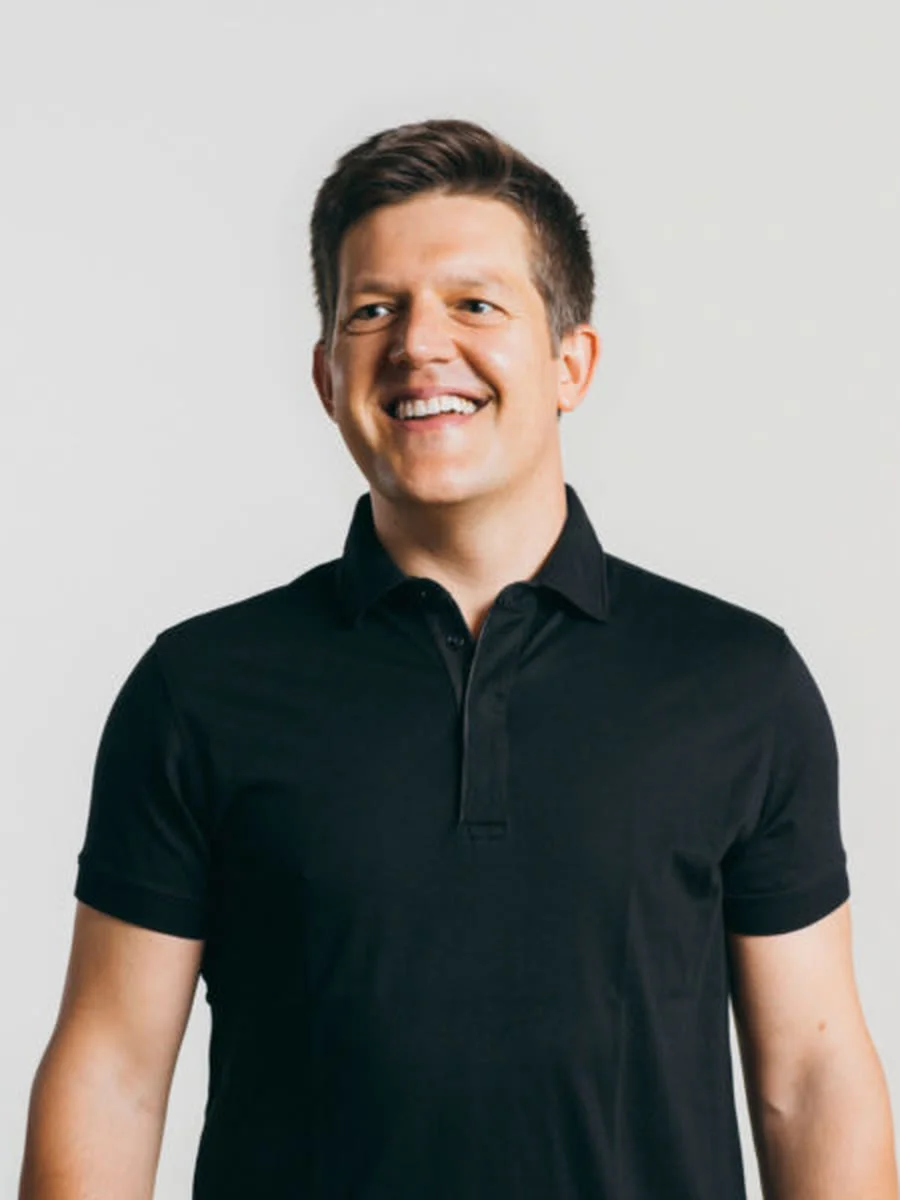
Roelof Botha
Founder–problem fit, paired futures, stage-matched proof, crucible governance, and patient capital form a coherent process; public evidence does not prove personal alpha or a complete return denominator.
From an exit option to an operating discipline
Roelof Botha's investing career begins with a choice about optionality. He finished high school in South Africa in 1990, as the ANC was unbanned and the country's political future remained uncertain. Unable to rely on family funding for university, he accepted an insurance-company bursary and studied actuarial science, economics, and statistics at the University of Cape Town; he says the professional qualification was attractive partly because it could travel across Commonwealth labor markets. Tim Ferriss transcript, paragraphs beginning “I finished high school in 1990”
That background is relevant, but it should not be turned into destiny. Botha later described actuaries as trained to think decades ahead and said he uses that stance with founders; a Stanford profile connects it to focusing on opportunities that near-term calculation misses. Stanford alumni profile, “outsider” question Evidence label: investor-stated / moderate. The public record shows a durable long-horizon vocabulary, not that an actuarial degree caused superior venture returns.
At Stanford GSB, Botha met Huifen Chan, a computer scientist and product-oriented classmate. He credits her with drawing him toward startups and later with helping him choose Sequoia over the safer course; the same profile records Garth Saloner's work on network effects and Jim Van Horne's insistence that a principal must decide, not endlessly argue both sides. Stanford alumni profile, professor and wife questions Evidence label: investor-stated / moderate. These are named influences in Botha's own account, not reconstructed psychological causes.
PayPal: runway, principal decisions, and first-hand company building
PayPal's 2002 registration statement records Botha's University of Cape Town degree in 1994, actuarial fellowship in 1996, McKinsey service from 1996 to 1998, PayPal start in March 2000, and promotion to CFO in August 2001. PayPal registration statement, “Management” He stayed through its 2002 IPO and eBay acquisition. Tim Ferriss transcript, introduction and PayPal section On 20VC he remembered Michael Moritz repeatedly asking about runway while PayPal burned roughly $10 million a month, forcing the finance team through every line of the P&L. 20VC, Section I “biggest lessons” Evidence label: retrospective witness / moderate. It supports the origin of Botha's cash-discipline counsel, but not the accuracy of the rounded burn figure.
The PayPal experience also supplied a live case in conflict, financing, product adoption, and near-death risk. In 2025 Botha said there were at least three moments when he thought the company might fail and advised founders to deliver something useful before optimizing the business model. Stanford transcript, entrepreneurship advice That is more than biography: it explains why his later rhetoric prizes authentic motivation and perseverance. Yet it remains researcher inference / moderate; the causal link is plausible and repeatedly narrated, not experimentally separable from Sequoia's culture.
2003–2009: apprenticeship, YouTube, and the one-hit-wonder fear
After eBay acquired PayPal, Meg Whitman offered Botha a continuing CFO role while Moritz invited him to interview at Sequoia. Botha says he interviewed nowhere else and found a partnership whose senior investors expected recruits to succeed them, not serve them indefinitely. 20VC, Sections I and IV He joined in 2003.
YouTube became the early proof point. In a sworn declaration, Botha identified himself as the Sequoia representative principally responsible for the investment and said he joined the board through Google's November 2006 acquisition. Botha declaration, PDF pp.64–71, ¶¶1–16 Evidence label: contemporaneous record / strong. This is unusually strong person-level attribution, though partnership approval, legal advocacy, founders' work, and fund economics remain separate. Evidence label: researcher inference / strong.
Success did not immediately become a repeatable record. Botha later said YouTube was a large win within his first three investing years, followed by a lean pipeline that led him in 2009 to consider quitting as a “one hit wonder.” He credits Jim Goetz, Doug Leone, and Michael Moritz with helping him recover; that year brought Unity, Eventbrite, Block, and MongoDB recommendations. Tim Ferriss transcript, failure discussion Evidence label: retrospective witness / moderate. The sequence is documented in his account; attributing the later wins to emotional support alone would be too strong.
2009–2017: a portfolio system emerges
The 2009 cohort illustrates several parts of Botha's eventual system. Natera, seeded earlier in 2006, embodied founder–problem fit: he says Matt Rabinowitz pursued prenatal testing after his sister's newborn died. Tim Ferriss transcript, founder–problem-fit section Block came from Jim McKelvey's inability to accept a card payment as a glassblower. Seven Questions, “one piece of advice” MongoDB and Unity required second acts—the former's cloud transition and the latter's cross-platform developer role—rather than static original theses. Invest Like the Best, 00:38:38–00:45:24
The cases suggest a repeatable pattern: authentic problem ownership creates perseverance; early evidence must mature from story to metrics to financials; the board's highest-value work happens at a few irreversible or expensive-to-reverse choices; and a fund must be able to keep the extreme right-tail winners. Evidence label: researcher inference / moderate. The rules are directly stated across TechCrunch's stage ladder, Botha's crucible essay, and Ferriss's fund discussion; the performance mechanism is still subject to selection bias.
Botha also built institutional reach. Axios later credited him with creating Sequoia's scout program more than a decade before 2025, a way to connect raw startups with contemporary founders rather than rely solely on the core partnership's network. Axios, paragraphs 42–57 Evidence label: retrospective witness / moderate. The report does not establish a complete record of co-design, scout incentives, conversion or returns.
In 2017, Botha succeeded Jim Goetz as a Sequoia steward. His public description of the job was institutional: develop the next generation, resist senior people taking disproportionate team credit, and make the firm continue beyond him. Axios 2017, “Why Botha matters”
2017–2023: boards, patient capital, and institutional redesign
Botha's public board doctrine shifted from giving answers toward asking real questions. In 2020 he called board members “shock absorbers, not amplifiers”: they should absorb panic, question without shadow-managing, and help a founder through pivotal decisions. 20VC, Section VI In 2026 he added that an investor-director should be treated as a permanent recruiting decision and that an independent director should normally join before or around product-market fit, not hurriedly before an IPO. Block podcast transcript, board discussion
The Sequoia Capital Fund was the largest vehicle expression of his long-horizon view. Botha argued that ten-year funds force unnatural public-share distributions, while an open-ended fund could retain listed winners and allocate to closed-end venture subfunds. Sequoia Fund essay, “Breaking the 10-Year Cycle” He later said ten major LPs pressure-tested the design and that 95% of eligible dollars rolled into it. Stanford transcript, Sequoia Fund question; Ferriss transcript, LP/fund section Both figures are investor-stated / provisional, not audited here.
The strategy had an intuitive company-level example. Botha reports that Block represented roughly $140–150 million of LP gain at IPO but more than $1 billion after Sequoia waited to distribute. Ferriss transcript, Square patient-hold example That figure is investor-stated / provisional [single-source]; the public record does not disclose the complete cash-flow series, dilution, fees, or alternative distribution benchmark.
Botha became sole senior steward in July 2022. Axios 2022, leadership announcement Within a year, Sequoia's China and India/SEA partnerships separated from the US/Europe firm. His 2023 essay described this as a collective crucible decision; the public account does not establish his unilateral control or quantify costs. Crucible Moments, Sequoia examples
Failures and governance limits
Botha's own denominator is less heroic than the highlight reel. In 2022 he remembered six or seven investments that went to zero and described crying after the first $10 million write-off. Ferriss transcript, failure section In April 2025 he reported 15 zero-return recommendations across roughly 22 years and said around half of Sequoia investments make no profit. Stanford transcript, failure question Evidence label: investor-stated / provisional. The dates or scopes may reconcile the counts, but neither is audited or named; the missing failed-deal list prevents a real false-positive study. Evidence label: researcher inference / strong.
23andMe supplies the clearest public governance failure laboratory. In September 2024, Botha and six other independent directors resigned. Their signed letter said five months had passed without a fully financed, diligenced, actionable proposal from CEO Anne Wojcicki, that they differed on strategy, and that her concentrated voting power made prolonged conflict unproductive. 23andMe Form 8-K, Item 5.02; Exhibit 17, paragraphs 1–6 Evidence label: contemporaneous record / strong for the resignation and stated reasons; researcher inference / moderate that the case exposes the limit of “shock absorber” governance when voting control is immovable.
FTX is a firm-level failure, not a Botha deal. Sequoia wrote the position to zero and later partner Alfred Lin said the firm had reviewed organizational charts that omitted Alameda but still failed to detect misconduct through an 18-month relationship. Axios, FTX write-down; Axios, Lin interview Evidence label: retrospective witness / moderate. Lin led the investment. Botha bears leadership-era accountability, but assigning him sourcing or diligence is unsupported. Evidence label: researcher inference / moderate.
2024–2026: late-tenure change and return to investing
Botha's AI language evolved. In 2024 he invoked Amara's law: short-run expectations can outrun reality while long-run impact is underestimated. Goldman transcript, printed p.37 In 2025 he described “dynamo founders,” curious polymaths able to recombine fields with AI tools. Seed and venture funds announcement, Botha paragraph In 2026, coauthoring with Jack Dorsey, he argued AI could redesign the organizational hierarchy itself and make speed compound. From Hierarchy to Intelligence, opening Evidence label: investor-stated / moderate as an evolution in thesis; the 2026 organizational result remains unproven.
In November 2025, Botha handed stewardship to Alfred Lin and Pat Grady and left the managing-member role. Axios says he would remain with the firm and on company boards; SpaceX's later filing states the managing-member tenure ended in 2025. Axios 2025, paragraphs 42–57; SpaceX Form 8-K, Item 5.02 Because Sequoia's current team page no longer supplies a profile, the safest description as of 2026-08-24 is former steward and former managing member, with continuing Sequoia affiliation only where a current filing or article says so.
Doug Leone's return as chairman in March 2026 complicates the seamless-succession narrative. Reuters, paragraphs 31–43 The visible Financial Times headline describes Botha as pushed out by top lieutenants, but the original article is paywalled and no detailed causal claims are content-analyzed here. Financial Times, visible headline/search excerpt only The legitimate-access record cannot distinguish planned renewal, internal intervention, or a mixture with confidence. Evidence label: retrospective witness / provisional.
On June 16, 2026, SpaceX elected Botha an independent common-stock director and audit-committee member. The filing discloses his prior relationship with Musk, a family member's employment, no selection arrangement, and no director cash/equity compensation at that time. SpaceX Form 8-K, Item 5.02 The appointment extends his board career; it does not establish that he personally sourced Sequoia's SpaceX position.
A falsifiable thesis of the edge
Proposed edge: Between 2003 and 2025, Botha combined a prepared, numerate mind with unusually early access and a board-level practice for identifying authentic founder–problem fit, keeping decisions in small groups, and concentrating follow-on attention on companies facing high-leverage “crucible” choices. Sequoia's stage-specific vehicles and later patient-capital structure let the partnership capture more of the resulting right tail. Evidence label: researcher inference / moderate.
The mechanism predicts that unseen Botha-sponsored deals should show, in contemporaneous memos rather than later stories: (1) a specific founder-origin problem; (2) an explicit bull future and failure future; (3) stage-appropriate evidence that matures from story to usage to economics; (4) a small set of decisive board milestones; and (5) longer holding periods when company-specific knowledge remains valuable. Seven Questions, founder advice; Ferriss transcript, founder fit and paired-futures sections; TechCrunch, stage ladder Evidence label: researcher inference / moderate.
The thesis weakens if ordinary and failed deals display the same founder stories without differentiated early evidence; if ownership-adjusted returns excluding YouTube and Block do not exceed a matched Sequoia/venture benchmark; if memos do not contain the publicly claimed routines; if partner/team evidence reallocates the decisive work; or if patient holding underperformed prompt distribution after fees, taxes, risk, and liquidity. Evidence label: researcher inference / strong. Those data are not public, so the thesis is a test program rather than a proven alpha claim. deal denominator and uncertainty ledger Evidence label: researcher inference / insufficient public record.
People and influence map
| Person/institution | Supported influence or role | Attribution boundary |
|---|---|---|
| Huifen Chan | Botha credits her with drawing him toward startups and helping with career-risk choices. Stanford alumni profile | Spousal influence is self-reported; no deal attribution. |
| Michael Moritz | PayPal board discipline, Sequoia recruitment, later support. 20VC, Section I | Firm and mentor credit, not transfer of Moritz's deals to Botha. |
| Don Valentine | Listening, concise notes, succession ethos, exceptional-founder matrix. Ferriss, Don Valentine section | Retrospective student account. |
| Jim Goetz | Credits include “crucible moments,” 2009 emotional support, and 2017 handoff. Ferriss failure section; Axios 2017 | Do not assign Goetz deals to Botha. |
| Doug Leone | Senior partner, 2009 support, 2022 predecessor, 2026 chairman. Ferriss; Reuters | Return does not by itself prove a repudiation of Botha. |
| Larry Summers | Origin of the pre-parade/pre-mortem exercise at Block. Ferriss, pre-mortem section | Botha adapted, rather than invented, the model. |
| Founders and executives | Chad Hurley/Steve Chen/Jawed Karim, Jack Dorsey/Jim McKelvey, Matt Rabinowitz, Dwight Merriman/Eliot Horowitz, David Karp and others did the operating work. YouTube declaration, PDF pp.64–71 · Ferriss, founder and company cases · Tumblr, first-meeting account Evidence label: documented behavior / strong. | Venture outcome is joint production; board help is not founder credit. |
| Sequoia partnership and LPs | Consensus investment decisions, stage vehicles, great-cause LP framing, and patient capital. Ferriss, decision/fund sections Evidence label: investor-stated / moderate. | No audited personal track record; fee/carry and votes are private. Evidence label: researcher inference / insufficient public record. |
Sourced chronology
| Date | Event | Evidence |
|---|---|---|
| 1990 | Finished high school amid South Africa's political transition. | Ferriss, actuarial-science section |
| 1990s | UCT actuarial/economics/statistics studies; McKinsey; then Stanford GSB. | Stanford profile |
| 2000–2003 | Joined PayPal; CFO through IPO/acquisition; left after first post-acquisition earnings release. | Ferriss transcript |
| 2003 | Joined Sequoia. | MongoDB 2025 proxy biography |
| 2005–2006 | Sponsored YouTube; joined its board through Google acquisition. | Sworn declaration, PDF pp.64–71 ¶¶1–16 |
| 2006–2013 | Natera seed; Unity/Eventbrite/Block/MongoDB cohort; MongoDB board from 2013. | Ferriss; MongoDB proxy |
| 2017 | Became Sequoia steward. | Axios 2017 |
| 2021 | Announced the Sequoia Capital Fund. | Botha essay |
| 2022 | Became sole senior steward. | Axios 2022 |
| 2023 | Sequoia-branded regional partnerships separated. | Crucible Moments |
| 2024 | Seven independent 23andMe directors resigned. | SEC Exhibit 17 |
| 2025 | Botha left stewardship/managing-member role; Lin and Grady succeeded him. | Axios 2025 |
| 2026 | Leone returned as chairman; SpaceX elected Botha an independent common-stock director. | Reuters; SpaceX 8-K, Item 5.02 |
Read the evidence in sequence
Start with the talks for Botha's own language, then the writings for what he chose to publish, the deal forensics for attribution and denominator limits, the operating philosophy for synthesis, and the mental-model field guide for decision use.
1. Snapshot and testable edge thesis
| Dimension | Evidence-backed answer |
|---|---|
| Investor / institution | Roelof Botha joined Sequoia in 2003 after operating at PayPal, became a steward in 2017 and sole senior steward in 2022, and left the managing-member role in 2025. PayPal registration statement, “Management” · Axios 2017, “Why Botha matters” · SpaceX Form 8-K, Item 5.02 |
| Domain and era | Primarily US venture and growth investing from 2003–2025, spanning consumer internet, developer software, fintech and health technology; company and vehicle evidence is uneven. candidate-deal denominator documented behavior · strong for named relationships; researcher inference · insufficient public record for a complete attributed career. |
| Proposed edge | Identify a founder with authentic ownership of an important problem before the market has supplied normal financial proof; imagine both the exceptional future and the failure future; then use stage-matched evidence, small-group decisions, board questions and patient ownership to preserve the right tail. researcher inference · moderate. The components are investor-stated, but their joint economic efficacy is not audited. Seven Questions, “one piece of advice” · Ferriss transcript, founder fit, pre-mortem and fund sections |
| Mechanism | Authentic problem ownership may predict perseverance; paired futures reduce pure upside storytelling; stage-specific proof prevents premature financial underwriting; concentrated governance makes infrequent irreversible decisions better; long-duration capital avoids forced sale of a compounding winner. researcher inference · moderate. TechCrunch, story→metrics→financials ladder · Sequoia Fund, “Breaking the 10-Year Cycle” |
Predictions. Unseen contemporaneous Botha memos should contain a specific founder-origin problem, an explicit five-year upside and failure path, stage-appropriate proof, named milestones and reasons to retain or increase ownership. Board records should concentrate his contribution around a few consequential decisions rather than continuous operating control. researcher inference · moderate. The published YouTube declaration is consistent with sourcing, memo sponsorship and board monitoring, but one case cannot validate the system. Appellate appendix, PDF pp.64–71 ¶¶2–16
Falsifiers. The thesis weakens if failed and ordinary investments display the same founder stories without differentiated early evidence; original memos omit the claimed routines; founder, partner or institutional work explains the celebrated cases; ownership-adjusted performance excluding YouTube and Block is ordinary; or open-ended holding underperforms timely distribution after fees, liquidity and risk. Neither a complete attributed deal denominator nor audited cash flows are public. researcher inference · strong as a test design; researcher inference · insufficient public record as a verdict. denominator and uncertainty boundaries
2. Core philosophy
Botha's clearest direct rule is to search for “founder-problem fit”: a personal experience that makes a founder unwilling to leave a consequential problem alone. He contrasts that with a founder who merely noticed an available market. Seven Questions, “one piece of advice” investor-stated · strong for the preference; researcher inference · provisional as a performance predictor because the public failed-deal denominator is unnamed.
He pairs this people test with an imagination test. Before investing, his teams imagine a successful parade five years ahead and a pre-mortem explaining failure, then ask what must be true today for either path. Ferriss transcript, pre-parade/pre-mortem section He also says early underwriting should move from story, to metrics, to financials as the company matures. TechCrunch, stage ladder investor-stated · strong. Together these are a discipline for being imaginative without becoming evidence-free. researcher inference · strong.
The portfolio consequence is asymmetric. Botha says venture outcomes follow a power law and that the job is to avoid cutting off a company's possible (10^9)-dollar fund contribution simply because the current mark already looks large. Ferriss transcript, Ulysses and power-law sections The practical synthesis is: prepare broadly, decide narrowly, make loss emotionally survivable, and preserve the rare outlier. investor-stated · moderate for the components; researcher inference · moderate for consistent execution.
3. Sourcing
- Prepared-mind discovery. Botha describes venture as exposure to many domains followed by a prepared mind recognizing a rare opportunity. Invest Like the Best, 50:50–52:05 This favors curiosity and comparison over a rigid thematic queue. investor-stated · moderate.
- Founder and operator networks. PayPal created operating credibility; Sequoia supplied brand, partner networks and founder referrals. The public record cannot separate the repeatable personal component from institutional access. researcher inference · moderate. PayPal biography · 20VC, Sections I and IV
- Scouts as distributed edge sensors. Axios credits Botha with creating Sequoia's scout program, which used active founders to reach raw companies outside the core partnership's immediate network. Axios 2025, scout-program paragraphs documented behavior · moderate; co-design, incentives, loss rates and counterfactual access remain private.
- Direct customer learning. Botha's 2026 essay says Sequoia partnered with Blues in 2020, that he assumed the board seat in 2024, and that a later series of customer calls informed a new financing. Blues, partnership chronology and customer-call passages investor-stated · moderate because the portfolio essay is interested retrospective evidence.
Repeatability depends on access to high-quality founders, disciplined attribution and a mechanism for turning scouts or customers into evidence rather than social proof. A modern sourcing log should record introduction, first contact, source economics, conflicts, sponsor and conversion; none of those denominators is public for Botha. researcher inference · strong.
4. Picking
Founder screen. Ask why this founder cannot leave this problem, whether the motive is authentic, and whether curiosity and learning velocity extend beyond one specialty. Natera, Block and Tumblr are Botha's recurring examples. Ferriss transcript, founder-problem-fit section · Tumblr essay, opening and first-meeting passages His 2025 “dynamo founder” language adds cross-domain synthesis in an AI-enabled era. Seed and venture funds announcement, attributed Botha paragraph investor-stated · strong for the screen; researcher inference · provisional for efficacy.
Market and product screen. Founder fit is necessary, not sufficient. The pre-parade must describe a non-obvious future large enough to matter, while the pre-mortem must identify why timing, adoption, regulation, technology or distribution could prevent it. VR essay, “The five-year exercise” At seed, the story may dominate; with usage, metrics should carry more weight; at growth, financial quality and a path to durable economics matter. TechCrunch, stage ladder investor-stated · strong.
Diligence and decision rights. The YouTube declaration says Botha sourced the opportunity, prepared Sequoia's memorandum, became the principal responsible investor and joined the board; it does not publish the memo, terms, partner debate or complete approval rule. Appellate appendix, PDF pp.64–71 ¶¶2–10 contemporaneous record · strong. Botha separately argues that small investment teams and distinct stage funds protect dissent and focus. Ferriss transcript, small-group and fund-design sections investor-stated · moderate. Exact quorum, veto, scorecard, reference minimum and price threshold remain researcher inference · insufficient public record.
Botha also says Sequoia added blind preliminary views before discussion to reduce anchoring and social pressure. Goldman transcript, behavioral-economics discussion, printed pp.10–18 investor-stated · moderate. The public record contains no vote log or controlled evidence that the practice improved selection.
Red flags and kill criteria. A generic founder story, a thesis that depends on market fashion, missing why-now evidence, stage-inappropriate proof, a financing plan that cannot survive the next check, and governance that leaves the board unable to act should all trigger pass or smaller exposure. These are researcher inference · moderate, synthesized from Botha's stated tests and the 23andMe control failure, not a verbatim Sequoia checklist. 23andMe resignation letter, paragraphs 2–6
5. Deal and portfolio mechanics
- Ownership. Public filings show substantial Sequoia-affiliated pre-IPO stakes in several Botha-linked companies, including Square, Unity, MongoDB, Natera and Xoom, but these are vehicle positions—not personal holdings or realized returns. deal ledger and filings contemporaneous record · strong for snapshots; researcher inference · insufficient public record for entry-to-exit cash flows and personal economics.
- Price and terms. Botha's public material emphasizes magnitude of possible outcome more than a fixed valuation formula. Security preferences, liquidation terms, pro rata thresholds, anti-dilution and deal-by-deal price discipline are largely undisclosed. researcher inference · insufficient public record. A (10^9) target is an attention heuristic, not permission to ignore price. Ferriss transcript, Ulysses section
- Reserves and follow-ons. Stage-separated venture and growth vehicles let distinct teams fund different evidence states; public sources do not reveal reserve models or who controlled follow-ons. Ferriss transcript, separate-fund discussion investor-stated · moderate.
- Concentration. The power law makes loss tolerance and winner preservation more important than a high batting average. Botha says about half of Sequoia investments make no profit and, in 2025, counted 15 of his recommendations returning zero. Stanford transcript, failure question These are investor-stated · provisional, unaudited and unreconciled to a named denominator.
- Exit and distribution. The 2021 Capital Fund was designed to hold listed winners rather than distribute automatically at IPO. Botha reports that waiting increased Block's LP gain from roughly $140–150 million at IPO to more than $1 billion. Ferriss transcript, Square hold example The result is investor-stated · provisional [single-source] because the full cash-flow, fee, tax, dilution and counterfactual record is absent.
The defensible operating rule is to underwrite company value, entry price, ownership, dilution, reserves, liquidity and fund contribution separately. researcher inference · strong. The deal forensics and no-hindsight labs preserve those boundaries.
6. Vehicle and incentive fit
| Dimension | Supported effect | Boundary |
|---|---|---|
| Closed-end venture funds | Long private duration, pooled risk, follow-ons and partnership decisions support loss tolerance and company building. Ferriss, failure and fund sections | LP agreements, fees, carry allocations, recycling, reserves and key-person clauses are private. |
| Stage-specific funds | Separate seed, venture and growth teams can match evidence, check size and skill to maturity. Ferriss, separate-fund discussion | Organizational separation can also create handoffs, duplicate diligence and incentive conflict; their frequency is unknown. |
| Sequoia Capital Fund | Open-ended public holdings financed allocations to closed-end subfunds, reducing the ten-year distribution clock. Sequoia Fund, “Breaking the 10-Year Cycle” and “Our New Structure” | Liquidity, valuation, tax, fee layering, redemption, public-market governance and risk-adjusted counterfactuals are not public here. |
| Partnership governance | Small teams and generational turnover seek distributed judgment and institutional survival. Axios 2017, Botha comments | Exact votes and partner economics remain private; a public steward is not a solo IC. |
| Geography and regulation | Sequoia split China and India/SEA from the US/Europe business in 2023, changing authority, brand and regulatory exposure. Crucible Moments, Sequoia separation | Botha's essay describes collective action; it does not establish unilateral authorship or quantify cost. |
| Succession / key person | Botha handed stewardship to Alfred Lin and Pat Grady in 2025; Doug Leone returned as chairman in 2026. Axios 2025 · Reuters 2026 | Continuity claims and an intervention narrative are in tension; governing documents and economics are unavailable. |
Vehicle design was part of the strategy, not administrative plumbing: it shaped time horizon, decision rights, loss capacity and who could capture the right tail. researcher inference · strong. It also makes personal-alpha claims especially hazardous because founders, LPs, partners, scouts and legal entities jointly produced the opportunity and outcome.
7. Team attribution and work with founders
| Decision or labor | Supported allocation | Unknown or prohibited inference |
|---|---|---|
| YouTube | Botha says he sourced, sponsored the memo, became principal investor and served on the board through Google's acquisition; founders built the product and Google bought the company. Declaration, PDF pp.64–71 ¶¶2–16 | Partner vote, negotiation labor, internal dissent and individual economics are absent. |
| Block | Jim McKelvey and Jack Dorsey supplied the originating problem and execution; Botha became a long-tenured director. Dorsey later said he selected Botha as an individual director, not merely Sequoia. Seven Questions, founder example · Block podcast, board discussion | Board presence does not prove causation; reported fund gains are not Botha's personal return. |
| MongoDB / Unity / Natera | Founders and executives owned operating choices; filings establish affiliated ownership or board roles, while Botha's retrospectives describe cloud, platform and founder-origin decisions. Invest Like the Best, 38:38–45:24 · MongoDB 2025 annual report, proxy biography | Later narrative cannot allocate every sourcing, approval, recruiting or intervention task. |
| 23andMe | Seven independent directors, including Botha, resigned collectively after a five-month process under founder voting control. Form 8-K, Item 5.02 | The record supports a team/control failure, not a solo Botha action or a complete operational postmortem. |
Botha's board maxim is to be a “shock absorber” who asks real questions without shadow-managing. 20VC, Section VI In 2026 he and Dorsey described board recruiting as an effectively permanent choice and argued for adding an independent director before the IPO rush. Block podcast, board discussion investor-stated · moderate. The practice is bounded: absorb emotion, clarify the irreversible decision, recruit relevant expertise and leave execution with management. researcher inference · moderate.
8. Views on the craft
- Power law: a few companies determine venture economics, so avoiding all losses is the wrong objective. Ferriss transcript, power-law section investor-stated · strong.
- Fund size and stage: specialized vehicles protect focus; large aggregate assets are defensible only if decision teams and incentives remain stage-specific. Ferriss transcript, fund structure investor-stated · moderate.
- Access versus selection: scouts, brand and operator relationships increase access, but a prepared mind and an explicit future-pair are meant to select. No conversion denominator proves which component generated returns. researcher inference · moderate.
- Governance: board value is episodic and question-led, concentrated at “crucible moments.” Jim Goetz supplied the phrase; Botha later codified it. Ferriss transcript, crucible passage crediting Jim Goetz · Crucible Moments, company and firm examples investor-stated · strong for the philosophy; researcher inference · moderate for causal value.
- Exits: IPO is not necessarily an exit for the investor if company-specific knowledge and expected compounding justify continued ownership. Sequoia Fund, “Breaking the 10-Year Cycle” investor-stated · strong, with missing risk-adjusted evidence.
- Great investor: curiosity, preparedness, emotional survival after error, clear memos, small-group independence, and service to founders and LP beneficiaries. Invest Like the Best, 48:16–52:05 · Stanford, LP-purpose discussion investor-stated · moderate.
9. Signature bets and decision process
Use the investment cases and IC labs without reading the outcomes first:
- YouTube: source, sponsor, rights, copyright risk, cost basis, Google consideration and attribution.
- Block: founder-origin problem, regulatory constraint, ownership, patient-hold claim and liquidity counterfactual.
- MongoDB: developer adoption, company reset, cloud transition and board contribution.
- Unity: platform expansion, large affiliated ownership and adverse operating/public-market evidence.
- Natera: founder–problem fit, regulation/reimbursement, lead-independent-director role and litigation/operating boundary.
- Xoom: payment wedge, ownership snapshot and acquisition arithmetic.
- 23andMe: failure/governance lab—strategy, founder voting control, financing evidence and board exit.
For each lab, freeze what was knowable at the decision date; decide invest/pass, security and target ownership; name kill criteria; and set the next evidence milestone before revealing the actual action and outcome. researcher inference · strong as a no-hindsight study method. The cases do not establish that Botha personally controlled every decision.
10. Mental models and maxims
- Underwrite founder–problem fit, then demand proof — origin in recurring Natera, Block and Tumblr accounts; motive is a perseverance prior, not a substitute for evidence.
- Match evidence to the company's stage — story → metrics → financials, with financing and regulatory gates added explicitly.
- Write the parade and the pre-mortem together — the five-year future-pair used to expose assumptions and kill conditions.
- Focus board work on crucible decisions — Jim Goetz's phrase, adapted into a question-led board practice.
- Preserve the outlier with matched capital duration — power-law selection plus ownership, follow-on and distribution discipline.
- Make the board a shock absorber with explicit control boundaries — Socratic help, early independent recruiting and a hard stop when governance makes action impossible.
The inventory merges “dynamo founder” into founder–problem fit, stage funds into stage-matched evidence, and the (10^9) ambition into outlier preservation. That avoids turning adjacent slogans into duplicate models. researcher inference · strong. Plausible exclusions and missing proof are recorded in the model evidence-gap ledger.
11. Evolution and contradictions
| Period | Observable emphasis | Tension or update |
|---|---|---|
| 2000–2009 | PayPal runway discipline; YouTube; later fear of being a one-hit wonder. 20VC, PayPal section · Ferriss, failure section | Numerate caution coexisted with venture-scale imagination; public proof of a formal early process is sparse. |
| 2009–2017 | Founder–problem fit, second acts and consequential board decisions. Seven Questions | Successful-case stories are retrospective; the unnamed loss set cannot test false positives. |
| 2017–2021 | Stewardship, scouts, small teams and stage vehicles; Capital Fund extends holding duration. Sequoia Fund | Institutional breadth risks hierarchy and incentive complexity even as Botha argues for small decision groups. |
| 2022–2024 | Sole stewardship, geographic separation, FTX/China scrutiny, 23andMe board exit. Crucible Moments · 23andMe letter | “Shock absorber” governance has limits under hidden information or immovable control; no public postmortem shows a complete process update. |
| 2019–2026 | AI language moves from long-cycle augmentation/Amara's law to “dynamo founders” and hierarchy compression. Goldman transcript, printed p.37 · From Hierarchy to Intelligence, opening | The later organization thesis is coauthored and not outcome-tested; augmentation and hierarchy compression can coexist, but the strength of the claim increased. |
| 2025–2026 | Stewardship handoff, later Leone chairmanship, Botha's SpaceX independent directorship. SpaceX Form 8-K, Item 5.02 | A public renewal story conflicts with later reporting that the handoff involved internal intervention; the complete record is unavailable. |
The durable core is founder motive, paired futures, stage evidence, outlier preservation and question-led governance. researcher inference · strong. The unresolved contradiction is whether an institution built to keep decisions small can preserve clarity as vehicles, geographies, regulated-company boards and leadership layers multiply.
12. Failures and limits
Personal denominator. Botha said in 2022 that six or seven investments had gone to zero; in 2025 he said 15 recommendations had returned zero. Ferriss transcript, failure section · Stanford transcript, failure question The dates or scopes can reconcile the figures, but the losses are unnamed and unaudited. investor-stated · provisional. The gap blocks calibration, false-positive analysis and evidence that lessons changed later decisions.
23andMe. The signed independent-director letter records five months without a fully financed, diligenced, actionable CEO proposal and a strategy disagreement under concentrated founder voting power. Exhibit 17, paragraphs 1–6 contemporaneous record · strong. It is the clearest boundary case for board influence: authentic founder motive and long board tenure do not solve control or financing deadlock. researcher inference · strong.
Firm failures. FTX and scrutiny of Sequoia Capital China belong to the leadership environment, not automatically to Botha's personal deal record. Alfred Lin led FTX; the House report discusses entity-level China activity. Axios, Lin postmortem · House Select Committee report, pp.17–27 documented behavior · moderate for leadership context; researcher inference · insufficient public record for person-level decision attribution.
Selection, era and outcome bias. Most surviving narratives were published after IPO, acquisition or financing. Favorable technology cycles, Sequoia's brand, follow-on access, founders, co-investors and a few outliers may explain more than Botha-specific selection. Full loss names, ordinary deals, memos, IC votes, partner labor, fund cash flows and vintage-matched benchmarks are missing. researcher inference · strong.
13. Historical operating environment
The record crosses distinct regimes. YouTube arrived during broadband and consumer-generated-video growth before copyright, hosting economics and monetization were settled; the declaration documents legal/board monitoring, while Google's 2006 announcement fixes the acquisition at $1.65 billion in stock. Declaration, PDF pp.64–71 ¶¶6–16 · Google announcement contemporaneous record · strong.
Against the financing context reconstructed in the deal record, Botha retrospectively groups Unity, Eventbrite, Block and MongoDB as 2009 recommendations that followed his near-quitting period. Ferriss transcript, 2009 cohort · historical market context retrospective witness · moderate for the cohort and researcher inference · moderate for its relevance to underwriting.
The 2021 Capital Fund emerged after long private-company durations and large public positions made ten-year distribution rules more consequential. Sequoia Fund, “Breaking the 10-Year Cycle” FTX, US–China scrutiny and the 2023 geographic separation show that capital duration could not remove governance or geopolitical risk. FTX write-down · House Select Committee report, executive summary researcher inference · moderate.
No defensible contemporary numerical base rate covers the full multi-sector record. Headline acquisition values, IPO ownership snapshots and investor-reported LP gains are not fund-level IRRs or multiples. Historical interpretation should therefore compare evidence available then—not revised outcomes—and leave missing benchmarks missing.
14. Modern VC translation (as of 2026-08-24)
The current-condition statements below are analyst-created 2026 scenarios unless a cited current source is named; they are not Botha claims and must be verified for a target company. researcher inference · moderate.
| Major lesson | What transfers | What changes or fails | Applicability signals and likely misuse | Adapted action |
|---|---|---|---|---|
| Founder–problem fit | Specific lived evidence still tests persistence and insight. | AI makes prototypes cheaper and founder narratives easier to manufacture; motive does not establish moat, governance or market size. | Signal: repeated unpaid learning and customer truth. Misuse: biography worship. researcher inference · strong. | Verify the origin story with artifacts and references, then require a separate product/market/control scorecard. |
| Story → metrics → financials | Evidence should still mature with stage. TechCrunch, stage ladder | AI usage can spike before retention, budgets, gross-margin durability or data rights are clear. | Signal: cohort retention, paid expansion and sustainable inference economics. Misuse: treating demo velocity as product-market fit. researcher inference · moderate. | Pre-register the next proof standard and financing gate at every round. |
| Parade + pre-mortem | Paired futures expose hidden assumptions and give dissent a place. | Fast-moving model capability and regulation make a fixed five-year forecast brittle. | Signal: outcome depends on a small number of falsifiable assumptions. Misuse: vivid scenario as probability. researcher inference · strong. | Build bull/base/failure branches, assign owners and update dates, and tie reserves to milestones. |
| Crucible decisions | A few product, distribution, CEO, financing and platform choices remain disproportionately consequential. Crucible Moments | Continuous-deployment and AI-agent businesses may create many reversible decisions; not every pivot is a crucible. | Signal: irreversibility, high switching cost, control change or survival impact. Misuse: dramatizing ordinary execution. researcher inference · strong. | Record one-way-door criteria, alternatives, dissent and a post-decision review date. |
| Patient outlier ownership | Avoid automatic selling when private knowledge and company quality remain differentiated. | Higher rates, public volatility, LP liquidity needs, conflict rules and fee layers make duration costly. | Signal: superior forward return after concentration/liquidity risk. Misuse: using “patient” to avoid re-underwriting. researcher inference · strong. | Re-underwrite public holdings independently; compare hold, distribute and sell net of fees, tax, liquidity and covariance. |
| Shock-absorber board | Calm questions and early independent recruiting transfer. Dorsey and Botha's 2026 board discussion is a grounded current example. Block podcast, board discussion | Founder super-votes, regulated duties, conflicts and information asymmetry can defeat soft influence. | Signal: trusted access plus actionable rights. Misuse: passivity presented as founder friendliness. researcher inference · strong. | Map votes, duties, conflicts and escalation before joining; define triggers for special committee, leadership change or resignation. |
| Small decisions / stage vehicles | Small accountable teams can preserve dissent and stage craft. | Multi-strategy platforms add handoffs, valuation conflicts, cross-fund allocations and key-person risk. | Signal: named owner and stage-specific scorecard. Misuse: treating organizational labels as incentive alignment. researcher inference · moderate. | Write the vehicle/IC map: source, sponsor, voters, economics, conflicts, reserves, handoff and exit authority. |
| AI as organizational redesign | AI can compress information routing and make small teams more capable; Botha and Dorsey's 2026 essay supplies a current thesis. From Hierarchy to Intelligence, opening and operating sections | It is coauthored and not outcome-tested; security, auditability, labor design and model dependence may restore hierarchy. | Signal: cycle-time reduction with equal or better controls. Misuse: headcount reduction as proof of intelligence. investor-stated · provisional. | Underwrite workflow-level latency, decision quality, audit trail, failure recovery and vendor concentration—not an “AI-native” label. |
15. Comparison with completed peers
Doug Leone, David Sze and Jim Goetz are the closest completed comparators: two shared Sequoia's institution and overlapping eras, while Sze provides a major multi-stage partnership control with a better-documented consumer/network decision process. This is a craft comparison, not a return ranking. researcher inference · moderate.
| Dimension | Botha | Doug Leone | David Sze | Jim Goetz |
|---|---|---|---|---|
| Sourcing | Prepared mind, scouts, operator/founder networks, customer calls | Direct hunting and enterprise customer/GTM networks. Leone sourcing | Entrepreneur listening, relationships and partnership dissent. Sze sourcing | Technical underdogs and measurable product pull. Goetz sourcing |
| Picking | Founder–problem fit + paired futures + stage proof | Founder motive/complementarity + customer references/GTM. Leone picking | Relationship-specific graph, recurring job, product behavior. Sze picking | Technical founder, non-consensus product pull, sales readiness. Goetz picking |
| Ownership / portfolio | Large affiliated stakes and patient public holding; cash flows absent | Large institutional stakes, reserves and stage architecture; personal economics absent. Leone mechanics | Flexible stage and pooled follow-on; price/ownership separated. Sze mechanics | Concentrated cases such as WhatsApp, with incomplete denominator. Goetz mechanics |
| Governance | Shock absorber, questions, early independent director, crucible moments | Recruiting, role design, financing and succession. Leone founder work | Permissioned stage-specific service and error correction. Sze founder work | High-touch mentorship around distribution, sales and culture. Goetz founder work |
| Vehicle / incentives | Stage funds plus 2021 open-ended Capital Fund; steward transition | Same platform lineage; enterprise and regional institution building. Leone vehicle | Greylock pooled partnership and services. Sze vehicle | Sequoia platform; shared partnership and founder trust. Goetz vehicle |
| Failures | Fifteen self-reported zeroes, 23andMe, leadership-era FTX/China boundaries | Color, Facebook misses and institutional control failures. Leone limits | Digg, Path, Vessel and documented passes/dissent. Sze limits | WhatsApp/outlier dominance and thin public failed-deal evidence. Goetz limits |
The differentiator is not that Botha alone valued founders or boards. It is the combination of an explicit founder-origin test, a paired future exercise and a vehicle redesign intended to keep winners after listing. Leone's clearest comparative strength is enterprise customer/GTM architecture, supported by his Stanford discussion, 00:28:28–00:36:51. Sze's is product-behavior and graph specificity, visible in his LinkedIn reflection, “People” and memo discussion. Goetz's is technical-underdog pull and high-touch mentorship, documented in the AdMob story. researcher inference · moderate. Era, vehicle, sector and evidence density prevent a performance conclusion.
16. The strongest case against greatness
The skeptical thesis is that Botha was an unusually articulate steward inside venture's most advantaged franchise, but Sequoia access, partner judgment, founder execution, abundant technology cycles, concentrated affiliated ownership and YouTube/Block-sized outliers explain the visible record better than a unique, repeatable Botha process. The public corpus is success-selected and mostly retrospective; the 15 zeroes are unnamed; firm stakes are mistaken easily for personal returns; reported LP gains are unaudited; and board seats reveal responsibility, not counterfactual value. researcher inference · strong. deal denominator
Institutional criticism strengthens the case. FTX exposed a firm control failure during Botha's stewardship, China scrutiny challenged the governance of a global platform, 23andMe demonstrated the limit of soft board influence, and the 2025–2026 succession record complicates the firm's renewal narrative. Axios, FTX postmortem · 23andMe letter, paragraphs 1–6 · Reuters, Leone chairmanship These establish context, not personal misconduct or deal authorship. documented behavior · moderate.
The favorable thesis wins if original memos show the same founder/future/stage discipline before outcome across wins, ordinary deals and losses; independent founders and partners identify Botha-specific decision improvements; board records show measurable intervention at named crucibles; and vintage-adjusted cash flows remain exceptional after removing the dominant outliers and controlling for Sequoia access, ownership and vehicle. The skeptical thesis wins if the rules appear mainly after success, partner labor reallocates credit, false positives share the same founder narratives, ex-outlier performance is ordinary, or patient holding adds no net LP value. That discriminating evidence is not public.
17. Analyst study guide, glossary, and go deeper
Recommended path
- Read the biography and edge thesis, then inspect the source map.
- Read the talks before the writings to distinguish spontaneous recollection from polished institutional argument.
- Complete the YouTube and Block no-hindsight exercises, then the 23andMe failure/governance lab.
- Compare your rules with the six mental-model checklists.
- Return to the searched denominator, vehicle economics, and uncertainty ledger before reaching any performance or greatness conclusion.
Glossary
| Term | Meaning here |
|---|---|
| Founder–problem fit | A founder's specific, authentic relationship to the problem; a perseverance prior, not proof of product-market fit. |
| Pre-parade | A five-year success future written before deciding, with the milestones and truths it requires. |
| Pre-mortem | A five-year failure future written in parallel, converted into present risks and kill criteria. |
| Crucible moment | A consequential, expensive-to-reverse choice; phrase credited by Botha to Jim Goetz. |
| Story → metrics → financials | Evidence ladder that changes with company maturity. |
| Shock absorber | A board member who reduces panic and improves judgment without taking the operator's job. |
| Sequoia Capital Fund | The 2021 open-ended vehicle intended to own public positions and allocate capital to closed-end subfunds. |
| (10^9) test | Whether a company can plausibly contribute a billion dollars of gain to the fund; not a valuation or probability estimate. |
Reusable checklist
- Sourcing: Who introduced it? What access advantage exists? What source incentive or conflict applies? Is the opportunity repeatable without the brand?
- Diligence: Why this founder and problem? What was known at decision time? What do customers and artifacts verify? Which assumption has independent evidence?
- IC: Write parade, base and pre-mortem; choose invest/pass, price, security, ownership, reserves, kill criteria and next-check milestone; record dissent and decision owner.
- Portfolio: Re-underwrite rather than anchor; separate company value, fund contribution, liquidity, dilution and covariance; test the portfolio without the largest winner.
- Governance: board value is episodic and question-led, concentrated at “crucible moments.” Jim Goetz supplied the phrase; Botha later codified it. Ferriss transcript, crucible passage crediting Jim Goetz · Crucible Moments, company and firm examples investor-stated · strong for the philosophy; researcher inference · moderate for causal value.
- Attribution: Name founder, source, sponsor, diligence owner, approver, negotiator, board member, recruiter, follow-on owner, exit influence and vehicle; leave unknown work unknown.
Go deeper, in order
- Tim Ferriss transcript — broadest direct account of biography, power law, paired futures, failures, fund structure and Block holding.
- YouTube sworn declaration, PDF pp.64–71 ¶¶1–16 — strongest person-level contemporaneous sourcing, memo and board evidence.
- Seven Questions — shortest direct statement of founder–problem fit and errors of imagination.
- Invest Like the Best, 28:56–52:05 — stage, case, board, memo and curiosity framework.
- 23andMe 8-K and signed letter — strongest adverse governance record.
- Sequoia Fund — primary vehicle thesis; read against the missing economics in investments.md.
- Stanford 2025 transcript — late-career biography and failure denominator; investor-stated and not audited.
The highest-value unavailable evidence remains original memos and IC votes, a named loss/ordinary-deal ledger, board minutes, partnership and fund agreements, deal-level cash flows, partner labor records, LP testimony and a primary account of the 2025 handoff.
Pareto 80/20 — what drove the record
The public record supports a directional power-law ranking, not a literal personal return decomposition. Private Sequoia cash flows, company-level cost bases, follow-ons, dilution, distribution dates, fee/carry allocations, and the complete list of Botha recommendations are not public. The tables therefore separate economic contribution from fame and educational value. “Economic” means supported or reported value to a Sequoia vehicle or its LPs, never Botha's personal proceeds. Evidence: researcher inference / moderate, grounded in the disclosed holdings and transaction records below; the missing denominator prevents a stronger grade.
Economic contribution
| rank | company or tier | basis or measure | attribution | confidence | supported mechanism | denominator caveat / case |
|---|---|---|---|---|---|---|
| 1, provisional | Block / Square | Botha reports roughly $140–150M of LP gain at the 2015 IPO and “well north” of $1B after Sequoia held longer. The S-1 independently shows Sequoia affiliates owned 15,728,310 shares, 5.4% pre-IPO, and Botha had served on the board since January 2011. | Botha sponsored/served on the board; Jack Dorsey, Jim McKelvey, operators, Sequoia funds and the partnership jointly created and owned the result. | investor-stated / provisional [single-source] for gain; contemporaneous record / strong for stake and board |
Patient holding captured post-IPO compounding rather than distributing automatically. | No audited cash-flow series, cost, dilution, tax, risk-adjusted counterfactual, or personal carry. Ferriss, patient-hold section · Square S-1, principal stockholders and director biography · case |
| 2 | YouTube | The Google S-3 lists 1,073,127 acquisition-related shares across three Sequoia XI entities; a Viacom filing valued them at about $516M at the November 13, 2006 close. Media reported either $8.5M of Sequoia capital or $11.5M total company financing, producing incompatible headline multiples. | Sworn declaration identifies Botha as principally responsible and a director; YouTube's founders, other partners, Sequoia XI vehicles and Google deserve separate credit. | contemporaneous record / strong for role/share count; contemporaneous record / moderate for value and cost |
Early consumer adoption plus a user-generated-video/social-distribution thesis produced a fast strategic exit. | $516M is gross security value, not audited LP profit; cost basis implies only a reported range, not a defensible MOIC/IRR. Google S-3, selling stockholders · Viacom statement, Sequoia-share discussion · case |
| 3, unranked tier | Unity / MongoDB / Natera | Their IPO filings disclose Sequoia-linked pre-IPO stakes of 24.1%, 16.9%, and 20.2%, respectively. | Botha had long board roles; multiple Sequoia vehicles, founders, management and other partners share attribution. | contemporaneous record / strong for ownership and board role; researcher inference / insufficient public record for return ranking |
Long-duration exposure to developer platforms and healthcare diagnostics could compound through IPO and beyond. | Cost, reserves, distributions and realized/unrealized split are missing, so ordering the three would be false precision. Unity S-1, principal holders · MongoDB S-1, principal holders · Natera prospectus, principal holders · cases |
| 4 | Xoom | The merger proxy lists 5,741,552 Sequoia-affiliate shares and PayPal paid $25 per share, implying about $143.54M of disclosed gross merger consideration on those shares. | Botha was the named Sequoia partner and a director; Xoom founders/operators, Sequoia funds and PayPal share outcome credit. | contemporaneous record / strong for shares and price; researcher inference / moderate for gross value |
Patient regulated-fintech company building ended in a cash strategic sale. | The arithmetic is gross value, not profit; check sizes, earlier sales and timing remain unknown. Xoom merger proxy, security ownership · PayPal release, $25 price · case |
| 5, unresolved | Instagram / Tumblr | Instagram reportedly raised a $50M multi-investor round at $500M immediately before the Meta transaction; Yahoo announced roughly $1.1B for Tumblr. Neither record reveals Sequoia's check, ownership or proceeds. | Botha/Sequoia are directly attributed by firm pages; co-investors, founders and acquirers supplied the decisive capital and operating work. | documented behavior / moderate for role; researcher inference / insufficient public record for economics |
Mobile social-graph growth and creator publishing led to rapid strategic exits. | Transaction headline is not Sequoia return. Instagram company page, “Why we Partnered” · Yahoo acquisition release · cases |
| 6, adverse/unknown | 23andMe | A September 2024 13G/A showed one Sequoia growth vehicle at about 1.0% after the reverse split, but no complete investment or disposition history surfaced. | Botha was one of seven independent directors who resigned collectively; founder voting control constrained the board. | contemporaneous record / strong for governance; researcher inference / insufficient public record for economics |
None established. | Do not infer a loss amount from a late ownership snapshot. 13G/A, Items 4–5 · case |
Historical importance
| rank | case | why it matters historically | attribution and confidence |
|---|---|---|---|
| 1 | YouTube | Helped establish mass user-generated online video and became an unusually well-documented early Sequoia decision. | Founders first; Botha's sourcing/sponsorship and board role are contemporaneous record / strong. Declaration, PDF pp.4–13 and exhibits |
| 2 | Block / Square | Expanded card acceptance to small merchants and later became a multi-product financial platform. | Founder and company achievement; Botha/Sequoia partnership and board role are contemporaneous record / strong. Square S-1, “Our Business” and director biography |
| 3 | Became a defining mobile visual social network; its rapid financing-to-acquisition sequence tests whether a fast exit captured or surrendered long-term value. | Firm names Botha; Kevin Systrom, Mike Krieger and Meta dominate operating/outcome attribution. documented behavior / moderate. Sequoia company page |
|
| 4 | MongoDB | Helped normalize developer-selected document databases and later a cloud service transition. | Shared across founders, operators, Luis Robles/Sequoia and Botha; exclusive person credit is not supported. documented behavior / moderate. MongoDB 2011 financing release |
| 5 | Unity | Became core cross-platform game-development infrastructure, while later product/governance controversy prevents a clean triumph narrative. | Founders/operators plus a multi-vehicle Sequoia position and Botha board role. contemporaneous record / strong for the latter. Unity S-1, business and ownership sections |
| 6 | Natera | Shows how venture-backed diagnostics can scale while accumulating reimbursement, claims and governance risk. | Founder/operator and company credit; Botha's long board role and linked ownership are contemporaneous record / strong. Natera prospectus |
| 7–9 | Xoom / Tumblr / 23andMe | Respectively illuminate digital remittances, creator publishing, and consumer-genetics governance. | Directional ranking is researcher inference / moderate; economics do not determine this view. Xoom S-1 · Tumblr essay · 23andMe 8-K |
Decision-learning value
| rank | case | decision lesson, not outcome slogan | attribution and confidence |
|---|---|---|---|
| 1 | 23andMe | A board cannot compensate for immovable founder voting control; define what a financed alternative and an effective dissent/exit threshold look like before crisis. | The constraint is contemporaneous record / strong; the ex-ante lesson is researcher inference / moderate. signed resignation letter, ¶¶1–6 |
| 2 | YouTube | Freeze the actual investment memo, copyright/platform risks and team roles before the success story; it is the best control against hindsight and sole-partner mythology. | contemporaneous record / strong. sworn declaration and exhibits |
| 3 | Twitter miss | A pass requires a scheduled re-underwrite when the evidence changes; missing A, B and C was not one decision but repeated failure to revisit. | retrospective witness / moderate [single-source]. Ferriss, failure/miss section |
| 4 | Unity | Long board tenure, a later $60M Sequoia Capital Fund convertible, customer backlash and litigation test the boundary between patient capital and escalation. | Facts are contemporaneous record / strong; lesson is researcher inference / moderate. Unity 8-K, note financing |
| 5 | Block | Vehicle design and distribution timing can matter as much as selection, but only an audited immediate-distribution counterfactual could prove the benefit. | investor-stated / provisional [single-source]. Ferriss, fund section |
| 6–10 | Natera / MongoDB / Xoom / Instagram / Tumblr | Founder–problem fit under regulated risk; developer adoption and second acts; long regulated-fintech governance; short-hold counterfactual; and fast referral-based conviction versus later acquirer stewardship. | researcher inference / moderate, with case-local records below. |
Square-outlier sensitivity. If Botha's single-source “well north of $1B” Block gain is removed, YouTube becomes the best-supported economic driver. The public record still cannot rank Unity, MongoDB, and Natera against one another. If both Block and YouTube are excluded, the remaining record still shows repeated large pre-IPO stakes and board roles, but no public evidence establishes superior net performance versus a matched Sequoia or venture benchmark. Evidence: researcher inference / moderate. This is a robustness test, not a return calculation. Block case and source boundary · YouTube case and source boundary · economic ranking
Evidence boundary and searched denominator
The scoped universe is a candidate person-linked Sequoia portfolio, not every company funded by Sequoia while Botha worked there. It covers 2003–2026 and admits a company only when a Sequoia company/founder page, direct account, ownership filing, or reliable transaction source connects Botha to a Sequoia partnership or investment. A board seat by itself is a governance relationship, not proof of a Botha-linked Sequoia investment. Square/Block and mmhmm/Airtime are each one company; follow-ons and multiple Sequoia entities are consolidated into the original company row. PayPal is operator evidence, not a Botha venture investment. Passes and board-only associations are controls outside the held-company count. Evidence: researcher inference / strong for this inclusion rule.
Searches used Roelof Botha, Roelof F. Botha, and Botha Roelof with company, board, investor, partner, return, write-off, lawsuit and failure terms across the mutable Sequoia company directory, SEC EDGAR S-1/424B/8-K/13G/proxy filings, company releases, federal and Delaware court records, Sequoia essays, official transcripts, press, archive catalogs and Wayback. The directory is interested and mutable; SEC beneficial ownership often attributes a fund stake to a managing member while expressly disclaiming pecuniary interest; a board seat is not proof of sourcing.
Exact reconciliation
| bucket | exact count | definition and reconciliation |
|---|---|---|
| Publicly claimed/known | 28 unique companies | Candidate Sequoia partnerships or investments after alias/follow-on deduplication: 23andMe, Airtime/mmhmm, biomodal, Bird, Block/Square, Blues, BreezeBio, BridgeBio, Ethos, Eventbrite, Evernote, Flow Engineering, Instagram, Inside.com, Landis, Meeno, Mindy, MongoDB, Natera, Pendulum Therapeutics, Sesame, Tumblr, Unity, Whisper, WithCoverage, XBOW, Xoom, and YouTube. The current directory plus public biographies can omit dead/removed deals, so 28 is a public candidate count, not a career total. Evidence: researcher inference / moderate. Sequoia directory · material/researched ledger · candidate-only ledger |
| Searched | 28 | Every candidate above received at least a directory/bio, filing, company, transcript or press search. The depth varies and is disclosed in the ledger. Evidence: researcher inference / strong. material/researched ledger · candidate-only ledger |
| Researched | 15 | YouTube, Block, Unity, MongoDB, Natera, Xoom, Instagram, Tumblr, 23andMe, Bird, Whisper, Eventbrite, Evernote, Airtime and Blues have at least one source beyond a database-style name association or a substantive source note. Evidence: researcher inference / strong. material/researched ledger |
| Sufficiently reconstructed | 8 | YouTube, Block, Unity, MongoDB, Natera, Xoom, Instagram and 23andMe have decision/role plus outcome or governance evidence adequate for a forensic case. “Sufficient” does not mean complete economics. Evidence: researcher inference / moderate. case studies |
| Unresolved | 20 | The 13 candidate-only rows plus seven researched-but-not-sufficient rows: Tumblr, Bird, Whisper, Eventbrite, Evernote, Airtime and Blues. Unresolved means at least one material dimension—original memo, ownership/cost, decision rights, intervention or outcome—remains missing. Evidence: researcher inference / strong. material/researched ledger · candidate-only ledger |
| Excluded controls | 6 | PayPal (operator role), Twitter and Facebook (passes), FTX (Alfred Lin-led firm failure), Sequoia Capital China investments (separate entity/transaction attribution), and SpaceX (board-only association; no primary Botha-linked Sequoia investment record located). They remain context, governance or anti-portfolio controls, not Botha-held deals. Evidence: documented behavior / strong for the named roles and boundaries; researcher inference / insufficient public record for a Botha-linked SpaceX investment. Stanford, Facebook miss and failure question · Axios, FTX lead/account · SpaceX 8-K, Item 5.02 |
Coverage fraction: not computable. Eight reconstructed cases divided by 28 public candidates would describe research depth on a curated numerator, not portfolio coverage: the true denominator of all recommendations, rejected follow-ons, partial exits and dead/removed companies is unobserved. The arithmetic is researcher inference / strong and reconciles to the ledger; the coverage interpretation is researcher inference / insufficient public record. In 2022 Botha recalled six or seven zeroes; in 2025 he reported 15 zero-return recommendations and said roughly half of Sequoia investments make no profit. The later count may reflect elapsed time or different scope, but the names are withheld and neither figure is audited. Evidence: retrospective witness / moderate. Ferriss, failure section · Stanford transcript, failure question
Survivorship bias is directional and severe: successful companies retain company pages, produce IPO filings and invite exit-day essays; failed private investments often disappear without ownership filings. The 28-company candidate set therefore cannot support a personal hit rate, loss ratio, literal Pareto share or comparison with another investor. Evidence: researcher inference / strong for the observation problem, researcher inference / insufficient public record for the missing total. candidate-only ledger · retrieval ledger
Historical market, regulatory, and base-rate context
| decision era | information available then | financing / underwriting context | risks a contemporary IC had to price | evidence boundary |
|---|---|---|---|---|
| 2003–2006: Xoom, YouTube, Natera | YouTube's filed materials document a user-generated-video thesis; Xoom's later S-1 reconstructs a regulated cross-border-payments business. Natera's original decision record remains unavailable. | Public evidence establishes staged company financings, but not a comparable decision-era venture-pricing series. | Copyright/platform and scaling risk for YouTube; money-transmission/compliance risk for Xoom; clinical validation, reimbursement and billing risk for Natera. | Deal-specific record only; no contemporaneous cohort base rate located. contemporaneous record / moderate for the documented risks; researcher inference / insufficient public record for cohort context. YouTube declaration exhibits · Xoom S-1, business/risk factors |
| 2009–2011: Unity, MongoDB, Tumblr, Block | Botha later described 2009 as a thin personal pipeline. Firm and filing records document Block's card-reader proposition and regulatory approval risk, while the original Unity and MongoDB memos remain unavailable. | Public evidence establishes company-specific rounds and later ownership, not a common era-wide financing regime. | Product/platform dependence, immature monetization, technical reliability, licensing, fraud and financial regulation, with relevance varying by deal. | Botha's cohort description and the Block origin story are retrospective. retrospective witness / moderate; broader era claims are withheld. Ferriss, 2009 section · Block IPO essay, approval struggle |
| 2012: Instagram | Sequoia's current page retrospectively says it observed faster mobile photo sharing, growth, engagement and a differentiated social graph before partnering. | A $50M multi-investor Series B at a reported $500M valuation immediately preceded Meta's acquisition agreement. | Whether product evidence justified the reported growth price; platform dependence; whether to sell or remain independent. | Firm rationale is retrospective marketing; the round figure is press-reported. documented behavior / moderate. Sequoia, “Why we Partnered” · TechCrunch, Apr. 9, 2012 financing |
| 2015–2021: IPOs and public holdings | Block, Natera, MongoDB and Unity reached public markets in different years; Sequoia later said conventional closed funds could force public-share distributions despite continuing company knowledge. | Liquidity and holding decisions moved into public securities, but company-level distributions are not disclosed. | Whether information advantage persisted after IPO; opportunity cost, liquidity, tax, volatility and concentration. | The distribution constraint is investor-stated / moderate; the reported Block benefit is investor-stated / provisional [single-source], with no audited counterfactual. Sequoia Fund essay, “Breaking the 10-Year Cycle” · Block case |
| 2021–2026: structure redesign | Sequoia announced an open-ended capital fund above continuing stage-specific closed subfunds and said it would become a registered investment adviser. | The stated structure permits longer public holdings and broader security types; exact allocation and liquidity terms are not public here. | Mark-to-market drawdowns, liquidity, cross-vehicle allocation, governance continuity and whether private-company insight survives at public scale. | Structure/rationale are investor-stated / strong; net performance is researcher inference / insufficient public record. Sequoia Fund essay, “The Sequoia Fund” |
The only sourced base-rate statements specific to this record are retrospective: Botha described a typical 35–45-company venture fund as having roughly one-third fail to recover capital, five to eight reach 10x, and 5–15% of investments generate more than 80% of returns; in 2025 he said about half of Sequoia investments make no profit. These are useful priors but not audited personal or contemporaneous base rates. Evidence: investor-stated / provisional. Ferriss, power-law/fund section · Stanford, failure question
Vehicle economics and incentives
Capital source, duration, and decision rights
Before 2021, the documented investments sat in stage- and vintage-specific Sequoia limited-partnership vehicles. Examples include Sequoia Capital XI entities in YouTube, Sequoia Capital XII and growth entities in Unity, and multiple named affiliates in public ownership tables. These entities—not Botha personally—held the economic stakes. Beneficial-ownership tables may aggregate fund shares through a managing member and pair them with a pecuniary-interest disclaimer. Evidence: contemporaneous record / strong. Google S-3, YouTube selling holders · Unity S-1, principal holders and related-party financings · Square Form 3, footnotes
Botha describes seed, venture and growth pools as separate, time-bound subfunds with small decision groups. He also describes investment approval as collective rather than unilateral. Exact votes, vetoes, partner capital commitments, reserves and carry splits remain private. Evidence: investor-stated / moderate. Ferriss, small-team and fund-architecture sections · Goldman transcript, investment-process discussion
In 2021 Sequoia placed selected public holdings into an open-ended Sequoia Capital Fund, which would allocate to closed-end seed/venture/growth subfunds and receive their proceeds. Botha said the design removed artificial public-share distribution dates, ten major LPs pressure-tested it, and 95% of eligible capital rolled. The first fact is a signed institutional description; the last two are self-reported. Evidence: investor-stated / strong for stated structure, investor-stated / provisional for participation. Sequoia Fund essay, headings “Breaking the 10-Year Cycle” and “The Sequoia Fund” · Stanford, Sequoia Fund question
Incentive consequences and limits
- Longer horizon: an evergreen public sleeve can hold winners beyond IPO and preserve board relationships. The supported behavioral example is Block; the causal performance claim remains unproven without a risk-adjusted immediate-distribution comparison. Evidence: researcher inference / moderate.
- LP liquidity and valuation: removing a fixed termination date shifts rather than eliminates liquidity, valuation and concentration risk. Public marks are observable; private subfund valuations and allocation decisions remain manager-controlled. Evidence: researcher inference / moderate.
- Compensation: Botha discussed 2–2.5% management fees and 20–30% carry as typical ranges, not verified Sequoia terms. No personal economics or vehicle-level net return is asserted here. Evidence: investor-stated / provisional. Ferriss, LP/carry discussion
- Regulation: the firm said it would become a registered investment adviser, enabling broader security and secondary activity. Registration adds regulation but does not validate the strategy. Evidence: documented behavior / strong. Sequoia Fund essay, final structure paragraphs
- Geography and succession: Sequoia's U.S./Europe vehicle and later separated regional partnerships prevent automatic attribution of China/India deals to Botha. His steward role shaped institution-level incentives but did not make every investment his. Axios records 2017, 2022 and 2025 handoffs; the private economic and voting terms are unknown. Evidence: contemporaneous record / moderate. Axios 2017, “Why Botha matters” · Axios 2025, leadership transition
Compared only on supported dimensions, a conventional current LP-backed venture fund and Sequoia's post-2021 structure both use closed-end venture pools and carried-interest incentives; Sequoia adds an open-ended holder/allocator above them. No public evidence permits a valid comparison of net returns, fees or liquidity. Evidence: researcher inference / moderate.
People, capital, and influence map
| case | source / sponsor | diligence and approval | board / company building | follow-on / exit | attribution boundary |
|---|---|---|---|---|---|
| YouTube | Botha says he initiated contact after using the product and prepared the investment recommendation. | Meetings included founders and multiple Sequoia partners; exact IC vote, legal diligence and negotiation are unknown. | Botha joined the board; Chad Hurley, Steve Chen, Jawed Karim and employees built the product. | Who led sale negotiations is unknown; Google set consideration. | contemporaneous record / strong for sourcing/sponsor/board, not sole outcome. Declaration, PDF pp.4–13 |
| Block | Sequoia firm account names Botha and describes a product demo; individual first-source/terms roles are not disclosed. | Partnership approval and regulatory diligence allocation unknown. | Botha director since Jan. 2011; Dorsey/McKelvey and management operated; Larry Summers originated the pre-parade/pre-mortem exercise Botha later used. | Sequoia held after IPO; distribution authority and dates unknown. | documented behavior / strong for board, documented behavior / moderate for sponsor, researcher inference / provisional for value-added mechanism. Sequoia Dorsey page · Ferriss, pre-mortem section |
| Unity | Original source/sponsor not publicly allocated beyond Botha/firm narrative. | Multiple Capital XII/growth entities invested; precise IC and diligence roles unknown. | Botha director since Sept. 2009; founders and management drove engine/product decisions. | Sequoia Capital Fund supplied $60M of 2022 convertible financing; exit/distribution unknown. | Multi-vehicle firm exposure; board role does not prove every follow-on decision. contemporaneous record / strong. Unity S-1 · Unity 8-K |
| MongoDB | Firm page assigns Botha and says partnered 2010. | Sequoia led 2011 round, but contemporaneous release quotes Luis Robles; exact point-person evolution/IC vote unknown. | Botha board only from Dec. 2013; Dwight Merriman, Eliot Horowitz and team led product/cloud transition. | Reserves, distributions and later public holding unknown. | Shared Sequoia attribution is required. documented behavior / moderate. 2011 release · S-1 |
| Natera | Botha says a longstanding relationship with Matt Rabinowitz preceded a $1M 2006 seed. | Approval, clinical/reimbursement diligence and later check allocation unknown. | Botha board since 2007; collective board and management accountable for controls. | Follow-ons/distributions unknown. | Seed size is retrospective witness / moderate [single-source]; board/stake are primary. Ferriss, founder-fit section · prospectus |
| Xoom | Official firm page names Botha and 2003 partnership. | Exact source, approval and check allocation unknown. | Botha director from May 2005 and audit-committee financial expert. | Board unanimously approved PayPal sale; individual negotiation influence unknown. | documented behavior / strong for board and linked stake, not sole exit. Xoom S-1, director biography/committees |
| Sequoia says partner Botha and a 2012 partnership; Sequoia reportedly led the Series B. | Thrive, Greylock and Benchmark participated; exact Sequoia check/approval roles unknown. | No supported Botha board intervention surfaced; founders built product. | Meta negotiated acquisition; decision allocation unknown. | documented behavior / moderate; do not call total $50M round a Sequoia check. TechCrunch financing report |
|
| Tumblr | Fred Wilson referred David Karp; a few Sequoia partners met him and moved quickly; Botha later narrated. | Named voters, terms and diligence unknown. | Operating support and any Botha board role not reconstructed. | Yahoo consideration known; Sequoia stake and exit influence unknown. | Collective meeting; exit-day essay is interested. retrospective witness / moderate. Botha essay, opening paragraphs |
| 23andMe | Original sponsor/diligence unknown. | Founder voting control existed; exact investment and board votes unknown. | Botha was one of seven independent directors and audit-committee member. | Seven resigned together after five months without an actionable proposal. | Collective board act, no lone-director blame. contemporaneous record / strong. 8-K, Item 5.02 |
Comprehensive deal ledger
Material and researched cases
| company | chronology, stage, vehicle | contemporaneous thesis / terms | attribution and governance | status and reported economics | uncertainty / evidence |
|---|---|---|---|---|---|
| YouTube | Sequoia offer accepted Q4 2005; Capital XI entities; board through Nov. 2006 sale. | UGC/video thesis documented in declaration/exhibits; exact preferred terms and total Sequoia cost disputed. | Botha principally responsible and director; partnership/founders shared work. | Google acquisition headline $1.65B; accounting purchase price $1.194B; Sequoia-related shares later valued about $516M. | Deep case. contemporaneous record / strong; cost/multiple contemporaneous record / moderate. declaration · Google 10-K, Note 6 |
| Xoom | Partnered 2003; Botha director May 2005; IPO 2013; sale 2015. | Digital remittance; financing detail includes a $58.25M multi-investor Series F total, not Sequoia-only cost. | Sequoia 21.7% pre-IPO; Botha audit/compensation roles. | $25/share cash; disclosed Sequoia shares imply ~$143.54M gross. | Deep case; exact return unknown. contemporaneous record / strong. S-1, related transactions and holders |
| Natera | Botha says $1M seed in 2006; board since 2007; IPO 2015. | Founder–problem fit in prenatal testing; clinical/reimbursement kill criteria not public. | Sequoia/Botha-linked 20.2% pre-IPO. | Public, with regulatory/litigation exposures; realized economics unknown. | Deep case. Seed retrospective witness / moderate; ownership contemporaneous record / strong. prospectus |
| Unity | Board since Sept. 2009; IPO 2020; 2022 convertible. | Cross-platform developer tooling; original memo/check absent. | Multiple Sequoia XII/growth entities, 24.1% pre-IPO; Botha board. | Public; Sequoia Capital Fund later put $60M into 2% convertible. | Deep case; realized return unknown. contemporaneous record / strong. S-1 · 8-K |
| Tumblr | Referral/partner meeting Oct. 2010; Yahoo sale 2013. | Founder product insight and creator platform; one of firm's fastest decisions. | Botha author/firm partner; collective Sequoia meeting. | Yahoo announced ~$1.1B, substantially cash. | Researched but unresolved: stake/check/proceeds/board unknown. retrospective witness / moderate. essay · Yahoo release |
| Block / Square | Partnered/board 2011; IPO 2015; held public shares. | Mobile card acceptance; product demo; regulatory approval effort. | Sequoia 5.4% pre-IPO; Botha board. | Reported LP gain rose from ~$140–150M at IPO to >$1B. | Deep case; return single-source. investor-stated / provisional. S-1 · Ferriss |
| MongoDB | Partnered 2010; Sequoia led 2011 round; Botha board Dec. 2013; IPO 2017. | Developer adoption/document database and later cloud transition; original memo absent. | 16.9% Sequoia pre-IPO; Luis Robles appears in contemporaneous 2011 release. | Public; return/distributions unknown. | Deep case; shared attribution. documented behavior / moderate. 2011 release · S-1 |
| Partnered/Series B 2012; acquired 2012. | Faster, better mobile photo sharing plus rapid growth/engagement and potential social graph. | Sequoia led reported multi-investor round; firm assigns Botha. | Meta accounting value to nonemployee holders $521M; announced consideration figures differ; Sequoia proceeds unknown. | Deep case; round/near-double press-reported. documented behavior / moderate. Meta 2012 10-K, Note 2 |
|
| 23andMe | Botha board by 2017; independent directors resigned Sept. 2024. | Original thesis/check unknown. | Botha one of seven independent directors; CEO concentrated voting control. | Governance failure; economics unavailable. | Deep failure lab. contemporaneous record / strong. 8-K and exhibit |
| Bird | Growth partnership 2018; public via SPAC 2021; Botha board through Dec. 2022 in later bios. | Micromobility/sustainability per firm page; original memo/check absent. | Firm assigns Botha; operating and board decision record incomplete. | Later adverse outcome is a retrieval lead; no sourced fund loss in this ledger. | Researched/unresolved. documented behavior / moderate. Sequoia Bird page, milestones |
| Whisper | $21M round reported Sept. 2013; Botha joined board. | Anonymous social communication; firm cited 2.5B monthly page views and safety guardrails. | Botha authored thesis; Lightspeed/Jeremy Liew co-investor. | No public exit or Sequoia economics established. | Researched/unresolved; promotional thesis. investor-stated / moderate. Sequoia announcement · TechCrunch round report |
| Eventbrite | Firm 2018 bio says Botha led partnership; public-company biography records former board role. | Original decision evidence absent. | Botha/Sequoia attribution; founders/operators primary. | IPO; later securities complaint named Botha, disposition not established here. | Researched/unresolved. documented behavior / moderate; complaint allegations not findings. Seven Questions, introduction · complaint |
| Evernote | Firm 2018 bio says Botha led partnership; later founder relationship led to Airtime/mmhmm seed. | Original memo, terms and decision rights absent. | Botha/Sequoia and Phil Libin; company operating record not reconstructed. | Acquired; fund economics unknown. | Researched/unresolved. documented behavior / moderate. Seven Questions, introduction |
| Airtime / mmhmm | Sequoia first investor, $4.6M seed in 2020; later reported total financing $136M from several investors. | Prior relationship with Phil Libin and video-communication thesis. | Botha agreed to first investment; later capital included SoftBank, Human Capital and WiL. | Private/ongoing in source record; economics unknown. | Researched/unresolved. retrospective witness / moderate. Sequoia Libin profile, financing paragraphs |
| Blues | Partnered 2020; Botha assumed the board in 2024. | Customer calls increased his conviction in flexibility, affordability and ease of use. | Botha assumed the board in 2024; original sourcing/approval remains unknown. | Private/ongoing; economics unknown. | Researched/unresolved; customer sample may be selected. investor-stated / moderate. Botha essay, board/customer-call paragraphs |
Candidate-only rows
These 13 rows satisfy the public-name inclusion rule but lack enough accessible evidence for a decision narrative. They are preserved to prevent the famous cases from silently becoming the denominator.
| company | public association | stage/status in searched source | what is not publicly established | evidence |
|---|---|---|---|---|
| biomodal | Sequoia directory names Botha | partnered 2016; healthcare, private | source, check, ownership, governance, outcome | documented behavior / moderate. company page |
| BreezeBio | Sequoia directory names Botha | seed 2016; healthcare, private | thesis, vehicle, economics, role | documented behavior / moderate. directory |
| BridgeBio | Sequoia directory names Botha | growth 2018; IPO | exact sponsorship, stake, distributions | documented behavior / moderate. directory |
| Ethos | Sequoia founder page names Botha with Konstantine Buhler | seed partnership 2017 | check, IC, board interventions, outcome economics | documented behavior / moderate. Peter Colis page, “First meeting” |
| Flow Engineering | Sequoia page names Botha | Series A/partnered 2025; private | allocation of thesis/diligence with coauthors and co-investors | documented behavior / moderate. company page |
| Inside.com | SEC Form C/board biography links Botha | private/crowdfunded issuer in 2022 record | original Sequoia transaction, ownership and outcome | contemporaneous record / moderate. Inside Form C |
| Landis | Official Sequoia company page names Botha as partner | partnered 2020; private consumer/fintech | transaction vehicle, check, IC record, governance and outcome | documented behavior / moderate. Sequoia company page, “Milestones” and “Partner” |
| Meeno | Sequoia directory names Botha | partnered 2023; private consumer AI | check, terms, governance, economics | documented behavior / moderate. company page |
| Mindy | Sequoia directory names Botha | partnered 2023/Arc; private AI productivity | exact vehicle, check, board role, outcome | documented behavior / moderate. company page |
| Pendulum Therapeutics | Official Sequoia founder page names Botha with Jess Lee | partnered 2017; private healthcare | individual sponsor allocation, vehicle, economics and intervention record | documented behavior / moderate. Sequoia James Bullard page, “Partners” and “Partnered In” |
| Sesame | Botha coauthored financing announcement | Series B 2025; private AI/voice | individual versus David Cahn/firm attribution, terms, economics | documented behavior / moderate. announcement, “From Research Preview” |
| WithCoverage | Botha coauthored financing announcement | Series B 2026; private insurance technology | point-person, allocation, terms, outcome | documented behavior / moderate; coauthor boundary. announcement |
| XBOW | Botha named it as a personally exciting AI investment in 2024 | private AI security | check, ownership, board role, performance | investor-stated / moderate. Goldman transcript, printed p.37 |
Ex-ante forensic case studies and decision labs
YouTube
Decision-date freeze, 2005. Botha's sworn account says he used the service, contacted the company in August 2005, met the founders with other Sequoia partners, prepared the investment memorandum, recommended the investment, and saw Sequoia's offer accepted in Q4. The materials support a user-generated-video thesis and known platform/copyright questions; they do not establish that infringement exposure, bandwidth economics, content moderation or a strategic sale could be solved. The declaration was filed later on YouTube/Google's side in litigation, so it is primary testimony but interested advocacy. Evidence: contemporaneous record / strong for chronology; retrospective witness / moderate for belief. declaration, PDF pp.4–13 and exhibits
What an IC could know: visible user adoption; falling capture/distribution friction; founders with PayPal-network ties; the possibility that user creation could become a new medium. Unknown: durable unit economics, copyright-safe scale, moderation, incumbent response, exact ownership and whether the company would remain independent. Disputed: Viacom later argued that deposition questioning concerning copyright discussion was blocked by privilege and cited a Chen reference to “adult and copyrighted content.” That is litigant argument, not a finding. Evidence: contemporaneous record / provisional. Viacom appellate filing, PDF p.34 and deposition cites 42:12–46:17
Reader IC exercise — answer before reading the outcome:
- Would you invest then? Invest only if repeat usage and creator supply suggest a network, not a novelty, and the team can articulate a lawful scaling path.
- What kills the deal? Growth is mostly infringing content; bandwidth/storage costs worsen with usage; no retention; platforms or portals can copy distribution.
- What ownership/terms fit the risk? Seek enough ownership and a board seat to justify early legal/platform risk, with reserves contingent on lawful retention. Exact historical terms are unknown.
- What unlocks the next check? Cohort retention, uploads/viewer, organic referrals, cost per streamed minute, takedown/control process, creator mix and a credible rights policy.
Actual decision and outcome, revealed after the exercise. Sequoia invested; Botha joined the board through Google's November 2006 acquisition. Google announced a $1.65B stock transaction, while its 10-K recorded a $1.194B accounting purchase price. Sequoia XI entities received 1,073,127 registered shares; a litigant filing later valued them at roughly $516M. The cost record conflicts, so no exact MOIC or IRR is asserted. Evidence: contemporaneous record / strong for transaction/share count; contemporaneous record / moderate for value/cost. Google announcement · Google 10-K, Note 6 · Google S-3
Block / Square
Decision-date freeze, 2011. The firm says Square demonstrated a phone/card-reader product and a vision that anyone with an iPhone could become a merchant. Jim McKelvey's inability to accept a card payment supplied founder–problem fit; the company still faced a prolonged financial-industry approval process, fraud, hardware distribution, incumbent processors and an unproven small-merchant model. These accounts are official but written after success. Evidence: retrospective witness / moderate. Sequoia Jack Dorsey page, “First meeting” · Botha IPO essay, approval paragraphs
Reader IC exercise:
- Would you invest then? Invest if the demo materially lowers acceptance friction and activated merchants show repeat volume without unacceptable fraud.
- What kills the deal? Approval fails; fraud/chargebacks overwhelm gross margin; hardware subsidy creates non-retained users; incumbents bundle an equivalent reader.
- What ownership/terms fit the risk? Board rights plus stage-sized ownership and reserves tied to regulatory approval and processed-volume quality; historical price/check are unknown.
- What unlocks the next check? Approval, activated-retained merchants, net revenue after fraud/network costs, repeat GPV, acquisition payback and evidence the buyer/seller loop reinforces.
Actual decision and outcome. Sequoia partnered in 2011; Botha joined the board. The S-1 shows 15,728,310 affiliate shares/5.4% pre-IPO. Botha later reports that continued holding changed LP gain from about $140–150M at IPO to well over $1B. The holding-policy lesson is plausible, but the absence of distributions, cost, tax and risk benchmark makes the economics provisional. Evidence: contemporaneous record / strong for role/stake; investor-stated / provisional [single-source] for gain. Square S-1, principal holders/director biography · Ferriss, patient-hold section
Unity, MongoDB and Natera
These cases share long duration but not one thesis. They are grouped only to expose what public filings can and cannot reconstruct.
Unity
Decision-date freeze, 2009. Cross-platform game development promised developer leverage but depended on device/platform fragmentation, engine quality, community adoption and monetization. The original memo, check and dissent are unavailable; later essays about virtual reality must not be imported into the 2009 thesis. Evidence: researcher inference / insufficient public record for original rationale; Botha's later use of Unity in a pre-mortem exercise is investor-stated / moderate. Virtual Reality essay, Unity board discussion
Reader IC exercise: invest if developers choose the engine repeatedly across projects and platforms; kill if platform owners commoditize it, performance blocks serious titles, or retention is tutorial-driven; seek board rights and reserves tied to active-developer/cohort evidence; unlock the next check with shipped games, repeat creators, platform coverage, revenue retention and unit economics.
Actual decision and outcome. Botha served from September 2009; multiple Sequoia entities held 24.1% pre-IPO. In 2022 the Sequoia Capital Fund added $60M of a 2% convertible financing. Later customer anger caused a runtime-fee reversal, while securities/disclosure/derivative litigation created governance pressure. The financing may be conviction, defense or both; public data cannot distinguish. Evidence: contemporaneous record / strong for ownership/financing; causal interpretation researcher inference / moderate. Unity S-1 · Unity 8-K · Axios runtime-fee reversal
MongoDB
Decision-date freeze, 2010–2011. Developers were adopting a document database against entrenched relational systems; opportunity depended on developer love translating into durable enterprise economics. Risks included licensing, reliability, incumbent cloud platforms, open-source monetization and whether a new database category could support a company. The contemporaneous 2011 $20M round release says Sequoia led but quotes Luis Robles; Botha's board tenure began in 2013. Evidence: contemporaneous record / strong for firm timing, researcher inference / insufficient public record for sole-person sponsorship. MongoDB 2011 release · MongoDB S-1, director biography
Reader IC exercise: invest if developer pull creates workloads and enterprises will pay for support/managed service; kill if adoption is hobbyist-only, performance/reliability fails production, or hyperscalers capture all economics; seek meaningful early ownership with reserves for the commercial transition; unlock next check with production workloads, retention, paid conversion and evidence of a defensible hosted path.
Actual decision and outcome. Sequoia partnered in 2010/led the 2011 round; Botha later joined the board and authored the IPO-era thesis. Sequoia held 16.9% pre-IPO. A later cloud transition was a second act, but exact partner contributions, costs and distributions remain unknown. Evidence: documented behavior / moderate for thesis/role and contemporaneous record / strong for stake. Botha 2017 essay · MongoDB Crucible Moments transcript
Natera
Decision-date freeze, 2006. Botha says Matt Rabinowitz's family experience created authentic motivation and Sequoia placed a $1M seed. A contemporary IC still needed to test assay validity, clinical utility, reimbursement, billing compliance, sales practices and the time/capital needed for regulated adoption. The public record does not preserve the original memo or thresholds. Evidence: retrospective witness / moderate [single-source] for seed/rationale. Ferriss, Natera founder–problem-fit section
Reader IC exercise: invest if blinded validation and clinical workflow adoption support a large unmet need; kill if accuracy, utility, consent, reimbursement or compliant billing fails; use milestone financing/board and audit rights suited to clinical/regulatory risk; unlock next check with independent validation, payer coverage, compliant claims, physician retention and cash runway.
Actual decision and outcome. Botha joined the board in 2007; linked Sequoia entities held 20.2% pre-IPO. DOJ later settled allegations of improper federal-program billing for $10.6356M concerning 2013–2016 conduct; settlement is not an admission or finding against Botha. Natera's 2024 annual report also describes investigations, litigation and an independent-board-committee review of short-seller allegations. Evidence: contemporaneous record / strong for board/stake/settlement, with no personal-liability inference. Natera prospectus · DOJ release · Natera 2024 annual report, Legal Proceedings
Xoom
Decision-date freeze, 2003–2005. A digital remittance service could undercut physical agents, but had to earn immigrant trust, fund cross-border flows, manage fraud, comply across jurisdictions and survive established money-transfer networks. The public filing reconstructs the business and later board role, not the original memo, first check or price. Evidence: contemporaneous record / strong for business/risks, researcher inference / insufficient public record for original belief. Xoom S-1, business and risk factors
Reader IC exercise: invest if corridors show repeat transfers, attractive all-in price and controlled loss/compliance cost; kill if acquisition relies on subsidies, liquidity/fraud consume margin, or licensing blocks expansion; seek board/audit rights and staged reserves; unlock next check with corridor cohorts, transfer frequency, fraud loss, gross margin after funding costs, compliance exceptions and customer trust.
Actual decision and outcome. Sequoia's page dates the partnership to 2003; Botha served from May 2005 and became an audit-committee financial expert. Sequoia owned 21.7% pre-IPO. PayPal bought Xoom for $25 cash per share in 2015; 5,741,552 disclosed Sequoia shares imply about $143.54M gross value. The merger proxy separately lists 100,430 Botha/director shares, which must not be double counted into the fund position. Evidence: contemporaneous record / strong; gross-value arithmetic researcher inference / moderate. Sequoia company page · Xoom merger proxy, ownership table · PayPal release
Decision-date freeze, early 2012. Smartphones were becoming cameras; Instagram offered faster, attractive sharing and already showed rapid growth/engagement. The reported Series B was $50M at $500M across Sequoia, Thrive, Greylock and Benchmark; it was not a $50M Sequoia check. Key uncertainties were social-graph durability, platform dependence, monetization and the imminent acquisition alternative. Evidence: retrospective witness / moderate for thesis; contemporaneous record / moderate for financing. Sequoia Instagram page, “Why we Partnered” · TechCrunch, Apr. 9, 2012
Reader IC exercise: invest if retention/creation frequency show a mobile-native graph independent of paid distribution; kill if growth is fad-like, controlled by another platform or incapable of hosting a business model; negotiate ownership appropriate to a late/high-priced round and explicit information rights; unlock next check with cohort retention, creation/consumption balance, direct-network formation and credible standalone economics.
Actual decision and outcome. Sequoia partnered and reportedly led the round; Meta acquired Instagram later in 2012. Meta's 10-K recorded $521M of accounting purchase price to nonemployee holders—$300M cash plus roughly 12M vested shares—and treated roughly 11M unvested employee shares as later compensation. That accounting amount differs from the announcement headline and blocks mechanical return math. FTC proposed findings later quoted Botha as believing independent success odds were high; those are litigant characterizations of retrospective testimony, not a judicial finding. Evidence: contemporaneous record / strong for accounting; retrospective witness / provisional for the counterfactual. Meta 2012 10-K, Note 2 · FTC proposed findings, PDF p.62 ¶¶211–213
Tumblr
Decision-date freeze, October 2010. Fred Wilson referred David Karp; a few Sequoia partners met a 12-person company and made what Botha later called one of the firm's fastest decisions. The visible thesis was unusual founder product understanding and a creator platform. Unknowns included infrastructure strain, mobile execution, content governance, monetization and whether Karp's product sensibility translated into a durable business. The essay was written on acquisition day and is outcome-aware. Evidence: retrospective witness / moderate. Botha Tumblr essay, opening and operating paragraphs
Reader IC exercise: invest if creator retention and audience formation show a differentiated publishing network; kill if infrastructure costs outrun engagement, mobile use weakens, content safety becomes unmanageable or advertising destroys creator trust; seek ownership and board/information rights suitable to platform risk; unlock next check with creator cohorts, audience/creator balance, mobile usage, infrastructure unit cost and monetization experiments.
Actual decision and outcome. Sequoia invested; Yahoo announced a roughly $1.1B acquisition, substantially cash, in 2013. Public evidence does not establish Sequoia's check, ownership, proceeds, board role or influence on sale. Automattic's much lower later purchase price reflects value destruction under Yahoo's ownership and does not turn Sequoia's earlier exit into a venture loss. Evidence: contemporaneous record / strong for transaction headline, researcher inference / insufficient public record for return. Yahoo release · Axios, later Automattic price
23andMe — a governance failure lab
Original decision. The original Sequoia thesis, check, ownership, protective provisions and Botha's precise entry date were not reconstructed. A later board biography places him on the board from 2017, and a late 13G/A shows only one vehicle's residual position. This missing beginning is itself a control: a failure lab must not invent a thesis from the later consumer-genetics story. Evidence: researcher inference / insufficient public record.
Known governance state before the break. Anne Wojcicki held concentrated voting control. By 2024 the company was considering strategic alternatives; the independent board waited five months for a fully financed, fully diligenced, actionable proposal and concluded it had not received one. Botha sat on the audit committee, but the letter records a collective independent-board judgment, not his personal vote or proposals. Evidence: contemporaneous record / strong. 23andMe 8-K, Item 5.02 · signed letter, ¶¶1–6
Warning signals, capital response and stop decision. The public letter identifies delay, lack of committed financing/diligence, strategy disagreement and the control asymmetry. It does not disclose whether Sequoia offered more capital, sought a sale, recruited alternatives or pressed earlier for governance changes. On September 17, 2024 all seven independent directors resigned rather than extend the process. Resignation preserved a clear dissent record but removed independent oversight; whether staying would have improved the outcome is unknowable. Evidence: documented behavior / strong for resignation; consequence researcher inference / moderate.
Reader IC exercise, placed before the outcome:
- Would you invest under concentrated founder control? Only if mission/technical edge and financing plan justify the asymmetry and reserved matters protect outside capital.
- What kills the deal? No independent validation or monetization path, privacy/regulatory exposure, uncontrolled cash burn, or no enforceable route when founder strategy diverges.
- What ownership/terms fit the risk? Board seats alone are insufficient; require reserved matters, information rights, related-party/process protections, financing milestones and a credible exit mechanism. Historical terms are unknown.
- What unlocks the next check? Verified product/clinical utility, consent/privacy controls, cash runway, a fully financed strategic plan and proof that board oversight can change decisions.
Actual outcome and lesson. The independent directors resigned collectively. The supported lesson is not “resign sooner” or “never back controlled founders”; it is to price control as a distinct risk, define escalation milestones at entry and know what action remains possible when control and strategy diverge. No evidence supports blaming Botha alone. Evidence: researcher inference / moderate, based on a contemporaneous record / strong control failure.
Portfolio-level forensics
The observable portfolio is the 28-company public candidate set, but only eight cases are sufficiently reconstructed; every pattern below is conditioned on that selection. Evidence: researcher inference / strong for the arithmetic, reconciled in the exact denominator.
| dimension | observed pattern | skeptical interpretation |
|---|---|---|
| Stage | Supported cases range from a reported $1M Natera seed and 2005 YouTube early round to Instagram Series B/growth and later Unity follow-on. | Botha is not purely a seed picker; mixing initial and follow-on stages makes check-size and hit-rate comparisons invalid. researcher inference / moderate. |
| Sector | Strong clusters in consumer networks/media (YouTube, Instagram, Tumblr, Whisper), fintech (Block, Xoom, Ethos), developer platforms (Unity, MongoDB), and healthcare (Natera, 23andMe, biomodal, BridgeBio). | Breadth may reflect prepared-mind pattern recognition or simply Sequoia access/platform breadth; denominator cannot discriminate. researcher inference / moderate. |
| Geography | Reconstructed cases are overwhelmingly U.S.-linked, even when users/markets are global. | Do not assign Sequoia China/India partnerships to Botha without transaction evidence. documented behavior / moderate. |
| Ownership | Public pre-IPO positions are large in Unity (24.1%), Xoom (21.7%), Natera (20.2%), MongoDB (16.9%), and smaller in Block (5.4%). | Percentages occur at different dates, stages and vehicles; they are not comparable initial ownership or return contribution. contemporaneous record / strong. |
| Reserves/follow-on | Multiple vehicles appear in Unity; a $60M 2022 convertible documents later support. Airtime reportedly raised far beyond its first seed from several investors. | Follow-on can preserve winners or escalate commitment to challenged holdings; allocation rationale and reserve policy are private. researcher inference / moderate. |
| Governance | Botha held long board roles in Block, Unity, MongoDB, Natera and Xoom. | Board longevity creates information/value potential and accountability exposure; it does not reveal intervention quality. documented behavior / strong. |
| Exit | Strategic sales dominate YouTube, Xoom, Instagram and Tumblr; Block, Unity, MongoDB and Natera went public. | Headline exit values are not fund returns; later public holding makes measurement path-dependent. researcher inference / strong. |
| Hit/miss | Visible wins coexist with 15 self-reported zero-return recommendations by 2025 and explicit Twitter/Facebook misses. | Names of zeroes are absent, so false-positive analysis and personal hit rate are impossible. retrospective witness / moderate. |
No fund-level DPI, TVPI, IRR, gross/net series or personal carry allocation is reported here. Botha's “10^9” note and Block gain are self-reported partnership-gain concepts without methodology. Evidence: investor-stated / provisional. Ferriss, 10^9 and patient-hold sections
Failures, misses, and anti-portfolio postmortems
Named miss: Twitter
Botha says he met Jack Dorsey and Ev Williams and could have invested in Twitter's 2007 Series A, then missed the A, B and C and still failed to revisit by 2010. The original pass memo, price, objections and partner votes are absent, so “failed imagination” is retrospective rather than a reconstructed ex-ante reason. No capital was escalated because no investment was made; the governance/exit fields are therefore not applicable. His claimed lesson is to examine not only facts missed but futures not imagined and to revisit a decision when evidence changes. Later process evidence includes lightweight failure reviews, fresh eyes and sometimes changing the point person. Evidence: retrospective witness / moderate [single-source]. Ferriss, Twitter and postmortem paragraphs · Seven Questions, “When did you realize you were wrong?”
Counterfactual: access to the A did not guarantee allocation, ownership, follow-on or a profitable hold; Twitter's later outcome does not prove the pass was irrational on unknown terms. Evidence: researcher inference / strong.
Named miss: Facebook
In 2025 Botha named Facebook as the investment he most wished he had made. No dated decision, terms, original reason or evidence of an actionable allocation was supplied. It is an anti-portfolio regret, not a forensic deal. Evidence: retrospective witness / moderate, researcher inference / insufficient public record for process. Stanford transcript, investment-wish question
Unnamed zero-return recommendations
Botha's denominator changed from six or seven zeroes in 2022 to 15 zero-return recommendations in 2025; he described crying after his first $10M write-off. A reasonable reconciliation is elapsed time or different scope, but that is an inference. The missing names block reconstruction of original thesis, warning signs, reserves, governance, stop decisions and outcomes. His firm reportedly abandoned blame-heavy postmortems that increased risk aversion and later used lighter reviews/fresh eyes. That process change may preserve willingness to take risk, but it also makes disciplined learning harder unless decision records and calibration remain. Evidence: retrospective witness / moderate for counts/process; researcher inference / moderate for trade-off. Ferriss, failure/postmortem section · Stanford, failure question
23andMe, Unity, Natera and Bird as adverse controls
23andMe is the full governance laboratory. Unity's customer-policy reversal, follow-on financing and legal proceedings prevent equating IPO with final success. Evidence: contemporaneous record / strong. runtime-fee reversal · Unity 8-K, convertible financing · Unity quarterly filing, “Legal Proceedings” Natera's billing settlement shows that a large public stake can coexist with health-regulatory control risk. Evidence: contemporaneous record / strong. DOJ settlement release Bird's official page establishes the Botha-linked partnership, but this run did not establish Sequoia's cost, write-down, reserves or Botha's board response from primary records; it remains an unresolved adverse lead rather than a narrated failure. Evidence: documented behavior / moderate for the association; researcher inference / insufficient public record for investor-level loss and causation. Sequoia Bird page, milestones
FTX is excluded from Botha's personal deal ledger: Alfred Lin led the investment. Botha had leadership-era accountability when Sequoia wrote down the position, but assigning him sourcing, diligence or board decisions would be false precision. The same boundary applies to Sequoia Capital China transactions criticized by a U.S. House committee. Evidence: contemporaneous record / moderate for firm accountability; researcher inference / insufficient public record for individual decision role. Axios, FTX write-down · Axios, Lin interview · House committee report, Sequoia sections
Adverse and legal boundary
No primary record reviewed here establishes SEC or DOJ enforcement against Botha personally. The supported adverse record is company- or board-level:
- PayPal disclosed EFTA/arbitration class actions and eBay-merger fiduciary suits while Botha was CFO; allegations are not findings against him. PayPal Sept. 2002 8-K · PayPal July 2002 8-K
- YouTube's copyright litigation produced Botha's declaration and an adverse litigant response; it does not establish that he or Sequoia directed infringement. Botha declaration · Viacom filing, PDF p.34
- Natera settled DOJ billing allegations without this record establishing individual wrongdoing; company investigations and litigation remain procedure-specific. DOJ settlement release
- Unity securities claims were initially dismissed and amended; Delaware disclosure and derivative matters are allegations/proceedings, not findings of Botha misconduct. N.D. Cal. dismissal order · Unity quarterly filing, Legal Proceedings · Delaware disclosure case
- Eventbrite's complaint is an allegation; its ultimate disposition was not established in this run. Second amended complaint
- The 23andMe filing establishes collective resignation and stated disagreement, not individual breach. 23andMe 8-K, Item 5.02
Procedural verbs in any reuse must remain exact: alleged, sued, settled, dismissed, amended, pending, or resigned. Do not convert them into liability.
Uncertainty and retrieval ledger
| priority | unresolved item | why it could change the assessment | best retrieval route attempted / next record |
|---|---|---|---|
| 1 | Complete Botha recommendation ledger, including the 15 zero-return names | Would make hit rate, false-positive patterns, sector/stage exposure and Pareto concentration testable. | Direct interviews and transcripts yielded only counts; seek LP letters, archived partner pages, fund schedules and lawful database exports. |
| 2 | Fund-by-company cash flows for Block, YouTube, Unity, MongoDB, Natera, Xoom, Instagram and Tumblr | Could reorder the economic ranking and test whether delayed public distribution added net value. | SEC stakes/transactions and direct voice exhausted for public data; require audited fund statements, capital-account reports or LP testimony. |
| 3 | Original memos, IC votes, dissent and terms | Would distinguish prepared-mind selection from outcome-aware narration and allocate partner credit. | YouTube declaration/exhibits are the rare partial exception; seek litigation exhibits, founder archives and permissioned Sequoia/LP archives. |
| 4 | Vehicle allocation, reserves, fees, carry and distribution authority | Would reveal incentives, cross-vehicle conflicts and personal versus firm economics. | Public fund essay/transcripts describe structure only; partnership agreements and ADV schedules are needed. |
| 5 | Unity follow-on rationale and board minutes | Would distinguish patient conviction from defensive escalation and clarify response to product/governance crises. | SEC 8-K/proceedings and public statements located; board materials unavailable. |
| 6 | Natera original clinical/reimbursement diligence and board-control record | Could test whether later billing/regulatory risks were anticipated or mitigated. | Prospectus, annual report and DOJ release located; seek board/audit records and payer/clinical diligence. |
| 7 | 23andMe entry thesis, protective provisions, proposal history and earlier warning signs | Could determine whether the 2024 exit reflected appropriate governance or a preventable design error. | 8-K, signed letter and late 13G/A located; seek original financing documents, proxy history, board minutes and proposal materials. |
| 8 | Tumblr and Instagram ownership/proceeds | Could move both in the economic ranking and test short-hold decisions. | Acquirer filings and contemporaneous financing reports lack Sequoia allocation; seek cap tables, merger consideration schedules and fund distributions. |
| 9 | Bird, Whisper, Eventbrite, Evernote and Airtime outcome/control records | These ordinary/adverse cases are needed to test whether the public rules discriminate wins from false positives. | Firm pages, filings/complaint and press searched; obtain complete financings, write-downs, board chronology and exit documents. |
| 10 | Candidate-only 13-company records | Could reveal later-career strategy, weak outcomes and whether the edge transferred beyond the famous cohort. | Current directory/bios searched; prioritize primary financing filings, company registries, cap tables, board records and subsequent financing terms. |
| 11 | YouTube cost-basis conflict | The reported gross multiple varies materially with $8.5M Sequoia versus $11.5M total-company financing. | Forbes, Jan. 26, 2007 and Bloomberg, Apr. 5, 2006 conflict; require fund ledger/cap table. |
| 12 | Legal dispositions | Final status could narrow or strengthen governance criticism without establishing personal causation. | Recheck Unity/Eventbrite/Natera dockets and later SEC filings; preserve allegation/finding distinctions. |
The highest-confidence conclusion is narrower than the legend: Botha repeatedly appears at the source, board and ownership nexus of major companies, with YouTube providing exceptional primary attribution. The record does not disclose enough cash-flow or denominator data to prove a personal return multiple, hit rate, literal 80/20 contribution, or superiority to a matched Sequoia peer. Evidence: documented behavior / strong for the recorded role nexus, researcher inference / insufficient public record for the performance claims, and researcher inference / moderate for the repeatable-edge interpretation. people/capital map · deal ledger · YouTube case · exact denominator
Coverage and evidence base
Exact priority denominator
This phase deeply processes nine priority written works: four ★★★ and five ★★. All nine were read in full, all nine have a dedicated notes/w-*.md record, and all nine receive a source-by-source section below. The denominator is frozen to the priority writings marked complete in the source map; filings, talks, reported interviews, and adverse records support or test the analysis but do not inflate it. [researcher inference · strong]
| Priority class | Count | Full text | Authorship treatment |
|---|---|---|---|
| ★★★ | 4 | 4 | Three solo/first-person works and one edited direct-voice Q&A |
| ★★ | 5 | 5 | Three solo/first-person portfolio essays, one team announcement with a named Botha paragraph, and one Dorsey–Botha coauthored essay |
| Total | 9 | 9 | Every item analyzed below; none silently excluded |
The nine are Seven Questions, The Sequoia Fund, Crucible Moments, Virtual Reality, Tumblr, Block, Building Tomorrow's Transformational Companies, From Hierarchy to Intelligence, and Blues.
The two-axis labels used below separate claim origin from support. investor-stated means Botha or a named coauthor said it; contemporaneous record means a filing or dated document fixes the fact; documented behavior means the record identifies an action; retrospective witness means a participant or later account reconstructs the event; and researcher inference marks synthesis. strong, moderate, provisional, and insufficient public record describe support in this public record, not the intrinsic truth of the proposition.
Scope, authorship, and evidence character
- Individually attributable: The Sequoia Fund, Crucible Moments, Virtual Reality, Tumblr, Block, and Blues carry Botha's byline or first-person voice. Seven Questions is an edited Sequoia Q&A, so answers are attributable to Botha while framing and selection remain the firm's. Source map, direct writings [researcher inference · strong]
- Joint or bounded attribution: From Hierarchy to Intelligence belongs jointly to Jack Dorsey and Botha. Building Tomorrow's Transformational Companies is Team Sequoia fundraising copy; only the paragraph headed
Roelof Bothais individually attributable. From Hierarchy to Intelligence, byline Building Tomorrow's Transformational Companies, “Roelof Botha” [contemporaneous record · strong] - Interested publication context: Six items are hosted by Sequoia and tied to an investment, IPO, acquisition, fund launch, or operating agenda. They are strong evidence of stated thesis and selected facts but weak independent proof that the thesis caused the outcome. [researcher inference · strong]
- Lower-priority writings not upgraded: Sesame, Flow, WithCoverage, and Whisper remain inventoried as ★. The first three are coauthored financing announcements without an allocation of reasoning; Whisper is promotional and adds little decision-forensic evidence. They are not part of the nine-item denominator. Source map, lower-priority direct writings [researcher inference · strong]
- No hidden personal archive inferred: No public Botha-authored book, complete LP-letter archive, personal newsletter, audited track record, or complete investment-memo collection was found. The absence of a public copy does not establish that private material never existed. Source map, coverage assessment [researcher inference · moderate]
Source-by-source analysis
1. Seven Questions with Roelof Botha — 2018
Context, authorship, and access. This full Sequoia-hosted Q&A was published on 2018-07-11. The answers are direct voice, but the firm selected the questions, edited the presentation, and supplied an outcome-aware company list. Seven Questions, introduction and question headings [investor-stated · strong]
Central argument and reasoning. Botha's central selection rule is that the entrepreneur should have experienced the problem personally. The mechanism is informational and motivational: authentic exposure should create a sharper account of the user pain, rejected alternatives, and distinctive solution, while also sustaining the founder through adversity. Square is offered as the positive example. Seven Questions, “What one piece of advice” [investor-stated · strong]
Evidence and assumptions. The essay says Sequoia meets thousands of founders but partners with only 15–20 each year; therefore respectful treatment of rejected founders is both ethical conduct and a long-run sourcing/reputation asset. Seven Questions, “What is something people would be surprised to learn” [investor-stated · strong] Square is a successful, retrospectively selected example. No failed-founder denominator establishes whether personal experience predicts returns or merely produces compelling stories. [researcher inference · strong]
Decision and operating implications. Ask for the founder's eureka moment, direct encounters with the pain, alternatives tried, and reason the new product creates unique value. Separately record whether the answer is evidence or identity performance. After a loss, distinguish a visible fact misread from a future that was not imagined; the latter question is meant to repair the opportunity model, not only the risk checklist. Seven Questions, “When did you realize you were wrong?” [researcher inference · strong]
Biography, evolution, and contradiction. The introduction fixes the public arc—PayPal CFO, Sequoia in 2003, and a roster including Eventbrite, Instagram, Square, Tumblr, YouTube, and Unity—but a firm profile cannot allocate sourcing, approval, ownership, or return. Seven Questions, introduction [contemporaneous record · moderate] The Q&A's advice to respect every founder sits beside Don Valentine's preference for founders who may be exceptional but difficult; the compatible reading is respectful investor conduct without requiring agreeable founder temperament. That distinction remains untested by a full company denominator. [researcher inference · moderate]
2. The Sequoia Fund: Patient Capital for Enduring Companies — 2021
Context, authorship, and access. Botha signed this full institutional essay on 2021-10-26, immediately before a long podcast explaining the same structure. It establishes advocacy and public reasoning, not sole design credit or audited results. The Sequoia Fund, opening and sign-off [investor-stated · strong]
Central argument and reasoning. The ten-year closed-end venture vehicle can force distribution of public shares when the partnership still has company knowledge and governance value. Botha therefore proposes an open-ended fund to hold public securities and allocate into closed-end seed, venture, and growth subfunds. Vehicle duration should follow company duration rather than an inherited liquidation clock. The Sequoia Fund, “Breaking the 10-Year Cycle” and “The Sequoia Fund” [investor-stated · strong]
Evidence and assumptions. The essay points to companies that compound after IPO and to Sequoia's continuing board insight. Its causal assumption is testable: after fees, taxes, liquidity costs, valuation risk, and concentration, holding should outperform prompt in-kind distribution when Sequoia retains a genuine informational or governance edge. The page supplies no fund cash flows, benchmark, fee schedule, or counterfactual. The Sequoia Fund, “Breaking the 10-Year Cycle” [researcher inference · strong]
Decision and operating implications. Separate the company underwriting from the vehicle constraint. For every post-IPO holding, write what edge remains, what observation would end it, how much concentration the LP is accepting, and whether the manager's carry or fee incentives differ from the LP's liquidity preference. The essay's own legal notice says examples are illustrative and not whole-fund performance. The Sequoia Fund, bottom disclaimers [researcher inference · strong]
Evolution and contradiction. This is the institutional expression of the long-horizon idea in Seven Questions, and Botha's later Crucible Moments essay treats the launch as a decisive adaptation. The two Sequoia pages establish rationale and retrospective self-account, not audited outcome: neither publishes vehicle cash flows, an after-fee benchmark, or a counterfactual distribution policy, so the net result remains unresolved. The Sequoia Fund, “Breaking the 10-Year Cycle” and “The Sequoia Fund” Crucible Moments, Sequoia Fund example [researcher inference · strong]
3. Crucible Moments: The Pivotal Decisions That Define Us — 2023
Context, authorship, and access. This full first-person essay was published on 2023-09-07 alongside Sequoia's company-history podcast. It combines autobiography, selected company cases, and an institutional defense of Sequoia's own structural choices. Crucible Moments, opening and examples [investor-stated · strong]
Central argument and reasoning. A crucible moment is a choice whose eventual impact is much larger than it appears at decision time. Botha argues that the decision-maker should recognize a one-way door, connect it to a long-term objective, and tolerate immediate pain when the future remains uncertain. Nvidia's AI reorientation, Airbnb's pandemic reset, his move to California, PayPal, Sequoia's post-dot-com fee decision, the open-ended fund, and the regional separation supply the narrative sequence. Crucible Moments, named examples [investor-stated · strong]
Evidence and assumptions. The personal chronology is specific: a 1998 South African currency collapse erased much of his savings, yet he chose low-paid part-time work at PayPal over a McKinsey path that would finance school. Corporate records independently fix his March 2000 PayPal start and later CFO role, but the meaning assigned to the choice is retrospective. Crucible Moments, South Africa and PayPal paragraphs PayPal/eBay merger filing, “Management of PayPal” [contemporaneous record · strong]
The essay is outcome-selected: successful decisions are easier to identify as pivotal after the result. It does not enumerate false alarms, delayed decisions, or bold choices that destroyed value. [researcher inference · strong]
Decision and operating implications. A usable crucible memo must be written before the outcome: objective, alternatives, reversibility, evidence, expected near-term pain, failure boundary, and the date for review. Otherwise “crucible” becomes a heroic label attached after success. The intellectual property is also shared: Botha later credited Jim Goetz with the phrase, so the essay should not be described as his coinage. Tim Ferriss transcript, “crucible moments” discussion [investor-stated · strong]
Evolution and contradiction. The essay broadens an investing technique into biography and institutional governance. Its confident defense of the 2023 China/India separation is a management narrative; the House committee's later scrutiny of Sequoia Capital China and the absence of transaction-level role evidence require entity and individual attribution to remain separate. House Select Committee report, named Sequoia sections [retrospective witness · moderate]
4. Virtual Reality: The Wolf Outside the Door — 2015
Context, authorship, and access. This full Botha essay was published on 2015-09-12 while he served on Unity's board. It is simultaneously the earliest public version found of his dual-future exercise and a falsifiable market-timing forecast. Virtual Reality, “The five-year exercise” [investor-stated · strong]
Central argument and reasoning. A team imagines itself five years ahead in a successful future, reconstructs the choices that produced it, then repeats the exercise from failure. Applied to VR, Botha decomposes adoption into price, content, and production/distribution fragmentation. He concludes that all three barriers have been crossed and mainstream adoption is imminent. Virtual Reality, “Price,” “Content,” “Fragmentation,” and “The road ahead” [investor-stated · strong]
Evidence and assumptions. The structure is stronger than the forecast because it makes dependencies visible. The prediction assumes lower device cost, sufficient content, and easier tooling are jointly sufficient; it underweights comfort, behavior change, social acceptability, use frequency, distribution, and the possibility that technical readiness precedes mainstream demand by years. Adoption was slower and narrower than the essay's urgent conclusion implied. Virtual Reality, “Virtual Reality, why now?” [researcher inference · moderate]
Decision and operating implications. Write the bull and bear worlds separately, list necessary and sufficient conditions, attach a measurable indicator and time window to each, and distinguish “technically possible” from “behaviorally adopted.” Preserve the dated forecast so a missed timing call changes the next market map rather than disappearing into a long-run inevitability claim. [researcher inference · strong]
Biography, evolution, and contradiction. Botha says Larry Summers introduced the exercise at Square and that he brought it to a Unity board meeting; this is an adoption story, not sole authorship. Virtual Reality, “The five-year exercise” [investor-stated · strong] By 2022 he described writing pre-mortems and pre-parades for every contemplated investment, showing the technique migrated from a board exercise into institutional practice. Tim Ferriss transcript, pre-mortem/pre-parade discussion [investor-stated · strong]
5. Tumblr Milestone: When We First Met David — 2013
Context, authorship, and access. This Botha-signed essay appeared on Yahoo's acquisition day, 2013-05-20. It is full and specific about referral and meeting timing, but the milestone context creates strong outcome and marketing selection. Tumblr, opening paragraphs [investor-stated · strong]
Central argument and reasoning. Fred Wilson referred David Karp; a few Sequoia partners met him in October 2010 and reached one of the firm's fastest decisions. The positive case combined a problem Karp understood firsthand, distinctive product sensibility, and a service already encouraging creative self-expression. Tumblr, first-meeting and decision paragraphs [investor-stated · strong]
Evidence and assumptions. The later operating record complicates the clean entry story: infrastructure strain, outsourced mobile development, and an unconventional advertising model required adaptation. The page offers no original memo, usage cohorts, price, ownership, dissent, or realized proceeds. The statement about speed documents process duration, not decision quality. Tumblr, operating-history paragraphs [researcher inference · strong]
Decision and operating implications. Trusted referral can compress access, while decision speed should follow from an unusually legible mechanism—not substitute for falsification. Record why speed is justified, which risks remain consciously unresolved, and which post-investment milestones must convert founder sensibility into scalable operations. [researcher inference · strong]
Biography, evolution, and contradiction. The essay supports Botha's authorship and involvement, but it says the meeting and decision involved multiple Sequoia partners. It therefore rejects sole-credit narration. Its founder–problem-fit language predates the 2018 Q&A and shows that this heuristic was not invented for the later Square success story. Tumblr, first-meeting paragraphs Seven Questions, founder advice [researcher inference · strong]
6. Block IPO: Founding Moments — 2015
Context, authorship, and access. Botha published this full essay on Block's IPO date, 2015-11-19. The record establishes his public thesis and later board role; IPO-day promotion cannot reconstruct the original partnership vote. Block, opening Square initial Form 3, ownership rows and footnotes [contemporaneous record · strong]
Central argument and reasoning. Jack Dorsey's decision to build again after Twitter is framed as resisting loss aversion; the founders' year-long effort to obtain financial-industry approval demonstrates resilience. Botha then connects seller acceptance, buyer use, and ecosystem participation into a reinforcing loop. Block, Dorsey and regulatory-approval paragraphs [investor-stated · strong]
Evidence and assumptions. The article supplies a narrative mechanism—widen acceptance, increase utility, reinforce the network—but not decision-date unit economics, fraud loss, compliance cost, ownership, or kill criteria. A later interview reports roughly $140–150 million of LP gain at IPO and more than $1 billion after holding, but the figure is single-source and unaudited. Tim Ferriss transcript, Sequoia Fund/Block economics discussion [investor-stated · moderate]
Decision and operating implications. Separate founder appetite for risk from indiscriminate risk-taking. Underwrite the regulatory path, the ecosystem loop, and the probability that a founder who succeeded once will still create rather than defend. Define the evidence that would show regulatory persistence becoming capital destruction. [researcher inference · moderate]
Evolution and contradiction. Block becomes a repeated proof point for founder fit, patient public holding, crucible moments, and—by 2026—AI-mediated organizational design. Reusing one winner across several doctrines creates correlated evidence: it is one company, not four independent validations. The Sequoia Fund, company examples From Hierarchy to Intelligence, Block operating agenda [researcher inference · strong]
7. Building Tomorrow's Transformational Companies — 2025
Context, authorship, and access. This is a full Team Sequoia seed/venture fund announcement dated 2025-10-27. Only the paragraph headed Roelof Botha is his direct voice; supercycle, portfolio, and fundraising claims elsewhere belong to the team. Building Tomorrow's Transformational Companies, byline and “Roelof Botha” [contemporaneous record · strong]
Central argument and reasoning. Botha says he is drawn to “dynamo founders”: curious polymaths who combine disciplines, learn voraciously, resist convention, and use AI tools against an observed problem. The mechanism extends founder–problem fit by adding learning velocity and cross-domain recombination during a platform shift. Building Tomorrow's Transformational Companies, “Roelof Botha” [investor-stated · strong]
Evidence and assumptions. No named negative case, scoring rubric, or outcome denominator tests the label. “Polymath” and “defiant” can become charisma filters unless the investor specifies observable learning behavior, changes of mind, shipped experiments, and earned insight. [researcher inference · strong]
Decision and operating implications. Ask what the founder learned across disciplines, which fact changed the product, how quickly a new tool became user value, and where defiance is evidence-backed rather than oppositional identity. Score the behavior before knowing the financing outcome. [researcher inference · moderate]
Biography, evolution, and contradiction. The post appeared days before Botha left the senior-steward role; it demonstrates a continuing investing voice, not proof of continuing management authority. Axios, 2025 leadership transition [retrospective witness · strong] “Dynamo” broadens the earlier authentic-founder test, but without a rubric it also risks weakening a concrete problem-history screen into a general exceptional-person story. [researcher inference · moderate]
8. From Hierarchy to Intelligence — 2026
Context, authorship, and access. Jack Dorsey and Botha jointly authored this full essay on 2026-03-31. Botha wrote as a continuing Block director after his Sequoia managing-member tenure ended; Dorsey shares thesis and operating credit. From Hierarchy to Intelligence, byline and opening SpaceX 8-K, Item 5.02 biography [contemporaneous record · strong]
Central argument and reasoning. Traditional hierarchies are information-routing systems whose layers introduce delay and distortion. An AI “intelligence layer” can expose intent and operating ground truth, permitting smaller teams organized around individual contributors, directly responsible individuals, and player-coaches. Faster feedback should compound into an advantage. From Hierarchy to Intelligence, organization model and role headings [investor-stated · strong]
Evidence and assumptions. The authors call speed the best predictor of startup success, but publish no sample, method, definition, or effect size. Block is an ongoing operating experiment, not a completed comparison. The argument assumes better information routing resolves coordination, while incentives, expertise, challenge, and formal power may remain. From Hierarchy to Intelligence, opening and Block example [researcher inference · strong]
Decision and operating implications. Map which management layer performs information relay, judgment, coaching, control, or accountability. Automate relay only when error, override, and audit paths are explicit. Pre-register quality, customer, control, employee, and speed measures; compare durable outcomes, not only short-run output. [researcher inference · strong]
Evolution and contradiction. In 2019 Botha described AI primarily as augmentation—people and machines—rather than replacement. The 2026 joint essay is more willing to eliminate permanent middle-management roles. Forbes interview, machine-learning/AI discussion [investor-stated · strong] The later claim can be evolution in coordination technology rather than total reversal, but it sits in tension with his earlier reliance on small human committees, independent directors, and Socratic board counsel. [researcher inference · moderate]
9. Blues Makes Every Thing Smarter — 2026
Context, authorship, and access. This full first-person portfolio essay was published on 2026-01-14. Botha says he assumed the Blues board seat in 2024 after Sequoia had already partnered with the company; original sourcing and approval therefore remain unallocated. Blues, opening [investor-stated · strong]
Central argument and reasoning. Botha organized direct customer calls after taking the board role. Repeated praise increased his conviction that Blues made connected-device deployments more flexible, affordable, and usable. This is a concrete evidence-update sequence: inherit a board position, question users, identify repeated language, and revise conviction around a product advantage. Blues, opening and customer paragraphs [documented behavior · strong]
Evidence and assumptions. The essay does not explain how customers were selected, whether churned or dissatisfied users were contacted, what renewal or price data showed, or which decision changed. Positive calls in a financing/portfolio announcement may be curated. Blues, customer-call discussion [researcher inference · strong]
Decision and operating implications. Build a customer-call sample that includes champions, ordinary users, lost deals, churn, and non-users. Code repeated phrases before asking whether they map to retention, expansion, price tolerance, or lower deployment cost. Record the belief before and after calls. [researcher inference · strong]
Biography, evolution, and contradiction. Blues shows Botha continuing board work after the stewardship transition and translates the abstract “deep understanding” language of 2018 into direct user inquiry. It does not show that the original investment followed this method, and it should not be used as ex-ante thesis evidence. Seven Questions, deep-understanding answer Blues, opening [researcher inference · strong]
Cross-source synthesis
The durable written framework
- Start with authentic problem ownership. Tumblr gives an early concrete case; Seven Questions states the rule; the 2025 “dynamo” paragraph adds learning velocity and interdisciplinary range. The durable mechanism is specific insight plus endurance, not biography alone. Tumblr, first-meeting paragraphs Seven Questions, founder advice Building Tomorrow's Transformational Companies, “Roelof Botha” [researcher inference · strong]
- Model the upside and downside as paths. Virtual Reality makes the five-year exercise public; later interviews say every contemplated memo used a pre-parade and pre-mortem. The value lies in named dependencies and choices, not in positive visualization. Virtual Reality, “The five-year exercise” [investor-stated · strong]
- Make time horizon a design variable. Block celebrates continued risk after success, The Sequoia Fund changes the holding vehicle, and Crucible Moments elevates persistence through near-term pain. This works only if continuing edge and concentration are tested instead of equating patience with virtue. Block, opening The Sequoia Fund, “The Sequoia Fund” [researcher inference · strong]
- Use the board to accelerate learning. Virtual Reality shows a scenario exercise, Blues shows customer calls, and From Hierarchy to Intelligence shows an operating-system intervention. The board role evolves from counsel toward organizational experimentation, which raises the need for founder consent, controls, and attribution. Virtual Reality, “The five-year exercise” Blues, opening and customer paragraphs From Hierarchy to Intelligence, Block operating model [researcher inference · moderate]
- Treat institutional structure as part of investing. The Sequoia Fund, regional separation in Crucible Moments, succession context around Building Tomorrow, and the Block organization essay all assert that vehicle and governance choices affect outcomes. Public materials show intent; they do not supply the full denominator needed to prove efficacy. The Sequoia Fund, structure Crucible Moments, regional separation Building Tomorrow's Transformational Companies, “Roelof Botha” From Hierarchy to Intelligence, Block operating model [researcher inference · strong]
Central argument reconstructed
Botha's written corpus argues that outlier investing begins with a founder whose lived problem produces non-consensus insight, continues through explicit future-path analysis and active board learning, and requires structures patient enough for a second act. By 2026 that logic expands from selecting companies to redesigning the information system inside them. Seven Questions, founder advice Virtual Reality, “The five-year exercise” Blues, customer-call discussion The Sequoia Fund, structure From Hierarchy to Intelligence, organization model [researcher inference · strong] Its strongest evidence is consistency across thirteen years and several concrete behaviors; its weakest point is causal proof. The same small set of winners is repeatedly reused, while failed investments, rejected founders, fund cash flows, and counterfactual organizations remain mostly private.
Intellectual chronology and belief changes
| Period | Public emphasis | Change or tension |
|---|---|---|
| 2013 | Tumblr: trusted referral, founder-specific insight, speed | Early founder–problem-fit behavior precedes the formal label |
| 2015 | VR dual futures; Block founder resilience and ecosystem loops | Scenario planning becomes explicit, but the VR timing call is overconfident |
| 2018 | Founder–problem fit, respectful sourcing, learning from failures of imagination | He turns selected cases into general heuristics |
| 2021 | Open-ended patient-capital architecture | Time horizon moves from temperament to legal/vehicle design |
| 2023 | Crucible moments link biography, boards, funds, and regional governance | Retrospective pivotal-choice narrative broadens, with hindsight-selection risk |
| 2025 | “Dynamo founders” add AI-enabled learning and cross-domain range | Concrete problem ownership risks dilution into exceptional-person language |
| 2026 | Blues customer calls; Dorsey–Botha intelligence-layer thesis | Evidence gathering becomes more operational; AI coordination claims become more aggressive |
The chronology is evolution, not a perfectly consistent system. The VR essay demonstrates that a useful decomposition can still yield a poor timing forecast. The Sequoia Fund demonstrates that philosophical patience can create liquidity and concentration risks. The Block essay shows that one winner can become over-weighted evidence. From Hierarchy to Intelligence shows Botha becoming more willing to substitute software for managerial routing, even though governance disputes such as 23andMe show that information does not eliminate control conflicts. 23andMe resignation letter, paragraphs 1–6 [researcher inference · strong]
Contradictions and skeptical controls
| Tension | Best supported reading | Control required |
|---|---|---|
| Authentic founder versus “dynamo” founder | The later term adds learning speed; it need not replace problem specificity | Score direct problem evidence and learning behavior separately from charisma |
| Pre-mortem rigor versus VR miss | Scenario planning exposes dependencies but does not calibrate probabilities by itself | Date predictions, attach base rates, and review missed timing |
| Patient capital versus permanent capital | Holding removes forced selling but can create concentration, valuation, fee, and liquidity costs | Compare net cash outcomes to an immediate-distribution policy |
| Board insight versus voting control | Boards can question, recruit, and gather customer evidence; they cannot override a controller | Underwrite decision rights and exit/dissent thresholds before investing |
| Small human groups versus AI intelligence layer | AI may reduce relay costs but does not automatically replace judgment, coaching, or challenge | Decompose each role and pre-register quality/control outcomes |
| Team culture versus individual credit | Botha repeatedly writes in first person, while decisions and companies are collective | Separate sourcing, memo authorship, vote, board work, founder execution, vehicle ownership, and return |
| Winner examples versus repeatability | Tumblr, Block, YouTube, MongoDB, and Unity make the doctrine vivid | Maintain losses, passes, ordinary outcomes, and pre-decision labels |
Decision playbook
- Founder–problem-fit memo. Record the lived problem, eureka observation, rejected alternatives, unique value, learning velocity, and evidence that motivation survives hardship. Do not let a compelling autobiography substitute for user proof.
- Dual-future map. Write the five-year success and failure paths independently. For every required event, specify probability, owner, leading indicator, timing, and what would falsify “why now.”
- Stage the evidence. At entry, distinguish story, observed behavior, repeatable economics, and financial durability. Do not ask a seed company for mature-company data, or let later-stage narrative substitute for metrics.
- Speed with an audit trail. A trusted referral and legible mechanism may justify a fast decision. Preserve alternatives, dissent, unresolved risks, price, and follow-on plan so speed can be evaluated rather than romanticized.
- Board learning plan. Define the founder-requested job, information gap, customer sample, recruiting or product intervention, and outcome measure. The board should improve decisions without shadow-managing.
- Crucible memo before the fact. Mark one-way doors, objective, reversible alternatives, near-term pain, runway, kill criteria, and review date. Never classify a choice as pivotal only after success.
- Patient-hold test. For each public position, state continuing edge, concentration ceiling, liquidity needs, governance value, tax/fee effects, and exit triggers. Patience without a falsifier is inertia.
- Attribution ledger. Track introduction, sourcing, diligence, memo, advocacy, vote, board work, founder execution, vehicle ownership, realization, and team contribution as separate fields.
Modern translation as of 2026-08-24
This is a researcher reconstruction, not a claim that Botha uses this exact worksheet today.
- AI-native companies: Require founder–problem fit plus a measured cost, speed, quality, or workflow advantage. “Dynamo” should mean a dated sequence of learning and shipping, not a personality judgment. [researcher inference · strong]
- AI organizational redesign: Build a role ledger before removing management. Information relay may be automatable; judgment, challenge, development, fiduciary responsibility, and escalation may not be. Compare error-adjusted cycle time, customer outcomes, control failures, and retention. [researcher inference · strong]
- Capital-heavy AI and hardware: Translate the five-year exercise into compute, energy, supply-chain, utilization, financing, and demand dependencies. The VR miss warns that component readiness does not prove adoption timing. [researcher inference · strong]
- Boards and controlled companies: Price concentrated voting power at entry. Define information rights, independent-director authority, related-party process, financed-alternative requirements, and the point at which public dissent or resignation protects rather than weakens oversight. 23andMe resignation letter, paragraphs 1–6 [researcher inference · strong]
- Evergreen holdings: Benchmark every hold against distribute-and-rebuy, after tax, fees, concentration, and liquidity. Company admiration is not a portfolio rule. [researcher inference · strong]
- Learning system: Keep prediction and anti-portfolio ledgers. Review missed investments, zeroes, timing errors, and abandoned theses with the same narrative care given to winners. [researcher inference · strong]
Read these five first
- Seven Questions — shortest direct statement of founder–problem fit, respectful sourcing, and learning from unimagined futures.
- Virtual Reality: The Wolf Outside the Door — best decision exercise and most useful falsifiable miss.
- The Sequoia Fund — clearest link between investment horizon and vehicle architecture.
- Crucible Moments — best integration of biography, board judgment, and institutional adaptation, with hindsight caveat.
- From Hierarchy to Intelligence — best current operating thesis, strictly as a Dorsey–Botha coauthored and still-unproven experiment.
Access and unresolved boundary
Coverage is complete against the frozen nine-item public priority denominator; evidence completeness is not. All nine works were available in full, but none supplies a complete career return ledger. Unresolved evidence includes original Sequoia investment memos and votes; the names and economics of Botha's zero-return recommendations; company-level cash flows and dilution; complete Sequoia Fund fee, liquidity, valuation, DPI, and benchmark data; customer-call sampling for Blues; a pre-registered evaluation of Block's AI reorganization; 23andMe board minutes and original investment thesis; and a primary partnership record explaining the 2025 leadership handoff. Source map, coverage assessment [researcher inference · strong]
The Financial Times leadership investigation and Fortune profile remain partial/paywalled in the frozen source map and are not mined for detailed claims here. Public succession accounts show role dates, not private causation. Allegations in litigation are not findings, and firm-level FTX or China failures are not assigned to Botha without decision evidence. Source map, institutional structure and criticism [researcher inference · strong]
Coverage and evidence base
Exact priority denominator
This phase deeply processes seven priority spoken appearances: four ★★★ and three ★★. All seven were accessible at the level stated below, all seven have a dedicated notes/t-*.md record, and all seven receive a source-by-source section. The denominator is frozen to the completed ★★★/★★ items in the source map. [researcher inference · strong]
| Priority class | Count | Access state | Treatment |
|---|---|---|---|
| ★★★ | 4 | Three full official transcripts/audio routes; one full official audio with timestamped public transcript interface | Tim Ferriss, Invest Like the Best, Stanford GSB, Goldman Sachs |
| ★★ | 3 | One extended official quotation page/full audio; one full edited transcript/video; one full creator video without a stable retained transcript | 20VC, TechCrunch Extra Crunch Live, Uncapped #28 |
| Total | 7 | Every priority item processed | Seven notes and seven deep sections below |
The seven are Tim Ferriss #618, Invest Like the Best #250, Stanford GSB, Goldman Sachs Exchanges, 20VC, TechCrunch Extra Crunch Live, and Uncapped #28.
Two lower-priority routes are not silently dropped. The 2025 All-In episode could not be isolated from the official channel index, and the 2011 TechCrunch Disrupt route exposes full video but no stable transcript; both remain ★ discovery records outside the seven-item gate. Source map, lower-priority talks [researcher inference · strong]
The two-axis labels below separate claim origin (investor-stated, contemporaneous record, documented behavior, retrospective witness, or researcher inference) from support (strong, moderate, provisional, or insufficient public record). A direct statement is strong evidence of Botha's belief or recollection, not automatically strong evidence that a method caused returns.
Transcript and access controls
- Tim Ferriss supplies a full transcript but warns of typos; locators combine topic phrases and the page's audio sequence. Stanford's official transcript has speaker turns but no stable paragraph numbers and appears machine-generated/lightly edited. Exact quotations from either should be checked against audio before reuse. Tim Ferriss transcript, editor's note Stanford GSB, transcript [researcher inference · strong]
- Goldman provides the strongest stable artifact: official audio plus a 37-page PDF transcript with printed pages. Goldman transcript PDF [contemporaneous record · strong]
- 20VC's page contains extensive selected quotations but is not a verbatim complete transcript. TechCrunch labels its text lightly edited. Uncapped provides full creator video and chapters, but no transcript-stable wording was retained; this file therefore cites chapters and avoids quotation. 20VC, topic headings TechCrunch, edited transcript Uncapped, creator chapters [researcher inference · strong]
Source-by-source analysis
1. The Tim Ferriss Show #618 — 2022
Context and access. Published 2022-09-01, this is the richest full direct-voice record in the corpus. It combines biography, routines, deal cases, fund design, board work, power-law psychology, and failure. It is retrospective and often uses selected winners; transcript typos and investor-reported numbers require controls. Tim Ferriss transcript, full page [investor-stated · strong]
Central argument and reasoning. Botha treats venture as an outlier search performed by a small group with a prepared mind. Founder–problem fit identifies authentic insight; a pre-mortem and pre-parade make failure and success paths explicit; separate seed, venture, and growth pools preserve stage expertise; patient holding lets the rare winner compound. Tim Ferriss transcript, founder-problem-fit, pre-mortem/pre-parade, and fund-architecture discussions [investor-stated · strong]
The reasoning is power-law rather than mean-reversion: most decisions can fail while a few dominate outcomes, so the process must protect imagination and emotional resilience. His Monday-meeting habit—writing 10^9 as an aspirational partnership-gain target, later associated with MongoDB, Block, and Natera IPOs—shows goal tracking, but the date and economics are not independently reconstructed. Tim Ferriss transcript, paragraphs beginning “When I joined Sequoia” [investor-stated · moderate]
Evidence and assumptions. Botha reports six or seven investments returning zero by 2022, crying after a $10 million write-off, and nearly leaving in 2009 before Unity, Eventbrite, Block, and MongoDB. He also describes missing Twitter's Series A, B, and C because he anchored on the original rejection and did not revisit. Tim Ferriss transcript, failure and Twitter discussions [investor-stated · strong] These disclosures materially complicate winner mythology, but unnamed losses prevent case-level testing.
The Block holding example—roughly $140–150 million in LP gain at IPO and ultimately more than $1 billion—is single-source, unaudited, and missing ownership, dilution, cash-flow timing, and opportunity cost. Tim Ferriss transcript, Sequoia Fund/Block discussion [investor-stated · moderate]
Decision implications. Maintain an initial-decision ledger and scheduled re-underwriting to break anchoring. For each memo, write both paths, identify the few decisive variables, and give a non-advocate responsibility for disconfirming evidence. Keep stage decision groups small, but do not confuse small with unaccountable. [researcher inference · strong]
Biography, evolution, and contradiction. The interview links childhood goal systems, South Africa's 1990 transition, UCT actuarial training, McKinsey, PayPal, and Sequoia apprenticeship. SEC records fix UCT BS in 1994, actuarial fellowship in 1996, McKinsey 1996–98, PayPal start in March 2000, and CFO from August 2001. PayPal/eBay merger filing, “Management of PayPal” [contemporaneous record · strong]
Botha says Sequoia stopped postmortems that made the team recoil from later risk, while also saying failure should teach. The strongest reconciliation is to stop blame-driven rituals while retaining specific error review; without the original practice record, the boundary is ambiguous. [researcher inference · moderate]
2. Invest Like the Best #250: Sequoia's Crucible Moment — 2021
Context and access. Published 2021-11-05, days after the open-ended fund announcement, this official audio and timestamped interface is contemporaneous advocacy for the new vehicle. It is unusually useful for mechanism and unusually weak as independent evidence of results. Invest Like the Best, 00:02:53–00:18:21 [investor-stated · strong]
Central argument and reasoning. The Sequoia Fund removes forced public-share distribution dates while leaving early-stage decisions inside closed-end subfunds and preserving LP liquidity choices. Later chapters move from vehicle to selection: begin with the founder story, ask how the company creates value before it captures value, identify disqualifiers, and underwrite potential second acts. Invest Like the Best, 00:02:53–00:18:21 and 00:28:56–00:45:24 [investor-stated · strong]
Evidence and assumptions. Block, Unity, YouTube, and MongoDB are used to show product or platform transitions. These are selected successes, and publication timing favors the vehicle's benefits. The absent comparison is what immediate distribution, a rules-based hold policy, or a less concentrated vehicle would have produced after tax, fees, liquidity, and risk. Invest Like the Best, 00:34:18–00:45:24 [researcher inference · strong]
Decision implications. Reduce an investment memo to the few claims that must be true, then connect each to an observable. On a public holding, restate the remaining information/governance edge and the exit condition rather than relying on the original private-company thesis. Curiosity is an input only when it changes a question, evidence set, or position. Invest Like the Best, 00:48:16–00:53:20 [researcher inference · strong]
Biography, evolution, and contradiction. This episode is the contemporaneous bridge from Botha as individual partner to institution designer, before his July 2022 senior-steward role. Axios, 2022 leadership handoff [retrospective witness · strong] His preference for small stage teams coexists with an open-ended umbrella vehicle; the intended solution is separate decisions inside a shared architecture, but public evidence does not show whether coordination, conflicts, or valuation discipline improved. [researcher inference · moderate]
3. Stanford GSB: Why Success Is Never the Summit — 2025
Context and access. Published 2025-04-10, this official Stanford interview is the best late-career biographical and failure-denominator source. The transcript is full but has speaker turns rather than stable paragraphs and should be audio-checked for exact wording. Stanford GSB, Full Transcript [investor-stated · strong]
Central argument and reasoning. Botha presents success as continued climbing rather than arrival. For selection, he returns to founder–problem fit, authenticity, growth mindset, and founders as “risk mitigators” who enumerate failure variables and attack them. For company economics, customer value must precede value capture. For LPs, venture's purpose is the scarce work of choosing and helping companies, not undifferentiated capital. Stanford GSB, founder-qualities and LP/purpose questions [investor-stated · strong]
Evidence and assumptions. Under the failure question, he reports 15 Sequoia investment recommendations that returned zero over roughly 21–22 years and says about half of Sequoia investments make no profit. These figures are investor-stated and unaudited, but they are the public corpus's best denominator boundary. Stanford GSB, failure question [investor-stated · strong] The unnamed cases, definition of recommendation, follow-ons, and company/check denominator remain unavailable.
The Sequoia Fund was pressure-tested with ten LPs and altered after feedback; Botha says adjustment continued after launch. This documents stakeholder iteration, not LP satisfaction or vehicle performance. Stanford GSB, Sequoia Fund/LP discussion [investor-stated · strong]
Decision implications. Require founders to name and prioritize failure variables rather than merely display optimism. In the investment record, preserve recommendations, consensus outcome, check/follow-on decisions, and return so an individual's loss count is not confused with a firm's company count. When redesigning a vehicle, interview stakeholders before launch and publish which constraints changed. [researcher inference · strong]
Biography and attribution. Botha recounts growing up in South Africa, grandfather Pik Botha's influence, student-visa constraints, Henry Ford Scholar status, part-time PayPal work, and deciding with his wife Huifen Chan between operating and Sequoia. He also redirects YouTube credit principally to the founders. Stanford GSB, biography, PayPal, Sequoia-choice, and YouTube turns [investor-stated · strong] The family and motivation claims remain retrospective; filings control employment dates.
Evolution and contradiction. The 15 zeroes exceed the six or seven reported in 2022. The likely explanations are elapsed time, recommendation scope, or different counting, so it should not be called a contradiction without the ledger. Tim Ferriss transcript, failure section Stanford GSB, failure question [researcher inference · strong] The talk predates his November 2025 exit from leadership; it is not evidence about that private deliberation.
4. Goldman Sachs Exchanges: Forging the Future — 2024
Context and access. Recorded 2024-08-20 and published 2024-09-20, this official interview has full audio and a 37-page printed transcript. It occurred while Botha was senior steward and shortly before the 23andMe board resignation. Goldman is a professional counterparty and the tone is admiring. Goldman transcript, pp.1–37 [investor-stated · strong]
Central argument and reasoning. Venture judgment combines a prepared thematic mind with founder-specific evidence and a partnership process designed to make disagreement legible. Botha describes pre-mortem, pre-parade, and blind pre-votes as defenses against loss aversion, anchoring, social pressure, and other behavioral errors. Venture remains non-stationary, so no algorithm can simply extrapolate the last winning pattern. Goldman transcript, process and behavioral-economics discussion, roughly pp.10–18 [investor-stated · strong]
Evidence and assumptions. The partnership process is described, not audited; no vote denominator shows whether pre-votes improve decisions. At printed p.37, Botha invokes Amara's law to argue that AI can be overestimated near term and underestimated long term, comparing 2024 skepticism with post-2001 internet despair. Goldman transcript, p.37 [investor-stated · strong] The inference from internet recovery to AI value is an analogy, not a valuation or competitive model.
Decision implications. Take blind initial views before discussion; name the advocate and disconfirming owner; separate sector map from founder decision; and archive whether dissent was predictive. For AI, distinguish durable platform adoption from current entry price, capital intensity, model-layer competition, and application distribution. [researcher inference · strong]
Biography, evolution, and contradiction. Botha calls actuarial qualification a portable “ticket out” amid South Africa's uncertainty and describes the 1998 rand loss, PayPal, Sequoia recruitment, succession, and board craft. Goldman transcript, biography section, roughly pp.2–9 [investor-stated · strong] His 2024 AI stance favors infrastructure and applications over capital-heavy frontier models. Goldman transcript, AI discussion, pp.33–37 [investor-stated · strong] The public evidence reviewed does not connect that stance causally to the November 2025 handoff. Axios, 2025 handoff [researcher inference · strong]
5. 20VC: Lessons from Nearly 20 Years at Sequoia — 2020
Context and access. Published 2020-10-25, the official page provides full audio and extensive quotations organized by numbered topics, but not a verbatim complete transcript. Claims below are bounded to the displayed material. 20VC, Sections I–VI [investor-stated · strong]
Central argument and reasoning. PayPal's roughly $10 million monthly burn and Michael Moritz's repeated runway question taught Botha that crisis counsel begins with line-item cash discipline. Don Valentine's two-by-two—exceptional or not, easy to work with or not—directs attention to exceptional, difficult founders because social smoothness can mask lack of originality. Sins of omission matter because a remembered loss can prevent the mind from seeing a later opportunity. 20VC, Sections I, III, and IV [investor-stated · strong]
Evidence and assumptions. The founder matrix is a memorable taxonomy, not a validated predictor. It can rationalize destructive behavior after the fact unless “difficult” is separated into evidence-backed dissent, learning capacity, integrity, and treatment of others. The show page also attributes the Scout concept and its iteration to Sequoia, but public excerpts do not establish personal invention, investment denominator, or net returns. 20VC, Sections III–V [researcher inference · strong]
Decision implications. Track runway under stress; keep an anti-portfolio for omissions; revisit a previously rejected category when facts change; and test founder challenge without giving integrity or abuse a pass. On boards, act as a shock absorber: ask genuine Socratic questions, reduce panic, and preserve founder decision ownership. 20VC, Sections IV and VI [investor-stated · strong]
Biography, evolution, and contradiction. Botha recounts three attempts to join PayPal because visa and work-permit constraints changed the available role, and Sequoia's recruitment brief initially appeared mismatched. 20VC, Section I [investor-stated · strong] The shock-absorber ideal fits his later risk-mitigator founder language; it also faces a governance limit at 23andMe, where all independent directors concluded continued participation could not resolve a control/strategy conflict. 23andMe resignation letter, paragraphs 1–6 [researcher inference · strong]
6. TechCrunch Extra Crunch Live — 2020
Context and access. This full, lightly edited transcript/video was published on 2020-05-10 during the first pandemic shock. It is a contemporaneous cycle record and the clearest compact account of Botha's stage-specific evidence ladder. TechCrunch, introduction and section headings [investor-stated · strong]
Central argument and reasoning. Under The differences in fundraising based on stage, seed is primarily a story; Series A/B should add usage, adoption, or willingness-to-pay evidence; Series C and beyond should connect those metrics to financial results. The framework does not excuse evidence-free seed decisions. It says the available proof changes with maturity and narrative must progressively become behavior, then economics. TechCrunch, “The differences in fundraising based on stage” [investor-stated · strong]
Evidence and assumptions. The ladder is logical but underspecified: it gives no thresholds, sector adjustments, or rule for when weak early data should override a compelling founder story. Pandemic guidance is time-bound; cash preservation that is appropriate under a sudden shock can underinvest through a recovery. [researcher inference · strong]
Decision implications. Define the stage before setting proof requirements. Seed: problem history, prototype, user pull, and mechanism. A/B: cohorts, adoption, retention, willingness to pay, and repeatability. C+: unit economics, cash conversion, forecast quality, and financing resilience. At each stage, record the observation that would force the company or investor to change course. [researcher inference · strong]
Evolution and contradiction. This ladder complements the prepared-mind and founder-fit material by preventing a compelling origin story from surviving indefinitely without empirical conversion. It also clarifies why a five-year research project can be too early even if the long-run platform thesis is correct. Forbes, time-to-product discussion [researcher inference · moderate]
7. Uncapped #28: Decision Making, AI, and the Next Trillion Dollar Market — 2025
Context and access. Published 2025-10-15, this full creator video was recorded weeks before Botha left the senior-steward role. The official chapters are stable; no transcript-stable quotation is used. Sponsor metadata is not treated as audited deal attribution. Uncapped #28, creator description and chapters [contemporaneous record · strong]
Central argument and reasoning. The chapters connect healthy paranoia (05:16), venture's lack of scalable asset-class properties (13:38), Sequoia's decision process (19:47), distinct stage teams/funds (30:11), cost advantage (37:12), and future trillion-dollar markets (50:48). The through-line is scarcity: exceptional companies and high-quality judgment cannot be manufactured by simply adding capital or committee members. Uncapped #28, 05:16–50:48 [investor-stated · strong]
Evidence and assumptions. The creator description attributes early work in YouTube, Instagram, Natera, and MongoDB, lists current boards, and says Botha co-led Sequoia's 2022 backing of Musk's Twitter acquisition. These are discovery and attribution leads, not transaction economics or a partnership-role ledger. Uncapped #28, creator description [contemporaneous record · moderate]
Decision implications. Protect stage expertise and decision intimacy; measure cost advantage rather than AI novelty; and ask whether adding fund size degrades opportunity quality, ownership, or partner attention. In a future-market discussion, make the market mechanism, company capture path, and entry valuation separate claims. [researcher inference · strong]
Biography, evolution, and contradiction. The timing makes the interview a boundary artifact: it records Botha's public emphasis at the end of his stewardship but cannot explain the private handoff. He described Sequoia's 2017 and 2022 successions as continuous renewal, and November public reporting framed his own departure as orderly. A later FT headline and search-result excerpt raised an internal-intervention hypothesis, but the original article was paywalled and not substantively available; private causation therefore remains unresolved. Axios, 2025 handoff Source map, FT access boundary [retrospective witness · moderate]
Cross-talk synthesis
Recurring frameworks
- Prepared mind, founder-specific decision. Themes and landscapes prepare questions; they do not replace a founder's authentic insight or evidence. Tim Ferriss, Goldman, Stanford, and 20VC repeat this division. Tim Ferriss, founder-problem-fit discussion Goldman transcript, prepared-mind and process discussion, pp.10–18 Stanford GSB, founder-qualities question 20VC, Sections III–IV [researcher inference · strong]
- Asymmetric upside with formal debiasing. Botha wants the “what if it goes right?” case, but pairs it with pre-mortem, pre-parade, blind initial views, and explicit risk variables. The combination is more defensible than either optimism or checklist risk avoidance alone. Tim Ferriss, pre-mortem/pre-parade discussion Goldman transcript, process discussion, pp.10–18 [researcher inference · strong]
- Evidence matures by stage. TechCrunch gives the ladder; Stanford adds founder risk mitigation; Uncapped defends separate stage teams. This yields a coherent progression from story to behavior to economics without using late-stage criteria at seed. TechCrunch, “The differences in fundraising based on stage” Stanford GSB, founder risk-mitigation discussion Uncapped #28, 30:11 [researcher inference · strong]
- Power-law resilience needs a loss ledger. Tim's six or seven zeroes and Stanford's 15 recommendations plus roughly half no-profit rate show failure is structural. Emotional resilience should not erase error classification or follow-on discipline. Tim Ferriss transcript, failure discussion Stanford GSB, failure question [researcher inference · strong]
- Boards should reduce volatility and increase learning. 20VC's shock absorber, Tim's crucial board moments, and Stanford's risk-mitigator language emphasize questions and decision quality rather than investor control. The 23andMe resignation proves formal control can bound that role. 20VC, Sections IV and VI Tim Ferriss transcript, board discussion Stanford GSB, founder risk-mitigation discussion 23andMe resignation letter, paragraphs 1–6 [researcher inference · strong]
- Time horizon and vehicle are linked. Invest Like the Best and Tim explain why long-lived companies motivated a permanent holding structure; Stanford adds LP iteration. Public evidence proves rationale, not after-fee success. Invest Like the Best, 00:02:53–00:18:21 Tim Ferriss transcript, Sequoia Fund discussion Stanford GSB, Sequoia Fund/LP discussion [researcher inference · strong]
- Institutional scarcity over scalable capital. Small teams, stage specialization, partnership renewal, and “venture is not an asset class” all resist fund-factory logic. The November 2025 handoff is a boundary event for testing the institution-renewal claim; the public Axios account establishes the handoff, not its private causation. Uncapped #28, 13:38 and 30:11 Axios, 2025 handoff [researcher inference · moderate]
Central argument reconstructed
Across the talks, Botha describes venture as a non-stationary, power-law craft: prepare deeply, find an authentic founder with a mechanism others overlook, imagine both extreme paths, match evidence to stage, and keep a small accountable group close enough to help at pivotal moments. The best companies justify patience beyond IPO, while the partnership must renew so past wins do not harden into entitlement. [researcher inference · strong]
The public evidence strongly establishes that this is his articulated system. It only moderately establishes consistent use, and does not establish causal outperformance. Tim Ferriss transcript, full page Goldman transcript, pp.1–37 Stanford GSB, full transcript [researcher inference · strong] There is no complete decision set, memo archive, vote record, ownership series, or cash-flow ledger in the public corpus reviewed.
Biographical turning points and intellectual chronology
- South Africa and portable skill (1973–1998): Botha retrospectively links political uncertainty, bursary economics, and international portability to actuarial training. The 2002 PayPal filing fixes UCT BS in 1994 and professional fellowship in 1996, correcting secondary accounts that conflate the dates. PayPal/eBay filing, “Management of PayPal” [contemporaneous record · strong]
- Currency shock and California (1998): Stanford, Tim, and Goldman all recount the rand collapse and California move. Repetition triangulates stable self-narrative; it does not independently prove motivation. [investor-stated · strong]
- PayPal apprenticeship (2000–2002): He joined in March 2000, moved through financial/risk work, and became CFO in August 2001. The talks emphasize fraud, cash runway, and willingness to accept career/visa risk; filings control dates. PayPal/eBay filing, “Management of PayPal” [contemporaneous record · strong]
- Sequoia formation (2003–2009): Don Valentine's founder matrix, green-ink questioning, and partnership apprenticeship become the early intellectual base. The 2009 low point and Twitter anchoring miss add the anti-portfolio lesson. Tim Ferriss transcript, Don Valentine and failure discussions [investor-stated · strong]
- Formalized process (roughly 2010s): Goldman says behavioral economics entered the process over roughly the preceding 15 years. Pre-mortem, pre-parade, and blind views are adaptations, not timeless Sequoia tradition. Goldman transcript, behavioral-economics discussion [investor-stated · moderate]
- Institution builder (2017–2025): Public records show U.S. steward in 2017, senior steward from July 2022, and handoff in November 2025. Talks increasingly cover stage architecture, permanent capital, succession, and culture. Axios, 2017 Axios, 2022 Axios, 2025 [retrospective witness · strong]
- Post-steward board investor (2025–2026): SpaceX's 2026 filing says his managing-member tenure ran through 2025, documents continuing Sequoia affiliation, and elects him an independent director. It does not prove he sourced the investment. SpaceX 8-K, Item 5.02 [contemporaneous record · strong]
Evolution, tensions, and skeptical controls
| Tension | Best reading | Required control |
|---|---|---|
| Six or seven zeroes (2022) versus 15 zero recommendations (2025) | Likely elapsed time or scope/counting difference; not enough evidence of inconsistency | Publish names, dates, initial/follow-on checks, recommendation/vote status, and return definition |
| Stop harmful postmortems versus learn from failure | End blame/risk recoil, retain forensic learning | Separate decision quality, outcome, accountability, and future rule change |
| Small teams versus consensus culture | Small responsible stage team can solicit broad dissent without committee diffusion | Record decision owner, blind views, decisive evidence, dissent, and accountability |
| Prepared themes versus non-stationary venture | A theme is a question map, not an extrapolation algorithm | Track what founder-specific fact changed the prior and which themed deals were rejected |
| Story at seed versus risk discipline | Evidence must match maturity, not disappear | Define the minimum observable for each stage and an explicit falsifier |
| Patient holding versus LP liquidity | Company horizon and vehicle horizon can differ; holding must earn its costs | Benchmark after fees, tax, drawdown, liquidity, and concentration |
| Shock-absorber board versus resignation | Advice works within decision rights; controller conflict can exhaust influence | Underwrite voting control and define escalation/resignation thresholds ex ante |
| Venture scarcity versus larger permanent architecture | Stage specialization may preserve craft, but shared scale creates coordination and incentive costs | Measure partner attention, ownership, cross-fund conflicts, and net results by vehicle |
| Smooth succession narrative versus 2025 dispute reporting | Public handoff record and skeptical reporting describe different layers | Preserve both; require partnership minutes or named on-record evidence before assigning cause |
| AI long-run optimism versus current valuation/model risk | Platform adoption does not validate every company or price | Separate technology curve, market structure, company moat, capital need, and entry valuation |
Decision playbook
- Prepare the landscape, then earn the exception. Map technology, incumbents, bottlenecks, and adoption variables. Invest only when founder-specific evidence changes the prior.
- Write founder–problem fit as evidence. Capture lived exposure, insight, rejected alternatives, unique customer value, learning velocity, integrity, and capacity to recruit.
- Run blind views and dual futures. Take independent initial positions; then write pre-mortem and pre-parade with probabilities, dependencies, and named falsifiers.
- Match proof to stage. Seed story must include an observable mechanism. A/B requires adoption or willingness to pay. C+ requires metrics connected to financials and runway.
- Make small-group accountability explicit. Name the sponsor, decision owner, dissent, approval, and follow-on owner. Small teams should clarify responsibility, not obscure it.
- Schedule re-underwriting. Revisit every pass and every position when a predefined signal changes. The Twitter miss is the warning against letting the first decision become identity.
- Keep two loss reviews. One asks whether the original process was sound; the other asks what new evidence or future was missed. Avoid blame rituals and risk recoil.
- Board as shock absorber and question engine. Clarify founder decision rights, ask genuine questions, recruit or gather evidence when requested, and reduce crisis amplification.
- Test continuing edge after IPO. Re-underwrite company, position, vehicle, and LP liquidity independently. Holding is a new decision, not an extension by default.
- Maintain an attribution and denominator ledger. Separate source, sponsor, vote, board work, founder execution, vehicle ownership, realization, zero, partial return, and pass.
Modern translation as of 2026-08-24
This is a researcher reconstruction, not a statement that Botha currently applies these exact rules.
- AI underwriting: Use Amara's law as a timing warning, not a buy signal. Write separate cases for technical progress, model economics, application distribution, incumbent response, regulation, and entry price. [researcher inference · strong]
- Capital-heavy model companies: Require utilization, gross-margin path, supply dependence, financing endurance, and a reason value does not accrue entirely to compute or distribution providers. The 2024 preference for infrastructure/applications is a prior to update, not doctrine to defend. [researcher inference · strong]
- AI-native founder test: Translate “dynamo” into shipped cross-domain learning, not pedigree or verbal range. Ask which AI capability changed the founder's workflow and what customer behavior validates it. [researcher inference · strong]
- Fund architecture: Before scaling a venture platform, quantify partner attention, opportunity scarcity, ownership, follow-on reserves, cross-stage conflicts, public-position concentration, and LP liquidity. “Venture is not an asset class” should constrain capacity. [researcher inference · strong]
- Governance: For founder-controlled companies, specify information rights, independent-director role, related-party process, crisis escalation, and conditions for collective resignation. The 23andMe record makes voting control a first-order underwriting variable. 23andMe 8-K, Item 5.02 [researcher inference · strong]
- Learning measurement: Evaluate whether blind pre-votes, pre-mortems, and stage separation actually change decisions. Track contested wins, contested losses, unanimous wins, unanimous losses, passes, and later reversals. [researcher inference · strong]
Listen to these five first
- Tim Ferriss #618 — richest biography, process, failure, and fund-architecture record; full transcript with typo warning.
- Stanford GSB — best late-career biography and public failure denominator; transcript/audio-check caveat.
- Goldman Sachs Exchanges — best stable printed transcript for process, behavioral bias, AI, culture, and succession.
- Invest Like the Best #250 — best contemporaneous explanation of the Sequoia Fund and early-company memo craft.
- 20VC — best compact treatment of PayPal runway discipline, omission errors, founder temperament, Scouts, and board posture; selected-text limitation.
TechCrunch is the best short stage-evidence framework, while Uncapped is the best end-of-stewardship boundary artifact; they rank outside the top five because the former is narrower and the latter lacks a stable transcript.
Access and unresolved boundary
Coverage is complete against the frozen seven-item priority denominator; the public record is not complete. Exact open items are: audio verification for retained Tim and Stanford wording; a verbatim 20VC transcript; stable Uncapped captions; the isolated official All-In episode; a stable 2011 Disrupt transcript; original Sequoia memos, blind pre-votes, IC discussions, and follow-on decisions; a named reconciliation of six/seven versus 15 zeroes; complete fund and company cash flows; partnership decision rights; board minutes; and a primary record of the 2025 leadership handoff. Source map, coverage assessment [researcher inference · strong]
The Financial Times and Fortune leadership/criticism routes remain partial or paywalled in the frozen source inventory, and Natera litigation was not available here as a complete adjudicated record. No final judgment personally imposing liability on Botha was found. The YouTube declaration was evidence submitted on YouTube/Google's side in copyright litigation, not an adverse finding against him. Collective FTX and China failures remain institution-level unless source, sponsorship, approval, or board evidence identifies Botha's role. Source map, institutional criticism and coverage assessment [researcher inference · strong]
Underwrite founder–problem fit, then demand proof
- Rule: Prefer founders whose specific experience gives them non-generic insight and durable motivation, but invest only when independent product, customer, market and governance evidence supports the opportunity. An origin story is a prior, not a verdict.
- Evidence status: investor-stated · strong for founder–problem fit as a selection preference; researcher inference · moderate for incremental predictive value. Botha supplies several successful examples but no named false-positive denominator. Seven Questions, “one piece of advice”
- Provenance and origin: The earliest detailed articulation located is Botha's 2018 Q&A, which asks what makes a founder “uniquely qualified to solve a particular problem.” Seven Questions, “one piece of advice” His 2013 Tumblr essay already documented a fast decision tied to David Karp's sustained immersion in the problem. Tumblr essay, first-meeting passages
- Mechanism and reasoning: Lived contact may generate proprietary problem knowledge; authentic motivation may extend learning through reversals; repeated artifacts can distinguish commitment from narrative. The chain fails if motivation does not create capability, adoption, economics or governability. researcher inference · strong. Botha himself separates fascination with a founder's origin from the need to imagine a significant company. Ferriss transcript, founder-problem-fit section
- Historical and vehicle context: In early-2000s seed investing, financial proof was often unavailable, so a people prior helped allocate small, long-duration LP capital. Sequoia's brand and PayPal network also improved access, while pooled funds made many losses survivable. Those institutional advantages are necessary controls, not proof of the founder screen. researcher inference · moderate. PayPal officer biography, “Management” · Stanford transcript, failure question
- When to use: Use at pre-seed through Series A when motivation, insight and learning velocity carry more signal than immature financials; use later only as one input to management and governance diligence. Do not use it to excuse weak retention, unattractive unit economics, regulatory impossibility, founder misconduct or control terms that disable fiduciary action. researcher inference · moderate. Model evidence
- How to apply it: (1) Ask for the exact problem encounter and pre-company work; (2) obtain artifacts and references that predate fundraising; (3) identify the non-consensus insight and what only this team knows; (4) test learning rate through a disconfirming question; (5) score product pull, market, economics and control separately; (6) set a kill condition if independent evidence does not appear before the next financing. IC questions: What fact exists without the story? What would another equally motivated founder lack? What behavior would falsify authenticity? researcher inference · moderate. Model evidence
- Examples:
- Natera — documented application. Botha connects Matt Rabinowitz's pursuit of prenatal testing to his sister's newborn dying and uses the case to define founder–problem fit. The connection supports motive, not clinical efficacy, reimbursement or return. Ferriss transcript, Natera example
- Block — documented application. Botha links Jim McKelvey's inability to accept a card payment as a glassblower to the company's origin; later execution, regulation and Jack Dorsey's role remain separate. Seven Questions, founder example
- Tumblr — documented application. Botha wrote in 2013 that David Karp's years of experimentation and precise product sensibility supported an unusually fast decision; the exit-day essay is outcome-aware and promotional. Tumblr essay, first-meeting and decision passages
- 23andMe — boundary/failure case, researcher-applied. Founder conviction did not solve a five-month financing and strategy deadlock under concentrated voting control; seven independent directors resigned. Signed director letter, paragraphs 1–6
- Evidence: The core rule recurs in the 2018 Q&A, 2022 Ferriss transcript, 2023 Stanford profile, founder question, and the named company accounts above. See the writing notes, Ferriss note and deal labs. These sources establish a stable public preference, not an audited selection coefficient.
- Limits, failure modes, and exception ledger: A polished founder can manufacture a compelling origin; trauma can be exploited; obsession can become rigidity; lived experience may be unrepresentative; and celebrated examples are selected after success. 23andMe shows that authenticity does not cure control conflict. Botha reported 15 zero-return recommendations by 2025 but did not name them, so the rate of authentic founders who failed is unknowable. Stanford transcript, failure question
- Evolution and contradictions: The 2013 Tumblr case and 2018 founder–problem label become the 2025 “dynamo founder”: authentic motivation plus cross-disciplinary curiosity and AI-enabled recombination. Seed and venture funds announcement, attributed Botha paragraph This broadens the capability test but does not resolve the false-positive problem. investor-stated · moderate.
- Modern VC translation (as of 2026-08-24): What transfers is verification of motive, pre-company artifacts and learning behavior. In an analyst-created AI-founder scenario, a demo or biography does not establish durable distribution, proprietary data, economics or governance. Observable signals are repeated unpaid customer learning, distinctive technical insight, fast belief updates and references that predate the raise; likely misuse is founder worship. Require a separate retention, buyer, cost and control scorecard. This adaptation is researcher inference · moderate. Model evidence: 2025 dynamo-founder passage
Match evidence to the company's stage
- Rule: Underwrite the dominant uncertainty at the current stage: a coherent, falsifiable story before data exist; retained usage and customer behavior once a product exists; and durable economics, governance and financing capacity before growth capital. Never demand late-stage proof from a seed or accept seed-stage narrative at scale.
- Evidence status: investor-stated · strong for the story→metrics→financials ladder; researcher inference · moderate for the expanded regulatory, governance and financing gates and for case-level consistency. TechCrunch, stage-evaluation answer
- Provenance and origin: The clearest located articulation is Botha's 2020 TechCrunch interview: “The story evolves to metrics, and the metrics eventually evolve to financials.” TechCrunch, stage-evaluation answer Earlier YouTube records show memo and board monitoring, but the unpublished memo prevents claiming that the formal ladder existed in 2005. YouTube declaration, PDF pp.64–71 ¶¶2–10
- Mechanism and reasoning: Each stage has different observable evidence and a different dominant false positive. A seed spreadsheet is false precision; later, an inspiring story can conceal weak retention, margin or control. Advancing the proof standard at each round forces a thesis to earn increased capital. researcher inference · strong.
- Historical and vehicle context: Sequoia used distinct seed, venture and growth vehicles/teams, which Botha says protect focus and appropriate decision scale. Ferriss transcript, separate-fund section This architecture can operationalize the ladder only if handoffs, valuations, cross-fund allocations and carry incentives do not distort re-underwriting; those rules are private. researcher inference · moderate.
- When to use: Use at every initial and follow-on IC, with the evidence bar set before diligence. Do not use stage labels mechanically: regulated health, fintech or hardware businesses may require safety, licensing or capital evidence much earlier; low-capital software may show economics early. researcher inference · moderate. Model evidence
- How to apply it: (1) Name stage and dominant uncertainty; (2) set one story claim and its disproof; (3) choose the next stage-specific metric—retention, expansion, reliability, approval, margin or cash efficiency; (4) identify the financing/control constraint; (5) state the minimum proof for the next check; (6) pass or stage the investment if the company is asking capital to substitute for missing evidence. IC questions: Which uncertainty did this round retire? Are we celebrating a metric that belongs to the last stage? researcher inference · moderate. Model evidence
- Examples:
- YouTube — researcher-applied illustration. The sworn record documents sourcing, a formal memo, later board monitoring and a stock acquisition; it does not disclose the original usage, copyright, hosting-cost or monetization thresholds. The case illustrates why the evidence ladder must remain explicit rather than reconstructed from the outcome. Declaration, PDF pp.64–71 ¶¶2–16
- MongoDB — researcher-applied illustration. Botha describes early developer-product adoption followed by the later Atlas cloud transition, a shift from product story to a recurring service/economic model. The account is retrospective and does not publish stage thresholds. Invest Like the Best, 44:08–45:24
- Blues — documented diligence behavior, partial application. Botha's 2026 essay says Sequoia partnered in 2020, he assumed the board seat in 2024, and a later series of customer calls informed a new financing; customer evidence fits a later-stage proof bar, though the essay supplies no cohort, pricing or retention denominator. Blues, partnership chronology and customer-call passages
- 23andMe — failure/boundary case, researcher-applied. The independent directors said no fully financed, diligenced, actionable proposal arrived over five months, showing how a late-stage strategic claim can fail a financing/control proof gate. Signed letter, paragraphs 2–6
- Evidence: The ladder is directly supported by TechCrunch's edited interview and institutionally consistent with Botha's separate-fund account. The YouTube filing, Blues account and 23andMe letter add independent application/boundary evidence. See the TechCrunch note and deal cases.
- Limits, failure modes, and exception ledger: The ladder can create false linearity: story, usage and economics interact rather than replacing one another. A metric can be gamed; financials can be temporarily attractive; regulation can dominate all three. None of the published Botha cases discloses a complete contemporaneous scorecard, pass rate or threshold. Therefore, consistent deal-level application remains researcher inference · moderate, not documented fact.
- Evolution and contradictions: The 2020 three-step ladder is later supplemented by customer-call diligence in 2026 and AI-era organization arguments, but Botha never publishes a new formal scorecard. Blues · From Hierarchy to Intelligence Faster building makes early metrics arrive sooner, yet may make them less durable; that tension is unresolved. researcher inference · moderate.
- Modern VC translation (as of 2026-08-24): The stage principle transfers; fixed metric templates do not. In an analyst-created AI-product scenario, rapid trials can precede paid retention, stable data rights, reliability and durable inference margins. Observable applicability signals are a known stage, a named dominant uncertainty and a measurable next proof. Likely misuse is calling prompt-driven usage “metrics” while ignoring cohort quality and platform dependence. A modern analyst should pre-register evidence gates and compare actual progress with them at each reserve decision. researcher inference · moderate. Model evidence: stage ladder
Write the parade and the pre-mortem together
- Rule: Before discussion, record independent preliminary views; then write two five-year causal stories: the exceptional success future and the failure future. Convert both into assumptions, leading indicators, kill criteria and dated re-underwriting checkpoints.
- Evidence status: investor-stated · strong for paired futures and investor-stated · moderate for blind preliminary views; documented behavior · moderate across VR, Block and Sequoia Europe, based mainly on Botha's retrospective/public accounts rather than original worksheets. Ferriss transcript, pre-parade/pre-mortem section · Goldman transcript, behavioral-economics discussion, printed pp.10–18
- Provenance and origin: Botha's 2015 VR essay is the earliest public articulation located. It asks teams to imagine the successful future and “write the story of what happened along the way,” then do the same for failure. VR essay, “The five-year exercise” He later credited Larry Summers with a version of the failure exercise used at Block. Ferriss transcript, pre-mortem section Botha says blind preliminary views entered Sequoia's process during a roughly fifteen-year behavioral-economics formalization, but no exact adoption date or vote log is public. Goldman transcript, printed pp.10–18 investor-stated · moderate.
- Mechanism and reasoning: The independent view preserves information before hierarchy or anchoring acts; the parade tests whether imagination can specify causal milestones rather than merely a large market; the pre-mortem gives dissent legitimacy, combats overconfidence and exposes correlated failure. Mapping both futures back to today's facts turns narrative into monitoring. investor-stated · strong for the intended mechanism; researcher inference · moderate for bias reduction in practice.
- Historical and vehicle context: Venture funds must commit before normal financial proof and can lose an entire check, making explicit futures useful. Long-duration capital allows time for the parade, but reserves and fund life make the failure timeline economically real. The five-year horizon was developed during consumer/mobile/cloud expansion; it is a scenario interval, not a base rate. VR essay, five-year framing
- When to use: Use for pre-seed theses, follow-ons, market entry, product/platform pivots, financing, CEO changes and exits. Do not use when a decision is cheap and reversible, when a regulated safety threshold supplies a hard gate, or when the stories cannot be tied to measurable evidence. researcher inference · moderate. Model evidence
- How to apply it: (1) Freeze the information date and record each voter's preliminary view; (2) independently write bull and failure narratives; (3) list the necessary events in reverse order; (4) assign probability ranges and dependencies; (5) identify the earliest observable leading indicator for each branch; (6) choose kill criteria, reserve response and review date; (7) record dissent before discussion. IC questions: What must be true? Which event is outside management control? What observation moves us from parade to pre-mortem? researcher inference · moderate. Model evidence
- Examples:
- Virtual reality — documented application and calibration boundary. In 2015 Botha publicly ran the exercise and argued VR could become transformative over five years. The published forecast is testable, but the essay supplies no probability, company position or scored 2020 review; it is evidence of the routine, not forecast accuracy. VR essay, five-year exercise and conclusion
- Block — documented application. Botha says Larry Summers led a pre-mortem at a board meeting, asking why the company would be worth less in the future. This was a company-risk exercise, not proof that the board caused later success. Ferriss transcript, Block pre-mortem account
- Sequoia Europe — documented application. Botha says the team wrote both futures before expanding; the later public result and complete economics are absent. Ferriss transcript, Europe exercise
- FTX — firm-level failure boundary, researcher-applied. Sequoia reviewed materials that omitted Alameda and still failed to detect misconduct, showing a pre-mortem is only as good as adversarial information acquisition. Alfred Lin, not Botha, led the deal. Axios, Lin interview
- Evidence: The future-pair appears in a pre-outcome thematic 2015 VR essay, a 2024 description of blind preliminary views and a detailed 2022 interview; the independent FTX postmortem establishes a boundary. See the VR note, Ferriss note and FTX/China adverse note.
- Limits, failure modes, and exception ledger: Vividness is not probability; two stories can omit the true path; group authorship can suppress uncomfortable branches; and a five-year horizon can hide near-term financing death. The public record lacks original worksheets, preliminary vote logs, probabilities, update logs and a scored sample of forecasts. VR demonstrates the need to publish the later calibration rather than remember only the insightful narrative.
- Evolution and contradictions: The 2015 essay uses a technology forecast; the 2022 account makes the routine an investment, geography and board tool; the 2024 Goldman account adds blind preliminary views as a separate defense against social pressure. That is stable expansion rather than contradiction. Tension remains with Botha's emphasis on exceptional imagination: a compelling parade may overpower the pre-mortem unless independent owners and kill criteria are set before debate. researcher inference · strong.
- Modern VC translation (as of 2026-08-24): Paired futures transfer. In an analyst-created AI scenario, model capability, regulation and vendor economics can invalidate five-year branches rapidly. Observable signals are a small set of external dependencies, measurable leading indicators and a financing plan that can survive failure-path learning. Likely misuse is optimistic and pessimistic prose without probabilities or actions. Collect asynchronous preliminary views before the meeting; update quarterly, include model-cost/data-rights/regulatory branches, and tie each branch to reserves. researcher inference · moderate. Model evidence: paired futures
Focus board work on crucible decisions
- Rule: Reserve the board's highest-intensity work for a small number of consequential, hard-to-reverse choices; clarify the decision, alternatives, owner, downside and next checkpoint without taking the operator's job.
- Evidence status: investor-stated · strong as board doctrine; retrospective witness · moderate across Block, MongoDB and Sequoia's institutional decisions. Public evidence rarely isolates the board's counterfactual contribution. Crucible Moments, opening and company cases
- Provenance and origin: Botha explicitly credits Jim Goetz with the “crucible moment” phrase. Ferriss transcript, crucible passage crediting Jim Goetz He later defines a crucible as a choice with enduring consequences rather than a dramatic synonym for every hard day. Crucible Moments, company and firm examples The origin must not be assigned to Botha.
- Mechanism and reasoning: A board has limited information and no operating mandate. Concentrating preparation on one-way doors can add perspective, pattern recognition, recruiting and financing options without creating parallel management. The mechanism assumes trusted access, adequate rights and an identifiable choice. researcher inference · strong. 20VC, board “shock absorber” section
- Historical and vehicle context: Long-held board seats made infrequent intervention plausible, and partnership/follow-on capital could support a pivot. Multi-stage funds may also create conflicts between company need, valuation and vehicle exposure, so board advice and investment decisions should be documented separately. Terms and conflicts are mostly private. researcher inference · moderate.
- When to use: Use for product or business-model pivots, platform transitions, founder/CEO roles, major financings, acquisitions, market entry and governance changes. Do not label routine hiring, sprint planning or reversible experiments a crucible; do not rely on soft influence when law, control or conflicts require a formal process. researcher inference · moderate. Model evidence
- How to apply it: (1) Test irreversibility, capital at risk and survival impact; (2) freeze knowns and unknowns; (3) name the management decision owner; (4) separate board advice, fiduciary vote and fund follow-on; (5) generate alternatives and kill criteria; (6) record dissent and recusal; (7) set a post-decision evidence date. Questions: What is the one-way door? Who owns execution? Which right allows action if trust fails? researcher inference · moderate. Model evidence
- Examples:
- Block / Cash App — documented retrospective application. Botha identifies the decision to keep investing in Cash App as a company-defining choice. The account supports the decision's importance, not a solo Botha causal claim. Ferriss transcript, Block crucible passage
- MongoDB / Atlas — documented retrospective application. Botha describes the move into a cloud service as a major shift from the original product/company model. Founders and management executed; public board minutes and alternatives are unavailable. Invest Like the Best, 44:08–45:24
- Sequoia's geographic separation — documented institutional application. Botha's essay treats the 2023 separation of China and India/SEA as a collective crucible. It does not establish his unilateral authorship or net economic benefit. Crucible Moments, Sequoia examples
- 23andMe — failure/boundary case. Five months without an actionable proposal under concentrated founder control ended in collective director resignation. Recognizing a crucible did not create the power or agreement to resolve it. Signed letter, paragraphs 1–6
- Evidence: Independent routes include Botha's signed essay, Ferriss interview, Colossus interview and the contemporaneous 23andMe filing. See the crucible note, Colossus note and deal decision labs.
- Limits, failure modes, and exception ledger: Hindsight makes successful pivots look inevitable; “crucible” can rationalize board overreach or endless patience; a director may lack operating detail; fund ownership can conflict with fiduciary duty; and super-votes can neutralize influence. No public decision log tests whether Botha correctly identified crucibles prospectively or ignored ordinary execution that mattered more.
- Evolution and contradictions: The practice begins as Goetz's company-level language, expands into Botha's 2023 life/firm framework and then meets a hard control boundary at 23andMe. The tension is resolvable only by adding a governance map: Socratic influence for trust-based choices, formal rights and exits for fiduciary deadlock. researcher inference · strong.
- Modern VC translation (as of 2026-08-24): In an analyst-created AI-company scenario, use the model for proprietary-data, model-dependency, enterprise-distribution, safety, financing and organization choices. Frequent deployment can make many product choices reversible, so the applicability signal is one-way-door cost, control change or survival impact. Likely misuse is calling every pivot strategic. Keep a crucible register with owner, alternatives, conflicts, rights, kill criteria and a review date. researcher inference · moderate. Model evidence: crucible cases
Preserve the outlier with matched capital duration
- Rule: Because venture value is concentrated, size the initial loss to be survivable, preserve follow-on capacity, and keep a winner only while its forward risk-adjusted value exceeds selling or distributing it. Match the vehicle's duration and liquidity to that decision; “patient” never means automatic holding.
- Evidence status: investor-stated · strong for power law and avoiding premature truncation; contemporaneous record · strong for the 2021 Capital Fund structure; investor-stated · provisional for performance because the Block gain is self-reported and full cash flows are absent. Ferriss transcript, Ulysses, power-law and Block sections · Sequoia Fund, “Our New Structure”
- Provenance and origin: Botha describes writing (10^9) on his notepad to ask whether a company could contribute a billion dollars of fund gain, and invokes Ulysses as a reminder not to abandon the outlier journey. Ferriss transcript, Ulysses section The 2021 essay converts that selection instinct into an open-ended vehicle.
- Mechanism and reasoning: A bounded initial loss plus unbounded upside produces a skewed portfolio. Premature distribution can destroy company-specific information advantage and future compounding; a matched vehicle reduces forced selling. The mechanism fails if valuation, concentration, liquidity, fee layers or governance make the forward return unattractive. researcher inference · strong.
- Historical and vehicle context: Traditional ten-year closed-end funds generally distribute listed holdings as funds mature; longer private lifetimes and large post-IPO appreciation made that clock more salient. Sequoia's Capital Fund held public positions and allocated to closed-end subfunds. Sequoia Fund, “Breaking the 10-Year Cycle” and structure Exact fees, redemptions, tax outcomes, liquidity policy and LP-specific economics remain private.
- When to use: Use when returns can be highly skewed, initial downside is bounded, ownership can be defended and the vehicle can survive the holding period. Do not use for a company with deteriorating fundamentals, a public position without remaining information advantage, an LP liquidity mismatch or a portfolio whose concentration threatens the fund. researcher inference · moderate. Model evidence
- How to apply it: (1) Model weak/base/outlier company values; (2) translate them into fund contribution using ownership, dilution and reserves; (3) cap initial/follow-on loss; (4) identify milestones that earn more capital; (5) at liquidity, compare hold/sell/distribute net of fee, tax, concentration, covariance and information advantage; (6) re-underwrite on a calendar and event basis. Questions: Is this a company thesis or an anchoring story? What does the fund look like without it? researcher inference · moderate. Model evidence
- Examples:
- YouTube — documented outlier, economics bounded. Google announced a $1.65 billion stock acquisition and an S-3 later listed 1,073,127 Google shares for Sequoia-affiliated sellers. These records show an economically material vehicle position, not personal proceeds; conflicting reported cost bases prevent a precise multiple. Google acquisition announcement · Google S-3, selling-stockholder table
- Block — documented holding behavior, investor-reported economics. Botha says Sequoia's LP gain was about $140–150 million at IPO and exceeded $1 billion after waiting. This is investor-stated · provisional [single-source] and lacks full cash flows, dilution and counterfactual distributions. Ferriss transcript, Block holding example
- Sequoia Capital Fund — documented vehicle application. The 2021 structure was designed to hold public winners and finance closed-end subfunds; it demonstrates institutional implementation, not net outperformance. Sequoia Fund, structure
- Fifteen zeroes — counterweight. Botha's 2025 count illustrates the loss capacity required, but unnamed losses prevent testing whether reserves were cut promptly or whether the same story repeatedly failed. Stanford transcript, failure question
- Evidence: The 2021 vehicle essay, 2022 Ferriss transcript, Google transaction filings and 2025 Stanford account provide independent structure, outcome and denominator evidence. See w-sequoia-fund, t-Ferriss and the economic ranking.
- Limits, failure modes, and exception ledger: A power-law story can excuse overpaying, weak stop rules and concentration; a large mark can be mistaken for distributable cash; vehicle duration can add fee, liquidity and governance conflicts. The public record has no audited personal track record, exact fund cash flows, full Sequoia carry/fee terms, Block counterfactual or complete zero list. Removing the reported Block sensitivity would leave YouTube as the largest documented Botha-linked contributor, but even YouTube's exact multiple is not defensible.
- Evolution and contradictions: The early (10^9) screen concerns picking; the 2021 structure adds a holding mechanism. The apparent tension between specialized closed-end funds and an open-ended parent is resolved only if stage teams remain independent and allocation/conflict rules work as described. Those rules are private. researcher inference · moderate.
- Modern VC translation (as of 2026-08-24): Asymmetric selection and explicit loss budgets transfer. In an analyst-created modern-fund scenario, public volatility, LP liquidity, fee layering and concentration require a fresh security-level decision rather than automatic holding. Observable signals are durable growth, improving economics, remaining information advantage and a vehicle whose liabilities match duration. Likely misuse is turning identity with a winner into a no-sell rule. Run quarterly sell/distribute/hold analysis and a portfolio-ex-outlier test. researcher inference · moderate. Model evidence: vehicle rationale
Make the board a shock absorber with explicit control boundaries
- Rule: Recruit directors as carefully as senior executives; use calm, genuine questions to improve founder judgment without shadow-managing; and map voting power, duties, conflicts and escalation rights before trouble so the board can act—or exit—when influence is insufficient.
- Evidence status: investor-stated · strong for the shock-absorber and early-independent-director doctrine; contemporaneous record · strong for the 23andMe control boundary; researcher inference · moderate for causal company value. 20VC, Section VI · 23andMe letter, paragraphs 1–6
- Provenance and origin: In 2020 Botha said directors should be “shock absorbers, not amplifiers” and should ask questions to which they do not already know the answer. 20VC, Section VI In 2026, Botha and Jack Dorsey described the investor director as a “hire you can't fire” and advocated adding an independent director around product-market fit rather than immediately before IPO. Block podcast, board discussion
- Mechanism and reasoning: Emotional absorption prevents panic from cascading; open questions preserve founder ownership while exposing assumptions; early independence adds a non-fund/non-management perspective; an ex-ante control map prevents “founder friendly” from becoming fiduciary paralysis. The mechanism assumes trust, information access and rights proportional to responsibility. researcher inference · strong.
- Historical and vehicle context: Botha held long venture-backed and public-company boards while Sequoia-affiliated entities owned material stakes. That creates knowledge and continuity but also fiduciary, fund-liquidity and conflict risks. SpaceX's 2026 8-K expressly identifies him as an independent common-stock director and audit-committee member and discloses relationship/family-employment facts. SpaceX Form 8-K, Item 5.02 Independence is a legal/company designation, not proof of practical independence.
- When to use: Use when recruiting a director, diagnosing a high-stakes decision, mediating founder/executive conflict or setting escalation. Do not rely on questions alone for fraud, safety, insolvency, related-party conflict or a control deadlock; formal committees, counsel, votes, removal or resignation may be required. researcher inference · moderate. Model evidence
- How to apply it: (1) Reference the director as a permanent senior hire; (2) disclose capital, family, competitive and personal conflicts; (3) map votes, super-votes, committee mandates and information rights; (4) agree which decisions need advice, consent or independent review; (5) begin with questions and alternatives; (6) set objective escalation triggers; (7) document recusal, dissent and resignation criteria. Questions: Can this board obtain the truth? Who can act? What happens when trust and duty diverge? researcher inference · moderate. Model evidence
- Examples:
- YouTube — documented governance role. Botha's sworn declaration establishes that he joined the board, monitored the company and remained through Google's acquisition; it does not prove which decisions he changed. Declaration, PDF pp.64–71 ¶¶8–16
- Block — documented founder witness. Dorsey says he chose Botha as an individual director rather than merely accepting a Sequoia representative; their 2026 discussion treats board recruiting as durable. This supports trust and selection, not a quantified board return. Block podcast, board discussion
- Blues — documented chronology and continuing role. Botha's 2026 essay says Sequoia partnered in 2020, he assumed the board seat in 2024, and a later series of customer calls informed a new financing. It supports continuing customer-informed board work, not a board-seat handoff. Blues, partnership chronology and customer-call passages
- 23andMe — documented failure/boundary. Seven independent directors resigned after a five-month proposal process and a strategy disagreement under founder voting control. Calm counsel could not substitute for actionable financing or control. Form 8-K, Item 5.02 · signed letter, paragraphs 1–6
- Evidence: The model rests on Botha's 2020 board interview, Dorsey's independent 2026 founder testimony, a sworn YouTube record, the 23andMe SEC record and SpaceX's current filing. See 20VC note, 23andMe note and deal governance labs.
- Limits, failure modes, and exception ledger: Socratic questions can become indirect command; emotional calm can become passivity; a fund director may face conflicts; concentrated founder votes can defeat formal independence; and founder testimony is relationship evidence, not a causal estimate. Public board minutes, committee work, recruiting counterfactuals and ordinary-company testimony remain sparse. 23andMe is a known exception, not a reason to erase the model.
- Evolution and contradictions: The 2020 advice emphasizes demeanor; the 2026 account adds director selection, timing and independence; the 2024 23andMe record adds the hard boundary. The evolved model must therefore combine soft influence with explicit formal rights. researcher inference · strong.
- Modern VC translation (as of 2026-08-24): Calm inquiry and early independence transfer. In an analyst-created AI-board scenario, data, safety, security and related-party decisions can require formal escalation before IPO. Observable signals are complete information access, trusted dissent, independent expertise and enforceable rights; likely misuse is a passive celebrity board. SpaceX's 2026 filing is a grounded current role—independent common-stock director and audit-committee member—but supplies no outcome evidence. SpaceX Form 8-K, Item 5.02 contemporaneous record · strong. The transfer checklist is researcher inference · moderate.
Evidence gaps and candidate models
The inventory was reconciled against the direct notes, writings, talks, deal forensics and philosophy index. Six distinct rules survive. “Dynamo founder” is an AI-era extension of founder–problem fit; (10^9), power law and patient capital are one portfolio mechanism; stage-specific funds implement rather than duplicate the evidence ladder; and “prepared mind” remains a sourcing disposition rather than a sufficiently specified model. researcher inference · strong.
Plausible excluded candidates and missing proof:
- Actuarial long-horizon thinking: Botha connects actuarial training to long-range reasoning, but no contemporaneous deal set isolates its decision procedure or incremental effect. Stanford profile, “outsider” question
- ALE—authenticity, logic, empathy: the 2026 Dorsey/Botha discussion offers a useful people mnemonic, but the public record does not yet provide three independently grounded Botha investment applications. Block podcast, ALE discussion
- AI hierarchy compression: the 2026 coauthored essay is a current thesis, not yet a tested recurring decision model with outcomes and exceptions. From Hierarchy to Intelligence
- Errors of imagination: this is captured inside the parade/pre-mortem pair; treating it separately would split a control from the process it improves. Seven Questions, error discussion
- Anti-portfolio and reopen discipline: 20VC preserves the principle that a rejected category should be revisited when facts change, but no named Botha pass/reopen set or outcome denominator was found. 20VC, Sections IV and VI
Attempted-route ledger: The research processed nine priority writings, seven priority talks, SEC issuer/ownership/board records, the YouTube litigation appendix, the 23andMe resignation exhibit, current and archived Sequoia pages, Stanford/Goldman/Colossus/20VC/TechCrunch venues, succession reporting, adverse FTX/China/lawsuit searches, and CHM/Stanford/Wayback catalog routes. No public complete memos, scorecards, IC votes, board minutes, LP agreements, carry schedules, named 15-loss ledger or audited personal track record was found. The excluded candidates remain researcher inference · insufficient public record, not hidden requirements or future-phase placeholders.
What the evidence supports
The public record supports a narrower claim than “great investor.” Botha brought operating and finance experience from PayPal into a repeatable venture process: test founder–problem fit, match proof to company stage, pair an upside narrative with a pre-mortem, concentrate board work on consequential decisions, and give rare winners enough time to compound. The strongest person-level evidence is YouTube: a sworn declaration says he was principally responsible for Sequoia's investment and joined the board, while Google's filings document the acquisition and Sequoia-related shares (declaration, pp.1–3; Google S-3, selling stockholders). Block independently supports the role and stake, but the claimed increase from roughly $140–150 million to more than $1 billion of LP gain is Botha's unaudited account (Square S-1, principal holders and director biography; Ferriss transcript, patient-hold section). The favorable edge thesis is therefore documented behavior / moderate, not a verified personal-alpha result.
What could falsify the thesis
A role-coded ledger showing that partners or founders, rather than Botha, originated and drove most signature decisions would weaken the person-level thesis. Audited cash flows showing that apparent winners did not overcome losses, dilution, fees, time, and risk would reject the return inference. Board minutes showing that the “crucible decision” method was retrospective branding, or a larger pass ledger showing repeated failure of the stage-proof and founder–problem-fit tests, would reject the process claim. Conversely, contemporaneous memos, IC votes, ownership histories, cash flows, founder testimony, and pass outcomes could disprove the skeptical explanation that brand, team, cycle, and survivor selection explain most of the record. Those decisive records are not public.
Attribution and denominator audit
The hard-floor public candidate universe contains 28 investments or partnerships. All 28 were searched; 15 received company-specific research, eight were sufficiently reconstructed for role/rationale/outcome analysis, and 20 remain unresolved at that depth. The ledger reconciles because 15 researched plus 13 candidate-only rows equals 28, while 20 unresolved equals 28 minus eight—not “unsearched.” Six additional entities or sets are explicit operator, pass, firm-level, entity-level, or board-only controls, not denominator members. SpaceX is a current governance relationship but is excluded because no primary record located in this run connects Botha to a Sequoia investment there. No authoritative lifetime portfolio exists, so a true coverage percentage is not computable (investment denominator and ledger).
Attribution is intentionally role-coded. YouTube has sworn person-level evidence. Square/Block, Unity, MongoDB, Natera, and Xoom have public board or ownership records, but partnership vehicles and company teams share the result. Instagram's reported $50 million was a multi-investor financing, not a Sequoia check; Meta's $521 million accounting purchase price to nonemployee holders is not Sequoia proceeds. FTX is a leadership-era institutional failure, while public reporting identifies Alfred Lin as investment lead. The China criticism concerns Sequoia-affiliated entities and does not establish Botha's personal deal role. No bounded SEC, DOJ, court, and news search located a personal enforcement action against Botha; that is a search result, not proof none exists.
The two public failure counts are not merged: in 2022 Botha said six or seven investments had returned zero; in 2025 he said 15 recommendations had gone to zero and roughly half of Sequoia investments make no profit (Ferriss transcript, failure section; Stanford transcript, failure question). Different dates and nouns prevent a single denominator.
Transfer limits for modern VCs
The question sets, stage-matched proof, pre-mortem, explicit board boundaries, and distinction between selection and holding decisions transfer as process tests. Sequoia's brand, proprietary deal flow, small-partnership memory, governance access, reserve capacity, and open-ended vehicle do not transfer automatically. The 2026 AI translation is a hypothesis: faster prototyping can improve learning velocity, but generated output can also counterfeit product proof. Investors should measure retained use, willingness to pay, reliability, and customer economics rather than treat build speed as validated demand.
Unresolved evidence
Missing evidence includes complete deal and pass ledgers; original memos and dissent; IC votes; check sizes; preferred terms; reserves; dilution; secondary sales; distributions; fund-level DPI, TVPI, and IRR; personal carry; audited Block holding economics; founder and partner testimony across ordinary outcomes; 23andMe board minutes; and full records behind the 2025 leadership dispute. These gaps prevent a verified personal return ranking, exact Pareto share, loss ratio, reserve policy, or causal claim that the Sequoia Capital Fund improved net returns.
Central-claim citation audit
| Claim | Document / locator | Result |
|---|---|---|
| PayPal operating chronology and CFO role | _profile, PayPal section |
pass — SEC officer biography and company chronology |
| Botha principally responsible for YouTube investment and a director | profile/investments, YouTube | pass — sworn declaration, pp.1–3 |
| Sequoia-related YouTube shares numbered 1,073,127 | investments, Pareto table and case | pass — Google S-3 selling-stockholder table |
| YouTube's reported cost and gross value do not establish exact MOIC | investments, YouTube | pass — conflicting press cost bases and litigant valuation retain explicit source and provisional-support boundaries |
| Square affiliation held 15,728,310 shares, 5.4% pre-IPO | investments, Block | pass — Square S-1 principal-holder table |
| Block gain exceeded $1 billion only as Botha's report | profile/investments | pass — Ferriss transcript; single-source and unaudited boundary retained |
| Sequoia Capital Fund was designed to retain listed winners and allocate to subfunds | profile/philosophy/investments | pass — signed Sequoia Fund essay; performance rejected as unproven |
| 23andMe independent directors resigned collectively over governance/control | profile/investments | pass — 23andMe 8-K and signed resignation exhibit |
| FTX is not coded as a Botha-led investment | profile/investments | pass — Alfred Lin attribution in contemporaneous reporting; leadership accountability retained |
| 2025 leadership handoff and 2026 chairman/current-role change | profile/sources | pass with boundary — Axios, attributed FT account, Reuters report, and SpaceX 8-K; private motives unresolved |
| six/seven 2022 investments and 15 2025 recommendations went to zero | profile/talks/philosophy | pass — direct transcripts; dates and nouns kept separate |
| personal alpha or complete return denominator | all synthesis roots | pass by rejection — neither is asserted |
Ordinary-claim citation audit
Deterministic spread: the first checkable factual claim under a different substantive H2 in learning order, followed by additional roots. (1) _profile actuarial degree and Stanford MBA—pass, Stanford/PayPal records; (2) sources Tim Ferriss publication metadata—pass, official transcript; (3) writings nine-work priority denominator—pass against the exact source-map rows and notes; (4) talks seven-talk priority denominator—pass against the source map and dedicated notes; (5) investments Xoom's $25 cash price—pass, PayPal filed release; (6) investmentphilosophy small decision teams—pass, Ferriss and Goldman transcripts; (7) mental-models Unity pre-mortem example—pass, Botha's VR essay; (8) review 28-name hard floor—pass against 15 researched plus 13 candidate-only ledger rows; (9) _profile 23andMe resignation date—pass, filed 8-K; (10) investments MongoDB's 16.9% pre-IPO stake—pass, S-1; (11) writings 2026 Dorsey coauthorship—pass, article byline; (12) talks 2024 Goldman event date and speaker—pass, official PDF metadata. No sampled claim was silently upgraded to audited return evidence.
Twenty-point acceptance evidence
| # | Result | Document/section inspected | Correction or boundary |
|---|---|---|---|
| 1 | pass | _profile, sourced chronology |
deep chronology with causal boundaries and claim-local sources |
| 2 | pass | profile edge thesis; philosophy §1 | mechanism, predictions, and falsifiers explicit; personal alpha rejected |
| 3 | pass | investments, ex-ante decision labs | decision-date facts separated from outcomes; investor questions and kill criteria included |
| 4 | pass | investments opening | economic, historical, and learning-value rankings are separate; no invented Pareto percentage |
| 5 | pass | all eight reader-facing roots | each opens with a substantive H2; review is standalone |
| 6 | pass | investments denominator/ledger | 28 searched = 15 researched + 13 candidate-only; eight reconstructed and 20 unresolved; SpaceX is a board-only control |
| 7 | pass | writings | exact nine-work priority set, all with deep source sections and dedicated notes |
| 8 | pass | mental models | six models with all 12 required fields, grounded examples, counterexamples, and route gaps |
| 9 | pass | writings/talks/philosophy/models | modern translations explicitly dated 2026-08-24 |
| 10 | pass with evidence boundary | investments failure/adverse sections | 23andMe deep governance lab; zero-return statements preserved without invented denominator |
| 11 | pass | profile and investments people maps | founder, partner, vehicle, board, and unknown roles are separated |
| 12 | pass | investments/philosophy vehicle sections | structure, duration, liquidity, geography, and succession addressed; net economics unavailable |
| 13 | pass | profile/investments/philosophy context | dot-com, platform, regulatory, rate/valuation, and AI regimes bounded from individual skill |
| 14 | pass | sources and 21 notes | direct voice, filings, court records, archive routes, search attempts, and access barriers logged |
| 15 | pass | all analytical roots | paragraph, heading, page, timestamp, filing-table, or section locators are claim-local |
| 16 | pass | all analytical roots | material claims use one approved attribution type and one support grade |
| 17 | pass | philosophy §16 and this review | strongest skeptical explanation and deciding evidence are explicit |
| 18 | pass | philosophy §15 | comparisons limited to completed Doug Leone, David Sze, and Jim Goetz dossiers and matched dimensions |
| 19 | pass | investments cases and study path | nine decision labs cover winners, a failure, and bounded unresolved cases with reader exercises |
| 20 | pass | profile learning path; philosophy study guide; this review | cross-links, glossary, checklists, and review gates form a usable curriculum |
Acceptance judgment
The dossier passes as an evidence-bounded investment curriculum, not as proof that Botha personally generated audited alpha. Its defensible contribution is a testable process model plus unusually explicit boundaries around partnership attribution, return arithmetic, governance failure, and missing denominators. New private records should update those boundaries rather than be absorbed into a heroic narrative.
Direct writings and written interviews
- ★★★ | Seven Questions with Roelof Botha | 2018-07-11 | edited direct-voice Q&A | Compact primary statement of founder–problem fit, learning from error, and long-horizon conduct. (A; full; question headings; accessed 2026-08-24)
- ★★★ | The Sequoia Fund: Patient Capital for Enduring Companies | 2021-10-26 | signed first-person institutional essay | Botha's case for open-ended public holdings and closed-end venture subfunds. (A; full; headings; accessed 2026-08-24)
- ★★★ | Crucible Moments: The Pivotal Decisions That Define Us | 2023-09-07 | first-person essay | Integrates personal biography, company inflections, fund architecture, and Sequoia's geographic separation. (A; full; headings; accessed 2026-08-24)
- ★★★ | Virtual Reality: The Wolf Outside the Door | 2015-09-12 | first-person thesis essay | Earliest public articulation found of the five-year pre-parade/pre-mortem and a testable technology forecast. (A; full; headings; accessed 2026-08-24)
- ★★ | Tumblr Milestone: When We First Met David | 2013-05-20 | first-person exit-day essay | Fast decision, founder–problem fit, operating stress, and attribution; outcome-aware marketing context. (A; full; headings; accessed 2026-08-24)
- ★★ | Block IPO: Founding Moments | 2015-11-19 | first-person IPO-day essay | Loss aversion, founder resilience, and Square's early regulatory fight; written after success. (A; full; headings; accessed 2026-08-24)
- ★★ | Building Tomorrow's Transformational Companies | 2025-10-27 | team fund announcement with attributed Botha passage | Current “dynamo founder” language; only the named paragraph is individually attributable. (A; full; headings; accessed 2026-08-24)
- ★★ | From Hierarchy to Intelligence | 2026-03-31 | coauthored operating essay | Current view that AI can compress hierarchy and make speed compound; joint attribution with Jack Dorsey. (A; full; headings; accessed 2026-08-24)
- ★★ | Blues Makes Every Thing Smarter | 2026-01-14 | first-person portfolio essay | 2024 board assumption, customer-call diligence, and later financing double-down; interested retrospective evidence. (A; full; headings; accessed 2026-08-24)
- ★ | Partnering with Sesame | 2025-10-21 | coauthored financing announcement | Voice-interface thesis and YouTube analogy; marketing and coauthor limits. (A; full)
- ★ | Partnering with Flow | 2025-10-14 | coauthored financing announcement | Hardware-tooling thesis; no allocation of individual reasoning between coauthors. (A; full)
- ★ | Partnering with WithCoverage | 2026-01-13 | coauthored financing announcement | Actuarial-domain adjacency and broker-incentive thesis; no individual attribution beyond byline. (A; full)
- ★ | Whispering as Loud as We Can | 2013-09-04 | financing announcement | Early consumer thesis; promotional and not decision-forensic. (A; full)
Priority talks and transcripts
- ★★★ | Tim Ferriss Show #618 | 2022-09-01 | official timestamped transcript | Richest direct record on biography, fund structure, power laws, founder fit, board work, failure, and decision routines. (A; full; timestamps/paragraph sequence; transcript warns of typos)
- ★★★ | Invest Like the Best #250 — Sequoia's Crucible Moment | 2021-11-05 | official audio and timestamped show notes/transcript interface | Fund mechanics, early-company evaluation, cases, memo craft, and investment-curiosity model. (A; full audio; public transcript interface; timestamps)
- ★★★ | Stanford GSB — Why Success Is Never the Summit | 2025-04-10 | official transcript/podcast | Best late-career biography and failure denominator: 15 zero-return recommendations, plus LP purpose and founder traits. (A; full; speaker turns, no stable paragraph numbers; lightly edited/machine transcription risk)
- ★★★ | Goldman Sachs Exchanges — Forging the Future | recorded 2024-08-20, published 2024-09-20 | official audio plus 37-page transcript PDF | Investment process, long-cycle AI view, Sequoia culture, succession, and company building. (A; full; transcript printed pages)
- ★★ | 20VC — Lessons from Nearly 20 Years at Sequoia | 2020-10-25 | official show page with extended quotations | PayPal cash discipline, founder matrix, false positives/negatives, scouts, and boards. (A; partial transcript/full audio; question headings)
- ★★ | TechCrunch Extra Crunch Live | 2020-05-10 | edited transcript/video | Stage-specific story→metrics→financials ladder and pandemic-era portfolio guidance. (A/B; full edited text)
- ★★ | Uncapped #28 — Decision Making, AI, and the Next Trillion Dollar Market | 2025-10-15 | creator video with chapters | Decision process, venture scarcity, stage architecture, cost advantage, and recent portfolio/board list. (A; full video; timestamps in description)
- ★ | All-In — Why Venture Capital Is Broken | 2025 | video/podcast | Consensus decision rights and firm productization; official episode route could not be isolated from the channel index. (A; partial metadata)
- ★ | TechCrunch Disrupt 2011 | recorded 2011-09-12, republished 2023 | stage video | Early public portfolio discussion; official page exposes video but no stable transcript. (A; partial text/full video)
Primary filings, official records, and direct company evidence
- ★★★ | Botha declaration in appellate appendix | 2010 filing | sworn declaration and exhibits | Primary account of sourcing, memorandum, investment, board role, monitoring, and Google acquisition; declaration at PDF pp.64–71, ¶¶1–16. (A; full scan/OCR)
- ★★★ | 23andMe Form 8-K | 2024-09-18 | SEC filing, Item 5.02 | Identifies Botha among seven resigning directors and the control/strategy disagreement. (A; full)
- ★★★ | 23andMe independent-director resignation letter | 2024-09-17 | signed SEC exhibit | Five-month proposal process, voting-control constraint, and collective board exit. (A; full; paragraphs 1–6)
- ★★★ | SpaceX Form 8-K | 2026-06-16 | SEC filing, Item 5.02 | Current independent common-stock directorship, audit committee, and Sequoia managing-member end date. (A; full)
- ★★★ | MongoDB 2025 Annual Report and Proxy | 2025-05-20 | SEC-filed annual report/proxy | Board chronology and current/past public-company boards; printed proxy biography. (A; full)
- ★★★ | Square initial Form 3 | 2015-11-18 | SEC beneficial-ownership filing | Sequoia entity holdings at IPO and explicit pecuniary-interest disclaimer. (A; full)
- ★★ | Natera 2024 Annual Report | 2025-02 | SEC filing | Botha as lead independent director and board/committee context. (A; full)
- ★★ | Inside.com Form C | 2022-02-02 | SEC crowdfunding filing | Botha directorship and Sequoia XII entity relationship. (A; full)
- ★ | Eventbrite securities complaint | 2020 | filed complaint | Allegations concerning IPO disclosures name Botha; allegations are not findings and later disposition was not established here. (A for filing; C for unadjudicated allegations; partial procedural record)
Institutional structure, succession, and criticism
- ★★★ | Axios — Sequoia leadership changes | 2017-12-15 | reported succession account and LP letter | Botha becomes steward; direct comments on team credit and renewal. (B; full)
- ★★★ | Axios — Sequoia has a new leader | 2022-04-05 | reported succession account | July 2022 senior-steward handoff and age/economics context. (B; full)
- ★★★ | Axios — Sequoia transitions to new leadership | 2025-11-04 | reported succession account | Botha steps down; firm-reported distributions and scout-program attribution. (B; full)
- ★★★ | Reuters — Doug Leone named chairman | 2026-03-31 | reported current-role account | Documents Leone's return after Botha's handoff. (B; full syndicated copy)
- ★★★ | Adapting to Endure | 2022-05 | firm presentation | Contemporary downturn advice; collective authorship except named Botha opening/closing. (A; full PDF; slide numbers)
- ★★ | Axios — Sequoia says it did proper FTX diligence | 2022-11-10 | reported firm-letter account | Entity-level control failure and $150m/$213.5m write-down reporting; Alfred Lin, not Botha, led the deal. (B; full)
- ★★ | Axios — Alfred Lin says Sequoia was misled | 2023-01-13 | reported partner interview | Postmortem and attribution boundary for FTX. (B/A for quoted Lin remarks; full)
- ★★ | Financial Times — Botha pushed out by top lieutenants | 2025-11 | reported leadership investigation | Adverse hypothesis visible in the headline/search excerpt; the original is paywalled and no detailed causal claims are content-analyzed. (B; partial/paywalled)
- ★★ | Fortune profile | 2024-07-25 | long-form profile | Leadership and FTX/China criticism; paywall limits this run to displayed excerpts. (B; partial)
- ★★ | US House Select Committee — The CCP's Investors | 2024-02-08 | official committee report | Government criticism of Sequoia Capital China; entity/transaction claims do not establish Botha's personal decision role. (A for publication; B for contested analysis; full)
Books, press, deal data, and archive routes
- ★★★ | The Power Law | 2022 | book | Sequoia and venture history; metadata and lawful preview only, so not content-analyzed. (B; partial)
- ★★ | The Founders | 2022 | book | PayPal history and operator context; metadata/excerpts only. (B; partial)
- ★★ | Stanford GSB alumni profile | 2023 | edited direct-voice profile | Education influences, outsider thesis, founder criteria, and Sequoia Fund rationale. (A/B; full; question headings)
- ★★ | Forbes — life-insurance investment philosophy | 2019-02-18 | direct interview | Top-down themes plus bottom-up founder stories; role of actuarial training. (A/B; full; question headings)
- ★★ | Sequoia company directory | current; accessed 2026-08-24 | mutable institutional portfolio list | Candidate person-level denominator via partner tags; removed/dead investments and decision attribution remain incomplete. (A; full/dynamic)
- ★★ | Sequoia Instagram page | current; accessed 2026-08-24 | official company record | Person attribution and 2012 investment thesis; retrospective institutional copy. (A; full)
- ★★ | Sequoia YouTube story | archived current route | multi-voice institutional case | Founder and Botha recollections; interested and retrospective. (A; full)
- ★★ | Sequoia MongoDB Crucible Moments | current; accessed 2026-08-24 | multi-witness transcript | Company pivot, cloud transition, and team attribution; firm-produced. (A; full)
- ★ | Crunchbase person profile | current | commercial database | Candidate discovery only; paywall and attribution methodology limit denominator use. (C; partial)
- ★ | Computer History Museum oral-history catalog | catalog; accessed 2026-08-24 | archive catalog | No Botha oral history located; PayPal/Sequoia witnesses remain possible. (A/B; catalog only)
- ★ | Stanford Silicon Valley Archives | catalog; accessed 2026-08-24 | archive catalog | No named Botha collection/finding aid located. (A; catalog only)
- ★ | Internet Archive Wayback Machine | archive route | web archive | Attempted for retired Sequoia profile and deleted/changed pages; capture and robots availability varied. (A/B; partial)
Coverage assessment
- Search frame:
Roelof Botha,Roelof F. Botha, andBotha Roelofwere combined with interview/transcript/podcast/essay/letter/annual report/filetype:pdf/SEC/board/returns/mistakes/failure/criticism/underperformance/lawsuit/complaint/FTX/China/23andMe/Bird/Eventbrite/YouTube/Square/MongoDB/Unity/Instagram and year sweeps from 2003 through 2026. Venue sweeps covered Sequoia, Stanford GSB, Goldman Sachs, Colossus, 20VC, TechCrunch, YouTube, SEC EDGAR, CHM, Stanford archives, and Wayback. - Direct voice and priority accounting: nine ★★★/★★ writings and seven ★★★/★★ appearances are analyzed with notes and synthesis coverage. Lower-ranked financing announcements and talks are enumerated but excluded from the deep denominator because they are coauthored marketing copy, lack a stable transcript, or duplicate stronger evidence.
- Archive/access limits: the YouTube declaration is a scanned 41-page filing with visual rather than searchable text; the Goldman transcript is a PDF; Stanford's transcript has speaker turns but no stable paragraph/timestamp scheme; the FT, Fortune, books, and some commercial databases are partial/paywalled. No public personal book, letter archive, audited personal track record, LP letters, or named Botha archival collection was found.
- Candidate deal denominator: the mutable Sequoia directory, archived/current biographies, SEC records, company pages, and direct interviews yielded 28 unique public investment candidates after deduplication: 15 researched and 13 candidate-only; eight were sufficiently reconstructed and 20 remain unresolved. Six additional records are excluded controls, including board-only SpaceX. This investment-only denominator is not a complete career denominator because removed write-offs and undisclosed deals remain underobserved; investments.md preserves the reconciliation and unknowns.
- Adverse search: personal and entity-level lawsuit/SEC/complaint routes, Eventbrite IPO litigation, YouTube copyright litigation, 23andMe governance, Bird's outcome, FTX, China scrutiny, and 2025 succession criticism were searched. The YouTube filing is evidence supplied by Botha in company litigation, not an adverse finding against him. No final judgment personally imposing liability on Botha was found; allegations are labeled and collective firm failures are not assigned to him without decision evidence.
- Completed-peer routes: Doug Leone, David Sze, and Jim Goetz are completed and offer the closest defensible comparisons on the same platform, era, vehicle, and partnership governance.
- Highest-value unresolved evidence: complete fund partnership agreements and fee/carry schedules; audited company-level cash flows; ownership/dilution for YouTube, Block, Natera, MongoDB, and Unity; the names and records of Botha's 15 zero-return recommendations; board minutes; the Eventbrite litigation disposition; independent founder/LP testimony outside firm media; and a primary record explaining the 2025 leadership handoff.
Source notes
t 20VC — Lessons from Nearly 20 Years at Sequoia
- URL: https://www.thetwentyminutevc.com/roelof-botha | Published: 2020-10-25 | Format: podcast/show page with extended quotations | Reliability: A | Access: partial transcript/full audio | Accessed: 2026-08-24 | Locator scheme: numbered topic and question headings
Takeaways
- Section I ties PayPal's $10m monthly burn to Michael Moritz's repeated runway question and Botha's line-item cost review; Botha says this informs founder counsel.
- Section III records Don Valentine's two-by-two of exceptional/easy-to-work-with founders and emphasizes status-quo challengers.
- Section IV distinguishes sins of commission from omission and warns that remembered failure can close the mind to a later opportunity.
- Section V attributes the scout program concept to Sequoia and describes its iteration; Section VI casts board members as shock absorbers, not amplifiers, and favors genuine Socratic questions.
Quotes
- “Board members are meant to be shock absorbers, not amplifiers.” (Section VI)
Biography and decision evidence
- Direct account of three attempts to join PayPal because of visa/work-permit limits and of Sequoia's seemingly mismatched recruitment brief.
Philosophy signals
- Tags: boards / risk / picking / sourcing / people. Track runway, preserve naive imagination, learn from omissions, use questions instead of shadow management.
Contradictions, counterevidence, and access limits
- Official page is extensive but not a verbatim full transcript and provides no timestamps. Valentine's matrix can rationalize abrasive founders; evidence does not show it predicts returns.
Open questions
- What are the false-positive/negative rates for the founder matrix and scout channel?
t Goldman Sachs Exchanges — Forging the Future
- URL: https://www.goldmansachs.com/pdfs/insights/goldman-sachs-exchanges/how-sequoia-capitals-roelof-botha-is-forging-the-future/FinalTranscript.pdf | Published: 2024-09-20; recorded 2024-08-20 | Format: official transcript PDF/podcast | Reliability: A | Access: full | Accessed: 2026-08-24 | Locator scheme: printed PDF pages
Takeaways
- The interview traces his Sequoia recruitment, consensus process, prepared-mind sourcing, partnership renewal, board practice, and open-ended fund rationale.
- On printed p.37, Botha uses Amara's law to argue AI can be overestimated near term and underestimated long term, comparing 2024 skepticism with 2001 internet despair.
- He describes investment decisions as collective and culture as a system that must renew; this limits lone-partner credit even where he sourced or sponsored a case.
Quotes
- “We tend to overestimate things in the short run.” (p.37, quoting Amara's law)
Biography and decision evidence
- Recorded while Botha was senior steward and shortly before the 23andMe board resignation; later succession is not covered.
Philosophy signals
- Tags: picking / macro / people / portfolio / boards. Maintain a prepared mind, separate cycle disappointment from long-run platform adoption, and make dissent legible within a small partnership.
Contradictions, counterevidence, and access limits
- Goldman is a professional counterparty and the format is admiring. Current AI claims are predictions. PDF extraction is stable by printed page but some passages lack section headings.
Open questions
- Compare the 2024 AI thesis with actual 2025–2026 portfolio selection and leadership debate.
t Invest Like the Best #250 — Sequoia's Crucible Moment
- URL: https://www.joincolossus.com/episode/botha-sequoias-crucible-moment/ | Published: 2021-11-05 | Format: podcast with official timestamped show notes/transcript interface | Reliability: A | Access: full audio/public transcript interface | Accessed: 2026-08-24 | Locator scheme: timestamps
Takeaways
- 00:02:53–00:18:21 covers the open-ended Sequoia Fund: remove forced distribution dates while retaining closed-end venture subfunds and LP choice.
- 00:28:56–00:33:09 gives the early-company screen: founder story, value creation before capture, and disqualifiers.
- 00:34:18–00:45:24 uses Block, Unity, YouTube, and MongoDB to discuss second acts and platform transitions.
- 00:48:16–00:53:20 frames board work around pivotal moments, curiosity as an investor input, and concise memos that expose the few decisive issues.
Quotes
- “Curiosity is the key ingredient of a great investor.” (00:50:50 chapter)
Biography and decision evidence
- Published within days of the fund announcement, so it is contemporaneous advocacy rather than later memory of the vehicle launch.
Philosophy signals
- Tags: picking / portfolio / boards / exits / people / vehicle. Ask what must be true, put value delivery before monetization, recognize second acts, and hold while board insight remains valuable.
Contradictions, counterevidence, and access limits
- The public interface's chapters are more stable than line numbers; marketing timing favors the vehicle's benefits and offers no independent LP evidence or counterfactual return.
Open questions
- Which LP objections changed the structure, and what downside controls govern a large public position?
t Stanford GSB — Why Success Is Never the Summit
- URL: https://www.gsb.stanford.edu/insights/roelof-botha-why-success-never-summit | Published: 2025-04-10 | Format: official transcript/podcast | Reliability: A | Access: full | Accessed: 2026-08-24 | Locator scheme: speaker turns and interviewer questions; no stable paragraph numbers
Takeaways
- Botha recounts South Africa, Stanford, Huifen Chan's influence, PayPal, and Sequoia; he credits his wife with the risk choice and insists YouTube credit belongs principally to its founders.
- Under the failure question, he reports 15 Sequoia recommendations that returned zero and roughly half of Sequoia investments yielding no profit; both are investor-stated and unaudited but materially improve the denominator.
- Under founder qualities, he stresses authenticity, founder–problem fit, growth mindset, and founders as “risk mitigators” who enumerate and fix failure variables.
- He says entrepreneurs must deliver customer value before value capture and names Facebook as the investment he wishes he had made.
Quotes
- “The thing I actually look for is founder problem fit.” (founder-qualities question, 2025)
- “What we do is not about capital.” (LP/purpose discussion, 2025)
Biography and decision evidence
- Reports arriving on a student visa, graduating as Henry Ford Scholar, working part-time at PayPal, and deciding with his wife between continued operating work and Sequoia.
- Sequoia Fund design was pressure-tested with ten LPs and altered after feedback; Botha says post-launch tweaks continued.
Philosophy signals
- Tags: sourcing / picking / risk / people / vehicle / boards. Authentic problem ownership; explicit risk mitigation; iterate large decisions with stakeholders; push to the edge of competence without confusing ego with purpose.
Contradictions, counterevidence, and access limits
- The official transcript appears lightly edited/machine-generated and provides no timestamps or paragraph IDs. Failure counts are not named or reconciled to a complete ledger. The talk occurred before his November 2025 leadership exit.
Open questions
- Which 15 deals, which recommendations were consensual, and did “about half” refer to investments, companies, or initial checks?
t TechCrunch Extra Crunch Live
- URL: https://techcrunch.com/2020/05/10/sequoia-roelof-botha-extra-crunch-live/ | Published: 2020-05-10 | Format: edited transcript/video | Reliability: A/B | Access: full edited text | Accessed: 2026-08-24 | Locator scheme: section headings
Takeaways
- Under “differences in fundraising based on stage,” Botha describes a verification ladder: seed is primarily story, A/B adds usage/adoption or willingness-to-pay metrics, C+ should connect metrics to financials.
- The ladder is not a license to ignore evidence at seed; it defines which evidence can exist at each stage and what must replace narrative over time.
- Pandemic timing makes the interview a contemporaneous cycle record rather than an evergreen forecast.
Quotes
- “At the seed stage, it's about the story.” (fundraising-by-stage section, 2020)
Biography and decision evidence
- Supports stage-specific diligence practice but does not disclose a particular IC vote or partner allocation.
Philosophy signals
- Tags: picking / risk / macro. Match evidence threshold to company maturity; require narrative to become behavior and behavior to become economics.
Contradictions, counterevidence, and access limits
- TechCrunch says the transcript is lightly edited. The framework omits how much weak early data should override a compelling story.
Open questions
- Which Botha deals failed to progress from story to metrics to financials, and when did Sequoia stop funding them?
t Tim Ferriss Show #618
- URL: https://tim.blog/2022/09/01/roelof-botha-transcript/ | Published: 2022-09-01 | Format: podcast transcript | Reliability: A | Access: full | Accessed: 2026-08-24 | Locator scheme: transcript timestamps in audio player plus stable page paragraph sequence; transcript warns of typos
Takeaways
- At transcript paragraphs beginning “When I joined Sequoia,” Botha says he wrote 10^9 in Monday meeting notes as a target for partnership gains; he later associates reaching it with MongoDB, Block, and Natera IPOs, but cannot give a precise year.
- At “founder-problem fit,” he asks for the eureka moment, rejected alternatives, and distinct value proposition; Natera is his grounded example.
- At “pre-mortem and pre-parade,” he credits Larry Summers and says every contemplated investment memo uses both futures; firm offsites repeat the exercise about every two years.
- At the fund section, he explains separate seed/venture/growth pools, small decision groups, power-law economics, LP/carry incentives, and an open-ended public-hold vehicle.
- At the failure section, he reports six or seven zeroes, describes crying after a $10m write-off, and says the team stopped postmortems that produced excessive risk recoil; in 2009 he nearly quit before Unity, Eventbrite, Block, and MongoDB.
Quotes
- “For every investment we contemplate, we write a pre-mortem and a pre-parade.” (transcript around 00:20)
- “Committees don't make great decisions.” (transcript, small-team/fund-architecture discussion)
Biography and decision evidence
- Direct account of childhood goal systems, South Africa's 1990 transition, actuarial study as portable qualification, PayPal, Sequoia apprenticeship, and 2009 low point.
- Reported Square/Block economics: about $140–150m LP gain at IPO and “well north” of $1bn after waiting; single-source, not audited, with ownership/dilution/cash-flow details absent.
Philosophy signals
- Tags: sourcing / picking / portfolio / boards / risk / exits / people / macro. Founder–problem fit; small-group outlier judgment; separate stage vehicles; patient holdings; pre-parade/pre-mortem; power-law emotional resilience.
Contradictions, counterevidence, and access limits
- Retrospective, self-reported economics and selected wins invite survivorship bias. He withholds the failed-company names, blocking case-level denominator testing. “Stop postmortems” can conflict with “learn from failure”; the charitable reading is to stop blame rituals, not learning.
Open questions
- Obtain fund cash flows, failed-company names, original memos, IC votes, and board minutes.
t Uncapped #28 — Decision Making, AI, and the Next Trillion Dollar Market
- URL: https://www.youtube.com/watch?v=z8njhsYUNNk | Published: 2025-10-15 | Format: video interview | Reliability: A | Access: full | Accessed: 2026-08-24 | Locator scheme: creator chapter timestamps
Takeaways
- 05:16 covers “healthy paranoia”; 13:38 argues venture is not a scalable asset class; 19:47 explains Sequoia decision making; 30:11 covers distinct stage teams/funds; 37:12 emphasizes cost advantage; 50:48 explores future markets.
- The creator description attributes early investments in YouTube, Instagram, Natera, and MongoDB, and lists then-current boards: Natera, Unity, Block, MongoDB, Ethos, Pendulum, Airtime, and Flow.
- The description says Botha co-led Sequoia's 2022 backing of Musk's Twitter acquisition; this is sponsor metadata, not transaction economics.
Quotes
- No quote retained: the creator chapters and description were processed, but no transcript-stable wording was used.
Biography and decision evidence
- Recorded weeks before Botha left the senior-steward role, making it a useful boundary for what he publicly emphasized at the end of that tenure.
Philosophy signals
- Tags: picking / vehicle / portfolio / risk / macro. Protect scarcity and small-group judgment; evaluate cost advantages; keep stage mandates separate.
Contradictions, counterevidence, and access limits
- Full video was accessible but creator captions were not preserved as a stable transcript. Sponsor description may simplify deal attribution.
Open questions
- Reconcile the Twitter co-lead claim with fund entity, approval, economics, and later marks.
w 23andMe Form 8-K and independent-director resignation
- URL: https://www.sec.gov/Archives/edgar/data/1804591/000119312524221081/d894676d8k.htm ; https://www.sec.gov/Archives/edgar/data/1804591/000119312524221081/d894676dex17.htm | Published: 2024-09-17/18 | Format: SEC filing and signed exhibit | Reliability: A | Access: full | Accessed: 2026-08-24 | Locator scheme: Form 8-K Item 5.02; Exhibit 17 paragraphs 1–6
Takeaways
- Item 5.02 names Botha among seven non-employee directors who resigned; he served on the audit committee.
- Exhibit 17 says the board waited five months without a fully financed, fully diligenced, actionable proposal from CEO Anne Wojcicki, differed on strategy, and viewed her concentrated voting control as making resignation preferable to prolonged conflict.
Quotes
- “We differ on the strategic direction.” (Exhibit 17, paragraph 5)
Biography and decision evidence
- Direct governance evidence and a decision-rights boundary. The letter is collective; it does not allocate Botha's individual proposals, votes, or negotiations.
Philosophy signals
- Tags: boards / risk / exits / people. A board cannot substitute for voting control; require financed/diligenced alternatives and define a point when formal dissent no longer changes outcomes.
Contradictions, counterevidence, and access limits
- Resignation protected independence but also removed oversight. The filing does not establish whether continuing would have improved outcomes or whether earlier governance design could have changed the constraint.
Open questions
- Original investment thesis, follow-ons, warning signs, and board minutes remain unavailable.
w Block IPO: Founding Moments
- URL: https://sequoiacap.com/article/block-founding-moments | Published: 2015-11-19 | Format: IPO-day essay | Reliability: A | Access: full | Accessed: 2026-08-24 | Locator scheme: webpage paragraphs
Takeaways
- Botha frames Jack Dorsey's second-company decision as resisting loss aversion and the founders' year-long financial-industry approval effort as perseverance.
- He connects seller acceptance, buyer use, and ecosystem participation into a reinforcing growth loop; the IPO timing makes this retrospective promotion.
- Tim Ferriss later supplies the patient-hold economics; SEC Form 3 supplies entity holdings, neither of which the essay itself gives.
Quotes
- “Jack's response to success was more innovation, not less.” (opening, 2015)
Biography and decision evidence
- Botha is author and later public filings document his board membership; the essay does not allocate sourcing, negotiation, or approval.
Philosophy signals
- Tags: picking / risk / boards / exits. Favor founders who keep taking rational risk after success; judge ecosystems through reinforcing participant value.
Contradictions, counterevidence, and access limits
- IPO-day framing does not capture Block's later volatility or show whether loss-aversion language drove the original IC decision.
Open questions
- What did Sequoia know about regulatory approval before investing, and what were the kill criteria?
w Blues Makes Every Thing Smarter
- URL: https://sequoiacap.com/article/blues-makes-every-thing-smarter | Published: 2026-01-14 | Format: first-person portfolio essay | Reliability: A | Access: full | Accessed: 2026-08-24 | Locator scheme: webpage paragraphs
Takeaways
- After assuming Blues's board seat in 2024, Botha organized customer calls; repeated firsthand praise increased his conviction in flexibility, affordability, and ease of use.
- The sequence is a useful operating diligence pattern—board transition, direct customer inquiry, revised conviction—but the article does not reveal sampling, negative calls, renewal data, or price sensitivity.
- The piece extends his “deep understanding” theme into customer evidence rather than pure founder narrative.
Quotes
- “I organized a series of calls to hear first hand from customers.” (opening, 2026)
Biography and decision evidence
- Documents that Botha assumed the board role in 2024 after Sequoia partnered earlier; original sourcing and approval remain unallocated.
Philosophy signals
- Tags: picking / boards / portfolio. Test a thesis through direct users, seek repeated language, then link praise to a specific product advantage.
Contradictions, counterevidence, and access limits
- Interested financing/portfolio marketing; positive customer selection may be curated. No commercial outcome or return is disclosed.
Open questions
- How were customers selected, what contrary evidence appeared, and what decision changed because of the calls?
w Crucible Moments: The Pivotal Decisions That Define Us
- URL: https://sequoiacap.com/article/crucible-moments-essay | Published: 2023-09-07 | Format: first-person essay | Reliability: A | Access: full | Accessed: 2026-08-24 | Locator scheme: webpage paragraphs and named examples
Takeaways
- Botha defines a crucible moment as a choice whose effect is disproportionate to the moment: Nvidia's AI reorientation, Airbnb's pandemic reset, his California move, and joining PayPal.
- He says a 1998 South African currency collapse erased his savings; he chose poorly paid part-time PayPal work over a McKinsey offer to finance school.
- He connects the concept to Sequoia's post-dot-com fee forfeiture/reinvestment, the open-ended fund, and 2023 regional separation. These are interested retrospective narratives, not independent proof that each choice caused the later result.
Quotes
- “Crucible moments typically don't announce themselves.” (central argument, 2023)
Biography and decision evidence
- Direct account of the South Africa-to-California move and PayPal decision; later event timing can be checked against Stanford and corporate records.
Philosophy signals
- Tags: picking / boards / risk / macro / vehicle. Recognize one-way doors, state a long-term objective, act despite uncertainty, then persist through near-term pain.
Contradictions, counterevidence, and access limits
- The essay makes good decisions visible through successful cases; it does not enumerate false alarms. The regional split is presented as clearly right without a measurable ex-ante test.
Open questions
- Which “crucible” decisions did Botha misclassify, and what happened?
w Building Tomorrow's Transformational Companies
- URL: https://sequoiacap.com/article/seed-venture-funds-2025 | Published: 2025-10-27 | Format: team fund announcement | Reliability: A | Access: full | Accessed: 2026-08-24 | Locator scheme: named partner paragraphs
Takeaways
- Only the paragraph labeled “Roelof Botha” is attributable to him: he seeks “dynamo founders,” defined as curious polymaths who combine disciplines, defy convention, and exploit AI tools.
- The surrounding supercycle and fund claims are Team Sequoia's, not automatically Botha's.
- The idea evolves founder–problem fit by adding learning velocity and interdisciplinary recombination, but no outcome denominator tests the label.
Quotes
- “I'm drawn to dynamo founders.” (“Roelof Botha,” 2025)
Biography and decision evidence
- Published days before the November 2025 steward handoff; it shows continued investing voice, not leadership authority.
Philosophy signals
- Tags: picking / people / macro. In a platform shift, test how quickly a founder learns across domains and turns available tools against an observed problem.
Contradictions, counterevidence, and access limits
- “Dynamo” risks becoming a charisma label. The announcement names no negative cases and contains multiple authors.
Open questions
- Which portfolio founders were labeled dynamo before investment, and what rubric distinguished them?
w FTX and China adverse record
- URL: https://www.axios.com/2022/11/10/sequoia-capital-investors-ftx ; https://www.axios.com/2023/01/13/sequoia-capital-partner-says-firm-was-misled-by-ftx ; https://selectcommitteeontheccp.house.gov/sites/evo-subsites/selectcommitteeontheccp.house.gov/files/evo-media-document/2024-02-08%20FINAL%20VC%20Report.pdf | Published: 2022–2024 | Format: reporting and government report | Reliability: A/B | Access: full | Accessed: 2026-08-24 | Locator scheme: article paragraphs; House report named Sequoia sections/tables
Takeaways
- Sequoia wrote FTX positions to zero and publicly defended a diligence process; later Alfred Lin said Alameda was absent from reviewed organizational charts and that the 18-month relationship still failed to expose the fraud.
- Lin led the FTX decision. Botha had leadership responsibility when the failure became public but person-level sourcing and board work must not be reassigned to him.
- The House report criticizes investments by Sequoia Capital China in PRC-linked companies; the regional partnership's autonomy and individual transaction roles constrain attribution to Botha.
Quotes
- No quote retained; allegations and reported remarks are paraphrased.
Biography and decision evidence
- Tests stewardship, institutional diligence, and regional-governance claims without treating office as omniscient operational control.
Philosophy signals
- Tags: risk / vehicle / people / governance. Brand-level accountability can exceed decision-level attribution; organizational charts are not sufficient related-party diligence.
Contradictions, counterevidence, and access limits
- Public evidence is incomplete on who approved, what was reviewed, and what controls changed. Government analysis is contested; allegations are not adjudicated facts.
Open questions
- Original FTX memo, committee vote, diligence files, and specific postmortem controls.
w From Hierarchy to Intelligence
- URL: https://sequoiacap.com/article/from-hierarchy-to-intelligence | Published: 2026-03-31 | Format: coauthored operating essay | Reliability: A | Access: full | Accessed: 2026-08-24 | Locator scheme: webpage headings and paragraphs
Takeaways
- Dorsey and Botha argue traditional information hierarchies slow organizations and that an AI “intelligence layer” can make intent, ground truth, and local action more legible.
- They call speed Sequoia's best predictor of startup success. The public essay provides no method, sample, or effect size, so the predictive claim is investor-stated, not validated here.
- Block is a current operating experiment rather than a completed proof; the authors emphasize smaller teams and compounding iteration speed.
Quotes
- “Speed is the best predictor of start-up success.” (opening, 2026)
Biography and decision evidence
- Botha coauthors as a continuing Block director after leaving Sequoia's managing-member role; Jack Dorsey shares authorship and operating credit.
Philosophy signals
- Tags: boards / people / picking / macro. Ask whether information reaches decision-makers fast enough and whether AI changes the coordination cost curve.
Contradictions, counterevidence, and access limits
- The argument sits in tension with Botha's earlier stress on small human decision groups and independent directors; AI may improve signals without resolving power or incentive failures.
Open questions
- What pre-registered metrics and comparison group would establish that the reorganization improved durable outcomes rather than short-run output?
w The Sequoia Fund: Patient Capital for Enduring Companies
- URL: https://sequoiacap.com/article/the-sequoia-fund-patient-capital-for-building-enduring-companies | Published: 2021-10-26 | Format: signed institutional essay | Reliability: A | Access: full | Accessed: 2026-08-24 | Locator scheme: headings “Breaking the 10-Year Cycle” and “The Sequoia Fund”
Takeaways
- Botha argues the ten-year closed-end cycle can force premature public-share distributions even when the partnership still has information and governance advantages.
- The structure places publicly traded holdings in an open-ended fund while that fund allocates to closed-end venture and growth subfunds; LP liquidity and tax consequences remain material and are not fully described publicly.
- The causal claim is testable: patient holdings should outperform an otherwise similar immediate-distribution policy after fees, taxes, and concentration risk.
Quotes
- “We think the current VC model is obsolete.” (opening, 2021)
Biography and decision evidence
- Signed by Botha before he became sole senior steward; authorship establishes advocacy, not sole design credit.
Philosophy signals
- Tags: portfolio / exits / vehicle / people. Hold beyond IPO when insight and company-building work persist; adapt vehicle horizon to company horizon.
Contradictions, counterevidence, and access limits
- The essay emphasizes upside while omitting fund-level fee, liquidity, valuation, and drawdown data. Later criticism argued the launch preceded a valuation correction; no audited counterfactual is public.
Open questions
- What net after-fee result did the open-ended structure produce versus immediate in-kind distribution?
w Seven Questions with Roelof Botha
- URL: https://sequoiacap.com/article/seven-questions-with-roelof-botha | Published: 2018-07-11 | Format: edited Q&A | Reliability: A | Access: full | Accessed: 2026-08-24 | Locator scheme: question headings and page paragraphs
Takeaways
- Under “What one piece of advice,” Botha makes personal experience of a problem a founder-selection heuristic; Square is his example.
- Under “When did you realize you were wrong,” he separates missed visible facts from outcomes he failed to imagine, a stronger error-review question than simple hindsight.
- Under “What is something,” he says Sequoia meets thousands but partners with only 15–20 annually; the cost of rejection makes respectful conduct a sourcing asset.
Quotes
- “You need to address an authentic, personal problem.” (“What one piece of advice,” 2018)
Biography and decision evidence
- The introduction says he joined Sequoia in 2003 after serving as PayPal's CFO and attributes Eventbrite, Evernote, Instagram, Square, Tumblr, YouTube, and Unity partnerships to him.
Philosophy signals
- Tags: sourcing / picking / people / risk. Founder–problem fit; reputation compounds; examine failures for failures of imagination.
Contradictions, counterevidence, and access limits
- Sequoia edited and published the interview. Square illustrates the rule after a successful outcome; it does not establish the rule's false-positive rate.
Open questions
- Which rejected or failed founders also displayed authentic founder–problem fit?
w SpaceX Form 8-K — Botha election
- URL: https://www.sec.gov/Archives/edgar/data/1181412/000162828026043865/spaceexplorationtechnologi.htm | Published: 2026-06-16 | Format: SEC Form 8-K | Reliability: A | Access: full | Accessed: 2026-08-24 | Locator scheme: Item 5.02
Takeaways
- SpaceX elected Botha an independent common-stock director and audit-committee member on June 16, 2026.
- Item 5.02 says he was a managing member of Sequoia Capital Operations from 2007 through 2025, clarifying the end of that management role while documenting continued Sequoia affiliation since 2003.
- The filing discloses no appointment arrangement and a family-member employment relationship; nonemployee directors then received no cash or equity compensation.
Quotes
- No quote retained; the filing is paraphrased.
Biography and decision evidence
- Current board chronology and audit expertise; it does not prove that Botha personally sourced Sequoia's SpaceX investment.
Philosophy signals
- Tags: boards / people / vehicle. Board and investment attribution remain separate; independence is a legal/company classification, not proof of economic disinterest.
Contradictions, counterevidence, and access limits
- Musk previously gave Botha his first US job, and a family member worked at SpaceX; the issuer nonetheless classified him as independent. The filing supplies disclosure, not an independent conflict assessment.
Open questions
- What decision led to the appointment, and what governance scope accompanies the common-stock director seat?
w Sequoia succession record, 2017–2026
- URL: https://www.axios.com/2017/12/15/sequoia-capital-shakes-up-leadership-1513300220 ; https://www.axios.com/2022/04/05/sequoia-capital-new-leader ; https://www.axios.com/2025/11/04/sequoia-capital-roelof-botha-pat-grady-alfred-lin ; https://www.investing.com/news/stock-market-news/sequoia-capital-names-veteran-doug-leone-as-chairman-4591965 | Published: 2017–2026 | Format: reported succession accounts | Reliability: B | Access: full | Accessed: 2026-08-24 | Locator scheme: article paragraphs/dated bullet points
Takeaways
- Axios reports Botha became a steward in 2017, sole leader in July 2022, and was succeeded by Alfred Lin and Pat Grady in November 2025 while remaining at the firm and on boards.
- Axios attributes the scout program to Botha and reports $52bn distributed since he became steward; both are firm/source-reported, not audited personal performance.
- Reuters reports Doug Leone returned as chairman in March 2026, a reversal that complicates the smooth-renewal story.
Quotes
- “My role is really to help develop our next generation of investors.” (Botha to Axios, 2017)
Biography and decision evidence
- Establishes role chronology; it does not explain private deliberations or allocate all firm-level decisions during the tenure.
Philosophy signals
- Tags: people / vehicle / governance. Leadership should renew before status and economics freeze; actual succession remains a test, not proof, of that doctrine.
Contradictions, counterevidence, and access limits
- FT reported internal pressure and loss of confidence, but its full story was paywalled. Public letters frame orderly succession; Leone's rapid return suggests unresolved governance questions.
Open questions
- Partnership decision rights, reasons for the handoff, and chairman authority are not public.
w Tumblr Milestone: When We First Met David
- URL: https://sequoiacap.com/article/when-we-first-met-david | Published: 2013-05-20 | Format: exit-day essay | Reliability: A | Access: full | Accessed: 2026-08-24 | Locator scheme: webpage paragraphs
Takeaways
- Fred Wilson referred David Karp; a few Sequoia partners met him in October 2010 and made what Botha calls one of the firm's fastest decisions.
- The stated signal was a firsthand problem plus a distinctive product sensibility; later evidence includes infrastructure strain, outsourced mobile work, and an unconventional ad model.
- The essay supports referral, timing, and post-investment operating facts but not check, ownership, dissent, or return.
Quotes
- “What followed was one of the fastest decisions in our firm's history.” (opening, 2013)
Biography and decision evidence
- Botha is the named author and Sequoia company page names him as partner; the meeting was collective.
Philosophy signals
- Tags: sourcing / picking / portfolio / exits. Trusted referrals plus unusually clear founder–problem fit can justify speed, while later operations still require adaptation.
Contradictions, counterevidence, and access limits
- Written on Yahoo acquisition day, the account is celebratory and outcome-aware. Tumblr's later operating history is outside the article.
Open questions
- Who approved the deal, what alternatives were considered, and what did Sequoia ultimately realize?
w Virtual Reality: The Wolf Outside the Door
- URL: https://sequoiacap.com/article/virtual-reality-the-wolf-outside-the-door | Published: 2015-09-12 | Format: thesis essay | Reliability: A | Access: full | Accessed: 2026-08-24 | Locator scheme: section headings
Takeaways
- Under “The five-year exercise,” Botha asks teams to write both a success future and failure future, a technique Larry Summers introduced at Square and Botha used at Unity.
- He argues three VR adoption barriers—price, content, and production/distribution fragmentation—had been crossed and predicts mainstream adoption.
- The forecast was useful because it exposed falsifiable dependencies, but the confident near-term “wolf is real” conclusion is a boundary case: adoption took longer and was narrower than the essay implied.
Quotes
- “What choices led to that moment?” (“The five-year exercise,” 2015)
Biography and decision evidence
- Botha says he served on Unity's board and brought the exercise into a board meeting.
Philosophy signals
- Tags: picking / boards / risk / macro. Make the bull and bear futures concrete; decompose adoption into bottlenecks; test timing.
Contradictions, counterevidence, and access limits
- Contemporary product and market figures are company/industry claims, not neutral base rates. The missed timing should discipline later “why now” narratives.
Open questions
- Did the exercise change a documented Unity allocation or product decision?
w Botha declaration in *Premier League v. YouTube*
- URL: https://cases.justia.com/federal/appellate-courts/ca2/10-3270/124/0.pdf | Published: filed 2010-03-18 | Format: sworn declaration with exhibits | Reliability: A | Access: full scanned PDF | Accessed: 2026-08-24 | Locator scheme: appellate-appendix PDF pages and declaration paragraphs; declaration is PDF pp.64–71, ¶¶1–16
Takeaways
- Botha identifies himself as the Sequoia representative principally responsible for the YouTube investment, states that he joined the board in connection with it, and gives November 2006 as the Google acquisition endpoint.
- The exhibits preserve contemporaneous investment materials, allowing the later triumph narrative to be checked against the risks then discussed.
Quotes
- “I became a member of YouTube's board of directors.” (appellate appendix, PDF p.67, ¶9)
Biography and decision evidence
- Strong person-level sourcing/sponsorship and board attribution; partnership approval, diligence roles, and individual economics remain distinct.
Philosophy signals
- Tags: sourcing / picking / boards / exits. Invest early enough to work closely, enumerate platform/copyright risks, and retain board involvement through acquisition.
Contradictions, counterevidence, and access limits
- Filed on YouTube/Google's side in litigation and therefore advocacy. The PDF is a scan; search snippets and visual page checks were used, not machine text.
Open questions
- Reconstruct exact ownership, dilution, fund cash flows, dissent, and the acquisition decision from primary agreements.