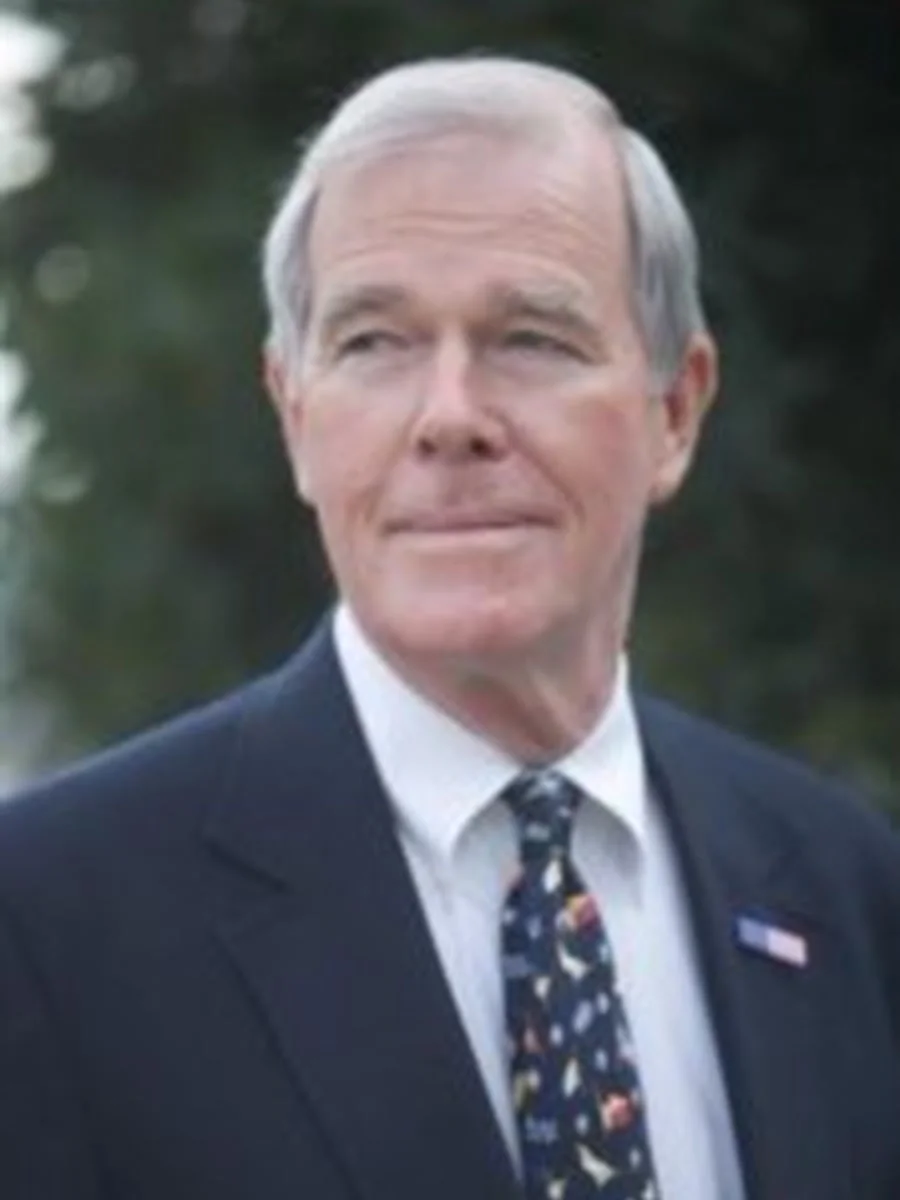
Paul Wythes
Joined Sutter Hill's pre-existing SBIC structure in 1964 and became a long-serving partner in its quiet, team-based venture practice.
Formative years: engineering literacy without an engineer's vocation, 1933–1959
Paul Wythes was born in Camden, New Jersey, on 23 June 1933, grew up in Haddonfield, and earned a Princeton B.S.E. in mechanical engineering in 1955. In his later account, a summer drafting job at RCA clarified that he preferred commercial and managerial work to design engineering. That combination—technical training plus recognition that he was not the domain expert—resembles his later biotechnology diligence boundary, but no contemporaneous record proves the education caused the rule. [researcher inference · provisional] Wythes oral history, printed pp. 1–13 / PDF pp. 5–17 · PAW written-record analysis
Two years in the Navy Supply Corps preceded a Stanford M.B.A., completed in 1959. The record supports administrative and financial training, but no student investment paper or distinctive military-to-investment method surfaced. It would be biography by analogy to turn logistics service into a reserve-allocation model. [researcher inference · strong] Wythes oral history, printed pp. 14–23 / PDF pp. 18–27 · written-corpus coverage
Operating apprenticeship: price, customers, and management, 1959–1964
Wythes worked for Minneapolis-Honeywell in San Francisco and Beckman Instruments in Fullerton in pricing, sales, and product-management roles. These were operating-company apprenticeships, not founder or general-management posts. The later investment record is consistent with attention to customers, pricing, technical-commercial translation, and recruiting; the public corpus contains no contemporaneous memo proving those jobs caused a formal checklist. [researcher inference · provisional] Wythes oral history, printed pp. 23–39 / PDF pp. 27–43 · decision labs
He married Marcia Reed in 1961 and returned to northern California before entering venture capital. Personal and geographic continuity plausibly made Peninsula networks easier to build; it does not demonstrate preferential access or selection skill by itself. [researcher inference · provisional] family-paid obituary, printed p. 20/PDF p. 18 · sourcing analysis
Entering a platform that already existed, 1961–1965
Greg Peterson and Frank Lodato formed Sutter Hill Company as a real-estate business in 1961 and obtained an SBIC license for Sutter Hill Capital Corporation on 20 September 1962. Wythes did not found either predecessor event. Peterson recruited him in August 1964 to run the SBIC; Wythes entered as an employee and vice president. In 1965 Sutter Hill acquired four Draper & Johnson positions—Pacific Communications and Electronics, ICORE, Electroglas, and R. O. Associates—and Bill Draper joined. Those acquired holdings were not Wythes-originated selections. [contemporaneous record · moderate] Federal Register, 1975, printed p. 42412 · vehicle chronology · formation controls
Four events are often collapsed into a founding legend: the 1961 company, 1962 SBIC, Wythes's 1964 hire, and 1970 Sutter Hill Ventures partnership. The supported contribution is narrower and still important: Wythes became an early operating builder of the investment business and later a co-architect of the partnership, not founder of the pre-existing Sutter Hill Company. [researcher inference · strong] entity chronology
Learning a local market: sourcing, syndication, and control, 1964–1970
Wythes remembered prospecting by driving the Santa Clara Valley, identifying technical businesses, and asking chief executives for meetings. The practice made geographic density actionable: repeated contact could reveal engineers, managers, suppliers, and spinouts before organized venture competition deepened. Yet the record has no source-to-meeting, meeting-to-investment, or investment-to-return funnel. [investor-stated · moderate] Wythes oral history, printed pp. 39–48 / PDF pp. 43–52 · sourcing model
The early cases supplied distinct lessons:
- Micro Magnetics/MMI paired an attractive market and prominent executive with founder control that left the minority investor weak. Wythes later said Sutter Hill avoided repeating that solo structure. The lesson is governance, not that famous management is bad. [investor-stated · moderate] MMI reconstruction
- Kasper Instruments is the clearest local-doorstep sourcing story: Wythes found the company, brought in Page Mill, joined the board with John Young, and later saw Cutler-Hammer acquire it. Original security, ownership, and proceeds remain missing. [investor-stated · moderate] Kasper reconstruction
- Measurex is the strongest independently controlled process case. Founder Dave Bossen separately credited Wythes with helping assemble the syndicate. The total startup round was about $1.25 million: Sutter Hill/SBIC supplied $250,000 and two outside blocks about $500,000 each. It is wrong to call $1.25 million Sutter Hill's investment. [retrospective witness · moderate] Measurex lab · Bossen note
- Micrex/Xidex shows the value and danger of active governance: a naming/trade-secret threat, management replacement, payroll bridge, later financing, IPO, and sale appear in Wythes's account, but the complaint, cap table, minutes, and distributions are absent. [investor-stated · provisional] Xidex reconstruction
- Diablo Systems places Wythes on the board and Comstock independently places Draper and Wythes in the financing. Expense and profit monitoring appear as mechanisms, while the later Qume lineage raises competitor-conflict questions. [retrospective witness · moderate] Diablo/Qume lab · Comstock note
Wythes's annual recollection implies 46 deal events for 1964–1970 and 31 for 1966–1970, but most events are unnamed and may include follow-ons. They cannot be converted into unique companies or a hit rate. The public narrative therefore overweights memorable winners and litigated or public-company controls. [researcher inference · provisional] coverage reconciliation
The Genstar bargain and an evergreen institution, 1969–1981
Around 1969 the earlier Sutter Hill operating company was sold to Genstar in a transaction Wythes remembered at roughly $10 million; he attributed about $8 million jointly to Kasper and Measurex. In 1970 Wythes and Draper organized the distinct Sutter Hill Ventures limited partnership with a reported $10 million Genstar commitment, manager investment discretion, and a continuing-capital design. Reported economics began at an 80/20 LP/GP split and later moved to 75/25. No agreement, capital accounts, valuation policy, or distribution ledger was found. [retrospective witness · provisional] Pareto evidence · vehicle chronology
The structure plausibly gave the team more duration and reserve flexibility than serial deal-by-deal fundraising. That is an institutional capability, not proof that patience caused returns. Evergreen capital can support company building or delay recognition of error. Missing governing records prevent claims about recycling, withdrawals, partner allocation, key-person terms, or exact carry. The transcript later characterizes the 36% figure as carried interest, which conflicts with its 80/20 and 75/25 descriptions and remains an unresolved transcription or speech inconsistency. [researcher inference · moderate] return controls · written-record contradictions
Qume reused Diablo talent and added recruited executive Bob Schroeder; ITT later acquired it. The relationship reuse was efficient but put the firm on both sides of a competitor boundary. The later Priam/Quantum case is the more explicit response: Wythes said the existing company's CEO was consulted, Sutter Hill avoided taking the Quantum board seat, and Schroeder served as proxy. Terms and minutes are missing, but consent, recusal, and information separation are visible as mechanisms. [retrospective witness · moderate] Priam/Quantum reconstruction · competitor model
Wythes served on the founding NVCA board in 1972. His account credits Charlie Lea, Lionel Pincus, and a coalition for much of the later pension-rule and capital-gains work, supporting participation rather than sole authorship. Sutter Hill Capital surrendered its SBIC license effective 4 September 1975, ending the licensed wrapper rather than the partnership. [contemporaneous record · moderate] Wythes oral history, printed pp. 78–84 / PDF pp. 82–88 · Federal Register, 1975
A 1974 federal notice identified Wythes as a Sutter Hill Ventures general partner, a Sutter Hill Capital vice president, and a Durrum director in an affiliated transaction. It establishes disclosed roles and a conflict process, not investment performance, sanction, or misconduct. [contemporaneous record · strong] SEC News Digest, 1974-02-26
Partnership succession and attribution discipline, 1981–1999
Draper left for the Export-Import Bank in 1981. Wythes remained and described recruiting or developing Leonard Baker, Dave Anderson, Bill Younger, Tench Coxe, and other partners. The record supports a complementary-partnership operating model: varied skills, shared decisions, explicit role credit, and succession. It does not prove that complementarity raised returns, nor identify every vote or carry allocation. [investor-stated · moderate] talks frameworks · people map · partnership model
After Imasco acquired Genstar in 1986, Wythes said Sutter Hill gradually replaced its sole LP; by 1991 the reported group included Power Corporation, Sun Life, Princeton, Yale, MIT, Stanford, and the Irvine Foundation. The record lacks transfer agreements, commitments, capital accounts, and LP confirmations. Institutional diversity may have reduced single-LP dependence but also changed reporting and liquidity pressures; neither effect is demonstrable. [investor-stated · provisional] vehicle chronology
Later names require strict credit. Apollo founder evidence identifies Draper as the initiating Sutter Hill actor. Linear Technology's founders name H&Q, Mayfield, Sequoia, and Kleiner Perkins as the first four core funders and place Sutter Hill among later entrants, without a Wythes role. Applied Materials is tied to Jim Morgan's relationship; LifeScan and other healthcare cases have other Sutter Hill board leads. Amerigroup records distinguish Sutter Hill Ventures, TOW, Wythes's living trust, partners, founders, and outside investors. [contemporaneous record · strong] responsibility grid · Apollo control · Linear control
Adverse records complicate a frictionless-governance story. Teltone's proxy establishes Wythes's board tenure and a contested minority-holder transaction but no illegality. The Activision court dismissed the venture-group Section 11 claim with prejudice; it did not find Wythes committed fraud. T. Rowe Price litigation named him as a fund director and was dismissed for failure to state a claim. These are governance/conflict controls, not wins, losses, or misconduct findings. [contemporaneous record · strong] filing controls · adverse controls
Retirement, public service, and late narration, 1999–2012
Wythes retired from active Sutter Hill management in 1999 and later described a special-limited-partner role. Shutterfly's S-1 shows 9.1% Sutter Hill-affiliated ownership, but the investment postdates active retirement and does not establish a Wythes lead. Exogen, Oacis, Amerigroup, and Teltone filings distinguish Wythes, trusts, TOW, Sutter Hill vehicles, and shared disposition; filing aggregation is not personal economic ownership. [contemporaneous record · insufficient public record] ownership controls
In 2000 Princeton Alumni Weekly reported Wythes's estimate that Sutter Hill's average annual return over the prior thirty years exceeded 35%. His oral history later gave roughly 36% net IRR for 1970–2005, while Draper separately remembered roughly 40% before 1981. The later India-fund estimate of 12–13% net concerns a different object. Speakers, periods, vehicles, gross/net bases, valuations, fees, carry, and cash flows are not reconciled. None is an audited Wythes-personal track record. [investor-stated · provisional] return controls · writings contradiction ledger
His Princeton trusteeship and leadership of a 2000 strategic committee demonstrate governance outside the venture denominator; the report was collective, not Wythes-authored investment prose. His three 2006 oral-history sessions form one late-life work in two transcript manifestations, not independent confirmations. He discussed five passes—Apple, Cisco, Tandem, Siebel, and Webvan—an unnamed mining write-off, and selected weak cases; no complete pass/loss schedule survives. [contemporaneous record · moderate] writings authorship boundary · talks coverage · failure ledger
Wythes died on 30 October 2012. Later obituaries sometimes call him a 1962 Sutter Hill founder; the earlier company/license records and his chronology support a 1964 hire and 1970 partnership formation. [contemporaneous record · moderate] Princeton obituary · contradiction audit
People, capital, and influence map
| layer | actors | supported influence | attribution boundary |
|---|---|---|---|
| Predecessor founders/capital | Greg Peterson; Frank Lodato; Sutter Hill Company; SBA/SBIC | Created the company and licensed vehicle; hired Wythes. [contemporaneous record · moderate] | Predates Wythes; not his founding act. formation chronology |
| Early partner/portfolio transfer | Bill Draper; Pitch Johnson; Draper & Johnson positions | Portfolio acquisition, early partnership, company and policy networks. [retrospective witness · moderate] | Four positions acquired; Apollo lead belongs to Draper on founder evidence. formation controls |
| LP and legal structure | Genstar; Angus MacNaughton; Cooley counsel; later institutional LPs | Commitment, partnership design, later LP transition. [retrospective witness · provisional] | Capital provider is not selector; testimony is not the agreement. vehicle chronology |
| Sutter Hill partners | Leonard Baker; Dave Anderson; Bill Younger; Tench Coxe; Bob Kagle; later partners | Sector expertise, sourcing, boards, recruiting, succession. [investor-stated · moderate] | Firm outcome is not Wythes-personal action/economics. people map |
| Founders/executives | Kasper; Bossen; Comstock; David Lee; Schroeder; Colbert; Morgan; company teams | Products, operating execution, repeat networks. [retrospective witness · moderate] | Investor assistance cannot replace operator credit. responsibility grid |
| Syndicate/board controls | Page Mill; Bessemer; Eastman Dillon-related group; John Young; Rock; H&Q; Mayfield; Sequoia; Kleiner Perkins; TVI | Capital, independent judgment, referrals, board work. [retrospective witness · moderate] | Co-investment is not Wythes approval/ownership. Measurex lab |
| Holders after organization | SHV vehicles; TOW Partners; Wythes/trusts; continuing firm | Distinct legal/economic positions and post-retirement continuity. [contemporaneous record · strong] | Group beneficial ownership is not personal ownership; later firm action is not active Wythes work. ownership controls |
| Archives/control institutions | CHM/NVCA; Bancroft; Princeton; SEC; SBA; courts | Testimony, filings, chronology, adverse controls. [researcher inference · strong] | Witness families and legal process have different evidentiary roles. source map |
Use the eight-role grid: source, sponsor, diligence, approval, negotiation, board/recruiting, follow-on, and exit remain separate.
Life → belief → process → action → outcome: tested links
| input | proposed belief | observable process/action | cases | outcome and causal limit |
|---|---|---|---|---|
| Engineering education + commercial roles | Respect technical truth without pretending to be the scientist | Expert references, people checks, customer translation | PAW biotech; Measurex; Duplicon boundary | [researcher inference · provisional] Direct philosophy signal survives; no matched prediction record proves superior selection. written-record analysis |
| Local prospecting in a thin market | Dense reciprocal networks can reveal companies early | Doorstep meetings, founder reuse, local co-investors | Kasper; Measurex; Diablo→Qume | [researcher inference · provisional] Bossen independently supports Measurex help; no source-to-return denominator. sourcing model |
| SBIC limits/local rejection | Syndication can expand capacity without outsourcing responsibility | Distinct capital blocks and board judgment | Measurex; Kasper; Quantum | [researcher inference · moderate] Financing is supported; allocations, decision rights, proceeds incomplete. Measurex lab |
| MMI control problem/conflicts | Governance and information rights matter before prestige | Boards, recruitment, consent, recusal/proxy | MMI; Xidex; Priam/Quantum; Diablo/Qume boundary | [researcher inference · moderate] Mechanisms visible retrospectively; minutes and counterfactuals missing. governance model |
| Genstar continuing capital | Company building requires compatible duration | Evergreen pool, follow-ons, long boards | Xidex; Qume; Duplicon boundary | [researcher inference · provisional] Structure is plausible capacity, not verified alpha; stop rules/cash accounts absent. vehicle model |
| Draper's exit and succession | Complementary partners can preserve decisions and credit across generations | Recruit partners, assign roles, transition LPs, special-LP retirement | later firm cases; Apollo/Linear negative controls | [researcher inference · moderate] Continuity supported; performance effect, vote ledger, and personal economics absent. team model |
A falsifiable thesis of the edge
Proposed edge — [researcher inference · moderate]. In the thin 1964–1999 Silicon Valley venture market, Wythes may have combined labor-intensive local founder discovery with wider syndication, management recruitment/intervention, and long-duration team capital. The mechanism should be strongest in early instruments, storage, and technical companies where local access, scarce management, and financing constraints were material. core philosophy · model inventory
Mechanism — [researcher inference · moderate]. Local access creates earlier or richer information; reciprocal founders and co-investors add references and capital; governance turns information into recruiting, monitoring, or stopping actions; a duration-matched vehicle preserves follow-on options; a complementary partnership transfers the system beyond one person. Remove access, collaborators, decision rights, duration, or operating execution and the thesis should weaken. historical context
Supporting observations — [retrospective witness · provisional]. Kasper supports local origination; Bossen independently supports Measurex syndication help; Xidex and Diablo support board/recruiting work; Priam/Quantum supports competitor process; the 1970 partnership and later LP transition support institution building. The inseparable Kasper+Measurex estimate is directionally consistent with early payoff but is not a return reconstruction. bounded summaries and labs
Ordinary, negative, and contradictory observations — [researcher inference · strong]. MMI exposed weak control; Duplicon had a weak, incompletely measured outcome; the unnamed mining position was written off; five opportunities were passed; Diablo/Qume created a conflict boundary; Teltone supplies adverse governance evidence. Apollo and Linear constrain personal credit; Shutterfly constrains post-retirement credit. failures and process change
Predictions — [researcher inference · moderate]. Unseen pre-outcome records should repeatedly show Wythes-specific provenance; independent technical/customer evidence changing approval or terms; pre-commitment management/governance diagnoses; deliberate syndicate/vehicle allocation; reserves and milestones compatible with long holds; partner-specific roles/dissents; and stronger ordinary outcomes when those mechanisms were present. The pattern should persist after excluding the largest one or two winners and controlling for vintage, sector, stage, SBIC leverage, founders, co-investors, and exit markets.
Falsifiers — [researcher inference · strong]. The thesis weakens if original records show generic or partner-owned sourcing; references/recruiting occurred only after trouble; governance was ceremonial; the evergreen agreement did not change duration/reserves; matched companies with the mechanisms did no better; ex-outlier cash flows are weak; or economics belong mainly to the predecessor platform, founders, partners, Genstar capital, favorable exit windows, or luck. With 0/35 full chains, the record cannot adjudicate these tests.
Skill, access, team, vehicle, era, luck, and outlier audit
Every comparison below is a [researcher inference · moderate] unless its linked section states a different grade. Each is a hypothesis boundary, not verified personal attribution.
| explanation | what the record supports | deciding evidence |
|---|---|---|
| Skill | Specific sourcing, syndication, recruiting, governance, and conflict processes in selected cases | Memos, matched passes, role-specific decisions, ordinary-case cash flows. bounded summaries |
| Access | Peninsula density, university/operating networks, founder and co-investor reuse | Compare investors seeing the same opportunity; control referral quality. historical context |
| Pre-existing institution | Sutter Hill name, predecessor assets, legal organization | Separate platform and brand from Wythes-added decisions. formation chronology |
| Team | Draper, later partners, founders, executives, syndicates, boards | Votes, deal leads, work logs, carry/allocation schedules, founder testimony. responsibility grid |
| Vehicle | SBIC leverage/limits, Genstar commitment, evergreen duration, LP diversity | Agreements, capital calls, reserves, valuations, withdrawals, distributions. vehicle chronology |
| Era/regime | Scarce 1960s capital, Silicon Valley expansion, later institutions/exits | Vintage/stage/sector base rates and market-timing controls. historical context |
| Luck | Technical outcomes, founder evolution, acquisition windows, missed winners | Pre-outcome probabilities, complete pass/loss schedule, counterfactuals. denominator audit |
| Outlier sentinel | Kasper+Measurex jointly dominate the only portfolio-composition estimate | Complete cash flows and ex-top-one/ex-top-two performance. Pareto evidence |
The strongest favorable conclusion is institution building plus plausible case-level judgment, not proved personal alpha.
Failures, criticism, changed conditions, and the skeptic
The strict final set is 41 = 35 associated companies + five passes + one unnamed loss, and 0/35 associated companies has the complete vehicle→decision→security→ownership→follow-on→governance→exit/write-off→cash-flow chain. Balance Bar is a false positive; Webvan is a pass; Tellabs and Oacis are added; LSI Logic remains orphaned; Neurex, BioSurface Technology, and Ontogeny remain outside the 41 pending attribution and deduplication. [researcher inference · strong] reconciliation
No dated postmortem, revised checklist, or IC rule documents change after MMI, Duplicon, the mining loss, or the five passes. Failure-as-tuition is therefore an evolution theme, not a model. Dense networks can become insular; syndicates can diffuse responsibility; long duration can become escalation; board access creates conflicts; and shared credit can obscure accountability. [researcher inference · provisional] failure ledger
Strongest skeptical thesis — [researcher inference · strong]. Wythes was a capable steward and late narrator inside an advantaged pre-existing platform, not a demonstrably superior personal investor. Peterson/Lodato, the SBIC, inherited positions, Genstar, later LPs, founders, syndicates, successor partners, and favorable public-exit regimes supplied substantial access, capital, and work. Bossen on Measurex and Comstock on Diablo are stronger person-specific controls than most celebrated associations; Apollo is Draper-led, Linear lacks a Wythes role, Applied is routed through Morgan, and later holdings may postdate retirement. The claimed 27-plus-board roster is unrecovered, the authored corpus is 0/3 full, the direct spoken corpus is one late work, and no personal cash-flow ledger survives. writings coverage · talks coverage · denominator limits
Original sourcing logs, memos/votes, cap tables, minutes, recruiting records, partnership agreements/capital accounts, company cash flows, matched ordinary cases, and Wythes-versus-partner action ledgers would discriminate this skeptical thesis from the favorable edge thesis.
Sourced chronology and learning path
| date | supported event | evidence boundary | source |
|---|---|---|---|
| 1933–1959 | New Jersey; Princeton engineering; Navy Supply Corps; Stanford M.B.A. | Retrospective biography; no early investing writings | oral history, printed pp. 1–23 / PDF pp. 5–27 |
| 1959–1964 | Honeywell/Beckman pricing, sales, product work | Apprenticeship, not founder/general-manager experience | oral history, printed pp. 23–39 / PDF pp. 27–43 |
| 1961 / 1962 | Peterson/Lodato company; SBIC license | Predates Wythes | vehicle chronology |
| Aug. 1964 | Wythes joins Sutter Hill Capital | Hire, not 1962 founding | formation controls |
| 1965 | Four D&J positions acquired; Draper joins | Acquired portfolio, not Wythes picks | responsibility grid |
| 1966–1970 | 31-event subtotal; early cases | Unnamed events prevent unique-company count | reconciliation |
| circa 1969 / 1970 | Genstar transaction; distinct SHV LP formation | Reported values/economics; governing records absent | vehicle chronology |
| 1972 / 1975 | NVCA board participation; SBIC surrender | Coalition credit; surrender ends license only | oral history, printed pp. 78–84 / PDF pp. 82–88 · Federal Register |
| 1970s | Xidex, Diablo/Qume, other board/recruiting cases | Selected recollections; cash flows missing | bounded summaries |
| 1981 | Draper leaves; Wythes remains | Clearer succession responsibility, not sole firm ownership | talks chronology |
| 1986–1991 | Genstar acquired; LP base reportedly diversified | Agreements/confirmations missing | vehicle chronology |
| 1980s–1990s | Later technology/healthcare associations | Partner, founder, vehicle, board roles vary | 41-family ledger |
| 1999 | Active-management retirement | Later special-LP role; post-retirement separation required | ownership controls |
| 2000–2006 | PAW coverage; three oral-history sessions | Return unaudited; sessions are one restricted work | writings chronology · talks coverage |
| 2012 | Death and memorials | Some founding dates conflict with primary chronology | Princeton obituary |
Study in this order: sources for route and rights limits; writings for the thin authored/direct-voice boundary; talks for the oral-history spine and participant controls; investments for all 41 families, vehicles, and four labs; investment philosophy for the operating synthesis; and mental models for eight evidence-bounded procedures. Compare only on matched dimensions with completed Peter Brooke, Arthur Rock, and Peter Crisp.
Snapshot and testable edge thesis
| dimension | evidence-bounded answer |
|---|---|
| Person and period | Paul Morrison Wythes, active at Sutter Hill from his August 1964 hire through 1999 active-management retirement; later special LP. The 1961 company and 1962 SBIC predated him. biography |
| Proposed edge | [researcher inference · moderate] In the thin 1964–1999 Silicon Valley market, labor-intensive local founder discovery plus wider syndication, management recruiting/intervention, and long-duration team capital may have produced an advantage in instruments, storage, and other technical companies where access, scarce management, and financing constraints mattered. profile thesis |
| Mechanism | [researcher inference · moderate] Local contact creates earlier information; reciprocal networks add references and capital; governance converts information into recruiting, monitoring, or stop decisions; compatible duration preserves follow-on options; complementary partners preserve specialization and succession. causal map |
| Supporting observations | [retrospective witness · provisional] Kasper local origination, Bossen's independent Measurex syndication account, Xidex/Diablo board work, Priam/Quantum conflict controls, and the 1970 partnership fit pieces of the mechanism. bounded summaries and labs |
| Disconfirming observations | [researcher inference · strong] MMI weak control, Duplicon's weak outcome, the mining loss, five passes, Teltone adversity, Apollo/Linear negative attribution, and post-retirement Shutterfly limit a winner-only story. failure ledger |
| Denominator | The strict union is 41 = 35 associated companies + five passes + one unnamed loss; 0/35 associated companies has a complete chain. The oral history's 46 events for 1964–1970 and 31-event 1966–1970 subtotal are not unique-company counts. reconciliation |
| Predictions | Unseen ordinary-case records should show Wythes-specific provenance, independent reference evidence changing terms, syndication under a constraint, named recruiting/governance milestones, deliberate reserves, partner-specific decisions, and better matched outcomes when the mechanisms were present. [researcher inference · moderate] profile predictions |
| Falsifiers | The thesis fails or weakens if sourcing was generic/partner-owned, governance ceremonial, recruiting reactive, the vehicle did not change duration or reserves, matched outcomes show no advantage, or economics vanish outside the inseparable Kasper+Measurex sentinel after controlling for platform, founders, partners, vintage, exit markets, and luck. [researcher inference · strong] retrieval ledger |
The thesis is about a joint operating system, not audited personal alpha. The public record supports institution building more strongly than it supports a Wythes-personal return claim.
Core philosophy
Wythes's strongest direct themes are practical and bounded: make founder contact before the market becomes crowded; let reciprocal interest precede intensive work; respect the investor's expertise limit while checking the people who possess the technical knowledge; recruit or replace management when the gap is remediable; syndicate when capital or expertise is constrained; and build companies over a long clock. [investor-stated · moderate] These are paraphrases of one late oral-history work plus one readable PAW direct-voice source, not a contemporaneous authored doctrine. spoken synthesis · written synthesis
The strict attributable-writing denominator is N=3 and 0/3 full bodies: Done Deals remains controlled unread, while the Mercury and NYSE artifacts are unlocated. PAW is readable journalistic direct voice, not a Wythes-authored work. [researcher inference · strong] writings coverage
The reconstructed operating system is: source locally → verify people/customers → distinguish fatal from repairable gaps → assign capital, ownership, and decision rights → recruit/govern with conflict controls → reserve against milestones → keep person, team, vehicle, and outcome credit separate. [researcher inference · moderate] It is not a claim that every Sutter Hill decision followed this sequence; no original memo or complete ordinary-case ledger demonstrates that. model inventory
Three boundaries are essential. First, a good company outcome does not reveal original investment economics. Second, a Sutter Hill association does not establish Wythes sourcing, approval, board work, or personal capital. Third, patience is capacity, not quality: without milestones and stop rules it can become escalation. [researcher inference · strong] evidence boundary
Sourcing
- Cheap founder contact before expensive diligence — [investor-stated · moderate]. Wythes recalled physically canvassing the Valley and asking companies for meetings. The procedure exploits low contact cost and local density; no funnel proves efficacy. Wythes oral history, printed pp. 39–48 / PDF pp. 43–52
- Reciprocity before depth — [investor-stated · moderate]. His reconstructed early pitch offered a long partnership rather than a financing transaction and waited for mutual interest. That can reveal willingness to work together, but it may also select for network comfort rather than quality. oral-history note
- Relationship reuse and contrast — [retrospective witness · moderate]. Kasper is the documented Wythes canvassing application; Measurex is a founder-originated/referral contrast whose founder independently credits later syndication help; Diablo→Qume shows reused founder/executive paths. None supplies a source-to-return conversion rate. Measurex note · Comstock note
- Negative attribution controls — [retrospective witness · strong]. Apollo is routed to Draper; Linear's founders identify the initial syndicate and do not name Wythes. These prevent the firm label from becoming personal sourcing credit. Apollo note · Linear note
Record introducer, first contact, incremental information, independent channel, conflict, sponsor, and decision owner. Missing are the complete funnel, rejection ledger, referral concentration, sourcing cost, geographic radius, and source-quality/outcome comparison. [researcher inference · strong]
Picking
| gate | supported rule | red flag and evidence boundary |
|---|---|---|
| Technical truth | [investor-stated · moderate] When the investor lacks domain competence, verify the quality and integrity of relevant experts rather than pretend expertise. PAW feature analysis | Prestige or consensus substitutes for falsification; no Biovest reject case or complete six-company roster is available. |
| People/management | [researcher inference · moderate] Diagnose whether rights and consent make the gap governable, then recruit, replace, condition, or stop. Xidex and Qume show recruitment; Cisco is the missed-remediation counterexample. management model | Charisma, résumé, or board optimism without usable rights, role, deadline, candidate pool, consent, and stop condition. |
| Customers/market | [retrospective witness · moderate] Measurex includes customer/reference work in the retrospective rationale. Measurex lab | One founder/winner recollection is not a universal customer-diligence method. |
| Price | [investor-stated · provisional] Apple and Webvan passes show price as a thesis variable, while Shutterfly is only a post-retirement firm boundary. pass lab | Hindsight success/failure cannot prove a pass was irrational; no original offers, cap table, return target, or price ceiling survives. |
| Governance/control | [researcher inference · moderate] MMI suggests structure can dominate pedigree; Xidex and Qume show management repair, while Priam/Quantum invokes the narrower competitor protocol. management model | A seat without information, voting, recruiting, follow-on, and conflict rights is not control. |
A no-hindsight decision record must state the invest/pass answer, evidence that could change it, security/ownership, vehicle, decision rights, milestones, reserves, dissent, and kill conditions. The public corpus usually lacks those fields. [researcher inference · strong]
Deal and portfolio mechanics
The final public union contains 35 associated companies, five passes, and one anonymous loss. The associated label spans inherited positions, sourcing, syndication, board roles, firm/group holdings, later-firm holdings, and narration; it does not mean funded by Wythes. Every associated case is materially incomplete, so 0/35 supports a complete vehicle-to-cash-flow chain. [researcher inference · strong] ledger
Measurex supplies the cleanest financing arithmetic: total startup financing about $1.25 million, comprising $250,000 from Sutter Hill/SBIC plus two outside blocks of about $500,000 each. The larger number is the round, not Sutter Hill's check. [retrospective witness · moderate] Measurex lab
The only portfolio-composition estimate is inseparable: Wythes attributed roughly $8 million of a reported ~$10 million earlier Sutter Hill/Genstar transaction value jointly to Kasper and Measurex. It is not two deal returns, cost, proceeds, MOIC, IRR, or a Wythes distribution. Removing it leaves no comparable deal-level measure. [investor-stated · provisional] Pareto analysis
No universal target ownership, security preference, reserve ratio, diversification rule, loss budget, follow-on formula, concentration threshold, distribution rule, or exit doctrine surfaced. Xidex's bridge and long arc show case behavior; Duplicon and Priam/Cohesive are escalation boundaries. IPOs and acquisitions are company outcomes until dated ownership and cash flows connect them to a vehicle. [researcher inference · strong] portfolio forensics
Wythes reported a practice of distributing unrestricted public stock and leaving sale timing to recipients; one retrospective practice without agreement, tax/restriction, distribution, and outcome records is a deal-specific ledger item, not a universal exit model. [investor-stated · provisional] deal-mechanics limits
Vehicle and incentive fit
| regime/dimension | supported effect | unresolved economics and control |
|---|---|---|
| 1961 Sutter Hill Company | Peterson/Lodato predecessor real-estate company existed before Wythes. profile | Not an investment vehicle founded by Wythes. |
| 1962 Sutter Hill Capital SBIC | Licensed wrapper and reported $250,000 check constraint enabled/limited early investing. historical context | Leverage draws, examinations, fees, owner capital, allocation, and loss ledger absent; license surrendered in 1975. |
| 1965 acquired positions | Brought four D&J holdings and Draper into the platform. chronology | Purchase agreement, security transfers, approvals, valuation, and Wythes economics absent. |
| Circa-1969 Genstar transaction | Participants remember a roughly $10m company/portfolio transaction, with Kasper+Measurex a joint value estimate. Pareto | Distinct from the 1970 commitment; not cash proceeds, two deal returns, or personal economics. |
| 1970 Sutter Hill Ventures / Genstar | Reported $10m commitment, discretion, evergreen duration, and 80/20 then 75/25 split. vehicle chronology | Agreement, GP commitments, fees/carry, recycling, valuation, reserves, liquidity, withdrawals, succession, and cash accounts absent. |
| 1986–1991 LP transition | Reported move from Genstar/Imasco dependence to institutions. | Transfers, commitments, governance, reporting, liquidity demands, and confirmations absent. |
| Later vehicles/geographies | Biovest, India/China pools, and later firm funds are vehicle leads, not companies or automatic Wythes decisions. reconciliation | Mandates, partner authority, regulatory exposure, currencies, reserves, economics, and overlap absent. |
| Holder layer | SHV entities, TOW, Wythes/trusts, partners, and continuing firm can appear together in filings. ownership controls | Beneficial aggregation/shared disposition is not personal economic ownership or original investment evidence. |
| Retirement/succession | Active management ended in 1999; special-LP continuity followed. | Key-person, allocation, carry vesting, withdrawal, and post-retirement vote rights absent. |
Vehicle fit includes stage, geography, regulation, capital source, liquidity, duration, reserves, decision rights, incentives, and succession. The evidence supports duration as plausible capacity, not causal alpha. The transcript's later characterization of the 36% figure as carried interest conflicts with the 80/20 and 75/25 economics and cannot be normalized. [researcher inference · strong] return controls
Team attribution and work with founders
Wythes described partnership complementarity and shared credit. Multiple participant families support team framing, while the missing vote/carry ledger prevents a claim that complementarity improved returns. The operating model is still usable: name the capability gap, assign a responsible partner, record the decision right, and preserve founder/operator credit. [investor-stated · moderate] talks frameworks · team model
| case | source/capital | governance/operating attribution |
|---|---|---|
| Measurex | Wythes helped syndicate; Sutter/SBIC and two outside blocks supplied distinct capital. | Bossen and company operated; no sole approval or economics. lab |
| Kasper | Wythes local source; Page Mill co-invested. | Kasper/team operated; Wythes and John Young boarded; founder liquidity and exit allocations missing. case |
| Diablo/Qume | Comstock supports Wythes/Draper financing at Diablo; Qume is a firm/team case. | David Lee and teams created; Wythes board evidence at Diablo; Schroeder recruitment and conflict handling are shared. lab |
| Apollo/Linear | Apollo initiating credit belongs to Draper; Linear first funders exclude Sutter Hill, later entry is firm-level. | Founders/operators retain product credit; no Wythes model or economics. responsibility grid |
| Applied/LifeScan/healthcare | Applied Materials routes through Jim Morgan; LifeScan board work through Len Baker; several healthcare cases through Bill Younger. | Firm/team associations cannot become Wythes-personal sourcing, boards, or returns. responsibility grid |
| 1965 acquired positions | Pacific C&E, ICORE, Electroglas, and R. O. Associates transferred from Draper & Johnson. | Retained in the associated set but not Wythes-originated selections. reconciliation |
| Later holdings | Amerigroup, Exogen, Oacis, Teltone, and Shutterfly distinguish vehicle, trust/TOW, partner, and continuing-firm layers. | Filing groups and boards do not prove Wythes sourcing, vote, check, or proceeds. filing controls |
Views on the craft
- Company building over transaction completion — [investor-stated · moderate]. The oral/written derivative record favors a multi-year operating horizon. It does not establish universal hold duration or return. Darden analysis
- Access is not selection — [researcher inference · strong]. Dense networks and firm reputation can improve opportunity flow; matched decisions are required to show judgment. profile audit
- Governance is a mechanism, not a title — [researcher inference · strong]. Recruiting, information, capital, conflict, and stop rights matter; tenure alone proves none. bounded governance summaries
- Power-law humility — [researcher inference · strong]. Kasper+Measurex may dominate the only portfolio-composition estimate, but missing cash flows prevent an 80/20 result or repeatability claim. Pareto
- Returns belong to defined objects — [researcher inference · strong]. Company outcome, firm IRR, personal return, carry, and filing ownership are different. return controls
- Failure rhetoric — [investor-stated · provisional]. Acknowledging misses is useful against survivor bias, but no complete loss denominator or dated postmortem proves learning. failure ledger
- Mission — [investor-stated · provisional]. Useful products, jobs, and taxes are stated benefits of company building; no evidence shows mission changed selection, terms, or measured outcomes. Darden analysis
- Greatness — [researcher inference · moderate]. The strongest supported definition is building a sourcing/governance institution that survives succession while keeping attribution honest; superior personal alpha remains unproved.
Signature bets and decision process
Use the four bounded no-hindsight labs. Each preserves what was knowable, the role split, a provisional invest/pass, kill criteria, and the missing evidence:
- Measurex: customer/operator quality versus an SBIC check constraint and local financing refusals; decide whether syndication solves capital without outsourcing judgment.
- Diablo/Qume: repeat-founder access versus duties and confidential information; specify consent, recusal, board allocation, and walk-away conditions.
- Apple/Cisco: price or management weakness versus staging, repricing, and recruiting; later success cannot rewrite the original evidence.
- Duplicon: product promise versus validation, capital, and weak outcome; this is a failure/weak-outcome exercise, not proof of a Wythes hardware rule.
Mental models and maxims
The reconciled inventory contains eight procedures in decision sequence, not rank order: four moderate and four provisional. Generic failure acceptance, public-good rhetoric, a Duplicon hardware slogan, and the researcher-created price/fatal/remediable taxonomy are excluded.
- Reciprocal local sourcing before expensive diligence — provisional
- Expertise-boundary people diligence — provisional
- Make management gaps governable, then recruit or replace — moderate
- Syndicate when capital, expertise, or governance exceeds one vehicle — moderate
- Use consent, recusal, and information separation for competitor conflicts — provisional
- Build companies on a multi-year clock, with explicit stopping tests — moderate
- Match vehicle duration and incentives to the work — provisional
- Build complementary investor teams and keep role credit explicit — moderate
Evolution and contradictions
| period | visible emphasis | contradiction/boundary |
|---|---|---|
| 1964–1970 | Local canvassing, minority-control lesson, syndication, boards | Reconstructed in 2006; no contemporaneous checklist; 46/31 events mostly unnamed |
| 1970s | Evergreen partnership, long company building, repeat-founder networks | Duration can support repair or escalation; agreements/stop rules missing |
| 1981–1999 | Complementary partners, sector expansion, institutional LP transition | Later deals often belong to other partners; personal action/economics thin |
| 1995–2000 written leads | People/science, possible fees/disclosure topics, firm returns | Strict Wythes bodies are 0/3 full; roundtable/Done Deals/Mercury/NYSE cannot supply doctrine |
| 2006 | One comprehensive retrospective work describes rules, cases, passes, failures | Three sessions/two manifestations are one work; memory and survivor selection dominate |
| 2011 | Darden republishes selected 2006 themes | Publication date is transmission, not intellectual evolution |
No public sequence proves that Wythes changed his process after MMI, Diablo/Qume, Duplicon, the mining loss, or the missed companies. The contrast between Diablo/Qume and Priam/Quantum suggests a possible conflict-control evolution, but chronology, minutes, and explicit causal statement are insufficient. [researcher inference · provisional] talks evolution
Linear is a negative attribution control rather than evidence of a Wythes selection evolution. The inaccessible Done Deals, roundtable, Mercury, and NYSE bodies cannot fill a chronology by title or later publication date. [researcher inference · strong] Linear note · writings coverage
Return claims remain separate: reported >35% average annual Sutter Hill return over a prior thirty-year period (Wythes/PAW); reported ~36% net IRR for 1970–2005 (Wythes oral history); reported ~40% before 1981 (Draper); and reported 12–13% net for a first India fund (different vehicle). The transcript's later characterization of the 36% figure as carried interest conflicts with the earlier 80/20 and 75/25 splits. None is audited, personal, mutually reconcilable, averageable, or compoundable. [investor-stated · provisional] return ledger
Failures and limits
- MMI — [investor-stated · moderate]: minority control and founder incentives allegedly weakened the investment; no original terms or proceeds. case
- Duplicon — [investor-stated · provisional]: a weak outcome/sale; no proven write-off or documented reliability rule. lab
- Unnamed mining position — [investor-stated · provisional]: write-off without identity, vehicle, date, amount, rationale, or learning record.
- Five passes — [investor-stated · provisional]: Apple, Cisco, Tandem, Siebel, and Webvan. Webvan was examined and passed as too expensive; it was not funded. failure ledger
- Governance/conflict controls — [contemporaneous record · strong]: Teltone, Activision, and T. Rowe matters require careful legal boundaries and do not establish personal wrongdoing. filing controls
- Priam and Cohesive — [investor-stated · provisional]: prolonged adversity/repair constrain the claim that patient intervention reliably worked; exact costs, stop decisions, and outcomes remain incomplete. failure ledger
- Missing ordinary cases — [researcher inference · strong]: selected winners, public companies, and adverse records conceal the full portfolio, recaps, write-offs, dilution, and quiet mediocrity.
No documented process change follows the failures. No complete portfolio, board, or pass denominator exists; LSI remains orphaned; three Biovest names remain outside 41; the authored corpus is 0/3 full; and no associated case has complete economics. These limits prevent a personal hit rate, alpha claim, or causal attribution. residual gaps
Historical operating environment
- 1958–1965 — [contemporaneous record · strong]. The federal SBIC framework expanded organized risk capital; Sutter Hill Capital's 1962 license and Wythes's reported $250,000 check constraint shaped feasible early financing. Small Business Investment Act · license record
- 1960s local cluster — [investor-stated · moderate]. Few local venture sources and dense technical-company formation made direct canvassing and East Coast syndication more valuable. No decision-date comparison set or acceptance rate survives. historical context
- 1970 vehicle change — [retrospective witness · moderate]. Genstar-backed continuing capital plausibly changed duration and fundraising burden. The 1975 SBIC surrender is a separate legal endpoint. vehicle chronology
- 1979 onward — [contemporaneous record · strong]. The prudent-person regulatory change belongs to later institutional-capital expansion, not the cause of the 1970 partnership. Wythes's NVCA participation is not sole authorship. Federal Register, 1979
- 1980s–1990s — [investor-stated · moderate]. More venture competition, changing storage/semiconductor cycles, institutional LPs, and public exit windows altered sourcing and realizations. The record provides no vintage/stage/sector base-rate series. portfolio limits
The favorable thesis is era-bounded: access and patient capital may have mattered more when organized venture supply and experienced technical managers were scarce. Any modern transfer needs current, independently researched base rates; T011 contains none.
Modern VC translation (as of 2026-08-21)
No current company, market, fund-term, or regulatory case was independently researched in T011. Every application below is therefore a [researcher inference · provisional], not a claim about a present firm or market.
| lesson | what transfers | what does not / changed assumption | observable signal | likely misuse | conditional modern application |
|---|---|---|---|---|---|
| Cheap contact + reciprocity | Source provenance and mutual working evidence remain useful. | Physical Valley proximity and scarce competition are not universal premises. | Low contact cost; unique information; repeat engagement. | Calling prestigious access selection skill. | Log source cost, insight gained, reciprocity, and next gate before deep work. |
| Expertise-limit diligence | Name claim-specific independent experts and falsifiers. | Expert prestige cannot replace market, price, security, or regulation work. | High technical opacity; testable milestones; expert disagreement. | Outsourcing the decision to advisers. | Predefine what evidence would falsify the technical claim and who can supply it. |
| Syndication with boundaries | Match capital/expertise gaps to named co-investors. | A larger syndicate does not guarantee judgment or aligned follow-on capacity. | Check/skill constraint; complementary diligence; clear allocations. | Diffusing ownership and accountability. | Record each party's check, role, decision right, reserve, and conflict. |
| Governable management gaps | Define usable rights, a named gap, recruiting owner, consent, capital, deadline, and stop. | Recruiting cannot cure a broken market or unwilling founder. | Founder-control risk; credible candidate pool; usable board rights. | Treating a seat or serial replacement as progress. | Write recruit/replace/condition/stop branches before commitment. |
| Competitor conflict controls | Consent, recusal, information barriers, and unconflicted representation remain necessary. | Informal trust is not a policy or proof of effectiveness. | Overlapping markets, personnel, data, or board duties. | Using a proxy while the same decision maker still controls information. | Obtain written consent and independent oversight before crossing the line. |
| Multi-year company building | Join milestones, board work, reserves, and explicit stopping tests. | No universal hold period transfers. | Long validation and measurable operating work. | Calling every delay long term. | Use continue/repair/merge/sell reviews with dated falsifiers. |
| Vehicle duration/incentives | Inspect agreement-level duration, reserves, valuation, fees, withdrawals, liquidity, and succession. | An evergreen label does not prove patience or alignment. | Strategy/vehicle duration match and enforceable downside capacity. | Ignoring stale marks, LP liquidity, or successor conflict. | Stress-test delayed exit and partner retirement in the actual documents. |
| Complementary investor team | Assign decisions to complementary capabilities and ledger credit. | Team branding cannot replace accountability or prove higher return. | Named expertise gap; documented owner/dissent; succession need. | Socializing credit while hiding responsibility. | Maintain source, sponsor, diligence, approval, board, follow-on, and exit fields. |
The price/fatal/remediable classification remains only a [researcher inference · insufficient public record] and an analyst-created IC exercise. Apple, Webvan, and Cisco come from one retrospective work; later issuer outcomes do not independently prove the rule or an application. Use the Apple/Cisco lab to test the exercise, not as evidence of a ninth Wythes model. candidate-model boundary
Comparison with completed peers
The comparison is dimensional, not a return or greatness ranking. All four records lack complete personal cash-flow denominators. Every dimensional entry below is [researcher inference · moderate], grounded in the linked completed peer syntheses and the underlying evidence in the first row; none is a return claim.
| dimension | Wythes | Peter Brooke | Arthur Rock | Peter Crisp |
|---|---|---|---|---|
| Why comparable | Target: local sourcing + evergreen team institution | Institution/vehicle designer across bank, family, LP, and global affiliate regimes; tests central/local authority. Brooke CHM, printed pp. 16–47 | Person-centered finite/concentrated capital, people judgment, and deep boards; shares Apple/pass/governance controls. Rock HBR | Rockefeller/Venrock patient institutional capital, shared Apple history, long boards, and succession. Crisp CHM, printed pp. 7–17 |
| Sourcing | Direct local canvassing, reciprocity, founder reuse | Relationship funnels plus regional comparative advantage/local champions | Cohesive teams, prior records, trusted intermediaries, inbound reputation | Rockefeller platform, direct initiative, referrals/syndicates |
| Picking | People/expertise, management repair, price/remediability; thresholds thin | Candor and comparative advantage; instruments/market validation vary | Demonstrated execution, listening, intellectual honesty | Late people + large-market screen; implementation thin |
| Ownership | No universal target; group/personal/vehicle separation mandatory | No universal target; entity transitions complex | Deal securities/positions more visible, but not a universal rule | Apple stake bounded; most ownership absent |
| Portfolio construction | 41 selected families; 0/35 chains; sentinel inseparable | 17 searched names; 0/17 complete; cross-border cohorts | 26 families; 0/26 complete; concentration visible | Eighteen-label set plus passes/Europe leads; not a portfolio denominator |
| Governance | Recruiting, monitoring, consent/proxy; Teltone boundary | Active boards and local authority; Wang/Japan/Hong Kong limits | Recruiting, accounting, audit, CEO oversight; Diasonics/Ridge limits | Long-board stewardship; Apple/AMSC adversity |
| Vehicle | SBIC → Genstar evergreen LP → institutions → special LP | Bank/family/TA/Advent network transitions | Hayden Stone → Davis & Rock → later personal/partnership forms | Family subscriptions → Venrock partnership → later funds |
| Incentives | 80/20→75/25 reported; agreements/carry/cash flows missing | Compensation/shared ownership themes; exact economics missing | Finite pools/personal allocation and succession conflicts | Rockefeller patience; fees/carry/personal economics missing |
| Team attribution | Draper/later partners/founders/syndicates separated; Apollo/Linear negative controls | Later TA sourcing and affiliate work belong to named partners | Intel/Apple/Fairchild credit shared with founders/intermediaries | Apple source, partnership owner, Smith/Crisp board succession separated |
| Syndication | SBIC-constrained Measurex/Kasper/Quantum with explicit role boundaries | Bank/family/affiliate capital varies by vehicle and local authority | Trusted personal/finite syndicates with case-specific securities | Rockefeller/Venrock and co-investor roles; Apple ownership better bounded |
| Failures | MMI, Duplicon, mining loss, five passes, conflicts | Japan, INF, Hong Kong, Wang and partner-attribution limits | Diasonics, Ridge, ROLM/Compaq passes; admitted residual error | Europe, Advent, E&S, Apple/AMSC controls |
| Economic evidence | >35/ |
Reported fund/company results, no personal bridge | Some transaction records/reported pool outcomes, incomplete cash flows | Apple transaction bounded; personal/fund returns absent |
| Transfer/evidence strength | Local/evergreen system is plausible but 0/35 full-chain | Institution design transfers conditionally; 0/17 complete in peer package | People/governance evidence is stronger; finite/person-centered vehicle differs | Patient institutional stewardship is comparable; Apple evidence much stronger |
Synthesis — [researcher inference · moderate]. Wythes resembles Brooke and Crisp most in institution/vehicle continuity and Rock in people/governance practice, but his supported edge is more locally reciprocal and explicitly team-based. Brooke's cross-border institution design, Rock's person-centered concentrated vehicles, and Crisp's Rockefeller platform are not templates for Sutter Hill. Shared Apple, Intel, and firm-brand histories require role separation, not cross-validation.
The strongest case against greatness
[researcher inference · strong]. The skeptical thesis is that Wythes was a capable steward and narrator inside an advantaged pre-existing platform, not a demonstrably superior personal investor. Peterson and Lodato supplied the company/SBIC; four D&J positions and Draper supplied assets and networks; Genstar and later LPs supplied capital; founders, syndicates, boards, and successor partners supplied company-building work. Bossen on Measurex and Comstock on Diablo are stronger person-specific controls than most famous associations. Apollo is Draper-led, Linear does not name Wythes, Applied Materials routes through Morgan, and Shutterfly postdates active retirement. The public set is selected, the claimed 27-plus-board roster is unrecovered, 0/35 is full-chain, group holdings are not personal ownership, and the visible economics may be dominated by the joint Kasper+Measurex sentinel. Reported returns are retrospective firm/vehicle estimates with unresolved objects and bases. Local scarcity, technical-cluster growth, SBIC constraints, evergreen capital, founders, successor teams, survivor memory, and exit cycles can explain outcomes without exceptional selection. profile skeptic
The favorable thesis wins only if original sourcing logs, memos/votes, references, cap tables, minutes, recruiting records, partnership terms/capital accounts, and matched ordinary cash flows show repeated Wythes-specific mechanisms and superior ex-outlier outcomes. The skeptic wins if other actors own the decisions, governance is nominal, the vehicle does not change behavior, or returns disappear after controlling access, team, vehicle, vintage, founders, and luck. With 0/35 complete chains and the decisive records absent, the present public evidence cannot discriminate between these explanations. [researcher inference · strong] retrieval ledger
Analyst study guide, glossary, and go deeper
Recommended path
- Read the profile for chronology, people, and the competing causal theses.
- Audit sources, then writings and talks, before treating any late recollection or unavailable body as doctrine.
- Work through the 41-family ledger, vehicle map, ownership controls, and return limits.
- Replay the four labs below without looking ahead; then compare your answer with the sourced outcome.
- Use mental models as procedures with exception ledgers, not maxims to memorize.
Investor-specific glossary
| term | meaning here |
|---|---|
| Sutter Hill Company | 1961 predecessor real-estate company; not founded by Wythes |
| Sutter Hill Capital | 1962–1975 licensed SBIC wrapper; Wythes joined in 1964 |
| Sutter Hill Ventures | 1970 Genstar-backed partnership and later investment organization; do not merge every later entity |
| Genstar | Reported sole 1970 LP/capital source; its commitment and the circa-1969 transaction are distinct |
| Evergreen | Reported continuing-capital design; exact term, recycling, withdrawal, valuation, and reserve mechanics unavailable |
| Associated company | One of 35 broad public association rows; not necessarily funded, led, or owned by Wythes |
| Pass | Apple, Cisco, Tandem, Siebel, or Webvan; Webvan was examined and not funded |
| TOW / trust / group holder | Distinct holder/economic layers; shared disposition is not personal economic ownership |
| Group beneficial ownership | Filing aggregation of voting/disposition power; not proof of each person's economic entitlement |
| Special LP | Wythes's reported post-1999 continuity role; exact vote, carry, allocation, and withdrawal rights unavailable |
| Complete chain | Vehicle, decision right, security/cost, ownership/dilution, follow-on, governance, exit/write-off, and cash flow; 0/35 |
| Sentinel | Joint Kasper+Measurex transaction-value estimate; not separable deal returns |
| Reported return | Unreconciled >35%, ~36%, ~40%, or 12–13% claim; not audited personal alpha |
Reusable checklists
- Sourcing: introducer; first contact; contact cost; incremental information; reciprocity; independent channel; conflict; sponsor; would the case survive without platform prestige?
- Diligence: technical claim/falsifier; independent expert; customer evidence; management gaps; market/price; legal/IP; alternatives; disconfirming reference; dated evidence.
- IC: invest/pass; fatal versus remediable issue; security/ownership; vehicle; syndicate roles; decision owner/dissent; reserves; milestones; kill/reversal criteria; conflict controls.
- Governance: information/vote rights; recruiting owner; board cadence; capital plan; competitor consent/recusal; escalation; stop rule; measured intervention result.
- Attribution/economics: source, sponsor, diligence, approval, negotiation, board, follow-on, exit; founder/operator; vehicle; cost/ownership/dilution; distributions; fees/carry; benchmark.
Four no-hindsight exercises
- Measurex — capital constraint and syndication
- Diablo/Qume — repeat network and competitor conflict
- Apple/Cisco — price and remediable management
- Duplicon — validation and weak outcome
Ranked sources and retrieval priorities
- Wythes CHM/NVCA oral history: broadest direct spine for life, vehicle, cases, philosophy, passes, and failures; late, paraphrase-only, and one witness/work. source note
- Contemporaneous filings and government/court records: best for legal entities, dates, holdings, boards, conflicts, and adverse boundaries; incomplete for rationale and cash flows. filing controls
- Bossen and Comstock participant histories: strongest person-specific independent controls for Measurex and Diablo/Qume; retrospective and narrow. Bossen · Comstock
- PAW biotech feature: best readable published Wythes direct-voice route for expertise humility and the >35% estimate; journalistic, not an authored method. source note
- Draper/Johnson and founder panels: formation and negative-attribution controls; witness families must not be multiplied. talks guide
- Darden briefing: compact derivative route to company-building duration; it reuses the 2006 work and adds no independent Wythes thought. source note
Highest-value retrievals are original sourcing logs, investment memos/votes, SBIC files, partnership agreements/amendments/capital accounts, cap tables, board/recruiting/conflict records, full investment/pass/write-off schedules, and dated distributions. Lawful access to Done Deals, the Mercury item, NYSE remarks, and 1995 roundtable could change doctrine coverage; until read, they remain access leads only.
Pareto 80/20 — what drove the record
[researcher inference · strong] A literal 80/20 result, career hit rate, or Wythes-personal return cannot be calculated. The final discovered union is 41 opportunity families, but it is a selected public-name set rather than a complete portfolio, and 0/35 associated companies has the full legal-vehicle → decision-right → security/cost → ownership/dilution → follow-on → board-action → exit/write-off → cash-flow chain. Company scale, acquisition value, filing-group ownership, and reported fund IRR are not interchangeable. denominator reconciliation · source-map return boundary
Economic contribution — directional, provisional, and not a personal-return ranking
| rank | observed basis | attribution and confidence | proposed mechanism | denominator caveat | case |
|---|---|---|---|---|---|
| 1 · Kasper + Measurex, jointly | Wythes retrospectively attributed about $8 million of a reported roughly $10 million Sutter Hill Company transaction valuation to these two positions together. This is the only portfolio-composition estimate, not two separable returns. CHM printed pp. 62–64 / PDF pp. 66–68 | Sutter Hill Capital/company portfolio; Wythes, Draper, founders, Page Mill, Bessemer and other syndicate members retain separate roles. [investor-stated · provisional] | Kasper combined local technical sourcing, co-investment and a longer hold; Measurex combined entrepreneur support with syndication. [researcher inference · moderate] | Transaction valuation is not cost, proceeds, MOIC, cash distribution, or Wythes economics; the split between the two is unknown. | Kasper · Measurex lab |
| Not rankable · Xidex | Wythes remembered a 1973 financing-to-1978-IPO price increase and a later cash acquisition, but did not identify who held continuously or Sutter Hill's distributions. CHM printed pp. 84–89 / PDF pp. 88–93 | Wythes board/recruiting account; founders, Les Colbert, later investors and the vehicle remain distinct. [investor-stated · provisional] | Management replacement, bridge support and a long hold may have preserved option value. [researcher inference · moderate] | A counterfactual price increase is not realized contribution and cannot be compared with the joint Kasper/Measurex valuation. | Xidex |
| Not rankable · Diablo, Qume, and Quantum | Wythes called each a major or early success, but supplied no comparable cost, ownership, dilution or cash-flow series. CHM printed pp. 90–103 / PDF pp. 94–107 | Sutter Hill/team positions; Wythes has board evidence at Diablo, while Qume and Quantum involve founders, partners and proxy governance. [retrospective witness · moderate] | Technical spinout networks, management recruitment and competitor-information controls. [researcher inference · moderate] | Outcome adjectives cannot order economic contribution. | Diablo/Qume lab · Quantum |
| Not rankable · later public-company cluster | Linear, Applied Materials, Amerigroup, Tellabs, Shutterfly, Exogen and Oacis have firm, filing or biography associations but no Wythes-attributable cash-flow bridge. ledger | Often team, later-firm, group-holder or post-retirement evidence. [documented behavior · insufficient public record] | Networks, follow-on capital and management work may have mattered, but the responsible person and vehicle differ by company. [researcher inference · provisional] | Public-company success and beneficial ownership do not establish realized contribution. | ownership controls |
Dominant-sentinel test — [researcher inference · strong]. Removing the joint Kasper/Measurex estimate leaves no comparable deal-level economic measure. The remaining order is therefore not computable; the evidence cannot support repeatability, a dominant outlier, or a claim that 20% of investments produced 80% of returns.
Historical importance — ranked independently of economics
| rank / case | historical basis | attribution and confidence | mechanism | denominator caveat | reconstruction |
|---|---|---|---|---|---|
| 1 · Genstar / 1970 Sutter Hill Ventures structure | Converted a pre-existing company/SBIC operation into a partnership with manager investment discretion and a continuing capital pool. CHM printed pp. 68–76 / PDF pp. 72–80 | Lodato, Peterson, Wythes, Draper, Genstar, Angus MacNaughton and Cooley counsel; [retrospective witness · moderate] | Longer-duration capital reduced serial fundraising and may have supported follow-ons. [researcher inference · moderate] | A vehicle event outside the 41-company count; agreements and cash accounts are missing. | vehicle chronology |
| 2 · Kasper + Measurex | Two early technical-company cases helped establish the firm's local sourcing, entrepreneur-in-residence and syndication practices. CHM printed pp. 56–68 / PDF pp. 60–72 | Wythes/team plus founders and co-investors; [retrospective witness · moderate] | Dense local networks plus outside capital expanded what the SBIC could finance. [researcher inference · moderate] | Selected winners from an unnamed early population. | Kasper · Measurex |
| 3 · Diablo → Qume | Shows repeat-founder formation, board presence, executive recruitment and the conflict created when one firm backs related competitors. Comstock CHM pp. 35–41 | Wythes board role at Diablo; Qume remains firm/team level. [retrospective witness · moderate] | Relationship reuse accelerated formation but increased information and loyalty conflicts. [researcher inference · strong] | No investment or litigation allocation. | lab |
| 4 · Priam / Quantum | A contemporaneous competitor-consent and proxy-board arrangement is unusually specific governance evidence. CHM printed pp. 102–103 / PDF pp. 106–107 | Wythes approached Priam CEO Bill Schrader; Bob Schroeder represented the Quantum position; co-investors each took portions by Wythes's account. [investor-stated · moderate] | Consent, recusal and an outside proxy attempted to contain sensitive information. [researcher inference · strong] | Terms, minutes and returns absent. | case |
| 5 · Amerigroup and later healthcare | Extends the record beyond hardware into healthcare and regulated reimbursement, while filings expose multi-holder attribution. Amerigroup merger proxy, “Company Background” | Company founders/operators, Sutter Hill, TOW, Wythes trust and other investors; [contemporaneous record · strong] | Sector expansion depended on specialists, management and public-policy continuity. [researcher inference · moderate] | Association is not founder credit or a personal return. | ledger row 27 |
Decision-learning value — ranked for replayability
| rank / case | observable tension | attribution and confidence | mechanism to test | denominator caveat | reconstruction |
|---|---|---|---|---|---|
| 1 · Measurex | Strong operator and industrial thesis versus an SBIC check limit, local rejections and a large aggregate round. | Bossen independently credits Wythes with syndication help; [retrospective witness · moderate] Bossen printed pp. 18–21 / PDF pp. 24–27 | Customer-reference diligence and distributed syndication can unlock a capital-constrained deal. [researcher inference · strong] | No original memo, cap table or realization ledger. | lab |
| 2 · Diablo / Qume | Relationship reuse versus duty, confidentiality and competitor conflict. | Wythes-specific Diablo board evidence; Qume firm-level evidence. [retrospective witness · moderate] Comstock pp. 35–41 | Obtain consent, define information barriers and allocate board seats before backing the second company. [researcher inference · strong] | The actual conflict process is absent. | lab |
| 3 · Apple / Cisco passes | Price discipline at Apple and management weakness at Cisco versus optionality to stage, reprice or recruit. | Wythes and Coxe are named for Cisco; Apple timing is not remembered. [investor-stated · provisional] CHM printed pp. 154–156 / PDF pp. 158–160 | Separate a fatal thesis flaw from a remediable people or terms problem. [researcher inference · strong] | Hindsight success does not prove the original passes irrational. | lab |
| 4 · Micro Magnetics / MMI | Attractive product and executive résumé versus founder control and weak investor leverage. | Wythes retrospective account only; [investor-stated · moderate] CHM printed pp. 54–56 / PDF pp. 58–60 | Governance and incentive structure can dominate apparent manager pedigree. [researcher inference · strong] | No security or outcome record. | case |
| 5 · Duplicon | Compelling copier concept versus product safety, validation and weak outcome. | Wythes retrospective account; [investor-stated · provisional] CHM printed pp. 156–157 / PDF pp. 160–161 | Demand and reliability gates should precede scale capital. [researcher inference · moderate] | Sale to A.B. Dick is not a proved loss or return. | lab |
Evidence boundary and searched denominator
Scope and inclusion rules
- One legal lineage, one row — [researcher inference · strong]. Micro Magnetics/MMI, Micrex/Xidex, Manufacturing Management/Pierce Pacific, and Amerigroup/AMERICAID are each deduplicated. Tellabs is not Teltone; Oacis is not Exogen; Core Therapeutics is not Corcept; subject Wythes is not Paul Wythes Jr. identity boundary
- Association is deliberately broad — [researcher inference · strong]. It may mean an acquired portfolio position, referral, syndication, board role, firm/group ownership, remembered evaluation, later-firm holding, or official-biography attribution. It does not mean funded, Wythes-led, or profitable. source-map candidate boundary
- Roles remain separate — [researcher inference · strong]. Sourcing, sponsorship, diligence, approval, negotiation, board work, recruiting, follow-ons, exit influence and later narration are not interchangeable. Unknown remains unknown. Wythes CHM printed pp. 149–151 / PDF pp. 153–155
- Vehicles and holders are not companies — [researcher inference · strong]. Genstar, Biovest, India/China funds, Sutter Hill entities, TOW Partners and personal/trust holdings remain outside the company count. A Schedule 13G is a dated control snapshot, not original-cost or realized-return evidence.
- Outcome is not economics — [researcher inference · strong]. IPO, acquisition, bankruptcy, reverse split or public-company scale proves a company event; without dated ownership and cash flows it does not prove Sutter Hill or Wythes proceeds.
Reconciliation and coverage
| state | count | treatment |
|---|---|---|
| frozen discovery baseline | 40 | 35 provisional associated candidates + 4 remembered passes + 1 unnamed mining write-off. source-map baseline |
| baseline complete-chain associated cases | 0/35 | No baseline associated row contained every vehicle, decision, security, ownership, follow-on, governance, exit and cash-flow field. |
| new distinct associated leads | +2 | Tellabs from the recovered official Sutter Hill biography and Oacis from its 1997 Schedule 13G. SHV biography route · Oacis 13G, Exhibit A |
| false-positive exclusion | −1 | The routed “Balance Bar” document is actually a T. Rowe Price Balanced Fund registration signed by Wythes as fund director; it supplies no Balance Bar Foods association. filed registration, signature page |
| final discovered union | 41 | 35 associated + 5 passes + 1 unnamed loss; 40 named lineages/opportunities plus one anonymous loss. Webvan is reclassified from the discovery baseline's associated bucket to a documented pass. |
| candidates searched at structured-field level | 42/42 | Baseline 40 plus Tellabs and Oacis were tested; Balance Bar remains in the audit trail as excluded, not deleted silently. |
| final rows researched to public boundary | 41/41 | Each is classified in the ledger with vehicle/capital, role, outcome and missing-field status. |
| bounded no-hindsight labs | 4/41 | Measurex, Diablo/Qume, Apple/Cisco and Duplicon have enough evidence for a limited replay; this is not full-chain reconstruction. |
| final complete-chain associated cases | 0/35 | Tellabs and Oacis add no complete chain; Balance Bar is excluded and Webvan is a pass, leaving all 35 associated rows economically or attribution-incomplete. |
| unresolved final rows | 41/41 | Every row lacks at least one material decision, ownership, outcome or identity field; the mining loss lacks even a name. |
| excluded after audit | 1 | Balance Bar false positive; Corcept/Paul Jr., vehicles, LPs, trusts, follow-ons and duplicate filings are category or identity controls. |
| career coverage fraction | not computable | The public set is selected by oral-history memory, filings and biographies; no complete investment schedule exists. |
The transcript separately reports 46 deal events in 1964–1970—4, 11, 3, 4, 14, 9 and 1 by year—including four acquired Draper & Johnson positions in 1965; the 1966–1970 subtotal is 31. Most events are unnamed, and the event terminology may include follow-ons or other non-unique transactions. Those figures cannot be mapped by assumption to 35 named associated lineages. CHM printed pp. 63–65 / PDF pp. 67–69
The public 27-plus-board claim is another unresolved denominator: board service does not prove an investment, and a funded company does not prove Wythes held its board seat. Princeton memorial
Three Biovest-context names in the PAW feature—Neurex, BioSurface Technology, and Ontogeny—remain outside the accepted 41 pending legal-identity, vehicle, attribution, and deduplication work; Biovest itself is a vehicle. [contemporaneous record · provisional] PAW feature
Search boundary and selection bias
The bounded record covers the 1961 precursor through post-1999 filings and outcomes, using the Wythes/participant oral histories, official filings, the recovered firm biography, company aliases, successor/acquirer names, and explicit pass/failure terms. It searched Sutter Hill Capital, Sutter Hill Ventures, TOW, Genstar, Wythes/trust spellings, board/financing/IPO/merger/write-off/litigation combinations, and later-firm holdings. Commercial portfolio aggregators were discovery-only. The set overweights memorable wins, public issuers, adverse filings and companies Wythes chose to narrate; ordinary private outcomes and unnamed early deals are underobserved. source-map coverage assessment
Historical market, regulatory, and base-rate context
- 1958–1965 — scarce organized venture supply and an SBIC wrapper. [contemporaneous record · strong] The Small Business Investment Act created the federal framework; the official notice fixes Sutter Hill Capital's license to 20 September 1962. Wythes remembered a $250,000 SBIC investment limit, but no license file, leverage draw or examination record was found. Small Business Investment Act · Federal Register, 1975, printed p. 42412
- 1960s — local technical density, few local syndicate partners. [investor-stated · moderate] Wythes described door-to-door Peninsula sourcing and traveling to New York after local rejections. Measurex shows the benefit and cost of a thin financing network; no contemporaneous acceptance/rejection base rate survives. CHM printed pp. 43–46 and 58–64 / PDF pp. 47–50 and 62–68
- 1970s — partnership transition and institutional-capital opening. [contemporaneous record · strong] The 1970 partnership and 1975 SBIC-license surrender are distinct. The 1979 prudence rule belongs to the later ERISA-era institutional context; Wythes's association role does not prove personal authorship or causal responsibility. Federal Register, 1979-06-26
- 1980s–1990s — more capital, more competition, and public-market exit sensitivity. [investor-stated · moderate] Wythes remembered weaker deal sharing in the 1980s and distribution of unrestricted public stock to partners, leaving sale timing to holders. The 1995 Federal Reserve study supplies institutional background, not a Sutter Hill base rate. CHM printed pp. 103–108 / PDF pp. 107–112 · Federal Reserve Staff Study 168
- 1999–2001 — dot-com selection and hindsight. [investor-stated · provisional] Wythes contrasted Sutter Hill's discipline with Webvan-style capital intensity, but the complete dot-com exposure, contemporaneous memos and loss schedule are absent. A selected survivor narrative cannot establish a superior hit rate. CHM printed pp. 124–131 / PDF pp. 128–135
No numerical venture base rate is applied to an individual case: the sources do not make stage, geography, sector, vintage, accounting and exit definitions comparable.
Entity, vehicle, and incentive chronology
| period / layer | capital, legal form, and decision rights | incentive and evidence boundary |
|---|---|---|
| 1961 precursor | Frank Lodato and Greg Peterson formed Sutter Hill Company around real estate before Wythes. CHM printed pp. 38–40 / PDF pp. 42–44 | Sponsor/company ownership is not a Wythes venture vehicle. |
| 1962–1975 Sutter Hill Capital | SBA-licensed SBIC; Wythes joined in August 1964. The license was surrendered effective 4 September 1975. Federal Register, printed p. 42412 | No leverage, fee, reserve, compensation, examination or investment schedule. License surrender ends the regulatory wrapper only. |
| 1965 portfolio transfer | Four of six Draper & Johnson positions were reportedly acquired; Draper joined. CHM printed pp. 53–54 and 63–64 / PDF pp. 57–58 and 67–68 | Purchase agreement, transferred securities, price and signature authority absent; the four are not Wythes-originated. |
| circa 1969 company sale / 1970 partnership | Wythes remembered a roughly $10 million stock transaction for Sutter Hill Company and a separate $10 million Genstar commitment to Sutter Hill Ventures, initially $6 million plus $4 million. Genstar reportedly received 80% of upside, later 75%, while the general partners selected investments without LP approval. CHM printed pp. 68–73 / PDF pp. 72–77 | Two equal headline amounts are different transactions. No agreement verifies economics, governance, reserve policy or individual allocation. |
| evergreen operation | Wythes said one continuing pool avoided serial fundraising, supported pro-rata follow-ons, and allowed personal participation across every deal rather than selection deal by deal. CHM printed pp. 73–76 and 149–153 / PDF pp. 77–80 and 153–157 | [investor-stated · provisional] Duration and pacing may reduce fundraising pressure, but reinvestment, withdrawals, valuations, management fees, carry, personal co-investment and reserve rules need governing documents. |
| 1986–1991 LP transition | Imasco acquired Genstar; Wythes remembered gradually adding Power, Sun Life, Princeton, Yale, MIT, Stanford and Irvine Foundation. CHM printed pp. 79–80 and 115–116 / PDF pp. 83–84 and 119–120 | Commitment sizes, transfer price, governance rights, geography authority and capital-account continuity absent. |
| nested/overseas vehicles | Biovest and India/China funds were fund exposures, not portfolio companies. Wythes reported about 12–13% net to Sutter Hill LPs for the first India fund. CHM printed pp. 107–109 and 132–136 / PDF pp. 111–113 and 136–140 | Different manager, geography and period; the estimate is unaudited and cannot be combined with Sutter Hill company outcomes. |
| 1999 onward | Teltone's proxy dates Wythes's active-management retirement to 1999; he later described special-LP involvement. Teltone proxy, director biography | Later SHV positions and filings belong to the continuing firm unless a source proves Wythes's decision right. Succession, key-person continuity and special-LP economics remain unknown. |
Incentive conclusion — [researcher inference · moderate]. The evergreen form plausibly reduced fundraising-timing pressure and supported reserves, while a single continuing valuation/accounting system, personal co-investment, LP withdrawal rules and succession could create other alignment questions. Without the partnership agreements, the structure cannot be declared superior to a dimension-matched finite fund. Kauffman alignment critique
People, capital, and influence map
| person/institution | supported role | boundary |
|---|---|---|
| Lodato / Peterson | formed the precursor company and owned much of it. [retrospective witness · moderate] | Not Wythes; not automatic portfolio selectors. |
| Wythes | joined in 1964; sourced Kasper by his account; syndicated Measurex; served on Diablo/Xidex and other boards; led the firm after Draper's departure. [retrospective witness · moderate] | Narration and managing-partner status do not prove each deal action or economic allocation. |
| Draper / Pitch Johnson | D&J seller/transition participants; Draper joined Sutter Hill, worked on Measurex and led Apollo according to Poduska. [retrospective witness · moderate] Poduska p. 37 | Do not transfer Draper's leads to Wythes or Johnson's original positions to Sutter origination. |
| Anderson / Baker / Younger / Coxe | later partners with company-specific roles: Baker at LifeScan, Younger at Interventional/Core, Coxe in Cisco review, later group filings. [retrospective witness · moderate] | Team, board and group-holder roles differ; later-firm positions may postdate Wythes. |
| Genstar / MacNaughton | sole LP and transaction counterparty by participant accounts. [retrospective witness · moderate] | LP capital is not operating-company or Wythes capital. |
| Founders/operators | Kasper, Bossen, Comstock, Gabor, Lee, Israel, Colbert, Schrader, Schroeder, Morgan, McWaters and others built companies. | Company execution and product outcomes remain theirs, not the investor's. |
| Syndicates | Page Mill/John Young at Kasper; Bessemer/Bancroft, Eastman Dillon and others at Measurex; Itel at Diablo; Greylock and others across later deals. | Aggregate round or company success cannot be allocated without subscription and distribution records. |
| SHV / TOW / trusts / personal holdings | Separate legal holders in filings. | Voting/disposition power is not identical to beneficial economics, original decision or personal capital. |
Eight-role responsibility grid for material cases
| case | source/referral | sponsor / diligence | approval / negotiation | board / recruiting | follow-on / exit / distribution |
|---|---|---|---|---|---|
| Kasper | Wythes says he found Kasper locally. | Wythes/Sutter and Page Mill evaluated; technical work detail unknown. | Team approval and security unknown. | Wythes and John Young on board; founder liquidity negotiated. | Follow-ons and allocation unknown; Cutler-Hammer outcome remembered, distributions unknown. |
| Measurex | Draper connection in Wythes account; Bossen's plan. | Wythes and Draper supported; customer-reference work by syndicate. | Wythes/Bossen negotiated an aggregate financing concept; internal vote unknown. | Pete Bancroft joined board; Wythes board role unknown. | Sutter check described; follow-ons, IPO allocation and Honeywell-sale cash flows unknown. |
| Xidex | five-person Memorex spinout. | Wythes board; legal diligence through Jim Gaither by his account. | Approval/security unknown. | Wythes recruited Colbert and authorized a payroll bridge by recollection. | 1973 financing/1978 IPO/1988 sale narrated; ownership/distributions unknown. |
| Diablo / Qume | Frieden team, then Lee relationship. | Wythes at Diablo; Qume team attribution. | Diablo/Qume terms and internal votes unknown. | Wythes on Diablo board; Sutter recruited Schroeder for Qume. | Xerox/ITT outcomes remembered; conflict process and distributions unknown. |
| Priam / Quantum | group opportunity known to firm. | Wythes sought Priam CEO consent. | Firm approved; four-way 25% allocation remembered, legal terms unknown. | Wythes/Waite at Priam; Schroeder proxy at Quantum. | Quantum IPO and Priam weak outcome narrated; cash flows unknown. |
| Apollo | Poduska independently assigns call and commitment to Draper. | Draper/Sutter lead; Wythes action unknown. | Draper commitment; partnership vote unknown. | Wythes mentioned only as known Sutter person. | HP outcome; allocation/distributions unknown. |
| Amerigroup | Company/founder route incomplete. | Multi-party investor record. | Wythes/team authority unknown. | Operators led; Wythes board role not established here. | IPO/company sale history known; SHV/TOW/trust cash flows unknown. |
| Shutterfly | continuing firm association. | Wythes later narrated pricing/management conditions. | Active decision maker unknown after 1999 retirement. | S-1 governance is company/firm level. | 9.1% pre-offering SHV-affiliated stake; later distribution unknown. |
Comprehensive 41-family ledger
Each row reports the strongest surviving association and its missing chain. None is a complete Wythes-personal investment reconstruction.
| # | company / opportunity family | class and timing | capital / ownership evidence | role and outcome boundary |
|---|---|---|---|---|
| 1 | Pacific Communications and Electronics | 1965 acquired D&J position. [investor-stated · moderate] | Transferred security, price and vehicle allocation unknown. | Not Wythes-originated; outcome/cash flow unknown. CHM printed pp. 63–64 / PDF pp. 67–68 |
| 2 | ICORE | 1965 acquired D&J position. [investor-stated · moderate] | Transfer terms and ownership unknown. | Wythes diligence may have preceded acquisition; approval/signature/outcome unknown. same locator |
| 3 | Electroglas | 1965 acquired D&J position. [investor-stated · moderate] | Transfer terms and ownership unknown. | Not personal origination; outcome/cash flow unknown. same locator |
| 4 | R. O. Associates | 1965 acquired D&J position. [investor-stated · moderate] | Transfer terms and ownership unknown. | Not personal origination; outcome/cash flow unknown. same locator |
| 5 | Kasper Instruments | 1967 new company; sourced by Wythes account. [investor-stated · moderate] | Sutter/Page Mill capital and later founder-stock purchase; security, amounts except reported founder sale, dilution and proceeds incomplete. | Wythes/Young board; Cutler-Hammer outcome remembered; no cash-flow bridge. CHM printed pp. 56–58 / PDF pp. 60–62 |
| 6 | Measurex | 1967–68 new investment/syndicate. [retrospective witness · moderate] | Wythes reported a $1.25m total startup round: $250k Sutter/SBIC plus two outside $500k blocks; Bossen independently supports roughly $1.3m total and Wythes's syndication help, not the exact three-block arithmetic. Security/ownership/dilution are absent. | Wythes syndication supported; IPO/Honeywell outcome, no realization ledger. Wythes CHM, printed pp. 62–63 / PDF pp. 66–67 · Bossen printed pp. 18–21/PDF pp. 24–27 |
| 7 | Micro Magnetics / MMI | Early Sutter new investment; adverse control. [investor-stated · moderate] | Minority Sutter position; founder reportedly retained >50%; no legal terms. | Weak governance/scale outcome by Wythes account; later cash flow unknown. CHM printed pp. 54–56 / PDF pp. 58–60 |
| 8 | Micrex / Xidex | 1969 new investment, renamed lineage. [investor-stated · moderate] | 1973 round and later price claims; no Sutter stake/cash flows. | Wythes board/recruiting/bridge account; 1978 IPO and 1988 sale remembered. CHM printed pp. 84–89 / PDF pp. 88–93 |
| 9 | Diablo Systems | 1969 new investment. [retrospective witness · moderate] | Sutter and Itel capital; amounts/security unknown. | Wythes board independently supported; Xerox acquisition, no proceeds. Comstock pp. 35–41 |
| 10 | Qume | Early-1970s repeat-founder company. [retrospective witness · moderate] | Sutter financing; security/ownership unknown. | Firm recruited Schroeder; Wythes personal decision/board unresolved; ITT outcome and Diablo conflict lack allocation. CHM printed pp. 91–93 / PDF pp. 95–97 |
| 11 | Teltone | Associated board/ownership and adverse-process control. [contemporaneous record · strong] | 152,105 voting total = 95,138 common + 56,967 preferred; 75,983 common shares were TOW, not wholly personal. | Director since 1976; 1999 retirement; reverse split lacked independent fairness assessment. No original check/return. 2002 proxy |
| 12 | Durrum Industries | 1974 board/affiliate transaction association. [contemporaneous record · strong] | Sutter/Durrum roles disclosed; investment security and economics absent. | Wythes director and Sutter roles; application is not a violation finding or return record. SEC News Digest, Durrum item |
| 13 | Priam | 1980s firm investment and adverse control. [investor-stated · moderate] | Capital/security unknown. | Wythes and Waite board; company underperformed by recollection; manufacturing-location lesson not a cash-flow result. CHM printed pp. 102 and 119–120 / PDF pp. 106 and 123–124 |
| 14 | Quantum | 1980s new investment alongside Priam. [investor-stated · moderate] | Four investors reportedly took 25% each; exact legal allocation and Sutter ownership unknown. | Priam consent/proxy-board arrangement; IPO success, no distributions. CHM printed pp. 102–103 / PDF pp. 106–107 |
| 15 | Duplicon | New company and weak-outcome control. [investor-stated · provisional] | Check/security/ownership unknown. | Product reliability episode; sold to A.B. Dick, but loss/proceeds unproved. CHM printed pp. 156–157 / PDF pp. 160–161 |
| 16 | Manufacturing Management / Pierce Pacific | 1976 LBO outside stated sweet spot. [investor-stated · provisional] | Reported $9 debt per $1 equity at firm level; amounts, security, ownership and proceeds absent. | Wythes credits entrepreneur Ralph Miller; cash sale remembered, not a Wythes multiple. CHM printed pp. 152–153 / PDF pp. 156–157 |
| 17 | LifeScan | 1980s firm investment. [investor-stated · moderate] | Amount/security/stake absent. | Len Baker board, not Wythes; J&J cash acquisition/company success, no Sutter cash-flow bridge. CHM printed pp. 100–102 / PDF pp. 104–106 |
| 18 | Interventional Technologies | 1986 healthcare investment. [investor-stated · moderate] | CEO bought shares personally; Sutter terms and ownership unknown. | Younger and Wythes board; Boston Scientific cash acquisition remembered; no distribution ledger. CHM printed pp. 109–112 / PDF pp. 113–116 |
| 19 | Core Therapeutics | 1980s biotech firm position; distinct from Corcept. [investor-stated · provisional] | Security/ownership unknown. | Younger board; IPO/sale remembered; no Wythes decision or return. CHM printed pp. 112–113 / PDF pp. 116–117 |
| 20 | Molecular Devices | 1980s scientific-instrument firm position. [investor-stated · provisional] | Capital/ownership unknown. | Described as a success; Wythes/team actions and outcome economics absent. same CHM section |
| 21 | Cohesive Networks | 1980s investment and management/adverse control. [investor-stated · moderate] | Terms/ownership unknown. | Wythes board/merger negotiation; CEO problems and later sale described; Tench Coxe recruited from acquirer. No cash flows. CHM printed pp. 122–124 / PDF pp. 126–128 |
| 22 | Linear Technology | Later-entry firm position. [retrospective witness · moderate] | Sutter stake/entry terms unknown. | Founders name four initial backers before Sutter sought entry; no Wythes name or lead. Linear panel pp. 14–15 |
| 23 | Applied Materials | Firm/company relationship routed through Jim Morgan. [investor-stated · provisional] | Sutter security/ownership unknown. | Wythes introduced Morgan to BofA; Morgan later operated Applied. No proved Wythes deal lead or return. CHM printed pp. 106–107 / PDF pp. 110–111 |
| 24 | PMC-Sierra | Shared later firm investment from Sequoia. [investor-stated · provisional] | Stake and distribution timing unknown. | No person-level Wythes role; public success depends on exit timing by Wythes's own caveat. CHM printed pp. 107–108 / PDF pp. 111–112 |
| 25 | Apollo Computer | Firm investment; Draper-led attribution control. [retrospective witness · moderate] | Sutter lead capital, no check/security allocation. | Poduska assigns initiating call/commitment to Draper and only mentions Wythes separately; HP outcome, no proceeds. Poduska p. 37 |
| 26 | Hybritech | Firm/company association and Biovest antecedent. [investor-stated · provisional] | Investment terms/ownership unknown. | Ted Greene operated; no Wythes sourcing/board/return proof. CHM printed pp. 107–109 / PDF pp. 111–113 |
| 27 | Amerigroup / AMERICAID | Official chronology begins with December 1994 incorporation; Wythes later said “in 1997 we started” Amerigroup, which can support Sutter/team participation timing at most, not company formation. [contemporaneous record · strong] [retrospective witness · provisional] | The reproduced 1999 agreement's Schedule 8.1.4/Attachment A, printed pp. 142–146, separately names SHV, TOW, Wythes's living trust and other holders; it gives aggregate class totals, not per-holder counts. The direct SEC exhibit and Wythes-specific initial check remain unrecovered. [contemporaneous record · moderate] | IPO Nov. 2001; collective-formation narration is not sole-founder proof. reproduced agreement, Schedule 8.1.4/Attachment A, printed pp. 142–146 · merger proxy, “Company Background” · Wythes oral history, printed p. 129 / PDF p. 133 |
| 28 | Webvan | Documented pass, reclassified from the discovery baseline's associated bucket. [investor-stated · moderate] | Wythes says Sutter examined the model through Stephen Mandel and declined as too expensive; no SHV security was found. | Company failure is counterfactual outcome evidence, not an investment result; exact decision owner and offered terms remain unknown. CHM printed pp. 126–128 / PDF pp. 130–132 |
| 29 | Shutterfly | Post-1999 continuing-firm position. [contemporaneous record · insufficient public record] | SHV-affiliated 9.1% pre-offering; not personal ownership. | Wythes narrated price/CEO conditions after retirement, but active sponsor unknown. S-1, principal stockholders |
| 30 | Exogen | 1997 group/direct ownership snapshot. [contemporaneous record · strong] | 8,684 Wythes direct; 438,671 aggregate including 379,250 SHV and separate 50,737 TOW. | Shared disposition does not make group shares personal; source/entry/exit unknown. Schedule 13G |
| 31 | Activision | Selling-shareholder/firm association and legal control. [contemporaneous record · strong] | Wythes, SHV and Genstar were in VC selling group; original purchase/ownership allocation absent. | Section 11 statutory-underwriter claim dismissed with prejudice; no Wythes fraud merits finding or return bridge. 621 F. Supp. 415, 418–424, 438–439 |
| 32 | LSI Logic | Baseline orphan lead. [researcher inference · insufficient public record] | Vehicle/security/stake unknown. | No claim-local supporting source has been recovered; Wythes source, decision, board, outcome and cash flow remain unresolved. source-map boundary |
| 33 | Lexitron | 1976 contemporaneous Sutter ownership lead. [contemporaneous record · strong] | Filed Sutter position; Wythes allocation/security/cost unknown. | Ordinary denominator control; exit and cash flow unresolved. SEC News Digest, 1976-10-27 |
| 34 | Prime Computer | 1977 Sutter secondary-sale lead. [contemporaneous record · moderate] | Reported SHV share sale; Wythes allocation and original cost unknown. | Poduska/Apollo relationship does not create personal Prime lead; proceeds unresolved. FRASER scan, 1977-09-22 |
| 35 | Tellabs | Added firm-biography association; distinct from Teltone. [retrospective witness · moderate] | Recovered official biography says Wythes led the company relationship; check/security/stake unknown. | Corporate attribution is discovery evidence, not a decision or return chain. Common Crawl SHV route |
| 36 | Oacis Healthcare Holdings | Added 1997 group/direct ownership snapshot; distinct from Exogen. [contemporaneous record · strong] | 18,762 Wythes direct; 893,012 aggregate including 819,216 SHV and 55,034 TOW. | Wythes had disposition authority as partner/GP; source, approval, cost, dilution and exit remain unknown. Schedule 13G, Exhibit A |
| 37 | Apple | Remembered pass, no capital. [investor-stated · provisional] | Reported $65m valuation; timing, proposal and security unknown. | Price rationale only; later success is reveal evidence. CHM printed pp. 154–155 / PDF pp. 158–159 |
| 38 | Cisco | Remembered pass, no capital. [investor-stated · moderate] | Early proposal terms absent. | Wythes/Coxe saw management weakness and underestimated/remediation gap; Sequoia outcome is hindsight. CHM printed pp. 153–156 / PDF pp. 157–160 |
| 39 | Tandem Computer | Remembered pass, no capital. [investor-stated · insufficient public record] | No terms or thesis. | Later Compaq sale supplied only as hindsight; decision process unknown. CHM printed p. 155 / PDF p. 159 |
| 40 | Siebel Systems | Remembered pass, no capital. [investor-stated · insufficient public record] | No terms or thesis. | No decision owner, rationale or counterfactual reconstruction. same locator |
| 41 | Unnamed mining write-off | Anonymous loss outside named funnel. [investor-stated · insufficient public record] | Vehicle, company, amount and date unknown. | Cannot deduplicate or reconstruct; retained to prevent winner-only accounting. CHM printed pp. 152–159 / PDF pp. 156–163 |
Excluded audit row — Balance Bar. [contemporaneous record · strong] The routed filing belongs to T. Rowe Price Balanced Fund, Inc., not Balance Bar Foods; Wythes appears as a fund director. It is excluded from the company union and retained only as a source-map correction. SEC registration, signature page
Bounded evidence summaries — not ex-ante reconstructions
Micro Magnetics-MMI — control before pedigree
[investor-stated · moderate]. Wythes remembered an attractive automated money-changing product and a founder with HP, consulting and Harvard credentials. Sutter held a minority position without another venture firm, while the founder retained majority control; Wythes later judged that salary, board and liquidity preferences blocked scaling. No memo, security, board minutes or disposition record survives. The narrow documented process claim is that Sutter did not repeat that single-investor/majority-founder structure; whether later deals actually followed the rule requires the portfolio contracts. CHM printed pp. 54–56 / PDF pp. 58–60
Kasper Instruments — local sourcing, co-investment, and founder liquidity
[investor-stated · moderate]. Wythes says he found George Kasper through local canvassing, formed a mask-aligner company in 1967, brought in Page Mill Associates after the MMI lesson, and served with John Young on the board. The founder later sold stock to Sutter/Page Mill for a reported $1 million; Wythes and Young preferred continued growth, and Cutler-Hammer later acquired the company. The source supports sourcing, syndication, board and secondary-liquidity actions, but not initial check, security, ownership, follow-ons, acquisition price, or vehicle cash flows. CHM printed pp. 56–58 and 65 / PDF pp. 60–62 and 69
Micrex-Xidex — legal boundary, management change, and rescue
[investor-stated · moderate]. Five people left Memorex in 1969. Wythes says counsel was used to police trade-secret boundaries; the company changed its name from Micrex after a threatened dispute. In 1972 the board replaced the founding CEO, Wythes recruited Les Colbert, and he later authorized a payroll bridge before a 1973 round. An IPO and later cash sale followed. The case supports persistent governance activity, but the threatened dispute, bridge authority, financing terms and economic outcome lack independent documents. CHM printed pp. 84–89 / PDF pp. 88–93
Priam-Quantum — competitor consent and information separation
[investor-stated · moderate]. Because Sutter already backed Priam, Wythes says he asked Priam CEO Bill Schrader before investing in Quantum. Schrader consented if no Sutter partner joined Quantum's board; Sutter used Qume CEO Bob Schroeder as a proxy and shared the deal with three other firms. This is the strongest narrated conflict-control design, yet no consent letter, recusal policy, minutes, allocation document or proof of information-barrier effectiveness surfaced. CHM printed pp. 102–103 / PDF pp. 106–107
Decision labs
Decision lab 1: Measurex — syndicating beyond the SBIC limit
Decision-date freeze: late 1967 to January 1968. Bossen had operating experience, an MIT engineering background, a process-control concept for paper production, and a business plan; Sutter could not supply the full round and local investors had declined. [retrospective witness · moderate] Bossen printed pp. 18–21 / PDF pp. 24–27
- Known then: Sutter was prepared to support the company; the target round was reported around $1.25–$1.3 million; Wythes remembered a $250,000 Sutter limit/component; an industrial customer reference changed one New York investor's view.
- Unknown/disputed then: Product reliability, sales cycle, customer concentration, exact security, fully diluted ownership, board rights, reserve needs and whether the Wythes versus Bossen chronologies reconcile exactly.
- Believed thesis: A credible operator plus an industrial sensor with customer value could support a new local company. [investor-stated · moderate]
- Alternatives/dissent: Stop after local rejections; reduce the plan; seek strategic capital; syndicate nationally. Davis & Rock and BofA declined in Wythes's account; their original reasons are incomplete.
- Terms/governance/milestones: Wythes says aggregate ownership was negotiated conceptually, but percentages are absent. Before investing, require a customer validation, installation milestone, unit economics, named board lead and pro-rata reserve plan.
Analyst worksheet before reveal: Would you invest then? What fact would kill the deal? What ownership, board and protective terms fit a capital-constrained industrial startup? What customer or prototype evidence unlocks the next check?
Actual decision and outcome — reveal. Sutter invested/sponsored and Wythes helped assemble a wider syndicate; Bossen names Bancroft, Reid and Peggy Dennis and others, while Wythes names additional institutions. Measurex later went public and was sold to Honeywell, but no Sutter or Wythes realization ledger survives. [retrospective witness · moderate] Wythes CHM printed pp. 58–64 / PDF pp. 62–68
Decision lab 2: Diablo-Qume — repeat-founder network with conflict risk
Decision-date freeze: Diablo in 1969, Qume in the early 1970s. Diablo had a team from Frieden and a disk-drive/printer path; David Lee later proposed Qume with manufacturing colleague Lon Israel, neither presented as a ready CEO. [retrospective witness · moderate] CHM printed pp. 90–93 / PDF pp. 94–97
- Known then: Wythes served on Diablo's board; Lee's daisy-wheel work was visible; Qume drew on the prior relationship; Sutter expected to recruit leadership.
- Unknown/disputed then: Patent scope, ownership of inventions, Diablo consent, confidential information, Qume security/ownership, board allocation and whether Wythes personally approved Qume.
- Believed thesis: Proven technical talent could seed a second company if a suitable CEO were recruited. [investor-stated · moderate]
- Alternatives/dissent: Keep Lee at Diablo; license the technology; fund Qume with explicit consent/barriers; refer the deal to an unconflicted firm; pass.
- Terms/governance/milestones: Require written conflict consent, IP opinion, separate directors/data rooms, CEO-search deadline, prototype/customer gates and a recusal protocol.
Analyst worksheet before reveal: Would you back Qume while holding Diablo? What IP or loyalty fact kills it? What information rights and board terms contain conflict? What milestone unlocks follow-on capital?
Actual decision and outcome — reveal. Sutter backed Qume and recruited Bob Schroeder; Diablo was sold to Xerox and Qume to ITT. Comstock later described patent conflict and Sutter concern at firm level; the record does not assign the dispute to Wythes or prove the safeguards used. [retrospective witness · moderate] Comstock pp. 35–36
Decision lab 3: Apple-Cisco — price and remediable management risk
Decision-date freeze: dates not recovered. Wythes remembered Apple at a $65 million valuation after startup stage and Cisco early, with a technically promising company but serious business-management weakness. Wythes and Tench Coxe reviewed Cisco; the original memos and offers are absent. [investor-stated · provisional] CHM printed pp. 153–156 / PDF pp. 157–160
- Known then: Apple price appeared high to Sutter; Cisco founders lacked business-management readiness in Wythes's account.
- Unknown/disputed then: Exact dates, securities, ownership offered, revenue/market evidence, cash needs, alternative valuations, recruiting candidates and internal dissent.
- Believed thesis/risk: Apple failed the remembered price screen; Cisco failed management and market judgment. [investor-stated · moderate]
- Alternatives: Pass; stage capital; negotiate price/ownership; condition financing on a chair/interim executive; recruit before closing; obtain pro-rata rights with smaller exposure.
- Kill criteria/milestones: For Apple, unit economics and price-to-upside under explicit scenarios; for Cisco, founder consent to governance, credible bridge leadership and customer/network adoption evidence.
Analyst worksheet before reveal: Would you invest on the remembered facts alone? What price or founder-governance fact kills each deal? What ownership/terms compensate for uncertainty? What evidence unlocks a first or follow-on check?
Actual decisions and outcomes — reveal. Sutter passed both. Apple and Cisco later became major companies; Wythes credited Sequoia with bridging Cisco's management gap and said Sutter had not attempted the same remediation. That is a claimed lesson, not evidence that a later institutional process changed. [investor-stated · moderate] CHM printed pp. 154–156 / PDF pp. 158–160
Decision lab 4: Duplicon — product promise, reliability, and stop rules
Decision-date freeze: pre-1975, exact date unknown. A former Xerox employee proposed a better copier; Sutter formed/funded Duplicon. The surviving story centers on a demonstration in which the machine failed dramatically, not on a decision memo. [investor-stated · provisional] CHM printed pp. 156–157 / PDF pp. 160–161
- Known then: Relevant founder background and an apparently attractive product concept.
- Unknown/disputed then: Prototype reliability at approval, safety certification, IP freedom, manufacturing cost, service burden, demand, check, ownership, reserves and board rights.
- Believed thesis: A technically improved copier could challenge incumbents. [researcher inference · insufficient public record]
- Alternatives: Fund prototype only; partner/license; require independent reliability testing; stage manufacturing capital; pass.
- Kill criteria/milestones: Repeated duty-cycle test, fire/safety clearance, copy-quality and cost targets, customer pilots, service economics and a fixed stop-loss budget.
Analyst worksheet before reveal: Would you finance before independent reliability evidence? Which failure rate kills the deal? What staged ownership/terms fit hardware risk? Which validation unlocks production capital?
Actual decision and outcome — reveal. Sutter backed the company; Wythes called it unsuccessful and said it was sold to A.B. Dick. The record does not prove a write-off, proceeds or a Duplicon-specific process change. MacNaughton's tolerance of losses is LP-relationship evidence, not proof this deal lost a known amount. [investor-stated · provisional] same CHM locator
Filing-level ownership controls
| issuer | dated snapshot | what it does not prove |
|---|---|---|
| Teltone (2002 proxy) | 152,105 voting total comprised 95,138 common plus 56,967 preferred; 75,983 of common were TOW shares. [contemporaneous record · strong] proxy, ownership footnote | Not wholly personal; no original check, cost, economic sharing or sale. |
| Exogen (1997 13G) | 8,684 Wythes direct; 438,671 aggregate including 379,250 SHV and 50,737 TOW. [contemporaneous record · strong] 13G index/body | Shared disposition is not beneficial economics in every group share. |
| Oacis (1997 13G) | 18,762 Wythes direct; 893,012 aggregate including 819,216 SHV and 55,034 TOW. [contemporaneous record · strong] 13G, Exhibit A | Same boundary; signing personally and as TOW GP is not double ownership. |
| Amerigroup (1999 schedules) | The reproduced agreement's Schedule 8.1.4/Attachment A, printed pp. 142–146, gives aggregate class totals and separately names SHV, TOW, Wythes's living trust, partners, founders and outside investors. [contemporaneous record · moderate] reproduced agreement, Schedule 8.1.4/Attachment A, printed pp. 142–146 | The direct SEC exhibit is unrecovered; the schedule does not give per-holder share counts, an initial check, realized return or a complete Wythes-personal ownership chain. |
| Shutterfly (2006 S-1) | 9.1% SHV-affiliated pre-offering ownership. [contemporaneous record · strong] principal-stockholder table | Post-retirement firm stake, not Wythes personal capital or active lead. |
Portfolio-level forensics and base-rate limits
| observed pattern | numerator and support | missingness / rival explanation |
|---|---|---|
| Early concentration | Kasper and Measurex jointly represented a reported ~8/10 of one Sutter Hill Company transaction valuation. [investor-stated · provisional] | Selected self-report, not cash flow; unnamed positions and real estate complicate the base. |
| Syndication | Kasper, Measurex, Diablo and Quantum explicitly involve outside investors: 4 named cases. [retrospective witness · moderate] | No complete co-investor numerator; selection may favor memorable syndicates. |
| Management intervention | Kasper, Xidex, Qume, Interventional, Cohesive and Cisco discuss leadership: 6 named cases. | Intervention success is mixed; board minutes and rejection sample absent. |
| Competitor/conflict handling | Diablo/Qume and Priam/Quantum: 2 paired cases. | Only Priam/Quantum has a narrated consent/control; effectiveness unverified. |
| Long duration | Xidex's narrated 1969–1988 arc and evergreen follow-on rationale are the clearest examples. | Holding period for Sutter securities and distributions unknown. |
| Sector shift | Early instruments/storage, later healthcare/biotech/software appear in the named set. | The 35 associated rows are not a complete sector denominator. |
| Geography | Early sourcing was local; Apollo, Amerigroup, Interventional and nested Asia funds show expansion. | Referral, partner and vehicle attribution changes by geography. |
| Adverse/ordinary controls | MMI, Priam, Duplicon, Cohesive, Teltone, five passes including Webvan and the anonymous loss constrain the winner set. | No complete write-off, recap or ordinary-outcome schedule; loss/hit rates remain unavailable. |
[researcher inference · strong]. The most plausible observable pattern is not a proven selection edge but a repeatable operating system: local sourcing, syndication when capital was constrained, management recruitment, patient follow-on capital and team deliberation. The strongest rival explanation is access plus survivor memory under a long-lived vehicle. The current set cannot discriminate between them because ordinary outcomes, ownership and cash flows are missing.
Failures, misses, adverse controls, and process change
| case | original thesis / warning / capital response | outcome and lesson boundary |
|---|---|---|
| MMI | Product and pedigree looked attractive; founder majority control and behavior became warning signs. Capital response unknown. | Wythes claimed Sutter stopped repeating the single-investor structure. [investor-stated · moderate] Contracts are needed to verify later compliance. CHM pp. 54–56 |
| Priam | Disk-drive thesis; debated management and high-cost local manufacturing; Wythes/Waite stayed involved. | Not a large success by recollection. Asia-manufacturing lesson is retrospective; no documented policy change. CHM printed pp. 119–120 / PDF pp. 123–124 |
| Duplicon | Better-copier thesis; product reliability failure is the visible warning. Follow-on/stop decisions absent. | Sale to A.B. Dick; neither realized loss nor later process change proved. lab |
| Cohesive | Company progressed but CEO problems emerged; Wythes says the firm waited before a merger. | Merger and later hiring of Coxe are documented only by recollection; no claimed general process change. CHM pp. 122–124 |
| Webvan | Wythes remembered rejecting price/capital intensity and last-mile assumptions. | Company failure supports the warning but not an SHV investment win; contemporaneous memo and exposure absent. CHM pp. 125–128 |
| Apple / Cisco | Apple price and Cisco management/market concerns drove passes. | Wythes identified Cisco recruiting as the missed response; no later process change is documented. pass lab |
| Tandem / Siebel | No thesis, terms or decision owner survives. | Later success is hindsight only; too thin for a postmortem. CHM p. 155 / PDF p. 159 |
| Unnamed mining loss | Name, thesis, warning signs, governance and capital response unknown. | Preserves the fact of a remembered write-off but supports no lesson or rate. CHM pp. 152–159 |
The legal/adverse record also constrains a celebratory narrative. The Durrum notice is an affiliated-transaction application, not an enforcement finding. Teltone disclosed a reverse-split process without a special committee or independent fairness opinion; those are process facts, not automatic wrongdoing. In Activision, the VC-group Section 11 statutory-underwriter claim was dismissed with prejudice because selling into a firm-commitment underwriting did not itself establish distribution participation; the opinion does not find Wythes committed fraud. Durrum SEC notice · Teltone proxy · Activision, pp. 418–424, 438–439
Reported-return controls — what cannot be claimed
| reported figure | speaker / period / object | missing proof |
|---|---|---|
| >35% average annual return | Wythes estimate reported by Princeton Alumni Weekly in 2000 for Sutter Hill over the prior thirty years. PAW feature | Vehicle population, cash flows, gross/net basis, valuation, fees/carry and audit. |
| ~36% net IRR | Wythes oral-history estimate for roughly 1970–2005. CHM printed pp. 127–131 / PDF pp. 131–135 | Same gaps; not personal and not triangulated by the PAW wording. |
| ~40% IRR | Draper's separate retrospective estimate for Sutter Hill before his 1981 departure. Draper NVCA note | Different speaker/period; no cash-flow schedule or audit. |
| later 36% carried-interest wording | A later Wythes transcript passage appears to label 36% as carried interest, conflicting with the earlier 80/20 then 75/25 economics. CHM printed p. 151 / PDF p. 155 | Unresolved speech, transcription, or economic-term ambiguity; not a fourth economic fact. |
| 12–13% net | Wythes estimate for a first India fund paid through to Sutter Hill LPs. CHM printed pp. 132–136 / PDF pp. 136–140 | Nested manager/period with no cash flows; cannot be combined with company or core-pool results. |
No figure is averaged, compounded, personalized or used to derive wealth. No company multiple is calculated because complete securities, ownership, dilution, follow-ons, dates and distributions are absent.
Uncertainty and retrieval ledger
| priority | exact retrieval | fields it would resolve |
|---|---|---|
| 1 | SBA file for License 09/12-0087: application, leverage, examinations, portfolio schedules and 1975 surrender materials. | 1962–1975 legal vehicle, capital, compliance, checks, follow-ons and losses. |
| 2 | 1965 Draper & Johnson sale/transfer agreement and schedules. | Four acquired securities, price, decision/signature authority and excluded positions. |
| 3 | 1969 Sutter Hill Company–Genstar transaction documents plus 1970 SHV partnership agreement/amendments. | Separate $10m transactions, legal entities, 80/20→75/25 economics, approval rights, fees, carry, co-investment, reserves and withdrawals. |
| 4 | Annual investment schedules, capital accounts, valuations, distributions and audited LP statements through 2005. | Complete company denominator, gross/net bridge, reported >35/ |
| 5 | Original subscription/cap-table/board/exit records for Kasper, Measurex, Xidex, Diablo, Qume and Quantum. | Checks, security, fully diluted ownership, dilution, votes, recruitment, follow-ons and proceeds. |
| 6 | Company and transfer-agent records for Teltone, Exogen, Oacis, Amerigroup, Tellabs and Shutterfly. | Holder-level economics, trust/TOW allocations, sales/distributions, responsible partner and retirement boundary. |
| 7 | Investment-committee memoranda and rejection files for Apple, Cisco, Tandem, Siebel and Webvan. | Decision dates, offers, ex-ante market/price/management evidence, dissent, alternatives and process change. |
| 8 | Duplicon, MMI, Priam, Cohesive and mining-loss files; write-off/recapitalization schedule. | Original theses, warnings, reserve/stop decisions, recoveries, named anonymous loss and failure base rate. |
| 9 | Diablo/Qume and Micrex/Memorex IP/conflict files and board consents. | Legal posture, information barriers, recusal, settlement and personal versus firm responsibility. |
| 10 | CHM X8628.2008 audio/permissions metadata and Bancroft donor files. | Transcript ambiguity—including return/carry wording—editing history and lawful quotation boundary. CHM access route |
Until those records are retrieved, the strongest defensible conclusion is narrow: Wythes's record supports historically important evidence about syndication, management intervention, patient vehicle design and team practice, while personal deal economics, career coverage and a literal Pareto result remain unproved.
Coverage and evidence base
The reconciled source map contains 62 rows: 27 ★★★, 31 ★★, and 4 ★. Its 58 priority rows route exactly once as follows; the four ★ discovery rows remain outside the priority denominator.
| Primary destination | Count | Exact source-map routing |
|---|---|---|
| Written corpus | 7 | Done Deals; PAW biotech feature; Darden briefing; Deger roundtable; Mercury letter/editorial lead; NYSE remarks lead; PAW Wythes Committee coverage |
| Spoken corpus | 16 | the one Wythes oral-history work; all 13 participant/team/counterparty oral histories; both recording/collection routes |
| Transaction and legal controls | 17 | the 14 priority transaction/filing/legal rows, excluding the two ★ commercial databases; all three statutory/regulatory rows |
| Biography and historical context | 18 | all nine priority books/scholarship/history rows; the nine remaining priority press/biography/archive rows after assigning the PAW committee article to the written corpus |
The reconciled written-corpus inventory therefore contains 7 unique priority artifact families. Three controls are accessible in full, one control is accessible only through derivative fragments, and three strict attributable artifacts have no readable body. The strict attributable-work denominator is N=3: the edited first-person Done Deals chapter, the San Jose Mercury News letter/editorial, and the 1995 NYSE award remarks. 0/3 strict bodies are accessible in full and 0/3 are deeply analyzed: Done Deals has a lawful controlled-borrow route but was unread; the Mercury and NYSE bodies are unlocated. The larger seven-family inventory is 3 full, 1 partial, 3 metadata/body-unavailable, and 3 deeply analyzed. Each family has a note; controls are not silently promoted into Wythes-authored works. Annotated source map, direct voice and writings
| Artifact family | Attribution boundary | Access used | Analysis state | Note |
|---|---|---|---|---|
| Paul Wythes: Sutter Hill Ventures, in Done Deals (2000) | Udayan Gupta-edited first-person chapter; attributable to Wythes but not solely authored prose | Metadata only: printed-p. 151 start and authenticated controlled-borrow route; body unread | Strict work; no content analysis | source note |
| San Jose Mercury News letter/editorial (circa 2002–2006) | Wythes-authored candidate based only on his later account | Oral-history topic/locator lead; title, format, date, edition, and body unlocated | Strict work; metadata only | source note |
| 1995 Princeton Class of 1955 award remarks at the NYSE | Wythes-delivered speech/manuscript candidate based on his later account | Event, topic, and possible-copy leads in the oral history; manuscript unlocated | Strict work; metadata only | source note |
| “For lucky alumni, biotech investments pay big dividends” (2000) | Marvin Zim feature quoting Wythes | Full PAW article | Deeply analyzed quoted-source control | source note |
| “What Ever Happened to Venture Capital?” (2011) | Carr, Glinska, and King briefing using edited Wythes excerpts | Full Darden PDF; Wythes excerpts traced to the 2006 oral history | Deeply analyzed derivative control | source note |
| “Venture Capital Roundtable” (1995) | Renee Deger-edited roundtable; not authored by Wythes | Original issue unread; two fragments attested through Florida/Kenney endnotes | Partial control; content not reconstructed | source note |
| PAW coverage of the Wythes Committee (2000) | Maria LoBiondo article about a collective committee report | Full PAW article; underlying 68-page report unavailable | Deeply analyzed authorship/control boundary | source note |
The CHM and Bancroft transcripts are two manifestations of one 2006 oral-history work and belong to the spoken corpus, not the written-work denominator. The archived Sutter Hill biography is unsigned corporate copy. The 1987 Florida/Kenney paper and Princeton institutional pages are research controls, not Wythes writings. Source map, access limits
Source-by-source analysis
For lucky alumni, biotech investments pay big dividends (2000)
Context, attribution, and access. Marvin Zim wrote this fully accessible Princeton Alumni Weekly feature; Wythes appears as one quoted investor in a broader survey of Princeton alumni involved in biotechnology. The page is direct voice only where language is explicitly attributed to Wythes, and its descriptions of companies and results remain Zim's editorial reporting. PAW feature, Wythes passage source note
Argument and reasoning. [investor-stated · moderate] Wythes's supported selection claim is that unusually strong scientific people are central to biotechnology investing, while investors should recognize that they are not themselves world-class scientists and compensate through intensive people checking. The causal chain is expertise boundary → deeper assessment of domain experts → reduced risk of backing weak science. The passage does not specify reference questions, independent scientific advisers, disqualifiers, or how scientific quality trades off against market, management, price, and financing risk. PAW feature, Scientists are key
Evidence, examples, and assumptions. The article says Biovest funded six biotechnology ventures and highlights Neurex and BioSurface Technology as successes; it also names Hybritech and Ontogeny among Sutter Hill investments. Those examples are neither a complete company roster nor Wythes-personal decisions. [researcher inference · provisional] The rule assumes scientific excellence can be identified through people diligence and that it predicts venture outcomes, but the article gives no rejected case, failed-science counterexample, capital weights, or complete six-company outcome set. PAW feature, Wythes passage
Decision implications and biography. [investor-stated · moderate] A defensible historical decision rule is: when the investor lacks the core technical competence, make verification of the relevant experts a gating diligence task. The piece cannot establish who sourced, sponsored, approved, governed, or exited any named company. Its 1964 founding shorthand also compresses a pre-existing 1962 SBIC, Wythes's 1964 hire, Draper's 1965 arrival, and the 1970 partnership; it is not a formation authority. PAW feature oral-history formation locators, source map
Economics and contradiction. [investor-stated · provisional] The feature gives reported: >35% average annual Sutter Hill return over the prior thirty years (Wythes's estimate), but supplies no vehicle, cash-flow series, gross/net definition, valuation method, distributions, fees/carry, or audit. [researcher inference · strong] The figure is therefore a firm-level self-estimate, not a personal return or proof that scientist selection caused performance; its two highlighted Biovest successes also create survivor-selection risk. PAW feature, Wythes passage
What Ever Happened to Venture Capital? (2011)
Context, attribution, and access. Sean D. Carr, Malgorzata Glinska, and Andrew King—not Wythes—authored this fully accessible Darden Batten briefing. They argue that larger institutional pools, pressure for earlier returns, reduced monitoring, and weaker IPO conditions moved venture capital away from a small-partnership company-building model. That industry thesis is the authors' synthesis. Wythes appears through three edited excerpts on p. 7. Darden briefing, pp. 1–2, 6–8 source note
Argument and reasoning. The editors combine non-contiguous oral-history remarks: company creation can produce useful products and public benefits; venture work is building businesses rather than executing transactions; and liquidity commonly takes seven to eight years. [investor-stated · moderate] The supported chain is patient capital → continuing company-building work → operating company → eventual liquidity, with useful products, employment, and taxes framed as desired social outputs. The briefing does not supply a Wythes reserves model, board procedure, sale rule, or company-level duration distribution. Darden briefing, p. 7 oral-history origin locators
Evidence, examples, and assumptions. Wythes's excerpts are illustrations in the authors' industry argument, not empirical proof of it. No Wythes investment case, partner vote, intervention, or exit is analyzed. [researcher inference · provisional] The implied operating assumption is that a vehicle and partnership can tolerate a multi-year path and still distinguish productive patience from delayed recognition of failure; neither half is tested here. Darden briefing, pp. 6–8
Decision implications, evolution, and contradiction. [investor-stated · moderate] A defensible historical rule is to underwrite venture as long-duration company creation, not a near-term financing trade. That complements the PAW expertise-boundary screen: select credible technical people, then remain engaged long enough to build. It does not show that every Sutter Hill decision followed either rule. Darden's 2011 page republishes 2006 speech, so it is not evidence that Wythes's thinking evolved after 2006. Its critique of institutional return pressure also sits beside Sutter Hill's own institutional LP base; the unresolved variable may be vehicle design and behavior, not institutional money alone. Darden briefing, p. 7 PAW feature
Wythes Committee plans for coming decade (2000)
Context, attribution, and access. Maria LoBiondo wrote the fully accessible PAW article about a Princeton trustee committee chaired by Wythes. The article describes a 68-page collective report and its university-planning recommendations; it is not the report body. A named chairmanship does not prove that Wythes drafted, signed, or personally endorsed every recommendation. PAW article, opening and report description source note
Argument, evidence, and assumptions. The article's central subject is Princeton's coming decade, not venture selection. Its reported chronology and recommendations belong to LoBiondo's account of a collective governance process. The underlying final report remains unavailable, so its exact authorship statement, evidence base, dissent, and revisions cannot be evaluated. PAW article Princeton finding-aid route
Decision implications and boundary. [researcher inference · insufficient public record] Institutional chairmanship may suggest experience with long-horizon planning, but translating a university committee's work into a Wythes investment rule would be overreach. This family contributes biographical and attribution discipline, not a sourcing, picking, portfolio, board, or exit model. No intellectual-evolution claim is supportable until the report and drafting record are read. source note
Venture Capital Roundtable (1995) — original body unavailable
Renee Deger edited this Venture Capital Journal roundtable; it is not Wythes-authored. The September 1995 issue was not lawfully available. Florida and Kenney's later manuscript and endnotes attest two Wythes fragments on original printed pp. 34 and 36, concerning competition for entrepreneurs and incentives around parallel funds and management fees. The original questions, participant list, complete answers, editing, and surrounding argument are unknown. Florida/Kenney derivative discussion, PDF pp. 147–148 endnote 219, PDF p. 358 endnote 411, PDF p. 369
[investor-stated · provisional] Competition for founder relationships and fund-structure incentives are candidate themes only; no reusable rule is assigned from derivative fragments. Retrieval requires a publisher backfile, licensed periodical database, interlibrary loan, or physical September 1995 issue. source note
Paul Wythes: Sutter Hill Ventures, in Done Deals (2000) — controlled body unread
This is the highest-priority strict artifact because Gupta presents Wythes in edited first person. Lawful public routes establish the book, editor, edition, and chapter start at printed p. 151; authenticated controlled borrowing or a lawful library copy is required for the body, which was not read. No search snippet, unofficial scan, or later summary was substituted. Consequently no argument, reasoning chain, evidence, assumption, rule, decision example, or evolution claim is assigned. Internet Archive controlled-borrow route source note
San Jose Mercury News letter/editorial (circa 2002–2006) — body unlocated
Wythes later recalled writing an item about public disclosure of venture-fund results and alternately called it a letter and an editorial. That one oral-history account supports an authorship and subject lead, not the exact title, format, date, edition, wording, or argument. [investor-stated · provisional] Concern about effects of disclosure on private portfolio companies is a topic signal only; no transparency doctrine or decision rule can be reconstructed. Licensed Mercury/NewsBank or ProQuest archives, San Jose library indexes or microfilm, and UC/CalPERS litigation files remain the lawful retrieval routes. oral-history locator, PDF pp. 44–45 source note
1995 Princeton award remarks at the NYSE — manuscript unlocated
The oral history identifies a 1995 Class of 1955 award dinner and talk in the NYSE Board Room and says a copy later existed. It retrospectively associates the speech with Princeton, venture philosophy, company formation, jobs, and useful products, but the manuscript's sequence, wording, evidence, and recommendations are unavailable. [investor-stated · provisional] These are subject tags, not a written doctrine. The Board Room versus exchange-floor shorthand is also unresolved. CHM/NVCA project files, Princeton Class of 1955 records, and NYSE event archives are the next lawful routes. oral-history event locator, PDF pp. 17–18 copy/topic locator, PDF p. 112 source note
Cross-source synthesis
[researcher inference · strong] The written record is too thin to support a comprehensive Wythes doctrine. Only the PAW biotech feature supplies full, non-derivative published Wythes quotations; Darden supplies a full secondary arrangement of one rights-restricted oral history; the other strict bodies are unread or missing. Repetition across Darden and the NYSE retrieval lead comes from the same 2006 oral-history work and is not independent written confirmation. PAW feature Darden source note NYSE source note
- Picking and people — [investor-stated · moderate]. The clearest written signal is intellectual humility at the expertise boundary: evaluate whether the scientists are genuinely excellent and do not mistake investor confidence for technical competence. The corpus does not reveal an operational scorecard or documented rejection. PAW feature,
Scientists are key - Governance and exits — [investor-stated · moderate]. Darden's traceable excerpts support company building and a long liquidity horizon, but not specific board mechanisms, ownership targets, reserves, sale criteria, or realized duration. Darden briefing, p. 7
- Sourcing — [researcher inference · insufficient public record]. The roundtable derivative suggests competition for entrepreneur relationships, but the original context is missing. The writings do not establish a reproducible sourcing system. roundtable source note
- Pricing and ownership — [researcher inference · insufficient public record]. Across the seven processed families, no accessible writing states a price ceiling, dilution rule, ownership target, or security preference. coverage accounting
- Portfolio construction — [researcher inference · provisional]. Biovest's reported six-company pool could reflect a basket response to scientific uncertainty, but absent the complete roster, weights, and outcomes it cannot support a portfolio rule. PAW feature
- Vehicle incentives — [investor-stated · provisional]. Deger's roundtable may contain a critique of parallel funds and fee incentives, but derivative fragments cannot establish the complete argument or its application to Sutter Hill's structure. roundtable source note
- Mission — [investor-stated · moderate]. The Darden/oral-history material frames useful products, jobs, and taxes as benefits of company building. [researcher inference · insufficient public record] No written corpus evidence measures those outcomes or shows that mission overrode investment economics. Darden source note
The causal synthesis that survives is narrow: domain uncertainty makes expert-person diligence important; venture outcomes then require time and company-building work; vehicle incentives must permit that work. [researcher inference · provisional] Each link is plausible from the sources, but the corpus does not connect all three links to a single documented Wythes decision, compare successes with failures, or demonstrate causation. PAW source note Darden source note roundtable source note
Intellectual chronology, evolution, and contradictions
- 1995: The NYSE award remarks and Deger roundtable are the earliest located attributable/direct-voice leads. One manuscript is unlocated and the other original body unread, so no 1995 baseline doctrine can be reconstructed. NYSE source note roundtable source note
- 2000: Gupta's edited first-person chapter, Zim's biotech feature, and LoBiondo's committee coverage appeared. Only Zim's full article yields an investment rule: deference to and verification of scientific expertise. Gupta's body is unread, while the committee family supplies institutional biography rather than investment philosophy. Done Deals note PAW biotech note committee note
- Circa 2002–2006: The unlocated Mercury item suggests Wythes entered a public debate over LP-result disclosure. Without the body, neither his reasoning nor whether the item changed an earlier view is knowable. Mercury source note
- 2006 and 2011: The oral history articulated company-building, time-horizon, and public-benefit themes; Darden rearranged three excerpts in 2011. The later publication is transmission of 2006 speech, not a new Wythes writing or evidence of evolution. Darden source note
Six tensions remain unresolved rather than averaged away:
- Reported: >35% average annual Sutter Hill return in PAW, reported: roughly 36% net IRR in Wythes's later discussion, and reported: roughly 40% pre-1981 Sutter Hill IRR in Draper's recollection are separate retrospective claims with different speakers and possible periods. [researcher inference · insufficient public record] The transcript's later description of 36% as carried interest is internally inconsistent with its earlier economics and cannot be normalized into a return or compensation fact without partnership records. PAW feature source-map return barriers
- Wythes publicly offered an aggregate firm-return estimate while apparently opposing detailed public LP-result disclosure. [researcher inference · provisional] Aggregate performance and company/security-level disclosure can create different risks, so the two acts are not a demonstrated contradiction without the Mercury body. PAW feature Mercury source note
- Darden frames institutional return pressure as corrosive, while PAW describes institutional Sutter Hill LPs. [researcher inference · provisional] The material could be reconciled by vehicle duration, governance, or behavior, but no partnership agreement tests that explanation. Darden briefing, pp. 6–8 PAW feature
- PAW's accessible rule emphasizes scientific excellence and investor humility, while the wider oral record emphasizes team selection, shared credit, management, and recruiting. [researcher inference · insufficient public record] These ideas can coexist, and no accessible writing ranks them or shows how Wythes traded technical quality against management quality. PAW feature source-map attribution boundary
- [researcher inference · insufficient public record] The accessible written corpus states neither a price-discipline rule nor a flexibility rule, so no price-versus-flexibility evolution can be inferred. Importing those themes from unattributed secondary synthesis would erase the corpus and authorship boundary. coverage accounting Darden source note
- Long patience can enable company building or conceal escalation of commitment. [researcher inference · provisional] The accessible writings contain no stop-loss, milestone, reserve, or write-off rule that resolves the tension. Darden source note
Decision playbook and modern translation
1. Treat expertise boundaries as a diligence trigger
- Historical rule — [investor-stated · moderate]: when the venture's core technical truth lies outside the investor's competence, verify the quality of the domain experts rather than pretending to be one. PAW feature,
Scientists are key - Diagnostic questions: What must be true technically? Who can falsify it? What evidence distinguishes reputation from actual scientific quality? Which references are independent of the founders?
- Boundary and failure modes — [researcher inference · provisional]: expert quality cannot replace market, price, management, regulatory, or financing diligence; prestige, consensus references, and inaccessible technical claims can turn humility into outsourced judgment. The Wythes passage supplies no kill criteria or failed example. PAW source note
2. Underwrite company building and liquidity on a multi-year clock
- Historical rule — [investor-stated · moderate]: treat venture as building an operating company over years, not as completing a financing transaction. Darden briefing, p. 7
- Diagnostic questions: Does the vehicle have time and reserves for repeated operating work? What board contribution is expected? Which milestones justify continued patience? What evidence would make the partnership stop funding or seek liquidity?
- Boundary and failure modes — [researcher inference · provisional]: duration is capacity, not proof of quality. Without explicit milestones, follow-on rules, and write-off discipline, patience can become escalation of commitment. Darden provides no Wythes company-level test. Darden source note
3. Audit vehicle incentives before claiming patience
- Historical candidate — [investor-stated · provisional]: the unavailable 1995 roundtable may connect multiple parallel funds and management fees to organizational incentives. It is not yet a verified rule. roundtable source note
- Diagnostic questions: Which revenue comes from management fees versus realizations? Do new vehicles compete with existing holdings for attention? Who bears extended-hold costs? Can the decision maker wait without disadvantaging LPs or successors?
- Boundary and failure modes — [researcher inference · provisional]: neither an evergreen structure nor a finite term guarantees aligned behavior; claims require the actual agreement, compensation, valuation, and withdrawal mechanics, none of which appears in the written corpus. roundtable source note source-map vehicle barriers
Modern VC translation (as of 2026-08-21)
No current company, market, fund-term, or regulatory case was independently researched for this corpus. The applications below are therefore analyst-created hypotheticals, not claims about present firms.
- Expertise boundary — [researcher inference · provisional]: the principle transfers to any technically opaque company. A modern analyst should identify the claim-specific independent expert, predefine falsifiers, and document disagreement. What does not transfer is treating a famous technical founder or adviser as a substitute for product, market, security, and regulatory work. Applicability signals are high technical opacity, concentrated expert disagreement, and outcomes that can be tested before scale. Likely misuse: prestige diligence. Historical anchor: PAW feature.
- Long-duration company building — [researcher inference · provisional]: the principle transfers only when the actual vehicle, reserves, ownership, and governance permit years of work. A hypothetical capital-intensive technical company may require that patience, but the analyst must map milestones and kill criteria before investment. What does not transfer is Wythes's retrospective seven-to-eight-year estimate as a universal current forecast. Applicability signals are long validation cycles and a credible board work plan; likely misuse is rationalizing a stalled company. Historical anchor: Darden source note.
- Vehicle incentives — [researcher inference · provisional]: test fee dependence, cross-fund allocation, continuation decisions, valuation discretion, and successor incentives in the actual governing documents. Fund, market, and regulatory assumptions differ by vehicle and jurisdiction, so no historical Sutter Hill label can replace a current contract review. Applicability signals are overlapping mandates and economics that reward asset accumulation; likely misuse is assuming evergreen automatically means patient or aligned. Historical anchor: roundtable source note.
- Public-benefit rhetoric — [researcher inference · provisional]: useful products and job creation may inform an impact hypothesis, but a modern IC should define measurable product, stakeholder, and financial outcomes separately. Applicability requires a testable causal metric; likely misuse is treating mission language as evidence of impact or return. Historical anchor: Darden source note.
Best writings and unresolved record
Ranked by present research value rather than presumed literary quality:
- “For lucky alumni, biotech investments pay big dividends” (2000): [researcher inference · strong] the best currently readable written route because it preserves Wythes's direct comments on scientific expertise and clearly exposes the limits of his reported return estimate. source note
- “What Ever Happened to Venture Capital?” (2011): [researcher inference · strong] the strongest compact route to company-building and duration themes, but derivative, edited, and traceable to one oral history. source note
- Paul Wythes: Sutter Hill Ventures, in Done Deals (2000): [researcher inference · moderate] potentially the richest strict artifact because it is edited first person; it ranks below the readable controls until a lawful full body can be processed. source note
- The San Jose Mercury News letter/editorial: [researcher inference · provisional] potentially decisive for confidentiality, LP transparency, and private-company effects, but title, date, format, and body remain unlocated. source note
- The 1995 NYSE award remarks: [researcher inference · provisional] potentially the clearest self-selected philosophy statement, but only event and topic leads survive publicly. source note
The Deger roundtable remains an important edited-direct-voice control, but its original issue must be read before its two derivative fragments can influence the synthesis. source note LoBiondo's PAW page is useful for committee/individual authorship discipline, while the 68-page report and drafting record remain archival retrievals rather than investment writings. source note
The conclusions most likely to change after retrieval are the completeness of the people-diligence rule, Wythes's price and ownership views, his actual LP-disclosure reasoning, his treatment of fund incentives, and whether patience was paired with explicit stopping rules. Required lawful retrievals are: authenticated borrowing or a library copy of Done Deals; licensed Mercury/NewsBank/ProQuest or microfilm access; the September 1995 Venture Capital Journal issue; CHM/NVCA project files; Princeton Class of 1955 and Mudd archive holdings; NYSE event files; and the collective Wythes Committee report plus drafting metadata. Until those bodies are read, the corpus supports a narrow, qualified playbook rather than a complete authored philosophy.
Coverage and evidence base
The declared spoken-record plan contains 16 routed record families: 14 spoken works plus 2 archive/access routes. By evidence role, that is 1 direct Wythes work, 13 participant/counterparty control works, and 2 archive routes. All 16 have exact-schema notes and guide entries below. Of the 14 spoken works, 13 have full transcript bodies reviewed and one—the Smithsonian Draper record—is only a five-page edited excerpt. The two archive pages were reviewed as custody/access metadata, not content. Wythes note Smithsonian excerpt note CHM collection note CHM access note
The sole direct Wythes work is one oral history recorded across three sessions on May 8, May 10, and July 10, 2006. The canonical body locator is CHM's 163-page manifestation, where the sessions begin at PDF pp. 5, 56, and 99; physical p. 4 is the unnumbered title page. Bancroft's 177-page donated transcript is a second manifestation, not another interview. The manifestations have different front matter and pagination. No standalone public Wythes audio asset was retrieved or reviewed. CHM transcript, PDF pp. 5, 56, and 99 Bancroft manifestation manifestation/rights note
A percentage of “all Wythes talks” is not computable. No complete universe of private speeches, recorded appearances, or archive audio has been established. The declared plan accounts for 16/16 routed records; it does not mean every historical Wythes appearance is known. The original NYSE award speech remains unlocated, and CHM audio availability remains unresolved without an item-level request. NYSE writing note CHM access note
Rights and independence are equally important constraints. No verbatim Wythes transcript language is reproduced because publication permission was not established. Five Draper works are five interview artifacts but one correlated witness family; two Johnson works are two artifacts but one correlated witness family. Multiple speakers in a panel remain one event family. Repetition demonstrates narrative consistency or memory convergence, not transaction truth or investing efficacy. Draper NVCA note Draper CHM note Johnson Bancroft note Johnson CHM note
Dated source-by-source guide
| # | Record | Evidence role and access | Wythes relevance and principal limit |
|---|---|---|---|
| 1 | Paul Wythes, Venture Capital Greats (2006) | One direct Wythes work; full CHM transcript reviewed, audio not retrieved, paraphrase only. note | Three sessions cover formation, sourcing, companies, vehicle design, retirement, misses, and claimed economics. It is retrospective self-account, not contemporaneous proof. CHM printed pp. 39–159 / PDF pp. 43–163 |
| 2 | William H. Draper III, Bancroft (2008; published 2009) | Full participant transcript; restricted quotation; Draper witness family. note | Strongest Draper control on formation, Genstar, team roles, and Apollo, but still Draper's memory. printed pp. 24–41 / PDF pp. 33–50 |
| 3 | Draper, NVCA Venture Capital Greats (2005; public 2009) | Full participant transcript; permission required; same Draper witness family. note | Names the four-person team and describes the evergreen pool; any reported return remains Draper's estimate, not Wythes's or audited performance. printed pp. 38–71 / PDF pp. 42–75 |
| 4 | Draper, CHM (2011; public 2012) | Full compact participant transcript; same Draper witness family. note | Repeats formation, Genstar, team, and Apollo; useful for consistency, not a new witness. CHM/PDF pp. 12–20 |
| 5 | Draper, HBS Entrepreneurs (2010) | Official 48:04 video and full transcript route; transcript has page locators but no timestamps; same witness family. note | Describes Wythes's prior recruitment, division of work, Genstar, and evergreen mechanics; HBS reuse limits apply. official exhibit |
| 6 | Draper, Smithsonian edited excerpt (2015) | Five-page edited excerpt, not the complete interview; same witness family. note | Names Wythes in the Sutter transition but assigns no Wythes deal lead. The source itself dates the interview to 2015 despite the routed filename's 2009 label. PDF pp. 1–3 |
| 7 | David Bossen, Bancroft (2010; published 2011) | Full founder-side Measurex transcript; paraphrase only. note | Credits Wythes with helping assemble a wider syndicate while preserving Draper, Pete Bancroft, Reid and Peggy Dennis, and other participants. printed pp. 18–21 / PDF pp. 24–27 |
| 8 | William C. Edwards, Bancroft (2009) | Full participant-context transcript; quotation permission required. note | Contains no Wythes, Sutter Hill, or Measurex occurrence. It supplies early-network/SBIC context only and cannot prove a role from co-occurrence elsewhere. printed pp. 20–25 / PDF pp. 28–33 |
| 9 | Franklin “Pitch” Johnson, Bancroft (2008; published 2009) | Full three-session participant transcript; quotation permission required; Johnson witness family. note | Places Wythes at Sutter Hill before Draper and describes the 1965 portfolio sale; no purchase terms or Wythes signature authority. printed pp. 26–28 / PDF pp. 34–36 |
| 10 | Pitch Johnson, CHM (2019; public 2020) | Full later participant transcript; same Johnson witness family. note | More specifically remembers Wythes approaching the partners, but the added detail comes 54 years later and remains unverified. CHM/PDF pp. 11–14 |
| 11 | George Comstock, CHM (2003; public 2004) | Full founder/operator transcript. note | Places Wythes on Diablo's board and recalls one expense/profitability challenge; Qume remains firm-level and the related patent conflict is an adverse control. CHM/PDF pp. 35–41 |
| 12 | Linear Technology founders panel (2014) | Full panel transcript; one event family. note | Names four initial backers before Sutter Hill sought entry and never names Wythes. It blocks personal origination or lead claims. CHM/PDF pp. 14–15 |
| 13 | Bill Poduska/Apollo oral history (2002) | Full founder transcript. note | Independently assigns the initiating contact and commitment to Draper, names Sutter Hill as lead, and mentions Wythes separately without a deal action. CHM/PDF pp. 37–38 |
| 14 | Charles “Chuck” Newhall, CHM (2017; public 2018) | Full peer oral-history transcript. note | Supports mentorship and an NEA advisory role, not Wythes selection skill, deal control, or returns. CHM/PDF pp. 39–40 |
| 15 | CHM/NVCA collection announcement (2019) | Full custody/inventory page; archive route, not spoken content. note | Confirms Wythes among 17 named transcript subjects but does not expose or license standalone audio. announcement |
| 16 | CHM research/access instructions (current 2026-08-21) | Full procedure page; access route only; no request sent. note | Identifies the lawful next process for X8628.2008 audio and permissions; no content, refusal, or remote-availability claim. CHM access page |
Recurring stories and frameworks
Wythes's own retrospective account
- Local, reciprocal sourcing — [investor-stated · moderate]. Wythes describes canvassing Peninsula technical companies, making low-cost introductions, and delaying technical work until a founder expressed financing interest. The mechanism was scarce competition plus geographic density; the record supplies no complete contact-to-investment funnel. Wythes note, sourcing CHM printed pp. 43–46 / PDF pp. 47–50
- Long-term equity partnership — [investor-stated · moderate]. His early pitch emphasized equity, mutual reference checking, syndication, and continuing partnership rather than a loan. This is rhetoric from retrospective memory, not evidence that every deal received long-term support. CHM printed pp. 44–45 / PDF pp. 48–49
- People, management, and team credit — [investor-stated · moderate]. Wythes repeatedly frames venture decisions as partnership deliberation, places portfolio-company people ahead of investor celebrity, and treats missing management as a problem investors may need to solve. The Cisco pass is the internal counterexample: Sutter Hill saw the weakness but did not recruit the bridge management that Sequoia later supplied. CHM printed pp. 149–156 / PDF pp. 153–160
- Evergreen alignment — [investor-stated · moderate]. Wythes says the continuing pool supported pacing and pro-rata follow-ons without serial-fund pressure. The causal superiority claim remains unproved because the partnership agreement, capital accounts, valuation policy, withdrawals, and complete outcome ledger are missing. CHM printed pp. 73–76 / PDF pp. 77–80 CHM printed pp. 149–153 / PDF pp. 153–157
- Failure is intrinsic, but the denominator is absent — [investor-stated · moderate]. Wythes discusses Duplicon, Webvan, an unnamed mining write-off, and the Apple/Cisco/Tandem/Siebel passes alongside winners. The transcript still names only a selected subset, so failure rates, ordinary outcomes, and Pareto concentration cannot be computed. CHM printed pp. 50–51 / PDF pp. 54–55 CHM printed pp. 152–159 / PDF pp. 156–163
Participant and counterparty controls
- Formation convergence, not sole-founder proof — [retrospective witness · moderate]. Draper and Johnson consistently place Wythes at the pre-existing Sutter Hill operation before Draper's 1965 arrival. Their accounts support sequence but not Wythes founding the 1961 company or 1962 SBIC. Five Draper records remain one witness family, and two Johnson records remain one witness family. Draper Bancroft note Johnson Bancroft note
- Complementary team claim — [retrospective witness · provisional]. Draper characterizes Wythes as more cautious and technically grounded while casting himself as more outward and risk-taking. That role split belongs to Draper's narration; it is not an independently observed Wythes philosophy. Draper Bancroft, printed pp. 40–41 / PDF pp. 49–50
- Measurex syndication — [retrospective witness · moderate]. Bossen provides founder-side evidence that Wythes helped assemble capital after Sutter Hill decided to support the company. Pete Bancroft, Draper, Reid and Peggy Dennis, and other investors remain part of the financing story. Bossen note Bossen printed pp. 19–20 / PDF pp. 25–26
- Board monitoring and conflict boundary — [retrospective witness · moderate]. Comstock places Wythes on Diablo's board and recalls a narrow expense/profitability challenge. He also describes Sutter Hill financing later competitor Qume during a patent dispute; that tension is firm-level unless decision records assign Wythes a role. Comstock note CHM/PDF pp. 35–41
- Mentorship — [retrospective witness · moderate]. Newhall identifies Wythes as a mentor and NEA management-committee adviser. The collective mentor description does not prove any Sutter Hill deal rationale or return. Newhall note CHM/PDF pp. 39–40
- Negative attribution controls — [contemporaneous record · insufficient public record]. The Linear panel never names Wythes and places Sutter Hill after four initial backers; Poduska assigns Apollo's initiating commitment to Draper; Edwards never mentions Wythes, Sutter Hill, or Measurex. These absences and alternate attributions prevent firm/team stories from becoming personal leads. Linear note Apollo note Edwards note
Chronology and intellectual evolution
The event chronology reconstructed from retrospective speech is specific but not equivalent to an evolution of published thought:
- 1961–1965: Sutter Hill Company, the SBIC, Wythes's hire, the Draper & Johnson portfolio transfer, and Draper's arrival are distinct events. Johnson and Draper support Wythes's prior presence; exact legal roles and transaction terms require contemporaneous records. Wythes formation note Johnson Bancroft, printed pp. 26–28 / PDF pp. 34–36
- 1967–1968: Bossen's Measurex fundraising recollection supplies the clearest independent Wythes-specific sourcing/syndication episode. Bossen printed pp. 18–21 / PDF pp. 24–27
- 1969–1975: Diablo board evidence, the Genstar-backed partnership, and later SBIC surrender belong to different company, vehicle, and legal layers. Participant oral histories support the narrative but not complete legal chronology. Comstock note Draper Bancroft note
- 1999: Wythes dates retirement from active management and describes a later special-LP role; later continuing-firm investments cannot be assigned to him without decision evidence. Wythes note, retirement CHM printed pp. 136–143 / PDF pp. 140–147
- 2002–2019 recorded corpus: Poduska, Comstock, Draper, Wythes, Johnson, Edwards, Bossen, Newhall, and panel participants narrated earlier history decades after the decisions. Recording dates show when memories were captured, not when the underlying beliefs formed. Apollo/Poduska note Comstock note Wythes note Newhall note
[researcher inference · insufficient public record] Intellectual evolution cannot be established confidently from a single located Wythes appearance in 2006. The three sessions show thematic breadth and internal cross-reference, not change over time. Later publications of Wythes excerpts and later participant interviews do not create a dated sequence of Wythes changing his mind. The NYSE manuscript, Mercury item, contemporaneous investment memos, LP letters, and earlier recorded speeches would be required. Wythes note writings evidence boundary
Biography and deal attribution
| Area | Evidence that survives | Attribution boundary |
|---|---|---|
| Formation | Wythes says he joined the existing structure in 1964; Draper and Johnson place him there before Draper arrived in 1965. Wythes Johnson | Sutter Hill Company, Sutter Hill Capital/SBIC, the acquired portfolio, Genstar, the 1970 partnership, and later evergreen pool are not one entity. Lodato, Peterson, Johnson, Draper, Wythes, and later partners retain separate roles. |
| Genstar and vehicle | Wythes and Draper each recall presenting the portfolio and receiving a $10 million Genstar commitment. Draper Bancroft, printed p. 31 / PDF p. 40 | Two participants repeating a shared event do not establish legal terms, allocation, or performance; original agreements control. |
| Measurex | Bossen credits Wythes with substantial syndication help after Sutter Hill backed him. Bossen note | Bossen, Draper, Wythes, Bancroft, Reid and Peggy Dennis, and other investors remain distinct; no personal Wythes return follows. |
| Diablo and Qume | Comstock places Wythes on Diablo's board and remembers an operating challenge; Sutter Hill later financed Qume. Comstock note | Diablo board service does not assign Qume selection or the patent dispute to Wythes. |
| Linear Technology | Founders name four initial backers before Sutter Hill sought entry. Linear panel, pp. 14–15 | No Wythes name or person-level role appears. |
| Apollo | Founder Poduska and Draper assign the initiating commitment to Draper and the lead to Sutter Hill. Apollo note Draper CHM note | Wythes is mentioned as a known Sutter Hill person, not the Apollo lead. |
| Mentoring | Newhall remembers Wythes as a mentor and NEA adviser. Newhall note | Influence evidence is not deal control, investment selection, or return evidence. |
| Misses and losses | Wythes narrates Apple, Cisco, Tandem, Siebel, Duplicon, Webvan, and an unnamed mining write-off. CHM printed pp. 152–159 / PDF pp. 156–163 | Retrospective selection omits many ordinary deals and cannot yield a complete miss or loss denominator. |
Contradictions, counterevidence, and access limits
- Formation shorthand: the oral histories converge on Wythes before Draper but do not support assigning Sutter Hill's founding to him in 1964. Public shorthand collapses a 1961 company, 1962 SBIC, 1964 hire, 1965 portfolio/team transition, 1970 partnership, and 1975 SBIC surrender. Wythes note Johnson Bancroft note
- Who initiated the 1965 transfer: Johnson's 2008 account describes a Sutter Hill offer generally; his 2019 account names Wythes as approaching the partners. [retrospective witness · provisional] The versions may differ only in granularity, but a purchase agreement is needed before assigning negotiation or signature credit. Johnson Bancroft note Johnson CHM note
- Returns: PAW reports Wythes's >35% annual Sutter Hill estimate over the prior thirty years; Wythes later discusses reported: roughly 36% net IRR; Draper separately remembers reported: roughly 40% pre-1981 Sutter Hill IRR. The speakers, periods, vehicle definitions, gross/net bases, and denominators differ, and none has a retrieved cash-flow schedule or audit. A later transcript label of 36% as carried interest conflicts with earlier 80/20 and 75/25 economics and is not normalized as fact. Wythes note, economics limits Draper NVCA note PAW writing note
- Evergreen and pioneer claims: Wythes and Draper retrospectively describe alignment benefits and several claimed “firsts.” [investor-stated · provisional] Without contemporaneous partnership agreements and industry controls, the record cannot verify first/only status or connect the structure causally to returns. Wythes note Draper CHM note
- Deal counterevidence: Apollo evidence favors Draper as lead; Linear offers no Wythes attribution; Qume raises a later-competitor conflict; Cisco shows management concerns did not become corrective action. These controls prevent a universal company-building or personal-lead narrative. Apollo note Linear note Comstock note
- Editorial/front-matter divergence: CHM and Bancroft Wythes manifestations are not byte-identical and contain different project/editor material. Interviewer praise, collection descriptions, footnotes, and introductory industry statistics are not Wythes speech. Wythes note, editorial boundary
- Metadata corrections: source bodies date Bossen to 2010/2011, Edwards to 2009 and Berkeley record 218456, Comstock to 2003/2004, Linear to 2014, Apollo to 2002, the Smithsonian excerpt to 2015, Newhall to 2017/2018, and the CHM collection announcement to 2019. These source-level dates supersede stale routed labels and are preserved in the notes. Bossen note Edwards note Linear note Smithsonian note
- Survivorship and memory: oral histories favor memorable winners, misses, and origin stories. Recollection decades later, repeated prompts, interview editing, common NVCA context, and same-witness retellings create correlated error. No complete public portfolio, board, decision, or appearance denominator cures that bias.
Audio, transcript, and archive attempts
- The full CHM Wythes transcript, ref. X8628.2008 / asset 102781073, was processed as the canonical body; the Bancroft 177-page manifestation was checked for custody, rights, and variant-front-matter context. No transcript manifestation was counted twice. CHM body Bancroft manifestation
- CHM's announcement confirms the transferred NVCA collection and names Wythes, but the public route did not expose a standalone audio object. CHM collection announcement route note
- CHM's access page asks researchers to identify catalog numbers and submit requests in advance. No request was sent, denied, or left unanswered during the documented search. Audio access is therefore unresolved, not proven impossible. CHM access instructions access note
- Searches of CHM, YouTube, Stanford/eCorner, C-SPAN, major podcast indexes, and general web/video results found no independent Wythes talk, panel, podcast, or broadcast interview. The unlocated 1995 NYSE remarks remain a written/speech retrieval lead, not a reviewed appearance. source-map access assessment
- The HBS Draper route exposes a 48:04 video and official transcript; the transcript has no timestamps, so none were inferred. The Smithsonian record is only an edited excerpt. No raw transcript, audio, video, or caption file is stored in the investor folder. HBS note Smithsonian note
If Wythes audio is later obtained lawfully, the next researcher should record acquisition route/date, runtime, file size and hash, session boundaries, and its relationship to both transcripts; any ASR should be treated only as navigation until audited against the audio. Permission for research access and permission to publish wording must still be resolved separately.
Five records to study first
- Wythes's 2006 oral history — direct voice; full transcript; audio unresolved; paraphrase only. It is the indispensable spine for formation, sourcing, vehicle design, company narratives, retirement, and misses, while its retrospective and self-reported limits remain visible. note
- Draper's 2008 Bancroft oral history — participant control; full transcript; restricted quotation. It is the richest counter-account on formation, Genstar, team roles, and Apollo, but should be read once as part of one correlated Draper witness family. note
- Pitch Johnson's 2008 Bancroft oral history — participant/counterparty control; full transcript; restricted quotation. It best separates the 1962 Draper & Johnson firm, 1965 sale, Wythes's prior presence, and Johnson's exit. note
- Bossen's Measurex oral history — founder-side control; full transcript; paraphrase only here. It supplies the strongest independent company-specific evidence of Wythes's syndication work while preserving the full financing group. note
- Comstock's Diablo/Qume oral history — founder/operator control; full transcript. It adds a specific Wythes board-monitoring episode and an adverse same-firm competitor/conflict boundary absent from the celebratory accounts. note
For a fast attribution stress test after those five, read the Apollo founder control, Linear founders panel, and Edwards negative control. For retrieval rather than content, use the CHM access route.
Reciprocal local sourcing before expensive diligence
- Rule — [investor-stated · provisional] In a dense technical community, create many low-cost founder contacts, offer a credible long working relationship, and reserve expensive diligence for cases where interest is reciprocal. Proximity is a sourcing-effort variable, not a return predictor. Wythes oral history, printed pp. 39–48 / PDF pp. 43–52
- Evidence status — Kasper is the only documented Wythes-applied canvassing case. Measurex is a relationship/referral contrast rather than a second canvassing application; Johnson independently supports the thin local-market practice, not efficacy. No contact funnel survives, so the model remains provisional. Kasper case · Johnson note
- Provenance and origin — Wythes dated the behavior to his 1964 entry into an existing Palo Alto SBIC. His operating jobs and local residence are chronology, not proved causal origins. [researcher inference · insufficient public record] profile, 1964–1970
- Mechanism and reasoning — [researcher inference · provisional] Low contact cost expands trials; repeated local interaction can reveal people and spinouts; reciprocity supplies a weak working-fit signal before expensive diligence. Density can instead produce homophily, repeated-source dependence, and consensus.
- Historical and vehicle context — The mechanism is bounded to a sparse 1960s Peninsula market and a small SBIC. Later competition, firm reputation, and national/sector investing changed contact costs and signal scarcity. historical context
- When to use — Use when a target population is dense, direct contact is cheap, the investor can offer useful context, and incremental information can be logged. Do not use locality or reciprocity as substitutes for independent evidence. [researcher inference · provisional]
- How to apply it — Map the population; log source/contact cost; state the value proposition; record reciprocity and new information; request one falsifiable next datum; advance or stop; compare channel conversion and ordinary outcomes; preserve rejections. [researcher inference · provisional]
- Examples —
- Kasper — documented application: Wythes remembered finding it through local prospecting, bringing Page Mill, and joining the board; security and proceeds are missing. Kasper case
- Measurex — documented contrast: Bossen independently credits Wythes's later syndication help, but not initial canvassing. Bossen note
- Apollo — counterexample/attribution boundary: founder Poduska assigns the initiating Sutter Hill action to Draper, not Wythes. Apollo note
- Evidence — Wythes proves the later-stated procedure and Kasper application; Johnson supports era practice; Bossen and Poduska constrain extension. The record does not prove conversion, exclusivity, cost advantage, or return efficacy. talks synthesis
- Limits, failure modes, and exception ledger — Locality can become insular and reciprocity can select agreeable founders. Route results: Wythes and Johnson transcripts were processed; Kasper is the sole application; Bossen and Apollo provide contrasts; the unavailable roundtable only signals competition; the 41-family ledger has no source funnel; archived/current firm pages, obituaries, video/podcast sweeps, and filings yielded no activity log, contact ledger, rejected sample, or matched nonlocal set. writings route limit
- Evolution and contradictions — Wythes later described more competition and less sharing, but one 2006 appearance cannot establish when the method changed. National and sector cases show literal geography was not universal. [researcher inference · provisional] talks chronology
- Modern VC translation (as of 2026-08-21) — [researcher inference · provisional] Transfer useful low-cost contact, reciprocity, and incremental-information logs—not industrial-park nostalgia. Signals are cheap contact and unique learning; likely misuse is high-volume outreach or calling access skill. A conditional application is to make every channel earn deep work through a documented nonpublic insight; T011 contains no researched current sourcing market.
Expertise-boundary people diligence
- Rule — [investor-stated · provisional] When technical truth lies outside the investor's competence, identify independent experts capable of falsifying it and evaluate the scientific people while retaining responsibility for market, management, price, security, regulation, and the final decision. PAW feature, journalist subheading and Wythes passage
- Evidence status — PAW is the only full rule-bearing source. Biovest is a vehicle/program context rather than a reconstructed Wythes decision; Hybritech and other healthcare names lack source/sponsor records. The model is below the independent-source and application bars. writings synthesis
- Provenance and origin — The earliest accessible articulation is the 2000 PAW biotechnology feature. Engineering education may have enabled informed humility, but no source establishes causation. Unread Done Deals and missing speeches cannot supply origin. profile formation boundary
- Mechanism and reasoning — [researcher inference · provisional] Explicit competence limits reduce false precision; independent experts can test claims; retaining the whole decision prevents prestige diligence. It works only if incentives, independence, disagreement, and milestones are visible.
- Historical and vehicle context — The visible rule is biotechnology-specific. Biovest and later specialist pools are vehicles, not accepted company decisions or personal portfolios; the hardware stories do not prove a universal science protocol. reconciliation
- When to use — Use when a core scientific, technical, clinical, manufacturing, or regulatory claim is material and outside demonstrated team competence. Do not delegate market, governance, valuation, or portfolio responsibility. [researcher inference · provisional]
- How to apply it — Write the claim/falsifier; map experts/conflicts; seek dissent; request replicable evidence; translate it into a dated milestone; make a separate customer/economics/people/security decision; stop if the claim fails. [researcher inference · provisional]
- Examples —
- Biovest — documented program context, application-poor: PAW records the rule but not the complete roster, decisions, weights, or outcomes. PAW note
- Hybritech — researcher-applied illustration: a healthcare association exists, but no Wythes expert/reference decision is reconstructed. 41-family ledger
- Measurex — researcher-applied contrast: customer/reference diligence illustrates independent evidence, but no source says the biotechnology rule was applied. Measurex lab
- Duplicon — counterexample/boundary: weak product outcome illustrates validation risk, not a documented expert protocol. Duplicon lab
- Evidence — PAW proves the stated competence boundary; the oral record provides company context; Bossen supports a separate reference-oriented case; Duplicon supplies adversity. No source connects the rule to a named biotech approval/rejection, dissent, terms, or return. written playbook
- Limits, failure modes, and exception ledger — Experts can share incentives, consensus, or prestige; technical quality does not resolve market or price. Route results: PAW full body was processed; Wythes oral history adds context; Darden is derivative; firm/Biovest/issuer leads and participant histories were checked; Done Deals remains controlled unread and other strict artifacts unavailable; no six-company roster, advisers, expert memos, rejected scientists, disagreement record, or outcomes surfaced. writings coverage
- Evolution and contradictions — No dated sequence shows how the model moved from hardware to biotech or changed after failure. Scientific excellence and management quality can conflict; no accessible source ranks them. [researcher inference · insufficient public record] writings contradictions
- Modern VC translation (as of 2026-08-21) — [researcher inference · provisional] Transfer claim-specific experts, independence checks, dissent, and falsifiable milestones. Do not transfer deference to reputation. Signals are technical opacity and testable evidence; likely misuse is outsourcing judgment. A conditional application is a memo separating expert evidence from customer, economics, governance, and terms judgment; no current case was researched.
Make management gaps governable, then recruit or replace
- Rule — [researcher inference · moderate] Do not back pedigree or product promise unless ownership, board rights, founder consent, and co-investor structure make a named management gap governable; then recruit, replace, condition, or stop by a defined date. MMI and Xidex bounded summaries
- Evidence status — Wythes supplies MMI, Xidex, Qume, Cohesive, and Cisco; Comstock independently supports a Diablo board-monitoring action and Qume lineage; Bill Younger independently describes business-plan and recruiting work. Applications are retrospective, but breadth clears the moderate model bar. Comstock note · Almanac profile
- Provenance and origin — MMI is the earliest narrated control failure and claimed structural response; Xidex supplies a later recruitment/bridge intervention. No contemporaneous policy proves durable implementation. [investor-stated · moderate] Wythes note
- Mechanism and reasoning — [researcher inference · moderate] Rights determine whether diagnosis can become action; naming the gap makes it testable; recruiting/replacement can repair a viable thesis; conditions buy evidence; stopping limits endless repair. Founder consent, runway, authority, and candidate supply govern feasibility.
- Historical and vehicle context — Small SBIC/minority positions and scarce technical managers made structure and networks material. Later evergreen duration could fund repair but also escalation. Public-board filings do not reveal original venture rights. vehicle context
- When to use — Use when founder control or a specific executive/operating gap is material and the core thesis remains plausible. Stop when the gap is unfillable within runway, the founder will not consent, rights are unusable, or a generic team-risk label masks a broken market. [researcher inference · moderate]
- How to apply it — Map ownership/votes/information; define the missing role and success evidence; obtain consent; assign search owner, interim control, budget, deadline, financing condition, and stop trigger; measure operating change without claiming operator execution. [researcher inference · moderate]
- Examples —
- MMI — documented adverse origin: founder control allegedly left Sutter Hill unable to correct behavior despite pedigree; original terms/outcome remain absent. MMI case
- Xidex — documented application: Wythes described recruiting Les Colbert and supporting a bridge amid legal/operating stress; causality and economics are unproved. Xidex case
- Qume — documented application: Wythes described recruiting Bob Schroeder; Comstock independently supports the founder lineage, not the full rationale. Comstock note
- Cohesive — documented-but-thin application: Wythes reported board involvement, CEO problems, and merger/recruiting work; entry and outcome economics are incomplete. ledger
- Cisco — counterexample: Wythes treated management as the reason for a pass and later framed failure to recruit as the miss; feasibility is unknown. Apple/Cisco lab
- Evidence — Wythes supplies the repeated management/governance pattern; Comstock and Younger independently support board/recruiting mechanisms; MMI and Cisco constrain efficacy. No minutes, contracts, or matched outcomes prove the interventions caused returns. talks attribution
- Limits, failure modes, and exception ledger — Investors can overreach, hire too late, alienate founders, or confuse replacement with progress. Route results: oral histories, 2003 colleague reporting, Teltone proxy, firm bio, issuer filings, and litigation routes were processed; no MMI terms, Xidex authority, job specs, search logs, candidates, bridge votes, conditions, post-hire metrics, or outcome counterfactuals were located. Teltone supplies adverse process, not misconduct or model application. filing controls
- Evolution and contradictions — MMI→Xidex/Qume suggests learning; Cisco shows diagnosis without execution; Teltone shows long board involvement is not automatically good governance. No dated checklist establishes the threshold. [researcher inference · provisional]
- Modern VC translation (as of 2026-08-21) — [researcher inference · moderate] Transfer rights-to-intervention mapping, role specificity, consent, deadlines, and stops. Do not assume every gap is repairable. Signals are usable rights and credible candidate supply; likely misuse is perpetual team-upgrade rationalization. A conditional application is a recruit/replace/condition/stop annex to IC; no current recruiting case was researched.
Syndicate when capital, expertise, or governance exceeds one vehicle
- Rule — [retrospective witness · moderate] When one vehicle cannot fund or govern adequately, recruit complementary investors and explicitly allocate capital, diligence, ownership, board responsibility, reserves, and exit authority. Syndication expands capacity; it does not pool credit. Measurex lab
- Evidence status — Bossen independently supports Wythes's Measurex syndication help; Wythes supplies Kasper and Quantum; Comstock supports shared Diablo financing; MMI is the weak-structure counterexample. Case/source breadth clears the moderate bar, while documents and economics remain absent. Bossen note · Comstock note
- Provenance and origin — The practice emerged under the reported $250,000 SBIC check constraint and a thin local capital market. No authored policy or contemporaneous allocation method survives. historical context
- Mechanism and reasoning — [researcher inference · moderate] Distinct investors can add capital, diligence, expertise, reserves, and board coverage; explicit boundaries reduce free riding, duplicate credit, unclear follow-on duty, and conflict.
- Historical and vehicle context — Measurex's approximately $1.25m total startup round comprised $250,000 from Sutter Hill/SBIC plus two outside blocks of about $500,000 each. The round is not Sutter Hill capital. Later evergreen scale changed the constraint, not the attribution rule. vehicle chronology
- When to use — Use when a named capital, reserve, technical, customer, geographic, regulatory, or governance gap exists and a participant closes it. Avoid prestige accumulation and ownerless decisions. [researcher inference · moderate]
- How to apply it — State the constraint; assign lead, check/security/ownership, diligence module, vote/board, information rights, conflicts, pro rata/reserves, and exit authority; stop if complementary value or accountability cannot be named; maintain a source-to-cash-flow ledger. [researcher inference · moderate]
- Examples —
- Measurex — documented application: Wythes helped assemble capital beyond the Sutter/SBIC block; Bossen independently supports the work. Bossen oral history, printed pp. 18–21/PDF pp. 24–27
- Kasper — documented application: Wythes remembered bringing Page Mill and John Young into distinct investor/board roles. Kasper case
- Quantum — documented-but-incomplete application: Wythes described a multi-party allocation and proxy representation; subscriptions are missing. Priam/Quantum
- Diablo — documented participant control: Comstock places Itel and Sutter Hill actors in financing; exact allocations are absent. Comstock note
- MMI — counterexample: a lone minority structure allegedly left weak leverage. MMI case
- Evidence — Bossen plus Wythes support Measurex; Comstock independently supports Diablo; Kasper/Quantum extend the pattern; MMI supplies adversity. They prove participation patterns, not approvals, reserve duty, or outcomes. people/capital map
- Limits, failure modes, and exception ledger — Syndicates can fragment diligence, accountability, information, reserves, and exit timing. Route results: Bossen/Wythes/Johnson/Edwards records, issuer/SEC routes, firm and participant archives were processed; the 41 cases retain role boundaries; no subscription agreements, cap tables, side letters, board allocations, pro rata schedules, or distributions were found. uncertainty ledger
- Evolution and contradictions — Early capital constraint is visible; an evergreen pool could reduce dependence, yet later syndication still supplied expertise and governance. No dated selection policy shows the change. [researcher inference · provisional]
- Modern VC translation (as of 2026-08-21) — [researcher inference · moderate] Transfer constraint-first design and role/ownership ledgers. Do not assume a large round or famous party improves quality. Signals are a named gap and complementary resource; likely misuse is social proof/accountability diffusion. A conditional application is a responsibility/reserve matrix attached to the decision; no current syndicate was researched.
Use consent, recusal, and information separation for competitor conflicts
- Rule — [investor-stated · provisional] Before backing an overlapping company, disclose the conflict, obtain informed consent where required, recuse the conflicted partner, assign unconflicted representation, separate information, and decline if the boundary cannot be enforced. Priam/Quantum case
- Evidence status — Priam/Quantum is the sole narrated designed application. Diablo/Qume is an independently supported adverse overlap; Durrum/Teltone are different disclosure/process controls, not additional competitor applications. No underlying policy or effectiveness proof survives. Comstock note
- Provenance and origin — Wythes described Priam/Quantum after the Diablo/Qume lineage. Chronology suggests learning, but no contemporaneous source explicitly connects them as a process change. [researcher inference · provisional] talks chronology
- Mechanism and reasoning — [researcher inference · provisional] Consent surfaces loyalty conflict; recusal/proxy representation separate decisions; barriers reduce leakage; refusal preserves trust when structural conflict is non-remediable. Informal acquiescence or cosmetic proxies can fail.
- Historical and vehicle context — Small partnership teams and repeated storage-company networks made personnel, market, and board overlap likely. This historical procedure is not current legal advice. historical context
- When to use — Use when companies overlap in products, customers, employees, data, IP, strategy, or board duties. Obtain deal-specific legal advice; decline when duty or confidentiality cannot be separated. [researcher inference · provisional]
- How to apply it — Map overlap/duties; request legal and company evidence; obtain written consent; recuse conflicted decision makers; assign independent representation; restrict data/access; audit escalation; stop if residual conflict is not governable. [researcher inference · provisional]
- Examples —
- Priam/Quantum — documented application: Wythes said Priam's CEO was consulted, Sutter Hill avoided the Quantum board seat, and Schroeder served as proxy; documents are absent. case
- Diablo/Qume — counterexample/adverse boundary: repeat-founder lineage created overlap with no surviving consent or barrier record. lab
- Durrum — researcher-applied disclosure illustration: a federal conflict application proves a disclosed affiliated setting, not a competitor protocol or wrongdoing. SEC News Digest, 1974-02-26
- Evidence — Wythes proves a later account of the Priam/Quantum design; Comstock independently supports Diablo→Qume; the Durrum filing supplies a separate disclosure control. The record does not prove consent quality, recusal, containment, or outcome effect. filing controls
- Limits, failure modes, and exception ledger — Consent can be uninformed; proxies can remain controlled; market boundaries move. Route results: Wythes/Comstock transcripts, Durrum/Teltone filings, and Micrex/Memorex plus Diablo/Qume litigation routes were exhausted publicly; no consent letters, recusal records, board minutes, IP opinions, barrier audits, or breach files surfaced. Below three direct applications, the model remains provisional. retrieval ledger
- Evolution and contradictions — Priam/Quantum may respond to Diablo/Qume, but no causal document proves evolution. Durrum is different in kind and cannot inflate repetition. [researcher inference · provisional]
- Modern VC translation (as of 2026-08-21) — [researcher inference · provisional] Transfer overlap mapping, written consent, recusal, barriers, independent representation, and refusal criteria. Do not infer present legal sufficiency. Signals are overlapping customers/data/IP/boards; likely misuse is cosmetic proxying. A conditional application is an independently audited conflict memo; no current legal/fund-policy corpus was researched.
Build companies on a multi-year clock, with explicit stopping tests
- Rule — [researcher inference · moderate] Underwrite venture as building an operating company over years rather than closing a financing; assign board, recruiting, and follow-on work, while defining milestones that distinguish productive patience from delayed failure. Darden analysis
- Evidence status — Wythes is the rule-bearing source and Darden is derivative. Younger independently supports company-building/recruiting work, Comstock board monitoring, and Newhall ongoing difficult-deal involvement. Xidex, Qume, and Cohesive supply breadth; countercases prevent efficacy inference. Newhall note · Almanac profile
- Provenance and origin — The early long-partnership pitch dates behavior to 1964; public articulation survives in one 2006 work and its 2011 derivative arrangement. Publication date is not evolution. Wythes note
- Mechanism and reasoning — [researcher inference · moderate] A multi-year frame makes recruiting, product iteration, financing, and governance part of underwriting. Explicit milestones, reserves, opportunity cost, and stop/merge/sell dates prevent patience from becoming escalation.
- Historical and vehicle context — Early technical companies faced scarce management/capital and long product cycles; evergreen capacity may have helped, but this company-work model is distinct from the vehicle agreement. No duration distribution or reserve policy survives. portfolio limits
- When to use — Use when company milestones genuinely require long work and the vehicle can support downside cases. Do not call delay long term without a falsifier, reserve budget, governance owner, and review date. [researcher inference · moderate]
- How to apply it — Write decision-date milestones, owners, board cadence, reserve/follow-on requests, failure signals, and a stop/merge/sell review; update after evidence; stop when the core thesis fails or repair exceeds time/capital budget. [researcher inference · moderate]
- Examples —
- Xidex — documented application: management replacement, bridge, later financing, IPO, and sale form a long arc; causal vehicle/economic proof is absent. Xidex case
- Qume — documented application: executive recruitment and company building appear in Wythes/Comstock accounts; role/economics remain shared. Comstock note
- Cohesive — documented-but-thin application: CEO problem, recruiting, and merger show prolonged work; no complete cost/outcome chain. ledger
- Duplicon and Priam — counterexamples: weak outcome and prolonged adversity show why duration requires stops; no documented Wythes stopping rule follows. failure ledger
- Evidence — Wythes supplies the philosophy and cases; Darden adds no independence; Younger, Comstock, and Newhall independently support operating involvement. The record does not prove time horizon, reserve discipline, or performance effect. writings playbook
- Limits, failure modes, and exception ledger — Patience can create escalation, stale values, weak governance, and successor burden. Route results: Wythes/Darden, Younger/Comstock/Newhall, issuer filings, and adverse cases were processed; no board calendars, reserve schedules, milestone votes, write-offs, duration distributions, or stop decisions surfaced. Duplicon does not create a hardware rule. uncertainty ledger
- Evolution and contradictions — Later narration presents stable patience, but no dated process change follows MMI, Priam, Duplicon, Cohesive, or Cisco. One appearance cannot establish intellectual chronology. [researcher inference · strong] talks evolution
- Modern VC translation (as of 2026-08-21) — [researcher inference · moderate] Transfer staged operating milestones, owners, reserves, falsifiers, and stop/merge/sell dates. Do not transfer a universal hold period. Signals are long validation and measurable work; likely misuse is rationalizing delay. A conditional application is a quarterly continue/repair/exit memo; no current company was researched.
Match vehicle duration and incentives to the work
- Rule — [researcher inference · provisional] Use a continuing pool only when the actual agreement aligns duration, commitments/recycling, reserves, fees/carry, valuation, withdrawals, co-investment, LP fairness, succession, and liquidity with the company-building work. vehicle chronology
- Evidence status — Wythes and the Draper witness family separately describe the Genstar-backed evergreen pool; they are participants, not governing documents. Organizational cases exist, but no company-level causal or cash-flow test clears the primary-document bar. Draper evidence guide
- Provenance and origin — The event is the distinct 1970 partnership after the circa-1969 Genstar/company transaction. The reported 80/20 then 75/25 split and later inconsistent characterization of the 36% figure as carried interest remain unreconciled. return controls
- Mechanism and reasoning — [researcher inference · provisional] Compatible duration and reserves can reduce premature fundraising/liquidity; aligned economics and succession can preserve decisions. The same structure can increase valuation opacity, fee duration, withdrawal conflict, and cross-generation allocation problems.
- Historical and vehicle context — The 1962 SBIC, 1965 acquired positions, circa-1969 transaction, 1970 LP, 1975 license surrender, 1986–1991 LP transition, and 1999 retirement are legally/analytically distinct. Personal/trust/TOW and later firm holdings are separate. profile chronology
- When to use — Use when the actual governing documents—not a label—support the work, downside reserves, valuation, LP liquidity, and succession. Do not assume evergreen means patient or aligned. [researcher inference · provisional]
- How to apply it — Obtain the agreement/amendments; map commitments, recycling, reserves, fees/carry, valuation, withdrawals/transfers, cross-fund/co-investment, key-person/succession, governance, and liquidity; stress-test delayed exit and partner retirement; stop if the mandate cannot support the strategy. [researcher inference · provisional]
- Examples —
- 1970 Genstar pool — documented organizational case: continuing capital/discretion are participant-reported; agreement and accounts absent. formation
- 1986–1991 LP transition — documented organizational case: additional institutions are manager-reported; commitments and confirmations absent. profile
- Post-1999 special LP — documented organizational case: retirement/continuity are reported, while exact rights and economics are missing. profile
- Shutterfly — researcher-applied boundary: firm ownership postdates active retirement; it does not prove vehicle mechanism or Wythes action. ownership controls
- Evidence — Wythes/Draper support structure; the Federal Register fixes the SBIC endpoint; filings bound later holder/retirement cases. No agreement, capital account, LP confirmation, or company cash flow proves alignment or performance. Federal Register, 1975
- Limits, failure modes, and exception ledger — Evergreen can create stale marks, fee duration, withdrawal, cross-generation, and key-person problems. Route results: Wythes/Draper histories, Federal Register, Genstar history, current/archived firm pages, PAW, external context, and roundtable derivative were checked; no partnership agreements/amendments, capital accounts, annual reports, valuations, reserves, withdrawals, distributions, or LP confirmations surfaced. The roundtable body is unavailable and supplies no doctrine. writings incentive limit
- Evolution and contradictions — Vehicle layers changed materially, but decision thresholds did not survive. Long duration can conflict with absent stops and successor fairness; post-retirement holdings cannot be back-attributed. [researcher inference · strong]
- Modern VC translation (as of 2026-08-21) — [researcher inference · provisional] Transfer document-level duration/incentive stress tests. Do not transfer the evergreen label. Signals are long validation, reserve capacity, and enforceable succession/liquidity terms; likely misuse is assuming alignment. A conditional application is a downside schedule joining company milestones to fund cash/LP obligations; no current fund terms were researched.
Build complementary investor teams and keep role credit explicit
- Rule — [researcher inference · moderate] Select partners with complementary judgment and backgrounds, deliberate through explicit decision rights, and ledger source, sponsor, diligence, approval, negotiation, board/recruiting, follow-on, exit, and narration separately. Shared credit is not personal alpha. people map
- Evidence status — Wythes and the Draper witness family support complementarity; Bossen, Poduska, Linear founders, Comstock, and Newhall independently allocate or constrain roles. Case/source breadth clears the moderate bar, while votes/carry and performance effect remain absent. talks attribution
- Provenance and origin — The Wythes/Draper pairing begins in 1965; later Anderson, Baker, Younger, and Coxe additions extend succession. The rule survives retrospectively, not in an authored organization design. Draper note · Newhall note
- Mechanism and reasoning — [researcher inference · moderate] Complementarity broadens networks/judgment; role ledgers reduce gaps and duplicate credit; succession preserves capability. Vague team rhetoric can conceal free riding, dissent, and responsibility.
- Historical and vehicle context — Firm identity spans a pre-existing SBIC, acquired positions, Wythes/Draper, later partners/LPs, 1999 retirement, special-LP status, and a continuing firm. Authority and incentives changed across layers. profile chronology
- When to use — Use whenever multiple partners, syndicates, vehicles, founders, boards, or successors contribute. It is essential for firm histories and group-holder filings. [researcher inference · moderate]
- How to apply it — Assign the eight roles, decision owner/dissent, vehicle, and capital before approval; update after boards/follow-ons/exits; request votes and allocations; keep founder/operator, trust/TOW, and continuing-firm layers separate; stop sole-credit claims when evidence is group-level. [researcher inference · moderate]
- Examples —
- Wythes/Draper — documented organizational application: participant families describe complementary work; exact votes/economics are absent. talks guide
- Measurex — documented shared work: Bossen operated; Wythes helped syndicate; three capital blocks remained distinct. Measurex lab
- Apollo — negative attribution control: founder evidence assigns the initiating Sutter Hill action to Draper. Apollo note
- Linear — negative attribution control: founders identify initial funders and later Sutter Hill interest; no Wythes role. Linear note
- Shutterfly — succession boundary: firm ownership postdates active retirement. ledger
- Evidence — Wythes/Draper support team framing; Bossen, Poduska, Linear, Comstock, and Newhall are distinct participant controls; filings bound holders/retirement. They prove attribution must be granular, not that team design caused returns. responsibility grid
- Limits, failure modes, and exception ledger — Shared credit can obscure decision rights, carry, dissent, and poor work; later holdings can be pulled backward. Route results: Wythes, Draper, Johnson, Bossen, Poduska, Linear, Comstock, Newhall, corporate bio, and filings were processed; no IC votes, work logs, compensation/carry allocations, board-assignment policy, performance comparison, or successor authority surfaced. talks source guide
- Evolution and contradictions — The 1981 Draper exit, later hires, LP transition, and 1999 retirement changed authority even if late team rhetoric stayed stable. Team credit cannot erase dates. [researcher inference · strong]
- Modern VC translation (as of 2026-08-21) — [researcher inference · moderate] Transfer capability mapping, decision rights, dissent, role ledgers, and succession. Do not transfer vague collective credit. Signals are multiple contributors/key-person dependence; likely misuse is socializing wins while hiding decisions. A conditional application is an eight-role ledger tied to IC and allocation; no current partnership was researched.
Evidence gaps and candidate models
The inventory contains four moderate models—governable management gaps, syndication, multi-year company building, and complementary investor teams—and four provisional models—reciprocal sourcing, expertise-boundary diligence, competitor conflict protocol, and vehicle fit. They are decision-sequenced, not ranked. Local canvassing/reciprocity, governance/management repair, patience/company building, and team/role credit were merged; company-work duration and vehicle architecture remain separate because their causal decisions differ.
Price discipline / objection taxonomy candidate — [researcher inference · insufficient public record]. Wythes's Apple and Webvan accounts are two retrospective price anecdotes, while Cisco is a people counterfactual, all within one oral-history work. Issuer records independently bound later outcomes but do not establish a Wythes rule or application. No decision-date memo, offer, terms, dissent, fatal-model case, recruitment file, reversal rule, or follow-up survives. The Wythes oral history, issuer/filing/press routes, firm and source archives, and the Done Deals, Mercury, NYSE, and roundtable writing routes were exhausted without independent rule/application proof. Preserve the three-way price/fatal/remediable classification only as an analyst-created IC exercise linked to the Apple/Cisco lab, not as a Wythes mental model.
Duplicon hardware reliability/stage gates: one weak-outcome story; missing validation plan, kill criteria, proven write-off, and later process change. Duplicon lab
Failure as tuition / generic acceptance: no dated postmortem, revised checklist, or repeated procedure. failure ledger
Public-good company formation: aspiration, not an operational selection rule or measured outcome. Darden note
Public-stock distribution timing: one reported practice; missing authorization, cases, tax/liquidity constraints, distributions, and outcome comparison.
Biovest/India/China allocation or basket rule: incomplete manager authority, roster, weights, governance, and economics; Neurex, BioSurface Technology, and Ontogeny remain outside 41. reconciliation
Parallel-fund/management-fee critique: original 1995 roundtable body unavailable; derivative fragments cannot establish context/mechanism. roundtable note
LP-result confidentiality: Mercury title, date, format, body, and reasoning unlocated. Mercury note
Legal/IP diligence for spinouts: one Xidex narrative and missing dispute record; retained only as management/governance context.
Avoid majority-founder/single-investor structures: MMI-specific claimed change, merged into management and syndication rather than duplicated.
Invest alongside LPs as universal alignment: reported mechanism without governing documents; retained only as vehicle/team candidate evidence.
Formal price ceiling, ownership target, security preference, reserve formula, stop-loss, or concentration formula: no accessible memo, agreement, or complete set establishes thresholds. deal mechanics
Princeton/Wythes Committee planning: collective university governance, not Wythes investment prose or doctrine. committee note
LSI Logic or celebrated-company model: LSI remains orphaned; Apollo and Linear are negative attribution controls. ledger
Evidence that could change the inventory: original memos/votes and pass logs; portfolio/board/write-off schedules; reference files; terms/cap tables; board/recruiting/conflict records; partnership agreements, reserves, capital accounts, carry allocations, and distributions; lawful bodies for Done Deals, Mercury, NYSE, and the roundtable; and matched ordinary outcomes. Until then, all eight are bounded by 41 = 35 associated + five passes + one unnamed loss and 0/35 complete chains.
What the evidence supports
The defensible favorable thesis is that Wythes helped turn an existing Palo Alto SBIC into a durable, team-based venture institution: cheap local contact generated opportunities; syndication extended a small vehicle; boards and recruiting addressed governable people gaps; and continuing capital supported multi-year company work. [researcher inference · moderate]. It is not a founder-origin story, a proved personal-selection edge, or an audited alpha claim. Peterson and Lodato formed Sutter Hill Company in 1961; its Sutter Hill Capital Corporation subsidiary obtained the SBIC license in 1962. Wythes joined in 1964, Draper arrived in 1965, and the distinct limited partnership began in 1970. formation chronology · Wythes oral history, printed pp. 39–48 / PDF pp. 43–52
The strongest visible company-level evidence is the joint Kasper/Measurex sentinel, which Wythes remembered as roughly $8 million of a reported roughly $10 million Sutter Hill Company transaction valuation. That estimate is inseparable across two companies, retrospective, and unsupported by transaction or cash-flow schedules. Measurex is nevertheless unusually useful because Wythes's exact three-block financing account—$250,000 from Sutter Hill plus two outside blocks of about $500,000—is independently bounded by founder Dave Bossen's account of roughly $1.3 million total and Wythes's syndication help. [investor-stated · provisional] for the transaction-valuation estimate; [retrospective witness · moderate] for the shared financing work. Wythes, printed pp. 62–64 / PDF pp. 66–68 · Bossen, printed pp. 18–21 / PDF pp. 24–27
Exactly four cases qualify as no-hindsight decision labs: Measurex, Diablo/Qume, Apple/Cisco, and Duplicon. MMI, Kasper, Xidex, and Priam/Quantum remain bounded evidence summaries because the record cannot freeze enough decision-date alternatives, terms, milestones, follow-ons, or stops. labs · bounded summaries The eight formal mental models are procedures bounded by source and exception ledgers, not maxims proven to cause returns. model inventory
What could falsify the thesis
The favorable thesis predicts that original sourcing logs, memoranda, votes, reference files, board minutes, recruiting records, partnership documents, and cash flows would repeatedly show Wythes-specific actions: low-cost contacts producing differentiated evidence; co-investors closing named capital or expertise gaps; board rights enabling timely management repair; and company/vehicle duration matching measurable work. It also predicts that ordinary cases—not only Kasper and Measurex—would compare favorably after controlling for vehicle, partner, stage, sector, vintage, syndicate, and founder quality. [researcher inference · moderate]. thesis and predictions
The thesis would fail or materially weaken if those records assign celebrated decisions to Draper, founders, other partners, or syndicates; show locality without information advantage; show syndication without incremental capability; show ceremonial boards or late intervention; reveal that evergreen terms did not alter reserves or holding decisions; or show ex-sentinel cash flows at or below matched alternatives. It would also weaken if the eight procedures appear only in the 2006 retrospective narrative rather than in decision-date records. skeptical case
The strongest alternative currently fits at least as well: Wythes was a capable steward and narrator inside an advantaged pre-existing platform, while local access, founders, Draper and later partners, Genstar/LP capital, syndicates, survivor selection, era effects, and two early outliers explain the visible record. [researcher inference · strong]. The public record cannot discriminate because none of 35 associated companies has a complete vehicle-to-cash-flow chain. denominator
Attribution and denominator audit
The final opportunity union is exactly 41 = 35 associated companies + five remembered passes + one unnamed mining loss. “Associated” can mean inherited position, sourcing, syndication, board work, firm/group ownership, later-firm ownership, or narration; it does not mean Wythes personally sourced, approved, funded, owned, governed, or profited. All 35 associated cases lack at least one decisive field, so the complete-chain fraction is 0/35. [researcher inference · strong]. reconciliation The oral history's 46 events and 31-event subtotal are activity counts, not unique companies or a portfolio denominator. Wythes, printed pp. 62–64 / PDF pp. 66–68
The source map reconciles 62 rows = 27 ★★★ + 31 ★★ + 4 ★. Its 58 priority rows route once into seven writing families, sixteen spoken-record families, seventeen transaction/legal/denominator families, and eighteen biography/context families. Seven writing notes and sixteen talk notes exist. The strict Wythes-attributable writing denominator is three, with zero full bodies accessible and zero deeply analyzed; the one three-session Wythes oral history has two institutional manifestations, not two independent interviews. source accounting · written accounting · spoken accounting
Attribution remains role-specific: source, sponsor, diligence, approval, negotiation, board/recruiting, follow-on, exit, and later narration are separate. Firm, fund, SBIC, partner, founder, trust, TOW, and individual holdings are not interchangeable. Bossen supports Wythes's Measurex syndication help; Poduska assigns Apollo's initiating Sutter Hill action to Draper; Linear's founders do not name Wythes; and post-1999 firm ownership cannot be pulled backward into his active record. responsibility grid
Transfer limits for modern VCs
The eight models transfer as auditable questions: log source cost and new information; use independent experts within explicit competence boundaries; map rights before promising management repair; name each syndicate member's contribution; obtain written conflict controls; join patience to dated stopping tests; inspect actual vehicle terms; and ledger team credit. They do not transfer as evidence that locality, evergreen capital, board tenure, or larger syndicates cause returns. eight-model inventory
Every modern translation is dated 2026-08-21 and is a [researcher inference · provisional] because T011 did not independently research a current company, market, fund agreement, or regulatory application. Changed capital supply, competition, information costs, technical specialization, securities law, governance practice, and fund structures can break the historical mechanism. modern matrix
The former price/fatal/remediable taxonomy is not a ninth Wythes model. Apple and Webvan are two price anecdotes and Cisco is a people counterfactual within one retrospective work; issuer records independently bound later outcomes, not the rule or its application. It survives only as an analyst-created IC exercise linked to the Apple/Cisco lab. [researcher inference · insufficient public record]. candidate-model boundary
Unresolved evidence
The decisive missing record is company- and vehicle-level: original opportunity logs; investment memoranda and votes; rejected-deal files; reference reports; offers and final securities; cap tables; board minutes; recruiting and conflict records; follow-on/reserve decisions; exits, write-offs, distributions, and partner capital accounts. These would resolve repeated process, decision rights, personal economics, and ex-outlier performance. retrieval ledger
The three strict writing bodies remain unavailable: Wythes's edited Done Deals chapter is lawful only through controlled borrowing and was not read; the Mercury letter/editorial and 1995 NYSE remarks remain unlocated. The CHM archive has an item-level route for audio/permissions, but no standalone audio was retrieved; transcript use remains paraphrase-only absent written permission. writing routes · audio/archive attempts
The most material case-specific gaps are: Kasper/Measurex cash flows and allocation; MMI terms and proceeds; Xidex authority, dispute record, and bridge conditions; Priam/Quantum consent and information-barrier documents; Duplicon validation and proceeds; Apple/Cisco offers and pass memos; and Amerigroup's direct SEC exhibit match. The reproduced Amerigroup agreement supports Schedule 8.1.4/Attachment A names and aggregate class totals, but not holder-level share counts or personal return. Amerigroup ledger row
Corrections recorded from independent audits
- Corrected every official 163-page Wythes transcript locator to the uniform substantive-page mapping physical PDF = printed + 4, with the unnumbered title at physical p. 4 and session starts at physical pp. 5, 56, and 99. This includes the central
$8m/$10m, ~36% IRR, and carry locators. - Corrected the carry conflict to printed p. 151 / physical PDF p. 155 and preserved it as unresolved speech/transcription/economic-term ambiguity rather than fact or a confident typo.
- Corrected Measurex's exact three-block arithmetic to printed pp. 62–63 / PDF pp. 66–67 and restricted Bossen's independent support to the approximate total and syndication role.
- Reclassified MMI, Kasper, Xidex, and Priam/Quantum under
Bounded evidence summaries — not ex-ante reconstructions; preserved exactly four formal labs, worksheets, and separate reveals. - Demoted the former price/fatal/remediable Model 8 to an analyst-created candidate. The final formal inventory is eight models × twelve required fields = 96 fields, four moderate and four provisional.
- Corrected the Amerigroup loan/security agreement date to 1999-11-09; localized the reproduced evidence to Schedule 8.1.4/Attachment A, pp. 142–146; graded it moderate pending direct SEC exhibit match; and preserved 1994 incorporation versus 1997 retrospective participation timing.
- Normalized material attribution/support labels to the literal §1 vocabulary and removed stale status language and the duplicated source-map phrase from reader-facing prose.
Reproducible central-claim audit trail
The following 23 claims were fixed before completion-state bookkeeping. “Pass” means the claim is reproducible at its stated boundary, not that the missing economics are supplied.
| ID | High-risk claim | Controlling evidence and locator | Verdict |
|---|---|---|---|
| H01 | Sutter Hill pre-existed Wythes: 1961 company, 1962 SBIC, 1964 Wythes, 1965 Draper, 1970 LP | profile formation; Wythes, printed pp. 39–48 / PDF pp. 43–52 | Pass. Founder-origin language is excluded; legal/entity layers remain distinct. |
| H02 | The favorable local-source/syndicate/govern/company-build edge is a falsifiable reconstruction | profile thesis; philosophy snapshot | Pass. Mechanism, period/domain, predictions, alternatives, denominator, and overturning evidence are explicit. |
| H03 | Final denominator is 41 = 35 + 5 + 1, with 0/35 complete chains | source reconciliation; deal reconciliation | Pass. Webvan is a pass; Balance Bar is excluded; Tellabs/Oacis are added; unnamed loss retained. |
| H04 | Pareto analysis is directional, not a literal 80/20 or personal-return calculation | first H2 | Pass. Economic, historical, and learning ranks are separate; basis, confidence, and denominator limits appear. |
| H05 | Kasper plus Measurex represented roughly $8m of a reported roughly $10m Sutter Hill Company transaction valuation | Wythes, printed pp. 62–64 / PDF pp. 66–68 | Pass with boundary. Joint retrospective estimate only; allocation, basis, exact date, transaction documents, and cash flows absent. |
| H06 | Measurex financing was $250k Sutter Hill plus two outside ~$500k blocks | Wythes, printed pp. 62–63 / PDF pp. 66–67; Bossen, printed pp. 18–21 / PDF pp. 24–27 | Corrected and pass. Exact arithmetic belongs to Wythes; Bossen independently supports about $1.3m total and syndication, not each block. |
| H07 | The 1962 SBIC, Genstar transaction, 1970 LP, 1975 license surrender, later LPs, and retirement are separate vehicle/authority layers | vehicle chronology; Federal Register, 1975, printed p. 42412 | Pass. No governing agreement, capital account, or personal entitlement is inferred. |
| H08 | Sutter Hill reportedly returned more than 35% annually over a prior 30-year period | PAW feature; return controls | Pass with boundary. Reported firm result, object/basis unaudited; not Wythes personal performance. |
| H09 | Wythes reported about 36% net IRR for 1970–2005 | Wythes, printed pp. 127–131 / PDF pp. 131–135 | Pass with boundary. Retrospective firm/vehicle estimate; no cash-flow bridge or audit. |
| H10 | Draper separately reported about 40% before 1981 | Draper oral history, printed p. 65 / PDF p. 69; return controls | Pass with boundary. Different witness, period, and undefined basis; not averaged with H09. |
| H11 | The first India fund reportedly returned 12–13% net | Wythes, printed pp. 132–136 / PDF pp. 136–140 | Pass with boundary. Different vehicle/manager context; not a Wythes personal or core-firm return. |
| H12 | The transcript's “36% carry” wording conflicts with earlier 80/20 and 75/25 economics | Wythes, printed p. 151 / PDF p. 155; return controls | Corrected and unresolved. Exact sentence is print 151/physical 155; treated as speech/transcription/economic-term ambiguity, not fact or confident typo. |
| H13 | MMI supports a remembered minority-control lesson, not a full reconstruction | bounded summary | Downgraded and pass. Terms, votes, proceeds, and contemporaneous process change absent. |
| H14 | Xidex supports management recruitment/bridge work within a legal boundary | bounded summary | Downgraded and pass. No dispute merits, authority, bridge terms, or causal return claim. |
| H15 | Diablo/Qume support repeat-founder financing and a conflict-control exercise | decision lab 2; Comstock note | Pass. Wythes and Comstock roles are separated; outcome does not validate the process. |
| H16 | Priam/Quantum supports reported consent/proxy separation, not proved effectiveness | bounded summary | Downgraded and pass. Consent, subscriptions, barriers, minutes, and economics remain missing. |
| H17 | Apple/Cisco is a no-hindsight pass exercise, not proof of irrationality or a Wythes taxonomy | decision lab 3; candidate boundary | Corrected and pass. Later winners do not prove ex-ante error; former ninth model demoted. |
| H18 | Duplicon is a weak-outcome/reliability lab, not a proven write-off | decision lab 4 | Pass. Sale to A.B. Dick and Wythes's “unsuccessful” description do not supply proceeds or loss. |
| H19 | Apollo's initiating Sutter Hill action belongs to Draper, not Wythes | Poduska note; ledger | Pass. Negative attribution control preserved. |
| H20 | Linear founders name initial funders and later Sutter Hill interest, but no Wythes role | Linear note; ledger | Pass. Association is not personal decision credit. |
| H21 | Amerigroup was incorporated in 1994; Wythes's “1997 we started” is participation timing at most | Amerigroup merger proxy, Company Background; Wythes, printed p. 129 / PDF p. 133; reproduced agreement, Schedule 8.1.4/Attachment A, pp. 142–146 | Corrected and pass. Agreement date is 1999-11-09; reproduced schedule is moderate pending direct SEC exhibit match and supplies names/aggregate totals, not per-holder counts. |
| H22 | Teltone filings support ownership/process facts without proving wrongdoing | Teltone proxy, Special Factors and beneficial-ownership footnote 4; filing controls | Pass. Allegation, response, governance fact, and personal conduct remain distinct. |
| H23 | Activision records constrain group-holder/board attribution without proving Wythes personal economics or wrongdoing | In re Activision, pp. 418–424 and 438–439; ledger | Pass. Legal/filing boundaries preserved; no personal return inferred. |
Independent attribution controls
| ID | Case or claim | Independent control | Attribution result |
|---|---|---|---|
| A01 | Measurex financing and Wythes work | Bossen oral history, printed pp. 18–21 / PDF pp. 24–27 | Supports approximately $1.3m total and Wythes's syndication help; does not validate exact block arithmetic, ownership, or return. |
| A02 | Diablo/Qume founder and financing sequence | Comstock note | Supports founder lineage, shared financing, and board monitoring; does not prove Wythes's full rationale or economics. |
| A03 | Apollo | Poduska note | Assigns initiating Sutter Hill work to Draper; prevents Wythes credit. |
| A04 | Linear Technology | Linear founders note | Names initial funders and later Sutter Hill interest; no Wythes role. |
| A05 | Board/recruiting work | Younger/Almanac profile | Independently supports company work and recruiting breadth; not a deal-by-deal return ledger. |
| A06 | Amerigroup ownership boundary | reproduced agreement, Schedule 8.1.4/Attachment A, pp. 142–146 | Names SHV, TOW, and Wythes Living Trust separately with aggregate class totals; no per-holder counts or personal return; moderate pending direct SEC exhibit. |
| A07 | Teltone | proxy, Special Factors and beneficial-ownership footnote 4 | Controls ownership/governance chronology; does not establish misconduct or personal economics. |
| A08 | Oacis | SEC Schedule 13G, Exhibit A | Separates Wythes-direct, TOW, SHV, and group holdings. |
| A09 | Continuing-firm/post-retirement attribution | Shutterfly S-1 | Supports later firm/group ownership but cannot prove active Wythes sourcing, approval, or economics after retirement. |
These are independent only for the named facts. Filings that bound an issuer's later outcome do not independently establish a remembered Wythes decision rule, motive, or application.
Failure-resolution audit
| ID | Failure, miss, or adverse case | Resolution after adversarial review |
|---|---|---|
| F01 | MMI | Retained as a bounded control/governance summary; no full lab, proven loss, terms, or dated process change. summary |
| F02 | Priam | Retained with Quantum as a bounded conflict/adversity summary; consent and proxy are remembered, effectiveness/economics unresolved. summary |
| F03 | Duplicon | Retained as a formal lab because decision/outcome separation and kill criteria are useful; “unsuccessful” and sale do not prove a write-off. lab |
| F04 | Cohesive | Retained in the ledger/failure discussion as thin management/merger adversity; entry, interventions, costs, and outcome economics are incomplete. failure ledger |
| F05 | Apple | Retained as a formal miss lab; remembered valuation objection is not reconstructed terms, and later success does not prove ex-ante irrationality. lab |
| F06 | Cisco | Retained in the same formal lab; management concern and later recruiting counterfactual do not prove repair was feasible for Sutter Hill. lab |
| F07 | Webvan | Classified as an examined pass, not an associated investment or win; later worthlessness does not validate an undocumented price rule. failure ledger |
The unnamed mining write-off remains in the 41-family denominator but cannot support an eighth postmortem because identity, date, vehicle, amount, thesis, governance, and learning record are all absent.
Reproducible ordinary-claim audit trail
The fixed sample contains exactly sixteen ordinary claims—two from each of the eight core documents, including this review—and tests reproducibility outside the central-claim set.
| ID | Core document | Ordinary claim | Source / locator | Result |
|---|---|---|---|---|
| O01 | _profile.md |
Wythes earned a Princeton engineering degree in 1955 | Princeton obituary | Pass. Degree and year supported; no vocation inference. |
| O02 | _profile.md |
An RCA summer drafting job preceded post-M.B.A. work at Minneapolis-Honeywell and Beckman | RCA, printed pp. 1–13 / PDF pp. 5–17; Honeywell/Beckman, printed pp. 23–39 / PDF pp. 27–43 | Pass. Summer work and operating apprenticeship remain distinct. |
| O03 | sources.md |
The map has 62 rows split 27/31/4 by priority | coverage assessment | Pass. Reproduced from exclusive section rows. |
| O04 | sources.md |
The official Wythes transcript has 163 physical PDF pages and printed pages normally run four behind | official CHM PDF, title/body | Pass. Title is physical 4; printed 1 begins physical 5. |
| O05 | writings.md |
Darden's 2011 briefing is editor-compiled from oral-history remarks, not an authored Wythes paper | Darden briefing, p. 7 | Pass. Authorship boundary is explicit. |
| O06 | writings.md |
The PAW committee item is reporting on collective university governance | PAW committee note | Pass. It is not promoted into investment doctrine. |
| O07 | talks.md |
The sole Wythes oral history comprises three sessions | CHM transcript, physical pp. 5, 56, 99 | Pass. Session starts verified. |
| O08 | talks.md |
CHM and Bancroft copies are two manifestations of one work | manifestation note | Pass. They are not counted as independent interviews. |
| O09 | investments.md |
Oacis shows 18,762 Wythes-direct shares within a larger 893,012-share group | Oacis Schedule 13G, Exhibit A | Pass. Direct, TOW, SHV, and aggregate layers remain separate. |
| O10 | investments.md |
Durrum board service is an association, not proof of investment | SEC News Digest, Durrum item | Pass. Application and credit are not inferred. |
| O11 | investmentphilosophy.md |
The philosophy contains seventeen substantive H2 sections | document | Pass. Mechanical heading count is 17. |
| O12 | investmentphilosophy.md |
The 1979 prudent-person change did not cause a 1970 partnership | Federal Register, 1979; vehicle chronology | Pass. Dates and causal boundary agree. |
| O13 | mental-models.md |
Exactly eight formal models precede the candidate-model section | model inventory | Pass. Four moderate plus four provisional. |
| O14 | mental-models.md |
Complementary-team examples keep Apollo and Linear as negative controls | team model | Pass. No Wythes personal credit is created. |
| O15 | review.md |
The high-risk audit contains 23 separately identified rows | central audit | Pass. IDs H01–H23 are present once. |
| O16 | review.md |
The former objection taxonomy is an analyst-created candidate, not a ninth Wythes model | candidate-model boundary | Pass. Formal inventory and philosophy index reconcile to eight. |
Mechanical package reconciliation
- Sources/notes: 62 sources = 27 ★★★ + 31 ★★ + 4 ★; 58 priority routes; seven writing notes and sixteen talk notes.
- Portfolio: 41 rows = 35 associated + five passes + one unnamed loss; 0/35 complete chains; four full labs and four bounded summaries.
- Synthesis: seventeen philosophy H2 sections; eight formal mental models × twelve labeled bullets = 96 fields; four moderate and four provisional; one explicitly excluded price/taxonomy candidate.
- Citations: the nine-file source corpus (excluding this review) contains 120 official Wythes-PDF links across 108 lines—117 with fragments and three intentionally bare. With fourteen claim-local links across thirteen lines in this review, the final package contains 134 links across 121 lines—131 fragmented and three bare. No duplicate fragment suffix, target above p. 163, printed/PDF mismatch, or first-page fragment mismatch remains.
- Review controls: 23 high-risk rows, 16 ordinary-claim rows across all eight core documents, nine independent attribution controls, seven failure-resolution rows, and a final 20/20 acceptance matrix.
- Rights/hygiene: source notes remain paraphrase-led; no full transcript, bulk excerpt, image, placeholder, or temporary artifact was added.
Twenty-point acceptance matrix
| # | Requirement | Acceptance evidence | Verdict |
|---|---|---|---|
| 1 | Deep chronological investment biography | Profile connects formation, operating apprenticeship, entry into an existing platform, vehicle change, partnership succession, retirement, belief, process, action, and outcomes with causal labels. | Pass. |
| 2 | Falsifiable thesis of the edge | Profile/philosophy/review name mechanism, domain/period, cases, alternatives, denominator, predictions, and evidence that would overturn the thesis. | Pass. |
| 3 | Ex-ante deal reconstruction | Exactly four supported cases freeze decision-date knowledge before worksheet and separate reveal; thin cases are explicitly excluded from full reconstruction. | Pass. |
| 4 | Pareto economic, historical, and learning analysis | First investments H2 separates all three rankings, shows bases/confidence/attribution, and rejects unsupported literal 80/20 and personal-return claims. | Pass. |
| 5 | No premature completion or placeholders | All eight core documents are substantive; no empty/status-only section or deferred-work stub remains. | Pass. |
| 6 | Searched portfolio denominator and coverage | Sources/investments reconcile 41 = 35 + 5 + 1, aliases/inclusion/exclusion/selection bias, 0/35 complete chains, and a not-computable portfolio coverage fraction. | Pass. |
| 7 | Comprehensive source-by-source writings | Seven priority families each have notes/routes; accessible controls are analyzed, strict bodies remain 0/3, and unavailable bodies are not simulated. | Pass. |
| 8 | Detailed, cited mental models | Eight formal models × twelve bullets = 96 fields; four moderate/four provisional; each has cases, citations, failures, and model-specific attempted-route ledger. Unsupported taxonomy is a candidate. | Pass. |
| 9 | Dated modern-VC translation | Philosophy and all model endings are dated 2026-08-21 and cover transfer, broken assumptions, signals, misuse, and conditional application without claiming a researched current company. | Pass. |
| 10 | Full failure postmortems | Failure universe is preserved; the seven review rows resolve reconstruction depth, original evidence, warning/capital/governance/stop/outcome gaps, process-change absence, attribution, and counterfactual uncertainty. | Pass. |
| 11 | Partner, team, and decision-rights attribution | Profile map, investments people/capital map and eight-role grid, plus nine independent controls keep actors/roles/unknowns separate. | Pass. |
| 12 | Vehicle economics and incentives | Entity chronology and philosophy distinguish legal form, duration, capital pressure, economics, governance, geography, regulation, reserves, liquidity, stakeholders, and succession/key-person risk. | Pass. |
| 13 | Historical/regulatory/base-rate context | SBIC law, 1975 license endpoint, 1979 prudent-person change, era competition, and missing matched base rates are explicitly bounded. | Pass. |
| 14 | Voice/archive retrieval | 62-source map, 7 writing families/notes, 16 spoken families/notes, lawful routes, manifestations, audio/access attempts, and rights barriers are reconciled. | Pass. |
| 15 | Pinpoint citations | Material claims use adjacent printed/physical pages, filing exhibits/schedules, headings, or explicit unavailable-locator boundaries; all Wythes official-PDF pairs/fragments pass +4 regression. | Pass. |
| 16 | Explicit attribution and evidence labels | Material theses, rationales, rules, comparisons, and translations use canonical attribution categories and support grades; witness, statement, record, behavior, and inference are distinct. | Pass. |
| 17 | Strongest case against greatness | Profile, philosophy, and review test access, team/vehicle credit, outliers/luck, survivor bias, denominator, economics, era, failures, and discriminating evidence. | Pass. |
| 18 | Comparison with completed peers | Philosophy compares Brooke, Rock, and Crisp across sourcing, picking, ownership, construction, governance, vehicles, incentives, team, syndication, failures, and economic evidence using completed canon links. | Pass. |
| 19 | Investment-committee decision exercises | Four labs contain invest/pass, kill criteria, ownership/terms, next-check milestones, and separate reveals; miss/failure cases are included and the study guide links them. | Pass. |
| 20 | Reader learning architecture | Sourced chronology, reading path, local cross-links, glossary, reusable checklists, role/people/capital maps, labs, and this review work in Markdown without bespoke components. | Pass. |
All twenty conditions pass after the corrections above. Acceptance is limited to the bounded public record; it does not turn missing archives, cash flows, decision rights, or personal economics into evidence.
Direct voice and writings
- ★★★ | Paul Wythes: Venture Capital Greats oral history | https://archive.computerhistory.org/resources/access/text/2019/03/102781073-05-01-acc.pdf | sessions 2006-05-08, 2006-05-10, and 2006-07-10; public transcript 2019 | full 163-page official CHM/NVCA transcript, ref. X8628.2008; reliability A for custody/attributed speech and B for memory; research access open, quotation/publication permissions restricted | One spoken work with two institutional manifestations, not two interviews: CHM supplies stable locators; Bancroft/UC Berkeley supplies the 177-PDF-page donated-transcript route at https://digicoll.lib.berkeley.edu/record/103633/files/wythes_paul_donated.pdf. Core direct spine: formation pp. 39–48, Kasper/Measurex/Genstar pp. 52–76, Xidex/Diablo pp. 84–93, later companies pp. 104–135, retirement pp. 136–143, economics/team pp. 127–131 and 149–151, and misses/write-off pp. 152–159; printed CHM pages run four behind physical PDF pages. Public-repo use is paraphrase only unless written permission is documented.
- ★★★ | Paul Wythes: Sutter Hill Ventures, in Done Deals | https://archive.org/details/donedealsventure00gupt/page/150/mode/2up | 2000 | Udayan Gupta edited first-person interview chapter beginning printed p. 151; reliability B; controlled-digital-lending/account login may be required for the full body | Mandatory written-corpus route on formation, Genstar, portfolio companies, partnership practice, and stated principles; edited recollection, not contemporaneous or audited evidence.
- ★★★ | For lucky alumni, biotech investments pay big dividends | https://www.princeton.edu/~paw/archive_old/PAW99-00/10-0223/0223feat.html | 2000-02-23 | full Princeton Alumni Weekly feature by Marvin Zim with direct Wythes quotations; reliability B | Quoted-source control, not a Wythes-authored writing: contains reported: >35% average annual Sutter Hill return over the prior thirty years (Wythes's self-estimate) and comments on Biovest/biotech diligence; no cash-flow series or return definition.
- ★★ | What Ever Happened to Venture Capital? | https://www.darden.virginia.edu/sites/default/files/2025-09/VC_2011.pdf | 2011-02 | full Darden Batten Institute PDF by Sean D. Carr, Malgorzata Glinska, and Andrew King; edited research brief using attributed practitioner excerpts; reliability B/C for Wythes application | Derivative control, not Wythes-authored: republishes/adapts oral-history material on company building, long horizons, and useful products; trace each excerpt to the oral history and honor the transcript's paraphrase-only restriction.
- ★★★ | Venture Capital Roundtable | https://www.venturecapitaljournal.com/ | 1995-09 | Renee Deger edited roundtable in Venture Capital Journal, printed pp. 34 and 36; current official publisher route does not expose the original issue body; reliability B for the later academic citation trail | Edited-roundtable direct-voice lead, not an authored work: Florida and Kenney's derivative manuscript and its endnotes attest two reported Wythes fragments only; do not reconstruct the unavailable original from derivative quotations.
- ★★★ | San Jose Mercury News letter/editorial opposing public LP-result disclosure — body unlocated | https://digicoll.lib.berkeley.edu/record/103633/files/wythes_paul_donated.pdf#page=44 | circa 2002–2006; described in the 2006 interview, exact date unknown | attributable-writing lead only at donated-transcript PDF p. 44; title, letter-versus-editorial label, publication date, edition, and body unavailable | Strict attributable artifact: Wythes describes writing during the Mercury News litigation over University of California/CalPERS venture results; no title, prose, or publication details may be inferred from that summary.
- ★★★ | Princeton Class of 1955 award acceptance remarks at the New York Stock Exchange — body unlocated | https://digicoll.lib.berkeley.edu/record/103633/files/wythes_paul_donated.pdf#page=17 | award/dinner in 1995; described in the 2006 interview | attributable speech/manuscript lead; exact event date, title, recording, transcript, and manuscript unavailable | Strict attributable artifact. Donated-transcript locator clusters: award/dinner/talk PDF pp. 17–18; remembered manuscript and tie to Princeton/venture philosophy p. 112; public-good/jobs/products pp. 164–165; copy/CV lead p. 176. These are retrieval leads, not a substitute body or basis for inferred doctrine.
Participant, team, and counterparty oral histories
- ★★★ | William H. Draper III: Early Bay Area Venture Capitalists oral history | https://digicoll.lib.berkeley.edu/record/218454/files/draper_william.pdf | interviews 2008-04-07 through 2008-05-15; published 2009 | full 104-PDF-page Bancroft oral history; reliability A for custody and B for memory | Strong cross-check on D&J, the pre-existing Sutter Hill real-estate/SBIC structure, Wythes's prior hire, the 1965 transition, Genstar, shared team work, and Draper's 1981 departure.
- ★★★ | William H. Draper III: Venture Capital Greats oral history | https://digicoll.lib.berkeley.edu/record/103633/files/draper_william_donated.pdf | interviews 2005-10-24, 2005-11-02, and 2005-12-06; published 2009 | full official NVCA/Bancroft transcript; reliability A for custody and B for memory; quotation/publication restricted | Distinct interview work with the clearest explicit credit to Wythes, Draper, Baker, and Anderson as a four-person team and reported: roughly 40% Sutter Hill IRR by 1981 (Draper's recollection).
- ★★ | Oral History of William H. Draper III | https://archive.computerhistory.org/resources/access/text/2013/04/102743096-05-01-acc.pdf | recorded 2011-04-14 | full 26-page official CHM transcript, ref. X6084.2011; reliability A for custody and B for memory | Compact later cross-check on D&J/Sutter Hill chronology, Genstar, decision authority, and Apollo; overlapping testimony is not independent transaction proof.
- ★★ | William H. Draper III — HBS Entrepreneurs oral history | https://www.library.hbs.edu/special-collections-and-archives/exhibits/entrepreneurs/william-h-draper-iii | interview 2010-12 | official HBS exhibit with video/transcript route; reliability A for event custody and B for retrospective content | Direct counterparty discussion of Sutter Hill's evergreen arrangement, team selection, Genstar, and venture base rates; dynamic transcript assets may expire.
- ★★ | Bill Draper interview excerpt — National Museum of American History | https://americanhistory.si.edu/sites/default/files/SI-NMAH_Draper-Interview_Final.pdf | published 2015-08-19 | five-page edited Smithsonian/NMAH excerpt, not the complete interview; reliability A for custody and B for memory | A separate late Draper account useful for formation and family/firm disambiguation; the complete interview is unavailable, and repeated stories do not become multiple confirmations.
- ★★★ | David Bossen oral history | https://digicoll.lib.berkeley.edu/record/103597/files/bossen_dave.pdf | interview 2010-07-08; transcript 2011 | full Bancroft oral history; reliability A for custody and B for memory; literary rights reserved | Founder-side Measurex control: printed pp. 18–21 names Wythes as helpful in assembling a wider financing syndicate while preserving Bancroft, Draper, Reid and Peggy Dennis, and other contributors.
- ★★★ | William C. Edwards oral history | https://digicoll.lib.berkeley.edu/record/218456/files/edwards_william.pdf | interview 2009-05-12; published 2009 | full Bancroft oral history; reliability A for custody and B for memory; quotation requires written permission | Negative participant-context control: the body has no Wythes, Sutter Hill, or Measurex occurrence; its early-network and SBIC discussion cannot establish a person- or deal-level role.
- ★★★ | Franklin “Pitch” Johnson oral history | https://digicoll.lib.berkeley.edu/record/103604/files/johnson_franklin.pdf | interviews 2008-05-28, 2008-06-25, and 2008-07-07; published 2009 | full Bancroft/NVCA transcript; reliability A for custody and B for memory | Counterparty account of Draper & Johnson, SBIC origins, early syndication, NVCA, and the Sutter Hill transition; prevents a Wythes-only formation narrative.
- ★★ | Oral History of Franklin Pitch Johnson | https://archive.computerhistory.org/resources/access/text/2020/05/102795131-05-01-acc.pdf | recorded 2019-09-12; public transcript 2020 | full official CHM transcript; reliability A for custody and B for memory | Later Johnson cross-check on early firms and institutional history; use only after separating this interview from the Bancroft work.
- ★★★ | Oral History of George Comstock | https://archive.computerhistory.org/resources/access/text/2015/07/102658008-05-01-acc.pdf | recorded 2003-08-13; public transcript 2004 | full official CHM transcript; reliability A for custody and B for memory | Founder/operator control for Diablo and Qume; spoken pp. 35–41 support a Wythes board-monitoring episode and a firm-level competitor conflict, while the p. 48 gallery is editorial rather than Comstock testimony.
- ★★★ | Linear Technology Founders Panel | https://archive.computerhistory.org/resources/access/text/2014/07/102746888-05-01-acc.pdf | recorded 2014-03-31 | full 51-page official CHM panel transcript; reliability A for custody and B for participant memory | Printed pp. 14–15 name the four initial venture backers and place Sutter Hill among firms seeking entry afterward; no person-level Wythes role is identified.
- ★★ | Oral History of John William (Bill) Poduska Sr. | https://archive.computerhistory.org/resources/access/text/2012/06/102658256-05-01-acc.pdf | recorded 2002-10-09 | full official CHM founder oral-history transcript; reliability A for custody and B for memory | Printed p. 37 says Bill Draper committed the Sutter Hill lead and separately notes Wythes; blocks transfer of Apollo lead attribution to Wythes.
- ★★ | Charles W. Newhall III oral history | https://archive.computerhistory.org/resources/access/text/2018/11/102738556-05-01-acc.pdf | recorded 2017-09-26; public transcript 2018 | full official CHM/NVCA transcript; reliability A for custody and B for memory | Later-VC witness describing Wythes as a mentor/adviser to NEA's management committee; useful for influence, not a Sutter Hill return record.
Talks, recordings, and collection routes
- ★★ | NVCA Oral History Collection Unveiled at the Computer History Museum | https://computerhistory.org/press-releases/nvca-collection/ | 2019-03-28 | official CHM collection announcement and named-interview inventory; reliability A for custody/metadata | Confirms transfer of Wythes and peer transcripts/audio to CHM and supplies collection context; no standalone public Wythes audio or video object was located.
- ★★ | Computer History Museum access and research route | https://computerhistory.org/access-and-research/ | current page accessed 2026-08-21 | official reading-room and collection-request instructions; reliability A for access procedure | Request CHM ref. X8628.2008/asset 102781073 audio and permissions metadata; no standalone public Wythes audio object was located and no request was sent during the documented search.
Books, scholarship, and historical analysis
- ★★★ | The Startup Game: Inside the Partnership Between Venture Capitalists and Entrepreneurs | https://us.macmillan.com/books/9780230339941/thestartupgame/ | first published 2011; paperback 2012-06-19 | official publisher record for William H. Draper III's memoir; reliability A for metadata and B for retrospective content; body licensed | Participant account of Sutter Hill, Genstar, Measurex, and team practice; any return figure remains Draper's recollection unless supported by partnership ledgers.
- ★★ | VC: An American History | https://books.google.com/books/about/VC.html?id=uSmWDwAAQBAJ | 2019 | Tom Nicholas scholarly history; limited-preview book route; reliability B | Historical framing for SBICs, early partnerships, Sutter Hill, incentives, and industry evolution; inspect endnotes and original sources before using person-level claims.
- ★★ | Financiers of Innovation: The Development of Venture Capital in Silicon Valley | https://www.creativeclass.com/rfcgdb/articles/Financiers%20of%20Innovation.pdf | manuscript 1997 | full scholarly manuscript by Martin Kenney and Richard Florida; reliability B | Broad institutional/firm history that acknowledges and quotes a Wythes interview on competition; useful context, not an audit or complete portfolio.
- ★★ | Venture Capital-Financed Innovation and Technological Change in the US | https://ipmall.info/sites/default/files/BAYHDOLE/3_DIV_SCAN/3156_001_OCR_NEXT_0.pdf | 1987-08 | full scanned academic paper by Richard L. Florida and Martin Kenney; reliability B | Earlier historical source acknowledging a Wythes interview and mapping the regional venture system; the 1986 interview body remains unavailable, and scan OCR/endnotes must be checked before extracting claims.
- ★★ | Growth of the Multidivisional Corporation: The Genstar Case | https://www.cambridge.org/core/services/aop-cambridge-core/content/view/15D5F574D294DC62B531F814D9B4DEFD/S0007680500051527a.pdf/growth_of_the_multidivisional_corporation_the_genstar_case.pdf | 1985 | peer-reviewed Business History Review article; reliability B | Independent corporate-history context for Genstar and Sutter Hill's electronics-startup strategy; does not reveal partnership economics or Wythes allocation.
- ★★ | The Economics of the Private Equity Market | https://www.federalreserve.gov/pubs/staffstudies/168/ss168.pdf | 1995 | full Federal Reserve Staff Study 168; reliability A for its sourced institutional analysis | Base-rate control for SBICs, limited partnerships, governance, incentives, fundraising, and reported returns; not a Sutter Hill estimate.
- ★★ | How Venture Capital Became a Component of the U.S. National System of Innovation | https://kenney.faculty.ucdavis.edu/wp-content/uploads/sites/332/2018/03/how-venture-capital-became-a-component-of.pdf | scholarly article accessed 2026-08-21 | full peer-reviewed institutional history by Martin Kenney; reliability B | Context for SBIC outcomes, independent partnerships, policy change, and regional scaling; prevents crediting one investor for system-level developments.
- ★★ | We Have Met the Enemy and He Is Us | https://www.kauffman.org/reports/we-have-met-the-enemy-and-he-is-us/ | 2012-05-07 | official Kauffman report page with full PDF; reliability A for the foundation's defined portfolio and B for generalization | Adversarial base-rate control on unaudited VC narratives, confidentiality, cash-flow evidence, fees, persistence, and LP/GP alignment; not Sutter Hill-specific.
- ★★ | Why Critics Are Slamming an Increasingly Popular Private Equity Format | https://www.institutionalinvestor.com/article/2bsvwt4a7hdicrwt1cpa8/portfolio/why-critics-are-slamming-an-increasingly-popular-private-equity-format | 2017-08-14 | reported Institutional Investor analysis; reliability B; access may be metered | Skeptical route on evergreen/permanent-capital valuation and alignment, including Sutter Hill/Yale context; later criticism must not be projected backward without governing documents.
- ★ | A Radical Way to Build New Companies | https://www.forbes.com/sites/brettnelson/2012/08/01/a-radical-way-to-build-new-companies-not-just-web-startups-create-jobs-and-boost-the-economy/ | 2012-08-01 | Forbes explanatory article; reliability C for historical superlatives; access may be metered | Secondary route calling Sutter Hill an early evergreen model; use only to locate stronger partnership or LP records.
Press, biography, institutional legacy, and archives
- ★★ | Former Princeton trustee Paul Wythes dies | https://www.princeton.edu/news/2012/11/09/former-princeton-trustee-paul-wythes-dies | 2012-11-09 | official Princeton obituary; reliability A for university service and B for family/firm biography | Useful for education, death, trusteeship, awards, and the Wythes Report, but its 1962 “founded” date conflicts with direct formation evidence.
- ★★ | Paul M. Wythes ’55 memorial | https://paw.princeton.edu/memorial/paul-m-wythes-55 | 2013-02-06 | Princeton Alumni Weekly class memorial; reliability B | Supplies exact birth date, education, 1964-era entry phrasing, and a claimed 27-board denominator; roster and outcomes remain absent.
- ★★ | Paid obituary: Paul Morrison Wythes | https://www.almanacnews.com/wp-content/uploads/2012/11/2012_11_14.alm_.section1.pdf#page=18 | 2012-11-14 | full family-paid obituary, printed p. 20/PDF p. 18; reliability B for family biography and C for deal attribution | Best public full-name/family chronology, but “leading investments” and “48 years” are family assertions without transaction schedules.
- ★★ | Silicon Valley Nation: Venture capital pioneer Paul Wythes dies | https://www.eetimes.com/silicon-valley-nation-venture-capital-pioneer-paul-wythes-dies/ | 2012-11-07 | full trade-press obituary by Brian Fuller; reliability B | Reuses the door-to-door sourcing story and summarizes firm/company history; derivative of oral history and not independent deal evidence.
- ★★★ | Venture-capitalist Paul Wythes to get lifetime achievement award | https://www.almanacnews.com/morgue/2003/2003_05_28.wythes.html | 2003-05-28 | full local-news profile with named colleague quotation; reliability B | Bill Younger's contemporary description of Wythes's business-plan, recruiting, and IPO work and the 27-board claim provide a witness lead.
- ★★ | Paul Wythes — archived official Sutter Hill Ventures biography | https://index.commoncrawl.org/CC-MAIN-2012-index?url=www.shv.com%2Fteam%2Fwythes.html&output=json | snapshot timestamp 2012-02-04 07:38:12 UTC; origin Last-Modified 2010-09-08 | unsigned corporate firm page recovered through Common Crawl index/ARC; reliability A for the firm's then-published claims and B for attribution; original URL http://www.shv.com/team/wythes.html; ARC byte-range retrieval is not a simple browser route | Names Tellabs, Xidex, Linear Technology, and AmeriGroup as companies Wythes led and claims 40-plus venture years and 27-plus boards; not Wythes-authored, and firm-reported discovery evidence is not a complete denominator or audited performance record.
- ★★ | Princeton's Center on Contemporary China named in honor of Paul and Marcia Wythes | https://alumni.princeton.edu/stories/princetons-center-contemporary-china-named-honor-paul-and-marcia-wythes | 2017-10-27 | official Princeton alumni announcement; reliability A for institutional legacy | Posthumous philanthropy and university-role route; outside the venture-performance denominator.
- ★★ | Navy Supply Corps Distinguished Alumni Directory | https://navysupplycorpsfoundation.org/wp-content/uploads/2024/08/DISTINGUISHED-ALUMNI-DIRECTORY.AUG24.pdf | directory updated 2024-08 | official foundation directory, Wythes entry printed p. 19; reliability A for award/service metadata and B for career summary | Confirms Supply Corps affiliation and award route; company/board claims are compressed biographical statements, not primary deal records.
- ★★ | Princeton University Archives — Shirley M. Tilghman records | https://findingaids.library.upenn.edu/records/PRIN_MUDD_AC379 | collection dated 1988–2013; finding aid accessed 2026-08-21 | official-archive-network finding aid; reliability A for holdings metadata; request/on-site access required | Box-level route to Trustees—Paul Wythes files for 1988–1999 and the strategic committee; bodies were not inspected.
- ★★ | Wythes Committee plans for coming decade | https://www.princeton.edu/~paw/archive_old/PAW99-00/11-0308/0308notx.html | 2000-03-08 | full Princeton Alumni Weekly article by Maria LoBiondo summarizing the committee process and recommendations; reliability B | The article is not the 68-page collective committee report and neither is Wythes-authored. The report body remains unavailable; this contemporary control is not evidence about venture selection or returns.
- ★ | Sutter Hill Ventures current site | https://shv.com/ | current site accessed 2026-08-21 | official firm landing page; reliability A for current address only; no public history, team archive, portfolio, or document library | Negative archive result: the continuing firm's public site does not supply a Wythes-era denominator or confirm historical deal attribution.
Transactions, filings, legal controls, and denominator routes
- ★★★ | Sutter Hill Ventures EDGAR filer page, CIK 0000879051 | https://www.sec.gov/edgar/browse/?CIK=879051 | filings from the early 1990s onward; accessed 2026-08-21 | official SEC filing index; reliability A for filed group ownership and dates | Highest-yield public denominator route for later holdings, but it misses private/pre-EDGAR investments and group filings do not prove Wythes selection or economics.
- ★★★ | Durrum Industries affiliated transaction — SEC News Digest | https://www.sec.gov/news/digest/1974/dig022674.pdf | 1974-02-26 | official SEC News Digest, Durrum/IPC application item; reliability A for application disclosure | Identifies Wythes's Sutter Hill and Durrum roles and the affiliated-transaction route; an application/disclosure is not a violation finding.
- ★★★ | Sutter Hill Capital Corporation — surrender of SBIC license | https://www.govinfo.gov/content/pkg/FR-1975-09-12/pdf/FR-1975-09-12.pdf | 1975-09-12 | official Federal Register notice, printed p. 42412, License No. 09/12-0087; reliability A | Confirms license issuance on 1962-09-20 and SBA acceptance of surrender effective 1975-09-04; does not reveal portfolio, leverage, examination history, or returns.
- ★★★ | Teltone Corporation 2002 proxy statement | https://www.sec.gov/Archives/edgar/data/96890/000009689002000064/defproxy.htm | filed 2002-05-06 | official SEC proxy; reliability A | Establishes board service since 1976, 1999 retirement, reverse-split terms, and lack of an independent fairness assessment. Its 152,105-share voting total includes 75,983 TOW Partners shares under footnote 4 and is not wholly personal ownership; ordinary/adverse control without implying illegality.
- ★★★ | In re Activision Securities Litigation | https://law.justia.com/cases/federal/district-courts/FSupp/621/415/1368334/ | decided 1985-11-04 | full federal district-court opinion, 621 F. Supp. 415, especially pp. 418–424 and 438–439; reliability A for allegations, procedure, and holding | Names Wythes, Sutter Hill, and Genstar among VC selling-shareholder defendants; dismisses the Section 11 statutory-underwriter claim against that group with prejudice because a firm-commitment sale did not itself constitute distribution participation. This is not a merits finding of fraud, and rulings concerning other defendants must not be transferred to Wythes.
- ★★★ | AMERIGROUP 1999 loan and security agreement | https://contracts.justia.com/companies/amerigroup-corp-35296/contract/1086359/ | dated 1999-11-09 | reproduced issuer agreement; reliability B/moderate pending direct SEC exhibit reconciliation | Schedule 8.1.4/Attachment A, printed pp. 142–146, gives aggregate class totals and separately names Sutter Hill, TOW Partners, Wythes's living trust, founders and other holders; it does not give per-holder counts or prove that Wythes founded, led, or personally owned every grouped share.
- ★★★ | Amerigroup merger proxy | https://www.sec.gov/Archives/edgar/data/1064863/000119312512338614/d390909dprem14a.htm | filed 2012-08-02 | official SEC proxy; reliability A | Fixes December 1994 incorporation as AMERICAID, November 2001 IPO, and later corporate chronology; does not enumerate all early decisions or Wythes's role.
- ★★★ | Shutterfly S-1 | https://www.sec.gov/Archives/edgar/data/1125920/000095014906000362/f21300sv1.htm | filed 2006-06-23 | official SEC registration statement; reliability A | Shows Sutter Hill-affiliated 9.1% pre-offering ownership and governance context; Wythes had retired from active management, so person-level lead remains unproved.
- ★★ | Exogen Schedule 13G | https://www.sec.gov/Archives/edgar/data/934094/000091205797006148/0000912057-97-006148-index.html | filed 1997-02-19 | official SEC ownership filing index; reliability A | Separates Wythes's 8,684 shares from 438,671 aggregate group shares, including 379,250 held by Sutter Hill Ventures and 50,737 held by TOW; group ownership is not personal sourcing, capital, or realized-return evidence.
- ★★ | Lexitron SEC News Digest ownership record | https://www.sec.gov/news/digest/1976/dig102776.pdf | 1976-10-27 | official SEC News Digest; reliability A for filed ownership disclosure | Contemporaneous route to a Sutter Hill position absent from the oral-history headline set; candidate for denominator expansion and ordinary-outcome research.
- ★★ | Prime Computer secondary-sale notice | https://fraser.stlouisfed.org/docs/publications/cfc/cfc_19770922.pdf | 1977-09-22 | FRASER scan of Commerce Clearing House Federal Securities Law Reports; reliability B pending issuer/SEC filing retrieval | Routes a Sutter Hill sale of Prime Computer shares and exposes another portfolio candidate; allocation to Wythes personally is unproved.
- ★★★ | T. Rowe Price Associates exemption application | https://www.govinfo.gov/content/pkg/FR-1982-12-17/pdf/FR-1982-12-17.pdf | 1982-12-17 | official Federal Register notice; reliability A | Discloses Wythes's fund-director role and under-one-percent H&Q partnership interest in a conflict application; process record, not wrongdoing or venture performance.
- ★★★ | Migdal v. Rowe Price-Fleming International, Inc. | https://law.justia.com/cases/federal/appellate-courts/F3/248/321/550734/ | decided 2001-04-26 | full Fourth Circuit opinion, 248 F.3d 321; reliability A for procedural history and holding | Adversarial control naming Wythes among directors; claims were dismissed for failure to state a claim, so allegations must not be restated as findings.
- ★★ | Oacis Healthcare Holdings Schedule 13G | https://www.sec.gov/Archives/edgar/data/1011671/000091205797006217/0000912057-97-006217-index.htm | filed 1997-02-19 | official SEC ownership filing index; reliability A | Separates Wythes's 18,762 shares from 893,012 aggregate group shares, including 819,216 held by Sutter Hill Ventures and 55,034 held by TOW; proves a distinct issuer association but not sourcing, cost, economic entitlement, or realized return.
- ★ | Sutter Hill Ventures portfolio companies hub | https://www.crunchbase.com/hub/sutter-hill-ventures-portfolio-companies | current database accessed 2026-08-21 | commercial aggregator; partial/paywalled; reliability C | Discovery-only continuing-firm roster; cannot isolate Wythes's 1964–1999 active era, legal vehicle, decisions, passes, failures, or cash flows.
- ★ | Sutter Hill Ventures investment profile | https://www.cbinsights.com/investor/sutter-hill-ventures | current database accessed 2026-08-21 | commercial aggregator; paywalled/partial; reliability C | Cross-check route for company aliases and later rounds only; no person, vehicle, cost, or complete outcome ledger.
Statutory and regulatory context
- ★★★ | Small Business Investment Act of 1958 | https://www.govinfo.gov/content/pkg/COMPS-1835/pdf/COMPS-1835.pdf | enacted 1958; current compilation accessed 2026-08-21 | official statutory compilation; reliability A | Governing context for the Sutter Hill Capital SBIC; the statute cannot prove its 1962 license, leverage draw, portfolio, compliance, or return.
- ★★ | Small Business Investment Companies | https://www.sba.gov/for-partners/small-business-investment-companies/ | current page accessed 2026-08-21 | official SBA program page; reliability A for program structure | Explains that SBICs are privately managed, SBA-licensed funds with government-guaranteed leverage; modern summary must not be assumed identical to 1962 terms.
- ★★★ | Employee benefit plan investment prudence rule | https://www.govinfo.gov/content/pkg/FR-1979-06-26/pdf/FR-1979-06-26.pdf | 1979-06-26 | official Federal Register final rule and preamble; reliability A | Controls the timing and text of the post-ERISA prudent-person clarification; Wythes's NVCA association role does not establish personal authorship or causal effect.
Coverage assessment
Mechanical coverage
The map contains 62 source rows: 27 ★★★, 31 ★★, and 4 ★, for 58 priority rows. Exclusive section totals are 7 direct voice/writing leads; 13 participant/team/counterparty oral histories; 2 recording/collection routes; 10 books/scholarship/history controls; 11 press/biography/archive routes; 16 transaction/filing/legal/denominator routes; and 3 statutory/regulatory routes. Every checklist row uses exactly six pipe-delimited fields. Mirrors and manifestations are collapsed inside one annotation or identified as the same work; repeated interviews remain separate works but not independent transaction records.
Identity, name, and date-variant sweep
Searches used Paul Morrison Wythes, Paul M. Wythes, Paul Wythes, P. M. Wythes, the Activision misspelling Paul M. Whythes, and company/board/filing/lawsuit combinations. The target is separated from Paul Wythes Jr., the contemporary Oakdell professional, and the continuing firm. Public sources compress 1961, 1962, 1964, 1965, and 1970 into founding shorthand, but the evidence supports distinct company, SBIC-license, hire, portfolio-transition, and partnership events. Conflicting shorthand is preserved, not repeated as fact.
Direct voice, writings, talks, and access limits
The three-session, 163-page CHM/NVCA transcript is the only located comprehensive Wythes interview and the direct evidence spine; UC Berkeley's 177-page donated transcript is another manifestation of that one spoken work. Gupta's Done Deals chapter is edited first-person material, but the lawful route is controlled borrowing and its body was not authenticated or read. The PAW biotech feature quotes Wythes, the Darden brief derives excerpts from the oral history, Deger's roundtable is edited direct voice attested only through later endnotes, and LoBiondo's committee article summarizes a collective report. None of those four controls is a Wythes-authored writing. No personal blog, paper collection, testimony, investment memo, LP letter, annual letter, or complete speech corpus surfaced.
The strict attributable-work denominator is N=3 attributable artifacts: Gupta's edited first-person Done Deals chapter, the San Jose Mercury News letter/editorial, and the 1995 Princeton award acceptance remarks at the NYSE. 0/3 full bodies were accessible and 0/3 could be deeply analyzed: one is a controlled-borrow body not read, and two are unlocated. The Mercury item's title, letter-versus-editorial label, exact date, edition, and prose remain unknown; the NYSE item's exact date, title, recording, transcript, and manuscript remain unknown. Oral-history references are retrieval leads only. Searches of CHM, YouTube, Stanford/eCorner, C-SPAN, major podcast indexes, and general web/video results produced no independent Wythes talk, panel, podcast, or broadcast interview. CHM says the NVCA collection contains audio, but no public standalone Wythes audio object was located. No archive, firm, person, or publisher was contacted.
Formation, vehicle, economics, and return barriers
The public spine distinguishes the real-estate sponsor/company, Sutter Hill Capital SBIC, Genstar transaction, Sutter Hill Ventures partnership, later evergreen pools, management organization, and Wythes's post-1999 special-LP role. No SBIC examination file, acquisition agreement, original LP agreement, amendment, capital call, valuation policy, carried-interest allocation, withdrawal mechanism, annual statement, or distribution ledger surfaced. The transcript later labels a 36% figure as carried interest at printed p. 151/PDF p. 155, internally inconsistent with its earlier 80/20 and 75/25 economics; unresolved speech, transcription, or economic-term ambiguity prevents normalization into fact.
The PAW feature gives reported: >35% average annual Sutter Hill return over the prior thirty years (Wythes's estimate). Draper separately recalled reported: roughly 40% pre-1981 Sutter Hill IRR, while Wythes later discussed reported: roughly 36% net IRR. These are three separate retrospective estimates: none has a retrieved calculation date, complete vehicle boundary, cash-flow series, gross/net reconciliation, valuation policy, fee/carry treatment, or audit, and none is a Wythes-personal return. Further claims require original partnership and LP records before using any performance number.
Candidate denominator and attribution coverage
The frozen discovery baseline routed 40 distinct company/opportunity families once: 35 provisional associated candidates + 4 remembered passes + 1 unresolved unnamed mining write-off, with 0/35 associated candidates having the complete public chain of legal vehicle, Wythes decision right, security/cost, ownership/dilution, follow-ons, board actions, exit/write-off, and cash flows. The baseline included Webvan as associated and a supposed Balance Bar Foods lead. Subsequent body inspection established that the routed “Balance Bar” filing is actually a T. Rowe Price Balanced Fund registration and supplies no Balance Bar Foods association. The recovered official firm biography adds Tellabs; the Oacis Schedule 13G adds a distinct issuer; and Wythes's explicit non-investment account moves Webvan to the pass class. The strict final union is therefore 41 = 35 associated + 5 passes + 1 unnamed loss, still 0/35 complete chains. The 35 associated rows are Pacific Communications and Electronics, ICORE, Electroglas, R. O. Associates, Kasper Instruments, Measurex, Micro Magnetics/MMI, Micrex/Xidex, Diablo Systems, Qume, Teltone, Durrum Industries, Priam, Quantum, Duplicon, Manufacturing Management/Pierce Pacific, LifeScan, Interventional Technologies, Core Therapeutics, Molecular Devices, Cohesive Networks, Linear Technology, Applied Materials, PMC-Sierra, Apollo Computer, Hybritech, Amerigroup/AMERICAID, Shutterfly, Exogen, Activision, LSI Logic, Lexitron, Prime Computer, Tellabs, and Oacis. The five passes are Apple, Cisco, Tandem Computer, Siebel Systems, and Webvan. LSI Logic is an orphan lead retained from the frozen baseline: no claim-local supporting source has been recovered, so its firm association remains provisional rather than upgraded by repetition.
The oral history reports 46 deal events in 1964–1970—4, 11, 3, 4, 14, 9, and 1 by year, with a 31-event subtotal for 1966–1970—including four acquired Draper & Johnson positions in 1965; it separately reports 22 events during 1971–1975. Most are unnamed, and the account does not consistently separate new companies, follow-ons, or acquired positions, so neither 46 nor 31 is a named-company or career denominator. Biographical sources claim at least 27 Wythes boards without a roster. EDGAR often proves group ownership, not personal sourcing or economics. Teltone and weak outcomes are tags within the 35, not extra rows. Genstar, Biovest, India/China funds, firm vehicles, TOW Partners, and personal/trust holdings are vehicle/holder routes outside the company count. One legal company is counted once despite aliases; Core Therapeutics is not silently merged with Corcept Therapeutics.
Person/team/vehicle boundaries are material. Measurex credit is distributed among Bossen, Wythes/Sutter Hill, Bancroft/Bessemer, Reid and Peggy Dennis, and others. Apollo's founder panel identifies Draper as the Sutter Hill lead. Linear's founders name four initial funders before Sutter Hill sought entry. Applied Materials is routed through Jim Morgan. Amerigroup filings show a 1994 company and multiple holders, while Shutterfly's filing follows Wythes's active-management retirement. Sourcing, selection, capital, syndication, board service, executive recruitment, follow-on support, exit, and later narration are separate roles.
Historical, skeptical, legal, and failure coverage
The official SBIC statute/SBA program record, Federal Reserve study, Genstar corporate history, 1979 prudence rule, Kenney/Nicholas histories, and Kauffman base-rate critique frame government leverage, regional networks, LP structures, exit markets, confidentiality, and return-selection problems. These factors prevent industry development or portfolio-company success from being silently assigned to one investor.
Adversarial searches found no verified Wythes-specific SEC or DOJ sanction. They found the Micrex/Memorex threatened dispute in oral testimony; the 1974 Durrum/IPC and 1982 H&Q conflict applications; Teltone's reverse-split process; Migdal, dismissed for failure to state a claim and affirmed; and Activision, where the Section 11 statutory-underwriter claim against the VC group was dismissed with prejudice because selling into a firm-commitment underwriting did not itself constitute distribution participation. The 1982 Federal Register item is an application, not the final order. Allegations, applications, disclosed interests, and procedural rulings are not misconduct findings. Absence of a located sanction is not proof none exists.
The transcript's five passes—Apple, Cisco, Tandem, Siebel, and Webvan—plus the unnamed mining write-off, other weak-outcome discussions, and Teltone control reduce but do not cure survivor bias. A complete failure, recapitalization, dilution, shutdown, and ordinary-outcome schedule remains unavailable; hit rates, Pareto concentration, and realized multiples cannot be computed.
Archive routes and barriers
Highest-value retrieval targets are CHM reference X8628.2008 audio/permissions metadata; Bancroft/NVCA donor files; SBA license/examination records; Sutter Hill formation/partnership documents; Genstar records; Cooley files; Princeton trustee folders; Mercury/UC/CalPERS files; and issuer records. The current Sutter Hill site exposes no history, but a 2012 Common Crawl capture recovered the official Wythes biography through a reproducible index/ARC route; it is not a simple browser page and remains firm-reported evidence. No dedicated public Wythes personal-papers or Sutter Hill partnership-record finding aid surfaced; that is not proof the records do not exist.
Completed peers for later comparison
- Peter Brooke is the institutional venture-formation, attribution-boundary, archive, and incomplete-denominator comparator.
- Arthur Rock is the people-selection, Apple, syndication, finite-partnership/person-dependent vehicle, governance, and adverse-case comparator; a pass, board role, ownership stake, and realized return must remain distinct.
- Peter Crisp is the same-era institutional-capital, Apple-board, long-hold, vehicle, and succession comparator.
Bill Draper's adjacent dossier has not passed the completed-comparator gate; his oral histories are participant evidence only.
Highest-value later retrievals
- Obtain Sutter Hill's SBIC license/examination file, 1965 acquisition/transition documents, 1969 Genstar transaction records, 1970 LP agreement, amendments, capital accounts, annual reports, investment schedules, valuations, and distributions.
- Retrieve and process the complete Done Deals chapter, San Jose Mercury letter, 1995 NYSE remarks, CHM audio, and any class/alumni/personal correspondence without inferring missing prose.
- Reconstruct the 31 remembered 1966–1970 deal events, determine which are distinct companies versus follow-ons or acquired positions, and reconcile the 27 claimed boards, post-1970 investments, passes, write-offs, recaps, and ordinary outcomes into one deduplicated company/vehicle schedule.
- Build responsibility ledgers for Kasper, Measurex, Xidex, Diablo, Qume, Quantum, Linear, Applied Materials, Amerigroup, and Shutterfly from decision-date documents, separating Wythes, partners, founders, syndicates, boards, vehicles, and acquirers.
- Reconcile every performance number to exact vehicle, time span, gross/net basis, capital calls, valuations, fees/carry, distributions, and audit status before making any return or edge claim.
- Retrieve the Micrex/Memorex dispute record, later Teltone transaction materials, complete Migdal docket/outcome history, and other board litigation while preserving allegation, disclosure, procedure, holding, and wrongdoing as separate evidence states.
Source notes
[t] Oral History of John William Poduska Sr. — Apollo financing
- URL: https://archive.computerhistory.org/resources/access/text/2012/06/102658256-05-01-acc.pdf | Published: 2002 (recorded October 9, 2002) | Format: founder oral-history transcript | Reliability: B | Access: full | Accessed: 2026-08-21 | Locator scheme: CHM printed page = PDF page; no timestamps; CHM reference X2724.2004
Takeaways
- Apollo founder Bill Poduska independently assigns the initiating call and commitment to Bill Draper and identifies Sutter Hill as lead venture capitalist.
- Poduska names Wythes separately among Sutter Hill people he knew; the source does not assign Wythes the Apollo lead, sourcing, commitment, or pricing.
Quotes
- None reproduced. Testimony is paraphrased.
Biography and decision evidence
- Founder-side lead attribution: Poduska says Draper called shortly after Poduska left Prime, invited him to discuss the plan, and committed to the investment during their January meeting; he then identifies Sutter Hill as lead alongside later Helman/Gall and Venrock participation. CHM/PDF p. 37
- Wythes boundary: Poduska names Dave Anderson, Draper, and Wythes as Sutter Hill people he knew, but provides no Wythes-specific Apollo action. CHM/PDF pp. 37–38
Philosophy signals
- No Wythes-specific philosophy can be extracted. The founder account supports a rapid Draper-led commitment and Sutter Hill firm-level lead role.
- This founder-side attribution is more independent than Draper's repeated self-narration, but it remains retrospective and does not establish the partnership's internal approval process.
Contradictions, counterevidence, and access limits
- Draper's Bancroft and CHM accounts also assign the Apollo lead to himself; Poduska independently aligns with that attribution rather than shifting it to Wythes.
- Naming Wythes as a known Sutter Hill person is not evidence that he sourced, priced, approved, or served on the Apollo board.
- The task source map's earlier June 1, 2006 date is contradicted by the CHM title page, which states October 9, 2002. Title page / CHM/PDF p. 1
- Financing documents, minutes, and capitalization records are required for precise transaction proof.
Open questions
- Did Sutter Hill partnership records record an internal Wythes vote or diligence role in Apollo?
- Who represented Sutter Hill on Apollo's board, and when?
[t] David Bossen oral history — Measurex financing control
- URL: https://digicoll.lib.berkeley.edu/record/103597/files/bossen_dave.pdf | Published: interview 2010-07-08; transcript 2011 | Format: Bancroft founder oral-history transcript with embedded audio-file timestamps | Reliability: A for archive custody; B for retrospective founder memory | Access: full for research; literary rights reserved | Accessed: 2026-08-21 | Locator scheme: printed page / PDF page; Measurex financing at printed pp. 18–21 / PDF pp. 24–27, audio 01-00:55:30 through 02-00:06:05
Takeaways
- Bossen is a founder-side control, not a Wythes appearance. He describes raising $1.3 million for Measurex after developing the digital process-control idea and business plan. printed pp. 18–19 / PDF pp. 24–25
- [retrospective witness · moderate] Bossen remembers Draper and Wythes deciding to back him, lacking enough capital to fund the full round, and helping assemble a broader syndicate. He singles out Wythes for accompanying him to other investors. printed pp. 19–20 / PDF pp. 25–26
- The account names Reid and Peggy Dennis, Pete Bancroft, Dan McGanney, William Edwards, and John Bryan around the financing. It therefore supports distributed syndication credit and blocks a Wythes-only Measurex narrative. printed p. 20 / PDF p. 26
- Bossen dates the fundraising effort from August 1967 to a January 1968 close. This is participant memory, not the subscription agreement or capitalization table. printed pp. 20–21 / PDF pp. 26–27
Quotes
- None reproduced. The manuscript permits up to 1,000 words for properly cited non-commercial publication, but this note conservatively uses paraphrase only.
Biography and decision evidence
- [retrospective witness · moderate] The strongest Wythes-specific evidence is syndication work after Sutter Hill committed support, not sole origination, sole funding, or sole approval. printed pp. 19–20 / PDF pp. 25–26
- The plan-length advice in the passage is attributed to Draper, not Wythes. It cannot be transferred into a Wythes decision rule. printed p. 19 / PDF p. 25
- Bossen says Pete Bancroft became the largest original investor and that his participation helped complete the round. This further separates Wythes's fundraising help from the capital denominator. printed p. 20 / PDF p. 26
Philosophy signals
- sourcing / people — [retrospective witness · moderate]: personal fit preceded formal financing work in Bossen's account, but no rejection sample shows whether that screen discriminated outcomes. printed pp. 18–19 / PDF pp. 24–25
- portfolio / syndication — [retrospective witness · moderate]: when one early vehicle could not supply the entire round, Wythes helped recruit co-investors rather than treating the opportunity as all-or-nothing. The legal allocations and partner decision rights remain unavailable. printed pp. 19–20 / PDF pp. 25–26
- exits / ownership — [researcher inference · insufficient public record]: a later anecdote about Peggy Dennis holding through the eventual sale does not establish Sutter Hill's holding period, realization, or Wythes's personal return. printed p. 20 / PDF p. 26
Contradictions, counterevidence, and access limits
- The transcript is a reviewed oral history, but it explicitly characterizes oral history as reflective and incomplete. It is not independent transaction documentation.
- The source-map date was stale: the official manuscript identifies one interview on July 8, 2010 and publication in 2011, not 2008. This note follows the transcript front matter. front matter, PDF pp. 1–7
- Bossen's later estimate of one investor's gain is not supported by shares, distributions, or transaction records and is excluded from Wythes economics.
- No public video/audio object was processed; only the full reviewed transcript and its embedded timecodes were used.
Open questions
- Can Measurex's original subscription documents identify every investor, amount, vehicle, and close date?
- Who at Sutter Hill approved the investment, joined the board, recruited staff, funded follow-ons, and influenced the 1972 IPO or 1997 sale?
- Do contemporaneous letters confirm which introductions Wythes made and which came from Bossen, Draper, Bancroft, or others?
[t] Computer History Museum access and research route
- URL: https://computerhistory.org/access-and-research/ | Published: current page accessed 2026-08-21 | Format: official archive access instructions | Reliability: A for current CHM access procedure | Access: full web page; no collection request submitted | Accessed: 2026-08-21 | Locator scheme: headings “Research Archives and Collections Access” and “Submit a Request”; no stable paragraph IDs
Takeaways
- This is an archive-procedure route, not a Wythes appearance or content source. CHM asks researchers to search its catalog, record titles and catalog numbers, and submit an on-site research request in advance. CHM access page, opening and
Submit a Request - The archive is normally open Tuesday through Thursday by appointment; the page requests at least three weeks' lead time and says some digitization or other services may carry fees. These are current access conditions, not historical facts about Wythes. CHM access page,
Submit a Request - The relevant target is CHM ref. X8628.2008 / asset 102781073 and its audio, editing, and permission metadata. No request was sent in this phase.
Quotes
- None. This page contains access instructions, not an interview.
Biography and decision evidence
- None. Archive procedure cannot establish a Wythes life event, firm role, deal, or result.
Philosophy signals
- None. [researcher inference · insufficient public record] The existence of an archival route does not support a philosophy claim.
Contradictions, counterevidence, and access limits
- Public transcript access and reading-room access are different. The lack of a public standalone audio URL does not prove the audio is unavailable through a request.
- CHM asks researchers to identify catalog records before contact; the access page itself does not resolve the item-level rights, remote digitization option, cost, or turnaround for X8628.2008.
- No archive or person was contacted because this phase was limited to public and already accessible routes.
Open questions
- Will CHM provide remote research access or digitization for the Wythes audio?
- What session dates, duration, carriers, edits, and restrictions appear in the item record?
- Does a rights record permit short public-repo quotations, or must all use remain paraphrase-only?
[t] NVCA Oral History Collection unveiled at the Computer History Museum
- URL: https://computerhistory.org/press-releases/nvca-collection/ | Published: 2019-03-28 | Format: official CHM/NVCA collection announcement and named-interview inventory | Reliability: A for collection custody and announcement metadata | Access: full web page; collection-item audio access not established | Accessed: 2026-08-21 | Locator scheme: page heading and paragraphs under “Collection Features 17 Venture Capital Industry Luminaries”; no stable paragraph IDs
Takeaways
- This is an archive route, not a talk or transcript body. CHM and NVCA announced that the collection contains transcripts for 17 named venture figures, including Paul Wythes. announcement, collection-description paragraphs
- The page supports CHM custody and a public collection route. It does not enumerate Wythes session files, identify audio object URLs, state transcript editing differences, or grant republication rights. announcement
- The collection framing treats oral histories as sources for venture-industry history. It does not make participant recollection a verified transaction record.
Quotes
- None. The announcement supplies repository metadata, not Wythes content.
Biography and decision evidence
- The named inventory confirms that CHM's NVCA collection includes Wythes and several peer interviewees. It establishes no Wythes biography, company role, deal decision, or result. announcement, named list
Philosophy signals
- None. [researcher inference · insufficient public record] Collection inclusion cannot support an investment rule or measure influence.
Contradictions, counterevidence, and access limits
- The live page displays March 28, 2019, while the SCOUT source row carried November 19, 2018. This note uses the date displayed by the official announcement. announcement heading
- Language about public accessibility does not prove that every underlying audio recording is remotely streamable or downloadable.
- The page's collection link is a discovery interface, not an item-level audio or rights record.
Open questions
- Which catalog record contains the Wythes master audio and session-level metadata?
- What transcript, audio, and quotation-use permissions attach to CHM ref. X8628.2008?
- Were the CHM and Bancroft manifestations produced from the same edited transcript version?
[t] Oral History of George E. Comstock — Diablo, Qume, and Sutter Hill
- URL: https://archive.computerhistory.org/resources/access/text/2015/07/102658008-05-01-acc.pdf | Published: 2004 (recorded August 13, 2003) | Format: oral-history transcript | Reliability: B | Access: full | Accessed: 2026-08-21 | Locator scheme: CHM printed page = PDF page; no timestamps; CHM reference X2727.2004
Takeaways
- Comstock supplies an independent founder/operator witness account placing Wythes on Diablo's board and Sutter Hill in both Diablo and Qume financing.
- The account also records an adverse governance tension: Sutter Hill financed Qume after backing Diablo, and the companies became involved in patent litigation. It does not allege that Wythes personally caused or managed that litigation.
Quotes
- None reproduced. Testimony is paraphrased.
Biography and decision evidence
- Diablo governance — Comstock recollection: Comstock identifies Wythes as a senior Sutter Hill partner who served on Diablo's board until Xerox acquired Diablo. The transcript renders the surname once as Wythse, an apparent transcription variant. CHM/PDF pp. 35–36
- Board behavior — Comstock recollection: he recalls Wythes raising an expense concern after a projected profitability month instead showed a large loss; Comstock says profitability followed the next month because of expense timing. CHM/PDF p. 41
- Qume — firm-level evidence: Comstock says Sutter Hill financed Qume and that Sutter Hill people were concerned about keeping it operating during the patent dispute. He does not assign the Qume investment decision to Wythes individually. CHM/PDF pp. 35–36
Philosophy signals
- Monitoring — founder-side witness: the Diablo episode supports a narrow signal that Wythes monitored burn and profitability at board level; a single remembered exchange is not enough to generalize a complete operating philosophy. CHM/PDF p. 41
- Conflict awareness — founder-side witness: the Qume passage documents perceived tension when the same venture firm backed a later competitor, but gives no evidence of Wythes's personal rationale or conflict process. CHM/PDF pp. 35–36
Contradictions, counterevidence, and access limits
- The exhibit note crediting Draper and Wythes with raising money for Diablo, Qume, and Durango appears in an editorial reference/gallery section and cites Draper's book; it is not Comstock's spoken transaction proof. CHM/PDF p. 48
- Comstock's 2003 recollection needs corporate minutes, financing documents, and litigation records to verify exact dates, roles, and the patent dispute's procedural history.
- The transcript does not establish Wythes's personal involvement in Qume or the later Durango financing.
Open questions
- Can Diablo board minutes confirm Wythes's tenure and the profitability discussion?
- Which Qume financing and litigation records identify Sutter Hill's role and any Wythes participation?
[t] William H. Draper III — Early Bay Area Venture Capitalists
- URL: https://digicoll.lib.berkeley.edu/record/218454/files/draper_william.pdf | Published: 2009 (interviews April 7–May 15, 2008) | Format: edited oral-history transcript | Reliability: B | Access: full | Accessed: 2026-08-21 | Locator scheme: printed transcript page + PDF page + audio-session timestamp printed in transcript; printed p. 24 = PDF p. 33
Takeaways
- Draper's Bancroft oral history is a firsthand, interviewee-reviewed retrospective source for Sutter Hill's formation and team, but it is Draper's account rather than independent transaction proof.
- The same formation, Genstar, and Apollo stories recur in Draper's NVCA, CHM, and HBS interviews; those repetitions are corroboration of consistent narration, not four independent witnesses.
Quotes
- None reproduced. The manuscript is available for research, but publication quotations require written permission from The Bancroft Library.
Biography and decision evidence
- Formation — Draper recollection: Draper says Sutter Hill's real-estate principals had already hired Wythes, after which the venture operation was combined and Draper served as president while Wythes served as vice president. Printed pp. 24–25 / PDF pp. 33–34 / Audio 3, 00:06:18–00:11:23
- Vehicle and LP — Draper recollection: he describes Wythes and himself presenting the portfolio to Genstar and returning with its $10 million commitment; the later structure had Genstar as the sole limited partner. Printed p. 31 / PDF p. 40 / Audio 3, 00:31:07–00:32:23
- Apollo attribution — Draper recollection: Draper assigns himself the founder contact, initial commitment, and Rockefeller outreach for Apollo; this passage does not assign those acts to Wythes. Printed p. 83 / PDF p. 92 / Audio 7, 00:54:02–00:55:29
Philosophy signals
- Team roles — Draper's characterization, not Wythes direct voice: Draper retrospectively contrasts Wythes's greater caution with his own risk appetite, while describing a shared emphasis on evaluating people. Printed pp. 40–41 / PDF pp. 49–50 / Audio 4, 00:07:12–00:12:12
- Wythes's mechanical-engineering background is presented by Draper as useful to the partnership; it should not be converted into a specific Wythes investment rule without Wythes-authored evidence. Printed p. 84 / PDF p. 93 / Audio 8, 00:00:37–00:03:49
Contradictions, counterevidence, and access limits
- The archive itself describes oral history as reflective and partisan rather than a final verified account; the transcript was lightly edited and reviewed by Draper. Front matter / PDF pp. 1–2
- This control cannot prove deal dates, ownership, board service, or realized returns. Those require contemporaneous corporate, fund, or founder-side records.
- Literary rights are reserved; no restricted testimony is quoted here. Full research access does not authorize republication.
Open questions
- Can contemporaneous Genstar or Sutter Hill records confirm the commitment date, legal vehicle, and role allocation?
- Which Apollo financing documents distinguish firm-level participation from Draper's individual actions and any Wythes involvement?
[t] Oral History of William H. Draper III — Computer History Museum
- URL: https://archive.computerhistory.org/resources/access/text/2013/04/102743096-05-01-acc.pdf | Published: 2012 (recorded April 14, 2011) | Format: oral-history transcript | Reliability: B | Access: full | Accessed: 2026-08-21 | Locator scheme: CHM printed page = PDF page; no timestamps in transcript; CHM reference X6084.2011
Takeaways
- This CHM interview is a compact Draper retelling of Sutter Hill's formation, the Genstar commitment, the four-person team, and Apollo.
- Its value is attribution and consistency checking. It is not independent transaction evidence because the narrator is again Draper.
Quotes
- None reproduced. Testimony is paraphrased to preserve copyright and attribution boundaries.
Biography and decision evidence
- Formation and LP — Draper recollection: Draper describes Wythes and himself presenting the existing portfolio to Genstar, receiving a $10 million commitment, and operating with Genstar as the sole limited partner. CHM/PDF pp. 12–13
- Team — Draper recollection: he identifies Wythes's mechanical-engineering background and names Dave Anderson and Len Baker as the later additions to the partnership. CHM/PDF pp. 14–15
- Apollo attribution — Draper recollection: Draper assigns himself discovery, pricing, and Rockefeller outreach for Apollo. The passage does not establish Wythes as the sourcing or deal lead. CHM/PDF p. 15
Philosophy signals
- Vehicle design — Draper direct voice: Draper presents the evergreen arrangement as avoiding serial-fund conflicts and dilution of earlier partners. Treat this as his explanation of Sutter Hill's structure, not a Wythes quotation. CHM/PDF pp. 18–20
- Complementary team — Draper direct voice: the account implies value in combining engineering and commercial backgrounds, but does not document Wythes independently articulating that principle. CHM/PDF pp. 14–15
Contradictions, counterevidence, and access limits
- The opening acknowledges that prior Berkeley oral history and Draper's book already covered much of the same ground; this is explicit evidence of a repeated narrative, not an independent work stream. CHM/PDF p. 2
- Any return figures are retrospective claims without an audited schedule in the transcript and are excluded from this control.
- CHM custody supports document authenticity; it does not independently validate remembered dates, role splits, or investment results.
Open questions
- Which contemporaneous Sutter Hill records identify Wythes-led deals or governance actions?
- Do Apollo financing records align with Draper's self-attribution and the founder-side Poduska panel?
[t] Interview with William H. Draper — HBS Entrepreneurs Oral History Collection
- URL: https://www.library.hbs.edu/special-collections-and-archives/exhibits/entrepreneurs/william-h-draper-iii | Published: December 2010 | Format: 48:04 video and official transcript | Reliability: B | Access: full | Accessed: 2026-08-21 | Locator scheme: official transcript printed page + PDF page; printed p. 3 = PDF p. 5; transcript has no timestamps, while exhibit reports 48:04 runtime
Takeaways
- The HBS artifact supplies another Draper account of Wythes's pre-existing recruitment, their division of work, Genstar, and the evergreen structure.
- It is useful as a separate recorded interview, but its repeated Sutter Hill narrative remains one witness's retrospective account.
Quotes
- None reproduced. HBS labels the transcript research-only and requires permission to remount, publish, or cite its text.
Biography and decision evidence
- Formation — Draper recollection: Draper says Greg Peterson had hired Wythes from Stanford Business School before the combination; he depicts Wythes and himself as handling venture capital while the other principals handled real estate. Official transcript printed p. 3 / PDF p. 5, reached through the exhibit's transcript link
- Vehicle — Draper recollection: he says Genstar funded the partnership and describes Wythes and himself as starting it using a general-partner/limited-partner model derived from Draper, Gaither & Anderson. Official transcript printed pp. 3–4 / PDF pp. 5–6
Philosophy signals
- Evergreen structure — Draper direct voice: he explains the single-pool mechanism and partner exit valuation as an alternative to serial funds. It is evidence of Draper's explanation of Sutter Hill, not Wythes-authored philosophy. Official transcript printed pp. 5–6 / PDF pp. 7–8
- People and syndication — Draper direct voice: the surrounding account emphasizes checking management and sharing early deals, but does not distinguish Wythes's personal process from Draper's or the firm's. Official transcript printed pp. 4–5 / PDF pp. 6–7
Contradictions, counterevidence, and access limits
- The exhibit exposes a lawful transcript-download route, but its file URL is a time-limited signed asset; the stable citation is the HBS exhibit page. Official exhibit and transcript control
- The official transcript has page locators but no timestamps, so no timestamp has been inferred from the 48:04 video.
- HBS's rights page limits reuse; no restricted testimony is quoted here. The account does not substitute for Genstar or partnership documents.
Open questions
- Can HBS provide a stable transcript identifier and timecoded transcript for research citation?
- Which elements of the Wythes role description are supported by contemporary Sutter Hill documents?
[t] Venture Capital Greats — A Conversation with William H. Draper III
- URL: https://digicoll.lib.berkeley.edu/record/103633/files/draper_william_donated.pdf | Published: 2009 (interviews October 24, November 2, and December 6, 2005) | Format: edited oral-history transcript | Reliability: B | Access: full | Accessed: 2026-08-21 | Locator scheme: printed transcript page + PDF page; printed p. 38 = PDF p. 42; no timestamps in transcript
Takeaways
- The NVCA interview provides Draper's retrospective account of Wythes's recruitment, the Draper–Wythes operating pairing, Genstar, and Sutter Hill's evergreen structure.
- It is a distinct interview artifact but repeats Draper's later Bancroft, HBS, and CHM narration; repetition is not independent transaction corroboration.
Quotes
- None reproduced. The transcript expressly bars publication quotations without written NVCA permission.
Biography and decision evidence
- Formation — Draper recollection: Draper says Greg Peterson selected Wythes before the venture operation was combined; he describes himself as president and Wythes as vice president during the SBIC phase. Printed pp. 38–40 / PDF pp. 42–44
- Vehicle — Draper recollection: he describes a single $10 million Genstar pool, the general-partner economics, and a structure without serial fundraising. Printed pp. 41–43 / PDF pp. 45–47
- Team — Draper recollection: he attributes Sutter Hill's outcome to a four-person group comprising Draper, Wythes, Dave Anderson, and Len Baker, alongside timing and geography. Printed pp. 65–66 / PDF pp. 69–70
Philosophy signals
- Partnership design — Draper direct voice: the evergreen account suggests alignment through a common pool and shared valuation rather than separate vintage funds; it is evidence about Draper's description of Sutter Hill, not a Wythes-authored doctrine. Printed pp. 41–43 / PDF pp. 45–47
- Picking partners — Draper direct voice: Draper credits Peterson with choosing Wythes and says he and Wythes later selected Anderson and Baker. This supports team chronology, not a general hiring rule personally stated by Wythes. Printed pp. 70–71 / PDF pp. 74–75
Contradictions, counterevidence, and access limits
- Draper's return figures are retrospective and unaudited in this artifact; they must not be treated as verified fund performance or assigned personally to Wythes.
- The record was conducted and edited by Mauree Jane Perry. It preserves Draper's memory, not partnership agreements, capital-account records, or portfolio-company filings.
- The title page reserves all literary rights to NVCA and requires permission for publication quotations. Rights notice / PDF p. 1
Open questions
- Do Genstar agreements or Sutter Hill capital records support the evergreen mechanics and dates?
- Can contemporaneous records identify which portfolio decisions were led by Wythes rather than attributed to the four-person team collectively?
[t] Bill Draper interview excerpt — National Museum of American History
- URL: https://americanhistory.si.edu/sites/default/files/SI-NMAH_Draper-Interview_Final.pdf | Published: August 19, 2015 | Format: edited interview excerpt | Reliability: B | Access: partial (full five-page edited excerpt reviewed; complete interview unavailable) | Accessed: 2026-08-21 | Locator scheme: PDF page; five-page edited excerpt; no timestamps
Takeaways
- The Smithsonian excerpt names Wythes in the transition from Draper & Johnson to Sutter Hill and is useful as a short official-custody consistency check.
- Despite this control filename's 2009 label, the document identifies the underlying interview as August 19, 2015. The note uses the document date and does not backdate it.
Quotes
- None reproduced. The official excerpt is paraphrased.
Biography and decision evidence
- Formation — Draper recollection: Draper describes Draper & Johnson as the immediate predecessor and identifies the later Sutter Hill operation as involving Wythes. PDF pp. 1–2
- The excerpt assigns Illumitronic to Draper & Johnson and separately labels Corbin Farnsworth as Draper's first Sutter Hill investment; neither assertion establishes a Wythes-led deal. PDF p. 2
Philosophy signals
- Diligence and management support — Draper direct voice: the excerpt describes reference calls, repeated founder meetings, workplace observation, board participation, management assistance, and follow-on capital. These are Draper's firm-level recollections, not Wythes direct voice. PDF pp. 2–3
- The excerpt's preference for people and company-building is consistent with other Draper accounts, but recurrence does not prove Wythes personally formulated the same rules.
Contradictions, counterevidence, and access limits
- The first page states that the interview was excerpted and edited for clarity and readability; omitted questions and context are unavailable in this file. Editorial notice / PDF p. 1
- The 2015 date conflicts with the 2009 filename supplied for this control. Metadata from the source takes precedence.
- The excerpt is not transaction evidence and does not identify Wythes's role in Illumitronic, Corbin Farnsworth, or Activision.
Open questions
- Does the museum retain the complete 2015 interview, audiovisual record, or a timecoded transcript?
- Why was this control labeled 2009, and is there a separate Smithsonian Draper interview from that year?
[t] William C. Edwards: Bay Area Venture Capitalists oral history
- URL: https://digicoll.lib.berkeley.edu/record/218456/files/edwards_william.pdf | Published: interview 2009-05-12; transcript 2009 | Format: Bancroft venture-capital oral-history transcript with embedded audio-file timestamps | Reliability: A for archive custody; B for retrospective witness memory | Access: full for research; quotation requires written permission | Accessed: 2026-08-21 | Locator scheme: printed page / PDF page; early Bay Area network and SBIC context at printed pp. 20–25 / PDF pp. 28–33; no Wythes, Sutter Hill, or Measurex occurrence in the body
Takeaways
- This is a participant-context control, not a Wythes appearance. The full transcript does not name Paul Wythes, Sutter Hill, or Measurex; it therefore supplies no person- or deal-level corroboration.
- [retrospective witness · moderate] Edwards describes an early Bay Area network involving William Bowes, John Bryan, Bill Draper, Pitch Johnson, Reid Dennis, and others, with friends pooling relatively small amounts across deals. The account supports a networked market, not a Wythes attribution. printed pp. 20–24 / PDF pp. 28–32
- [retrospective witness · moderate] He recalls SBIC leverage as important when private venture capital was scarce, while also describing later bureaucracy and the program's uneven fit. This is historical context for the Sutter Hill SBIC, not evidence about its license, borrowing, portfolio, or compliance. printed pp. 24–25 / PDF pp. 32–33
Quotes
- None reproduced. The manuscript says no part may be quoted for publication without written Bancroft permission.
Biography and decision evidence
- No Wythes biography, Sutter Hill transition, Measurex financing, Genstar transaction, or company-level Wythes decision appears in this transcript.
- The early-network discussion explains why the same names recur across financings, but friendship and co-investing context do not prove that any named investor sourced, approved, or governed a particular Sutter Hill deal. printed pp. 20–25 / PDF pp. 28–33
Philosophy signals
- macro / syndication — [retrospective witness · moderate]: scarce local capital encouraged small investors to collaborate, while SBIC leverage expanded capacity. That contextual mechanism cannot be assigned to Wythes personally from this source. printed pp. 23–25 / PDF pp. 31–33
- picking / boards — [researcher inference · insufficient public record]: no Wythes selection, governance, or exit rule can be extracted from Edwards's general recollections.
Contradictions, counterevidence, and access limits
- The SCOUT route used the wrong Berkeley record and date. The official object is record 218456, was interviewed and published in 2009, and is titled Bay Area Venture Capitalists: Shaping the Economic and Business Landscape. record metadata
- The absence of name occurrences is a negative result within this transcript, not proof that Edwards never co-invested with Wythes or Sutter Hill.
- Oral-history network memories are not capitalization tables, syndicate agreements, or cash-flow evidence.
Open questions
- Do Edwards/Bryan partnership records or Measurex subscription files document a role omitted from this oral history?
- Was Edwards approached by Bossen, Wythes, Draper, Bancroft, or another syndicate member in the Measurex round?
- Which contemporary SBIC and issuer records can turn this general network context into transaction-specific evidence?
[t] Franklin “Pitch” Johnson: Bay Area Venture Capitalists oral history
- URL: https://digicoll.lib.berkeley.edu/record/103604/files/johnson_franklin.pdf | Published: interviews 2008-05-28, 2008-06-25, and 2008-07-07; transcript 2009 | Format: three-session Bancroft venture-capital oral-history transcript | Reliability: A for archive custody; B for retrospective participant memory | Access: full for research; quotation requires written permission | Accessed: 2026-08-21 | Locator scheme: printed page / PDF page; Sutter Hill transition at printed pp. 26–28 / PDF pp. 34–36 and printed pp. 37–38 / PDF pp. 45–46; SBIC association recap at printed pp. 95–96 / PDF pp. 103–104
Takeaways
- Johnson is a participant/counterparty control, not a Wythes appearance. His three sessions are one underlying oral-history work.
- [retrospective witness · moderate] Johnson recalls Sutter Hill as a real-estate company moving into venture capital, Wythes already being there, Sutter Hill buying the Draper & Johnson portfolio in 1965, Draper joining Wythes, and Johnson leaving to invest independently. printed pp. 26–28 / PDF pp. 34–36
- Johnson's later recap again separates the 1962 Draper & Johnson company, the 1965 portfolio sale, Draper's move to Sutter Hill, and Johnson's independent/family vehicles. This supports distinct dates and entities, not Wythes sole-founder shorthand. printed pp. 37–38 / PDF pp. 45–46
- [retrospective witness · moderate] The early field is described as a small, collaborative group of SBIC managers that shared deals. That environment helps explain portfolio transfer and syndication, but it does not independently prove any company outcome. printed pp. 25–27 / PDF pp. 33–35 printed pp. 95–96 / PDF pp. 103–104
Quotes
- None reproduced. The manuscript prohibits quotation for publication without written Bancroft permission.
Biography and decision evidence
- Johnson places Wythes at Sutter Hill before Draper's 1965 arrival. This independently supports the order of people, but remains retrospective testimony rather than an employment or acquisition record. printed p. 27 / PDF p. 35
- [retrospective witness · provisional] He says Sutter Hill offered an attractive price for the Draper & Johnson portfolio. The transcript does not give a purchase agreement, security list, consideration, valuation, or Wythes's formal authority. printed p. 27 / PDF p. 35
- The source credits both Draper and Wythes with subsequently running the venture activity. It does not allocate each acquired company, board role, or result between them. printed p. 27 / PDF p. 35
Philosophy signals
- vehicle / macro — [retrospective witness · moderate]: early SBIC leverage and a thin investor network shaped what Draper & Johnson could finance before the portfolio transfer. These are Johnson's vehicle memories, not the terms of Sutter Hill's separate SBIC. printed pp. 23–27 / PDF pp. 31–35
- team / attribution — [retrospective witness · moderate]: the transition makes sense only as a multi-person and multi-entity event: Johnson and Draper built a portfolio; Sutter Hill acquired it; Wythes was already present; Draper then joined. printed pp. 26–28 / PDF pp. 34–36
- No defensible Wythes picking, pricing, ownership, board, or exit rule is stated.
Contradictions, counterevidence, and access limits
- The 2008 account says Sutter Hill offered to buy the portfolio; Johnson's 2019 CHM account more specifically remembers Wythes approaching Draper and Johnson. Those formulations may describe different levels of the same event, but neither identifies a contemporaneous document.
- Johnson's anecdote about conflicting founder labels underscores inconsistent public shorthand rather than resolving legal formation. It supports Wythes being present before Draper, not Wythes founding the 1961 company or 1962 SBIC.
- Repeated 1965 recollection across Johnson's own sessions is consistency from one witness, not multiple independent confirmations.
Open questions
- What did the 1965 purchase agreement call the buyer, seller, portfolio, price, and assumption of liabilities?
- Did Wythes negotiate, approve, or execute the transaction, and under what authority?
- Which Draper & Johnson holdings moved to Sutter Hill, and how were subsequent work and economics allocated?
[t] Oral History of Pitch Johnson (CHM)
- URL: https://archive.computerhistory.org/resources/access/text/2020/05/102795131-05-01-acc.pdf | Published: recorded 2019-09-12; public transcript 2020 | Format: Computer History Museum oral-history transcript; CHM ref. X9152.2020 | Reliability: A for archive custody; B for retrospective participant memory | Access: full transcript; no standalone public audio processed | Accessed: 2026-08-21 | Locator scheme: CHM printed and PDF pages align; Draper & Johnson formation and Sutter Hill transition at pp. 11–14; related Stanford/Sutter context at pp. 24–25
Takeaways
- This is a later participant control, not a Wythes appearance and not a second manifestation of Johnson's 2008 Bancroft work.
- [retrospective witness · moderate] Johnson again separates the 1962 Draper & Johnson SBIC from the pre-existing Sutter Hill real-estate business and remembers Sutter Hill buying the earlier portfolio. CHM transcript, pp. 11–14
- The later account adds a person-level memory that Wythes approached Draper and Johnson, after which Draper joined Wythes while Johnson pursued operating and independent investment work. That is a useful negotiation lead, not execution evidence. CHM transcript, pp. 12–13
- Johnson describes early firm formation as capital-constrained and enabled by an SBIC loan. The source does not establish that Sutter Hill's 1962 SBIC had the same capitalization or borrowing pattern. CHM transcript, pp. 11–12
Quotes
- None reproduced. Paraphrase keeps this control consistent with the rights-sensitive oral-history corpus.
Biography and decision evidence
- [retrospective witness · moderate] Wythes is placed at Sutter Hill before Draper and associated with the 1965 portfolio approach. The transcript does not identify who signed, set price, valued the portfolio, or approved the buyer's commitment. CHM transcript, pp. 12–13
- Johnson's account explains his own different preference—operating a company rather than joining Sutter Hill—which prevents construing the split as a judgment against Wythes or the acquired portfolio. CHM transcript, pp. 12–14
- No Wythes company selection, board intervention, follow-on, exit, or return is independently established here.
Philosophy signals
- team / vehicle — [retrospective witness · moderate]: the Sutter Hill venture business emerged through existing entities, a purchased portfolio, Wythes's prior presence, and Draper's later joining—not a lone-founder event. CHM transcript, pp. 11–14
- sourcing — [retrospective witness · provisional]: Johnson remembers both partners canvassing local companies by car, resembling Wythes's own sourcing account. Shared recollection supports an era practice, not its hit rate or Wythes's unique edge. CHM transcript, p. 13
Contradictions, counterevidence, and access limits
- Johnson recorded this account fifty-four years after the 1965 transaction. It is vulnerable to compression and later firm narratives.
- The earlier Bancroft account attributes the offer to Sutter Hill generally; this later version names Wythes as approaching the partners. The difference is an unresolved granularity issue, not proof of contradiction or sole negotiating credit.
- Johnson says the real-estate side later receded, but this is not a corporate dissolution record and should not be used to date legal changes.
- No public audio object was processed, so delivery, cuts, and transcript/audio fidelity were not tested.
Open questions
- Can the 1965 contract verify Wythes's negotiation and signature roles?
- Which holdings comprised the acquired portfolio and what happened after the transfer?
- Does CHM expose audio or interviewer files for X9152.2020, and under what use terms?
[t] Linear Technology Oral History Panel — The Founding Years
- URL: https://archive.computerhistory.org/resources/access/text/2014/07/102746888-05-01-acc.pdf | Published: 2014 (recorded March 31, 2014) | Format: founders' oral-history panel transcript | Reliability: B | Access: full | Accessed: 2026-08-21 | Locator scheme: CHM printed page = PDF page; no timestamps; CHM reference X7129.2014
Takeaways
- Founders Robert Swanson and Robert Dobkin name Sutter Hill only at firm level, as one of two firms that sought entry after Linear's initial four-venture-capitalist financing group was assembled.
- The transcript contains no Wythes name match and cannot support person-level sourcing, selection, board, or operating claims about him.
Quotes
- None reproduced. Testimony is paraphrased.
Biography and decision evidence
- Firm-level participation only — founder-side recollection: Swanson identifies Hambrecht & Quist, Mayfield, Sequoia, and Kleiner Perkins as the initial four venture backers, then says Sutter Hill and Technology Venture Investors wanted into the completed deal. CHM/PDF pp. 14–15
- The transcript does not name the Sutter Hill individual, investment amount, security, board representative, or timing beyond the founders' sequence.
Philosophy signals
- No Wythes philosophy signal is extractable. The panel's description of shared early financing is evidence about the deal's syndicate, not Wythes's personal method.
- At most, the source supports a Sutter Hill firm-level interest in Linear after the original financing group formed. CHM/PDF pp. 14–15
Contradictions, counterevidence, and access limits
- A Wythes person-level claim would be invented: the full 51-page transcript has no match for his surname.
- The task source map's earlier September 9, 2011 date is contradicted by the title page and opening, both of which state March 31, 2014. Title page / CHM/PDF pp. 1–2
- This retrospective panel is not a capitalization table or closing record; corporate and SEC materials remain necessary to confirm Sutter Hill's stake.
Open questions
- Which Linear financing records identify Sutter Hill's entry date, stake, and responsible partner?
- Did any contemporaneous Linear filing or board record name Wythes?
[t] Oral History of Chuck Newhall — Paul Wythes mentorship
- URL: https://archive.computerhistory.org/resources/access/text/2018/11/102738556-05-01-acc.pdf | Published: 2018 (recorded September 26, 2017) | Format: oral-history transcript | Reliability: B | Access: full | Accessed: 2026-08-21 | Locator scheme: CHM printed page = PDF page; no timestamps; CHM reference X8333.2018
Takeaways
- Newhall provides an independent peer witness identifying Wythes as a mentor and describing a formal advisory relationship with NEA's management committee.
- The evidence concerns professional influence and cross-firm learning, not a Sutter Hill transaction or track record.
Quotes
- None reproduced. Testimony is paraphrased.
Biography and decision evidence
- Mentorship — Newhall recollection: Newhall identifies Wythes as a mentor and Draper as a lesser influence, then says Wythes joined an advisory board to NEA's management committee. CHM/PDF p. 39
- Mechanism — Newhall recollection: he describes learning through shared company boards, decision walkthroughs, and senior investors remaining engaged when deals deteriorated. The passage names a wider mentor group, so each practice should not automatically be assigned to Wythes alone. CHM/PDF pp. 39–40
Philosophy signals
- Mentoring and bad-deal support — peer witness: the account supports a bounded signal that Wythes helped transfer venture judgment across firm lines and participated in ongoing support around difficult investments.
- The collective wording prevents turning every described behavior into a uniquely Wythes-authored philosophy. CHM/PDF p. 39
Contradictions, counterevidence, and access limits
- This 2017 oral history is a retrospective peer assessment, not contemporaneous NEA committee documentation.
- The task source map's earlier 2016 date is contradicted by the title page and opening, which state September 26, 2017. Title page / CHM/PDF pp. 1–2
- No specific shared board, company, investment result, or advice sequence is named in the Wythes passage.
Open questions
- Do NEA management-committee records confirm Wythes's advisory-board term and dates?
- Which shared boards underlie Newhall's mentorship account, and can company records verify them?
[t] Paul Wythes: Venture Capital Greats oral history
- URL: https://archive.computerhistory.org/resources/access/text/2019/03/102781073-05-01-acc.pdf | Published: sessions 2006-05-08, 2006-05-10, and 2006-07-10; public CHM transcript 2019 | Format: three-session NVCA oral-history transcript; CHM ref. X8628.2008 | Reliability: A for custody and attributed speech; B for retrospective memory | Access: full text reviewed; audio not retrieved; publication/quotation permission not established | Accessed: 2026-08-21 | Locator scheme: CHM printed page / physical PDF page, uniformly +4 after the unnumbered physical-p. 4 title; session starts printed pp. 1, 52, and 95 / PDF pp. 5, 56, and 99; Bancroft donated-transcript manifestation runs 177 PDF pages and is the same underlying work
Takeaways
- The three sessions are one underlying oral-history work, not three talks. CHM and Bancroft host different transcript manifestations of that same interview project; neither is independent corroboration. CHM is the canonical body locator throughout this note; physical p. 4 is the title and the three substantive sessions start at physical pp. 5, 56, and 99. CHM transcript, session starts at PDF pp. 5, 56, and 99 Bancroft 177-page manifestation
- [investor-stated · moderate] Wythes separates the Sutter Hill real-estate company formed in 1961, its 1962 SBIC, his August 1964 hire to build the venture activity, Draper's 1965 arrival, and the 1970 Genstar-backed partnership. The sequence is a retrospective first-person account and must be checked against licenses, purchase agreements, and partnership records. printed pp. 39–42 / PDF pp. 43–46 printed pp. 52 and 70–76 / PDF pp. 56 and 74–80
- [investor-stated · moderate] Early sourcing was geographic and labor-intensive: Wythes drove through Peninsula industrial areas, approached promising technical-company offices, deferred technical work until a founder re-engaged, and pitched long-term equity partnership rather than a loan. printed pp. 43–46 / PDF pp. 47–50
- [investor-stated · moderate] The interview frames investment decisions and company support as partnership work, not the acts of one celebrated investor. That team-credit rule appears early and again in the final session. printed p. 51 / PDF p. 55 printed pp. 149–151 / PDF pp. 153–155
- The later sessions provide candidate evidence on Kasper, Measurex, Genstar, Xidex, Diablo, Quantum, Linear Technology, Applied Materials, biotech, Webvan, Amerigroup, and Shutterfly. These are narrated company families, not a complete portfolio or proof of Wythes's personal sourcing, decision right, capital, board work, or realized economics. printed pp. 52–93 / PDF pp. 56–97 printed pp. 104–135 / PDF pp. 108–139
Quotes
- None reproduced. The transcript is used by paraphrase only because publication/quotation permission for this public repository was not documented.
Biography and decision evidence
- Wythes dates his active Sutter Hill entry to August 1964 and describes Draper joining after Draper & Johnson's portfolio moved to Sutter Hill in 1965. That blocks shorthand claiming Wythes created the 1961 company or 1962 SBIC. printed pp. 39–48 / PDF pp. 43–52
- [investor-stated · provisional] Measurex is described as a founder-led financing in which Wythes and Draper worked with a wider syndicate; later participant evidence is needed to allocate introductions, underwriting, cash, and board work. printed pp. 59–63 / PDF pp. 63–67
- [investor-stated · provisional] The interview connects Wythes to later company decisions, but Applied Materials is routed through Jim Morgan, Linear Technology had multiple initial funders, and Shutterfly postdates Wythes's 1999 active-management retirement. Person, team, vehicle, and continuing-firm attribution remain separate. printed pp. 115–125 / PDF pp. 119–129 printed pp. 136–143 / PDF pp. 140–147
- The retirement discussion dates Wythes's active-management exit to 1999 and describes a later special-limited-partner role. It does not establish decision authority after retirement. printed pp. 136–143 / PDF pp. 140–147
Philosophy signals
- sourcing / people — [investor-stated · moderate]: maximize early founder contact where competition is low, then spend diligence effort after reciprocal interest appears. This is an era-specific account, not evidence that cold geographic canvassing remains efficient. printed pp. 43–46 / PDF pp. 47–50
- picking / boards — [investor-stated · moderate]: management quality and the ability to recruit missing leadership are recurring screens; the Cisco miss is Wythes's counterexample because Sutter Hill identified management weakness but did not solve it. printed pp. 127–131 / PDF pp. 131–135 printed pp. 154–156 / PDF pp. 158–160
- price / risk — [investor-stated · moderate]: Wythes presents Apple as a price-driven pass and Cisco as a management/market judgment. Hindsight labels the misses; the transcript does not preserve the original memoranda or alternatives. printed pp. 154–156 / PDF pp. 158–160
- portfolio / vehicle — [investor-stated · moderate]: the evergreen structure is described as permitting investment pacing, pro-rata follow-ons, and alignment with entrepreneurs and LPs. The original agreement, withdrawal mechanics, valuation policy, and complete economics were not retrieved. printed pp. 73–76 / PDF pp. 77–80 printed pp. 149–153 / PDF pp. 153–157
- failures — [investor-stated · moderate]: write-offs are treated as inherent to the craft, and Duplicon, an unnamed mining loss, Webvan, and the Apple/Cisco/Tandem/Siebel passes constrain a winner-only reading. The record remains incomplete enough that hit rates and loss concentration cannot be calculated. printed pp. 50–51 / PDF pp. 54–55 printed pp. 152–159 / PDF pp. 156–163
Contradictions, counterevidence, and access limits
- The transcript is an edited retrospective oral history conducted decades after the early decisions. Consistency within three sessions is not independent verification, and the interviewer sometimes supplies evaluative framing.
- Editorial introductions, interviewer prompts, bracketed glosses, and footnotes are project/editor material, not Wythes speech. The CHM and Bancroft manifestations also carry different front matter, which cannot be used as independent Wythes evidence.
- Wythes's approximate return discussion is reported: roughly 36% net IRR, without a cash-flow series, vehicle boundary, calculation date, fee/carry reconciliation, valuation policy, or audit. Much later, the transcript confusingly applies that same percentage to carried-interest economics despite earlier 80/20 and 75/25 descriptions; unresolved speech, transcription, or economic-term ambiguity prevents normalization into an economic fact. printed pp. 127–131 / PDF pp. 131–135 printed p. 151 / PDF p. 155
- Wythes repeatedly emphasizes team credit while the interview's structure invites a person-centered narrative. Company-level evidence must identify partner, founder, syndicate, vehicle, board, and later narrator separately.
- CHM makes the transcript public and says collection audio exists, but no standalone public Wythes audio object was found. Bancroft's manifestation reserves publication rights; CHM's transfer notice does not unambiguously grant downstream quotation permission. Reading access, audio access, and quotation/publication permission are distinct. Bancroft manifestation, rights/front matter
Open questions
- Can CHM ref. X8628.2008 supply the original audio, session timing, editing history, and explicit public-quotation terms?
- Which contemporaneous agreements and company records verify the 1961/1962/1964/1965/1970 formation sequence?
- Which named partner sourced, approved, governed, recruited, financed follow-ons, and influenced exit for each narrated company?
- Can partnership ledgers reconcile the reported IRR, the inconsistent carry wording, and Wythes's post-1999 economics?
[w] What Ever Happened to Venture Capital?
- URL: https://www.darden.virginia.edu/sites/default/files/2025-09/VC_2011.pdf | Published: 2011-02 | Format: Darden Batten Briefing by Sean D. Carr, Malgorzata Glinska, and Andrew King using edited practitioner interviews; cover misspells “Capital” as “Captial” | Reliability: B/C | Access: full | Accessed: 2026-08-21 | Locator scheme: PDF/printed pp. 1–8; Wythes material at p. 7; original oral-history statements at printed pp. 44, 76, and 90/PDF pp. 47, 79, and 93
Takeaways
- Carr, Glinska, and King—not Wythes—authored this research briefing. Its headline argument is that abundant institutional capital, larger funds, pressure for earlier returns, reduced monitoring, and weakened IPO markets moved venture capital away from its small-partnership roots. That causal synthesis belongs to the Darden authors. Darden briefing, pp. 1–2 and 6–8
- Wythes appears through three edited excerpts on the final substantive page. He links company building to socially useful products, describes liquidity as a seven-to-eight-year process rather than immediate gratification, and distinguishes building businesses from completing financial transactions. Darden briefing, p. 7
- The three excerpts were taken from different points in the 2006 oral history: useful products and economic contribution at printed p. 44/PDF p. 47; company building rather than transactions at printed p. 76/PDF p. 79; and the seven-to-eight-year liquidity horizon at printed p. 90/PDF p. 93. The Darden arrangement creates a coherent theme but is not one continuous Wythes statement. Wythes oral history, printed p. 44 / PDF p. 48 · printed p. 76 / PDF p. 80 · printed p. 90 / PDF p. 94
- [investor-stated · moderate] The supported historical rule is to underwrite venture as a long-duration company-building activity whose desired result is an operating business and eventual liquidity, not a near-term financing trade. The record does not show a formal holding-period rule, reserves model, or sale checklist. Darden briefing, p. 7
- [researcher inference · provisional] Patient capital can make board work and repeated problem-solving economically possible, but patience is not itself evidence of good selection. The briefing supplies no Wythes-specific comparison between long holds that compounded and long holds that merely delayed recognition of failure. Darden briefing, pp. 6–8
Quotes
- No Wythes quotation is reproduced here. The Darden page republishes edited excerpts from the CHM/NVCA oral history; this note paraphrases them to honor the source archive's quotation/publication restrictions.
Biography and decision evidence
- The page presents Wythes as an early Sutter Hill figure and as representative of a pioneer generation that emphasized active company building. That is editorial framing, not proof that every partner, deal, or period followed the same practice. Darden briefing, p. 7
- The briefing provides no Wythes deal case, decision-date evidence, partner vote, board calendar, intervention, financing sequence, or exit action. Its examples of active monitoring concern other investors and cannot be transferred to Wythes.
- The seven-to-eight-year horizon is a retrospective average estimate. It is not a company-level duration distribution, contract term, or verified Sutter Hill fund statistic. Wythes oral history, printed p. 90 / PDF p. 94
Philosophy signals
- boards / people: [investor-stated · moderate] Venture work is framed as helping create an operating company, implying continuing engagement after financing; the Wythes excerpts do not specify board mechanisms. Darden briefing, p. 7
- exits / risk: [investor-stated · moderate] Liquidity normally requires years, so the initial decision must tolerate a long, uncertain path to IPO or acquisition. Darden briefing, p. 7
- portfolio / vehicle: [researcher inference · provisional] An evergreen or long-duration vehicle is more compatible with this rhetoric than a vehicle facing forced near-term realization, but Darden does not analyze Sutter Hill's agreement or prove causation. Darden briefing, pp. 7–8
- macro / mission: [investor-stated · moderate] Wythes presents useful products, employment, and tax contributions as benefits of company creation. That normative aim does not establish realized social impact or investment return. Wythes oral history, printed p. 44 / PDF p. 48
Contradictions, counterevidence, and access limits
- Darden's narrative contrasts pioneer company builders with later return-pressured institutions, yet Sutter Hill itself used institutional LP capital. The relevant distinction may be vehicle design and behavior rather than institutional versus non-institutional money; original agreements and portfolio records are missing.
- The briefing's broad industry claims rely on aggregate data and other commentators. They cannot establish that Wythes resisted financial incentives, priced patiently, or produced better outcomes.
- The edited page combines three non-contiguous oral-history remarks and inserts causal transitions written by the authors. Later analysis must not quote the whole passage as a continuous Wythes doctrine.
- The official oral-history body is full for research but has quotation/publication restrictions. This package paraphrases the Wythes excerpts rather than treating Darden's republication as a route around those restrictions.
Open questions
- Which company records show Wythes performing company-building work after investment, and what changed because of it?
- Did Sutter Hill's evergreen terms reduce exit pressure in practice, or did LP, succession, and valuation incentives recreate it differently?
- What was the distribution—not merely average—of time to liquidity, write-off, or unresolved holding across the Wythes-era portfolio?
- Which long-duration cases failed, and how did Wythes decide when patience had become escalation of commitment?
[w] Paul Wythes: Sutter Hill Ventures, in Done Deals
- URL: https://archive.org/details/donedealsventure00gupt/page/150/mode/2up | Published: 2000 | Format: Udayan Gupta-edited first-person interview chapter in a copyrighted book | Reliability: B | Access: metadata only (lawful catalog and controlled-borrow route; chapter body unread) | Accessed: 2026-08-21 | Locator scheme: chapter begins printed p. 151; Open Library edition OL8089991M; ISBN 9780875849386; body requires authenticated controlled borrowing or a lawful library copy
Takeaways
- This is one of three strict attributable artifacts because Wythes is the edited first-person voice, but Udayan Gupta is the book's editor and controls the chapter's selection and arrangement. It is not solely Wythes-authored prose. Internet Archive controlled-borrow route, printed p. 151 · Open Library edition record
- The lawful public interfaces establish the title, editor, publisher, 2000 date, edition, and chapter start. They did not expose the complete Wythes chapter without authenticated borrowing in this research session. Google Books metadata
- No argument, reasoning chain, example, assumption, decision rule, or intellectual evolution is content-analyzed here because the whole chapter was not lawfully read. Search snippets and later summaries are not substitutes for the chapter body.
Quotes
- None. The copyrighted chapter body was not lawfully available in this session, and no search-result fragment is treated as quotation evidence.
Biography and decision evidence
- Metadata places the chapter in the book's West Coast section beginning at printed p. 151. That placement and title identify the subject, but do not prove any formation, deal, return, or personal-attribution claim. Internet Archive route
- Potential biography and decision evidence remains unknown until the full chapter is read and compared with the 2006 oral history and contemporaneous records.
Philosophy signals
- No philosophy signal is assigned. The chapter is a high-priority retrieval target, not a processed doctrine source.
Contradictions, counterevidence, and access limits
- The Internet Archive/Open Library interface offers controlled borrowing, not open full text. No login credential or borrowed copy was available in this run.
- Google Books exposes bibliographic metadata, not the Wythes chapter body.
- Unofficial scans surfaced in search, including PDFCoffee and anonymous file hosts. They were rejected because their authorization and provenance were not established.
- The chapter may overlap heavily with Wythes's later oral history. Repetition would show consistency of narration, not independent confirmation of events or results.
Open questions
- Lawfully borrow or obtain the 2000 Harvard Business School Press edition and process printed pp. 151 through the end of the Wythes chapter.
- Which wording is Wythes's direct edited voice, and which framing, transitions, headings, or factual claims belong to Gupta?
- What appears here that predates, contradicts, or is omitted from the 2006 oral history?
- Which deal, vehicle, economics, failure, and team claims can be checked against decision-date records?
[w] San Jose Mercury News letter/editorial on LP disclosure (title unlocated)
- URL: https://digicoll.lib.berkeley.edu/record/103633/files/wythes_paul_donated.pdf#page=44 | Published: circa 2002–2006 (exact date unlocated) | Format: published-letter/editorial candidate (body unlocated) | Reliability: A for custody/B for retrospective memory | Access: metadata/description only | Accessed: 2026-08-21 | Locator scheme: oral-history printed pp. 40–41 / PDF pp. 44–45; original newspaper locator unavailable
Takeaways
- This is a metadata-only, authored-candidate artifact in the strict three-work WRITINGS layer. Wythes retrospectively said he wrote a letter or editorial and that the San Jose Mercury News published it; the original newspaper record has not independently verified its title, date, section, wording, or author line. Oral history, printed pp. 40–41 / PDF pp. 44–45
- The interview context identifies limited-partner disclosure and possible effects on private portfolio companies as the general subject, but the missing body prevents reconstruction of the publication's argument, reasoning, evidence, or recommendations. Oral history, printed pp. 40–41 / PDF pp. 44–45
- No content-level lesson, decision rule, or evolution claim can be derived from this record. Its present value is as a targeted newspaper-archive retrieval lead.
Quotes
- None reproduced. The only available wording is in a rights-restricted oral-history transcript, while the newspaper body remains unlocated.
Biography and decision evidence
- Attribution: investor-stated; support: provisional. In a 2006 oral history, Wythes recalled writing and publishing the item during a dispute over disclosure of venture-fund results. This supports an authorship lead and approximate context, not independent proof of the newspaper artifact. Oral history, printed pp. 40–41 / PDF pp. 44–45
- No dated portfolio decision, investment outcome, vehicle action, or contemporaneous response can be attributed to the missing publication.
Philosophy signals
- risk / portfolio — investor-stated; support: provisional: Wythes's later description suggests concern about how public disclosure might affect private companies. Until the letter is recovered, this is a topic signal only, not a verified written argument or reusable rule. Oral history, printed pp. 40–41 / PDF pp. 44–45
- No supportable signals were recovered for sourcing, picking, boards, exits, people, or macro conditions beyond that narrow retrospective context.
Contradictions, counterevidence, and access limits
- Wythes called the item both a letter to the editor and an editorial. Preserve both labels until the original page establishes the publication format. Oral history, printed pp. 40–41 / PDF pp. 44–45
- His relative dating in the 2006 interview does not securely align with the wider public-disclosure chronology. The defensible range is circa 2002–2006, with exact date unknown.
- Public-web searches did not recover the newspaper body. Lawful next routes are Mercury News/NewsBank and ProQuest archives, San Jose Public Library newspaper indexes or microfilm, and searches combining
Paul WythesorWytheswithCalPERS,University of California,venture capital, anddisclosure. - A database or library copy would permit research access, not republication. Do not infer content from the later oral-history summary or use an unverified repost.
Open questions
- What were the exact headline, date, edition, section, and byline form?
- Was the item classified by the newspaper as a letter, guest commentary, or editorial contribution?
- What claims, evidence, proposed rule, and counterarguments appeared in the original body?
- Did the publication concern CalPERS, the University of California, or both, and which disclosure proceeding prompted it?
[w] 1995 Princeton Class of 1955 award remarks at the New York Stock Exchange
- URL: https://digicoll.lib.berkeley.edu/record/103633/files/wythes_paul_donated.pdf#page=17 | Published: 1995 (delivered; manuscript unlocated) | Format: speech/manuscript lead | Reliability: A for custody/B for retrospective memory | Access: metadata/description only | Accessed: 2026-08-21 | Locator scheme: oral-history printed pp. 13–14, 108, 160–161, 172 / PDF pp. 17–18, 112, 164–165, 176; speech body unavailable
Takeaways
- This is a metadata-only artifact in the strict three-work WRITINGS layer. Wythes identified a 1995 acceptance talk for a Princeton Class of 1955 award and later said he had found a copy, but no manuscript or contemporaneous transcript is attached to the public oral-history record. Oral history, printed pp. 13–14 / PDF pp. 17–18 Oral history, printed p. 108 / PDF p. 112
- The oral history supplies only retrospective topic descriptions: Princeton's influence on Wythes's career, aspects of his venture-investing philosophy, and a public-good framing of company building. Those descriptions cannot substitute for the speech's own argument, sequence, evidence, or wording. Oral history, printed p. 108 / PDF p. 112 Oral history, printed pp. 160–161 / PDF pp. 164–165
- Treat the delivered remarks and referenced copy as one underlying work, not separate speech and manuscript entries.
Quotes
- None reproduced. The manuscript is unlocated, and the available source is a rights-restricted oral-history transcript.
Biography and decision evidence
- Attribution: investor-stated; support: moderate for the event, provisional for the manuscript's contents. Wythes dated the class award to 1995 and described a dinner and talk in the NYSE Board Room after cocktails on the exchange floor. Oral history, printed pp. 13–14 / PDF pp. 17–18
- In 2006, he said a copy existed and linked it retrospectively to Princeton experiences and venture-investing philosophy. This supports the retrieval priority but not a content analysis. Oral history, printed p. 108 / PDF p. 112
- No ex-ante deal decision or portfolio outcome can be assigned to the speech from the surviving metadata.
Philosophy signals
- people / portfolio — investor-stated; support: provisional: the later oral-history descriptions associate the speech with career turns, company formation, employment, and products serving broader public benefit. These are subject tags only until the manuscript is read. Oral history, printed pp. 160–161 / PDF pp. 164–165
- No defensible written rule about sourcing, picking, risk, boards, exits, or macro conditions can be extracted from the missing body.
Contradictions, counterevidence, and access limits
- The oral history initially places the dinner and talk in the Board Room after a floor reception, while a later shorthand reference places the speech on the floor. The detailed first account is the safer venue description; the discrepancy remains unresolved without an event program or manuscript. Oral history, printed pp. 13–14 / PDF pp. 17–18 Oral history, printed pp. 160–161 / PDF pp. 164–165
- The final oral-history reference to copying an acceptance speech is not proof of a separate NVCA award speech; it should be matched to this repeatedly discussed 1995 artifact unless an independent title, date, or body establishes another work. Oral history, printed p. 172 / PDF p. 176
- The manuscript was not found in the public CHM or Bancroft transcript manifestations. Lawful retrieval routes are CHM/NVCA oral-history accession files, Mauree Jane Perry's project files if preserved, Princeton Class of 1955 or alumni records, and NYSE event archives. Repository access and quotation permission must be checked separately.
Open questions
- What was the speech's exact title, event date, and program description?
- Did Perry receive the copy Wythes offered, and was it retained with project files?
- Does the manuscript distinguish autobiographical reflection from an explicit investment philosophy?
- Can Princeton or NYSE archival records resolve the Board Room versus floor wording?
[w] For lucky alumni, biotech investments pay big dividends
- URL: https://www.princeton.edu/~paw/archive_old/PAW99-00/10-0223/0223feat.html | Published: 2000-02-23 | Format: magazine feature with edited interview quotations | Reliability: B | Access: full | Accessed: 2026-08-21 | Locator scheme: heading
For lucky alumni, biotech investments pay big dividends, subheadingScientists are key, web body lines 71–130; Wythes passage lines 112–119
Takeaways
- Marvin Zim, not Paul Wythes, wrote the feature. Wythes supplies two short quotations and a reported return estimate inside a survey of Princeton alumni involved in biotechnology investing. The article is direct-voice evidence only for text explicitly attributed to him. Feature, heading and Wythes passage
- [investor-stated · moderate] The supported Wythes selection signal is expert scientific quality: because Sutter Hill's investors did not claim world-class scientific expertise, they spent time evaluating the people who did. The source does not reveal reference questions, scientific advisers, rejection criteria, or how this screen interacted with market, price, and management diligence. Feature,
Scientists are key - [researcher inference · provisional] The operational rule is narrower than “invest in great scientists”: identify whether scientific authority is genuinely world class, then compensate for the investor's own knowledge boundary through people diligence. No rejected case or failed-science example in the Wythes passage tests whether that rule discriminated outcomes. Feature, lines 112–119
- The article says Biovest funded six biotechnology ventures and identifies Neurex and BioSurface Technology as two successes; it also names Hybritech and Ontogeny among later Sutter Hill investments. These are editorial company claims, not a complete Biovest or Wythes-personal portfolio. Feature, Wythes passage
- The feature gives reported: >35% average annual Sutter Hill return over the previous thirty years (Wythes's self-estimate). The article provides no vehicle definition, capital-call series, gross/net basis, valuation policy, distribution schedule, fee/carry treatment, or audit, so the figure remains a single-source self-estimate. Feature, line 119
Quotes
- “The key to successful biotech investing is world-class scientists.” — Wythes, subheading
Scientists are key, line 117. - “We aren't world-class scientists, but we spend a lot of time checking people out.” — Wythes, same passage, line 117.
Biography and decision evidence
- The feature identifies Wythes as a Princeton trustee and Sutter Hill general partner, while describing a mid-1980s move into biotechnology through Biovest. Its shorthand that Sutter Hill was founded in 1964 does not separate the pre-existing 1962 SBIC, Wythes's 1964 hire, Draper's 1965 arrival, and the 1970 partnership. Feature, line 112 · Wythes oral history, printed pp. 39–43 and 70–76 / PDF pp. 43–47 and 74–80
- The capital described is institutional Sutter Hill capital, not Wythes's personal account. The article lists university, foundation, insurance, and corporate LPs but gives no fund-by-fund allocation. Feature, line 119
- The article supplies selection rhetoric but no ex-ante memorandum, partner vote, price, ownership, board allocation, follow-on decision, exit record, or Wythes-specific responsibility for the named companies.
Philosophy signals
- people / picking: [investor-stated · moderate] Scientific ventures require unusually strong domain experts, and investor self-awareness should trigger deeper reference work rather than false technical confidence. Feature,
Scientists are key - risk / portfolio: [researcher inference · provisional] A six-company specialist pool with two highlighted winners suggests a basket response to scientific uncertainty, but neither the complete outcome set nor capital weights are available. Feature, lines 112–116
- ownership / vehicle: The piece expressly locates the capital at Sutter Hill and its institutional investors; it does not support personal-result attribution to Wythes. Feature, line 119
Contradictions, counterevidence, and access limits
- The article's “founding general partner” and 1964 formation shorthand compress distinct legal/organizational events; later synthesis must use the oral histories and formation documents, not this profile, for chronology.
- The named successes create survivor-selection risk. Two of six Biovest companies are highlighted, but the four others, capital concentration, write-offs, and realized distributions are absent.
- The reported: >35% annual-return claim is Wythes's estimate and lacks independent or audited support. It cannot be converted into a personal return, a net fund result, or proof that scientific selection caused performance.
- Zim's surrounding article describes how other investors used scientific experts and management checks. Those observations provide context, not evidence that Wythes used the same procedures unless explicitly attributed.
Open questions
- What were Biovest's legal vehicle, vintage, size, six-company roster, allocation, reserves, exits/write-offs, and cash flows?
- Who sourced, sponsored, approved, boarded, and exited Neurex, BioSurface, Hybritech, and Ontogeny?
- Which scientists or reference networks did Sutter Hill consult, and what questions or disqualifiers made the screen operational?
- Does any dated decision record show scientific quality overriding or yielding to price, market, management, or financing risk?
[w] PAW coverage of the Wythes Committee report
- URL: https://www.princeton.edu/~paw/archive_old/PAW99-00/11-0308/0308notx.html | Published: 2000-03-08 | Format: reported news/collective-report control | Reliability: B | Access: full | Accessed: 2026-08-21 | Locator scheme: article title and paragraph order; no stable paragraph anchors; underlying 68-page report body unavailable
Takeaways
- “Wythes Committee plans for coming decade” is a Princeton Alumni Weekly news article by Maria LoBiondo. Wythes is the quoted committee chair, not the article's author. PAW article, byline and opening paragraphs
- The article covers a 68-page trustee-committee report associated with Wythes's chairmanship. A committee bearing his name does not establish that he drafted, signed, or personally endorsed every part of the collective document. PAW article, report-description paragraphs
- The fully accessible article is a journalist-coverage and collective-authorship control. The underlying report body remains unavailable and neither item belongs in the strict three-work Wythes WRITINGS denominator.
Quotes
- None reproduced. The article is summarized without excerpting its copyrighted text, and the collective report body is unavailable.
Biography and decision evidence
- Attribution: contemporaneous record; support: strong for the chair role. PAW identifies Wythes as chair of the ad hoc trustee committee examining Princeton's future. PAW article, opening and committee-description paragraphs
- The article reports a preliminary release on January 29, 2000 and an anticipated final report in April 2000. These dates describe the committee process, not individual Wythes authorship. PAW article, report-timing paragraphs
- No venture investment, portfolio action, or firm decision is documented by this page.
Philosophy signals
- No supportable Wythes investment-philosophy signal can be derived from a university-governance article or an unread collective report.
- people / macro — contemporaneous record; support: provisional for biography only: the source may inform his institutional leadership and long-horizon planning context, but translating committee policy into venture-investing beliefs would be researcher overreach. PAW article
Contradictions, counterevidence, and access limits
- The PAW page is not the “Report of the Wythes Committee.” Treating the coverage URL as the report body would conflate Maria LoBiondo's journalism with a collective trustee document.
- The legacy report route was
http://www.princeton.edu/pr/reports/wythes/, with section pages such as/02.htm; no lawful body capture was available in this run. - An archival finding-aid record lists the April 2000 final report in Princeton holdings, but box/request access metadata does not supply the text or prove Wythes's individual drafting role. Princeton collection record
- Lawful access requires a Princeton University Archives/Mudd Manuscript Library request subject to repository conditions. Reading access and permission to publish quotations are separate.
Open questions
- What exact authorship, committee-member, signature, or staff-drafting statement appears in the final report?
- Does the final April version differ materially from the preliminary January release described by PAW?
- Which archive box and folder hold the final report and related drafting correspondence?
- Is any part of the report individually signed or expressly attributed to Wythes rather than to the committee?
[w] Venture Capital Roundtable
- URL: https://www.creativeclass.com/rfcgdb/articles/Financiers%20of%20Innovation.pdf#page=147 | Published: September 1995 | Format: magazine roundtable (original issue unread) | Reliability: B | Access: partial | Accessed: 2026-08-21 | Locator scheme: original Venture Capital Journal pp. 34 and 36 as cited in derivative PDF pp. 147–148, 255–256, 358, and 369; original pagination not independently inspected
Takeaways
- Renee Deger's “Venture Capital Roundtable” in the September 1995 Venture Capital Journal is an edited direct-voice control source, not Wythes-authored prose and not part of the strict three-work denominator. The original issue was not lawfully available in this run.
- Florida and Kenney's 1997 manuscript attributes two Wythes passages to the roundtable: one concerning increased competition for entrepreneurs and another concerning incentives created by multiple parallel funds and management fees. These derivative excerpts establish a high-priority lead, not the complete original context. Derivative discussion, PDF pp. 147–148 Derivative discussion, PDF pp. 255–256
- Full analysis must wait for the original issue's participant list, questions, editorial framing, and complete Wythes responses.
Quotes
- None reproduced. The original roundtable was unread, and derivative excerpts are insufficient for verbatim verification against it.
Biography and decision evidence
- Attribution: contemporaneous edited direct voice; support: provisional pending the original. The derivative identifies Wythes as a Sutter Hill participant and dates the underlying roundtable to September 1995. Endnote 219, derivative PDF p. 358 Endnote 411, derivative PDF p. 369
- The derivative does not disclose the full interview format, other participants, question wording, or whether Wythes reviewed the edited text. No individual investment or outcome can be assigned from this metadata alone.
Philosophy signals
- sourcing / picking — contemporaneous edited direct voice; support: provisional: one derivative passage points to changing competitive conditions for forming exclusive early relationships with entrepreneurs. Derivative discussion, PDF pp. 147–148
- portfolio / risk — contemporaneous edited direct voice; support: provisional: another derivative passage points to concerns about fund proliferation, management-fee incentives, and organizational spending. Derivative discussion, PDF pp. 255–256
- These are candidate signals, not verified written rules. The original context and editorial treatment are required before synthesis.
Contradictions, counterevidence, and access limits
- The accessible item is Florida and Kenney's downstream manuscript, not the September 1995 magazine pages. Its transcription, omissions, brackets, and surrounding interpretation cannot be assumed identical to the original.
- The two endnotes point to original pp. 34 and 36, but those pages were not independently viewed. Do not mark the roundtable full-access or content-complete. Endnote 219, derivative PDF p. 358 Endnote 411, derivative PDF p. 369
- Lawful retrieval routes are the publisher's backfile, ProQuest/Gale/EBSCO business-periodical holdings, WorldCat and interlibrary loan, or a library's physical September 1995 issue. User-uploaded scans do not establish an acceptable access route.
- The trade-periodical body remains copyrighted; library access would not authorize redistribution.
Open questions
- What was the roundtable's full participant list, moderator role, and question sequence?
- Are the Wythes passages verbatim answers, edited composites, or excerpts from longer responses?
- What additional Wythes material appears on original pp. 34–36?
- Did the roundtable distinguish Sutter Hill's evergreen structure from conventional multi-fund firms in terms Wythes personally endorsed?