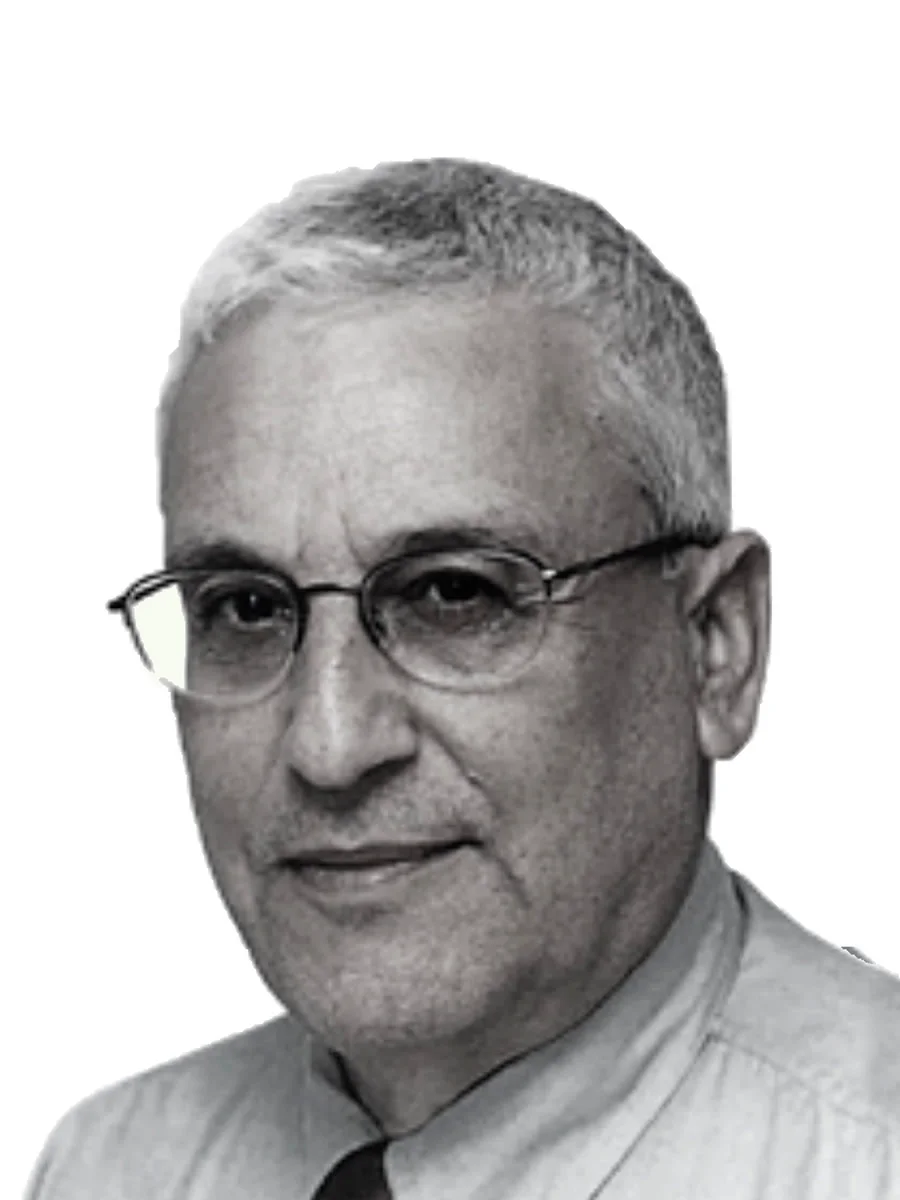
Yigal Erlich
Principal architect of Yozma's public-minority/private-manager design that accelerated Israeli VC.
1940–1984 — science, industry, and the path into government
Yigal Erlich's record is best approached as the history of a public official and later venture manager, not as a solitary-founder narrative. He led Israel's Office of the Chief Scientist from 1984 to 1992, helped launch the technological-incubator program, became chief executive of the government-owned Yozma vehicle after it began operating, and later participated in private successor vehicles. [documented behavior · strong] for the offices and sequence; [researcher inference · provisional] for the bounded framing. Erlich-hosted CV, entire page · Breznitz, PDF pp. 27–34 · IADB, PDF pp. 26–32
That sequence makes Erlich unusually useful for studying market formation. The final record supports four bounded contributions: diagnosing that technology grants alone could not supply management and global commercialization; sequencing incubators before a venture-capital market; recruiting experienced foreign investors alongside local partners; and giving private partners a time-bounded option to buy the government out. [investor-stated · strong] for his articulated design; [researcher inference · moderate] for the four-part causal synthesis. Japan Cabinet Office deck, PDF pp. 9–11 · Japan hearing transcript, printed pp. 6–12 and Q&A pp. 13–18 · BIRAC interview, printed pp. 11–13
The evidence does not support converting Yozma's ecosystem reputation into an Erlich-personal investment track record. The government, ministers, OCS staff, foreign and local partners, fund managers, investment committees, entrepreneurs, and 1990s capital markets all held distinct decision rights. Public sources do not provide a complete company denominator, individual votes, personal ownership, audited fund cash flows, or loss and pass ledgers. [researcher inference · strong] annotated source-map boundary
Erlich was born in Tel Aviv in 1940. A securities filing records an MSc in chemistry and an MBA; his later CV identifies the Hebrew University, while a 2018 interview adds research work at the Soreq Nuclear Research Center followed by government supervision of the pharmaceutical industry. [contemporaneous record · strong] for the filed education and board biography; [retrospective witness · moderate] for the early-career sequence. Can-Fite filing, PDF p. 5 · Globes biography paragraphs
The exact birth date remains unresolved. The TASE field says 06/08/1940; Israeli day-month ordering would ordinarily mean 6 August, while later internet biographies have rendered it differently. The disciplined biography therefore uses only 1940 until a civil or archival record resolves the day and month. [researcher inference · strong] Can-Fite filing, PDF p. 5
Chemistry and pharmaceutical oversight plausibly exposed Erlich to the gap between technical merit and commercialization, but no contemporary note shows that this experience directly produced his later venture-capital doctrine. Treating it as causal would be biography by hindsight. [researcher inference · provisional] Can-Fite filing, PDF p. 5 · Globes biography paragraphs
1984–1991 — grants reveal that technology is not a company
Erlich served as Chief Scientist in the Ministry of Industry and Trade from 1984 through 1992. The current Innovation Authority history places a major institutional restructuring around the 1984 R&D law and later groups direct grants, incubators, Yozma, Magnet, and international-access programs into the system that preceded the Authority. [documented behavior · strong] for his tenure and the institutional bundle; the public record inspected here does not make him sole author of the statute or every program. Erlich CV · Innovation Authority history
Erlich's retrospective diagnosis was that grant-backed young firms could solve technical problems yet still fail because they lacked management, marketing, and access to international markets. Israel's small domestic market intensified the problem: start-ups needed to sell globally early, while the local venture industry lacked the capabilities and networks to help them. [investor-stated · strong] BIRAC interview, printed pp. 11–13 · IADB, PDF pp. 26–28
The technological-incubator program began in 1991. By 1992 ten incubators were in place; the network later reached 24. Erlich described grants covering as much as 85% of approved costs, while the later IADB reconstruction argues that incubators created deal flow before Yozma's funds became operational. [investor-stated · strong] for Erlich's retrospective program account; [researcher inference · moderate] for the deal-flow mechanism because rigorous causal evaluation is absent. Japan hearing transcript, printed pp. 6–12 · IADB, PDF pp. 31–32
Erlich later opposed governments prescribing favored sectors, saying officials should judge innovative capability and commercial potential. His operating premise was bottom-up selection rather than a national product plan. [investor-stated · strong] BIRAC interview, printed pp. 11–13 That principle would later sit in tension with his advocacy for biotechnology support and larger national champions; the tension is evidence of adaptation or inconsistency, not something the record yet resolves.
1991–1993 — from Inbal's downside protection to Yozma's upside option
The failed Inbal experiment was an important negative control. Erlich's later account says Inbal offered downside protection through publicly traded funds but attracted weak managers, imposed excessive bureaucracy, and left government too involved. The academic reconstructions similarly describe regulation and oversight that did not build a capable private venture industry. [investor-stated · strong] for Erlich's causal account; [retrospective witness · moderate] for the institutional comparison. Japan transcript, PDF pp. 9–10 · BRIE Working Paper 160, PDF pp. 30–33
Erlich's later account describes a $100 million investment company: roughly $80 million across ten partnership funds, generally $8 million of government capital beside $12 million private, and roughly $20 million for direct investments; foreign professional investors partnered with local teams and received a five-year option to buy the public share. [investor-stated · strong] Japan deck, PDF pp. 9–11 The official establishment record uses a different legal/accounting measure: NIS125 million approved in May 1992, comprising NIS10 million equity and a NIS115 million government loan. [contemporaneous record · strong] State Comptroller 44, printed p. 81/PDF pp. 25–26 Do not treat the dollar shorthand and shekel authorization as directly reconcilable without draw, date, and FX records.
The proposed mechanism was not cheap capital alone. It bundled capital with external selection experience, international networks, local knowledge, a path to private ownership, and a time limit on the state. [researcher inference · provisional] The 2022 hearing says Yozma retained manager-consent, voting, Israeli-scope veto, and finance-monitoring rights while ordinarily leaving company selection and daily spending to private managers. [investor-stated · strong] Japan hearing, printed pp. 14–15 “No government control” therefore means claimed operational autonomy within a public mandate, not absence of legal influence; the original partnership agreements remain necessary.
Authorship was collective. A 2023 multi-witness reconstruction places Erlich in an urgent 1991 cabinet process but also identifies Finance Minister Moshe Nissim, Yossi Vardi, Yitzhak Modai, later Prime Minister Yitzhak Rabin, Finance Minister Avraham Shohat, Advent, and local managers in the funding and design chain. It reports an initial $50 million political commitment that became $100 million in 1992. [retrospective witness · moderate] Globes, Yozma formation section The missing primary controls are cabinet decisions, Treasury memoranda, incorporation papers, fund agreements, and contemporaneous OCS board minutes.
1993–1998 — operating, buying out the state, and crossing the public–private boundary
The IADB reconstruction dates Yozma's fund operations to 1993, just as the first incubator cohort was graduating, and Breznitz reports that Erlich left the OCS to become Yozma's chief executive. [retrospective witness · strong] IADB, PDF pp. 27 and 31 · Breznitz, PDF pp. 32–34 The State Comptroller records the March 1997 company sale and later fund-interest realizations but does not support collapsing the transactions into one 1997 return event. [contemporaneous record · strong] State Comptroller 51b, printed pp. 851–852/PDF p. 28
Erlich's 2022 deck reports that eight of ten funds bought out the government and nine of 15 direct investments went public or were acquired. [investor-stated · provisional] Japan deck, PDF p. 11 A separate results slide says “Return > $100M” without defining cash-flow scope, gross/net basis, or claimant. [investor-stated · provisional] Japan deck, PDF p. 12 The official state record instead describes transferred rights in nine funds and two expired options; it does not reconcile the promotional denominator or supply a complete net return. [contemporaneous record · strong] State Comptroller 51b, printed pp. 851–852/PDF p. 28 The 15-company claim is also not reconciled to the nine direct holdings named in a 1996 report. Globes, full article Keep all counts as scope/date conflicts until the original ledgers and cash flows are recovered.
The transition also creates an attribution and conflict boundary. Leaving the OCS to manage a state-created vehicle is not itself evidence of misconduct, and no adverse finding surfaced. But any account of personal investment success must separate public mandate creation, government capital, fund-manager decisions, Yozma I direct-investment authority, post-privatization ownership, and personal economics. [researcher inference · strong]
Erlich explicitly acknowledged favorable timing: a powerful 1990s technology and IPO market, substantial immigration of technical talent, a pre-existing research base, and growing U.S. appetite. [investor-stated · strong] Japan transcript, printed pp. 6–12 and Q&A pp. 13–18 Independent critics go further. Daniel Isenberg points to Athena, earlier technology companies, military and university capabilities, and dozens of NASDAQ IPOs before Yozma's returns were visible. [retrospective witness · moderate] Forbes counter-history The final historical boundary is acceleration and institutionalization as a hypothesis to test, not creation from nothing.
1997–2010 — private investing, industry advocacy, and a widening policy critique
After privatization, Erlich's CV describes Yozma II and III and a continuing private platform. A 2007 TASE filing confirms his founder/managing-partner title and a broad set of board roles in biotechnology, medical devices, software, and venture entities. [contemporaneous record · strong] for roles; [researcher inference · strong] against converting board listings into personally sourced investments or returns. Can-Fite filing, PDF p. 5
A skeptical 2001 Globes profile sharply separates the celebrated public program from the private Yozma manager, describing its reported private-fund record as unremarkable and the incubator program as less successful. [contemporaneous record · moderate] because the critique is contemporary but lacks the underlying audited series. Globes profile, opening assessment That distinction is central: a fund can have ordinary returns while its institutional design still has large ecosystem effects, or vice versa.
At the end of his Israel Venture Association chairmanship in early 2003, Erlich criticized conspicuous fund-manager spending while advocating for industry support and changes to R&D-law restrictions on knowledge transfer. [investor-stated · strong] Walla interview This episode shows the difficulty of reading his public positions: he could be critic, former regulator, private manager, and industry representative at once. The claim should always identify the role from which he spoke.
By 2007–09, his public concern had shifted from creating start-ups to filling a scale gap. He advocated stronger biotechnology finance and warned that Israel could not remain an industry that only created and sold young companies. [investor-stated · strong] Walla biotechnology interview · Globes conference remarks The public record supports a change in emphasis, but not whether the change improved investment or policy outcomes.
Erlich later served as deputy chair of the National Council for Civilian R&D and headed an expert committee documented by the Knesset in 2008. [contemporaneous record · strong] Knesset Research and Information Center, PDF p. 11 This demonstrates continued institutional involvement, not control over every national R&D decision.
2011–2022 — exporting the model, life sciences, and the limits of replication
Later records place Erlich in Hadasit Bio-Holdings governance and in a Korean Yozma operation. The official firm site says the Korean platform began in 2015; TASE records establish Hadasit chair/director roles. [contemporaneous record · strong] for titles and filings. Yozma Global Offices · HBL appointment filing · HBL officer filing
Erlich's 2018 interview was notably cautious about copying Yozma abroad. He described Russian and Korean conditions as distinct and emphasized that institutional success depended on local ecosystem, politics, market access, and timing. [investor-stated · moderate] Globes book interview This is consistent with Canadian and World Bank research warning that the Israeli case depended on unusually favorable prior capabilities and cannot be transplanted as a financing template alone. [researcher inference · strong] Canadian government report, PDF p. 82 · World Bank paper, PDF pp. 34–35
The Korean record also creates an unresolved adverse-evidence boundary. In 2021 Yozma Group Korea said it would sue JTBC after reporting questioned office locations and investment capacity; Busan civic groups sought disclosure of a municipal MOU. [contemporaneous record · moderate] Korea Times report The article proves that allegations and threatened litigation existed. It does not prove wrongdoing, that a case was filed, a judgment, personal Erlich liability, or the final disposition. No verified personal regulator sanction, fraud finding, criminal conviction, or adverse judgment emerged in the bounded search; that is a search result, not proof of absence. Source-map adverse sweep
In 2022 Erlich presented the most complete accessible version of his mature thesis to Japan's Cabinet Office. He still emphasized catalytic government, private skill, predetermined exit, and no state control, while explicitly conceding luck and timing. [investor-stated · strong] official meeting record and materials
A falsifiable account of the edge
Proposed edge — [researcher inference · moderate]. Erlich's most defensible repeatable advantage was institutional bottleneck diagnosis plus incentive architecture, not superior company picking: sequence project formation before venture finance; import experienced managers and networks through locally rooted partnerships; preserve private downside and operational discretion; coordinate multiple managers; and precommit the public sponsor's exit. The domain is Israel's market-formation problem from the late 1980s through the 1990s; later sector and country applications are tests, not proof. BIRAC interview, printed pp. 11–13 · IADB, PDF pp. 26–32 · Japan deck, PDF pp. 9–11
Prediction — [researcher inference · moderate]. If the edge was real, unseen ordinary-case files should show a diagnosed gap before the instrument; rejected alternatives; capability-based manager selection; meaningful private capital at risk; bounded public vetoes rather than company selection; several independent teams rather than a monopoly; and a dated exit or stop rule. Outcomes should be better where those mechanisms were present than where they were absent. Cross-country research supports the precondition boundary but does not isolate each variable. UNECE Part 2, 01:05:41–01:07:42 · Canadian report, PDF p. 82 · World Bank paper, PDF pp. 34–35
Falsifiers — [researcher inference · strong]. The thesis weakens if primary records show that others supplied the diagnosis and terms while Erlich mainly administered them; manager selection was political or generic; downside remained largely public; operating control was centralized; exit was opportunistic rather than precommitted; ordinary fund/company outcomes were weak; or matched replications with the same prerequisites repeatedly failed. It also weakens if prior companies, immigration, R&D, and the 1990s ICT/Nasdaq regime explain the takeoff without a distinct Yozma effect. These are tests, not allegations. World Bank, Box 9 p. 50 · Forbes counter-history
People, institutions, capital, and decision rights
This is a concise synthesis of the sourced DEALS people map and the chronology above; unknown person-level work remains unknown.
| entity or actor | supported role | capital or decision rights visible publicly | attribution boundary |
|---|---|---|---|
| Office of the Chief Scientist | Erlich led it, 1984–92; administered R&D policy and incubator/Yozma formation period | statutory/grant authority and program design; exact internal approvals not retrieved | OCS work belonged to a public institution and staff, not to Erlich personally |
| Cabinet, Ministry of Finance, and political sponsors | authorized and enlarged public commitment | retrospective account identifies Nissim, Modai, Rabin, and Shohat in the $50 million/$100 million sequence | cabinet and Treasury records are missing; political authorization is not investor selection |
| Technological incubators | built project pipeline before Yozma funds operated | grants and local incubation; later sources describe substantial state cost sharing | incubator managers and entrepreneurs retain company-level agency; causal impact lacks a rigorous counterfactual |
| Yozma government company | $100 million catalytic vehicle; Erlich became CEO after OCS | approximately $80 million partnership allocation and $20 million direct sleeve; predetermined exit | government-company results are not Erlich-personal economics |
| Ten drop-down funds | paired foreign professional investors with local partners | government typically $8 million beside $12 million private; Yozma had some IC participation; partners held buyout options | LPAs, IC votes, vetoes, reserves, fees, ownership, and allocations are not public |
| Foreign partners, including Advent | supplied external selection skill, networks, and credibility | evaluated local opportunity and participated in funds | cannot credit their diligence, governance, sourcing, or outcomes to Erlich |
| Local fund partners/managers | supplied local market knowledge and executed investments | fund-level investment and company-governance work | ten-fund portfolio is institutional/team evidence unless a specific decision record names Erlich |
| Yozma direct-investment sleeve | reported 15 company investments | government-company capital; deck claims nine IPO/acquisition outcomes | no complete denominator, entry terms, individual votes, follow-ons, losses, or cash flows |
| Post-1997 private Yozma vehicles | self-CV names Yozma II/III and private platform | ownership/management partly described by Erlich; precise legal/economic records missing | do not merge with the government vehicle or assign every portfolio company personally |
| Portfolio-company and HBL boards | filed board/director roles | governance rights specific to each company | board service is not proof of sourcing, sole control, or investment return |
| Yozma Group Korea | firm says Erlich founded the Korean operation in 2015 | current firm description and Seoul office; legal structure/MOUs not retrieved | do not assume continuity with Israeli vehicles; 2021 allegations remain unresolved at entity level |
Skill, access, team, vehicle, era, luck, and outlier boundaries
| factor | what the evidence supports | what remains unproved |
|---|---|---|
| skill | diagnosis of a commercialization gap; program sequencing; incentive design; recruitment of foreign capability | repeatable company selection, reserve discipline, valuation skill, and personal return |
| access | senior government office, cabinet and ministry relationships, ability to convene U.S. investors | whether access alone rather than design quality explains allocation or later private opportunity |
| vehicle | catalytic minority public capital plus timed buyout option and direct sleeve | exact legal rights, fees, carry, conflicts, buyout economics, and audited receipts |
| team | OCS staff, politicians, foreign firms, local managers, entrepreneurs, and later boards all mattered | person-level allocation of ideas, votes, operating work, and economic credit |
| era | Soviet immigration, defense/university R&D, prior technology firms, U.S. capital-market expansion, and IPO demand | causal share of Yozma after controlling for those conditions |
| luck | Erlich explicitly acknowledged timing and strong markets | how much success would survive a weaker vintage or closed U.S. exit market |
| outliers | a minority of direct/company outcomes may drive reported success | complete return distribution, losses, ordinary outcomes, and whether ecosystem effects depended on a few winners |
The final boundary is narrower than the legend: the record supports Erlich as an institution builder and policy entrepreneur, while it is insufficient to rank him as a company-level investor or assign the Israeli venture industry's performance to him. No defensible Erlich-personal hit rate, IRR, TVPI, or DPI exists. [researcher inference · strong] DEALS denominator
Final sourced chronology and unresolved conflicts
| date | event | evidence and interpretation boundary |
|---|---|---|
| 1940 | Born in Tel Aviv. | Year supported; exact day/month unresolved because the TASE numeric field is ambiguous across conventions. [contemporaneous record · moderate] Can-Fite filing, PDF p. 5 |
| Before 1984 | Chemistry education, Soreq research, MBA, and pharmaceutical-industry oversight. | Filed/self-biographical and retrospective evidence; exact dates absent. [retrospective witness · moderate] Can-Fite filing, PDF p. 5 · Globes 2018 biography |
| 1984–1992 | Chief Scientist, Ministry of Industry and Trade. | Multiple target-specific sources agree; they do not make him sole author of the 1984 law. [documented behavior · strong] Erlich CV |
| 1991 | Technological-incubator program begins; government develops Yozma response; cabinet decision dated 16 June. | Program/design sequence spans 1991–92; the cabinet date and later company purpose are in the official state balance-sheet record, while Erlich's design rationale is retrospective. [contemporaneous record · strong] State Comptroller 44, printed p. 81/PDF pp. 25–26 |
| 1992 | Yozma company formed and Finance Committee capitalization approved. | The State Comptroller records NIS125 million: NIS10 million paid-in equity plus a NIS115 million government loan. Later $100 million program descriptions use a different currency/scope and are not a substitute for the legal accounting record. [contemporaneous record · strong] State Comptroller 44, printed p. 81/PDF pp. 25–26 |
| 1993 | Funds become operational; Erlich leaves OCS to lead Yozma. | Supported by interview-based institutional histories; precise employment and board instruments not retrieved. [retrospective witness · strong] IADB, PDF p. 31 |
| 1996–2000 | Formal privatization and fund-option realizations occur over several years. | Erlich's deck compresses the period; the official state record says rights in nine funds were transferred, six stakes had been sold by the end of 1999, and two options expired. Keep company sale, individual options, and promotional counts distinct. [contemporaneous record · strong] State Comptroller 51b, printed pp. 851–852/PDF p. 28 |
| 2001 | Contemporary press distinguishes ecosystem success from ordinary private-fund performance. | Important skeptical control, but underlying fund records absent. [contemporaneous record · moderate] Globes profile |
| 2002/2003 | Israel Venture Association chairmanship ends; Erlich publicly criticizes industry behavior and argues over support/IP rules. | Direct interview at the transition. [investor-stated · strong] Walla |
| 2004–2007 | Filed company and biotechnology-board roles become visible. | Titles and dates are hard records; decision and return attribution are not. [contemporaneous record · strong] Can-Fite filing, PDF p. 5 |
| 2007–2010 | Deputy chair of National Council for Civilian R&D; led an expert committee by 2008. | Knesset research report plus self-CV; exact start/end instruments remain routes. [documented behavior · strong] Knesset report, PDF p. 11 |
| 2015–2016 | HBL chair/director roles; firm says Yozma Korea founded in 2015. | TASE establishes HBL governance; Yozma site supplies interested Korea history. [contemporaneous record · moderate] HBL filing · Yozma site |
| 2018 | Publishes Hebrew memoir and reassesses scale-up, government, and replication. | Book body unavailable; interview is fully read. [investor-stated · strong] retail record · Globes interview |
| 2021 | Yozma Korea announces legal action after JTBC report. | Allegation/threat only; no filed-case disposition found. [contemporaneous record · moderate] Korea Times |
| 2022 | Presents mature Yozma framework to Japan Cabinet Office. | Official deck and translated hearing transcript. [investor-stated · strong] official meeting page |
| 2025 | Applies the bottleneck lens to shared AI compute. | Direct panel statement; no named program document, sunset, private-risk rule, or Erlich authorship. [investor-stated · moderate] WKF, 35:12–36:49 |
Learning path through the package
Start with the written corpus for intellectual evolution, then the spoken corpus for mechanisms and contradictions. Work all four no-hindsight decision labs, including e-SIM as the mixed-outcome case. Use the investment philosophy as the operating system and the mental-model field guide for procedures and exceptions.
Return to the source-map limits and DEALS retrieval ledger before making any performance or personal-attribution claim. The unresolved questions remain authorship, contemporaneous rejected alternatives, full cash flows and losses, partner decision rights, the sector-neutrality boundary, and replication under comparable conditions. [researcher inference · strong]
1. Snapshot and testable edge thesis
| Question | Evidence-backed answer |
|---|---|
| Who and where | Yigal Erlich was Israel's Chief Scientist from 1984–1992, later led the government-owned Yozma vehicle, and then participated in legally distinct private successor and board roles. [documented behavior · strong] Erlich CV Vehicle map |
| Proposed edge | [researcher inference · moderate] Institutional bottleneck diagnosis plus incentive architecture: identify a missing commercialization institution; recruit capability through locally rooted private managers; preserve private downside and operating discretion; coordinate multiple managers; and precommit the public sponsor's exit. _Profile thesis |
| Mechanism | [researcher inference · moderate] Capital becomes catalytic when it brings selection skill, international networks, market access, governance, and credible private ownership—not when it merely absorbs loss. IFS Part 1, 01:47–06:26 UNECE Part 2, 01:05:41–01:07:42 |
| Domain and period | [researcher inference · moderate] Israeli institution formation from the late 1980s through the 1990s. Later biotechnology, Korea, and AI applications are boundary tests, not proof of repeatability. Evolution |
| Supporting record | Incubators preceded operational Yozma funds; foreign/local partnerships were formed; the state exited several fund interests; Erlich repeatedly articulated the same bounded-capital logic. [researcher inference · moderate] IADB, PDF pp. 26–32 State receipts |
| Disconfirming record | Inbal failed; two options expired; the direct sleeve drew conflict criticism; ordinary/private successor economics are unavailable or described as unexceptional; replication depended on favorable preconditions. [researcher inference · strong] Failures |
| Prediction | Unseen contemporaneous files should show gap diagnosis before instrument choice, rejected alternatives, capability-based manager selection, real private capital at risk, bounded public rights, competing teams, and a dated stop/exit rule. [researcher inference · moderate] Profile prediction |
| Falsifiers | The thesis weakens if Erlich mainly administered others' design; allocations were political; public downside dominated; ordinary results were weak; or matched replications with the same prerequisites failed. [researcher inference · strong] Profile falsifiers |
No defensible Erlich-personal hit rate, IRR, TVPI, or DPI exists. [researcher inference · strong] Searched denominator
2. Core philosophy
Erlich's most concise direct rule is institutional rather than company-specific: define a missing market, intervene temporarily, and stop if the gap is not resolved. [investor-stated · strong] UNECE Part 2, 01:05:41–01:07:42
A second direct rule defines the public/private division of labor: government can set innovation and commercialization criteria, while private managers select companies, build them, and choose exits. [investor-stated · strong] UNECE Part 1, 10:31–11:26
Synthesis — [researcher inference · strong]. Diagnose the bottleneck before naming the vehicle; assemble complementary blocks in sequence; recruit missing human capability; keep private capital exposed; constrain public rights ex ante; create enough independent managers to form a market; and make the state's departure part of the initial terms. The framework explains an institutional design. It does not supply a verified company-picking, pricing, reserve, or sell discipline. Writings synthesis Talks frameworks
3. Sourcing
Program and manager sourcing — [investor-stated · strong]. Erlich describes traveling to Boston to recruit Advent and pairing an experienced overseas investor with a local private group. A later biotechnology example similarly uses a prior co-investment relationship to approach Orbimed. Japan Cabinet hearing, printed pp. 13–14 BIRAC, printed p. 12
The access advantage combined public office, policy credibility, international outreach, and the ability to offer public capital and favorable structure. It was institutional access, not proof of security selection. [researcher inference · strong]
Company-level sourcing — [researcher inference · insufficient public record]. None of the processed writings, talks, filings, or four deal labs establishes who introduced a named company, when Erlich first met it, what proprietary information was obtained, which partner sponsored it, or a source-to-close denominator. FICS supports fund-level investment-committee participation and help finding companies, not attribution for a specific deal. FICS2020, 07:39–07:47
Decision use: for a modern manager-capability search, record who sourced the manager, prior shared work, reference evidence, local authority, conflicts, and expected capability transfer. Kill the “proprietary” claim when the advantage is only a famous name or subsidy. [researcher inference · strong]
4. Picking
Erlich's strongest direct screen is for the intermediary: can the fund raise money, select investments, manage and build companies, reach exits, understand technology, and behave entrepreneurially? [investor-stated · strong] Japan deck part 1, PDF p. 10
At the company/policy boundary, he says officials should follow capable people, innovative ideas, and commercial potential rather than prescribe sectors. [investor-stated · strong] BIRAC, printed pp. 11–12 He also warns that self-belief becomes a liability when founders stop listening, and that a failed founder merits another chance only after the cause of failure is understood. [investor-stated · strong] IFS Part 2, 01:40–06:58
Company-level picking process — [researcher inference · insufficient public record]. No processed source discloses a complete Erlich-attributable thesis, market/founder/product weighting, diligence request list, red-flag rubric, valuation threshold, memo, dissent, vote, or rejected-company comparison. BioSense, e-SIM, and Predix cannot be used to retrofit a picking doctrine because their entry rationales are missing. Decision labs
Decision use: apply Erlich's evidence only to manager selection and public eligibility. Do not infer company conviction from a board title, later exit, or Yozma roster. [researcher inference · strong]
5. Deal and portfolio mechanics
| Dimension | Supported record | Exact boundary |
|---|---|---|
| Ownership and terms | Government generally supplied up to $8 million and no more than 40% of each drop-down fund; partners received a five-year call under preset terms. [documented behavior · strong] OECD, 2004, pp. 24–25 | Original LPAs, option formula, fees, carry, reserves, default rights, and complete cost are missing. |
| Private downside | The OECD describes no guarantee. [documented behavior · strong] OECD, 2004, pp. 24–25 Erlich separately says fully public financing would distort incentives. [investor-stated · strong] UNECE Part 2, 01:13:01–01:13:30 | Later guarantee language may conflate Inbal; governing agreements control. |
| Concentration | Ten fund stakes and a direct sleeve are known; the direct roster is an unresolved twenty-name union. [documented behavior · strong] Denominator | No ownership-weighted portfolio, reserve schedule, loss ratio, or outlier test is computable. |
| Follow-ons and governance | Fund managers controlled underlying selection; Yozma retained fund-level rights and reportedly promoted co-investment. [researcher inference · moderate] Vehicle table | Named-company follow-on and board decisions remain unknown. |
| Exits | State-interest sales, acquisitions, IPOs, delistings, merger, and liquidation events are visible. | Events do not establish realized proceeds, duration, or return. Portfolio forensics |
Price discipline, company security, ownership target, reserves, stop-loss, and sell discipline — [researcher inference · insufficient public record]. The surviving record cannot support them.
6. Vehicle and incentive fit
The strategy changed with the vehicle:
| Vehicle | Enablement | Constraint |
|---|---|---|
| OCS grants and incubators | Public authority could form technical projects and an investable pipeline. | Administrative funding did not itself supply management or marketing. |
| State-owned Yozma, 1992–1997 | Flexible public company could commit to funds and a direct sleeve, recruit managers, and plan privatization. | Public-budget oversight, staff-retention limits, direct-sleeve conflict, and unclear compensation. |
| Ten drop-down funds | Majority private capital, separate managers, local/foreign partnerships, and options decentralized investment work. | Public mandate/vetoes remained; LPAs, fees/carry, reserves, and complete distributions are unavailable. |
| Privatized company and Yozma II/III | Conventional private ownership and team decision groups permitted successor investing. | Legal continuity, full portfolio, economics, succession, and personal attribution are incomplete. |
| Hadasit and Korea roles | Sector and cross-border platforms extended Erlich's institutional network. | Titles do not prove deal authority, capital source, returns, or continuity with original Yozma. |
[researcher inference · strong] Vehicle design was strategy: temporary public capital could accept capped upside for policy spillovers, while a conventional modern LP-backed fund normally owes a return-maximizing mandate. Those objectives cannot be compared without keeping stakeholder and cash-flow dimensions separate. DEALS vehicle chapter
Compensation, carry, GP commitment, fee offsets, clawbacks, reserves, regulatory permissions, key-person provisions, and succession are [researcher inference · insufficient public record] for the original fund agreements and private successors.
7. Team attribution and work with founders
| Work | Supported allocation | Unresolved boundary |
|---|---|---|
| Policy diagnosis and authorization | Erlich, OCS/Yozma staff, ministers, Treasury, Knesset, and political sponsors shared design and authorization. [retrospective witness · moderate] Formation history | Idea authorship, drafting, dissent, approvals, and compensation by person |
| Manager recruitment | Erlich describes recruiting Advent; foreign and local partners evaluated and formed each fund. [investor-stated · strong] Cabinet, pp. 13–14 | Applicant scores, rejected managers, negotiations, and each partner's contribution |
| Underlying companies | Ten fund teams held selection and company-governance authority. [documented behavior · strong] OECD, 2004, pp. 24–25 | Erlich-specific sourcing, diligence, approval, recruiting, follow-on, and exit work |
| Predix-linked successors | Six people shared voting/dispositive authority; Erlich held a board role. [contemporaneous record · strong] Predix S-1/A, footnote 9 | Work allocation and realized economics |
| Formula/RadView | Majority decisions were shared, with Shai Beilis as managing director. [contemporaneous record · strong] RadView proxy, ownership footnote | No basis for Erlich-only credit |
Work with founders — [researcher inference · insufficient public record]. The accessible record offers general statements about active risk management, experienced guidance, and conditional failure tolerance, but no dated named-company intervention, CEO recruitment/replacement, customer help, financing rescue, or exit decision attributable to Erlich. People map
8. Views on the craft
- Capital versus capability — [investor-stated · strong]. Venture work includes fundraising, selection, management, marketing, networks, and building toward exit; money alone is inadequate. Japan deck part 1, PDF p. 10
- Risk — [investor-stated · strong]. Failure is inherent but not desirable; understand why it happened and preserve private downside. IFS Part 2, 03:20–06:58 UNECE Part 2, 01:13:01–01:13:30
- Access versus selection — [researcher inference · strong]. Foreign networks expand markets and expertise, but no source shows that Erlich picked better than the managers he recruited.
- Governance — [investor-stated · strong]. Set manager and mandate constraints, monitor finance, and leave daily company work to private managers. Cabinet, pp. 14–15
- Exits — [investor-stated · strong]. The state should plan its exit; private managers may pursue acquisition or public listing. UNECE Part 1, 10:31–11:26
- Power law and fund size — [researcher inference · insufficient public record]. Erlich does not publish a supported power-law theory, optimal fund size, concentration target, or ownership-weighted return analysis.
- Great investor — [researcher inference · moderate]. The corpus supports an experienced, calm, internationally connected manager who can select, govern, and commercialize while bearing downside; it does not prove that Erlich personally met that company-level standard. Times of Israel, VC-work answer
9. Signature bets and decision process
Use the four labs as no-hindsight exercises; the package does not retell them as personal Erlich bets.
| Lab | Decision to replay | Attribution boundary |
|---|---|---|
| Drop-down fund option program | Is the observed commercialization gap a market failure, and do minority capital plus an option buy capability without destroying incentives? | Program-level architecture; collective authorship and incomplete net economics |
| BioSense | Would the contemporaneous clinical, regulatory, adoption, and financing evidence justify a small direct position? | Holding and announced acquisition known; original rationale and proceeds unknown |
| e-SIM/Emultek | What customer, revenue-quality, reporting, reserve, and disposition evidence is required before and after listing? | Mixed/failure lab; holding and company chronology known, Yozma economics unknown |
| Predix/EPIX | Do trial, regulatory, cash, syndicate, and milestone terms justify a team-governed private-successor position? | Collective decision rights and later events known; entry thesis and return unknown |
10. Mental models and maxims
The reconciled field guide contains nine distinct supported models:
- Diagnose the bottleneck and sequence the intervention to the lifecycle — [investor-stated · strong].
- Import capability, not capital alone — [investor-stated · strong].
- Preserve private downside while tolerating uncertain outcomes — [investor-stated · strong].
- Set the mandate ex ante, then preserve operating autonomy — [researcher inference · strong].
- Precommit the public sponsor's exit — [investor-stated · strong].
- Create critical mass through competing managers — [researcher inference · moderate].
- Build global access from inception — [investor-stated · strong].
- Treat failure tolerance as a diagnosis, not a reward — [investor-stated · strong].
- Separate ecosystem impact from fund alpha — [researcher inference · strong].
Bottleneck sequencing and stage/lifecycle intervention are merged because the latter is the operational form of the former. Private downside and failure tolerance remain separate because one governs capital-provider incentives and the other governs learning from founder/portfolio outcomes. Candidate reconciliation
11. Evolution and contradictions
| Period | Development | Unresolved tension |
|---|---|---|
| 1984–1993 | Grants, incubators, Inbal, and Yozma form a sequence from technical support to commercialization institutions. [researcher inference · strong] | Retrospective causal account; rejected contemporaneous alternatives missing |
| 1993–2000 | Private managers, options, and privatization express bounded intervention. [contemporaneous record · strong] | Eight versus nine exercises; nine versus ten rights; direct-sleeve conflict |
| 2003 | Rescue capital and institutional guarantees answer a crisis. [investor-stated · moderate] | Guarantee advocacy versus Inbal moral-hazard critique |
| 2007–2009 | Biotechnology finance, scale, retention, and diversification replace startup count as the bottleneck. [investor-stated · strong] | Sector neutrality versus targeted support; national goals versus fund returns |
| 2013–2016 | Direct voice stabilizes around capability, global access, private downside, and conditional failure. [investor-stated · strong] | Repetition does not prove application or efficacy |
| 2018 | Replication becomes more conditional; Orbimed additionality narrows; Innovation Authority view changes. [investor-stated · strong] | No cross-country matched test or stated sector-targeting rule |
| 2022–2025 | Governance detail sharpens, then the bottleneck lens extends to shared AI compute. [investor-stated · moderate] | AI intervention lacks the Yozma sunset, private-risk, and exit conditions |
The durable belief is “solve a specific missing institution with complementary capability.” The unstable boundary is when targeted support becomes justified and how much public risk/control remains compatible with the original discipline. [researcher inference · strong] Writings evolution Talks contradictions
12. Failures and limits
- Inbal — [investor-stated · strong]. Guarantees, bureaucracy, and weak managers are Erlich's main negative design case; the record does not isolate each causal share. Cabinet, pp. 10–11
- Two expired options — [contemporaneous record · strong]. The state report establishes non-exercise, not why it happened or which two funds under every denominator. State Comptroller 51b, p. 28
- Direct-sleeve conflict — [contemporaneous record · strong]. Contemporary criticism says the public direct vehicle competed with partner funds and lacked specialization; no adjudicated breach is claimed. Globes 1996
- e-SIM and Predix/EPIX. e-SIM's delisting/removal and EPIX's liquidation are documented company-level mixed/failure outcomes. [documented behavior · strong] Missing disposition records prevent a Yozma loss or write-off claim. [researcher inference · insufficient public record] Failure labs
- Private-successor performance — [contemporaneous record · moderate]. A 2001 profile calls the record unexceptional without publishing the underlying series. Globes
- Misses — [researcher inference · insufficient public record]. No named Erlich pass or rejected manager that later outperformed is public; false negatives cannot be studied.
- Radiancy — [contemporaneous record · provisional]. Reported allegations and counterclaims remain unadjudicated in the reviewed record. Adverse record
- Korea — [contemporaneous record · provisional]. Reporting establishes disputed claims and threatened litigation, not wrongdoing, a filed case, judgment, personal liability, or final disposition. Korea Times, 15 July 2021
- Selection and era — [researcher inference · strong]. Promotional success rosters omit ordinary cases, and prior R&D, immigration, global ICT, and U.S. exits supplied favorable conditions. Historical context
13. Historical operating environment
Yozma entered a system with prior state R&D support, university and defense-linked capability, technical immigration, early technology firms and listings, and a strong 1990s ICT/Nasdaq cycle. [researcher inference · strong] These are preconditions and alternative causes, not details Erlich created. World Bank, Box 9 p. 50 Avnimelech, Kenney & Teubal, pp. 32–34
Contemporaneous reporting says early venture checks were often staged around $0.5–$1 million, foreign affiliation and syndication mattered, and valuations overheated around 1993–early 1994. [contemporaneous record · moderate] Globes, 7 December 1998 No contemporaneous matched cohort supplies a Yozma versus non-Yozma survival or return base rate.
The state authorized NIS125 million and made no investment in 1992. [contemporaneous record · strong] State Comptroller 44 balance-sheet chapter, printed p. 81 / PDF pp. 25–26 The Comptroller separately criticized the timing/accounting of funds advanced before execution. [contemporaneous record · strong] State Comptroller 44 budget chapter, printed pp. 48–49 / PDF pp. 27–28
A diligent historical analyst therefore had to distinguish invention supply from company formation, scarce manager capability from scarce cash, a temporary U.S. exit window from permanent alpha, and policy spillover from cash return. [researcher inference · strong]
14. Modern VC translation (as of 2026-08-21)
These are analyst translations from the historical record, not current-company recommendations. No grounded present-day company example is admitted because the completed T035 record does not support one.
| Major lesson | What transfers | What does not / changed assumption | Observable applicability signal | Likely misuse |
|---|---|---|---|---|
| Diagnose bottleneck first | Map the missing input and counterfactual before choosing capital. [researcher inference · strong] | A famous historical vehicle is not evidence that a new geography needs the same vehicle. | Credible companies repeatedly fail at the same missing institutional interface despite willing demand. | Naming a fashionable sector “market failure.” |
| Import capability | Select partners for verified customer, hiring, governance, syndication, and exit work. [researcher inference · strong] | Foreign brand, AUM, or an office does not establish transfer. | Dated cases show the partner changing access or decisions and training local successors. | Paying for logo value without local authority. |
| Preserve downside | Keep private capital meaningfully exposed and publish subsidy incidence. [researcher inference · strong] | Public objectives may justify capped upside, but not hidden loss transfer. | Same-asset private risk, transparent terms, independent selection, and loss-sharing. | Calling any co-investment “aligned.” |
| Mandate plus autonomy | Define eligibility, conflicts, reporting, and narrow vetoes before delegating. [researcher inference · strong] | “Hands off” cannot mean no audit, scope, or manager-removal rights. | Public sponsor can state what it controls and what it never decides. | Central selection disguised as guardrails. |
| Precommit exit | Write formula, timing, buyer eligibility, disclosures, and sunset at entry. [researcher inference · strong] | Historical five-year terms are not universal. | A credible private buyer path exists and public ownership is not needed indefinitely. | Cheap optionality for insiders without additionality. |
| Critical mass | Back several independent qualified teams when learning and competition matter. [researcher inference · moderate] | More funds do not solve a thin company pipeline. | Manager differentiation, investable pipeline, syndication capacity, and no artificial deal inflation. | Using fund count as success. |
| Global from inception | Underwrite foreign customers, capital, regulation, and talent early in a small market. [researcher inference · strong] | “Global” is not an excuse to ignore local proof or operating focus. | Early customer/reference and partner evidence outside the home market. | Geographic expansion before repeatable value. |
| Conditional failure tolerance | Separate honest, information-producing failure from avoidable governance or integrity failure. [researcher inference · strong] | Failure alone is not a positive founder signal. | Clear postmortem, changed behavior, preserved integrity, and a new falsifiable plan. | Romanticizing loss. |
| Ecosystem versus alpha | Maintain separate scorecards for additionality, spillovers, public receipts, fund return, and personal attribution. [researcher inference · strong] | Exit count and capital raised are not DPI/TVPI/IRR. | Stable denominators, dated cash flows, attribution logs, and matched counterfactuals. | Converting policy fame into a personal track record. |
15. Comparison with completed peers
These peers are valid because each helped institutionalize venture capital under a distinctive vehicle, yet their geographies and evidence sets differ. The comparison does not rank performance.
| Dimension | Erlich | Georges Doriot | Peter Brooke | Arthur Rock |
|---|---|---|---|---|
| Sourcing | Public authority and international recruitment; no company funnel. Erlich sourcing | MIT/HBS/Army, banks and brokers; ARD has a reconstructed 6,884-proposal funnel. Doriot canon Hsu/Kenney, p. 594 | Relationship-first institutional and local-champion networks; later TA outbound belongs materially to partners. Brooke canon | Trusted founder/referrer access; no complete funnel. Rock canon |
| Picking | Strong manager-capability screen; company-level method unavailable. Erlich picking | Able people, defensible know-how, commercial practicability, whole company. HBS source | Growing sector, defensible technology, candid management, external technical dissent. Brooke CHM, pp. 36–40 | Longitudinal people/reality tests, observable demand, and technical/financial structure. Rock HBR |
| Ownership and portfolio | Minority public stakes in ten funds plus a conflicted direct sleeve; underlying selection decentralized. Erlich mechanics | Public closed-end ARD used equity, debt, and mixed instruments; diversified by count but DEC dominated outcome. Doriot canon | Instruments and mandates varied by bank, TA, country funds, and Advent; ownership/reserves incomplete. Brooke canon | Small finite pools, personal/syndicate positions, flexible terms, concentrated board attention; full denominator incomplete. Rock canon |
| Governance | Ex-ante public constraints and fund-level monitoring; named company work missing. Erlich team boundary | Demanding mentorship and direct intervention, sometimes paternal. Ken Olsen oral history | Explicit local/central authority, outside dissent, management recruiting and replacement; execution uneven. Brooke canon | Recruiting, accounting, audit, CEO oversight, offering preparation, and stop decisions; role intensity varied. Rock canon |
| Vehicle and incentives | Temporary public capital, capped public upside, private options, then privatization/private successors. Erlich vehicle | ARD broadened institutional capital but public-company regulation constrained incentives, geography, and succession. House hearing, pp. 339–340 | Repeatedly changed vehicle to fit geography, stage, and capital source; Japan and INF expose limits. Brooke canon | Finite LP, later entities, personal shares and boards supported discretion but made succession opaque. Rock canon |
| Failures and economics | Inbal, expired options, direct-sleeve conflict, mixed companies, ordinary private-fund critique; no personal return. Erlich failures | Island Packers, passes, later vehicle/talent deterioration; reported ARD result depended heavily on DEC. Doriot canon | Japan, International Network Fund, Hong Kong support failure, Wang; 0/17 complete Brooke-attributable cash flows. Brooke thesis | Diasonics monitoring failure, ROLM/Compaq passes, Ridge conflict; outlier-sensitive and no personal ledger. Rock limits |
Bounded conclusion — [researcher inference · strong]. Doriot is the closest vehicle-design pioneer, Brooke the closest cross-border institution translator, and Rock the closest relationship-and-governance comparator. Erlich's evidence is strongest one level above theirs—market and fund architecture—and weakest at the company decision level.
16. The strongest case against greatness
Skeptical thesis — [researcher inference · strong]. Erlich's reputation may reflect a favorable national moment, senior public access, a collectively designed subsidy, foreign/local manager work, promotional scope drift, and a few visible exits—without evidence of personal company-picking skill or repeatable private-fund outperformance.
- Prior ecosystem. Israeli technical firms, R&D, immigration, defense/university capability, and U.S. listings preceded Yozma. Forbes counter-history
- Collective authorship. Ministers, Treasury, OCS/Yozma staff, foreign firms, local managers, founders, and capital markets supplied distinct inputs. People map
- Access versus skill. Chief Scientist authority and public capital opened doors; no equal-access comparison isolates design skill. Sourcing boundary
- Missing denominator. Ten versus nine rights, eight versus nine exercises, fourteen/fifteen/twenty direct names, success-only rosters, and no rejected-deal list prevent hit-rate analysis. Denominator
- Weak economics proof. Named state receipts are incomplete; direct and successor costs/proceeds are missing; a 2001 report calls private results ordinary. Pareto view
- Era and luck. Erlich acknowledges timing; the global ICT/Nasdaq window and preconditions are alternative explanations. Cabinet, pp. 17–18
- Contradictory design. Guarantees reappear in 2003; sector neutrality gives way to targeted support; no-control rhetoric coexists with public rights; exit-count claims conflict with official records. Evolution and contradictions
- Failure and ordinary cases. Expired options, the direct-sleeve conflict, e-SIM, Predix/EPIX, and unresolved ordinary holdings weaken a seamless success story. Failures
- Replication. Russia, Korea, and other comparisons suggest context, not template alone, mattered. Globes 2018
Evidence favors the edge thesis if original memos, applicant scoring, partnership terms, votes, full cash flows, ordinary cases, and matched replications connect Erlich-specific design decisions to better outcomes after access, team, vehicle, era, luck, and outliers are controlled. Evidence favors the skeptic if roles were mainly administrative, terms were conventional or politically allocated, ordinary economics were weak, or matched contexts perform similarly without the intervention. [researcher inference · strong]
17. Analyst study guide, glossary, and go deeper
Recommended reading path
- Read the final biography and write the edge, mechanism, prediction, alternative, and falsifier in your own words.
- Read the 2022 deck analysis, then the official hearing guide; mark every promotional/official conflict.
- Work the program option lab before reading the outcome.
- Work the company labs for BioSense, e-SIM, and Predix/EPIX; e-SIM is the required mixed/failure exercise.
- Apply the nine-model field guide, then read the skeptical case above and the uncertainty ledger.
Glossary
| Term | Meaning in this package |
|---|---|
| OCS | Office of the Chief Scientist, the public R&D institution Erlich led before Yozma |
| Inbal | Earlier publicly traded, guarantee-based venture scheme used as a negative design case |
| Yozma government company | State-owned vehicle authorized in 1991–1992; not every later Yozma entity |
| Drop-down fund | Separately managed local/foreign private partnership receiving a minority Yozma commitment |
| Direct sleeve | Government-backed company-investment portfolio distinct from the ten fund stakes |
| Call option | Private partners' time-limited right to buy the public interest under preset terms |
| Operational autonomy | Private daily selection/management inside public manager, scope, voting, and monitoring rights |
| Additionality | Activity or capability caused or accelerated by intervention beyond what would occur otherwise |
| Vehicle boundary | Separation of public company, fund stakes, direct sleeve, private successors, boards, and Korea entities |
| Reveal discipline | Decide from the dated evidence packet before learning the actual outcome |
Reusable sourcing checklist
- What capability is missing, and what evidence shows capital alone cannot supply it?
- Who found the manager or opportunity, through which relationship, and with what conflict?
- What has the foreign/local partner actually done in comparable settings?
- What capability will remain locally after public support ends?
- Is there enough investable pipeline for several managers without lowering standards?
Reusable diligence and IC checklist
- Define the counterfactual and rejected instruments before choosing a vehicle.
- Record public and private capital at risk, subsidy incidence, option value, and stakeholder objectives.
- Map manager selection, company selection, veto, reporting, removal, reserve, and exit rights.
- Require a dated denominator: applied, screened, selected, funded, failed, exited, and unresolved.
- Separate program additionality, public cash receipts, fund return, company outcome, and individual attribution.
- Set kill criteria, sunset, next milestone, and who owns each decision.
- Test the proposal under a weak exit market and without its most visible success.
Reusable governance checklist
- Are mandate and prohibited conflicts written before capital is committed?
- Do private managers retain daily selection while the sponsor keeps narrow audit and scope rights?
- Is independent dissent recorded, and can a weak manager be replaced?
- Are direct investments permitted, and if so how are partner-fund conflicts allocated?
- Are exercise, expiry, privatization, and realized cash flows disclosed vehicle by vehicle?
Ranked sources
- Japan Cabinet hearing, printed pp. 6–18 — richest direct governance, incentive, and luck account; official interpretation, not original English.
- State Comptroller 51b, printed pp. 851–852/PDF p. 28 — strongest realization and contradiction control.
- OECD, 2004, printed pp. 24–25 — best concise independent structure description.
- BIRAC, printed pp. 11–13 — best direct commercialization, sector-selection, and Orbimed account.
- UNECE Part 1 and Part 2 — best direct stopping rule, autonomy, downside, and failure framework.
- IADB, PDF pp. 26–32 — strongest institutional sequencing reconstruction.
- 1996 Globes critique — essential contemporaneous direct-sleeve and attribution counterweight.
- Predix S-1/A, footnote 9 — strongest private-successor team/ownership boundary.
- World Bank, Box 9 p. 50 — best precondition and replication warning.
- 2001 Globes profile — strongest contemporary challenge separating ecosystem fame from private performance.
Pareto 80/20 — what drove the record
The public evidence supports a directional ranking, not a literal 80/20 split. It does not disclose a complete schedule of paid-in capital, follow-ons, dilution, distributions, fees, carry, residual value, or write-offs for either the state program or Erlich's later private vehicles. It also does not establish Erlich's personal sourcing or investment-committee vote for any company. Accordingly, the rankings below separate program, firm/team, and individual credit and do not imply that a famous exit was the largest cash contributor.
Economic-contribution view
| Rank | Candidate driver | Public basis or measure | Attribution | Evidence status | Mechanism supported by the record | Denominator caveat | Case / ledger |
|---|---|---|---|---|---|---|---|
| Economic ranks are NR (not rankable) because complete, comparable realized cash flows are unavailable; row order reflects evidentiary visibility, not contribution. |
| NR | State disposals of the drop-down fund interests and related rights | The State Comptroller records several actual option-sale prices: Gemini NIS32.8m, Polaris NIS34.7m, Inventech NIS35.4m, Eurofund NIS36.1m against NIS22.2m invested, Vertex NIS36.4m, and NIS9.8m from converted Inventech royalty shares. These are the strongest public cash-flow observations, but not a complete program return. State Comptroller 50b, printed pp.799–800 / PDF pp.29–30; State Comptroller 51b, printed pp.851–852 / PDF p.28 | Government program, Treasury, each fund's managers and private partners; Erlich deserves policy-design/administrative credit, not personal deal credit | contemporaneous record; strong for named cash receipts, insufficient public record for net return | A minority public stake plus a time-limited private buyout option created a path for the state to recycle capital while managers retained portfolio-selection authority. OECD, 2004, p.25 | Official reports refer to rights in nine funds, whereas the final public roster has ten; two options expired, and the reviewed record does not identify both. Cash timing, fees, FX, royalties, residual interests, and complete cost are missing. | Program-option lab | | NR | BioSense | At the 1997 J&J acquisition announcement, Globes reported an approximately $400m stock consideration and a 1.7% Yozma Fund stake with a reported announcement mark of about $7m. That is mark-at-announcement evidence, not realized proceeds or a multiple. Globes, 29 Sep 1997 | Yozma direct vehicle/team; personal sourcing, approval, board work, dilution, and exit action by Erlich are not publicly established | contemporaneous record; moderate for ownership/reported announcement mark, insufficient public record for contribution | A small direct stake participated in a strategic acquisition. No primary investment memorandum survives in the reviewed public record. | Entry cost, follow-ons, vesting/lockup, taxes, distribution timing, and other direct-portfolio outcomes are unknown. | BioSense lab | | NR | Predix Pharmaceuticals | A 2006 SEC transaction summary put the merger value at about $90m plus up to $35m of contingent milestones; the filing does not disclose Yozma's entry cost or proceeds. SEC transaction summary, 2006 | Private Yozma II entities and a six-person decision group; Erlich had a board role, not sole decision rights. Predix S-1/A, principal-stockholder footnote 9, 30 Sep 2005 | documented behavior; moderate for governance/transaction size, insufficient public record for return | Concentrated private-vehicle ownership and board participation preceded a strategic merger, but the successor later liquidated. | Vehicle cost, dilution, lockups, milestone realization, and liquidation recovery are missing. This is not part of the original state program. | Predix/EPIX lab | | NR | e-SIM / Emultek | The company completed a 1998 public offering, but later lost its Nasdaq listing and was removed from OTC trading after filing delinquency. e-SIM 2007 Form 20-F, corporate history | Original direct-portfolio candidate; team and personal attribution unknown | contemporaneous record; strong for the public-company chronology, insufficient public record for Yozma economics | An IPO created a liquidity opportunity, but the later deterioration shows why an exit count is not a return measure. | No Yozma ownership, sale date, lockup, proceeds, or cost basis is public in the reviewed record. | e-SIM lab |
Dominant-outlier test. The record does not expose a demonstrable single economic outlier. If the state fund-option package is removed, BioSense, Predix, and e-SIM still cannot be ranked by realized contribution because their Yozma cash flows are missing. Therefore no supported conclusion can be drawn about concentration, and no personal hit rate, IRR, TVPI, or DPI can be calculated for Erlich.
Historical-importance view
| Rank | Item | Why it matters historically | Attribution | Evidence status | Denominator caveat | Case / ledger |
|---|---|---|---|---|---|---|
| 1 | Ten-fund catalytic architecture | The program paired nascent Israeli teams with foreign venture firms, capped the public stake, and supplied a private call option. Independent histories treat the mechanism—not one company—as the central intervention. OECD, 2004, p.25; Avnimelech, Kenney & Teubal, pp.32–34 | Erlich and the Office of the Chief Scientist; government, Treasury, Knesset, local managers, foreign partners, and pre-existing Israeli R&D institutions share credit | documented behavior; strong for structure, moderate for causal primacy | Nine-versus-ten vehicle count is unresolved; contemporaneous ecosystem development and the global ICT/Nasdaq boom are alternative causal contributors. | Program-option lab |
| 2 | BioSense acquisition | A visible strategic acquisition supplied an early demonstration that an Israeli medical-technology holding could attract a large multinational buyer. Globes, 29 Sep 1997 | Founders, company team, J&J, and Yozma vehicle/team; no personal deal claim | contemporaneous record; moderate | A single visible exit cannot establish portfolio impact or causation. | Direct-company ledger |
| 3 | e-SIM public listing | The 1998 IPO belongs in the historical record of early Israeli technology listings, while its later delisting supplies a necessary counterweight to exit-only storytelling. e-SIM 2007 Form 20-F | Company and financing syndicate; Yozma direct vehicle if the roster attribution is correct; Erlich role unknown | contemporaneous record; moderate | An IPO event says nothing by itself about realized LP return. | e-SIM lab |
| 4 | Privatization and state exit | The 21 May 1996 privatization decision and 1997 sale operationalized the program's stated temporary-government principle. State Comptroller 49, printed p.36 / PDF p.35 | Cabinet Privatization Committee, Treasury, buyers, and Yozma management | contemporaneous record; strong | Sale proceeds do not alone measure social return or private-fund performance. | Vehicle economics |
Decision-learning-value view
| Rank | Case | Learning value | Attribution | Evidence status | Denominator caveat | Case / ledger |
|---|---|---|---|---|---|---|
| 1 | Drop-down fund option design | It isolates a repeatable policy question: how can public capital attract private capability without retaining portfolio control or permanent ownership? It also exposes capped public upside and count/exercise contradictions. | Program-level; Erlich is an architect, not the sole actor | researcher inference; strong mechanism evidence, moderate causal evidence | No controlled counterfactual and no complete net return | Program-option lab |
| 2 | e-SIM | It forces a distinction among financing milestone, liquidity event, realized proceeds, and durable company outcome. | Company and vehicle/team; Erlich unknown | researcher inference; moderate | Investment terms and Yozma sale timing are absent | e-SIM lab |
| 3 | Predix/EPIX | The SEC record prevents lone-investor storytelling by showing collective voting/dispositive authority and only 2,167 personal exercisable options amid a much larger firm-attributed position. Predix S-1/A, footnote 9 | Private successor team; Erlich board role | documented behavior; strong for decision rights, insufficient public record for sourcing and return | Successor liquidation complicates the merger headline; cash realization is unknown. | Predix/EPIX lab |
| 4 | Radiancy dispute | It shows that governance and founder–investor conflict can dominate a financing story, while also testing whether allegations are kept separate from adjudicated findings. | Erlich was named as a Yozma representative; exact vehicle/decision role not established | contemporaneous record; provisional because no docket outcome was located | Allegations and counterclaims are not findings of fact. | Adverse record |
Evidence boundary and searched denominator
Scope and inclusion rules
This review searched five legally and economically distinct scopes:
- the state-owned Yozma Venture Capital Ltd authorized in 1991–1992 and privatized in 1997;
- the final public roster of ten privately managed drop-down funds in which the state/Yozma took minority interests;
- the government-backed direct-investment portfolio, reported as 14 companies in September 1996 and 15 in later Yozma material;
- selected later private Yozma vehicles, including Yozma II-linked SEC issuers; and
- records naming Erlich as director, beneficial owner, or Yozma representative.
Included names had to appear in a contemporaneous Yozma report, a government record, the Yozma-attributed 15-exit table, or a primary filing. Follow-ons and alias changes are one company: Emultek/e-SIM is one case, and Predix/EPIX is one investment lineage. Fund stakes are not counted as underlying company deals. Current Yozma Korea holdings, the distinct 2024 Israel Innovation Authority program called Yozma 2.0, and an unrelated public company named Yozma Venture Capital Management are excluded.
Search variants included Yigal Erlich, Yigal Ehrlich, יגאל ארליך, Yozma, Yozma Venture Capital, יוזמה הון סיכון, the ten fund names, and the 20-company union below. Sources checked included State Comptroller reports, the Knesset Finance Committee authorization lead, OECD and World Bank reports, SEC EDGAR filings, contemporaneous Globes/Ynet reporting, Erlich/Yozma presentations, the Yozma site, library metadata, and academic histories. Commercial databases were treated as discovery aids rather than proof where their denominators mixed vintages or were not fully accessible.
Denominator reconciliation
Searched below means the named candidate was captured in the deduplicated roster and checked against the reviewed lists/records; it does not mean a complete company archive was available. Sufficiently reconstructed means enough contemporaneous or primary evidence exists to describe at least the entity, decision-rights or outcome boundary—never that full economics are known.
| Scope | Publicly claimed / known | Searched | Researched | Sufficiently reconstructed | Unresolved | Excluded | Reconciliation |
|---|---|---|---|---|---|---|---|
| Drop-down funds | 10 in the final Erlich/Yozma roster; State Comptroller later describes rights in 9 | 10 | 10 at roster/structure level | 7 have an official exercise event or amount: Eurofund, Gemini, Inventech, JPV/JVP, Nitzanim-Concord, Polaris, Vertex | 3 fund-specific outcomes plus the nine-versus-ten legal-count conflict; the two expired options are not both identified in the reviewed passage | 0 | Final names/sizes come from Erlich's Yozma slides, fund table and results slides; state outcomes from Comptroller 50b and 51b. |
| Original direct portfolio | 14 companies reported in Sep 1996; nine named holdings in Oct 1996; Erlich's 2022 deck reports 15 investments and nine IPO/acquisition outcomes | 20-name union of the contemporaneous nine-name list and later 15-name exit table | 20 at roster level; focused filing/news work on BioSense, e-SIM, Influence, and MedSim | 2 outcome lineages are materially reconstructed: BioSense and e-SIM | 18 vehicle, terms, attribution, or outcome records remain materially incomplete | 0 pending vehicle resolution | Globes, 26 Sep 1996; Globes, 16 Oct 1996; Erlich's 2022 deck, PDF p.11; Yozma-derived table, UK IfM report, table 1.3 / PDF p.28. These scopes are non-equivalent: nine is a named 1996 holdings snapshot, nine-of-15 is a later self-reported outcome count, and the 15-row retrospective table is outcome-only and may mix vehicles or vintages. |
| Private successor vehicles | Erlich's self-CV says roughly 45 portfolio companies and $200m–$220m under management; no dated company-level schedule accompanies the claim | 4 material lineages: Predix/EPIX, Scanvec, Formula/RadView, Radiancy | 4 | 3 for a bounded question: Predix decision rights/outcome, Scanvec control/disposition, Formula/RadView decision rights | Full private portfolio denominator and all four return records remain unresolved; Radiancy merits/outcome unresolved | Current Korea/global portfolios excluded | Erlich CV, undated; hosted 2016; Predix S-1/A; Scanvec 13D/A; RadView proxy. |
| False-positive entities/programs | At least three recurrent collisions: Korean successor/current portfolio, state Yozma 2.0, unrelated TradeKal-linked issuer | 3 categories | 3 | 3 exclusion decisions | 0 for current scope | 3 categories | The TradeKal report identifies Aharon Liloff and a consumer-goods business, not Erlich's technology-VC entity. Globes, 17 Apr 2001 |
Coverage fraction: not computable. The numerator changes depending on whether a company merely appeared on a promotional exit list or has reconstructable economics, while the denominator changes across the state company, ten fund stakes, direct sleeve, and private successors. Aggregating them would double-count fund interests and underlying companies. Survivorship bias is acute because the later 15-name table contains only reported IPO/M&A outcomes, while the contemporaneous direct list includes ordinary names that disappear from the success narrative.
Historical market, regulatory, and base-rate context
The program did not begin in an empty market. An independent academic history identifies prior Israeli technical capability, successful exits, startup formation, state R&D support, and a favorable global ICT/Nasdaq cycle as preconditions; it describes Yozma as a catalyst within that prepared system, not a sufficient cause by itself. Avnimelech, Kenney & Teubal, pp.32–34 A World Bank retrospective likewise points to decades of R&D support, Soviet-immigrant technical talent, military layoffs, and ecosystem timing and warns against assuming the mechanism can simply be copied. World Bank, Financing Business Innovation, Box 9 p.50
What appeared scarce to policymakers was not technical invention alone but institutional venture capital, follow-on financing, marketing capability, and international commercialization. Erlich's own presentation describes roughly $20m of pre-program startup capital and repeated R&D success followed by marketing failure; because this is retrospective program advocacy, it is evidence of the designer's diagnosis rather than an independently audited market total. Erlich/Yozma slides, “Before Yozma” and “Mission” slides Evidence label: investor-stated; moderate.
The state authorized NIS125m—NIS10m paid-in equity and a NIS115m government loan—and made no investment in 1992. The State Comptroller criticized the timing/accounting treatment and argued that Treasury should release funds when investments were actually executed. State Comptroller 44, printed p.81 / PDF p.26; State Comptroller 44 budget chapter, printed pp.48–49 / PDF pp.27–28
The closest contemporaneous underwriting context in the reviewed record says initial venture checks were often about $0.5m–$1m, staged and milestone-based, and that valuations became overheated around 1993–early 1994 as TASE/IPO and fund competition intensified. It also describes marketing as harder than R&D and foreign affiliation/syndication as increasingly important. Globes, “Portfolio Companies of Venture Capital Funds,” 7 Dec 1998 This is qualitative context, not a sourced failure or return base rate. No contemporaneous cohort dataset in the reviewed public record permits a valid comparison of Yozma-backed company survival or returns with otherwise similar non-Yozma startups.
Vehicle economics and incentives
| Vehicle / era | Capital and legal form | Portfolio authority and incentives | Exit / liquidity | What can be attributed to Erlich | Material limits |
|---|---|---|---|---|---|
| State-owned Yozma Venture Capital Ltd, 1992–1997 | Government company; NIS10m paid-in equity plus NIS115m government loan approved in 1992. State Comptroller 44, printed p.81 / PDF p.26 | Its mandate covered minority commitments to private funds and a direct sleeve. Government funding/accounting was subject to public-budget oversight. | Privatization decision 21 May 1996; company shares sold in March 1997 after fund rights/obligations were transferred to the Accountant General. State Comptroller 49, printed p.36 / PDF p.35 | Policy design, coalition building, and administration during his Chief Scientist/Yozma leadership | Exact employment incentives, compensation, carry, and personal economics are not public in the reviewed record. |
| Ten drop-down funds, 1993–1996 formation vintages | Each was a separately managed private fund; Yozma generally committed up to $8m and no more than 40%, alongside a local team/institution and foreign partner. OECD, 2004, p.25 | OECD reports no underlying investment decisions at Yozma-program level and no guarantee; private managers bore downside. Academic history says Erlich/OCS managers attended boards and promoted co-investment. Avnimelech, Kenney & Teubal, pp.32–34 These can coexist as monitoring/network influence without company-selection authority. | Private partners received a five-year call option at a preset cost-plus return; later state reports record exercises, royalties, and two expiries. | Program/partner selection and governance influence; no company-level sourcing credit without fund records | Original LP agreements, fee/carry splits, reserve policy, IC minutes, and complete distributions unavailable. Later accounts claiming 80% downside insurance conflict with the OECD 2004 no-guarantee account and may conflate the separate Inbal program. |
| Government direct sleeve / “Yozma I” in some accounts | Roughly $20m of the $100m program is described as a government-owned direct fund in independent histories. World Bank, Box 9 p.50 | A 1996 report says the state held 2%–7% in nine named holdings, invested about $6m, and did not participate in ongoing management. Globes, 16 Oct 1996 | Company exits; no complete state distribution schedule | Leadership of the vehicle; no personal selection or board attribution established for named deals | “Yozma I” is used inconsistently for the direct sleeve and for the broader program. Direct investing was criticized as competing with partner funds. |
| Privatized Yozma Venture Capital Ltd | Company sold in 1997; by 2004 an SEC filing identified Angel-linked interests at 50% and Eyal Ofer at 50%, with Angel chair, Idan Ofer director, and Yoav Doppelt CEO. Scanvec 13D/A, Item 2 | Legal control in that filing rested with Ofer/Angel interests and Doppelt, not Erlich. | Private-company share sales and portfolio exits | Founder/manager brand and any documented board role only | Do not project the 2004 control structure backward to each 1990s decision. |
| Yozma II/III and other private successors | Private Ofer-linked venture entities; Erlich's CV self-reports roughly $200m–$220m managed and 45 portfolio companies. Erlich CV | Predix filing shows collective authority among Erlich, Boaz Goldschmidt, Udi Angel, Yoav Doppelt, Nir Bronstein, and Eran Gersht for several Yozma II entities; a different Yozma entity's decisions belonged solely to Angel/Doppelt. Predix S-1/A, footnote 9 | Conventional company exits; no public fund-level return schedule | Team participation and documented board seats | Fund agreements, LP terms, fee/carry, complete portfolio, reserves, and performance unavailable. |
Modern-fund comparison (researcher inference; moderate). The distinctive transferable feature is not a generic LP fund but the deliberate asymmetry: temporary minority public capital accepted capped upside to induce private managers and foreign networks, while underlying selection remained decentralized. A current LP-backed manager normally must maximize LP returns rather than policy spillovers; the reviewed record does not disclose enough about Yozma fees, carry, reserves, or governance to compare those dimensions responsibly.
People, capital, and influence map
| Actor / institution | Capital or authority | Supported role | Unsupported or unresolved role |
|---|---|---|---|
| Yigal Erlich | Chief Scientist institutional authority; later Yozma leadership | Principal architect and public narrator of the program; academic history reports attendance at fund boards and promotion of co-investment. Avnimelech, Kenney & Teubal, pp.32–34 | Personal capital at risk, sole IC authority, and personal sourcing/diligence/negotiation of any named company are not established. |
| Government of Israel / Knesset Finance Committee / Treasury | NIS125m authorization and state ownership/loan | Authorized, funded, oversaw, transferred fund rights, and executed privatization/disposals. State Comptroller 44; State Comptroller 49 | Exact contribution of each minister/official to fund and company selection is not established here. |
| Office of the Chief Scientist / other Yozma managers | Administrative expertise and program governance | Designed/operated the scheme with Erlich; participated at fund-board level according to academic interviews. | Individual work allocation, IC votes, compensation, and succession records unavailable. |
| Ten local fund teams and foreign partners | Majority private capital and portfolio-selection capability | Managed the drop-down funds and bore private investment downside under the OECD account. OECD, 2004, p.25 | Company-level sourcing, diligence, approval, board, follow-on, and exit credit requires each fund's records. |
| Ofer and Angel interests | Private ownership after privatization | 2004 Scanvec filing shows Eyal Ofer and Angel-linked entities as 50/50 controlling interests; Angel chair and Idan Ofer director. Scanvec 13D/A, Item 2 | Their control does not prove authorship of earlier state-program decisions. |
| Yoav Doppelt | Private Yozma executive authority | CEO in the 2004 Scanvec filing; sole decision-maker with Angel for one Predix-linked Yozma entity. Scanvec 13D/A, Item 2; Predix S-1/A, footnote 9 | Sourcing/diligence on individual deals remains unknown. |
| Boaz Goldschmidt, Udi Angel, Nir Bronstein, Eran Gersht, Yoav Doppelt, and Erlich | Collective private-vehicle voting/dispositive authority | Six-person decision group for Yozma II Israel/BVI/PCM holdings in Predix. Predix S-1/A, footnote 9 | The filing does not allocate sourcing, sponsorship, diligence, negotiation, follow-on, recruitment, or exit influence among them. |
| Shai Beilis, Micha Gaiger, Nir Linchevski, Dan Goldstein, and Erlich | Shared Formula Ventures voting/dispositive authority | RadView proxy says decisions were by majority and identifies Beilis as managing director. RadView proxy, beneficial-ownership footnote | No basis to assign the RadView decision to Erlich alone. |
| Portfolio founders, executives, acquirers, and syndicates | Company execution and transaction authority | Indispensable company-level contributors; named where primary records permit | Detailed contribution is mostly absent from program-level retrospectives. |
For every material case below, sourcing, sponsorship, diligence, negotiation, management recruitment, follow-on authorization, and exit influence are unknown unless the filing or contemporaneous report says otherwise. This is an attribution result, not a clerical omission.
Comprehensive deal ledger
Drop-down fund stakes
The final roster and reported original sizes/foreign partners come from Erlich's own Yozma presentation and are therefore strong evidence of his public account, not independent proof of performance. Erlich/Yozma slides, fund table
| Fund | Reported original size / foreign partner | State/Yozma position | State exit evidence | Decision / company attribution | Uncertainty and evidence status |
|---|---|---|---|---|---|
| Eurofund | $20m; Daimler-Benz and DEG | Generally up to $8m / 40%; official report gives NIS22.2m state investment | Sold Jun 1999 for NIS36.1m. Comptroller 51b, printed pp.851–852 / PDF p.28 | Fund managers/partners selected companies; Erlich program-level | contemporaneous record; strong for sale amount, insufficient public record for net return |
| Gemini | $25m; Advent | Minority state stake | Exercised 1998 for NIS32.8m; no residual royalty. Comptroller 50b, printed pp.799–800 / PDF pp.29–30 | Fund managers/partners; no company-level Erlich credit | strong event evidence; cost/cash timing unavailable |
| Inventech | $20m; Van Leer Group | Minority state stake plus royalty right | Exercised 1998 for NIS35.4m; royalty converted to shares later sold for NIS9.8m. Comptroller 50b; Comptroller 51b | Fund managers/partners | strong named receipts; complete distribution and cost absent |
| JPV / JVP | $20m; Oxton US/Far East in the presentation | Minority state stake | Option exercised in 1997; amount not established in the reviewed passage. Comptroller 50b | Fund managers/partners | Name varies across sources; economics incomplete |
| Medica | $20m; MVP | Minority state stake | Not publicly established in reviewed official passages | Fund managers/partners | Could be one of the unexercised options; do not infer which |
| Nitzanim-Concord | $20m; AVX/Kyocera | Minority state stake | Option exercised in 1997; amount not established in the reviewed passage. Comptroller 50b | Fund managers/partners | Complete cash flow unavailable |
| Polaris | $20m; CMS | Minority state stake | Exercised 1998 for NIS34.7m. Comptroller 50b | Fund managers/partners; later-successor naming requires separate proof | Strong event evidence; original cost and successor mapping incomplete |
| Star | $20m; TVM and Singapore Tech | Minority state stake in the public roster | Not reconciled to the official nine-rights count | Fund managers/partners | Legal vehicle treatment and option outcome unresolved |
| Vertex | $20m; Vertex International Funds | Minority state stake | Option exercised for NIS36.4m after 1999. Comptroller 51b | Fund managers/partners | Complete cash flow unavailable |
| Walden | $25m; Walden US | Minority state stake | Not publicly established in reviewed official passages | Fund managers/partners | Could be one of the unexercised options; do not infer which |
Unresolved contradiction. An older Erlich results slide reports that nine of ten funds exercised their options and claims that the government's return exceeded $100m. Erlich/Yozma slides, results slide His 2022 submitted deck instead reports eight of ten option exercises and nine IPO/acquisition outcomes among 15 direct investments. Japan Cabinet Office deck, PDF p.11 The State Comptroller describes transferred rights in nine funds and says two fund options expired unexercised. Comptroller 50b; Comptroller 51b The records may use different dates, legal entities, or definitions, but the eight-versus-nine exercise counts, the nine-rights legal count, and the two expiries are not publicly reconciled.
Original direct-portfolio candidates
This ledger deliberately retains the 20-name union. Nine companies were named as then-current direct holdings in October 1996; Erlich's 2022 deck separately claims nine IPO/acquisition outcomes among 15 direct investments; and the 15-name outcome table was reproduced later from Yozma's website. Only four names overlap between the 1996 nine-name snapshot and the later 15-row table, so a nine-name snapshot, a nine-of-15 self-reported outcome count, and a selected 15-outcome table are not silently substituted for one another. The direct vehicle, stage, terms, follow-ons, board role, and personal attribution are unknown unless stated.
| Company / alias | Roster evidence and chronology | Vehicle / terms / governance | Reported outcome | Economics and attribution | Evidence status / uncertainty |
|---|---|---|---|---|---|
| Ligature | Named in 1996 direct portfolio and later exit table | State direct candidate; 2%–7% range only at portfolio level; team unknown | Later table says acquisition by Wizcom. IfM report, table 1.3 / PDF p.28 | Unknown | contemporaneous holding strong; later outcome provisional |
| Emultek / e-SIM | Named in 1996; company later renamed e-SIM | State direct candidate; terms/team/board unknown | 1998 IPO; Nasdaq delisting 2002; OTC removal 2006. e-SIM 20-F | Yozma sale/proceeds unknown; no personal credit | strong company chronology; incomplete investment record |
| TED | Named in 1996 direct portfolio. Globes, 16 Oct 1996 | State direct candidate; all terms/roles unknown | Not publicly established in reviewed record | Unknown | contemporaneous record; insufficient public record for outcome |
| Alsapak | Named in 1996 direct portfolio. Globes, 16 Oct 1996 | State direct candidate; all terms/roles unknown | Not publicly established in reviewed record | Unknown | contemporaneous record; insufficient public record for outcome |
| BioSense | Named in both rosters | State direct candidate; Globes reported 1.7% Yozma Fund stake at exit | J&J acquisition reported at about $400m stock in 1997. Globes, 29 Sep 1997 | Reported announcement mark about $7m; cost, proceeds, and realization unknown; no Erlich-personal attribution | moderate economics boundary; no multiple |
| MedSim | Named in 1996 direct portfolio | State direct candidate; all terms/roles unknown | Public descriptions conflict over product discontinuation and later corporate activity; no adjudicated failure conclusion | Unknown | contemporaneous holding strong; outcome unresolved |
| Influence | Named in both rosters | State direct candidate; terms/team/board unknown | Contemporaneous Globes reported Pfizer transaction at $65m; later Yozma-derived table says AMS. Globes, 20 Feb 2000; IfM table 1.3 | Unknown | buyer/outcome conflict unresolved |
| Medco | Named in 1996 direct portfolio. Globes, 16 Oct 1996 | State direct candidate; all terms/roles unknown | Not publicly established | Unknown | contemporaneous record; insufficient public record for outcome |
| ASI | Named in 1996 direct portfolio | State direct candidate; terms/team/board unknown | Later commercial lists suggest continued activity, but no primary outcome used here | Unknown | contemporaneous holding strong; outcome unresolved |
| Oramir | Appears only in later 15-exit table | Vehicle not established | Table says acquired by Applied Materials | Unknown | Yozma-derived retrospective account; provisional |
| Inspechtech | Appears only in later 15-exit table | Vehicle not established | Table says acquired by Camtek | Unknown | Yozma-derived retrospective account; provisional |
| MainControl | Appears only in later 15-exit table | Vehicle not established | Table says M&A with MRO | Unknown | Yozma-derived retrospective account; provisional |
| X-Technologies | Appears only in later 15-exit table | Vehicle not established | Table says acquired by Siemens | Unknown | Yozma-derived retrospective account; provisional |
| eShip | Appears only in later 15-exit table | Vehicle not established | Table says acquired by Siemens | Unknown | Yozma-derived retrospective account; provisional |
| Telegate | Appears only in later 15-exit table | Vehicle not established | Table says M&A with Terayon | Unknown | Yozma-derived retrospective account; provisional |
| Commtouch | Appears only in later 15-exit table | Vehicle not established | Table says Nasdaq IPO | Unknown | Yozma-derived retrospective account; provisional |
| Ubique | Appears only in later 15-exit table | Vehicle not established | Table says M&A with AOL | Unknown | Yozma-derived retrospective account; provisional |
| Security-7 | Appears only in later 15-exit table | Vehicle not established | Table says M&A with Computer Associates | Unknown | Yozma-derived retrospective account; provisional |
| Instent | Appears only in later 15-exit table | Vehicle not established | Table says Nasdaq IPO | Unknown | Yozma-derived retrospective account; provisional |
| AG Israel | Appears only in later 15-exit table | Vehicle not established | Table says Nasdaq IPO | Unknown | Yozma-derived retrospective account; provisional |
The later table also counts BioSense, e-SIM, Ligature, and Influence among its 15, and the outcomes above are all sourced to table 1.3 / PDF p.28 unless a stronger source is linked. The table does not disclose entry date, vehicle, security, ownership, dilution, realized proceeds, or decision-maker. It is a lead list, not an audited record.
Selected private-successor and governance cases
| Company | Chronology and vehicle | Decision rights / board | Outcome | Economics | Evidence status |
|---|---|---|---|---|---|
| Predix / EPIX | Private Yozma II-linked holding; Erlich director from Jan 2004 | Six-person collective authority for several Yozma II entities; only 2,167 exercisable options were Erlich's personal position within the much larger beneficially attributed amount. Predix S-1/A, footnote 9 | Merger valued around $90m plus possible $35m milestones in 2006; successor EPIX's 2009 liquidation is a documented company-level failure outcome. SEC transaction summary; Globes, Jul 2009 | Cost, distributions, milestone receipts, recovery, and Yozma investment outcome unknown | documented behavior; strong for decision rights/company outcome, insufficient public record for return |
| Scanvec | Yozma Venture Capital Ltd holding disposed in Apr 2004 | Angel/Ofer ownership and Doppelt executive control; Erlich absent from listed control/officer group. Scanvec 13D/A, Item 2 | All 1,508,956 shares sold at $0.85 through six agreements. Scanvec 13D/A, Item 4 | Gross sale price can be multiplied only as transaction proceeds before costs; entry cost and fund return unknown | primary filing; strong transaction/control, insufficient return |
| Formula Ventures / RadView | Formula-linked ownership record | Erlich shared formal voting/dispositive power with Micha Gaiger, Shai Beilis, Nir Linchevski, and Dan Goldstein; decisions by majority, Beilis managing director. RadView proxy, beneficial-ownership footnote | Not reconstructed in this pass | Unknown | primary filing; strong anti-solo-attribution evidence only |
| Radiancy | Erlich was described as a Yozma representative in a 2005 founder/investor dispute; exact Yozma vehicle not established | Governance dispute among founders, controlling investors, executives, and representatives | Competing Israeli/Delaware claims reported; no merits outcome located. Ynet, 11 Aug 2005 | Unknown | contemporaneous record; provisional; allegations unadjudicated |
Ex-ante forensic cases and decision labs
Case 1: the drop-down fund option program, 1992–2000
Decision date and ex-ante record. On 16 June 1991 the government decided to establish the company; the Knesset Finance Committee approved NIS125m in May 1992, and no investment was made during 1992. State Comptroller 44, printed p.81 / PDF p.26; budget chapter, printed pp.48–49 / PDF pp.27–28 Policymakers could observe technical capability and commercialization/financing gaps, but could not know the later global ICT boom, Nasdaq window, partner quality, fund returns, or whether private capital would have arrived without the subsidy. Evidence labels: contemporaneous record; strong for chronology. Researcher inference; moderate for the reconstructed ex-ante diagnosis.
Alternatives and design choice. Available policy families included more R&D grants, a wholly state-directed company portfolio, loan guarantees, or minority commitments to competing private funds. The record shows the chosen design: generally no more than 40% and $8m public capital per fund, foreign/local partners, private portfolio authority, and a five-year call option. OECD's 2004 review says there was no guarantee and private managers bore downside. OECD, 2004, pp.24–25 The reviewed record does not disclose a contemporaneous quantified expected return, fund-selection scorecard, kill criteria, fee/carry schedule, or rejected applicant list.
Governance and milestones. Academic history reports that Erlich and other OCS officers attended fund boards and promoted co-investment; this supports monitoring and network influence, not underlying company-selection authorship. Avnimelech, Kenney & Teubal, pp.32–34 The five-year option and planned public exit were the clearest observable milestones. Reserve policy, follow-on approval, dissent, and removal rights are unknown.
Outcome revealed. The government privatized the company and monetized several fund positions. Named proceeds exist, but the official record also preserves two expired options and a nine-fund rights count that conflicts with the final ten-fund roster and Erlich's later nine-of-ten exercise claim. Comptroller 49; Comptroller 51b; Erlich/Yozma results slide Independent histories credit catalytic impact while emphasizing favorable preconditions and timing. Lesson: researcher inference; moderate—the option can align a temporary policy investor with private managers, but it caps public upside and does not prove additionality.
Reader exercise — answer before using the outcome:
- Would you invest then? Decide whether the commercialization and management gap is evidence of market failure or simply weak company quality.
- What would kill the deal? Specify minimum private capital, named foreign operating capability, local-team independence, governance protections, and a maximum public share.
- What ownership/terms fit the risk? Compare a minority LP interest with a guarantee or direct company stake; price the call's transfer of upside.
- What evidence unlocks the next check? Require fund formation, qualified team hires, first-company diligence, syndication, follow-on reserves, and a timed state-exit plan.
Actual decision and outcome: the state chose minority fund stakes plus a call option and later exited multiple positions; complete net economics and counterfactual additionality remain unknown.
Case 2: BioSense, a visible exit without a visible return
Decision-date freeze. By October 1996 BioSense appeared among nine named Yozma direct holdings, when the aggregate direct book was reported at about $6m and state stakes at 2%–7%. Globes, 16 Oct 1996 The source does not disclose the investment date, medical indication, product maturity, entry valuation, security, check, syndicate, diligence, alternatives, dissent, milestone plan, reserves, board seat, or Erlich's role. A later acquirer's interest must not be back-projected into the original thesis. Evidence label: contemporaneous record; strong for holding status, insufficient public record for rationale.
Risk and governance boundary. Medical-device commercialization would ordinarily raise clinical, regulatory, adoption, reimbursement, and strategic-buyer risks, but the reviewed Yozma record does not show which of those risks the team actually underwrote. Those are analyst-created prompts, not historical claims. The 1996 article says the state did not participate in ongoing management of the named direct holdings.
Outcome revealed. In September 1997 Globes reported J&J's acquisition at roughly $400m in stock and a 1.7% Yozma Fund stake with a reported announcement mark of about $7m. Globes, 29 Sep 1997 Entry cost, dilution, lockup, distribution, and realized value remain unknown, so neither a multiple nor Erlich's contribution can be stated.
Reader exercise — answer before using the outcome:
- Would you invest then? Decide using only product/clinical/regulatory evidence that would have existed at entry; none is supplied by the surviving program record.
- What would kill the deal? Define technical, safety, trial, regulatory, adoption, and financing thresholds before seeing J&J's interest.
- What ownership/terms fit the risk? Decide whether a small direct stake justifies governance rights and reserves; do not use the later $400m headline as an entry input.
- What evidence unlocks the next check? Require validated clinical milestones, regulatory pathway, reference users, financing runway, and credible strategic comparables.
Actual decision and outcome: a Yozma direct holding existed by 1996 and participated in a reported strategic acquisition; the investment process and realized return are not publicly reconstructed.
Case 3: e-SIM/Emultek, an IPO that did not settle the outcome
Decision-date freeze. Emultek appeared in the same October 1996 direct-portfolio list. Globes, 16 Oct 1996 The record does not state entry date, product thesis, customer evidence, check, ownership, security, syndicate, board role, reserves, dissent, or kill criteria. The 1998 IPO was not knowable at the investment date. Evidence label: contemporaneous record; strong holding status, insufficient public record rationale.
Financing alternatives and decision points. A manager would have had to decide whether to reserve for product commercialization, sell at or after the IPO, or retain exposure. Those are the relevant ex-ante choices, but Yozma's actual follow-on and sale decisions are unknown. No process change or Erlich-authored lesson was located.
Outcome revealed. Emultek changed its name to e-SIM in June 1999 after a July 1998 AMEX IPO, moved to Nasdaq in 2000, was delisted in 2002, and was removed from OTC trading in 2006 after filing delinquency. e-SIM 2007 Form 20-F, corporate history The later deterioration does not prove Yozma lost money; it proves only that “IPO” cannot substitute for proceeds and holding-period evidence.
Reader exercise — answer before using the outcome:
- Would you invest then? Require a contemporaneous product/customer case rather than the later IPO label.
- What would kill the deal? Define product-market, revenue-quality, cash-burn, reporting-control, and listing-compliance thresholds.
- What ownership/terms fit the risk? Choose reserves, information rights, and liquidity discipline before knowing a public window opens.
- What evidence unlocks the next check? Require repeat customers, gross-margin evidence, reporting readiness, financing runway, and a post-IPO disposition rule.
Actual decision and outcome: Yozma held the company by 1996 and the company later listed and then deteriorated; Yozma's sale timing and economics are unknown. This is the most sufficiently evidenced failure/mixed-outcome lab available, but not a proven Yozma write-off.
Case 4: Predix/EPIX, a team-governed private-successor investment
Decision-date freeze. The public filing establishes that Erlich joined the Predix board in January 2004 and attributes 10.2% before the proposed offering and 7.7% after it to Erlich through personal options and Yozma-linked entities. It also separates Erlich's 2,167 exercisable personal options from the much larger firm-attributed beneficial position. Predix S-1/A, principal-stockholder footnote 9 The investment date, initial thesis, valuation, security, check, sourcing, dissent, milestones, follow-ons, and rejected alternatives remain undisclosed.
Decision rights. Voting/dispositive decisions for several Yozma II entities were collective among Erlich, Goldschmidt, Angel, Doppelt, Bronstein, and Gersht. This is primary evidence against assigning the investment to Erlich alone. The record establishes board/governance exposure, not who originated or led the deal.
Outcome revealed. The 2006 transaction summary valued the merger at about $90m plus up to $35m contingent milestones. SEC transaction summary In 2009 Globes reported that EPIX was liquidating. Globes, “Epix tale ends,” Jul 2009 The liquidation is a documented company-level failure outcome. Without entry cost, lockups, sale dates, milestone receipts, or liquidation recovery, it does not establish a realized win, loss, or write-off for Yozma.
Reader exercise — answer before using the outcome:
- Would you invest then? Evaluate only the clinical pipeline, evidence, cash runway, regulatory path, and financing alternatives available at the actual entry date—which must first be retrieved.
- What would kill the deal? Predefine trial, safety, regulatory, partnership, and cash thresholds.
- What ownership/terms fit the risk? Consider tranche milestones, board/information rights, reserves, and merger-contingency treatment.
- What evidence unlocks the next check? Require reproducible trial data, regulatory dialogue, financing runway, partner validation, and explicit milestone economics.
Actual decision and outcome: a collectively controlled Yozma II position and Erlich board seat are proven; the strategic merger and later liquidation are proven; investment rationale and realized return are not.
Portfolio-level forensics
| Dimension | Supported observation | What cannot be inferred |
|---|---|---|
| Stage | The program targeted young, high-growth Israeli technology companies, and contemporary reporting describes small, staged initial checks in the wider market. Globes, 7 Dec 1998 | Exact stage distribution of the direct book or underlying ten-fund portfolios |
| Sector | The candidate ledger clusters in software/communications, electronics, and medical/life-science technology; Erlich later said the program did not pre-specify three sectors and that talent/market demand determined the clusters. BIRAC interview, Sep 2016, PDF pp.5–6 | A sector-allocation policy, sector returns, or Erlich's company-selection rule |
| Geography | The mandate centered on Israeli startups while importing foreign venture partners and networks. OECD, 2004, p.25 | Company-by-company headquarters, revenue geography, or later migration |
| Check and ownership | Program-level cap generally $8m/40% per fund; 1996 direct stakes reportedly 2%–7% and about $6m total across the then-named direct book. OECD, 2004, p.25; Globes, 16 Oct 1996 | Company checks, security, valuation, dilution, reserves, and concentration |
| Governance | Underlying fund managers selected companies; Yozma officials reportedly attended fund boards. State direct investor reportedly stayed out of ongoing company management. | Whether Erlich sourced, sponsored, diligenced, negotiated, recruited, approved follow-ons, or drove an exit in a named company |
| Exits | Erlich's 2022 deck reports eight of ten fund-option exercises and, separately, nine IPO/acquisition outcomes among 15 direct investments; a later Yozma-derived table presents 15 named IPO/M&A outcomes. Japan Cabinet Office deck, PDF p.11; IfM table 1.3 / PDF p.28 | Eight-of-ten is a fund-option count, not a direct-company result; the nine-of-15 direct count and selected 15-row outcome table have inconsistent scopes, preventing a hit rate |
| Fund-option outcomes | Several cash amounts and two expired options are official. | The exact two expiries, ten-to-nine legal reconciliation, complete cost, residuals, or net program return |
| Private performance | A 2001 Globes assessment said Yozma's private firm, then managing about $170m, was not exceptional/top-decile. Globes Hebrew profile, 2 Sep 2001 | A quantified quartile, vintage benchmark, gross/net metric, or Erlich-personal result |
The observed company denominator is selected and outcome-heavy. No defensible personal hit rate, gross or net IRR, TVPI, DPI, loss ratio, ownership-weighted return, or record excluding a dominant outlier exists in the reviewed public evidence.
Failures, misses, criticism, and adverse record
Two unexercised fund options and the count conflict
The State Comptroller says two fund buyout options expired without exercise, while Erlich's presentation says nine of ten were exercised. Comptroller 51b, printed pp.851–852 / PDF p.28; Erlich/Yozma results slide Non-exercise could reflect poor economics, legal structure, timing, or a rational choice by partners; the record does not identify the reason or both funds. [contemporaneous record · strong] for the two expiries; [investor-stated · provisional] for nine-of-ten; [documented behavior · strong] that the accounts conflict; [researcher inference · insufficient public record] for cause and reconciliation.
Direct-investment conflict and policy criticism
In October 1996, a contemporaneous Globes analysis credited Yozma's catalytic success but argued that the state-backed direct vehicle competed with its own partner funds, created partnership-management concerns, and lacked a clear specialization or demonstrated investment-policy logic. Globes, “Yozma For Sale,” 16 Oct 1996 That criticism is not proof that a particular deal was bad; it is evidence that vehicle design created a conflict between market-building and direct investing. The same period's State Comptroller record separately criticized advancing and accounting for funds before investment execution. State Comptroller 44 budget chapter
e-SIM and Predix/EPIX
e-SIM's delisting and filing-related OTC removal make it a documented weak long-run company outcome after an IPO, but Yozma's realization could have occurred earlier. e-SIM 20-F EPIX's 2009 liquidation is a documented company-level failure outcome, but Yozma's cash return remains unknown. Globes, Jul 2009 Neither supports a Yozma write-off claim without fund cash records.
Private-fund performance criticism
A 2001 Globes profile distinguished Erlich's systemic achievement from stock-picking performance and characterized the private Yozma firm's approximately $170m record as unexceptional and outside the top tier. Globes Hebrew profile, 2 Sep 2001 This is a contemporaneous journalistic assessment, not an audited performance table. Evidence label: contemporaneous record; moderate.
Radiancy litigation allegations, not adjudicated findings
Ynet reported in August 2005 that founders Zion Azar and Pini Shalev sued investors and representatives including Erlich in his capacity as a Yozma representative, seeking NIS8.8m and alleging that controlling holders or their representatives spread claims about missing funds despite books they said showed no flaw. The investor-controlled company reportedly counter-sued in Delaware, and a vice president separately sought NIS3.5m amid the founder–majority conflict. Ynet, 11 Aug 2005 These are unadjudicated allegations and counterclaims. No judgment, settlement, dismissal, or merits finding was located in the reviewed public record, and no adverse factual conclusion is drawn.
Regulatory-record boundary
The 2004 Scanvec Schedule 13D/A states that the reporting entity and listed directors/executive officers had no covered criminal convictions or securities-law civil judgments/orders during the preceding five years. Scanvec 13D/A, Item 2 This is narrow filing disclosure, not a comprehensive or current litigation/regulatory clearance for Erlich, Yozma, or every affiliate.
Misses and anti-portfolio
No source reviewed names a company Erlich personally declined, a documented opportunity cost, or a rejected fund applicant that later outperformed. Absence of a public anti-portfolio is not evidence that there were no misses. The missing rejected-deal/fund denominator prevents analysis of selection false negatives and is especially important because the surviving narrative is dominated by program success and exits.
Uncertainty and retrieval ledger
| Priority | Missing evidence | Why it could change the assessment | Retrieval target / route |
|---|---|---|---|
| 1 | Complete state cash-flow schedule | Would permit gross program DPI/TVPI/IRR and reconcile promotional “>$100m” with official NIS receipts | Yozma audited annual reports; Accountant General schedules; privatization file; royalty ledgers; State Companies Authority archive |
| 2 | Ten original LP agreements | Would settle call-price formula, 5%–7% term, royalties, management fees/carry, governance, reserves, default rights, and portfolio authority | Ministry of Finance/Accountant General archive; Government Companies Authority; fund archives; Knesset appendices |
| 3 | Nine-versus-ten and option-exercise reconciliation | Could change the denominator and identify actual weak fund outcomes | Legal list of transferred rights; identify the tenth structure; option notices for Medica, Star, Walden and other candidates; final disposal report |
| 4 | Original direct-portfolio schedule | Would settle whether the 20-name union spans 14, 15, or multiple vehicles/vintages | Yozma 1993–1997 annual reports, audited holdings schedules, archived Yozma site snapshots, company registry records |
| 5 | Company-level cost and proceeds | Needed for any direct hit rate, multiple, or contribution ranking | Cap tables, shareholder registers, S-1/20-F ownership tables, acquisition circulars, distribution statements, tax/lockup records |
| 6 | Erlich's personal decision trail | Could substantiate or overturn individual deal credit | IC memoranda, board minutes, partner oral histories, correspondence, sourcing logs, appointment records; public archives only unless further authorization is granted |
| 7 | BioSense and Influence transaction records | Would reconcile actual BioSense proceeds and the Influence Pfizer-versus-AMS buyer conflict | J&J/Pfizer/AMS filings, Israeli company records, transaction announcements, archived press |
| 8 | e-SIM disposition and Predix milestone/distribution records | Could distinguish company failure from successful early realization | Yozma fund statements, lockup/sale filings, EPIX merger and liquidation distributions, LP reports |
| 9 | Radiancy case outcomes | Could convert allegations into dismissed, settled, or adjudicated history | Israeli court docket searches for יגאל ארליך, יוזמה הון סיכון, רדיאנסי; Delaware Chancery/Superior Court dockets; no contact without authorization |
| 10 | Contemporaneous rationale and rejected alternatives | Needed for true ex-ante cases and anti-portfolio analysis | Knesset Finance Committee Protocol 571, 12 May 1992: https://fs.knesset.gov.il/12/Committees/12_ptv_461057.PDF; original government decision; applicant scoring; rejected-fund list; Erlich's cited Aug 2000 interview |
| 11 | Erlich's long-form firsthand account | May disclose people, chronology, disagreements, and decision rationales, but remains retrospective | National Library record for יוזמה: תעוזה, חדשנות והון סיכון בישראל: https://www.nli.org.il/he/books/NNL_ALEPH990047257140205171/NLI; obtain lawful library access |
| 12 | Private-successor fund denominator | Required to evaluate the 2001 performance criticism and any personal/private track record | Yozma II/III PPMs and audited reports, Israeli registry filings, complete dated portfolio lists, Ofer/Yozma archive |
Until those records are recovered, the defensible conclusion is narrow: Erlich's strongest documented contribution is to the design and administration of a catalytic public-private venture structure. The evidence does not support a personal company-picking hit rate or a personal, firm, or program-level IRR, TVPI, or DPI.
Coverage and evidence base
The accessible written record is more accurately described as a set of submitted slides and edited interviews than as a conventional investor canon. It is valuable for reconstructing Erlich's changing explanations and decision heuristics, but weak for auditing returns or allocating sole credit.
Reconciled denominator
- The source map contains 13 rows in its direct-writings/interviews section, representing 10 content-bearing candidate works plus one provenance-only page.
- The two 2022 Cabinet Office deck files are two parts of one submitted presentation. They are processed together in the deck note.
- The Cabinet Office hearing transcript is one separate direct-voice work, but it belongs to TALKS cross-coverage and is analyzed in the hearing note, not counted among the seven written works below.
- The Cabinet Office meeting page is provenance metadata, not a content work: it establishes the date, speaker, agenda item, and official relationship among the deck and hearing materials.
- Six other accessible direct-text works—the 2016 BIRAC interview, 2015 Times of Israel Q&A, 2018 Globes interview, 2007 Walla interview, 2003 Walla interview, and 2009 Globes remarks—plus the combined 2022 deck produce seven deeply processed written/direct-text works.
- The 2018 memoir is one underlying work represented by two rows: an inspected retail metadata page and an inaccessible National Library catalog route. Its body was not read; the access note contains no content analysis.
- The SlidePlayer item is one unverified candidate mirror. Its date, completeness, and original provenance remain unresolved, so it is not analyzed or used as evidence.
- End state: 7 accessible written works deeply processed; 1 hearing cross-covered in TALKS; 1 memoir unread; 1 mirror unverified; 1 official meeting page used only for provenance. Every accessible priority written work has its own note and substantive subsection below.
Evidence boundary
- [researcher inference · strong] Across the corpus, Erlich's most defensible personal contribution is a participant's operating philosophy: diagnose a missing institution, recruit experienced intermediaries, share rather than erase private risk, bound public control, precommit an exit, and adapt the intervention to lifecycle bottlenecks. The sources do not establish sole authorship of Yozma, sole IC authority, or personal ownership of program outcomes. 2022 deck, part 1 PDF pp. 10–12 2016 BIRAC, printed pp. 11–13
- [researcher inference · strong] The corpus supports a change in problem definition: from commercialization management and venture-market formation, to crisis liquidity and biotechnology follow-on capital, to scale, retention, diversification, and institutional coordination. It does not demonstrate that the later prescriptions worked. 2003 Walla, rescue and guarantee paragraphs 2007 Walla, funding-gap paragraphs 2009 Globes, main remarks 2018 Globes, mature-industry sections
- [researcher inference · strong] No defensible personal hit rate, IRR, TVPI, or DPI exists in these works. Outcome totals are self-reported, vehicle definitions shift, costs and dates are missing, and program, drop-down fund, direct-portfolio, successor-fund, and Erlich-personal economics are not separated. 2022 deck, part 1 PDF pp. 11–12 2016 BIRAC, printed p. 13
Source-by-source deep analysis
1. VC and Successful Eco-System in Israel — submitted Cabinet Office deck (2022)
- Context and access — [contemporaneous record · strong]. This is a two-file presentation submitted for the fourth meeting of Japan's Innovation Ecosystem Expert Study Group. Both files were inspected in full; the separate official hearing is treated in TALKS. Part 1 carries the program thesis and Part 2 a later Israel–Korea transfer pitch. Official meeting register, agenda item 2/material 3 Detailed note
- Argument — [investor-stated · strong]. A public sponsor should intervene only where the market lacks a capability, act as a catalyst and risk-sharing minority, avoid operating control, and exit once professional private venture capacity exists (part 1, PDF pp. 10–12). Part 1
- Reasoning chain — [investor-stated · strong]. Technical ventures existed → professional fundraising, selection, management, and exit capacity was scarce → a $100 million public company joined private/foreign managers in local funds → a predetermined option made state ownership temporary → manager buyouts and privatization were presented as market formation (part 1, PDF pp. 10–12). Part 1
- Evidence and examples — [investor-stated · moderate]. Erlich reports ten funds, $8 million public participation per fund, fifteen direct investments, eight option exercises, and nine direct acquisitions/IPOs on PDF p. 11; the reported return above $100 million is on PDF p. 12. These are presentation figures, not an audited schedule. Part 1
- Assumptions — [researcher inference · strong]. The mechanism requires a pipeline of financeable companies, qualified managers and foreign partners, enforceable local-investment rules, functioning exit markets, meaningful private exposure, and a state capable of leaving. Remove those prerequisites and cheap capital may not create skill. Part 1, PDF pp. 10–12
- Decision rules and implications — [researcher inference · strong]. Define the missing capability before the instrument; recruit managers rather than substitute for them; preserve private downside; constrain the mandate ex ante; price the state's exit before investing; measure whether private capital and expertise persist afterward. Part 1, PDF pp. 10–12
- Biography and evolution — [investor-stated · moderate]. The deck is Erlich's mature, portable explanation of Yozma and his later cross-border role. Part 2's Israel–Korea complementarity thesis shows a shift from historical reconstruction to policy and investment promotion (part 2, pp. 12–14). Part 2
- Contradictions and boundary — [researcher inference · strong]. “No government control” is too broad beside the Israeli-investment constraint; the supportable claim is day-to-day autonomy within a public mandate. The deck's eight-of-ten option claim also remains unresolved against official accounting of rights in nine funds and two expired options (printed pp. 851–852/PDF p. 28). Official accounting
2. Israel: Emergence of a Start-up Nation — BIRAC i3 interview (2016)
- Context and access — [contemporaneous record · strong]. The full edited interview appeared in an Indian government biotechnology-agency publication; direct answers are strong evidence of Erlich's stated views, while performance claims remain retrospective and unaudited (printed pp. 11–13/PDF pp. 5–6). Interview Detailed note
- Argument — [investor-stated · strong]. R&D grants could complete a technical plan without creating a company because management and marketing were missing. Policy should enable venture expertise and select bottom-up by people, innovation, and commercial potential rather than prescribe sectors (printed pp. 11–12). Interview
- Reasoning chain — [investor-stated · strong]. Technical grants generated projects → too many failed to commercialize → venture investors could provide management, marketing, and follow-on judgment → foreign expertise and local partnerships filled the missing institutional layer (printed pp. 11–12). Interview
- Evidence and examples — [investor-stated · moderate]. Erlich uses the Orbimed biotechnology tender as a sourcing example: a previous co-investment relationship gave access to a partner whom he recruited when the formal process drew few candidates (printed p. 12). The earlier investment, selection committee, competing bids, and terms are absent. Interview
- Assumptions — [researcher inference · strong]. The bottom-up rule assumes skilled people reveal better opportunities than ministries, that commercial potential can be assessed without sector quotas, and that experienced foreign managers will transfer capability rather than merely capture subsidy. Interview, printed pp. 11–12
- Decision rules and implications — [researcher inference · strong]. Underwrite the company-building gap, not just the technical milestone; search globally when local manager supply is thin; use relationship access to widen sourcing but retain a formal process; separate ecosystem evolution from a one-program origin story. Interview, printed pp. 11–13
- Biography and evolution — [investor-stated · moderate]. The interview ties Erlich's Chief Scientist experience to his view that policy should follow talent and then recruit venture capability. It provides direct voice but not cabinet, Treasury, fund-partner, or committee decision rights. Interview, printed p. 11
- Contradictions and boundary — [researcher inference · strong]. His 2018 admission that Orbimed probably would have come anyway narrows this episode's additionality. His sector-neutral language also conflicts in emphasis with the 2007 biotechnology intervention and 2018 targeted-growth agenda. 2018 Globes, biotechnology and mature-industry sections
3. The Father of Israeli Venture Capital — Times of Israel Q&A (2015)
- Context and access — [contemporaneous record · moderate]. The complete Q&A is accessible, but it appears on a contributed-blog platform with a celebratory headline, no audio, and no transcript provenance. Attributed answers are used; introductory statistics are not. Q&A Detailed note
- Argument — [investor-stated · strong]. Venture capital is labor-intensive risk management, not glamorous check-writing. Erlich says Yozma accelerated a process grounded in prior technical infrastructure and entrepreneurship, and explicitly equates favorable timing with luck (answers on preconditions, necessity, and VC work). Q&A
- Reasoning chain — [investor-stated · strong]. Pre-existing innovation lacked management and marketing → program capital accelerated foreign/local venture formation → the investor then had to protect capital across entrepreneurs, companies, and partners → seniority and calm improved repeated judgment (answers on pre-Yozma conditions and VC work). Q&A
- Evidence and examples — [investor-stated · moderate]. The source supplies a counterfactual concession and a work description, not named company cases or measured acceleration. Its cultural examples—risk acceptance, failure tolerance, low hierarchy, persistence—are hypotheses rather than controls (answers on culture and Israeli character). Q&A
- Assumptions — [researcher inference · moderate]. The acceleration claim assumes speed creates durable welfare and that the program did not mainly pull forward capital that would have arrived at similar cost; the people thesis assumes experiential judgment is identifiable before performance. Q&A
- Decision rules and implications — [researcher inference · strong]. Separate creation from acceleration; model timing as an attribution variable; select managers for post-investment judgment and stakeholder management; treat failure tolerance as a search-enabling condition, not permission to ignore underwriting. Q&A
- Biography and evolution — [researcher inference · strong]. This is the clearest direct restraint on the “father” narrative: Erlich himself acknowledges both prior capability and the possibility of eventual market emergence without Yozma. Q&A, answer on necessity
- Contradictions and boundary — [researcher inference · strong]. The headline implies singular paternity while the answer supports acceleration by multiple actors. Broad national-character claims cannot allocate causality among policy, immigration, military R&D, global markets, and public listings. Q&A
4. Globes memoir-launch interview (2018)
- Context and access — [contemporaneous record · strong]. Globes reporter Gali Weinreb interviewed Erlich around publication of his Hebrew memoir. The full article was inspected; the book was not. Reproduced book excerpts are excluded from content analysis. Interview Detailed note
- Argument — [investor-stated · strong]. Once startup formation succeeds, policy must address scale, retention, mature-industry support, market access, and bureaucratic coordination. Foreign jurisdictions should not copy Yozma without the same private incentives, capabilities, culture, and state-exit discipline (sections on giant companies and international replication). Interview
- Reasoning chain — [investor-stated · strong]. A thriving startup pipeline still produces too few durable large firms → grants alone cannot solve marketing, regulation, and coordination → lifecycle-specific support is needed → replication fails when governments deploy capital without aligned private managers and a credible exit (sections on mature industry, Russia, and Korea). Interview
- Evidence and examples — [investor-stated · moderate]. He cites automotive software, digital health, the Orbimed tender, New Zealand, Russia, and Korea; he also names Javelin Medical, Minovia, and Hip Hope among later interests. These are illustrations, not audited comparative evaluations or personal deal ledgers. Interview
- Assumptions — [researcher inference · strong]. The agenda assumes that scale retention produces benefits not captured by acquisition, that government can identify coordination bottlenecks without entrenching incumbents, and that country-level comparisons are sufficiently comparable to diagnose design failure. Interview
- Decision rules and implications — [researcher inference · strong]. Re-diagnose the bottleneck as the ecosystem matures; do not reuse a seed-market instrument for a scale problem; support enabling systems around firms, not capital alone; require a termination path; revise governance views when observed evidence changes. Interview
- Biography and evolution — [investor-stated · strong]. Erlich describes reframing programs for successive ministers and reports moving from opposition to neutrality on an independent Innovation Authority while retaining coordination concerns. That is explicit belief revision rather than timeless doctrine. Interview, biographical and Authority sections
- Contradictions and boundary — [researcher inference · strong]. Targeted-sector advocacy sits uneasily with the 2016 sector-neutral rule; Orbimed “would have come anyway” limits his earlier recruitment causality. Claims about Russia, Korea, private companies, and fund success lack datasets, ownership, and denominator. Interview
5. Biotechnology financing interview — Walla (2007)
- Context and access — [contemporaneous record · strong]. The full Hebrew article was inspected. It reports Erlich's advocacy as a life-science investor and former official, alongside IVC and MoneyTree allocation context. Interview Detailed note
- Argument — [investor-stated · strong]. Israel's biotechnology bottleneck was not basic research but specialized, milestone-matched follow-on capital. Early support could take a firm only to preclinical or Phase I development, after which larger investors imposed severe dilution (funding-gap paragraphs). Interview
- Reasoning chain — [investor-stated · strong]. Strong patents and research → device-heavy local allocations → biotechnology projects reach a capital-intensive clinical gap → initial funds and founders lose ownership to later capital → extend an existing public channel through Phase II rather than create another vehicle (article body and closing policy paragraphs). Interview
- Evidence and examples — [investor-stated · moderate]. Erlich uses a 70/30 devices-versus-biotechnology allocation, the opposite U.S. pattern, a $10–15 million early-stage requirement, and Teva's singular local scale as evidence. The article does not reconstruct these aggregates or link them to returns. Interview
- Assumptions — [researcher inference · strong]. The prescription assumes the allocation gap reflects under-financing rather than lower expected value, that Phase II is a reliable inflection point, and that public support will add specialized capital rather than displace it. Interview
- Decision rules and implications — [researcher inference · strong]. Before entry, map capital to the next technical/regulatory milestone, reserve needs, syndicate capacity, dilution, and next-round lead; prefer extending a competent existing mechanism when stage coverage—not institutional form—is the actual gap. Interview
- Biography and evolution — [researcher inference · strong]. By 2007 Erlich had moved from general venture-market formation to a specific sector and financing stage. The article also reveals a role conflict: a private life-science investor recommending public expansion that could benefit the category. Interview
- Contradictions and boundary — [researcher inference · strong]. This targeted intervention conflicts in emphasis with the later claim that government should not choose sectors. No beneficiary list, adoption record, conflicts disclosure, or ex-post evaluation tests the proposal. 2016 BIRAC, printed pp. 11–12
6. Israel Venture Association exit interview — Walla (2003)
- Context and access — [contemporaneous record · strong]. The full Hebrew article was inspected at the end of Erlich's two-year IVA chairmanship. It records a trade-association leader's positions during the post-dot-com contraction, not a neutral policy evaluation. Interview Detailed note
- Argument — [investor-stated · moderate]. Government should preserve viable firms and restore capital-market confidence during a liquidity shock, encourage domestic institutional LP participation, and receive compensation for exported grant-backed knowledge without becoming an operational shareholder (rescue, guarantee, and R&D-law paragraphs). Interview
- Reasoning chain — [investor-stated · moderate]. Market contraction strands later-stage companies → a small public rescue contribution can preserve firms and jobs → domestic institutional guarantees signal confidence → foreign capital follows; separately, balanced knowledge-transfer repayment prevents grants from deterring companies (article body). Interview
- Evidence and examples — [investor-stated · provisional]. Erlich proposes $1 billion in guarantees and expects $2 billion of foreign leverage. Evergreen's $95 million raise is reported as a counterexample, which he explains as unusual timing and LP loyalty. Neither the leverage estimate nor exceptional-case claim is tested. Interview
- Assumptions — [researcher inference · strong]. The rescue thesis assumes public selectors can distinguish illiquidity from insolvency, guarantees will mobilize rather than replace institutional capital, jobs saved justify risk, and managers do not use the program to protect weak marks or incumbent ownership. Interview
- Decision rules and implications — [researcher inference · moderate]. A defensible crisis instrument would require solvency screens, fresh private capital, manager loss-sharing, market pricing, exposure caps, public disclosure, expiry, and recoveries. Those safeguards are a modern reconstruction; the source does not specify them. Interview
- Biography and evolution — [contemporaneous record · strong]. Erlich's IVA role makes the interview evidence of industry advocacy and of his transition from government sponsor to private-manager representative. The constituency conflict is material to every rescue, guarantee, valuation, and grant-rule position. Interview
- Contradictions and boundary — [researcher inference · strong]. The guarantee proposal conflicts with his later critique of Inbal's loss guarantee. Different beneficiaries do not remove the shared moral-hazard question. The source identifies no eligible-company list, terms, implementation, defaults, or outcome. Interview
7. Large-company and diversification remarks — Globes (2009)
- Context and access — [contemporaneous record · strong]. Globes summarizes Erlich's remarks at the Herzliya Conference while he was deputy chair of the national civilian R&D council. The full short article was inspected; no complete speech or Q&A was recovered. Report Detailed note
- Argument — [investor-stated · strong]. An economy cannot treat startup creation and sale as its only industrial objective; it also needs large locally rooted technology companies and broader research capacity beyond computing and communications (main attributed remarks). Report
- Reasoning chain — [investor-stated · moderate]. Few venture-backed firms become large local companies → sector concentration becomes fragile when computing and communications slow → the financial crisis exposes the weakness → government should examine retention and diversification (main attributed remarks). Report
- Evidence and examples — [contemporaneous record · moderate]. The short report supplies a scarcity claim and reporter context about concentration, but no company list, longitudinal survival data, ownership definition, or return comparison. Report
- Assumptions — [researcher inference · strong]. The argument assumes local retention yields public benefits not captured by acquisition and that purposeful diversification can outperform organic specialization without sacrificing venture returns. Report
- Decision rules and implications — [researcher inference · moderate]. Track scale, headquarters, R&D depth, and sector concentration in addition to startup counts; keep national industrial objectives separate from a fund's fiduciary exit rule; require evidence before subsidizing retention. Report
- Biography and evolution — [researcher inference · strong]. The 2009 remarks are an early bridge between the founding-era startup objective and the fuller 2018 scale-up thesis. They show a changed target, not evidence that Erlich had a company-level large-cap investing method. 2018 Globes, giant-company section
- Contradictions and boundary — [researcher inference · strong]. Retention can conflict with founders' liquidity, acquirers' prices, and venture funds' return obligations. The compressed report does not say who should bear that cost or how “large” and “Israeli” would be defined. Report
Cross-source synthesis
The recurring model
- Start with a capability gap, not a capital headline. [researcher inference · strong] In the founding story, the missing capability was venture management and marketing; in biotechnology it was specialized clinical follow-on capital; in scale-ups it was coordination, market access, and large-company infrastructure. 2016 BIRAC, printed pp. 11–12 2007 Walla, funding-gap paragraphs 2018 Globes, mature-industry sections
- Bring capability with capital. [researcher inference · strong] Erlich repeatedly values managers, foreign networks, marketing, governance, and stakeholder judgment. Money without those complements is not his causal mechanism. 2022 deck, part 1 PDF p. 10 2015 Q&A, VC-work answer
- Make public participation temporary and bounded. [investor-stated · strong] The deck's durable rule is catalyst, minority, operational autonomy, and predetermined exit. The later guarantee and targeted-support proposals weaken the universality of that rule and require extra safeguards the interviews do not specify. 2022 deck, part 1 PDF pp. 10–12 2003 Walla, guarantee paragraphs
- Treat timing and preconditions as part of attribution. [investor-stated · strong] Erlich acknowledges prior infrastructure, an eventual-emergence counterfactual, and luck. His later cross-country comparisons likewise argue that a mechanism cannot be detached from context. 2015 Q&A, necessity answer 2018 Globes, international-replication section
- Change the objective when the bottleneck changes. [researcher inference · strong] The corpus progresses from startup formation to follow-on capital to durable scale. This is adaptive diagnosis, but it also increases the risk that almost any market weakness can be labeled a reason for public intervention. 2007 Walla 2009 Globes 2018 Globes
What the corpus does not show
- [researcher inference · strong] It does not show a repeatable company-selection scorecard. Erlich discusses people, innovation, market potential, stages, and macro bottlenecks, but accessible direct texts contain no investment memorandum, rejected-case comparison, valuation rule, ownership target, reserve model, or sell discipline.
- [researcher inference · strong] It does not show sole decision rights. Public policy, drop-down funds, private Yozma vehicles, portfolio boards, foreign partners, local managers, ministers, Treasury officials, and later partners are frequently compressed into “Yozma.”
- [researcher inference · strong] It does not show a complete denominator. Ten program funds, nine government fund rights, eight claimed option exercises, fifteen direct holdings, nine claimed direct successes, approximately 200 companies, later funds, and named personal interests refer to different universes.
- [researcher inference · strong] It does not show audited performance. “Return above $100 million,” “80% good returns,” and success anecdotes lack dated contributions/distributions, fees, write-offs, benchmarks, ownership, and currency treatment.
Intellectual chronology, evolution, and contradictions
| Period | Problem definition | Stated or implied response | What changed / unresolved |
|---|---|---|---|
| 1990s, reconstructed in 2015–22 | Technical projects existed but professional venture management, marketing, and foreign networks were scarce | Minority public capital, private managers, local mandate, risk sharing, pre-priced public exit | Erlich later limits causality to acceleration and luck; the public/private control boundary and nine-versus-ten fund count remain unresolved |
| 2003 | Post-bubble liquidity, foreign fundraising weakness, knowledge-transfer friction, stale valuations | Rescue capital, institutional guarantees, balanced grant repayment, skepticism toward valuation mandates | Guarantee advocacy conflicts with later Inbal criticism; industry-representative conflict and bailout selection criteria are unresolved |
| 2007 | Biotechnology stranded between early grants and clinical follow-on capital | Phase-matched public support, preferably through expanded Chief Scientist budgets | Targeted sector support conflicts with sector-neutral selection; additionality and conflicts are untested |
| 2009 | Too many startups sold; too few large local firms; sector concentration | Retention, scale, and research diversification become policy goals | Fund returns and national retention can diverge; no payer or decision rule is specified |
| 2015–16 | Need to explain attribution and the investor's actual work | Acceleration rather than creation; timing/luck; bottom-up selection; active post-investment risk management | Cultural explanation remains broad; claimed return denominators remain unavailable |
| 2018 | Mature ecosystem needs large-company coordination; replication attempts disappoint | Lifecycle-specific support, contextual replication, credible state exit, political navigation | Orbimed additionality is narrowed; sector targeting remains unreconciled; institutional-independence view changes |
| 2022 | Package Yozma for international policy audiences | Simple catalyst-to-exit design and Israel–Korea complementarity | Clarity becomes promotional compression; audited economics and transfer failure tests remain absent |
Three contradictions should not be harmonized away:
- Guarantees: [researcher inference · strong] Erlich's critique of Inbal treats loss protection as a moral-hazard mechanism, yet in 2003 he supported guarantees to mobilize institutional LPs. Different insured risks may matter, but terms are missing. 2003 Walla, guarantee paragraphs 2022 official hearing, printed pp. 10–11
- Sector neutrality versus targeting: [researcher inference · strong] The 2016 bottom-up rule sits against biotechnology, digital-health, automotive-software, and mature-industry advocacy. A lifecycle exception is plausible but unstated. 2016 BIRAC, printed pp. 11–12 2007 Walla 2018 Globes
- Creation versus acceleration: [investor-stated · strong] Promotional summaries often imply Yozma created the ecosystem, while Erlich acknowledges prior infrastructure, possible eventual emergence, luck, and an Orbimed counterfactual. The defensible claim is acceleration within unusually favorable preconditions. 2015 Q&A 2018 Globes
Decision playbook and modern translation
The translations below are dated 2026-08-21. They convert the historical corpus into falsifiable operating questions; they are researcher constructions, not claims that Erlich used these exact contemporary tests.
| Historical signal | Decision rule | Modern observable test | Kill / revise condition |
|---|---|---|---|
| Missing venture-management capability | Fund skill, not only companies | Named partners with realized stage experience; attribution-backed sourcing and board work; credible local knowledge transfer | Managers supply brand or capital but no distinct capability; economics reward fundraising more than outcomes |
| Minority catalytic capital | Preserve meaningful private downside and operating autonomy | Private capital at risk on the same assets; narrow public veto; published mandate and conflicts; no automatic loss floor | State absorbs most downside, directs portfolio choices, or crowds out willing private LPs |
| Predetermined state exit | Price and document exit before entry | Formula, dates, valuation treatment, fees, buyer eligibility, and disclosure of actual receipts | Exit depends on discretionary renegotiation, opaque marks, or indefinite rollover |
| Bottom-up selection | Let evidence and teams reveal sectors | Cohort data across sectors; consistent quality bar; rejected-case record; no quota disguised as diligence | Field allocation is justified only by national fashion or aggregate patent counts |
| Stage-capital gap | Finance to a specific de-risking milestone | Costed milestone plan, regulatory path, reserve model, next-round lead map, ownership through downside case | The “gap” reflects poor expected value, not missing supply; no credible follow-on syndicate exists |
| Crisis rescue | Separate illiquidity from insolvency | Independent viability test, fresh private capital, manager loss-sharing, exposure cap, expiry, recoveries | Existing investors are protected without new risk; marks or jobs substitute for company viability |
| Scale and retention | Do not confuse startup count with industrial depth | Revenue quality, headquarters/R&D depth, management bench, capital efficiency, independent options | Subsidy merely delays an efficient sale or subordinates fund beneficiaries to an unpriced national objective |
| Cross-country replication | Verify prerequisites before copying the instrument | Startup pipeline, manager supply, exit market, legal enforceability, foreign-network fit, state capacity to exit | The proposal begins with a budget or brand and has no counterfactual, additionality metric, or sunset |
| Timing as luck | Attribute outcomes across design, beta, and preconditions | Vintage-relative benchmark, public-market window, migration/talent shocks, prior pipeline, matched comparators | Gross exits are presented as design proof without timing or counterfactual controls |
| Active venture work | Underwrite the work after investment | Named decision owner, board cadence, hiring/customer/follow-on plan, escalation rights, reserves | Attribution stops at introduction or board title; portfolio support cannot be linked to dated decisions |
Best five and unresolved record
Best five accessible works
- 2022 Cabinet Office deck. Best compact primary statement of market failure, manager capability, catalytic structure, exit design, and self-reported program numbers; read beside the official hearing and state accounts because its economics are promotional. Note
- 2016 BIRAC interview. Best direct account of the technical-to-company gap, bottom-up selection, path dependence, and Orbimed relationship-led sourcing. Note
- 2018 Globes interview. Best evidence of later intellectual evolution: scale over startup count, political execution, institutional revision, replication failure, and weakened Orbimed additionality. Note
- 2015 Times of Israel Q&A. Best self-imposed causal boundary and description of venture work: acceleration rather than creation, timing as luck, and active stakeholder risk management. Note
- 2003 Walla interview. Best adverse/incentive document inside the direct corpus: rescue advocacy, guarantees, grant-policy conflict, valuation incentives, and the shift from public official to industry representative. Note
The 2007 Walla biotechnology interview and 2009 Globes remarks remain important for the sector-capital and scale-up evolution, but they are narrower and provide less decision detail.
Unresolved record and retrieval priorities
- Memoir body: obtain a lawful copy of Yozma: Daring, Innovation and Venture Capital in Israel. Until then, do not cite its argument, anecdotes, quotations, or allocation of credit. Metadata note
- Unverified mirror: locate the original, dated version of “Venture Capital Investments,” verify completeness and authorship, and compare it slide-for-slide before processing the SlidePlayer route.
- Contemporaneous policy writing: retrieve cabinet memoranda, Treasury/Chief Scientist proposals, Knesset testimony, Yozma board papers, manager-selection criteria, rejected proposals, and privatization recommendations bearing Erlich's authorship or annotations.
- Fund documents: obtain the government-company statute, drop-down fund agreements, side letters, IC/veto rights, five-year option formula, exercise notices, expiration records, and state cash receipts to resolve ten funds versus nine rights and eight exercises versus two expiries.
- Direct-portfolio record: recover the fifteen-company cost basis, ownership, follow-ons, write-offs, exits, distributions, team decision rights, and conflicts with partner funds.
- Private successors: separate Yozma II, Yozma III, YVC, related entities, and later personal or board investments; obtain LP communications, audited cash flows, attribution records, and realized/unrealized valuations.
- Failure denominator: identify grants that completed R&D but failed to form companies, rejected fund managers, unsuccessful drop-down funds, losing direct holdings, failed rescue candidates, and unsuccessful replication attempts.
- Conflict record: retrieve IVA proposals and member-beneficiary lists for the 2003 rescue/guarantee agenda, biotechnology-vehicle interests behind the 2007 advocacy, and rules governing competition between Yozma's direct sleeve and its partner funds.
- Authorship and collaborators: identify the roles and decision rights of ministers, Treasury officials, Yossi Vardi, foreign managers, local partners, Yozma staff, and later private partners. Nothing in the accessible writings supports an Erlich-only causal or investment record.
Until those materials are recovered, the writings support a useful institutional-investing playbook and an intellectual history—but not a defensible personal hit rate, IRR, TVPI, DPI, sole-authorship claim, or causal estimate of Yozma's contribution.
Corpus, access, and selection boundary
This guide treats a multi-part upload as one appearance family, collapses the duplicate YTN upload, and counts only a page or media route that was actually resolved. It therefore differs from sources.md, whose denominator includes filings, scholarship, press, and other non-spoken evidence. The appearance sweep used Yigal/Ygal/Igal Erlich, Yigal Ehrlich, יגאל ארליך, Yozma, and יוזמה, plus interview, lecture, panel, transcript, caption, podcast, failure, criticism, audit, dispute, and decade terms.
| Coverage measure | Count | Reconciliation |
|---|---|---|
| Discovered appearance families | 40 | 25 public-video families + 1 official transcript-only hearing + 14 metadata-only/inaccessible historical appearances |
| Original public-video candidate slate | 27 | 8 processed candidate rows + 19 unprocessed; the 8 processed rows collapse to 6 appearance families because UNECE and IFS each have two linked parts |
| Priority families selected | 7 | 6 public-video families + the official Japan Cabinet hearing |
| Priority families processed | 7 | One note per family; linked UNECE and IFS parts are each treated as one appearance |
| Full direct-voice access within priority | 5 | Arirang, UNECE, IFS, FICS2020, and the 2025 AI panel have attributable, sufficiently intelligible full-runtime caption routes |
| Partial access within priority | 2 | The 2016 biopharma video is complete but its ASR is too rough for transcript-level wording; the 2022 hearing has a complete official Japanese interpretation but no original English audio |
| Inaccessible within priority | 0 | No selected priority item was left unprocessed |
| Public-video families not processed | 19 | Accessible or indexed, but lower incremental value, unclear speaker mapping, translation, duplicate/editing, or disproportionate transcription cost |
| Metadata-only/inaccessible families not processed | 14 | Event/interview provenance exists, but no lawful raw recording or original transcript was recovered |
Selection favored direct Erlich speech, identifiable speaker turns, institutional provenance, mechanism detail, and coverage across time and sectors. Public captions were retrieved as VTT with yt-dlp on 2026-08-21. Automatic captions serve only as navigation and semantic evidence; no quote is admitted from them. The guide reports what Erlich repeatedly says, but repetition is evidence of consistency, not independent corroboration or efficacy.
Dated source-by-source guide
2013-04-13 and 2013-04-16 — IFS interview, Parts 1 and 2
- Part 1 (14:09) and Part 2 (20:35); full video and automatic English captions.
- Best for the commercialization diagnosis, overseas-manager recruitment, the five-year buyout mechanism, founder overconfidence, conditional tolerance of failure, and the reciprocal problem of attracting foreign funds only after credible companies exist.
- Important boundary: Erlich says eight of ten funds exercised their options, but supplies no agreements or cash flows. The automatic caption garbles the following return-multiple passage, so it is excluded.
- Deep note: IFS — Yozma, entrepreneurship, failure, and global capital.
2013-04-23 — UNECE seminar, Parts 1 and 2
- Part 1 (1:15:39) and Part 2 (1:18:24); official UNECE uploads with automatic English captions.
- The most analytically valuable appearance. Erlich says the ecosystem was assembled block by block rather than fully planned; distinguishes public criteria from private selection; and answers a Josh Lerner intervention critique by invoking a specific missing market, an explicit time limit, and a stop condition (P2 01:05:41–01:07:42).
- It also preserves qualifications often omitted from celebratory Yozma retellings: failure is inherent but not desirable, private actors must retain downside, and timing contributed to success.
- Deep note: UNECE — Israel's Innovation Ecosystem.
2013-09-13 — Arirang interview, Building an Innovation Ecosystem
- Video (23:43); direct studio interview with Scott Thompson, full video and automatic English captions.
- Best concise primer. It joins the fund-of-funds design to the real proposed input—business experience, market access, and networks—and describes multinational acquisitions as a mechanism for recycling skills into later startups.
- It is also a useful early record of Erlich admitting luck and describing visible successes as a demonstration effect rather than claiming public money alone created the market.
- Deep note: Arirang — Building an Innovation Ecosystem.
2016-08-02 — 3rd KBP keynote, Venture Capital in Medical and Biopharma
- Video (24:48); full English keynote, but rough automatic captions make transcript-level access partial.
- Best sector translation of the framework. Erlich distinguishes research strength from commercialization capacity; describes an early-stage funding gap that pushes life-science companies toward incubators; and later connects medical/biopharma formation to infrastructure and experienced seed investors.
- The keynote also treats exit markets as an allocation signal and digital health as a boundary between incumbent domain knowledge and startup technology. Proper names, exact sector totals, and a specialized foreign-fund amount are excluded because the ASR is corrupt.
- Deep note: KBP — Venture Capital in Medical and Biopharma.
2020-12-04 — FICS2020 interview
- Video (40:02); remote English interview published by Asociación Chilena de Venture Capital, full video and automatic English captions.
- Best for operational implementation: chief-scientist observations, authorization of a flexible public vehicle, experienced-foreign/local-private pairings, manager incentives, tax friction, and the need to build an investable company pipeline before recruiting foreign capital.
- Its detailed terms remain participant testimony. Erlich recalls ten funds, roughly 40% government participation, a five-year option, and eight exercises; legal documents and official realization accounts are needed before treating those as final economics.
- Deep note: FICS2020 — operating design and ecosystem preconditions.
2022-04-25 — Japan Cabinet Office innovation-ecosystem hearing
- Official proceeding; complete 45-page Cabinet Office record of Erlich's presentation and Q&A, rendered in official Japanese simultaneous interpretation. Original English audio was not recovered.
- The deepest governance record. Erlich contrasts Inbal's downside guarantees and bureaucracy with Yozma; explains manager-consent, scope-veto, voting, and finance-monitoring rights; describes recruiting Advent in Boston; discusses staff incentives and privatization; and explicitly credits favorable 1990s timing and luck.
- It narrows the shorthand claim of no government control: private daily selection operated within a public ex-ante mandate and monitoring rights. It does not validate exact English wording or the claimed government payback.
- Deep note: Japan Cabinet hearing — VC and Successful Eco-System in Israel.
2025-02-03 — World Knowledge Forum, Next AI Decacorn
- Video (46:54); full multi-speaker English panel and automatic original-language captions. Erlich's attributable introduction is 00:23–01:31 and substantive intervention is 35:12–36:53.
- Best evidence of current framework extension. He treats scarce GPU/cloud capacity and expensive supercomputing as a common-input bottleneck that government can address without selecting AI application winners.
- The roughly 9,000 startup, 2,000–2,200 AI-company, and $250 million figures are unsourced and date-sensitive. The appearance does not identify the program or show that Erlich designed it.
- Deep note: World Knowledge Forum — Next AI Decacorn.
Evolution: what changes and what stays stable
- 2013 — ecosystem architecture. The IFS, UNECE, and Arirang appearances repeatedly frame the problem as missing commercialization and professional VC capability, not simply missing cash. International managers, local partners, private downside, global markets, tolerance of portfolio failure, and temporary state intervention form a stable core. IFS, P1 01:47–06:26 UNECE, P2 01:05:41–01:08:23 Arirang, 04:33–08:56
- 2016 — sector specificity. In biopharma, the generic market-failure test becomes a translation problem: university research and commercialization capacity must connect to incubators, infrastructure, and experienced seed investors before ordinary VC underwriting works. KBP, 10:00–13:27 KBP, 21:37–21:59
- 2020 — implementation mechanics. The Chilean interview adds political and administrative work—vehicle flexibility, overseas/local manager formation, tax treatment, incentives, and the prerequisite project pipeline. FICS2020, 27:48–36:53
- 2022 — governance and incentive precision. The official hearing discloses more control rights than the earlier public/private slogan suggests and gives the clearest negative design case in Inbal. It also makes Erlich's timing/luck qualification unusually explicit (printed pp. 10–18). Cabinet proceeding
- 2025 — shared technical infrastructure. The AI panel applies the same diagnostic method to compute: intervene at a common bottleneck rather than by picking application companies. Unlike Yozma, Erlich states no sunset, private-risk requirement, or public exit mechanism for this intervention. AI panel, 35:12–36:49
Recurring frameworks
- Diagnose the missing market, not a fashionable sector. Public action is justified in Erlich's account when a specific market or shared input is absent: commercialization management in the early 1990s, life-science translation in 2016, compute capacity in 2025. [investor-stated · strong] The mechanism's effectiveness remains unproven.
- Build the ecosystem as complementary blocks. R&D grants, incubators, investable companies, capable managers, international networks, follow-on finance, customers, and exits reinforce one another. Yozma is one block, not year zero. [investor-stated · strong]
- Buy capability and access, not only capital. Foreign investors matter because they import selection experience, market entry, customers, recruiting, syndication, and exit networks. [investor-stated · strong]
- Catalytic public capital needs a precommitted exit. The Yozma story emphasizes minority public participation, operational authority for private managers, real private downside, a five-year buyout route, and privatization. [investor-stated · strong] The philosophy is directly stated; exact terms and outcomes have only moderate support.
- Autonomy is bounded. The private-management shorthand coexists with public manager consent, voting, scope veto, and finance monitoring. The operative rule is ex-ante guardrails plus operational discretion, not absence of government rights. [investor-stated · strong]
- Failure tolerance is conditional. Innovation portfolios will lose money, and some failed founders learn; failure is not itself celebrated, and its cause should inform whether to back the person again. [investor-stated · strong]
- Global orientation begins before exit. A small domestic market requires early customer and investor links abroad, but foreign funds require a credible local project pipeline. [investor-stated · strong]
- Liquidity changes behavior but does not prove value. Success stories can crowd in capital and exit conditions can shift sector allocation; neither establishes net social benefit or a fund return without cash flows. [investor-stated · moderate]
Contradictions and counterevidence
- Private autonomy versus public control. Early interviews say government stepped away from management; the 2022 record describes consent over managers, voting, a scope veto, and financial monitoring. These accounts reconcile only if autonomy means company-level operations within a public mandate, not no control rights. IFS, P1 05:52–06:26 Cabinet proceeding, printed pp. 14–15
- Failure tolerance versus loss guarantees. Erlich accepts entrepreneurial and portfolio failure but criticizes Inbal for insulating investors from most downside. The stable principle is tolerance of risky outcomes while preserving incentives, not protection from loss. UNECE, P2 01:13:01–01:13:30 Cabinet proceeding, printed pp. 10–11
- Technology neutrality versus targeted policy. A 2013 preference for neutral innovation/commercialization criteria sits beside later specialized life-science incentives and AI compute. Infrastructure-level targeting may differ from picking companies, but the corpus does not define a reliable boundary. UNECE, P1 10:58–11:26 KBP, 10:00–13:22 AI panel, 35:12–36:49
- Design success versus luck and preconditions. Erlich repeatedly credits design, yet also says the ecosystem was not fully planned and that timing/luck mattered. That admission agrees with independent policy literature emphasizing pre-existing R&D, U.S. market ties, migration, and the 1990s financing window. UNECE, P1 03:01–03:28 Cabinet proceeding, printed pp. 9, 17–18 World Bank review, p. 50
- Exercise and return counts conflict. IFS and FICS record Erlich saying eight of ten funds exercised the buyout; a later Yozma results slide says nine of ten, while the State Comptroller describes rights in nine funds and two expired options. Different dates or legal definitions may explain the mismatch, but it is unresolved; no total-program cash-flow audit is public in the reviewed record. IFS, P1 04:49–05:45 FICS2020, 06:30–08:20 State Comptroller record
- Ecosystem success versus fund performance. A 2001 Globes critique argued that transactions and returns at the later private Yozma business were not exceptional. This is not a disproof of public-program additionality, but it prevents conflating ecosystem influence, government receipts, and private successor-fund top-decile performance. Globes
- Startup creation versus durable firms. Erlich later argued that Israel had too few large independent companies and sold startups too readily. That later concern is a counterweight to the 2013 celebration of acquisitions as talent-recycling events. 2018 Globes interview Arirang, 06:31–07:13
- Yozma versus prior history. A 2011 Hebrew Globes account stressed that Israeli entrepreneurship and U.S. listings existed before Yozma. Erlich's own block-by-block description supports treating Yozma as an accelerator within an existing trajectory, not the sole origin. Globes UNECE, P1 03:01–03:28
- Korean vehicle allegations are not personal findings. A 2021 dispute report described allegations about Yozma Group Korea's corporate operation. No adjudicated finding against Erlich personally was located, and the report must not be used as proof of fraud or misconduct. Korea Times
Biography and decision evidence from spoken records
- Chief-scientist diagnosis: Erlich says that funding many technology projects exposed a recurring management, marketing, and commercialization gap; that observation is his stated bridge from public R&D administration to Yozma (FICS2020 05:03–05:44; IFS P1 01:47–03:03). [investor-stated · strong] The account is retrospective. FICS2020 IFS Part 1
- Advent recruitment: Erlich recalls traveling to Boston to recruit Advent because Israel lacked experienced local VC managers, with a local investment company completing the partnership. [investor-stated · strong] Cabinet proceeding, printed pp. 13–14
- Vehicle terms: Across appearances he describes $100 million of government capital, ten funds, roughly 40%/$8 million public participation, private managers, and a five-year option. [investor-stated · moderate] Original statutes, LPAs, financing agreements, option calculations, and official accounts control over any summary. Cabinet proceeding, printed p. 8
- Fund involvement: In FICS he describes investment-committee participation and help finding companies; the Cabinet record adds manager consent and monitoring. [investor-stated · moderate] This supports fund-level engagement, not sole company-selection credit. FICS2020, 07:39–07:47 Cabinet proceeding, printed pp. 14–15
- Staff incentives and privatization: Erlich says Yozma's government-company staff received better conditions and execution bonuses than civil servants but no fund share/options; he presents privatization as necessary for retention and as the credentialing bridge to subsequent private fundraising. [investor-stated · strong] Cabinet proceeding, printed pp. 16–17
- Attribution ceiling: none of the seven priority appearances establishes a complete company-level decision with dated thesis, sourcing, security, price, ownership, reserves, board intervention, exit proceeds, and Erlich-personal economics. Program, government company, public Yozma, private successor funds, Korean operations, and Erlich personally must remain separate.
Ranked listen-first five
- UNECE Parts 1 and 2 — deepest mechanism, clearest challenge from an intervention critic, and the best stopping-rule/failure-risk discussion. Start with Part 1 at 03:01, then Part 2 at 01:05:41.
- FICS2020 — best career-to-design narrative and operational detail on recruiting, incentives, tax friction, and investable-pipeline preconditions. Start at 05:03, then 27:48.
- Arirang — shortest coherent ecosystem primer, especially capital-plus-capability and talent recycling. Start at 02:58.
- IFS Parts 1 and 2 — clearest commercialization-gap account, buyout explanation, and conditional treatment of founder failure. Start at Part 1 01:47, then Part 2 03:20.
- 2016 medical/biopharma keynote — best test of whether the framework transfers to a difficult sector; listen with caution because captions are rough. Start at 10:00, then 20:29.
Read next rather than listen: the 2022 Cabinet hearing is the richest governance source but lacks original English audio. Use as a current update: the 2025 AI panel contains only a brief substantive Erlich turn.
Original 27-candidate video slate reconciliation
| # | Candidate | Status in this pass |
|---|---|---|
| 1 | Arirang aSfFsDw1CqI |
Processed — full; one priority note |
| 2 | UNECE Part 1 IjicQEe99Ng |
Processed — full; linked with candidate 3 in one priority note |
| 3 | UNECE Part 2 abd64DNAdOA |
Processed — full; linked with candidate 2 in one priority note |
| 4 | IFS Part 1 A0QuAUxwXMg |
Processed — full; linked with candidate 5 in one priority note |
| 5 | IFS Part 2 FnxMlJfzKS8 |
Processed — full; linked with candidate 4 in one priority note |
| 6 | FICS2020 VvRQVpQSk-s |
Processed — full; one priority note |
| 7 | 2016 KBP biopharma FMcHh7cI8KA |
Processed — partial transcript access; full video, rough ASR, one priority note |
| 8 | EMEA -f9LykKWAig |
Unprocessed; rough ASR/lower incremental value |
| 9 | 2025 AI panel s0uCCXRcjRM |
Processed — full attributable segment access; one priority note |
| 10 | 2022 semiconductor panel BJgmNgTQWRs |
Unprocessed; primarily moderation/lower first-person value |
| 11 | 2026 World Knowledge Forum EKnyzsf2LKI |
Unprocessed; multi-speaker map/date reconciliation needed |
| 12 | NBD 2ExB6Yft_nY |
Unprocessed; unusable ASR/short edit |
| 13 | YTN 9UQmmyLhNpA |
Unprocessed; translated broadcast and duplicate route |
| 14 | MaRS five-part series, entry kxvzIF5Nbpo |
Unprocessed; multipart turn mapping needed |
| 15 | Private Equity Exchange pCGZphsOUs0 |
Unprocessed; non-official provenance and speaker mapping |
| 16 | Russia Technology Tour 6DUlRAjsw0c |
Unprocessed; compilation and unidentified segments |
| 17 | Kazan q87Wc-SKc8w |
Unprocessed; event context/transcript unresolved |
| 18 | Spanish interview lmvhcFMcrUE |
Unprocessed; translation required/short clip |
| 19 | NextRise 5m4-7Owxkbs |
Unprocessed; speaker map incomplete |
| 20 | Korea Future Forum FijnO0IsAu8 |
Unprocessed; translated short package |
| 21 | Arirang News QhY5VqwVxgI |
Unprocessed; edited excerpt |
| 22 | EUREKA psGu2Qv2gJg |
Unprocessed; jury/event turn map incomplete |
| 23 | Coller NgDvh1eKJQ8 |
Unprocessed; presence/turns unverified |
| 24 | Global HR Forum BsZl5PnMoNY |
Unprocessed; presence/turns unverified |
| 25 | Korean plenary 2PH9PswNTOc |
Unprocessed; event/language/speaker boundary unresolved |
| 26 | SIBAC KSWRt3HhgWg |
Unprocessed; substantive Erlich segment unverified |
| 27 | Guestbook 12EZxaRV_Ms |
Unprocessed; verified low-substance greeting |
Arithmetic: 27 candidate rows = 8 processed + 19 unprocessed. The 8 processed rows = 7 full/full-attributable + 1 partial-transcript row and produce 6 video-family notes. Adding the separately discovered, partially accessible Cabinet hearing produces the seven-note priority corpus: 5 full-access families + 2 partial-access families + 0 inaccessible priority families.
Public-video candidates not processed (19)
These remain leads, not evidence-complete sources. They are named here so the 40-family denominator is reproducible and so future work does not silently imply full review.
- EMEA interview — video, 2014-07-04, 9:35; rough ASR and lower incremental value after the 2013/2020 interviews.
- World Knowledge Forum semiconductor panel — video, 2022-10-22, 9:07; Erlich is primarily moderator and the panel is more Korea-policy promotion than first-person investment evidence.
- World Knowledge Forum 2026 panel — video, 27:28; newly uploaded multi-speaker material requires speaker-turn validation and event-date reconciliation.
- NBD short interview — video, 2018, 3:56; caption is unusable and the edited segment is too short to justify manual transcription in this priority pass.
- YTN interview family — primary route, 2013, 23:48; Korean broadcast translation and duplicate upload require language and edit reconciliation.
- MaRS five-part series — part 1 route, 2010, about 66:44 total; potentially high value but the five videos require careful turn mapping and de-duplication before claim extraction.
- Private Equity Exchange talk — video, 2006, 50:50; non-official uploader and multi-speaker mapping weaken provenance.
- Russia Technology Tour compilation — video, 2009, 9:45; compilation editing and unidentified Erlich segments.
- Kazan appearance — video, 2011, 3:02; short clip with unresolved event context and transcript quality.
- Spanish-language interview — video, 2015, 3:21; translation is required and likely incremental value is low.
- NextRise appearance — video, 2020, 17:52; panel/speaker mapping remains incomplete.
- Korea Future Forum appearance — video, 2019, 4:33; short translated/edit package.
- Arirang News segment — video, 2015, 2:34; edited news excerpt rather than a complete interview.
- EUREKA jury/event family — main video, 2019, 50:58, with related route; Erlich is a judge among many speakers and attributable turns remain unmapped.
- Coller School appearance — video, 2019, 1:06:45; presence and substantive speaking turns require verification.
- Global HR Forum session — video, 2013, 1:39:50; Erlich's presence/turns are not yet mapped.
- Korean plenary clip — video, 2011, 7:00; event identity, language, and speaker boundaries are unresolved.
- SIBAC session — video, 2019, 11:16; Erlich's segment and whether it is substantive remain unverified.
- Guestbook clip — video, 2013, 1:01; verified as a low-substance greeting rather than an interview.
Metadata-only or inaccessible appearances not processed (14)
- January 1998 Erlich interview — cited by later scholarship, but the raw interview is not public. Publisher route
- May 2000 Erlich interview — cited by the same scholarship; no raw notes/audio recovered. Publisher route
- February 2001 Pavia lecture — cited by the same scholarship; no original slides, recording, or transcript recovered. Publisher route
- 2000-08-21 Erlich interview used by Dan Breznitz — downstream papers are accessible, but the raw interview is not. Working paper route
- Ninth Herzliya Conference appearance — 2009 event/report provenance exists; no complete primary video or transcript was found. Contemporaneous report
- Quebec City Conference participant appearance — 2010 participant guide only; no recording or transcript. Participant guide
- WIPO meeting appearance — 2013 official program metadata only; no speech body. WIPO event page
- Greek closed board session — 2014 event announcement only; by design a closed session, with no transcript. Announcement
- NABO-KDI forum presentation — 2014 official host download route returned an internal error; no body citation is possible. Download route
- China speaker/event listing — 2015 speaker metadata only, no verified recording/transcript. Listing
- Medical University of Lodz appearance — 2016 host announcement only; no recording located. University page
- Taejae Future Consensus Institute, advice for Korean startups — 2019-10-02 host page survives, but the embedded YouTube ID
1dMr-Z1o_x8is private. Host page - Early-Stage Investments: The Israeli Perspective — an Erlich-sourced chart survives in a 2009 UK policy paper, but the original talk/deck date and body were not recovered. Derivative route, pp. 24–25
- Undated mirrored venture-capital presentation — a commercial mirror is indexed, but original provenance, date, and completeness are unresolved; it cannot support substantive claims. Mirror route
Remaining transcript and evidence gaps
- No public podcast RSS interview, full oral-history archive, LP letter, annual investor letter, IC memorandum, or complete Hebrew-language speech transcript was recovered after English/Hebrew name and Yozma sweeps.
- No lawful original audio exists on the discovered route for the 2022 Cabinet hearing, and the raw 1998/2000 interviews and 2001 Pavia lecture remain unavailable.
- The MaRS series is the highest-value unprocessed spoken source because it is earlier and lengthy; it requires a dedicated multi-part speaker map rather than keyword extraction.
- The memoir body, 1991–93 cabinet/Treasury/OCS records, partnership agreements, buyout calculations, realization ledger, and audited cash flows remain necessary to test retrospective spoken claims.
- Company-level investing evidence remains sparse. A future oral-history pass should ask for named decisions, information known at entry, rejected alternatives, check/security/ownership, reserves, board actions, dissent, exit proceeds, losses, and personal-versus-team attribution.
- Adverse searching found criticism of Yozma's causal centrality, private-successor performance, durable-company formation, and a Korean corporate dispute, but no substantiated personal scandal. Allegations remain allegations unless tied to a filing or adjudicated outcome.
1. Diagnose the bottleneck and sequence the intervention to the lifecycle
- Rule — Identify the specific missing institution or shared input before choosing a vehicle; fund the next binding constraint, not innovation in the abstract.
- Evidence status — [investor-stated · strong] for the recurring rule; [researcher inference · moderate] for its effectiveness.
- Provenance and origin — The earliest supported observed sequence is Chief Scientist grants, then the 1991 incubator program, then Yozma's 1992–1993 venture-market intervention. Erlich later said the ecosystem was assembled block by block rather than fully planned. State Comptroller 44, printed p. 81 UNECE Part 1, 03:01–05:26
- Mechanism and reasoning — A technical grant does not solve management, marketing, or market access; a fund does not create financeable projects; scale capital does not repair translation infrastructure. The model should work only when the diagnosed gap is causal, additional, and addressable. BIRAC, printed pp. 11–12
- Historical and vehicle context — Israel already had technical capability and public R&D. The missing layer was described as commercialization and professional venture management, so incubators and a temporary fund-of-funds were sequenced over earlier grants. [researcher inference · strong] IADB, PDF pp. 26–32
- When to use — Use when repeated credible projects fail at the same institutional interface and private supply remains absent; do not use when the “gap” is simply low expected value, weak teams, or a fashionable sector label.
- How to apply it — (1) map the value chain; (2) document repeated failure at one interface; (3) test willing-buyer and private-capital counterfactuals; (4) compare instruments; (5) set an observable milestone and stop date. IC questions: What fails without intervention? Why now? Who benefits? What evidence would show the gap is not real? Kill if no stable denominator or least-cost instrument exists.
- Examples
- Documented institutional application — incubators to Yozma. Incubators formed projects before the venture funds became operational; the record supports sequencing, not a controlled causal estimate. IADB, PDF pp. 31–32
- Researcher-applied sector case — biotechnology. Erlich located the problem between research, technology transfer, very-early finance, and clinical follow-on capital, then preferred expanded Phase II support over a new fund. Walla, funding-gap and closing paragraphs
- Researcher-applied lifecycle case — large-company scale. In 2009 and 2018 the stated bottleneck moved from startup creation to scale, retention, regulation, marketing, and coordination. Globes 2009 Globes 2018
- Boundary case — AI compute. In 2025 Erlich identified shared compute scarcity, but named no sunset, private-risk condition, or exit comparable to Yozma. WKF, 35:12–36:49
- Evidence — The rule appears independently in direct BIRAC text, UNECE video, the biopharma keynote, later Globes interviews, and IADB institutional reconstruction. Writings synthesis Talks evolution
- Limits, failure modes, and exception ledger — Officials may misdiagnose low quality as missing capital, select politically attractive sectors, create crowd-out, or keep changing the claimed bottleneck to justify permanent intervention. No matched cohort tests the sequence. Attempted routes and remaining controls: Knesset testimony and cabinet/OCS memoranda were logged but unavailable; the 2018 memoir body was not accessed; original applicant and rejection records remain missing. Sources retrieval routes
- Evolution and contradictions — Sector-neutral selection in 2013–2016 conflicts in emphasis with biotechnology, scale-up, and AI support. Infrastructure-level targeting may reconcile them, but Erlich never states a general threshold. Talks contradictions
- Modern VC translation (as of 2026-08-21) — [researcher inference · strong]. What transfers is causal bottleneck mapping; what fails is copying the historical fund form without preconditions. Signals: repeated interface failure, willing demand, scarce capability, and an exit path. Misuse: calling any funding shortage a market failure. Adaptation: require counterfactual, denominator, least-cost alternative, milestone, and sunset. No grounded current company example is supported; an analyst-created hypothetical would be a shared technical facility only after utilization, pricing, crowd-out, and termination tests pass.
2. Import capability, not capital alone
- Rule — When local capital lacks company-building skill or global access, recruit a partner for demonstrated capability and pair it with locally accountable authority.
- Evidence status — [investor-stated · strong] for the manager principle; [researcher inference · moderate] for capability transfer.
- Provenance and origin — Erlich's earliest supported application is the 1990s recruitment of foreign/local partnerships; he later recalled approaching Advent in Boston. No contemporaneous outreach memo was recovered. Japan Cabinet hearing, printed pp. 13–14
- Mechanism and reasoning — Experienced partners can add selection, management, recruiting, customers, follow-on syndication, markets, and exit access. Local partners supply context and durable relationships. Capital without those complements leaves the original commercialization gap intact. IFS Part 1, 03:23–04:07
- Historical and vehicle context — Israel's small home market and thin professional VC base made foreign networks unusually relevant, while separate drop-down funds let imported skill operate through local teams. OECD, p. 25
- When to use — Use when a named capability is scarce locally and a partner can prove relevant work; do not use when the partner supplies only brand, capital, or remote committee membership.
- How to apply it — (1) name the capability; (2) demand dated reference cases; (3) define local decision rights; (4) price economics against transfer; (5) specify local successor development. IC questions: What will this partner do in the first 180 days? What remains after exit? Kill if authority, time commitment, reference evidence, or knowledge-transfer mechanism is absent.
- Examples
- Documented application — Advent/Gemini formation. Erlich says he recruited Advent because experienced local VC managers were scarce; official receipts later establish a Gemini interest sale but not capability causality. Cabinet, pp. 13–14 State Comptroller 50b, pp. 799–800
- Documented sourcing account — Orbimed. A prior co-investment relationship gave Erlich access to an Orbimed partner during a thin biotechnology tender; he later said Orbimed probably would have arrived anyway. BIRAC, printed p. 12 Globes 2018, Orbimed section
- Researcher-applied ecosystem case — multinational acquisition. Erlich says acquired-company employees can recycle management and market skills into later startups; no employee-level causal study is supplied. Arirang, 06:31–07:13
- Boundary case — Russia/Korea. Larger public budgets or foreign labels did not, in Erlich's account, replicate Israel's results when context, incentives, failure norms, or state exit differed. Globes 2018, replication section
- Evidence — Direct support comes from IFS, FICS, Arirang, BIRAC, and the official Cabinet proceeding; OECD independently describes local/foreign fund pairings. FICS2020, 05:53–06:26 Talks recurring frameworks
- Limits, failure modes, and exception ledger — Brand can replace actual work; remote partners can capture subsidy; local teams can lack authority; foreign entry can be non-additional. No source shows partner capability changing a named company decision/outcome. Attempted routes: fund LPAs, IC minutes, original Yozma web archives, partner records, and memoir body remain unavailable or unresolved. DEALS uncertainty ledger
- Evolution and contradictions — Orbimed moves from a 2016 recruitment-success story to a 2018 “would have come anyway” counterfactual. The supportable claim narrows from creation to possible acceleration or anchoring.
- Modern VC translation (as of 2026-08-21) — [researcher inference · strong]. Capability diligence transfers; geography and foreign brand alone do not. Signals: named partner time, local authority, customer/hiring/syndication evidence, and successor development. Misuse: paying carry or subsidy for logo value. Adaptation: score every promised capability, owner, dated deliverable, and local handoff. No grounded current example is admitted from this record.
3. Preserve private downside while tolerating uncertain outcomes
- Rule — Share risk to catalyze entry, but keep private decision-makers exposed to loss; tolerate uncertain outcomes without insuring away selection discipline.
- Evidence status — [investor-stated · strong] for the principle; [researcher inference · moderate] for Yozma's actual degree of alignment because original agreements are missing.
- Provenance and origin — Inbal is the earliest supported negative design case; Erlich says extensive protection, bureaucracy, and weak managers failed. Cabinet, printed pp. 10–11
- Mechanism and reasoning — If private actors retain upside but shift most loss publicly, screening and monitoring can weaken. Minority public capital can lower entry risk while same-asset private exposure preserves effort and information discipline. UNECE Part 2, 01:13:01–01:13:30
- Historical and vehicle context — The OECD describes Yozma as up to 40% matching with no guarantee, separate from Inbal's guarantee structure; the five-year option gave private partners upside and the state capped participation. OECD, p. 25
- When to use — Use when a credible market failure prevents entry but private underwriting remains possible; do not use when the public sponsor cannot measure subsidy, private loss, or crowd-out.
- How to apply it — (1) compute public/private exposure on the same asset; (2) include fees, options, guarantees, tax, and downside floors; (3) test behavior in the loss case; (4) disclose subsidy incidence; (5) set caps. IC questions: Who loses first? Who can walk away? Kill if private gain survives without meaningful private loss.
- Examples
- Counterexample — Inbal. Erlich attributes weak manager selection and effort partly to downside insulation; the independent record confirms failure but not the isolated mechanism. Cabinet, pp. 10–11
- Documented structure — Yozma drop-down funds. Private partners supplied majority capital and managers; official records later show both exercised and expired options, demonstrating that not every option was automatically valuable. OECD, p. 25 State Comptroller 51b, p. 28
- Contradictory policy case — 2003 guarantees. Erlich later proposed public guarantees for institutional LPs. Beneficiaries differed from Inbal, but terms are missing and moral hazard remains unresolved. Walla 2003, guarantee paragraphs
- Evidence — Independent OECD structure, official option outcomes, direct UNECE/Cabinet statements, and the 2003 interview provide more than two evidence families. Vehicle analysis Writings contradictions
- Limits, failure modes, and exception ledger — Options can cap public upside, hidden tax support can shift risk, private managers may risk little relative to fees, and public objectives may differ from financial return. Missing LPAs, guarantee terms, fees/carry, GP commitments, and subsidy calculations prevent a complete alignment audit. Routes attempted are listed in the fund-document retrieval ledger. DEALS uncertainty ledger
- Evolution and contradictions — The principle is stable in 2013–2022 direct voice, but the 2003 institutional-guarantee proposal is a genuine unresolved exception, not something to redefine away.
- Modern VC translation (as of 2026-08-21) — [researcher inference · strong]. Same-asset exposure and transparent subsidy transfer; historical percentages do not. Signals: private first-loss or pari-passu capital, fee/carry exposure, independent selection, and public disclosure. Misuse: treating any co-investment as alignment. Adaptation: calculate scenario-level private/public payoff before approval. Analyst-created hypothetical: reject a public matching vehicle whose manager earns fees and upside while the state absorbs nearly all downside.
4. Set the mandate ex ante, then preserve operating autonomy
- Rule — Write eligibility, manager, conflict, reporting, and narrow veto rights before delegation; leave company selection and daily operation to accountable private managers.
- Evidence status — [researcher inference · strong] synthesized from direct statements and official/independent structure evidence.
- Provenance and origin — The original Yozma structure assigned underlying investment decisions to private managers, while later testimony discloses manager consent, voting, scope veto, and finance monitoring. OECD, p. 25 Cabinet, pp. 14–15
- Mechanism and reasoning — Ex-ante rules protect public purpose and auditability; decentralized selection uses specialized information and limits political company picking. The signal is whether the sponsor controls eligibility and integrity rather than ordinary portfolio choices.
- Historical and vehicle context — A government company had to satisfy public-budget and geographic/innovation objectives while separate private funds needed speed, incentives, and expertise. “No control” was therefore a slogan for bounded autonomy.
- When to use — Use when a principal can state a stable mandate and delegate to qualified agents; do not use when public objectives require continuous company direction or when monitoring capacity is absent.
- How to apply it — (1) list sponsor objectives; (2) allocate manager appointment/removal, scope, investment, reserve, audit, conflict, and exit rights; (3) define prohibited interventions; (4) log exceptions. Kill if rights overlap ambiguously or the sponsor can select winners informally.
- Examples
- Documented structure — drop-down funds. Private managers selected companies within Israeli technology scope; public rights remained at manager, voting, veto, and finance levels. Cabinet, pp. 14–15
- Researcher-applied application — FICS fund engagement. Erlich describes IC participation and help finding companies, evidence of influence but not sole selection; original minutes are missing. FICS2020, 07:39–07:47
- Counterexample — direct sleeve. Contemporary criticism says state-backed direct investing competed with partner funds and lacked a clear specialization, blurring principal and agent roles. Globes 1996
- Private-successor boundary — Predix. Six-person voting/dispositive authority defeats an Erlich-only decision narrative. Predix S-1/A, footnote 9
- Evidence — OECD, the Cabinet proceeding, FICS direct voice, contemporary Globes criticism, and SEC filings independently support the division and its failures. People map
- Limits, failure modes, and exception ledger — Guardrails can become bureaucracy; autonomy can hide conflicts; informal influence can evade written rights; monitoring can become shadow selection. Missing LPAs, IC minutes, exception logs, direct-sleeve allocation policy, and board records prevent an application audit. Sources archival routes
- Evolution and contradictions — Early “government steps away” language becomes more precise in 2022. The later account is not a reversal if autonomy means daily company work, but it invalidates “no government rights.”
- Modern VC translation (as of 2026-08-21) — [researcher inference · strong]. Rights allocation transfers; the exact public-company form does not. Signals: clear RACI, narrow vetoes, independent audit, conflict allocation, and no informal winner selection. Misuse: calling no oversight “autonomy” or central control “guardrails.” Adaptation: require a one-page decision-rights map and exception log before commitment.
5. Precommit the public sponsor's exit
- Rule — Define the public investor's exit formula, timing, buyer eligibility, disclosures, and stop condition before capital is committed.
- Evidence status — [investor-stated · strong] for philosophy; [contemporaneous record · strong] for several disposals; [researcher inference · insufficient public record] for full net economics.
- Provenance and origin — Yozma's five-year private call option and planned privatization are the earliest observed application. OECD, p. 25
- Mechanism and reasoning — A precommitted exit reduces fear of permanent state control, rewards private market formation, and forces the intervention to declare success or failure. The price must still avoid an unjustified insider transfer.
- Historical and vehicle context — The public company and its fund rights exited through different events: privatization was decided in 1996, company shares sold in 1997, and fund interests were exercised or expired across later years. State Comptroller 49, printed p. 36/PDF p. 35 State Comptroller 51b, printed pp. 851–852/PDF p. 28
- When to use — Use when the public purpose is transitional and a private ownership path is plausible; do not use when critical infrastructure requires durable public control or when price cannot be set without gifting optionality.
- How to apply it — (1) define purpose and terminal state; (2) set formula and dates; (3) value the option; (4) disclose exercises, expiries, residuals, and receipts; (5) review additionality at exit. Kill if exit depends on discretionary future renegotiation.
- Examples
- Documented application — named fund sales. Gemini, Polaris, Inventech, Eurofund, and Vertex have official sale/receipt evidence; complete costs and dates remain incomplete. State Comptroller 50b, printed pp. 799–800/PDF pp. 29–30 State Comptroller 51b, printed pp. 851–852/PDF p. 28
- Boundary case — two expired options. Non-exercise proves the option was not automatic; cause and identities remain incomplete. State Comptroller 51b, printed pp. 851–852/PDF p. 28
- Documented application — privatization. The company sale operationalized temporary ownership but is distinct from each fund's option. State Comptroller 49, printed p. 36/PDF p. 35
- Replication boundary — Korea/Russia/AI. Later discussions do not document a comparable exit discipline for every intervention. Globes 2018 WKF, 35:12–36:49
- Evidence — OECD structure, State Comptroller disposals, official Cabinet testimony, and later replication remarks provide independent support. Program-option lab
- Limits, failure modes, and exception ledger — A cheap call can transfer upside, a rigid date can force bad sales, insiders can control valuation, and “exit” can ignore residual liabilities. Missing LPAs, formulas, option notices, full receipts, fees, royalties, and opportunity cost prevent full evaluation. Retrieval priorities
- Evolution and contradictions — The exit rule remains rhetorically stable through 2022, but later sector/infrastructure proposals do not consistently state it.
- Modern VC translation (as of 2026-08-21) — [researcher inference · strong]. Precommitted terminal state transfers; five years and cost-plus pricing do not automatically. Signals: credible private buyer, transparent valuation, finite public purpose, and disclosure capacity. Misuse: creating valuable insider optionality without measuring additionality. Adaptation: model both public and private payoffs under upside, base, and failure cases.
6. Create critical mass through competing managers
- Rule — When a market lacks professional intermediaries, seed several independent qualified managers so competition, learning, specialization, and syndication can emerge.
- Evidence status — [researcher inference · moderate]; ten-fund structure and Inbal contrast are documented, but no manager-count causal study exists.
- Provenance and origin — Yozma formed ten separately managed funds rather than a single national investment monopoly. Japan deck part 1, PDF p. 11
- Mechanism and reasoning — Multiple managers can create differentiated judgment, rivalry, labor markets, co-investment, and credible market density. The mechanism fails if company supply is too thin or manager quality is diluted.
- Historical and vehicle context — Israel had a thin venture-management base but an existing technical pipeline; separately managed local/foreign partnerships decentralized selection under a common public mandate. World Bank, Box 9 p. 50
- When to use — Use when several qualified teams and a sufficient pipeline can be identified; do not use when the state must lower standards to hit a fund count.
- How to apply it — (1) estimate investable pipeline; (2) define distinct manager theses/capabilities; (3) score teams independently; (4) prevent allocation conflicts; (5) monitor concentration and syndication. Kill if each manager cannot build a plausible portfolio without bidding up weak deals.
- Examples
- Documented structure — ten Yozma funds. Separate private managers and foreign/local partnerships formed a market-level cohort; official fund-specific outcomes remain incomplete. Drop-down ledger
- Counterexample — Inbal. Erlich says the earlier scheme did not attract capable managers or reach critical mass. Cabinet, pp. 10–11
- Boundary case — pipeline reciprocity. Foreign managers will not enter merely for policy capital; credible companies must exist first. FICS2020, 35:47–36:53
- Boundary case — direct sleeve. A public direct investor can compete with the managers it is trying to create, weakening the market-building logic. Globes 1996
- Evidence — The ten-fund roster, OECD structure, Cabinet Inbal comparison, FICS pipeline condition, and contemporary conflict critique provide independent placements. Historical-importance ranking
- Limits, failure modes, and exception ledger — Fund-count targets can create weak managers, inflated valuations, duplicated portfolios, subsidy arbitrage, or orphan funds. The nine-versus-ten rights conflict, applicant denominator, rejected teams, fund portfolio overlap, and manager exits are missing. Attempted official and archival routes are logged in sources and DEALS. Sources coverage
- Evolution and contradictions — The early cohort logic stays implicit, while later targeted funds and shared infrastructure focus on specialization rather than manager competition. The two may coexist, but no explicit portfolio-of-managers rule is published.
- Modern VC translation (as of 2026-08-21) — [researcher inference · moderate]. Competitive manager formation transfers only where pipeline and talent are real. Signals: differentiated teams, adequate deal flow, healthy syndication, and independent private fundraising. Misuse: treating number of funds or deployed dollars as success. Adaptation: require manager-quality and portfolio-capacity denominators before cohort size.
7. Build global access from inception
- Rule — In a small home market, underwrite international customers, capital, talent, regulation, and exit pathways before local success hardens into a local-only strategy.
- Evidence status — [investor-stated · strong] for the rule; [researcher inference · moderate] for portfolio efficacy.
- Provenance and origin — Erlich's policy diagnosis tied Israeli commercialization failure to limited management, marketing, and market access; direct 2013 testimony states that small-market companies must orient globally from inception. UNECE Part 1, 05:11–05:26
- Mechanism and reasoning — Early foreign networks expand customer discovery, hiring, follow-on finance, syndication, and exit choices. Global capital also requires a credible local pipeline; causality is reciprocal rather than one-way. IFS Part 2, 17:06–19:25
- Historical and vehicle context — Israel's limited domestic demand and access to U.S. technology markets made foreign partners strategically important; this condition is not universal to every country or company.
- When to use — Use when domestic demand cannot support the target scale or foreign validation is an early requirement; do not use when premature expansion distracts from a repeatable local product.
- How to apply it — (1) identify first external beachhead; (2) secure customer/reference and regulatory evidence; (3) assign partner ownership; (4) map financing and exit pathways; (5) preserve local learning. Kill if “global” has no named customer, channel, regulatory, or operating plan.
- Examples
- Documented institutional application — foreign/local funds. Overseas managers were recruited for market and operating access, not only money. IFS Part 1, 03:23–06:26
- Researcher-applied ecosystem case — multinational acquisition. Erlich describes acquired-company employees recycling skills and networks; the source does not measure the effect. Arirang, 06:31–07:13
- Researcher-applied sector case — digital health. He frames opportunity at the boundary between Israeli technology and large domain incumbents; no named investment rationale follows. KBP, 22:19–23:47
- Boundary case — replication. Foreign participation cannot compensate for missing local pipeline, authority, or fit. FICS2020, 29:27–30:49 and 35:47–36:53
- Evidence — UNECE, IFS, Arirang, FICS, biopharma keynote, and OECD structure establish a stable direct framework across independent appearances and formats. Talks frameworks
- Limits, failure modes, and exception ledger — Global orientation can mean premature geography, dependence on foreign exit windows, skill leakage, or sale before local scale. No named-company customer/partner intervention or counterfactual is available. Board records, company memos, and fund portfolio files remain missing. Company-level boundary
- Evolution and contradictions — Erlich celebrates acquisition-driven talent recycling in 2013 but later worries Israel sells too many startups and builds too few large companies. Both cannot be maximized simultaneously. Globes 2018
- Modern VC translation (as of 2026-08-21) — [researcher inference · strong]. Early external-market evidence transfers; default foreign expansion does not. Signals: named customers, local regulatory path, partner accountability, and capital runway. Misuse: mistaking travel, overseas investors, or an exit story for product-market evidence. Adaptation: require a market-by-market proof ladder and stop criteria.
8. Treat failure tolerance as a diagnosis, not a reward
- Rule — Accept that risky portfolios produce failures, investigate cause and integrity, and back a repeat founder only when the new evidence shows learning; never treat failure itself as merit.
- Evidence status — [investor-stated · strong] for the rule; [researcher inference · insufficient public record] for named repeat-founder application.
- Provenance and origin — In 2013 Erlich explicitly says failure should not be encouraged; the reason for failure determines whether a person deserves another project. IFS Part 2, 03:20–06:58
- Mechanism and reasoning — Risky experimentation creates information, but only honest postmortems and changed behavior convert loss into human capital. Blanket stigma suppresses exploration; blanket celebration weakens accountability.
- Historical and vehicle context — Erlich links failure tolerance to entrepreneurial culture while distinguishing founder learning from investor loss insurance. Private downside remains necessary. UNECE Part 1, 04:12–05:07 and Part 2, 01:12:28–01:13:30
- When to use — Use after a bounded attempt with observable decisions and outcomes; do not use when the failure involved integrity, ignored evidence, uncontrolled exposure, or no learning record.
- How to apply it — (1) reconstruct ex-ante thesis; (2) separate market, product, financing, governance, and integrity causes; (3) identify warning signs and responses; (4) require changed behavior and a falsifiable new plan. Kill a repeat backing if the founder cannot state what changed or repeats an integrity/governance failure.
- Examples
- Investor-stated founder case — general repeat-founder eligibility. Erlich provides the rule but no named founder, financing, or outcome. This is direct philosophy, not application evidence. IFS Part 2, 03:20–06:58
- Researcher-applied mixed case — e-SIM. Listing followed by delisting and filing-related OTC removal shows why an IPO cannot end the postmortem; Yozma's disposition is unknown. e-SIM Form 20-F
- Researcher-applied mixed case — Predix/EPIX. Merger value preceded successor liquidation; entry thesis, milestone receipts, and recovery are absent, so outcome and learning cannot be assigned. Predix/EPIX lab
- Boundary case — Radiancy. Allegations and counterclaims without an adjudicated record cannot be converted into a governance lesson or personal finding. Ynet 2005
- Evidence — Direct IFS and UNECE statements are independent appearance families; company filings and DEALS cases supply grounded boundaries, not documented applications. Talks contradictions
- Limits, failure modes, and exception ledger — This model falls below the default named-application bar: no public record names an Erlich repeat-founder decision, process change, or result. Attempted routes include the full priority-talk slate, accessible writings, direct-company ledger, SEC/TASE filings, memoir catalog/retail routes, and archived/Knesset leads; none produced a named application. Sources coverage
- Evolution and contradictions — The direct rule is stable across 2013 appearances. It coexists with criticism of fund-manager waste and with founder–investor disputes, but no public evidence shows how those experiences changed a repeat-backing process.
- Modern VC translation (as of 2026-08-21) — [researcher inference · strong]. Causal postmortem and integrity tests transfer; prestige attached to failure does not. Signals: candid reconstruction, evidence of changed behavior, contained prior downside, and a new killable plan. Misuse: using failure as social proof. Adaptation: require a written before/after decision log before credit for learning.
9. Separate ecosystem impact from fund alpha
- Rule — Maintain separate scorecards for market additionality, public cash receipts, fund return, company outcome, and individual contribution; never substitute one for another.
- Evidence status — [researcher inference · strong] supported by official receipts, promotional conflicts, company cases, and contemporary criticism.
- Provenance and origin — The distinction became publicly visible by 1996–2001: press could credit ecosystem catalysis while criticizing the direct vehicle or describing private successor performance as ordinary. Globes 1996 Globes 2001
- Mechanism and reasoning — Policy spillovers may be large even when a fund earns ordinary returns; a fund can profit without additionality; a company exit can occur without realized LP proceeds; a board role can exist without sourcing or sole control.
- Historical and vehicle context — Yozma spans public policy, fund stakes, a direct sleeve, privatization, private successors, boards, and Korea operations. Each has different objectives, capital, rights, and denominators. Vehicle map
- When to use — Use whenever public capital, cross-vehicle branding, team decision rights, or policy objectives coexist; do not aggregate before reconciling legal entity, cash flow, and attribution.
- How to apply it — (1) define entity/vehicle and objective; (2) reconcile searched denominator; (3) capture dated cash flows; (4) separate event from realization; (5) allocate work and ownership; (6) run outlier/counterfactual tests. Kill any performance claim missing numerator, denominator, cash timing, or owner.
- Examples
- Program receipts. Official records name several fund-interest sale amounts, but not complete program net return. State Comptroller 50b State Comptroller 51b
- BioSense. A reported acquisition and headline Yozma stake value do not reveal cost, lockup, distribution, or Erlich contribution. BioSense lab
- e-SIM. IPO, delisting, and OTC removal show why “IPO” is not a realized-return or durable-company metric. e-SIM lab
- Predix/EPIX. A merger headline, collective ownership, and later liquidation cannot be reduced to a personal win or loss. Predix S-1/A, footnote 9
- Private-successor critique. Contemporary reporting separates public-program fame from unexceptional private performance, but lacks audited data. Globes 2001
- Evidence — Official state accounts, SEC filings, contemporaneous press, OECD structure, and the complete DEALS denominator provide independent support. Portfolio-level forensics
- Limits, failure modes, and exception ledger — Scope drift, success-only rosters, double-counting fund stakes and companies, announcement values, missing fees/carry, and team misattribution can all manufacture apparent performance. The full state cash-flow schedule, original direct ledger, private-successor reports, rejected cases, and personal decision trail remain missing. DEALS retrieval ledger
- Evolution and contradictions — Erlich's presentations become simpler and more promotional over time, while official records preserve nine-versus-ten and exercise contradictions. His own luck and acceleration concessions support the separate-scorecard discipline. Writings contradictions
- Modern VC translation (as of 2026-08-21) — [researcher inference · strong]. Entity-level scorecards transfer fully; historical outcome counts do not. Signals: stable denominators, audited cash flows, contribution logs, and matched additionality measures. Misuse: turning AUM, capital raised, exits, jobs, or policy fame into personal alpha. Adaptation: report every claim with owner, vehicle, vintage, gross/net basis, numerator, denominator, timing, and counterfactual.
Evidence gaps and candidate models
The candidate inventory was reconciled against all final notes and phase documents:
- Merged: “stage-specific/lifecycle intervention” is the application layer of bottleneck diagnosis, not a separate model.
- Kept separate: private downside governs capital-provider incentives; failure tolerance governs postmortem and repeat-founder decisions.
- Excluded — superior company picking. Missing named sourcing, thesis, diligence, vote, price, ownership, reserves, interventions, rejected cases, and realized returns.
- Excluded — personal power-law portfolio construction. Missing personal/fund denominator, ownership-weighted returns, reserves, losses, and outlier calculation.
- Excluded — acquisition as an unqualified ecosystem good. Talent-recycling claims conflict with later concern about too few large local firms; no counterfactual welfare evidence.
- Excluded — sector neutrality as a complete rule. Biotechnology, mature-industry, and AI infrastructure support prevent a stable company-versus-infrastructure threshold.
- Excluded — guarantees are always bad. The 2003 institutional-guarantee proposal contradicts a universal ban and lacks terms.
- Excluded — board-driven company building. Filed board roles and general venture-work statements do not establish a named intervention and outcome.
Retrieval that could add or overturn models is specific: cabinet/OCS drafts, original LPAs and option notices, applicant and rejection scores, IC and board minutes, audited public/private cash flows, the direct-portfolio ledger, private LP communications, the memoir body, archived Yozma pages, Knesset transcripts, partner oral histories, and Korean program/case documents. Routes and barriers are recorded in sources and DEALS.
What the evidence supports
The strongest defensible thesis is institutional, not a claim of individual investing alpha. Erlich repeatedly diagnosed commercialization bottlenecks, helped translate that diagnosis into bounded public interventions, and argued for private operating control plus a precommitted government exit. Official program records establish the vehicle architecture and several state cash receipts; independent histories support a catalytic interpretation but do not isolate Erlich's contribution from the Office of the Chief Scientist, Treasury, Knesset, fund managers, foreign partners, pre-existing R&D capacity, immigration, or the 1990s technology cycle. [documented behavior · moderate] _Profile: falsifiable account OECD source map
The biographical record supports continuity from industrial R&D, through public grant administration, to ecosystem design and then private investment. It does not support the stronger story that one person invented Israeli venture capital or that government-program outcomes are his personal returns. The package consistently separates skill, access, team, vehicle, era, luck, and outlier effects. [researcher inference · moderate] _Profile: chronology _Profile: boundaries
The economic record is real but incomplete. The State Comptroller reports named option-sale proceeds for several drop-down funds, while complete contributions, fees, timing, foreign-exchange treatment, residual interests, royalties, and cash flows are unavailable. Accordingly, the Pareto tables use NR where economic contribution cannot be ranked, and the package does not publish a personal hit rate, IRR, TVPI, or DPI. [contemporaneous record · strong] for the named receipts; [contemporaneous record · insufficient public record] for net program or personal returns. Economic-contribution view Vehicle economics
Independent phase audits materially tightened the record. SCOUT replaced stale source accounting, sharpened locators, and separated phase-boundary observations from final conclusions; TALKS excluded ASR-derived quotations and normalized labels; WRITINGS combined the two submitted-deck parts into one work and corrected part/page locators; DEALS replaced false precision with NR ranks, reconciled portfolio counts and team attribution, and treated EPIX's successor liquidation as an outcome boundary rather than an inferred Yozma loss; SYNTH made the edge falsifiable, completed the peer set, and reconciled the model inventory. [documented behavior · strong] Source coverage Writings denominator Talk corpus Deal denominator
What could falsify the thesis
The institutional-design thesis would be weakened or overturned if:
- Contemporaneous Cabinet, Treasury, or Office of the Chief Scientist files show that Erlich merely administered a settled design and did not materially shape the minority-stake, foreign-partner, option, or privatization mechanics.
- Matched-country or within-Israel comparisons show no incremental formation of capable private managers, foreign networks, or follow-on private capital after controlling for immigration, military R&D, macro liberalization, Nasdaq conditions, and prior industrial capability.
- Investment-committee files show selection driven principally by political allocation rather than credible managers, capability transfer, and private risk capital.
- Complete cash flows show that public downside, fees, or foregone option value substantially exceeded the bounded-risk account, or that the state exit was not credible ex ante.
- The unobserved ordinary portfolio and rejected-manager denominator is materially worse than the visible successes, making the mechanism dependent on survivor selection rather than repeatable institutional design.
- Comparable programs that faithfully reproduce the relevant mechanics repeatedly fail after allowing for lifecycle and context.
These are operative falsifiers, not rhetorical caveats. [researcher inference · moderate] _Profile: edge and falsifiers Philosophy: skeptical case
Attribution and denominator audit
The unit of attribution changes across the record. Yozma Ltd. and the original government program are not the same as the ten drop-down partnerships, and none is interchangeable with the later private Yozma lineages. Company outcomes cannot be attributed personally to Erlich without decision-rights, ownership, timing, and proceeds evidence. [documented behavior · strong] People and influence map Comprehensive ledger
| Reconciled object | Audited count | Meaning | Boundary |
|---|---|---|---|
| Source-map rows | 62 | Deduplicated works/routes | 49 inspected; 13 access-limited |
| Writings notes | 8 | Seven deep works plus one memoir access note | Two deck parts are one work |
| Deep writings | 7 | Accessible direct-text works | Unread memoir/mirror not analyzed |
| Talk notes | 7 | Priority full-content or bounded-partial analyses | No ASR quotation admitted |
| Talk denominator | 40 families | Discovered appearance families | Seven priorities processed |
| Drop-down funds | 10 | Final public roster | Official records also refer to rights in nine |
| Direct-company union | 20 | Deduplicated public-roster union | Not a verified realized portfolio |
| Private-successor lineages | 4 | Later private vehicles/cases | Not pooled with the state program |
| Decision labs | 4 | Program option plus three company cases | Terms/economics vary in visibility |
| Philosophy sections | 17 | Required numbered synthesis | All present in order |
| Mental models | 9 | Reconciled supported rules | Each has all 12 required bullets |
The audit preserves two contradictions rather than resolving them by assumption: nine option rights versus a ten-fund public roster, and eight exercised options versus some later nine-exercise accounts. [contemporaneous record · strong] for the official nine-rights and two-expiries record; [investor-stated · provisional] for the eight- and nine-exercise accounts; [documented behavior · strong] that the accounts conflict; [researcher inference · insufficient public record] for reconciliation. Denominator reconciliation Unexercised options
Transfer limits for modern VCs
The most transferable lesson is a design discipline: define the market failure, choose a bounded intervention, require capable private operators and real private downside, preserve operating autonomy, and precommit the sponsor's exit. It is not a reusable company-picking formula. [researcher inference · moderate] Modern translation Mental-model inventory
Transfer is limited in four ways. First, Yozma addressed a state-level market-formation problem; a contemporary VC cannot reproduce sovereign tax, grant, immigration, procurement, or regulatory powers. Second, the public sponsor's objective was ecosystem formation, not necessarily maximum fund alpha. Third, the evidence supplies no defensible Erlich-specific sourcing funnel, company-level scorecard, reserve policy, ownership target, or realized-return distribution. Fourth, present-day recommendations require fresh jurisdiction-specific evidence as of 2026-08-21; the modern translations are proposals, not claims that current conditions match 1993 Israel. [researcher inference · strong] for the boundary; [researcher inference · provisional] for modern applicability. Sourcing boundary Picking boundary Ecosystem versus alpha
A modern IC should use the four labs to expose missing evidence, not copy outcomes. BioSense tests acquisition versus visible return; e-SIM tests IPO versus durable value; Predix/EPIX tests team attribution and post-merger tracing; the option program tests whether incentive design buys capability. [researcher inference · moderate] Decision labs
Unresolved evidence
The highest-value missing records are the original resolutions and partnership/option contracts; complete state and vehicle cash flows; the identities of both expired options and the source of the nine-exercise claim; dated holdings, cost bases, dilution, board rights, distributions, and write-offs for the 20-company union; IC memoranda and rejected-manager files; audited private-successor returns; and final adjudicative records for the Radiancy dispute. Retrieval ledger Archival routes
The unread Hebrew memoir remains metadata-only, and the spoken record remains uneven. TALKS establishes recurring retrospective claims but cannot substitute for contemporaneous IC files. [documented behavior · strong] Writings boundary Talk gaps
No reviewed evidence supports a defensible personal hit rate, IRR, TVPI, DPI, or company-level decision rule. Any future version publishing those measures must first establish a stable vehicle definition, complete denominator, ownership and cash-flow records, and an attribution rule. [contemporaneous record · insufficient public record] Portfolio forensics
Corrections recorded from independent audits
| Phase | Defect caught | Correction in the package | Residual boundary |
|---|---|---|---|
| SCOUT | Stale 43-row accounting, imprecise locators, phase prose too conclusive | Recomputed 62 rows as 49 inspected/13 access-limited; locators and two-axis treatment tightened; final biography separated from inventory | Limited rows remain unprocessed |
| TALKS | ASR could be mistaken for quotable text; access depth and labels needed normalization | No ASR quote remains; seven notes reflect actual access; 40-family denominator explicit; three malformed compound labels corrected | Metadata-only families remain outside synthesis |
| WRITINGS | Two 2022 deck parts risked double counting and ambiguous pages | Parts combined as one work; citations distinguish part/PDF page; 13 mapped rows reconcile to seven deep works plus access/provenance items | Memoir unread; mirror unverified |
| DEALS | Economic ranks implied unavailable comparability; rosters/actors conflated; EPIX risked overclaim | Non-rankable entries use NR; 10-fund, 20-company, four-lineage scopes separated; team attribution explicit; EPIX traced through successor liquidation without inferring loss | Personal/vehicle returns unavailable |
| SYNTH | Edge, peer, model, and navigation claims needed falsifiers and inventory discipline | Edge has falsifiers; Doriot/Brooke/Rock use completed evidence; 17 sections and nine models × 12 bullets reconcile; stale lab anchors corrected | Modern translations remain dated inferences |
Reproducible central-claim audit trail
| ID | High-risk family | Claim tested | Documents/locator | Reproduction control | Result and boundary |
|---|---|---|---|---|---|
| C01 | Edge | Defensible edge is institutional design, not demonstrated picking alpha | _Profile edge; Philosophy §1 | Compare direct claims, official mechanics, missing personal cash flows | PASS — [researcher inference · moderate]. Mechanism evidence exists; alpha rejected |
| C02 | Falsifiers | Edge generates observable predictions and disconfirming evidence | _Profile edge; skeptical case | Check predictions, rivals, failure tests | PASS — [researcher inference · moderate]. Retrieval can change result |
| C03 | Causal biography | Industrial R&D and grant administration preceded ecosystem design | _Profile 1940–1991; talk biography | Separate dated roles from retrospective explanation | PASS — [documented behavior · strong] for sequence; [investor-stated · moderate] for causality |
| C04 | Program chronology | State authorization/minority participation preceded private buyouts | _Profile 1991–1998; vehicle economics | Triangulate official records and OECD history | PASS — [contemporaneous record · strong]. Contract text missing |
| C05 | Inbal contrast | Inbal-to-Yozma is an incentive interpretation, not controlled result | Writings chronology; Model 3 | Compare retrospective account and histories | PASS — [researcher inference · moderate]. No counterfactual overclaim |
| C06 | Economic figures | NIS125m, roughly $100m, and named receipts describe different objects | Official sources; economic view | Trace number, currency, date, object; prohibit aggregation | PASS — [contemporaneous record · strong] for NIS125m and named receipts; [investor-stated · provisional] for roughly $100m; net economics unavailable |
| C07 | Count conflicts | Ten funds, nine option rights, and eight-versus-nine exercises conflict | Denominator; option conflict | Compare roster and Comptroller/OECD formulations | PASS — [contemporaneous record · strong] for the official nine-rights/two-expiries record; [investor-stated · provisional] for eight/nine exercises; [documented behavior · strong] that the accounts conflict; [researcher inference · insufficient public record] for reconciliation |
| C08 | Quotations | Verbatim quotes come from inspected text/captions, never rough ASR/metadata | Writings; talk corpus | Search notes for quotes and inspect access/provenance | PASS — [documented behavior · strong]. No ASR quote found |
| C09 | Pareto | Three views do not fabricate economic ranks from visible exits | Pareto | Inspect three tables, NR entries, denominators | PASS — [researcher inference · moderate]. Missing cash flows stay NR |
| C10 | Deal rationale | BioSense acquisition does not establish entry thesis or return | BioSense lab | Require memo, terms, ownership, proceeds | PASS — [contemporaneous record · insufficient public record] for rationale/economics |
| C11 | Deal rationale | e-SIM IPO/deterioration cannot establish realized Yozma return | e-SIM lab | Separate financing, listing, sale, proceeds, outcome | PASS — [contemporaneous record · strong] for chronology; economics unknown |
| C12 | Deal rationale | Predix/EPIX belongs to a private-successor team; endpoint is successor liquidation | Predix/EPIX lab | Verify vehicle, actors, merger, successor; prohibit loss inference | PASS — [documented behavior · moderate]. No Yozma loss inferred |
| C13 | Attribution | Program, fund, team, company, personal credit stay distinct | People map; _Profile rights | Sample labs/ranks for actor, vehicle, uncertainty | PASS — [documented behavior · strong]. Sole authorship rejected |
| C14 | Vehicles | State Yozma, ten funds, four private lineages are not pooled | Scope; Philosophy §6 | Reconcile ledgers; prohibit return roll-up | PASS — [documented behavior · strong]. Returns not comparable |
| C15 | Failures/adverse | Expired options, e-SIM, EPIX, criticism, Radiancy keep adjudication boundaries | Adverse record | Separate outcomes, criticism, allegations, findings | PASS — [documented behavior · moderate]. Radiancy allegations unadjudicated |
| C16 | Personal performance | No defensible Erlich hit rate, IRR, TVPI, DPI exists | Portfolio forensics; Philosophy §9 | Require stable vehicle/denominator/ownership/cash flows | PASS — [contemporaneous record · insufficient public record]. No metric calculated |
| C17 | Peers | Doriot, Brooke, Rock comparisons use evidenced dimensions only | Peer comparison | Follow completed-canon links; exclude league-table inference | PASS — [researcher inference · moderate]. No global ranking |
| C18 | Modern premises | 2026 translations are dated proposals, not unsupported facts | Modern translation; models | Search for unsourced current premises; inspect labels | PASS — [researcher inference · provisional]. Fresh local diligence required |
Reproducible ordinary-claim audit trail
| ID | Core document | Ordinary claim sampled | Locator/control | Result |
|---|---|---|---|---|
| O01 | _profile.md | Biography begins with dated science/industry, not legend | _Profile opening | PASS. Dated role boundary explicit |
| O02 | _profile.md | Final chronology preserves conflicts | _Profile chronology | PASS. Conflicts not silently resolved |
| O03 | sources.md | Denominator is 62: 49 inspected/13 limited | Coverage | PASS. Rows/access marks reconcile |
| O04 | sources.md | All required source categories are routed | Protocol | PASS. Direct, official, scholarship, talks, adverse, retrieval present |
| O05 | writings.md | Two 2022 deck parts count as one work | Denominator | PASS. Part/page locators distinguish them |
| O06 | writings.md | Seven accessible works receive deep analysis | Deep analysis | PASS. Memoir excluded |
| O07 | talks.md | Appearance denominator is 40 families | Corpus | PASS. Seven priorities/remainder reconcile |
| O08 | talks.md | 2025 panel is bounded to inspected Erlich turns | 2025 panel | PASS. Partial access disclosed |
| O09 | investments.md | Direct ledger is 20-name union, not return denominator | Direct candidates | PASS. Duplicates/incompleteness stated |
| O10 | investments.md | Exactly four ex-ante labs exist | Labs | PASS. Program plus three companies |
| O11 | investmentphilosophy.md | All 17 numbered sections occur in order | Philosophy | PASS. Heading count 17 |
| O12 | investmentphilosophy.md | Path, glossary, three checklists exist | Study guide | PASS. Components substantive |
| O13 | mental-models.md | Nine distinct models reconcile without padding | Models | PASS. Nine numbered models |
| O14 | mental-models.md | Every model has exact 12 labeled bullets | Model 1 | PASS. Nine instances of each label |
Mechanical package reconciliation
| Test | Expected | Observed | Status |
|---|---|---|---|
| Source rows | 62 | 62 | PASS |
| Inspected / access-limited | 49 / 13 | 49 / 13 | PASS |
| Writings notes / deep works | 8 / 7 | 8 / 7 | PASS |
| Talk notes / families | 7 / 40 | 7 / 40 | PASS |
| Funds / direct union / private lineages | 10 / 20 / 4 | 10 / 20 / 4 | PASS |
| Ex-ante labs | 4 | 4 | PASS |
| Philosophy sections | 17 | 17 | PASS |
| Models × required bullets | 9 × 12 | 9 × 12 | PASS |
| H1 immediately followed by substantive H2 | Eight package docs | Eight | PASS |
| Allowed two-axis labels | Attribution/support enums only | No non-enum label | PASS |
| Placeholders or SCOUT prose | 0 | 0 | PASS |
| Relative document/section links | Resolve under GFM slugs | Audited links resolve | PASS |
| Patch whitespace | Clean | git diff --check clean | PASS |
Twenty-point acceptance matrix
| # | Acceptance gate | Pass/fail | Document/section | Evidence or correction |
|---|---|---|---|---|
| 1 | Deep chronology | PASS | _Profile chronology | Dated public-to-private sequence includes ordinary periods/conflicts |
| 2 | Falsifiable edge | PASS | _Profile edge | Predictions, rivals, falsifiers stated |
| 3 | Ex-ante cases | PASS | Four labs | Begin with information needs and decision rules |
| 4 | Pareto three views | PASS | Pareto | Economic, historical, learning views; NR blocks false ranks |
| 5 | No premature completion/placeholders | PASS | Whole package | No TODO placeholders/stale SCOUT conclusions |
| 6 | Searched denominator | PASS | Denominator | 10 funds, 20-name union, four lineages; conflicts preserved |
| 7 | Comprehensive writings | PASS | Writings | 13 mapped rows → seven deep works, eight notes, bounded remainder |
| 8 | Detailed mental models | PASS | Models | Nine models × exact 12 bullets, grounded cases |
| 9 | Dated modern translation | PASS | 2026-08-21 | Current applications dated/inference-labeled |
| 10 | Full failure postmortems | PASS | Failures | Thesis, chronology, actor, outcome, missing evidence where records permit |
| 11 | Team/decision rights | PASS | People map | Program, managers, partners, founders, team, unknown rights separated |
| 12 | Vehicle economics/incentives | PASS | Economics | Stakes, option, public exit, capped upside, cash-flow gaps |
| 13 | Historical/base-rate context | PASS | Context | Policy/market alternatives constrain causality |
| 14 | Direct voice/archive exhaustion | PASS | Sources; talk gaps | Inspected/access-limited explicit; no ASR quote |
| 15 | Pinpoint citations | PASS | All core docs; ranked sources | High-risk claims use page, paragraph, timestamp, filing, or section |
| 16 | Explicit two-axis labels | PASS | Whole package | Three compound TALKS labels normalized; enums only |
| 17 | Skeptical case | PASS | Case against | Survivor bias, confounds, capped upside, missing returns steelmanned |
| 18 | Completed-peer comparison | PASS | Peers | Doriot, Brooke, Rock compared on supported dimensions |
| 19 | IC decision exercises | PASS | Four labs | Program/three company labs expose missing terms and attribution |
| 20 | Reader architecture | PASS | _Profile path; study guide | Path, glossary, checklists, model index, corrected GFM anchors |
All 20 gates pass after the independent SCOUT, TALKS, WRITINGS, DEALS, SYNTH, label, and link corrections recorded above, and the corrected package passed two independent final audits; shared bookkeeping remains a separate root action.
Source-ranking and evidence protocol
Rows marked [x] were opened and inspected in this SCOUT pass; [ ] marks a retrieval route whose body was unavailable or not processed. ★★★ means the source can materially anchor a claim, ★★ supplies corroboration or a useful counterweight, and ★ is a lower-priority lead. Reliability is claim-specific: A is Erlich's own words, an official proceeding, or a filed record; B is credible independent reporting or scholarship; C is promotional, mirrored, or provenance-limited. Access and locators are recorded separately so a source's authority is never confused with whether its relevant passage was actually verified.
Direct writings, submitted presentations, and interviews
- ★★★ | VC and Successful Eco-System in Israel, part 1 | https://www8.cao.go.jp/cstp/tyousakai/innovation_ecosystem/4kai/siryo3-1.pdf | 2022-04-21/25 | Erlich-submitted presentation; source type: primary; reliability A | Verification: full, 16 PDF pages; slides/PDF pp. 9–14, especially pp. 10–11. Claims supported: market-failure diagnosis; government as catalyst; no government control; $100 million vehicle; ten funds; $8 million government participation per fund; five-year buyout option; 15 direct investments; 1993–97 timeline; claimed government return above $100 million. Limitations: mature retrospective and promotional deck; performance figures are self-reported, not an audited cash-flow schedule.
- ★★ | VC and Successful Eco-System in Israel, part 2 | https://www8.cao.go.jp/cstp/tyousakai/innovation_ecosystem/4kai/siryo3-2.pdf | 2022-04-21/25 | Erlich-submitted presentation continuation; source type: primary; reliability A | Verification: full, 15 PDF pages; PDF pp. 10–14. Claims supported: 2021 Israeli investor/start-up context and an Israel–Korea complementarity thesis. Limitations: OCR is sparse; industry statistics come from third parties and do not prove Erlich- or Yozma-level performance.
- ★★★ | Fourth Innovation Ecosystem Expert Study Group transcript | https://www8.cao.go.jp/cstp/tyousakai/innovation_ecosystem/4kai/giji.pdf | 2022-04-25 | Japan Cabinet Office hearing transcript; source type: primary; reliability A | Verification: full official proceeding, 45 PDF pages; Erlich presentation printed pp. 6–12 and Q&A pp. 13–18. Claims supported: Erlich's direct account of incubator grants, Inbal's failure, Yozma incentives, bounded control rights, staff incentives, privatization, critical mass, and favorable timing/luck. Limitations: official Japanese simultaneous interpretation of English testimony; original English audio is unavailable; claimed payback still needs independent confirmation.
- ★★ | Fourth Innovation Ecosystem Expert Study Group meeting page | https://www8.cao.go.jp/cstp/tyousakai/innovation_ecosystem/4kai/4kai.html | 2022-04-25 | official agenda and document register; source type: primary metadata; reliability A | Verification: full page; agenda item 2 and distributed material 3. Claims supported: speaker identity, institutional setting, exact date, and provenance of both submitted deck files. Limitations: metadata only; substantive claims reside in the deck and transcript.
- ★★★ | Israel: Emergence of a Start-up Nation | https://www.birac.nic.in/webcontent/birac_i3_sep_issue_26_09_2016.pdf | 2016-09 | BIRAC i3 government-agency interview; source type: primary interview; reliability A | Verification: full; printed pp. 11–13/PDF pp. 5–6. Claims supported: bottom-up project selection, the management/marketing gap, incubator and Yozma sequencing, Orbimed recruitment, risk sharing, and opposition to sector picking. Limitations: edited retrospective interview; Erlich's $250 million availability and policy-success figures are self-report.
- ★★★ | The Father of Israeli Venture Capital — Interview with Yigal Erlich | https://blogs.timesofisrael.com/the-father-of-israeli-venture-capital-interview-with-yigal-erlich/ | 2015-12-30 | direct Q&A on contributed-blog platform; source type: primary interview; reliability A for answers/C for framing | Verification: full; interview questions on pre-Yozma conditions, timing, and VC skills. Claims supported: Yozma accelerated a process that might otherwise have happened; labor-intensive risk management; timing as luck. Limitations: celebratory headline, no transcript provenance, and no independent performance controls.
- ★★★ | מה עדיף, סטארט-אפ חצוף או חברת ענק. יגאל ארליך מתגעגע | https://www.globes.co.il/news/article.aspx?did=1001250401 | 2018-08-18 | Globes book interview/profile; source type: primary interview with secondary framing; reliability A/B | Verification: full; biography paragraphs and sections on Yozma, large firms, government, Russia, and Korea. Claims supported: Tel Aviv/education/early-career sequence; political navigation; concern that Israel sells too many start-ups; changing view of an independent Innovation Authority; limits of copying Yozma. Limitations: memoir-launch hindsight and compressed chronology.
- ★★ | ארליך: מצב הביוטכנולוגיה היום דומה למצב ענף ה-IT בשנות ה-70 | https://finance.walla.co.il/item/1053948 | 2007-02-07 | Walla interview; source type: primary interview with secondary framing; reliability A/B | Verification: full; article body. Claims supported: biotech financing and dilution gaps, proposed government support, and criticism of weak national R&D strategy. Limitations: advocacy by an interested investor; no ex-post test of the proposed intervention.
- ★★★ | יגאל ארליך: מנהלי הקרנות נהגו בבזבזנות מנקרת עיניים | https://finance.walla.co.il/item/331524 | 2003-01-05 | Walla interview; source type: primary interview with secondary framing; reliability A/B | Verification: full; article body. Claims supported: end of Israel Venture Association chairmanship, criticism of industry spending, emergency-guarantee debate, and R&D-law/knowledge-transfer advocacy. Limitations: public-policy and industry-lobbying roles overlap; the report does not reconstruct private incentives.
- ★★ | יגאל ארליך: אי אפשר להיות תעשייה שמייצרת רק סטארט-אפים | https://www.globes.co.il/news/article.aspx?did=1000422619 | 2009-02-03 | Globes report of conference remarks; source type: primary remarks/secondary report; reliability A/B | Verification: full; main report. Claims supported: later view that Israel needed large companies and sector diversification rather than only creating and selling start-ups. Limitations: short event report; not a complete speech or investment doctrine.
- ★★★ | יוזמה: תעוזה, חדשנות והון סיכון בישראל | https://realbooks.co.il/books/%D7%99%D7%95%D7%96%D7%9E%D7%94-%D7%AA%D7%A2%D7%95%D7%96%D7%94-%D7%97%D7%93%D7%A9%D7%A0%D7%95%D7%AA-%D7%95%D7%94%D7%95%D7%9F-%D7%A1%D7%99%D7%9B%D7%95%D7%9F-%D7%91%D7%99%D7%A9%D7%A8%D7%90%D7%9C | 2018 | Erlich memoir, Dani Books; source type: primary writing; reliability A for authorship | Verification: metadata/back-cover only; listing fields and synopsis. Claims supported: title, author, publisher, and the memoir's intended scope. Limitations: body not read; retail synopsis cannot support substantive history.
- ★★★ | National Library of Israel memoir record | https://www.nli.org.il/en/books/NNL_ALEPH990047257140205171/NLI | 2018 record | national-library catalog; source type: primary metadata/retrieval route; reliability A | Verification: indexed metadata only; record ID
NNL_ALEPH990047257140205171; page returned 403. Claims supported: canonical catalog and lawful book-retrieval route. Limitations: no body access in this run. - ★★ | Venture Capital Investments | https://slideplayer.com/slide/7329055/ | date unresolved | mirrored Erlich/Yozma slide deck; source type: primary-origin mirror; reliability C | Verification: route identified, original provenance/date not established. Claims supported: candidate earlier formulation of Yozma and investment doctrine. Limitations: commercial mirror, uncertain completeness, possible slide reuse; do not cite substantive claims until reconciled with an original.
Official identity, institutional, and regulatory records
- ★★★ | Can-Fite BioPharma annual report — Regulation 26 director disclosure | https://mayafiles.tase.co.il/RPdf/247001-248000/P247864-02.pdf | 2007-02-28 | TASE regulatory filing; source type: primary; reliability A | Verification: full; PDF p. 5. Claims supported: 1940 birth year, Israeli nationality, MSc chemistry/MBA, Yozma role, board tenure from 2004-02-01, and named directorships. Limitations: the date field
06/08/1940is ambiguous outside Israeli convention; a director list does not establish deal sourcing, IC authority, ownership, or return. - ★★★ | Yigal Erlich — Founder, Chairman & Managing Partner, The Yozma Group | https://umed.pl/pliki/2016/05/CV-Erlich.pdf | c. 2016 | Medical University of Lodz-hosted CV; source type: primary self-biography; reliability A for self-report | Verification: full one-page PDF. Claims supported: 1984–92 Chief Scientist tenure, 1991 incubator launch, 1997 privatization, Yozma II/III, National R&D Council/MATIMOP/Russian Venture Company roles, and education. Limitations: self-authored; $220 million/45-company claims are unaudited and entity boundaries are compressed.
- ★★ | Appointment of Mr. Yigal Erlich as Chairman of the Board, HBL | https://mayafiles.tase.co.il/rpdf/917001-918000/p917833-00.pdf | likely 2015-08-13 | TASE immediate report; source type: primary; reliability A | Verification: full one-page filing. Claims supported: appointment as Hadasit Bio-Holdings chair and predecessor's continued directorship. Limitations: extracted year is corrupted as
2135; confirm date from exchange metadata before day-level use. - ★★ | HBL immediate report on senior officers and directors | https://mayafiles.tase.co.il/RHtm/1045001-1046000/H1045214.htm | 2016-07-05 | TASE regulatory filing; source type: primary; reliability A | Verification: full HTML; Erlich row. Claims supported: regular-director status, financial/accounting expertise designation, and strategy-committee membership. Limitations: governance title is not proof of a particular investment decision.
- ★★ | HBL investor presentation | https://mayafiles.tase.co.il/RPdf/950001-951000/P950112-00.pdf | 2015, figures through 2014-12-31 | issuer presentation filed with TASE; source type: primary promotional filing; reliability A for filing/C for promotional claims | Verification: full; PDF pp. 7–8. Claims supported: Erlich chair/Yozma/Chief Scientist biography and later life-science platform context. Limitations: issuer marketing material; not independent and not an audited personal portfolio.
- ★★★ | עתידן של התעשיות עתירות הידע בישראל | https://fs.knesset.gov.il/globaldocs/MMM/6ec38d55-f7f7-e411-80c8-00155d010977/2_6ec38d55-f7f7-e411-80c8-00155d010977_11_8254.pdf | 2008-06-17 | Knesset Research and Information Center report; source type: primary institutional research; reliability A/B | Verification: full; PDF pp. 9–11, especially p. 11 and telephone-interview footnote dated 2008-06-12. Claims supported: incubator history and Erlich leading an expert committee as deputy chair of the National Council for Civilian R&D. Limitations: background report, not appointment instrument or committee minutes.
- ★★★ | About the Innovation Authority | https://innovationisrael.org.il/en/about-the-innovation-authority/ | current; accessed 2026-08-21 | official institutional history; source type: primary institutional; reliability A | Verification: full; history section covering the mid-1980s through 2016. Claims supported: 1984-law restructuring, Yozma/incubator/Magnet policy bundle, later burdensome grant terms, and 2016 institutional transition. Limitations: does not independently allocate personal authorship to Erlich and may reflect current institutional framing.
- ★★ | סיוע ממשלתי למחקר ופיתוח תעשייתי, Annual Audit Report 63A | https://library.mevaker.gov.il/sites/DigitalLibrary/Pages/Reports/524-5.aspx | audit period mainly 2008–11 | State Comptroller audit; source type: primary official; reliability A | Verification: full summary; findings section. Claims supported: later coordination, prioritization, documentation, success-metric, and incubator-share weaknesses in the descendant system. Limitations: postdates Erlich's Chief Scientist tenure and cannot be attributed personally to him.
- ★★ | Yozma Global Offices | https://www.yozmagroup.com/ceo | current; copyright 2021 | firm website; source type: primary self-description; reliability A for current claim/C for promotional history | Verification: full; Erlich and office sections. Claims supported: firm claim that he founded the Korea operation in 2015 and current Seoul address. Limitations: does not resolve historical legal-entity continuity, ownership, old office locations, or the 2021 controversy.
- ★ | CPDF Recent Business Highlights, volume 16 | https://documents1.worldbank.org/curated/en/980591468217167729/pdf/356470CPDF0no1601PUBLIC1.pdf | 2004-04-16 to 2004-05-15 | IFC/World Bank institutional newsletter; source type: primary event record; reliability A/B | Verification: full; PDF pp. 1 and 3. Claims supported: Erlich's Yozma title and keynote at the April 2004 West China Investment Forum. Limitations: speech text is not preserved and event participation does not validate policy claims.
Official financial, deal, and company records
- ★★★ | State balance sheet at 31 December 1992 — Yozma Venture Capital Ltd. | https://library.mevaker.gov.il/sites/DigitalLibrary/Documents/1950-2008/1994-44/1994-44-102-Maazan.pdf | 1994 report on 1992 balance | State Comptroller/Treasury record; source type: primary official; reliability A | Verification: full; printed p. 81/PDF pp. 25–26. Claims supported: cabinet decision dated 1991-06-16; company formed in 1992; Knesset Finance Committee approved NIS125 million; NIS10 million paid-in equity plus NIS115 million loan; statutory purpose included companies and limited partnerships. Limitations: accounting at one date, not full vehicle cash flows or Erlich-personal evidence.
- ★★★ | State balance sheet at 31 December 1999 — venture-capital funds | https://library.mevaker.gov.il/sites/DigitalLibrary/Documents/1950-2008/2001-51b/2001-51b-302-Maazan.pdf | 2001 | State Comptroller/Treasury record; source type: primary official; reliability A | Verification: full; printed pp. 851–852/PDF p. 28. Claims supported: March 1997 company sale; rights and liabilities in nine funds transferred to the Accountant General; typical 40% state share; five-year option; royalty formula; six fund sales by 1999 plus Eurofund, Inventech, and Vertex details; two options expired. Limitations: partial realization ledger through 1999, not a total-program or personal return.
- ★★★ | Financing Innovative SMEs in a Global Economy — Yozma comparison | https://one.oecd.org/document/DSTI/IND/PME%282002%2912/FINAL/en/pdf | 2004-05-25 | OECD policy paper; source type: secondary official research; reliability B | Verification: full; printed pp. 25–26/PDF pp. 24–25, especially the Yozma paragraph on printed p. 25. Claims supported: no guarantee, up-to-40% matching, capped state upside/private call option, ten competing funds, private manager investment decisions, 1993–97 phase, and favorable preconditions. Limitations: relies partly on Erlich 2002 and prior scholarship; fund-count statement is contextual, not audited performance.
- ★★★ | Yozma For Sale | https://en.globes.co.il/en/article-374065 | 1996-10-16 | contemporary Globes critique; source type: secondary reporting; reliability B | Verification: full article body. Claims supported: contemporaneous direct-portfolio names and approximately $6 million invested; reported 2%–7% state stakes; criticism that the government-backed direct vehicle competed with partner funds and lacked clear specialization; privatization uncertainty. Limitations: journalistic analysis, not audited holdings or an adjudicated conflict finding.
- ★★★ | Predix Pharmaceuticals Holdings, Inc. Form S-1/A | https://www.sec.gov/Archives/edgar/data/1044487/000095013505005603/b55380a2sv1za.htm | 2005-09-30 | SEC issuer filing; source type: primary; reliability A | Verification: full; lines/sections around Erlich biography, principal stockholders, related transactions, and voting/dispositive authority. Claims supported: board since January 2004; distinct Yozma II Israel/BVI, YVC, and PCM entities; share holdings; group-level voting/dispositive decisions jointly made by Erlich, Boaz Goldschmidt, Udi Angel, Yoav Doppelt, Nir Bronstein, and Eran Gersht. Limitations: one issuer snapshot; proves team decision rights, not sourcing, realized return, or Erlich-only authority.
- ★★ | e-SIM Ltd. Form 20-F | https://www.sec.gov/Archives/edgar/data/1050514/000114420407039311/v082340_20f.htm | fiscal year ended 2007-01-31 | SEC issuer filing; source type: primary company record; reliability A | Verification: full; corporate history at Item 4 and market history at Item 9, plus the related-party section. Claims supported: Emultek's renaming to e-SIM, 1998 IPO, 2002 Nasdaq delisting, and 2006 OTCBB removal. Limitations: the filing does not establish Erlich/Yozma ownership or proceeds; its separate “Yozma Hofsheet” related-party entity was beneficially owned by Samuel Belzberg and must not be conflated with Erlich's Yozma.
- ★★★ | BioSense financing/acquisition report | https://en.globes.co.il/en/article.aspx?did=362924 | 1997-09-29 | contemporary Globes deal report; source type: secondary reporting; reliability B | Verification: full article body. Claims supported: reported J&J transaction at approximately $400 million in stock and a reported 1.7% Yozma Fund stake with headline value around $7 million. Limitations: announcement value is not realized proceeds; entry cost, dilution, lockup, vehicle identity, and Erlich-personal attribution remain unproved.
- ★★★ | Financing Business Innovation — Box 9, The Yozma Fund: The Mixed Record on Policy Intervention | https://documents1.worldbank.org/curated/en/652201468151787487/pdf/917130BRI0Box300LFP080260140web0030.pdf | 2014 | World Bank policy review; source type: secondary official research; reliability B | Verification: full; PDF p. 50. Claims supported: right-scheme/right-time framing; prior R&D pipeline, Soviet immigration, defense layoffs, ten funds, foreign links, and unusually rare replication of returns. Limitations: compressed retrospective and no fund-level cash-flow audit.
Scholarship and comparative policy research
- ★★★ | Dynamic Entrepreneurship Policies in Israel: Lessons for Latin America | https://publications.iadb.org/publications/english/document/Dynamic-Entrepreneurship-Policies-in-Israel-Lessons-for-Latin-America.pdf | interviews 2016-09; data through 2017 | IADB policy paper; source type: secondary research using primary interviews; reliability B | Verification: full; PDF pp. 26–32, footnotes 32 and 39. Claims supported: U.S. trip, Advent's objections, foreign/local partnership design, 1992 establishment, 1993 operations, sequencing, and Erlich's view that VC should not be the first intervention. Limitations: oral-history reconstruction decades later; no cabinet memo, partnership agreement, or audited return schedule.
- ★★★ | Diffusion of Academic R&D Capabilities as an Industrial Innovation Policy? — The Development of Israel's IT Industry | https://www.files.ethz.ch/isn/29175/2004-006.pdf | 2004-05 | Dan Breznitz, MIT IPC working paper/ETH archive; source type: secondary scholarship using primary interview; reliability B | Verification: full; PDF pp. 27–34; Erlich interview dated 2000-08-21. Claims supported: 1991 programs, incubators, lessons from Inbal, $80 million across ten partnerships plus $20 million direct, buyout design, and Erlich leaving OCS to lead Yozma. Limitations: interview-dependent and not a vehicle-level legal or cash-flow record.
- ★★★ | Building Venture Capital Industries: Understanding the U.S. and Israeli Experiences | https://brie.berkeley.edu/sites/default/files/wp160.pdf | 2004-03-02 | Avnimelech, Kenney, and Teubal, BRIE Working Paper 160; source type: secondary scholarship using primary interviews; reliability B | Verification: full; PDF pp. 30–33; underlying Erlich interviews in 1998/2000. Claims supported: pre-emergence versus emergence periodization, management/marketing diagnosis, Inbal failure, and Yozma design. Limitations: later working-paper reconstruction and overlapping interview family with related Avnimelech/Teubal publications.
- ★★★ | Scaling up and Sustaining Innovation Policies and Projects: Schumpeterian Development Agencies in Small Open Economies | https://documents1.worldbank.org/curated/en/554711468177564173/pdf/703730WP0P12450IC00SDAs0WB0Feb02011.pdf | 2011-02 | World Bank policy paper; source type: secondary scholarship using primary interview; reliability B | Verification: full; PDF pp. 34–35; underlying Erlich interview dated 2000-08-21. Claims supported: OCS institutional role, Yozma's narrower success, U.S.-market linkage, and warning that VC policy receives excessive credit. Limitations: same Breznitz interview family as the 2004 paper; not independent for every Erlich quotation.
- ★★ | Reshaping the UK Economy: The Role of Public Investment in Financing Growth | https://eprints.kingston.ac.uk/29127/1/reshaping_the_uk_economy.pdf | 2009-06 | UK policy report; source type: secondary research; reliability B | Verification: full; PDF pp. 24–25. Claims supported: Yozma exit chronology, transferability conditions, and an Erlich-sourced chart. Limitations: relies on the unlocated presentation
Early-Stage Investments: The Israeli Perspective; reported outcomes are not an audited fund table. - ★★ | Fostering Environmental Technology Innovation & Commercialization in Atlantic Canadian SMEs | https://publications.gc.ca/collections/collection_2010/apeca-acoa/AC5-12-2005-eng.pdf | 2005-08-25 | Canadian government comparative report; source type: secondary policy research; reliability B | Verification: full; PDF p. 82. Claims supported: Yozma objective/design and explicit weaknesses—time-limited intervention, favorable conditions, and limited direct replicability. Limitations: short case summary and relies partly on historical Yozma web material.
- ★★ | Venture capital start-up co-evolution and the emergence and development of Israel's new high tech cluster: Part 1 | https://www.tandfonline.com/doi/abs/10.1080/1043859042000156020 | 2004 | Avnimelech and Teubal journal article; source type: secondary scholarship using primary interviews; reliability B | Verification: publisher abstract/metadata only; body not opened. Claims supported: high-value route to interviews dated 1998-01 and 2000-05 plus a 2001-02 Pavia lecture. Limitations: likely overlaps the BRIE working-paper evidence family; do not count as independent without body comparison.
- ★ | ResearchGate copy of the Avnimelech–Teubal article | https://www.researchgate.net/publication/24078427_Venture_capital_start-up_co-evolution_and_the_emergence_development_of_Israel%27s_new_high_tech_cluster | 2004 article/mirror | repository route; source type: secondary mirror; reliability C | Verification: route identified, full lawful body not processed. Claims supported: possible access path for text comparison. Limitations: same underlying work as the publisher record and not an independent source.
Talks, panels, and video record
- ★★★ | Arirang After 10 — Yigal Erlich interview | https://www.youtube.com/watch?v=aSfFsDw1CqI | 2013 | broadcast interview; source type: primary video; reliability A | Verification: full video; locator: complete interview, with passage-level timestamps reserved for the TALKS companion. Claims supported: Erlich's international-facing account of Yozma and Israeli ecosystem formation. Limitations: retrospective broadcast and no independent fund ledger; cite only timestamped passages after TALKS reconciliation.
- ★★★ | UNECE panel with Yigal Erlich, part 1 | https://www.youtube.com/watch?v=IjicQEe99Ng | 2013 | policy panel video; source type: primary video; reliability A | Verification: full video; locator: complete part 1, timestamp-level claim extraction delegated to TALKS. Claims supported: government intervention, ecosystem prerequisites, and international replication. Limitations: multi-speaker session; preserve speaker attribution and do not treat the panel as independent corroboration of Erlich's claims.
- ★★★ | UNECE panel with Yigal Erlich, part 2 | https://www.youtube.com/watch?v=abd64DNAdOA | 2013 | policy panel continuation; source type: primary video; reliability A | Verification: full video; locator: complete part 2, timestamp-level claim extraction delegated to TALKS. Claims supported: continuation of policy-transfer and implementation discussion. Limitations: same event/evidence family as part 1.
- ★★★ | IFS — Yozma with Yigal Erlich, part 1 | https://www.youtube.com/watch?v=A0QuAUxwXMg | 2013 | institutional interview/video; source type: primary; reliability A | Verification: full video; locator: complete part 1, timestamp-level claim extraction delegated to TALKS. Claims supported: first-person Yozma origin and operating account. Limitations: retrospective and interested; transaction figures require filings.
- ★★★ | IFS — Yozma with Yigal Erlich, part 2 | https://www.youtube.com/watch?v=FnxMlJfzKS8 | 2013 | institutional interview/video continuation; source type: primary; reliability A | Verification: full video; locator: complete part 2, timestamp-level claim extraction delegated to TALKS. Claims supported: fund design, outcomes, and transfer lessons. Limitations: same evidence family as part 1.
- ★★ | FICS 2020 — Yigal Erlich appearance | https://www.youtube.com/watch?v=VvRQVpQSk-s | 2020 | conference video; source type: primary; reliability A | Verification: full video; locator: complete Erlich segment, exact timestamps to be carried in TALKS. Claims supported: later ecosystem and cross-border policy views. Limitations: event framing and late hindsight; not company-level evidence.
- ★★ | KBP biopharma session with Yigal Erlich | https://www.youtube.com/watch?v=FMcHh7cI8KA | 2016 | sector panel/interview; source type: primary; reliability A | Verification: full video; locator: complete Erlich segment, exact timestamps to be carried in TALKS. Claims supported: biotechnology finance, long-duration capital, and sector-specific constraints. Limitations: interested sector advocacy and no tested portfolio denominator.
- ★★ | World Knowledge Forum AI panel with Yigal Erlich | https://www.youtube.com/watch?v=s0uCCXRcjRM | 2025 | conference panel; source type: primary; reliability A | Verification: partial content inspection; Erlich introduction 00:23–01:31 and attributable intervention 35:12–36:53. Claims supported: bounded current AI and innovation-policy remarks in those passages only. Limitations: the rest of the multi-speaker panel was not deeply processed; remote from Yozma's original decision context.
- ★★ | World Knowledge Forum semiconductor panel with Yigal Erlich | https://www.youtube.com/watch?v=BJgmNgTQWRs | 2022 | conference panel; source type: primary; reliability A | Verification: video/caption route and appearance metadata identified; body not processed. Claims supported if processed: semiconductor ecosystem and Israel–Korea complementarity. Limitations: no substantive claim or timestamp may be cited from this SCOUT pass.
- ★★ | YTN interview with Yigal Erlich | https://www.youtube.com/watch?v=9UQmmyLhNpA | 2013 | broadcast interview; source type: primary video; reliability A | Verification: video/caption route and appearance metadata identified; body not processed. Claims supported if processed: Korean-facing description of Yozma and policy replication. Limitations: no substantive claim or timestamp may be cited from this SCOUT pass.
- ★★★ | MaRS — Yigal Erlich/Yozma series, part 1 route | https://www.youtube.com/watch?v=kxvzIF5Nbpo | 2010 | five-part institutional talk/interview series; source type: primary video; reliability A | Verification: full first video inspected; route to four sibling parts identified but not fully processed. Claims supported: first-video account of Yozma and ecosystem formation. Limitations: this URL is one series entry, not proof that all five parts were reviewed; exact timestamps and sibling URLs belong in TALKS.
- ★★ | Taejae Future Consensus Institute multimedia — Yigal Erlich | https://en.taejaefci.org/publications/multimedia/34 | date unresolved | institutional multimedia page; source type: primary-appearance metadata; reliability A for metadata | Verification: private/inaccessible body; title/page route only. Claims supported if retrieved: later cross-border innovation and Yozma discussion. Limitations: no content or passage citation in this run.
- ★★ | WIPO meeting program with Yigal Erlich | https://www.wipo.int/meetings/en/details.jsp?meeting_id=29722 | 2013 | official program; source type: primary metadata; reliability A | Verification: meeting metadata/program route; locator: participant/session listing. Claims supported: appearance provenance and topic. Limitations: program is not a transcript and supplies no substantive statement by itself.
Press, retrospective witnesses, criticism, and legal controversy
- ★★★ | יגאל ארליך, יוזמה | https://www.globes.co.il/news/docview.aspx?did=518720 | 2001-09-02 | contemporary skeptical Globes profile; source type: secondary reporting; reliability B | Verification: full; opening profile and performance assessment. Claims supported: distinction between Yozma's ecosystem legacy and the private manager's unexceptional reported fund performance; weaker incubator record. Limitations: no underlying audited return data and a later English mirror uses a conflicting publication date.
- ★★★ | Start-up Notions: Where Israeli Entrepreneurship Really Came From | https://www.forbes.com/sites/danisenberg/2011/02/11/start-up-notions-where-israeli-entrepreneurship-really-came-from/ | 2011-02-11 | Daniel Isenberg expert counter-history; source type: secondary analysis; reliability B | Verification: full; sections on Athena, pre-1993 firms and IPOs, military R&D, and education. Claims supported: Yozma accelerated rather than created an ecosystem with decades of prior capability. Limitations: argumentative essay; some counts require original-data verification.
- ★★ | מחסור והון אנושי הם מתכון טוב ליזמות | https://www.globes.co.il/news/article.aspx?did=1000640845 | 2011 | Globes interview with Daniel Isenberg; source type: secondary witness; reliability B | Verification: full; discussion of roughly 70 pre-return NASDAQ IPOs and the pre-existing wave. Claims supported: independent publication route for the same skeptical thesis. Limitations: same underlying witness as the Forbes essay; do not count it as independent corroboration.
- ★★ | הקפיטליזם של מפא"י והתעשייה: כך הוקמה אומת הסטארט-אפ | https://www.globes.co.il/news/article.aspx?did=1001444969 | 2023 | multi-witness retrospective; source type: secondary reporting/direct quotations; reliability B | Verification: full; sections on the 1991 emergency cabinet meeting and Yozma. Claims supported: roles of Moshe Nissim, Yossi Vardi, Yitzhak Modai, Rabin, Shohat, Advent, and local partners; $50 million-to-$100 million budget sequence. Limitations: three-decade hindsight; political and formation details need cabinet/Treasury records.
- ★★ | Israeli venture capital firm Yozma to sue JTBC | https://www.koreatimes.co.kr/business/banking-finance/20210715/israeli-venture-capital-firm-yozma-to-sue-jtbc | 2021-07-15 | legal/controversy report; source type: secondary reporting; reliability B | Verification: full; complete short article. Claims supported: Yozma Group Korea announced damages and criminal action after JTBC questioned offices and investment capacity; Busan civic groups sought MOU disclosure. Limitations: establishes allegations and threatened litigation, not wrongdoing, personal Erlich liability, filing, adjudication, or outcome.
High-value archival and official retrieval routes
- ★★★ | State Audit committee discussion — Comptroller Report 40 and large-company R&D support | https://fs.knesset.gov.il/12/Committees/12_ptv_463712.PDF | 1991 | Knesset committee transcript; source type: primary official; reliability A | Verification: indexed as direct Chief Scientist testimony; PDF fetch failed. Claims supported if retrieved: contemporaneous Erlich accountability for OCS policy and large-company grant criticism. Limitations: no body passage may be cited from this run.
- ★★★ | Knesset committee transcript — technological-incubator budget | https://fs.knesset.gov.il/12/Committees/12_ptv_457079.PDF | early 1990s | Knesset committee transcript; source type: primary official; reliability A | Verification: indexed direct Erlich testimony; PDF fetch failed. Claims supported if retrieved: contemporaneous incubator budget, purpose, controls, and implementation concerns. Limitations: no body passage may be cited from this run.
- ★★★ | Knesset committee transcript — R&D law and knowledge transfer | https://fs.knesset.gov.il/15/Committees/15_ptv_643279.PDF | early 2000s | Knesset committee transcript; source type: primary official; reliability A | Verification: indexed direct Erlich testimony; PDF fetch failed. Claims supported if retrieved: his Israel Venture Association advocacy and boundary between public subsidy, IP retention, and exit policy. Limitations: no body passage may be cited from this run.
- ★★★ | The History and Achievements of the Israeli VC Industry — NABO-KDI forum report | https://nabo.go.kr/board/file/down.do?fid=12847 | 2014-07 | Erlich presentation in Korean government forum report; source type: primary presentation/official host; reliability A | Verification: indexed title and speaker; download returned internal error. Claims supported if retrieved: Yozma design, portfolio examples, and Korea-policy transfer argument. Limitations: no body citation until download and slide provenance are verified.
- ★★★ | Internet Archive CDX/replay route for
yozma.com/overview/| https://web.archive.org/ | 1990s–2010s route | web archive; source type: primary-page archive; reliability A/B by capture | Verification: direct CDX and replay attempts were blocked by safe-URL handling; historical government reports citehttp://www.yozma.com/overview/and/home/. Claims supported if retrieved: dated team, ownership, fund, portfolio, and performance claims. Limitations: capture availability is unknown; archived promotional pages would remain unaudited.
Coverage assessment
- Mapped corpus: 62 source rows and 62 unique row-level retrieval URLs: 13 direct-writing/interview, 10 official identity/institutional/filing, 8 official financial/deal, 8 scholarship/policy, 13 talk/video, 5 press/critical/legal, and 5 archival-route rows. 49 bodies or relevant substantive passages were inspected; 13 are explicitly access-limited or unprocessed routes. Priority totals are 36 ★★★, 24 ★★, and 2 ★. Separate URLs from the same underlying evidence family—especially the Japanese deck/transcript, multi-part talks, Breznitz's 2000 interview derivatives, Avnimelech/Teubal variants, and Isenberg's Forbes/Globes appearances—must not be counted as independent corroboration.
- Name and identity sweep: searches used
Yigal Erlich,Ygal Erlich,Igal Erlich,Yigal Ehrlich,יגאל ארליך, and Korean/Japanese renderings, combined with Yozma, Office of the Chief Scientist, incubators, Inbal, book, paper, letter, lecture, testimony, lawsuit, fraud, failure, audit, regulation, sanctions, portfolio, return, and named-company terms. Unrelated people, including similarly named LinkedIn profiles and an unrelated Israeli civil matter, were excluded. - Direct-voice and format shape: the 2022 Japan deck/transcript, 2016 BIRAC interview, 2015 Times of Israel Q&A, 2018 Globes book interview, 2003/2007 Walla interviews, 2009 remarks, and the fully inspected 2010/2013/2016/2020 video subset supply the accessible direct corpus. Two video rows are metadata/caption routes only, the 2025 AI panel was inspected only at 00:23–01:31 and 35:12–36:53, and the MaRS row covers the first video rather than all five parts. The 2018 Hebrew memoir is metadata-only. No dedicated podcast, audio-only interview, formal oral history, public LP or annual investor letter, cabinet memorandum, personal blog archive, IC memorandum, or complete Pavia/2012/2014 presentation text was recovered.
- Primary-record boundary: State Comptroller reports are the strongest vehicle/cash-flow controls; SEC and TASE filings are the strongest company-ownership, decision-rights, identity, and later-governance controls. They prove named legal facts—not complete Yozma economics, personal capital, sourcing, every IC vote, or individual returns. The Knesset testimony routes remain the highest-value missing contemporaneous records.
- Program/vehicle boundary: OCS grants, technological incubators, the government-owned $100 million Yozma vehicle, ten drop-down partnerships, Yozma's $20 million direct-investment sleeve, post-1997 private Yozma vehicles, company board seats, Hadasit Bio-Holdings, and Yozma Group Korea remain separate entities or mandates. No source supports collapsing all capital, decisions, companies, and outcomes into an Erlich-personal track record.
- Chronology conflicts preserved: born in 1940, but exact day/month unresolved; Yozma political design/establishment spans 1991–92 while operations began in 1993; privatization is usually 1997 while buyouts occurred across 1996–98; self-CV, interview, and institutional descriptions differ on totals, company counts, and capital available. These are scope/date differences until formation papers and cash-flow records resolve them.
- Critical and adverse sweep: contemporaneous Globes questioned private-fund distinction and incubator success; World Bank/academic sources limit causal credit; Erlich himself acknowledged luck, weak fund-manager behavior, policy shortcomings, and the difficulty of foreign replication. The Korea dispute establishes only company-level allegations and threatened action. No verified personal criminal conviction, regulator sanction, fraud finding, or adverse judgment surfaced in this bounded sweep; that is not proof of absence.
- Highest-value next retrievals: (1) the three Knesset transcripts; (2) 1991–93 cabinet, Treasury, OCS board, incorporation, shareholder, and partnership documents; (3) the memoir body; (4) original fund LPAs, IC rights, buyout calculations, government receipts, audited cash flows, and direct-portfolio ledgers; (5) archived
yozma.comteam/portfolio/fund pages; (6) the NABO-KDI deck, Pavia lecture,Early-Stage Investments, and 2012 government-role presentation; (7) Israel Venture Association minutes and lobbying papers; and (8) Korean MOU, pleadings, and case disposition.
Source notes
[t] Arirang interview — Building an Innovation Ecosystem
- URL: https://www.youtube.com/watch?v=aSfFsDw1CqI | Published: 2013-09-13 | Format: 23:43 studio interview with Scott Thompson, Arirang TV | Reliability: A for Erlich's own statements and the program's existence; B for retrospective causal and return claims | Access: full video and full-runtime automatic English captions | Accessed: 2026-08-21 | Locator scheme: YouTube player timestamp; public automatic English VTT retrieved with
yt-dlp, inspected across the full runtime, and used only as a locator and semantic aid
Takeaways (evidence-complete bullets in your words; no arbitrary count)
- [investor-stated · strong] Erlich defines Yozma's mission as creating a venture-capital market, not merely supplying startup cash. He describes roughly $100 million of public capital, about ten funds, experienced foreign partners, and local partners, followed by no comparable second round of direct government funding once the market existed (02:58–04:04). Video
- [investor-stated · strong] His diagnosis of the founder gap is commercial: Israeli teams often had technology and ideas but lacked business-building and market experience. The proposed remedy was investor help, expertise, and networks in addition to money (04:33–05:05). Video
- [investor-stated · strong] Multinational entry and acquisitions are treated as capability-transfer mechanisms. Erlich argues that employees learn management, marketing, customer access, and international practice, then recycle those skills and networks into new companies (06:31–07:13). Video
- [investor-stated · strong] International capital becomes easier to attract after visible successes reduce uncertainty. This is a sequencing claim: first construct investable examples and relationships; then crowd in additional capital (07:47–08:56). Erlich also acknowledges luck, so the account does not support design-only causation. Video
- [investor-stated · strong] Government's durable job is to improve the conditions for company formation and global fund participation, while public decision processes themselves must become faster and more tolerant of calculated risk (17:10–17:26; 22:06–22:13). Video Video
Quotes (each ≤25 words, verbatim, with timestamp or paragraph anchor)
- No quotation is admitted. The public track is automatic speech recognition, and the audio was used to confirm speaker turns and subject matter rather than to establish exact wording.
Biography and decision evidence (dated facts, ex-ante information, people/vehicle attribution)
- [investor-stated · strong] The host identifies Erlich as the former chief scientist and founding chairman of the Yozma Group; Erlich's answers attribute program execution to a government company and partnerships rather than to him alone (01:23–01:59; 02:58–04:04). Video
- [investor-stated · moderate] Erlich says the public capital generated a positive return and that the market continued without another comparable direct round (03:35–04:04). The interview supplies neither vehicle cash flows nor a benchmark, so this is program-level participant testimony, not an audited personal track record. Video
- No named portfolio-company decision, entry price, ownership, board intervention, exit cash flow, or personal attribution is established in this appearance.
Philosophy signals (tags: sourcing / picking / portfolio / boards / risk / exits / people / macro)
- [sourcing] [people] [investor-stated · strong] Source capability as well as capital: a foreign investor is valuable when it imports customer access, operating knowledge, and a network that a technically strong local founder lacks (04:33–05:05; 07:47–08:11). Video
- [macro] [exits] [investor-stated · moderate] Successful companies and acquisitions create a demonstration effect that lowers perceived country and market risk, but favorable timing and luck remain competing explanations (06:31–08:56). Video
- [risk] [investor-stated · strong] Public institutions that want private innovation must also make decisions quickly enough and accept more uncertainty than ordinary administrative routines allow (22:06–22:13). Video
Contradictions, counterevidence, and access limits
- Erlich's shorthand that government did not make a further direct investment can obscure continuing public R&D grants, incubators, tax policy, and sector programs discussed in his other appearances. The defensible claim is that Yozma's initial fund-of-funds round was intended to catalyze private continuation, not that the state left the ecosystem.
- The interview links acquisitions to talent recycling, but it does not test the counterfactual cost of selling companies before they become large independent employers.
- Cultural observations about directness and willingness to challenge authority at roughly 08:56 onward are broad national generalizations. They are retained only as Erlich's view, not as causal proof.
- Automatic captions are sufficiently clear for topic and locator work but contain obvious word substitutions. Exact numbers and wording should be checked against program documents or a manual transcript.
Open questions
- Which companies and exits produced the claimed demonstration effect, and what happened to their founders and employees afterward?
- What evidence separates the effect of Yozma from prior Israeli technology firms, U.S. listings, immigration, defense R&D, macro markets, and multinational demand?
- Which specific non-capital interventions by fund managers changed company outcomes, and can they be tied to dated board records?
[t] FICS2020 interview — Yozma's operating design and ecosystem preconditions
- URL: https://www.youtube.com/watch?v=VvRQVpQSk-s | Published: 2020-12-04 | Format: 40:02 remote English interview, published by Asociación Chilena de Venture Capital | Reliability: A for Erlich's statements and speaker attribution; B for retrospective causal, program-term, and performance claims | Access: full video and full-runtime automatic English captions | Accessed: 2026-08-21 | Locator scheme: YouTube player timestamp; public automatic English VTT retrieved with
yt-dlp, inspected across the full runtime, and used only as locator and semantic aid
Takeaways (evidence-complete bullets in your words; no arbitrary count)
- [investor-stated · strong] Erlich connects Yozma to what he observed as chief scientist: public R&D support could generate technology projects, yet Israel still lacked professional venture investors and commercialization capacity (05:03–05:44). Video
- [investor-stated · strong] The recruitment unit was a partnership, not simply a subsidized manager. Erlich says the program sought an experienced overseas investor together with local private investors, combining imported practice with a domestic relationship base (05:53–06:26). Video
- [investor-stated · moderate] He describes approximately $20 million funds, about 40% government participation, ten funds, a five-year buyout option, and eight exercises (06:30–08:20). These are participant-recalled terms; no governing document or cash-flow schedule appears. Video
- [investor-stated · strong] Government's role is enabling rather than centrally planning entrepreneurship. In Erlich's account, the state can change incentives, tax treatment, infrastructure, and financing conditions, while entrepreneurs and private managers discover companies (27:48–28:20; 32:18–33:47). Video Video
- [investor-stated · strong] Foreign investors bring more than capital, but they will not enter merely because a policy asks them to. A country must first produce enough credible companies and projects to make diligence and local presence worthwhile (29:27–30:49; 35:47–36:53). Video Video
- [investor-stated · strong] Erlich presents implementation as political and administrative work: obtain authorization for public capital, create an appropriately flexible vehicle, align manager incentives, and reduce tax friction for foreign investors (05:18–05:44; 32:18–33:47). Video
Quotes (each ≤25 words, verbatim, with timestamp or paragraph anchor)
- No quotation is admitted. The machine track is useful for full-runtime navigation but is too rough for exact wording, especially around fund terms and legal measures.
Biography and decision evidence (dated facts, ex-ante information, people/vehicle attribution)
- [investor-stated · strong] Erlich says his period as chief scientist exposed the gap between financing many technology projects and having no professional venture market to commercialize them; he then links that diagnosis to the request for $100 million and formation of the Yozma government company (05:03–05:44). Video
- [investor-stated · moderate] He recalls a ten-fund structure, approximate 40% public participation, a five-year buyout, and eight exercised options (06:30–08:20). Treat the figures as vehicle-level claims pending original agreements. Video
- [investor-stated · moderate] Erlich describes Yozma involvement in an investment committee and helping find companies (07:39–07:47), evidence of program/fund engagement but not enough to attribute any company decision or outcome to him personally. Video
- [investor-stated · strong] He emphasizes that obtaining manager incentives and favorable foreign-investor tax treatment required persuasion and work inside government (32:18–33:47). The source does not name every official or establish Erlich as sole decision-maker. Video
Philosophy signals (tags: sourcing / picking / portfolio / boards / risk / exits / people / macro)
- [sourcing] [people] [investor-stated · strong] Pair an experienced international investor with local private actors so market expertise and domestic access arrive together (05:53–06:26). Video
- [macro] [risk] [investor-stated · strong] Diagnose the missing institution, then design a flexible, incentive-compatible vehicle and remove specific entry frictions; do not treat public ownership as a permanent operating model (05:18–05:44; 32:18–33:47). Video
- [sourcing] [macro] [investor-stated · strong] Build the investable project pipeline before expecting foreign funds to enter. Supply of capital and supply of credible companies must be coordinated (35:47–36:53). Video
- [boards] [picking] [investor-stated · moderate] Public sponsorship can include fund-level governance and sourcing assistance without becoming daily company management (07:39–07:47). The exact boundary requires fund documents. Video
Contradictions, counterevidence, and access limits
- Erlich says entrepreneurship cannot be planned, yet recounts extensive public design: capital authorization, vehicle form, manager incentives, tax rules, and foreign recruitment. The coherent interpretation is that government can shape conditions but cannot centrally select the eventual entrepreneurial opportunities.
- The need to build companies before foreign investors arrive complicates a simple claim that foreign VC created the ecosystem. The relationship is reciprocal, with public R&D, founders, local capital, and overseas expertise developing together.
- The account is retrospective and self-attributed. It does not present rejected structures, dissenting officials, contemporaneous evaluation criteria, or independent estimates of additionality.
- Automatic captions are especially unreliable for proper nouns and exact legal/financial terms. No reported fund multiple or detailed option price is used.
Open questions
- Which cabinet, ministry, tax, and corporate documents record the authorizations and officials Erlich describes?
- What were the manager-compensation rules and foreign-investor tax changes, and when did each become effective?
- How many qualified companies and managers existed before Yozma, and what threshold made the proposed fund portfolio investable?
- Which company-sourcing or investment-committee decisions can be tied to dated records and outcomes?
[t] IFS interview — Yozma, entrepreneurship, failure, and global capital, Parts 1 and 2
- URLs: https://www.youtube.com/watch?v=A0QuAUxwXMg and https://www.youtube.com/watch?v=FnxMlJfzKS8 | Published: 2013-04-13 and 2013-04-16 | Format: two-part English interview, 14:09 and 20:35 | Reliability: A for Erlich's direct statements; B for participant performance and causal claims | Access: full videos and full-runtime automatic English captions | Accessed: 2026-08-21 | Locator scheme:
P1orP2plus YouTube player timestamp; public automatic English VTT retrieved withyt-dlp, inspected across both runtimes, and used only as locator and semantic aid
Takeaways (evidence-complete bullets in your words; no arbitrary count)
- [investor-stated · strong] Erlich traces Yozma to a commercialization gap: public support could bring small technology companies through development, but firms then failed for lack of marketing, management, and market access. A public fund-of-funds was meant to recruit that expertise, not only replace missing money (P1 01:47–03:03). Part 1
- [investor-stated · strong] Manager selection sought experienced overseas investors and capable local partners because capital without professional practice would not solve the diagnosed gap (P1 03:23–04:07). Part 1
- [investor-stated · moderate] Erlich describes an incentive allowing private partners to buy out the public interest after five years and says eight of ten funds exercised it (P1 04:49–05:45). The interview does not provide contracts, fund cash flows, or a valuation benchmark. Part 1
- [investor-stated · strong] He summarizes the division of labor as international investors bringing markets and operating experience while government supplies catalytic terms and then steps away from management (P1 05:52–06:26). Part 1
- [investor-stated · strong] Erlich treats cultural self-belief and directness as double-edged. They can enable company formation, but founders can also fail to listen to experienced people (P2 01:40‒03:07). This is his generalization, not measured causal evidence. Part 2
- [investor-stated · strong] Failure can create useful operators and repeat founders, but Erlich explicitly says failure should not be encouraged. Policy should accept it as an unavoidable result of risk, investigate why it occurred, and decide whether the person merits another project (P2 03:20–06:58). Part 2
- [investor-stated · strong] A small domestic market makes global orientation necessary. Foreign funds can contribute experience, networks, customer access, and exit pathways, but are difficult to attract before investable opportunities exist (P2 17:06–19:25). Part 2
Quotes (each ≤25 words, verbatim, with timestamp or paragraph anchor)
- No quotation is admitted. The caption tracks are automatic and visibly corrupt several words and figures; audio review was used for attribution and semantic validation only.
Biography and decision evidence (dated facts, ex-ante information, people/vehicle attribution)
- [investor-stated · strong] Erlich locates his policy diagnosis in the transition from government-funded technology development to company commercialization, identifying missing management and marketing capacity as the bottleneck (P1 01:47–03:03). Part 1
- [investor-stated · moderate] He states that Yozma was a $100 million government company with ten partnered funds and a five-year buyout mechanism, eight of which were exercised (P1 02:48–05:45). This is a vehicle-level retrospective account. The automatic caption appears to garble subsequent return multiples, so none is admitted. Part 1
- No portfolio company, dated investment memo, ownership percentage, board decision, price, or realized cash flow is attributable to Erlich personally in the two parts.
Philosophy signals (tags: sourcing / picking / portfolio / boards / risk / exits / people / macro)
- [sourcing] [people] [investor-stated · strong] Recruit investors for complementary capability—operating experience, international networks, market entry, and exit access—not merely the size of their cheque (P1 03:23–04:07; P2 17:06–18:13). Part 1 Part 2
- [risk] [people] [investor-stated · strong] Tolerate portfolio failure while evaluating its cause; learned experience may justify backing a repeat founder, but loss itself is not a positive signal (P2 03:20–06:58). Part 2
- [macro] [exits] [investor-stated · strong] In a small market, global capital and global customers are linked. Foreign funds are a fast path to both, but an investable local pipeline must exist before they will enter (P2 17:06–19:25). Part 2
- [boards] [picking] [investor-stated · strong] Public sponsors should shape terms and select capable managers, then leave portfolio management to them (P1 05:52–06:26). Part 1
Contradictions, counterevidence, and access limits
- The description of government stepping away from management is compatible with the 2022 Cabinet testimony only if it means daily company selection and operations. That later record also describes manager consent, scope veto, voting, and finance monitoring, so public control rights did not disappear.
- Erlich both prizes founder self-belief and warns against ignoring experienced advice. The implied selection problem is finding founders who can challenge consensus while updating from evidence; the interview gives no evaluation rubric for doing so.
- Foreign capital is presented as a catalyst, but Erlich also says it cannot be attracted without quality companies. This is a coordination problem rather than a one-way causal chain.
- The buyout exercise count and all performance implications remain investor-stated. The caption's apparent return-multiple passage is too corrupt for use, and no audio-derived quote or number is substituted.
Open questions
- What were the actual buyout formula, exercise dates, cash flows, and performance net of fees and timing?
- Which overseas managers were recruited, which were rejected, and what evidence of market-access capability was evaluated ex ante?
- How did Yozma or its funds distinguish a learning-rich founder failure from poor judgment or governance failure?
- Which portfolio cases show foreign investor networks changing customer, hiring, financing, or exit outcomes?
[t] Japan Cabinet Office hearing — VC and Successful Eco-System in Israel
- URL: https://www8.cao.go.jp/cstp/tyousakai/innovation_ecosystem/4kai/giji.pdf | Published: 2022-04-25 (proceeding date) | Format: official Cabinet Office proceeding of an online expert hearing; Erlich's English presentation and Q&A rendered in the official Japanese simultaneous-interpretation transcript | Reliability: A for the event, speaker attribution, and official Japanese record; B for reconstructing Erlich's exact English wording | Access: full official Japanese proceeding, partial for the unavailable original English audio | Accessed: 2026-08-21 | Locator scheme: printed transcript page and named speaker; Erlich presentation printed pp. 6–12, initial Q&A pp. 13–18
Takeaways (evidence-complete bullets in your words; no arbitrary count)
- [investor-stated · strong] Erlich presents Israeli innovation policy as a sequence rather than a one-program origin story: Office of the Chief Scientist R&D grants began in the 1970s, incubators expanded startup formation, and Yozma later addressed the missing professional venture-capital layer (printed pp. 6–8). Official proceeding
- [investor-stated · strong] The stated Yozma design separated catalytic capital from day-to-day control. A government-owned company committed capital through funds, fixed the government's exit terms in advance, brought in experienced foreign investors, and left private managers to raise, select, manage, and build investments toward exit (printed pp. 8–9). Official proceeding
- [investor-stated · strong] Erlich contrasts Yozma with the earlier Inbal program. In his diagnosis, guarantees covering most losses weakened investor selection and effort, a public-market wrapper lacked the patience early private companies required, inexperienced managers prevented critical mass, and bureaucracy slowed fund formation while increasing state control (printed pp. 10–11). This is a participant's retrospective causal account, not an independent evaluation. Official proceeding
- [investor-stated · strong] Operational autonomy was bounded rather than absolute: Yozma retained consent over manager selection, voting and a veto tied to Israeli technological-innovation scope, and finance-committee monitoring, while ordinarily not intervening in portfolio selection or daily spending decisions (printed pp. 14–15). Official proceeding
- [investor-stated · strong] Erlich says government-company employees received better conditions than civil servants and execution bonuses, but no fund percentage or options. He treats that model as temporary because it could not retain venture managers indefinitely; privatization converted his public-program record into a credential for raising private capital (printed pp. 16–17). Official proceeding
- [investor-stated · strong] He explicitly admits favorable timing and luck: funds began investing around 1994–95 and encountered a strong market before 2000. That admission weakens any claim that program design alone caused the observed exits or ecosystem growth (printed pp. 9, 17–18). Official proceeding
Quotes (each ≤25 words, verbatim, with timestamp or paragraph anchor)
- No English quotation is admitted. The official record preserves simultaneous interpretation in Japanese, not Erlich's original English wording; translating it back would not be verbatim.
Biography and decision evidence (dated facts, ex-ante information, people/vehicle attribution)
- [contemporaneous record · strong] The Cabinet Office introduces Erlich as a former Israeli Ministry of Industry and Trade chief scientist, a participant in Yozma's 1993 establishment, and then Yozma founder, chairman, and managing partner (printed p. 6). This establishes roles, not sole authorship of the program. Official proceeding
- [investor-stated · strong] Erlich recalls traveling to Boston to recruit Advent when Israel lacked experienced local VC managers. He describes the first partnership as Yozma, Advent, and a local investment company, followed by additional funds once market interest grew (printed pp. 13–14). Official proceeding
- [investor-stated · moderate] He states that the government allocated $100 million, used ten funds, ordinarily supplied $8 million to each, did not control them, and offered a formula-based five-year buyout of the public stake (printed p. 8). These translated, retrospective figures require governing agreements and contemporaneous accounts before use as audited economics. Official proceeding
- [investor-stated · moderate] Erlich says the government was repaid more than its initial $100 million and frames the program as profitable as well as mission-achieving (printed pp. 8–9, 17–18). The hearing does not provide a cash-flow schedule, valuation method, fees, timing, or an opportunity-cost benchmark. Official proceeding
Philosophy signals (tags: sourcing / picking / portfolio / boards / risk / exits / people / macro)
- [sourcing] [people] [investor-stated · strong] When domestic expertise is missing, search globally for managers who bring both professional selection skill and a willingness to form local partnerships; the state contribution is a recruiting instrument, not a substitute for that expertise (printed pp. 7–8, 13–14). Official proceeding
- [risk] [portfolio] [investor-stated · strong] Avoid guarantees that socialize most downside, because they can select weaker capital and dilute private effort. Public capital should share risk while preserving meaningful private exposure (printed pp. 10–11). Official proceeding
- [boards] [picking] [investor-stated · strong] Constrain mandate and manager choice ex ante, monitor finance, and reserve a narrow veto; do not substitute a public sponsor's judgment for private managers' company selection and daily decisions (printed pp. 14–15). Official proceeding
- [exits] [macro] [investor-stated · strong] Fix the public sponsor's exit route before investing and interpret realized success against market timing. Erlich's own luck admission makes this a bounded design rule, not causal proof (printed pp. 8–9, 17–18). Official proceeding
Contradictions, counterevidence, and access limits
- The official transcript says both that government did not control the funds and that Yozma held manager-consent, voting, scope-veto, and finance-monitoring rights. The defensible distinction is operational autonomy within an ex-ante public mandate, not absence of control rights (printed pp. 8, 14–15). Official proceeding
- The stated dislike of downside protection is not the same as offering no preferential terms: Erlich also describes a government minority contribution, a pre-priced buyout option, and investor upside. The missing term documents determine how much risk was actually transferred (printed pp. 8, 13–14). Official proceeding
- The translated transcript appears to corrupt at least one macro number near the beginning of the presentation; no such figure is used here. All exact fund and ecosystem figures remain investor-stated until checked against the submitted slides and contemporaneous records.
- This is an official and complete meeting record, but not an original-language transcript or audio archive. Exact English wording, tone, hesitations, and interpreter error cannot be recovered from this route.
Open questions
- What do Yozma's founding statute, loan agreement, fund partnership agreements, buyout formula, and privatization records show about actual control, incentives, repayment, and returns?
- Which individuals selected the ten managers, what written criteria and rejected applicants existed, and when did each decision occur?
- How did the public company's staff bonuses work, and did post-privatization employment or ownership create incentives not described in the hearing?
- Which independent evaluation separates Yozma design from the strong 1990s market, immigration, prior Israeli technology companies, U.S. listings, tax policy, and multinational demand?
[t] 3rd KBP keynote — Venture Capital in Medical and Biopharma
- URL: https://www.youtube.com/watch?v=FMcHh7cI8KA | Published: 2016-08-02 | Format: 24:48 English keynote on Israeli and Korea-Israel medical/biopharma venture activity | Reliability: A for Erlich's own argument and the recorded event; B/C for exact figures and names degraded by automatic captions | Access: full video, but only partial transcript-level access because the full-runtime automatic English track is unusually rough | Accessed: 2026-08-21 | Locator scheme: YouTube player timestamp; public automatic English VTT retrieved with
yt-dlp, inspected across the full runtime, and used only for topic navigation and approximate locators
Takeaways (evidence-complete bullets in your words; no arbitrary count)
- [investor-stated · strong] Erlich distinguishes capital share from policy leverage: private firms supply most R&D and technology investment, but a smaller government contribution can materially shape incentives and institutions (01:44–02:32). Exact percentages in the machine track are not reliable enough to use. Video
- [investor-stated · strong] He again presents Israeli innovation policy as a sequence of responses to distinct market failures—chief-scientist R&D support, incubators, then Yozma—rather than one master program (02:54–04:10). Video
- [investor-stated · strong] In life sciences, the bottleneck is not lack of academic research alone. Erlich argues that strong university science can coexist with weak technology transfer and commercialization; the policy response should add translation capacity rather than reduce research (10:00–11:24). Video
- [investor-stated · moderate] He describes additional public biotechnology funding and an incentive intended to attract a specialized foreign life-science fund (11:31–12:25). The fund name and amount are too corrupt in the caption for admission without another source. Video
- [investor-stated · moderate] Life-science and medical companies are overrepresented in incubators; Erlich says they lack another very-early-stage funding route because ordinary VC does not invest that early (12:54–13:27). Separately, he says medical/biopharma formation requires infrastructure and seed capital from experienced people (21:37–21:59). Video Video
- [investor-stated · moderate] Erlich treats exit conditions as an allocation signal: when one health subsector offers more achievable exits than another, investor attention can migrate toward it (17:13–17:25). This describes incentive response, not superior social value or demonstrated return. Video
- [investor-stated · strong] Experienced angels and operators matter before institutional VC because they can coach teams, validate technical-commercial fit, select among early ideas, and help form companies (20:29–21:59). Video
- [investor-stated · strong] Digital-health opportunity is framed as convergence: information technology entering healthcare creates room for collaboration between large domain incumbents and small technology companies (22:19–23:47). Video
Quotes (each ≤25 words, verbatim, with timestamp or paragraph anchor)
- No quotation is admitted. The audio identifies Erlich and the topics, but the machine transcript is not reliable enough to certify exact English wording.
Biography and decision evidence (dated facts, ex-ante information, people/vehicle attribution)
- [contemporaneous record · strong] The keynote places Erlich in a Korea-Israel venture context and records his sector-policy views in 2016; it does not by itself establish ownership, investment authority, or outcome attribution for any vehicle (00:25–00:51). Video
- [investor-stated · moderate] His sector diagnosis favors adding commercialization mechanisms, specialized fund expertise, incubators, infrastructure, and experienced seed investors to existing research strength (10:00–13:27; 21:37–21:59). This is policy reasoning, not a dated portfolio-company investment thesis. Video Video
- [investor-stated · strong] The most investable people signal is that early healthcare company formation benefits from experienced angels/operators who can validate and coach before VC underwriting (20:29–21:59). No individual or resulting deal is named clearly enough for attribution. Video
Philosophy signals (tags: sourcing / picking / portfolio / boards / risk / exits / people / macro)
- [sourcing] [people] [investor-stated · strong] Use domain-experienced angels and operators as a pre-VC selection and formation layer in technically difficult sectors (20:29–21:59). Video
- [macro] [risk] [investor-stated · moderate] Diagnose the sector-specific commercialization bottleneck; research funding alone does not create investable companies when transfer capability, early-stage finance, and infrastructure are absent (10:00–13:27; 21:37–21:59). Video Video
- [portfolio] [exits] [investor-stated · moderate] Treat exit-market conditions as one driver of subsector capital allocation, while separating observed investor preference from clinical or social merit (17:13–17:25). Video
- [sourcing] [macro] [investor-stated · strong] Look for boundary-crossing opportunities where an established domain and a new technical stack require collaboration between incumbents and startups (22:19–23:47). Video
Contradictions, counterevidence, and access limits
- Sector-specific biotechnology incentives qualify Erlich's 2013 preference for technology-neutral public criteria. The appearances do not establish when targeted infrastructure becomes justified rather than political sector picking.
- If easier exits pull capital across healthcare subsectors, private allocation can diverge from patient need or scientific importance. The keynote does not offer a welfare test.
- Specialized foreign-fund claims and all sector totals are withheld because the automatic caption corrupts the name and numbers. This makes access partial even though the video itself is complete.
- The talk contains no named investment with entry conditions, underwriting, ownership, governance action, or cash return; it cannot support a personal biopharma track record.
Open questions
- Which specialized fund and policy incentive did Erlich mean, and what contemporaneous records establish its terms and results?
- What evidence shows incubators improved life-science commercialization relative to direct grants or university licensing reform?
- How did Yozma-related vehicles underwrite regulatory, reimbursement, clinical, and capital-intensity risks in actual companies?
- Did investor migration toward a more exit-friendly subsector improve returns, or merely follow a temporary liquidity window?
[t] UNECE seminar — Israel's Innovation Ecosystem, Parts 1 and 2
- URLs: https://www.youtube.com/watch?v=IjicQEe99Ng and https://www.youtube.com/watch?v=abd64DNAdOA | Published: 2013-04-23 | Format: two-part official UNECE seminar recording, 1:15:39 and 1:18:24; Erlich presents and later answers questions | Reliability: A for direct statements and the event; B for participant causal and performance claims | Access: full videos and full-runtime automatic English captions | Accessed: 2026-08-21 | Locator scheme:
P1orP2plus YouTube player timestamp; public automatic English VTT retrieved withyt-dlp, inspected across both runtimes, and used only as a locator and semantic aid
Takeaways (evidence-complete bullets in your words; no arbitrary count)
- [investor-stated · strong] Erlich rejects a single-program creation myth: Israel's ecosystem took years, was not completely planned in advance, and accumulated interdependent blocks. Culture, research, company formation, finance, international links, and exit channels are complements rather than substitutes (P1 03:01–05:26). Part 1
- [investor-stated · strong] Innovation policy must tolerate failure without celebrating it. When government encourages uncertain projects, some losses are inherent; a failed entrepreneur can be eligible to try again, but experience and the cause of failure still matter (P1 04:12–05:07; P2 01:12:28–01:13:00). Part 1 Part 2
- [investor-stated · strong] In a small home market, companies must orient globally from inception; local-only optimization can weaken competitiveness (P1 05:11–05:26). Part 1
- [investor-stated · strong] Erlich draws a governance line between public eligibility criteria and private investment judgment. Government may define innovation and commercialization criteria, but private actors should manage funds, choose companies, build value, and determine public-offering or acquisition routes (P1 10:31–11:26). Part 1
- [investor-stated · strong] Yozma is framed as a response to a diagnosed market failure: roughly $100 million of public capital across ten funds attracted international partners and incentives, while private managers retained operating authority (P1 11:29–12:44). The source establishes Erlich's design account, not audited economics. Part 1
- [investor-stated · strong] When a question raises Josh Lerner's criticism of government intervention, Erlich concedes the general American objection but argues that early-1990s Israel lacked a venture market and commercialization/management skill. His limiting principle is explicit temporariness: intervene only to solve the identified gap within a few years, or stop (P2 01:05:41–01:07:42). Part 2
- [investor-stated · strong] He refuses to attribute success to design alone, naming timing and other ecosystem conditions as material (P2 01:07:49–01:08:23). Part 2
- [investor-stated · strong] He opposes fully public financing because firms and businesspeople must retain genuine risk; otherwise private upside can be paired with public losses (P2 01:13:01–01:13:30). Part 2
Quotes (each ≤25 words, verbatim, with timestamp or paragraph anchor)
- No quotation is admitted. Both tracks are automatic captions; the videos were used for speaker attribution and semantic validation, not word-perfect transcription.
Biography and decision evidence (dated facts, ex-ante information, people/vehicle attribution)
- [contemporaneous record · strong] Erlich appears as a participant explaining the Israeli policy sequence and Yozma's design; the event establishes his role as a knowledgeable program participant, not sole authorship of national policy. Part 1
- [investor-stated · moderate] He describes roughly $100 million, ten funds, foreign partnerships, and private management (P1 11:29–12:44). These are program terms; no partnership agreement, drawdown schedule, distribution history, or personal economics appears in the seminar. Part 1
- The most decision-relevant evidence is an ex-ante stopping rule: define the missing market, use temporary catalytic intervention, and withdraw if the gap is not resolved quickly (P2 01:05:41–01:07:42). This is stated retrospectively; no dated pre-launch memo is supplied. Part 2
Philosophy signals (tags: sourcing / picking / portfolio / boards / risk / exits / people / macro)
- [macro] [risk] [investor-stated · strong] Use public intervention only after identifying a concrete market failure, time-bound it, and retain a stop condition (P2 01:05:41–01:07:42). Part 2
- [picking] [boards] [investor-stated · strong] Government can set neutral eligibility and commercialization constraints; private fund managers should make company-level selection and operating decisions (P1 10:31–11:26). Part 1
- [risk] [people] [investor-stated · strong] Accept that innovation portfolios contain failures, distinguish learning from negligence, and preserve private downside so selection incentives remain real (P1 04:12–05:07; P2 01:13:01–01:13:30). Part 1 Part 2
- [exits] [macro] [investor-stated · strong] Build globally oriented companies and allow private actors to choose public or acquisition exits, while recognizing that favorable timing can dominate institutional design (P1 05:11–05:26, 10:31–10:48; P2 01:07:49–01:08:23). Part 1
Contradictions, counterevidence, and access limits
- The seminar's neutral-policy formulation sits uneasily with later sector-specific life-science support and AI-compute support. A possible reconciliation is neutral company selection inside a core program plus targeted intervention at separately diagnosed bottlenecks; the sources do not prove that boundary was consistently observed.
- Retrying after failure is conditional in Erlich's longer answer, not a blanket rule. Short summaries that say failure should simply be accepted lose his distinction between unavoidable portfolio losses and weak execution.
- Erlich answers Lerner's institutional critique with Israel's missing-market context and a stopping rule, but supplies no contemporaneous proof that the intervention was the least-cost remedy or that officials would actually have stopped after failure.
- Automatic captions contain duplicated and corrupted phrases. Large ecosystem totals and reported investment growth in the slides or speech were not used without independent verification.
- Repetition across Erlich appearances establishes a stable retrospective framework, not the truth of the mechanism or its transferability.
Open questions
- Where was Yozma's time limit and stop condition written before launch, and who had authority to terminate it?
- What rejected alternatives, applicants, or fund managers reveal the actual selection criteria?
- How did officials distinguish technology-neutral eligibility from sector policy in contemporaneous documents?
- Which independent counterfactual study tests Lerner's concern and separates selection, timing, migration, U.S. capital markets, and prior Israeli technology capacity?
[t] World Knowledge Forum panel — Next AI Decacorn
- URL: https://www.youtube.com/watch?v=s0uCCXRcjRM | Published: 2025-02-03 | Format: 46:54 English panel with Yigal Erlich, Thomas Le Diouron, Michael Jeon, Richard Jhang, and Mickey Kim | Reliability: A for the recorded appearance and attributable Erlich remarks; B for current ecosystem and spending figures stated without documentary support | Access: full video and full-runtime automatic English original-language captions | Accessed: 2026-08-21 | Locator scheme: YouTube player timestamp; public
en-origautomatic VTT retrieved withyt-dlp, inspected for Erlich's introduction and substantive intervention, and used only as a locator and semantic aid
Takeaways (evidence-complete bullets in your words; no arbitrary count)
- [investor-stated · strong] Erlich applies the same market-failure logic he uses for venture capital to AI infrastructure: when many firms face a shared, capital-intensive compute bottleneck that none can efficiently solve alone, government may finance common capacity (35:12–36:49). Video
- [investor-stated · moderate] He estimates Israel has about 9,000 startups and roughly 2,000–2,200 using AI (35:18–35:30). These are unsourced, date-sensitive panel figures, so they should not be treated as a verified market count. Video
- [investor-stated · moderate] Erlich says the Israeli government allocated about $250 million for companies to collaborate and decided to provide supercomputer capacity (35:32–36:10). The caption does not identify a program, appropriation date, currency qualification, or eligibility rules; documentary verification is required. Video
- [investor-stated · strong] His operative bottleneck is GPU/cloud availability: small firms face high cost and queues for scarce compute, so shared infrastructure can accelerate development and lower duplicated expense (36:10–36:49). Video
Quotes (each ≤25 words, verbatim, with timestamp or paragraph anchor)
- No quotation is admitted. The track is automatic speech recognition and contains clear errors in names and syntax; it supports topic and speaker localization, not exact wording.
Biography and decision evidence (dated facts, ex-ante information, people/vehicle attribution)
- [investor-stated · moderate] In his introduction Erlich identifies prior government service as chief scientist, a long venture-capital career, and current Korea-Israel investment activity (00:23–01:31). The same segment includes current investment/company totals, but no vehicle documents or ownership schedule; those figures are not used as verified track-record evidence. Video
- [contemporaneous record · strong] The panel captures Erlich's 2025 policy view that common compute infrastructure is an appropriate public intervention. It does not show that he designed, selected, or administered the government program he describes (35:12–36:49). Video
- No company-level AI selection criteria, entry valuation, ownership, board intervention, realized exit, or loss is attributable to Erlich in the panel.
Philosophy signals (tags: sourcing / picking / portfolio / boards / risk / exits / people / macro)
- [macro] [risk] [investor-stated · strong] Consider public provision when a shared input is expensive, scarce, and beyond the efficient capacity of individual startups; focus intervention on the bottleneck rather than choosing application winners (35:12–36:49). Video
- [portfolio] [macro] [investor-stated · moderate] Shared compute may reduce duplicated development cost across a company portfolio, but the panel offers no utilization, pricing, crowd-out, or incremental-output evidence (35:32–36:49). Video
- The appearance offers no sufficiently attributable new evidence on [picking], [boards], [people], or [exits] beyond Erlich's brief career introduction.
Contradictions, counterevidence, and access limits
- Public supercomputing and collaboration funding qualify any broad claim that government should merely catalyze capital and withdraw. Erlich's narrower consistent rule appears to be intervention at a diagnosed shared bottleneck; the panel does not define a sunset, private-risk requirement, or exit route comparable to Yozma's.
- The intervention sounds technology- and sector-specific, unlike his 2013 preference for neutral public criteria. It may target infrastructure rather than company selection, but program documents are needed to test that distinction.
- The claimed startup, AI-company, and $250 million figures are mutable and unsourced in the appearance. They are preserved only as Erlich's contemporaneous estimates.
- Erlich's substantive contribution is brief relative to the 46:54 panel. Other panelists' views are not attributed to him, and no attempt is made to synthesize their claims as his.
Open questions
- What Israeli program and appropriation did Erlich mean, in what currency and year, and what were its actual disbursements?
- Is shared compute priced, rationed, or subsidized; which companies received access; and what incremental output followed?
- Does the program include a sunset, usage benchmark, private co-investment, or route to privatization?
- What company-level AI underwriting framework does Erlich use beyond identifying an infrastructure constraint?
[w] Israel: Emergence of a Start-up Nation
- URL: https://www.birac.nic.in/webcontent/birac_i3_sep_issue_26_09_2016.pdf | Published: 2016-09 | Format: edited interview in BIRAC i3, an Indian government-agency publication | Reliability: A for Erlich's answers; C for unaudited success claims | Access: full, printed pp. 11–13/PDF pp. 5–6 | Accessed: 2026-08-21 | Locator scheme: printed page and question topic
Takeaways
- [investor-stated · strong] Erlich diagnoses a commercialization failure rather than an invention failure: matching grants helped small firms complete development, but many lacked marketing and management capacity to become durable companies (printed p. 11). Interview
- [investor-stated · strong] His selection rule is bottom-up. The Office of the Chief Scientist and Yozma did not prescribe communications, IT, or life sciences; they followed innovative ideas, capable people, and commercial potential, while defense and agricultural institutions supplied prior human capital (printed pp. 11–12). Interview
- [investor-stated · moderate] The Orbimed episode illustrates relationship-led manager recruitment. Erlich says a prior co-investment created access to an Orbimed partner, whom he recruited after a thin response to a government biotechnology tender (printed p. 12). This proves his retrospective account of sourcing, not sole credit or additionality. Interview
- [investor-stated · moderate] He frames the “start-up nation” as cumulative evolution rather than a single policy event: survival pressure, technical institutions, risk acceptance, and social permission for failure preceded the venture market (printed pp. 12–13). Interview
- [investor-stated · provisional] Claims that ten funds provided $250 million and that roughly 80% produced good returns are not accompanied by vehicle definitions, vintage-adjusted benchmarks, cash flows, or a named denominator (printed p. 13). Interview
Quotes (≤25 words each)
- “They succeed in performing their development plan but fail to create a real company.” (BIRAC interview, printed p. 11)
Biography and decision evidence
- [investor-stated · strong] The interview places Erlich at the head of the Office of the Chief Scientist during the design sequence, but “planned by” language does not identify cabinet, Treasury, legal, or partner decision rights (printed p. 11). BIRAC interview
- [investor-stated · moderate] His Orbimed account supplies a rare named sourcing mechanism—prior deal relationship, direct recruitment, and a public tender—but leaves the earlier company, committee vote, tender terms, and other decision-makers unidentified (printed p. 12). BIRAC interview
Philosophy signals
- [picking] [people] [investor-stated · strong] Back capable people with novel ideas and market potential; do not infer a portfolio mandate merely from the sectors that emerge (printed pp. 11–12). BIRAC interview
- [boards] [risk] [investor-stated · strong] Technical milestone completion is insufficient. Company-building requires management, marketing, capital strategy, and investor governance (printed p. 11). BIRAC interview
- [sourcing] [people] [investor-stated · moderate] When domestic specialized expertise is scarce, use trusted prior relationships to recruit a global manager, then subject the proposal to a formal public process (printed p. 12). BIRAC interview
- [macro] [investor-stated · strong] Ecosystems are path-dependent: policy works through existing scientific capacity, labor, culture, and market demand rather than creating them on command (printed pp. 12–13). BIRAC interview
Contradictions, counterevidence, and access limits
- The bottom-up anti-sector stance conflicts in emphasis with Erlich's 2007 call for biotechnology-specific public financing and his 2018 advocacy for digital health, automotive software, and mature industries. It may reflect a later stage-specific exception, but the corpus supplies no explicit reconciliation.
- In 2018 Erlich said Orbimed would have arrived anyway. That later counterfactual limits the 2016 implication that recruitment created the market; at most, the public process may have accelerated or anchored it.
- This is an edited retrospective interview. It gives no rejected cases, loss cases, fund cash-flow schedule, or independent test of the claimed 80% success rate.
Open questions
- Which grant recipients completed R&D but failed commercially, and what contemporaneous evaluation separated management failure from weak product-market fit?
- Which prior investment created the Orbimed relationship, who else evaluated the tender, and on what terms was the winning manager selected?
- What exact funds, dates, and return metric underlie the “80%” claim?
[w] What is better, a cheeky start-up or a giant company? Yigal Erlich misses the latter
- URL: https://www.globes.co.il/news/article.aspx?did=1001250401 | Published: 2018-08-18 | Format: Hebrew Globes interview/profile by Gali Weinreb at the launch of Erlich's memoir | Reliability: A for attributed answers; B for reporter biography and context | Access: full article body; memoir body not accessed | Accessed: 2026-08-21 | Locator scheme: article section heading and paragraph
Takeaways
- [investor-stated · strong] Erlich says Israel's policy problem had shifted from creating start-ups to retaining and scaling large firms. He favors support for mature industries and growth companies, citing automotive software and digital health while distinguishing enabling technologies from industries (sections on giant companies and mature industry). Interview
- [investor-stated · strong] His support is not grant-only: larger firms need help navigating regulation, marketing, tariffs, and government coordination. The unit of analysis is the commercialization system around a scaling firm (section on support for mature industries). Interview
- [investor-stated · strong] He treats political navigation as execution work. During his public tenure, he reframed incubators and Yozma for successive ministers and linked them to immigration absorption and U.S.-guarantee policy (biographical section). This is his retrospective account; it does not establish sole policy authorship. Interview
- [investor-stated · strong] Erlich reports changing his mind about making the Innovation Authority independent: initially opposed, later neutral after observing benefits, while still worrying about fragmented authority outside government (section on the Authority). Interview
- [investor-stated · strong] He cautions against copying Yozma mechanically. New Zealand had a different scale and economy; Russia deployed much more capital without comparable success; Korea's heavy public spending, weak returns, and failure aversion differed from Israel's state-exit design (section on international replication). Interview
- [investor-stated · strong] He says Orbimed probably would have entered Israel anyway, which narrows his own earlier recruitment story from creation to possible acceleration or anchoring (section on biotechnology and Orbimed). Interview
- [investor-stated · provisional] Descriptions of his current private portfolio and successful funds are self-reported and omit ownership, decision rights, costs, proceeds, losses, and denominator. They cannot support personal performance metrics (section on current investments). Interview
Quotes (≤25 words each)
- No English quotation is admitted: the inspected article is Hebrew, and an English rendering would be a translation rather than verbatim source text.
Biography and decision evidence
- [contemporaneous record · moderate] The profile reports birth in Tel Aviv in 1940, chemistry training and work at Soreq, an MBA, pharmaceutical oversight, and later public innovation roles (biographical section). The article compresses chronology and is not a personnel file. Globes interview
- [investor-stated · strong] His minister-by-minister reframing shows coalition building as a decision capability: match a durable mechanism to the government's immediate objective without abandoning the underlying commercialization goal (biographical section). Globes interview
- [investor-stated · provisional] The named later companies—Javelin Medical, Minovia, and Hip Hope—show areas of interest, not that Erlich alone sourced or approved them, or that they produced returns (section on current investments). Globes interview
Philosophy signals
- [portfolio] [exits] [investor-stated · strong] A startup count is not an endpoint; assess whether firms acquire organizational depth, market access, and the capacity to remain large independent companies. Globes interview
- [macro] [risk] [investor-stated · strong] Replication depends on institutional context, private incentives, failure norms, and a credible government exit. Large budgets cannot compensate automatically for missing prerequisites. Globes interview
- [people] [boards] [investor-stated · strong] Political and bureaucratic navigation is part of institution building; governance form should be revisited when experience contradicts an initial view. Globes interview
- [picking] [investor-stated · moderate] His later sector examples suggest targeted attention to commercialization bottlenecks, but the interview never supplies company-level underwriting criteria. Globes interview
Contradictions, counterevidence, and access limits
- The 2018 targeted-sector and large-company agenda is in tension with the 2016 statement that government should not define sectors. A possible reconciliation is lifecycle-specific intervention, but Erlich does not state that rule explicitly.
- The claim that Orbimed would have come anyway reduces the additionality implied by his 2016 recruitment narrative.
- His newly neutral view of institutional independence is genuine intellectual revision, not a stable doctrine; the remaining coordination concern prevents reading it as full endorsement.
- The article states that Yozma backed about 200 companies and that many survived, but that is reporter framing without a source or a stable vehicle denominator.
- The article reproduces memoir excerpts. Because the book itself was not accessed, those excerpts are excluded from this note's substantive analysis; no inference is made about the unread memoir's broader argument.
Open questions
- What ex-ante criteria distinguish productive scale-up support from subsidizing incumbents?
- Which Russia and Korea vehicles and return measures underlie Erlich's comparison?
- What evidence changed his view of Innovation Authority independence, and what coordination failures remained?
- How did the named private investments enter the portfolio, who held decision rights, and what were their outcomes?
[w] Yigal Erlich: An industry cannot produce only start-ups
- URL: https://www.globes.co.il/news/article.aspx?did=1000422619 | Published: 2009-02-03 | Format: Hebrew Globes report of remarks at the Herzliya Conference by Shmulik Shelach | Reliability: A for attributed remarks; B for reporter context | Access: full short report, not a complete speech | Accessed: 2026-08-21 | Locator scheme: article paragraph
Takeaways
- [investor-stated · strong] Erlich argues that startup formation alone is not an industrial strategy: Israel also needed large technology companies that remained locally rooted (main attributed remarks). Report
- [investor-stated · moderate] He links the need for diversification to the financial crisis and slower growth in computing and communications, arguing for more researchers outside the dominant cluster and a review of government's role (main attributed remarks). Report
- [contemporaneous record · moderate] The article identifies Erlich as deputy chair of the national civilian R&D council at the time, making these policy remarks rather than a private-fund letter or company-selection memorandum. Report
Quotes (≤25 words each)
- No English quotation is admitted: the inspected report is Hebrew, and it does not preserve a complete original-language speech transcript.
Biography and decision evidence
- [contemporaneous record · strong] The 2009 date is early evidence of Erlich's shift from venture-market formation toward the scale, retention, and sector concentration of the resulting industry. Globes report
- [investor-stated · insufficient public record] The short report identifies no companies, screens, portfolio weights, ownership targets, or capital-allocation decisions attributable to Erlich. Globes report
Philosophy signals
- [portfolio] [exits] [investor-stated · strong] Measure ecosystem quality beyond company creation and sale; include independent scale and organizational durability. Globes report
- [macro] [risk] [investor-stated · moderate] Concentration that thrives in one cycle can become vulnerability when sector growth slows; diversification should be tied to actual talent and commercialization capacity. Globes report
- [picking] [investor-stated · insufficient public record] The remarks identify a policy objective, not an investable rule for choosing large-company candidates or new sectors. Globes report
Contradictions, counterevidence, and access limits
- The scale-and-retention goal can conflict with venture funds' duty to maximize risk-adjusted returns and accept acquisitions. The source does not say who should bear the cost of national retention.
- Reporter-supplied sector-concentration figures are contextual rather than Erlich's audited evidence and are not used here as portfolio facts.
- The article is a compressed conference report. Without the full speech, questions, and policy paper, the reasoning chain and implementation criteria remain incomplete.
Open questions
- What definition of “large” or “Israeli” did Erlich use, and over what horizon?
- Which policy tools would preserve scale without deterring acquisitions, foreign capital, or founder liquidity?
- What sector-diversification criteria would avoid government trend chasing?
[w] VC and Successful Eco-System in Israel
- URL: https://www8.cao.go.jp/cstp/tyousakai/innovation_ecosystem/4kai/siryo3-1.pdf and https://www8.cao.go.jp/cstp/tyousakai/innovation_ecosystem/4kai/siryo3-2.pdf | Published: 2022-04-21/25 | Format: two-part presentation submitted to Japan's Cabinet Office | Reliability: A for Erlich's stated framework; C for unaudited performance claims | Access: full, 16 and 15 PDF pages | Accessed: 2026-08-21 | Locator scheme: file part plus PDF page
Takeaways
- [investor-stated · strong] Erlich's causal sequence begins with a market failure: Israeli technical projects existed, but the country lacked professional investors able to raise capital, select firms, manage them, and build toward exit (part 1, PDF p. 10). Part 1
- [investor-stated · strong] The proposed remedy is catalytic and temporary: government shares early risk, uses minority stakes, precommits its exit, and leaves operating decisions to private fund managers (part 1, PDF pp. 10–12). “No government control” is best read as no day-to-day control, because the same deck requires fund participation in an Israeli-investment mandate. Part 1
- [investor-stated · moderate] The deck reports a $100 million public company, ten drop-down funds, $8 million public participation per fund, a five-year purchase option, and fifteen direct investments; it also claims that eight of ten options were exercised and nine direct holdings reached an acquisition or public market (part 1, PDF p. 11). No fund agreement or cash-flow ledger accompanies those figures. Part 1
- [investor-stated · moderate] Erlich says the state received more than $100 million and presents 1993–97 as intervention, problem resolution, exit, and privatization (part 1, PDF p. 12). This is a nominal aggregate claim without dates, fees, inflation, opportunity cost, or allocation between options, portfolio realizations, and sale proceeds. Part 1
- [investor-stated · provisional] Part 2 extends the argument to Israel–Korea complementarity: Israeli technology and global networks could pair with Korean manufacturing, conglomerates, and applied science (part 2, pp. 12–14). It is a promotional transfer hypothesis, not evidence that the original design is replicable. Part 2
Quotes (≤25 words each)
- “Mission: To create a venture capital market in Israel.” (Part 1, PDF p. 11)
- “Government as a catalyst.” (Part 1, PDF p. 10)
Biography and decision evidence
- [investor-stated · moderate] The presentation assigns Yozma ten funds and fifteen direct investments, but it does not name the people who originated, diligenced, voted on, or monitored any company. It supports program design, not Erlich-only deal attribution (part 1, PDF p. 11). Part 1
- [investor-stated · strong] The stated professional-manager requirements—fundraising, selection, company building, exit skill, entrepreneurship, and technical expertise—define the human-capability thesis behind the program (part 1, PDF p. 10). Part 1
Philosophy signals
- [people] [sourcing] [investor-stated · strong] Finance cannot substitute for experienced fund builders; recruit the scarce capability and give it meaningful private economics (part 1, PDF p. 10). Part 1
- [risk] [boards] [investor-stated · strong] Define mandate and exit ex ante, retain a minority position, and do not run portfolio companies from government (part 1, PDF pp. 10–11). Part 1
- [portfolio] [exits] [investor-stated · moderate] Judge a catalytic vehicle by whether private managers purchase the state out and whether the ecosystem persists after state exit, not merely by gross company outcomes (part 1, PDF pp. 11–12). Part 1
- [macro] [investor-stated · provisional] Cross-border replication should begin with complementary capabilities, but the deck does not specify governance, price, additionality, or failure tests for the Korea thesis (part 2, pp. 12–14). Part 2
Contradictions, counterevidence, and access limits
- “No government control” sits beside an Israeli-investment constraint. The supportable interpretation is bounded operational autonomy, not absence of public decision rights.
- The deck's eight-of-ten option count conflicts with official accounting that describes rights and liabilities in nine funds and reports two expired options. The deck's ten-fund program count and the government's nine surviving fund rights can coexist, but the option-exercise denominator cannot be reconciled without the agreements and realization schedule.
- The deck's “greater than $100M” return and 1995–2005 ecosystem inflow totals are self-reported and unaudited. They cannot support personal IRR, TVPI, DPI, or a personal hit rate.
- Part 2 is visually accessible but sparsely extractable; its third-party 2021 statistics describe a mature ecosystem, not the 1993 intervention's counterfactual.
Open questions
- What were the exact strike-price formula, fees, option dates, and cash receipts for each drop-down fund?
- Which ten vehicles does the deck count, why did official accounts retain rights in nine, and which two options expired?
- What were the cost basis and realized proceeds of each of the fifteen direct investments?
- What measurable conditions would make the proposed Korea transfer additive rather than promotional?
[w] The Father of Israeli Venture Capital — Interview with Yigal Erlich
- URL: https://blogs.timesofisrael.com/the-father-of-israeli-venture-capital-interview-with-yigal-erlich/ | Published: 2015-12-30 | Format: direct Q&A on The Times of Israel's contributed-blog platform | Reliability: A for attributed answers; C for headline, framing, and unsupported statistics | Access: full article body | Accessed: 2026-08-21 | Locator scheme: question heading and answer paragraph
Takeaways
- [investor-stated · strong] Erlich does not claim that Yozma created Israeli technology entrepreneurship from nothing. He identifies pre-existing technical infrastructure, entrepreneurship, and R&D support, then says companies still lacked marketing and management capacity (answer to “What was the situation before Yozma?”). Interview
- [investor-stated · strong] He concedes the counterfactual directly: venture capital might have emerged without Yozma; his narrower claim is that the program accelerated the transition, and that timing was a form of luck (answer on whether Yozma was necessary). Interview
- [investor-stated · strong] He describes venture work as a two-way labor process: first raise capital, then protect it by managing risk among entrepreneurs, partners, and companies. Experience, seniority, and calm judgment are presented as operating assets rather than prestige (answer on whether VC is easy). Interview
- [investor-stated · moderate] His entrepreneurship model combines willingness to take risk, public acceptance of failure, low hierarchy, persistence, and unconventional problem-solving (answers on culture and “Israeli character”). It is a participant's broad cultural generalization, not a controlled explanation. Interview
Quotes (≤25 words each)
- “Timing is a synonym of luck.” (Q&A, answer on whether Yozma was necessary)
Biography and decision evidence
- [investor-stated · strong] Erlich separates the fundraising phase from post-investment stewardship and presents his comparative advantage as experience managing multiple stakeholders under uncertainty. The answer is useful philosophy evidence but names no company, IC vote, or measured outcome. Q&A
- [investor-stated · moderate] The interview attributes Yozma's foreign-investor recruitment broadly to the program. It does not isolate Erlich from Treasury officials, local fund managers, or foreign partners, and therefore cannot support sole authorship. Q&A
Philosophy signals
- [risk] [people] [investor-stated · strong] Treat venture investing as active risk management after the check; select for the judgment and emotional steadiness required to work through stakeholder conflict. Q&A
- [sourcing] [macro] [investor-stated · moderate] An intervention can be valuable by compressing time even if the destination might eventually have been reached without it; test acceleration separately from creation. Q&A
- [people] [investor-stated · moderate] Failure tolerance and low hierarchy widen the search space for founders, but cultural stories should not replace company-specific diligence. Q&A
- [boards] [portfolio] [investor-stated · strong] Fundraising is the beginning of the work; preservation of capital depends on repeated company and partner decisions after investment. Q&A
Contradictions, counterevidence, and access limits
- The headline calls Erlich the “father” of Israeli venture capital, while his own answer describes prior infrastructure and an acceleration counterfactual. The interview supports an important participant role, not sole causality.
- The platform identifies the post as contributed content. Its introductory claims about foreign-market exposure and program success are not treated as Erlich's statements or independent evidence.
- National-character claims are hard to falsify and can obscure institutional, market, immigration, military-R&D, and Nasdaq-access preconditions.
- The Q&A provides no audio, transcript method, contemporaneous documents, losing cases, or fund-level economics.
Open questions
- What observable time-to-market, fundraising, and company-formation data could test the acceleration claim against a counterfactual?
- Which post-investment interventions demonstrate the senior, calm risk-management style Erlich describes?
- How did the program distinguish useful failure tolerance from weak underwriting or repeated capital misallocation?
[w] Erlich: Biotechnology today resembles the IT industry in the 1970s
- URL: https://finance.walla.co.il/item/1053948 | Published: 2007-02-07 | Format: Hebrew Walla interview/report by Guy Grimland | Reliability: A for attributed statements; B for reporter context and cited survey figures | Access: full article body | Accessed: 2026-08-21 | Locator scheme: article body paragraph by topic
Takeaways
- [investor-stated · strong] Erlich's diagnosis is a stage-capital gap: Israel had patents and research, but venture funds preferred medical devices and could finance biotechnology only through preclinical or Phase I milestones before larger investors imposed severe dilution (paragraphs on the investment split and funding gap). Interview
- [investor-stated · moderate] He cites a roughly 70/30 life-science allocation between devices and biotechnology, with the reverse pattern in the United States. Those figures are reported through industry surveys, not reconstructed in the article, and describe allocation rather than expected returns (paragraphs citing IVC and MoneyTree). Interview
- [investor-stated · strong] He argues that early incubator support without follow-on clinical capital strands projects after initial technical progress. His preferred remedy is increased Chief Scientist funding through Phase II rather than creating a new $300 million government biotechnology fund (closing policy paragraphs). Interview
- [investor-stated · strong] Erlich distinguishes administrative competence from strategic direction: he views the Chief Scientist's office as effective at disbursing support but insufficiently empowered to coordinate national R&D priorities (closing paragraphs). Interview
Quotes (≤25 words each)
- No English quotation is admitted: the inspected source is Hebrew, and translating an attributed sentence would not preserve verbatim wording.
Biography and decision evidence
- [investor-stated · moderate] The interview captures Erlich speaking as a life-science investor and former public official. That role overlap gives him domain access but also an economic interest in expanding the capital available to the sector. Walla interview
- [investor-stated · moderate] His $10–15 million estimate for reaching preclinical or Phase I development is a contemporaneous stage-cost heuristic, not a company budget, decision memorandum, or inflation-adjusted current benchmark (funding-gap paragraph). Walla interview
Philosophy signals
- [portfolio] [risk] [investor-stated · strong] Match reserves and follow-on ownership to the capital required for the next value-inflecting clinical milestone; otherwise early financing can create avoidable dilution without reaching proof. Walla interview
- [picking] [macro] [investor-stated · moderate] Identify sectors where scientific output is abundant but specialized commercialization finance is missing; allocation shares alone do not prove underinvestment. Walla interview
- [boards] [exits] [investor-stated · strong] Model who funds the next round and the ownership transfer before investing; a technically successful early round can still be economically poor for founders and initial funds. Walla interview
- [risk] [investor-stated · moderate] Prefer expanding an existing competent channel over creating a new public vehicle when the bottleneck is stage coverage rather than institutional form. Walla interview
Contradictions, counterevidence, and access limits
- Sector-specific advocacy conflicts in emphasis with Erlich's 2016 bottom-up claim that the Office of the Chief Scientist and Yozma did not select fields. The article offers no general rule for when targeted support becomes justified.
- The article does not test whether sparse biotechnology investment reflected a genuine finance-market failure, lower expected returns, scientific quality, regulatory risk, or limited management capacity.
- Erlich's position could benefit biotechnology vehicles in which he participated. No disclosure, mandate, portfolio denominator, or proposal beneficiary list is included.
- No ex-post evaluation shows whether the proposed Phase II support was adopted or generated additional firms, follow-on capital, or public returns.
Open questions
- Which companies died or suffered dilution specifically because of the identified Phase I-to-II gap?
- What milestone, syndicate, and governance requirements would qualify a project for additional public support?
- How would a targeted program prevent adverse selection, political capture, and repeated financing of non-viable science?
[w] Yigal Erlich: Fund managers engaged in conspicuous waste
- URL: https://finance.walla.co.il/item/331524 | Published: 2003-01-05 | Format: Hebrew Walla interview/report by Oded Hermoni at the end of Erlich's Israel Venture Association chairmanship | Reliability: A for attributed statements; B for reporter context | Access: full article body | Accessed: 2026-08-21 | Locator scheme: article body paragraph by R&D-law, rescue-fund, guarantee, or valuation topic
Takeaways
- [investor-stated · strong] Erlich accepts that the state should receive compensation when grant-backed knowledge leaves Israel, but opposes treating the state as a shareholder or involving it directly in acquirers. He says uncertainty caused some firms to avoid grants or move activity abroad (R&D-law paragraphs). Interview
- [investor-stated · moderate] After partial success with a seed initiative, he advocated a later-stage rescue vehicle during the post-bubble contraction. He argued that a modest public contribution could preserve viable mature firms and jobs; critics saw an attempt to use public money to cover venture losses (rescue-fund paragraphs). Interview
- [investor-stated · moderate] He proposed $1 billion of public guarantees to encourage Israeli institutional investors, expecting the local signal to attract twice as much foreign capital. The article supplies neither guarantee terms nor evidence for the leverage estimate (guarantee paragraphs). Interview
- [investor-stated · strong] The report presents Evergreen's $95 million fundraising as counterevidence to a general capital-market freeze. Erlich treats it as an exceptional product of timing and loyal investors rather than proof that broad intervention was unnecessary (fundraising paragraphs). Interview
- [investor-stated · moderate] He predicts that mandatory outside valuations could discourage funds from recognizing losses before a new raise. That observation surfaces an incentive problem but also implies that manager-reported marks may be strategically stale (valuation paragraph). Interview
Quotes (≤25 words each)
- No English quotation is admitted: the inspected source is Hebrew, and an English rendering would be translation.
Biography and decision evidence
- [contemporaneous record · strong] The article dates the views to the end of Erlich's two-year term chairing the Israel Venture Association, making them evidence of an industry-representative role rather than a neutral government evaluation. Walla interview
- [investor-stated · moderate] His positions join public-policy experience with fund-manager incentives. That perspective is relevant to market plumbing but creates a direct constituency conflict around rescue capital, guarantees, grant rules, and valuation requirements. Walla interview
Philosophy signals
- [risk] [macro] [investor-stated · moderate] Distinguish an illiquidity shock from business-model failure before providing bridge capital; the interview advocates rescue but does not provide a selection test. Walla interview
- [sourcing] [people] [investor-stated · moderate] A domestic institutional commitment can signal legitimacy to foreign LPs, but leverage claims require observable subscription evidence. Walla interview
- [exits] [boards] [investor-stated · strong] Structure grant repayment so the state participates in knowledge-transfer value without becoming an operational shareholder in an acquirer. Walla interview
- [portfolio] [risk] [investor-stated · moderate] Treat private marks skeptically near fundraising: reporting rules can change the timing of impairment recognition without changing underlying value. Walla interview
Contradictions, counterevidence, and access limits
- Yozma's retrospective critique of Inbal emphasizes the moral hazard of guarantees; in 2003 Erlich advocated another guarantee mechanism. The beneficiaries differ—portfolio-loss protection versus institutional LP commitments—but both socialize risk, and the missing terms prevent a stronger reconciliation.
- The proposal came from an association representing affected fund managers. The article airs the bailout criticism but does not quantify which “viable” companies, funds, or jobs would benefit.
- Evergreen is a live counterexample to the claim that fundraising was impossible. Labeling it exceptional is plausible but not demonstrated.
- No public decision, implementation record, defaults, recoveries, or ex-post evaluation is supplied for the proposed guarantees or rescue fund.
Open questions
- What underwriting, pricing, loss-sharing, and manager-co-investment terms were proposed for the guarantees?
- Which companies would the rescue vehicle have supported, who would select them, and how would incumbent-fund conflicts be handled?
- Did valuation rules actually delay impairments, and how did that affect later LP decisions?
[w] Yozma: Daring, Innovation and Venture Capital in Israel — access note
- URL: https://realbooks.co.il/books/%D7%99%D7%95%D7%96%D7%9E%D7%94-%D7%AA%D7%A2%D7%95%D7%96%D7%94-%D7%97%D7%93%D7%A9%D7%A0%D7%95%D7%AA-%D7%95%D7%94%D7%95%D7%9F-%D7%A1%D7%99%D7%9B%D7%95%D7%9F-%D7%91%D7%99%D7%A9%D7%A8%D7%90%D7%9C | Published: 2018 | Format: Hebrew memoir by Yigal Erlich, Dani Books; retail metadata route | Reliability: A for authorship/title only; C for retail synopsis | Access: metadata/back-cover only; body unread | Accessed: 2026-08-21 | Locator scheme: listing fields and synopsis; National Library record ID
NNL_ALEPH990047257140205171
Takeaways
- [contemporaneous record · strong] The retail listing identifies a 2018 Hebrew book by Yigal Erlich, published by Dani Books, with a stated subject of Yozma, innovation, and venture capital. Retail record
- [contemporaneous record · insufficient public record] The body was not accessed, so the listing cannot support the book's arguments, chronology, quotations, evidence, or portrayal of collaborators and failures. Retail record
Quotes (≤25 words each)
- None. No book text was inspected.
Biography and decision evidence
- None admitted from the unread body. The 2018 Globes interview is analyzed separately as an accessible interview, not as a proxy for the memoir.
Philosophy signals
- None admitted from the unread body.
Contradictions, counterevidence, and access limits
- The retail synopsis is marketing metadata, not a citable substitute for the book.
- The National Library of Israel route was identified but returned HTTP 403 in this run. Catalog existence does not establish full-text access.
- Excerpts reproduced in the 2018 Globes interview do not establish the memoir's full context and are deliberately excluded from content analysis.
Open questions
- Can a lawful copy be obtained through the National Library, a lending library, the publisher, or the author?
- Does the book name collaborators, rejected proposals, loss cases, IC rights, fund economics, or contemporaneous documents absent from the public interviews?